Gerhardus Hendrik Van Leeuwen

George Henry Van Leeuwen

I have previously written of George and Minnie Van Leeuwen. In that post, I shared a copy of the photo I received from the records of the Utah State Hospital. That photo was not dated, so I don’t know when it was taken. Here is the photo I received from their records. It was a photostatic copy and not very high quality.
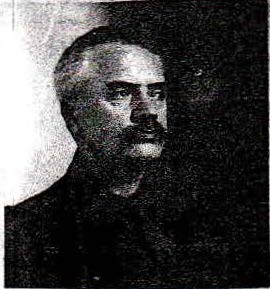
Photo from George’s Utah State Hospital file

Now I am happy to report that a family member obtained access to the Utah State Hospital file directly and obtained a copy of the photograph in the file. As you can see, the quality is 100 times better than the photostatic copy of the photograph that was provided to me by mail. The personality, the life, the lines, are much more able to be seen than before.

Here is some of what I wrote before.

Gerhardus Hendrik Van Leeuwen (who went by George Henry in English) was born the fourth of nine children to Gerrit van Leeuwen and Elsebina Maria Catharina Weenig on 16 October 1856 in Oldenzaal, Overijssel, Netherlands.  I have written of them at this link: Van Leeuwen-Weenig Wedding.  He was a carpenter by trade, on the finishing side.  He would also tune and service organs.  After moving to the United States, he worked as a finishing carpenter.

You can read more of his family at the link above. But some additional notes.

Five children in back (l-r): Minnie, Annie, Elsie, George and Jane. Second row: George, Dena, Hermina. Front: Mary and Herman.

It was about 1885-1886 when George incurred a head injury. My Great Grandmother, his daughter Dena Donaldson, indicated he fell from a ladder. Other siblings reported to descendants that he was struck in the head with a board. This is believed to be the reason why the family moved back to Arnhem, that due to his inability to work, this may be the reason they returned to Arnhem to be near family and rely on them for help.

The family then moved back to Amsterdam perhaps in pursuit of employment again. It was in Amsterdam that the Van Leeuwens met with missionaries of The Church of Jesus Christ of Latter-day Saints. George and Minnie were both baptized 4 June 1887. The story goes that George saw some men running down the street with people chasing them. Concerned for their safety, he pulled them into his home. He learned they were Elders of The Church of Jesus Christ of Latter-day Saints. The missionaries taught the Van Leeuwen the gospel and helped them convert leading to their baptism.

A sponsor from Ogden, was to meet the family at the train depot in Ogden. But no one was there when they arrived. A man by the name of Mr. Dalbout, saw their plight, and he invited the family to go home with him. There was no place to stay for a long period, so they converted a chicken coop into living quarters. This is where the family waited until George could join them. She took in laundry from other families to support themselves until he arrived.

According to George’s 1932 death certificate, he suffered from epilepsy with psychosis for 45 years. That would predate his immigration to the United States. His mental health could have become an issue when immigrating, and it may have been easier if Minnie and the children had gone first and established their new home. That may have enabled George to follow the next spring without risk of having the family turned back. Epilepsy had a stigma of illness that the family had to deal with, everything from wickedness to a contagious disease. This way, only he could potentially be turned away from entering the county. The plan was that with the family already in Utah, he would be permitted to join them in Utah. George arrived 21 March 1889 in New York City, New York on the S.S. Veendam having left Rotterdam.

George’s head and mental injuries continued to worsen as the years passed. The family either had to keep him safe during a fit and keep him calm to keep from inducing a fit. By the time 1911 rolled around, the family could no longer deal with his mental condition on their own. Dena referred to her “Daddy” as tender and sweet and then at the switch he would become angry and threatening. He had made enough threats and raised enough raucous that neighbors called the police. George was committed to the Utah State Mental Hospital in Provo, Utah, Utah in 1911. The family tried to get him out and succeeded. Unfortunately, he lost control again and ended up spending the rest of his life in the mental hospital. The family would drive down nearly every weekend to pick up “Daddy” and keep him for the weekend before taking him back. By the mid 1920’s, they could not even take him home on the weekends his condition was that poor and uncontrollable.

George died 5 January 1932 in Provo, Utah, Utah. He was buried 3 days later beside his wife.

Hurricane Ridge Overlook

Aliza, Paul, Lillian, James, Hiram, and Amanda Ross at Olympic National Park

Sometimes in life you have grand plans and then life takes you a different direction. This principle was taught to the Ross family again in 2020. We visited Olympic National Park and we told we had to go see Hurricane Ridge. “You have some amazing panoramic views from Hurricane Ridge.” To get to Hurricane Ridge you have to drive to Port Angeles, Washington and drive like 20 miles into the park.

As you can see, we made it to Hurricane Ridge. The interpretive sign points out 17 different peaks all viewable from the overlook. You can also see two rivers and a glacier. Except we couldn’t. We just saw a wall of clouds and had to use our imaginations.

View from Hurricane Ridge on 6 August 2020

While we did not capture the view from the outlook, I think the drive up there was the most beautiful road I have ever driven. The views were magnificent on the way and the wildflowers were abundant. Our drive up was worth more than the destination. Another lesson we apparently needed a reminder.

Church at Home – COVID

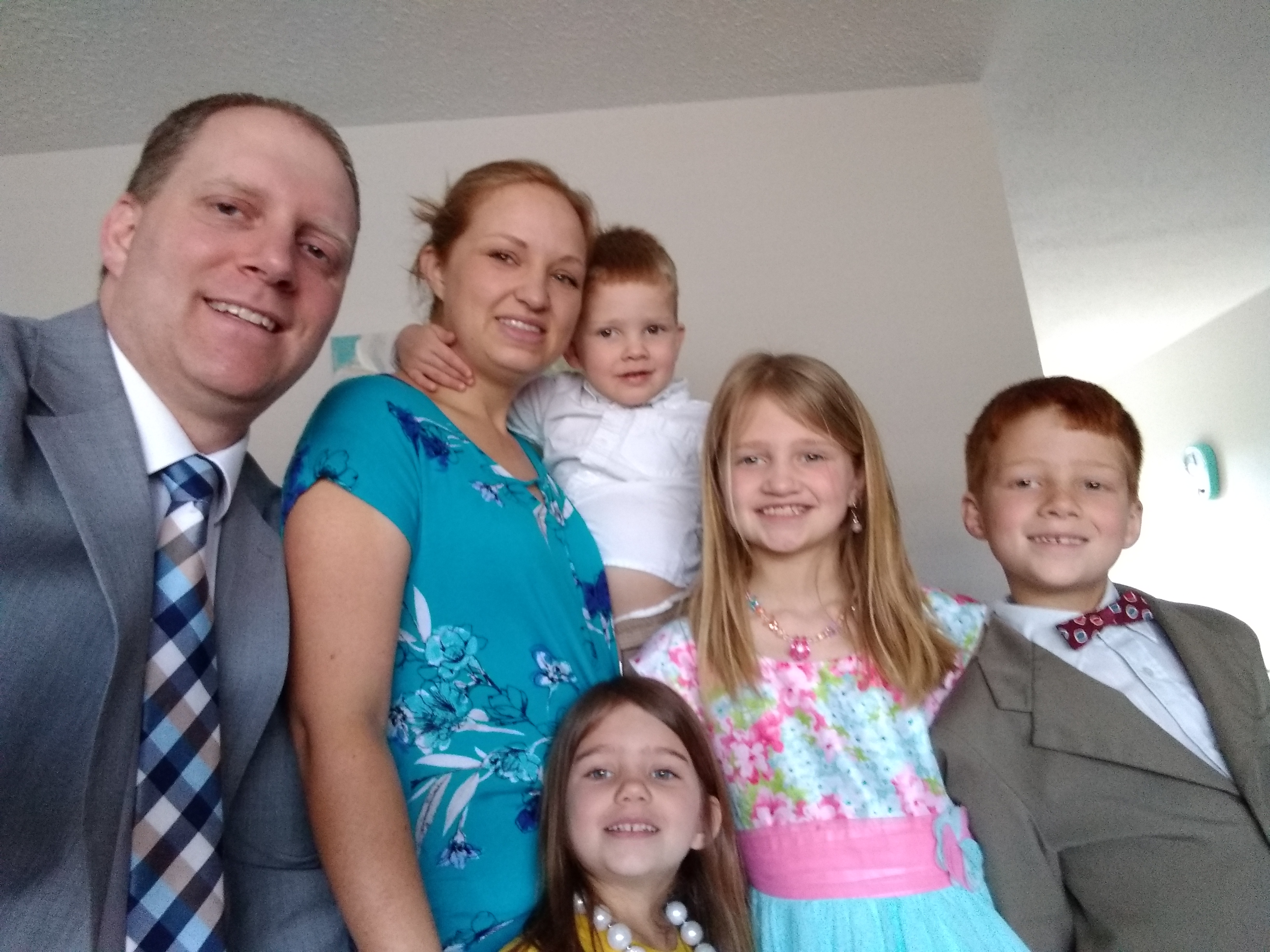
First Sunday of church at home in 2020 thanks to COVID-19

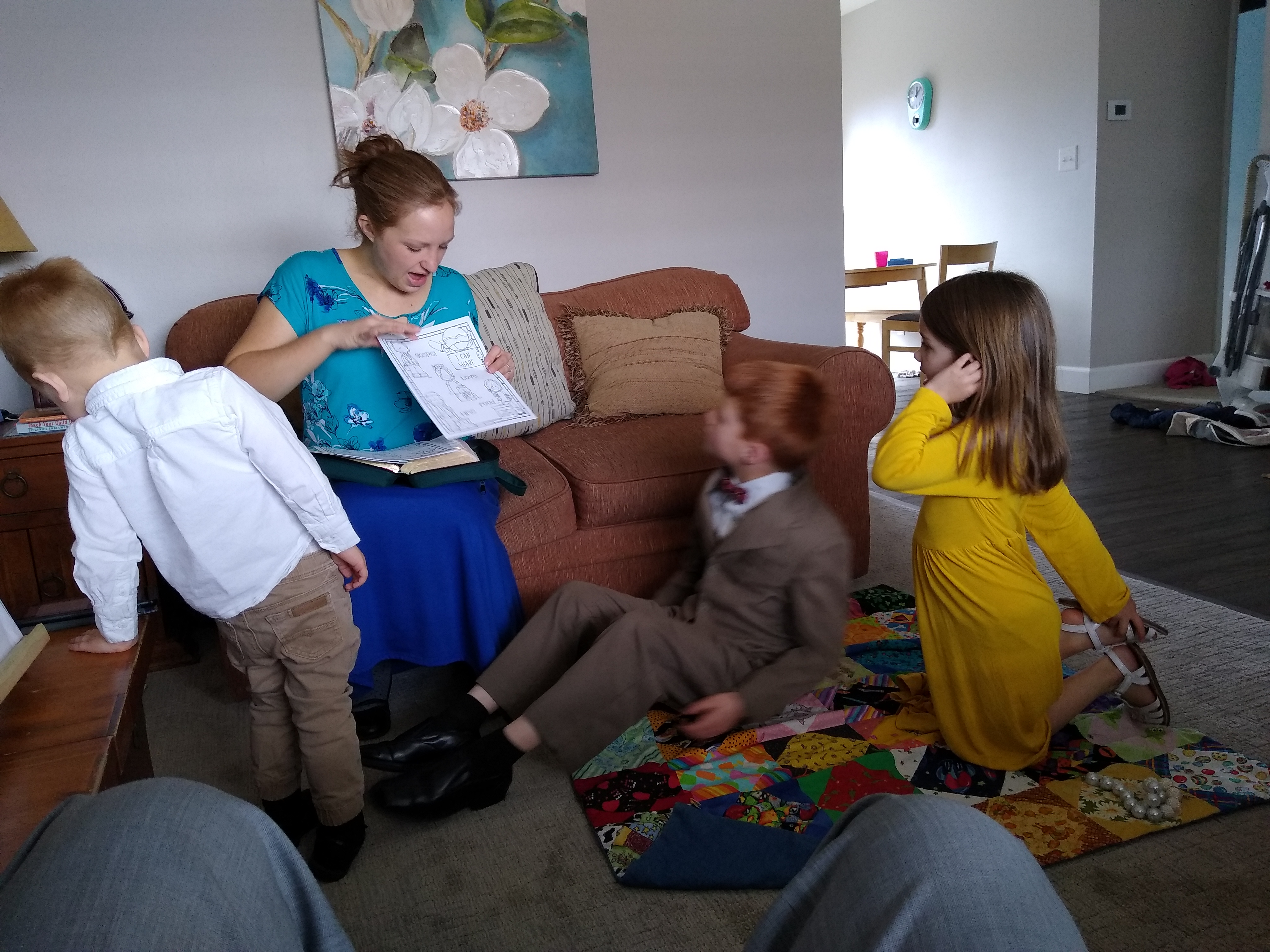
Two years ago COVID-19 threw us all for a loop. Nobody knew what was going to happen or what to expect. Idaho shut down most social gatherings, which included church gatherings in Burley. Fortunately we were authorized to regularly hold Sacrament and the rest of church at home. This was our first week of church at home thanks to COVID-19 in 2020.

The above photo was snapped after our little Ross home Sacrament. The one below I snapped while Amanda was doing our Sunday School/Primary portion of church. These were golden days. I am very glad to be back to church in a full social setting, but the intimate home setting was also treasured.

An interesting side note, that little tie Hiram has on my Uncle Doug Jonas wore when he was young.

Logan LDS Hospital

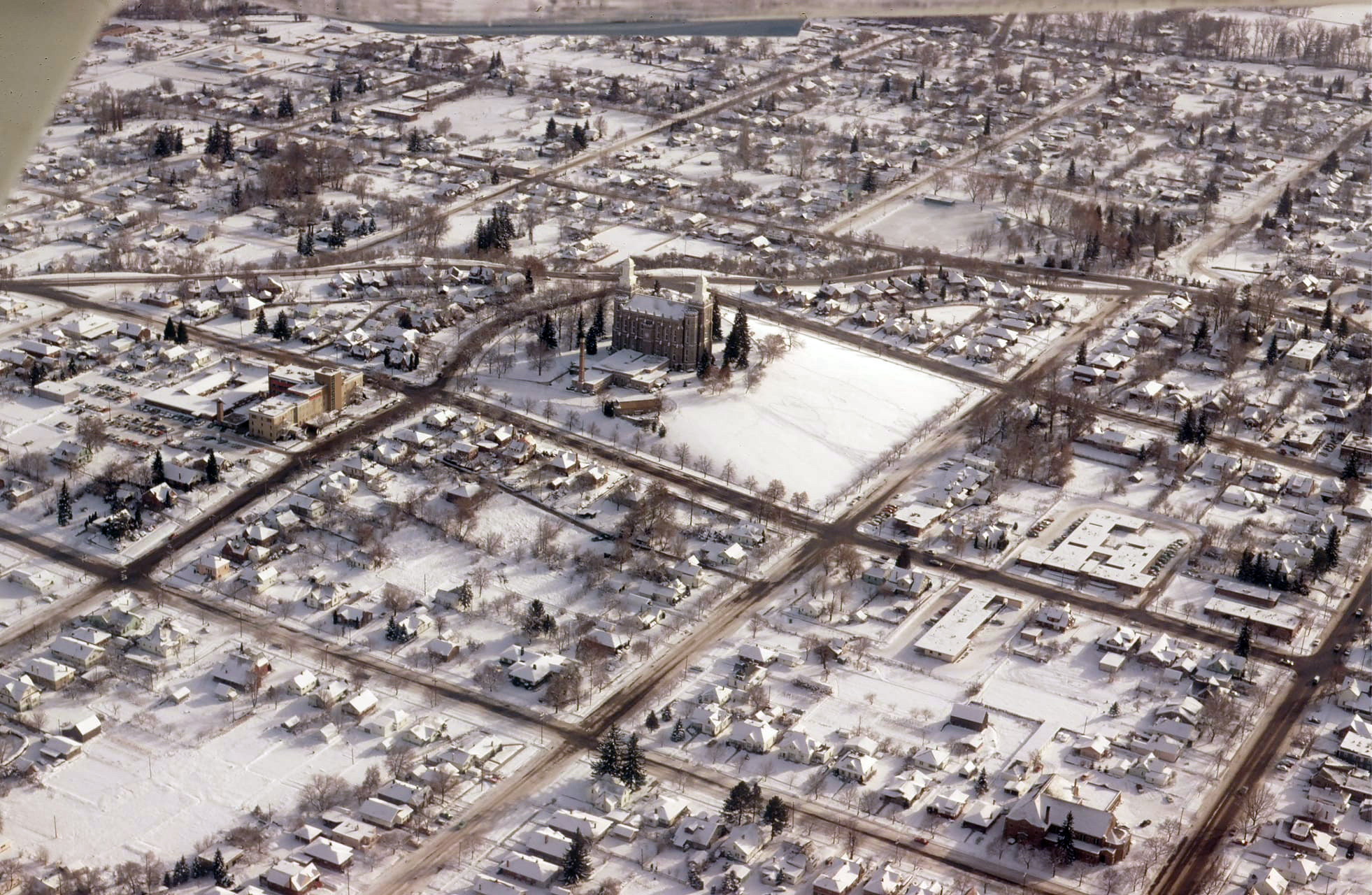
Logan LDS Hospital and Temple

This photo caught my attention the first time I saw it. My mother was born in the Logan LDS Hospital in Logan, Cache, Utah. My mother was born with in a block of where I was married to my wife. I likely have an ancestor or relative that passed away in the same hospital. I have written before of my long ancestral ties to the Logan Utah Temple. I wonder what additional ties I have to the Logan LDS Hospital and its history.

The aerial photo above with the hospital and temple appear to be before the late 1970’s renovation of the temple that replaced the annex and placed the parking down the hill on the temple grounds (it doesn’t look like it even had parking on the temple grounds). The hospital is in full use, so before the construction of the new hospital in 1980.

Here is a short article I found from the Cache Valley Family Magazine.

Utah-Idaho Hospital opened in 1914

“A century ago local physicians and businessmen worked tirelessly raising money to fund construction of a hospital through the buying and selling of shares  on which they knew they would never receive dividends. They weren’t investing in their own financial future, but rather in the community they loved. “The opening of the Utah-Idaho Hospital in 1914 was really the birth of not-for-profit healthcare in Cache Valley,” said Tina Murray, communications specialist at Intermountain Logan Regional Hospital.

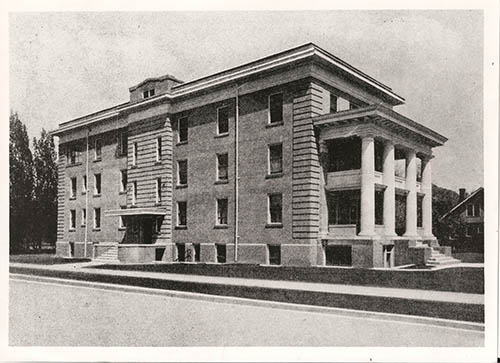
“The three-floor, 60-bed Utah-Idaho Hospital, which stood on the corner of 200 North and 300 East in Logan, was a major milestone for the community. Although there had been private residences transformed into hospitals for a decade before, this facility was the first modern hospital built from the ground of for the primary purpose of being a hospital. It had many modern conveniences such as operating rooms, x-ray, classrooms, business offices, a hand-operated elevator, and kitchen and laundry facilities.

“In 1925 the Utah-Idaho hospital was expanded and became the William Budge Memorial Hospital. According to the story of the Budge Clinic by J. Clare Hayward, M.D., the first baby delivered in a hospital in Logan was born that year.

Logan LDS Hospital in the late 1950s

“In 1948, the LDS Church acquired Budge Memorial Hospital as part of the church’s health system. The hospital’s name was changed to Logan LDS Hospital until 1975, when The Church of Jesus Christ of Latter-day Saints turned it over to Intermountain Healthcare and it was renamed Logan Hospital. By the end of the decade construction began on a new facility, and in 1980 Intermountain Logan Regional Hospital opened in its current location on 1400 North.

Logan LDS Hospital shortly before its removal

““Throughout the past century, access to improved technology, expanded services, and a broadened range of specialists has distinctly changed and enhanced the quality of healthcare the valley’s residents enjoy today,” said Murray.

““While a lot has changed, the overall mission established by visionaries in the early 1900s — to provide the best available medical care following a not-for-profit model of delivery — has not changed. This same vision is effectively being carried out at Logan Regional Hospital 100 years later.”