Plain City, Weber County, Utah is not a place that conjures images of billion-dollar industries. Its name suggests modesty, and its streets deliver on that promise — quiet fields, small farms, and houses set back from roads that run straight and flat through Weber County. There is substantial residential development in the past two decades. Even then, this small town produced a remarkable concentration of American transportation entrepreneurial energy. At the center of it stands one man: Chester Rodney England.
When a fire consumed Chester’s lumber yard on the evening of 6 April 1974, his neighbors rose to defend him to allow him to rebuild. Among those neighbors were my grandparents, Milo and Gladys Ross. What they did in the weeks that followed is documented below — eight pages of signatures collected on lumber yard estimate forms, a newspaper clipping, and a typed petition text. This post tells the story behind those pages.
Chester and Maude
Chester Rodney England was born 12 November 1896 in Plain City to William and Ismelda Thueson England. He grew up there, attended Weber Academy, and in 1916 married Maude Vivian Knight — a Plain City girl herself, born in August 1897. One month after their marriage, Chester received a mission call to the Southern States. He was set apart on 5 December 1916 by Apostle Anthony W. Ivins and left his new bride on 6 December 1916, serving for two years. He returned to find Utah in the grip of the 1918 influenza epidemic, his wife under quarantine, and her sister Elizabeth Knight Ericson dead. His mother was also ill, and he spent a week with his aunt Laura England before he could be with his family.
Chester wrote his own history late in life, and his voice is direct. After the mission he worked at the Amalgamated Sugar factory, farmed through the winters, bought a small Ford truck, and began hauling produce to the stores up through Cache Valley. “I found I could make more money doing this than farming,” he wrote, “so I turned the farm back to my father.” On 24 October 1919, his first son, Eugene Knight England, was born in Ogden. On 6 March 1923, his second son, William Knight England, followed. Two daughters, Rosemary and Carol, completed the family.

In 1924 the Weber Central Dairy Association organized and asked for bids to truck milk from the dairymen into the dairy on 19 Washington Boulevard in Ogden. Chester submitted his bid, was accepted, and trucked the first load. He delivered milk in the morning and hauled potatoes up through Cache Valley in the afternoon. Gene and Bill grew up in the business. During summers Chester took them along on the long hauls, building a shelf of boxes out from the cab seat so they could nap on the road. He made sure they always had a bottle of pop at each stop.
During World War II, while Gene and Bill served in the military, Chester hauled Mexican bananas coming into the country at El Paso, Texas, distributing them throughout Utah. Gene served in the 77th Infantry Division at Okinawa, earning the Bronze Star for crawling under fire to drag a wounded soldier to safety — 129 men went up to the escarpment, 27 came back after 72 hours. Bill served in the Air Force in the Philippine Islands from 1943 to 1946. The two brothers found each other on Cebu using a coded letter — Gene had written his middle initial as “B” to signal his location — and Bill arrived with a mattress, making Gene the only man in his division sleeping on something other than a canvas cot. A letter written from the Hotel Keystone in San Diego in May 1946 — Chester on the road at age 49 — gives a picture of those years on the home front. He writes to his wife about a load of bananas, his plans to buy a semi-trailer, and his satisfaction that Gene and Bill are doing well.
Shortly after their return from service, Gene and Bill joined Chester hauling produce. Their first postwar hauls included lumber from Oregon back to Utah, and it was that trade that gave the family firsthand knowledge of the lumber market. The first diesel truck — a used 1940 Kenworth conventional — was purchased during this period. As the business grew, the company also ran two packing sheds and a storage facility for Idaho potatoes at its peak. Around 1957, an unforeseen change in the potato hauling market prompted Gene and Bill to file applications for ICC licenses to haul all kinds of freight, opening an entirely new range of products and geographic lanes. That same year, C.R. England offered 72-hour coast-to-coast service, the first such offering available to American shippers. The first trip east was made by driver Robert Gould in a new 1959 Kenworth, tractor number 17, hauling produce from California to Philadelphia.
In the 1950s Chester stepped back from trucking, leaving Gene and Bill to run what had become C.R. England & Sons. He returned his attention to Plain City. As he wrote: “Our sons retired me from C.R. England & Sons so I started building homes on our property in Plain City. I soon decided I needed a lumber yard if I was going to continue to build. In 1960 I built a lumber yard on the property just west of the home we had sold.” The family’s years hauling lumber from Oregon had given Chester intimate knowledge of the lumber trade, and that knowledge informed the decision. He built three homes on adjacent property and sold them to Keith Lund, Ray Cottle, and Blaine Gibson. He built 25 homes in Plain City and many others throughout Weber County. He built a 12-unit apartment complex in Roy. He took second mortgages from young couples who could not otherwise buy. “It was a great satisfaction to have young couples come and tell me they would never have bought their homes without my help,” he wrote.
Maude was with him through all of it. Born in Plain City in August 1897, she never really left. She served as president of the Plain City Primary, held positions in the Relief Society throughout her life, and attended the Ogden Temple with Chester twice a week when they could manage it. She died in Plain City on 12 February 1982, having lived there her entire 84 years. Chester moved to Salt Lake City after her death and died there on 5 January 1989. He is buried beside her in Plain City Cemetery.
The Sugar Factory
The sugar factory was woven into both families long before the fire. The Amalgamated Sugar Company plant at Wilson Lane, just south of Plain City, was one of the economic anchors of Weber County from the early twentieth century onward. Plain City farmers hauled beets to the rail dumps each fall for decades; the railroad that came to Plain City in 1909 arrived largely to move beet cars to that factory. Chester England worked at the sugar factory himself after returning from his mission in late 1918, spending two winters there before he turned to farming and then trucking.
Milo’s father, John “Jack” Ross, worked for Amalgamated Sugar much of his adult life, following the company between its Ogden, Burley, and Paul, Idaho plants as work demanded. That movement accounts for the geography of the Ross children: Milo was born in Plain City in 1921, his brother Paul born in the town of Paul, Idaho in 1922, and Harold born in Burley in 1924. Amalgamated Sugar built its Paul factory in 1917, and families from the Plain City area followed the work north. The factory experienced difficult early years — a postwar agricultural depression after World War I, and then the beet leafhopper blight that devastated crops through the 1920s and into the 1930s — but it survived to become, in time, the largest sugarbeet processing facility in the world. Chester England and Jack Ross were contemporaries who had worked for the same company in the same corner of northern Utah before either of them had settled into the lives their families would remember them by. For more on the sugar factory’s role in Plain City’s history, see History of Plain City Pt. 1.
The Cradle of American Trucking
Chester England’s 1920 Model T purchase was the seed of something considerably larger than one family’s business. Four major American trucking companies trace their origins directly to Plain City, and all four connect back to Chester. The Standard-Examiner and C.R. England’s own history have documented this story in detail.
C.R. England & Sons grew steadily through the postwar decades into one of the largest refrigerated carriers in the United States, eventually operating a fleet approaching 4,000 trucks and headquartered in Salt Lake City. Gene England served as president of the company well into his later years, still coming into the office daily at age 88. He died on 13 November 2024 at the age of 105. Bill England, who married Fern Hadley — a Plain City Hadley, the same family that signed the petition — died on 28 March 2018 at age 95. He spent his last ten years without sight but maintained, as his family recorded, an extraordinary optimism throughout. He entitled his life history “It Is As Good As It Gets.”
Carl Moyes had driven trucks for C.R. England in his younger years. In the late 1950s, Carl and his wife Betty started B&C Truck Leasing in Plain City. In 1966, when their son Jerry graduated from Weber State College, the family moved to Phoenix, Arizona and formed the company that would eventually become Swift Transportation — for many years the largest truckload carrier in the United States. Jerry Moyes later observed that he liked to say there was “diesel in the water” in Plain City, and that the people there were conceived in sleeper cabs.
In 1990, brothers Kevin and Keith Knight and their cousins Randy and Gary Knight left Swift to found Knight Transportation. All four had grown up in Plain City and gotten their start working for the Moyes family’s Swift Transportation. The Knights were also related to Maude Knight, who had married Chester England in 1916, making them family to the man who started the Plain City trucking tradition. Knight Transportation started with five trucks; four years after going public the company had between 250 and 300. Knight and Swift announced a merger in April 2017, creating Knight-Swift Transportation, valued at an estimated $5 billion with approximately 23,000 tractors and 77,000 trailers.
In 1976, Jeff England — Gene’s oldest son and Chester’s grandson — bought his first truck while still working at C.R. England as an owner-operator, initially under the name “Pride of England Enterprises.” In 1979, with three trucks and a haul contract moving produce from California to New York, he left the family firm to go fully independent. His wife Pat was his partner from the beginning. In the early 1980s he assembled a group of investors, purchased ten more trucks, and rebranded as Pride Transport Inc. By 2017 the company operated a fleet of 500 trucks. In 2012 Jeff passed ownership to his son Jay England. Jeff England said of his decision to leave: “I felt that I needed to do my own thing.” He was 76 at the time of that interview and still driving a truck a couple of times a month.
The fuel infrastructure serving these fleets also has roots in this region. O. Jay Call, who came to Willard, Utah in the mid-1960s, founded Flying J in 1968, naming it for his love of flying, and built it into the largest retailer of diesel fuel in North America. His uncle, Reuel Call, had founded Maverik convenience stores in 1928 in Afton, Wyoming. FJ Management acquired Maverik in 2012. The Call family’s fuel network and the England-Moyes-Knight trucking empire developed in the same northern Utah environment across the same decades.
In September 2022, representatives of all four trucking firms gathered at Peery’s Egyptian Theater in Ogden for the premiere of a documentary about their shared origins. Gene England, then 102 years old, was present on stage alongside Jeff and Dan England, Jerry Moyes, and Kevin Knight.
The Fire
On the evening of 6 April 1974, Chester England went over to open up the lumber yard. He was 77 years old.
He described what followed in his own autobiography:
As I opened the office door, the place exploded and was engulfed with flames. It had been smoldering during the night. We do not know what caused it but it burned everything. I ran in to get the invoices but the ceiling began falling and burned holes in my jacket so I could have lost my life. This was a terrible experience watching everything you have worked hard for go up in flames. I was down in bed for 10 days from shock. We had insurance on it but I had been buying so much merchandise that the insurance didn’t begin to pay for the loss. I appreciated the fire department and the ward members who worked so hard to help. It took many weeks after to clean up. My family thought I should retire and not build it up again. However, I knew I wouldn’t be happy without something to do so I started rebuilding as soon as I could.
The 1977 History of Plain City records the fire at “England Builder’s Lumber Company” and gives the date as April 6, 1975. That date appears to be a transcription error in the town history; Chester’s own autobiography gives 6 April 1974, and that account is the primary source. The fire also destroyed the adjacent Leigh Archery Company, operated by LeGrande Leigh and Robert Jones. The insurance fell short. Chester was 77 and his family urged him to retire. He refused.
Plain City Will Consider Future of the Lumberyard
A newspaper clipping, attached to the first petition page, reported what happened next:
PLAIN CITY — The City Council here will hold a special session May 9 at 8 p.m. to make a decision on requests to rebuild a lumberyard and business destroyed by fire.
Requests that the city permit reconstruction of the lumberyard and Leigh Archery Co. came from Chester England and LeGrande Leigh and Robert Jones.
The council reported, however, that there have been some objections from citizens who do not want to see the lumber operation reestablished.
It also was reported there have been some questions as to the nature of the archery business being conducted. It has not been determined whether it is a commercial business or a manufacturing operation.
The requests to rebuild have been referred to the city planning commission for its recommendation. The recommendation is expected to be received prior to the May 9 meeting. All interested citizens are invited to attend the meeting which will be held in the City Hall.
The council also will consider various projects the city can carry out under the Utah Extension Service Program. Ronald Bouk of the service outlined various programs cities such as Plain City can conduct that may bring it awards and other benefits. The city must make application for such projects by May 31.
Some citizens did not want Chester to rebuild. And so his neighbors organized.
Milo and Gladys Ross

Milo James Ross (1921–2014) was born 4 February 1921 in a log cabin just north of Plain City. His mother, Ethel Sharp Ross, died of puerperal septicemia in August 1925 when Milo was four years old, leaving three surviving boys. Milo went to live with his Uncle Ed Sharp, Harold with Uncle Dale Sharp. They were raised in separate homes within a few blocks of one another in Plain City, the extended Sharp family absorbing the loss. For more on the Sharp family’s tragedies, see Sharp Tragedies.
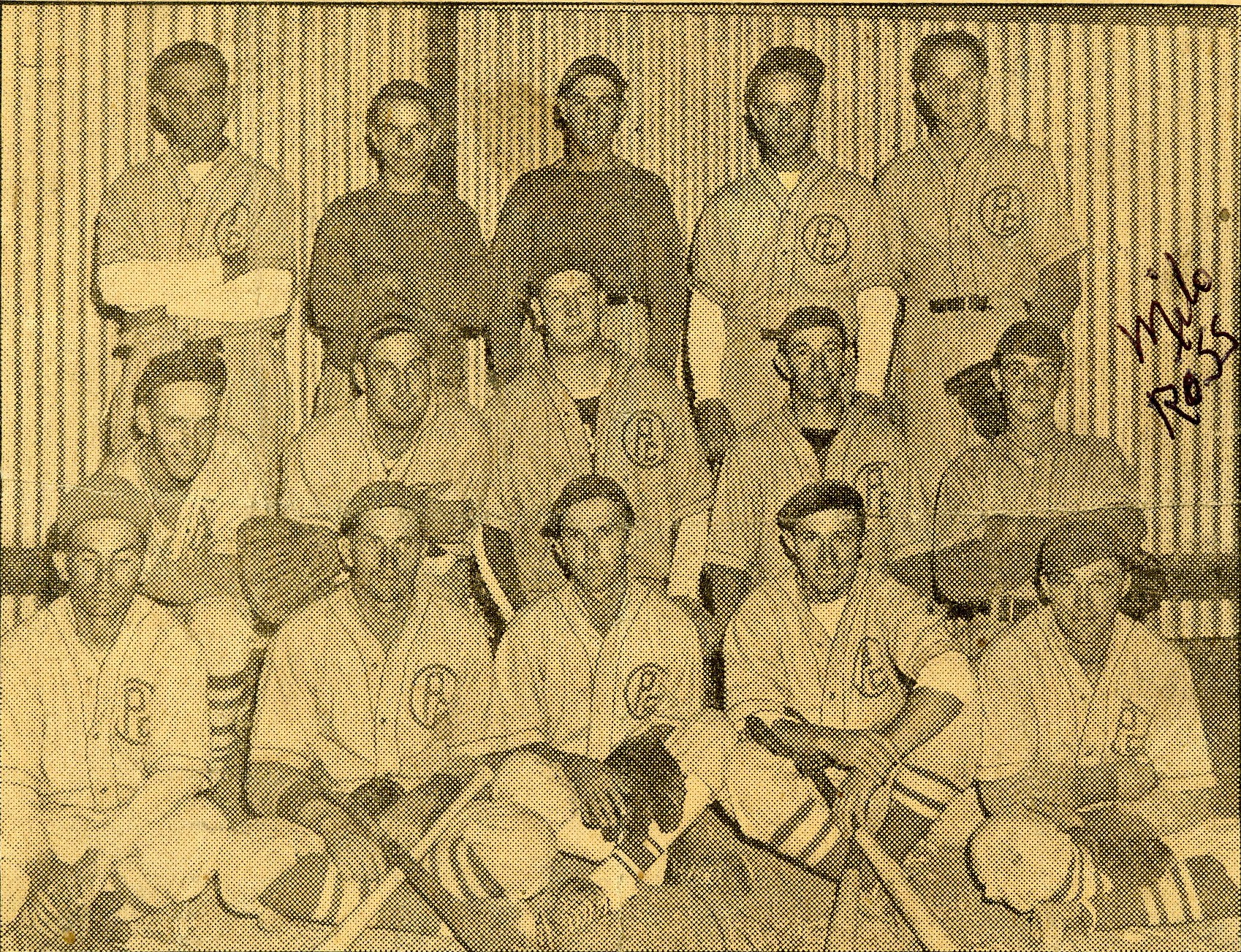
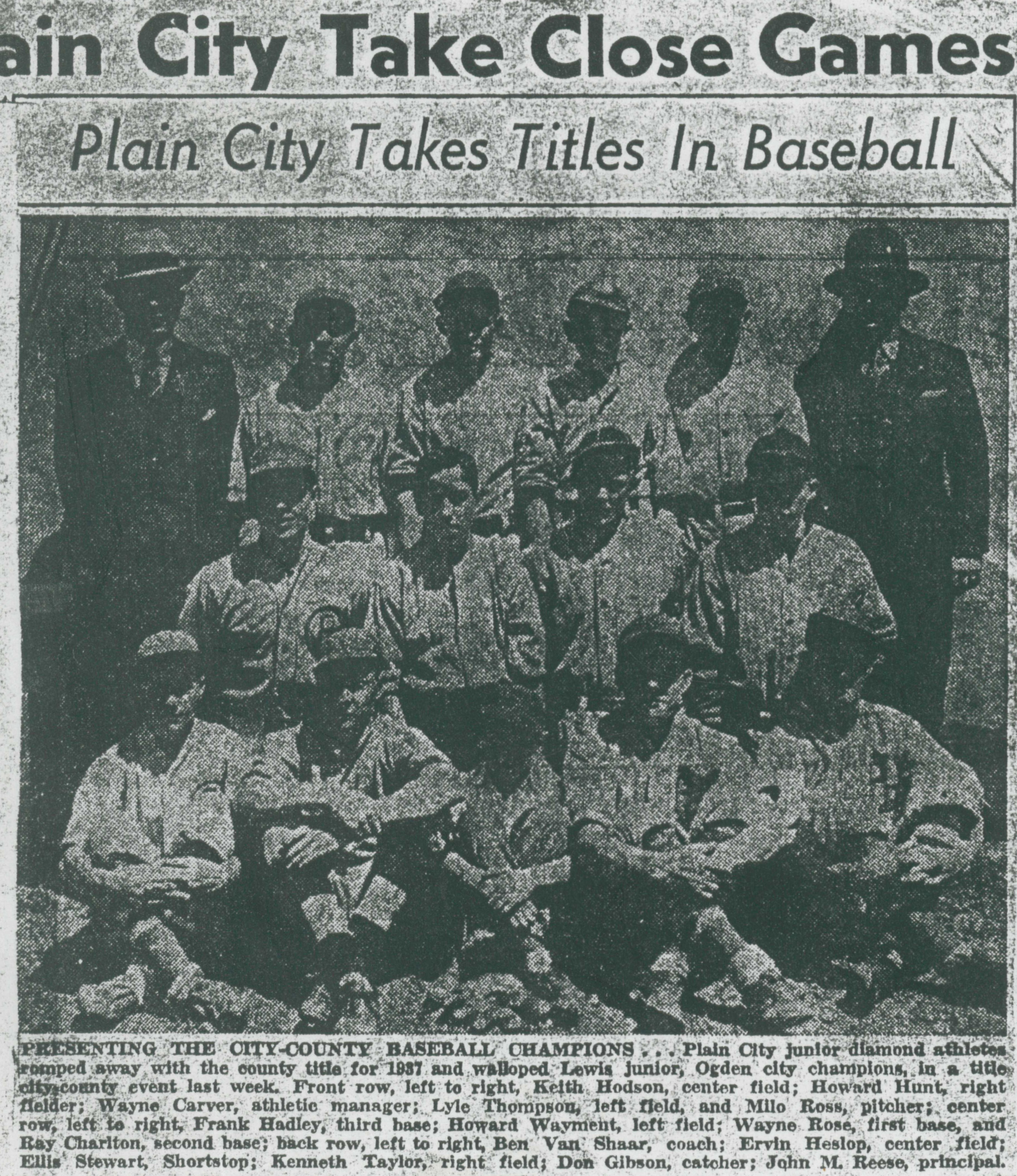
Milo grew up working Ed Sharp’s farm — tending onions, hauling salt from the flats at Promontory, doing whatever needed doing. He played baseball with the Plain City Farm Bureau team and attended Weber High School.
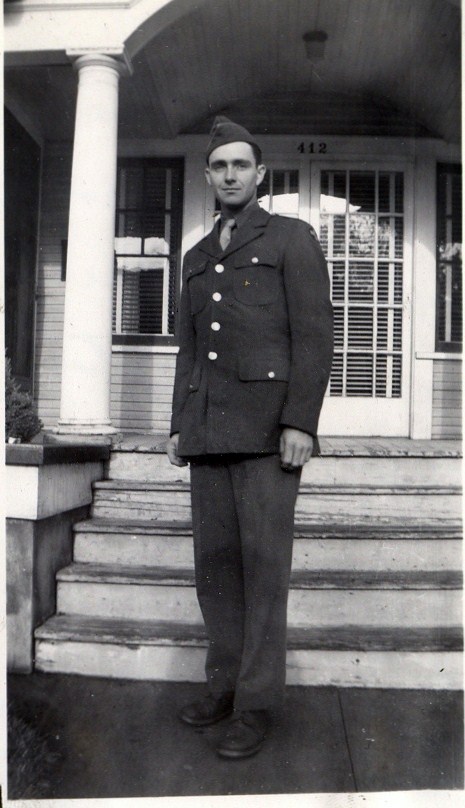
In 1940 Milo met Gladys Maxine Donaldson (1921–2004) at a Plain City celebration. They married on 4 April 1942. Six months later Milo enlisted in the Army. He served in the 33rd Infantry Division, 130th Regiment, Company C, trained in weapons and earned expert ranking. He arrived in Hawaii on 4 July 1943 — the same day his son, Milo Paul, was born in Utah, a son he would not meet for three years. He fought through the jungles of New Guinea and the Philippines and was present at the Japanese surrender at Luzon in June 1945. He received two Purple Hearts and the Silver Star. His company received a Presidential Citation for outstanding performance during the seizure of Hill X in the Bilbil Mountain Province. For more on Milo’s military service, see Milo James Ross Military Medals and his 1997 oral history interview.
He came home and went to work as a contractor and builder, eventually building and remodeling hundreds of homes throughout Utah, mostly in Weber County. That work is why, when the time came to gather signatures for Chester England, he had a pad of lumber yard estimate forms at hand. They were his working tools. He pressed them into service as petition pages.
Milo knew Chester England personally. A childhood photograph survives showing Milo alongside Harold Ross, Howard Hunt, Josephine Sharp, and Janelle England on horseback — the England and Ross and Sharp children together in the neighborhood as naturally as their parents moved among one another. In his 1997 oral history interview, Milo recalled Chester among the Plain City men who had struggled during the Depression years, when banks failed and farms were lost. Chester was woven into Milo’s memory of Plain City going back to his earliest years.

The Petition
The typed text at the center of the petition read:
We the citizens of Plain City feel that Chester England should be allowed to rebuild his lumber yard. Since when do you kick a man when he is down/ Lets stand together and help Chester England when he needs a friend.
The headers on the petition pages identify the organizers: “By Gladys and Milo Ross — To Help Mr. England — Rebuild Back Up.” The forms were passed through the community in the weeks leading up to the May 9 city council meeting. One page was circulated by Joan Jenkins.
My father, Milo Paul Ross, had worked for Chester England as a teenager. He and his first wife, Victoria “Vicki” Feldtman (1945–2018) — married 5 March 1963 — both signed the petition. For more on Vicki, see Vicki’s Class Pictures. My grandfather Harold Ross also signed. The Sharp cousins — W.A. Sharp and Florence Sharp, children of the family that had raised Milo and Harold — signed as well. Maude K. England and Chester R. England signed the petition themselves.
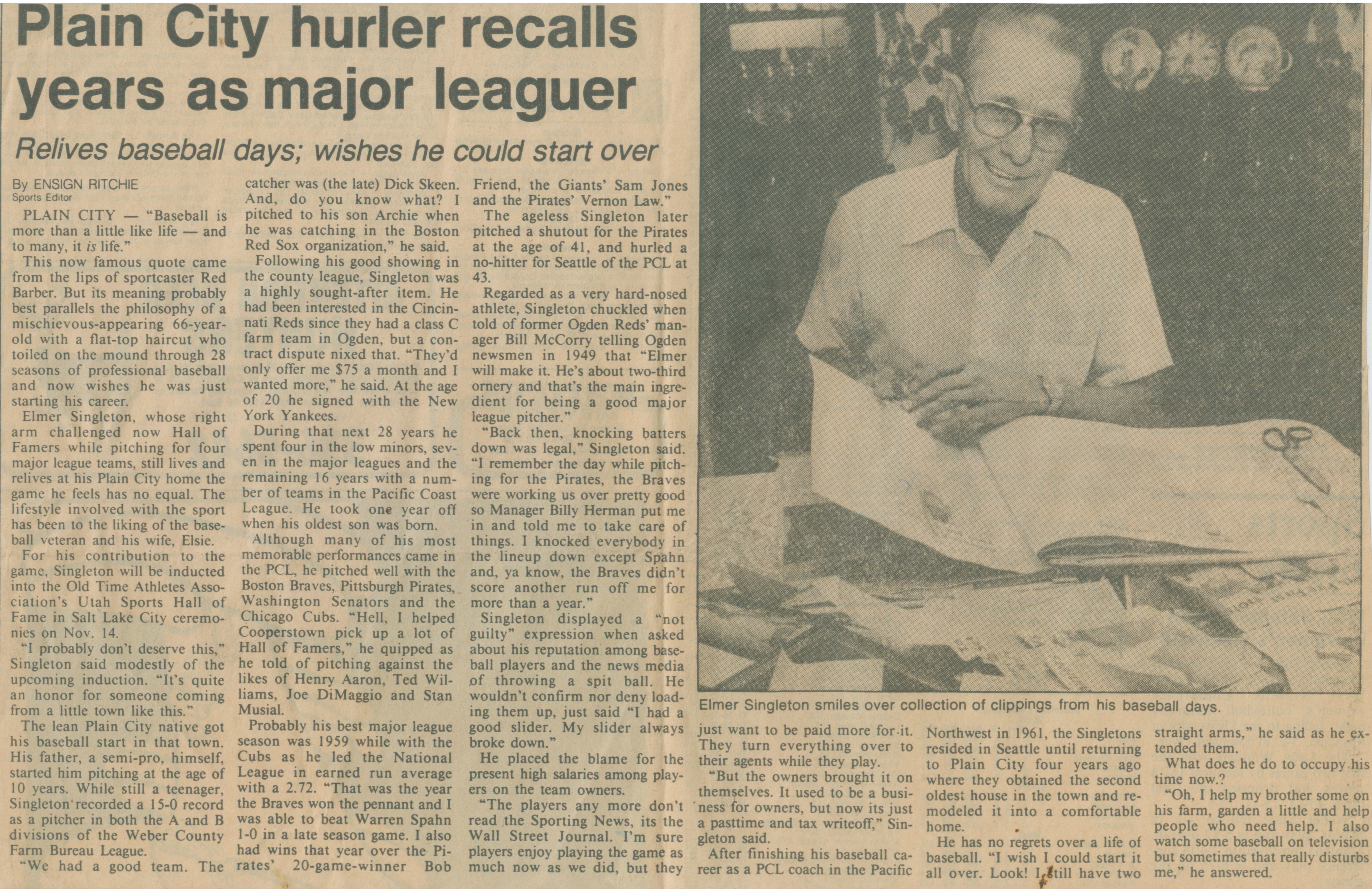
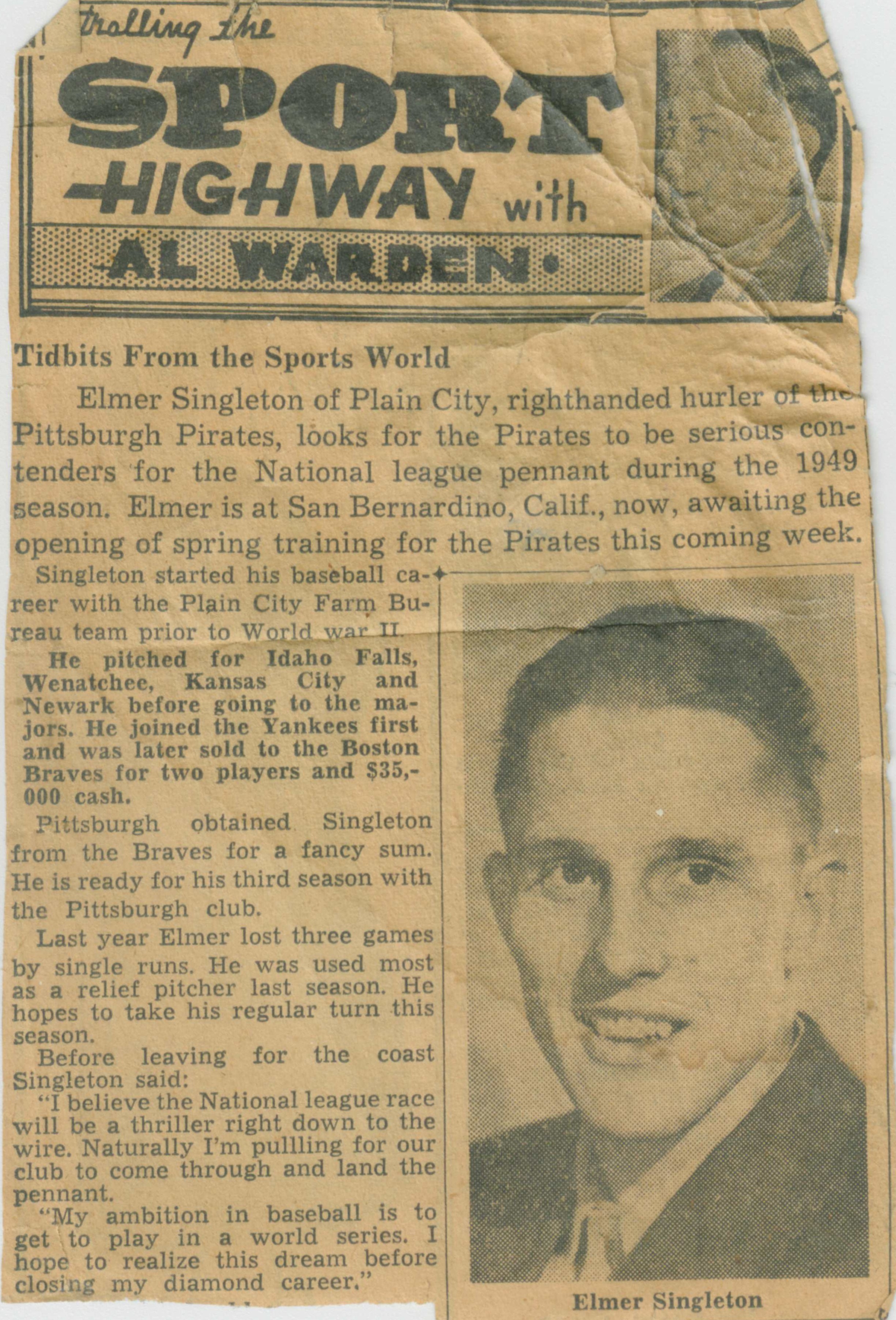
Among the more than 340 signers, the connections to Plain City’s history run deep. The Moyes family signed in force — the same family whose son Carl had driven trucks for Chester England and whose grandson Jerry would found Swift Transportation. The Knights signed — relatives of Maude Knight England and future founders of Knight Transportation. Elmer Singleton (1918–1996), the Plain City baseball legend who pitched in the major leagues for five teams over fifteen years, signed with his wife Elsie. Cherrill Palmer Knight (1931–2021), who had served as Plain City City Recorder and was the daughter of Vern and Viola Palmer — also signers — added her name alongside her husband Thayne (1931–2018). Roxey R. Heslop, who contributed the school and cemetery histories to the 1977 Plain City history book, also signed. Hildor England (1896–1983), born Johnson, who married into the England family, signed as well. Gordon C. Orton (1924–2008), a Plain City general contractor and World War II veteran who served in the Philippines, New Guinea, and Okinawa, signed with his wife Leone. Vernal Moyes, who had served as a Plain City councilman, signed alongside his family.
The 1977 History of Plain City records the outcome: “Builders Bargain Center, formerly England’s Builders. This business was started and run by Chester England for many years.” Chester rebuilt. The community’s voice prevailed. For more on Plain City’s history, see the Plain City series on Sagacity.
Circle A Construction

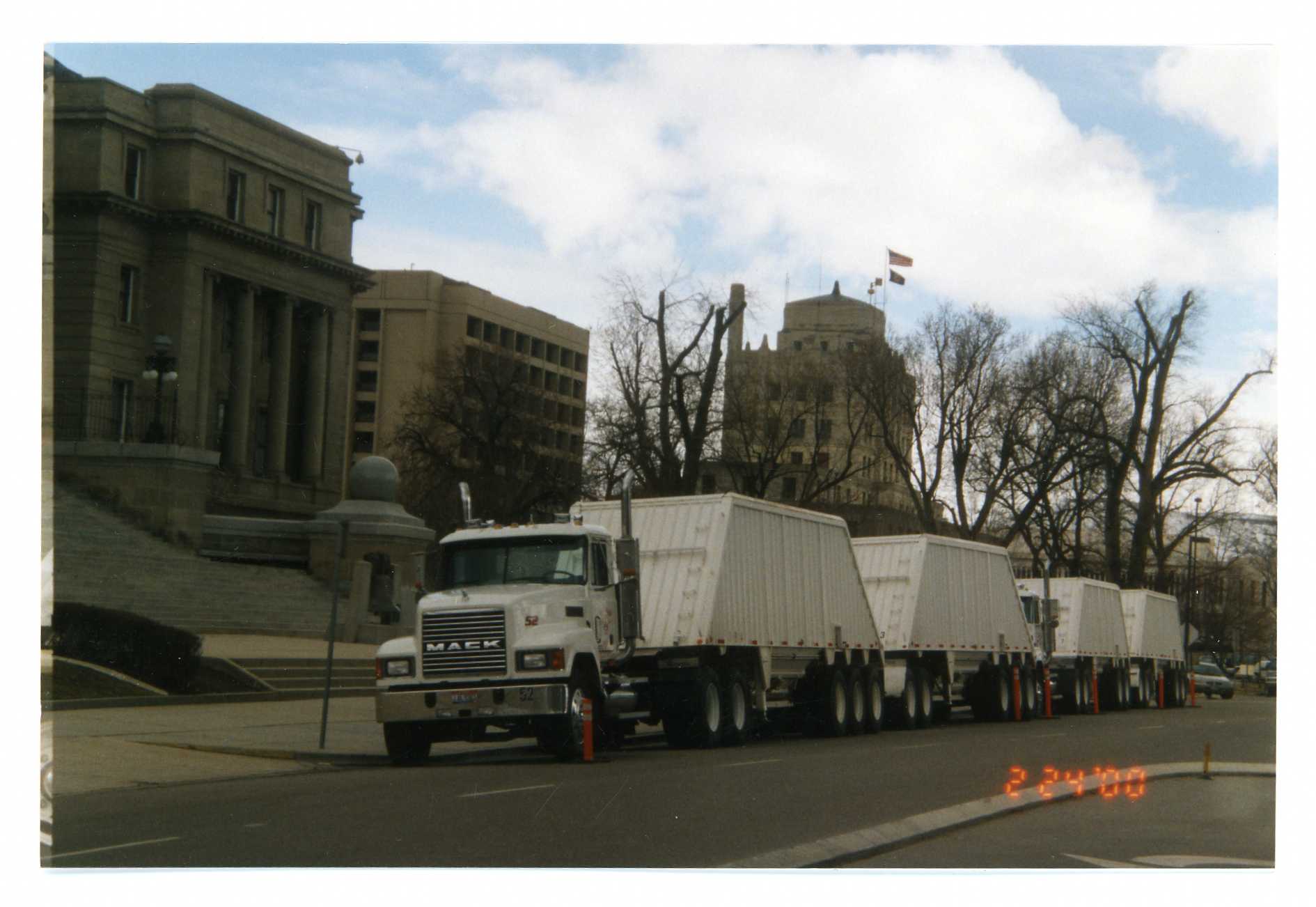
My father’s career at Circle A Construction was built substantially on the same industry that had shaped the England and Ross families in Plain City. Circle A, founded in 1952 in Jerome, Idaho by Marvin Aslett, hauled sugar beets for Amalgamated Sugar for most of its operating history. For roughly 34 years, from around 1971 until Circle A transferred the Paul operations to AgExpress in 2004, my father supervised beet hauls across the Magic Valley, from the fields to the Amalgamated dumps at Paul and elsewhere across southern Idaho — the same plants Jack Ross had worked in a generation before.


Marvin’s sons Larry and Steve Aslett ran the company alongside my father for decades. We called Larry “Uncle Larry” growing up. The Asletts took us to roundups in Mackay, to ranch country above White Knob. I worked for Circle A myself from 1993 through 1998. My first job in 1994 was washing and waxing trucks at the old Hynes beet dump in Paul after harvest. Jack Ross had worked for Amalgamated Sugar in Paul in the 1920s. My father hauled beets to Amalgamated in Paul for three decades. Circle A’s beet hauls fed the same company in the same town across three generations of this family’s working life.
The Petition Pages
Below are all eight pages of the petition as collected by Milo and Gladys Ross in the spring of 1974.
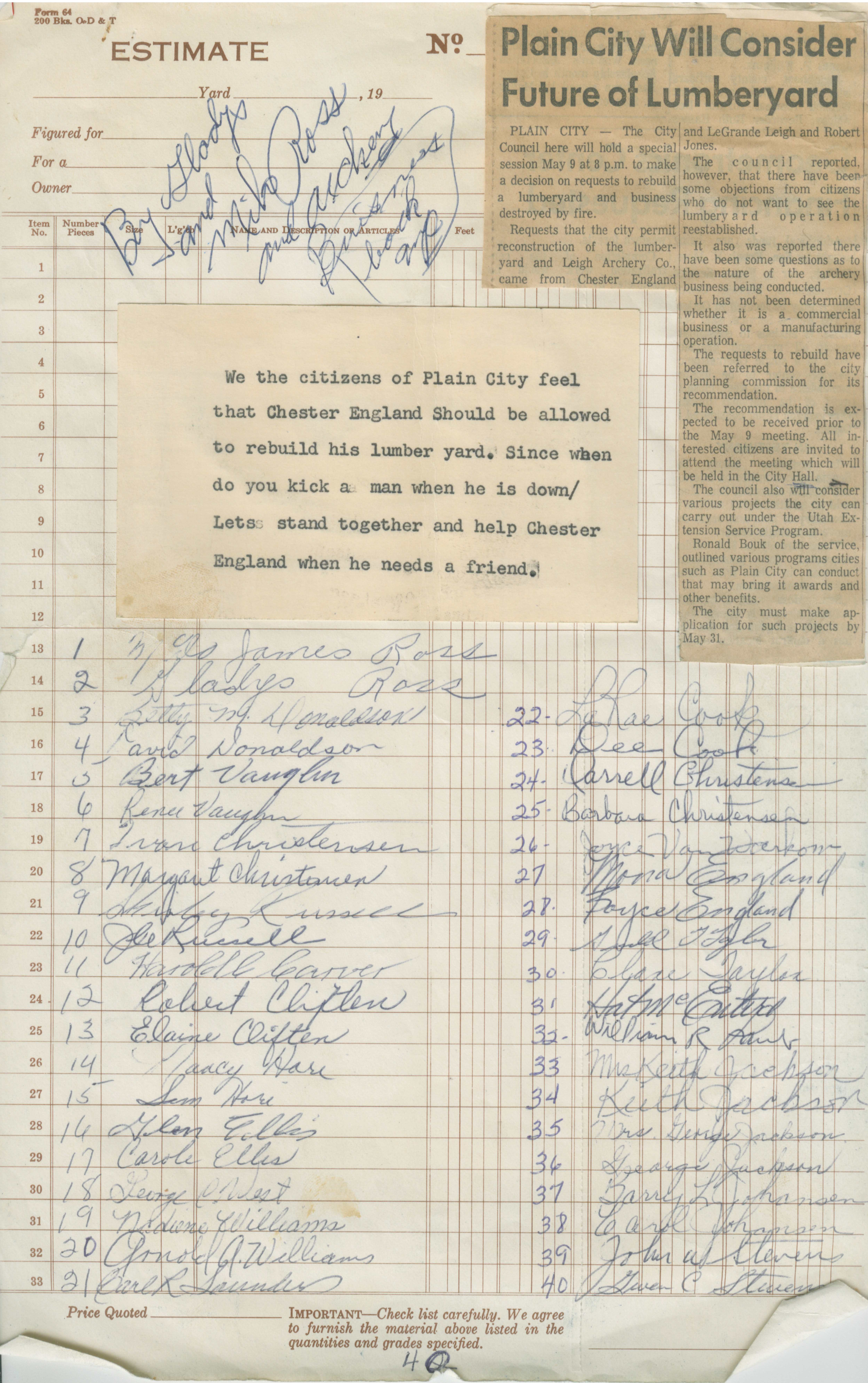
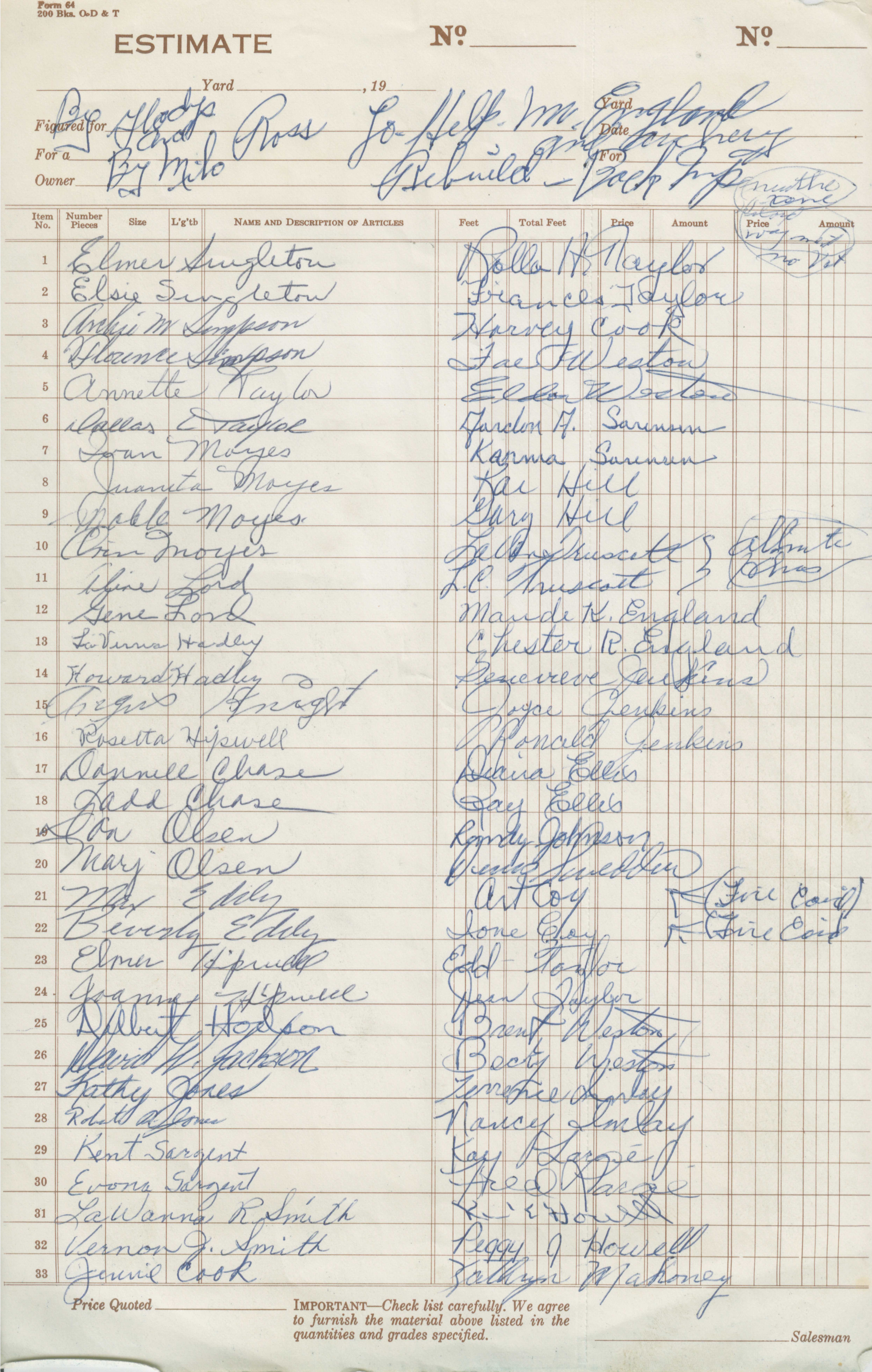
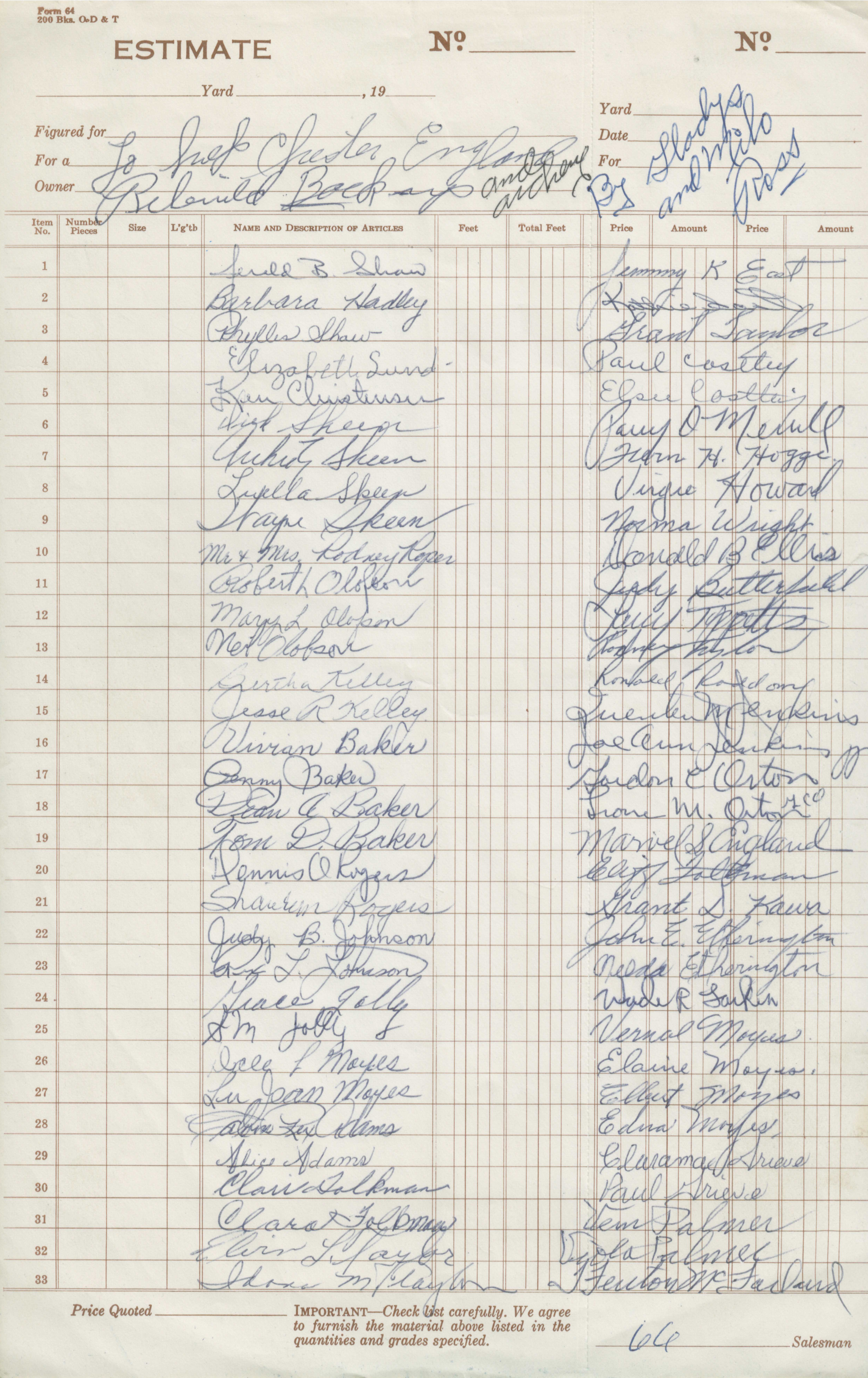
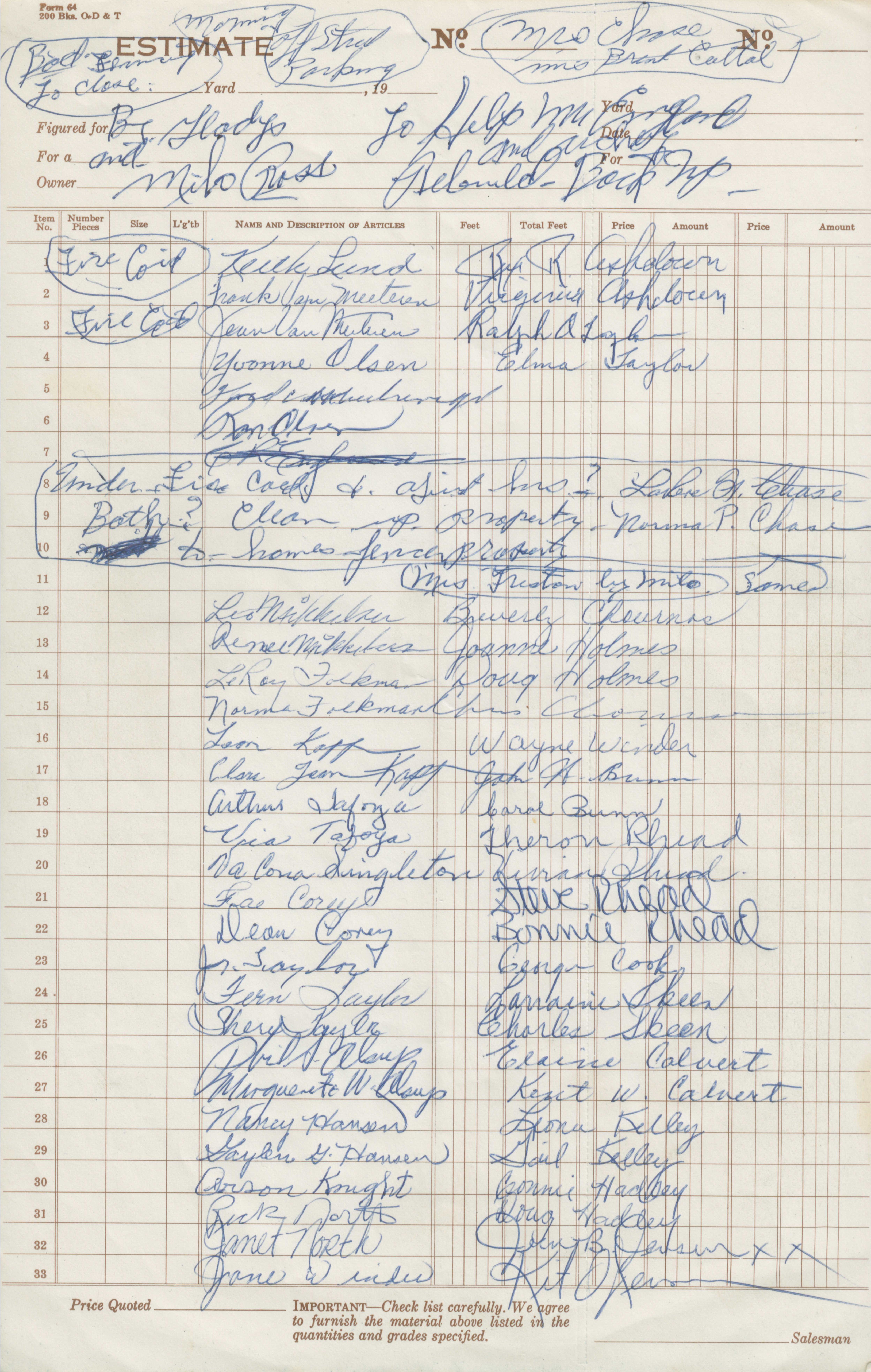
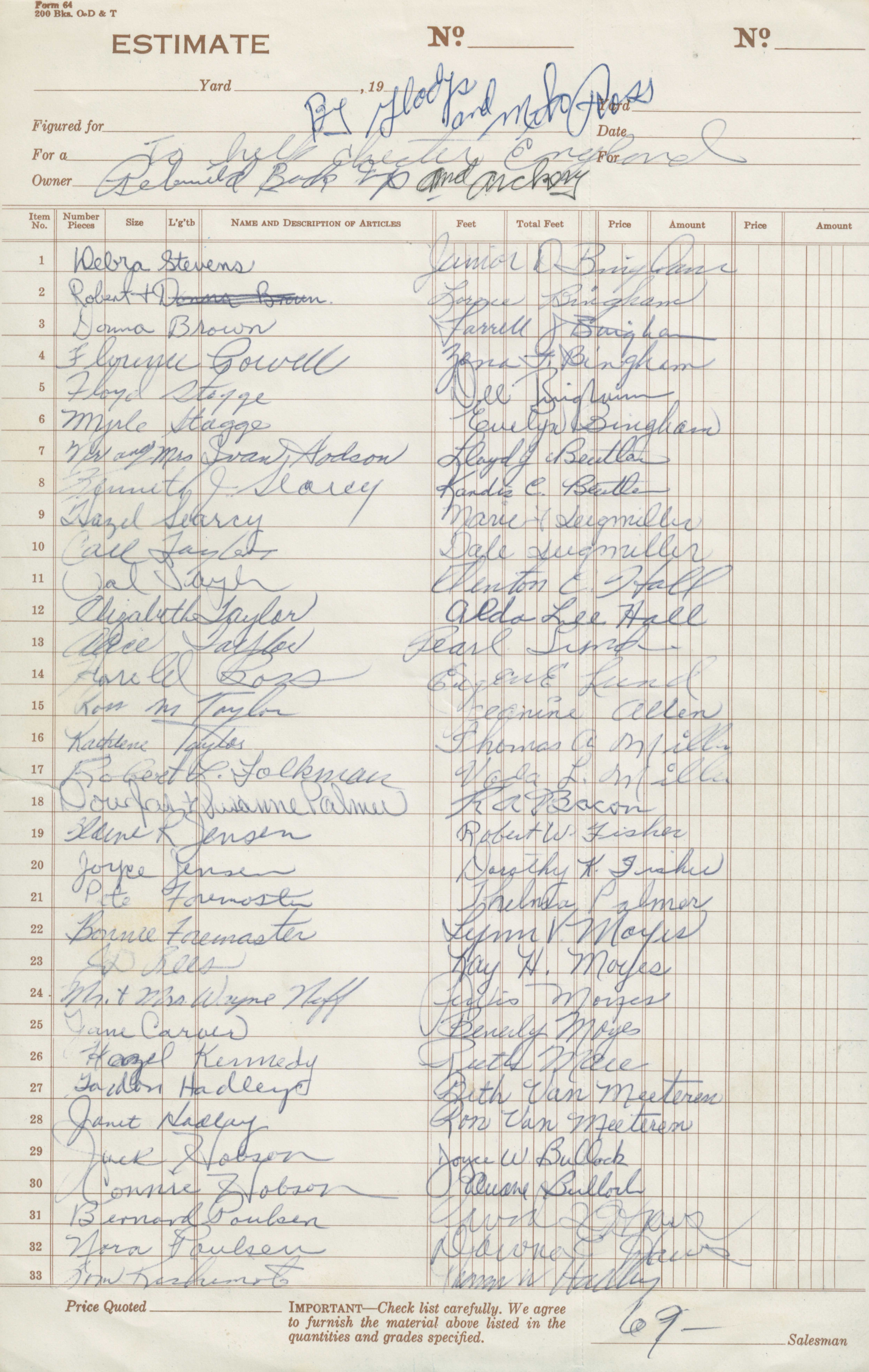
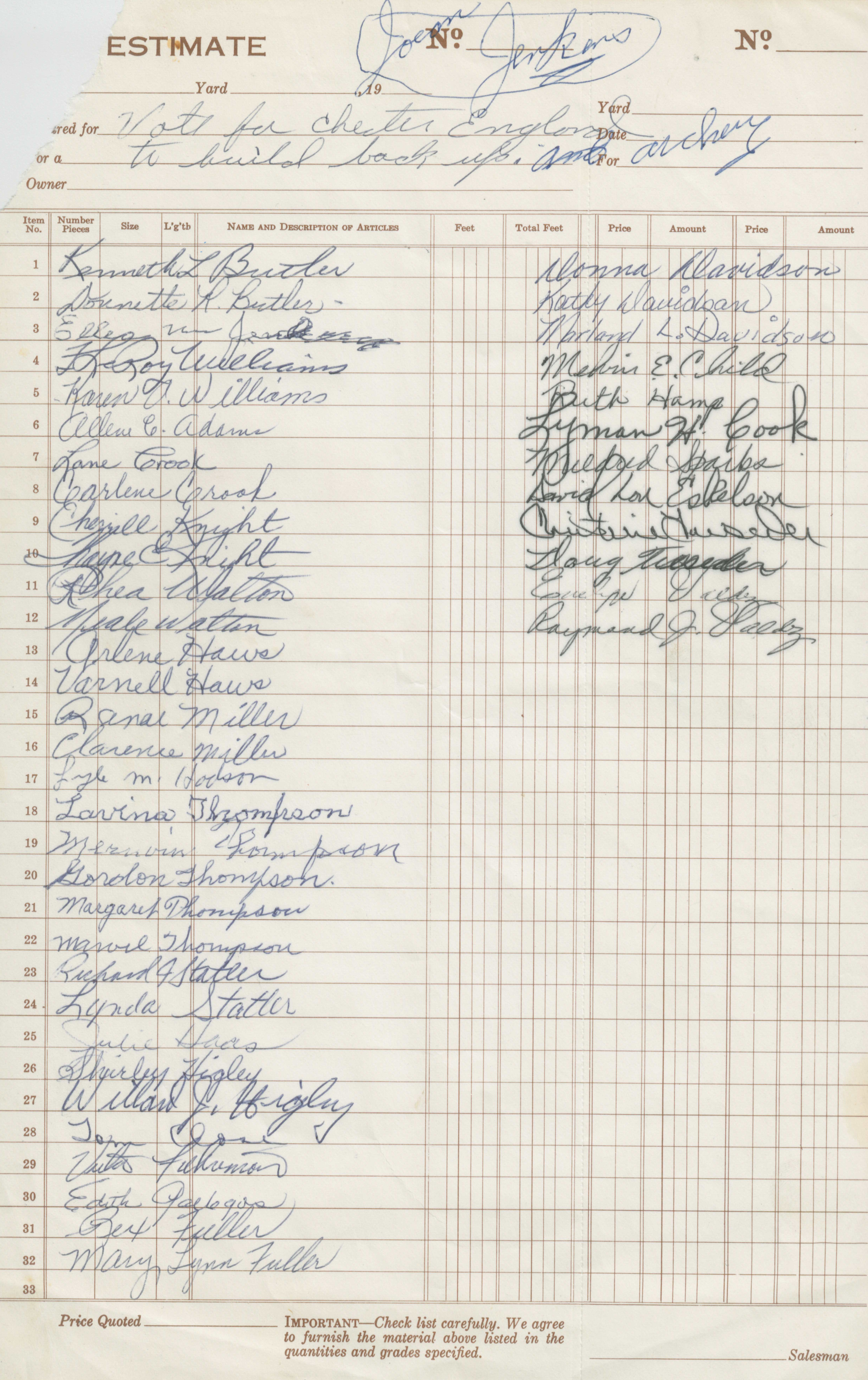
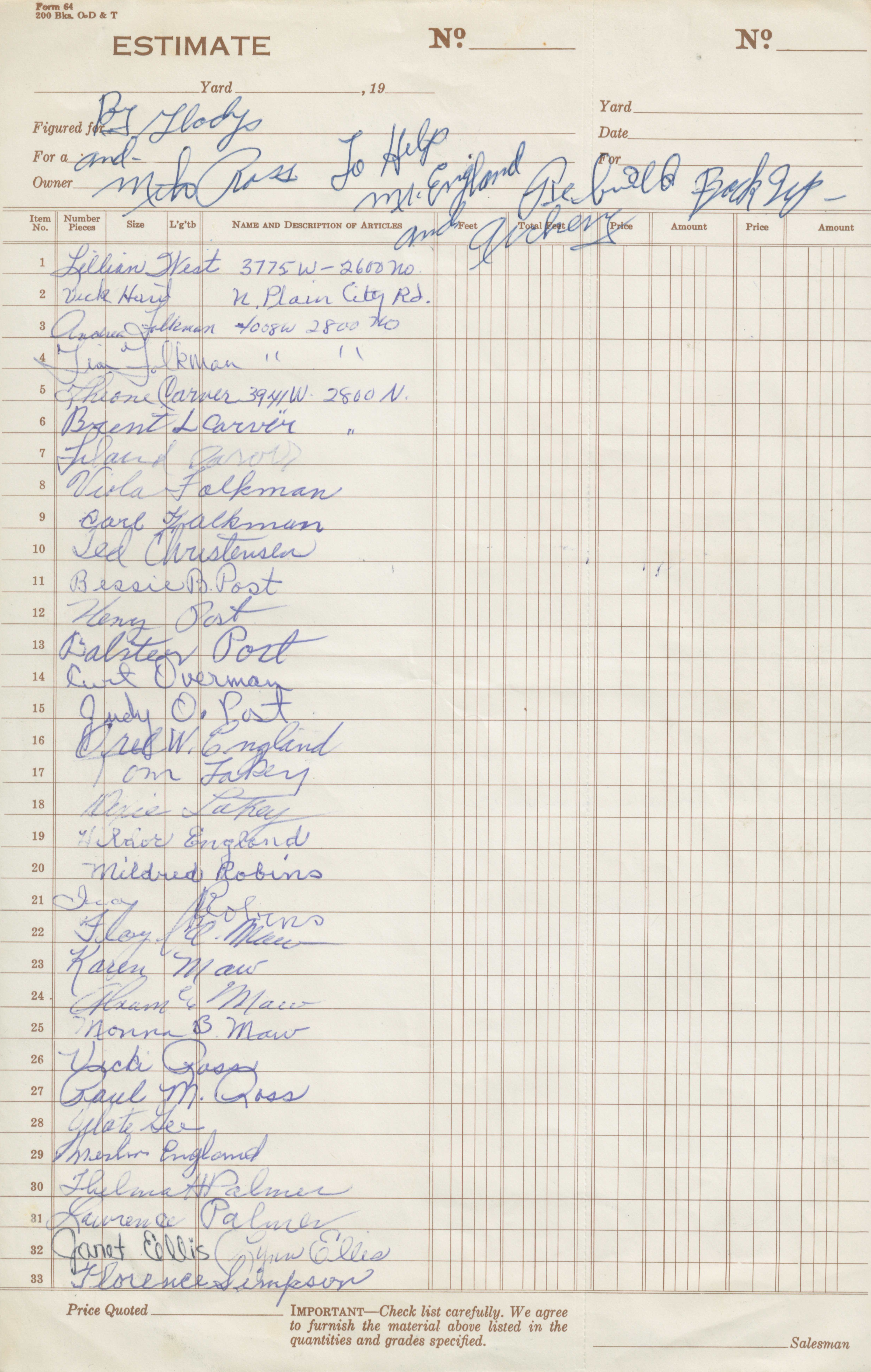
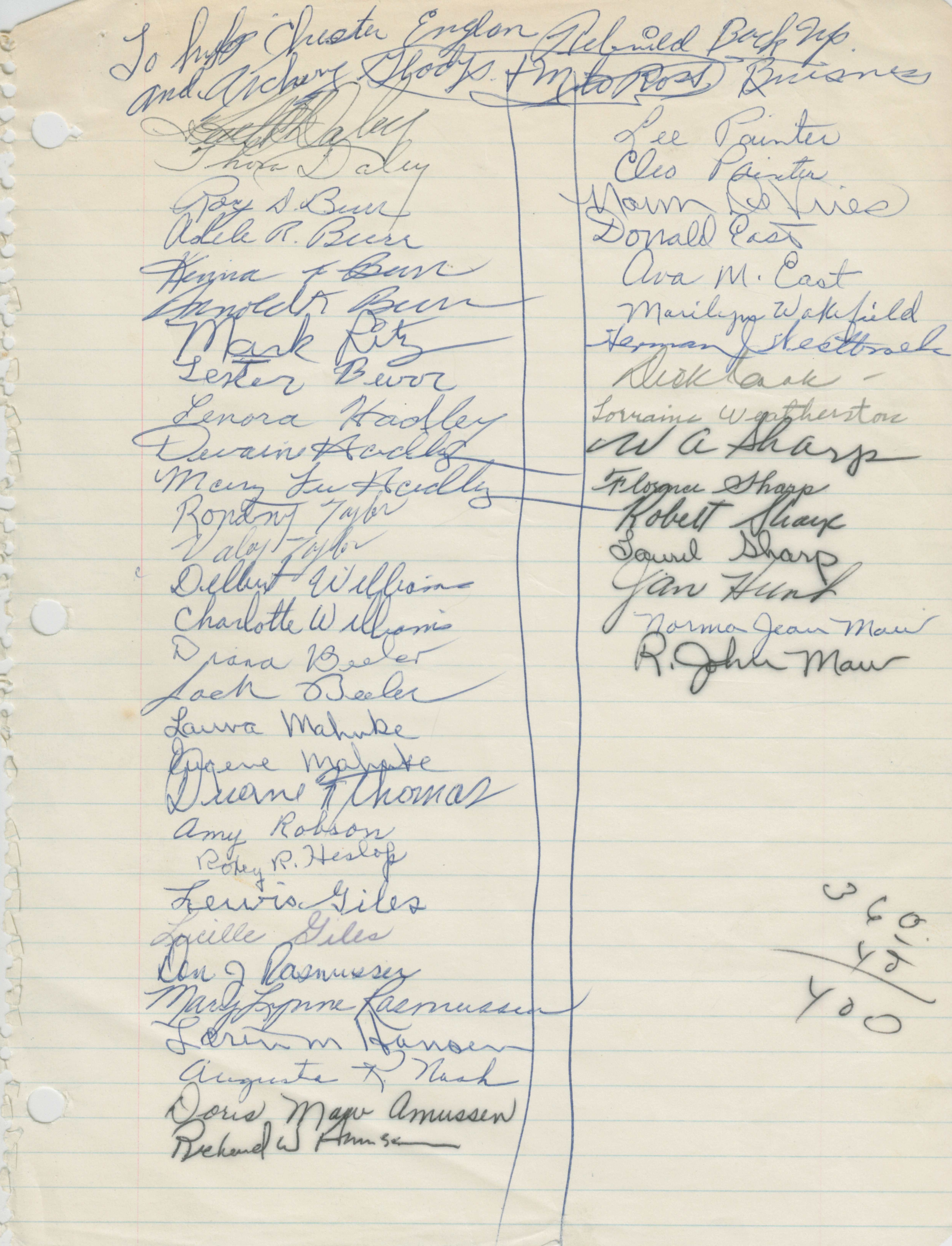
Complete List of Signers
Names marked with an asterisk (*) represent uncertain readings of the cursive originals. Dates are given where confirmed through research. This list was transcribed from handwritten signatures; corrections and additions are welcome.
Adams, Alice
Adams, Allene C.
Adams, Calvin Rex
Allen, Jeanine
Alsup, Marguerete W.*
Alsup, Phil S.
Amussen, Doris Maw
Amussen, Richard W.
Ashdown, Rex R.
Ashdown, Virginia
Bacon, R.A.
Baker, Dean A.
Baker, Penny
Baker, Tom D.
Baker, Vivian
Beeler, Diana
Beeler, Jack
Beutler, Kandis C.
Beutler, Lloyd J.
Bingham, Dee
Bingham, Evelyn
Bingham, Farrell J.
Bingham, Junior D.
Bingham, Lorene
Bingham, Zona F.
Brown, Donna
Brown, Robert
Bullock, Duane
Bullock, Joyce W.
Bunn, Carol
Bunn, John H.
Burr, Adle R.
Burr, Arnold K.
Burr, Kenna F.
Burr, Lester
Burr, Roy D.
Butler, Donnette R.
Butler, Kenneth L.
Butterfield, Judy*
Calvert, Elaine
Calvert, Kent W.
Carver, Brent
Carver, Harold C.
Carver, Jane
Carver, Liland
Carver, Theone
Chase, Dannell
Chase, Ladd
Chase, LaRene G.
Chase, Norma P.
Child, Melvin E.
Chournas, Beverly*
Chournas, Chris*
Christensen, Barbara
Christensen, Darrell
Christensen, Ivan
Christensen, Ken
Christensen, Margaret
Christensen, Ted
Cliften, Elaine
Cliften, Robert
Close, Tom*
Cook, Dee
Cook, George
Cook, Harvey
Cook, Jennie
Cook, LaRae
Cook, Lyman H.
Corey, Dean
Corey, Fae
Costley, Elsie
Costley, Paul
Cowell, Florence
Crook, Carlene
Crook, Lane
Daley, Kenneth*
Daley, Thora
Dall, Kathie*
Davidson, Donna
Davidson, Kathy
Davidson, Marland L.
DeVries, Norm
Donaldson, Betty M.
Donaldson, David
East, Ava M.
East, Donald
East, Jimmy K.
Eddy, Beverly
Eddy, Max
Ellis, Carole
Ellis, Diana
Ellis, Donald B.
Ellis, Glen
Ellis, Janet
Ellis, Lynn
Ellis, Ray
England, Boyce
England, Chester R. (1896–1989)
England, Hildor (1896–1983)
England, Marvel S.
England, Maude K. (1897–1982)
England, Merlin
England, Mona
England, Orel W.
Eskelson, David Lon
Etherington, John E.
Etherington, Nelda
Fisher, Dorothy K.
Fisher, Robert W.
Folkman, Andrea
Folkman, Carl
Folkman, Clair
Folkman, Clara
Folkman, Cliff
Folkman, Jim
Folkman, LeRoy
Folkman, Norma
Folkman, Robert L.
Folkman, Viola
Foremaster, Bonne*
Foremaster, Pete
Fuller, Mary Lynn
Fuller, Rex
Fuhriman, Viola
Gallegos, Edith
Gee, Vilate
Giles, Lewis
Giles, Lucille
Grieve, Claramae
Grieve, Paul
Haas, Julie
Hadley, Barbara
Hadley, Connie
Hadley, Devaine
Hadley, Doug
Hadley, Gordon
Hadley, Howard
Hadley, Janet
Hadley, Karma W.*
Hadley, LaVirra*
Hadley, Lenora
Hadley, Mary Fee*
Hamp, Beth
Hansen, Gaylen G.
Hansen, Loren M.
Hansen, Nancy
Havseler/Tesseder, Christine*
Haws, Arlene
Haws, Darwin C.
Haws, Varnell
Heslop, Roxey R.
Higley, Shirley
Higley, Willard J.
Hill, Gary
Hill, Kae
Hipwell, Elmer
Hipwell, Joanne
Hipwell, Rosetta
Hobson, Connie
Hobson, Jack
Hodson, Delbert
Hodson, Lyle M.
Hodson, Mr. Ivan
Hodson, Ms. Ivan
Holmes, Doug
Holmes, Joanne
Hori, Nancy
Hori, Sam
Howard, Virgie
Howell, Kent*
Howell, Peggy J.
Hunt, Jan
Hurst, Vick*
Imlay, Nancy
Imlay, Terrence
Jackson, David W.
Jackson, George
Jackson, Mrs. George
Jackson, Mrs. Keith
Jackson, Keith
Jenkins, Ellen W.
Jenkins, Genevieve
Jenkins, Joan
Jenkins, JoAnn
Jenkins, Joyce
Jenkins, Quentin M.
Jenkins, Ronald
Jensen, Blaine R.
Jensen, Joyce
Jensen, June B.*
Jensen, Kit O.
Johansen, Barry L.
Johansen, Carol
Johnson, Judy B.
Johnson, Randy
Johnson, Rex L.
Jolly, Grace
Jolly, L.M.*
Jones, Kathy
Jones, Robert
Kapp, Clara Jean
Kapp, Leon
Kawa, Grant D.
Kelley, Bertha
Kelley, Gail
Kelley, Jesse R.
Kelley, Leona
Kennedy, Hazel
Kishimoto, Lorn
Knight, Argus*
Knight, Arson*
Knight, Cherrill (1931–2021)
Knight, Thayne E. (1931–2018)
Lakey, Dixie
Lakey, Tom
Large, Fred*
Large, Kay*
Larkin, Wade R.
Laub, William R.
Lord, Clarendon “Gene” (1929–2015)
Lord, Cline
Lund, Elizabeth
Lund, Eugene
Lund, Keith
Lund, Pearl
Mace, Rieths*
Mahoney, Kathryn
Mahnke, Eugene
Mahnke, Laura
Maw, Abram E.
Maw, Floy A.
Maw, Karen
Maw, Monna B.
Maw, Norma Jean
Maw, R. John
McFarland, Fenton
McMillan, Nola L.*
McMillan, Thomas A.*
Merrill, Paul O.*
Mikkelsen, Leo
Mikkelsen, Renee
Miller, Clarence
Miller, Ranae
Miller, Thomas A.
Miller, Veda L.
Moyes, Beverly
Moyes, Dale L.
Moyes, Edna
Moyes, Elaine
Moyes, Elbert
Moyes, Fentis*
Moyes, Ivan
Moyes, Juanita
Moyes, Kay H.
Moyes, LuJean
Moyes, Lynn V.
Moyes, Mable
Moyes, Orin
Moyes, Vernal
Nash, Augusta R.
Neff, Mr. Wayne
Neff, Ms. Wayne
North, Janet
North, Rick
Olofson, Mary L.
Olofson, Robert L.
Olsen, Ian*
Olsen, Mary
Olsen, Ron
Olsen, Yvonne
Orton, Gordon C. (1924–2008)
Orton, Leone
Overman, Curt
Painter, Cleo
Painter, Lee
Palmer, Douglas
Palmer, Lawrence
Palmer, Susanne
Palmer, Thelma H.
Palmer, Vern
Palmer, Viola (1908–2009)
Post, Bessie
Post, Judy O.
Poulsen, Bernard
Poulsen, Nora
Rasmussen, Don J.
Rasmussen, MaryLynn
Reese, J.D.
Rhead, Bonnie
Rhead, Steve
Rhead, Theron
Rhead, Vivian
Ritz, Mark
Robins, Jay*
Robins, Mildred
Robson, Amy
Roddomy, Ronald*
Rogers, Dennis O.
Rogers, Shareen
Roper, Mr. Rodney
Roper, Mrs. Rodney
Ross, Gladys (1921–2004) — organizer
Ross, Harold
Ross, Milo James (1921–2014) — organizer
Ross, Paul M.
Ross, Vicki (1945–2018)
Russell, Joe
Russell, Shirley
Sargent, Evona
Sargent, Kent
Saunders, Carl R.
Searcy, Hazel
Searcy, Kenneth J.
Seegmiller, Dale
Seegmiller, Marie F.
Sharp, Florence
Sharp, Laurel
Sharp, W.A.
Shaw, Jerrell B.
Shaw, Phyllis
Simpson, Archie W.*
Simpson, Florence
Singleton, Elmer (1918–1996)
Singleton, Elsie (–1988)
Singleton, VaCona
Skeen, Archie
Skeen, Charles
Skeen, Dick
Skeen, Lorraine
Skeen, Luella
Skeen, Wayne
Smith, LaWanna R.
Smith, Vernon J.
Sneddon, Dennis
Sorensen, Gordon A.
Sorensen, Karma
Sparks, Mildred
Stagge, Floyd
Stagge, Myrle
Statler, Lynda
Statler, Richard
Stevens, Debra
Stevens, Gwen C.
Stevens, John W.
Tafoya, Arthur
Tafoya, Via
Taylor, Alice
Taylor, Annette
Taylor, Call
Taylor, Clare
Taylor, Edna
Taylor, Elma
Taylor, Elvin L. (1920–2004)
Taylor, Elizabeth
Taylor, Fern
Taylor, Frances
Taylor, Gerald J.*
Taylor, Grant
Taylor, Idona Maw
Taylor, Jr.*
Taylor, Kathlene
Taylor, Kathy
Taylor, Ralph A.
Taylor, Rodney
Taylor, Rolla H.
Taylor, Ross M.
Taylor, Sheri
Taylor, Val
Taylor, Valoy (1932–2024)
Tesseder, Doug*
Thomas, Duane F.
Thompson, Gordon
Thompson, Lavina
Thompson, Margaret
Thompson, Marvel
Thompson, Merrvin*
Tippetts, Larry*
Truscott, L.C.
Truscott, LaVona
Valdez, Evelyn
Valdez, Raymond J.
Van Meeteren, Beth
Van Meeteren, Frank
Van Meeteren, Jean
Van Meeteren, Ron
Van Workom, Joyce*
Vaughn, Bert
Vaughn, Renee
Wakefield, Marilyn
Walton, Neale
Walton, Rhea
Weatherstone, Lorraine
West, George C.
West, Lillian
Westbrook, Herman
Weston, Becky
Weston, Brent
Weston, Eldon
Weston, Fae
Weston, Jae H.
Williams, Arnold A.
Williams, Charlotte
Williams, Delbert
Williams, F. LeRoy
Williams, Karen A.
Williams, Nadiene
Winder, Jane
Winder, Wayne
Wright, Norma