The England Fire of 1974

Plain City, Weber County, Utah is not a place that conjures images of billion-dollar industries. Its name suggests modesty, and its streets deliver on that promise โ€” quiet fields, small farms, and houses set back from roads that run straight and flat through Weber County. There is substantial residential development in the past two decades. Even then, this small town produced a remarkable concentration of American transportation entrepreneurial energy. At the center of it stands one man: Chester Rodney England.

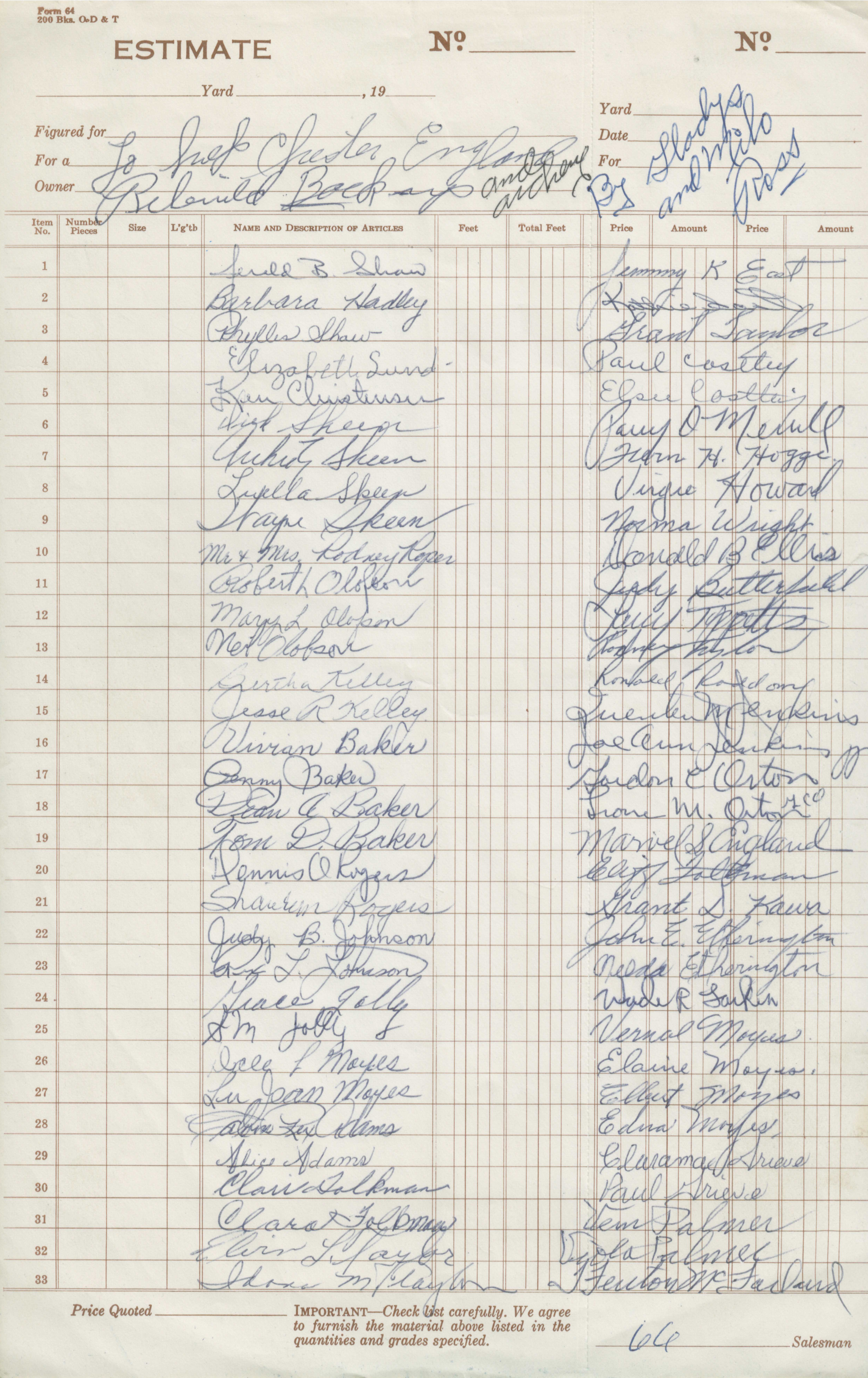
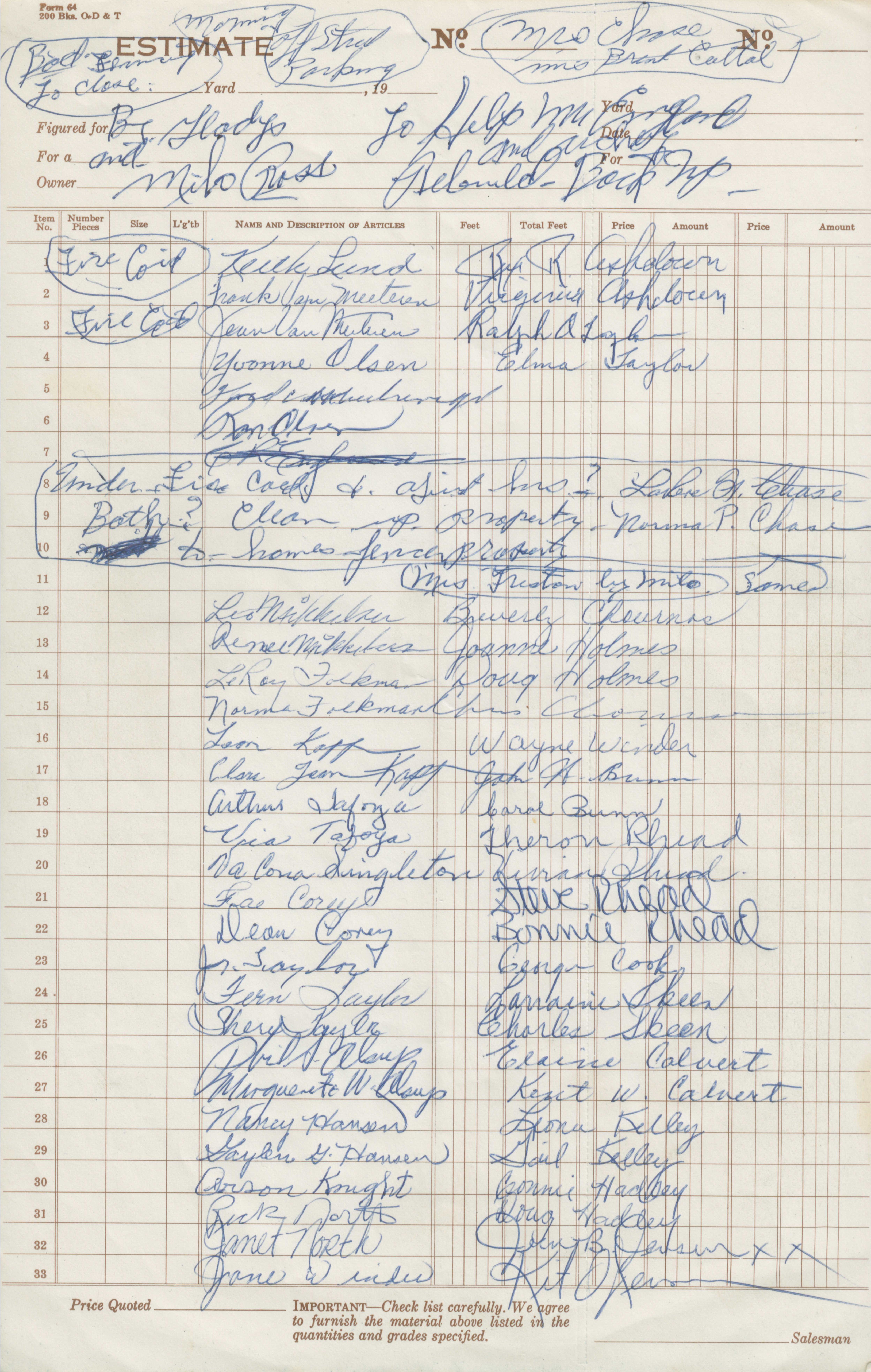
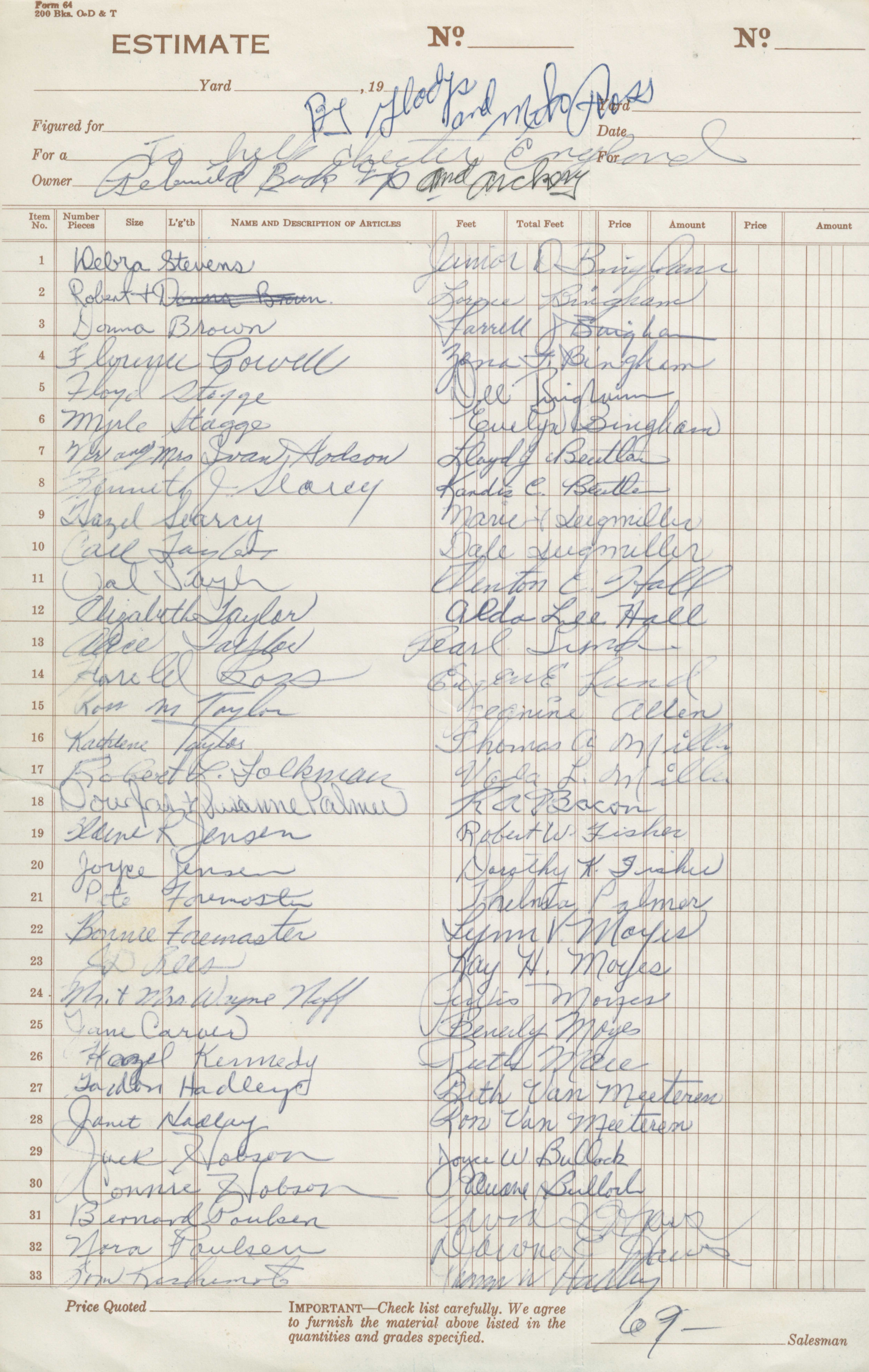
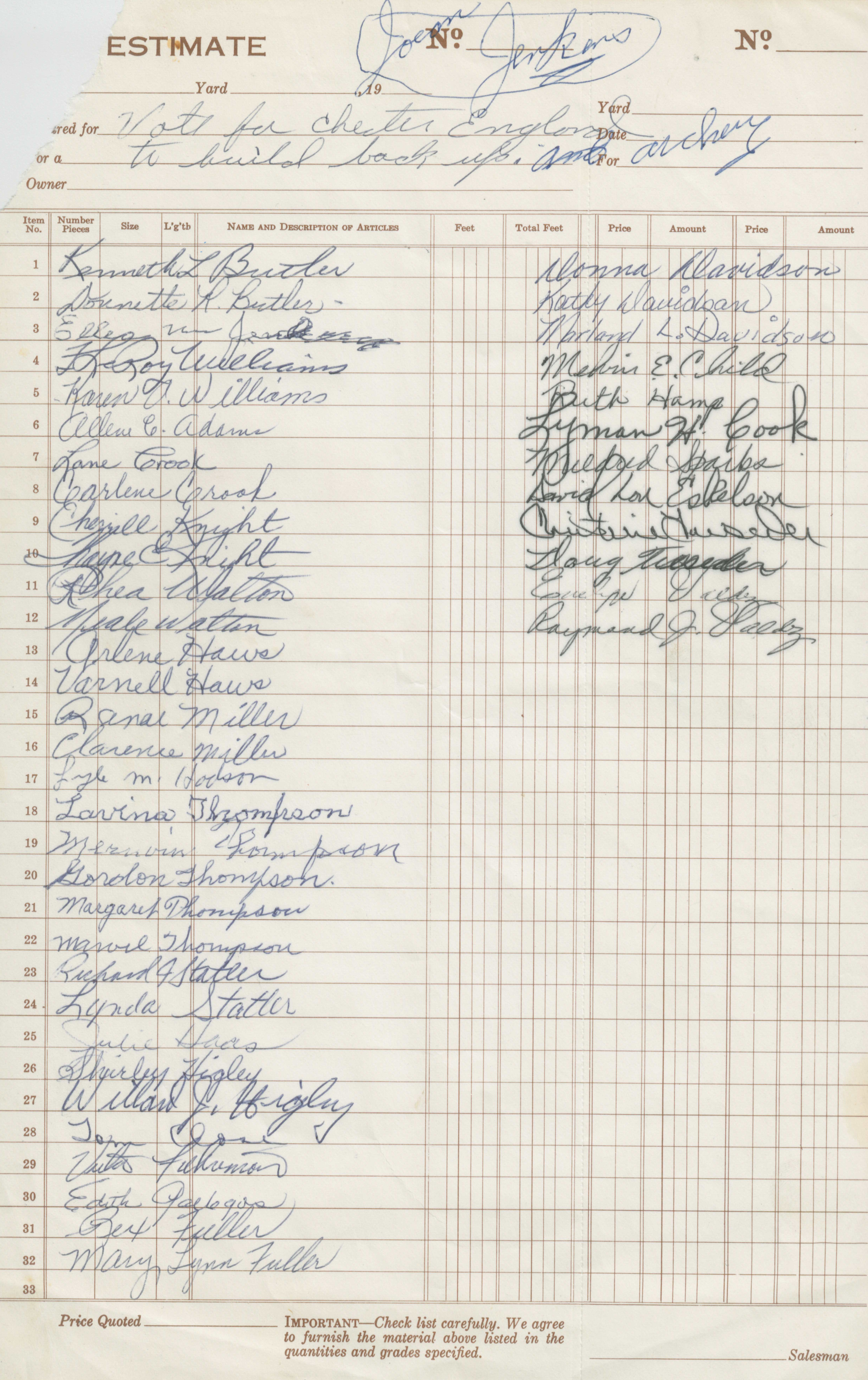
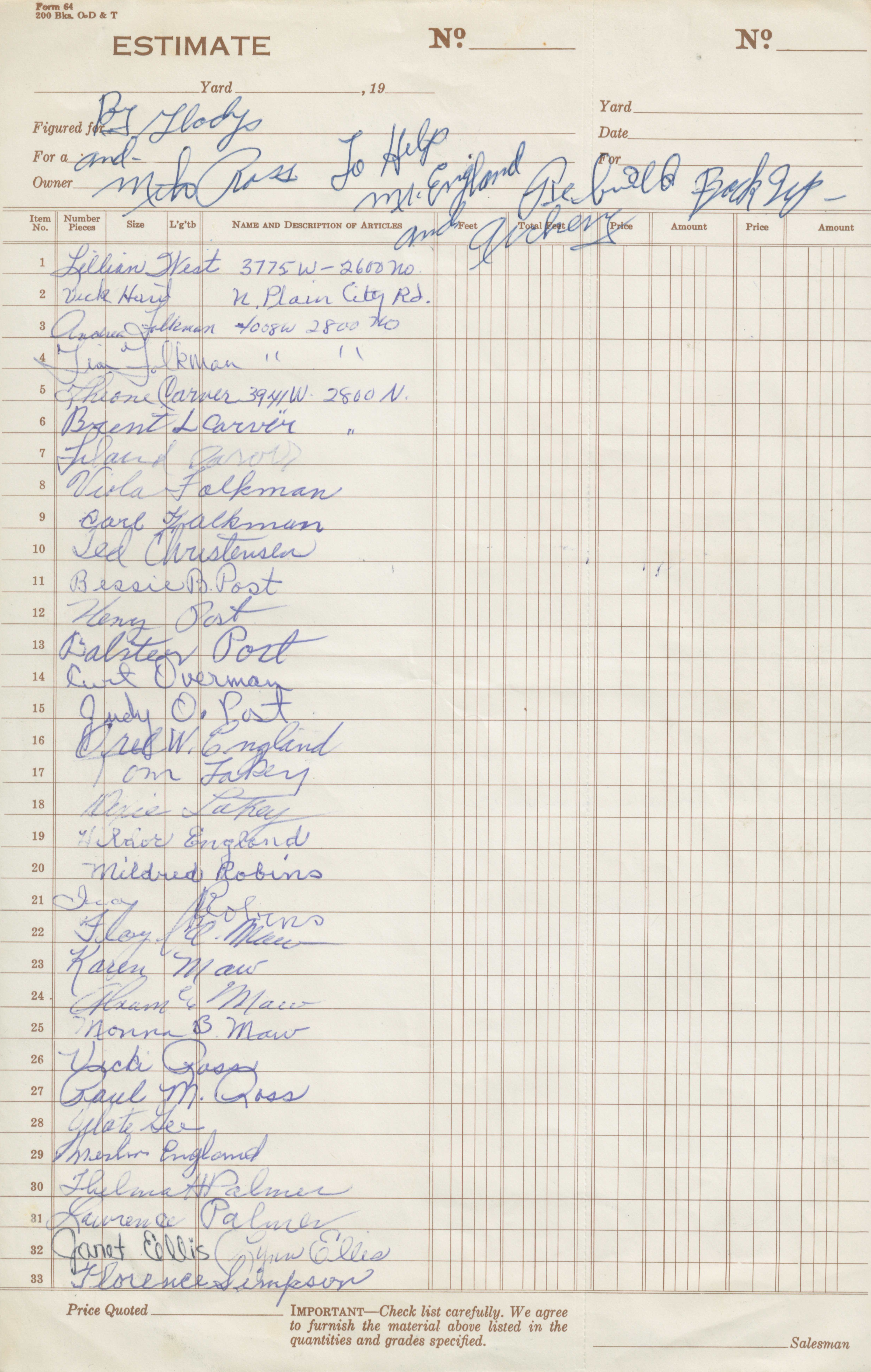
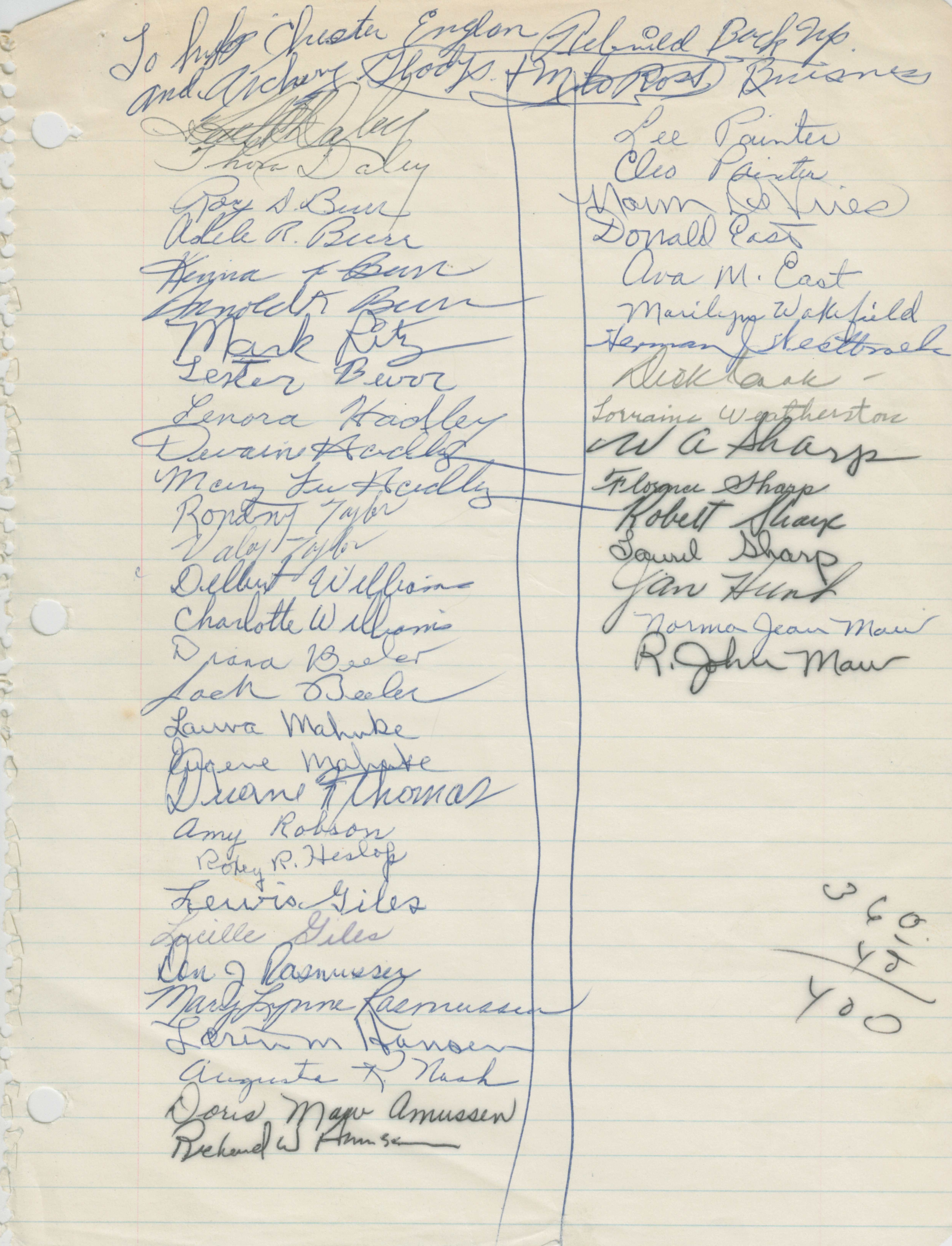
When a fire consumed Chesterโ€™s lumber yard on the evening of 6 April 1974, his neighbors rose to defend him to allow him to rebuild. Among those neighbors were my grandparents, Milo and Gladys Ross. What they did in the weeks that followed is documented below โ€” eight pages of signatures collected on lumber yard estimate forms, a newspaper clipping, and a typed petition text. This post tells the story behind those pages.

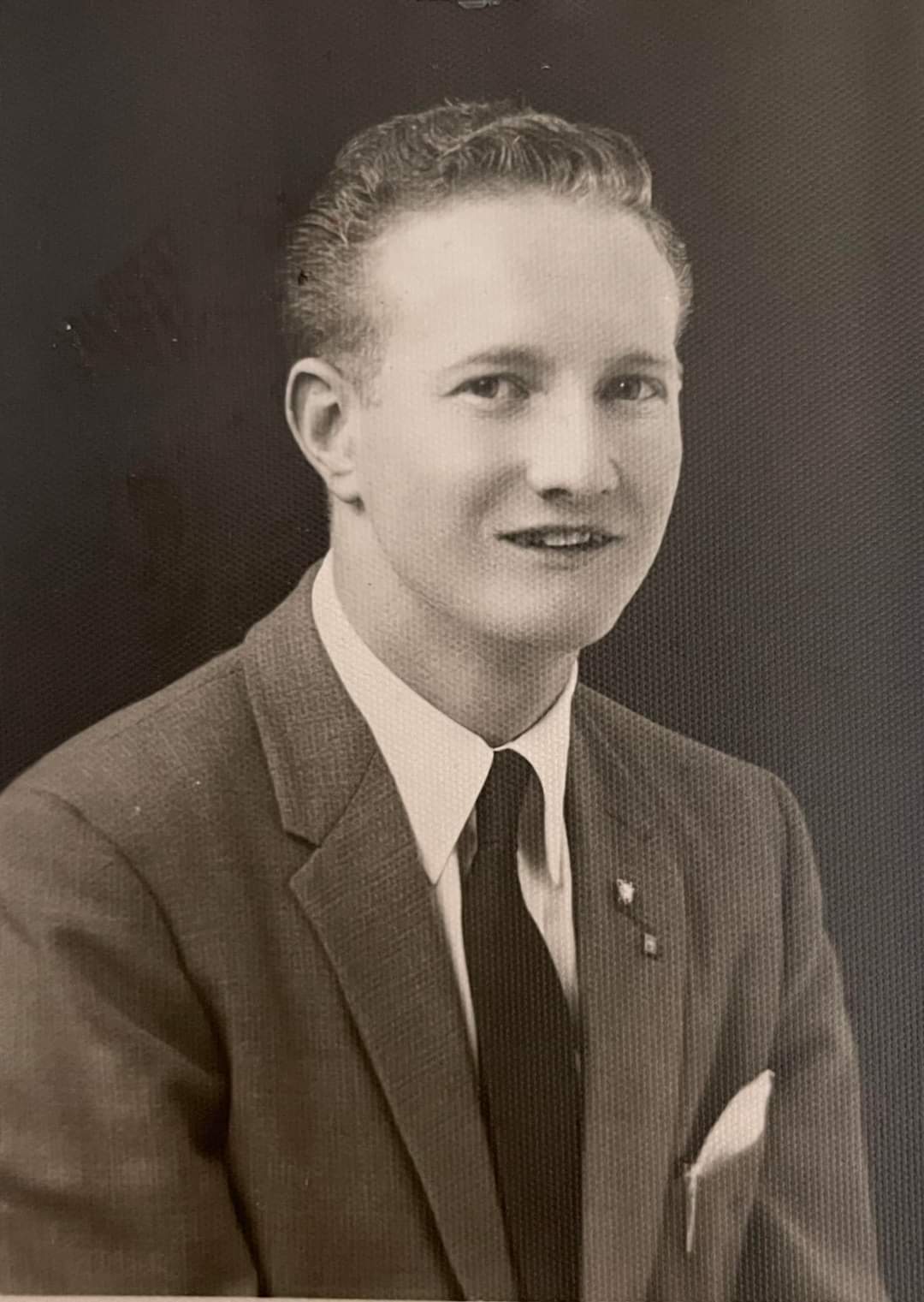
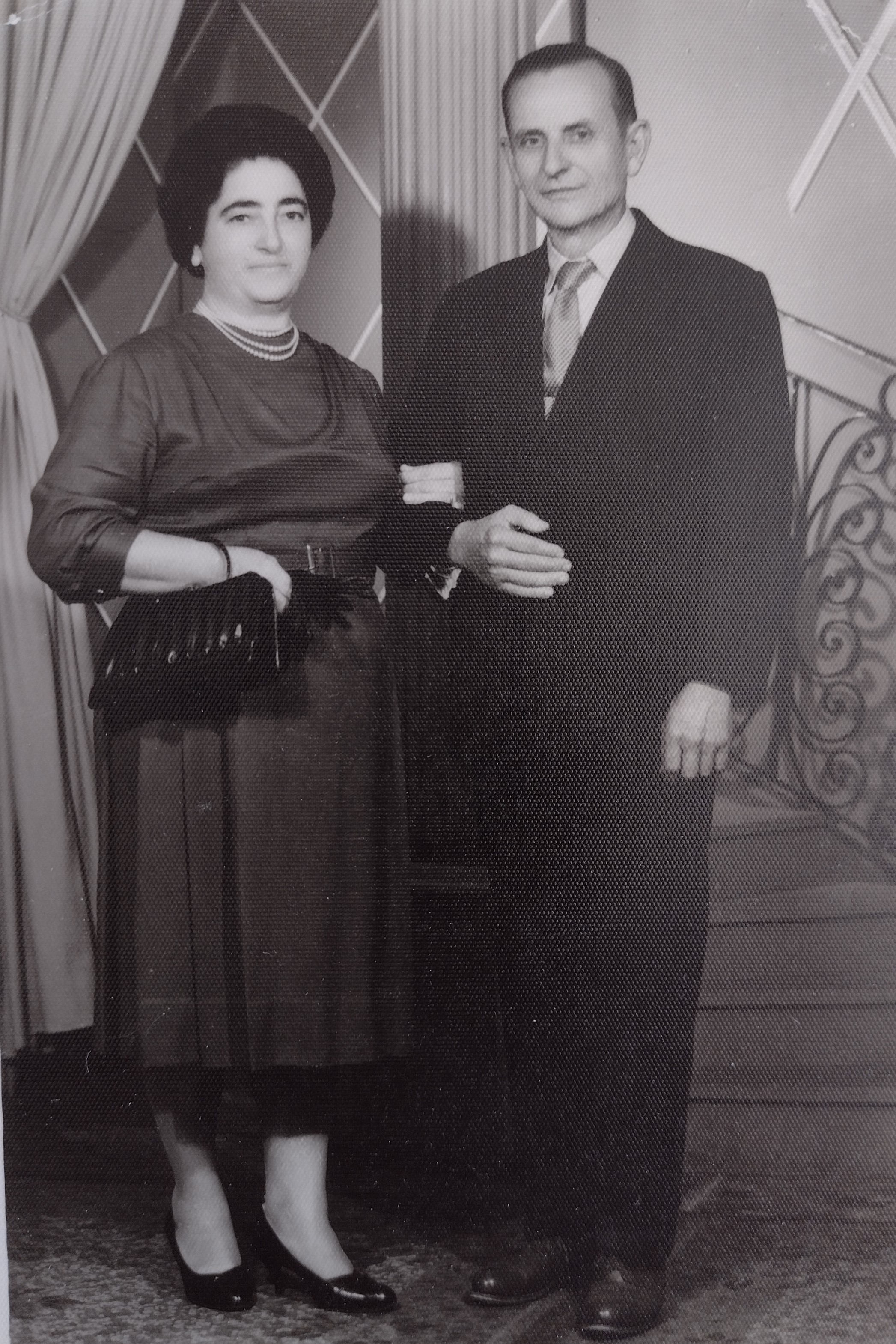
Chester and Maude

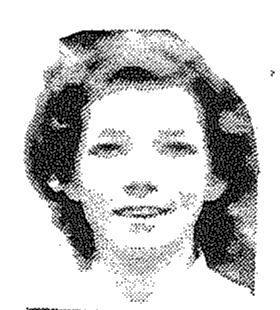
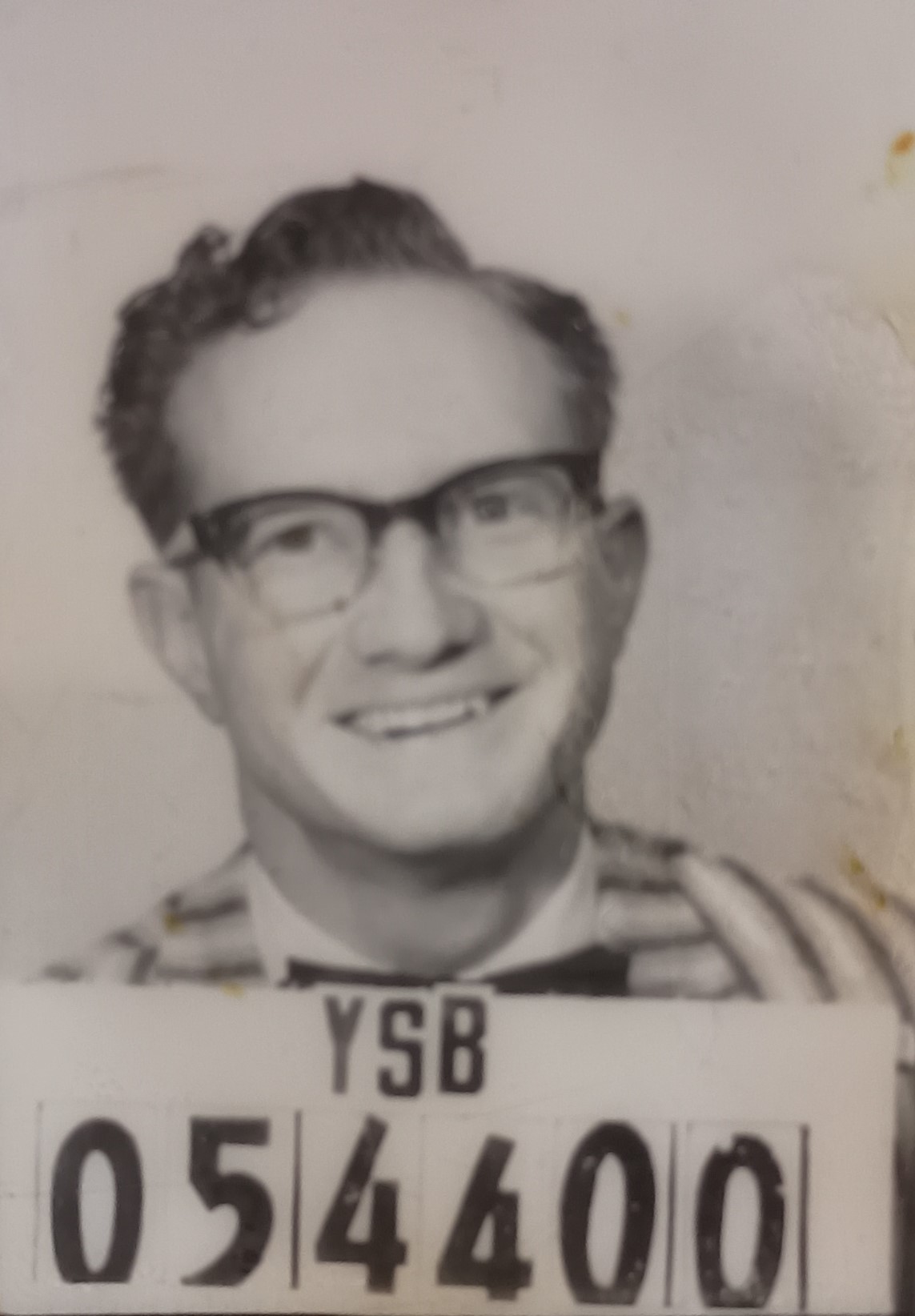
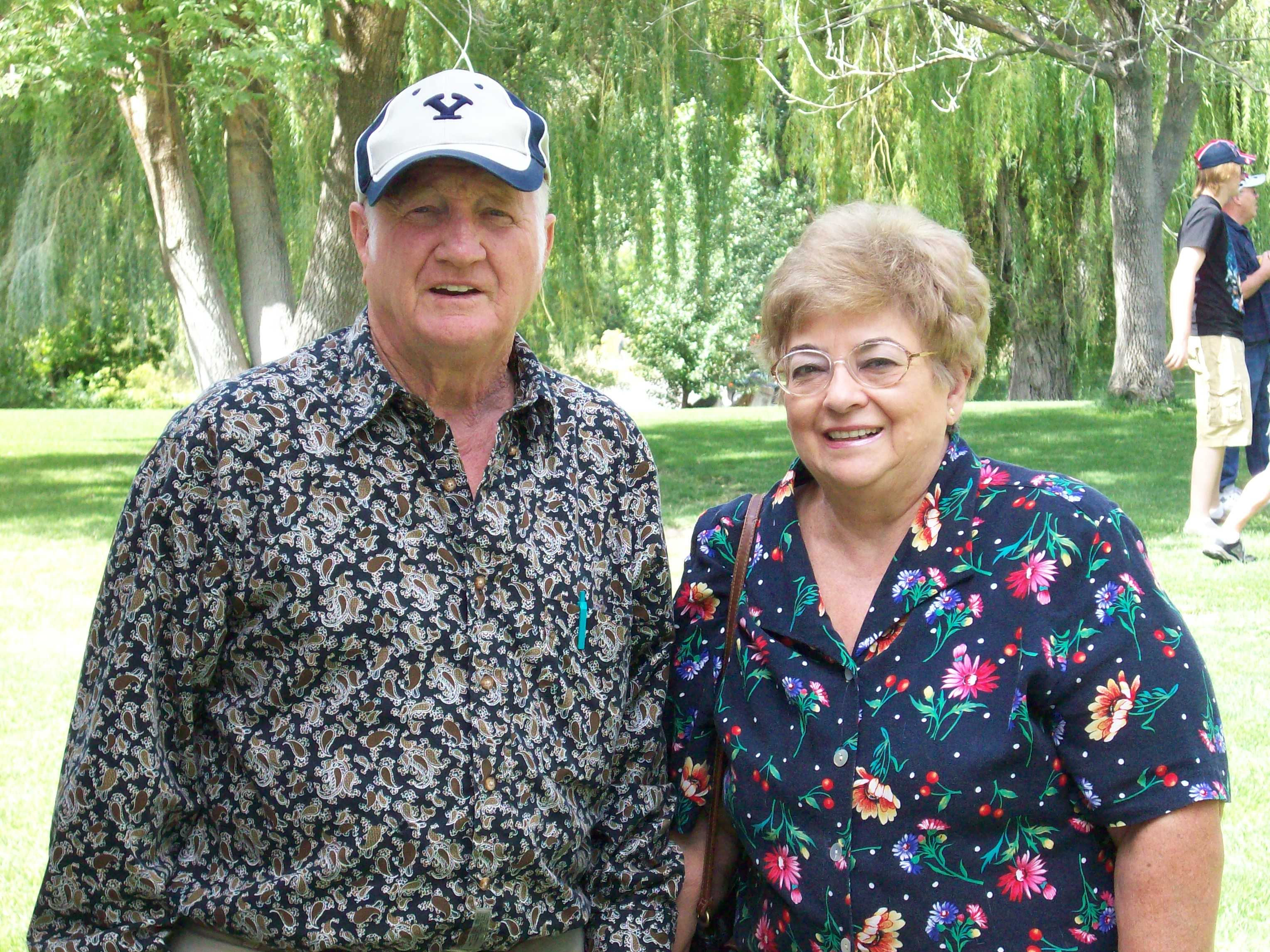
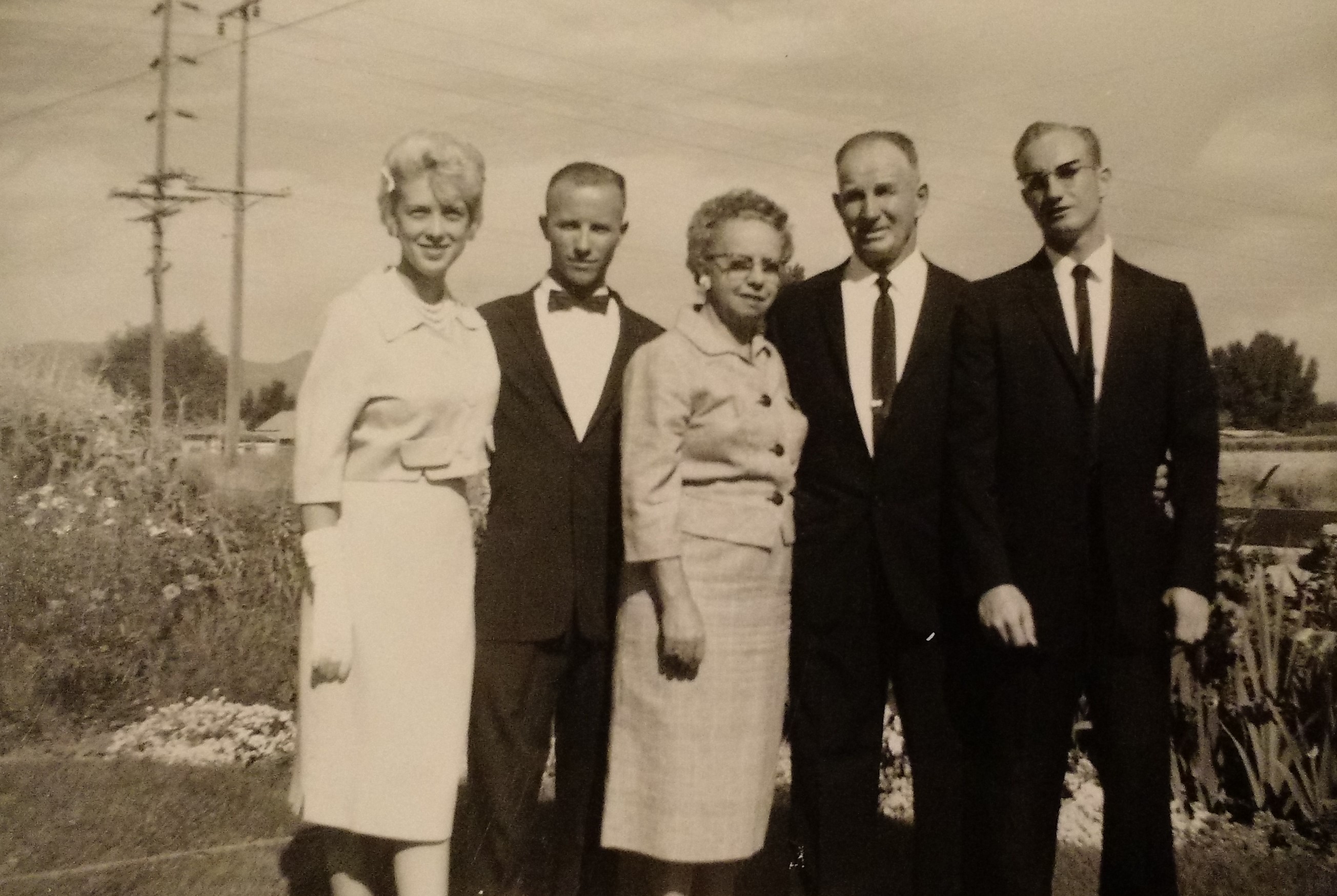
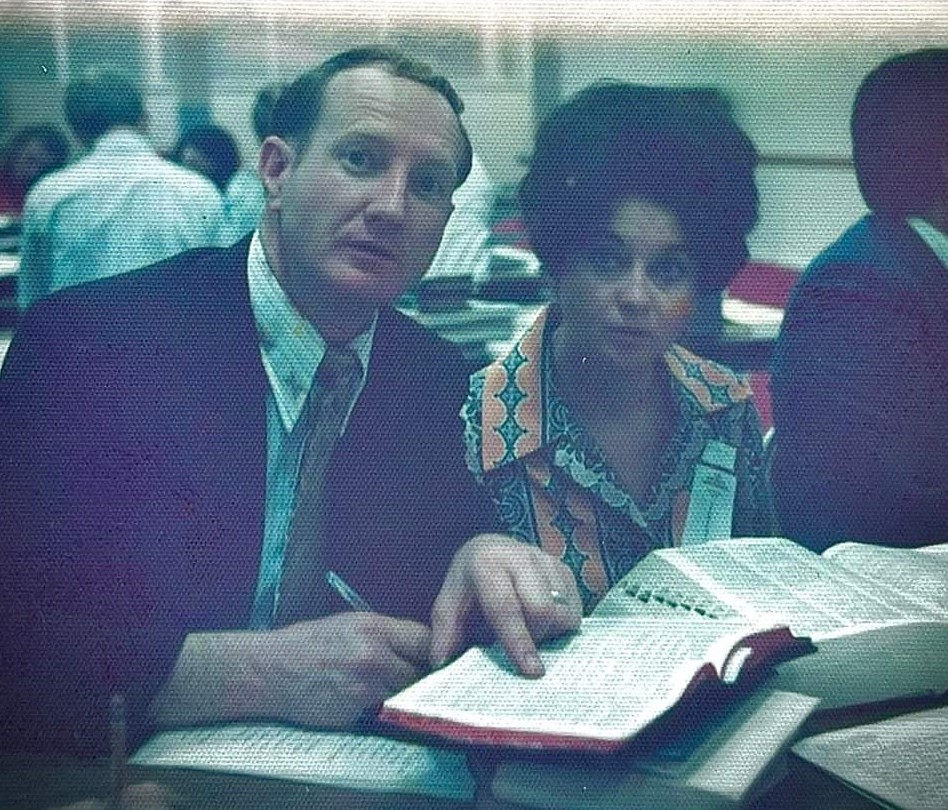
Chester Rodney England was born 12 November 1896 in Plain City to William and Ismelda Thueson England. He grew up there, attended Weber Academy, and in 1916 married Maude Vivian Knight โ€” a Plain City girl herself, born in August 1897. One month after their marriage, Chester received a mission call to the Southern States. He was set apart on 5 December 1916 by Apostle Anthony W. Ivins and left his new bride on 6 December 1916, serving for two years. He returned to find Utah in the grip of the 1918 influenza epidemic, his wife under quarantine, and her sister Elizabeth Knight Ericson dead. His mother was also ill, and he spent a week with his aunt Laura England before he could be with his family.

Chester wrote his own history late in life, and his voice is direct. After the mission he worked at the Amalgamated Sugar factory, farmed through the winters, bought a small Ford truck, and began hauling produce to the stores up through Cache Valley. โ€œI found I could make more money doing this than farming,โ€ he wrote, โ€œso I turned the farm back to my father.โ€ On 24 October 1919, his first son, Eugene Knight England, was born in Ogden. On 6 March 1923, his second son, William Knight England, followed. Two daughters, Rosemary and Carol, completed the family.

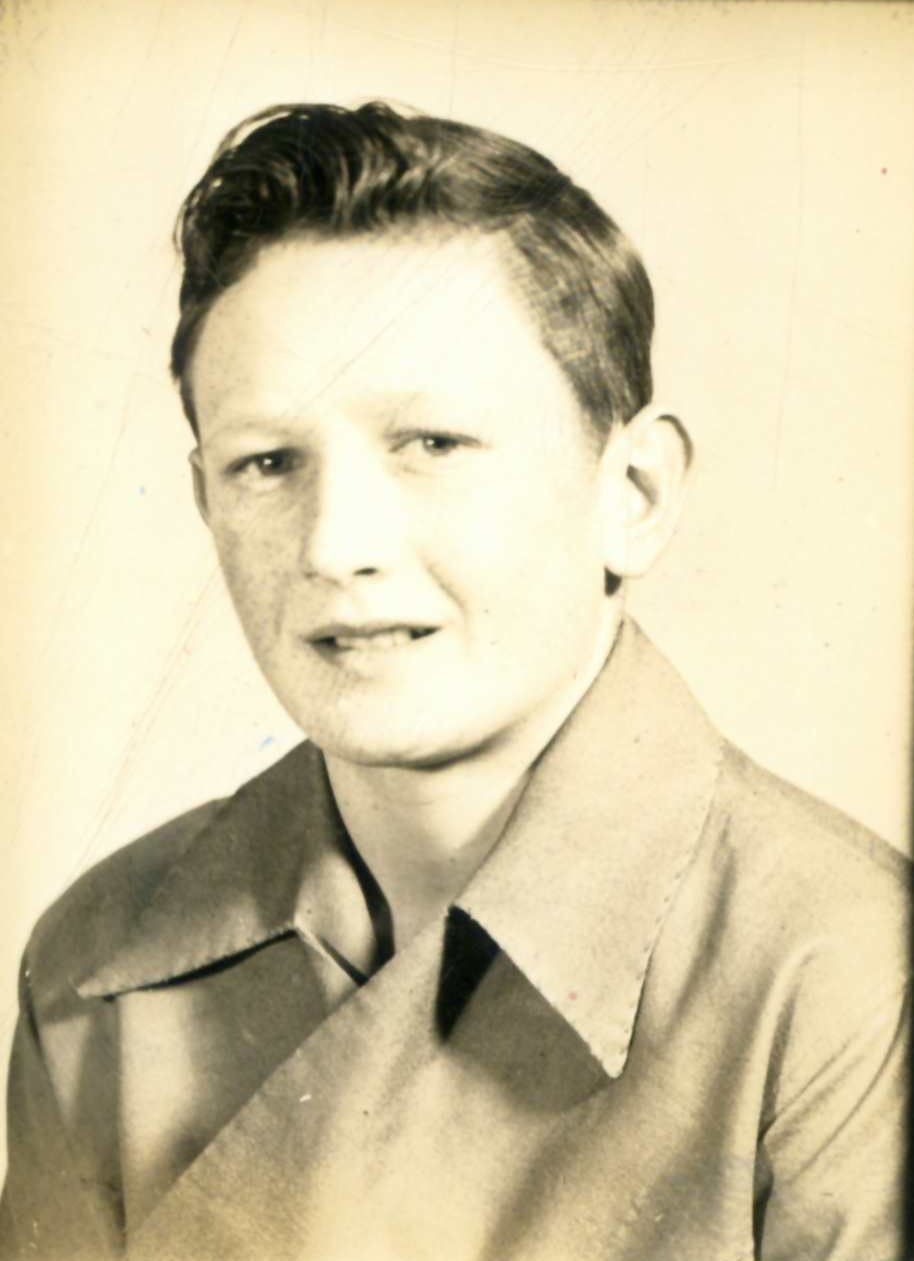
Milo James Ross
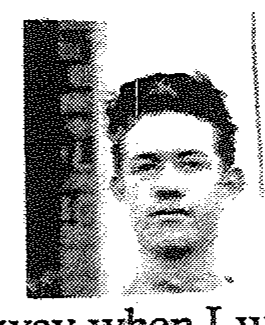
Milo James Ross (1921โ€“2014)

In 1924 the Weber Central Dairy Association organized and asked for bids to truck milk from the dairymen into the dairy on 19 Washington Boulevard in Ogden. Chester submitted his bid, was accepted, and trucked the first load. He delivered milk in the morning and hauled potatoes up through Cache Valley in the afternoon. Gene and Bill grew up in the business. During summers Chester took them along on the long hauls, building a shelf of boxes out from the cab seat so they could nap on the road. He made sure they always had a bottle of pop at each stop.

During World War II, while Gene and Bill served in the military, Chester hauled Mexican bananas coming into the country at El Paso, Texas, distributing them throughout Utah. Gene served in the 77th Infantry Division at Okinawa, earning the Bronze Star for crawling under fire to drag a wounded soldier to safety โ€” 129 men went up to the escarpment, 27 came back after 72 hours. Bill served in the Air Force in the Philippine Islands from 1943 to 1946. The two brothers found each other on Cebu using a coded letter โ€” Gene had written his middle initial as โ€œBโ€ to signal his location โ€” and Bill arrived with a mattress, making Gene the only man in his division sleeping on something other than a canvas cot. A letter written from the Hotel Keystone in San Diego in May 1946 โ€” Chester on the road at age 49 โ€” gives a picture of those years on the home front. He writes to his wife about a load of bananas, his plans to buy a semi-trailer, and his satisfaction that Gene and Bill are doing well.

Shortly after their return from service, Gene and Bill joined Chester hauling produce. Their first postwar hauls included lumber from Oregon back to Utah, and it was that trade that gave the family firsthand knowledge of the lumber market. The first diesel truck โ€” a used 1940 Kenworth conventional โ€” was purchased during this period. As the business grew, the company also ran two packing sheds and a storage facility for Idaho potatoes at its peak. Around 1957, an unforeseen change in the potato hauling market prompted Gene and Bill to file applications for ICC licenses to haul all kinds of freight, opening an entirely new range of products and geographic lanes. That same year, C.R. England offered 72-hour coast-to-coast service, the first such offering available to American shippers. The first trip east was made by driver Robert Gould in a new 1959 Kenworth, tractor number 17, hauling produce from California to Philadelphia.

In the 1950s Chester stepped back from trucking, leaving Gene and Bill to run what had become C.R. England & Sons. He returned his attention to Plain City. As he wrote: โ€œOur sons retired me from C.R. England & Sons so I started building homes on our property in Plain City. I soon decided I needed a lumber yard if I was going to continue to build. In 1960 I built a lumber yard on the property just west of the home we had sold.โ€ The familyโ€™s years hauling lumber from Oregon had given Chester intimate knowledge of the lumber trade, and that knowledge informed the decision. He built three homes on adjacent property and sold them to Keith Lund, Ray Cottle, and Blaine Gibson. He built 25 homes in Plain City and many others throughout Weber County. He built a 12-unit apartment complex in Roy. He took second mortgages from young couples who could not otherwise buy. โ€œIt was a great satisfaction to have young couples come and tell me they would never have bought their homes without my help,โ€ he wrote.

Maude was with him through all of it. Born in Plain City in August 1897, she never really left. She served as president of the Plain City Primary, held positions in the Relief Society throughout her life, and attended the Ogden Temple with Chester twice a week when they could manage it. She died in Plain City on 12 February 1982, having lived there her entire 84 years. Chester moved to Salt Lake City after her death and died there on 5 January 1989. He is buried beside her in Plain City Cemetery.

The Sugar Factory

The sugar factory was woven into both families long before the fire. The Amalgamated Sugar Company plant at Wilson Lane, just south of Plain City, was one of the economic anchors of Weber County from the early twentieth century onward. Plain City farmers hauled beets to the rail dumps each fall for decades; the railroad that came to Plain City in 1909 arrived largely to move beet cars to that factory. Chester England worked at the sugar factory himself after returning from his mission in late 1918, spending two winters there before he turned to farming and then trucking.

Miloโ€™s father, John โ€œJackโ€ Ross, worked for Amalgamated Sugar much of his adult life, following the company between its Ogden, Burley, and Paul, Idaho plants as work demanded. That movement accounts for the geography of the Ross children: Milo was born in Plain City in 1921, his brother Paul born in the town of Paul, Idaho in 1922, and Harold born in Burley in 1924. Amalgamated Sugar built its Paul factory in 1917, and families from the Plain City area followed the work north. The factory experienced difficult early years โ€” a postwar agricultural depression after World War I, and then the beet leafhopper blight that devastated crops through the 1920s and into the 1930s โ€” but it survived to become, in time, the largest sugarbeet processing facility in the world. Chester England and Jack Ross were contemporaries who had worked for the same company in the same corner of northern Utah before either of them had settled into the lives their families would remember them by. For more on the sugar factoryโ€™s role in Plain Cityโ€™s history, see History of Plain City Pt. 1.

The Cradle of American Trucking

Chester Englandโ€™s 1920 Model T purchase was the seed of something considerably larger than one familyโ€™s business. Four major American trucking companies trace their origins directly to Plain City, and all four connect back to Chester. The Standard-Examiner and C.R. Englandโ€™s own history have documented this story in detail.

C.R. England & Sons grew steadily through the postwar decades into one of the largest refrigerated carriers in the United States, eventually operating a fleet approaching 4,000 trucks and headquartered in Salt Lake City. Gene England served as president of the company well into his later years, still coming into the office daily at age 88. He died on 13 November 2024 at the age of 105. Bill England, who married Fern Hadley โ€” a Plain City Hadley, the same family that signed the petition โ€” died on 28 March 2018 at age 95. He spent his last ten years without sight but maintained, as his family recorded, an extraordinary optimism throughout. He entitled his life history โ€œIt Is As Good As It Gets.โ€

Carl Moyes had driven trucks for C.R. England in his younger years. In the late 1950s, Carl and his wife Betty started B&C Truck Leasing in Plain City. In 1966, when their son Jerry graduated from Weber State College, the family moved to Phoenix, Arizona and formed the company that would eventually become Swift Transportation โ€” for many years the largest truckload carrier in the United States. Jerry Moyes later observed that he liked to say there was โ€œdiesel in the waterโ€ in Plain City, and that the people there were conceived in sleeper cabs.

In 1990, brothers Kevin and Keith Knight and their cousins Randy and Gary Knight left Swift to found Knight Transportation. All four had grown up in Plain City and gotten their start working for the Moyes familyโ€™s Swift Transportation. The Knights were also related to Maude Knight, who had married Chester England in 1916, making them family to the man who started the Plain City trucking tradition. Knight Transportation started with five trucks; four years after going public the company had between 250 and 300. Knight and Swift announced a merger in April 2017, creating Knight-Swift Transportation, valued at an estimated $5 billion with approximately 23,000 tractors and 77,000 trailers.

In 1976, Jeff England โ€” Geneโ€™s oldest son and Chesterโ€™s grandson โ€” bought his first truck while still working at C.R. England as an owner-operator, initially under the name โ€œPride of England Enterprises.โ€ In 1979, with three trucks and a haul contract moving produce from California to New York, he left the family firm to go fully independent. His wife Pat was his partner from the beginning. In the early 1980s he assembled a group of investors, purchased ten more trucks, and rebranded as Pride Transport Inc. By 2017 the company operated a fleet of 500 trucks. In 2012 Jeff passed ownership to his son Jay England. Jeff England said of his decision to leave: โ€œI felt that I needed to do my own thing.โ€ He was 76 at the time of that interview and still driving a truck a couple of times a month.

The fuel infrastructure serving these fleets also has roots in this region. O. Jay Call, who came to Willard, Utah in the mid-1960s, founded Flying J in 1968, naming it for his love of flying, and built it into the largest retailer of diesel fuel in North America. His uncle, Reuel Call, had founded Maverik convenience stores in 1928 in Afton, Wyoming. FJ Management acquired Maverik in 2012. The Call familyโ€™s fuel network and the England-Moyes-Knight trucking empire developed in the same northern Utah environment across the same decades.

In September 2022, representatives of all four trucking firms gathered at Peeryโ€™s Egyptian Theater in Ogden for the premiere of a documentary about their shared origins. Gene England, then 102 years old, was present on stage alongside Jeff and Dan England, Jerry Moyes, and Kevin Knight.

The Fire

On the evening of 6 April 1974, Chester England went over to open up the lumber yard. He was 77 years old.

He described what followed in his own autobiography:

As I opened the office door, the place exploded and was engulfed with flames. It had been smoldering during the night. We do not know what caused it but it burned everything. I ran in to get the invoices but the ceiling began falling and burned holes in my jacket so I could have lost my life. This was a terrible experience watching everything you have worked hard for go up in flames. I was down in bed for 10 days from shock. We had insurance on it but I had been buying so much merchandise that the insurance didnโ€™t begin to pay for the loss. I appreciated the fire department and the ward members who worked so hard to help. It took many weeks after to clean up. My family thought I should retire and not build it up again. However, I knew I wouldnโ€™t be happy without something to do so I started rebuilding as soon as I could.

The 1977 History of Plain City records the fire at โ€œEngland Builderโ€™s Lumber Companyโ€ and gives the date as April 6, 1975. That date appears to be a transcription error in the town history; Chesterโ€™s own autobiography gives 6 April 1974, and that account is the primary source. The fire also destroyed the adjacent Leigh Archery Company, operated by LeGrande Leigh and Robert Jones. The insurance fell short. Chester was 77 and his family urged him to retire. He refused.

Plain City Will Consider Future of the Lumberyard

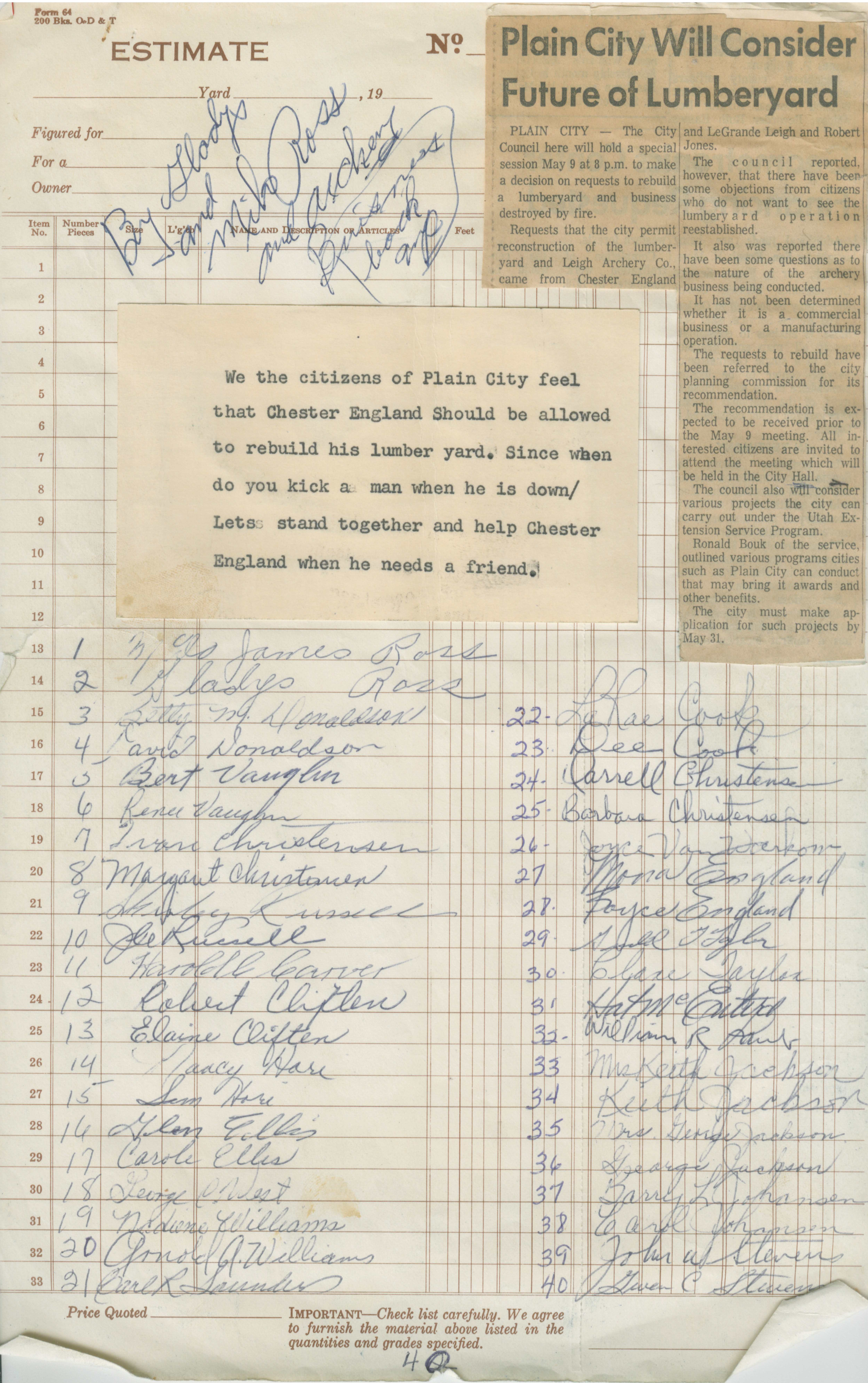
A newspaper clipping, attached to the first petition page, reported what happened next:

PLAIN CITY โ€” The City Council here will hold a special session May 9 at 8 p.m. to make a decision on requests to rebuild a lumberyard and business destroyed by fire.

Requests that the city permit reconstruction of the lumberyard and Leigh Archery Co. came from Chester England and LeGrande Leigh and Robert Jones.

The council reported, however, that there have been some objections from citizens who do not want to see the lumber operation reestablished.

It also was reported there have been some questions as to the nature of the archery business being conducted. It has not been determined whether it is a commercial business or a manufacturing operation.

The requests to rebuild have been referred to the city planning commission for its recommendation. The recommendation is expected to be received prior to the May 9 meeting. All interested citizens are invited to attend the meeting which will be held in the City Hall.

The council also will consider various projects the city can carry out under the Utah Extension Service Program. Ronald Bouk of the service outlined various programs cities such as Plain City can conduct that may bring it awards and other benefits. The city must make application for such projects by May 31.

Some citizens did not want Chester to rebuild. And so his neighbors organized.

Milo and Gladys Ross

Milo and Gladys Ross
Milo and Gladys Ross, 30 May 1942

Milo James Ross (1921โ€“2014) was born 4 February 1921 in a log cabin just north of Plain City. His mother, Ethel Sharp Ross, died of puerperal septicemia in August 1925 when Milo was four years old, leaving three surviving boys. Milo went to live with his Uncle Ed Sharp, Harold with Uncle Dale Sharp. They were raised in separate homes within a few blocks of one another in Plain City, the extended Sharp family absorbing the loss. For more on the Sharp familyโ€™s tragedies, see Sharp Tragedies.

Milo grew up working Ed Sharpโ€™s farm โ€” tending onions, hauling salt from the flats at Promontory, doing whatever needed doing. He played baseball with the Plain City Farm Bureau team and attended Weber High School.

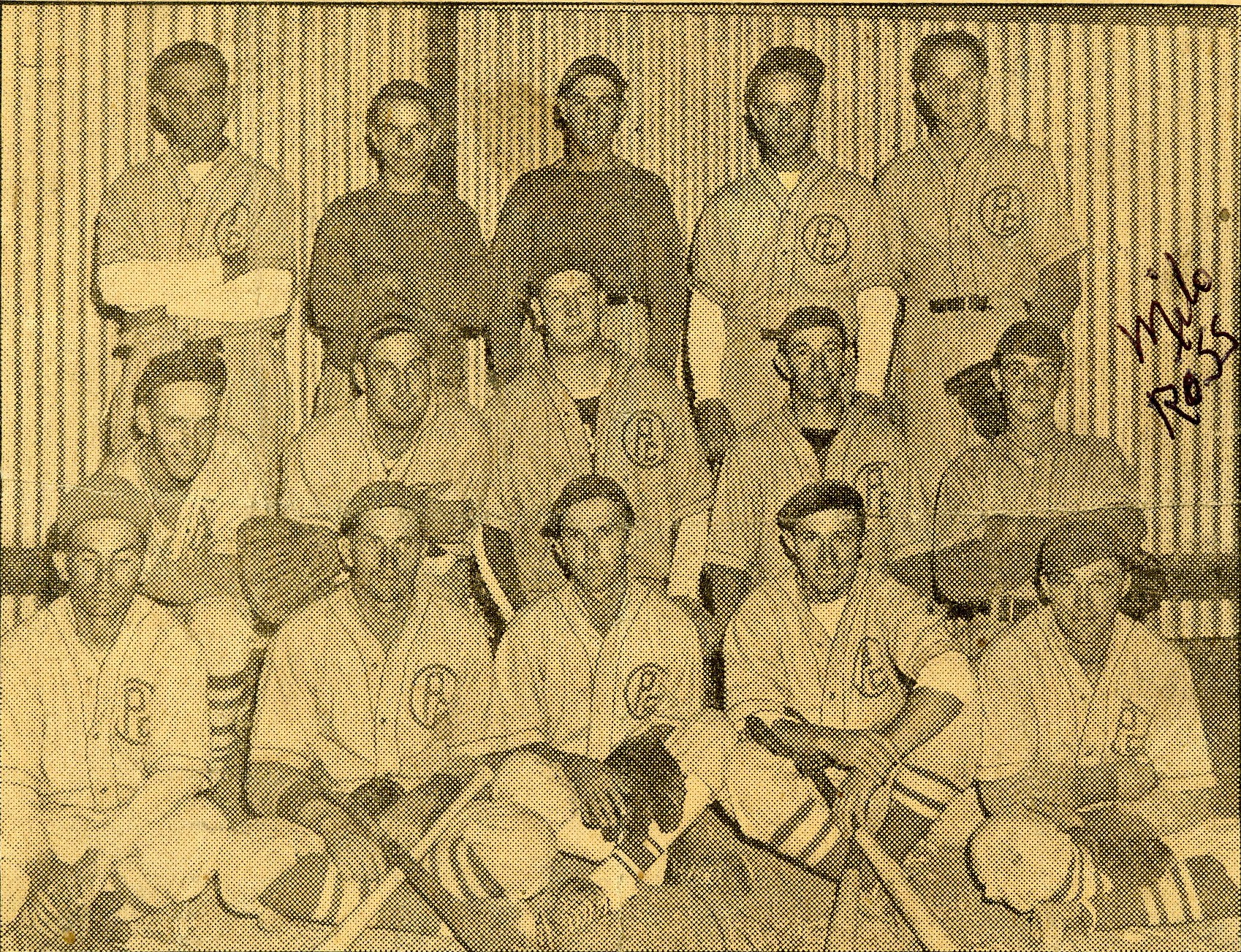
Plain City baseball team
Plain City baseball team. Back (l-r): William Freestone (manager), Norman Carver, Glen Charlton, Fred Singleton, Elmer Singleton (1918โ€“1996). Middle: Clair Folkman, Dick Skeen, Albert Sharp, Abe Maw, Milo Ross. Front: F. Skeen, Walt Moyes, Arnold Taylor, Lynn Stewart, Theron Rhead. See also: Plain City Hurler.
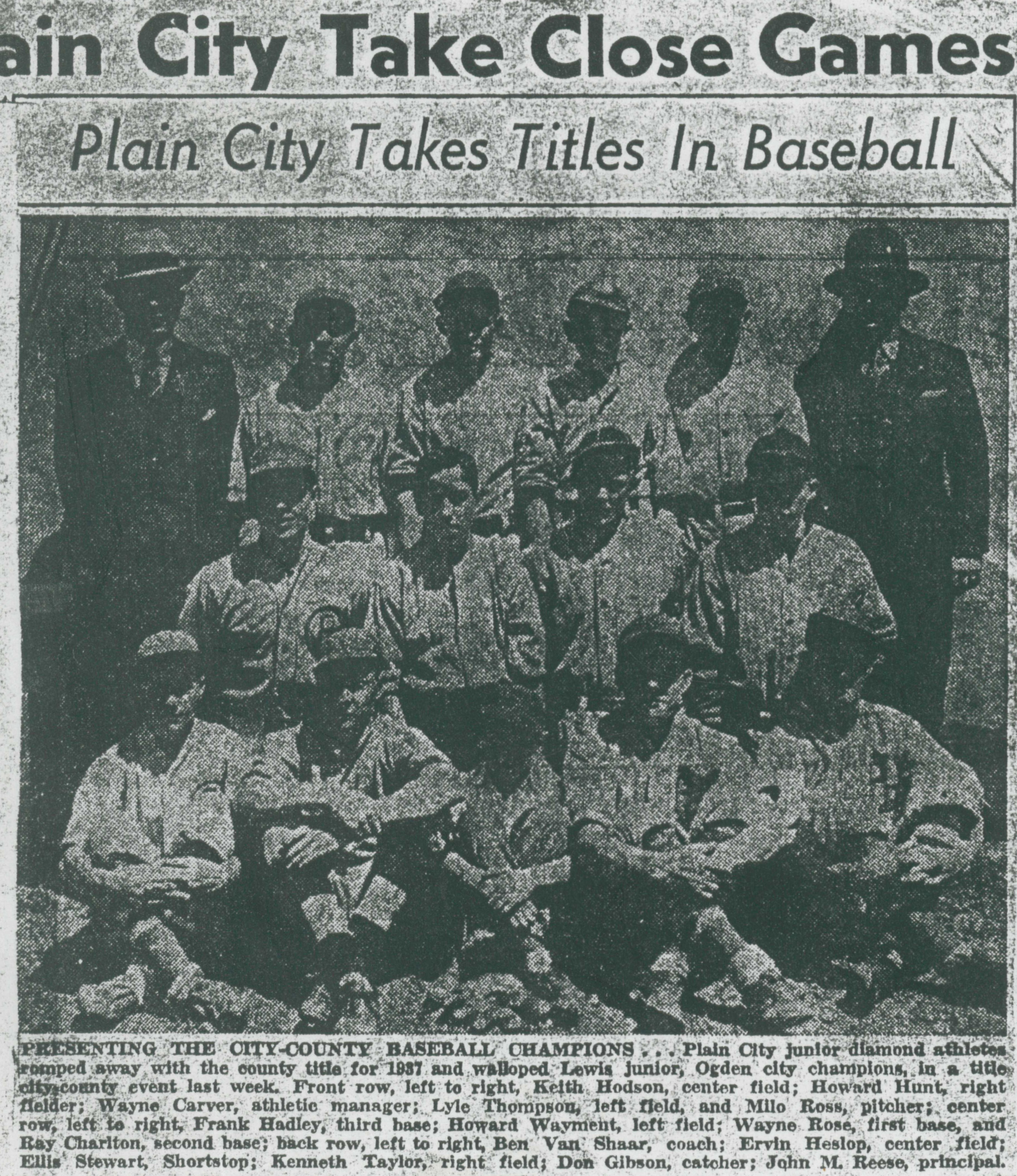
1937 Plain City Baseball Champions
1937 Plain City Baseball Champions. Back (l-r): Ben Van Shaar, Ervin Heslop, Ellis Stewart, Kenneth Taylor, Don Gibson, John Reese. Middle: Frank Hadley, Howard Wayment, Wayne Rose, Ray Charlton. Front: Keith Hodson, Howard Hunt, Wayne Carver, Lyle Thompson, Milo Ross.

In 1940 Milo met Gladys Maxine Donaldson (1921โ€“2004) at a Plain City celebration. They married on 4 April 1942. Six months later Milo enlisted in the Army. He served in the 33rd Infantry Division, 130th Regiment, Company C, trained in weapons and earned expert ranking. He arrived in Hawaii on 4 July 1943 โ€” the same day his son, Milo Paul, was born in Utah, a son he would not meet for three years. He fought through the jungles of New Guinea and the Philippines and was present at the Japanese surrender at Luzon in June 1945. He received two Purple Hearts and the Silver Star. His company received a Presidential Citation for outstanding performance during the seizure of Hill X in the Bilbil Mountain Province. For more on Miloโ€™s military service, see Milo James Ross Military Medals and his 1997 oral history interview.

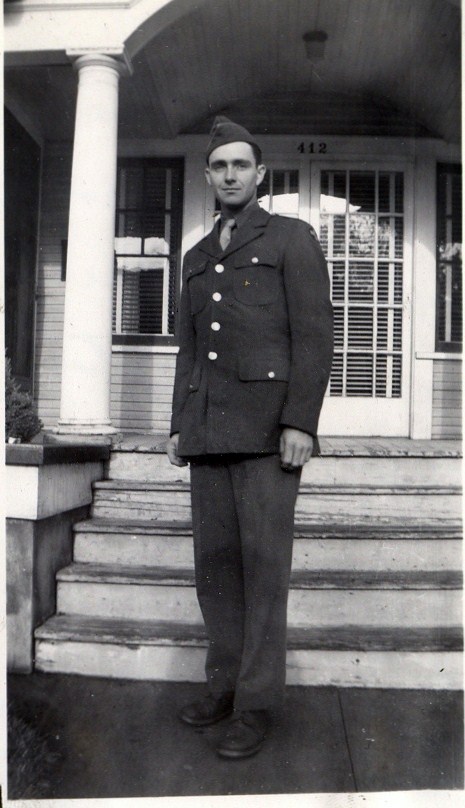
Milo Ross in uniform
Milo Ross in uniform at Fort Lewis, Washington

He came home and went to work as a contractor and builder, eventually building and remodeling hundreds of homes throughout Utah, mostly in Weber County. That work is why, when the time came to gather signatures for Chester England, he had a pad of lumber yard estimate forms at hand. They were his working tools. He pressed them into service as petition pages.

Milo knew Chester England personally. A childhood photograph survives showing Milo alongside Harold Ross, Howard Hunt, Josephine Sharp, and Janelle England on horseback โ€” the England and Ross and Sharp children together in the neighborhood as naturally as their parents moved among one another. In his 1997 oral history interview, Milo recalled Chester among the Plain City men who had struggled during the Depression years, when banks failed and farms were lost. Chester was woven into Miloโ€™s memory of Plain City going back to his earliest years.

On Horse l-r: Harold Ross, Howard Hunt, Milo Ross, Josephine Sharp (arm only), Janelle England, Eddie Sharp. In front l-r: Ruby Sharp, Lucille Maw, and Milo Riley Sharp.

The Petition

The typed text at the center of the petition read:

We the citizens of Plain City feel that Chester England should be allowed to rebuild his lumber yard. Since when do you kick a man when he is down/ Lets stand together and help Chester England when he needs a friend.

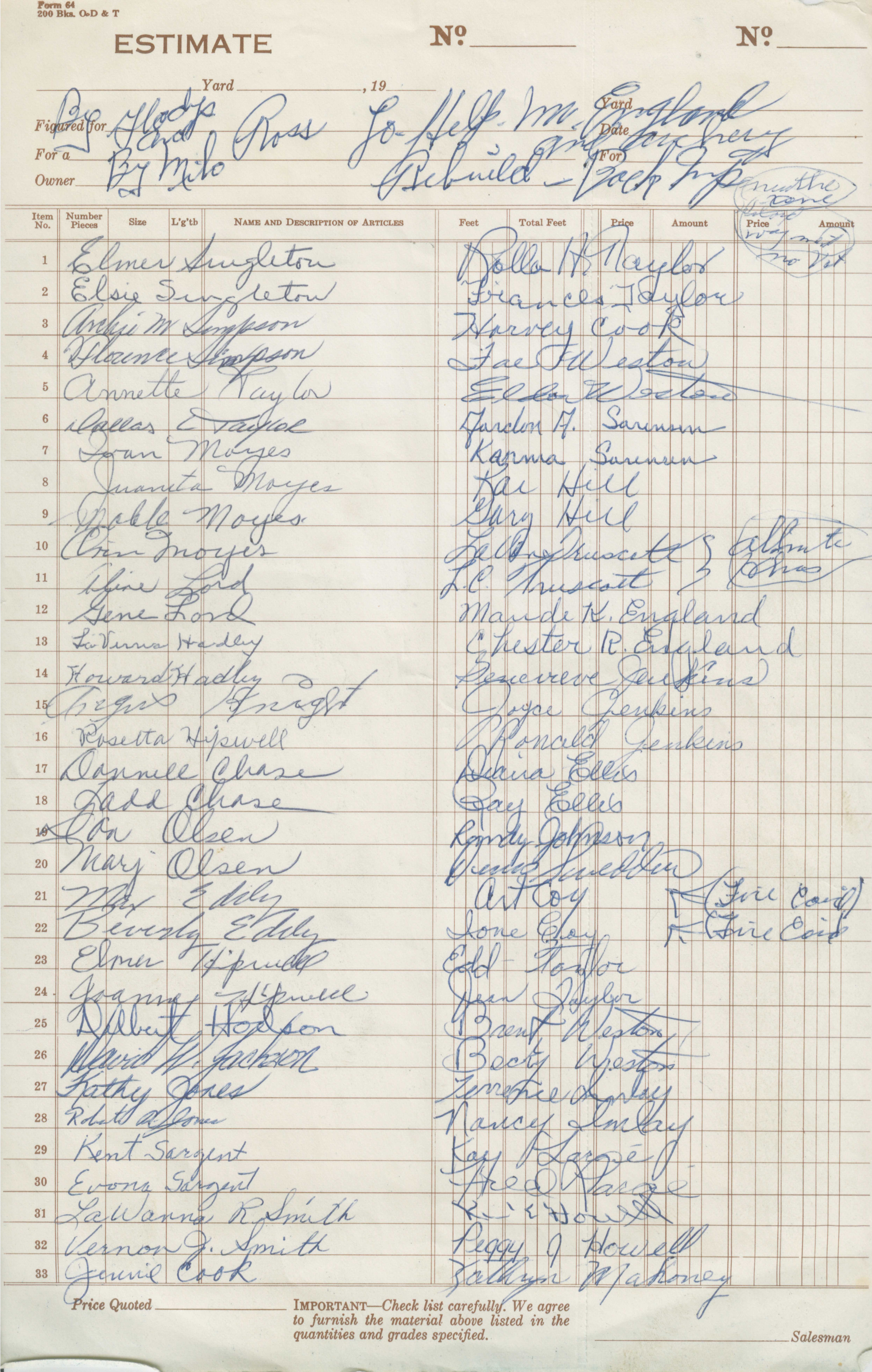
The headers on the petition pages identify the organizers: โ€œBy Gladys and Milo Ross โ€” To Help Mr. England โ€” Rebuild Back Up.โ€ The forms were passed through the community in the weeks leading up to the May 9 city council meeting. One page was circulated by Joan Jenkins.

My father, Milo Paul Ross, had worked for Chester England as a teenager. He and his first wife, Victoria โ€œVickiโ€ Feldtman (1945โ€“2018) โ€” married 5 March 1963 โ€” both signed the petition. For more on Vicki, see Vickiโ€™s Class Pictures. My grandfather Harold Ross also signed. The Sharp cousins โ€” W.A. Sharp and Florence Sharp, children of the family that had raised Milo and Harold โ€” signed as well. Maude K. England and Chester R. England signed the petition themselves.

Among the more than 340 signers, the connections to Plain Cityโ€™s history run deep. The Moyes family signed in force โ€” the same family whose son Carl had driven trucks for Chester England and whose grandson Jerry would found Swift Transportation. The Knights signed โ€” relatives of Maude Knight England and future founders of Knight Transportation. Elmer Singleton (1918โ€“1996), the Plain City baseball legend who pitched in the major leagues for five teams over fifteen years, signed with his wife Elsie. Cherrill Palmer Knight (1931โ€“2021), who had served as Plain City City Recorder and was the daughter of Vern and Viola Palmer โ€” also signers โ€” added her name alongside her husband Thayne (1931โ€“2018). Roxey R. Heslop, who contributed the school and cemetery histories to the 1977 Plain City history book, also signed. Hildor England (1896โ€“1983), born Johnson, who married into the England family, signed as well. Gordon C. Orton (1924โ€“2008), a Plain City general contractor and World War II veteran who served in the Philippines, New Guinea, and Okinawa, signed with his wife Leone. Vernal Moyes, who had served as a Plain City councilman, signed alongside his family.

The 1977 History of Plain City records the outcome: โ€œBuilders Bargain Center, formerly Englandโ€™s Builders. This business was started and run by Chester England for many years.โ€ Chester rebuilt. The communityโ€™s voice prevailed. For more on Plain Cityโ€™s history, see the Plain City series on Sagacity.

Circle A Construction

Milo Paul Ross and Larry Aslett

My fatherโ€™s career at Circle A Construction was built substantially on the same industry that had shaped the England and Ross families in Plain City. Circle A, founded in 1952 in Jerome, Idaho by Marvin Aslett, hauled sugar beets for Amalgamated Sugar for most of its operating history. For roughly 34 years, from around 1971 until Circle A transferred the Paul operations to AgExpress in 2004, my father supervised beet hauls across the Magic Valley, from the fields to the Amalgamated dumps at Paul and elsewhere across southern Idaho โ€” the same plants Jack Ross had worked in a generation before.

Marvin Aslett and Milo Paul Ross
Marvin Aslett and Milo Paul Ross at Miloโ€™s 20-year service recognition, 1990. See: Circle A Construction Honors.
Circle A truck in Paul parade
Circle A Construction truck in the Paul, Idaho parade, about 1985. See: Circle A Construction Trucks.

Marvinโ€™s sons Larry and Steve Aslett ran the company alongside my father for decades. We called Larry โ€œUncle Larryโ€ growing up. The Asletts took us to roundups in Mackay, to ranch country above White Knob. I worked for Circle A myself from 1993 through 1998. My first job in 1994 was washing and waxing trucks at the old Hynes beet dump in Paul after harvest. Jack Ross had worked for Amalgamated Sugar in Paul in the 1920s. My father hauled beets to Amalgamated in Paul for three decades. Circle Aโ€™s beet hauls fed the same company in the same town across three generations of this familyโ€™s working life.

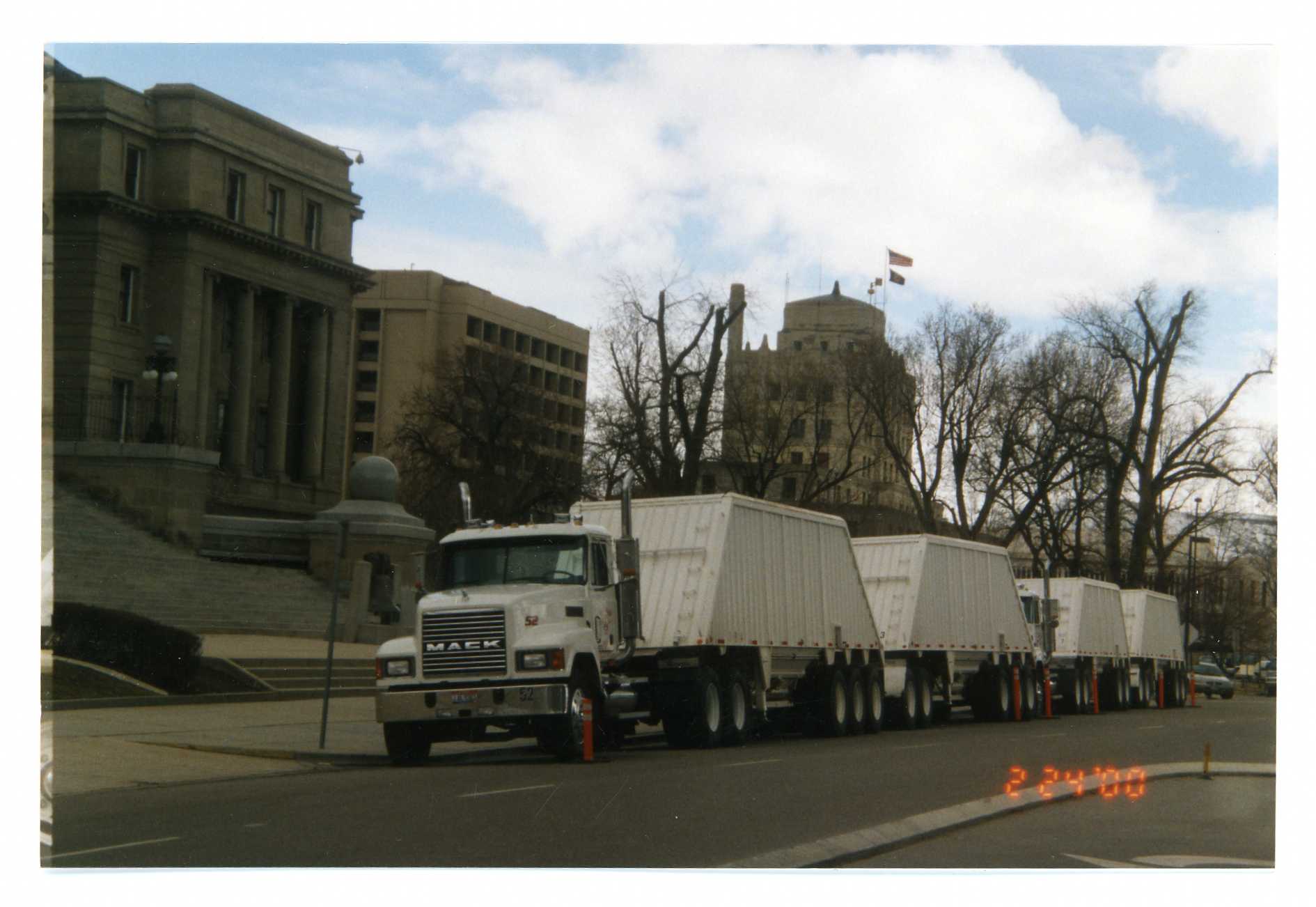
Circle A trucks in front of Idaho Capitol
Circle A Construction trucks in front of the Idaho State Capitol, 2000

The Petition Pages

Below are all eight pages of the petition as collected by Milo and Gladys Ross in the spring of 1974.

Complete List of Signers

Names marked with an asterisk (*) represent uncertain readings of the cursive originals. Dates are given where confirmed through research. This list was transcribed from handwritten signatures; corrections and additions are welcome.

Adams, Alice
Adams, Allene C.
Adams, Calvin Rex
Allen, Jeanine
Alsup, Marguerete W.*
Alsup, Phil S.
Amussen, Doris Maw
Amussen, Richard W.
Ashdown, Rex R.
Ashdown, Virginia
Bacon, R.A.
Baker, Dean A.
Baker, Penny
Baker, Tom D.
Baker, Vivian
Beeler, Diana
Beeler, Jack
Beutler, Kandis C.
Beutler, Lloyd J.
Bingham, Dee
Bingham, Evelyn
Bingham, Farrell J.
Bingham, Junior D.
Bingham, Lorene
Bingham, Zona F.
Brown, Donna
Brown, Robert
Bullock, Duane
Bullock, Joyce W.
Bunn, Carol
Bunn, John H.
Burr, Adle R.
Burr, Arnold K.
Burr, Kenna F.
Burr, Lester
Burr, Roy D.
Butler, Donnette R.
Butler, Kenneth L.
Butterfield, Judy*
Calvert, Elaine
Calvert, Kent W.
Carver, Brent
Carver, Harold C.
Carver, Jane
Carver, Liland
Carver, Theone
Chase, Dannell
Chase, Ladd
Chase, LaRene G.
Chase, Norma P.
Child, Melvin E.
Chournas, Beverly*
Chournas, Chris*
Christensen, Barbara
Christensen, Darrell
Christensen, Ivan
Christensen, Ken
Christensen, Margaret
Christensen, Ted
Cliften, Elaine
Cliften, Robert
Close, Tom*
Cook, Dee
Cook, George
Cook, Harvey
Cook, Jennie
Cook, LaRae
Cook, Lyman H.
Corey, Dean
Corey, Fae
Costley, Elsie
Costley, Paul
Cowell, Florence
Crook, Carlene
Crook, Lane
Daley, Kenneth*
Daley, Thora
Dall, Kathie*
Davidson, Donna
Davidson, Kathy
Davidson, Marland L.
DeVries, Norm
Donaldson, Betty M.
Donaldson, David
East, Ava M.
East, Donald
East, Jimmy K.
Eddy, Beverly
Eddy, Max
Ellis, Carole
Ellis, Diana
Ellis, Donald B.
Ellis, Glen
Ellis, Janet
Ellis, Lynn
Ellis, Ray
England, Boyce
England, Chester R. (1896โ€“1989)
England, Hildor (1896โ€“1983)
England, Marvel S.
England, Maude K. (1897โ€“1982)
England, Merlin
England, Mona
England, Orel W.
Eskelson, David Lon
Etherington, John E.
Etherington, Nelda
Fisher, Dorothy K.
Fisher, Robert W.
Folkman, Andrea
Folkman, Carl
Folkman, Clair
Folkman, Clara
Folkman, Cliff
Folkman, Jim
Folkman, LeRoy
Folkman, Norma
Folkman, Robert L.
Folkman, Viola
Foremaster, Bonne*
Foremaster, Pete
Fuller, Mary Lynn
Fuller, Rex
Fuhriman, Viola
Gallegos, Edith
Gee, Vilate
Giles, Lewis
Giles, Lucille
Grieve, Claramae
Grieve, Paul
Haas, Julie
Hadley, Barbara
Hadley, Connie
Hadley, Devaine
Hadley, Doug
Hadley, Gordon
Hadley, Howard
Hadley, Janet
Hadley, Karma W.*
Hadley, LaVirra*
Hadley, Lenora
Hadley, Mary Fee*
Hamp, Beth
Hansen, Gaylen G.
Hansen, Loren M.
Hansen, Nancy
Havseler/Tesseder, Christine*
Haws, Arlene
Haws, Darwin C.
Haws, Varnell
Heslop, Roxey R.
Higley, Shirley
Higley, Willard J.
Hill, Gary
Hill, Kae
Hipwell, Elmer
Hipwell, Joanne
Hipwell, Rosetta
Hobson, Connie
Hobson, Jack
Hodson, Delbert
Hodson, Lyle M.
Hodson, Mr. Ivan
Hodson, Ms. Ivan
Holmes, Doug
Holmes, Joanne
Hori, Nancy
Hori, Sam
Howard, Virgie
Howell, Kent*
Howell, Peggy J.
Hunt, Jan
Hurst, Vick*
Imlay, Nancy
Imlay, Terrence
Jackson, David W.
Jackson, George
Jackson, Mrs. George
Jackson, Mrs. Keith
Jackson, Keith
Jenkins, Ellen W.
Jenkins, Genevieve
Jenkins, Joan
Jenkins, JoAnn
Jenkins, Joyce
Jenkins, Quentin M.
Jenkins, Ronald
Jensen, Blaine R.
Jensen, Joyce
Jensen, June B.*
Jensen, Kit O.
Johansen, Barry L.
Johansen, Carol
Johnson, Judy B.
Johnson, Randy
Johnson, Rex L.
Jolly, Grace
Jolly, L.M.*
Jones, Kathy
Jones, Robert
Kapp, Clara Jean
Kapp, Leon
Kawa, Grant D.
Kelley, Bertha
Kelley, Gail
Kelley, Jesse R.
Kelley, Leona
Kennedy, Hazel
Kishimoto, Lorn
Knight, Argus*
Knight, Arson*
Knight, Cherrill (1931โ€“2021)
Knight, Thayne E. (1931โ€“2018)
Lakey, Dixie
Lakey, Tom
Large, Fred*
Large, Kay*
Larkin, Wade R.
Laub, William R.
Lord, Clarendon โ€œGeneโ€ (1929โ€“2015)
Lord, Cline
Lund, Elizabeth
Lund, Eugene
Lund, Keith
Lund, Pearl
Mace, Rieths*
Mahoney, Kathryn
Mahnke, Eugene
Mahnke, Laura
Maw, Abram E.
Maw, Floy A.
Maw, Karen
Maw, Monna B.
Maw, Norma Jean
Maw, R. John
McFarland, Fenton
McMillan, Nola L.*
McMillan, Thomas A.*
Merrill, Paul O.*
Mikkelsen, Leo
Mikkelsen, Renee
Miller, Clarence
Miller, Ranae
Miller, Thomas A.
Miller, Veda L.
Moyes, Beverly
Moyes, Dale L.
Moyes, Edna
Moyes, Elaine
Moyes, Elbert
Moyes, Fentis*
Moyes, Ivan
Moyes, Juanita
Moyes, Kay H.
Moyes, LuJean
Moyes, Lynn V.
Moyes, Mable
Moyes, Orin
Moyes, Vernal
Nash, Augusta R.
Neff, Mr. Wayne
Neff, Ms. Wayne
North, Janet
North, Rick
Olofson, Mary L.
Olofson, Robert L.
Olsen, Ian*
Olsen, Mary
Olsen, Ron
Olsen, Yvonne
Orton, Gordon C. (1924โ€“2008)
Orton, Leone
Overman, Curt
Painter, Cleo
Painter, Lee
Palmer, Douglas
Palmer, Lawrence
Palmer, Susanne
Palmer, Thelma H.
Palmer, Vern
Palmer, Viola (1908โ€“2009)
Post, Bessie
Post, Judy O.
Poulsen, Bernard
Poulsen, Nora
Rasmussen, Don J.
Rasmussen, MaryLynn
Reese, J.D.
Rhead, Bonnie
Rhead, Steve
Rhead, Theron
Rhead, Vivian
Ritz, Mark
Robins, Jay*
Robins, Mildred
Robson, Amy
Roddomy, Ronald*
Rogers, Dennis O.
Rogers, Shareen
Roper, Mr. Rodney
Roper, Mrs. Rodney
Ross, Gladys (1921โ€“2004) โ€” organizer
Ross, Harold
Ross, Milo James (1921โ€“2014) โ€” organizer
Ross, Paul M.
Ross, Vicki (1945โ€“2018)
Russell, Joe
Russell, Shirley
Sargent, Evona
Sargent, Kent
Saunders, Carl R.
Searcy, Hazel
Searcy, Kenneth J.
Seegmiller, Dale
Seegmiller, Marie F.
Sharp, Florence
Sharp, Laurel
Sharp, W.A.
Shaw, Jerrell B.
Shaw, Phyllis
Simpson, Archie W.*
Simpson, Florence
Singleton, Elmer (1918โ€“1996)
Singleton, Elsie (โ€“1988)
Singleton, VaCona
Skeen, Archie
Skeen, Charles
Skeen, Dick
Skeen, Lorraine
Skeen, Luella
Skeen, Wayne
Smith, LaWanna R.
Smith, Vernon J.
Sneddon, Dennis
Sorensen, Gordon A.
Sorensen, Karma
Sparks, Mildred
Stagge, Floyd
Stagge, Myrle
Statler, Lynda
Statler, Richard
Stevens, Debra
Stevens, Gwen C.
Stevens, John W.
Tafoya, Arthur
Tafoya, Via
Taylor, Alice
Taylor, Annette
Taylor, Call
Taylor, Clare
Taylor, Edna
Taylor, Elma
Taylor, Elvin L. (1920โ€“2004)
Taylor, Elizabeth
Taylor, Fern
Taylor, Frances
Taylor, Gerald J.*
Taylor, Grant
Taylor, Idona Maw
Taylor, Jr.*
Taylor, Kathlene
Taylor, Kathy
Taylor, Ralph A.
Taylor, Rodney
Taylor, Rolla H.
Taylor, Ross M.
Taylor, Sheri
Taylor, Val
Taylor, Valoy (1932โ€“2024)
Tesseder, Doug*
Thomas, Duane F.
Thompson, Gordon
Thompson, Lavina
Thompson, Margaret
Thompson, Marvel
Thompson, Merrvin*
Tippetts, Larry*
Truscott, L.C.
Truscott, LaVona
Valdez, Evelyn
Valdez, Raymond J.
Van Meeteren, Beth
Van Meeteren, Frank
Van Meeteren, Jean
Van Meeteren, Ron
Van Workom, Joyce*
Vaughn, Bert
Vaughn, Renee
Wakefield, Marilyn
Walton, Neale
Walton, Rhea
Weatherstone, Lorraine
West, George C.
West, Lillian
Westbrook, Herman
Weston, Becky
Weston, Brent
Weston, Eldon
Weston, Fae
Weston, Jae H.
Williams, Arnold A.
Williams, Charlotte
Williams, Delbert
Williams, F. LeRoy
Williams, Karen A.
Williams, Nadiene
Winder, Jane
Winder, Wayne
Wright, Norma

Ross Leslie Andra

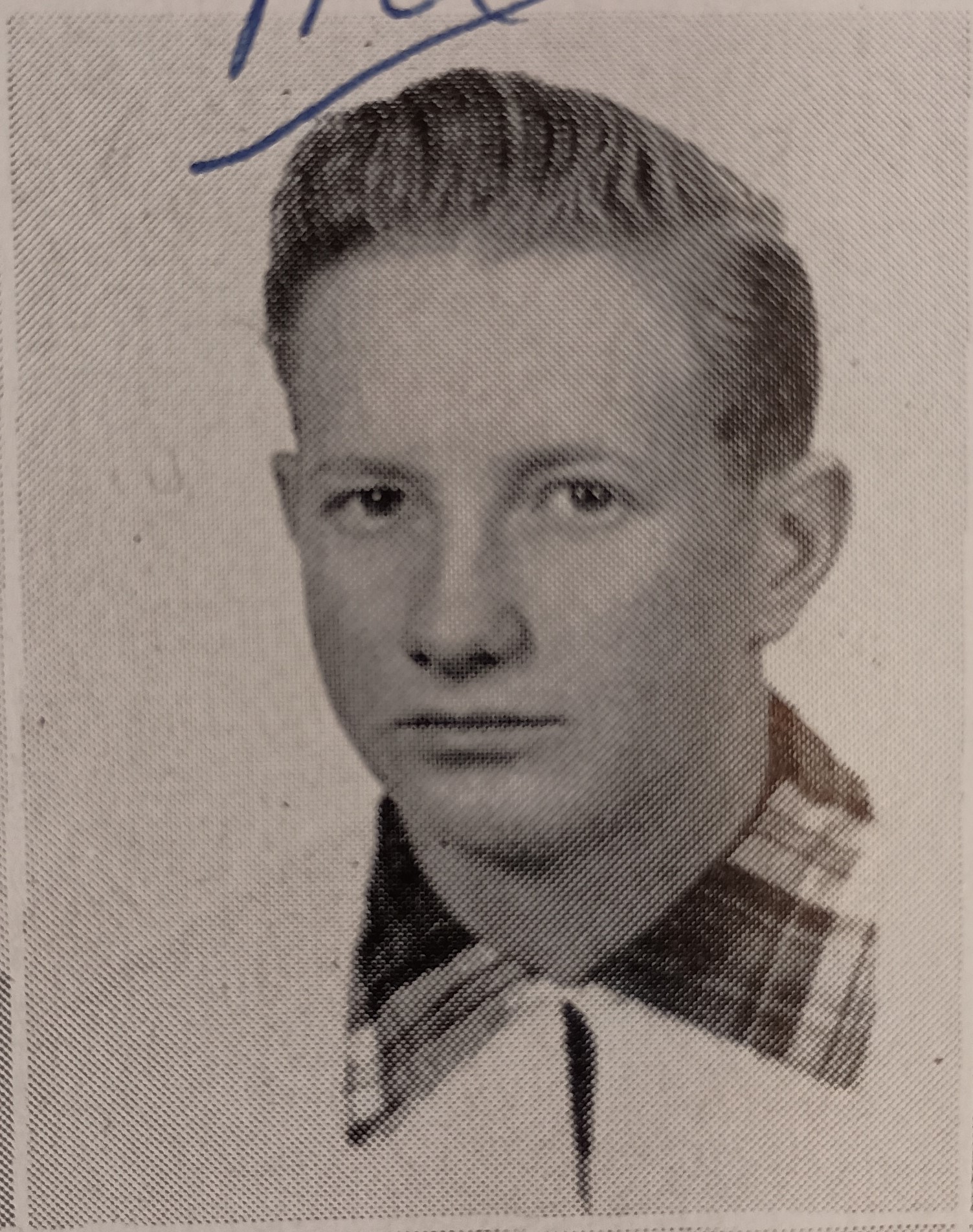
Ross Andra as a small boy – 1940s

Ross Leslie Andra, my great-uncle, died on 20 June 2024 in Salt Lake City, Utah. He was 87 years old. He was one of the younger brothers of my Grandma, Colleen Mary Andra. Some family figures cast long shadows, Ross was one of those characters.

On 29 June 2024, the Cannon Ninth Ward meetinghouse on West 1400 South in Salt Lake City filled with people who had been touched by him. Some had worked alongside. Some had received a knock at the door late in the evening. Some simply remembered the jokes. Before Bishop Ted Maxwell called the meeting to order, it was clear that a certain kind of man had died โ€” the kind the eulogists kept calling, with unfeigned sincerity, bigger than life.

I have shared many posts regarding the Andra family. Many of those that reference Ross are listed below, but many more deal with the broader Andra family. This post attempts to bring some of that documentation together as a tribute.

The Family

William and Golden in back, Sergene, Millie, Colleen, June standing, Donald, Larry, Bill, Dale, Mary, and Ross sitting.

The world Ross was born into had been built across two continents and three generations. His grandfather Friedrich Theodor Andra had been born in Rosswein, Saxony in 1867 and died in Meissen in 1902, when Rossโ€™s father Bill was just four years old. Billโ€™s mother, Christiana Wilhelmina Knauke, brought the family to America. Bill arrived alone in May 1909 โ€” at eleven years old you paid reduced passage; at twelve, full price โ€” and went first to Fairview, Utah, then to Preston, Idaho, where a former missionary named George Wanner had helped convert the family in Germany. Bill worked the Wanner farm for seven years, at $18 a month rising to $30, milking twenty-four cows, doing any work he could get. He married Georgeโ€™s daughter, Mary Louise Wanner, in the Salt Lake Temple on 10 March 1920. Christiana Knauke Andra โ€” Rossโ€™s grandmother โ€” lived until Christmas Day 1957 in Salt Lake City. She was still alive when Ross stepped onto the plane for missionary service in Brazil.

Mary Louise was equally remarkable. She had nursed flu victims during the 1918 epidemic, nearly became a professional jockey at the Logan County Fair, outran all the girls and most of the boys at school in Preston. She and Bill built their life in Depression-era conditions โ€” $1,000 principal and $500 interest on the farm, with Bill digging basements and hauling gravel and taking sugar beets to the factory at $4 a ton to make the payments. Maryโ€™s autobiography, written in November 1961, records it without complaint: โ€œWith the Lordโ€™s help and a good wife and children, we paid for the farm.โ€ Her garden in Preston was massive โ€” flowers surrounding it, vegetables in rows โ€” and beautiful enough that even a nine-year-old boy visiting with his grandmother noticed and remembered. Ross spent the rest of his life planting tomatoes wherever he could find a plot of dirt. He was his motherโ€™s son.

Twelve children were born to Bill and Mary between 1920 and 1943. Two died young โ€” Robert Lee on his first day in 1934, Dennis Willard in January 1945, four days after his third birthday, of an earache in the night. The ten who survived grew up in close quarters on the Preston farm, with the pranks you would expect from six boys and four sisters sharing a household. Ross and his brothers once tied a cow to their math teacherโ€™s front door.

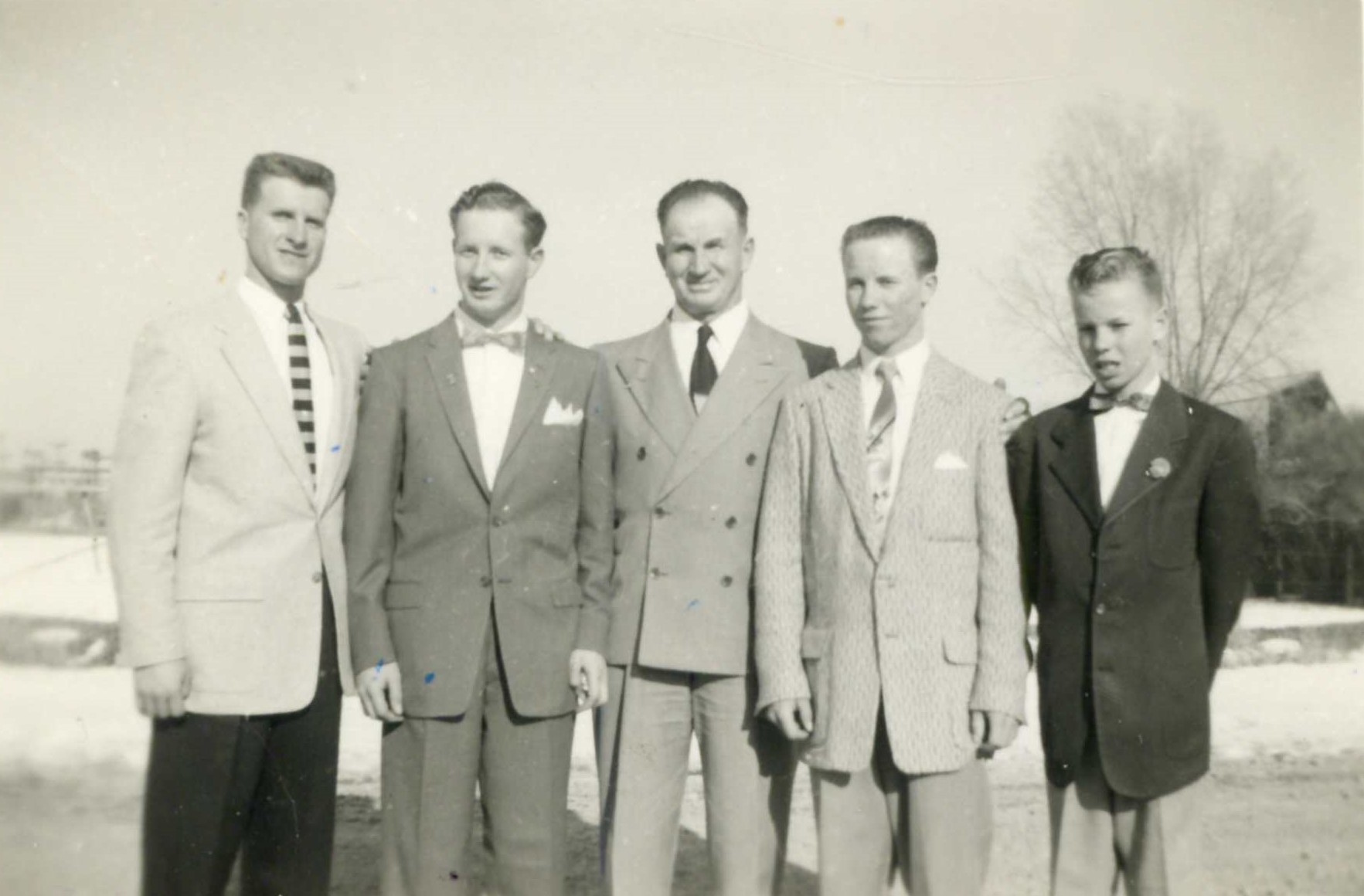
Don, Ross, Bill, Dale, and Larry Andra, Preston, Idaho – 1950s

23 January 1957

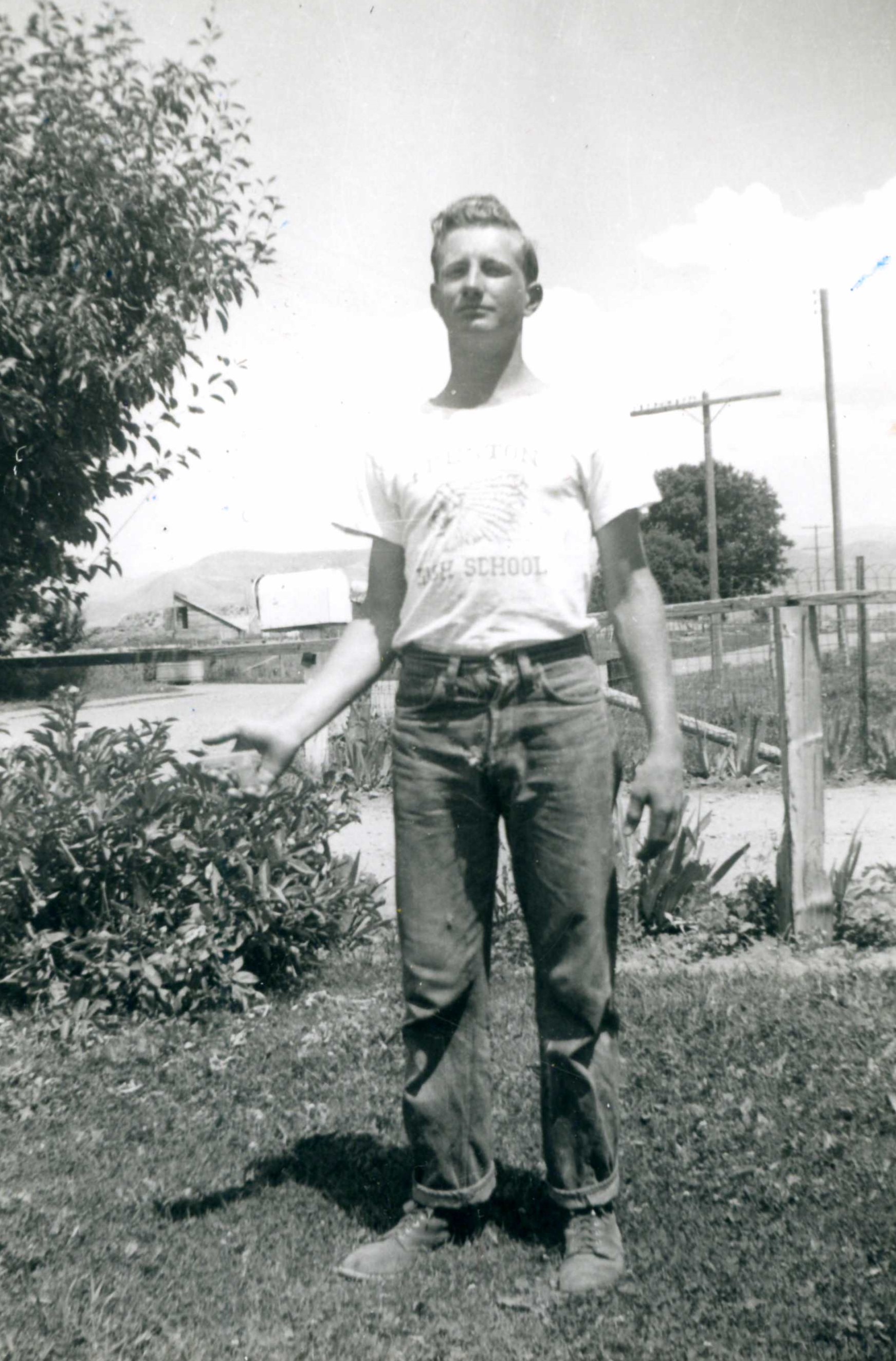
Ross Andra, Preston High T-shirt, backyard

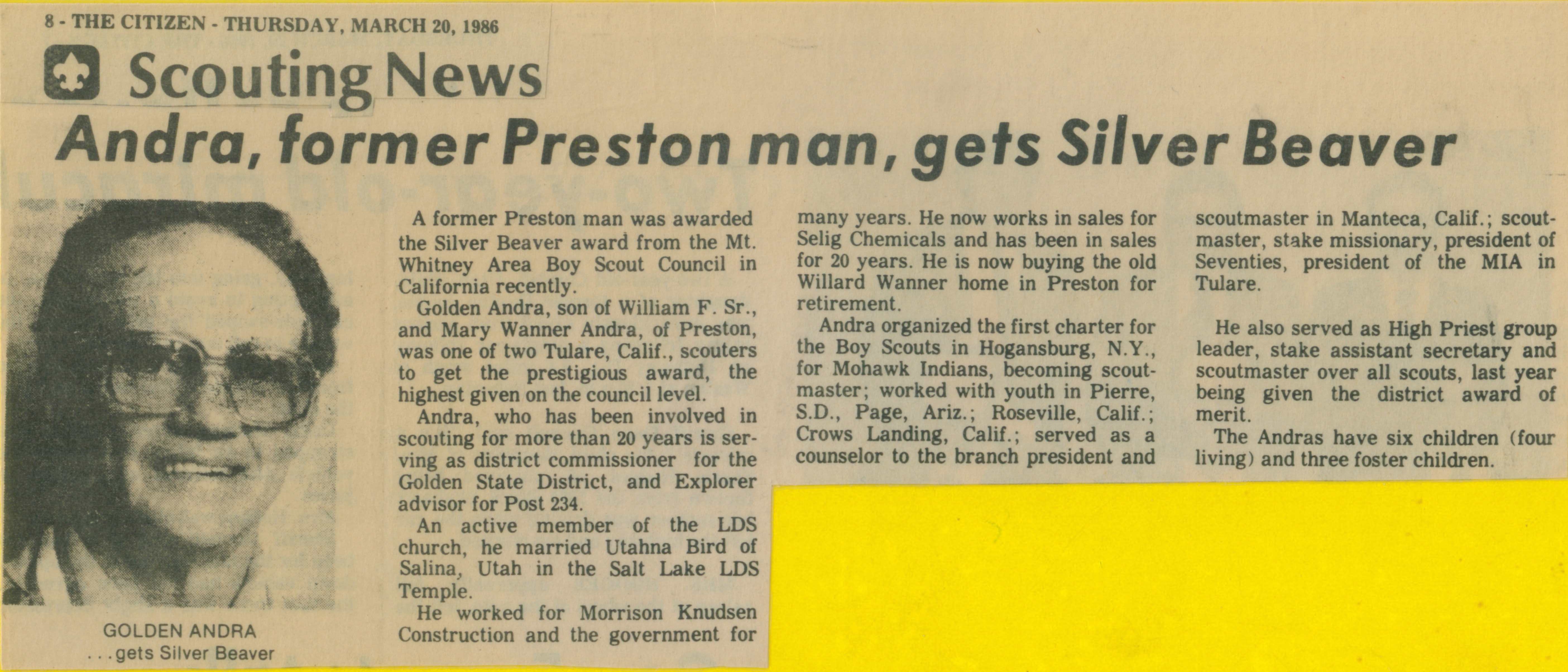
Ross graduated from Preston High School in 1955. He spent two years at Utah State Agriculture College, then headed east with his brothers Donald and Golden to work construction on the St. Lawrence Seaway project in Massena, New York. Golden was a general foreman on the Eisenhower Lock โ€” photographed in the projectโ€™s official records, named in the local newspaper. Donald met and married a woman in Hogansburg, New York. Ross told me stories about New York, though I cannot remember enough of them to share now. What I know is that the three brothers were there together, Idaho farm boys pouring concrete on one of the great infrastructure projects of the Eisenhower era, on the St. Lawrence River in the far north of New York State.

Then Ross came home and left again โ€” this time for Brazil.

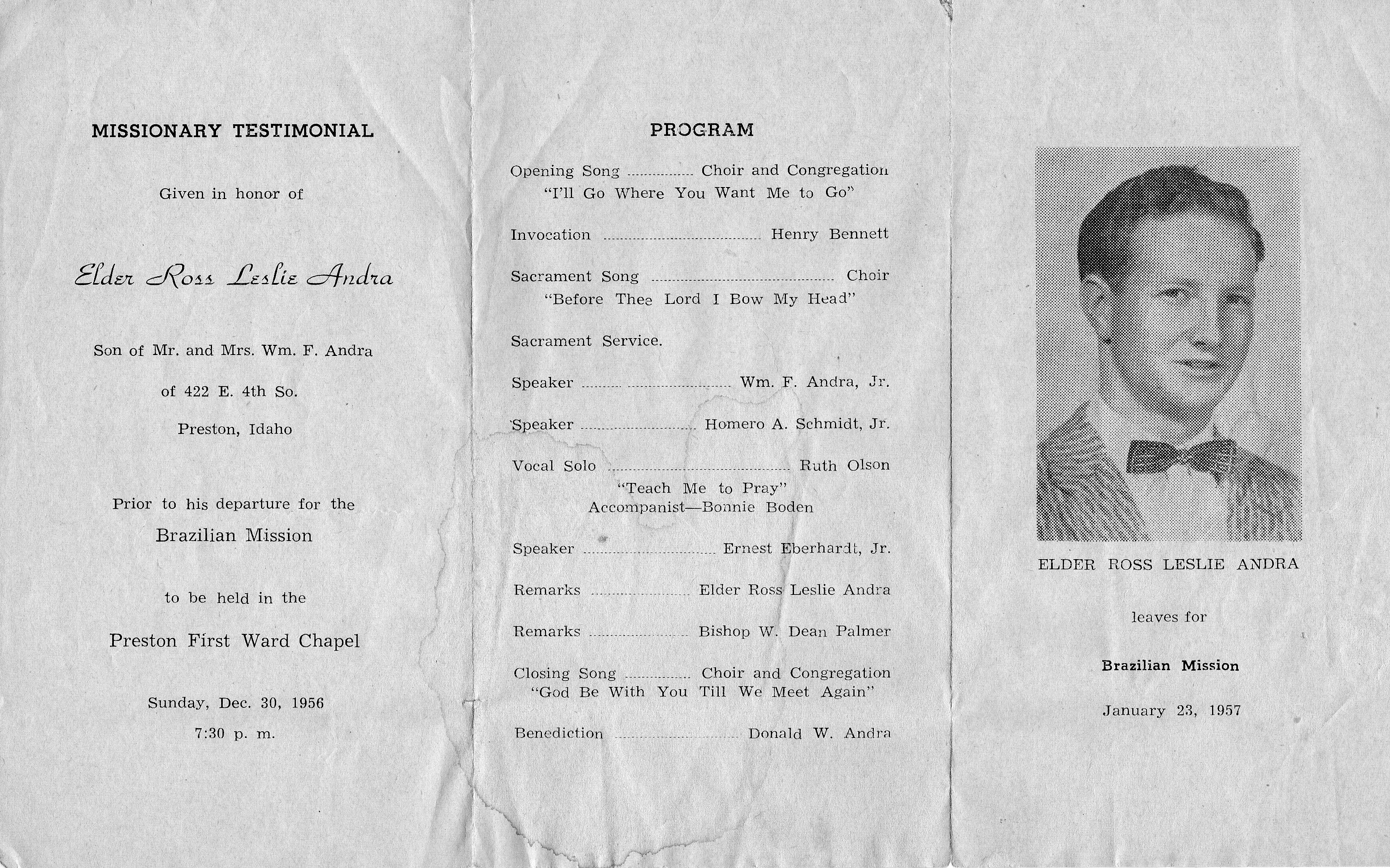
Ross Andra Missionary Farewell Program – 30 December 1956.

The missionary farewell program for Elder Ross Leslie Andra is dated Sunday, 30 December 1956, Preston First Ward Chapel, 7:30 p.m. The opening hymn was โ€œIโ€™ll Go Where You Want Me to Go.โ€ His brother William Jr. โ€” who had himself served in Mexico from 1941 to 1943, the first of the Andra brothers to go โ€” spoke at the service. His brother Donald gave the benediction. Ross made his own remarks. Bishop W. Dean Palmer closed. The program reads: Elder Ross Leslie Andra leaves for Brazilian Mission, January 23, 1957.

I remember Ross telling a story. He had just returned home from his mission in Brazil and was sitting on the stand at Stake Conference with other returned missionaries. Apostle Joseph Fielding Smith was speaking at the pulpit. Elder Smith was speaking about being strictly honest with your fellow man. Elder Smith related a story that told of a guy who admitted to Elder Smith that he was not as honest as he should be. The irony of a man honestly confessing his inability to be honest struck a nerve with Ross. He got the giggles. Apparently he looked at someone else who also found the irony humorous and the laughter broke out and spread. Apparently Elder Smith turned around to look at them with a very unfavorable look. It only added to the giggles. Ross admitted it might have been his Brazilian sense of humor. He laughed even as he told me about the story.

Four years later โ€” on 9 October 1960 โ€” Ross stood at that same Preston First Ward pulpit as his farewell and spoke at the farewell for his younger brother Dale, who was leaving for the Western States Mission. The brothers sent each other off, one by one, into the world.

Ross served in Brazil from 1957 to 1959. He came home, enrolled at Brigham Young University, studied political science, speech education, and Portuguese, graduated with a Bachelor of Arts in 1964. But the most important thing that happened in Brazil was Adelaide.

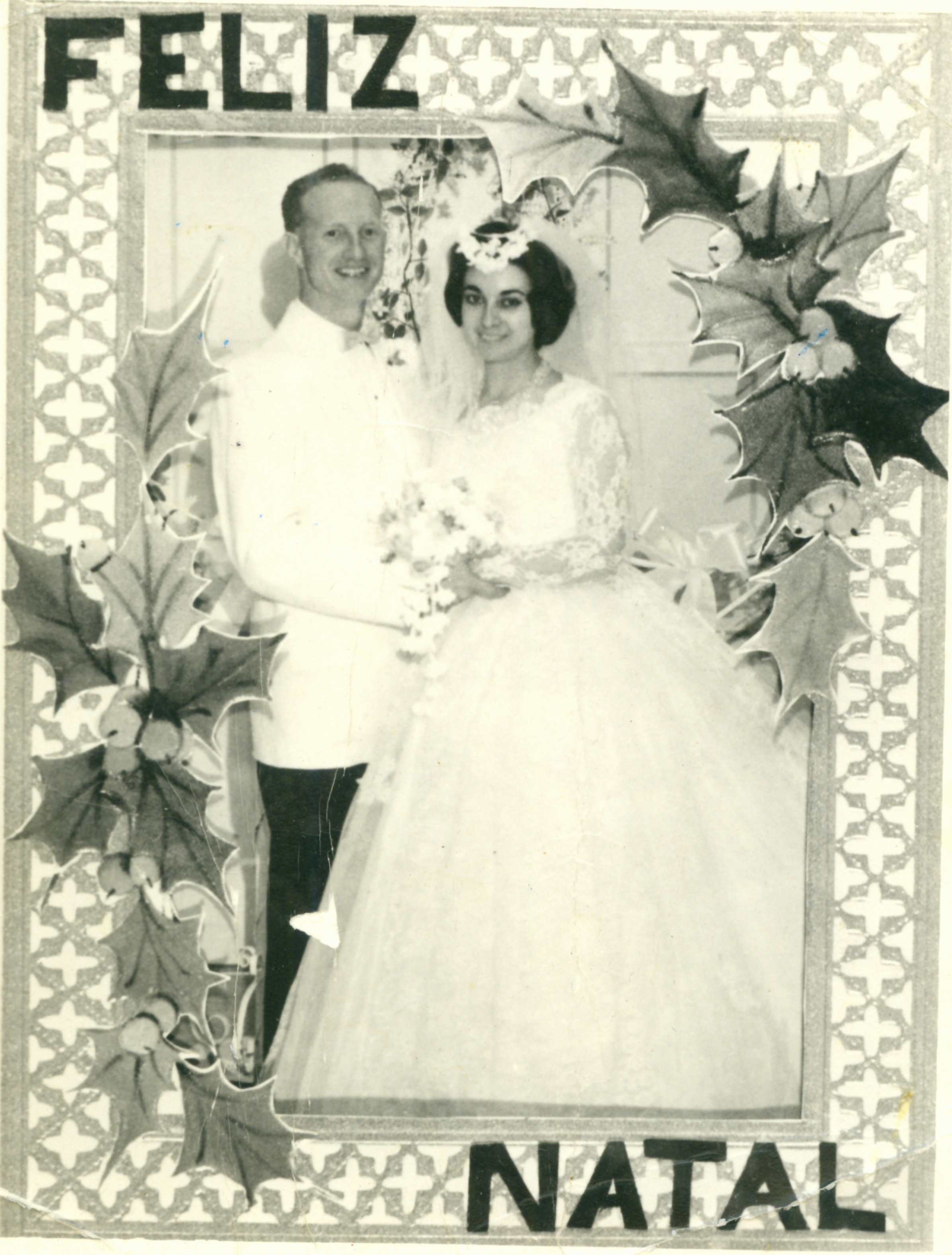
Feliz Natal

Angela and Blas Gonzalez, Adelaide’s parents
Adelaide Gonzalez Carrenho, Brazil

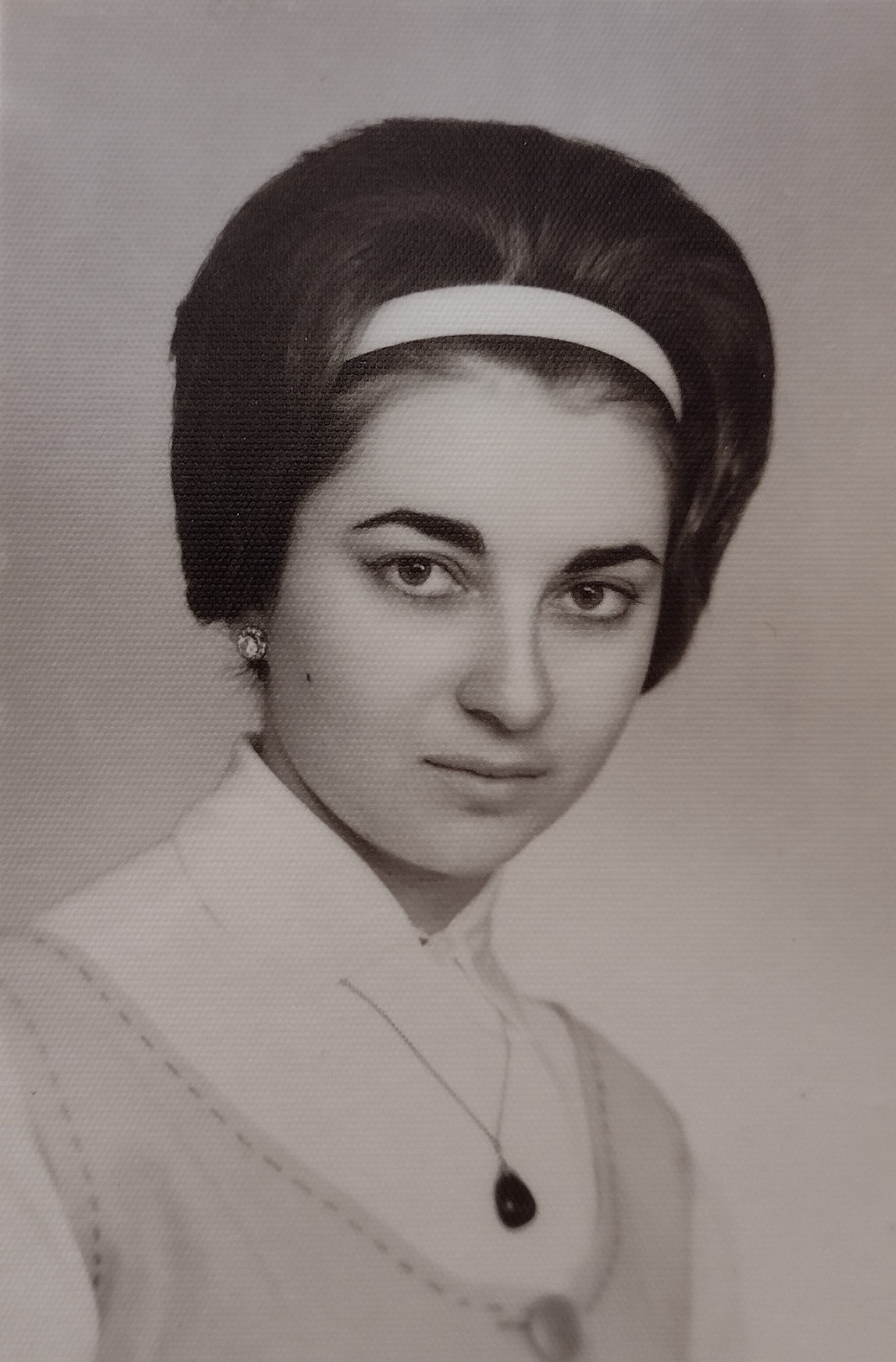
Adelaide Gonzalez Carrenho โ€” the daughter of Angela and Blas Gonzalez of Brazil โ€” was a young woman of dark eyes and composed beauty when Ross encountered her. I seem to recall that he said they met on a trip back to Brazil after his mission. After he returned to BYU; they kept in contact across the distance. On 14 June 1963, in the Logan Utah Temple they were joined in the holy bonds of matrimony for time and for all eternity. The witnesses on the marriage certificate are William F. Andra Sr. and Dale Andra โ€” Bill and Dale, father and brother, standing at the altar the day Ross married his Brazilian bride. A missionary friend named Phyllis Merrill, who had served in Brazil and become one of Adelaideโ€™s closest friends, spent the wedding day interpreting for Adelaide as she went through the Logan Temple for the first time. (The wedding photograph, with full identification of those present, is available here. The marriage certificate is here.)
Ross & Adelaide Andra 1965 Christmas Card

That Christmas, Ross and Adelaide sent their wedding photograph to friends in Brazil as a holiday card.

His daughter Brenda captured it simply at the funeral: Ross had โ€œa deep love for Brazil, its people and culture, and especially for his little Brazilian bride.โ€ That love never left him. In his later years, when health prevented the overseas return mission he and Adelaide had always wanted, they served as local service missionaries to the Portuguese- and Spanish-speaking wards of the Salt Lake Valley, driving all around visiting families, making sure they had what they needed.

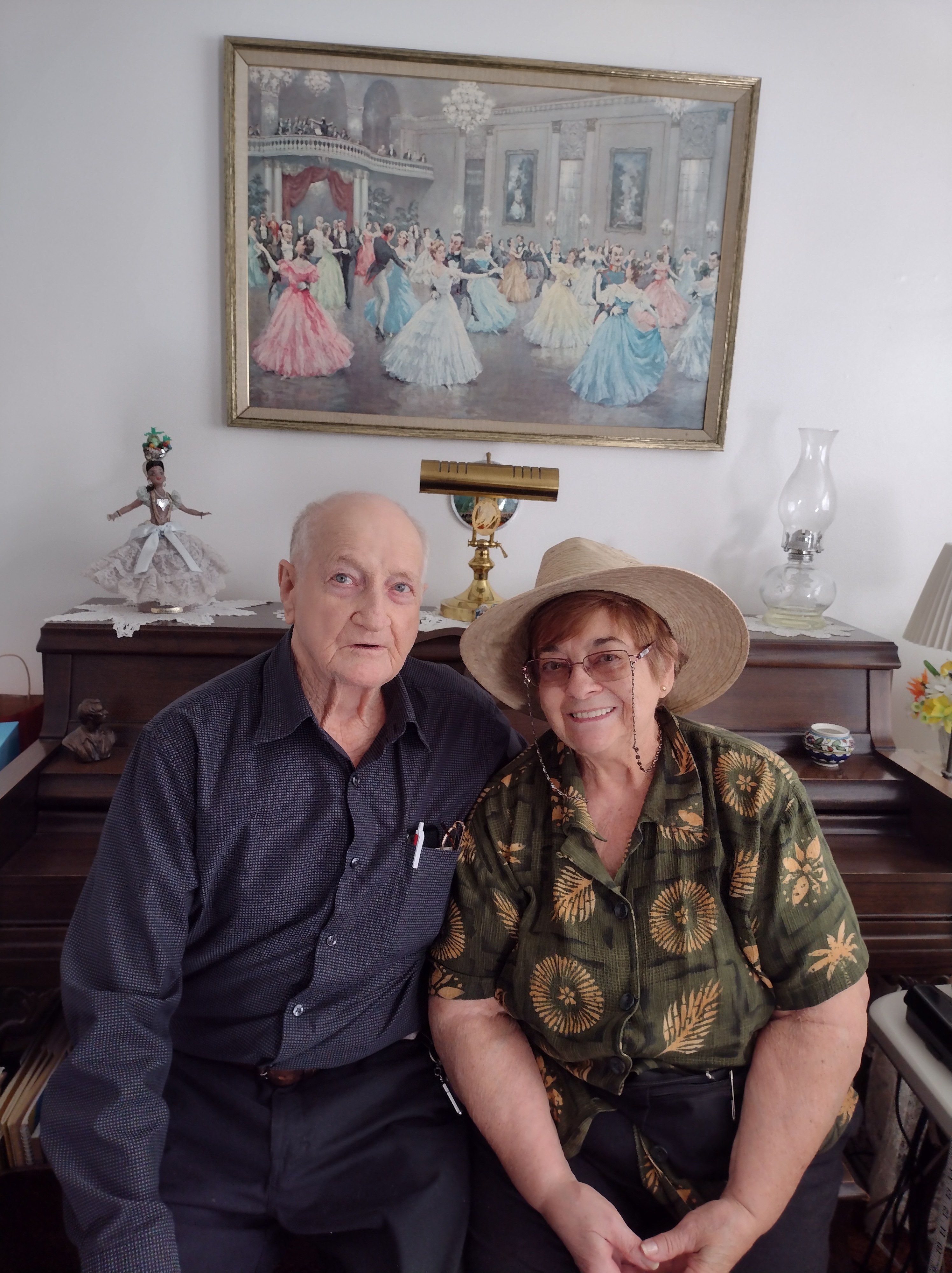
Ross and Adelaide Andra, SLC home, October 2022

The Working Life

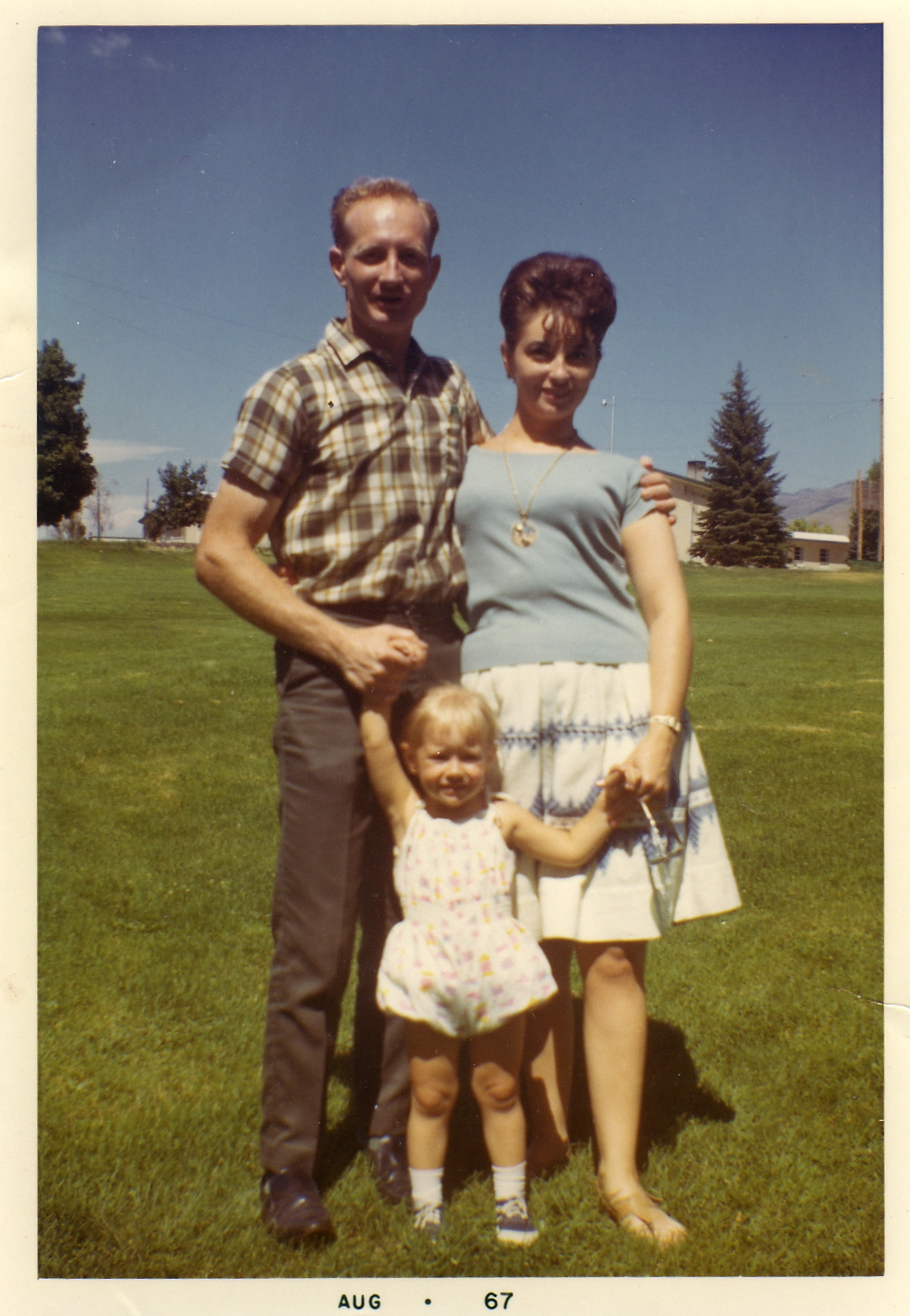
Ross, Adelaide, Brenda Andra – August 1967

The career of Ross Andra resists a single title. High school teacher. Coach. Candyman. Small business owner. Appliance installer. Furniture mover. UPS driver. Medical courier. He was, as his friend Frederick Johnson insisted at the funeral, an entrepreneur โ€” a man who believed in the American dream and in hard work and gumption as its instruments.

As the Candyman, he kept the vending machines stocked in his eldest daughterโ€™s school teachersโ€™ lounge, and he would sometimes appear at recess to distribute candy on the playground, which made Brenda quite popular with her classmates. As a business owner, he often took his son Carlos along to deliver and install appliances and move furniture, with the result that Carlos learned to load a truck with the systematic precision of a Tetris puzzle. He gave his youngest daughter Denise a tutorial in personal finance when she was struggling with debt; she paid everything off.

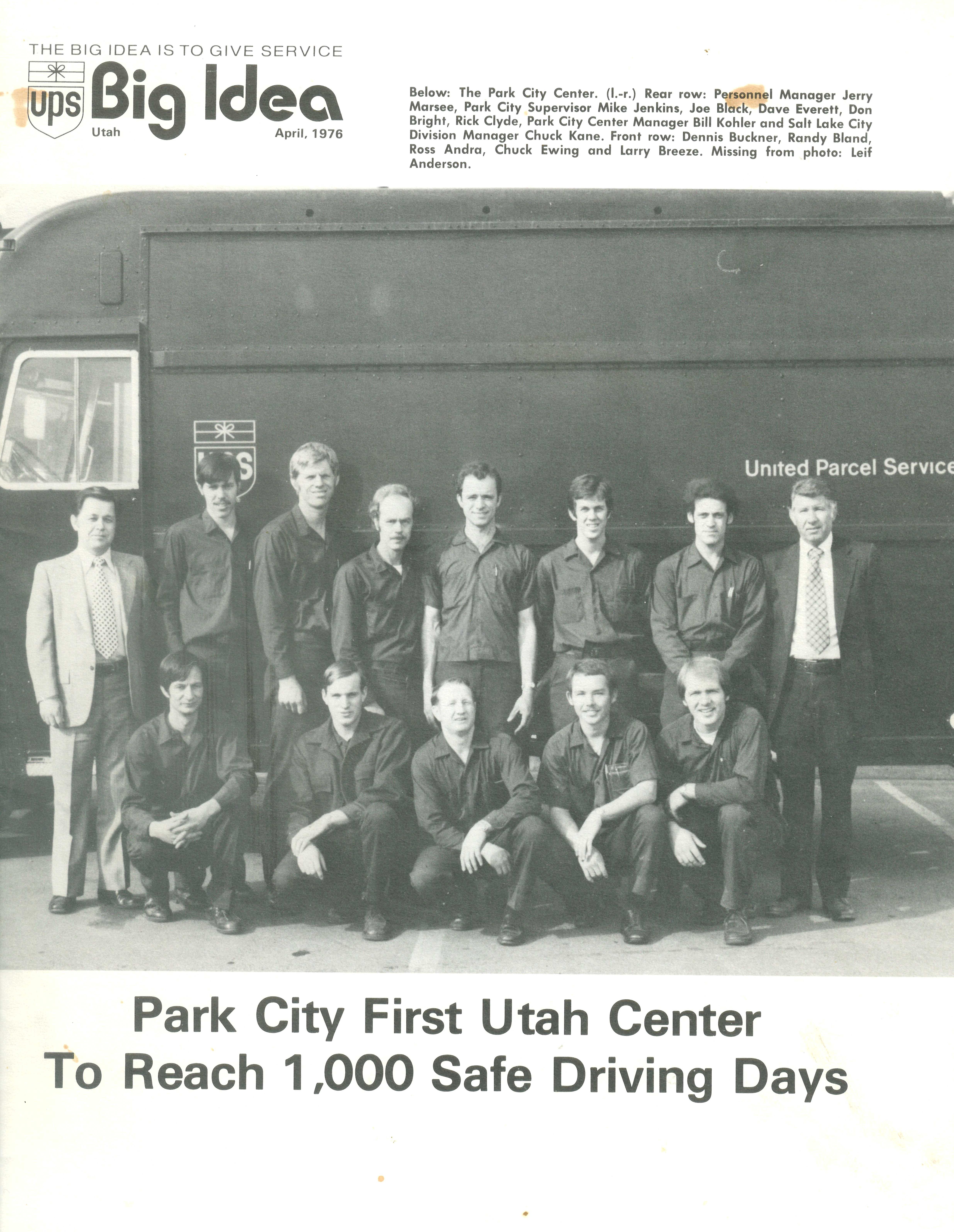
UPS company newsletter Big Idea, April 1976, Ross Andra is named as one of the drivers who helped get to 1,000 safe driving days
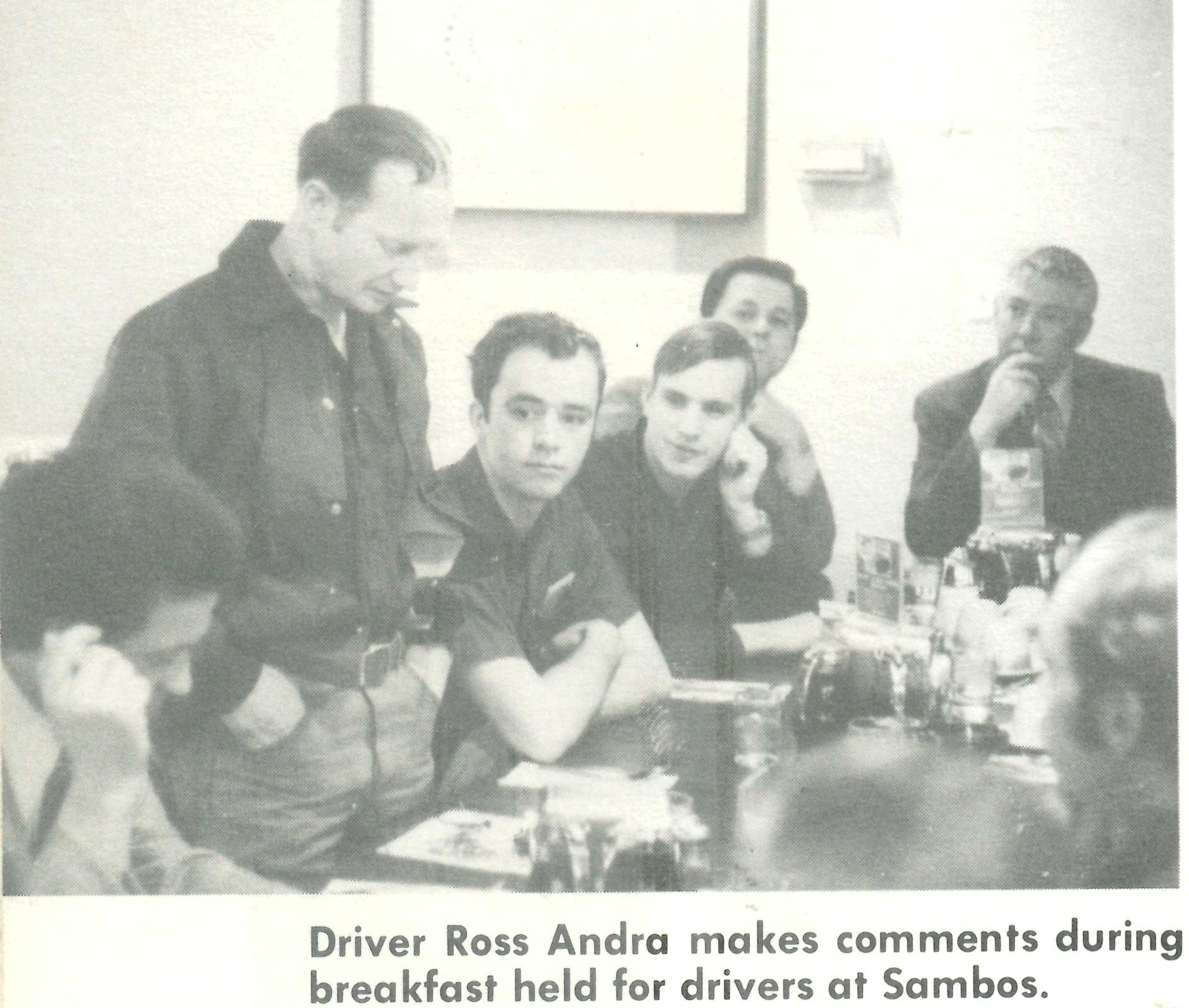
Ross Andra makes comments during breakfast held for drivers at Sambos

The April 1976 edition of the UPS company newsletter Big Idea photographed the Park City, Utah center โ€” first in Utah to reach 1,000 safe driving days โ€” and named Ross Andra in the front row. A separate photograph from the same period shows him standing at a driversโ€™ breakfast, mid-comment, captioned: โ€œDriver Ross Andra makes comments during breakfast held for drivers at Sambos.โ€ He drove a fully loaded truck the way most people drive a compact car, weaving through traffic with an ease that still astonished Frederick Johnson decades later. Before GPS, he had the entire I-15 corridor memorized. He was the GPS. In his later years, until age 84, he delivered blood and vital organs to medical facilities across Utah, Idaho, and Wyoming. He made people laugh the whole way.

Ross and Adelaide Andra

Ross the Boss

Judy, Dale, Mary, Bill, and Ross Andra, September 1962

Frederick Johnson โ€” known as Freddy, or Frederico โ€” spoke at the funeral. His father Ranley had worked weekends with Ross for years delivering and installing appliances, and when Frederico turned sixteen the interview for joining the operation was brief. โ€œFrederico, youโ€™re sixteen, right?โ€ โ€œYeah, Iโ€™ll be sixteen at the end of โ€”โ€ โ€œFrederico, youโ€™re sixteen.โ€ โ€œYes.โ€ That was the interview.

Working with Ross, Johnson said, was better than television, even when it was miserable hard labor. His father would come home Saturdays with tears rolling down his face from laughing. The phone would ring โ€” Ross, calling to debrief, mostly to replay the jokes that were played during the day.

Ross was a virtuoso practical joker. He favored ice dropped down the back of your shirt on hot summer deliveries. He perfected the screwdriver dropped at precisely the moment a man was bent double lifting something heavy. For years he carried a novelty ID with Elvis Presleyโ€™s photograph and produced it whenever anyone asked for identification โ€” cashier, security guard, TSA agent. โ€œThatโ€™s what drugs will do to you.โ€ He once deployed it at a Salt Lake airport checkpoint around September 11th while escorting Johnson to his gate. Johnson nearly missed his plane.

But the parrot story is the finest. Rossโ€™s family had long laughed about his famous account of being called back to the farmhouse by his mother โ€” or so he thought โ€” only to find a chicken calling his name. That story about a chicken that was loud enough and gave a distinct “Rawwwsss” more than once was confused for his mother calling for him. One afternoon, Johnsonโ€™s father came home from a delivery unable to speak from laughter. They had delivered a washer and dryer to an elderly womanโ€™s home. Ross was in the basement doing the hookup. There was a parrot. Ross called up the stairs: โ€œIs there a drain down here? We need to drain a little water.โ€ The parrot said: What? Ross tried again. What? Is there a hole where the water goes? What? Ranley, upstairs, was quietly disintegrating and trying to hold in the laughter. Ross, red-faced and fully irritated, eventually came upstairs. When he saw Ranley’s face, he understood he had been duped by a parrot. Ranley laughed about it the whole rest of the day. The story became one of lore.

โ€œIt was rare,โ€ Johnson said, โ€œto get one on Ross. He always had the drop on you.โ€ The parrot did it magnificently.

For all his irreverence โ€” and Johnson named it plainly โ€” there was something untouched by it. Ross never swore. He had code words and nicknames. But when it came to his faith and his testimony, Ross was always reverent. Bishop Maxwell put it simply at the close: Ross loved the scriptures. He loved the word of God. He loved Jesus Christ. And he brought that light into everything he did.

The Mission Couple

Ross and Adelaide Andra

Clay Celestino, who served as bishop of the Mountain Shadows Ward, offered a different angle. The Brazilian immigrant wards of Salt Lake City in the early 2010s were large and underserved โ€” hundreds of families struggling with injury, poverty, paperwork, language. The Andras came as service missionaries between 2009 and 2015, and Celestino said plainly they were indispensable.

He remembered a specific night: 22 January 2013, 12:19 a.m. He sent an email. Eight minutes later, Ross replied: โ€œHi, Bishop. Thatโ€™s no abuse at all to ask for the things youโ€™re asking. That is the reason why we are serving a mission. We want to help our brothers and sisters the best way we can. Tomorrow I will make a few phone calls and I will provide you with the information you need.โ€

The list of those they helped, Celestino said, went on and on. And then, at nine in the evening, talking to Ross, you would find out he still had deliveries to make for his other job.

When the Andras were transferred unexpectedly in September 2013, Celestino read at the funeral the farewell letter he had written them at the time. He had copied the entire ward leadership. He thanked Ross for allowing him, as bishop, to concentrate on other responsibilities. โ€œFor that I will be eternally grateful to you and to Heavenly Father.โ€ He asked them not to forget the ward. โ€œWe will not forget you.โ€

The Brothers

Bill, Ross, Mary, Dale, Larry Andra – late 1950s

Larry Andra โ€” the last of the twelve, the youngest surviving child of Bill and Mary โ€” gave the family prayer before the service and spoke as one of the main eulogists. He described the family with the dry affection of a man who has lived long enough to be the last one telling the stories.

William Jr. went first among the siblings, in 1992. Then June and Colleen in 1999, Golden in 2004, Sergene in 2013, Donald in 2016, Dale in 2021. At Daleโ€™s funeral in August 2021 โ€” three years before Ross’ โ€” Ross was listed among the honorary pallbearers. By the time Ross died in June 2024, of the twelve children of Bill and Mary Andra, only Larry remained.

Dale’s funeral was held during the week of the annual Andra reunion. Larry noted that was Rossโ€™s last reunion here on Earth. The reunions had been going since the children were young โ€” Preston Fairgrounds, Logan Park, Lava Hot Springs, Wolcott Park by the Minidoka Dam, Richmond City Park, Riverdale, then wherever families could gather. I remember Bill Andra at those reunions. I remember the sly look that sometimes crossed Bill Andraโ€™s face when he was about to tease someone. Ross had inherited that look too. You knew when a tease, joke, or prank was coming by the look on his face.

2010 Reunion: Ross, Donald, Larry, Sergene, Neil Anderson – 2010 Andra Reunion

The Close

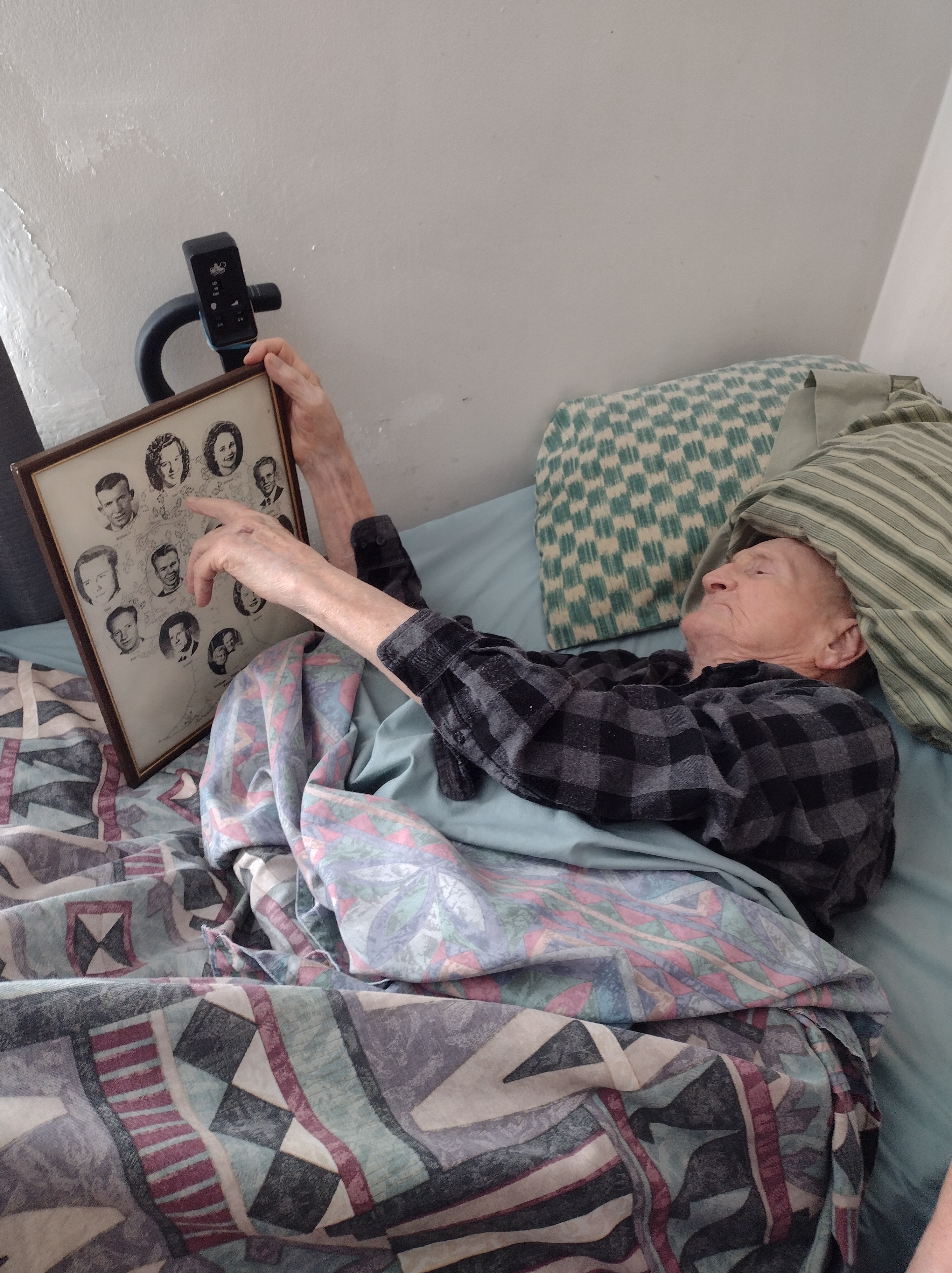
I snapped this picture of Ross the last time I visited him, 23 December 2023 at his home.

Bishop Ted Maxwell had only known Ross since the COVID years. What he had seen was enough. In the final months, when Ross could no longer come to church, he called the bishop after every sacrament meeting to report on how it had gone and offer observations. The calls grew shorter, then stopped. Maxwell told himself at first that Ross must be doing better. He knew eventually that wasnโ€™t it.

What Maxwell said at the close was simple and accurate: everyone in that congregation had either been served by Ross or served with him, because that was what his life was. Service. Whether bringing joy or bringing the gospel โ€” it was the same motion, from the same source.

In December 2023, six months before he died, I visited Ross at home. He was lying in bed, largely unable to rise. At one point he reached up and lifted a framed composite portrait โ€” all twelve Andra children, the photograph that had defined the family across seven decades of reunions โ€” and held it up toward the light, pointing at the faces one by one. He knew every one of them.

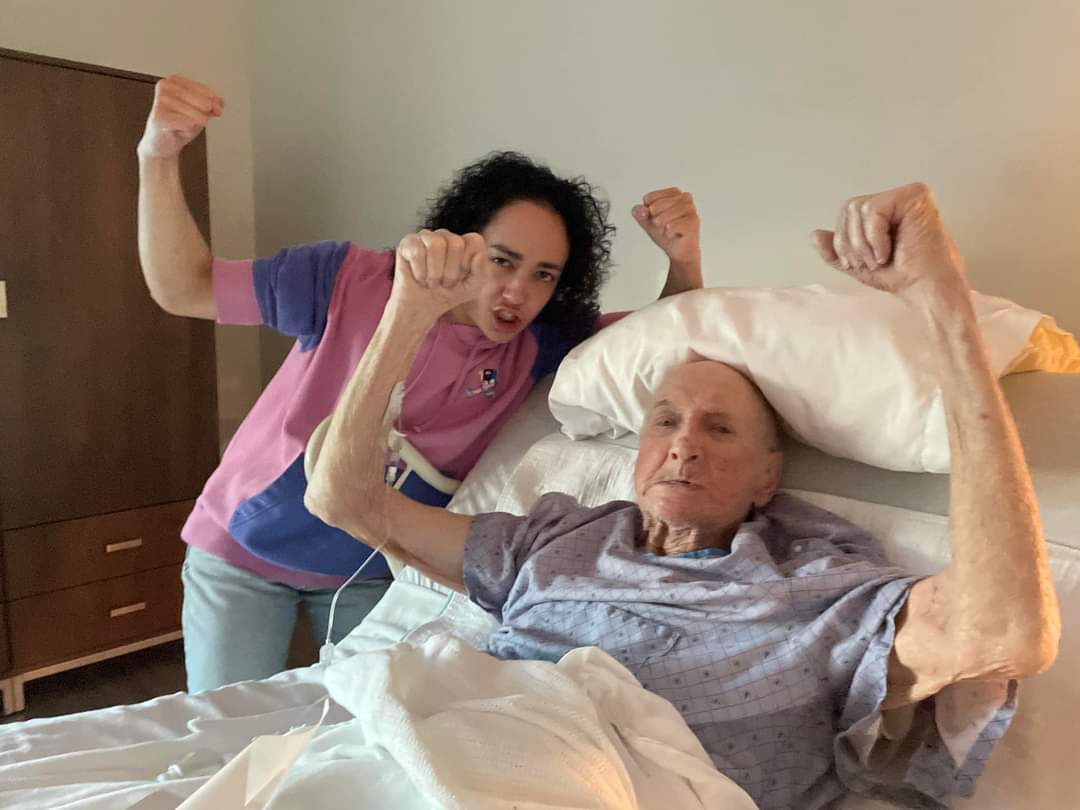
April 2024, rehabilitation with granddaughter Onyx, after fighting infection – still Ross!

In April 2024, in a rehabilitation facility after fighting an infection, Ross raised both arms in a victory pose for Onyx beside him doing the same. Frederick Johnson had sworn he had only seen Ross lying down twice โ€” that April and on his deathbed. Ross never stopped moving. He never stopped working. He never stopped bringing the light out.

On 20 June 2024, Ross Leslie Andra died peacefully in his Salt Lake City home with his wife Adelaide, his daughter Brenda, and his son Carlos at his side.

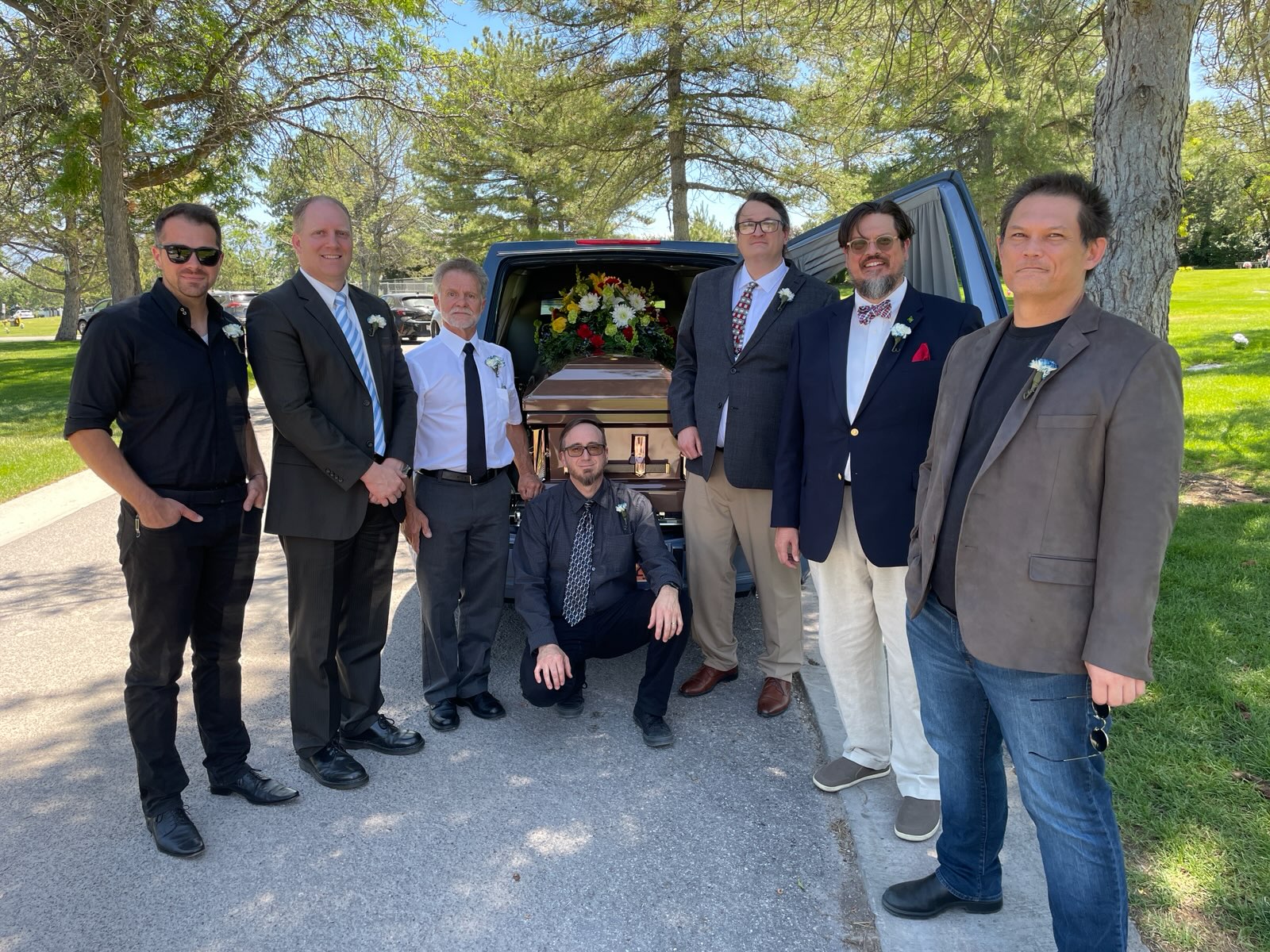
The funeral closed with โ€œHow Great Thou Art,โ€ sung by Sister Annie Lรถwenthal. Then the pallbearers โ€” Carlos Andra, Paul Ross, Larry Andra, Frederick Johnson, Tim Andra, Felipe Johnson, and Aron Hsiao โ€” came to the front. The congregation rose. Ross Leslie Andra was carried out into the June light toward Valley View Memorial Park in West Valley City, Utah.

Frederick Johnson, who had lost his own father just two months before, had a last message. โ€œRoss the Boss,โ€ he said, โ€œyour life mattered a great deal to us and to me. You will not be forgotten. Weโ€™ll keep telling the jokes and passing them on.โ€ Then, more quietly: โ€œSay hi to Dad for me, Ross. Tell him we miss him too.โ€

Pallbearers at Valley View Memorial Park, West Valley City, Utah 29 June 2024. Brandon Porter, Paul Ross, Tim Andra, Carlos Andra, Felipe Johnson, Fredrick Johnson, Aron Hsiao

Ross is survived by his wife, Adelaide; his daughter Brenda (Layton) Wagner; his son Carlos (Melanie) Andra; his daughter Denise Andra; his grandson Brandon (Danika) Porter; his granddaughter Onyx Andra; his great-grandchildren Tilia, Zeke, and Sevi Porter; and his brother Larry (Barbara) Andra.
The full funeral service for Ross Leslie Andra, held 29 June 2024 at the Cannon Ninth Ward in Salt Lake City, was livestreamed and remains available to view at https://www.youtube.com/watch?v=y1qDOIbls5Q.


Sagacity posts referenced in this article: Ross & Adelaide Andra Wedding ยท Andra Marriage Certificate ยท William Fredrick Andra Autobiography ยท Mary Louise Wanner Andra Autobiography ยท Donald Wanner Andra ยท William Fredrick Andra Jr ยท Sergene Andra Sorenson Jensen ยท Robert Lee and Dennis Willard Andra ยท Memories of Great Grandpa and Grandma Andra ยท 1976 Andra Reunion ยท Eisenhower Lock ยท Dapper Dan ยท Andra Family Photos

Funeral Service Transcript

Ross Leslie Andra

2 December 1936 โ€“ 20 June 2024

29 June 2024, 11:00 AM MDT

LDS Church, Cannon 9th Ward (Glendale Ward)

1250 W 1400 S, Salt Lake City, Utah 84104

Note: This transcript was generated from auto-captions and has been edited for readability. Musical interludes, unintelligible passages, and pre-service ambient audio have been omitted or noted. Speaker attributions are based on self-introduction within the service.

Opening of Service

Conducting โ€” Bishop Ted Maxwell

You may be seated. Welcome, everyone, this morning to the funeral for Ross Andra. My name is Ted Maxwell; I’m the bishop of the Cannon Ninth Ward, where the Andras have been living. I’ll be conducting today. On the stand we have President Ingersol from our stake, who is presiding. We’re so grateful to have you all here on this fine, wonderful morning to celebrate the life of Ross Leslie Andra.

We will begin by singing ‘I Believe in Christ,’ Hymn Number 134. Our pianist will be Arlene Lenthal, and the chorister will be Anda, an in-law. After which we will have an invocation by Carlos Andra, Ross’s son.

[Congregation sings โ€œI Believe in Christ,โ€ Hymn No. 134]

Invocation

Carlos Andra (son of Ross Andra)

Let’s bow our heads.

Our Father in Heaven, this morning we open the service with your words: โ€œAnd the Lord God formed man from the dust of the ground and breathed into his nostrils the breath of life; man became a living being.โ€

You formed a man, and his name was Ross Leslie Andra. We thank you, Father, that we can all be here gathered together. We invite your Holy Spirit into this place in which we reflect and honor the life of my earthly father, Ross.

I ask you, Holy Spirit, to stir in the hearts of each person taking time out of the breath of their lives to come reflect and remember the impact that was made by you through this husband, father, brother, uncle, cousin, and friend.

Yea, though we walk through the valley of the shadow of death, we will fear no evil, for you are with us; your rod and your staff, they comfort us. You are Holy God; you are so loving. We love you and we thank you for your presence. We dedicate this time to let your Holy Spirit direct our time together to honor your servant, Ross Leslie Andra. In Jesusโ€™ name, amen.

Amen.

Order of Service โ€” Announced by Bishop Maxwell

We will begin the service with a musical number titled โ€œMy Testimony,โ€ which will be performed by Sister Bastos and Arlene Lenthal. After which we will hear from โ€” oh, I skipped something. Iโ€™m sorry, letโ€™s back up. Weโ€™ll start by hearing the obituary read by Brenda Wagner, who is Rossโ€™s daughter. After which weโ€™ll hear from Larry Andra, who was Rossโ€™s brother. Then we will have a musical number, โ€œMy Testimony,โ€ performed by Sister Bastos and Arlene Lenthal, and after that weโ€™ll hear from Frederick Johnson, who is a family friend. Closing for us will be President Clay Celestino from the Mountain Shadows Stake.

Obituary

Read by Brenda Wagner (daughter of Ross Andra)

Oh gosh โ€” thank you so much for being here for my father and my family, my mom, everyone.

So โ€” Ross. Now, if my eyes start watering itโ€™s because itโ€™s sweaty and hot outside, so thatโ€™s why.

Ross Leslie Andra, my father. At age 87, he returned to his Father in Heaven, which was on 20 June 2024. He passed with dignity and peacefully in his Salt Lake City home, with his wife Adeli, daughter Brenda, and son Carlos at his side.

Ross was born on 2 December 1936 in Preston, Idaho, to German immigrant William Frederick Andra and Mary Louise Werโ€” [you never know how to say that]. He grew up on a large family farm with four sisters and seven brothers.

Ross graduated from Preston High School in 1955 and then went on to attend Utah State Agriculture College โ€” now Utah State University โ€” for two years. Ross worked in construction with a couple of his brothers on the St. Lawrence Seaway project in Messina, New York, between February and December 1957.

He served a mission to Brazil for the Church of Jesus Christ of Latter-day Saints between 1957 and 1959, where he met his sweetheart, Adeli Gonzalez Cararu. They married in the Logan Temple on 14 June 1963. Ross had a deep love for Brazil, its people and culture, and especially for his little Brazilian bride.

After his mission to Brazil, Ross attended Brigham Young University in Provo, Utah, where he studied political science, speech education, and Portuguese. He graduated with a Bachelor of Arts from BYU in 1964 and remained one of their biggest fans right up to the end, watching games and sporting a BYU ball cap everywhere he went.

Ross instilled a strong work ethic into his children. As a servant leader, Ross served his family by example and by teaching his kids how to help Mom with household tasks. He modeled Ephesians 5:25 very well: โ€œHusbands, love your wives, just as Christ also loved the church and gave himself for her.โ€ Ross always made sure everyone was comfortable and that they had what they needed.

Ross loved to make people laugh, and he had a keen gift for engaging strangers with quick-witted quips. He spread many smiles and laughter across this planet.

Ross was a hard worker, and his career life spanned over various areas: from high school teacher, coach, Candyman, small business owner, appliance installer, and furniture mover to a medical career. He held unique skills and talents and applied them well throughout his life and service to others. He maintained a missionary mindset throughout his whole career.

As Candyman, Ross would fill the vending machines in the teachersโ€™ lounge at his eldest daughterโ€™s elementary school โ€” me โ€” and often he would show up during recess and pass out candy on the playground, which made his daughter Brenda โ€” me โ€” quite popular with her friends.

As a business owner, Ross would often take his son Carlos to work with him to deliver and install appliances and move furniture. As a result, Carlos learned to efficiently pack a moving truck like a Tetris puzzle.

Ross loved tomatoes. He would plant them anywhere he could find a plot of dirt โ€” it could be this big, that big. His youngest daughter Denise worked hard to clear space in the backyard for a family garden so Ross could have his tomatoes.

At another point in life, when Denise found herself facing some debt, Ross sat down with her and taught her some financial principles, which she applied and was able to persevere in paying off all her debts in no time at all.

Ross was a faithful servant. With Adeli as his companion, Ross served locally as a service missionary with the Portuguese- and Spanish-speaking wards between 2009 and 2015. Together they drove all around the Salt Lake Valley visiting with families and making sure they had the resources that they needed.

Ross and Adeli had a deep desire to return to an overseas mission in Brazil, but due to health concerns they could not go. Instead they fulfilled that desire by serving the Brazilian people locally.

In his latter years, until age 84, Ross delivered blood and vital organs to various medical locations spanning Utah, Idaho, and Wyoming โ€” and as always, he made people laugh along the way.

We kids heard many stories from Dad about growing up on the family farm โ€” like the time he was called back to the house by his mom only to discover that it was a chicken calling out โ€œRoss,โ€ or the time when Ross and his brothers tied a cow to their math teacherโ€™s front door. With multiple brothers, you can imagine the pranks that were played on and with each other.

Dad, we miss your John Wayne toughness, your Popeye strength, and your cheesy dad jokes. You were a missionary for Christ until the end. โ€œWell done, thou good and faithful servant; thou hast been faithful over a few things, I will make thee ruler over many things; enter thou into the joy of the Lordโ€ (Matthew 25:21). Ross has now entered the joy of his Lord.

We love you, Daddy.

Remarks

Larry Andra (brother of Ross Andra)

My name is Larry Andra. Iโ€™m the last of twelve. Ross would say, โ€œIโ€™m the last of the Mohicans.โ€

Ross was always saying to each person he had a nickname โ€” like โ€œteddy bear.โ€ His kids called him Tom the Piperโ€™s Son. And one nephew โ€” it probably best they called him โ€˜Funkleโ€™ โ€” the funny uncle.

He lacked no jokes. He was likeable and really witty. Others said he loved to joke around with people. I always called him the numbers jokester. And I really didnโ€™t understand when he talked to me โ€” he knew Brazil too much; he forgot that I couldnโ€™t understand the jokes.

Ross never did anything outside the church standards. My parents never had to worry about Ross. He had a little brother to do that.

Our father came from Germany, as mentioned before. Within a couple of months after being baptized, he came alone because he was eleven years old โ€” at twelve you pay full price; at eleven you pay a high price. He got lost, so they came looking for him, and thatโ€™s where the twelve came in. He ended up with the missionary that baptized him going to his farm and marrying his daughter, and they had twelve children.

This week is the Andra reunion, which weโ€™ve had โ€” I think this is Rossโ€™s last one here on Earth.

Death is just as important in the welfare of man as is birth. There is no greater blessing that can come than the blessing of birth. One-third of the host of heaven, because of rebellion, were denied that privilege and hence had no bodies of flesh and bone โ€” which is the gift of God. But who would like to live forever in this world filled with pain, decay, sorrow, and tribulation โ€” grow old and infirm and yet remain? I think all of us, if the proposition were placed before them, would not want life of that nature. We would reject it.

But death is just as important in the Plan of Salvation as birth is. We have to die. It is essential. Death comes into the world and fulfills the merciful plan of our great Creator.

Letโ€™s talk a minute about what happens when one passes on. However painful the moment of death is physically, it is spiritually one of the most exciting and joyful moments of eternity. Itโ€™s like opening the door of a dark room โ€” one who dies emerges into the light of the spirit world, where there will be friends and family waiting to greet him. There is no special period known to man in which they experience so much joy as when they pass through the portals of death and enter into a glorious change in the spirit world.

Death is not extinguishing the light; it is putting out the lamp โ€” and then dawn comes.

When someone dies, it is like a beautiful lagoon. On a clear day a fine sailing ship spreads its mast and its canvas in a fresh morning breeze on the deep blue, and gradually we see her grow smaller and smaller as she nears the horizon and someone says, โ€œThere she goes โ€” gone.โ€ But you can be sure that on the other shore someone says, โ€œThere she comes!โ€

While weโ€™re mourning the loss of Ross, others are rejoicing to meet him behind the veil. Ross has joined Mother, Dad, June, William, Colleen, Millie, Golden, Serene, Donald, Dale, Robert, Dennis, and others.

Steve Jobs was a billionaire worth $7 billion at age 56. Lying on his deathbed sick with pancreatic cancer, he said: โ€œAll my life I have recognized wealth, but all that I had was meaningless in the face of human death. You can find someone to drive a car for you, but you cannot hire someone to carry the disease for you.โ€

As we get older we grow smarter and slowly realize: a watch worth $30 and a watch worth $300 both show the same time. Whether we drive a car worth $150,000 or $2,000, the road and the distance are the same; we reach the same destination. If we drink a bottle of wine worth $300 or wine worth $10, weโ€™re still drunk.

There are five undeniable facets: Do not educate your children to be rich; educate them to be happy, so when they grow up they will know the value of things, not the price. Eat your food as medicine; otherwise you eat your medicine as food. Whoever loves you and never leaves you, even if he or she has a hundred reasons to give up, will always find one reason to hold on. There is a big difference in being human. If you want to go fast, go alone โ€” but if you want to go far, go together.

I really believe that Ross embodied what Steve Jobs was saying here โ€” they went together.

Albert Einstein said: โ€œDo you realize how important you truly are? Look around โ€” who are you influencing, motivating, teaching, or inspiring? Some of the greatest souls who have ever lived will never appear in the chronicles of history. They are the great ones who spend every day of their lives serving and doing good.โ€ Albert Einstein also said: โ€œTry not to become a person of success, but a person of value.โ€

Thank you for the service you are willing to give to your families, your friends, neighbors, and community. Every great dream begins with a dreamer; always remember you have within you the strength, the patience, and the passion to reach for the stars and change the world. You are the difference โ€” make it happen.

[Larry then shared a story about a woman whose car was stuck in the snow in a foreign country. A man came with a mule and attempted to pull her out. Before having the mule try again, the man yelled, โ€œLetโ€™s go, Bob! Tom! John! Lance!โ€ โ€” and the mule pulled the car out. When the woman asked why he called the mule different names, the man said, โ€œMadam, my mule is blind. I wanted him to think he wasnโ€™t pulling the car out alone.โ€]

People in this congregation โ€” Adelaide needs you next to her, pulling and pushing for her. Adelaideโ€™s happiness will return, her former capabilities will be restored, light will replace darkness, despair will give way to hope and life and will regain its meaning โ€” but only through service. Neighbors, friends, relatives, family, and those who are in attendance here: Bishop and Friends, Adelaide does not need to be preached to, but she needs a void filled. Bless her and be of service to her, as the Savior asks of us, and I promise you that you will be blessed. I say this in the name of Jesus Christ. Amen.

Amen.

[Musical number: โ€œMy Testimony,โ€ performed by Sister Bastos and Arlene Lenthal]

Remarks

Frederick Johnson (family friend)

My name is Frederick Johnson โ€” Todd Elijah. Iโ€™m known as Freddy; the full version is Frederico.

Like many, the summer I turned 16 I got my first job, and it was delivering household appliances with โ€œthe Boss.โ€ The interview went something like this: โ€œFrederico, youโ€™re 16, right?โ€ And I said, โ€œOh yeah, Iโ€™ll be 16 at the end of โ€”โ€ โ€œFrederico, youโ€™re 16.โ€ โ€œYes.โ€ And that was my interview. But admittedly it was essentially nepotism.

As long as I could remember, my dad โ€” Ranley Johnson โ€” had been moonlighting on weekends with Ross. As far as Iโ€™m concerned, they were the first and only two men in a truck there ever were.

Ross, like my father, had served a mission in Brazil and married a Brazilian. In the โ€˜80s, all these mixed families โ€” nowadays the church and the Brazilian community in the Salt Lake Valley has become tremendous. But when I was a little child, and when Carlos and Brenda and their little sister Denise were young, we all kind of knew each other more or less. At conference time we went to reunions together. The connection goes back even further than that โ€” about a decade before my mother first came to the United States. My mother, Louisa Coa Johnson, came to the US in the 1970s. Adeli had served in the tiny branch of Beloni, Brazil, where my mother, my aunt, and grandmother were new converts to the church. So as I say, it was basically nepotism.

I swear, Ross the Boss Andra was the strongest man I ever knew. Thirty years my senior, he had more stamina and strength in his late fifties than I could muster at his side as a six-foot-one man in my prime. He was compact and he looked powerful to me. He not only looked and sounded like Popeye โ€” he even talked like Popeye. Except instead of eating spinach, I think where he got his strength was from eating tomatoes.

Rossโ€™s strength was legendary. In fact, Ross wasnโ€™t only strong โ€” he was an irresistible force. My dad told stories of seeing Ross pick up a Ford Pinto by its bumper to make room for the truck to pass. And I donโ€™t doubt it.

Now, Ross, when I knew him, could sometimes come across as a little unsophisticated. But anyone who knew Ross at all knew that to dismiss Ross the Boss as a blue-collar East Idaho farm-boy country bumpkin was making a grave mistake. Ross was intelligent, well-traveled, and educated, and he did not suffer fools or foolishness.

When I was still a teenager, we were working, delivering appliances. There was another man who worked with Ross who was actually a bit more unsophisticated โ€” I wonder if Carlos remembers Joe Yanger. The way I remember the guy: he was big and coarse, had bad Marine Corps tattoos on his arms, and talked kind of low. I couldnโ€™t understand a word he said except swear words. He was strong as an ox and probably about as sophisticated as one, if you take my meaning.

Anyway, one day Ross tells me: โ€œJoe Yanger got hurt.โ€ โ€œWhat happened, Ross?โ€ โ€œI dropped a piano on his head.โ€ They were moving a piano, and Joe was at one end coming down the ramp. Ross said, โ€œJoe, are you ready?โ€ Well, Ross didnโ€™t know if he was ready or not โ€” so he let go of the piano. Joe Yanger ended up with some stitches in the back of his head. I donโ€™t think it made any difference to how Joe Yanger spoke or how well Ross could understand him.

Also, I want to emphasize โ€” and if you get a chance, read again the beautiful obituary that Rossโ€™s family put together โ€” Ross was not a blue-collar guy with a truck, and he certainly did not see himself that way. Ross Andra was an entrepreneur. He firmly believed in the American dream, in hard work and gumption as the way to get ahead, and thatโ€™s what he did โ€” whether it was filling candy machines, moving vending machines, delivering appliances, or contracting his truck out as a mover. Ross believed he was an entrepreneur, and he was.

In a world where hard work and gumption were enough, Ross would have been a financially wealthy man many times over, because I also donโ€™t know anyone who worked as hard as Ross. Thatโ€™s why most of my memories are from working with him โ€” or working with my dad and Ross the Boss โ€” because he was always working. In fact, I swear Iโ€™ve only seen Ross lying down twice: the first time was in April, when he was in rehab after fighting an infection, and the second time was on his deathbed. Ross never stopped moving and never stopped working, and he had lots of gumption.

Now, the work that we did with Ross was, as you can imagine, physical โ€” hard work. But Dad would come home laughing. There was always this interesting other thing about working with Ross the Boss: there would be some kind of debriefing. Heโ€™d wait long enough for you to get home, the phone would ring, and he would call โ€” mostly I think to go over the jokes he had played on you and laugh about them again.

My memory of even Dad working with Ross is Dad coming home, the phone ringing, and then Dad laughing. Or Dad coming home โ€” I even remember him opening the door with tears rolling down his eyes, just couldnโ€™t stop laughing. When I worked with both of them, it was better than television, because my dad was a wise guy in his own way and the two of them together could be very entertaining.

My mom even thought: โ€œThis isnโ€™t fair โ€” Iโ€™m home with the kids every Saturday and youโ€™re off having fun with Ross.โ€ But it was hard work, and with anyone else it would have been miserable. We enjoyed working with Ross, and we all worked with Ross. My brother Felipe worked with Ross; my friend Giorgino Brown, another one of these families thatโ€™s half American, half Brazilian here in Utah; my cousin visiting one summer from New York worked with Ross one day โ€” and Ross made an impression on everybody. It was fun, even though it was miserable hard work.

A lot of this is because Ross was a virtuoso practical joker. One of his favorite things โ€” if we were working in the summertime โ€” was to drop ice down your shirt. Even worse than that: when we did deliveries we had shirts that said โ€œDPECโ€ on them โ€” short for Delivery Specialist, which made it sound kind of exciting and sexy. They always seemed like they were a size too small or too short, so Ross had a knack โ€” one of his favorite things was to take advantage of you when you were bending down picking up something really heavy and that shirt rode up. Without saying a word, Ross would just drop a screwdriver down there right when you were really going. He would just chuckle. And of course at the end of the day heโ€™d call and say, โ€œHey, do you remember when I dropped that? That was good.โ€

For years he had a novelty ID with Elvis Presleyโ€™s picture on it, and anytime someone asked him for his ID heโ€™d show that โ€” it didnโ€™t matter who they were. Theyโ€™d look at it and go, โ€œHuh?โ€ And heโ€™d say, โ€œThatโ€™s what drugs will do to you.โ€

One time, around September 11th โ€” I was living in New York, but every time Iโ€™d come back to town Ross would say, โ€œFrederico, do you want to go to work?โ€ Iโ€™d work with them even for just one day. This time he offered to take me to the airport, because Ross was always on the road โ€” always driving a truck, delivering furniture, delivering appliances, or delivering medical equipment. So he was happy to go. We go up, and I was the one who needed to show my ID. Ross comes up, already ready, and this TSA agent โ€” some people go, โ€œHuh? What? You already โ€” what drugs will do to you.โ€ And here I am thinking, โ€˜Oh no. Iโ€™m not going to make my flight. Theyโ€™re going to take me to the back and interrogate me.โ€™ That was one time where the person didnโ€™t even blink. Ross would say something like, โ€œIโ€™m better looking now, arenโ€™t I?โ€

It was rare to get one up on Ross โ€” he always had the drop on you. But hereโ€™s one of the most famous stories: the parrot story.

[Freddy describes the chicken story from the obituary โ€” the time on the farm when Ross thought his mom was calling him, only to find a chicken mimicking her voice. One day, while delivering a washer and dryer to a customerโ€™s home, Ross was working in the basement and noticed a parrot. Ross called up the stairs, โ€œIs there a drain down here? We need to drain a little water.โ€ The parrot replied, โ€œWhat?โ€ Ross, thinking it was the elderly owner upstairs, kept asking. Each time โ€” โ€œIs there a hole in the ground where the water drains?โ€ โ€” the parrot answered, โ€œWhat?โ€ Freddyโ€™s father, upstairs, realized what was happening and nearly collapsed laughing. When Ross finally came up and figured it out, Freddyโ€™s dad laughed about it the whole rest of the day. Freddyโ€™s father had been waiting for years to get something on Ross, and the parrot delivered it.]

Ross could move a fully loaded truck like it was a subcompact car โ€” weaving in and out of traffic. Before GPS existed, he knew the entire I-15 corridor in Utah. He was the GPS.

Ross could sometimes seem a bit irreverent โ€” he had code words, letโ€™s say. Ross never swore, but he might include swear words in code names and nicknames he gave to things. But when it came to his faith, his belief, and his testimony of the church, Ross was always reverent. He wasnโ€™t serious all the time โ€” he was still joking โ€” but Ross was reverent, and I always knew that.

I can say honestly that Ross was a big part of my entire life. Even when Iโ€™ve lived out of state for most of the last thirty years, he would call me every once in a while to check on me. I began to worry about a year ago when the phone calls started getting shorter โ€” because normally Iโ€™d set aside 45 minutes or an hour, because weโ€™d have to retell all the stories about every time he dropped a screwdriver down โ€” anyway. Heโ€™d say, โ€œRemember when I did that, and then your dad did this.โ€

I just want to finish by saying โ€” and if I do get a little emotional, itโ€™s not because itโ€™s hot; itโ€™s because Iโ€™m kind of that way โ€” Ross, to me, always was and will be bigger than life. Ross the Boss, I want to say to you that your life mattered a great deal to us and to me. I love you and your family, and how close our families have been. Your life mattered, and you will not be forgotten. You will be with us and within us, and weโ€™ll keep telling the jokes and passing them on. We love you and we bid you farewell โ€” but only until we meet again.

My own dad preceded Ross to the great beyond just a couple of months ago. So I personally have to say: say hi to Dad for me, Ross. Tell him we miss him too, and that we love him. Thank you.

Remarks

President Clay Celestino (former Bishop, Mountain Shadows Ward)

Brothers and sisters, my name is Clay Celestino. I served as a bishop in the Mountain Shadows Ward at the time the Andras โ€” thatโ€™s how we pronounce their name in Portuguese, and thatโ€™s how Iโ€™m going to refer to them โ€” were serving in our ward. On behalf of all the Brazilians โ€” mostly Brazilians โ€” who were part of the Winter Ward branch and the Mountain Shadows Ward, I wanted to express our deepest gratitude to this couple.

The first thing anyone would see when they met them was that big smile, and sometimes a joke. It was not hard to love them. Truly, their lives represented the love of our Savior Jesus Christ to us. With hundreds of immigrants from Brazil, the Andras represented arms of salvation, of service โ€” hearts that were willing to bring consolation in times of distress. They were deeply engaged in serving their neighbors because of their love for our Heavenly Father and their genuine love towards anyone around them.

As bishops, we had hundreds of active members coming to our meetings every Sunday, and there was a great need for members who could assist us in lightening the burdens of those Brazilian immigrants. At any time that I needed help, the Andras were there.

I remember one day โ€” I even have the date here โ€” it was 22 January 2013. I sent a quick email to the Andras at 12:19 a.m., past midnight. Eight minutes later, I got a response. I didnโ€™t want to abuse their goodwill and their desire to help others, but this is the response I got:

โ€œHi, Bishop. Thatโ€™s no abuse at all to ask for the things youโ€™re asking. That is the reason why we are serving a mission. We want to help our brothers and sisters the best way we can. Tomorrow I will make a few phone calls and I will provide you with the information you need.โ€

There were people who were unable to work because they were injured and needed help to find a doctor. There were young men who needed their dental and medical paperwork taken care of so they could submit their papers to go on a mission. There were people who needed resources from the community because they were unable to provide for themselves โ€” people transitioning from another culture and trying to get established in this country โ€” and they were assisted by the Andras. The list goes on and on.

And then at 9:00 p.m., talking to Ross, you would find out that he would still have to run some errands, make some deliveries, because of his other side job.

We donโ€™t have much time, but I just wanted to express our deepest gratitude to Brother Andra. When we got the news that they were going to be transferred from our ward โ€” initially we thought they were concluding their mission in November of 2013 โ€” and then in September, two months prior to that date, we were surprised with the news that they were being transferred to the Winter Ward, where they actually stayed. They didnโ€™t finish their mission there; they actually stayed for quite some time.

When I found out, I wrote this email to them, and I think itโ€™s very fitting that I can share it now to conclude these brief words:

โ€œDear Sister Andra and Brother Andra โ€” in this email I copied the entire leadership of the ward: I am saddened by the news of your sudden departure, as we are today, mainly in our community when we found out that Ross had passed on. I believe our ward leaders and members will feel as surprised and astonished as I do. While your transfer will truly bless and benefit our brothers and sisters in the Winter 17th Branch, I know our ward will deeply miss you. On behalf of all ward members and leaders, I would like to thank you for your dedication, love, and service. I have been a witness of how you have touched the lives of our members in many different ways and how your service has helped me, and allowed me in particular to concentrate on other areas of my responsibilities as a bishop โ€” and for that I will be eternally grateful to you and to Heavenly Father. Thank you for your love for Heavenly Father, for responding to the call to serve, and for showing your love to and for our members. Hopefully as your mission ends, you will return to visit us. Please do not forget us โ€” we will not forget you. We will announce your transfer in sacrament meeting tomorrow. Sincerely, Bishop Clay.โ€

Brothers and sisters, there are many tragedies around us as we hear about tragedies happening worldwide. Many of us, if not all of us, have somehow faced tragedies in our own lives. In fact, in this congregation right now there may be some who are needing a helping hand โ€” some who may be struggling with illness, financial problems, family issues, health, and all sorts of challenges, mental illness. Sister Andra will need some support โ€” I know that โ€” and Iโ€™m very grateful for the support you have already extended to her during this time.

But may we honor the life of our dear Brother Andra by trying to emulate the works of Christ: being a little bit kinder, helping one another, finding time to serve, and extending that love that comes from our Heavenly Father which he has for each one of us. We are his arms; we are his hands. Ross Andra represented that very well.

I know that we will meet again, and that is the beauty of this gospel โ€” death is not the end. We will meet again. May the love of our Heavenly Father be with each one of you as you strive to follow in the footsteps of his Son, our dear Savior Jesus Christ. In the name of Jesus Christ. Amen.

Amen.

Closing Remarks

Bishop Ted Maxwell

You know, right before I close I just want to say a word or two. In the last few months Ross had not been able to come to church because heโ€™s been stuck at home. But initially I know he really wanted to be there, because he called me after church every Sunday and let me know how church went and gave me advice for the future. It was always really great to hear from him. As his calls dropped off I knew things were โ€” at first I thought we were just doing better, but then I realized maybe that wasnโ€™t the truth.

I think thatโ€™s the one thing I loved about Ross: everyone in this audience has either been served by him or served with him, because thatโ€™s what his life was โ€” it was service. Whether it was just bringing joy or bringing the gospel, that has always been one of my great joys, getting to know him these last few years, although Iโ€™ve only known him since COVID, so I missed out on some of the really fun stuff, it sounds like.

I know the one thing Ross loved was the scriptures. He loved the word of God, and he loved Jesus Christ, and he brought that light out in everything he did.

When I think about the joy that Jesus shared with his apostles right before he died on the cross, he said: โ€œLet not your hearts be troubled; believe in God, believe also in me. In my Fatherโ€™s house are many rooms, and I go to prepare a place for you. I will come again and will take you to myself, so that where I am, ye may be also โ€” and you know the way to where Iโ€™m going.โ€

It is my testimony that Ross knew the way to where Christ is โ€” that we will see him again โ€” and it will be in the mansions of our Heavenly Father, in that place that Christ prepared for us through his sacrifice. It is my testimony that we will see each other again, and that through the grace of Jesus Christ we may all be relieved of all those burdens that we suffer from daily โ€” and that in those burdens we might have joy, the way that we saw our brother Andra in his life. I say that in the name of Jesus Christ. Amen.

Amen.

Closing Announcements โ€” Bishop Maxwell

Letโ€™s close our meeting now. We will โ€” no, we wonโ€™t sing โ€” we will listen to a musical number by Sister Annie Lenthal, โ€œHow Great Thou Art,โ€ after which Paul Ross, who is Rossโ€™s nephew, will give us the benediction. After that weโ€™d ask the pallbearers to come up, and weโ€™ll escort the body to the graveside, where we will reconvene.

[Musical number: โ€œHow Great Thou Art,โ€ performed by Sister Annie Lenthal]

Benediction

Paul Ross (nephew of Ross Andra)

Our Father in Heaven, we thank thee. We thank thee for thy Son, Jesus Christ. We thank thee for this world and that we have the privilege of coming here and gaining our bodies, of learning faith and love, and of thy Savior, thy Son, and all that he has given for us, and thy love.

We thank thee for Ross Andra โ€” his example, his good parents, and his family. We thank thee for his wit, his grit, his stature, his faithfulness, and his example. He had thy Sonโ€™s countenance with him in work and in sadness and in joy. We are grateful for him. Weโ€™re grateful for Adeli and their sweet family.

We ask thee this day that thy Spirit will continue with us. Help us to continue to feel the joy and the balm of thy Spirit, even in our sadness. We thank thee for the Atonement of Jesus Christ and the knowledge of the eternal realms that come for all of us, and what still lies in store for us. But until then, that we can have peace and serve in thy name.

And that of thy Son, dismiss us this day with safety to the cemetery and love and adoration for one another and for thee. We pray in the name of Jesus Christ. Amen.

Amen.

[Pallbearers assemble; congregation rises; body is escorted to Valley View Memorial Park, West Valley City, Utah for interment]

End of service transcript.

David & Sarah Buttar

Hiram, Amanda, James, and Aliza Ross at the grave of David and Sarah Buttar in Clarkston, Utah – August 2021

I moved this history up in my list because I know two other descendants of David and Sarah Buttar who live near us. My wife and children are descendants of David and Sarah Buttarโ€™s daughter, Emma Jane, who married David Crompton Thompson.

Amanda and Hiram Ross at the graves of David and Emma Thompson in Clarkston, Utah – August 2021

There are a couple of histories out there for David and Sarah Buttar. They seem to descend from a common history. There are a couple of differences and disputes, which I will point out.

David Buttar was born 2 December 1822 in Perthshire, Scotland to Donald Buttar and Elspeth Rattray. David’s death certificate and a Scottish family record give his father’s name as Daniel rather than Donald; all other sources use Donald. Some family records give Elspeth another first name of Betheah, but no contemporary record provides such a name. Although through the years, she was referred to as Betty. Some of the Buttar family records show the name. Her parents did not provide it on official records and she did not use it in her life for official purposes.

No contemporary record gives Davidโ€™s birth location. He was christened 12 December 1822 in Rattray, Perthshire, Scotland. Family records show him as born in Blairgowrie, Perthshire, Scotland. His death certificate, the information coming from his surviving spouse, Sarah Keep Buttar, gives this location too.

Donald, Davidโ€™s father, was a tailor by trade. David was the youngest child of his father’s family. Both Donald and David apprenticed to become shoe makers. In Blairgowrie, David ran a substantial shoemaking business, employing and boarding some fifteen persons. David followed the shoe maker trade in both Scotland and in the United States. David was brought up in a religious home. He was also musical playing the bellows on the local Presbyterian Churchโ€™s pipe organ and the flute for the choir. His father, Donald, died at the age of 83 when David was 12 years old.

In 1848, at the age of 26, David married Margaret Spalding in Blairgowrie, Perthshire, Scotland (there are disputes on the actual date, so I left it generic). On 19 January 1851, David was baptized a member of the Church of Jesus Christ of Latter-day Saints. Margaret was initially resistant to the gospel. Elizabeth Graham Macdonald, a recent convert who boarded with the Buttars family in Blairgowrie while her missionary husband was away in the Highlands, worked to bring Margaret to an understanding of the gospel. Margaret was baptized in November 1851. David was ordained a priest in 1854. In February of that same year, David left Scotland for America with his wife and their four small children: Marjory, Meek, Bethea, and David. They sailed from Liverpool on the ship John M. Wood, arriving in New Orleans in May 1854. While at sea the youngest child David died. Family tradition holds a more harrowing account โ€” that the parents initially kept the babyโ€™s body rather than commit it to the sea, but that sharks began circling the ship in such numbers that the crew made a frantic search for the cause and found the child. The parents were compelled to give up the child to the deep. Whether the full family account is accurate in all its details, the loss of their infant son at sea was a grief the family carried with them to Utah. The journey by sea to America from Scotland took seven weeks and two days.

David and his family traveled across the plains by ox cart with the Taylor Company. (Other sources identify the plains company as Captain William Empey’s Company, one of the final wagon companies to cross the plains that year.) While on the plains, cholera erupted amongst the company and David became very ill and nearly died. It took him some time to get over the effects of cholera. David and his family had to walk most of the way to Utah. On the plains David had two remarkable encounters with rattlesnakes. One day while gathering firewood he picked up a rattlesnake among the sticks and carried it quite a distance in his arms without realizing it โ€” discovering it only when he laid the wood down. On another occasion he made his bed under the wagon and in the morning, upon rolling up his bedroll, found that a rattlesnake had slept curled beneath him through the night. Neither snake harmed him. David would not kill rattlesnakes and said of them, “they didn’t harm me and they won’t hurt anyone else if they leave them along.”

Sarahโ€™s history is shared below that includes stories of crossing the plains. Sarah mentions she traveled โ€œfirst with Father and Motherโ€ฆ in Prattโ€™s Company, then Captain Inkley came to bring the sick inโ€ โ€” her journey in 1866 was separate from Davidโ€™s 1854 journey.

The family arrived in Salt Lake City in the fall of 1854. They lived in Salt Lake City for five months where David worked as a shoemaker for a Brother Samuel Mellener. David then moved his family to Lehi, Utah. After moving to Lehi, David continued working for Brother Mellener. David did not have a method of transportation and had to walk from Lehi to Salt Lake to pick up leather for his shoes and return the finished shoes to Brother Mellener. There were times when he was able to secure a ride to Salt Lake. After a few years, David was able to raise some calves that, once grown, were able to supply a team of oxen for transportation. In Lehi the family lived in a mud house with a dirt floor. David also began to farm in Lehi. In the year 1856, all the crops in Lehi were eaten by grasshoppers and the family had no flour. Because of the flour shortage, bran bread was made.

In August 1863, Margaret died several days after giving birth, leaving David with six small children. The oldest girl was only fourteen years old and the baby, Margaret, was five days old. Baby Margaret died two weeks after her mother and was buried in the Lehi cemetery. David experienced sad, hard times and, having no family nearby to assist him with the children. Four years later on 16 December 1866 he married Sarah Keep Francis. Sarah had previously been married in England to Thomas Robert Francis, but had left him behind before coming to the United States. Family history records that Francis was fond of drink and ultimately died in the Poor House. Sarah had a daughter of her own, Lucy Ann Francis, who David always regarded as his own daughter. On April 16, 1868, a daughter, Sarah Isabell, was born. Sadly, Sarah Isabell died on June 15th. Sarah Isabell was buried in the Lehi cemetery.

In October of 1868, the family moved to Clarkston in Cache Valley of Utah. David was ordained an Elder that same fall. Upon arriving in Clarkston, David built a two room log house in the Clarkston Fort. In 1870, David moved from the fort and built another two-room log home on the north side of Clarkston near his farm. He raised cows, horses, sheep, pigs, and chickens on their farm.

Buttar home north of Clarkston, Thomas James in front of the house, David Alexander next to the right, then James Joseph, then David, then Emma Jane, Sarah, and Mary

In 1882, David and Sarah built a large, white framed house for the family. The two-story home had a porch on the front, three dormer windows on the second floor facing east, and two dormer windows facing south with a veranda below. It was a large home for the standards at that time. It was a beautiful home that overlooked the farm and had a commanding view of the valley. The first prayer circle in Clarkston was held in an upstairs room of that home, and was kept there for three years and four months before being moved to the new Tithing House. Unfortunately, this beautiful home burned on 11 May 1931.

David became a high priest. He believed in paying an honest tithing, knowing that the Lord keeps his promises by opening the windows of heaven to pour out blessing on all that keep his laws and commandments. This was proved to David in the spring of 1871 when the grasshoppers were so thick that when in flight they darkened the sun. Three times that summer the grasshoppers ate all of Davidโ€™s grain. When they came the fourth time, with the help of his children, the grasshoppers were driven into ditches where the chickens would devour them. The grasshoppers were so large that the chickens could only eat three or four at a time. David told his family that because he had paid his tithing that the Lord would provide for them. It was then that the seagulls came and began eating the grasshoppers until they could eat no more. When the seagulls had eaten their fill, they would go to the ditch and throw up the grasshoppers and then continue to eat more. Once the grasshoppers were completely devoured, the seagulls flew away. This time the grain grew to maturity and David produced 1,300 bushels of grain โ€“ the largest crop he had ever harvested up to that time.

When David first began to farm in Clarkston, he cut his grain with a โ€œcradleโ€, after a few years he purchased a โ€œdropperโ€ to cut the grain. He hired six men to flail and bind the grain. David would cure his wheat for planting with slack-lime, and he would sow his seeds by hand casting them.

David continued to make shoes for the first few years in Clarkston, but the last shoes he made were for his step-daughter, Lucy Anne, and he purposely made one that was wrong-side-out and stated that โ€œhe wouldnโ€™t make any more shoesโ€, and he never did.

David would mend his harnesses with wooden, maple pegs that were actually intended as tacks to hang shoes on. He planted five to ten acres of potatoes each year. Although for the first few years hay had to be bound by hand, David purchased the first self-binder in Clarkston that bound the hay with wire. Later, he assisted Andrew Heggie and Peter S Barson in buying the first header in Clarkston.

One year the sunflowers had grown so profusely in the wheat that when the threshers came, they refused to thresh it. He made a flail and flailed all the wheat by hand on a wagon cover. After the grain was harvested, David had to haul it some 60 miles (each way) to Corinne or Ogden by team and wagon just to sell it.
During the construction of the Logan Temple, David donated $100 each year until the temple was completed. He did temple work for many of his ancestors in the Logan Temple. He also gave financial assistance to build the old rock meeting house in Clarkston as well as the new chapel that is still standing in Clarkston today (although it has undergone several additions and renovations since then). On 1 June 1882, David received a federal land patent signed by President Chester A. Arthur for approximately 160 acres in Cache County, Utah Territory, formally securing title to his Clarkston farm.

Sarah Keep Buttar

In 1884, David married Sophia Jensen Hansen in plural marriage. He lived in polygamy for 20 years. David and Sophia were later divorced, though David continued to provide for her financially each year until her death in 1909. In 1889, polygamists were advised by the authorities of the Church to give themselves up instead of being hunted down by the law. On the first of June 1889, David gave himself up. Because of his age (67), he was not required to serve the usual six months jail sentence. He paid, instead, a $100 fine and returned home a happy man.

Back (l-r): William Sparks, Hans Jensen, Lucy Ann Francis, Robert Buttar, John Buttar, Daniel Buttar, Elizabeth Buttar, Charles Buttar, Margaret Cutler, Will Sparks; Sitting: Emma Gover, Sarah Buttar, David Buttar, Sarah Keep Buttar, Karen Buttar

On 30 May 1899, David, his wife Sarah, their son Charles and a niece Mary Ann Jenkins, had all attended the Logan Temple. While driving across the Bear River Bridge on their return trip home to Clarkston, the bridge broke and the buggy, horses, and all the people went into the water. Beams and iron from the bridge pinned the occupants in the water. Charles, while trying to free Sarah, saw the Jenkins baby floating downstream and caught its clothing just before it floated under the broken bridge, saving its life. Sarah received a severe blow to the head, cutting a gash in her scalp, knocking out her teeth, and injuring her internally. David’s shoulder was also severely injured. William Bingham and William Thain, who were working in a field nearby, heard the cries for help and came to pull everyone from the river. Bingham then rode to Logan for a doctor. Sarah was taken home to Clarkston unconscious. William Bingham, who had so bravely rescued her and the others, thought that surely she had died and came to Clarkston a few days later to attend her funeral. It would be an understatement to say that he was quite surprised to find no funeral transpiring, as Sarah was alive and well. Sarah did report afterward of having an out-of-body experience during the near-drowning incident and spoke of the beautiful things she witnessed on the other side of the veil.

In 1909, David contributed $200 to President Budge of the Logan Temple. President Budge gratefully said that the donation was an answer to prayers, as money was needed to purchase a new rug (carpet) to replace carpet that had been burned in a recent temple fire. President Budge gave David a priesthood blessing which pleased David greatly. David also stated that he thought that would be his last donation to the temple โ€“ and it was. On November 23, 1911, David passed away from eye cancer at the age of 89. He was laid to rest in the Clarkston Cemetery. A beautiful, majestic monument has been erected to his memory at his burial site.

Buttar home on 6 October 1920

Was David a Buttar or Buttars? His christening record prepared by the church has Butter, likely from the mouth of his father. It does not show as plural. When David was married to his first wife, Margaret Spalding, the church recorded his name as David Buttar. Another record, likely created from his own dictation to the individual creating the record. The 1860 Census, probably from someone elseโ€™s mouth, has Buttar. But yet, 1870, probably from someone elseโ€™s mouth, has Buttars. It goes back and forth. 1910 Census – Buttars. Death certificate for Charles William Buttar – father is David Buttar – Sarah Keep Buttar completed this death certificate information (but Charlesโ€™ grave marker has Buttars). The death certificate for his wife, Sarah Keep Buttar – has his name as David Buttars. Alternatively, when he died, Sarah Keep Buttar provided the death certificate information and provided his name as David Buttar. But, when she applied for the Daughters of the Pioneers, she wrote Buttars. Ultimately, some of his siblings and own children used both variations. There are likely other records, but it appears at this time the records created by him in his own life show Buttar. Lastly, when he died, the family listed Buttar on the tombstone (as seen above). But since his christening record (provided by his parents), marriage certificate (provided by him), and his death certificate (provided by his wife) all list Buttar, along with his tombstone, I will go with Buttar for this history.

David has an entry in Pioneers and Prominent Men in Utah.

โ€œButtar, David (son of Daniel Buttar and Batheah Rattray, born 1788, both of Blairgowrie, Perthshire, Scotland. Born Dec. 2, 1822 at Blairgowrie. Came to Utah November, 1854, Capt. Taylor Company.

โ€œMarried Margaret Spalding Dec. 14, 1848, in Scotland (daughter of John Spalding and Marjory Meek Johnson), who was born April 1, 1822, and came to Utah with husband. Their children; Marjory Meek Johnson b. Sep. 16, 1849, m. Henry Mullet December, 1866; m. Joseph J. Harrison 1869; Batheah b. July 15, 1851, m. William Sparks Dec. 15, 1868; David b. November, 1863, d. February, 1854 [sic]; John Spalding b. May 22, 1856, m. Sarah L. Tanner Jan. 1, 1880; Daniel b. Sept. 22, 1858, m. Emma Gover January, 1883; Robert Sutter b. April 6, 1861, m. Mary Godfrey 1891; Margaret b. Aug. 6, 1863, d. infant. Family home Lehi, Utah.

โ€œMarried Sarah Keep Dec. 16, 1866, at Lehi (daughter of James Joseph Keep (high priest) and Ann Miller; married July 22, 1836; pioneers Oct. 22, 1866, Abner Lowry company. She was the widow of Thomas Francis, married May 15, 1865, and mother of Lucy Ann Francis, born March 26, 1866, who married Hans Jensen July, 1884). She was born June 28, 1840, Greenham, Berkshire, Eng. Their children: Sarah Isabell Buttar, b. April 16, 1868, d. June 15, 1868; Elizabeth Keep b. June 9, 1869, m. John Loosle Dec. 3, 1891; Charles William b. June 15, 1871, m. Angeline Stuart May 18, 1892; Thomas James b. Oct. 13, 1873, m. Annie Loosle; David Alexander b. Dec. 14, 1876, m. Rose Loosle; James Joseph Keep b. Feb. 26, 1878, m. Agnes Jordan; Mary Janet b. June 30, 1880, m. Louis Thompson; Emma Jane b. Oct. 8, 1882, m. David Thompson. Family home Clarkston, Utah.

โ€œSettled at Clarkston 1868. High priest. Shoemaker; farmer. Died Nov. 23. 1911.

Back (l-r): James Joseph, David Alexander, Emma Jane, Daniel, Mary Janet, Robert Sutter, Lucy Ann, Charles William, Thomas James; Front: Elizabeth, Sarah, David, and John Spalding

The Pioneers and Prominent Men of Utah biography gives a good overview of Davidโ€™s family.

This editorial obituary also provided some insights into David.

โ€œCLARKSTON, Nov. 27 – Never has a departing member of the Clarkston ward had greater honor shown him than that which has been bestowed upon our departed friend and brother, David Buttars; a true and honest man in every relation in life.

โ€œThe funeral services, held Sunday afternoon, had a very large attendance, there being relatives and friends from Salt Lake, and from all parts of this county, present, besides the very large neighborhood attendance. Twenty-one members of the ward choir were present, and rendered some fine selections. The floral emblems were numerous and most beautiful. Bishop Ravsten presided. The choir sang, โ€œFarewell all Earthly Honorsโ€ and Elder William Griffin of Newton offered the opening prayer. The choir then sang, โ€œRest For the Weary Soul,โ€ following which the following brethren offered words of praise for the departed, and of hope and condolence to the living: Prest. Roskelley, John E. Griffin of Newton, and C. P. Anderson. The choir then sang: โ€œIt is Well With my Soul.โ€ Prest. Skidmore, Elder Burnham and Bishop Ravsten then added their testimony of the worth of the departed; the last named speaker proclaiming the deceased a full tithe payer, a blessing in and to the ward, and a faithful Latter-day Saint. The choir sang โ€œShall I Receive a Welcome Home.โ€

โ€œNearly forty vehicles followed the remains to their last resting place, where Bishop Ravsten dedicated the grave. Six stalwart sons: John, Daniel, Robert, Thomas, David and James, acted as pall-bearers. These, with a loving wife and four daughters, and a host of children and grandchildren are left to mourn his loss.

โ€œBrother Buttars was eighty-nine years old at the time of his death. He was born in Scotland, but had lived in Utah since the year 1854. Following his arrival he lived in Salt Lake for a short time, then moved to Lehi. Leaving Lehi he came to Clarkston of which he was a resident for more than forty years; passing through all the toils and hardships that constituted the lot of our pioneers. He was always in the front rank of progress and helped make Clarkston the desirable place it is today. He was charitable to the poor, and a liberal contributor to missionary, and all other beneficent funds and works. His memory will be kept green at least so long as the present generation lives. Among other good works he officiated in the Logan Temple for more than eleven hundred of his deceased kindred.

Back (l-r): Margaret Priscilla Buttars, George Alfred Sparks, David Sparks, (photo of James & Ann Keep), Thomas James Buttars, David Alexander Buttars, James Joseph Buttars, Mary Janet Buttars; Front: Rachel Betheah Buttars, Margaret Sarah Buttars, Daniel David Buttars, Melvin Henry Buttars, David William Buttars, Thomas Hans Jensen, and Emma Jane Buttars

David and Sarah Keep were married 16 December 1866 in Lehi, Utah. David and Sarah received their endowments in the Salt Lake City Endowment House on 14 December 1868. David and Margaret, and David and Sarah were also sealed the same day in the Endowment House. I am not clear if Margaret was initially endowed on 14 December 1868 and the record was lost, but the work is officially shown as completed for Margaret on 5 June 1884 in the Logan Temple. David married Karen Sophia Jensen 11 June 1884 in Logan, Cache, Utah at the Temple.

Handwritten biography of David Buttar by Sarah Buttar after his passing

This biography added some other interesting insights, particularly of his death. Sounds like a painful process, even if the final passing was like going to sleep.

Buttar home, Thomas, Elizabeth, Sarah, David Alexander, Mary, James Joseph, Emma Jane, David, and unknown

โ€œA sketch of Sarah Keep Buttars life up to the age of 82 which I Sarah write myself, I was born the 28th of June 1840 at Stroudgreen, Greenham, Berkshire, England. Daughter of James Joseph Keep and Ann Miller Keep.

โ€œI was christened in the Church of England, and learned all the Collicks, Hymns, Prayers and Chants, I can yet repeat some of them. I was naturally religious and when eight years of age the Elders of the Church of Jesus Christ of Latter Day Saints came and stood outside my Fathers gate and preached. My Mother was brought up a staunch Baptist and my Father belonged to the Church of England. Mother didnโ€™t understand the teachings of the Elders as soon as my Father did. One Sunday Morning the Elders came to preach in front of our house and Father took a bench out for all to sit on. Father believed in their teachings and one Sunday morning, 23 July 1848, he crept out of bed and was baptized without any of us knowing it. When he came back mother knew he had been baptized, and came upstairs and told us children to call out โ€œYou have been by the Latter Day Saints havenโ€™t you?โ€ Father told Mother if she would go to the Latter Day Saints Church with him he would go to the Baptist Chapel with her sometimes.

โ€œOne day they were too late for the Baptist meeting and Father ask Mother to go the Latter Day Saint meeting, and she went with him and soon after she joined the church. After joining the Church they lost everything, their home, and five other houses they owned. Then they had to pay rent, after this the Elders came to our house and held their meetings. Then I was baptize the date being February 1849 the ice was broken for me. I had to walk home on and one half miles under Motherโ€™s cloak in my wet clothes, because the mob was calling my Father, โ€œCurley Keepโ€, the Latter Day Devil to let a little girl like me be dipped.

โ€œIn 1850 we all had the smallpox, my eldest brother James Joseph Keep died from smallpox 25 February 1850, my Mother was also very sick with the smallpox.

โ€œWe were very poor and when my baby sister Harriet was born the 8th of March 1850, my Mother had a cancer in her breast and Father wanted to get a Doctor, but Mother wanted the Elders, so my sister and I went for the Elders, they administered to her and anointed her breast and the cancer went away, and she was never bothered with it again, this strengthened my faith in the gospel and I became more religious and what I learned I did not forget. I was taught to learn and repeat verses of the Bible when in Sunday School and at home. As I grew older I traveled much with my Father and his companion. When they went out preaching in the open air I was always anxious to go, and they said I could go if I could sing for them which I did. People gathered to listen to their teachings and many joined the church. My Father and his companion and I suffered many persecutions but the Lord preserved us from our enemies.

โ€œAt the age of thirteen I went to London with my father and his companion I sang in the streets of London, we were often told by the police to move on.

โ€œAt the age of eighteen I was self willed, and thought about marriage, my Father told us older girls not to get married until we came to the New Valley. Although I had great desire to get to the valley, thinking it would be โ€œHeaven on Earthโ€ yet I thought I would please myself. At this time I had a dream and was shown the route to the valley. The American Elders said when I related it to them that it was truly the route to the valley, in the dream I saw high mountains and the plains, and as I passed on walking I came to a beautiful green meadow, and I heard Heavenly Music and Singing. I saw on the top of the high mountain a very elderly looking man and he was dressed in a long robe, his beard and hair was long and white, he was winding some silver piping on top of the mountain, the sun shown on him so bright that it dazzled my eyes and just at that time a woman passed by me, then I saw a gate leading into the meadow, and there was a gatekeeper, the woman went up to the gate he told her she would have to have her blessing before she could go through, he beckoned to the man on the top of the mountain and he came down and gave her a wonderful blessing he beckoned to the man again and he came and laid his hands on my head and told me to honor my father and my Mother that my days may be long up on the land which the Lord they giveth thee, he said go thy ways and obey they parents in all things. I didnโ€™t think I had as good of a blessing as the woman that passed through before me and when the gate keeper said you can now go into the meadow I said, โ€œI do not want to, for he did not give me as good of a blessing as that woman had, and I did not want to go in.โ€

โ€œHe said, โ€œYou had what you deserved,โ€ then I went back and I saw a house where there was dancing and I could hear music, I thought I heard my sisterโ€™s voice, and I went up to the door, there were two door keepers, and they gave me a push and said, โ€œYou canโ€™t come in here,โ€ I fell down the steps, when I got up I turned to the meadow again and I sat down and cried bitterly, when I awoke my pillow was very wet, I saw that I was going to do something wrong and afterward I knew what it was.

โ€œAt the age of twenty five I married against my Fatherโ€™s and Motherโ€™s wishes and they didnโ€™t know it for six weeks, then to my sorrow I found that my husband had just joined to church to get me, for my Father said I should not marry anyone out of the church, this was his council and I disobeyed him. When I was married my husband told me that it was once my day but now it was his day, he let me know it at a later time.

โ€œIn 1866 my Father and Mother were going to the Valley, and I could not go, my husband said if I went to see my Father off he would push me overboard, but the Lord helped me. My Mother and Father told me if I would go with them and leave my husband they would pay me for it, I could see I would never get there the way my husband was acting so I gave my word to go. I left him although it was very hard to part. I kept my word and obeyed my parents, and like in my dream I shed many tears, I did not tell my husband that I was going and he seemed kinder that day then ever before, which made it more hard for me to endure, but I prepared everything as though I was going back home that night, he ask if he should come for me and carry the baby, I said no it might be late when my Aunt leaves, and I may stay at Motherโ€™s all night.

โ€œThe next morning finding I did not go home he went to Motherโ€™s and not finding me there he sent a man dressed in pilots clothes to the ship to find me, he questioned me as to where I was going with such a young baby and at that I hardly told him, when he said are going alone, my Mother said โ€œNOโ€ for I was going with my Father and my Brother-in-law, meaning my sisterโ€™s husband, he said โ€œOHโ€ and up the companion ladder, I told Mother I was afraid my Husband would come, I passed my baby over to the other side of the ship, I got into the berth of a young couple that had a feather bed in one corner and I crept down behind it. Three policeman came and looked in every berth and did not see me, they were after two apprentices, and four more sisters, and one brother that were leaving husband and wives, they never got any of us, but the two apprentices went back.

โ€œWe set sail 23 May 1866 on the American Congress. When at sea we were tossed about and nearly all become seasick. I was blessed by having only three days of seasickness, Father and Mother and my two younger sisters were very sick and my baby caught the whooping cough, having caught cold by being passed about when the policemen were after me. The Lord spared her life and she got well.

โ€œThe cookโ€™s cabin took fire, and a little time after the sea was so rough our main mast broke, and the sail went into the sea, next day they fixed the mast, we had a calm and the ship did not move back or forward, but rocked about. We had a Concert on the top deck and enjoyed ourselves. We had heavy fog very often so bad the Captain could not see where we were going, Brother Rider, the Presidentโ€™s counsel was talking to the Captain on the quarter deck and saw the fog lift up he said โ€œWhat is that?โ€ It was the breakers he saw, but the Captain did not answered, he sprang to the wheel and called, โ€œAbout ship all hands to the Riggins,โ€ soon the danger was over and the Captain said that in a short time all would have had a watery grave if the fog had not lifted, we were saved by providence.

โ€œWhen we were on the river the boat took fire, and they carried large fiery sticks past the foot of my bed and threw them in the water.

โ€œWe landed in New York the 4th of July 1866, we anchored and saw many beautiful fire works, a ship was set on fire on the sea and with flames coming out of its many windows it was a great sight. Next day we went on the pier and then came another task, we had to pass a man that read our names off when we came to my name, as I was called Sarah Keep, and child, he said โ€œStop!โ€ Where is your husband, and how do you know he is not here? โ€œStand Back!โ€ he shouted, I stood back and all the young men passed, my old friend, Will Penny, came and ask me what was the matter, I told him and he told me to come with him and they would not know who he was, I went with him and all was well. We stayed in New York three weeks. My sister Lucyโ€™s baby was born there, then came another task, my Father did not have enough money to take me on to the valley, I sold my wedding ring to buy my baby a pair of shoes, and a hat, and also to pay for an advertisement. I advertised to be a wet nurse, my Mother was to take my baby on to Zion, and I would follow. I went to the office and engaged at twenty dollars a month, when I was returned home I met my Father, he said he had been to the office of Brother Bullock and Thomas Taylor who was looking after the emigrant companies and they told him not to leave me there in a strange land if I had left my husband for the gospel, and as my Father didnโ€™t have the money they said the church would take me and I could pay it back when I got to Zion and I had the money to do so. Father decided I could go on with him if I wanted to, but I thought I could save enough to pay my own way, I was very glad when it was time for the boat to leave. When we were on the train the wheels caught fire and we were pushed into another car as if we were sheep, for we were just emigrants.

โ€œWhile crossing the plains with oxen teams the Cholera broke out, and about seventy one died, many were buried in a quilt or sheets, the wolves would howl around at night, and perhaps dig up the dead that were buried.

โ€œOne night about twenty five or thirty Indians came to camp, they were on the war path, it frightened us very much, for we were afraid we would surely be killed, they had scalps of womenโ€™s long hair hanging from their tomahawks, and their belts were filled with arrows and bows in their hands, they had a letter which they gave to the Captain to read, he called, is there anyone in camp who can read the Indian language, a young sister by the name of Emma who had left her husband and two little girls said โ€œI can read the Indian Language.โ€ She had learned to read it when her husband was a soldier, and he had taught her to read it, she read the letter, and was pleased the Indians, the Captain pitched a tent inside the ring of wagons, and fed them they sang all night, and followed us all the next day calling โ€œWe Want White Women,โ€ at last they left us.

โ€œWhen traveling the Captain would take my baby on his horse, and tell me to walk on, and the teamsters would pick me up, and take me in their wagon and they would ride on the tongue of the wagon, they would tell me to sing to them and they would walk rather than see me walk as I had sore feet. I used to wash my babyโ€™s clothes in the streams when we camped, and the teamsters would tell me to dry my clothes by the fire, they let me bake my bread in the skillet after their baking was done. Sometimes I had only bread or small piece of bacon to nurse my baby on.

โ€œI am thankful I am here, and I have learned what I came here for, I can say I do know that the Lord has been with me and give me more than I deserve, but he has promised โ€œHe that leaves Father and Mother, Husband or Wife for the gospel, shall receive a Hundred Fold.โ€ I can now see there was work for me to do for the dead and the Lord has blessed and preserved my life many times to do this work. I am very thankful to him for it.

โ€œI traveled first with Father and Mother, and two Sisters in Prattโ€™s Company, then Captain Inkley came to bring the sick in, and I came with his company I left my parents, and arrived in Salt Lake City at conference, the fifth or sixth of October 1866. In two weeks I hired out to a sisterโ€™s home to nurse her as she was sick. I got a cold in my eyes, and it was so terrible that I went to my sister Maryโ€™s in Lehi until they were better. Brother David Buttars came there on business and told me he knew what would cure my eyes if I would do it. He told me Brother Brigham Youngโ€™s remedy. Was to dig down a little over a foot deep in the soil mold the soil and lay it on my eyes at night in a fine cloth, I did it and it healed my eyes in a week.

โ€œMr. Buttars came again and asked my sister and I to his daughter Marjoryโ€™s Wedding Supper. I went and when I was going home he wanted to go with me and carry the baby, he did so, and that night he ask me to become his wife, that was the pay he wanted for telling me what would cure my eyes, in less than three weeks we were married in my sisterโ€™s house by the Bishopโ€™s counselor in Lehi, I was twenty six years old and had one child, and David was forty four and had five children. Sixteen months later I had my first baby girl, Sarah Isabelle two months later 15 Jun 1868 she died and was buried in the garden until David came home, then she had been dead eight days, David and I buried her ourselves in the graveyard at Lehi Utah.

โ€œMy husband had been to Clarkston to buy us a home, this was in June 1868, and in October 1868, we moved to Clarkston, Utah.

โ€œThat fall the grasshoppers were so bad that we cut up cow skin and made a rope which three of us dragged up and down the garden in order to make the grasshopper fly away, and keep them from cutting the grain. There were so many grasshoppers that when they were flying they would darken the sun.

โ€œWhen we were on our way to Clarkston, we were just crossing the mountain top, and the tongue of the wagon broke, the horses and the cattle went off and were lost for five days travel time, during this time the mail coach with President John Taylor passed us and nearly tipped over, because we could not get out of the way, we started again for Clarkston and arrived at the end of October 1868, and I have lived here since.

โ€œI was the first milliner in Clarkston, I made Straw hats, and straw braid, and straw trimmings for the hats. In 1869 my third daughter was born. Two more years we fought the grasshopper and crickets. In 1871 there were seven crowds of crickets and three crowds of grasshoppers that came and ate everything up. On the 15th of June 1871 my first boy, Charles, was born, and eight days after on the 23 of June 1871 the seagulls came and ate all the grasshoppers and crickets.

Baby quilt made by Sarah Buttar

โ€œI joined the Female society in 1869 at Clarkston, and was a teacher for many years. I was the President of the Primary for six years, and a teacher for about eighteen years. The first Prayer circle in Clarkston was in my home, I was very much delighted and it was kept there for three years and four months. Then it was moved to the New Tithing house. I was married to my husband David Buttars 16th December 1866 and was sealed to him in the Endowment House in Salt Lake City, Utah 14 December 1868.

Clarkston Ward Sisters: Annie Heggie, Marie Anderson, Sarah Buttar, Jane Godfrey, Hannah Thompson, Elizabeth Loosle

โ€œIn 1884 my husband took another wife. We lived in that Celestial order for twenty three years. I have worked in the Salt Lake Temple, and the Logan Temple for the dead. I have worked and paid for about two thousand names. I have had my second Endowments many years ago. I have seen and talked to Martin Harris, one of the three witnesses, who is buried in the Clarkston Cemetery, I am a member of the Camp of Daughterโ€™s of pioneers named in his honor, I have planted flowers on his grave.

โ€œI have been near drowning two or three times. Once on the ship and twice in America, once when I was crossing the Bear River Bridge with my husband and relatives, we were returning from doing temple work, the bridge broke and we all went into the river, I was laid upon the river bank for dead, being crushed with the broken timber, I regained my consciousness, that was on the 30th of May 1899.

โ€œI have had nine children five girls and four boys, three are dead at the present time, Eight of them are married and have families of their own. I am now Eighty two years old. I am writing this in March 1923.

โ€œSarah Keep Buttars died 7 October 1935 at the age of ninety five. She was active until a few days before her death. She attended the Cache County Fair in September 1935 and won a prize for her Fancy Hand Work and the honor of being the oldest pioneer in Cache Valley attending the fair.

Sarah Keep Buttar

1957 Jamboree and 1958 Colorado River

As I worked through the photos of Dave and Betty Donaldson, I stumbled on some pictures sent from Dad. Dad, Milo Paul Ross, attended the 1957 Boy Scout Jamboree in Valley Forge, Pennsylvania. I thought I would share those photos along with some other items I have scanned related to that trip. Since there were a couple of photos from the 1958 High Adventure Trip, I thought I would include those too.

First, be aware that the Great Salt Lake and Lake Bonneville Councils published a book about their trip. “Onward for God and My Country” was the motto. I have scanned the entire book – it is provided below.

The book says the trip occurred in July 1957. The book provides plenty of photos of the highlights. These few photos show what Dad thought was interesting enough to take pictures.

The trip took them east through a variety of states. Included was Chicago, Detroit, and Palmyra. Stops included the Sacred Grove and Smith Farm. Albany, Springfield, Boston, and New York City.

Dad does not recall the names or even knowing anyone in the photos at Jamboree.

I remember Dad talking about the Statue of Liberty. They climbed the stairs to the crown. He also indicated that at that time they let some of them climb to the torch. It was a very memorable experience. He also mentioned the Empire State Building and Independence Hall in Philadelphia. Vice President Nixon addressed the Scouts.

Kammeyer’s supported the Jamboree.

For those LDS Scouts, Harold B Lee and Delbert L Stapley spoke to the boys on Sunday. Here is a letter Dad wrote home while there.

I previously wrote about Dad and scouting. Here is his Eagle Scout picture.

Milo Paul Ross achieved Eagle Scout

Here is a note Grandpa made about this picture.

Milo Ross, Bill McBride, Leon Taylor, Freddy Cox Eagle Announcement
Milo James Ross commented about Milo Paul Ross receiving his Duty to God award on 27 April 1959
Duty to God Award
Letter from Church Headquarters

Here are a couple of the photos from the Colorado River rafting trip. Dad thinks there are more photos. He does not remember or recognize any of the individuals in the photos.

Dad remembered they had to pull out of the river to go around the Glen Canyon Dam construction.

~

~

~

~

Both of these were trips of a lifetime. Neither have been forgotten.

Another clip, I don’t know the year or time.

Eisenhower Lock

“HELP BUILD LOCK. These foremen and supervisors are working on the Eisenhower lock in placement of concrete. They hail from various parts of the country. Shown are Ward Turner, supervisor, from Arkansas; Manuel Martinez, vibrator, from Mexico; Golden Andra, general foreman, from Idaho; John Catera, foreman, from Utica.

This newspaper article and photo were in the records of Golden Andra. Golden is named in the newspaper, I don’t know/think the second photo is of Golden. It says it came from the Department of Interior, he kept it for some reason unknown to me.

I know this was a significant time in the life of the Andra family. Golden worked and is shown as a general foreman. But I also know that Golden’s brothers Donald and Ross both also worked on the St. Lawrence Seaway. I believe they both worked on the Eisenhower Lock as well.

Golden and Utahna adopted a boy born in 1957 at Bombay, Franklin, New York.

Donald married in 1957 at Hogansburg, Franklin, New York.

Ross told me multiple stories of New York. Unfortunately, I don’t remember any to share.

Since this is Golden, and this article also shares some information in New York, I share it here as well.

“Andra, former Preston man, gets Silver Beaver. The Citizen (Preston, Idaho) 20 March 1986.

“A former Preston man was awarded a Silver Beaver award from the Mt. Whitney Area Boy Scout Council in California recently.

“Golden Andra, son of William F. Sr., and Mary Wanner Andra, of Preston, was one of the two Tulare, Calif., scouters to get the prestigious award, the highest given on the council level.

“Andra, who has been involved in scouting for more than 20 years is serving as district commissioner for the Golden State District, and Explorer advisor for Post 234.

“An active member of the LDS church, he married Utahna Bird of Salina, Utah in the Salt Lake LDS Temple.

“He worked for Morrison Knudsen Construction and the government for many years. He now works in sales for Selig Chemicals and has been in sales for 20 years. He is now buying the old Willard Wanner home in Preston for retirement.

“Andra organized the first charter for the Boy Scouts in Hogansburg, N.Y., for Mohawk Indians, becoming scoutmaster; worked with youth in Pierre, S.D.; Page, Ariz.; Roseville, Calif.; Crows Landing, Calif.; served as a counselor to a branch president and scoutmaster in Manteca, Calif.; scoutmaster, stake missionary, president of the Seventies, president of the MIA in Tulare.

“He also served as High Priest group leader, stake assistant secretary and scoutmaster over all scouts, last year being given the district award of merit.

“The Andras have six children (four living) and three foster children.

Memorial Day 2025

Time continues to march forward. It does not care what we think about it. Some want it faster, others want it slower, others want it to stop.

In preparation for Memorial Day, I was trying to think of something that would show that I truly hold in memory those who served in the military and especially those who died in that service. Hopefully here are a few things that show a more human side. I am not aware that I have any ancestor who has died in a war, especially in the service of the United States of America. I guess for that I am lucky and honored. But I have many who have served in the military.

Portrait of David Delos Donaldson after WWI

David Delos Donaldson is my paternal grandmother’s father. I tried to get a copy of his military records many years ago, but they were destroyed in a St. Louis, Missouri, fire long ago. I only know a few things. He worked in California as a pipe fitter/plumber at some point, but I believe that was for WWII. He went through basic training and ended up learning signaling. At some point he was allegedly in France and was exposed to the dreaded mustard gas, which injured his lungs. He smoked to settle his lungs as prescribed by doctors. He ended up dying from complications due to his lungs.

Here are some notes I have from 2006.

“I stumbled upon a registration form for my great grandfather, David Delos Donaldson, and WWI.  He was working in Twin Falls, Idaho.  The best part is, we never knew he went to Idaho, ever.  Not only that, he was working there, and was exempted because he was working to support his younger siblings and mother.  He did later enter the war, we donโ€™t know when or how, but went to France in the Argonne and was gassed there.  He suffered his whole life and eventually died from the mustard.

“With this information, I went to visit my Uncle Dave Donaldson because my Dad did not know anything.ย  I picked his brain.ย  We know little about my Great Grandfather before he married.ย  Now we know he was working for Ballantyne Plumbing in Twin Falls in roughly April 1917.ย  He served in WWI with two brothers.ย  As mentioned, he was hit with mustard, spent some time in hospital, and he wasnโ€™t getting better, so they sent him home.ย  He married my Great Grandmother in 1919, Berendena Van Leeuwen.ย  They had 5 children.ย  During the great depression he worked down south as a plumber.ย  Dave did not know where, but there was a possibility it was at the Hoover.ย  When they went on a trip to Los Angeles, he insisted on stopping at Boulder City and the dam on the way home.ย  Oh, we do know that before they got married, he worked as a plumber in Phoenix.ย  How long we donโ€™t know, but he could not bear the heat down there.ย  During the depression when he worked down south, the family stayed in Ogden.ย  Dave was young enough that he remembered his father coming home, but not knowing where from.ย  Again during WWII, the whole family moved to Napa, California and Great Grandpa was a plumber at the naval yard there. I do not know if there were any other naval bases down there.ย  Then they moved back.ย  The family must not have stayed down there, or he did not work the entire war, as my Grandpa and Grandma met in 1941-1942 at the Berthana on 24th street Ogden at a dance.ย  They were married in April 1942, shortly before he left for war.ย  Great Grandpa was a plumber by trade.ย  He worked up until the 1950โ€™s when his health failed him.ย  He picked up smoking because it soothed his lungs.ย  It sounds like the mustard burned his lungs the rest of his life.ย  He would smoke to deaden the nerves.ย  Dave told me this increased until he died.ย  Even the last few years of his life, he had oxygen when he went places and when he slept.ย  But he kept smoking.ย  Dad told me of one of the few memories he had of his Grandpa.ย  He went to visit him in Ogden, Grant Ave if I remember right, and he was laying in bed.ย  There were newspapers all over the floor.ย  He got into a coughing fit and coughed a big thing of phlegm up and it went on the floor.ย  It was the combination of the irritation to the lungs from mustard and the smoking.ย  It was what eventually killed him.

David Delos Donaldson (back), John Edmund Donaldson (left), and William George Donaldson

Here are some postcards David sent home to his mother. His father, William Scott Donaldson, died of cancer in 1913.

“Part of Carlin, Nev.”

I am not sure why the writing on the left is crossed out. But you can see Miss W. S. Donaldson 2270 Moffett Ave Ogden Utah. It says Carlin and Delos Donaldson. It might say “Yours” above it. The postmark is dated 1914, but I cannot make out the rest of it.

Retail Business District, Tacoma, Washington 1918

Dated 2 April 1918. “Dear mother got here all ok like it fine Write me as Private David D Donaldson 20th Co., 5th Bn., 166th Dep Brig. Camp Lewis, America Lake, Wn. Mrs. W.S. Donaldson 2270 Moffett Ave Ogden Utah”

Front and back

“Signal Corps It does not look much like me Do you think so. Mother I am at the Signal School here.”

Front and back

Dated 28 June 1918. “Dear Mother just a line to say I am well and fair when I got in New York all for this time your son DDD. Written to Mrs. W. S. Donaldson 2270 Moffett Ave Ogden Utah

Harry Korb Cigars & Tobacco, known location with David standing in front of the store. Other three are unknown.

We might think it, but none of us are truly bullet-proof. This boy’s health was affected for the rest of his life by war. He did live to be 59 years old.

He did marry and had five children.

Plain City Hurler

Here are four more clippings from my Grandparents, Milo & Gladys Ross. Grandpa talked quite a bit of baseball in Plain City from his youth. I have shared this photo too where he and Elmer played together on the same team. Visiting with Grandpa, multiple baseball players came up, but Elmer was the one that went on to some fame. Plain City’s history includes excerpts on Elmer.

“Plain City hurler recalls years as major leager

“Relives baseball days; wishes he could start over

“PLAIN CITY – “Baseball is more than a little like life – and to many, it is life.”

“This now famous quote came from the lips of sportcaster Red Barber. But its meaning probably best parallels the philosophy of a mischievous-appearing 66-year-old with a flat-top haircut who toiled on the mound through 28 seasons of professional baseball and now wishes he was just starting his career.

“Elmer Singleton, whose right arm challenged now Hall of Famers while pitching for four major league teams, still lives and relieves at his Plain City home the game he feels has no equal. The lifestyle involved with the sport has been to the liking of the baseball veteran and his wife, Elsie.

“For his contribution to the game, Singleton will be inducted into the Old Time Athletes Association’s Utah Sports Hall of Fame in Salt Lake City ceremonies on Nov. 14.

“”I probably don’t deserve this,” Singleton said modestly of the upcoming induction. “It’s quite an honor for someone coming from a little town like this.”

“The lease Plain City native got his baseball start in that town. His father, a semi-pro, himself, started him pitching at the age of 10 years. While still a teenager, Singleton recorded a 15-0 record as a pitcher in both the A and B divisions of the Weber County Farm Bureau League.

“”We had a good team. The catcher was (the late) Dick Skeen. And, do you know what? I pitched to his son Archie when he was catching in the Boston Red Sox organization,” he said.

Following his good showing in the county league, Singleton was a highly sought-after item. He had been interested in the Cincinnati Reds since they had a class C farm team in Ogden, but a contract dispute nixed that. “They’d only offer me $75 a month and I wanted more,” he said. At the age of 20 he signed with the New York Yankees.

“During that next 28 years he spent four in the low minors, seven in the major leagues and the remaining 16 years with a number of teams in the Pacific Coast League. He took one year off when his oldest son was born.

“Although many of his most memorable performances came in the PCL, he pitched well with the Boston Braves, Pittsburgh Pirates, Washington Senators and the Chicago Cubs. “Hell, I helped Cooperstown pick up a lot of Hall of Famers,” he quipped as he told of pitching against the likes of Henry Aaron, Ted Williams, Jo DiMaggio and Stan Musial.

“Probably his best major league season was 1959 while with the Cubs as he led the National League in earned run average with a 2.72. “That was the year the Braves won the pennant and I was able to beat Warren Spahn 1-0 in a late season game. I also had wins that year over the Pirates’ 20-game-winner Bob Friend, the Giants’ Sam Jones and the Pirates’ Vernon Law.”

[Interesting side note, the 1959 National League pennant was actually won by the Los Angeles Dodgers, not the Braves. The Braves one it the previous two years, 1957 and 1958.]

“The ageless Singleton later pitched a shutout for the Pirates at the age of 41, and hurled a no-hitter for Seattle of the PCL at 43.

“Regarded as a very hard-nosed athlete, Singleton chuckled when told of former Ogden Reds’ manager Bill McCorry telling Ogden newsmen in 1949 that “Elmer will make it. He’s about two-third ornery and that’s the main ingredient for being a good major league pitcher.”

“”Back then, knocking batters down was legal,” Singleton said. “I remember the day when pitching for the Pirates, the Braves were working us over pretty good so Manager Billy Herman put me in and told me to take care of things. I knocked everybody in the lineup down except Spahn and, ya know, the Braves didn’t score another run off me for more than a year.”

“Singleton displayed a “not guilty” expression when asked about his reputation among baseball players and t news media of throwing a spit ball. He wouldn’t confirm nor deny loading them up, just said “I had a good slider. My slider always broke down.”

He placed the blame for the present high salaries among players on the team owners.

“”The players any more don’t read the Sporting News, its the Wall Street Journal. I’m sure players enjoy playing the game as much now as we did, but they just want to be paid more for it. They turn everything over to their agents while they play.

“”But the owners brought it on themselves. It used to be a business for owners, but now its just a pasttime and tax writeoff,” Singleton said.

“After finishing his baseball career as a PCL coach in the Pacific Northwest in 1961, the Singletons resided in Seattle until returning to Plain City four years ago where they obtained the second oldest house in the town and remodeled into a comfortable home.

“He has no regrets over a life of baseball. “I wish I could start it all over. Look! I still have two straight arms,” he said has he extended them.

“What does he do to occupy his time now?

“”Oh, I help my brother some on his farm, garden a little and help people who need help. I also watch some baseball on television but sometimes that really disturbs me,” he answered.

“Tidbits from the Sports World

“Elmer Singleton of Plain City, righthanded hurler of the Pittsburgh Pirates, looks for the Pirates to be serious contenders for the National league pennant during the 1949 season. Elmer is at San Bernardino, Calif., now, awaiting the opening of spring training for the Pirates this coming week.

“Singleton started his baseball career with the Plain City Farm Bureau team prior to World war II.

“He pitched for Idaho Falls, Wenatchee, Kansas City and Newark before going to the majors. He joined the Yankees first and was later sold to the Boston Braves for two players and $35,000 cash.

“Pittsburgh obtained Singleton from the Braves for a fancy sum. He is ready for his third season with the Pittsburgh club.

“Last year Elmer lost three games by single runs. He was used most as a relief pitcher last season. He hopes to take his regular turn this season.

“Before leaving for the coast Singleton said: “I believe the National league race will be a thriller right down to the wire. Naturally I’m pulling for our club to come through and land the pennant.

“”My ambition in baseball is to get to play in a world series. I hope to realize this dream before closing my diamond career.

“Elmer Singleton Rates Praise

“The “best pitched game” ever witnessed at Seals’ stadium went down in the record book as a defeat for Elmer Singleton, San Francisco right-hander, writes James McGee, San Francisco newspaperman.

“Singleton started his baseball career with Plain City in the Weber County Farm Bureau league back in 1938. Since that timehe has worn a number of major league uniforms.

“Writes McGee: “The big Seal righthander pitched 12 1/3 innings of no-hit ball against Sacramento, April 24, yet lost 1 to 0.

“”That was the best-pitched game I ever saw,” his manager, Tommy Heath, declared. But, as it turned out, it was not quite good enough. Singleton, who set a Seals stadium record and etched his name in Seal history, had the bad luck to meet a tough opponent, Jess Flores, Sacramento’s veteran righthander.

“Flores was effective. The Seals got to him for eight hits, compared to the three singles from Solons finally wrenched from the reluctant Singleton. But the three Solon hits came in succession in the first half of the thirteenth inning, Eddie Bockman, spelling Manager Joe Gordon at second base; Al White and finally Johnny Ostrowski did the damage, Bockman scoring.

“Singleton admitted he was tiring in the thirteenth.

“”It wasn’t that I pitched to so many hitters. It was the strain of the thing,” he said. “All through the early innings I knew I had a no-hitter going. I had to be careful with every pitch. I never pitched one before and I wanted it.”

“Umpire Don Silva vouched that Singleton was careful.

“”He had great stuff. His fast ball was good, but his curve was particularly good. And he was hitting the corners of the plate all the time,” said Silva. “His control was almost perfect.”

“Walked Four

“Singleton walked four men, one of them purposely. He retired the first 18 men to face him before he faltered and walked Bob Dillinger, first man to face him in the seventh.

“In the seventh, the Solons had him in jeopardy for the only time until they finally scored.

“Singleton was within one out of tying the Coast league record for no-hit innings when Bockman got the first hit, a sharp roller through the hole between third and short, in the thirteenth.

“Dick Ward, pitching for San Diego in 1938, went 12 and two-thirds innings of a 16-inning game against Los Angeles without a hit. He eventually won, 1 to 0.

“Ironically, the greatest game pitched at Seals stadium in its 22-year history was pitched in virtual privacy. Only 790 spectators were there at the start with about 1000 fans leaving the park before the end of the game.

“Sports Tid Bits

“Great Falls postmen have accepted the challenge of members of the Ogden post office and have wagered $125 that the Electrics finish ahead of the Reds in the 1952 Pioneer league race.

“Harold Stone of the Ogden post office department informed this corner of the acceptance Saturday night. Two years ago the Ogdenites lost a similar wager.

“George East, landowner of some of the finest duck shooting grounds of the area, is living like Noah of old at his home in West Warren. Genial George says that instead of duck problems, the trash fish from the lower Weber are visiting him and drinking out of his flowing well.

“The ducks have been winging their way annually in George’s direction for nearly four score years. Some years there has been so little water that the migratory birds have avoiding George’s feeding and nesting grounds. Not this year, however, George says as there is more water flooding the pasture lands than in many, many years.

“Herb Woods went out to look the situation over this week. George told Herb he could find his favorite blind by use of maps and a deep diving suit – but Herb did not want to get his nose wet.

“Hal Welch, our so-called game expert, says there is consternation among the sportsmen about the pheasants that will be lost because of their nests being destroyed by the floodwaters. He admits that there will be no shortages of mosquitoes for sportsmen, however.

“Screwy Situations

“The 1952 baseball season still is an infant but here are some of the crewy things that have taken place:

“An umpire – Scotty Robb – got fined, for pushing of all people, Manager Eddie Stanky, of the St. Louis Cardinals.

“Leo Durocher of the Giants protests Augie Guglielmo’s call of a third strike on one of his hitters but nothing happens. We thought questioning a third strike meant automatic banishment.

“A Phillie, Stan Lopata, fails to run from third base with two out, the batter reaches first on an error and Lopata is left stranded as the next batter is retired. And Manager Eddie Sawyer was coaching at third.

“”The Giants are leading the Braves by two runs in the eighth inning yet Leo Durocher lifts his number four hitters, temporarily Henry Thompson, for a pinch slugger. You don’t lift your number four batter in any situation, says wise baseball men, but then who says Thompson (not Bobby) is a number four hitter?

“Roy Campanella, a good number four hitter, bunts in a tie game. Another old baseball adage is that “you don’t bunt your number four hitter.” We disagree with that one. In this case Campy’s bunt paid off for the Dodgers as the next batter singled home the winning run.

“W.S.C. Loses

“PULLMAN (AP) – Idaho defeated Washington State 15-12 in Northern division gold matches Saturday.

“B. Elmer Singleton

“PLAIN CITY – Bert Elmer Singleton, passed away Friday, January 5, 1995 at his home in Plain City. He was born June 26, 1918 in Plain City, Utah, a son of Joseph and Sylvia Singleton.

“He married Elsie M. Wold January 20, 1939 in Ogden, Utah.

“He was a member of The Church of Jesus Christ of Latter-Day Saints.

“He played professional baseball for twenty-four seasons, originally signing with the New York Yankees Baseball Organization. His chosen vocation provided he and Elsie the opportunity to live in Pittsburgh, Pa., Boston, Mass., Chicago, Ill., Havana, Cuba, [Caracus, Venezuela], Seattle, Wash. and several other cities in the Midwest and on the West Coast.

“He retired from professional baseball in 1964 and returned to Plain City in 1980. Upon his return he actively lobbied for the Meals on Wheels program for Plain Cities Seniors. He helped with 4-H programs and worked with gifted children.

“He was chosen as Player of The Year for the State of Utah in 1939. He was inducted into the Utah Sports Hall of Fame in 1984. He was chosen as the Pacific Coast League most Valuable Player for years 1955 and 1956.

“Surviving are his sons, Joe F. of Chugiak, Alaska and Jerry E. of Tacoma, Washington and his brother, Don R. of Plain City. He has two grandchildren, Joe E and Shelby J., residing in Anchorage, Alaska.

“He was preceded in death by his loving wife Elsie on January 31, 1988 and brothers, Earl and Harold.

“Funeral services will be held Thursday, January 11th at 11 a.m. at Lindquist’s Ogden Mortuary, 3408 Washington Blvd.

Friends may call at the mortuary on Wednesday, January 10th from 6 to 8 p.m. and Thursday 10 to 10:45 a.m.

“Internment, Plain City Cemetery.

Back (l-r): William Freestone (manager), Norman Carver, Glen Charlton, Fred Singleton, and Elmer Singleton. Middle: Clair Folkman, Dick Skeen, Albert Sharp, Abe Maw, Milo Ross. Front: F. Skeen, Walt Moyes, Arnold Taylor, Lynn Stewart, Theron Rhead.

Casper Wyoming Temple Open House

We took the opportunity to attend the Casper Wyoming Temple Open House on 31 August 2024. We planned the weekend to do some sightseeing and visit some church and family history sites. I am reposting as this has updates on 3 additional ancestors that also came through the Overland Trail.

We left on the Friday morning with the hope of making it all the way to Casper before nightfall. We took old US Highway 30 through Soda Springs and Montpelier. We made a stop to visit the grave of my Grandmother in Dingle.

Aliza, Lillian, Paul, James, and Hiram Ross at the graves of Bud and Colleen Lloyd

We drove through Cokeville and reminded the kids of the story of the Cokeville miracle. As we drove along the old highway, I pointed out the old railroad Y that used to go to the Stauffer mine that was located in Leefe, Wyoming. I spent the first summer or two of my life at Leefe while my dad was tasked with tearing down and removing the mine with Circle A Construction. We stopped in Kemmerer to refuel and also drive past the first J. C. Penney store. We made a quick stop at the Parting of the Ways along the California, Mormon, and Oregon trails.

James Ross at Independence Rock

With four kids, we often stop at rest areas. As you can see above, we stopped at the one at Independence Rock. The rock is nearby and doubles as the parking location to visit the rock.

We finally made it to Casper about sunset. We ate an amazing Italian meal at Racca’s Pizzeria Napoletana and checked into our hotel.

Casper Wyoming Temple

We got up early, dressed appropriately, and headed out to visit the Casper Wyoming Temple. It was beautiful. Much smaller than I had anticipated. It is definitely one of the smallest temples, but that is because of the population and distance to other temples. It will supposedly have five stakes in its temple district, some of which will still come from a long distance to attend. Don’t let size fool you, it still has all the distinct parts of a temple and related quality. I think I may very much prefer the intimacy of the smaller temples. It actually reminded me of the Helena Montana Temple on size and flow.

Ross family at the Casper Wyoming Temple Open House

The temple does not have an adjoining chapel, but it does have a distribution/visitor center. We watched the video, enjoyed waiting in the line, and got to see the whole temple. If I were asked, there are a couple of design changes I would make for flow, but this temple will not regularly see these types of crowds or have those issues.

Ross family with the Casper Wyoming Temple

We hurried back to our hotel, changed, loaded up the car, checked out, and headed off to our next stop: The National Historic Trails Interpretive Center in Casper. I did not take any pictures there, but it was very well done. I enjoyed the visit, helped the kids with their junior ranger activities, and learned a few things. Part of the museum had its own little room and video dedicated to the Martin and Willie Handcart Companies.

We stopped at Independence Rock again on our way headed west. We walked around the massive rock and looked at a number of the signatures carved into stone from over 160 years ago. It was hot and we needed to get our little doggies along to Devil’s Gate.

I will write about this more in a bit, but Devil’s Gate was a major landmark on the trail going west for all pioneers on the trails. But Devil’s Gate became more than a landmark and became a historical site in the tragic fall of 1856. Fort Seminoe was based there on the west side of Devil’s Gate, but it had been abandoned earlier that same year. It was that fall that the Martin Handcart Company found itself stranded in the snow. Days later the stranded handcart company moved into a nearby cove to get away from the wind, snow, and cold. That cove is now known as Martin’s Cove.

The Sun Ranch from Devil’s Gate, now The Martin’s Cove: Mormon Trail Site

We found the visitor’s center much more hospitable than some of our ancestors. As I worked through my family history, I had some of my own ancestors who passed through this very Devil’s Gate and area. Here are my ancestral lines that came across on the Mormon Trail. I had counted only 3 while in Casper, but hadn’t realized the Williams clan came over in two separate trips.

William and Mary Ann Sharp in 1853. Wagon train. Moses Clawson Company. William and Mary Ann met in the wagon train and married in Nebraska in 1853. William and Mary are my 3rd Great Grandparents.

John Williams in 1860. Wagon train. John Smith Company. John came over with his two sons John Haines (1829) and Richard (1838). I don’t know why his son David went separately in 1864. I am a descendant of John through David. John is my 4th Great Grandfather.

Johanna Benson in 1862. Wagon train. Joseph Horne Company. Johanna came over with some of her children and their families, her daughter Agneta, came over in 1864 with her family. Johanna is my 4th Great Grandmother.

William Edward Stoker in 1863. Wagon train. Unknown Company. William was traveling with his family, including the baby Mary Ann. William is my 3rd Great Grandfather, Mary Ann is my 2nd Great Grandmother.

John and Agneta Nelson in 1864. Wagon train. William Preston Company. Agneta is the daughter of Johanna Benson who came over in 1862. John and Agneta are my 3rd Great Grandparents.

David D and Gwenllian Williams in 1864. David is the son of John mentioned above. Wagon train. William S Warren Company. Gwenllian came with her sister Mary. Both married on the ship in Liverpool before setting sail for Utah. Gwenllian and Mary’s parents, David and Margaret Jordan, came over in 1872 crossing the plains by rail. David and Gwenllian are my 3rd Great Grandparents.

That gives me 10 ancestors that crossed the plains by wagon, none by handcart that I can tell. The unknown companies were all wagon trains as there were not handcarts those years.

Devil’s Gate – 2024

Every single one of these seven ancestors of mine who came west on the trail would have passed through Devil’s Gate. Here I stood on this sacred ground and snapped this photo of my daughter, my descendant and their descendant, at Devil’s Gate.

Aliza Ross at Devil’s Gate

It took me a bit more work, as I am not as familiar, to find those family lines of Amanda’s that also would have passed along the Mormon Trail to the west before the railroad made it much, much faster and safer. It took me several occasions over a couple of weeks to spend the time to research all these lines.

Henry and Ann Jackson in 1852. Wagon train. James C Snow Company. This is Amanda’s 4th Great Grandparents.

Regina Hansen in 1853. Wagon train. John E Forsgren Company. Her son, Hans Hansen, also accompanied her on the trip. Regina’s husband stayed behind. Regina is Amanda’s 4th Great Grandmother, Hans is Amanda’s 3rd Great Grandfather.

Grave of Hans Hansen in Plain City, Utah. Edith Sharp Ross’ stone is the stone at 10 o’clock from the top of this stone, my Great Grandmother.

David Buttar in 1854. Wagon train. William Empey Company. He appears to have traveled alone. Amanda’s 3rd Great Grandfather.

Birthe Jacobson in 1854. Unknown if wagon train or handcart company. Birthe’s daughter, Maria Jacobson, also accompanied her on the trip. Her husband Jorgen died in Missouri as part of the trip. Birthe is Amanda’s 5th Great Grandmother, Maria is Amanda’s 4th Great Grandmother.

Harriet Housley in 1856. Handcart company. Edward Martin Company. Harriet’s son, George Housley, also accompanied her on the trip. Two other children came later. Harriet is Amanda’s 5th Great Grandmother, George is Amanda’s 4th Great Grandfather.

Richard and Christine Hemsley (1836 – 1915) in 1857. Handcart company. Israel Evans Company. This is Amanda’s 4th Great Grandparents.

Ole and Anne Jensen in 1861. Likely wagon train. Unknown company. Amanda’s 5th Great Grandparents.

John Crompton in 1862. Wagon train. Joseph Horne Company. John also had his daughter, Hannah Crompton, with him. John is Amanda’s 4th Great Grandfather, Hannah is Amanda’s 3rd Great Grandmother.

Anna Nielsen in 1862. Wagon train. Christian Madsen Company. She traveled alone. Amanda’s 3rd Great Grandmother.

Joseph and Penelope Thompson in 1862. Wagon train. John Riggs Murdock Company. Their son, Joseph Thompson, also accompanied the family. Amanda’s 4th Great Grandparents, Joseph is Amanda’s 3rd Great Grandfather.

Joseph Wayment in 1863. Wagon train. Unknown Company. Appears to have come alone. Although his parents and most of his siblings would come later by rail. Amanda’s 3rd Great Grandfather.

Axel Boyer in 1866. Wagon train. Abner Lowry Company. Amanda’s 4th Great Grandfather. Also traveled with the Keeps, other ancestors of Amanda.

James and Ann Keep in 1866. Wagon train. Abner Lowry Company. Their daughter, Sarah Keep, also accompanied the family. James and Ann are Amanda’s 4th Great Grandparents, Sarah is Amanda’s third great Grandmother. Also traveled with Axel Boyer, other ancestor of Amanda.

Richard Hemsley (1801 – 1866) and his later wife Sarah in 1866. Wagon train. William Henry Chipman Company. Amanda’s 5th Great Grandfather.

Peter Peterson in 1866. Wagon train. Joseph Sharp Rawlins Company. Peter is Amanda’s 4th Great Grandfather.

That is the Hemsley line alone, Amanda’s Dad. I count 26 ancestors of Amanda’s Dad that came through Devil’s Gate.

James, Lillian, Hiram, and Aliza Ross at Devil’s Gate Mormon Handcart Visitor Center

Amanda’s Mom’s line, the Holden family, has the following:

Edwin and Ruia Holden in 1852. Wagon train. Uriah Curtis Company. Their son, Henry Holden, also accompanied the family. Edwin and Ruia are Amanda’s 4th Great Grandparents, Henry is Amanda’s 3rd Great Grandfather.

Jesse and Temperance McCauslin in 1851. Wagon train. Unknown Company. Temperance passed away in Council Bluffs, Iowa. She did not make the trail in Wyoming or Devil’s Gate. Their daughter, Louisa McCauslin, also accompanied the family. Jesse is Amanda’s 4th Great Grandfather, Louisa is Amanda’s 3rd Great Grandmother.

John and Adelaide Roberts in 1863. Wagon train. Thomas Ricks Company. Their son, Hyrum Roberts, also accompanied the family. John and Adelaide are Amanda’s 3rd Great Grandparents, Hyrum is Amanda’s 2nd Great Grandfather.

Thomas and Mary Ashton in 1851. Wagon train. Morris Phelps Company. Mary also passed away in Iowa. She did not make the trail in Wyoming or Devil’s Gate. Their son, Joseph Ashton, also accompanied the family. Thomas is Amanda’s 4th Great Grandfather, Joseph is Amanda’s 3rd Great Grandfather.

Sarah Jarvis in 1854. Wagon train. Job Smith Company. She came with some of her family, but not with her son, Amanda’s ancestor, George Jarvis. Sarah is Amanda’s 4th Great Grandmother.

George and Ann Jarvis in 1853. Wagon train. Unknown Company. George and Ann are Amanda’s 3rd Great Grandparents. George is the son of Sarah Jarvis mentioned above.

William and Rebecca Finch in 1854. Wagon train. Daniel Garn Company. William and Rebecca are Amanda’s 3rd Great Grandparents.

Joseph Finch in 1853. Wagon train. Joseph Young Company. Joseph is the son of William and Rebecca Finch mentioned above.

John and Hannah Davis in 1851. Wagon train. Eaton Kelsey Company. Their daughter, Mary Jane, also accompanied the family. The family also has Davies listed for their last name sometimes. John and Hannah are Amanda’s 4th great grandparents, Mary Jane is Amanda’s 3rd Great Grandmother.

John Evans in 1866. Wagon train. William Henry Chipman Company (same company as Amanda’s Richard Hemsley above). His wife, Sarah, died on the trip from the United Kingdom in New York. His son, John Evans, also accompanied his father and brother. John is Amanda’s 3rd Great Grandfather, John is Amanda’s 2nd Great Grandfather.

James and Elizabeth Boyack in 1855. Wagon train. Milo Andrus Company. James and Elizabeth are Amanda’s 4th Great Grandparents.

James Boyack in 1853. Wagon train. Appleton Harmon Company. James is Amanda’s 3rd Great Grandfather. James is the son of James and Elizabeth Boyack above that came in 1855 across the plains.

Margary Waterhouse in 1855. Wagon train. Milo Andrus Company. Margary is Amanda’s 3rd Great Grandmother. She came across with the same train as James Boyack’s parents, presumably that is how she met her future husband. The Company arrived 24 October 1855 in Utah, James and Margary married 23 November 1855 in Springville, Utah.

That is the Holden line alone, Amanda’s Mom. I count 26 of ancestors of Amanda’s Mom that came through Devil’s Gate. As an aside, I also looked at her biological line (as she is adopted), and not a single one of her biological ancestors passed through Devil’s Gate.

James riding while Hiram, Lillian, and Aliza Ross pull a handcart at Devil’s Gate Mormon Handcart Visitors Center

We also stopped and visited with the sixth crossing of the Sweetwater River. This was the location where, like the Martin Handcart Company, the Willie Handcart Company also got stuck in wind, snow, and cold in 1856. Their rescue occurred here.

The next day, on our way to Grand Teton National Park, we made a stop at Fort Washakie, Wyoming. This is one of the alleged graves of Sacagawea. We stopped and remembered her, whether her final resting place or not.

All in all, I was surprised by my own connection to the Mormon Trail. I had never considered that I have 7 ancestors who had literally came this way. Or that my children have 59 ancestors that literally come this way. They passed by Independence Rock, through Devil’s gate, and two of those 59 suffered with the Martin Handcart Company. I will write more on the Housleys later as there have been other interesting interactions with that clan since our marriage.