

I have previously written of George and Minnie Van Leeuwen. In that post, I shared a copy of the photo I received from the records of the Utah State Hospital. That photo was not dated, so I don’t know when it was taken. Here is the photo I received from their records. It was a photostatic copy and not very high quality.
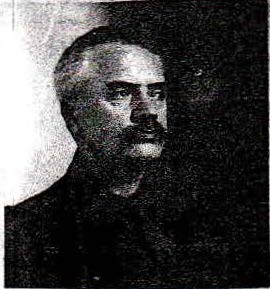
Now I am happy to report that a family member obtained access to the Utah State Hospital file directly and obtained a copy of the photograph in the file. As you can see, the quality is 100 times better than the photostatic copy of the photograph that was provided to me by mail. The personality, the life, the lines, are much more able to be seen than before.
Here is some of what I wrote before.
Gerhardus Hendrik Van Leeuwen (who went by George Henry in English) was born the fourth of nine children to Gerrit van Leeuwen and Elsebina Maria Catharina Weenig on 16 October 1856 in Oldenzaal, Overijssel, Netherlands. I have written of them at this link: Van Leeuwen-Weenig Wedding. He was a carpenter by trade, on the finishing side. He would also tune and service organs. After moving to the United States, he worked as a finishing carpenter.

You can read more of his family at the link above. But some additional notes.

It was about 1885-1886 when George incurred a head injury. My Great Grandmother, his daughter Dena Donaldson, indicated he fell from a ladder. Other siblings reported to descendants that he was struck in the head with a board. This is believed to be the reason why the family moved back to Arnhem, that due to his inability to work, this may be the reason they returned to Arnhem to be near family and rely on them for help.
The family then moved back to Amsterdam perhaps in pursuit of employment again. It was in Amsterdam that the Van Leeuwens met with missionaries of The Church of Jesus Christ of Latter-day Saints. George and Minnie were both baptized 4 June 1887. The story goes that George saw some men running down the street with people chasing them. Concerned for their safety, he pulled them into his home. He learned they were Elders of The Church of Jesus Christ of Latter-day Saints. The missionaries taught the Van Leeuwen the gospel and helped them convert leading to their baptism.
A sponsor from Ogden, was to meet the family at the train depot in Ogden. But no one was there when they arrived. A man by the name of Mr. Dalbout, saw their plight, and he invited the family to go home with him. There was no place to stay for a long period, so they converted a chicken coop into living quarters. This is where the family waited until George could join them. She took in laundry from other families to support themselves until he arrived.
According to George’s 1932 death certificate, he suffered from epilepsy with psychosis for 45 years. That would predate his immigration to the United States. His mental health could have become an issue when immigrating, and it may have been easier if Minnie and the children had gone first and established their new home. That may have enabled George to follow the next spring without risk of having the family turned back. Epilepsy had a stigma of illness that the family had to deal with, everything from wickedness to a contagious disease. This way, only he could potentially be turned away from entering the county. The plan was that with the family already in Utah, he would be permitted to join them in Utah. George arrived 21 March 1889 in New York City, New York on the S.S. Veendam having left Rotterdam.
George’s head and mental injuries continued to worsen as the years passed. The family either had to keep him safe during a fit and keep him calm to keep from inducing a fit. By the time 1911 rolled around, the family could no longer deal with his mental condition on their own. Dena referred to her “Daddy” as tender and sweet and then at the switch he would become angry and threatening. He had made enough threats and raised enough raucous that neighbors called the police. George was committed to the Utah State Mental Hospital in Provo, Utah, Utah in 1911. The family tried to get him out and succeeded. Unfortunately, he lost control again and ended up spending the rest of his life in the mental hospital. The family would drive down nearly every weekend to pick up “Daddy” and keep him for the weekend before taking him back. By the mid 1920’s, they could not even take him home on the weekends his condition was that poor and uncontrollable.
George died 5 January 1932 in Provo, Utah, Utah. He was buried 3 days later beside his wife.
 Sagacity