In re DeVries

Decision: In re Relna James DeVries and Kathryn Lee DeVries, Case No. 13-41591-JDP (Bankr. D. Idaho, 28 Apr. 2015)
Judge: Honorable Jim D. Pappas, United States Bankruptcy Judge
Counsel for Debtors: Paul Ross, Idaho Bankruptcy Law, Paul, Idaho
Chapter 13 Trustee: Kathleen A. McCallister, Meridian, Idaho
Trustee’s Counsel: Holly Roark, Office of Kathleen A. McCallister, Meridian, Idaho


Background

Relna and Kathryn DeVries filed a Chapter 13 petition on 27 December 2013. Their amended plan, confirmed on 19 May 2014, provided that all allowed tax claims would be paid in full. The IRS timely filed a proof of claim for taxes owed for the 2011 and 2012 tax years. The deadline for governmental units to file proofs of claim was 25 June 2014.

The Debtors filed their 2013 federal income tax returns in April 2014, which showed they owed $1,021 to the IRS for the 2013 tax year. The Idaho Tax Commission filed its own proof of claim for the $84 in state taxes owed for 2013 the day after plan confirmation. The IRS, however, did not file a claim for the 2013 federal taxes, nor did it amend its existing claim to include them. Within 30 days of the 25 June 2014 governmental bar date — as permitted by Federal Rule of Bankruptcy Procedure 3004 — the Debtors filed a proof of claim on behalf of the IRS for the $1,021 in 2013 taxes.


The Trustee’s Objection

The Trustee objected to the Debtors’ proof of claim. The Trustee represented that it was allegedly filed at the IRS’s own request, and that the IRS did not wish to have the 2013 tax debt paid through the plan as a § 1305 claim.

The Trustee’s objection rested on 11 U.S.C. § 1305(a)(1), which governs postpetition claims in Chapter 13 cases. That provision permits a proof of claim to be filed by “any entity that holds a claim against the debtor … for taxes that become payable to a governmental unit while the case is pending.” The Trustee argued that the Debtors’ 2013 federal income taxes became payable during the pendency of the bankruptcy case, making them a § 1305 postpetition claim, and that under the plain language of § 1305 only the creditor holding the claim — the IRS — was authorized to file a proof of claim for it. The Debtors’ attempt to file on the IRS’s behalf was therefore improper and the claim should be disallowed in its entirety.


The Debtors’ Response

Debtors filed a response through their counsel arguing that the 2013 tax debt was properly treated as a prepetition claim and that they were authorized to file the proof of claim under § 501(c) and Federal Rule of Bankruptcy Procedure 3004.

Debtors did not rely on § 1305 as their filing authority. Instead, they argued that the 2013 tax obligation was a prepetition claim — or should be treated as one — and that the ordinary debtor claim-filing mechanism of § 501(c) and Federal Rule of Bankruptcy Procedure 3004 therefore applied. On the question of when the claim arose, Debtors urged the Court to apply the “fair contemplation” or “prepetition relationship” test articulated in In re Dixon, 295 B.R. 226 (Bankr. E.D. Mich. 2003). Under that approach, a claim arises prepetition if there was a prepetition relationship between the debtor and the creditor such that a possible claim was within the creditor’s fair contemplation at the time of filing. The IRS and the Debtors had precisely such a relationship: the Debtors were taxpayers, the IRS was their taxing authority, and 361 of the 365 days of the 2013 tax year had elapsed before the petition was filed. The IRS’s claim for 2013 taxes was fully within its fair contemplation at the time of filing, Debtors argued, making it a prepetition claim subject to the ordinary rules permitting debtors to file on a creditor’s behalf.

Debtors also invoked 11 U.S.C. § 502(i), which provides that a postpetition claim for taxes entitled to priority under § 507(a)(8) shall be treated as if it had arisen before the petition date. On that theory, even if the 2013 taxes technically arose postpetition, § 502(i) mandated that they be treated as prepetition claims, restoring the Debtors’ authority to file under § 501(c) and Federal Rule of Bankruptcy Procedure 3004.


The Trustee’s Reply

The Trustee replied that Ninth Circuit authority resolved the question directly and foreclosed the Michigan court’s “fair contemplation” test. Relying on Joye v. Franchise Tax Bd. (In re Joye), 578 F.3d 1070 (9th Cir. 2009), the Trustee argued that taxes owed for a given tax year do not “become payable” — and therefore do not arise as a § 1305 postpetition claim — until the close of that tax year. Because the DeVries filed their petition before the close of 2013, the 2013 taxes became payable only after the petition date and were a postpetition claim that only the IRS could properly file. The Trustee further noted that allowing the improperly filed claim would prejudice general unsecured creditors, whose pro-rata distributions would be reduced by the addition of a priority tax claim.


The Court’s Ruling

Judge Pappas sustained the Trustee’s objection and disallowed the Debtors’ proof of claim in its entirety.

The Court addressed § 502(i) first and found it dispositive against the Debtors. Section 502(i) applies only to postpetition tax claims entitled to priority under § 507(a)(8)(A)(i), which affords priority to income taxes for which the applicable return was due within three years before the petition date. The DeVries’ 2013 federal income tax return was not due until 15 April 2014 — after their 27 December 2013 petition date. Because the return due date fell outside the three-year lookback period, the 2013 taxes were not entitled to priority under § 507(a)(8)(A)(i), and § 502(i) therefore had no application. The Court drew support from the Ninth Circuit BAP’s analysis in In re Jones, 420 B.R. 506 (9th Cir. BAP 2009), aff’d on other grounds, 657 F.3d 921 (9th Cir. 2011), which explained that a postpetition income tax obligation whose return is due postpetition cannot invoke priority status under § 507(a)(8)(A)(i) and thus falls outside § 502(i)’s reach entirely.

The Court then turned to § 1305(a)(1) and rejected the Debtors’ “fair contemplation” argument. Binding Ninth Circuit precedent, not the Michigan court’s test, controlled the analysis. Under In re Joye, taxes become “payable” for purposes of § 1305(a)(1) when they are “capable of being paid.” The Ninth Circuit further established in In re Pacific-Atlantic Trading Co., 64 F.3d 1292 (9th Cir. 1995), that a tax on income is “incurred” on the last day of the income period. Because federal income taxes are assessed by the calendar year, the DeVries’ 2013 taxes were incurred at midnight on 31 December 2013 — after the petition was filed. Both the incurrence and the payability of the 2013 taxes therefore occurred postpetition, placing them squarely within § 1305(a)(1).

The Court also examined the interplay between § 502(i) and § 1305(a)(1) as analyzed in In re Joye, which drew on Collier on Bankruptcy for the proposition that § 502(i) applies to taxes incurred prepetition that do not come due until after the petition is filed, while taxes incurred postpetition can be treated only as postpetition claims under § 1305. Because the 2013 taxes were incurred postpetition under the Pacific-Atlantic rule, § 502(i) offered the Debtors no relief in any event.

Having concluded that the 2013 taxes were a § 1305(a)(1) postpetition claim, the Court applied the well-established rule that postpetition claims under § 1305 may be offered for inclusion in a Chapter 13 plan only by the creditor that holds the claim. A debtor has no authority to force a postpetition creditor into the plan by filing a proof of claim on its behalf. The Trustee’s objection was sustained and the Debtors’ proof of claim disallowed.


Why This Matters

  1. Section 502(i) does not reach postpetition taxes whose returns are due postpetition. The provision applies only to taxes entitled to priority under § 507(a)(8)(A)(i) — which requires the return to have been due within three years before the petition date. An income tax return due after the petition date falls outside that window entirely. Practitioners should not assume § 502(i) will bridge the gap between a postpetition tax liability and prepetition claim treatment.

  2. The Ninth Circuit’s “capable of being paid” standard governs when taxes become payable in the Ninth Circuit. Under In re Joye, the relevant inquiry for § 1305(a)(1) purposes is when the tax was capable of being paid — and under In re Pacific-Atlantic Trading Co., income taxes are incurred on the last day of the tax year. A tax year that closes after the petition date produces a postpetition claim regardless of how many days of that year preceded the filing.

  3. Only the creditor may file a § 1305 postpetition claim. Section 1305(a) grants the right to file a proof of claim for postpetition taxes exclusively to the entity that holds the claim. A debtor cannot invoke § 501(c) or Federal Rule of Bankruptcy Procedure 3004 to file on a creditor’s behalf where the underlying obligation is a § 1305 postpetition claim rather than a prepetition one. The creditor’s silence is the creditor’s choice to make.

  4. The IRS may decline plan treatment of a postpetition tax debt. This case illustrates that § 1305 is entirely creditor-driven. The Trustee’s objection represented that the IRS allegedly sought disallowance of the Debtors’ filing rather than simply declining to participate. A Chapter 13 debtor who owes postpetition taxes has no mechanism to compel inclusion of that debt in the plan over the IRS’s objection.

  5. Debtors who owe taxes for a year that closes after their petition date should address the liability outside the plan. Where postpetition income taxes cannot be included in a confirmed Chapter 13 plan, the debt remains the debtor’s obligation to manage directly with the taxing authority. Counsel should advise clients of this reality at the outset and account for ongoing tax obligations in assessing the feasibility of the plan.


Full Decision: Available on PACER, Case No. 13-41591-JDP, Doc. 57 (Bankr. D. Idaho 28 Apr. 2015)
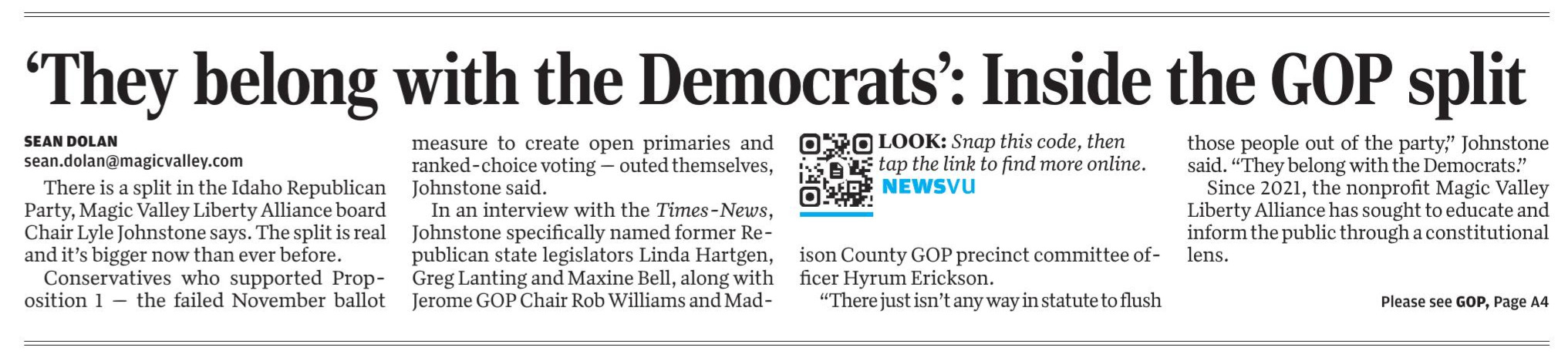
‘They belong with the Democrats’: Inside the GOP split

Officeholders who benefit from closed GOP primary are desperate

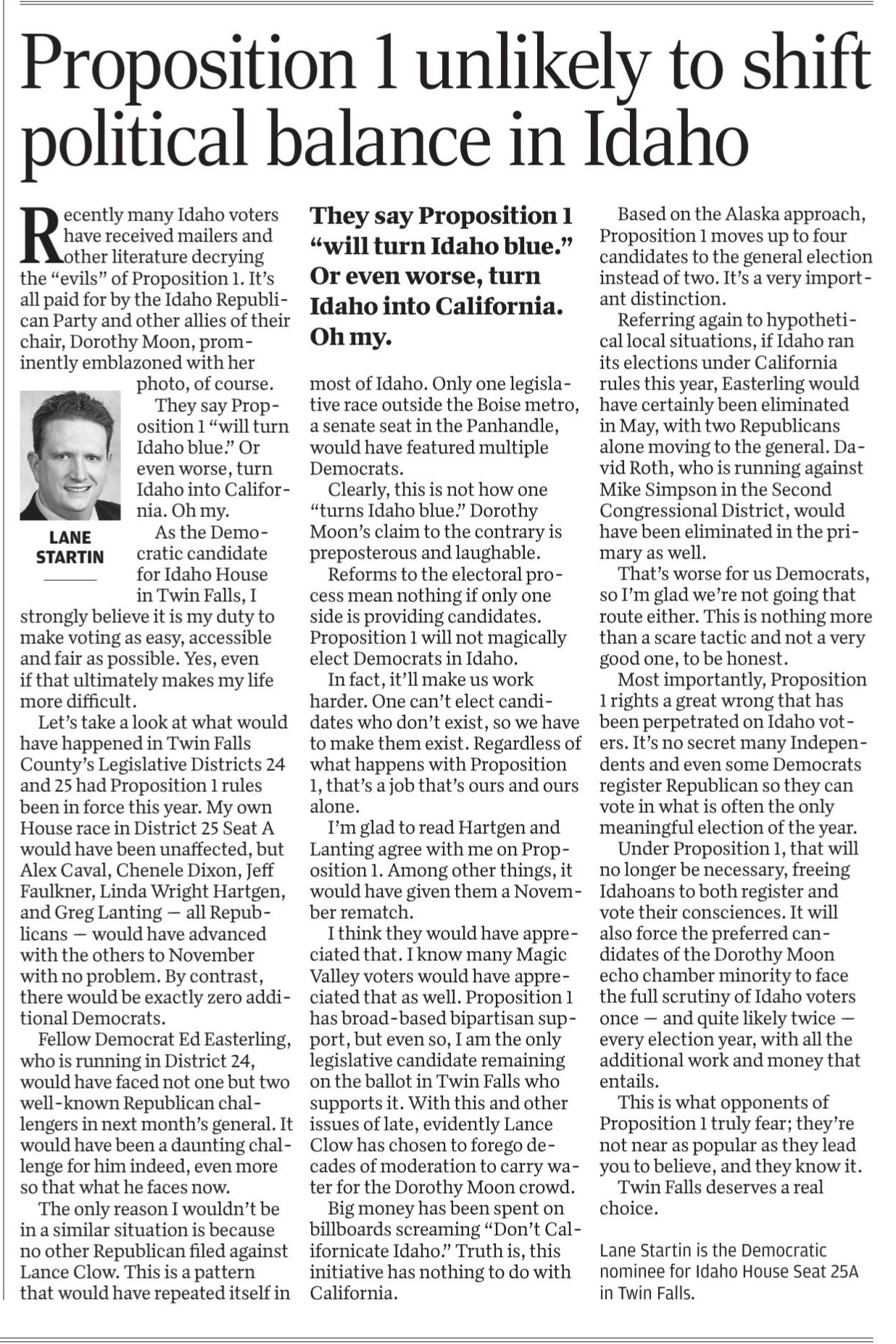
Proposition 1 unlikely to shift political balance in Idaho

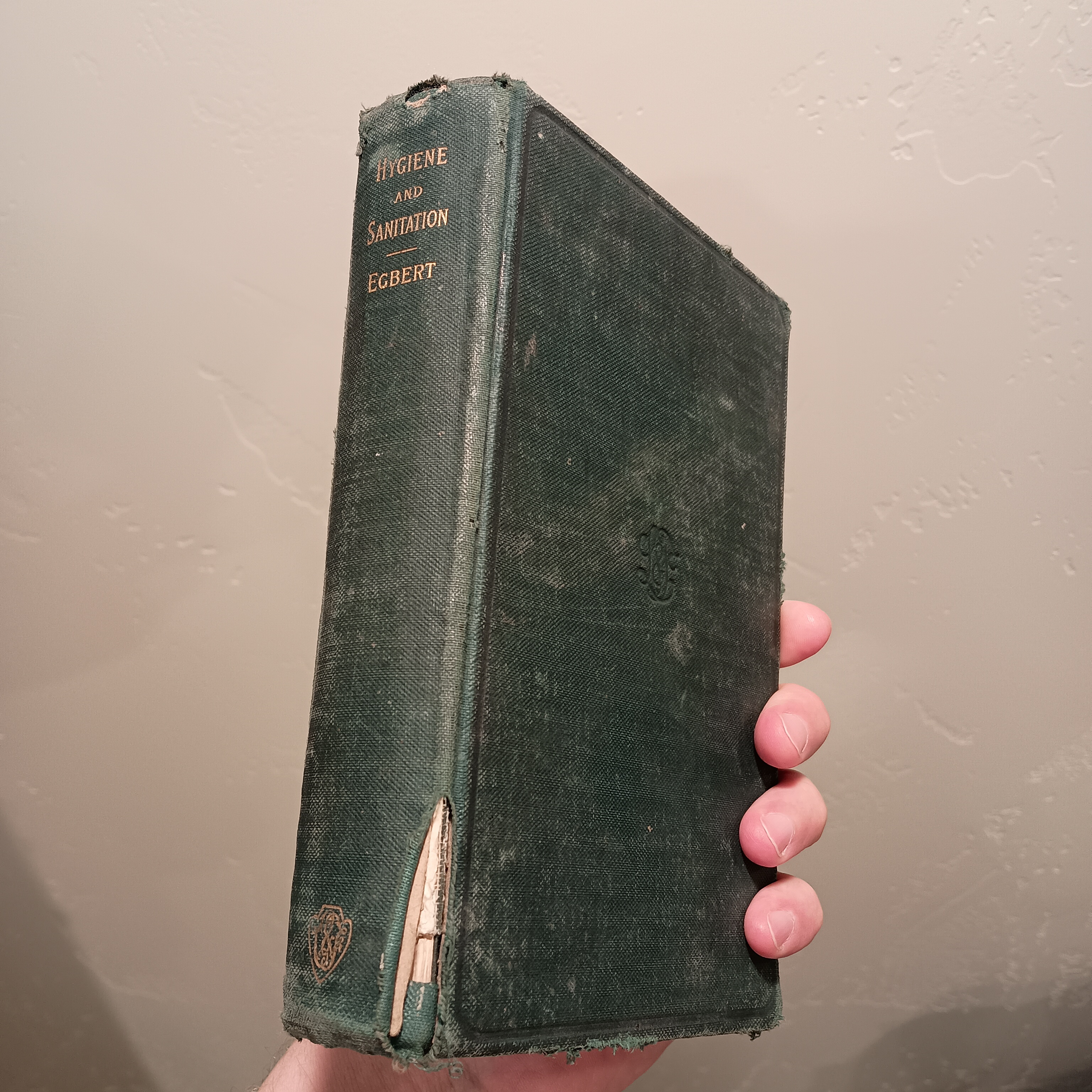
Hygiene and Sanitation by Egbert

Hygiene and Sanitation Textbook used at Brigham Young College

On the 15th I wrote about my Grandfather’s 100th Birthday (Norwood Jonas) and noting it with a newspaper article found in a textbook that belonged to his parents. This is that book. This was a textbook for my Great Grandfather at Brigham Young College in Logan, Utah.

Joseph Nelson Jonas graduated from Brigham Young College on 3 June 1915. That is 109 years ago tomorrow. Here is a copy of his Diploma. I have written about his history previously. I have also written about his time at BYC previously too.

Joseph Jonas graduation diploma from Brigham Young College in Logan, Utah

The textbook is also interesting. It appears Hygiene and Sanitation written by Seneca Egbert has some serious staying power. I found this history of Mr. Egbert.

Dr. Seneca Egbert (1863-1939) and Nancy Egbert

“Dr. Egbert was a physician. He graduated from Princeton University in 1884 and received his medical degree from the University of Pennsylvania in 1888. Before graduating, Dr. Egbert had been a demonstrator of hygiene in the Medical Department of the University of Pennsylvania. While in this position, he worked with Professor Samuel G. Dixon to establish the first Laboratory of Hygiene in the University, and was made lecturer on hygiene for 1890-1891. In 1892 the Drexel Institute of Philadelphia hired Dr. Egbert for a similar position. In 1893 he was elected Professor of Hygiene and Sanitation in the Medico-Chirurgical College of Philadelphia, appointed Vice-Dean of the same college in 1897, and elected Dean in 1898. Once the Medico-Chirurgical College merged with the University of Pennsylvania, Dr. Seneca became a professor of hygiene. He was president of the Radnor Township Board of Health and he was esteemed as a public health authority.

“In 1897 Seneca Egbert and his wife, Nancy Bredin Egbert, bought part of the old Towne family farm. The home, now owned by Fred French, is located on Blueberry Lane.

“Dr. Egbert was widely published. His book, Manual of Hygiene and Sanitation (seven editions), appeared first in 1898, as did his Home Sanitation, a Manual for Housekeepers. In 1919 Personal Hygiene for Nurses was published. He also wrote numerous articles for medical journals, maintained an impressive lecture schedule, and was a history buff who strongly advocated for the creation and maintenance of historic sites. He was not hesitant about venturing his opinion openly, and on at least two occasions made suggestions to Philadelphia politicians which received limited consideration. Dr. Egbert “was an advocate for ‘pure air, pure milk, and pure water.’ He felt that if people in the United States had these ingredients the average span of life would be increased by seven and one-half years.” He pursued this philosophy in an article, “Pure Water for Philadelphia,” which proposed damming the Mullica River and its feeder streams at the head of the tide to form a reservoir all the way to Atsion, NJ, and then pump to a reservoir on the western side to flow towards the Cooper River and another reservoir, thence to be pumped under the Delaware in order to relieve the poor water quality in Philadelphia . It would have pumped a relatively small quantity, 450,000,000 gallons of water per year, to start. The potential value of his plan was not recognized, either then or, to judge from a 2011 Web comment, now.

“On another issue, the City of Philadelphia proposed clearing all buildings from three city blocks. In response to a request for ideas on how to use this space, Dr. Egbert suggested allocating some of the land to the federal government, some to the state and some to the city of Philadelphia. On a strip of land extending down the center of the whole space, Dr. Egbert suggested constructing thirteen buildings representing the thirteen original colonies, and calling the area In­dependence Square. Each building would house the contributions made by that state towards the forming of our Union. “The idea was considered ludicrous in design and in scope. Dr. Egbert was a physician, not an architect.”

“Despite his critics, Seneca Egbert was doggedly de­termined to maintain the quality of life for Americans. For example, he embraced the newest form of transportation, bicycling, and “saw cycling as a remedy for dyspepsia, torpid liver, incipient consumption, nervous exhaustion , rheumatism, and melancholia.”

“A portrait of Dr. Egbert was painted for the University of Pennsylvania by Nancy Egbert’s brother, Rae Sloan Bredin (1870-1937). Mr. Bredin was a member of the New Hope group of American impressionists and several of his paintings are owned by New York’s Metropolitan Museum of Art. Mr. Bredin was co-founder of the Philadelphia School of Design for Women and the New York School of Fine Arts. His portrait of Dr. Egbert hangs now in the home of Dr. David Egbert Sparks, Dr. and Mrs. Egbert’s grandson, who is a genealogist and retired head of libraries at Notre Dame.

“Like Dr. Thomas Montgomery Lightfoot, Dr. Egbert was a lecturer in the winter lecture series held during the years 1887-1895 sponsored by the Academy of Natural Sciences. Dr. Egbert’s lecture was titled, “The Prevention of Disease and the Preservation of Health.”

“Nelson’s own Parke Struthers wrote in A History of Nelson that like Dr. Egbert’s good friend Dr. Thomas Montgomery Lightfoot, Seneca Egbert “met his fellow Nelsonians on an equal footing, a trait in human relations reserved for only the Great.” Mr. Struthers also states that the Egberts were “gracious, active in town affairs, and interested in the people of Nelson.” With their friends Dr. Lightfoot and his wife, Dr. and Mrs. Egbert served on the committee to make arrangements for the celebration of the one hundred and fiftieth anniversary of the first settlement of Nelson 1767-1917.

Inside cover of Hygiene and Sanitation

Here is the writing inside the book:

Joseph N. Jonas 1915

394 So. 1st East

Logan, UT

Jonas Joseph

Richmond, Utah

1915

First written page inside Hygiene and Sanitation

Here is the writing on the second page of the book:

Joseph N. Jonas

B.Y.C.

Logan, Ut.

394 So. 1 E.

Herrington, or Park

Stearn, Hot air, or Water

1 degree expands 1/491 of its val

relationship of insects to disease, Herrington

Hygiene of the school. h medical inspection.

282-387

Ross Family Album

I was finally able to upload the Ross Family Album.  I ran out of monthly space and then just got busy.  Finally, I have posted the photos related to the Ross’ in their own album.  I have not uploaded my own family yet.  This is just what I have under the Ross files on my computer.  This includes mostly photos of my Grandpa and Grandma Ross’ family, my Aunt Caroline’s family, and a few other random photos of related Ross people.  There are a couple of my half-siblings when they were younger.

Here are some of the family groups.

James Thomas Meredith Ross

Born Ross, raised and adopted Meredith, legally Meredith, married Ross, baptized Ross, children named Ross, endowed Ross, married again Meredith, died Meredith.

22 Sep 1868 – Snowville, Pulaski, Virginia

13 Apr1951 – Fresno, Fresno, California

Married

9 Aug 1887 – Snowville, Pulaski, Virginia

Damey Catherine Graham

25 Nov 1874 – Pulaski, Pulaski, Virginia

3 Feb 1933 – Marysville, Yuba, California

Children

Robert Leonard Ross

25 Apr 1888 – Draper, Pulaski, Virginia

John William Ross

2 Sep 1890 – Pulaski, Pulaski, Virginia

Fanny Elizabeth Ross (married Phibbs)

18 Nov 1893 – Reed Island, Pulaski, Virginia

James Thomas Ross Jr

19 Oct 1895 – Radford, Montgomery, Virginia

Married again

? – ?

Etta

Married again

14 Jul 1947 – Fresno, Fresno, California

Martha Elnora Cackler (married before to Brewer)

3 Oct 1877 – Otter Creek, Lucas, Iowa

31 Jul 1974 – Fresno, Fresno, California

John William Ross

2 Sep 1890 – Pulaski, Pulaski, Virginia

13 Jun 1948 – Livermore, Alameda, California

Married (Divorced)

6 Jul 1910 – Squire Jim, McDowell, West Virginia

Nannie May Day

6 May 1892 – Pulaski, Pulaski, Virginia

19 Jan 1971 – Bluefield, Tazewell, Virginia

Children

Hobart Day

1 Jul 1911 – ,, West Virginia

Apr 1983 – Fairlawn, Radford, Virginia

Married again

12 Jan 1920 – Fort Logan, Arapahoe, Colorado

Ethel Sharp (I have written more about this marriage at this link: Ross-Sharp Wedding.)

9 Apr 1898 – Plain City, Weber, Utah

6 Aug 1925 – Plain City, Weber, Utah

Children

Milo James Ross

4 Feb 1921 – Plain City, Weber, Utah

Paul Ross

14 Feb 1922 – Paul, Minidoka, Idaho

John Harold Ross

7 Nov 1923 – Burley, Cassia, Idaho

Ernest Jackson Ross

16 Jul 1925 – Plain City, Weber, Utah

Married again

29 Nov 1926 – Rock Springs, Sweetwater, Wyoming

Zana Cogdill (Married before to Coffey)

7 Nov 1892 – Dixon, Carbon, Wyoming

2 Oct 1966 – San Diego, San Diego, California

Milo James Ross

4 Feb 1921 – Plain City, Weber, Utah

Married

4 Apr 1942 – Plain City, Weber, Utah

Gladys Maxine Donaldson

20 Sep 1921 – Ogden, Weber, Utah

25 Aug 2004 – Ogden, Weber, Utah

Children

Milo Paul Ross

Judy Ethel Ross

Caroline Ross

John Harold Ross

7 Nov 1923 – Burley, Cassia, Idaho

24 Oct 2004 – Syracuse, Davis, Utah

Married

19 Nov 1946 – Evanston, Uinta, Wyoming

Colleen Fowers Hancock

2 Oct 1929 – West Weber, Weber, Utah

12 Aug 1969 – Ogden, Weber, Utah

Children

Terry Jay Ross

3 Oct 1947 – Ogden, Weber, Utah

Married again

2 Dec 1974 – West Weber, Weber, Utah

JoAnn Payne

5 Jan 1934 – Ogden, Weber, Utah

Children

Jody Valate Ross

Caroline Ross

Married (Divorced)

Lynn J Taylor

Children

Kristy Lynn Taylor

Cindy Lou Taylor

Lonny J Taylor

Married again

Abe Maxamilia Gallegos

Milo Paul Ross

Married (Divorced)

Victoria K Feldtman

Children

Scott James Ross

Jeffrey Paul Ross

Becky Collette Ross

Married again (Divorced)

Sandra Jonas

Children

Paul Norwood Jonas Ross

Andra Ross

Married again

Janice Faye Higley (Married before to Osterhout)