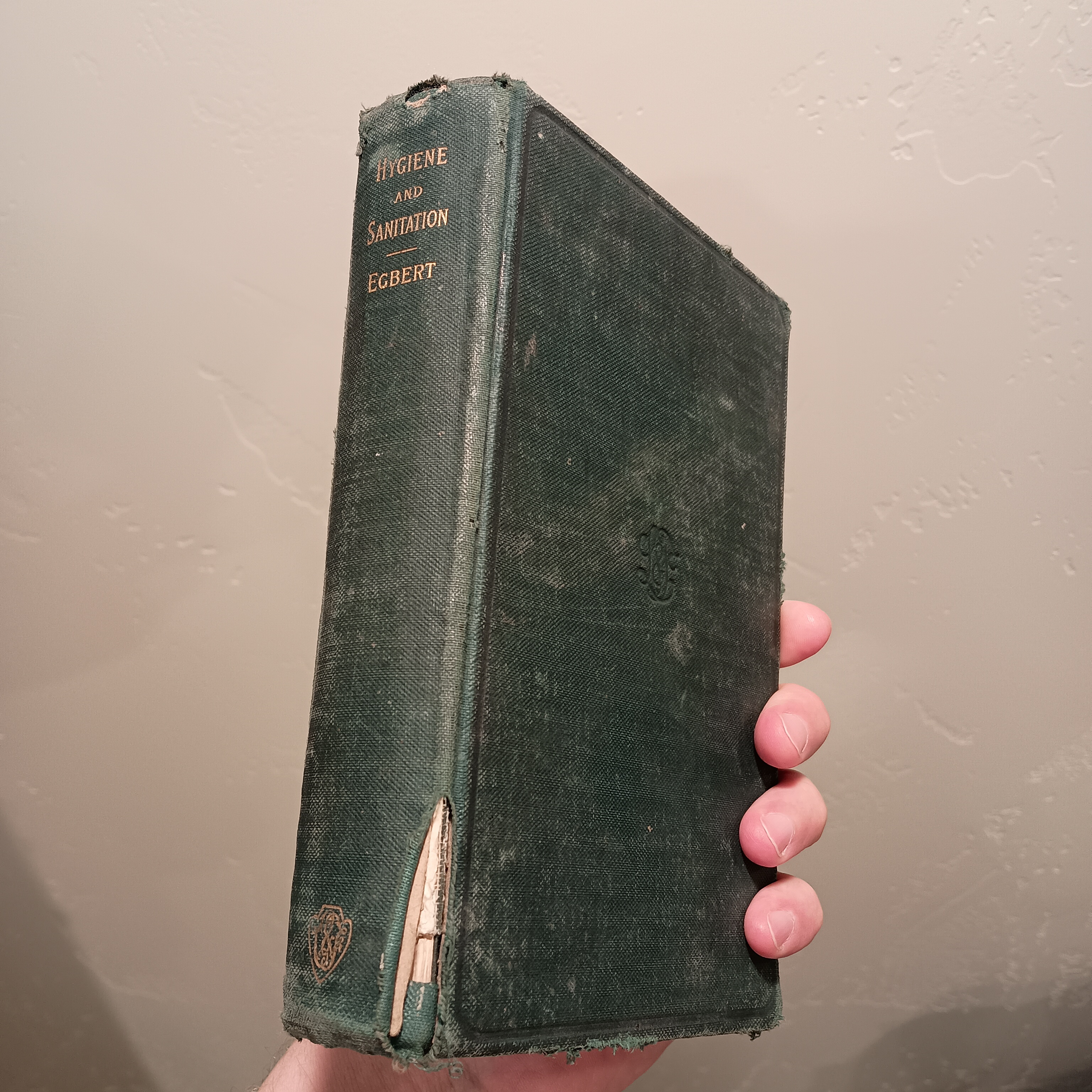
I thought it would be important to share the story of one of the ships that traveled to America in 1863. Among the millions of family history records preserved of the LDS western migration is an entry for one family among the thousands who sailed for Zion that year.
William Stoker and children:
Thomas
Alice
Janet
Alfred
Mary A.
Sailed on the Amazon.
On 4 June 1863, the Amazon, a packet ship departed London with 895 Latter-day Saint emigrants, the 126 Company. William Edward Stoker, a journeyman saddler born in Crateford, Staffordshire, England, was 36 years old. His wife, Emma Eames Stoker, had died of tuberculosis just five weeks earlier, on 28 April 1863, at their home at 18 Albert Street, St. Mary’s Parish, Reading, Berkshire. Their youngest child, Mary Ann, had been born on 24 February 1863. Emma had lived only two months after her daughter’s birth. William boarded the Amazon as a widower with five children, the youngest not yet four months old.
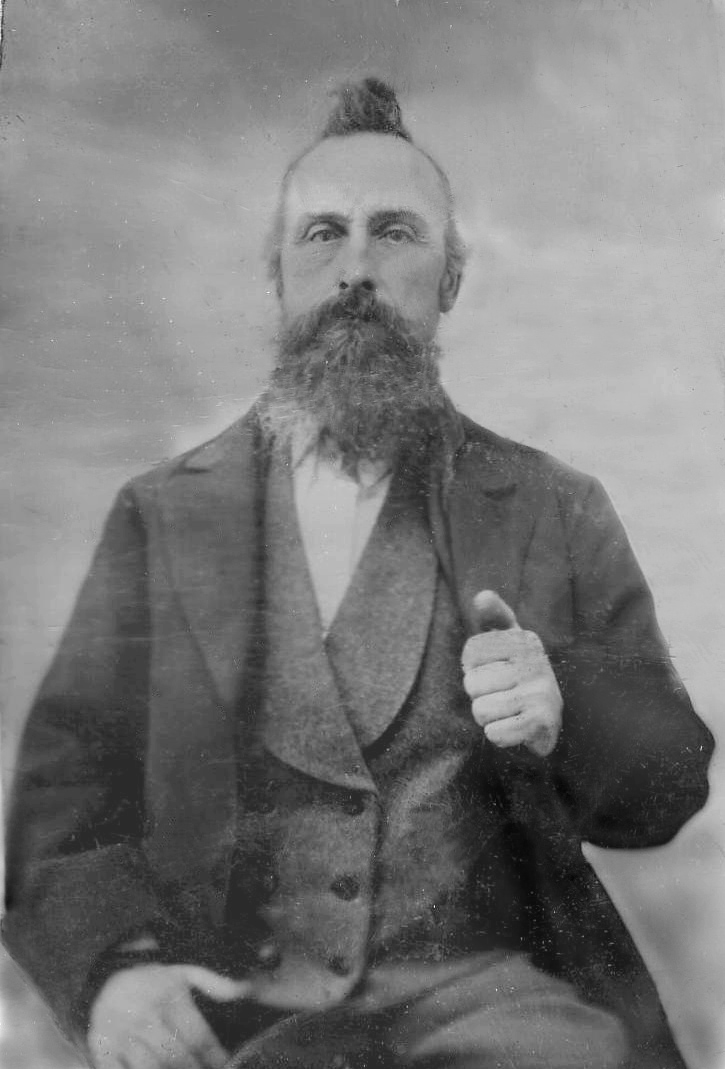
That infant, Mary Ann Stoker, later raised by an adopted family and known all her life as Lillie, grew up in Utah. She was raised by George and Victorine Musgrave of Plain City, and married Milo Riley Sharp on 11 May 1879 in the Episcopal Church in Plain City, Weber County, Utah. She is my 2nd great grandmother. William Edward Stoker is my 3rd great grandfather.
The Voyage
The Millennial Star, the official publication of the LDS Church’s British Mission, reported the Amazon’s departure as follows:
“The splendid packet ship “Amazon,” Captain H.K. Hevey, sailed from London, England June 4, 1863, with a company of 895 souls of Saints on board, under the presidency of Elder Wm. Bramwell, who acted with Elder Edward L. Sloan and Richard Palmer as counselors.
“On the 3rd the company passed the government emigration officer, who eulogized the order and general appearance of the emigrants. After this President George Q. Cannon, accompanied by other Elders from various parts of the British Mission, held a meeting in which the organization took place the officers of the ship. The cabin passengers and visitors on board listened with marked attention. A brass band from South Wales, the performers being members of the Church on their way to Zion on the “Amazon,” discoursed sweet music on the poop deck before and after the meeting. The Presidency having been appointed and Elder Wm. McLachlin nominated as clerk, President Cannon dedicated the ship.
“It is worth of note that the departure of the ship “Amazon” from London laden with Saints is another instance of the fulfillment, in some years ago, while Elder Eli B. Kelsey was laboring in London, he predicted in a public meeting in that city that the ships should yet leave that port filled with Saints emigrating to Zion. It was with no intention of bringing about the fulfillment of the prophecy that we chartered the “Amazon,” for we were entirely ignorant of the utterance of such a prediction until we heard it stated at a meeting of the Saints held on Sunday the first instructions three days before she sailed. Indeed the chartering of this vessel was not a matter of choice, but of necessity. We could not obtain a vessel in the port of Liverpool suitable to our purpose — vessels of this description being almost unprecedentedly scarce this spring, and we were therefore compelled to go to London. Thus were the circumstances over ruled to bring to pass the word of a servant of God.
“Of the Elders who sailed on the “Amazon” four were Utah Elders, namely Wm. Bramwell, Richard Palmer, Edward P. Edwards and A.W. Van Der Moulde. Among the Elders who emigrated to Zion as passengers were Edward L. Sloan, Thomas Crawley, John Berrett and Joseph Morgan.
“Before sailing from Liverpool the company was fully organized. The emigrants were divided into fifteen wards under the supervision of the following officers: 1— John Wells; 2— James Poulton; 3— Joseph Wilson; 4— A. Cox; 5— J. Kimber; 6— S. Liddiard; 7— S. Evans; 8— D. Williams; 9— A. Sutherland; 10— W. Fowler; 11— W. Van Der Moulde; 12— J.W. Morgan; 13— J. Berrett; 15— E.T. Edwards. E. Larkin was appointed Sergeant of the Guard and George Braithwaite, lamp lighter and trimmer.
The Ship and Its Passengers
George Q. Cannon, who dedicated the Amazon before departure, was at the time president of the British Mission. He would later serve as a counselor in the First Presidency under four Church presidents, one of the most influential figures in nineteenth-century Latter-day Saint history. His presence at the ship’s dedication was a mark of the importance the Church placed on the emigration program.
The Amazon carried some remarkable passengers. George Sutherland, later an Associate Justice of the United States Supreme Court, appointed by President Warren G. Harding in 1922, was among the emigrants. George William Larkin also traveled with the company; after arriving in Utah he was appointed by Brigham Young to oversee the Ogden cemetery, and in 1885 he began the family tradition that grew into Larkin Mortuary. Also aboard was Elijah Larkin, whose journal notes that on 16 and 20 June, Thomas Stoker, William’s eldest son, then thirteen years old, was administered to because of a sickness since leaving Liverpool.
The Amazon’s departure also caught the attention of Charles Dickens, who visited the ship before it sailed and wrote of the Mormon emigrants in his essay collection The Uncommercial Traveller. Dickens had expected to find the kind of misfit and desperate crowds he associated with emigrant ships, instead he found something that surprised him entirely. He described the Mormon emigrants not as misfits and scoundrels but as the “pick and flower” of England, orderly, healthy, purposeful people. William Stoker and his five children, traveling in grief just weeks after Emma’s death, were among those Dickens observed.
The Journey West
The Amazon landed at Castle Gardens, New York, on 18 July 1863. From there the company traveled by rail to Albany, then through Detroit to Florence, Nebraska — the traditional jumping-off point for the overland journey to Utah. From Florence they traveled by wagon the remaining distance across the plains.
The company arrived in Salt Lake City on 3 and 4 October 1863 — just in time for General Conference. Several members of the company recorded that Brigham Young came out to greet them and offer counsel. The journey from London had taken exactly four months.
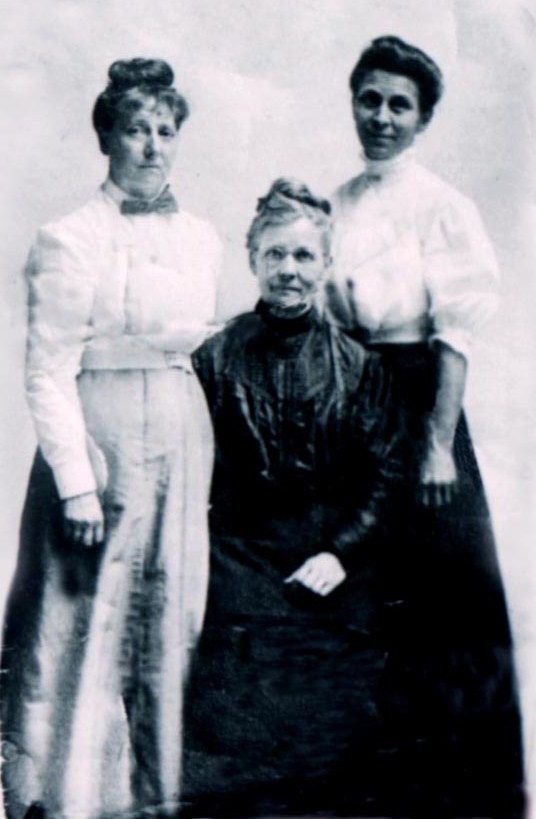
William moved almost immediately to Ogden, Weber County, Utah, where he set up his leather and saddlery trade. He remarried Eliza Sinfield in Ogden on 18 May 1864. The five children from his first marriage were distributed among other Plain City families. Mary Ann with George and Victorine Musgrave, who called her Lillian/Lillie and raised her as their own. It is through the Musgraves that she came to know the Sharp family, and through that connection to Plain City’s Episcopal congregation that she met Milo Riley Sharp.

William, Mary Ann, and their overland journey through Devil’s Gate and Independence Rock are part of the larger story I told in Casper Wyoming Temple Open House — where I counted ten of my own ancestors who crossed the Mormon Trail through that same ground. William Edward Stoker and infant Mary Ann were among them.
For the full story of the Stoker family — William and Emma, the five children, and what became of each of them — see Stoker-Eames Wedding. For Lilly’s life in Plain City and her marriage to Milo Riley Sharp, see Sharp-Stoker Wedding. For Emma’s brother Thomas and the Eames family in Alperton, Middlesex, see T. Eames Grocery and Provision Store.