Letter from David Williams to Wales

I just came upon this letter written by David D Williams to his sisters in Wales.  In it he describes his trip to Utah from Wales.  The letter was originally written in Welsh.  I have written of David and his immigration in his biography.  As mentioned in the history, David is the son of Frances Henneys and John Williams born in Wales in 1832.  He immigrated to Utah in 1864.  I am including a picture of some rolling hills in Southern Wales that I took with some friends in 2003.  Funny how he thinks how beautiful Utah was (then), and yet we feel the same about his Wales!

Ogden City

October 13, 1864

My dear sisters,

I have reached the end of my journey in the valley of Great Salt Lake well and happy, and I hope that you are the same. I shall now give you some of the history of my trip from the Old Country. This little letter is not large enough to describe all I saw, but I shall do my best to describe the outstanding features as briefly and inclusively as possible. We started from Aberdare on May 17th for Merthyr, where we stayed overnight. Next morning, the 18th, we started for Liverpool. After leaving the old rugged, craggy mountains of Wales behind us, we came to the flat plains of England and there saw the most desirable land such as we had never seen in all our lives. It was full of apple trees, plums, pears, and all kinds of other fruit, nature was a feast of beauty, all kinds of beautiful buildings of red brick. By evening we reached Liverpool. (One-half dozen words obliterated by creased paper) the streets were all paved. There is no time now to give details about this place. Next day we went down to the docks, and there we saw the General McClellan. This immense vessel laid about 70 yards long carrying 2000 tons. After getting everything in order, the steamboat pulled us on to the river, where we saw the great eastern, the world’s chief wonder. May 21st, we set sail for New York across the Atlantic Ocean. We saw many large fish. About the banks of Newfoundland we saw many large icebergs, some of them 200 feet high, and the portion above the surface of the water was but a third of the whole, so this enormous block would stand 600 feet high if it were all visible. We had a successful journey. We got one bad storm for about 24 hours. We were on the ocean for a month and 3 days. After reaching New York, we were taken to customs offices where all immigrants have to pass. After getting all in order there, we started out by steamboat on the river Genessee for about 160 miles to Albany. Here we took the train, and away we went for hundreds of miles along the borders of Canada. Then we crossed the river to St. Clair and through a part of Canada, then recrossed the same river to the United States and on to Buffalo. Here laid a large lake called Buffalo Lake. I don’t know its size but it was scores of miles long. After changing trains, we went on to Quincy. This lies on the bank of the Mississippi River. We crossed this river to the State of Missouri. Here is the most delightful land we ever saw, vast plains for hundreds of miles. I did not see a single mountain during my journey from New York to Wyoming (in Nebraska). We went along the banks of Mississippi for about 900 miles to St. Joseph. This was as far as we went by train. We were on the train for 11 days and nights, and were very tired for want of a place to sleep, having traveled 2000 miles.

From here we went by steamboat on the Missouri River for 200 miles to Wyoming, and here we came to the plains. We stayed in Wyoming for 3 weeks. July 21st we started over the plains, a company of 500 to 600 people, men, women and children, and about 80 wagons. After traveling on the plains for about 11 weeks, we reached the City of Great Salt Lake on Oct. 4th. This is the most beautiful city I ever saw in my life. It is full of apple trees, plums, pears, peaches, damsons, grapes, melons and all kinds of other fruit. The buildings are large and beautiful, and you seldom see a double house, but each house separate with a garden adjoining. The streets are all straight for miles, not a crooked street in the city. I stood by Brigham Young’s house facing the south, and I could see 20 to 30 miles of perfectly straight road. We can see for 80 miles here better than you can see for 20 there. After being here several days, I learned that father and my brothers were in Ogden City, 40 miles away, and that Richard is coming down to the festival (conference). This gave me no small amount of joy, for this was the first news I had of my father that he was alive. I saw Richard in the city, and when the festival was over, we started for Ogden City. John has moved out 200 miles from here, and he and his family were well when last heard from. Father is well and contented and he was as glad to see me here as I was to see him, and to hear that you are all well there. They want you to come next time and would love very much to see you. This is three times as good a country to live in if you care to work. I know that Sally is unable to come without help, but if Mary is able to come if nothing untoward has happened, and I would advise you, Mary, to come out next time, so we can later help Sally and her family. I would like to know whether or not you intend coming next time so I can give you a few instructions. It is a great country if one is wise to take advantage of the elements, and to do everything for one’s self, for which I can greatly commend these people, more so than the people of the old country. The women make all their own clothes – weave, roll, and everything; it’s a poor place for a tailor to live on his trade. They also make soap, candles, vinegar, yeast and everything for their own use. These people raise the material for sugar, and make molasses like the tressels you have, except that it is much better. The sugar is all in this molasses, and the refuse that comes from this is what you have for treacle. There is nothing else in particular that I can add at present. Father sincerely sends his regards to you, to his old neighbours, and to all the Saints, and hopes to see some of their names in the paper as immigrants the next time. Richard sends his regards to you and to all the saints and his acquaintances. Give me an answer as soon as you can, so I can have sufficient time to write back if you should come out next time. If you want to know anything, ask in your letter and I shall answer it with pleasure.

This briefly from your dear father and your brothers, John, David and Richard Williams.

Please give this letter (accompanying this one ) to William Rees.

A few words to William Rees, my brother in the gospel. I have taken my pen in hand to send you a few lines, hoping you are well and happy, and enjoying the comforts of the gospel, as I do myself at present; and I thank God for that. I intended to give you a little news of the plains and its creatures. But from what we hear, it is not likely there will be an immigration over the plains for some time, because the Indians are rather cruel and are at war with the United States. We were on the plains for 11 weeks because of difficulties. We joined another train (wagon train) and in all we had 150 wagons with about 1200 people; our train was about 4 miles long. The last train of saints came to Salt Lake City on Oct. 20th. Trains of gentiles had joined them along the line, and I heard people saying that they stretched over 10 miles while traveling. Eighty of the rich people of Salt Lake City were called, last festival (conference) to go south 600 miles and raise cotton, and the rich everywhere are being called on to help; and there is also a widespread call for people to go there to settle. They are going to build ships on the Colorado River, for that is the way the next immigrants will come, around the Cape Horn. I have to finish at present for want of space on this paper, with fond regards to you, to Thomas Griffiths and his family, to Mary Hoskins and her family, and to all the saints alike.

This briefly from your old brother in the Gospel, David Williams.

D.R. Mr. David Williams, Ogden City,
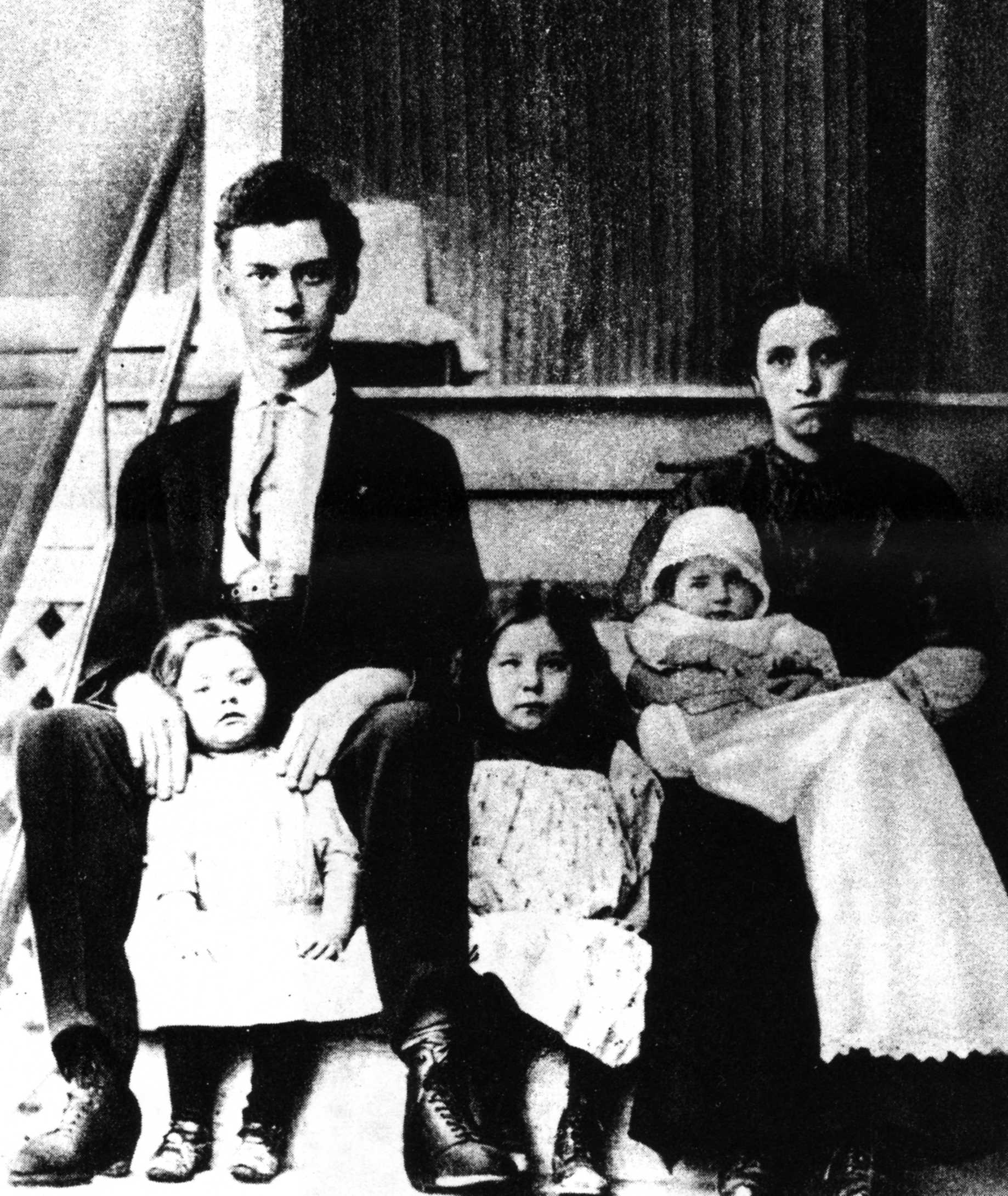
Calvin and Fanny Phibbs

Calvin and Fanny Phibbs with (l-r) Evelyn, Florence, and Catherine in Idaho in 1912.

I had heard a rumor a couple of years ago that Calvin Phibbs had taken his own life but could not confirm the story.  Now that I am back in Idaho, I stopped by the Rupert Library to see if they had some old newspapers.  Sure enough, I found the following obituary which reads more like the local gossip column.  I will include some of the family history after the obituary.

“Judge Phibbs Ends Life; Ill Health Cause
“Well Known Rupert Attorney Meets Instant Death By Own Hand at Home Thursday.
“Four months of sleeplessness, a body racked with pain and mind grown despondent through belief of the utter hopelessness of physical recovery, led to the tragic, but carefully planned suicide of Judge C. D. Phibbs, well known Rupert attorney who ended his life at his home Thursday.
Seated before a mirror in his bedroom at three o’clock in the afternoon, when no one was in the house but his wife and himself, the distraught man placed the muzzle of a 22-caliber hammerless revolver to his right temple, and with a firm unswerving hand sent a bullet through his brain, death being instantaneous.  The leaden missile passed through the head and lodged in the wall, near the ceiling.
“Startled by the sharp explosion of the gun, Mrs. Phibbs rushed in from an adjoining room to find her husband’s body crumpled on the floor with his life extinct.
“That the rash act was premeditated and carried out as planned is shown by excerpts from a letter written the previous Saturday, addressed to his wife and left where she could not fail to find it.
“I do not feel that I can get well.  I have suffered for four months.  So much that I cannot endure it.  If anything happens to me, know that I love you and have never loved anyone but you.  Tell the children to be good children, as it is best for them.  It is the only way to be happy.  I have failed to do as much for them as I wanted to but have not been able.”
“Following the introductory explanation foreshadowing the tragedy that was to take place, the letter continued with detailed instructions of what to do in regard to business that would arise, told where his life insurance policies were, how to plan the funeral, left words of encouragement to the children to continue their education and even advised about planting a garden.
“After a farewell sent the children and the brief words of assurance for their future, the final paragraph concludes: “God bless you all till we meet again.  I do not believe God will blame me for what I am doing for there is no other way.”
“The letter was found by Mrs. Phibbs soon after the tragic shooting occurred.  It was dated March 20.  Although she knew he suffered much from stomach trouble for many weeks and was discouraged over his health, no hint of self-destruction was ever suggested by her husband, she said, and in the past week it seemed to be somewhat improved, and had been to his office only a few days before the appalling act.  He had suffered intensely from stomach trouble and it is thought he believed himself a victim of cancer.
“When a youth of 13 years, while in the mountains of Virginia, at Fancy Gap, Carroll county where he was reared, in 1899 Calvin D. Phibbs, whose father worked in the mines there, hopped on a coal car and received injury to his left leg that later caused infection, making amputation necessary and left him crippled for life.
“In 1906 when twenty years of age he married Fanny Elizabeth Ross in Welch, West Virginia, and on March 21, 1913, they came to Idaho and to Rupert, making there [sic] home here since then.
“Although he had little opportunity for attending school, he received his education by private study.  Securing books and texts of the International Correspondence school he studied law and was admitted to the Idaho state bar in 1919.
“For ten years he held the position of probate judge of Minidoka county, being elected on the Republican ticket and served in that capacity until four years ago.  He served also as justice of the peace for two years and in 1918 was city clerk of Rupert.
“His friends and business associates, of whom he had many, were shocked and grieved at his tragic act.  He had a kindly disposition and a cheerfulness of manner that in no way can be reconciled with his fatal deed.  At the time of his death he was engaged in the practice of law but since last November had been unable to be in his office much of the time.
“Besides his grief-stricken wife he is survived by eleven children, five boys and six girls, their father being the first of the family to pass away.  The children in order of their ages are Mrs. Florence Biles, 23, of Gridley, California; Mrs. Evelyn Collier, Rupert; Mrs. Catherine Beachell, of Filer, Idaho; Virginia, James, Viola, William, Orville, Arthur, Albert and Phyllis, the youngest, age three, all of whom live at home.
Three brothers, Frank Phibbs of Twin Falls, Robert of Oakland, California, and John of Salt Lake City, and twin sisters, Mrs. Ardena Christensen, San Francisco and Mrs. Mary Hiatt of Paul, also survive.
“Largely attended funeral service were conducted Monday at one o’clock in the Second ward L.D.S. church with Albert Harrison, first counselor to Bishop O. J. Bateman in charge.
“Speakers included David J Borup, former bishop of the Second ward, who came from Boise where he now resides to be present at the funeral.  Judge Hugh A. Baker, an attorney friend, and David Hyde and A. H. Jensen, churchmen and friends of the deceased.
“Music was rendered by a chorus of nine voices under direction of Arthur Humphries, singing three selections “I Need Thee Every Hour,” “Sometime We’ll Understand” and “Oh, My Father.”
“Prayers were offered by L.D. Hyde and R.C. May.  Interment was in Rupert cemetery with Goodman Mortuary in charge.

Here is a biography of Judge Phibbs from an old Idaho directory of prominent people.

“Judge Calvin Dickerson Phibbs. since 1912 a resident of Rupert, where in 1918 he was elected judge of the probate court of Minidoka county, was born at Hillsville, Virginia, June 12, 1886, a son of James and Elizabeth (Bolt) Phibbs. The parents are also natives of the Old Dominion, where they were reared and educated. Subsequent to his marriage the father there followed farming and stock raising and during his early life also engaged in the profession of teaching. In 1910 he removed westward to Rupert, Idaho, and purchased a farm northeast of the town, becoming owner of eighty acres. At times he has owned various farms, but his holdings at the present time embrace just eighty acres. He and his wife have become members of the Church of Jesus Christ of Latter-day Saints and in his political views Mr. Phibbs is a republican.

“Calvin D. Phibbs spent his boyhood in his native state and pursued his education in Fairview Academy. He was reared to the occupation of farming, early becoming familiar with the best methods of tilling the soil and caring for the crops. Later he took up electrical engineering and worked along that line until he came to Rupert, Idaho, in 1912. Here he entered the real estate field and after a time he was called upon for public service, being made city clerk of Rupert, which position he filled for a brief period. In 1918 he was elected to the office of probate judge of Minidoka county, which position he is now acceptably filling, being most careful, prompt, systematic and accurate in the discharge of his official duties. On the 15th of December, 1919, he was admitted as an attorney at law in the supreme court of the state of Idaho.

“In 1907 Judge Phibbs was united in marriage to Miss Elizabeth Ross, a native of Pulaski, Virginia, and a daughter of J. T. and Catherine (Graham) Ross, the former a farmer and stockman. Judge and Mrs. Phibbs have become parents of six children: Florence, Evelyn, Catherine, Virginia, James and Viola. The religious belief of the family is that of the Church of Jesus Christ of Latter-day Saints and in politics Judge Phibbs is a stalwart republican, giving unfaltering allegiance to the party and its principles. He stands for advancement and improvement in all things that have to do with citizenship and is among that class who are putting forth every effort to spread the principles of true democracy and make one hundred per cent Americanism the rule of this land.

I do not usually place that much quoted material in my histories, but there is so much extra information I probably would not otherwise include, I thought I better just leave them how they were printed.

Calvin Dickerson Phibbs was born 12 June 1886 in Hillsville, Carroll, Virginia.  He died 30 March 1933 in Rupert, Minidoka, Idaho.  He was buried 4 days later on 3 April 1933 in the Rupert Cemetery.

Now that I have given so much on Calvin, I probably should fill out the life of Fanny a little more, my Great Great Aunt.

Fanny Elizabeth Ross was born 18 November 1893 in Reed Island, Pulaski, Virginia to James Thomas and Damey Catherine Graham Ross.  Read more about here parents and family here.  She married Calvin Phibbs 22 December 1906 in Welch, McDowell, West Virginia.  As mentioned 11 children were born to the marriage.  I believe she moved fairly quickly to California after Calvin’s death.  While in Rupert, the Phibbs family lived at 96 B Street (unless the streets have been renumbered, this home does not exist any more.  Grandpa, Milo Ross, visited her in Salt Lake City before World War II.  I do not know if she was living there or just visiting, he does not remember either.  She died 23 January 1943 in Daly City, San Francisco, California.  She is buried at Cypress Law in Colma, San Francisco, California in an unmarked grave.

Calvin and Fanny’s children are as follows, without spouses.

Florence Geneva Phibbs born 21 June 1907 in Gary, McDowell, West Virginia and died 9 February 1987 in Gridley, Butte, California.

Evelyn Adaway Phibbs born 8 October 1909 in Eckman, McDowell, West Virginia and died 7 January 1961 in San Francisco, San Francisco, California.

Catherine Elizabeth Phibbs born 1 January 1912 in Thorpe, McDowell, West Virginia and died 7 September 1989 in Fall River Mills, Shasta, California.

Virginia Ardena Phibbs born 3 March 1914 in Rupert and died 25 September 1969 in San Francisco County, California.

James Calvin Phibbs born 22 April 1916 in Rupert and died 10 July 1977 in San Francisco.

Viola Belle Phibbs born 21 July 1918 in Rupert and died 11 June 2008.

William Robert Phibbs born 3 October 1920 in Rupert and died 16 September 2010 in Redding, Shasta, California.

Orville Leonard Phibbs born 20 October 1922 in Rupert and died 25 December 1985 in Santa Rosa, Sonoma, California.

Arthur Lee Phibbs born 12 October 1925 in Rupert and died 22 June 1983 in San Francisco.

Richard Albert Phibbs born 25 December 1927 in Rupert and died 27 January 1993 in Clearlake, Lake, California.

Phyllis Elaine Phibbs born 24 February 1930 in Rupert and died 6 July 1972 in Los Angeles, Los Angeles, California.

Of course I am always looking for more information on the family since we do not have contact with any of the descendants.

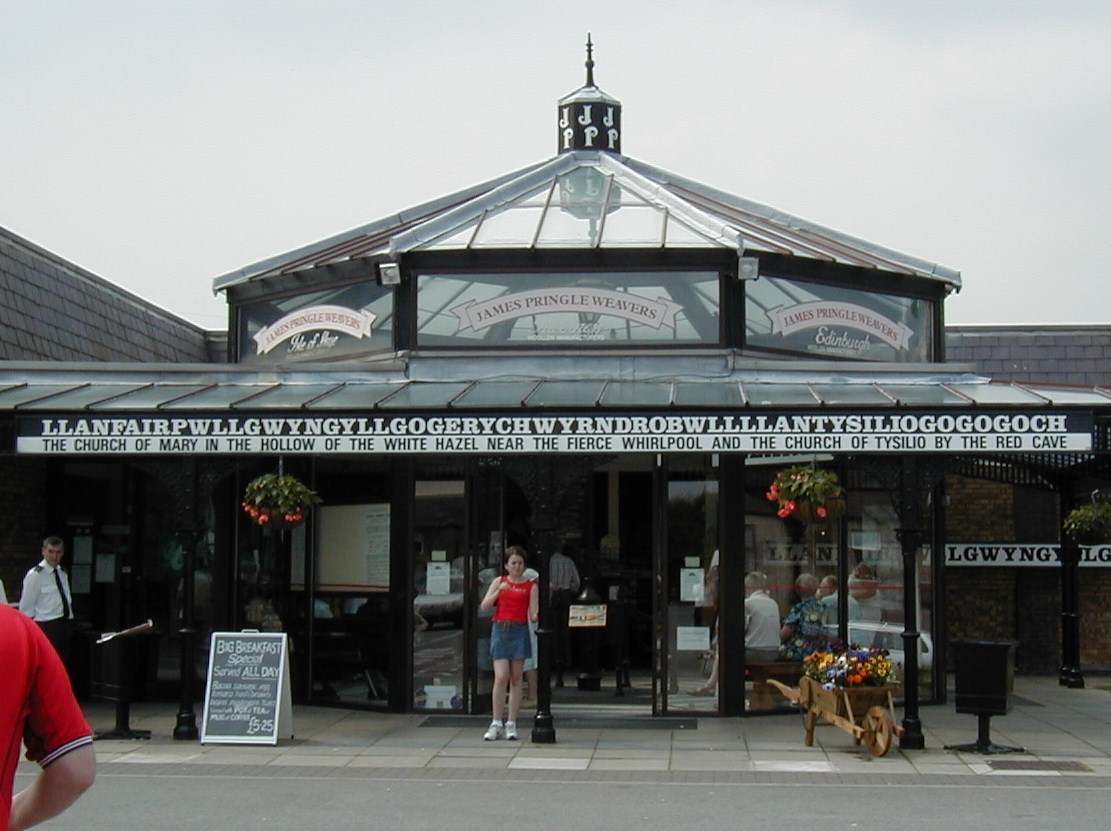
LLANFAIRPWLLGWYNGYLLGOGERYCHWYRNDROBWLLLLANTYSILIOGOGOGOCH

I have previously written of my visit to Llangollen, Wales with the store sign reading “YSIOPFACHGARDIAUWRTHYBONTDROSYRAFONDDYFROWYYNLLANGOLLEN.”  When I came home from the mission, I had the photo above in my collection.  I must admit, I never actually visited the town nor took this picture.  Although, if Amanda and I had realized we were within 3 miles of the town when we traveled to Beaumaris, Wales through Menai Bridge we probably would have stopped.

Unlike YSIOPFACHGARDIAUWRTHYBONTDROSYRAFONDDYFROWYYNLLANGOLLEN, I can point you somewhere on how to say it.  I stumbled upon this little video which is clear on how to say LLANFAIRPWLLGWYNGYLLGOGERYCHWYRNDROBWLLLLANTYSILIOGOGOGOCH and even has a catchy tune if you want to remember it.  One of my missionary companions had a tape that taught the listener how to say it.  I listened to it once and had other things to do.  Now I wish I would have learned.  Maybe some time dedicated to the song will help me sound smart the next time someone asks the most novel place I know of in Wales.

Oh, You Beautiful Dodge!

Notwithstanding applying for jobs, fretting over passing the bar, putting things in place for solo practice, and helping around my Dad’s house, I have made an effort to resurrect my 1956 Dodge from the garage.  Here is how dirty about five years had made her.  She had so much dirt that some of the seams, like around the trunk, were full of dirt.

The battery was dead so I put a new one in.  As a tribute to Dodge, a new battery and the car cranked over and started up after about 30 seconds!  I had absolutely no brakes, but I moved it into the driveway where I could more easily work on it.  I gave her a good bath and washed off more than a few millimeters of dust in several places.  There in the driveway I bled the brakes, vacuumed her out (and her numerous mouse nests, what a heart-breaker), and prepped her for more use.

We still have some of the original marketing materials that came with the car in 1956 and I knew one of the marketing themes was “Oh, You Beautiful Dodge!”  I knew the song was “Oh, You Beautiful Doll” modified for Dodge’s purposes (and with the help of Lawrence Welk).  So that one line I kinda hummed under my breath as I worked through my various tasks.  I decided I would check to see if I could find the commercial.  Voila, Youtube has a copy.

Kinda catchy and I am jealous of the singer’s low voice.  There is another interesting commercial about the creation of the Dodge as a piece of art, as an automobile.

Since money is tight, some of the necessary fixes will just have to wait.  I am afraid the master brake cylinder will have to be replaced as well as the cylinders in both back brakes since they grab and both seem to be leaking brake fluid.  One of the valve covers appears to have the gasket completely missing so she throws out a healthy dose of oil when she gets hot.  Additionally, the transmission which slipped even 10 years ago slips worse than ever.  Storage is never good on a vehicle and where the dirt has sat on some of the fenders and a little moister have added some rust bumps in the paint.  She has some cancer in a few areas.  I am afraid she will need a good going through and probably a paint job to restore her to her true colors (white top of the cab, charcoal not grey, and yellow which is pretty close).

Here is a picture of her all cleaned up on the outside, I have not done anything beyond vacuuming inside, with Aliza and me.  I hope we can get her squared away to make her a regular Sunday driver.

Ridin’ into the Sunset: Bud

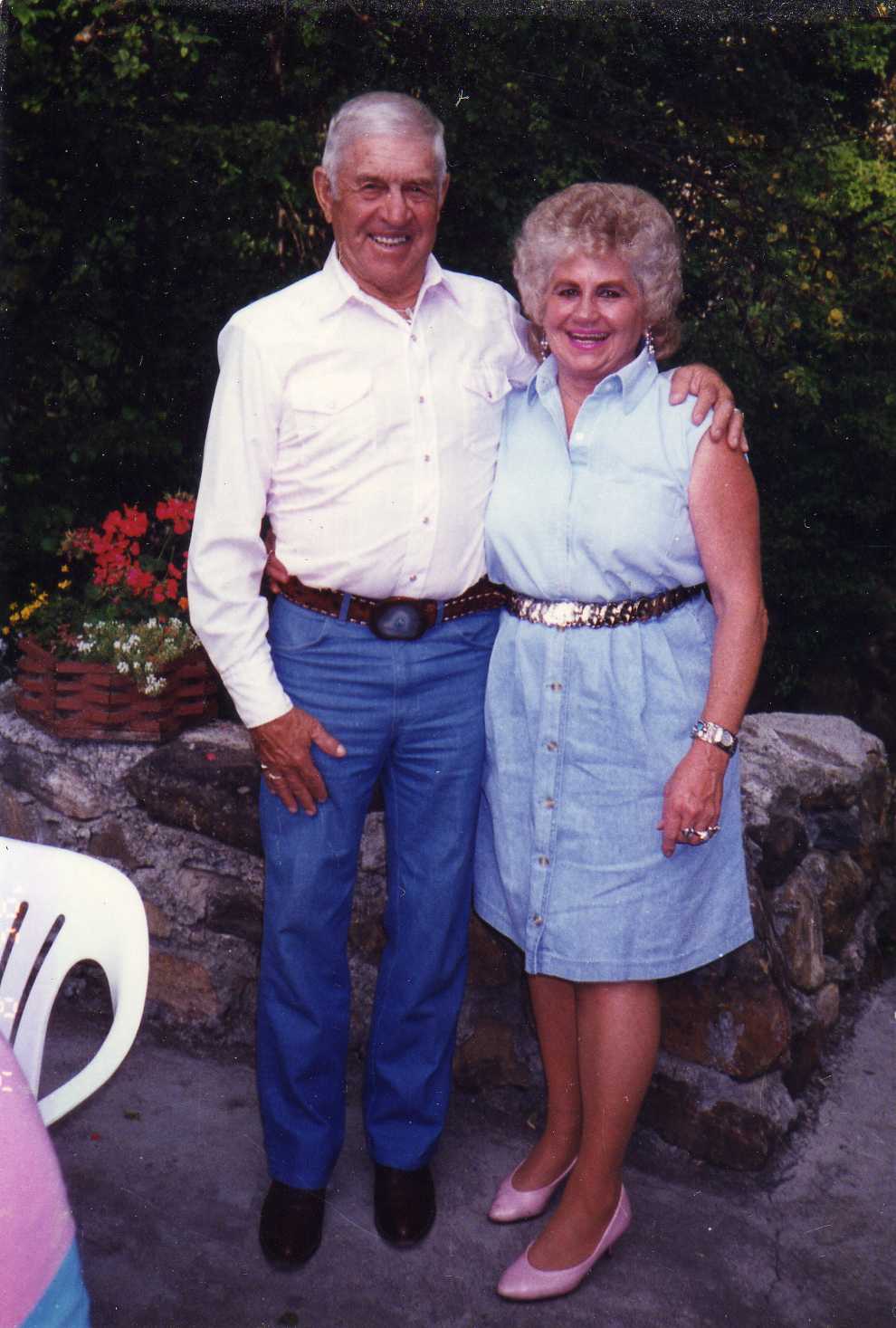
I thought I would dedicate a post to Ivan Walter “Bud” Lloyd since he just recently passed to the other side of the veil.  He was born 5 April 1919 in Riverton, Salt Lake, Utah.  His parents were Madeline Cascutti and Walter Graham Lloyd.  His father purchased a ranch about 1932 near Montpelier, Bear Lake, Idaho.  He lived, married, and raised his family there.  Around 1989 or 1990, he met my Grandma, Colleen Mary Andra (whose married name at that time was Jonas).  She was in Montpelier for work and Bud told me he met her in a restaurant. Here is a picture from early on, although it is not a great picture.

They loved each other and that is quite evident from the letters and cards.  The two were married 31 January 1998 in Dingle, Bear Lake, Idaho.  Here is a picture from later that year, you can see how much they enjoyed each others company.

Deer Cliff Inn 1998

Grandma passed away from a surgery that went wrong 14 November 1999 in Boise, Ada, Idaho.  Bud moved back to Montpelier from Paul and remained there the rest of his days.  He still worked hard maintaining yards and doing other work despite growing older and passing 90.  He mowed one last lawn and then didn’t feel well and went to the hospital.  He died a few days later on 27 September 2011 in Montpelier.

His funeral was held on 1 October 2011 in Dingle.  His family referred to him as “the last of the great cowboys who lived his life on his own terms, his determination and hardworking ways, always peppers with a head tilt, sly grin, and a laugh.”  This was true and my memories are of his blue eyes that twinkled, big smile that showed his worn down teeth, and that slight tilt to the head so he could hear you a little better.  We stopped to visit him a few weeks ago so we could get a picture with the last of Aliza’s Great Grandparents (the others had already been captured).  Unfortunately we missed him.  Now we really miss him.

The family took out the last of the great cowboys in a wagon.  A true tribute.  Rest well Bud, I look forward to seeing you again.

Ode to Grandma Ross

Gladys and Maxine; ages 5 and 3 (1927)

Since Grandma would have been 90 today, I thought I would put together a couple of memories of her to commemorate her birthday.  Not so much a biography, just more of my personal memories and a couple of pictures through the decades of her life.  Gladys Maxine Donaldson was born 20 September 1921 in Ogden, Weber, Utah.  I have written of her parents, David and Dena Donaldson, previously.

1939

Grandma married Milo James Ross 4 April 1942 in Ogden.  I have written some of their history at the following link: Ross-Donaldson Wedding.  Milo and Gladys had three children; Milo in 1943 (my father), Judy in 1946, and Caroline in 1948.

Milo and Gladys, 1943

I think the following photo was taken on the steps of Grandma’s parent’s home on Wall Avenue in Ogden.  I believe this photograph was taken the day of Glady’s father’s funeral.  The little girls are Caroline (left) and Judy (right).

Caroline, Gladys, and Judy about 1953

Here is a picture of Grandpa and Grandma in front of their home (built by Grandpa in 1955).  If you look closely, you can see the back of them in the window.

1961

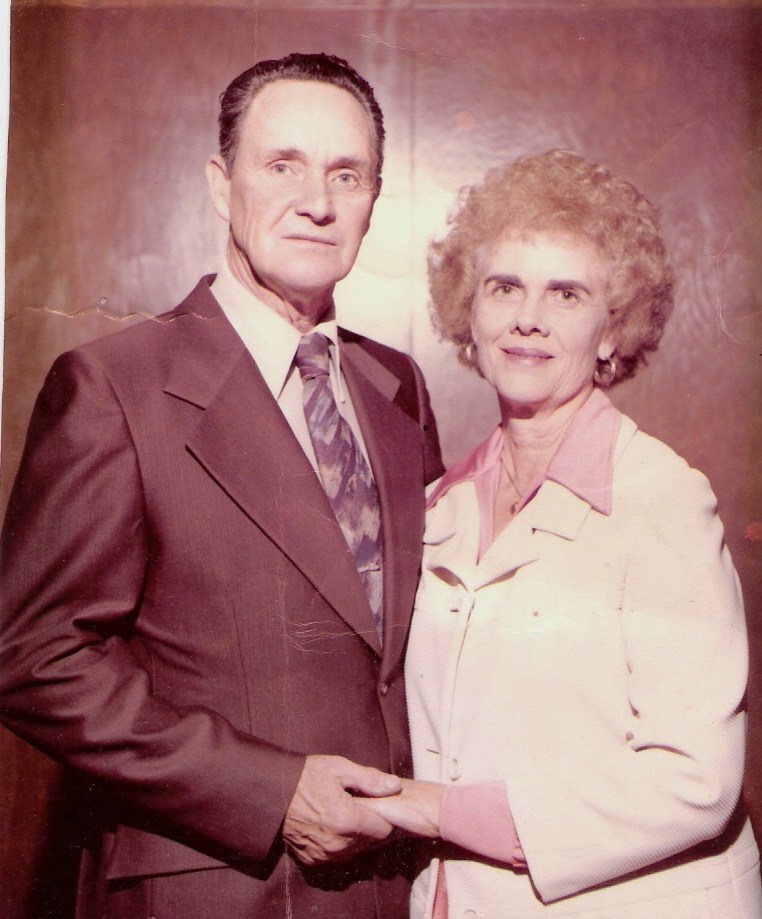
Here is a more formal photograph of Grandpa and Grandma.  I do not know the occasion.

Milo and Gladys in the 1960’s

Another one.

Abt 1976

I think this is the first photo I have with my Grandma.  I do not know exactly how old I am, but I am most likely under 2 years old.  Since I grew up in Idaho, I only got to see my Grandparents once or twice a year.  In this picture, I do not seem too sure of the lady on the bike!

Paul and Gladys, about 1981

I do not recall what the occasion was for this picture but we were dressed up for something.  I do not recognize the building.

Paul, Gladys, and Andra in 1985

In 1992 when I received my Eagle Scout, my mom refused to step into an LDS church where the Court of Honor was held.  Dad invited Grandma to stand in for my Mom.  Mom arrived around the time of this photo in her thermal overalls and was royally upset and offended not only that my Grandparents were there, but that Grandma took her place.  Either way, it was a great honour to my Grandparents, especially in light of the history between my Grandparents and Mom.

Paul, Gladys, Milo (Jr) in 1992

In 1997, I moved to Logan, Utah to attend Utah State University.  Since I lived so much closer, I made an effort to visit my Grandparents at least once a month or so.  Typically it was not hard as I could catch a ride with someone passing through to another location.  Grandma was always very kind and would repeatedly remind me how much she loved me and that there was always a bed for me to sleep in if I wished to spend the night.  As her mind started to slip after Aunt Judy’s death the next year, she would often repeat the same two phrases at least every 15 minutes.  While they were the repetitions of an old lady, I still recognized that they came from the heart of my Grandmother who dearly loved me.  She knew me, loved me, and only had two phrases in which to express that in her mental infirmity.  I now feel her love over and over again with the phrases, although at the time they were sometimes annoyances.

I have to share a quick story at this point.  I had just come home my mission in England in December 2000.  I had not been home very long when I visited Utah again with my friend Dustin McClellan.  I was given some gifts and homemade soap to drop off at Grandpa and Grandma’s in Plain City.  Dustin and I stopped and we were visiting when Grandma left the room announcing she would cut up some fudge and bring it out.  Grandma came into the room and I turned down the fudge (I try to avoid sweets).  Grandpa took a piece and Dustin took a healthy portion.  Dustin put most of it in his mouth and when Grandpa took a bite he exclaimed that the fudge was soap.  Grandma had cut up the soap we brought as a gift thinking it was fudge!  The look on Dustin’s face was clearly a man who had taken a mouth of fudge and was completely disgusted and deceived but did not want to let anyone know lest he offend my Grandma.  Grandpa had to take the soap from Grandma who was about to eat a piece despite the warning.  Dustin who was nearly foaming at the mouth from the soap excused himself to wash out his mouth.  We still laugh about this episode now, 10 years on.

Another episode occurred in 2001, probably around September.  I was driving through with a friend, Kevin Orton, for business and I convinced him to pay a stop on my Grandparents.  It was a fairly routine visit and Grandpa invited Kevin and me to go out back to visit his large garden.  Grandma walked with us and after a while we all retired to the back porch to sit a while.  Grandma went in to the house after offering us all a drink.  Grandpa went after her because she was so forgetful (to the point that he was concerned about her safety when cooking).  She opened the door, walked in, and Grandpa caught the screen door as it was closing.  Grandma turned and exclaimed, “Don’t touch my damn door!”  Grandpa jumped back, let the door close, and Grandma closed the door behind.  Right before she closed the door all the way though, she spoke softly, “I love you honey.”  She then closed the door and we heard it lock!  Kevin and I laughed and laughed about the whole scene.  Even years later he will randomly reference this experience.

Here is a great picture of Grandma at her 60th wedding anniversary.  She looked great but her memory was pretty much gone and I think she was lost half the time she was there.

2002

Jennie Britzman, Grandma’s first cousin, came to visit and this picture was snapped.  Grandpa was Grandma’s full-time caretaker by this point (Grandpa and Grandma were both about 82) and they rarely strayed far from home.

Jennie Britzman and Gladys, 2003

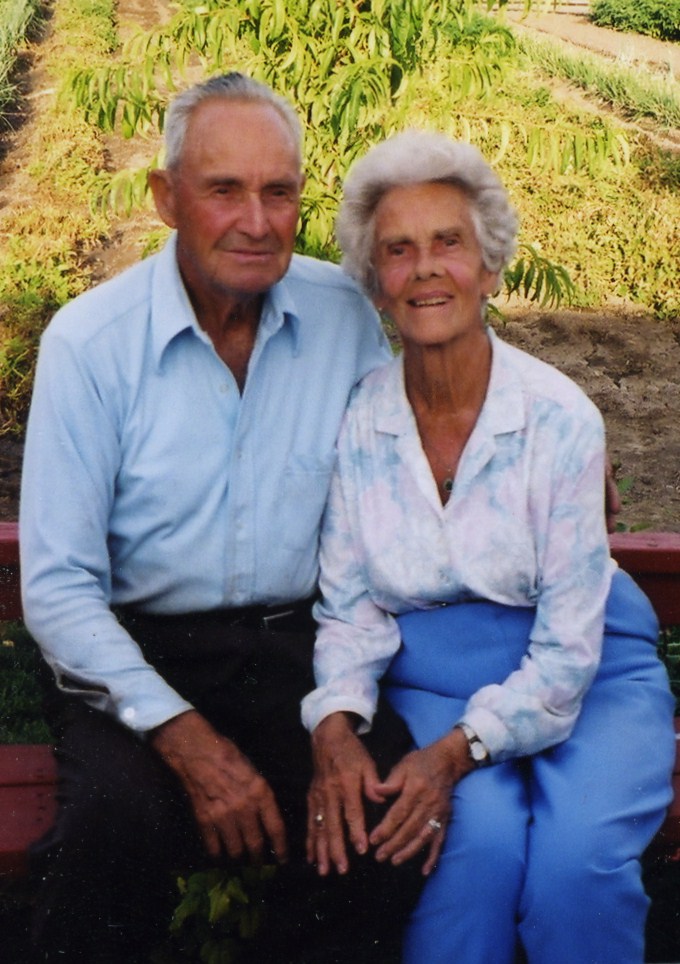
I believe this is the last photograph I have taken of Grandma before she passed away.  Grandpa looks younger and Grandma looks happy.

Grandpa and Grandma in 2004

Grandma died 25 August 2004 in the new McKay-Dee Hospital in Ogden.  Her funeral and burial took place in Plain City on 25 August 2004.  Happy Birthday Grandma, I look forward to seeing you again.

Moxley Find

Here is one of those family history stories we wish happened more regularly.  A friend, knowing my abilities in family history, asked for some help.  I said sure, not just as a friend, but also because he married a cousin of mine.  He knew nothing of his Grandmother’s family except their names.  Luckily, despite the commonality of the Webster name, I tracked down his Grandmother on the 1930 Census in Boise, Ada, Idaho.  The family did know the maiden name of the Great Grandmother as Hattie Hawley.  That confirmed some potentials and fortunately I was able to track down at least two or three generations on each of his Grandmother’s lines in about half a day worth of work.

In doing that work for my friend, I found that Hattie Hawley had a previous marriage to Earl Moxley.  I did some searching for Earl Moxley and found a comment on a family history forum where a man had found a photo in an antique shop in Creswell, Lane, Oregon with “Mr. and Mrs. Earl and Hattie Moxley” written on the back.  He had tracked down enough information on Earl and Hattie to know who they were, but could not find anyone who might be interested in the photo.

I sent this man an e-mail and his e-mail still worked (often a miracle with dated forum posts).  I had asked for a scan of the photo and he was willing to give up the original.  I gave him my address and he sent the photo to my address carefully packaged.  I was happy to have a dinner appointment with Dustin and Maren McClellan and to present the photo to him so he could give it to his Grandmother.  Small world with the internet.  20 years ago, this photo might have been trashed for the impossibility of finding a relative of those in the photo.  But in our day and age, only a posting on a forum and a few years later provided a rightful owner.

Earl Bertie Moxley was born 26 August 1887 in Creswell and died 17 May 1925.  I could not clearly find out where he died, but he was also buried in Creswell.

Hattie Blanche Hawley was born 4 April 1888 in Lane County, Oregon to Mary H Hillegas and Robert Divolson Hawley.  She died 12 January 1979 in Paul, Minidoka, Idaho.

Hattied married Earl 16 June 1909 in Lane County, Oregon.  I assume they were divorced but I did not easily find the divorce online and did not pursue the documentation.  She married George Reece Webster 14 June 1916 in Boise, Idaho.  George and Hattie are Dustin’s Great Grandparents through his paternal grandmother.

George Reece Webster was born 13 November 1880 in Lancaster, Schuyler, Missouri and died 6 December 1953 in Boise.  Both George and Hattie were buried in the Morris Hill Cemetery of Boise.

I wish I could have a few more of these little miracles in my family history.  Either way, I am happy to have been a part of this little miracle for Dustin’s family.  I wonder what Dustin’s Grandmother’s reaction is/was.  Had she ever seen this picture?  Did she ever see a picture of her mother so young?  I will give an update when I hear.

Back to Idaho: Farming

I have not driven a 10-wheeler for over 8 years and today I climbed back in the cab for grain harvest.  I actually only took one load about 15 miles to the cooperative because I had a flat tire to be fixed and when I arrived back at the field the combine broke down.  We spent the rest of the day tracking down and replacing drive belts for the combine.  I know grain dust is pretty uncomfortable, but I reveled in it.

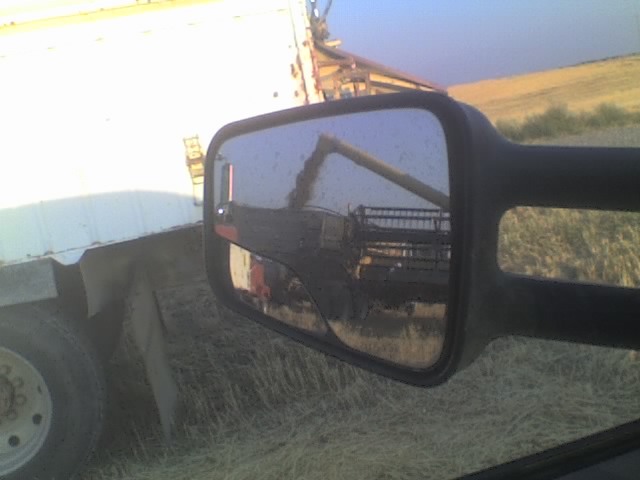
Here, at the end of the day, the combine was off doing its last run to fill up the truck and I waited in the shop truck.  I was playing with my phone when I snapped a picture.  I thought it was pretty cool so took another that caught the scene a little more completely.  I know this picture may be not much for others, but this is a little slice of heaven for me.  If I could have been a farmer, I would have.  But I could not, so I chose a less noble profession.  At least I work in an area that lets me play farmer for a day.

The photo captures Durum wheat being offloaded from the 20-year-old New Holland combine into my truck, a 1987 Volvo White.  The other little mirror captures the front of a red 1985 GMC General.  Outside the mirror is the back of another truck waiting to be loaded. Off in the distance behind the truck waiting in the overall picture, a completely harvest field awaits its next phase; probably baling of the straw and preparation for winter.

Since this is the same farm equipment I have worked around for the past 20 years, it was somewhat nostalgic.  On the other hand, I wonder if I am the only attorney driving a truck for grain harvest.

The thing that caught me the most was the link for me to the millenia that have passed before.  Durum wheat has been grown for human consumption for over 8,000 years.  Sure, we can produce it at a higher capacity, but I really believed that despite technology, so little has changed in the human constitution.  We still fight the same battles and strive to overcome the same struggles.  Even though our society allows me not to be a farmer or gatherer, much like other ancient societies; we still fundamentally rely on the ground and the beauties of nature for our support and sustenance.  Despite what government and others detached from such basic elements may believe, our connection to the dirt and fundamental laws of our universe is clear.  The more our society fails to recognize these facts, the more and more likely we perch ourselves for failure.  Those who remember these facts cannot fail, whether in farming or anything else.