

Today I wanted to dedicate some time to James Otis Ellis. President Roosevelt signed the Reclamation Act on 12 June 1902. The Minidoka Project was established by the Secretary of the Interior on 23 April 1904. The Minidoka Dam and its related canals and laterals started shortly after. Delivery of water began in 1907.
With the announcement of the Minidoka Project settlers flocked to the region. One of the four men who selected sites near what is now Paul, Idaho, was James “Jim” Ellis. These men struggled and barely survived the three years before the water finally starting flowing to Paul. In 1907, these men then incorporated the City of Paul. Jim Ellis hired an engineer and surveyed the town site and named it Paul after Charles H. Paul, the engineer in charge of the Minidoka Project. In 1910, the railroad was built across part of the land owned by Jim Ellis. He donated the land for the depot.
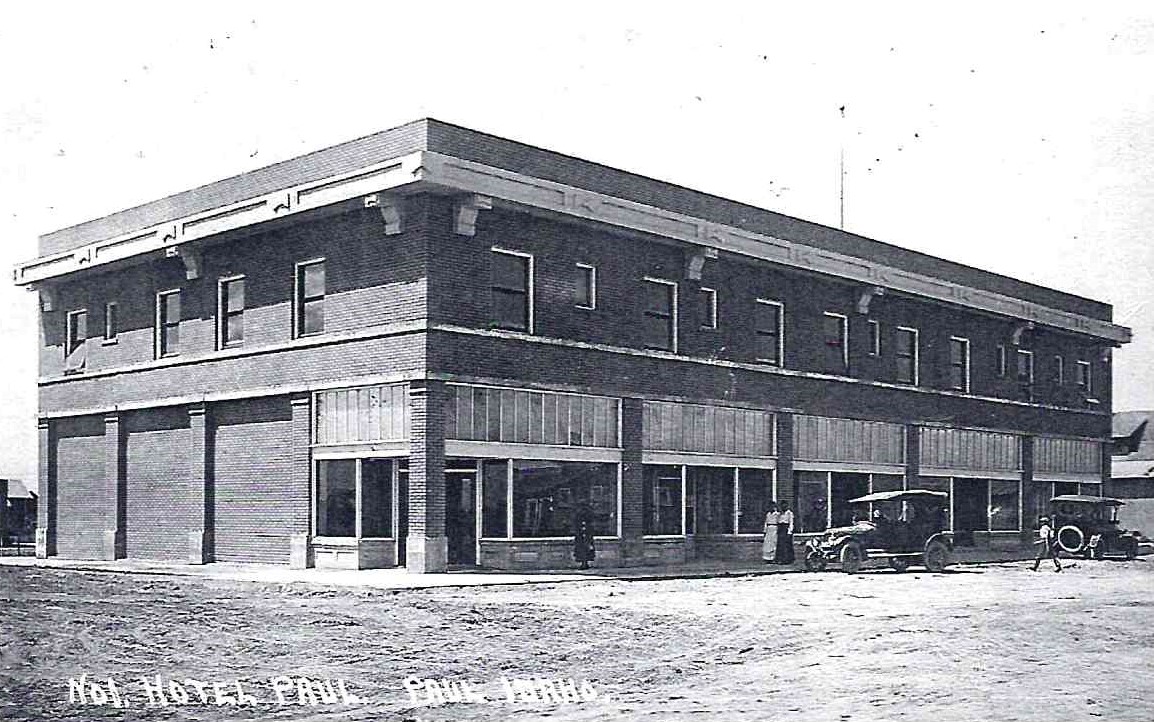
Jim donated part of his homestead to create much of the City of Paul. He was instrumental in bringing the railroad to town. He also donated lots for various entities to build and support the town including the Lutheran Church, the LDS Church, the Methodist Church, and Modern Woodmen of America. Jim helped found the first hotel in Paul and also helped establish some of the other first businesses.
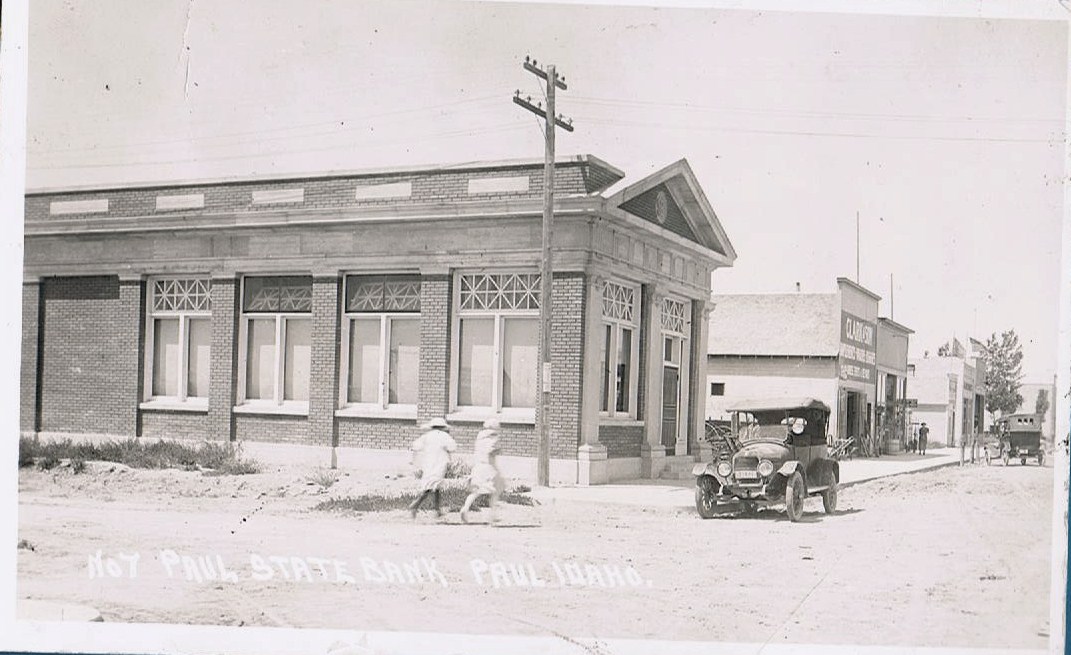
Jim also helped found the first bank in Paul, the Paul State Bank. This building still stands at its location a block west of the hotel.
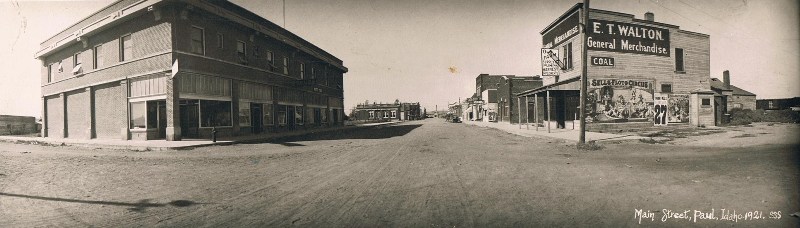
Much of Paul, Idaho, existed because of Jim Ellis. Hopefully at some point I can spend some time on the other three men, Tom Clark being the other to mention now.
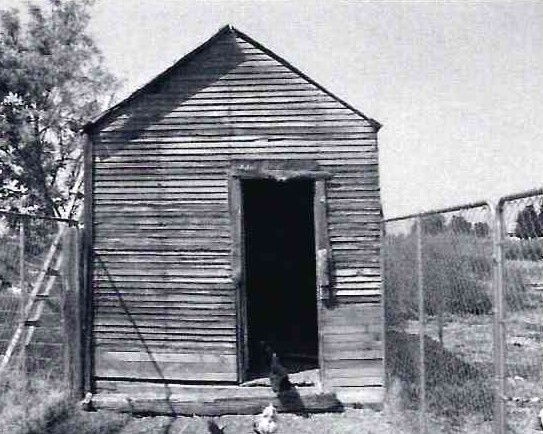
The last remaining original building on the Ellis homestead. This building is a one room shack with a window and smokestack. There is believe this was Jim’s home in the early days on Paul.
Jim Ellis was born 10 February 1872 in Portia, Vernon, Missouri. All of his family stayed in Missouri so I don’t know how he ended up in Idaho. The opportunity to homestead with the knowledge of the Reclamation Act and Minidoka Project could very likely been the draw. In the 1900 Census he was still in Vernon County. But 4 years later he was in the flat desert sagebrush land of southern Idaho staking out claims.
Many of the homesteaders struggled and failed before the water finally arrived. Jim was able to hold out and make it work. He slaved away for years. He returned to Missouri to convince his childhood sweetheart to join him in Idaho. Elizabeth Emma Rexroad and her sister, Artie, made the trip out to southern Idaho. The Rexroads were still in Missouri for the 1920 Census, but Jim and Lizzie married 23 June 1921 in Pocatello, Bannock, Idaho. The two did not have children.
Whatever work he might have done in Missouri might not have gained much notoriety. But today the main route of Highway 25 through Paul, Idaho, bears, in his honor, the name of Ellis Street.

Here is an article written about Lizzie Ellis after an interview about 1983. Elizabeth Rexroad was born 16 February 1889 in Adrian, Bates, Missouri.
“James Otis Ellis homesteaded where the City of Paul, Idaho now stands. He donated land for the first school in the city and also built the first hotel there, The Woodman.
The farm owned by Elizabeth Ellis and her late husband Jim Ellis stood on both sides of the main drain at Paul and included the land on which the railroad was built in 1910. As appreciation to these hardy pioneer couple and in recognition for their contribution to the community a street later to become Highway 25, was named Ellis Street.
Jim Ellis was one of four men who made their way from the railroad mainline at Minidoka to the present site of Paul in 1904, three years before water was delivered to the land. He cleared his land with a grubbing hoe.
Having moved from Missouri, Jim later went back and persuaded his sweetheart to join him. It was in 1920 that Elizabeth left her millinery business in Adrian, Missouri and moved to Idaho where she and Jim were later married following a ride on the railroad to Pocatello.
‘I loved hats,’ muses Elizabeth, who had worked as an apprentice and operator of the millinery shop for five years.
Though a city girl by trade, Elizabeth was raised on a farm at Liberty, near Kansas City, where she had learned what farm life was all about. Thus it was no problem for her to join her husband in the fields as he planted, irrigated and harvested his fields of wheat, oats and alfalfa. All the work was done with horses and by hand in those days and she learned to harness her animals, hitch them to the implements and do the field work right along with her husband. She could run the mower and pitch the hay right along with the men.
She remembers the first tractor they bought, but apparently neither she nor Jim was too thrilled with its performance as it soon found its way in a neighbor’s farm where it remained for an extended period of time while they continued to do the work with their horses.
Jim and Elizabeth had no children and she says she is ‘the last survivor’ of her large Missouri family of two boys and eight girls. One nephew shares the family home with her on the original homestead in Paul.
At 94, and with eyesight failing, she spends her time just waiting for another day to come around. She takes care of her own household chores but has little use for the television set in her living room.”
Jim passed 15 October 1961. Lizzie passed 21 September 1988. Both are buried in the Paul Cemetery.


 Sagacity