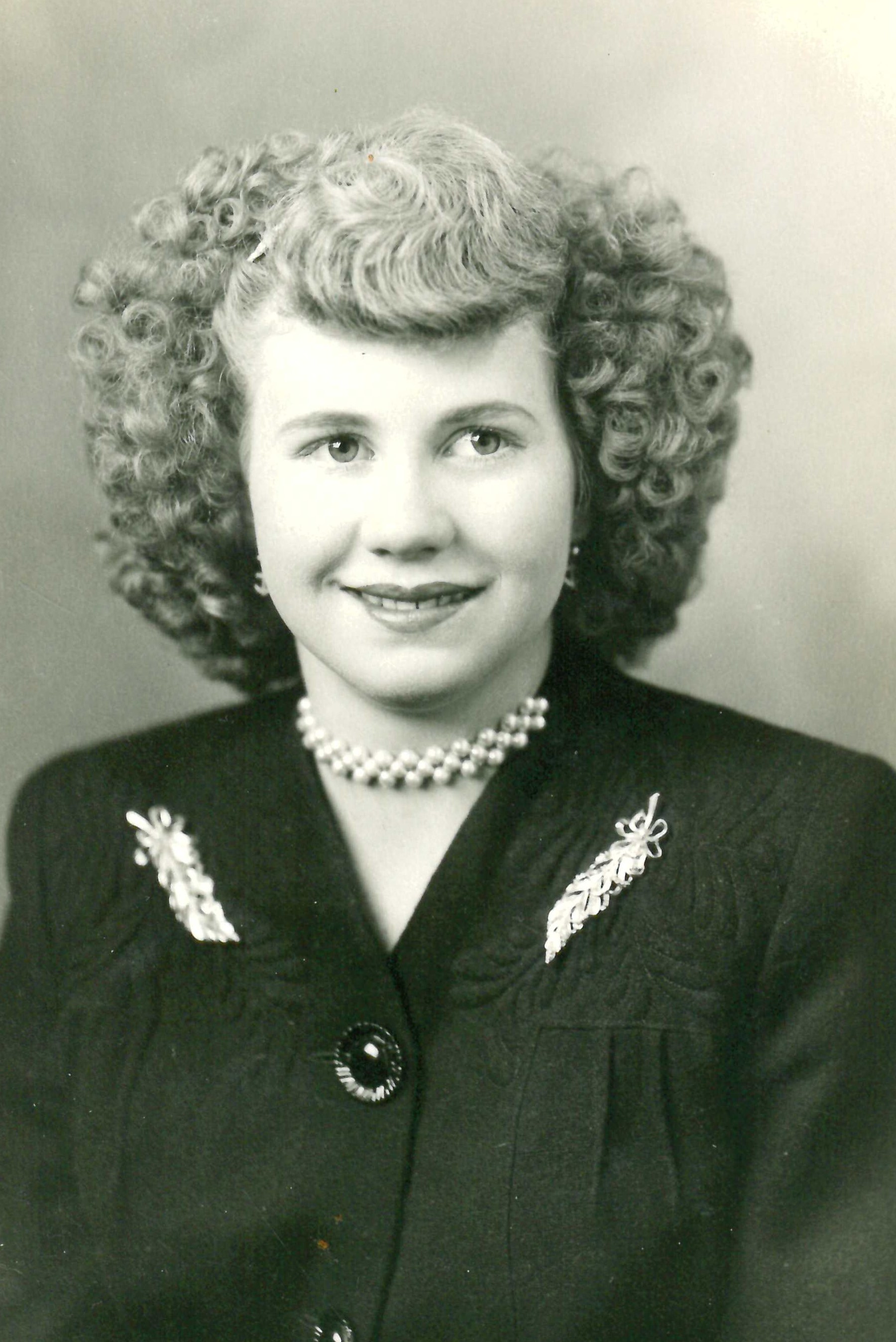
Hans Petersen

This is another story from the family history books of Golden Rulon Andra. This is the father of Annie Christine Petersen that I wrote about previously. This is an ancestor of Golden’s wife, Utahna Bird Andra.

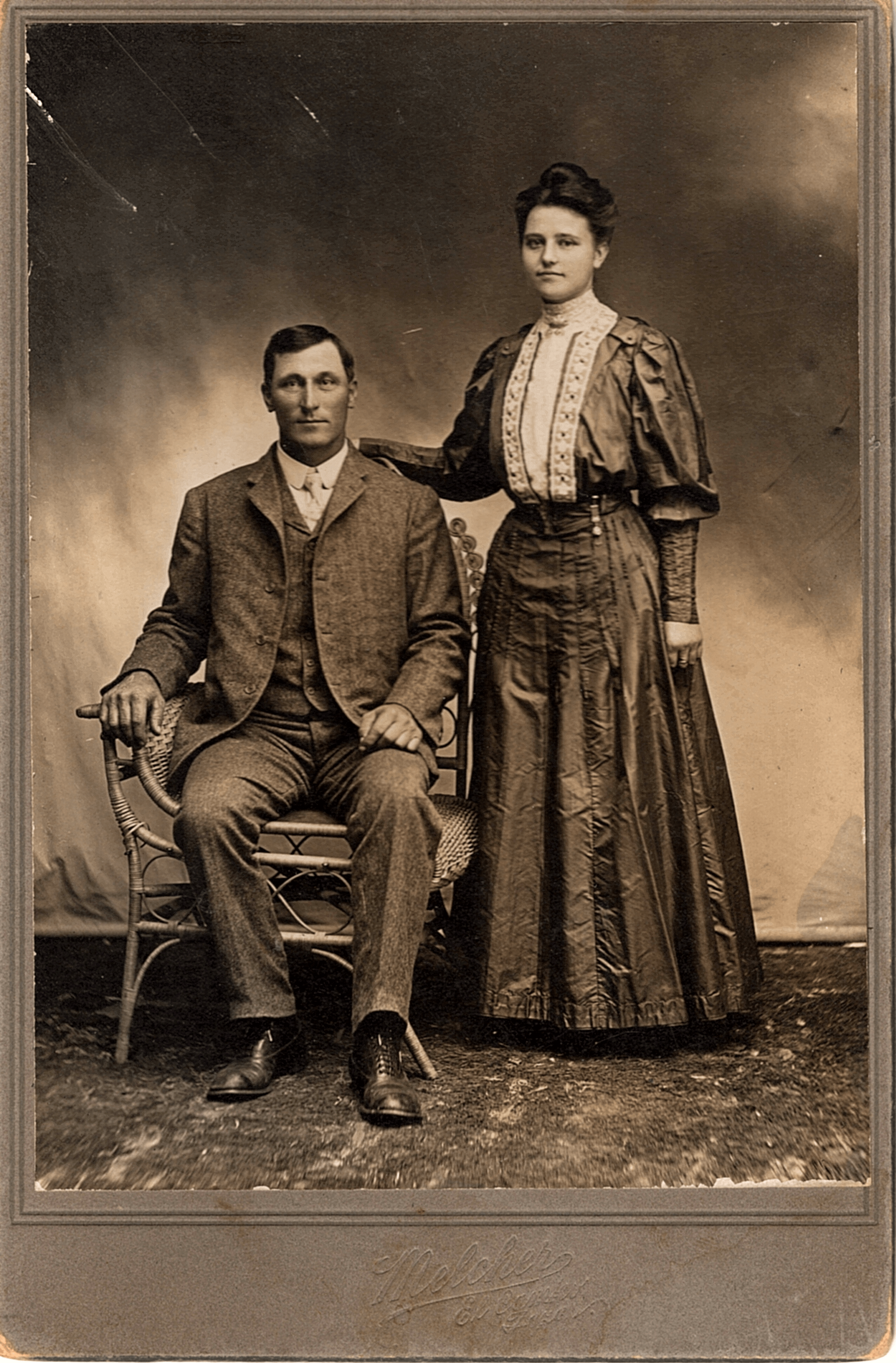
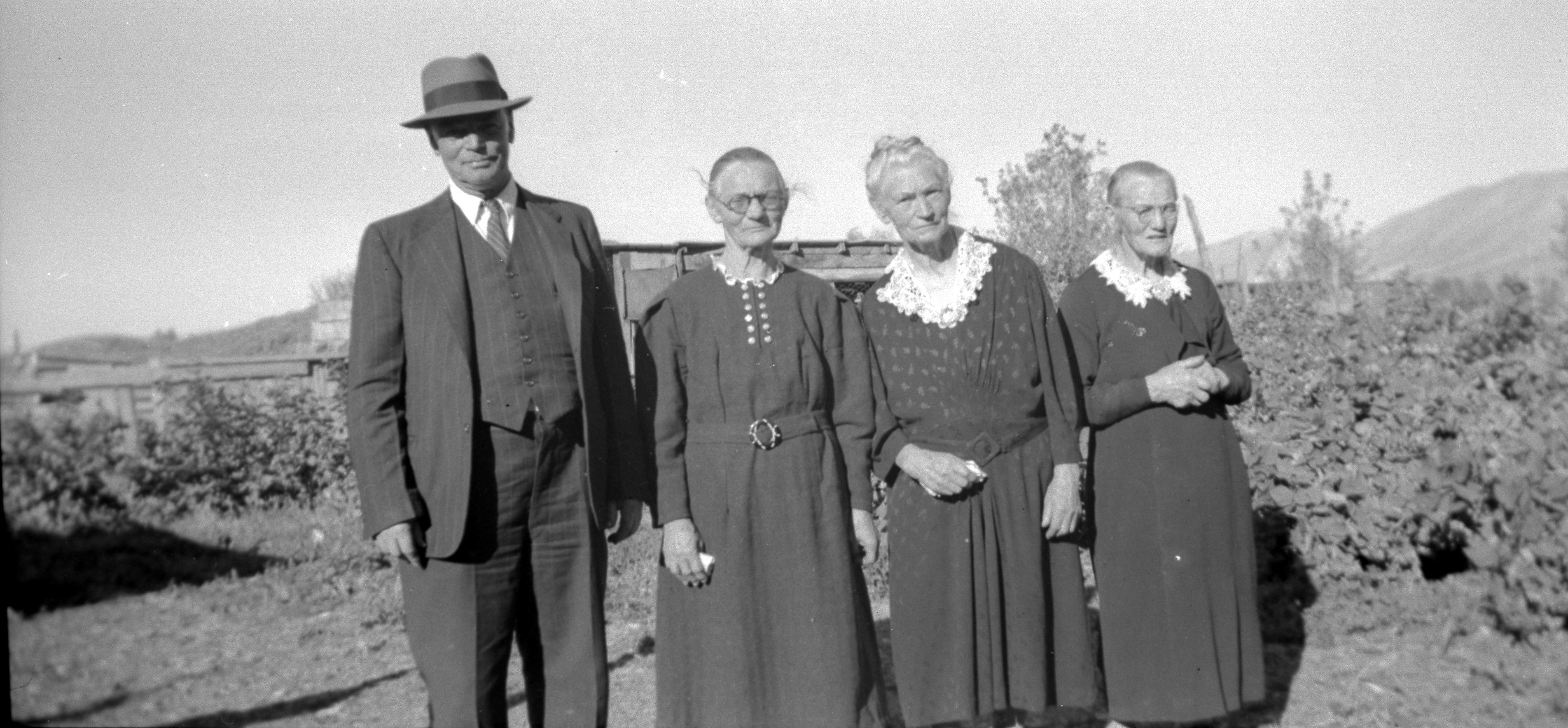
Hans, Christian, and Kirsten Petersen

“Family History – HANS PETERSEN

“Born: 11 February 1837 at Salgelse, Sjaelland, Denmark

“Died: 7 July 1923 at Salt Lake City, Salt Lake, Utah

“Hans Petersen was born on February 11, 1837 at Slagelse, Sjaelland, Denmark, the son of Peter Jensen and Karen Jakobsen. His name became Petersen instead of Jensen, due to the Scandinavian custom that the child of a man should take that man’s first name and add the suffix “sen” so the son of a man named Peter became Petersen. Incidentally, the Danish law put an end to this custom during the life of Hans Petersen, so that he became the first Petersen in the Petersen genealogy of our family.

“Hans Petersen’s father, Peter Jensen, operated a small farm and it was the small farm house here in which Hans was born. The family belonged to the Lutheran Church, the state religion of Denmark. Peter Jensen, father of Hans, was a very short man in stature. Hans grew taller than his father, but was himself only a little over five feet tall. Then Han’s children grew taller than he himself and his grandsons are nearly all tall men.

“He went to the regular country elementary schools in Denmark in his youth and then worked on this father’s farm until he was 21 years of age, when he had to serve in the army according to the custom of the country. He was summoned to Copenhagen for training and it was there that he met Kirsten Jeppesen, who later became his wife. While still in his first year of army training, he married Kirsten. That was while he was still 21 years old. Incidentally, he was gray headed at that time, having gone gray early. As a boy his hair was black.

“Following his release from active army service, he and his wife went to the little tow of Lindeborg, Denmark, and there started burning charcoal for a living. After he had been married several years, and had three little children, a war broke out between Denmark and Germany, and since he was still a member of the reserve he was called into active service to fight Germany. Being a small man he was put into the front lines with all of the other small men, according to the custom. When his company was sent to the front he prayed to God that he would not have to shoot a man. When the battled started and he began to fire his gun, he noticed that it had jambed and would not fire. Then almost immediately he was shot through one side and fell, was taken with the other wounded soldiers, placed on a large lumber wagon with no springs (the only ambulance available) and taken to an old barn behind the lines which had been converted into a field hospital. He had only been there about ten minutes when German shells set fire to this improvised hospital and the doctors had to move all of the wounded 20 miles further black. They were again loaded on the lumber wagons and had to suffer the tortures of bad roads and the crude wagons during the journey.

“When the second hospital was reached and his wounds were examined by the doctors it was decided that an immediate operation was necessary to save his life. There was no anaesthetic of any kind and the patient just had to life and suffer during the operation. He afterward said that making the incision did not cause so much pain but while they were cleansing the wound and closing it, he chewed much of the sheet covering him into small bits the pain was so intensen. After he recovered, he was sent back to Copenhagen to recuperate and there he and the other wounded soldiers were highly feted by the populace.

“It was almost six months before he was released from the Army and permitted to return home. During most of this time, his wife knew nothing of his trouble but shortly before his return home, one of the family friends informed her that Hans had been killed in the war. It was a most joyous meeting when he returned home.

“In Lindeborg, where he armed and burned charcoal, he rented a home from a man named Sorensen, whose father was a Mormon elder laboring in that area. He had emigrated to America, and had been sent back to his native land as a missionary. The father’s name was Soren Christophersen. He had sought to hold a cottage meeting in his son’s home but was refused, although the son did permit his father to live at the home. While Elder Christophersen told Hans Petersen of his inability to find a place in which to hold a cottage meeting, Hans invited him to his own home, which was rented from around the area inviting people to the meeting.

“A large crowd gathered for the meeting, but in mob formation. They threatened to tar and feather Elder Christophersen. Hans nailed the front door and stood guard at the back door with a large club in his hand. He invited any of the mobbers to entered if they dared but none came. Instead, they remained outside shouting and hammering upon the doors and windows, saying they would get the Elder when he came out of the meeting. Hans told them that the missionary would remain in the house until the mob left if he had to remain all night. The mob did not leave until 2:00 a.m., and then Hans, armed with his club, accompanied the Elder to the Sorensen home where he was to spend the night. This affair started the Hans Petersen family to investigate Mormonism and was followed by subsequent cottage meetings. After much study and prayer, Hans and his wife decided to join the Church. His wife was especially well read in the Bible. The two were baptized in the middle of the night in a large hole which had been dug into the ground by farmers seeking rich soil to cover their land with. These holes filled with water, like wells, and it was in this water they were baptized by the Elder.

“Han’s wife became quite a preacher of Mormonism. Hans himself became president of the local branch and did much preaching although his wife did the scriptural speaking. They both gave freely of their time and means to the Church and often financially assisted the elders who traveled without purse or scrip. In those days they had to travel miles to attend each meeting because the area was sparsely settled.

“When the family decided to come to Utah to be with the Saints, transportation became a serious problem. The entire family could not come together so it was decided that the eldest daughter, Annie, should emmigrate first. She went to Arizona first, to the home of some other earlier emmigrants. Two years later the next sister, Minnie, went direct to Salt Lake City, and two years later again, Emma, the third daughter came to Salt Lake City. One year later the girls put their funds together for their sister Sophia to come. A little later Hans, his wife, and their only living son, Christian, came together, going first to Arizona to the home of George Hansen Newman. This man had taken the name of Newman after his arrival in America. The Arizona heat was too severe for the Petersens so they went by wagon team up through St. George to Salt Lake City where they made their home, first at 475 West Sixth South Street, in the old Fifth Ward and later moving to a house on Genesee Street, between Seventh and Eighth West, in what became the 26th Ward after the Fifth Ward was divided.

“Hans did labor work for a living, helping in the beautification of Liberty Park and in the construction of several canal systems. His wife died at the Genessee Street home on 20 November 1908, and was buried in the Salt Lake City Cemetery. Hans lived alone most of the time after this and he died in Salt Lake City 7 July 1923, and was buried at the side of his wife.

Hans Petersen

Logan Temple Poem

Here is a poem that was in the family history book of Golden Rulon Andra. It is with a number of other Andra, Wanner, and Nuffer histories. Thought I would share it too. I could not locate it anywhere else. I typed it as typed, no spelling or grammar corrections. I felt the spirit of the poem. I have a long family history with the Logan Utah Temple.

Logan Temple by Ingeborg S. Baird

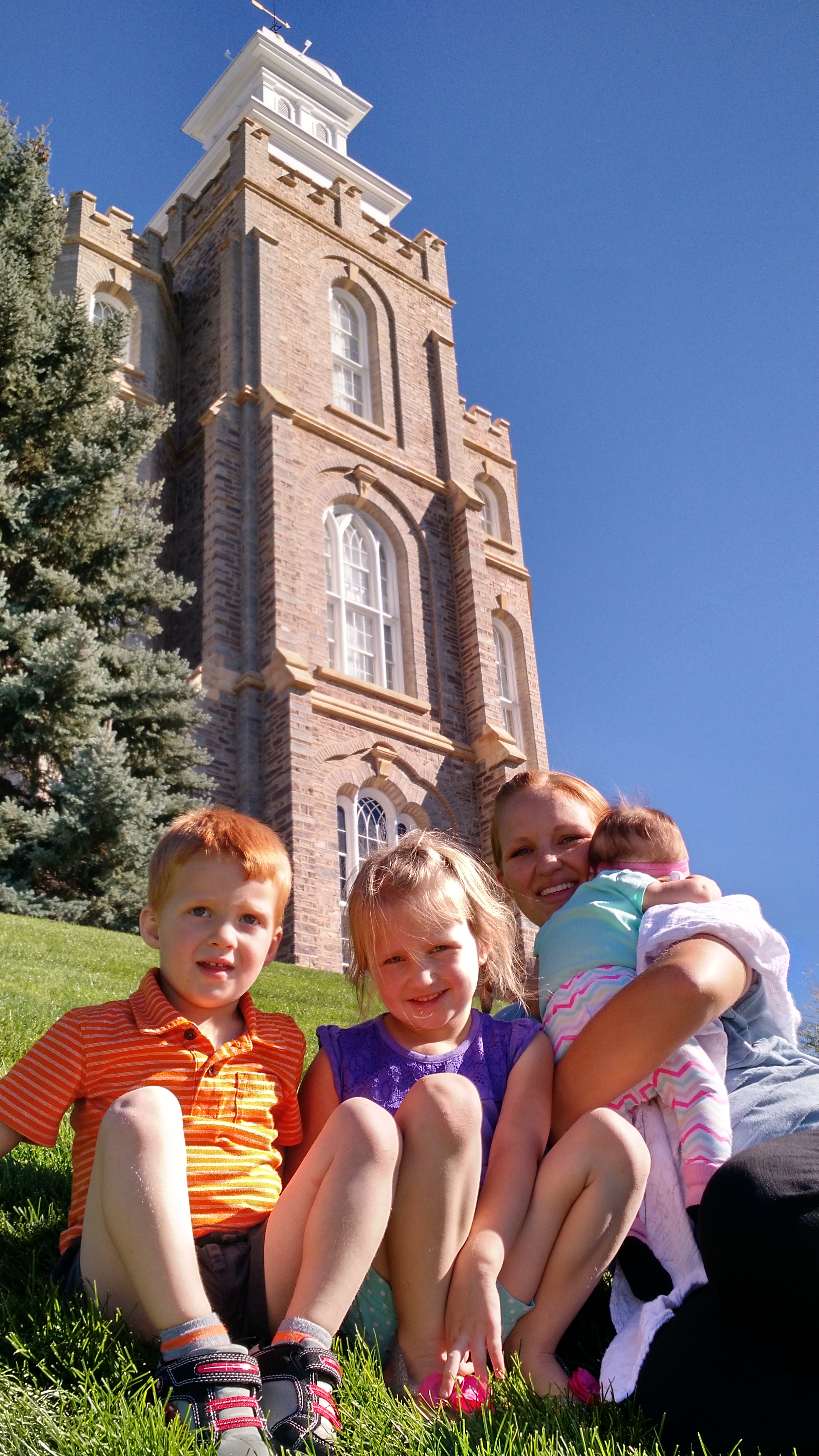
Hiram, Aliza, Amanda, and Lillian Ross in 2015

Theres a place I love to linger,

Theres a place I love to go.

Though I’m often from it hindred

Still I love it more and more.

Oh, the place is Logan Temple

Standing proudly on the hill

Surrounded by the sunny mountains,

FLowers beautify the path therein

And the spires they reach toward heaven,

Calling you and me within.

~

In the Temple are Gods Servants,

Men and women clad in white,

They are thoes among the chosen

Endowed with power from on high,

Night and morning they are laboring

Serving thoes who come and go,

With a smile they bid you welcome

When you enter the Temple door,

With a smile they do their service

Bidding you to come some more.

~

In the Temple are God’s Angels,

Spirts from another sphere.

Though we know we cannot see them.

Something whispers they are near.

Have you felt the joy of comfort?

Have you felt the unseen power?

When you bow your head in prayer,

Angels seem close by your side;

You and me they are insparing,

Reminding us our work is here.

~

Sister, Brother, do not tarry

On the roadside in the world,

What is in the world of pleasure?

All the pleasure will decay.

There are many souls awaiting

They have waited years and years

They’re not dead, they are still living,

Living somewhere very near.

They are calling, urging pleading

Come to the Temple, come, come, come.

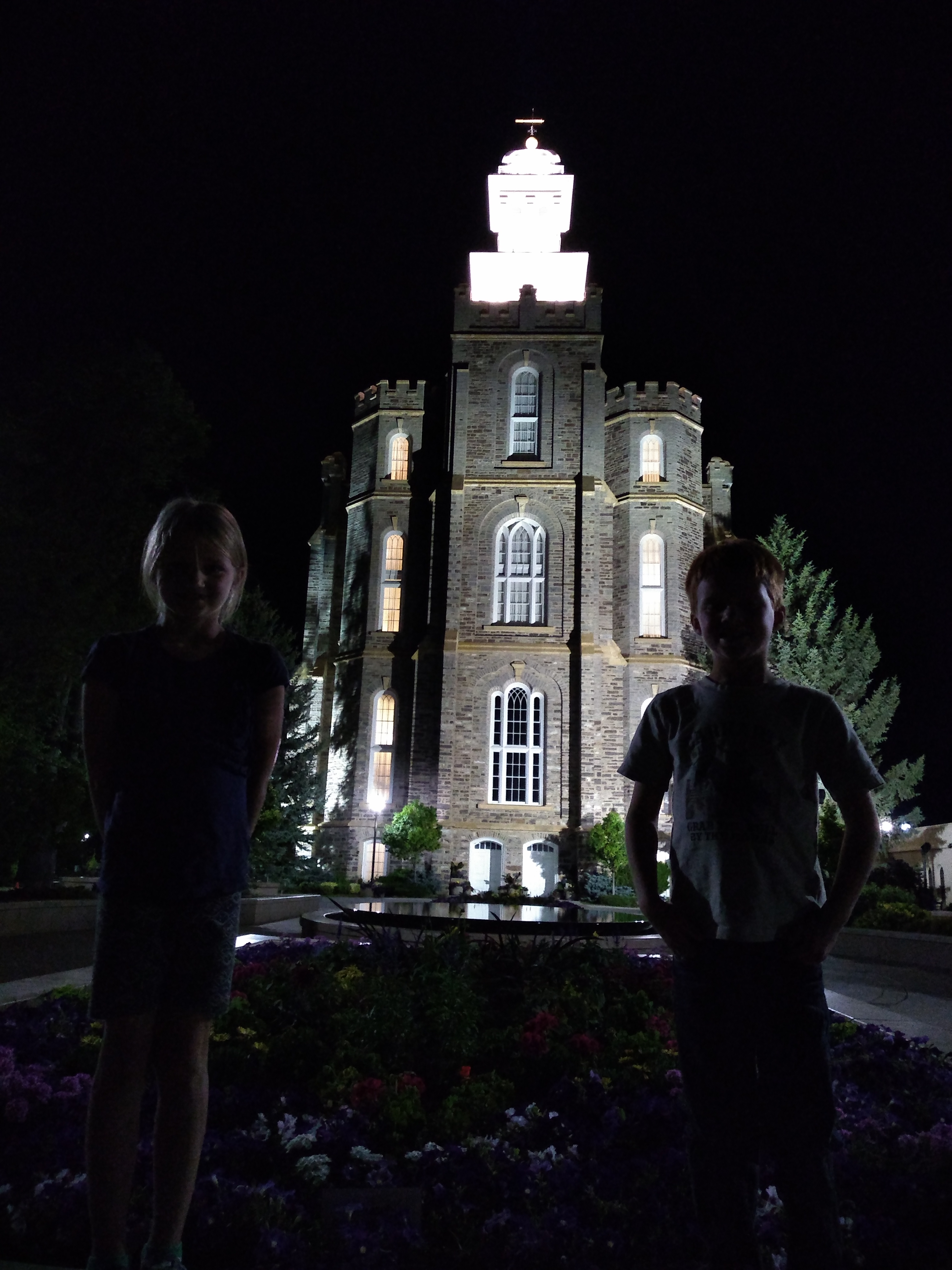
Aliza and Hiram Ross, Logan Temple, 2019

Biography of Anna Maria Schmid Wanner

Wanner Family about 1895

This biography of Anna Maria Schmid Wanner was in a family history book that belonged to Golden Rulon Andra and was given to me by his daughter. I did not have this biography and am happy to share it.

“Anna Maria Schmid Wanner, my grandmother, was born in [Holzgerlingen], [Württemberg], Germany on the 21 of January 1849. She was the daughter of Jacob Friedrich Schmid and Solome Notter. Her mother died when she was two years old. She then had a stepmother who was very cruel to her. They were very poor, and she would go to her grandmothers place and pick over potato peelings for the want of food. She ate the potato peelings for food.

“She started school at the age of six. For years the people in Germany couldn’t grow a thing, and the schools had to feed the children soup in school.

“She was a member of the Protestant church.

“Her father was a linen weaver, and grandmother would walk miles and miles at night through the dark woods to deliver the linen to different people. She had to carry it on her head. She often would be afraid, but she always prayed, and never was harmed.

“She married John George Wanner on the 6th of June 1870. From this union was born to them 5 sons and 5 daughters. They buried 2 sons in Germany. They were married only a short time when her husband called to go to war.

“It was the custom for the women to do the farm work, cutting the hay with the scythe and putting it up by hand.

“When the children needed shoes or dresses the shoemaker and the dressmaker would come to the home.

“Early in the year 1873, the family moved to Greenkraut [Grünkraut], [Württemberg], Germany.

“In 1891, she and her family were converted to the Morman or Latter-Day-Saint church. In her home she had a large room where she would accommodate the missionaries with food and beds, and help them learn the German language.

“In May 1893, she with her husband and family of seven children left Germany to come to America. They arrived at Franklin County [then Oneida County], Idaho on Sunday the 18th of June 1893.

“She left a brother and sister and father in Germany when she came to America. She had a brother named Carl and a sister, Louise Sophia. Grandmother was the youngest child. She was the only one of her fathers family that joined the Latter-Day-Saint church.

“They lived in Glendale, Whitney, and Preston, Idaho and in 1910 they moved to Logan, Utah. She and her husband did lots of Tempel work for their own dead ancestors as well as considerable donation work in the Tempel for other people.

“She obtained many names from Germany which was promised in her Patriarchal blessing, and the work was done for all of them before her death.

“She took sick in December, and died on the 9th of December 1929 of Pneumonia. Her funeral services were held in the 4th ward of Logan, Utah in which she was a member. She was buried by her husband in the cemetery at Logan, Utah.

“NOTE: Her oldest son preceded the family to America. He came over 1 and 1/2 years before the rest of the family. Thus — they only brought 7 children with them.

“This biography was copied from a letter received from Clara Bodrero, 495 W. 5th No., serveral years ago. She does not remember who sent it to her. Logan, Utah.

Wilburn Norwood Jonas 100th Birthday!

Norwood Jonas in the 1960s

I thought it would be appropriate to commemorate the 100th birthday of my Grandpa, Wilburn Norwood Jonas. He went by Norwood his whole life, or Nor to those closest.

Grandpa was born 15 May 1924 in Lewiston, Cache, Utah to Lillian Coley and Joseph Nelson Jonas.  The fourth child of eight to his parents.  He married Colleen Mary Andra 27 September 1946 in Elko, Elko, Nevada.  Three children were born to him and Colleen; Douglas in 1952, Sandra in 1954, and Jackie in 1960.  He died 14 March 1975 in Burley, Cassia, Idaho and was buried 19 March 1975 in Richmond, Cache, Utah.

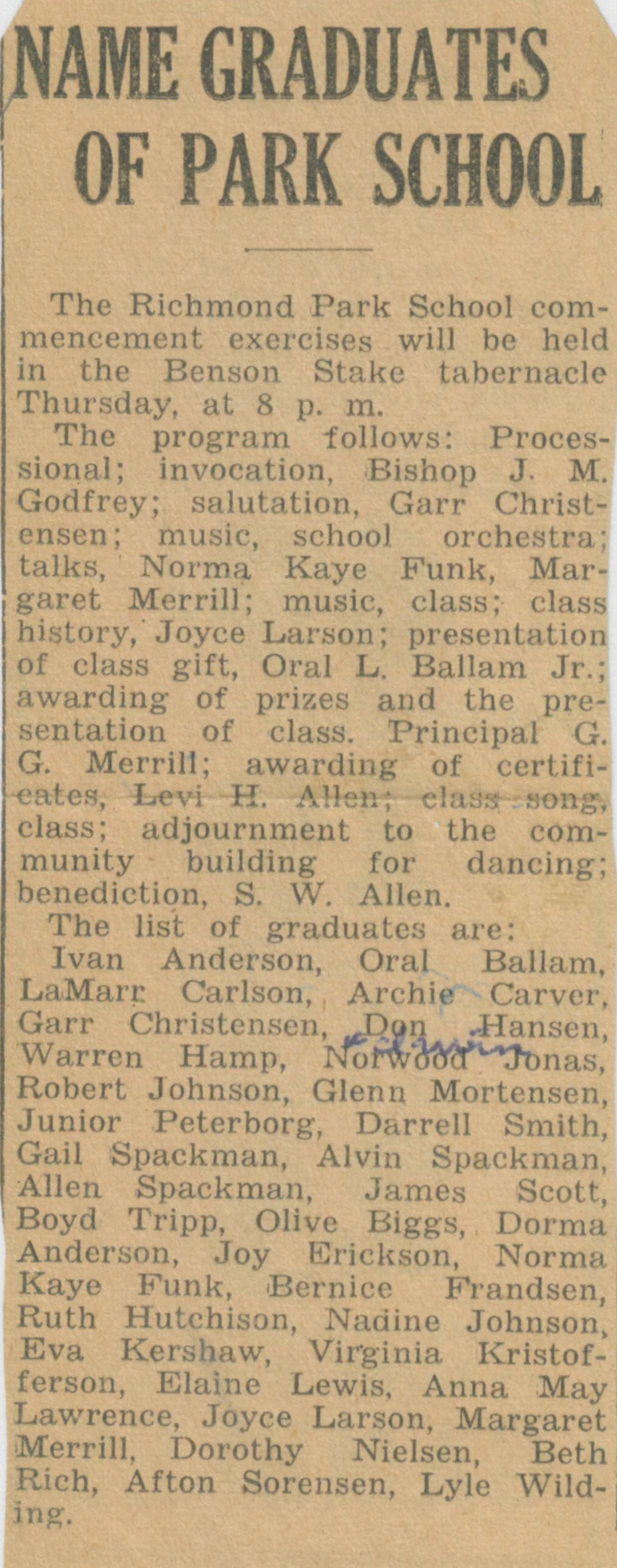
I was trying to think of a way to commemorate Grandpa. As linked above, I have written of him before. This week, I went through an old book I have that belong to Norwood’s dad, Joseph. Inside were some newspaper clippings and notes. One linked to Grandpa. I share it to show that research is ongoing and can be found anywhere! Just takes a little luck, heaven’s guidance, and you will stumble on them. I will wrote more on the book and other clippings inside later.

Park School was in Richmond. It was only razed in the past few years. Grandpa went to North Cache High School, although he did not graduate. This clipping also has Irwin written in to it. Which tells me he was missed or it is the wrong Jonas boy that was listed. Although, I do have a class picture of Irwin and Norwood together, so I am not clear if that tips it one way or the other.

“Name Graduates of Park School

“The Richmond Park School commencement exercises will be held in the Benson Stake tabernacle Thursday, at 8 p. m.

“The program follows: Processional; Invocation, Bishop J. M. Godfrey; salutation, Garr Christensen; music, school orchestra; talks, Norma Kaye Funk, Margaret Merrill; music, class; class history, Joyce Larson; presentation of class gift, Oral L. Ballam Jr.; awarding of prizes and the presentation of the class. Principal G. G. Merrill; awarding of certificates, Levi H. Allen; class song, class; adjournment to the community building for dancing; benediction, S. W. Allen.

“The list of graduates are: Ivan Anderson, Oral Ballam, LaMarr Carlson, Archie Carver, Garr Christensen, Don Hansen, Warren Hamp, [Irwin written in, referring to Irwin Jonas], Norwood Jonas, Robert Johnson, Glenn Mortensen, Junior Peterborg, Darrell Smith, Gail Spackman, Alvin Spackman, Allen Spackman, James Scott, Boyd Tripp, Olive Biggs, Dorma Anderson, Joy Erickson, Norma Kaye Funk, Bernice Frandsen, Ruth Hutchison, Nadine Johnson, Eva Kershaw, Virginia Kirstofferson, Elaine Lewis, Anna May Lawrence, Joyce Larson, Margaret Merrill, Dorothy Nielsen, Beth Rich, Afton Sorensen, Lyle Wilding.

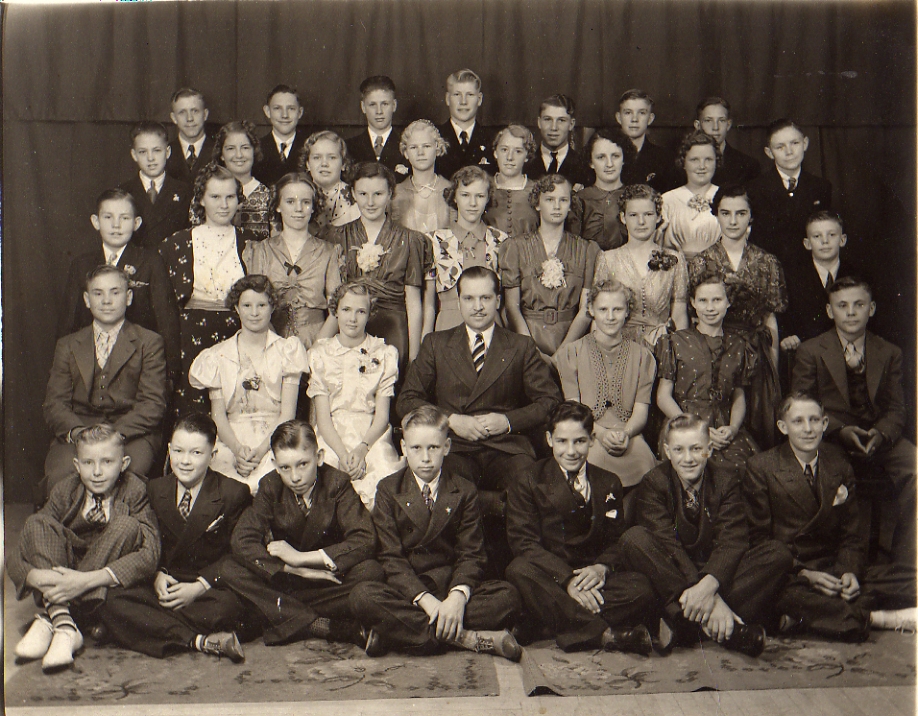
Here is the class picture with many of these same names. It also includes Irwin and Norwood. I have written about it previously.

Hiram to the Temple

Amanda, Aliza, Milo, Hiram, and Paul Ross at the Pocatello Idaho Temple

Hiram turns 12 this year. That means he is of sufficient age that in The Church of Jesus Christ of Latter-day Saints he can be conferred the Aaronic Priesthood, ordained a Deacon, and attend the holy temple to perform work on behalf of the deceased. The year that a youth turns 12, starting in January, they may enter the temple to do that work. We did the same thing with Aliza. 

We were originally slated to go 12 January but a winter storm closed the Twin Falls Temple. Our Ward, the Burley 8th Ward, also had a temple trip planned to the Twin Falls Temple on 13 January. Weather cancelled that trip as well. The temples are usually booked out a month or two in advance. Looking around, I found a little opening in the Pocatello Temple on 26 January, so I booked it. Twin Falls is about 45 to 50 minutes away, Pocatello is about 65 to 70 minutes away. 

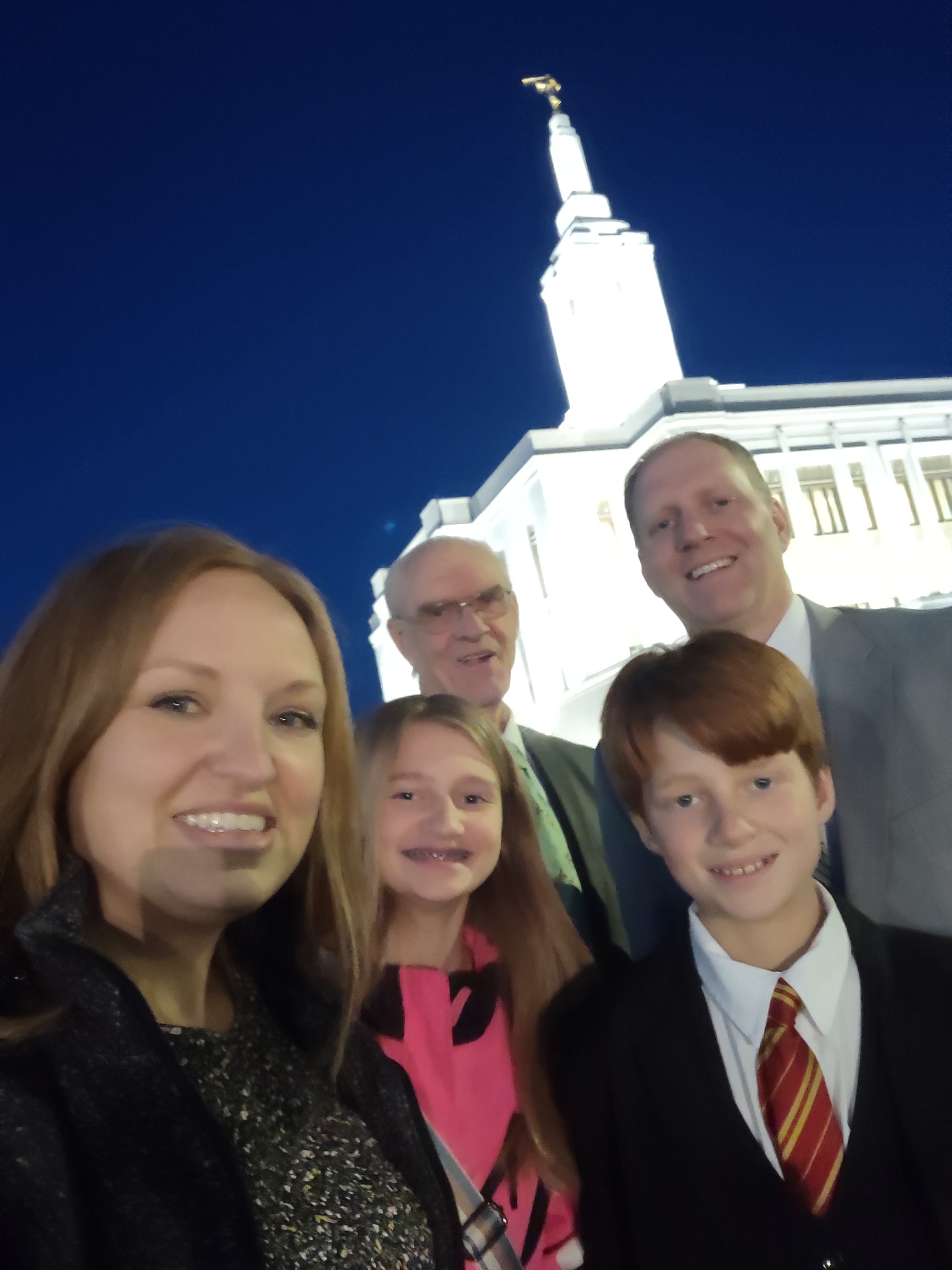
We loaded up Dad and trekked off to Pocatello. Lillian and James stayed with Aunt Lolane Andra in Chubbuck and we ran up to the temple. We snapped this picture on the way in. A bit fuzzy, but it preserves the date! Grandpa Milo and I were able to baptize and confirm Aliza and Hiram.

Afterward we hung out with Aunt Lolane for a bit and then squeezed in a trip to Denny’s before heading home. Unfortunately we forgot to get a picture with Lolane.

Franklin County Courthouse

Franklin County Idaho Courthouse

Until Idaho has their county land records online, from time to time I have to travel to do some title and land searches at various counties. On 25 August 2023, I made a stop at the Franklin County Courthouse located in Preston, Franklin, Idaho to do some lien searches.

The building is under renovation and I was able to see into the new District Courtroom from the stairs in the hallway. It will be a beautiful courtroom when it is completed.

My family has a personal connection to this courthouse. My Grandmother, Colleen Mary Andra, was born and raised in Preston. In fact, my Grandmother, born in 1928, attended the dedication with her parents of the Franklin County Courthouse in 1939.

Additional Colleen photos

Colleen Andra as a teenager

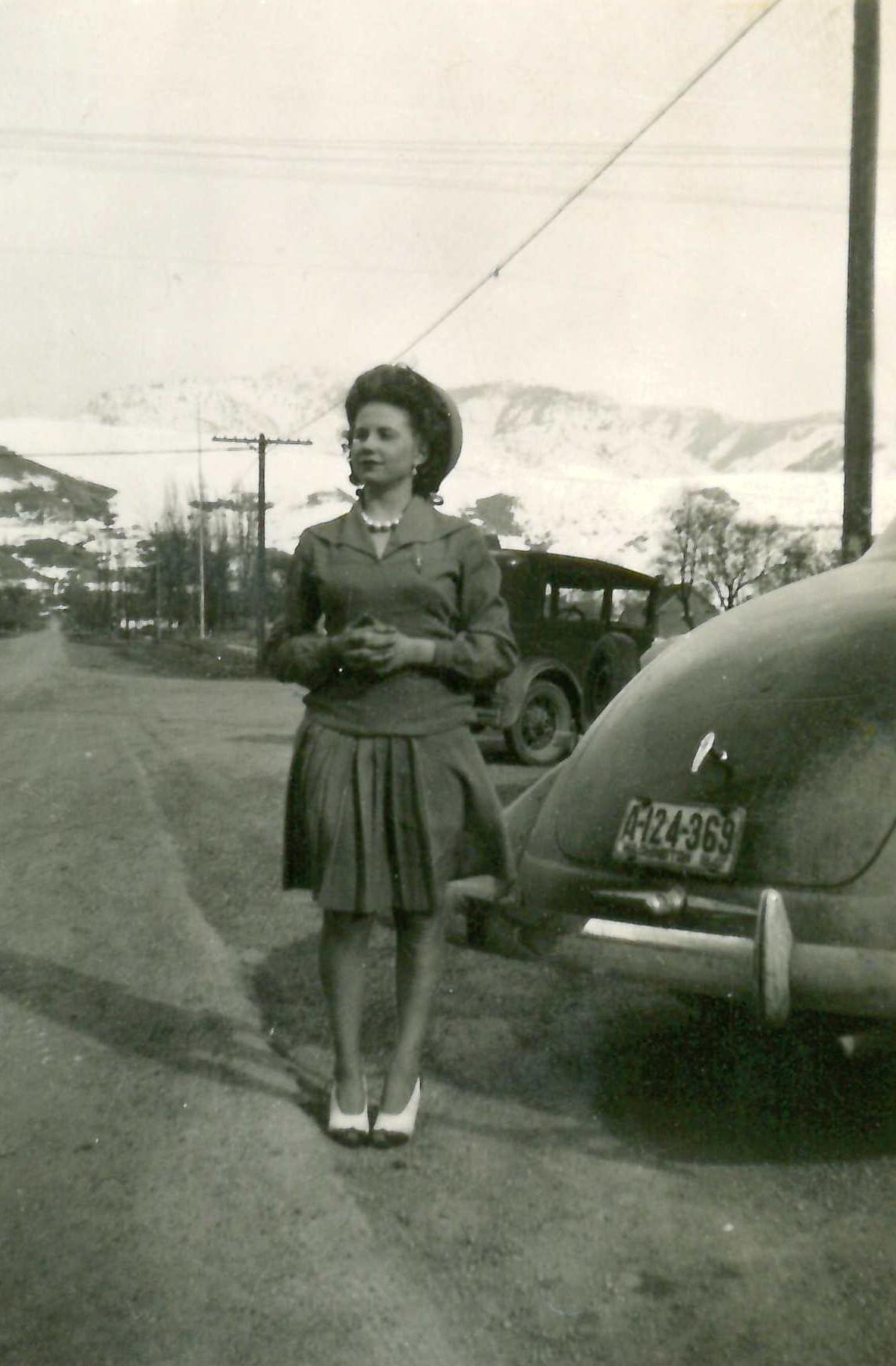
I have quite a treasure trove of photos of my grandmother, Colleen Mary Andra. But the earlier you go back in her life, the less there are. Born in 1928, photos were not inexpensive in the 1930s. In a family of 12 children, 10 who lived to adulthood, those photos would have to be selectively chosen on occasion and who they captured. I believe there are more photos, but whether I will ever have them is the question.

It was with some excitement that I found these photos. I believe these all depict Colleen as a teenager. The one above with a 1930s vehicle and an early 1940s car rear end. I couldn’t figure out what either car was with the limited view of the cars. I also tried to pin down the mountains, but they don’t seem to line up with Preston or Richmond. The mountains are too close for Preston or Whitney, so it must be farther south on the Utah side of Cache Valley.

Colleen Andra

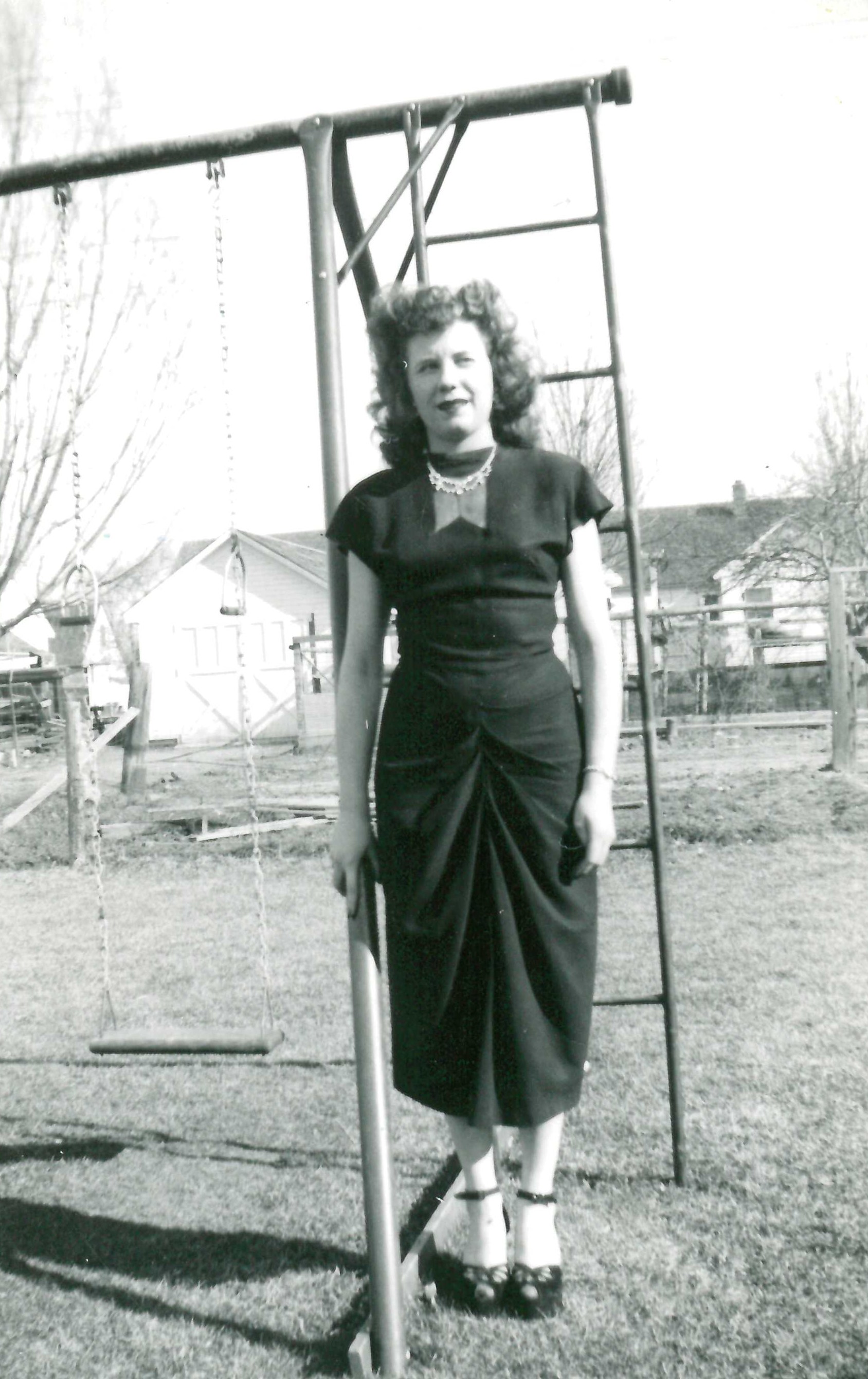
Here is another photo of Grandma. I don’t know the location of this photo either. I believe she is older in this photo.

This photo was also in the stack. The non-color and non-spotty version I shared earlier.

2023 Legislative Session

Brandon Woolf, McCord Larsen, Paul Ross with Idaho State Capitol

This year I was more involved in the legislative process than in the past. There were a few bills I was particularly interested and closely involved. I even helped write a few.

On 3 March 2023 I traveled to the Idaho State Capitol with my friend and Cassia County Prosecutor McCord Larsen to testify on a particular bill related to Public Defense. While there, we took the opportunity to make a number of other calls and visits in addition to the legislators/legislative. This photo comes from one of those visits.

Brandon Woolf is the Idaho State Controller. More importantly he is my friend. He is always out and about in visiting communities and friends. I have run into him in Preston, Soda Springs, Malad, Burley, Rupert, and Boise. Not only do I respect and honor this friend, our families have been friends for generations. Brandon is from Preston, where my Andra, Nuffer, and Wanner lines are all from. I have ran into Brandon at That Famous Preston Night Rodeo, the Rodeo Days Parade (also in Preston), and even the Independence Day Breakfast in Preston. It has been a small world and an oddity that I run into this guy as much as I do.

He took us through and shows us the new Transparent Idaho website. He is pretty excited for this website to continue to be rolled out and outfitted with all information for Idaho government. That is not just state, but every taxing district from cities, to counties; from cemetery districts to school districts.

The highlight was catching up between old friends (and Aggies). For the occasion, we snapped this photo from Brandon’s office. Somehow it seems enchanting. My beloved state, a phenomenal Idaho Constitutional Officer, friendship, and a beautiful Capitol. My experience with Idaho is that we are in good hands.

As for the legislation we were working on that day, well it was a disappointment. Representatives Weber and Cannon apparently were more interested in passing a bill than getting it right. We have tons of clean-up, which is always harder the second or third year than at the beginning. I have many, many reservations on the bill generally and don’t think it cannot be cleaned up but for a rewrite. But they didn’t care about that either. For a state that is independent, local control, and willing to do things different, this bill flew in the face of all that. It centralized power, removed local stakeholders, consolidated processes, ignored processes, and all at the same time wildly underfunded. I hope I am wrong, but I think it will get worse before it gets better.

Other bills were introduced too late and didn’t get too far. Others passed through unmarred and become clarifying law. The updates of bankruptcy related law all seem to have failed. But we will try again next year. Too bad it does not pay, it is hard doing all this on your own dime and sacrificing your gainful employment.

We were able to do lunch with our local Representative Clay Handy and visit with Representative Doug Pickett. Senator Kelly Anthon was kind enough to introduce us and welcome us from the Senate floor. We were unable otherwise to meet up with him.

Idaho is still small. I hope we do not lose the small state legislature, the gentleman’s creed, and the ability to do business. Please like Brandon keep hope in government when it is sometimes hard to keep hope in such a process.