If They Will But Serve the God of the Land

This is the year of the Semiquincentennial of the United States of America. I have wondered multiple times about this moment in time. I am fortunate to be alive to experience this year. I have heard others tell of their experiences with the Bicentennial and what a special occasion it was. I don’t recall reading much of the 1926, 1876, or 1826 celebrations. Although I know there were some in 1826, as there are references to them especially trying to get Thomas Jefferson and John Adams to attend events for that occasion.
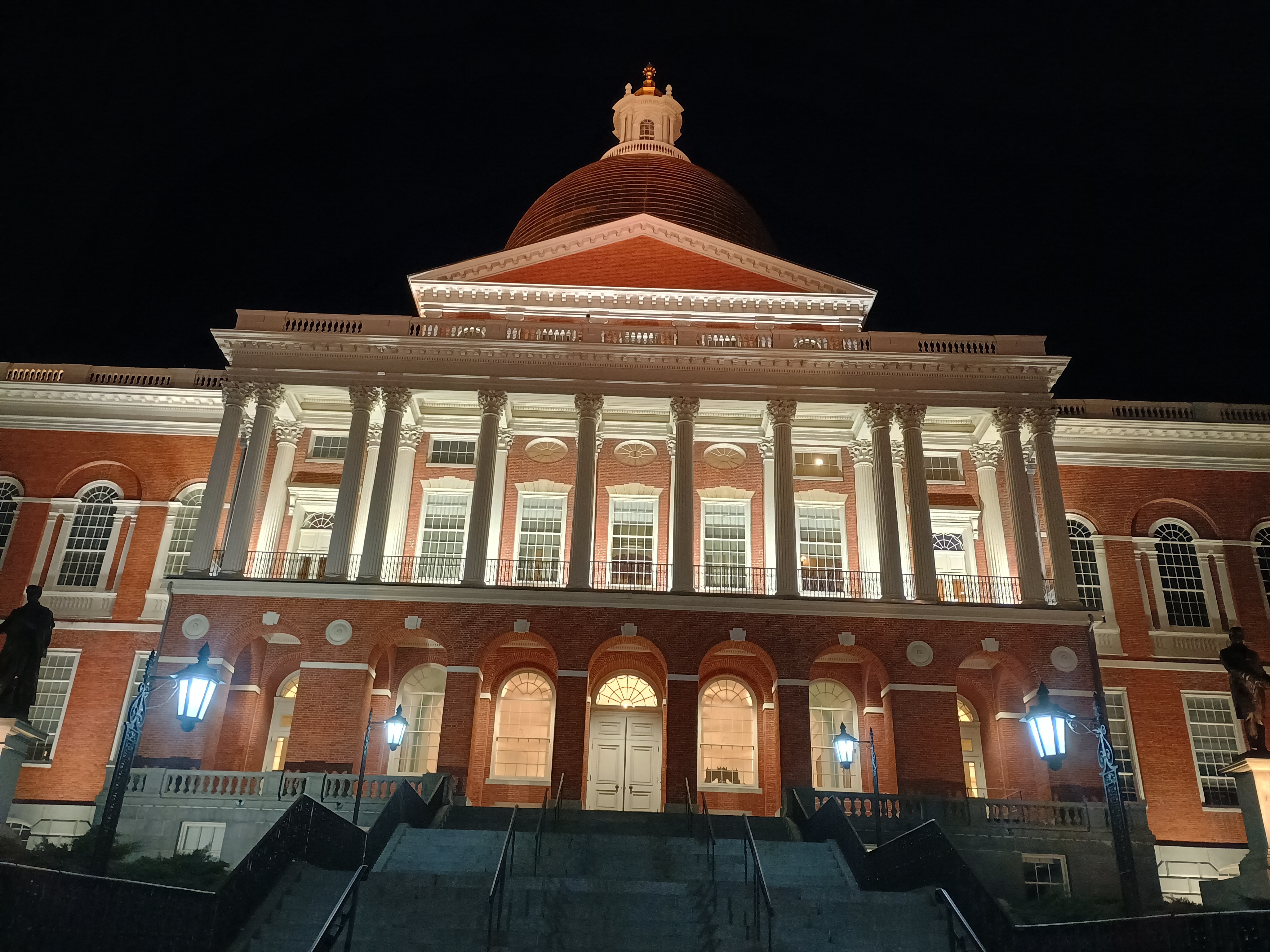
Massachusetts State House – April 2026

From all I have read and reviewed for this year, I have a profound sense of achievement and pride in how these things have come to be and how we mostly still are as we should be. I feel that much since Independence has also been inspired. Earlier this year, I was fortunate to go to Boston. For the Semiquincentennial, I was excited. In the evenings after classes, I would walk all over Boston, with friends, to see the sights.

It is with that, I share this address from the April 1976 General Conference. This was given by N. Eldon Tanner for the Bicentennial. What he spoke of on that date seems as timeless as it fully applies even today. He took his title from the Book of Ether, given to the Jaredites as they first reached this continent:

“Behold, this is a choice land, and whatsoever nation shall possess it shall be free from bondage, and from captivity, and from all other nations under heaven, if they will but serve the God of the land, who is Jesus Christ.” (Ether 2:12)

“This being the first general conference in the bicentennial year of the United States of America, I have been doing much pondering and contemplating of this event as it relates to the gospel and the great plan of life and salvation. We are all reading and hearing much concerning the events connected with the founding of this country, and with the modern devices available to us today, the news media reach throughout the world, and we are all aware of our interrelationship with one another’s countries.

“We would expect every man to be loyal to his native land—the land in which he was born, the land in which he lives, works, and rears his family. I think of the words of Sir Walter Scott in “The Lay of the Last Minstrel”:

“Breathes there the man, with soul so dead,

“Who never to himself hath said,

“This is my own, my native land!

“Whose heart hath ne’er within him burn’d

“As home his footsteps he hath turn’d

“From wandering on a foreign strand!
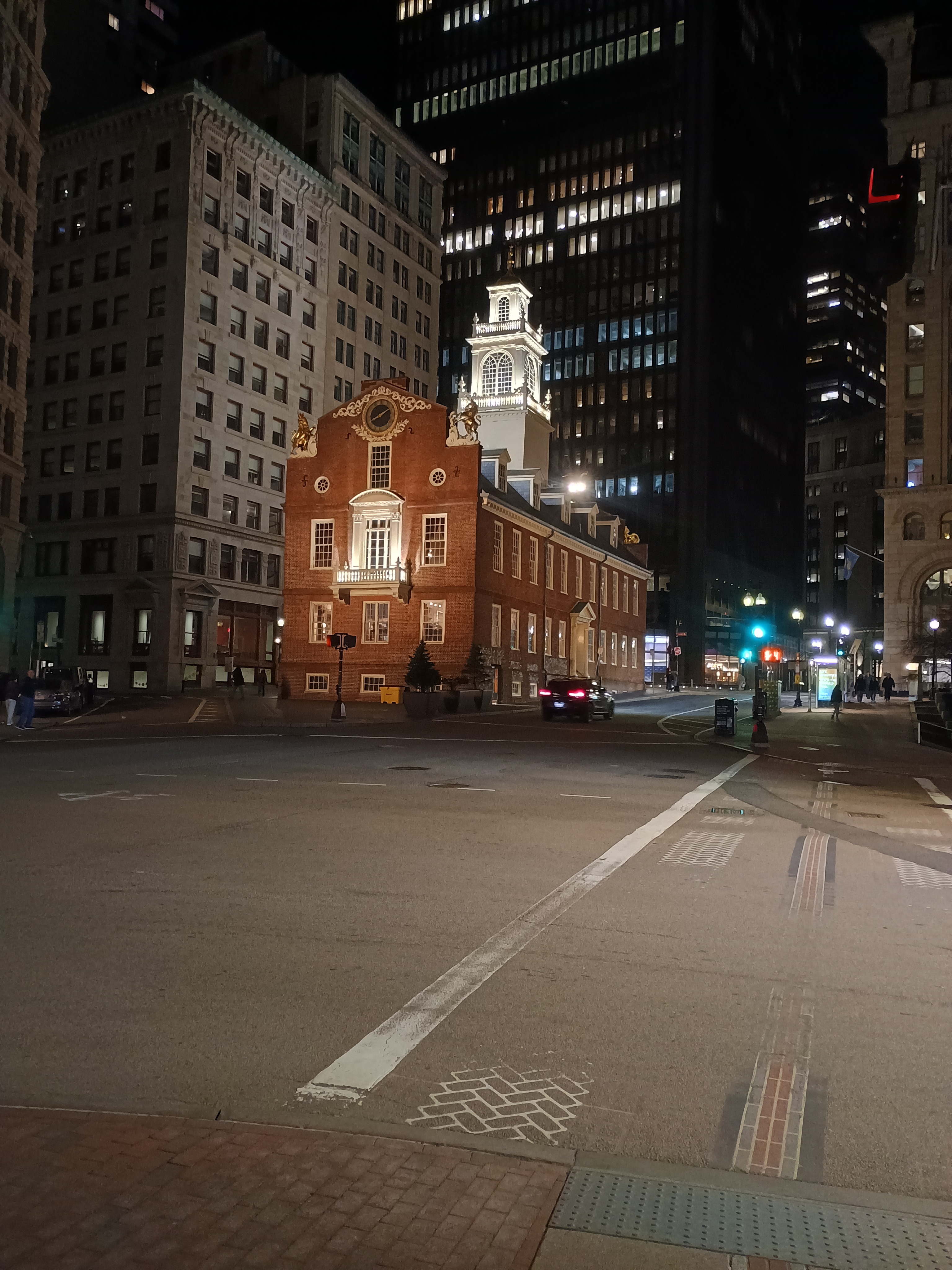
Old State House – Boston – April 2026

“During the last few weeks I, with President Kimball and others of the official party, have had the privilege of attending area conferences in New Zealand, Australia, and the beautiful islands of the South Seas. New Zealand claims to be a choice land and favored by the Lord, and the night before we left Tahiti, one of the Brethren said, “Well, tomorrow we will be driven out of the Garden of Eden.”

“We were most favorably impressed by the beauties of the countries wherever we went. Sister Tanner said, “We surely live in a beautiful world.” Yes, all countries are greatly blessed by the Lord, and each is uniquely different in its beauties, its people, customs, and traditions.

“Today, however, I should like to confine my remarks to a discussion concerning the Western Hemisphere, and particularly to the United States of America, and to point out the destiny of America in the Lord’s eternal plan. The discovery of the Americas was not an accident. The event had been foreordained in the eternal councils. The prophets of old had it in view. Jacob foresaw it when he blessed his son Joseph, calling him “a fruitful bough by a well, whose branches run over the wall … unto the utmost bound of the everlasting hills.” (Gen 49:22, 26.)

“Moses too made promises to the tribe of Joseph, whose land, America, was to be precious for the things of heaven and of earth, and who would “push the people together to the ends of the earth.” (See Deut 33:13-17.) These are just some of the biblical prophecies, and we have the Book of Mormon record which tells of the Jaredites who were the first to come to America. They came at the time of the confusion of languages during the building of the tower of Babel.

“Just as Noah was directed, these people too were instructed to build ships to carry them on the waters. When all was in readiness, they boarded their vessels and “set forth into the sea, commending themselves unto the Lord their God.” (Ether 6:4.)

“The account states, “And when they had set their feet upon the shores of the promised land they bowed themselves down upon the face of the land, and did humble themselves before the Lord, and did shed tears of joy before the Lord, because of the multitude of his tender mercies over them.” (Ether 6:12.)

“Then, six hundred years before the birth of Christ, a prophet by the name of Lehi, who had been crying repentance unto the inhabitants of Jerusalem, was commanded by the Lord to depart with his family into the wilderness. Because of the things which he had testified concerning the wickedness of the people and the pending destruction of Jerusalem, he was mocked and scorned, and the people sought to take his life. In obedience to the Lord’s instructions, he departed with his family and others, and after a period in the wilderness, they too were instructed to build a ship and sail for the promised land. We read, “And it came to pass that after we had sailed for the space of many days we did arrive at the promised land; and we went forth upon the land, and did pitch our tents; and we did call it the promised land.” (1 Ne. 18:23.)

“While in the wilderness Nephi, the son of Lehi, was permitted to see in vision the things that would transpire concerning the destiny of America—the promised land. He said, “And I looked and beheld a man among the Gentiles, who was separated from the seed of my brethren by the many waters; and I beheld the Spirit of God, that it came down and wrought upon the man; and he went forth upon the many waters, even unto the seed of my brethren, who were in the promised land.” (1 Ne. 13:12.)

“This, as we know, refers to Christopher Columbus, who was impelled by the Spirit of God to cross the ocean for the rediscovery of America, thus assisting in the furthering of God’s purposes.

“Columbus himself, in a letter to the Spanish hierarchy, wrote, “Our Lord unlocked my mind, sent me upon the sea, and gave me fire for the deed. Those who heard of my emprise called it foolish, mocked me, and laughed. But who can doubt but that the Holy Ghost inspired me?” (Quoted in Mark E. Petersen, The Great Prologue, Deseret Book Co., 1975, p. 26.)

“During the voyage, after weeks of sailing with no sign of land, mutiny raised its head. Finally, Columbus promised the captains of the Pinta and the Niña, both of whom wanted to turn back, that if no land was sighted in forty-eight hours, they would turn back. Then he went to his cabin and, in his words, “prayed mightily to the Lord.” On October 12, the very next day, they sighted land.

“Nephi saw in vision also the coming of the Pilgrims, who came to escape religious persecution. He foresaw the coming to America of peoples from many nations, their wars and contentions. As Nephi said, they did humble themselves before the Lord and “the power of God was with them, and also that the wrath of God was upon all those that were gathered together against them to battle.

““And I, Nephi, beheld that the Gentiles that had gone out of captivity were delivered by the power of God out of the hands of all other nations.” (1 Ne. 13:18-19.)

“Thus the American colonies attained their independence and set up the government of the United States, all under the divine intervention of God in preparing this land for its divine destiny.

“At this point we pay tribute to those great men who accepted and met the great challenge to establish a constitution for the government of this so-called new land. That this too was divinely inspired is attested by the word of the Lord when he said, “According to the laws and constitution of the people, which I have suffered to be established, and should be maintained for the rights and protection of all flesh, according to just and holy principles;

““That every man may act in doctrine and principle pertaining to futurity, according to the moral agency which I have given unto him, that every man may be accountable for his own sins in the day of judgment.

““Therefore, it is not right that any man should be in bondage one to another.

““And for this purpose have I established the Constitution of this land, by the hands of wise men whom I raised up unto this very purpose, and redeemed the land by the shedding of blood.” (D&C 101:77-80.)
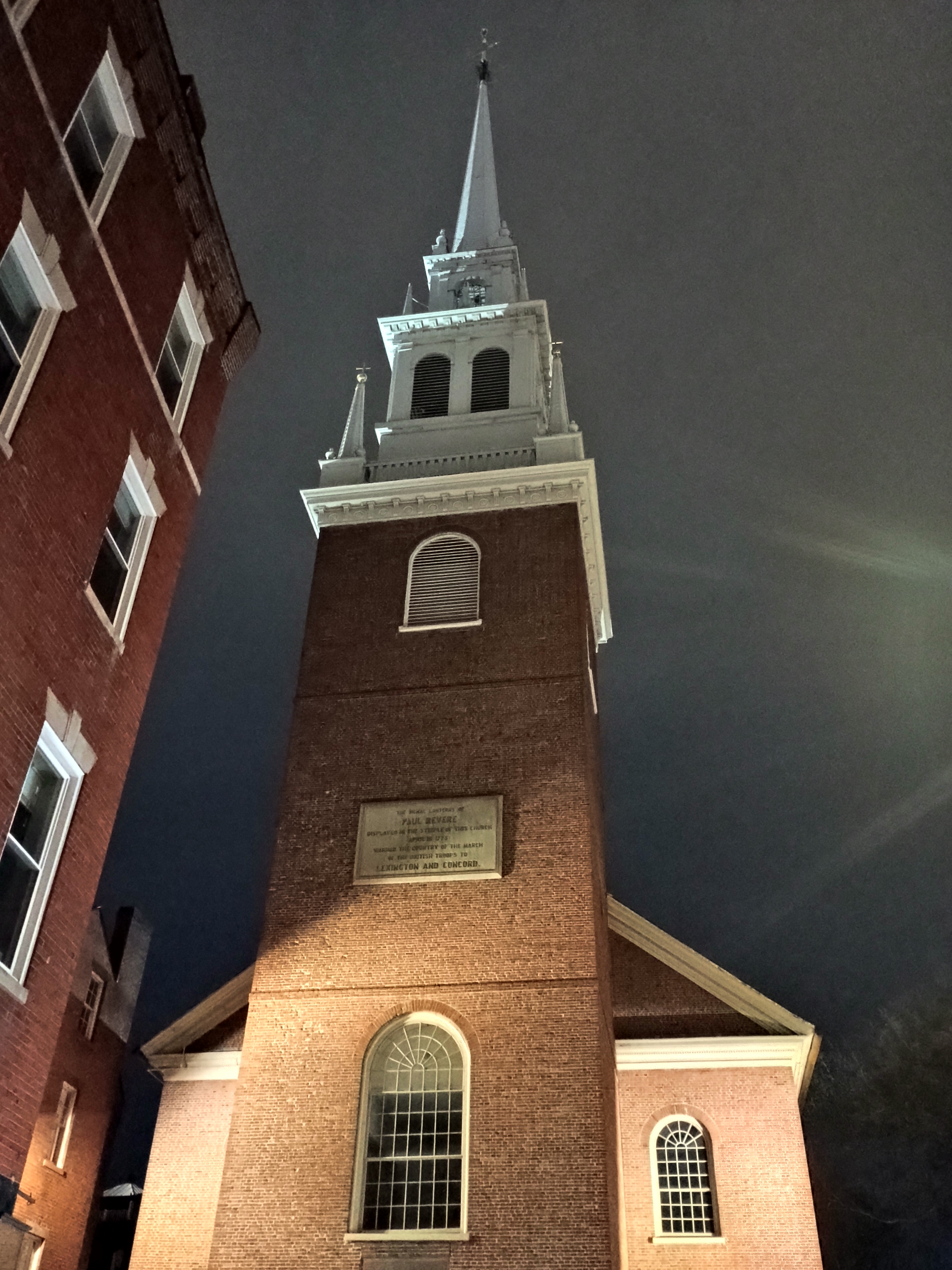
Old North Church – Boston – April 2026

“No constitution on earth has endured longer than this one. We seek, and usually find, the answers to today’s questions in this document of yesterday. It was and is a miracle. Both Washington and Madison referred to it as such. It is an inspired document written under the guidance of the Lord. James Madison, commonly called the father of the Constitution, recognized this inspiration and gave the credit to “the guardianship and guidance of the Almighty Being whose power regulates the destiny of nations, whose blessings have been so conspicuously dispensed to this rising republic.” (Petersen, Prologue, p. 95.)

“We believe that the Constitution was brought about by God to ensure a nation where liberty could abound and where his gospel could flourish. Joseph Smith said, “The Constitution of the United States is a glorious standard—it is founded in the wisdom of God—it is a heavenly banner.” (Petersen, Prologue, p. 75.)

“Among other things, the Constitution guaranteed the religious freedom that allowed the Reformation to continue and flourish. Many of these great reformers stated that their effort was to reassert the basic Christian teachings of the Bible—but they acknowledged that they possessed no authority to administer the ordinances of the Church, or to reestablish the original church of Jesus Christ. Luther said, “Christianity has ceased to exist among those who should have preserved it.”

“Roger Williams, founder of the Baptist Church in America, said, “There is no regularly constituted church on earth, nor any person qualified to administer any church ordinances.” (LeGrand Richards, A Marvelous Work and a Wonder, Deseret Book Co., 1973, p. 29.)

“We believe that both freedom and the continuing reformation that flourished here occurred in preparation for a restoration from heaven of the full gospel of Jesus Christ. That restoration began in the United States of America in the 1820s through the instrumentality of the Prophet Joseph Smith, who was chosen by the Lord and who, through personal manifestations from heavenly messengers, received pertinent records which contained the authentic record of early American peoples and God’s dealings with them. He received the priesthood and authority to reestablish the church of Jesus Christ in these latter days.
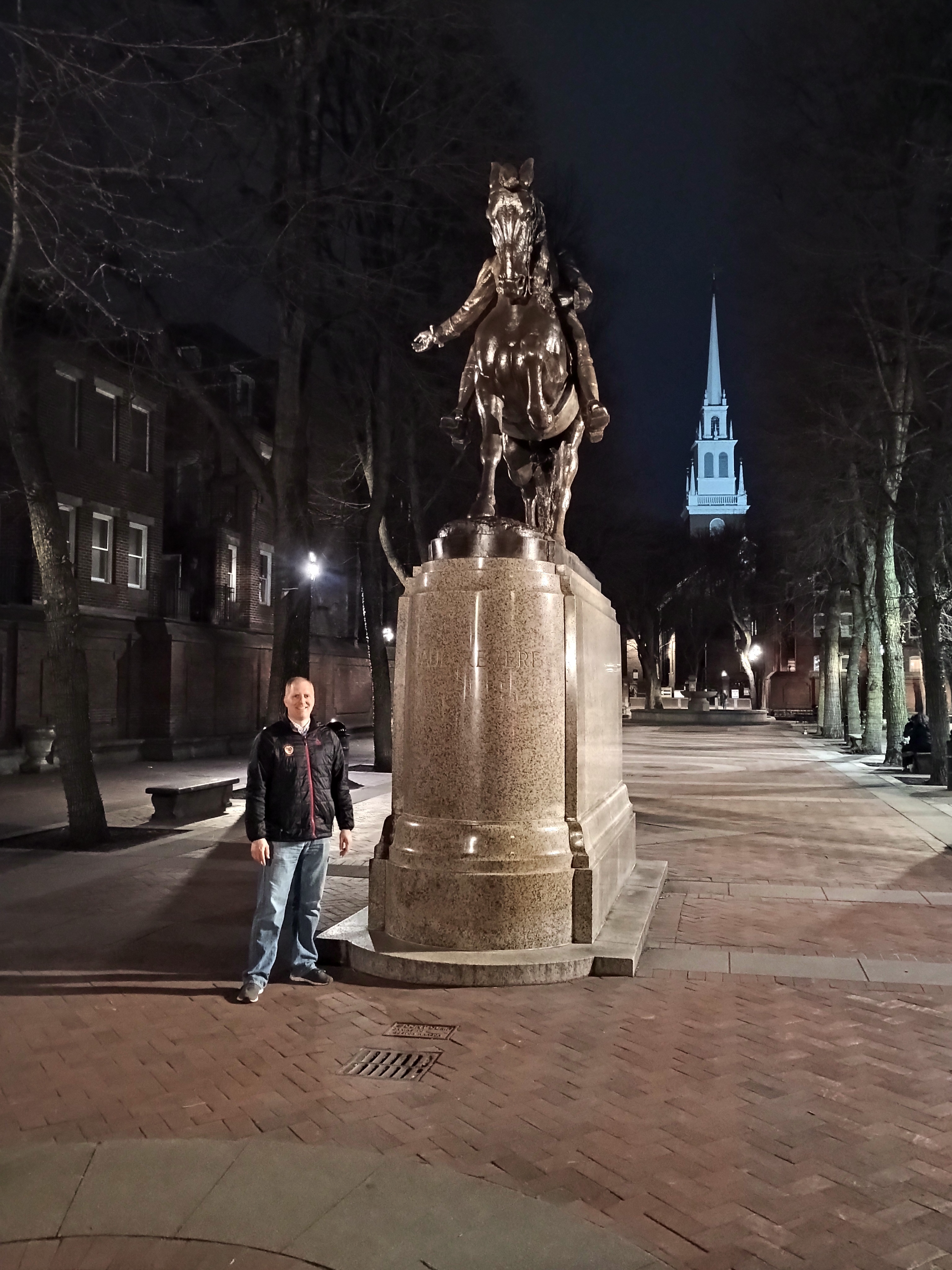
Paul Ross and Paul Revere statue – Boston – Old North Church in background – April 2026

“At the time of this restoration, God the Father and his Son Jesus Christ actually appeared to Joseph Smith, as they had appeared to leaders of previous dispensations. They announced to him that Christ’s church would be reestablished upon the earth, with a restoration of the same principles and ordinances and organization which existed in the primitive church, from which there had been an apostasy as documented by irrefutable evidence. This restoration was the greatest event in the history of mankind since the birth, death, and resurrection of our Savior, Jesus Christ.

“Significantly, the early Americans to whom we have referred were aware of the birth, death, and resurrection of the Savior because they saw the same signs and wonders as those in the Old World foretelling the coming of the Lord, his life, mission, and subsequent death and resurrection.

“Referring to these same early Americans, the Lord said, as recorded in the New Testament, “And other sheep I have, which are not of this fold: them also I must bring and they shall hear my voice; and there shall be one fold, and one shepherd.” (1 John 10:16.)

“In the Book of Mormon we have a beautiful account of Christ’s visit to these “other sheep” following his resurrection, when they heard his voice and recognized him as he showed the nail prints in his hands and feet. We know these were the “other sheep” because he said, “Ye are they of whom I said: Other sheep I have which are not of this fold.” (3 Ne. 15:21.) He taught them the gospel. He instituted the sacrament and ordained disciples. He gave authority to confer the Holy Ghost, healed the sick, and blessed the little children. He prayed unto the Father for them.

“We read, “The eye hath never seen, neither hath the ear heard, before, so great and marvelous things as we saw and heard Jesus speak unto the Father;

““… and no one can conceive of the joy which filled our souls at the time we heard him pray for us unto the Father.” (3 Ne. 17:16-17.)

“Now, what of America’s future? How can we best show our appreciation to God for these marvelous blessings of freedom, of a place where his true and everlasting gospel was restored, of the preparation and divine guidance in every event leading to that most significant event? We must remember what the Lord told the Jaredites when they were first brought to this land: “Behold, this is a choice land, and whatsoever nation shall possess it shall be free from bondage, and from captivity, and from all other nations under heaven, if they will but serve the God of the land, who is Jesus Christ, who hath been manifested by the things which we have written.” (Ether 2:12; italics added.)

“Many years ago in a volume entitled Beacon Lights of History, Dr. John Lord, referring to the discovery of America, said, after speaking of her great potential, “The world has witnessed many powerful empires which have passed away and left ‘not a track behind.’ What remains of the antediluvian world? … What remains of Nineveh, of Babylon, of Thebes, of Tyre, of Carthage—those great centers of wealth and power? What remains of Roman greatness even, except in laws and literature and renovated statues? … What is the simple story of all the ages?—industry, wealth, corruption, decay, and ruin. What conservative power has been strong enough to arrest the ruin of the nations of antiquity?

““Now if this is to be the destiny of America—an unbounded material growth, followed by corruption and ruin—then Columbus has simply extended the realm for men to try material experiments. Make New York a second Carthage, and Boston a second Athens, and Philadelphia a second Antioch, and Washington a second Rome, and we simply repeat the old experiments.

““But has America no higher destiny than to repeat the old experiments and improve upon them and become rich and powerful? Has she no higher and nobler mission? If America has a great mission to declare and to fulfil, she must put forth altogether new forces, and these not material. And these alone will save her and save the world. … The real glory of America is to be something entirely different from that of which the ancients boasted. And this is to be moral and spiritual—that which the ancients lacked.”

“We are all a part of America’s future. Our job is to learn and benefit from the past and to go forward in righteousness, keeping the commandments of God. In this connection the prophet Lehi said, “Wherefore, this land is consecrated unto him whom he shall bring. And if it so be that they shall serve him according to the commandments which he hath given, it shall be a land of liberty unto them; wherefore, they shall never be brought down into captivity; if so, it shall be because of iniquity; for if iniquity shall abound cursed shall be the land for their sakes, but unto the righteous it shall be blessed forever.” (2 Ne. 1:7.)

“As we pray daily to God for guidance, we should all make the same plea as George Washington did in his prayer for our country:

““Almighty God, who has given us this good land for our heritage, we humbly beseech Thee that we may always prove ourselves a people mindful of Thy favor and glad to do Thy will.

““Bless our land with honorable industry, sound learning and pure manners.

““Save us from violence, discord and confusion; from pride and arrogancy, and from every evil way.

““Defend our liberties, and fashion into one united people the multitudes brought out of many kindreds and tongues.

““Endue with the spirit of wisdom those whom in Thy name we entrust the authority of government, that there may be peace and justice at home, and that through obedience to Thy law, we may show forth Thy praise among the nations of the earth.

““In the time of prosperity, fill our hearts with thankfulness, and in the day of trouble, suffer not our trust in Thee to fail.

““All of which we ask through Jesus Christ, our Lord. Amen.”

“We encourage our people to be good, loyal, law-abiding citizens. “We believe in being subject to kings, presidents, rulers, and magistrates, in obeying, honoring, and sustaining the law.” (A of F 1:12.)
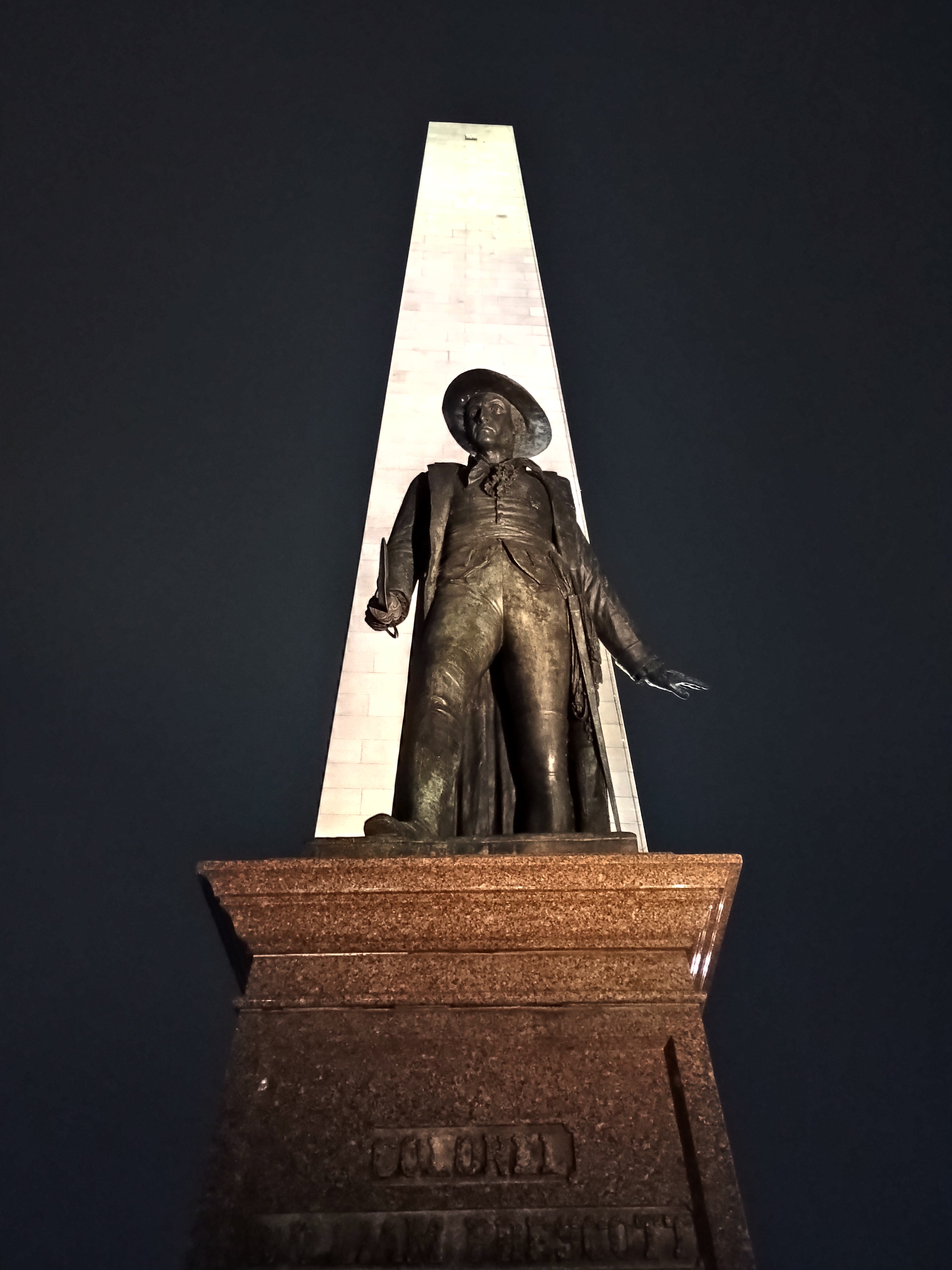
William Prescott statue – Bunker Hill Monument – April 2026

“Also, it is our duty to seek diligently for and support and uphold good, honest, honorable, and wise representatives to govern us. Let me reiterate the message left with the Saints nearly sixty years ago at the general conference in April 1917 when Elder Anthony W. Ivins, after discussing religious liberty and the Constitution, said, “I feel authorized to say, here this afternoon, that these liberties which have come to men, both religious and civil, have not been established by the Lord to be destroyed, but that they are here to remain until liberty shall prevail from the rivers to the ends of the earth, until God’s kingdom shall be established among men, and his will done upon earth as it is done in heaven. Until the universal Fatherhood of God, and brotherhood of man shall be recognized, and the kingdoms of this world become the kingdoms of Christ, who shall reign as Prince of Peace.” (Conference Reports, April 1917, pp. 54–55.)

“And I bear testimony that The Church of Jesus Christ of Latter-day Saints is the kingdom of God here upon the earth, with the Lord directing the work through our prophet, President Spencer W. Kimball. May I urge everyone everywhere to help bring to pass righteousness, in whatever country you may reside, by obedience to the laws and ordinances of the gospel. If you are active members of the Church you will know what they are. If you are not, may I invite you to avail yourselves of the opportunity to investigate and gain a knowledge and testimony for yourselves that the gospel in its fulness has been restored, with the authority to administer the ordinances thereof, and is here upon the earth.

“Only as we accept and live the teachings of the gospel can the destiny which God planned for America be realized and the world united in peace and brotherhood. That this may speedily come to pass I humbly pray in the name of Jesus Christ. Amen.
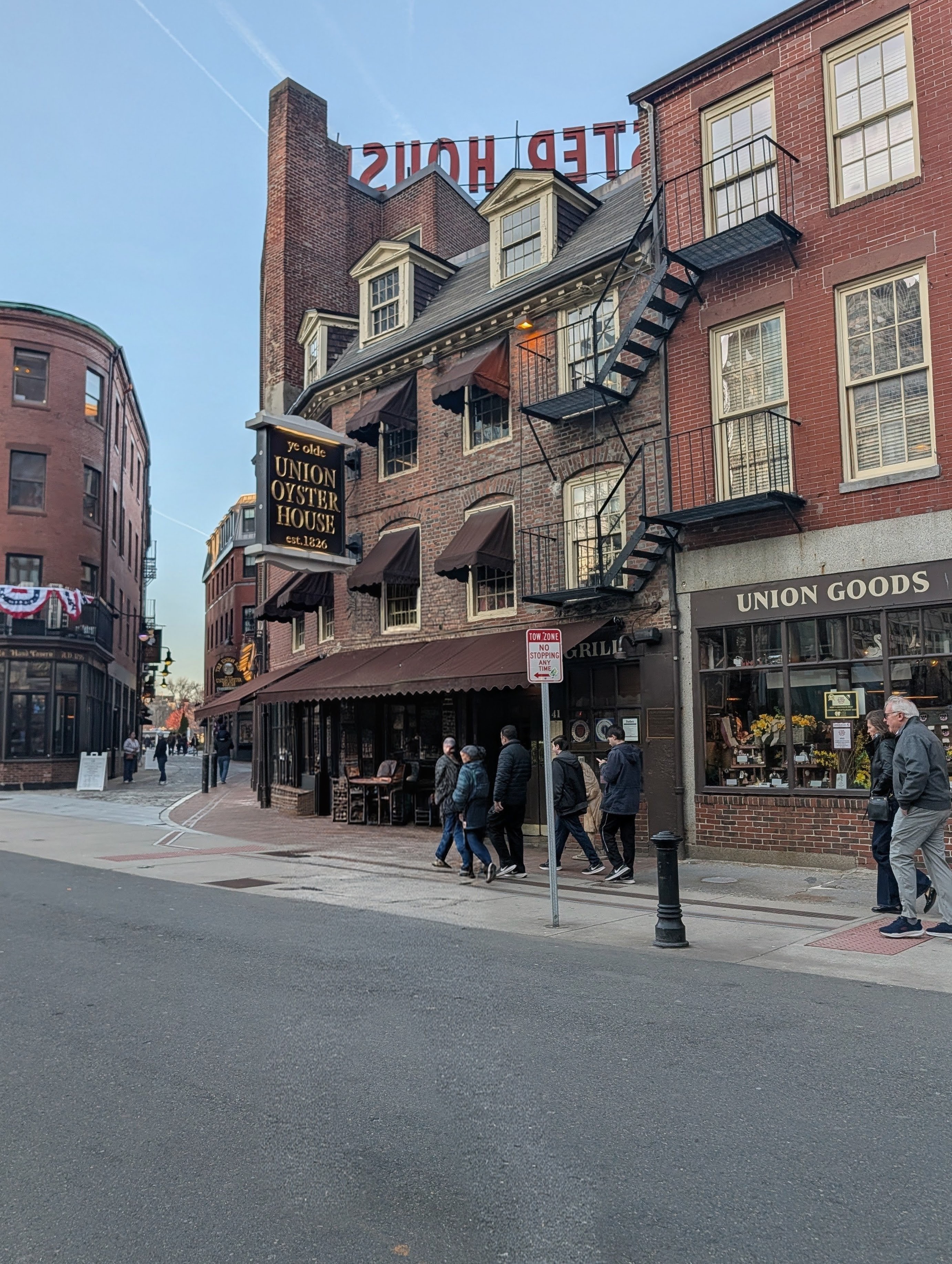

Union Oyster House – Boston – April 2026
Oysters at Union Oyster House – Boston – April 2026 – Holly Sutherland – Tecla Druffel

In re McGuire, Part I

Decision: In re Richard Michael McGuire and Dolores Sue McGuire, Case No. 12-41681-JDP (Bankr. D. Idaho, 4 Oct. 2013)
Judge: Honorable Jim D. Pappas, United States Bankruptcy Judge
Counsel for Debtors: Paul Ross, Idaho Bankruptcy Law, Paul, Idaho
Chapter 7 Trustee: Gary L. Rainsdon, Twin Falls, Idaho
Trustee’s Counsel: Brett R. Cahoon and Daniel C. Green, Racine, Olson, Nye, Budge & Bailey, Chtd., Pocatello, Idaho

Background

Richard and Dolores McGuire filed a Chapter 7 petition on 12 December 2012. Their schedules listed two vehicle deficiency debts: $24,265 to Chartway Federal Credit Union and $48,363 to Utah Central Credit Union, the latter being a division of Chartway. At the time of filing, the Debtors believed the collateral — a 2005 McKenzie Medallion trailer repossessed by Utah Central on 21 September 2012 — had long since been sold. In January 2013, having liquidated non-exempt assets of the estate (principally cash value from the Debtors’ life insurance policies), the Trustee filed a Notice of Assets directing creditors to file proofs of claim by 22 April 2013. The estate held approximately $13,951.

Utah Central filed its proof of claim on 3 June 2013 — forty-two days after the claims bar date — asserting a deficiency of $34,165.32 and attaching only an account printout to the filing. It was the only proof of claim filed in the case. When the Debtors received the claim documents, they discovered for the first time that Utah Central’s auction yard had sold the trailer on 27 December 2012 — eleven days after the Bankruptcy Noticing Center had mailed Utah Central and Chartway notice of the bankruptcy filing, and fifteen days after the automatic stay had taken effect.

The Debtors’ Objection

Debtors filed an objection to Utah Central’s proof of claim on 18 June 2013, raising three grounds for disallowance. First, the claim was tardily filed in violation of Federal Rule of Bankruptcy Procedure (“FRBP”) 3002(c), which stripped it of prima facie validity under FRBP 3001(f) and the analysis in In re Parrott Broadcasting Ltd. Partnership, 492 B.R. 35 (Bankr. D. Idaho 2013). Second, the claim lacked the written loan documents, security agreement, and UCC disposition notices required by FRBP 3001(c), further defeating any presumption of validity. Third, and most significantly, Utah Central had sold the collateral in violation of the automatic stay — an act that was void under In re Schwartz, 954 F.2d 569 (9th Cir. 1992) — and had done so without providing the Debtors with the notice of disposition required under Idaho Code § 28-9-611, rendering the sale commercially unreasonable and precluding any deficiency claim under Idaho Code § 28-9-626.

On that last point, Debtors relied on the presumption codified in Idaho Code § 28-9-626(c)–(d): where a secured creditor cannot establish that its disposition of collateral was commercially reasonable, the value of the collateral is presumed to equal the outstanding debt, eliminating the deficiency. In re Walter B. Scott & Sons, Inc., 436 B.R. 582 (Bankr. D. Idaho 2010). Because Utah Central’s sale was both void as a stay violation and deficient for lack of notice to the Debtors, the deficiency claim was unenforceable under § 502(b)(1) as a matter of applicable Idaho law. Debtors amended Schedules B, C, and F to reflect the claim as disputed and unliquidated in light of the post-petition sale.

The Trustee’s Response and the Standing Dispute

Utah Central filed no response to the Debtors’ objection. The Trustee, however, filed his own response on 25 June 2013, arguing that the claim should be allowed as a tardy general unsecured claim under § 726(a)(3) and that the Debtors were judicially estopped from contesting a debt they had sworn to in their schedules.

The Trustee also moved for a Rule 2004 examination of the Debtors, seeking testimony and documents to rehabilitate the claim. Debtors objected to both the Trustee’s response and the 2004 motion, filing a detailed Supplement on 22 August 2013 raising the Trustee’s lack of standing to defend a creditor’s proof of claim. At the 27 August 2013 hearing, Judge Pappas questioned the Trustee’s counsel directly from the bench: whether the Trustee had any legal authority to step into a creditor’s shoes and defend its proof of claim over the Debtors’ objection when the creditor itself had declined to respond. Unable to identify a statute or case squarely on point, Trustee’s counsel conceded that if other creditors were in the case, the Trustee would likely not be taking the same position. The Court ordered supplemental briefing on the standing issue.

Before briefing was complete, the Trustee negotiated a stipulation with Utah Central by which Utah Central agreed to turn over the $10,100 in post-petition sale proceeds to the Trustee in exchange for allowance of an increased unsecured claim of $44,265.32 — the original deficiency plus the proceeds returned. The Trustee moved to approve the compromise under Rule 9019, arguing the standing issue was now moot. The Trustee further argued that his expectation of a § 326 commission gave him a constitutionally protected property interest sufficient to confer standing, and that his authority under § 501(c) to file claims on a creditor’s behalf provided an analogous basis to defend them.

Debtors objected to both the standing argument and the proposed compromise. On standing, Debtors invoked Caplin v. Marine Midland Grace Trust Co., 406 U.S. 416 (1972), and its three-factor framework — lack of statutory authority, absence of a derivative estate right, and inconsistency with the creditor’s own interests — as well as Williams v. California 1st Bank, 859 F.2d 664 (9th Cir. 1988), and In re Folks, 211 B.R. 378 (B.A.P. 9th Cir. 1997), for the proposition that a trustee may not assert particularized creditor rights. On the compromise, Debtors argued that retroactive annulment of the stay was improper under In re Schwartz and In re Franck, 171 B.R. 893 (Bankr. D. Idaho 1994), that the Trustee lacked standing to seek stay relief belonging to Utah Central, and that even with annulment the claim remained independently defective on timeliness, documentation, and UCC notice grounds.

The Court’s Ruling

Judge Pappas issued an oral ruling on 4 October 2013, describing the case as “truly an extraordinary” one that “borders on the bizarre when it comes to the bankruptcy world.” The ruling resolved all pending matters against the Trustee.

On mootness. The Court rejected the Trustee’s argument that the stipulation mooted the standing dispute. Citing Powell v. McCormack, 395 U.S. 486 (1969), the Court found the Debtors retained a live, legally cognizable pecuniary interest in the outcome of their objection — specifically, the potential for a surplus return of the estate funds to them — that the contingent, unapproved stipulation did not extinguish.

On the Debtors’ standing. The Court confirmed that Debtors had standing to object. While Chapter 7 debtors ordinarily lack standing to contest creditor claims because they have no pecuniary interest in the outcome, the potential surplus here gave the Debtors a direct money interest, satisfying the requirements identified in In re Lona, 393 B.R. 1 (Bankr. N.D. Cal. 2008), and the Ninth Circuit’s analysis in Menick v. Hoffman, 205 F.2d 365 (9th Cir. 1953).

On the Trustee’s standing. The Court held the Trustee lacked both constitutional and prudential standing to defend Utah Central’s claim. The Trustee failed to establish injury in fact, as his expectation of a § 326 commission was an unvested property interest not protected by the Fifth Amendment under Board of Regents v. Roth, 408 U.S. 564 (1972). More fundamentally, the Trustee was asserting the individual rights of a creditor — not a right of the bankruptcy estate — in violation of the prudential standing requirement that a litigant assert only its own legal rights. In re Veal, 450 B.R. 897 (B.A.P. 9th Cir. 2011). The Court drew on the U.S. Trustee’s Handbook and its own decision in In re Wisdom, 478 B.R. 394 (Bankr. D. Idaho 2012), for the principle that a Chapter 7 trustee is a fiduciary for all estate beneficiaries — creditors and debtors alike — and may not advocate for a single creditor contrary to the debtors’ interests solely to generate a commission. The Court also followed In re Lyon, a 2011 Western District of North Carolina decision questioning a trustee’s standing to rehabilitate nonresponsive creditors’ claims, and In re Padget, 119 B.R. 793 (D. Colo. 1990), for the proposition that a trustee has no duty to protect creditors against the consequences of filing late or insufficient claims. Section 501(c), the Court held, was simply inapplicable: it permits a trustee to file a claim when a creditor does not, but Utah Central had filed its own claim, making the statute’s conditions inapplicable and its rationale impossible to extend by analogy. The Trustee’s response was stricken.

On the merits of the objection. With the Trustee’s response stricken and the creditor having filed none of its own, the Court turned to the merits. The claim was denied on two independent grounds. First, the post-petition sale of the collateral was void as a violation of the automatic stay. Because § 502(b)(1) disallows claims that are unenforceable under applicable law, and because a void sale cannot support a deficiency, the claim failed at the threshold. Second, Utah Central bore the burden under Idaho Code § 28-9-626 to demonstrate a commercially reasonable disposition, and it had supplied no proof — no loan documents, no security agreement, no UCC disposition notices — that its sale met that standard. The § 28-9-626 presumption therefore applied: the collateral was deemed worth the full amount of the debt, leaving nothing to support a deficiency.

On the Rule 2004 motion. Because the Trustee’s stated purpose for the examination was to gather evidence in support of Utah Central’s claim, and the claim had been disallowed, the motion lacked any valid basis. It was denied.

On the compromise. With the claim disallowed, the Court found the proposed arrangement — recovering $10,100 from Utah Central, taking a commission, and immediately distributing the proceeds back to that same creditor on an allowed claim — would generate no benefit for any party other than the Trustee. The Trustee was given seven days to either withdraw the motion or provide additional briefing showing good cause for approval; he subsequently filed additional briefing, which the Debtors opposed, and a final Order Denying the Motion to Approve Compromise was entered on 7 January 2014.

Why This Matters

  1. A Chapter 7 trustee lacks standing to defend a creditor’s proof of claim against a debtor’s objection. No statutory provision — not § 501(c), not § 704(a)(5), not FRBP 3007 — confers authority on a trustee to rehabilitate a creditor’s claim. The trustee’s duty runs to the estate as a whole, not to individual creditors. Defending a particular creditor’s claim is the mirror image of the trustee’s actual duty under § 704(a)(5): to examine claims and object to those that are improper.
  2. A trustee’s expectation of a § 326 commission is not a constitutionally protected property interest. An unvested expectation of future compensation does not satisfy the injury-in-fact requirement for constitutional standing and is not property protected by the Fifth Amendment. A trustee who accepts an appointment accepts the risk that distributions — and commissions — may be zero.
  3. A sale of collateral in violation of the automatic stay is void and cannot support a deficiency claim. Under In re Schwartz and its progeny, post-petition collection actions taken without stay relief are void ab initio. A deficiency claim premised on a void disposition is unenforceable under § 502(b)(1) and applicable state law regardless of whether the creditor received notice of the bankruptcy.
  4. Failure to provide UCC disposition notice to the debtor bars a deficiency claim. Idaho Code § 28-9-611 requires the creditor to send the debtor reasonable authenticated notification before disposing of collateral. Where the Debtors received no such notice and no post-default waiver existed, the § 28-9-626 presumption applied — the collateral was deemed worth the full outstanding debt — and the deficiency was eliminated.
  5. A tardily filed proof of claim lacking required documentation is not entitled to prima facie validity. FRBP 3001(f) affords prima facie effect only to claims filed in accordance with the applicable rules. A claim filed after the bar date and without the writings required by FRBP 3001(c) carries no presumption of validity, shifting the full burden to the claimant — a burden a nonresponsive creditor cannot meet.
  6. Debtors in a surplus estate have standing to object to creditor claims. Where disallowance of a claim would produce a surplus returned to the debtors, the debtors have a direct pecuniary interest sufficient to confer standing as parties in interest. Practitioners with asset Chapter 7 cases should evaluate whether surplus potential gives clients this otherwise-unavailable right.
  7. A Rule 9019 compromise that generates no net benefit to the estate should not be approved. A compromise that recovers funds from a creditor only to pay a trustee commission and distribute the remainder back to that same creditor on an allowed claim fails the In re A & C Properties, 784 F.2d 1377 (9th Cir. 1986), requirement that a compromise be fair and equitable and serve the paramount interest of creditors.

Full Decision: Oral ruling transcribed, Case No. 12-41681-JDP (Bankr. D. Idaho 4 Oct. 2013); Order Re Pending Matters, Doc. 57 (4 Oct. 2013); Order Denying Trustee’s Motion to Approve Compromise Under Rule 9019, Doc. 73 (7 Jan. 2014)

Hindley, England

We are now in Hindley, Lancashire, England.  We drove down here today to crash at the home of Hilton and Rhona McCabe.  I met them while as a missionary here about 8 years ago.  The friendship has continued and we have kept in contact.

Back on the British Side of the Road
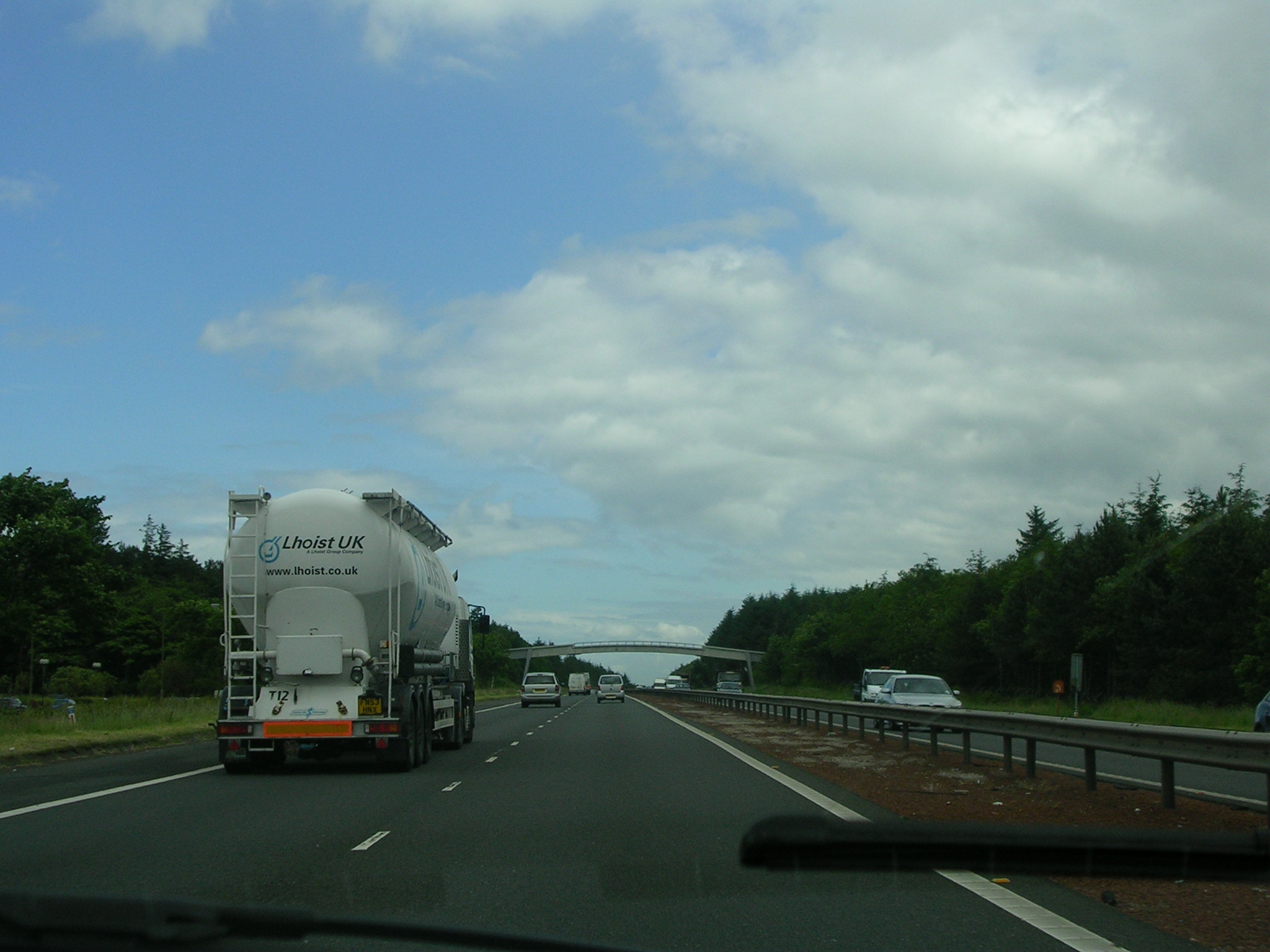
Scotland Motorway

We are waiting to hear word from Salt Lake City.  We are supposed to be closing on our home in Oklahoma City.  Hopefully everything works out.  We will find out tomorrow I guess.

Glasgow City Chambers

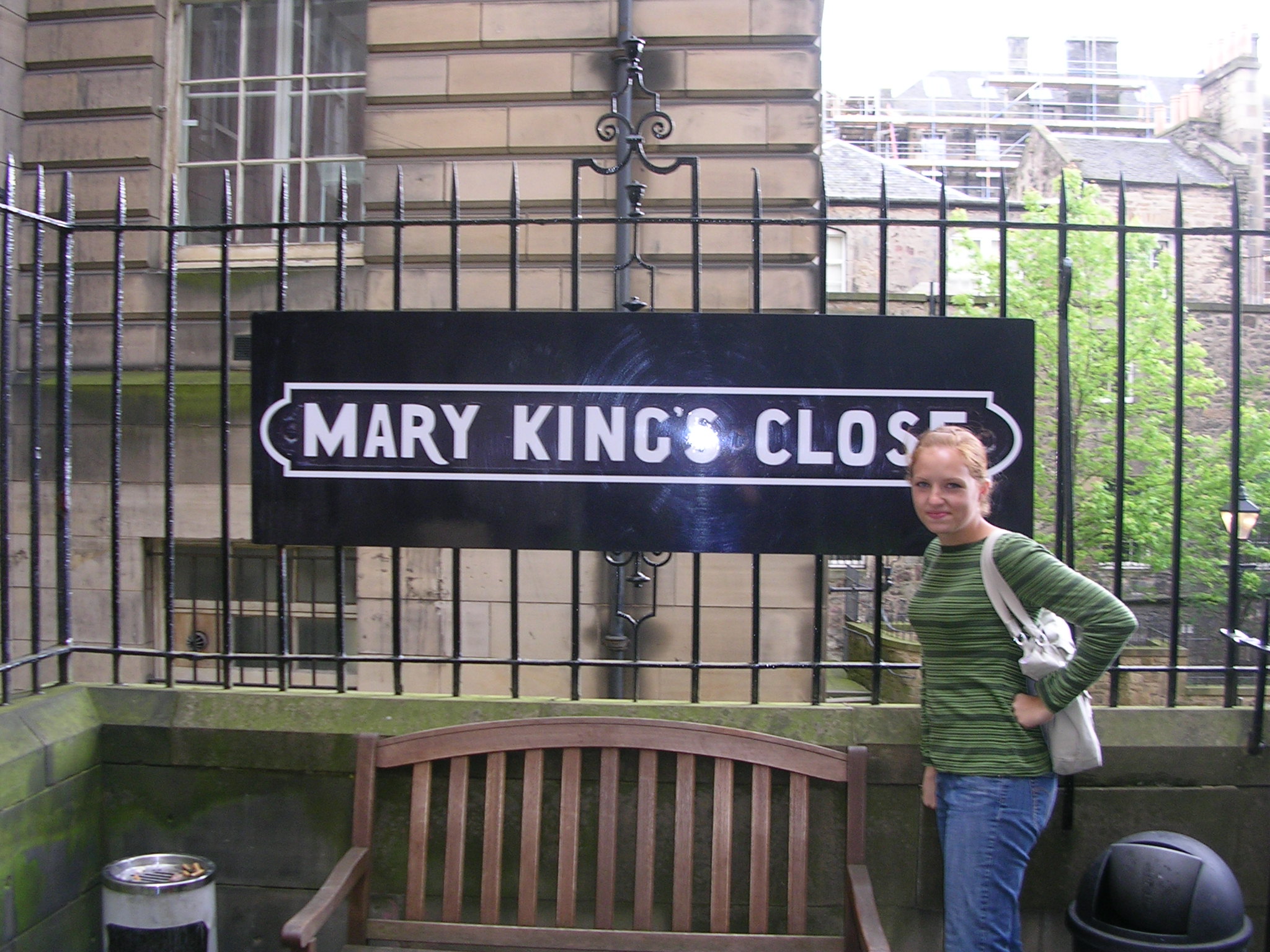
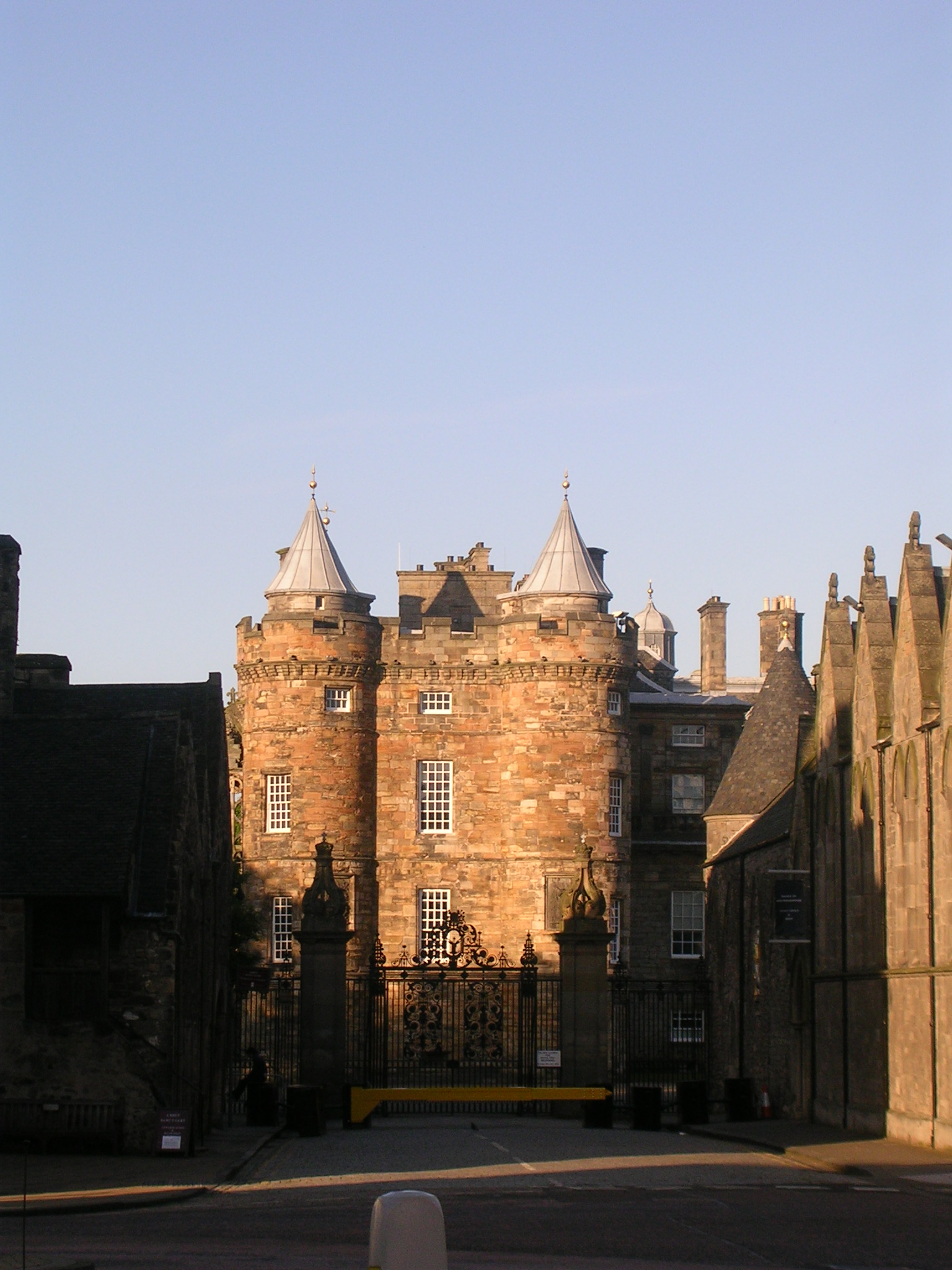
Last night we spent our evening in Edinburgh, Scotland.  We walked throughout the city, saw the castle, the Holyrood residence, and the cathedral.  Amanda got to see her world famous Mary Kings Close.  It was very interesting.  We got our hostel for the equivalent of $30 which we thought was a gonga deal.

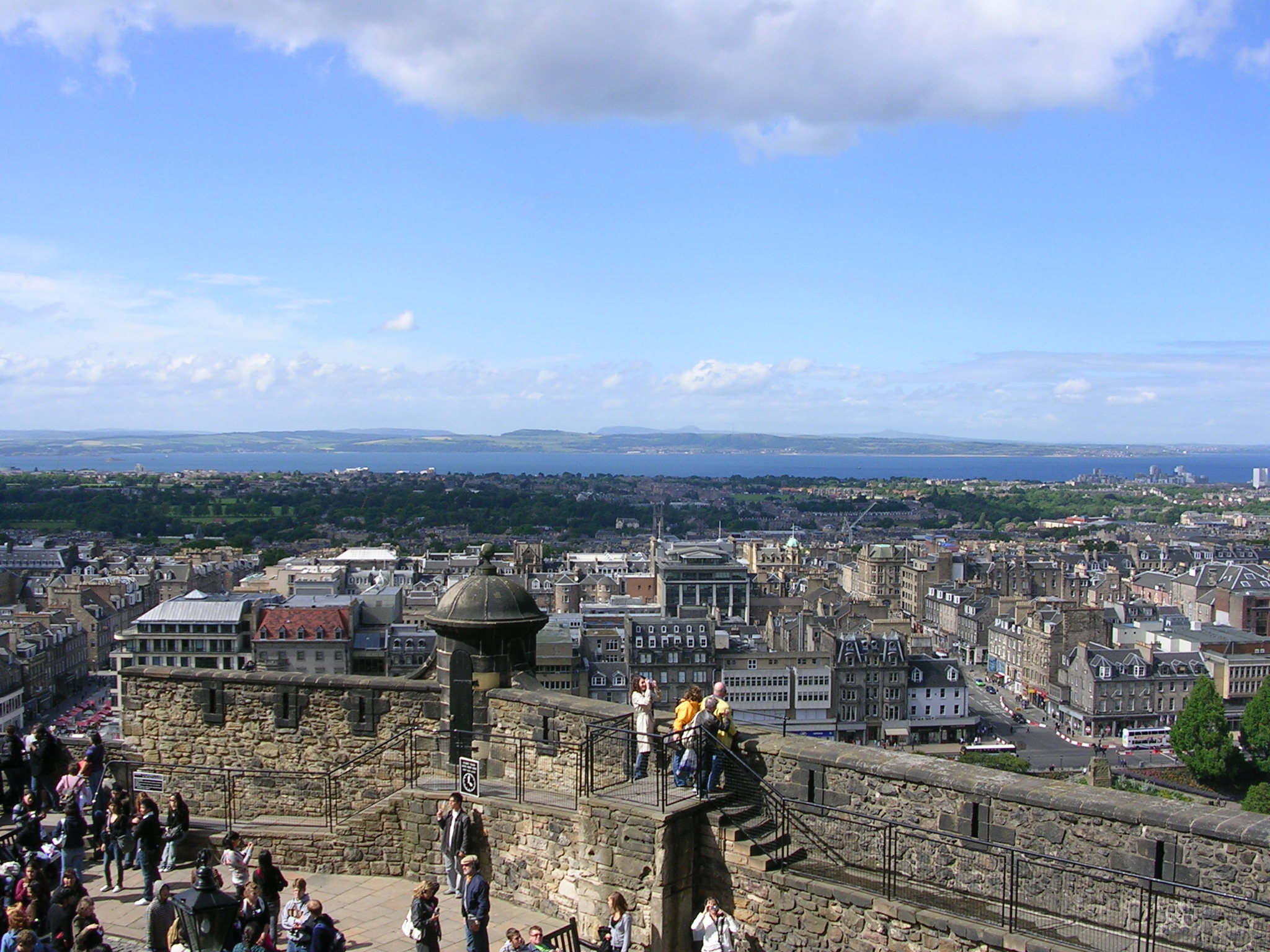
Edinburgh Castle looking north
Edinburgh Castle looking northeast to the Scott Monument and North Sea

We landed in Prestwick on Thursday after flying out early from Charleroi Airport near Brussels.  We then picked up our hired car and drove to Glasgow and on to Edinburgh.  It took me a little bit, but I quickly adjusted to getting back on the wrong/left side of the road.

~

Foog’s Gate – Edinburgh Castle
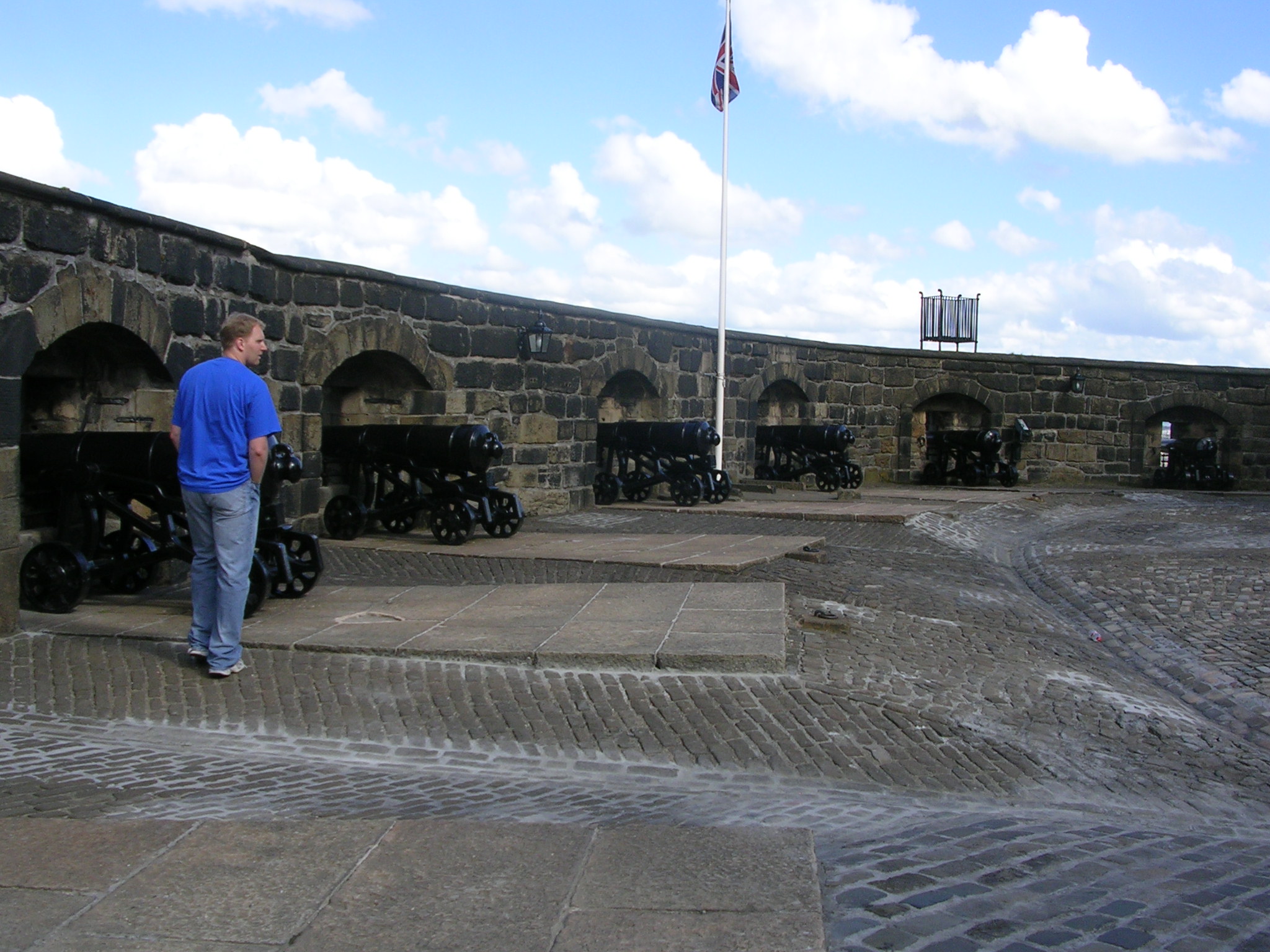
Half Moon Battery
Walking through Half Moon Battery
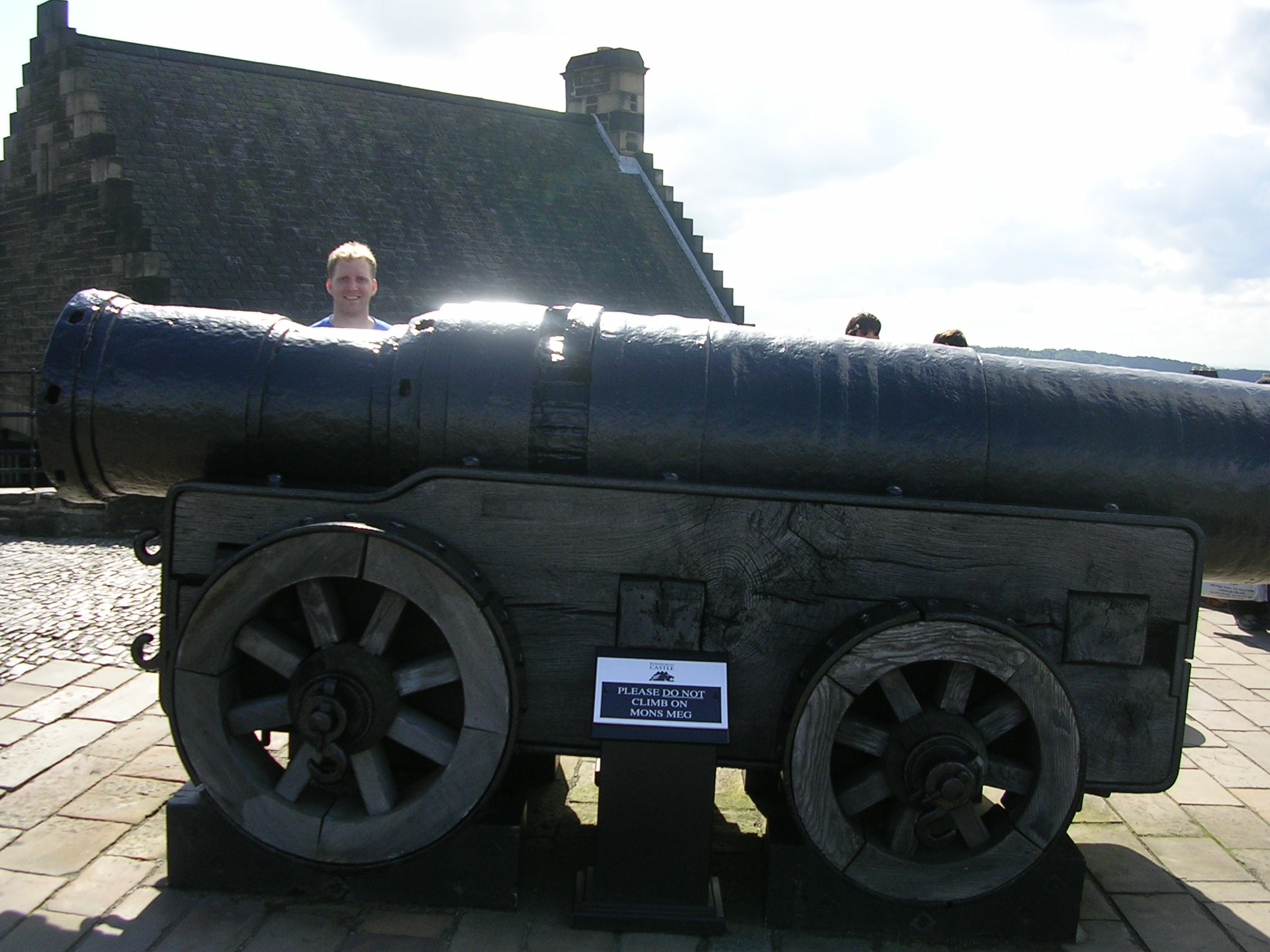
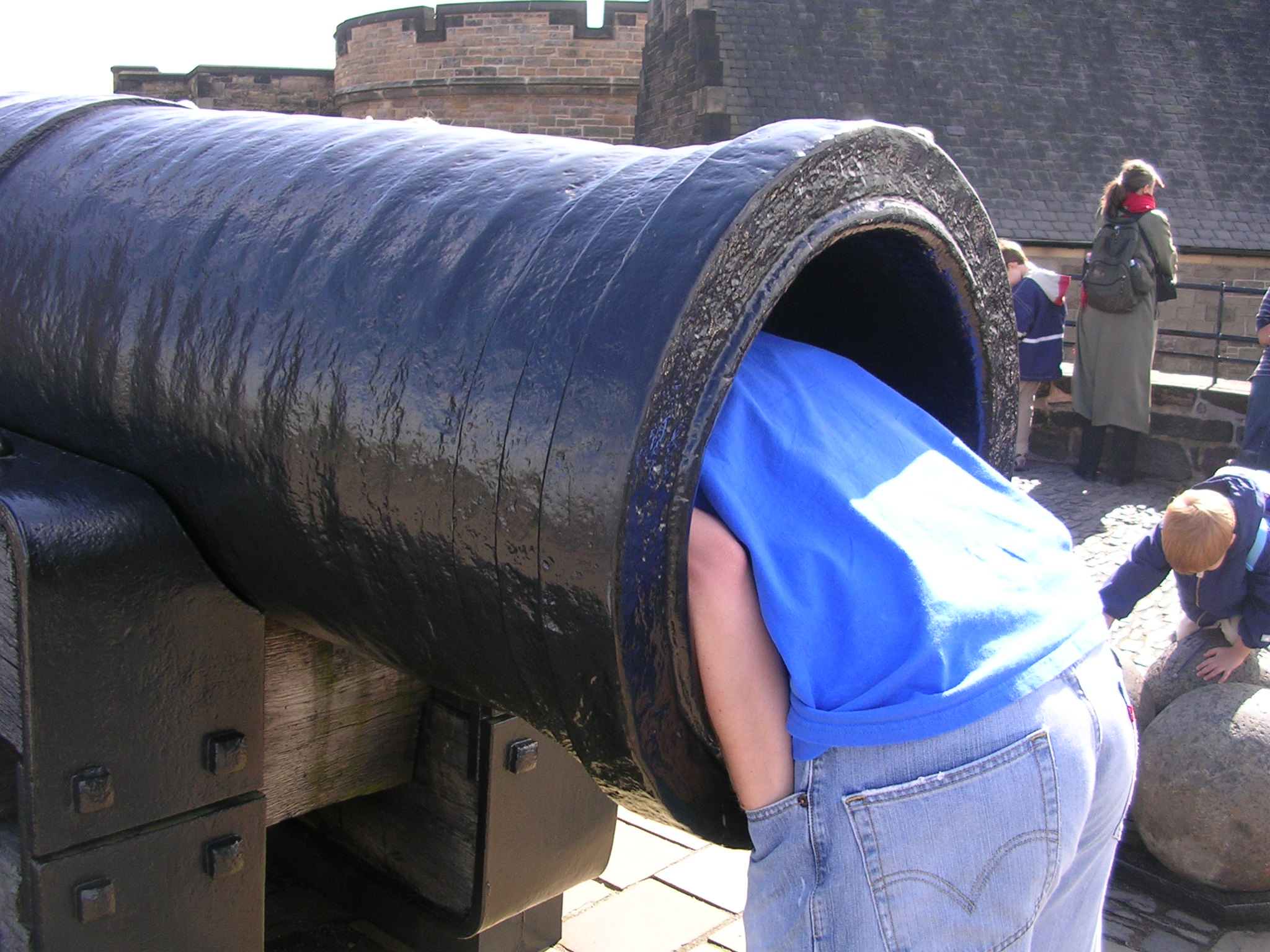
Mons Meg
Paul Ross in Mons Meg

It is late and I am too tired to write more of our travels today or of what we did in Edinburgh.  We did stop to visit Downham, Clitheroe in Lancashire today where the entire town joined the church and later emigrated to Zion.  Now we are back in the old mission.  My second visit since being released.  It is good to be back.

Royal Palace in Edinburgh
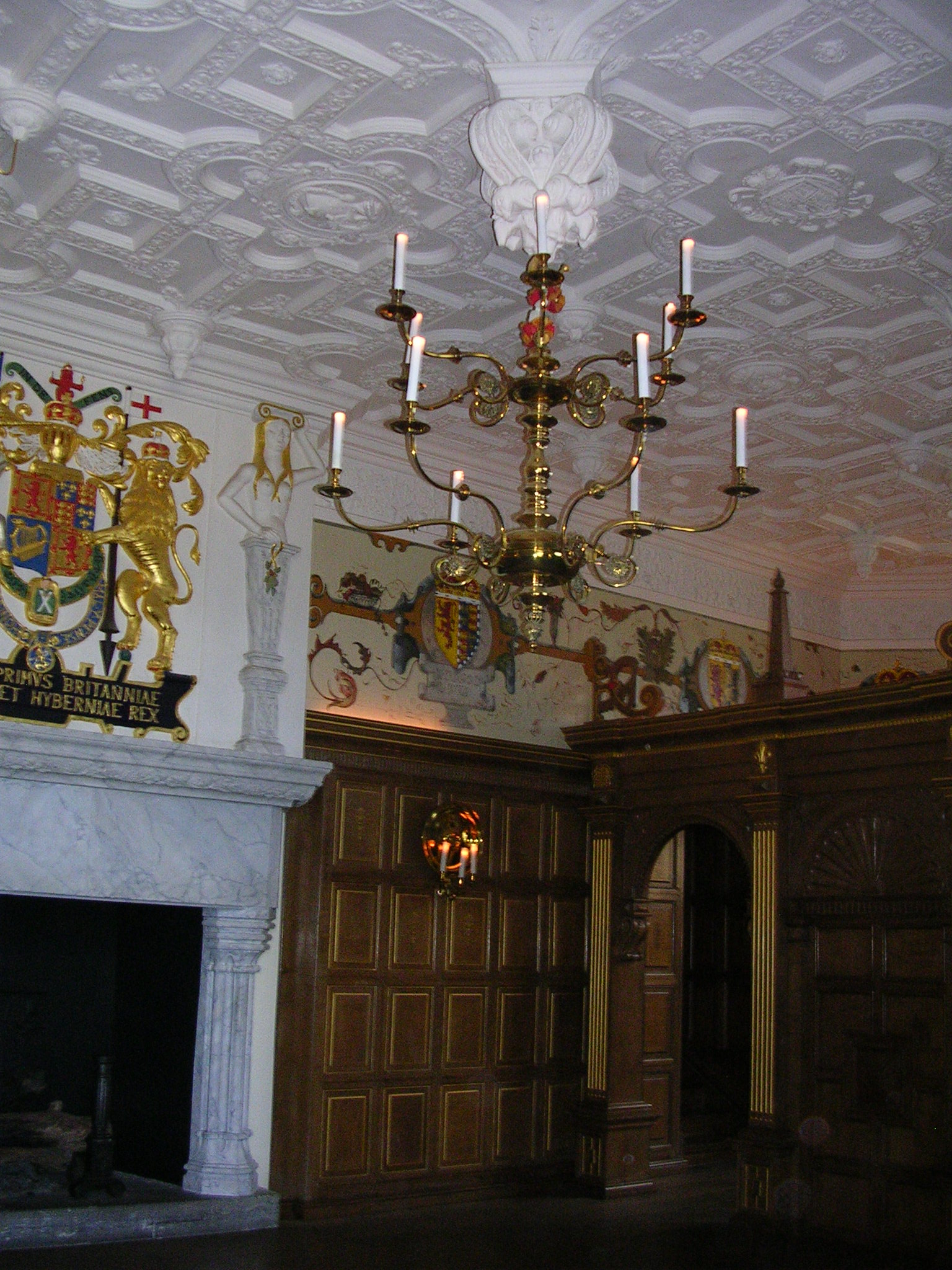
Royal Palace Great Hall
Amanda with Royal Palace Great Hall Fireplace
Amanda Ross with Foog’s Gate at Edinburgh Castle
St Giles’ Cathedral, Edinburgh
Details of St Giles’ Cathedral tower and steeple
Amanda with Mary King’s Close in Edinburgh
Paul Ross at John Knox House in Edinburgh
Panmure Close where Adam Smith lived
Holyrood Palace
Edinburgh Castle from near the Scott Monument
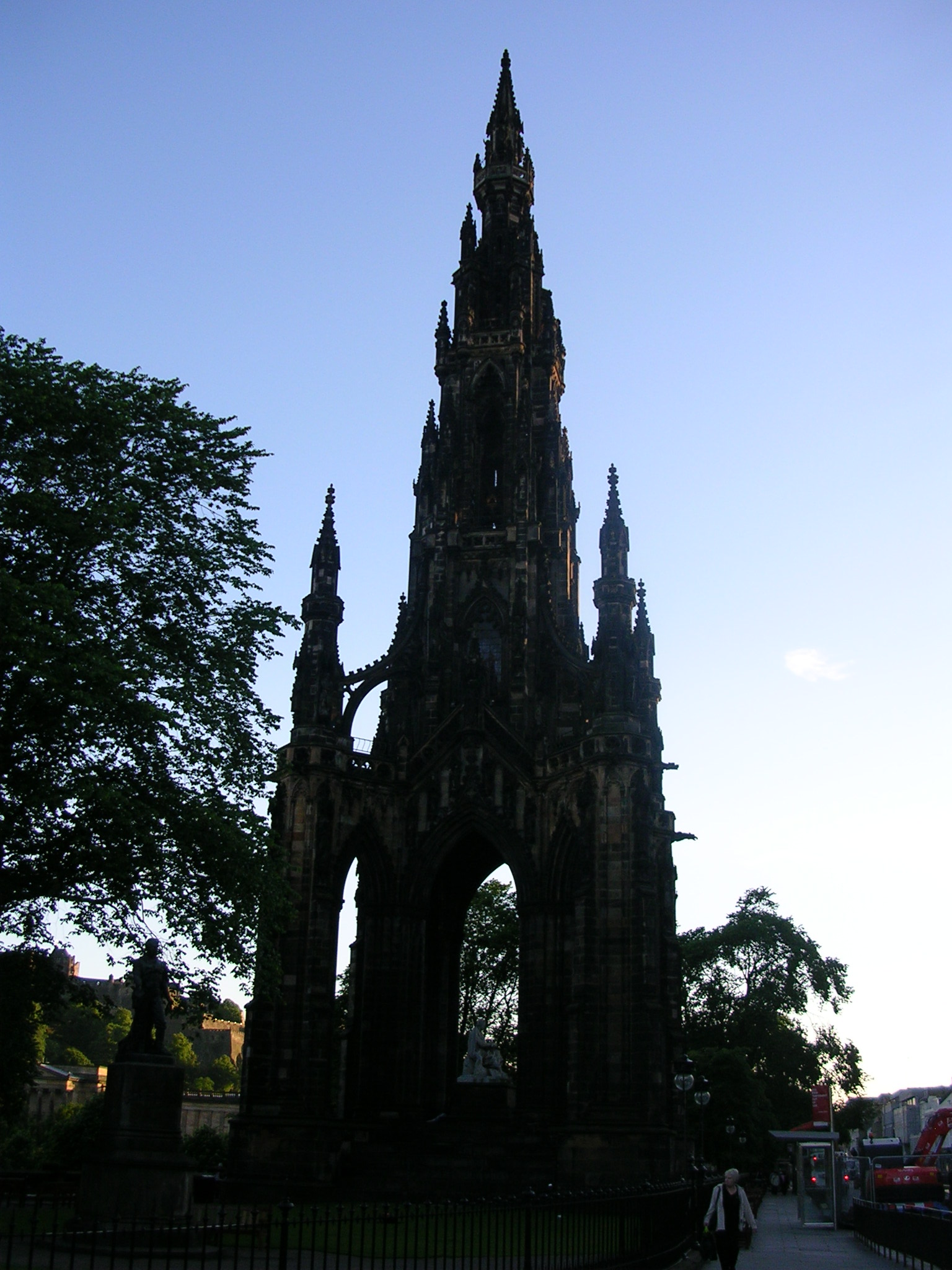
Scott Monument in Edinburgh
Sir Walter Scott inside the Scott Monument
Scott Monument
Assembly Hall from Scott Monument
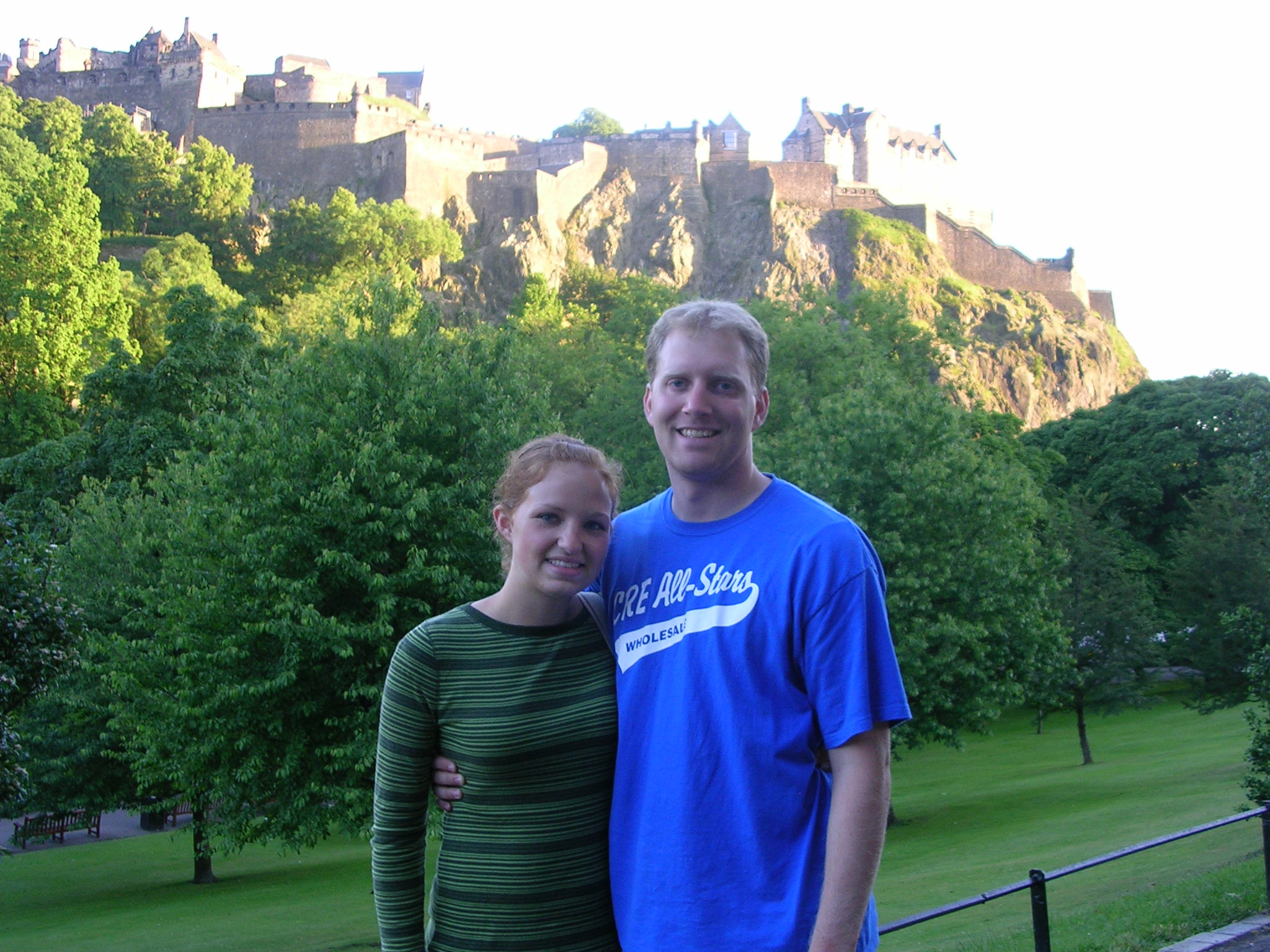
Amanda and Paul Ross with Edinburgh Castle
Amanda Ross and Scottish Thistle

History of Plain City Pt 9

I have two copies of the History of Plain City, Utah. The front indicates it is from March 17th 1859 to present. As far as I can tell, the book was written in 1977. At least that is the latest date I can find in the book.

One copy belonged to my Grandparents Milo and Gladys Ross. My Grandpa has written various notes inside the history which I intend to include in parenthesis whenever they appear. They add to the history and come from his own experience and hearing. 

I will only do a number of pages at a time. I will also try to include scanned copies of the photos in the books. These are just scanned copies of these books, I have not tried to seek out originals or better copies.

History of Plain City March 17th 1859 to present, pages 141 through 149.

BONA VISTA IMPROVEMENT DISTRICT

SUBMITTED BY FLOYD PALMER

              This most important new culinary water system has made life a little more pleasant in this community and surrounding areas. It was turned into the lines just a century after sturdy pioneer families first put together temporary shelters and tapped several sweet water springs which they found in the area.

              It replaces old flowing wells, bringing precious waster from the depths of the earth. In early days many deep and surface wells dug, covered over, and fenced off to keep children from falling in. They were first fitted with “pitcher” pumps, a short-handled affair which were the “pumper” out in a short time. Even the farm animals had to depend on well water pumped to the surface by hand.

              Later, the easier to work, long-handled pumps were installed. These were followed by power pumps connected to a small storage tank. This was the ultimate in a private water supply.

              In 1955, a Weber County man, Linn C. Baker, was a member of the State legislature. He is the one who sponsored the bill to create special improvement districts. The reason he was the sponsor of this bill was due to his work in the Health Department for the State of Utah. As he studied samples of water sent to him from the outlying towns, he became aware of the amount of contamination there was in the drinking water in certain areas, Plain City was among the highest on the list. This was traceable to shallow surface wells being used, also septic tanks with poor drainage.

              Soon after the Weber Basin Conservancy District was organized, Plain City wanted to purchase one-thousand-acre feet of water. Their request was held in abeyance until a line could be built from Ogden Canyon. This, however, was never done.

              Elmer Carver was on the executive committee of Weber Basin Project. Through the encouragement of Commissioner Carver, Mr. Ezra Fjeldsted, manager of Weber basin Project, and Linn Baker, all met with the Plain City Town Board to get something started. Floyd A. Palmer, a member of the Town Board, was asked to represent Plain City on a committee of surrounding towns in Weber and Davis counties. Mr. Ezra Fjeldsted acted as chairman of this group and several meetings were held in both counties which Mr. Palmer attended.

              Following this, a public meeting was held in Plain city. Farr West, and Harrisville were asked to join in. This was for the purpose of starting a culinary water system. The results of this meeting, from all groups attending, were to go ahead, also to contact other nearby towns and get their feelings about joining in.

              A series of meetings were held in Farr West, Harrisville, Slaterville, Marriott, Wilson Lane, and Plain City. Other towns were invited to attend. Ezra Fjeldsted represented Weber Basin, Floyd A. Palmer represented Plain City, Dick Groberg represented Farr West, Kenneth Brown represented Harrisville, Clifford Blair represented Marriott and Slaterville, and Arthur W. Sorensen represented Wilson Lane. The meetings were all met with a great deal of enthusiasm and interest.

              Plain City Town Board consisted of Lee Olsen, President, Floyd A. Palmer, Elvin H. Maw, Merrill Jenkins, Blair Simpson, as members. A culinary water system was a prime item of the agenda in 1956. The town board along with several local residents were well organized to promote the need for a water supply to replace the surface wells and pumps.

              On July 19, 1956, Elmer Carver, Chairman of the Board of County Commissioners of Weber County, State of Utah, signed a certified documents that there be and is hereby created within Weber County, Utah, a Water Improvement District to be known and designated as the BONA VISTA WATER IMPROVEMENT DISTRICT, the same to embrace and include all real property lying within the following boundaries, to-wit: (SETS FORTH DETAILED LEGAL DESCRIPTION OF DISTRICT BOUNDARIES WHICH BOUNDARIES EMBRACE LANDS HEREIN ABSTRACTED – Abstracter)

              That the following-named persons are appointed as the Board of Trustees of said Bon Vista Water Improvement District:

                               Floyd A. Palmer, Plain City

                               Richard Groberg, Farr West

                               Kenneth Brown, Harrisville

                               Clifford Blair, Marriott-Slaterville

                               Arthur Sorensen, Wilson Lane

              This resolution shall take effect immediately and shall be recorded in the office of the Weber County Clerk. Recorded August 22, 1956.

Following this appointment from the Weber County Commission, the board held a short meeting. It was necessary to elect a chairman, after a discussion of each of the board members. Kenneth Brown was appointed as chairman.

              The first order of business was to secure professional and legal help. Mr. Jack Richards was appointed attorney. Jack Reeves, of the firm of Nelson, Reeves and Maxwell, was appointed engineer. They were appointed to do the field work and present the plans and drawings back to the board.

              When the plans were completed, the board spent much time deciding the most feasible and economical areas to run the lines in. Also, to give each town a fair share of the project. Following this, it was necessary to project estimated costs. The board spent many months getting costs and deciding on types and kinds of pipes and materials to use on the project. The overall plans had to look attractive and feasible in order to get a bonding company to handle the bonds.

              The first step made to secure the bond issue was to get signed pledge cards with an agreement to pay $250.00 for a waster connection. This was a requirement. Committees were organized with Floyd A. Palmer, Richard Groberg, Kenneth Brown, Clifford Blair, and Arthur Sorensen acting as chairman in each of their respective towns. The result was very successful, all those serving on these committee are deserving of much credit for their untiring effort and accomplishments.

              On August 20, 1957, a bond election was held to see if the residents would approve a $900,000.00 bond issue. The vote was 490 yes and 82 no. Edward L. Burton Company was retained as Fiscal Agent, and $698,000.00 was sold in General Obligation Bonds, and the system was under way.

              On April 14, 1958, a contract was awarded to Smith-Scott Pipe Company to furnish cement mortar-lined steel pipe for the main lines.

              Also, on April 14, 1958, a contract was awarded to Knudson Construction Company to install water mains in the Harrisville-Randall area which was Phase I of the project.

              Also, on April 14, 1958, a contract was awarded to Chicago Bridge & Iron Company to furnish and erect a 250,000.00 gallon elevated storage tank in Plain City.

              On April 28, 1958, Theron Palmer was hired as General Superintendent to oversee construction and to get it ready to serve and operated as a system.

              On May 27, 1958, an office was rented from the E. B. Stone Estate on the corner of 9th and Washington. The district still maintains its offices here. The building was purchased by the district in 1969 and has been remodeled.

              On May 27, 1958, negotiations were begun with the State Department of Welfare of obtain ownership of a spring located in Garner’s Canyon in North Ogden. The spring was used at the time by the welfare department at the Industrial School property for culinary use and irrigation use.

              On May 27, 1958, Weber Basin let a contract to Statewide Construction Company to build the 16-inch transmission line from 4000 South on U-84, down into the district where Bona Vista could connect to it.

              Also, on May 27, 1958, a piece of property located at 4100 West on 2200 North in Plain city, was purchased from Vern Palmer to construct the elevated tank.

Bona Vista Water Storage Tank

              Raymond Concrete Title Company moved in and drove concrete pilings 80 feet into the ground to support the tank.

              Gerald Larkin was then awarded a contract to construct a foundation so Chicago Bridge and iron could begin erection.

              On July 3, 1958, a contract was awarded to Bert Robinson Construction Company to build lines in the Farr West and Plain City.

              Also, on July 3, 1958, Standard Plumbing Supply Company was awarded a contract to furnish materials for service lines.

              On July 17, 1958, the Weber County Commission agreed to purchase 60 fire hydrants to go on the system to be located by the Weber County Fire Chief.

              On July 17, 1958, Smedley construction Company was awarded a bid to construct lines in the Slaterville, Marriott, and Wilson area for $44,975.00. The same day Mac Construction Company of Salt Lake City was awarded the bid to construct our North Ogden Reservoir for $16,911.00. This is a concrete underground reservoir.

              On August 11, 1958, an agreement was reached with the Welfare Department to obtain full use of the spring in North Ogden. Weber-Box Elder water was purchased to replace the Welfare Department’s share of the spring.

              On February 11, 1959, work began on the plans and site for a reservoir in the Roy area.

              On March 23, 1959, it was decided to run a line on the North Plain City Road.

              On August 27, 1959, it was decided to either buy or condemn the Hansen property for a reservoir.

              A bid to build a tank in Roy was awarded to Wehyer Construction Company for #31,403.80 on September 23, 1959.

              Negotiations began to buy an eight-foot well from the Farr West Stake for $31,403.80 on September 23, 1959.

              Linn C. Baker resigned as Secretary on January 1, 1961. He had been with the district since it began.

              On December 6, 1961, it was decided to construct extensions to existing mains in the amount of $90,000.00 General Obligation Bonds were sold to finance these extensions. Waterfall Construction Company did the job.

              All though the summer of 1961, the Farr West well was tested to see if it would hold up.

              On February 28, 1962, President Wimmer signed the Warranty Deed on the Farr West well and property. On January 16, 1963, it was decided to put heat lights on our Roy tank. This was the first such installation in this area and it drew a lot of attention.

              The Utah State Health Department studied the plans for use of the plans for use of the existing well in Farr West and decided against allowing it to be used because of its depth. A change application was then filled with the State Engineer to drill the well to a deeper depth.

              On May 10, 1963, a contract with Wesley Stoddard was made to drill a well in Farr West for $21,632.00 plus $4,700.00 for the test hole to see how deep the well would have to go.

              A meeting was held at the Farr West Pump House building on January 20, 1964. This building was contracted by the Bona Vista Water employees. The piping was also done by employees of Bona Vista.

              R. W. Coleman Company was awarded a contract for $18,877.50 to change some lines under the interstate highway on November 22, 1965.

              Negotiations began on March 28, 1966, with Weber Basin on the North Ogden Well, which was later drilled and is used in the system now.

              Water meters were deemed necessary and were bought by bid from Waterworks Equipment Company and E. C. Olsen Company on October 28, 1968.

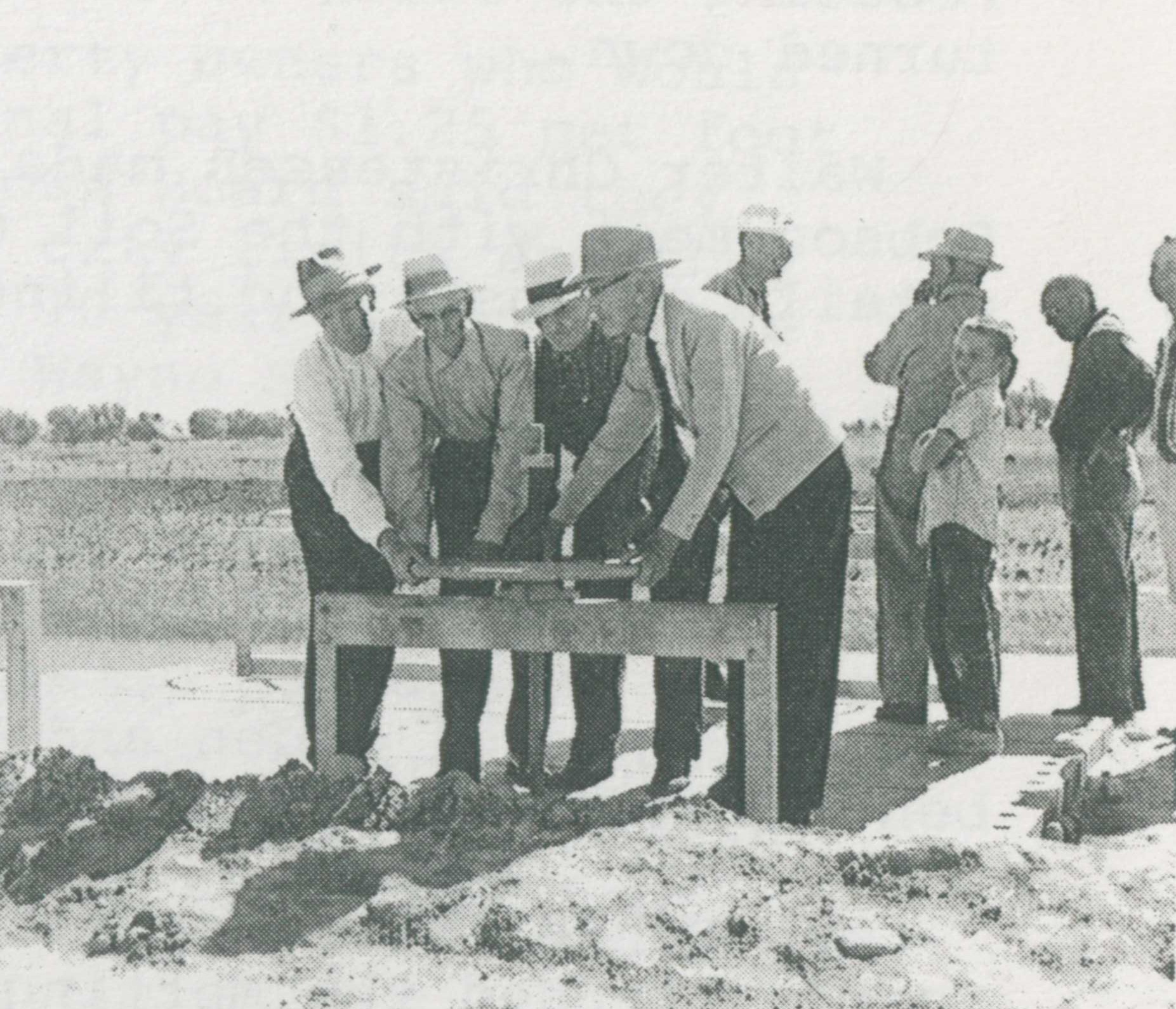
New Plain City Canal

BEGINNING OF PLAIN CITY IRRIGATION WATER

              1859 Before the summer was over some water had been brought in their new ditch from Four Mile Creek to Plain City. In 1860, the Canal was completed to Mill Creek, the following year to Broom’s Creek and in 1862 to the Ogden River. The Right of Way in Weber River was purchased in 1873 at a cost of $2000.

              In 1899 Samuel Wayment drilled an Artesian Well 249 feet deep producing additional water for the settlers. He also was in charge of the iron work and the building of the Chief Canning Factory in Plain City.

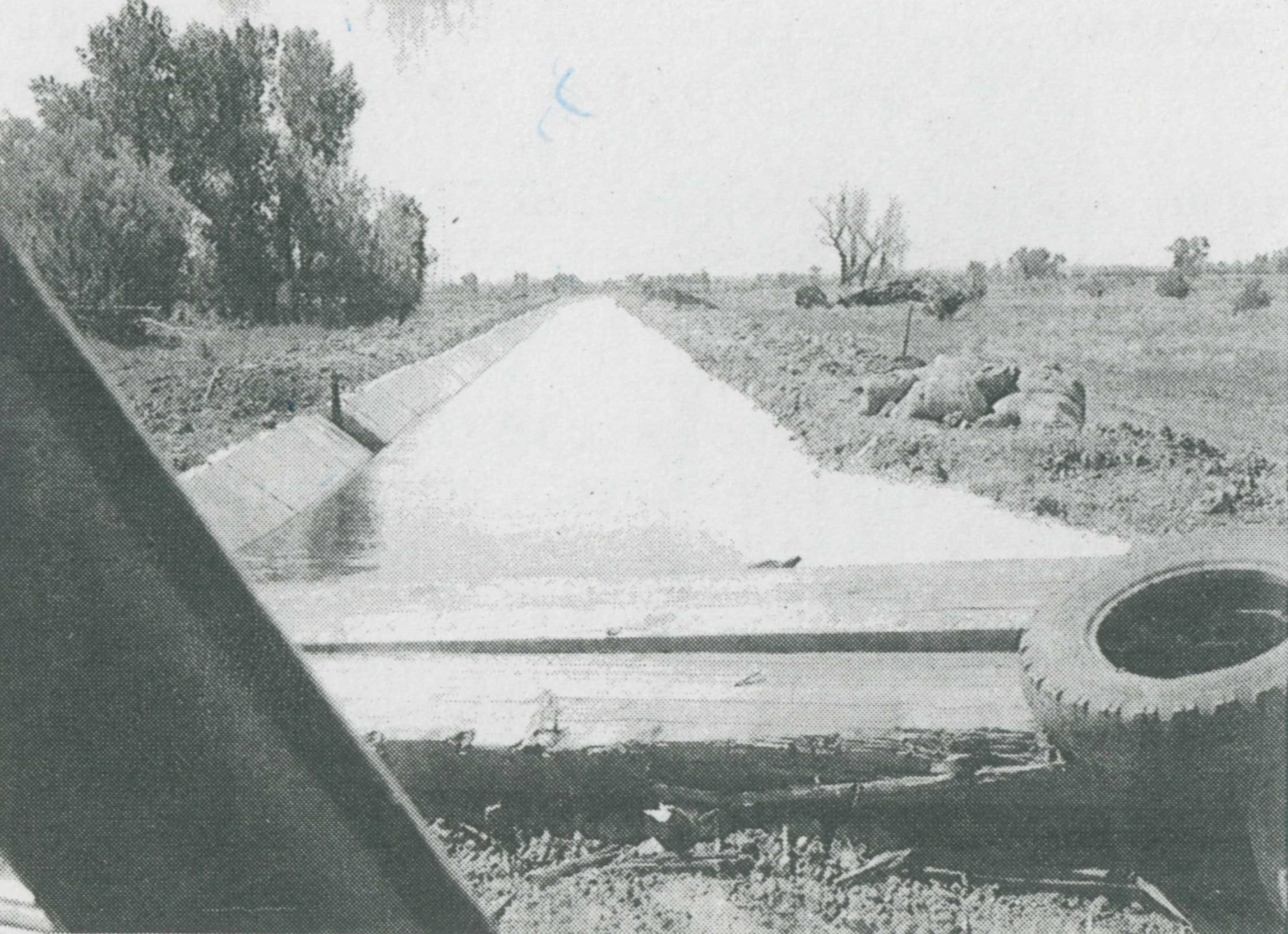
PLAIN CITY IRRIGATION-CEMENTING OF THE MAIN CANAL

SUBMITTED BY Wayne Skeen

              For many years the Plain City Irrigation Company received it’s water from the Weber River. The diversion point into the canal was just north of the old American Packing Plant that was later called the Swift Meat Packaging Plant. The Irrigation Company had a large Plank Head Gate in the Weber River that forced the water into the Plain City Irrigation Company Canal because of high waters in the spring this gate would wash out and it was necessary to make a gravel and dirt dam each year using horses, scrapers, and even large bulldozers. In recent years this became a major problem.

              The government began planning the Willard Project in 1960. This project would interfere to a certain extent with the existing canal used by the Irrigation Company because big Willard Bay Canal would be built in part of our existing canal and would also cross it in part of our existing canal and would also cross it in other areas. The leaders of this project wanted to provide a turn out from the big canal into the Plain City Irrigation Canal. The corporation of our company was necessary to give them the right to use the area affected by the construction of the Willard Bay Canal. The logical point of diversion would be west of the Farr West Church House. This meant that some new construction would be necessary to get the water into the old canal. It was in need of some repairs and it was at this time that the idea of a new cement lined canal was entertained.

              Directors who served during this period of construction were as followed:

              President                               Abram Maw                1959-60

              President                               Alvin J. Robson           1961-65

              Vice President                       Walt Christensen        1959-64

              Vice President                       Carl Taylor                  1965

                                                            Bert Hunt

                                                            Charles Heslop

                                                            Keith Blanch

                                                            Mike Panunzio

              Secretary                               Wayne Skeen              1959-65

              High lights of the minutes of the meetings during the construction period are as follow:

August 11, 1959

              Ogden City had extra water for sale this year which was allocated out to various canal companies. A motion was made by Alvin Robson that this water be purchased to see them through the current season. It would be paid by those stock holders who subscribed for the extra water.

April 4, 1960

              The meeting was called to discuss the new canal. Charles Heslop was assigned to work on interested free money from the Utah Water & Power board for the construction. Alvin Robson was assigned to work with the Soil Conservation on the completion of the surveying of the canal, and additional monies.

July 12, 1960

              A meeting was held to discuss a possible shortage of water for the remainder of the year. Time was changed from 20 shares per hour to 25 shares per hour.

January 9, 1961

              A priority was established with the Utah Water an Power board for interest free money and application made for $100,000.00

              A survey showed that there was a 10% loss of water between the River turn out and the Point of use.

March 8, 1961

              The Irrigation Company received a $10,000.00 cash settlement for their rights in the old canal from the O.U.R.D. Railroad Company that passes through their yards.

              Alvin Robson, Carl Taylor, and Walt Christensen was to secure information regarding tiling of the canal from Victor Lund’s corner up to the Jesse Singleton property where the canal leaves the road and runs back into the fields.

April 20, 1961

              A report was given by Alvin Robson regarding the tiling of the lower part of the canal. There were mixed emotions about tiling this section of the canal because of the fall and the amount of water to be delivered. “Alvin Robson commented as the discussion went on concerning the piping verses the cement lining. The stockholders are residents of this town and should have some concern towards the improvements and beautification of the community and that an open cement lined canals to greet the people entering the town is not very inviting and once it was constructed it would never be changed in our life time.”

              Keith Blanch speaking as a town board member expressed his opinion regarding the beautification and eliminating hazards in the community and felt that it was worth while and the tax payers should help with the construction of the Irrigation Company in piping this section of the canal.

              Glen Charlton and Lee Olsen from the town board were present. An opinion was asked from the town board members. Mr. Charlton felt it was a worth while project as long as it was right. Mr. Olsen commented that it was a good thing as long as it was sufficient to meet the needs of the water users.

              The town board members agreed to cover the pipe that was laid with dirt. It was agreed that 2880 feet of 36 inch tile would be laid this spring from the old beet dump corner to Victor Lund’s corner.

April 27, 1961

              The Town board members present: Dee Cook, Glen Charlton, Kent Jenkins, and Lee Olsen. Mr. Covey from Utah State University was also present.

              Further discussion concerning cost of construction of the concrete pipe continued. Keith Blanch made a motion that the town board and property owners should join with the Irrigation Company in the cost of the 36 inch tile to be laid. Motion seconded by Carl Taylor

              Mr. Robson suggested the property owners who would benefit from the lining of the canal pay $1.25 per foot frontage towards the pipe. The Town Board said they could only participate within the city limits and they would contribute $4,000.00 over a 10 year period. The bids were to be sent to Secretary Wayne Skeen by March 30, 1961.

April 30, 1961

              The purpose of this meeting was to open bids. Utah Concrete Pipe Company received bids for 36 inch concrete pipe at $8.75 per foot. Waterfall Construction Company was awarded the laying of the pipe at $1.55 per foot.

              Abram Maw made the motion that the project not be stopped at the beet dump corner but continue up to the up to the weir east of the water tower (where the pipe portion of the canal now starts) if the property owners will contribute $1.25 per foot. Motion seconded by Keith Blanch.

              Charles Heslop ad Elvin Maw were asked to approach these property owners and get their approval to pay the $1.25 and also contact all stock holders and get their signature for government participation thru the Soil Conservation.

              Charles and Elvin were successful in getting all the names except Jesse Singleton who would not accept any government monies and would not pay the $1.25 per foot to tile in front of his property.

              Alvin Robson contracted Howard Singleton, Jesse’s boy and he agreed to pay the $1.25 but only up to the old house that sat in the field and that is where the concrete pipe starts today. Alvin Robson tried to convince the Director’s that they should at the company’s cost tile the remainder of the ditch along the road because any future expansion of the community would by hampered by open ditch reducing the width of the road. This motion turned down.

              Walter Christensen made the motion that Alvin Robson meet with the Soil Conservation to discuss details of cost and tiling and lining the canal.

April 31, 1961

              Alvin East, Maurice Skeen, and Owen Wayment from the Warren Irrigation Company met with the directors to discuss details and sign a contract for the exchange of Ogden and Weber River which would benefit both companies. The contract was signed.

              Mr. Daniel Lawrence from the Utah Water & Power Board attended the meeting. Keith Blanch made the motion that Alvin Robson and Wayne Skeen be given the power to enter into a contract with the Utah Water & Power Board for the total cost of $1,300.000.00 and formulate all details.

May 3, 1961

              Junior Taylor was appointed as Water Master of the year.

May 15, 1961

              The purpose of this meeting was to discuss the Weber Basin Project with E.J. Feldstead and commissioner Wilmer Carver. They needed additional votes to finish construction of the Willard Bay. A proposed addition would cost seventeen million dollars.

June 5, 1961

              The purpose of the meeting was to see what should be done because it appeared that there would be a water shortage before the end of the year. It was proposed that we only run off water until the stream reached a point that we could not water properly and then start to use our shortage water and put turns on 1/3 basis.

September 27, 1961

              The new project was discussed and it was recommended that the company hire an engineer and begin construction on the upper end of the new canal.

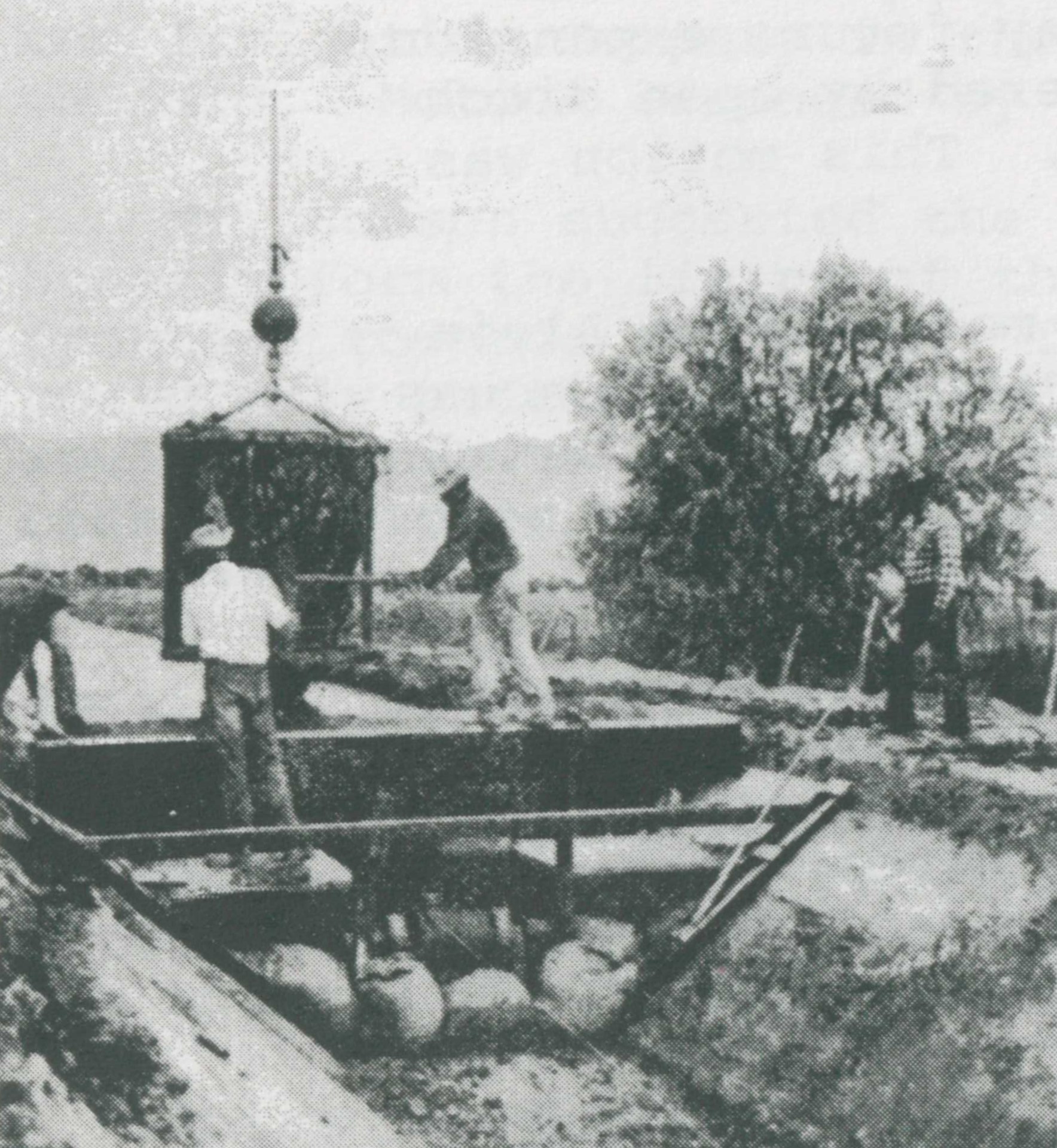
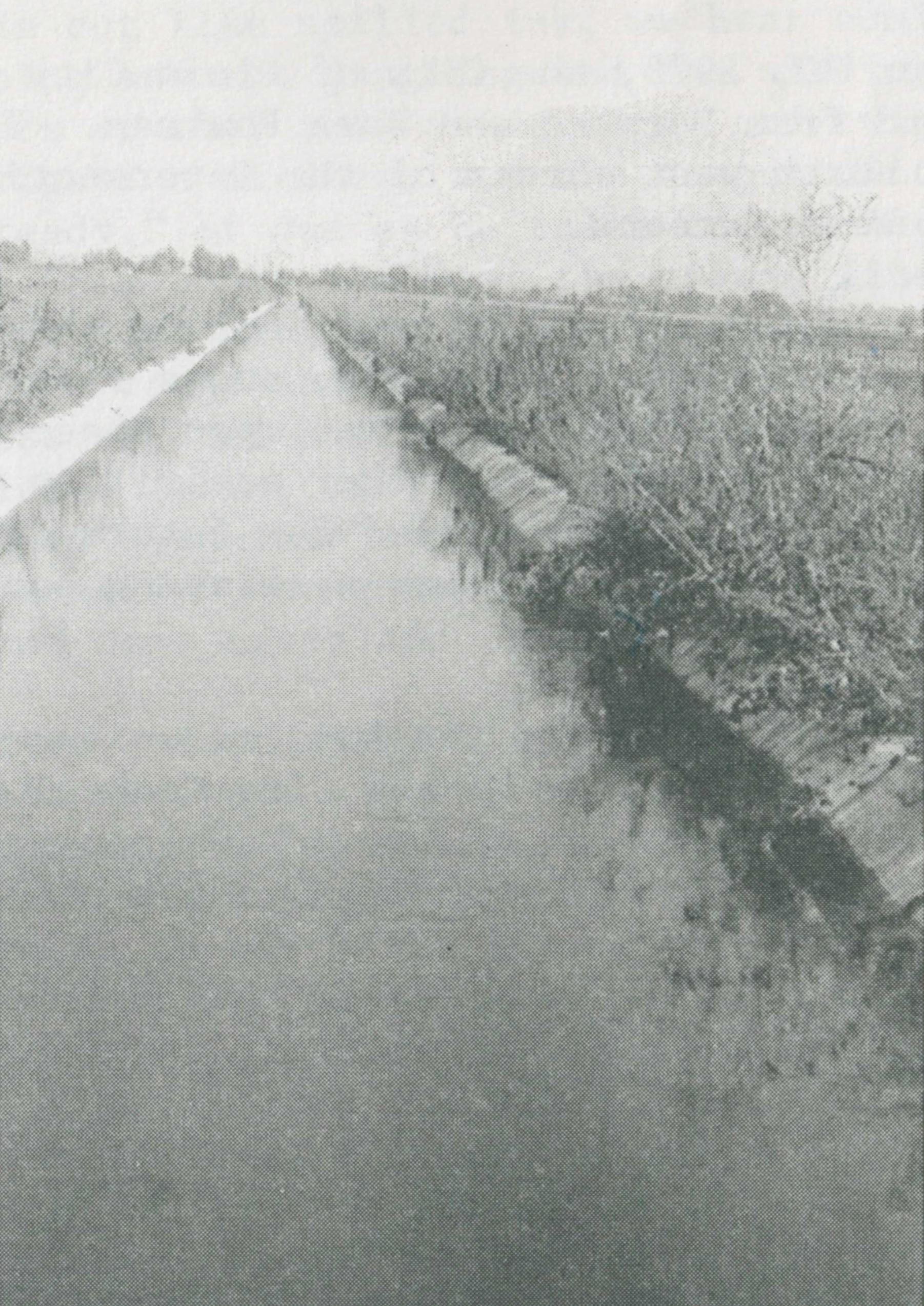
              There were many problems that came out of the construction of this canal. It would be necessary to get some dirt to construct the pad for the canal. The company purchased some ground at the upper end of the canal from Max Stander. Then got the dirt that was necessary to build the upper end of the canal and then leveled the ground and gave it back to Mr. Stander. They also purchased additional dirt from Robert Penman. This dirt was trucked from his property just south of the Weber River and west of the main road. The dirt was hauled by farmers using their beet trucks, etc.. The new pad was made in the old canal banks where possible, but there was some trading of land etc. to straighten out the canal. There was also a problem in getting someone to dig out the canal to the size and shape required to allow 50 seconds feet of water at one time. The company asked for bids, but they only received one because the equipment needed to shape the canal was not available. In order to get the project moving Alvin Robson caught a bus on Ogden and went to the Fuller Forms Company in Arizona to see if they had some type of equipment that could be used. He purchased a right to one of their slip forms that could be used in forming and pouring the concrete. He returned to Ogden and worked with the Ogden Iron Works on 23rd Street and Grant Avenue where the construction of the slip forms took place. The next problem was to begin the construction of the project. Dean Hadley of Taylor was hired to do most of the big equipment work. Local farmers also helped with their equipment. The Soil Conservation furnished the engineering on the project. Herbert Issackson of Pleasant View was the surveyor. One of the major problems that existed and is still a yearly discussion is the amount of water delivered from the existing head gates. The government required that curtained head gates must be varied in size for them to participate financially.

Oct 1962

              There was much contention and personal feelings during the construction of how it should be done. Some people left the jobs and never came back, but the project was finally finished. The construction created problems for some but most of the inconveniences were ratified by the Irrigation Company. New bridges were built, land was leveled, damages to property was crops were paid for during the construction. The Company paid for fencing materials with the property owners installing the fences. Cattle that used to walk across the stream would fall into the new lined canal and couldn’t get out. The Company paid for some of the cattle that were lost before the agreement to install fencing was made.

              The total cost of the project was $199,754.08. The amount of $122,918.61 was borrowed from Utah Water & Power Board. This money was interest free if a yearly payment was made by November 30th each year. The last payment of $8.257.06 will be paid on November 30, 1977. Other cost not being paid by the stockholders come from the Soil Conservation and the sale of pieces of the old canal, and the town board. Vice President Bill Hatch of the First Security bank was also an asset in the financing of the canal.

              We borrowed monies from the First Security Bank as construction went on to pay for cost on a daily basis. On December 31, 1974, the company owed the First Security bank $60,000.00 Alvin Robson and Wayne Skeen met with Mr. Hatch in May regarding this bill. Mr. Hatch said that the bank needed some type of security for this loan. There was nothing to give him because out rights to the canal had been given to the Utah Water and Power Board. Alvin Robson and Wayne Skeen then approached Mr. Lawrence of the Utah Water and Power Board asking them for more money for the project explaining the situation with the bank. Alvin Robson explained that they might just as well take over the ownership of the canal because the bill had to be paid. There was nothing to offer as security because the Utah Water and Power board had everything that the company owned. Later, Mr. Lawrence of the Utah Water and Power Board gave the Irrigation Company an additional $30,000 which helped to delete that note at the First Security Bank.

*********

Canal after completion

Wilburn Norwood Jonas 100th Birthday!

Norwood Jonas in the 1960s

I thought it would be appropriate to commemorate the 100th birthday of my Grandpa, Wilburn Norwood Jonas. He went by Norwood his whole life, or Nor to those closest.

Grandpa was born 15 May 1924 in Lewiston, Cache, Utah to Lillian Coley and Joseph Nelson Jonas.  The fourth child of eight to his parents.  He married Colleen Mary Andra 27 September 1946 in Elko, Elko, Nevada.  Three children were born to him and Colleen; Douglas in 1952, Sandra in 1954, and Jackie in 1960.  He died 14 March 1975 in Burley, Cassia, Idaho and was buried 19 March 1975 in Richmond, Cache, Utah.

I was trying to think of a way to commemorate Grandpa. As linked above, I have written of him before. This week, I went through an old book I have that belong to Norwood’s dad, Joseph. Inside were some newspaper clippings and notes. One linked to Grandpa. I share it to show that research is ongoing and can be found anywhere! Just takes a little luck, heaven’s guidance, and you will stumble on them. I will wrote more on the book and other clippings inside later.

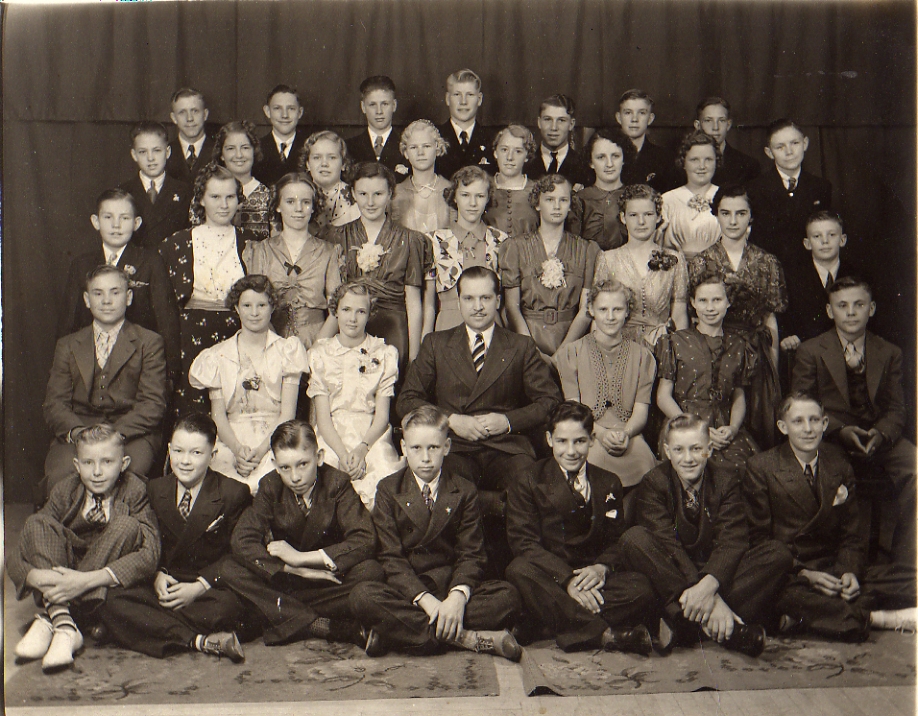
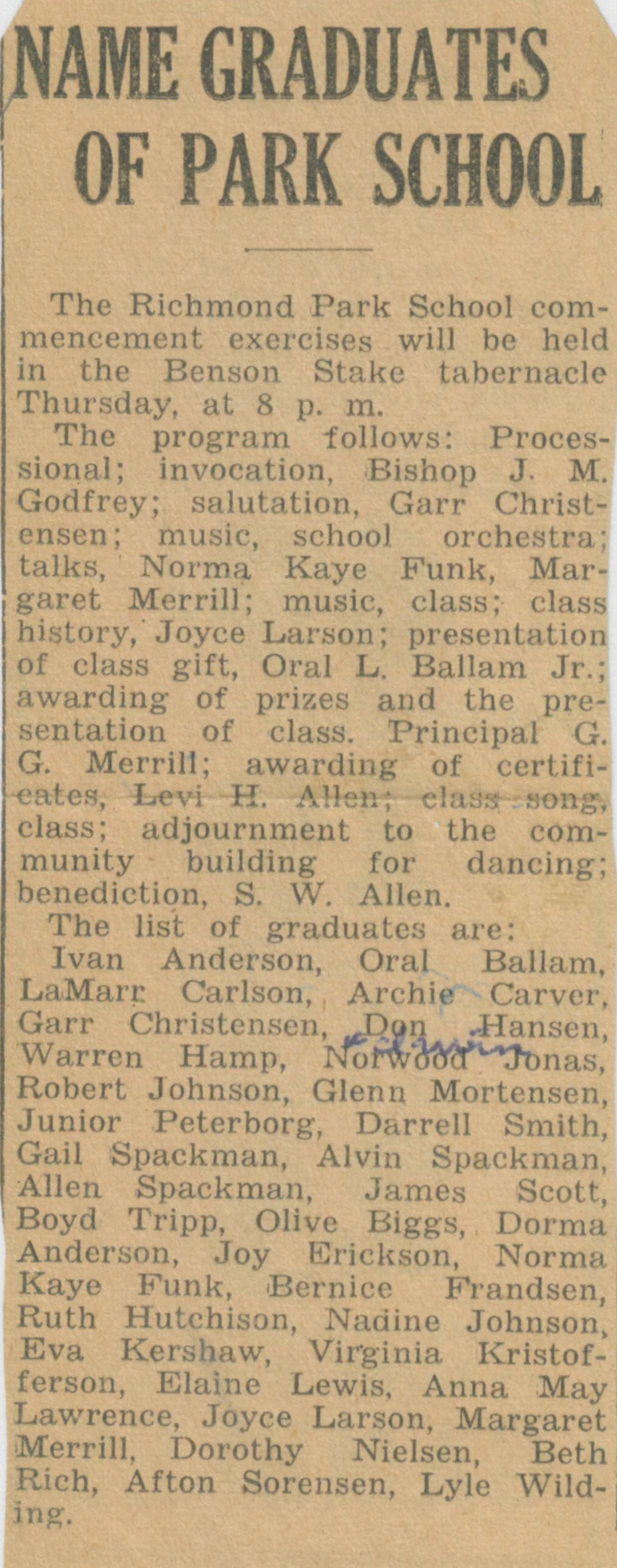
Park School was in Richmond. It was only razed in the past few years. Grandpa went to North Cache High School, although he did not graduate. This clipping also has Irwin written in to it. Which tells me he was missed or it is the wrong Jonas boy that was listed. Although, I do have a class picture of Irwin and Norwood together, so I am not clear if that tips it one way or the other.

“Name Graduates of Park School

“The Richmond Park School commencement exercises will be held in the Benson Stake tabernacle Thursday, at 8 p. m.

“The program follows: Processional; Invocation, Bishop J. M. Godfrey; salutation, Garr Christensen; music, school orchestra; talks, Norma Kaye Funk, Margaret Merrill; music, class; class history, Joyce Larson; presentation of class gift, Oral L. Ballam Jr.; awarding of prizes and the presentation of the class. Principal G. G. Merrill; awarding of certificates, Levi H. Allen; class song, class; adjournment to the community building for dancing; benediction, S. W. Allen.

“The list of graduates are: Ivan Anderson, Oral Ballam, LaMarr Carlson, Archie Carver, Garr Christensen, Don Hansen, Warren Hamp, [Irwin written in, referring to Irwin Jonas], Norwood Jonas, Robert Johnson, Glenn Mortensen, Junior Peterborg, Darrell Smith, Gail Spackman, Alvin Spackman, Allen Spackman, James Scott, Boyd Tripp, Olive Biggs, Dorma Anderson, Joy Erickson, Norma Kaye Funk, Bernice Frandsen, Ruth Hutchison, Nadine Johnson, Eva Kershaw, Virginia Kirstofferson, Elaine Lewis, Anna May Lawrence, Joyce Larson, Margaret Merrill, Dorothy Nielsen, Beth Rich, Afton Sorensen, Lyle Wilding.

Here is the class picture with many of these same names. It also includes Irwin and Norwood. I have written about it previously.

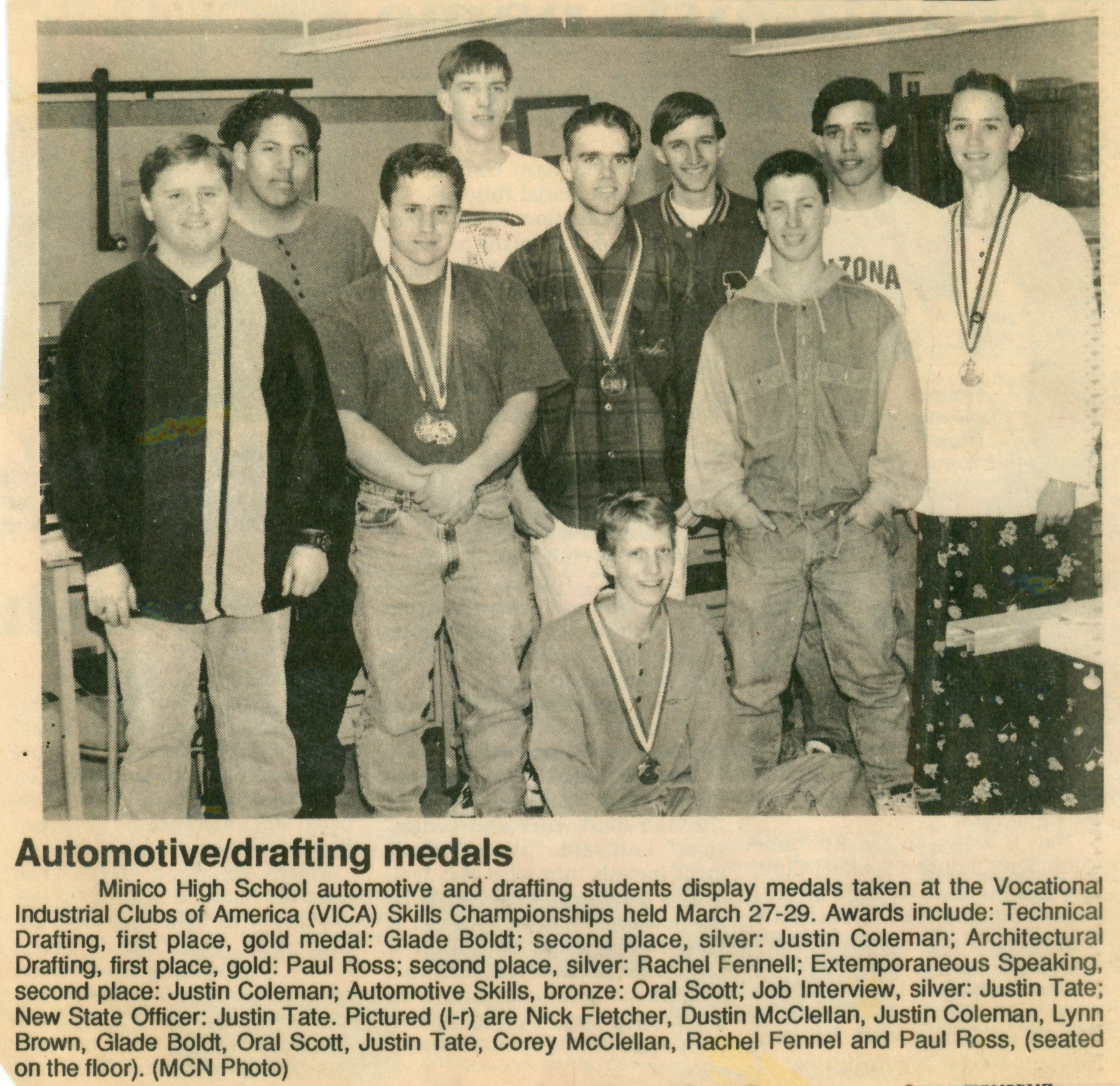
Automotive/drafting medals

Minico High School automotive and drafting students display medals taken at the Vocational Industrial Clubs of America (VICA) Skills Championships held March 27-29. Awards include: Technical Drafting, first place, gold medal: Glade Boldt; second place, silver: Justin Coleman; Architectural Drafting, first place, gold: Paul Ross; second place, silver: Rachel Fennell; Extemporaneous Speaking, second place: Justin Coleman; Automotive Skills, bronze: Oral Scott; Job Interview, silver: Justin Tate; New State Officer: Justin Tate. Pictured (;-r) are Nick Fletcher, Dustin McClellan, Justin Coleman, Lynn Brown, Glade Boldt, Oral Scott, Justin Tate, Corey McClellan, Rachel Fennell and Paul Ross, (seated on the floor).

I remember a few things about this trip to Lewis-Clark State College in Lewiston, Idaho. It was a really long drive, or so it seemed to me. I got motion sick on the winding road to Lewiston from Boise. Multiple times we had to stop so I could throw up. I had let my hair grow longer than I ever had and it was a new sensation and some made fun of me because I kept messing with it. I remember just thinking Lewiston was a run-down town. Which must be saying something for the boy coming from Paul, Idaho!

Wilford Woodruff and Founding Fathers

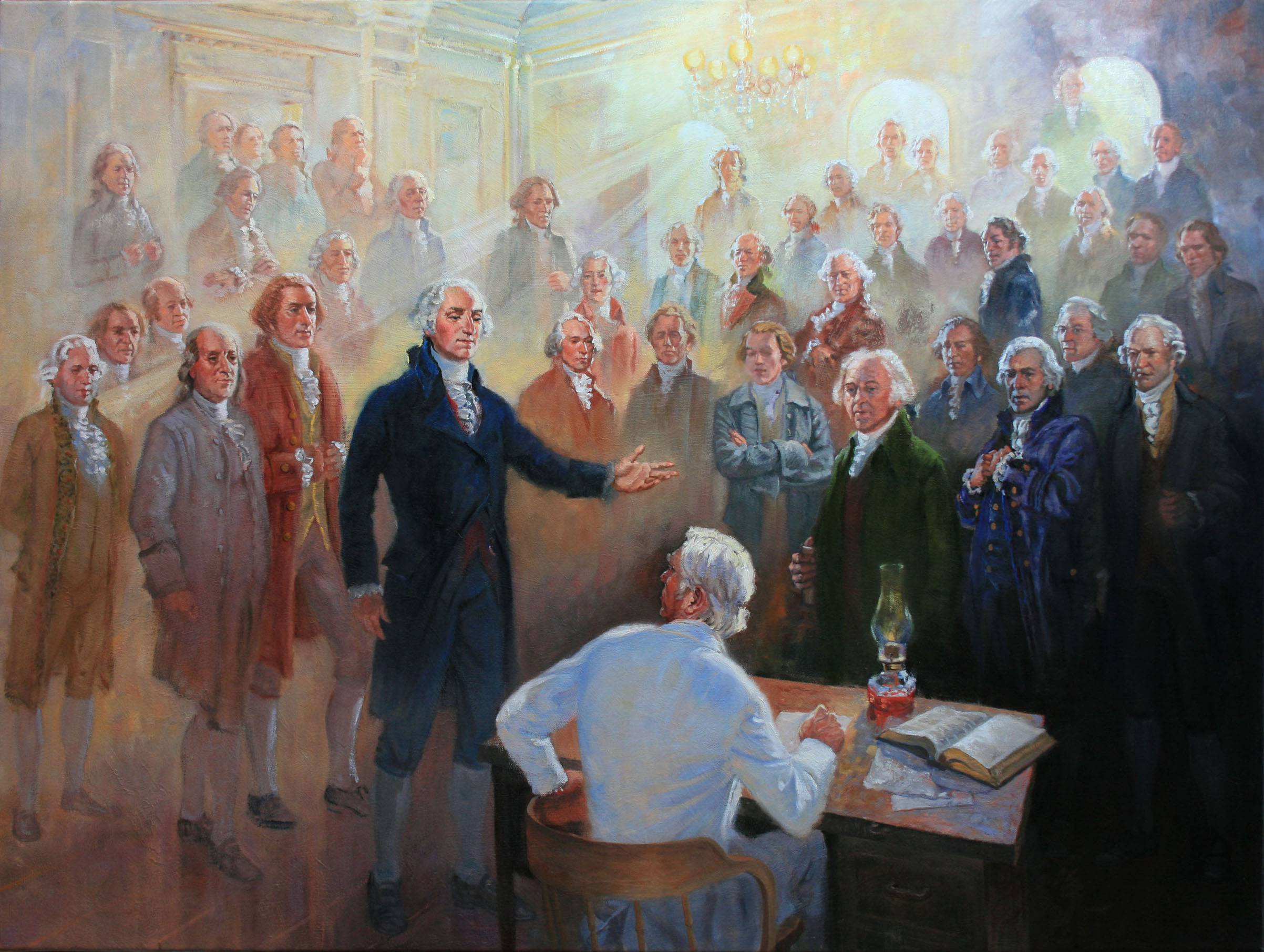
Wilford Woodruff’s vision of the Founding Fathers requesting Temple Ordinances

We are moving soon, but the Burley 11th Ward gave me another chance to address them. Since I received a number of requests for a copy of the talk, which is really just a collage of various items I could find online, the Journal of Discourses, the Saints second and third volumes, and other various histories. Here is the text of the talk I wrote, that does not mean it is the talk I gave…

I first addressed the freedoms we have as contrasted in the Saints third volume related to Germany. I said the word Jew and Israel from the stand and did not fear reprisal. I listen to free radio anytime I want and even seek out British radio from time to time and there is nothing illegal. Lastly, we could congregate without the worry of those in our midst about what was said or in the actual act of meeting.

Then to the following:

Declaration of Independence – We hold these truths to be self-evident, that all men are created equal, that they are endowed by their Creator with certain unalienable Rights, that among these are Life, Liberty and the pursuit of Happiness.

George Washington: “The success, which has hitherto attended our united efforts, we owe to the gracious interposition of Heaven, and to that interposition let us gratefully ascribe the praise of victory, and the blessings of peace.”

Alexander Hamilton: “The Sacred Rights of mankind are not to be rummaged from among old parchments or musty records. They are written . . . by the Hand of Divinity itself.” “For my own part, I sincerely esteem it a system, which without the finger of God, never could have been suggested and agreed upon by such a diversity of interests.”

Thomas Jefferson: “The God who gave us life gave us liberty at the same time.”

John Adams: “As I understand the Christian religion, it was, and is, a revelation.”

Benjamin Franklin: “The longer I live the more convincing Proofs I see of this Truth. That God Governs in the Affairs of Men!—And if a Sparrow cannot fall to the Ground without his Notice, is it probable that an Empire can rise without his Aid?—We have been assured, . . . in the Sacred Writings, that ‘except the Lord build the House, they labour in vain that build it.’ I firmly believe this;—and I also believe that without his concurring Aid we shall succeed in this political building no better than Builders of Babel.”

James Madison: “It is impossible for the man of pious reflection not to perceive in it a finger of that Almighty hand which has been so frequently and signally extended to our relief in the critical stages of the revolution.”

Samuel Adams: “Revelation assures us that ‘Righteousness exalteth a Nation’—Communities are dealt with in this World by the wise and just Ruler of the Universe. He rewards or punishes them according to their general Character.”

Charles Pinckney: “When the great work was done and published, I was . . . struck with amazement. Nothing less than that superintending hand of Providence, that so miraculously carried us through the war, . . . could have brought it about so complete, upon the whole.”

On May 4, 1842, he called to his side nine of the most faithful of his brethren—Hyrum Smith, Brigham Young, Heber C. Kimball, Willard Richards, Newell K. Whitney, and others—and later their wives came with them to the upper floor of the Red Brick Store in Nauvoo. 

Joseph was seeking to fulfill the promise from D&C 124, given in 1841, which the Lord would reveal to Joseph “all things pertaining to this house, and the priesthood thereof, and the place whereon it shall be built.” 

He had started, “If it should be the will of God that I might live.” Then he corrected and said, “It is not the will of the Lord that I should live, and I must give you, here in this upper room, all those glorious plans and principles whereby men are entitled to the fulness of the priesthood.” He proceeded in an improvised and makeshift way to do so.

We have from Brigham Young that after they had received these blessings the Prophet said: “Brother Brigham, this is not arranged right. But we have done the best we could under the circumstances in which we are placed, and I wish you to take this matter in hand and organize and systematize all these ceremonies.”

Brigham Young later said, “I did so. And each time I got something more, so that when we went through the temple at Nauvoo I understood and knew how to place them there. We had our ceremonies pretty correct.”

While the Nauvoo Temple was started in 1841, the first endowments were performed in the winter of 1845 and into 1846.  Baptisms had started in the Mississippi River prior to the temple and moved into the temple baptistery soon after it was completed and dedicated, well before the rest of the temple was done.  Brigham, leading the church, was personally overseeing the organization and perfection of the endowment and other ordinances that started in Nauvoo. 

After arriving in Salt Lake City, the church used the top floor of the Council House, starting in 1852 until the Endowment House was completed in 1855.  It was in this building that endowments, prayer circles, some missionary training, and some setting aparts were conducted.  The use of the Endowment House ended in 1877 with the completion of the St George Temple.  That building stood until Wilford Woodruff heard that unauthorized sealings were occurring there and ordered it razed in 1889. 

The St George Temple was the only one completed during Brigham Young’s 30 year tenure as President.  It was dedicated on 1 January 1877 in three dedicatory prayers under the direction of Brigham.  The baptistery by Wilford Woodruff, the main floor by Erastus Snow, and the sealing room by Brigham Young Jr.  Wilford Woodruff served as St George Temple President from 1877 to 1884.  Brigham had to be carried up the stairs, but he stood and spoke in the Assembly Room. 

“When I think upon this subject, I want the tongues of seven thunders to wake up the people,” he declared. “Can the fathers be saved without us? No. Can we be saved without them? No. And if we do not wake up and cease to long after the things of this earth, we will find that we as individuals will go down to hell.”

Brigham lamented that many Saints were pursuing worldly things. “Supposing we were awake to this thing, namely the salvation of the human family,” he said, “this house would be crowded, as we hope it will be, from Monday morning until Saturday night.”

On 9 January 1877, the first baptisms for the dead were performed in the St George Temple.  The first endowment for the dead was performed on 11 January 1877.  Brigham and Wilford personally oversaw the ordinances being performed.  Wilford began wearing a white suit, starting the trend that continues to this day. 

All endowments to this point had been done and passed by word of mouth.  It was in St George, far from Salt Lake City, that the ordinances were first written down.  Brigham also wanted to make sure the record was preserved and that they were standardized.  They were read to Brigham time and time again who would then approve or continue to revise the ordinances.  Brigham went home to Salt Lake City in April 1877.  He stopped and dedicated the spot for the Manti Temple on the way home.

Wilford Woodruff then wrote in his journal on Sunday 19 August 1877, “I spent the evening in preparing a list of the noted men of the 17 century and 18th, including the signers of the Declaration of Independence and presidents of the United States, for baptism on Tuesday the 21 Aug 1877.”

His journal entry for August 21 reads, “I, Wilford Woodruff, went to the temple of the Lord this morning and was baptized for 100 persons who were dead, including the signers of the Declaration of Independence. … I was baptized for the following names.” He then listed the names of one hundred men.
Elder Woodruff continued his journal entry: “When [John Daniel Thompson] McAllister had baptized me for the 100 names, I baptized him for 21, including Gen. Washington and his forefathers and all the presidents of the United States that were not on my list except Buchanan, Van Buren, and Grant.” (The work for these presidents has since been done.)
“It was a very interesting day,” Elder Woodruff continued. “I felt thankful that we had the privilege and the power to administer for the worthy dead, especially for the signers of the Declaration of Independence, that inasmuch as they had laid the foundation of our Government, that we could do as much for them as they had done for us.

“Sister Lucy Bigelow Young went forth into the font and was baptized for Martha Washington and her family, and seventy of the eminent women of the world. I called upon the brethren and sisters who were present to assist in getting endowments for those that we had been baptized for today.” (Wilford Woodruff’s journal, typescript, vol. 7, Church History Library; spelling and punctuation modernized.)

The first public mention of these events was made nearly a month after the baptisms were performed. In an address in the Tabernacle on Temple Square on 16 September 1877, Elder Woodruff first told publicly of the visitation of the signers of the Declaration of Independence.

“You have had the use of the Endowment House for a number of years, and yet nothing has ever been done for us. We laid the foundation of the government you now enjoy, and we never apostatized from it, but we remained true to it and were faithful to God. (Conference Report, April 10, 1898; Discourses of Wilford Woodruff, pp. 160-61)

During the 68th Annual General Conference of the Church which was held in April 1898, President Woodruff recounted the sacred experience:

I am going to bear my testimony to this assembly, if I never do it again in my life, that those men who laid the foundation of this American government and signed the Declaration of Independence were the best spirits the God of heaven could find on the face of the earth. They were choice spirits, not wicked men. General Washington and all the men that labored for the purpose were inspired of the Lord.
Another thing I am going to say here, because I have a right to say it.  Every one of those men that signed the Declaration of Independence, with General Washington, called upon me, as an Apostle of the Lord Jesus Christ, in the Temple at St. George, two consecutive nights, and demanded at my hands that I should go forth and attend to the ordinances of the House of God for them.  Men are here, I believe, that know of this, Brother John D. T. McAllister, David H. Cannon and James S. Bleak.  Brother McAllister baptized me for all those men, and then I told these brethren that it was their duty to go into the Temple and labor until they had got endowments for all of them.  They did it.  Would those spirits have called up on me, as an Elder in Israel to perform that work if they had not been noble spirits before God?  They would not. (Wilford Woodruff, Conference Report, April 1989, pp. 89-90.)

“They waited on me for two days and two nights,” he said,

“I thought it very singular, that notwithstanding so much work had been done, and yet nothing had been done for them.” (Journal of Discourses, 19:229.)

I was also present in the St. George Temple and witnessed the appearance of the Spirits of the Signers….the spirits of the Presidents….and also others, such as Martin Luther and John Wesley….Who came to Wilford Woodruff and demanded that their baptism and endowments be done. Wilford Woodruff was baptized for all of them. While I and Brothers J.D.T. McAllister and David H Cannon (who were witnesses to the request) were endowed for them. These men… laid the foundation of this American Gov., and signed the Declaration of Independence and were the best spirits the God of Heaven could find on the face of the earth to perform this work. Martin Luther and John Wesley helped to release the people from religious bondage that held them during the dark ages. They also prepared the people’s hearts so they would be ready to receive the restored gospel when the Lord sent it again to men on the earth.” (Personal journal of James Godson Bleak – Chief Recorder of the St. George Temple.)

In 1986, some of the staff of the Family History Library’s LDS Reference Unit were assigned to compile and computerize all the existing genealogical data on the founding fathers, to identify their families, and to document completed temple ordinances for each. For purposes of the project, a founding father was identified as one who had signed one or more of the following documents: the Articles of Association (1774), the Declaration of Independence (1776), the Articles of Confederation (1778), or the Constitution (1787).

The library study of 1986 revealed that there were no sealings of children to parents performed at the time the baptisms and endowments were performed. As a note, the ongoing revelation related to sealings to parents was not revealed until 1894.  It was then that the Law of Adoption, or sealing to prominent church leaders, was discontinued and we were encouraged to do genealogical work to compile the pedigree of the entire human family.  It was then that the Utah Genealogical Society was founded that has snowballed into the fantastic work of FamilySearch and all its appendages. 

He also recorded that George Washington, John Wesley, Benjamin Franklin, and Christopher Columbus were ordained High Priests at the time.

Temple work was performed on behalf of the following well-known and respected men and women in the St. George Utah Temple in August 1877.

Founding Fathers: William Hooper (NC), Joseph Hewes (NC), John Penn (NC), Button Gwinnett (GA), Lyman Hall (GA), George Walton (GA), Edward Rutledge (SC), Thomas Heyward Jr. (SC), Thomas Lynch (SC), Arthur Middleton (SC), Samuel Chase (MD), William Paca (MD), Thomas Stone (MD), Charles Carroll (MD), George Wythe (VA), Richard Henty Lee (VA), Thomas Jefferson (VA), Benjamin Harrison (VA), Thomas Nelson Jr. (VA), Francis Lightfoot Lee (VA), Carter Braxton (VA), Robert Morris (PA), Benjamin Rush (PA), Benjamin Franklin (PA), John Morton (PA), George Clymer (PA), James Smith (PA), George Taylor (PA), James Wilson (PA), George Ross (PA), Caeser Rodney (DE), George Read (DE), Thomas McKean (DE), Philip Livingston (NY), Francis Lewis (NY), Lewis Morris (NY), Richard Stockton (NJ), John Witherspoon (NJ), Francis Hopkinson (NJ), John Hart (NJ), Abraham Clark (NJ), Josiah Bartlett (NH), William Whipple (NH), Matthew Thornton (NH), Samuel Adams (MA), John Adams (MA), Robert Treat Paine (MA), Elbridge Gerry (MA), Stephen Hopkins (RI), William Ellery (RI), Roger Sherman (CN), Samuel Huntington (CN), William Williams (CN), and Oliver Wolcott (CN).

Note: Temple work was not done for John Hancock or William Floyd as it had already been completed previously.

Presidents of the United States: George Washington, John Adams, Thomas Jefferson, James Madison, James Monroe, John Quincy Adams, Andrew Jackson, William Henry Harrison, John Tyler, James Knox Polk, Zachary Taylor, Millard Fillmore, Franklin Pierce, Abraham Lincoln, and Andrew Johnson.  Temple work was not done for James Buchanan, Martin Van Buren, or Ulysses S. Grant.

Other eminent men baptized by Wilford Woodruff in the St. George Utah Temple in August 1877 include: Sir Edward Gibbon, Johann Wolfgang von Goethe, Oliver Goldsmith, Henry Grattan, Humboldt, Alexander von Irving, Washington Jackson, Thomas Jonathan “Stonewall” Johnson, Samuel Juarez, Benito Pablo Kemble, John Philip Liebig, Baron Justus von Livingstone, David Macaulay, Thomas Babington Nelson, Lord Horatio O’Connell, Daniel Peabody, George Powers, Hiram Reynolds, Sir Joshua Schiller, Johann Christoph Friedrich von Scott, Sir Walter Seward, William Henry Stephenson, George Thackeray, William Makepeace, Vespucci, Amerigo Webster, Daniel Wesley, John Wordsworth, William Parepa, Count Dimitrius, Martha Washington and her family, John Washington (Great Grandfather of George Washington), Sir Henry Washington, Lawrence Washington (Brother of George Washington), Augustine Washington (Father of George Washington), Lawrence Washington (Father of Augustine), Lawrence Washington, Daniel Park Custis, John Park Custis (Son of Daniel and Martha Parke Custis), and Martin Luther.

Eminent Women baptized include: Jean Armour (1767—1834) of Scotland, Jean Armour Burns (Wife of Robert Burns) (1759—1796), Jane Austen (1775—1817) of England, novelist, Mary Ball (1708—1789) of America, Mary Ball Washington (Mother of George Washington) (1732—1799), Sarah Bernard (1800—1879) of England, Sarah Barnard Faraday (wife of Michael Faraday (1791—1867), Charlotte Bronte (1816—1855) of England, novelist, Felicia Dorothea Browne (1793—1835) of England, Elizabeth Barrett Browning (1806—1861) of England, poet, (wife of Robert Browning) (1812—18?), Martha Caldwell Calhoun (d. 1802) of America (mother of John Caldwell Calhoun) (1782—1850), Martha Parke Custis (1755—1773) of America (Daughter of Martha Washington) (1732—1802), Martha Dandridge Washington (1732—1802) of America (wife of George Washington) (1732—1799),  Rachel Donelson Jackson (1767—1828) of America (wife of Andrew Jackson (1767—1845), and Abigail Eastman Webster (1737—1816) of America (mother of Daniel Webster (1782—1852), to name but a few. Temple work was performed for a total of 70 eminent women.

During most of our national history Columbus and the Founders were considered heroes with determination and foresight.  Cities, rivers, and many other places were named after them.  More recently there has been a wide spread effort, designed especially to indoctrinate young people, which slanders Columbus, the Founders and their accomplishments.  Columbus is held personally responsible for centuries of mistreatment of Native Americans.  The Founders are portrayed as being greedy and motivated by selfish interests. All of this is as astonishing as it is misleading.  

From the Lord’s perspective among the most important events of the history of the world was the discovery and founding of America.  1 Ne 11-14.  Nephi was referring to Columbus when he wrote:  “I looked and beheld a man among the Gentiles, who was separated from the seed of my brethren by the many waters; and I beheld the Spirit of God, that it came down and wrought upon the man; and he went forth upon the many waters, even unto the seed of my brethren, who were in the promised land” 1 Ne 13:12.  By the Founders “the Lord God will raise up a mighty nation…even on the face of this land.” 1 Ne 22:7.

Go on to life and history of George Ross of Pennsylvania, signer of Declaration of Independence.  

David D Williams

David D Williams

This photo appeared of David D Williams recently. I had a very small copy of the same photo attached to a family pedigree sheet. Here is a copy of that pedigree that belonged to my Grandmother, Gladys Maxine Donaldson Ross. The other photos on the pedigree I have also match. I was pretty excited when this one showed up in better and higher resolution than the one on the family group sheet.

Pedigree of David Delos Donaldson

My Grandma would not have known David as he passed away in 1911. I have previously written on David D Williams and Gwenllian Jordan. For a quick updated, David D Williams was born 12 November 1832 in Pembrey, Carmarthenshire, Wales. He joined The Church of Jesus Christ of Latter-day Saints in August 1848. He saved and emigrated to Utah in 1864. He married his wife on board the the ship, General McClellan, docked at Bramley-Moore Dock in Liverpool, Lancashire, England. He and Gwenllian Jordan settled in Ogden, Weber, Utah. They had 10 children of which Mary Elizabeth Williams (1869 – 1951) is my Great Great Grandmother. David passed away 27 November 1911 in Ogden. He was buried 2 December 1911 in the Ogden City Cemetery. He and Gwenllian do not yet have a tombstone, something I hope to correct.