First, Happy Birthday Dad. As always, I am sure you will have all the neighbors celebrating with fireworks. Happy Birthday Jan, I know it was a week ago, but I am still thinking of you. Happy Birthday America. May all of you live long!
Yesterday and today we were off visiting several castles of Northern Wales. They are all built under the direction of Edward I in the late 1200’s. If Amanda wasn’t sick of castles yet, hopefully we have advanced her towards such a state.
Yesterday we visited Conwy and Beaumaris castles. There isn’t really any way for us to describe it rather than show you the photos. Which we will have to upload.
Driving to Conwy
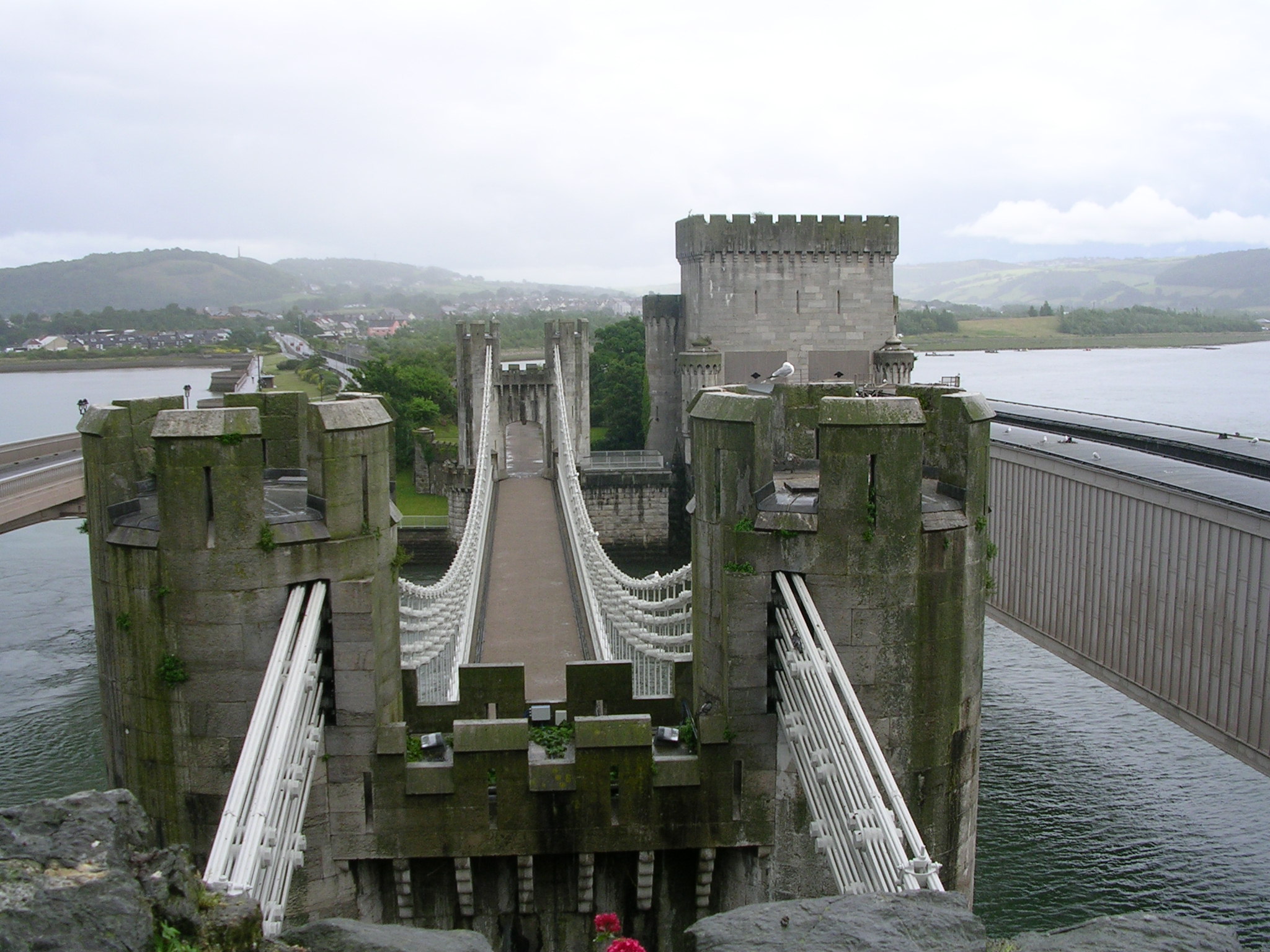
Conwy bridge detail
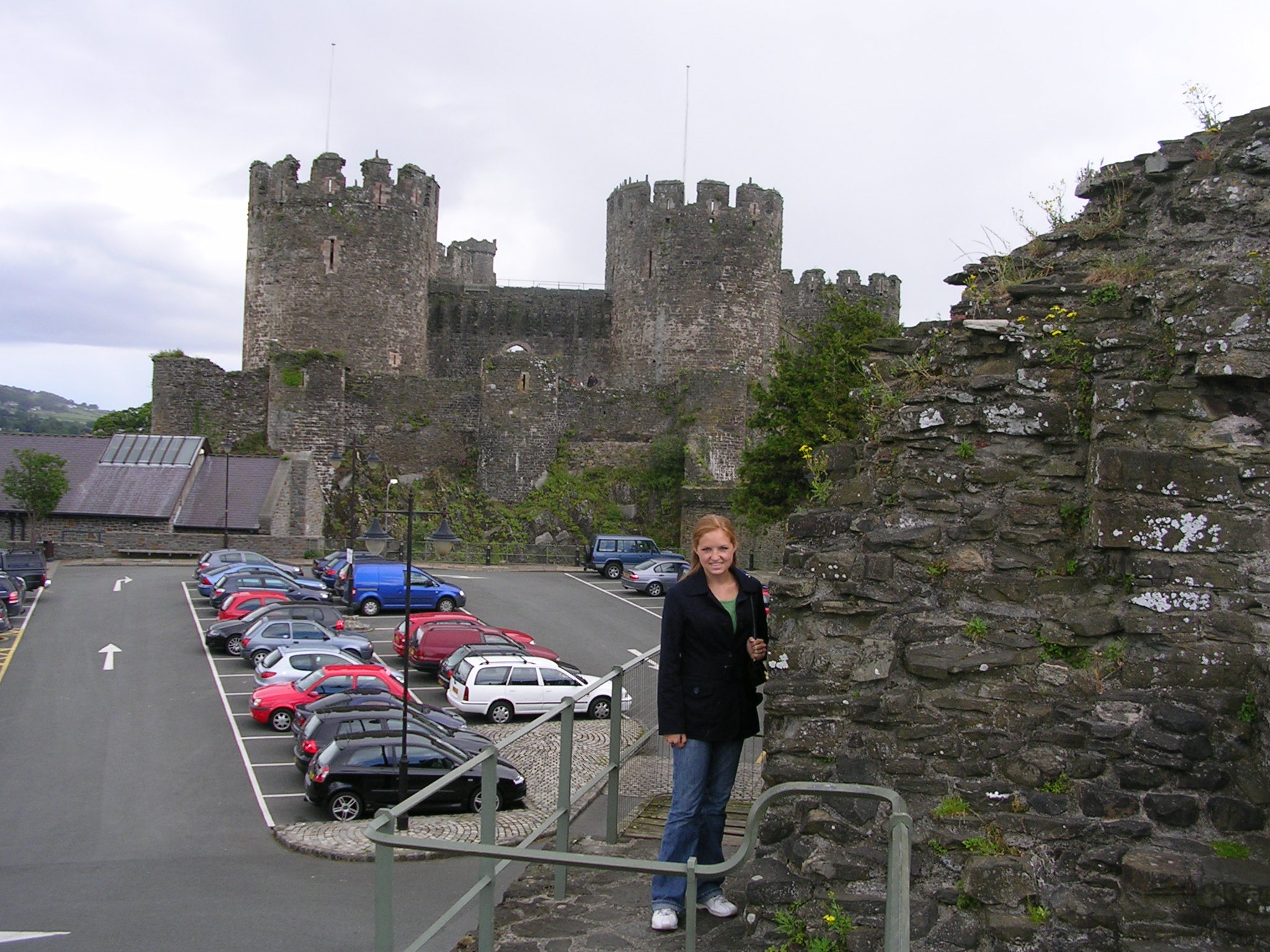
Amanda approaching Conwy
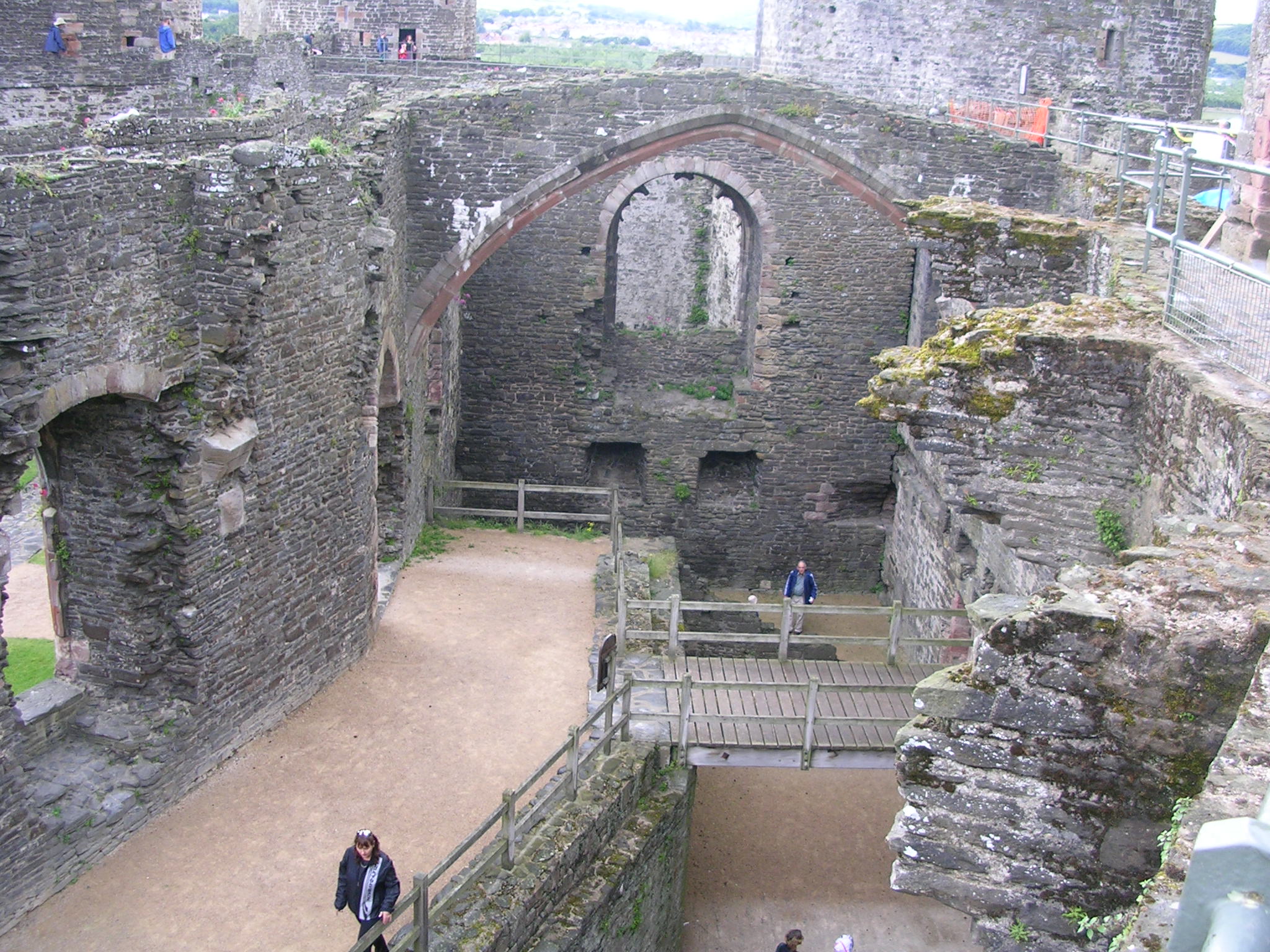
Conwy yard
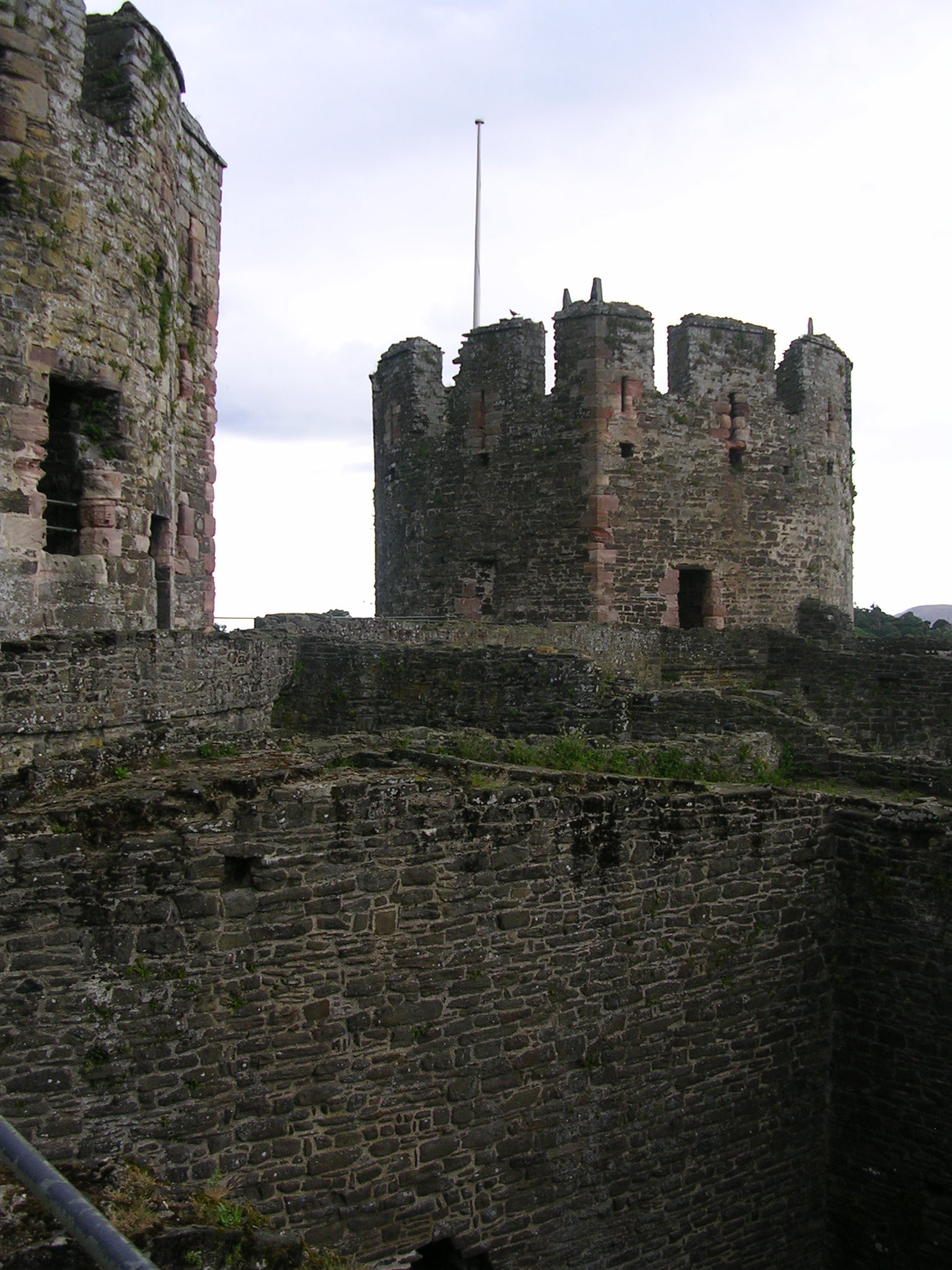
Across a tower
Fireplaces looking down into a Conwy tower
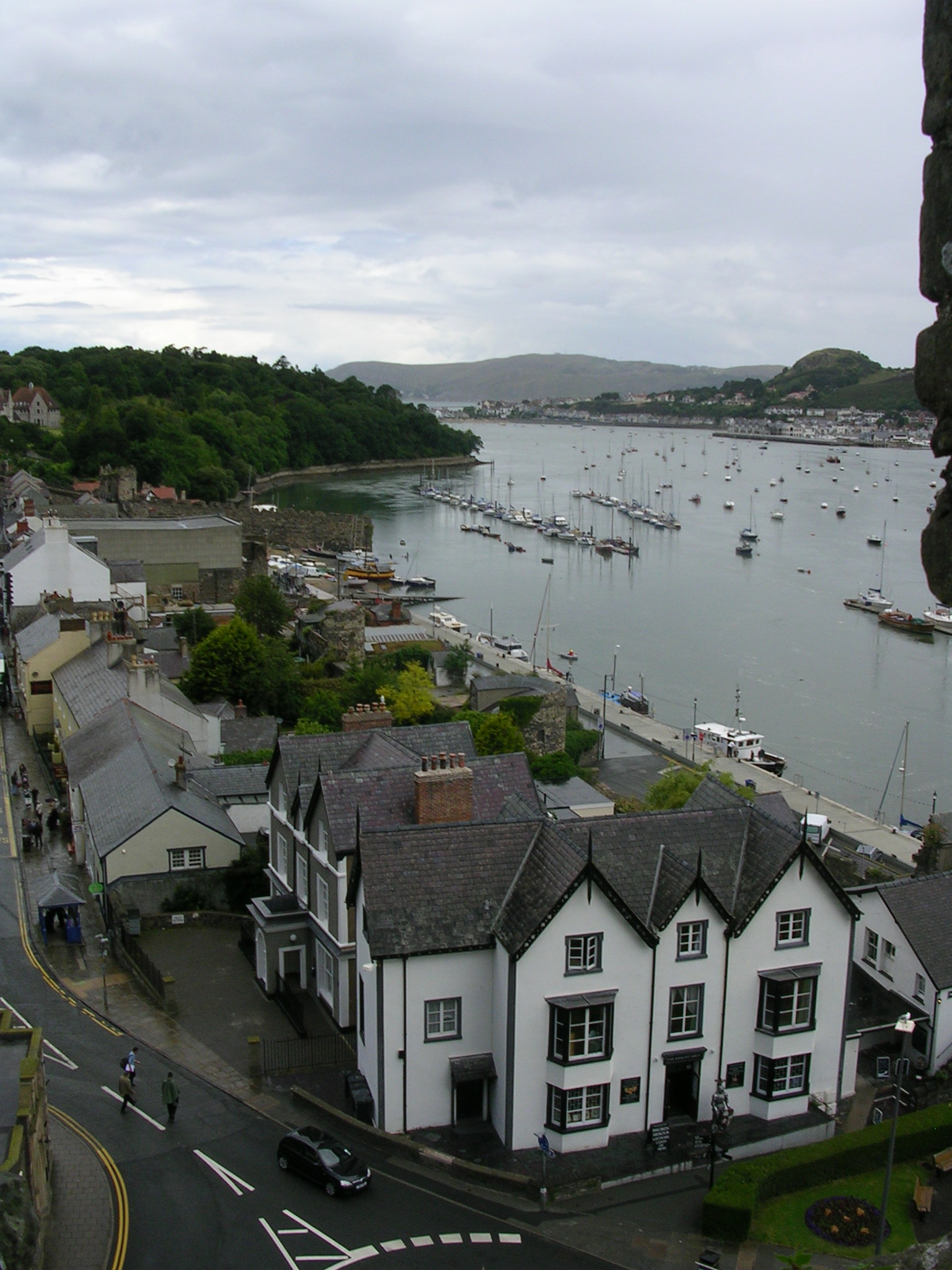
Conwy Harbour from Conwy Castle
Layers of Conwy Castle
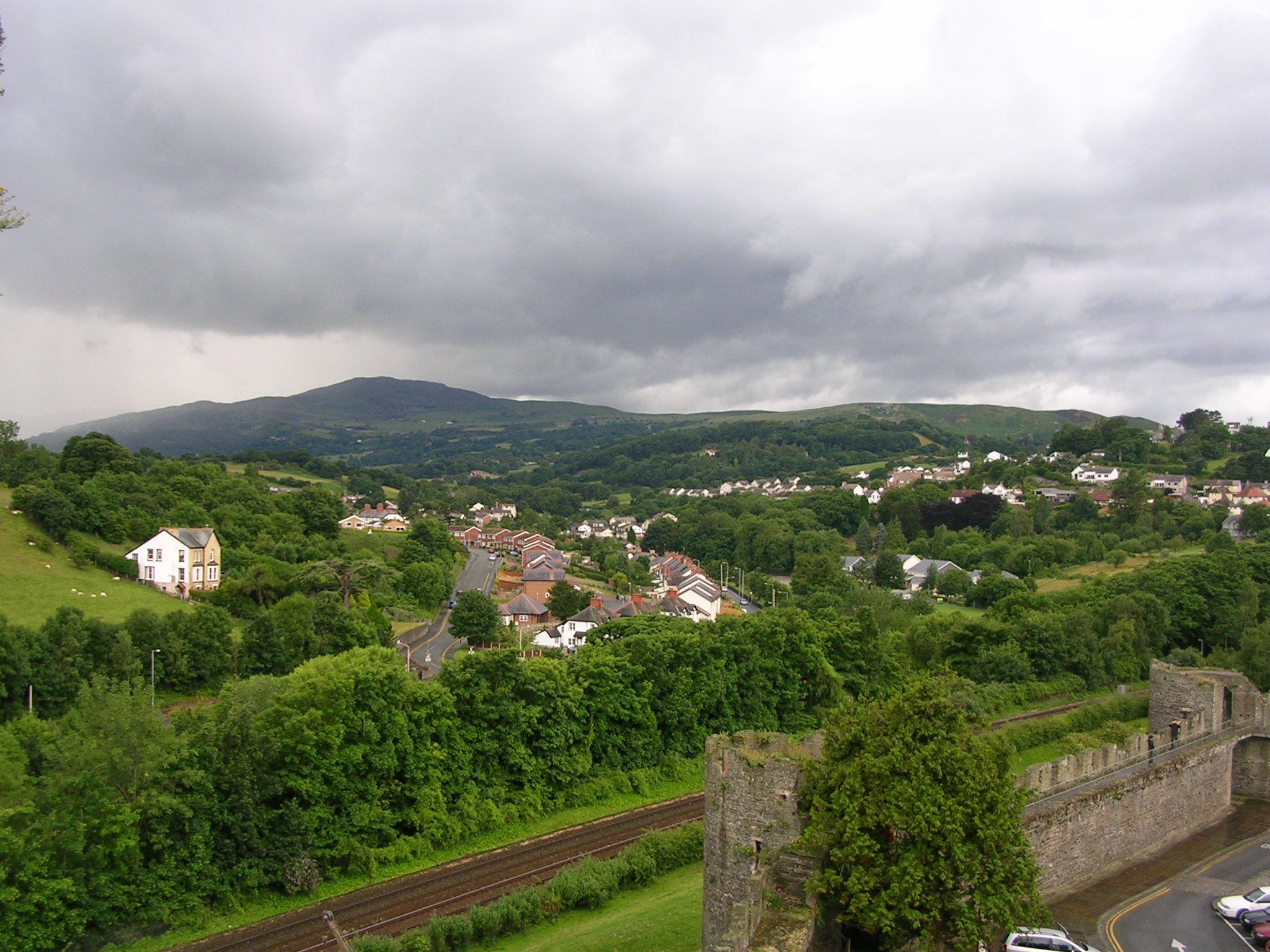
Conwy from Conwy Castle
Conwy
More layers on Conwy
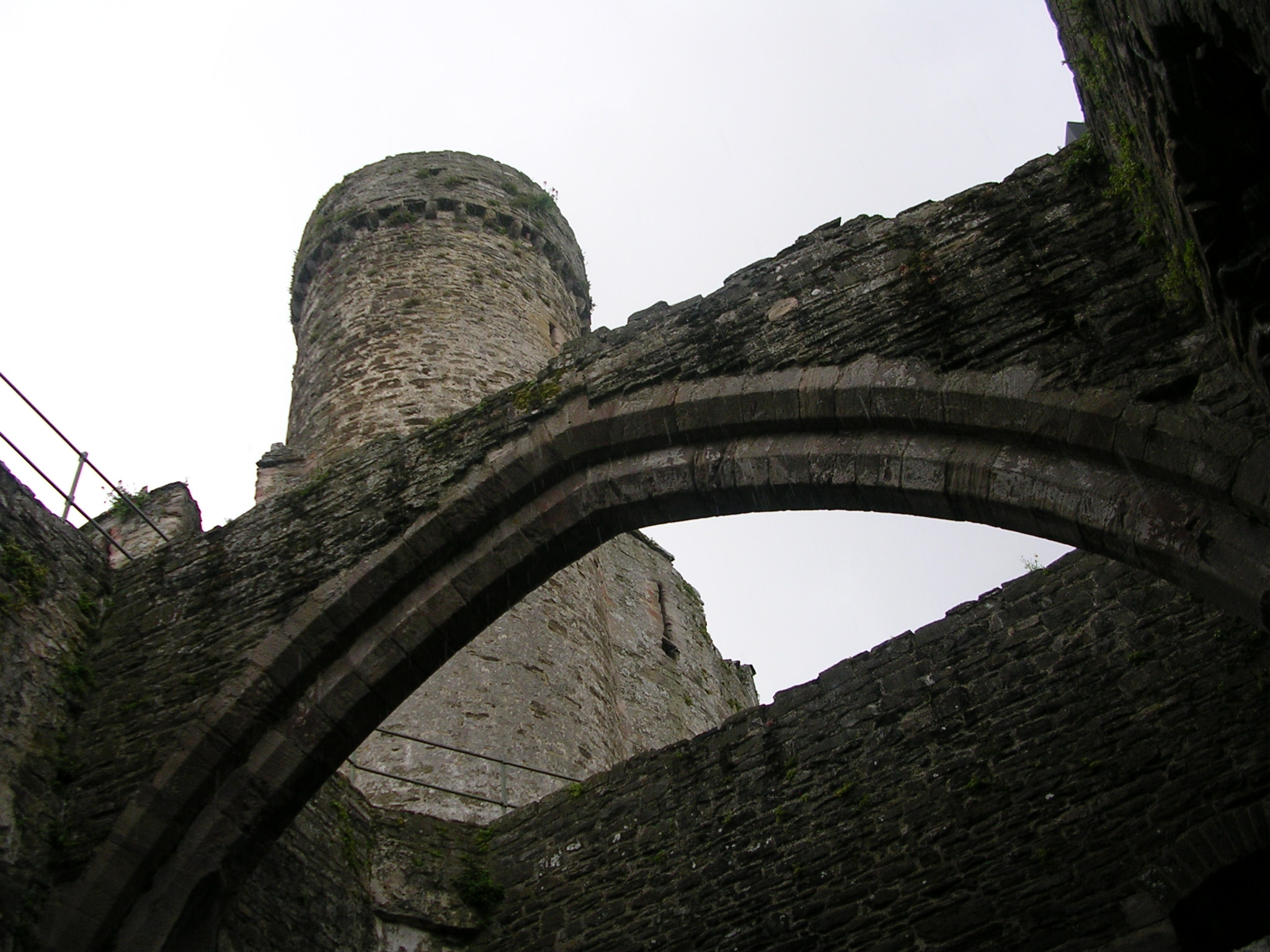
Archway at Conwy
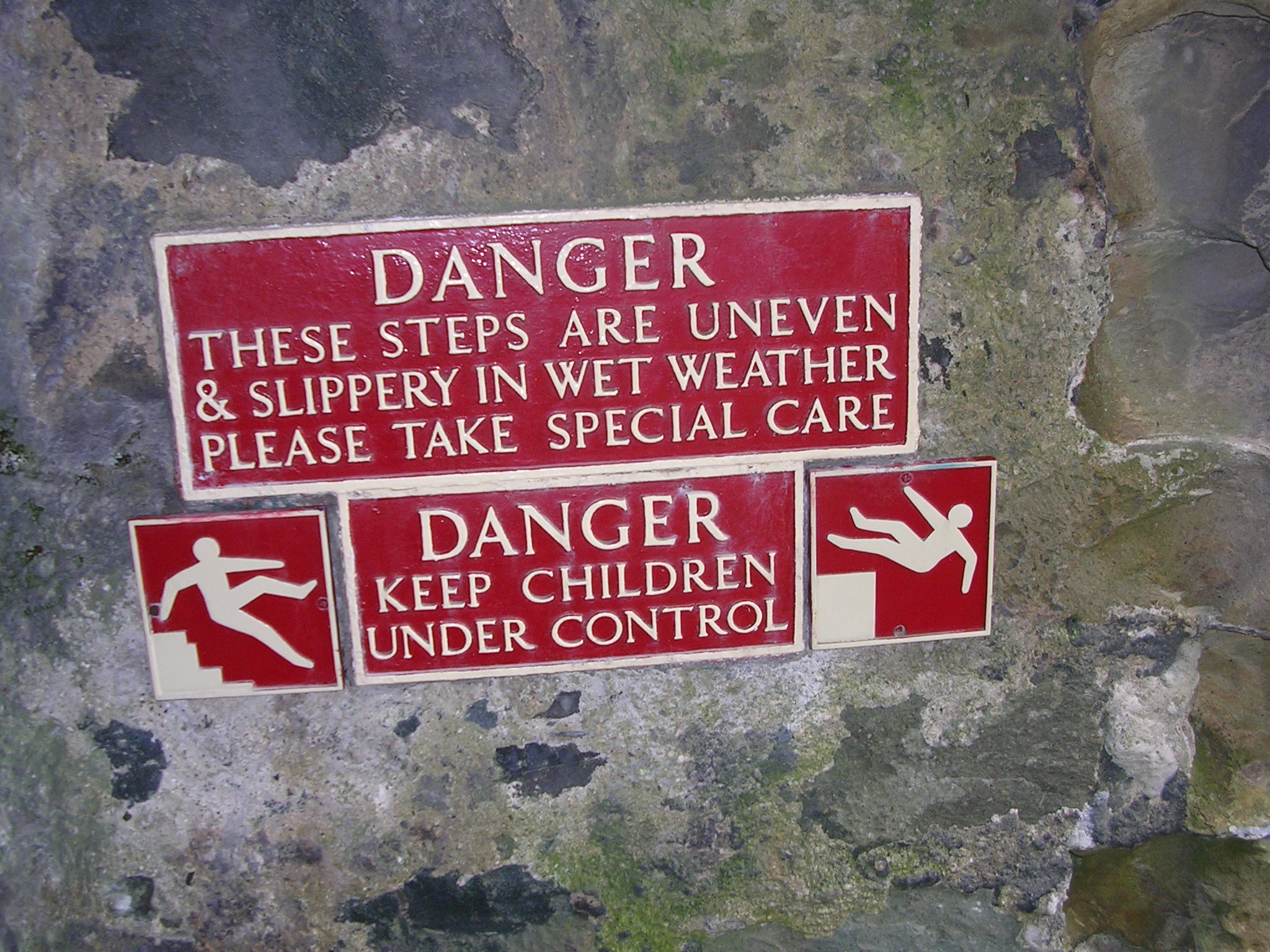
So many interpretations of these signs
Amanda Ross in the rain on a tower of Conwy Castle
Down the bridge of Conwy Castle
Paul Ross at Conwy Castle
Paul Ross with layers at Conwy Castle, look at the fireplace and holes for floor joists
From Conwy we drove to Beaumaris Castle. We had to cross the Menai Suspension Bridge to get to Anglesey.
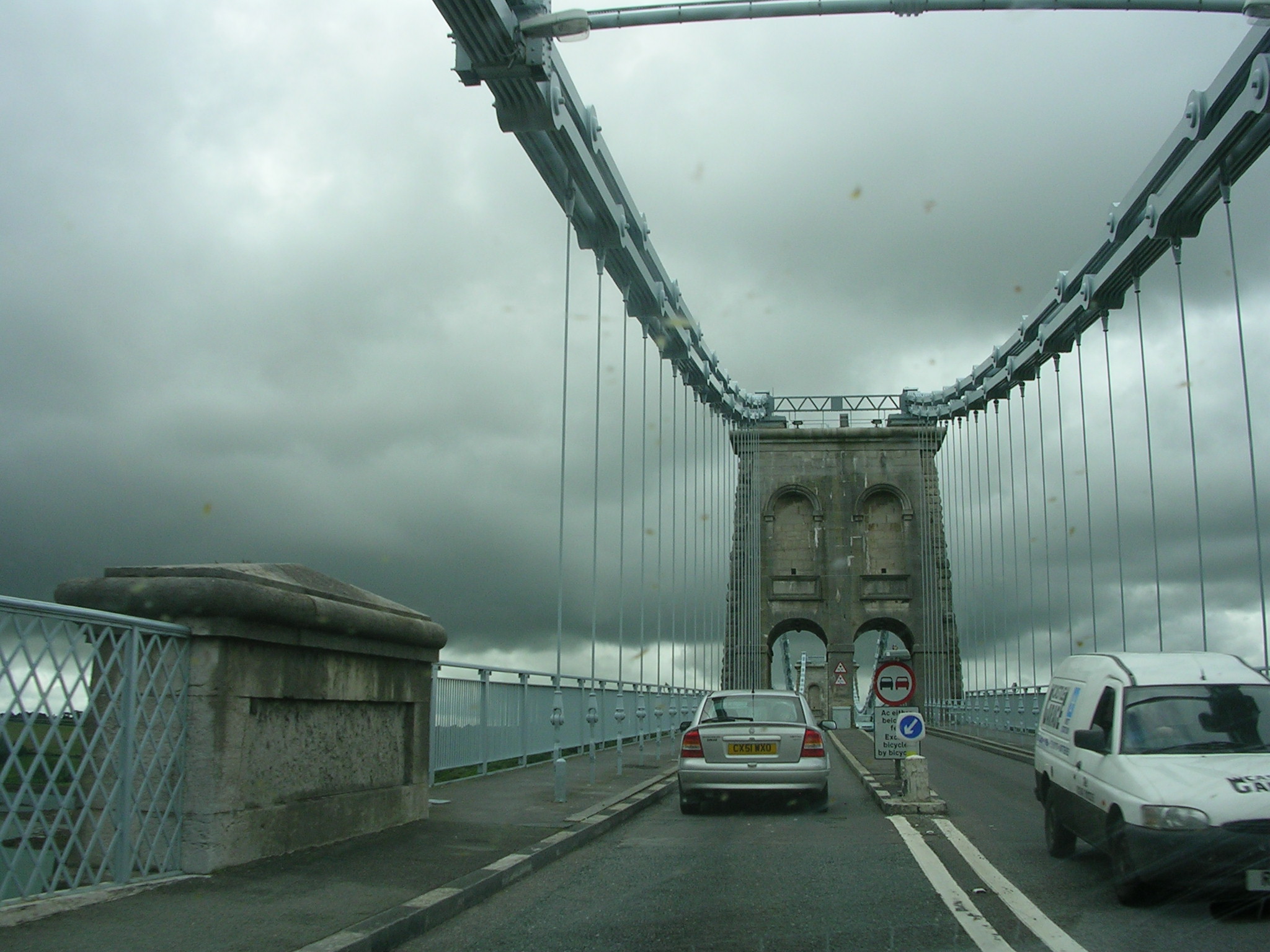
Menai Suspension Bridge
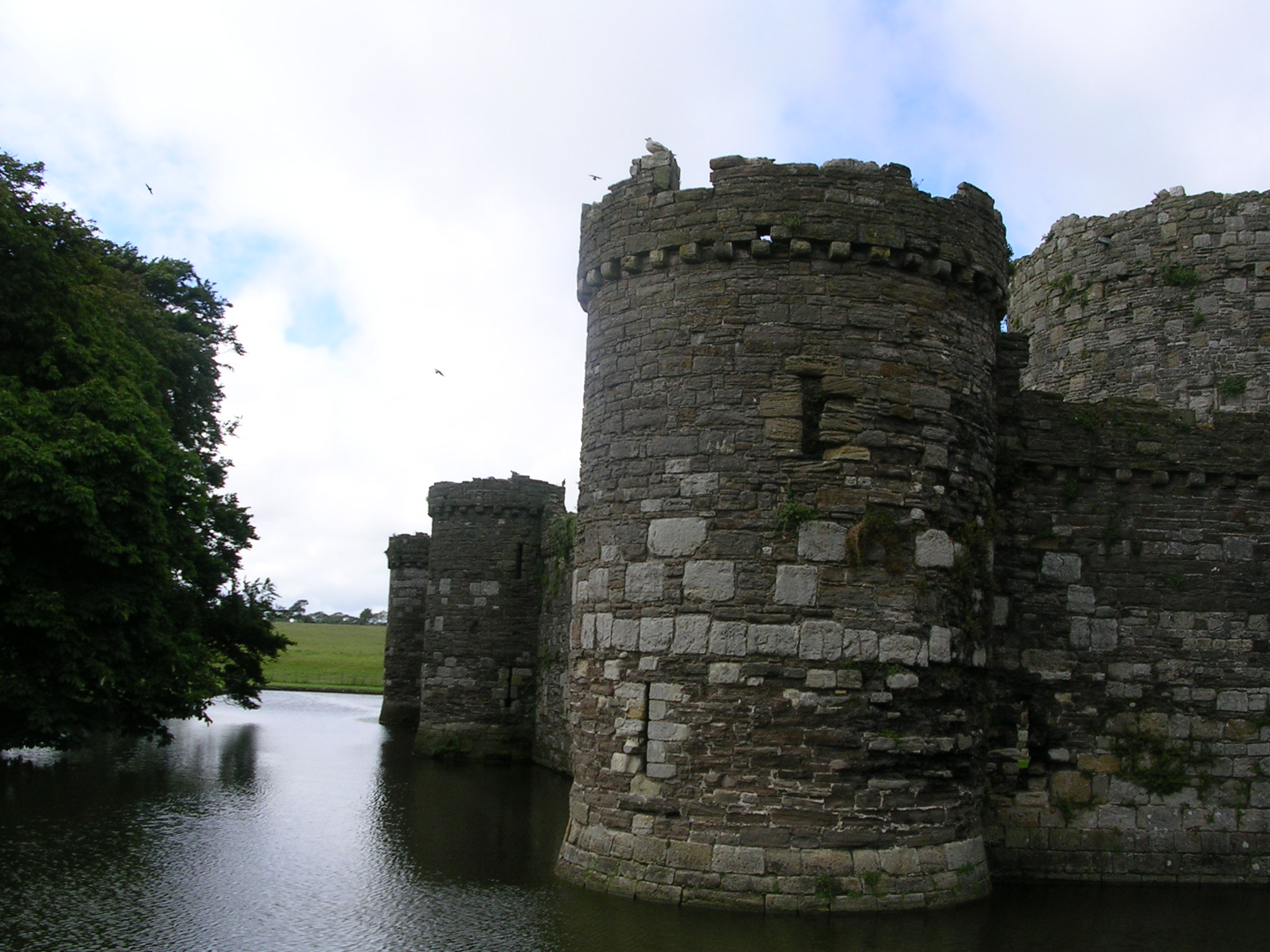
Beaumaris bridge crossing the moat
Beaumaris moat
Paul Ross at Beaumaris Castle
Amanda Ross at Beaumaris Castle
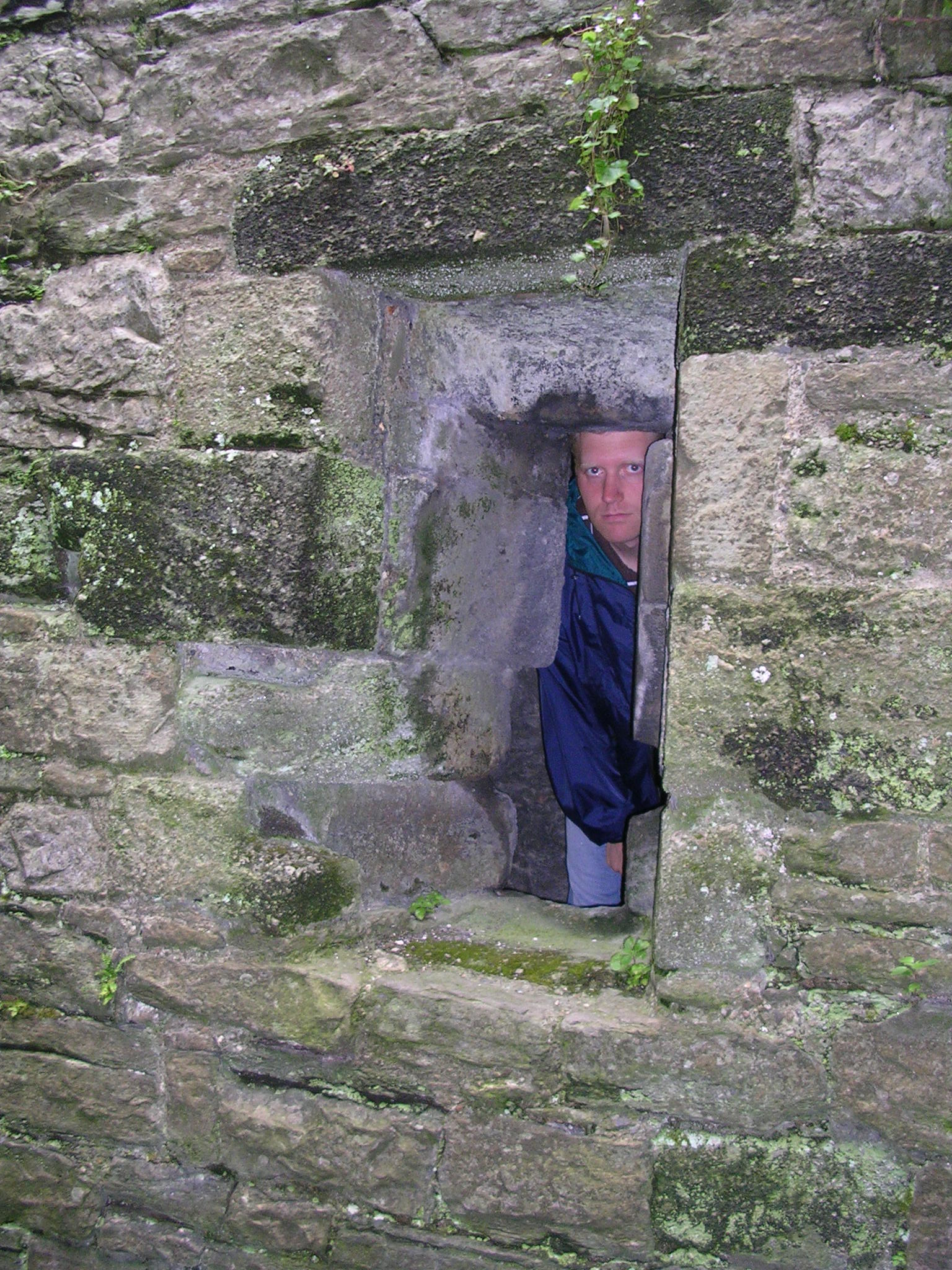
Peeking out a window
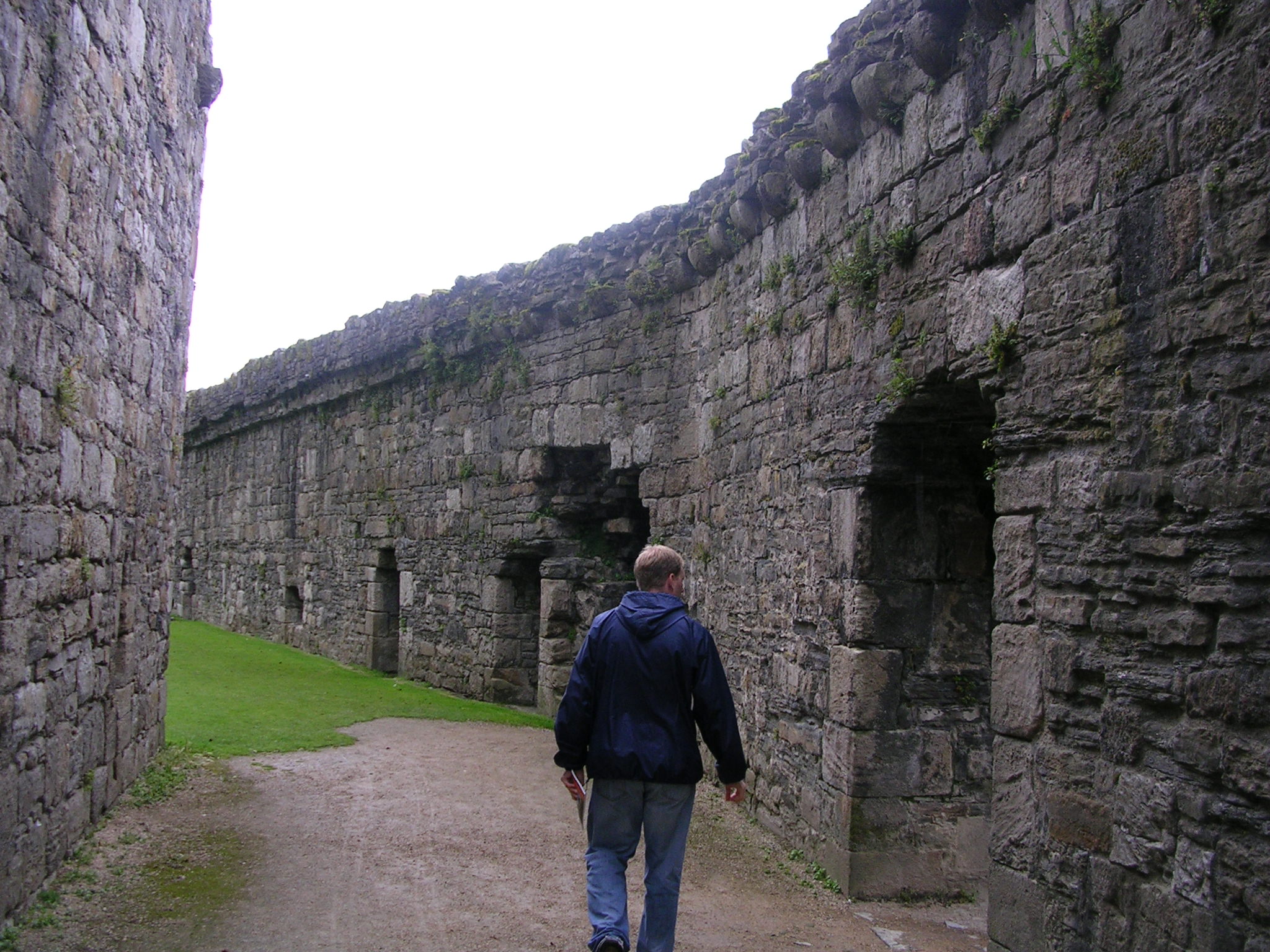
Walking between walls at Beaumaris
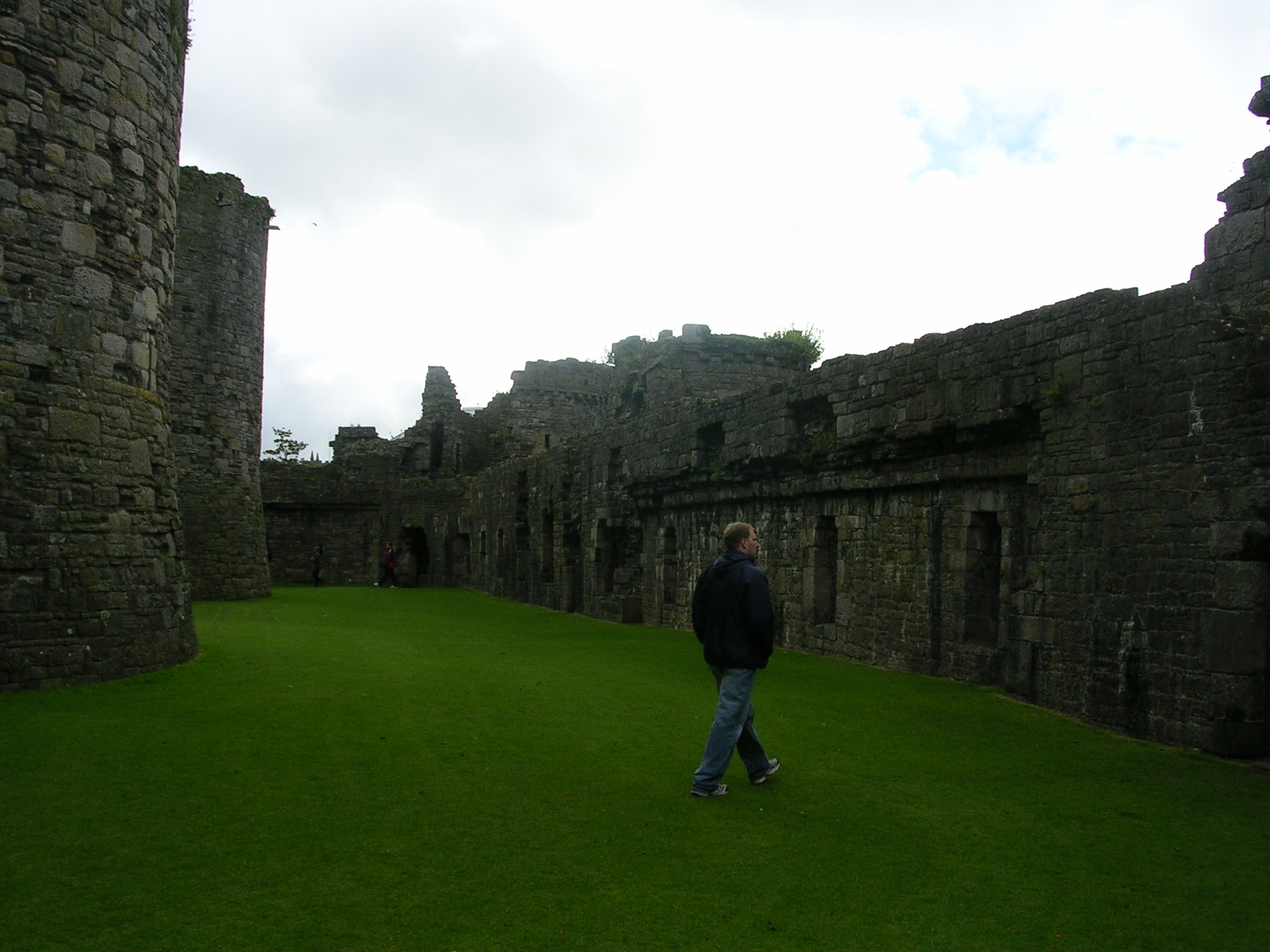
Beaumaris grass
Beaumaris gate
Beaumaris door
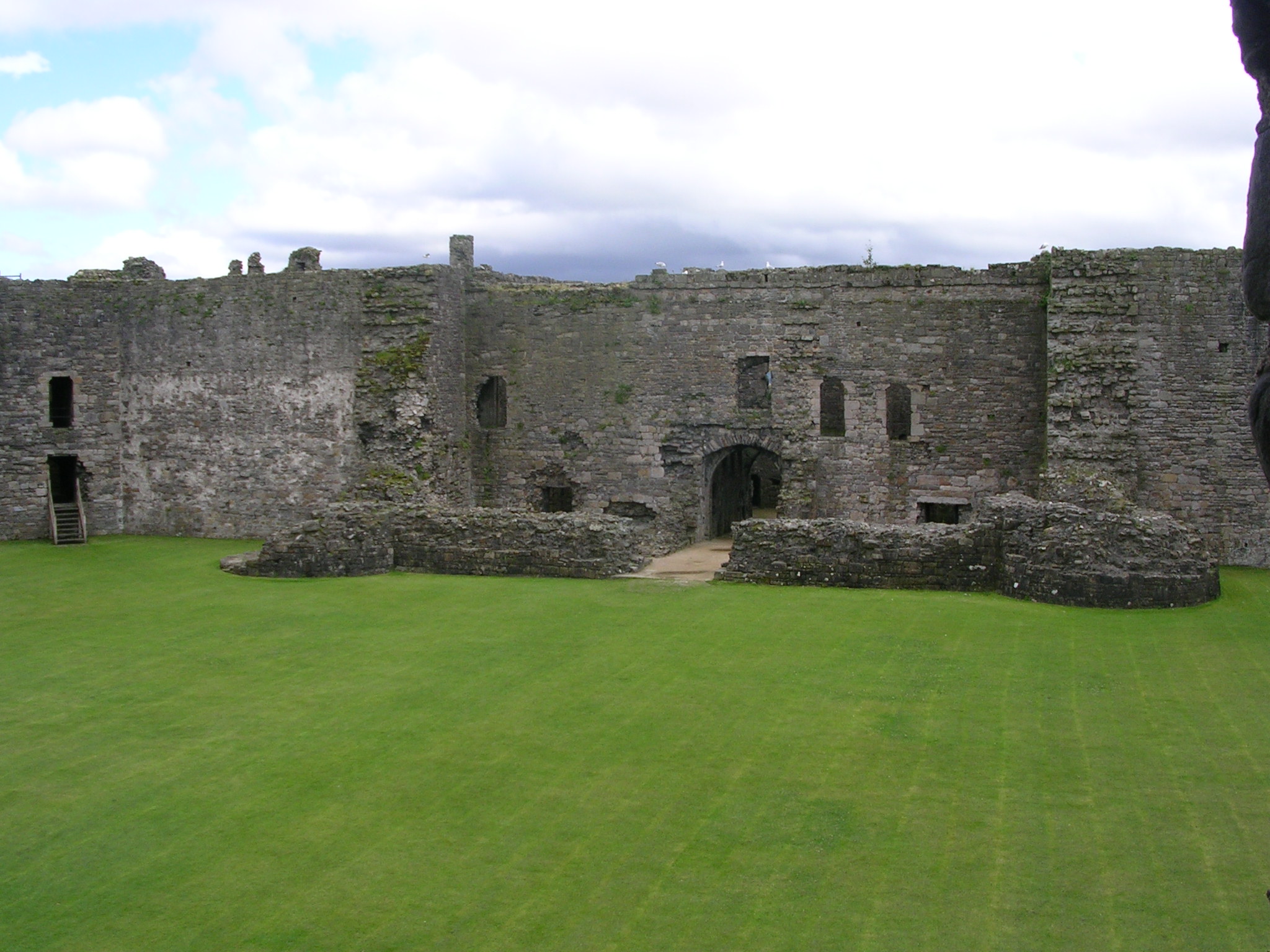
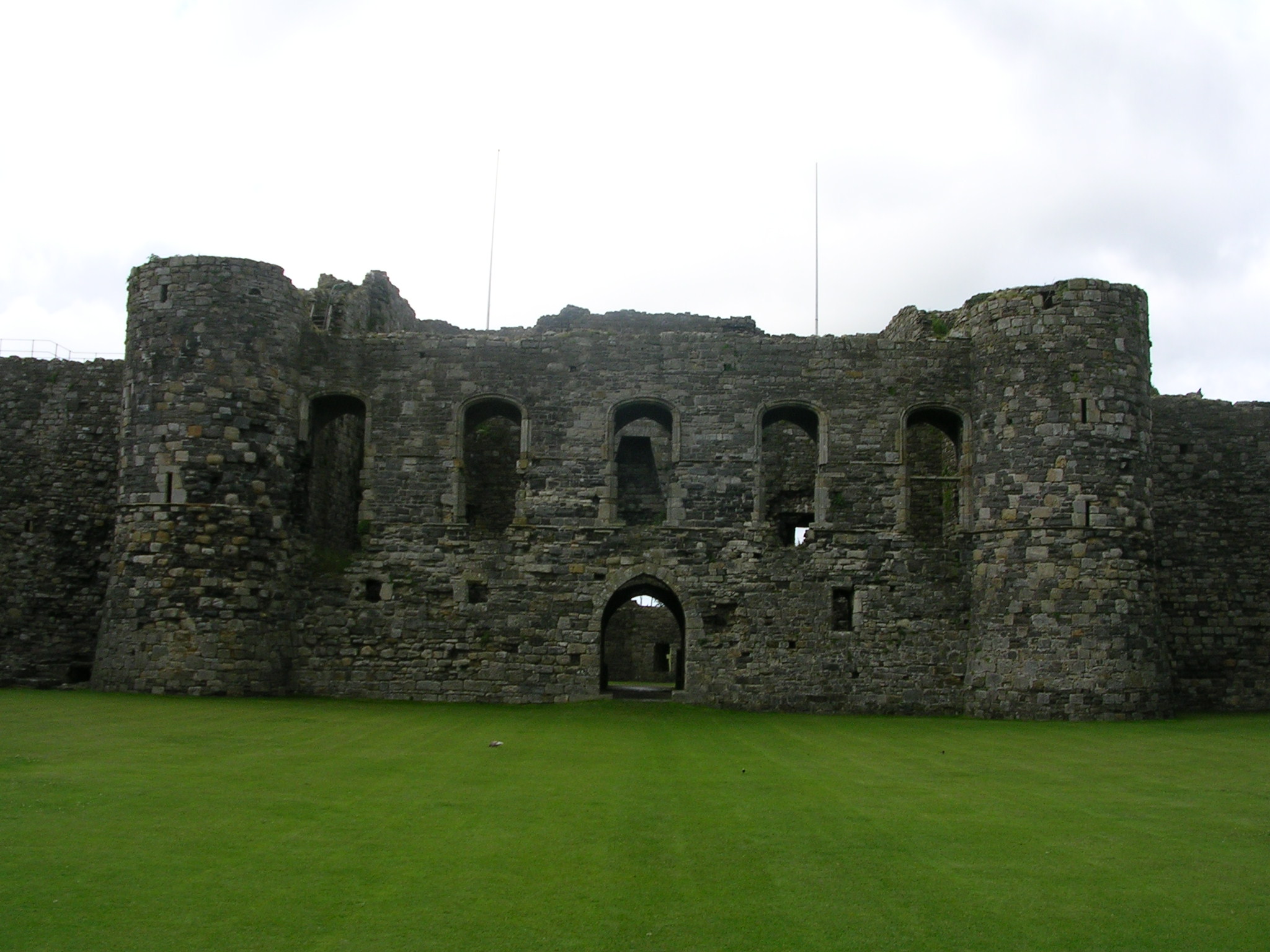
Beaumaris Yard
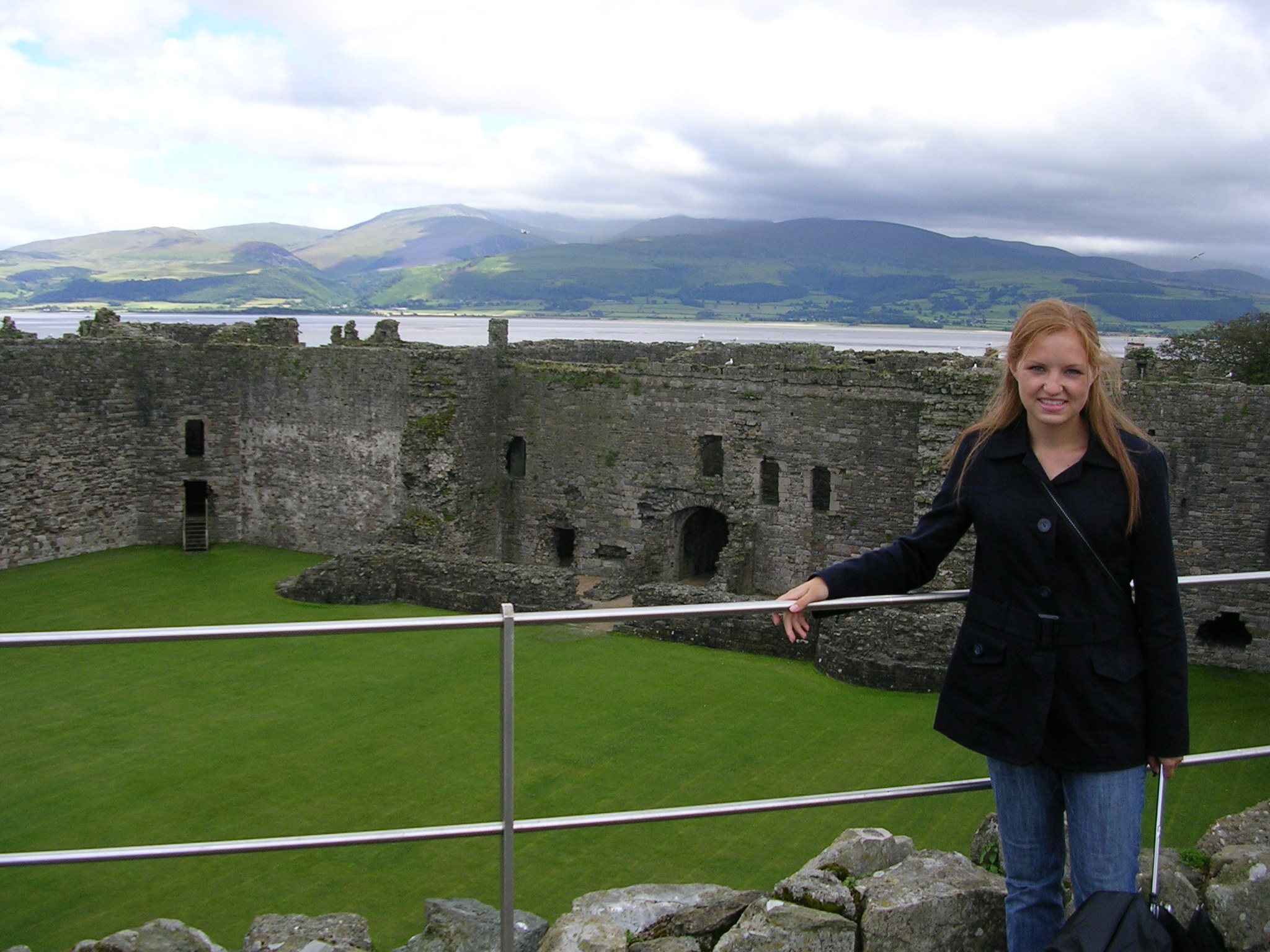
Beaumaris yard from wall with Amanda Ross
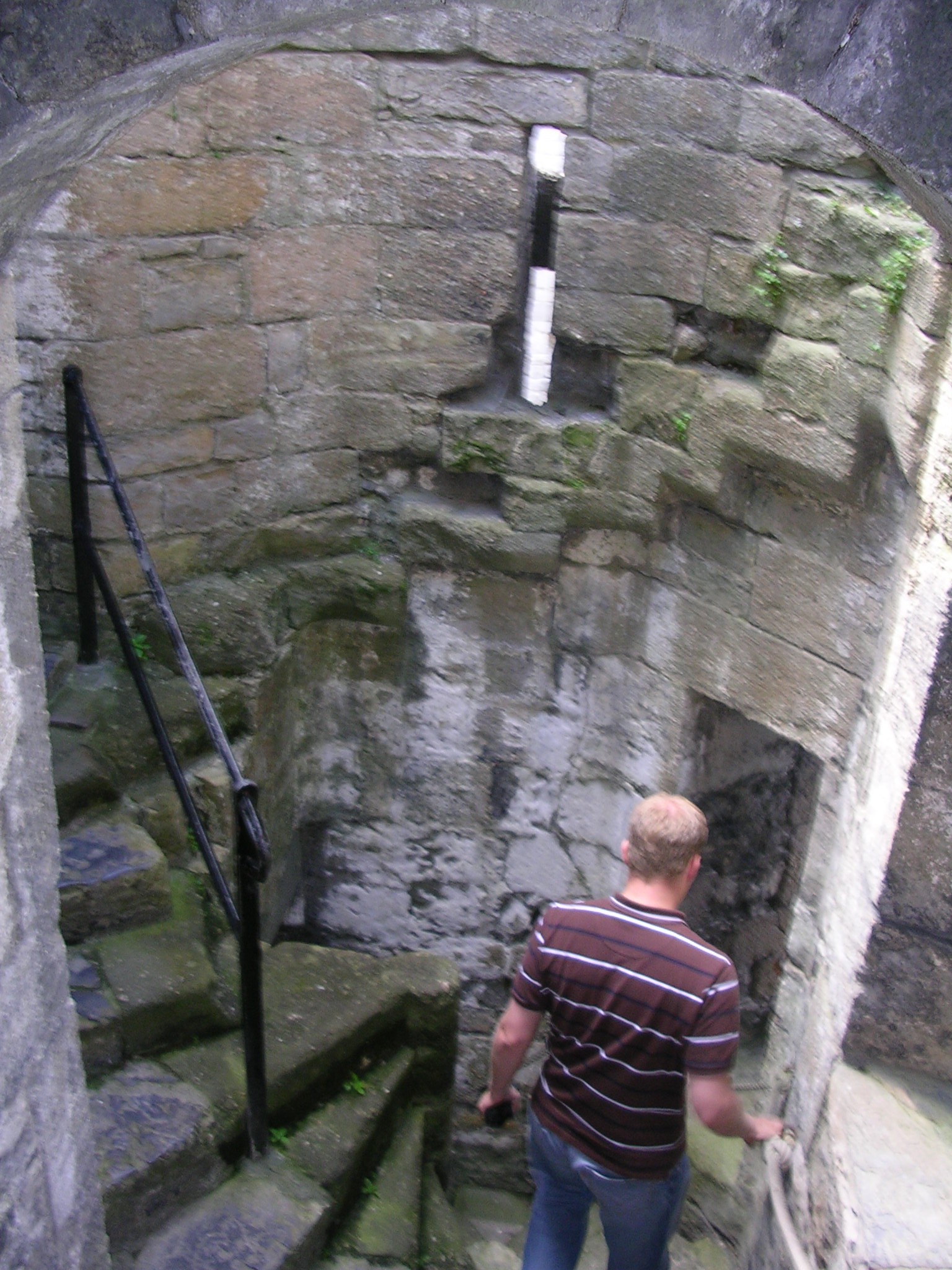
Forbidden stairs at Beaumaris Castle
Amanda and Paul Ross at Beaumaris Castle
Menai Strait from Beaumaris Castle
~
Beaumaris Wall
Paul Ross reading up about Beaumaris Castle
Beaumaris Moat
Today we drove straight out to Caernarfon Castle and it took about 4 hours to work our way through it. We ran into a lady named Gaby, and found out she was going to take a bus to Harlech after Caernarfon. We invited her to go with us to Harlech.
Murder holes at Caernarfon
Caernarfon Wall
Amanda Ross in Caernarfon hall
Paul Ross going down Caernarfon stairs
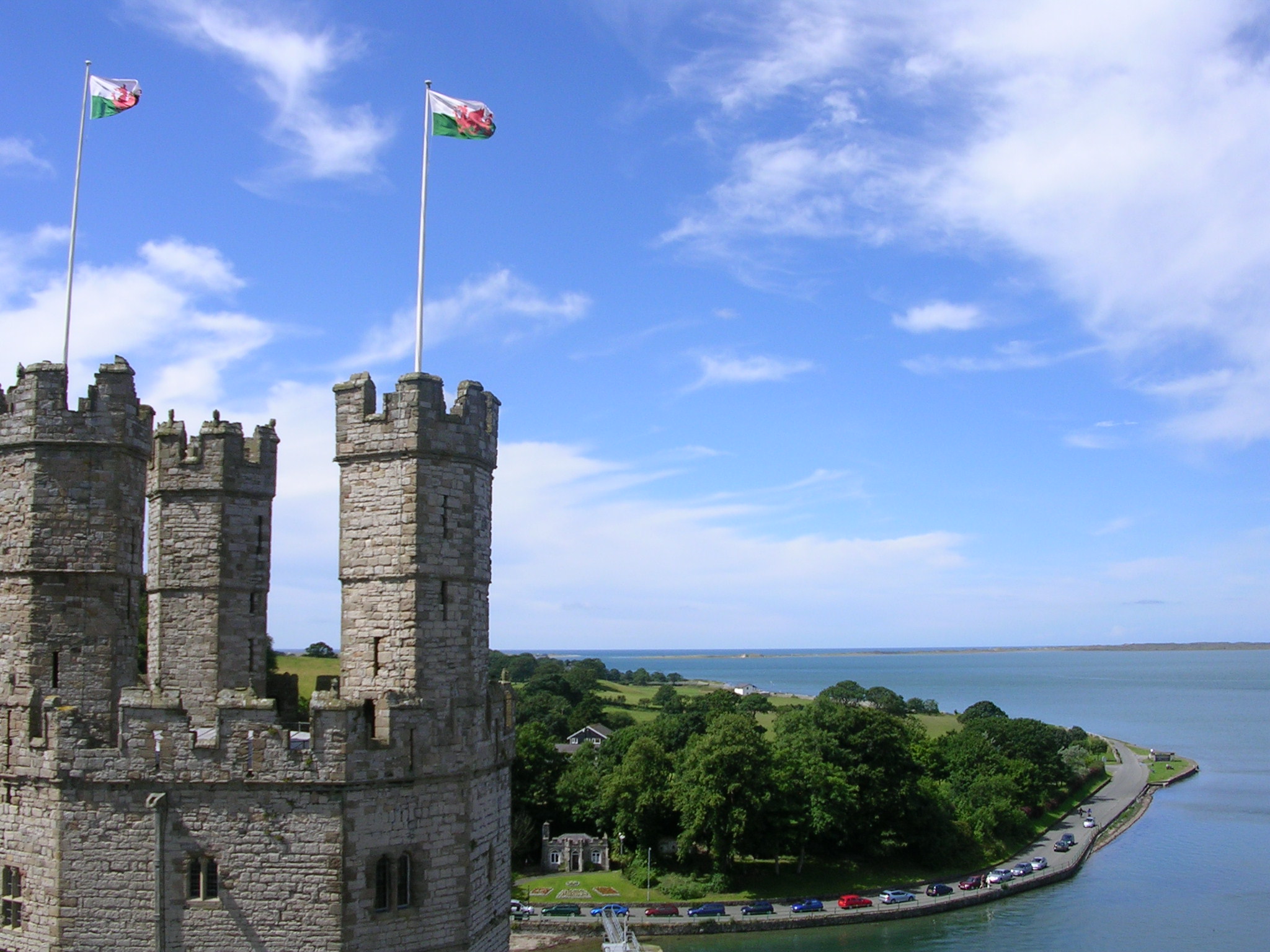
Caernarfon towers and Welsh flags
Paul Ross at Caernarfon Castle wall
Location of Charles Investiture in 1969 at Caernarfon as Prince of Wales
Amanda at Caernarfon with Welsh flags flying
Caernarfon towers and waterway
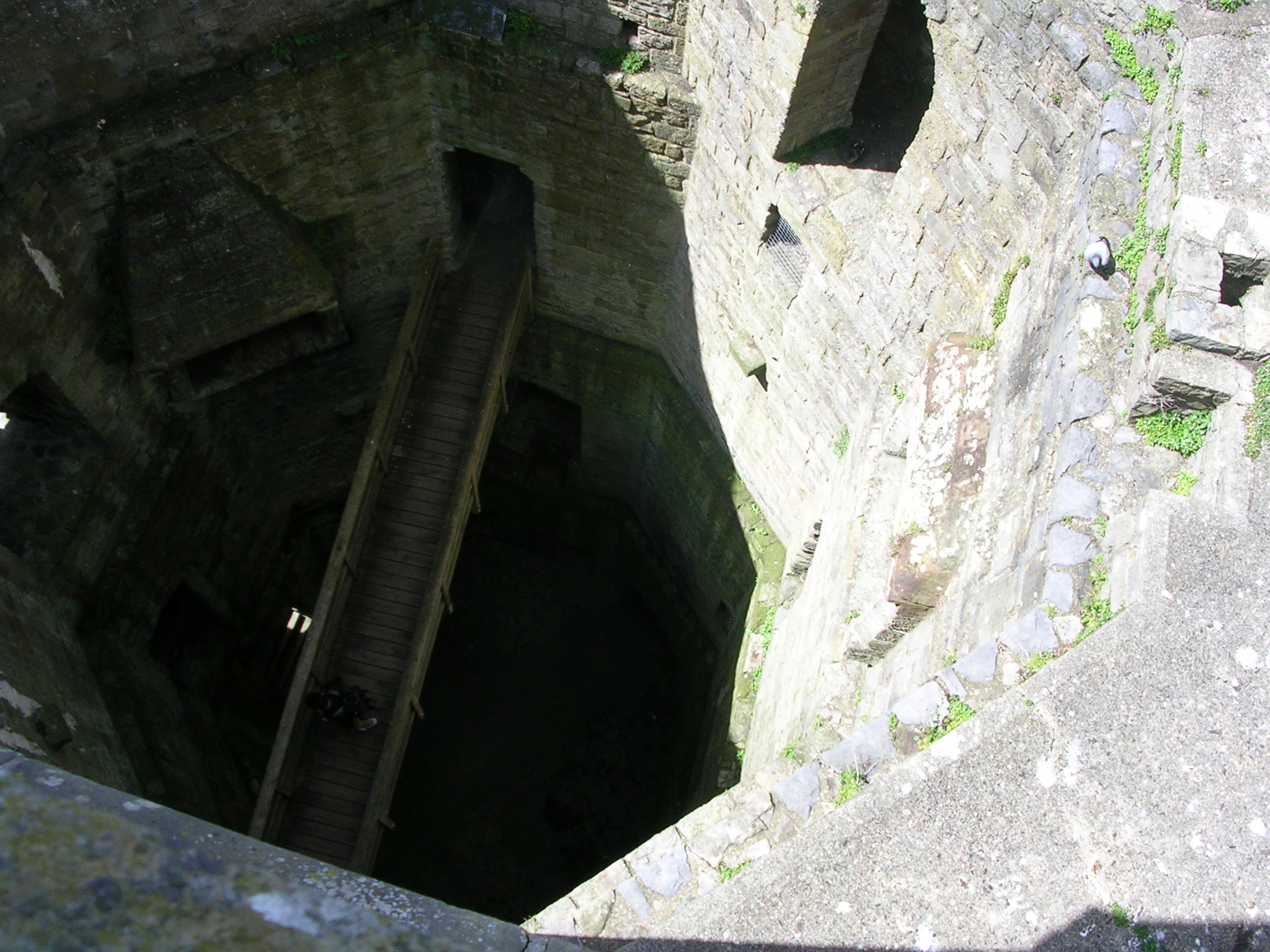
Looking inside one of the Caernarfon towers
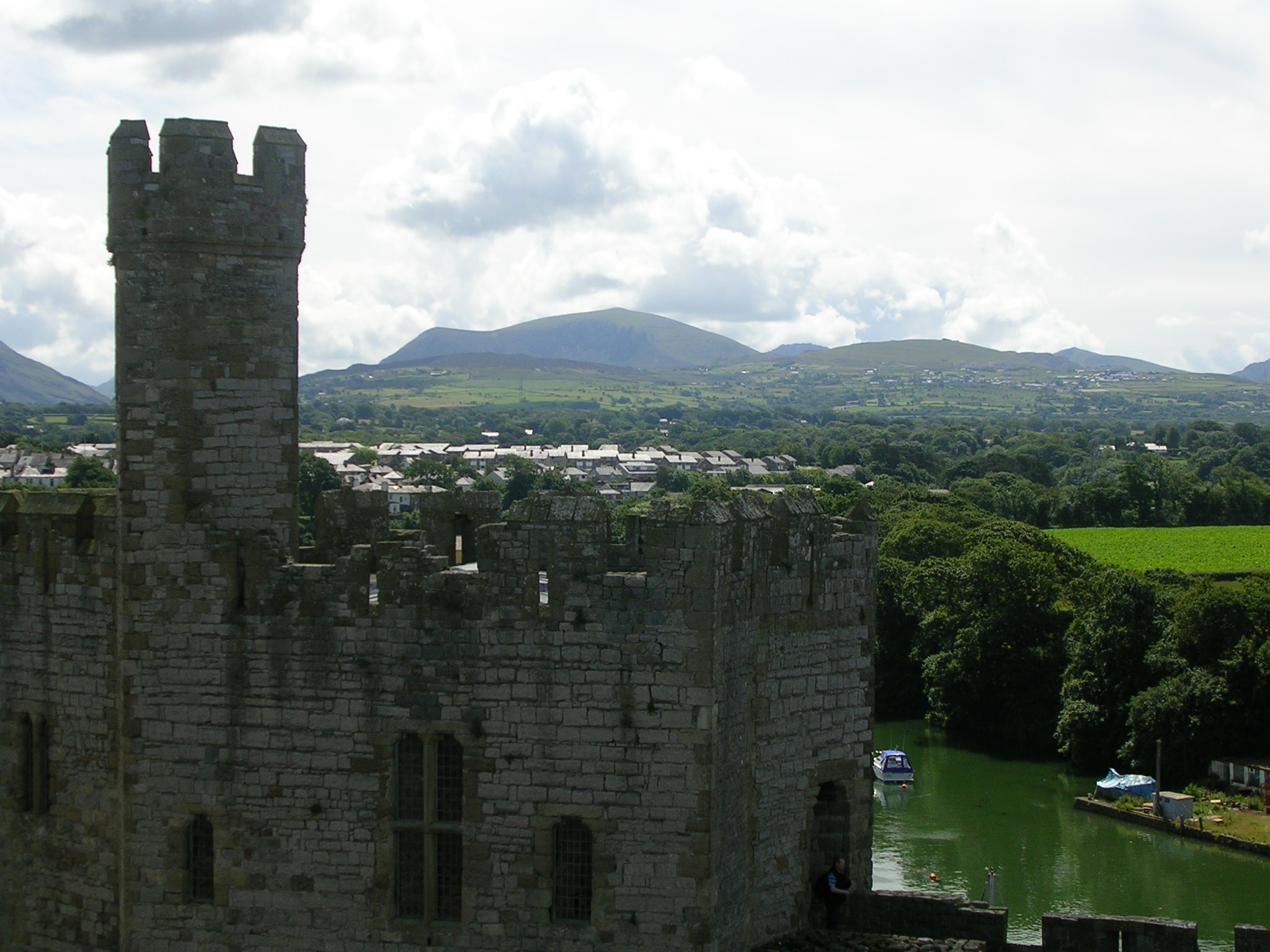
Caernarfon and mountains behind
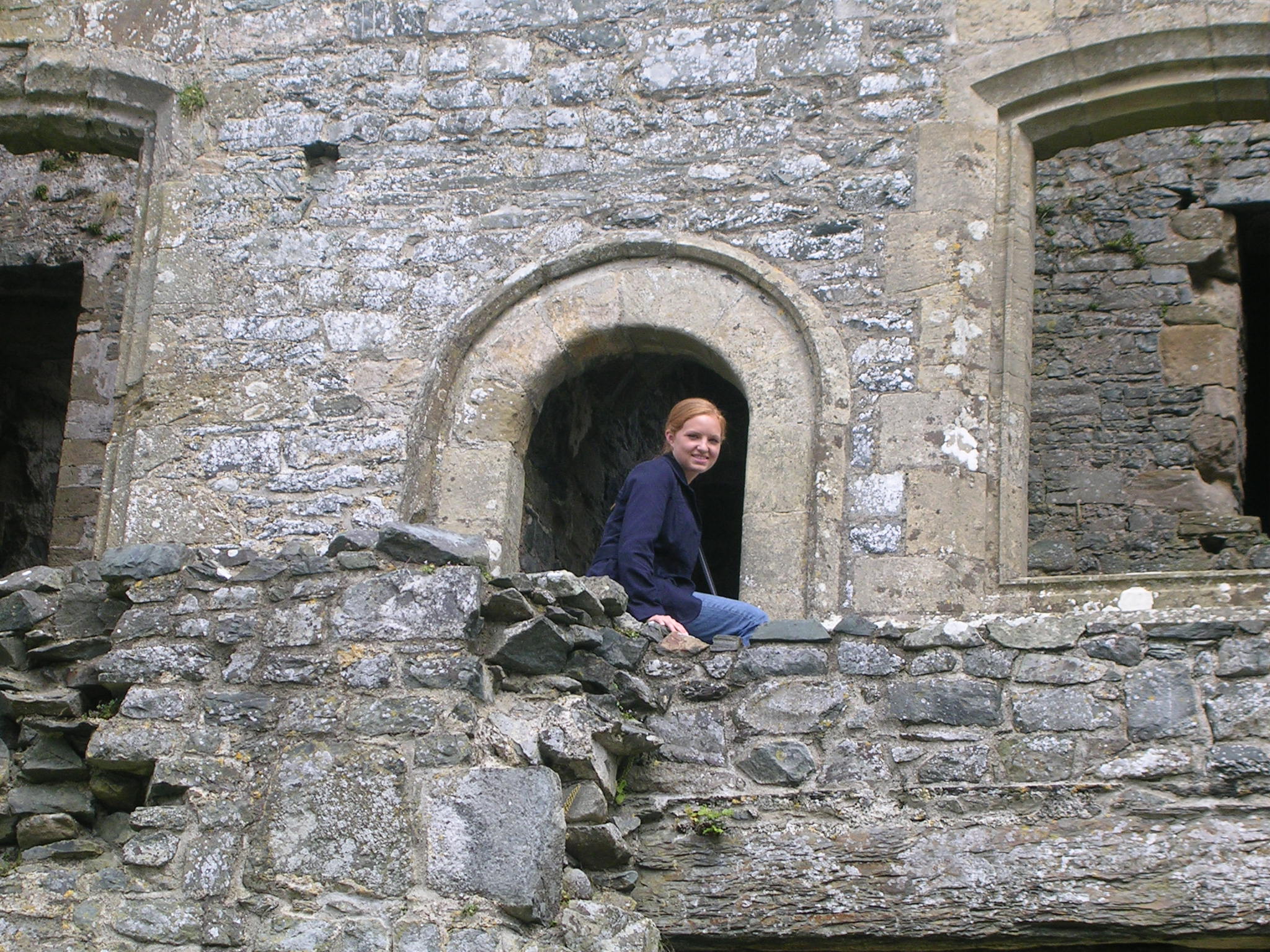
Amanda Ross and interior of Caernarfon Castle
Looking to Irish Sea from Caernarfon
Paul Ross on Caernarfon wall
Paul Ross on Caernarfon tower
Caernarfon walls
We all drove to Harlech when we finished Caernarfon. It was another beautiful castle situated high above an estuary. We spent a couple of hours there and then cut through Northern Wales. She was going to take the train back to Chester so we volunteered to drop her off. She effectively became our gate opener and closer as we drove through pasture after pasture in Wales. It was beautiful!
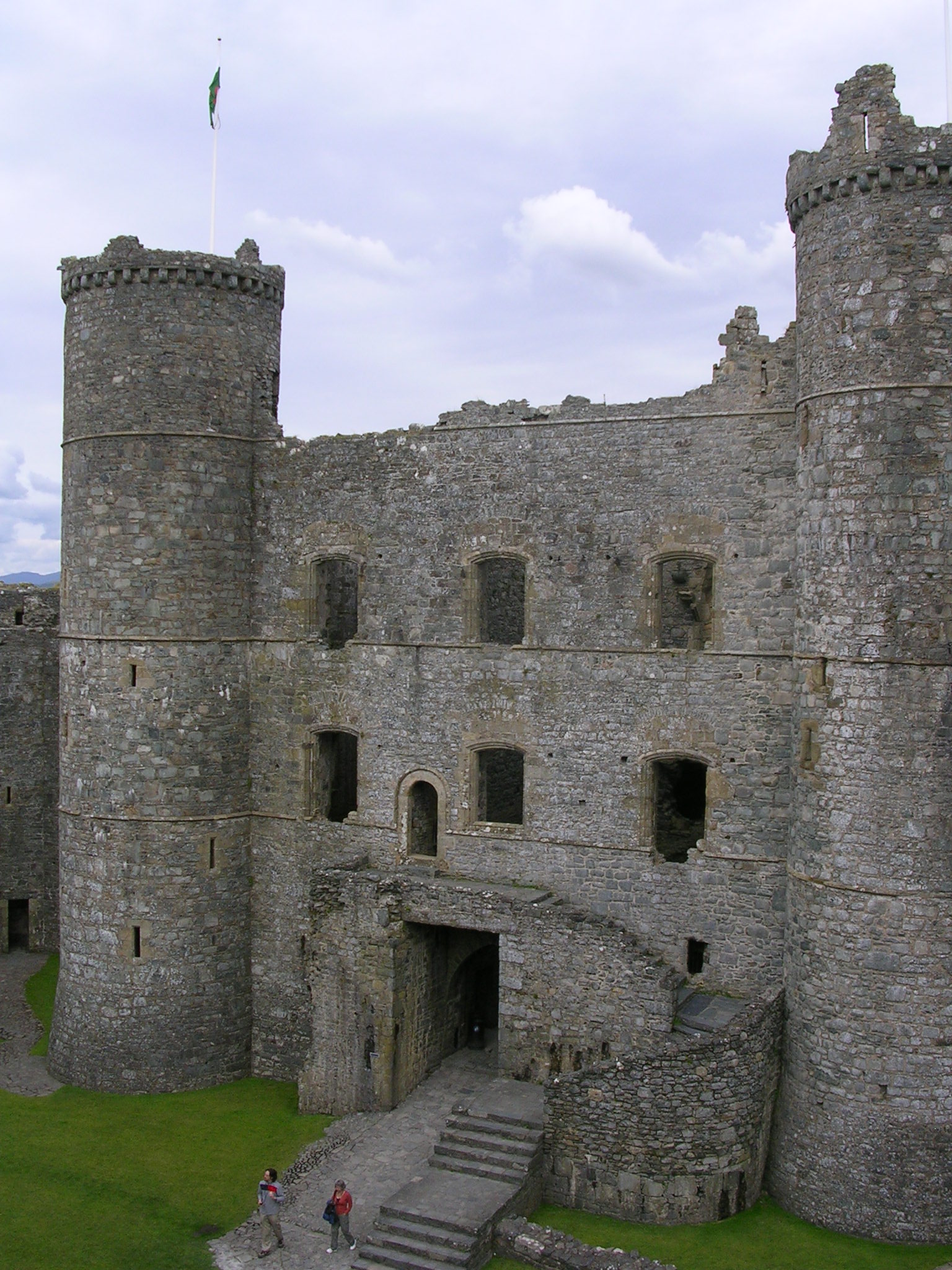
Harlech Castle on the hill
Paul Ross and Harlech entrance
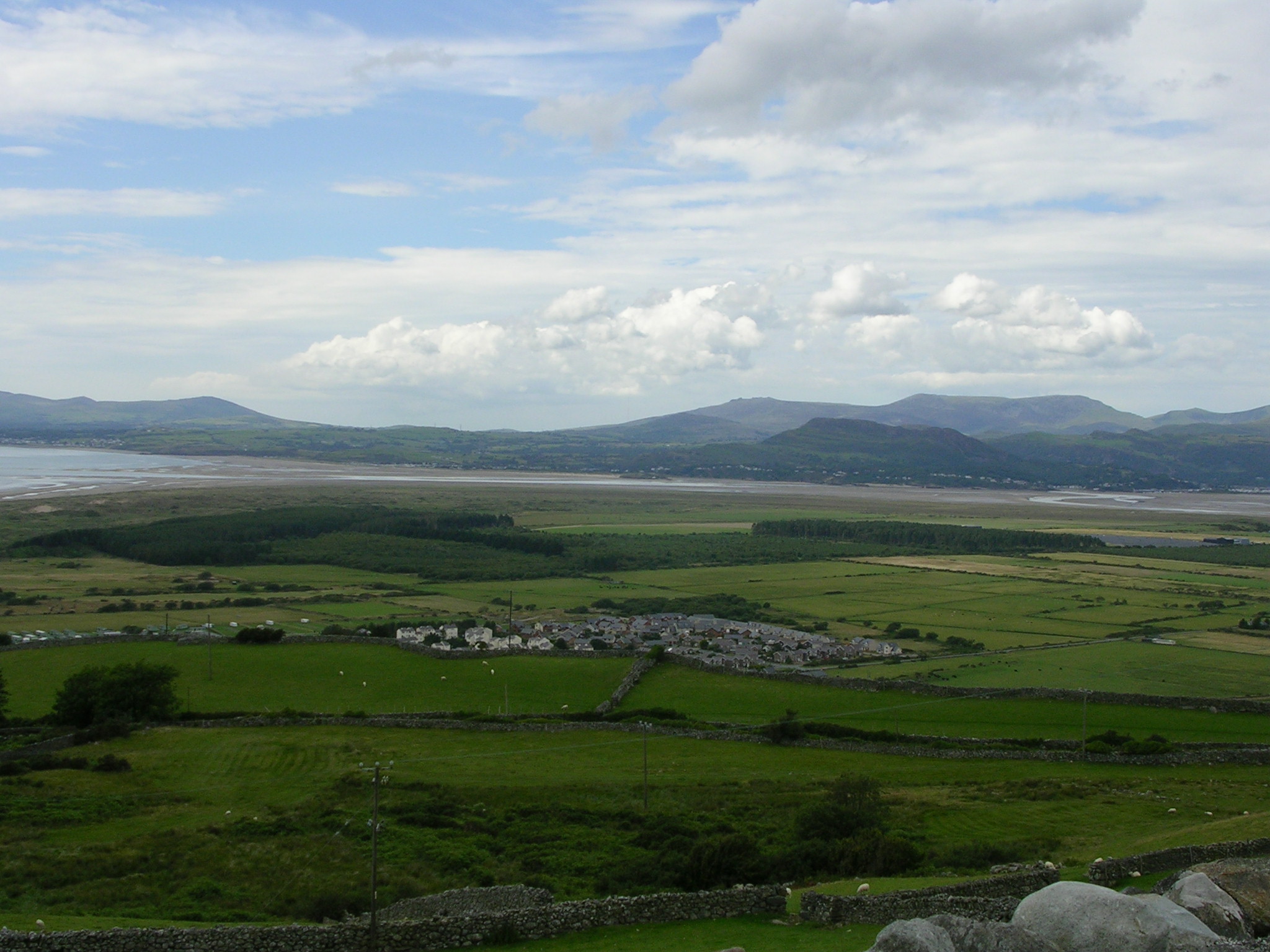
Harlech looking toward Irish Sea
Amanda and Paul Ross on Harlech wall
Amanda Ross on Harlech wall
Signs say so much more than words
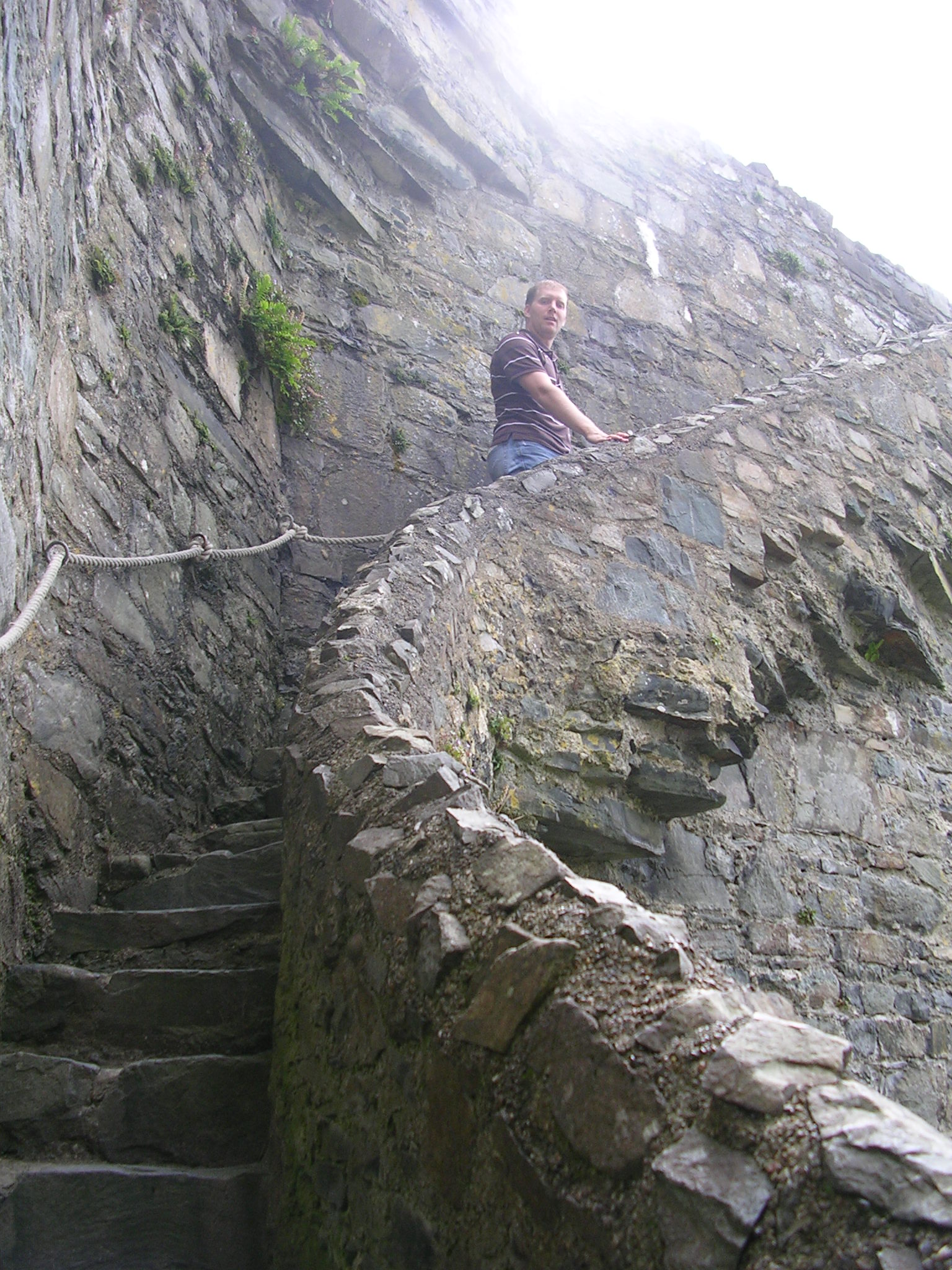
Paul Ross climbing Harlech wall stairs
Harlech wall to Irish Sea
Harlech interior wall and Welsh flag
Harlech interior
Amanda Ross at Harlech
Do not try to ascend these Harlech stairs!
Beautiful Harlech
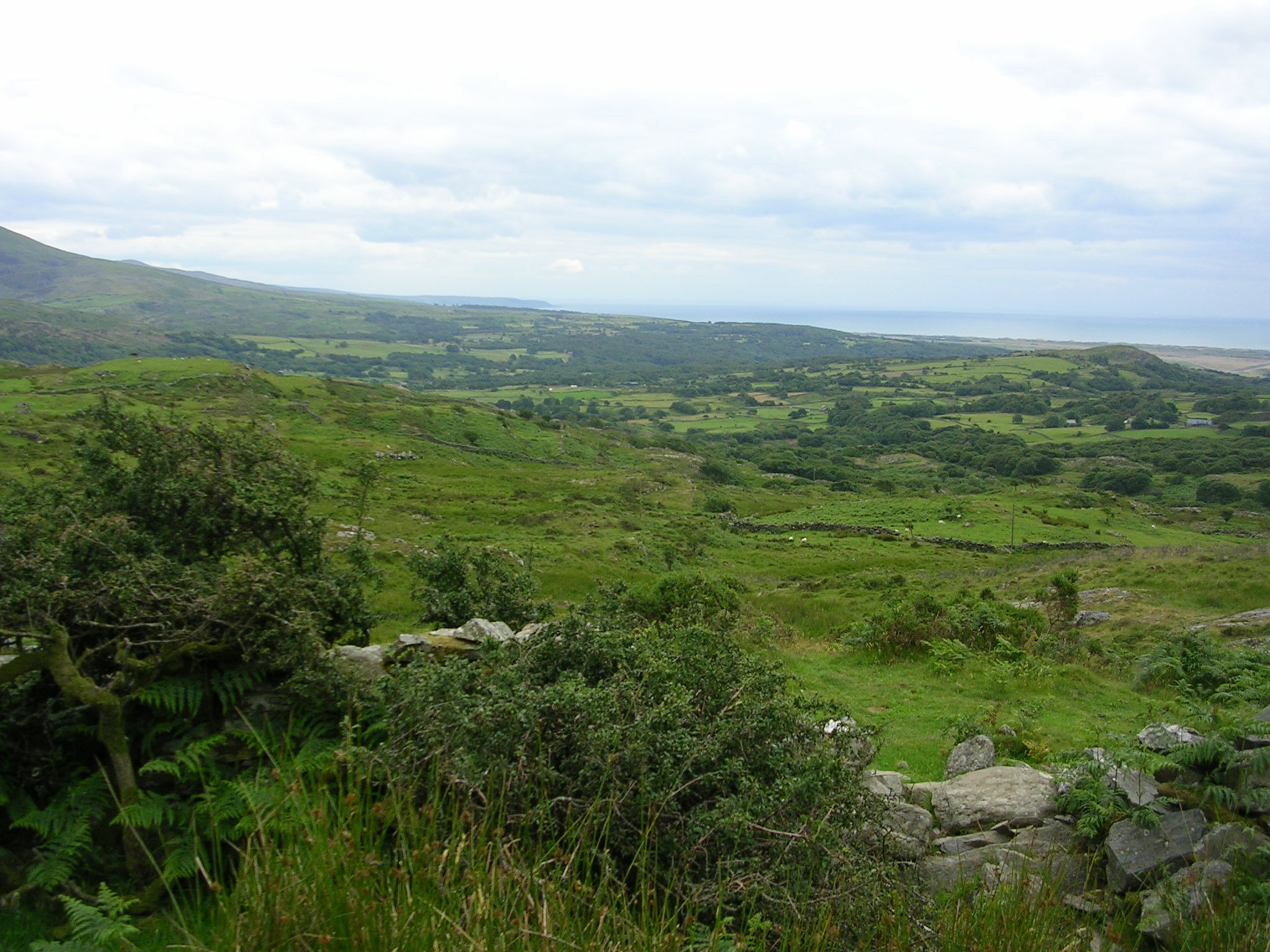
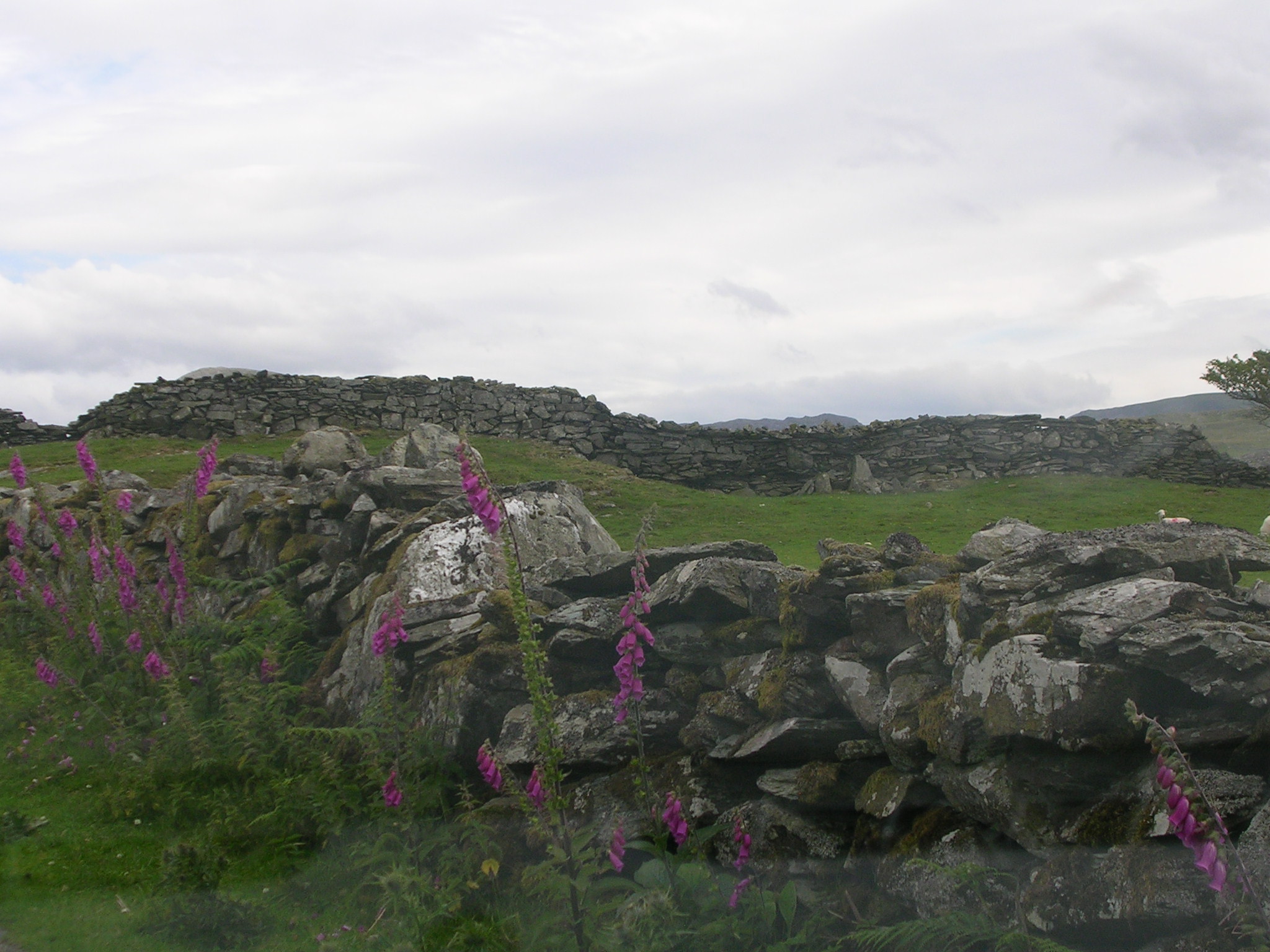
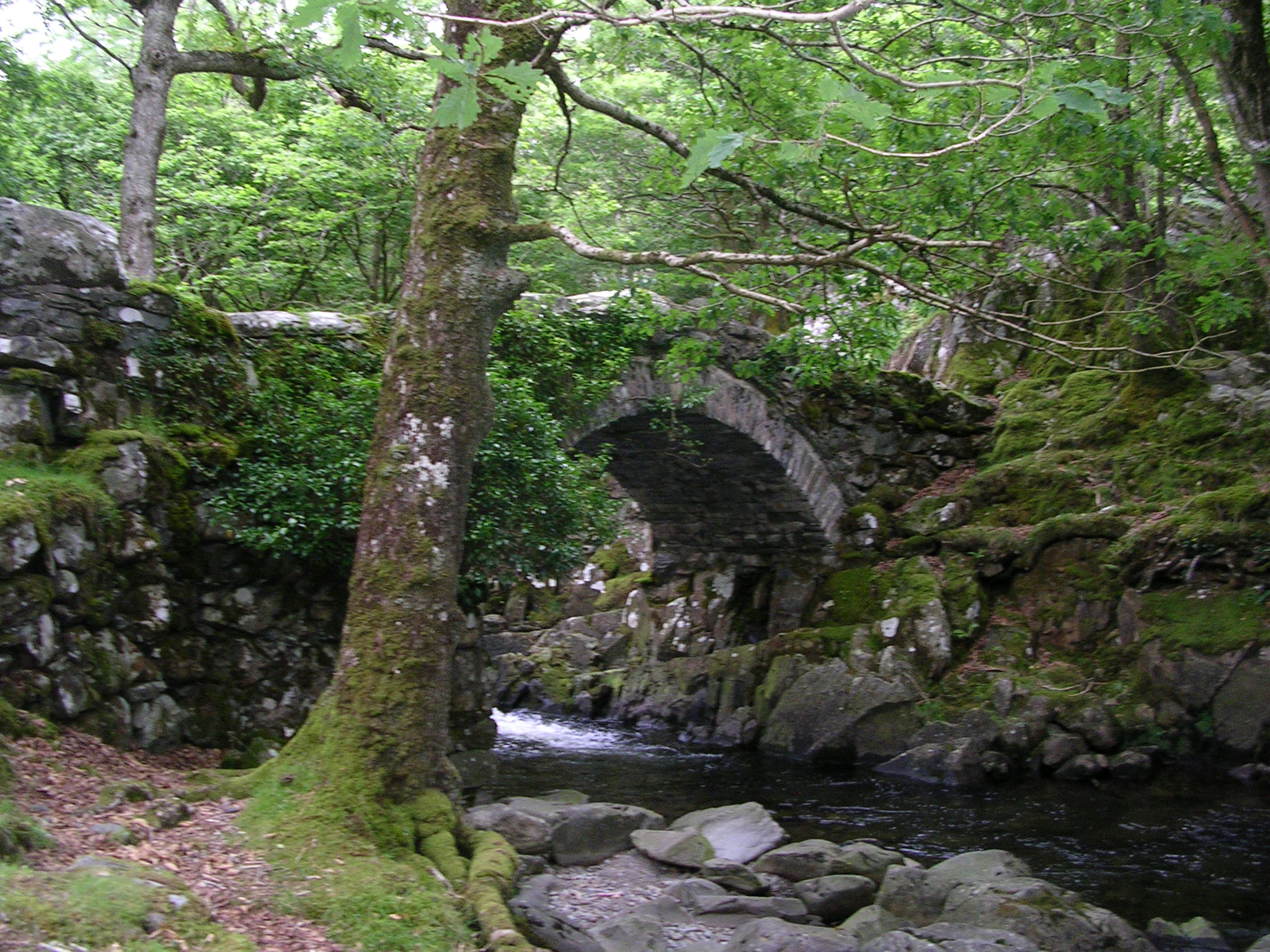
We finally made it back to a main path near Pentre Gwynfryn and cut back down to a main road. We took a turn at Penrhyndeudraeth and headed inland. We went right through the Welsh Mountains and it was beautiful.
Welsh mountainside
Welsh rock wall and flowers
Welsh rock bridge
Welsh stream
We had lunch at Blaenau Ffestiniog. We haven’t a clue how to say it but I did get a fairly descent donner kebab. We also drove through Mold. We definitely have to mention that one! We dropped off our new friend, Gaby, in Chester and came home.
River Mersey from Frodsham Hill
Liverpool skyline in the distance from Frodsham Hill, you can make out both cathedrals and other landmarks of the Liverpool skyline
Last night we went to visit some more friends who I knew as a missionary. As a credit, they all remembered my name even though we almost 10 years on. One of which was a man we baptized, Adam Dawson. Dawn’s parents, Ray and Joan Holmes, I have written of previously.
Dawn and Adam Dawson, Paul and Amanda Ross at their home in Runcorn
Some of you have already noticed, but I uploaded a whole lot of photos yesterday.
Fountain at Chester Cathedral
About 250 actually were in the batch. It includes the rest of the photos from Germany, Austria, Italy, Switzerland, and France. I did not upload any photos from Scotland or England. They will have to wait for the next chance I get.
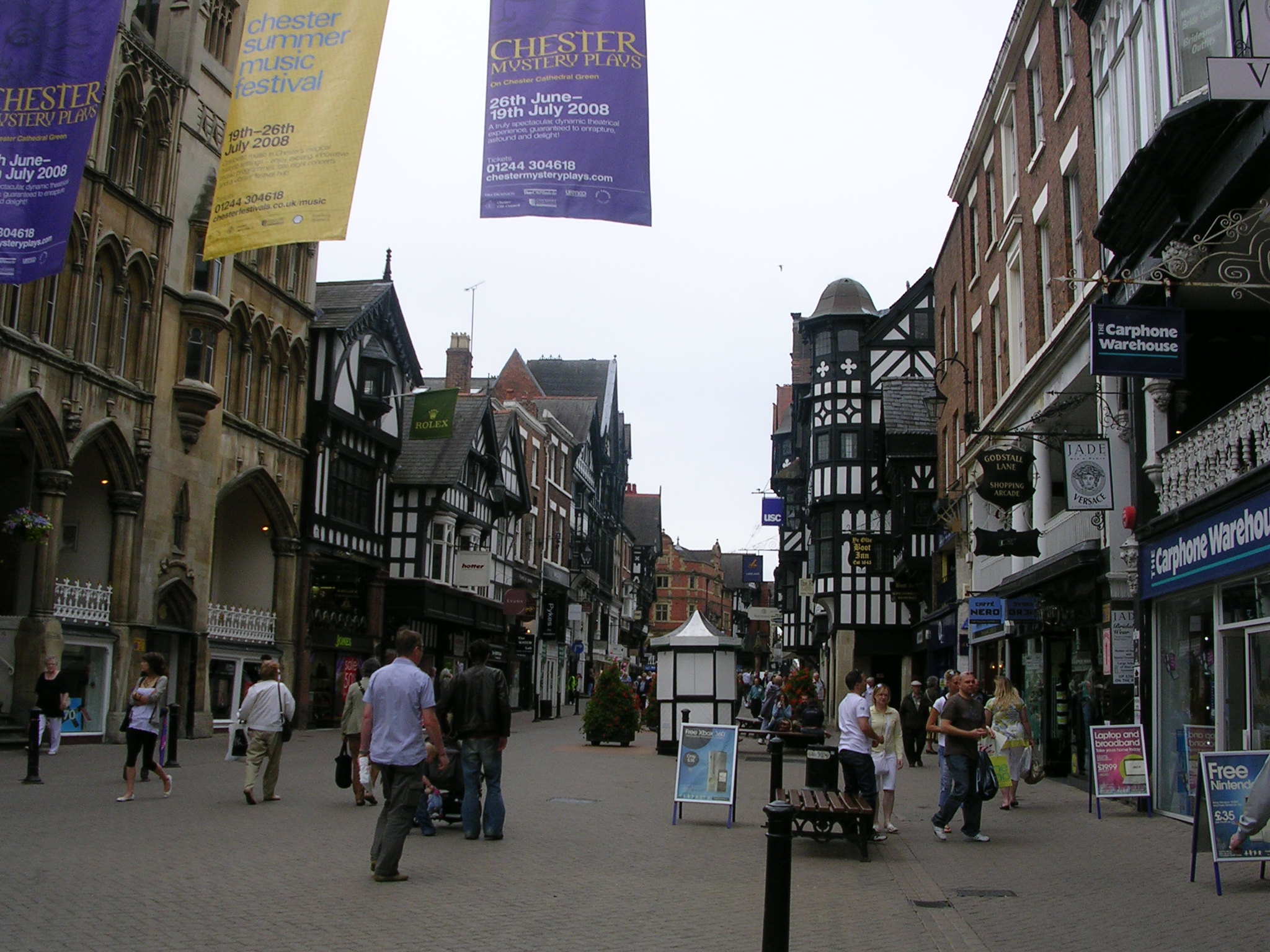
We are now staying with the Byrom family in Runcorn, England. Today we went to Chester and walked the walls.
~
~
Paul Ross with Chester wall clock
We went through the cathedral and went down the main shopping streets. It was a beautiful day for what we were doing. We quite enjoyed ourselves. We each had a pasty and a vanilla finger. She liked it but it was too much.
~
River Dee from Chester Wall
Chester Cathedral
Chester Cathedral
Amanda Ross at Chester Cathedral
We stopped by Ellesmere Port on the way home at a outlet mall. We picked out a couple of suits and bought them. However, we were not convinced we had the best deal, we took them back. Interestingly, on the way out, we stumbled upon another store. I found better quality suits that were on sale for almost half of the cost for the other two suits. Hands down, Amanda and I both liked the second store over the first. Now I have some new suits, one of the reasons I wanted to come back to Europe.
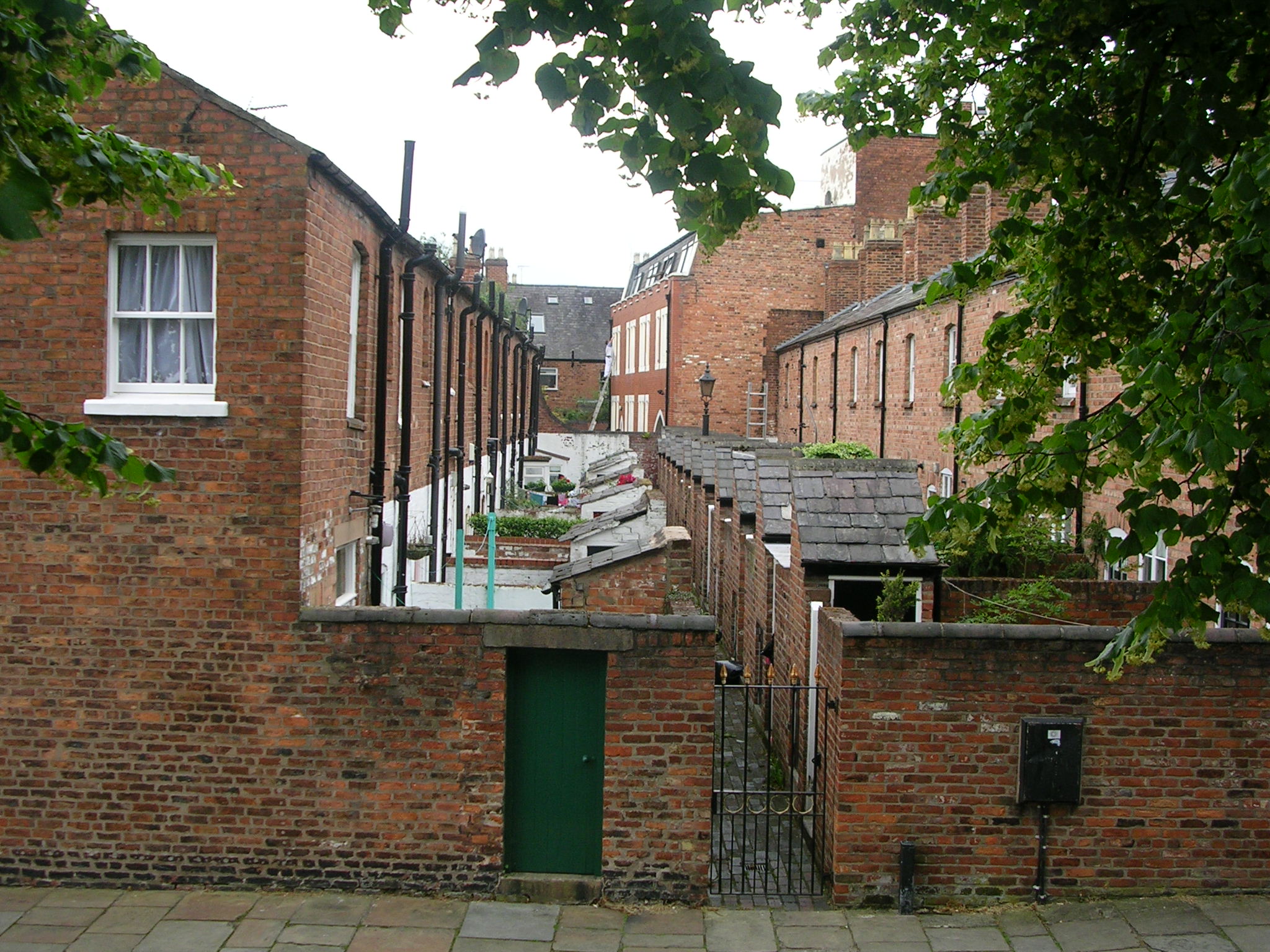
Homes in Chester, outhouses, plumbing, from Chester Wall
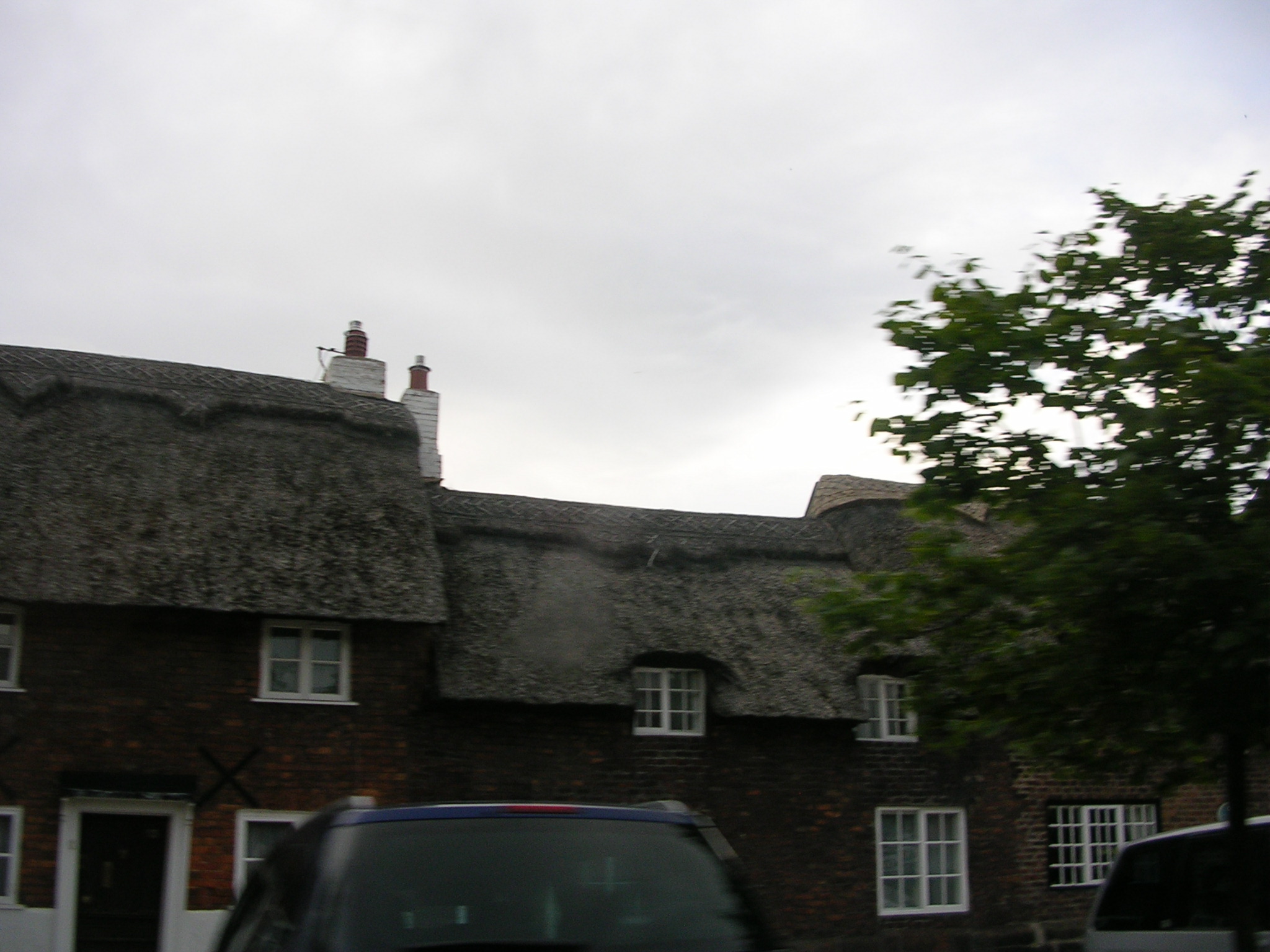
We had dinner this evening, some amazing lasagna. Rose has always made great lasagna. Afterward, Rose, Amanda, and I went to visit an older lady I taught on the mission. She was such a sweet soul and she proved to be the same. We have all aged, but the sociality has not diminished or changed with time. I think Amanda quite enjoyed Jane Young and her quaint little home in the English countryside.
Rose Byrom, Jane Young, Paul and Amanda Ross
Yesterday, we had dinner with Jack and Brenda Millington from Howe Bridge. Jack used to cook us as missionaries some wonderful homemade pot pies. Visiting with him on Sunday, he offered to make me and Amanda one. We agreed and met with them yesterday. The pot pie was as wonderful as ever, boiled cabbage, and homemade trifle. We really had some good laughs. Jack even sent us off with a couple of parting gifts.
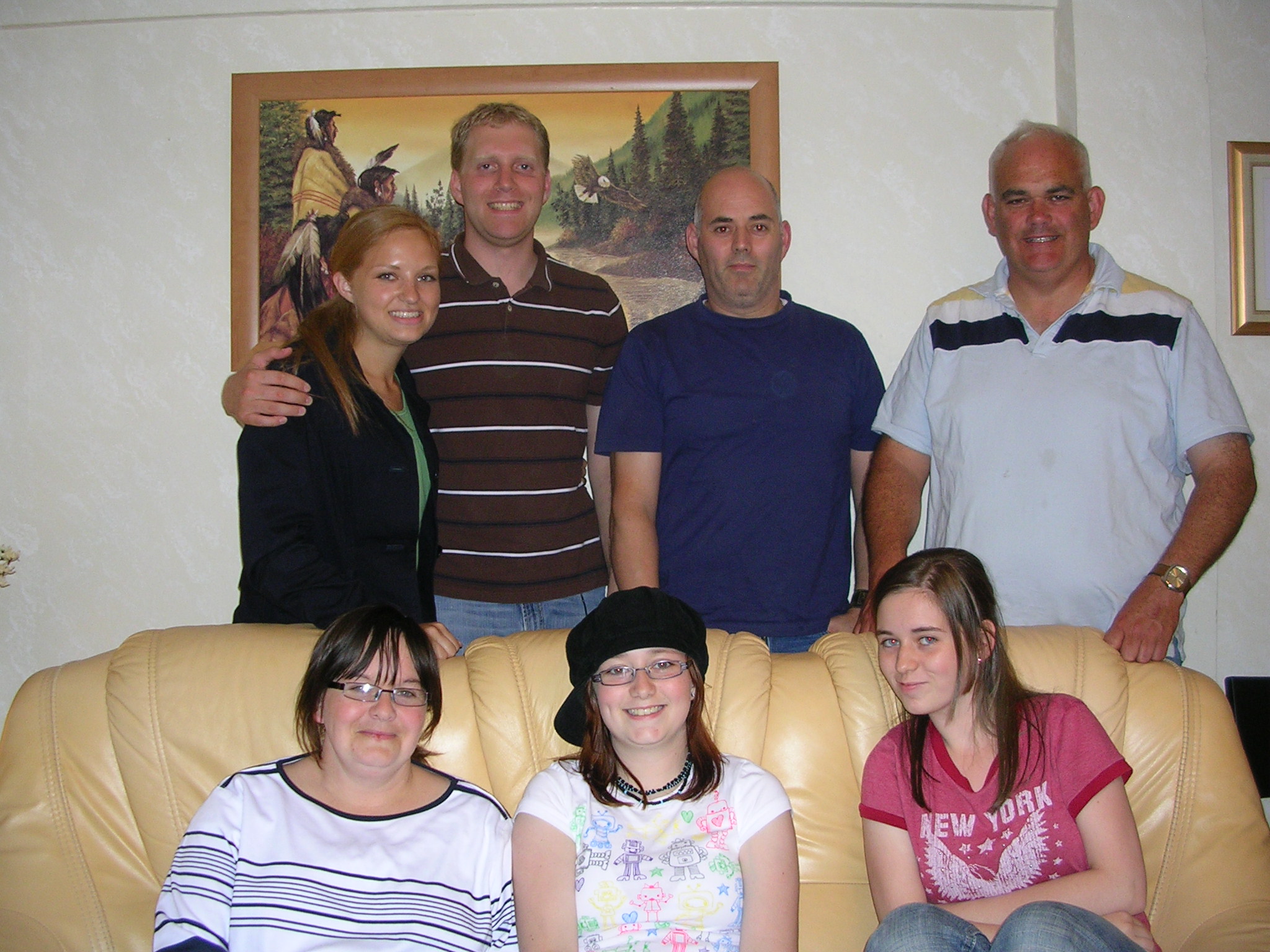
Amanda and Paul Ross with Byrom Brothers, John on the right, their family in front
There are so many people that nearly 10 years have changed nothing. We don’t always remember each other’s names, but the feelings are still the same. Memories seem to come back quickly, surprisingly. What will heaven be like?
Someone once observed, “The universe is composed of stories, not atoms.” The Star of Bethlehem is certainly a story, as is most of the Bible, first and foremost. It is also a mystery, involving not only theology and astronomy but also history and even astrology. What do we know about the Star of Bethlehem? The popular conception is summarized in the Christmas carol:
We three kings of Orient are Bearing gifts we traverse afar, Field and fountain, moor and mountain, Following yonder star.
O star of wonder, star of night, Star of royal beauty bright, Westward leading, still proceeding, Guide us to thy perfect light.
We all know this carol as the story of the Star, which is fine—except for the fact that almost everything in it is wrong. The actual New Testament account of the Star of Bethlehem comes from the second chapter of the Gospel of Matthew:
Jesus was born at Bethlehem in Judaea during the reign of Herod. After his birth astrologers [Magi] from the East arrived in Jerusalem, asking, “Where is the newborn king of the Jews? We observed the rising of his star, and we have come to pay him homage.” King Herod was greatly perturbed when he heard this, and so was the whole of Jerusalem. He called together the chief priests and scribes of the Jews and asked them where the Messiah was to be born. “At Bethlehem in Judaea,” they replied, “for this is what the prophet wrote: ‘Bethlehem in the land of Judah, you are by no means least among the rulers of Judah; for out of you shall come a ruler to be the shepherd of my people Israel.’”
Then Herod summoned the astrologers to meet him secretly, and ascertained from them the exact time when the star had appeared. He sent them to Bethlehem, and said, “Go and make a careful search for the child, and when you have found him, bring me word, so that I may go myself and pay him homage.”
After hearing what the king had to say they set out; there before them was the star they had seen rising, and it went ahead of them until it stopped above the place where the child lay. They were overjoyed at the sight of it and, entering the house, they saw the child with Mary his mother and bowed low in homage to him; they opened their treasure chests and presented gifts to him: gold, frankincense, and myrrh. Then they returned to their own country by another route, for they had been warned in a dream not to go back to Herod.
This is not a fabulous tale. It does not conjure up fantastic details or images, and it is told in a rather mundane fashion, not at all like a fable. It is also the only account we have of the Star in our Bible. Admittedly, later non-canonical sources like the Protovangelium of James and an epistle of Ignatius did elaborate on the story, calling the Star the brightest star in the sky, brighter than all other stars combined, even including the sun and the moon, which bowed down before it. But Matthew is very matter-of-fact. It has also been suggested that this is a commentary by Matthew, always fond of referring to Old Testament prophecies, on Balaam’s oracle in the Book of Numbers that “a star shall come forth out of Jacob and a scepter shall rise out of Israel.” But it would be uncharacteristic of Matthew to refrain from pointing out this prophecy explicitly, had he had it in mind.
The Historical Perspective
To understand this story, we must view it in the context of its time. Who were these Magi? Where did they come from? Magi is the plural of Magus, the root of our word magic, and “court astrologers” is probably the best translation, although “wise men” is also a good term, descriptive of the esteem in which they were widely held. The group of Magi in question came “from the East.” They might have been Zoroastrians, Medes, Persians, Arabs, or even Jews. They probably served as court advisors, making forecasts and predictions for their royal patrons based on their study of the stars, about which they were quite knowledgeable. Magi often wandered from court to court, and it was not unusual for them to cover great distances in order to attend the birth or crowning of a king, paying their respects and offering gifts. It is not surprising, therefore, that Matthew would mention them as validation of Jesus’ kingship, or that Herod would regard their arrival as a very serious matter.
When might these Magi have appeared in Judaea? Obviously, determining the story’s date is important if we are to look for astronomical connections. We might assume that it was around 1 B.C. or 1 A.D., since that is when, by conventional reckoning, Jesus was born. But the calendar on which these dates are based was set by the Roman monk Dionysius Exiguus in the year 525 A.D., long after the fact. Scholars writing in the first and second centuries A.D. asserted that Jesus was born between what we now call 4 B.C. and 1 B.C. They were living much closer to the event and had access to thousands of historical records in many excellent libraries, and their opinions probably should be given much more weight than has been common.
How about the time of the year? The best clue is a passage in the Book of Luke:
And there were in the same country shepherds abiding in the fields, keeping watch over their flock by night.
If the reference to “fields” is accurate—not pastures or holding pens—we might guess at a date in late summer or early fall, for it was customary for farmers to allow sheep and cattle to graze the stubble in the fields following the harvest. This clue is suggestive, but hardly definitive.
One difficulty in seeking a precise date is the fact that Matthew reports two different sightings, possibly separated by a substantial time. First, the Magi saw the Star rising en anatole, best translated as “rising in the East,” the ancient technical term for an acronical rising, when an object rises at sunset and is visible all night. After they come to Jerusalem—we do not know how long that took, and there is no indication that the Star was in any way involved with the journey—they see the Star again as they travel the few miles to Bethlehem:
There before them was the star they had seen rising, and it went ahead of them until it stopped above the place where the child lay.
There was no need for a bright or supernatural guiding light to find Bethlehem from Jerusalem; it lies just five miles south on the main road. There is a reference not to the “house” of an infant (brephos in the Greek) but of a paidion, or toddler, indicating that some months may have elapsed since the birth itself.
What are the astronomical possibilities? This question has been asked many times since the Christian apologist Origen first raised it around 250 A.D. It is safe to say that every astronomical event known to have occurred during, say, the decade of interest has at some point been proposed as the Star of Bethlehem. The key point to answering this question is to note that it is not just any astronomical event that is of interest. We can restrict our inquiry to those appearances that would have had astrological significance to the Magi, who declared:
“We observed the rising of his star, and we have come to pay him homage.”
An astrological event may not have been very obvious at all; certainly it was not obvious to Herod. Had it been an incomparably bright object, as later writers thought, there would be numerous written records of it. It is much more plausible that the Star of Bethlehem went unnoticed by all but a few experts such as the Magi.
The Death of Herod
A major key to the chronology is the date of the death of Herod the Great, the father of another Herod—Herod Antipas, who executed John the Baptist and who ruled at the time of the Crucifixion. Herod the Great was alive when the Star of Bethlehem appeared, and the commonly quoted date for his death is 4 B.C. Thus dates of 7 B.C. through 4 B.C. are often given for the birth of Jesus. The political events of this period are best known from the writings of Josephus Flavius, the Jewish historian who lived from 37 A.D. to about 95 A.D. His testimony has always been considered vital in determining these dates. But the accounts of Josephus and the entire history of this period have been reassessed recently, with important new results, by Ernest Martin, whose book, The Star that Astonished the World (ASK Publications, 1991), has become the authoritative source on the subject.
According to Josephus, on the night of a lunar eclipse Herod executed two rabbis. They were accused of inciting some young men to climb up on the wall and tear down the golden eagle that the king had ordered placed on the gate to the Temple in Jerusalem. This eagle was, of course, an abomination to the Jews because it was a graven image. Soon after this incident, Herod died and was buried. One of his sons inherited his throne shortly before Passover was celebrated. It was long believed that the lunar eclipse in question occurred on March 13 in 4 B.C. But this was only a partial eclipse (40 percent total) and fairly hard to detect. And it occurred only 29 days before Passover. Here is what would have had to happen in those 29 days:
Herod was sick at the time of the execution of the rabbis, and his condition worsened almost immediately. He was treated for a time by his physicians, to no avail. He then decided to pack up the royal household and move to Jericho to take the baths. He tried the baths unsuccessfully for some days and then returned to Jerusalem. Believing that he soon would die, Herod came up with a diabolical plan to insure that all of Israel would mourn his death, in spite of his unpopularity. He commanded the leading men from around the country to come to Jerusalem; there he imprisoned them in the Hippodrome and ordered the army to execute them as soon as he was dead. Israel would indeed mourn, he vowed. (Fortunately, the order was not carried out.)
In the meantime, word arrived from Rome that Herod finally had the Emperor’s permission to execute his rebellious son Antipater, and he promptly complied. Five days later Herod died, but not before decreeing that his was to be the largest funeral ever held in the history of the world. His body was embalmed. The army was assembled to carry his body in the funeral procession to a burial site some 25 miles away. The soldiers walked in bare feet, as was required when in mourning, traveling one mile a day. A legate from Rome, where word of Herod’s death had been received, arrived to protect the royal treasury. Finally, Herod’s son Archelaus was crowned king and had time to issue a few decrees prior to the celebration of Passover.
The 29 days between the eclipse of 4 B.C. and the following Passover simply did not allow enough time for all of this to have happened. A minimum of ten weeks would have been required. But on January 10, 1 B.C., there was a total lunar eclipse visible in Palestine, and it occurred twelve and a half weeks before Passover.
As Martin points out, there are other compelling reasons to regard 1 B.C. as the true date of Herod’s death. For example, the War of Varus, known to have followed Herod’s death, can be redated to 1 B.C., where it fits the other known facts perfectly. As a clincher, it has recently been discovered that Josephus himself dated Herod’s death to 1 B.C.; a sixteenth century copyist’s error is responsible for the incorrect date, which has been propagated to modern editions of Josephus.
If we conclude that Herod did die in the spring of 1 B.C., we are free to add the years 3 B.C. and 2 B.C. to our search for the Star of Bethlehem. What was happening then? The year 2 B.C. marked the 25th anniversary of Caesar Augustus’s rule and the 750th anniversary of the founding of Rome. Huge celebrations were planned. The whole empire was at peace. The doors of the temple of Janus were closed for only the third time in Roman history. To honor their emperor, the people were to rise as one and name him pater patriae, or “Father of the Country.” Now, getting the people of an empire to do something “spontaneously” requires a great deal of organization. And so an enrollment, or census, was ordered:
In those days, a decree went out from Caesar Augustus that all the world should be enrolled…And all went to be enrolled, each to his own city.
This enrollment, described in the Book of Luke, which brought Joseph and Mary to Bethlehem, has always been a mystery since no regular census occurred at this time. But the pater patriae enrollment fits perfectly.
The Astronomical Perspective
What astronomical events, possibly in the years 3 or 2 B.C., might have been related to the Star of Bethlehem? A nova—the unexpected, sudden brightening of a star from invisibility into a bright object for a period of days or weeks—has been suggested. But there is no historical record of such a nova, nor is it clear what a nova’s astrological significance would be. Origen himself suggested a comet, for comets appear sporadically, move, and can even seem to point down to the earth. But the recorded comets around this time, even Halley’s Comet in 12 B.C., were not very impressive; astrologically, they were considered ominous. Meteors and fireballs are even less likely candidates.
Conjunctions of planets have also long been considered good possibilities. A conjunction is a close apparent approach between two celestial objects. Technically speaking, a conjunction occurs at the moment when both objects have the same celestial longitude; one is due north of the other. The closer the objects, the more visually impressive the event and the more significant astrologically. In 3 B.C. and 2 B.C., there was a series of close conjunctions involving Jupiter, the planet that represented kingship, coronations, and the birth of kings. In Hebrew, Jupiter was known as Sedeq or “Righteousness,” a term also used for the Messiah.
In September of 3 B.C., Jupiter came into conjunction with Regulus, the star of kingship, the brightest star in the constellation of Leo. Leo was the constellation of kings, and it was associated with the Lion of Judah. The royal planet approached the royal star in the royal constellation representing Israel. Just a month earlier, Jupiter and Venus, the Mother planet, had almost seemed to touch each other in another close conjunction, also in Leo. Then the conjunction between Jupiter and Regulus was repeated, not once but twice, in February and May of 2 B.C. Finally, in June of 2 B.C., Jupiter and Venus, the two brightest objects in the sky save the sun and the moon, experienced an even closer encounter when their disks appeared to touch; to the naked eye they became a single object above the setting sun. This exceptionally rare spectacle could not have been missed by the Magi.
In fact, we have seen here only the highlights of an impressive series of planetary motions and conjunctions fraught with a variety of astrological meanings, involving all the other known planets of the period: Mercury, Mars, and Saturn. The astrological significance of these impressive events must surely have been seen by the Magi as the announcement of the impending birth of a great king of Israel.
September 11, 3 B.C., is perhaps the most interesting date of all. Not only was Jupiter very close to Regulus in the first of their conjunctions, but the sun was in the constellation of Virgo (of obvious symbolism), together with the new moon, in a configuration that fits a plausible interpretation of a passage in the Book of Revelation describing the birth of a male child who is to be the ruler of the universe. Significantly, September 11, 3 B.C., also marked the beginning of the Jewish New Year, traditionally regarded as the anniversary of Noah’s landing after the Great Flood.
But if the planet Jupiter was the Star of Bethlehem, or was a component of the events that triggered the visit by the Magi, how do we view the final appearance of the Star on their journey to Bethlehem? It would have been in the southern sky, though fairly high above the horizon. Could the Star have stopped over Bethlehem? The answer is yes. The word “stop” was used for what we now call a planet’s “stationary point.” A planet normally moves eastward through the stars from night to night and month to month, but regularly exhibits a “retrograde loop.” After it passes the opposite point in the sky from the sun, it appears to slow, come to a full stop, and move backward (westward) through the sky for some weeks. Again it slows, stops, and resumes its eastward course.
It seems plausible that the Magi were “overjoyed” at again seeing before them, as they traveled southward, “his star,” Jupiter, which at its stationary point was standing still over Bethlehem. We do know for certain that Jupiter performed a retrograde loop in 2 B.C. and that it was stationary on December 25, interestingly enough, during Hanukkah, the season for giving presents.
What Room for God?
Where has this search for the Star of Bethlehem taken us? There has been much discussion in recent years about the “God of the gaps”—finding God in the gaps between the portions of some subject that we feel we understand scientifically. It seems to me that this is a dangerous position, for science by definition cannot admit to such gaps and must search continually to fill them with its understanding, and it often will succeed in so doing. Here the situation is different. The question is: What meaning, what room for God, do we find in the events that we know to have occurred?
If we have correctly identified the Star of Bethlehem, the science is clear and simple. Johannes Kepler (1571-1630) was the German astronomer who discovered the physical laws describing planetary orbits. These orbits are so predictable that we can deduce quite accurately what the sky looked like two thousand years ago. Even the ancient Magi understood apparent planetary motions quite well. Predictions of the conjunction of 3 and 2 B.C. were made 400 years prior to the birth of Christ, and they were in error by only a few days. There is no need to invoke God or divine miracles to explain what happened in the heavens above Judaea. Natural laws are sufficient.
But is this kind of sufficiency really enough for us? The significant question raised here is not what happened, but why it happened. What does it mean? Was Matthew right in seeing this event as divine confirmation of a central moment in God’s plan for mankind? What room is left for God, not as an agent filling in the gaps between what we can understand as physical causes, but as the creator of purpose? Was God’s purpose fulfilled by the great celestial dance that we call the Star of Bethlehem?
These are examples of the kind of questions we are faced with daily. No theologian can say, in a way convincing to a scientist, that some event required an act of God outside natural law. Similarly, no scientist can say that some event was merely (a dangerous word) an act of natural law working itself out with no other meaning. That is, no one is forced to believe that what happened in the heavens two thousand years ago was a simple, natural event devoid of meaning. The Star of Bethlehem was an excellent example of an event that occurs right at the intersection of Christianity and science, in a world created by a God who chose to institute natural laws but who nevertheless continues to carry out His own purposes.
Imprimus, December 1996, Volume 25, Number 12 – Craig Chester
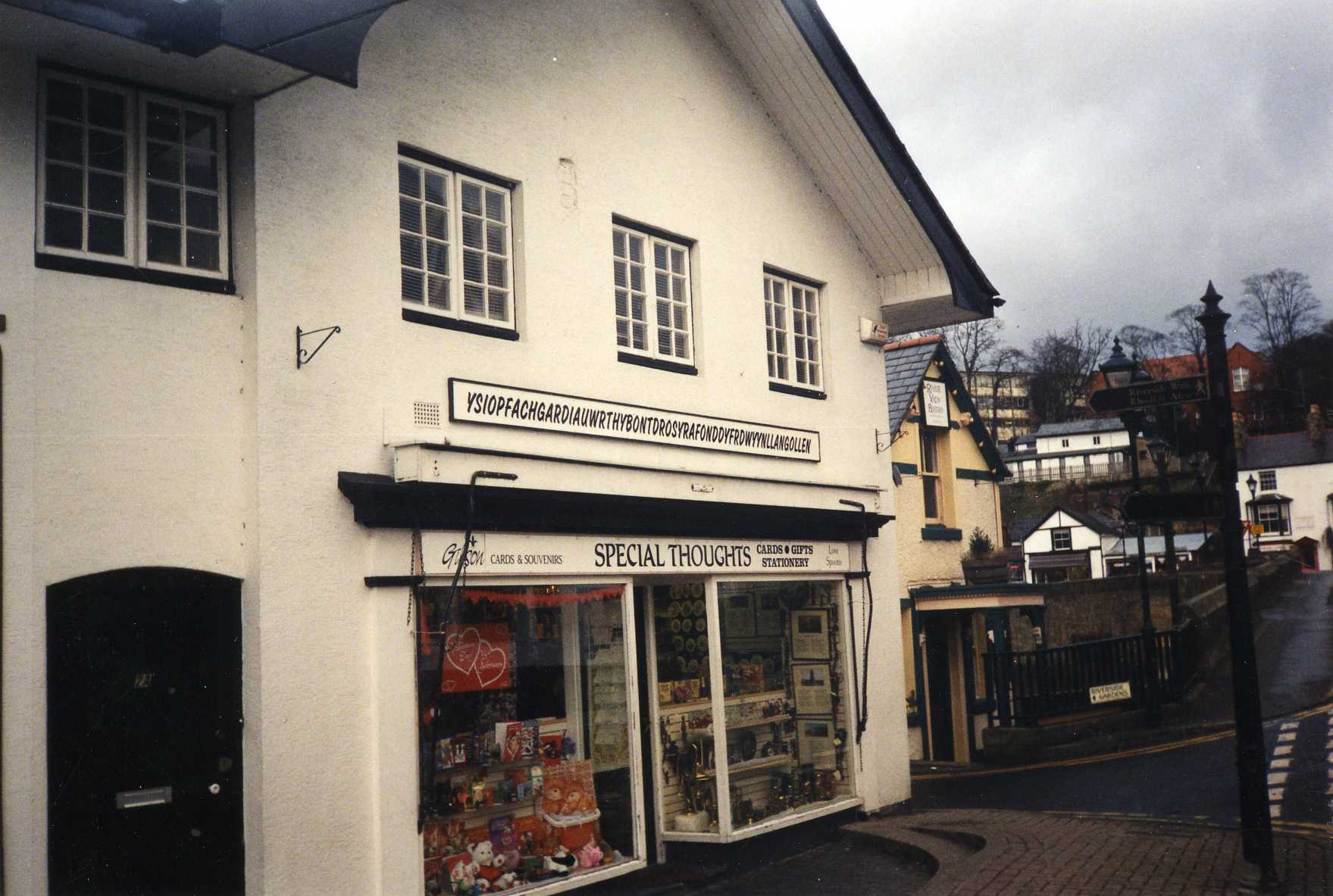
I have told a number of people about this little shop in Llangollen, Wales over the years. Nobody seems to believe me that this sign and place really exist. Here, for all to see, is the photo. It says, “YSIOPFACHGARDIAUWRTHYBONTDROSYRAFONDDYFROWYYNLLANGOLLEN.” You will have to click on the picture to see it more clearly.
If you do a search by the name, you find only a few hits for it on the web. I do not know why they placed it all as one word since Welsh does permit spacing when you write it. Perhaps it was to create a novelty to attract tourists. At any rate, it means something like “the card small shop by the bridge over the river Dee in Llangollen” and is to clarify just in case you should confuse it with other card shops in Llangollen. My welsh was pretty weak as I learned some of it in Wales and is even worse these days, so I hope that is kinda close.
We visited one Preparation Day in early 1999. I only lived and served in Wallasey, Liscard, Moreton, Seacombe, West Kirby, and New Brighton in the Wirral Peninsula from around the 23st of December 1998 to about the 19th of January 1999 before being assigned to Hyde. We made my first trip to Chester in Cheshire and Wrexham and Llangollen in Denbighshire, Wales. The Valentine’s Day decorations in the window would seem to hint at later January. My journals would tell, but they are in Idaho.
Llangollen is a small town, probably not more than a few thousand people. I really remember very little about it. I remember seeing the Pontcysyllte Aqueduct on the drive down but not a whole lot more. We drove down just to see this little store. Which, now that I have posted the picture, everyone can rest assured it really does exist.
Perhaps some day I can return to Llangollen. Maybe we can arrange it so it corresponds with the International Eisteddfod. Or maybe some day I can visit Llanfairpwllgwyngyllgogerychwyrndrobwllllantysiliogogogoch. Only time will tell. Until then I will just have to make due with the Welsh Festival in Malad, Idaho.
FYI, I cannot pronounce either, so please do not ask.
Here is a photo we took in Chester, England. We took it on 2 July 2008 at Chester Cathedral. We visited Chester as it was a memorable site in England that I visited in December 1998 or January 1999 as a missionary.
A church has stood in this location pretty much since the 11th century from what I understand. As a missionary visiting in 1998-99, I just remember the influence it had on me to realize that this place was of importance with relation to Handel’s Messiah, a piece I had learned to love in high school.
The scripture around the base is of John 4:14. “But whosoever drinketh of the water that I shall give him shall never thirst; but the water that I shall give him shall be in him a well of water springing up into everlasting life.”
I quoted from the King James Version, but this writing ends with “up for everlasting life.” Which I thought was an interesting variation of words.
Anyhow, we found it beautiful and I thought I would share. I know this cathedral is a tourist location, but I also know that many do not venture into the courtyard where this sculpture is located.
First, Happy Birthday Dad. As always, I am sure you will have all the neighbors celebrating with fireworks. Happy Birthday Jan, I know it was a week ago, but I am still thinking of you. Happy Birthday America. May all of you live long!
Yesterday and today we were off visiting several castles of Northern Wales. They are all built under the direction of Edward I in the late 1200’s. If Amanda wasn’t sick of castles yet, hopefully we have advanced her towards such a state.
Yesterday we visited Conwy and Beaumaris castles. There isn’t really any way for us to describe it rather than show you the photos. Which we will have to upload.
Today we drove straight out to Caernarfon Castle and it took about 4 hours to work our way through it. We ran into a lady named Gaby, and found out she was going to take a bus to Harlech after Caernarfon. We invited her to go with us. We all drove to Harlech when we finished. It was another beautiful castle situated high above an estuary. We spent a couple of hours there and then cut through Northern Wales. She was going to take the train back to Chester so we volunteered to drop her off. She effectively became our gate opener and closer as we drove through pasture after pasture in Wales. It was beautiful!
We finally made it back to a main path near Pentre Gwynfryn and cut back down to a main road. We took a turn at Penrhyndeudraeth and headed inland. We went right through the Welsh Mountains and it was beautiful. We had lunch at Blaenau Ffestiniog. We haven’t a clue how to say it but I did get a fairly descent donner kebab. We also drove through Mold. We definitely have to mention that one! We dropped off our new friend, Gaby, in Chester and came home.
Last night we went to visit some more friends who I knew as a missionary. As a credit, they all remembered my name even though we almost 10 years on. One of which was a man we baptized, Adam Dawson.
Some of you have already noticed, but I uploaded a whole lot of photos yesterday. About 250 actually were in the batch. It includes the rest of the photos from Germany, Austria, Italy, Switzerland, and France. I did not upload any photos from Scotland or England. They will have to wait for the next chance I get.
We are now staying with the Byrom family in Runcorn, England. Today we went to Chester and walked the walls. We went through the cathedral and went down the main shopping streets. It was a beautiful day for what we were doing. We quite enjoyed ourselves. We each had a pasty and a vanilla finger. She liked it but it was too much.
We stopped by Ellesmere Port on the way home at a outlet mall. We picked out a couple of suits and bought them. However, we were not convinced we had the best deal so we took them back. For as much money as we were paying, I didn’t absolutely love the suits. With our buyers remorse, we took them back. Interestingly, on the way out, we stumbled upon another store. I found better quality suits that were on sale for almost half of the cost for the other two suits. Hands down, Amanda and I both liked the second store over the first. Now I have some new suits, one of the reasons I wanted to come back to Europe.
We had dinner this evening, some amazing lasagna. Rose has always made great lasagna. Afterward, Rose, Amanda, and I went to visit an older lady I taught on the mission. She was such a sweet soul and she proved to be the same. We have all aged, but the sociality has not diminished or changed with time. I think Amanda quite enjoyed Jane Young and her quaint little home in the English countryside.
Yesterday, we had dinner with Jack and Brenda Millington from Howe Bridge. Jack used to cook us as missionaries some wonderful homemade pot pies. Visiting with him on Sunday, he offered to make me and Amanda one. We agreed and met with them yesterday. The pot pie was as wonderful as ever, boiled cabbage, and homemade trifle. We really had some good laughs. Jack even sent us off with a couple of parting gifts.
There are so many people that nearly 10 years have changed nothing. We don’t always remember each other’s names, but the feelings are still the same. Memories seem to come back quickly, surprisingly. What will heaven be like?
Well, I just put out a whole philosophical e-mail and thought I would take a moment to do an actual update on life.
I am sitting here listening to Prairie Home Companion enjoying a few good laughts. Earlier I listened to Die Frau Ohne Schatten (The woman without a shadow) by Richard Strauss. It was fascinating to listen to. Made me want to learn my German. Funny how music can take us other places.
I have just finished my second week at Bank of America. Things are going very well. I am learning many more things about mortgages and all the documentations that attend. The lessons mostly center around learning the DOS-based system they use for processing all these loans. I have to admit it is a very detailed system that handles thousands of people working on it at all times with large amounts of information. Impressive as that it, they tell us it has only gone down once in the last 10 years! They have replaced one or two systems with Windows applications and they crash regularly so they are not in any rush to be replacing the old DOS-based system. Therefore, I have to learn the codes and names to navigate the system to check and update information. They teach us how to check the documents and how to put it into the system. We were done covering the documents within the first week. I have found out the position I will be in is basically an assistant underwriter. It has a whole host of names, but currently it is Home Servicing Specialist (HSS).
Last Saturday and Sunday we had Stake Conference. I think it was the most powerful Stake Conference I have ever been to. I have been to some very good ones. Two were in the Logan Tabernacle (one for the Logan University 4th Stake the other for the Logan University 5th Stake), another in the Springfield Missouri South Stake Center, and the last I can think of was a Stake Conference for the Chester Stake in Wrexham, Wales. The most impressive part in Missouri was the music and the unity I felt within the congregation. The Chester Stake was powerful for the fact of some amazing talks given, one particularly by our mission president. The one for the 5th Stake at USU was that it was basically turned into a stake testimony meeting. That in and of itself changed the tenor of the meeting but all were invited by name by the Stake Presidency. The last one for the 4th Stake, I can think of two conferences in particular. One had Elder Burton, the Presiding Bishop and the other was all the Presidency’s remarks. President Cherrington usually gave a great talk at all conferences. So this conference is in good company. It wasn’t the first conference I have been to with an apostle, but this one had an apostle acted as we expect them to. Elder Holland gave some powerful comments.
In Priesthood he taught us about Satan binding our tongues, the difference between lips and hearts, and the difference between forms of power and the real thing. He basically told us we are doing too many things without our hearts and without conviction. Time to step up to act in the name of the priesthood like we are expected to do. In Saturday evening, we were taught how we live in a broken world. Whether you like it or not, things are not perfect. He taught us about the Atonement and how all broken things will be restored to their proper order at the right time. Then he pounded out the importance of not whining, not complaining, and going forward in our lives with faith. He was very direct in those who complain or say something is wrong in life. He said nobody has the right to complain or wallow in the misery when the Savior took care of them for us. Time to walk in faith, get up, and be about doing good. The Sunday session proved to be just as good. He spoke about his personal experiences of President Hinckley and his prophetic calling. It was fascinating to learn more about the personal life of a prophet. He spoke to us about the importance of the gospel and the role of the church. Again, the topic had to do with looking beyond ourselves and seeing the big picture. He ended with the importance and the role of the Holy Ghost. How as latter day saints we live below our privileges and don’t claim the rights that are ours. We do not appreciate what has been given to us and need to wake up.
Even though I have heard similar talks, the basic point is the power by which he spoke, namely the Spirit of God. It literally took the message directly to my heart. I noticed at a couple of points how my bosom literally trembled at what it was he was speaking. I recognize the power which he conveyed.
In other news, we have been looking for a second car. With Amanda needing to travel long distances for school this fall, it isn’t going to work to have one car. So we are looking for a nice little car under $5,000. So far it has been a miserable failure. There are very few cars that are below that limit and what we are finding feel like questionable deals. We went to look at a little Audi A4 for $4,700 and he sold the car at noon. So we took a little Passat for a drive that he said he would sell to us for $4,000. It only has 103,000 miles on it. We took it for a test drive and something about the transmission raised all sorts of red flags for me. We will have to see if something else pops up. I may be too picky. I don’t want a car that smells of smoke or animals. I would like one which runs well. I would like one that isn’t completely ugly, like a stationwagon. Most people take such bad care of cars. Many have rips in the seats, big marks in the doors or dash, and more. I keep waiting for someone to give us one so we don’t have to take on a little more debt, but that probably won’t happen soon. We will have to keep you updated.
Well, I believe that is enough of an update for now.

































 Sagacity