Preston, England

Another more relaxed day in England.

Today we received word the paperwork and everything has all been signed for our home.  The paperwork is off to Oklahoma City for the official closing on Monday.  I don’t know what could really change now.  By all accounts, we are now the proud owners of a little home in Oklahoma City.  Or at least we have a title to a home with a significant lien for a bank somewhere.  Hopefully everything continues to work out like it has so far.

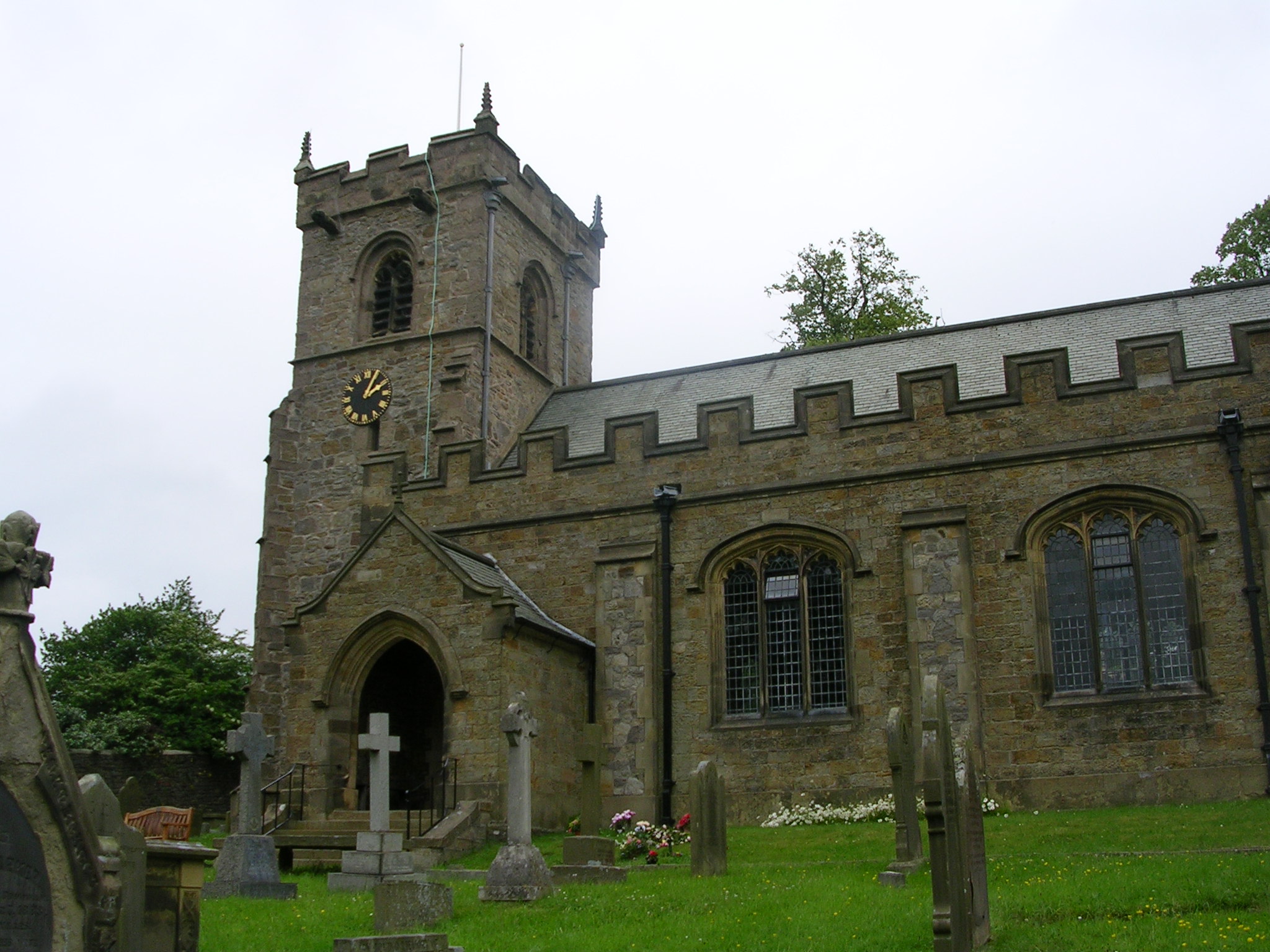
Downham Cemetery from steps of Downham Church
Pendle Hill from Downham, where prophets anciently dedicated the land
Downham Chapel
Chatburn Road in Downham Lancashire
More Downham
I think this is Black Moss Road to Barrowford

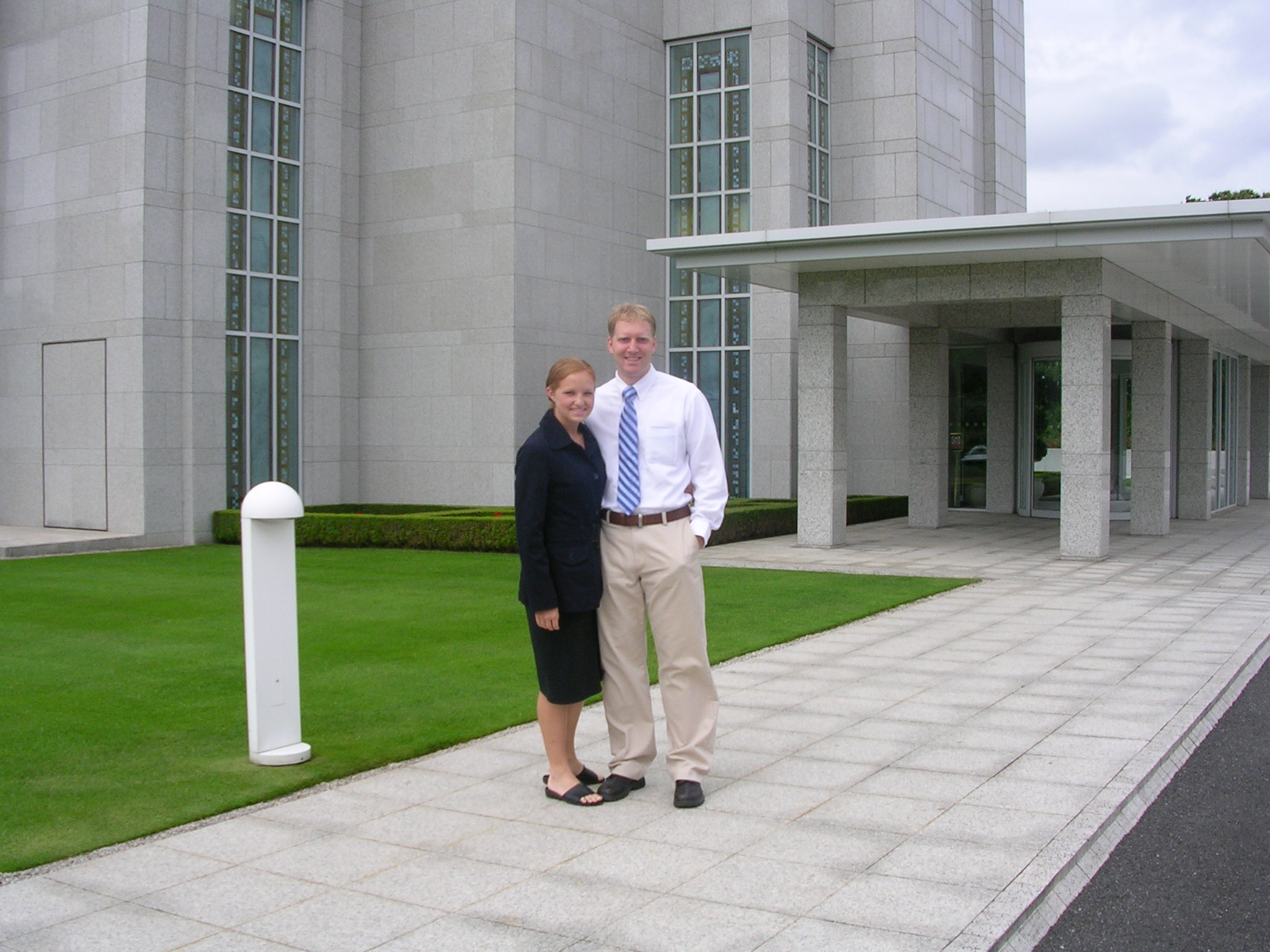
We ran to the Preston England Temple today.  It is one of my favorite temples.  There is something in the simplistic beauty of it I adore.  Amanda agreed.  It is on par with the Rexburg and Vernal Temples for the simple elegance within.  We snapped a couple of pictures. 

Preston England Missionary Training Center
Preston England Temple
Amanda and Paul Ross at Preston England Temple
Preston Temple Steeple

We also ran into a member I knew in the Wigan Ward.  He is now in the Temple Presidency and enjoyed a good visit with him.  We were supposed to go over and visit this evening, but our plans crowded it out in the end.  We had to reschedule it for tomorrow sometime.  We are going to work it out in church.

Afterward, Amanda and I ran into Preston.  I showed her the town center where the missionaries preached the gospel for the first time in the British Isles.  It is in Preston that the longest continuing unit of the church operates, the Preston Ward.  We ran out of time to go to the flat where Parley P Pratt and Orson Hyde were attacked by the legions of the devil.  We did not get a chance to see Avenham Park or the beautiful River Ribble where the first baptisms took place outside of North America.  We did not get over to see the apartment where President Hinckley received his famous “Forget yourself and go to work” letter on Wadham Road.  Perhaps sometime in the future.

We came back and were relaxed some more with the McCabes.  They treated us to a fine meal of South African descent.  They lived in South Africa for a number of years.  Later this year they are immigrating to Australia!  How is that for exciting.  When we make it to Australia, we know who we will be calling on!  Amanda and I made a call at Tesco today and purchased a Pavlova.  Boy, was I glad to get my hands on one.  We consumed it after dinner as one of our desserts.  Mmmmm.

I realized yesterday was the anniversary of Joseph Smith’s death.  I wonder specifically what he is doing these days.  What or where is he up to doing work?

Tomorrow we are off to attend the Wigan Ward.  Then we will go visit some of the new converts I helped bring into the church.  Sadly, I don’t think any of them are active.  But we shall find out.  I did find out Jim Monks knows where one of them lives.

Rights and Responsibilities

Of Rights and Responsibilities: The Social Ecosystem of Religious Freedom

Art and Golden Coley

Introduction

Distinguished guests, colleagues and friends, it is an honor to speak to you today. The subject of religious freedom continues to raise new questions. We have come to learn a little more from many of the most able minds and willing hearts in the field. If we listen to each other carefully, we will be better equipped to meet the challenges and opportunities of today and tomorrow.

Most of us drink from the waters of religious freedom without even knowing it. We think of it as a river that will always flow. But we might not recognize the risks to the tributaries that feed that river.

The perpetuation of religious liberty requires that it be understood and valued by the rising generations. There is a need for them to comprehend what religious freedom brings to society and what is lost when this liberty is eroded. When young people come to understand why this freedom is crucial to their own aspirations, welfare and happiness, they will feel inspired to act to strengthen and preserve religious freedom.

Community and Commitment

To better understand the freedoms we now enjoy, we can look to history. My parents came from what you in the United States call “the greatest generation.” They both served in the British armed forces in World War II — my father in the Royal Air Force, my mother in the Army as a nurse. Between them they served across Europe, North Africa, India and Burma. They fought for their neighbors, they fought in defense of their homeland and they certainly fought for religious freedom, but I don’t suppose that was a phrase they would have used at the time. With so many others, they warded off the tyranny of Nazism. So many freedoms were on the line, and that generation gave everything they had in their defense. Vast swaths of Europe were overrun, with massive casualties. Whole nations were subjugated by tyrants whose aim was to conquer and not only suppress freedoms, including religious freedom, but wipe out and destroy people of particular ethnic backgrounds, faith and belief. The generation which confronted these demonic threats did so with phenomenal courage. It took a society that possessed a highly developed social solidarity and mutual accountability to bring about such a moral achievement.

After six unspeakably harrowing years, the war was won. In the ensuing years, those who had experienced this conflict saw society through the lens of that experience. After a decade or two, they observed the next generation, which had not been where they had been nor confronted what they had seen. These young people became concerned with what in many cases the wartime generation regarded as lesser things. The cohesion that had come from shared hardship borne of an existential threat began to wear off. I was a child through part of this period. The protests of the 1960s found their way onto our television screen. What they exhibited in raw emotional power, they often lacked in sustained social commitment. These actions ranged from bus boycotts to opposition to the Vietnam War to campus protests over student fees. They were all motivated by worthy purposes, but on their own, these purposes were limited without the continuous obligations borne of shared vision and purpose. Of course, protest is a vital function in a democracy, and free people are free because they are able to challenge the status quo and those they have elected. But during those years, the youth of Britain sometimes appeared to protest for its own sake. My parents lamented the shift toward a mindset of rights with no apparent regard for, or reference to, responsibilities. The two must work together; passion and duty must connect. And that concept is what I would like to address — our rights and the responsibilities associated with those rights.

Today it might appear to some that rights just happen — that they are automatically inherited and perpetuated without thought or effort. We can forget the extraordinary struggle, resolve and sacrifice that went into protecting our abundance. We may rarely think about our obligations to keep those rights in place.

The Heart of Religious Freedom

For a time, I lived in a country that did not allow the free expression of religion. I witnessed how people who dared to stray from the official line could be punished. Unfortunately, this continues today in many nations across the globe. Violation of religious freedom is one of the main reasons why we see so many refugees and displaced people today. Religious differences become religious alienation, alienation turns into persecution, and persecution turns to conflict, war and mass flight. These crises happen when freedoms, including religious freedom and freedom of conscience, are not protected. Regimes target those who believe differently, force them from their homes and uproot them in terrifying ways. In 2015 and 2016, from one end of Europe to the other, I saw firsthand countless ordinary people driven from their homes and lands further to the east across countries and continents in search of safety and refuge. Often their beliefs were a factor in why they were displaced.

Hatred and terror drove these people from their homes. The world needs places of refuge from such extremism. Where liberty thrives, it flows almost invisibly. We experience the benefits of it all the time but rarely see how it actually works. Religious liberty acts as the heart of society, a key contributor carrying the lifeblood of all that is good to the whole community.

Healthy societies run on trust, confidence and a sense of safety. With freedom of religion and belief, people feel safe in their deepest convictions and can express and exercise them publicly. The great enemy of religious freedom is estrangement and alienation. When a society or government divides people based on what they believe, how they think, the words they say, whom they worship or the manner in which they worship, common ground is lost, and life together becomes a battle. The test of a pluralistic society is to achieve unity without diminishing the diversity within it.

Religious freedom means nothing if you protect your own religious practice while neglecting the practice of others, especially those who might be less secure and able to defend themselves. It only works if you protect the rights of everyone. As Elder D. Todd Christofferson, a member of the Quorum of the Twelve Apostles of The Church of Jesus Christ of Latter-day Saints, has said, religious freedom is important precisely because it gives everyone — religious or not — the “space to determine for ourselves what we think and believe.”[1] In terms of numbers and inherited culture, the United States has a Christian majority, but unless it honors the lawful practices of Hindus, Sikhs, Muslims, Jews, Buddhists, Native American religions and everyone else, including individuals and groups who profess no faith at all, it will fail to live up to its own ideals. [2]

We all need to be consistent in defending and respecting everyone. And doing so does not mean you have to diminish your own beliefs. That’s how all our rights will be taken seriously. We can’t pick and choose who gets what rights. Every religion is susceptible to the fluctuations of prominence and obscurity. The cultural group that enjoys privilege today may lose it tomorrow, even in nations where the rule of law and democratic principles have been enshrined for centuries.

Having a broad view of religious liberty helps us see that it is universal, not just the preserve of those who are powerful or popular. Religious freedom is suprapolitical, something that is part of our nature before politics declares it to be so. Every person, regardless of religion, race, gender, orientation or nationality, possesses fundamental rights simply by being human. They include the right to life, liberty, security, equal protection of the law and the freedom of thought, speech, and religion, as well as protection from political extremism. But we all must remember, be taught and pass on the responsibilities that come with these rights.

Rights are inscribed in laws, constitutions and charters the world over, but they were first imprinted in the human heart by a loving God. One of the founders of this nation, Alexander Hamilton, wrote, “The sacred rights of mankind are not to be rummaged for among old parchments or musty records. They are written, as with a sun beam, in the whole volume of human nature, by the hand of the divinity itself; and can never be erased or obscured by mortal power.”[3]

Though these inalienable rights come from above, they still have to be cultivated by human beings below. It is up to us — it is the responsibility associated with these rights — to implement, protect and anchor them in our daily life.

Two Sides of the Religious Freedom Coin

Rights and responsibilities can’t be separated without negative consequences. The symbiosis between rights and responsibilities is often forgotten in the rush to demand that something be given to us, while forgetting to foster the conditions in which that right can even be respected or have meaning.

Appropriately exercised, rights and responsibilities move in a virtuous circle. We are more inclined to honor the rights of people when we know them personally and feel a sense of responsibility for their well-being. Meaning in life comes from giving yourself to others, not demanding that others give to you. Author and commentator David Brooks has written that joy comes from commitment:

“In reality, the people who live best tie themselves down. They don’t ask: What cool thing can I do next? They ask: What is my responsibility here? They respond to some problem or get called out of themselves by a deep love. By planting themselves in one neighborhood, one organization or one mission, they earn trust. They have the freedom to make a lasting difference. It’s the chains we choose that set us free.”[4]

Important work in religious freedom is found in walking a mile with your brother and sister, listening to a stranger talk about their religious experience, and in the gentle efforts of dialogue and persuasion.

The study of religious liberty has so many facets and nuances it can be dizzying. The conversation often focuses on the law — what it is, what it should be, what it protects, what it should protect, how it sets boundaries and so on. Law is vital and is an essential part of a bigger picture. However, rights act more like habits than dry edicts. Law and custom must work together.

Behind every right, if we look closely enough, stand layers upon layers of social practices that regulate innumerable human interactions in societies, families, marriages, friendships and all human relationships. They are called “norms,” and they require innumerable transactions of give and take. The demands we make of the law only make sense when embedded in a web of countless norms that make our society possible. We need to keep finding ways to align what we demand with what we can contribute—to our families, workplaces, neighborhoods, churches, schools and communities.

Understanding and appreciation of religious freedom will need to move from the exclusive realm of specialists to a much broader audience, to include those who don’t grasp the intricacies of the law nor have the capacity to influence the law in conventional ways.

To do this, we will need to reframe our own understanding and more effectively articulate what this freedom means and the responsibility it brings. We have a particular obligation to carry this to a younger audience who will be charged to see these freedoms protected and responsibilities fulfilled in the coming years.

A Challenge to Embrace

Many in the rising generation today are concerned about serving those in need, making a difference, changing the world and helping their community. They seek morality and responsibility, and understand the language of universality. Our young people can be jaded by exclusion, inconsistent application of laws and entrenched interests of a few to the detriment of many. They are attuned to the authentic. They are outward-looking and deeply sensitive to treating people fairly and equally. Their yearning to serve is deep. All of this is wonderful and promising!

But on the whole, the religiosity of young people is shifting. They are much less inclined to identify with a particular religion, let alone attend church.[5] They can see religion as stifling their values of inclusion and tolerance. But it is not only the youth; the trend toward a secularized public life affects all ages.[6] One of the results is that our culture is fragmenting into cultural and ideological tribes.

President Gordon B. Hinckley, former president of The Church of Jesus Christ of Latter-day Saints, once said, “Men everywhere seem to be groping as in darkness, casting aside the traditions that were the strength of our society yet unable to find a new star to guide them.”[7]

Peter Beinart, a writer and political science professor at City University of New York, sees a connection between decreasing religious activity and increasing political conflict. He recently wrote, “Maybe religion builds habits and networks that help people better weather national traumas, and thus retain their faith that the system works. For whatever reason, secularization isn’t easing political conflict. It’s making American politics even more convulsive and zero-sum.”[8]

We can help fill this void with a positive message and constructive actions. There is a need, and a real opportunity, for religious freedom to be framed differently and be more clearly understood.

Be a Force in the World

Do we fear the world more than we shape it? Do we let our anxieties prevent us from making a difference? Do we spend more time hiding from society’s flaws than fixing its problems?

How we answer these questions determines what our social environment looks like. It is always changing, and improves or deteriorates depending on our actions. Society is not something that just happens to us; it is something we help shape.

The main thing is to engage, dialogue, bridge and interact with people of all sorts. Unless we participate, we lose our ability to both influence the world and learn from it. As British novelist E.M. Forster put it, “Only connect! … Live in fragments no longer.”[9]

We all have a stake in this debate. “No man is an island, entire of itself; every man is a piece of the continent, a part of the main.”[10] The poet John Donne wrote these words nearly 400 years ago, but they still resonate today.

Contributing to the good of society is part of our spiritual stewardship. Jesus taught his followers to be the light of the world and the salt of the earth. Let your light shine, he said, as a city on a hill. Salt was an ancient symbol of friendship and generosity. And like salt, we have a duty to savor person-to-person connections and nurture amity between adversaries. We must not cloister ourselves with others who think like us and congregations that believe like us. Jesus demonstrated how to lift society, moving deliberately to the despised, the diseased and the misunderstood, listening to and healing them.

I have been inspired by the goodness and selflessness of members of my own church who reach out to those in need. Wherever I have witnessed, in the course of my service, those afflicted by fire, flood or any manner of natural disaster or humanitarian crisis, our people have been there. When visiting such a location in California, I was asked if I knew what FEMA stood for. As I struggled with “Federal… Emergency…,” my friend said, “No, it’s ‘Find Every Mormon Available.’” It was said in jest, but more than once media has reported that the first two groups at the scene were the Mormons and the Latter-day Saints — reminding us of the uphill task we have to be known by our full name. The point is, our people do go out of their way, a very long way out of their way, to help in crises the world over. This isn’t only disaster response and assisting refugees. These devoted souls are there in those often invisible, private, chronic situations which can last a lifetime. And of course it’s not just our people; we work alongside representatives of numerous other faiths, often partnering with them in some of the most challenging parts of the world. There are certainly those involved doing extraordinary work for whom faith is not a driving force. But these contributions with our fellow believers are vast. And, importantly in today’s context, they are often overlooked. Part of that is our own fault, as we can have something of a tortured relationship with the idea of telling people about these good works. As a church, we are torn between having these efforts be private and letting that light shine in a way that will create awareness that we take our responsibility of contributing to society very seriously. We will probably need to talk more openly about these contributions, letting people know that at the heart of our faith is the desire to help our fellow human beings, wherever they are, people of faith and no faith at all. And that we do so without seeking converts in these most trying moments in people’s lives.

We need to help many more young people see the opportunities the free exercise of religion provides to serve others in need and unite communities in ways that benefit all people. And we need to help them understand that the expression of religious belief through community service is dependent on religious freedom. With this understanding, they will not only value religious freedom more deeply but will courageously act to strengthen and perpetuate it.

Influencing society always seems to be the job of someone else — someone with more power, more money, more time. Perhaps we expect some program or sponsor to take the lead. But when it comes to taking care of people, there is no “someone else”; there is only us. Civic engagement requires people to freely act on their beliefs and solve the problems of their communities. If the prevailing philanthropic desires of our rising generation are to be harnessed and maximized, our young people will need to come to the same conclusion as have so many of us here today. And that is, that this is the most worthy of causes — a spring which feeds so many others. It represents our highest and holiest beliefs, and at the same time, blesses individuals, families, communities of all descriptions and entire nations. How to unite these benevolent desires of the rising generation with the responsibility of preserving religious freedom, along with every other inalienable right, is the task before all of us, and I am so grateful that you have gathered in this way to address just that.

We have a responsibility to help and, as God told the Prophet Jeremiah, “seek the welfare of the city where I have sent you into exile, and pray to the Lord on its behalf, for in its welfare you will find your welfare.”[11]

Conclusion

Now to conclude, every society has a foundation of truths, rules, expectations and norms which guide their thinking and their actions every day. Many take them for granted. And like all things we suppose will simply always be there for us — like the air we breathe — we hardly notice them. That is, until they’re challenged. And then we have to look closely and really get to know them, as if discovering them for the first time. So it is with religious freedom.

The way we all as human beings form our deepest beliefs is perhaps life’s greatest journey of discovery. The freedom in which we do so is precious. Our ability to practice and share those beliefs as we learn of and come to understand the beliefs of others enriches us all, broadens our view and creates harmony. A climate in which we are free to believe and practice is also a climate in which we can contribute. Religious freedom demands both the universal right and the universal responsibility, and it is our turn to do our part.

As human beings and the children of divine creation, we all want to live by a moral vision and want to share it with others. In doing this, we enter the realm of both religion and politics. This can be messy and contentious, but we have reason to be optimistic. As Martin Luther King Jr. was so fond of saying, drawing from the abolitionist Theodore Parker, “The arc of the moral universe is long, but it bends toward justice.”[12]

We are in that arc, and God expects us to do our part in nudging it toward justice. This is our work. Thank you.

By Elder Patrick Kearon of the Presidency of the Seventy

This talk was a keynote address at the Religious Freedom Annual Review at Brigham Young University on June 19, 2019.

Edith Maude Gudmundson Andra

Edith Gudmunson

Edith Maude Gudmundson Andra, 91, passed away on Monday, 18 July 2016 at her home in Stockton, Missouri, from natural causes related to age.  She was born the first of two children on 21 September 1924 in Logan, Utah, to Melvin Peter and Maude Victoria Wollaston Gudmundson.  She married William Fredrick Andra Jr 13 June 1947 in the Logan Utah LDS Temple.  Together they had six children.  William passed away in 1992.  Edith married Leland Fred Williams 10 March 1999 in Arnica, Missouri.  He predeceased her in 2011.

Edith grew up in Logan at 253 East 3rd South.  She had one sister, Shirley, born in 1928, with who she grew up.

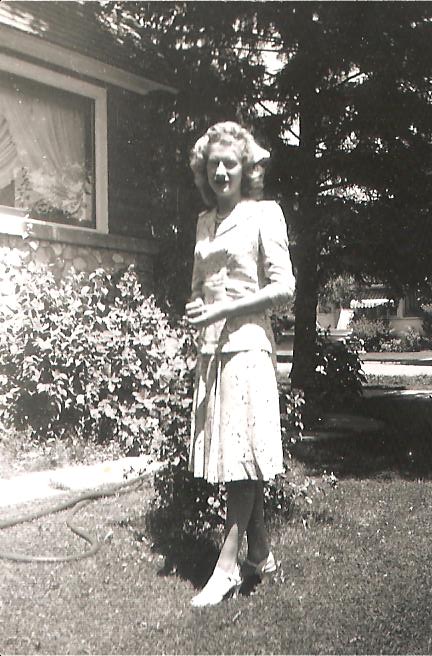
Shirley, Melvin, and Edith

Shirley, Melvin, and Edith


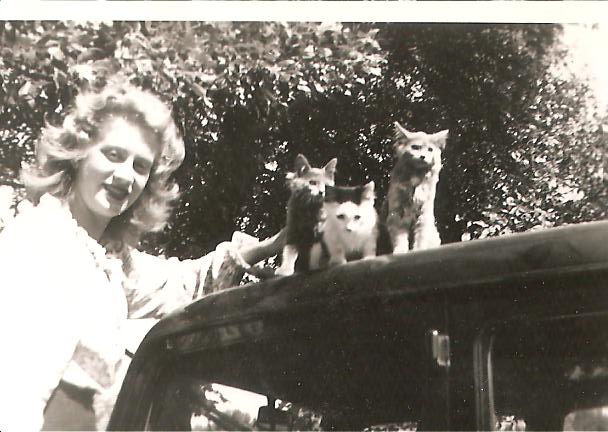
Shirley and Edith Gudmundson

Shirley and Edith Gudmundson

Her mother passed away in 1931 and the family had to work through those difficult years with just the three of them.  She attended Wilson School and Logan Junior and Senior Schools where she graduated. She played the violin.

Edith Maude Gudmunson 005

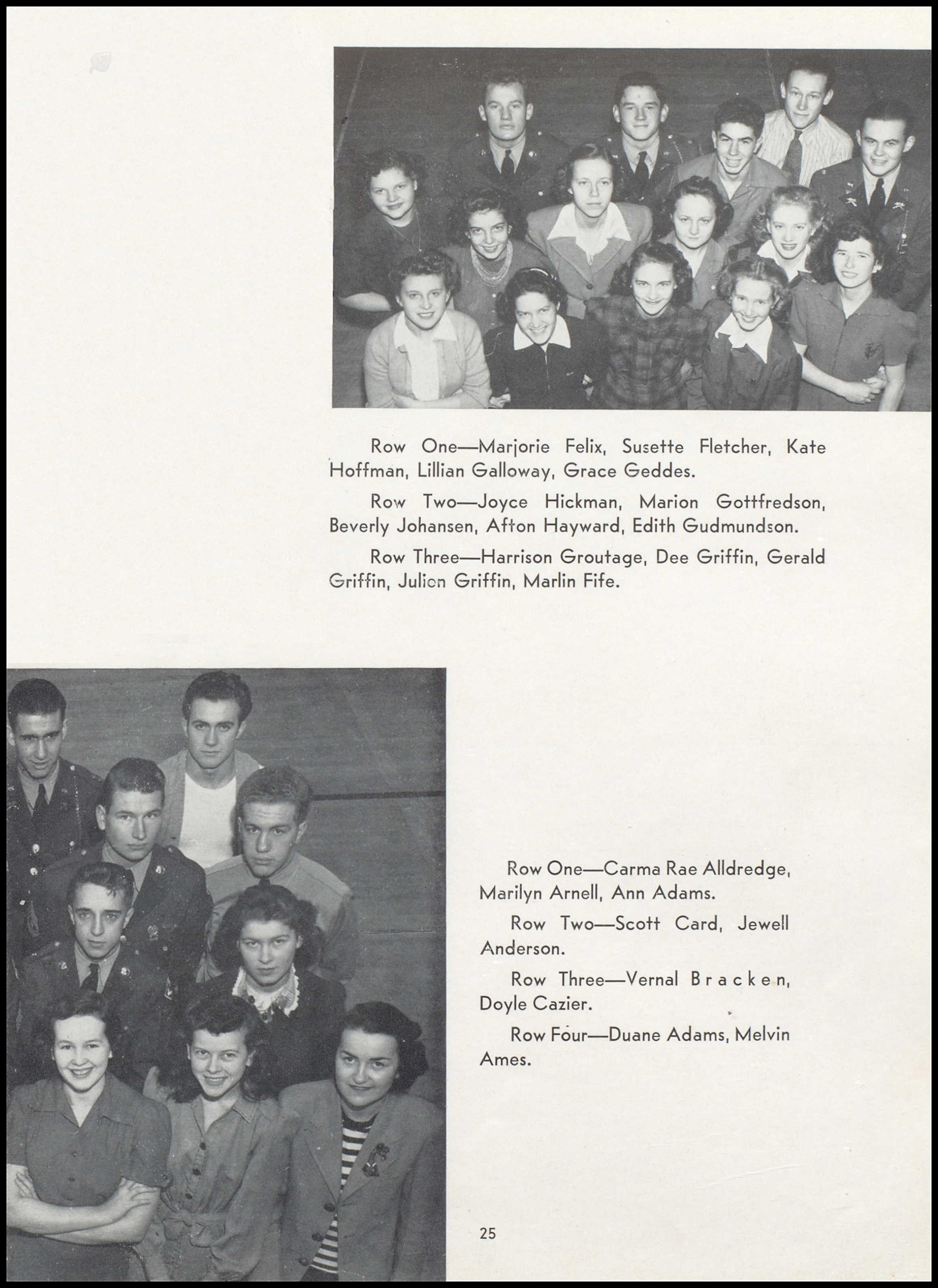
Logan HS Yearbook

Logan HS Yearbook


Logan HS Yearbook

Logan HS Yearbook


Edith Maude Gudmunson 012 Edith Maude Gudmunson 014 Edith Maude Gudmunson 008 Edith Maude Gudmunson 010

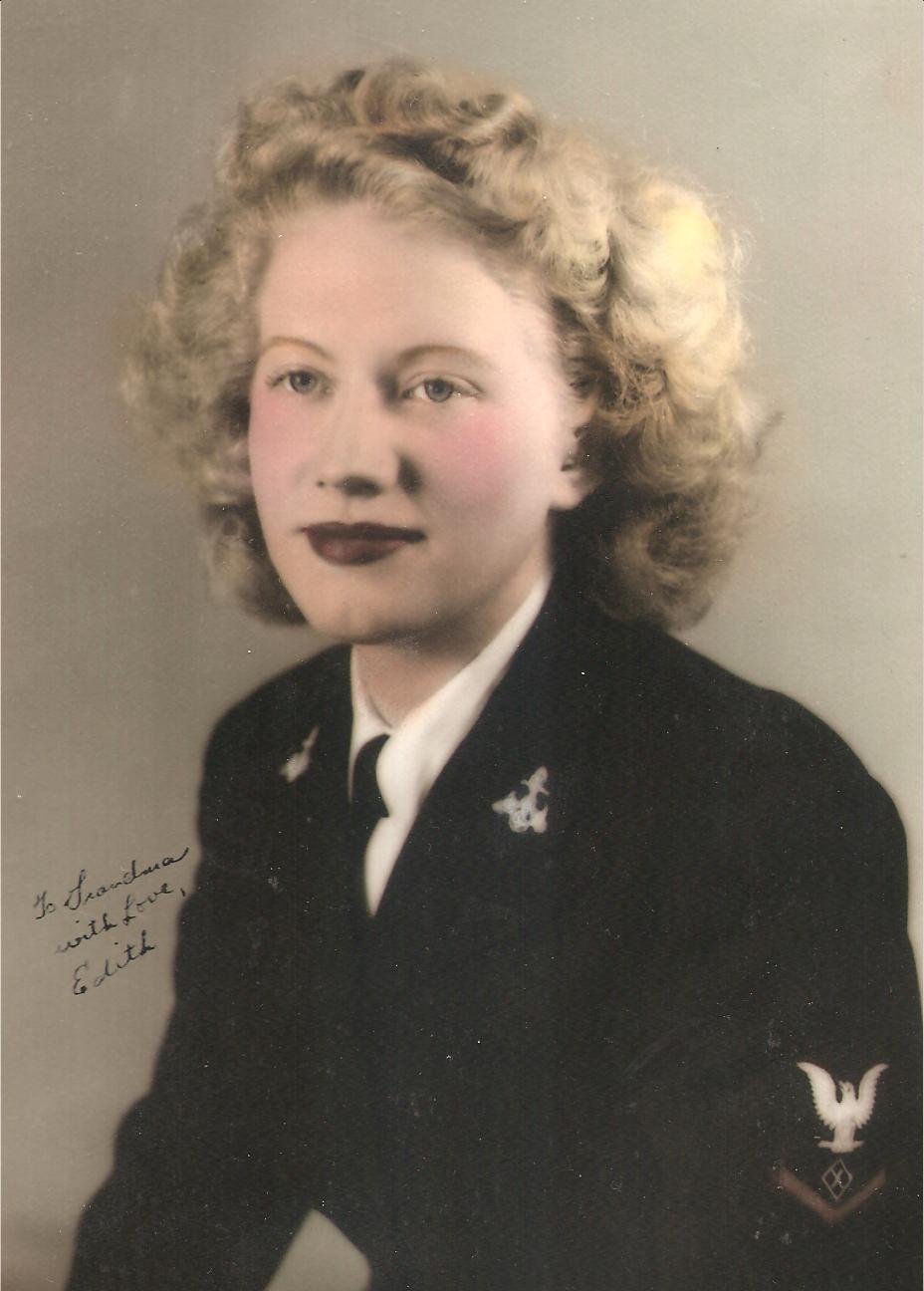
She enlisted in the Navy in Salt Lake City, Utah, 21 September 1944 and served until discharge in San Francisco, California, 1 May 1946.  She trained and served as a switchboard operator for the majority of the time of her service.

Edith Maude Gudmunson 015 Edith Maude Gudmunson 016

After her military service, she attended Brigham Young University in Provo, Utah.

Edith in the BYU yearbook

Edith in the BYU yearbook

Edith 002

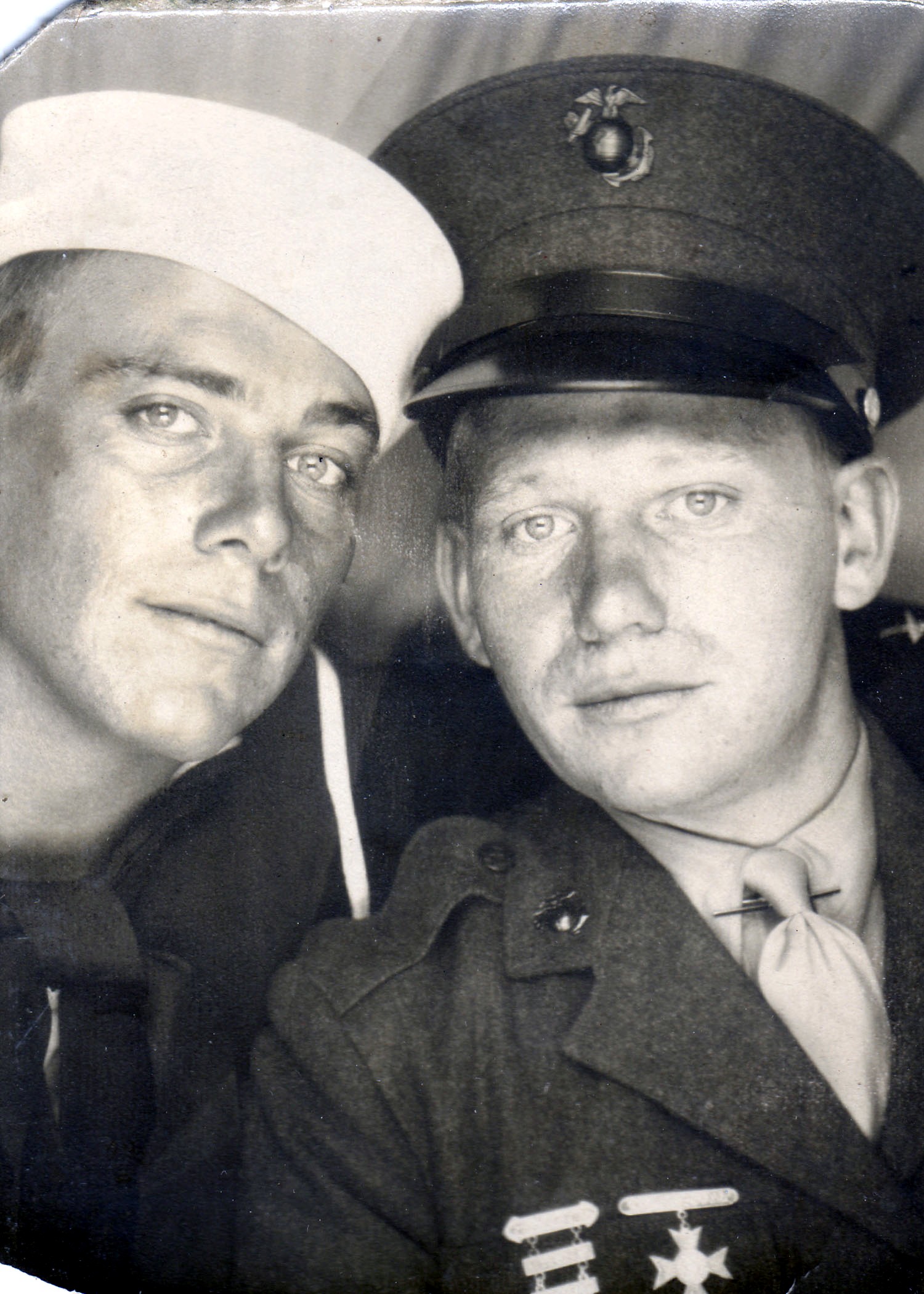
During this time she met William Andra, who discharged from the Marines 20 June 1946.  I am not aware that he attended Brigham Young University, but I know he was living in Orem and it was likely there that William and Edith met culminating in their marriage in 1947.

Edith and William Andra Marriage Portrait

Edith and William Andra Marriage Portrait

Greg William was born in Preston, Idaho in 1948.  Chad Fredrick was born in Preston in 1949.

Edith

Bill and Edith andra with Greg and Chad

By 1950, the family was living in Boise for a short time.

Edith in 1951

Edith in 1951

The family then moved back to Logan where Kent Melvin was born in 1954.

Bill and Edith with Marc, chad, and Kent

Edith Maude Gudmunson

The family was living in Midvale by 1955 where Marc David was born.  Then to Salt Lake City in 1956.  Troy Norman was born in Providence in 1960.

Bill and Edith andra with Greg and Chad and Kent, marc

Bill & Edith in Richmond for an Andra Reunion

Bill & Edith in Richmond for an Andra Reunion

A few years later the family moved to Smithfield.  Todd Nathan was born in Smithfield in 1968.

Greg,Kent and Marc, Chad, Edith, Bill

Greg and Chad and Kent 001

It is in Smithfield that my mother came to know the family, since she was living in Richmond.  Kent and my Mom were close in age and played together.

Larry and Mom both told me stories about William and Edith being very particular about being healthy eaters.  Larry remembers Edith washing every leaf of a head of lettuce before it could be eaten.  William tried to convince Larry of the unhealthy nature of bacon and milk.  Nobody else seemed to care, but it would really get William and Edith upset when people would not come to their way of thinking.  William was also particular about when you ate, not mixing the various parts of your food with other parts.  Larry found much of this amusing.

The Andra family was a fairly tight knit family and held reunions together yearly.  Relationships started to strain in 1965 when William and Edith learned and accepted polygamy leading to their excommunication from the LDS church.  The Andra family relationships started to strain further after attempts to convert William’s parents and some of the siblings to polygamy.  Even while William’s parents were in a nursing home late in life, there were attempts to convert them to polygamy which led to final severing ties.

Bill and Edith with 5 boys

William Andra Jr FamilyBill Edith Children 1981

I don’t know when, but the family after converting to polygamy moved to Santa Clara.  Nobody in the immediate family knows when due to the severance.  After many years in Santa Clara, they then moved to Cedar County, Missouri.

Bill Edith 1981

Bill and Edith Family 1981

Bill and Edith in SLC (2)Todd, Troy, Marc, Kent, Chad, Greg 004

Todd, Edith, and Kent Andra

My first visit to Edith was in 2001.  I was moving to Branson, Missouri for work and before I left Uncle Ross Andra told me Edith lived in Missouri somewhere.  I do not have any memories with William and Edith and did not even know she was still alive.  Ross told me I should stop and visit.  I knew nothing of the divide that had come into the family.

When I stayed the night before entering Missouri in Florence, Kansas, I looked to see what I could find in the phone book.  With a last name like Andra, it wasn’t hard to find who I thought was the right name in Stockton, Missouri.  I called the number and it was Mary Andra, wife of Kent Andra who answered.  She told me I was welcome to stop by and since their shop was a bit off the beaten path, gave me directions.

I arrived later that day and found a long lost number of cousins I never knew existed.  I saw the shop, I met a number of Kent’s children, and then I was taken down to the home to meet more of the family.  When I was introduced to his wife, Tammy, I thought I had already met his wife, Mary, but I assumed I must have misunderstood.  I met more and more children.

Kent sent one of his daughters with me to help me find Edith’s home.  I sat with Edith meeting her for the first time in my memory and chatted for quite a while.  She showed me some family history, told me some sweet stories of my Grandmother Colleen, and various conversations.  Edith did not know Colleen had passed away.  She told me of her new marriage to Leland Williams.  We parted on great terms and went back to Kent’s home, enjoyed some carrot juice, and visited.

In a funny situation, I was enjoying my carrot juice trying to keep the children’s names straight when Mary came into the house.  I sat there talking with Kent, Tammy, and Mary having a good laugh.  I kept wondering how I misunderstood and was unclear on who was Kent’s wife, so I asked.  They stated that both were.  I sat there not comprehending.  I must have looked confused because they just looked at me.  It then dawned on me and I made some comment like, “Well, we are family right?”  I laughed, they laughed, and I think any tension or misunderstanding that may have been there melted away.  That was not something I was expecting that day!

We said our goodbyes knowing that we were still family.  I quite enjoyed my visit.

It was later that week I got a phone call from Edith asking me to not share names, circumstances, or anything else regarding the family because it had caused so much trouble with the rest of the family.  I told her that we were family and it did not bother me and I really did not think it bothered anyone else.

I visited again in 2002.  When Kent passed away in 2003, I thought they were very kind to let me know.

Amanda and I stopped in 2006 on our move from Utah to Virginia.  As we drove to the boonies where they lived, she joked with me that I was going to drop her off out in the middle of nowhere.  We again had a very pleasant visit with Mary, Tammy, and Edith.  Amanda was prepped with the information and quickly found out nobody had multiple heads or horns.  I think it was the boonies that gave her more concern than the polygamy.

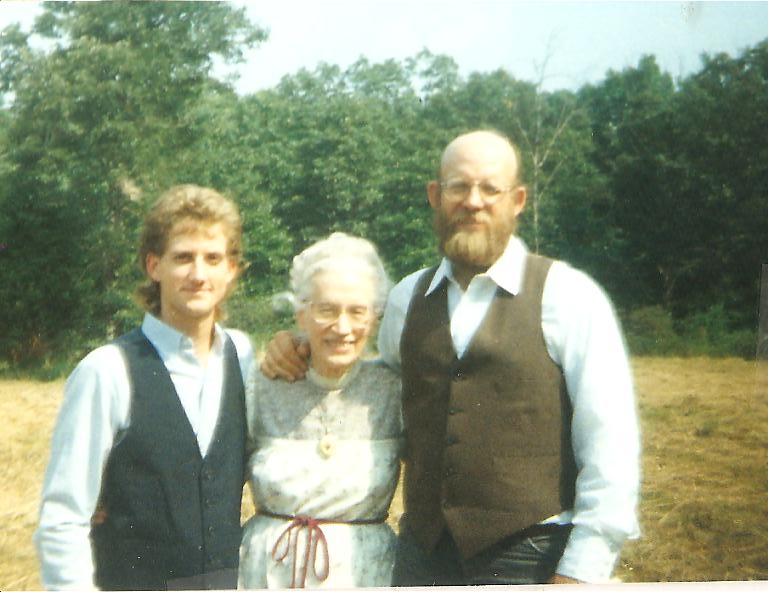
I visited again in 2008 driving from Virginia through to Washington for work.  That time Edith had moved to a home nearer to her son Marc.  I stopped to visit Marc and Cheryl and met them for the first time.  Edith also came over to the house and we visited with her.  Here is a photo from that visit.

Paul Ross, Cheryl & Marc Andra, and Edith.

Paul Ross, Cheryl & Marc Andra, and Edith.

I tried to call Edith every other year or so.  Sometimes it was hard to track her down, but I typically found her and was able to call.  The last time I visited with her was when Donald was sick and dying with cancer in the spring of 2016.  I asked Donald if I could let some of the extended family know.  He said yes.  With that, I called Edith and visited with her about Sergene’s passing and Donald’s cancer.  She talked about how the family was distant and she appreciated the updates.  She also indicated that life continues to pass and we all end up dealing with death at some point.  She reminded me of her age and she did not know where she would be next week either.

Now she is gone.

While I know there was quite a bit of angst in the family over the beliefs and separation, but despite all that I am glad I did not know of the polygamy issues and got to know the family as just that, family.  Their position, beliefs, and practices at no point directly affected me in any way.  I am glad I know them!

Aunt Edith, until we meet again.


In Memory of Lowell Hansen, Bryce Sanderson, and Garrett Smith

With the suicide of a dear young man, Bryce Allen Sanderson, I thought I would share these thoughts and this talk once again.  In memory of Garrett Lee Smith and Lowell Eugene Hansen.  Both of them forced the concept of suicide into my life and required I come to some understanding of the idea.  I wanted to give some memories of these two individuals and the doctrinal concepts surrounding suicide.  What is suicide?  How does God look at suicide?  How am I supposed to deal with suicide?  How does God deal with those who commit suicide?  I hope this talk will help address some of these questions as we all ponder once again this unthinkable act, that brings upon a person their own death.

Lowell Hansen was an acquaintance I knew in Paul, Idaho.  I was young enough that I knew who he was, but did not really know anything about him.  After I was charged by a bull at our house, I remembered that within days he appeared at our home and removed the charge from the bull.  I watched him shoot, hang, gut, clean, and cut the bull.  It was fascinating.  I remember recognizing the butcher truck each time when I would see it on the road or at some other location.  I knew he built a log home because I always saw the truck parked near it.  Years later after I became involved in the same congregation and came to know him a little more as Brother Hansen.  It was not until I returned from my mission that I realized he even had a family.  I moved back to home in the fall of 2002 and I was assigned as a Home Teacher to one of Lowell’s daughters.  It was only then I really started to get to know the Hansen family more on a personal level.  It was shortly after that Lowell decided to end his life much like he did that bull.  I attempted to help minister, however weakly, somewhat to the needs of his daughter and her then boyfriend.  The talk I reproduce in full below was given at his funeral and has provided much of the basis for my feelings and ideas on suicide.  I have gained my own testimony of the talk and testify openly of its principles and truth.

Garrett Smith was on a bit more personal level for me.  I first learned of him in Manchester, England when he was assigned my companion as a new missionary.  I was called as a trainer to him, although I only knew of him as Elder Smith.  We served together, 24 hours a day, for 6 weeks.  We had many a conversation and became close friends.  I had some frustrations with him due to some of his learning disabilities and my lack of patience.  He knew of this and I do not think it always helped in our relationship.  When the 6 weeks were up, we had both profoundly influenced the other.  He convinced me that I should consider leaving civil engineering and looking more into political science and law.  I think I had convinced him that his disabilities were not a very good excuse for settling for mediocrity.  I left England to return home in 2000 and he finished in 2002.  We had planned several occasions where we would get together for old time’s sake, but they kept falling through due to poor scheduling and other issues.  We finally set a date to get together on the 13th of September in 2003.  I was going to drive down to Orem, Utah where he was and spend the weekend.  Unfortunately, I received a phone call that week only to find he had hanged himself in a closet after consuming alcohol and sleeping pills.  I had a great desire to attend his funeral so a roommate from Logan drove with me to Pendleton, Oregon for the funeral.  I took a copy of the talk from Lowell’s funeral with me and gave it to Garrett’s parents.  Garrett’s mom, Sharon, later thanked me for the talk.  Our Mission President, Phil Wightman, spoke at the funeral and while I doubt he had read the talk, he referenced very similar themes as Hyrum Smith did at Lowell’s funeral (Hyrum Smith was Lowell’s Mission President too).  Sometimes I find myself wondering what Garrett’s life would be like if he wasn’t reposing at Weston, Oregon.

I lost the talk over the years and had repeated requests come to me for a copy of it.  Those asking were mostly individuals I had shared with at the time of Garrett’s funeral who were moved by it and wanted to give a copy of it when someone else took their life.  I had probably a dozen requests for the talk in 2010, so I ended up contacting Lowell’s widow for a copy.

Here is a copy of the talk by Hyrum Smith given 6 December 2002 at the funeral of Lowell Eugene Hansen in Paul, Idaho.  At the end, I will give some other thoughts I remember Phil Wightman giving at Garrett’s funeral.

~

My brothers and sisters, I wasn’t really sure until about 3 o’clock this morning why I was asked to be here, but somewhere around three, I knew.  The spirit indicated to me that I am uniquely qualified to speak here today, and I’ll share with you why as I share some thoughts with you.

I’m honored and humbled that Emma Jean asked me to be here.  When she called Monday, I was stunned as I’m sure all of you were.

Public speaking is not something that is foreign to me.  I do it for a living.  I’ve spoken before thousands of audiences, but never an assignment like this.  I’d like to begin by suggesting that we are met here today in the house of God.  That same God who sent Jesus here to help us.  We meet today in the name of Jesus Christ who died to save us.  I would ask that you keep that in mind as I share a few thoughts with you this morning.

I’d like to begin by sharing four scriptures with you that describe, as many scriptures do, how our Father in Heaven, and our Savior feel about us.  I think we need to be especially reminded of that.  I’d like to go first with the 29th section of the Doctrine and Covenants and read verse 5 “Lift up your hearts and be glad for I am in your midst and am your advocate with the Father.  And it is His good will to give you the kingdom.”  I would then take you to the 62nd section of the Doctrine and Covenants and read verse 1, “Behold and hearken, o ye Elders of my church saith the Lord your God.  Even Jesus Christ, your advocate, who knoweth the weakness of man and how to succor them who are tempted.”  Now go with me to John, Chapter 3, verse 16, “For God so loved the world that He gave His only begotten Son.  That whosoever believeth in Him should not perish, but have everlasting life.  For God sent not his Son into the world to condemn the world but that the world, through Him, might be saved.”  Last I would take you back to the Doctrine and Covenants, in section 18.  “Remember the worth of souls is great in the sight of God.  For behold, the Lord, your Redeemer, suffered death in the flesh.  Wherefore He suffered pain of all men that all men might repent and come unto Him.  And He hath risen again from the dead that He might bring all men unto Him on conditions of repentance.  And how great is His joy in the soul that repenteth.”  I share those scriptures with you, brothers and sisters, as a preamble to what I would ask you to consider as we have met here today.

This wonderful man, father, husband, son, brother, missionary, I knew him well as a missionary.  He was one of the great missionaries of our mission – most of the Idaho people were.  He made a big mistake the other night.  Huge mistake.  He knows that he made that mistake now.  It cost him his life.  But only his body died the other night.  His soul, his spirit, his brain, his mind are still very much alive – very active.  It’s like going into another room.

I was led to a talk that Elder Jeffrey Holland gave at a very similar funeral.  Jeff Holland and I served as missionaries in the same mission, British mission, lots of years ago.  He’s a very dear friend.  He was asked to speak at the funeral of a young man who had taken his life.  This is what Elder Holland said, and I am going to interject Lowell’s name into these remarks, because they fit perfectly today.  “We’re here to celebrate Lowell’s life, not his death.  We’re here to praise the Lord and love God for the atonement and the resurrection, but we’re also here to say, particularly to the youth in this congregation and others who struggle, that Lowell made a mistake.  Now he would be the first to say that.  Someone said, ‘A man to be good, and I would add a woman, must imagine intensely and comprehensively – he must put himself in the place of another – the pains and pleasures of the man that has become his own.  Until he can do that, he must never sit in judgment on a man or his motives.’  We need a better vocabulary, Emma Jean.  We know what we mean when we use the language of death.  But the master of heaven and earth, the Savior of the world, the Redeemer of all mankind, the living Resurrection said that, “When you live and believe in Him, you never die.”  So, we’ll let Lowell go for a while.  But he’s not dead, in any eternal sense, and you know that.  You know that now, you’ll know it tomorrow, and you’ll know it next week.  You’ll especially know it when he is spiritually close to you, whispers to you in your dreams, helps through the veil to raise your grandchildren.  You’ll know that Lowell lives.  It is important to me to bear testimony to you that Lowell lives – just as we testify that God lives and Jesus lives.  We testify that Lowell lives and spiritually and is loved of God and of us.  We miss him.  Death was an intruder this week.  We weren’t ready.  We do miss him and we are sorry, but none of that diminishes the brightness of his life.  The grandeur of God’s plans – the reality of life and the resurrection – of eternity and the Celestial kingdom.  Lowell is being buried with all the promises and symbols of his covenants safely around him.  God in his mercy will work out all the arrangements even as Lowell works out his acknowledgement of his mistake.”  Un-quote.

Those are words of an Apostle of God.  I would like to pose five questions to you now.  The first of which no one has an answer for, but I think we need to deal with it, because I don’t think there is a person in this room that hasn’t asked this question in the last five days.  The second, third, and fourth question, I came from southern Utah this morning, to answer.  Because there are answers to those three questions, and I believe I can answer them for you.  The fifth question, only the people in this room can answer.  I don’t know what that answer will be, but I’m going to pose it.

Here’s the first question, which has been on the minds and lips of probably everyone.  “What was he thinking about?”  What possibly could have driven him to make this mistake?  What’s the answer?  I don’t know.  Nobody here knows.  What sort of despair and anguish and pain causes someone to do that?  I don’t know!  He made a mistake, so we really don’t know the answer to that question.  But that’s not the important question.

The second question, the one that I think I am uniquely qualified to answer, and one of the reasons why I think I was asked to be here is, “What is Lowell thinking now?”  Lowell’s very much alive.  He thinks, he breathes; he has probably had an opportunity to walk with his Father in Heaven.  DO you want me to tell you what he is thinking now?  He’s afraid.  He’s sorry.  He’s in anguish.  He’s suffering.  He’s wishing he hadn’t done it.  I know that.  How do I know?  Several years ago, I made some big mistakes.  We all make mistakes.  Hopefully not as big as the ones I made.  Because of those mistakes, it was required that I lose my membership in the church for several years.  And after I went through the process of approaching my Bishop and my Stake President, and going through the church judicial system – which is amazing, I found myself asking the first question a lot.  What was I thinking?  I couldn’t even answer that question for me.  But I know what I thought about after.  I know about the pain.  I know about the anguish.  I know about the suffering.  It’s awful!  So rest assured, and knowing Lowell as I know him – the integrity of this man, he’s in a lot of pain.

Third question, “Will the Lord allow Lowell to repent?”  Every natural instinct in your body knows the answer to that question – Of course!  He allows everyone to repent.  There’s a myth that floats around the church from time to time.  It suggests that people who take their lives have committed an unpardonable sin.  I’m here to tell you today that’s just flat not true.  The Lord will allow Lowell to repair that mistake.  He’ll walk him through it.  He’ll help him do it.  He’s going to allow that.

Fourth question, “Will the Lord forgive him?”  Every natural instinct in your body knows the answer to that question.  The answer is yes.  He will.  He will forgive him.  And Lowell will receive all the blessings that he rightly deserves from a wonderful life.

Those are the three questions I can answer with surety.  The fifth question, I can’t.  The fourth question was, “Will the Lord forgive him?”  The answer is yes.  The fifth question is, “Will you?”  I know from sad experience that lots of people don’t.  But the Lord has asked us to forgive.  He said, “I the Lord will forgive whom I choose to forgive, but of you, you’re required to forgive all men.”  I need to talk about forgiveness for a moment.  Does the mistake that Lowell made the other night blot out all the good that this man did in his life?  No!  Elder Holland reflected on that.  He was a wonderful missionary.  He was a great father.  He was a great man.  He was dedicated to his Father in Heaven.  Like many of us, he made some mistakes, one big one.  It doesn’t blot out everything he was.  We heard of a wonderful tribute from a beautiful daughter today about the kind of dad he was.  None of that gets wiped out.

As I went through the initial stages of my repentance process, one of the major sources of the anguish was the worry that no one would forgive me.  Because I somehow got it in my mind as I grew up in the church, that to ultimately forgive someone, for a transgression, you had to forget it.  Because we were taught in the scriptures, that when repentance was real and complete, the Lord forgets.  How does He do that? He forgets!  Wow!  Can we, mortals, reach a level of spiritual maturity where we can forget what happened the other night?  I don’t think so.  Do you think that anybody in this room will ever forget that Lowell took his life?  Not in this life.  I don’t think so.  Do you think anyone, who knows me well, will forget that I was excommunicated from the church?  Nope – Hyrum Smith…business leader, great, great grandson of the prophet’s brother, Hyrum?  No one will ever forget that!  Do you think my kids will forget that?  No!  BUT, and this is one of those moments where the spirit instructs and saves, in the middle of the night, the spirit taught a great lesson.  Forgiveness doesn’t mean forgetting.  Forgiveness means remembering – but it doesn’t matter any more.  I think we can achieve that.  I think we can reach a point, as mortals, where we can remember and have forgiven to the point where, in remember, it just doesn’t matter anymore.  I challenge each to deal with the fifth question, “Will you forgive him?”  I believe you can – you must!  That’s what the Lord wants you to do.  But you’ll never forget.

I want to share a concept with you that has helped me think through a number of things.  During the Vietnam War, I was in the military during that period of time; there was a man by the name of Stockdale.  He was an admiral.  He was the highest-ranking man to spend time at the Hanoi Hilton as a prisoner of war.  And while he was in the prison, for about six years, he discovered that there were three basic types of people incarcerated in that prison.  He discovered the same thinking that Victor Frankl discovered at Auschwitz during the Second World War.  Victor Frankl wrote about it in his book, “Man’s Search for Meaning.”  Then Stockdale wrote about it, and it has become known and has been written about in a number of books since – the Stockdale paradox.  The three groups of people that he discovered were these.  There were pessimists, optimists, and realists.  And this is how he defined each group.  The pessimists saw the brutal facts around him and quit.  The optimist had boundless faith and ignored the brutal facts.  The realist saw the brutal facts, but had faith they could be dealt with.

The reason I share this with you is that in this book, when he wrote about this he said the interesting thing about these three groups is that the first two groups of people died in the camps at Vietnam.  Died!  Didn’t make it back!  I understood why the pessimists didn’t make it.  They saw the brutal facts.  They were in the middle of South-East Asia.  They were 8,000 miles from help and the Marines aren’t going to get in here.  We’re going to be here forever, and they died.  And some very healthy bodies died.

The second group stunned me!  The optimists died!  How come the optimists died?  Because the optimists had boundless faith but were not willing to look at the brutal facts.  And they said to each other, “You know we’ll be out of here by Christmas.”  “We’ll be out of here by Valentines.”  Every rustle in the bush was the Marines coming to save them.  And when every rustle in the bush wasn’t the Marines coming to save them and when they weren’t out by Christmas, and when they weren’t out by Valentines, they died.  They gave up and died.

The realists survived.  They saw the brutal facts.  “We’re in the middle of South-East Asia.  We’re not going to be rescued for a long time, but you know what guys, we’ll stick together.  We can handle this.”  And they did.

A good friend, by the name of Jensen, was in our mission – Lowell knew him – served six years in that prison.  There were several LDS fellows there, and the way they kept themselves sane was they would try and remember LDS hymns.  They would tap by Morse code on the bars of the jail, and they would send what they could remember of each hymn.  They gathered lots of hymns.  And one hymn they worked on for four years.  They got the first three verses in about 18 months, but the fourth verse took two and a half years to get.  They finally got the fourth verse.  When they got back, there was only three verses.  They had created their own verse, but they survived.  Now why do I share that here?  I want to ask you the question as what are you going to do about this issue?  Pessimists see the brutal facts – Our dad killed himself.  It’s pretty awful.  Nothing so wrong, it’s awful!  And you can give up – if you want.  The optimist ignores the facts – puts on a smiley face and pretends it didn’t happen.  And the optimists live a lie.  The realist sees the brutal facts – We lost our dad, our husband, our son – pretty awful.  We’ve got to gather together and help each other now to survive financially and economically.  We’ve got to get through school.  We’ve got to do stuff that dad normally would have helped us with.  It isn’t going to be easy.  The optimist has the faith that we can do it.  And so I’m asking you today, “What are you going to be?”

On the 19th of October of last year, not this year, but 2001, Steven Covey and I, we have a business together, were asked by Mayor Giuliani of New York City, if we would come back to Manhattan and do a free, one day, workshop for the families of those affected by the 9/11 disaster.  He told that their mid-town Manhattan Sheraton had donated their ballroom.  They donated our rooms to stay.  Would you come back?  We’ve got people in some real pain.  Would you come back and speak?  We said, “We’re there!”  We got there on a Thursday night.  The seminar was to be on Friday.  I got there about midnight.  I’ve been in Manhattan many, many times.  As I flew up the East river, I was coming from Chicago, and saw the lights where the World Trade Center used to be, it was kind of an eerie feeling.  It was a very different landscape now.

At five o’clock the next morning, Mayor Giuliani had arranged for a tour, a private tour of ground zero for Steven and me.  At that point, which was just five weeks after the event; sixteen hundred policeman had surrounded ground zero, and had blocked it off.  You couldn’t get down there without a police escort.  We had to go through four checkpoints to get to ground zero.  About 5:15 in the morning, we found ourselves standing on the street in front of where the Marriott Hotel used to be. It used to be called the Vista Hotel.  I’ve stayed in that Hotel many times.  Only I wasn’t really standing on the street.  I was standing on 16 feet of compacted debris.  And as we stood there looking at this horrific hole in the ground, the policeman who had been assigned to be our guide began to tell us his story.

He said, “You know, I was here that day.  I was standing on the street right about where we are.  I heard this big bang, I looked up, and all this stuff came flying out of the World Trade Center.”  He said, “You know, it looked like paper when it all came out until it started hitting the ground.  It was fifty foot I-beams killing everyone it hit.”  He said, “I watched 34 people jump from those towers.  Four of them holding hands.  I watched eight firemen lose their lives from falling people.”  I’m not even believing this.  Then he looked at me and said, “Mr. Smith, how many computers do you think there were in the World Trade Center?”  I said, “Probably a lot.”  He said, “We haven’t found one!”  I said, “How come?”  “3,000 degree fire.  It’s still burning.”  As he was talking, a crane pulled a big I-beam out of the rubble, and the end of the I-beam was dripping molten steel.  Then he said, “You know the second plane hit and then the building started to come down – we all thought we were dead.  We got under a car, and somehow we lived.”  That’s how our morning started.

When we got back to the hotel at about 7:30, we had to shower.  We were covered with soot.  At 8:00, this meeting began.  There were 2,000 people jammed into a ballroom designed for 1,500.  People were sitting on the floor.  It started by two New York policemen and two New York Firemen, carrying the American flag in.  I will tell you, It’s hard.  And then the Harlem girls choir, sixty young women from Harlem, filed in and sang three patriotic songs, and the music that came out of those kids was amazing.  I was very grateful that Steven Covey had to speak first because I was a mess.  He spoke for two hours, and then I had to speak for two hours.  As I approached the front of the room, there were people all around on the floor.  A fireman, about half way back, in uniform, stood up, and he said, “Mr. Smith, are you going to tell us how we get of bed in the morning when we just don’t give a darn anymore?”  That’s how it started.  It turned out to be one of the toughest, and ultimately the most rewarding experiences I’ve had.  I said these words to the fireman – and I want to say these words to you – Emma Jean and the children, and their extended family, and everybody here.  If you don’t remember a think I’ve said, remember this statement.  I said to this fireman, “Pain is inevitable.  Misery is an option.”  And he seemed a little stunned.  Now what do I mean by that?  The fact is, brothers and sisters, bad things happen to good people.  They just do.  Airplanes fly into buildings.  Rivers overflow their banks.  Dams break and flood out villages.  Accidents happen – people die prematurely.  Bad stuff happens to good people.  How we choose to deal with the pain is ultimately a measure of who we are.

That’s why the Lord gave us the gospel of Jesus Christ.  To help us deal with the pain.  Some of the most serene, magnificent, wonderful people I’ve ever known have gone through some major pain in their lives.

Will the Lord forgive?  Yes!  Ten days ago, tomorrow, President Hinckley and Elder Maxwell, laid their hands on my head and restored all my blessings.  Not just some of them.  All of them.  And President Hinckley mentioned three times in the most amazing blessing I’ve ever heard, all the blessings.  I’m here to testify to you today that that will happen to Lowell.  He’ll be there.  He’ll be ready, Emma Jean.  He’ll welcome you with all his blessings.  So the challenge for us as the living – to go on.

When the pioneers came across the plains, they periodically had to stop and bury the dead.  And the scene was always the same.  There’d be a family standing around the grave, and if you looked off into the distance, you could see the wagons – and the wagons were ready to go.  The wagons had riders in them.  They were waiting for the family to get through with that funeral so that they could move on because they knew, “If we don’t move on, then we’ll die!”  They buried their dead, and they moved on.

Well, the wagons are surrounding the building, and they’re ready for us to move on.  We pulled off the highways of our lives to pay tribute to a great human being – who made a mistake that can be fixed.  And when we’re through here today, we’ll get back in our wagons and move on.  We’ll survive.  Don’t ever forget the brutal facts, but never lose faith that they can be dealt with.  I bear you my testimony that God lives.  Jesus is the Christ.  He loves everybody in the room.  He’ll take care of Lowell.  He’ll take care of us too.  I bear that witness in the name of Jesus Christ, amen.

~
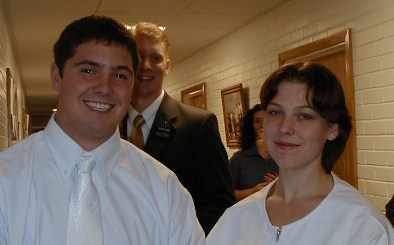
Here are a few more thoughts from my memory of Phil Wightman’s talk from Garrett’s funeral.  The talk centered around the scripture in 1 Corinthians 13:12-13 which states, “For now we see through a glass, darkly; but then face to face: now I know in part; but then shall I know even as also I am known. And now abideth faith, hope, charity, these three; but the greatest of these is charity.”

In essence, since I went to the funeral with Lowell’s funeral talk in my mind (in fact, my friend, Taylor Willingham, read it to me again on the drive up and I gave a copy to Garrett’s parents) the basics of the talk were the same.  Brother Smith approached it with some practical questions and answers to those questions.  President Wightman approached it from a doctrine side that we do not really know what goes on in the minds of these individuals when suicide is completed.  But we have to have charity, love them and their families, and move forward.  In the end, the Lord will sort all things out.

Rest in peace Garrett and Lowell.  I look forward to meeting up with you both again some day.  Until then, I hope we all can appreciate the suicidal act and hopefully help avoid it in the future, and work forward from those who do commit this unthinkable deed.

First published 5 Jun 2011.

Preston, England

Another more relaxed day in England.
Today we received word the paperwork and everything has all been signed for our home.  The paperwork is off to Oklahoma City for the official closing on Monday.  I don’t know what could really change now.  By all accounts, we are now the proud owners of a little home in Oklahoma City.  Or at least we have a title to a home with a significant lien for a bank somewhere.  Hopefully everything continues to work out like it has so far.

We ran to the Preston England Temple today.  It is one of my favorite temples.  There is something in the simplistic beauty of it I adore.  Amanda agreed.  It is on par with the Rexburg and Vernal Temples for the simple elegance within.  We snapped a couple of pictures.  We also ran into a member I knew in the Wigan Ward.  He is now in the Temple Presidency and enjoyed a good visit with him.  We were supposed to go over and visit this evening, but our plans crowded it out in the end.  We had to reschedule it for tomorrow sometime.  We are going to work it out in church.

Afterward, Amanda and I ran into Preston.  I showed her the town center where the missionaries preached the gospel for the first time in the British Isles.  It is in Preston that the longest continuing unit of the church operates, the Preston Ward.  We ran out of time to go to the flat where Parley P Pratt and Orson Hyde were attacked by the legions of the devil.  We did not get a chance to see Avenham Park or the beautiful River Ribble where the first baptisms took place outside of North America.  We did not get over to see the apartment where President Hinckley received his famous “Forget yourself and go to work” letter on Wadham Road.  Perhaps sometime in the future.

We came back and were relaxed some more with the McCabes.  They treated us to a fine meal of South African descent.  They lived in South Africa for a number of years.  Later this year they are immigrating to Australia!  How is that for exciting.  When we make it to Australia, we know who we will be calling on!  Amanda and I made a call at Tesco today and purchased a Pavlova.  Boy, was I glad to get my hands on one.  We consumed it after dinner as one of our desserts.  Mmmmm.

I realized yesterday was the anniversary of Joseph Smith’s death.  I wonder specifically what he is doing these days.  What or where is he up to doing work?

Tomorrow we are off to attend the Wigan Ward.  Then we will go visit some of the new converts I helped bring into the church.  Sadly, I don’t think any of them are active.  But we shall find out.  I did find out Jim Monks knows where one of them lives.

Death and the bells tolling

Today I finished about half of Ernest Hemingway’s famous “For Whom the Bell Tolls” and have found it fascinating so far.  Interestingly, as he has gone through different aspects of the community uprising against the fascists, I wondered about my own capacities to deal with such things.  What if I was on the side of those being abused and slaughtered for my beliefs?  Would I die with ‘dignity’ as some of the captured fascists do not do?  Would I be prepared to be caught up in death just as the priest is?  Would the planes, the sounds of planes, ring to me as instruments of death or the roaring of death?  I really don’t know.

Looking into my life, I do not feel like one who is afraid of much.  I feel a tinge of fear with heights, especially as the chance of being exposed to fall increases.  However, I have always thought myself as one who when the fall was actually in process, would enjoy the fall.  That would be of course if it was long enough for me to realize I was falling and had the chance to enjoy it.  Then again, I will probably never have the chance.

War is such an interesting crucible of the soul.  I honestly don’t believe I would have the capacity to force my view, opinions, or ideology on anybody else.  I could see myself defending myself, even in guerrilla warfare or some type of underground.  Then again, I always wondered about even my feelings then.  How much were the German Saints to uphold and sustain their government?  I remember several people showing me an article about an LDS individual who helped develop torture techniques for the German government.  It was his job.  Where is the separation?  Where do we draw the line to where we begin civil disobedience?

We don’t seem to quibble much over speeding when it really can be deadly, and yet we insist we are to support a President whose war we may not support.  Do I go to jail or do as my draft card tells me to do in Vietnam?  Do we do as Schindler’s Jews and deliberately undermine quality control or give our all to our employer?  Even if what they do is not correct?  Do we just go along with the status quo or think twice about it?  Do I build or buy a large home when entire countries are basically homeless by our standards?  Do I buy that jet ski when the money could fund the entire education for another individual?

I really don’t see myself getting caught up in a mob but would I put my life on the line to oppose a mob?  Would I stand idly by while a mob worked their vicious course?  Do I defend my life, liberty, and family or do I fall to my knees before the enemy like the Anti-Nephi-Lehies?  Do I lay down my weapon rather than shed the blood of a brother?  Do I do, as America seems to do, and draw a line in the sand daring anyone to step over it, willing to fight to the death?  Or do I take a magnanimous approach to all I associate with, whether I agree with them or not?

There are so many questions of scenarios with which I hope I am never faced.  However, I want to make sure my mind is settled if the situation should ever arise.  What if I was called to go behind the enemy lines and blow up a bridge?  Would I be willing to kill myself rather than be captured?  Would I be willing to blow up a bridge when I know I will die in the process?  Robert Jordan is so completely against suicide and yet he may have to do the very thing.  (Ironic Hemingway works through this scenario and then does the deed himself years later.)

To take it a step further, while we may not personally be engaged in a civil war, are we still taking part of a war unknowingly.  President Hinckley mentioned a number of times how the War in Heaven has continued to this day.  This war is ongoing and are we having to face spiritually many of the same questions I have been posing?

“Nevertheless, after all this, I never have known much of the ways of the Lord, and his mysteries and marvelous power.  I said I never had known much of these things; but behold, I mistake, for I have seen much of his mysteries and his marvelous power; yea, even in the preservation of the lives of this people.  Nevertheless, I did harden my heart, for I was called many times and I would not hear; therefore I knew concerning these things, yet I would not know; therefore I went on rebelling against God, in the wickedness of my heart,…” (Alma 10:5-6).

Do I find myself like Amulek?  Doing things which I know I should not, claiming ignorance?  When I should be doing something differently.  Do I stand by while my place of business is actually robbing from the widow?  I know it is wrong, but do I do nothing about it because ‘I would not know’.  Do I not say something while my neighbor does something that is actually ‘oppressing the hireling’?  Do I stand by while the mob, which could resemble the economy, ‘grinds the face of the poor’?  These are questions we all have to ask ourselves.  I seem so worried about if I can afford another car while people are worried about their next meal.  Can I be so hard in my heart?

Should I be blowing up these enemy bridges so the imps of evil cannot reach the battlefront where my children may have to fight?  Do I let them march right into my home through the television?  Do I let the propaganda distill upon the minds of others through the melodies and sounds of music?  Not only as an individual, but as families and communities?

I really don’t know the answers to these questions.  But Amulek gives us the answer of where to start to make sure we are right.

“Yea, and I will say unto you that if it were not for the prayers of the righteous, who are now in the land, that ye would even now be visited with utter destruction, yet it would not be by flood, as were the people in the days of Noah, but it would be by famine, and by pestilence, and the sword.  But it is by the prayers of the righteous that ye are spared;…” (Alma 10:22-23).

Prayer is a great place to start.

As to the death aspect, would we be willing to lay down our lives?  Latter-day Saints seem to have such an interesting set of perspectives.  We for the most people are a very peace loving people.  We should be the first to always seek peace first, which I believe generally we are.  Mobs and uprisings are unheard of among the LDS.  But, when it comes time, our view of death also changes our determination.  When we feel called upon to fight, to lay down our lives if necessary, we do so (or should) gladly.  After all, we should have no fear of death.

“Now, there is a death which is called a temporal death; and the death of Christ shall loose the bands of this temporal death, that all shall be raised from this temporal death.  The spirit and the body shall be reunited again in its perfect form both limb and joint shall be restored to its proper frame, even as we now are at this time; and we shall be brought to stand before God knowing even as we know now, and have a bright recollection of all our guilt.  Now, this restoration shall come to all, both old and young, both bond and free, both male and female, both the wicked and the righteous; and even there shall not be so much as a hair of their heads be lost; but every thing shall be restored to its perfect frame, as it is now, or in the body, and shall be brought to be arraigned before the bar of Christ the Son, and God, the Father, and the Holy Spirit, which is one Eternal God, to be judged according to their works, whether they be good or whether they be evil.”  (Alma 11:42-44)

I guess the real question through all of this that weighs on me is this.  Do we go on like we are and wait for it all to work out in the resurrection?  Or, do we rise up and do something about our current state?  Do we fight for it?  Where the answer lies, I really do not know.  All I know, John Donne had it correct, “No man is an island, entire of itself; every man is a piece of the continent, a part of the main.  If a clod be washed away by the sea, Europe is the less, as well as if a promontory were, as well as if a manor of thy friend’s or of thine own were: any man’s death diminishes me, because I am involved in mankind, and therefore never send to know for whom the bell tolls; it tolls for thee.”

How to bury a prophet

I thought this article was fascinating and insightful.  Enough so that I am replicating it here.  It is from the OnFaith series at The Washington Post.

Associate Professor, Religious History

Kathleen Flake is associate professor of American religious history at Vanderbilt University. more »

The Latter-day Saints buried their prophet on Saturday. Thousands attended the service in person and millions more faithful watched in chapels around the globe, as well as on the internet. What they saw was an unusually personal ceremony for a very public man who led and to large degree defined the contemporary Church of Jesus Christ of Latter-day Saints. Notwithstanding the numbers and titles of participants, Gordon Hinckley’s funeral was a family affair both in word and sacrament. It was an extraordinary display of what makes Mormonism tick.

Gordon Bitner Hinckley died at the age of 97, having been in the church’s leading councils since 1958 and served as its fifteenth president since 1995. He shaped the church through a half century of growth in 160 countries. A third of its present membership joined during his tenure as president. His counsel to them was more practical than sublime: be better neighbors, stand a little taller, and choose the right. He was much loved for living these virtues. Displaying remarkable vigor late in life, he traveled to meet church members on every continent, responding to their needs with curricular, welfare, and building programs whose costs are impossible to imagine and no one will admit.

He met the press also to a degree unequaled and with an openness heretofore unknown among Mormonism’s leadership. This effort too was largely successful. No less a cynic than CBS’s Mike Wallace admitted Hinckley “fully deserves the almost universal admiration that he gets.” The qualifier is a necessary reference to many who distrusted Hinckley’s representations of Mormonism as Christian and his insistence that marriage was properly limited to a man and a woman. At the other extreme, to critics within who felt he gave up too much in a Larry King interview, Hinckley responded simply: “I know the doctrines of this church as well as any.” His outreach was interfaith, not ecumenical. There was no stauncher advocate of Joseph Smith’s claim to have restored the fullness of the Christian gospel and church than Gordon Hinckley. He was, as Newsweek’s Jon Meacham said, “a charming and engaging man, an unlikely prelate — and all the more impressive for that.”

The same could be said of his funeral. It was an unlikely but impressive mix of the sacramental and the mundane. This is so because Gordon Hinckley’s funeral was no exception to Mormonism’s general rule that families bury their dead. They design and execute the memorial program. They say the prayers and perform the ordinances that send their loved ones off to the next life. Yes, the chapel in this case was the LDS Conference center that held 21,000 mourners; the lay pastor who conducted the meeting was Thomas Monson, Hinckley’s presumptive successor as “prophet, seer, and revelator;” and the music was provided by the 300-plus Mormon Tabernacle Choir. But, in all other essentials, the service was performed by the family. A son gave the invocation. Monson conducted at the request of the family, he said, not by ecclesiastical right. Only one dignitary was mentioned as among the mourners: a representative of the American president. When his name was given, the camera’s briefest glance away from the pulpit to the audience gave the only hint of famous others.

The eulogy was given by a daughter who described her father’s life as half-way point in a now seven-generation story of sacrifice, death, and survival that is the Mormon saga. Explicitly gathering the millions watching into that story, she declared “we are one family sharing an inheritance of faith.” Friends with high titles spoke next. Though the requisite list of his ecclesiastical accomplishments was given, it was subordinated to his success as a courageous and amusing friend and a successful husband and father. Another daughter gave the benediction: “we are buoyed by the knowledge that we will see him again as family, as friends.”

Hinckley’s sons and daughters with their spouses led the casket out of the hall and between an honor guard of church authorities. Cameras followed the mourners, focusing on his five children, 25 grandchildren and 62 great grandchildren who formed the cortege to the cemetery. There, possibly most surprisingly, the eldest son dedicated the grave without fanfare. Notwithstanding the presence of the church’s chief leaders, the son stepped forward to pronounce: “By the authority of the Melchizedek priesthood, I dedicate this grave for the remains of Gordon B. Hinckley, until such time as thou shall call him forth.” Then, the hierarchs were “dismissed,” as Monson put it. Finally, as the church teaches is the case in the afterlife, only the family remained.

Families are, as Latter-day Saints like to say, “forever.” What they don’t say is that the church is not forever. It is only the instrument for endowing families with the right and duty to mediate the gifts of the gospel to their members; thereby, sealing the willing among them as families in the life to come. This was Hinckley’s message as a prophet. As he would have it and as the best Mormon funerals do, his message was embodied and enacted by his family who blessed him in death, no less than in life. This is how the Latter-day Saints, at least, bury a prophet.

Prairie Home Companion

Well, I just put out a whole philosophical e-mail and thought I would take a moment to do an actual update on life.
I am sitting here listening to Prairie Home Companion enjoying a few good laughts.  Earlier I listened to Die Frau Ohne Schatten (The woman without a shadow) by Richard Strauss.  It was fascinating to listen to.  Made me want to learn my German.  Funny how music can take us other places.
I have just finished my second week at Bank of America.  Things are going very well.  I am learning many more things about mortgages and all the documentations that attend.  The lessons mostly center around learning the DOS-based system they use for processing all these loans.  I have to admit it is a very detailed system that handles thousands of people working on it at all times with large amounts of information.  Impressive as that it, they tell us it has only gone down once in the last 10 years!  They have replaced one or two systems with Windows applications and they crash regularly so they are not in any rush to be replacing the old DOS-based system.  Therefore, I have to learn the codes and names to navigate the system to check and update information.  They teach us how to check the documents and how to put it into the system.  We were done covering the documents within the first week.  I have found out the position I will be in is basically an assistant underwriter.  It has a whole host of names, but currently it is Home Servicing Specialist (HSS).
Last Saturday and Sunday we had Stake Conference.  I think it was the most powerful Stake Conference I have ever been to.  I have been to some very good ones.  Two were in the Logan Tabernacle (one for the Logan University 4th Stake the other for the Logan University 5th Stake), another in the Springfield Missouri South Stake Center, and the last I can think of was a Stake Conference for the Chester Stake in Wrexham, Wales.  The most impressive part in Missouri was the music and the unity I felt within the congregation.  The Chester Stake was powerful for the fact of some amazing talks given, one particularly by our mission president.  The one for the 5th Stake at USU was that it was basically turned into a stake testimony meeting.  That in and of itself changed the tenor of the meeting but all were invited by name by the Stake Presidency.  The last one for the 4th Stake, I can think of two conferences in particular.  One had Elder Burton, the Presiding Bishop and the other was all the Presidency’s remarks.  President Cherrington usually gave a great talk at all conferences.  So this conference is in good company.  It wasn’t the first conference I have been to with an apostle, but this one had an apostle acted as we expect them to.  Elder Holland gave some powerful comments.
In Priesthood he taught us about Satan binding our tongues, the difference between lips and hearts, and the difference between forms of power and the real thing.  He basically told us we are doing too many things without our hearts and without conviction.  Time to step up to act in the name of the priesthood like we are expected to do.  In Saturday evening, we were taught how we live in a broken world.  Whether you like it or not, things are not perfect.  He taught us about the Atonement and how all broken things will be restored to their proper order at the right time.  Then he pounded out the importance of not whining, not complaining, and going forward in our lives with faith.  He was very direct in those who complain or say something is wrong in life.  He said nobody has the right to complain or wallow in the misery when the Savior took care of them for us.  Time to walk in faith, get up, and be about doing good.  The Sunday session proved to be just as good.  He spoke about his personal experiences of President Hinckley and his prophetic calling.  It was fascinating to learn more about the personal life of a prophet.  He spoke to us about the importance of the gospel and the role of the church.  Again, the topic had to do with looking beyond ourselves and seeing the big picture.  He ended with the importance and the role of the Holy Ghost.  How as latter day saints we live below our privileges and don’t claim the rights that are ours.  We do not appreciate what has been given to us and need to wake up.
Even though I have heard similar talks, the basic point is the power by which he spoke, namely the Spirit of God.  It literally took the message directly to my heart.  I noticed at a couple of points how my bosom literally trembled at what it was he was speaking.  I recognize the power which he conveyed.
In other news, we have been looking for a second car.  With Amanda needing to travel long distances for school this fall, it isn’t going to work to have one car.  So we are looking for a nice little car under $5,000.  So far it has been a miserable failure.  There are very few cars that are below that limit and what we are finding feel like questionable deals.  We went to look at a little Audi A4 for $4,700 and he sold the car at noon.  So we took a little Passat for a drive that he said he would sell to us for $4,000.  It only has 103,000 miles on it.  We took it for a test drive and something about the transmission raised all sorts of red flags for me.  We will have to see if something else pops up.  I may be too picky.  I don’t want a car that smells of smoke or animals.  I would like one which runs well.  I would like one that isn’t completely ugly, like a stationwagon.  Most people take such bad care of cars.  Many have rips in the seats, big marks in the doors or dash, and more.  I keep waiting for someone to give us one so we don’t have to take on a little more debt, but that probably won’t happen soon.  We will have to keep you updated.
Well, I believe that is enough of an update for now.