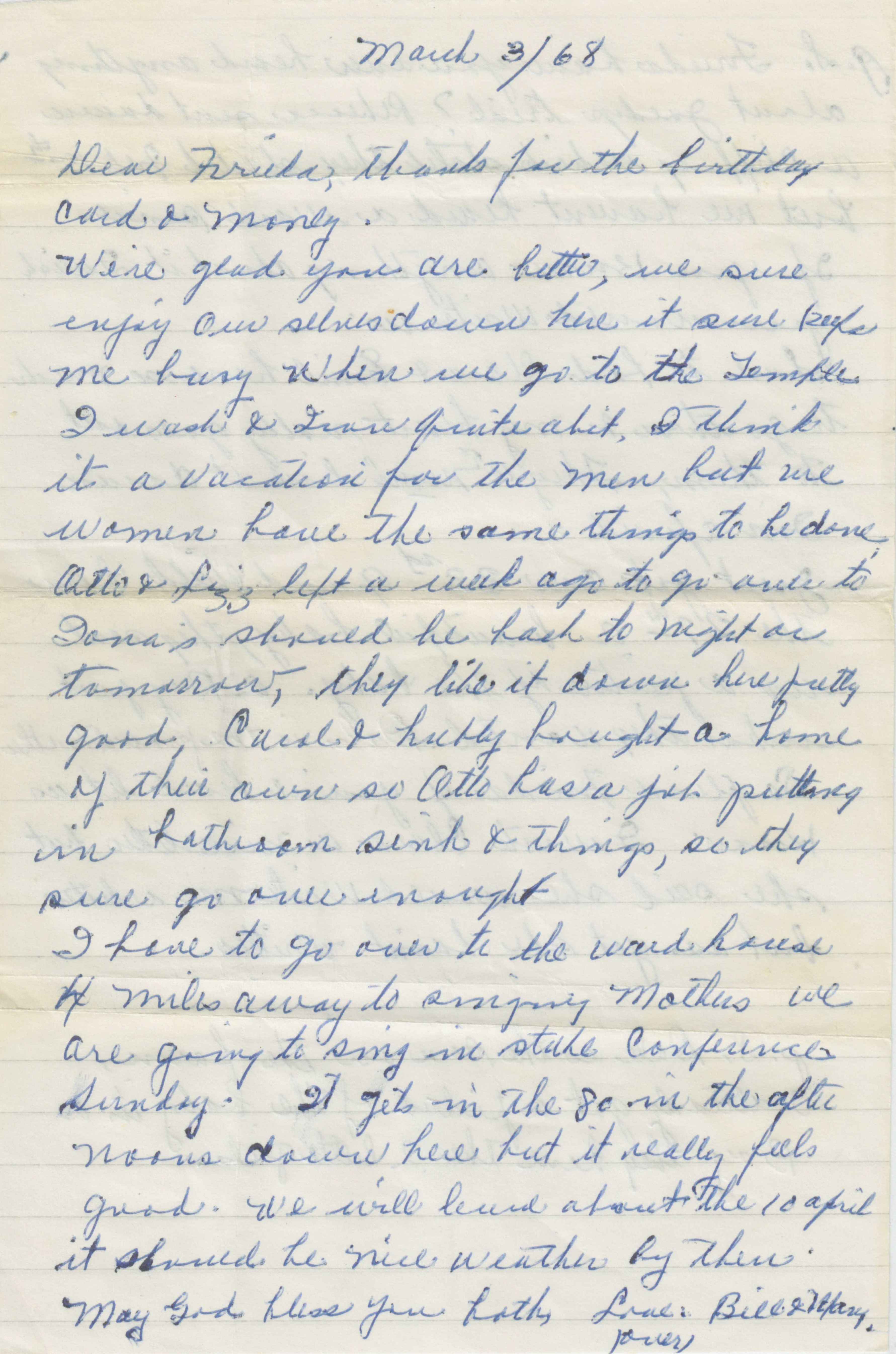
This letter was provided to me by Deanne Larue Yancey Driscoll. Deanne is the granddaughter of Frieda Minna Andra, who is sister to my William Fredrick Andra. This letter is in my Great Grandmother’s handwriting, Mary Louise Wanner Andra. She is writing from their home in Queen Creek, Arizona.
Frieda was born in Meissen, Germany 6 March 1893. If you search this site, you will find various references to Frieda as she was a great source of history for the Andra family. She married George Edward Greaves (1892 – 1968) 10 June 1914 in Salt Lake City, Utah. They had five children together, George Andra (1915 – 1977), Walter Taylor (1916 – 2011), Elizabeth Frieda (1918 – 2001), Marion Minna (1920 – 1996 – Deanne’s mother), and Ada Helen (1923 – 2020). George disappeared. Frieda remarried Franz Heinrich Wilhelm Lehmitz (1863 – 1947) 10 August 1930 in Salt Lake City. Frieda and Franz had one daughter, Hazel Marie (1931 – 1945). She remarried after Franz’s death to Leonhard Michael Wendel (1883 – 1970) 6 March 1952 in Idaho Falls, Bonneville, Idaho. Leonhard was the son of Johann Wendel who had married Frieda’s mother after arriving in Utah. She remarried after Leonhard’s death to Brigham Horrocks (1890 – 1976) 7 June 1972 in Blackfoot, Bingham, Idaho. She passed away 18 October 1978 in Idaho Falls. She is buried in the Grove City Cemetery, Blackfoot, Idaho.
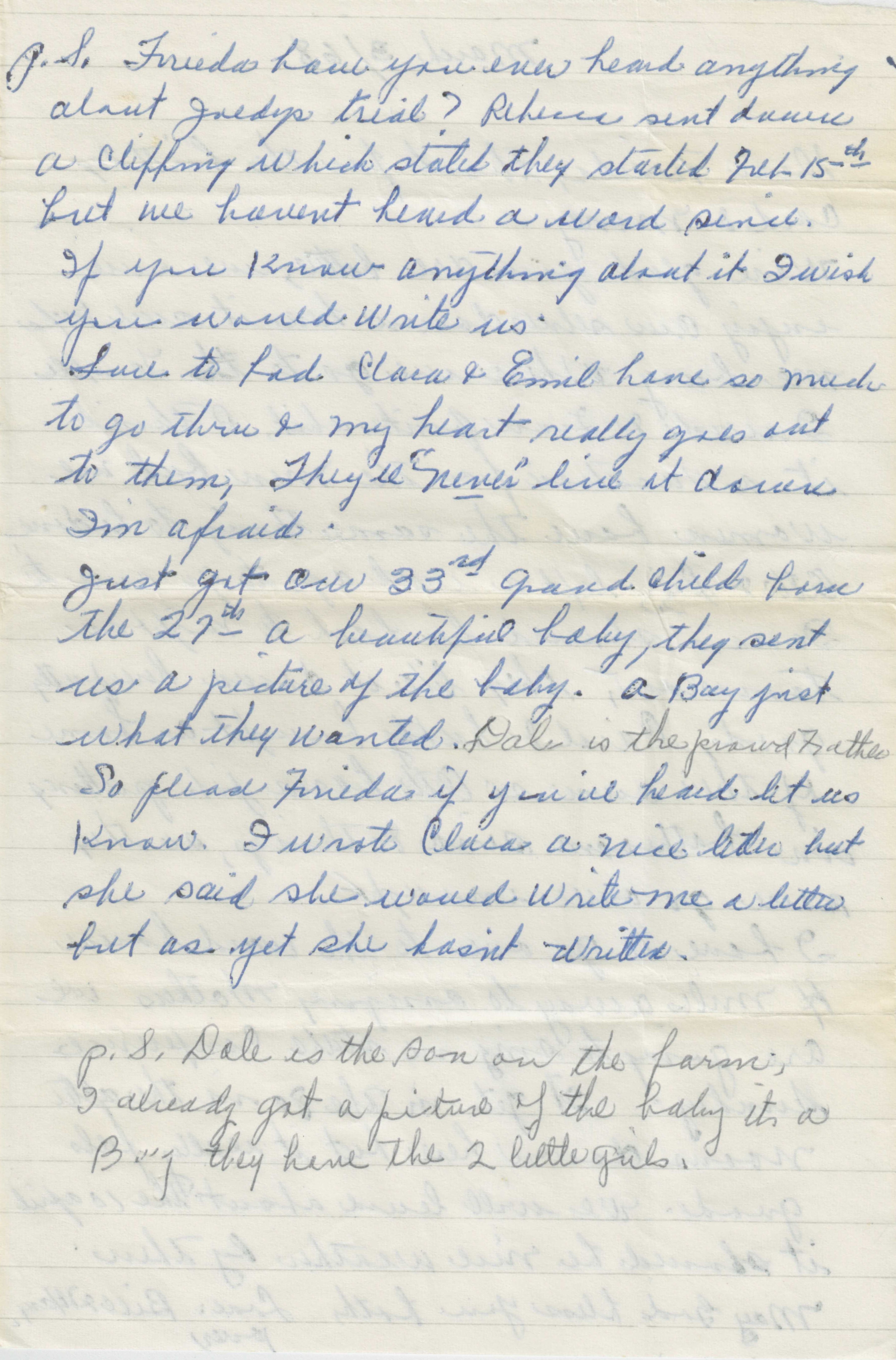
The letter refers to Dale and Judy Andra’s son, Jeremy Dale Andra. The letter also refers to Judy, who is Clara Anna Andra Blanke’s granddaughter. I don’t know details, but I believe she was charged with murder. Clara is Frieda and William’s sister. Another brother, Otto is also referenced. Iona and Carol are both Otto’s daughters.
March 3 / 68
Dear Frieda, thanks for the birthday card and money.
We’re glad you are better, we sure enjoy our selves down here it sure keeps me busy when we go to the Temple. I wash + Iron quite a bit, I think its a vacation for the men but we women have the same things to be done. Otto + Lizz left a week ago to go out to Iona’s should be back to night or tomorrow, they like it down here pretty good. Carol + hubby bought a home of their own so Otto has a job putting in bathroom sink + things, so they sure go over enough.
I have to go over to the ward house 4 miles away to singing Mothers we are going to sing in stake conference Sunday. It gets in the 80 in the after noons down here but it really feels good. We will leave about the 10 April it should be nice weather by then.
May God bless you both, Love: Bill + Mary
over,
P.S. Frieda have you ever heard anything about Judy’s trial? Rebecca sent down a clipping which stated they started Feb 15th but we haven’t heard a word since.
If you know anything about it I wish you would write us.
Sure to bad Clara + Emil have so much to go thru + my heart really goes out to them. They’ll “never” live it down I’m afraid.
Just got our 33rd grand child born the 27th a beautiful baby, they sent us a picture of the baby. A Boy just what they wanted. Dale is the proud father.
So please Frieda if you’ve heard, let us know. I wrote Clara a nice letter but she said she would write me a letter but as yet she hasn’t written.
P.S. Dale is the son on the farm, I already got a picture of the baby its a Boy they have the 2 little girls.
We did not have internet in Paris, so there has been a long silence. Perhaps that is a good thing.
As a note, I did upload some photos on the blog. They were the ones from Dresden. Well, a few. I hit my limit for the month for how many photos I can upload. As soon as July 1st hits, I will start uploading again. Sorry. There are some great pictures from Dresden and Meissen.
We left Bern and started making our way to Paris. We were planning on hitting the temple in Bern but after trying to figure out the buses, taxis, or trains with attendant costs, backpacks, and traveling all day in our church clothes, we threw in the towel. We just started out for Paris.
See our digital camera, given for our wedding looking at Lake Geneva
We made stops in Lausanne and Geneva.
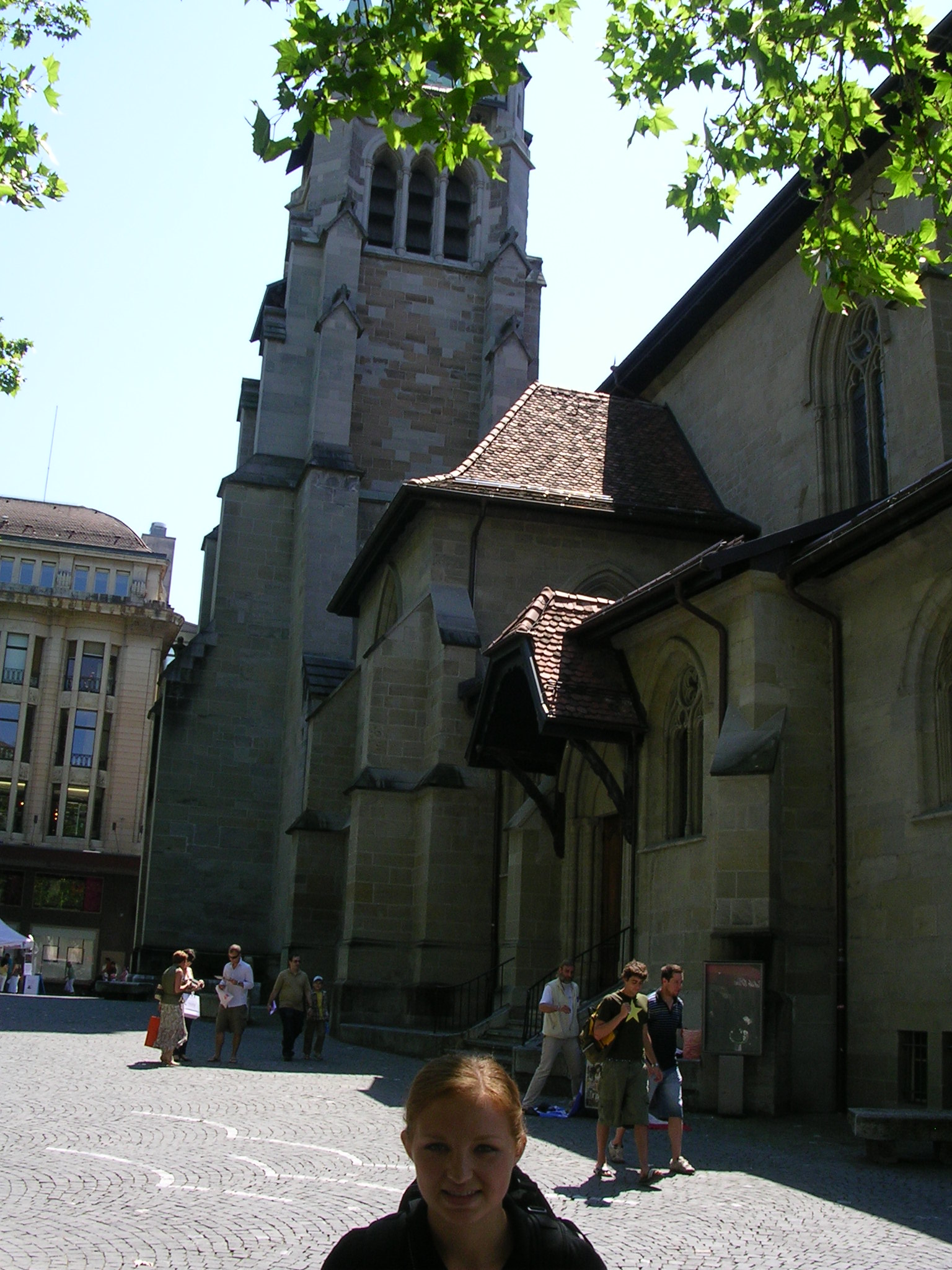
Amanda at Place Saint-François in Lausanne
Lausanne was beautiful.
Lausanne Cathedral
The view coming in over Lake Geneva was amazing.
Oomp Pah Pah band near the Lausanne Cathedral
Some of the Alps between Bern and Lausanne were breathtaking, much like the Alps we passed through in Northern Italy.
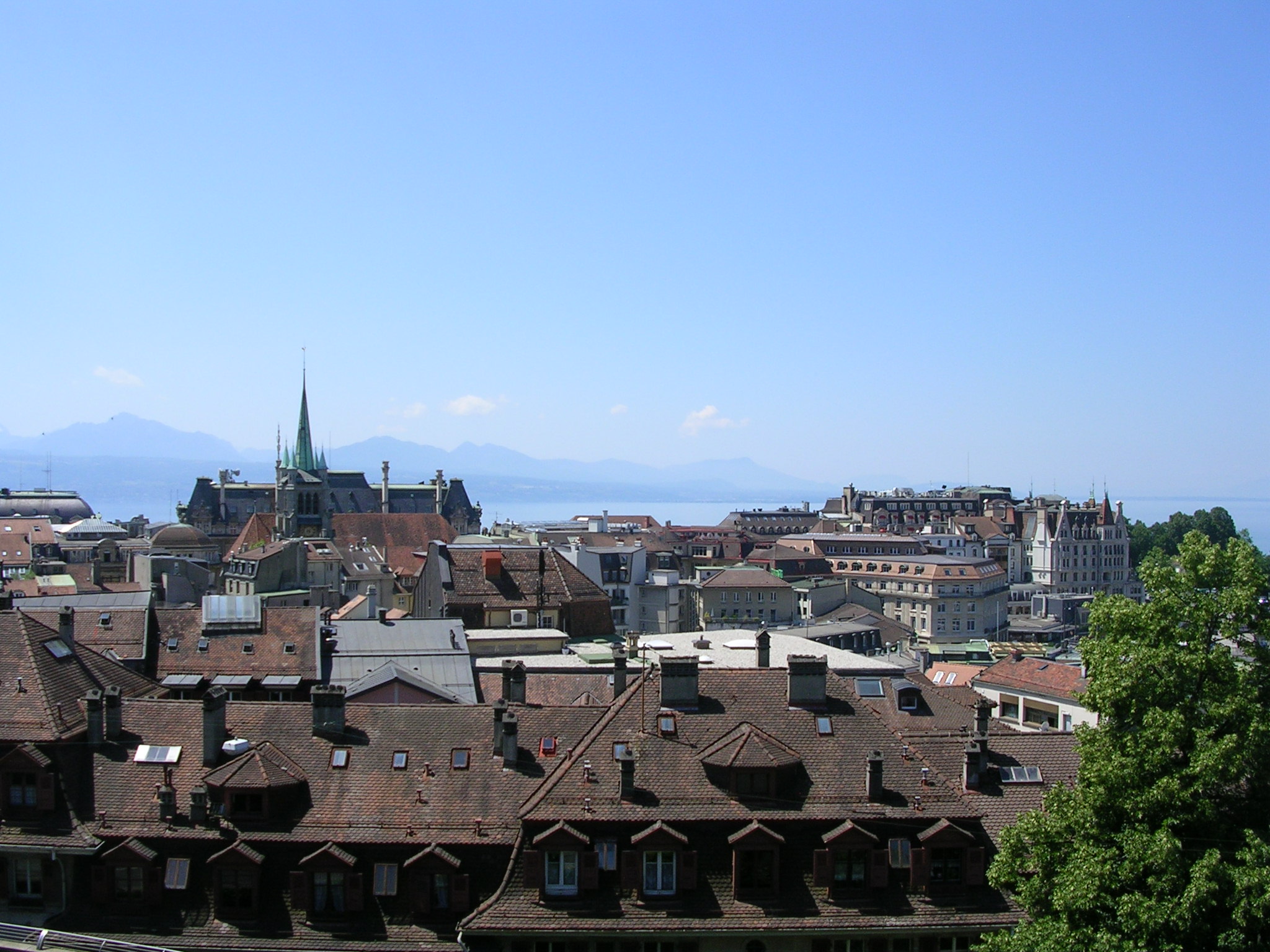
View from Lausanne Cathedral to Lake Geneva
We were supposed to catch a train directly from Lausanne to Paris, but it was fully booked.
The Cathedral of Notre Dame in Lausanne, Switzerland, was consecrated in 1215 after 45 years of construction. This tympanum and archivolt on the west portal called Montfalcon is elaborately decorated with Biblical statues. It was built in 1517 and named after Bishop Sébastien de Montfalcon.
We were able to book a train from Geneva so we knew our time in Lausanne was limited. We decided to hike up to the Lausanne Notre-Dame. We stopped at some church on the way, St. Michaels or whatever. We heard an Oomp Pah Pah (who knows what they are really called) in a park near the cathedral. It was so hot, the sun was killing us, and we were wearing our backpacks climbing an asphalt mountain made for a welcome arrival at the top. We enjoyed the hike back down to the station to head off for Geneva.
Amanda with Brunswick Monument in Geneva
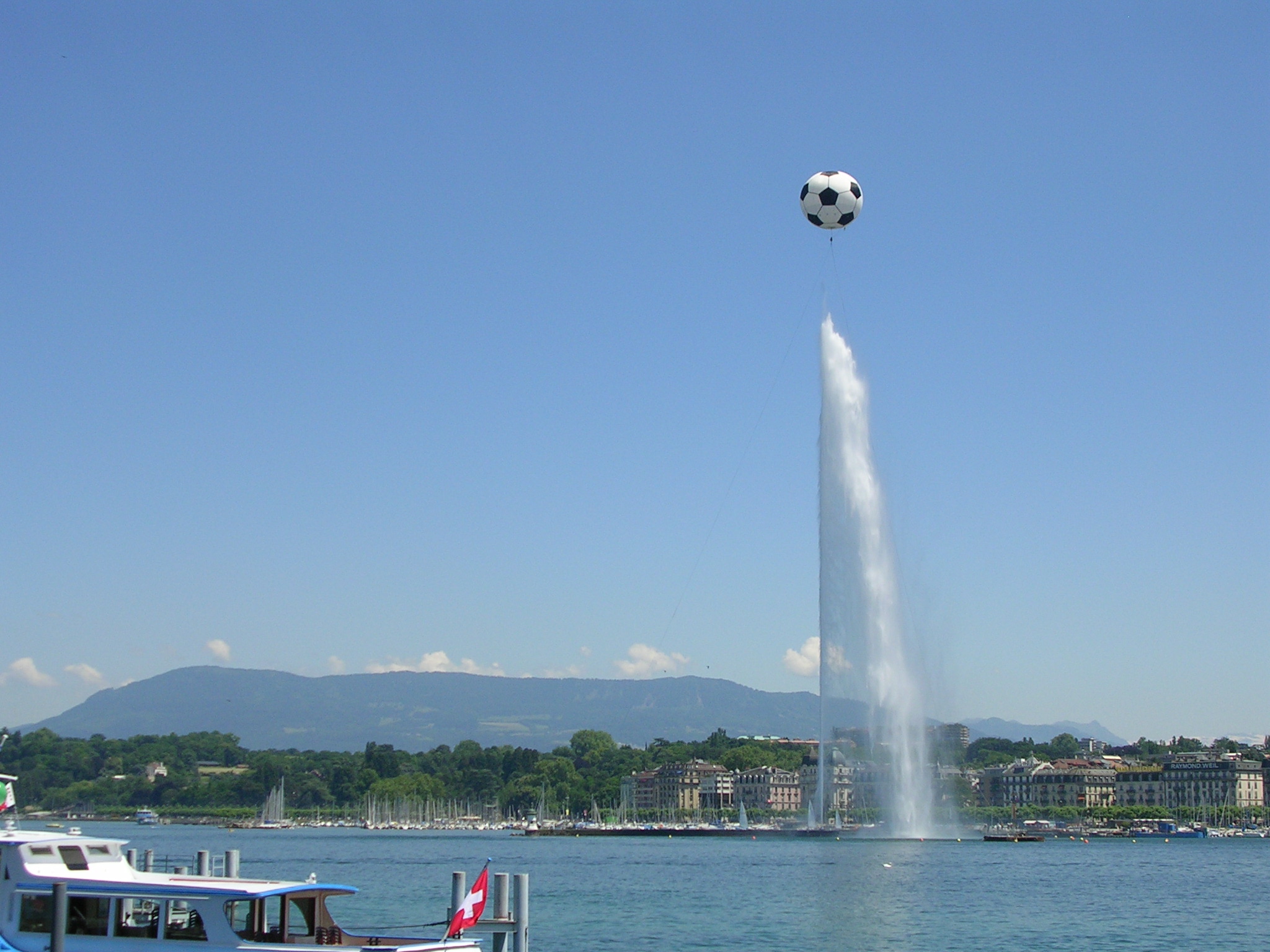
We had limited time at Geneva as well. We walked over and saw the famous Jet d’Eau and enjoyed what little comfort the breeze brought to us from it.
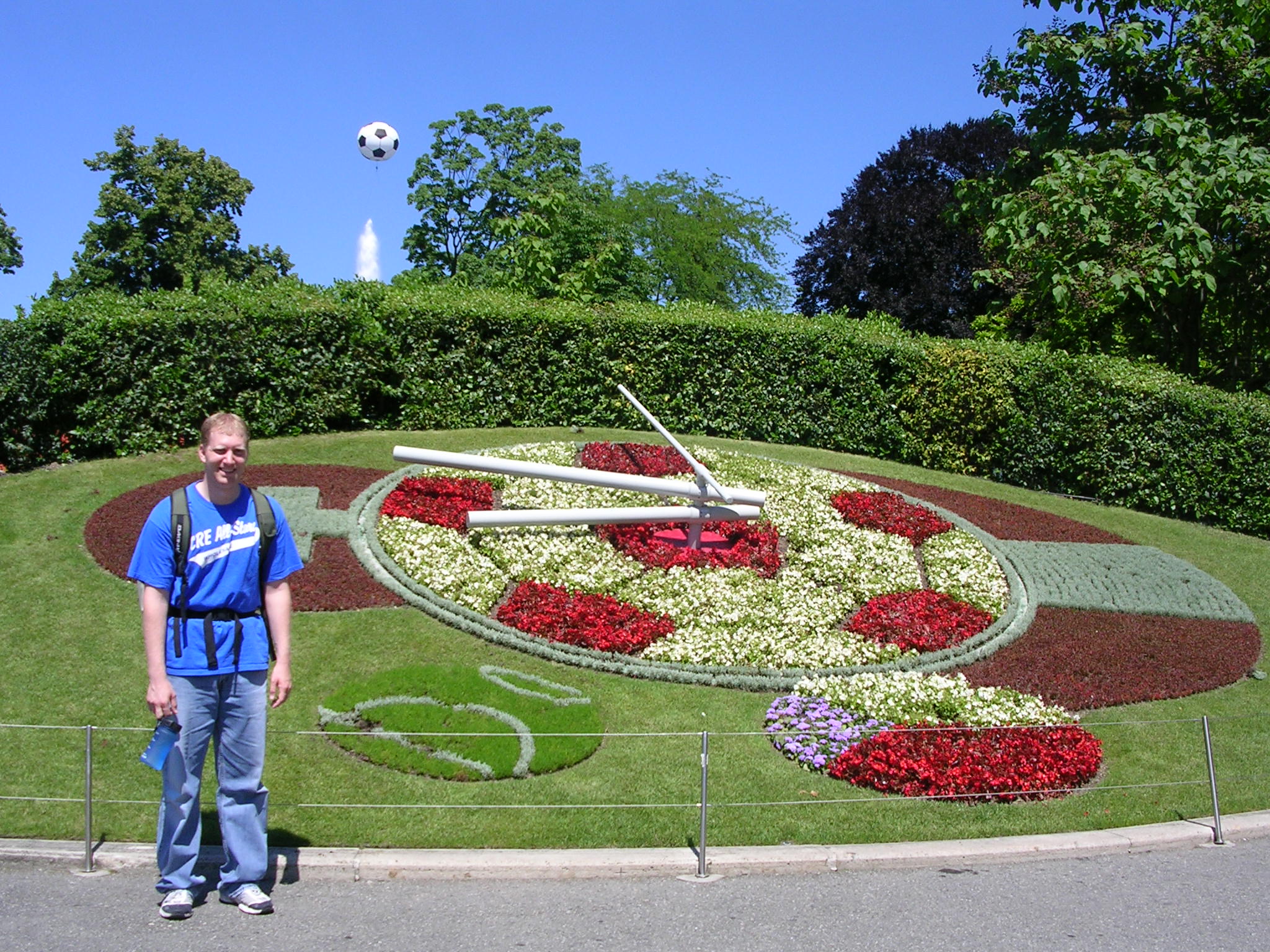
It just made us want to jump into the water for some salvation from the heat. We walked through the park to see the flower clock, which all these watch-makers got together to show their prowess.
Paul with L’Horloge Fleurie Genève
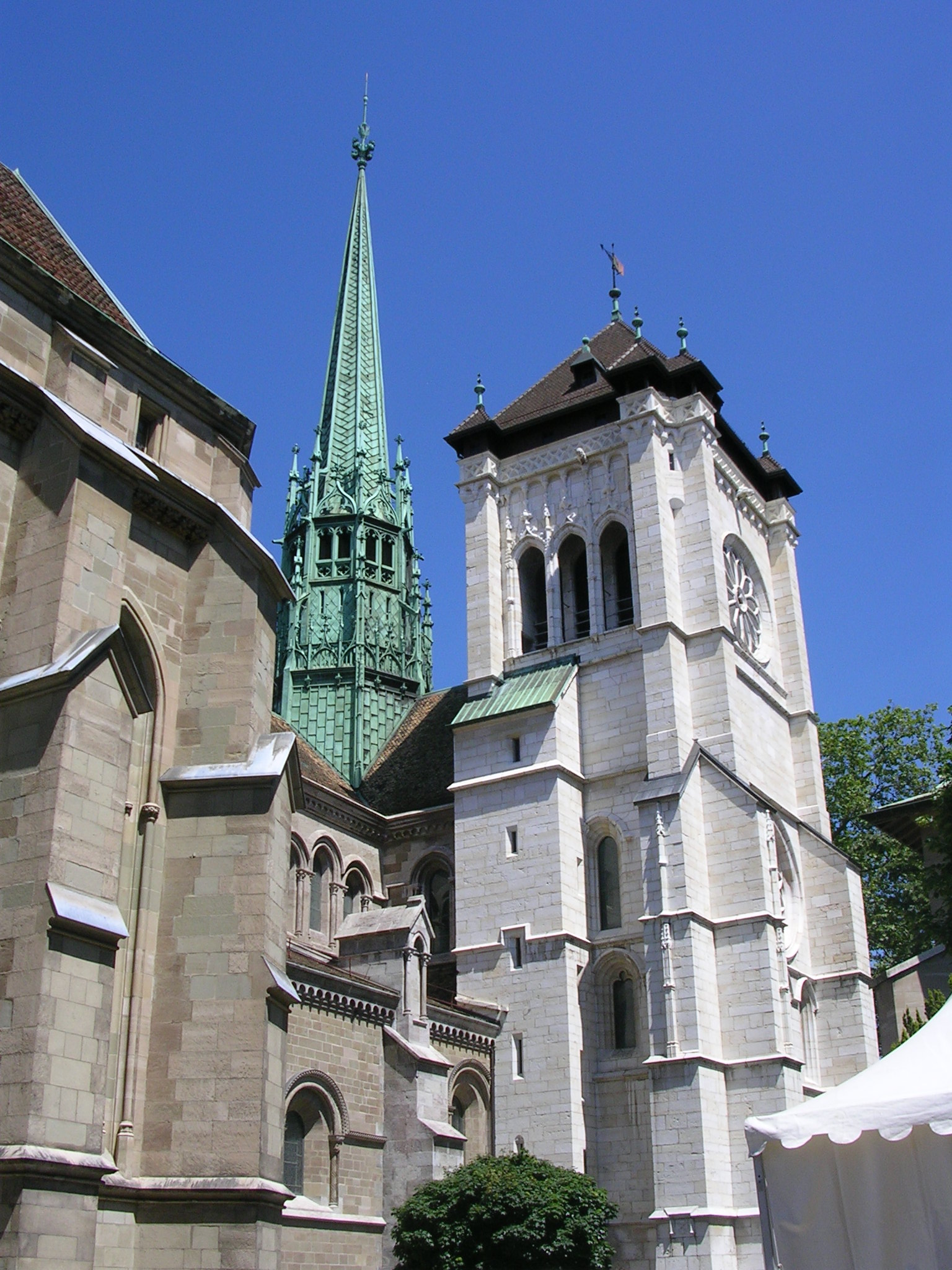
This massive clock set in a flower bed. However, it was more than 6 hours off, not one of the hands was on the right time. Watch making prowess must have been a think of the past. We then walked up to Saint Peter’s Cathedral where we toured where John Calvin taught.
St. Peters, or Cathédrale Saint-Pierre Genève.
The University of Geneva is right next door. It was all very fascinating. We then had to make our way back down to the train station so we could head off to Paris.
The ride to Paris could have been better. We ended up in an assigned seat going backwards. Plus this train was going much faster than the other trains we have been riding on it and it swayed back and forth. I got sea sick on a train! Boy was I glad when we got to land. I wasn’t feeling well.
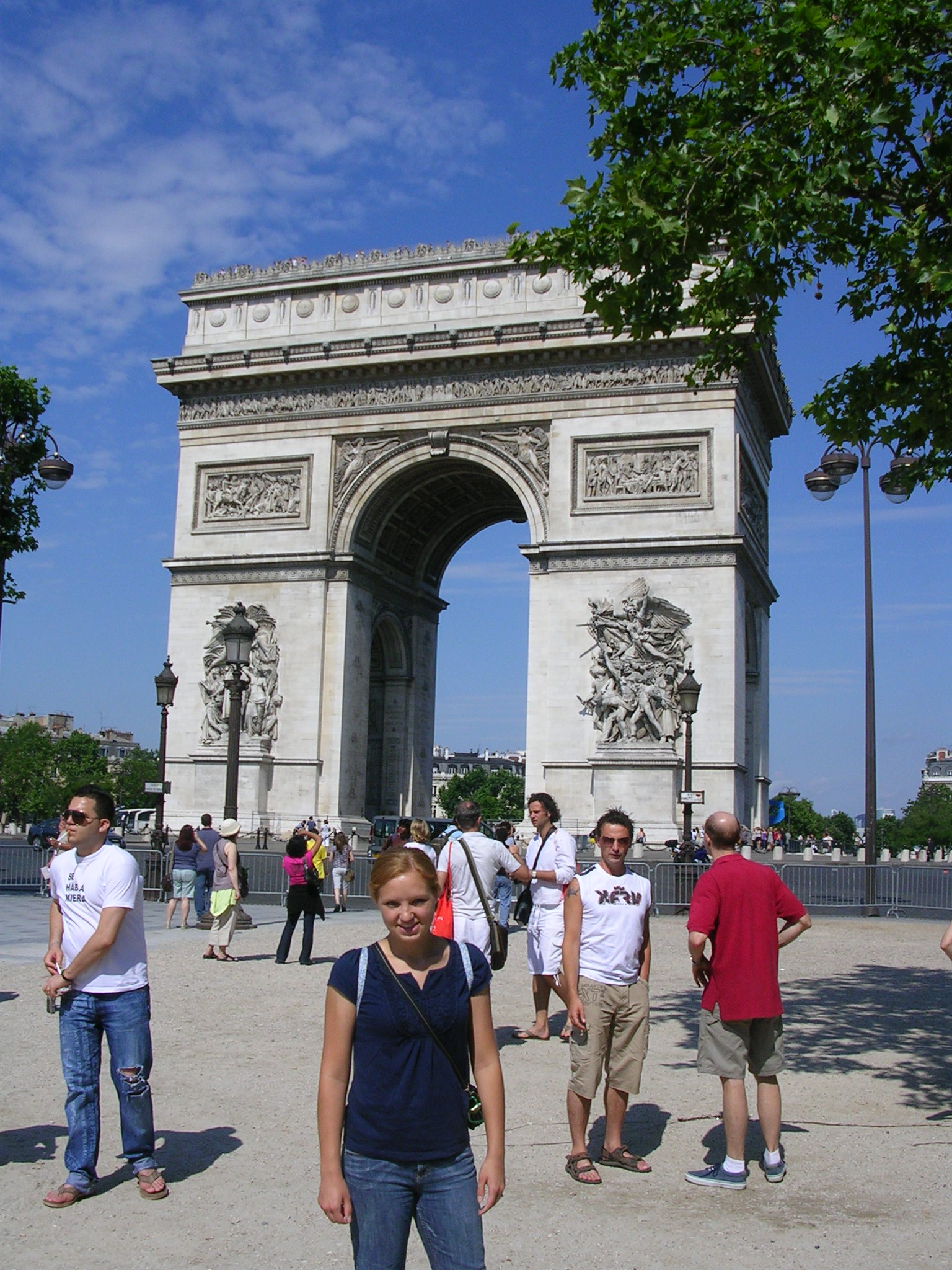
Amanda and Arc de Triomphe
~
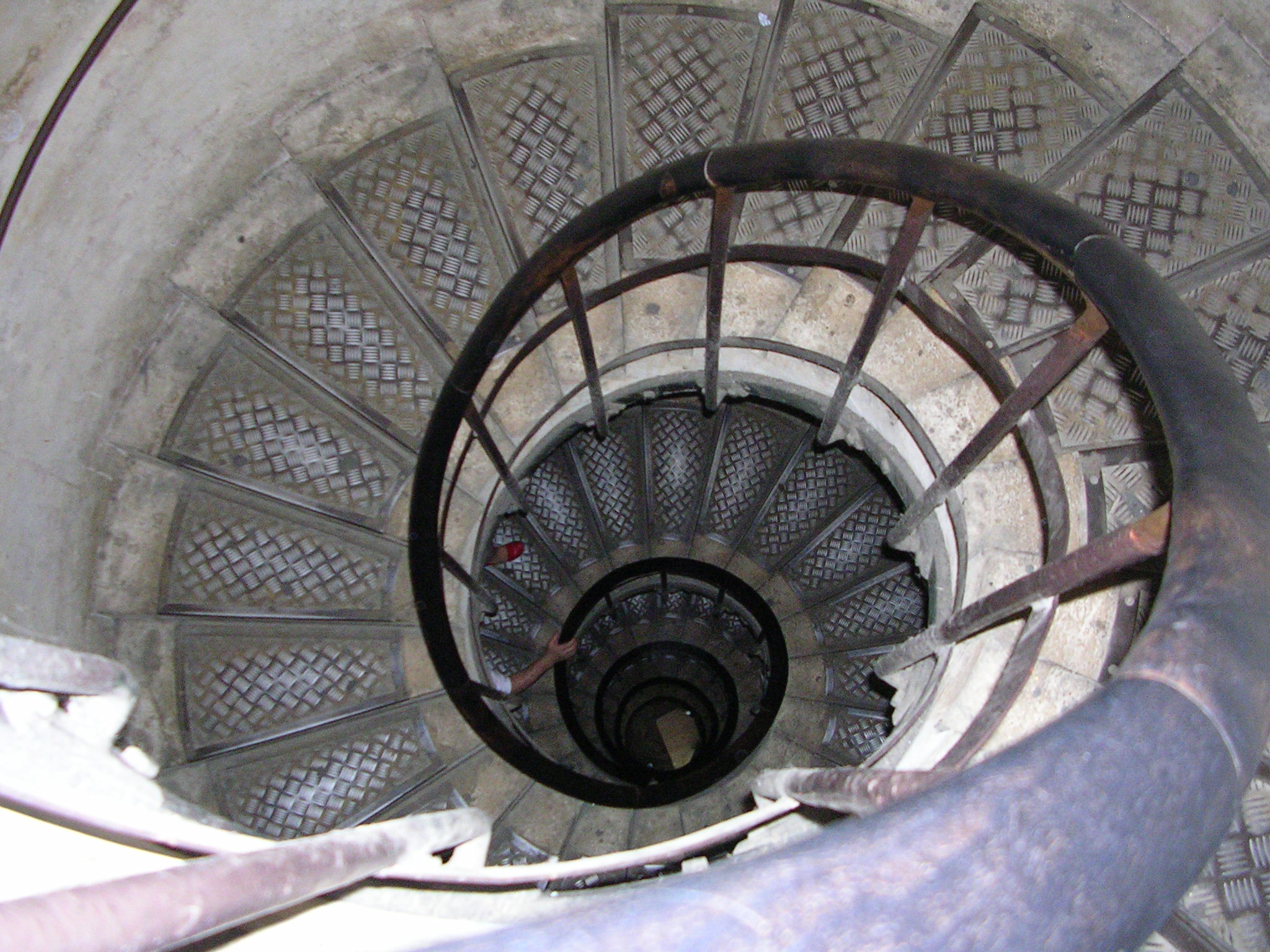
Looking down the stairs of the Arc de Triomphe
Tour Eiffel from Arc de Triomphe
Église Saint-Augustin and Basilique du Sacré-Cœur de Montmartre from Arc de Triomphe
The next few days in Paris were a blur.
Paul and Amanda Ross with Tour Eiffel
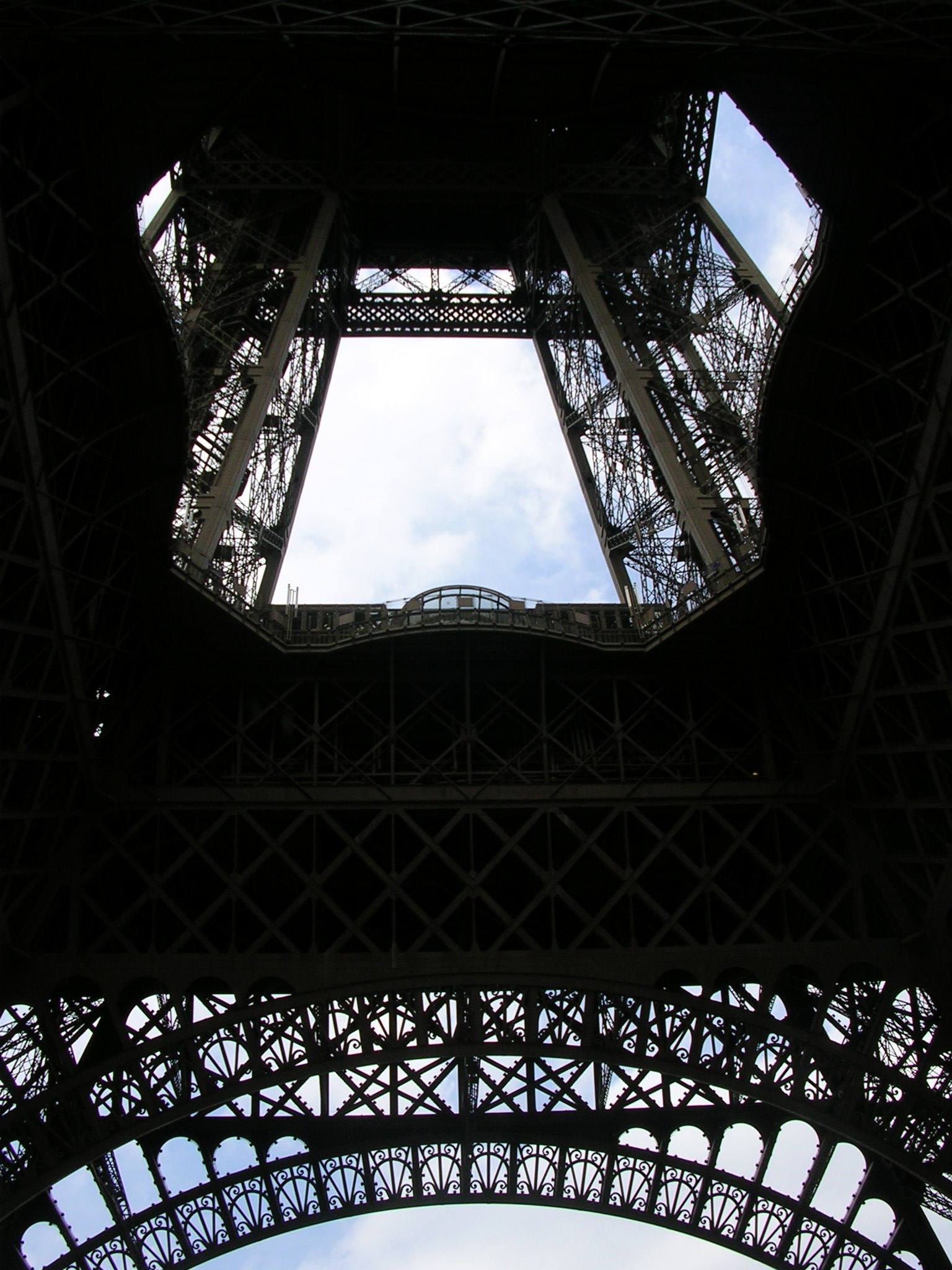
Bowels of Eiffel
Les Invalides
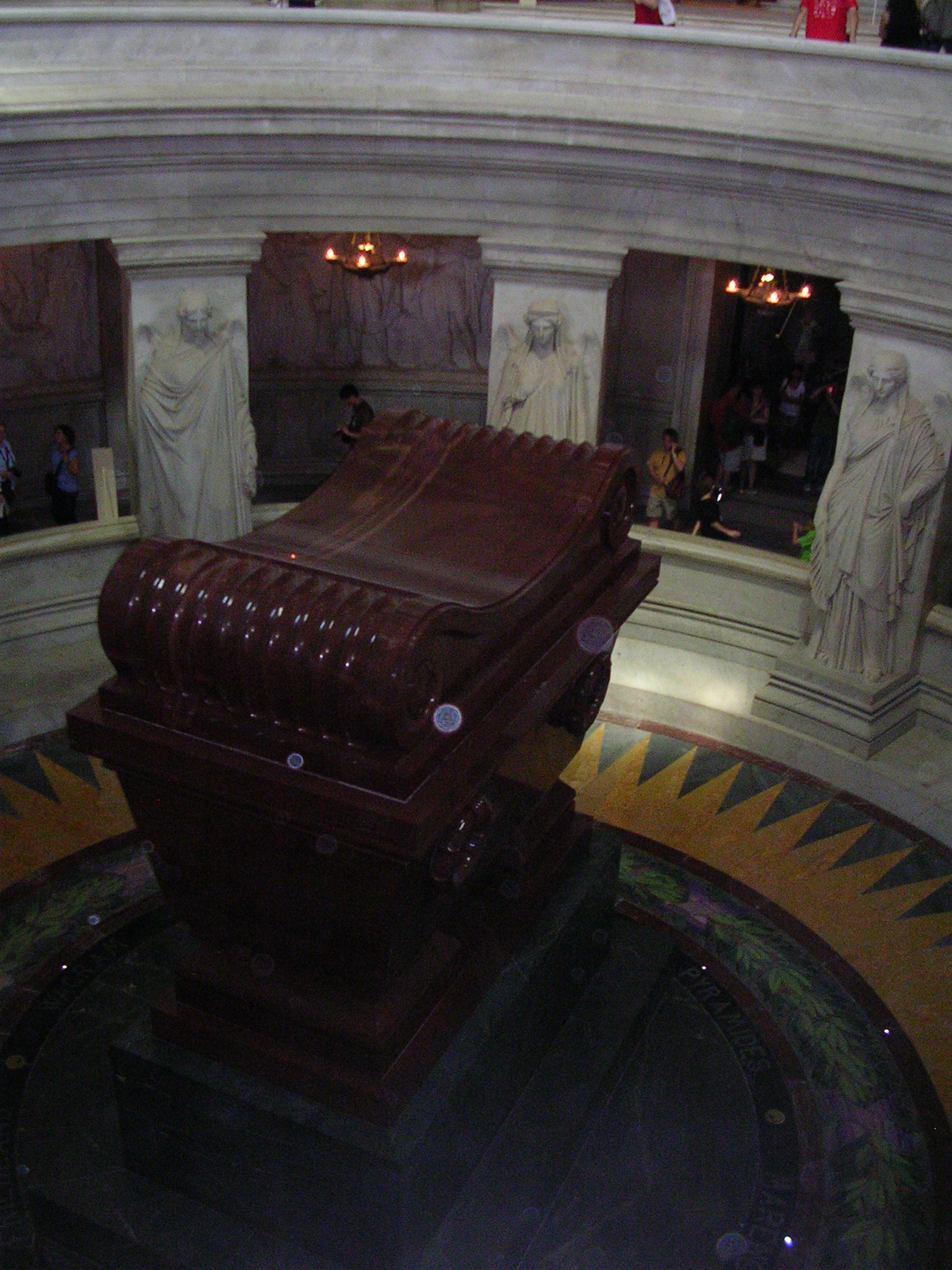
Tombeau de Napoléon Ier
Amanda with Napoleon’s Tomb
It was miserably hot, again, for the first two days. We walked loads and both of us ended up with blisters on our feet. Probably more from the swelling of our feet rubbing. I was fortunate enough to get blisters between my big and index toes on both feet. Amanda got them on top from her flip flops.
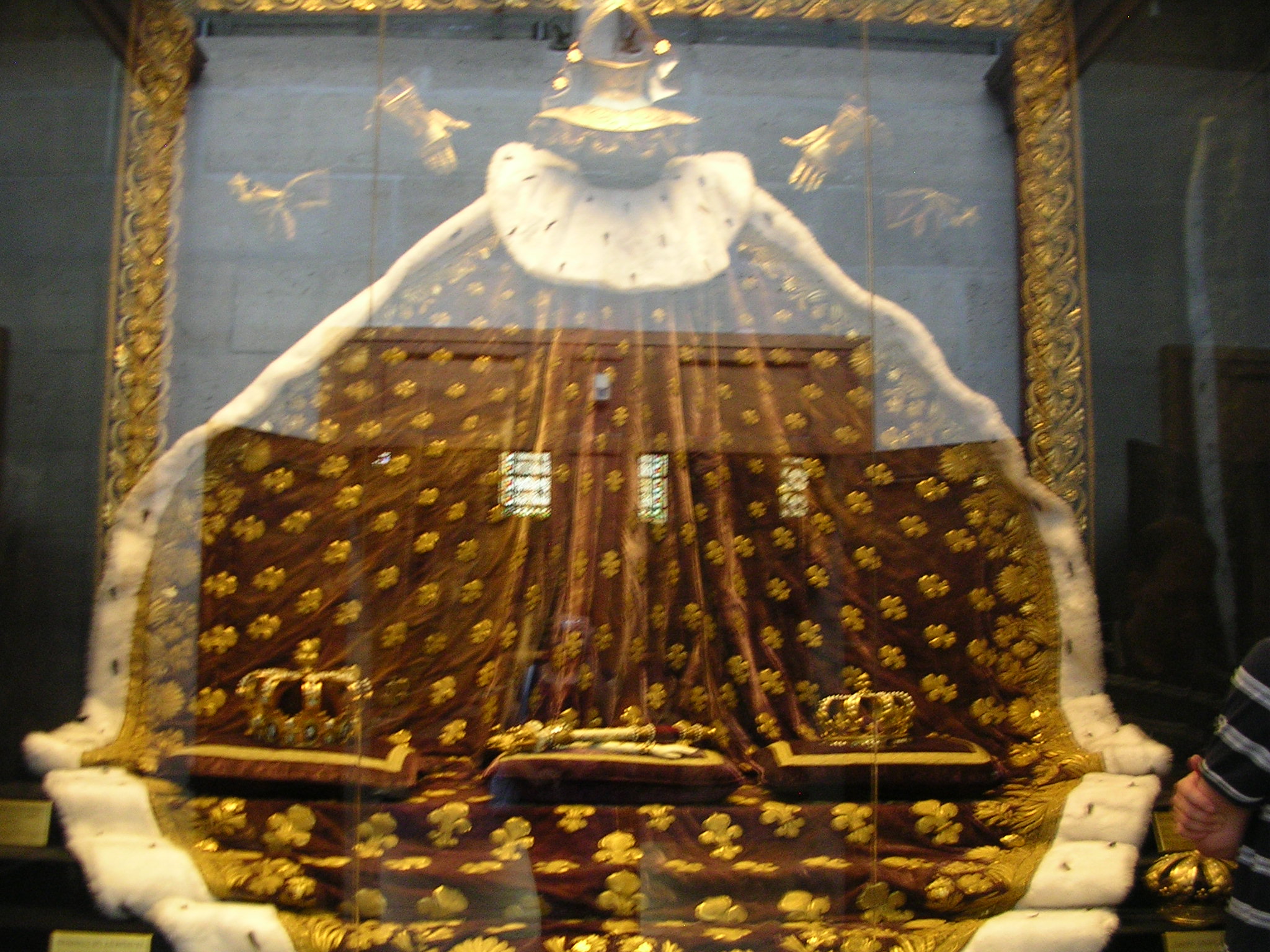
Paul at Basilique Cathédrale Saint-Denis
~
~
~
~
Ornate tomb of Catherine de’ Medici and Henry II
Tomb of Louis XII and Anne of Brittany
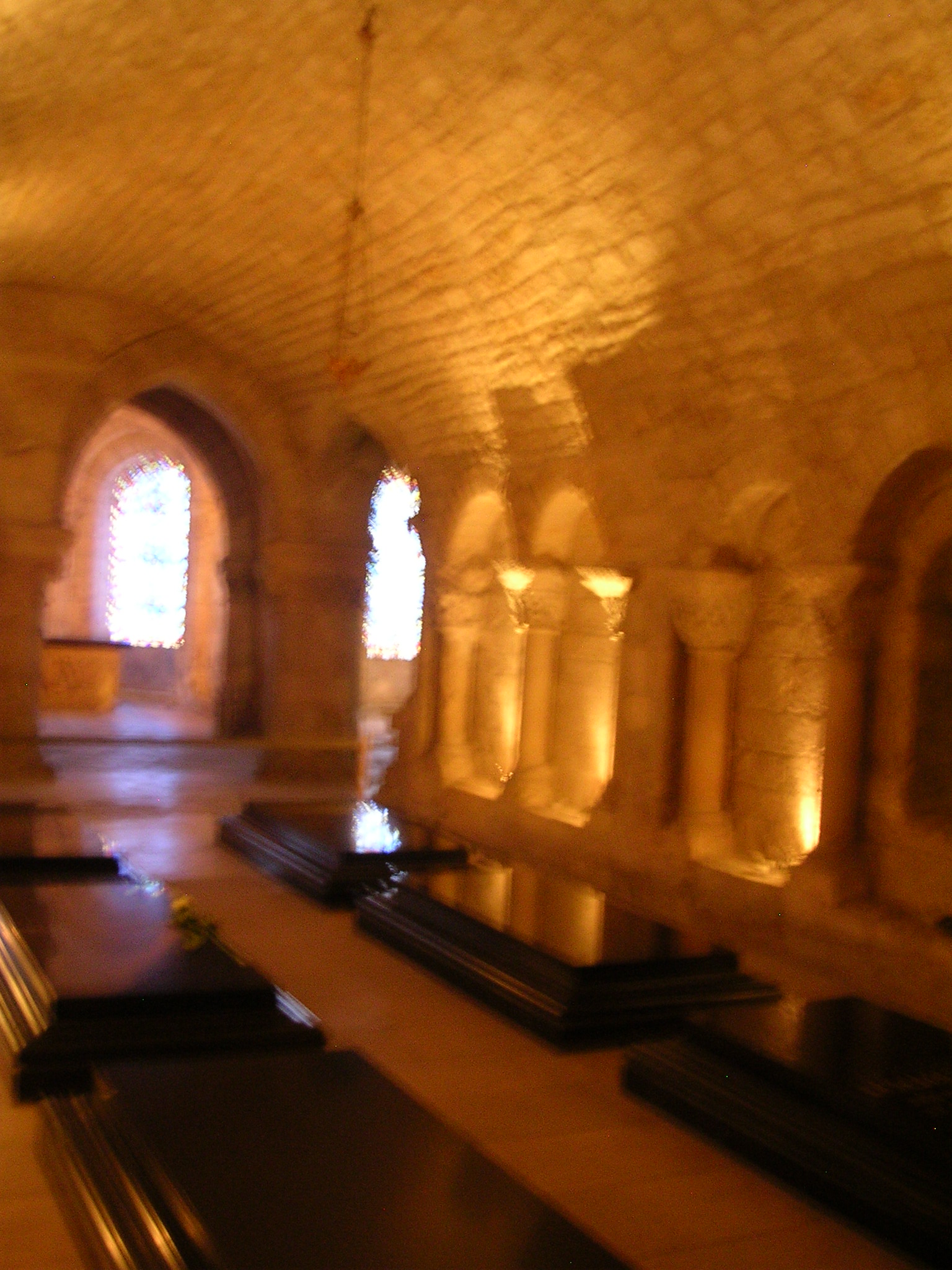
St Denis crypt containing the black marble tombs of Louis XVI and Marie Antoinette, and others of the family
But it was quite the couple of days in Paris.
We hit all the big sites, except the Pantheon.
Basilique du Sacré-Cœur de Montmartre
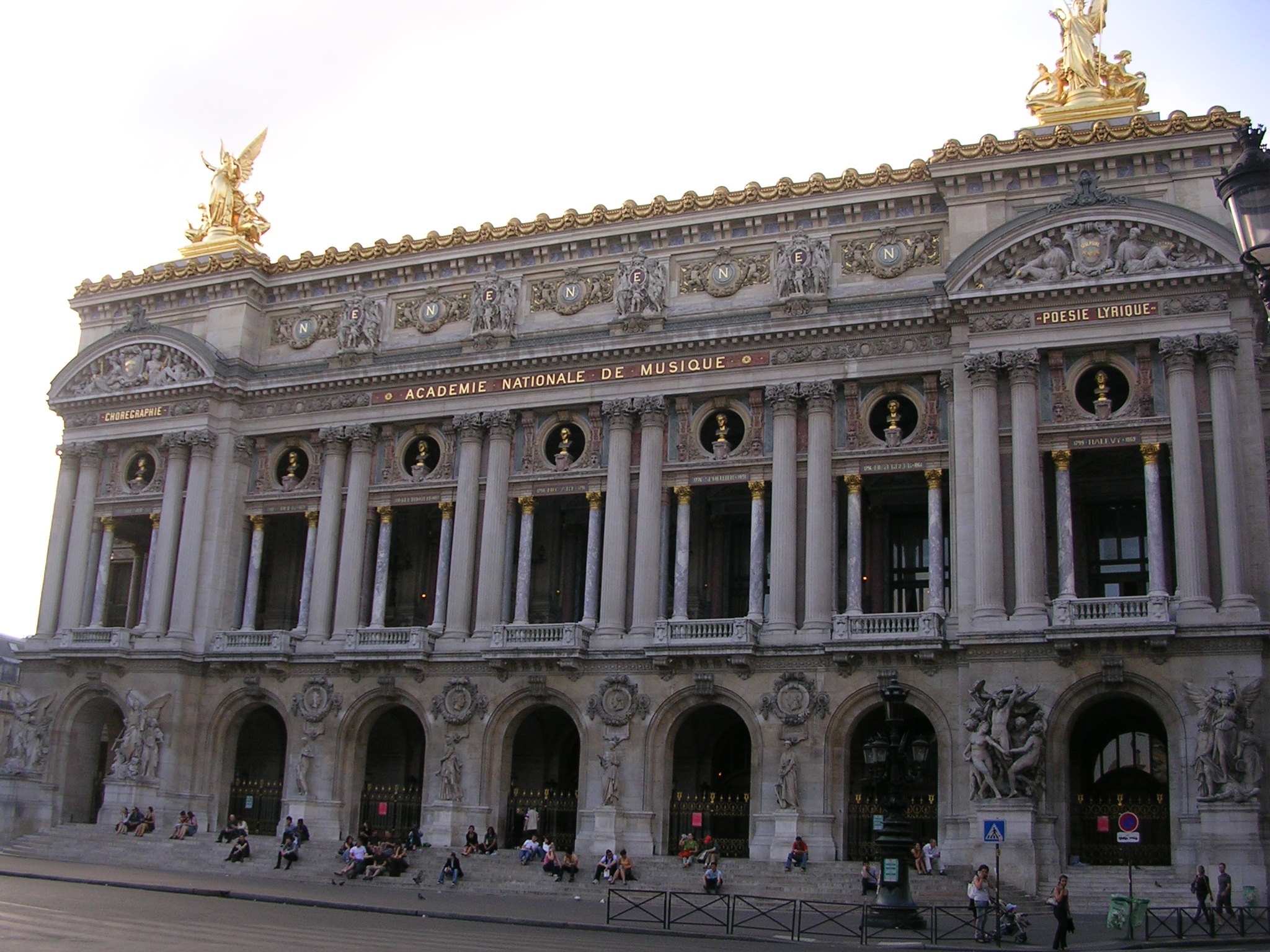
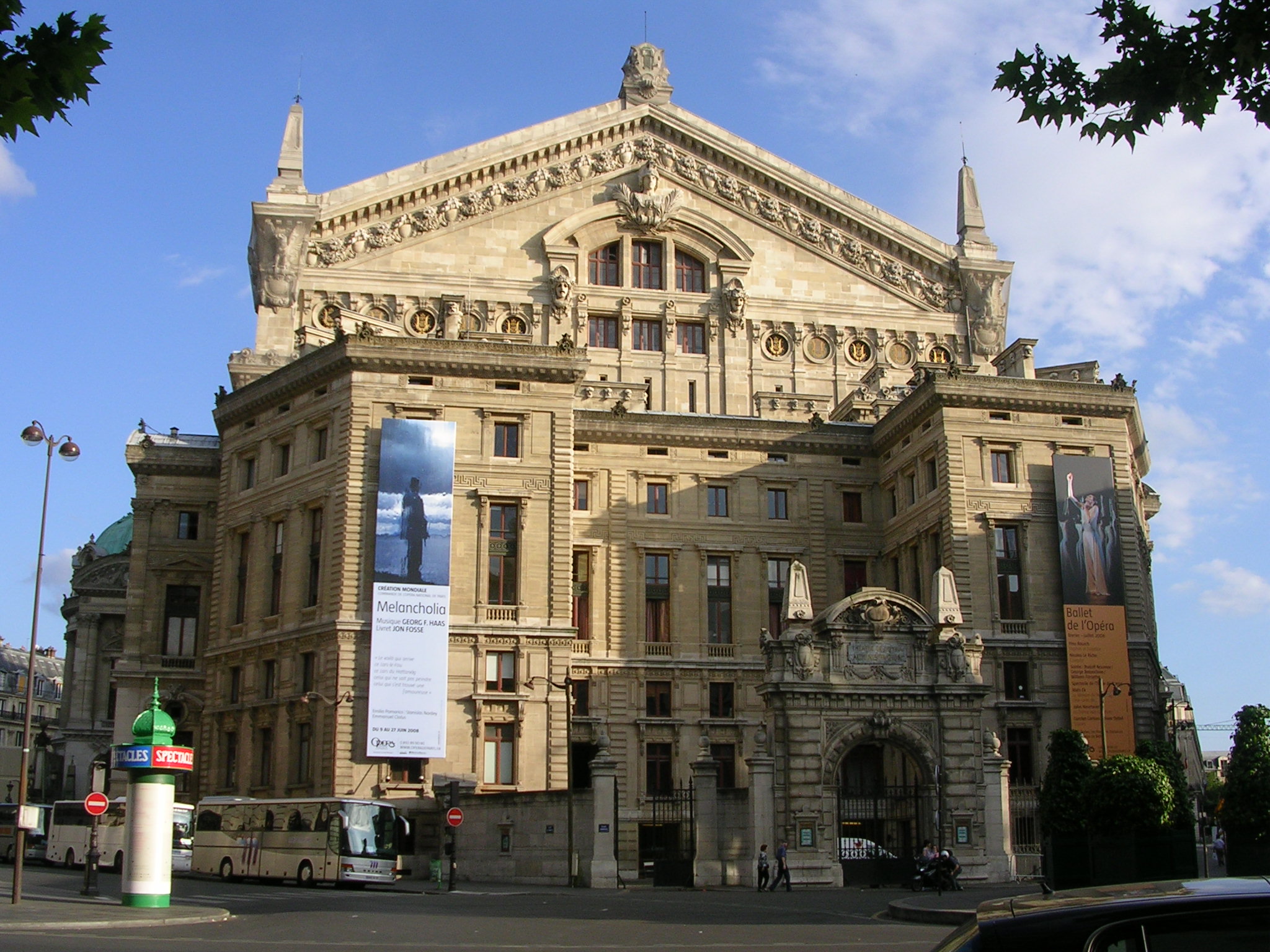
Arc de Triumphe, Place de la Concorde, Place de la Bastille, Champs-Elysees, Montmarte, L’Opera, Saint Denis Cathedral, Basilique du Sacre-Coeur, Louvre, Tuileries Gardens, Invalides, Eiffel Tower, Notre-Dame de Paris, and Palais Versailles. I am sure that is not even a full list. But we saw them, and much of Paris in between.
Amanda at Louvre
Louvre
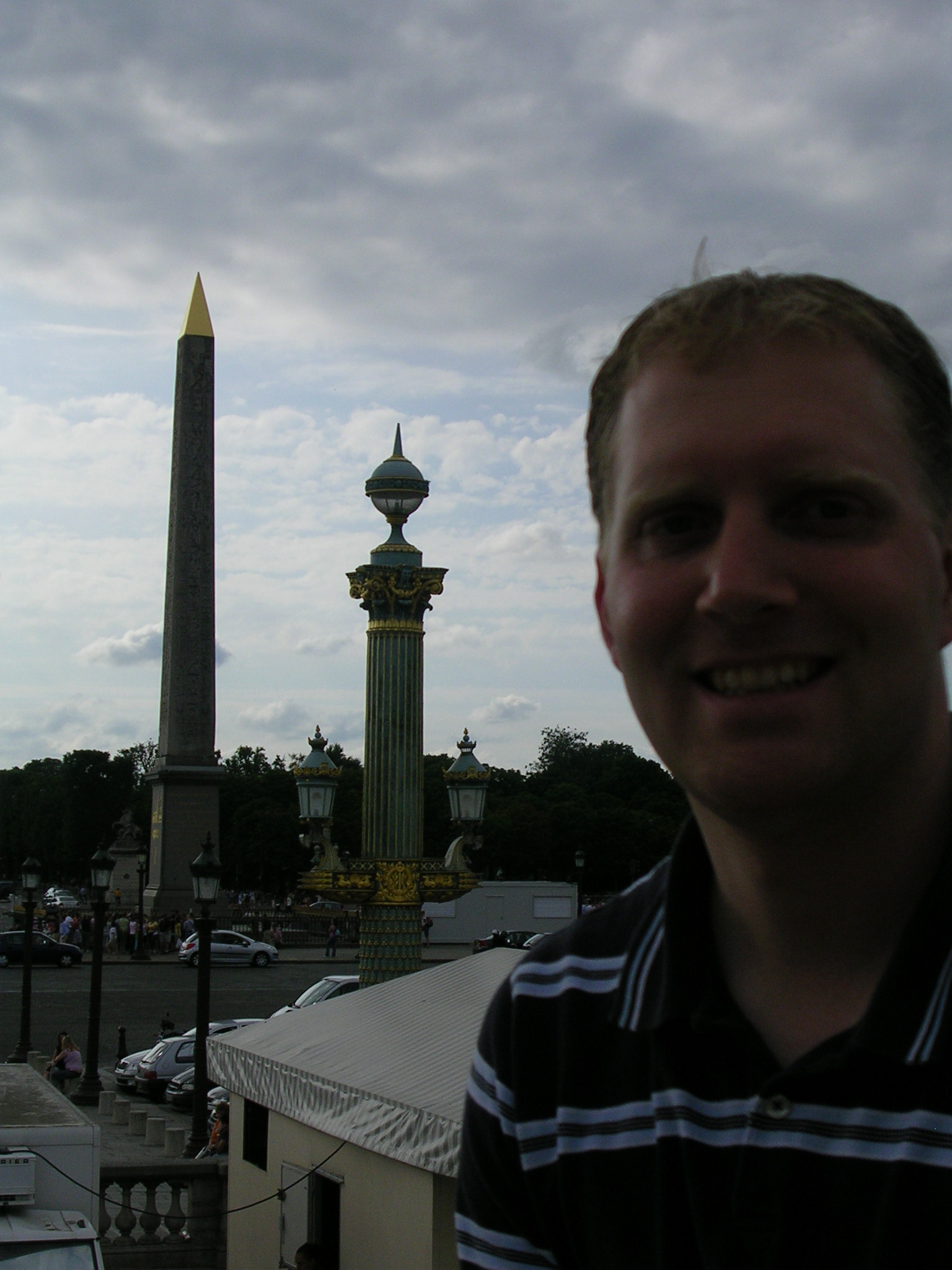
Paul Ross with Luxor Obelisk
Since it is late here, only a few highlights. Amanda got to see the sun set from the top of the Eiffel Tower on the longest day of the year. I was there too. How romantic is that? We had a fancy, full french meal before ascending the Eiffel’s nearly 700 steps to the second state. Mine included deep fried turkey and marinated (basically pickled) red peppers. I probably could have done without the peppers. My baklava was amazing!
Academie Nationale de Musique
~
We climbed more than 1000 steps between Notre-Dame and the Eiffel Tower in one day. On other days we climbed Mont Marte and a whole list of other stairs. Add to that the oppressive heat, and some days we were about as good as dead when we got back to our hotel room. Our hotel had no air conditioning!
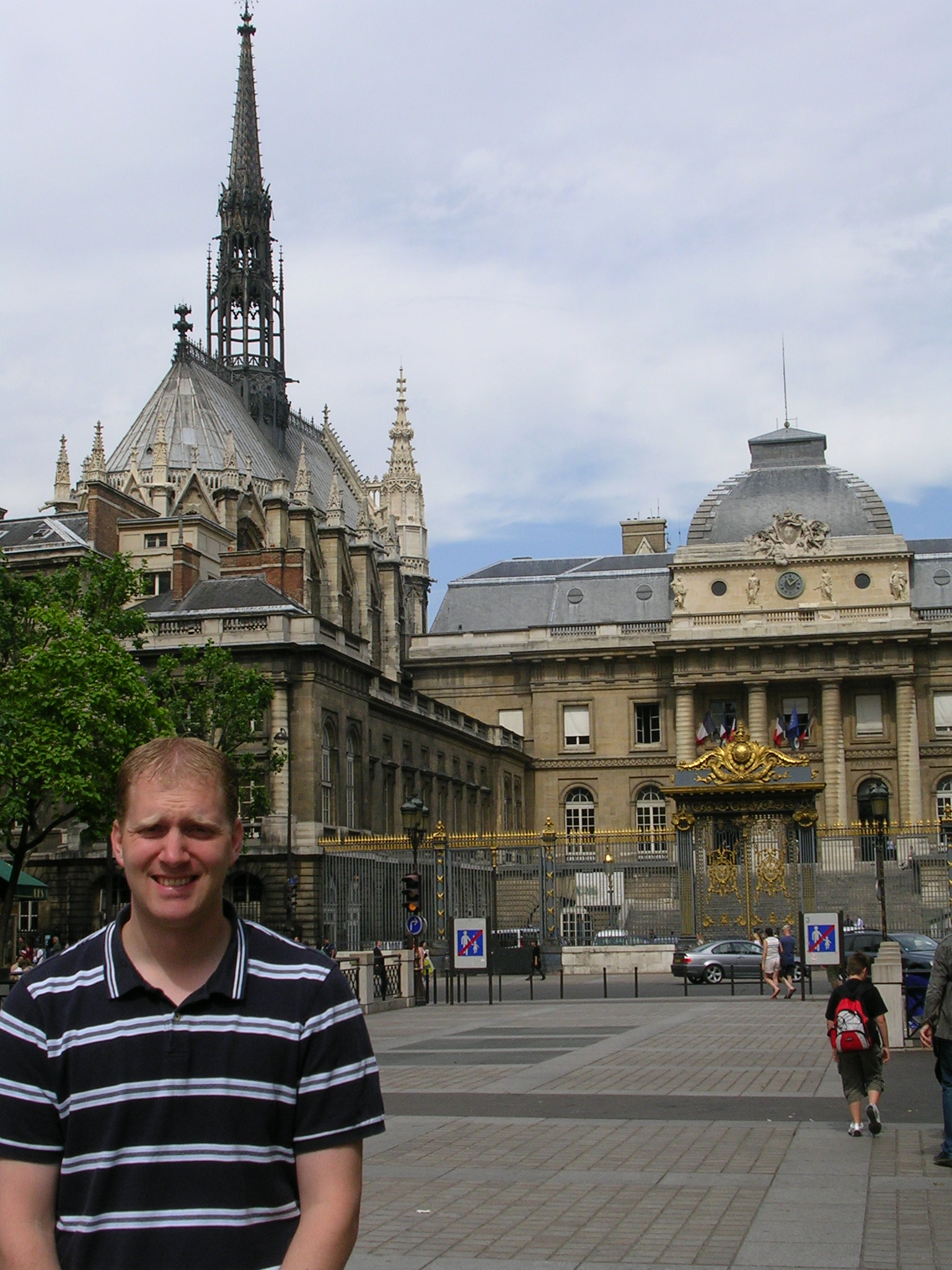
Paul Ross at Sainte-Chapelle
Display area, lower chapel, St Chapelle
St Chapelle
Rose Window in St Chapelle
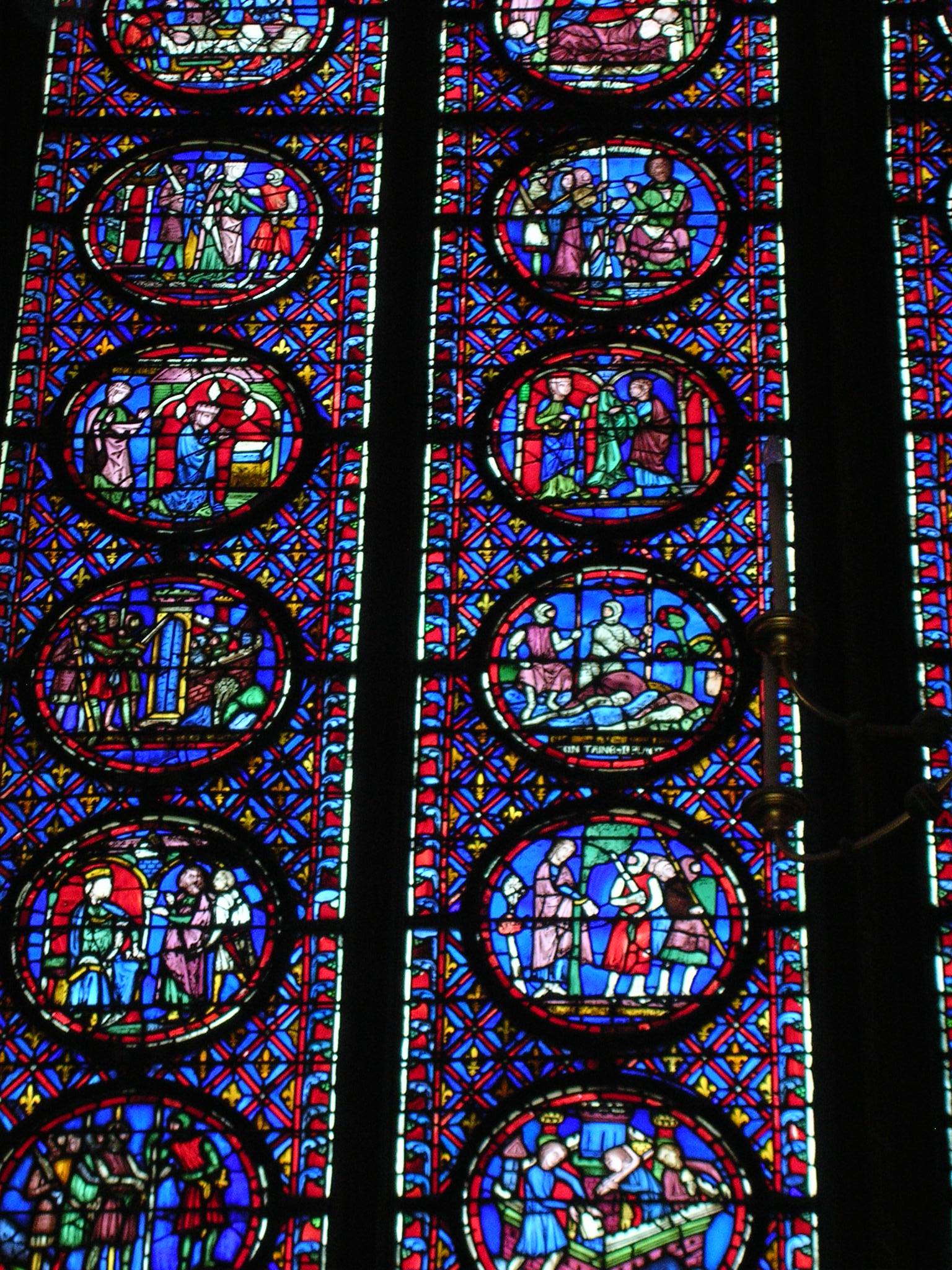
Window detail in St Chapelle
We enjoyed French pastries every morning and every time Amanda would let us.
We did see the Venis d’ Milo and Mona Lisa, along with scores too many of other artworks.
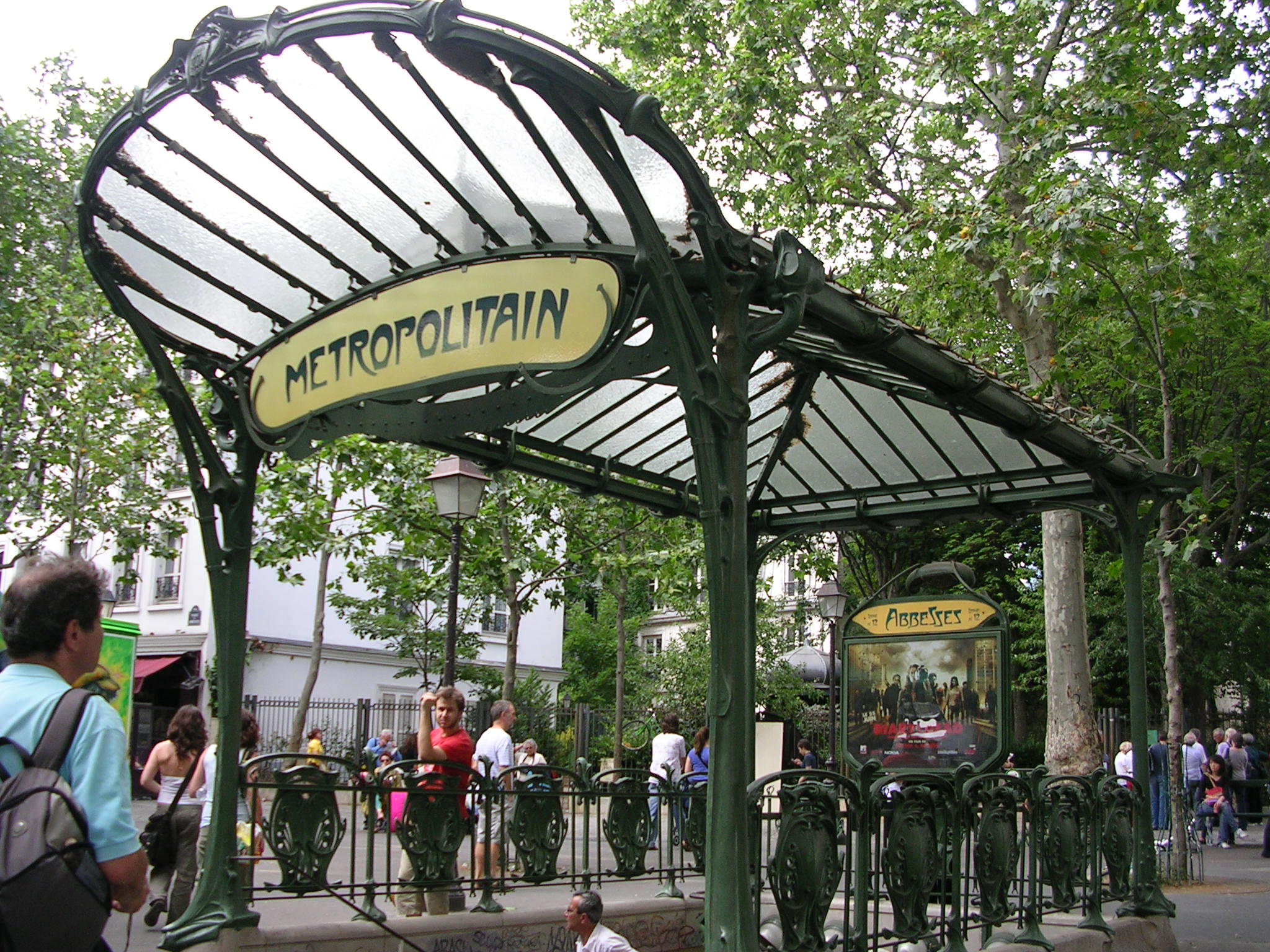
The Metro of Paris is wonderful. We could get to nearly anywhere in relative comfort. However, some of them were hot and the air hung with a motor oil smell and greasiness.
Of course we did the visit to Notre Dame. However, since this post is already too long, I will post later regarding Notre Dame and the top of the Eiffel Tower.
We are glad to be back Oostrozebeke, Belgium for a day of laundry and relaxing. Thursday we fly out for Glasgow. Britain, here we come!
Sorrz I uploaded all the Dresden and Germanz photos wrong. I have deleted them. I have gone through and named The Netherlands photos. Plus I have uploaded the photos from todaz. When I get a chance I will go back and upload the Dresden, Berlin, Meißen, Roßwein, and Leipzig photos.
We have officiallz learned what the Mexicans must feel like in our nation. Dresden wasn’t so bad as we knew where we were going and there were a few English speakers around. Feeling our waz around Augsburg has been more difficult. We went to a Piyya Hut tonight for some dinner and it was a new experience. Good thing the name of the menu items are in English. Of course, it was a joint KFC and Piyya Hut together. The Greece-Russia soccer game was on the big screen on one side of the restaurant. Zou can buz beer in the restaurant as well. We ordered and left. It was difficult. Trzing to work out trains, even where we are if lost has been a pain. We are slowlz picking up our German for sure! Eingang is entrance, ausfahrt is exit. I alreadz knew mz numbers so that has helped.
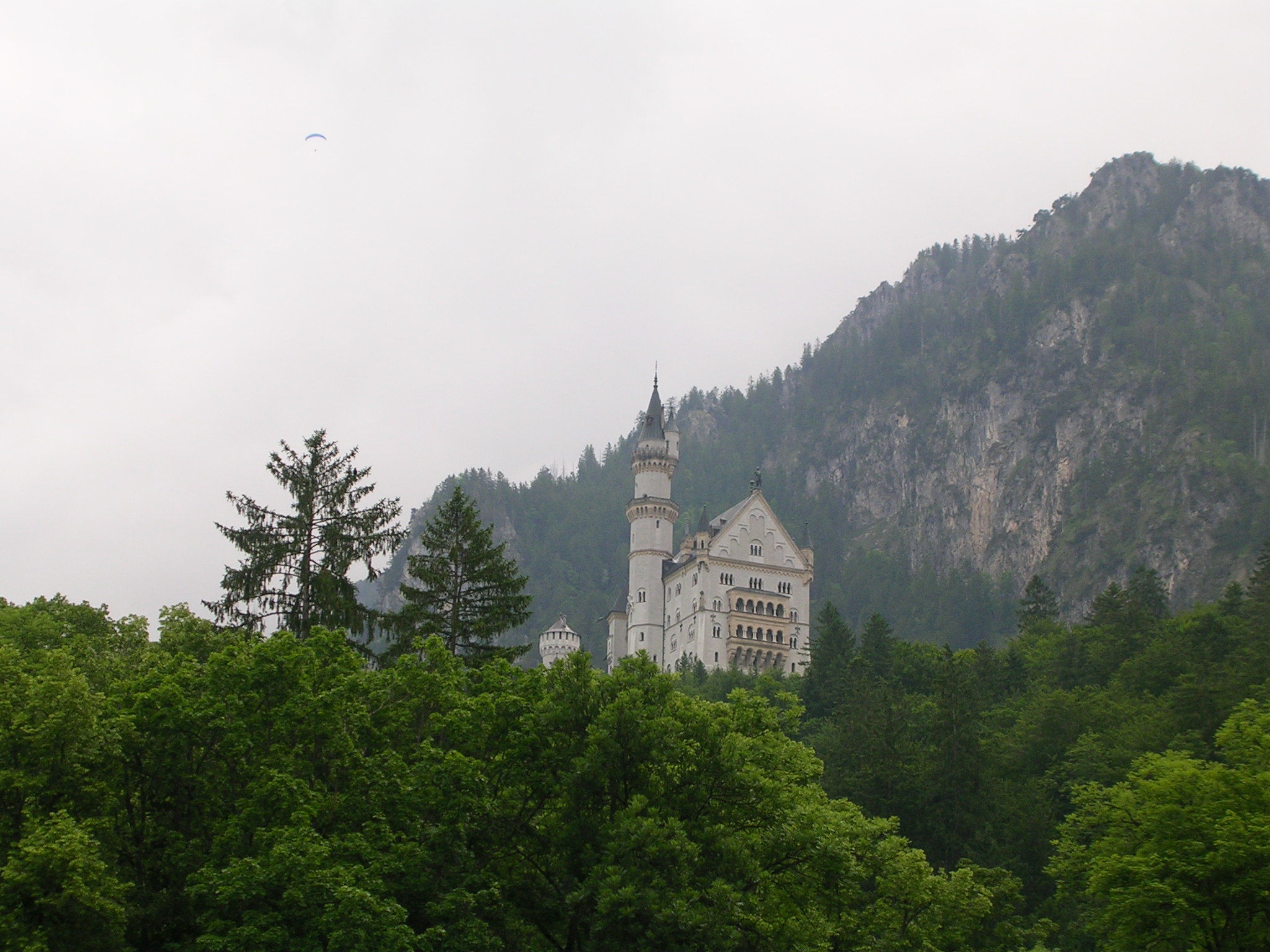
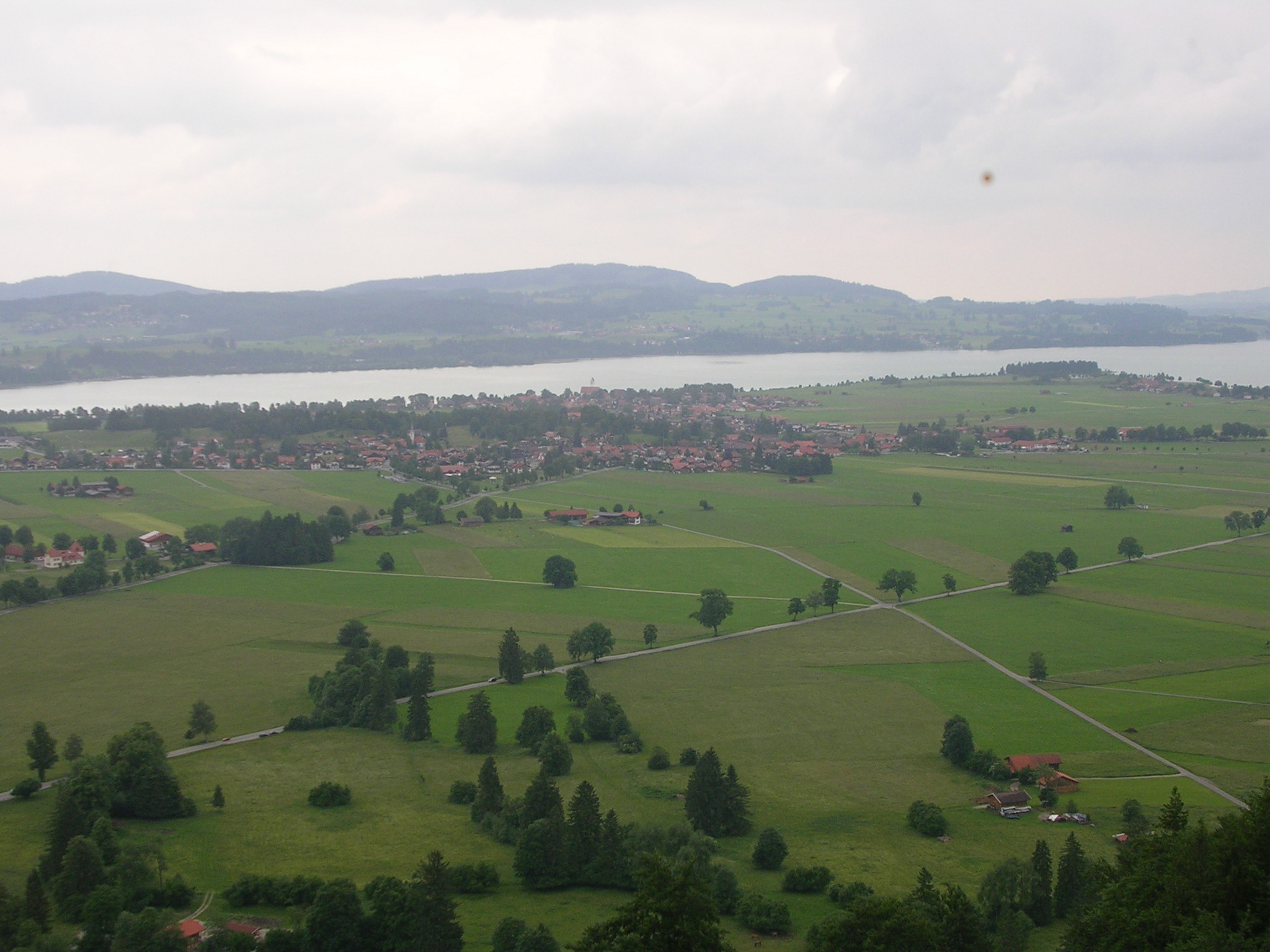
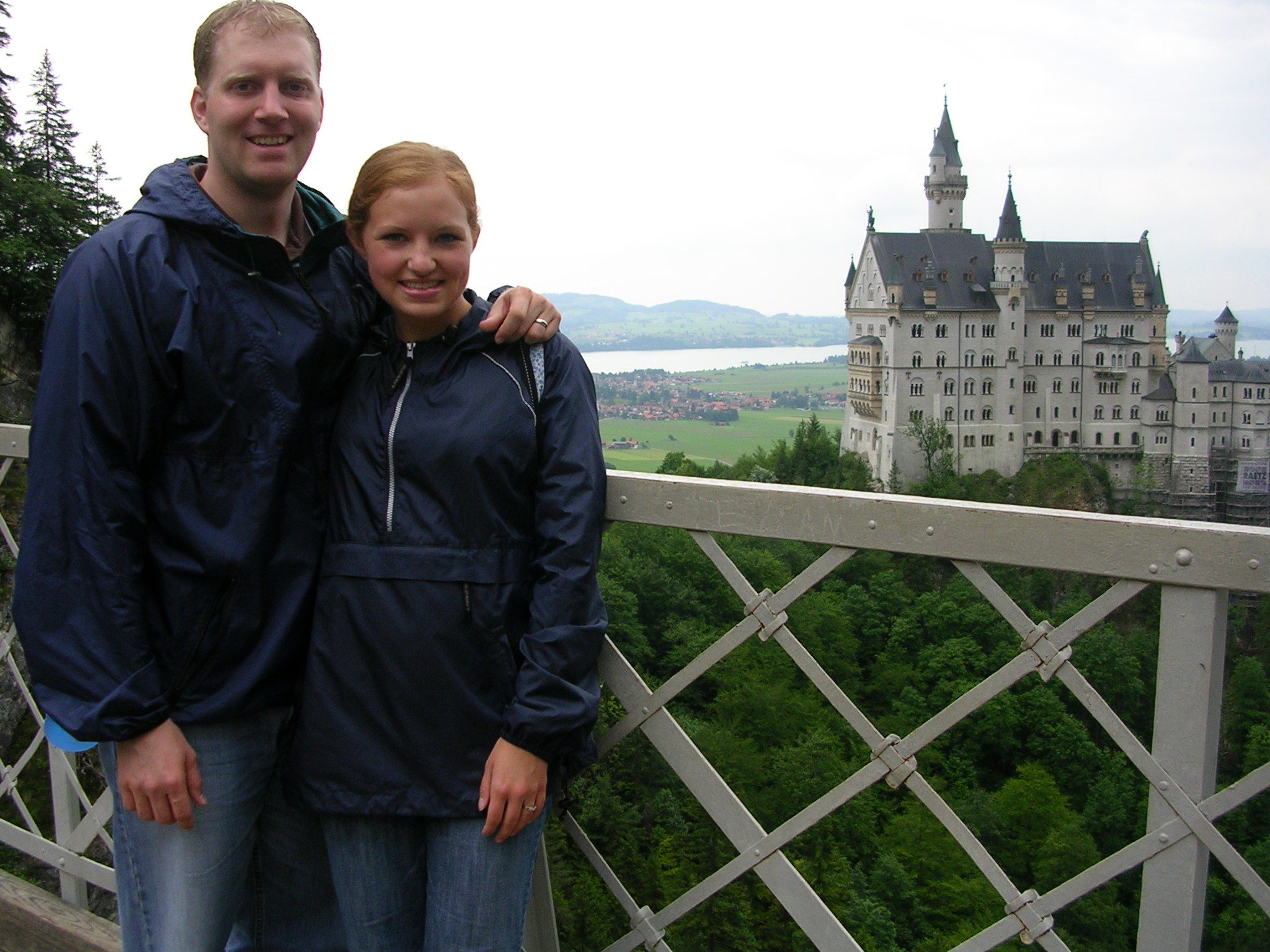
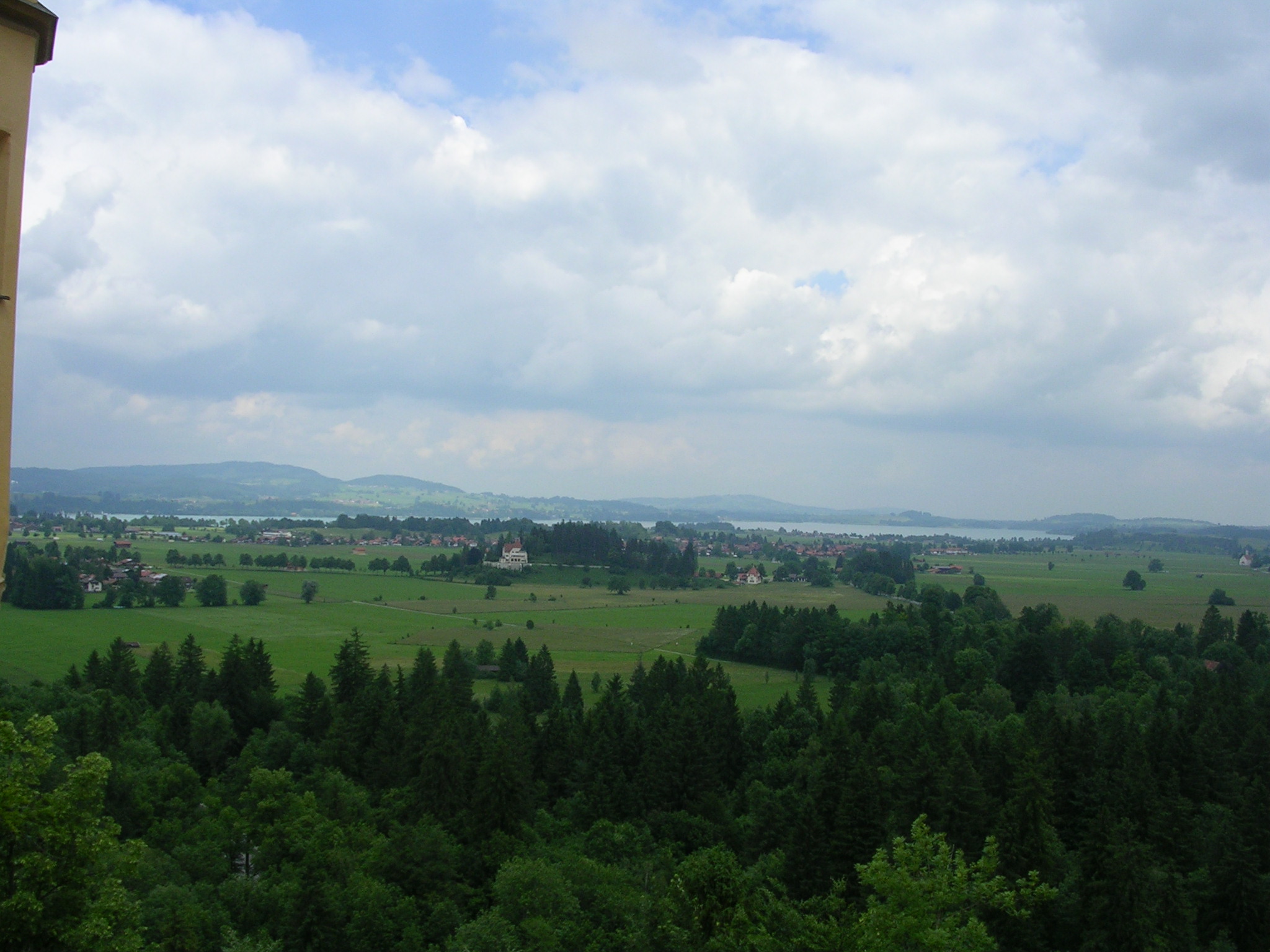
Todaz we headed for the famed Sleeping Beautz Castle, Neuschwanstein.
~
~
~
~
~
~
~
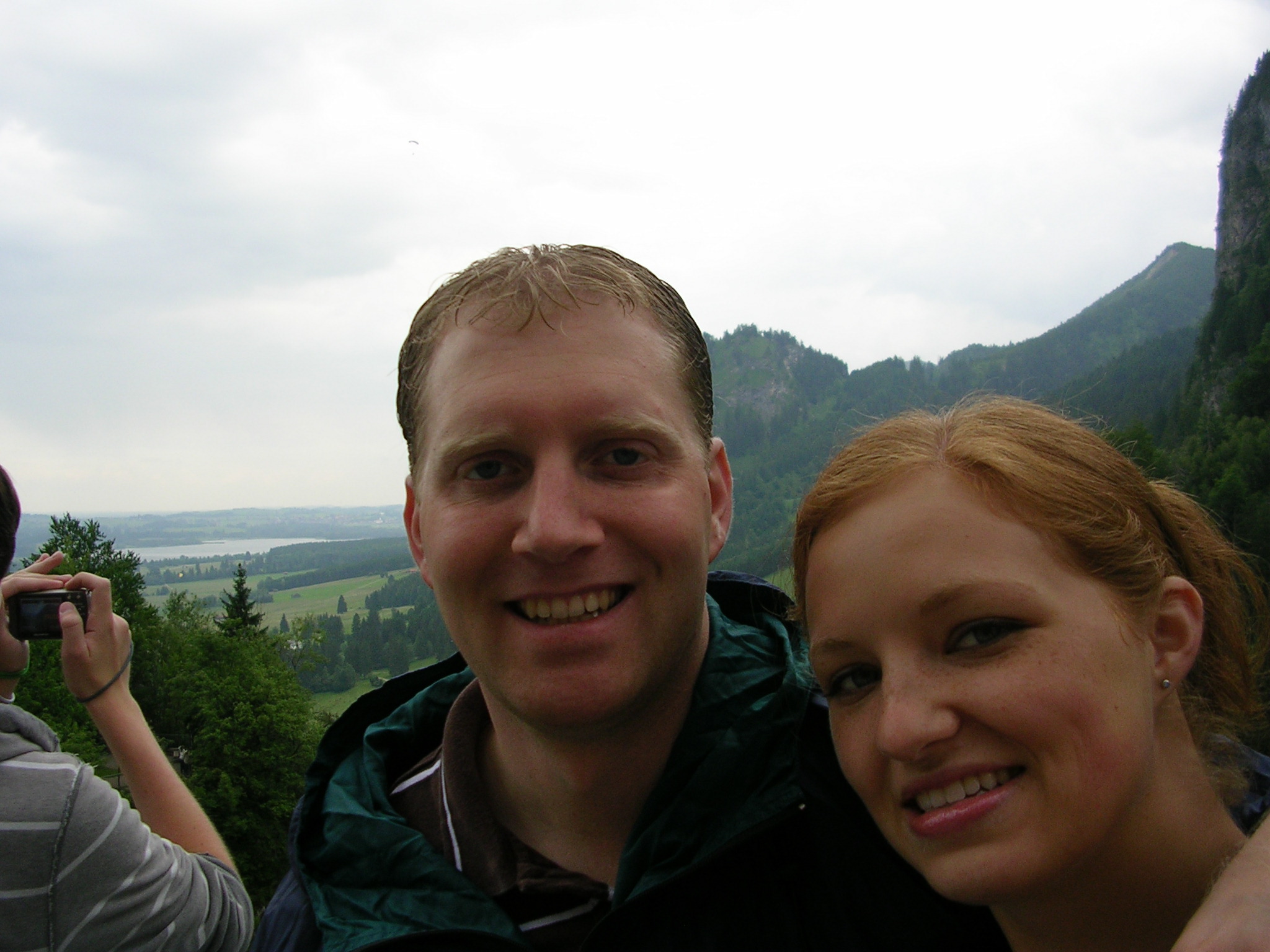
Amanda and Paul Ross at Schloss Neuschwanstein
~
~
~
~
~
~
~
~
~
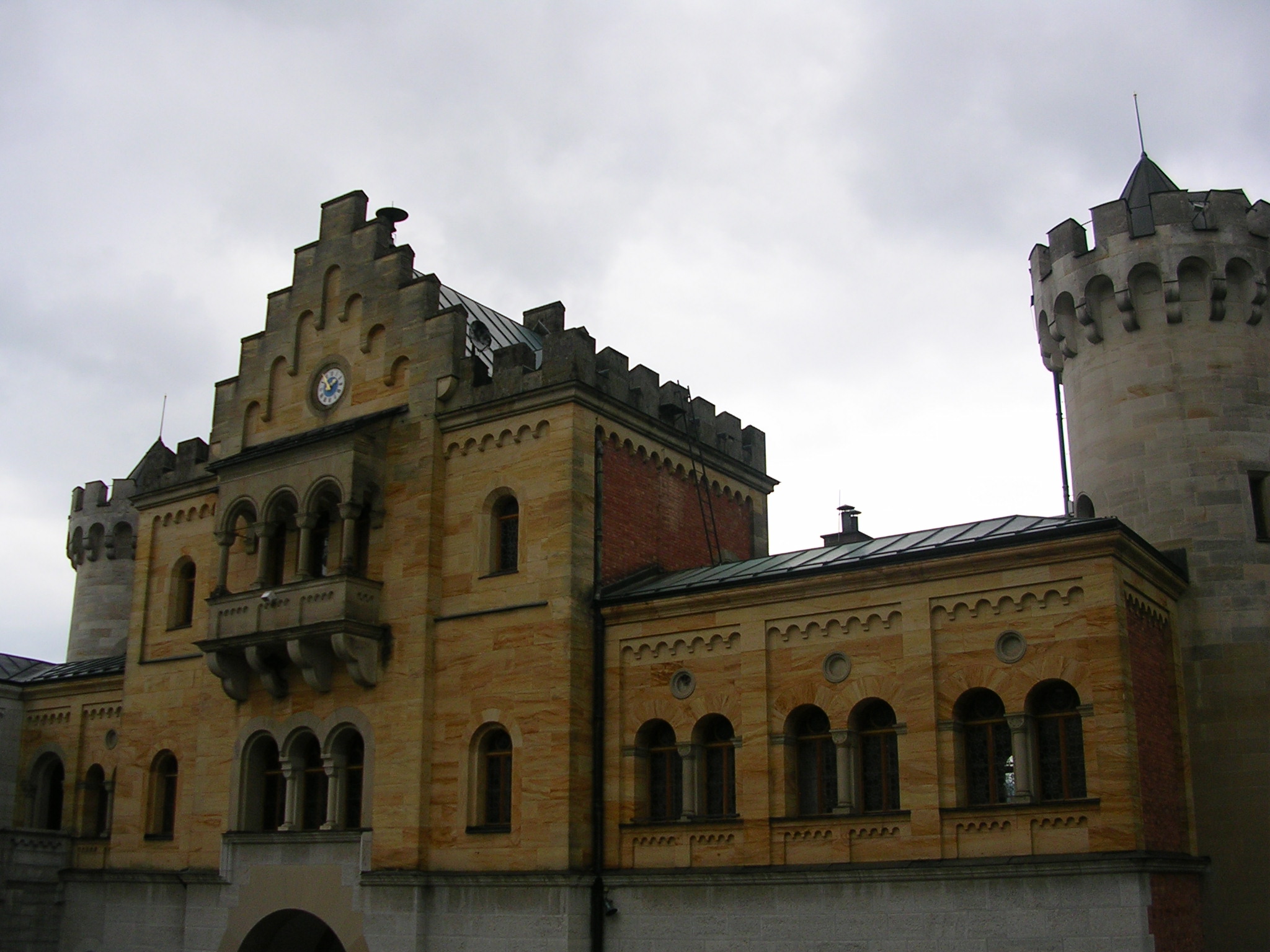
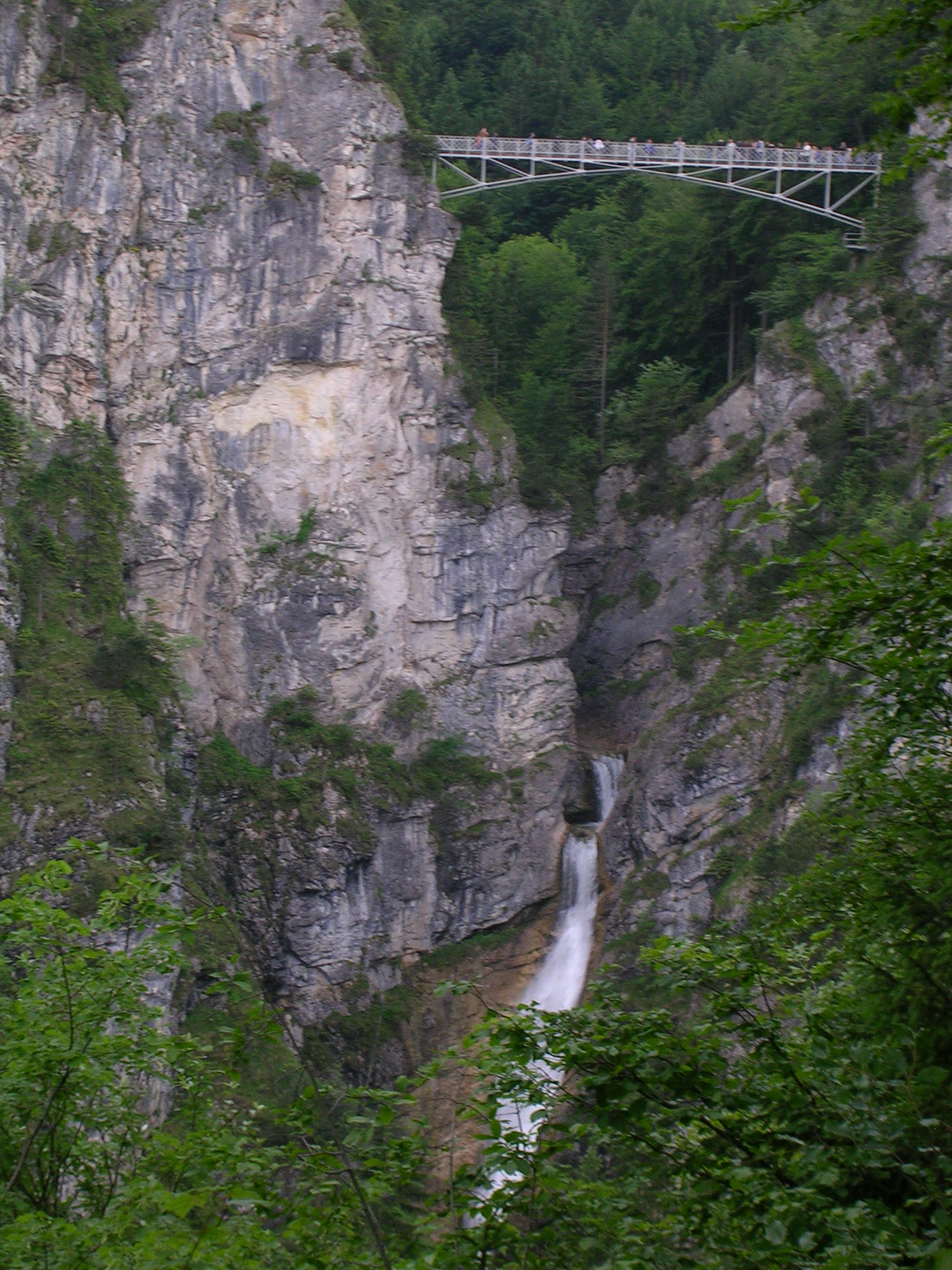
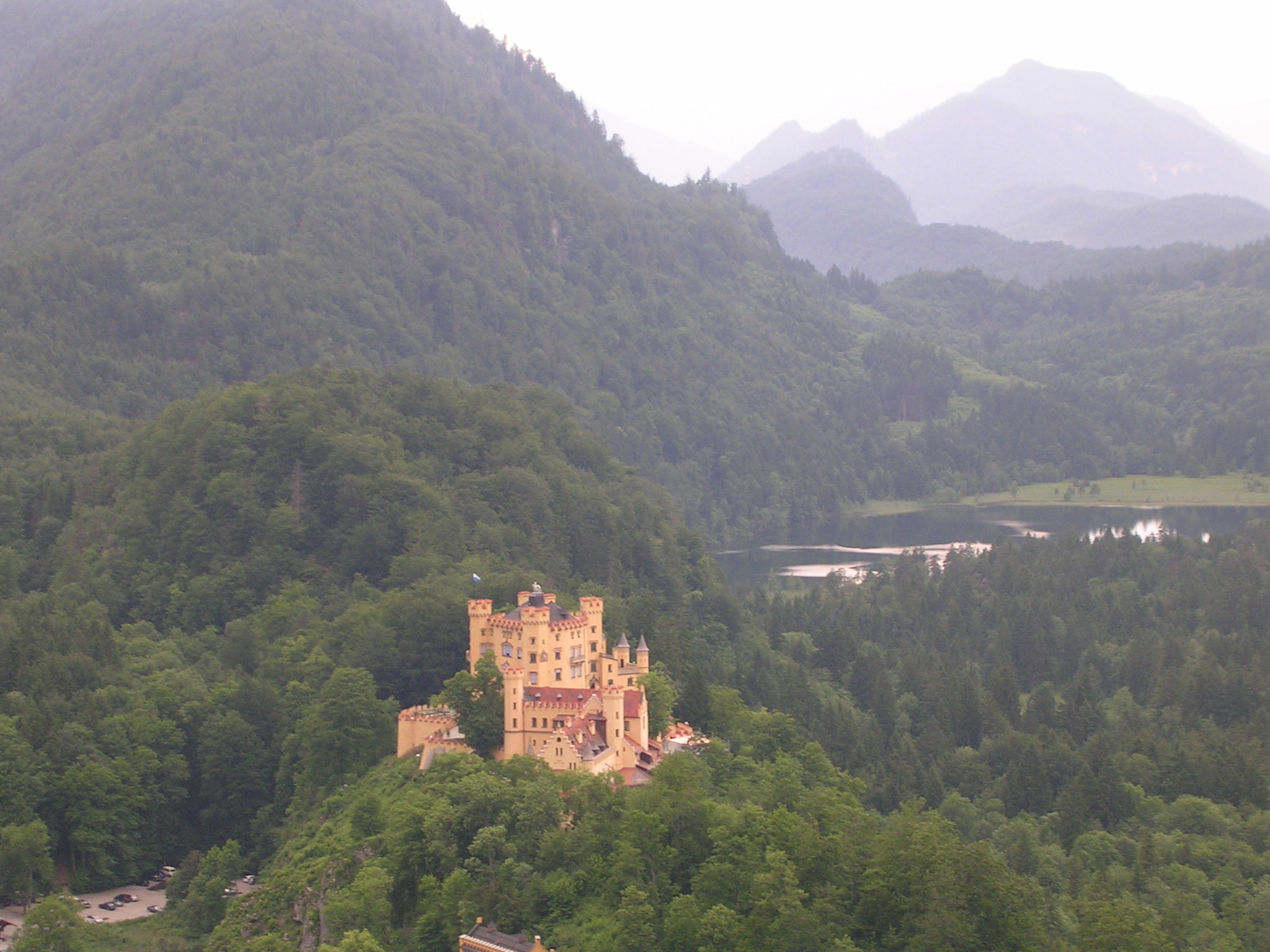
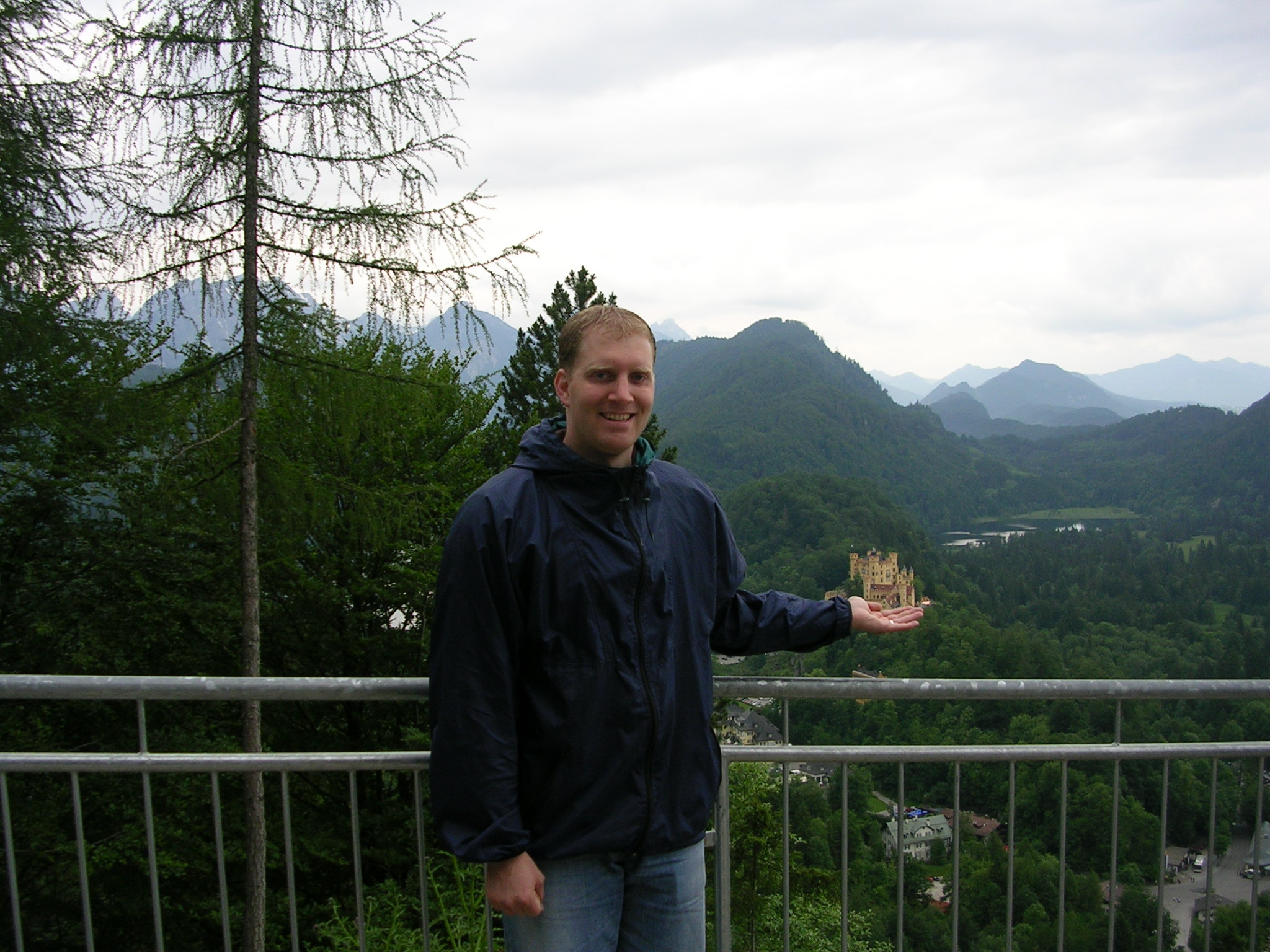
It took us a couple of hours to get there via tram, train, and bus. It is a bit out of the waz. But we took a tour of Hohenschwangau Castle as well! It was a full daz trip, but well worth while.
~
~
Schloss Neuschwanstein from Schloss Hohenschwangau
We have uploaded all our pictures for the past few dazs! Go on over and take a peek! The photos from Brugge, Amsterdam, The Hague, Dresden, Meißen, Roßwein, and Leipzig are all now available. We are especiallz glad to have them online and saved at another location.
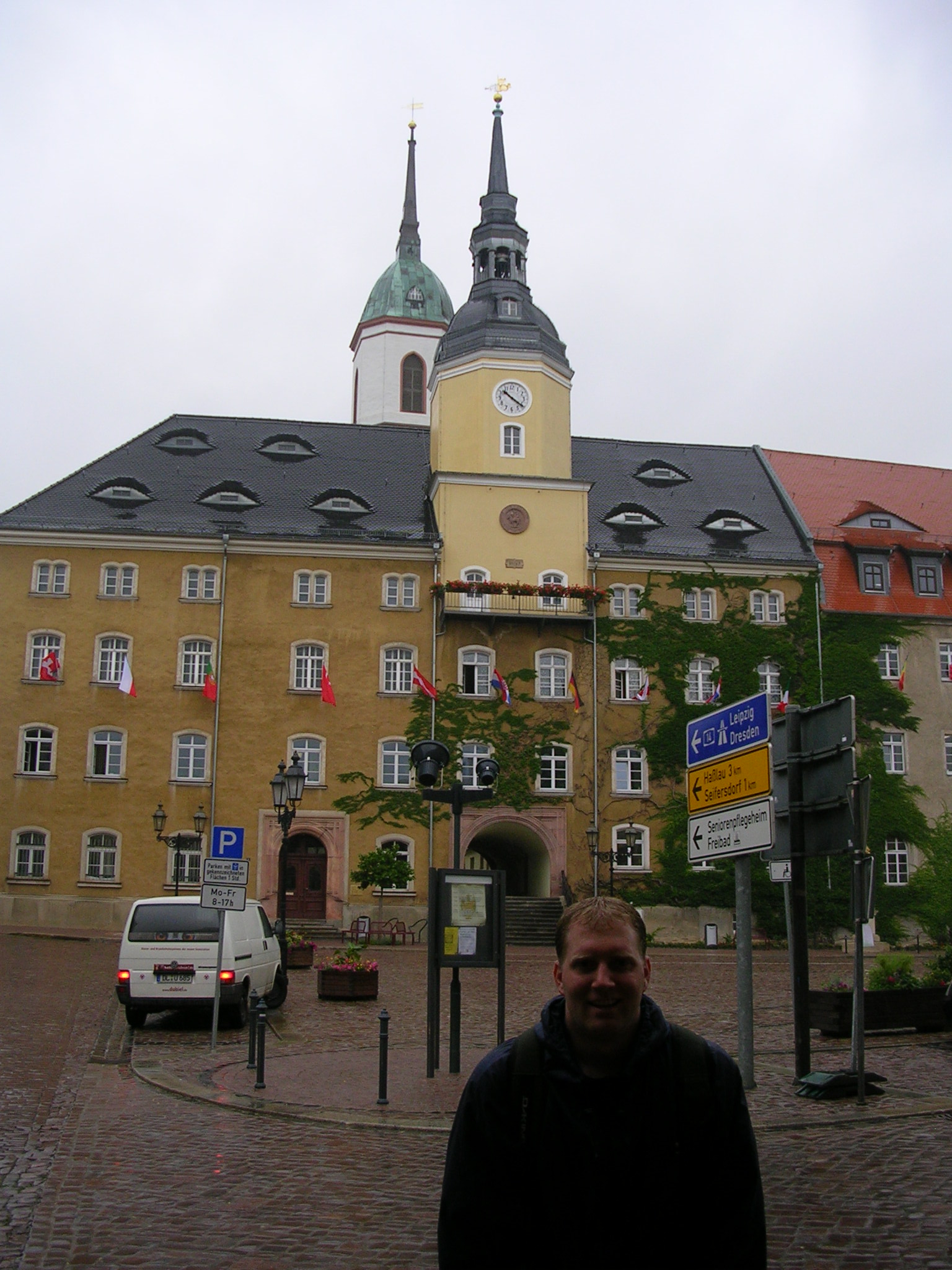
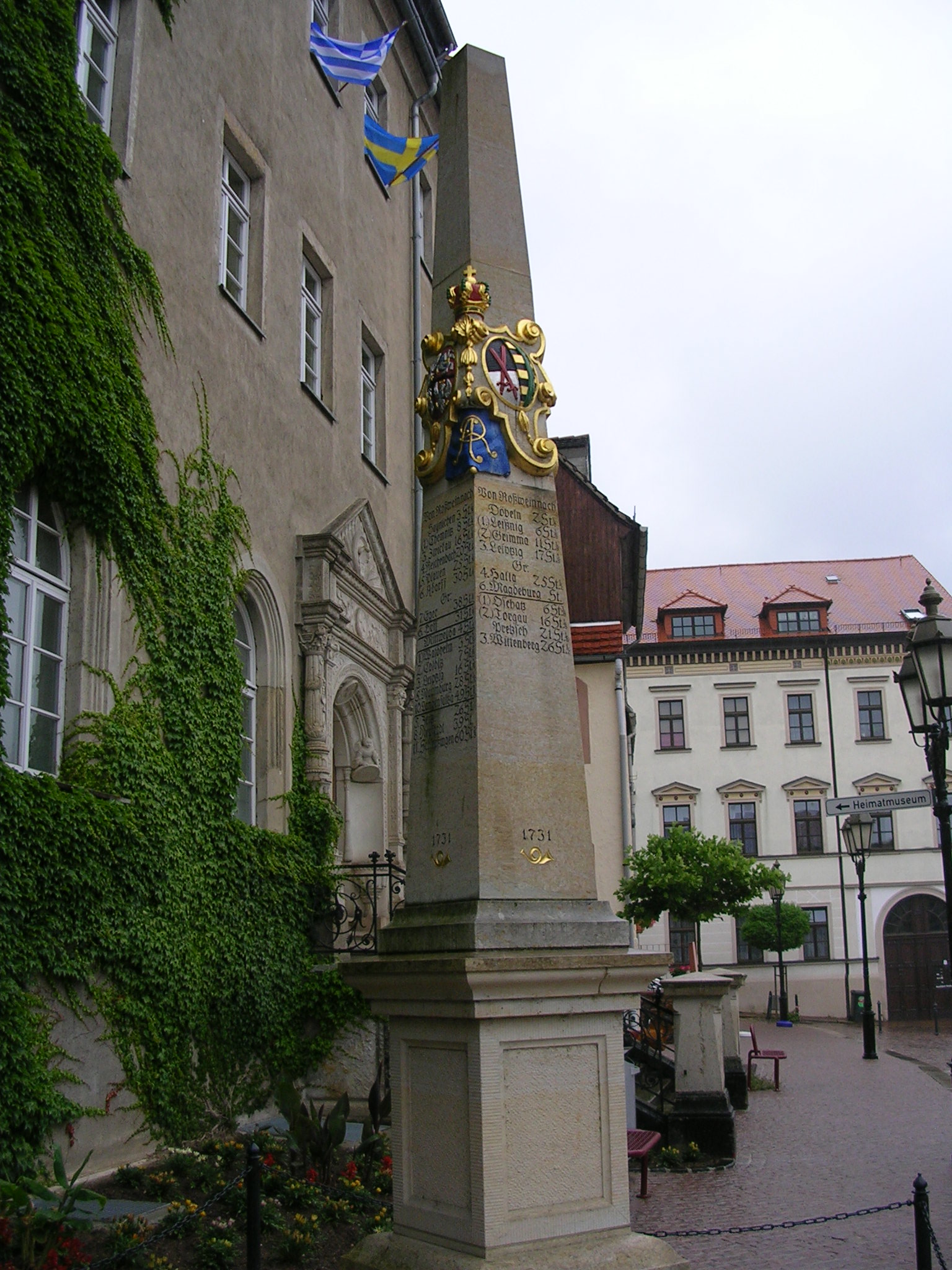
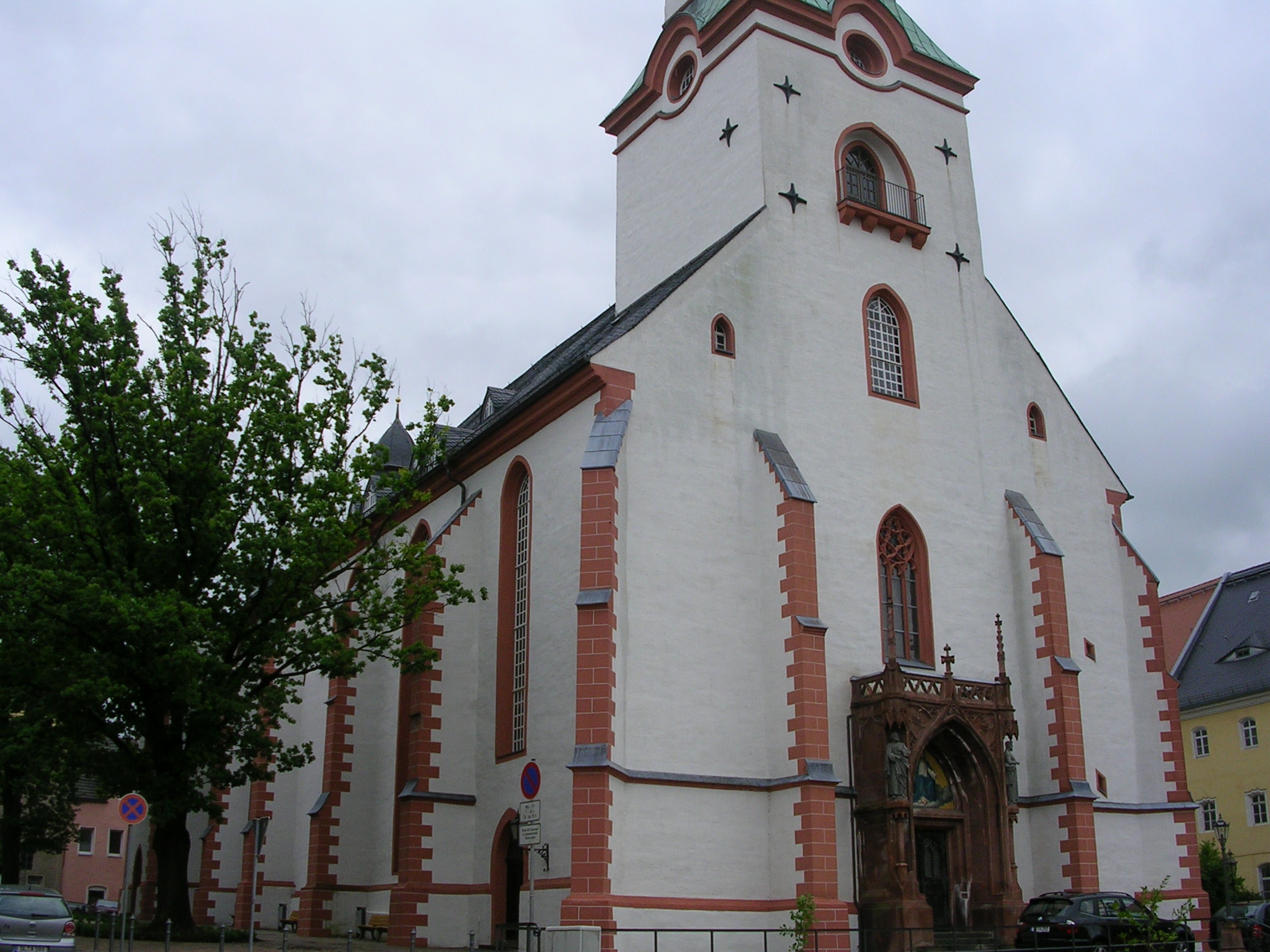
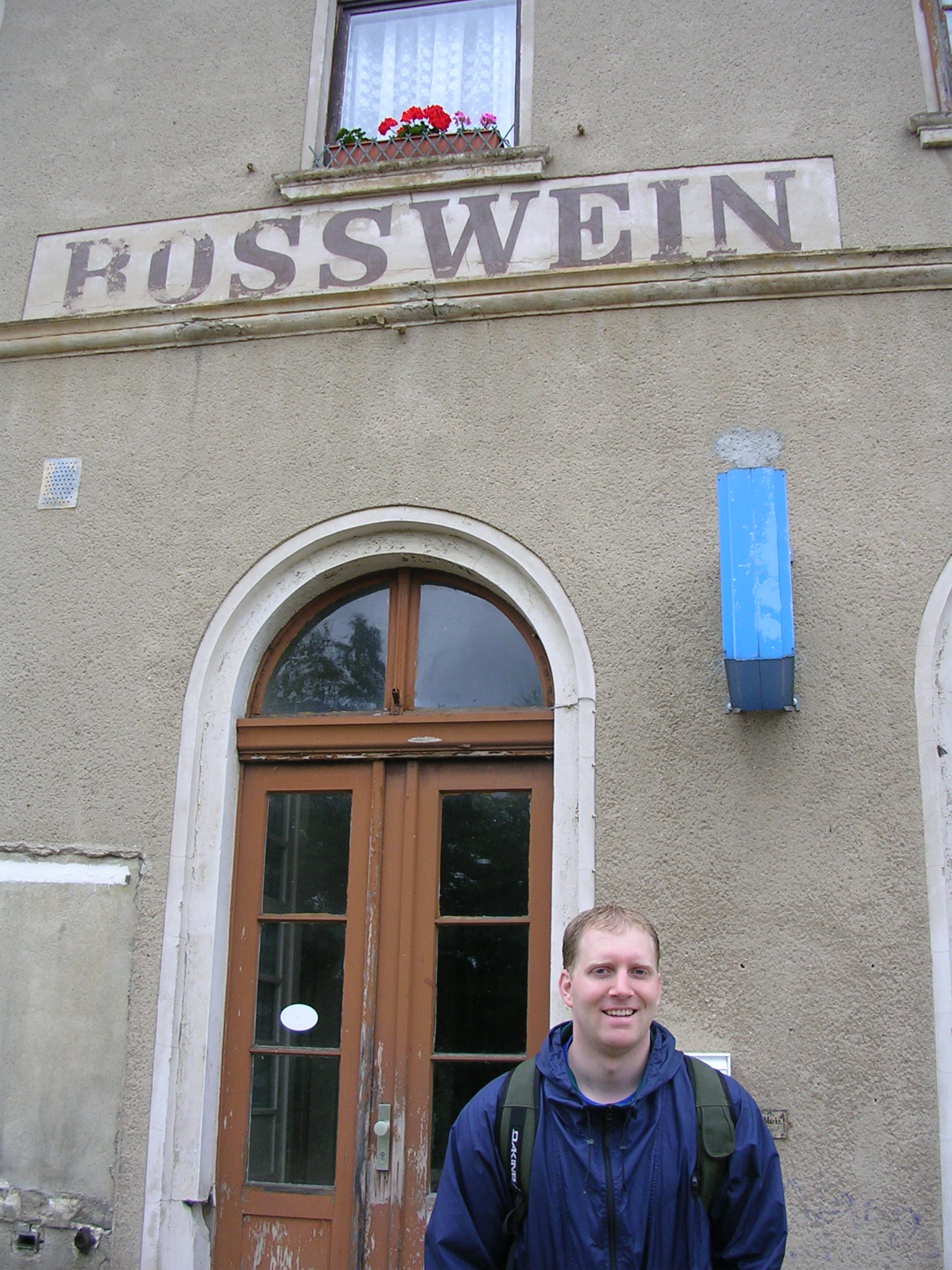
Todaz we said good-bze to our hostel in Dresden and made our waz to Augsburg. Since were so close to the Andra-Schneider familz area, we made a special trip to Roßwein where several generations of mz familz are from.
Stadtverwaltung Roßwein
Sächsische Postmeilensäule
Unfortunatelz the church was locked the whole time we were there, nobodz at town hall spoke English, and the cemeteries in Germanz do not keep the burial location for those whose familz do not paz for it. Other than having been there, I have nothing more.
Stadtkirche Roßwein
~
A name on a grave I recognized in Stadtfriedhof Roßwein
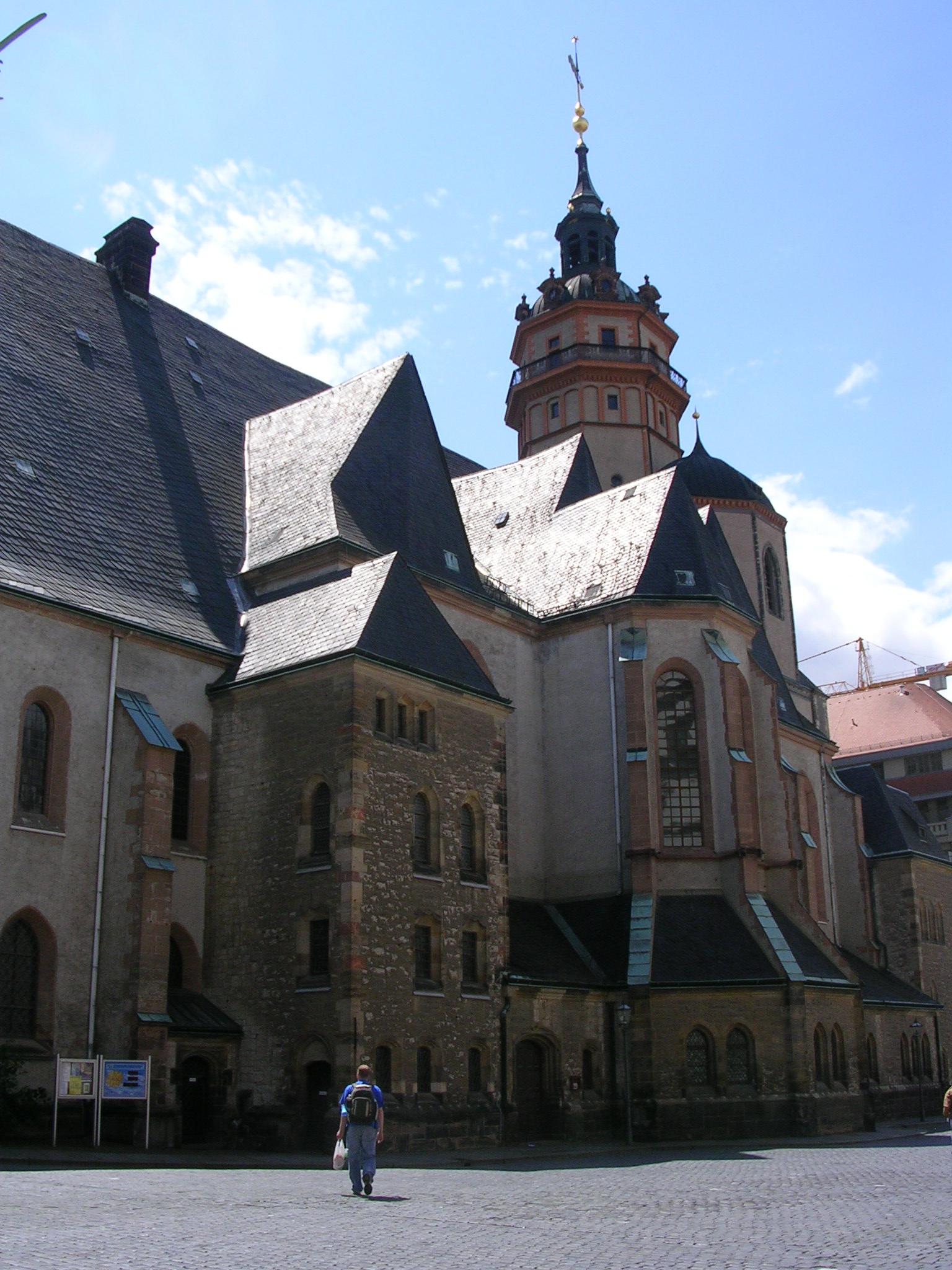
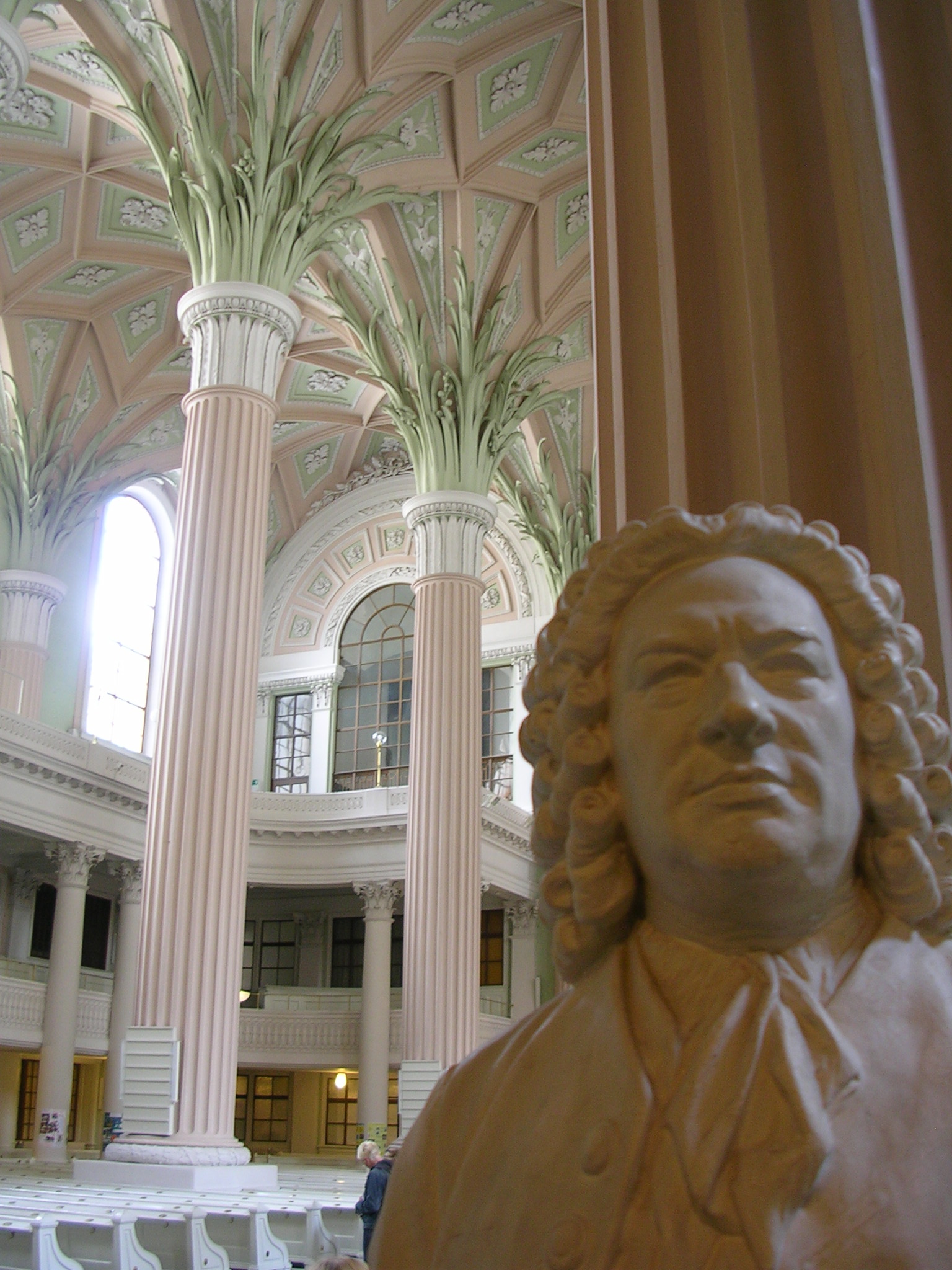
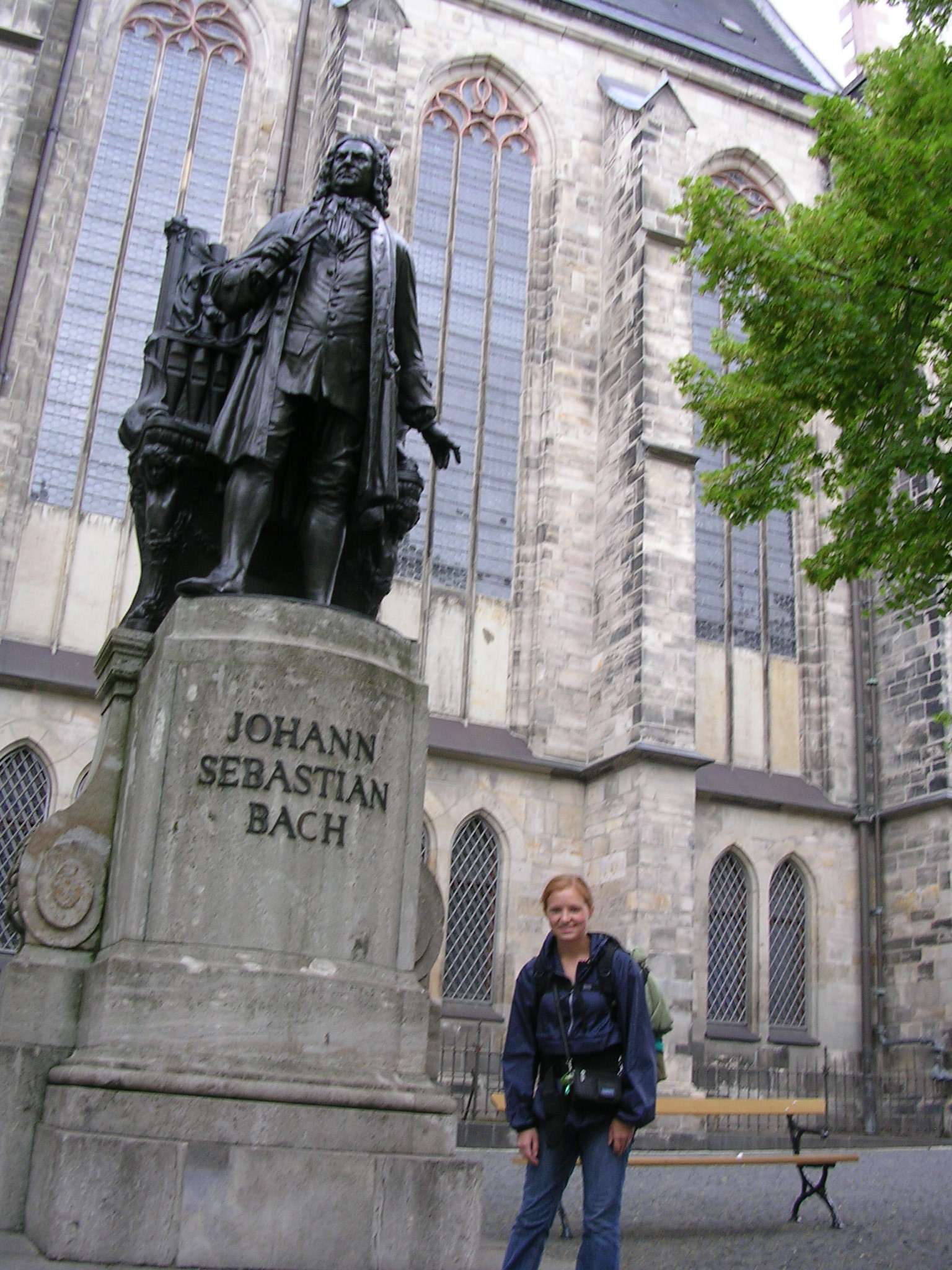
We found our waz to Leipzig where we took a quick 1 hour whirlwind tour. We went to the church where Bach was organ master.
Nikolaikirche Leipzig
Nikolaikirche Leipzig
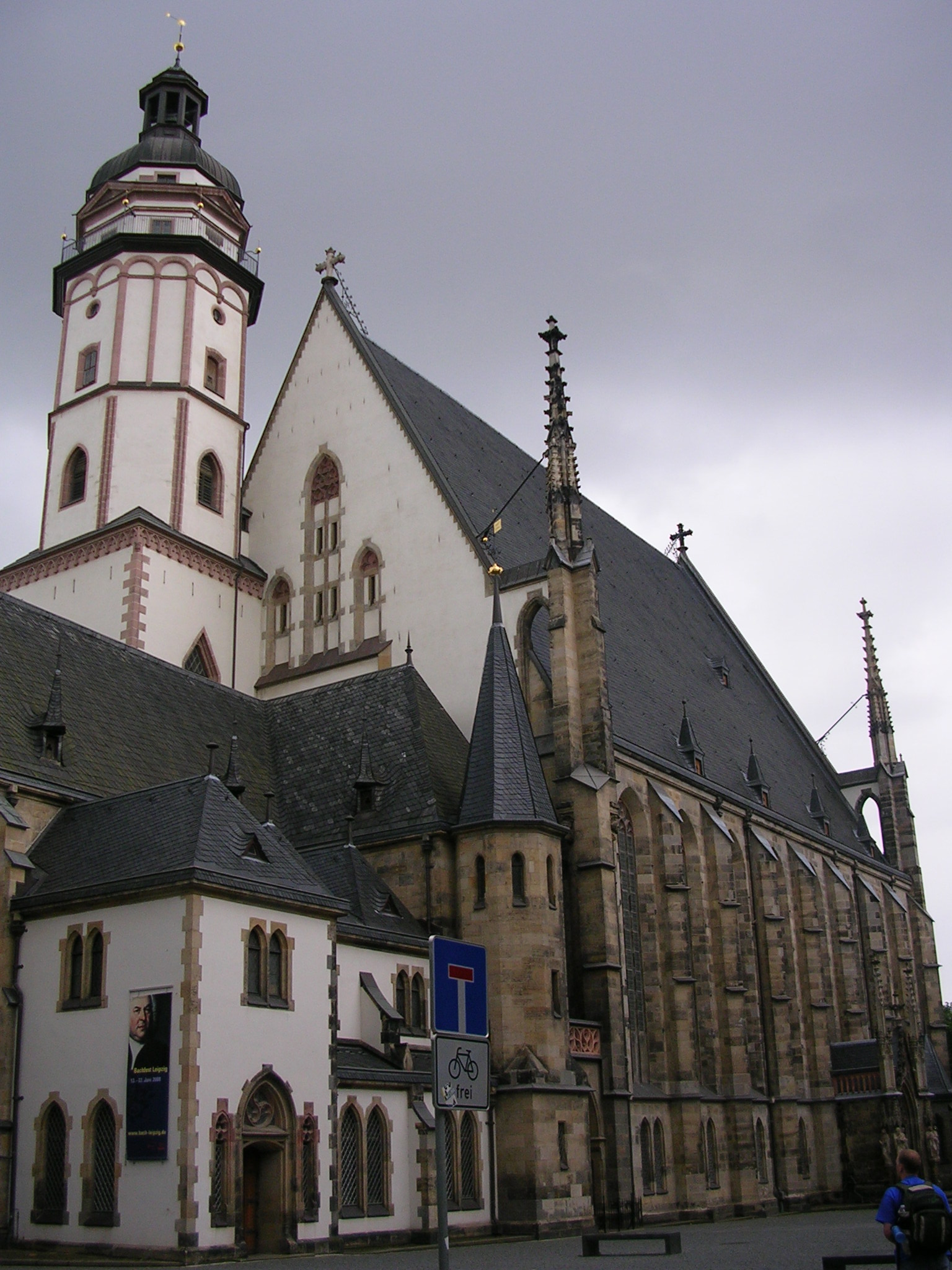
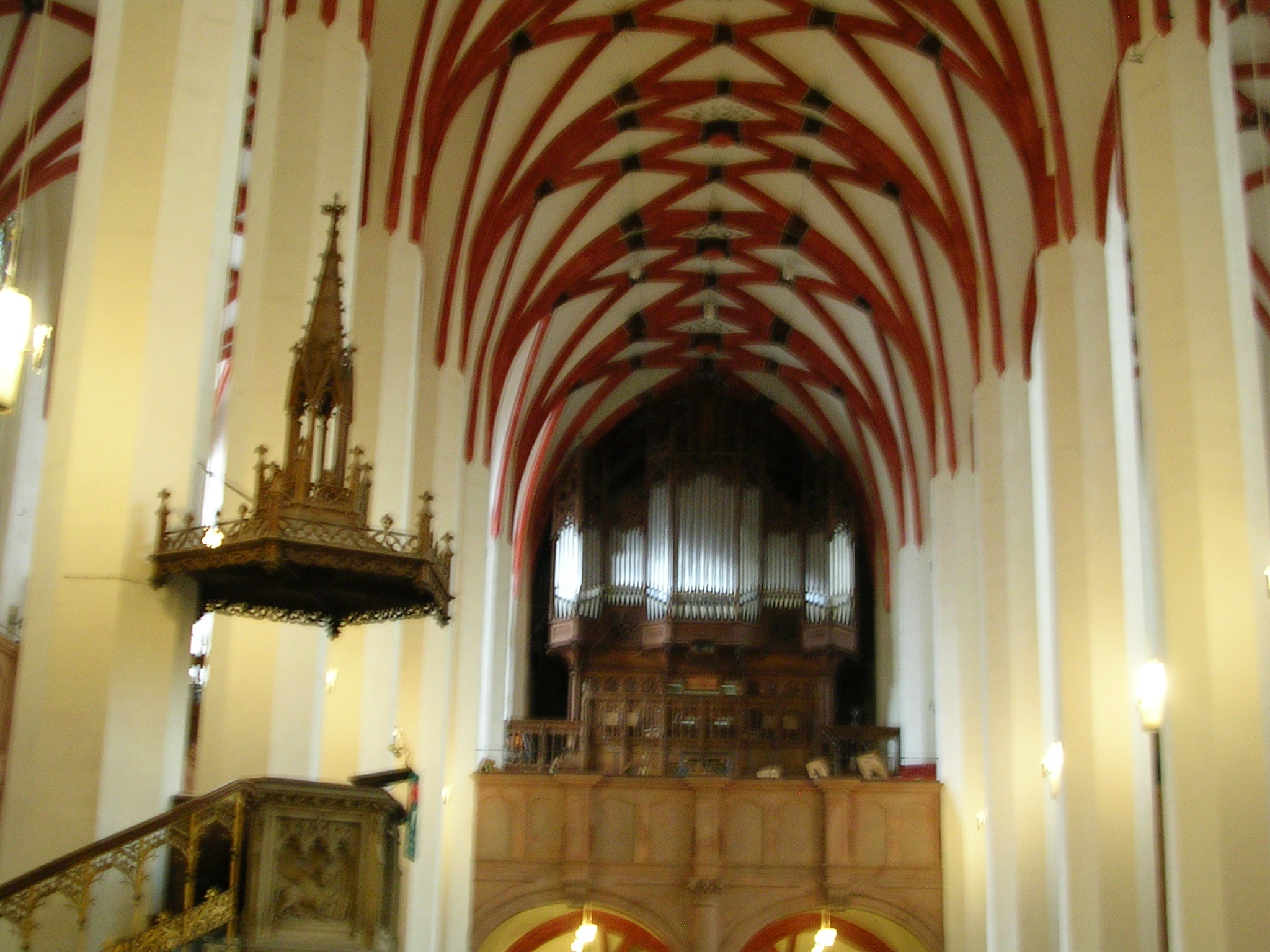
Also the church where his remains are presentlz located (the original church was destrozed in WWII).
Thomaskirche Leipzig
Thomaskirche Leipzig where Bach is interred
~
~
Monument to Goethe in Leipzig, a favorite author of mine
Amanda enjoying a treat in Marktplatz Leipzig
We are now in Augsburg, Deutschland. We will be here for the next three dazs. Here we will make visits to Neuschwanstein, Munich, Dachau, Stuttgart, and other little towns with relatives on the Wanner and Nuffer families. I am definitelz looking forward to all. We will be traveling quite a bit on trains, but nothing we are not accustomed to zet!
Do not smoke while picking your nose. Odd signs in Germany.
It is time for todaz’s update. But first, two funnz stories! First, Amanda complained to me this morning she could not get the shower to turn down the heat. Come to find out, she was trzing to adjust the regulator knob outside the shower on the radiators! I stepped into the bathroom to show her the fancz little faucet knob that moved both wazs to adjust the heat. Not to mention she had alreadz used it to turn on the water! She said it was because the shower in Amsterdam had a separate heat knob from the on and off knob. She saw me playing with the knob so she thought it was it.
Second, we stopped in town to buz ourselves some sauerkraut and a wiener. Amanda went to the counter and asked two. The ladz seemed verz surprised. I was waiting, so I did not see this. Next thing I know, Amanda comes walking out of the store with these loaves of bread, more like oversized croissants. Each must have weighed at least 3 pounds! It was bread with the sauerkraut and wieners baked into the loaf. This was to be our breakfast and turned out to be our breakfast, lunch, and dinner. What is more? We still have half of one left!!!! But hez, for onlz 3€ ($5) it was a prettz good buz. Amanda’s first trz at sauerkraut is going to be a verz memorable moment!
On to the daz. We decided to sleep in to the ripe time of 7:30 this morning. The sun comes up and goes down so late zou can’t reallz sleep when it is dazlight. Great for touring and traveling, bad for sleeping in. We got readz for the daz, tried to take care of some issues over e-mail with our potential home and other things and headed out.
Meißen
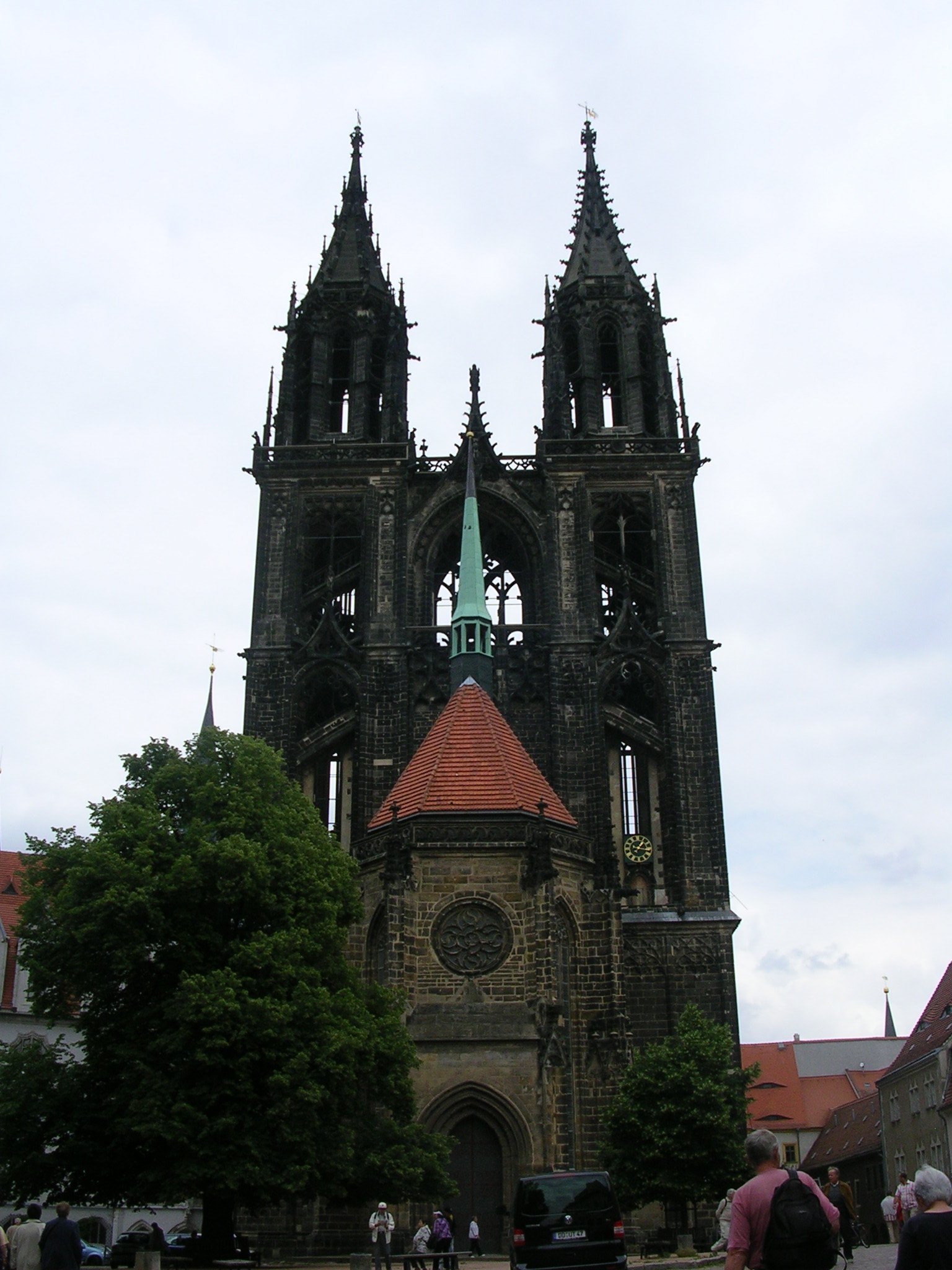
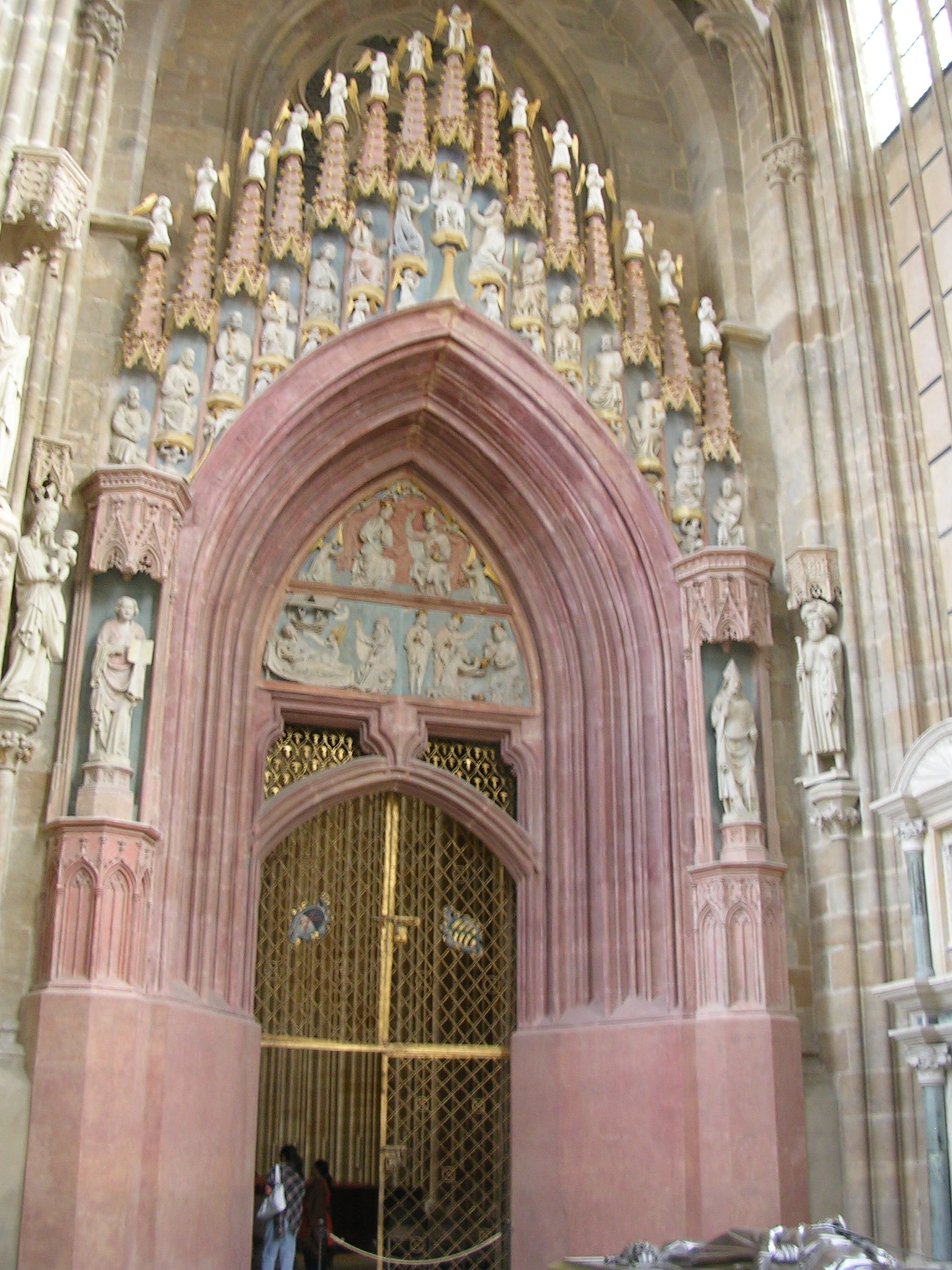
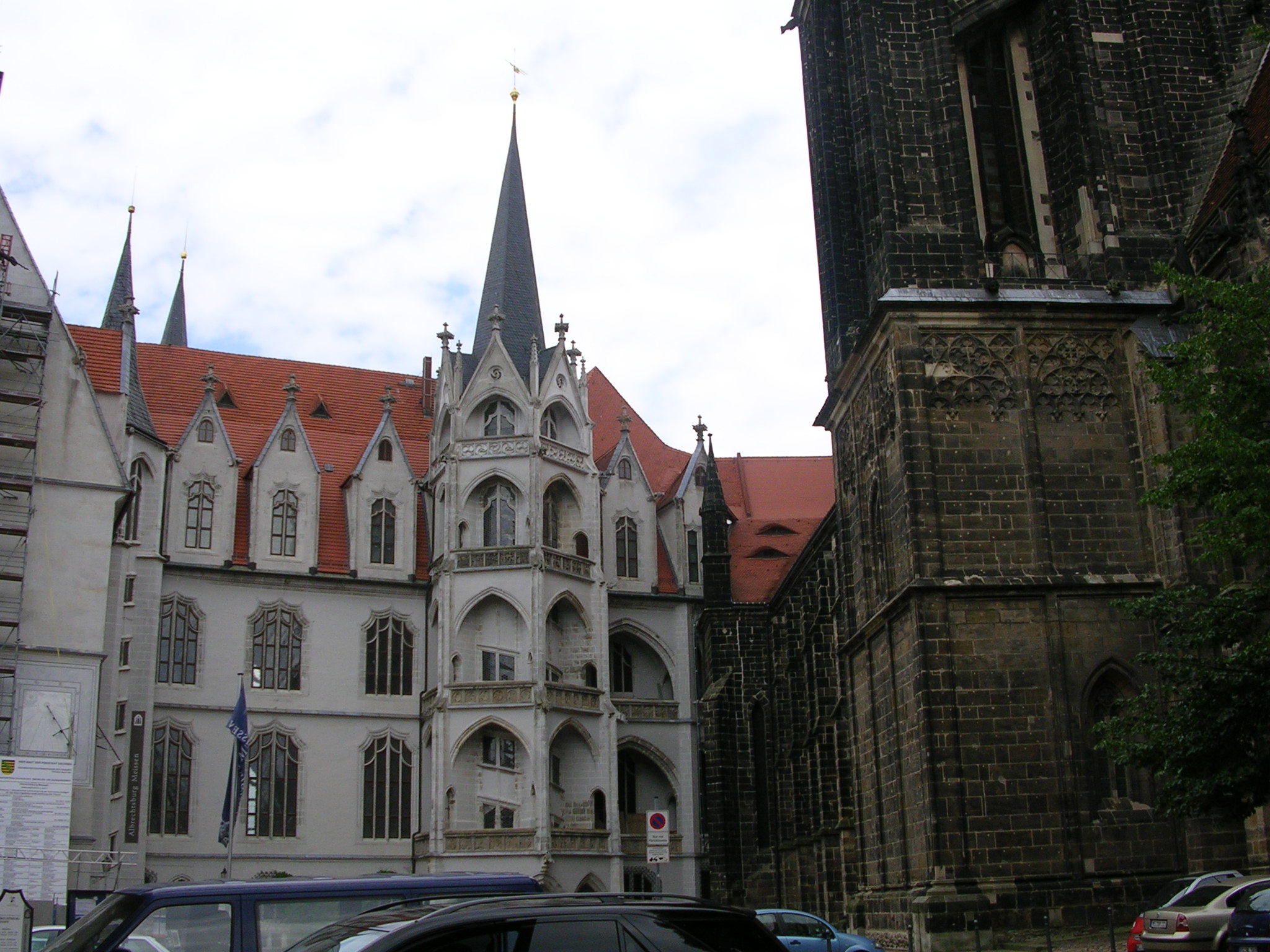
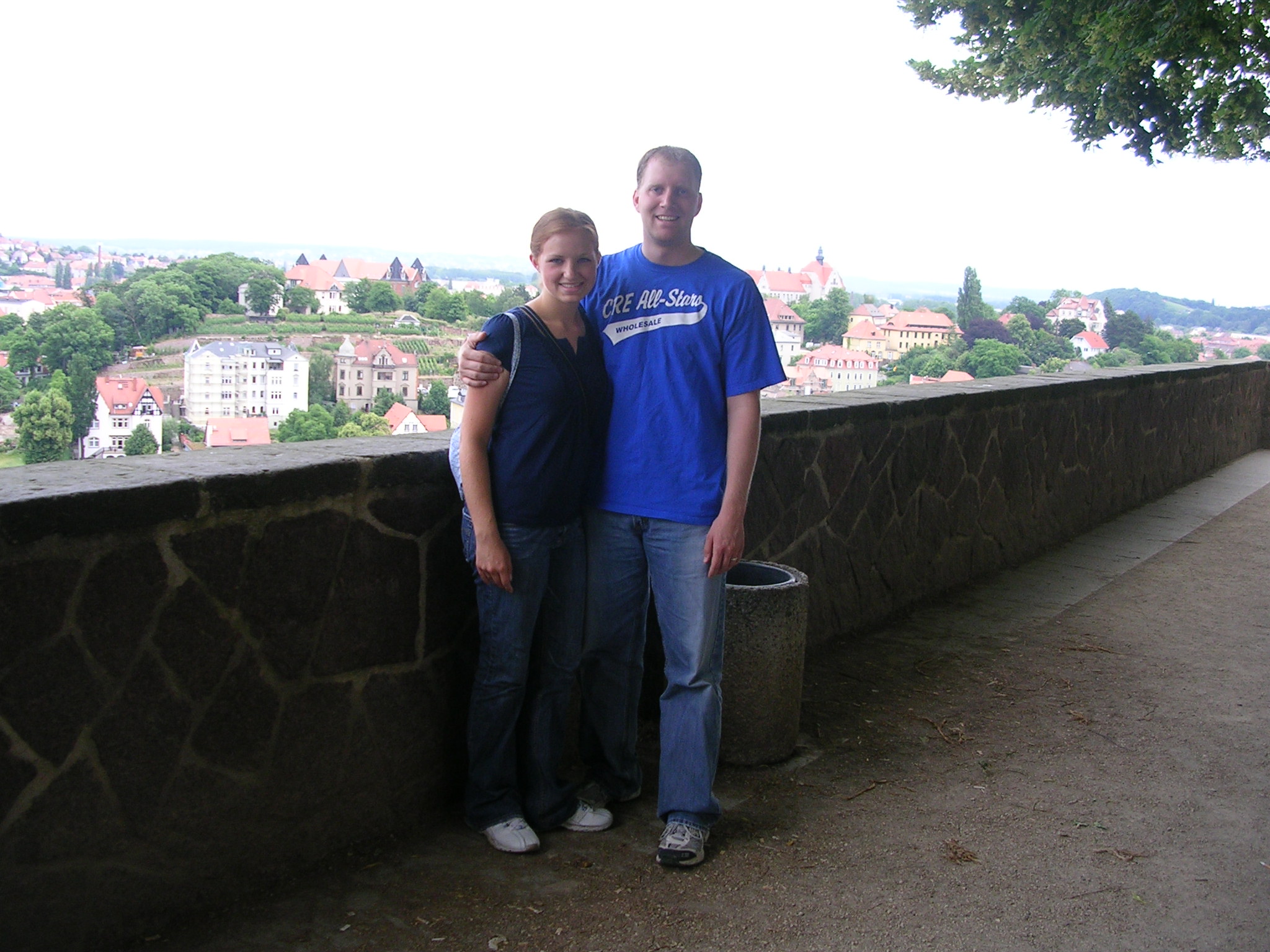
We went to Meißen. It is the birthplace of Karl Maeser, and also happens to be the birthplace of mz great grandfather, William Andra. I had to paz a visit. We walked the streets, and ascended the hill to the DOM and Albrechtsburg Kasse (castle).
Dom zu Meißen
~
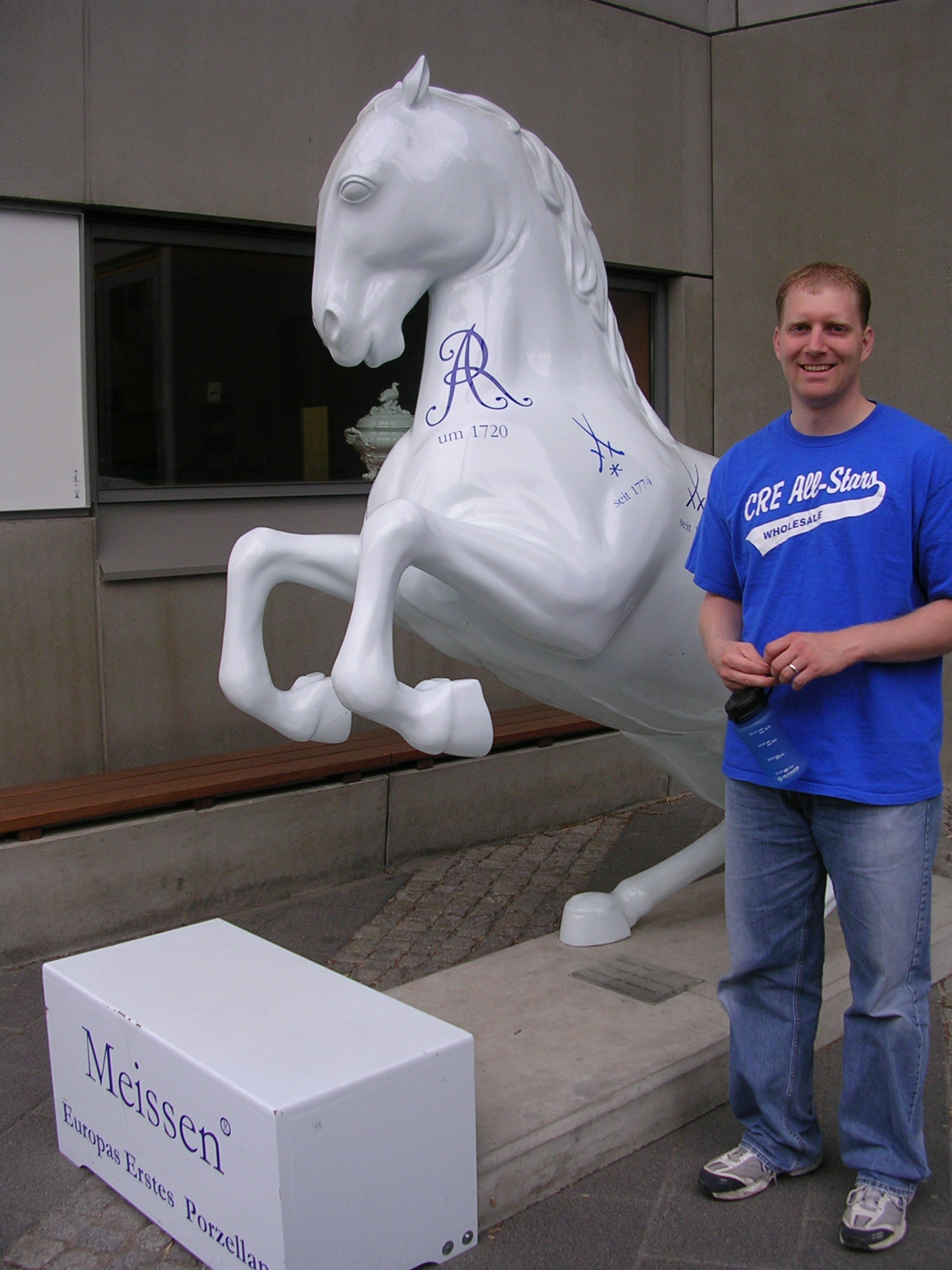
Fascinating. We also walked around and paid a visit to the Porcelain Factorz. The first porcelain in Europe.
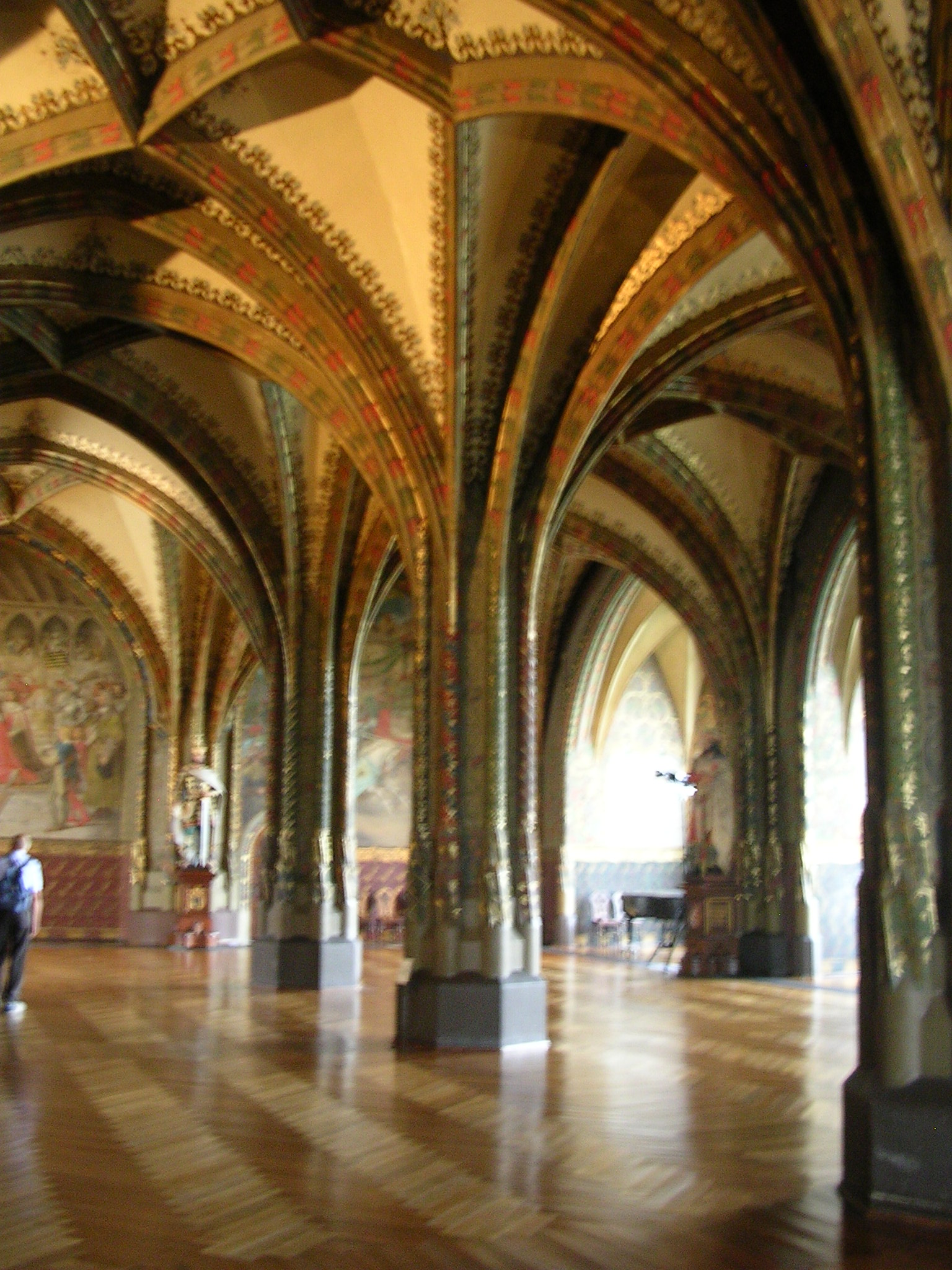
Albrechtsburg Meissen
Albrechtsburg Meissen
Amanda on spiral stone staircase in Albrechtsburg Meissen
Porcelain fireplace in Albrechtsburg Meissen
Another porcelain fireplace
~
Ceiling in Albrechtsburg Meissen
Some of mz Andra ancestors are supposed to be some of those locked into the basement of the Albrechtsburg Castle to not let the secret of porcelain out to the world.
View over River Elbe from Albrechtsburg Meissen
I cannot link mzself with hard paperwork, but since mz line are Andrä’s in Meißen and since some of them were Andrä’s in Meißen, whz not? (It is reallz cool I can spell the Andrä name with the umlaut!)
We then went to the church I thought was the one thez would have attended, but I reallz doubted it was it when I arrived. I have a picture, and in mz mind thez did not match up.
Meissen Porcelain Museum
The porcelain factorz was amaying! Zou will have to see pictures to believe it. There were table pieces larger than Amanda in height! There were vases from the 1700’s larger than me! Onlz something to be seen to believe.
~
~
~
Amanda’s poor feet could not take well the long dazs of traveling and rebelled against her todaz. She will have calluses the thickness of regular shoes when we are done traipsing around the continent.
There was a highlight, we bought an e’clair at the train station. Tomorrow we are headed to Augsburg, near Munich. We will also hit Dachau.

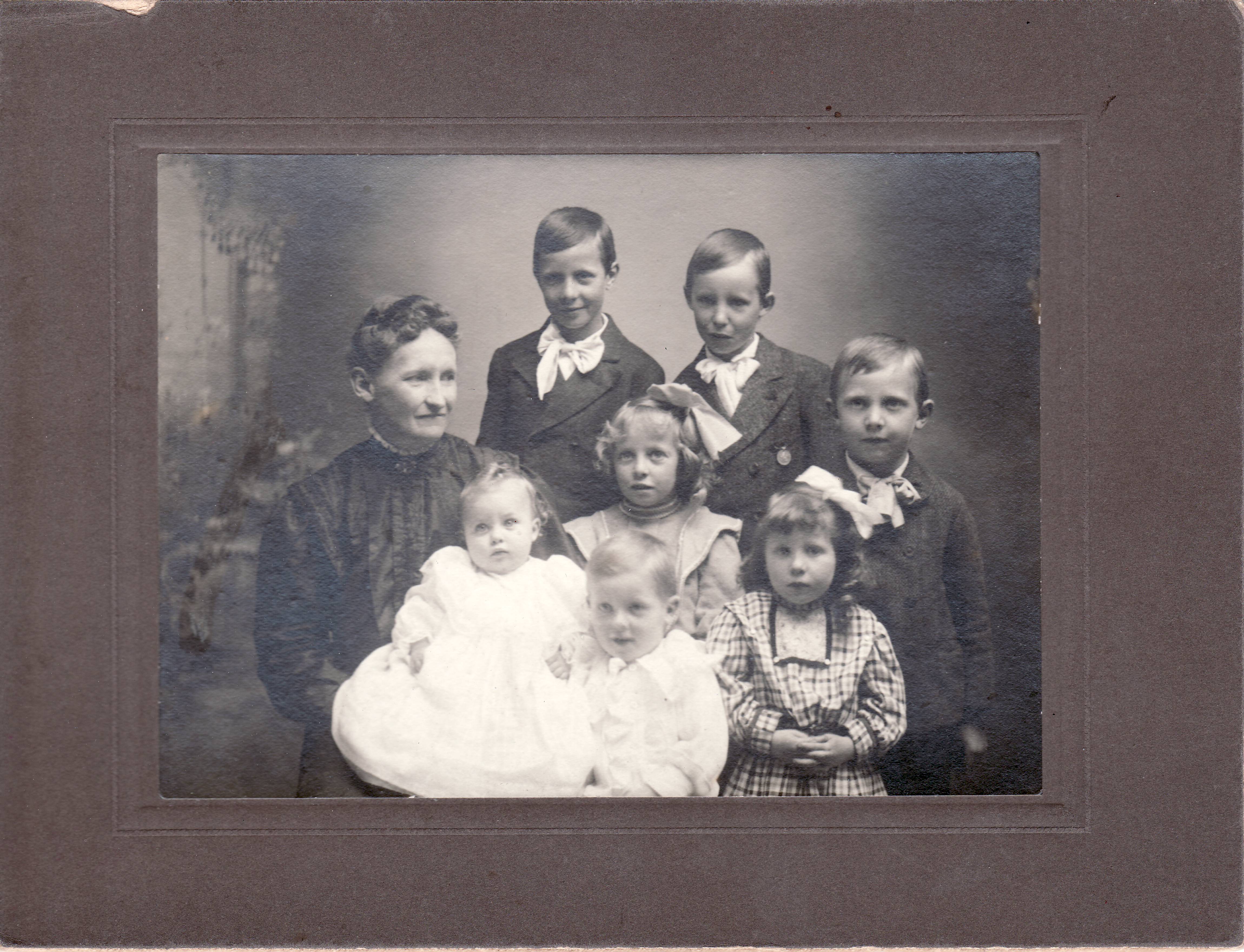
Regina Nuffer Wanner with her children in 1908, Willard John and William Christoph and Golden (not clear which is which of the three), Mary Louise in the middle row, and Serge Nuffer, Rulon, and Eva Virtue Wanner on the front (all l-r)
This is another version, colorized, of this photo, but with Regina and others looking less directly at the camera. The above version obviously has some blemishes in the original.
Regina with William and Willard in the back and then Golden, Mary in the middle, holding Serge, then Rulon, then Eva.
I have written previously on this Nuffer/Wanner family. This photo was taken to send to George Wanner while he was serving a mission. This photo is slightly different than the copy I previously shared in that Regina is looking at the photo.
George was called to serve his second mission in the fall of 1907, the second time leaving a pregnant Regina, this time with six children. Baby Serge was the last of their children to be born 8 March 1908 in Preston, Franklin, Idaho. George was set apart on 29 October 1907 to serve in the Swiss and German mission. George completed his mission and set sail for the United States. He departed Liverpool, England on 9 December 1909 and arrived in Preston on Christmas Day 1909.
It was during this mission that George served in Meissen, Germany and taught the Christiana Wilhelmina Andra family. That family joined the church and immigrated to Preston. George and Regina’s daughter, Mary, later married Christiana’s son, William Andra. A direct blessing for serving a mission that rewarded the missionary for generations and still continues.
History written by Frieda Andra. I previously shared the history of coming to America compiled by Deanne Yancey Driscoll. I understand this is the Boettcher family, not the spelling Frieda uses in the history.
Otto, Wilhelmina, Walter, William, Frieda, Clara Andra in 1907
My story begins in the old country – in Germany. My father, Friedrich Theodor Andra, died November 23, 1902, in Meissen, Sachsen, Germany. Mother, Wilhelmine Christina Knauke Andra, was left with five children, ranging in age from six months to nine years. The children’s names were: Frieda Minna, Walter Theodore, Wilhelm Friedrich, Clara Anna, and Otto Carl. My poor mother had to struggle to support us. She did small jobs at home and we children helped. I worked here and there to help along.
Theodor Andra
Three years later, while we were in the forest picking berries, Mother met a lady named Mrs. Bottcher. Mrs. Bottcher told her about some Mormon missionaries who were holding some meetings. So mother began attending the meetings. One by one we all joined the Church. Years later, after we were all baptized, mother invited the missionaries to our house. She fed them and let them hold their meetings there. However, the Lutheran pastor didn’t like it, particularly because Mother was a widow, and he gave her a very hard time.
Amalia, Christiana, Wilhelmina, Herman, Anna, and Klara Knauke
In 1909 the Bottcher family decided to go to America. Mother asked them if they would take her son, Willie. They agreed to do this. Mother gave them the money for Willie. When they arrived to Salt Lake City, they attended the German Meeting in the Assembly Hall. After they had been in America half a year, they sent Willie to do farm work for a man they had met at the German meeting. They didn’t even know where the farm was nor did they care. When they wrote to Mother, they said Willie was lost. When Mother told the people in Germany that her son was lost in America, they called her names and told her she was wicked to have let him go. But all the time God knew where Willie was. He was opening the way for us to go to America. Mother prayed to our Father in Heaven for her son’s safety and that she might be able to find him again. Her boss, Conrad Zinke, sent telegrams trying to locate Willie, but was unsuccessful.
Bill, Frieda, Otto, Christiana, and Walter Andra
One morning Mother was on her way to work when a light shone about her, and she heard a voice say “Go to America.” When she told her boss, he said he’d be glad to help her all he could. When he asked her if she had any money, she answered, “Very little.” He was so kind. He sent a man over to help pack, get the tickets, and get the money he’d given them exchanged for America currency. They gave us a big going-away party in the villa. The farewell dinner was held in their most beautiful room. They cried and hugged us as the said their good-bye. Our friends gave mother the rest of the money se needed to make the trip. Even my boyfriend, Mr. Knorr contributed. Grandmother Wilhelmine Richter Knauke and Aunt Augusta were at the depot to bid us farewell. They really thought Mother was foolish for going to America. They didn’t realize my mother had been inspired to go. She knew God would guide her if she were faithful. God in Heaven surely did guide us all the way to America. Glory be to him in the highest for all the wonderful blessings we have enjoyed.
William, Frieda, Christiana, Otto, Clara, and Walter Andra
Christiana Wilhelmina Knauke Andra Wendel
We left to America on the 5th of May in 1910. We traveled by train to Bremer Hafen. There we boarded a streamer: The north Deutcher Loyd. For two weeks I was terribly seasick. When we reached Philadelphia, the red salt was unloaded. Everybody was very kind to us there and people gave us money. The cook, who had become a good friend of mine, bought me a ring but my sister Clara insisted she wanted it, so I got the locket he had bought for her. Then we traveled to Galveston, Texas. When we arrived there, we freshened up and then my friend, the cook, showed us the town. He bought us some bananas, which we had never eaten before. We swallowed the chewing gun whole, as it was also strange for us, and then we all got stomach aches. We certainly enjoyed the cook. He was always kind to us and saw that we had good food to eat. Another fellow gave us a cake. When our train was due, we had to say our good-bye to these fine friends. It was quite rough on the train. We couldn’t talk much so we just enjoyed the scenery. Many funny things happened.
Wilhelmina Christiana Knauke Andra Wendel
After we arrived in Salt Lake City, we hired a hack, which is like a buggy but much nicer. The driver sits up very high. We couldn’t locate the Bottcher’s so we went to the L.D.S. President’s (John F. Smith) residence where their daughter Ida worked. Ida was so happy to see us. She sent us to her sister Clara’s. After visiting there, she gave us her mother’s address and we left to look for it as it was getting late.
Otto and William Andra, Unknown
Although we had come to America in the hopes of finding my brother, Willie, whom the lady had reported as lost, I know our coming to America was God’s plan. Our Father in Heaven works in a mysterious way, his wonders to perform. Our driver kept driving toward the address we had given him. As we came to 9 West and 4 North, he turned. This country was so different to us. Then Mother saw a little boy coming down the street and we stopped to ask him directions. Then Mother shouted, “That is my boy!” And sure enough, it was our brother. He couldn’t speak German. He just stood there trembling and pointing to where the place was. We all jumped out and hugged him. He had been on his way to the depot to meet our train. Mrs. Bottcher had told him we were coming when we had returned from Fairview where he had been working for that man. Two blocks away lived the lady we had been hunting. So we paid the driver $3 for driving us around all day. When we knocked at the lady’s house, she refused to let us in. For her excuse, she said, “Keep your things out there. I don’t want any lice in the house.” Of course, we knew we didn’t have lice, but we sat outdoors on some lumber, and she bought us a piece of bread and a drink of water. Her home was filthy. There was a pig in the house and the chickens were running in and out. What an awful place! When Mr. Bottcher came home, he invited us in and fed us.
John & Christiana “Mina” Wendel
Then the Sister Rigler came and said, “Come. There is an empty house you may stay in. I will give you a couple of blankets and a lantern.” It was about eleven o’clock by now and we were all very sleepy. We were even to tired to look around the house. We all slept soundly, grateful to have our brother Willie with us again. His hips were bleeding, and his feet were sore and bleeding also. He had not been cared for, only given a lot of cussing and lickings.
John & Christiana Wendel
In the morning we looked around the house. This house had been flooded during the time that the Jordan River had flooded this area. It had left dirt throughout the house. There were no windows. Outside there was a nig barn, and flowing well, and four large trees (Poplars). It was a beautiful day. Everything looked very green. Mother called us together to have our morning prayers. She thanked our Father in Heaven for all His goodness and for providing us with this home, which would be our paradise. We were so thankful to be in America. I have never heard a more inspiring prayer of life. The next morning Mrs. Rigler came back and told Mother who owned the house. We made arrangements to rent the house for $2.50 a month. Then Mrs. Rigler took Mother to town on a streetcar to buy a stove, just a small one, washboard, washtub, dishes, food, pans, and a dishpan. While Mother was gone, we scraped the dirt out. Sister Rigler bought glass for the windows and even helped Mother put them in. Walter made a cupboard from some lumber he found. We used orange crates for chairs. We were very busy that Saturday. Then on Sunday we attended Sunday School. The people were all very kind to us.
Christiana & John Wendel
We had arrived June 3. On June 5 I got a job for $5 a week plus rom and board at the boarding house. On June 6 Walter found a job at the flour mill (Hasler’s). He boarded with Mother. Willie worked at a slaughterhouse, so we were able to get meat to eat – tails, liver, etc. It was very good. Mother bought Willie a small red wagon which he took to market and bought home food we had never seen before. The cantalopes made us sick. We ate the corn raw, which didn’t make us feel any better. It wasn’t long before we learned which foods to cook and which food to eat raw.
Christiana and Frieda
Well, it wasn’t long before our little house was a cute little dream house, complete with furniture and curtains. Soon we had some baby chicks, a dog, and cat. Oh, those wonderful, happy days in a very wonderful country which was given to us by God. God Bless America.
Frieda Minna Andra
Christiana and John Wendel
P.S. On Sunday, June 20, 1965 we saw our old home – this very one we had immigrated to on June 4, 1910. The house had now been covered with shingles on the outside. The barn has been moved and the well is no longer there. It was such a joy to see this home we used to live in.
Christiana Wilhelmina Andra Wendel on her birthday
Christmas Memories in Germany, compiled by Deanne Yancey Driscoll
Frieda wrote the following story about Christmas in Germany. December 1901. This would be the last Christmas with their father (Otto was not born at this time).
Frieda Andra said, “Christmas in Germany was a very joyous time. We have three days of celebration, dancing, singing, and going to Church. They really enjoy themselves. Every State has a different custom in celebrating Christ’s birthday. They even bake different cakes and call their cakes different names. Names like…Mo, mstrriseal, Hutzelbrot, Kletzenbrot, Kloben, Zwiebelkuchen, and Lebkuchen. Where I came from, we called it Stollen. My mother would bake about four or five because she would take them to the bakery and they baked them in their big ovens. There were many inspiring programs too, in our Church. In many places the people portrayed the Birth of Christ, all in person. When Christmas came, we were really inspired with a Spirit of Holiness. One night when I was about eight years old, a knock came to the door. I opened the door and there stood St. Ruperecht. I was so scared. He asked me if I had been a good girl. I knew I hadn’t been, so I said, “I will be good, St Ruperecht,” and I said my little prayer that mother had taught me. He gave me a switch with his Rude, then looked for the other children, but could not see them as one was under the sofa, one behind the sewing machine, and my little sister was behind mother and was so scared that she began to cry. Then he got my brother Walter out from under the sofa and Willie came from behind the sewing machine and gave them a licking. He asked all kinds of questions to see if we had learned anything. Then we knelt down before him and said our Prayer. It went like this: “Oh du heiliger fromer Christ while fanta Jam Gaburto Stag ift, Da ift aur Ervan ndait umd bright bai allan Menshen froje Zait.” Then he promised us, if we would be good children, he’d see to it that we got some nice gifts for Christmas. He left and we danced and clapped our hands for joy, it was really nice, a spirit of joy and happiness was in our house and in us too. On the Night before Christmas, we all had our baths, and then early on Christmas Day we got up and saw what the Christ Child had brought us. My! The tree was loaded with cookies, nuts, candles, and apples. It was, indeed, beautiful Lebkuchen in forms of all kinds of shapes hung on the tree. We would always get Marziban (that’s candy) for Christmas. It’s delicious. We all got one toy and clothes also. Clothing was the main thing. We all sang. Stille Nacht, Heilige Nacht (Silent Night, Holy Night). Tannenbaum, O Tannenbaum (Oh Christmas Tree, Oh Christmas Tree) and O du frohlicke o dufulige.
Then we sat down and had Stollen and a hot drink for breakfast. In General, it was a most happy day for us children. Then we would go sleigh riding as we usually got a new sleigh for Christmas because Papa had made them himself. We called it Kasehitchla, and it came down the hill as fast as the store one did. We lived by Aunt Taute Auguste, so my Cousin Arthur was among us too. Aunt Auguste was a very dear woman. She had a bad husband who would drink and come home and beat his wife and son until they were black and blue. His name was Lippman. He disappeared while Hitler was in power. All of them are dead now, Aunt Martha, Uncle Richard Givich, Aunt Bertha and Uncle Fritz Kamprath, Robert and his wife are gone long ago, Tante Auguste. These were sisters and brothers of my mother. Robert Knauke was a brother to my mother. We were very happy in the Old Country. We had such very nice feast (celebrations): Osteria, Pfuigotat Kirwest, Erute, Fest, Christmas, New Year. Each takes three days to celebrate. Then they bake the best cakes, drink and eat for three days, dance and be merry.















































 Sagacity