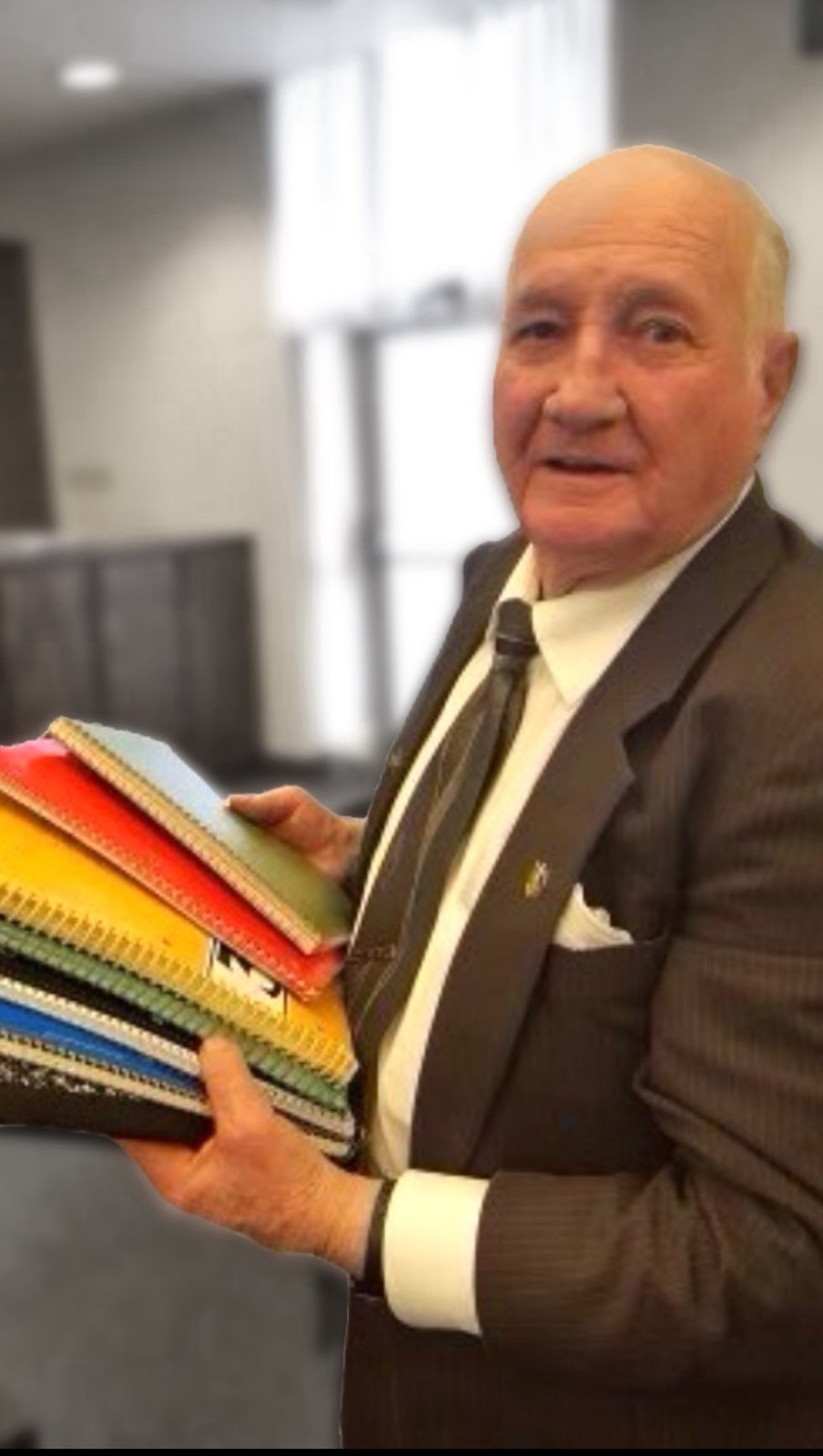
Ross Leslie Andra

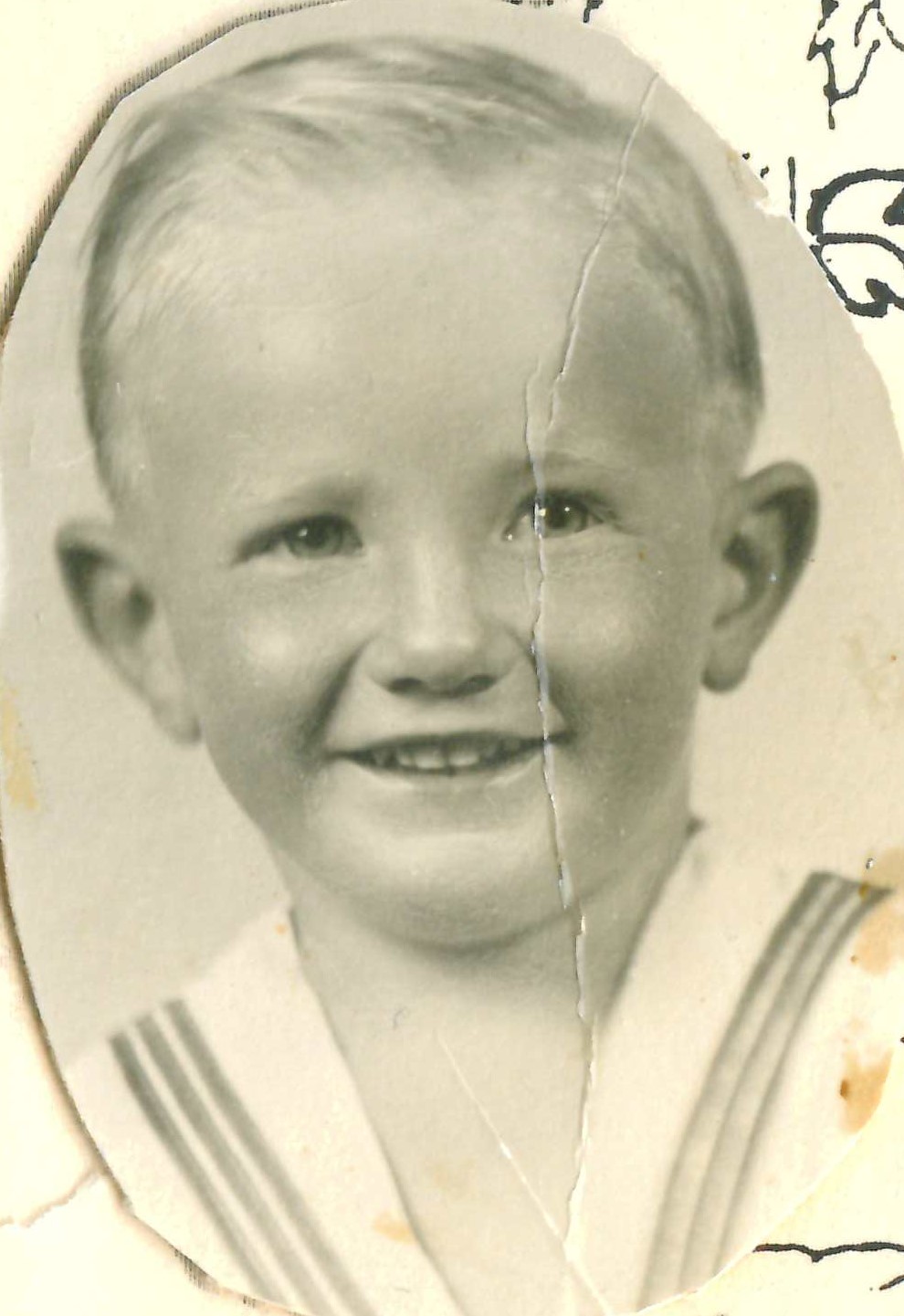
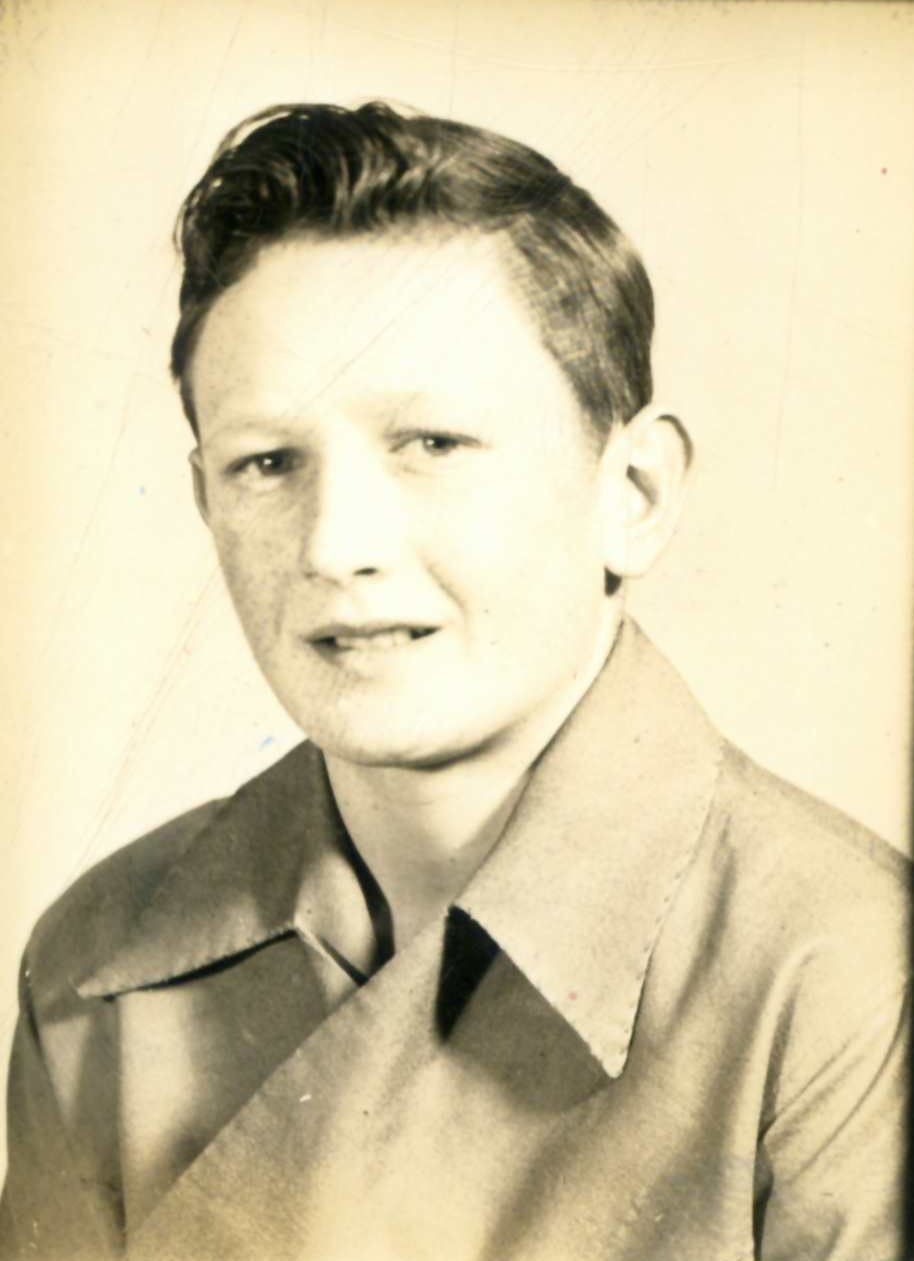
Ross Andra as a small boy – 1940s

Ross Leslie Andra, my great-uncle, died on 20 June 2024 in Salt Lake City, Utah. He was 87 years old. He was one of the younger brothers of my Grandma, Colleen Mary Andra. Some family figures cast long shadows, Ross was one of those characters.

On 29 June 2024, the Cannon Ninth Ward meetinghouse on West 1400 South in Salt Lake City filled with people who had been touched by him. Some had worked alongside. Some had received a knock at the door late in the evening. Some simply remembered the jokes. Before Bishop Ted Maxwell called the meeting to order, it was clear that a certain kind of man had died — the kind the eulogists kept calling, with unfeigned sincerity, bigger than life.

I have shared many posts regarding the Andra family. Many of those that reference Ross are listed below, but many more deal with the broader Andra family. This post attempts to bring some of that documentation together as a tribute.

The Family

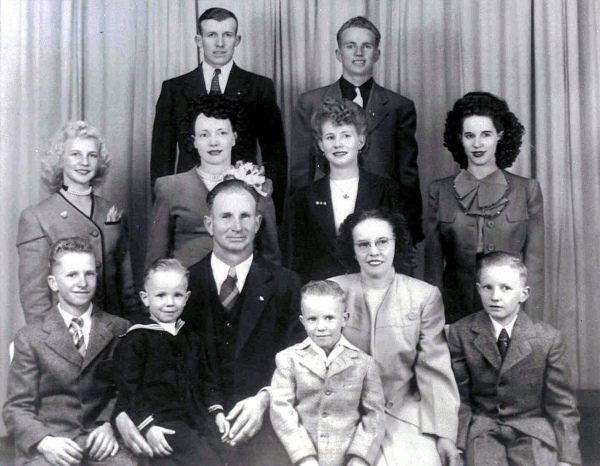
William and Golden in back, Sergene, Millie, Colleen, June standing, Donald, Larry, Bill, Dale, Mary, and Ross sitting.

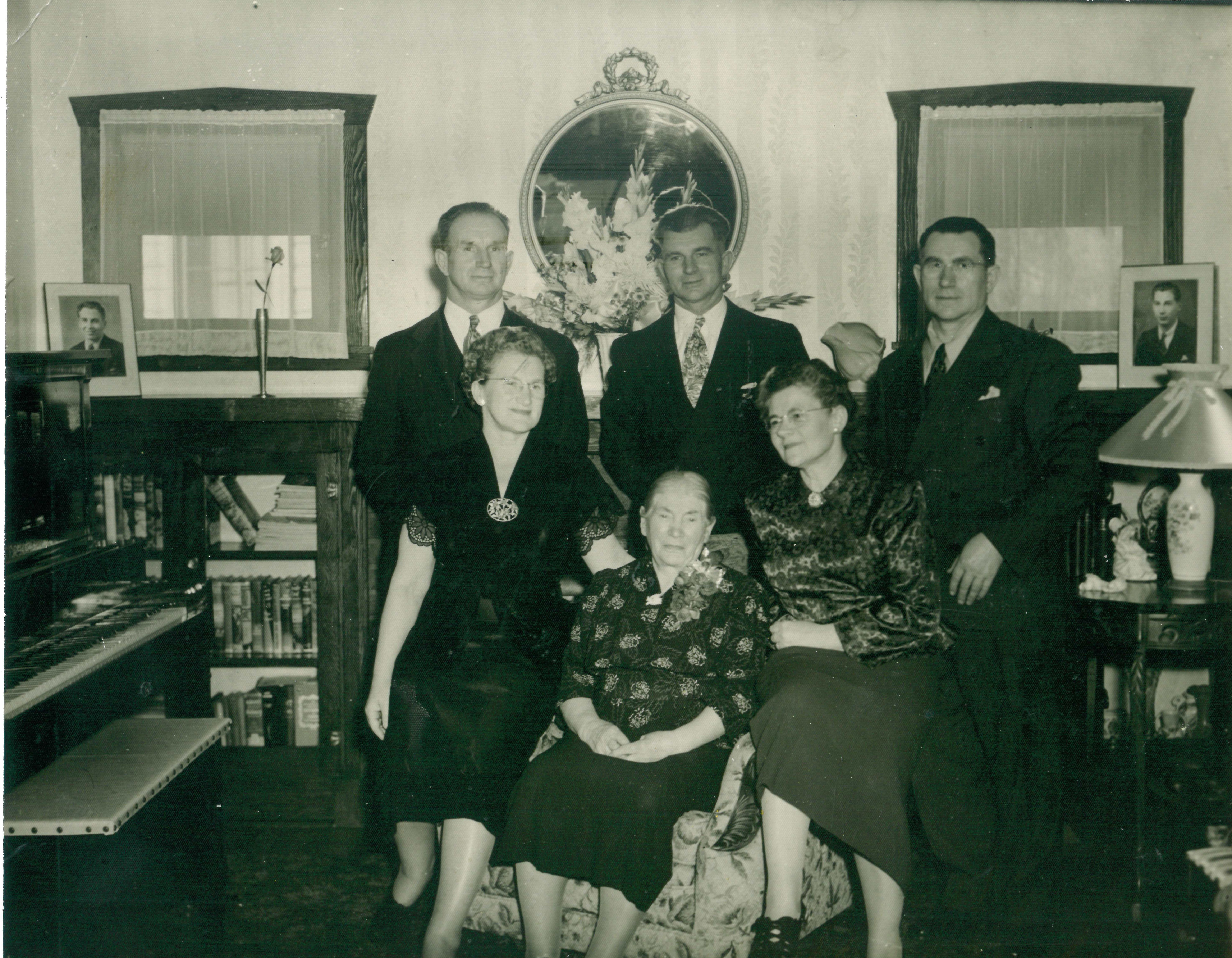
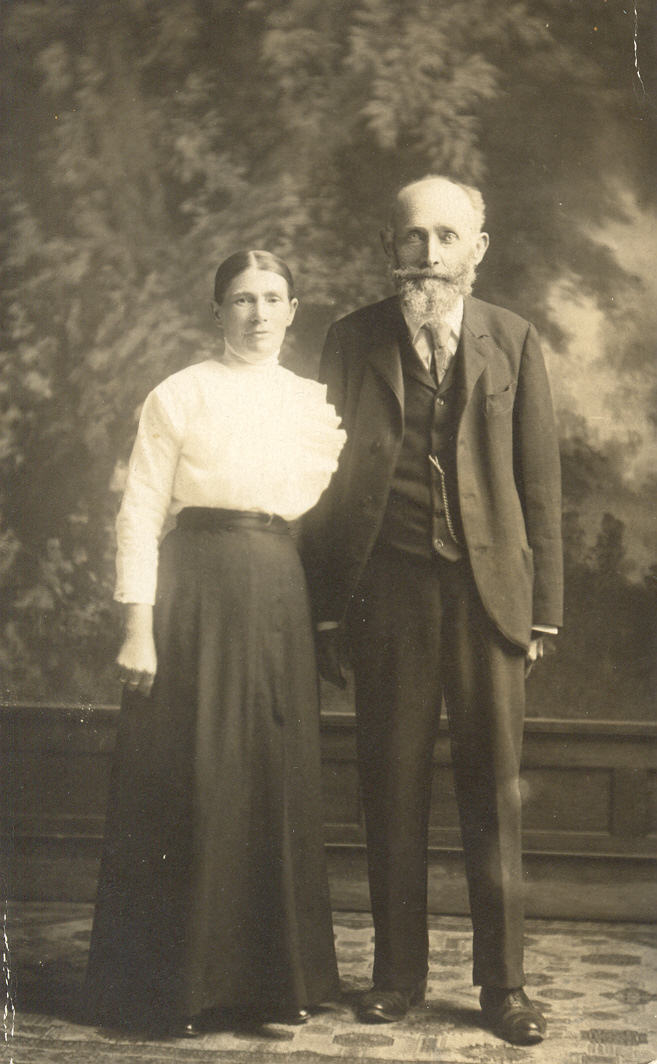
The world Ross was born into had been built across two continents and three generations. His grandfather Friedrich Theodor Andra had been born in Rosswein, Saxony in 1867 and died in Meissen in 1902, when Ross’s father Bill was just four years old. Bill’s mother, Christiana Wilhelmina Knauke, brought the family to America. Bill arrived alone in May 1909 — at eleven years old you paid reduced passage; at twelve, full price — and went first to Fairview, Utah, then to Preston, Idaho, where a former missionary named George Wanner had helped convert the family in Germany. Bill worked the Wanner farm for seven years, at $18 a month rising to $30, milking twenty-four cows, doing any work he could get. He married George’s daughter, Mary Louise Wanner, in the Salt Lake Temple on 10 March 1920. Christiana Knauke Andra — Ross’s grandmother — lived until Christmas Day 1957 in Salt Lake City. She was still alive when Ross stepped onto the plane for missionary service in Brazil.

Mary Louise was equally remarkable. She had nursed flu victims during the 1918 epidemic, nearly became a professional jockey at the Logan County Fair, outran all the girls and most of the boys at school in Preston. She and Bill built their life in Depression-era conditions — $1,000 principal and $500 interest on the farm, with Bill digging basements and hauling gravel and taking sugar beets to the factory at $4 a ton to make the payments. Mary’s autobiography, written in November 1961, records it without complaint: “With the Lord’s help and a good wife and children, we paid for the farm.” Her garden in Preston was massive — flowers surrounding it, vegetables in rows — and beautiful enough that even a nine-year-old boy visiting with his grandmother noticed and remembered. Ross spent the rest of his life planting tomatoes wherever he could find a plot of dirt. He was his mother’s son.

Twelve children were born to Bill and Mary between 1920 and 1943. Two died young — Robert Lee on his first day in 1934, Dennis Willard in January 1945, four days after his third birthday, of an earache in the night. The ten who survived grew up in close quarters on the Preston farm, with the pranks you would expect from six boys and four sisters sharing a household. Ross and his brothers once tied a cow to their math teacher’s front door.

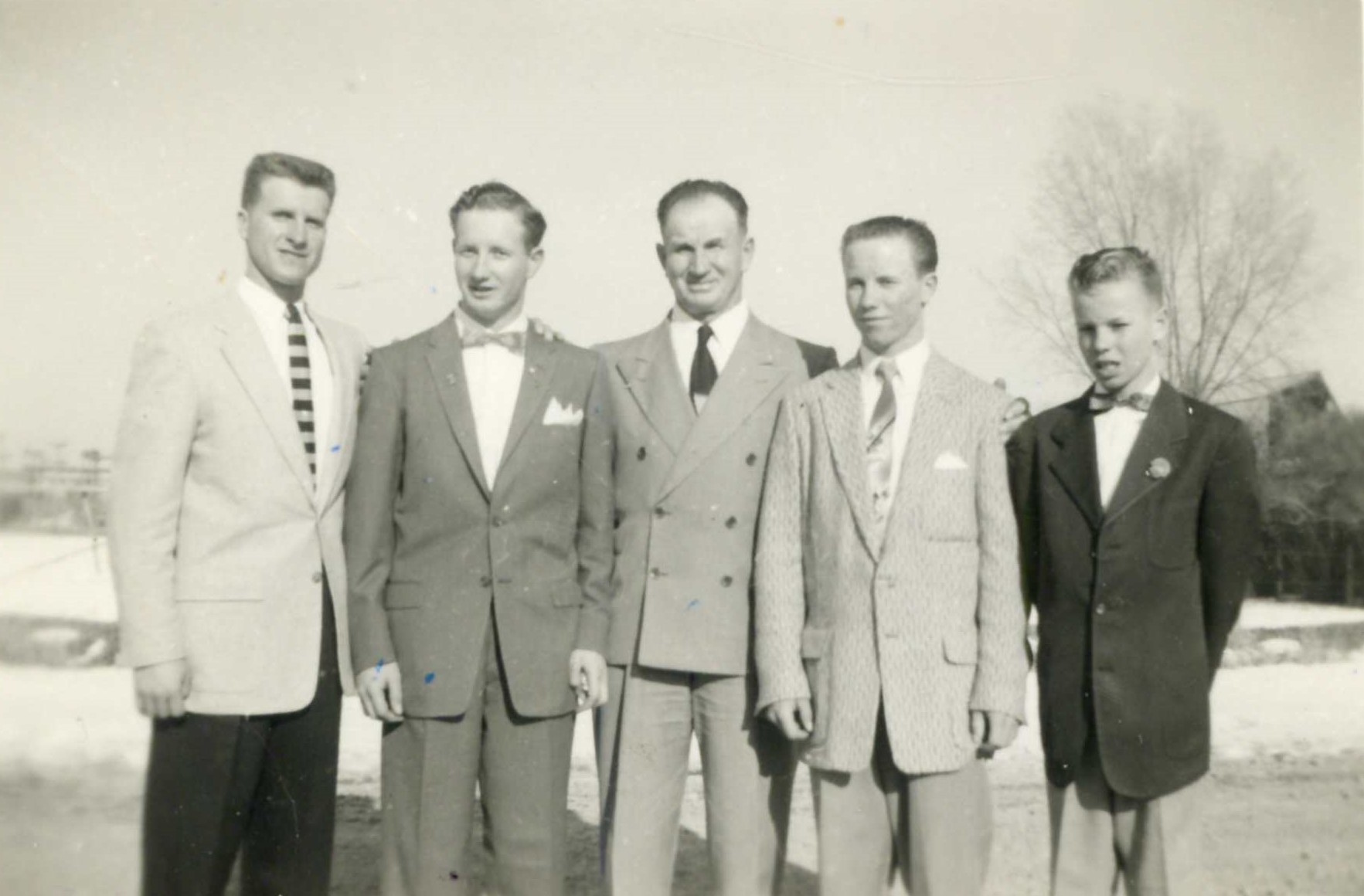
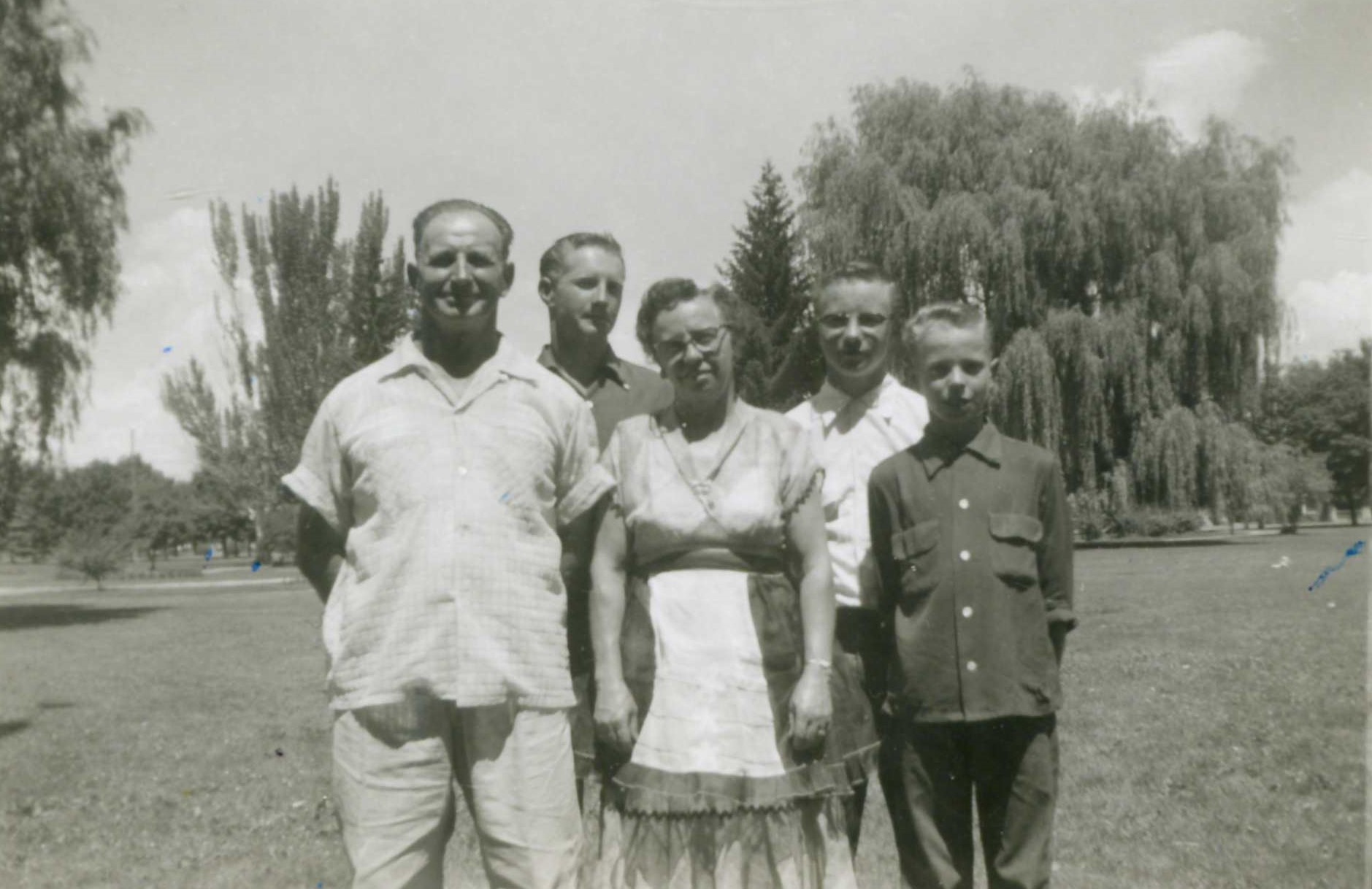
Don, Ross, Bill, Dale, and Larry Andra, Preston, Idaho – 1950s

23 January 1957

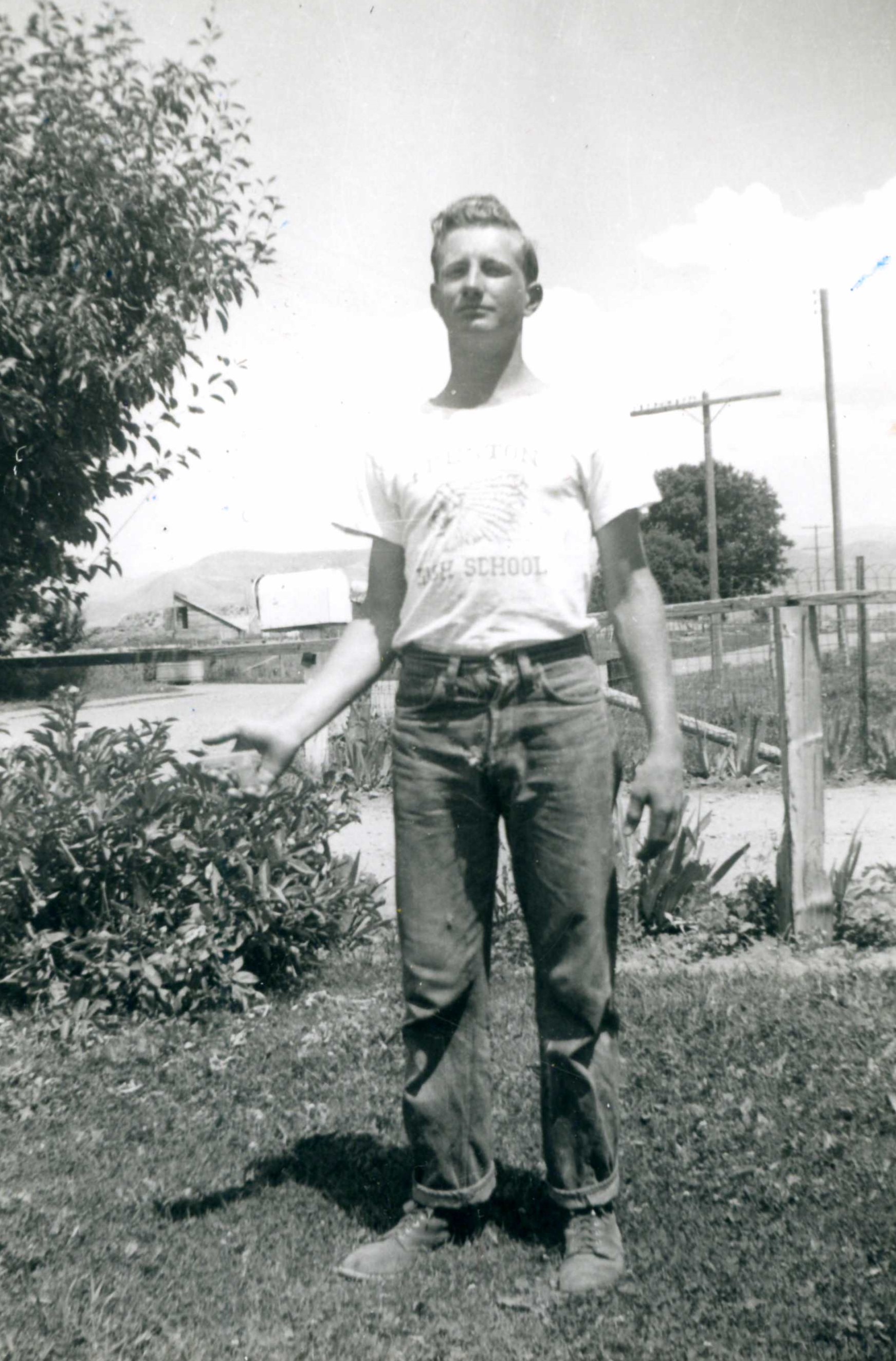
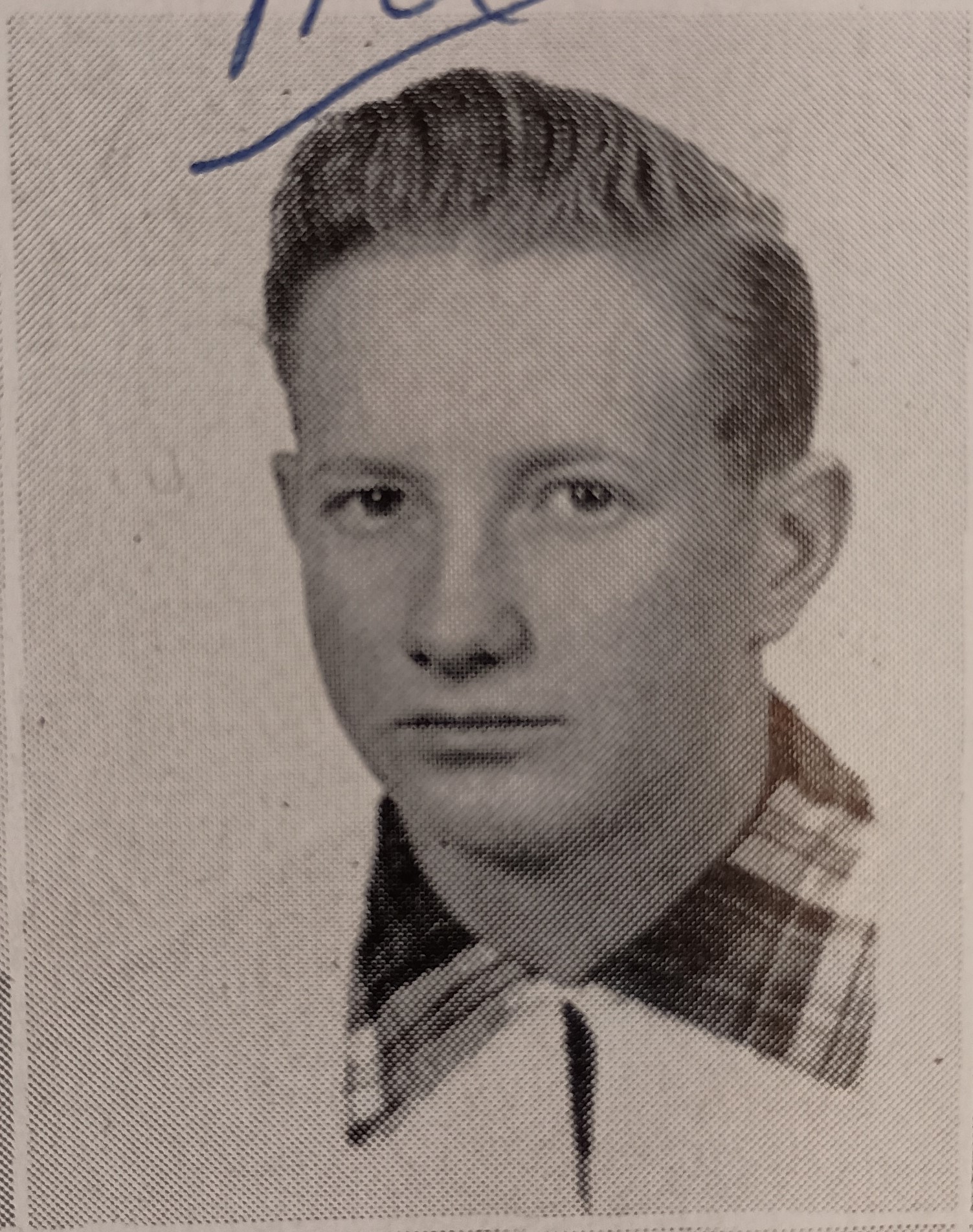
Ross Andra, Preston High T-shirt, backyard

Ross graduated from Preston High School in 1955. He spent two years at Utah State Agriculture College, then headed east with his brothers Donald and Golden to work construction on the St. Lawrence Seaway project in Massena, New York. Golden was a general foreman on the Eisenhower Lock — photographed in the project’s official records, named in the local newspaper. Donald met and married a woman in Hogansburg, New York. Ross told me stories about New York, though I cannot remember enough of them to share now. What I know is that the three brothers were there together, Idaho farm boys pouring concrete on one of the great infrastructure projects of the Eisenhower era, on the St. Lawrence River in the far north of New York State.

Then Ross came home and left again — this time for Brazil.

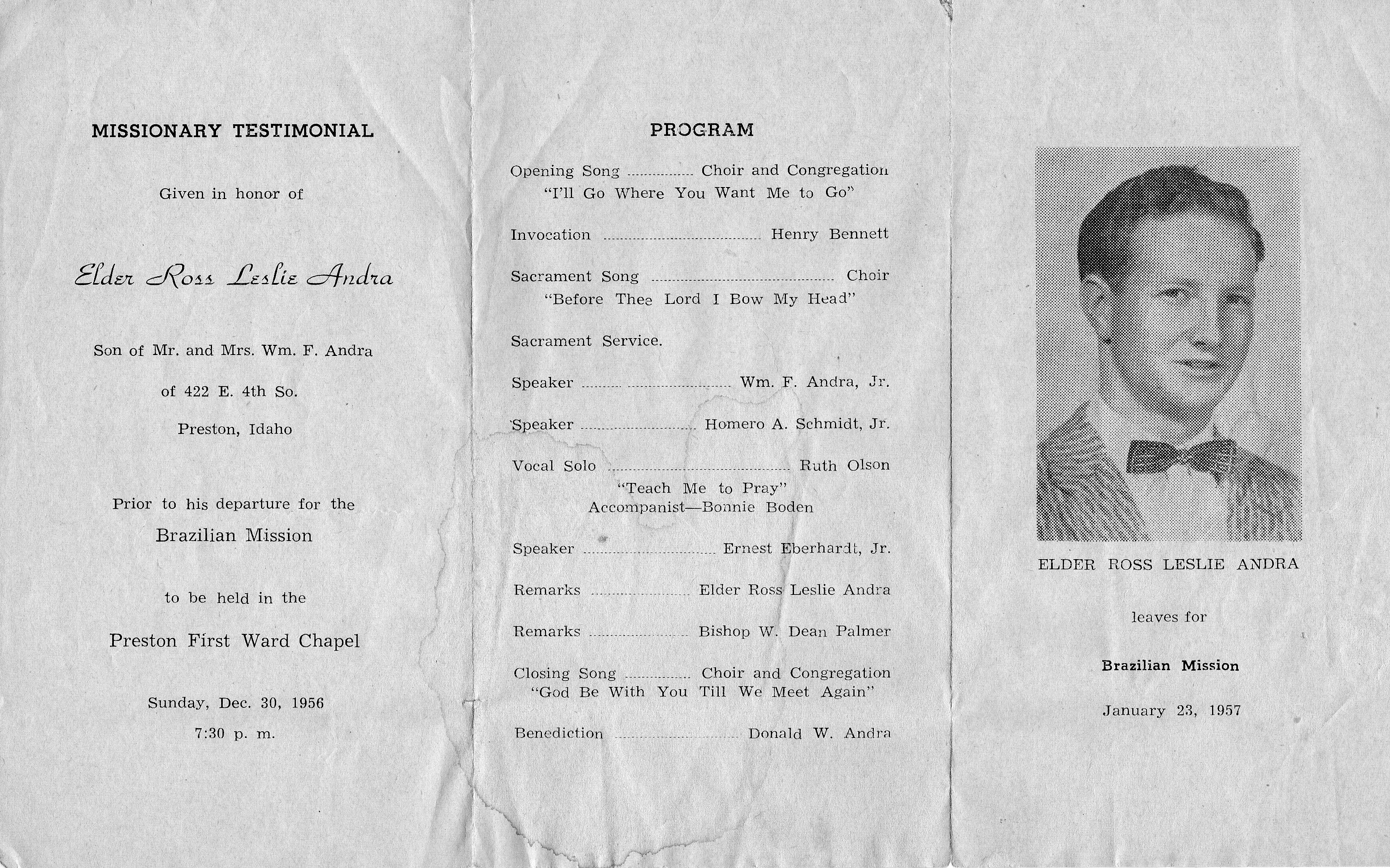
Ross Andra Missionary Farewell Program – 30 December 1956.

The missionary farewell program for Elder Ross Leslie Andra is dated Sunday, 30 December 1956, Preston First Ward Chapel, 7:30 p.m. The opening hymn was “I’ll Go Where You Want Me to Go.” His brother William Jr. — who had himself served in Mexico from 1941 to 1943, the first of the Andra brothers to go — spoke at the service. His brother Donald gave the benediction. Ross made his own remarks. Bishop W. Dean Palmer closed. The program reads: Elder Ross Leslie Andra leaves for Brazilian Mission, January 23, 1957.

I remember Ross telling a story. He had just returned home from his mission in Brazil and was sitting on the stand at Stake Conference with other returned missionaries. Apostle Joseph Fielding Smith was speaking at the pulpit. Elder Smith was speaking about being strictly honest with your fellow man. Elder Smith related a story that told of a guy who admitted to Elder Smith that he was not as honest as he should be. The irony of a man honestly confessing his inability to be honest struck a nerve with Ross. He got the giggles. Apparently he looked at someone else who also found the irony humorous and the laughter broke out and spread. Apparently Elder Smith turned around to look at them with a very unfavorable look. It only added to the giggles. Ross admitted it might have been his Brazilian sense of humor. He laughed even as he told me about the story.

Four years later — on 9 October 1960 — Ross stood at that same Preston First Ward pulpit as his farewell and spoke at the farewell for his younger brother Dale, who was leaving for the Western States Mission. The brothers sent each other off, one by one, into the world.

Ross served in Brazil from 1957 to 1959. He came home, enrolled at Brigham Young University, studied political science, speech education, and Portuguese, graduated with a Bachelor of Arts in 1964. But the most important thing that happened in Brazil was Adelaide.

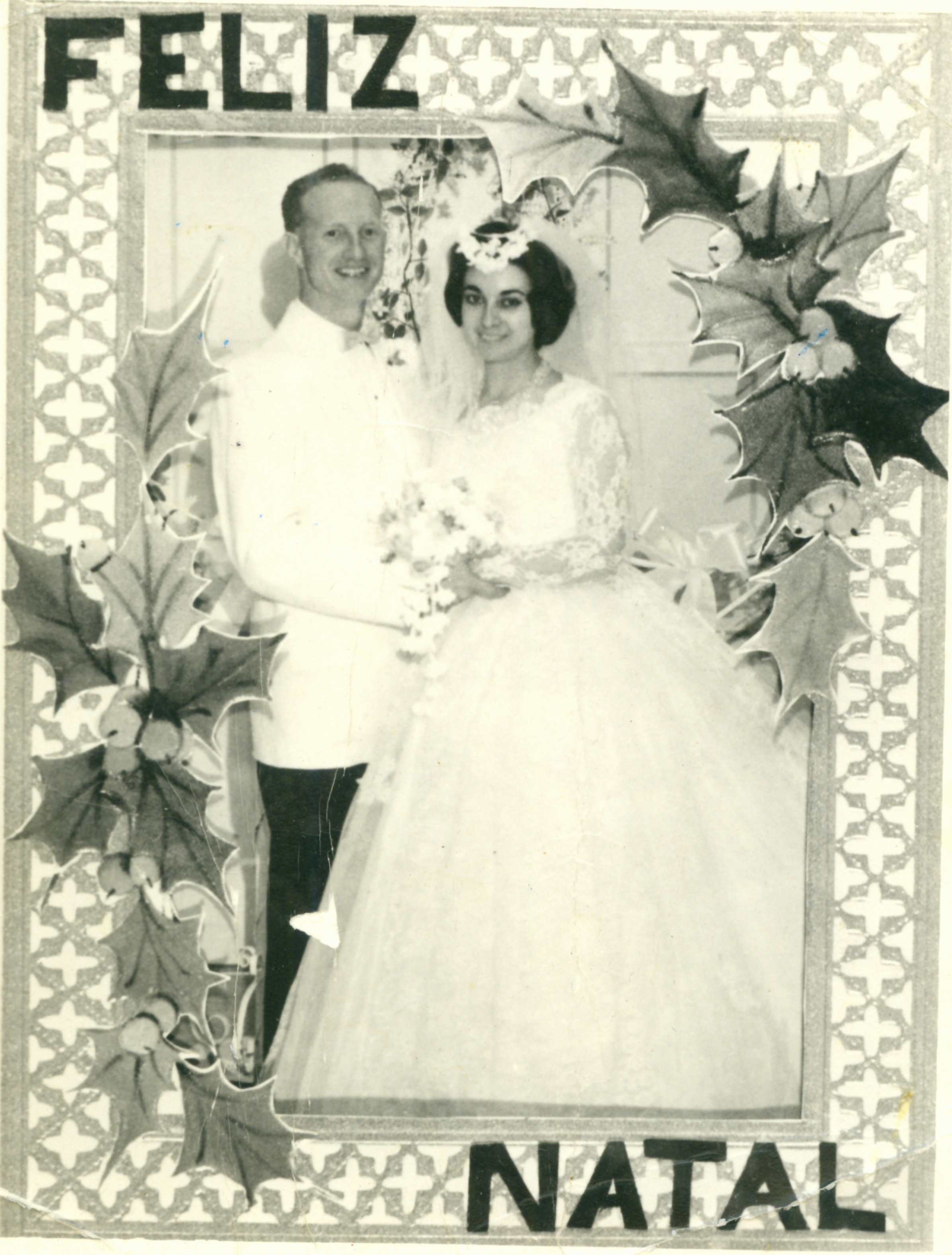
Feliz Natal

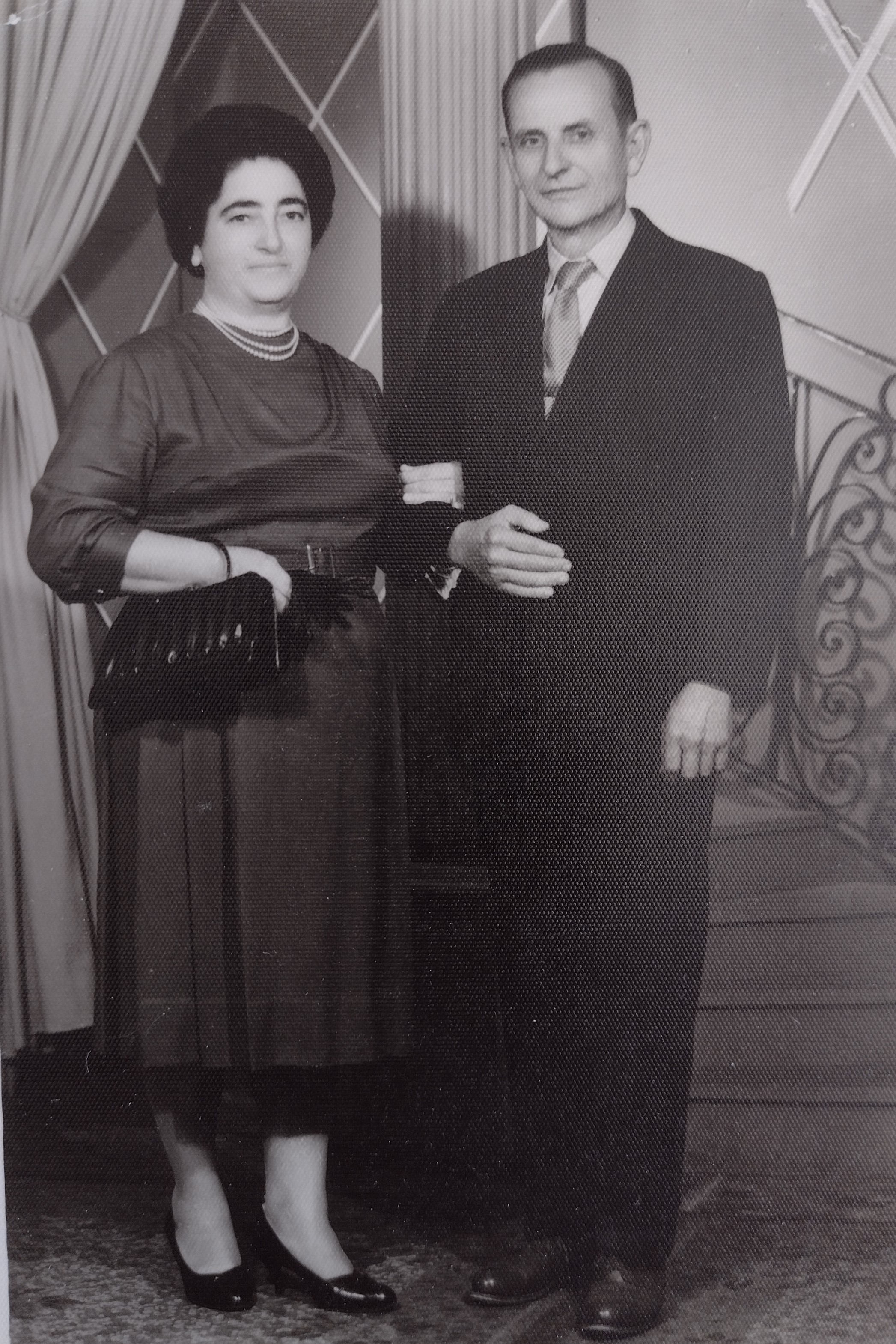
Angela and Blas Gonzalez, Adelaide’s parents
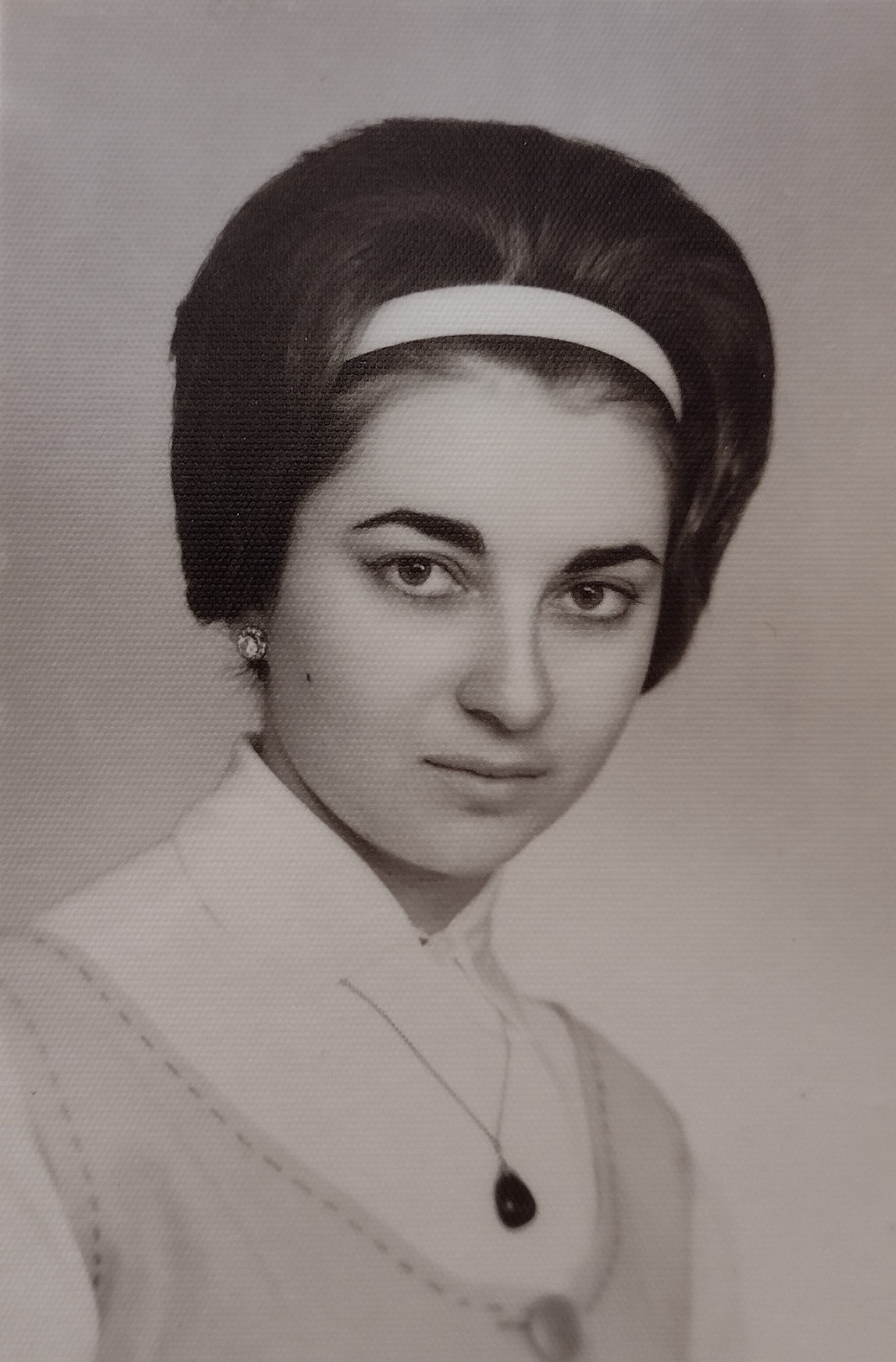
Adelaide Gonzalez Carrenho, Brazil

Adelaide Gonzalez Carrenho — the daughter of Angela and Blas Gonzalez of Brazil — was a young woman of dark eyes and composed beauty when Ross encountered her. I seem to recall that he said they met on a trip back to Brazil after his mission. After he returned to BYU; they kept in contact across the distance. On 14 June 1963, in the Logan Utah Temple they were joined in the holy bonds of matrimony for time and for all eternity. The witnesses on the marriage certificate are William F. Andra Sr. and Dale Andra — Bill and Dale, father and brother, standing at the altar the day Ross married his Brazilian bride. A missionary friend named Phyllis Merrill, who had served in Brazil and become one of Adelaide’s closest friends, spent the wedding day interpreting for Adelaide as she went through the Logan Temple for the first time. (The wedding photograph, with full identification of those present, is available here. The marriage certificate is here.)

Ross & Adelaide Andra 1965 Christmas Card

That Christmas, Ross and Adelaide sent their wedding photograph to friends in Brazil as a holiday card.

His daughter Brenda captured it simply at the funeral: Ross had “a deep love for Brazil, its people and culture, and especially for his little Brazilian bride.” That love never left him. In his later years, when health prevented the overseas return mission he and Adelaide had always wanted, they served as local service missionaries to the Portuguese- and Spanish-speaking wards of the Salt Lake Valley, driving all around visiting families, making sure they had what they needed.

Ross and Adelaide Andra, SLC home, October 2022

The Working Life

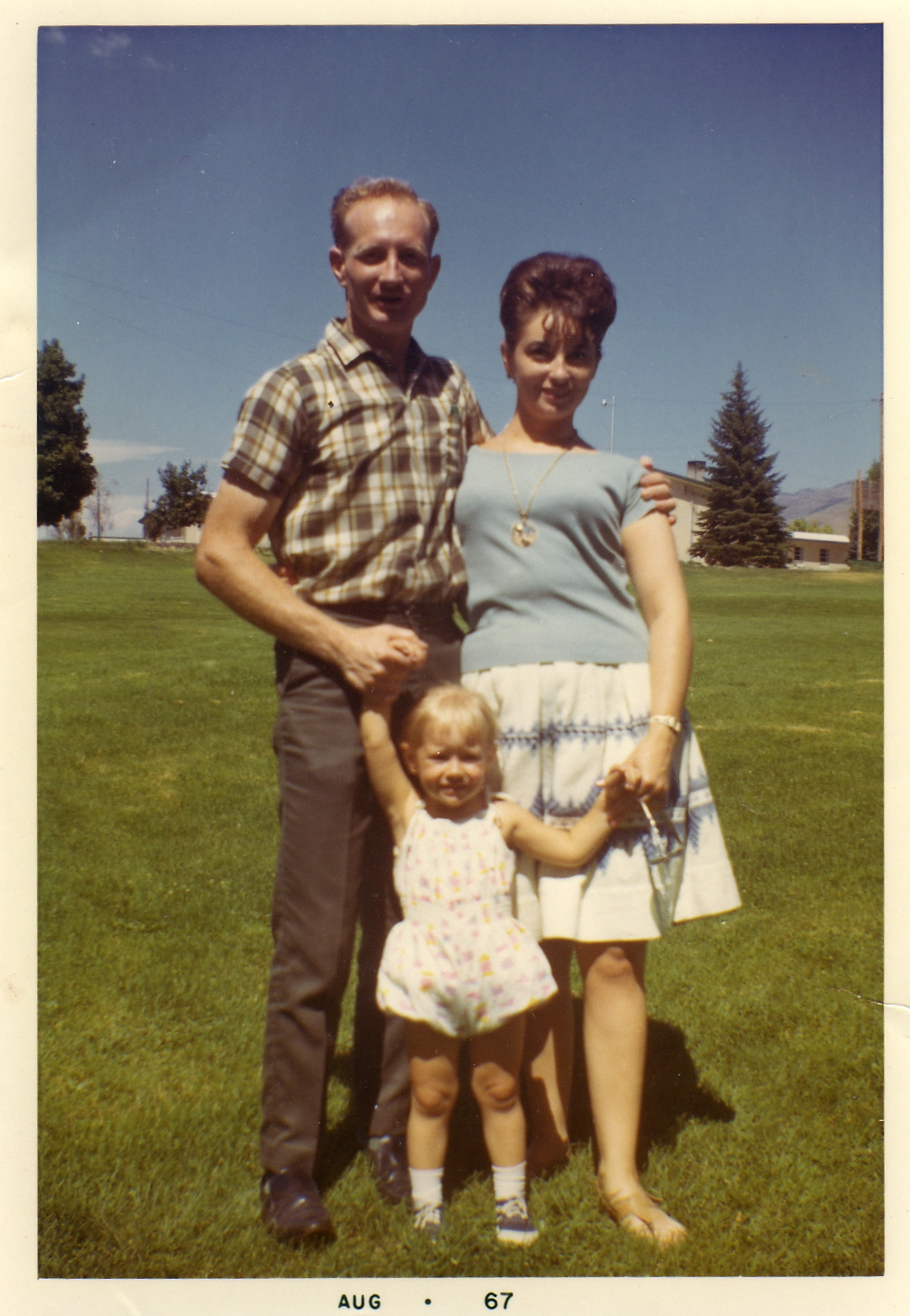
Ross, Adelaide, Brenda Andra – August 1967

The career of Ross Andra resists a single title. High school teacher. Coach. Candyman. Small business owner. Appliance installer. Furniture mover. UPS driver. Medical courier. He was, as his friend Frederick Johnson insisted at the funeral, an entrepreneur — a man who believed in the American dream and in hard work and gumption as its instruments.

As the Candyman, he kept the vending machines stocked in his eldest daughter’s school teachers’ lounge, and he would sometimes appear at recess to distribute candy on the playground, which made Brenda quite popular with her classmates. As a business owner, he often took his son Carlos along to deliver and install appliances and move furniture, with the result that Carlos learned to load a truck with the systematic precision of a Tetris puzzle. He gave his youngest daughter Denise a tutorial in personal finance when she was struggling with debt; she paid everything off.

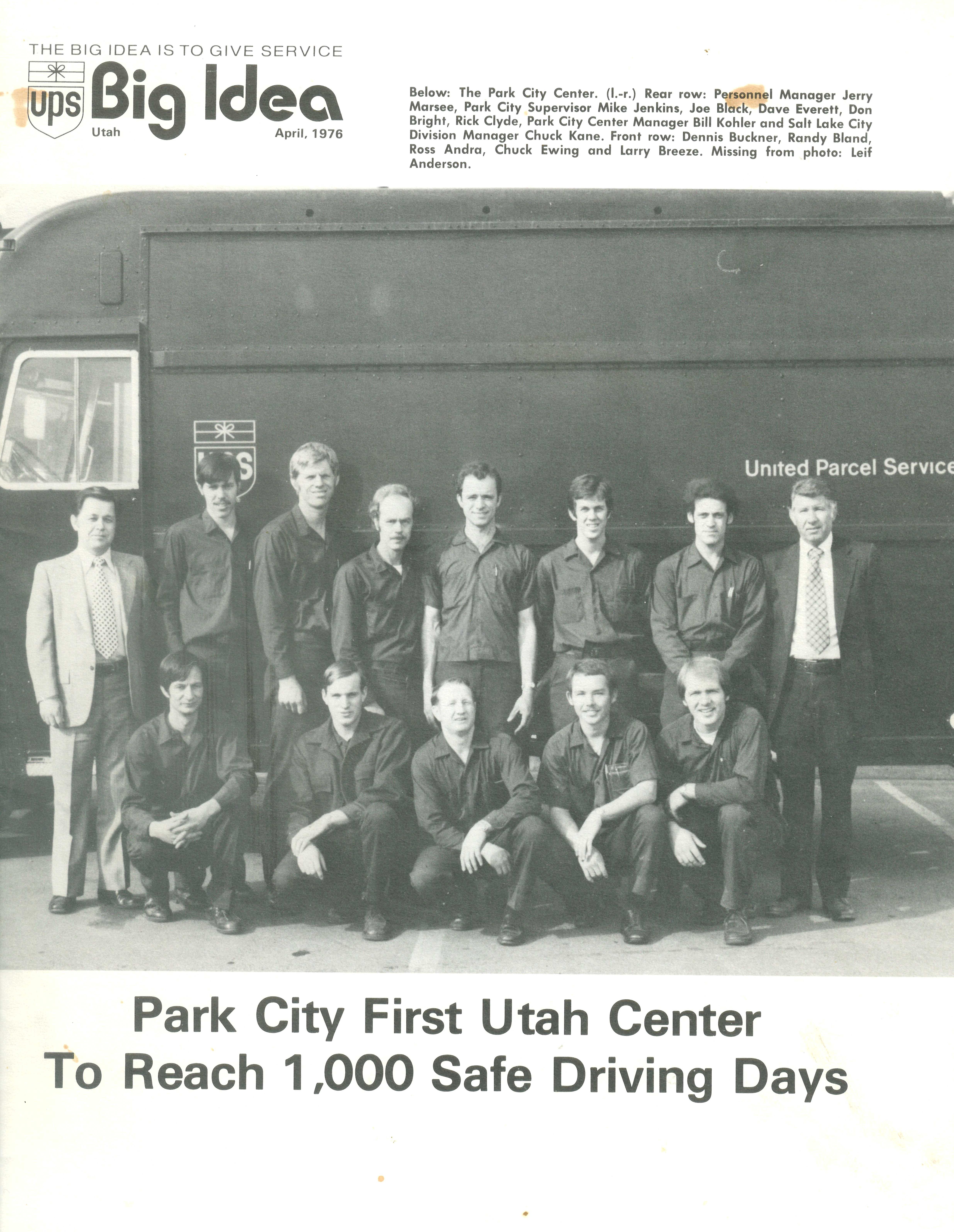
UPS company newsletter Big Idea, April 1976, Ross Andra is named as one of the drivers who helped get to 1,000 safe driving days
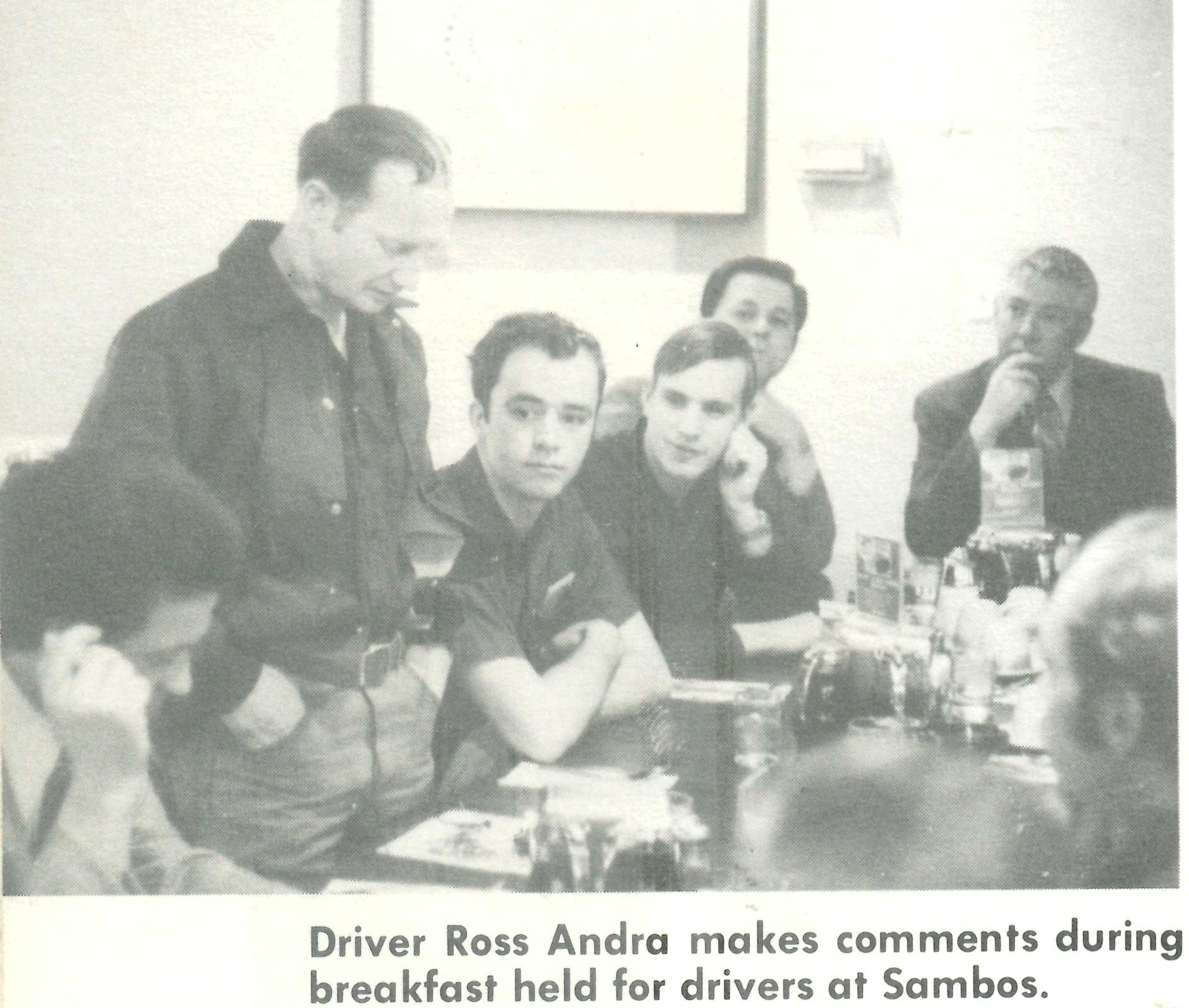
Ross Andra makes comments during breakfast held for drivers at Sambos

The April 1976 edition of the UPS company newsletter Big Idea photographed the Park City, Utah center — first in Utah to reach 1,000 safe driving days — and named Ross Andra in the front row. A separate photograph from the same period shows him standing at a drivers’ breakfast, mid-comment, captioned: “Driver Ross Andra makes comments during breakfast held for drivers at Sambos.” He drove a fully loaded truck the way most people drive a compact car, weaving through traffic with an ease that still astonished Frederick Johnson decades later. Before GPS, he had the entire I-15 corridor memorized. He was the GPS. In his later years, until age 84, he delivered blood and vital organs to medical facilities across Utah, Idaho, and Wyoming. He made people laugh the whole way.

Ross and Adelaide Andra

Ross the Boss

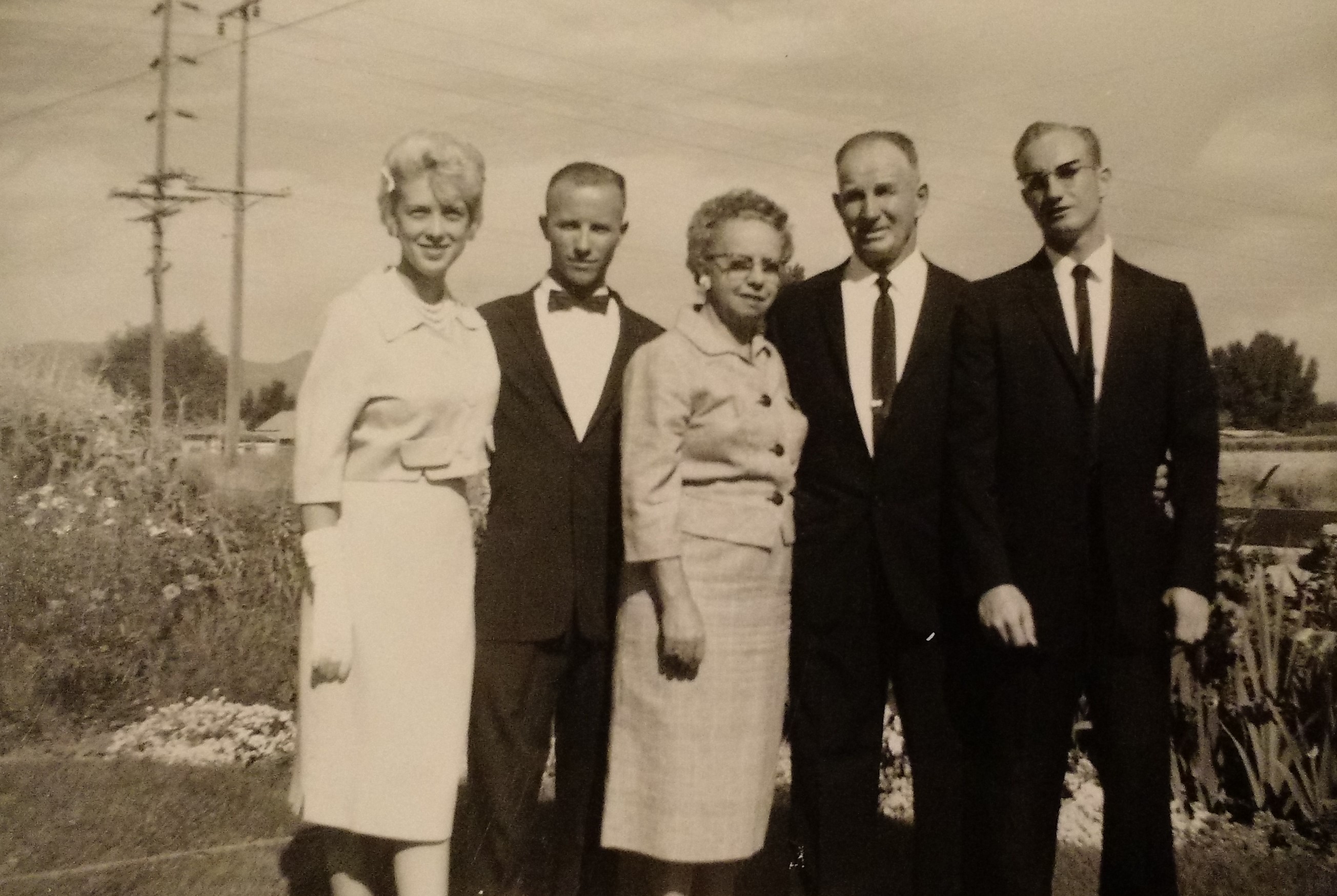
Judy, Dale, Mary, Bill, and Ross Andra, September 1962

Frederick Johnson — known as Freddy, or Frederico — spoke at the funeral. His father Ranley had worked weekends with Ross for years delivering and installing appliances, and when Frederico turned sixteen the interview for joining the operation was brief. “Frederico, you’re sixteen, right?” “Yeah, I’ll be sixteen at the end of —” “Frederico, you’re sixteen.” “Yes.” That was the interview.

Working with Ross, Johnson said, was better than television, even when it was miserable hard labor. His father would come home Saturdays with tears rolling down his face from laughing. The phone would ring — Ross, calling to debrief, mostly to replay the jokes that were played during the day.

Ross was a virtuoso practical joker. He favored ice dropped down the back of your shirt on hot summer deliveries. He perfected the screwdriver dropped at precisely the moment a man was bent double lifting something heavy. For years he carried a novelty ID with Elvis Presley’s photograph and produced it whenever anyone asked for identification — cashier, security guard, TSA agent. “That’s what drugs will do to you.” He once deployed it at a Salt Lake airport checkpoint around September 11th while escorting Johnson to his gate. Johnson nearly missed his plane.

But the parrot story is the finest. Ross’s family had long laughed about his famous account of being called back to the farmhouse by his mother — or so he thought — only to find a chicken calling his name. That story about a chicken that was loud enough and gave a distinct “Rawwwsss” more than once was confused for his mother calling for him. One afternoon, Johnson’s father came home from a delivery unable to speak from laughter. They had delivered a washer and dryer to an elderly woman’s home. Ross was in the basement doing the hookup. There was a parrot. Ross called up the stairs: “Is there a drain down here? We need to drain a little water.” The parrot said: What? Ross tried again. What? Is there a hole where the water goes? What? Ranley, upstairs, was quietly disintegrating and trying to hold in the laughter. Ross, red-faced and fully irritated, eventually came upstairs. When he saw Ranley’s face, he understood he had been duped by a parrot. Ranley laughed about it the whole rest of the day. The story became one of lore.

“It was rare,” Johnson said, “to get one on Ross. He always had the drop on you.” The parrot did it magnificently.

For all his irreverence — and Johnson named it plainly — there was something untouched by it. Ross never swore. He had code words and nicknames. But when it came to his faith and his testimony, Ross was always reverent. Bishop Maxwell put it simply at the close: Ross loved the scriptures. He loved the word of God. He loved Jesus Christ. And he brought that light into everything he did.

The Mission Couple

Ross and Adelaide Andra

Clay Celestino, who served as bishop of the Mountain Shadows Ward, offered a different angle. The Brazilian immigrant wards of Salt Lake City in the early 2010s were large and underserved — hundreds of families struggling with injury, poverty, paperwork, language. The Andras came as service missionaries between 2009 and 2015, and Celestino said plainly they were indispensable.

He remembered a specific night: 22 January 2013, 12:19 a.m. He sent an email. Eight minutes later, Ross replied: “Hi, Bishop. That’s no abuse at all to ask for the things you’re asking. That is the reason why we are serving a mission. We want to help our brothers and sisters the best way we can. Tomorrow I will make a few phone calls and I will provide you with the information you need.”

The list of those they helped, Celestino said, went on and on. And then, at nine in the evening, talking to Ross, you would find out he still had deliveries to make for his other job.

When the Andras were transferred unexpectedly in September 2013, Celestino read at the funeral the farewell letter he had written them at the time. He had copied the entire ward leadership. He thanked Ross for allowing him, as bishop, to concentrate on other responsibilities. “For that I will be eternally grateful to you and to Heavenly Father.” He asked them not to forget the ward. “We will not forget you.”

The Brothers

Bill, Ross, Mary, Dale, Larry Andra – late 1950s

Larry Andra — the last of the twelve, the youngest surviving child of Bill and Mary — gave the family prayer before the service and spoke as one of the main eulogists. He described the family with the dry affection of a man who has lived long enough to be the last one telling the stories.

William Jr. went first among the siblings, in 1992. Then June and Colleen in 1999, Golden in 2004, Sergene in 2013, Donald in 2016, Dale in 2021. At Dale’s funeral in August 2021 — three years before Ross’ — Ross was listed among the honorary pallbearers. By the time Ross died in June 2024, of the twelve children of Bill and Mary Andra, only Larry remained.

Dale’s funeral was held during the week of the annual Andra reunion. Larry noted that was Ross’s last reunion here on Earth. The reunions had been going since the children were young — Preston Fairgrounds, Logan Park, Lava Hot Springs, Wolcott Park by the Minidoka Dam, Richmond City Park, Riverdale, then wherever families could gather. I remember Bill Andra at those reunions. I remember the sly look that sometimes crossed Bill Andra’s face when he was about to tease someone. Ross had inherited that look too. You knew when a tease, joke, or prank was coming by the look on his face.

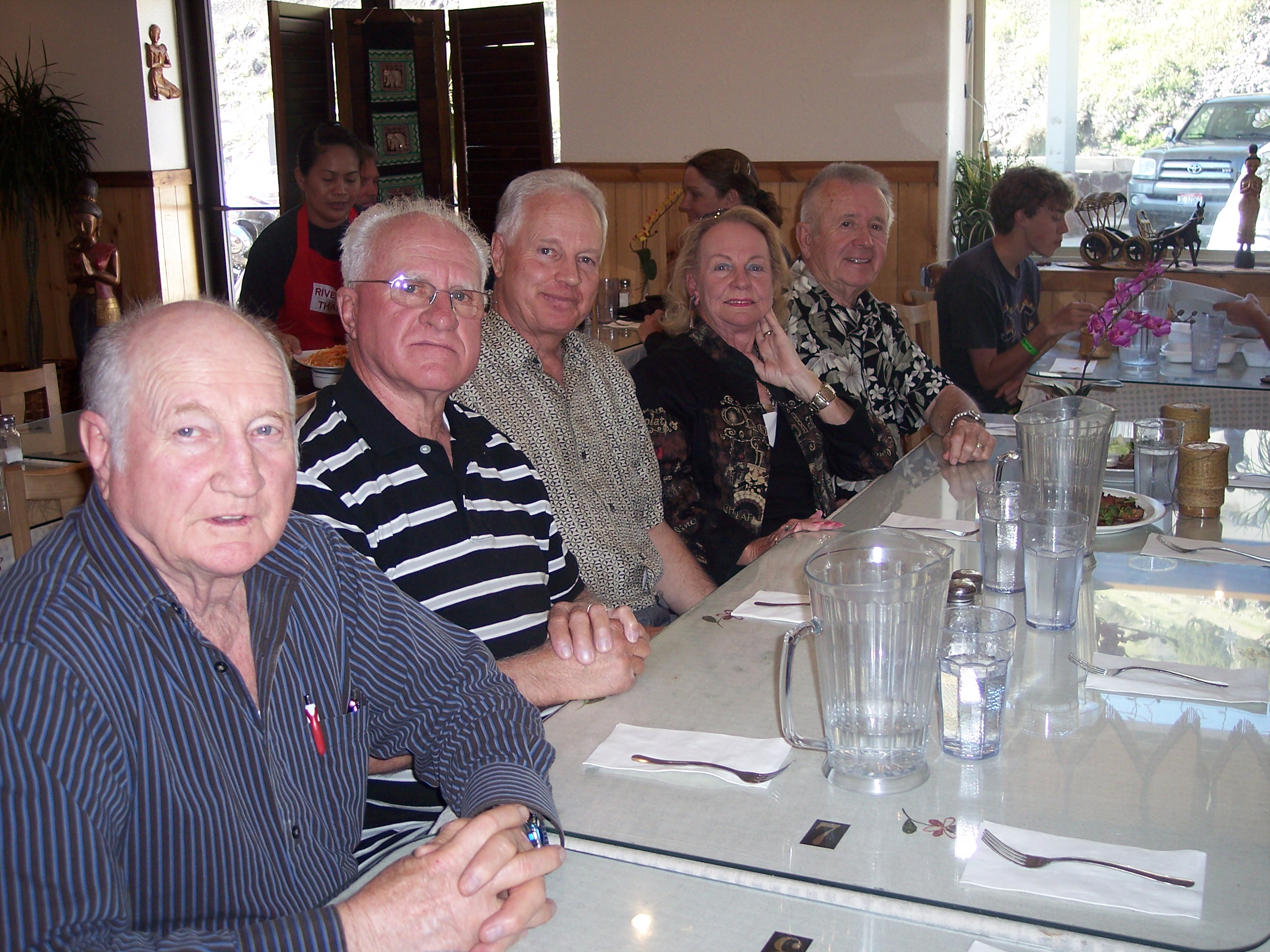
2010 Reunion: Ross, Donald, Larry, Sergene, Neil Anderson – 2010 Andra Reunion

The Close

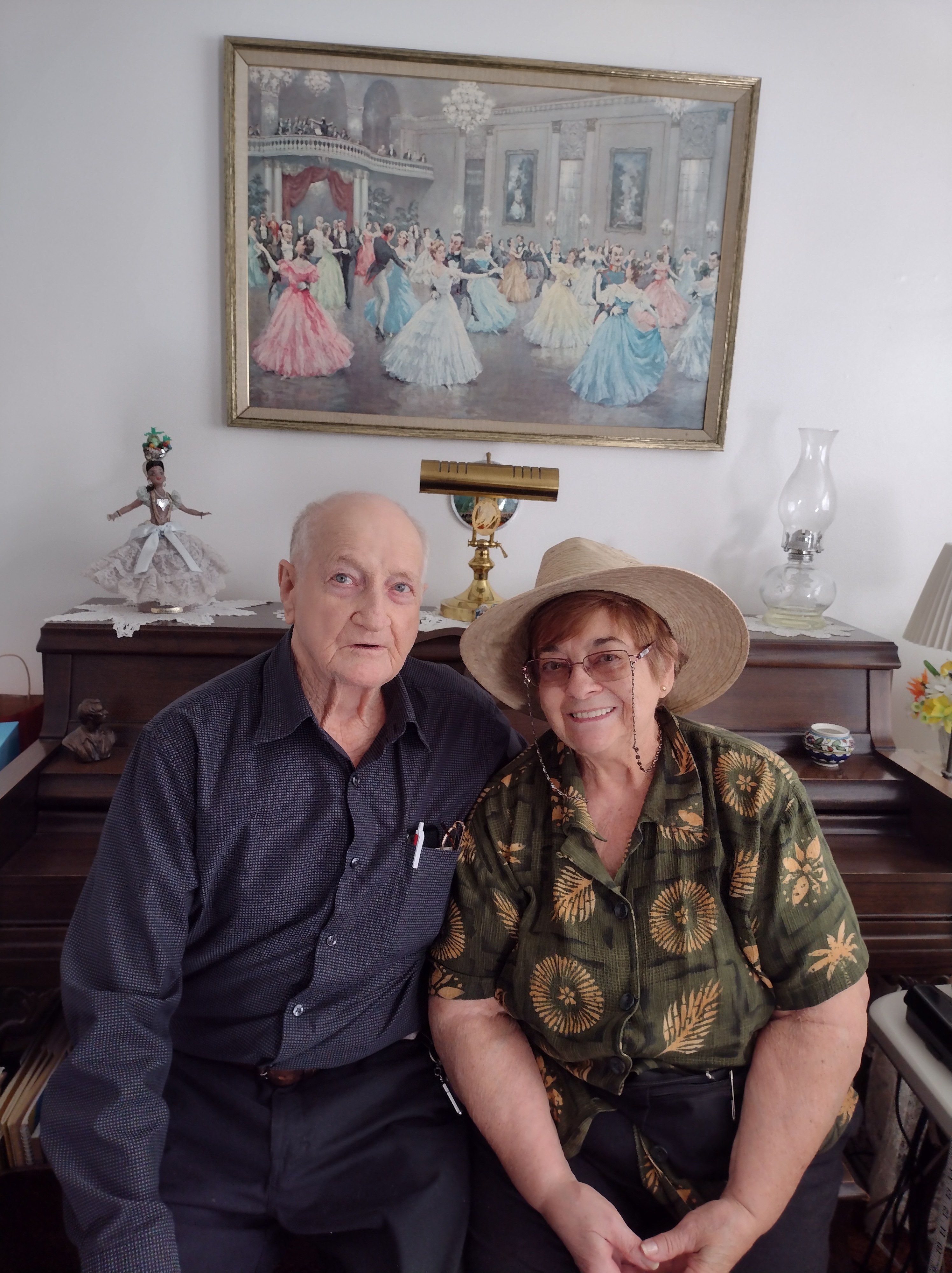
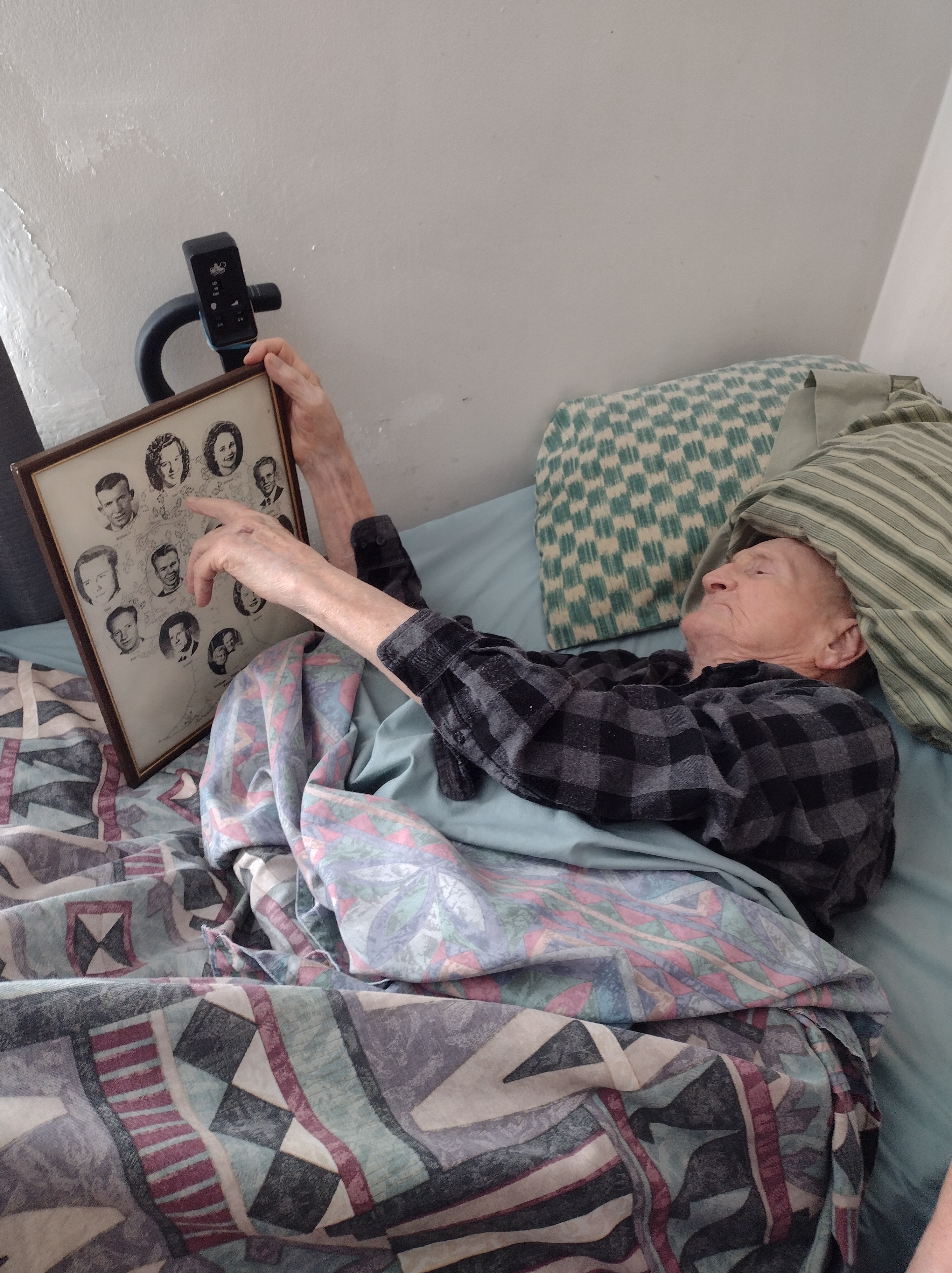
I snapped this picture of Ross the last time I visited him, 23 December 2023 at his home.

Bishop Ted Maxwell had only known Ross since the COVID years. What he had seen was enough. In the final months, when Ross could no longer come to church, he called the bishop after every sacrament meeting to report on how it had gone and offer observations. The calls grew shorter, then stopped. Maxwell told himself at first that Ross must be doing better. He knew eventually that wasn’t it.

What Maxwell said at the close was simple and accurate: everyone in that congregation had either been served by Ross or served with him, because that was what his life was. Service. Whether bringing joy or bringing the gospel — it was the same motion, from the same source.

In December 2023, six months before he died, I visited Ross at home. He was lying in bed, largely unable to rise. At one point he reached up and lifted a framed composite portrait — all twelve Andra children, the photograph that had defined the family across seven decades of reunions — and held it up toward the light, pointing at the faces one by one. He knew every one of them.

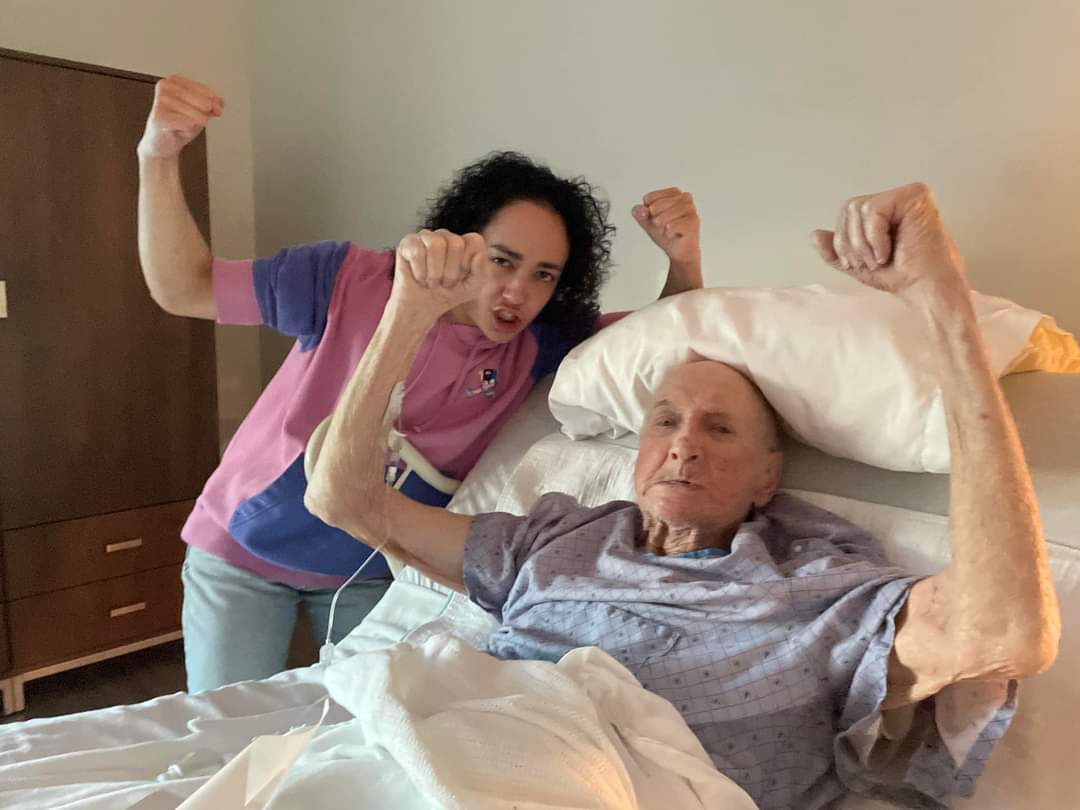
April 2024, rehabilitation with granddaughter Onyx, after fighting infection – still Ross!

In April 2024, in a rehabilitation facility after fighting an infection, Ross raised both arms in a victory pose for Onyx beside him doing the same. Frederick Johnson had sworn he had only seen Ross lying down twice — that April and on his deathbed. Ross never stopped moving. He never stopped working. He never stopped bringing the light out.

On 20 June 2024, Ross Leslie Andra died peacefully in his Salt Lake City home with his wife Adelaide, his daughter Brenda, and his son Carlos at his side.

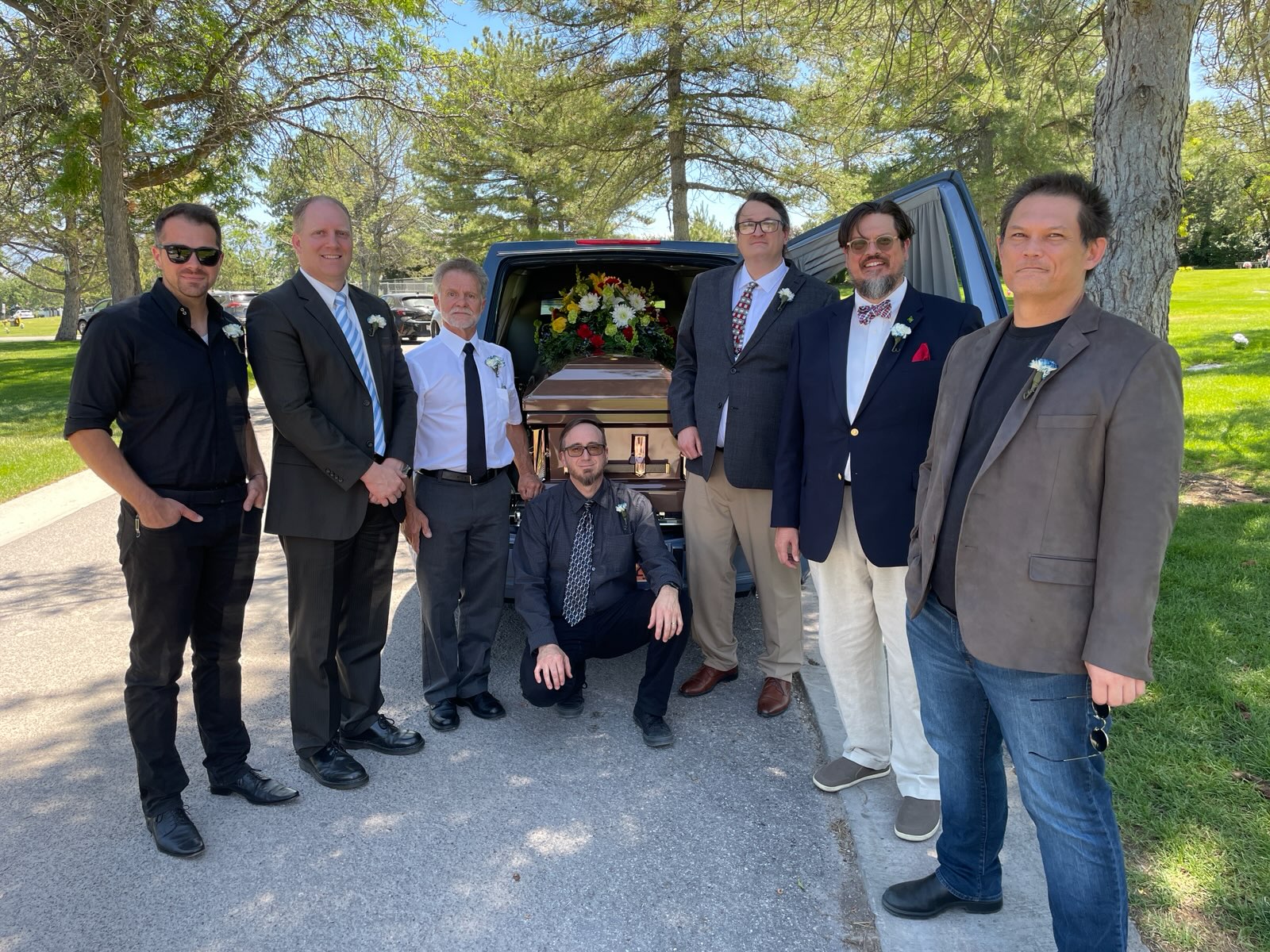
The funeral closed with “How Great Thou Art,” sung by Sister Annie Löwenthal. Then the pallbearers — Carlos Andra, Paul Ross, Larry Andra, Frederick Johnson, Tim Andra, Felipe Johnson, and Aron Hsiao — came to the front. The congregation rose. Ross Leslie Andra was carried out into the June light toward Valley View Memorial Park in West Valley City, Utah.

Frederick Johnson, who had lost his own father just two months before, had a last message. “Ross the Boss,” he said, “your life mattered a great deal to us and to me. You will not be forgotten. We’ll keep telling the jokes and passing them on.” Then, more quietly: “Say hi to Dad for me, Ross. Tell him we miss him too.”

Pallbearers at Valley View Memorial Park, West Valley City, Utah 29 June 2024. Brandon Porter, Paul Ross, Tim Andra, Carlos Andra, Felipe Johnson, Fredrick Johnson, Aron Hsiao

Ross is survived by his wife, Adelaide; his daughter Brenda (Layton) Wagner; his son Carlos (Melanie) Andra; his daughter Denise Andra; his grandson Brandon (Danika) Porter; his granddaughter Onyx Andra; his great-grandchildren Tilia, Zeke, and Sevi Porter; and his brother Larry (Barbara) Andra.

The full funeral service for Ross Leslie Andra, held 29 June 2024 at the Cannon Ninth Ward in Salt Lake City, was livestreamed and remains available to view at https://www.youtube.com/watch?v=y1qDOIbls5Q.


Sagacity posts referenced in this article: Ross & Adelaide Andra Wedding · Andra Marriage Certificate · William Fredrick Andra Autobiography · Mary Louise Wanner Andra Autobiography · Donald Wanner Andra · William Fredrick Andra Jr · Sergene Andra Sorenson Jensen · Robert Lee and Dennis Willard Andra · Memories of Great Grandpa and Grandma Andra · 1976 Andra Reunion · Eisenhower Lock · Dapper Dan · Andra Family Photos

Funeral Service Transcript

Ross Leslie Andra

2 December 1936 – 20 June 2024

29 June 2024, 11:00 AM MDT

LDS Church, Cannon 9th Ward (Glendale Ward)

1250 W 1400 S, Salt Lake City, Utah 84104

Note: This transcript was generated from auto-captions and has been edited for readability. Musical interludes, unintelligible passages, and pre-service ambient audio have been omitted or noted. Speaker attributions are based on self-introduction within the service.

Opening of Service

Conducting — Bishop Ted Maxwell

You may be seated. Welcome, everyone, this morning to the funeral for Ross Andra. My name is Ted Maxwell; I’m the bishop of the Cannon Ninth Ward, where the Andras have been living. I’ll be conducting today. On the stand we have President Ingersol from our stake, who is presiding. We’re so grateful to have you all here on this fine, wonderful morning to celebrate the life of Ross Leslie Andra.

We will begin by singing ‘I Believe in Christ,’ Hymn Number 134. Our pianist will be Arlene Lenthal, and the chorister will be Anda, an in-law. After which we will have an invocation by Carlos Andra, Ross’s son.

[Congregation sings “I Believe in Christ,” Hymn No. 134]

Invocation

Carlos Andra (son of Ross Andra)

Let’s bow our heads.

Our Father in Heaven, this morning we open the service with your words: “And the Lord God formed man from the dust of the ground and breathed into his nostrils the breath of life; man became a living being.”

You formed a man, and his name was Ross Leslie Andra. We thank you, Father, that we can all be here gathered together. We invite your Holy Spirit into this place in which we reflect and honor the life of my earthly father, Ross.

I ask you, Holy Spirit, to stir in the hearts of each person taking time out of the breath of their lives to come reflect and remember the impact that was made by you through this husband, father, brother, uncle, cousin, and friend.

Yea, though we walk through the valley of the shadow of death, we will fear no evil, for you are with us; your rod and your staff, they comfort us. You are Holy God; you are so loving. We love you and we thank you for your presence. We dedicate this time to let your Holy Spirit direct our time together to honor your servant, Ross Leslie Andra. In Jesus’ name, amen.

Amen.

Order of Service — Announced by Bishop Maxwell

We will begin the service with a musical number titled “My Testimony,” which will be performed by Sister Bastos and Arlene Lenthal. After which we will hear from — oh, I skipped something. I’m sorry, let’s back up. We’ll start by hearing the obituary read by Brenda Wagner, who is Ross’s daughter. After which we’ll hear from Larry Andra, who was Ross’s brother. Then we will have a musical number, “My Testimony,” performed by Sister Bastos and Arlene Lenthal, and after that we’ll hear from Frederick Johnson, who is a family friend. Closing for us will be President Clay Celestino from the Mountain Shadows Stake.

Obituary

Read by Brenda Wagner (daughter of Ross Andra)

Oh gosh — thank you so much for being here for my father and my family, my mom, everyone.

So — Ross. Now, if my eyes start watering it’s because it’s sweaty and hot outside, so that’s why.

Ross Leslie Andra, my father. At age 87, he returned to his Father in Heaven, which was on 20 June 2024. He passed with dignity and peacefully in his Salt Lake City home, with his wife Adeli, daughter Brenda, and son Carlos at his side.

Ross was born on 2 December 1936 in Preston, Idaho, to German immigrant William Frederick Andra and Mary Louise Wer— [you never know how to say that]. He grew up on a large family farm with four sisters and seven brothers.

Ross graduated from Preston High School in 1955 and then went on to attend Utah State Agriculture College — now Utah State University — for two years. Ross worked in construction with a couple of his brothers on the St. Lawrence Seaway project in Messina, New York, between February and December 1957.

He served a mission to Brazil for the Church of Jesus Christ of Latter-day Saints between 1957 and 1959, where he met his sweetheart, Adeli Gonzalez Cararu. They married in the Logan Temple on 14 June 1963. Ross had a deep love for Brazil, its people and culture, and especially for his little Brazilian bride.

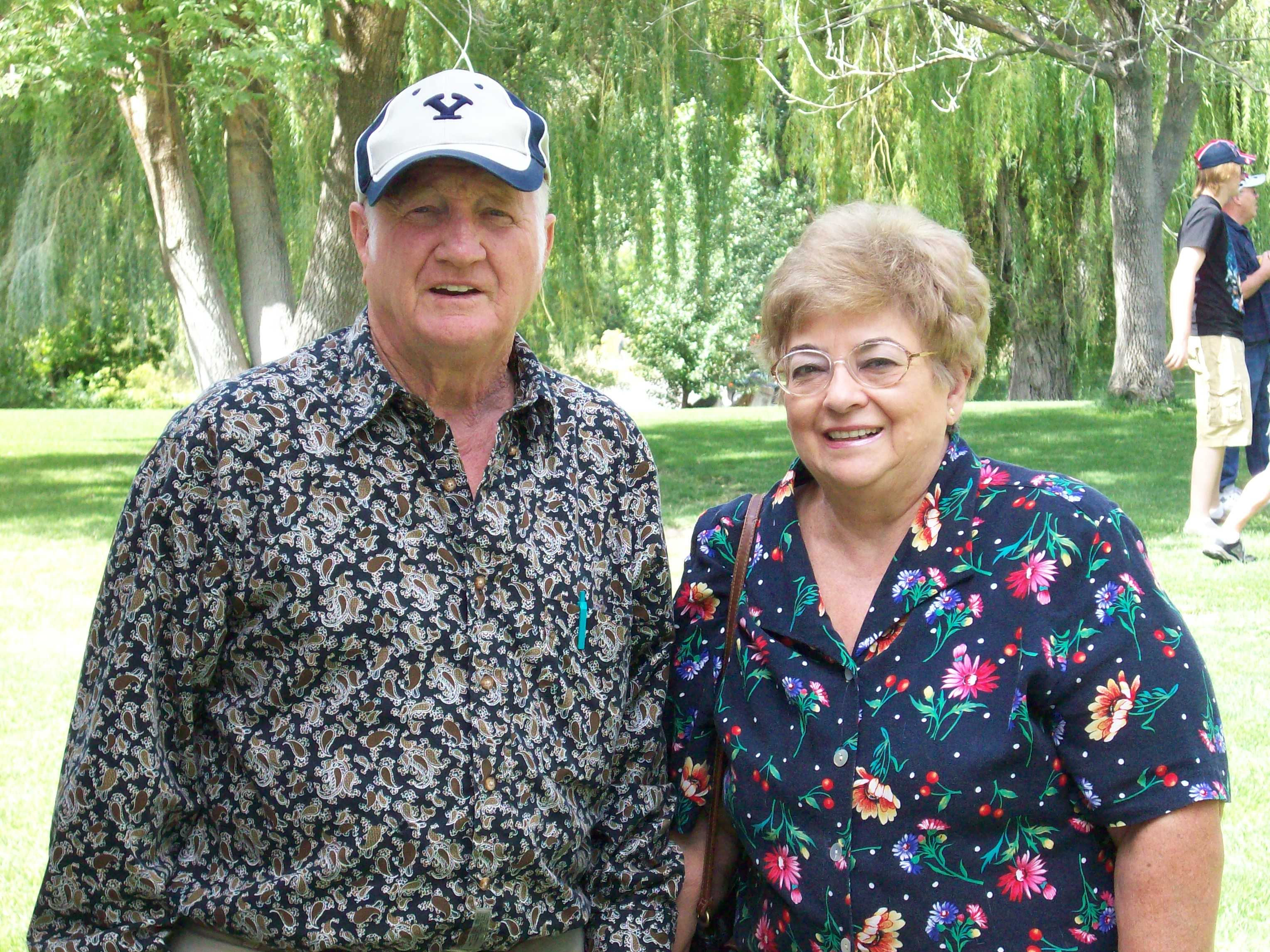
After his mission to Brazil, Ross attended Brigham Young University in Provo, Utah, where he studied political science, speech education, and Portuguese. He graduated with a Bachelor of Arts from BYU in 1964 and remained one of their biggest fans right up to the end, watching games and sporting a BYU ball cap everywhere he went.

Ross instilled a strong work ethic into his children. As a servant leader, Ross served his family by example and by teaching his kids how to help Mom with household tasks. He modeled Ephesians 5:25 very well: “Husbands, love your wives, just as Christ also loved the church and gave himself for her.” Ross always made sure everyone was comfortable and that they had what they needed.

Ross loved to make people laugh, and he had a keen gift for engaging strangers with quick-witted quips. He spread many smiles and laughter across this planet.

Ross was a hard worker, and his career life spanned over various areas: from high school teacher, coach, Candyman, small business owner, appliance installer, and furniture mover to a medical career. He held unique skills and talents and applied them well throughout his life and service to others. He maintained a missionary mindset throughout his whole career.

As Candyman, Ross would fill the vending machines in the teachers’ lounge at his eldest daughter’s elementary school — me — and often he would show up during recess and pass out candy on the playground, which made his daughter Brenda — me — quite popular with her friends.

As a business owner, Ross would often take his son Carlos to work with him to deliver and install appliances and move furniture. As a result, Carlos learned to efficiently pack a moving truck like a Tetris puzzle.

Ross loved tomatoes. He would plant them anywhere he could find a plot of dirt — it could be this big, that big. His youngest daughter Denise worked hard to clear space in the backyard for a family garden so Ross could have his tomatoes.

At another point in life, when Denise found herself facing some debt, Ross sat down with her and taught her some financial principles, which she applied and was able to persevere in paying off all her debts in no time at all.

Ross was a faithful servant. With Adeli as his companion, Ross served locally as a service missionary with the Portuguese- and Spanish-speaking wards between 2009 and 2015. Together they drove all around the Salt Lake Valley visiting with families and making sure they had the resources that they needed.

Ross and Adeli had a deep desire to return to an overseas mission in Brazil, but due to health concerns they could not go. Instead they fulfilled that desire by serving the Brazilian people locally.

In his latter years, until age 84, Ross delivered blood and vital organs to various medical locations spanning Utah, Idaho, and Wyoming — and as always, he made people laugh along the way.

We kids heard many stories from Dad about growing up on the family farm — like the time he was called back to the house by his mom only to discover that it was a chicken calling out “Ross,” or the time when Ross and his brothers tied a cow to their math teacher’s front door. With multiple brothers, you can imagine the pranks that were played on and with each other.

Dad, we miss your John Wayne toughness, your Popeye strength, and your cheesy dad jokes. You were a missionary for Christ until the end. “Well done, thou good and faithful servant; thou hast been faithful over a few things, I will make thee ruler over many things; enter thou into the joy of the Lord” (Matthew 25:21). Ross has now entered the joy of his Lord.

We love you, Daddy.

Remarks

Larry Andra (brother of Ross Andra)

My name is Larry Andra. I’m the last of twelve. Ross would say, “I’m the last of the Mohicans.”

Ross was always saying to each person he had a nickname — like “teddy bear.” His kids called him Tom the Piper’s Son. And one nephew — it probably best they called him ‘Funkle’ — the funny uncle.

He lacked no jokes. He was likeable and really witty. Others said he loved to joke around with people. I always called him the numbers jokester. And I really didn’t understand when he talked to me — he knew Brazil too much; he forgot that I couldn’t understand the jokes.

Ross never did anything outside the church standards. My parents never had to worry about Ross. He had a little brother to do that.

Our father came from Germany, as mentioned before. Within a couple of months after being baptized, he came alone because he was eleven years old — at twelve you pay full price; at eleven you pay a high price. He got lost, so they came looking for him, and that’s where the twelve came in. He ended up with the missionary that baptized him going to his farm and marrying his daughter, and they had twelve children.

This week is the Andra reunion, which we’ve had — I think this is Ross’s last one here on Earth.

Death is just as important in the welfare of man as is birth. There is no greater blessing that can come than the blessing of birth. One-third of the host of heaven, because of rebellion, were denied that privilege and hence had no bodies of flesh and bone — which is the gift of God. But who would like to live forever in this world filled with pain, decay, sorrow, and tribulation — grow old and infirm and yet remain? I think all of us, if the proposition were placed before them, would not want life of that nature. We would reject it.

But death is just as important in the Plan of Salvation as birth is. We have to die. It is essential. Death comes into the world and fulfills the merciful plan of our great Creator.

Let’s talk a minute about what happens when one passes on. However painful the moment of death is physically, it is spiritually one of the most exciting and joyful moments of eternity. It’s like opening the door of a dark room — one who dies emerges into the light of the spirit world, where there will be friends and family waiting to greet him. There is no special period known to man in which they experience so much joy as when they pass through the portals of death and enter into a glorious change in the spirit world.

Death is not extinguishing the light; it is putting out the lamp — and then dawn comes.

When someone dies, it is like a beautiful lagoon. On a clear day a fine sailing ship spreads its mast and its canvas in a fresh morning breeze on the deep blue, and gradually we see her grow smaller and smaller as she nears the horizon and someone says, “There she goes — gone.” But you can be sure that on the other shore someone says, “There she comes!”

While we’re mourning the loss of Ross, others are rejoicing to meet him behind the veil. Ross has joined Mother, Dad, June, William, Colleen, Millie, Golden, Serene, Donald, Dale, Robert, Dennis, and others.

Steve Jobs was a billionaire worth $7 billion at age 56. Lying on his deathbed sick with pancreatic cancer, he said: “All my life I have recognized wealth, but all that I had was meaningless in the face of human death. You can find someone to drive a car for you, but you cannot hire someone to carry the disease for you.”

As we get older we grow smarter and slowly realize: a watch worth $30 and a watch worth $300 both show the same time. Whether we drive a car worth $150,000 or $2,000, the road and the distance are the same; we reach the same destination. If we drink a bottle of wine worth $300 or wine worth $10, we’re still drunk.

There are five undeniable facets: Do not educate your children to be rich; educate them to be happy, so when they grow up they will know the value of things, not the price. Eat your food as medicine; otherwise you eat your medicine as food. Whoever loves you and never leaves you, even if he or she has a hundred reasons to give up, will always find one reason to hold on. There is a big difference in being human. If you want to go fast, go alone — but if you want to go far, go together.

I really believe that Ross embodied what Steve Jobs was saying here — they went together.

Albert Einstein said: “Do you realize how important you truly are? Look around — who are you influencing, motivating, teaching, or inspiring? Some of the greatest souls who have ever lived will never appear in the chronicles of history. They are the great ones who spend every day of their lives serving and doing good.” Albert Einstein also said: “Try not to become a person of success, but a person of value.”

Thank you for the service you are willing to give to your families, your friends, neighbors, and community. Every great dream begins with a dreamer; always remember you have within you the strength, the patience, and the passion to reach for the stars and change the world. You are the difference — make it happen.

[Larry then shared a story about a woman whose car was stuck in the snow in a foreign country. A man came with a mule and attempted to pull her out. Before having the mule try again, the man yelled, “Let’s go, Bob! Tom! John! Lance!” — and the mule pulled the car out. When the woman asked why he called the mule different names, the man said, “Madam, my mule is blind. I wanted him to think he wasn’t pulling the car out alone.”]

People in this congregation — Adelaide needs you next to her, pulling and pushing for her. Adelaide’s happiness will return, her former capabilities will be restored, light will replace darkness, despair will give way to hope and life and will regain its meaning — but only through service. Neighbors, friends, relatives, family, and those who are in attendance here: Bishop and Friends, Adelaide does not need to be preached to, but she needs a void filled. Bless her and be of service to her, as the Savior asks of us, and I promise you that you will be blessed. I say this in the name of Jesus Christ. Amen.

Amen.

[Musical number: “My Testimony,” performed by Sister Bastos and Arlene Lenthal]

Remarks

Frederick Johnson (family friend)

My name is Frederick Johnson — Todd Elijah. I’m known as Freddy; the full version is Frederico.

Like many, the summer I turned 16 I got my first job, and it was delivering household appliances with “the Boss.” The interview went something like this: “Frederico, you’re 16, right?” And I said, “Oh yeah, I’ll be 16 at the end of —” “Frederico, you’re 16.” “Yes.” And that was my interview. But admittedly it was essentially nepotism.

As long as I could remember, my dad — Ranley Johnson — had been moonlighting on weekends with Ross. As far as I’m concerned, they were the first and only two men in a truck there ever were.

Ross, like my father, had served a mission in Brazil and married a Brazilian. In the ‘80s, all these mixed families — nowadays the church and the Brazilian community in the Salt Lake Valley has become tremendous. But when I was a little child, and when Carlos and Brenda and their little sister Denise were young, we all kind of knew each other more or less. At conference time we went to reunions together. The connection goes back even further than that — about a decade before my mother first came to the United States. My mother, Louisa Coa Johnson, came to the US in the 1970s. Adeli had served in the tiny branch of Beloni, Brazil, where my mother, my aunt, and grandmother were new converts to the church. So as I say, it was basically nepotism.

I swear, Ross the Boss Andra was the strongest man I ever knew. Thirty years my senior, he had more stamina and strength in his late fifties than I could muster at his side as a six-foot-one man in my prime. He was compact and he looked powerful to me. He not only looked and sounded like Popeye — he even talked like Popeye. Except instead of eating spinach, I think where he got his strength was from eating tomatoes.

Ross’s strength was legendary. In fact, Ross wasn’t only strong — he was an irresistible force. My dad told stories of seeing Ross pick up a Ford Pinto by its bumper to make room for the truck to pass. And I don’t doubt it.

Now, Ross, when I knew him, could sometimes come across as a little unsophisticated. But anyone who knew Ross at all knew that to dismiss Ross the Boss as a blue-collar East Idaho farm-boy country bumpkin was making a grave mistake. Ross was intelligent, well-traveled, and educated, and he did not suffer fools or foolishness.

When I was still a teenager, we were working, delivering appliances. There was another man who worked with Ross who was actually a bit more unsophisticated — I wonder if Carlos remembers Joe Yanger. The way I remember the guy: he was big and coarse, had bad Marine Corps tattoos on his arms, and talked kind of low. I couldn’t understand a word he said except swear words. He was strong as an ox and probably about as sophisticated as one, if you take my meaning.

Anyway, one day Ross tells me: “Joe Yanger got hurt.” “What happened, Ross?” “I dropped a piano on his head.” They were moving a piano, and Joe was at one end coming down the ramp. Ross said, “Joe, are you ready?” Well, Ross didn’t know if he was ready or not — so he let go of the piano. Joe Yanger ended up with some stitches in the back of his head. I don’t think it made any difference to how Joe Yanger spoke or how well Ross could understand him.

Also, I want to emphasize — and if you get a chance, read again the beautiful obituary that Ross’s family put together — Ross was not a blue-collar guy with a truck, and he certainly did not see himself that way. Ross Andra was an entrepreneur. He firmly believed in the American dream, in hard work and gumption as the way to get ahead, and that’s what he did — whether it was filling candy machines, moving vending machines, delivering appliances, or contracting his truck out as a mover. Ross believed he was an entrepreneur, and he was.

In a world where hard work and gumption were enough, Ross would have been a financially wealthy man many times over, because I also don’t know anyone who worked as hard as Ross. That’s why most of my memories are from working with him — or working with my dad and Ross the Boss — because he was always working. In fact, I swear I’ve only seen Ross lying down twice: the first time was in April, when he was in rehab after fighting an infection, and the second time was on his deathbed. Ross never stopped moving and never stopped working, and he had lots of gumption.

Now, the work that we did with Ross was, as you can imagine, physical — hard work. But Dad would come home laughing. There was always this interesting other thing about working with Ross the Boss: there would be some kind of debriefing. He’d wait long enough for you to get home, the phone would ring, and he would call — mostly I think to go over the jokes he had played on you and laugh about them again.

My memory of even Dad working with Ross is Dad coming home, the phone ringing, and then Dad laughing. Or Dad coming home — I even remember him opening the door with tears rolling down his eyes, just couldn’t stop laughing. When I worked with both of them, it was better than television, because my dad was a wise guy in his own way and the two of them together could be very entertaining.

My mom even thought: “This isn’t fair — I’m home with the kids every Saturday and you’re off having fun with Ross.” But it was hard work, and with anyone else it would have been miserable. We enjoyed working with Ross, and we all worked with Ross. My brother Felipe worked with Ross; my friend Giorgino Brown, another one of these families that’s half American, half Brazilian here in Utah; my cousin visiting one summer from New York worked with Ross one day — and Ross made an impression on everybody. It was fun, even though it was miserable hard work.

A lot of this is because Ross was a virtuoso practical joker. One of his favorite things — if we were working in the summertime — was to drop ice down your shirt. Even worse than that: when we did deliveries we had shirts that said “DPEC” on them — short for Delivery Specialist, which made it sound kind of exciting and sexy. They always seemed like they were a size too small or too short, so Ross had a knack — one of his favorite things was to take advantage of you when you were bending down picking up something really heavy and that shirt rode up. Without saying a word, Ross would just drop a screwdriver down there right when you were really going. He would just chuckle. And of course at the end of the day he’d call and say, “Hey, do you remember when I dropped that? That was good.”

For years he had a novelty ID with Elvis Presley’s picture on it, and anytime someone asked him for his ID he’d show that — it didn’t matter who they were. They’d look at it and go, “Huh?” And he’d say, “That’s what drugs will do to you.”

One time, around September 11th — I was living in New York, but every time I’d come back to town Ross would say, “Frederico, do you want to go to work?” I’d work with them even for just one day. This time he offered to take me to the airport, because Ross was always on the road — always driving a truck, delivering furniture, delivering appliances, or delivering medical equipment. So he was happy to go. We go up, and I was the one who needed to show my ID. Ross comes up, already ready, and this TSA agent — some people go, “Huh? What? You already — what drugs will do to you.” And here I am thinking, ‘Oh no. I’m not going to make my flight. They’re going to take me to the back and interrogate me.’ That was one time where the person didn’t even blink. Ross would say something like, “I’m better looking now, aren’t I?”

It was rare to get one up on Ross — he always had the drop on you. But here’s one of the most famous stories: the parrot story.

[Freddy describes the chicken story from the obituary — the time on the farm when Ross thought his mom was calling him, only to find a chicken mimicking her voice. One day, while delivering a washer and dryer to a customer’s home, Ross was working in the basement and noticed a parrot. Ross called up the stairs, “Is there a drain down here? We need to drain a little water.” The parrot replied, “What?” Ross, thinking it was the elderly owner upstairs, kept asking. Each time — “Is there a hole in the ground where the water drains?” — the parrot answered, “What?” Freddy’s father, upstairs, realized what was happening and nearly collapsed laughing. When Ross finally came up and figured it out, Freddy’s dad laughed about it the whole rest of the day. Freddy’s father had been waiting for years to get something on Ross, and the parrot delivered it.]

Ross could move a fully loaded truck like it was a subcompact car — weaving in and out of traffic. Before GPS existed, he knew the entire I-15 corridor in Utah. He was the GPS.

Ross could sometimes seem a bit irreverent — he had code words, let’s say. Ross never swore, but he might include swear words in code names and nicknames he gave to things. But when it came to his faith, his belief, and his testimony of the church, Ross was always reverent. He wasn’t serious all the time — he was still joking — but Ross was reverent, and I always knew that.

I can say honestly that Ross was a big part of my entire life. Even when I’ve lived out of state for most of the last thirty years, he would call me every once in a while to check on me. I began to worry about a year ago when the phone calls started getting shorter — because normally I’d set aside 45 minutes or an hour, because we’d have to retell all the stories about every time he dropped a screwdriver down — anyway. He’d say, “Remember when I did that, and then your dad did this.”

I just want to finish by saying — and if I do get a little emotional, it’s not because it’s hot; it’s because I’m kind of that way — Ross, to me, always was and will be bigger than life. Ross the Boss, I want to say to you that your life mattered a great deal to us and to me. I love you and your family, and how close our families have been. Your life mattered, and you will not be forgotten. You will be with us and within us, and we’ll keep telling the jokes and passing them on. We love you and we bid you farewell — but only until we meet again.

My own dad preceded Ross to the great beyond just a couple of months ago. So I personally have to say: say hi to Dad for me, Ross. Tell him we miss him too, and that we love him. Thank you.

Remarks

President Clay Celestino (former Bishop, Mountain Shadows Ward)

Brothers and sisters, my name is Clay Celestino. I served as a bishop in the Mountain Shadows Ward at the time the Andras — that’s how we pronounce their name in Portuguese, and that’s how I’m going to refer to them — were serving in our ward. On behalf of all the Brazilians — mostly Brazilians — who were part of the Winter Ward branch and the Mountain Shadows Ward, I wanted to express our deepest gratitude to this couple.

The first thing anyone would see when they met them was that big smile, and sometimes a joke. It was not hard to love them. Truly, their lives represented the love of our Savior Jesus Christ to us. With hundreds of immigrants from Brazil, the Andras represented arms of salvation, of service — hearts that were willing to bring consolation in times of distress. They were deeply engaged in serving their neighbors because of their love for our Heavenly Father and their genuine love towards anyone around them.

As bishops, we had hundreds of active members coming to our meetings every Sunday, and there was a great need for members who could assist us in lightening the burdens of those Brazilian immigrants. At any time that I needed help, the Andras were there.

I remember one day — I even have the date here — it was 22 January 2013. I sent a quick email to the Andras at 12:19 a.m., past midnight. Eight minutes later, I got a response. I didn’t want to abuse their goodwill and their desire to help others, but this is the response I got:

“Hi, Bishop. That’s no abuse at all to ask for the things you’re asking. That is the reason why we are serving a mission. We want to help our brothers and sisters the best way we can. Tomorrow I will make a few phone calls and I will provide you with the information you need.”

There were people who were unable to work because they were injured and needed help to find a doctor. There were young men who needed their dental and medical paperwork taken care of so they could submit their papers to go on a mission. There were people who needed resources from the community because they were unable to provide for themselves — people transitioning from another culture and trying to get established in this country — and they were assisted by the Andras. The list goes on and on.

And then at 9:00 p.m., talking to Ross, you would find out that he would still have to run some errands, make some deliveries, because of his other side job.

We don’t have much time, but I just wanted to express our deepest gratitude to Brother Andra. When we got the news that they were going to be transferred from our ward — initially we thought they were concluding their mission in November of 2013 — and then in September, two months prior to that date, we were surprised with the news that they were being transferred to the Winter Ward, where they actually stayed. They didn’t finish their mission there; they actually stayed for quite some time.

When I found out, I wrote this email to them, and I think it’s very fitting that I can share it now to conclude these brief words:

“Dear Sister Andra and Brother Andra — in this email I copied the entire leadership of the ward: I am saddened by the news of your sudden departure, as we are today, mainly in our community when we found out that Ross had passed on. I believe our ward leaders and members will feel as surprised and astonished as I do. While your transfer will truly bless and benefit our brothers and sisters in the Winter 17th Branch, I know our ward will deeply miss you. On behalf of all ward members and leaders, I would like to thank you for your dedication, love, and service. I have been a witness of how you have touched the lives of our members in many different ways and how your service has helped me, and allowed me in particular to concentrate on other areas of my responsibilities as a bishop — and for that I will be eternally grateful to you and to Heavenly Father. Thank you for your love for Heavenly Father, for responding to the call to serve, and for showing your love to and for our members. Hopefully as your mission ends, you will return to visit us. Please do not forget us — we will not forget you. We will announce your transfer in sacrament meeting tomorrow. Sincerely, Bishop Clay.”

Brothers and sisters, there are many tragedies around us as we hear about tragedies happening worldwide. Many of us, if not all of us, have somehow faced tragedies in our own lives. In fact, in this congregation right now there may be some who are needing a helping hand — some who may be struggling with illness, financial problems, family issues, health, and all sorts of challenges, mental illness. Sister Andra will need some support — I know that — and I’m very grateful for the support you have already extended to her during this time.

But may we honor the life of our dear Brother Andra by trying to emulate the works of Christ: being a little bit kinder, helping one another, finding time to serve, and extending that love that comes from our Heavenly Father which he has for each one of us. We are his arms; we are his hands. Ross Andra represented that very well.

I know that we will meet again, and that is the beauty of this gospel — death is not the end. We will meet again. May the love of our Heavenly Father be with each one of you as you strive to follow in the footsteps of his Son, our dear Savior Jesus Christ. In the name of Jesus Christ. Amen.

Amen.

Closing Remarks

Bishop Ted Maxwell

You know, right before I close I just want to say a word or two. In the last few months Ross had not been able to come to church because he’s been stuck at home. But initially I know he really wanted to be there, because he called me after church every Sunday and let me know how church went and gave me advice for the future. It was always really great to hear from him. As his calls dropped off I knew things were — at first I thought we were just doing better, but then I realized maybe that wasn’t the truth.

I think that’s the one thing I loved about Ross: everyone in this audience has either been served by him or served with him, because that’s what his life was — it was service. Whether it was just bringing joy or bringing the gospel, that has always been one of my great joys, getting to know him these last few years, although I’ve only known him since COVID, so I missed out on some of the really fun stuff, it sounds like.

I know the one thing Ross loved was the scriptures. He loved the word of God, and he loved Jesus Christ, and he brought that light out in everything he did.

When I think about the joy that Jesus shared with his apostles right before he died on the cross, he said: “Let not your hearts be troubled; believe in God, believe also in me. In my Father’s house are many rooms, and I go to prepare a place for you. I will come again and will take you to myself, so that where I am, ye may be also — and you know the way to where I’m going.”

It is my testimony that Ross knew the way to where Christ is — that we will see him again — and it will be in the mansions of our Heavenly Father, in that place that Christ prepared for us through his sacrifice. It is my testimony that we will see each other again, and that through the grace of Jesus Christ we may all be relieved of all those burdens that we suffer from daily — and that in those burdens we might have joy, the way that we saw our brother Andra in his life. I say that in the name of Jesus Christ. Amen.

Amen.

Closing Announcements — Bishop Maxwell

Let’s close our meeting now. We will — no, we won’t sing — we will listen to a musical number by Sister Annie Lenthal, “How Great Thou Art,” after which Paul Ross, who is Ross’s nephew, will give us the benediction. After that we’d ask the pallbearers to come up, and we’ll escort the body to the graveside, where we will reconvene.

[Musical number: “How Great Thou Art,” performed by Sister Annie Lenthal]

Benediction

Paul Ross (nephew of Ross Andra)

Our Father in Heaven, we thank thee. We thank thee for thy Son, Jesus Christ. We thank thee for this world and that we have the privilege of coming here and gaining our bodies, of learning faith and love, and of thy Savior, thy Son, and all that he has given for us, and thy love.

We thank thee for Ross Andra — his example, his good parents, and his family. We thank thee for his wit, his grit, his stature, his faithfulness, and his example. He had thy Son’s countenance with him in work and in sadness and in joy. We are grateful for him. We’re grateful for Adeli and their sweet family.

We ask thee this day that thy Spirit will continue with us. Help us to continue to feel the joy and the balm of thy Spirit, even in our sadness. We thank thee for the Atonement of Jesus Christ and the knowledge of the eternal realms that come for all of us, and what still lies in store for us. But until then, that we can have peace and serve in thy name.

And that of thy Son, dismiss us this day with safety to the cemetery and love and adoration for one another and for thee. We pray in the name of Jesus Christ. Amen.

Amen.

[Pallbearers assemble; congregation rises; body is escorted to Valley View Memorial Park, West Valley City, Utah for interment]

End of service transcript.

William Andra Ordinations

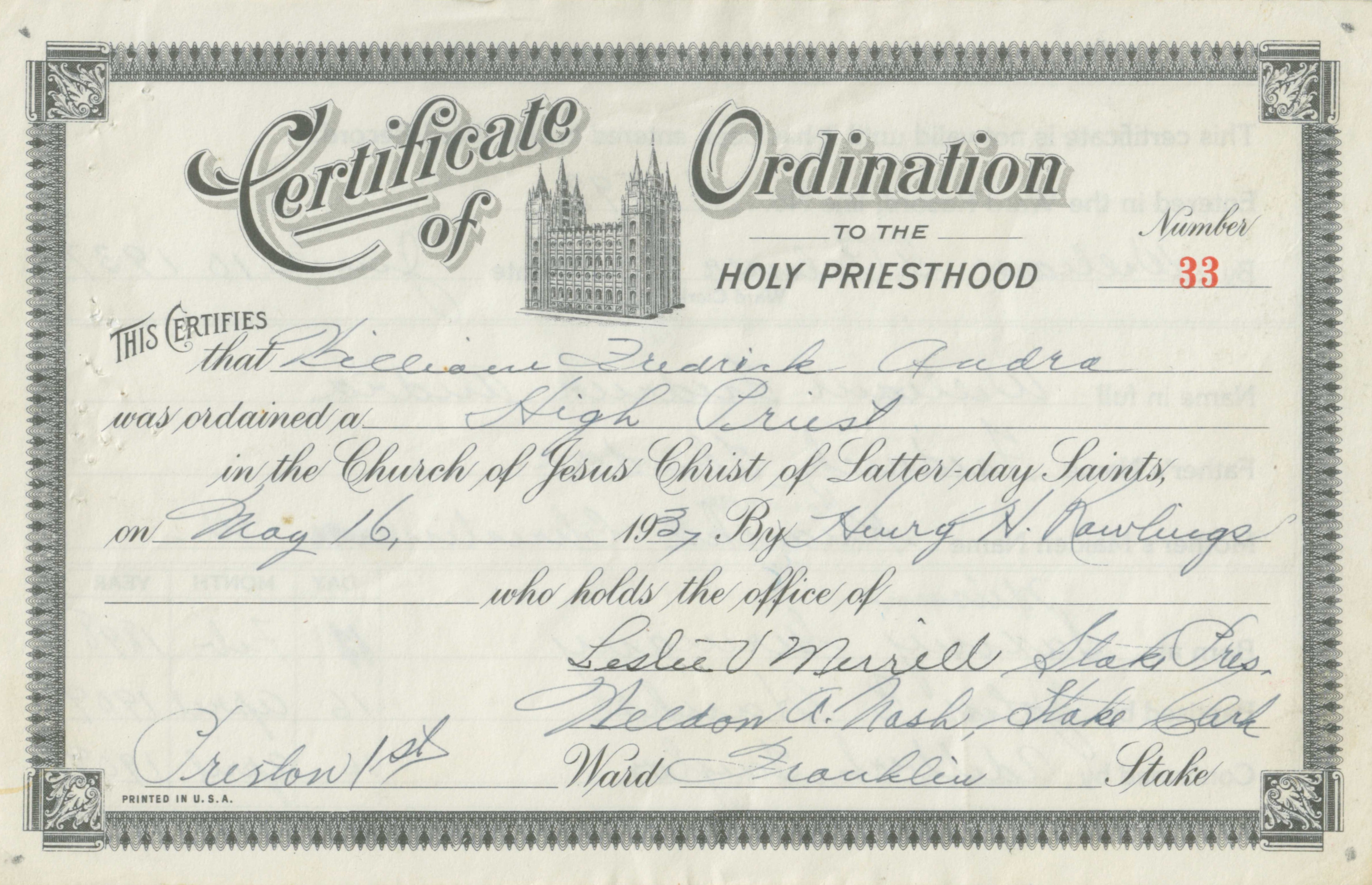
Working through the family history book of Golden Andra that was given to me, I opened a page to scan some photos and found a surprise. Behind that photo were some ordination certificates. These are originals. I thought I better get them scanned and preserved. I also uploaded them to FamilySearch and got them linked with the names in the documents.

I think they are valuable for family history. They are also a peek into church history. This gives us the missionaries who baptized and confirmed my Great Grandfather in Germany. I have provided some limited biographies at the end.

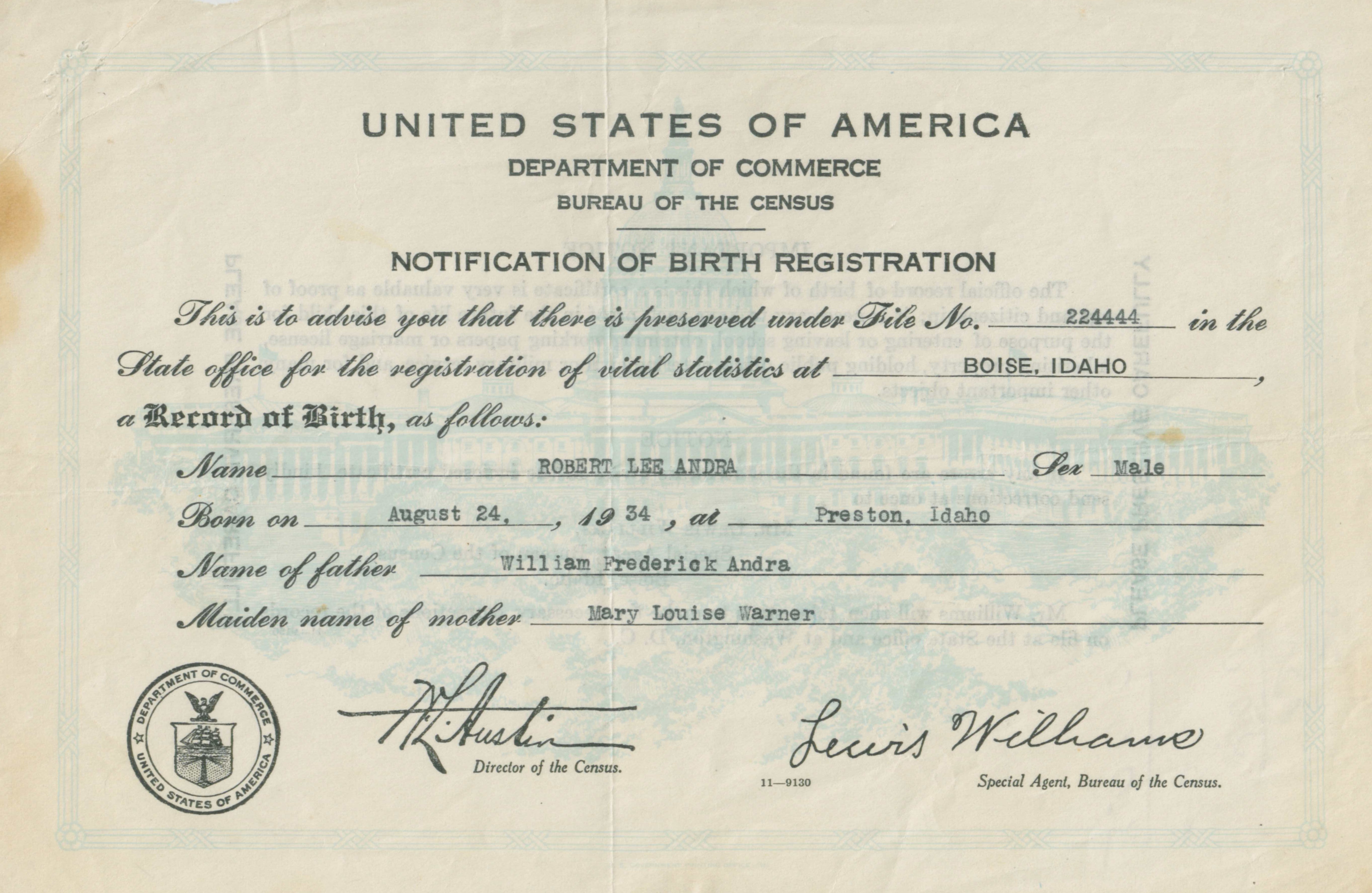
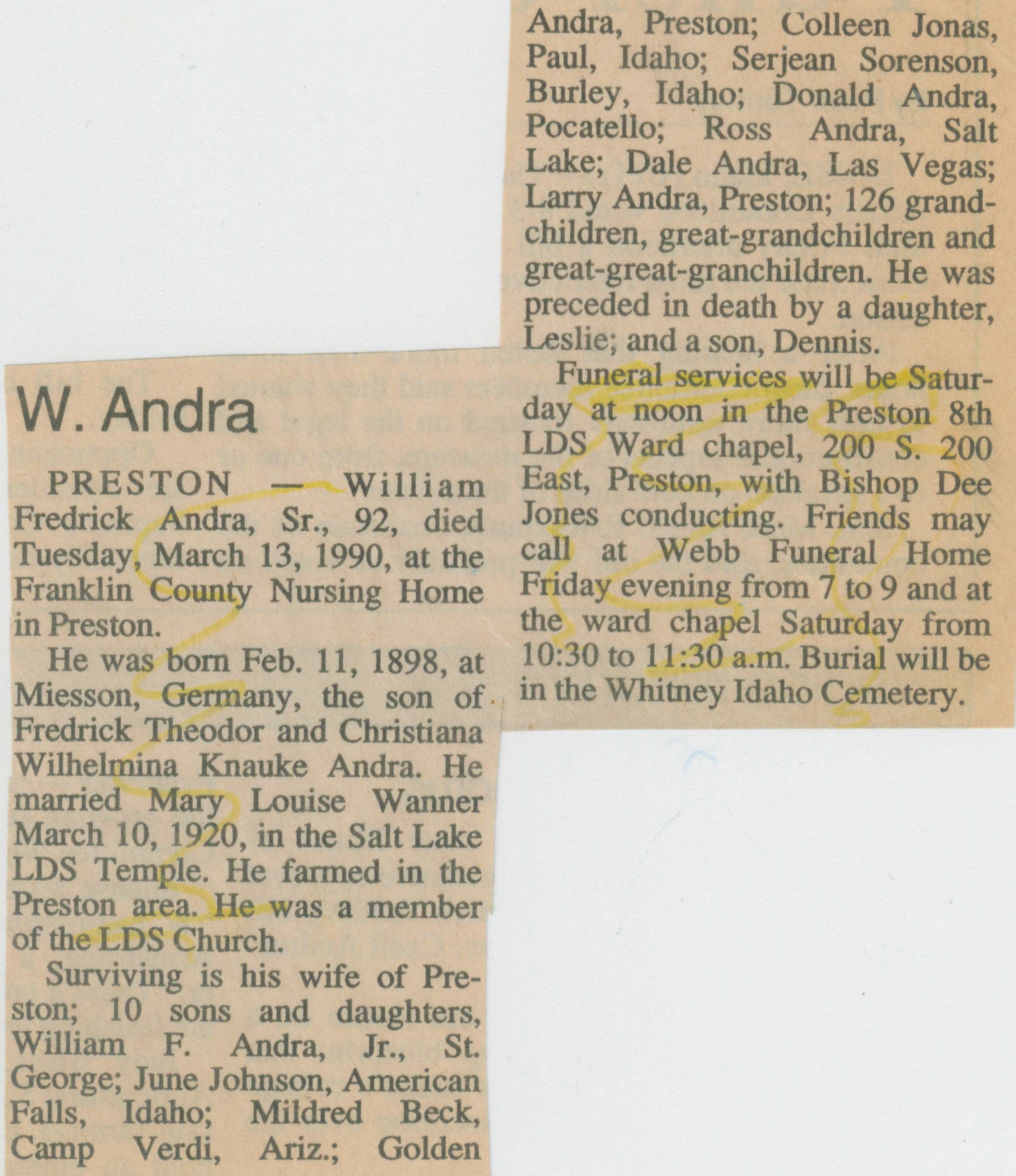
Also an original Notification of Birth Registration for Robert Lee Andra, son of William and Mary, who died at birth. I am not sure why the United States Department of Commerce is issuing this Notification, or the Bureau of the Census. There is some history behind this I am not aware. Last, a copy of William’s obituary.

Priest Ordination Certificate (Front)
Priest Ordination Certificate (Back)
Elder Ordination Certificate (Front)
Elder Ordination Certificate (Back)
High Priest Ordination Certificate (Front)
High Priest Ordination Certificate (Back)
Robert Andra Birth Certificate

I had to do some history on individuals listed on the certificates. Some fascinating individuals, obviously some of them local church leaders.

James Richard Bodily – born 11 February 1872 in Hyde Park, Cache, Utah – died 12 April 1967 in Preston, Franklin, Idaho

Wilford Woodruff Emery – born 16 October 1880 in Salt Lake City, Salt Lake, Utah – died 10 September 1954 in Salt Lake City.

John Edward Hanks – born 30 August 1877 in Salem, Utah, Utah – died 5 July 1970 in Salt Lake City.

William Gibson Palmer – born 16 July 1884 in Croydon, Morgan, Utah – died 15 May 1977 in Preston.

Henry Helaman Rawlings – born 8 April 1893 in Fairview, Oneida, Idaho – died 14 February 1984 in Fairview.

Adelbert Augustine Taylor – born 9 April 1883 in Springerville, Apache, Arizona – died 15 November 1948 in San Felipe de Híjar, San Sebastián del Oeste, Jalisco, Mexico.

Luther Hovey Twitchell – born 17 October 1878 in Salt Lake City – died 15 April 1962 in Bountiful, Davis, Utah.

1908 Wanner Family Photo

Regina Nuffer Wanner with her children in 1908, Willard John and William Christoph and Golden (not clear which is which of the three), Mary Louise in the middle row, and Serge Nuffer, Rulon, and Eva Virtue Wanner on the front (all l-r)

This is another version, colorized, of this photo, but with Regina and others looking less directly at the camera. The above version obviously has some blemishes in the original.

Regina with William and Willard in the back and then Golden, Mary in the middle, holding Serge, then Rulon, then Eva.

I have written previously on this Nuffer/Wanner family. This photo was taken to send to George Wanner while he was serving a mission. This photo is slightly different than the copy I previously shared in that Regina is looking at the photo.

George was called to serve his second mission in the fall of 1907, the second time leaving a pregnant Regina, this time with six children. Baby Serge was the last of their children to be born 8 March 1908 in Preston, Franklin, Idaho. George was set apart on 29 October 1907 to serve in the Swiss and German mission. George completed his mission and set sail for the United States. He departed Liverpool, England on 9 December 1909 and arrived in Preston on Christmas Day 1909.

It was during this mission that George served in Meissen, Germany and taught the Christiana Wilhelmina Andra family. That family joined the church and immigrated to Preston. George and Regina’s daughter, Mary, later married Christiana’s son, William Andra. A direct blessing for serving a mission that rewarded the missionary for generations and still continues.

Andras come to America!

History written by Frieda Andra. I previously shared the history of coming to America compiled by Deanne Yancey Driscoll. I understand this is the Boettcher family, not the spelling Frieda uses in the history.

Otto, Wilhelmina, Walter, William, Frieda, Clara Andra in 1907

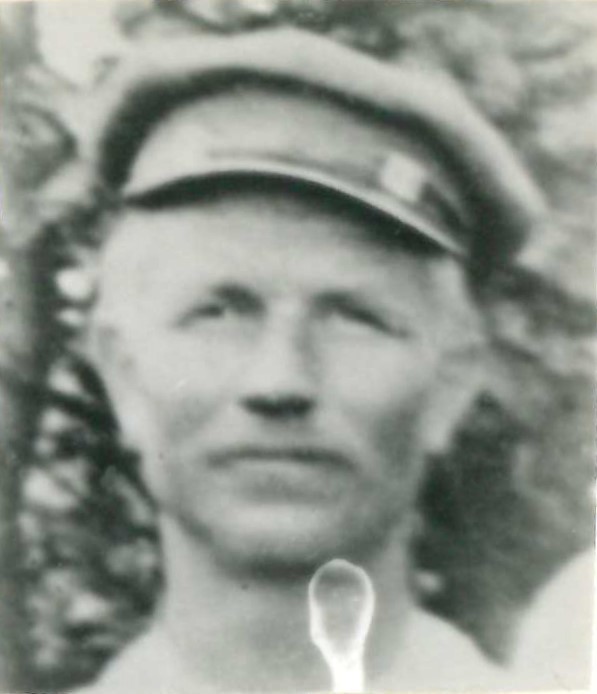
My story begins in the old country – in Germany.  My father, Friedrich Theodor Andra, died November 23, 1902, in Meissen, Sachsen, Germany.  Mother, Wilhelmine Christina Knauke Andra, was left with five children, ranging in age from six months to nine years.  The children’s names were: Frieda Minna, Walter Theodore, Wilhelm Friedrich, Clara Anna, and Otto Carl.  My poor mother had to struggle to support us.  She did small jobs at home and we children helped.  I worked here and there to help along.

Theodor Andra

Three years later, while we were in the forest picking berries, Mother met a lady named Mrs. Bottcher.  Mrs. Bottcher told her about some Mormon missionaries who were holding some meetings.  So mother began attending the meetings.  One by one we all joined the Church.  Years later, after we were all baptized, mother invited the missionaries to our house.  She fed them and let them hold their meetings there.  However, the Lutheran pastor didn’t like it, particularly because Mother was a widow, and he gave her a very hard time.

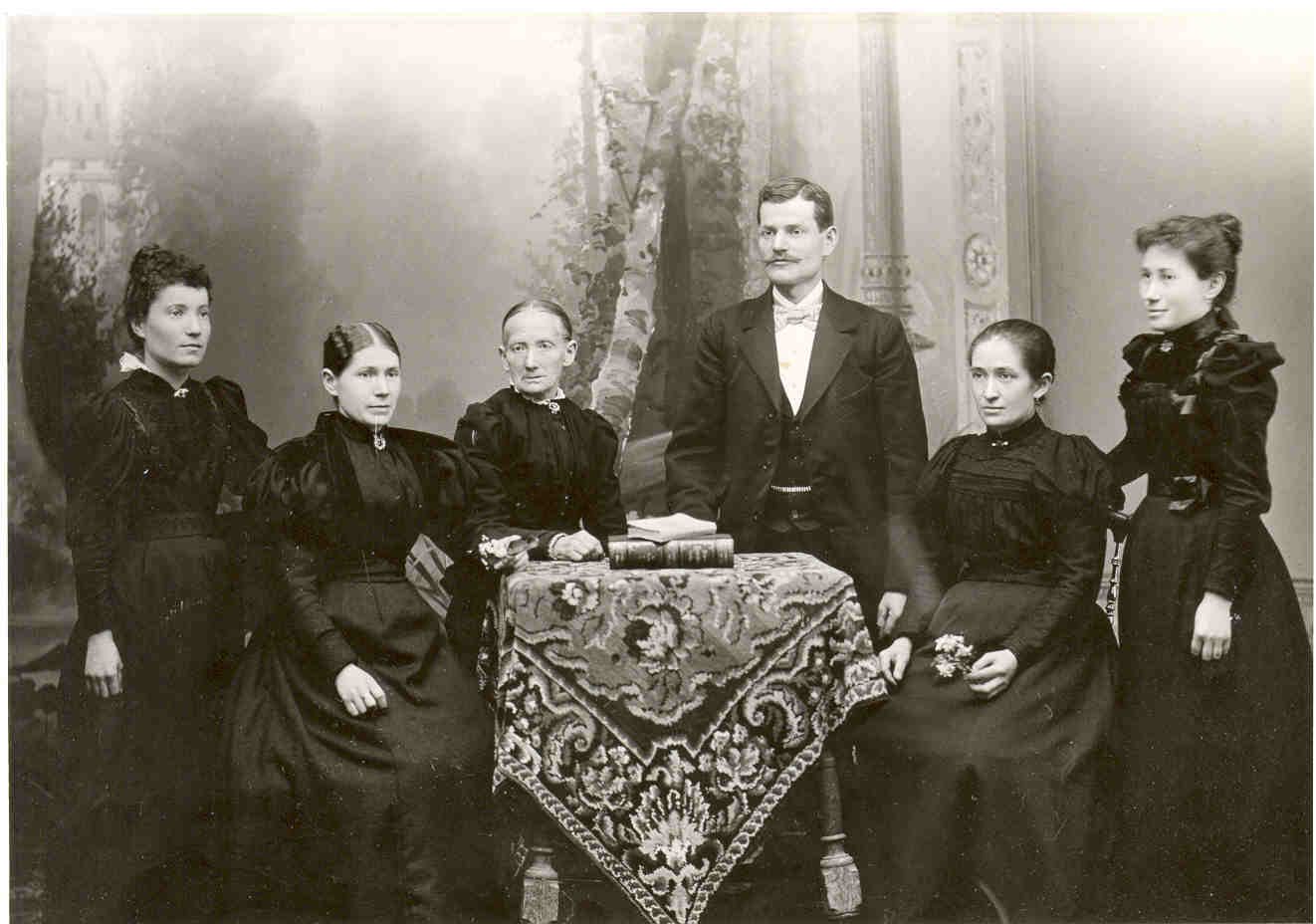
Amalia, Christiana, Wilhelmina, Herman, Anna, and Klara Knauke

In 1909 the Bottcher family decided to go to America.  Mother asked them if they would take her son, Willie.  They agreed to do this.  Mother gave them the money for Willie.  When they arrived to Salt Lake City, they attended the German Meeting in the Assembly Hall.  After they had been in America half a year, they sent Willie to do farm work for a man they had met at the German meeting.  They didn’t even know where the farm was nor did they care.  When they wrote to Mother, they said Willie was lost.  When Mother told the people in Germany that her son was lost in America, they called her names and told her she was wicked to have let him go.  But all the time God knew where Willie was.  He was opening the way for us to go to America.  Mother prayed to our Father in Heaven for her son’s safety and that she might be able to find him again.  Her boss, Conrad Zinke, sent telegrams trying to locate Willie, but was unsuccessful.

Bill, Frieda, Otto, Christiana, and Walter Andra

One morning Mother was on her way to work when a light shone about her, and she heard a voice say “Go to America.”  When she told her boss, he said he’d be glad to help her all he could.  When he asked her if she had any money, she answered, “Very little.”  He was so kind.  He sent a man over to help pack, get the tickets, and get the money he’d given them exchanged for America currency.  They gave us a big going-away party in the villa.  The farewell dinner was held in their most beautiful room.  They cried and hugged us as the said their good-bye.  Our friends gave mother the rest of the money se needed to make the trip.  Even my boyfriend, Mr. Knorr contributed.  Grandmother Wilhelmine Richter Knauke and Aunt Augusta were at the depot to bid us farewell.  They really thought Mother was foolish for going to America.  They didn’t realize my mother had been inspired to go.  She knew God would guide her if she were faithful.  God in Heaven surely did guide us all the way to America.  Glory be to him in the highest for all the wonderful blessings we have enjoyed.

William, Frieda, Christiana, Otto, Clara, and Walter Andra
Christiana Wilhelmina Knauke Andra Wendel

We left to America on the 5th of May in 1910.  We traveled by train to Bremer Hafen.  There we boarded a streamer: The north Deutcher Loyd.  For two weeks I was terribly seasick.  When we reached Philadelphia, the red salt was unloaded.  Everybody was very kind to us there and people gave us money.  The cook, who had become a good friend of mine, bought me a ring but my sister Clara insisted she wanted it, so I got the locket he had bought for her.  Then we traveled to Galveston, Texas.  When we arrived there, we freshened up and then my friend, the cook, showed us the town.  He bought us some bananas, which we had never eaten before.  We swallowed the chewing gun whole, as it was also strange for us, and then we all got stomach aches.  We certainly enjoyed the cook.  He was always kind to us and saw that we had good food to eat.  Another fellow gave us a cake.  When our train was due, we had to say our good-bye to these fine friends.  It was quite rough on the train.  We couldn’t talk much so we just enjoyed the scenery.  Many funny things happened.

Wilhelmina Christiana Knauke Andra Wendel

After we arrived in Salt Lake City, we hired a hack, which is like a buggy but much nicer.  The driver sits up very high.  We couldn’t locate the Bottcher’s so we went to the L.D.S. President’s (John F. Smith) residence where their daughter Ida worked.  Ida was so happy to see us.  She sent us to her sister Clara’s.  After visiting there, she gave us her mother’s address and we left to look for it as it was getting late.

Otto and William Andra, Unknown

Although we had come to America in the hopes of finding my brother, Willie, whom the lady had reported as lost, I know our coming to America was God’s plan.  Our Father in Heaven works in a mysterious way, his wonders to perform.  Our driver kept driving toward the address we had given him.  As we came to 9 West and 4 North, he turned.  This country was so different to us.  Then Mother saw a little boy coming down the street and we stopped to ask him directions.  Then Mother shouted, “That is my boy!”  And sure enough, it was our brother.  He couldn’t speak German.  He just stood there trembling and pointing to where the place was.  We all jumped out and hugged him.  He had been on his way to the depot to meet our train.  Mrs. Bottcher had told him we were coming when we had returned from Fairview where he had been working for that man.  Two blocks away lived the lady we had been hunting.  So we paid the driver $3 for driving us around all day.  When we knocked at the lady’s house, she refused to let us in.  For her excuse, she said, “Keep your things out there.  I don’t want any lice in the house.”  Of course, we knew we didn’t have lice, but we sat outdoors on some lumber, and she bought us a piece of bread and a drink of water.  Her home was filthy.  There was a pig in the house and the chickens were running in and out.  What an awful place!  When Mr. Bottcher came home, he invited us in and fed us.

John & Christiana “Mina” Wendel

Then the Sister Rigler came and said, “Come.  There is an empty house you may stay in.  I will give you a couple of blankets and a lantern.”  It was about eleven o’clock by now and we were all very sleepy.  We were even to tired to look around the house.  We all slept soundly, grateful to have our brother Willie with us again.  His hips were bleeding, and his feet were sore and bleeding also.  He had not been cared for, only given a lot of cussing and lickings.

John & Christiana Wendel

In the morning we looked around the house.  This house had been flooded during the time that the Jordan River had flooded this area.  It had left dirt throughout the house.  There were no windows. Outside there was a nig barn, and flowing well, and four large trees (Poplars).  It was a beautiful day.  Everything looked very green.  Mother called us together to have our morning prayers.  She thanked our Father in Heaven for all His goodness and for providing us with this home, which would be our paradise.  We were so thankful to be in America.  I have never heard a more inspiring prayer of life.  The next morning Mrs. Rigler came back and told Mother who owned the house.  We made arrangements to rent the house for $2.50 a month.  Then Mrs. Rigler took Mother to town on a streetcar to buy a stove, just a small one, washboard, washtub, dishes, food, pans, and a dishpan.  While Mother was gone, we scraped the dirt out.  Sister Rigler bought glass for the windows and even helped Mother put them in.  Walter made a cupboard from some lumber he found.  We used orange crates for chairs.  We were very busy that Saturday.  Then on Sunday we attended Sunday School.  The people were all very kind to us.

Christiana & John Wendel

We had arrived June 3.  On June 5 I got a job for $5 a week plus rom and board at the boarding house.  On June 6 Walter found a job at the flour mill (Hasler’s).  He boarded with Mother.  Willie worked at a slaughterhouse, so we were able to get meat to eat – tails, liver, etc.  It was very good.  Mother bought Willie a small red wagon which he took to market and bought home food we had never seen before.  The cantalopes made us sick.  We ate the corn raw, which didn’t make us feel any better.  It wasn’t long before we learned which foods to cook and which food to eat raw.

Christiana and Frieda

Well, it wasn’t long before our little house was a cute little dream house, complete with furniture and curtains.  Soon we had some baby chicks, a dog, and cat.  Oh, those wonderful, happy days in a very wonderful country which was given to us by God.  God Bless America.

                                                                                                Frieda Minna Andra

Christiana and John Wendel

P.S. On Sunday, June 20, 1965 we saw our old home – this very one we had immigrated to on June 4, 1910.  The house had now been covered with shingles on the outside.  The barn has been moved and the well is no longer there.  It was such a joy to see this home we used to live in.

Christiana Wilhelmina Andra Wendel

Pleasant View School 1909-1910

Pleasant View School 1909-1910

This was an interesting find.  This was in a stack of photos I scanned related to the Andra family recently.  The interesting part is that it says Pleasant View School, which I am unable to locate.

In the middle of the photo is William Fredrick Andra (1898 – 1990) with the tie.  I cannot find the school, yet hope to get names of others in the photo.

Here is a snippet from Bill’s autobiography:

“I was baptized in the Elbe River in [16] April 1909; came to the United States in the following month of May.  Upon arriving here, I went to Fairview, Utah to work out my board and room from John R. Anderson, who was a former missionary in Germany.  After being in Fairview for one year, I went back to Salt Lake to meet the rest of the family when they arrived.  We had quite a struggle at first, but we made out when the rest had learned the language.”

I had always thought he meant Fairview, Idaho, which is just west of Franklin, Idaho, south of Preston, Idaho.  Since they spent and lived their lives in the Preston area, I just made that assumption.

However, in further research, there is a Fairview, Utah, in Sanpete County.  He also mentions a John R Anderson who was a missionary that served in Germany.  I found John Rees Anderson (1879 – 1954) who was born in Fairview, Utah, and called as a missionary from Fairview.  John was set apart as a missionary 21 June 1904 and released 20 April 1907.  Which is entirely in the time frames for which the Andra family was taught.  Bill’s mother was baptized 2 November 1906 and could certainly have been one who assisted in Christiana Wilhelmina Knauke Andra’s baptism.

According to Bill’s own record, he would have been in Fairview, Utah from summer 1909 for about a year, which puts this school somewhere near Fairview, Utah.  Guess that is the next step in the search.  If we can find records of the school, the class looks small we might be able to name classmates.


Andra Christmas in Germany

Christiana Wilhelmina Andra Wendel

Christiana Wilhelmina Andra Wendel on her birthday

Christmas Memories in Germany, compiled by Deanne Yancey Driscoll

Frieda wrote the following story about Christmas in Germany. December 1901. This would be the last Christmas with their father (Otto was not born at this time).

Frieda Andra said, “Christmas in Germany was a very joyous time.  We have three days of celebration, dancing, singing, and going to Church.  They really enjoy themselves.  Every State has a different custom in celebrating Christ’s birthday.  They even bake different cakes and call their cakes different names.  Names like…Mo, mstrriseal, Hutzelbrot, Kletzenbrot, Kloben, Zwiebelkuchen, and Lebkuchen.  Where I came from, we called it Stollen.  My mother would bake about four or five because she would take them to the bakery and they baked them in their big ovens.  There were many inspiring programs too, in our Church.  In many places the people portrayed the Birth of Christ, all in person.  When Christmas came, we were really inspired with a Spirit of Holiness.  One night when I was about eight years old, a knock came to the door.  I opened the door and there stood St. Ruperecht.  I was so scared.  He asked me if I had been a good girl.  I knew I hadn’t been, so I said, “I will be good, St Ruperecht,” and I said my little prayer that mother had taught me.  He gave me a switch with his Rude, then looked for the other children, but could not see them as one was under the sofa, one behind the sewing machine, and my little sister was behind mother and was so scared that she began to cry.  Then he got my brother Walter out from under the sofa and Willie came from behind the sewing machine and gave them a licking.  He asked all kinds of questions to see if we had learned anything.  Then we knelt down before him and said our Prayer.  It went like this: “Oh du heiliger fromer Christ while fanta Jam Gaburto Stag ift, Da ift aur Ervan ndait umd bright bai allan Menshen froje Zait.”  Then he promised us, if we would be good children, he’d see to it that we got some nice gifts for Christmas.  He left and we danced and clapped our hands for joy, it was really nice, a spirit of joy and happiness was in our house and in us too.  On the Night before Christmas, we all had our baths, and then early on Christmas Day we got up and saw what the Christ Child had brought us.  My!  The tree was loaded with cookies, nuts, candles, and apples.  It was, indeed, beautiful Lebkuchen in forms of all kinds of shapes hung on the tree.  We would always get Marziban (that’s candy) for Christmas.  It’s delicious.  We all got one toy and clothes also. Clothing was the main thing.  We all sang.  Stille Nacht, Heilige Nacht (Silent Night, Holy Night).  Tannenbaum, O Tannenbaum (Oh Christmas Tree, Oh Christmas Tree) and O du frohlicke o dufulige.

Then we sat down and had Stollen and a hot drink for breakfast.  In General, it was a most happy day for us children.  Then we would go sleigh riding as we usually got a new sleigh for Christmas because Papa had made them himself.  We called it Kasehitchla, and it came down the hill as fast as the store one did.  We lived by Aunt Taute Auguste, so my Cousin Arthur was among us too.  Aunt Auguste was a very dear woman.  She had a bad husband who would drink and come home and beat his wife and son until they were black and blue.  His name was Lippman.  He disappeared while Hitler was in power.  All of them are dead now, Aunt Martha, Uncle Richard Givich, Aunt Bertha and Uncle Fritz Kamprath, Robert and his wife are gone long ago, Tante Auguste.  These were sisters and brothers of my mother.  Robert Knauke was a brother to my mother.  We were very happy in the Old Country.  We had such very nice feast (celebrations): Osteria, Pfuigotat Kirwest, Erute, Fest, Christmas, New Year.  Each takes three days to celebrate.  Then they bake the best cakes, drink and eat for three days, dance and be merry.

Mission Journal of Johann Wendel

John & Mina Wendel

John & Mina Wendel

I need to give some background before I post this journal.  The past few weeks I have posted some stories of Theodor & Christiana Andra.  As the stories relate, Theodor died in 1902 due to a quarry accident.  Christiana and the children converted to Mormonism and the family moved to Utah.  After being in Utah for a few years, she met and married a widower, John Wendel on 22 May 1914 in the Salt Lake City Temple.

John became a father to her children who were teenagers.  William Fredrick Andra, the middle born knew him toward the end of his teenage years in this home.

Johann Wendel was born 27 September 1856 in Wasserberndorf, Mittlefranken, Bavaria and died 20 January 1930 in Salt Lake City, Utah.  He married Elisabeth Streckfuss 19 October 1880 in Wasserberndorf.  Elisabeth was born 21 February 1850 in Buchheim, Mittlefranken, Bavaria and died 31 August 1913 in Farmers Ward, Salt Lake, Utah.  Christiana Wilhelmina (going by Mina in Utah) was born 24 October 1869 in Radebuel, Dresden, Saxony and died 25 December 1957 in Salt Lake City.


Missionary Journal of Johann Wendel ENGLISH TRANSLATION OF THE GERMAN MISSIONARY JOURNAL OF JOHANN (JOHN) WENDEL. HUSBAND OF ELIZABETH STRECKFUSS WENDEL (and 2nd wife: Christiana Wilhelmina Knauke) ALSO FATHER OF ANNA BARBARA W. MAUERMANN, LEONARD MICHAEL WENDEL, JOHN WENDEL, GEORG FRIEDRICH WENDEL. MISSION TO GERMANY FROM JANUARY 25, 1922 TO OCTOBER 31, 1923

PREFACE This Grandpa Wendel is a Grandpa to all his living descendants in the year 1978. The younger descendants may have to put 2 or 3 “greats” before the “Grandpa”, but he is indeed a Grandpa to all of us. Grandpa John Wendel was born September 27, 1856. He married Elizabeth Streckfuss on September 17, 1880, lacking ten days of being age 24. He joined the Church in the Nuremberg Branch on October 4, 1902, just past his 46th birthday. He emigrated with his wife to Salt Lake City, arriving here in August 1905 — not quite 49 years old. His dear wife was killed by a car in Aug. 1913. when he was almost 57 years old. He was in the Church a few months over 19 years when he was called on a Mission to his Native Land of Germany — a few months past the age of 65. He had re-married to Wilhelmina Christiana Knauke on the 22 May 1914 at the age of 57. He died in January 1930, a few months past the age of 73.

This Missionary Journal is written in the Gothic German handwriting and in the German Language. The average American missionary who has served a mission to Germany has not learned to read this Gothic German handwriting. Ursula Hilbert Wendel, an emigrant from Germany, the wife of John A. Wendel, a grandson to Grandpa Wendel, was able to read this journal. Uncle Leonard Michael Wendel brought this journal to Ursula about 1966 or 1967. Ursula’s children were quite small at the time and she had the constant care of her father and part of the time her father-in law. Consequently she was unable to translate the journal as rapidly as Uncle Leonard had hoped, because Uncle Leonard had desired that his oldest grandson should be given the journal, he requested his grandson, John Richard Wendel go to Ursula’s home and get the journal. At the Grave side of Leonard Fredrick Wendel in early June 1977 Pearl Wendel, a sister-in-law to Ursula approached John Richard Wendel and asked him to please bring the journal to the Wendel Family Reunion in July 1977, so that Ursula may finish the translation of it. This he did. God moves in a mysterious way His wonders to perform! At this time Ursula’s oldest son Ronald was on a Mission. So, to help out financially, Ursula obtained a job with one of the schools in Bountiful to help with the hot lunch program. In January and February 1978, Ursula was forced to quit her job and spend much time in bed because of trouble with her legs. During this time she was able to complete the translation of Grandpa’s Missionary Journal.

She then gave the completed work to Pearl Wendel, who had volunteered to type it and have copies made for as many of the descendants of Grandpa Wendel who desired them. This Journal should be of particular interest to the families in the Leonard Michael Wendel Line, because one of the first people whom Grandpa called on was the father of Frieda Johanna Neuner (Uncle Leonard’s wife). He also mentions finding Fredrick Kohles completely blind. I tried to find how he fit into the Kohles line, but from the Genealogy sheets which I have I was unable to fit him in. He may have been a cousin of Grandpa’s. I, as typist, have tried to put the translation into the American way of saying things without destroying the real meaning Grandpa meant to say. I have worked very closely with Ursula on this so that the translated Journal will tell the story Grandpa wrote.

The reader of this Journal should keep a few thoughts in mind to get the true understanding of Grandpa’s Mission. Apparently In the late 1800’s and early 1900’s the field of converts in Germany was ready to harvest. Many converts came into the Church and many emigrated to Utah to help build up the Kingdom here and enjoy the full blessings of the Gospel including Temple Work. World War I came along from 1914 to 1918. Germany and France were both hit hard by this war. To try to pick up the pieces and carry on as Nations was a great task. In 1922 and 1923 Inflation hit Germany so hard that it took bushel baskets of money to buy very little. The Spirit of Conversions seemed to have left this fruitful field. By the time Grandpa returned in 1922, it was an achievement and a fullness of joy just to have a long Gospel Conversation, let alone a Conversion. The Church also had grown fairly strong in Western U.S.A., so they were trying to encourage the members who were left and those newly converted to remain in the foreign countries and try to build up the Kingdom there. Elders often worked alone, and the discouraging moments often far exceeded the encouraging ones. The Great Grandsons and Great Grand-daughters of John Wendel, who have had the privilege of filling missions in the 1960’s and 1970’s when once again the Spirit of Conversion reigns upon the earth, will find that their mission journals and experiences were almost opposite to Grandpa Wendel’s. The number of Mission Fields have doubled many times since the early 1920’s. The Missionary Force is probably 10 or 20 times what it was then. Foreign Stakes are being created as rapidly as leadership will allow. Temples are being built in many Foreign Lands as rapidly as they can be built. The Modern Prophet’s Counsel “to widen our strides and hasten our pace” is being accomplished by the 1978 Missionaries. We hope the time spent in translating, typing, correcting and copying this journal will prove to be time well spent, by all those who will find true enjoyment in reading it, owning a copy, and having their testimonies strengthened by the testimony and experiences of Grandpa John Wendel. Sincerely, Pearl Wendel, 175 East 2nd South, Bountiful, Utah 84010

THE GOLDEN RULE DO UNTO OTHERS AS YOU WANT THEM TO DO UNTO YOU.

DIARY Missionary Journal of Johann Wendel MISSION TO GERMANY FROM JANUARY 25, 1922 TO OCTOBER 31, 1923

On January 25. 1922. 5:OO P.M. I left Salt Lake City, through Wyoming, Nebraska, Illinois, arrived in Chicago, January 27, 7:OO P.M. sight seeing on the 28th, like Museum, Post Office, Michigan Lake, climbed the highest building and in the evening at 7:OO P.M. on the 28th, leaving for Buffalo. We arrived here on the 29 of Jan. at 4:00 P.M. One hour delay and then on to Montreal, where we arrived Jan. 30 at 8:00 A.M. From Vermillion till Buffalo, we traveled on the big river to Niagara Falls. In Erie we saw a lot of cultivation of grapes. After our passport was inspected by the German Consulate in Montreal and $10.00 paid for, we left on the 30 of Jan. at 12:OO o’clock noon for St. John. We arrived there on the 31st of Jan. at 7:30 A.M.

On February 1st at 11:00 A.M. we got on the ship “Montcalm”. In the afternoon 3:30 P.M. the ship left the Harbor. On Feb. 2nd. 9:OO A.M. we arrived in Halifax, where the boat laid all day and night till 2:OO A.M. and loaded 16,000 barrels of apples, a lot of sugar and cheese. I could hardly believe what such a ship could carry. The boat is 560 feet long and keeps going by oil. The City of Halifax is very mountainous and was covered by snow.

On the 3rd of Feb. 1922 at 5:00 A. M. the ship left. Everything is very noble and modern and we are 212 man. in First Class.

On Sunday. February 9, 1922. we held Church Service from the Church of England in the Dinning Room.

On Feb. 9th, we passed the Coast of Ireland, where the water looks light green compared to the Atlantic Ocean’s dark blue or even black.

On Feb. 10th at 3:00 A.M. we arrived in Liverpool. We the German Brothers Pitsch, Pohlmann and I, together with 3 others had to stay here one day, because our Passports haven’t been inspected, by the English Consul.

On Feb. 11 at noon, we left the boat, took care of our luggage and at 2:00 P.M. left Liverpool for Grimby Dock, where we arrived at 6:20 P.M. At once we went to the boat for Hamburg, Germany. In the Evening at 7:30 P.M. the ship left and we arrive in Hamburg, Feb, 13th at 8:00 A.M. We stayed in Hotel Stein. The Voyage till Hamburg, Germany, with Passport difficulties, food and tips cost $274.00. In Liverpool, we stayed half an hour in the passenger train, where Apostle Whitney and two other Elders visited us.

On Feb. 15th. I saw the Exotic Garden, but because of snow, I didn’t see very much. Then I visited the Volksmuseum (People’s Museum) and there was a lot to see. With a guide, it cost me 6 Marks and 50 Pfennige (cents). In the evening I went to the Bible hour and I liked it very much.

Feb. 16th Today I shall study.

Feb. 17th At 12:30 P.M. I left Hamburg for Berlin and arrived here at 8:30 P.M. A few good women I met on the train, looked after me. They showed me the way to a lodging and carried my luggage. I met here Brother Stoddard, he is the Conference President.

On the 18th of Feb. he sent me to a family, where only the woman is a member of the Church. The first night, I slept in Brother Stoddard’s Lodge Samariter Str. 38.

On Sunday the 19th. I visited Sunday School and got invited for Dinner with another Elder. I had a good time. In the Evening, we went to the meeting, where I had to speak for the first time. Afterwards we blessed oil and a sick person. The members were all very good to me.

On Feb. 20th It is very cold in the lodge.

On Feb. 21st I received word from Swiss that I was transferred to Nuremberg. Tomorrow I shall leave. The name of the sister where I’ll stay is Anders, Guntenerstreet 24.

On Feb.22nd at lO:OO A.M., I left for Nuremberg by D Zug (fast Train) thru Wittenberg, Halle, Jena Saaletal (River Saale Valley) up to Lichtenfels, Bramberg and arrived in Nuremberg 8:30 P.M., where Brother Strebel picked me up from the station. He took me right from there to a farewell for Sister Keil and Brother Ludwig. On Feb. 23rd. I visited Brother and Sister Adelemann and a family Harold, where I found Friedrich Kohles completely blind. A sad fate.

On the 24th. I visited Carl Neuner in Failhof in the poor Hospital. He is very weak, but was very glad when I introduced myself as Father-in-law to his daughter and gave him $10.00 from his Son-in-law. I spoke a long time with him about the Gospel.

On the 25th. I visited the Eckardt Hamer family. He recognized me at once, but not his wife. I had a very warm welcome here. Afterwards I made a visit in Birkenwald, where I was strongly welcomed and fed well by the Hartmann family.

On the 26th. I went to Sunday School in Nuremberg, Bucherstrasse 90 and noon meeting. They welcomed me good and I had to speak.

On the 27th, I went tracting, but had no success.

On the 28th of Feb., we have been by Brother and Sister Schneider’s place.

On March 1st, I have been in Birkenwald, where I explained the Gospel to Hartmann.

On March 2nd, we have been in Fuerth by Brother and Sister Habermann, and in Feucht with the Dannenfelzer family. On the 1st Brother Strebel and I were in Ziegelstein too, a colonie 2 by Brother Mueller, who was ill.

On the 3rd of March, I have been to Mrs. Hartmann in Birkenwald and Janitor Schwarm and Hass, where I was welcomed friendly.

On the 4th, I stayed in bed, and on the 5th, we had Ward Conference. Brother Stoof (Stover) Conference President, from Stuttgart was present and we had four meetings.

On March 6th, I visited Mr. Baurner and L. Gruensteidel. I was welcomed good.

On the 7th to the 11th, I visited some friends and had opportunity to preach the Gospel and did tracting.

On the 12th of March. Sunday School and after that meeting, I went with Sister Saum and wrote some addresses down. I visited then ‘Gg.’ and Kath. Schmidthammer, where I stayed over night.

On March 13th, I visited Conrad Hassler, Geutherstr. 1. Here I was welcomed good also.

On March 14, 15, and 16th. I was ill and stayed in bed. In the evening on the 16th, I got up from bed and visited Anna Schmied. She is married to a man named Lechner. I didn’t recognize her anymore, with her 35 years she is an old woman.

Today March 17th. I received my eviction. Such a dangerous Individual has no right to be in the civilized City of Nuremberg.

On the 18th and 19th, I was in bed again.

On the 21st, I got up and received another eviction. I visited Walz and Ditsch. Ditsch wanted to convert me.

On March, 20th….thru the 23rd, I was in bed.

On the 23rd, much snow and wind.

Until April 1st, I visited several inactive members.

April 2nd, I have been to the meeting and Sister Huber was sustained as a Sunday School Teacher.

Yesterday, April 6th, I attended a meeting in the Hercules Veledroon, a very good one, arranged by the inter-National Jehovah Witnesses. The Lesson was: “Can men talk with the dead?” They pointed out, that the dead ones with whom the Spiritualists communicate, are not our dead persons, but the spirits who were cast out of Heaven. “Rev. John 12:4,9” They want to show off and tempt mankind.

April 11. I was busy a half a day in the city hall because of my eviction. I made a petition.

On April 18. 19t and 20th, I was ill at Brother and Sister Schneider’s.

On the 22nd, I went to Frankfurt for Conference. I feel better. I arrived in Frankfurt at 5:00 P.M. I stayed with Brother and Sister Anton Huck, Schillstreet 5, 2nd story. A place where I was welcomed good.

Sunday morning — Sunday School and 3:00 P.M. Meeting.

Monday from lO:OO A.M. till 3:00 P.M. Missionary meeting. Present were President Balif and President Stoof. Twenty-one men received good instructions how to tract. In the evening at 7:30 P.M. Priesthood Meeting until 10:00 P.M.

On Sunday I had to speak briefly and I mentioned by the way, that I would like to see from our big branches here a compliance for our German Wards in Zion, so that they may receive the blessings of Temple Work with us, and so on. After the meeting President Balif said to me, if I speak again about emigration, I would be released from my mission at once. Now I don’t understand how to reconcile this with my opinion, but I’ll try as much as possible to obey.

On Tuesday, we went home, 6:00 P.M. in Munich, in Wuerzburg some hours delay and so we could go and see the city. Twelve of us were from Nuremberg. Brother Strebel, myself and two Sisters Strecker drove home together, but first I came alone. The trip to Frankfurt and back cost 200 Marks. Frankfurt is a beautiful city and I liked it very much.

Today, Rain April 28th. I walked all day and visited four friends and explained the Gospel to them. Afterwards I visited 5 astray members, who didn’t want to know anything anymore, because they know already enough. The whole day I didn’t eat anything. So, late in the evening, I visited The Schmidthammer’s, they were just thru eating. They did not invite me, Well, the Gospel creates not all the time friends. On the way back home I wanted to buy something to eat, but all the stores were closed. When I reached home, my landlord, Brother and Sister Strebel had gone to bed already, I went to bed, the first time hungry and I felt very weak, and wished I were home and my mission complete.

On the 29th, I bought with Sister Ceder’s help a Fur for my Mina (2nd wife, Wilhelmina Christiana Knauke). Sister Strebel will send it to her. The price is 2600 Marks. Today I received my sanction for my stay until July 15th, and payed 442 Marks for it. Sometimes I feel very sad because people have so very little interest for the Gospel. We have rain again.

The weather suits my mood I am in today, May 1st.

May 6th. I visited several lukewarm members, and invited them to a special meeting, where they will have to declare if they are for or against the Church, concerning excommunication.

May 7th The divorced Mrs. Wieleitner got excommunicated from the Church today because of adultery. President Stoof was here today and we had all day long meetings, where I had to speak too. I administered to Sister Ceder also today because of her headache and blessed a child of Brother and Sister Wieleitner, which received the name of Bruno Wieleitner. The weather is beautiful today and it seems as Spring is coming.

May 8. Today Sister Stern’s son Bruno got buried at the Johannis Kirchhof Cemetary. He was a member, fallen away from the Church. The Sermon was given by a Priest. He was 20 years old. (Translator’s note* I guess the son was 20 years old, it is not quite clear, who; Priest or son.) Afterwards I visited some members and friends and talked with a Catholic nurse in the Hospital, about the Gospel but without success.

May 9. I visited Mrs. Hartmann’s family Reichel in Birkenwald and bore my Testimony; also to Hempfling and Hefner, where the women were very attentive.

May 13th. Today I went to the Cemetery (Sudfriedhof) where a former Co-worker, Work Master Schlegel from Birkenwald is buried. I visited him several times before his death. He associated with the International Bible Investigators and was buried from them also.

May 14th. Today was Mothers’ Day. It was appropriately celebrated and. the Mothers received flowers from six girls dressed in white. Brother Dinse remembered the Mission Mothers especially. It was a splendid Sabbath and we had a beautiful time.

May 25. In the morning 4:45 A.M. I drove to Steppach (I assume by train the only transportation possible) passed Strullendorf. Till here the fare was 18 Marks, and till Steppach 6 Marks. At noon I visited Gg (Georg) Holler in Pommersfelden the Castle. There was much to see, like wonderful paintings and a Hall that was completely adorned with sea shells, a herd of Deer with antlers, (Steinbocke) and so on.

May 24th I moved out from Mullner Street 23, Brother and Sister Strebel and moved in with Fritz Hefner, Peter Henlein Street 25 third floor.

May 25 to 26. I stayed over night in Steppach with Lisie Grau. I visited then Mrs. Vogel at the Hutzolmill, then preached the Gospel to the Holler Family afterwards traveled by train to Simmersdorf, paid 2 Marks for the ticket. Then I traveled to Horbach and to Weingartsgreuth, where I went to the Parson’s (Minister’s) Office, and received Genealogy from the Wendel families and paid 20 Marks for it. Then I went back to Weingartsgreuth and preached the Gospel to a family by the name of Kronester and tracted in this town. In Horbach I stayed over night with Blacksmith Master, Matthaeus Rost and preached the Gospel and gave him tracts also.

On the 27th. I went on to Wagenroth, where I looked up the minister for Genealogy and received some. Then I asked the Minister “What do you think about the Mormons?” He answered, “Well, you teach the Bible also, but the Bible contains many unclear passages, where one without a leader cannot understand what is said and therefore every Sect interprets it differently.” I wanted to give him tracts, but he refused to take them. Then I rode to Schluesselfeld, paid 3 Marks for the Ticket, from here I went to Ashbach and Wasserberndorf, visited on my way Blacksmith Matthaeus Hassler in Heucholheim; then Vogelsfrieden in Aschbach. In Wasserberndorf I lodged with my godmother.

May 28. I went to Wasserberndorf, my birthplace, and I found many changes there, my people and the town itself. Most of the old people are dead and the young ones grew up.

May 29. I visited F. Wendel in the Hutzol mill and the old Ritzau and many other acquaintances.

On the 30th, I went to Langenberg and Abtswind, where I stayed over night by F. Herrmann, visited the Wendel families in Langenberg and was here well received.

On the 31 st of May. I returned and had a long conversation with J. Uhl and also with Mrs. Doctor in Geiselwind.

On June 1st, I went to Fuettersee Kleinbirkach and Grossbirkach, Gg.(Georg) Kleinlein accompanied me. We had great joy as well as all others I met. With Mr. Teacher in Grossbirkach, we stayed a longer time and talked about the Gospel.

On the 2nd and 3rd, I made several visits in Wasserberndorf and preached the Gospel, but had not much success. I gave the teacher of Wasserberndorf tracts and explained the Gospel to him.


On June 5. I was in Church in Fuettersee. At noon Gg. Kleinlein visited me and we talked half the day about the Gospel. What kept him interested, June 6, I was in Burghasslach with H. Dekon for Genealogy and visited F. Paul and conversed with him for a long time about the Gospel.

On June 8. I went (by train) with Fritz to Ziegenbach and visited Gg. (Georg) Wendel and there I tried to explain the Gospel.

June 9 and 10. I stayed in Breitbach with Martin Kohles. There I met a man from Altenschoenbach and we talked for a long time about the Gospel. His name is K. Lamprecht and he is a Blacksmith.

On June 14. I went to Kirchrimbach and Taschendorf to get Family Records and in Taschendorf I had a conversation about the Gospel with the Minister for one hour. He don’t believe in a pre-existance. Furthermore, he could not understand how blessings can result in having a big family (many children).

June 17. I went back to Nuremberg.

June 18. We had a nice meeting, Brother Stoof gave a good speech. The branch was re-organized because the Branch President, Brother Strebel is emigrating to America (United States). Two Brethren were ordained in the Aaronic Priesthood. I ordained one of them, Brother Schneider, as a Teacher.

June 25, Today we had a beautiful meeting in the Forest and Sunday School in Erbanstegen. The Branch from Fuerth was present also.

July 6, We had a great Conference July 2nd in Stuttgart, where all the Missionaries from Holland, Swiss, Austria and all Germany were present. We received good instructions and it would be desirable if all the instructions could be followed. About 112 American Missionaries went to Oberammergau (The town for the Famous Passion Play in Germany). Most of the German Missionaries stayed in Stuttgart, probably because of lack of money. I went with Sister Zeter sight-seeing in Stuttgart and I liked it very much. I stayed three days in a Hotel, but it was too expensive; I paid 102 Marks the night. The last two nights I moved to Sister Zeter’s Landlord, which let me stay without any pay. They were real nice people, their name is R. Hald and they live in Strohbergstrasse 36, three stories high in Stuttgart.

July 5. We returned to Nuremberg and had there photographic pictures made.

July 9. Today the Branch Moegeldorf-Hammer was organized and the first meeting was held 3:00 P.M. In Nuremberg at Sunday School the following brethren from Salt Lake City were present: Brothers H. Rueckert, L. Schobert, Gasser and Little. In the evening we had a beautiful meeting in Nuremberg, and I blessed a child of Sister Buchholzer and gave her the name Bertha Edeltrude Buchholzer. In Stuttgart, I met many friends (acquaintances) from Salt Lake City. The first one I met was the son of Brother Curtis. I stayed there in one room with Brother Glissmeyer (Glissmaier) and saw Brother Pitsch and Brother Pohlmann, The first time again, since we departed from each other in Hamburg.

July 13. Today I was at a Catholic funeral. The wife of Mr. H. Popp, a past job-colleague, was buried at the South Cemetary. She was 39 years old.

On July l6th, We had some well attended meetings. . In the after noon at 3:00 P.M. I went from here to Moegeldorf with Mr. Hiltmann and his wife to her sister and brother-in-law whose last name was Fink. While there, we had a long conversation about the Gospel. We had a beautiful time. In the morning I visited M. Huegelschaefer and was invited for Dinner, and had opportunity too to explain the Gospel.

July 27. This morning I went with the Brethren Dinsi, Schmidt, Karl Weiss to Brother Binder to bless him. He has to go to the “Martha Haus” (Hospital) for a nose operation, because of probable cancer.

July 29. Today I went to Fuerth and visited Maria Klein of Holzberndorf. She lives with her daughters, one of them is married and lives in Marien Street 5. She is divorced, but her husband is married again.

July 30. I was laying in bed at night and had a toothache and was thinking about something, when suddenly someone called out loud “Hauner” Mr. Wendel. At once I recognized the voice of Woodworker Uhl from the Hutzelmuehle. I thought at once, why is he coming here. He probably came by train and has no night lodge (a place to stay for the night). At once, I jumped out of bed in my room, went to the window where I called out: “What is the matter?” I got no answer. I leaned out of the window and saw nobody. After a few minutes there came a few pedestrians. I turned on the light and it was 10 minutes before one o’clock in the morning. I layed down again. Now, I can understand when people have so many visions.

August 6. We had Fastmeeting. We had six meetings on Sunday. One before Sunday School, Brother meeting, Priesthood meeting, Fast meeting, and afterwards a short meeting, where a brother by the name of Foerster got excommunicated, who was against the Church and probably asked for his excommunication. Afterwards we visited Sister Ancon who is ill.

August 12. We drove to Munich for a Sunday School Conference and we arrived there at noon. In the evening we had Priesthood Meeting with President Stoof conducting. There was a Brother by the name of Spengler ordered to come, who was accused of adultery and therefore was to be excommunicated. But because he showed remorse and promised to improve and seriously repent, they forgave him.

Sunday, August 13, The Elders fasted for him. We had that Sunday three meetings and returned home in the evening at 9:00 P.M.

August 14th. We visited the Industrial Exhibition and the “Bavaria”.

On the 15th, We viewed Starnberg and Schlossberg. It was really nice there. But when we enjoyed the Observatory the most, did we get surprised by a rainstorm and got quite wet. Afterwards in the evening we returned to Munich. It was very cold on the ship and we did freeze very much.

On the 16th we drove back to Nuremberg and in the evening we had a meeting too. My hostess (or housewife for renting a room) baked a big Goloph (I guess a cake) for our return, that we enjoyed. Besides, there was a letter waiting for me from my Mina with five dollars in it.

On August 19. I went to Reusch to visit my friends there. I had opportunity, a Mrs. Rike Hahn, Stusdamm(?) was in the train who visited her Sister in Reusch. I saw my relatives again after a long time. My brother-in-law Gunder (?’) looks proportional good with his 82 years. With a daughter of my sister-in-law Geissendorfer, who is married to a man named Schumann in Reusch, I stayed over night. From Reusch I went to Ippesheim, where I stayed with M. Herrmann. I visited my old friends and afterwards I went to Gallhofen and Rakenlohr and visited all acquaintances and preached the Gospel to them as good as I could. I didn’t think that there are so many people who had never heard about Mormonism. M. Herrmannn, Gg. Serbi and two girls from my brother-in-law were interested about the Gospel.

On August 25th I went back to Nuremberg. In Ippesheim I registered for my stay.

On August 30th. I was in Fuerth with Brother Habermann where I was invited for dinner. In the evening we had a Bible hour (meeting) here in Nuremberg and from here we went to Sister Baer, who doesn’t feel good, and administered to her. She has a baby. Today, September 1. Gg. Friedrich Kohles was buried. He died August 30.

September 3rd We had 5 meetings. The evening meeting was well attended by friends. In the fast meeting Brother Piclo and myself blessed the child of Sister Baer and it received the name Dorothea Baer. We had a very good time there.

September 12th. Today I have to report a great joy. I received from my good wife a package. In it was: 6 cans of milk, sugar, one box crackers, candy, one dollar and 50 cents, a beautiful shirt, and a tie, I was very happy about it and also happy, Sister Fetzer let me know, she will send a full basket of clothing for our children at Christmas celebration, God helps all the time again.

Today the 23rd of September, we buried in Fuerth, Brother Ernsberger’s sister, Mrs. Beck. She wanted to be baptized, but got ill and died without being baptized. Brother Hans Schmidt and Brother Hofmann were the speakers at the grave and I dedicated the grave. The choir sang two songs.

September 25th. We rode to Frankfurt, where a Missionary Meeting was held, President Balif and President Stoof and all the Missionaries of Frankfurt were present.

On September 26. We had a meeting from 2:00 P.M. until 6:l5 P.M. and received good instructions and admonitions from the Presidents. In the evening 7:30 was a big meeting for members and friends which was very well attended.

On September 27. I stayed with Brother and Sister Gg. Schloer, Franken Allee 59. Here they Congratulated me on my Birthday. I received delicious pastry and Dinner.

On the 25th, I stayed over night with the family Wolfermann, Spahr Street 33- Besides I visited Elise Walz, who is married to a certain Mr. Wuenschbach, a Jew, and lives in Finkenhof Street 28. We had good weather and a pleasant time.

On the 28th. In the evening we rode back to Nuremberg again. By Gemuenden happened a big Train Accident and we saw many smashed train wagon (cars) and freight railroad wagon and had a delay of some hours till the rail road was cleared and we could pass. President Stoof rode with us to Nuremberg.

On September 29th. I visited together with Brother Stoof, some of my investigator families, which will get baptized in the near future.

On September 30. We had early in the morning 8:30 A.M. a small Missionary meeting with Brother and Sister Hofmann, KoernerStreet, where I was asked to ordain Brother E. Otto Holstein an Elder.

October 1. Was Fast meeting. We had five meetings. Brother Stoof was in Fuerth in the morning, and in the afternoon in Nuremberg, where he was present in the Priesthood meeting and Sacrament meeting. After the meeting, two brothers got ordained. Brother F. Georg Leupold became a Priest and Brother Bayerlein a Teacher. I ordained Brother Leupold and Brother Bayerlein was ordained by Brother Holstein.

On September 30th, we celebrated my Birthday with my landlord Hefner. They had baked and cooked a lot of food. Brother Stoof, myself, and my landlord’s family had a good time.

On October 3rd We had here in Nuremberg 18 Baptisms. They were performed in “Wild-Swimming pool”. Ten friends from Fuerth which were baptized by Brother Otterson and eight friends were from Nuremberg: Marie Walter Regina Schneider Babetta Walter Grethe Walter Elise Walter Elise Anna Walter Babatta Maria Zader Anna Katharina Eysser which I baptized I confirmed Marie Walter and Elise Anna Walter. We had a very good blessed time and many friends and members were present. And I am very grateful to my Heavenly Father for the great mercy I received that I may work in His Gospel.

October 4th was my 20th anniversary of my baptism and I was in Fuerth where I was baptized 20 years ago. Brother Habermann invited me and we had a good time together. In the Evening I went to the Bible Hour in Fuerth and I liked it very much.

October 5 I received a big package from my Anna which gave me great joy. Everything are Blessings of the Lord.

October 16. We had Relief Society, Two sisters were urged to come, Sister Amon and Sister Seykauf. Sister Amon claimed that Sister Seykauf did steal about 600 Mark from her. She surprised her when Sister Seykauf was busy with her purse. But Sister Seykauf denied it and threatened to leave the Church. Her excommunication was granted.

November 1. President Stoof was the Brethren and afterwards 7:15 a main meeting (like Sacrament Meeting). There were three branches, Nuremberg, West-Moegeldorf and Fuerth were present. Prosident Stoof gave us once more some good instructions and mentioned afterwards that this is his last meeting as Presiding Conference President because he will soon be released. Afterwards all the missionaries gave a speech, Brother Gardner spoke as successor of Brother Stoof, then Wendel, Brother Otteson, Brother Bigolow, then the three Branch Presidents, Holstein, Hofmann, and Weiss. After the meeting four Brethren from the Moegeldorfer Branch were ordained as Deacons. Brother Kuefner, Weiss, Loscher and Strecker. Brother Schwemmer from Nueremberg was ordained also. The Hefner family were present too, as friends.

November 4. Missionary meeting at Brother and Sister Hofmann.

November 6. Missionary meeting with Brother Hofmann

8, 11, and 15.

November 20 and 21. In Munich my Passport was extended.

On December 23. my Mina and Otto arrived here in Nuremberg.

Sunday the 24th, we had a Christmas celebration for the children in the Buchenstrasse 90. On the 25th, we went to Dinner at Brother Habermann in Fuerth,

On the 26th, we went to the Christmas celebration in the Tulnau Hall. It was everywhere real nice.

On December 27th, we both went to Stuttgart where a Missionary Conference was held. We stayed with Brother Mueller over night and also with the Hald family, who are good people.

On December 30th in the evening my Mina went by train to Meissen.

JANUARY 1923 On the 13th, 14th, and 15th. Conference in Frankfurt. Saturday Priesthood meeting from 7:00 until 9:30 (probably evening). Sunday, Sunday School from l0:00 until 12:00. Afternoon from 2:00 P.M. until 4:00 P.M. Meeting. Evening from 8:00 P.M. until l0:00 P.M. Meeting on Monday from 9:00 A.M. until 11:30 A.M. Missionary Meeting, then from 2:30 P.M. until 7:00 P.M. another Missionary Meeting.

On the l6th. at noon we went back home by train.

On the 23rd, Bible Hour in Hammer with Brother Schobert, with Heinrich Weis we ate and had Bible hour.

On January 28, I went to Meissen. My Mina was a little ill with influenza but she recovered again. In Meissen we were invited on the 29th by several friends; Zinka, Backer, Koehler.

On January 30, we went by train to Freiberg, passing through Dresden, and visited Hugo Mauermann’s relatives. We found there much poverty.

On the 31st, we went to Chemnitz and visited there the relatives. In the evening we attended Bible Hour, which was well attended and we liked it very much.

On February 1, I went back to Nuremberg and by train I passed through Hof and Bayreuth and arrived in Nuremberg at night 1:00 A.M. Mina went back to Meissen. I had some difficulties with my train ride. The Conductor said to me I should transfer in Hof, but I went naturally in good moods till Pirk. There a Conductor said to me, I should have transferred in Plauen. Then I rode two Stations back to Plauen and had to pay fair once more. From Plauen I went to Hof where I transferred again, came through Bayreuth to Nuremberg. The Railroad Company had several Trains restricted and also the Express train, because of occupation of the Ruhr Area by France, the coal is quite limited.

On February 6, I went to Ippesheim where I was expected by my relatives and was well received. I stayed over night with Karl Almoslechner, and the second night with his sister Wiesen. The Mayor by name of Doeller went with me to the City Hall in Uffenheim, where the District Official read to me, that a new law is effective since January 11, 1923. All Foreigners in the City or County have to be treated equal and a three week’s stay permit will be 35,000 Mark, more than three weeks till two months will cost 70,000 Mark. I induced my leave.

On the 12th of February, I received a letter from Anna, she informed me about a prescription for Gallstones.

On the I5th of February. I went early in the morning to Wuerzburg and from Sanitaetsrat Dr. Sprins, I received the prescription. I sent it to the drug store (Schwanenapotheke) to Steinbuehl with a letter and was able to receive the medicine. The medicine expenses were 750 Mark, the Doctor expenses were 3,000 Mark and the train expense was 1,680 Mark.

On February 16, we went to Berlin by train. There was a great conference. Apostle (David 0.) McKay was present. From the German Mission there were 207 Elders present.

We had on February 17th a Missionary Meeting from 9:00 o’clock A.M. until 5:00 o’clock P.M., Everyone was called on to speak.

On Sunday, February 18, we had meetings, Sunday School at 10:00 A.M. and so on! Saturday we had another evening meeting from 7:30 until 9:30 P.M. Sunday afternoon there was a general meeting from 2:30 until 6:00 and in the evening from 7:00 until 9:00 P.M. another meeting was held.

(NOTE: At the time of the typing of the mission diary of Johann (John) Wendel by Pearl Wendel in July 1978, it was revealed that Otto had been living in Preston, Idaho at the time Grandpa, John Wendel, received a Mission Call while living in Sugar House with Elder LeGrande Richards as his Bishop. Otto moved down to stay with Mina (Grandpa’s Second wife and Otto’s mother). In November 1922, Bishop LeGrande Richards then had a call for Otto to go to Germany on a Mission. Otto informed him that he had come to take care of his mother while her husband filled a mission. Bishop Richards just suggested that he take Mina with him. Even though it did take them a little longer to get ready, Otto did accept his mission call and his mother went with him. Part of her time was then spent with Grandpa in visiting various places, relatives and conferences. The remainder of her time was spent in Meissen visiting her sister and other relatives.)

MISSION JOURNAL CONTINUED: My wife was present, she came alone from Meissen, also our son Otto was here, he works in Stettin. We had dinner in a restaurant Sunday together with Brother Kraemer, Brother Hirschmann from Wien and Brother Mauermann. In the evening I lodged in a Hotel with my wife and several Brothers. Most of the brethren lodged in the hotel.

On Monday, my wife and I went to Lauchhammer where we stayed over night with brother-in-law Kamprathen, and were welcomed very friendly there. I saw here big manufacturers and a Priket (brown coal) factory. The brown coal is laying openly and maybe only 3 feet deep is cleared and then the coal is ready for processing; it gets ground up and then is pressed into the form of a Priket (which is about 12 inches long, 4 inches wide and about 6 inches high).

On February 20th, we went by train to Meissen, where my wife stayed with her sister.

February 22, I went by train back to Nuremberg again and arrived here safely in the morning at 9:00 o’clock. All expenses must have been about 70,000 Mark, February 24. I registered my stay in Nuremberg for three months and had to pay a fee of 210,100 Mark. They told me that I couldn’t do any more Mission Work. Today.

March 8th, the 3 month old daughter of the Kail family, living in Zirkelschmiedsgasse was buried. The father of the child is a member of the church, but the baby was not blessed by our Church. Our choir sang 2 songs, Brother Waldhaus gave a speech and I dedicated the grave.

Friday, March 9. Brother Schoberth, Brother Waldhaus and myself were invited to a wedding by Brother and Sister Hofmann. The son, Hans Hofmann married Sister Olga Kail, There were about 30 persons present, good dinner, music and dance and we had a good time.

March 13 Brother Schobert is ill. I conducted the Bible Hour in the home of Brother and Sister Adelmann.

On March 17 we had a celebration and Bazaar in Relief Society (I guess a Birthday Party of the Relief Society organized in 1842). It was held in the Bucherstrasse. There were several members from Fuerth and many friends present. It was pretty well attended. We had a good time. Many handmade items were displayed which the Relief Society had made and were selling. The proceeds were more than 97,000 Mark. Besides a good program was also presented.

On March 19. we had missionary conference in Stuttgart. Brothers Schobert, Waldhaus, Otterson and Brother Barri from Fuerth and myself went by train 8:30 from here and arrived in Stuttgart 1:00 P.M. We went right away to the meeting house. There we got a meal, afterwards was meeting held until 6:00 P.M. Then we went back to the Railroad Station, but we were too late. I went back to the meeting house and the Brethren Hamon and Braun went with me to Sister Christina Scholl, Schloss Strasse 57 first floor. I was welcomed here and stayed over night. In the morning at 6:30 we went by train.

On March 26, Brother Schoberth, Brother Otterson and myself administered to a friend by the name of Wilhelmine Carl, rossweidenmuehl No.31 Room 19, who has been ill for ten years already and cannot do anything and presumably was possessed by spirits.

On March 27. my Mina arrived from Meissen and March 28. we went by train to Wasserberndorf. We stayed here until the 2nd of April and then returned to Nuremberg. We received one round loaf of bread from G. Senft and sausage and eggs, which we shared with Hefners. April 7. I didn’t sleep very good last night, woke up at 2:00 o’clock in the morning. I ate in the evening one bowl of soup and two soft boiled eggs.

On April 14. I moved from my lodging people Hefner, Peter Henleiri Strasse 25 to Brother and Sister Hofmann, Koernerstrasse 58, third floor, I hope I can stay here until I go back. (To Utah.)

On April .15. We had a beautiful meeting in “Goldenen Schwan” ( a room in a Restaurant). The Sunday School got re-organized. Brother Huinrich Weiss as Superintendent was set apart by Brother Schobert. Brother Johann Leipold as first counselor was set apart by me, and Brother Willeithner as second counselor was set apart by Carl Weiss.

April 24. One day missionary meeting in Stuttgart.

May 10th. Mother and I went to Eichstaedt to visit Mrs. Fetzer, Friedhofstrasse 54. We were welcomed very well. Eichstaedt is a city with 3,000 Population, the majority is Catholic, and is surrounded by mountains. We visited several churches to look at, and in the Walburga, Church there is an Alter, the bones of the corpse of the holy Walburga rested in a tomb like place covered with stone plates. I was told, nobody could enter the tomblike place. The stone plates develop a moisture (caused from heat in the tomb) which they catch in containers and is used as holy Walburga oil. It is said the oil has a great healing power. There are many pictures which indicate the great healing power in miracles.

Today, May 12, Mother went to Kaubenheim.

May 19. We both went by train to Windsheim. In Neustadt, we had five hours delay, and we reached Windsheim at 10:00 o’clock. We stayed in Windsheim over night and had a good lodging for 2,800 Mark.

Penecost Sunday, we went to Buchhoim, Monday to Rudolshofen, where we were welcomed.

Tuesday we left by train from Ermetzhofen where Georg Streckfuss accompanied us to Hernbergtheim, from there we went to Ippesheim and we were made welcome by Wiessner, Herrmann and Almoslechner.

On May 23 we went back again to Nuremberg.

On May 24 in the evening 8:OO o’clock, we had baptisms in Wildbad. The following people were baptized: Georg Walther, Simon Genthner, Miss Seiferth, Luise Seiferth, Miss Haeberlein, Mrs. Genthner and Mrs. Grauf. Brother Schoborth executed the baptisms and I blessed the baptismal water. I confirmed Brother Genther and Sister Luise Seiferth, Brother Schoberth confirmed Brother Walther and Sister Haeberlcin, Brother Sinsul confirmed Sister_____________ Brother Kufner confirmed Sister______________ May 28. I went to Wasserberndorf and registered there, made several visits in town and attended a war monument dedication in the Churchyard of Hohn in Berg for the dead soldiers from 1914 until 1918.

June 3. We had Fast meeting, from 8:30 in the morning until 4:00 P.M. we had meetings. Brother Binder got ordained a Priest by J.W. Me.

On June 4. I went to Munich and had my Passport extended for six months. I had no good time there, it rained all the time. I visited the Hofkirche (famous Church in Munich), the Hofbrauhaus, the Art Museum and several other places.

June 9 until June 12. Conference in Stuttgart. I stayed with a Hald family, StrohbergStrasse 36, third floor, where I was made very welcome. I had a good bed and very good meals. Sunday morning I went on a walk with Mr. Hald. Tuesday, he accompanied me to the railroad station. Sunday, we had Sunday School, Priesthood meeting and in the evening Sacrament Meeting. Monday, we had from 9:00 A.M. until 1:00 P.M. and from 3:00 P.M. until 5:00 P.M. Missionary meetings.

Tuesday at noon, I arrived again in Nuremberg. With Brother Schoberth, I made some visits and in the evening we went to Hammer, where we had a small cottage meeting with the Weiss Family. Wednesday and Thursday, I didn’t feel very good and stayed in bed.

Friday, the 15th of June, I got up again and made several visits with Mina. The weather is always very cold and rainy.

June 21. I am ill and Minna is sick too, she has a rash on her face for eight days already, July 1st.

Fast meeting, Sunday School in the forest near Klettschen Fabrik. Brother Otto Baer was ordained a Deacon by me in the Bucherstrasse, July 1, 1923.

On July 9. Sister Haeberlein was set apart a teacher in the children’s class by me in the “Goldenen Schwan” (Resturant).

On July 25. Mina and I visited Brother Habermann in Fuerth. Afterwards, we went to the Klein family, where we had a good time. In the evening, we visited Brother and Sister Schneider and then we went to the Bible Hour where I received my release from Brother Erdil.

On the 27th. I visited with my Minna and several friends in Johan’s ——-. In the evening 5:00 o’clock, we went by train to Roethenbach, where we had a Bible hour (cottage meeting) with the Hahn Family. Brother Schugk gave the lesson. It was the third time I was in Roethenbach for the Bible hour. When we returned home at 9:00 o’clock in the evening, Brother Hofmann and myself went to Fuerth where we administered to Brother and Sister Plesol’s two children age one and one-fourth, and three years old. They were very ill. One o’clock in the morning we returned back home.

On July 31, We had 16 baptisms in the “Wildbad”. I baptized seven persons and Brother Schoberth baptized nine persons: M. Wilhelm Baer from Roethenbach Babetha Geist From Roethenbach Konrad Geist from Roethenbach Hahn from Roethenbach Frieda Naehr from Nuremberg Michael Oberseider from Nuremberg Margaretha Weis from Nuremberg Those are the persons I baptized. Anna Geist from Roethenbach Kunigunda Geist from Roethenbach Walburga Hahn from Roethenbach M. Margaretha Hofmann from Nuremberg Johanna Gak from Nuremberg Cristonsia Gak from Nuremberg V. Franz Stiller from Nuremberg Helena A. Stiller from Nuremberg Those are the persons Brother Schoberth baptized. *Angela Stiller from Nuremberg Page 46 was left blank.

On August 1, Our Otto came to visit us from Landsborg and we went to Fuerth to Brother Habermann’s home and had dinner at noon.

August 2. We visited the Naehr family, afterwards we visited Otto. Brothers Schoberth, Kanfild and myself then viewed the Klettsche Fabric (Plant).

August 3. We, Minna, Otto and I went to Streitberg and Muggendorf, where in Streitberg, we visited the Bing-Cave. The cave is 396 meters long and 70 meters under ground level and very interesting, because of its drop formations.

On August 12, We had a meeting in Erlenstegen in the forest and there we took a branch photograph.

Last Friday, we had a Farewell meeting for me and for Brother Schoberth, who went then to Breslau as Conference-President. August 19. I received word from Leonard, he paid for the (Schips ticket) Ship’s ticket, American Line, for Mother and F. Naehr.

(NOTE by Pearl Wendel: The Frieda Naehr who came home with Grandpa and Grandma Wendel was a niece to Frieda Johanna Neuner, who was the wife of Leonhardt (Leonard) Michael Wendel, the oldest son of Grandpa John Wendel.)

August 24. was farewell for Brother Dotzler, who received a Mission Call. August 28. We had in Nuremberg, a wonderful conference. The mission President, Brother Tadge was here and Brother Hueckert, from Fuerth, who is now released, was the first speaker, followed by Brother Erdli, Conference-President, and Brother Tadge was the last speaker. Brother Mueller conducted the meeting. There were more than 300 persons present. A great part of the attendance were investigators (friends). On August 27. Conference was in Fuerth. There were 400 persons present.

On August 29 We went with Frieda Naehr to Munich, American Embassy (Consulate) to obtain a Visa for Frieda. We have no idea yet, when we can leave here.

Today, September 1, I received a letter from Brother Schoberth from Breslau. September 1, 1923. There were seven Baptisms in Fuerth, but I could not attend,

On September 2, I was with my Mina in Fuerth, attending Fast meeting and afterwards visited Sister Igelhaud and the families of Klein and Goissler.

On September 14. Brother Canfild, Brother Cunningham and myself administered to Sister Leupold. She has (Ischias) like Arthritis, and is in great pain.

On September 15. We arrived by the Hefners and had a good dinner and supper.

On September 16, I blessed the oil in Sunday School (consecrated the oil). After Sacrament Meeting, Brother Canfild, Brother Sus, Brother Mueller and myself blessed the child of Brother and Sister Baer, which was born August 30, 1923, and gave it the name of Otto. I administered the blessing.

On September 17 at 9:00 o’clock in the morning, my Minna went by train to Meissen to say “Good bye” to her relatives.

On September 18. I went by train to Neustadt and visited there an old friend by the name of Vogel (Liessweth) (I guess Liessbeth), whom I hadn’t seen for about 33 years. Then I went by train to Windsheim and then to Buchheim, where I stayed for three days by Georg Streckfuss. They gave me a warm welcome. From here, I went by train, with Johan to Ermetzhofen and visited Mrs.______ Donner, who told me all about her suffering, but she was happy to see me. She went with me to Rudolshofen, where we visited my Brother-in-law Streckfuss. But I was not welcome here. The old ones and the young ones had a quarrel and Brother-in-law H. Georg said it would be the best for us to leave at once, because he cannot accommodate me, and the young ones would look upon me like a pig in a Jew court yard. It was raining real hard at this time, and so I stayed until the rain got less; and then I left without shaking the hands of the young ones. In the night I reached Uffenheim and went to the Busch family. His wife is a twin sister to Reuscher Gundel. They gave me a warm welcome and they were happy I visited them. Here I stayed overnight and in the morning I went to Gallhofen and I visited first the Serbin family. They were just butchering a pig. I didn’t go in the house, said “Good bye”, and went to the Herbst Family, who married the youngest daughter of Gundel. But they had not much time for me. Then I went away and walked in the Street. It was raining a lot and I opened up my umbrella and walked without turning around. It was one and one-half hours until I reached Oberruekelsheim. I had to turn around and walk half way back. After half an hour’s walk on a very dirty road I reached Herrnbergtheim and then to Ippesheim, where in the evening I reached cousin Wiessnar, very tired and stayed overnight. They gave me a very warm welcome. I stayed here until September 25th. There was an American visiting with his wife, who came from Wienna (Vienna). They visited his parents. We had a good conversation together.

On Sunday, he traveled back home to New York. Sunday I attended a funeral and Tuesday I went to Reusch and visited Brother-in-law Gundel. Here I met a son of the Busch Family, who is enrolled in the Technical College in Nuremberg. Then I went to W. Geissendorfer and her daughter, who is married to a certain________________ in Reusch. Then I went back to Ippesheim and from there bo Herrnbergtheim. From here I went back home by train to Nuremberg, and arrived in the evening at 8:00 o’clock.

On September 27, My Birthday, I was invited at noon by the Hefners and in the evening for Dinner by Brother and Sister Schneider. Later on at 9:00 o’clock in the evening came all the choir members and youth and gave a serenade of three songs “Befehl Du Deine Wege” – “Trust Your Ways In The Lord” “Du Was Ist Recht” – “Do What Is Right” and “Nocheinmal Will Ich Singen” – “Once More I Will Sing”. It made me very happy.

October 4, 1923. My Minna came back from Meissen.

On Friday, we went by train to Helmmitzheim and from there to Ziegenbach to Georg Wendel. They gave us a warm welcome and we stayed over night. The other day, Saturday, we went to Wasserberndorf. We arrived there in the evening. I gave notice of my leaving at the Registrar, and we visited several friends and stayed over night with the Rodammer’s. Next day at noon we went back to Nuremberg again by train.

On October 9, We left Nuremberg by train at 2:30 P.M. Anna Herold helped us carrying our small luggage to the Railroad Station. The Elders and several members and Sister Naehr accompanied us to the platform. There they wanted to give me a helping hand, but I refused. We rode then all night thru and arrived in Hamburg in the morning. There we came to the emigration building and stayed in one room with other people like a herd of sheep. One after another got called out and the emigration papers brought in order. Our turn was finally at 4:00 P. M. The other day we got vaccinated and that lasted almost all the day long because all the passengers for three ships were all together.

On the 12 of October, we all had a physical examination by an American Doctor. It lasted until noon. In the afternoon, we went into town for a little while. There are three mealtimes: at 8:00 A.M., 12:00 Noon, and 5:00 P.M. The food is good and enough of it. But the quarters I cannot praise. In our hall are forty-eight beds. The beds are very hard and cold. Men and women are separated and also the different races. With me, there are only Germans. There are four halls in those quarters. The Poles and the Jews are by themselves.

October 13. We all had to gather and then we received our Passports. Afterwards several formalities were settled and 12:00 o’clock, after we received a good bread and a piece of sausage from the barracks, we entered the ship. The bigger luggage was transported, the small ones we had to carry. From this ship, we all were transported to a Hall, where again, we got treated like a herd of sheep. Here again, several formalities were settled. Then, we were transferred again to another ship, which took us, after showing our papers, to the huge ship “Bayern”, which was pretty far away in the ocean. Here one had to show the passport to a German Officer, who put a seal on, and then one was allowed to enter the ship. We had difficulties. When our turn came, the officer put our Passports aside and said, we have to wait, probably to wait for the next ship, because we have not paid the consumption tax. Mina got real mad and scolded the Officer. The Officer said cold-hearted, “What will you do when I don’t let you go? It is the Americans fault that we have a bad life.” She gave him a Dollar and after the Captain from the ship came, we paid the consumption tax 240,000,000 Million Mark, he let us go. When we were on the Ship and got our cabin, the dining room, served coffey and cake. I have cabin No. 100 and Mina and Frieda have No. 58. In my cabin, there are 14 beds, and in Minna’s are 4 beds. In the evening was served goulash, potatoes, Tea, bread and butter. After the meal we had a concert. The mealtimes are arranged in three, one after another following divisions. We three are in the first division, at table No. 1 in front at the first chair.

October 14. Morning. Today is Sunday. The morning is quite calm, some fine rain, but the sun is always shining again. It is a little windy. In the morning was served fried eggs, bread, butter, coffee and rolls. Many people are sea sick and have to feed the fish. Some had to get up during the night to go on Deck, even one man from my cabin, who is from Nuremberg ______________________(probably space for his name). We feel so far, pretty good. Only I think a lot back on Nuremberg. At 10:00 o’clock I went to bed, as I was tired. At Noon we had noodles, red cabbage, Roast with sauce and coffee. In the afternoon it was raining quite a bit. We were mostly alone in the room. We were together with a man from Saxony, Leipzig, by the name of _________________________he is 56 years old. In the evening they served Potato salad, sausage, and meat balls, Tea and butter and bread.

October 15 Today, I slept very well, got up in the morning at 6:45 A.M. It is a beautiful morning. We went at once to the Deck. It is a little windy, but otherwise nice. The sun was a little hidden in the clouds when he came up, but then at once, it was a clear morning. Just now, we passed England and could see very close the English white coastline, like white rock. With the telescope, we could see English Towns and many fishing boats. For breakfast we had Coffee, Rolls, Hash (like fried cornbeef) delicate pickels and bread. It is a beautiful day today. The ocean seems so calm and the sun is shining so warm. Everybody Is on deck today. At noon we had pea soup, potatoes, lamb roast, sauce, green beans mixed with white beans, coffee and cake, bread and butter. After the meal, we saw at the English Coast seven English battleships maneuvering. Oh it is beautiful. Now I think of all those beloved ones we left behind in Germany, could they not be with us now? But it had to be farewell. At Noon, I had a conversation with a man from my cabin. He is from Berlin. He don’t think much about Religion, but was quite interested in the Gospel and wants to hear more about it.

October 16. Today I saw a Sunset. It was a bright sky and splendid to see how the sun disappeared in the water (Ocean). He went down European time 6:20 until 6:25 P.M. Our supper was fried or baked fish, potato salad, Sausage, bread, butter and Tea. In the evening, 9:00 P.M. I went to bed.

October l6.(?) The morning is beautiful. The Ocean is smooth like a mirror. I feel good, Breakfast Coffee, Rolls, Meatballs, butter and bread, Potatoes, and Schelle?

(NOTE by typist Pearl Wendel: page 25 under the date of October 16th where he is giving the breakfast menu, we now think the last food mentioned was “jelly”. However, if that is what he meant he misspelled it.)

Noon meal at l:00 P.M. Hamburg, Germany time: Potatoes boiled, beefbreast with Kohlrabi (German vegetable) cut in little squares, soup and coffee. The afternoon is a little windy. Now we are a short distance out of the Channel (between England and France). The time difference is one hour and 10 minutes. Evening meal: Potatoes, white cabbage, beef meat, bread, butter, cheese and tea. The Ocean is a little restless. The sunset was very beautiful from 7:50 until 7:55 P.M. Hamburg time.

October 17. This morning is very gloomy weather. The Ocean is still pretty calm. Breakfast: Rice, Macaroni with meat, coffee, bread with butter, I feel quite good. At noon: bread, peas, mash with meat, coffee, rolls, butter, meatsauce, potatoes, and pudding. Evening: Potatoes with beefbreast, sauce, coffee, bread, butter and pudding.

October 18. In the morning, I slept well, feel good, the weather is a little stormy and some rain. Breakfast: eggs fried with potatoes, coffee, bread, butter, and wek? The weather is very windy. The water splashed to the Deck. Noon Meal: Soup, potatoes, white cabbage, beefmeat, sauce, butter, bread, coffee, and cake. Afternoon sleep. The wind is pretty strong and the water always uplashes over the rail. Evening Meal: Ricemash with meat, frank furter Liverwurst, bread, butter, tea. I have not a good appetite.

October 19, slept good. The weather is gloomy and unfriendly. Breakfast: fried meat, potatoes, rolls, butter, I didn’t eat much. Noon Meal: Vegetable soup with sausage, potatoes, fish marinated with sauce, coffee and pudding. The weather is windy.

October 20. The weather is windy and gloomy. I layed down all day long. I have a temperature from my vaccination, evening meal: I ate herring (fish) and potatoes and went right after in bed again. Pain at the bladder.

October 21. In the morning the weather was rainy, later on it cleared up. Breakfast: fried eggs, coffee. Noon Meal: noodles with chicken soup, boiled chicken with sauce, rice, sweet rolls and coffee. At Evening Meal: Potatoes with sauce, Livercheese sausage, butter, coffee and bread. Afterwards there was a program in the Dining Hall, it was decorated. Several plays and productions were presented. I went to the Doctor, too. He bandaged my arm which is inflamed. I have pain.

October 22. I got up early and feel a little better. The weather is rainy and gloomy. In the night the Foghorn made noise every few minutes. Breakfast: mashed potatoes with cornbeef, pickles, coffee, rolls, butter, and one apple. Mina is not feeling well. Noon Meal: Potatoes, beef stew-roast, beets, sauce, noodles with vanilla and Coffee. The Ocean is wonderfully calm, but the fog is all around us. The foghorns shake the air uninterrupted. Mina is not feeling well. Evening mealt Rice, sauce, canned meat, tea, bread, and butter.

October 23. In the morning rainy. The Ocean is calm, the fog is decreasing. Mina is still sick . The Doctor gave her some medicine. My appetite is not big, but I feel good. Breakfast: Meatballs with sauce, coffee, bread, butter and raisins, Noon Meal: red cabbage with porkmeat, potatoes, sauce, and Coffee. Today I took up a collection for the Steward, but didn’t got very much, Mina is up again.

October 24. It is Mina’s Birthday, She feels a little bettor. Breakfast: Porkchops, one Apple, Coffee, rolls, butter, and jelly. After the meal we were all counted. Then we went on Deck, It is beautiful weather. The sun is shining warm and the Ocean is beautiful, beautiful mirrored in the sunlight. We stayed mostly on Deck. Supper: Soup with Livermeatballs, Sausage, Rolls, butter, and pudding with vanilla. Afterwards, we went once more on Deck. It was a beautiful warm and bright night.

October 25. In the morning 6:00 o’clock a tidal wave. One big wave came through our open port hole and flooded our cabin completely. It is raining and we have fog. Breakfast: coffee, two eggs, one apple, rolls, and butter. I have no appetite. Mina did not come for breakfast, she is in bed, I dreamed today about last Dec. 29 and 30th and about 2 Saturday and Sunday of February.

(It is a little confusing as to whether he meant two Saturdays and Sundays in February, or whether he meant the 2nd Saturday and Sunday of February. At the time of typing this I do not have that part of the diary here to look up and see if some outstanding things happened then.)

October 26, I got up this morning at 5:00 o’clock. At 5:30 Coffee, and then I went to the Deck. When the sun came up, we could already see land. It is a glorious morning. The sun came out of the Ocean in blue-red color. After awhile, we could see many ships. About 7:00 o’clock the Pilot ship picked us up and the German flag was taken down. The American flag and the Mail Flag were put up. Afterwards, another boat came and picked up the mail, and the mail flag was taken down again. Then another little boat came with the Doctor on it. Now, once more, there was a physical examination. Men and women had to disrobe separately and walk in front of the Doctor. When I noticed that this procedure was not done thoroughly, I didn’t follow it. There is a lot to see all around us. The ship is standing still at this time. It is 9:00 o’clock in the morning, American time and 3:00 o’clock P.M. Nuremberg time. At noon, we had once more a meal on the ship, then the amusement started. First, the people from second class could leave the ship, after them all American citizens. We had to go to the Custom hall and go through all the struggle, because Frieda was with us. We were once more counted and had to go from one room to the other again, then back to the ship where all the luggage was and then we went to the Island. Here, we came to a big building where we had to run up and down stairways. Each time we were sent from one place to another. All the time, there were three or four men, who looked at us and searched through our belongings, and with everyone we had to show different papers (like ship release papers, emigration papers). One had to follow the correct procedures. But we could not leave before we got another certificate, because we had no ticket for further traveling. We had to go back to New York, to the American Express Company and get our money. And so, we were sent from one place to the other, until we had permission to travel to New York. We went with several “suffernden” companions back, and there we ended up in a big hall. Afterward, we went with three other people to a Hotel, where a bellhop showed us the way. We had to climb stairs again to the elevated railway. Soon we could not drag our luggage anymore. After we rode a distance, we had to travel by foot again to the hotel, “The New Hotel Keller” 385 West Street, New York City. We had a pretty good place with a comfortable bed, which was pleasant after all those exhaustions. We paid five Dollars for three persons without meals.

On October 27. In the morning, I called President Roberts and Brother Ina was at the telephone. They sent a Missionary by the name of Carl B. Wever, 2825 Lincoln Ave., Ogden, who brought my ticket and our money, 200 Dollars, which was paid by the American Express Company. He helped us to get the two tickets for Mina, and Frieda. It cost $171.54 from New York City to Salt Lake City. We then went back once more to look after our basket luggage to get them to the railroad. Afterwards, we went again to the hotel and paid our bill and to eat something. Then we crossed the Street and entered a ship and went directly to the railroad Station. We did not have much time and left by train at 2:30 P.M. We had beautiful weather.

October 28. Sunday, we arrived in Chicago at 6:00 o’clock P.M. and held a delay until midnight 12:00 o’clock. In a Restaurant, we strengthened us a little, and the rest of the time we stayed in the Railroad Station. It is the most beautiful Railroad Station, I have ever seen.

October 29. Early in the morning (just past midnight) at 12:15 A, M. we left Chicago and arrived in Omaha (Nebraska) in the evening at 4:30 P.M. We had here a delay of 45 minutes. We had beautiful weather until we reached Council Bluff, then it started to snow violently. Now the train wagon (cars) starts to be shaky, so much so, that I can not write anymore, besides the ink is all gone, too.

October 30. The sun got up really beautiful and bright and it is a sunny day. We came to Juliusburg. There is a little snow cover and it is very cold. Even though the sun is shining so warmly, icicles and snow are hanging on the train wagon. By 11:00 o’clock A.M. we reached Cheyenne, (Wyoming). Here, we had a delay until 2:25 P.M. We went sight-seeing at the Capitol and the Museum. We saw here much Indian-war-equipment and works. Also several German war-equipment from 1870 and from World War I from 1914 until 1918. Afterwards, we got some food.

October 31 We arrived in Salt Lake City at 8:00 o’clock in the morning. Anna came with Loni to the Railroad Station and picked us up with the car. We went first to Fetters, where Leonard took Frieda home by car. Afterwards Loni drove us and Anna to her place, where we had a good meal. After that we went to Frieda, (probably Frieda Greaves— Mina’s daughter) then to Klara, then home to our paradise.

END OF MISSION FINAL NOTE by typist Pearl Wendel: A call made to Otto Andra — At the time of the typing of this diary by Pearl Wendel in July 1978, it was revealed that Otto had been living in Preston, Idaho at the time Grandpa, John Wendel, received a Mission Call while living in Sugar House with Elder LeGrande Richards as his Bishop. Otto moved down to stay with Mina (Grandpa’s Second wife and Otto’s mother). In November 1922, Bishop LeGrande Richards then had a call for Otto to go to Germany on a Mission. Otto informed him and he had come to take care of his mother while her husband filled a mission. Bishop Richards just suggested that he take Mina with him. Even though it did take them a little longer to get ready, Otto did accept his mission call and his mother went with him. Part of her time was then spent with Grandpa in visiting various places, relatives and conferences. The remainder of her time was spent in Meissen visiting her sister and other relatives. The Frieda Naehr who came home with Grandpa and Grandma Wendel was a niece to Frieda Johanna Neuner, who was the wife of Leonhardt (Leonard) Michael Wendel, the oldest son of Grandpa John Wendel.

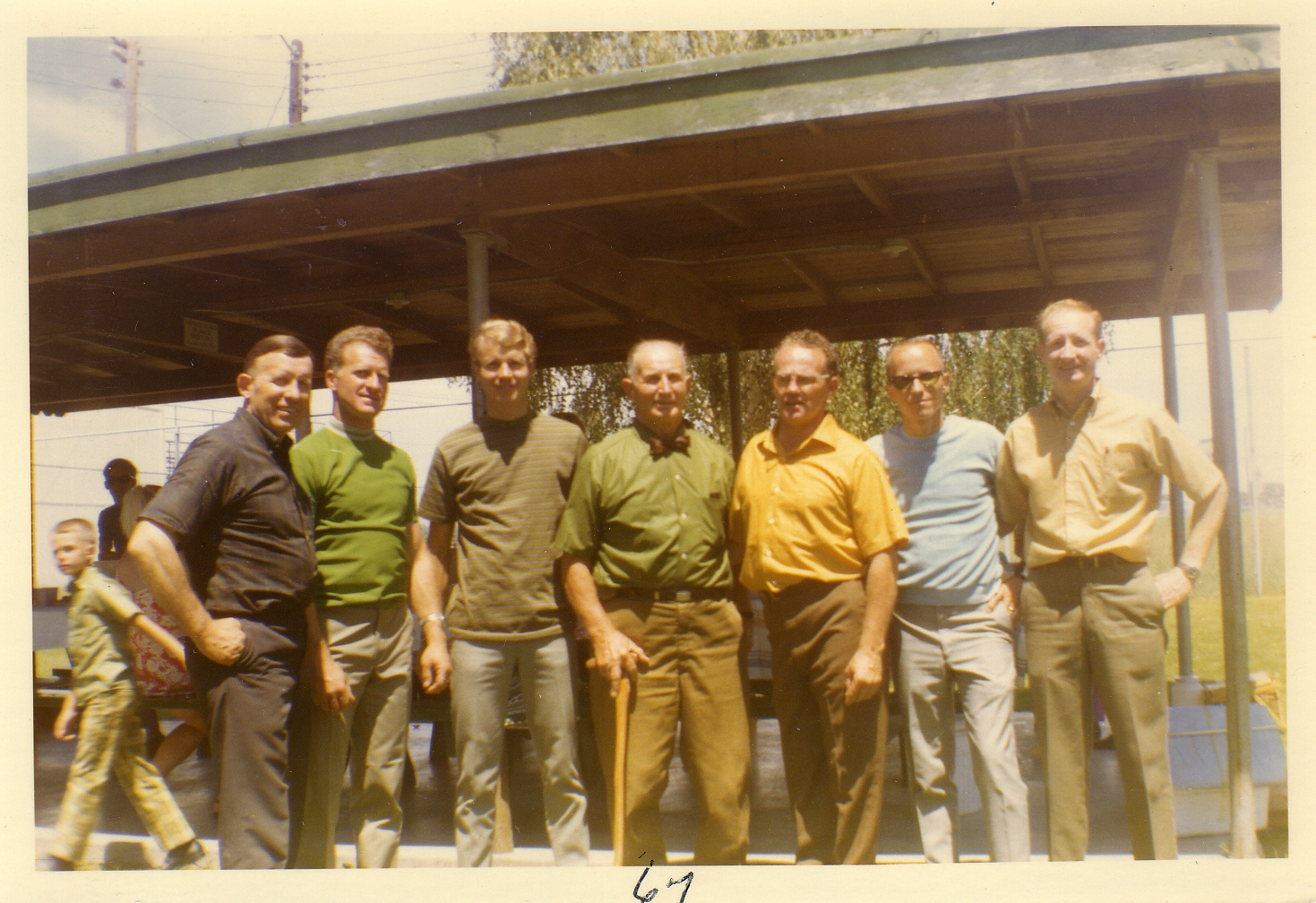
Dresden Frauenkirche

Yesterday President Dieter F Uchtdorf mentioned Dresden, the ancestral home of my Knauke family and ancestors.  President Uchtdorf talked about the rebuilding of the Frauenkirche.  He recalled a haunting childhood memory of dashing to a bomb shelter near Dresden when explosives dropped on his hometown.

He then spoke of Dresden which was almost entirely destroyed by carpet bombing in World War II.  One of the losses was the historic Lutheran Frauenkirche.  The building was left in a pile of rubble from 1945 until the time for its reconstruction arrived in the early 1990s.  The building was completed in about 2005.

President Uchtdorf’s stated, “As I pondered the history of Dresden and marveled at the ingenuity and resolve of those who restored what had been so completely destroyed, I felt the sweet influence of the Holy Spirit.”

“Surely, I thought, if man can take the ruins, rubble, and remains of a broken city and rebuild an awe-inspiring structure that rises toward the heavens, how much more capable is our Almighty Father to restore His children who have fallen, struggled, or become lost?”

Rubble

Frauenkirche in rubble and ruin after 1945

Amanda and I visited Dresden and only spent about a day there.  I remembered hearing stories of the beauty of Dresden told by my Grandmother she had heard from her Grandmother, Christiana Wilhelmina Knauke Andra.  This Frauenkirche’s restoration was a highlight and the major must see site when we visited.  Here is a picture of the Frauenkirche provided to me by my sister Becky after her visit there in 2004.

Rebuilding Frauenkirche in 2004

Rebuilding Frauenkirche in 2004

Amanda created this panorama from the other side of the River Elbe.  You will have to click on it to really see it very well.
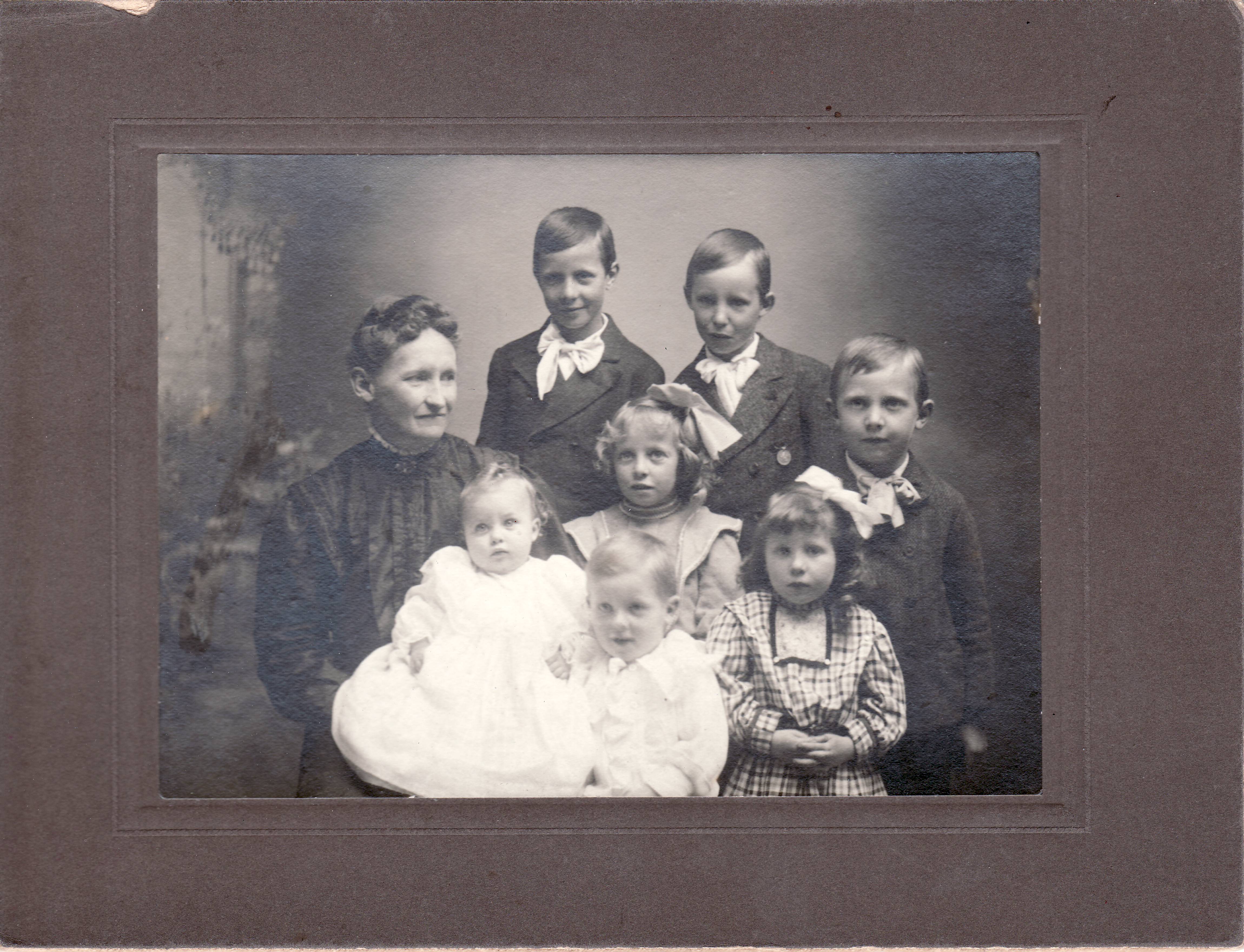
Dresden river pan

The Frauenkirche is one of the two main churches visible in this picture.  Lutheran on the left, the Katholische Hofkirche on the right.

Here is my mug shot with Frauenkirche.

Paul Ross with Frauenkirche

Paul Ross with Frauenkirche

Two more pictures we took that day.

DSCN2580

Amanda and I attended an organ concert in the building 11 June 2008.  I don’t know what we were thinking, but we did not get a single picture inside of the building.  We were up in one of the balconies, it was amazing.  Some day I hope we are able to return.  The beauty and architecture inside the building were beyond what I could have imagined.

DSCN2579

We also saw other rebuilt buildings in Dresden.  I quite liked the Zwinger Palace with its reconstruction completed about 1965.  The Phoenix story of Dresden is moving in most of its details and timeline.