Pet Evaporated Milk

Here is a history of Pet milk published in the Northside Journal in Jerome, Idaho.  It provides some history of Pet Milk, aka Sego Milk.  They also had a plant in Richmond, Utah, which is where my Grandfather, Norwood Jonas worked until it closed about 1967.

Pet Evaporated Milk

Buhl, ID

Compiled by Earl Gilmartin

Condensed History Pet Evaporated Milk Corporation


1885- It started with an idea of canning as a preservative in the small town of Highland, Illinois. After a $15,000 investment the Helvetia Milk Condensing Company was born (later to be renamed PET).

1895 – After overcoming a number of growing pains, more than half the company’s sales were in the West. The “Our PET” trademark is registered and becomes the official name for the company’s leading brand.

1898 – “Our PET” helps supply Teddy Roosevelt’s Rough Riders and other.

American fighting troops with a safe and convenient  source of milk in Spanish-American War. At war’s end, the troops scattered home across the U.S. and many, remembering the high quality milk, brought it home to their families.

1914 – Once again, the U.S. government places large orders of PET to supply  U.S. troops fighting overseas in World War I.

1929 – In the midst of the Great Depression PET becomes an important staple to American families and is able to expand its service to consumers with the creation of original recipes using PET products.

1941 – Again, PET is called upon to supply GIs fighting in World War II, as well as the citizens at home. More recipes, specifically designed with rationing limitations in mind are created to help families get a wholesome diet.

1950 – the combination of post-war prosperity and a baby boom result in more cans of PET Milk being sold than any other time in company’s 65-year history. PET also establishes its own test kitchens to develop and test new products and recipes.

1966 – PET began making “better for you” products including a Skimmed Milk and a 99% Fat Free Evaporated Skim Milk.

Today – PET Evaporated Milk continues to be a staple in millions of homes and is used in many different homes and is used in many different recipes, from main dishes, to soups, desserts and more.

We invite you to try the recipes on this site to create sensational food for your family!

Early History Pet Evaporated Milk

John Baptist Meyenberg (1847-1914) was an operator at the Anglo-Swiss milk condenser at Cham, Switzerland. Anglo-Swiss made sweetened condensed milk.

From 1866 through 1883, Meyenberg experimented with preservation of milk without the use of sugar. He discovered that condensed milk would last longer if heated to 120 C (248 F) in a sealed container, and hence could be preserved without adding sugar. When Anglo-Swiss declined to implement Meyenberg’s work, he resigned from the company and emigrated to the United States. John Meyenbert first moved to St. Louis, but soon transferred to Highland, Illinois , due to its large Swiss population. On 25 November 1884, U.S. Patents 308,421 (Apparatus for Preserving Milk) and 308,422 (Process for Preserving Milk) were issued to Meyenberg.  Meyenburg associated with various local merchants, including John Wildi, Louis Latzer, Dr. Knoebel, George Roth and Fred Kaeser and, on February 14, 1885, organized the Helvetia Milk Condensing Company. In 1899, Meyenberg assisted Elbridge Amos Stuart in producing Carnation Evaporated Milk.

John Wildi was instrumental in marketing the product nationally and internationally, especially in areas where fresh milk or refrigeration were scarce. In 1895, the company registered the Pet trademark.

The Sterling company of Twin Falls leases the Buhl Creamery facility for one year.  TFTN 11-11-1911

A transaction of importance to the dairymen of Buhl county was consummated on Saturday afternoon of last week when the Sterling Creamery Co of Twin Falls, secured by lease for a period of one year, the plant, business and good will of the Buhl Creamery, Milk Condensing, Cheese Manufacturing company of this city. The consideration was highly satisfactory and most remunerative to the local company, guaranteeing, as it does, a substantial market, paying a liberal consideration for the business and being in effect for a period of only one year.

Early History Pet Evaporated Milk

Funding universe

During the Spanish-American and First World wars, the U.S. government ordered huge supplies of evaporated milk, spurring Helvetia to build a second plant in Greenville, Illinois. By 1918 the company had a total of ten production sites in the Midwest, Pennsylvania, and Colorado. As World War I ended, Helvetia closed plants due to oversupply, reluctantly pulling out of western markets. Latzer sold the excess milk to St. Louis businessmen, who turned to him in 1920 when a strike by the local milk producers association limited the brokers’ supplies. The St. Louis strikers also convinced the Highland area farmers to strike, however , and Latzer was forced to close the plant.

By early 1921, Latzer’s son John ran Helvetia from its reestablied headquarters in nearby St. Louis. In 1923, Helvetica was renamed Pet Milk Company, after its best-selling evaporated milk brand.

Health & Home TFTN 7-3-1925

Many people are wont to confuse evaporated and condensed milk, but there is no similarity between the two. Condensed milk is a combination of sugar and milk and can be used only when both of these substances are desired. Evaporated milk is with about sixty per cent of the water removed and the nutrients content left intact.

Pet evaporated milk manufactured in Buhl, & other locations in the United States at the turn of the century.

Six Tons of Milk Received each day by Buhl Dairy Plant

TFDaily News 10-29-1927

About 12,000 lb of milk per day is being received at the Sego condenser which when evaporated makes 5760 tall cans. The product is being stored for the present at the plant.

Pet Milk became traded on the NY Stock exchange 1928

Funding Universe Our Dairy Industry TFIT 6-11-1929 aka Twin Falls Idaho Times

The phenomenal increase in dairying in Idaho is vividly set forth by figures just made public by Idaho Chamber of Commerce in its organization publication for June. Evaporated milk production in 1928 was 1,585,000 lbs, a gain of more then 4,000,000 lbs over 1927.

Employment for Additional 20 Seen; Better Times Indicated

TFIT 5-23-1933 aka Twin Falls Idaho Times

J Frank Smith field director and former manager of the Buhl plant, with E G Meyer production manager, have been supervising the overhauling of the machinery preparatory to opening the condensery. Floyd Englen, local manger, stated about 20 persons will be added to the pay roll.

The opening of the Buhl plant in addition to furnishing added employment will also serve as an outlet for the West End dairy products.

Pet Milk bought Sego Milk Products out of Salt Lake city in 1925, to expand it’s market.

Pet Evaporated Milk Peaked in 1950.

Funding Universe

After World War II Pet Milk began a slight movement into other markets. The company became the first to offer nonfat dry milk, and advance over the powdered milk developed in the 1920s. Sales soared due to the post-war baby boom, making 1950 the all-time-high sales year for Pet Evaporated Milk. Soon thereafter, fresh milk became readily available, however, and sales began a steady decline.

Pet Evaporated Milk diversifies in 1960’s

Funding Universe

Through restructuring, Pet Milk corporate reduced committee numbers, initiated a profit-centered divisional structure, and recruited marketing professionals. The company also planned new product development to wean itself from the declining milk market (as late as 1960, 95 percent of Pet Milk sales were in dairy products). By the early 1960s, diversification had begun in earnest.

Another of Pet Milk’s successful products at this time was Sego Liquid Diet Food, introduced in 1961. After competitors had opened up a market, Pet Milk brought in its own version, a thicker, high-protein drink available in variety of flavors. By 1965 Sego brought in $22 million to the company’s Milk Products Division sales.

In 1966, in order to reflect its enlarged and diversified product line, Pet Milk changed its name to Pet Incorporated.

Funding for these acquisitions came largely from a special credit Pet obtained through the sale of its portion of General Milk Co., a joint venture

Buhl Evaporated Milk to Close (1995 TFTN)

The bulk of this article is based on TFTN articles.

Buhl’s evaporated milk plant – which has provided Magic Valley jobs for 68 years will close June 20. Pillsbury Co executives told 64 workers Thursday morning that they’re shutting the plant which produces evaporated milk as a cost saving measure.

That means 300,000 fewer gallons of milk will be passing through Buhl each day. And a plant that each day produced 5000 cases of canned milk will be vacant. Eventually, the plant will be sold.

Evaporated milk production will shift to a company cannery in Greeneville, TN. But chances are slim that displaced workers will get to follow their jobs back East.


Nipper

Another couple of photos I found with some names on it.  They are not related to me in any way that I can tell.

Dewey & Josephine Nipper with their son, 4 July 1943

Dewey & Josephine Nipper with their son, 4 July 1943

Introducing Sterling Dewey Nipper and his wife Josephine Gurwell Nipper.  He was born 12 March 1910 in Benton, Polk, Tennessee and died 1 April 1982 in Buhl, Twin Falls, Idaho.  He is buried in Filer, Twin Falls, Idaho.  She was born 7 January 1926 in Martinsburg, Audrain, Missouri and died 24 May 2004 in Buhl.  She is also buried in Filer.  Since this photo was in the collection of a family from Buhl, I assume I have the right Dewey and Josephine Nipper.  The photo did not have the Gurwell name on it.  I have no idea who the boy is, as far as I can tell the Nipper children are all still alive, however many there were.

Interesting my father was born the same day this photo was taken and Grandpa was preparing for war in Hawaii.

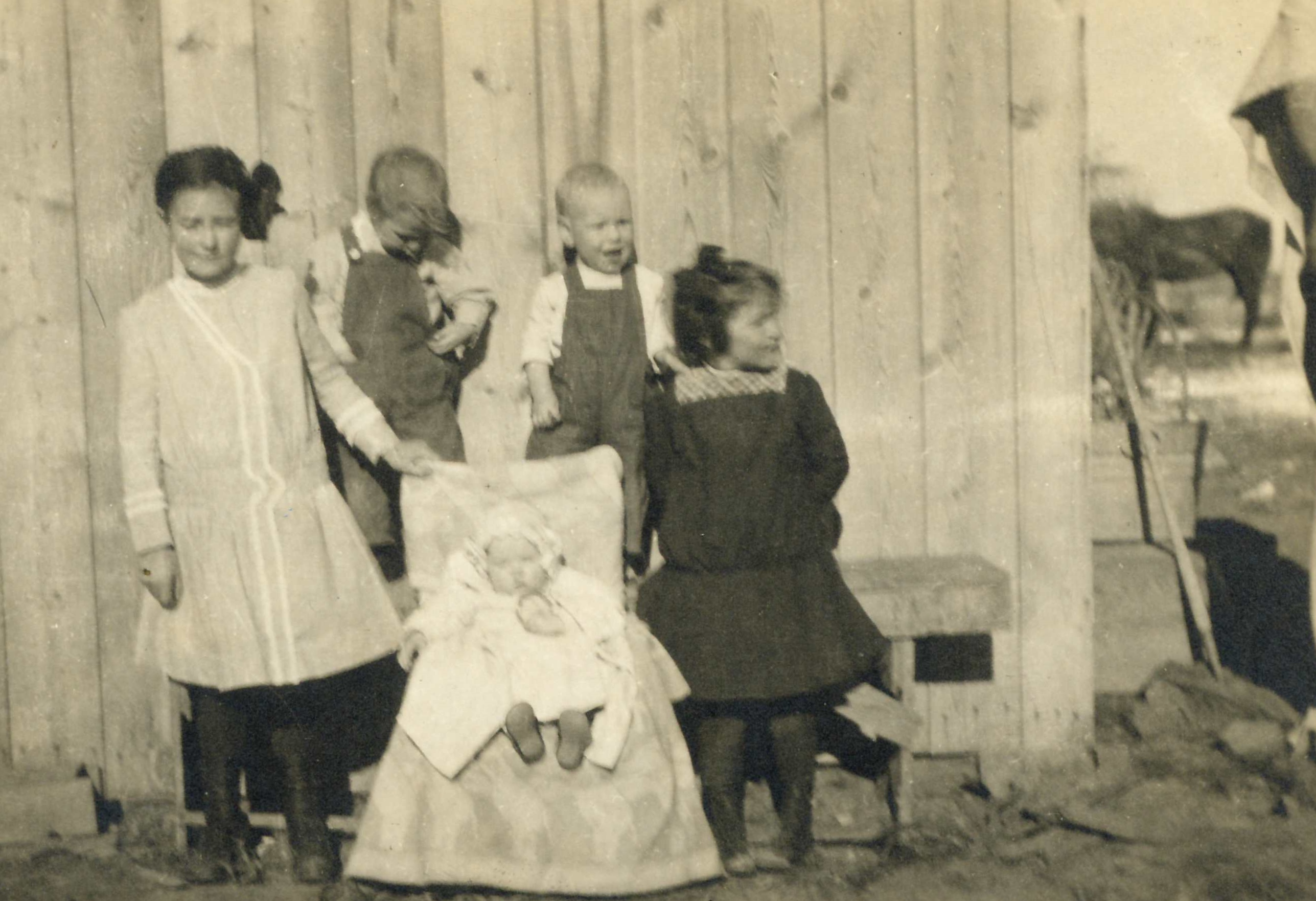
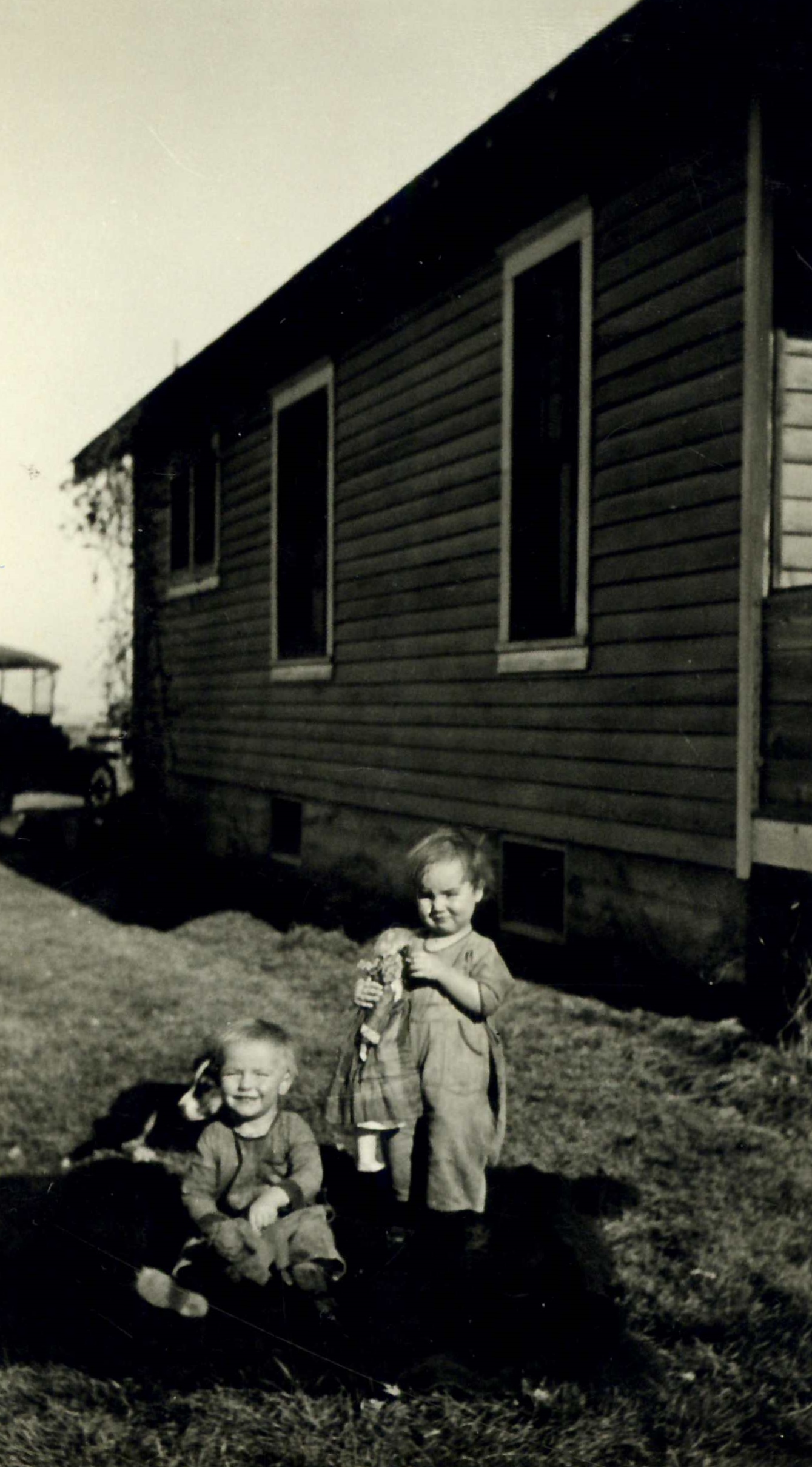
I don’t know that these children are related, but the photos have Nipper names on them.  Therefore, I assume there is some relationship.

Ivan & Ivell Nipper

Ivan & Ivell Nipper

This following photo reads, “Jess Nipper’s children”.  I don’t know if that is Josephine’s nickname or if Jess is short for Jesse or something else.

"Jess Nipper's children"

“Jess Nipper’s children”

However, this photo reads, “Jess Nipper’s Kids, he was married to Grandma Williams’ sister Pearl” and from that I conclude Jess is someone else.  There is a Jesse Franklin Nipper, born 10 October 1887 in Cleveland, Bradley, Tennessee and died 8 January 1967 in Twin Falls, Twin Falls, Idaho.  He is the uncle to Sterling Dewey Nipper.  He married Pearl Lulu Ownbey, born 20 November 1887 in Custer County, Idaho and died 9 March 1930 in Buhl.

Jess Nipper's kids

Jess Nipper’s kids

With the information on that photo, I found a sister to Pearl Lulu Ownbey named Ethel Gertrude Ownbey born 15 August 1886 in Green Forest, Carroll, Arkansas, and died 1 May 1967.  She was married to Solomon Walker Williams born 27 October 1879 in Sevierville, Sevier, Tennessee, and died 22 April 1958.  Therefore, all the names and references seem to add up so I am confident I have the right people.  Unfortunately, none of the children are named and the records I am looking at do not show any deceased children.  They could all very well still be alive out there in the world somewhere.


Samuel Deer Davis

Another family history story.  This one is interesting in that his Idaho case went before the United States Supreme Court in Davis v. Beason.  This is the biography of Samuel Deer Davis (1859-1923) written by Dean G Grow, his great-grandson.  Samuel Deer Davis married Mary Jane Williams, daughter of Sarah Jane Davis and John Haines Williams.  Mary is the sister to David Davis Williams who I also previously shared his biography.

~

“This is the history of my great-grandfather, who was instrumental in the legal attempts that The Church of Jesus Christ of Latter-day Saints undertook to counter the continuing political and legal assault against the Church due to the practice of polygamy in the late 1880’s not only in Utah but in Idaho where he lived.

“Samuel D. Davis was born in Salt Lake City on 22 July 1859 to David Woodwell Davies and Mary Deer.  Samuel’s father had been a missionary in his native Wales for seven years before coming to America.  Aboard ship, David met his bride-to-be, Mary Deer, also a native of Wales.  When they arrived in Kansas City, Missouri, it was too late in the year, creating a delay in getting to the Salt Lake Valley.  So they decided to marry.  This occurred on 25 November 1852, in Kansas City.  They most likely traveled across the plains with a group of Welsh immigrants in the summer of 1853.

ADB12440-4C65-4CDC-A7D2-9C499AA30087

Samuel Deer Davis

“After arriving in Salt Lake Valley, David being a painter and a glazier, set up his home and they began their life there.  David and Mary’s first son, David Thomas was born on 4 March 1854 in Salt Lake City.  Their second son, Woodwell was born in 1856 in Salt Lake City.  David was sealed to Mary on 2 March 1856 in the Presidents office in Salt Lake City.  At the same time and place, he was sealed to Elizabeth Berry, thus becoming a polygamist.  Elizabeth being a native of Bath, Summerset, England.  Their third son, Samuel Deer as indicated earlier was born in 1859.  They were all shown on the 1860 U. S. Census, living in the 8th Ward in Salt Lake City.  It was soon after that, Woodwell died, date unknown.  Their fourth and fifth sons, twins, Hyrum Eynon and Joseph were born on 15 August 1862.  Joseph died as an infant, but Hyrum lived to adulthood.  Their last son, Septimus was born and died soon after in 1864, probably about the time that his father David Woodwell, died of consumption (Tuberculosis) on 20 March 1864.  Thus Mary was left with three boys ages 10, 5, and 2.  I was unable to determine what happened to Elizabeth Berry.

cabin

Davis cabin in Samaria

“In November of 1864, Mary married a man named George R. McLaughlin of whom we can find no record of birth, death or census information.  They had a son George R. Jr. who was born 27 August 1865.  Their second child, Mary Ellen was born about 1866 and died soon after.   Mary’s second husband, George treated her harshly and abandoned her many times.  One time for almost a year.  The last time, she heard he was living in Cheyenne, Wyoming and had no plans to return.  She divorced him on the 20th of January 1868.  Thus Mary was continuously left with four boys to feed and care for.  It was soon after this that she became seriously ill and the doctor told her she would soon die.  Her last son, George was a toddler at the time.  A neighbor, Charles and Jemima Walker offered to adopt George and Mary regretfully consented as she didn’t want to leave such a young child.  Not long after, Mary recovered and went back to the Walkers pleading with them to return her son, but they refused.  They were still neighbors in the 1870 Census with the Walkers showing George as their son at age 5.  George died 29 January 1889 at the age of 24 in a train accident returning to Sugar House, Utah from an outing with friends to Red Bluff Quarry.

“Toward the end of the year, Mary met John Evan Price, another Welshman and became a polygamous wife of his on 26 December 1870.  Mary was 39 years of age and 14 years his junior.  He was in good financial circumstances at this time according to their granddaughter.  He had settled in Samaria, Oneida, Idaho on April 16, 1868 with one other family, being one of the first.  He is also credited with giving Samaria it’s name.  Several others settled there the next month.  A branch of the Church was organized there in November of 1868.  Elder Lorenzo Snow, then of the Twelve Apostles, visited in July of 1869 and approved of the city plot, encouraging the settlers to continue to build and plant there.

“John brought Mary and her children to Samaria after their marriage.  Two additional children were born to this union, Margaret Ann Price on 10 January 1872 and Elizabeth Jane Price on 17 March 1875, both in Samaria.  Unfortunately, John died within a few years on 22 June 1878 in Samaria leaving Mary a widow again.  But this time she was left in good circumstances where she was able to sell off property to new immigrants to Samaria.  She reverted back to her Davis name after 1880.  Her sons were now getting older.  Her oldest, David Thomas was married in Samaria to Amy Ann Sawyer on 7 January 1879 just 6 months after John Evan Price died.  Mary was the postmistress of Samaria for many years and the Relief Society President for 17 years in Samaria.  Eliza R. Snow stayed in her home during a conference in Samaria.

“Her second son, the subject of this manuscript, Samuel D., had no formal education but only that which was from his mother, Mary.  He married Mary Jane Williams on 11 Oct 1882 in the Endowment House in Salt lake City.  Their first child, Sarah Jane, was born in August of 1883 and died the same month.  Their second child, Woodwell Williams was born 17 November 1884.  It was during this time that his wife encouraged him to get some formal education.  He started by attending the district school in Samaria.  Afterward he attended the James Chandler school in Washakie, Utah.  It was a great sacrifice and struggle as he continued to farm and support his family during that time.  He had so much success as a scholar in Washakie, that in 1886 he attended the Brigham Young College in Logan, Utah.  He also studied law during his evenings.  His third child, Edgar Williams was born on 1 March 1887.  He soon became a partner in a law firm in Malad, Idaho of Evans, Gibbs and Davis.
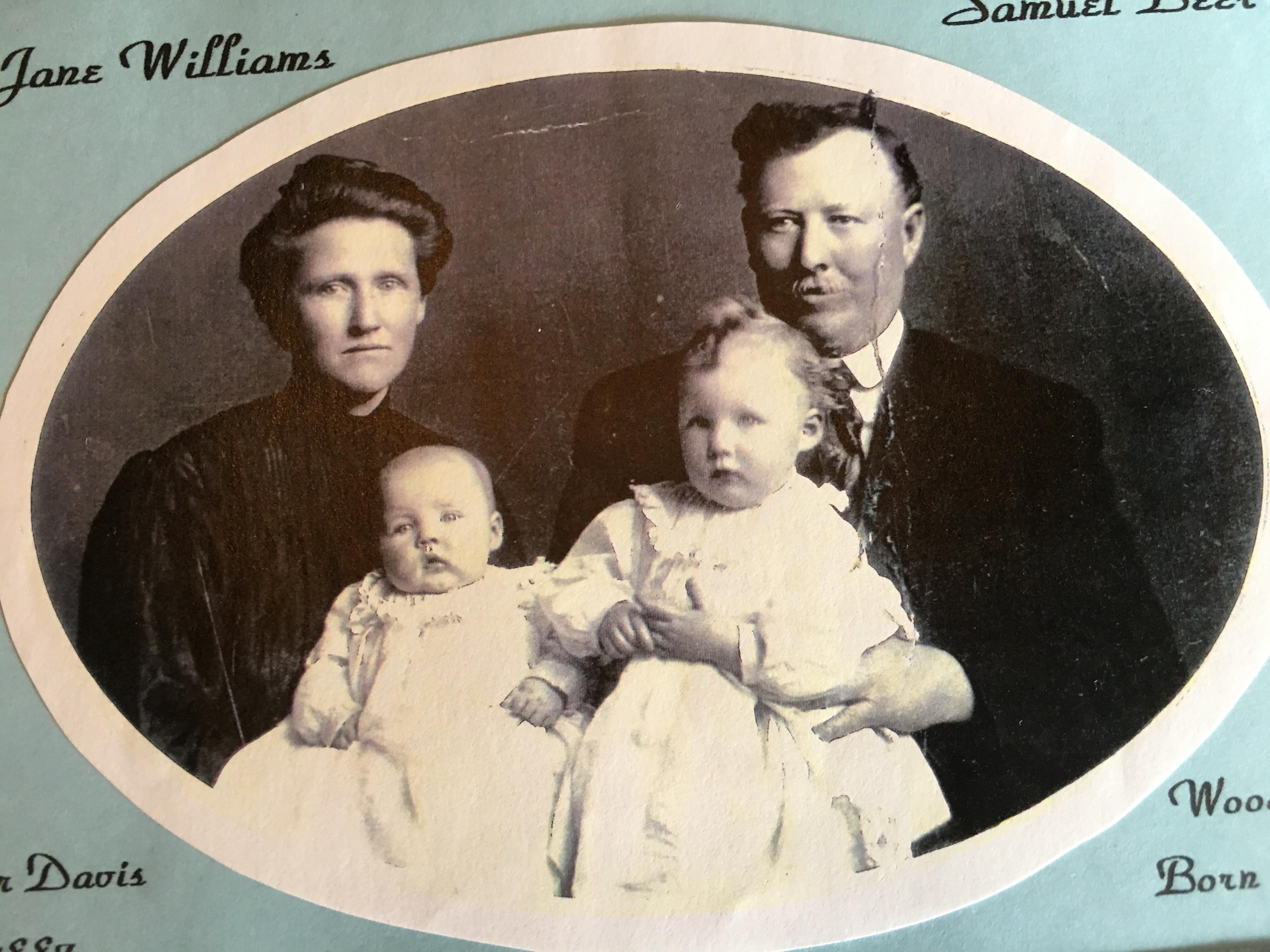
CE3C2ECA-B897-4F05-9255-E5423077950D

Mary Jane Williams and Samuel Deer Davis with Edgar and Woodwill Davis

“At this time there was much pressure on the local LDS communities by the Idaho politicians who were strongly anti-Mormon, about the Church practice of polygamy.  75% of the population lived in the eastern half of the state and about 20% of those were L. D. S. which meant that they represented a large voting block.

“These following steps were in relation to the 1884-1885 law, not the 1889 one which was taken to the Supreme Court.

“From E. Leo Lyman’s “Political Background of the Woodruff Manifesto”:  “William Budge, the leading spokesman for the Church in Idaho, tried to bring as much pressure as he could on the outcome of the case.  Budge used Utah Congressional delegate John T. Caine to generate pressures on the Judge Berry through political friends back home.  He also traveled to the Blackfoot judicial headquarters to confer with Berry before he rendered his decision.  The judge, who recorded the conversation as accurately as he could recall, claimed the Church leader first quoted U.S. Solicitor General Jenks as saying that if the test oath law was taken before the United States Supreme Court, “it would not stand for a moment.” Budge also stressed the crucial nature of the pending decision on the continued allegiance of the Idaho Mormons to the Democratic party (Berry 1888).

“Berry’s reply demonstrated considerable admiration for Mormon industry and economic accomplishments but firmly stated his intent to “administer the laws as they were.” He made it clear he could not allow political considerations to affect his decision and expressed regret that the Mormons could not bring their marriage relations into “regulation step” with the rest of American society (Berry 1888). The published decision {Idaho Daily Statesman, 17, 20 Oct. 1888; Wood River Times, 16, 17, 24 Oct. 1888) not only upheld the test oath but ruled the Mormon arguments that they no longer taught or practiced plural marriage were merely a temporary posture of no importance so long as the general Church had made no changes on the question. The kind of concession necessary to relieve the disfranchisement onslaught, Judge Berry stressed, was a formal renunciation of the doctrine at a Church general conference, not unlike what actually occurred several years later.”

“From the Encyclopedia Britannica: “They enacted a law in 1884-1885 that all county and precinct officers were required to take a test oath abjuring bigamy, polygamy, or celestial marriage; and under this law in 1888 three members of the territorial legislature were deprived of their seats as ineligible.  An act of 1889, forbade in the case of any who had since the 1st of January 1888 practiced, taught, aided or encouraged polygamy or bigamy, their registration or voting until two years after they had taken a test oath renouncing such practices, and until they had satisfied the District Court that in the two years after they had been guilty of no such practices.”

“The earlier law had been tested by the Church in the territorial federal courts, but was unsuccessful.  This 1889 law, regarding voting, was commonly called “The Idaho Test Oath” which meant essentially that if you were a member of the Church, whether practicing polygamy or not, you could not vote and was retroactive to January 1 the year before.  It appears that the Church decided to test this law all the way to the United States Supreme Court.

“In Samaria on Oct 27, 1888, 26 men including Samuel D. Davis asked to have their names removed from the records of the Church with apparent approval of the Church leaders so that they could vote in the November 1888 election but primarily to provide a test case.  There were about 30 in Malad City who did the same thing.  The new law having been enacted after the men had voted, they were indicted almost a year later for conspiracy to break a law that wasn’t created until the following year.  The case became known as “Davis vs. Beason” and can still be found today by searching the internet.

“From the Deseret News on September 21, 1889:  “The perjury case against Mr. Evans of Malad having been disposed of in the District Court of that place, the next matters of importance tackled were the conspiracy cases. Indeed there was practically but one case, fifty six persons having been included in one indictment.

“The matter came up for trial before Judge Berry on Tuesday, Sept. 10th [1889]. There was much disappointment among the virulent anti-“Mormon” element over the result of the case of perjury against Mr. Evans and the officers said that in the conspiracy matter they would get a jury together that would convict this time.  For this purpose they scoured the country and imagined they had got what they wanted when the panel was completed.

“The charge preferred in the indictment against the fifty-six defendants was substantially that they had conspired together to break the laws of Idaho Territory, notably the Idaho test oath law, by agreeing to vote at an election when they knew that they had no right to do so.

“The case was tried and at 6 p.m. on Wednesday was given to the jury.  On Thursday the 12th at 2 p.m. the jury came into the court with a verdict, in which they found fifty-five of the defendants not guilty and one guilty.  The latter was Samuel D. Davis of Samaria.

“A new trial was asked for Mr. Davis by counsel for the defense and denied, and the  court sentenced him to pay a fine of $500.  The fine was not paid and Mr. Davis placed in jail for a maximum of 250 days [$2 a day].  Judge Berry was applied to for a writ of habeas corpus which was also denied, and an appeal from his action was taken to the Supreme Court of the United States.

“The matter is in the best possible shape it could possibly assume for final adjudication. None of the acquitted fifty-five defendants can be again placed in jeopardy on the same subject, either under the title of conspiracy or any other.  The appeal to the Supreme Court involves the validity of the infamous test oath law, which will therefore be decided one way or the other.

“The defense was conducted with marked ability, the attorneys being Mr. J. S. Rawlins of Salt Lake, and Mr. J. N. Kimball of Ogden.   Mr. Standrod and “Kentucky Smith” appeared on the part of the prosecution.”

“From the above article it is clear that it was “arranged” in advance that one person would be the focal point for the test case.  That person, having probably volunteered due to his legal schooling, was none other than Samuel D. Davis.  He obviously knew that he would spend some time behind bars, but was willing to do that for the Church.

“To give a better idea of the named individuals in this case, they are as follows:  Charles H. Berry, a former attorney general of Minnesota, later on, an associate justice of the Idaho Supreme Court who would have jurisdiction as the Judge in this case in Malad City.  Joseph S. Rawlins was a city attorney in Salt Lake City and worked with Brigham Young and following Church leaders on matters of law.  He later served in the Congress of the U. S. and assisted in gaining statehood for Utah.  He was also known as the “Red-headed Reactor of the Rockies” because he made such a fight about the confiscation of the Church property.  It was through his efforts that the property was eventually restored.  J. N. Kimball also served as a defense attorney for the Church in Ogden.  Drew W. Standrod came to Malad City, Idaho from Kentucky with his parents and took up the practice of law there.  He was elected as the prosecuting attorney there twice and later became a judge moving to Pocatello.  “Kentucky” Smith is actually H. W. Smith who was an anti-Mormon lawyer of prominence in Ogden, Utah and the author of the “Idaho Test Oath” law.  He also later became a judge in Idaho.  Sheriff Harvey G. Beason was an appointed sheriff who was just 29 years old at this time.  His was the other name in the test case.  He soon after moved to Montana and then to Gillette, Wyoming where he lived until his death in 1939.

“From another article in the Deseret News written in Samaria on September 30, 1889.

“”A very strange scene was witnessed here on the 25th inst. (Sept 1889)  It will be remembered that Mr. Samuel D. Davis of this place was found guilty not long since at the District Court held at Malad City, of voting at the election held here last fall contrary to the provision of the anti-Mormon Test Oath law, and that he was sentenced to pay a fine of $500 and costs, pending payment of which he was sent to the county jail.  He applied for a writ of habeas corpus which was denied by Judge Berry.  Application was then made direct to  Washington for a similar writ.  Here it was thought the matter would rest for the present. But not so; on Sept. 13, Sheriff Beason came to Samaria and levied an attachment on Mr. Davis’ property having an order from the court to sell at public auction enough to cover fine and costs.  On the  25th inst. said order was carried into effect.  Sheriff Beason, Attorney Standrod, Treasurer D. Tovey,  Commissioner P. Fredrickson and a few others came over.  The sale began at 2 o’clock.  Mr. Davis’ only horse was sold to Meyer Kohn of Malad, for $21.00. (Mr. Kohn has since offered to return the animal for the same price), which was about one-fifth his real value.  Mr. Davis interest in the firm of Evans, Gibbs, & Davis was knocked off to Standrod for $190.00.

“It was the Intention to sell the little home where Mrs. Davis and her two little children reside, but the title being defective it was abandoned. This was all that could be found to sell and the sale came to a close.

“The sheriff seemed very dry after his labors for he and his companions indulged quite freely.  They had apparently come over well prepared.”

“This article indicates that Samuel’s family also suffered because of the case.  The article was incorrect in that there were “two little children” in the home.  My grandfather, John Vincent “Vin” Davis was born on 6 July 1889 and was just a few months old when this took place, which means that there were two little children and one infant.  It also indicates that his fine was reduced almost 40% by the $211.00 amount recovered in the sale.  Therefore his sentence would be reduced by about 100 days, leaving 150 days remaining to be served.  From the Deseret News on 11 January 1890, it indicates that the hearing was held in the U. S. Supreme Court, probably a day or two earlier.  The hearing is several pages of arguments both for and against which I will not be discussing here.  It can also be found on the internet by searching “Davis vs. Beason”.  The ruling was handed down on 2 February 1890, upholding the Idaho law.  At this time Samuel had been in jail for 113 days.  I was unable to determine whether he remained the last 30 some days in jail or whether the Church paid the balance of the fine to release him or whether he was reimbursed for his personal losses.  During this era many members sacrificed much for their belief.

“President Wilford Woodruff issued the “Manifesto” a few months later on 24 September 1890, ending plural marriage in the Church.  The Idaho law was changed in 1893, the disqualification was made no longer retroactive, the two-year clause was omitted, and the test oath covered only present renunciation of polygamy, thus allowing members to vote once again.  It took until the 1980’s to get similar wording in the Idaho State Constitution removed.

“Samuel D. Davis continued in his practice of law and in 1899 he was appointed Probate Judge of Oneida County, Idaho.  He was twice elected to this office.  In 1901, after the formation of the Idaho State Bar, he took the examination for the bar and was admitted to practice in all the courts of the state.

“His wife of 21 years, Mary Jane Williams Davis died on 19 March 1903 in Samaria.  Later that year he moved his family of boys to Malad City to continue his practice and opened a new law office there.  His brother-in-law,  Isaac B. Evans, who had been on a mission in the south, introduced him to a woman in Salt lake City, whom he had known while on his mission.  She was Alice Godwin, daughter of Handy Haywood Godwin and Elizabeth Ann Naylor Godwin.  They were natives of Clinton, Sampson, North Carolina.  She was a true daughter of the old south.  Samuel was very interested and she was interested also, but I’m sure was concerned by the thought of finishing the raising of 7 boys.  But apparently she was up to the task as they were married in the Salt Lake Temple on 13 November 1905.  She bore him 3 more children.  First, Mary Naylor Davis, 13 September 1906, second, Alice Deer Davis, 18 January 1908 and Samuel Godwin Davis on 6 March 1911, all in Malad City, Idaho.

“He continued in Malad City until moving to Salt Lake City about 1918.  He was there in the January 1920 U. S. Census.  He probably moved to Twin Falls, Idaho in the summer of 1920 to accept employment as the City Attorney.  Two of his boys followed him there.  One, Eugene, who was still living with him and the other, John Vincent and his family, who was still living in Samaria.  In June of 1923, he was made the Twin Falls Police magistrate, but unfortunately, he died within 6 months on 13 December 1923.  After the funeral, his body was shipped back to Samaria to be buried.  His second wife, Alice moved to Salt Lake City, where she died 13 January 1945.  Her body was also returned to Samaria to be buried.

“From the Twin Falls Times News:  “Judge Davis was early admitted to the bar in Idaho, and served as county attorney and probate judge in Oneida county.  He attracted wide attention in the early days by his success as an irrigation and criminal lawyer.  It was his boast that some of Idaho’s best known attorneys had begun their legal training in his office.  He was an active and prominent member of the L. D. S. Church serving as member of the High Council in Malad and Twin Falls.”

“Thus ended a long legal career in the State of Idaho and the life of a man who was willing to stand for  his principles, even risking all his possessions at one time.  He died at the age of 64, which would be considered still young by today’s standards.  His part in the legal battle was apparently unknown to his children, grandchildren and their descendants.  My mother did mention many years ago that she had heard about the voting issue.  Those of his children as indicated earlier were very young and would not have known about the landmark legal case, unless he had related it to them.  He was a good man and his story needed to be told, so that all would be aware of his sacrifice during another time of great difficulty in the history of the Church.“

Apostolic Brush

Ruby and David Haight, Paul Ross, Rose and John Byrom

Ruby and David Haight, Paul Ross, Rosie and John Byrom

I stumbled upon this picture the other day and thought maybe it was time to share it.  This picture has an interesting story behind it.

On the far right are John and Rosie Byrom.  Rosie is mostly in the shadow so it is difficult to make her out.  I served in the Runcord Ward from around December 1999 to around August 2000.  John served as Ward Mission Leader and Rosie as a Ward Missionary.  (The Byroms have since separated and divorced).  I served in the ward for a long time and they remained in their callings for the entire time, so we built a friendship which, I feign to believe, still exists to this day.

I returned home from my mission in December 2000.  It was not long into 2001 that I learned the Byroms were planning on visiting Utah.  Of course, I invited them to spend some time in Idaho.

During the majority of time I served in Runcorn I had a companion by the name of Brad Hales.  Also in our district was a senior sister companionship of Meriel Peterson and Patricia Kleinkopf.  We were all native Idahoans and were in close proximity of each other.  It was natural that the Byroms also wanted to visit each of them while they were in Idaho.

This particular day we drove to Oakley, Idaho to visit Sister Peterson.  We had an enjoyable breakfast and conversation.  Sister Peterson decided she wanted to give us the tour of Oakley because there were some architectural gems that she thought the Byroms would enjoy.  I grew up near Oakley so I was familiar with many of these local landmarks.

We all piled into my little Camry and away we drove.  We had not made it very far driving down some of the streets of Oakley when Sister Peterson announced, “Wait, David is home, he will want to meet you!”  She had me turn around and we pulled into a little home in Oakley.

I had no clue who David was and I was not familiar with the home we were now pulling into the driveway.  We all exited the car.  In the yard there was a man trimming his hedges with a large straw hat and a large set of sunglasses that you only see older people wear.

Since Sister Peterson indicated that David would want to meet the Byroms because they were from England, I remained at the front of my car in the driveway and leaned back against it in the hot, summer, morning sun.

I have to give a little bit of background on the month prior.  We are in the latter half of July 2001 at the point of this picture (I recollect it was the 21st, but may be wrong).  I had just spent considerable time in Hawaii with family at the beginning of the month.  During that time I picked myself up a shirt and a shell necklace among other items.  As you can see in the picture, I am wearing my red shirt (not the blatant Hawaiian design you regularly see).  For years I thought I was in a pair of board shorts too, but this picture corrects my memory on that tidbit.  But I had continuously wore my new puka shell necklace since the trip to Hawaii.

Back to the story, I am leaning on the front of my car watching the Byroms enter the back yard through the hedge and approach this old man in a large straw hat and holding an electric hedge trimmer.  The man stopped trimming and turned to greet his trespassers.  Curiously, after what was a short couple of moments, probably no more than 20 seconds of conversation, this man leaves the Byroms and Sister Peterson and headed my direction.

My first reaction was that I was doing something wrong so I looked around to see my misstep.  Alas, not seeing I had done anything wrong I waited and met the man within feet of my car.  He had set down his trimmer before arriving to me and he pulled his hand out of his glove to shake my hand.  I shook hands with him and with his free hand he reached up and took off his hat and glasses and asked me my name.

My first thought was something along these lines, “Boy, this David fellow sure looks familiar.”  He asked my name and I gave it.  He asked about my Ross name and whether or not it was Scottish.  I informed him it was my name but not the name of which my ancestors carried.  He then informed me that Ross was a common name in Scotland where he had served as a Mission President.

He then grew quiet and he sidled up closer to me and put the hand with the hat and glasses in the small of my back while still holding my other hand in a handshake.  He was now close enough that his face was in my shadow (and he was considerably shorter than me).  He then broke the handshake and with that hand reached up and touched my puka shell necklace.

“What is this?”

“My necklace?”

“I am disappointed that you have fallen from the principles of the gospel that we teach as missionaries.  We teach than men and women have separate and distinct roles and this is confusing the two.”

My first impression was, “How did you know I served a mission?”

This man then turned to walk away back to the Byroms and Sister Peterson.  As he walked away, the thought occurred, “You have just been rebuked by an Apostle.”

Then it dawned.  David was David B Haight, one of the twelve Apostles of The Church of Jesus Christ of Latter-day Saints.  This was an individual I recognized as a Priesthood Leader and on my first meeting with him, I had been rebuked.

I stood there reeling from what had just happened.  It stung.  David went to the back door of his house and summoned his wife Ruby.  Ruby appeared and they all stood 25 feet away from me chit chatting about England, Scotland, and whatever else they were talking about.

What seemed like an eternity was likely only several minutes or so, if that.  I remember reaching up and taking the puka shell necklace off and holding it in my hand.  I dwelt on what was really an unintended and probably unwanted visit that was a bother to me and this old man.  Sister Peterson just commented he was home and a few lines of dialogue just ended up potentially affecting my eternities.  According to him I was already on the path, so I guess it did not matter what he said except to correct my backsliding ways.

Next thing I knew, the distant conversation between the Haights and Byroms had stopped and this Apostle was returning to me.  He again held out his hand as if to invite another handshake. I held out my hand with the necklace in it and he cupped his hand to receive whatever I was offering.  I dropped the necklace into his hand and once he realized what it was he let it drop to the ground.

He held out his hand again inviting mine in a handshake and I clasped his again.  He sidled up close to me again, put his other hand in the small of my back, and was close enough to be in my shadow and that I could smell the salt in his old man sweat, and he continued…

“Where did you serve your mission?”  (I remember thinking that was an ironic question since the Byroms were from England, Sister Peterson served in England, and he asked where the fourth member of the party served his mission?)

“England Manchester Mission”

“How long have you been home?”

(After a quick mental tally) “Nine months”

“Elder, you hold the Priesthood.  You have a duty to uphold that Priesthood.  You should have been married by now.”

He released my hand, pulled his hand from the small of my back, turned, and walked away.  Maybe 4 steps later he turned around and said, “When it happens, I want to know about it.”

He returned to a conversation with Ruby, Sister Peterson, and the Byroms.

I stood there while they chatted for a few more minutes.  I do not recall hearing anything of the conversation between them, even if I was close enough to have heard.

Rosie had a picture taken of the occasion.  Sister Peterson sacrificed herself in the moment to take the photo that now memorializes this occasion.

I shook hands again with Elder David Haight and Sister Ruby Haight and we headed on down the road to see some other homes.  I ended up driving many more hours that day to Boise, Idaho City, Stanley, and elsewhere chauffeuring the Byroms through some of the sights of Idaho.  Rosie Byrom teased me about the moment the rest of the time I was with them.  After all, it is not every day that you get rebuked by an Apostle.  I cannot recall if they overheard the conversation or if I told them about it.  I cannot imagine that they overheard the conversation due to the close proximity in which David and I spoke that day.

Oddly enough, it weighed on me for a long time.  It became the butt of jokes as time went on, especially as David continued to age.  He was already over 95 at the time of my meeting him.  Roommates and friends would indicate that I better hurry or else I would not fulfill the rest of my duty to let David know when it happened.  I will not lie, it became a great story to tell people.  People loved to hear about my rebuke by an Apostle.

I regularly tell the story to individuals I am close to and that wear a necklace.  Missionaries I worked with I regularly told the story, especially if they wore a necklace.  I admit, I never wore a necklace or bracelet of any type since that date.  I know a number of missionaries who have “fallen from the principles we teach as missionaries” and forsaken their evil ways.  Honestly, I do not know that the story is one that should be heeded by others.  But for the deep effect it had upon me at the time and the power in which he spoke to me, I recognize it was for me.  Others should be careful about applying revelation of others to themselves.  But I do believe there is a principle here that we can learn, I just don’t know that I can very clearly articulate it.  I know the principle clearly for me, but don’t know how narrow or general to make it in application to others.

I remember Rosie reminding me that if I properly repent, I would be married within another 9 months.  Boy if that did not apply a little pressure!

As a side, I did pick up my little puka shell necklace and ended up giving it to a friend when I returned to Missouri later in August.  I don’t believe she has any clue what that little necklace meant to me.

There is more to the story.

On the following Monday, I believe 23 July 2001, I was in Salt Lake City with the Byroms.  After an endowment session, Rosie announced we were to go to the Church Administration Building.  She did not tell us why and I thought she just wanted to see the sights from the Church Office Building.  We walked in the Church Office Building and after Rosie talked to the man at the desk, she said we were in the wrong building and we needed to go to the Church Administration Building.  I informed her that the Church Administration Building was not really open to the public.  Rosie announced that we had an appointment.

In light of my experience a few days before, I was not really thrilled about our appointment in the Church Administration Building.  We walked around to the front door of the Church Administration Building and walked in.  As we approached the man at the security desk he asked,

“Are you the Byroms?”

Rosie responded, “Yes.”

“We have been waiting for you.”  (Never a very heartwarming phrase, whether the morgue, jail, CIA, bank, or Church Administration Building)

The man then responded, “You will need to leave your bags here, take the elevator to the fourth floor, take a right, and it is the last door on the left.  I will let them know you are coming up.”

We entered the elevator and headed to the fourth floor.  Rosie then turned and commented to me, “John helped provide security and drive for Elder Ballard while he (Elder Ballard) was in England for the Preston Temple Dedication.  He told us that if we were ever in Utah to stop and pay him a visit.”

Suddenly the realization came to me that I was going to visit with my second Apostle in less than a week.  I am a fairly laid back guy but felt some apprehension after the experience just days before.  We turned the corner and there stood M Russell Ballard in the doorway.  He invited us in to his office, introduced us to his secretary, and then ushered us into his office.  Across from his desk, I think, there were two nice wing-backed chairs.  Another chair was already there for me, or we pulled up a chair.  Elder Ballard left the office for a moment and then reappeared pushing an office chair toward me.  We were already all seated and he asked,

“Where is your wife?”

“I am not married.”

“Oh, that is something you will have to fix.”

He turned to push the little chair back out the door.  I heard Rosie chuckle and comment, “In the mouth of two or three witnesses…”

Elder Ballard returned and took his seat and we had a nice conversation that probably did not take more than 15 minutes.  Once again, Rosie had a picture taken.

Paul Ross, Rosie and John Byrom, Elder Ballard

Paul Ross, Rosie and John Byrom, M Russell Ballard

That was the extent of the interaction and I felt some sting from the second witness of my duty to uphold the Priesthood.  But it was a pleasant experience.  Rosie reminded me often after that, “In the mouth of two or three witnesses shall every word be established.”

Well, time passed and eventually Elder David B Haight did pass from this veil of tears at the end of July 2004, three years after our encounter.  Fortunately, Elder Haight and I did have an opportunity to talk again regarding our first interaction that lessened the blow of the occasion.  I was invited to drive him on an occasion.  Nevertheless, roommates and many friends called after Elder Haight’s passing to let me know how dire my situation was now that the revelator had passed and I had not fulfilled my duty.

Rosie commented to me that I could fulfill my duty by reporting my marriage to Elder Ballard when the time came.

Well, forward a few more years and I became enamored with a little red-headed girl from Kaysville, Utah.  She came to enjoy her time with me and after a while we would end our walks with a little dancing on the porch of the Alumni House at Utah State University.  It became a regular thing to end our walks and evenings out with a dance and closing conversation on the porch of the Alumni House.  I dare say we danced on the porch of that building more than 60 times.  It was on the porch of this little Alumni House that I made an unofficial proposal to Ms. Hemsley.  It just seemed like the right place.

Months later, Amanda and I returned to Logan under the guise of visiting some friends.  While on the campus I took her to that little porch of the Alumni House and there after midnight, now on 4 July 2005, I fell to my knee and proposed to her.  Of course she said yes and we danced and kissed there on the porch of the Alumni House.  Interestingly, before we left that night, I caught sight of a huge portrait hanging inside the doors that open to the porch that had become an important part of our courtship.  As I looked closer, I could see the familiar sight of a man whose face I knew.  As I got a little closer to see in the dark the portrait lit only by fire escape signs it dawned on me it was a portrait of David B Haight.

If that was not a little coincidental, and perhaps a little creepy, I do not know what is.  Elder Haight’s portrait had actually witnessed some of the most personal moments of my courtship.  The building I had only known as the Alumni House is properly named the David B Haight Alumni Center.  Somehow it seemed the whole experience had just came full circle.

We sent a wedding invitation to Elder M Russell Ballard with a short note explaining that due to Elder Haight’s passing I was sending the note and invitation to him to fulfill my duty.  He responded with a card thanking me for my note and invitation and suggested I consider my duty fulfilled.  He also apologized for not being able to attend our reception (which I am glad about, surely some further duty might have been laid upon me if he had!)

There is my story for the above photo with the Haights, E Ballard, and Byroms.  Maybe some day I will tell my story about Elder Hales (the Apostle, not my missionary companion)…

Letter from David Williams to Wales

I just came upon this letter written by David D Williams to his sisters in Wales.  In it he describes his trip to Utah from Wales.  The letter was originally written in Welsh.  I have written of David and his immigration in his biography.  As mentioned in the history, David is the son of Frances Henneys and John Williams born in Wales in 1832.  He immigrated to Utah in 1864.  I am including a picture of some rolling hills in Southern Wales that I took with some friends in 2003.  Funny how he thinks how beautiful Utah was (then), and yet we feel the same about his Wales!

Ogden City

October 13, 1864

My dear sisters,

I have reached the end of my journey in the valley of Great Salt Lake well and happy, and I hope that you are the same. I shall now give you some of the history of my trip from the Old Country. This little letter is not large enough to describe all I saw, but I shall do my best to describe the outstanding features as briefly and inclusively as possible. We started from Aberdare on May 17th for Merthyr, where we stayed overnight. Next morning, the 18th, we started for Liverpool. After leaving the old rugged, craggy mountains of Wales behind us, we came to the flat plains of England and there saw the most desirable land such as we had never seen in all our lives. It was full of apple trees, plums, pears, and all kinds of other fruit, nature was a feast of beauty, all kinds of beautiful buildings of red brick. By evening we reached Liverpool. (One-half dozen words obliterated by creased paper) the streets were all paved. There is no time now to give details about this place. Next day we went down to the docks, and there we saw the General McClellan. This immense vessel laid about 70 yards long carrying 2000 tons. After getting everything in order, the steamboat pulled us on to the river, where we saw the great eastern, the world’s chief wonder. May 21st, we set sail for New York across the Atlantic Ocean. We saw many large fish. About the banks of Newfoundland we saw many large icebergs, some of them 200 feet high, and the portion above the surface of the water was but a third of the whole, so this enormous block would stand 600 feet high if it were all visible. We had a successful journey. We got one bad storm for about 24 hours. We were on the ocean for a month and 3 days. After reaching New York, we were taken to customs offices where all immigrants have to pass. After getting all in order there, we started out by steamboat on the river Genessee for about 160 miles to Albany. Here we took the train, and away we went for hundreds of miles along the borders of Canada. Then we crossed the river to St. Clair and through a part of Canada, then recrossed the same river to the United States and on to Buffalo. Here laid a large lake called Buffalo Lake. I don’t know its size but it was scores of miles long. After changing trains, we went on to Quincy. This lies on the bank of the Mississippi River. We crossed this river to the State of Missouri. Here is the most delightful land we ever saw, vast plains for hundreds of miles. I did not see a single mountain during my journey from New York to Wyoming (in Nebraska). We went along the banks of Mississippi for about 900 miles to St. Joseph. This was as far as we went by train. We were on the train for 11 days and nights, and were very tired for want of a place to sleep, having traveled 2000 miles.

From here we went by steamboat on the Missouri River for 200 miles to Wyoming, and here we came to the plains. We stayed in Wyoming for 3 weeks. July 21st we started over the plains, a company of 500 to 600 people, men, women and children, and about 80 wagons. After traveling on the plains for about 11 weeks, we reached the City of Great Salt Lake on Oct. 4th. This is the most beautiful city I ever saw in my life. It is full of apple trees, plums, pears, peaches, damsons, grapes, melons and all kinds of other fruit. The buildings are large and beautiful, and you seldom see a double house, but each house separate with a garden adjoining. The streets are all straight for miles, not a crooked street in the city. I stood by Brigham Young’s house facing the south, and I could see 20 to 30 miles of perfectly straight road. We can see for 80 miles here better than you can see for 20 there. After being here several days, I learned that father and my brothers were in Ogden City, 40 miles away, and that Richard is coming down to the festival (conference). This gave me no small amount of joy, for this was the first news I had of my father that he was alive. I saw Richard in the city, and when the festival was over, we started for Ogden City. John has moved out 200 miles from here, and he and his family were well when last heard from. Father is well and contented and he was as glad to see me here as I was to see him, and to hear that you are all well there. They want you to come next time and would love very much to see you. This is three times as good a country to live in if you care to work. I know that Sally is unable to come without help, but if Mary is able to come if nothing untoward has happened, and I would advise you, Mary, to come out next time, so we can later help Sally and her family. I would like to know whether or not you intend coming next time so I can give you a few instructions. It is a great country if one is wise to take advantage of the elements, and to do everything for one’s self, for which I can greatly commend these people, more so than the people of the old country. The women make all their own clothes – weave, roll, and everything; it’s a poor place for a tailor to live on his trade. They also make soap, candles, vinegar, yeast and everything for their own use. These people raise the material for sugar, and make molasses like the tressels you have, except that it is much better. The sugar is all in this molasses, and the refuse that comes from this is what you have for treacle. There is nothing else in particular that I can add at present. Father sincerely sends his regards to you, to his old neighbours, and to all the Saints, and hopes to see some of their names in the paper as immigrants the next time. Richard sends his regards to you and to all the saints and his acquaintances. Give me an answer as soon as you can, so I can have sufficient time to write back if you should come out next time. If you want to know anything, ask in your letter and I shall answer it with pleasure.

This briefly from your dear father and your brothers, John, David and Richard Williams.

Please give this letter (accompanying this one ) to William Rees.

A few words to William Rees, my brother in the gospel. I have taken my pen in hand to send you a few lines, hoping you are well and happy, and enjoying the comforts of the gospel, as I do myself at present; and I thank God for that. I intended to give you a little news of the plains and its creatures. But from what we hear, it is not likely there will be an immigration over the plains for some time, because the Indians are rather cruel and are at war with the United States. We were on the plains for 11 weeks because of difficulties. We joined another train (wagon train) and in all we had 150 wagons with about 1200 people; our train was about 4 miles long. The last train of saints came to Salt Lake City on Oct. 20th. Trains of gentiles had joined them along the line, and I heard people saying that they stretched over 10 miles while traveling. Eighty of the rich people of Salt Lake City were called, last festival (conference) to go south 600 miles and raise cotton, and the rich everywhere are being called on to help; and there is also a widespread call for people to go there to settle. They are going to build ships on the Colorado River, for that is the way the next immigrants will come, around the Cape Horn. I have to finish at present for want of space on this paper, with fond regards to you, to Thomas Griffiths and his family, to Mary Hoskins and her family, and to all the saints alike.

This briefly from your old brother in the Gospel, David Williams.

D.R. Mr. David Williams, Ogden City,

Moxley Find

Here is one of those family history stories we wish happened more regularly.  A friend, knowing my abilities in family history, asked for some help.  I said sure, not just as a friend, but also because he married a cousin of mine.  He knew nothing of his Grandmother’s family except their names.  Luckily, despite the commonality of the Webster name, I tracked down his Grandmother on the 1930 Census in Boise, Ada, Idaho.  The family did know the maiden name of the Great Grandmother as Hattie Hawley.  That confirmed some potentials and fortunately I was able to track down at least two or three generations on each of his Grandmother’s lines in about half a day worth of work.

In doing that work for my friend, I found that Hattie Hawley had a previous marriage to Earl Moxley.  I did some searching for Earl Moxley and found a comment on a family history forum where a man had found a photo in an antique shop in Creswell, Lane, Oregon with “Mr. and Mrs. Earl and Hattie Moxley” written on the back.  He had tracked down enough information on Earl and Hattie to know who they were, but could not find anyone who might be interested in the photo.

I sent this man an e-mail and his e-mail still worked (often a miracle with dated forum posts).  I had asked for a scan of the photo and he was willing to give up the original.  I gave him my address and he sent the photo to my address carefully packaged.  I was happy to have a dinner appointment with Dustin and Maren McClellan and to present the photo to him so he could give it to his Grandmother.  Small world with the internet.  20 years ago, this photo might have been trashed for the impossibility of finding a relative of those in the photo.  But in our day and age, only a posting on a forum and a few years later provided a rightful owner.

Earl Bertie Moxley was born 26 August 1887 in Creswell and died 17 May 1925.  I could not clearly find out where he died, but he was also buried in Creswell.

Hattie Blanche Hawley was born 4 April 1888 in Lane County, Oregon to Mary H Hillegas and Robert Divolson Hawley.  She died 12 January 1979 in Paul, Minidoka, Idaho.

Hattied married Earl 16 June 1909 in Lane County, Oregon.  I assume they were divorced but I did not easily find the divorce online and did not pursue the documentation.  She married George Reece Webster 14 June 1916 in Boise, Idaho.  George and Hattie are Dustin’s Great Grandparents through his paternal grandmother.

George Reece Webster was born 13 November 1880 in Lancaster, Schuyler, Missouri and died 6 December 1953 in Boise.  Both George and Hattie were buried in the Morris Hill Cemetery of Boise.

I wish I could have a few more of these little miracles in my family history.  Either way, I am happy to have been a part of this little miracle for Dustin’s family.  I wonder what Dustin’s Grandmother’s reaction is/was.  Had she ever seen this picture?  Did she ever see a picture of her mother so young?  I will give an update when I hear.

A dog named Navel

Today I thought I would share a humorous story about the late-night escapades of a car loaded with Utah State University students venturing down to see the Mormon Miracle Pageant in Manti, Sanpete, Utah.  Brad Hales, Mark Morris, Emily Sarà, Seth Warburton, and I made the trip in my 1998 Toyota Camry in what I believe was the spring of 2004.

The story starts with the rather unexciting drive from Logan, Utah to Manti.  We took the normal route off I-15 at Nephi to drive to Manti.  We conveniently located a parking spot only blocks away because we were plenty early.  We met our friends who drove down separately and staked out our territory with quilts on the grassy green expanse you can see in the photo above.  It is on that very same hill that the Mormon Miracle Pageant takes place.  Here is a nice photo I stole from the Deseret News to give some idea of the stage and what is going on.

The pageant ended and the four of us found our way to my little Camry to head out.  We were told by myriad friends that if we truly wanted to get back to I-15 from Manti in a speedy fashion that we should take the old highway out of Manti to the south via Gunnison and Levan.  We started to wend our way through the darkness.

We had a great, great time leaving Manti.  I do not mean to knock the pageant in any way, but we were certainly making light of it.  We hold no ill feelings towards the doctrines or ideas presented, but maybe it was just that year, but the whole thing came off as pretty hokey.  We decided only the local drill team was allowed to be the angels on the hill with their coordinated flag signals that only someone trained in shipping would have understood.  We drove the darkness really making fun and laughing ourselves silly about how poorly some parts of the pageant were done.

The conversation turned as we continued through the dark roads.  We sang along with a song and the conversation turned to Levan, Juab, Utah.  I do not know how true this is, but lore goes that Levan was named Levan because that is “navel” in reverse.  The area was named Levan because it is the very center of the state, about where a navel would be.  I do not think this is really true since I am sure the town was founded before the final boundaries of Utah were defined, but it sure made great fodder for laughing and conversation that night.  (Apparently there is a Levan, Illinois too)

Well, we made our final approach into Levan with the lights of the municipality drawing closer and closer.  Some of the members of the car were preparing the cameras so we could make a very quick stop and everyone could disembark for a photo with the Levan city sign.  We were laughing about getting a picture with Utah’s navel and then it happened.

Do you know that feeling when you see something and suddenly you do not know quite what to do because it is coming upon you so quickly?  As I drove 70 miles an hour down this road and with the blinding of the lights just as you emerge.  I suddenly had a car behind me with his lights on and that was also partly blinding me.  I made out the faint outline of something laying in the middle of my lane.  Just as I could see that, I had a car also coming my direction so I knew I could not really just dodge whatever it was in my lane so I prepared to straddle it.  I could not slam on my breaks because of the car so close behind me, the shoulder on the right, and the car approaching on the left.  I could see it was too big to straddle just as I was too close and too fast to stop.  I clenched my teeth, gripped hard on the steering wheel, and yelled over the conversation for everyone to hold on.

That is when we heard it.  This massive animal went under the car and we heard and felt him rolling under the car and at one point a serious thump right under the feet of the people in the back seat.  The sickening smell of scalded hair filled the car.  Cries rang out, “What was that?”  I watched for the car behind to dodge whatever it was I hit but he didn’t even flinch.  The individuals in the back of my car were trying to see if they could tell what we hit.  I could see no sign of the roadkill in any of my mirrors (beyond the headlight glare from the car behind).  I continued to let the car coast and finally started to breath realizing that massive thing went under the car and did not appear to do any damage at all.  I continued to coast down the now four lane highway until I hit city limits cruising speed.  I think I should point out at this point that this creature was already laying in my lane.  Although because it was so large and lumped, I assume it was a fresh hit and I was just fortunate enough to be the next person to hit it.

Nobody seemed quite as chipper anymore.  Nobody wanted to stop at the Levan city sign.  It was just silence as we drove through town.  As we left town somebody asked if it was a body we hit.  I told them I did not know what we hit but that it looked like a really big dog.  I thought he was a fresh kill and fortunately he rolled right under the car without relatively little incident.  The way he was clumped up in the road though, I was sure the car would jump or he would be lodged there.  The rolling of the thing under the car was clear so no need to get out and take a look underneath.  The others in the car were sure that I killed the dog.  Then more silence; dead silence.

After another 10 or 15 minutes or so with just the faint strains of the radio in the background, conversation started to pick up again.  We named the poor beast “Navel” after Levan.  I did not know what he was, but we were laughing again and having fun conversation again.

We climbed on I-15 and started heading north at full freeway speeds.  I seem to remember that Seth was sitting behind me and he commented on the fact that cars driving by us were looking at us.  Sure enough, we could not figure out why in the world everybody was looking at us.  It surely could not be some coordinated effort to stare us down.  It became a game of sorts to make faces back at the people as they drove by.  This elicited some hilarious expressions back at us.  One lady looked at us in complete and total disgust.  I was the one driving and could see expressions of the individuals.

Finally after probably 20 minutes of this, a car pulled beside us on the freeway and rolled down his window and motioned for me to do the same.  He then yelled, “Hey, you’re dragging a coyote!”  In that split second to conjure and give a response, I yelled back, “It’s okay, we picked him up in Levan!”  The total disgust in his face was quickly manifest and they sped off.  All the occupants of my car erupted into laughter at my complete nonsense reply.  Even now I realize how disconnected it must have sounded motoring down the freeway at 80 miles per hour.  It took me a minute or two to realize what I just said and even I was laughing so hard I was in tears.

Then the thought came, “Now what?”  I am not going to just pull to the side of the freeway in the middle of the dark.  We all decided we would get off at the next exit and see what damage was done.  We had just passed the Nephi exit, so we had at least another 10-20 miles to go before the next exit.  In that meantime driving down the freeway, let me assure you we thoroughly enjoyed those who passed us by.  I deliberately slowed down a little bit to maybe not cause as much damage to Navel.

Here is the question; how do you via some form of charades inform those in other cars that you know you have a coyote dragging behind you?  A thumb up and a big smile just never gets the impression across the 3-4 feet to the passenger in the other vehicle.  They would insist on pointing to the rear portion of the car.  We just smiled bigger and give them two thumbs up.  Of course, we were laughing so hard I don’t know how we stayed on the road.  Every person trying to convey the message must have thought we were a group of sick, psycho individuals who could only laugh.  They must have assumed we did not know, which means they tried all the harder.  As we attempted to confirm we knew, we would all break down in heavier laughter.  I cannot tell you how hilarious this was!

The Santaquin exit fortunately arrived and we left the interstate.  Navel was probably pretty excited about the ending of his trip.  We pulled to the end of the off-ramp and into the gravel of the road.  We all piled out to see our first view of Navel.  This is what we saw!

I know this will be a bit gruesome for some of the viewers out there.  I need to describe this a bit more to you though.  This dog is half worn away by this point!  I think you can tell that half of his head is also ground away.  If you click on the picture and get closer, you can see tiny chunks of hamburger all over the back of my car (Which we did not discover until the next morning because it was so dark.  The picture is only lit from the camera flash).  I cannot tell you the smell that was present, but my expression and covering my nose should give you some hint.  It was flat-out disgusting.  Also, I point out to you that Navel’s leg was jammed between the body of the car and part of my undercarriage right in the middle of the car near the axle.  That means Navel is at this point stretched out probably 5 feet in length from the axle to the end of his leg you can see in the picture.  He was mangled, stretched, and partly disintegrated.

Now the issue became, how to get him out from under the car?  We tried backing up hoping he would become unattached.  We tried poking at him with a tire iron.  Brad even had the idea to stand on him when I drove off, but we then became afraid of Navel coming apart.  You know how you should avoid injured dogs?  None of us really wanted to lay down next this stinky dog, slide under the car in the dark, and try to get him unattached.  What options are left?  We decided to drive to a gas station for assistance.

We hopped back on I-15 and began another episode of being stared down by every car passing us.  It was not quite as funny anymore.  Levity did finally arrive as we would deliberately not look at the cars trying to get our attention and then we would break down laughing to the horror of those trying to inform of us our dire situation.  The 10 miles or so to the next exit with a gas station went exceedingly slow.

Now we were parked on the sanitary and clean concrete of the Payson Maverik.  We all stood around the car again trying to figure out what we were going to do.  At least now we had sufficient lighting to really tell what was going on.  We stood around talking and figuring a plan of attack.  Emily and Seth figured out they would not have to do the dirty deed so they went in the store and returned passing out donuts!  Emily remembers that I made some comment like, “What do you think this is, some sort of Relief Society meeting?”  The comments from individuals as they came up to our circle and realized what we were all standing around looking at, WHILE eating donuts.  I remember one lady was very disgusted.

I tried climbing under the car but it was so low to the ground that I could not reach the spot where Navel had his leg lodged.  Nobody wanted to have to get out a jack so we could climb under the car.  I walked into the Maverik and asked for ideas or thoughts.  The attendant suggested I go grab a rod for turning valves down in the ground (about 3 feet long with a “T” at the top) and try using it to get him dislodged.  We poked and prodded at him for a while.  The broken leg and all the tissue just wasn’t helping me pull out his leg.  I cannot emphasize how terribly disgusting of a sight that Navel was.  This is roadkill that we had to deal with in an intimate fashion.

Finally our hero arrived with a couple of rednecks in a red Dodge minivan.  The dad walked up and asked us what the problem was.  Upon seeing Navel and then looking at my Missouri license plate he asked, “You from Mississippi?”  I responded, “No, Missouri” and he walked back to his minivan and his son quickly appeared with a plastic bag in his hand.  That little 7 or 8 year old climbed under my car without any fear and with his plastic covered hand pulled Navel’s limb out of its wedged location.  (I warned him of the hot exhaust which he still hit with his little arm!)  The kid then and went and hopped back in the little van (and did not go inside to wash!).

I walked in and told the attendant I wanted to buy that red minivan’s fuel.  He let me do it.  The man was appreciative, and so was I!

Now, what to do with the remains of Navel?  The Maverik attendant suggested we just throw him in the dumpster at the side of the building.  No small task for a bag of bones that must have still weighed 50 pounds.  Nobody wanted to touch him so we used the valve rod to pick him up and walked him to the dumpster.  We could not get the rod up over the top of that dumpster without Navel sliding down the rod.  It clearly was not working.  I finally had to reach out and touch Navel to hold him in place and keep him from sliding down the rod while Seth and I put him in the dumpster.

We returned the bloody rod to its location and later, unfortunate user.  We both washed our hands multiple times in the bathroom before heading to the attendant to let him know we were leaving.  He gave us both a Mt. Dew for the road!  We thanked him and headed on our way.  We arrived in Logan, Utah about 1:00 or so in the morning and all collapsed into our beds.  But whenever I hear of Manti, Levan, or the Mormon Miracle Pageant; I now think of Navel the dog from Levan.  May he forgive me for dragging him over 40 miles!  May he forgive us for the endless laughs that night and many since then at his expense.  I feel bad about his owners who wondered where their dog ran off to, I guess at least they did not see his terrible state.

A report of a few thoughts

I am not really sure what to write.  My life feels like there is so much going on at the moment I would not know where to start.  I feel like singing a little Johnny Cash and “I’ve been everywhere.”
So more a couple of thoughts on a variety of issues.
I am learning more and more there is only so much some people can be helped.  I have a friend, Kevin, who says he cannot find a job.  I have now given him over 4 different job opportunities and he isn’t willing to do much.  Granted, it might not be the perfect fit, but why not jump in until you find something better.  I guess there is always the benefit of sitting and home and hanging out with the family.  The money doesn’t run forever (at least, for most of us).  I thought he was interested enough in a job that I set up an interview with the two individuals doing the hiring.  He went and brought his wife along for the interview.  Why not bring your mother too?  How far should one go in trying to reach out and provide opportunities to another?
There is another friend, Dustin, who has been tending a car for me for several years now.  He offered and I was happy to have his help while I was away to Virginia, Missouri, and all my other travels.  I went over to take a look today and it broke my heart how terrible of condition it is in.  I know it is free, I appreciate the watchful eye, but I think I may have done better leaving it sitting in my own backward.  Then it would have been more friendly dirt, less rusty water, and mice who belong to the family.  I don’t know if the neglect is what really bothers me but rather the questions I posed of whether or not everything was okay.  Did I need to pay him for some upkeep, did I need to help with expenses.  The answer was always the same, “Nope, everything is taken care of.”
I was visiting with my boss, Doug Kelley, the past few days about the Catholic Religion.  Particularly with the Pope’s visit to the United States and his news noted attempt to try and bring the US Catholic portion in line.  My boss, a self proclaimed “Roman Catholic with a little R” said the real issues he has with Pope Benedict is his apparent desire to undo Vatican II.  Primarily the fact that with Vatican II the church was less authoritarian and the congregations could really take on responsibility and serve on another.  It is always the Father out doing all the good while everyone sat around.  Now the Pope is diverting the church back to the authoritarian mode and he is very frustrated.  My first thought is he should definitely take a look at the LDS.  If he wants a congregation that serves on another, I don’t know of a better church.  We talked some about Mormonism and I even gave him a Book of Mormon.  He was thrilled and said he would read it soon.  I very much hope he does.  The sooner the better.  I won’t be around him for years to finally discuss and talk about it when he does read it.
I have been accepted to Oklahoma City University Law School.  I really like this option.  It takes me back to the center of the country, I get to live in another area I never lived, and in some cases another culture.  We are still waiting to hear from some other law schools for which I may be interested.  There certainly is no rhyme or reason to why schools accept or reject applicants.  I have acceptance to schools better than others that rejected me according to some ranking systems.  We shall wait and see.
In sitting down one morning to breakfast with Marie Lundgreen, she asked me what I thought about the relationship with her and the sister.  This Sister seems to have a relationship which may be similar in many ways with my own full sister.  The giving of great opportunities are not only rejected, they are turned back on you in a negative way as trying to interfere in their life.  Where credit or help is given, not only are they taken, but no recognition or appreciation is given.  In one case with my own sister, my willing to help her out cost me a vehicle and several thousands of dollars.  What is one to do?  Marie and her sister, over a period more than double my sister and me, has been more extreme.  In some instances the help offered cost thousands of dollars, and then it was all rejected part and parcel.  Even after acceptance was agreed upon and all the effort expended, then the gift rejected.  What is one to do?  How much should we extend ourselves to help those, especially family, where it seems to do more harm than good?  Nobody likes to be taken advantage of in any way.  I do think I am magnanimous, but is there a point where you should take your efforts elsewhere?  What happens when you know later the sister is being kind and nice just to get something more?  Forgive but not give the gift?  Is that possible?
Dad and Jan have been called to serve for two years in the Twin Falls Temple when it opens.  This is an exciting opportunity.  It will be a calling close to home, the privilege of officiating in the House of God, and the spiritual blessings that only come from the Temple.  I hope and pray the couple days a week they serve will not cost him his job.  I guess it doesn’t really matter.  We are all in the hands of the Lord of the Harvest.  Dad and Jan have been called and they will give their all to serving.  As anyone does so, everything always works out.  We don’t know how, it just does.  The same has been very evident in my life.
I had dinner with Kevin and Jean Gore from Walkden, Lancashire, England.  What a joy it was to meet up with friends from within the England Manchester Mission.  Just like the sons of Alma after meeting up after all those years, nothing has really changed in the relationship.  Why, because we all live the gospel.  As we keep our hearts in tune with the Savior, we cannot help but find ourselves in tune with others who are seeking to do the same.  We enjoyed a great meal and discussed a wide variety of topics.  I thank God for how kind and generous he has been in my life.  There are so many great and noble people I have the privilege of association.
Work continues very well.  There are some things in the pipeline which will do great things in expanding the production of Magnesium Hydroxide at the Paul Plant.  It is just a matter of getting everything lined out and ready to go.  There are a host of equipment opportunities and I am sure there are many more.  We have met with a couple of engineering firms lately all of who are interested in our equipment and services.  There are some tremendous opportunities.  I hope we can get them on line before I possibly leave for law school.
I know this post has been a bit more negative.  I just needed to vent I think and relieve the concerns I have.  The future is so unknown, you try to help others out and they don’t want the help (such a fine line between meddling and genuine service), and the desire to anxiously engaged.  What comes next?