German Immigrants Faced Rough Winters

This is a story that ran in the Idaho State Journal 7 April 2013.

    Editor’s note: The information for this story comes from an account of pioneer life written by Marlene Christensen, granddaughter of Charles Nuffer, in 1949.

Charles August Nuffer

    In the late 1800s, the line between Northern Utah and Southeast Idaho was pretty blurred, but the hardships endured by pioneers knew no state lines.

    One of the many immigrants who settled in this harsh frontier was Charles August Nuffer, who came to Logan, Utah, with his German parents in 1880. The family eventually settled in Worm Creek near Preston.

    His granddaughter, Marlene Christensen, pieced together diary and verbal accounts of the Nuffer family’s struggles to survive. It paints a story as seen through the young eyes of Charles Nuffer.

    “After three weeks, we found a little old log house with one room and dirt roof and plenty of bed bugs to keep us company,” Nuffer recalled. “It was on a vacant lot on the street going to the college just east of the canal.”

    The log house with the dirt roof was traded for a home belonging to Jacob Engle within a month, but Nuffer’s father struggled to find work.

     “Father would go out wherever he could get some work,” Nuffer said. “He worked on the threshing machines, and I went with him to help, and he got a bushel of wheat a day. Grandma Spring, Regine and I went out in the north field to glean wheat, we would cut the head off and put them in a sack. Father threshed them out with the flail and it made about 16 bushels.” Nuffer said the effort fed the family, and his brothers, John and Fred, earned money to pay the rent.

    There were other chores to attend to as well.

     “We had to get the wood from the hills nearby,” Nuffer said. “They have brought a team and an old wagon so we went to get some wood. Father told me to drive, as I drove out the gate and over a little ditch, the tongue dropped down and the reach came up and the team ran away. I fell under the horse’s feet and received a broken shoulder, and the horses ran around the block and back in the gate.”

    Nuffer was 10 years old when this happened.

    The next order of business for the young German American was to master the language.

    “I went to school a few month during the winters of 1881 and 1882 and learned to speak English,” Nuffer said. “We lived in Providence from June 1880 until October 1883. So from here we went to Idaho, the place the Lord has chosen for us to build our future home.”

    It would take herculean effort and stout horses to pull the families belongings to Worm Creek. Paradise didn’t await the Nuffer family.

    “On arriving at Worm Creek (Preston), we found a place with a house on it, a log house about 14 by 16 feet, all one room, with dirt roof, no fence around it and no plowed land, and when it rained the mud would run down the walls, and we had to set pans on the bed to catch the rain,” Nuffer said.

    Winter brought even bigger challenges. Nuffer talked about a trip to retrieve straw purchased from farmers in Richmond and Smithfield, Utah.

    “The snow was so deep Regine and I filled some big sacks we had brought from the Old Country with straw and tied on the hand sled and pulled it over the crested snow for home,” Nuffer said. “The Miles’ were the only family that were living on the creek besides us on what is now known as the Webster Ranch, and we lived on what is now known as the Fred Wanner Place. The Miles family ran out of feed for their cattle in March and they shoveled a path over the south side of the hills where the wind and sun had taken snow off the grass that had started to grow, and when they drove the cattle thought the path you could not see them because the snow was so deep.”

    That was the long winter of 1884.

    Undeterred by winter, the family then moved to Cub River and started building a new log home. Lumber was in short supply.

    “They had lumber at the sawmill but they would not sell us any for wheat, and the store in Franklin did not pay cash for it,” Nuffer said. “Father had already laid some lings down to put in the floor on so we just had to step over them all winter, but maybe it was a good thing as we got the warmth from the earth as we only had a lumber roof over us 14 feet to the top and just a four-hole cook stove to warm the house and wood to burn, and it was not at all dry.”

    The hardships didn’t deter the family’s faith.

    “Still we were happy and thanked the Lord for what we had,” Nuffer shared. “Mother would read a chapter from the Bible. We would have prayer and go to bed.”

    By Christmas, things grew tougher.

    “On Christmas Day 1884, Father sent me over to John’s after 25 pounds of flour,” Nuffer said. “The snow was up to my knees. After that flour was gone we had to grind the wheat in the coffee mill as no one went to the store any more that winter until Father and I each carried a basket of eggs to the store in Franklin on March 2 over 2 feet of frozen snow to buy some groceries. We could not buy much as we had no money.”

    To help make ends meet, Nuffer’s mother baked sugar beets in the oven and ground them up to make a sweet sugary substance to put on the family’s “bread and mush.”

    The final leg of the winter provided even more trials for the emigrant family.

    “Finally the cow went dry so we had no milk for some time and no sugar, but we got thought the winter without any sickness,” Nuffer said. “But we thanked the Heavenly Father for what we had.”

150th Territorial Series

To commemorate the 150th anniversary of Idaho becoming a territory, the Journal will continue historical stories about life in the early frontier each Sunday. A special event will be held July 4 at the Fort Hall Replica in Pocatello to mark its 50th anniversary with additional sesquicentennial recognition.
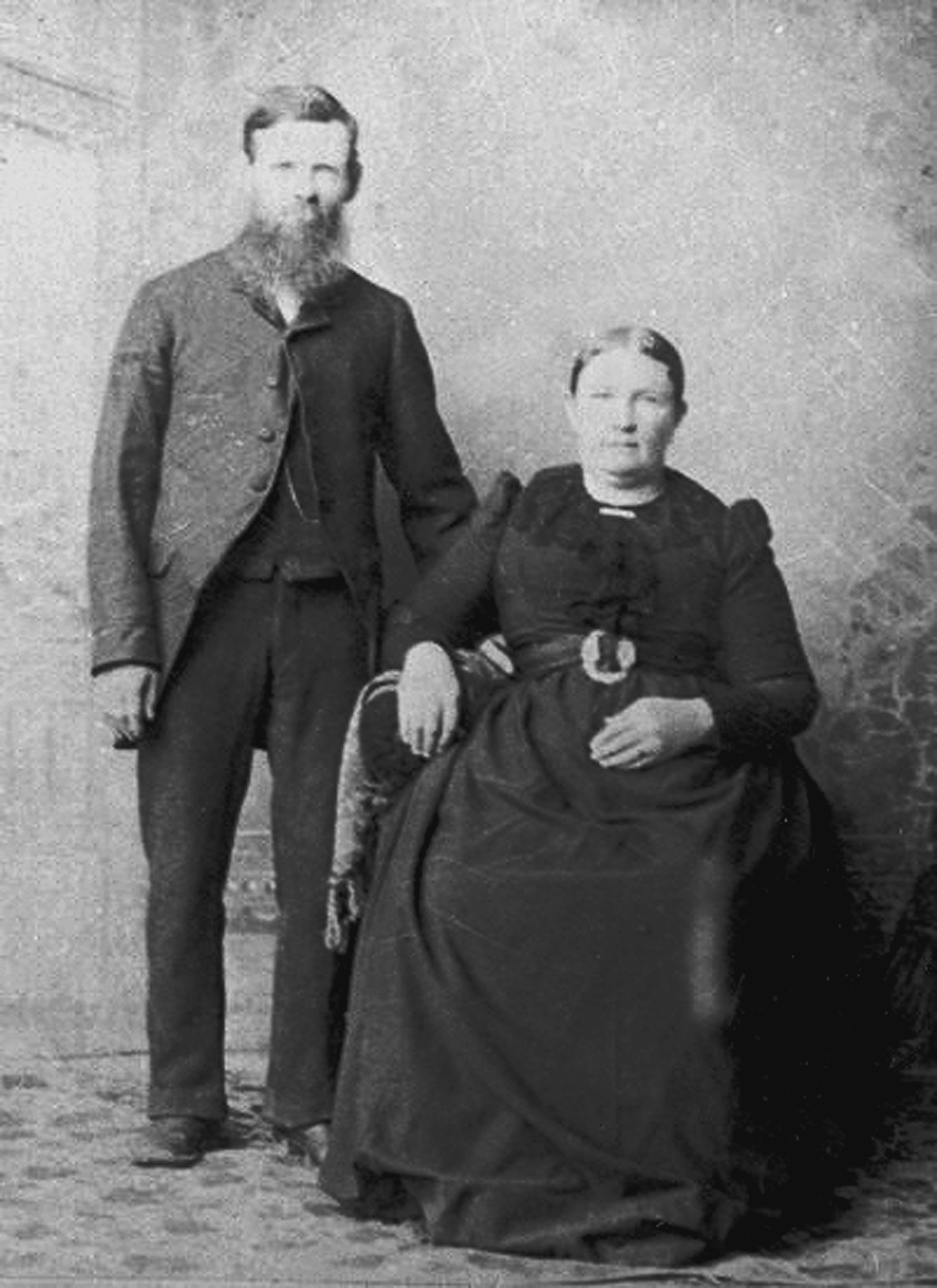
Maria Christina Jacobsen Housley

I stumbled upon this history of one of Amanda’s ancestors and I thought I would make it available.  Maria is Amanda’s 4th Great Grandmother.  This was compiled by Emma Housley Auger (1895-1969), Maria’s granddaughter.

George and Maria Housley

George and Maria Housley

“Maria Christina Jacobsen Housley was born in Copenhagen, Denmark, on April 6, 1845.  She was the daughter of Jorgen Jacobsen, )born in Svrrup Mill (Feyn) Odense Co. Denmark, on January 20, 1815) and Bertha Kristine Petersen, (born in Vedberks, District of Sol and Copenhagen Amt. Denmark, in the September 16, 1821, the daughter of Hans Petersen and Ellen Catherine Strom).

“Grandmother had one older brother, Hans, (born April 18, 1844) and two younger brothers Christian (born November 30, 1846) and Ferdinand (born December 28, 1848).  Two younger sisters Athalie Hedevine (born March 21, 1851) and Rastime Willardine (born December 22, 1853).  All her brothers and sisters were born in Copenhagen, Denmark.

“Her parents were married April 9, 1843.  They joined the Church of Jesus Christ of Latter-Day Saints on September 28, 1851.  Her father was ordained to the office of a teacher on May 2, 1853, and a priest on August 22 of the same year.

“Her father was an orchardist and rented the place that he lived on.  This place contained a very comfortable house with several rooms, a yard with outbuildings, a good orchard and gardens.

“In the year of 1854 with many of their friends, they started their journey Zionward.  My grandmother, who was nine years old at that time.  She remembered the day they left their dearly beloved home forever.  On reaching the beach, a man came to the carriage side and tried his utmost to induce their father to leave his children in Denmark, even if he had to go to Utah himself.  The children were not able to describe their feelings, as the man stood and pleaded with their father on the subject.  The very though of any one wanting to separate them from their parents was very exasperating.

“It was only a short time until they boarded the ship (that was an old vessel).  A few minutes into their journey the people began to be sick.  This family was no exception.  After going part of the way, the ship rocked so hard that it dipped water on the dock.  This kept the men working very hard to keep the water pumped off.  There was a great deal of sickness among the people on the vessel and a number of deaths.

“After a long, tiresome journey over the ocean, across the Gulf of Mexico and then up the Mississippi River in a steam boat, this large group of Danish people landed in Kansas.  Food had been scarce and they were very hungry.  A man who lived there was very anxious to sell them some meat, so they bought some, cooked it.  And ate it.  Being weak, all the people of the company got sick and many of them died.  Among the dead were my grandmother’s father, two brothers, and two sisters.  After they had eaten and became ill, they learned that the pigs had had cholera so the meat was poison.  They could not buy coffins, so they sewed sheets around their dead and buried them the best they could under the circumstances.  This left my grandmother, Maria, Christian, and their mother to continue the trip across the plains.  My grandmother, Maria, was very sick, nigh unto death, and her mother almost lost her mind.  These were sorrowful days.

“After a few days delay (for this is all it took for the deaths and burials to take place), they were fitted out with oxen and cow teams.  Several yoke of oxen and two cows lead each wagon in an independent company.

“There were generally two families to each wagon.  Two men would get on each side of the team and try to lead them on the road.  They had several stampedes, for the Daines were not used to driving oxen and the oxen were not used to the Daines.  Not many of the, if any, had ever seen an ox until now.

“They saw a great many Indians and buffalo on their way.  They got along nicely with the Indians, and killed some of the buffalo as they came along.  They arrived in Salt Lake City in the fall of 1854.  They managed to get some potatoes, which tasted better to them than anything they had ever eaten in their whole life.

“This family has a hard time making a living.  Christian went to work for a man named Jackson Allen in Spanish Fork, Utah.  My grandmother lived with an English family who had recently come from England, by the name of Mr. and Mrs. Robert Shipley.  She was taken in by this family to be raised as one of their own.  She remained with them for about three years.  During this time they taught her to read, write, and to speak the English language.  They also taught her to do house work and to care for the family.  Their children made all manner of fun of her peculiar language.  She felt so badly about this hat she prayed to the Lord, asked him to help her forget the Danish language, and she did forget it.

“She met a young Englishman by the name of George Fredrick Housley.  He also lived in Draper and occasionally worked for the Shipley Family.  When she was about 14 years old they were married in Salt Lake City.  They continued to live in Draper for about six years. On February 22, 1862, they were sealed in the Endowment House in Salt Lake City.  Four children were born to them in Draper, two boys and two girls.

“From Draper they moved to Paradise, Cache, Utah, where they purchased a small farm.  Eight more children were born to them, one boy and seven girls.  They were very poor financially and their children had but very little schooling.  Most of them went to work while young to help provide a livelihood.  The boys worked in the canyon cutting logs and hauling lumber.

“She was a very good cook, some of her specialties, which her family enjoyed most, were “Nofat Dumplings” which were made from veal, pork, beef, and onions chopped together then seasoned with salt and pepper.  The dough was made with suet and wrapped around the meat and boiled.

“Danish Dumplings” – Heat one quart of milk in a skillet or heavy pan. Stir, while sifting in the flour, until thick.  Remove from heat, cool, add two eggs, and a little baking powder.  Dip by spoonfuls into boiling broth, cover, and continue to boil for about fifteen minutes.

“She also made some little cakes out of liver which she called “Faggots”.  It was slightly boiled; ground liver with onions, seasoned with salt and sage.  Make into little cakes by taking a spoonful and wrapping it in a square of leaf lard or lacy lard which comes from the inside of the pig.  Fry just until the lacy lard is golden brown.  “Yorkshire Pudding” – which was just eggs, milk, and flour stirred up together and baked in piping hot grease.

“Grandmother was as active in the church as her health would permit.  For some time while her husband was away from home, she went without shoes.  They think this was the cause of her having rheumatic fever.  She went to the Bishop and told him of the condition, he gave her a pair of men’s shoes which she was unable to wear.  From this time on she had a weak heart and then dropsy.  A lot of the time after her sixth or seventh child was born, she was unable to walk, nevertheless, she was quite cheerful and taught her children from a bed or a chair.

“She passed away in March, 1896, of dropsy at the age of fifty-one.  After she was placed in the coffin, she continued to bloat until her body burst.  The undertaker tapped the coffin and set a bucket under it to catch the water.  The bucket had to be emptied a time or two during the funeral.

“Burial was in the Paradise Cemetery beside her infant daughter, who preceded her in death.

William Mills

William Mills 1839 - 1910

William Mills 1839 – 1910

This is another photo that was recently provided to me by a cousin.  She did not know if we are related to him or not.  Here is the photo and I can indicate I am not related, and I do not believe she is directly either.  Since I did not see the photo available elsewhere, I thought I would make it available just in case it is a one of a kind.

William Mills was born 4 November 1839 in Spurstow, Cheshire, England.  The back of the photo has “Wm Mills 4 Nov 1839” written on the back.  He married Margaret Ann Hawkey on 1 June 1867 in Salt Lake City, Salt Lake, Utah.  After she died, he married Caroline Virginia Hughes 13 December 1883 in Salt Lake City.  He died 10 November 1910 in Paradise, Cache, Utah.  He was buried 14 November 1910 in the Paradise City Cemetery.

Clara McMurdie Coley

With the passing of Clara Coley this week, I thought I would put together a quick little history with the photos I have of her.  A good portion of this is written around Clara’s obituary.  I have an autobiography of Ivan so I will create a separate post for him in the future.

Clara McMurdie was born 26 January 1914 in Paradise, Cache, Utah with a twin brother Clarance (1914-1919).  She was one of 11 children born to Sarah Amelia Checketts and Joseph Kay McMurdie.  She grew up in Cache Valley and her family moved to Richmond, Cache, Utah when she was a few years old.  It was while they lived in Richmond that she met Ivan Coley who was a few years older than her.  Clarance died and is buried in Richmond.  Her family moved to Buhl, Twin Falls, Idaho in 1928.

Joseph and Sarah McMurdie in 1960

Joseph and Sarah McMurdie in 1960

Ivan hitchhiked all the way from Utah to Idaho to be with Clara after her family moved to Buhl.  They were married 22 October 1930 in Buhl.  After marriage, they moved and lived at the Coley Ranch in Richmond.  They were later sealed 10 February 1932 in the Logan LDS Temple.  An interesting side note, the great grandson of the Bishop who married them presided as the Bishop over Clara’s funeral.

Ivan Coley and dog

Ivan Coley and dog

Ivan and Clara moved back to Buhl and survived the Great Depression there.  They purchased a 160 acre farm in Melon Valley in Buhl.  That farm was sold in 1961 and they purchased five acres just outside of Buhl and kept that property for 36 years.

Joseph McMurdie, Clara, RaNae (Cookie), and Ivan Coley about about 1964

Joseph McMurdie, Clara, RaNae (Cookie), and Ivan Coley about about 1964

I have in my records that there were five children born to Ivan and Clara although the obituary only has 4 listed.  I will have to determine which is correct.

Sarah Colleen Coley born in 1932 in Richmond.

An unnamed son was born 12 February 1934 in Buhl.  He died the same day.  If I understood it correctly, this little boy was stillborn.  Apparently he is buried on the McMurdie Farm in Buhl.  I wonder if the present owner is aware of the grave or if it is marked?

Lorus Ivan Coley (“Bud) was born 1 August 1936 in Buhl.  He died 23 October 1962 while on a hunting trip down near the Nevada border.  Initially reported to me as an hunting accident, I later learned it appears to have been a murder framed to appear as a suicide.  Apparently there is an open investigation ongoing at this time on this matter.  I will be interested to learn the outcome of the matter.

Clara, Colleen, and Bud

Clara, Colleen, and Bud

I was told there was an unnamed son born in 1938 who also died the same day who was stillborn.  I do not have an exact date for this one so I suppose what makes me question it is that Clara’s obituary does not mention him.  I will have to find out more from the family.

In 1942, Ivan’s father Herbert came to visit for part of the summer.  At Ivan and Clara’s home near the well, he fell and broke his hip.  This injury would lead to his death in September.

Lastly, Clarene RaNae Coley born in 1947 in Buhl.

Bud and RaNae

Bud and RaNae

Danny Todd, Ivan, Bud, and RaNae Coley

Danny Todd, Ivan, Bud, and RaNae Coley

Clara at a Coley Reunion in 1955

Clara at a Coley Reunion in 1955

Clara dedicated her life to love and care for her family and friends.  Even into her late 60’s she was known to outrun her grandchildren.  Ivan and Clara dedicated their lives to their grandchildren.  Grandchildren often spent many nights, or even weeks, on the farm.  Clara loved to quilt and made beautiful blankets.  She also made rugs from all the fabric scraps.  She was left-handed.  She worked at a number of jobs including bus driver.

Ivan and Art Coley (brothers) with Clara and Mary (Art's wife) in the mid 80's

Ivan and Art Coley (brothers) with Clara and Mary (Art’s wife) in the mid 80’s

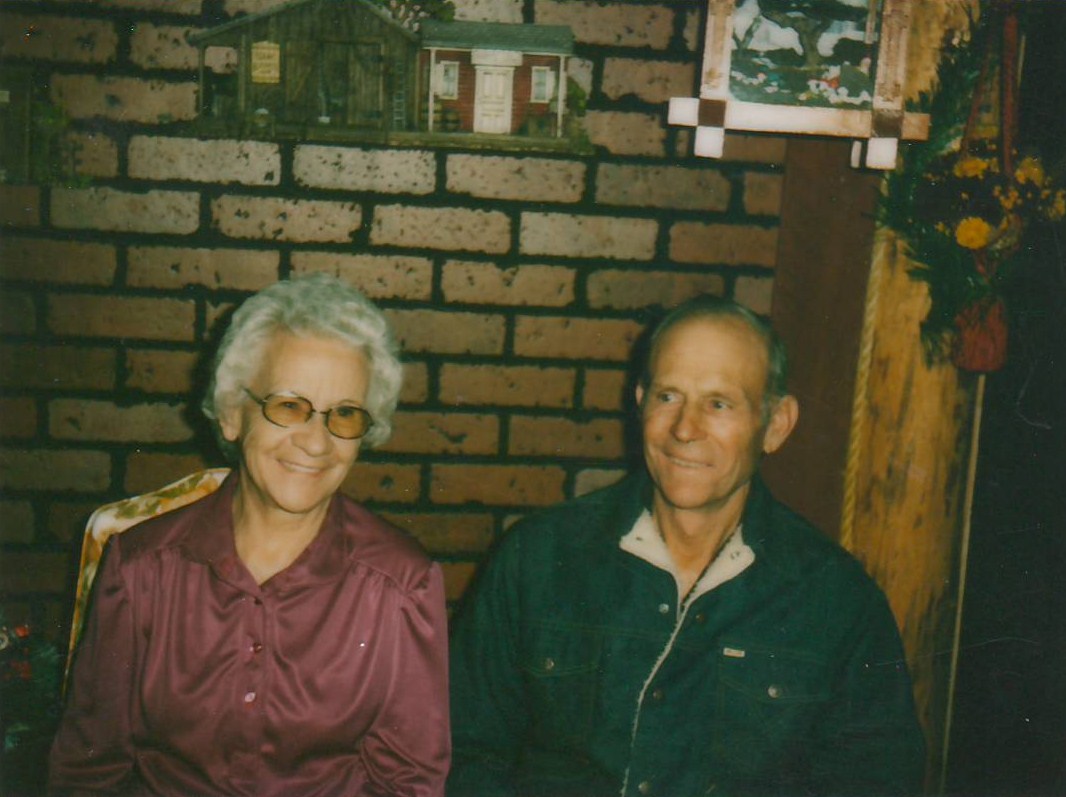
Clara and Ivan in the early 80's

Clara and Ivan in the early 80’s

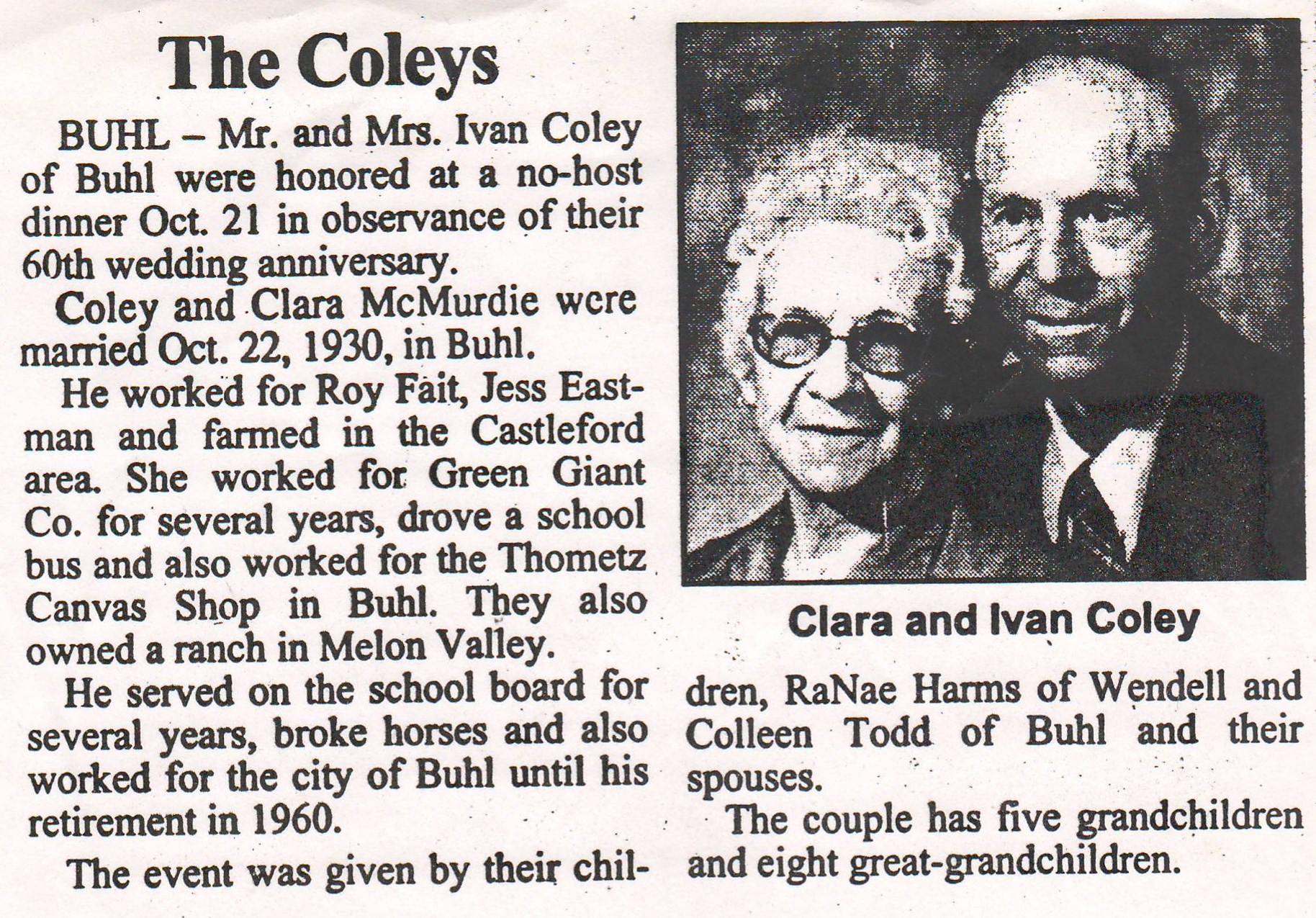
Ivan and Clara celebrated their 60th wedding anniversary in 1990.  It is about this time that I have my first memory visiting Ivan and Clara with my grandmother Colleen Jonas (technically a niece-in-law).

60th Wedding Announcement

60th Wedding Announcement

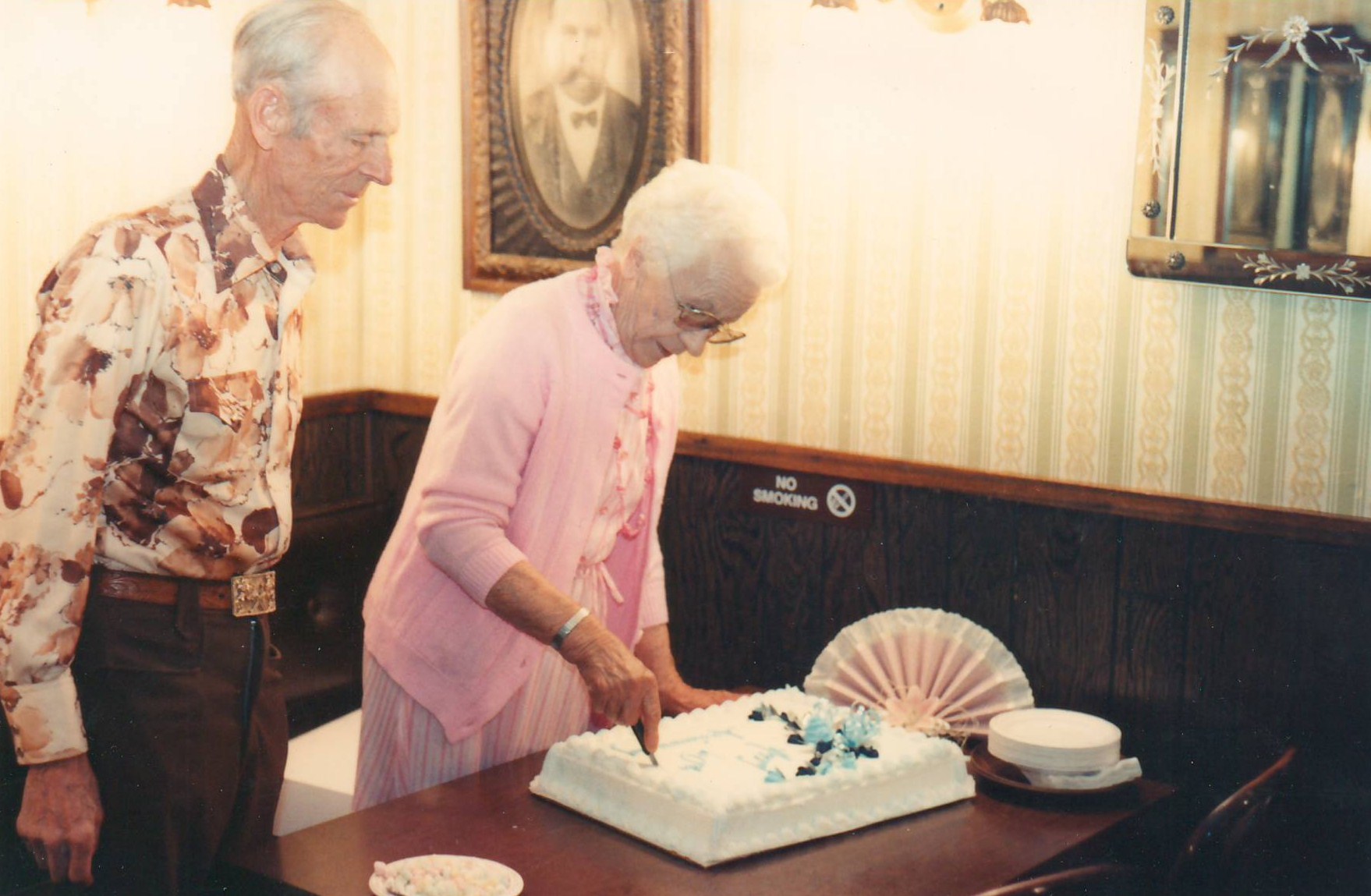
Cutting the cake at their 60th anniversary party

Cutting the cake at their 60th anniversary party

Here is a photo from May 2012.  She was 98 years old and looked to be in great shape and pretty classy.  I visited with her about this same time and she identified a number of individuals in photographs for me and still had a sense of humor.

Clara Coley May 2012

Clara Coley May 2012

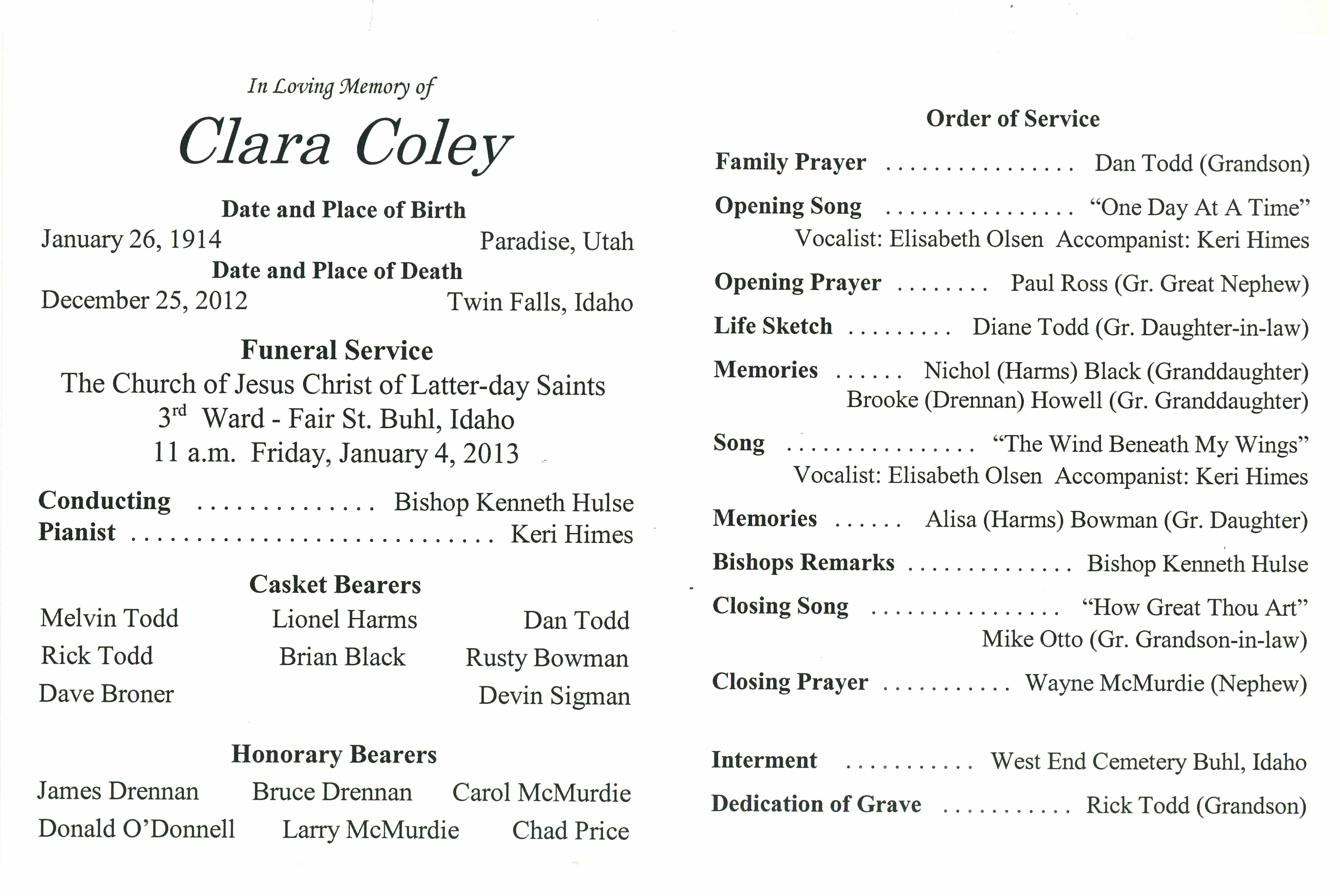
Clara passed away on Christmas Day 2012 at the St. Lukes Regional Hospital in Twin Falls.  Her funeral was held 4 January 2012 in Buhl with the burial between her husband and son in the West End, Buhl, Idaho cemetery.

Clara Coley Funeral Program

Clara Coley Funeral Program