Some Early Settlers from Lehi to Plain City, Utah

A Personal Note

This document found its way into my family history files for good reason. Settler no. 68 — William Sharp (1825–1900) — is my ancestor. William was born 10 December 1825 in Misson, Nottinghamshire, England. He married Mary Ann Padley and the couple crossed the plains in the Moses Clawson Company, arriving in Salt Lake City on 15 September 1853. They went first to Lehi, but as the Plain City History records, “the land was not too good and there was no good grazing for their cattle.” They consecrated their Lehi property to the Church on 8 January 1857 — the same day as William Clark himself — before joining the group that would found Plain City.

The Daughters of Utah Pioneers history of Plain City describes William Sharp simply as “the first stone mason in Plain City.” That understates it considerably. He built the Episcopal Church in 1877, the old Singleton home, and Robert Maw’s adobe house — that last detail connecting two Lehi consecrators (nos. 68 and 47) in the work of building their new community. He played the cornet in Plain City’s first band alongside Abraham Maw. He made adobe bricks with Joseph Skeen, Joseph Robinson, and Jeppe G. Folkman — all men who appear on Clark’s consecration list. He worked with Thomas Singleton constructing many of Plain City’s early houses. His daughter Victorine Mary Sharp married Robert Edward Maw, connecting the two founding families by marriage as well as by community. His son Milo Riley Sharp played first base on Plain City’s founding baseball team, and Milo’s wife Lillie Stoker Sharp performed in Plain City’s second dramatic association. Milo served as school trustee beginning in 1897. Across generations, W. Albert Sharp served as a founding trustee of both the town board and the cemetery district when Plain City incorporated in 1944.

The Sharps were not alone in making that journey north from Lehi. The consecration list reads almost like a founding roster for Plain City — and the primary sources confirm it. Robert Maw (no. 47) left his own first-person account: “I Robert Maw, say that I was one of the first pioneers who came to Plain City on March 17, 1859. We left Lehi on the 10th of March.” The fall 1858 scouting party that selected the Plain City site included Daniel Collett (no. 14), Joseph Skeen (no. 69), William Wallace Raymond (no. 64), Joseph Robinson (no. 67), Joseph Folkman and Jeppe Folkman (no. 28), and Thomas Ashton — men who had consecrated their Lehi properties just months before. When Plain City Branch was organized in May 1859, William Wallace Raymond was appointed the first Presiding Elder, with Daniel Collett and Jeppe G. Folkman as counselors. Joseph Skeen — who built Plain City’s first log cabin and is credited with introducing adobe making to Utah — was appointed the first water master. His wife Alice Booth Robinson was recorded as the first white woman to set foot on Plain City soil.

Jeppe Jorgen Folkman (no. 28) managed Plain City’s cooperative ZCMI store from its founding in 1869 and operated one of the settlement’s first stores from his home. The Folkman family remained central to Plain City’s commercial and civic life for generations. Robert Maw (no. 47) founded the Maw family line in Plain City — his descendants produced three generations of ward bishops, a commercial dynasty in the Maw store and canning operations, and civic leaders serving on the town board and irrigation company board well into the twentieth century. William Van Dyke (no. 78) operated one of Plain City’s earliest merchant stores, confirmed as a living pioneer at the 1909 50th anniversary celebration. The Raymond family (nos. 63–64) provided the first Presiding Elder, first Relief Society president, and LDS Sunday School assistant superintendent.

The Lehi fort of the 1850s was, in a very real sense, the nursery of Plain City. Clark’s consecration list and the Plain City founding history are two windows into the same group of people, two years apart.

The following is a transcription of Clark’s paper, with the three original images and footnotes collected at the end.

Wayne E. Clark, a Lehi native and retired Auburn University professor of entomology, spent years examining the consecration deeds signed by early Lehi settlers, comparing them against Utah County property records, the 1860 Federal Census, Sanborn Fire Insurance Maps, and family history sources. His 2017 paper, part of the Wayne E. Clark Collection at the Lehi Historical Society and Archives (lehihistory.com), has been cited by the University of Utah’s Century of Black Mormons project and published in the Lehi Free Press. The underlying deeds are held in the Utah County Office of Land Records and at the BYU L. Tom Perry Special Collections.

Early Mormon Settlers in Lehi, Utah Territory, Consecrated Their Properties to Their Church

Wayne E. Clark
Lehi, Utah, 2017

The Lehi Pioneer Monument was erected in 1908 on the Northeast corner of First North and First West Streets in Lehi, Utah. A photographer pointing his lens toward the Southeast captured a portion of a small adobe home in an early photograph of the monument. That home stood on First North Street on the block on which the Lehi Memorial Building would come to stand in a few years. In pioneer times the block on which it stood was the northeastern-most of sixteen city blocks that were enclosed within a twelve-foot-high mud wall erected as protection against the fear of hostile Indians. The monument was constructed on the site of the last crumbling remnants of the old wall.

Things have changed in Lehi since the little adobe home stood across the street from the monument. The wall is gone and forgotten. The old Lehi High School/Junior High School athletic field that came to occupy the site on which the monument and the adobe house in the background is gone, if not entirely forgotten. Instead of the athletic field, chairs and umbrellas surround a small wading pool on a deck that extends south of the swimming pool that’s part of the large Lehi Legacy Center complex on the ground on which the monument stood, and a large parking lot covers the ground on which the house once stood. Today, if one stands on the spot where the photographer stood in 1908, or some time not long afterward, automobiles that carry people to and from the Lehi Legacy Center occupy a prominent portion of the scene. The Memorial Building can be seen along the photographer’s line of site in the background.
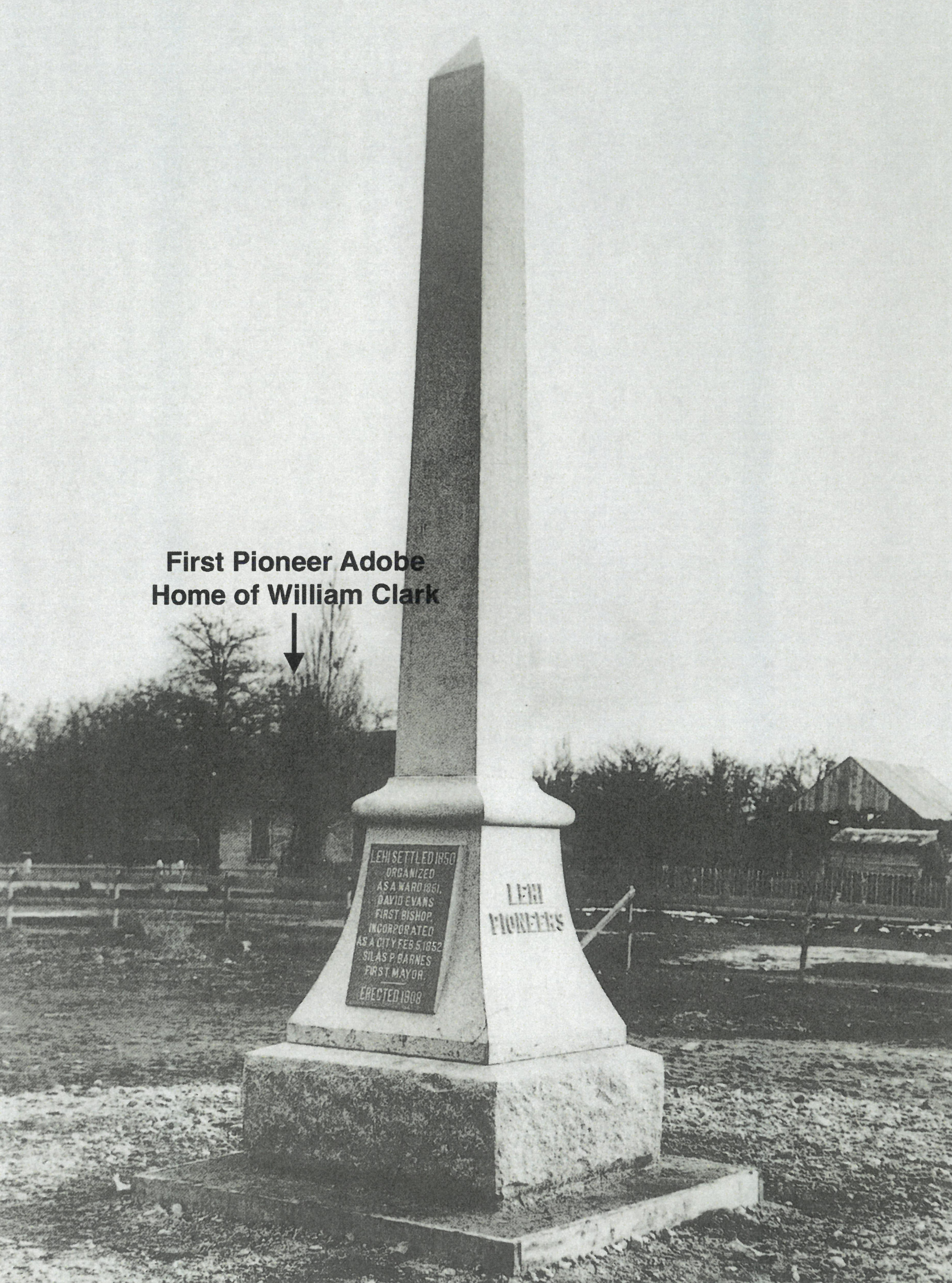
The owner of the home was my second great grandfather, English Mormon immigrant William Clark (1825–1910). He and at least 84 other heads of families in Lehi did what he did between 11 April 1856 and 30 January 1858. A little more than three years later he consecrated his little adobe house to the church.

Feramorz Young Fox provides an explanation of the “Consecration Movement” of the 1850s.2 He writes that the movement was church-wide. Hundreds of documents he calls “deeds of consecration” were generated in the Utah Territory between 1855 and 1862.3 The first public announcement of the Consecration Movement was given at general conference in April 1854, but the implementation was delayed until a proper form compliant with the laws of the Territory could be developed and printed. He writes that Brigham Young’s consecration deed4 is dated 11 April 1855, but notes the existence of an earlier deed recorded in Millard County on 1 January 1855.

Fox presents a table5 in which the numbers of deeds by county are listed, along with the population of each county between the years 1855 and 1857. The total for the fourteen counties in the table is given as 2,747. This must be the figure used by Leonard Arrington to calculate that about forty percent of the 7,000 heads of families in the Utah Territory deeded all their property to the church during the period in which the program was in effect.6 Fox gives the following numbers for Utah County: 69 (1855), 147 (1856), and 92 (1857) for a total of 922.

William Clark’s consecration deed is representative.

Be it known by these presents that I, William Clark, of Lehi City, in the county of Utah, and Territory of Utah, for and in consideration of the good will which I have for the Church of Jesus Christ of Latter Day Saints, give and convey unto Brigham Young, Trustee in Trust for said Church, his successors in office, and assigns, all my claim to and ownership of the following described property, to wit:

One lot in the City of Lehi with buildings thereon and improvements: Lot no. 6 in Block 16 containing 50/160 of an improvement.

Also Lot 9 in Block 7 of Plat B in the American Creek Survey of Farm Land containing 5 acres … $25.00
Also Lots 12 & 13 in Block 5 Containing 2 acres in the Lehi Garden Lot Survey … $20.00
Also Lot 15 in Block 10 Containing 10 acres in Plat B, American Creek Survey of Farm Land … $30.00
Also outstanding account in land … $200.00
1 yoke of oxen, 1 horse … $140.00
1 wagon, $45, 1 rifle, $10 … $55.00
2 cows @ $30.00 each, 1 two year old, $25 … $55.00
1 yearling heifer, $15, 1 hog, $17 … $32.00
Farming tools, $10. Mechanics tool, $2.50 … $12.50
Household furniture … $50.00
35 Bu. of Wheat @ $2 per Bushel … $70.00
10 Bu. of Corn @ $1.5 per Bushel … $15.00
30 Bu. of Oats @ $1 per Bushel … $30.00
30 Bu. of Potatoes @ $1 per Bushel … $30.00
Garden Vegetable $6, Hay $24 … $30.00
120 lbs of Pork at 20¢ per lb … $24.00

Total Amount of William Clark’s property … $1048.508

Together with all the rights privileges and appurtenances thereunto belonging or pertaining. I also covenant and agree that I am the lawful claimant and owner of said property and will warrant and forever defend the same unto the said Trustee in Trust, his successors in office and assigns, against the claims of our heirs and assigns, against the claims of any heirs, assigns, or any person whosoever.

[signed] William Clark his x mark

Witnesses:
Thomas Taylor
George A. Leslie
Thomas Ashton

Territory of Utah, County of Utah. I Lucius N. Scovill, Recorder of the aforesaid County, certify that the signer of the above transfer, personal known to me, appeared this 8th day of January AD 1857, and acknowledged that he of his own choice executed the foregoing transfer.

Lucius N. Scovill
Recorder of Utah Co. UT.
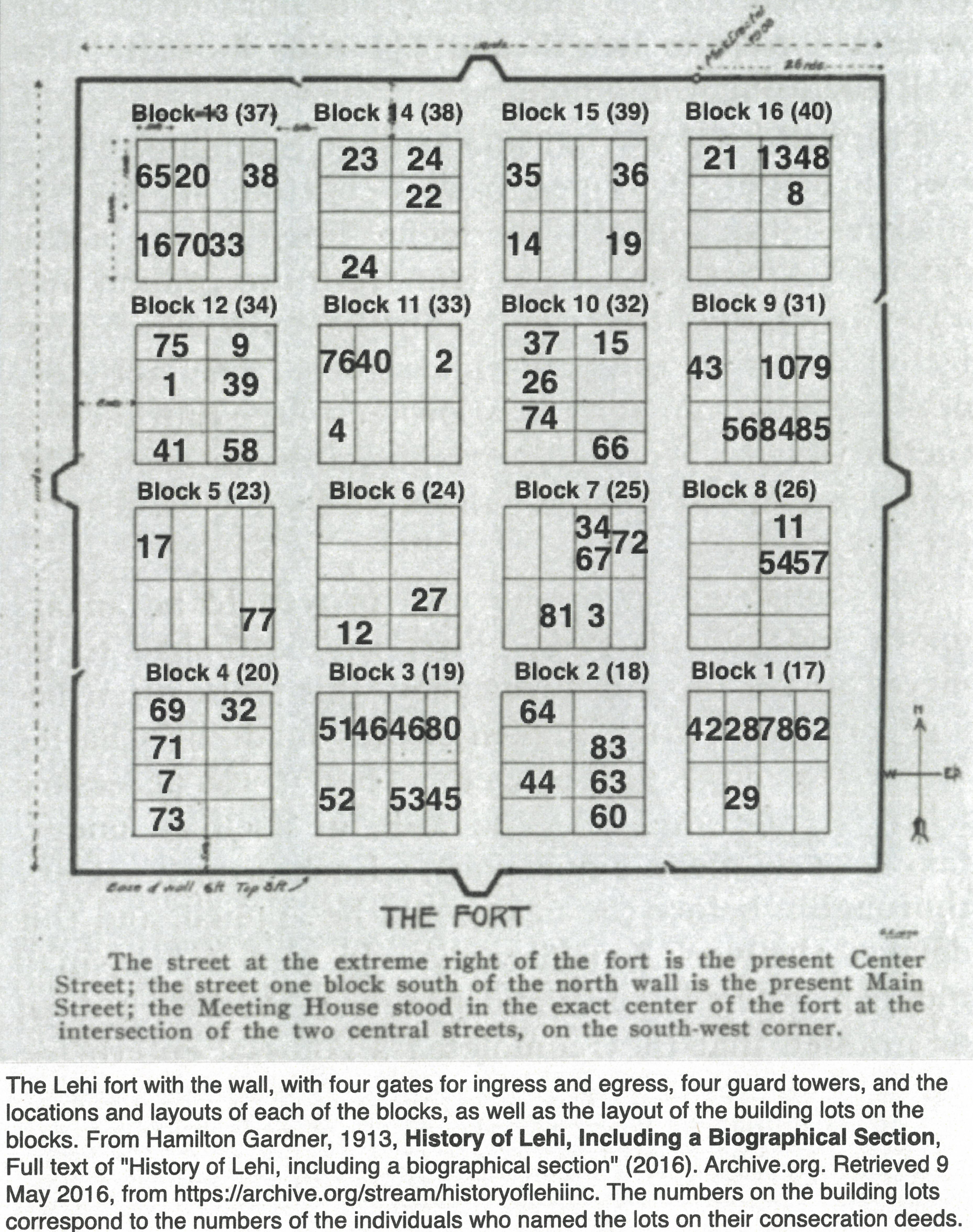
The property William Clark and his neighbors in Lehi consecrated to the church included title to land. This falls into three categories for Clark and for the others: farm land, garden plots and lots on city blocks. The farm land is defined in what the deeds refer to as the “American Creek Survey of Farm Land.” This survey has not been located.9 Likewise, the survey for the Garden Plots referred to on the consecration deeds has not been located.10 The third category of property in land recorded on the consecration deeds refers to a “Lehi Survey of Building Lots.” The survey was evidently done in 1853 by Bishop Evans, as described in the consecration deeds.

The sixteen blocks inside the fort were numbered beginning with the block on the Southeast corner as Block 1 and continuing east to west with Blocks 2 through 4, then switching to east on the second tier of blocks and so forth to Block 16 on the Northeast corner of the fort.

Although the blocks inside the fort had to be re-numbered, this numbering system is consistent with one in use today. The current system apparently dates from 1861. According to Gardner,13 on April 27, 1861, the council received a numerously signed petition asking that the city be enlarged. This unmistakable sign of growth occasioned much discussion. For one, Bishop Evans seriously objected to any such extension of the city, giving as his reason the lack of water in Dry Creek to supply any considerable addition to the population of Lehi. Finally, however, all objections were satisfactorily adjusted, and the City Council ordered that a tier of blocks be surveyed around the wall. These did not supply the unexpected demand for building lots, so a tier each on the North and South was subsequently surveyed and sold to home builders.

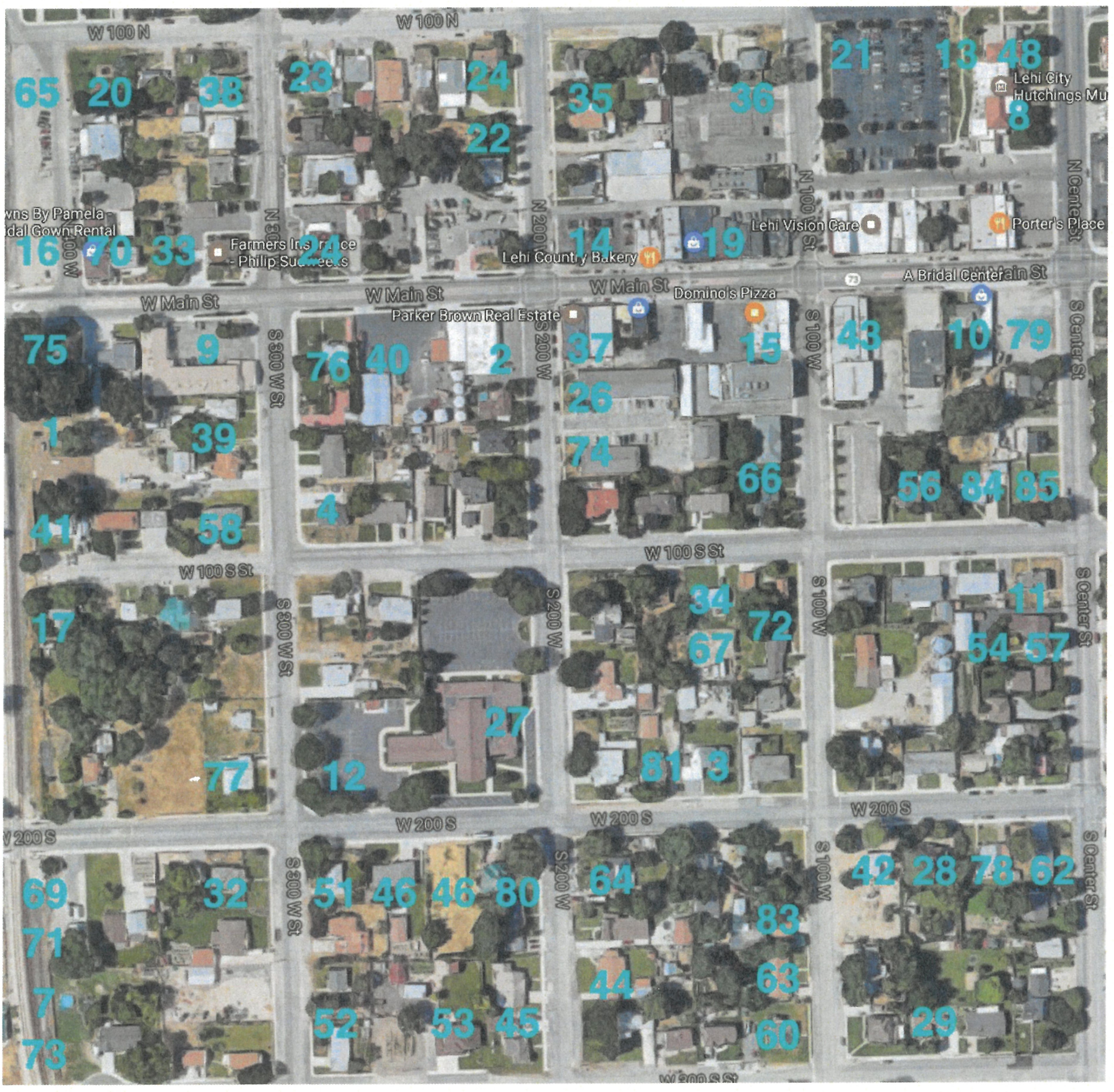
Gardner included a diagrammatic depiction of the fort, surrounded by the wall, in his history,14 with four gates for ingress and egress, four guard towers, and the locations and layouts of each of the blocks, as well as the layout of the building lots on the blocks, are depicted. The numbers of blocks 1–16 are shown, with the corresponding numbers of the same blocks in the later surveys and continuing to this date, in parentheses. The lot and block numbers are listed on 71 of the 85 1856/1858 Lehi consecration deeds.15 The building lots on the diagram as assigned to the individual settlers are identified by the following numbers. Some of the homes listed on the consecration deeds are still standing. The house nearest current addresses of these are listed. The apparent location of houses no longer standing are also given below.
The Settler Lists

Note: Seventy-two of the 85 examined consecration deeds list the block number and the lot number of property in the city. All of the blocks listed are inside the fort. A few deeds list portions of additional lots, and some list two or more complete building lots. Thirteen deeds list no city lots. Presumably those individuals did not own their own homes. Thirty-two deeds list an adobe house and one lists a “mud house.” These are valued from $150.00 to $1,100.00. Two individuals, Abram Hatch and John Riggs Murdock, specified that their adobe houses had four rooms and one cellar. Joseph Skeen listed a 6-room adobe house. Eight log houses (on 7 lots), with values ranging from $60.00 to $200.00, are listed on the deeds. Eighteen deeds list a lot number and a block number but specify only that the property was “with improvements,” without describing the type of house. Fourteen of the 85 deeds have no lot or block numbers or houses. Presumably these individuals did not own their own homes. Lehi settler’s consecrations ranged from $127.75 to $3,075.00, for a total of $93,128.70.

South, 400 West
1. Andrew Anderson (1833–1909). Lehi, Lot 4, Block 12, with adobe house, $400.00, $1,203.00 total consecration. 17 November 1856. BK C, 1855, p. 83. 37 South, 400 West

South, 200 West
2. Thomas Ashton (1813–1903). Lehi, Lot 8, Block 11, with log house, $200.00, $1,543.00 total consecration. 9 January 1857. BK F, p. 109. 36 South, 200 West

140 South, 200 West
3. Charles Barnes Jr. (1827–1911). Lehi, Lot 2, Block 7, with adobe house, $300.00, $1,008.00 total consecration. 10 January 1857. BK F, p. 129.

69 South, 300 West
4. Alfred Bell (1794–1874). Lehi, Lot 4, Block 11, with adobe house, $400.00, $1,201.00 total consecration. 10 January 1857. BK F, p. 123.

5. Jens Peter Ipsen Benson [Peter Benson] (1831–1898). Lehi, no city lot, $135.00 total consecration. 16 January 1857. BK F, p. 177.

6. Yeppa Benson [Jeppe Bendtsen] (1795–1872). Lehi, no city lot, $168.00 total consecration. 16 January 1857. BK F, p. 177.

West, 300 South
7. Samuel Briggs (1826–1898). Lehi, Lot 3, Block 4, with adobe house, $150.00, $997.00 total consecration. 10 January 1857. BK F, p. 131. 382

West Main Street
8. George Brough (1823–1914). Lehi, Lot 7, Block 16, with adobe home, $150.00, $421.00 total consecration. 16 January 1857. BK F, p. 180. 55 North Center Street

North Center Street
9. Abram Brown [Abraham Brown] (1808–1891). Lehi, Lot 9, Block 12, with adobe house, $250.00, $608.00 total consecration. 26 January 1857. BK F, p. 208. 333 West Main Street

West Main Street
10. John Brown (1820–1896). Lehi, Lot 7, Block 9, with improvements, $150.00, $3,083.00 total consecration. 8 January 1857. BK F, p. 81. 45 West Main Street

15 West, 100 South
11. Martin Bushman (1802–1870). Lehi, Lot 6, Block 8, with improvements, $300.00, $1,032.00 total consecration. 16 January 1857. BK F, p. 167.

284 West, 200 South
12. David Clark (1816–1889). Lehi, Lot 2, Block 6, with adobe house, $600.00, $1,520.00 total consecration. 5 February 1857. BK G, p. 71.

100 West, 100 North
13. William Clark (1825–1910). Lehi, Lot 6, Block 16, with adobe house, $200.00, $1,048.50 total consecration. 8 January 1857. BK F, p. 91. 45 West, 100 North

West Main Street
14. Daniel Collett (1807–1894). Lehi, Lot 4, Block 15, with improvements, $200.00, $1,313 total consecration. 10 January 1857. BK F, p. 126. 188 West Main Street

West Main Street
15. Sylvanus Collett (1835–1901). Lehi, Lot 6, Block 10, with adobe house, $150.00, $360.00 total consecration. 9 January 1857. BK F, p.

104, 115 West Main Street
16. Sarah Couzens [Sarah Jaque] (widow of Joseph Couzens [Joseph William Cousins (1809–1856)], deceased). Lehi, Lot 4, Block 13, with improvements, $150.00, $927.20 total consecration. 9 March 1857. BK H, p. 40.

206, 389 West, 100 South
17. Daniel William Cox (1801–1858). Lehi, Lot 5, Block 5, with adobe house, $450.00, $2,225.50 total consecration. 20 January 1857. BK F, p.

West Main Street
18. William Taylor Dennis (1810–1894). Lehi, no city lot, $4,115.50 total consecration. 9 January 1857. BK F, p. 111.

West Main Street
19. Joseph Dobson (1804–1872). Lehi, Lot 2, Block 15, with mud house, $200.00, $721.00 total consecration. 8 January 1857. BK F, p. 83. 130

86 North, 400 West
20. James Downs (1815–1882). Lehi, Lot 6 and W1/2 of Lot 7, Block 13, with adobe house, $250.00, $1,813.00 total consecration. 9 March 1857. BK H, p. 46.16

North, 100 West
21. Robert Dunn (1818–1885). Lehi, Lot 5, Block 16, with improvements, $250.00, $1,085 total consecration. 20 January 1857. BK F, p. 272.17 86 North, 100 West

North, 100 West
22. Shadrack Empy (1822–1892). Lehi, Lot 7, Block 14, with adobe house, $200.00, $820.00 total consecration. 10 January 1857. BK F, p. 130. 229

West, 100 North
23. Abel Evans (1812–1866). Lehi, Lot 5, Block 14, except NE Quarter of lot, with house, $150.00, $528.00 total consecration. 31 December 1856. BK F, p. 40.18 90 North, 300 West

Main Street
24. David Evans (1804–1883). Lehi, Lots 2 and 6, Block 14, $1,100.00, $3,075.00 total consecration. 10 May 1856. BK C, p. 39.19 288 West Main Street

Main Street
25. Henry Beck Evans (1830–1911). Lehi, no city lot, $180.00 total consecration. 28 January 1857. BK F, p. 284.

200 West
26. Joseph Field (1831–1911). Lehi, Lot 4, Block 10, with improvements, $200.00, $489.00 total consecration. 16 January 1857. BK F, p. 178. 49

200 West, South
27. John Folker (1814–1884). Lehi, Lot 8, Block 6, with adobe house, $200.00, $984.00 total consecration. 8 January 1857. BK F, p. 94. 166

South, 200 West
28. Jeppe George Folkmann [Jeppe Jorgen Folkman] (1824–1916).20 Lehi, Lot 6, Block 1, with improvements, $65.00, $394.00 total consecration. 28 January 1857. BK F, p. 285. 65 West, 200 South

200 West, South
29. William Fotheringham (1826–1913). Lehi, Lot 3, Block 1, with two log houses, $100.00, $1,845 total consecration. 4 November 1856. BK C, p.

73, 66 West, 300 South
30. Charles Wesley Gallup. Lehi, no city lot, $438.50 total consecration. 16 January 1857. BK F, p. 170.

31. John Henry Glines (1831–1897). Lehi, no city lot, $387.00 total consecration. 31 March 1857. BK H p. 90.

Block 6, Lot 6, 6 North
32. Abram Hatch [Abraham Chase Hatch] (1830–1911). Lehi, Lot 6, Block 4, with adobe house, $750.00, $2,891.00 total consecration. 10 January 1857. BK F, np. 132.21

100 South
33. Lorenzo Hill Hatch (1826–1910), and Sylvia S. Hatch. Lehi, Lot 2, Block 13, with buildings and improvements, $800.00, $1,608.00 total consecration. 11 April 1856. BK C 1855, p. 41.22 212 South, 300 West

125 West
34. John Joseph Hayes (1825–1899). Lehi, E1/2 Lot 7, Block 7, $100.00, $311.00 total consecration. 9 January 1857. BK F, p. 105. 125 West, 100 South

96 North, 200 West
35. William Brown Hill (1836–1883). Lehi, Lot 5, Block 15, with improvements, $150.00, $931.75 total consecration. 29 December 1856. BK F, p. 30. 96 North, 200 West

93 North, 100 West
36. William Hyde (1818–1874). Lehi, Lot 8, Block 15, $150.00, $1,040.00 total consecration. 23 December 1857. BK H, p. 106.

187 West Main Street
37. Ezekiel Hopkins (1801–1872), or his son, Ezekiel Hopkins (1839–1911). Lehi, Lot 5, Block 10, with log house, $200.00, $610.00 total consecration. 10 January 1857. BK F, p. 120.23 187 West Main Street

87 North, 300 West
38. Daniel James (1807–1880). Lehi, E1/2 Lot 7, and N1/2 Lot 8, Block 13, with adobe house, $200.00, $871.00 total consecration. 28 February 1857. BK H, p. 21. 87 North, 300 West

South, 300 West
39. Samuel James (1825–1893). Lehi, Lot 7, Block 12, with adobe house, $150.00, $490.00 total consecration. 28 January 1857. BK F, p. 278. 24

West Main Street
40. John Karren (1834–1905). Lehi, Lot 7, Block 11, with adobe house, $150.00, $441.00 total consecration. 28 January 1857. BK F, p. 181. 231

West Main Street
41. Thomas Karren (1810–1876). Lehi, Lot 2 & the E1/2 of Lot 3, in Block 12, with log house, $150.00, $1,766.00 total consecration. 8 January 1857. BK F, p. 92. 390 West, 100 South

217 South, 100 West
42. Henry Kearns (1778–1859). Lehi, Lot 5, Block 1, with improvements, $350.00, $1,049.00 total consecration. 10 January 1857. BK F, p. 128.

West Main Street
43. Suel Lamb (1833–1913). Lehi, Lot 5, Block 9, with adobe house, $150.00, $652.00 total consecration. 10 January 1857. BK F, p. 127. 95 West Main Street

261 South, 200 West
44. John Irvin Lawson [John Lawson] (1805–1884). Lehi, N1/2 Lot 3, Block 3, with improvements, $50.00, $145.00 total consecration. 10 January 1857. BK F, p. 117.

290 South, 200 West
45. Abraham Losee (1814–1887). Lehi, Lot 1, Block 3, with improvements, $150.00, $1,153.00 total consecration. 9 January 1857. BK F, p. 115.

290 South, 200 West
46. John Smiley Lott (1826–1894) and Permelia Darrow Lott (widow of Cornelius P. Lott, deceased) and Peter Lott (1805–1882). Lehi, Lot 1, Block 3, $150.00, $1,153.00 total consecration. 9 January 1857. BK F, p. 115.

[Peter] Lyman Lott (1842–1906). Lehi, Lots 6 and 7, Block 3, with improvements, $600.00, $2,226.00 total consecration. 8 January 1857. BK F, p. 100. 241 West, 200 South

47. Robert Maw (1834–1920). Lehi, no city lot, $285.00 total consecration. 19 January 1857. BK F, p. 182. PC

45 West, 100 North
48. James McGaw (1824–1872) & Elias Bassett.24 Lehi, Lot 6, Block 16, with adobe house, $400.00, $2,255.00 total consecration. 23 December 1857. BK H, p. 108.

100 North
49. Ephraim Mecham (1808–1891). Lehi, no city lot, $392.50 total consecration. 28 January 1857. BK F, p. 280.

50. John Miller (1846–1939). Lehi, no city lot, $127.75 total consecration. 28 January 1857. BK F, p. 280.

300 West
51. John Murdock (1792–1871). Lehi, Lot 5, Block 3, with house, $100.00, $295.00 total consecration. 31 December 1856. BK F, p. 38. 209 South

300 West
52. John Riggs Murdock (1826–1913). Lehi, Lot 4, Block 3, also 3/8 of Lot 3, Block 4, Lehi, with 4-room adobe house with cellar, $800.00, $5,097.00 total consecration. 9 January 1857. BK F, p. 114. 269 South, 300 West

238 West, 300 South
53. Orrice Clapp Murdock (1824–1915). Lehi, Lot 2 and 2 rods of the E side of Lot 3, Block 3, with house, $500.00, $1,665.50 total consecration. 8 January 1857. BK F, p. 95. 238 West, 300 South

South Center Street
54. Jens Nelson [Jens Nielsen] (1796–1875). Lehi, N1/2 of Lot 7, Block 8, $50.00, $306.00 total consecration. 16 January 1857. BK F, p. 171. 140

South Center Street
55. Henry Elliot Norton (1826–1913). Lehi, no city lot, $460.00 total consecration. 7 May 1856. BK C, p. 42.

74 West, 100 South
56. Peter Madsen Peel [Peder Madsen Pihl] (1820–1900). Lehi, Lot 3, Block 9, with log house, $100.00, $537.00 total consecration. 28 January 1857. BK F, p. 279. 74 West, 100 South

140 South Center Street
57. Hans Peterson [Hans Pederson] (1823–1881). Lehi, S1/2 of Lot 7, Block 8, with log house, $60.00, $537.00 total consecration. 28 January 1857. BK F, p. 286. 140 South Center Street

88 South, 300 West
58. Canute Peterson (1824–1902). Lehi, Lot 1, Block 12, with improvements, $150.00, $1,957.00 total consecration. 8 January 1857. BK F, p. 85.

59. Peter Peterson (1821–1901). Lehi, no city lot, $307.50 total consecration. 28 January 1857. BK F, p. 283.

290 South, 100 West
60. Stephen Howard Pierce (1816–Deceased). Lehi, Lot 1, Block 2, with improvements, $466.00, $761.00 total consecration. 28 January 1857. BK F, p. 275.

290 South, 100 West
61. Charles Price (1800–1873). Lehi, no city lot, $680.00 total consecration. 27 November 1856. BK C, p. 104.

South Center Street
62. Tunis Rappley (1808–1883). Lehi, Lot 8, Block 1, with adobe house, $200.00, $772.00 total consecration. 28 January 1857. BK F, p. 282. 220 South Center Street

260 South, 100 West
63. Alonzo Pearls Raymond (1821–1904). Lehi, Lot 8,25 Block 2, with adobe house, $300.00, $2,305.00 total consecration. 9 January 1857. BK F, p. 108. 260 South, 100 West

215 South, 100 West
64. William Wallace Raymond (1824–1881). Lehi, Lot 5, Block 2, with log house, $200.00, $2,020.00 total consecration. 31 March 1857. BK H, p.

88 West, 215 South
65. William Reid (1805–1858). Lehi, Lot 5, Block 13, with improvements, $23.00, $450.50 total consecration. 16 January 1857. BK F, p. 179.

86 North, 400 West
66. Alonzo Donnell Rhodes (1824–1893). Lehi, E1/2 of Lot 1, Block 10, with house, $200.00, $1,164.00 total consecration. 9 January 1857. BK F, p. 102. 90 South, 100 West

125 West, 100 South
67. Joseph Robinson (1814–1891). Lehi, W1/2 Lot 7, Block 7, with improvements, $100.00, $521.00 total consecration. 28 January 1857.26 BK F, p. 281. 125 West, 100 South

100 South
68. William Sharp (1825–1900). Lehi, no city lot, $235.00 total consecration. 8 January 1857. BK F, p. 86.

86 West, 125 South
69. Joseph Skeen (1816–1882). Lehi, Lot 5, Block 4, with 6-room adobe house, $1,000.00, $2,764.00 total consecration. 8 January 1857. BK F, p. 99. 377 West, 200 South

205, 390 West Main Street
70. Joseph Johnson Smith (1821–1902). Lehi, Lot 3, Block 13, with adobe house, $500.00, $1,804.00 total consecration. 20 January 1857. BK F, p.

89, 267 South, 400 West
71. Samuel Thomas Smith (1823–1890). Lehi, Lot 4, Block 4, with adobe house, $150.00, $507.50 total consecration. 8 January 1857. BK F, p.

West Main Street
72. James Taylor [James Whitehead Taylor] (1819–1891) and Ann Taylor. Lehi, Lot 8, Block 7, $700.00, $1,300.00 total consecration. no date, no month,27 1856. BK C 1855, p. 40. 110 South, 100 West

382 West, 300 South
73. Thomas Taylor (1826–1900). Lehi, Lot 2, Block 2, with adobe house, $300.00, $932.00 total consecration. 9 January 1857. BK F, p. 106–107.

65 South, 100 West
74. William Taylor [William Whitehead Taylor] (1828–1907). Lehi, Lot 3, Block 10, adobe house, $200.00, total consecration $625.00. [no date]. BK C 1855, p. 81. April 1856. 65 South, 100 West

186 South, 300 West
75. Daniel Stillwell Thomas (1803–1878). Lehi, Lot 5, Block 12, with adobe house, $300.00, $842.50 total consecration. 26 February 1857. BK G, p. 204. 405 West Main Street

West Main Street
76. Preston Thomas (1814–1877). Lehi, Lot 5, Block 11, with log houses, $200.00, $2,207.00 total consecration. 8 January 1857. BK F, p. 97. 281 West Main Street

186 South, 300 West
77. John Titcomb (1800–1858). Lehi, Lot 1, Block 5, with adobe house, $300.00, $1,150.00 total consecration. 10 January 1857. BK F, p. 122.

37 West, 200 South
78. William Van Dyke (1830–1901). Lehi, Lot 7, Block 1, with adobe house, $200.00, $523.75 total consecration. 30 January 1858. Not found in Utah County book.28

11 West, 200 South
79. Andrew Vince [Moses Andrews Vince] (1809–1859). Lehi, Lot 8, Block 8, $450.00 total consecration. 8 January 1857. BK F, p. 88. 11 West Main Street

216 South, 200 West
80. William Sidney Smith Willes (1819–1871). Lehi, Lot 8, Block 3, with improvements, $700.00, $2,020.00 total consecration. 9 January 1857. BK F, p. 112–113.

168 West, 200 South
81. Thomas Griffin Winn (1829–1904). Lehi, Lot 3, Block 7, with adobe house, $200.00, $666.50 total consecration. 7 January 1857. BK F, p.

80 West, 168 South
82. William Henry Winn (1833–1884). Lehi, no lot or block, $148.00 total consecration. 9 April 1857. BK H, p. 84.

240 South, 100 West
83. Solomon Wixom (1809–1879).29 Lehi, Lot 7 and N1/2 of Lot 8, Block 2, with adobe house, $400.00, $1,308.50 total consecration. 28 January 1857. BK H, p.

36 West, 100 South
84. Georg Gottlieb Zimmermann (1781–1866). Lehi, Lot 2, Block 9, with improvements, $125.00, $443.00 total consecration. 16 January 1857. BK F, p. 169.

88 South, Center Street
85. John Zimmerman (1820–1908). Lehi, Lot 1, Block 9, $125.00, $1,873.00 total consecration. 16 January 1857. BK F, p. 176.
Fort Cabin Occupants

The cabins were arranged end-to-end to form a hollow square in the first of two phases of the fort. Van Wagoner says nearly three hundred settlers occupied sixty cabins, but he names only fifty-three individuals31 on the list corresponding to the numbers (1–85) of the diagram.

East Side (7)North Side (12)West Side (18)South Side (16)
William Goates2. Thomas AshtonJohn AndreasonOrrace Murdock
81. George Zimmerman4. Alfred Bell17. Daniel Cox51. John R. Murdock Sen.
John Zimmerman22. Abel EvansSamuel James50. John Murdock
John Spires23. David Evans38. Samuel James31. Abram Hatch
61. Tunis Rappley14. William Dobson75. Luke Titcomb45. Mrs. Pamelia Lott
Martin BushmanPhilip OlmsteadCharles Partridge45. John S. Lott
John BrownPrime Coleman7. Samuel BriggsIra J. Willes
William ColemanWilliam Goates77. W. S. S. Willes
George Coleman70. Samuel T. Smith44. Abraham Losee
William Burgess12. David ClarkMrs. Lydia Losee
Jehial McConnell57. Canute Peterson68. Joseph Skeens
Joel W. White9. Abraham Brown40. Thomas Skeens
Israel EvansJohn MercerAlonzo D. Rhodes
David Evans69. Joseph J. SmithThomas Karren
Riley Judd84. Daniel S. ThomasJohn Winn
David JuddSamuel HarwoodSilas P. Barnes
John W. NortonDaniel Cox61. Tunis Rappley
Henry NortonOley Ellingson
J. Wiley Norton
David Norton

Closing Notes

Some of the settlers remained in Lehi after their 1856/1857 consecrations were accepted and recorded. The locations of the homes of several of them in later years have been located in other studies.32 Some moved from Lehi. Some moved from the fort in Lehi to other property in Lehi. For example, William Clark moved from the Lot 6 property on Block 16(40) to a home on Lot 4 of the same block some time before he received title to both lots in 1871.

Some of the names absent from the cabins list are absent from the consecration deeds. This could reflect the fact that the individuals left Lehi before the consecration movement began, or that the individuals did not consecrate their property, or that their consecration deeds have not yet been located.

Sixty-eight of the 128 building lots on the sixteen blocks in the fort are represented on the consecration deeds. If 40% of the men in the Lehi settlement consecrated their property, as Arrington says was the estimated percentage of the participation of the men in the Territory, 51 lots should have been claimed on the deeds. It appears that participation in the consecration movement was higher in Lehi than in other parts of the Territory.
Notes

1 This, and similar documents by Wayne E. Clark, are posted at the Lehi Historical Society and Historical Archive Indexes, https://www.lehihistory.com. Thanks to John Knollin Haws Jr. and the other volunteers at the Lehi Historical Society and Archives for encouragement and support, and to Dan Olds for heartily pushing for the search for consecration deeds and for other important historical information. Corrections or additions welcome. wayneeldenclark@gmail.com.

2 Fox, Feramorz Y. (March 1944). The Consecration Movement of the Middle ‘Fifties,’ Improvement Era, 47 (2) February, March 1944: 80–81, 120–21, 124–25, 146–47, 185, 187–88.

3 He wrote that the recorded deeds were to have been sent to the office of the Trustee-in-Trust of the church in Great Salt Lake City. These must include the deeds now preserved in the LDS Church History Library, in Salt Lake City. Consecration Deeds, 1854–1867. One book, Consecration book, circa 1857–1858, Call Number CR 5 53, Identifier CR 5 53/b0001. No. 233, has a list of deeds from throughout the Territory. The original deeds on the printed forms of many are accessible from CR 5 53: Consecration Deeds 1854–1867. For example, the original consecration deed of John Brown is accessed from Deeds, B, #271–288. Fox mentions the existence of two deeds in possession of a man who found them in a rubbish pile.

4 Found in “Book A of Deeds” in the church historians office, and in “Pioneer Records, Salt Lake County Recorder’s Office, p. 249.”

5 p. 120

6 Leonard J. Arrington, Great Basin Kingdom: An Economic History of the Latter-day Saints, 1830–1900, p. 146–147. See also James Naylor Jones, The Utah Valley Home, https://familysearch.org/photos/artifacts/987726. Accessed 15 February, 2017, and Willing Hands: A Biography of Lorenzo Hill Hatch (1826–1910), http://www.b13family.com/html/journal-lorenzo_hatch.htm. Accessed 15 February, 2017.

7 Fox notes that this is an exact count, taken from records in office of the county recorder. He must have seen the copies of the deeds preserved in LDS Conveyance books in the Utah County Office of Land Records, 100 East Center Street, Suite 1300, Provo, Utah 84606. The contents of the books are indexed for electronic searching. Consecration deeds of early Lehi settlers are found in books labelled LDS Church Conveyances, BK C, BK F, and BK H.

8 His consecration was twenty cents below the average, $1,048.70.

9 Ownership and numbers of Lots and Blocks and acreage on various surveys throughout the county are contained in Webb Access to Utah County Land Records – Abstract Images — LDS Church Conveyance. Included are “American Creek Survey 1851,” “American Creek Survey of Farm Land,” 1853–1855, “Upper Dry Creek Survey of Farming Land,” 1853, and “Lake Farm Land.”

10 Presumably the garden plots in 1855/1856 were the same as the ones on later records. The earliest entry in the Utah County abstract book for garden plots for Lehi is for 1 December 1879.

11 Hamilton Gardner, 1913, History of Lehi, Including a Biographical Section, https://archive.org/stream/historyoflehiinc

12 Lehi: Portraits of a Utah Town, https://dcms.lds.org/delivery/DeliveryManagerServlet?dps_pid=IE1023732&from=fnd, accessed 17 November 2016.

13 Hamilton Gardner, 1913, History of Lehi, Including a Biographical Section, p. 158–159.

14 Hamilton Gardner, 1913, History of Lehi, Including a Biographical Section, https://archive.org/stream/historyoflehiinc.

15 Webb Access to Utah County Land Records – Abstract Images — LDS Church Conveyances BK C, BK F, and BK H.

16 Original in LDS Church History Library, CR 5 53, box 2, fd. 16

17 Original in CR 5 53, box 2, fd. 16

18 Original in LDS Church History Library, CR 5 53, box 3, fd. 1

19 Immediately follows the deed of David Evans, dated 10 May 1856, and of Henry C. Norton, dated 7 May [1856].

20 A brother, Jens Peter Folkman (1829–1911), has a son born in Lehi in 1858.

21 Original in LDS Church History Library CR 5 53 box 3, fd. 3

22 Original in LDS Church History Library, CR 5 53, box 3, fd. 3. See also Willing Hands: A Biography of Lorenzo Hill Hatch, 1826–1910, http://www.b13family.com/html/journal-lorenzo_hatch.htm

23 Original in LDS Church History Library, CR 5 53, box 3, fd. 3

24 James McGaw, age 34, was in Ogden, Utah, in the 1860 Census. His wife, Mary Matilda Bassett (1800–1878), age 56, was with him, as was Mary’s mother, Matilda Salter Bassett (1800–1878), age 56, (1837–1906), age 23, and Elias Bassett, age 40. Elias must have been James’s brother in law.

25 This may be listed in error for Lot 6. Lot 8 of Block 2 is also recorded as having been claimed by Solomon Wixom on 28 January 1857. Alternatively Raymond and Wixom could each have occupied 1/2 of Lot 6 in 1857.

26 Immediately follows the deed of David Evans, dated 10 May 1856, and precedes the deeds of Lorenzo Hill Hatch, dated 11 April 1856, and of Henry C. Norton, dated 7 May [1856].

27 See Mormon Pioneer Overland Travel, Joseph Robinson, https://history.lds.org/overlandtravel/pioneers/17621923085049108012/joseph-robinson. Accessed 1 March 2017.

28 See Biography of Joseph Morgan Wixom, https://familysearch.org/photos/artifacts/999379. Accessed 1 March 2017.

29 This figure includes $1000.00 listed by John Brown for his wife’s slave girl. See Consecration, Reformation, and “One African Servant Girl” in Lehi, Utah, https://drive.google.com/file/d/0B5wDxipAGQN2a0libjFK1d2VEME0/view?usp=sharing

31 Lehi: Portraits of a Utah Town, https://dcms.lds.org/delivery/DeliveryManagerServlet?dps_pid=IE1023732&from=fnd, accessed 17 November 2016, p. 4–5, citing Andrew Field, “Notes.” Courtesy Leona Noyes, Lehi Library/Archives. Tunis Rappley is listed on both the East and South sides of the fort.

32 A subsequent study of the consecration deeds combined with the 1860 Census and other sources of information resulted in a more complete picture of the Lehi City fort in the years following the issuance of the deeds. Mormon Pioneers in Lehi, Utah Territory, 1854–1871, https://drive.google.com/file/d/0B5wDxipAGQN2YzRBczAxMjlhsVFU/view?usp=sharing

33 The Old Fort Wall, a Herd of Cows, and a Near and Dear Neighbor in Lehi, Utah, https://drive.google.com/file/d/0B5wDxipAGQN2a0libjFK1d2VEME0/view?usp=sharing


~

For more on William Sharp and his descendants, and on the Plain City families whose Lehi roots are documented in Clark’s consecration list, see:

Sharp-Bailey Wedding — William and Mary Ann’s story
Sharp-Stoker Wedding — Milo Riley Sharp and his family
History of Plain City — a multi-part series on Plain City’s founding families and history
1895 Plain City Student Body — the children of Plain City’s founding generation, including Delwin Sharp and the Skeen, Maw, and Folkman families
Sharp Family History Outreach — the broader Sharp family history and connections

Wayne E. Clark, Lehi, Utah, 2017. Part of the Wayne E. Clark Collection at the Lehi Historical Society and Archives, https://www.lehihistory.com. Contact: wayneeldenclark@gmail.com. Corrections or additions welcome.
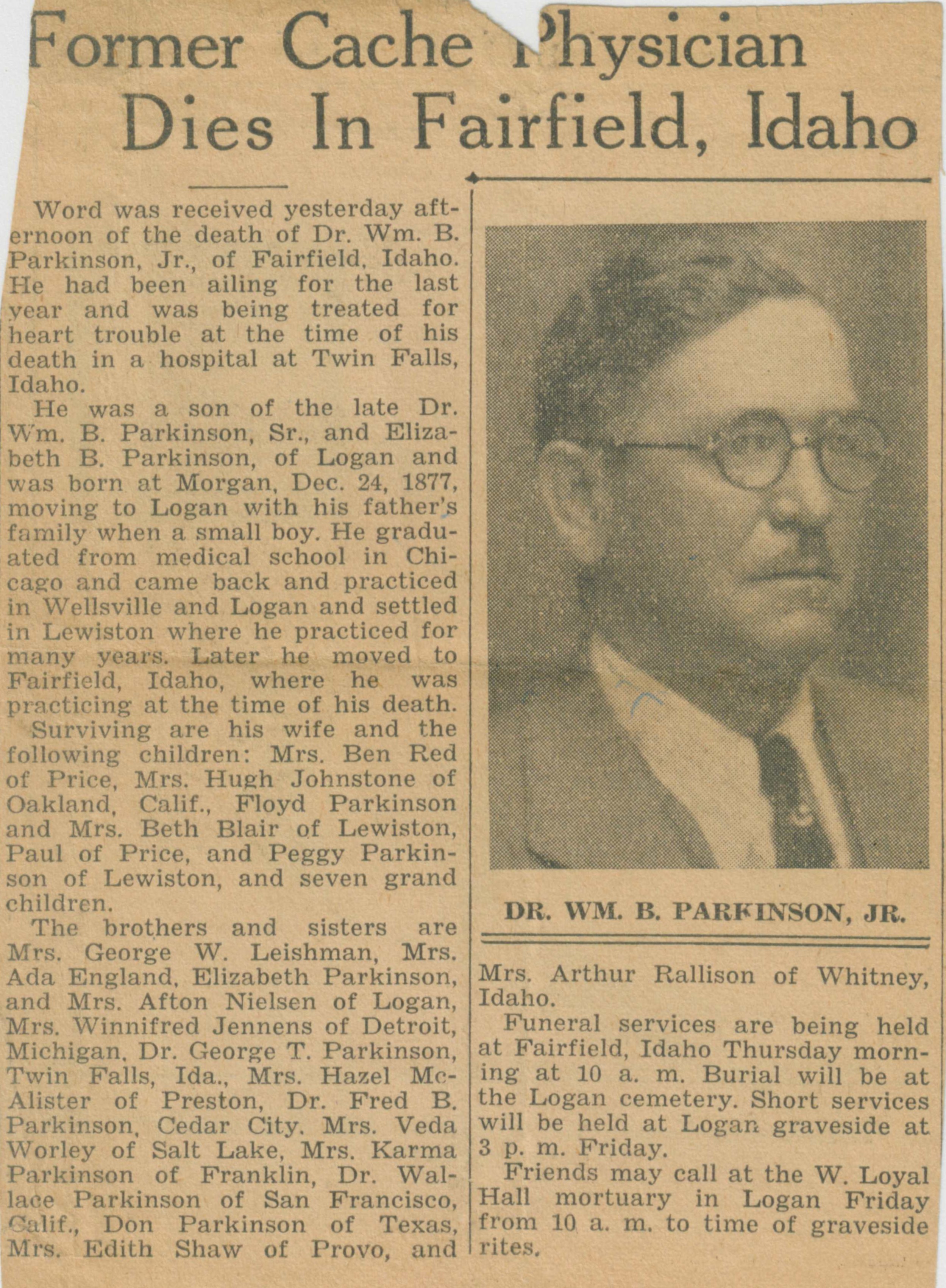
Former Cache Physician Dies in Fairfield, Idaho

I wrote previously of a book I have that belonged to my Great Grandfather, Joseph Nelson Jonas. The book was given to me by Ellis Jonas along with a couple of others. Inside the book was this clipping, presumably put there by my Great Grandmother, Lillian Coley Jonas. I have no clue about its significance, if any. It was clipped and put there in the book for some reason.

“Word was received yesterday afternoon of the death of Dr. Wm. B. Parkinson, Jr., of Fairfield, Idaho. He had been ailing for the last year and was being treated for heart trouble at the time of his death in a hospital at Twin Falls, Idaho.

He was a son of the late Dr. Wm. B. Parkinson, Sr., and Elizabeth B. Parkinson, of Logan and was born at Morgan, Dec. 24, 1877, moving to Logan with his father’s family when a small boy. He graduated from medical school in Chicago and came back and practiced in Wellsville and Logan and settled in Lewiston where he practiced for many years. Later he moved to Fairfield, Idaho, where he was practicing at the time of his death.

“Surviving are his wife and the following children: Mrs. Ben Red of Price, Mrs. Hugh Johnstone of Oakland, Calif., Floyd Parkinson and Mrs. Beth Blair of Lewiston, Paul of Price, and Peggy Parkinson of Lewiston, and seven grand children.

“The brothers and sisters are Mrs. George W. Leishman, Mrs. Ada England, Elizabeth Parkinson, and Mrs. Afton Nielsen of Logan, Mrs. Winnifred Jennens of Detroit, Michigan. Dr. George T. Parkinson, Twin Falls, Ida., Mrs. Hazel McAlister of Preston, Dr. Fred B. Parkinson, Cedar City. Mrs. Veda Worley of Salt Lake, Mrs. Karma Parkinson of Franklin, Dr. Wallace Parkinson of San Francisco, Calif., Don Parkinson of Texas, Mrs. Edith Shaw of Provo, and Mrs. Arthur Rallison of Whitney, Idaho.

“Funeral services are being held at Fairfield, Idaho Thursday morning at 10 a. m. Burial will be at the Logan cemetery. Short services will be held at Logan graveside at 3 p. m. Friday.

“Friends may call at the W. Loyal Hall mortuary in Logan Friday from 10 a. m. to time of graveside rites.

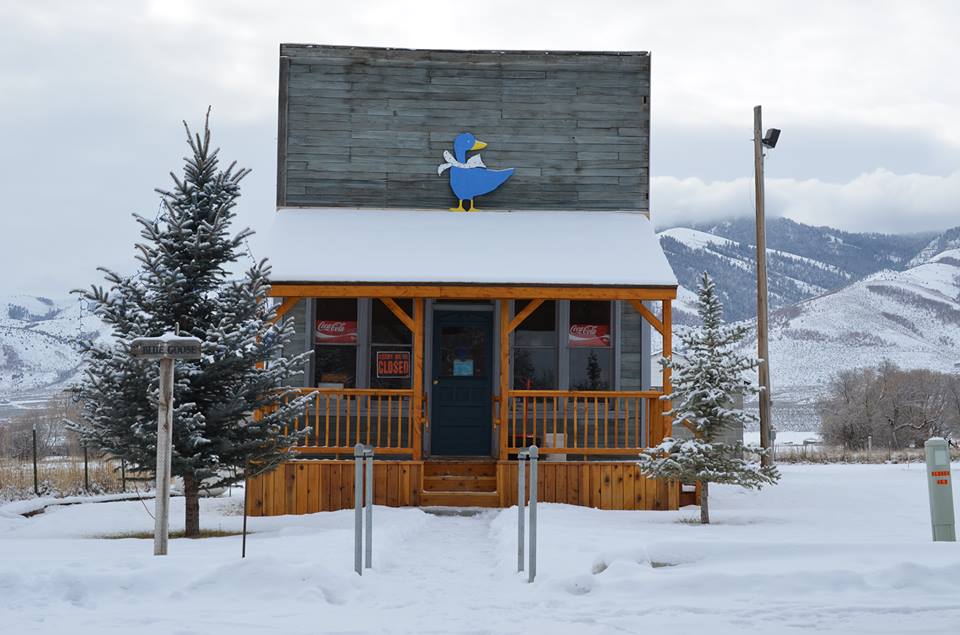
The Blue Goose

This article was shared with me in 2010.  I downloaded it in 2011 with the intent to share it.  Finally I get around to it 9 years later!

Here is a history of Samaria, Idaho on the Malad City website.  http://www.maladidaho.org/samaria.html

Be aware, as of today, The Blue Goose is open for business, although limited hours.  https://www.facebook.com/thebluegooseSamaria/  The Facebook page has a number of historical photos of The Blue Goose.

The Blue Goose, Samaria, Idaho

This is the Historical Sketch shared with me regarding The Blue Goose.

“Historical sketch of The Blue Goose by Sherrie Daniels

“Until recently this building, owned by Merrill Price, had been a thriving business of one sort or another since its construction just before the turn of the century.  Most remember it as The Blue Goose, a local hot spot of Samaria, Idaho.

“Charming and unique, the structure was originally built for living quarters and a furniture store by Isaac Ike Evans.  Organs, rockers, bureaus and other fine wood furnishings could be purchased there and the only furniture store in Samaria at that time also served as a post office to a population of over 800 people.

“Later on, the furniture store was converted into a candy kitchen.  The new owner, D.D. Williams, sold pop and confectionaries, and had a pool table.  Many remember stopping as youngsters on their way to Mutual to share a soda and socialize.  They were always reminded not to be late for their church meeting by Mrs. Williams, who would usher them out the door at ten minutes till.  Later the teenagers would reunite there to pick up where they had left off.

“A barber chair was also in the south corner of the candy kitchen.  The late Ernest Williams recalled to me many a lazy afternoon spent indulging in second hand gossip and of yesterdays bygone.

“A 1936 calendar hung on the abandoned building’s wall when around 1945 David Bronc Jenkins and Muddy Waters (a nickname – no one seems to remember his real name) took over the building to open it as the local saloon and pool hall.  Card games were a favorite past time and a nickel a cue could buy a splendid time of pool hustling.

“Since then, the lease of the Goose slid through many hands.  To name a few, Ralph Hughes, Waldorf Morse, who gave it up to become Samaria’s school teacher, Ariel Jones, Wally Nicholas, Ralph Williams, Arthur Doc Smith, Ted Loomis and finally Bill Thorpe, the last owner of the lease.

“Many names have been pegged on it since that time such as The Samaria Bar, The Nugget, The Second Ward, The Bucket of Blood, and most everyone’s favorite, The Blue Goose.

“Often, as a little girl, I would trod barefoot down the hot oil road to stand hesitantly outside its door, then almost recklessly make my pretense début.  My father would be too involved in his card game of Cassino to raise an eyelid in acknowledgment of my statement, The cows are in their stalls waitin to be milked, Dad.

“Can’t leave now, would be the mumble that came from lips which were also juggling his Pall Malls.  Got one more hand to play.  Wait on the porch and Spug will bring you a soda.

“Now, to a child who is just learning her A.B.C.’ s and how to count, one became the most versatile number in our numerical system for although I know at least five hands had been played, can of soda, two packages of peanut M&M’s and one bellyache later, my father always swore to my mother (who by this time had already started the milking), Jest had to play that one last hand.

“Today the Goose stands empty.  Weeds grow where once was smooth trodden earth.  No dim light slithers out into the night to say a friendly Hello, I’m open to passersby.   No more tales absorb into the paint-thirsty woodwork on lazy summer afternoons.  No smoke curls out from the chimney ascending to a stark winter’s sky.  No more ringing of the cash register to signal the sale of an ice cream, a soda, or a beer.  But it stands, a structure representing people past and a memory for us in the present.

4th Grade, Paul Elementary, Paul, Idaho

Back Row (l-r): Brandon Rogers, Erica Jones, Paul Ross, John Hayhurst, Shana Thompson, Jeff Hayden, Shane Ball, Alissa Anderson, Robin Anderson; Middle Row: Amber King, Bobie Jones, Deanne Williams, Kody Nielsen, Cesar Boroquez, Dustin McClellan, Jamey Price, Jesse Jensen, Grace Williams; Front Row: Amanda Moore, Brandi Cole, Archie Winnett, Jennifer Gebauer, Shaun Bettazza, Erin Zemke, Rigo Arteaga.

As I mentioned before, Bobie Story let me scan some of our common grade school pictures. All mine were lost due to a flood of our basement while I was away in the England Manchester Mission. I am happy to have copies again. (I am still missing Ms. Suhr for 3rd grade and Mr. Mendenhall for 6th grade. If you have a copy, please let me scan!)

This is our 4th grade class picture from Paul Elementary, Paul, Idaho. This was the 1988 – 1989 school year.

Normally I organized photos with married names and dates. Since all are still alive, I will forgo any of the dates. I have added the married last name for the ones I know. If you have corrections, please let me know.

Miss Robin Anderson

Alissa Anderson

Rigo Arteaga

Shane Ball

Shaun Bettazza

Cesar Boroquez

Brandi Cole

Jennifer Gebauer

Jeff Hayden

John Hayhurst

Jesse Jensen

Erica Jones married Thorson

Amber King

Dustin McClellan

Amanda Moore married Kriwox

Kody Nielsen

Jamey Price married Crystal

Brandon Rogers

Paul Ross

Shana Thompson

Deanne Williams

Grace Williams married Wittman

Archie Winnett

Erin Zemke married McKindree

1st Grade, Paul Elementary, Paul, Idaho

Back row (l-r): Mrs. Brenda Winward, Michael Hollis, Jamey Price, Amber King, Tracy Hitt, Danny Wright, Bobie Jones, Nicole Catmull; Middle Row: Nathan Jones, Adrianne Neibaur, Jerilynn Parks, Karlene Hansen, Lindsay Osterhout, Bonnie Torix, Conrad May; Front Row: Andrew Morgan, Matt Robbins, Amy Woodward, Alex Madrigal, Eric Zarybnisky, David Rios, Shana Thompson, Ivan Young, Paul Ross.

As I mentioned before, Bobie Story let me scan some of our common grade school pictures.  All mine were lost due to a flood of our basement while I was away in the England Manchester Mission.  I am happy to have copies again.  (I am still missing Ms. Suhr for 3rd grade and Mr. Mendenhall for 6th grade.  If you have a copy, please let me scan!)

This is our 1st grade class picture from Paul Elementary, Paul, Idaho.  This was the 1985 – 1986 school year.

Normally I organized photos with married names and dates.  Since all are still alive, I will forgo any of the dates.  I have added the married last name for the ones I know.  If you have corrections, please let me know.

I have a couple of memories about this photo I want to share.

Miss Winward graduated high school with my Mom.  She would tell me that all the time.  Later I knew she married to Ms. Goodsell and apparently moved away to Mountain Home or somewhere that direction.

I remember cheating off Jamey Price, who sat next to me.  I struggled with math and I seem to remember she let me.  Well, I got busted at some point.  My Mom sat me down for hours and hours and taught me how to count with cigarettes.  She got some flashcards and we slaved to make sure I knew how to do basic math.  By the time 3rd grade rolled around, I was a whiz at math and Ben Frank was my competition for speed on the multiplication tables.  I remember having a bit of a crush on Jamey too.

Another kid, whose last name was Bailey is not in this picture.  I remember he would eat crayons and play with the Elmers glue on the knees of his pants.  Jake?

This is the only year I remember having naps.  Finding a little place to lay down, relax, and catch a few z’s.

Brenda Arlene Winward married Johnstone (1954-2024)

Nicole Catmull married Manning

Karlene Hansen married Ashcraft

Tracy Hitt

Michael Hollis now Thompson

Bobie Jones married Story

Nathan Jones

Amber King

Alex Madrigal

Conrad May

Andrew Morgan

Adrianne Neibaur

Lindsay Osterhout married Hobbs

Jerilynn Parks married Mower

Jamey Price married Crystal

David Rios

Matt Robbins

Paul Ross

Shana Thompson

Bonnie Torix

Amy Woodward married Noble

Danny Wright

Ivan Young

Eric Zarybnisky

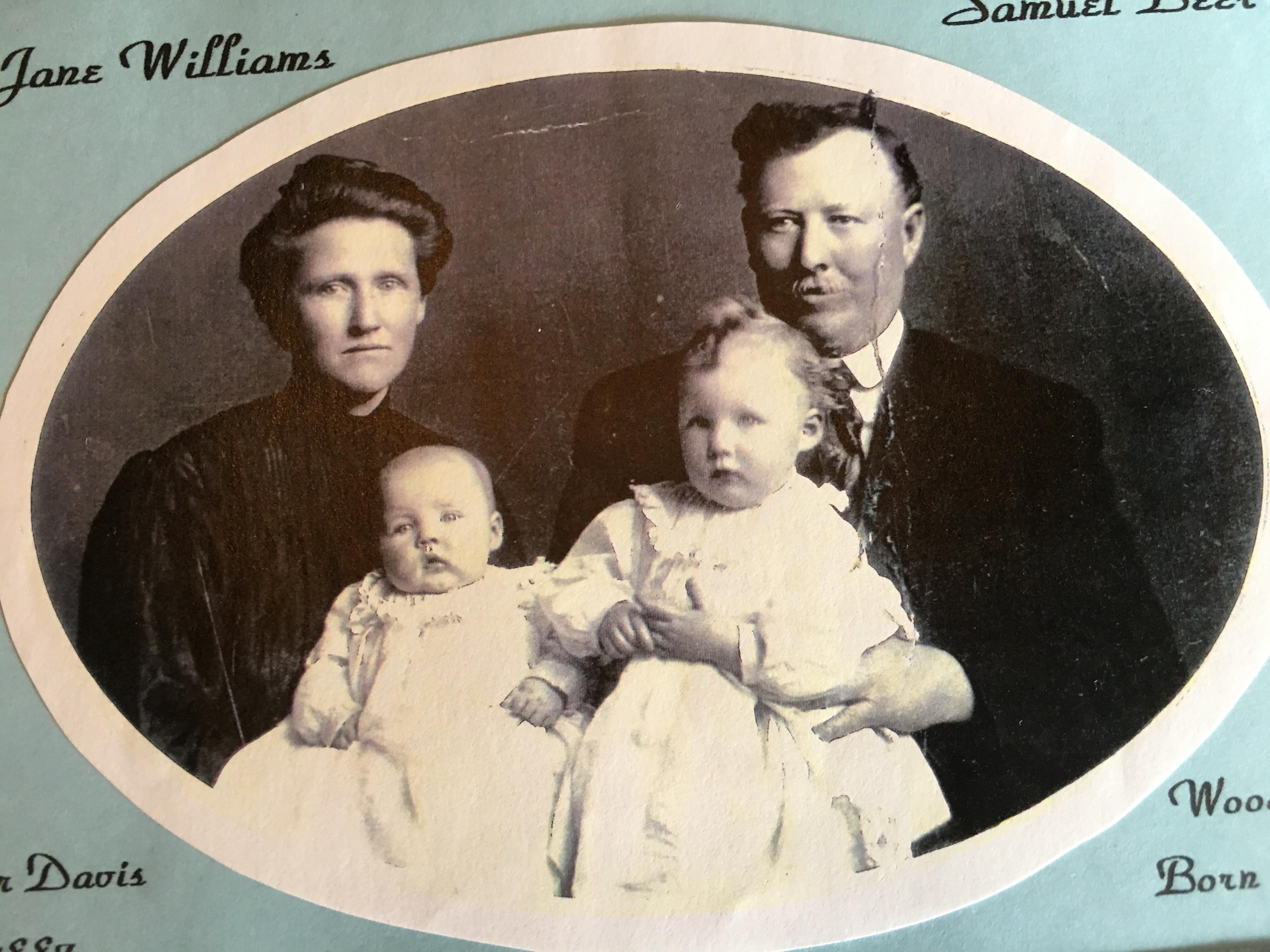
Samuel Deer Davis

Another family history story.  This one is interesting in that his Idaho case went before the United States Supreme Court in Davis v. Beason.  This is the biography of Samuel Deer Davis (1859-1923) written by Dean G Grow, his great-grandson.  Samuel Deer Davis married Mary Jane Williams, daughter of Sarah Jane Davis and John Haines Williams.  Mary is the sister to David Davis Williams who I also previously shared his biography.

~

“This is the history of my great-grandfather, who was instrumental in the legal attempts that The Church of Jesus Christ of Latter-day Saints undertook to counter the continuing political and legal assault against the Church due to the practice of polygamy in the late 1880’s not only in Utah but in Idaho where he lived.

“Samuel D. Davis was born in Salt Lake City on 22 July 1859 to David Woodwell Davies and Mary Deer.  Samuel’s father had been a missionary in his native Wales for seven years before coming to America.  Aboard ship, David met his bride-to-be, Mary Deer, also a native of Wales.  When they arrived in Kansas City, Missouri, it was too late in the year, creating a delay in getting to the Salt Lake Valley.  So they decided to marry.  This occurred on 25 November 1852, in Kansas City.  They most likely traveled across the plains with a group of Welsh immigrants in the summer of 1853.

ADB12440-4C65-4CDC-A7D2-9C499AA30087

Samuel Deer Davis

“After arriving in Salt Lake Valley, David being a painter and a glazier, set up his home and they began their life there.  David and Mary’s first son, David Thomas was born on 4 March 1854 in Salt Lake City.  Their second son, Woodwell was born in 1856 in Salt Lake City.  David was sealed to Mary on 2 March 1856 in the Presidents office in Salt Lake City.  At the same time and place, he was sealed to Elizabeth Berry, thus becoming a polygamist.  Elizabeth being a native of Bath, Summerset, England.  Their third son, Samuel Deer as indicated earlier was born in 1859.  They were all shown on the 1860 U. S. Census, living in the 8th Ward in Salt Lake City.  It was soon after that, Woodwell died, date unknown.  Their fourth and fifth sons, twins, Hyrum Eynon and Joseph were born on 15 August 1862.  Joseph died as an infant, but Hyrum lived to adulthood.  Their last son, Septimus was born and died soon after in 1864, probably about the time that his father David Woodwell, died of consumption (Tuberculosis) on 20 March 1864.  Thus Mary was left with three boys ages 10, 5, and 2.  I was unable to determine what happened to Elizabeth Berry.

cabin

Davis cabin in Samaria

“In November of 1864, Mary married a man named George R. McLaughlin of whom we can find no record of birth, death or census information.  They had a son George R. Jr. who was born 27 August 1865.  Their second child, Mary Ellen was born about 1866 and died soon after.   Mary’s second husband, George treated her harshly and abandoned her many times.  One time for almost a year.  The last time, she heard he was living in Cheyenne, Wyoming and had no plans to return.  She divorced him on the 20th of January 1868.  Thus Mary was continuously left with four boys to feed and care for.  It was soon after this that she became seriously ill and the doctor told her she would soon die.  Her last son, George was a toddler at the time.  A neighbor, Charles and Jemima Walker offered to adopt George and Mary regretfully consented as she didn’t want to leave such a young child.  Not long after, Mary recovered and went back to the Walkers pleading with them to return her son, but they refused.  They were still neighbors in the 1870 Census with the Walkers showing George as their son at age 5.  George died 29 January 1889 at the age of 24 in a train accident returning to Sugar House, Utah from an outing with friends to Red Bluff Quarry.

“Toward the end of the year, Mary met John Evan Price, another Welshman and became a polygamous wife of his on 26 December 1870.  Mary was 39 years of age and 14 years his junior.  He was in good financial circumstances at this time according to their granddaughter.  He had settled in Samaria, Oneida, Idaho on April 16, 1868 with one other family, being one of the first.  He is also credited with giving Samaria it’s name.  Several others settled there the next month.  A branch of the Church was organized there in November of 1868.  Elder Lorenzo Snow, then of the Twelve Apostles, visited in July of 1869 and approved of the city plot, encouraging the settlers to continue to build and plant there.

“John brought Mary and her children to Samaria after their marriage.  Two additional children were born to this union, Margaret Ann Price on 10 January 1872 and Elizabeth Jane Price on 17 March 1875, both in Samaria.  Unfortunately, John died within a few years on 22 June 1878 in Samaria leaving Mary a widow again.  But this time she was left in good circumstances where she was able to sell off property to new immigrants to Samaria.  She reverted back to her Davis name after 1880.  Her sons were now getting older.  Her oldest, David Thomas was married in Samaria to Amy Ann Sawyer on 7 January 1879 just 6 months after John Evan Price died.  Mary was the postmistress of Samaria for many years and the Relief Society President for 17 years in Samaria.  Eliza R. Snow stayed in her home during a conference in Samaria.

“Her second son, the subject of this manuscript, Samuel D., had no formal education but only that which was from his mother, Mary.  He married Mary Jane Williams on 11 Oct 1882 in the Endowment House in Salt lake City.  Their first child, Sarah Jane, was born in August of 1883 and died the same month.  Their second child, Woodwell Williams was born 17 November 1884.  It was during this time that his wife encouraged him to get some formal education.  He started by attending the district school in Samaria.  Afterward he attended the James Chandler school in Washakie, Utah.  It was a great sacrifice and struggle as he continued to farm and support his family during that time.  He had so much success as a scholar in Washakie, that in 1886 he attended the Brigham Young College in Logan, Utah.  He also studied law during his evenings.  His third child, Edgar Williams was born on 1 March 1887.  He soon became a partner in a law firm in Malad, Idaho of Evans, Gibbs and Davis.

CE3C2ECA-B897-4F05-9255-E5423077950D

Mary Jane Williams and Samuel Deer Davis with Edgar and Woodwill Davis

“At this time there was much pressure on the local LDS communities by the Idaho politicians who were strongly anti-Mormon, about the Church practice of polygamy.  75% of the population lived in the eastern half of the state and about 20% of those were L. D. S. which meant that they represented a large voting block.

“These following steps were in relation to the 1884-1885 law, not the 1889 one which was taken to the Supreme Court.

“From E. Leo Lyman’s “Political Background of the Woodruff Manifesto”:  “William Budge, the leading spokesman for the Church in Idaho, tried to bring as much pressure as he could on the outcome of the case.  Budge used Utah Congressional delegate John T. Caine to generate pressures on the Judge Berry through political friends back home.  He also traveled to the Blackfoot judicial headquarters to confer with Berry before he rendered his decision.  The judge, who recorded the conversation as accurately as he could recall, claimed the Church leader first quoted U.S. Solicitor General Jenks as saying that if the test oath law was taken before the United States Supreme Court, “it would not stand for a moment.” Budge also stressed the crucial nature of the pending decision on the continued allegiance of the Idaho Mormons to the Democratic party (Berry 1888).

“Berry’s reply demonstrated considerable admiration for Mormon industry and economic accomplishments but firmly stated his intent to “administer the laws as they were.” He made it clear he could not allow political considerations to affect his decision and expressed regret that the Mormons could not bring their marriage relations into “regulation step” with the rest of American society (Berry 1888). The published decision {Idaho Daily Statesman, 17, 20 Oct. 1888; Wood River Times, 16, 17, 24 Oct. 1888) not only upheld the test oath but ruled the Mormon arguments that they no longer taught or practiced plural marriage were merely a temporary posture of no importance so long as the general Church had made no changes on the question. The kind of concession necessary to relieve the disfranchisement onslaught, Judge Berry stressed, was a formal renunciation of the doctrine at a Church general conference, not unlike what actually occurred several years later.”

“From the Encyclopedia Britannica: “They enacted a law in 1884-1885 that all county and precinct officers were required to take a test oath abjuring bigamy, polygamy, or celestial marriage; and under this law in 1888 three members of the territorial legislature were deprived of their seats as ineligible.  An act of 1889, forbade in the case of any who had since the 1st of January 1888 practiced, taught, aided or encouraged polygamy or bigamy, their registration or voting until two years after they had taken a test oath renouncing such practices, and until they had satisfied the District Court that in the two years after they had been guilty of no such practices.

“The earlier law had been tested by the Church in the territorial federal courts, but was unsuccessful.  This 1889 law, regarding voting, was commonly called “The Idaho Test Oath” which meant essentially that if you were a member of the Church, whether practicing polygamy or not, you could not vote and was retroactive to January 1 the year before.  It appears that the Church decided to test this law all the way to the United States Supreme Court.

“In Samaria on Oct 27, 1888, 26 men including Samuel D. Davis asked to have their names removed from the records of the Church with apparent approval of the Church leaders so that they could vote in the November 1888 election but primarily to provide a test case.  There were about 30 in Malad City who did the same thing.  The new law having been enacted after the men had voted, they were indicted almost a year later for conspiracy to break a law that wasn’t created until the following year.  The case became known as “Davis vs. Beason” and can still be found today by searching the internet.

“From the Deseret News on September 21, 1889:  “The perjury case against Mr. Evans of Malad having been disposed of in the District Court of that place, the next matters of importance tackled were the conspiracy cases. Indeed there was practically but one case, fifty six persons having been included in one indictment.

“The matter came up for trial before Judge Berry on Tuesday, Sept. 10th [1889]. There was much disappointment among the virulent anti-“Mormon” element over the result of the case of perjury against Mr. Evans and the officers said that in the conspiracy matter they would get a jury together that would convict this time.  For this purpose they scoured the country and imagined they had got what they wanted when the panel was completed.

“The charge preferred in the indictment against the fifty-six defendants was substantially that they had conspired together to break the laws of Idaho Territory, notably the Idaho test oath law, by agreeing to vote at an election when they knew that they had no right to do so.

“The case was tried and at 6 p.m. on Wednesday was given to the jury.  On Thursday the 12th at 2 p.m. the jury came into the court with a verdict, in which they found fifty-five of the defendants not guilty and one guilty.  The latter was Samuel D. Davis of Samaria.

“A new trial was asked for Mr. Davis by counsel for the defense and denied, and the  court sentenced him to pay a fine of $500.  The fine was not paid and Mr. Davis placed in jail for a maximum of 250 days [$2 a day].  Judge Berry was applied to for a writ of habeas corpus which was also denied, and an appeal from his action was taken to the Supreme Court of the United States.

“The matter is in the best possible shape it could possibly assume for final adjudication. None of the acquitted fifty-five defendants can be again placed in jeopardy on the same subject, either under the title of conspiracy or any other.  The appeal to the Supreme Court involves the validity of the infamous test oath law, which will therefore be decided one way or the other.

“The defense was conducted with marked ability, the attorneys being Mr. J. S. Rawlins of Salt Lake, and Mr. J. N. Kimball of Ogden.   Mr. Standrod and “Kentucky Smith” appeared on the part of the prosecution.”

“From the above article it is clear that it was “arranged” in advance that one person would be the focal point for the test case.  That person, having probably volunteered due to his legal schooling, was none other than Samuel D. Davis.  He obviously knew that he would spend some time behind bars, but was willing to do that for the Church.

“To give a better idea of the named individuals in this case, they are as follows:  Charles H. Berry, a former attorney general of Minnesota, later on, an associate justice of the Idaho Supreme Court who would have jurisdiction as the Judge in this case in Malad City.  Joseph S. Rawlins was a city attorney in Salt Lake City and worked with Brigham Young and following Church leaders on matters of law.  He later served in the Congress of the U. S. and assisted in gaining statehood for Utah.  He was also known as the “Red-headed Reactor of the Rockies” because he made such a fight about the confiscation of the Church property.  It was through his efforts that the property was eventually restored.  J. N. Kimball also served as a defense attorney for the Church in Ogden.  Drew W. Standrod came to Malad City, Idaho from Kentucky with his parents and took up the practice of law there.  He was elected as the prosecuting attorney there twice and later became a judge moving to Pocatello.  “Kentucky” Smith is actually H. W. Smith who was an anti-Mormon lawyer of prominence in Ogden, Utah and the author of the “Idaho Test Oath” law.  He also later became a judge in Idaho.  Sheriff Harvey G. Beason was an appointed sheriff who was just 29 years old at this time.  His was the other name in the test case.  He soon after moved to Montana and then to Gillette, Wyoming where he lived until his death in 1939.

“From another article in the Deseret News written in Samaria on September 30, 1889.

“”A very strange scene was witnessed here on the 25th inst. (Sept 1889)  It will be remembered that Mr. Samuel D. Davis of this place was found guilty not long since at the District Court held at Malad City, of voting at the election held here last fall contrary to the provision of the anti-Mormon Test Oath law, and that he was sentenced to pay a fine of $500 and costs, pending payment of which he was sent to the county jail.  He applied for a writ of habeas corpus which was denied by Judge Berry.  Application was then made direct to  Washington for a similar writ.  Here it was thought the matter would rest for the present. But not so; on Sept. 13, Sheriff Beason came to Samaria and levied an attachment on Mr. Davis’ property having an order from the court to sell at public auction enough to cover fine and costs.  On the  25th inst. said order was carried into effect.  Sheriff Beason, Attorney Standrod, Treasurer D. Tovey,  Commissioner P. Fredrickson and a few others came over.  The sale began at 2 o’clock.  Mr. Davis’ only horse was sold to Meyer Kohn of Malad, for $21.00. (Mr. Kohn has since offered to return the animal for the same price), which was about one-fifth his real value.  Mr. Davis interest in the firm of Evans, Gibbs, & Davis was knocked off to Standrod for $190.00.

“It was the Intention to sell the little home where Mrs. Davis and her two little children reside, but the title being defective it was abandoned. This was all that could be found to sell and the sale came to a close.

“The sheriff seemed very dry after his labors for he and his companions indulged quite freely.  They had apparently come over well prepared.”

“This article indicates that Samuel’s family also suffered because of the case.  The article was incorrect in that there were “two little children” in the home.  My grandfather, John Vincent “Vin” Davis was born on 6 July 1889 and was just a few months old when this took place, which means that there were two little children and one infant.  It also indicates that his fine was reduced almost 40% by the $211.00 amount recovered in the sale.  Therefore his sentence would be reduced by about 100 days, leaving 150 days remaining to be served.  From the Deseret News on 11 January 1890, it indicates that the hearing was held in the U. S. Supreme Court, probably a day or two earlier.  The hearing is several pages of arguments both for and against which I will not be discussing here.  It can also be found on the internet by searching “Davis vs. Beason”.  The ruling was handed down on 2 February 1890, upholding the Idaho law.  At this time Samuel had been in jail for 113 days.  I was unable to determine whether he remained the last 30 some days in jail or whether the Church paid the balance of the fine to release him or whether he was reimbursed for his personal losses.  During this era many members sacrificed much for their belief.

“President Wilford Woodruff issued the “Manifesto” a few months later on 24 September 1890, ending plural marriage in the Church.  The Idaho law was changed in 1893, the disqualification was made no longer retroactive, the two-year clause was omitted, and the test oath covered only present renunciation of polygamy, thus allowing members to vote once again.  It took until the 1980’s to get similar wording in the Idaho State Constitution removed.

“Samuel D. Davis continued in his practice of law and in 1899 he was appointed Probate Judge of Oneida County, Idaho.  He was twice elected to this office.  In 1901, after the formation of the Idaho State Bar, he took the examination for the bar and was admitted to practice in all the courts of the state.

“His wife of 21 years, Mary Jane Williams Davis died on 19 March 1903 in Samaria.  Later that year he moved his family of boys to Malad City to continue his practice and opened a new law office there.  His brother-in-law,  Isaac B. Evans, who had been on a mission in the south, introduced him to a woman in Salt lake City, whom he had known while on his mission.  She was Alice Godwin, daughter of Handy Haywood Godwin and Elizabeth Ann Naylor Godwin.  They were natives of Clinton, Sampson, North Carolina.  She was a true daughter of the old south.  Samuel was very interested and she was interested also, but I’m sure was concerned by the thought of finishing the raising of 7 boys.  But apparently she was up to the task as they were married in the Salt Lake Temple on 13 November 1905.  She bore him 3 more children.  First, Mary Naylor Davis, 13 September 1906, second, Alice Deer Davis, 18 January 1908 and Samuel Godwin Davis on 6 March 1911, all in Malad City, Idaho.

“He continued in Malad City until moving to Salt Lake City about 1918.  He was there in the January 1920 U. S. Census.  He probably moved to Twin Falls, Idaho in the summer of 1920 to accept employment as the City Attorney.  Two of his boys followed him there.  One, Eugene, who was still living with him and the other, John Vincent and his family, who was still living in Samaria.  In June of 1923, he was made the Twin Falls Police magistrate, but unfortunately, he died within 6 months on 13 December 1923.  After the funeral, his body was shipped back to Samaria to be buried.  His second wife, Alice moved to Salt Lake City, where she died 13 January 1945.  Her body was also returned to Samaria to be buried.

“From the Twin Falls Times News:  “Judge Davis was early admitted to the bar in Idaho, and served as county attorney and probate judge in Oneida county.  He attracted wide attention in the early days by his success as an irrigation and criminal lawyer.  It was his boast that some of Idaho’s best known attorneys had begun their legal training in his office.  He was an active and prominent member of the L. D. S. Church serving as member of the High Council in Malad and Twin Falls.”

“Thus ended a long legal career in the State of Idaho and the life of a man who was willing to stand for  his principles, even risking all his possessions at one time.  He died at the age of 64, which would be considered still young by today’s standards.  His part in the legal battle was apparently unknown to his children, grandchildren and their descendants.  My mother did mention many years ago that she had heard about the voting issue.  Those of his children as indicated earlier were very young and would not have known about the landmark legal case, unless he had related it to them.  He was a good man and his story needed to be told, so that all would be aware of his sacrifice during another time of great difficulty in the history of the Church.

Williams-Williams Wedding

I am sharing this life sketch of David Davis Williams and Rebecca Price Williams.  The original version was written by William Jenkin Williams and found in the records of Eliza Williams Rees with insights from her granddaughter Betty Mifflin Bushman taken from family interviews and her own experience.  For the most part I will stick to the original history.  I do not have any photos to share, but since I have the history, I wanted to make it available.

Before I jump into the rest of the life sketch, I think it is important to connect these individuals to my family history.  I have previously written of the marriage between David D Williams and Gwenllian Jordan.  David D Williams had a brother named John Haines Williams.  David Davis Williams is the son of John Haines Williams.

I will provide more family information after the life sketch.

~

“David D. Williams was born in Llanelli, Carmarthenshire, Wales on June 19, 1852, a son of John Haines Williams and Sarah Jane Davis.  He came to the United States with his parents, settling first in Pennsylvania in 1858.  In 1860 the family moved to Ogden, Utah, crossing the plains with in a handcart company led by Captain Elias Morris.  It was the second ox team to land in Ogden.  From there the family went north to the Malad Valley where they settled in Muddy Creek, living in a dugout where some of the children were born.  They later moved to Gwenford.

“Rebecca P. Williams was born on New Year’s Eve, December 31, 1857, at Merthyr Tydfil, Glamorganshire, Wales, a daughter of Jenkin Williams and Eliza Price.  She was baptized (LDS) in Wales on December 11, 1867 by her father, Jenkin, and confirmed by John Thomas.  With her parents, she came to this country for the gospel’s sake, settling in Pittsburgh, Pennsylvania.  After living there two years, they went to the Malad Valley in the year 1872.

Younger Rebecca Price Williams

Younger Rebecca Price Williams

“On Rebecca’s birthday, December 31, 1877, she and David were married in St. Johns, Oneida, Idaho by Justice of the Peace William H. Waytell in the presence of Benjamin Waldron and Mary Ann Daniels.

“David was baptized (LDS) 8 March 1878 by John Evan Price and confirmed by Samuel D. Williams.

“He and Rebecca took up a farm in Gwenford where they lived for about twenty years.  During this time David operated a freighting business between Kelton, Utah and Helena, Montana, a trip that would take him about three months.  He served as a deputy sheriff, was the first Chief of Police of Samaria, Idaho, and even worked as a blacksmith.  Later he went into the confectionery business and operated a business and general store, D.D. Williams Candy Kitchen, with Rebecca in Samaria until his death June 27, 1927.  He was a man, it is said, who could not be idle.   His daughter, Eliza, described him as a wonderful husband and  father.  His granddaughter, Mae Rees Mifflin, remembers him with great fondness also.  She named her first child, Darla Dean, after her grandfather.  It is a wonder that Darla was not nicknamed Dee Dee too.

David Davis Williams

David Davis Williams

“About him, a grandson, Ray Earl Rees, told the following story:  Their daughter, Eliza (Ray’s mother), had a washing machine.  In order to help her elderly parents, she would do their laundry.  Every Monday morning Grandpa David would drive his buggy the few miles to Malad with a bundle of clothes for her to wash.  Grandpa would drive the team around to the north road and enter the farmyard by the back way.  About the time he was expected, Ray would wait out by the gate to open it for his grandfather.  Then he would climb up in the buggy with him and ride up to the house.  Always Grandpa Williams had a sack of candy for Ray.  He could depend on that treat and waited eagerly for it each Monday morning.

“When the family would visit their grandparents in Samaria, it was a treat to go in to the store and see all the candies on display behind the glass counter.  Rather than give the children candy, Grandpa Williams would give them each a nickel and let them do the choosing.  They were not allowed to go around the counter, but while he smiled encouragement to them, they would stand before the counter and choose their treat.

“He was the sweetest man who ever drew a breath, Ray said about his grandfather.

“David was always a prominent figure in our childhood stories about family as our mother was said to be his favorite.  He even appeared to her to tell her goodbye after his death.

“It seemed so romantic to my sister and me that he and Rebecca married on my favorite holiday of the year, New Year’s Eve.  That day was also Rebecca’s twentieth birthday.  Her present was our handsome, nice great-grandfather.  What a perfect party time to have a wedding anniversary.

“Rebecca is remembered by her daughter, Eliza, as a wonderful mother and homemaker, never being one to go away from home.  She had a wonderful alto voice and when the children were small, she would often gather them around and sing to them.

“After her children grew up and married, she helped her husband in keeping the confectionery store.  Many remember stopping there as youngsters on their way to Mutual to share a soda and socialize.  They were always reminded not to be late for their church meeting by Rebecca, who would usher them out the door at ten minutes ’till.  Later the teenagers would reunite there to pick up where they had left off.

“Her daughter, Eliza, described her this way, Rebecca P. Williams was loved by all who knew her.  She was kind to everyone and did not have an enemy on earth.

“Great-Grandmother Rebecca was always a colorful figure to my sister and me.  As the youngest surviving child in her family of eleven children, we loved the story of how when the family came from Merthyr Tydfil, Wales, she was assigned to carry a beautiful crystal bowl for her mother.  With it wrapped in a shawl, fourteen-year-old Rebecca later carefully tended it all the way to Idaho.  Through interesting circumstances, that bowl was inherited by our grandmother, then Mama, and finally Darla.  Since Darla also inherited Grandma Rees’ beautiful china closet, it seemed quite natural that the Welsh bowl would always rest inside it.  At any rate, I never ever expected it to be mine.  One day when I was picking up Darla to bring her to my house for a day’s visit, her daughter, Alyce, walked out to the car with us.  In her hands, Darla was carrying something wrapped in a piece of fabric.  She handed it to me with a smile saying that she had a present for me as a little thank you gift because I was so good to her.  With Alyce looking on and smiling too, I turned back the cloth to see the Welsh bowl.  Ignoring my protests that it was hers and that I could not accept it, she said she knew it would be safer in my home, that I would take good care of it and always treasure it.  Alyce said they had talked it over and both felt that it should be mine.  How I love to hold and admire that bowl.  Made of clear glass in a square shape, scalloped edging runs along its rim and base.  With a small pedestal and lion heads at each square corner, it is truly a work of art and indeed a special item. I love knowing of its history and importance in our family.  When we would look at it as children and hear its story, it was always viewed in quiet awe or discussed in hushed tones.  Never, ever, did I think it would be mine.  I felt amazed, quite honored, and a bit afraid of the responsibility.

“David died on 27 June 1927 after an illness of eight months.

“Later Grandma Rebecca moved to Malad  where she resided just across the street from her daughter, Eliza.  I remember Grandma carefully preparing a plate of dinner each evening for her mother.  It was usually the job of Uncle Ray to deliver it with a caution to hurry so it would be hot for his grandmother.  When I was around, he would often grab me by the hand and together we would dance across the street as he deftly carried the napkin covered plate in one hand and dragged me along with the other.

“I remember her as a frail little lady, a bob of white hair on top of her head, wire-rimmed glasses perched on her nose as she looked us over.  Books and magazines were plentiful in her small apartment and always a deck of cards.  In addition to reading, she liked to play games, playing Solitaire to entertain herself when no one else was around.

“Rebecca died on March 30, 1936 at the age of 84, a few months before my fifth birthday.

Rebecca

Rebecca Price Williams

“Both are buried in the Samaria Cemetery.

“Thirteen children were born to David and Rebecca, five boys and eight girls:  Sarah, William Jenkin who died in infancy, Mary, David, Phoebe, Jenkin, Eliza, Margaret, John, Catharine, Beatrice, Frances Orenda who died as a baby, and George.”

~

Some more family history information.

David Davis Williams born 19 June 1852 in Llanelli, Carmarthenshire, Wales and died 27 Jun 1927 in Samaria, Oneida, Idaho.  He was buried 30 June 1927 in Samaria.

Rebecca Price Williams born 31 December 1857 in Merthyr Tydfil, Glamorganshire, Wales and died 30 March 1936 in Malad, Oneida, Idaho.  She was buried 2 April 1936 in Samaria.

David and Rebecca were married 31 December 1877 in St Johns, Oneida, Idaho.

Their children are:

Sarah Elizabeth Williams born 22 August 1878 in Samaria and died 31 February 1968.  Buried in Draper, Salt Lake, Utah.  She married James Benjamin McGuire (1872-1952) 30 September 1900 in Samaria.

John Jenkin Williams born and died 23 September 1879 in Samaria.  Buried in Samaria.

Mary Jane Williams born 10 April 1881 in Samaria and died 14 January 1975.  Buried in St Johns.  She married John Nelson Hill (1872-1913) 22 February 1899 in St Johns.

David Joseph Williams born 26 February 1883 in Samaria and died 4 April 1973.  Buried in Malad.  He married Ester “Essie” Katherine Munsee (1888-1967) 25 March 1908 in Ogden.

Phoebe Ann Williams born 12 December 1884 in Samaria and died 15 March 1942 in Salt Lake City, Salt Lake, Utah.  Buried in Riverton, Salt Lake, Utah.  She married Thomas Charles Jones (1883-1922) 4 July 1903 in Samaria.

William Jenkin Williams born 24 Jul 1886 in Samaria and died 5 Jun 1963.  Buried in Samaria.  Married Mary Mae John (1901-1989) 26 February 1921.

Eliza Mae Williams born 10 February 1888 in Samaria and died 6 July 1967 in Ogden.  Buried in Ogden.  Married Gomer Vaughan Rees (1883-1971) 24 November 1904 in Samaria.

Margaret Rebecca Williams born 25 November 1889 in Samaria and died 9 November 1980.  Buried in New Philadelphia, Tuscarawas, Ohio.  Married Walter Russell Ripley (1895-1979) 13 December 1913 in Malad.

John Haines Williams born 31 May 1891 in Samaria and died 25 February 1957 in Malad.  Buried in Malad.  Married Eleanor Jones (1899-1975) 29 March 1916 in Malad.

Catharine Zina Williams born 14 August 1893 in Samaria and died 19 Oct 1988 in Salt Lake City.  Buried in Malad.  Married Elijah R van Ables (1892-1961) 12 December 1920 in Malad.

Beatrice Estella Williams born 30 July 1894 in Samaria and died 9 December 1976.  Married Carl William Jones (1892-1958) 4 April 1913 in Malad, later divorced.  Married Allen John Keehn (1888-1957) 16 November 1938 in Elko, Elko, Nevada.

Frances Orenda Williams born 6 May 1897 in Samaria and died 10 September 1897 in Samaria.

George Thomas Williams born 22 February 1901 in Samaria and died 24 June 1962 in Pocatello.  Buried in Restlawn Memorial, Pocatello, Bannock, Idaho.  Married Theona Withers (1906-1990) 4 October 1924 in Malad.

Clara McMurdie Coley

With the passing of Clara Coley this week, I thought I would put together a quick little history with the photos I have of her.  A good portion of this is written around Clara’s obituary.  I have an autobiography of Ivan so I will create a separate post for him in the future.

Clara McMurdie was born 26 January 1914 in Paradise, Cache, Utah with a twin brother Clarance (1914-1919).  She was one of 11 children born to Sarah Amelia Checketts and Joseph Kay McMurdie.  She grew up in Cache Valley and her family moved to Richmond, Cache, Utah when she was a few years old.  It was while they lived in Richmond that she met Ivan Coley who was a few years older than her.  Clarance died and is buried in Richmond.  Her family moved to Buhl, Twin Falls, Idaho in 1928.

Joseph and Sarah McMurdie in 1960

Joseph and Sarah McMurdie in 1960

Ivan hitchhiked all the way from Utah to Idaho to be with Clara after her family moved to Buhl.  They were married 22 October 1930 in Buhl.  After marriage, they moved and lived at the Coley Ranch in Richmond.  They were later sealed 10 February 1932 in the Logan LDS Temple.  An interesting side note, the great grandson of the Bishop who married them presided as the Bishop over Clara’s funeral.

Ivan Coley and dog

Ivan Coley and dog

Ivan and Clara moved back to Buhl and survived the Great Depression there.  They purchased a 160 acre farm in Melon Valley in Buhl.  That farm was sold in 1961 and they purchased five acres just outside of Buhl and kept that property for 36 years.

Joseph McMurdie, Clara, RaNae (Cookie), and Ivan Coley about about 1964

Joseph McMurdie, Clara, RaNae (Cookie), and Ivan Coley about about 1964

I have in my records that there were five children born to Ivan and Clara although the obituary only has 4 listed.  I will have to determine which is correct.

Sarah Colleen Coley born in 1932 in Richmond.

An unnamed son was born 12 February 1934 in Buhl.  He died the same day.  If I understood it correctly, this little boy was stillborn.  Apparently he is buried on the McMurdie Farm in Buhl.  I wonder if the present owner is aware of the grave or if it is marked?

Lorus Ivan Coley (“Bud) was born 1 August 1936 in Buhl.  He died 23 October 1962 while on a hunting trip down near the Nevada border.  Initially reported to me as an hunting accident, I later learned it appears to have been a murder framed to appear as a suicide.  Apparently there is an open investigation ongoing at this time on this matter.  I will be interested to learn the outcome of the matter.

Clara, Colleen, and Bud

Clara, Colleen, and Bud

I was told there was an unnamed son born in 1938 who also died the same day who was stillborn.  I do not have an exact date for this one so I suppose what makes me question it is that Clara’s obituary does not mention him.  I will have to find out more from the family.

In 1942, Ivan’s father Herbert came to visit for part of the summer.  At Ivan and Clara’s home near the well, he fell and broke his hip.  This injury would lead to his death in September.

Lastly, Clarene RaNae Coley born in 1947 in Buhl.

Bud and RaNae

Bud and RaNae

Danny Todd, Ivan, Bud, and RaNae Coley

Danny Todd, Ivan, Bud, and RaNae Coley

Clara at a Coley Reunion in 1955

Clara at a Coley Reunion in 1955

Clara dedicated her life to love and care for her family and friends.  Even into her late 60’s she was known to outrun her grandchildren.  Ivan and Clara dedicated their lives to their grandchildren.  Grandchildren often spent many nights, or even weeks, on the farm.  Clara loved to quilt and made beautiful blankets.  She also made rugs from all the fabric scraps.  She was left-handed.  She worked at a number of jobs including bus driver.

Ivan and Art Coley (brothers) with Clara and Mary (Art's wife) in the mid 80's

Ivan and Art Coley (brothers) with Clara and Mary (Art’s wife) in the mid 80’s

Clara and Ivan in the early 80's

Clara and Ivan in the early 80’s

Ivan and Clara celebrated their 60th wedding anniversary in 1990.  It is about this time that I have my first memory visiting Ivan and Clara with my grandmother Colleen Jonas (technically a niece-in-law).

60th Wedding Announcement

60th Wedding Announcement

Cutting the cake at their 60th anniversary party

Cutting the cake at their 60th anniversary party

Here is a photo from May 2012.  She was 98 years old and looked to be in great shape and pretty classy.  I visited with her about this same time and she identified a number of individuals in photographs for me and still had a sense of humor.

Clara Coley May 2012

Clara Coley May 2012

Clara passed away on Christmas Day 2012 at the St. Lukes Regional Hospital in Twin Falls.  Her funeral was held 4 January 2012 in Buhl with the burial between her husband and son in the West End, Buhl, Idaho cemetery.

Clara Coley Funeral Program

Clara Coley Funeral Program