Rights and Responsibilities

Of Rights and Responsibilities: The Social Ecosystem of Religious Freedom
Art and Golden Coley

Introduction

Distinguished guests, colleagues and friends, it is an honor to speak to you today. The subject of religious freedom continues to raise new questions. We have come to learn a little more from many of the most able minds and willing hearts in the field. If we listen to each other carefully, we will be better equipped to meet the challenges and opportunities of today and tomorrow.

Most of us drink from the waters of religious freedom without even knowing it. We think of it as a river that will always flow. But we might not recognize the risks to the tributaries that feed that river.

The perpetuation of religious liberty requires that it be understood and valued by the rising generations. There is a need for them to comprehend what religious freedom brings to society and what is lost when this liberty is eroded. When young people come to understand why this freedom is crucial to their own aspirations, welfare and happiness, they will feel inspired to act to strengthen and preserve religious freedom.

Community and Commitment

To better understand the freedoms we now enjoy, we can look to history. My parents came from what you in the United States call “the greatest generation.” They both served in the British armed forces in World War II — my father in the Royal Air Force, my mother in the Army as a nurse. Between them they served across Europe, North Africa, India and Burma. They fought for their neighbors, they fought in defense of their homeland and they certainly fought for religious freedom, but I don’t suppose that was a phrase they would have used at the time. With so many others, they warded off the tyranny of Nazism. So many freedoms were on the line, and that generation gave everything they had in their defense. Vast swaths of Europe were overrun, with massive casualties. Whole nations were subjugated by tyrants whose aim was to conquer and not only suppress freedoms, including religious freedom, but wipe out and destroy people of particular ethnic backgrounds, faith and belief. The generation which confronted these demonic threats did so with phenomenal courage. It took a society that possessed a highly developed social solidarity and mutual accountability to bring about such a moral achievement.

After six unspeakably harrowing years, the war was won. In the ensuing years, those who had experienced this conflict saw society through the lens of that experience. After a decade or two, they observed the next generation, which had not been where they had been nor confronted what they had seen. These young people became concerned with what in many cases the wartime generation regarded as lesser things. The cohesion that had come from shared hardship borne of an existential threat began to wear off. I was a child through part of this period. The protests of the 1960s found their way onto our television screen. What they exhibited in raw emotional power, they often lacked in sustained social commitment. These actions ranged from bus boycotts to opposition to the Vietnam War to campus protests over student fees. They were all motivated by worthy purposes, but on their own, these purposes were limited without the continuous obligations borne of shared vision and purpose. Of course, protest is a vital function in a democracy, and free people are free because they are able to challenge the status quo and those they have elected. But during those years, the youth of Britain sometimes appeared to protest for its own sake. My parents lamented the shift toward a mindset of rights with no apparent regard for, or reference to, responsibilities. The two must work together; passion and duty must connect. And that concept is what I would like to address — our rights and the responsibilities associated with those rights.

Today it might appear to some that rights just happen — that they are automatically inherited and perpetuated without thought or effort. We can forget the extraordinary struggle, resolve and sacrifice that went into protecting our abundance. We may rarely think about our obligations to keep those rights in place.

The Heart of Religious Freedom

For a time, I lived in a country that did not allow the free expression of religion. I witnessed how people who dared to stray from the official line could be punished. Unfortunately, this continues today in many nations across the globe. Violation of religious freedom is one of the main reasons why we see so many refugees and displaced people today. Religious differences become religious alienation, alienation turns into persecution, and persecution turns to conflict, war and mass flight. These crises happen when freedoms, including religious freedom and freedom of conscience, are not protected. Regimes target those who believe differently, force them from their homes and uproot them in terrifying ways. In 2015 and 2016, from one end of Europe to the other, I saw firsthand countless ordinary people driven from their homes and lands further to the east across countries and continents in search of safety and refuge. Often their beliefs were a factor in why they were displaced.

Hatred and terror drove these people from their homes. The world needs places of refuge from such extremism. Where liberty thrives, it flows almost invisibly. We experience the benefits of it all the time but rarely see how it actually works. Religious liberty acts as the heart of society, a key contributor carrying the lifeblood of all that is good to the whole community.

Healthy societies run on trust, confidence and a sense of safety. With freedom of religion and belief, people feel safe in their deepest convictions and can express and exercise them publicly. The great enemy of religious freedom is estrangement and alienation. When a society or government divides people based on what they believe, how they think, the words they say, whom they worship or the manner in which they worship, common ground is lost, and life together becomes a battle. The test of a pluralistic society is to achieve unity without diminishing the diversity within it.

Religious freedom means nothing if you protect your own religious practice while neglecting the practice of others, especially those who might be less secure and able to defend themselves. It only works if you protect the rights of everyone. As Elder D. Todd Christofferson, a member of the Quorum of the Twelve Apostles of The Church of Jesus Christ of Latter-day Saints, has said, religious freedom is important precisely because it gives everyone — religious or not — the “space to determine for ourselves what we think and believe.”[1] In terms of numbers and inherited culture, the United States has a Christian majority, but unless it honors the lawful practices of Hindus, Sikhs, Muslims, Jews, Buddhists, Native American religions and everyone else, including individuals and groups who profess no faith at all, it will fail to live up to its own ideals. [2]

We all need to be consistent in defending and respecting everyone. And doing so does not mean you have to diminish your own beliefs. That’s how all our rights will be taken seriously. We can’t pick and choose who gets what rights. Every religion is susceptible to the fluctuations of prominence and obscurity. The cultural group that enjoys privilege today may lose it tomorrow, even in nations where the rule of law and democratic principles have been enshrined for centuries.

Having a broad view of religious liberty helps us see that it is universal, not just the preserve of those who are powerful or popular. Religious freedom is suprapolitical, something that is part of our nature before politics declares it to be so. Every person, regardless of religion, race, gender, orientation or nationality, possesses fundamental rights simply by being human. They include the right to life, liberty, security, equal protection of the law and the freedom of thought, speech, and religion, as well as protection from political extremism. But we all must remember, be taught and pass on the responsibilities that come with these rights.

Rights are inscribed in laws, constitutions and charters the world over, but they were first imprinted in the human heart by a loving God. One of the founders of this nation, Alexander Hamilton, wrote, “The sacred rights of mankind are not to be rummaged for among old parchments or musty records. They are written, as with a sun beam, in the whole volume of human nature, by the hand of the divinity itself; and can never be erased or obscured by mortal power.”[3]

Though these inalienable rights come from above, they still have to be cultivated by human beings below. It is up to us — it is the responsibility associated with these rights — to implement, protect and anchor them in our daily life.

Two Sides of the Religious Freedom Coin

Rights and responsibilities can’t be separated without negative consequences. The symbiosis between rights and responsibilities is often forgotten in the rush to demand that something be given to us, while forgetting to foster the conditions in which that right can even be respected or have meaning.

Appropriately exercised, rights and responsibilities move in a virtuous circle. We are more inclined to honor the rights of people when we know them personally and feel a sense of responsibility for their well-being. Meaning in life comes from giving yourself to others, not demanding that others give to you. Author and commentator David Brooks has written that joy comes from commitment:

“In reality, the people who live best tie themselves down. They don’t ask: What cool thing can I do next? They ask: What is my responsibility here? They respond to some problem or get called out of themselves by a deep love. By planting themselves in one neighborhood, one organization or one mission, they earn trust. They have the freedom to make a lasting difference. It’s the chains we choose that set us free.”[4]

Important work in religious freedom is found in walking a mile with your brother and sister, listening to a stranger talk about their religious experience, and in the gentle efforts of dialogue and persuasion.

The study of religious liberty has so many facets and nuances it can be dizzying. The conversation often focuses on the law — what it is, what it should be, what it protects, what it should protect, how it sets boundaries and so on. Law is vital and is an essential part of a bigger picture. However, rights act more like habits than dry edicts. Law and custom must work together.

Behind every right, if we look closely enough, stand layers upon layers of social practices that regulate innumerable human interactions in societies, families, marriages, friendships and all human relationships. They are called “norms,” and they require innumerable transactions of give and take. The demands we make of the law only make sense when embedded in a web of countless norms that make our society possible. We need to keep finding ways to align what we demand with what we can contribute—to our families, workplaces, neighborhoods, churches, schools and communities.

Understanding and appreciation of religious freedom will need to move from the exclusive realm of specialists to a much broader audience, to include those who don’t grasp the intricacies of the law nor have the capacity to influence the law in conventional ways.

To do this, we will need to reframe our own understanding and more effectively articulate what this freedom means and the responsibility it brings. We have a particular obligation to carry this to a younger audience who will be charged to see these freedoms protected and responsibilities fulfilled in the coming years.

A Challenge to Embrace

Many in the rising generation today are concerned about serving those in need, making a difference, changing the world and helping their community. They seek morality and responsibility, and understand the language of universality. Our young people can be jaded by exclusion, inconsistent application of laws and entrenched interests of a few to the detriment of many. They are attuned to the authentic. They are outward-looking and deeply sensitive to treating people fairly and equally. Their yearning to serve is deep. All of this is wonderful and promising!

But on the whole, the religiosity of young people is shifting. They are much less inclined to identify with a particular religion, let alone attend church.[5] They can see religion as stifling their values of inclusion and tolerance. But it is not only the youth; the trend toward a secularized public life affects all ages.[6] One of the results is that our culture is fragmenting into cultural and ideological tribes.

President Gordon B. Hinckley, former president of The Church of Jesus Christ of Latter-day Saints, once said, “Men everywhere seem to be groping as in darkness, casting aside the traditions that were the strength of our society yet unable to find a new star to guide them.”[7]

Peter Beinart, a writer and political science professor at City University of New York, sees a connection between decreasing religious activity and increasing political conflict. He recently wrote, “Maybe religion builds habits and networks that help people better weather national traumas, and thus retain their faith that the system works. For whatever reason, secularization isn’t easing political conflict. It’s making American politics even more convulsive and zero-sum.”[8]

We can help fill this void with a positive message and constructive actions. There is a need, and a real opportunity, for religious freedom to be framed differently and be more clearly understood.

Be a Force in the World

Do we fear the world more than we shape it? Do we let our anxieties prevent us from making a difference? Do we spend more time hiding from society’s flaws than fixing its problems?

How we answer these questions determines what our social environment looks like. It is always changing, and improves or deteriorates depending on our actions. Society is not something that just happens to us; it is something we help shape.

The main thing is to engage, dialogue, bridge and interact with people of all sorts. Unless we participate, we lose our ability to both influence the world and learn from it. As British novelist E.M. Forster put it, “Only connect! … Live in fragments no longer.”[9]

We all have a stake in this debate. “No man is an island, entire of itself; every man is a piece of the continent, a part of the main.”[10] The poet John Donne wrote these words nearly 400 years ago, but they still resonate today.

Contributing to the good of society is part of our spiritual stewardship. Jesus taught his followers to be the light of the world and the salt of the earth. Let your light shine, he said, as a city on a hill. Salt was an ancient symbol of friendship and generosity. And like salt, we have a duty to savor person-to-person connections and nurture amity between adversaries. We must not cloister ourselves with others who think like us and congregations that believe like us. Jesus demonstrated how to lift society, moving deliberately to the despised, the diseased and the misunderstood, listening to and healing them.

I have been inspired by the goodness and selflessness of members of my own church who reach out to those in need. Wherever I have witnessed, in the course of my service, those afflicted by fire, flood or any manner of natural disaster or humanitarian crisis, our people have been there. When visiting such a location in California, I was asked if I knew what FEMA stood for. As I struggled with “Federal… Emergency…,” my friend said, “No, it’s ‘Find Every Mormon Available.’” It was said in jest, but more than once media has reported that the first two groups at the scene were the Mormons and the Latter-day Saints — reminding us of the uphill task we have to be known by our full name. The point is, our people do go out of their way, a very long way out of their way, to help in crises the world over. This isn’t only disaster response and assisting refugees. These devoted souls are there in those often invisible, private, chronic situations which can last a lifetime. And of course it’s not just our people; we work alongside representatives of numerous other faiths, often partnering with them in some of the most challenging parts of the world. There are certainly those involved doing extraordinary work for whom faith is not a driving force. But these contributions with our fellow believers are vast. And, importantly in today’s context, they are often overlooked. Part of that is our own fault, as we can have something of a tortured relationship with the idea of telling people about these good works. As a church, we are torn between having these efforts be private and letting that light shine in a way that will create awareness that we take our responsibility of contributing to society very seriously. We will probably need to talk more openly about these contributions, letting people know that at the heart of our faith is the desire to help our fellow human beings, wherever they are, people of faith and no faith at all. And that we do so without seeking converts in these most trying moments in people’s lives.

We need to help many more young people see the opportunities the free exercise of religion provides to serve others in need and unite communities in ways that benefit all people. And we need to help them understand that the expression of religious belief through community service is dependent on religious freedom. With this understanding, they will not only value religious freedom more deeply but will courageously act to strengthen and perpetuate it.

Influencing society always seems to be the job of someone else — someone with more power, more money, more time. Perhaps we expect some program or sponsor to take the lead. But when it comes to taking care of people, there is no “someone else”; there is only us. Civic engagement requires people to freely act on their beliefs and solve the problems of their communities. If the prevailing philanthropic desires of our rising generation are to be harnessed and maximized, our young people will need to come to the same conclusion as have so many of us here today. And that is, that this is the most worthy of causes — a spring which feeds so many others. It represents our highest and holiest beliefs, and at the same time, blesses individuals, families, communities of all descriptions and entire nations. How to unite these benevolent desires of the rising generation with the responsibility of preserving religious freedom, along with every other inalienable right, is the task before all of us, and I am so grateful that you have gathered in this way to address just that.

We have a responsibility to help and, as God told the Prophet Jeremiah, “seek the welfare of the city where I have sent you into exile, and pray to the Lord on its behalf, for in its welfare you will find your welfare.”[11]

Conclusion

Now to conclude, every society has a foundation of truths, rules, expectations and norms which guide their thinking and their actions every day. Many take them for granted. And like all things we suppose will simply always be there for us — like the air we breathe — we hardly notice them. That is, until they’re challenged. And then we have to look closely and really get to know them, as if discovering them for the first time. So it is with religious freedom.

The way we all as human beings form our deepest beliefs is perhaps life’s greatest journey of discovery. The freedom in which we do so is precious. Our ability to practice and share those beliefs as we learn of and come to understand the beliefs of others enriches us all, broadens our view and creates harmony. A climate in which we are free to believe and practice is also a climate in which we can contribute. Religious freedom demands both the universal right and the universal responsibility, and it is our turn to do our part.

As human beings and the children of divine creation, we all want to live by a moral vision and want to share it with others. In doing this, we enter the realm of both religion and politics. This can be messy and contentious, but we have reason to be optimistic. As Martin Luther King Jr. was so fond of saying, drawing from the abolitionist Theodore Parker, “The arc of the moral universe is long, but it bends toward justice.”[12]

We are in that arc, and God expects us to do our part in nudging it toward justice. This is our work. Thank you.

By Elder Patrick Kearon of the Presidency of the Seventy

This talk was a keynote address at the Religious Freedom Annual Review at Brigham Young University on June 19, 2019.
Eagle Scout Newspaper

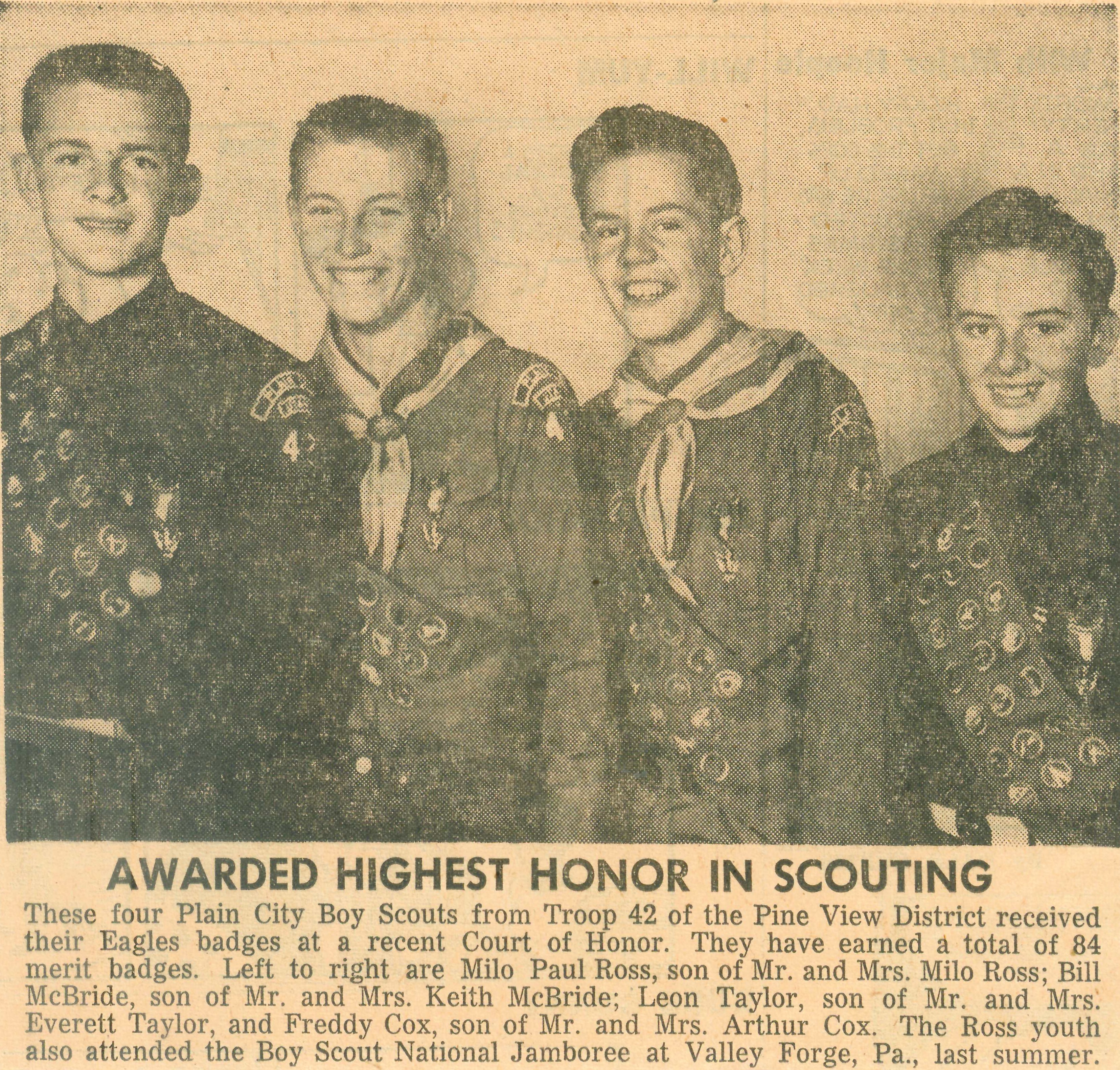
Milo Ross, Bill McBride, Leon Taylor, Freddy Cox Eagle Announcement

The newspaper clipping from 1956 includes the following:

Awarded Highest Honor in Scouting

These four Plain City Boy Scouts from Troop 42 of the Pine View District received their Eagles badges at a recent Court of Honor.  They have earned a total of 84 merit badges.  Left to right are Milo Paul Ross, son of Mr. & Ms. Milo Ross; Bill McBride, son of Mr. and Mrs. Keith McBride; Leon Taylor, son of Mr. & Mrs. Everett Taylor, and Freedy Cox, son of Mr. & Mrs. Arthur Cox.  The Ross youth also attended the Boy Scout National Jamboree at Valley Forge, Pa., last summer.

I quote from the article above, but Dad pointed out that Freddy’s last name is Coy, not Cox.  But the newspaper has it incorrect.

Eagle Scout

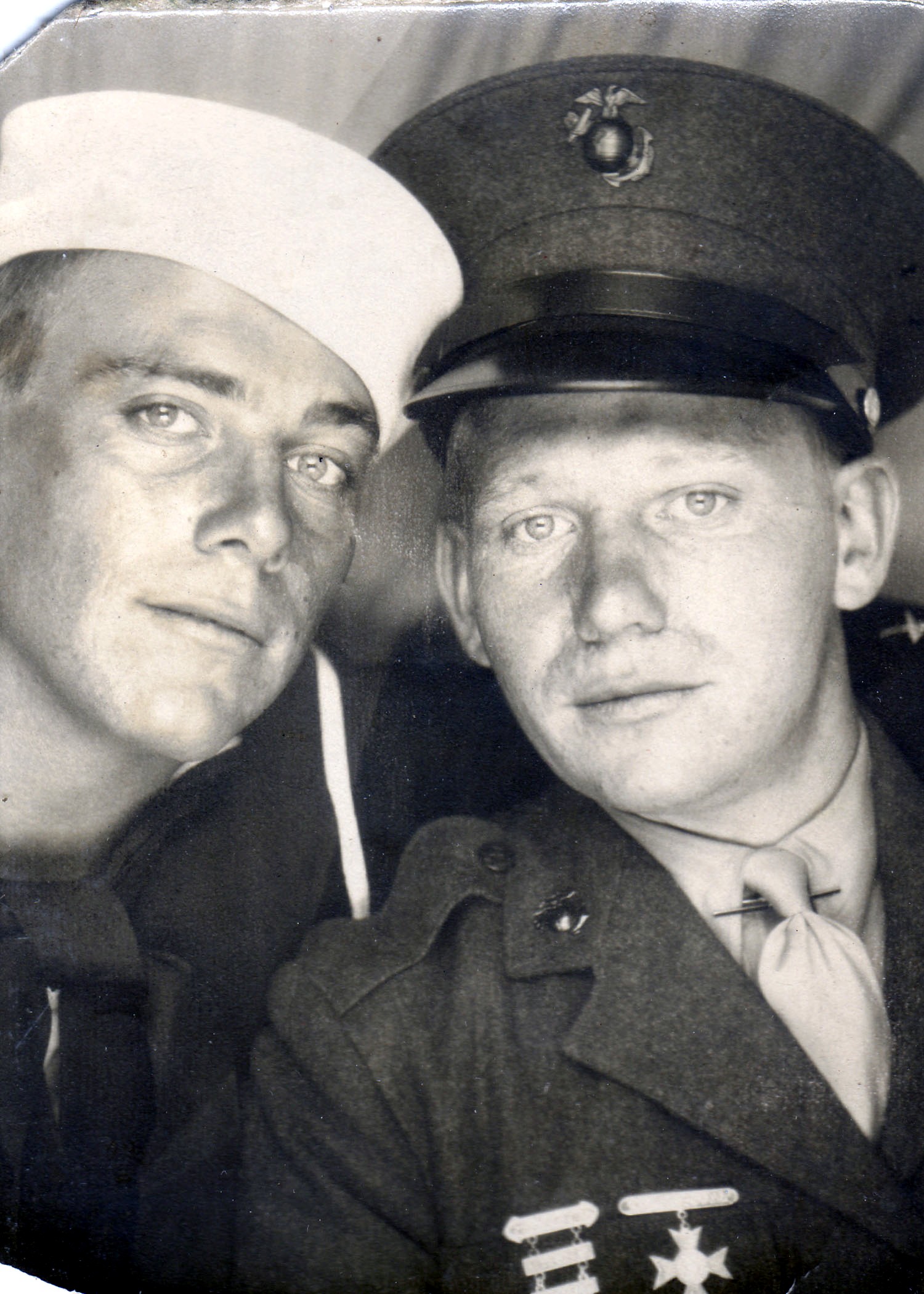
I made this photo available earlier.  I assume from the same occasion.  I didn’t scan it so I don’t know if that is the original quality, even with the blemishes.

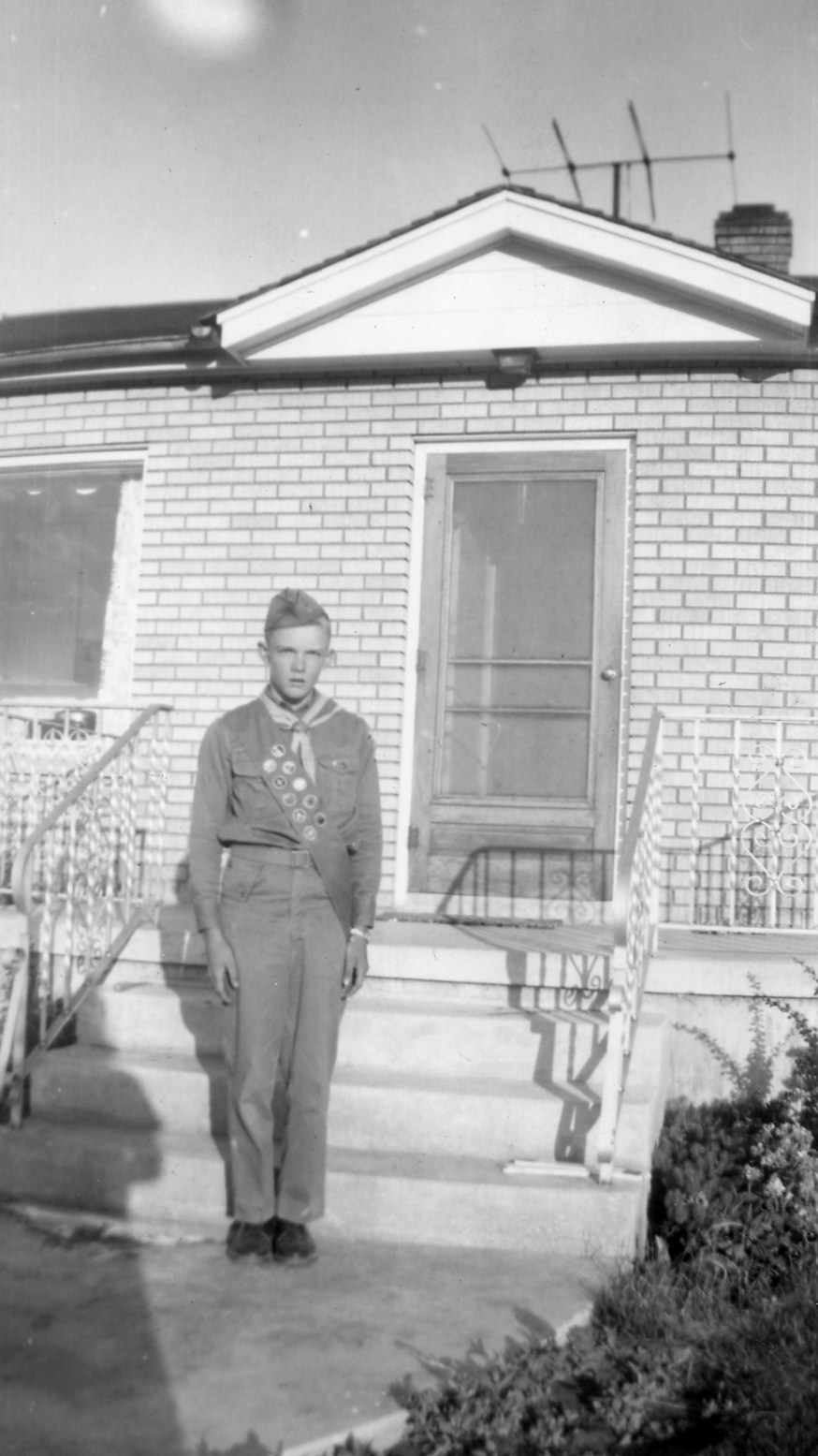
Milo in his scouting uniform about 1954

This is from their old home in Plain City with a few merit badges yet to go before receiving his Eagle rank.

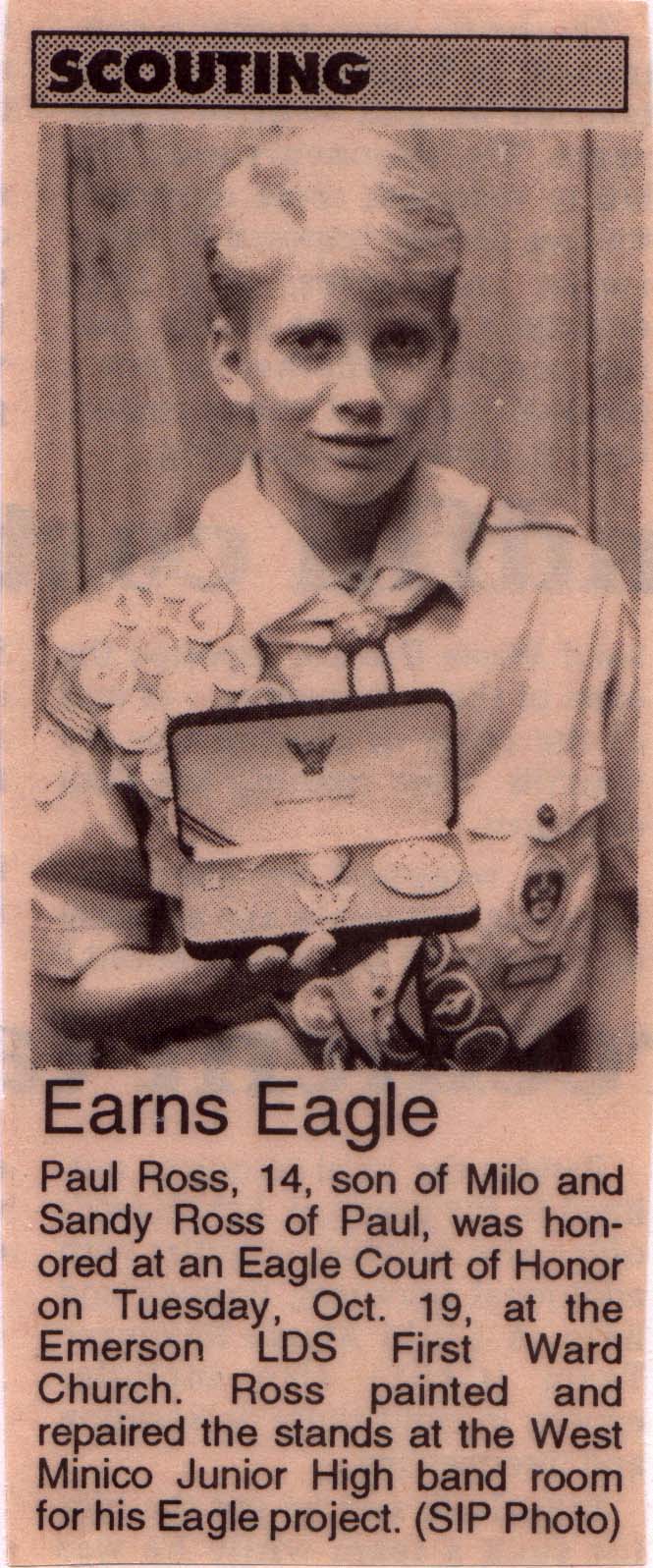
Here is the clipping of my own announcement.

Newspaper clipping from the South Idaho Press.

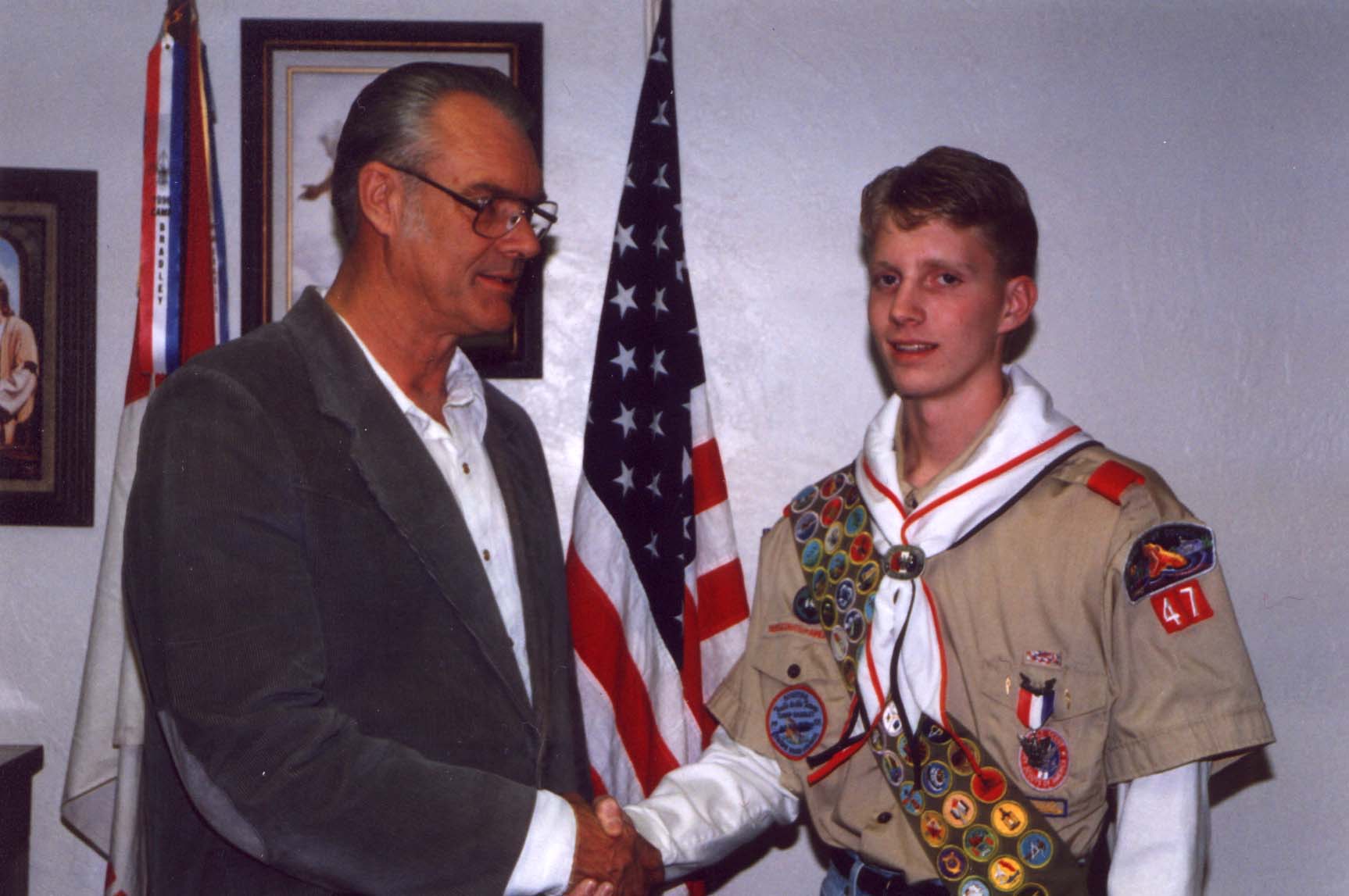
I have written on my Eagle before, but I will include this picture too.

Dad shaking my hand afterward for a photo shoot. 

I certainly looked younger in 1993, I had just turned 14 years old.

Denver, Colorado

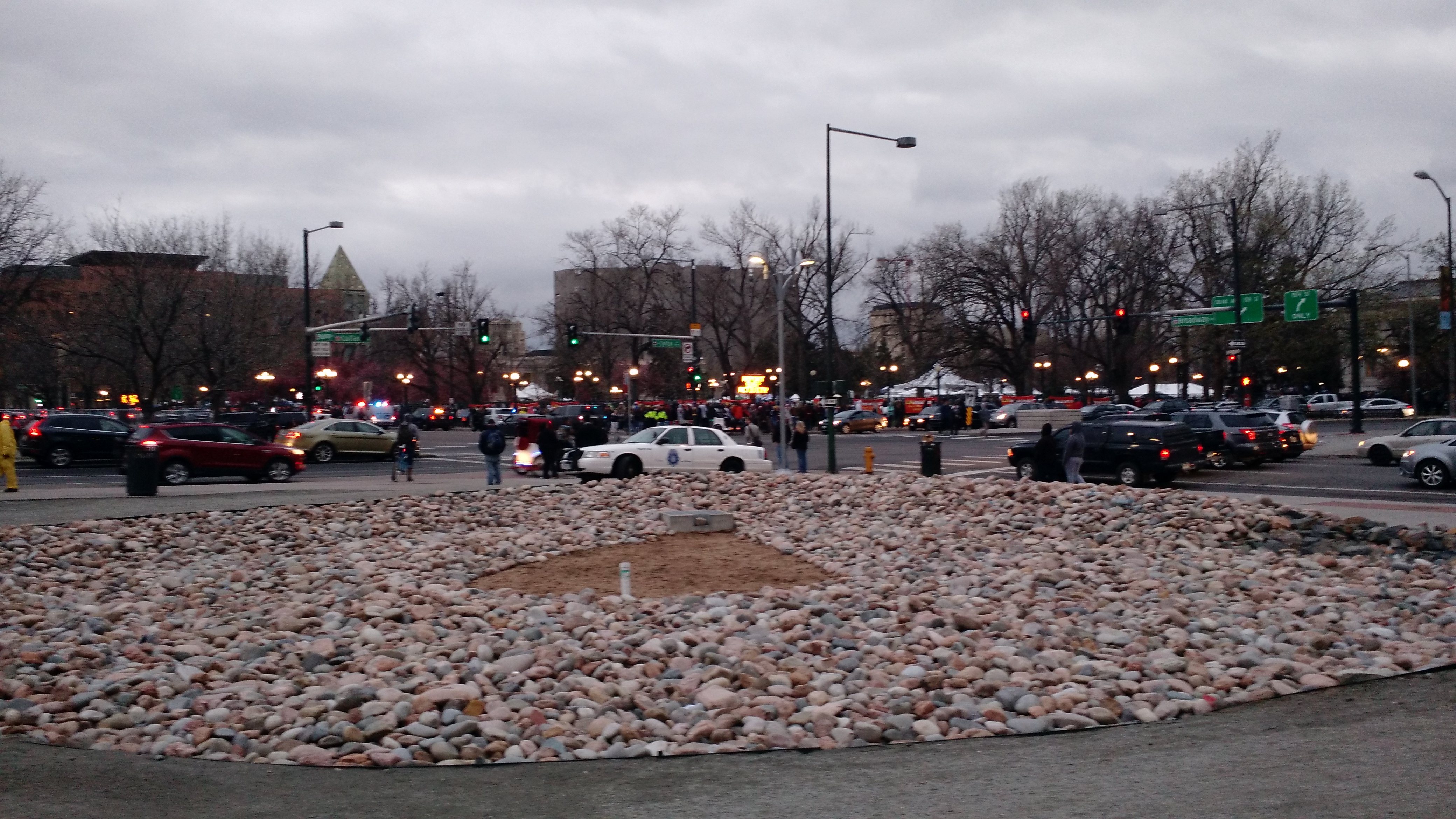
I attended the National Association of Consumer Bankruptcy Attorneys (NACBA) convention in Denver, Colorado, 18-22 April 2018.  I wandered the town a little bit with some friends and snapped a couple of pictures.

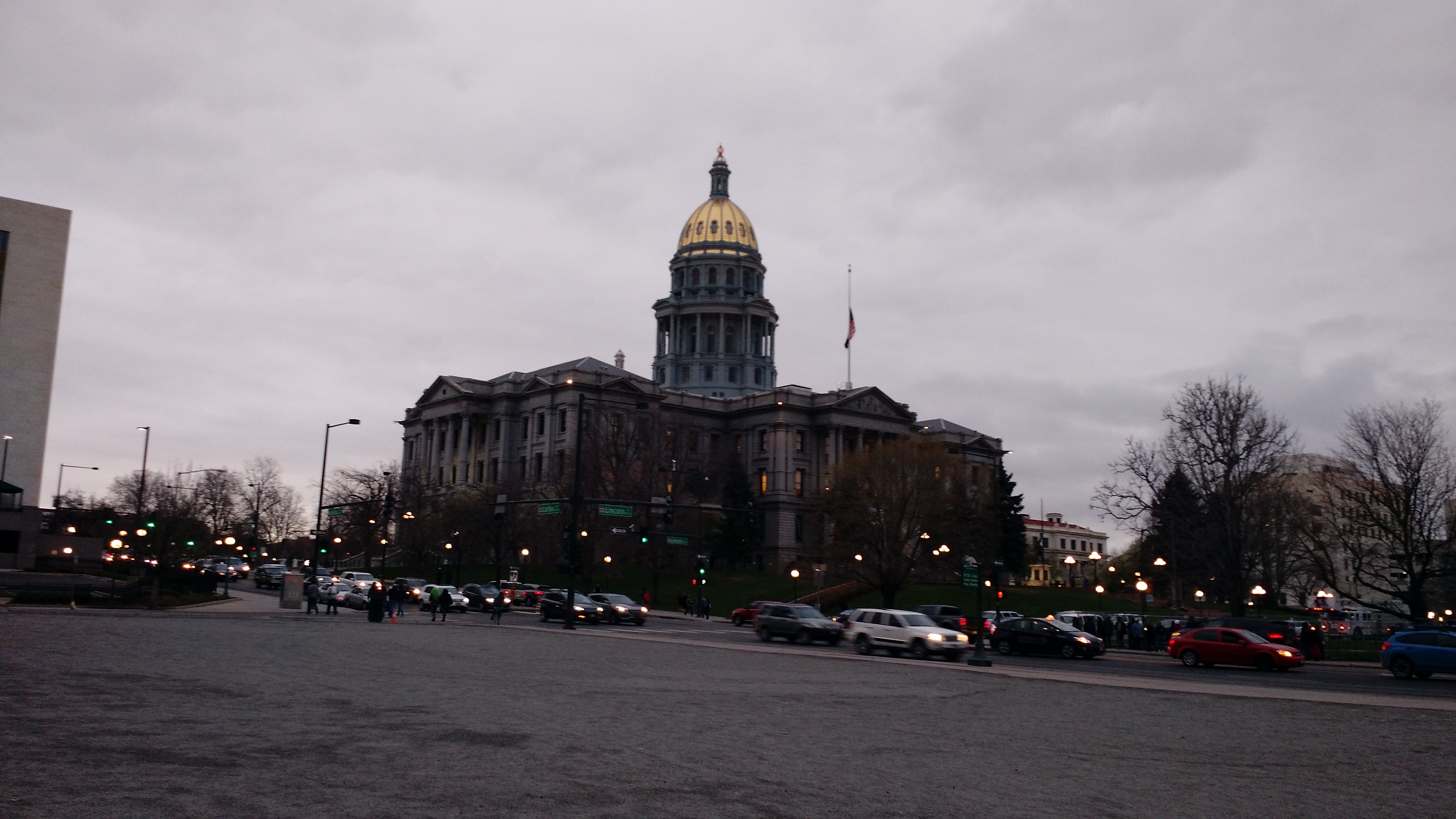
Colorado Capitol

Our conference was downtown, which was easily within walking distance of a number of sites in Denver.

Downtown Denver near the City/County Building.

Our convention was in Denver over 4/20, which means the Mile High 420 Festival was taking place also near the heart of downtown.  Walking around, you can catch whiffs of the marijuana smoke in the air.

Another view of the Colorado Capitol

We usually were able to get out in the evenings so the photos are darker.

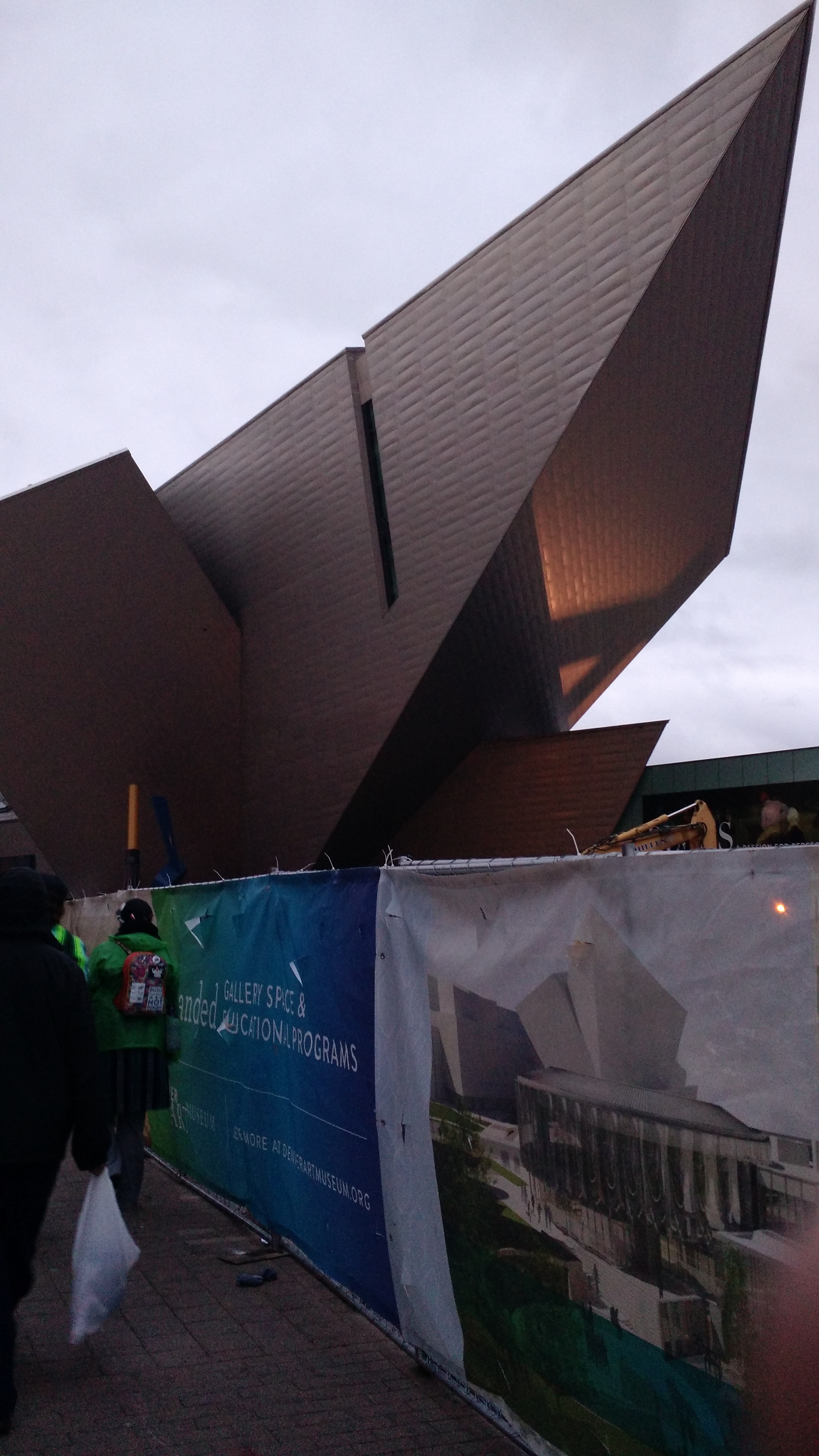
Denver Art Museum

Intrigued by the Denver Art Museum for its design.  The engineer in me was fascinated.

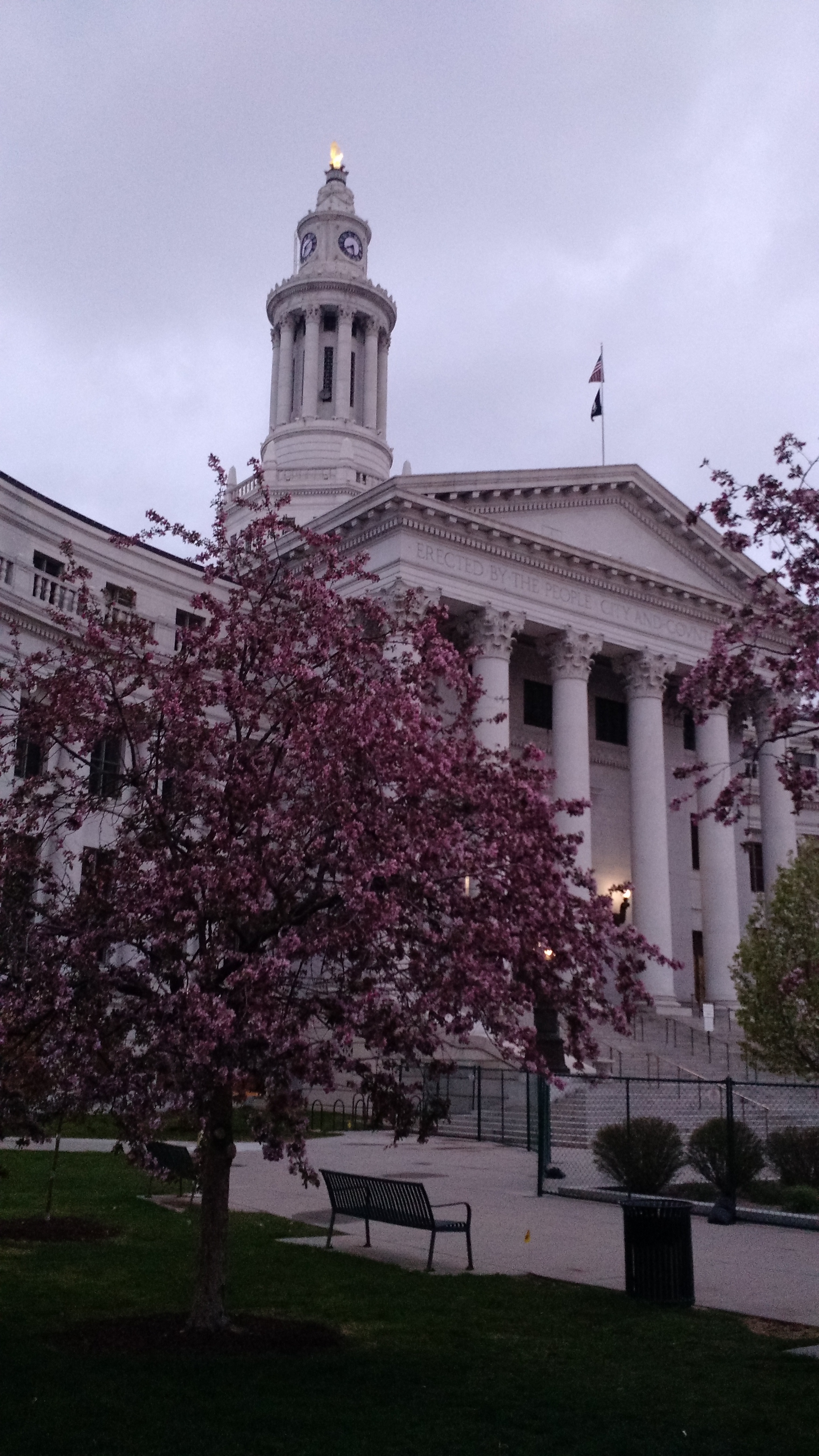
Denver City/County Building

The Mile High Festival was in front of the City/County Building so I had to work my way around it to get closer to the actual building.

Blue Bear at Colorado Convention Center in Denver

Walking around a corner and stumbled on this big blue bear.  One never knows what you will find when away from home!

Stacey Jo Jonas

My grandfather, Wilburn Norwood Jonas, had an older brother named Joseph Herbert Jonas (1917-1993).  I don’t have any memories of Uncle Joe, except his funeral, although I remember hearing stories about him.  Uncle Joe married Hilma Grace Erickson (1918-2000).  I also do not remember Aunt Hilma.  Again, I heard the stories, and also about nearly all their children.

Joe and Hilma Jonas younger

Joe and Hilma had 7 children, Joseph Leland (1937-alive), Hilma Maxine (1938-2002), Earl Reed (1944-1988), Nancy Lee (1946-alive), Evelyn (1948-2017), Ellen Lynn (1951-alive), and Helen (1956-alive).  I mentioned above that I remember his funeral.  I remember it being at Myers Mortuary on Washington Avenue, almost North Ogden, Utah.  I remember the line for the viewing, my mother’s shoes and jeans, and sitting in the outskirts of the chapel to the northeast.  There, for the first time in my life, I was haunted by the strains of O My Father.  First time I ever heard the song and it penetrated my soul.  So much that I wanted to learn it more.  My Grandmother, Colleen, a short time afterward showed me it in her old Richmond, Utah hymnal.  I taught myself how to play it and the words to the song.

Joe & Hilma Jonas older

As those who know me know, I do a little family history.  I had reached out and got to know Joseph Leland Jonas’ daughter Debra.  I had e-mailed some of Lee’s other children.  But I had never met any of them that I recalled.  Lee lived in Yakima, Washington.  I had taken a job in 2008 working in the northwest for Inland Environmental.  I was going to be in the Yakima area working and so I made a few phone calls.  Lee suggested I call his daughter, Stacey, who lived in Moxee not far from them.  I called her up to visit with her and told her I was going to be in the area.  She not only insisted that I visit, but also that I stay at her house.

I got to know this second cousin of mine on that occasion.  We chatted, talked about family history, she took me to visit her parents, I met her family, and had a great experience getting to know each other.  It wasn’t planned, but she had quite a few questions about The Church of Jesus Christ of Latter-day Saints.  In the course of the night, we covered nearly every single topic in all the six missionary discussions.  I gave her a copy of the Book of Mormon and some other pamphlets.

The next morning we talked some and we separated our ways.  I went on with work and eventually to law school.  She had some marital issues and normal life.  Then I found out she was attending law school in Mesa, Arizona.  We stayed more in touch.  Then one day, we were talking on the phone and she dropped a bombshell for me.  She asked me to baptize her a member of The Church of Jesus Christ of Latter-day Saints!  I told her I would be thrilled and honored to do it.

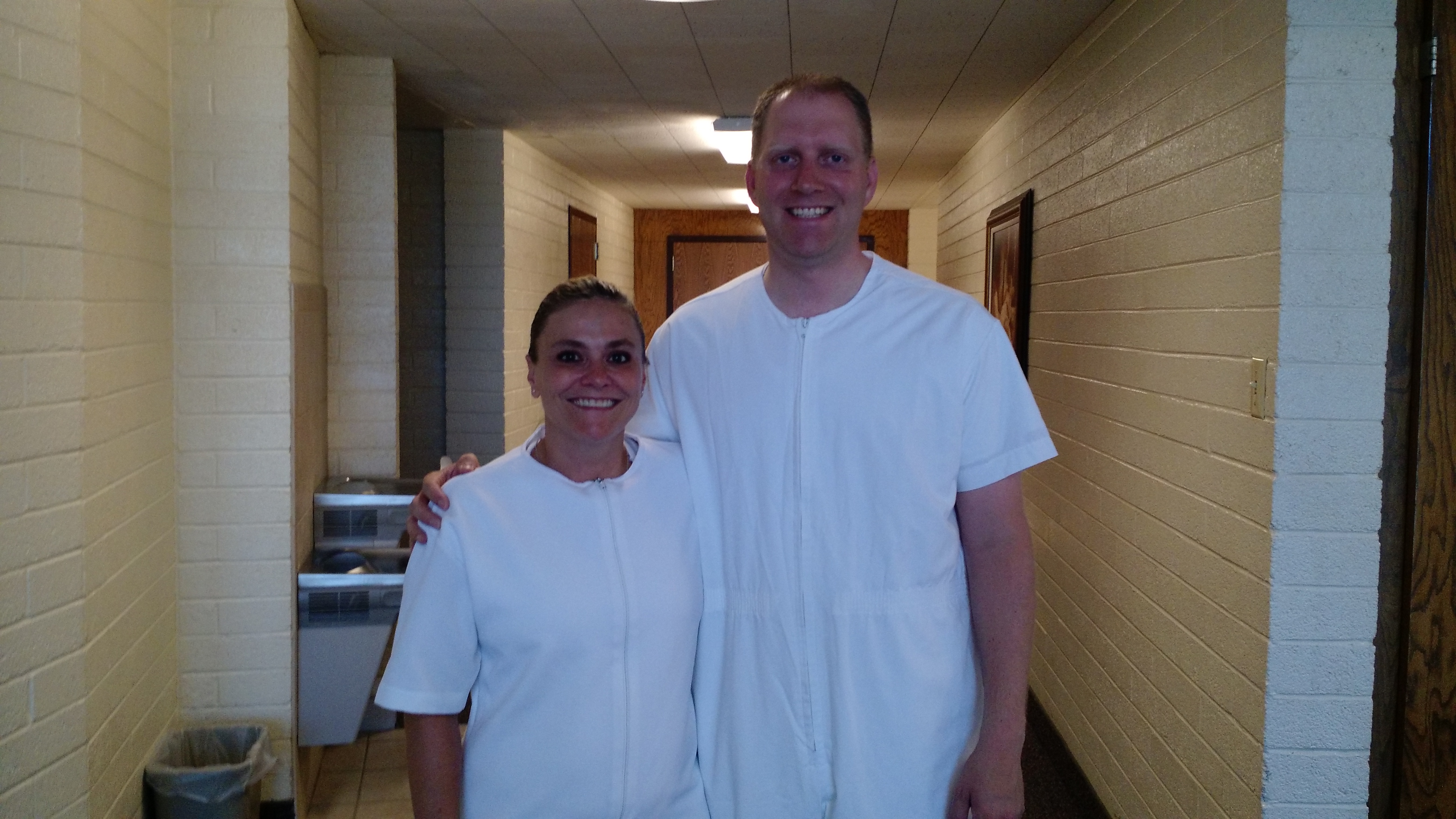
Stacey Jonas and Paul Ross, Mesa, Arizona

These are pictures from the day she was baptized.  We orchestrated it so I could fly down and attend the baptism and confirmation over the course of the weekend of June 25-27, 2016, in her home of Mesa.  Once again, she insisted I could stay with her rather than finding a place to stay.

Stacey Jonas, Paul Ross at her baptism in 2016

It was a great weekend.  She also let me steal her car and I made a trip over to the Mesa Arizona Temple.  I made sure to snap a picture while I was there.  Unfortunately you see some of the reflection of the console in the window of Stacey’s car, fun little Jaguar!

Mesa Arizona Temple, 25 June 2016

Stacey later attended the Gilbert Arizona Temple to receive her endowments!  Not surprised that she did it, but surprised that I could say I helped her in some small part along the way.

Stacey Jonas and her friend Melanie Walker attending the temple

It is remarkable the bond and friendship I have built with Stacey since we first met, that I recall, in 2008.  She has visited us here in Idaho since, some day we will have to make it back her direction to visit again.  I am grateful that I could help her in her spiritual growth and striving since we first met as well.  In some ways I felt bad we stayed up late that night conversing.  I don’t know how much actually links to that night, but I feel a deep sense of appreciation for Stacey and the kinship that we feel, both since we are related, and also spiritually.

I am also aware that I am posting this on 6 September 2020.  The 104th anniversary of Lillian Coley and Joseph Nelson Jonas.  A date that has held happiness and sorrow for the Jonas family.  I can only imagine they are pleased that their Great Grandchildren are associating and helping each other improve.

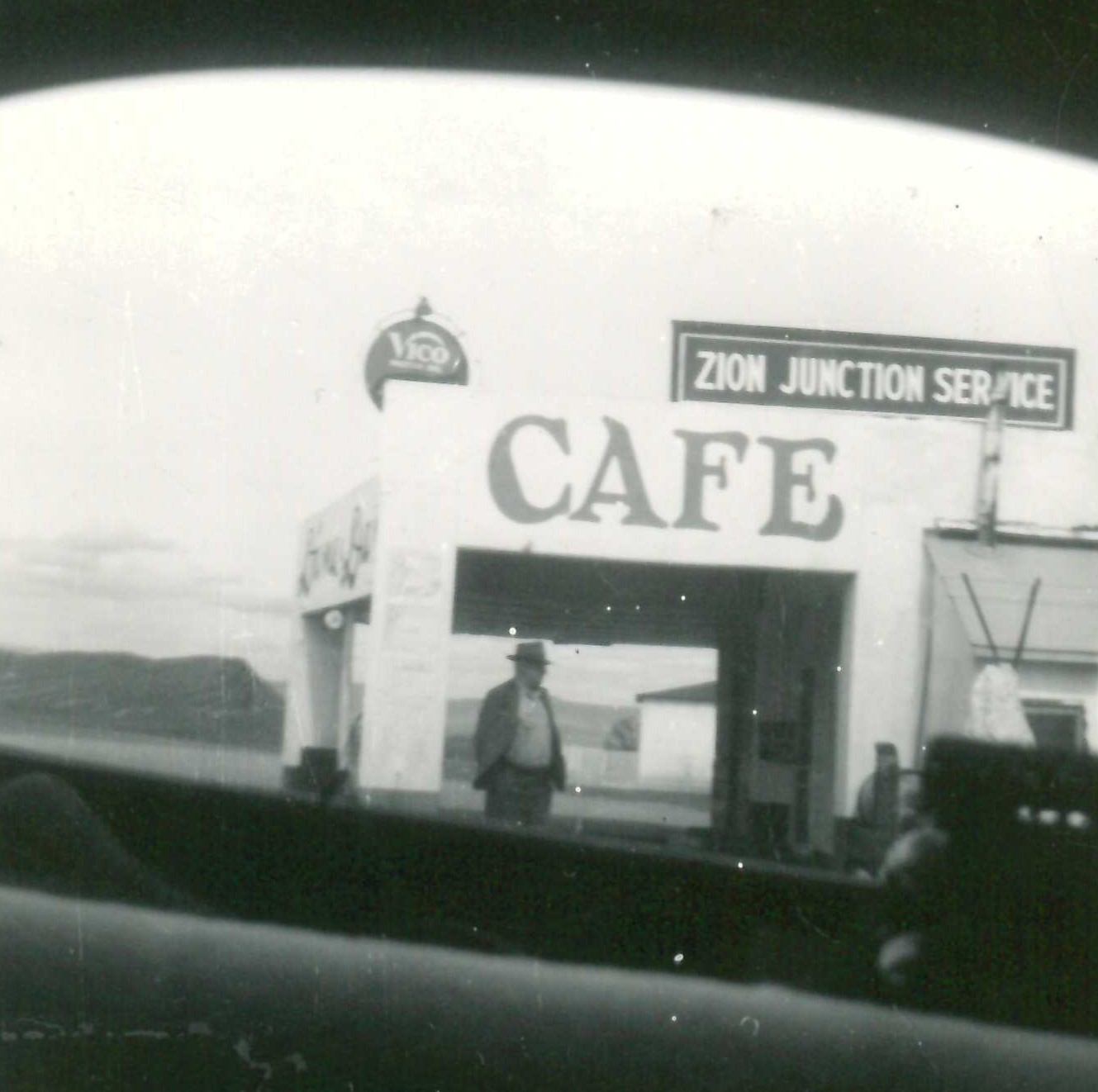
Zion Junction Service

David Delos Donaldson at Zion Junction Service

I finally scanned this photo this week.  Something in it evokes various thoughts and feelings.  In the photo is David Delos Donaldson.  I don’t know who is snapping this photo out the back of their car, but I know David William Donaldson (Delos’ son) and Berendena (his wife) were on the trip through the western United States.  I assume Zion Junction Service is somewhere near Zions National Park, but I was unable to verify that.

A snapshot of a memory for someone else.  I happen to know and recognize my Great Grandfather standing in the frame.

Paul Train Depot

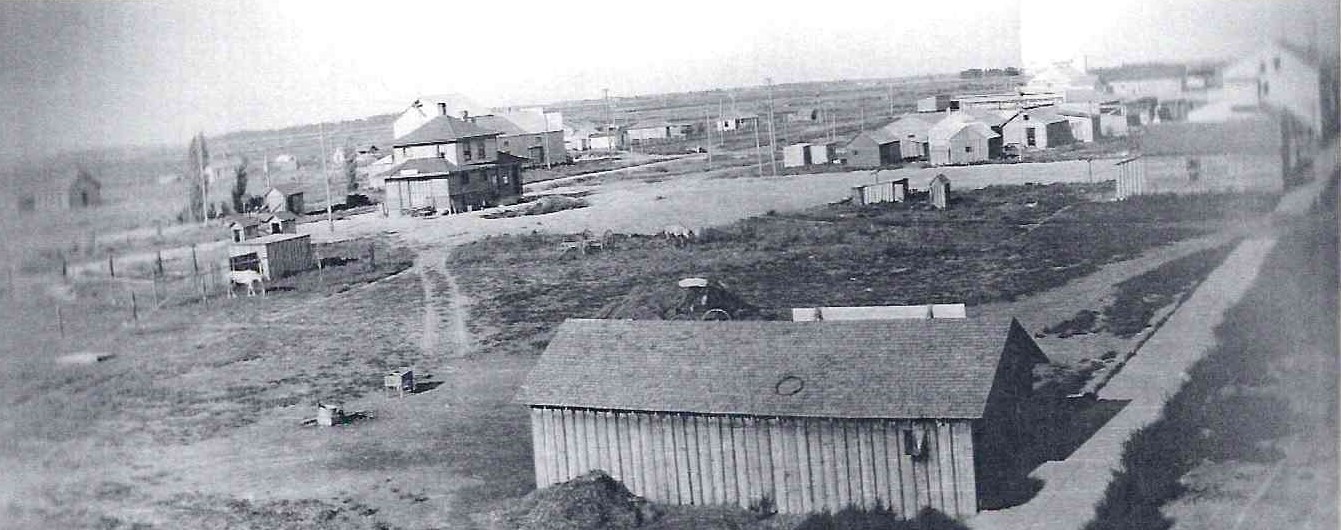
Paul Idaho Train Depot

Another old photo of Paul, Idaho.  To the left, center of the photo is the Paul Train Depot.  The depot was located about half way between Main Street and 1st West Street on the north side of West Railroad Street and south of the tracks.  This photo was very early on, probably before 1917 as the Amalgamated drainage ditch does not appear in to be running through the photo.  Also, the buggy in the front and no parked cars elsewhere provide some hint.

Immediately behind from this view and across the tracks is the Watson Farm Supply Building.

Watson Farm Supply

Looking east down Idaho Street you can see the back side of Merrill’s Food Market.  On the following photo, you can see the north side of that building on the right side of Main Street before the bricked Adams Building.

Main Street near the tracks looking South in Paul, Idaho

If you look out to the very far left of the photo with the depot, you can see the first school in Paul.  That school was located on James Ellis land.  I don’t know when that school was built or when it was replaced with a school virtually in the block behind where this photo was taken.

Paul Idaho Train Depot

2020: The Year of the Dead

This wasn’t intentional.  Not sure why or how it happened, but it did.

Anyone who knows me knows that I stop and visited deceased people and ancestors anytime I am in the neighborhood.  Kinda like stopping in to visit any other cousin or friend when you are driving through, are in town, and have some time.  Ancestors are very accommodating whenever you want to stop in and visit.  Maybe COVID-19 just gave us more time.

I have the following ancestors who are buried somewhat nearby, western United States.  I will link each ancestor I have written about previously if you want additional information.  Here are my ancestors and where they are buried.

As of this writing, I see there are two ancestors that I haven’t stopped and visited in the last few years and got pictures with the kids and the tombstone, Christiana Andra in Salt Lake City and William Sharp in Ogden (I now have the goal to get it done before the end of the year).  I also have a couple of known ancestors without tombstones, David and Gwenllian Jordan in Ogden, Utah, Hubert Jonas in Ellensburg, Washington (but we got pictures at the grave), and Damey Ross in Olivehurst, California (who we visited after hours and couldn’t even locate the grave).  We should remedy that but we may just have to stop and get pictures with their grave locations.

I also cheat and use the 2016, 2018, and 2019 photos with three ancestors, Johanna Benson in Spring City, Utah in 2018, John William Ross in San Bruno, California in 2016, and James Thomas Ross/Meredith in Fresno, California in 2019.  I could do a 2020 photo for Johanna, but I am not going to California just to redo a tombstone photo with the two Ross ancestors.
Grandparents

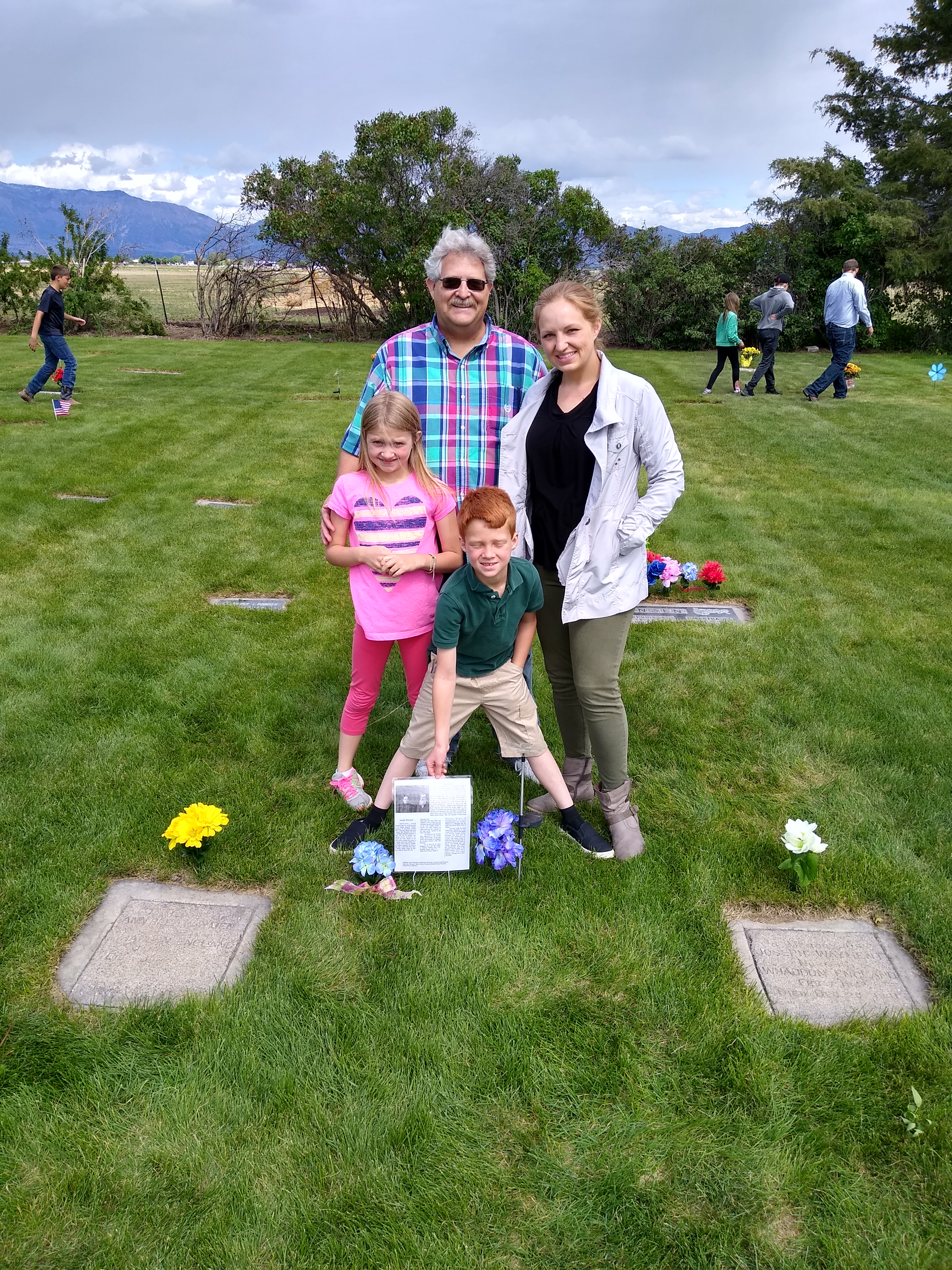
Milo & Gladys Ross – Plain City, Utah

Lillian, Paul, Aliza, and Hiram Ross with tombstone of Gladys Maxine Donaldson (1921-2004) and Milo James Ross (1921-2014) on 23 May 2020.

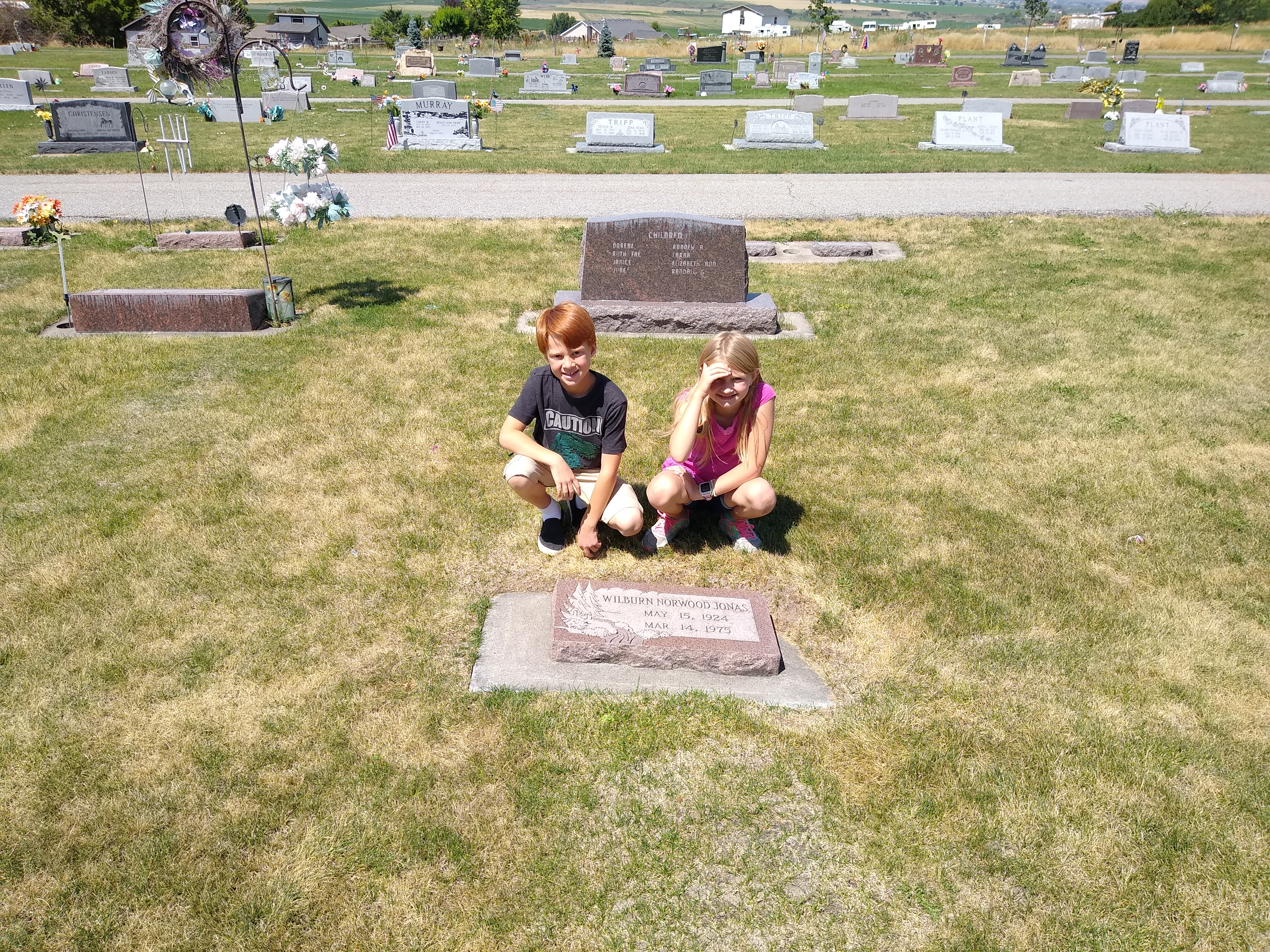
Norwood Jonas – Richmond, Utah

Hiram and Aliza Ross with tombstone of Wilburn Norwood Jonas (1924-1975) on 26 July 2020.

Colleen Lloyd – Dingle, Idaho

Lillian, Hiram, James, and Aliza Ross with tombstone of Colleen Mary Andra (1928-1999) and Ivan W Lloyd (1919-2011) on 25 July 2020.

Great Grandparents

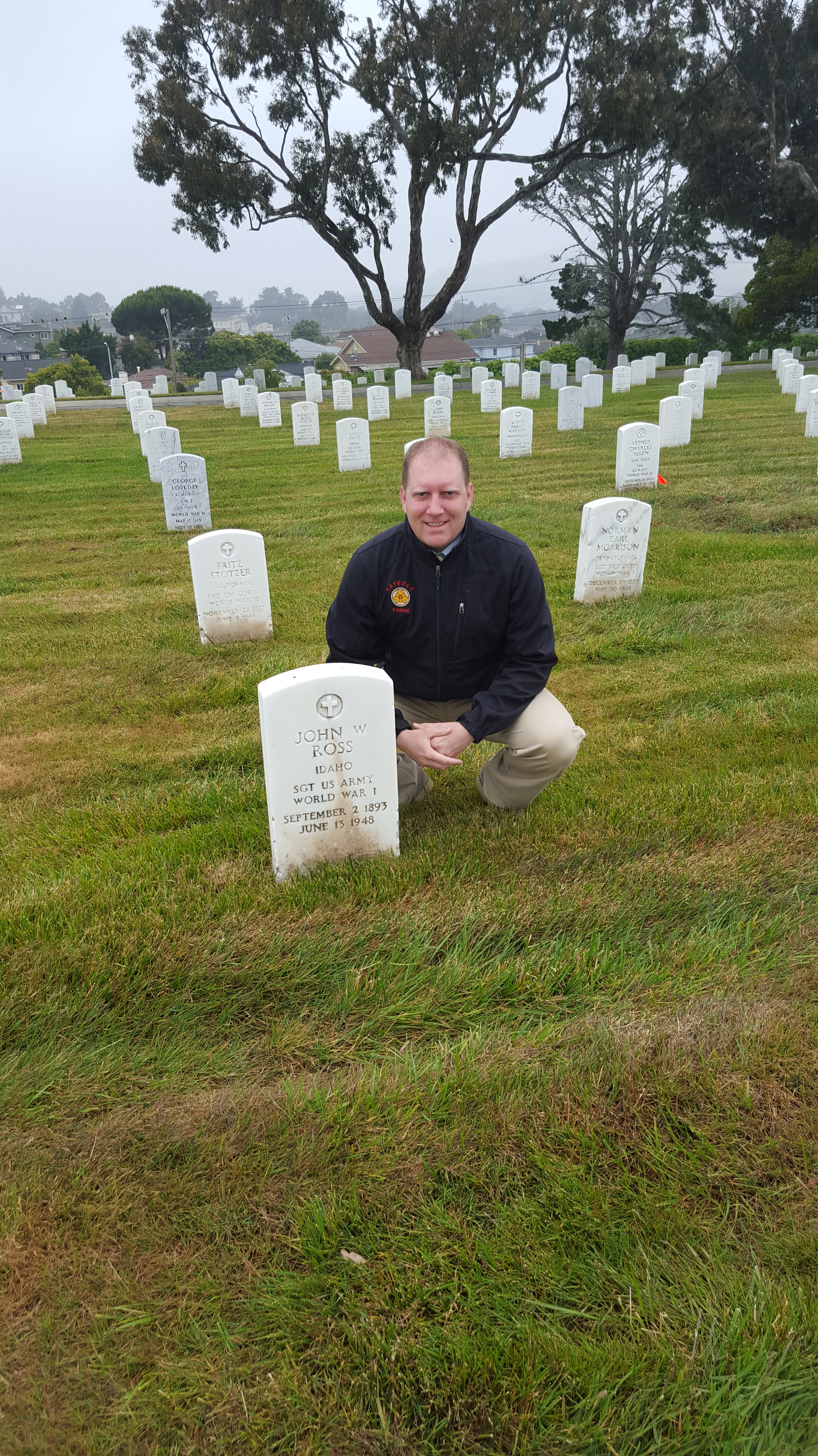
John Ross – Golden Gate National, San Bruno, California

Paul Ross with tombstone of John William (Jack) Ross (1890-1948) on 24 May 2016.

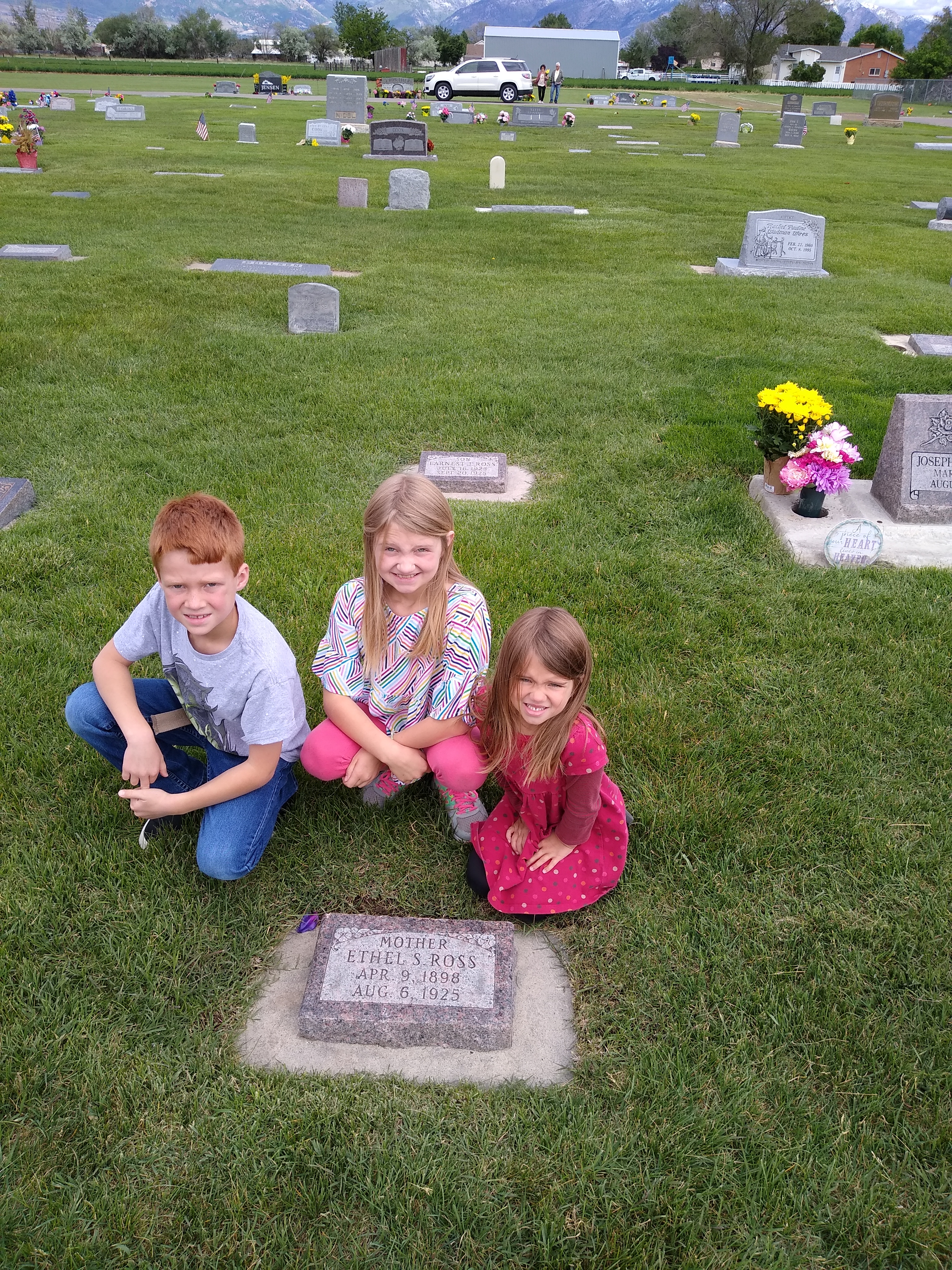
Ethel Ross – Plain City, Utah

Hiram, Aliza, and Lillian Ross with tombstone for Ethel Sharp Ross (1898-1925) on 23 May 2020.

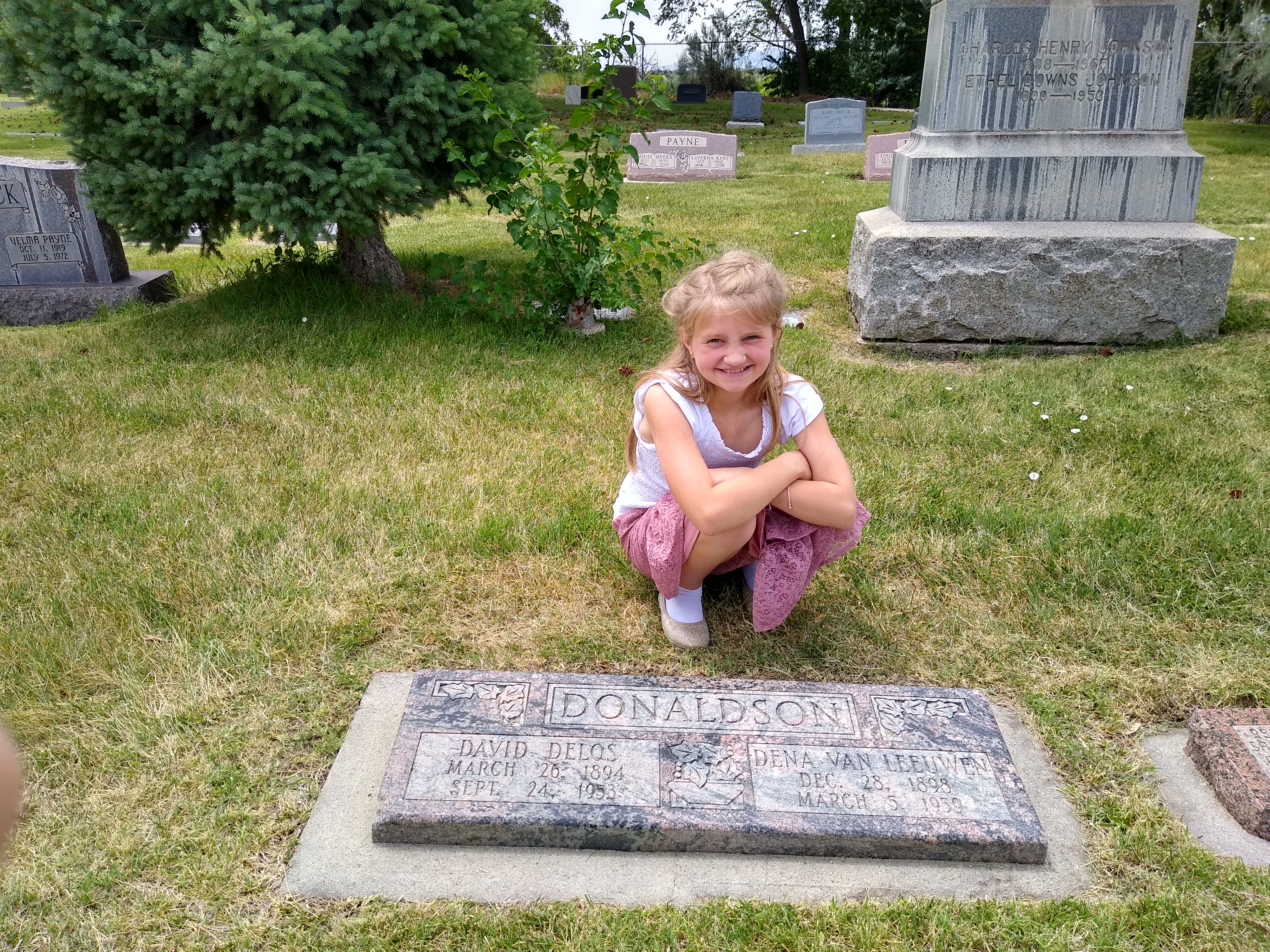
Delos & Dena Donaldson – Ogden, Utah

Aliza Ross with tombstone for Berendena Van Leeuwen (1898-1959) and David Delos Donaldson (1894-1953) on 28 June 2020.

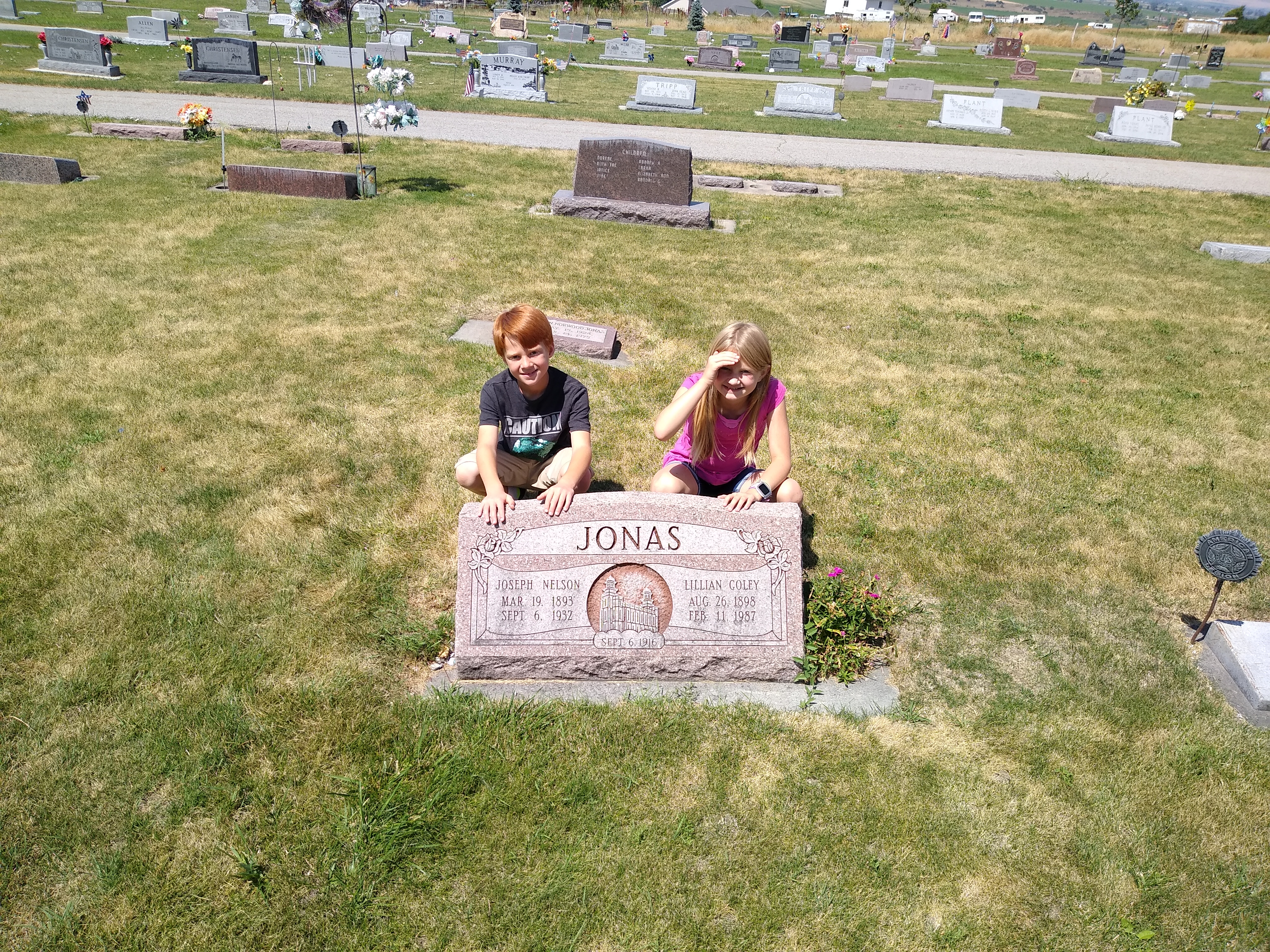
Joseph & Lillian Jonas – Richmond, Utah

Hiram and Aliza Ross with tombstone of Lillian Coley (1898-1987) and Joseph Nelson Jonas (1893-1932) on 26 July 2020.

Bill & Mary Andra – Whitney, Idaho

Lillian (in background by Wanner tombstone), James, Aliza, and Hiram Ross with tombstone of Mary Louise Wanner (1901-1991) and William Fredrick Andra (1898-1990) on 26 July 2020.

Great Great Grandparents

James Ross/Meredith – Belmont Memorial, Fresno, California

Paul, Aliza, and Hiram Ross with tombstone of James Thomas Ross (aka James R Meredith)(1869-1951) on 10 May 2019.
Damey Graham Ross – Sierra View, Olivehurst, California

Damey Catherine Graham Ross doesn’t have a tombstone, but we visited her grave in 2016 in the evening.  No photo.

Milo & Lillie Sharp – Plain City, Utah

Aliza, Paul, Lillian, and Hiram Ross with tombstone of Mary Ann Bailey (1828-1913), Mary Ann (Lillian “Lillie” Musgrave) Stoker (1861-1935) and Milo Riley Sharp (1857-1916) on 23 May 2020. Mary Ann Bailey is the mother of Milo Riley Sharp, don’t confuse mother Mary Ann with spouse Mary Ann. We shorten our Lillian’s name to Lillie’s spelling in her honor.

William & Mary Donaldson – Ogden, Utah

Aliza Ross with tombstones of Mary Elizabeth Williams (1869-1951) and William Scott Donaldson (1865-1913) on 28 June 2020.

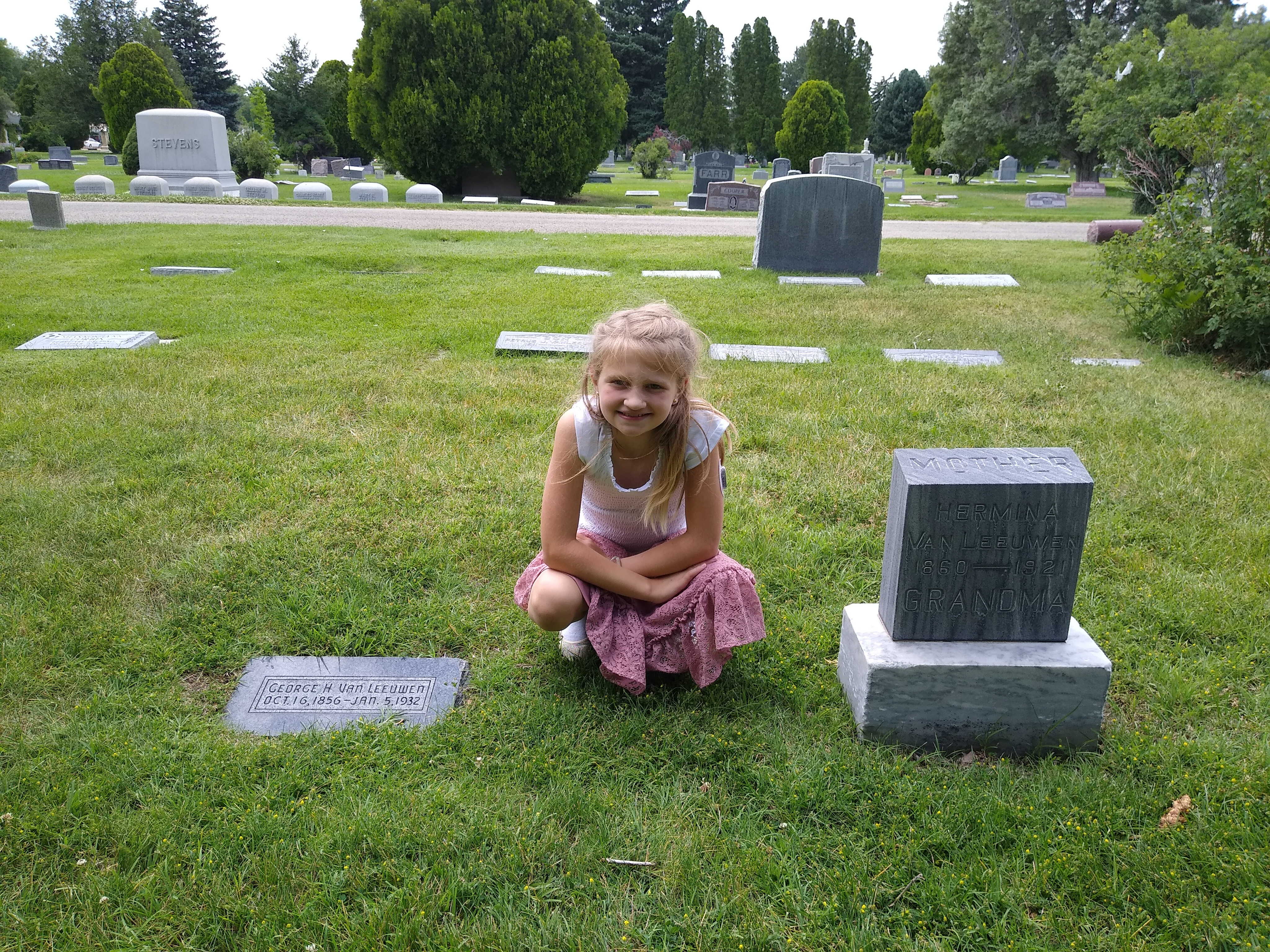
George & Minnie Van Leeuwen – Ogden, Utah

Aliza Ross with tombstones for Hermina Jansen (1860-1921) and George Henry (Gerhardus Hendrick) Van Leeuwen (1856-1932) on 28 June 2020.

Joseph Jonas – Richmond, Utah

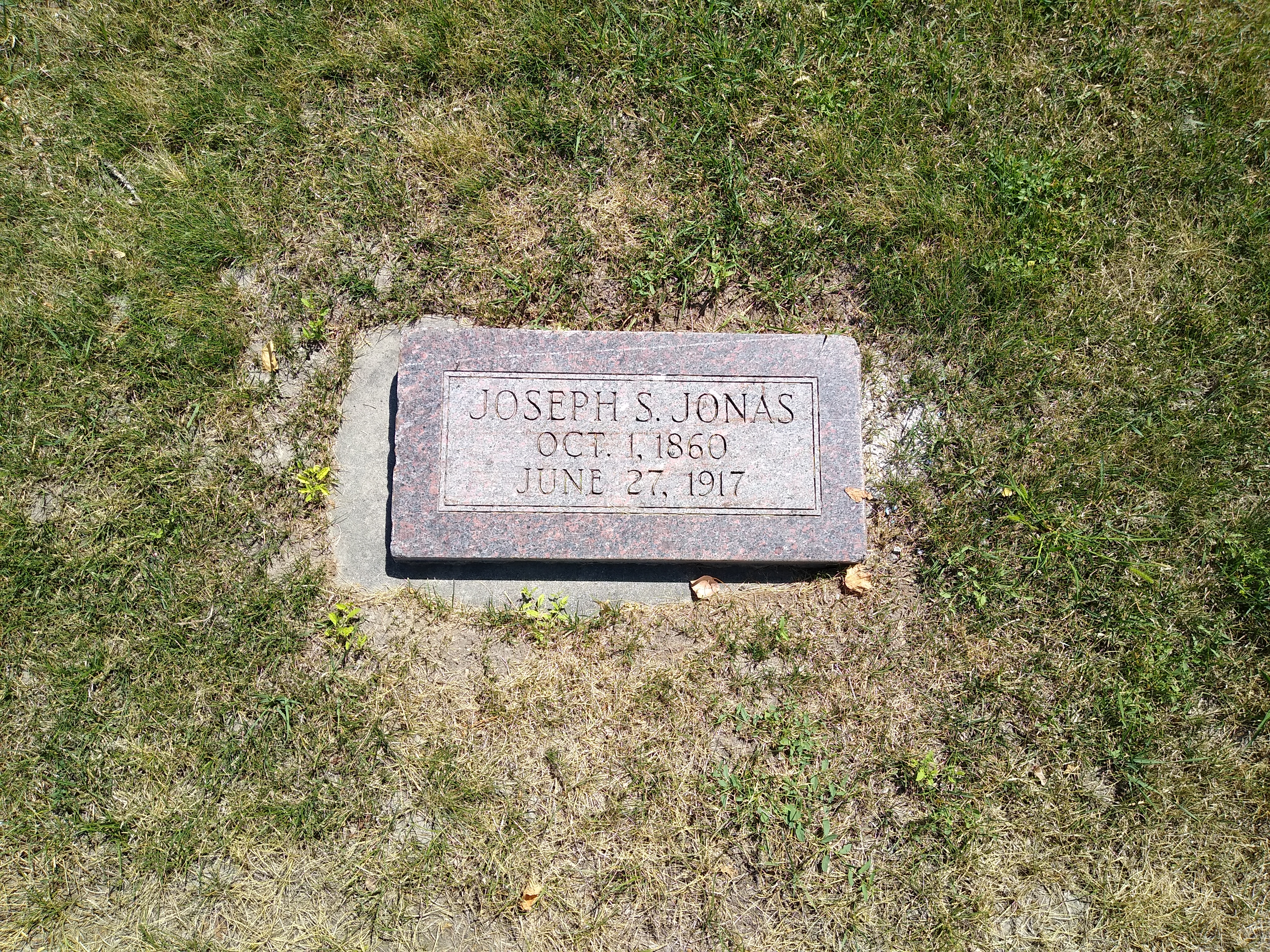
Tombstone of Joseph Jonas (1859-1917) on 26 July 2020.  The S is a mistake put there by someone.  Some have put his mother’s maiden name “Schumacher” there, but we have yet to find any evidence of that middle initial or name.

Annie Jonas – Crescent, Sandy, Utah

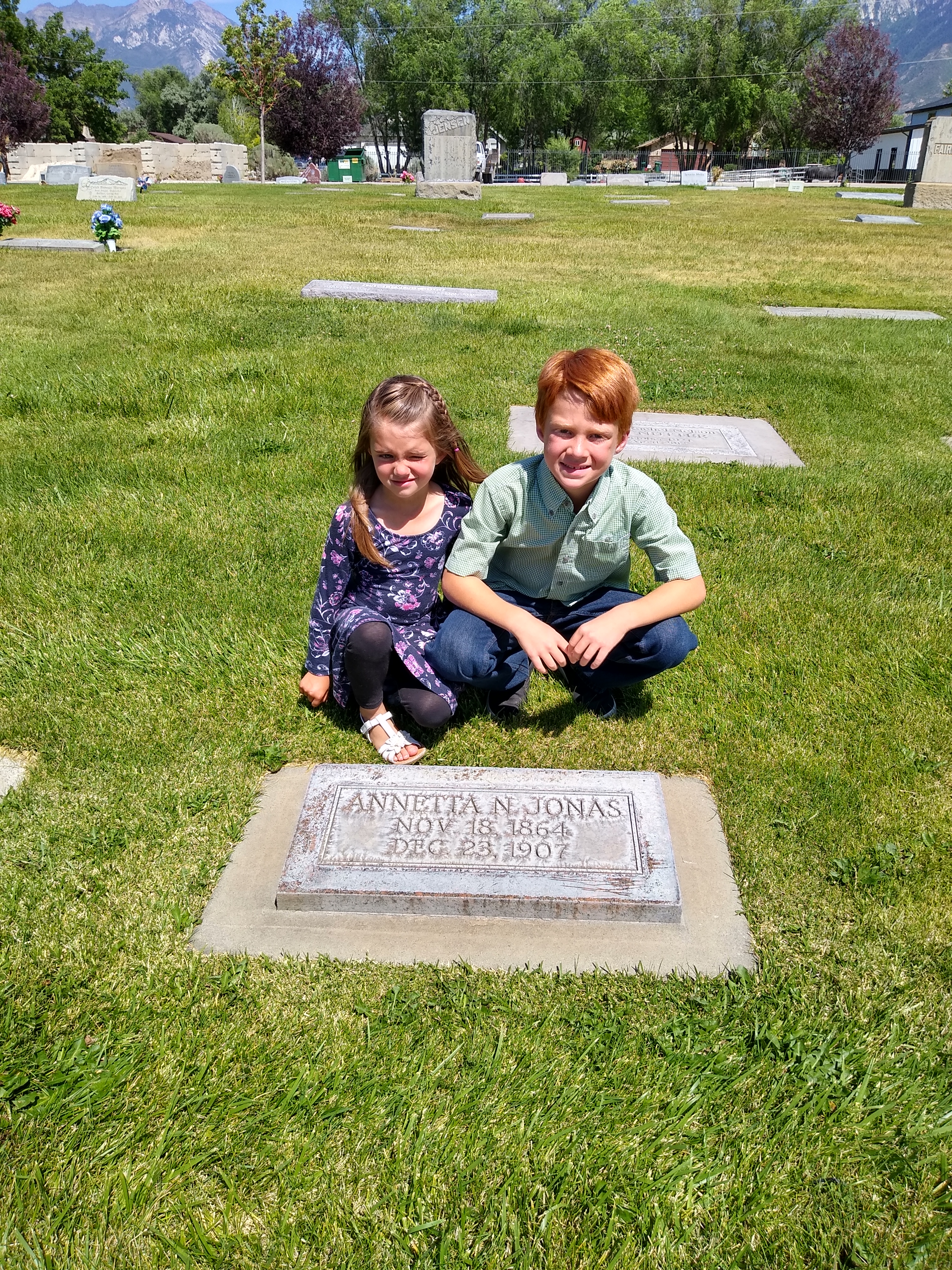
Lillian and Hiram Ross with tombstone of Annetta Josephine Nelson Jonas (1864-1907) on 11 July 2020.

Herbert & Martha Coley – Richmond, Utah

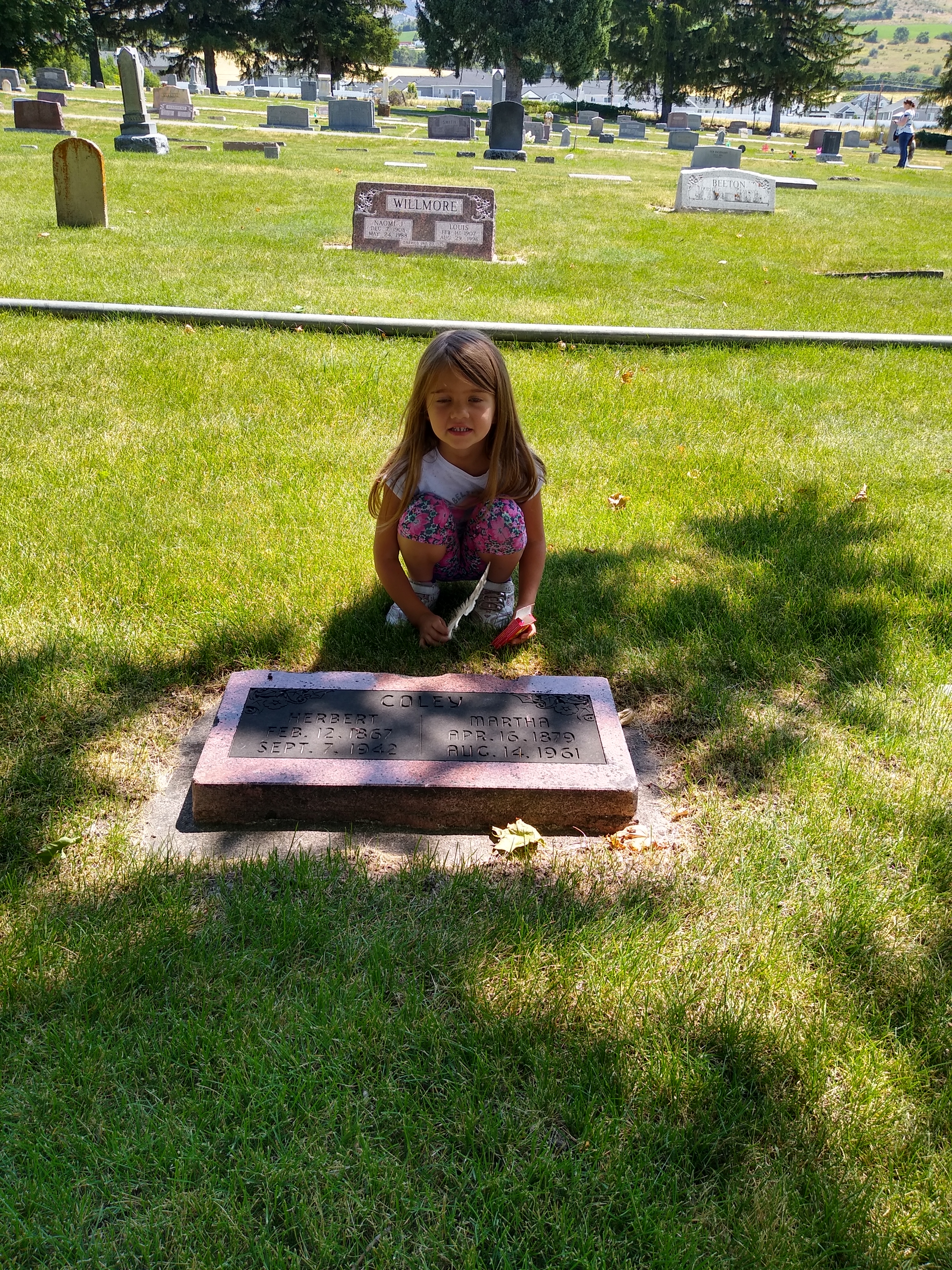
Lillian Ross with tombstone of Martha Christiansen (1879-1961) and Herbert Coley (1864-1942) on 26 July 2020.

Christiana Andra – Wasatch Memorial, Latona Section, Salt Lake City, Utah

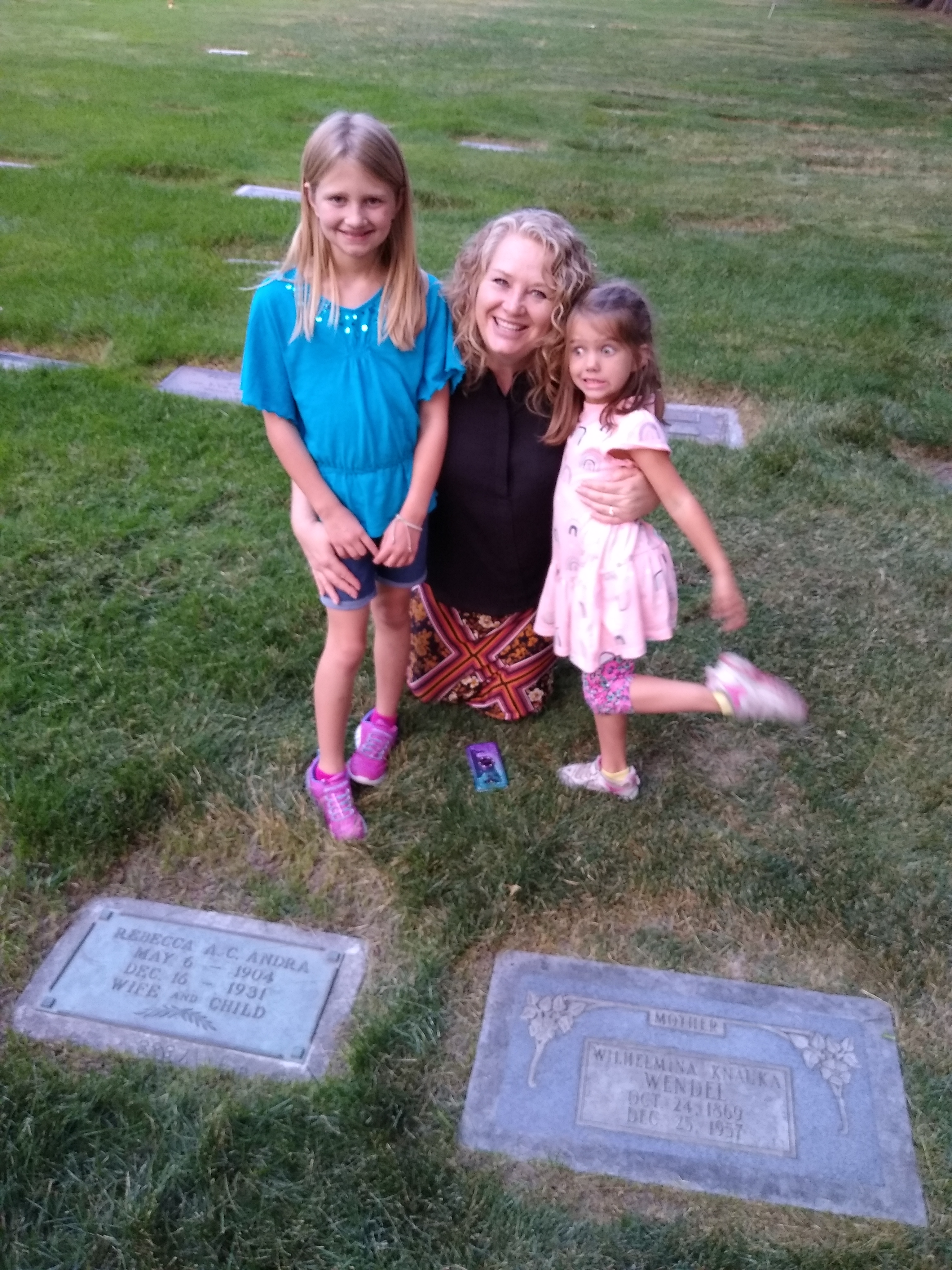
Aliza Ross, Jill Hemsley, Lillian Ross with tombstone of Christiana Wilhelmina Knauke (1869-1957), widow of Friedrich Theodor Andra, on 6 September 2020.  She went by Wilhelmina in the United States and married Johann Wendel, as I have written previously.  The other grave is her daughter-in-law and grandson, Rebecca Emelia Christensen (1904-1931) and Otto Carl Andra (1929-1929).

George & Regina Wanner – Whitney, Idaho

Hiram and Aliza Ross with tombstone of Regina Frederike Nuffer (1869-1942) and John George Wanner (1870-1947) on 26 July 2020.

Great Great Great Grandparents

William Sharp – Ogden, Utah

Lillie, Paul, Aliza, and Hiram Ross with tombstone of William Sharp on 27 November 2020.  This was the first time I had ever been to William’s grave.

Mary Sharp – Plain City, Utah

Aliza, Paul, Lillian, and Hiram Ross with tombstone of Mary Ann Bailey (1828-1913), Mary Ann (Lillie Musgrave) Stoker (1861-1935) and Milo Riley Sharp (1857-1916) on 23 May 2020. Mary Ann Bailey is the mother of Milo Riley Sharp, don’t confuse mother Mary Ann with spouse Mary Ann. We shorten our Lillian’s name to Lillie’s spelling in her honor.

William Stoker – Plain City, Utah

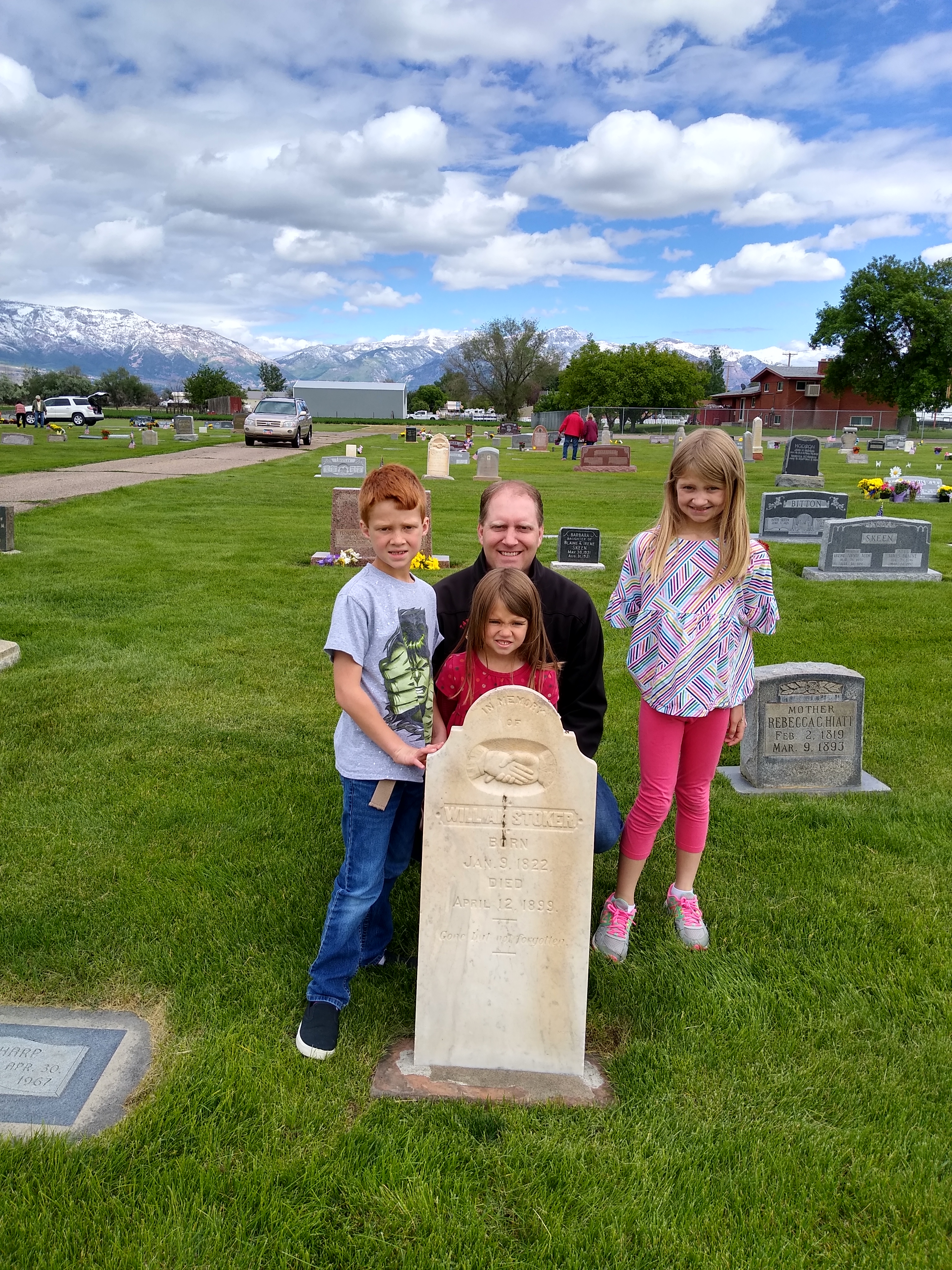
Hiram, Paul, Lillian, and Aliza Ross with tombstone of William Edward Stoker (1827-1899) on 23 May 2020.

David & Gwenllian Williams – Ogden, Utah

Aliza, Lillie, Paul, James, and Hiram Ross at the graves of Gwenllian Jordan (1842-1900) and David D Williams (1832-1911) on 27 November 2020.  Neither have a tombstone. 

Hubert Jonas – Holy Cross, Ellensburg, Washington

Lillian Ross with tombstone of Emma Schriber Jonas (1855-1898), wife of William Jonas on 5 August 2020. William and his father Hubert both do not have tombstones and are buried next to Emma.

John & Annie Nelson – Logan, Utah

Hiram, James, Lillian, and Aliza Ross with tombstone for Agnetta Benson (Bengtsson)(1832-1873) and John Nelson (Johann Nilsson)(1827-1902) on 25 July 2020.

Stephen & Hannah Coley – Lewiston, Utah

Aliza Ross with tombstone of Hannah Maria Rogers (1832-1894) and Stephen Coley (1830-1913) on 26 July 2020.

Olle Christiansen – Richmond, Utah

Lillian Ross with the tombstone of Olle Christiansen (1853-1900) on 26 July 2020.  This tombstone notes his wife’s burial in Portland, Oregon.

Constance Christiansen – Multnomah Park, Portland, Oregon

Paul, Aliza, and Lillian Ross with tombstone of Constance Josephine Eliza Jorgensen Christiansen (1857-1932) on 8 August 2020.  Portland apparently isn’t watering their cemeteries this year.

John & Anna Wanner – Logan, Utah

James, Aliza, Hiram, and Lillian Ross with tombstone of Anna Maria Schmid (1849-1929) and John George Wanner (1845-1922) on 25 July 2020.

John & Eva Nuffer – Preston, Idaho

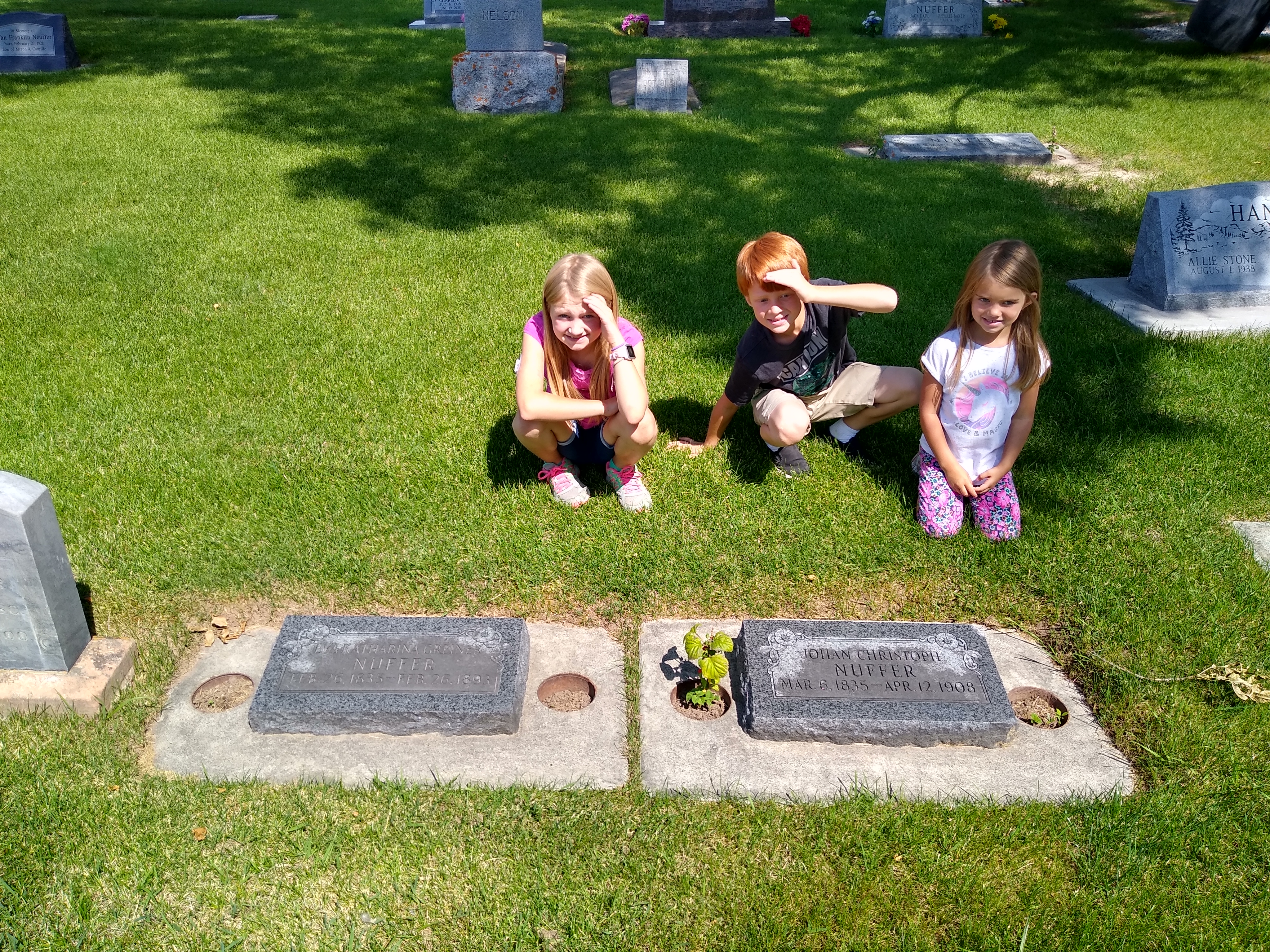
Aliza, Hiram, and Lillian Ross with tombstones of Eva Katharina Greiner (1835-1893) and Johann Christoph Nuffer (1835-1908) on 26 July 2020.

Great Great Great Great Grandparents

John Williams – Ogden, Utah

James, Lillie, Aliza, Paul, and Hiram Ross at the tombstone of John Williams (1797-1876) on 27 November 2020.

David & Margret Jordan – Brigham City, Utah

Paul, Aliza, Lillian, and Hiram Ross with tombstones for Margret Watkins (1816-1902), David Jordan (1820-1893) and Thomas Jordan (1857-1880) on 23 May 2020. Thomas is the son of David and Margret.

Johanna Benson – Spring City, Utah

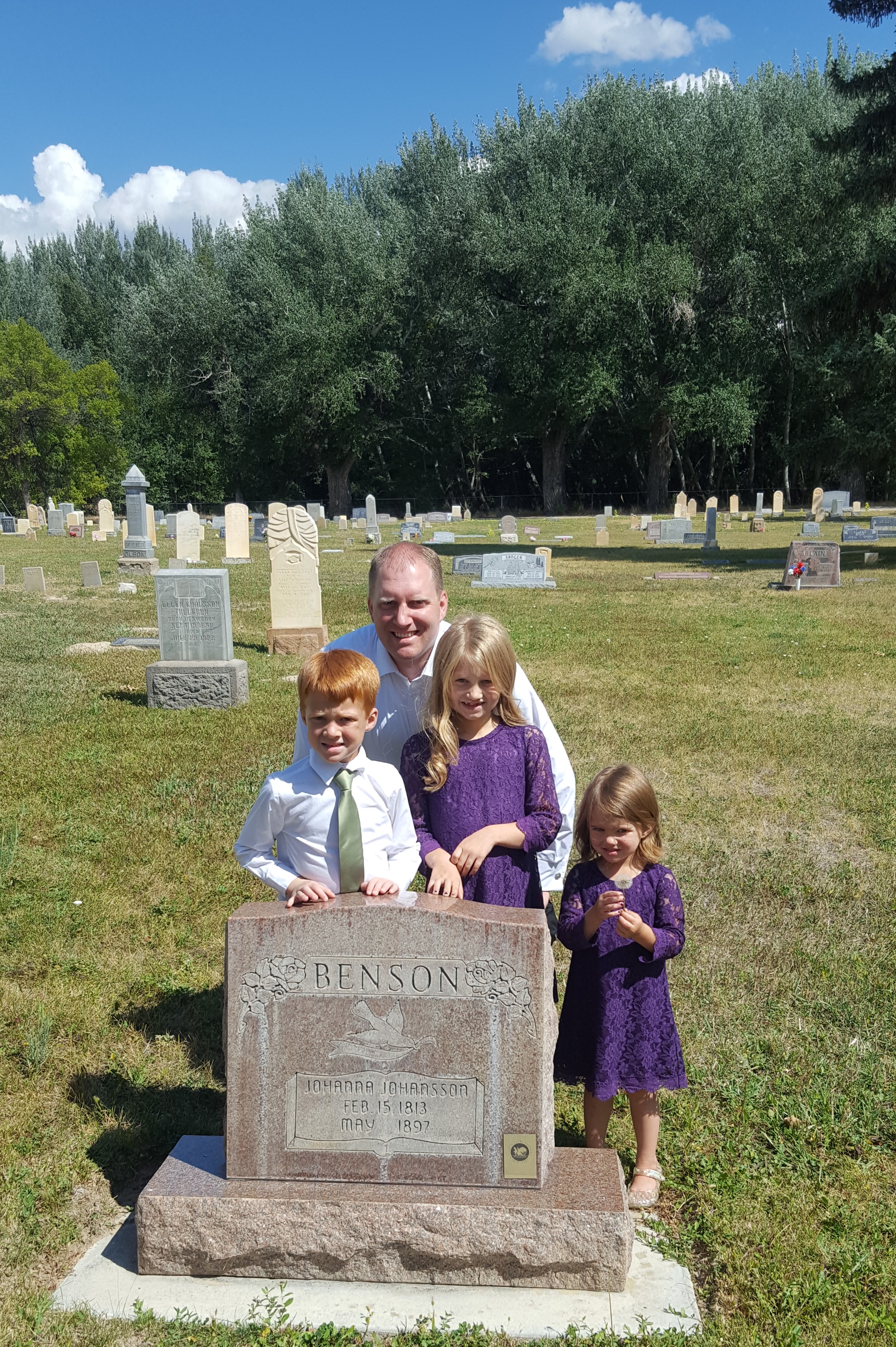
Paul, Aliza, Hiram, and Lillian Ross with tombstone of Johanna Johannsson Benson (Bengtsson)(1813-1897) on 7 September 2018.  I know I am cheating, it wasn’t 2020.  But it was recent.

Olavus & Hanna Jorgensen – Richmond, Utah

Aliza Ross with tombstones of Hanna Mathea Christensen (1831-1900) and Olavus Jorgensen (1830-1904) on 26 July 2020.

Others visited this year.

Garrett Lee Smith – Weston, Oregon

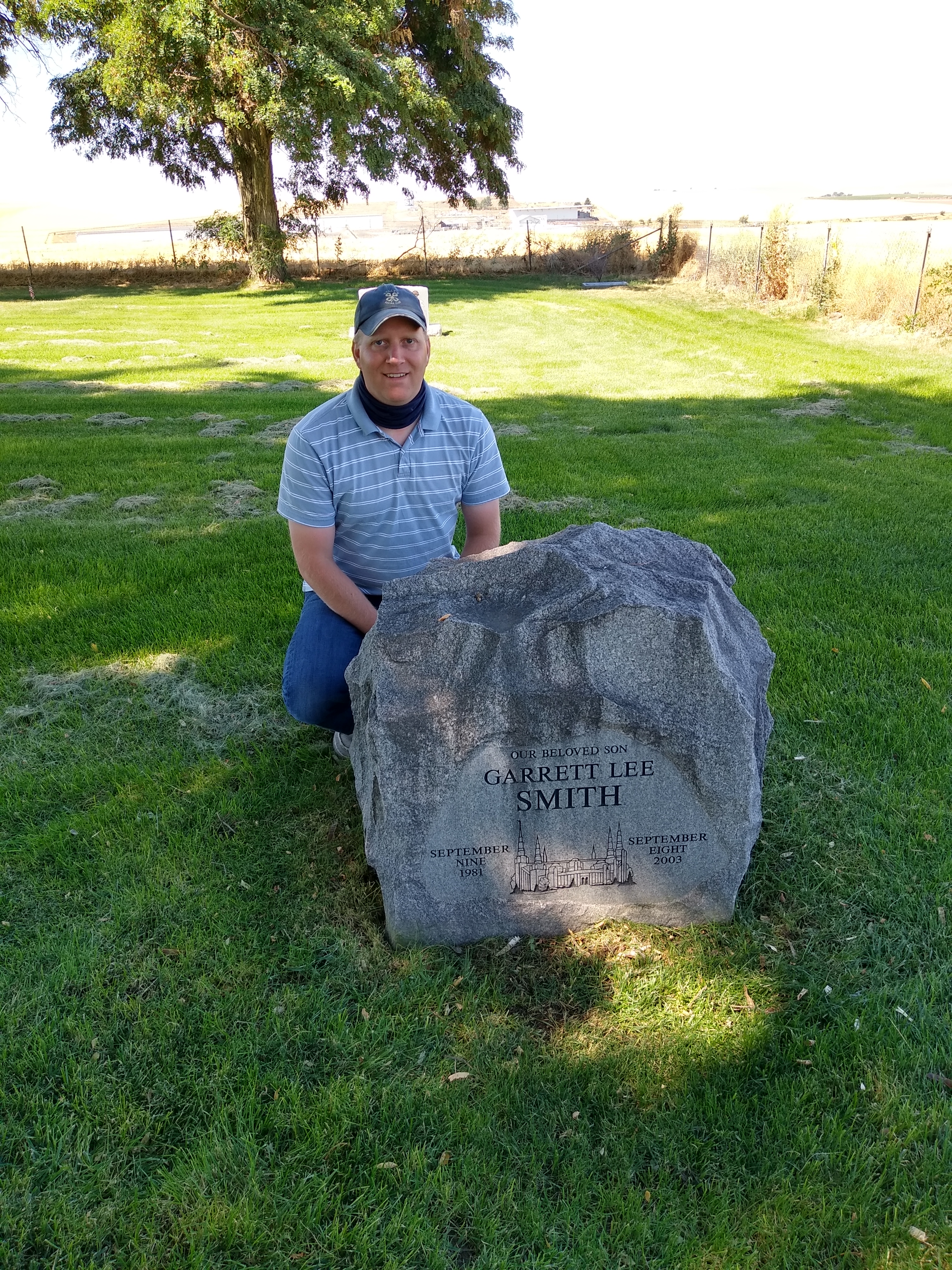
Paul Ross with tombstone of Garrett Lee Smith (1981-2003) on 9 August 2020.  Garrett was my last missionary companion.

Eli Benjamin Stoker – Mullan, Idaho

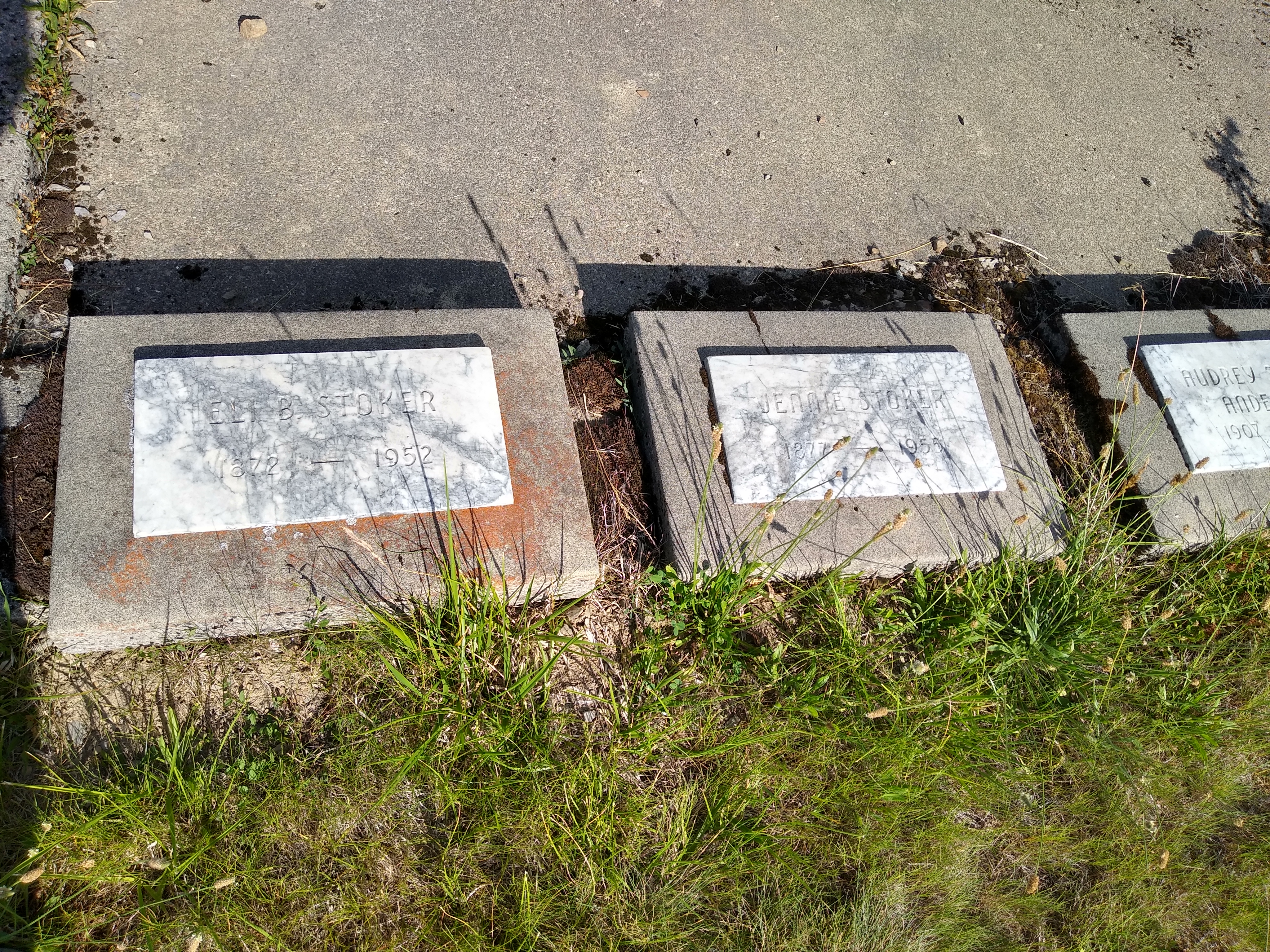
Tombstone of Eli Benjamin Stoker (1870-1952) on 3 August 2020.  Eli is the half-brother to my Mary Ann Stoker Sharp.

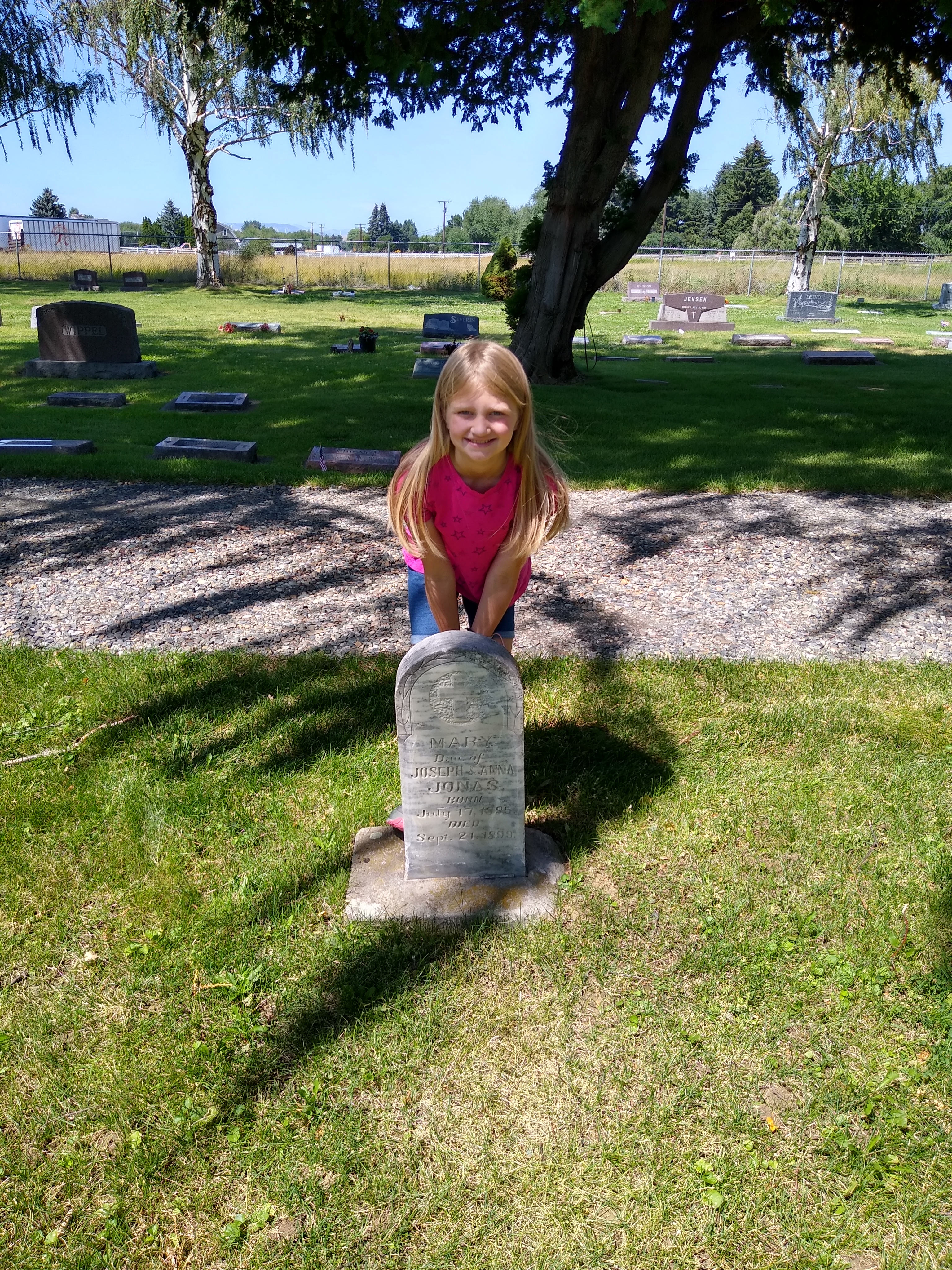
Mary Nelson Jonas – Holy Cross – Ellensburg, Washington

Aliza Ross with tombstone of Mary Nelson Jonas (1885-1899) on 5 August 2020.  Mary is the sister to my Joseph Nelson Jonas.

Ezra & Flora Benson – Whitney, Idaho

Aliza and James Ross with tombstone of Flora Smith Amussen (1901-1992) and Ezra Taft Benson (1899-1994) on 26 July 2020.  Many know Ezra as the 13th President of The Church of Jesus Christ of Latter-day Saints and Secretary of Agriculture under President Eisenhower.

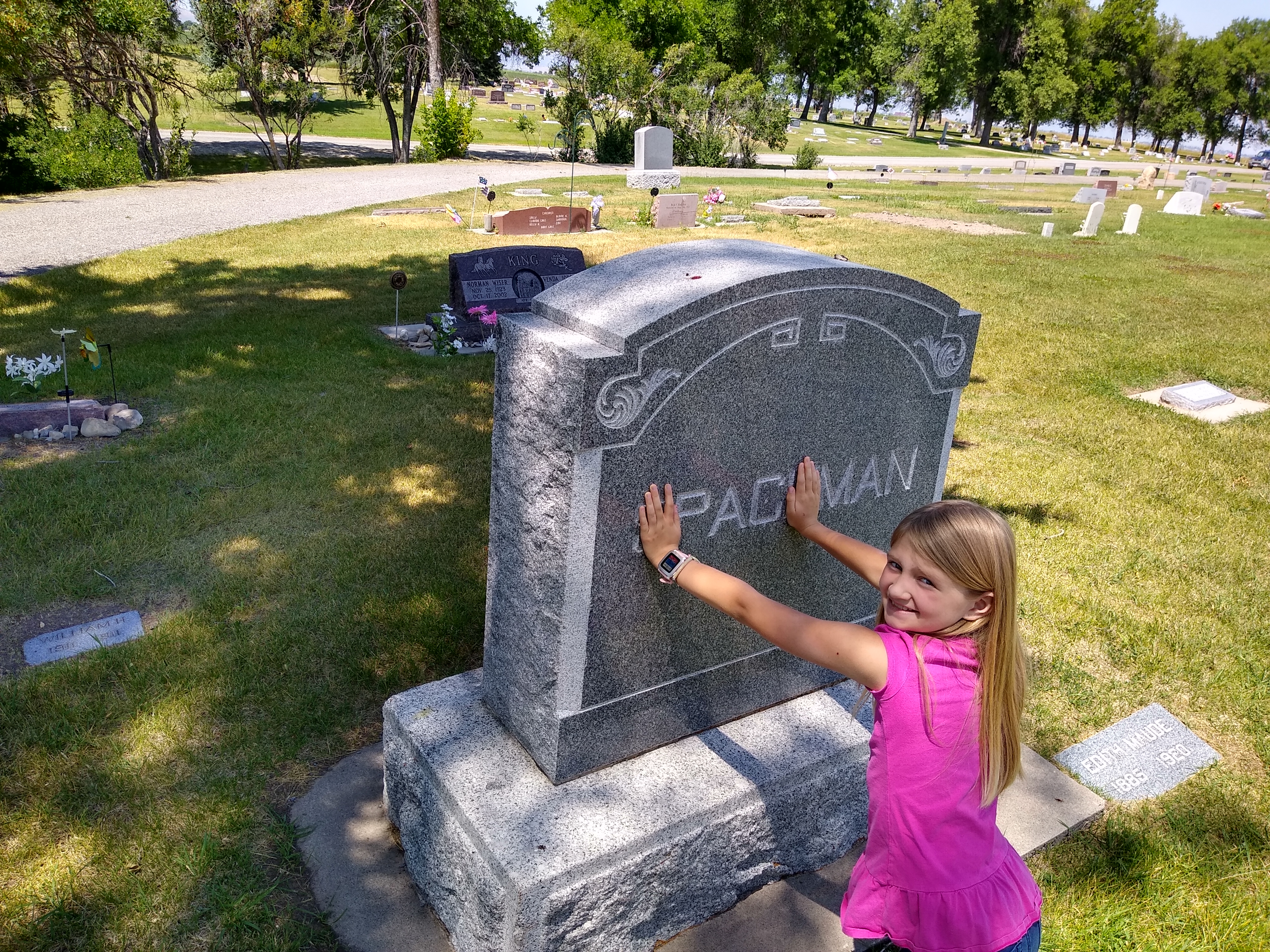
Spackman Plot Marker – Lewiston, Utah

Aliza Ross with the Spackman Plot Marker. She recognized and wanted a picture with the Pacman tombstone on 26 July 2020.

Walter Theodor Andra – Logan, Utah

Aliza, Hiram, and Lillian Ross with tombstone of Walter Theodor Andra (1896-1967) on 25 July 2020.  Walter is brother to my Bill Andra.

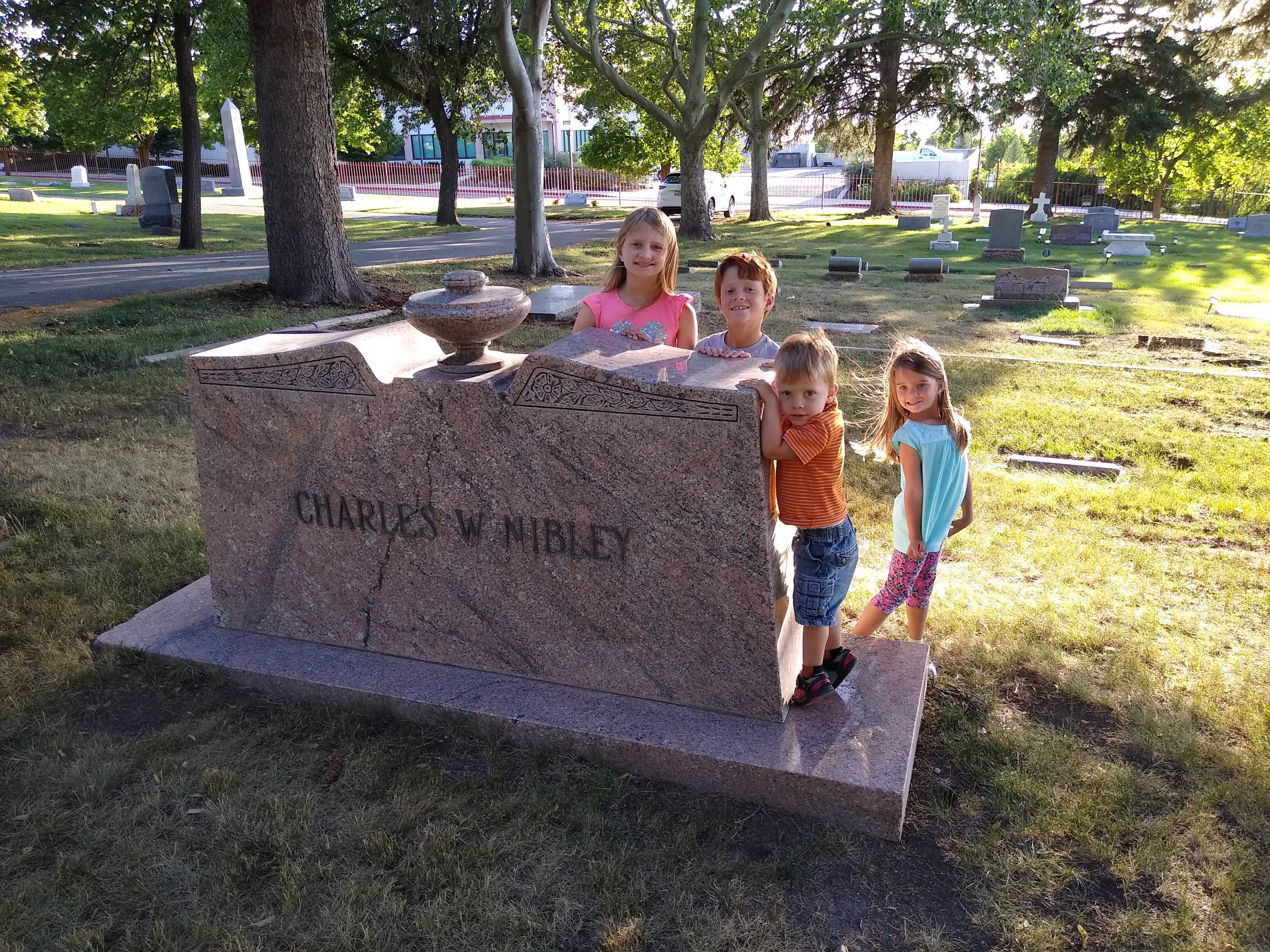
Charles Wilson Nibley – Logan, Utah

Aliza, Hiram, James, and Lillian Ross with tombstone of Charles Wilson Nibley (1849-1931) on 25 July 2020.  Charles is known for various positions and business interests, but most will know him as a member of the First Presidency (non-apostle) to President Heber J Grant of The Church of Jesus Christ of Latter-day Saints.

Moses Thatcher – Logan, Utah

Lillian, Hiram, and Aliza Ross with tombstone of Moses Thatcher (1842-1909) on 25 July 2020.  Moses is known for various positions and business interests, but most will know him as a an Apostle of The Church of Jesus Christ of Latter-day Saints.

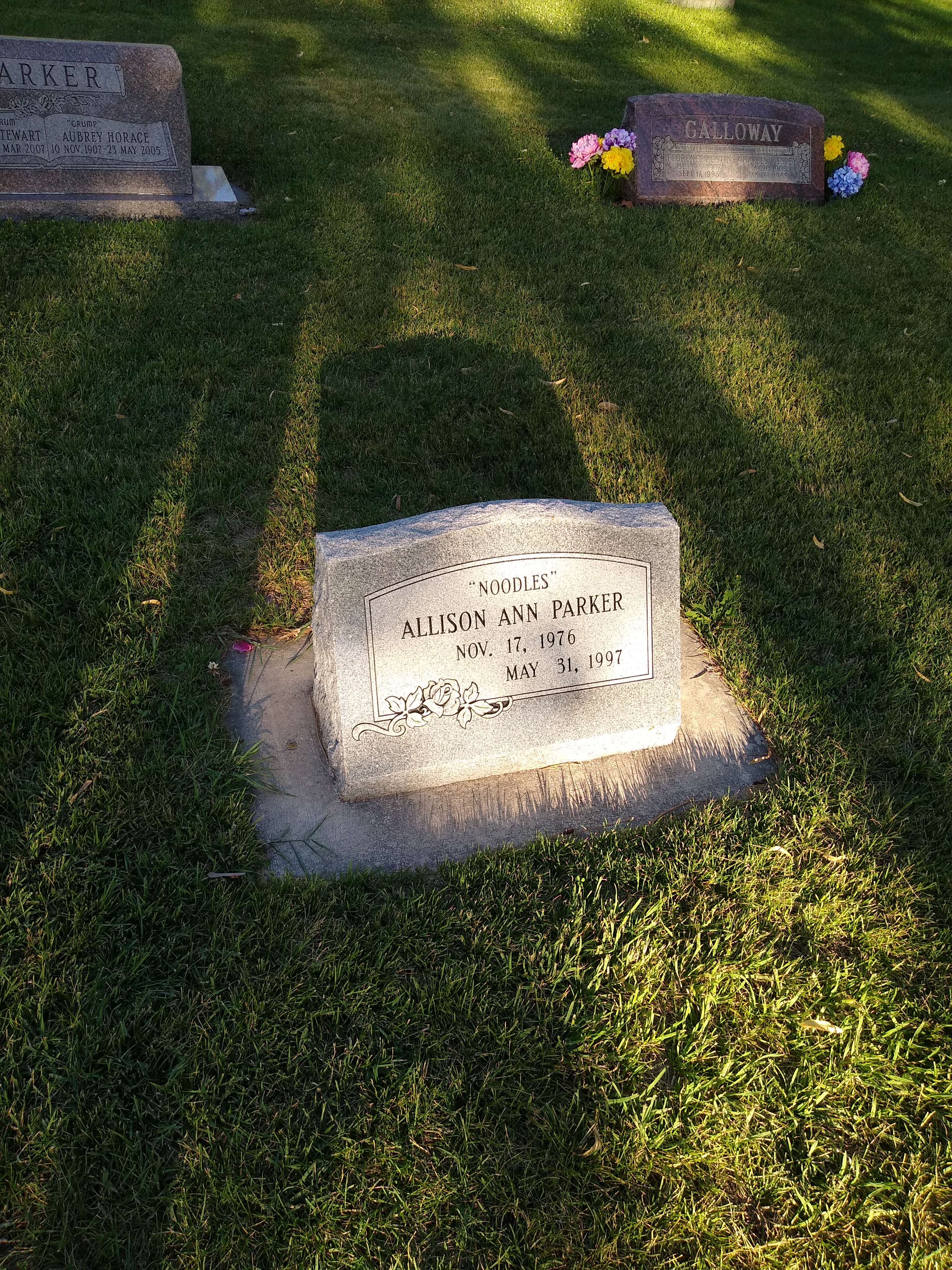
Allison Ann Parker – Logan, Utah

Tombstone of Allison Ann Parker (1976-1997) on 25 July 2020.  Allison is a friend and brother of my high school friends Ryan and Russell Parker.  She passed away after a tragic accident driving back to Utah after our Senior Prom date night in 1997.

Peter Maughan – Logan, Utah

James, Aliza, Lillian, and Hiram Ross with tombstone of Peter Maughan on 25 July 2020.  Peter is known for various positions and business interests, as one of the founders of Cache Valley, Utah.

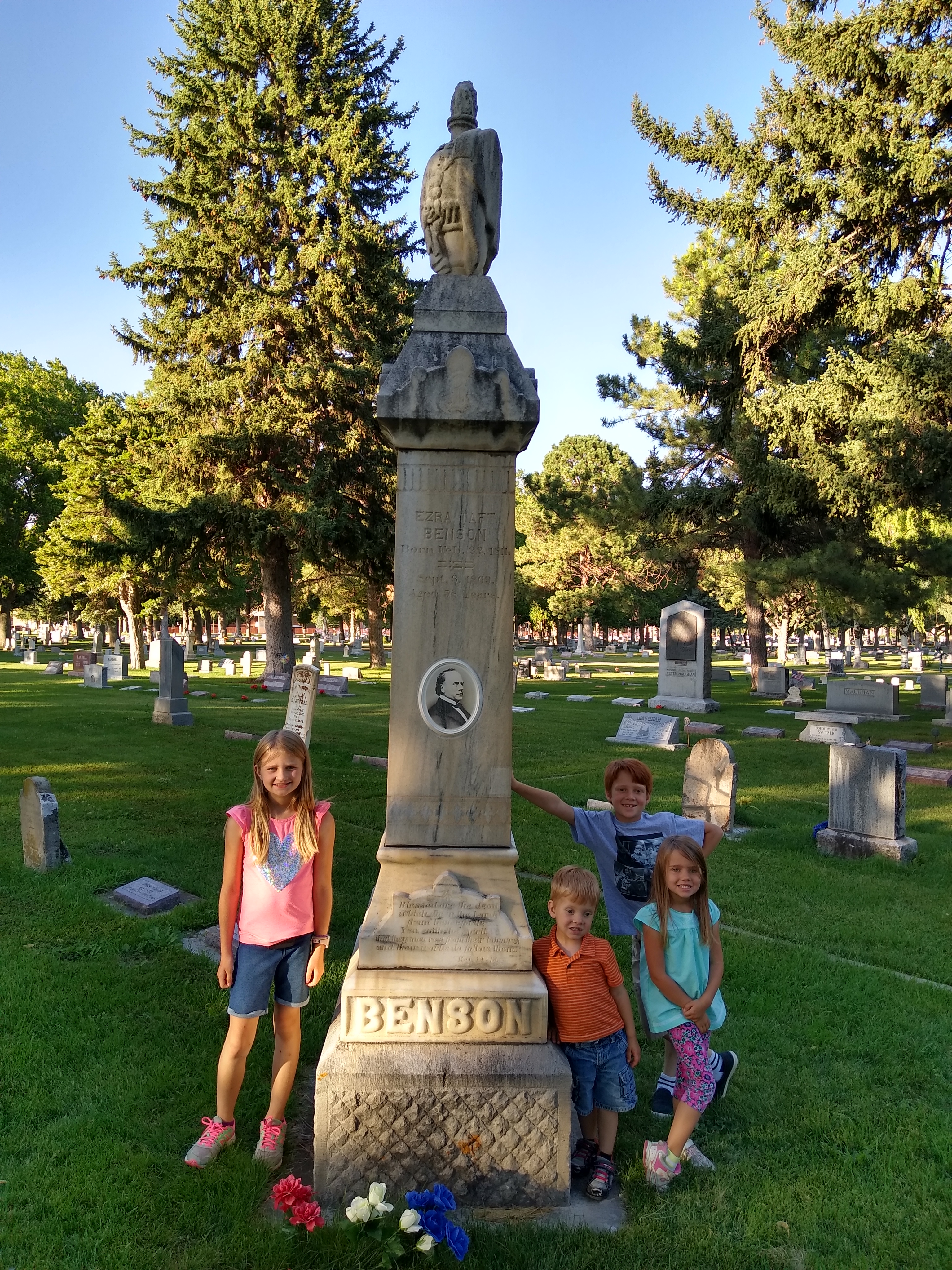
Ezra Benson – Logan, Utah

Aliza, James, Hiram, and Lillian Ross with tombstone of Ezra Taft Benson (1811-1869) on 25 July 2020.  Ezra is known for various positions and business interests, but most will know him as a an Apostle of The Church of Jesus Christ of Latter-day Saints.

Nels Nelson – Crescent, Sandy, Utah

Hiram and Lillian Jonas with tombstone of Nels August Nelson (Nilsson)(1857-1935) on 11 July 2020. He is the brother to my Annetta “Annie” Jonas.

Stanley Spatig – West Warren, Utah

Tombstone of Stanley Hazen Spatig (1940-2013). Son of Eva Virtue Wanner Spatig, sister to my Mary Louise Wanner Andra.

Joseph & Ann Wayment – West Warren, Utah

Bryan Hemsley, Amanda, Aliza, and Hiram Ross with tombstones of Ann Reed (1852-1931) and Joseph Wayment (1844-1931). Amanda’s Great Great Great Grandparents on 24 May 2020.

Louis & Martha Hansen – West Warren, Utah

Bryan Hemsley, Aliza, Amanda, and Hiram Ross with tombstone of Sarah Eveline Judkins (1886-1943), Louis Alma Hansen (1876-1951), and Martha Ann Wayment (1877-1908) on 24 May 2020. Louis and Martha are Amanda’s Great Great Grandparents.

Walter & Myrtle Hansen – West Warren, Utah

Bryan & Jill Hemsley with Aliza, Lillian, Amanda, and Hiram Ross with tombstone of Myrtle Thompson (1902-1959) and Walter Wayment Hansen (1904-1995) on 24 May 2020. Walter and Myrtle are Amanda’s Great Grandparents.

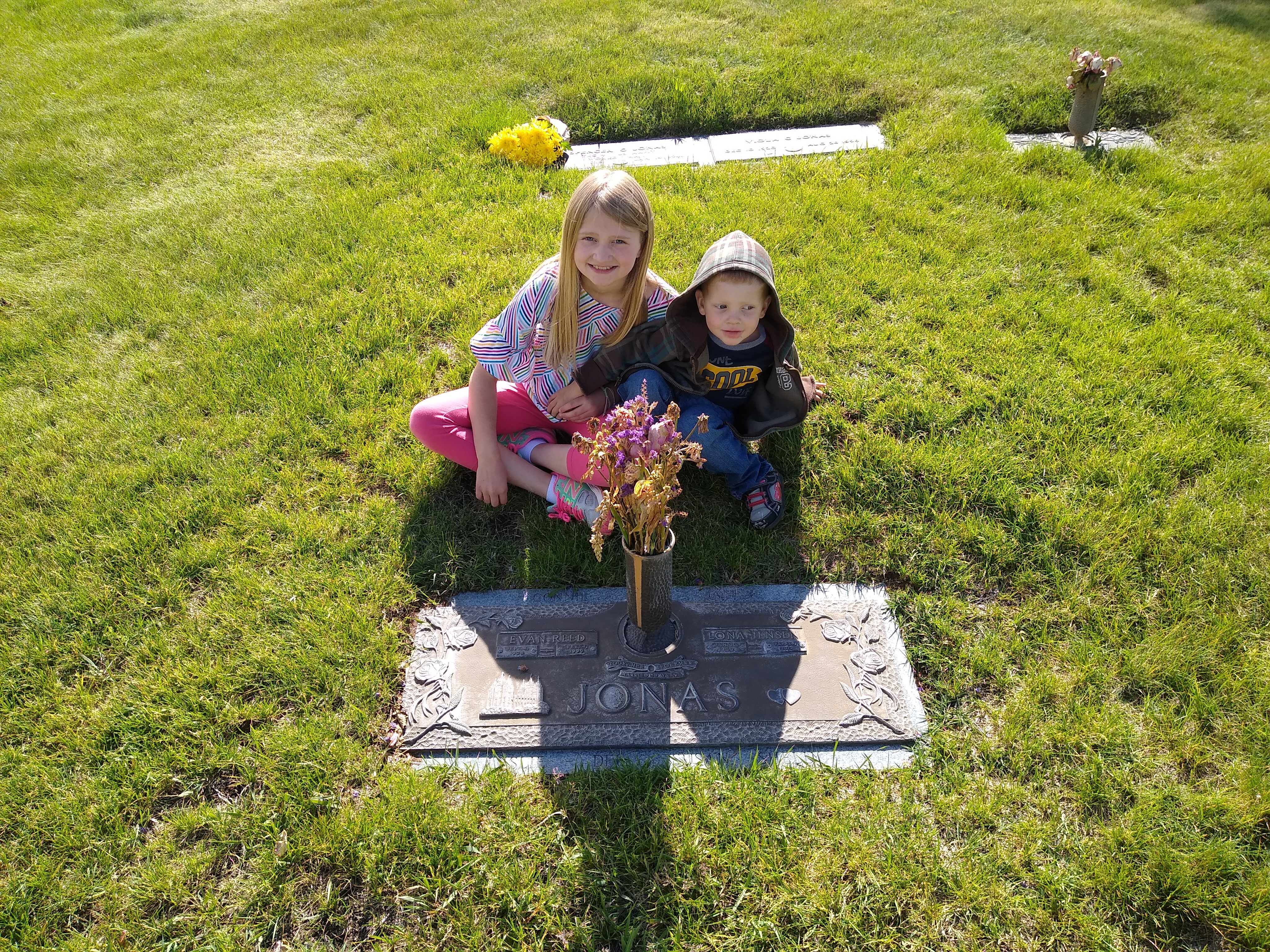
Evan & Lona Jonas – Lindquist Memorial Gardens of the Wasatch, Ogden, Utah

Aliza and James Ross with tombstone for Lona Rae Jensen (1930-2012) and Evan Reed Jonas (1928-1999) on 23 May 2020. Evan is the brother to my Norwood Jonas.

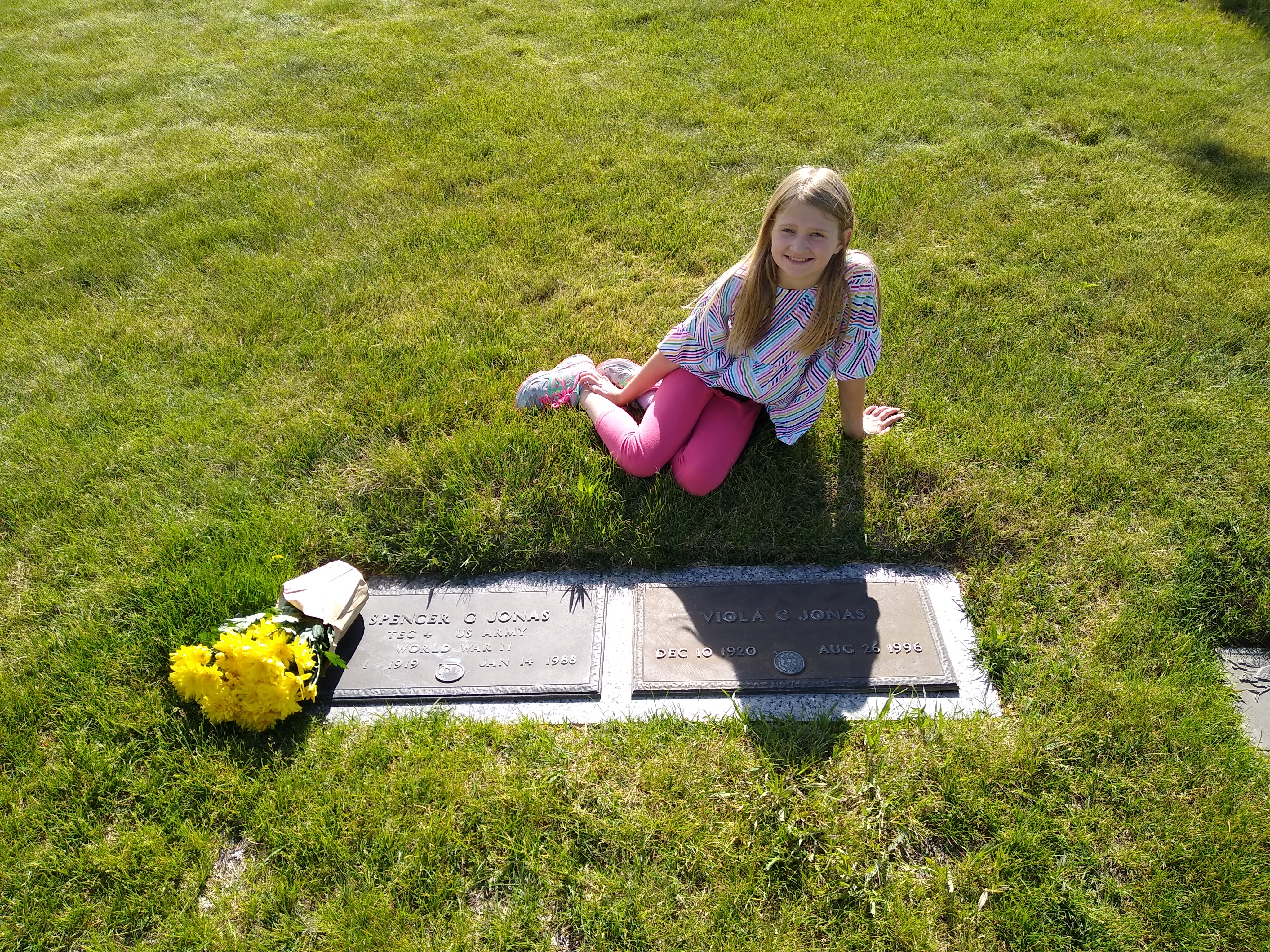
Spencer & Jimmie Jonas – Lindquist Memorial Gardens of the Wasatch, Ogden, Utah

Aliza Ross with tombstone of Viola Amelia (Jimmie) Cole (1920-1996) and Spencer Gilbert Jonas (1919-1988) on 23 May 2020. Spencer is the brother to my Norwood Jonas.

Melvin Thompson – Lindquist Memorial Gardens of the Wasatch, Ogden, Utah

Amanda, James, Aliza, Lillian, Hiram Ross, Bryan and Jill Hemsley, and Alyssa Smart with tombstone of Melvin J Thompson (1925-2018) on 23 May 2020. Mel is Amanda step-Grandpa.

Merle & Belle Hemsley – Lindquist Memorial Gardens of the Wasatch, Ogden, Utah

Bryan & Jill Hemsley, Hiram, Lillian, Aliza, and Amanda Ross with tombstone for Belle Sarah Peterson (1917-2003) and Richard Merle Hemsley (1912-1962) on 23 May 2020. Merle and Belle are Amanda’s Great Grandparents.

Ellen Weller – Hooper, Utah

Tombstone of Ellen Watton Weller (1828-1894) on 23 May 2020. I stumbled upon this tombstone in Hooper. I was walking around, felt inspired to walk over, and looked at this one knowing there was a link. Name looked vaguely familiar. Half-sister to my Hannah Maria Rogers Coley. Didn’t know she was buried in Hooper, FamilySearch didn’t have it either. Her and Joseph Weller are now documented and updated.

Dee Hemsley – Hooper, Utah

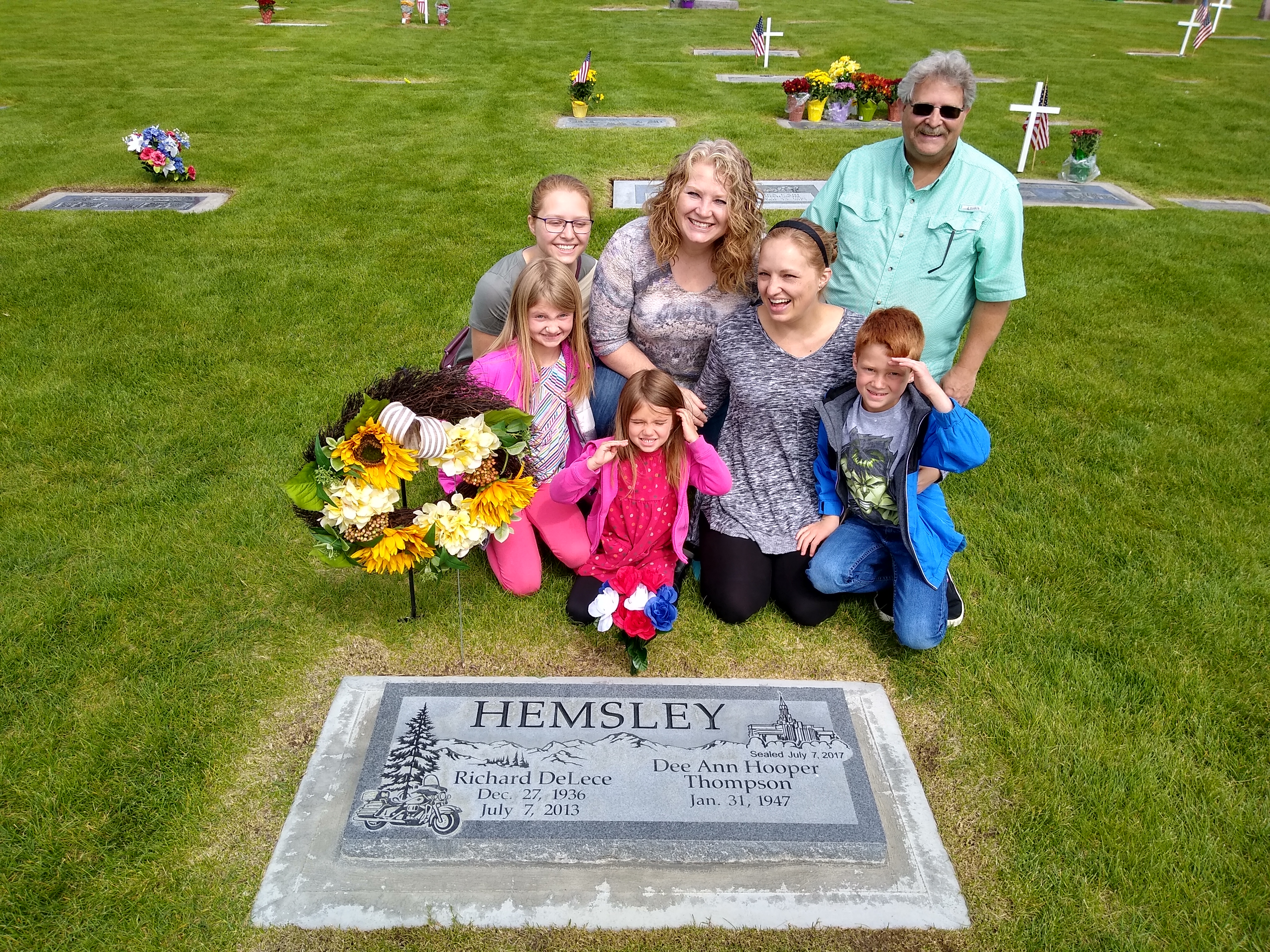
Alyssa Smart, Bryan and Jill Hemsley, Aliza, Lillian, Amanda, and Hiram Ross with tombstone of Richard DeLece Hemsley (1936-2013) on 23 May 2020.  Dee is Amanda’s grandfather.

William & Martha Wayment – Plain City, Utah

James, Amanda, Lillian, Aliza, and Hiram Ross with tombstones for Martha Brown (1823-1905) and William Wayment (1822-1883) on 23 May 2020. William and Martha are Amanda’s Great Great Great Great Grandparents.  The tombstone above Aliza’s head is William Edward Stoker mentioned above, my Great Great Great Grandfather.

Lorenzo Snow – Brigham City, Utah

Hiram, Lillian, and Aliza Ross with tombstone for Lorenzo Snow (1814-1901) on 23 May 2020. Lorenzo Snow is known as the 5th President of The Church of Jesus Christ of Latter-day Saints.

David & Ruby Haight – Wasatch Memorial, Salt Lake City, Utah

Aliza & Lillian Ross, Jill Hemsley, with tombstone of Ruby Olson (1910-2004) and David Bruce Haight (1906-2004) on 6 September 2020.  David Haight is known as an Apostle of The Church of Jesus Christ of Latter-day Saints and I previously interacted with him regarding marriage.

Charlotte Sharp – Ogden, Utah

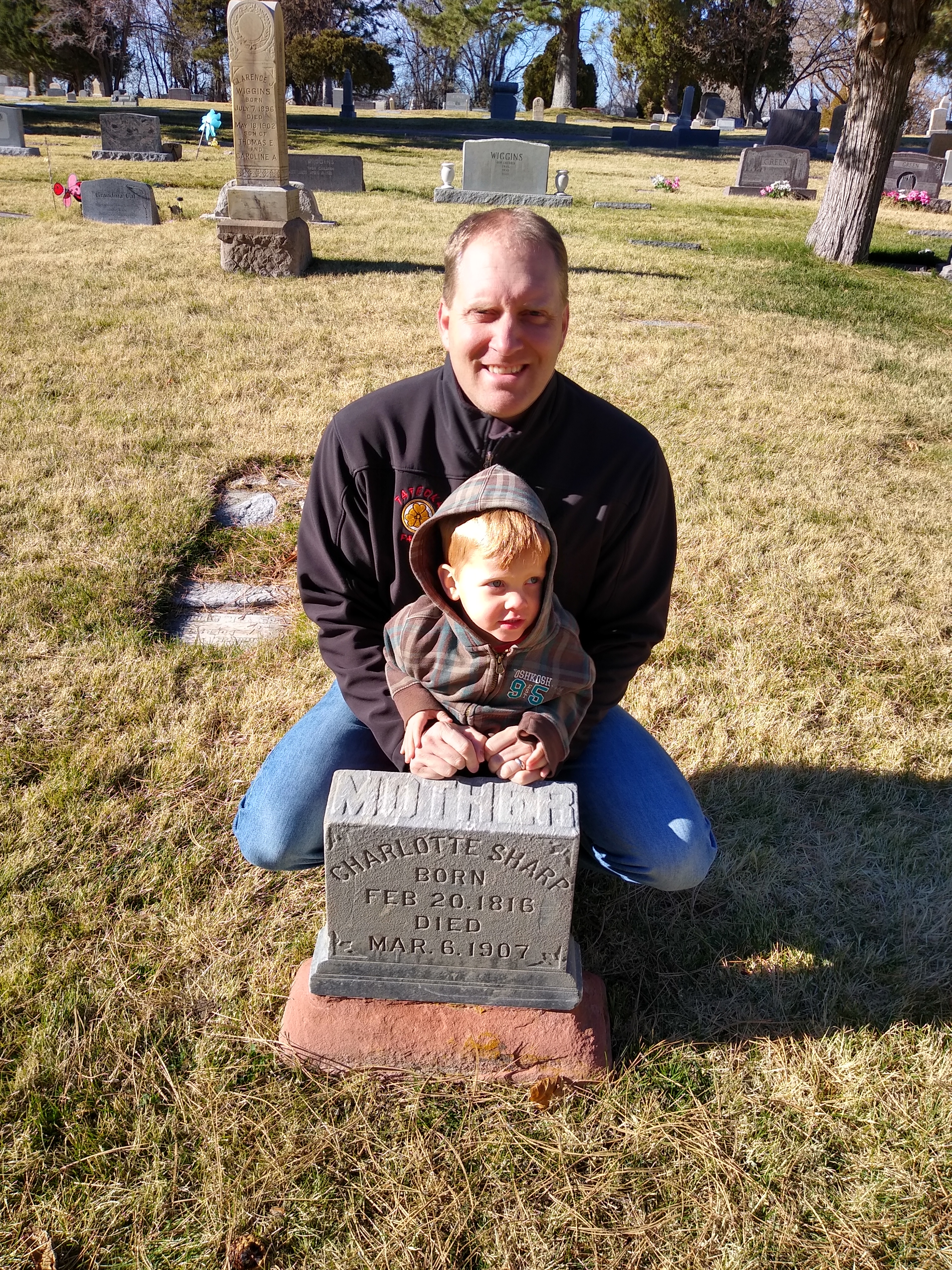
James and Paul Ross at the tombstone of Charlotte Elizabeth Earl (1816-1907) on 27 November 2020.  Charlotte married my William Sharp (1826-1900) after she was widowed of her first husband Charles James McGary (1808-1875). 

Lorin Farr – Ogden, Utah

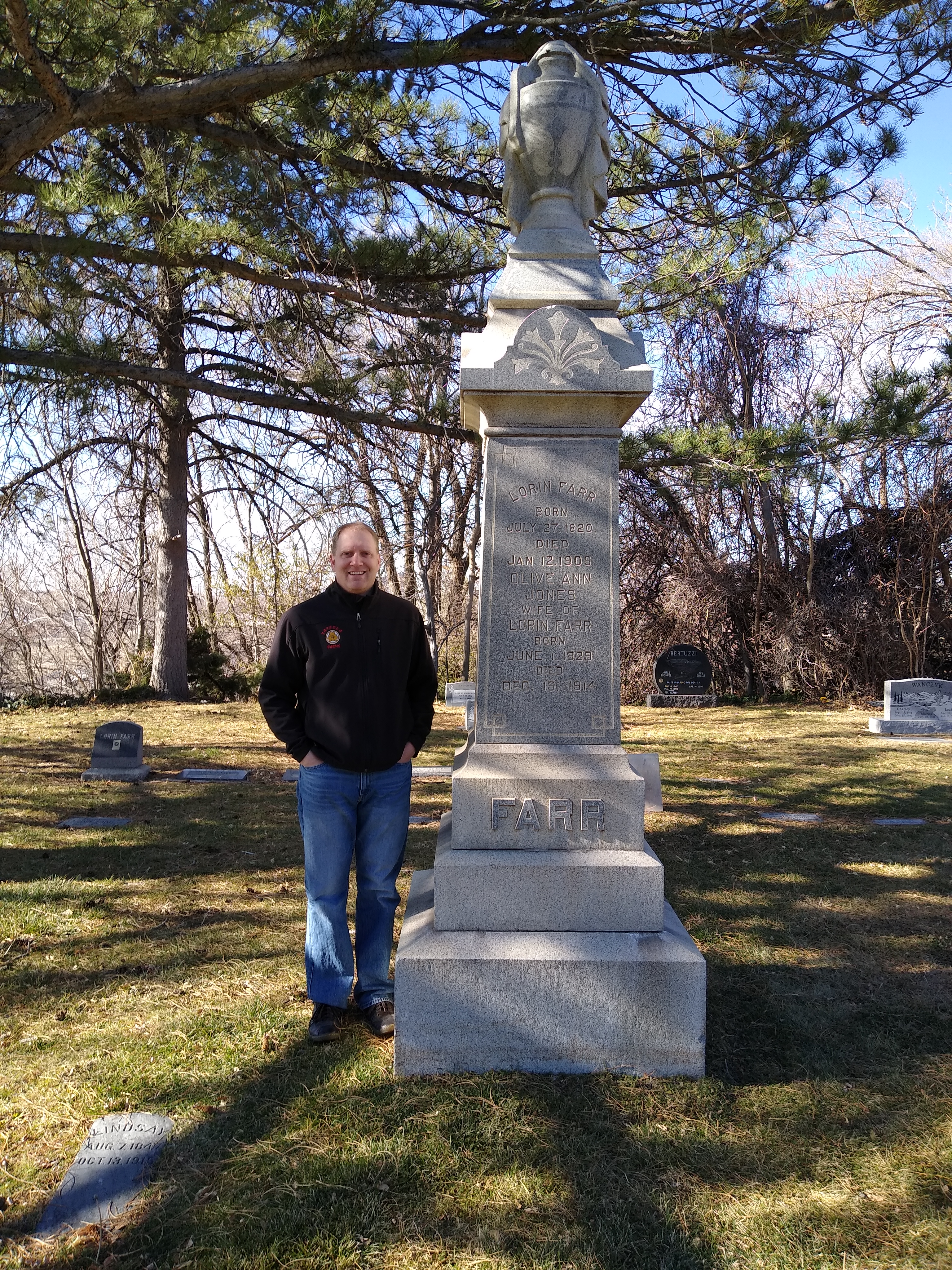
Paul Ross with tombstone of Lorin Farr (1808-1907) on 27 November 2020.  Lorin Farr was the first Stake President of the Weber Stake which covered all the territory of all my ancestors in Ogden and Plain City.  He was also the first Mayor of Ogden.

Thomas Marsh – Ogden, Utah

Paul Ross with tombstone of Thomas Baldwin Marsh (1800-1866) on 27 November 2020.  Thomas Marsh is known as the first Apostle of The Church of Jesus Christ of Latter-day Saints, who had he remained faithful, would have been President before Brigham Young.

Sergene Sorenson – Pleasant View, Burley, Idaho

Lillie, Hiram, Aliza, and James Ross with tombstone of Sergene Sorenson (1932-2013) on 2 January 2021. Sergene is the sister to my Grandma Colleen.

Scott Sorenson – Pleasant View, Burley, Idaho

James, Lillie, Hiram, and Aliza Ross with tombstone of Scott Sorenson (1951-2001) on 2 January 2021.
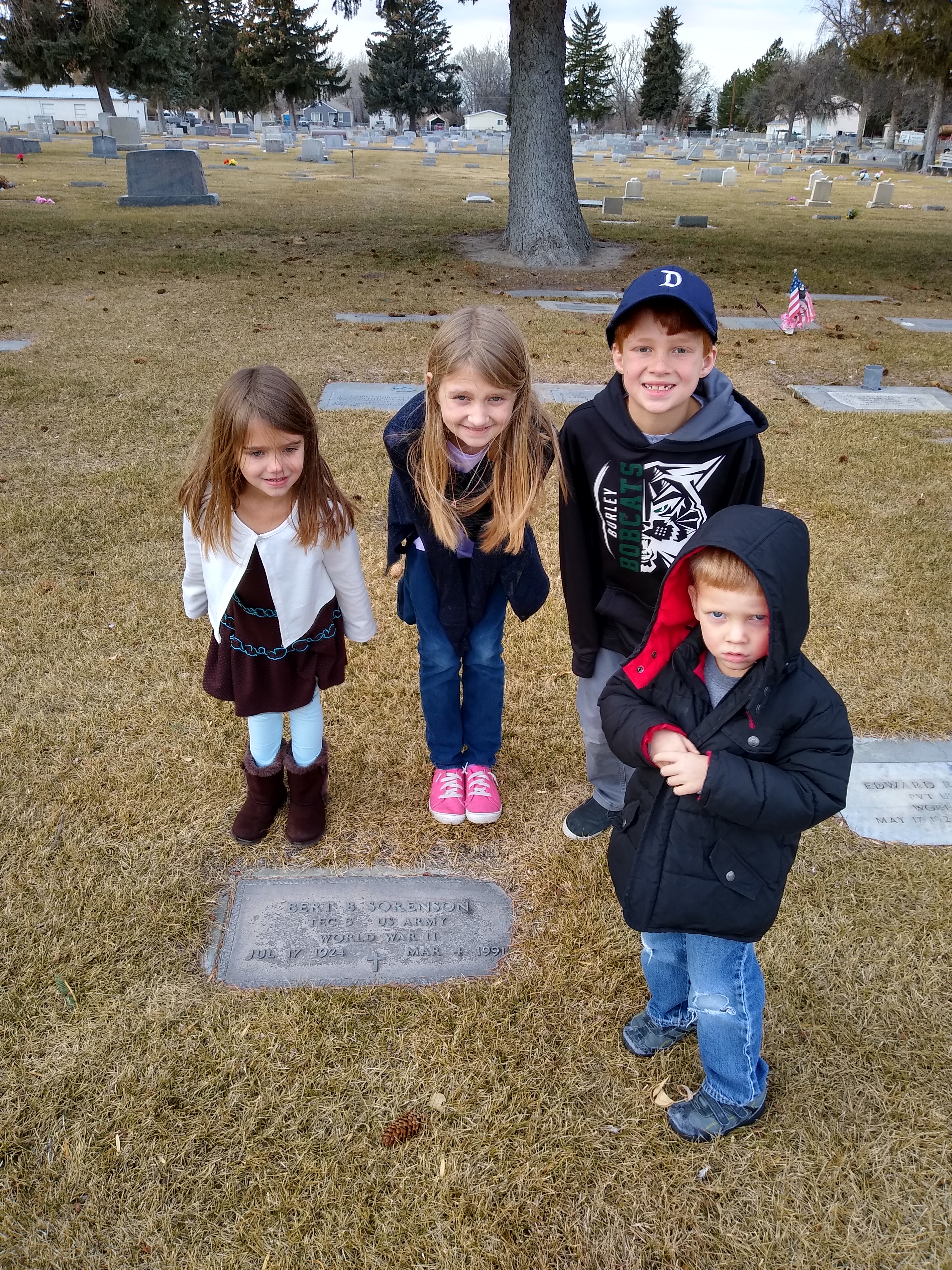
Lillie, Hiram, Aliza, and James Ross with tombstone of Bert Sorenson (1924-1991) on 2 January 2021.

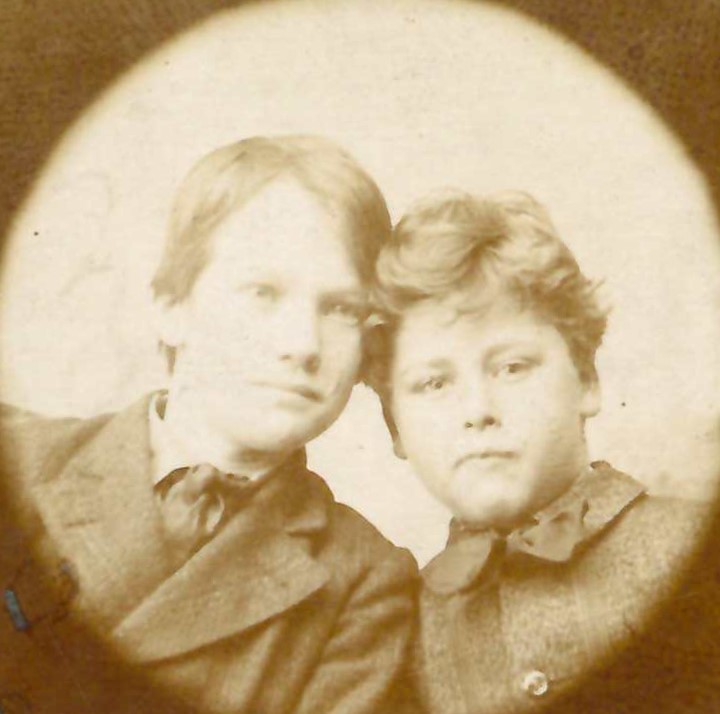
Delos and Unknown

David Delos Donaldson and unknown (now known to be Robert Charles Kinsey (1898-1980), updated 25 April 2021. 

You may now read about the miracle of finding the rest of the information on this photo here.

I am hoping someone might be of assistance on this one.

This photo came to me with a stack of documents from my Uncle David William Donaldson and Betty Oram Donaldson after they passed away.  This original photo, about 1 inch by 1 inch was included.  I scanned it at a high resolution and cropped it in so we can clearly see what is in the photo.

I can recognize my Great Grandfather, David Delos Donaldson on the left.  I think this is the youngest photo I have of him.  I have written of David Delos Donaldson (who apparently went by Delos) previously.  He lived in Evanston, Wyoming, up until he was 5 or so, this photo is after that, so likely in the Ogden, Utah, area.

The photo is uploaded and linked in FamilySearch.

Obviously helpful on the back of the photo is this writing in the picture below.  Remember this is a small 1 X 1 inch photo.  Delas is clearly written on the back for Delos.  But I cannot make out the other name?  Any other insight so I can link the other person?

Roberty appears to be the first name.

What is the second?

Rindly?

Kinsey?

I cannot find this other person in records.

Delos and Roberty ??