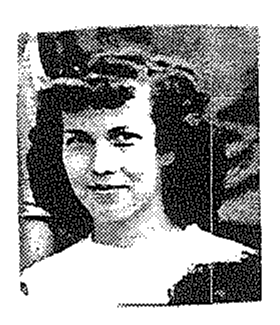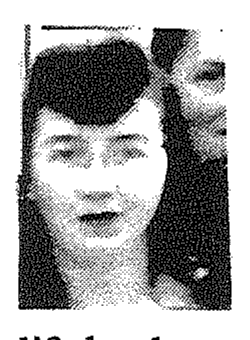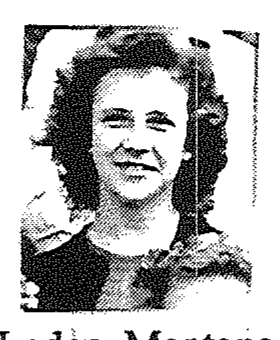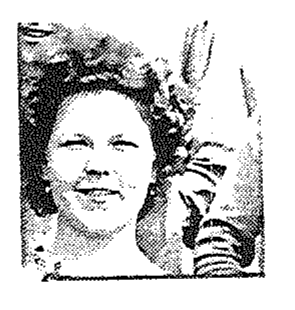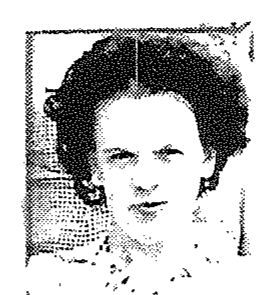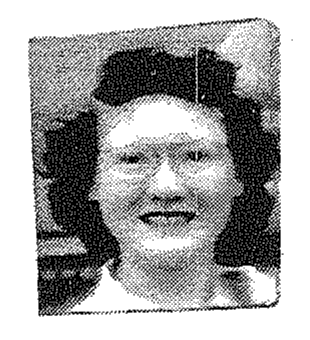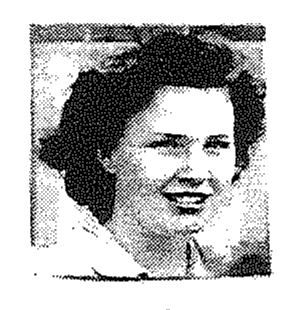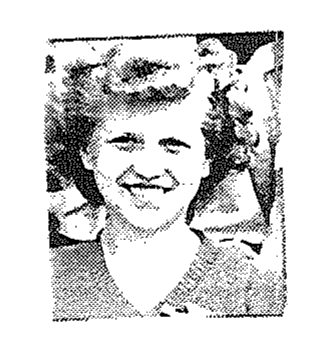
Joseph and Ann Reed Wayment

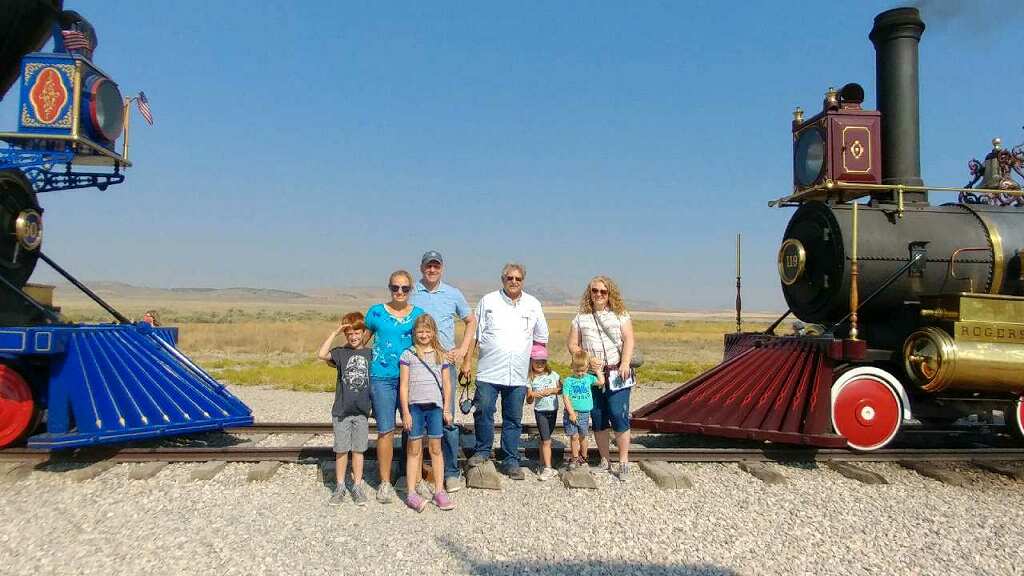
In September 2020, Amanda and I took our family out to Golden Spike National Historic Park at Promontory Summit, Utah. I have written about that visit previously. What drew us there, in part, was the knowledge that Amanda’s 3rd great-grandfather Joseph Wayment had been present on 10 May 1869 when the last spike was driven completing the transcontinental railroad — and that Andrew J. Russell’s famous photograph had captured him standing in the crowd. I promised in that post to tell more of Joseph and Ann Reed Wayment’s story another time. This is that time.

Hiram, Amanda, Aliza, and Paul Ross, Bryan Hemsley, Lillian and James Ross, and Jill Hemsley at Golden Spike National Historic Park, September 2020
Hiram, Amanda, Aliza, and Paul Ross, Bryan Hemsley, Lillian and James Ross, and Jill Hemsley at Golden Spike National Historic Park, 7 September 2020.
East and West Shaking Hands at the Laying of the Last Rail, Promontory Summit, Utah, 10 May 1869. Photograph by Andrew J. Russell.
East and West Shaking Hands at the Laying of the Last Rail, Promontory Summit, Utah, 10 May 1869. Photograph by Andrew J. Russell. Joseph Wayment stands in the crowd on the left side of the image. Find the man standing below the Union Pacific’s No. 119 locomotive light with his jacket open and white shirt, then find the man whose head is in front of that man’s right thigh, behind the fellow with the partially raised hat. That is Joseph Wayment, age 25.

Andrew J. Russell, the official photographer of the Union Pacific Railroad who took this photograph, wrote of that moment: “The continental iron band now permanently unites the distant portions of the Republic, and opens up to Commerce, Navigation, and Enterprise the vast unpeopled plains and lofty mountain ranges that now divide the East from the West. Standing amid ‘The Antres vast and Desert wild,’ surrounded with the representative men of the nation, an epoch in the march of civilization was recorded, and a new era in human progress was ushered in.”

Joseph Wayment was one of the men in that crowd — a twenty-five-year-old English convert who had crossed the Atlantic seasick on the Amazon, walked the plains behind an ox team, survived Montana winters so cold the dishwater froze before it hit the snow, and was now building a life in a patch of Utah desert he would spend the next six decades transforming into a home, a farm, and a community. Would he have fathomed that 151 years later his great-great-great-granddaughter, and her children, would stand at that same spot.

Origins in Whaddon

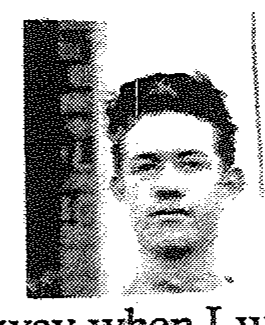
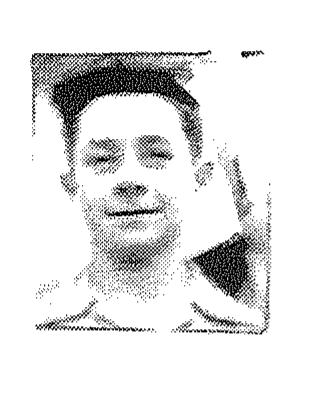
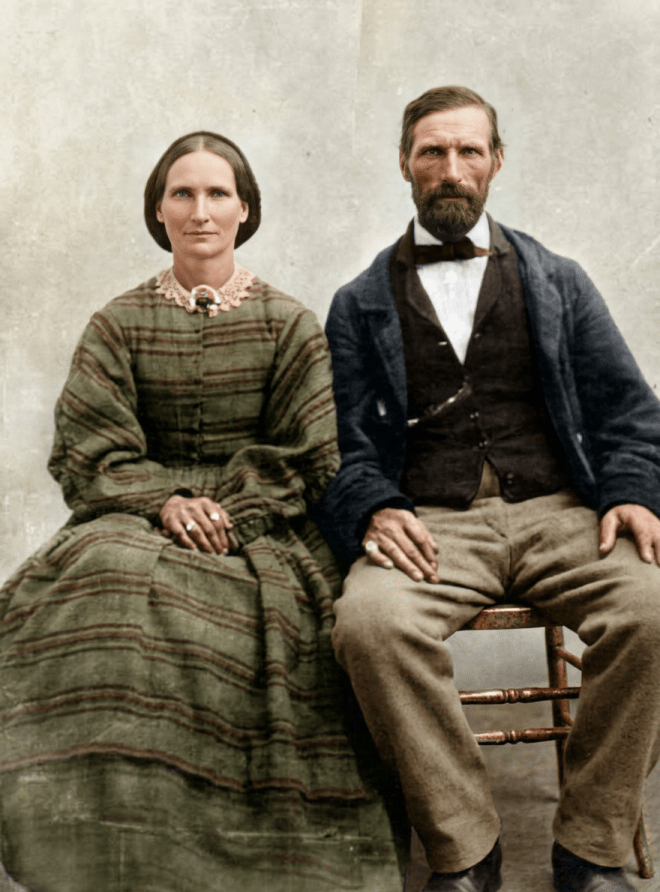
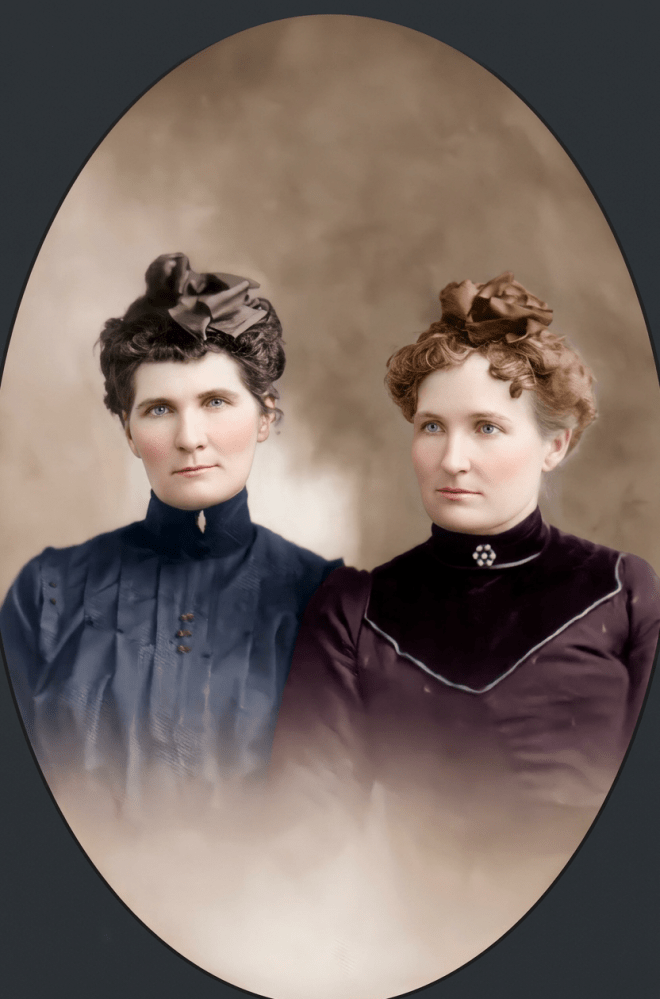
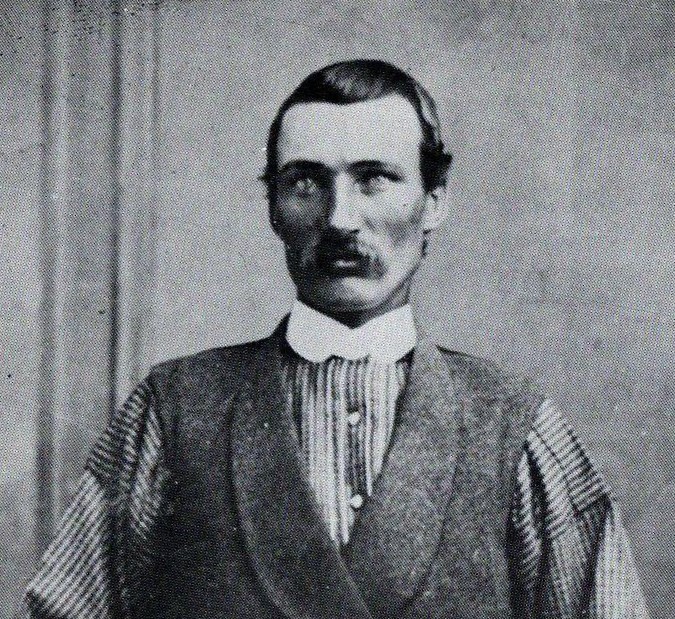
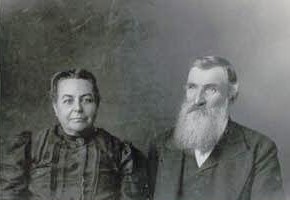
Joseph Wayment, circa 1874.

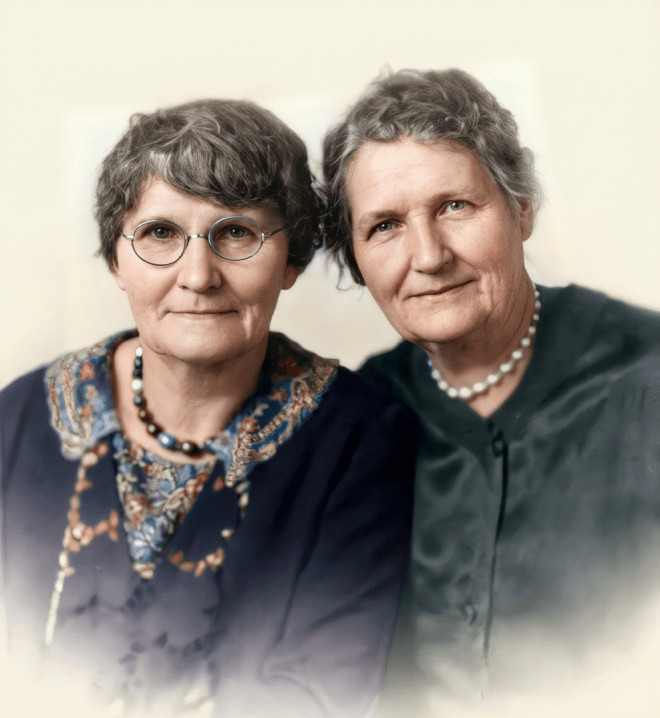
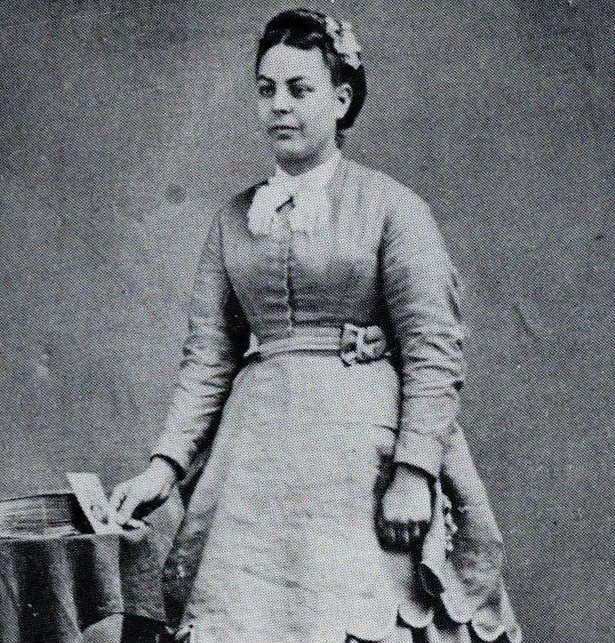
I used AI to colorize and sharpen the images. If you click on them, you should be able to see the original black and white. AI took a bit of liberty on the photos regarding clothes.

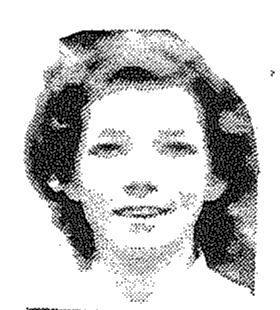
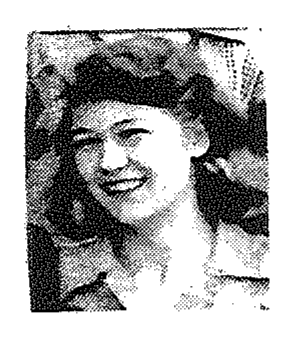
Ann Reed, circa 1874.

Joseph Wayment was born 7 February 1844 in Whaddon, Cambridgeshire, England, the second son of William and Martha Brown Wayment. His older brother Aaron had lived only one day, so as far as the family was concerned, Joseph was the eldest. I have written previously about his parents in my post on William and Martha Wayment.

Ann Reed was born 1 January 1852 in the same small village — the fifth child and second daughter of James and Sarah East Reed. Whaddon was a tight community, a small village in the district of Royston, County of Cambridge, gathered around the ancient stone church of St. Mary the Virgin. Whaddon appears to have been somewhere around 400-500 people. The Wayments and the Reeds were neighbors in every sense of the word. Their children attended the same meetings, worked the same fields, and children would be baptized in the same river/brook.

Ann’s early life was marked by tragedy. When she was two years old, she slipped into a deep ditch near their home. No one else was nearby. Her mother, Sarah East Reed, then heavy with child, jumped in after her. Ann was saved, but the ordeal brought on labor. The baby girl was born 13 July 1854 and died the same day. Three days later, Sarah also died from complications, and mother and infant were buried together in the same casket. Ann’s father James Reed did his best to keep the family together, but he too died on 2 February 1858, leaving five orphans — the oldest fourteen, Ann just five years old.

Their mother’s sister, Hannah East, came to Whaddon to keep house for the children. Hannah was herself from Whaddon — born there on 24 August 1828, the sister of Sarah East Reed and of George East Sr., who would later become a familiar figure in Warren, Utah. Hannah was baptized LDS 3 June 1848. She stayed with the Reed orphans for several years before emigrating to Zion, where she eventually settled in Lehi, Utah, married Thomas Karren in 1865, and lived until 2 May 1907. It is a quiet thread of continuity that Hannah — who held Ann’s orphaned family together in Whaddon — ended her days in the same territory where Ann built her life, just a day’s journey away in Lehi.

After Hannah left England, the children were kept by the Parish until they could earn their own living. Ann went out to service at age eleven. She endured difficult conditions in several positions before finally working David and Mary Hide Grieg (the histories state it was Grigg), where she stayed nearly five years and carefully saved her wages toward passage to America. The Grieg family lived in nearby Melbourn, a family that was not LDS.

The Gospel Comes to Whaddon

I wrote in the William and Martha Wayment post about how the Wayment home had become a gathering place for LDS missionaries since William’s baptism in March 1850 — how despite community hostility, meetings were held in different houses and baptisms conducted at night to avoid mobs. The gospel took hold in Whaddon. On the night of 7 May 1860, Joseph Wayment, age sixteen, was baptized in Whaddon Brook along with his brother Samuel and sister Emily. Ann Reed, age eight, was baptized and confirmed the same night.

They shared the same waters. They would share a life.

Joseph worked in the peat bogs with his father from his early teens, fossil digging to earn enough for his passage to Zion. He had one more memorable appearance in Whaddon before he left: shortly before his departure, he sang a solo at a church meeting that deeply impressed those present. His voice was described as a clear and beautiful bass. Ann Reed, then twelve years old, was in that congregation. Decades later she would tell her grandchildren with deep feeling how thrilled she had been sitting in that meeting listening to Joseph sing.

The Voyage of the Amazon, 1863

On 1 June 1863, Joseph left Whaddon for Liverpool. Three days later, on 4 June, he booked passage on the sailing vessel Amazon — listed on the manifest as “Joseph Waymound,” age 19 — and sailed from Liverpool with 881 fellow Saints bound for Zion. As I wrote in my Stoker family post, the Amazon was a famous voyage. It was this crossing that Charles Dickens observed and wrote about, describing the Mormon emigrants not as misfits and scoundrels but as the “pick and flower” of England. Future U.S. Supreme Court Justice George Sutherland was also aboard (whose family was LDS). George Q. Cannon dedicated the ship. My own Stoker ancestors were on this same vessel — an extraordinary coincidence that ties our two family lines together. Since Warren and Plain City were small communities, they likely knew each other.

Joseph was seasick nearly the entire six-week crossing. The Amazon landed in New York around the middle of July 1863. He traveled by train to a point on the Missouri River, then by boat up to Florence, Nebraska. From there he walked and drove an ox team across the plains in Captain Dan McCarty’s company — a new experience for him, as he later told his grandsons, having learned to handle horses in England but never oxen. He arrived in Salt Lake City on 3 October 1863, four months and two days after leaving his father’s home.

The very next day the October General Conference of the Church began, held in the Bowery. Joseph stood near the speakers’ platform. Brigham Young was one of the speakers, and Joseph later said it was one of the most inspiring sermons he ever heard — that Brigham Young seemed to be surrounded by a bright light. Part of that sermon Joseph remembered all his life.

The Freighting Years, 1864–1866

After a winter in Lehi, Joseph went to work in the spring of 1864 for a freighting company — probably the Toponce Freighting Company — hauling goods to Montana. He stayed with the outfit until the fall of 1866. Those were hard and consequential years.

The winter of 1864 was brutal. The freighters were snowbound on a Montana river for several weeks. Joseph served as camp cook. He later told his family that when he threw out the dishwater, it froze to ice before it hit the snow. Some of the cattle froze to death. One day the lot fell to Joseph to fetch wood. His hands were tender from cooking and dishwashing, but he went out and cut an armful. As he was picking up the last piece of wood, he felt his whole body beginning to freeze. He stumbled back toward the cabin, but before he reached it his whole body had gone numb. The men rubbed him with coal oil and did everything they could to revive him. One of them said, “Joe Wayment gets no more wood this winter — I’ll get it for him.”

During the freighting years two confrontations became family legend. In the first, a stranger from another company approached the camp and asked if there were any Mormons present. He was directed to Joseph. The man told him he had helped mob the Saints in Missouri and Illinois, then pulled open his shirt to his chest and said, “Now shoot me.” He had lived such a miserable life since helping the mob, he said, that he wanted a Mormon to shoot him. Joseph replied: “No Mormon will ever stain his hands with your blood.”

In the second, the freighters encountered soldiers who had been in Johnston’s Army making their way north into Washington. Learning that some of the freighters were from Utah, they asked to hear the song that had been made up about Johnston’s Army coming to Utah. Joseph was the best singer in camp. He refused at first, knowing it would anger them. When they promised not to get angry, he relented and sang. One soldier became so furious he drew his pistol and threatened to kill the singer. The captain of the soldiers, quick as a flash, drew his own pistol on the angry man and said he would kill him if he harmed the singer. The other soldiers took the man away.

A third incident, at a freighters’ stop near Oxford, Idaho, demonstrated that Joseph was a man of both faith and action. He and his longtime friend and fellow teamster William Butler had pulled in for the night after a long drive. Other freighters already there greeted them with jeers — “There’s those Mormons” — and tried to force them to move on. Joseph and Butler had weary teams and held their ground. When words grew heated, Joseph walked briskly to his wagon, took the green willow switch he used to urge his team, walked thirty paces to some soft ground, and with one swing left it standing upright. Then he walked back, drew his pistol, turned, and split the willow with one shot. The heckling stopped immediately.

In the fall of 1866 Joseph had a strong feeling come over him that he should return to Utah. The company he was working with was a rough and irreligious crowd. He found a secluded spot in the timber, knelt, and asked the Lord for guidance. The next morning his mind was made up. He saddled his horse, gathered his belongings — three buffalo robes and his working clothes — and started for Utah.

Settling Salt Creek

He came first to Layton or Kaysville, then went to Call’s Fort near present Honeyville where he worked for a man named Barnard and helped build the first schoolhouse there. He bought a piece of land at Call’s Fort but eventually sold it. In 1872 he moved to what was then called Salt Creek, southwest of Plain City, and bought the land he would own until his death — purchasing it from H. H. Wadman, making him the second family to settle on Salt Creek. He kept “Bachelor’s Hall” there for about two years. His brother John B. Wayment, who arrived from England in July 1873, lived with him for part of that time.

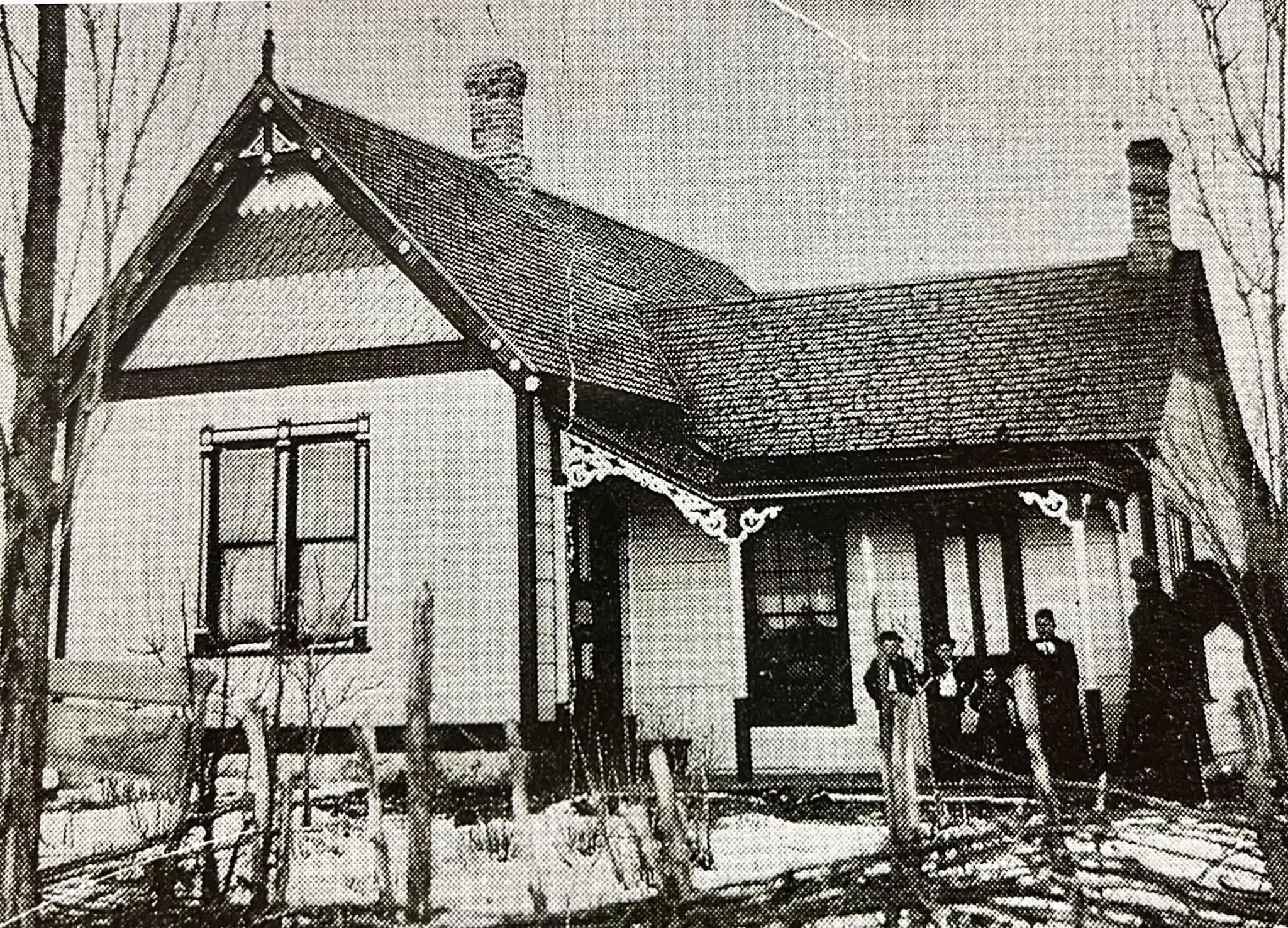
The home of Bishop William Thomas Wayment and his wife Maud at 662 N. 5900 W. in Warren. Joseph Wayment appears at far right with a horse.

About 1872, Joseph began writing letters to a young woman of his boyhood acquaintance back in Whaddon — Ann Reed. She had grown up, gone out to service, endured difficult years, and was now working for the Greig family, carefully saving her wages. She accepted his invitation to come to Utah and be his wife.

Ann Comes to America, 1874

Ann left her place of work on 2 June 1874 and sailed from Liverpool on 24 June 1874 aboard the steamship Idaho. The Idaho carried 903 passengers on that voyage, arriving in New York on 6 July 1874. Ann traveled overland by rail and arrived in Ogden about the middle of July.

Joseph met her in Ogden — likely taking her to his brother Samuel’s home. On the way they crossed a stream of clear running water. Joseph stopped the horses to let them drink, cupped his hat, dipped it in, and offered Ann the first drink. She couldn’t bring herself to drink water out of a hat from a river like that. Joseph enjoyed the cool drink regardless.

On 7 August 1874, Joseph Wayment and Ann Reed were married by Louis Warren Shurtliff at Joseph’s home in Salt Creek — ending, as Alma Hansen later wrote, the era of “Bachelor’s Hall.” On 29 June 1876, Joseph and Ann traveled to the Endowment House in Salt Lake City, where they were endowed and sealed to each other for time and all eternity. Joseph had been ordained an Elder by Alonzo Knight ten days earlier, on 19 June 1876, in preparation for that ordinance.

The First Years in Salt Creek

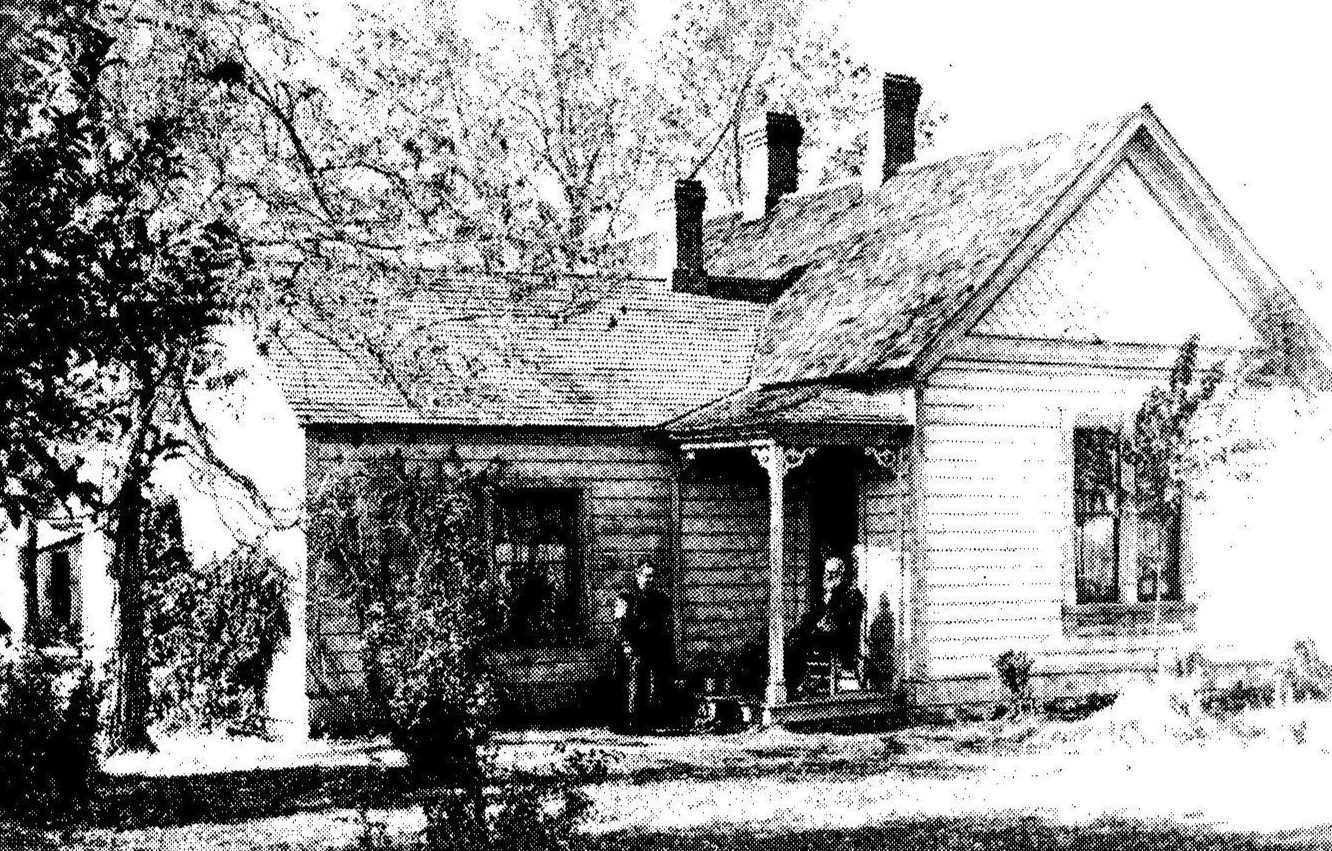
The Joseph and Ann Reed Wayment home in Warren, photographed June 1928. Joseph is likely the seated figure visible on the front porch.

Their first child, Sarah, was born 29 October 1875 — one of the first white children born in the Salt Creek area. In the spring of 1876 the Weber River overflowed its banks and covered much of the country where Warren now stands. The first time it came up, it stayed two weeks. The crops survived. But the river flooded again, higher than before, and stayed six weeks. The crops were completely destroyed. Joseph’s house was just high enough to keep the water from running under it — but it came right to the doorstep. He kept a rowboat in which he and Ann traveled to the sandhill in Plain City to do business. His horses broke loose just before the flood and were later found on meadows west of Brigham City. The other cattle and horses in the area lived on the high knolls until the water subsided.

Joseph planted the first fruit and shade trees in the Warren area. He watered them by hand from a well he dug himself, using a long pole with a hook and a bucket because he didn’t have a rope. Later he had a windmill built over the well and irrigated some of his crops with it. About 1880 the residents of Salt Creek organized together and built a ditch up to Four-Mile in the southern part of Plain City to run water to their crops. Part of that original ditch can still be seen near the north side of the bench in Warren.

In March 1881 Joseph was appointed secretary and assistant superintendent of the Salt Creek Sunday School, offices he held for many years. In 1883 he was chairman of the board of trustees for the first schoolhouse built in Warren — a one-room brick building on the bench. His sister Martha Wayment, now Mrs. David East, was the first teacher.

About 1877 Joseph was appointed the first road supervisor in the Warren district, a position he held for ten years. The road supervisor received no pay for his services other than to apply his labor toward his poll taxes, as did all the other men. About the first work done was to fill up some of the creek crossings. He also hauled salt from the creek banks west of Plain City up to the Hot Springs — a full day’s work per load for which he received fifty cents. The salt was used in the smelting of silver ore in Montana.

Six more children followed Sarah: Martha Ann (2 June 1877), Leonard Joseph (12 September 1878), Mary Jane (8 May 1880), Walter Hyrum (14 November 1881), Hannah Alberta (23 August 1883), and Amelia Brown (29 July 1890).

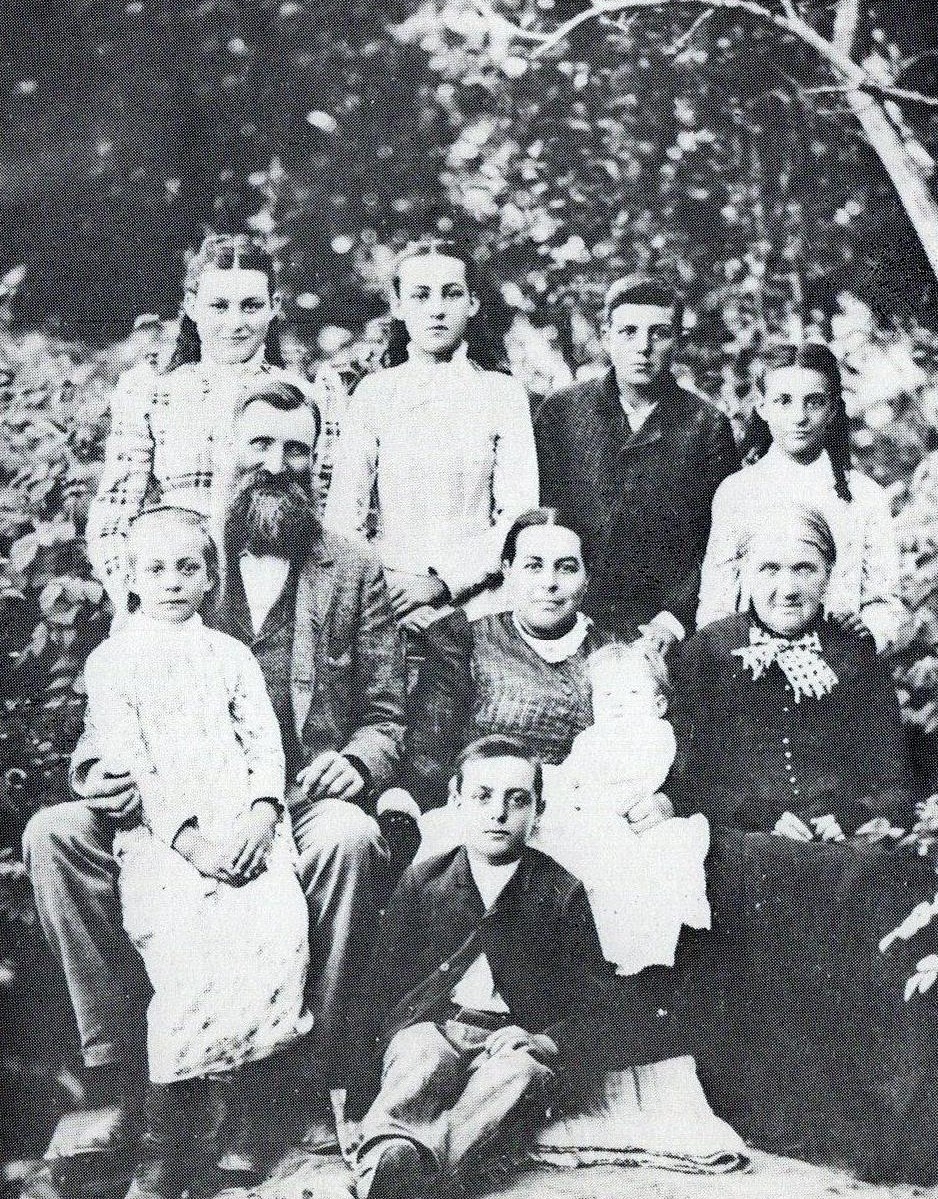
Back row, left to right: Sarah Wayment, Martha Ann Wayment, Leonard Joseph Wayment, Mary Jane Wayment. Middle row: Hannah Alberta Wayment, Joseph Wayment, Ann Reed Wayment holding Amelia Brown Wayment, Martha Brown Wayment (Joseph’s mother). Seated in front: Walter Hyrum Wayment. Photograph circa 1890–1891.

The family portrait above, taken around 1890–1891 when Amelia was an infant, captures all seven children in a single frame. Four generations are present — including Joseph’s mother Martha Brown Wayment at far right, who had herself made the journey from Whaddon in 1878. I wrote about her in the William and Martha Wayment post.

The Flood of 1884 and Ann’s Heroism

In the spring of 1884 the Weber River flooded again — not as severe as 1876, but severe enough to kill all the crops, many fruit trees, and berry bushes. Joseph moved his family into his brother John’s house on the brow of the hill north of the Arthur Marriott home — a one-room house, not large enough for all the family to sleep in. Some of the children slept in a wagon under the shed.

A day or two after they moved, a heavy rain set in. The children’s bedding became soaked. In trying to provide for his family, Joseph was exposed to the rain, cold, and mosquitoes, and he took down with malaria fever. The house was too small for any comfort, and some of the men of the locality moved the family back into their own house — even though it was surrounded by water.

For six weeks Joseph lay near death. Many did not expect him to recover. During this time Ann would walk — and sometimes wade, in water up to her knees — a quarter to half a mile west on the bench to where their cow was pastured. She milked the cow and carried the milk back to feed her husband. For a while he was so weak he could not feed himself, and Ann would have to feed him by hand. He sent for elders from Plain City to administer to him. While they were visiting, he asked to be propped up in bed and talked with them at length. From that time he continued to improve, though he was not entirely well for several years. That fall he was well enough to work on the threshing machine.

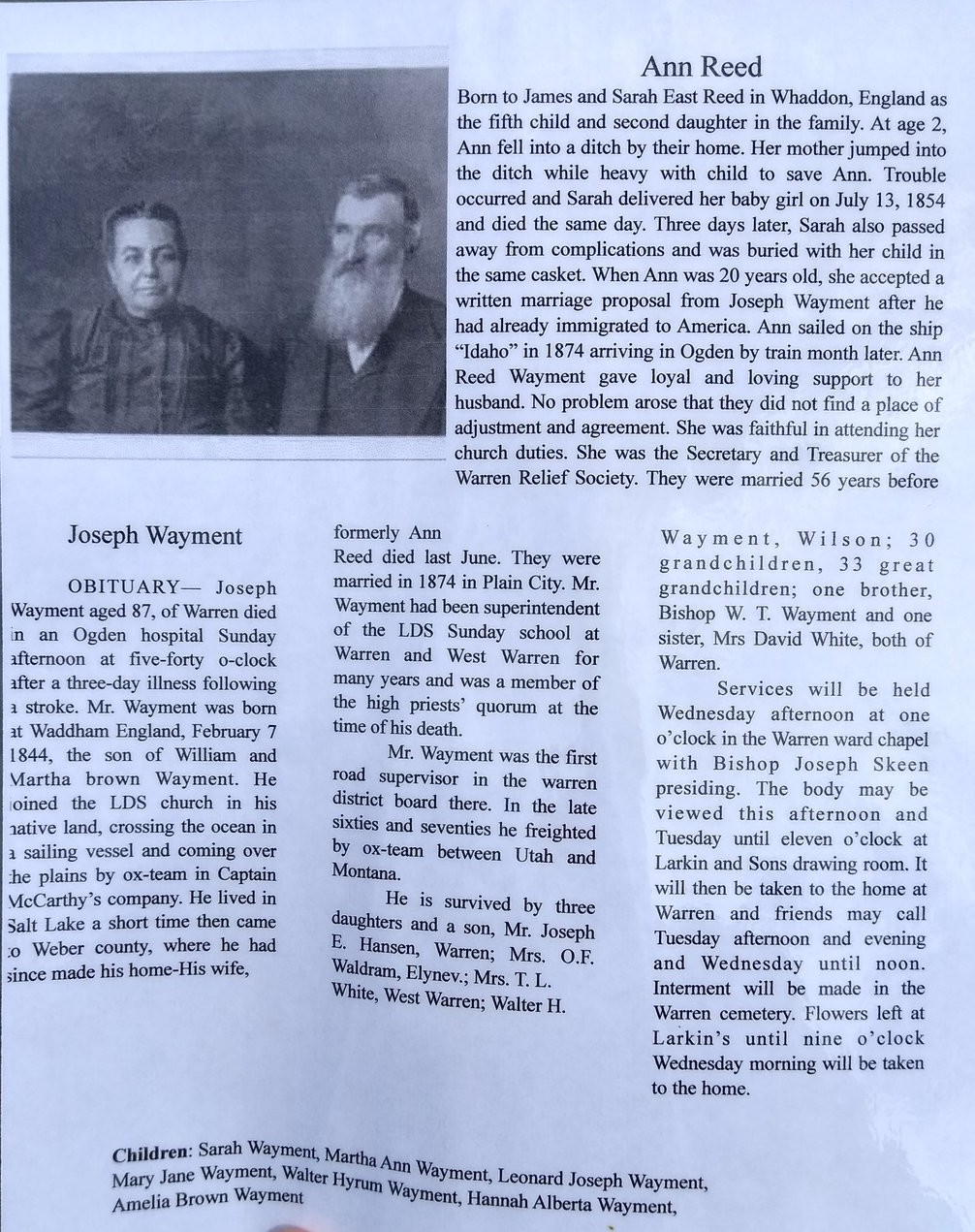
Of all the incidents in the long life of Joseph and Ann Wayment, this one — Ann wading flood water to milk the cow and hand-feed her dying husband — speaks most directly to the character of their partnership. The memorial card at their graves in West Warren says it plainly: “Ann Reed Wayment gave loyal and loving support to her husband. No problem arose that they did not find a place of adjustment and agreement.”

Firsts in Warren

The 1902 Portrait, Genealogical and Biographical Record of the State of Utah described Joseph as “one of nature’s noblemen” and enumerated his contributions to the community. He planted the first fruit and shade trees. He was the first road supervisor, serving ten years. When the first schoolhouse was built he served as school board chairman, assessor, and collector. He was one of the first stockholders and directors of the Slaterville Creamery. He raised one hundred tons of sugar beets annually for the Ogden sugar factory.

By 1888 Joseph had shifted his main occupation from general farming to dairying. He kept as many as fourteen milk cows at once. His children did much of the work — milking the cows, putting the milk in cans under cool water until the cream gathered to the top, then skimming and churning it to butter. They sold as many as 2,000 pounds of their own butter in a single year. Later the milk went to the Slaterville creamery, of which Joseph was a founding director.

In November 1910 Joseph was elected Justice of the Peace of the Warren Precinct — a fitting civic capstone for the man who had been among the first to settle Salt Creek and had spent decades building its institutions.

In 1896 Salt Creek was officially named Warren, after Lewis Warren Shurtliff, the stake president who organized the new ward — the same Louis Warren Shurtliff who had married Joseph and Ann in 1874.

Ann in Warren

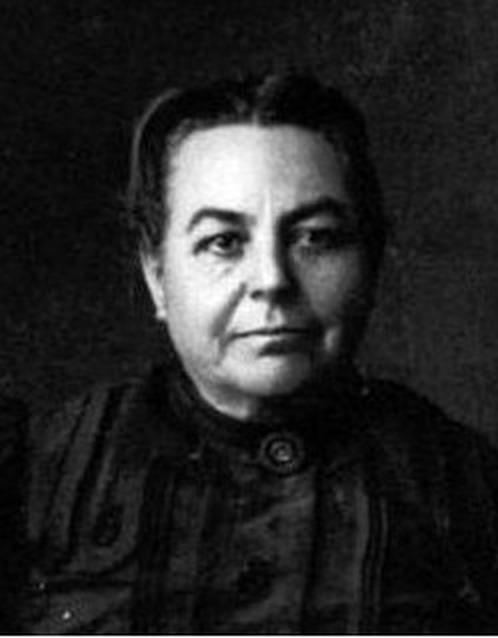
Ann Reed Wayment.
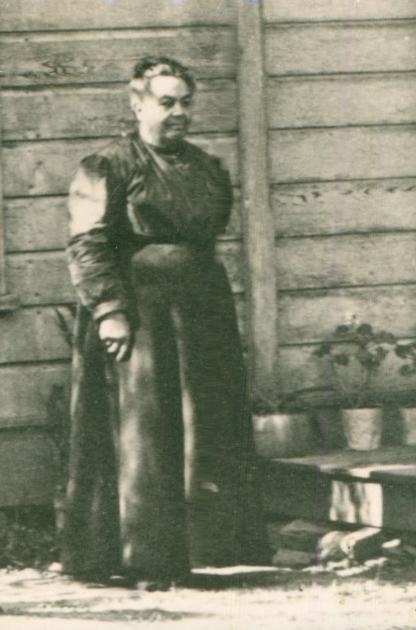
Ann Reed Wayment at her home in Warren.

Ann Reed Wayment was a woman of quiet and enduring strength. Her daughter Mary Jane wrote of her: “She was an energetic worker in Relief Society, holding and filling many offices in it. She was very useful among the sick, exercising great faith as her best healing art. She was a kind, loving, very thoughtful mother to her family. She lived a useful life, impressing her children and those who mingled with her what a wonderful mother and woman she really was.”

The Warren Ward Relief Society was organized on 30 November 1902. Ann was sustained as its Treasurer — her sister-in-law Castina Wayment, wife of Joseph’s brother Samuel, served as First Counselor. Ann was not present at the organization meeting but was set apart as Treasurer on 5 February 1903. At the first Relief Society meeting held at the home of President Jane Stewart on 18 December 1902, Ann bore her testimony and gave the benediction. She served as Secretary and Treasurer of the Warren Relief Society from 1902 to 1916.

Alma Hansen, who knew both his grandparents personally and compiled their biography from firsthand family accounts, described Ann in a single memorable sentence: “She was short of stature but stood ten feet tall in her loving service.”

A February Week in Logan, 1893

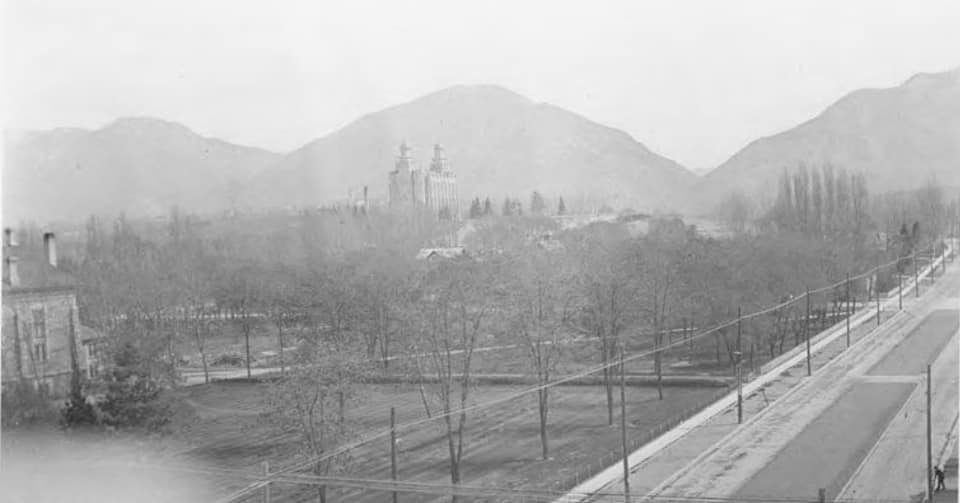
Logan, Utah, with the Logan Temple visible in the background, circa 1890s. Digital Image © 2001 Utah State Historical Society. All rights reserved. Used for non-commercial, educational purposes.

In February 1893, Joseph and Ann made an extended trip to the Logan Temple — a journey that had been years in the making. In careful sequence over eight days, they completed ordinance work for ancestors in their lineage and sealed their families together for eternity.

On 16 February 1893, Joseph was sealed to his parents, William and Martha Brown Wayment, in the Logan Utah Temple.

On 21 February, proxy baptism and confirmation were performed for James Reed and Sarah East Reed — Ann’s parents — in the Logan Temple.

On 22 February, the proxy endowment was performed for Sarah East Reed in the Logan Temple. Almost certainly the same was done for James Reed that day, though that record was later lost and the ordinance was repeated at the Manti Temple in 1938.

On 23 February 1893, Ann was sealed to her parents, James and Sarah East Reed, in the Logan Temple.

For a woman who had grown up an orphan at age five — whose mother died saving her life in 1854 and whose father died in 1858 — this February week in the Logan Temple completed a covenant that no earthly circumstance had been able to make. The parents she had barely known were now bound to her forever.

A Mission at Fifty-Six

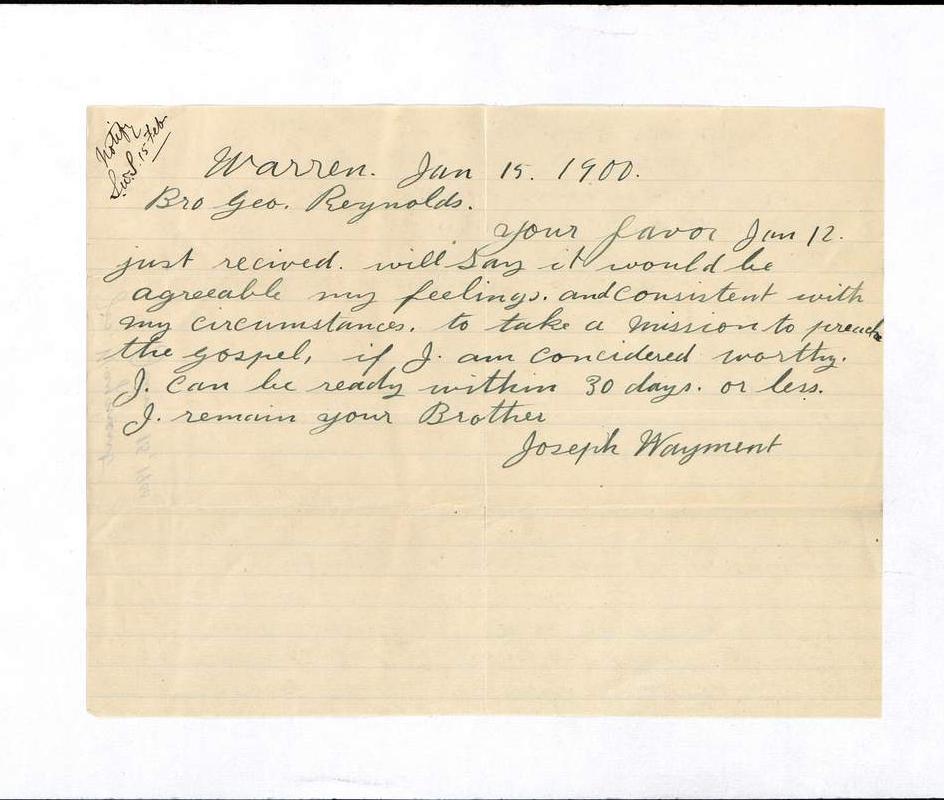
Joseph Wayment’s handwritten mission acceptance letter to Brother George Reynolds, Warren, 15 January 1900. “It would be agreeable my feelings, and consistent with my circumstances, to take a mission to preach the gospel, if I am considered worthy. I can be ready within 30 days, or less. I remain your Brother, Joseph Wayment.”

On Christmas Day 1899, Joseph was asked to fill a mission for the Church. He was fifty-five years old, a grandfather, and still carrying the kidney effects of a severe malaria attack from fifteen years earlier. His response, written in his own hand on 15 January 1900 to Brother George Reynolds of the First Council of the Seventies, occupies four plain lines: it would be agreeable to his feelings and consistent with his circumstances; he could be ready within thirty days, or less. He remained the reader’s Brother, Joseph Wayment.

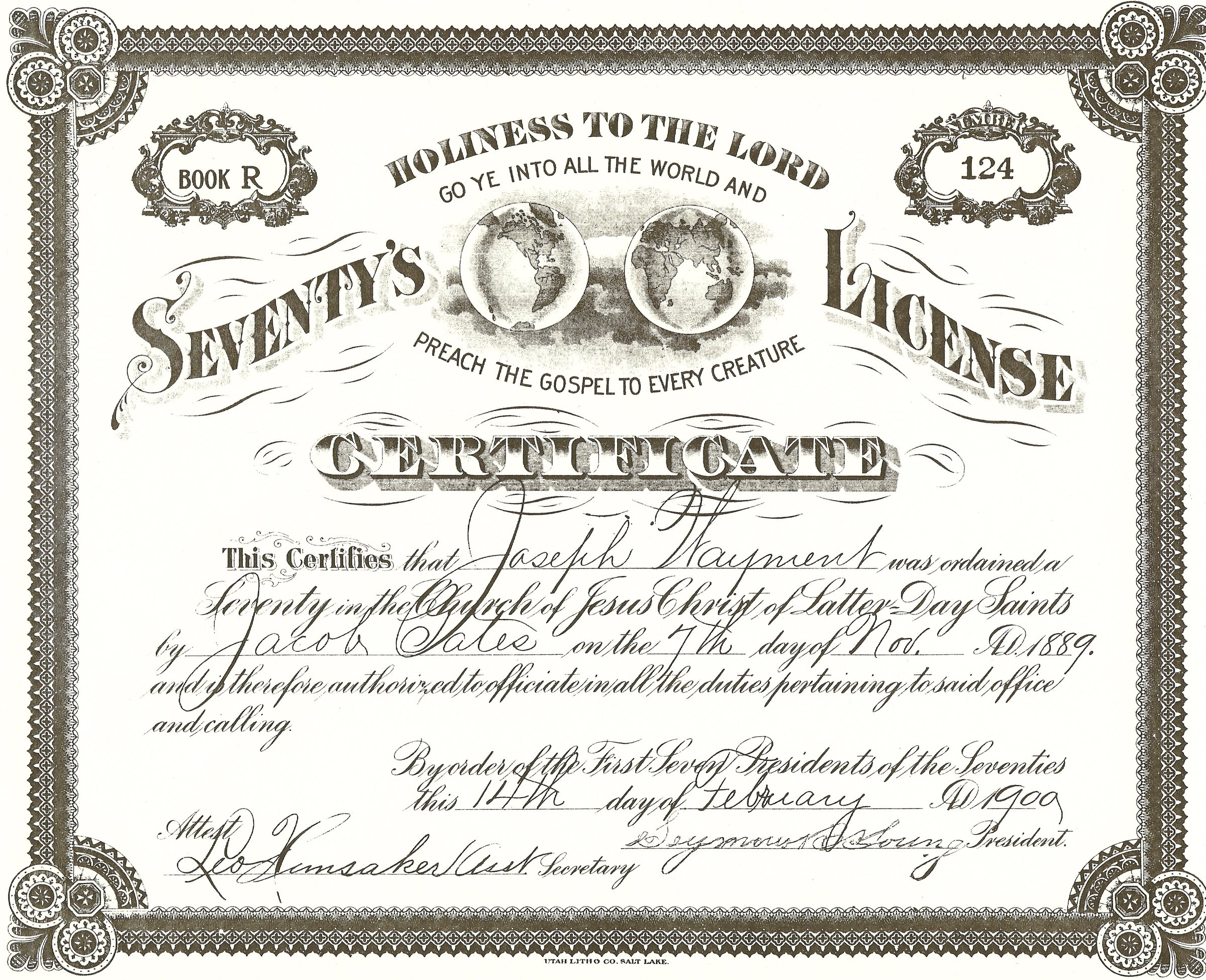
On 19 January 1900 he received his formal call from President Lorenzo Snow to labor in the Southwestern States. He was set apart on 14 February 1900 by Apostle George Teasdale in the Temple Annex in Salt Lake City — the same day his Seventy’s License was formally issued, signed by Seymour B. Young, President of the First Seven Presidents of the Seventies.

Joseph Wayment’s Seventy’s License Certificate, issued 14 February 1900, certifying his ordination as a Seventy by Jacob Gates on 7 November 1889. Signed by Seymour B. Young.

His Missionary Certificate bore the signatures of the entire First Presidency: President Lorenzo Snow, First Counselor George Q. Cannon, and Second Counselor Joseph F. Smith. That Joseph’s mission call passed through the hands of George Reynolds — historically notable as the defendant in the landmark U.S. Supreme Court case Reynolds v. United States (1879) — places it squarely in the living history of the Church.
He left the next day for Kansas, laboring first in Elk County under Elder H. E. Harrison, then for nearly four months in Greenwood County, until he was taken very sick with malaria again. In his own words: “I left my field of labor on the 4th of July for St. John and arrived home on the 7th, three days later. I was sick for three or four months.” The malaria affected his kidneys, an effect he felt until his death.

While Joseph was away on his mission and then ill at home, Ann kept the farm, the animals, and the household organized. When he returned, she nursed him back to health.

The Children

Of their seven children, three preceded them in death. Martha Ann, their firstborn daughter, married Louis Alma Hansen on 23 November 1898. She died on 19 October 1908 at age 31 of acute nephritis, leaving four children and her husband. Her loss was a grief Joseph and Ann carried quietly for the rest of their lives. Leonard Joseph married Sarah Naomi Hodson in 1902, was called to the British Mission in November 1915, labored in Belfast, Ireland, took sick, and arrived home 19 July 1916. He passed away the next morning, leaving a wife and three children.

The four who outlived their parents were Sarah (married Joseph Emelius Hansen), Mary Jane (married Samuel Bagley Willis, later Orson Francis Waldram), Walter Hyrum (married Iva Dell Wade), Hannah Alberta (married Thomas LeRoy White), and Amelia Brown (married George James Lythgoe).

The 70th Birthday, 1914

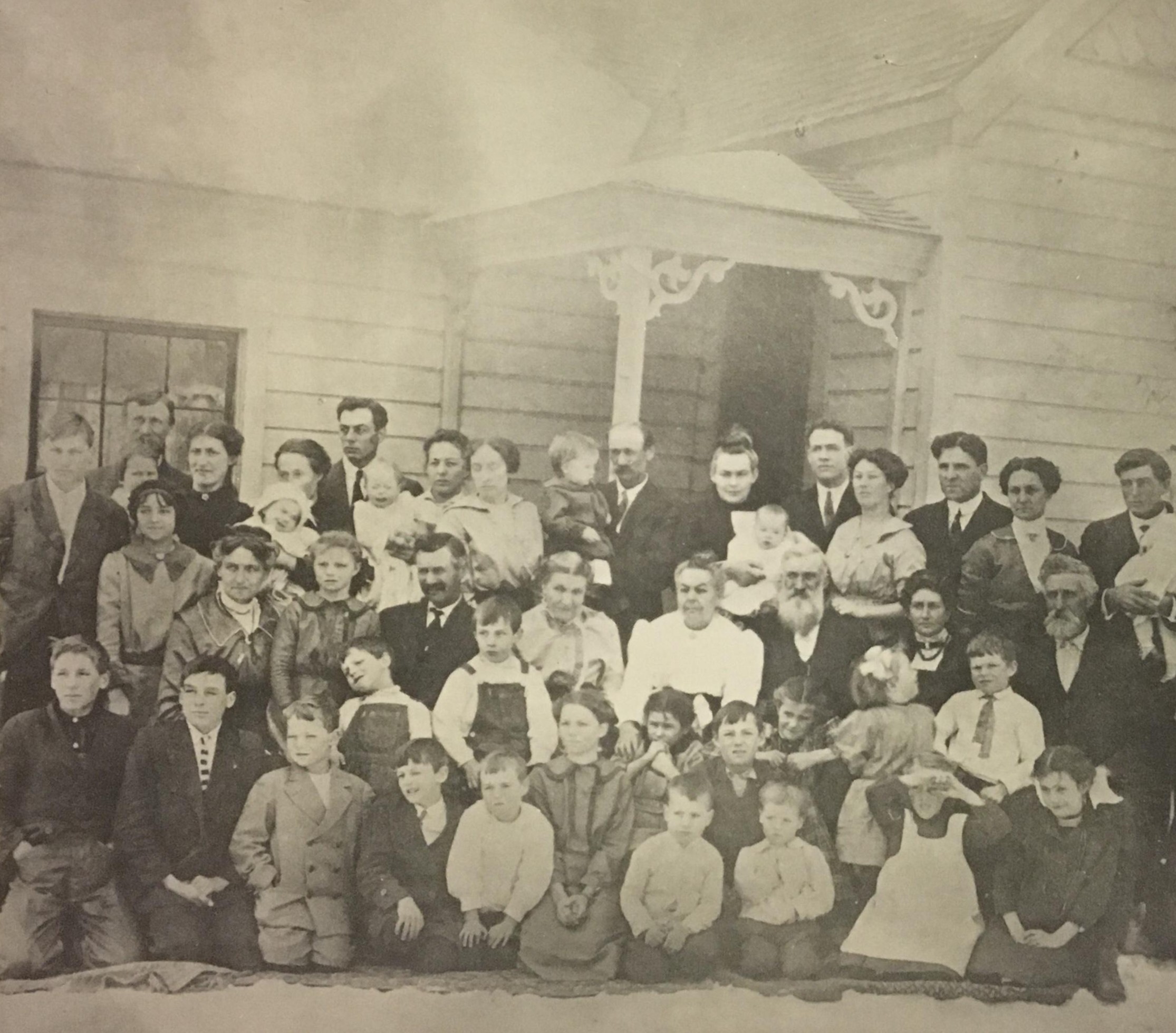
Family portrait honoring Joseph Wayment’s 70th birthday, 7 February 1914, Warren, Weber, Utah. Third row center: Ann Reed Wayment and Joseph Wayment, flanked by siblings John Brown Wayment and William Thomas Wayment and sister Martha East.

On 7 February 1914 the extended Wayment family gathered at the Warren home for Joseph’s 70th birthday — a family portrait captured four rows of family: children, grandchildren, siblings, their spouses and children, and young Alma Wayment Hansen himself, visible as a boy in the second row, who would later compile a biography of his grandparents. At the center of the third row sit Joseph and Ann, flanked by his brothers John Brown and William Thomas Wayment and his sister Martha East. By this gathering all the children had married.

The Grasshoppers

One incident from Joseph’s later years became a touchstone story in the family, attested to by his daughter Sarah. A summer or two after his first malaria attack, he had planted wheat in the field north of the house. The crop grew abundantly, had headed out full, and was beginning to turn yellow when the children noticed one evening that a great horde of grasshoppers had descended on the grain. They went in and told their father. He was not well, still weakened from the malaria. He arose, took his cane, and walked out into the field.

The grasshoppers were large and so thick they were bending the stalks almost to the ground. What once looked like a bounteous harvest now seemed doomed. Then right there in the midst of the grain and the grasshoppers, Joseph knelt and made a most fervent appeal to his Heavenly Father for aid. Night came on. The family retired — but not without family prayer. The next morning not a grasshopper could be found on the grain. There were no traces of where they had been.

The Golden Wedding, 1924

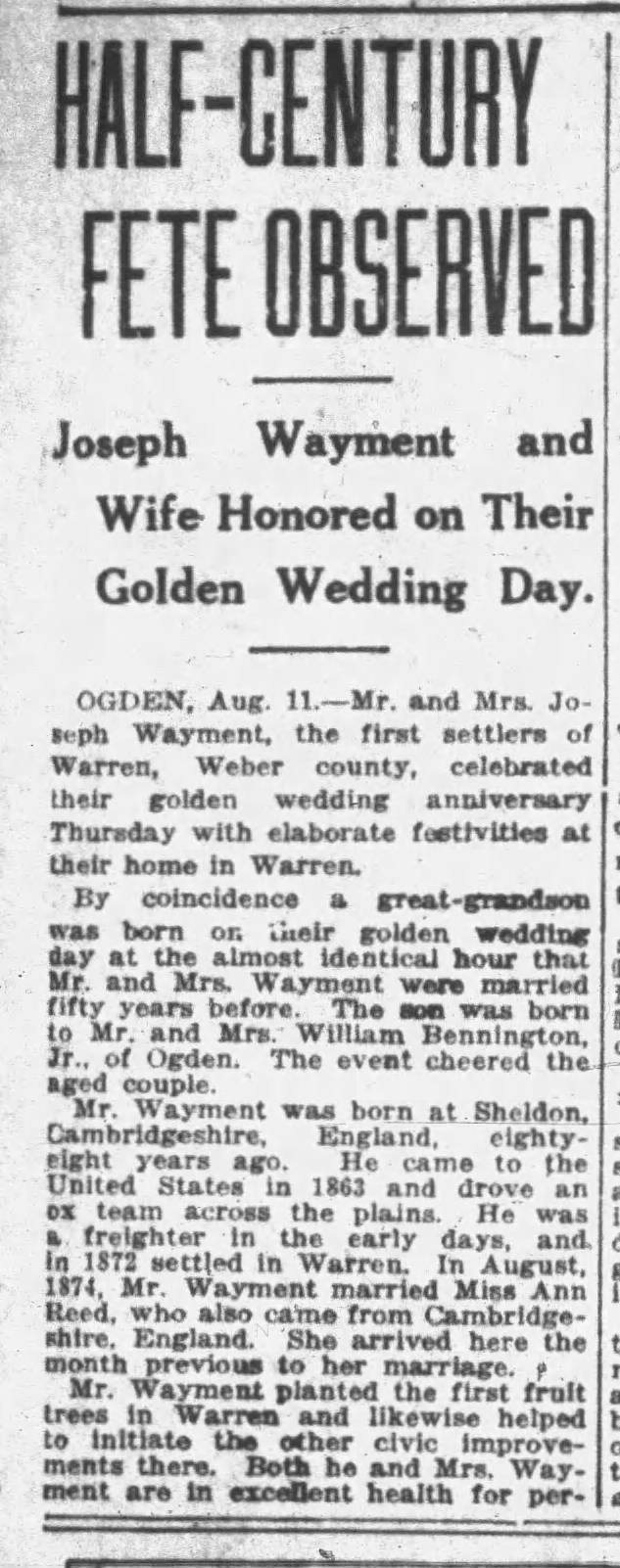
Salt Lake Tribune, 12 August 1924. Joseph Wayment and Wife Honored on Their Golden Wedding Day.
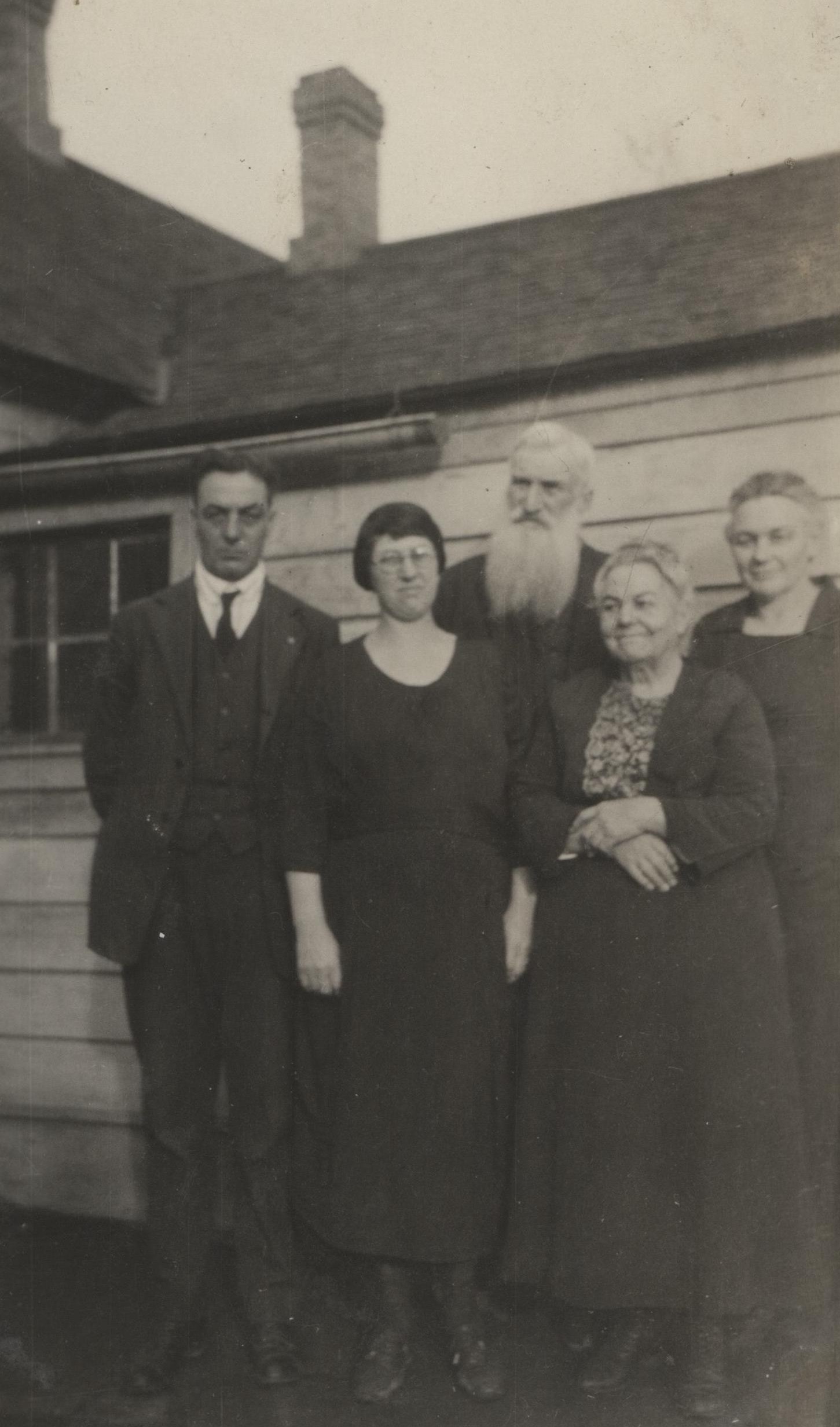
Left to right: Walter Hyrum Wayment, Amelia Brown Wayment Lythgoe, Joseph Wayment, Ann Reed Wayment, Sarah Wayment. Photograph taken at the Warren home, circa 1924.

On Thursday, 7 August 1924, Joseph and Ann celebrated their golden wedding anniversary with elaborate festivities at their Warren home. The Salt Lake Tribune reported the occasion. By remarkable coincidence, a great-grandson was born that same day at nearly the identical hour that Joseph and Ann had married fifty years before — a son born to Mr. and Mrs. William Bennington Jr. of Ogden. The event, as the paper noted, cheered the aged couple considerably.

The celebration drew family from across Weber County. Among those present were Joseph’s siblings — his sisters Mrs. Martha East of Warren and Mrs. Emily Mullen of Ogden, and his brother Bishop William T. Wayment of Warren — along with four daughters, one son, and twenty-six grandchildren.

The photograph captures something of what fifty years in Warren had built. Joseph stands center-rear, his great white beard the same beard his doctor had prescribed after the 1884 malaria — protection for his throat and chest from the cold. Ann stands center-front, hands folded, short of stature. Sarah, their eldest — the first white child born in Warren — stands at the right. Walter Hyrum, their only surviving son, is at the far left with his wife Amelia Lythgoe beside him.

Final Years

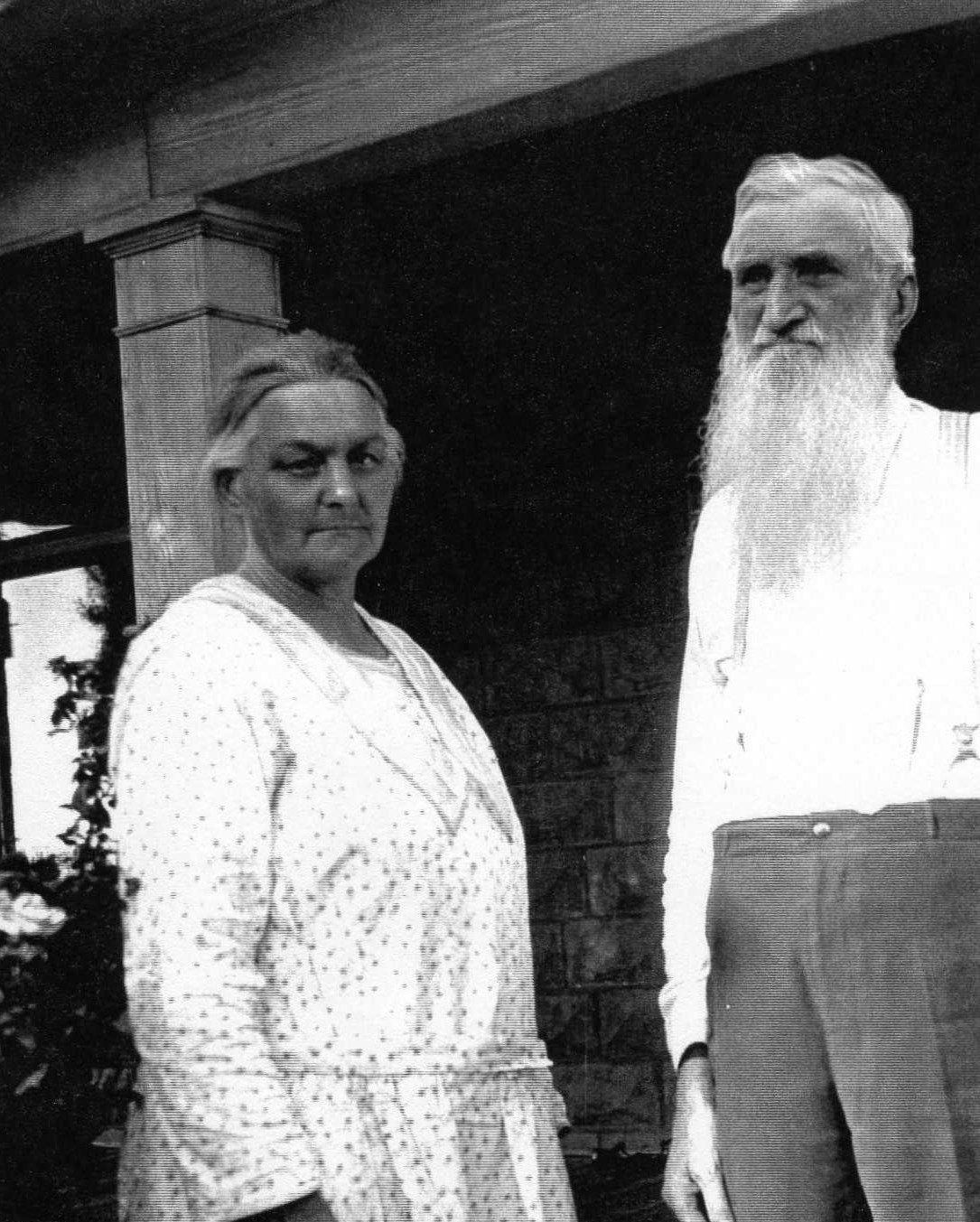
Ann Reed and Joseph Wayment.
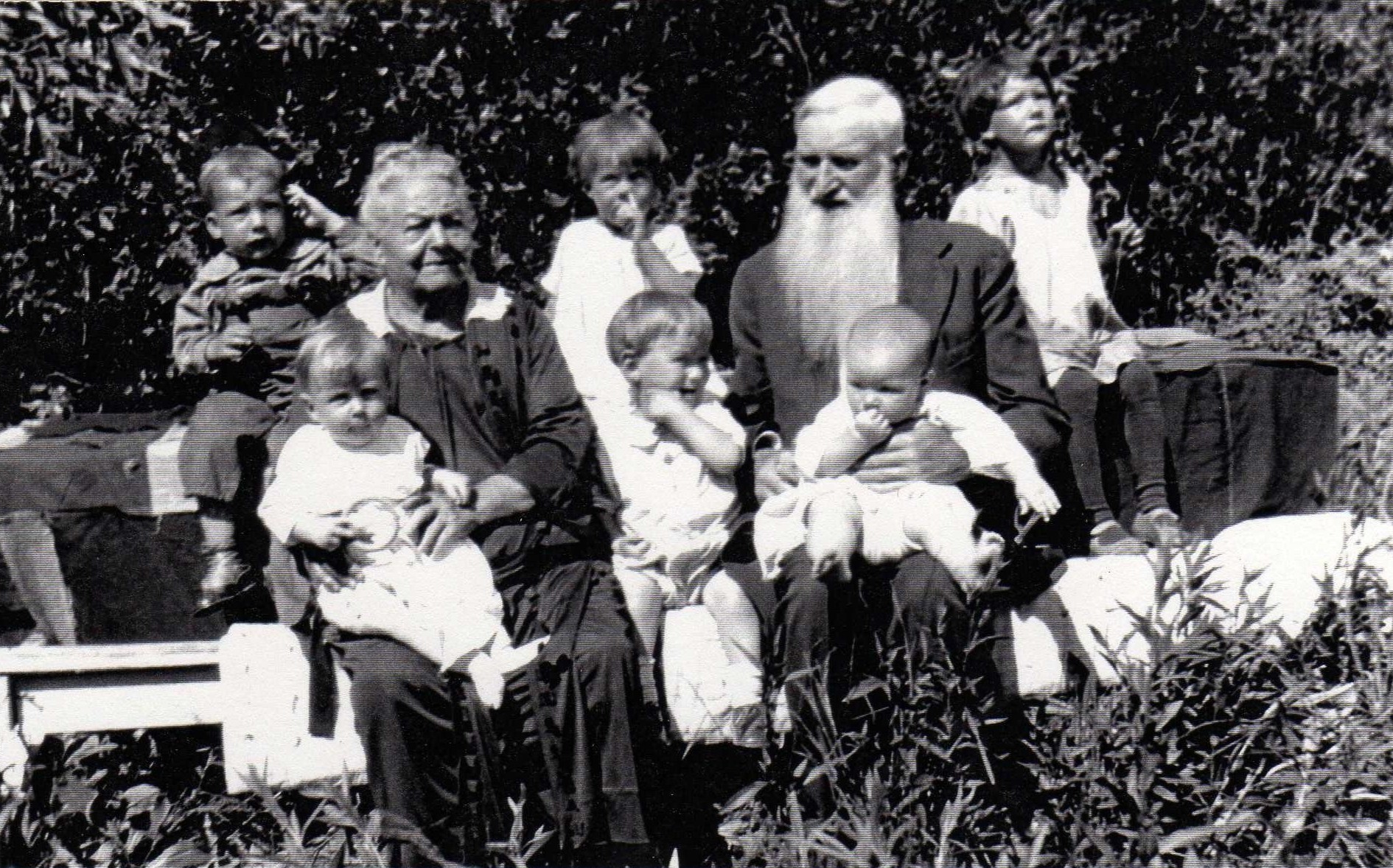
Left to right: Verlan Hansen, Ann Reed Wayment holding Donald Peterson, Eulail Peterson (back), Robert Hansen (front), Joseph Wayment holding Elaine Hansen, Irene Hansen. Joseph and Ann were the great-grandparents of the children in this picture.

Joseph bought his first automobile in 1912, just past his 68th birthday. About 1922 his eyesight became too poor to read. From that time until his death, someone had to read all news to him. He lived at his own home in Warren until the very end, cared for by his daughter Sarah. He delighted in bearing his testimony and seemed never to tire of talking about and explaining the principles of the gospel. His last public appearance was at a fast and testimony meeting on 11 October 1931, where he bore a strong testimony to the truthfulness of the Gospel and to the fact that Joseph Smith was a true prophet of God.

Ann did not live to see it. She died on the morning of 14 June 1931, at 8:10 a.m., at their Warren home after a three months’ illness — her cause of death recorded on her death certificate as chronic myocarditis with arteriosclerosis as a contributing factor. She had lived in Warren for 57 years without interruption. Her brother-in-law Bishop William T. Wayment was among the speakers at her funeral. A sextet of nephews and nieces sang. Mrs. Jessie Wayment sang a solo. Grandsons served as pallbearers. Granddaughters took charge of the flowers. She was buried in the Warren Cemetery on 17 June 1931.

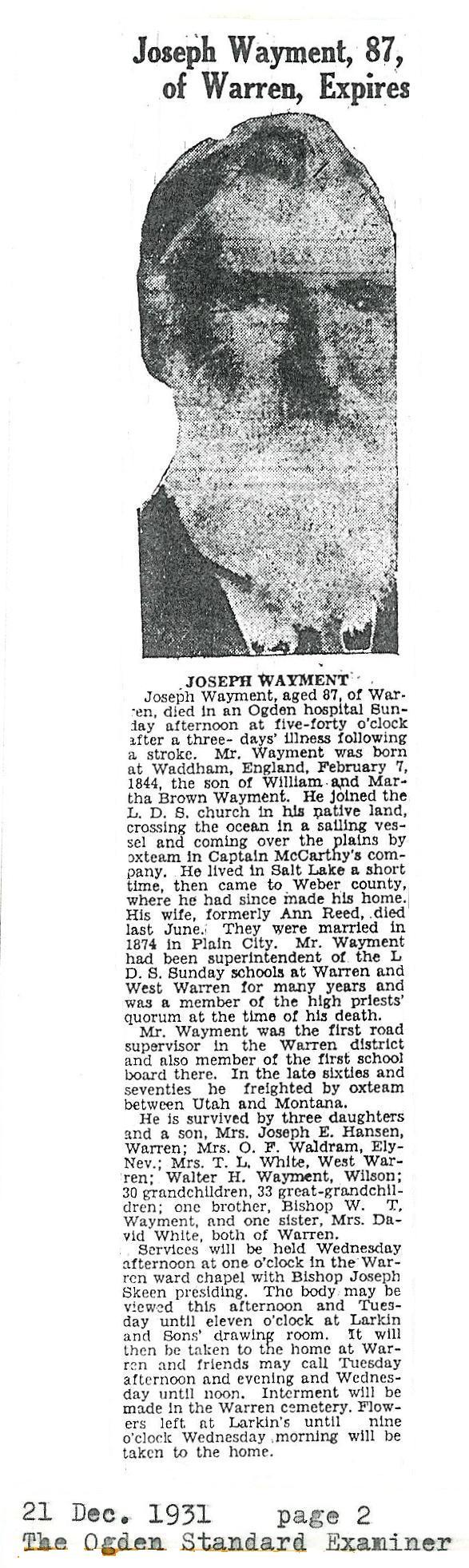
Joseph took sick on the afternoon of Thursday, 17 December 1931. He passed away very peacefully on Sunday evening, 20 December 1931, at Dee Hospital in Ogden, of bronchopneumonia — the chronic malaria that had plagued him since 1884 listed as a contributing condition. He was 87 years old.

Obituary of Joseph Wayment, Ogden Standard Examiner, 21 December 1931.

He was buried on 23 December 1931 in the Warren Cemetery, beside Ann, who had preceded him six months and six days. They had been married 56 years, 10 months, and 7 days.

Legacy

Sarah Ann Wayment Hansen and her father Joseph Wayment in his final years. Sarah cared for Joseph at home until his death in December 1931.

When Joseph and Ann Wayment arrived in Salt Creek in the early 1870s, there was almost nothing there. When they died in 1931, Warren was a community with a church, a school, a creamery, roads, canals, orchards — many of the first of each having been planted, built, or organized by Joseph himself. They lived to see 32 grandchildren and 37 great-grandchildren. Two of their children served missions; one granddaughter and five grandsons also served missions, all returning safely.

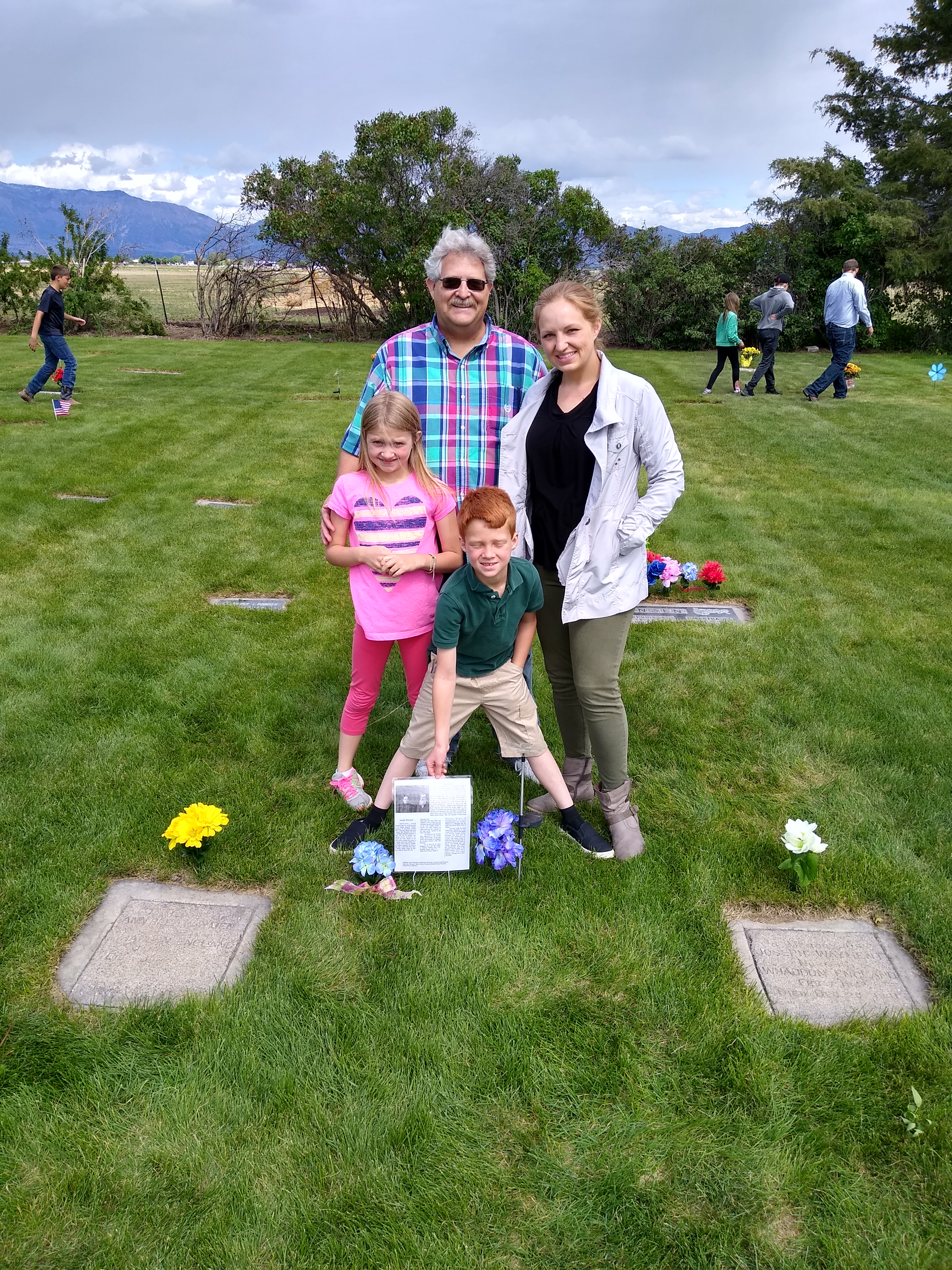
Amanda and I visited their graves in the West Warren Cemetery on 24 May 2020. The memorial card at their headstones — the laminated display that prompted much of this research — was photographed that day. Amanda is their 3rd great-granddaughter through the line: Joseph and Ann Wayment → Martha Ann Wayment Hansen → Walter Wayment Hansen → Bryan Hemsley → Amanda Ross.

Bryan Hemsley, Amanda, Aliza, and Hiram Ross with the tombstones of Joseph Wayment and Ann Reed Wayment, West Warren Cemetery, 24 May 2020.
Bryan Hemsley, Amanda, Aliza, and Hiram Ross with the tombstones of Ann Reed (1852–1931) and Joseph Wayment (1844–1931), West Warren Cemetery, 24 May 2020.
The memorial card displayed at the graves of Joseph and Ann Reed Wayment, West Warren Cemetery.

Source Documents

The following family histories are available for download:

Life Sketch of Joseph Wayment – copied from a record belonging to Ida H. Johnson (granddaughter), transcribed by Hollis R. Johnson, 1956

Emily Wayment and William Negus – compiled by Alma W. and Martha M. Hansen, 1979

John Brown Wayment and Sarah East – compiled by Alma W. Hansen, 1980

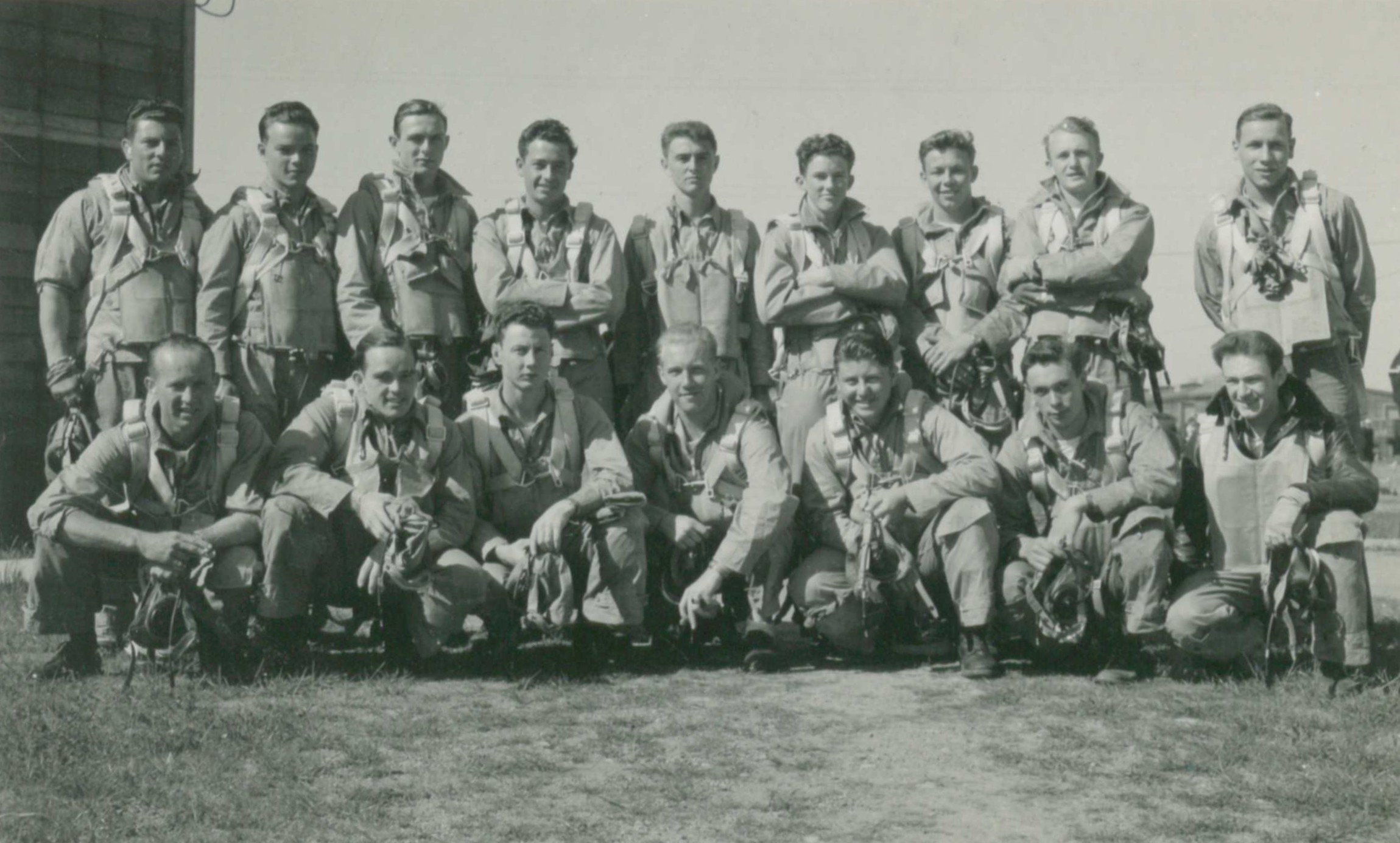
Navy Air Show – 1945

Back (l-r): Bob Reading, Smo Smolinsky, Dick West, Jack Seabolt, Norm Reid, Bill Plunkett, Skull Nelson, Wes Harper, Junior Locher; Front: Jack Simmerman, Bob Johnson, Mike Michaelson, Al Thorngren, Norm Schram, Hoot Nejdl, Ted Wallover.

I continue to scan photos that belonged to my Great Uncle and Aunt, Dave and Betty Donaldson. This one had names typed on the back. Chauncey “Mike” Michaelson married my Grandma’s sister, Dena Donaldson on 7 December 1943 in Los Angeles, Los Angeles, California.

This photo says “Navy Air Show” at “NAS Santa Rosa, Calif.” on 31 March 1945. Dena and Mike had a son born 29 October 1944 in Brigham City, Utah.

The back of the card has the names written on it. I assume it is accurate as it was likely from the time, but the handwriting gives further definition. I can also tell there are a number of nicknames, so I wasn’t able to find most of the people listed in the photo. Either the name was too common or the name given is not sufficient.

Wes Harper – could be Wesley Raymon Harper (1922 – 1982) of Larned, Kansas.

Bob Johnson – could not find anyone that seemed to fit.

Junior Locher – could be Junior Lewis Locher (1919 – 2003) of Glasgow, Virginia.

Chauncey De Orr “Mike” Michaelson (1922 – 2006) of Montpelier, Idaho.

Hoot Nejdl – could not find anyone that seemed to fit.

Skull Nelson – could not find anyone that seemed to fit.

Bill Plunkett – could not find anyone that seemed to fit.

Bob Reading – could not find anyone that seemed to fit.

Norm Reid – could not find anyone that seemed to fit.

Norm Schram – could be Norman Hayner Schram (1922 – 2011) of Pontiac, Michigan.

Jack Seabolt – could not find anyone that seemed to fit.

Jack Simmerman – could not find anyone that seemed to fit.

Smo Smolinsky – could not find anyone that seemed to fit.

Al Thorngren – could not find anyone that seemed to fit.

Ted Wallover – could not find anyone that seemed to fit.

Dick West – could not find anyone that seemed to fit.

~

Aliza and Hiram at the Temple

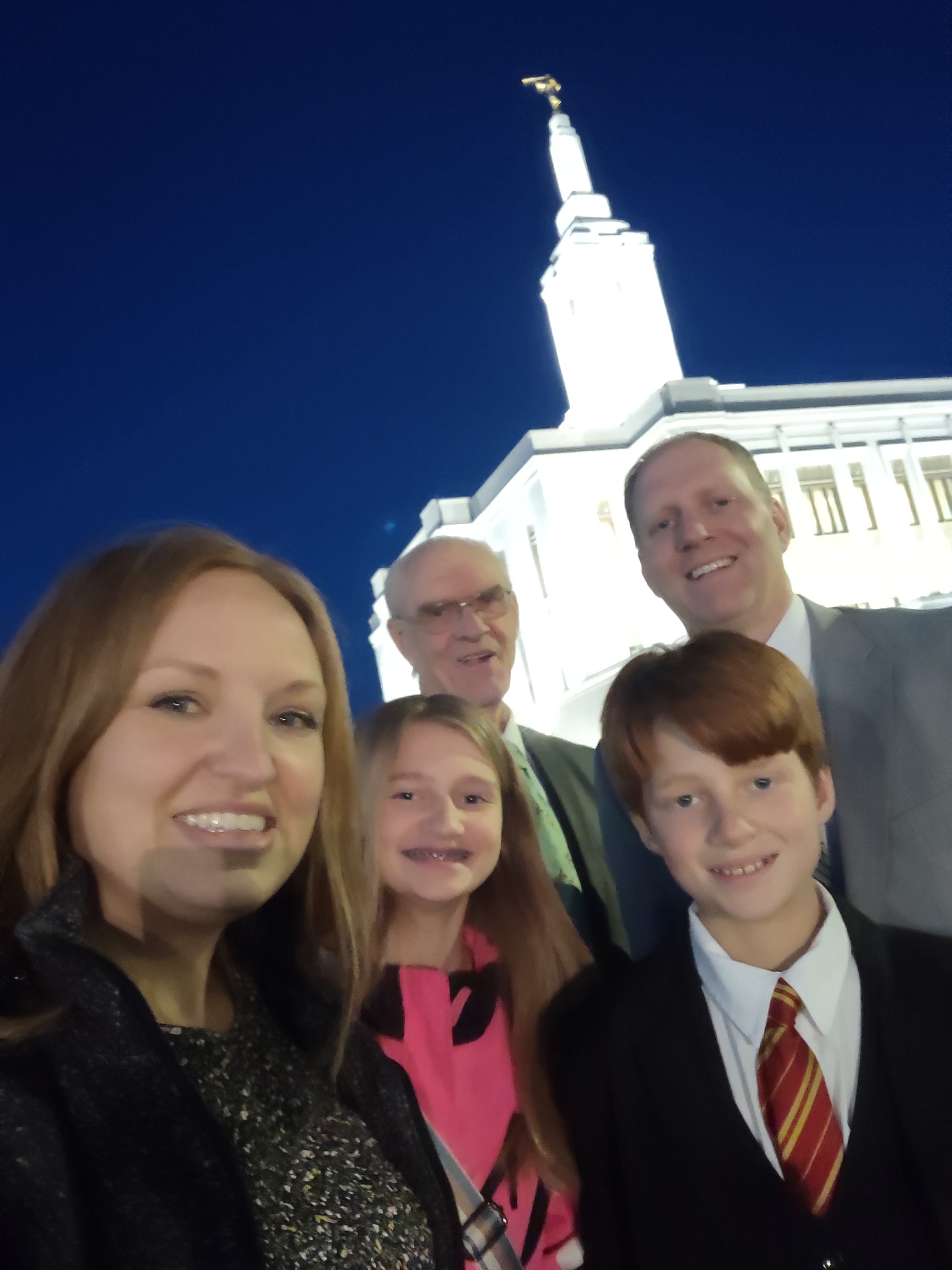
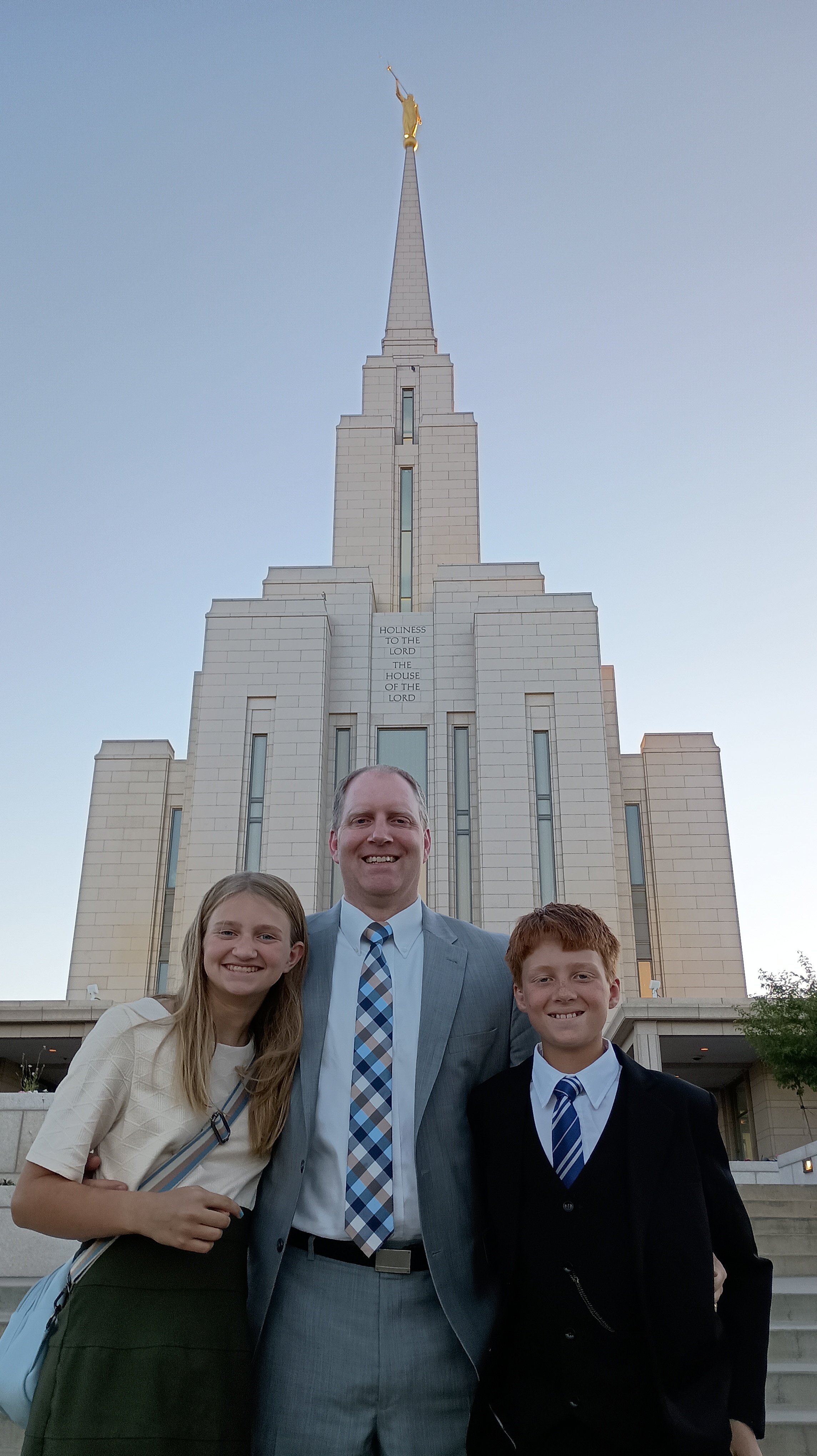
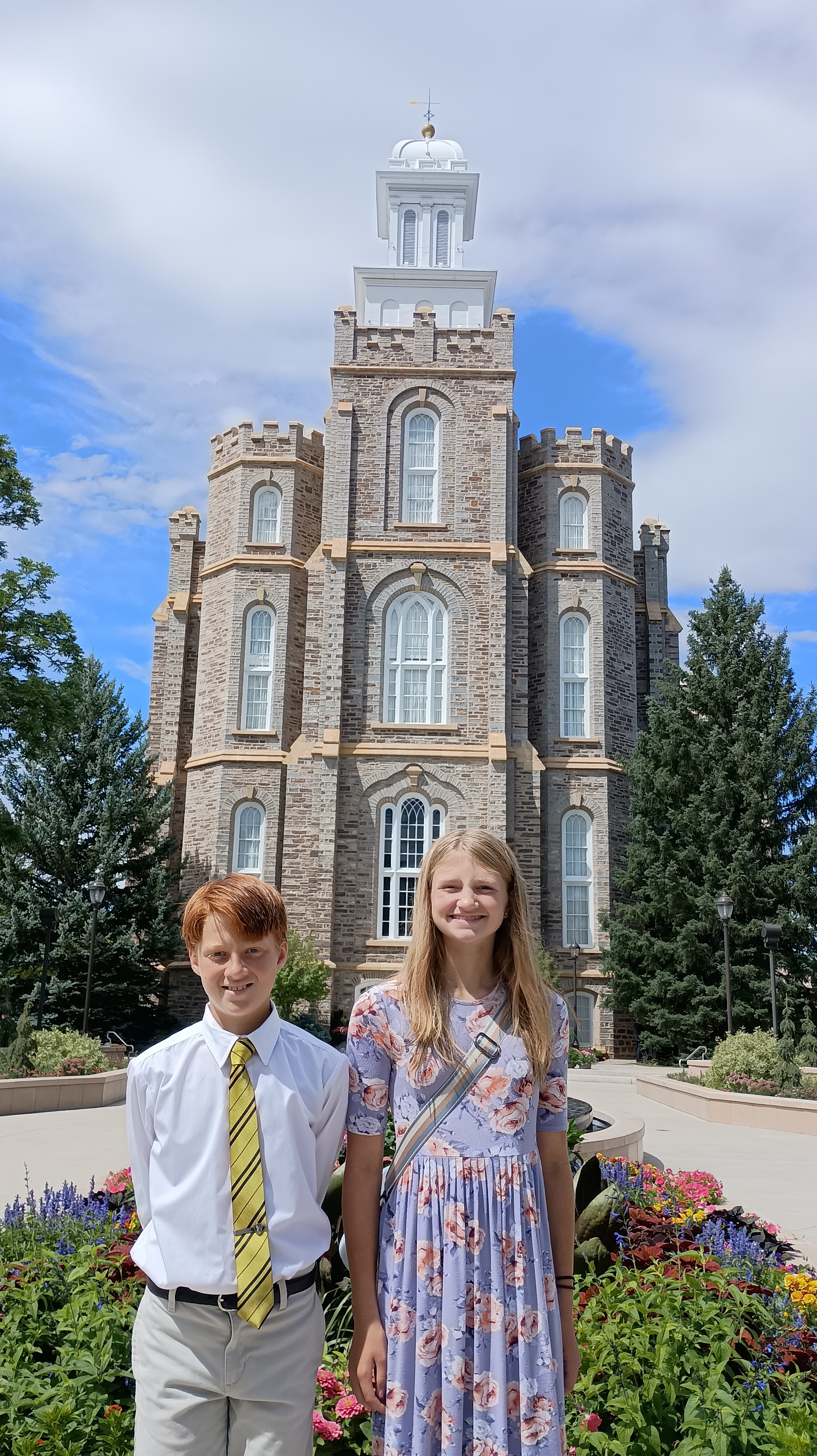
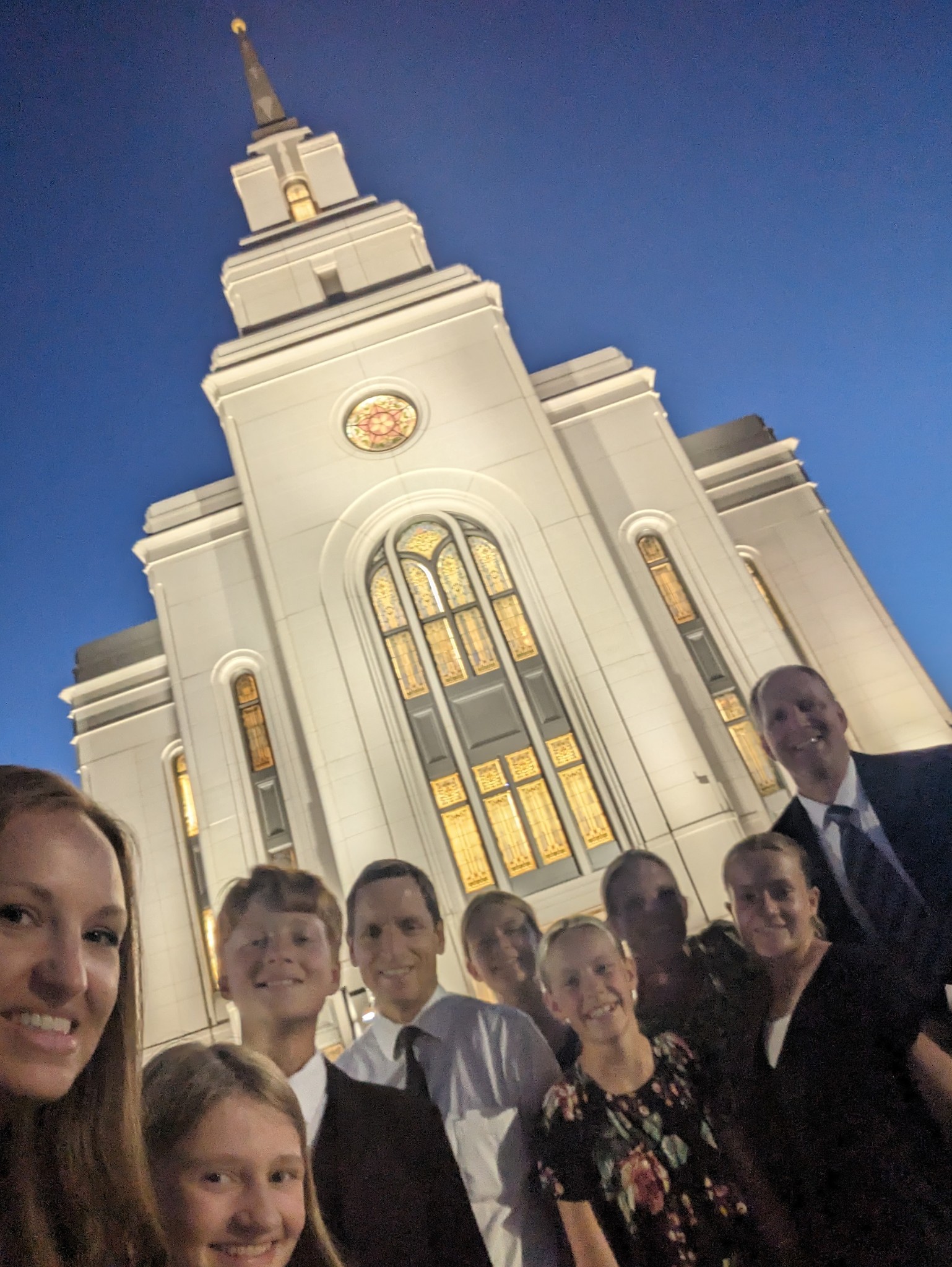
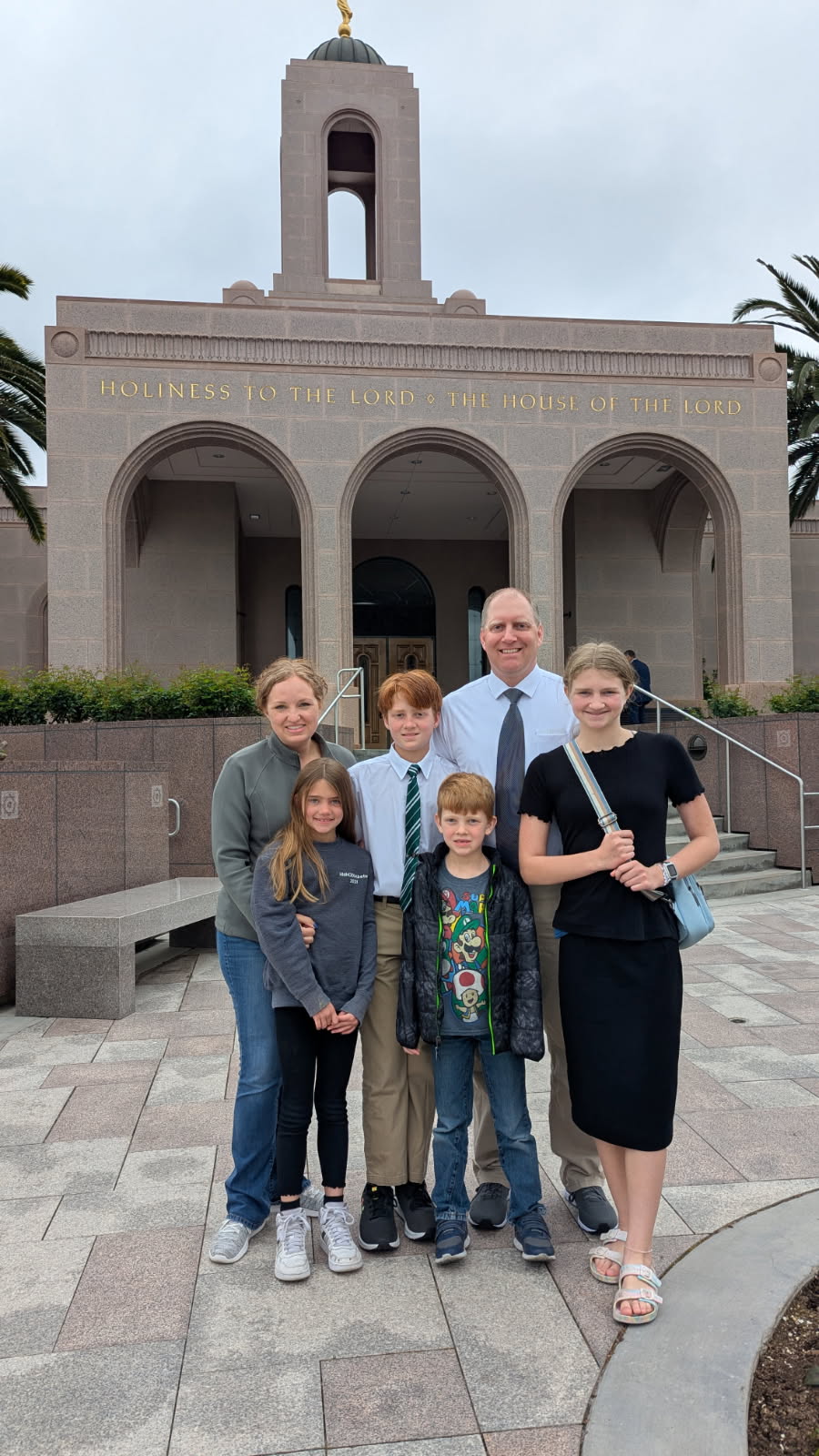
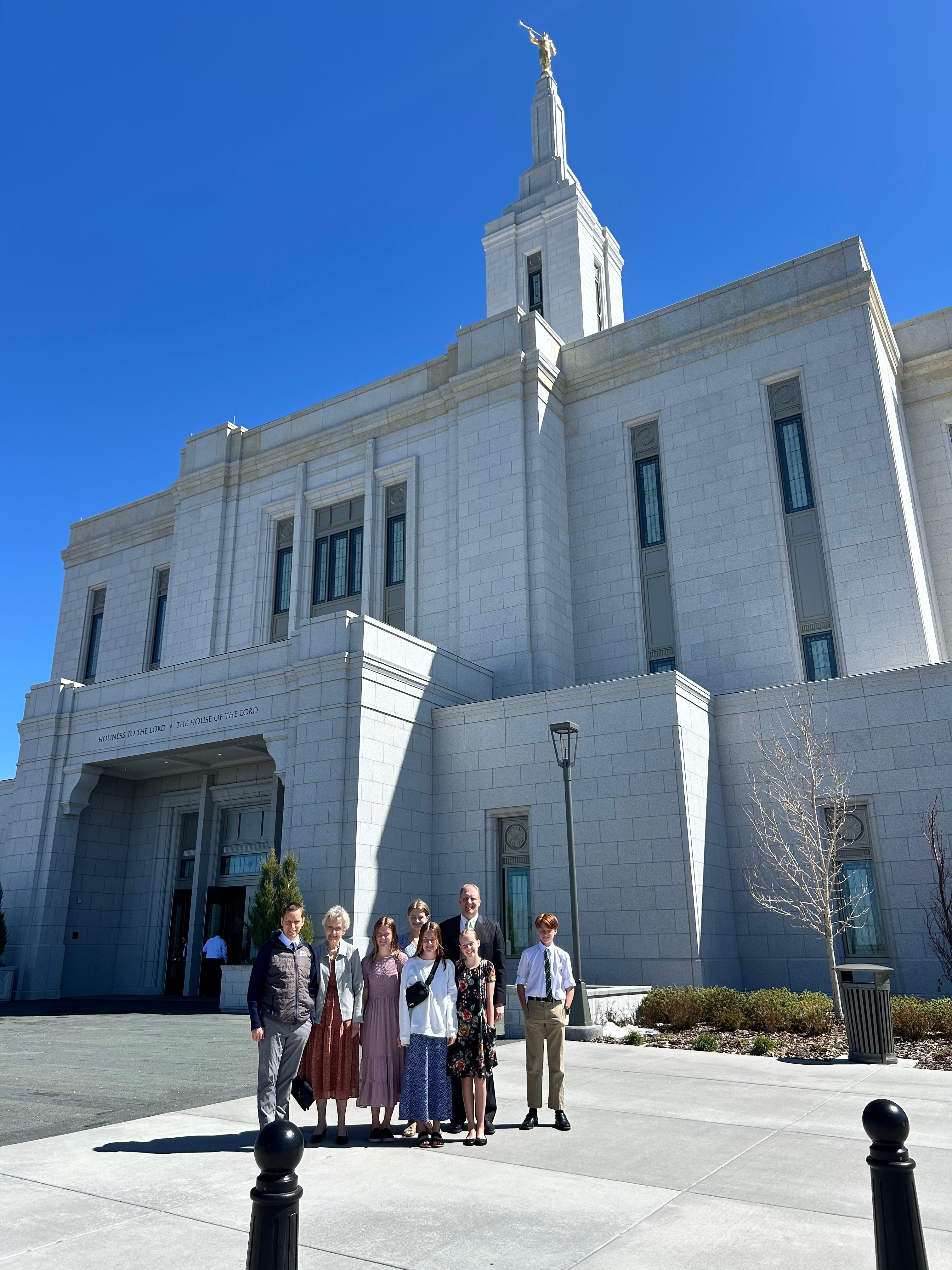
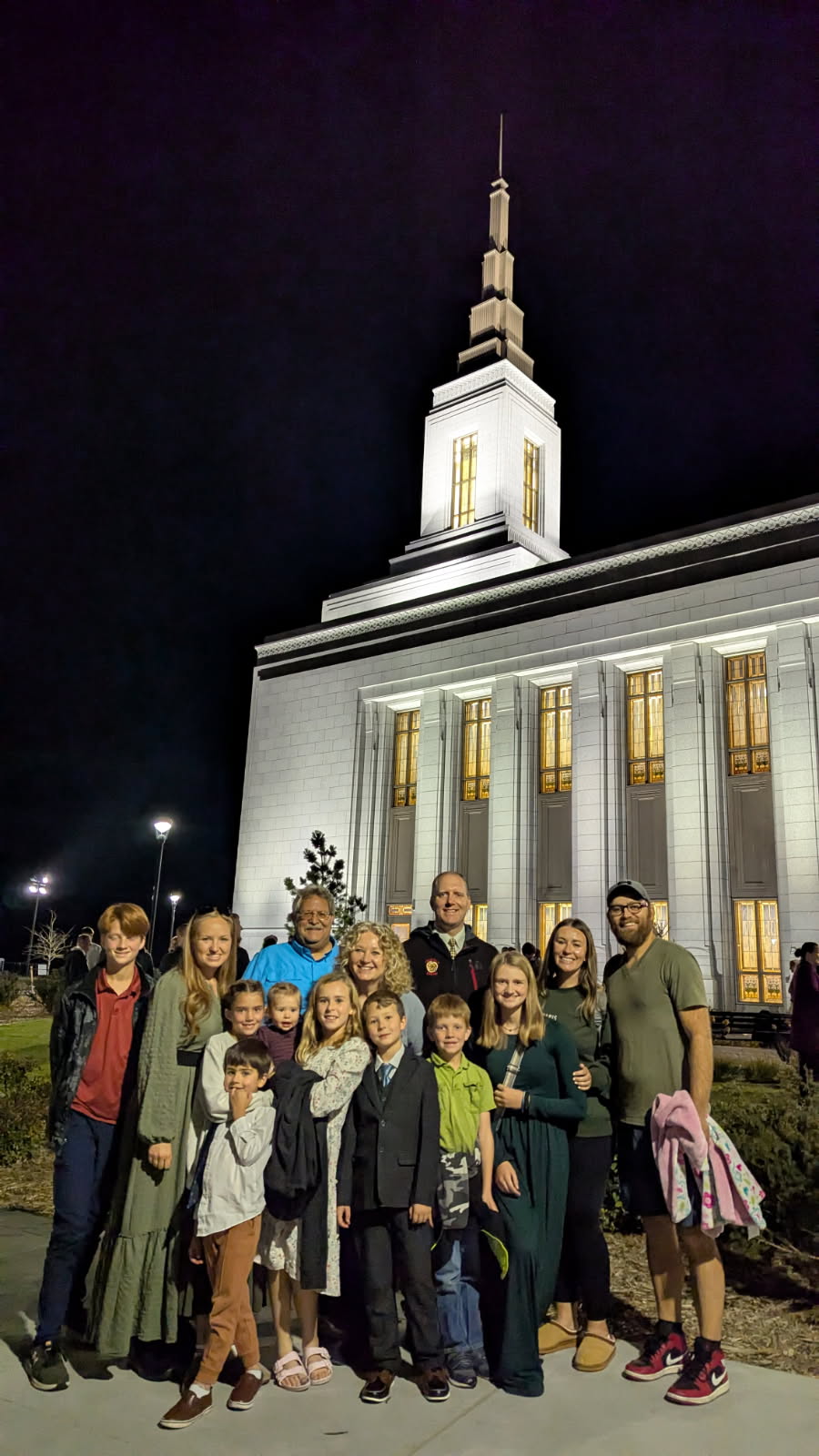
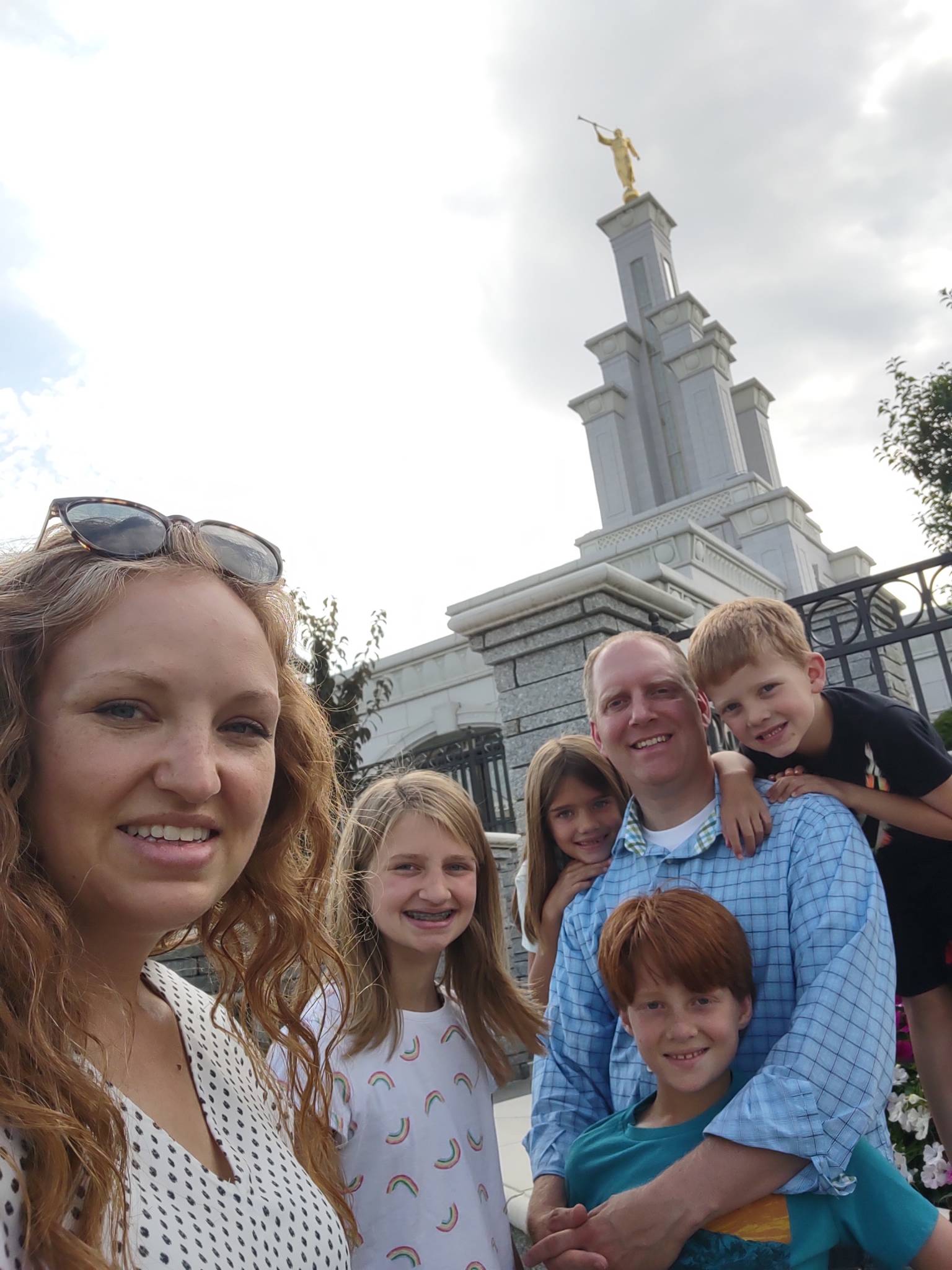
I am afraid the Ross household are temple tourists. Anyone who knows me knows that I have a couple of quirks. One of which, I like to drive by temples. The more distant a location, the greater likelihood I will plan visiting a temple. Even if it is just to drive past and snap a picture. Now that my children are old enough to attend the temple, my unwritten goal is to attend various temples. In visiting with Aliza and Hiram, they have not been keeping much of a record. Here I am, trying to re-create a list of temples they both have attended 2022 to present. I can cheat because we often take a picture while there.

Aliza could start attending the temple in January 2022. We did not have any goals for attendance, usually just whenever our Burley 11 Ward would go to the temple.

12 February 2022 – Twin Falls Idaho Temple
6 March 2022 – Twin Falls Idaho Temple
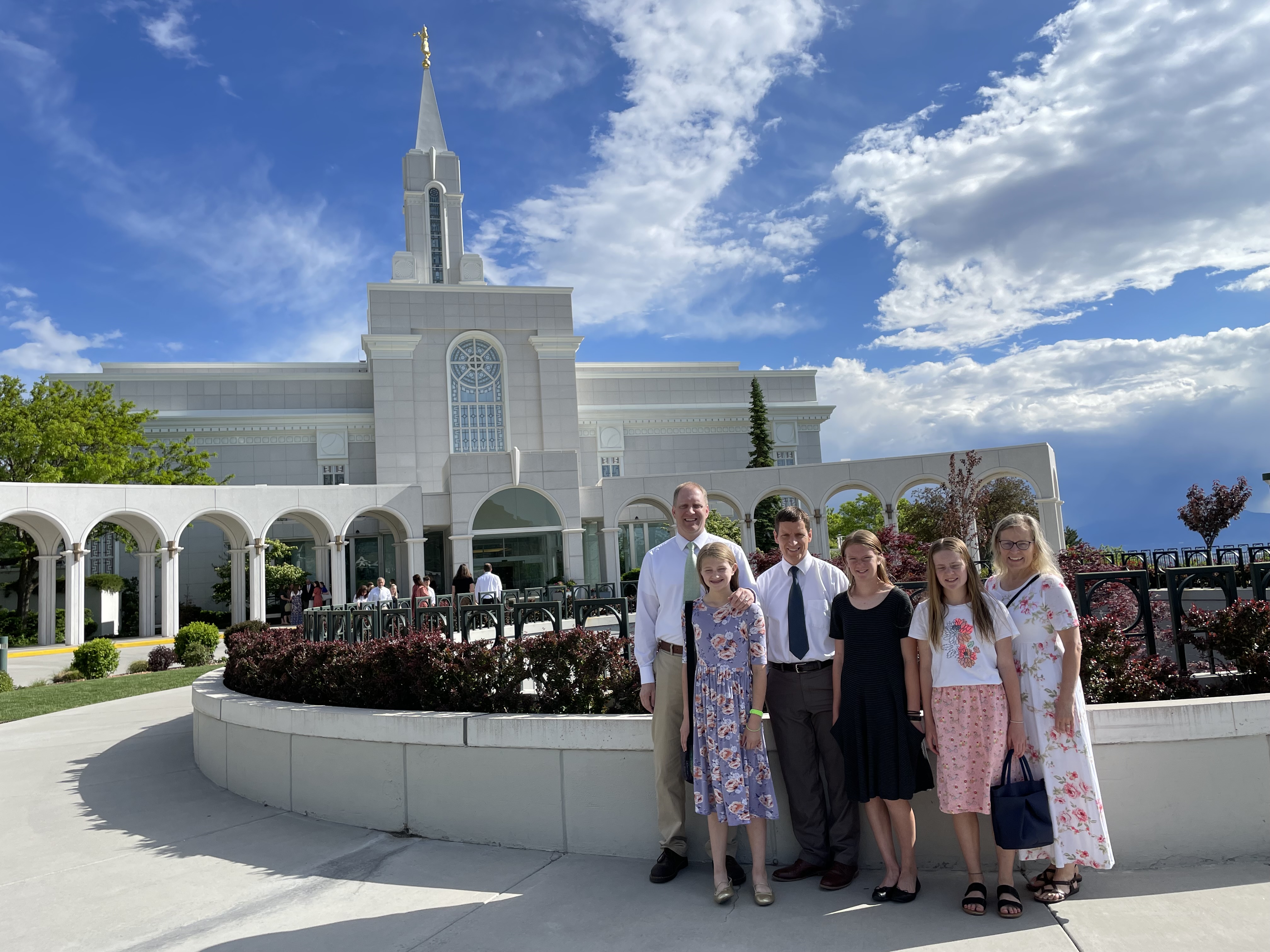
16 April 2022 – Pocatello Idaho Temple – Bill Teal, Mary Lou Teal, Amanda Ross, Aliza Ross, Paul Ross, Eliza Hales, Brad Hales, Aleah Hales
14 May 2022 – Logan Utah Temple – Paul and Aliza Ross with Aleah, Brad, and Eliza Hales
31 December 2022 – Brigham City Utah Temple – Paul Ross, Aleah Hales, Eliza Hales, Brad Hales, Aliza Ross, Amanda Ross
28 April 2023 – Ogden Utah Temple
27 May 2023 – Bountiful Utah Temple – Paul and Aliza Ross, Brad, Aleah, and Eliza Hales, Marianne Christensen
19 August 2023 – Twin Falls Idaho Temple – Paul Ross, Brad Hales, Aliza Ross, Aleah Hales, Eliza Hales

Hiram could start attending the temple in January 2024. That year the Burley 8 Ward (we moved houses) asked that we set a goal of attending monthly in 2024. We fulfilled that goal.

12 January 2024 – Pocatello Idaho Temple – Amanda, Aliza, Milo, Hiram, and Paul Ross

17 February 2024 – Twin Falls Temple – Burley 8 Ward Temple Trip

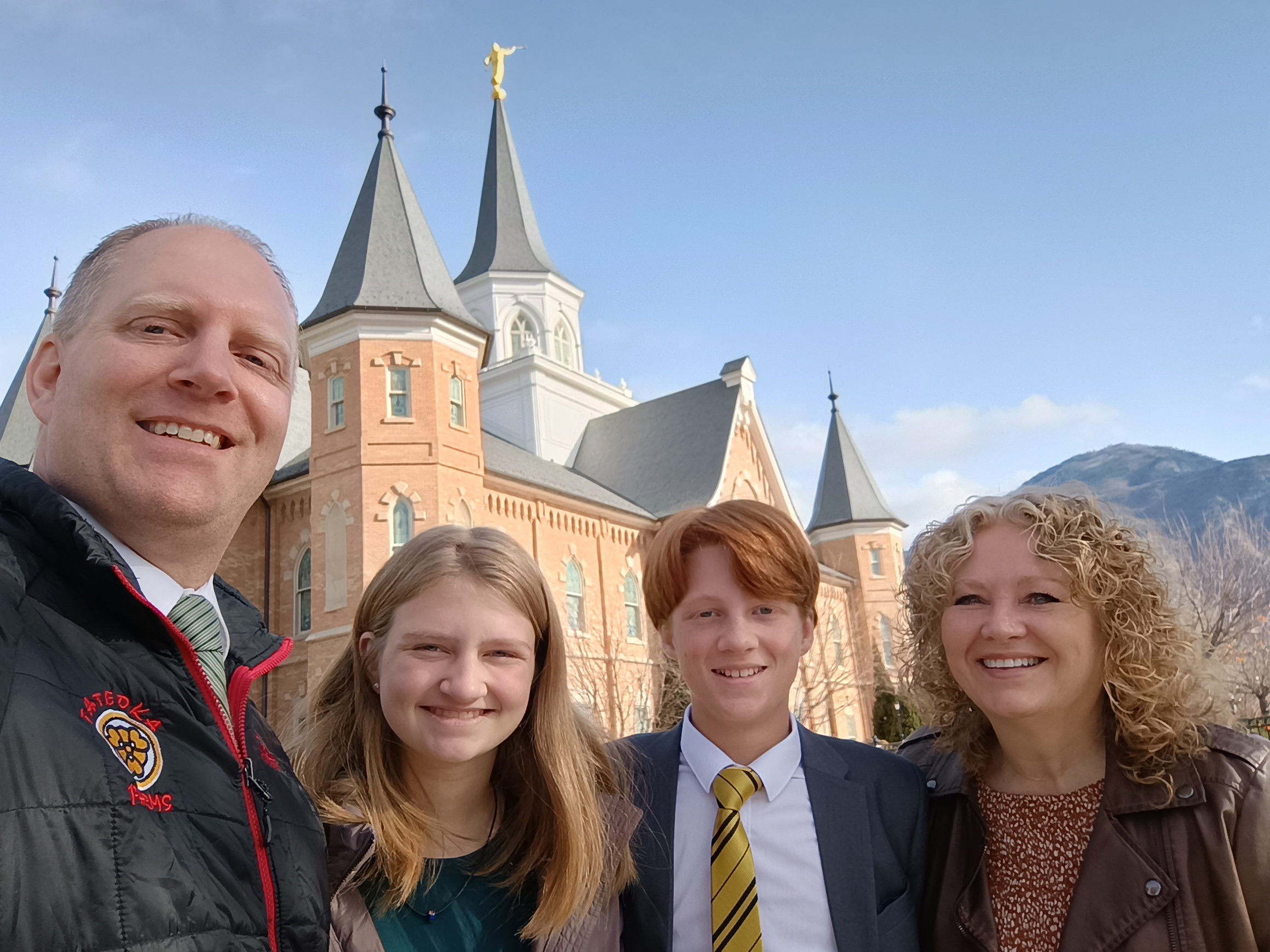
8 March 2024 – Bountiful Utah Temple – Bryan Hemsley, Amanda Ross, Aliza Ross, Jill Hemsley, Hiram Ross, Paul Ross
27 March 2024 – Vernal Utah Temple

5 April 2024 – Twin Falls Idaho Temple – Burley 8 Ward Temple Trip

17 May 2024 – Ogden Utah Temple
5 July 2024 – Oquirrh Mountain Utah Temple
17 August 2024 – Logan Utah Temple
23 August 2024 – Meridian Idaho Temple – Aliza only
22 September 2024 – Layton Utah Temple – Amanda Ross, Aliza Ross, Hiram Ross, Brad Hales, Aleah Hales, Elise Hales, Rachel Hales, Eliza Hales, Paul Ross

Funny story, Layton was the first time I actually took a dead person to the temple. My Great Aunt June Streeter Stout. Ask me for the story.

4 October 2024 – Boise Idaho Temple

9 November 2024 – Twin Falls Temple – Burley 8 Ward Temple Trip

28 December 2024 – Bountiful Utah Temple – Burley 8 Ward Temple Trip

The Ward did not ask us to continue the monthly attendance for 2025, but as a family we have continued the monthly attendance goal.

4 January 2025 – Meridian Idaho Temple

1 February 2025 – Twin Falls Temple

26 March 2025 – Newport Beach California Temple
19 April 2025 – Pocatello Idaho Temple – Brad Hales, Janet Hales, Eliza Hales, Aliza Ross, Aleah Hales, Elise Hales, Paul Ross, Hiram Ross
19 April 2025 – Idaho Falls Idaho Temple
16 May 2025 – Brigham City Utah Temple
17 June 2025 – Twin Falls Idaho Temple
6 July 2025 – Twin Falls Idaho Temple – Derek Hemsley, Paul Ross, Hiram Ross, Aliza Ross, Olivia Hemsley
16 August 2025 – Logan Utah Temple – Paul, Aliza, and Hiram Ross
6 September 2025 – Twin Falls Temple – Paul, Aliza, and Hiram Ross
24 October 2025 – Twin Falls Temple – Paul, Aliza, and Hiram Ross
29 November 2025 – Orem Utah Temple – Paul Ross, Hiram Ross, Derek Hemsley, Olivia Hemsley, Jill Hemsley, Aliza Ross
19 December 2025 – Syracuse Utah Temple – Paul, Aliza, and Hiram Ross

In addition to attending the temple for ordinances for 2024-2025, we also attended some temple open houses.

26 May 2023 – Saratoga Springs Utah Temple – Front (l-r): Jordan Hemsley, Hiram Ross, Jill Hemsley; Standing: Amanda Ross, Aliza Ross, Rowan Hemsley, Derek Hemsley, Olivia Hemsley, Lillian Ross, Paul Ross, James Ross, Jack Hemsley, Bryan Hemsley
6 August 2023 – Moses Lake Washington Temple
3 November 2023 – St George Utah Temple
23 March 2024 – Manti Utah Temple – Amanda, Paul, Hiram, James, Lillie, and Aliza Ross with Jill Hemsley
17 May 2024 – Layton Utah Temple – Lillian Ross, Paul Ross, Amanda Ross, Aliza Ross, Bryan Hemsley, Jill Hemsley, James Ross, Hiram Ross
18 May 2024 – Taylorsville Utah Temple – Bryan Hemsley, James Ross, Jill Hemsley, Aliza Ross, Lillian Ross, Hiram Ross, Amanda Ross, Paul Ross
11 October 2024 – Deseret Peak Utah Temple – Paul Ross, James Ross, Amanda Ross, Hiram Ross, Aliza Ross, Jill Hemsley, Lillie Ross, Bryan Hemsley, Shanna Thompson
16 May 2025 – Syracuse Utah Temple
30 August 2025 – Elko Nevada Temple – Brad and Rachel Hales Family with Ross Family with Lea Pierucci Izama (exchange student from Germany, staying with Hales family)
8 November 2025 – Burley Idaho Temple, Amanda Ross, Brad Hales, Anson Hales, Aleah Hales, James Ross (front), Lea Pierucci Izama (back), Paul Ross, Audra Hales, Aliza Ross

This was a fun visit. Some of the kids commented about where under the temple, in the foundations, might their rocks be found? We all submitted rocks with thoughts and our names on them that were placed before the foundations were poured.

14 November 2025 – Burley Idaho Temple – Hiram Ross, Amanda Ross, Lillie Ross, Rowan Hemsley (arm around), Margo Hemsley, Bryan Hemsley, Olivia Hemsley, Jill Hemsley, Jack Hemsley, James Ross, Paul Ross, Aliza Ross, Jordan Hemsley, Derek Hemsley

And other drive by shootings related to temples in 2022-2025.

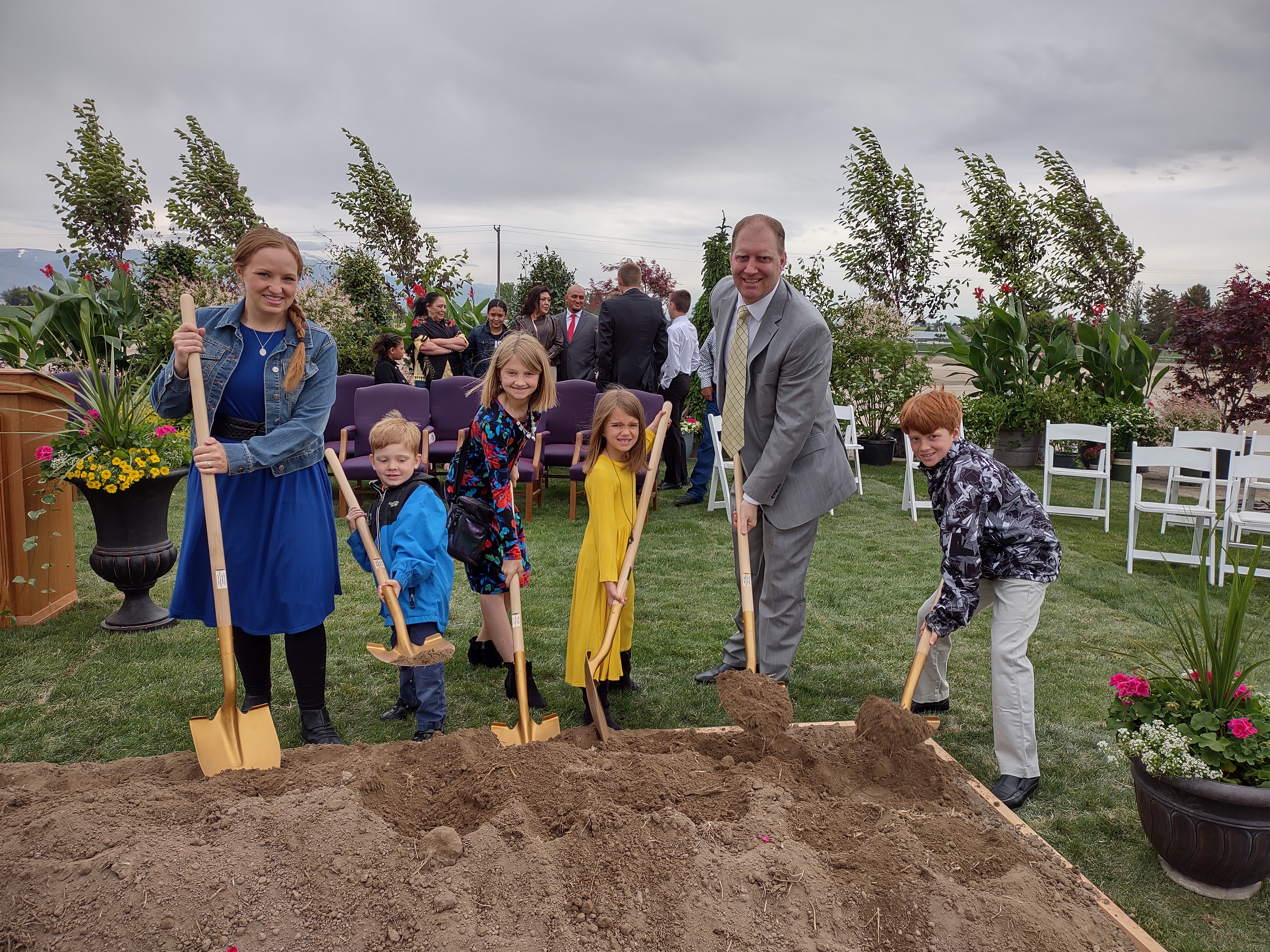
4 June 2022Burley Idaho Temple Groundbreaking
6 August 2023 – Columbia River Washington Temple
28 August 2023 – Los Angeles California Temple
1 September 2023 – San Diego California Temple
26 March 2025 – Los Angeles California Temple
29 March 2025 – Oakland California Temple
29 November 2025 – Provo City Utah Temple – Paul, Aliza, and Hiram Ross with Jill Hemsley
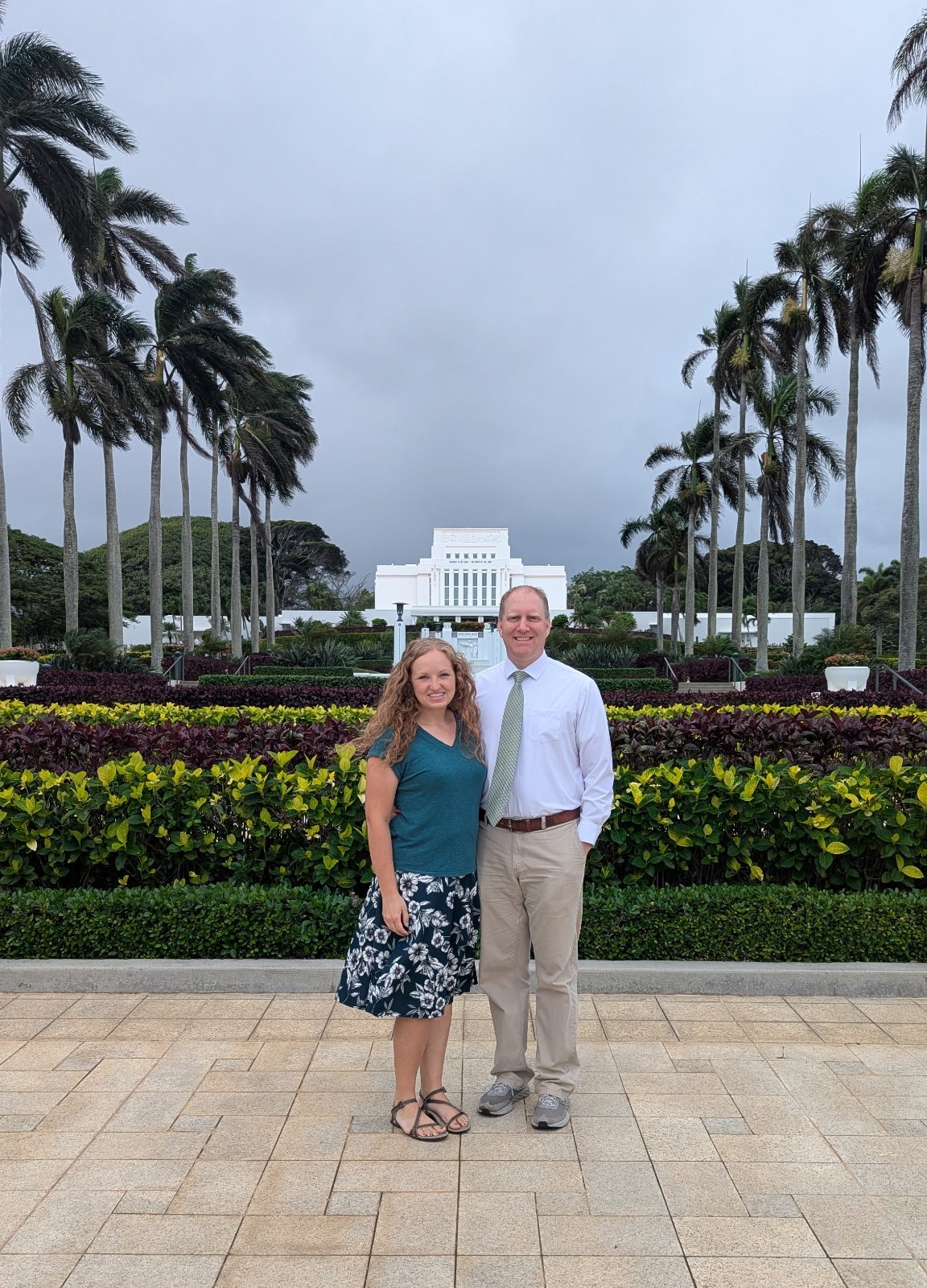
23 December 2025 – Laie Hawaii Temple – Amanda and Paul Ross

This is only a record of attending the temple for Aliza and Hiram. Many know I have had my own personal goal for monthly attending the temple from September 1998 to the present.

History of Mary Magdalina Wanner Wagstaff

“Our Mother”

by Edna Leona Wagstaff Owen

Our mother, Mary Magdalena Wanner was born September 12, 1873 at Atzenweiler, Neckarkreis, Wuerttemberg. Wuerttemberg is one of the States in the divided German nation.

Mother is a daughter of Johann Georg Wanner and Anna Maria Schmid, and was given the name of Maria Magdalina. After the family came to the United States, mother adopted the American spelling of Mary Magdalina which she used the remainder of her life.

Our mother and her brothers and sisters were very fortunate to have parents who were honorable, upright hard working people who loved their children and worked very hard to see that they got the very best they could. Both parents believed in God and had a strong faith that their prayers would be answered in providing them with the blessings they needed. They belonged to the Luteran Church, and tried to teach their children correct principles.

Mother was the 3rd child in a family of 10 children – 5 boys and 5 girls; two of her brothers died at an early age in Germany.

Between the ages of 7 and 8, mother took care of her younger brothers and sisters while her mother and father were working in the fields. She was told to get the children to sleep; and when they woke up she would bring them to the fields to their parents. She was anxious for the children to settle down and get to sleep, so she would hold her finger tips over their eye lids thinking this would make them go to sleep but when she took her fingers off they would be wide awake.

Mother started school at the age of 8 years and graduated when she was 14. She did not go to school after that.

From the age of 10 until 13 she herded cows on a big hillside. The family lived on a farm and everyone had to help. Their father was gone a great deal of the time as a road overseer, or working in the Black Forest to make a little extra money to help increase the family income. Mother had to do a lot of hard work such as getting wood from the canyon to use for fuel to heat the house and to cook with.

Another of her jobs was to lead the cows that pulled the plow. She also piled hay and gathered grain in the fields. Most of the work was done by hand and much of the time the hay was piled on the fence so it would dry.

A 9 years of age she learned to knit and she became very proficient in this art. She knitted all her life supplying her own family with socks, etc. She knitted scarfs, caps, socks and sweaters for the soldiers during both World War 1 and 2. Among the things she knitted was a beautiful white shawl for my first baby. She also knitted two choice sweaters for my husband, one of which he has been wearing on many occasions for over 40 years and it is still in good condition. He still uses it and it has been very useful to him throughout these 40 years.

When she was 11 years of age, she could not walk for a time because of a problem with her leg. At this time, it was necessary that she be put in a baby buggy and pushed 5 or 6 miles to see the doctor.

She went to the city of Ravensburg to work when she was 15 years of age. She took care of children, did washings, ironing, helped with the cooking as well as other household tasks. While working at this job, mother developed a sore on her hand which required that she be hospitalized for two or three weeks.

During the year 1891, mother’s father brought some missionaries to their home. These missionaries were representing the Church of Jesus Christ of Latter-day Saints. These missionaries were Jacob Zollinger from Providence, Utah, John Hassenfritz of the Bear Lake area, and John Federley of Salt Lake City, Utah. Incidentally, I got to meet Jacob Zollinger, a very fine man. After my marriage, whenever I sent to the Temple, Brother Zollinger was there.

After the missionaries had been teaching them the gospel for some time, the family became very much interested and decided they would like to join the church. Some of the family that were old enough were baptized in October, 1891, and became members of the only True Church. This brought peace to their minds and joy to their hearts. It didn’t take long for this family to decide that they wanted to leave their native land and come to the United States where they could have religious freedom and better opportunities for their family to provide for their wants and needs. Not so long after this, the oldest son came to this country with some returning missionaries. This was Uncle George.

In the spring of 1893 her mother and father made preparations to take their family to America. When all was ready, they said good-bye to their relatives, friends, their home and native land.

They rode the train for one day after which they took a boat up the Rhine River. After being on the boat for 3 or 4 days, they took the train for another day which took them to the North Sea. At the north sea they got on a large boat to go to Liverpool, England. The Sea was very rough and stormy. It took them another day to reach Liverpool where they boarded a big ship and sailed for America. They were on the ocean about two weeks before they reached New York where they stayed for two or three days. Then they took the train and started across the continent for Salt Lake City, Utah. They stopped at Chicago, Illinois for one day and one night; then continued on their way. After they got to Salt Lake City, they continued on their journey to Franklin, Idaho, arriving there the 18th June 1893. After their long hard tedious journey, they were all happy and anxious to get settled in their newly adopted homeland.

They were met by their brother George and Fred Nuffer with a team of horses and a wagon. They also brought a buggy with horses. They went to Fred Nuffer’s place in Cub River where her brother George had been working. They stayed at Nuffer’s place about one week. Her father soon started to look for a place to buy and settle down. He decided to take a trip over to the Bear Lake side to see what he could find. Grandpa took mother with him on this trip. They walked across mountains and had to cross the Cub River which was very swift and difficult for them to wade across. They spent one miserable night in the mountains listening to the bears growling. They saved some of their bread to give the bears in case they bothered them.

The next Sunday after arriving in Franklin, they all went to church in Glendale and had their membership records moved to that ward. The Ward Clerk in Glendale was William Addison Wagstaff who later became mother’s husband. Grandpa Wanner soon bought the home and farm of John Nuffer in Glendale. Grandpa and Grandma lived there a number of years and then sold it to their son Fred. Later he sold it to his son Bertus.

In a short time Mrs. Fred Nuffer got mother a job in Logan, Utah, doing house work for a lady by the name of Robin. Mother could not speak the English language at this time but with the help of this good family she was able to understand and speak a little.

Mother worked for the Robin’s until 1894, at which time she went to work for a family by the name of Card. She worked at Card’s about six months. She then returned to her home in Glendale for awhile. After a short rest, she went to work at the Section House in Preston, Idaho, helping a lady cook.

In April 1895, she went to General Conference of The Church in Salt Lake City, Utah. While she was there, she found a job doing housework for a banker by the name of Shutler (we are not sure of the spelling). Mother stayed at this place until November and then went home again for a while. Some time later mother worked for some people in Preston, Idaho, by the name of Hale. In 1896 mother returned to Logan and worked for a family by the name of Bishop.

In the spring of 1896 her mother wrote her and told her that her sister Louise was going to be the “Queen of May Day” celebration to be held in Glendale and she would like her to come home and be there on this occasion. Mother decided it would be fun and decided to be there.

On the day of the celebration mother accepted the invitation of William Addison Wagstaff to have lunch with him which seems to have been a big turning point in mother’s life. After they had their lunch they went for a stroll together. It appears that it was at this time that he proposed marriage to mother.

In a few days mother returned to her job in Logan, Utah. On 11 June 1896 W. A. took Mary’s sister Louise to Logan to take over her job so she could come back to Glendale to make preparations to be married. The next day they went to Preston to pick out material for her wedding dress and selected a cream cashmere trimmed in white silk. Her Tiara had orange blossoms on it. Looking at her picture now I think it must have been just beautiful.

On 16 June W. A. and Mary went to Logan with a wagon load of grain to sell for her father. After they got to Logan they purchased a plain yellow gold wedding band. She stayed with her sister Louise that night and on Wednesday 17 June 1896, W. A. and Mary were married for time and eternity in the Logan Temple by Marriner W. Merrill, The President of the Logan Temple. They spent their wedding night in Logan and returned to Glendale the next day, June 18th. That night Mary’s father and mother gave them a wedding supper at their home.

James, Annie, and Mary Wanner Wagstaff

Then mother went to live in the home where her husband and his mother resided. It was a log house with a dirt roof. This home was located about 5 miles North East of Preston, Idaho, in an area that is commonly called Glendale Flat. Mother took charge of the house and cared for her mother-in-law who had very serious leg trouble.

Right from the start mother worked side by side with her husband getting in the hay and grain. All the water for washing, bathing, drinking, etc. had to be hauled as they had no water on their place. Their cattle were driven to Worm Creek to drink. This Creek was about a mile from their home.

26 January 1897 mother’s first child was born, a tiny premature son. He was named George William. Our Dad held this tiny infant on his lap and fed it with a medicine dropper. He did everything he could to save his life but he passed away after 9 days.

Their second son named James Addison was born 24 June 1898; and 28 December 1899 her first baby girl, Annie Eliza was born. Our Dad and Mom and Dad’s mother were so very happy to have a son and a daughter to bless their home.

Back row: Willard, William, Annie, Parley, Maria, Jesse. Front row: Elsie, Edna, Herbert.

During the early part of mother’s married life, she worked in the Relief Society. Mother loved working in the Relief Society and did her part to make it a success.

In 1900 they moved to a two-room log house with a dirt roof. This house was located one mile from their first home. This move was made so they could be where there was water. This was a big help as they now had water from a well for culinary use as well as other things. Here they were able to have a nice garden with currants, both black and red, as well as gooseberries and raspberries. They could also have shade trees and fruit trees. I am sure this was a great blessing to them.

August 28, 1901, a son Wilford John was born. This made four children for them including the one who died. Dad and Mother were happy to have a family and Dad’s mother was thrilled to think she was now getting some grandchildren. Our Dad’s mother had a very sad time raising her family; our Dad being the only one of 4 children who lived to maturity.

Our Mother and Dad gave Dad’s mother kind and loving care for many years. She continued to have poor health. She was especially afflicted with varicose veins. Those finally turned into ulcers on her legs which had to be bandaged. One of their old neighbors has told us that she had her legs bandaged each day for over 35 years. She finally passed away in the early morning hours of December 2, 1902, and was buried in the cemetery at Glendale, Oneida County, Idaho.

The 9th of April 1903 Parley Leroy was born; and on 23 June 1903, our 22 months old brother Wilford John was drowned in a ditch just north of the house. Many people came from all around to help them at this sorrowful time in their life.

Children continued to come to bless this humble home and 3 March 1905 Willard Lesley was born. On 9 January 1907 Jesse Oleen was born. The 11th of November 1908 Herbert Spencer was born. Mother had now given birth to 7 sons and 1 daughter. She was very busy caring for them, her husband and home, as well as participating in church activities.

During the summer of 1909, they built a new house which had two rooms down and two rooms upstairs. It had a singled roof and later on was pebble-dashed.

It was in this home on a beautiful Sunday morning, 10 July 1910, the next child, a girl with hazel eyes and blond hair Edna Leona was born. The family as well as the Glendale Ward were delighted to see this baby girl come to the home where there were 7 sons and only 1 girl. 7th of August 1912 another daughter, Elsie Magdalina came to bless this home.

On the 19th of March 1913, sorry struck this home when their son James who had been ill a lot of his life passed away and was buried in the Glendale Cemetery.

On the 25 of March 1913 Mother had a patriarchal blessing by Patriarch Wm. Daines. This was a big comfort and a joy to Mother in later years.

The 8th of July 1915 Mother had her last child, a son she named Albert Wanner. Mother had a very difficult time at this birth and she was ill a long time after.

After Mother’s parents moved to Logan in 1910, she frequently went to visit them and did Temple work.

Very often Dad and Mom would drive their team and wagon and later a buggy to Preston; leave them there in the tie-yard and catch the U.I.C. to Logan to do two sessions at the Temple; then back to Preston to get their team; drive home about 4 miles. After Mother was married, she took every opportunity that came her way to go to the Temple. She loved to do this and it brought her great joy to be engaged in the Lord’s work.

Mother loved the outdoors and kept a beautiful garden and flowers; tended chickens and worked with her husband and children in the fields.

September 1918 Dad and Mom took their 3 daughters and youngest son Albert to Brigham City, Utah on the U.I.C. for Peach Day. They all had a delightful time, and enjoyed the trip very much.

During the summer of 1919 Dad and Mom and their 3 daughters and Albert again went on a visit. This tie to see Mother’s sister Pauline, who lived in Gentile Valley. They went in the white top buggy, and followed the road through the Bear Rivers narrows. This was a very narrow road and there was only a few places where people with teams could pass. Our Mother was very nervous going through the narrows. Dangerous things always made Mother worried and nervous. Mother was frightened when thunder and lightning storms were close to us, where she could see and hear it.

September 1919 Dad and Mother again took their 3 daughters and baby son on a trip. This time they took the train and went to see and learn more about where our Dad and lived and worked. They first went to Evanston, Wyoming, then Almy, Croydon and Ogden. They visited with many relatives and friends in Evanston, Almy and Croydon. Dad lived at both Almy and Croydon before coming to Idaho in 1884. For many years Dad wanted to take Mother on this trip to show her where he had lived and to meet some of his relatives and friends he had made before going to Idaho. This trip was the happy fulfillment of that wish.

Ogden, Utah was our last stop and while there Dad and Mother purchased the farm and home of his cousin and her husband Albert Phipps. This farm is located in West Weber, about five miles west of Ogden. It is an 80-acre irrigated farm. Less than half of which turned out to be good farm land.

Soon after they returned home, the news spread around that the Wagstaff family would soon be moving. Many friends and neighbors came to help in preparation for the move.

Before leaving Glendale, Mother’s good friend and neighbor Elizabeth Owen gave our family a nice going away party. Also the Glendale Ward did likewise and gave the folks a rocking chair as a token of their love and appreciation. After my brother Herbert got married, Mother gave the chair to him.

Mother had now lived in Glendale for over 25 years. She had many friends and neighbors that she loved and appreciated so much. In some ways she did not like to leave all they had worked so hard and sacrificed so much to get. Mother loved her home which had 3 new rooms added. They were now quite comfortable.

I’m sure Dad and Mother had given great thought to this venture before making the final decision to go away and start over in a strange kind of farming and among people they did not know. On the other hand they had become convinced that the move would provide better opportunities for their children. They did have 8 living children they loved with all their heart and soul. They also had great love and respect for each other. These things together with their strong testimony that Heavenly Father would bless them if they did what was right. They put their trust in God and bravely faced the future in their new environment. Little did they realize just what trials they would have to go through — even before they completely settled in their new home.

So it was in October 1919, Dad, Parley and Willard headed from Glendale to Ogden, Utah, with teams, wagons, and white top buggy loaded with family possessions. Jesse and Herbert stayed home and did the milking and tended animals. Parley and Willard stayed in Ogden, and Dad came back to Preston on U.I.C. With the help of faithful neighbors, the rest of the family possessions, cattle, chickens and furniture were put on the freight train and Dad went with them on to Ogden. Mom, us girls, Jesse, Herbert and Albert went on U.I.C. Little did he realize that when he arrived in Ogden, the officials would not let him take his animals home but quarantined them. It was a great shock to Dad when he had to pay over $1,000.00 for feed and care before he could get his animals. It is laughable now, but it wasn’t then when somehow the chickens got loose and were running all over the railroad yard with people trying to catch them. It must have been quite a sight to watch people scrambling around chasing chickens.

Our Dad left a paper in his own hand writing describing a few of the experiences our family had after we got to Ogden. The paper stats that in November 1919, the next month after we got there, Annie and Elsie came down with the Small Pox. Shortly after all the other children also came down. Dad and Mother had all 8 of us in one room and gave us patient loving care. I am sure it taxed their strength and was a great cause for worry and anxiety for them.

We had scarcely got over the Small Pox when all the children, Mother and Dad got the Influenza. We were a very sick group and our Mother was especially bad as she had Asthma along with the flu. Dad also got it but stayed up on his feet, caring for the rest of us and doing the chores. Our sister Annie and Anna Gregersen were working at a cafe in Ogden and roomed together and both of them had the flu. Our Dad went over to Ogden in the buggy every other day to take care of Annie and Anna and take them food. It became evident to our Dad that Anna was getting worse so he sent word for her parents to come. Annie and Anna were great friends and it was a great loss to Annie when her dear friend passed away 14 February 1920. I sometimes wonder how our Dad held up to the terrible work load and responsibility that was placed upon him at this time. Mother was worried about our Dad through all this.

When we first got to Ogden, we joined the Wilson Ward and Mother was put in as Relief Society Teacher. In August 1921 we joined the West Weber Ward. Before we joined the West Weber Ward, the Wilson Ward gave Mother a party and a beautiful bouquet of flowers. Mother was soon put in as a Relief Society Teacher. She continued to be a teacher until she moved to Ogden in 1935.

In June 1921 Mother and her three daughters went on a trip to Logan, Preston, Glendale and McCammon. In McCammon we visited with mother’s brother Gottlob and family. In Glendale we visited with old friends and neighbors and in Logan with Mother’s sisters and her parents.

In December 1921 Mother’s sister Pauline passed away and left her little family without a mother.

In September 1922 Uncle Wills family all got Typhoid Fever. Our Mother believed in being her brothers keeper so she took this family into one room of her home and nursed them back to health, except Annie who was in the hospital. After they got over this terrible disease, Mother continued to take care of the baby boy for some time.

In the ensuing years Mother continued her activities in taking care of her family and supported her husband in his work, church, etc. Mother loved to have chickens and she usually had a flock — this enterprise besides furnishing eggs and meat for her family helped out in providing extra income. She was active in Relief Society and regular in her attendance at Church and in paying her dues.

In January 1931 her daughters Edna and Annie went to Logan to attend the Utah State Agricultural College. This meant that Dad and Mom were alone except for Elsie, Albert, Herbert and Jesse who had come home again. That winter they did considerable visiting of friends and neighbors and Dad helped them with their genealogy. It was during the winter and spring that three old friends passed away and mother and dad attended their funerals — John Dobbs in Logan, Henry D Auger in Lewiston, and Mother’s dear friend and neighbor in Glendale, Elizabeth Owen.

Mary Allsop Wagstaff (1826-1902) with William and Mary.

Little did Mother realize at the time that it would be less than a month when she would lose her devouted companion. Her husband had an operation for stomach ulcers in the Dee Hospital in Ogden the 29 May 1931 and passed away from Post Operative Pneumonia on 31 May. This was a terrible shock to Mother and she grieved very much. There was nothing for her to do except to go on alone without her companion. Life was hard for Mother at this time but she had all the loyal support her sons and daughters could give her. They all loved their Mother and did what they could do lighten the burden. Mother grieved long and hard over the loss of her dear husband but in time found her way to continue life and plan for the future.

Mother stayed on the farm and with the help of her children operated the farm the best they could. THe depression was on in full force and money was hard to come by. Through sheer frugality and wise management, they started to come out on top.

In January 1935, Mother, Annie and Elsie said good-bye to the farm and moved into Ogden. At first they moved into a rented house. They lived in two different rented houses.

In May 1939 Mother purchased a home at 2069 Jackson Ave in Ogden and this was her last home. Mother was comfortable in this home and she enjoyed having a little leisure time in which she could enjoy her flowers and listen to her favorite programs on the radio — Myrt and Marge was one of her specials — it all seemed so real to Mother.

20 December 1940 Mother’s oldest daughter Annie Eliza passed away. I am sure Mother missed Annie as Annie had been confined to the home with heart trouble for several years, during which time they had a lot of opportunity to enjoy each other.

In September 1941 Mother was honored on her birthday when her family gave her a dinner party at which time many of her children and grandchildren were present and Mother enjoyed it very much.

September 1943 an open house was held for her 70th birthday when many of her friends and relatives came.

April 1942 Mother had a serious operation from which she seemed to make a good recovery. FOr quite a few years after this Mother appeared to be in reasonably good health.

Time moved on for Mother as it does for us all. She had seen two world wars in which the people of her home land were heavily involved. I am sure Mother realized that many of her relatives were in action. She said little but seemed to think a lot about it. She had witnesses great changes in the lives of people including transportation, cars and trucks; telephones were beginning to gain in popularity and the radio was in almost every home. It was a thrill to Mother when she got her refrigerator. Tractors were in common use in farming and much of the back-breaking work was now done with machinery.

July 31, 1952 Mother had a mild stroke but was never confined to her bed completely. It did make a change in her life and I think she realized it. 23 of October 1952 after 3 months illness, Mother passed away at her home.

She had always been a hard working, devoted wife and Mother. She served as a Relief Society teacher for over 50 years. She paid her tithing, fast offerings and other donations. She kept her love for her family and her faith in God to the very end.

Her funeral was held 27 October at the Lindquist & Sons Mortuary in Ogden, Utah. It was a lovely funeral with lots of flowers and many friends and relatives attended. She was buried beside her dear husband in the cemetery at West Weber, Weber County, Utah.

THis little history of Mother was put together many years ago by her 3 daughters with her help in relating facts to us. Elsie brought it up to the time of Mother’s death.

I feel there is much more that could and should be said but I am sure each of her children have their own personal remembrances, as well as some of the grandchildren, but I would just like to add a little more that I don’t think has been mentioned.

I don’t remember a time when Mother did not have a lot of beautiful flowers. Geraniums that blossomed all winter long. She had morning glories, pansies, sweat peas, portulacas, pinks and others to mention a few.

Mother always made her laundry soap which was so good to use in cleaning the farm work clothes and so beautiful and white. She made many batches of soap for each of her married children as well as some of her neighbors.

When Dad and Mother killed a pig for home use, Mother worked so hard helping Dad cut it up, cure it and make delicious link sausages; and the head cheese she made was the best. There was always a piece of pork given to the neighbors.

She always churned her butter while on the farm and it was very good butter.

After we went to Ogden, Mother had a hot bed where she raised tomato and cabbage plants for themselves and others to plan in their fields.

Mother was a good cook and made the best bread, pies, rice pudding and soups. Oh! they were so good. When we had the threshers they always liked to be at our place for meals as they enjoyed the delicious meals Mother put on.

She loved to have her neighbors, friends and married children drop in for a good meal — and no one ever dropped in unexpected but that they were treated to a real meal or a snack.

After we moved to Ogden, it was the joy of her life to return to Preston to visit her dear friends, relatives and neighbors, and Dad somehow always found the necessary money so she could do that.

Mother was always clean and neat when she left home to go any place. She had beautiful long black hair that stayed dark until her death. She had a unique way of putting up her hair — hair styles changed but Mother’s never did. Many people commented on her lovely hair and the unique way she fixed it. Mother also had beautiful hats which she loved very much.

I would like to relate a little incident that happened in the summer of 1918. It was when we had a total eclipse of the sun. We did not have a radio or television and the paper hadn’t come. I guess Mother did not know the eclipse was coming. Dad had gone to town. I don’t know where the others were but Elsie, Albert, Jess and I were home with Mother. It started to get dark, then darker and darker. She became very excited and thought the end of the world was coming. She dashed out to gather the precious eggs — it was totally dark in the cop and the chickens had gone to roost. Mother was so relieved when it all passed over and the sun came out and best of all Dad came home.

One day during World War I, Dad was sitting at the breakfast table reading the paper. We knew, of course, about the German submarines sinking many of our food ships. Dad said rather nonchalantly, “Well, some more sugar has been sunk.” Mother became very excited and said, “Where?” Dad said, “In my postum,” and let out a roar.

Mother suffered with asthma most of her adult life and we all did everything we could to help out when she had a bad attack. Many mornings I remember Dad calling to us, “Come on and get up. Mother is sick.” We all rallied around and kept things going while she was down. If someone lit a match and let it burn, it would always bring on an attack of asthma. Many times when Mother was fighting for her breath we would all be frightened and I remember one time I ran to Bishop Ed. Bingham’s place to get him to come and administer to her.

Dad was always so kind, considerate and helpful to her especially when she was will; and her children were also.

Mother had a unique laugh and when something struck her as funny, she could really laugh. In a crowd you could always pick out Mother’s laugh. Several years at the July 24th celebration in West Weber she took the prize for laughing the longest and hardest. One year the prize was a leg of lamb; another time a beautiful Jordinere.

I remember that Mother had a pet lamb she loved and took very good care of it. She went to Logan for a few days to visit her mother. She wrote a letter home to use in English, but as a joke also wrote a note in Germany. We could not read the note so took it to a neighbor lady who could read German. The note said “Be sure and take good care of my lamb.” We all got quite a thrill out of this.

It was important to our Mother and Dad to see to it that each of their children were baptized in the Logan Temple. All their children were baptized except the last two. 30 March 1915 Dad and Mother took Jesse to Logan with the horse and buggy so he could be baptized. Then they stayed at grandpa’s and grandma’s home one night. When they couldn’t go they sent the children with Annie on the U.I.C. electric train.

At a George Washington party in the Glendale Ward, Vern Nelson tells this story. Mother was sitting on the front bench and Vern had to recite a poem. It was

Of all the girls in this world,

I’d marry none for riches,

I’d marry one six inches tall,

So she couldn’t wear my britches.

Vern changed the poem to read necktie instead of britches. Everyone expected him to say britches. He said Mother started to laugh and he had never seen anyone laugh so hard in his life.

A few years ago Meda Nelson Robinson told me as long as she lives she will never forget the blue and white granite kettle Mother used to make sandwiches in for us kids to eat between Sunday School and Sacrament Meeting when there was a little recess. They were usually just break and butter or sometimes a little sugar sprinkled on them, and always a cub cake with little currants in. She said that when Mother got the kettle out, that she and some of the ward kids would sally up to Mother hoping for at least a cup cake. She said sure enough Mother always had plenty and she would always get one, and how good they were.

Mother was kind and compassionate and believed that true happiness in life comes from serving others. Her friends and neighbors were often beneficiaries of her goodness, and if there was a new baby or sickness or sorrow in a home, she always found time to put on a clean apron and take a loaf of fresh baked bread, a pie, or fresh berries or something from her garden to cheer them.

She never lost sight of the purpose of life and the reasons for coming to America.

She abhorred cruelty to animals or humans.

She always had little sayings to put over a point such as “If a string is in a knot, patience will untie it. Patience can do many things; have you ever tried it.”; or “If there is a will, there is a way”; or “If at first you don’t succeed, try, try, again.”

When Mother passed away, she did not leave many possessions and no riches; but she did leave a legacy far superior to earthly things, and I’m sure we as a family appreciated that.

Mother had her dub of joy but she also knew sorrow. As I have raised my family, we had our share of sickness, accidents and near deaths and it has made me think about Mother. She must have been in great anxiety and pain over the loss of three of her children before they reached maturity.

Dad and Mother really loved each other and were always happy with each other. Dad got so much joy out of buying her special little things when she was ill such as oranges, or a can of oysters, or a bottle of soda water. They worked together as a team in whatever they did. Whether it was in the garden, cutting and curing meat or whatever, they enjoyed being together. They both enjoyed going in a cafe and having a snack like a hot beef sandwich or root beer and a sweet roll.

Mother really suffered and grieved deeply over the loss of her husband. Dad was just 70 and Mother 57 at the time. Many times we have found Mother out back of the house crying as if her heart would break — many times she was heard to say “If only papa was here.”

Mother is long since gone, but those of us who remember have a MEMORY that is SWEET and LASTING.

History of Plain City Pt 10

I have two copies of the History of Plain City, Utah. The front indicates it is from March 17th 1859 to present. As far as I can tell, the book was written in 1977. At least that is the latest date I can find in the book.

One copy belonged to my Grandparents Milo and Gladys Ross. My Grandpa has written various notes inside the history which I intend to include in parenthesis whenever they appear. They add to the history and come from his own experience and hearing. 

I will only do a number of pages at a time. I will also try to include scanned copies of the photos in the books. These are just scanned copies of these books, I have not tried to seek out originals or better copies.

History of Plain City March 17th 1859 to present, pages 150 through 165.

SITE FOR NEW TOWN PARK

SUBMITTED BY FLORENE PARKE

 In December, 1975, Mayor Lee Olsen and the Plain City Town Council consisting of William VanHoulten, Wayne Cottle, Darwin Taylor and David Thomas, passed a resolution to purchase 20 acres of land. This land was to be used as a recreational complex and also house the town hall and other municipal buildings.

              On December 30, 1975, the City of Plain City purchased 20 acres of land from Bernard and Nora Poulsen. The land is located at the north-west corner of the intersection of 2200 North and 4100 West Streets.

              The long-term plans for the park included three regulation ball diamonds, (two softball diamonds, and a little league ball diamond); an equestrian arena and open space exercise area to be used for football and other activities requiring large open spaces. A site identified for future development of municipal structures may include a swimming pool, restrooms and parking areas.

              Purchasing and developing the land is an expensive process. It is the intention of the City Council to program the work in six one-year phases. Development of the equestrian arena was part of the first year’s phase.

              The area housed an arena known as Paul Knight’s Arena. It has been used in the past for several Junior Possee competitions, calf roping meets, and various horses related events. The arena needed fencing and landfill and water installations.

              In December, 1976, the Plain City Lions Club, in cooperation with the parents of Junior Possee members, had the area surveyed and hauled 103 loads of sand necessary for a proper working arena. Approximately 30 volunteers donated their time and equipment for two days to complete this part of the work.

              Heavy gauge chain-link fencing has been purchased with money from the town and from money raised by Junior Possee members through various fund raising projects. The fence will be installed as soon as the weather conditions permit.

              Plain City’s Junior Possees, Four-H groups, and the many other residents interested in equestrian sports will have a safe place for their activities, and the town will have an arena to be proud of.

              Paul’s Arena as it is known today, which will be rebuilt into the Town’s new Park. Used for many years for horse and Jr. Posse events.

*A CHILD’S CHRISTMAS IN UTAH

BY WAYNE CARVER (SON OF ELMER AND JANE CARVER)

ASSOCIATE PROFESSOR OF ENGLISH

CARLETON COLLEGE

              It isn’t that way now. The quiet fields are broken into building lots and the farmers build jet engines in the city and garden with a tractor after work. The old canal is lined with concrete and in the center of the town the Saturday and sun-drenched baseball diamond has shrunk to softball under lights, and the county has built a tennis court just off third bade for a game the kids are beginning to learn to play in white shoes.

              The frame store with the pot-bellied stove smelling of sizzled tobacco spit and with the mash sacks and rummy dive in back is a supermarket now where wives in stretch-pants by barefoot and frozen chopped broccoli by the ton and aerosol bombs that go “SwwOOOOOOsh” and keep off the bugs or put on your pie a water glob of something threatening to be white and that keeps your arteries open.

              It isn’t the way it used to be in that un-fluent time of plowing, planting, watering, hoeing, furrowing, harvesting, and throwing the harvest in the river to be pickled in the Great Salt Lake. It is the affluent society now, of missile sites and loan companies, and the ice cream comes come frozen in glazed wrapping and taste like the strips of brown paper we used to put our upper lip to stop the nosebleed. And I have not been back for Christmas for many and many a year – to the long everyday stocking with a fifty cent piece squashing the toe, the large orange pressing the half dollar down –  a thick, loose-skinned orange that peeled clean and dry – to the heaped snow that fell on every Christmas eve – I have not been back, and it isn’t that way now – and all I can do is gather a crystal or two from a vein of quartz- or is it foolsgold? – in Time.

                                                            ****

              In the bed-covering warmth of the high ceiling room in the weather-bent old house between the mountains and the salt lake, nothing was alive at first except the dry flopping of the harness straps against the horse’s matted cost and the cold jangle of the chains against the horse’s matted coat and the cold jungle of the chains against the single-tree of the go-devil that Dad used to clear the paths between the house and the barn, the barn and the chicken coop, the chicken coop and the house, and to gouge a trial down the drifted lane to the country road where the snowplows from the shops in Ogden would come later in the day. Lying in the dark that is beginning to be thin out like spilled ink, we hear coming through the window the flopping and the jangling and the sliding rumble of the triangular runners as they push aside rocks and twigs and skid down the sides of irrigation ditches, and the tongue clicking and “steady, boy, steady,” of Dad as he talks to the horse. Hearing this, and seeing from under the door the orange line of kitchen light and, without listening for it, hearing the first snapping of the kindling in the range and smelling, without sniffing for it, the sulphurousness of coal smoke, we know- all three of us – that we have been trickled ourselves and somehow, we can’t say how, had fallen asleep – sometime, somewhere, – back in that black night and that Christmas had come again and caught us sleeping.

              Then the tinny, descending jingle of loose bedsprings, the cold shock beneath the warm flannel pajamas legs, the cold fluttering linoleum slap against the feet; and the orange line beneath the door flashes upward and out: We are across the kitchen, through the heavy coal smoke to where the living room door id barred, sealed against us, as mother, at the side door, calls outside, and Dad comes in.

              Daylight comes with the smell of oranges, pine, needles, pine needles, and chocolate, and coal smoke from the heater, and the brittle crack of hazel nuts and the tearing raveling crunch of peanut shells, the shimmering glissando of tissue paper crushing, the sweet sticky slurp of cherry chocolates, and the crack and shatter of peanut brittle. Amidst the smell, above the sounds, comes the “oh, just what I wanted,” of Mother and the “Very nice, very fine,” of Dad and the “One -two-three-four! I got four presents that’s simply more than anybody,” of Mary and the “This Wheel’s just fine cause it’s got a burr on the axle, not a cotter key,” of Nephi, and the “Billy’s got this book, he’ll not swap. I’ll swap with Rex,” of another.

              By mid-morning the board valley glisten under the cold sun, and you have gone alone through the fields I the over-the-boots snow and along the row of willows besides the canal and watched the muskrats swimming in the alley of dark water between the frozen banks, have seen the runic tracing of the quail and pheasant trails and shaken the loose snow away from your collar that a magpie knocked down on you as you passed beneath the cottonwood trees to Rex’s place where you ate rock candy, swapped the extra Bomba you had read for the Army Boys in France that you had not. By noon you have been to Bill’s through the glare of the sun and snow and shown him your hi-tops with the long grey woolen socks ad the fold-over edge of red at the top and eaten peanut brittle, been to Grant’s and seen the new skates, shown-off the cream and green cover of your Plunk and Luck and eaten candy, been along the roads, the ditches, the trails until the snow packed into ice inside your boots has sent you home to dry and then, drying, behind the big heater in  the living room to sail on the stack of books to all the great green world that never was and will last, therefore, forever.

              The crunch and ravel and shimmering tinkle is gone from the room now. The quiet is there like a field rippled with snow until the others return from their rounds, and in from the kitchen come only the first rasps ad scrapes and clicks and hacks of dinner’s getting underway. There is pine tree and warmth and the smell of chocolate syrup. Behind the stove Bomba the Jungle Boy crouches in the grass besides the trail as the enemy patrol with poisoned darts in their quivers and blow guns in their hand file slowly by the disappear into the tangled heat of the jungle. In the gassy, coal smelling clearing Bomba is wiping into glittering brightness the still smouldering and dripping blade when, bursting through the streaming wall of branches and vines, comes Aunt Em’s bellow of tribal greeting, followed by a safari of cousins and a diminutive uncle, each one bearing weapons and supplies clutched in their careful and love-filled hands.

              “Good Lord, Louisa, there you are just as I figgered, sweating out in the kitchen while everybody else has a fine faretheewell. We’re late but I been after Ephriam since daybreak to get them cows milked so’s we could get on our way. By Judas Priest, you would thought the man had never milked a cow before. Biggest kid in house for Christmas. I get more work out of the cat than I do him. Lordy! You ought to see that house. You can’t see out the windows for trash, and I’m so flustered I think I sliced an egg on the jello and a banana on the hot potato salad. I’m afraid to look, I tell you. And Moroni? – he was out chasing the girls until je ought to have been home milking, too; and, Lord, Sara and nell, you’d of thought they never been given anything before. And all the time, Eph draggin’ along, them cows moanin’ out in the barn, their bags so full they’d like t’have died, nothing to eat – it’s a good thing for that, I suppose. Why, he didn’t get out of the house until ten O’clock, the milk man had come and gone by two hours and all the time me trying’ to bake a cake in a crooked oven with the coal Wilbur man sold us at a special and, Louisa, I’m tellin ’you it ain’t coal at all. It’s just dirt. It’s better dirt than half that hard scrabble your man’s farming down there in Salt Creek, and if Wilbur can sell that sandy loam he sold me for coal, I’s say Josiah’s got a fortune in fuel under that field of onions he tries to grow ever summer. Glow! I’s by there t’other day lookin’ for the horses before the shruf stray-penned “ em and I say to Eph, “Josiah’s got a nice five acres of picklin’ onions out a that salt flat he’s tryin’ to farm. Ought to get a special price, seein’s how they pickled all summer.  Grow! I’s by ther t’other day lookin’ for the horses before the shurf stray -penned “em and I say to Eph, “ Josiah’s got a nice five acres of picklin’ onions out a that salt flat he’s tryin’ to bake this cake, and roast a shoulder of pork and fix the salad and I’m up to my chin in candy and nuts and wrappin’ paper until I finally just booted everybody out the back door and said, “Lordy, go over t’the neighbors and dirty up some fresh territory while I get something done.” So they did. Except Eph. He’s still settin’ there in his new robe and slippers, dozin’ mind you, his head bobbin’ back and forth like a derrick fork. And them poor cows hollerin’ to be milked, and finally I told him, “Lord almighty man, go out there and take out enough milk to relieve their pain anyways, even if you don’t care about no milk check next week.’ So he did. Well, here we are. Where d’you want me to put the roast to keep it warm, Here! Give me that knife, I’ll peel the taters. Don’t you get no help? Where’re your kids? You get started on the rolls, woman. This house is goin’ to be crawlin’ with starving prople before we get turned around and us without a thing to put in their mouths.I thought I told you Big J flour’s better’n this other stuff. Lord! I don’t know what’s goin’ to happen to us. Ten o’clock milkin’; I tell you, I thought I’d never live to the day.”

              And then the green jungle explodes into white brightness and come alive with cousins and uncles and aunts as the tribal dance around the tree begins and the hecatombs are offered to the angry powers of hunger and love: roast chicken, roast turkey, hams, and pork shoulders, brown gravies, chicken gravies, sage and giblet stuffing, candied yams and sweet potatoes, mashed potatoes, cranberry sauce, creamed corn, wax beans, lima beans, and string beans, carrots – tossed salads, potato salads, gelatin salads, cream pies, fruit pies, mince pies, pumpkin pies, chocolate cake, and white cakes, jello ad whipped crème and sliced bananas, candy in dishes and boxes, apples, oranges, and bananas – and one cup of coffee brewed just for Uncle Heber, the free-thinker of the tribe who risked the taboo, and for him, too, the cracked saucer for the ashes of his cigar.

              And above the crack of celery, the clack of china, the clink oof silverware, the chattering drone and occasional giggle or scream, and through the acrid halo of smoke around Uncle Heber’s head comes Aunt Em’s piercing voice: “It’s a foul habit and an abomination in the sight of God, Heber, and I’d rather see my brother take to drink than terbakker the way you do. And coffee defiles the temple of the spirit in a worse way, and Louisa’s curtain’ll smell of Christmas and sin until the Fourth of July because of you.”

              And though the drone and chatter, Uncle Heber’s: Sis, you finish your meal in your way; I’ll finish mine in mine. The Prophet used to smoke, so did Brother Brigham – and chew. They chewed and spit like any man. I sin in good company. Fact, is sis, if the truth was known, smokin’ and good coffee got to be a sin because Joseph had an allergy to caffeine and nicotine. Used to break out in hive after every cup of joe and every satisfying drag, so he made both a sin. Say, get me a stove match will you, sis, while yer up – in the kitchen there. See? A good cigar goes out if it ain’t appreciated.”

              And then through the long dying of the day, the world beyond the oppressive clearing behind the stove goes on. Bomba frees the friendly white girl, eats a tapir, while through the nebulous jungle wall from far beyond come the shouts and squeals of cousins and brother and sister play, the falsetto chirping of Aunt talk, and the grumbling bass of Uncle talk. And as the Army boys march aboard the transport in New York to go to France with “Lafayette, we are here,” on their lips, there hovers in the air of the stifling, coal-gas smelling hold of the transport:

              “Franklin D. Roosevelt was sent by God to lead his children out of bondage.”

              “I like that man’s smile. Then he sticks them cig-roots in his mouth and I tell you I jist don’t know!”

              “We should have won that game on the Fourth;  Freddie just got a leetle tired. . . .”

              “Walkin’ on to my farm and tellin’ me what I can grow and what I can’r. I sicked the dog on that little pipsqueak. . . .”

              “Doak, that big elephant, fannin’ twice with men on. . . . Never could hit a round-house out.”

              “. . . on relief until his first paycheck . . . blew it all one weekend at Elko. . . “

              “Next time Brig Roberts umpire, I say protest the game. . . “ “Two of them Clinton players smoke. I seen ‘em. . . “

              “Good for them . . . “

              “Heber!”

              “Paid in paper script. . .  not worth the paper it’s . . . “

              “. . .  kept track the last three games . . .  fanned four times with one on . . . “

              “Farmers the last one to get anything from a government . . . “

              “We got 3.2 beer what we have to risk damnation to drink. But the price of tater’s about the same as when Hoover. . . “

              “ Eat the taters then the shut up. “ S bettern defilin’ Em! We’d live forever, that a-way – the two of us.”

“Ha!”

 “Only hit all year as I remember rolled down the gopher hole back of first base in West Warren for a ground rule double. . . some clean up hitter be is. . . “

              “don’t care how the man smokes. I’d vote for FDR for God tomorrow if I had the chance..”

              “But President Hoover says. . . “

              “To Hell with President Hoover!”

              “Heber! Heber! Heber!”

              And now Bart, the oldest, most handsome, most dependable of all the Army Boys in France, escaped from the hospital in the rear, slogs through the nuts, shells, and package wrapping of rural France, wet, cold, delirious, dropping into shell holes as the rat-a-tat-tat of a match-shooting gun rattles out of the living room from behind the sofa. In the lull that follows, as the darkness comes on, a command rips across the subdue murmur of No-Man’s Land: Ephriam! It’s milkin’ time. Lord! Let’s go on home and see how many cow’s got mastitis from this mornin’. Judas Priest! One thing for sure. Never milk a cow, never have to. They’ll have their bags caked-up like a lick of salt. Come on, Eph!.

              And Uncle Heber, rising from the waves of cigar smoke, “Emmie sit down. For the Lord of all the Lamanites. I only see you about once a year, it seems like.”

              She, settling back into the sofa, “That’s for sure.” There is a long quiet. Then, “But Heber, when’re you going to come to your senses and make your peace with me and the Church.”

              I’m ready, Emmie, always have been. For you or the Church. But I figger the Church’ll be a dang sight easier to settle up with that you.”

              From inside the pill-box in the living room comes another burst of fire, and Bart, with his dependent buddies, crawls along a little stream in the gassy gloom of twilight, trying to get a bearing on the mortar that is lobbing rounds into the Company. And Bart whispers, “I’m going over there to see what it looks like, anyways.”

              “No, no, bart,” from his friends. But he, “Remember the Luistania.” Ashamed, they say no more. “It may not be what I’m after but just beyond that hill is where I need a pig for winter dressing up, and if Parley P. Brown – Goodie-Two-Shoes Brown, we called him in school – has got what I want –“

              ‘Heber! That’s talk I won’t hear. He’s a God-fearing man and –“

              “And a man practically lacking in the power of speech, Em, that’s what he is. Why, Em whenever I think you’re right, that I’m a sinner temporarily damned to a lower degree of glory, I remember the day I went over there to buy that pig. We’re out in the pen, see –  a sloppy pen if you ever saw one – and all these weaner pigs are grunting around in there. I’ve got this gunny sack and a three foot piece of two-by-four, but Parl Brown don’t so things that way. No Sir! ‘You stay here, ‘ he says and he crawls in that stuff. I’ll return presently with a shoat.” Return! Presently! Shoat! The man can’t talk. Well – anyhow – he slops into the pen. He corners one of the wet-snouted little balderdroppers, lunges at it and, by Christmas, kisses by half a foot – skids into the plank wall. Judas Priest, I though he’d killed himself. Picks himself up. Scrapes himself off. Looks over at me. You could hardly see his face. ‘Little rascals,’ he says, and grins; he corners another. Dives again, skids, misses, splatters, hits, stands up,wipes, away at himself a bit. Elusive little tykes,’ he says, turns, gets ready to do it again. I’ve had enough. ‘Parl!’ I beller at him. He looks around. I crawls over the fence. By jaspers, I’m near tears, ‘Parl, for Juniper’s sweet loving sake, man, don’t talk to pigs like that.  Now you go on, get out of here!’ He goes, me pushin him. Then I turns to the litter and look them square in the eye. They’re all backed into one side and a corner, still and quiet. They’d sense the change right off. Then I hold my two- by out in front where they can see it. I drops my sack open, the mouth of it facing them. I drops on my haunches and teeters a bit. Then I says, real tight and lowlike: ‘Now – you little thin-snouted, bleary-eyed runty-backed, spiral-trailed sons of this litter, one of you hop into this sack.’ Why, almost immediately, you might say, the one nearest the sack trots over, sniffs a hit, squeals a little, and walks in the sack and curls up. I snap the sack to with a piece of binder twine, hoists it over my shoulder, climbs ion the pick-up and brings it along home. Paid Parl a day later by check. Well, Emmie, you see the point? Sin has its place. A man like Parley P. Brown might not defile the curtains in the parlor, might make it all the way to the Celestial degree of glory, but he’s not worth a good God- damn in a pig pen.”

              Then the war draws to its close in the snow of winter and the troops march home from No-Man’s Land, over there, over there – across the rubbles of papers and candy and peanuts and broken toys and needles from the trees, and , suddenly, the lights all over the world come on to Mother’s: You’ll ruin your eyes, son, reading in the dark behind that heater.”

              And only the others are there now – the other two and Dad and Mother – and we eat a sandwich of cold chicken and have some milk out of the big pan in the pantry and we have family prayer around a chair in the kitchen. Kneeling there, the linoleum burning its cold into our knees, everything is love and one and whole. The day is blest, and all the days to come.

              In the bedroom we shiver against the cold sheets and giggle and fight for warmth against each other.

              In enveloping blackness we hear the squeak of the snow under Dad’s boots as he walks for the check-up to the barn and hear the sounds of cleaning up from the kitchen.

              Overhead the attic creaks as the old house sways a little in the winter chill that comes down on a black wind from the black mountains to the east an moves through the valley and across the salt lake and into all the years to come – but that cannot touch the bed-covering warmth of a Christmas that is past.

*Reprinted by permission of ‘The Carleton Miscellany”

Copyright, 1965, by Carleton College

Northfield, Minnesota 55057

FIRST PLAIN CITY CANNING FACTORY

              This was the first canning factory in Plain City. It was located across the street from Loyd Olsen’s home at about 1900 North 4700 West. The factory was built around or before 1900. The picture was taken in 1906 or 1907. The factory was torn down in 1916 or 1917 and part of it was moved to become part of the john Maw store. Laura Musgrave remembers working there as a girl.

              We do not have the names of those in the picture, but were told that the older man on far right is Abraham Maw who run the factory. He is the father of Henry T. Maw and grandfather of Abraham Maw.

PICTURE TAKEN ABOUT 1900

Front row left to right:

              Trina Folkman, Wilford Danvers, Lonna Richardson Miller, Thomas Jenkins.

Second row left to right:

              Elea England Watson, Dave Geddes, Luci Rawson, Sophie England, Jed Skeen, Melissa Carver.

Third row left to right:

              Rose Stoker, Cerilla Richardson, Lorenzo Lund, Sussen Geddes, John Moyes, Riley Skeen, Lyman Skeen, Emily White, Richard Lund.

              Peter Green was on the original photo with only part of him showing. You could see his hat and right arm and leg.

EARLY ORCHESTRA

The man with the cap is Robert Hunt. He is Clara Hunt Singleton’s brother. Clara was the mother of Florence Singleton Simpson.

OLD PHOTOS

Above two: Plain City’s 110 year Anniversary.

Picture taken in front of the old dance hall. In 1959 on the Sunday nearest the 17th of March no cars were allowed at the church, just teams and horses and buggies. The people came to church in pioneer dress as a climax to a weeks long celebration.

Above: Rear view of the old Church house. The upstairs was a recreation hall with a stage.

PLAIN CITY CANNING COMPANY

The Plain City Canning Company was built in 1925. They operated the factory for over 30 years. During World War II they used prisoner’s of war for laborers during the canning season. It is owned by George Cook.

EVERETT’S PLUMBING

This building was built by Everett Taylor for his plumbing business.

BUSINESSES OF TODAY

BUILDERS BARGAIN CENTER

              Builders Bargain Center, formerly England’s Builders. This business was started and run by Chester England for many years.

The Confectionery, but known to everyone in City has the Pool Hall, or the Grog Hall.

BUSINESSES OF TODAY

BARNES FURNITURE CO.

              Barnes Furniture Co. was started by Hebert and Elida Barnes in the winter of 1948-1949. Elida had acquired upholstery skills through Utah State Extension Services with offices in Odgen. Herbert learned wood work, restyling and remodeling from Utah Defense Depot. An elderly German refinishing craftsman taught Hebert the refinishing craft. Later on both had upholstery training through Weber College.

              The first shop was one-half of a small railroad box car situated east and south of the present shop at 1600 N. 4700 W.

              This makeshift shop was soon out grown. The present shop erected in 1953.

FIRST SHOP

Now owned by George Cook and used as a bath house.

PRESENT SHOP OF BARNES FURNITURE

BUSINESSES OF TODAY

            PAUL COSTLEY GARAGE

This garage opened in the fall of 1947, and is located north of the city of Plain City.

C. & B. REPAIR SHOP

The C. & B. Auto Repair Shop owned by Curt Knight and Bruce Hall. The old building at the left is Rall Taylor’s old blacksmith shop.

BUSINESSES OF TODAY

CLIFF FOLKMAN SERVICES

Cliff Folkman operated a gas station in this location for over 30 years. He moved into the new building in the fall of 1964, located in the center of town, on the east side of the Square.

WHITIE’S CAFE AND ICE CREAM PARLOR

Dennis White opened his cafe in the summer of 1976. It is located on the east side of the Square.

BUSINESSES OF TODAY

UTAH TRANSIT AUTHORITY BY RUTH FOWERS

            On Tuesday, July 6, 1976, the Utah Transit Authority started regular bus transportation services to Plain City area. The bus arrived in Plain city at 6:55 A.M. and returned to Ogden through Slaterville by way of Pioneer Road. The schedule continued every 40 minutes, the late bus leaving Plain city at 6:55 P.M., Monday through Saturday, with o service Sunday or holidays. It is called Route #20 Plain City.

            This service had been in the planning for some three years prior. The U.T.A. is supported by quarter of a cent sales tax. The fare being 15 cents for adults and 10 cents for children and senior citizens, with senior citizens allowed the courtesy ot ride free between the hours of 10 – 3 and after 6 P.M.

            Many citizens are enjoying this method of transportation to and from Ogden, some extend its service to Salt Lake City and return.

BANK OF UTAH

            Nov. 27, 1972, marked the grand opening date for the Plain City Branch of the Bank of Utah.

            The bank has had a steady increase in its patronage since the beginning. Services are available to all the citizens in the surrounding towns. Some clientele come from as far as south Brigham City.

            The bank started with three employees and now as four.

History of Plain City Pt 8

I have two copies of the History of Plain City, Utah. The front indicates it is from March 17th 1859 to present. As far as I can tell, the book was written in 1977. At least that is the latest date I can find in the book.

One copy belonged to my Grandparents Milo and Gladys Ross. My Grandpa has written various notes inside the history which I intend to include in parenthesis whenever they appear. They add to the history and come from his own experience and hearing. 

I will only do a number of pages at a time. I will also try to include scanned copies of the photos in the books. These are just scanned copies of these books, I have not tried to seek out originals or better copies.

History of Plain City March 17th 1859 to present, pages 123 through 140.

SPORTS IN PLAIN CITY

 By Lyman H. Cook

            Plain City’s most prominent claim to fame has been through the sports program and the great players and teams that the town has produced. I know of no other town to community in this state, to possibly out of state, that can equal the accomplishments in the total sports program as the town of Plain City. I don’t know how many hundred championships or trophies this town has won in baseball, basketball, softball, volleyball, and Jr. Posses, over the last 75 years or more. We include the young teams and people in the town, and also the girls. These trophies and championships came from local, county, multi-county, state, stake division, region, multi-region, and All Church basketball, softball, and volleyball, which is the largest leagues in the world.

            On February 14, 1977, at 3:30 PM, there were 226 trophies in the trophy cases at the Plain City Church. I couldn’t begin to estimate the number of trophies in the homes here in Plain City. Can you comprehend the number of teams involved and especially the number of people involved on the teams in accomplishing this great record.

            There seems to be a special spirit, or force, ambition, or drive, that compels players to excel and teams to win. The will to win in Plain City is the strongest I have ever known. We have been accused of playing dirty, or being poor sports, but in answer to these charges, I would submit the phrase: We just play hard, and the spirit of competition just brings out the best in us. In Plain City you don’t hope you can win, you are expected to win. Some communities dislike us for our sports program because it is so strong, and in reality, they judge their success of their season by the fact of whether they can beat Plain City or not. I realize these are rather potent and strong statements, but never the less, they are all true.

            We dedicate this section of sports to all the people who have ever played on a team in Plain City. We realize that some names will be missed and it is not our intent to forget anyone, but we can’t remember all, and this is all of the sports material that has been turned in for the history. If your name is left off, write it in, and if you were star of the team, write that in also.

            We have asked for and received personal write-ups on a few people who have signed professional contracts or have distinguished themselves in certain sports. We recognize them for their talents in that they in turn have brought special recognition to Plain City. I am sure these talented athletes would be the first to recognize their fellow members, for they realize that no one man is bigger or better than the whole team, and in this light, we recognize the teams they played on.

            From 1944 until the present, there were three basketball teams that went to All Church and won two second places. Commencing in 1951 through 1954, we played in four fast-pitch All Church Tournaments. We won a second-place finish and eight-place finish.

            In 1953, we played on a volleyball team that went to the All Church Tournament and won the Sportsmanship Trophy, which was a great honor. The team that played were: Dee Cook, Lyman Cook, Wayne Cottle, Wayne Skeen, Blair Simpson, Kenneth Lund, Harold Hadley, and others we couldn’t remember.

            There were teams that went to the All Church Slow Pitch Tournaments from Pain City for three years. They won two All Church Championships, and a third-place finish. There have been some excellent younger teams in baseball, basketball, and softball, and a Junior team last year (1976) won a second-place in a

The All Church program.

            This was one of the early teams of Plain City, and this picture was taken around 1910. They played together for many years, and they won several championships.

Top Row: L to R:          Joe Hunt, Tooley Louis Poulsen, Preston Thomas, Parley Taylor, Jack Hodson.

Middle Row: L to R:     Mr. Anderson, Coach, Jim Thomas, Melvin Draney

Bottom row: L to R:    Oscar Richardson, Joe Singleton

Louis Poulsen

            Tooley Poulsen played on many championship teams, and played several positions, mainly second base and catcher.

            This was one of the first Mutual basketball teams in Plain City. They played their games in the upstairs of the old hall. Lyle Thomas reports that you didn’t have to be polished to play on this team, just big and rough, for there was very little whistle blowing in those days. This picture was taken in about 1925, and they won several championships.

Back Row: L to R:        Rulon Jenkins, Lyle Palmer, Marion Sneed, Milton Garner

Front Row L to R:        Theo Thompson, Ralph Robson, Coach Ellis Giles

            This was the 1930 Plain City Baseball team. They played for State Champion ship.

Top Row: L to R:          Horace Knight, Albert Sharp, Walter Christensen

Middle Row: L to R:    Floyd Palmer, Angus Richardson, Arnold Taylor, Walter Moyes, Abram Maw, William Freestone

Bottom Row: L to R:    Clair Folkman, Gilbert Taylor, Dick Skeen, Fred Singleton, Frank Skeen, Elmer Carver

BASEBALL AND EARLY SPORTS

By Elwood (Dick) Skeen

            Baseball was Plain City’s most favorite sport. Baseball in Plain City in the early 1920’s and 1930’s was composed of the Plain City Bull Dogs with the following players taking part:

                                                      Louis Poulsen

                                                      Joe Singleton

                                                      Walter Draney

                                                      Elmo Rhead

                                                      Parley Taylor

                                                      Joe Hunt

                                                      Elvin Maw

                                                      Oscar Richardson

                                                      John  Hodson

            They represented Plain City in the Weber County Farm Bureau League, composed of North Ogden, Hooper, Roy, and Clinton. There were many good ball players in those days that played on the teams. The town park at that time was covered with salt grass. There were no base lines, no pitcher mounds. But, on a Saturday afternoon the park was filled with people that came from all over the county to watch the games. Horses and wagons lined the park.

            Foot racing was also a great sport at that time, and Plain City had one of the best in Walter Draney, who was not only fast, but also a great athlete.

            As time passed and the older players began to drop out, the chance came for us younger players to take over. In 1925 I caught my first Farm Bureau game at Liberty with Ezra Taylor doing the pitching. Then, the other players that made up our team for the next few years started to play. We had our share of victories. In fact, we had more than our share of wins.

            Finances at that time were hard to come by. We did what we could to raise money to continue supporting the team. In 1928, the ball team put on the first Black and White Day with Mervin Thompson and Joseph Skeen showing their cattle. An old-time refreshment stand, soda water, ice cream, candy bars, and popcorn, which sold for 5¢. Also, some drinks that were not sold at the stand.

            Our uniforms were furnished by Plain City individuals and business firms from Ogden. Suits would have the name of the giver on the back. Decoration day and the Fourth of July were our most celebrated days with all kinds of sports for those who wished to perform. A baseball game and a dance in the evening would top the day.

            We would get the best team from Ogden to play on these days so that we could show what was leading up to the best team we had. In 1930, we won the Weber County Farm Bureau League, and the town bought us new uniforms to go to Lagoon to play Sandy, Utah, for thy State Championship. We lost by a close score. Our players were:

                                                      Gilbert Taylor

                                                      Walter Moyes

                                                      Arnold Taylor

                                                      Frank Skeen

                                                      Horace Knight

                                                      Albert Sharp

                                                      Fred Singleton

                                                      Abram Maw

                                                      Walter Christensen

                                                      Clair Folkman

                                                      Dick Skeen

            Bill Freestone was the manager. Angus Richardson was the coach. Elmer Carver took care of finances, and Floyd Palmer and Byron Carver were scorekeepers. We played in tournaments at Brigham City and Ogden, and some out-of-state games were played.

            We continued playing, but soon the gang started drifting different ways and our days were coming to an end. The league started to dwindle and later, folded up with the workload increase. Baseball was soon lost to the towns in Weber County.

Left to Right: Nalon Taylor, Bert Cook, Howard Gibson, Bud Dallinga, Wayne Cottle, Thayne Robson, Bill Stokes, Rulon Jenkins, Coach

The Desert News Sport                       Best Two MIA Teams

Page 10 – Salt Lake City, Utah-Saturday, March 11, 1944

Bottom Row: L to R:     Carl Taylor, Carl Hodson, Fred Singleton, Coach, Blair Simpson, Glen Charlton

Top Row: L to R:             Frank Hadley, John Nash, Lyman Cook, Ray Cottle

            Ray Cottle, Center:                  First Team All Church

            Frank Hadley, Forward:           Second Team All Church

            Lyman Cook, Guard:               Second Team All Church

            Blair Simpson, Guard:             Honorable Mention

            This team played for All Church Championship in 19441. They played Grantsville, Utah, and lost to them for the title. The games were played in the old Desert Gym, by the Hotel Utah. The teams stayed four nights in the Hotel Utah. They ate, slept, and played basketball.

                                                                        Top Row L to R:

                                                                        Alf Charlton, Athletic Director

                                                                        Lyman Cook, Ronald Skeen, Kenneth Lund, Grant

                                                                        Lund, Wayne Skeen, Clair Folkman, Coach

                                                                        Bottom Row L to R:

                                                                        Harold Hadley, Elmer Hipwell, Bill Stokes, Dee

                                                                        Cook, Blair Simpson

            This was the Plain City M-Men Team that played after World War II, in 1946, for several years and won several state championships and played in the division tournaments.

______________________________________________________________________________

                                                            SUNDAY MORNING, AUGUST 19, 1951

                                                                        District Three Winners

Winner of the district three double elimination softball tournament of the L.D.S. church was this fast moving team from Plain City in the Farr West Stake. In the lineup (front row) F. Hadley, 2b; Cook 3b; B. Simpson, 5b; D. Christensen, rf; T. Musgrave. Of; L. Cook, lf; coach; G. Charlton, of; W. Cottle. 1b; R. Cottle, p, and K. Jenkins, c.

                                                      Plain City Romps To 12-4 Win

                                                      Over Centerville for L. D. S.

                                                      District Three Softball Title

PLAIN CITY SOFTBALL TEAM OF 1951

                                                                        By Lyman Cook

            Plain City has always been a very strong baseball town, and the feeling was that softball was a game for girls, or you played softball at family reunions. In 1951 the Farr West Stake started a softball program and wanted teams to participate. I was Ward Athletic Director at that time and asked these players to play. This was the first softball team organized in Plain City. We won the Stake and District III. We then went on to the All Church Tournament in Salt Lake City. We won some and lost some, not too eventful. I coached the team the first year we played. This was a fast-pitch team.

                                                            L. D. S. Division III Champs

Repeating their last year’s victory in the L.D.S. division III softball tournament, the Plain City team came through again last night at Ogden softball park to beat Hoytsville 9 to 6. Front row Left to right: M. Heslop, E. Hadley, C. Taylor, D. Cook, A. Maw and G. Charlton: back row, lerft to right: R. Cottle, W. Skeen, W. Cottle, L. Cook, B. Simpson, and D. Skeen, coach. Absent from photo: Jenkins, V. Stokes and R. Skeen.

            PLAIN CITY WARD SOFTBALL TEAM OF 1952

                                                                                    By Lyman Cook

            In 1952 we repeated as stake champions and also won the Division III Championship again. We went to the All Church Tournament again and played very well. We played for the All Church Championship, but lost to Pocatello 10th Ward in a good game. Blair Simpson was voted Most Valuable Player of the tournament. Wayne Cottle made the All Church Team. There may be others. This was also a fast-pitch team. Dick Skeen was the coach.

                                              This team played Farm Bureau Baseball and won the

                                                            Championship around 1950:

                                                            Top Row: L to R:

                                                            Junior Taylor, Wayne Skeen, Don Singleton,  Bert Cook,

                                                            Glen Charlton, Kent Jenkins, Clair Folkman, Coach

                                                            Bottom Row: L to R:

                                                            “Buss” Lyman Skeen, Frank Hadley, Wayne Cottle, Ray

                                                            Charlton, John Maw, Dee Cook

                                              This team played Pleasant Grove for All Church Champion-

                                                            Ship in 1956. They took second place.

                                                            Bottom Row: L to R:

                                                            Quinten Jenkins, Archie Skeen, LaGrand Hadley, Brent

                                                            Taylor, Ronald Sharp

                                                            Back Row: L to R:

                                                            Dee Cook, Manager, Darrell Christensen, Robert Folkman,

                                                            Bert Cook, Kenneth Lund, Wayne Cottle, Kent Jenkins, Coach

            Many county and Northern Utah Championships were obtained by this team that was sponsored by the Town Board in the late 1950’s to middle 1960’s.

COACHES:                                     Clair Folkman – Blair Simpson

TEAM MEMBERS:                         POSITIONS:

Blair Simpson                                P- IF

Wayne Cottle                                     IF

Cy Freston                                          IF

LaGrand Hadley                            OF – P

Archie Skeen                                        C

Gaylen Hansen                              C – P – IF

Bobby Taylor                                 P – OF

George Cook                                        IF

Reid Nielson                                  IF   P

Ted Favero                                    IF –

Dennis Anderson                           P

Garry Skeen                                   OF

Lynn Folkman                                OF

Bud Parker                                    IF – OP

Tom Seager                                   OF

Harold Hadley                               IF

Harold Marriott                            IF

******

PLAIN CITY WARD FASTPITCH TEAM

1960, 1961, 1962

              This team won the Stake, Region, and Division Championships, and represented the ward in All-Church competition with a successful number of victories.

COACH:                                         Elmer Carver

TEAM MEMBERS:

Tom Seager, P                                     Blair Simpson, SS

Gaylen Hansen, C                                LaGrand Hadley, LF

Wayne Cottle, 1st                                Robert Folkman, CF

George Cook, 2nd                                Dee Cook, RF

Cy Freston, 3rd                                     Don Singleton, IF

Blaine Eckman, QF                              Gar Hunter, 1st – OF

THE PLAIN CITY BULLDOGS

              This is one of the very first Weber County Recreation Teams in Plain City. Many of these players went on playing baseball for many years.

Front Row: L to R:

Dick Skeen, Coach, Fred Palmer, Darrel Thompson, Kenneth Hogge, George Cook, Ronald Sharp.

Back Row: L to R:

Archie Skeen, Brent Taylor, Wayne Poulson, Jay Freestone, Robert Folkman, LaGrand Hadley

PLAIN CITY SECOND WARD

ALL – CHURCH CHAMPIONSHIP TEAM

1963 – 1ST Place

1964 – 1st Place

1965 – 3rd Place

              This team represented the Plain City 2nd Ward and Plain City Town by winning 64 and losing only two games over a three-year span. Many players received All – Church recognition. In the championship game the first year the team hit 11 home runs and pulled off a triple play for the victory.

Back Row: L to R:                                            Not in Photo

Garry Skeen                                                     Archie Skeen

Gaylen Hansen                                                Ken Searcy

George Cook                                                    Jay Freestone

Gar Hunter                                                      Val Taylor

Jerry Bradford                                                 Mel Cottle

Lynn Folkman                                                  Gordon Singleton

Bishop Rulon Chugg                                        Jim Beasley

                                                                        Don Singleton

Front Row: L to R:                                           Gary Hill

                                                                        Bishop Orlo Maw

Jerry Moyes

Doug Palmer

Dale Searcy

Blair Simpson

LaGrand Hadley

All – Church Honors:

Gar Hunter

Jerry Bradford

Ken Searcy

Gaylen Hansen

Archie Skeen

Blair Simpson, Most Valuable Player

BLAIR SIMPSON

and

ELMER SINGLETON

of the

PITTSBURGH PIRATES

1948

“Two cousins met”

ELMER SINGLETON

              Elmer Singleton started pitching for the Farm Bureau League in Plain City. He pitched for several championship teams. He signed a professional contract with Cincinnati, and played at Wenatchee, Washington in 1939, his first year. He played for Idaho Falls, Portland, and Oklahoma City. He moved on up to the big league and played with the following teams:

Cincinnati

Yankees

Chicago

Kansas City

Boston

Pittsburgh

Washington in 1950

Toronto

San Francisco

Seattle

              He was in professional baseball for 27 or 28 years, the last eight years as a player coach.

              He pitch two no hitters, one at San Francisco, and the other at Seattle. Elmer won the Player of the Year Award at Seattle in 1956. There is a baseball card with Elmer’s picture on it with the Chicago Cubs. It reads:

              “This will be Elmer’s 17th year in professional baseball.

                 He started back in 1940 and after 11 uneventful seasons,

                  got red hot to become one of the top hurlers on the

                  Pacific Coast. In 1952 at San Francisco, he won 17, followed

                  with 15 triumphs in 1953 and moved to Seattle in 1956.

                  He had the best Pacific Coast Earned Run Average.”

              Elmer told us that before he left to play professional baseball, the people of Plain City honored him at a banquet. They gave him a ball glove, and he still has it. He is listed in the Sports Record along with his accomplishments. Elmer was a great baseball pitcher. The only picture we have of Elmer is with Blair Simpson. Elmer and Blair are cousins,

              BLAIR SIMPSON

                                                      BY Blair Simpson

              I attended school at Plain City before going to Weber High School. At Weber High School I participated on the track team, played some basketball and pitched for the Weber High baseball team.

              After graduating from Weber High School in 1944, I was drafted into the army for two years.

              In 1948, I signed a professional baseball contract with the Pittsburgh Pirates organization. While playing with the Pirates, I played with the following cities:

                                                            Santa Rosa, California

                                                            Pittsburg, California

                                                            Modesto, California

                                                            Hutchinson, Kansas

                                                            Waco, Texas

                                                            Charleston, South Carolina

              I was a pitcher and had to quit because of an injury to my knee.

              After retiring from professional baseball, I played a considerable amount of baseball with Plain City and other teams in the Ogden area, such as:

                                                            Ogden Ford Sales

                                                            Heitz Heating

                                                            Wasatch Time

              I was selected on the All Star Baseball Team composed of 16 players from the State of Utah.

              I also played on many softball teams in the Ogden area such as Fisher Hess, Utah General Depot, Fred M. Nyes, Savon, and others.

              In 1952, I was named the Most Outstanding Player in the “All Church Fastpitch Softball Tournament” in Salt Lake City and was also named to the All Church All Star Team in 1953.

              In 1963, o received the Most Outstanding Player Award in the All Church Softball Slow Pitch Tournament. In 1964, I again received the most Outstanding Player Award in the slow pitch division of the All Church Tournament held in Salt Lake City. The year 1964 was one of my most memorable occasions in All Church Softball as I hit four consecutive home runs in one game.

              I would like to give a lot of credit to whatever successes I have enjoyed in athletics to the talented town of Plain City.

WAYNE COTTLE

                                                      By Wayne Cottle

              I was born November 30, 1928, in Ogden, Utah. I lived in Plain City all my life. I attended Plain City Elementary and Junior High. I played basketball in the 9th and in the 10th grades for Plain City. L. Rulon Jenkins was our coach and our principal. We played against Hooper, North Ogden, Huntsville, and Weber High School.

              In the Fall of 1945, I started Weber High School, playing football, basketball, baseball, and track for both years. In 1947, I played to a tie for the Region I Championship with Box Elder. We played off the tie breaker at Ogden High School, beating Box Elder for the first Region I Championship for many years. I won the Region I scoring title. We entered the State Tournament in Salt Lake City and we lost to Granite, who became the State Championships, in the semi-finals. I was the recipient of the Standard Examiner KLO Watch Award for being the outstanding athlete of the year.

              I entered Weber Junior College in the Fall of 1947. After about a month of practice I became one of the starting forwards. We played in several tournaments winning 3rd place in the Compton California Invitational.  We played an independent schedule that year. In 1948-49 Weber became a member of the ICAC Conference. We won the conference and played Snow Junior College Tournament. We won the game and I was voted the tournament’s Outstanding Player Ward. We went to the national finals in Hutchinson, Kansas. We won our first game, then we met two defeats.

In the Fall of 1949, I entered Brigham Young University. I was on the team that won the Skyline Conference Championship for the first in many years. We went to the NCAA at Kansas City, Missouri. We lost to Baylor University, then beat UCLA for 3rd place. The next year we accepted a bid to enter the National Invitational Championship and two of our players were voted All American.

              I graduated from BYU in 1951, came back to Plain City and started to play basketball with the Ward team. From the 1951- 1952 season until the creation of the Plain City 2nd Ward in 1960, we never lost a league game in the Farr West Stake. The year of the creation of the Plain City 2nd Ward, they beat us once and we beat them once. We played off the Stake Championship at Wahlquist Jr. High, and we won the team and the championship. After that season, the Church specified an age limit and I was area championships and went to the All Church several times.

WAYNE COTTLE

Brigham Young University

BERT COOK

              He attended Plain City School where he was active in athletics. He graduated and attended Weber High School in 1947 and 1948., where he participated in football, basketball, baseball, and track. In 1948, he was selected on the Class A State All Star Team, in which Weber High School won the championship. He also won the All American in boys Award in baseball at John Affleck Park in 1948. From this he won a trip to Chicago.

              He played for the Plain City baseball team for the Farm Bureau and Ogden City League.

              From 1948 until 1952 he attended Utah State university at Logan, Utah, where he started on the first five as a freshman, and later in the year played in the AAU Tournament and was selected on the All Tournament Team.

              In 1951 – 1952, he lead the conference in scoring and was voted All Conference both years. In 1952 he was voted All American in basketball where his Number 6 jersey was retired at Utah State University being the first one in the history of the school. That same year he was selected on the All Conference Team, and traveled with the Harlem Globe Trotters and the College All Star for several games. Later that year, he signed a contract with the New York Knickerbockers and was drafted into the service where he played for Fort Lee, Virginia Military team in which he lead the scoring and was later voted to the Second Army All Star Team.

              He served his country in the Far East Command in 1954, being released in 1955, when he rejoined the Knicks until 1956. After a serious knee injury he returned to Plain City and played for the Plain City Ward and the Ogden City League.

              He played on the 1956 team that won second place and he made First Team All Church.

              At Weber High School I participated in basketball, baseball, and football and was productive and beneficial. After graduation in 1954, I attended Utah State University for two years on a football scholarship. Next, I received a University of Utah Scholarship in baseball. That year 1958, was a successful year with a batting of .350. The next year was even more eventful. My batting average jumped to .490. The .490 batting average was good enough to lead the Skyline Conference, plus I was fortunate to lead the NCAA in homeruns and RBI’s. These statistics and the efforts of the University of Utah Sports Publicity Department lead to my selection as the “First Team Catcher on the College All -American baseball Team”. As a result of this honor, I was selected the “Most Valuable Player in NCAA, District 7.” The year was 1959.

              Opportunities were available to sign a professional baseball contract with the New York Yankees, Chicago Cubs, Boston Red Sox, and the Phillies. In 1959 I signed a bonus contract with the Boston Red Sox.

              During the next three years I played in the following leagues: Sophomore League in Alpine, Texas: North Carolina League in Raleigh, North Carolina; Midwest League in Waterloo, Iowa; and the Eastern League in Johnstown, Pa. Winter ball was played in Bradenton, Florida.

              In 1962, spring training was held in Deland, Florida. Because of a successful spring training I was invited to join the Triple A League in Seattle, Washington, “The Seattle Rainiers.” All Star Catcher honors were received in 1960, 1961, and 1962. In 1963 I was invited to spring training with the parent ball club, The Boston Red Sox. At the completion of spring training I was again assigned to the Seattle Rainiers.

              Some of the great stars helping the young players were: Ted Williams, Bobby Doerr, Rudy York, Johnny Pesky, and Mel Parnell. As of this year, 1977, the only teammate of mine still with the Boston Red Sox is Carl Yastrzemski.

                                                                        Bert Cook

                                                            New York Knickerbockers

                                                                        Archie Skeen

Historical Crossing of Paths

This is one of those times where there are not words.

On May 10, my father-in-law, Bryan Hemsley, sent me a photo of this card. He simply stated, “Paul, found this Christmas card going through my mom’s papers. I was wondering if this was your dad or grandpa?”

I looked at it and recognized the names as my father, his first wife, and my half-siblings.

Why in the world would my Dad and family have sent a Christmas card to Dee and Shanna Hemsley?

Dad, Vicki, Scott, Jeff, and Becky lived in Plain City for the 1960s, Becky was born in 1969. The family then moved to Brigham City for a few years but moved to Randolph about 1973. Amanda’s grandparents and father lived in Willard during this time.

I asked Dad about it. He has no memory of the Hemsleys. I asked Scott and Jeff and the similar aged children in the Hemsley family, Shayne and Dwight. They also had no memories of the Hemsleys.

I asked Shanna about it, she knew of Dad as a classmate of Ernest, her brother, but had no memory of Milo from before 1956 when she married and moved away until they met again at our wedding reception in 2005.

One of those little mysteries we will not likely ever know in this life. But further proof that we just never know who we are interacting with on a day to day basis.

With Best Wishes for Christmas and the New Year – The Ross Family – Milo, Vicki, Scott, Jeff, & Becky

2020: The Year of the Dead

This wasn’t intentional.  Not sure why or how it happened, but it did.

Anyone who knows me knows that I stop and visited deceased people and ancestors anytime I am in the neighborhood.  Kinda like stopping in to visit any other cousin or friend when you are driving through, are in town, and have some time.  Ancestors are very accommodating whenever you want to stop in and visit.  Maybe COVID-19 just gave us more time.

I have the following ancestors who are buried somewhat nearby, western United States.  I will link each ancestor I have written about previously if you want additional information.  Here are my ancestors and where they are buried.

As of this writing, I see there are two ancestors that I haven’t stopped and visited in the last few years and got pictures with the kids and the tombstone, Christiana Andra in Salt Lake City and William Sharp in Ogden (I now have the goal to get it done before the end of the year).  I also have a couple of known ancestors without tombstones, David and Gwenllian Jordan in Ogden, Utah, Hubert Jonas in Ellensburg, Washington (but we got pictures at the grave), and Damey Ross in Olivehurst, California (who we visited after hours and couldn’t even locate the grave).  We should remedy that but we may just have to stop and get pictures with their grave locations.

I also cheat and use the 2016, 2018, and 2019 photos with three ancestors, Johanna Benson in Spring City, Utah in 2018, John William Ross in San Bruno, California in 2016, and James Thomas Ross/Meredith in Fresno, California in 2019.  I could do a 2020 photo for Johanna, but I am not going to California just to redo a tombstone photo with the two Ross ancestors.

Grandparents

Milo & Gladys Ross – Plain City, Utah

Lillian, Paul, Aliza, and Hiram Ross with tombstone of Gladys Maxine Donaldson (1921-2004) and Milo James Ross (1921-2014) on 23 May 2020.

Norwood Jonas – Richmond, Utah

Hiram and Aliza Ross with tombstone of Wilburn Norwood Jonas (1924-1975) on 26 July 2020.

Colleen Lloyd – Dingle, Idaho

Lillian, Hiram, James, and Aliza Ross with tombstone of Colleen Mary Andra (1928-1999) and Ivan W Lloyd (1919-2011) on 25 July 2020.

Great Grandparents

John Ross – Golden Gate National, San Bruno, California

Paul Ross with tombstone of John William (Jack) Ross (1890-1948) on 24 May 2016.

Ethel Ross – Plain City, Utah

Hiram, Aliza, and Lillian Ross with tombstone for Ethel Sharp Ross (1898-1925) on 23 May 2020.

Delos & Dena Donaldson – Ogden, Utah

Aliza Ross with tombstone for Berendena Van Leeuwen (1898-1959) and David Delos Donaldson (1894-1953) on 28 June 2020.

Joseph & Lillian Jonas – Richmond, Utah

Hiram and Aliza Ross with tombstone of Lillian Coley (1898-1987) and Joseph Nelson Jonas (1893-1932) on 26 July 2020.

Bill & Mary Andra – Whitney, Idaho

Lillian (in background by Wanner tombstone), James, Aliza, and Hiram Ross with tombstone of Mary Louise Wanner (1901-1991) and William Fredrick Andra (1898-1990) on 26 July 2020.

Great Great Grandparents

James Ross/Meredith – Belmont Memorial, Fresno, California

Paul, Aliza, and Hiram Ross with tombstone of James Thomas Ross (aka James R Meredith)(1869-1951) on 10 May 2019.

Damey Graham Ross – Sierra View, Olivehurst, California

Damey Catherine Graham Ross doesn’t have a tombstone, but we visited her grave in 2016 in the evening.  No photo.

Milo & Lillie Sharp – Plain City, Utah

Aliza, Paul, Lillian, and Hiram Ross with tombstone of Mary Ann Bailey (1828-1913), Mary Ann (Lillian “Lillie” Musgrave) Stoker (1861-1935) and Milo Riley Sharp (1857-1916) on 23 May 2020. Mary Ann Bailey is the mother of Milo Riley Sharp, don’t confuse mother Mary Ann with spouse Mary Ann. We shorten our Lillian’s name to Lillie’s spelling in her honor.

William & Mary Donaldson – Ogden, Utah

Aliza Ross with tombstones of Mary Elizabeth Williams (1869-1951) and William Scott Donaldson (1865-1913) on 28 June 2020.

George & Minnie Van Leeuwen – Ogden, Utah

Aliza Ross with tombstones for Hermina Jansen (1860-1921) and George Henry (Gerhardus Hendrick) Van Leeuwen (1856-1932) on 28 June 2020.

Joseph Jonas – Richmond, Utah

Tombstone of Joseph Jonas (1859-1917) on 26 July 2020.  The S is a mistake put there by someone.  Some have put his mother’s maiden name “Schumacher” there, but we have yet to find any evidence of that middle initial or name.

Annie Jonas – Crescent, Sandy, Utah

Lillian and Hiram Ross with tombstone of Annetta Josephine Nelson Jonas (1864-1907) on 11 July 2020.

Herbert & Martha Coley – Richmond, Utah

Lillian Ross with tombstone of Martha Christiansen (1879-1961) and Herbert Coley (1864-1942) on 26 July 2020.

Christiana Andra – Wasatch Memorial, Latona Section, Salt Lake City, Utah

Aliza Ross, Jill Hemsley, Lillian Ross with tombstone of Christiana Wilhelmina Knauke (1869-1957), widow of Friedrich Theodor Andra, on 6 September 2020.  She went by Wilhelmina in the United States and married Johann Wendel, as I have written previously.  The other grave is her daughter-in-law and grandson, Rebecca Emelia Christensen (1904-1931) and Otto Carl Andra (1929-1929).

George & Regina Wanner – Whitney, Idaho

Hiram and Aliza Ross with tombstone of Regina Frederike Nuffer (1869-1942) and John George Wanner (1870-1947) on 26 July 2020.

Great Great Great Grandparents

William Sharp – Ogden, Utah

Lillie, Paul, Aliza, and Hiram Ross with tombstone of William Sharp on 27 November 2020.  This was the first time I had ever been to William’s grave.

Mary Sharp – Plain City, Utah

Aliza, Paul, Lillian, and Hiram Ross with tombstone of Mary Ann Bailey (1828-1913), Mary Ann (Lillie Musgrave) Stoker (1861-1935) and Milo Riley Sharp (1857-1916) on 23 May 2020. Mary Ann Bailey is the mother of Milo Riley Sharp, don’t confuse mother Mary Ann with spouse Mary Ann. We shorten our Lillian’s name to Lillie’s spelling in her honor.

William Stoker – Plain City, Utah

Hiram, Paul, Lillian, and Aliza Ross with tombstone of William Edward Stoker (1827-1899) on 23 May 2020.

David & Gwenllian Williams – Ogden, Utah

Aliza, Lillie, Paul, James, and Hiram Ross at the graves of Gwenllian Jordan (1842-1900) and David D Williams (1832-1911) on 27 November 2020.  Neither have a tombstone. 

Hubert Jonas – Holy Cross, Ellensburg, Washington

Lillian Ross with tombstone of Emma Schriber Jonas (1855-1898), wife of William Jonas on 5 August 2020. William and his father Hubert both do not have tombstones and are buried next to Emma.

John & Annie Nelson – Logan, Utah

Hiram, James, Lillian, and Aliza Ross with tombstone for Agnetta Benson (Bengtsson)(1832-1873) and John Nelson (Johann Nilsson)(1827-1902) on 25 July 2020.

Stephen & Hannah Coley – Lewiston, Utah

Aliza Ross with tombstone of Hannah Maria Rogers (1832-1894) and Stephen Coley (1830-1913) on 26 July 2020.

Olle Christiansen – Richmond, Utah

Lillian Ross with the tombstone of Olle Christiansen (1853-1900) on 26 July 2020.  This tombstone notes his wife’s burial in Portland, Oregon.

Constance Christiansen – Multnomah Park, Portland, Oregon

Paul, Aliza, and Lillian Ross with tombstone of Constance Josephine Eliza Jorgensen Christiansen (1857-1932) on 8 August 2020.  Portland apparently isn’t watering their cemeteries this year.

John & Anna Wanner – Logan, Utah

James, Aliza, Hiram, and Lillian Ross with tombstone of Anna Maria Schmid (1849-1929) and John George Wanner (1845-1922) on 25 July 2020.

John & Eva Nuffer – Preston, Idaho

Aliza, Hiram, and Lillian Ross with tombstones of Eva Katharina Greiner (1835-1893) and Johann Christoph Nuffer (1835-1908) on 26 July 2020.

Great Great Great Great Grandparents

John Williams – Ogden, Utah

James, Lillie, Aliza, Paul, and Hiram Ross at the tombstone of John Williams (1797-1876) on 27 November 2020.

David & Margret Jordan – Brigham City, Utah

Paul, Aliza, Lillian, and Hiram Ross with tombstones for Margret Watkins (1816-1902), David Jordan (1820-1893) and Thomas Jordan (1857-1880) on 23 May 2020. Thomas is the son of David and Margret.

Johanna Benson – Spring City, Utah

Paul, Aliza, Hiram, and Lillian Ross with tombstone of Johanna Johannsson Benson (Bengtsson)(1813-1897) on 7 September 2018.  I know I am cheating, it wasn’t 2020.  But it was recent.

Olavus & Hanna Jorgensen – Richmond, Utah

Aliza Ross with tombstones of Hanna Mathea Christensen (1831-1900) and Olavus Jorgensen (1830-1904) on 26 July 2020.

Others visited this year.

Garrett Lee Smith – Weston, Oregon

Paul Ross with tombstone of Garrett Lee Smith (1981-2003) on 9 August 2020.  Garrett was my last missionary companion.

Eli Benjamin Stoker – Mullan, Idaho

Tombstone of Eli Benjamin Stoker (1870-1952) on 3 August 2020.  Eli is the half-brother to my Mary Ann Stoker Sharp.

Mary Nelson Jonas – Holy Cross – Ellensburg, Washington

Aliza Ross with tombstone of Mary Nelson Jonas (1885-1899) on 5 August 2020.  Mary is the sister to my Joseph Nelson Jonas.

Ezra & Flora Benson – Whitney, Idaho

Aliza and James Ross with tombstone of Flora Smith Amussen (1901-1992) and Ezra Taft Benson (1899-1994) on 26 July 2020.  Many know Ezra as the 13th President of The Church of Jesus Christ of Latter-day Saints and Secretary of Agriculture under President Eisenhower.

Spackman Plot Marker – Lewiston, Utah

Aliza Ross with the Spackman Plot Marker. She recognized and wanted a picture with the Pacman tombstone on 26 July 2020.

Walter Theodor Andra – Logan, Utah

Aliza, Hiram, and Lillian Ross with tombstone of Walter Theodor Andra (1896-1967) on 25 July 2020.  Walter is brother to my Bill Andra.

Charles Wilson Nibley – Logan, Utah

Aliza, Hiram, James, and Lillian Ross with tombstone of Charles Wilson Nibley (1849-1931) on 25 July 2020.  Charles is known for various positions and business interests, but most will know him as a member of the First Presidency (non-apostle) to President Heber J Grant of The Church of Jesus Christ of Latter-day Saints.

Moses Thatcher – Logan, Utah

Lillian, Hiram, and Aliza Ross with tombstone of Moses Thatcher (1842-1909) on 25 July 2020.  Moses is known for various positions and business interests, but most will know him as a an Apostle of The Church of Jesus Christ of Latter-day Saints.

Allison Ann Parker – Logan, Utah

Tombstone of Allison Ann Parker (1976-1997) on 25 July 2020.  Allison is a friend and brother of my high school friends Ryan and Russell Parker.  She passed away after a tragic accident driving back to Utah after our Senior Prom date night in 1997.

Peter Maughan – Logan, Utah

James, Aliza, Lillian, and Hiram Ross with tombstone of Peter Maughan on 25 July 2020.  Peter is known for various positions and business interests, as one of the founders of Cache Valley, Utah.

Ezra Benson – Logan, Utah

Aliza, James, Hiram, and Lillian Ross with tombstone of Ezra Taft Benson (1811-1869) on 25 July 2020.  Ezra is known for various positions and business interests, but most will know him as a an Apostle of The Church of Jesus Christ of Latter-day Saints.

Nels Nelson – Crescent, Sandy, Utah

Hiram and Lillian Jonas with tombstone of Nels August Nelson (Nilsson)(1857-1935) on 11 July 2020. He is the brother to my Annetta “Annie” Jonas.

Stanley Spatig – West Warren, Utah

Tombstone of Stanley Hazen Spatig (1940-2013). Son of Eva Virtue Wanner Spatig, sister to my Mary Louise Wanner Andra.

Joseph & Ann Wayment – West Warren, Utah

Bryan Hemsley, Amanda, Aliza, and Hiram Ross with tombstones of Ann Reed (1852-1931) and Joseph Wayment (1844-1931). Amanda’s Great Great Great Grandparents on 24 May 2020.

Louis & Martha Hansen – West Warren, Utah

Bryan Hemsley, Aliza, Amanda, and Hiram Ross with tombstone of Sarah Eveline Judkins (1886-1943), Louis Alma Hansen (1876-1951), and Martha Ann Wayment (1877-1908) on 24 May 2020. Louis and Martha are Amanda’s Great Great Grandparents.

Walter & Myrtle Hansen – West Warren, Utah

Bryan & Jill Hemsley with Aliza, Lillian, Amanda, and Hiram Ross with tombstone of Myrtle Thompson (1902-1959) and Walter Wayment Hansen (1904-1995) on 24 May 2020. Walter and Myrtle are Amanda’s Great Grandparents.

Evan & Lona Jonas – Lindquist Memorial Gardens of the Wasatch, Ogden, Utah

Aliza and James Ross with tombstone for Lona Rae Jensen (1930-2012) and Evan Reed Jonas (1928-1999) on 23 May 2020. Evan is the brother to my Norwood Jonas.

Spencer & Jimmie Jonas – Lindquist Memorial Gardens of the Wasatch, Ogden, Utah

Aliza Ross with tombstone of Viola Amelia (Jimmie) Cole (1920-1996) and Spencer Gilbert Jonas (1919-1988) on 23 May 2020. Spencer is the brother to my Norwood Jonas.

Melvin Thompson – Lindquist Memorial Gardens of the Wasatch, Ogden, Utah

Amanda, James, Aliza, Lillian, Hiram Ross, Bryan and Jill Hemsley, and Alyssa Smart with tombstone of Melvin J Thompson (1925-2018) on 23 May 2020. Mel is Amanda step-Grandpa.

Merle & Belle Hemsley – Lindquist Memorial Gardens of the Wasatch, Ogden, Utah

Bryan & Jill Hemsley, Hiram, Lillian, Aliza, and Amanda Ross with tombstone for Belle Sarah Peterson (1917-2003) and Richard Merle Hemsley (1912-1962) on 23 May 2020. Merle and Belle are Amanda’s Great Grandparents.

Ellen Weller – Hooper, Utah

Tombstone of Ellen Watton Weller (1828-1894) on 23 May 2020. I stumbled upon this tombstone in Hooper. I was walking around, felt inspired to walk over, and looked at this one knowing there was a link. Name looked vaguely familiar. Half-sister to my Hannah Maria Rogers Coley. Didn’t know she was buried in Hooper, FamilySearch didn’t have it either. Her and Joseph Weller are now documented and updated.

Dee Hemsley – Hooper, Utah

Alyssa Smart, Bryan and Jill Hemsley, Aliza, Lillian, Amanda, and Hiram Ross with tombstone of Richard DeLece Hemsley (1936-2013) on 23 May 2020.  Dee is Amanda’s grandfather.

William & Martha Wayment – Plain City, Utah

James, Amanda, Lillian, Aliza, and Hiram Ross with tombstones for Martha Brown (1823-1905) and William Wayment (1822-1883) on 23 May 2020. William and Martha are Amanda’s Great Great Great Great Grandparents.  The tombstone above Aliza’s head is William Edward Stoker mentioned above, my Great Great Great Grandfather.

Lorenzo Snow – Brigham City, Utah

Hiram, Lillian, and Aliza Ross with tombstone for Lorenzo Snow (1814-1901) on 23 May 2020. Lorenzo Snow is known as the 5th President of The Church of Jesus Christ of Latter-day Saints.

David & Ruby Haight – Wasatch Memorial, Salt Lake City, Utah

Aliza & Lillian Ross, Jill Hemsley, with tombstone of Ruby Olson (1910-2004) and David Bruce Haight (1906-2004) on 6 September 2020.  David Haight is known as an Apostle of The Church of Jesus Christ of Latter-day Saints and I previously interacted with him regarding marriage.

Charlotte Sharp – Ogden, Utah

James and Paul Ross at the tombstone of Charlotte Elizabeth Earl (1816-1907) on 27 November 2020.  Charlotte married my William Sharp (1826-1900) after she was widowed of her first husband Charles James McGary (1808-1875). 

Lorin Farr – Ogden, Utah

Paul Ross with tombstone of Lorin Farr (1808-1907) on 27 November 2020.  Lorin Farr was the first Stake President of the Weber Stake which covered all the territory of all my ancestors in Ogden and Plain City.  He was also the first Mayor of Ogden.

Thomas Marsh – Ogden, Utah

Paul Ross with tombstone of Thomas Baldwin Marsh (1800-1866) on 27 November 2020.  Thomas Marsh is known as the first Apostle of The Church of Jesus Christ of Latter-day Saints, who had he remained faithful, would have been President before Brigham Young.

Sergene Sorenson – Pleasant View, Burley, Idaho

Lillie, Hiram, Aliza, and James Ross with tombstone of Sergene Sorenson (1932-2013) on 2 January 2021. Sergene is the sister to my Grandma Colleen.

Scott Sorenson – Pleasant View, Burley, Idaho

James, Lillie, Hiram, and Aliza Ross with tombstone of Scott Sorenson (1951-2001) on 2 January 2021.
Lillie, Hiram, Aliza, and James Ross with tombstone of Bert Sorenson (1924-1991) on 2 January 2021.