Santa Fe Club

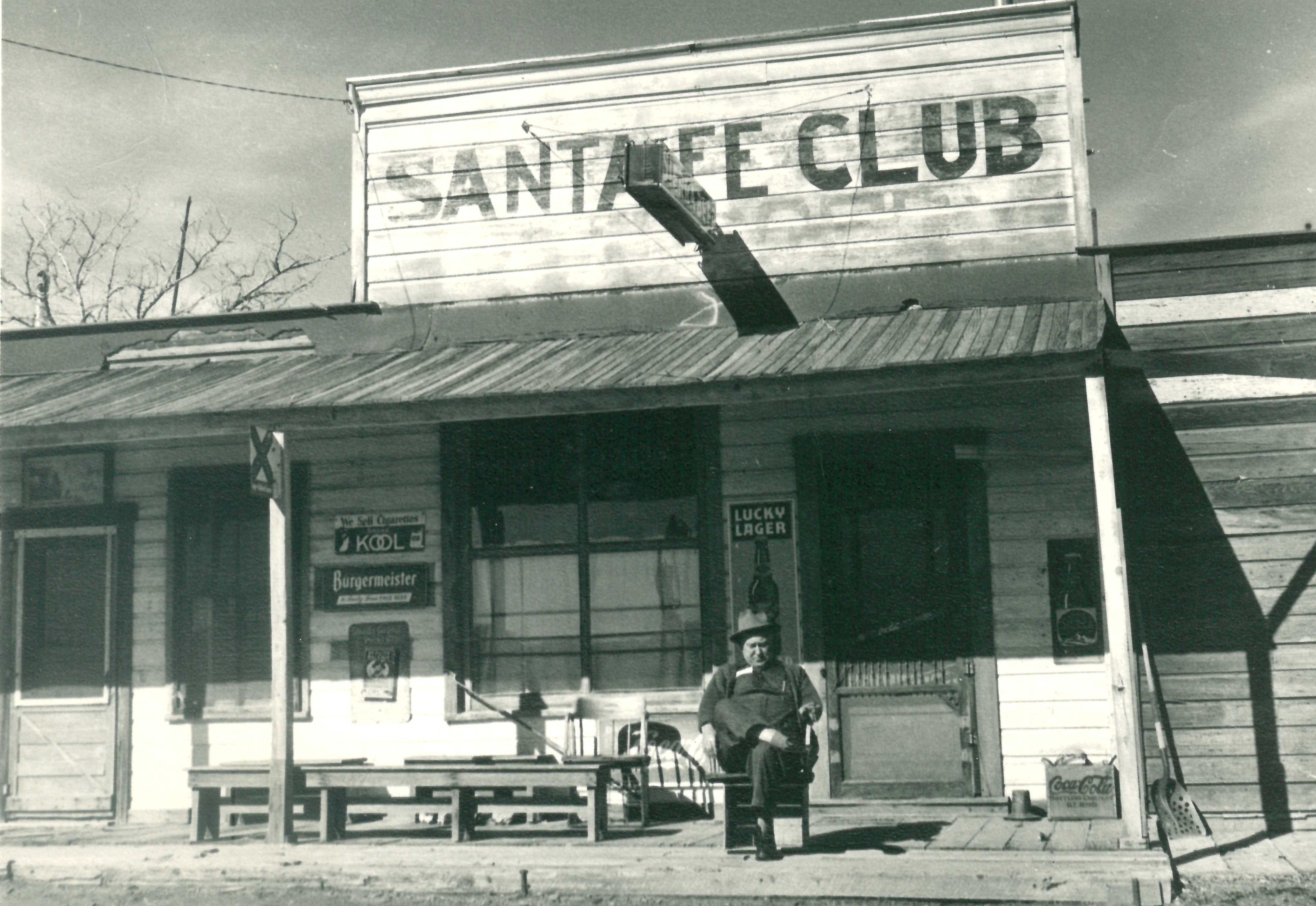
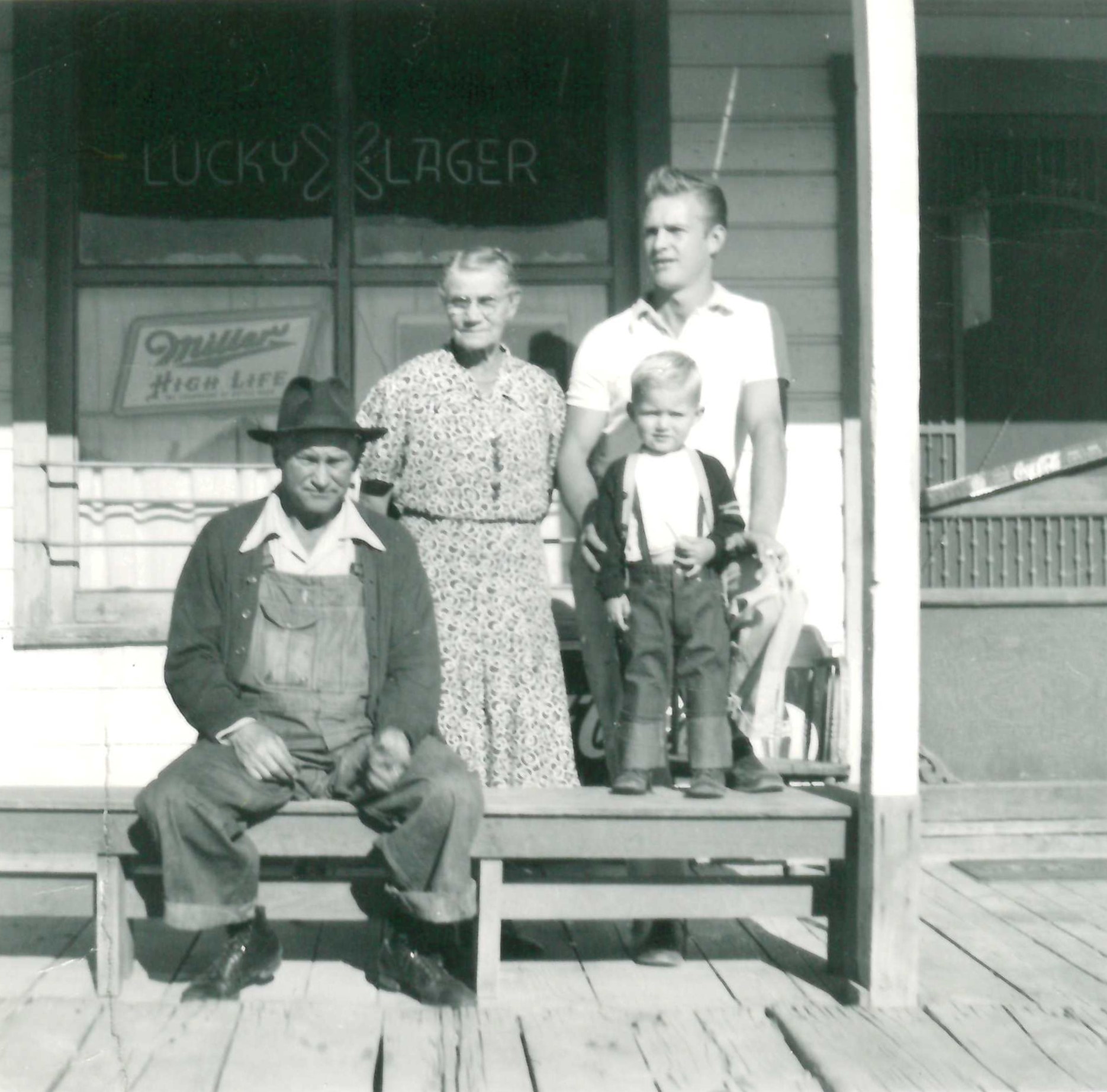
Fred Bremer sitting in front of the Santa Fe Club, Goldfield, Nevada

Visions of the end may secretly seduce our thoughts like water sinking into water, air drifting into air, clouds may form, when least expected, darkening the glass of self, cancelling resemblances of what we are. 

Even here, while summer sunlight falling through the golden folds of afternoon brightens up the air, we mark our progress by hour much we leave behind. 

And yet, this vanishing is burnished by a slow melodious light, as if our passage here were beautiful because no turning back is possible. 

It is our knowledge of the end that speaks for us, that has us weave, as slowly as we can, and elegy to all our walks. 

It is our way of bending to the world’s will, and giving thanks.

~Mark Strand

Etched in wall at Gallivan Utah Center

Four Bremer Generations, Fredrick William Bremer (1894-1963), Eliza Hope Bremer (1871-1965), Gilbert Raymond Bremer (1931-1985), and Gilbert Raymond Bremer Jr (1949-2005) on porch of Santa Fe Club.

The Santa Fe Club is still open and operating. Claims to be one of the oldest operating saloons in Nevada.

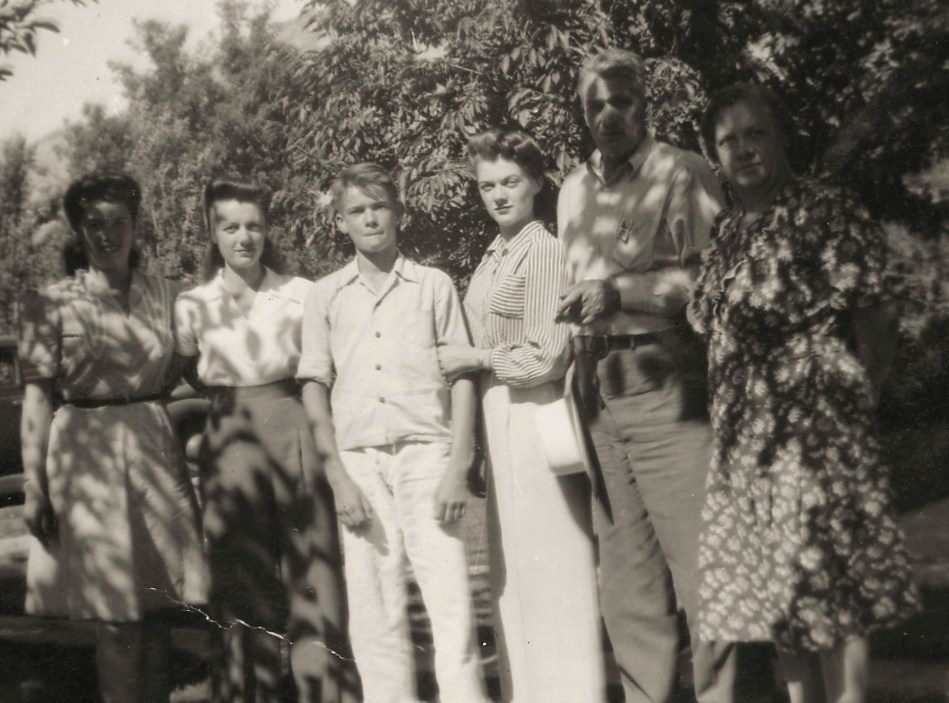
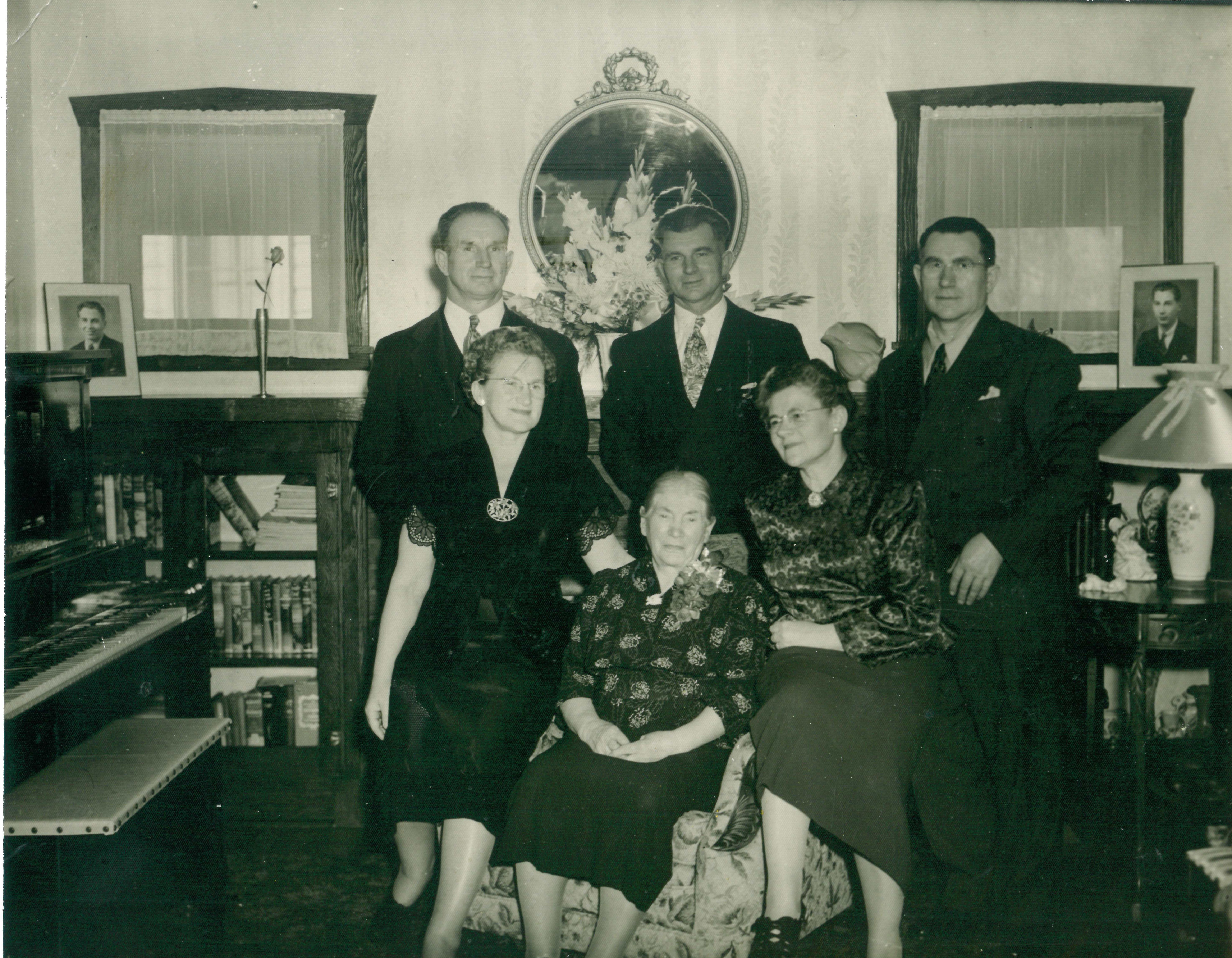
Fred Bremer (1894-1963), Carl Bremer (1914-1998), Jenny Britzman (1918-2008), Dorothy Corriveau (1921-2017), Robert Bremer (1928-2012), Gilbert Bremer (1931-1985), and Fred Bremer (1932-2012)

Van Leeuwen Occasion

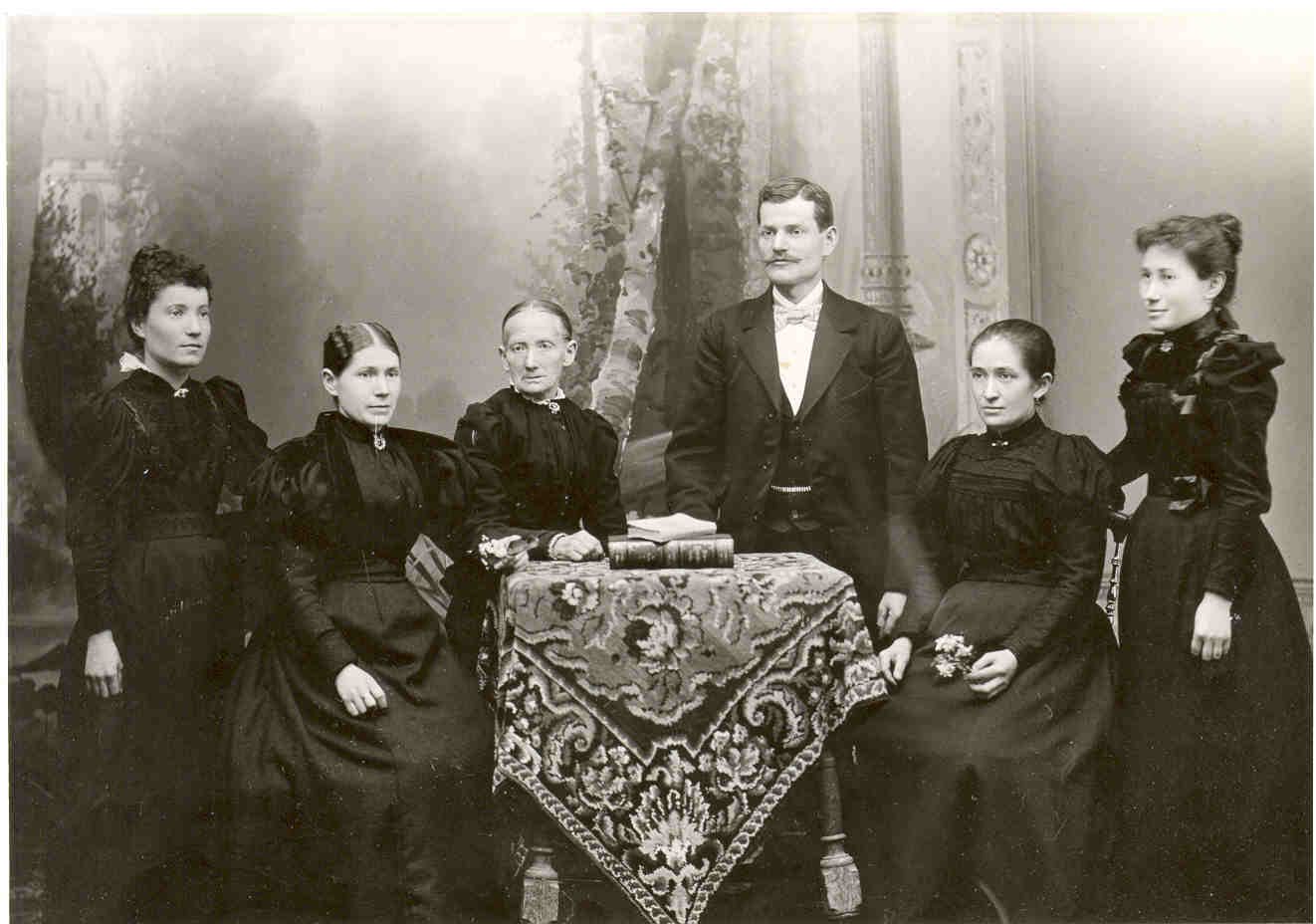
Hermiena (Minnie), Berendina (Dena), Jantjen (Jane), Catharina (Kate), Maria (Mary), Hermanus (Herman), and Harmina (Minnie) Van Leeuwen

Working through and scanning more of the Bremer photos, this photo and two others matched up and caught my attention. I don’t have many photos of my Great Great Grandma Van Leeuwen so this one was a great find. I have written previously of the Van Leeuwen family.

Harmina was born in 1860 in Gorssel, Gelderland, Netherlands. She married Gerhardus Hendrik (George Henry) Van Leeuwen in 1880 in Arnhem, Gelderland, Netherlands. He was born in 1856 in Oldenzaal, Overijssel, Netherlands. Minnie passed away in 1921 in Ogden, 102 years ago. This photo obviously predates her passing. George isn’t in the photo, so it may be after his commitment.

Dena was born in 1898, Kate in 1902, so four years between them. I am guessing Kate is somewhere around 12 and Dena somewhere around 16. That would put Herman at 18, Mary at 21, Jane at 23, and Minnie at 24. George isn’t in the picture and had married in 1908. Jane married in 1913, Minnie and Mary married in 1915, and Herman married in 1916.

So, if Kate is 11 or 12, this photo would be about 1913 to 1914. They appear to be dressed up, but no clues to the occasion, whether church or a wedding.

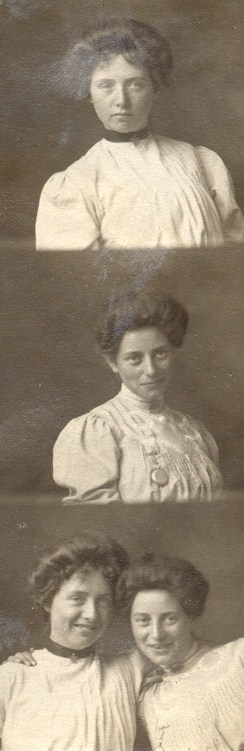
Minnie, Jane, Mary Van Leeuwen

Here is the second of the three photos. This one captures the three sisters together with Jane and Mary smiling. Then the last photo adds some additional context.

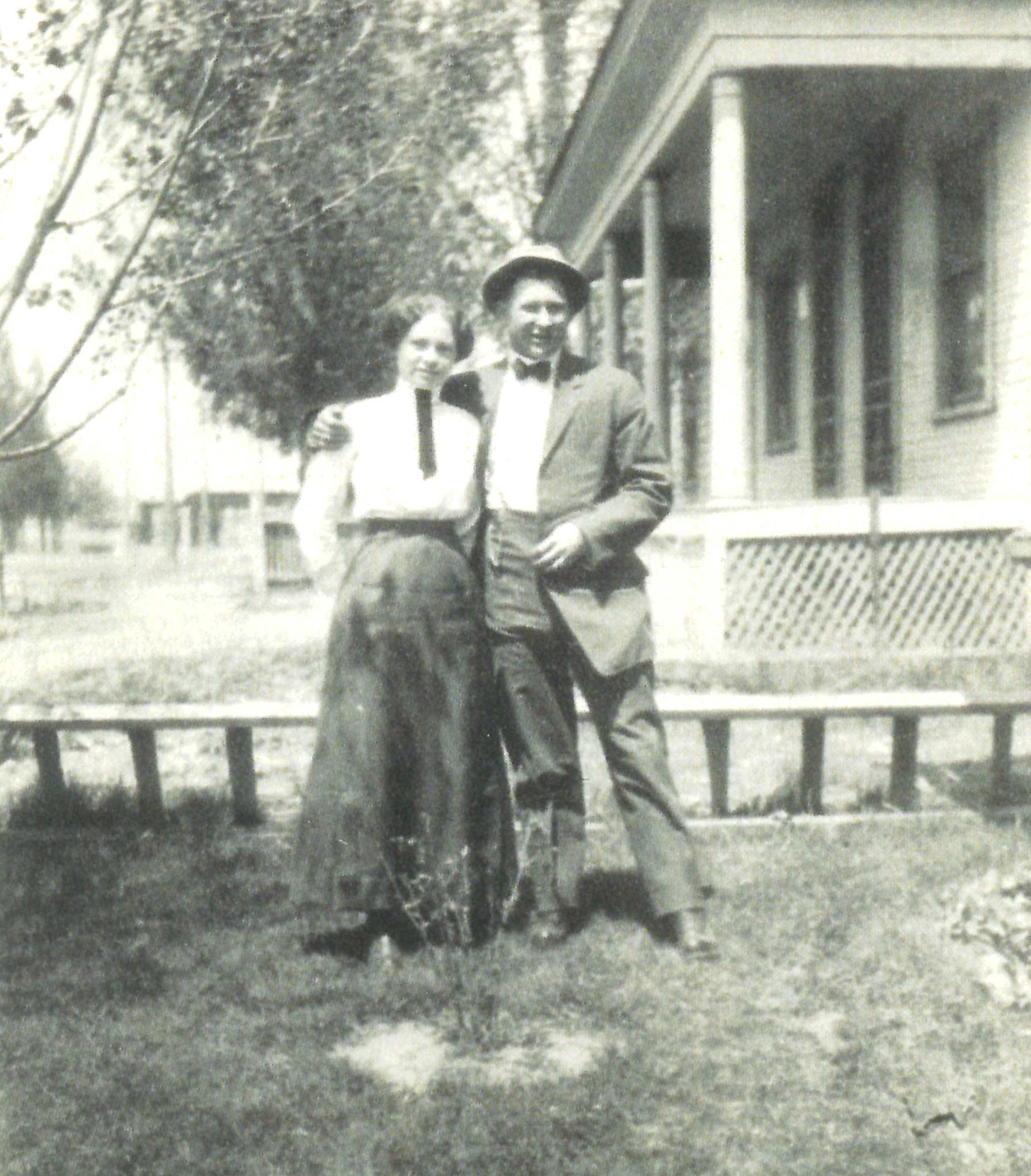
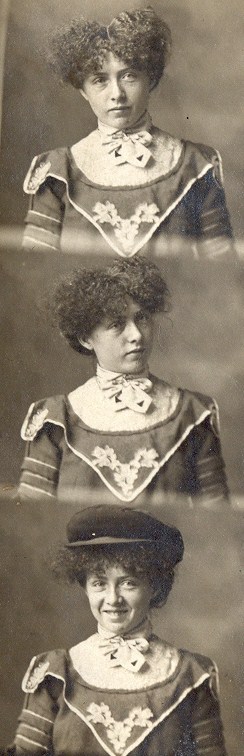
Jane Van Leeuwen and Fred Bremer

This photo seems to help pin it down a little bit more. Fred and Jane married 10 December 1913 in Ogden. There is grass on the ground and leaves on the trees. The tree on the left behind appears to have leaves coming out, as well as the bush or whatever is in front of the individuals. So, this appears to be a springtime photo. Since these photos came from photos passed down to the Bremer children, I am going to suggest this after Fred and Jane had married and they were visiting the family. If this is 1914, none of Jane’s siblings were married and may have been living at home still.

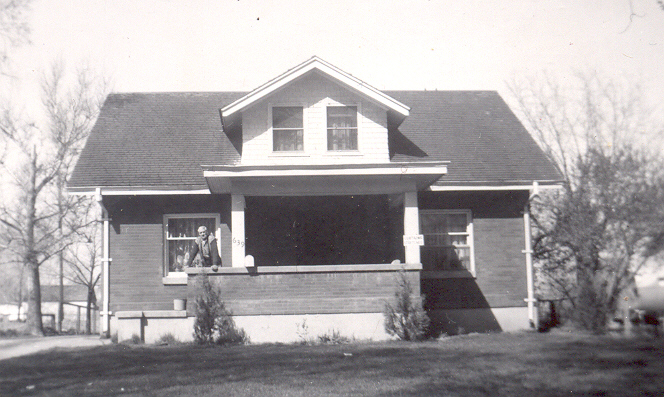
This house located at 3282 Wall Ave, Ogden, Utah was built by Gerhardus Hendrik Van Leeuwen. His wife, Hermiena Jansen Van Leeuwen, is standing on the front porch. This was their home.

In each of the photos, you can see the round pillars of the house next door. But in the first picture, you can see the square column of the house in which the family stands in front of. You can also see the brick, or concrete work, under the porch column. That square column also matches this photo of their home from the front.

As such, I believe this photo was taken at the Van Leeuwen home at 3282 Wall Avenue, Ogden, Utah in the spring of 1914. Minnie passed away in 1921, so the photo with her home is before 1921.

Myler Girls

Sarah Myler, Mary Mylder, Ruby Myler, and Leila Myler

I came upon a stack of Van Leeuwen and Bremer photos from my cousin Jennie Bremer Britzman’s estate.

I worked through all the photos, sorted and scanned them. The ones I recognized I uploaded to FamilySearch. The ones I did not, I shared with other Van Leeuwen family online. Nearly all of the photos were named. This one above was one that nobody seemed to recognize.

The back of it only said the following in four rows:

“top Sarah

“Mary

“bottom Ruby right

“Leila left

I presumably had 4 sisters, or closely related girls, with the names of Sarah, Mary, Ruby, and Leila.

Since these were of some relationship or linkage to the Bremer/Van Leeuwen families, I posted on an Ogden website. Almost immediately I had an obituary that was shared with me.

I started researching Mary Myler Standing and everything seemed to fall into place. Reviewed their profiles on FamilySearch confirmed it. They looked like these girls and were the right age. One of them even had a similar photo of the same age, probably the same dress and same day. Not only had I found the family, these four sisters are relatives of Amanda and my kids through the Buttar/Keep line.

I am still not clear on how or why the photo might have been in with the stack of photos. My only hunch is that these girls grew up in Clarkston, Utah and somehow knew the Bremer family of Richmond, Utah.

Here is the obituary:

WASHINGTON TERRACE – Our precious, courageous mother, Mary Myler Standing died at home, Thursday morning, October 31, 2002 of cancer, with her testimony of her Savior, Jesus Christ, and her membership in The Church of Jesus Christ of Latter-day Saints still strong. She was generous to those in need, the Church Missionary Program, Humanitarian Aid and Perpetual Education Fund. Mary Standing was born January 7, 1912, in Clarkston, UT to George Joseph Myler and Rachel Buttars Myler, the third of six children. She grew up in Clarkston, UT and graduated from North Cache High School. She worked on the family farm with her dad. She was a good horse rider and loved to race her horse with anyone willing. She always loved music. In her youth she would play the organ to accompany her dad playing the violin. She married Joseph Rulon Standing of Fielding, UT on January 21, 1933 and sealed in the Logan Temple December 16, 1937. They were blessed with six daughters. Mary always sewed for her daughters through the years, even though many of those years she had to use a treadle sewing machine late into the night. She provided an atmosphere of music in her home for her daughters. This required her working outside of the home part-time so that she could afford to have a piano and have them take music lessons. Later, when living in Denver, she gave free piano lessons to young people in her ward who could not afford lessons. She was famous for her wonderful home-made fudge and Boston Crème candy. Kids came from all over the Terrace on Halloween and asked, “Is this the place where you get the home-made candy?” (She also made “melt-in-your-mouth” pie crusts.) Mary always welcomed everyone, expected or not, into her home for meals or for just a place to spend the night. Everyone always felt welcome. During World War II, Mary and Rulon moved from Fielding, UT to Ogden so he could work at the Ogden Arsenal. Mary worked at the Washington Terrace Drug Store, Ballard & Carter Electronics, and eventually became a professional seamstress, both in the Ogden area and Denver, CO, for 11 years. Mary retired as a professional seamstress in Denver in 1974. When her husband retired from Chevron in 1975, they returned to Washington Terrace to live. Mary and her husband celebrated their Golden Wedding Anniversary in Ogden in 1983; they were one month short of their 66th anniversary at his death on December 15, 1998. Mary has served in numerous teaching and executive positions in The Church of Jesus Christ of Latter-day Saints. She and her husband served as ordinance workers in the Ogden Temple for a number of years. Mary always made the Savior and His Church her number one priority in her life. Her teachings and example of honesty, integrity, and testimony have been unwavering throughout her life. Her grandchildren and great-grandchildren loved her and visited her often. They felt the love and interest she had for each of them. She is survived by a sister, Vendalyn Apgood of Clarkston, UT and brother, George Blaine Myler of Mesa, AZ. She is also survived by five daughters: Lois Howell (Don), Centerville, UT; Doris Hancock (Harlen), St. George, UT; Linda Anderson Lucas (Gary), North Ogden, UT; Susan Rideout (Mack) and Retta James (Rick), both of Salt Lake City, UT, and 20 grandchildren and 46 great-grandchildren, numerous step-grandchildren and step great-grandchildren whom she loved with great devotion. She was preceded in death by her husband; daughter, Kathleen Standing; parents; and three sisters, Leila Thompson, Sarah Godfrey, Ruby Godfrey. The family wishes to thank Dr. Frank Haglund, McKay Dee Hospital Staff, and CNS Hospice staff, especially Michelle Miller, Doris Valentine, and Queenie Aydelott. Viewings will be held Sunday evening, Nov. 3rd, from 6 p.m. to 8 p.m. at Leavitt’s Mortuary, 836 36th St., in Ogden, UT, and Monday morning, from 10:45 a.m. to 11:45 a.m. at Washington Terrace Third Ward, 4900 S. 300 W. The services follow in the chapel at 12 noon. Burial will be at the Fielding, UT Cemetery.

Andras come to America!

History written by Frieda Andra. I previously shared the history of coming to America compiled by Deanne Yancey Driscoll. I understand this is the Boettcher family, not the spelling Frieda uses in the history.

Otto, Wilhelmina, Walter, William, Frieda, Clara Andra in 1907

My story begins in the old country – in Germany.  My father, Friedrich Theodor Andra, died November 23, 1902, in Meissen, Sachsen, Germany.  Mother, Wilhelmine Christina Knauke Andra, was left with five children, ranging in age from six months to nine years.  The children’s names were: Frieda Minna, Walter Theodore, Wilhelm Friedrich, Clara Anna, and Otto Carl.  My poor mother had to struggle to support us.  She did small jobs at home and we children helped.  I worked here and there to help along.

Theodor Andra

Three years later, while we were in the forest picking berries, Mother met a lady named Mrs. Bottcher.  Mrs. Bottcher told her about some Mormon missionaries who were holding some meetings.  So mother began attending the meetings.  One by one we all joined the Church.  Years later, after we were all baptized, mother invited the missionaries to our house.  She fed them and let them hold their meetings there.  However, the Lutheran pastor didn’t like it, particularly because Mother was a widow, and he gave her a very hard time.

Amalia, Christiana, Wilhelmina, Herman, Anna, and Klara Knauke

In 1909 the Bottcher family decided to go to America.  Mother asked them if they would take her son, Willie.  They agreed to do this.  Mother gave them the money for Willie.  When they arrived to Salt Lake City, they attended the German Meeting in the Assembly Hall.  After they had been in America half a year, they sent Willie to do farm work for a man they had met at the German meeting.  They didn’t even know where the farm was nor did they care.  When they wrote to Mother, they said Willie was lost.  When Mother told the people in Germany that her son was lost in America, they called her names and told her she was wicked to have let him go.  But all the time God knew where Willie was.  He was opening the way for us to go to America.  Mother prayed to our Father in Heaven for her son’s safety and that she might be able to find him again.  Her boss, Conrad Zinke, sent telegrams trying to locate Willie, but was unsuccessful.

Bill, Frieda, Otto, Christiana, and Walter Andra

One morning Mother was on her way to work when a light shone about her, and she heard a voice say “Go to America.”  When she told her boss, he said he’d be glad to help her all he could.  When he asked her if she had any money, she answered, “Very little.”  He was so kind.  He sent a man over to help pack, get the tickets, and get the money he’d given them exchanged for America currency.  They gave us a big going-away party in the villa.  The farewell dinner was held in their most beautiful room.  They cried and hugged us as the said their good-bye.  Our friends gave mother the rest of the money se needed to make the trip.  Even my boyfriend, Mr. Knorr contributed.  Grandmother Wilhelmine Richter Knauke and Aunt Augusta were at the depot to bid us farewell.  They really thought Mother was foolish for going to America.  They didn’t realize my mother had been inspired to go.  She knew God would guide her if she were faithful.  God in Heaven surely did guide us all the way to America.  Glory be to him in the highest for all the wonderful blessings we have enjoyed.

William, Frieda, Christiana, Otto, Clara, and Walter Andra
Christiana Wilhelmina Knauke Andra Wendel

We left to America on the 5th of May in 1910.  We traveled by train to Bremer Hafen.  There we boarded a streamer: The north Deutcher Loyd.  For two weeks I was terribly seasick.  When we reached Philadelphia, the red salt was unloaded.  Everybody was very kind to us there and people gave us money.  The cook, who had become a good friend of mine, bought me a ring but my sister Clara insisted she wanted it, so I got the locket he had bought for her.  Then we traveled to Galveston, Texas.  When we arrived there, we freshened up and then my friend, the cook, showed us the town.  He bought us some bananas, which we had never eaten before.  We swallowed the chewing gun whole, as it was also strange for us, and then we all got stomach aches.  We certainly enjoyed the cook.  He was always kind to us and saw that we had good food to eat.  Another fellow gave us a cake.  When our train was due, we had to say our good-bye to these fine friends.  It was quite rough on the train.  We couldn’t talk much so we just enjoyed the scenery.  Many funny things happened.

Wilhelmina Christiana Knauke Andra Wendel

After we arrived in Salt Lake City, we hired a hack, which is like a buggy but much nicer.  The driver sits up very high.  We couldn’t locate the Bottcher’s so we went to the L.D.S. President’s (John F. Smith) residence where their daughter Ida worked.  Ida was so happy to see us.  She sent us to her sister Clara’s.  After visiting there, she gave us her mother’s address and we left to look for it as it was getting late.

Otto and William Andra, Unknown

Although we had come to America in the hopes of finding my brother, Willie, whom the lady had reported as lost, I know our coming to America was God’s plan.  Our Father in Heaven works in a mysterious way, his wonders to perform.  Our driver kept driving toward the address we had given him.  As we came to 9 West and 4 North, he turned.  This country was so different to us.  Then Mother saw a little boy coming down the street and we stopped to ask him directions.  Then Mother shouted, “That is my boy!”  And sure enough, it was our brother.  He couldn’t speak German.  He just stood there trembling and pointing to where the place was.  We all jumped out and hugged him.  He had been on his way to the depot to meet our train.  Mrs. Bottcher had told him we were coming when we had returned from Fairview where he had been working for that man.  Two blocks away lived the lady we had been hunting.  So we paid the driver $3 for driving us around all day.  When we knocked at the lady’s house, she refused to let us in.  For her excuse, she said, “Keep your things out there.  I don’t want any lice in the house.”  Of course, we knew we didn’t have lice, but we sat outdoors on some lumber, and she bought us a piece of bread and a drink of water.  Her home was filthy.  There was a pig in the house and the chickens were running in and out.  What an awful place!  When Mr. Bottcher came home, he invited us in and fed us.

John & Christiana “Mina” Wendel

Then the Sister Rigler came and said, “Come.  There is an empty house you may stay in.  I will give you a couple of blankets and a lantern.”  It was about eleven o’clock by now and we were all very sleepy.  We were even to tired to look around the house.  We all slept soundly, grateful to have our brother Willie with us again.  His hips were bleeding, and his feet were sore and bleeding also.  He had not been cared for, only given a lot of cussing and lickings.

John & Christiana Wendel

In the morning we looked around the house.  This house had been flooded during the time that the Jordan River had flooded this area.  It had left dirt throughout the house.  There were no windows. Outside there was a nig barn, and flowing well, and four large trees (Poplars).  It was a beautiful day.  Everything looked very green.  Mother called us together to have our morning prayers.  She thanked our Father in Heaven for all His goodness and for providing us with this home, which would be our paradise.  We were so thankful to be in America.  I have never heard a more inspiring prayer of life.  The next morning Mrs. Rigler came back and told Mother who owned the house.  We made arrangements to rent the house for $2.50 a month.  Then Mrs. Rigler took Mother to town on a streetcar to buy a stove, just a small one, washboard, washtub, dishes, food, pans, and a dishpan.  While Mother was gone, we scraped the dirt out.  Sister Rigler bought glass for the windows and even helped Mother put them in.  Walter made a cupboard from some lumber he found.  We used orange crates for chairs.  We were very busy that Saturday.  Then on Sunday we attended Sunday School.  The people were all very kind to us.

Christiana & John Wendel

We had arrived June 3.  On June 5 I got a job for $5 a week plus rom and board at the boarding house.  On June 6 Walter found a job at the flour mill (Hasler’s).  He boarded with Mother.  Willie worked at a slaughterhouse, so we were able to get meat to eat – tails, liver, etc.  It was very good.  Mother bought Willie a small red wagon which he took to market and bought home food we had never seen before.  The cantalopes made us sick.  We ate the corn raw, which didn’t make us feel any better.  It wasn’t long before we learned which foods to cook and which food to eat raw.

Christiana and Frieda

Well, it wasn’t long before our little house was a cute little dream house, complete with furniture and curtains.  Soon we had some baby chicks, a dog, and cat.  Oh, those wonderful, happy days in a very wonderful country which was given to us by God.  God Bless America.

                                                                                                Frieda Minna Andra

Christiana and John Wendel

P.S. On Sunday, June 20, 1965 we saw our old home – this very one we had immigrated to on June 4, 1910.  The house had now been covered with shingles on the outside.  The barn has been moved and the well is no longer there.  It was such a joy to see this home we used to live in.

Christiana Wilhelmina Andra Wendel

Grandpa’s Garden

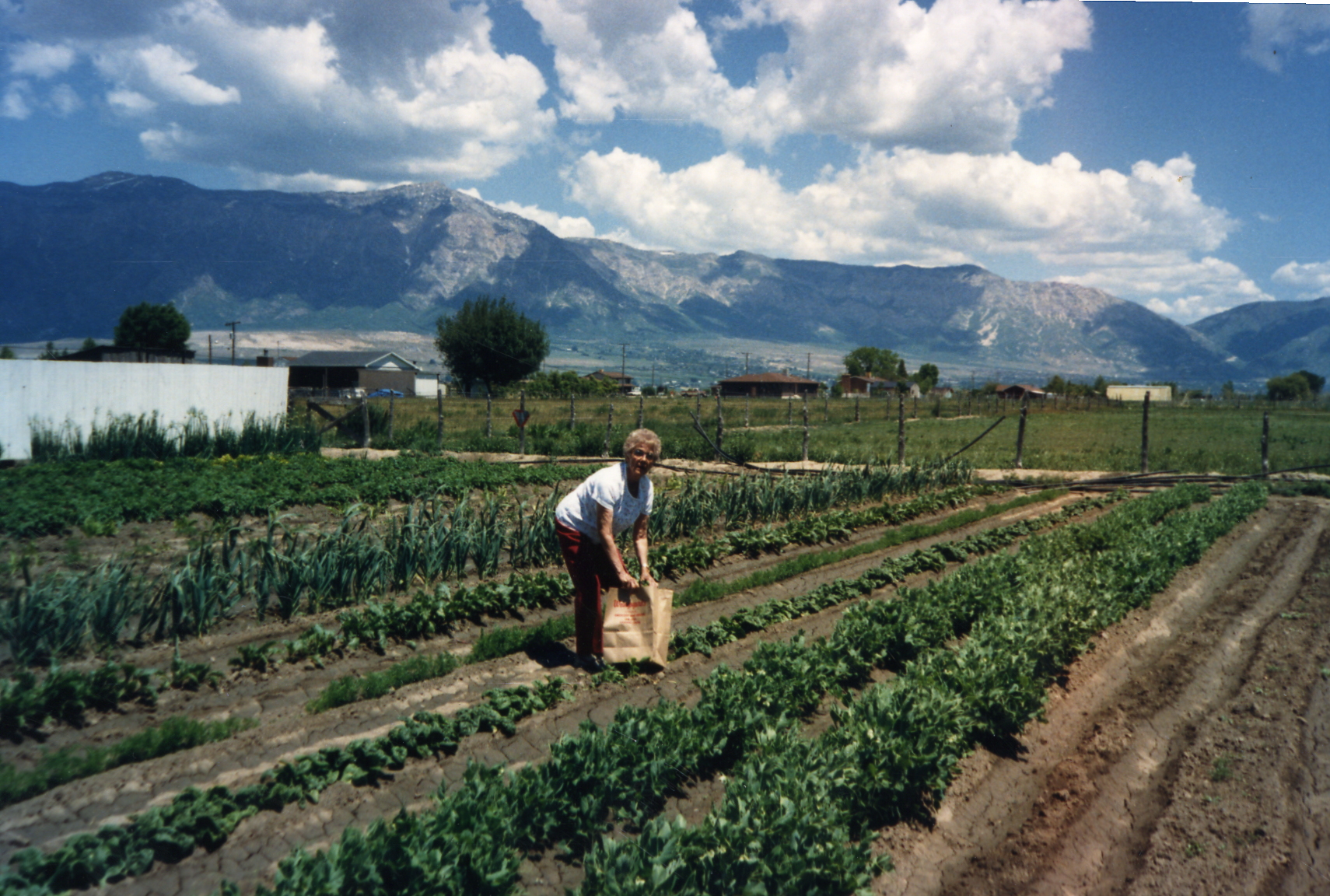
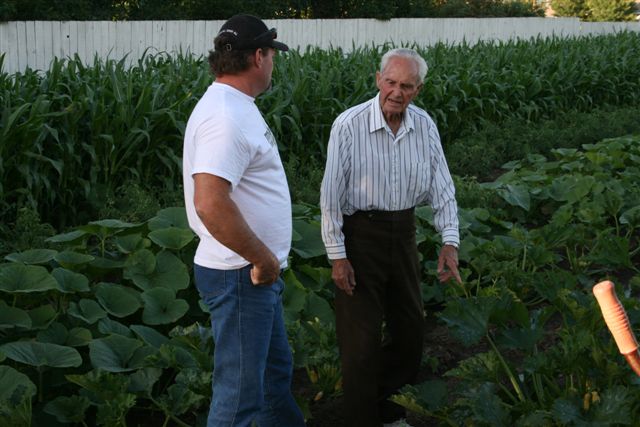
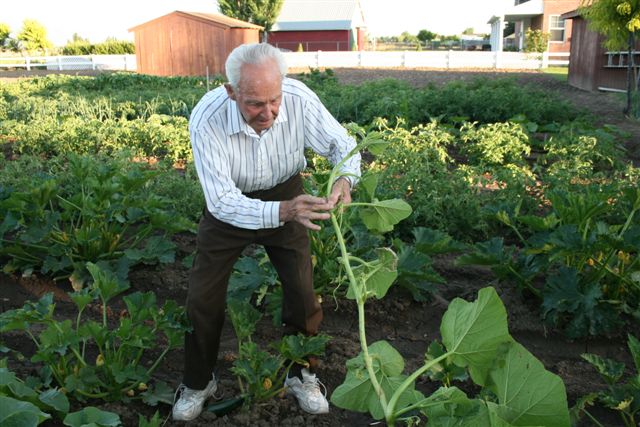
As I grew up, I did not get to see my Grandpa and Grandma Ross more than a couple times a year.  When we went to visit in Utah, there was always a trip to the garden.  The garden had its own mythical place in our minds.  It scared me as a kid, I don’t know why.  It was like it could eat me it was that alive.  As time went on, I came to appreciate how much hard work and effort it took.  We reaped its bounteous blessings as well.  As I worked in the garden this morning, I thought to go through and see what photos I have of Grandpa and Grandma’s garden.  Here is what I could file.

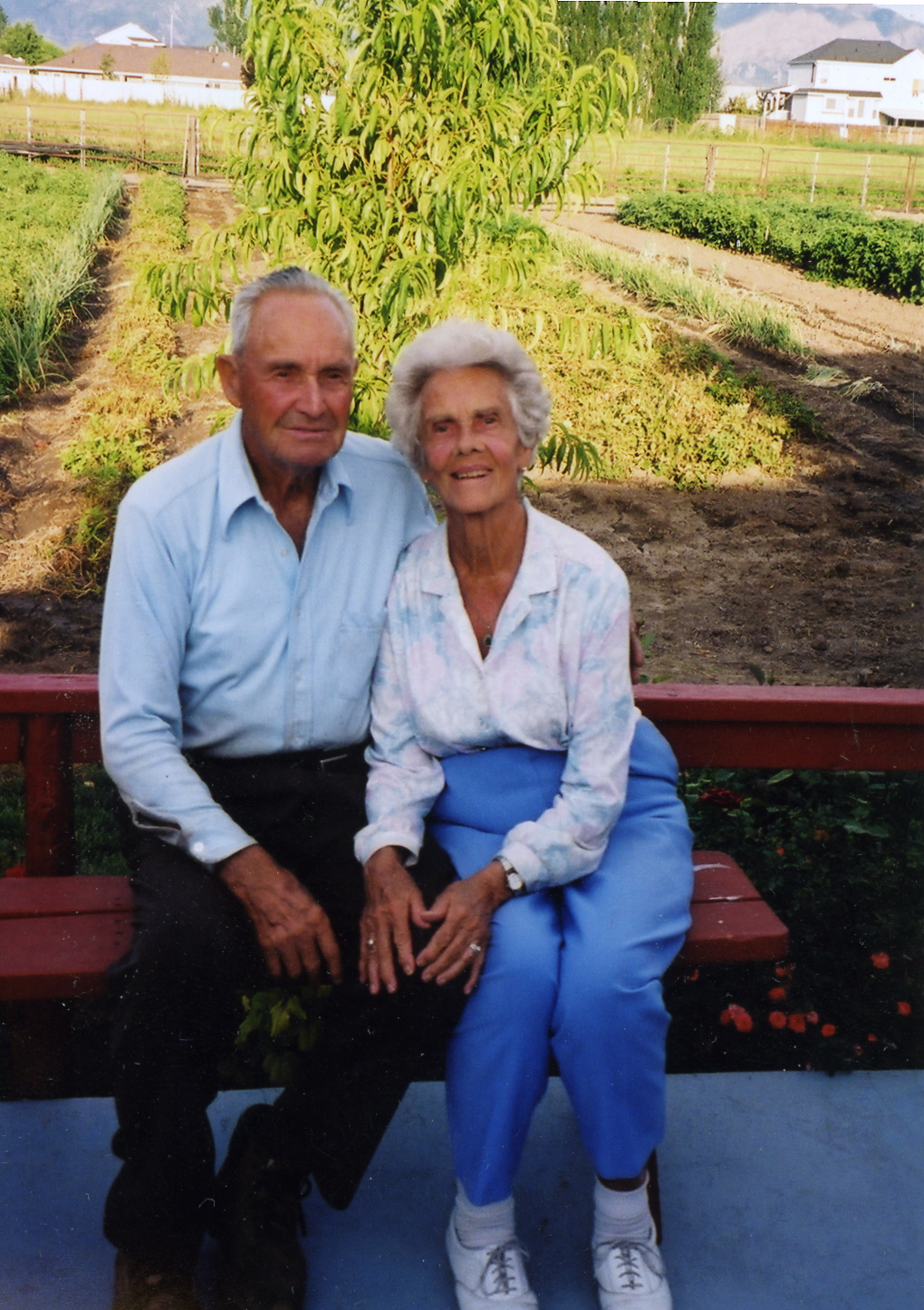
Milo and Gladys Ross, 2004, the garden struggled this year because Grandpa was spending all his time taking care of Grandma, and Grandma kept sabotaging it by turning on the water all the time and regularly flooding parts of it out.


Gladys Donaldson Ross in ‘the garden’


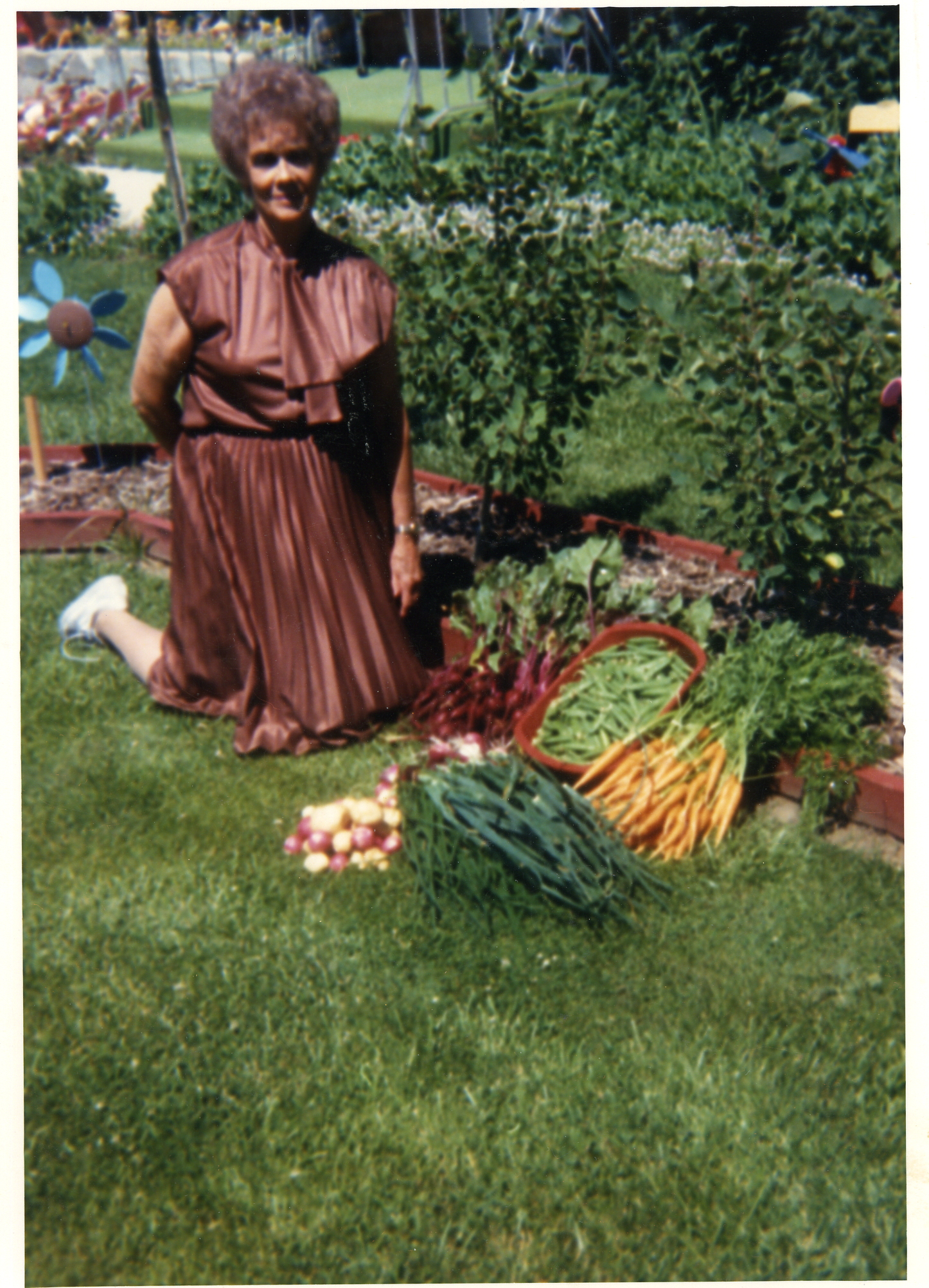
Gladys Ross with some of the harvest


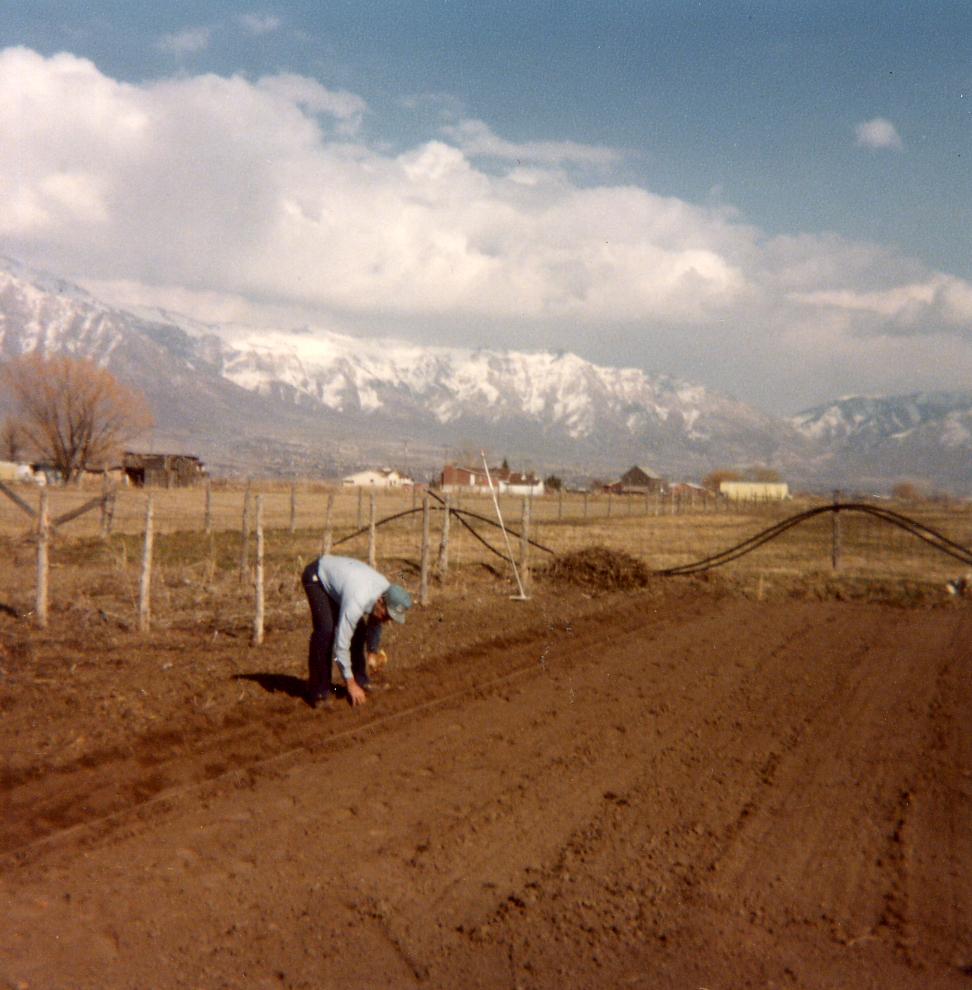
Planting


2009


2009 Jerrett and Matt Ross – back
Jeff and Milo Ross – front
Garden behind


Gladys with potatoes


Jeff and Milo in Garden, 2009


Milo Ross with another angle of his garden behind him, 2009

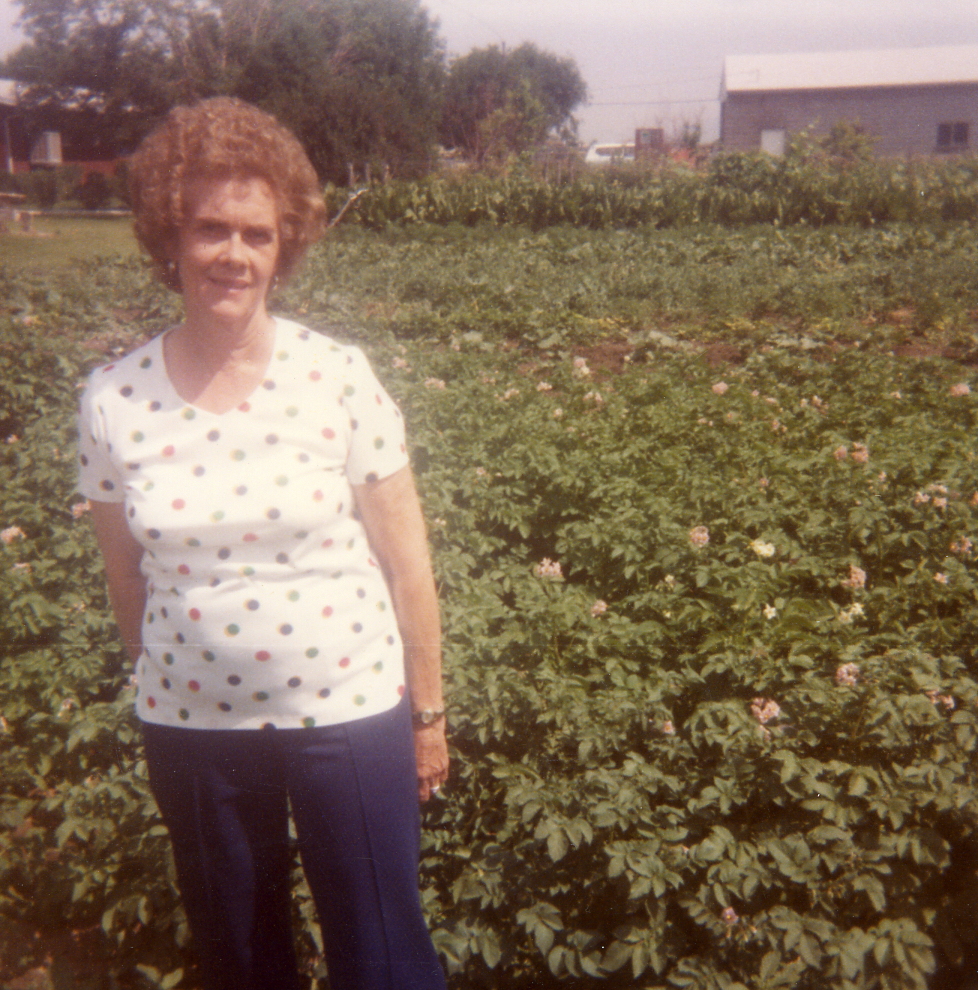
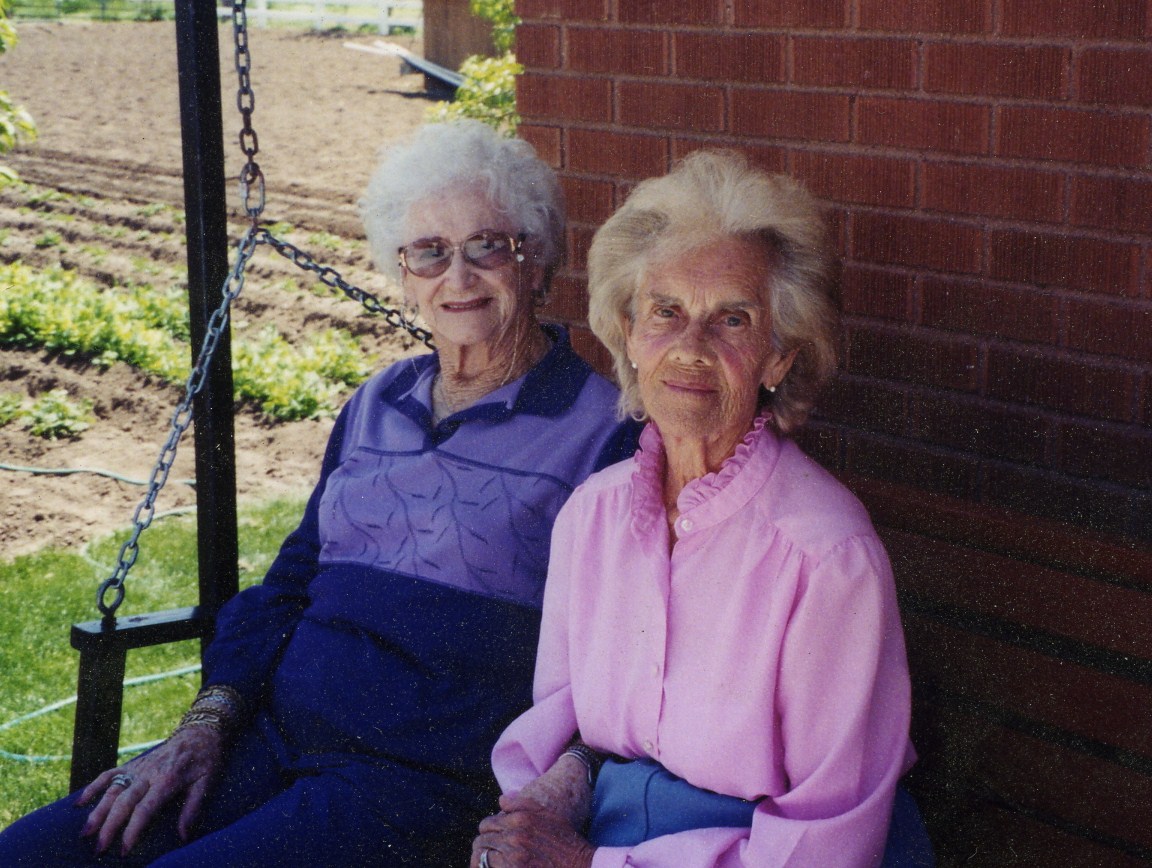
Jennie Bremer, Gladys Ross, 2004

Van Leeuwen Children

Some time ago I wrote about my Van Leeuwen ancestors.  Since I have a number of photos of the children, I thought I would make them available.

I listed the children in that earlier post but will list them for quick reference.

Gerhardus Hermanus Van Leeuwen (1881-1883)

Elsebina Johanna Van Leeuwen (1883-1883)

Johanna “Annie” Hermiena Van Leeuwen (1884-1958) married Ebele Edsinga (1884-1962)

Elsebina “Elsie” Maria Catharina Van Leeuwen (1886-1927) married Elmer Leroy Staker (1884-1966).

Gerhardus Hermanus “George Henry” Van Leeuwen (1887-1937) married Marie Timmers (1890-1975)

Hermiena “Minnie” Van Leewen (1890-1971) married George Berglund (1894-1962)

Jantjen “Jane” Van Leeuwen (1891-1942) married Frederick William Bremer (1894-1963)

Marie “Mary” Van Leewen (1893-1977) married Andrew “Andy” Hewitt (1892-1981)

Hermanus “Herman” Van Leeuwen (1896-1973) married Cora Edna Biddulph (1899-1985)

Berendena “Dena” Van Leeuwen (1898-1959) married David Delos Donaldson (1894-1953)

Christiena Van Leeuwen (1901-1901)

Catharina “Kate” Johanna Van Leeuwen (1902-1975) married Richard Leslie “Les” Collins (1899-1969)

Elsie Van Leeuwen

Sisters Minnie (top) and Jane Van Leeuwen

Minnie Van Leeuwen

Herman Van Leeuwen

Dena and Herman Van Leeuwen

Kate Van Leeuwen

Fred and Jane Bremer

Mary Hewitt and son, Grant

Jane Bremer with daughter Dorothy

Herman Van Leeuwen Family

Kate and Les Collins

Minnie and George Berglund

(l-R) Minnie Berglund, Kate Collins, Mary Hewitt, Marie Van Leeuwen, Cora Van Leeuwen taken on 6 October 1970

Kate Collins and Herman Van Leeuwen

Les and Kate Collins


Van Leeuwen – Janzen Wedding

Harmanus and Johanna Janzen are pleased to announce the marriage of their daughter Hermina to Gerhardus Hendrik Van Leeuwen, son of Gerrit and Elsebina Van Leeuwen. Gerhardus and Hermina were married in Arnhem, Gelderland, Netherlands on 31 March 1880.

Gerhardus is a carpenter and the family will make their home in Arnhem.

That might be somewhat how the wedding announcement might have been like for the couple, except in Dutch.  When referring to individuals in the United States, I have kept the English capitalization of Van and Der, while the Dutch individuals I have maintained the Dutch preference.

Gerhardus Hendrik Van Leeuwen (who went by George Henry in English) was born the fourth of nine children to Gerrit van Leeuwen and Elsebina Maria Catharina Weenig on 16 October 1856 in Oldenzaal, Overijssel, Netherlands.  I have written of them at this link: Van Leeuwen-Weenig Wedding.  He was a carpenter by trade, on the finishing side.  He would also tune and service organs.  After moving to the United States, he worked as a finishing carpenter.

We do not know anything about how they met, the courtship, or the marriage in 1880.

Hermina Janzen (who went by Minnie) was born the fourth of nine children to Harmanus Janzen and Johanna van der Meij on 19 August 1860 in Gorssel, Gelderland, Netherlands.

George and Minnie would eventually have 12 children born to their marriage (Here are some pictures of the children).  Nine of these would live to adulthood and marry.

Gerhardus Hermanus Van Leeuwen was born 22 February 1881 in Arnhem and died 19 November 1883 in Amsterdam, North Holland, Netherlands.

Shortly after Gerhardus’ birth, the family moved to Amsterdam.  The family moved around quite regularly, sometimes only living in one place for a couple of weeks.  This may show the family was struggling financially.

Elsebina Johanna Van Leeuwen was born 5 January 1883 in Amsterdam and died 18 Mar 1883 in Amsterdam.

Johanna Hermiena Van Leeuwen (known as Annie) was born 30 January 1884 in Amsterdam and died 20 July 1958 in Ogden, Weber, Utah.  She married Ibele Idsenga (known as Emil Edsinga) 3 February 1905 in Ogden.

It is assumed that around this time (1885-1886) is when George incurred a head injury.  My Great Grandmother, his daughter Dena, indicated he fell from a ladder.  Other siblings reported to descendants that he was struck in the head with a board.  This is believed to be the reason why the family moved back to Arnhem, that due to his inability to work, this may be the reason they returned to Arnhem to be near family and rely on them for help.

Elsebina Maria Catharina Van Leeuwen (known as Elsie) was born 7 March 1886 in Arnhem and died 2 March 1927 in Ogden.  She married Elmer Leroy Staker 2 May 1906 in Salt Lake City, Salt Lake, Utah in the LDS temple.

The family then moved back to Amsterdam perhaps in pursuit of employment again.  It was in Amsterdam that the Van Leeuwens met with missionaries of The Church of Jesus Christ of Latter-day Saints.  George and Minnie were both baptized 4 June 1887.  The story goes that George saw some men running down the street with people chasing them.  Concerned for their safety, he pulled them into his home.  He learned they were Elders of The Church of Jesus Christ of Latter-day Saints.  The missionaries taught the Van Leeuwen the gospel and helped them convert leading to their baptism.

Gerhardus Hermanus Van Leeuwen (reuse of the older sibling’s name, known as George) was born 29 August 1887 in Amsterdam and died 21 January 1937 in Ogden.  He married Maria Timmers 17 September 1908 in Salt Lake City.

A sponsor from Ogden,was to meet the family at the train depot in Ogden. But no one was there when they arrived.  A man by the name of Mr. Dalbout, saw their plight, and he invited the family to go home with him.  There was no place to stay for a long period, so they converted a chicken coop into living quarters.  This is where the family waited until George could join them. She took in laundry from other families to support  themselves until he arrived.

According to George’s 1932 death certificate, he suffered from epilepsy with psychosis for 45 years. That would predate his immigration to the United States. His mental health could have become an issue when immigrating, and it may have been easier if Minnie and the children had gone first and established their new home. That may have enabled George to follow the next spring without risk of having the family turned back. Epilepsy had a stigma of illness that the family had to deal with, everything from wickedness to a contagious disease.  This way, only he could potentially be turned away from entering the county.  The plan was that with the family already in Utah, he would be permitted to join them in Utah.  George arrived 21 March 1889 in New York City, New York on the S.S. Veendam having left Rotterdam.

Minnie’s membership records appear in Ogden 1st Ward and Wilson Ward of the LDS Church by October 1888.  The family settled in the area around Wall and 32nd in Ogden.  A number of other Dutch emigrants were also in the area.

Hermiena Van Leeuwen (known as Minnie) was born 26 January 1890 in Ogden and died 21 August 1971 in Ogden.  She married George Berglund 22 September 1915 in Ogden.

Jantjen Van Leeuwen (known as Jane and Jennie) was born 30 December 1891 in Ogden and died 27 July 1942 in Los Angeles, Los Angeles, California.  She married Frederick William Bremer 10 December 1913 in Salt Lake City at the LDS temple.

Maria Van Leeuwen (known as Mary) was born 15 November 1893 in Ogden and died 16 August 1977 in Ogden.  She married Andrew George Hewitt (known as Andy) 22 September 1915 in Salt Lake City at the LDS temple.

Hermanus Van Leeuwen (known as Herman) was born 10 July 1896 in Ogden and died 26 November 1973 in Ogden.  He married Cora Edna Biddulph (or Lowe) 21 July 1916 in Ogden.

Berendena Van Leeuwen (known as Dena) was born 28 December 1898 in Ogden and died 5 March 1959 in Ogden.  She married David Delos Donaldson (known as Dave) and I have written of their marriage at this link: Donaldson-Van Leeuwen Wedding.

Christiena Van Leeuwen was born 16 March 1901 in Ogden and died 20 March 1901.

Catharina Johanna Van Leeuwen (known as Kate) was born 2 December 1902 in Ogden and died 27 November 1975 in Ogden.  She married Richard Leslie Collins (known as Les) 17 March 1920 in Ogden.

All the individuals who knew the family mention first how close the family was.  The family was known that once a visitor was around, the food came out.  Apparently Minnie was a master cook and all loved her food.  She apparently made loaves and loaves of bread at a time.  The neighbors knew what days she made bread and would regularly buy loaves from her.  Friends of the children knew what day to come and eat some of Minnie’s bread.  After she passed, her daughters had all learned well and continued the tradition and into their own families after marrying.

The family was also known for the practical jokes they would play on one another and the constant play quarreling.  Even throughout life, some of the siblings would make up stories about other siblings that would make the sibling mad and things turned hot for a while and then the favor would return.  All throughout the rest of their lives, the siblings met together oft and enjoyed meals together.

Five children in back (l-r): Minnie, Annie, Elsie, George and Jane. Second row: George, Dena, Hermina. Front: Mary and Herman.

The above photo placements are as follows.  You can tell George and Minnie Van Leeuwen.  Dena is sitting on the stool between the parents.  The five children behind from left to right are Minnie, Annie, Elsie, George, and Jane.  The two in front of George are Mary and Herman.  Kate was not born yet when this picture was taken roughly in 1902.

George’s head and mental injuries continued to worsen as the years passed.  The family either had to keep him safe during a fit and keep him calm to keep from inducing a fit.  By the time 1911 rolled around, the family could no longer deal with his mental condition on their own.  Dena referred to her “Daddy” as tender and sweet and then at the switch he would become angry and threatening.  He had made enough threats and raised enough raucous that neighbors called the police.  George was committed to the Utah State Mental Hospital in Provo, Utah, Utah in 1911.  The family tried to get him out and succeeded.  Unfortunately, he lost control again and ended up spending the rest of his life in the mental hospital.  The family would drive down nearly every weekend to pick up “Daddy” and keep him for the weekend before taking him back.  By the mid 1920’s, they could not even take him home on the weekends his condition was that poor and uncontrollable.

Photo from George’s Utah State Hospital file

“Momma Minnie,” as she was known to friends, died 9 June 1921 in Ogden.  She was buried 3 days later in the Ogden City Cemetery.  When Hermina died in 1921 she left a will specifying $1 to Gerhardus who was in state care and otherwise her estate was divided among her surviving children.  Hermina died at Elsie’s home.  George died 5 January 1932 in Provo, Utah, Utah.  He was buried 3 days later beside his wife.

Donaldson-Van Leeuwen Wedding

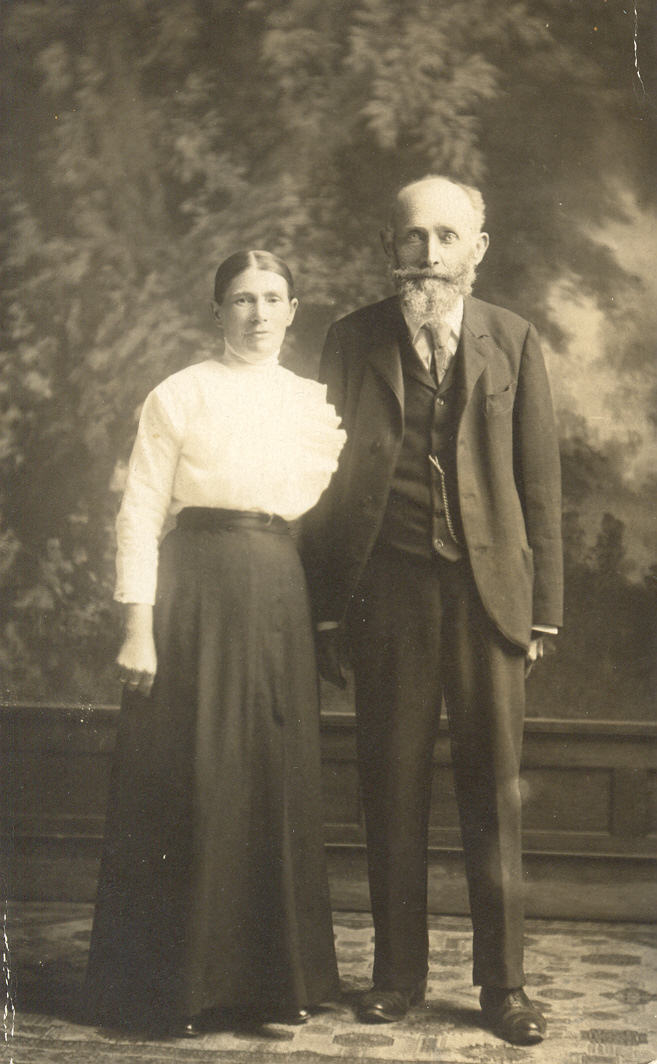
George Henry and Minnie Van Leeuwen are pleased to announce the marriage of their daughter Dena to David Delos Donaldson, son of Mary Elizabeth Donaldson and the late William Scott Donaldson. David and Dena  were married in Salt Lake City, Salt Lake, Utah on 16 July 1919.

David is currently an independent plumber in Ogden, Weber, Utah.

The couple will return to make their home at 2310 Grant Avenue in Ogden, Utah.

David Delos Donaldson (he went by Dave, his son also went by Dave or Davie, so to keep them clear, I will refer to father as David and son as Dave) was born 26 March 1894 in Evanston, Uinta, Wyoming.  He was the second of seven children born to William Scott Donaldson and Mary Elizabeth Williams.  I have previously written of David’s parents at this link: Donaldson-Williams.  David grew up in Evanston, Uinta, Wyoming and Park City, Summit, Utah before moving to 2270 Moffits Avenue, now 2270 Ogden Avenue, in Ogden, by the time he was six.  He lived at this address until he moved to Twin Falls, Twin Falls, Idaho to work for Ballantyne Plumbing Company as a Sham Filler.  When he registered for the World War I draft on 5 June 1917, he was living on Shoshone Street North in Twin Falls and listed that his mother and two siblings were dependent on him.  He may have listed this in hopes of not being drafted.

Ballantyne Plumbing & Heating Company was newly incorporated (about 1916) by Varsell Ballantyne who had just moved from Ogden.  Varsell had been one of the incorporators of The Ogden Plumbing, Gas & Steam Fitting Company in 1904 or 05.  He had worked in the same spheres as David’s father and probably felt some desire to help the Donaldson family and invited David to Twin Falls.  He may also have been the master to which David was an apprentice, or another plumber worked with in the Ogden PG&S Company.  While David worked for Ballantyne Plumbing Company, it was located at 145 Second Avenue East in Twin Falls.  David lived on Shoshone Street North, probably not far from his employment.

The draft card indicates that he had gray eyes, black hair, and stood tall and stout.  David served in the U.S. Army during World War I.  When he was finally drafted, he went to Utah to report with his two brothers who were also drafted (another brother would also serve in World War I).  Unfortunately, the government cannot find his service paperwork and very little is known of his time served.  His obituary indicates he served in the 91st Division of the Army.  We do not know his dates, but this division fought in the Battle of Saint-Mihiel in 1918 and went on to fight in the Meuse-Argonne Offensive through the rest of the year.  It was in the Meuse-Argonne Offensive that David would receive his life lasting injuries to his lungs from the dreaded gasses of World War I.  One lung collapsed and never worked again, the other lost a large percentage of its capacity.  He would receive weekly treatment for the rest of his life (over 30 years) for these injuries at the Veterans Hospital in Salt Lake.  He became a member of the Disabled American Veterans, Ogden Chapter 4.

l-r: Ed, David, and George Donaldson

Berendena Van Leeuwen, who went by Dena, was born 28 December 1898 in Ogden.  She was the 10th of 12 children born to Gerhardus Hendrik and Hermina  Janzen Van Leeuwen.  I have written of George and Minnie’s marriage here: Van Leeuwen – Janzen Wedding.

Nine of these children would live to adulthood and marry.  Both parents joined the LDS church in 1887 and immediately sought to immigrate to Zion.  The family immigrated to Utah in 1888.  Gerhardus waited until the next year to immigrate.  Gerhardus had fallen from a ladder at work giving him head injuries that lead to epileptic seizures and bouts of insanity.  These considerations were perceived as mental illness at the time and could have kept the family from being admitted had they all come together.  The Van Leeuwen’s immigrated from Arnhem, Gelderland, Netherlands.  In the United States, Dena’s parents were known as George Henry and Minnie Van Leeuwen.  The Van Leeuwen family lived at various places in Ogden, mostly near Wall Avenue and 33rd Street.  Her father worked as a carpenter, more on the finishing side, for employment.  George may have even known of the Donaldson family.  Dena was baptized in the LDS church 7 November 1907 in Ogden. The family was extremely tight knit and was known for their large and very tasty family meals.  If company came over, a meal was put on.

George’s head and mental injuries continued to worsen as the years passed.  The family either had to keep him safe or calm him down before.  By the time 1911 rolled around, his fits were becoming uncontrollable.  Dena referred to her “Daddy” as tender and sweet and then at the switch he would become angry and threatening.  He had made enough threats and raised enough raucous that neighbors called the police.  George was committed to the Utah State Mental Hospital in Provo, Utah, Utah in 1911 when Dena was 13.  The family tried to get him out and succeeded.  Unfortunately, he lost control again and ended up spending the rest of his life in the mental hospital.  The family would drive down nearly every weekend to pick up “Daddy” and keep him for the weekend before taking him back.  By the mid 1920’s, they could not even take him home on the weekends his condition was that poor and uncontrollable.  “Momma Minnie,” as she was known to friends, died in 1921 in Ogden.  George died in 1932 in Provo.

Dena as one of the youngest children of the family was known among siblings as telling slight variations of stories to other siblings such that it would cause some contention within the ranks.  While the siblings were never distant from each other, a feud of one sort or another was always brewing or being fought.  It would always pass, but Dena often started many of the feuds and received a bit of flak for it.
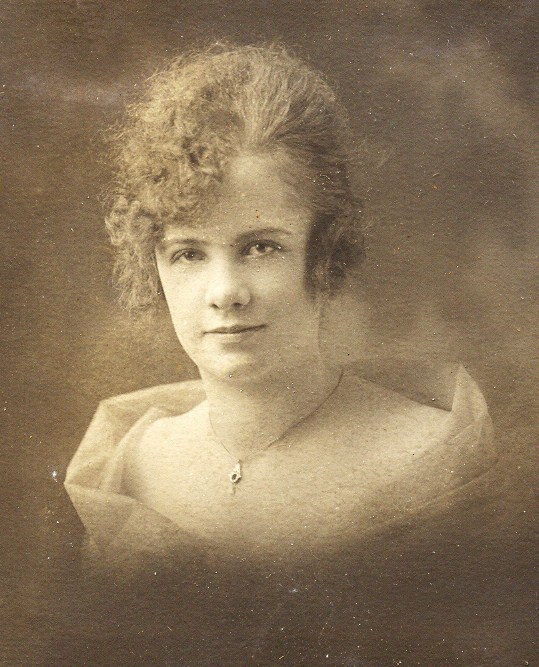
David returned from the war and met Dena Van Leeuwen.  We do not know about the courtship or how they met.  We do not know why they chose to be married in Salt Lake.  David and Dena took a honeymoon to California.
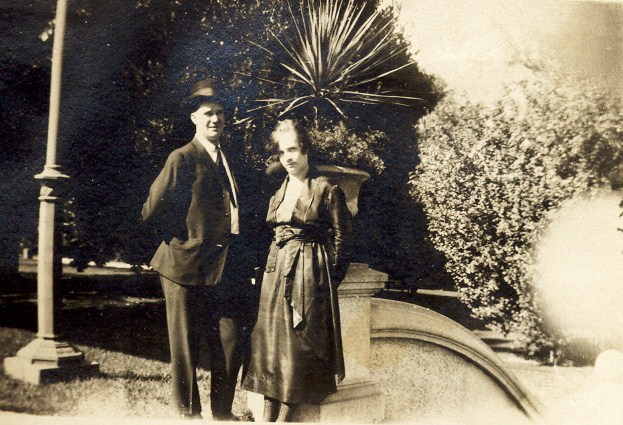
David resumed work as a plumber in the 1920’s in the Ogden area.  Between 1920 and 1928, 5 children were born to David and Dena, all in Ogden.  Twins named Dena Dorothy and Dora Mary were born 28 May 1920.

Gladys Maxine arrived 20 September 1921.  Here is a picture of the three kids with Gladys against the wheel of the car.
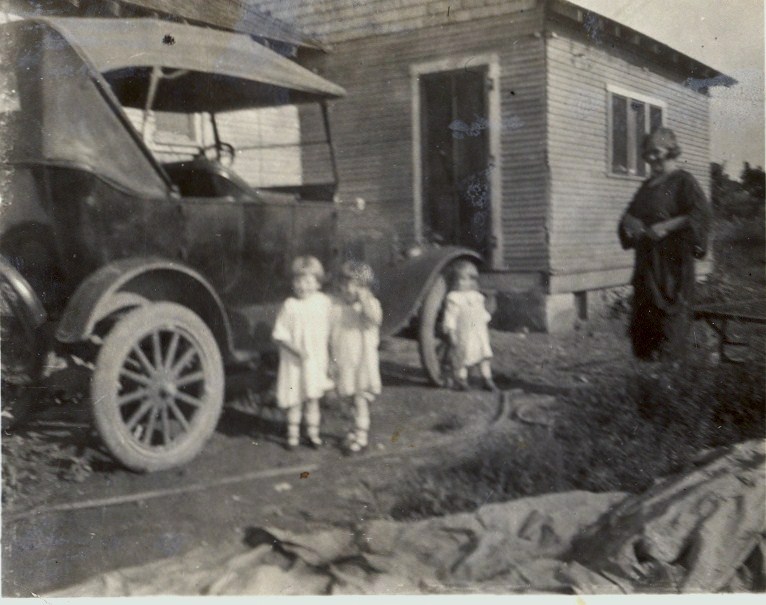
Maxine appeared 3 August 1924.  Lastly a boy, David William came 25 November 1928.

A shot of all 5 children on the front porch of the home that David built at 629 8th Street in Ogden.
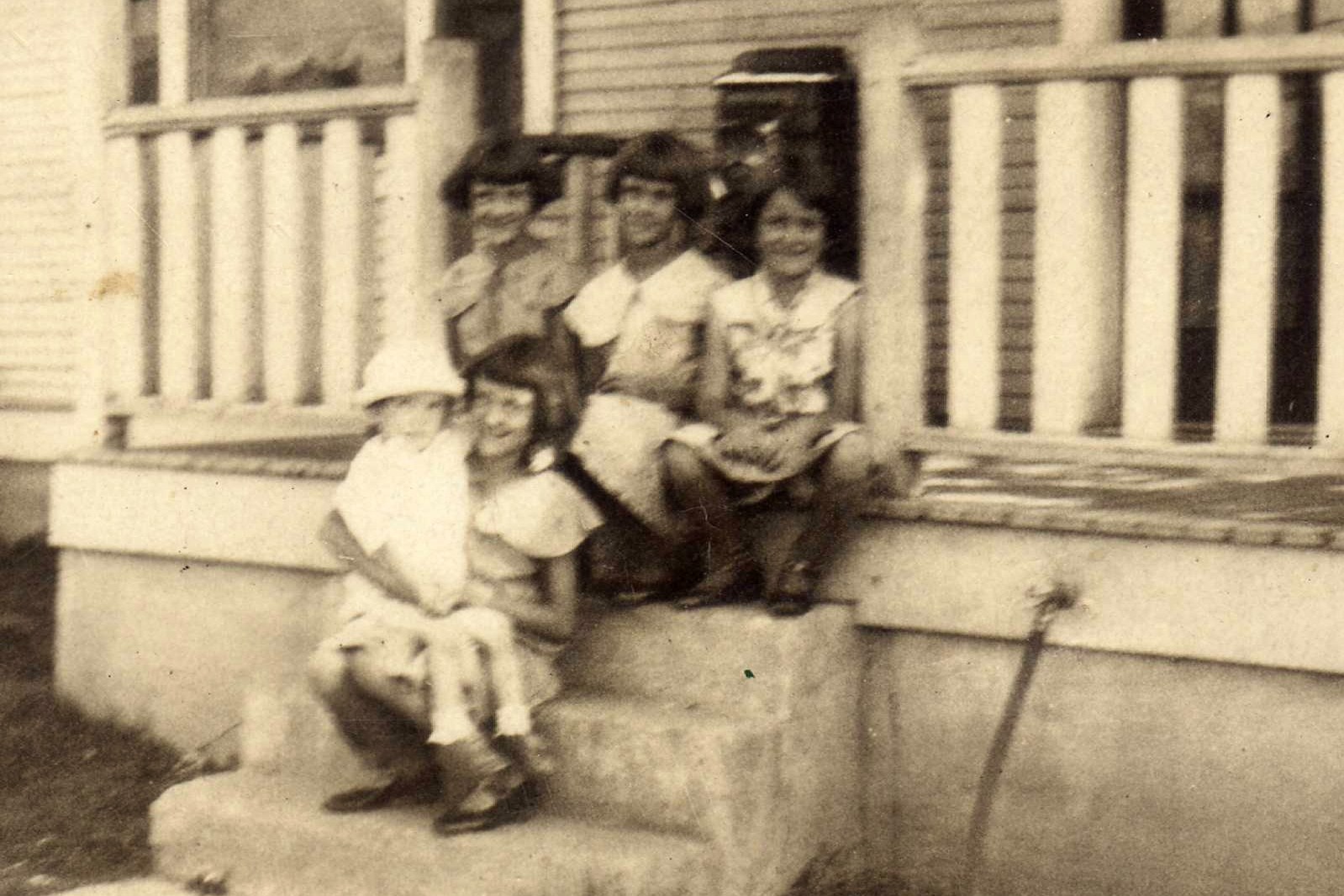
Here is a picture of the home from the side.  You can see from this point that the home is probably older than 1920’s and that Dave probably added the addition onto the back rather than building the entire home.

In 1930, the family lived at 753 Browning Avenue in Salt Lake.  We do not know how long they were there, but they moved back pretty quickly to Ogden living on 8th Street.  Times were hard during the 1930’s so David went to Boulder City, Clark, Nevada to work on the building of the new Boulder Dam (later named Hoover).  He also headed to Napa, Napa, California to work in the shipyards as a pipe fitter, primarily on submarines. Jennie Bremer, a niece to David and Dena, told of a funny story when David was replacing the plumbing in their home after a serious earthquake in Los Angeles.  David was deathly afraid of earthquakes and while he was working in the basement or under a cupboard if an aftershock hit he would rise up and run from the house.  He told Jennie at one point that he did not want to be caught in the basement if the house should fall.  Well, being little kids, they played with this some.  They would sneak to the window of the room he was working in and shake the screen and windows in a way that sounded like an earthquake.  She said it was funny to see a man as big as “Uncle Dave” to hop up and run out of a room like that.  They would laugh and laugh over it.  They made sure not to do it too often so he would not suspect anything and she does not believe he ever knew of the joke they would pull on him at least once every time he visited.  She did comment it was a bit sad to see him winded for a while after he hopped and ran, but the guilt from it would only come later in life as she realized what she had done to him.

David would often visit family to help with their homes or other needs.  He also come home to Ogden fairly regularly on the weekends to visit the family. He finally found employment in Ogden at the Ogden Depot in 1937 as Supervisor of Maintenance.  In 1939, the family returned to visit the area David had worked, Donaldson extended family in the bay area, and the 1939 San Francisco World Fair.
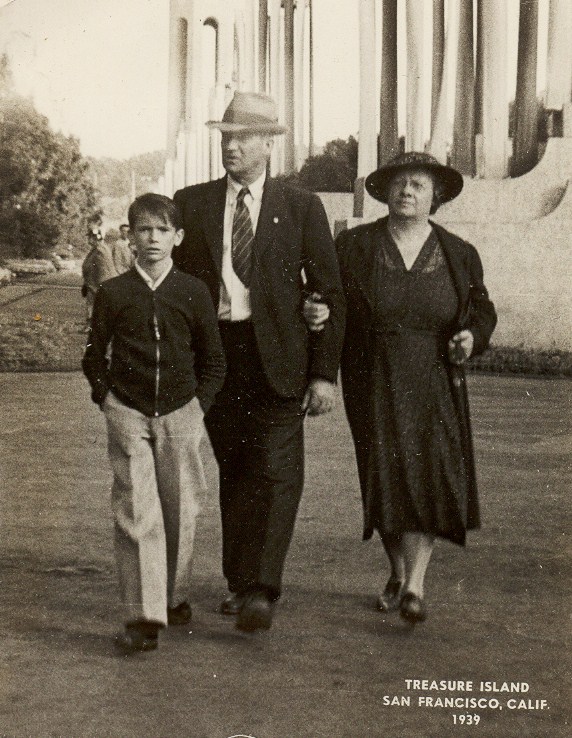
After World War II, the family moved to 639 Wall Avenue.
Life in the 1940’s treated the Donaldson family much better, even despite the war.  David still had his penny-pinching ways.  Dave would refer to David as the “King of the Tight Wads.”  Dave started working about 12 years old as a shoe polisher at a barber shop on Washington Ave.  David had told Dave that now he was 12, he was expected to be a man and take care of himself, that the Donaldson household would no longer be carrying him.  When he brought his paycheck home, David would take half of it for the family.  This incensed Dave over the years and he quit reporting his full pay to his father, who took half of it.  David even went on to require Dave to pay rent for his space upstairs in the Wall Ave home. Sometime between 1942 and 1945, David’s mother’s husband had passed away and she wanted to move in with the Donaldson family.  David tried to get Dave to move his bed to the back porch so his mother could take the upstairs.  Dave made it very clear he would move his bed, but it would be out of the house and he would never come back.  David’s mother did not move in and Dave kept his “apartment” even after he married.

David insisted that Dena only needed two dresses and no more.  The family would often buy her dresses, shoes, or other things for her birthday and Christmas, so she did not ultimately go without.  But he refused to buy for himself or for her.  Dave and Betty Donaldson got a pretty serious scolding one time for buying Dena a crystal berry bowl indicating that it was going to spoil Dena and the family.
Dena grew up LDS and David did not.  Dena saw that all her children were raised LDS with little difficulty from David.  Apparently smoking is what kept him from being baptized.  When the time would come for Gladys to marry, the Bishop determined that he was not going to allow them to be married in the temple without David being a member.  David had made it known he did not want any of his girls to marry a poor boy and would not submit. All four of the girls married in the next two years, and then Dave in 1953.  Interestingly, David never joined the LDS church, but the family put it into the obituary that he was a member.  Gladys ended up being married in the Donaldson home on 8th Street, but David refused to allow the Donaldson Bishop to do the honors, so the Plain City Bishop of Glady’s husband, Milo Ross, performed the wedding.

Gladys married Milo James Ross 4 April 1942.

Dena married Chauncey De Orr Michaelson 7 December 1943.

Maxine married Sterlin Delaino Telford 24 December 1943.

Dora married Malcolm Claire Birch 11 September 1943.

Dave married Betty May Oram 12 April 1953.

Maxine, Gladys, Dena and Dora Donaldson (don't know which is which of the twins)

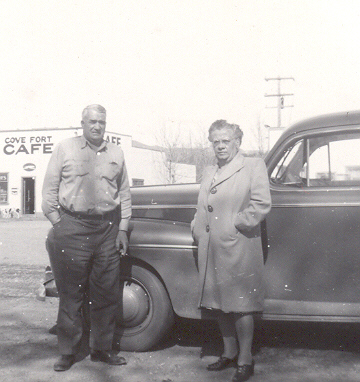
David retired in 1949 from the Ogden Defense Depot due to his physical condition and inability to breathe.  About this time, the family took a trek to visit family and friends throughout the west and to see some national and church historical sites.  Included was Hoover Dam, St. George Utah Temple, Mesa Arizona Temple, Cove Fort, Lake Mead, Las Vegas, Los Angeles, and San Francisco.

The family, not caring about the thoughts of others, loaded the car and set off.  Dena, who loved and raised canaries, insisted they come with her.  So the canaries rode in cages that were wired to the outside of the car (and the canaries lived through the entire trek).  Dave joked that driving around they looked like the Beverly Hillbillies in their early 40’s sedan with bird cages wired to the back of the car.
David would claim that the only relief he could receive for his lungs was through smoking cigarettes which would calm his breathing and ease the pain.  Remembering also, this was also a slogan for some cigarette companies!  He picked up smoking while still in the military, but he would become a chain smoker very early on. The smoking would later aid in his death from emphysema.  It was not uncommon at all for David to light one cigarette from the one he was finishing.  He was also known as a dirty smoker among the family in that he would allow the ashes to fall anywhere and would even throw his butts on the floor in the house, in the toilet, or even leave them in the drain of the bathtub after he finished bathing.

David’s lung issues would come back to haunt him more and more as the years passed.  The cigarettes were no longer delaying the pain or inevitable loss.  His emphysema would come in fits to such a degree that he would be confined to bed and the family would have to place newspaper on the floor around the bed to catch the black phlegm (sometimes bloody) he would cough up.  His emphysema would become more and more restraining on his life in the last 5 years of his life.  It was the reason he had to take such an early retirement.  In the end, he had a couple of days where he was coughing and could not breathe and went to the Veteran’s Hospital in Salt Lake City.  After a two day stay, the chronic lung disease caused a cor pulmonale that took his life on 24 September 1953.  Four days later, he was buried in Ogden City Cemetery.

Dena moved on with her life and kept busy visiting and spending time with family.  Dave, who had recently married and was living in an apartment upstairs, decided it was time for a major cleaning of the house.  They completely and thoroughly cleaned the home, wall-papered and replaced wall-paper, and replaced the carpets and furniture to remove all the cigarette smoke grease and filth.

Betty told me that as long as she knew the family that she really loved Dena.  She said everyone loved Dena.  She said that when she remembers the home in Ogden on Wall, that every time she drove into the driveway that the curtains would part and a Dena’s curly white hair, bright blue eyes, and big smile poke through with a little wave.  Apparently she had an infectious laugh which was both giddy and happy.

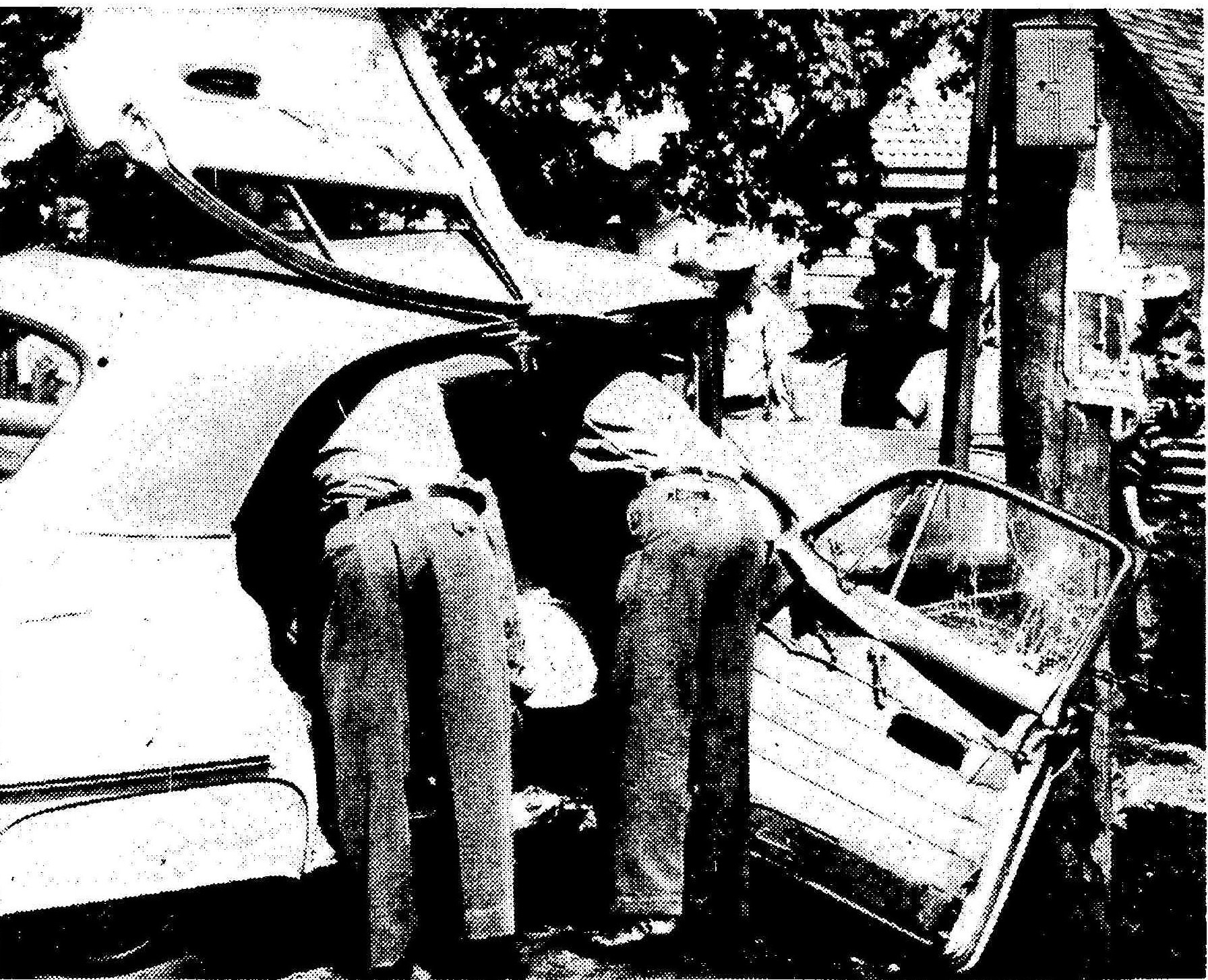
Four of her siblings were still alive and she had 11 grandchildren by the time 1955 rolled around.  Then one day she was visiting at the home of Jane (Jantjen in the Dutch) Bremer, her sister.  Dena needed to hurry off and Jane warned her that she should not go.  Jane was known in the family for having the gift of foretelling the future.  Jane told Dena that if she left at that time she would be in a terrible accident.  Dena gave no heed and left to go on her way.  Dena was known by all to speed, and she was doing so this day.  Sure enough, as she drove north on Wall Avenue in Ogden and at reaching 2nd street, a truck made a left hand turn from the right lane and hit the rear passenger side of the 1955 Oldsmobile.  Her vehicle was sent careening and slammed broadside into a telephone pole on the north east corner of the intersection (133 feet from the point of impact).  The initial hit threw her into the passenger side of the front seat with the passenger door open, her leg partially out of the opened door.  Then the impact collapsed the dashboard in on her and slammed the open passenger door on her leg.  She broke her hip, leg, and back with a number of other injuries.  The door had closed and latched on her leg and had to be cut open.  She was taken to the hospital where the family did not expect her to live.  She underwent a pretty major hip and back operation.

Dena was put into a full body cast for the next six months that reached all the way up to her armpits. Dave created this bar with a rope/cloth over the bed by which she could lift herself up so they could place a bedpan under her to do her business.  Betty would help her do the business, clean her up, and make sure her needs were tended.  The cast was eventually removed but she could not properly walk or get around very well.  She was pretty much confined to her home for the rest of her days.  At times a little heat came into a relationship and she would go spend some time with one of her other children, but she came back.  She had a terribly heavy hospital bed she used these last few years.  Dave made it clear early on that once he moved that bed out of the house again, he was not ever moving it back in so her stays elsewhere were of short duration.

Dave and Betty would take Dena around to visit places and get out of the house.  Betty joked that Dena loved to go fishing and that she could catch fish in the gutter if she tried.  She had a gift for catching fish. Dave and Betty set up a little camp chair so she could fish on camping trips.  They would leave her be for a while and she would giggle at the birds and once and a while one would fly to her.  She giggled openly and happily at everything.  Her grandson, Milo Ross, remembers her in the full body cast but yet she would smile and the whole world would smile with her.  He thought she was a funny lady with tongue twisters, slight Dutch accent, and catchy little jingles.

Dena had problems with her body that come from inactivity, like regular kidney stones and other painful problems.  But she always had a twinkle in her eye and a contagious laugh.  She never, if ever, complained about the lot cast to her in life.

On the 5th of March, 1959, Betty Donaldson, Dena’s daughter-in-law had finished work and was headed to the theater to catch a matinee.  She felt a distinct impression that she should go home.  Dave was at work and she had the whole afternoon free, so she did not see the need to go home.  As she waited in line at the theater, she knew she needed to go home so she caught the bus.  She made it home and all was well.  She changed her clothes and then Dena called up to her.  Dena had this sinking feeling in her chest, was not feeling very well, and was asking Betty for help.  Betty called the Dr. and for an ambulance.  Dave, who never called home from work, had felt impressed to call home.  Betty was just headed up to the hospital.  Dave met her there.  Dena had suffered kidney failure which lead to a heart attack and she passed away that evening around 10:30 PM.  She was buried four days later next to David in the Ogden City Cemetery.