Jonas History: Joseph Jonas and Annette Josephine Jonas

This is another chapter of the Jonas history book compiled by Carvel Jonas. “The Joseph Jonas clan of Utah (including – early Jonas family history; early Nelson family history)” I am re-posting this as I received much better photos of Joseph and Annie, so those are now included!

Joseph and Annie Jonas 1883

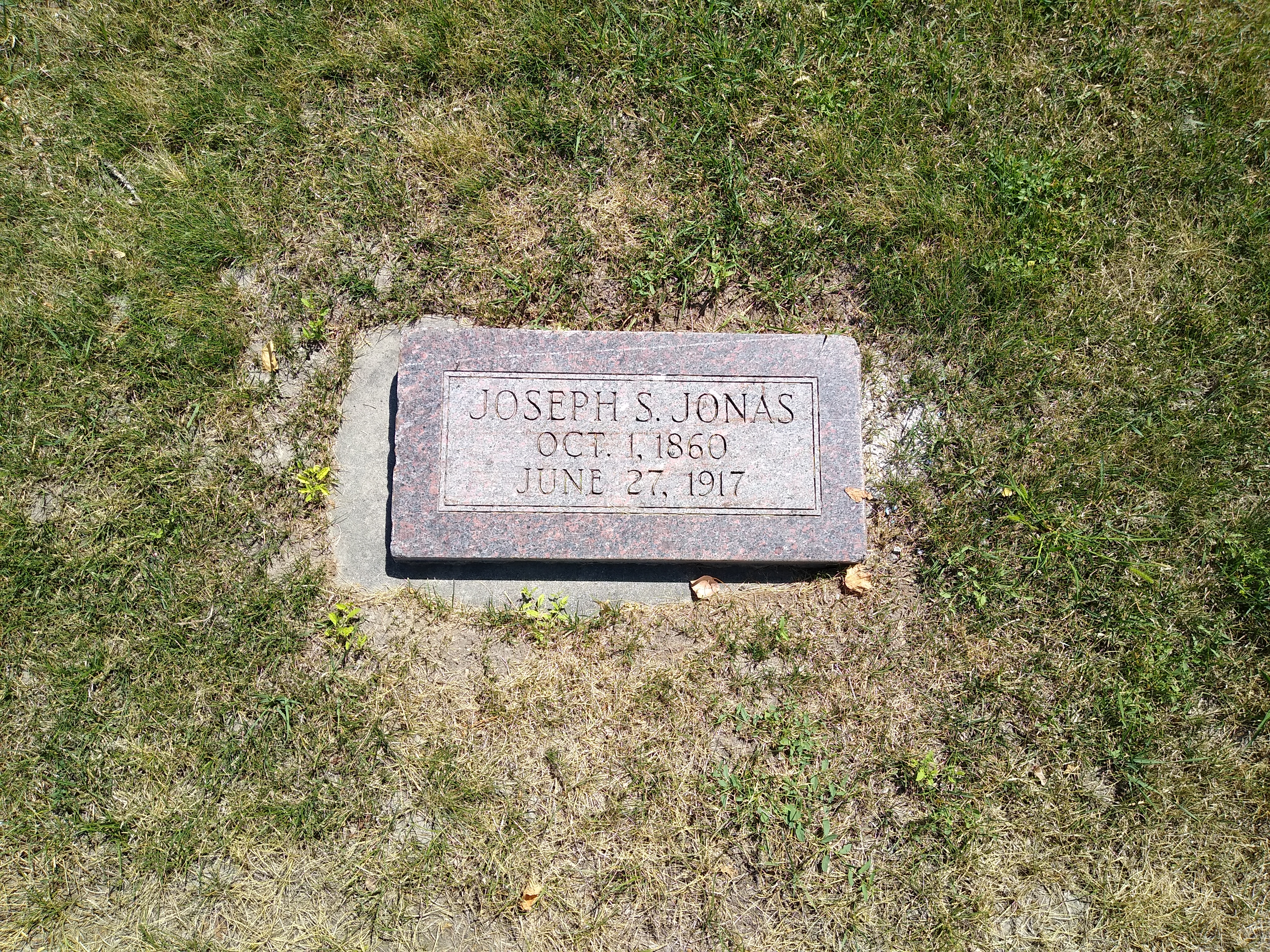
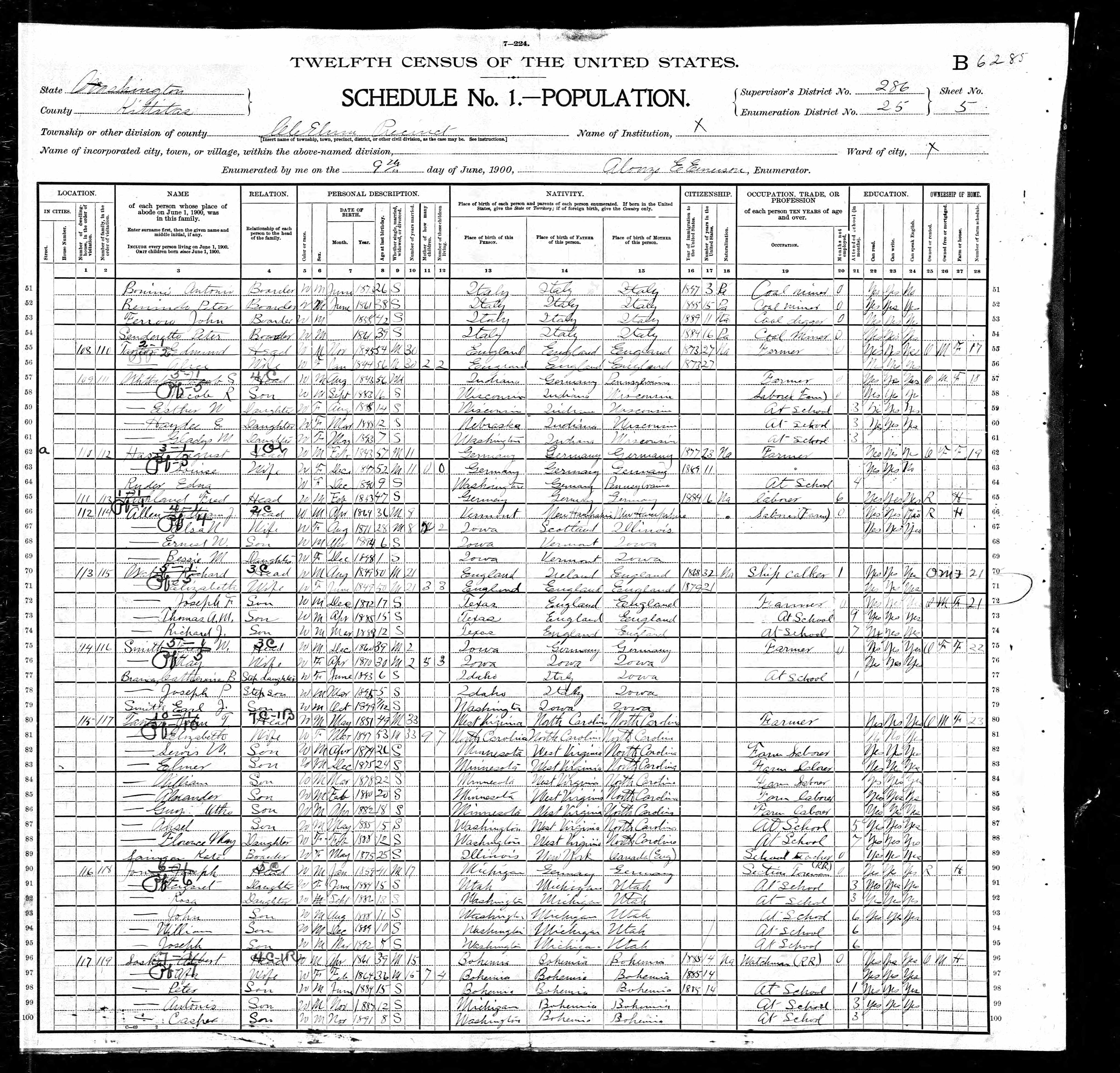
“Joseph Jonas was born 10 January 1859.  We learn the exact date and year because of research and the United States Census.  His death certificate has the year of birth as 1858, and the headstone has Oct 1, 1860.  I was told that members of the family couldn’t remember if he was born 10/1 – Oct. 1st or 1/10 – Jan 10.  Fortunately, when Grandpa Jonas was asked during the 1900 census he told them January 1859.  So we know he was born 10 January 1859.  Also, all the other census records but one seem to agree.  Joseph was born at Frenchtown, Monroe County, Michigan.  His father was Hubert Jonas, who was born 8 Oct 1816 at Kirchheim, Rheinland, Prussia (Germany).  His mother was Maria Catharina Schumacher, who was born 13 September 1815 at Oberdrees, Rheinland, Prussia.  Joseph was the sixth and last son of a family of all boys.  These three older brothers were born at Rheinbach, Rheinland, Prussia.  These three older brothers died before marrying.  Joseph lived with his family on the family farms in Michigan until 1879.  Joseph was educated in the public schools in Michigan and could read and write.  Joseph remained a member of the Catholic Church and went to St. Michaels Parish, which is still located at 502 West Front Street, Monroe, Michigan.  This was a mostly German Parish, and this is the Parish that recorded Joseph’s older brother, John who was buried Sept 1870.  Joseph moved with his family in 1871 to Ash Township.  There the Jonas land was bordered by a railroad on its east border and was probably was the place where Joseph first became introduced to a very long career working on the railroad.  In 1879 the family sold their land in Michigan and moved to Nebraska, Platte County, in a place called Pleasant Valley.  This is where Joseph’s mother died in March of 1880.  Pleasant Valley was a large area of county and the place where Joseph visited is now called St. Bernard.  St. Bernard was a German settlement, and is probably the reason that first attracted the family to the area.  His father and brother, William, farmed with a man named Michael Jonas.  It was first believed that this other Jonas family was a branch of ours.  Research proved this incorrect.  Our Jonas family owned no land in Nebraska.  Members of our family helped this other family to operate their farm for 4-5 years.
   

“Joseph had a long career working with section gangs for railroads.  By the time he was 21 years old, (maybe before this age) until he was about 57 years old he worked for the railroads in section gangs.  The only exception was a year and a half when he tried farming.  That is over 35 years that we know of.  “A section gang was a group of men – muscular, sunburned, streaked with dust and sweat; using crowbars and mallets.  They were maintenance crews, the housekeepers of the railroad.  All summer they chip away at their allotted section of railroad roadbed, weeding, spraying, burning, resurfacing, reballasting, repairing the ravages of frost and rain.  The crew rode a handcar, which was nothing more than a flat, open truck on wheels, which raised about a couple of feet above the rails.  It could be lifted on and off the tract by four men, two at each end.  The men stood up to pump the handles by which it was propelled”  Joseph’s work consisted in “Keeping the track in good level order.  He used a jack to raise the sunken rails, shoveling earth beneath the ties to keep them in place.  Besides the regular pay, they made overtime when there was any special work to be done, as unloading gravel trains.  Only a few hands were kept on past November in the Northwest where Joseph mostly worked, two on a section.  The rest got free passes, there being next to no work on the track until the frost breaks up.”  Much of the information about section work was adapted from “Section Life in the North-West,” an anonymous article published in “Cornhill Magazine,” in January 1888.     

“When Joseph worked for the Great Northern Railroad he had to keep the track he was working cleared when the Fast Mail came.  A train that carried the U.S. Mail from St. Paul to Seattle traveled the track once a day.  The men had to be careful to get out of the way for the train.   

“Research indicates that Joseph used the following tools: claw bars, line wrenches, spike malls, adzes and tongs.  Each of the rails were thirty three feet long, and were held together by bolts and fishplates.  The men who worked on the railroad comprised the most cosmopolitan crew in American History.  They included Civil War veterans and freed slaves, Irish and German Immigrants, Mormons and atheists, Indians and Chinese.  They would ride the rails on their hand cars replacing rotting ties, tamp loose spikes and tighten bolts.  Joseph’s daily wages averaged in 1892 $1.76 to $2.20 in 1914 a day as a section foreman (statistics found in Railway Statistics of the USA published in 1917).   

“Now a little early history about great grandmother, Annette or Annie Nelson Jonas.  Annette Josephine Nelson was born 18 November 1864.  Logan 4th ward records tell us she was given a priesthood blessing 2 Feb 1865.  She was born one month after her parents had arrived in Utah from their immigration from Sweden.  She was born in a temporary dugout on College Hill, Logan, Utah.  Her parents were Johannes Nilsson, (He later changed the last name to Nelson, and also used Neilsen at one time).  He was born 4 Oct 1827 in Tonnersjo, Hallands, Sweden.  Her mother was Agneta Bengtsson who was born 9 December 1832 in Oringe, Hallands, Sweden.  Annie was the sixth child of her family.  Her husband, Joseph, was also the sixth child in his family.  She had ten siblings, 5 sisters and 5 brothers.  When Annie was born it was raining, so members of the family put pans on the bed to catch the water as it dripped through the sod roof.  Annie’s older brother, August, told about this day in his life history.  The following is a quote from he history.      “We were just moved into your home when Annette Josephine was born…She was the first child born in the Logan fifth ward.  Mother was alone except for James (an older brother) and me.  James sent to fetch father who was threshing wheat for John Anderson.  When he arrived with a sister, mother had already taken care of herself and the baby.”  The Nelson family had joined The Church of Jesus Christ of Latter-day Saints the year they left Sweden.  They had built a temporary dugout until they could build a wooden cabin the following year.  That winter was very hard for everyone in the area.  An early January thaw had caused the snow to melt and the water inside the dugout was knee deep.  Boards were used so the family could walk without wading in the water.  They bailed out the home and went back the same night.    

“When Annie was a baby the following events happened.  “When mother went gleaning, I (August) had to stay with the baby (Annie).  One day I left her on the bed while I went out to play.  She rolled off the bed and got a big lump on her head.  She was still crying when mother came home.”  When Annie was almost nine years old her mother died, 4 November 1873.  It was just about 14 days before Annie’s ninth birthday.  And just six days before her birthday her infant brother, Moses, died.  Moses was less than a month old when he died 12 November 1873.  When Annie was about 11 years old her father remarried.    The three younger children were raised by a stepmother.  We have no details now, but life was very unpleasant for these three children because of the relationship with this stepmother.  This marriage didn’t last more than eight years.  Before Annie’s mother died she said to her son, “August, if I die, I want you to take care of the children.”  He continues, “That had always been my job around the house.  Later one evening mother kissed me and said, “You have been a good boy.  God bless you.”  With a smile she turned her head and breathed her last.  God alone knows what little children lose when mother is gone.  While she was sick I heard her say, “I don’t want to leave my little children.”  Little did I know or realize what home would be like without her.  She was more than ordinarily ardent and spiritually minded with high ideals, had a comprehensive knowledge of the gospel.”   

“Annie had light red hair and blue eyes.  Annie’s mother her sister Abigail, and her first daughter, Margaret, all had red hair.  Annie wasn’t very much taller than five feet, and was slender.    

“While Annie was a teenager she went to work in a boarding house.  She didn’t like living at home with her stepmother and her step siblings.  While she was working at the boarding house she met Joseph Jonas, who was renting a room.  Joseph had a dark, wavy hair and brown eyes.  During their courtship Annie received a letter from her brother, August.  He said, “I suggested to her that she marry a Mormon boy.  Her reply was that Mormon boys were not as genteel as a Gentile.”  With Annie’s unhappy life at home she must have thought marriage would be a better life.  Annie was married the same month she turned 19 years old.  Joseph was 24 years old, two months shy of being 25 years old when they were married.  They were married November 1883 in Logan, Utah.  Since Annie was born in November she may have been married on her birthday, but the day isn’t known.  Joseph was 5 years older than Annie.  Their first child was born 17 Jun 1884 in Logan, Utah.  I am told Annie’s children would come early, before the normal nine months.  Shortly after their first child was born Annie and Joseph moved to central Washington State near or at Ellensburg, Kittitas County.  That move was made before the birth of their second child, Mary, who was born 17 Jul 1885.  The rest of their children, seven in total, were all born at or near Ellensburg.  They eventually lived in several, little towns near Ellensburg, such as Bristol in the 1890’s, Thorp in 1901, and Cle Elum 1900.  Annie and Joseph moved to Washington because Joseph’s father and brother, William, had moved there from Nebraska about this same time in 1883-84.   
“By 21 Jun 1887 Joseph and his brother bought 240 acres of land.  Their father, Hubert, was living with the two families.  An 1885 census of Washington Territory has William’s wife, Emma, Joseph’s wife, Annie, our great grandmother, living at the same place.  The land was about three miles south east of Ellensburg according to the speedometer on our car when we drove the distance.  These two sister-in-lays, Annie and Emma, would help each other take care of their babies.  Annie’s daughter, Rosa, said they washed the clothes on a washing board and then would take them, especially the diapers, down to the creek.  The clothes were rinsed to get all the soap out of them.  Then they would hand the diapers over some bushes to dry.     

“The families shared responsibilities.  Rosa and some of Uncle Williams children would take the cows out on the plateau to graze.  Mary and Margaret would help take care of the house.  There were a lot of rattle snakes in the area.  Occasionally Rosa Jonas would take a forked stick and hold the snakes head down.  Then the boys would stone the reptile to death.  One time the snake was so large it pounded the ground and jumped until it got loose.  The kids never realized the danger they were in until years later.  Fortunately, no one was hurt.  Another time a large, wild cat kept attacking the cows so the kids brought the cows home.  When their parents got upset at them for bringing the cows home the kids told them about the large cat.  Uncle William Jonas rode his horse to the plateau and found the large cat tracks so the parents knew the kids were telling the truth.     

“Joseph and William sold their 240 acres 28 Dec 1888 for 100 dollars in gold coins.  They owned the land for a year and six months.  Joseph gave up farming and went to work for the railroad again, much of the time working as the section gang boss.  William stayed in the area as a farmer and homesteaded.  William lived about three miles north of Ellensburg.  While the two brothers, Joseph and William were buying their land a third brother, Francis Jonas, came to live with them.  On 5 Sept 1887 Francis baptized his son at the St. Andrews Church in Ellensburg.  For a time Joseph’s two brothers and his father lived together as a family in the same area.   

“An important date for the Jonas families must have been 3 April 1886.  This day there were three Jonas children baptized.  Joseph and Annie’s daughter, Mary; Williams and Emma’s two children, Elizabeth and Hubert.    
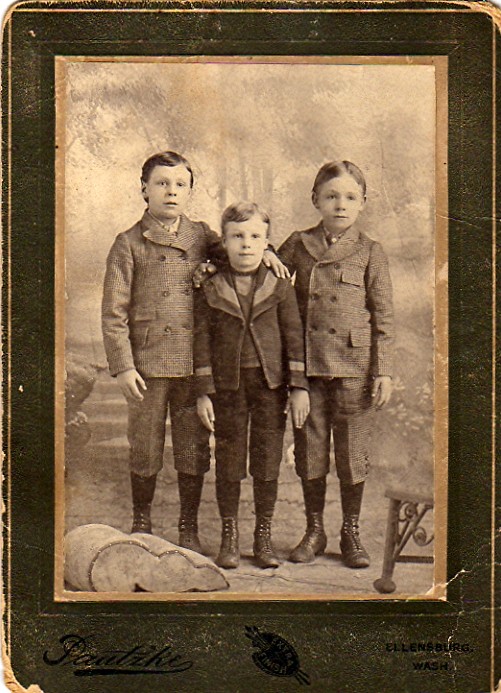
John, Joseph, and William Jonas probably right before moving to Utah in 1901. The photo is stamped with Ellensburg on the matting.

“It seems that Joseph and Annie rented after this time in 1889.  William’s family lived close and the cousins would visit each other.  Uncle William’s family had a gorgeous watermelon patch.  William’s children chided Joseph’s children because they didn’t have a watermelon patch.  One night, Rosa, John, William and Joseph swiped a watermelon and ate it.  They didn’t want anyone to know so they fed the rhines to the pigs.  The pigs wouldn’t eat the rhines.  So uncle William’s kids discovered the rhines and the kids were caught.    Joseph, soon after selling his land, began working for the Northern Pacific Railroad Company. He became a section foreman for the railroad.  Both the 1900 and 1910 United States Census tell us he was a section foreman.  Joseph would also make money besides working on the railroad.  In the fall of 1895 the whole family went and picked hops.   

“Joseph and Annie lived together as husband and wife for 13 years and one month.  Annie’s mother, Agneta; Annie’s youngest sister, Abigail; her oldest daughter, Margaret; Annie’s Granddaughter, Verla; and also Annie all had a similar physical condition.  Some of the symptoms were that the heart would palpitate of flutter, not fully beating.  And their womanly cycles would last up to six months and then stop for two months.  There was a chemical imbalance in their systems.  Today we would call this PMS or premenstrual syndrome.  In our family it is apparently passed from daughter to daughter, and sometimes it skips a generation.  It also seems that it is harder to live with after each pregnancy, but during the pregnancy it goes away.  Annie had a severe case of this chemical imbalance.  After each pregnancy her condition made her more emotionally imbalanced.  During her seventh pregnancy she lost the baby girl who lived only a few hours.  Rosa and some of the family gave the baby daughter the name of her mother, Annette Josephine and later sealed her to her parents.  Lillian, who was Joseph Nelson Jonas’ wife, had a dream.  In this dream her husband was carrying an infant in his arms.  That experience got the family thinking and Rosa remembered the baby being born.  While Annie was having contractions with this seventh baby she went to her husband who was at work.  Joseph was very upset with his wife for not staying home.  Some say that Joseph did a very foolish thing while he was upset, and kicked Annie where the baby was.  I’m not sure why this happened, or what the entire circumstances were at the time.  On 12 August 1896 the little girl was born.  With Annie’s history of chemical imbalance getting worse and emotional health came to the last straw.  I am certain that both Joseph and Annie felt guilt that the baby died, and blamed themselves to some degree.  Joseph took Annie to the Eastern State Hospital in Spokane Country, Washington State.  She was admitted 29 December 1896, a little over four months from the time Annie lost her last baby.  After the baby died Annie continued to loose blood for several months after.  Annie agreed to go to the hospital.  The night before she went to the state Hospital her children knew something was wrong of different.  Annie put on her nice clothes, curled her hair and slept with her children.  The next morning Joseph and Annie took the train to Spokane.  While Annie was gone Margaret, the oldest child, was in charge of the household.  The children knew that if they didn’t mind Maggie she would tell Joseph when he came home from work.     
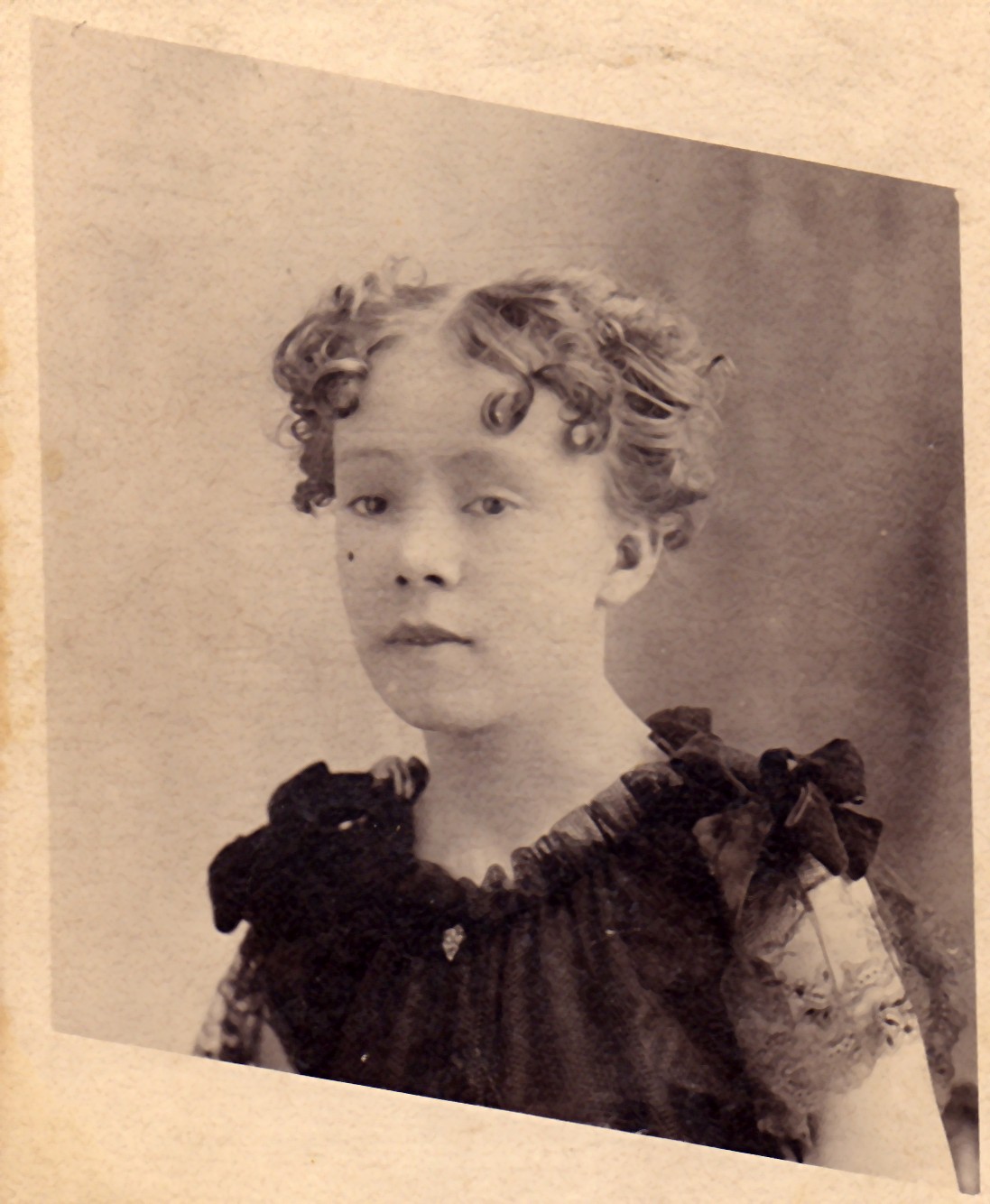
Margaret Jonas

“After Annie was admitted to the hospital she was later sent home 31 October 1899 after 2 years and 11 months of hospitalization.  Annie was just 32 years old when she first went to the state hospital.  She had her 32nd birthday a little over a month before.  She had been admitted four days after Christmas.  With needed time to travel she must have left just a day or two after Christmas.  It was probably delayed until after Christmas so she could have one last holiday with the children.  Later she was discharged on Halloween day.  Just about a month before she was discharged, 21 September 1899, Joseph and Annie’s daughter Mary Nelson Jonas had died.  Perhaps after the loss of this daughter Joseph thought of bringing his wife home to the family again.  The family was still living in the Ellensburg area.  The stay was short.  She was home for six months and 11 days.  Then she was readmitted 11 May 1900.  Her name is on the 1900 general census taken in Spokane County while she was at the hospital.  Annie never saw her daughter, Mary Nelson, after her 11th birthday because Annie wasn’t home when she died.     
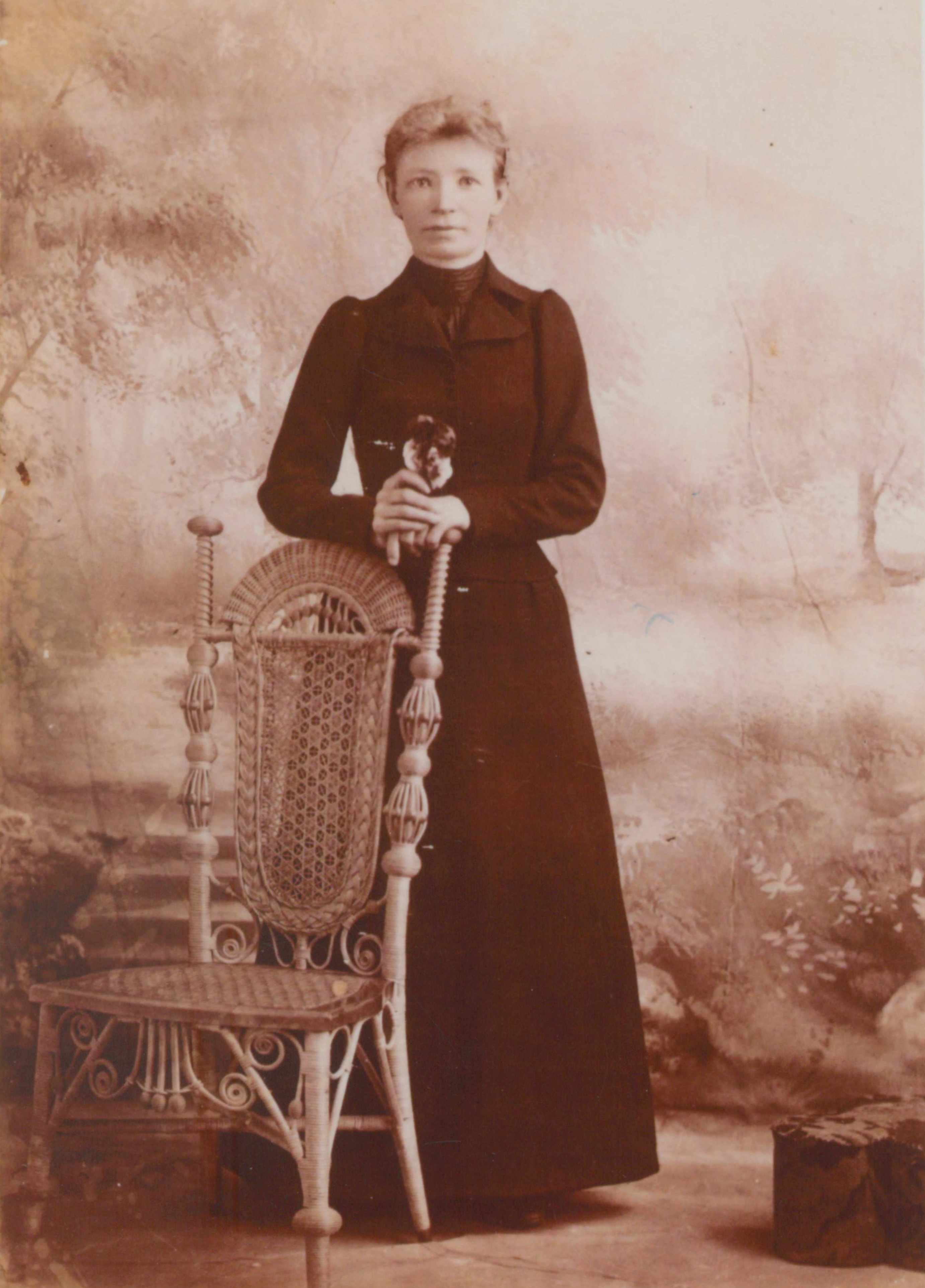
Annie Nelson Jonas 1900

“After Annie was readmitted the second time she stayed for 14 months until 2 Jul 1901.  On this day she was released by her family and taken to Utah.  On the 3rd of July 1901 Joseph, Annie and their five living children arrived in Utah at Annie’s brother’s home in Sandy.  Joseph and Annie’s sister, Charlotte, were hopeful if Annie associated with her family, the Nelson’s, it might help her emotional and mental health.  Annie’s brother, August, had this recorded in his life story, “…my sister, Charlotte Abigail, lived with us that summer (Sandy, Utah-1893).  When she went to Logan that fall she had the fever.  Later, (1901), she went to Washington to visit with our sister, Annie, wife of Joseph Jonas.  Annie had been sick for a very long time, but none of us knew the nature of her illness until Charlotte brought the whole family to Utah with her.  It turned out to be a mental illness.  She kept running away so we finally had to put her in the institution at Provo, where she died a short time after…”  “…There were five children.  It was sad to see sister in her condition.  I had not seen her since 1878, (Annie was 13 years old in 1878 until November)…Her daughter told me that before she lost her mind she would hold her head in her hands and moan, will not my father or brothers come and get me?  …Her husband destroyed her letters to us so we never knew what she was going through.”  Joseph and Annie’s children did write to the Nelson’s while they were living in Washington because we have some letters or post cards that have survived.  So it is the belief of the author that Annie could have found a way to communicate with the Nelson’s.   

“August was asked to care for the children by his mother when she was on her death bed.  Instead, he left home when Annie was 13 years old and never saw her again until she was almost 29 years old.  In his life story August said that instead of caring for the children he wanted to go and “make money.”  To his credit August did help his other sister, Charlotte, when she was older.  But it would have helped if care could have been given when the children were young.   

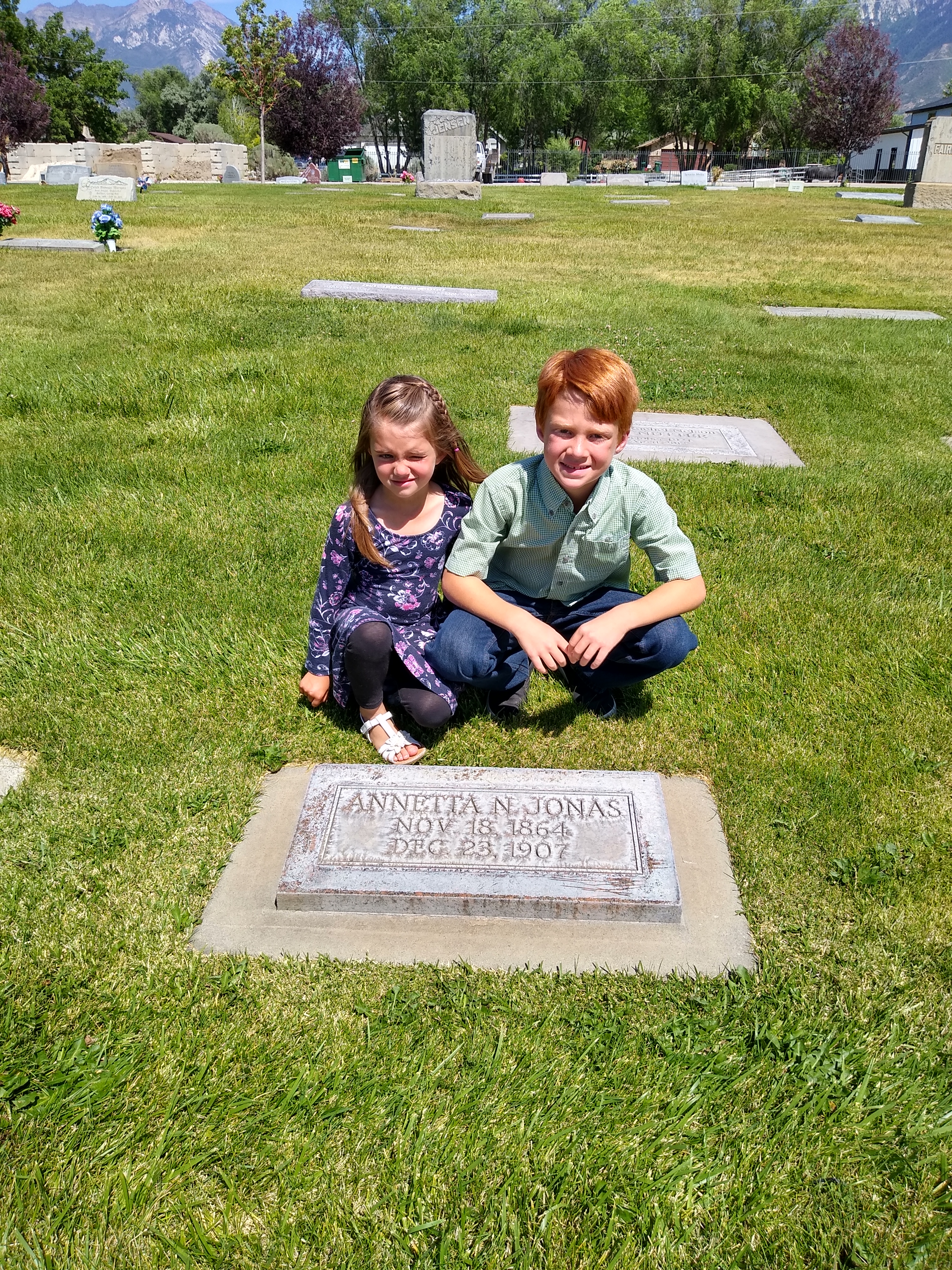
“After Annie arrived at her brother’s home in 1901 Annie stayed with them for a few days over four months.  Then August and his wife signed the warrant of commitment for Annie to be admitted to the Provo State Hospital 6 November 1901.  Annie’s records are still at the state hospital in Provo.  Annie remained there for 6 years 11 months until she died 23 December 1907 and was buried 25 December on Christmas Day.  She was buried in the Crescent cemetery.  For some reason the Nelson’s never put a headstone on her grave.  Years later members of the Jonas family, probably William Nelson Jonas, placed a headstone on her grave.  Annie was a young 43 years old when she died, the same age that her mother Agneta, had died.   

A copy of Annie’s Utah State Mental Hospital records are included after. There is very little in the record, but it is telling what little is included.

“While the Jonas family lived with the Nelson’s Joseph Jonas worked on August’s farm.  He was not a free quest.  While they were there it became harvest time.  Joseph worked with both families.  Joseph wasn’t a tall person, 5’6″ or 5’7” but he was a very strong man.  He often boasted that he could take the place of two men in the field.  Joseph worked on the threshing machine.  He lifted the bags of grain off the thresher.     

“Annie’s brother, August, condemned grandmother for not raising her family in the LDS church.  He would bring out his temple cloths and according to Rosa Jonas who was there, made grandma cry.  He would say, “This is what our mother was buried in.”  Then he would show her the temple clothes.  This happened a few times and grandma was so upset on time that she spit on her brother.  August probably had good intentions, but he handled the situation wrong.  Annie was a women who was sick and just released from a state hospital.  She needed special consideration and understanding.   
Joseph and Margaret Jonas about 1899

“Joseph and August had arguments, too.  August persuaded the Jonas children to stay in Utah and not go back with their father to Washington.  Rosa remembered that her father shook his fist at her and said “You remember where you belong.”  Finally, Joseph went back to Washington with only one of his five living children, Margaret.  The rest stayed in Crescent.  The four Jonas children finally went to Richmond, Utah.  Rosa married in 1904 and in 1908 the three boys left Sandy to live with their sister.     

Christian & Rosa Andersen

“An interesting book that may help the reader of this story to understand the life of Annie had while she was in the state hospitals was published March of 1908 and is entitled “A Mind that Found Itself.”  This is a biography written by the author after his complete recovery from a mental illness.  He describes conditions in a state hospital during the same time period Annie was living in one.  The man’s name is Clifford W Beers.  People who were admitted at the turn of the century were often treated cruelly.  The people who were hired were untrained and needed no qualifications.  Add to this the low wage and one may understand that people who hired to watch the sick used physical restraints and force to control their assigned subjects.  Besides having their freedoms and dignity taken away, they were assigned to one style of clothes to wear.   

“According to Annie’s records Annie was rational at times and then would have a sudden stroke of passion come over her.  While Annie was in the state hospital she wrote to her children.  She was capable of writing beautiful intelligent letters.  At times she was in possession of her mental abilities.  Unfortunately her children never answered her letters, which only worsened the way she felt about herself.  The children were young, the oldest in her mid-teens.  But the lack of support of her children and all other family relatives must have made her very lonely and given her a feeling of unhappiness and probably despair.  Also, Joseph, her husband, must have been frustrated after taking her out of the state hospitals three different times and unable to help her.  The circumstances would try the patience of any man.  Joseph and Annie were given certain trials in this life which would be hard to bear by most people.  Perhaps their trials in this life will help their standing before God in the next.  A feeling of empathy for them comes over the author when he thinks of their lives and their loneliness.   

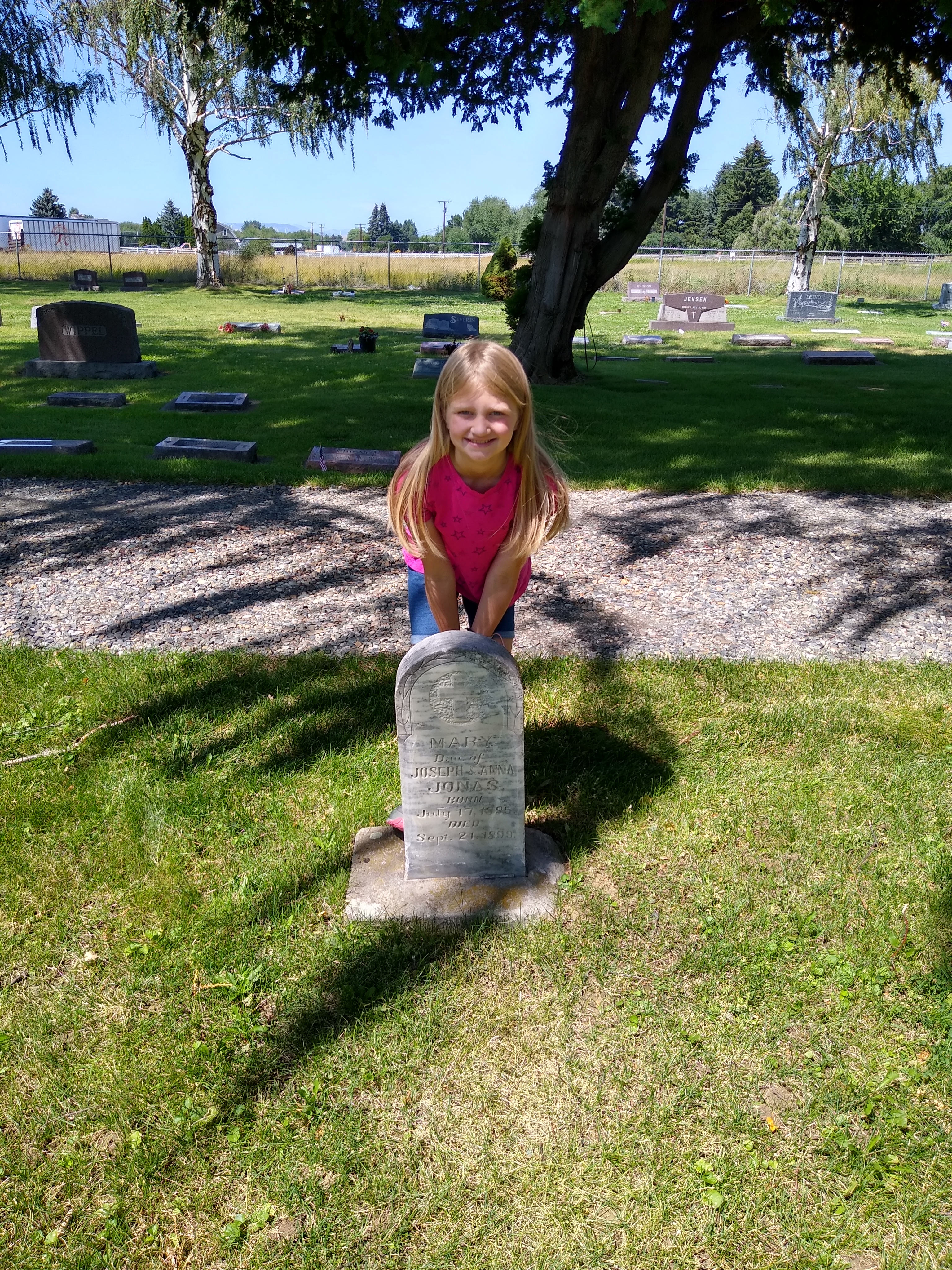
“All of the children of Joseph and Annie, who lived past the age of 20, joined The Church of Jesus Christ of latter-day Saints.  John, William, and Joseph Nelson were all baptized 10 January 1902.  Rosa was baptized 6 February 1902.  Margaret, Mary, and Annette Josephine had short lives.  Mary died of typhoid fever 21 September 1899 being 14 years and two months old.  Her sister, Rosa, said she chided her sister and told her, “You’re not sick because your face is so pink.”  Mary unfortunately died the next day.  The children did not realize it was the high fever that caused her cheek’s to be so flushed.  Mary was baptized in the St. Andrew church in Ellensburg 25 Jul 1886 with two of her cousins, Elizabeth and Hubert.  She was just one year old.  Her headstone is on the main road or trail which runs through the Holy Cross Cemetery in Ellensburg.  Her headstone is facing away from the road so you would need to go to the back to see the words.  The original road was moved from in front of her headstone to the back of her headstone.  The headstone reads, Mary dau. of Joseph and Anna Jonas born 17 Jul 1885 died 21 Sep 1899.  She is buried next to her grandfather, Hubert Jonas and close to her sister, Margaret, and Uncle William Jonas.  Her baptism and death records are at St. Andrew’s church.  Margaret died of Bright’s disease.  Bright’s disease is characterized by heightened blood pressure.  The city paper called the Ellensburg Dawn dated 22 Sep 1904 reads, “Miss Jonas, daughter of Joe Jonas died Sat of Bright’s disease.”  Margaret was born 17 Jun 1884 in Logan, Cache county, Utah.  No records were found for her baptism in Ellensburg, although she was baptized.  We have pictures of her graduation from catechism.  Margaret was the only daughter who had red hair like her mother.  Margaret was the only child who went back to Washington with her father sometime in 1901.  She lived in Thorpe when she died.  She has a beautiful headstone with a lot of detail embossed on it and these words, “Margaret beloved dau of Joseph and Annie Jonas died 17 Sep 1904 aged 30 years 3 months.”  Both Margaret’s and Mary’s headstones were bought by grandpa Joseph Jonas.  We know that because grandma was absent from the family during both deaths.  Margaret also had a 4″ X 6 1/2″ card made at the time of her death.  This card, too, was Joseph’s idea.  The card is in a silver and black print with white background.  There is a bird that has a paper in its mouth with the following description, “Let us be patient: These severe afflictions not from the ground arise, but often times celestial benedictions assume this dark disguise.”  There is a small arch with “In Living Remembrance of.”  Then a box elaborately decorated with, “Margaret Jonas” died Sep 17, 1904 aged 20 years and 3 months.”  Then at the bottom in silver letters the following poem.  “We miss thee from our home, dear, We miss the sunshine of thy face.  We miss thy kind and willing hand, Thy fond and earnest care, Our home is dark without thee, We miss thee everywhere.”  Joseph Jonas’ sentiments are realized to a degree by the headstone and card he left behind.  He was obviously deeply hurt by his daughter’s death.    
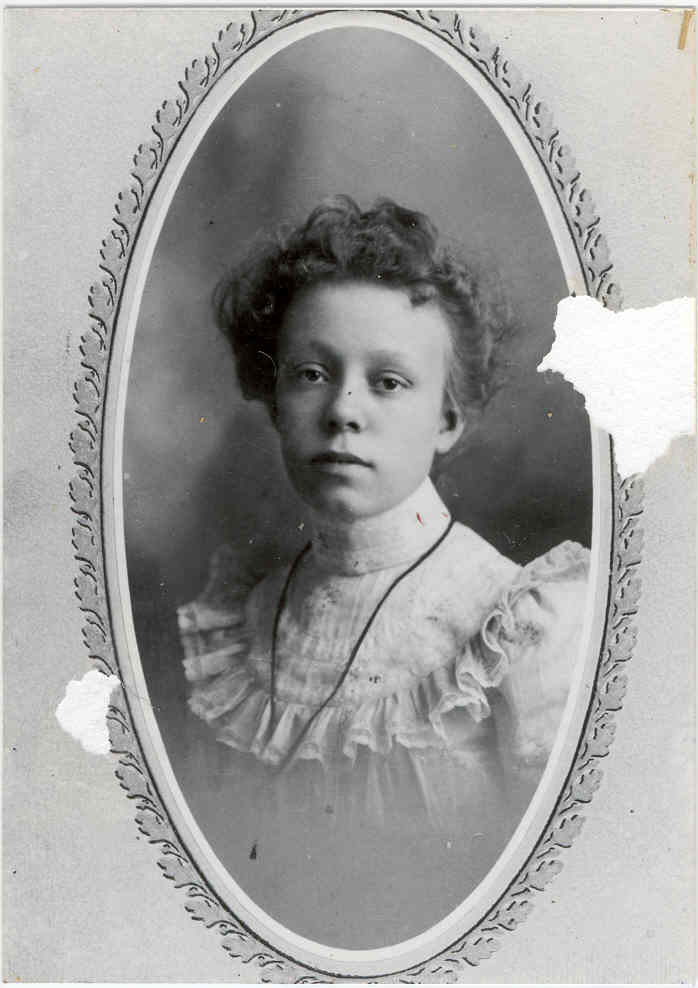
 

Margaret Jonas

“Another interesting story we have, which gives us insight to Joseph’s personality, is how he handled his three son’s misbehaving.  The three Jonas boys, John, William, and Joseph, had been caught stealing apples.  Joseph was very upset.  But instead of doing something immediately he went and chopped some wood for the fire.  He chopped long enough to get rid of some of his anger.  Then he disciplined his three boys.  Joseph had a quick temper, but this story reveals his attempt to control his temper.  If Joseph came home and got upset he was capable of turning the furniture over.  However, Rosa’s children who knew Joseph Jonas really loved him.  Rosa said that she had often wished she had sealed her mother’s sister, Charlotte, to him after he died.   
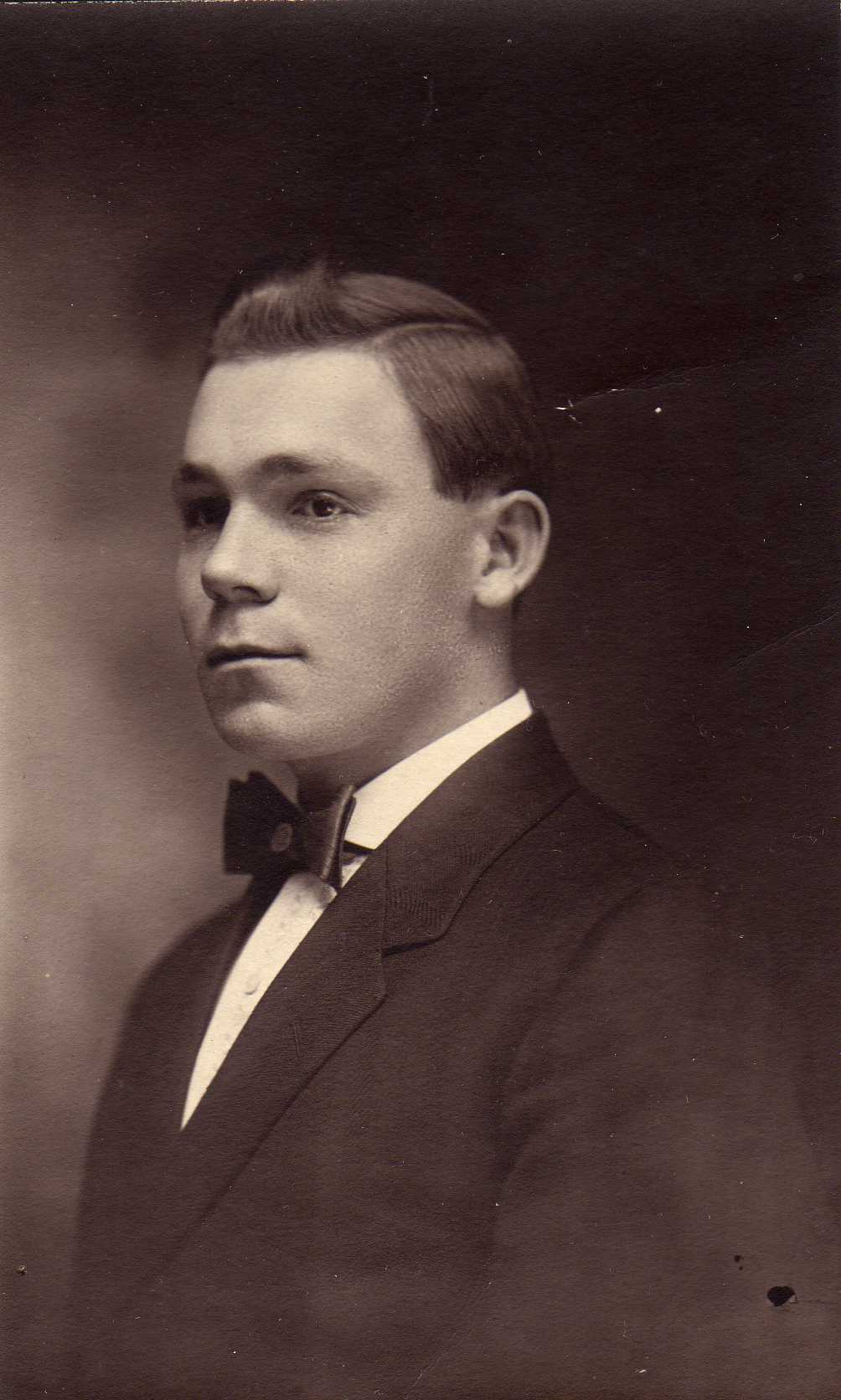
William Nelson Jonas

“Joseph gave annual donations to his church.  One record reveals the following: “Mr Joe Jonas paid $5.00 this 11 day of October.”  Also, 5 July 1910-paid $5.00 for cemetery care; 1911-his name was written for contributions; 1912 contribution of $3.00; 1913 contribution of $10.00.  Joseph was also one of the witnesses when his brother, William, sold his land on the 18th of October 1905.  The above records reveal faith in God.  Also, there were probably other donations before 1910 that weren’t recorded.    We have a census record for Joseph in the following years; 1860, 1870, 1880, 1885, 1887, 1900, 1910.  We learn from the 1900 census that the family lived in Cle Elum, a place north west of Ellensburg, at which time they were renting a house.  The 1910 year has Joseph living in the South Kittitas Precinct.  He was living in a house with two single men, who were also of German extraction and were also workers for the railroad.  Joseph was 51 years old and his roommates were 47 and 56 years old.  He told the man taking the census that he was the head of his family and that he was a widower.  next to Joseph’s name on the 1910 census is the record of seven men who were living in a section house.  Joseph was most likely living in the foreman’s house that was owned by the railroad.  Counting the two people living with him it is likely that Joseph was the foreman of nine men during this summer work.     

Margaret Jonas

“On 19 February 1912 Joseph Jonas went to a notary and recorded the following affidavit: “Joseph Jonas to public.  Joseph Jonas, being first duly sworn, on oath states: That he is a brother of William Jonas who died in Kittitas County Washington, Oct 11, 1905; that said William Jonas died seized the following real estate situated in said Kittitas County, to wit: the south west quarter of section twenty three (23) in township eighteen (18) north of range eighteen (18) east, W.M.; that said William Jonas at the time of his death was a widower, his wife, Emma Jonas, having died in said Kittitas county, on March 17, 1898, intestate: that said William Jonas was married once; that George Jonas, son of said William and Emma died on the third day of July, 1908, at the age of ten years, intestate.”   

“Joseph Jonas was a hard working man.  He was strict with his family, and was a good provider.  He often helped neighbors by letting them stay in his house and by feeding them.  One time grandmother, Annie, had made some rolls and jam which were given to a visitor.  The man decided that he didn’t want to eat the food so after he got outside he gave the food a toss.  Joseph saw this and gave the man a verbal tongue lashing.  Also, Grandpa one day was cooking a pan of eggs.  It was a large fry pan.  A fly landed into the eggs, so he threw the eggs, fly and all, into the fire.   

“About 1907 Joseph was visiting his daughter, Rosa.  He needed some help on his section gang.  So his son-in-law, Christian Anderson, went to Washington and worked on the railroad.  His son-in-law thought Joseph was a good man to work for and after Joseph died he made a wooden cross for his grave.   

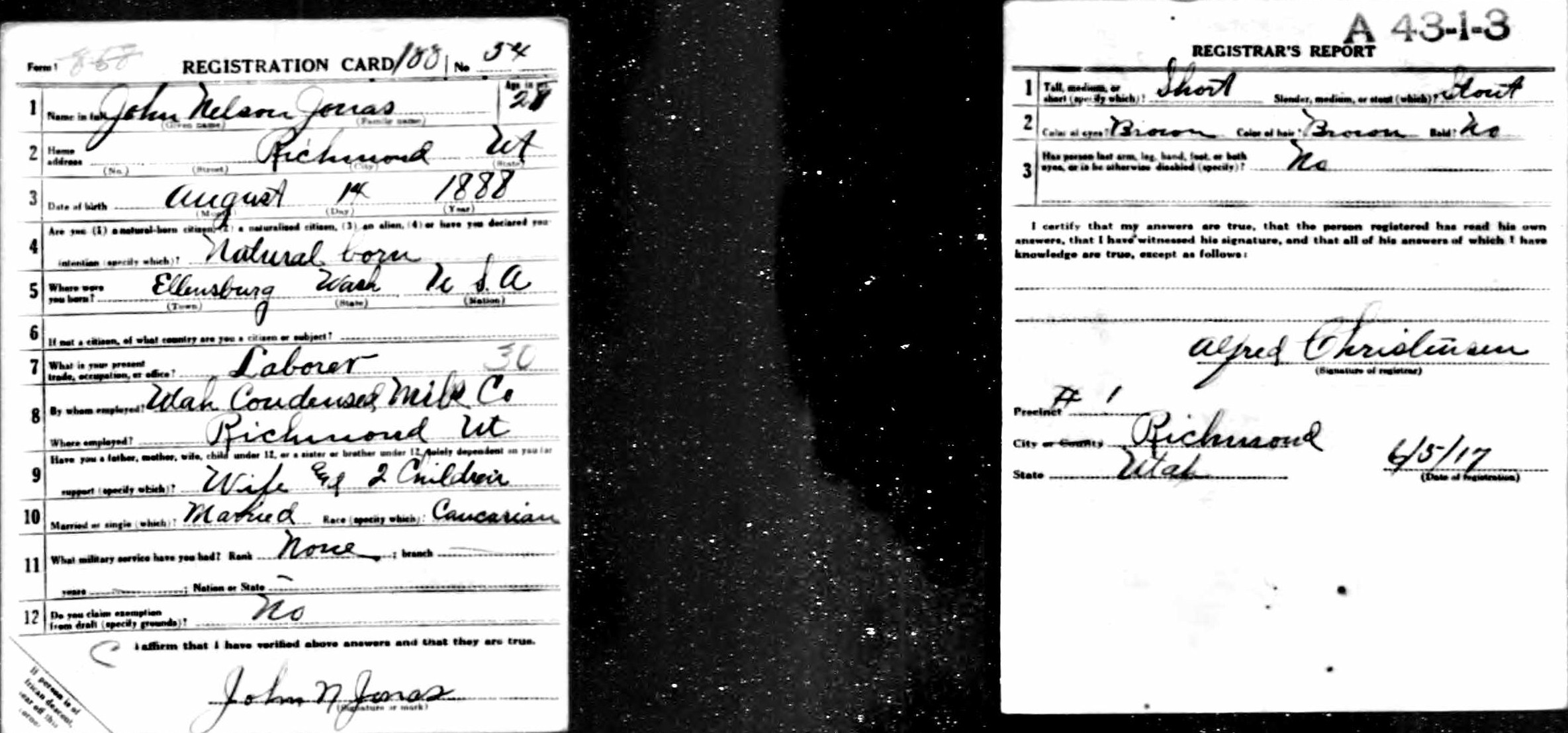
“When Joseph was 58 years old he came to Utah to die at his daughter’s home in Richmond, Utah.  Joseph had sugar diabetes and dropsy.  He had been sick for a year and six months before he died.  He stayed at Rosa’s home for about two months before he passed away.  Lillian, Joseph Nelson Jonas’ wife, who remembered seeing Joseph said that he was a handsome man even on his death bed.  He died 28 Jun 1917 at 3:00 A.M. and was buried 30 Jun 1917 in the Richmond Cemetery.  He has a headstone.  It is exactly like his wife’s headstone and were both placed on the graves by a member of the Jonas family years after their deaths.  The records aren’t clear, but the only sibling they had who could have bought these headstones was William Nelson Jonas.  All the other siblings had died rather early in life.     

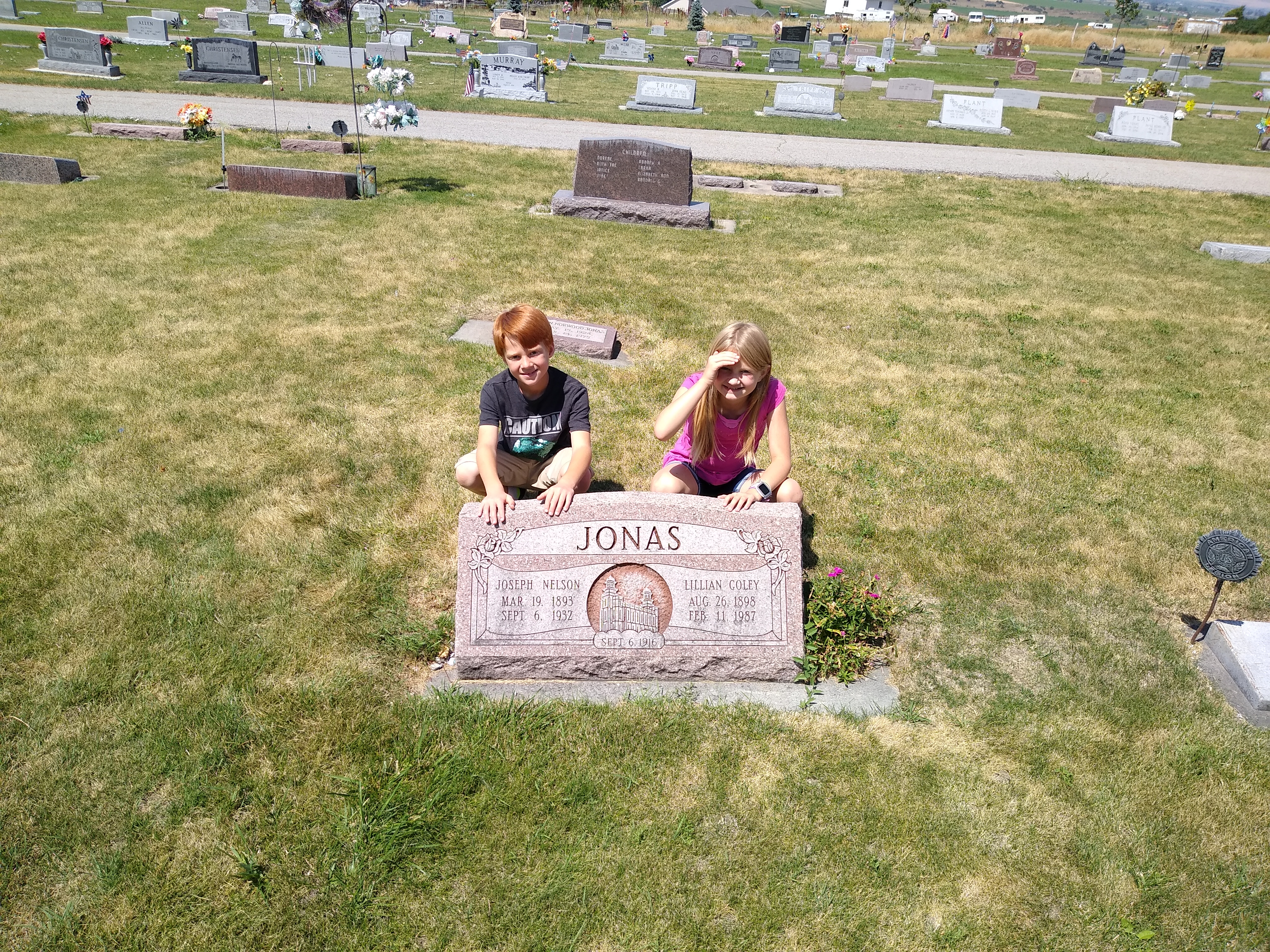
Joseph Nelson Jonas and Lillian Coley Jonas

“During one of the visits Joseph made to his daughter, Rosa, in Richmond, Utah, Rosa had forgotten to put Annie’s picture away.  Joseph picked it up and said, “They didn’t tell me when you passed away, but you came to me so I knew you were dead.”   

“Some time after Cy Anderson was born, the first grandson of Joseph and Annette, Joseph made a visit to Utah to see the family.  That was probably in 1908.  Joseph bought him some new clothes, a sailor’s outfit.  During his visits he would ask the children to help their mother.  Joseph would be standing at the top of the stairs and would toss someone a nickel and say, “clean up the table for your mother and the nickel is yours.”  The grandchildren who knew Joseph really like him.  Joseph rejected any attempt his children made to convert him to the LDS Church.  But Joseph was a religious man, and believed in God.   

“Rosa loved to take her father’s coat and smell the lapel when he came to visit.  She liked to smell the smoke from the big cigar Grandpa smoked.   

John and Nellie (Andersen) Jonas

“Grandpa Joseph Jonas lived to see his wife, Annie, die; three of his daughters; both of his parents; his brother, William, and Emma his sister-in-law all die.  He lived away from his four living children for most of their lives.  He was a man with a family, but wasn’t able to be with them very much for the last 16 years of his life.  He was very much alone except for friends he made in Washington.  Grandma, Annette Nelson Jonas, except for a few brief months, spent the last 11 years of her life alone or in the company of strangers.  Annie experienced her family’s lack of support and certainly a broken heart sped her to an early death.  One may wonder why some people are asked to suffer such hardships in life.  Yet, we should always appreciate them for giving us our lives and for the sacrifices they made in raising a large family.  They provided for and loved their children, and raised them well under extreme hardships.

History of Nils Bengtsson and Johanna Johansdotter’s Family

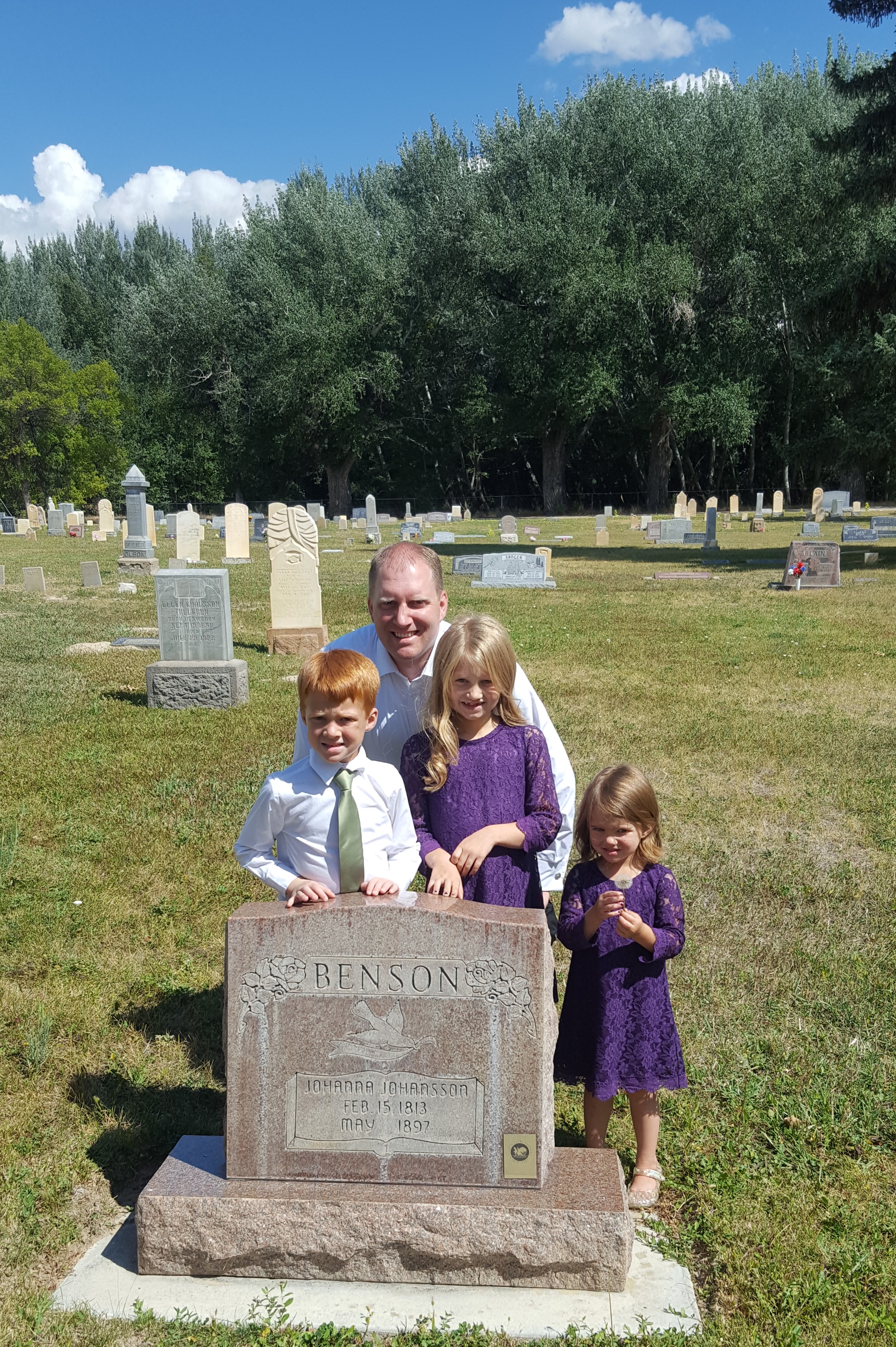
I received a copy of a history from Julie Jonas Kowallis. It is attached to Johanna’s profile in FamilySearch. Whoever compiled or rewrote the previous version seems to have mixed in references and stories related to Johanna’s son and grandson as if they were Johanna’s husband or son. Both emigrated to Utah at different times and had different trips. Further, this author edited out parts of the other history that seem to be passed down, although not verified. Some of the other history is missing, I will share it if I can find the missing second page. 

I have previously written about Johanna. I make only minor corrections within brackets. Nils and Johanna’s daughter, Agneta, is my Great Great Grandmother through her daughter Annetta “Annie” Josephine Nelson, who married Joseph Jonas.

~

The country of Sweden is about the same size as the state of California. Southern Sweden is made up of flat, fertile plains. The lan (which means country) borders have changed very little since they were established. Each lan is subdivided into smaller units that are known as parishes. 

Little is known about Swedish history before 800 AD. About this time two different tribes of Vikings entered Sweden. The Svear, who lived in the eastern parts, and the Gotar, who lived in the western parts. THey were almost continuously at war with one another. It was only after the introduction of Christianity in the 9th century that they united and formed a nation. The name Sweden comes from the phrase Svea rike, which means “Kingdom of the Svear.”

For many generations the farming class comprised most of Sweden’s population. The farmer who owned his land was usually quite stable. However, trades-men could travel great distances to obtain employment in their professions, often seeking a good position in the city. There are many lakes and streams in Sweden, so it is logical to think fishermen and seamen would have resided along the coasts or lakes. 

The people of Sweden are known to be energetic, hardworking people who value order and tidiness.

Our ancestors Nils Bengtsson and Johanna Johansdotter’s families were among the parish district of Halland in Sweden. Nils came from a long line of tall strong men of the north. Legend has it that one of his relatives was so large and strong that he was considered a giant. He could pick up two ordinary sized men, one in each fist, and bump them together. Nils was a big man, handsome and strong. He possessed unusual physical strength. An attribute many of his [descendants] would inherit. 

We have no details as to where or how Nils and Johanna met but we know that when Nils was 28 years old and Johanna 17 they were married on July 4, 1830. Johanna affectionately called Nils “her big handsome man.” They were blessed with eight children, raising seven of them to adulthood. 

The Nils Bengtsson family lived in the usual country home in Sweden. There was a long building on the south with the family residence in the east end and the west end was used for pete or turf and wood. They had a building on the north side where the cattle and the hay and grain were stored. Thatch roofs were the rule for the ordinary farm house. On the ease side of the house was a path running south past a meadow and then over a hill covered with trees. On the west there was a road leading down through the green and across a stream through a field to the north. It is difficult in our day to imagine what it would be like to live in a small one room home with a family of seven children. 

Although freedom of worship is guaranteed by the law in Sweden over 90 percent of the population belong to the Lutheran church, which is the state church. During the 1800’s missionaries from [The] Church of Jesus Christ of Latter-day Saints, or the [Mormons], began to proselyte in Sweden.

Sometime in the [1850s] missionaries called at the home of Nils and Johanna. At the time Nils was very ill. Their one room home was divided by a curtain to separate the area where Nil’s bed was. Even though he was very ill at the time he listened intently to what those missionaries said. Later he called his son Nils to his bedside and said, “What those men are telling us I feel it is right. I will not live long enough to join their church, but I want you to listen to them and if you feel that it is right you must embrace it.” Shortly after this on March 12, 1859 Nils died.

Two years passed between Nils death and the [family’s] acceptance of Mormonism. But when the Bentsson family were baptized they embraced the gospel with sincerity of heart and a love for its doctrines and principles. [Johanna was baptized a member on 11 May 1861. Agnetta was baptized 10 November 1863, Lars 5 May 1860, Ingjard 5 May 1861, Christina 4 February 1866, and Nils Jr 5 May 1860. Johann joined 7 September 1893 after immigration to Utah. The other two were after their deaths. Bengta and Borta did not join or immigrate to Utah.] Nils and Johanna’s son Nils [anglicized to Nels in United States] said that the songs of Zion filled their hearts and minds. The saints throughout the world were encouraged to emigrate to Utah to be with the main body of the church. Nils said, “I had a birds eye view of Zion in my soul and I yearned to go there.” So with a call from a Prophet and songs of Zion ringing in their hearts, the Bengtsson family began to prepare for the long journey to join with the Saints in Utah. Prior to their departure little Johan Peter, who was 6 years old, gave all of his toys away. I can’t even imagine the faith and courage that Johanna must have had. She was 49 years old at the time and she was leaving her family, her friends and her beloved homeland. The family loaded all their earthly belongings that they could carry and began their trek to America. They left Sweden because of their testimonies of the restored gospel of Jesus Christ and their convictions in its teachings. 

Nils wrote of this experience, “the family hustled along the rock paved sidewalks of Halmstad to the coast. The noise of the horses feet and the rumble of the vehicles on the rock paved road drowned all of the voices of the little ones who complained of the unceremonious haste of departure. All were safely on board, the gang planks withdrawn, before we realized that we were moving. We could see that men on the shore were being left behind… As we glided out on the calm blue waters. As we Denmark we say the harbor at Copenhagen covered with sails and booming of cannons. The dense smoke made it difficult to see the city. Germany and Denmark were at war. We sailed and entered the city from the back just before sundown. We had a long way to walk but it was worthwhile. We saw the prettiest homes, lawns, shrubbery, and statues; such as a man on a horse with beautiful decorations representing warriors and noblemen. That even I first heard the Danish language, though odd at first I soon got accustomed to it and learned to understand it.” They sailed from Denmark to Norway on their way to Hamburg, Germany passing between Holland and Belgium. 

On Friday, April 18, 1862 Johanna and her children boarded the ship “Electric” and sailed from Hamburg with 336 Saints all bound for Utah. Elder Soren Christofferson was in charge of the Saints and H.J. Johansen was the Captain of the ship. The emigrants were from Holland and other conferences in Denmark and from the Norrkooping Conference in Sweden. The “Electric” sailed down the Elbe to Bluckstadt Roads, arriving there about noon. Here anchor was cast near the ship “Athenia,” which had another company of emigrating Saints on board. At this time there were 335 emigrants on board the “Electric and 486 on the ‘Athenia.'” The “Electric” lifted anchor April 22nd and sailed to a point off the coast of Hanover, where anchor was again dropped and the ship waited for the wind to change. Favored at last with good wind the “Electric” made the final start for America April 25th, sailing out into the North Sea. Once again Nils tells of their experience, “I remember traveling through a city, the streets were lined with wagons all loaded with all kinds of meat, beef in particular. We set sail that evening with beef cattle in the hold, sheep on the deck, and the passengers on the middle floor. When daylight came we were all easing ourselves by [emptying] our poor stomachs down into the hole.” After crossing England and setting foot at several ports they finally boarded the ship that took them to America. Before sailing, President John Van Cott came on board and assisted organizing the emigrating Saints, who were divided into nine districts, in each from 25 to 40 persons. Nils wrote of this experience, “We got on board the great ship that carried us across to America. When we boarded it it stood so high out of the water that it was quite a climb to get on. We had to wait some time while the sailors and others loaded rails and other heavy freight into the hold. I have tried to forget this part of the journey. Our rations were raw beef, lard, and hard soda crackers and water, mustard and salt. The passengers would take their turn at cooking their rations of meat and sometimes they never got to cook their meat. The winds and the waves were so high sometimes that the ship rolled from one side to the other, the flag on the main mast would touch the waves and this could be seen by looking straight up through the hole. Trunks and boxes had to be tied fast to the beds on the sides of the ship. Some times passengers as well as sailors and some women helped to pump water out of the vessel.”

It was stated that unity and harmony existed among the emigrants during the entire journey. A number of meetings were held on board the ship during the voyage and at least one marriage took place and one child was born. But many also lost their lives because of diphtheria and measles. After 49 days on the ocean the ship arrived safely in the New York Harbor and the emigrants landed at Castle Gardens on Friday, June 6, 1862. Upon arriving in New York there were merchants who were selling their goods along the dock. Nils approached one who was selling what he thought was the most beautiful red fruit that he had [ever] seen, he later learned that they were tomatoes. All the money he had was 5 cents, but he gladly spent it for one of those delicious looking fruits. Much to his surprise he found it to be the nastiest thing he had ever tasted. He told the merchant this and asked for his 5 cents back. After a good laugh the merchant [returned] his 5 cents. 

Here the company met the Saints who had crossed on the “Athenia.” Both companies left New York Jun [9th], 1862 and arrived at Florence, Nebraska, Jun 19th. Lars Bengtsson, the oldest son, who was probably 27 at the time, purchased an oxen team and wagon that would take their family the rest of the way to Zion. They left Florence on the 29th of July 1862. Their captain was Joseph Horne. There was a total of 570 Saints, 52 oxen teams and wagons. 

The first few days of the journey some difficult was experienced, as the oxen, who were not used to Scandinavian orders and management, would often follow their own inclination to leave the road and run away with the wagons, but after some practice on the part of their inexperienced teamsters things became much better. 

Their oxen team gave out many times and the Elders administered to them and they would revive and trudge on. Upon crossing a river one oxen gave out and Lars quickly let the animal loose and put the yoke on his own shoulders and pulled along with the other oxen through the muddy [current] to the dry bank. It was said that Lars was a mighty man. Nearly all able bodied men and women had to walk most of the way. Some of the women rode in the wagons across the larger rivers, while they would wade across the smaller streams like the men. Sometimes the women and children were carried across the streams by the men when it was feared that the oxen could not pull the wagons with their heavy loads. 

Nils tells us in his life history that crossing the plains was a very thrilling and adventuresome as they came in contact with the wild frontier and Indians. While crossing the plains Nils along with a group of teenage boys decided one day to go a considerable [distance] from the wagon train and explore the area. One of the teenagers, pointing to an island in the middle of the river, said, “Lets all swim out to it.” They were all excited about this suggestion, so off came all of their clothes which were folded and left in neat piles along the river bank. In they jumped and swam out to the island. They landed and laid down on it. It had no animal life on it and seemed like a paradise to them. However, as they did so they found it was just a floating mass of sod and trees that had broken off from the bank upstream. They immediately turned back and tried to swim to shore, but to their dismay, they found they were too far down stream and the river banks were now rocky cliffs. They were growing very tired as they searched for a place to crawl out of the river. They prayed they could find a spot, and they did find one, their spirits lifting until they found it was infested with huge snakes. They floated on their backs until they reached a place on the river where they could get out. Thank goodness it was now getting dark because they were naked. They followed the road back to camp and whenever a wagon would come by they would have to run and hide behind bushes. It was very late when they got back to their camp. 

In the meantime a search party was sent to search for the boys and when they found their clothes on the river bank they were all presumed dead. 

As Nils neared his mother’s camp site, he could see his sister Christina outside by the camp fire baking bread. He hid himself behind some bushes and called out to Christina to bring him some clothes. She dropped what she was doing and called out, “Oh Nils ghost.” Nils called again, “don’t be foolish, bring me some clothes.” There was much rejoicing in the champ when it was discovered the boys were not dead. 

There were other exciting experiences as they crossed the plains. One day while they were crossing the North [Platte] River one of the brethren began to go down in a whirlpool. Although Nils was young he was an excellent swimmer, he quickly dove in and swam to the man. The man grabbed on to Nils and Nils pulled him to shore. 

The Saints often gathered berries for food. One day while Nils was gathering berries he because occupied with trying to find the berries and had not noticed that the wagon train had moved on. He picked up his pail and started running after them. All of a sudden a big Indian on horse-back swooped down upon him, trying to grab him as he leaned over the side of his horse. But, Nils was quick and dodged and ducked his attempts until the Indian spied some scouts from the company and fled. (Indians often succeeded in capturing young white boys and then would raise them as Indian Braves.)

L-R: Johanna Benson, Johanna Icabinda Benson, John Irven Benson, Nels Ernst Benson, Mary Ann Angel Works holding Merrill Lamont Benson.

Upon arriving in Salt Lake Johanna and her family first settled in the Sandy-Crescent area. Here they homesteaded 40 acres on land and built a small sod and log home. They farmed and raised cattle. Later Nils went to work for a man named John Nielson from Sanpete Valley and Nils moved to Spring City. At some point in time Johanna went to live with Nils and his family. She died and is buried in Spring City. Other members of the family settled in different pioneer communities that were being settled at that time. Johan Peter our ancestor who was the youngest of the eight children grew up in the Sandy-Crescent area. When he was 27 years of age he married Amanda Josephine Peterson and they became the parents of 7 children. 

Jonas History: William Nelson Jonas

William Nelson Jonas

This is another chapter of the Jonas history book compiled by Carvel Jonas. “The Joseph Jonas clan of Utah (including – early Jonas family history; early Nelson family history)” This one is on William Nelson Jonas.

John, Joseph, and William Jonas

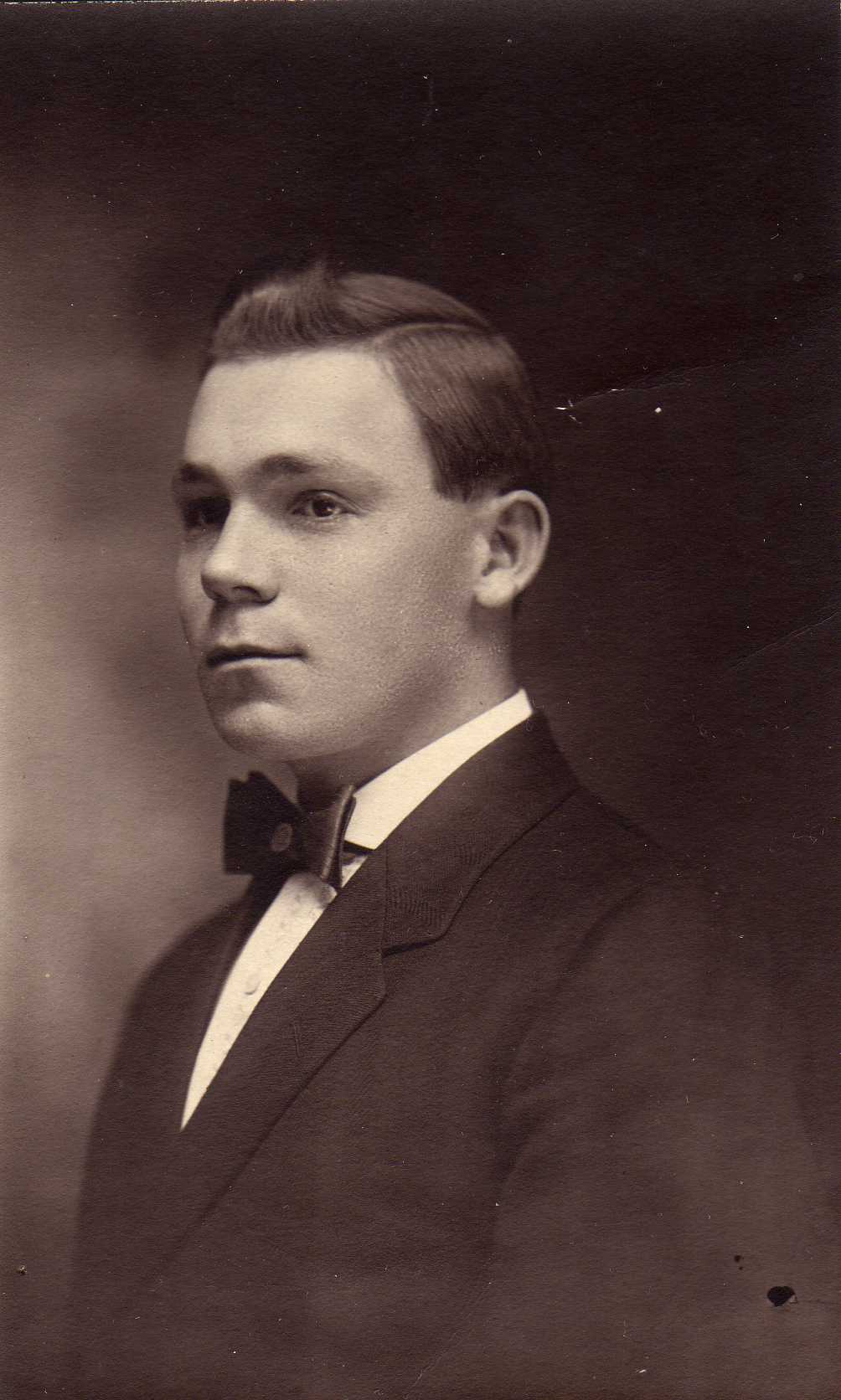
“William had the same name as his great grandfather, William Jonas, although he never knew it in his life.  Most likely he was named after his Uncle William Jonas.  William Nelson Jonas, the second son and fifth child of Joseph Jonas and Annette Josephine Nelson, was born 2 December 1889, He was called “Bill” by his friends at church and “Willie” by his family at his home.  His parents had, two years before his birth in 1887, sold their property 3 miles south of Ellensburg, Kittitas County, Washington State.  But the family must have stayed in the area because William went to the public school in Ellensburg his 1st, 2nd, and 3rd elementary grades.  The family then moved to a little town named Bristol, which is northwest of Ellensburg.  When he was in his 4th grade the family was living in another town named Thorpe and he attended the school at Thorpe.  Thorpe is another town northwest of Bristol.  Sometime during this time William and his two brothers went to a neighbor’s place and swiped some apples.  The kids also helped themselves to their cousin’s watermelon patch.  in 1895, he went with his family to pick hops in Yakima.  The 1900 census tells us that William and his family lived in another town which also is northwest of all the other towns mentioned.  It is called Cle Elum.  The family was renting a house in this western city.  As far as we know the family always rented. 

“William arrived in Crescent, Utah with his entire family 3 July 1901.  He attended the public school in Jordan School District for the 5th, 6th, 7th, and 8th grades.  He graduated 8 grade in Sandy.  He was baptized a member of The Church of Jesus Christ of Latter-day Saints 10 January 1902, the same day his two brothers were baptized.  When he was baptized he had just turned 12 years old by a little over a month.  Up to that time he had been raised a Catholic.  He was baptized in the Jordan River in South Jordan by his Uncle, Nels August Nelson.  He was confirmed a member the same day by William Fairfard.  There were no records found for William at the St. Andrew church in Ellensburg, so it is likely that his baptism was performed elsewhere.  Shortly after he was baptized he was ordained a deacon in the Aaronic Priesthood.  He remained a deacon until 6 January 1908 when he was ordained an Elder in the Melchizedek Priesthood by Bishop James P. Jensen.  He was never ordained a Teacher or a Priest, which are the two offices traditionally held by young people in the Mormon Church before they are ordained an Elder.  While he was a deacon he was called to be the secretary of the quorum.  He was also the President of the deacons quorum for a few years.  Perhaps after being raised in another church it was good training for William to remain a Deacon a little longer than usual.  He belonged to the 7th Quorum of Elders in the Crescent Ward in Salt Lake County.   

“During his stay in Crescent from 1901 to 1908 when he moved to Richmond, Utah, William helped his Uncle August on the family farm.  According to August’s life story William and his brothers worked hard.  It was understood that William and his brothers were to be given some land for the work they did on the Nelson farm.  But the farm wasn’t given to anyone else because much of it was sold.     

“William knew many of his cousins on his father’s side of the family until he was 12 years old.  After July of 1901 he became familiar with all of his cousins on his mother’s side of the family by living with the Nelson family.  William’s mother and this Uncle were the only two siblings in the Nelson family who had children of their own.  One of his cousins from his mother’s side, Virgil Homer Nelson, wrote in his autobiography, “They (Rosa, John, William, and Joseph) gave me plenty of companionship.  Our chief amusements were swimming, playing baseball, and skating.”   

“William had a lot of farm land to discover.  Virgil, August’s son, wrote that their farm, “…extended a mile along the east side of State Street and far to the east…a thousand acres of land in East Crescent and into the hill there.”  On one occasion when William was in the area he found a dead man laying in a ditch.   

“In the school year 1907 William went to the L.D.S. College, his first year in High School before moving to Richmond, Utah.  William and his two brothers left Crescent and went to live with their only living sister, Rosa Jonas Andersen.  When William had just turned 19 years he made this trip.  One cold, snowing day in 1908 the three boys finally arrived at their sister’s home in Richmond, Utah.  William worked four years for an August Larson in the summer and went to Brigham Young College at Logan for five years.  Each year he received a sports letter in baseball.   

Loretta Merrill, William Nelson Jonas

“On 19 September 1909 he was ordained a Seventy by Charles H. Hart, the same day his brother, John, was also ordained a Seventy.  He remained a Seventy for over 40 years.  On 1 May 1908 he received a Normal Diploma at Logan, Utah, Brigham Young College.  2 June 1911 he graduated from the BYU College and received a General High School Diploma.  Two years later he received a college diploma.  On 4 September 1913 he received a Grammar Grade County Teacher’s Certificate for Public Schools of Utah.  His graduation diploma states that he “passed an examination satisfactory in writing, arithmetic, pedagogy, physiology, reading, drawing, orthography, English, grammar, U.S. History, geography, nature study, psychology, and history of Education.”   

William Jonas “To Father”

“The following post cards have survived since 1912.  This is the year prior to his graduation from the college and gives a few insights into his personal feelings and activities.  All the cards are written to Karen Marie Thompson whom he later married.   

“Logan, 4 October 1912  “Dear friend, The first dance will be given Friday night.  It was announced in chapel this morning.  I do wish you could be here.  I’ll be up Sat. noon and we’ll go, if not say so.  I have a fine place to stay, with aunt Felelia and my cousins.  With best wishes Wm. N. Jonas.”   

“Logan 240 E. 3rd North.  Oct 11. 1912 “Dear friend: School is fine and full of life.  How is work, school and everything in particular?  There will be an oration given this morning, you ought to hear it.  I’ll not be up Sat. would certainly like to, but–  Wishing you an enjoyable time.  Your Friend William”   

“Logan240 E. 3rd N Oct 18, 1912 “Dear Friend: I would like to come up Sat. but as I have work and a class entertainment Sat.  It is impossible.  Then too I’ll be up a week from tonight.  I wish you could be down here tonight, a lecture and a dance.  Work Sat. and have a dance.  Have a good time, Don’t be angry.  With best regards and wishes as ever, your friend, Wm”   

“Logan, Oct 30, 1912  “Dear friend, Hoping you a most happy birthday and many good wishes.  There is a dance tonight, a lecture Thur. night and another dance Fri.  Always something doing in Logan.  Tell everybody hello.  as ever your friend Wm. N.”   

“Logan, Nov 7, 1912  “Dear friend, Congratulation on Nilson and the De.  We had a good conference here Sun.  Joseph F. and his son Hyrum will speak.  How are all the folks?  We are all fine.  How is the candy mouse?  Well, how is school life and activities…as good as ever here.  With best wishes from Wm. N”   

“Nov 19, 1912  “Dear Friend, your card was only rec’d.  Hope the best of health for your Pa.  I won a quarter on the game between 1st and 2nd yrs R.H.S. Sat or Fri.  We have a couple of excellent Musical recitals the last week at the Logan Tab and Nibley Hall.  Wm N.  How do you like the house work for a change or are you a hallo kid?”   

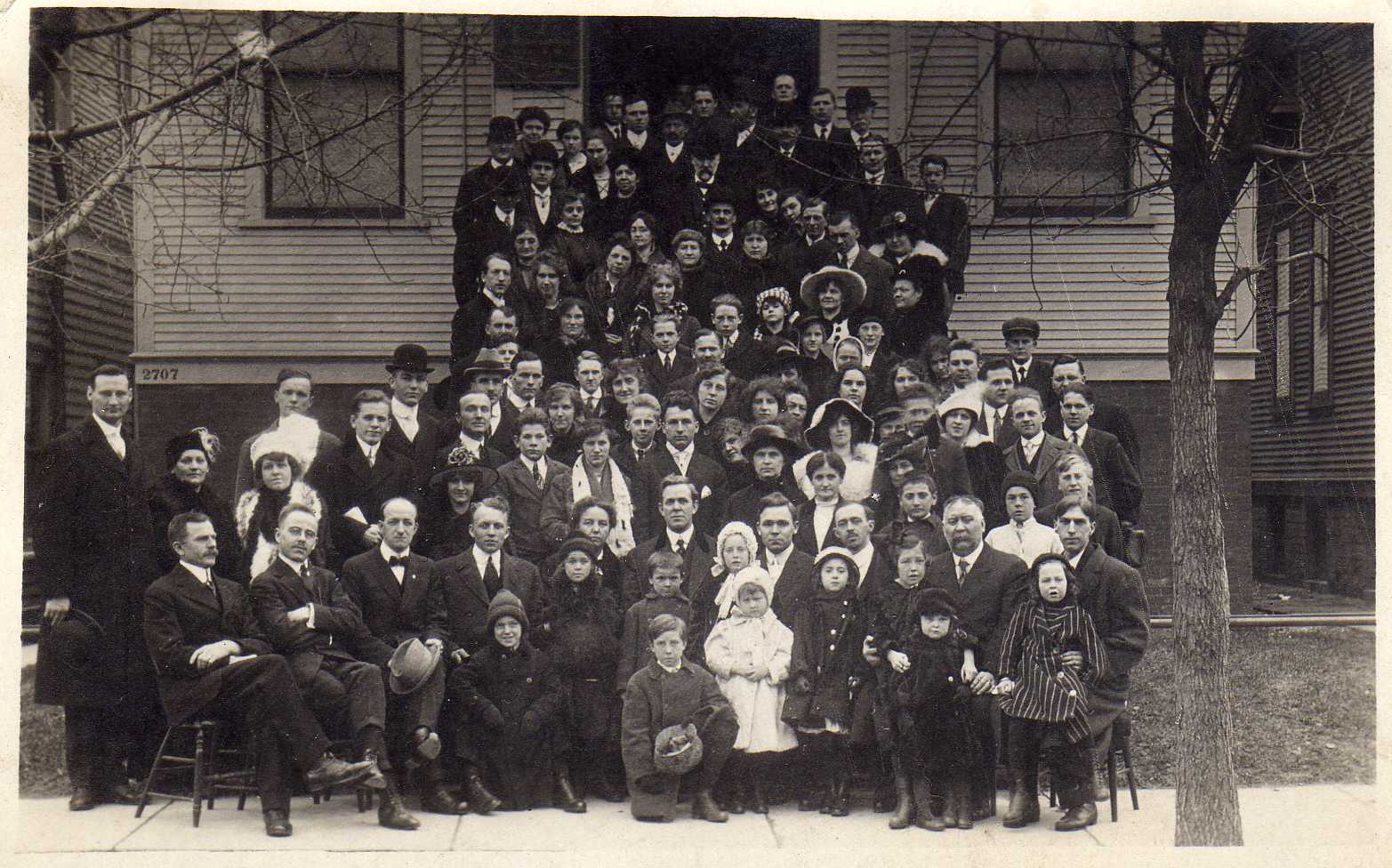
William Nelson Jonas, sitting middle, President of Wisconsin or Minnesota Conference, 1915 or 1916.

“William graduated from college soon after the above post cards were written, when he was 23 years old.  4 September 1913 when he received a Grammar Grade County Teacher’s Certificate for Public Schools.  During 1913 he taught school at Lewiston and was principal of Wheeler School District.  During this first year of teaching he received his endowments 22 May 1914, in the Logan Temple.  After teaching for one year he was called on a mission for The Church of Jesus Christ of Latter-day Saints.  He served for 27 months in the Northern States Mission.  His only grandson who served a full time mission was called to the same mission about 60 years later.  The mission was called the Minnesota-Wisconsin Mission in 1973.  William was first given a minister’s certificate which was dated 2 June 1914 and was signed by the First Presidency of the Church.  Several months earlier 16 April 1914, he had been called to the Switzerland and Germany Mission.  He was to prepare to leave by 1 July 1914 and had a meeting with the Prophet at 9:00 A.M. that first day.  However, he never went to Europe on his mission because of the First World War.  He was then reassigned to the Northern States Mission, which had it’s mission headquarters in Chicago, Illinois.  While he was on his mission he was called to preside over the Wisconsin Conference, 23 September 1915.  He was next called to preside over the Minnesota Conference.  10 January 1916.  While serving on his mission he lived at 2707 Clarke St. Milwaukee, Wisconsin; 31 South 5th Street  La Crosse, Wisconsin; 247 North Gretto Street, St. Paul, Minnesota, and no doubt visited the mission home at 2555 North Sawyer Ave, Chicago, Illinois.  He was released from his missionary service 20 August 1916. 

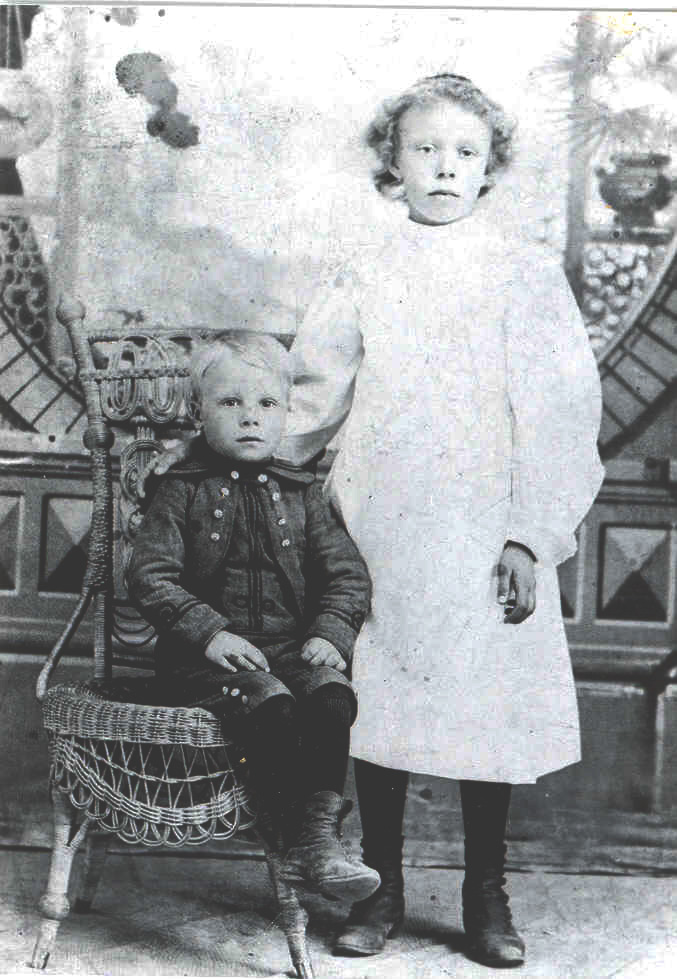
William Jonas, seated with girl in white standing in front of him.

“After his mission he went to Cowley, Wyoming and served as a school principal.  There were 18 graduates from the school that year.  During the summer of 1917 he went to Provo, Utah, for 12 weeks of summer school.  About this same time William went to Richmond, Utah for his father’s funeral.  William was the person who gave the information for Joseph Jonas’ death certificate.  He then went back to Wyoming and on the 28 February 1917 he registered in Big Horn County to teach school.  Soon after that in the beginning of the school year of 1917 he accepted an offer to become coach of baseball and basketball teams at Dixie Normal College in St. George, Washington County, Utah.  We have several pictures from the Dixie College School yearbook which was called “The Dixie”.  Also, the following tributes from the same book.  “Drafted (Class 1 A) It was under Coach Jonas that Cedar met their match in the Dixie basketball team.  Favors the “Windsor Tie”.”  And this one which was entitled “First Years”.  “In September 1917, the D.N.C. found on hundred and five First Year’s invading it’s halls, with bewildered excitement.  We did not remain in this state of unrest, however, for Father Jonas and Mother Watson soon had us under their protecting care.  With their willing aid and the help of every Freshie, we came off the field on Founder’s Day, flying one blue ribbon and two red ones.  The loyalty of our First Year Class was made evident by our purchase of a $100.00 Liberty Loan Bond and $75.00 in Thrift Stamps.  We are justly proud of a Freshie lad who is a member of the D.N.C. debating team.  Our class part early in December was very successful.  If you do not believe us, As Jonas, Jr., and his partners.”   

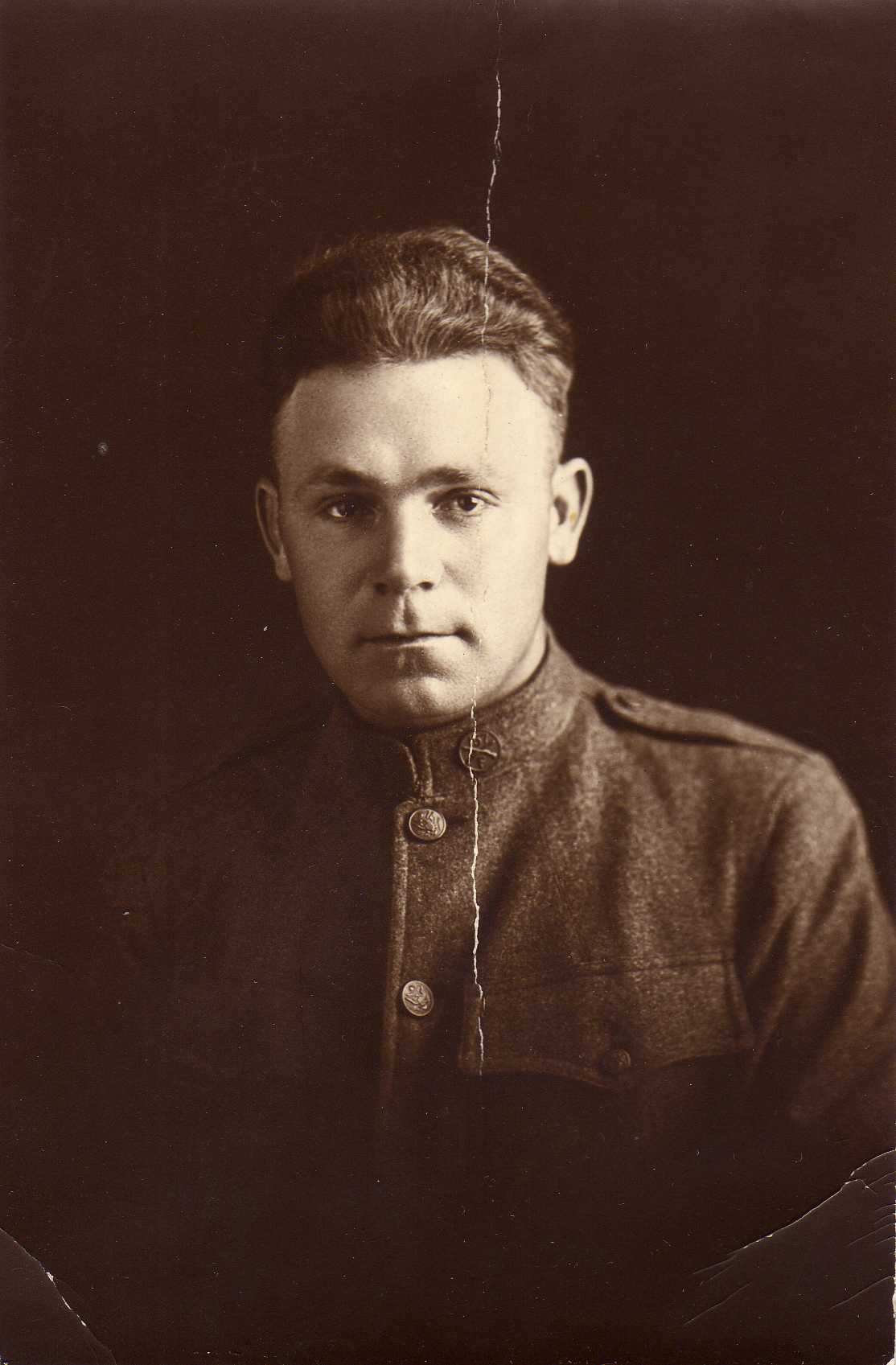
William Nelson Jonas WWI uniform

“The following 20 May 1918 William was inducted by the draft into the Army.  On 25 May 1918 he was in a training camp.  He went to camp Louise and then to Camp Kearney in California.  On August 16, 1918 he left for France.  Before he left he expressed to members of his family that he wouldn’t mind serving in the service if he didn’t have to kill people.  To his relief he was a member of the medical detachment 145 artillery.  He stayed five months in France.  His army serial number was 3,127,617.  He was a resident of St. George, but was inducted in Cache County.  He was in Btry A 145 Fa by July 15, 1918.  He went overseas from August 16, 1918 to January 4, 1919.  He was honorable discharged January 24, 1919.  He remained a private during his short stay.  His Military records tell us that he was 28 8/12 years of age when he was inducted.  He had brown eyes, brown hair and medium complexion.  He was 5 feet 8 1/2 inches tall.  He received paratyphoid shots 10 June 1918 for typhoid and was not wounded while he was gone.  He is character was considered excellent.  He was paid 24 dollars and 40 cents 24 January 1919 and was given travel pay back to Logan.  During the voyage home William was so sick that he thought he might die.  So he promised the Lord he would do whatever He wanted if his life would be spared.  And he was faithful to that promise all his life.   

“While William was in France he sent letters and post cards.  One that still survives was sent to his cousin, Hubert Jonas, who lived in Washington State.  The following is quoted from that card.  “Camp DeSavage, France November 24, 1918.  “Dear Cousin and Family, A Joyous Christmas from France.  notice our gun ‘4 point 7’.  1898 date.  The Regiment was organized 1916 on the Mexican border.  1918 France from the Beehive State Utah.  had six weeks work in the hospital, am well near Bordeaux.  Expect to move soon may be ‘over there’ too.  Sure tickled.  Best wishes and Love W. N. Jonas Sanitary Det. 145 FA Am. Ex. France.”   

“While William was gone to war his older brother, John Jonas, died.  John died 19  December 1918 and William arrived in New York 4 Feb 1915.  He missed seeing his older brother for the last time by a little less than two months.   

William Nelson Jonas and Karen Marie Thompson

“Two years after he got back from the Army he married Karen Marie Thompsen, 6 January 1921.  They were married in the Logan Temple.  Karen Marie was born 31 October 1892.  She went to school in Richmond for eight years.  She started when she was 8 years old and graduated at 15 years old.  She had passed the sixth, seventh, and eight grades in two years.  She worked in the Utah Condensory called Sego Mile, which canned milk.  She worked for 13 years.  Part of the time in the factory and part in the office.  The company had an office in Logan in which she worked most of her 13 years.  While she was working at Logan she also went to New Jersey Sewing Academy for nine weeks at night.  On 9 March 1920 she received a patriarchal blessing.  While she lived in the Murray area she was the quilt chairman in Relief Society for many years and went visiting teaching for many years.  She loved flowers and had a flower garden most of the time.   

“Mary, as she was called, was blessed by William G. Plonallsen 5 Jan 1893.  She was baptized by Clarence L. Funk 1 September 1901.  She was confirmed by Wallace K. Burnham 1 September 1901.   

“Mary’s mother was named Jensine Caroline Christensen.  She was born 11 April 1864 in Aarhus, Denmark.  She joined The Church of Jesus Christ of Latter-day Saints in 1890 and came to America 6 July 1891.  While she was sailing she met her husband, James Thomassen, who later changed his last name to Thompsen.  They were married 24 December 1891.  James Thompsen was never a member of the Church.  He was immigrating to Richmond, Utah, to be with his older brother, John, and his younger sister, Johane Caroline.  His brother, John Thomassen had joined The Church of Jesus Christ of Latter-day Saints 10 February 1869.  He later immigrated to Utah to join the Saints.  He was endowed 12 October 1875.  John must have immigrated to America about that same year.  It took his brother, James, about 16 years to follow his older brother to Utah.  Caroline was converted to the Church by August S. Schow who was from Richmond Utah.  That is one very important reason she moved to Richmond.  Their children were the following: Karen Marie born 31 October 1892 ; Ebba born 31 April 1894; James born 6 September 1896; Alta born 12 August 1902; Leland and Stella were both still born April 1898; Michael born 13 July 1906.  Caroline was a milliner in Denmark.  She sold her hat shop and paid her ticket across the Atlantic to America.  James was a carpenter and died at the age of 59.  He was bitten by a pig and was poisoned.  He suffered a great deal for four years before his death.  James was born 19 August 1854 in Vildmose, Denmark and died 8 January 1913 in Richmond, Utah.  Caroline died 17 July 1951 at 4:30 A.M. at daybreak on a Tuesday in Salt Lake City.   

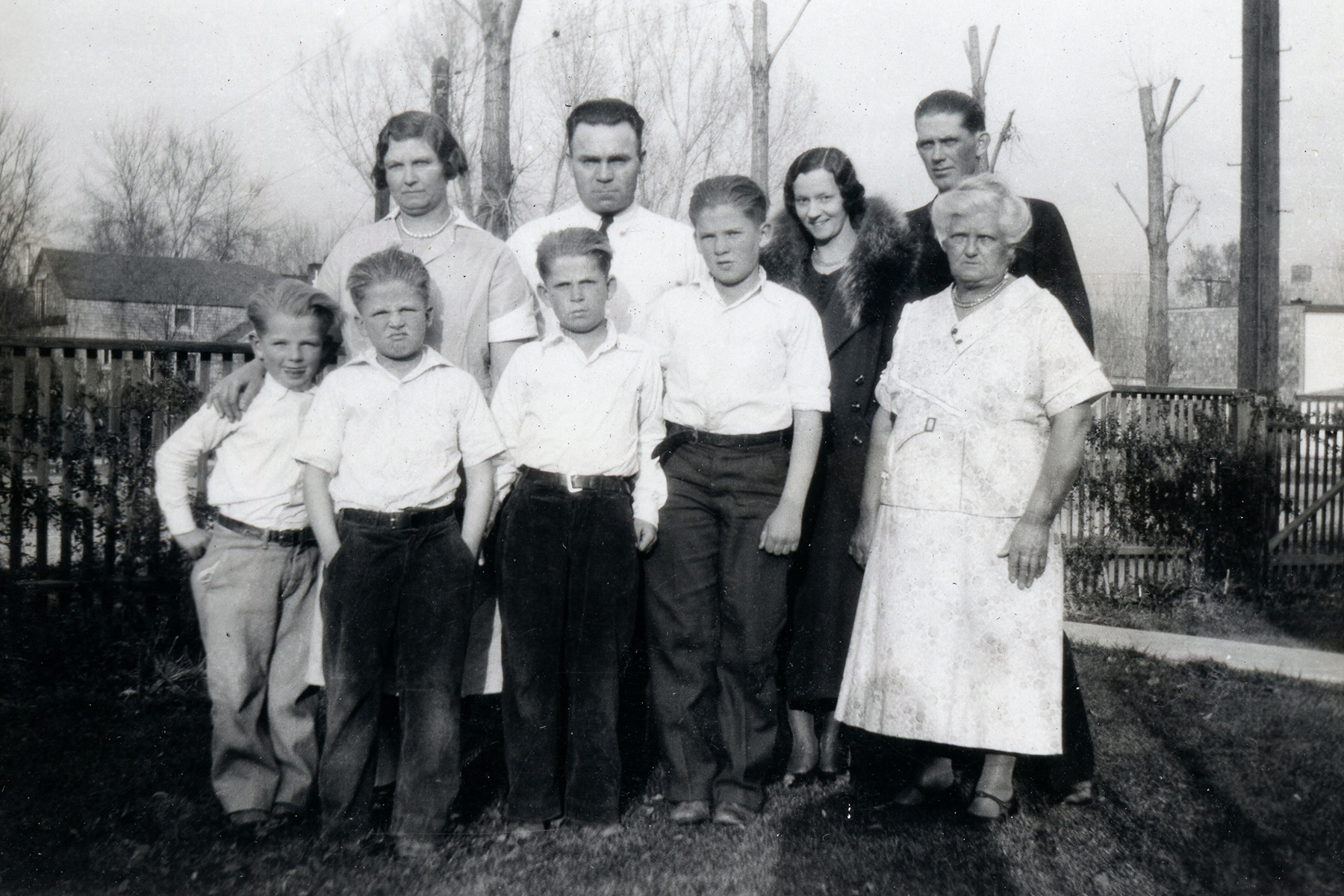
Vaughn, Gaylen, Karen, Maynard, William, and Delwyn Jonas with Alta, James, and Caroline Thompson

“William and Mary lived in Richmond, Utah, when they were first married.  They went to the Benson Stake of the L.D.S. Church.  In August of the same year (1921) they moved to Franklin, Idaho, so William could teach school.  Mary worked checking ledgers for the Milk Condensory in Franklin, Logan, Richmond, and Hyrum during her life.  By September of 1921 they moved to Thatcher, Idaho.  They went to the Thatcher 2nd Ward in the Bannock Stake of the L.D.S. Church.  William, his brother Joseph and his sister, Rosa with their families tried farming.  William tried farming from Sept 1921 to Jun 1923 when they moved back to Logan.  Apparently discouraged with farming William went to Park Valley, Utah, so he could teach school for one year.  After school was over they moved back to Logan for a short while and then to Avon, Utah, for another teaching assignment.  September 1924 William took an examination at West High School for the Post Office.  He rated 3rd in his class with 93% – he got 5% for being a veteran.  In August 1925 he started work for the post office.  He worked there for 33 years and accumulated many days for not being sick.  He worked the afternoon shift and would take the trolley car to town.  He retired in 1958.  His work consisted of being a supervisor and worked with the public weighing packages.  His hours were from 3:00 P.M. to 11:00 P.M.   

“L.D.S. Church records show that they moved into their home at 120 West Burton Ave in Salt Lake City the same month he was hired at the post office, August 1925.  Mary’s mother also lived on Burton Ave.  They were in the Burton Ward, Grant Stake.  After they had lived on Burton Ave. where their son, Vaughn, was born they moved to 1854 East Clayborne in Salt Lake City in 1928.  About 1931 they moved to 906 East 39th South in the Murray area.  Then the family moved to 2964 South 9th East (where Carvel was born) in 1933.  They lived there from 1933 to about 1942-43.  Then they moved into the new home next door at 3974 South 9th East.  When William first bought land in the Murray area he purchased 6 1/4 acres.  William and his brother-in-law, Christian Andersen, built the home at 3974.  Then they moved again to 3954 South 9th East in 1951.  All three of the homes on 9th East were next door to each other.  The home at 3954 was originally an Army barracks which was moved from Kearns and later remodeled by their son, Maynard.  On 29 April 1962 they then moved to 1005 East 4025 South which was still in the Murray area.  There they lived until each passed from this life to the next.    

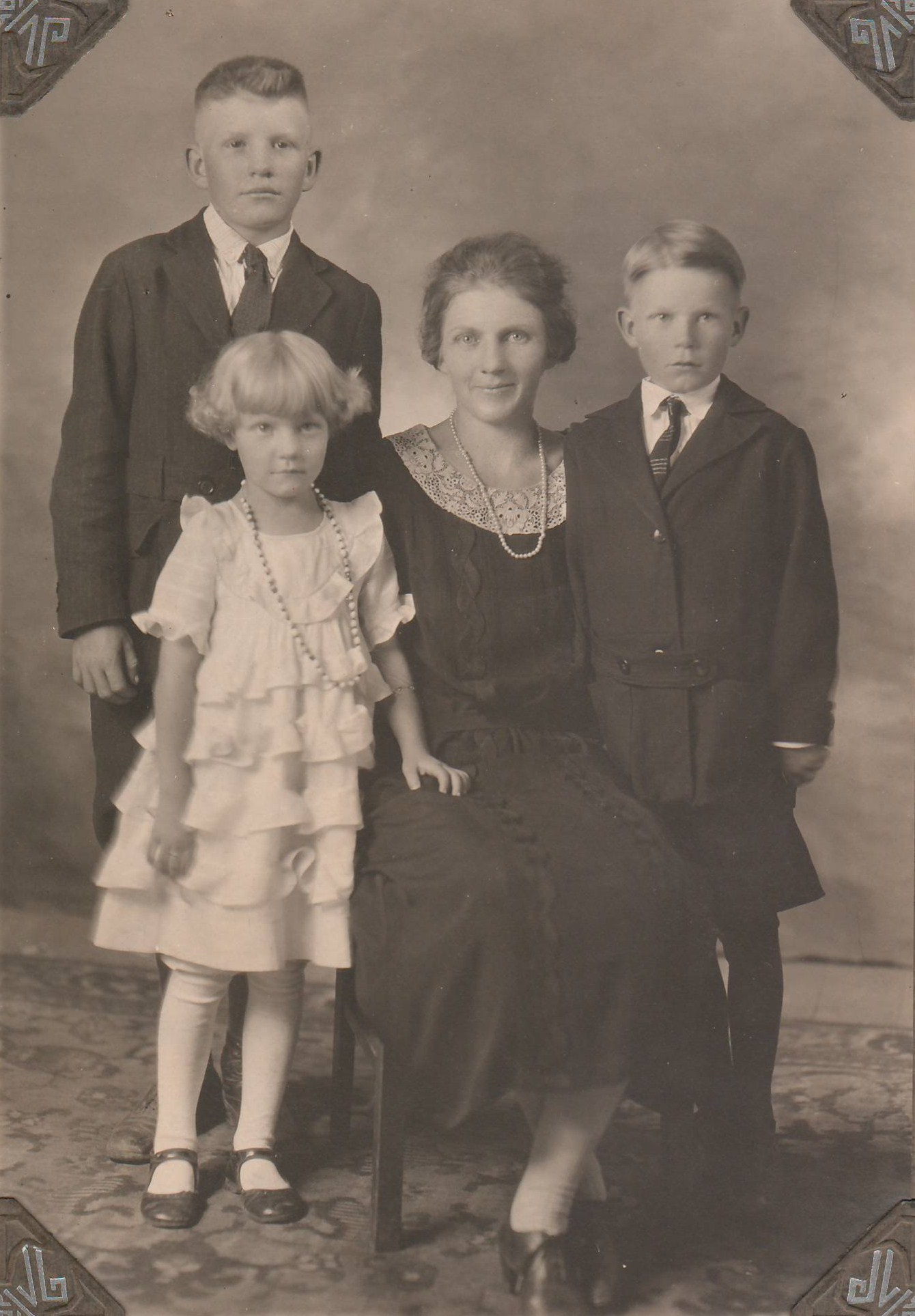
“William and Mary were the parents of 6 sons.  The last son, William Thompson Jonas, was born what has been called a “blue baby”, and lived only 31 1/2 hours.  He weighed 6 1/2 pounds and is buried in the Elysian Burial Grounds in Murray, Utah.  He was blessed by his father the 22 October 1937.  Their 3rd son, Gaylon Thompson Jonas, was killed 19 September 1944 on Peleliu Island in the Pacific Ocean.  He had enlisted 19 August 1942 with the 2nd Mormon Battalion.  He was awarded the Bronze Star, Purple Heart, Navy Citation Award, Pres. Citation, Navy Unit Cit., American Theater, Pac. with 3 stars.  He was killed by a Japanese sniper’s bullet while removing a wounded man.  He was killed while he was helping the fourth man that he helped that day.  He had volunteered for the assignment.   

“William blessed all six of his sons.  He also confirmed 5 of them after they were baptized.  Delwyn was blessed 2 April 1922 and confirmed 1 February 1931.  Maynard was blessed 14 March 1925 and confirmed 3 December 1933.  Vaughn was blessed 7 November 1926 and confirmed 4 November 1934.  Carvel was blessed 17 September 1934 and confirmed 2 May 1943.  William also ordained several of his sons to different offices in the Priesthood.  Gaylen was ordained a Teacher 29 January 1940.  Carvel a Deacon the 22 September 1944 and a Teacher 30 October 1949.   

“William was actively involved in work for his Church all his life.  He was Superintendent of the Sunday School of the Mill Creek Ward for 2 1/2 years.  He served as Stake Supervisor of the gospel doctrine classes.  During his gospel doctrine classes he would compare Catholic point of view with the L.D.S. view quite often according to his neighbor who attended his class.  He also served as one of the Seven Presidents of the Seventy in his stake.  He was a leader of the cottage meetings.  And taught the genealogy class for many years and became one of the senior teachers of these genealogy classes.  He was baptized for some of his dead ancestors and his wife’s dead ancestors.  He served as a ward teacher for many years.  He did all of the above including serving a full time mission for the Church before he was 50 years old (1940).  After that on 20 Mary 1943 he received a missionary call from the Mill Creek Ward, Cottonwood Stake for a stake mission.  He was set apart 26 March 1943 in the stake office at about 8:00 P.M.  Afterwards he received another stake mission calling (this was his third mission).  He and his wife Mary, were both called.  William was set apart 12 May 194?.  One of grandpa’s neighbors said that grandpa was considered a scriptorian by those who knew him in their ward, and that he had a hard time understanding why people didn’t recognize the truth in the scriptures.  He was set apart Wednesday May 18, 1944 in the stake office at 176 Vine Street for this third mission.  While William was on this stake mission his son, Gaylen, who was killed in World War II appeared to him twice requesting that his temple work be completed.  His wife, Mary, was set apart 31 August 1949 so they could serve on a mission together.  They received honorable releases from their stake missions 3 June 1951.   

“When William was called on his second mission he wrote a letter which was printed in the Millcreek Courier, which was the ward paper.  The following is quoted from that letter written March 1943, the same month he was called on his second mission.  “Faith Unshaken  Greetings to the boys in the service from Mill Creek; Recent events have not shaken my faith in the ultimate triumph of freedom and justice, for I was reared in a church where faith in God and belief that right will triumph eventually is too deeply ingrained in me to doubt its final victory.  As long as we have faith at all in God, we must know that his is All-Powerful.  That his will for the world is Justice and Right, and that eventually His purposes will be established here on earth.  Good emerges slowly, but we must not doubt its victory.”   

“”As to our country, my faith is our America, in its people, and in the American Way of Life, is unwavering.  The United States is the greatest country on the earth, not because it is our country, but by comparison.  It’s founding I believe to have been divinely ordained and that God had a mighty mission for the United States among the nations of the world.”   

“”America was founded by our forefathers in prayer, in faith, and in the heroic spirit of sacrifice.  Lives of comparative ease in their old country might have been theirs had they been willing to surrender their  convictions.  They chose the Hard Right rather than the Easy Wrong, and were ready to lay down their lives for freedom to worship God according to the dictates of their conscience.  No matter what lies ahead, we must carry on to the best of our ability, doing our utmost from day to day, each in his own niche.”   

“”After the Hard War No. I was over and the happy Peach had come, I experienced the most wonderful day of my life.  February 4, 1919 we first saw the light reflections in the distance, then the lights, buildings, the land.  Oh the shouts, “America”, “God’s country”, “Zion”, “Home Sweet Home”, ect.  Believe me the statue of Liberty certainly faced the right way–in fact everything we saw was just O.K.”   

“”I am now praying for a second great day to come soon, when this Hard War No. II is over and happy Peace is declared and my sons, Delwyn of the Army, Maynard of the Navy, and Gaylon of the Marines come marching home.  Parents, fill in the names of your sons, and my God grant the day soon.  Sincerely, William N. Jonas.”   

“On 17 December 1950 William was ordained an High Priest making  little over 40 years that he was a Seventy.  He was ordained by Verl F. McMillian of the Mill Creek 2nd Ward in the Cottonwood Stake.  After he was ordained an High Priest he was asked to teach the High Priest class for many years.  He also became interested in doing the Jonas genealogical line.  Around 1960-65 he wrote to places where his grandparents, Hubert and Mary Jonas lived after arriving in America.  On 26 October 1960 he received a returned letter from the research department of the L.D.S. Church.  He had paid people to help in the research.  From this letter we were able to learn about the 1880 census of Nebraska where the family had lived.  Another letter was received 13 April 1961 from the Register of Deeds, Monroe County, Michigan, written by the Genealogical Society research department.  In behalf of William many land records for Hubert and Mary were then found.  William wrote to the Texas State Department and Historical Society of Wisconsin hoping to find more information about our family.  Also, he had driven to his place of birth, Ellensburg, Washington for some research and visited his cousin-in-law, Regina Jonas who was living in Vancouver at the time.  The following is a quote from a letter he had written which shows the sincerity of his desires.  “…this seems to be asking a lot.  However, I will be glad to pay for services.  Have you someone who is available for such work?  I shall try to come to Ellensburg this summer if necessary.  I thank you.  William N. Jonas.”  Many attempts were made to find out where the Jonas family had lived in Germany.  Unfortunately, William never was able to discover that genealogy.  But because of his efforts there were many clues for the author to use in what eventually lead to the discovery of the Jonas genealogy pedigree, and also this history book.   

“The following are some observations about William that his children and friends have told me.  William liked to garden.  During hard economic times, and especially during the Great Depression, they always had a large vegetable garden.  Although we don’t have the exact figures it was close to an half acre.  They were able to provide for their family and also provided for a neighbor and his family who were experiencing financial difficulty.  He enjoyed excellent, physical health all his life.  He was in a car accident when he was older, about 1953-54.  During the car accident the gear shifting know of a late model Cadillac punched his side.  The knob was shaped like a tear drop.  He was a passenger and had slid across the seat with his left side hitting the knob.   

“After some of his children got back from their military service they thought they were in better physical shape than their father, who was in his 50’s.  They oldest thought he could out arm wrestle his dad now.  But William won the match.   

“While he worked for the post office he played for the baseball team on the Industrial League.  He was a good baseball player and had large knuckles on his left hand from catching baseballs.   

“William was instrumental in helping his oldest son to get a job at the post office.  He also helped his younger brother, Joseph, financially so he could go to college.  William paid for the first month rent for his son, Carvel, when he was first married.  Also, William and his wife, Mary, both visited Mr. and Mrs. Virgil Clayton and took pictures on several occasions of their grandson, Carvel Lee Jonas.   

“William, when he lived on 9th East raised chickens, pigs, had a cow and an horse.  Their children had pigeons and also dogs.  They had an orchard of mostly apples, and grew hay and grain; potatoes and lots of vegetables.  They had a chicken coop that was heated with a kerosene heater.  On one occasion the chicken coop burned down and they lost all the chickens (perhaps as many as an hundred).  While the chicken coop was burning William and his son, Maynard, tried to removed the heater and William was burned.   

“One time William had bought a new pitch fork.  He was able to carry so much hay at one time that the weight of the hay broke the handle of the new pitch fork.   

“When William would read or study a book he would read with a pen or pencil and underline and make notes in the margins.   

“A neighbor of William’s for over 25 years, Otto Hansen, said the William was very helpful in getting him a job for the post office.  William had told him about the civil service test, and encouraged him to try and pass.  This neighbor and his wife said that William and Mary were good neighbors and would do anything they could to give a helping hand to someone in need.  They considered them to be very honest people.  A story that they remember was when William was teaching the gospel doctrine class.  Apparently, for a practical joke Mary would remove William’s notes that he had prepared to teach class with from his book.  They said that they remember Bill saying, “Mary’s done it again.”  Then he was left to use the scriptures and rely on memory and past study to make up a lesson on the spot.   

“William died 14 April 1972.  He suffered from senility for a few years before he died.  Grandma had a neighbor put locks on the doors to keep grandpa Jonas from leaving without knowing where he was going.  Even when he wasn’t at his best at the end of his life his thoughts were to go to the Church welfare farm and work.  William had received an award for doing over 100 hours of volunteer work for the Church welfare farm in one year (1962), which made him 72-73 years of age.     

“Even with the differences in personality of his sons, the one thing that they all agree on is that they had a very good father.  Gaylen before he was killed in the war told his friend, “Blondy, I want you to (meet) my folks when we get a furlough, they are the best parents a guy could want.”  His sons don’t agree on many things, but they all agree about how lucky they were to have such a wonderful father.  That in itself is one of the finest tributes that a man could have.   

“Merlin Andersen told me that he always had admired William’s language.  William spoke as an educated man who had a firm grasp of the English language.  William loved kids.   

“Once William and Merlin were walking and they came to a creek.  Merlin was wondering how he was going to cross because he didn’t feel like he could jump across and make the other side.  Merlin was a young boy, but he remembers that William grabbed him and threw him easily to the other side of the creek.

Jonas History: Joseph Nelson Jonas

This is another chapter of the Jonas history book compiled by Carvel Jonas. “The Joseph Jonas clan of Utah (including – early Jonas family history; early Nelson family history)” This one is on Joseph Nelson Jonas. I have written a biography of Joseph and Lillian previously.

Joseph and Margaret Jonas about 1899

“Joseph Nelson Jonas was born 19 March 1893 at or near Ellensburg, Kittitas, Washington State.  He was the 6th child and 3rd son of Joseph Jonas and Annetta Josephine Nelson.  He became the youngest of the family (a younger sister was born after Joseph, but she died a few hours after birth).  Joseph was about three years old when his mother left the family and went to the Washington State Hospital in 1896.  Joseph lived in the Ellensburg area with his father and siblings until he was 8 years old.  On 3 July 1901 the family moved to Crescent, Utah.  He was baptized a member of The Church of Jesus Christ of Latter-day Saints 10 Jan 1902 by Aug Nelson.  His two older brothers were also baptized that same day. 

John, Joseph, and William Jonas

“He worked on his Uncle August Nelson’s farm until he moved to Richmond, Utah, to live with his older sister, Rosa, in 1908 when he was 15 years old.  He traveled the same day with his two older brothers.  When he was 23 years old he married Lillian Coley.  They were married 6 September 1916 in the Logan Temple.  That same day they were each endowed with the temple ordinances for the first time.  Joseph met his wife while he was living in Richmond.  His wife’s family had a farm in Richmond where Joseph had hired on as a far laborer to help the family harvest hay. 

“About 6 months after they met they were married.  His wife was 18 years old and Joseph was five years older than his wife, age 23.  They became the parents of eight children, the first six were boys and the last two were girls.  Joseph went to work for the sugar factory in Lewiston, Utah.  By about 1920 Joseph had moved to Thatcher, Idaho with his brother, William and his sister, Rosa.  They operated a dry farm which grew grain.  Joseph had a wooden red house which had a front room, bedroom and a kitchen.  His sister lived about a mile away in her own home and William lived in Thatcher teaching school.  At the farm Joseph and others operated a combine which was pulled by horses and had blades that were taller than the men.  The animals were kept in a barn which was about a block from the house.  They had five horses, a cow, pigs, chickens, domestic animals and a vegetable garden.  One horse was white and was named “dime.”  To mail letters and receive letters the boys would need to ride Dime.  This horse, while carrying his son, Joseph H., ran as fast as it could go all the way from getting the mail one day.  This experience scared the young boy who was about 5 or 6 years old, and he had to hold on for fear of his life.  About 1924 or 1925 Joseph moved from Thatcher to Lewiston, Utah.  Joseph drove the wagon which carried some of his sister’s children.  He began working for the Utah-Idaho Central Railroad.  This was an electric inter-urban trolley railroad that had 94 miles of track and went from Ogden, Utah north to Preston, Idaho.  Joseph began working on a section gang, the same type of job his father, Joseph, had had.  Joseph worked keeping the track in operating condition by repairing rotten timbers, hammering spikes or tightening the bolts which kept the track together.  He worked seven days a week, some of the work was all night, but he was able to come home after a shift was over.  While the family lived in Lewiston they lived in a train box car, which had the wheels removed.  There were two box cars which were used by the family.  They were close together and a ditch ran under their box car.  One car was used as a storage shed, the other one was used as the family home.  Once there was a tub of gas which was stored in the shed.  This gas caught on fire, which started the shed to burn.  Joseph went to his wife and told her to leave because the shed was on fire and it may cause the house to burn down (the two structures were close together).  She didn’t believe him, but there was little time to convince her so he picked her up and carried her outside.  The best way to stop the fire was to remove the burning tub of gas–Joseph must have thought.  So he went into the shed, picked up the burning tub of gas and took it outside.  Joseph’s brave act saved his home from burning, but they lost the shed and it’s contents.  Joseph spent about two weeks in the Ogden Hospital with 2nd and 3rd degree burns. 

Joseph and some friends at work after a game of shoes

“About 1927 Joseph was promoted to Section Foreman and moved to Ogden with his family.  His father, Joseph, had been a section foreman in a leadership position, too.  Joseph worked on the railroad line that went from Ogden to Huntsville, and also a line that went to Plain City.  Joseph worked at one time on the Quinney Railroad Line.  Except for the Thatcher home the family rented their homes until Joseph died.  They lived at 17th St. and Wall Ave. in an apartment complex owned by the railroad called a section house.  This was a long, wooden building that was divided into rooms.  Joseph’s family was the only one that had a porch, a special privilege given to Joseph because he was the foreman.  Joseph had a vegetable garden when he lived in Ogden.  He was a very generous host and his visitors were always given a lot to eat when they visited their home.  Joseph was active in the L.D.S. Church.  He was a strict father and was not afraid to “switch” his children when they got into trouble.  He stood about 5’6″ tall and was muscular.  His nephew, Merlin Andersen, said that Joseph told him “I want to show you what a good wrestler is!”  Next thing Merlin knew was that he was on the ground.  Joseph was on the wrestling team at Brigham Young College (Logan), the school he graduated from.  Joseph and his brother, William, went to college some of the same time together. 

Joseph Nelson Jonas’ Brigham Young College yearbook picture

“Joseph liked to discuss religion.  He would argue with his siblings his point of view with determination.  After the discussion all the siblings would talk nice to each other and gave each other hugs and handshakes.  They family moved to 103 17th Street in Ogden.  On 1 Aug 1932 Joseph last child was born.  He was very glad to have two daughters after having six sons in a row.  September 6, 1932, a little over a month later, Joseph and Lillian had their 16th wedding anniversary.  Joseph had gone to work as usual that day.  He was welding some train track on the corner of Lincoln and 20th East in Ogden.  One week before, while Joseph was working in front of the American Cannery, he had been shocked by electricity and landed on the ground.  He got up and went right back to work that day.  But it was a week later when Norwood, Joseph’s son, was bringing his father something to eat.  Norwood saw his father welding when someone started to move the trolley car.  Joseph was welding a ground wire.  Grounds were put into the track to the electricity would go harmlessly into the earth.  This time the electricity, cause by the trolley being moved, went to the ground which Joseph was touching.  Joseph was killed Sept 6, 1932 on his 16th wedding anniversary.  The Ogden City paper, dated Sept 8, 1932 carried the following obituary.  “Ogden-Funeral services for Joseph Jonas, 39 of 103 Seventeenth Street, section foreman for the Utah-Idaho Central Railroad Company, who was electrocuted Tuesday afternoon, will be held Friday, at 10 A.M., in the Lindquist’s Chapel, with Bishop Huggins of the Tenth ward in charge.  Investigations into the death of Mr. Jonas are being conducted by the railroad company.”  He was buried in Richmond Cemetery where two of his sons, his wife, his brother, John, and his father, Joseph are also buried.     

“Merlin Andersen gave me the following tidbits about his uncle, Joseph.  “Joe always had cows so he could have enough milk for all his kids.  He was an ambitious person-he had a way to get things done.”   

“Lillian told me the following story.  One day we went to the movies.  This was when Lillian was about 5 months pregnant.  When they had both decided to cross the road near the movie theater a car ran over both of her legs.  Her legs weren’t broken, but were badly bruised.  The other family felt so badly that the mother of the boy who was driving the car became good friends with Lillian.  This mother visited and gave Lillian comfort during her recovery.   

“Joseph Nelson Jonas had  read the Bible so much that he could quote scriptures and could back up his knowledge by finding the scripture and showing it to people.

2020: The Year of the Dead

This wasn’t intentional.  Not sure why or how it happened, but it did.

Anyone who knows me knows that I stop and visited deceased people and ancestors anytime I am in the neighborhood.  Kinda like stopping in to visit any other cousin or friend when you are driving through, are in town, and have some time.  Ancestors are very accommodating whenever you want to stop in and visit.  Maybe COVID-19 just gave us more time.

I have the following ancestors who are buried somewhat nearby, western United States.  I will link each ancestor I have written about previously if you want additional information.  Here are my ancestors and where they are buried.

As of this writing, I see there are two ancestors that I haven’t stopped and visited in the last few years and got pictures with the kids and the tombstone, Christiana Andra in Salt Lake City and William Sharp in Ogden (I now have the goal to get it done before the end of the year).  I also have a couple of known ancestors without tombstones, David and Gwenllian Jordan in Ogden, Utah, Hubert Jonas in Ellensburg, Washington (but we got pictures at the grave), and Damey Ross in Olivehurst, California (who we visited after hours and couldn’t even locate the grave).  We should remedy that but we may just have to stop and get pictures with their grave locations.

I also cheat and use the 2016, 2018, and 2019 photos with three ancestors, Johanna Benson in Spring City, Utah in 2018, John William Ross in San Bruno, California in 2016, and James Thomas Ross/Meredith in Fresno, California in 2019.  I could do a 2020 photo for Johanna, but I am not going to California just to redo a tombstone photo with the two Ross ancestors.

Grandparents

Milo & Gladys Ross – Plain City, Utah

Lillian, Paul, Aliza, and Hiram Ross with tombstone of Gladys Maxine Donaldson (1921-2004) and Milo James Ross (1921-2014) on 23 May 2020.

Norwood Jonas – Richmond, Utah

Hiram and Aliza Ross with tombstone of Wilburn Norwood Jonas (1924-1975) on 26 July 2020.

Colleen Lloyd – Dingle, Idaho

Lillian, Hiram, James, and Aliza Ross with tombstone of Colleen Mary Andra (1928-1999) and Ivan W Lloyd (1919-2011) on 25 July 2020.

Great Grandparents

John Ross – Golden Gate National, San Bruno, California

Paul Ross with tombstone of John William (Jack) Ross (1890-1948) on 24 May 2016.

Ethel Ross – Plain City, Utah

Hiram, Aliza, and Lillian Ross with tombstone for Ethel Sharp Ross (1898-1925) on 23 May 2020.

Delos & Dena Donaldson – Ogden, Utah

Aliza Ross with tombstone for Berendena Van Leeuwen (1898-1959) and David Delos Donaldson (1894-1953) on 28 June 2020.

Joseph & Lillian Jonas – Richmond, Utah

Hiram and Aliza Ross with tombstone of Lillian Coley (1898-1987) and Joseph Nelson Jonas (1893-1932) on 26 July 2020.

Bill & Mary Andra – Whitney, Idaho

Lillian (in background by Wanner tombstone), James, Aliza, and Hiram Ross with tombstone of Mary Louise Wanner (1901-1991) and William Fredrick Andra (1898-1990) on 26 July 2020.

Great Great Grandparents

James Ross/Meredith – Belmont Memorial, Fresno, California

Paul, Aliza, and Hiram Ross with tombstone of James Thomas Ross (aka James R Meredith)(1869-1951) on 10 May 2019.

Damey Graham Ross – Sierra View, Olivehurst, California

Damey Catherine Graham Ross doesn’t have a tombstone, but we visited her grave in 2016 in the evening.  No photo.

Milo & Lillie Sharp – Plain City, Utah

Aliza, Paul, Lillian, and Hiram Ross with tombstone of Mary Ann Bailey (1828-1913), Mary Ann (Lillian “Lillie” Musgrave) Stoker (1861-1935) and Milo Riley Sharp (1857-1916) on 23 May 2020. Mary Ann Bailey is the mother of Milo Riley Sharp, don’t confuse mother Mary Ann with spouse Mary Ann. We shorten our Lillian’s name to Lillie’s spelling in her honor.

William & Mary Donaldson – Ogden, Utah

Aliza Ross with tombstones of Mary Elizabeth Williams (1869-1951) and William Scott Donaldson (1865-1913) on 28 June 2020.

George & Minnie Van Leeuwen – Ogden, Utah

Aliza Ross with tombstones for Hermina Jansen (1860-1921) and George Henry (Gerhardus Hendrick) Van Leeuwen (1856-1932) on 28 June 2020.

Joseph Jonas – Richmond, Utah

Tombstone of Joseph Jonas (1859-1917) on 26 July 2020.  The S is a mistake put there by someone.  Some have put his mother’s maiden name “Schumacher” there, but we have yet to find any evidence of that middle initial or name.

Annie Jonas – Crescent, Sandy, Utah

Lillian and Hiram Ross with tombstone of Annetta Josephine Nelson Jonas (1864-1907) on 11 July 2020.

Herbert & Martha Coley – Richmond, Utah

Lillian Ross with tombstone of Martha Christiansen (1879-1961) and Herbert Coley (1864-1942) on 26 July 2020.

Christiana Andra – Wasatch Memorial, Latona Section, Salt Lake City, Utah

Aliza Ross, Jill Hemsley, Lillian Ross with tombstone of Christiana Wilhelmina Knauke (1869-1957), widow of Friedrich Theodor Andra, on 6 September 2020.  She went by Wilhelmina in the United States and married Johann Wendel, as I have written previously.  The other grave is her daughter-in-law and grandson, Rebecca Emelia Christensen (1904-1931) and Otto Carl Andra (1929-1929).

George & Regina Wanner – Whitney, Idaho

Hiram and Aliza Ross with tombstone of Regina Frederike Nuffer (1869-1942) and John George Wanner (1870-1947) on 26 July 2020.

Great Great Great Grandparents

William Sharp – Ogden, Utah

Lillie, Paul, Aliza, and Hiram Ross with tombstone of William Sharp on 27 November 2020.  This was the first time I had ever been to William’s grave.

Mary Sharp – Plain City, Utah

Aliza, Paul, Lillian, and Hiram Ross with tombstone of Mary Ann Bailey (1828-1913), Mary Ann (Lillie Musgrave) Stoker (1861-1935) and Milo Riley Sharp (1857-1916) on 23 May 2020. Mary Ann Bailey is the mother of Milo Riley Sharp, don’t confuse mother Mary Ann with spouse Mary Ann. We shorten our Lillian’s name to Lillie’s spelling in her honor.

William Stoker – Plain City, Utah

Hiram, Paul, Lillian, and Aliza Ross with tombstone of William Edward Stoker (1827-1899) on 23 May 2020.

David & Gwenllian Williams – Ogden, Utah

Aliza, Lillie, Paul, James, and Hiram Ross at the graves of Gwenllian Jordan (1842-1900) and David D Williams (1832-1911) on 27 November 2020.  Neither have a tombstone. 

Hubert Jonas – Holy Cross, Ellensburg, Washington

Lillian Ross with tombstone of Emma Schriber Jonas (1855-1898), wife of William Jonas on 5 August 2020. William and his father Hubert both do not have tombstones and are buried next to Emma.

John & Annie Nelson – Logan, Utah

Hiram, James, Lillian, and Aliza Ross with tombstone for Agnetta Benson (Bengtsson)(1832-1873) and John Nelson (Johann Nilsson)(1827-1902) on 25 July 2020.

Stephen & Hannah Coley – Lewiston, Utah

Aliza Ross with tombstone of Hannah Maria Rogers (1832-1894) and Stephen Coley (1830-1913) on 26 July 2020.

Olle Christiansen – Richmond, Utah

Lillian Ross with the tombstone of Olle Christiansen (1853-1900) on 26 July 2020.  This tombstone notes his wife’s burial in Portland, Oregon.

Constance Christiansen – Multnomah Park, Portland, Oregon

Paul, Aliza, and Lillian Ross with tombstone of Constance Josephine Eliza Jorgensen Christiansen (1857-1932) on 8 August 2020.  Portland apparently isn’t watering their cemeteries this year.

John & Anna Wanner – Logan, Utah

James, Aliza, Hiram, and Lillian Ross with tombstone of Anna Maria Schmid (1849-1929) and John George Wanner (1845-1922) on 25 July 2020.

John & Eva Nuffer – Preston, Idaho

Aliza, Hiram, and Lillian Ross with tombstones of Eva Katharina Greiner (1835-1893) and Johann Christoph Nuffer (1835-1908) on 26 July 2020.

Great Great Great Great Grandparents

John Williams – Ogden, Utah

James, Lillie, Aliza, Paul, and Hiram Ross at the tombstone of John Williams (1797-1876) on 27 November 2020.

David & Margret Jordan – Brigham City, Utah

Paul, Aliza, Lillian, and Hiram Ross with tombstones for Margret Watkins (1816-1902), David Jordan (1820-1893) and Thomas Jordan (1857-1880) on 23 May 2020. Thomas is the son of David and Margret.

Johanna Benson – Spring City, Utah

Paul, Aliza, Hiram, and Lillian Ross with tombstone of Johanna Johannsson Benson (Bengtsson)(1813-1897) on 7 September 2018.  I know I am cheating, it wasn’t 2020.  But it was recent.

Olavus & Hanna Jorgensen – Richmond, Utah

Aliza Ross with tombstones of Hanna Mathea Christensen (1831-1900) and Olavus Jorgensen (1830-1904) on 26 July 2020.

Others visited this year.

Garrett Lee Smith – Weston, Oregon

Paul Ross with tombstone of Garrett Lee Smith (1981-2003) on 9 August 2020.  Garrett was my last missionary companion.

Eli Benjamin Stoker – Mullan, Idaho

Tombstone of Eli Benjamin Stoker (1870-1952) on 3 August 2020.  Eli is the half-brother to my Mary Ann Stoker Sharp.

Mary Nelson Jonas – Holy Cross – Ellensburg, Washington

Aliza Ross with tombstone of Mary Nelson Jonas (1885-1899) on 5 August 2020.  Mary is the sister to my Joseph Nelson Jonas.

Ezra & Flora Benson – Whitney, Idaho

Aliza and James Ross with tombstone of Flora Smith Amussen (1901-1992) and Ezra Taft Benson (1899-1994) on 26 July 2020.  Many know Ezra as the 13th President of The Church of Jesus Christ of Latter-day Saints and Secretary of Agriculture under President Eisenhower.

Spackman Plot Marker – Lewiston, Utah

Aliza Ross with the Spackman Plot Marker. She recognized and wanted a picture with the Pacman tombstone on 26 July 2020.

Walter Theodor Andra – Logan, Utah

Aliza, Hiram, and Lillian Ross with tombstone of Walter Theodor Andra (1896-1967) on 25 July 2020.  Walter is brother to my Bill Andra.

Charles Wilson Nibley – Logan, Utah

Aliza, Hiram, James, and Lillian Ross with tombstone of Charles Wilson Nibley (1849-1931) on 25 July 2020.  Charles is known for various positions and business interests, but most will know him as a member of the First Presidency (non-apostle) to President Heber J Grant of The Church of Jesus Christ of Latter-day Saints.

Moses Thatcher – Logan, Utah

Lillian, Hiram, and Aliza Ross with tombstone of Moses Thatcher (1842-1909) on 25 July 2020.  Moses is known for various positions and business interests, but most will know him as a an Apostle of The Church of Jesus Christ of Latter-day Saints.

Allison Ann Parker – Logan, Utah

Tombstone of Allison Ann Parker (1976-1997) on 25 July 2020.  Allison is a friend and brother of my high school friends Ryan and Russell Parker.  She passed away after a tragic accident driving back to Utah after our Senior Prom date night in 1997.

Peter Maughan – Logan, Utah

James, Aliza, Lillian, and Hiram Ross with tombstone of Peter Maughan on 25 July 2020.  Peter is known for various positions and business interests, as one of the founders of Cache Valley, Utah.

Ezra Benson – Logan, Utah

Aliza, James, Hiram, and Lillian Ross with tombstone of Ezra Taft Benson (1811-1869) on 25 July 2020.  Ezra is known for various positions and business interests, but most will know him as a an Apostle of The Church of Jesus Christ of Latter-day Saints.

Nels Nelson – Crescent, Sandy, Utah

Hiram and Lillian Jonas with tombstone of Nels August Nelson (Nilsson)(1857-1935) on 11 July 2020. He is the brother to my Annetta “Annie” Jonas.

Stanley Spatig – West Warren, Utah

Tombstone of Stanley Hazen Spatig (1940-2013). Son of Eva Virtue Wanner Spatig, sister to my Mary Louise Wanner Andra.

Joseph & Ann Wayment – West Warren, Utah

Bryan Hemsley, Amanda, Aliza, and Hiram Ross with tombstones of Ann Reed (1852-1931) and Joseph Wayment (1844-1931). Amanda’s Great Great Great Grandparents on 24 May 2020.

Louis & Martha Hansen – West Warren, Utah

Bryan Hemsley, Aliza, Amanda, and Hiram Ross with tombstone of Sarah Eveline Judkins (1886-1943), Louis Alma Hansen (1876-1951), and Martha Ann Wayment (1877-1908) on 24 May 2020. Louis and Martha are Amanda’s Great Great Grandparents.

Walter & Myrtle Hansen – West Warren, Utah

Bryan & Jill Hemsley with Aliza, Lillian, Amanda, and Hiram Ross with tombstone of Myrtle Thompson (1902-1959) and Walter Wayment Hansen (1904-1995) on 24 May 2020. Walter and Myrtle are Amanda’s Great Grandparents.

Evan & Lona Jonas – Lindquist Memorial Gardens of the Wasatch, Ogden, Utah

Aliza and James Ross with tombstone for Lona Rae Jensen (1930-2012) and Evan Reed Jonas (1928-1999) on 23 May 2020. Evan is the brother to my Norwood Jonas.

Spencer & Jimmie Jonas – Lindquist Memorial Gardens of the Wasatch, Ogden, Utah

Aliza Ross with tombstone of Viola Amelia (Jimmie) Cole (1920-1996) and Spencer Gilbert Jonas (1919-1988) on 23 May 2020. Spencer is the brother to my Norwood Jonas.

Melvin Thompson – Lindquist Memorial Gardens of the Wasatch, Ogden, Utah

Amanda, James, Aliza, Lillian, Hiram Ross, Bryan and Jill Hemsley, and Alyssa Smart with tombstone of Melvin J Thompson (1925-2018) on 23 May 2020. Mel is Amanda step-Grandpa.

Merle & Belle Hemsley – Lindquist Memorial Gardens of the Wasatch, Ogden, Utah

Bryan & Jill Hemsley, Hiram, Lillian, Aliza, and Amanda Ross with tombstone for Belle Sarah Peterson (1917-2003) and Richard Merle Hemsley (1912-1962) on 23 May 2020. Merle and Belle are Amanda’s Great Grandparents.

Ellen Weller – Hooper, Utah

Tombstone of Ellen Watton Weller (1828-1894) on 23 May 2020. I stumbled upon this tombstone in Hooper. I was walking around, felt inspired to walk over, and looked at this one knowing there was a link. Name looked vaguely familiar. Half-sister to my Hannah Maria Rogers Coley. Didn’t know she was buried in Hooper, FamilySearch didn’t have it either. Her and Joseph Weller are now documented and updated.

Dee Hemsley – Hooper, Utah

Alyssa Smart, Bryan and Jill Hemsley, Aliza, Lillian, Amanda, and Hiram Ross with tombstone of Richard DeLece Hemsley (1936-2013) on 23 May 2020.  Dee is Amanda’s grandfather.

William & Martha Wayment – Plain City, Utah

James, Amanda, Lillian, Aliza, and Hiram Ross with tombstones for Martha Brown (1823-1905) and William Wayment (1822-1883) on 23 May 2020. William and Martha are Amanda’s Great Great Great Great Grandparents.  The tombstone above Aliza’s head is William Edward Stoker mentioned above, my Great Great Great Grandfather.

Lorenzo Snow – Brigham City, Utah

Hiram, Lillian, and Aliza Ross with tombstone for Lorenzo Snow (1814-1901) on 23 May 2020. Lorenzo Snow is known as the 5th President of The Church of Jesus Christ of Latter-day Saints.

David & Ruby Haight – Wasatch Memorial, Salt Lake City, Utah

Aliza & Lillian Ross, Jill Hemsley, with tombstone of Ruby Olson (1910-2004) and David Bruce Haight (1906-2004) on 6 September 2020.  David Haight is known as an Apostle of The Church of Jesus Christ of Latter-day Saints and I previously interacted with him regarding marriage.

Charlotte Sharp – Ogden, Utah

James and Paul Ross at the tombstone of Charlotte Elizabeth Earl (1816-1907) on 27 November 2020.  Charlotte married my William Sharp (1826-1900) after she was widowed of her first husband Charles James McGary (1808-1875). 

Lorin Farr – Ogden, Utah

Paul Ross with tombstone of Lorin Farr (1808-1907) on 27 November 2020.  Lorin Farr was the first Stake President of the Weber Stake which covered all the territory of all my ancestors in Ogden and Plain City.  He was also the first Mayor of Ogden.

Thomas Marsh – Ogden, Utah

Paul Ross with tombstone of Thomas Baldwin Marsh (1800-1866) on 27 November 2020.  Thomas Marsh is known as the first Apostle of The Church of Jesus Christ of Latter-day Saints, who had he remained faithful, would have been President before Brigham Young.

Sergene Sorenson – Pleasant View, Burley, Idaho

Lillie, Hiram, Aliza, and James Ross with tombstone of Sergene Sorenson (1932-2013) on 2 January 2021. Sergene is the sister to my Grandma Colleen.

Scott Sorenson – Pleasant View, Burley, Idaho

James, Lillie, Hiram, and Aliza Ross with tombstone of Scott Sorenson (1951-2001) on 2 January 2021.
Lillie, Hiram, Aliza, and James Ross with tombstone of Bert Sorenson (1924-1991) on 2 January 2021.

Jonas History: Nilsson/Bengtsson

This is another chapter of the Jonas history book compiled by Carvel Jonas. “The Joseph Jonas clan of Utah (including – early Jonas family history; early Nelson family history)”   This one is on the Nilsson/Bengtsson line, which was anglicized to Nelson/Benson.  Reviewing this information in FamilySearch shows some changes and updates to some of the information presented.
   “Johannes Nilsson was born 4 Oct 1827 in Tonnersjo, Hallands, Sweden.  His parents were Nils Nilsson and Pernill Larsson.  He was the youngest of a family of four sons.  He married Agneta Bengtsson who was born 9 Dec 1832 in Oringe, Hallands, Sweden.   Her parents were Nils Bengst and Johanna Johansson.  She was the oldest child of eight children, having four sisters and three brothers.  They married 17 Nov 1855.
    “Agneta had two children by an unknown suitor who failed to post the necessary dowry.  They were Matilda, born 31 Dec 1853 and James Peter, born 13 Dec 1855.  Both children were born in Veinge, Hallands, Sweden.  James Peter was born less than a month after Johannes and Agneta were married.
    “In 1862, Elders from The Church of Jesus Christ of Latter-day Saints baptized Agneta’s mother, Johanna Bengtsson, her sister, Ingar, and her two brothers, Nils and John.  They immigrated to America in 1862 and settled in Sanpete County, Ephraim, Utah.  Agneta’s father never came to America and died in Sweden.  After this Agneta was baptized and the Johannes Nilsson family came to America in 1864.  About a month after they got to Logan, Utah, our great grandmother, Annette Josephine Nelson (Jonas) was born.  More details will be given in the following life story which was written by August Nelson, a brother of grandma Annie Jonas.  The author has quoted August’s story and has omitted genealogical family line.  Also, interesting facts have been added to this story to make it more complete.  These facts are included inside the brackets.

L-R: Johanna Benson, Johanna Icabinda Benson, John Irven Benson, Nels Ernst Benson, Mary Ann Angel Works holding Merrill Lamont Benson.

    “Nels August Nelson, third child of John and Agnetta Benson Nelson was born in Oringe, Hallands, Sweden, on May 18, 1857.  “My memory of the beautiful country around our home is still vivid even though I was not quite seven when we left.  In 1861 we moved to Tulap, near Marebeck, a Swedish mile from Halmstadt.  We had two wagons loaded with household goods, mother and the four children were on the second wagon which father drove.  I can still see the hayrack.  It had four poles tow in the standard of the wagon, with holes bored and sticks driven in them to keep them apart the width of the wagon.  Then there were holes in each pole on the upper side slanting outward so as to extend over the wheels gradually to about four or five feet high.  Finally the pole crossed the top on both sides and ends to keep it from spreading.  This is the pictures of it as I remember the morning we moved. 
    “Our new home consisted of two long buildings, I should judge considerably neglected because father was continually repairing them between the hours on the farm.  There was a peat bed some distance to the south of the house, a steep slope to the West, a small stream to the east, and cultivated land on the other side.  Father planted trees from the northeast corner of the dwelling due East some distance north and west to the northwest corner of the barn forming a beautiful hollow square.  My recollection is that the trees were birch.  A road ran due east to the nearest neighbors.  On the west a path ran to Marebeck.  A public highway went through our place and led to Halmstadt.  The village near had beautiful homes and churches.  A large bell rang out at twelve and six, possibly other times.  It seemed to say, “Vin Vellen, sure sell, some balhang, slink in”, translated, “Water gruel, sour fish, come gulpdog, tumble in.”
    “At the north end of the farm the stream turned east where the bridge was.  Just south of the bridge the slope was steep and below on the herded the cattle land sheep.  In the three years we lived there father broke up all the land except the meadow.  This was all done by man power.  A man would have a :shere chich” which he pushed with his body.  It cut a sod about two inches thick and eight or ten inches wide.  When the sods dried they were piled up and burned.  The women did most of the piling and burning.
    “We had such a heavy crop of potatoes on this new land that the land burst open along the rows and the potatoes could be seen on top of the ground from the road. 
    “Now a few incidents of child life in Sweden.  The school teacher boarded round at the different homes of the pupils.  I marvel now at the progress they made.  My sister, only ten knew most of the New Testament, and my brother attended only one winter when he learned to read and write. 
    “One of our cows swam the river while we were herding one spring.  When we drove her back she missed the ford and got her horns caught in the roots of the trees and drowned. 
    “Baking day was a big affair because mother baked enough bread to last a month.  It seemed to improve with age.  It took a lot of wood to heat the oven.  On these day sister and brother had to tend baby and I had to herd the cows alone.  One day I rebelled but it did no good.  I was about five years old.  James helped to drive the cows down to the pasture and about all I had to do was watch the path to prevent their return…After I got to Utah one fall a fox bit one of the lambs.  Father must have seen him catch it because he picked it up and brought it home before it died.  Oh how bad we felt.  All the animals on the farm were pets. 
    “One winter there was no snow on the ground but there was ice on the river.  Three of us went down to slide on the ice.  We were forbidden to slide with our shoes on because it wore them out.  At first we slid with our stockings on, then we took them off and slid barefoot.  The ice was so clear and smooth that we had a good time.  Then uncle Lars Benson came and helped put on our shoes and stockings.  I was the smallest so he carried me all the way home.
    “In the spring of 1862 mother went to the old home to bid her mother Johanna Bengtsson, her sister Ingar, and brothers Nels and John, good-bye before they started to America and Utah to live with the Mormons, she brought us all of Uncle John’s toys.  One I remember especially, was a little cuckoo.
    “It must not have been long after when the first Mormon Elders came to see us.  Andrew Peterson of Lehi was one.  Later Uncle Lars came to love the peace that entered our home.  We children would run up the road to look for the Elders.  I was five years old (if mother got baptized the same winter that we left in the spring then I was six) when the elders instructed father to get his family around the table and have family prayers.  I got up from that prayer with the light of the Gospel in my soul.  Everything had changed!  A new light and a new hope had entered my being.  Everything seemed joyous and more beautiful and even the birds sang sweeter.
    “After we joined the Church there were numbers of people young and old who came to visit us.  I remember Andrew Peterson, and the mother of the Lindquists who were undertakers in Ogden and Logan.  When we were getting ready to come to America the sisters would come to help mother sew and get ready.  The songs of Zion that they sang will ring in my ears and soul to the last moments of my life if I continue faithful to the end.  “Heavenly Canaan, Oh Wondrous Canaan, Our Canaan that is Joseph’s land, Come go with us to Canaan!” are some of the words one of the sisters sang.  Ye Elders of Israel and Oh Ye Mountains High were my favorites.  The Swedish Language seemed to give these songs more feeling than the English.  I had a Birdseye view of Zion and I longed to go there.
    “I well remember the morning mother had promised to go to Halmstadt to be baptized.  We all arose early and mother was undecided until father told her to go.  In the evening as father was walking back and carrying the baby, he stopped and said, “Now mother is being baptized,” we looked at the clock and when mother returned she said father was right.  The baptisms had to be done at night and a hole cut in the ice but mother felt not ill effects of the cold. 
    “We had a public auction and sold everything in the line of furniture and clothing that we could not take with us.  I remember two large oak chests and a couple of broadcloth suits and over coats.  One they brought with them and had it made over for me.
    “Father was a steady and prosperous young man, he worked seven years in a distillery and seven as a miller.  We had a small keg of whiskey every Christmas and the children could have what they wanted of it.  We often sopped our bred in it as a substitute for milk.  I never saw father drunk.
    “Now came the time to sell the home and farm.  The ground was all in crops and a rain made everything look good. Father said it was God who made it look so prosperous and we got a good price for it.  James, Matilda, and I with a big part of the baggage were left with friends in Halmstadt while father went back for mother and the younger children.  The morning we were to sail was a busy one.  We all did what we seldom did before, messed the bed.  Mother said, “The Devil cannot stop us,” and we were on deck in time.  It was a beautiful Friday morning, 10 Apr 1864, (They left at 5 p.m.) when the Johanns Nelson family hustled along the rock paved streets of Halmstadt to the docks.  The noise of the horses feet and the rumble of the vehicles drowned all the voices of the little ones who complained of the unceremonious departure.  Then all were safely on board, the gang planks withdrawn, and before we knew it we were out at sea and the men on shore became mere specks. 
    “Later we were all startled by the sound of a shot ringing out and we were ordered below deck.  When we could return to the deck we were told that a pirate crew had shot a hole in our ship just above the water line.  In return our ship shot off their main mast.  As we neared Denmark we saw all the ships in the harbor and could hear (cannon fire) as Denmark and Germany were at war.  We walked around in Copenhagen and saw the fine homes, lawns, statues, in the beautiful city.  This was the first time I had heard the Danish language.  We stopped at so many places that I cannot remember all of them.  Cattle and sheep were loaded on at one place.  We were seasick too, and so many crowded together.  Before we left Liverpool (Thursday April 21) we enjoyed watching the ships being loaded; fishing snacks came in and unloaded their cargo, and big English shire horses acted as switch engines.  There was a large ship about finished in the dry dock.  It must be a stupendous job to build a huge ship.  There seemed to be some leak at the gates because we saw a man with a diving outfit on go down and men were pumping air to him.  He was down for some time.
    “The beautiful green foliage and sward through England has always remained with me.  It passes into the sublime of my soul.
    “The ship which we boarded to come to America was a huge one.  (It was named Monarch of the Sea and there were 973 people on board.)  Before it was loaded it stood so high above the water, and we had to wait some time while the sailors loaded heavy freight into the hold. 

Monarch of the Sea, 1020 LDS passengers on this voyage.

    “I have always tried to forget the journey across the Atlantic.  Our rations were raw beef, large hard soda biscuits, water mustard, and salt.  Sometimes we would have to wait most of the day for our turn to cook our meat.  Brother James knew no sickness on the whole journey and was a favorite with the sailors.  On one occasion he was riding the loose timbers, that slid back and forth with the motion of the ship.  One time he went so dangerously near the railing that they sent him below.  The winds and waves were so high sometimes that the flag on the main mast touched the waves as it rolled.  Trunks and boxes had to be tied down.  The vessel had three decks and there were bunks all around the two lower decks.  I had seen several bodies go down the gangway into the deep.  Then came the day that baby Amanda’s little body with a rock tied to her feet was lowered into the water.  A little later it seemed as if it were my turn, I could not eat the crackers.  Mother tried everything, but I got worse.  Then she fed me the raw beef and I began to improve…We did see many varieties of fish.  Sometimes the passengers, men and women, helped bail out water, when it seemed the ship might sink.

Nilsson family on the Monarch of the Sea passenger list

    “Finally we reached New York, and the main body of the saints took steamer for Albany, New York.  (They reached New York the morning of Jun 3rd).  We crossed New Jersey by train to the Delaware River.  We had to wait a number of hours for the ferry, and when we got aboard it was so suffocating that sister Matilda succumbed.  Mother laid her out under some tree on a beautiful lawn.  The setting sun, and approaching dusk cast a hallowed gloom over the scene.  We sat silently watching by the side of mother, while father was off looking for a place to bury her.  It was a beautiful, and sad sight to see father and another man carrying her body away from her loved ones to be laid in an unknown grave.  The setting of clear, blue sky, and the twinkling of the stars overhead, shining down through the trees made a variegated carpet where we sat.  It would be impossible to describe mothers feelings as she was the guiding star of the family, and she knew we would meet Matilda again beyond the grave. 
    “We went by train from here, and the first incident of note was the crossing of a very high, and long bridge; large vessels with high masts could pass under it.  The train stopped on the bridge while another train passed us.  A few days later we were informed that the bridge had collapsed.  We saw much of the country that had been desolated by the Civil War.  Then we were joined by the group that went by way of Albany.  They were riding on boards in cattle cars. 
    “(Some time about this time in the story of Johannes Nilsson was baptized.  It was 25 Jun 1864.  He was confirmed the same day and later that year he was ordained an Elder)
    The car we rode in had no cushions on the seats.  Sister Josephine’s cheek began swelling; we thought from the jolting of the car.  Some people recommended a certain poultice which ate the flesh off her cheek.  Next we went aboard a steamer on a river.  It was restful for a few days.  All of us made our beds on the floor, starting in the center of the main mast or flag pole.  Then another circle started at the feel of the first.  Brother James and I slept on a board which formed a shelf on the side of the ship.  The space between each shelf was large enough for a full grown colored gentleman so there was plenty of room for us boys who were small for our ages.  There seemed to be two streams in the river, one quite clear, the other very muddy.  By this time we were getting tired with never any rest or change and the vermin were getting unbearable.  Josephine steadily got worse and mother realized that it was only a matter of time until she would go to join her sisters.  When we reached Omaha Josephine was a corpse.  With the dead child and the luggage to carry father and mother could not help me.  I remember that I crawled and walked alternately, with my parents waiting and encouraging me.  We finally go to the top of a hill where mother laid me on the grass among some shrubs while she and father went for more luggage.  When I became able to walk I went down by the river and watched the people do their washing, and try to get rid of the cooties before we started on the tip over the plains.  Several graves were dug in this place.  (The family reached Omaha in Jul.  They rode the steamer from St. Joseph, Missouri up the Missouri River to Wyoming.  They had taken a train from Albany, New York to St. Joseph Missouri.  LDS teams took them from Wyoming to the Salt Lake Valley)
    “In due time bays and wagons from Utah arrived and everything was loaded for the trip.  There was a stove and tent in each wagon.  Then the luggage and two families were piled in and we were off for Zion. 
    At first there was an abundance of grass.  I liked to watch the donkeys in the train.  Day after day we traveled and the only living thing of any size was an occasional stage coach and the station built along the way.  One day I got out of the wagon and ran ahead until noon.  After that I had to walk most of the way.  One day two young women sat down to rest.  All at once the screamed and jumped up.  Then a man killed a large rattler where they had been.  I have seen families take a corpse out of the wagon, dig a shallow grave and then hurriedly catch up to the train which did not stop.  Then we got a glimpse of the mountains in the distance.  We also saw large herds of buffalo.  While camping one night a herd was coming directly towards us.  Some men rode out and turned them.  To avoid a stampede of our oxen we started out and the teamsters were able to keep them under control.
    “The first Indians I saw was at the stage station.  There must have been several hundred of them and we could see their wigwams in the distance.  We were now getting into great sage brush flats and everybody was warned against starting fires.  One day at noon we joked up in a hurry because someone had let their fire get the best of them. 
    “Now we began to meet companies of soldiers.  They generally led horses with empty saddles.  Next we saw where a fire had burned some wagons in the company in which grandmother crossed in 1862.  The whole country round was black and the grass had not started.  When we crossed rivers they were not too deep, the men and women waded.  Two government wagons were caught in the quick sand near where we forded.  As we got into the hills there was a lot of elk, deer, and antelopes.  One man on a gray horse did the hunting for the group.  Several times the oxen tried to stampede.  On parts of the trail men had to hold the wagons to keep them from tipping over.  The most interesting of all to me was at Echo Canyon where they told how the Mormon scouts had marched round the cliff and made Johnston’s army believe there were a whole lot of them when in fact there were very few.  We found chokecherries along the road but they were too green.  The last hill seemed the longest and steepest and we did not reach the top until late in the evening.  Next morning everyone was happy.  Cherries were riper and so good to eat they failed to choke.  Happy beyond expression we hastened to get a view of Canaan and Joseph’s land, where the Elders of Israel resided and Prophet’s and Apostles to guide the Latter-day Saints.  (They arrived about the 15th of Sep in Salt Lake City)
    “Having seen some of the big cities of the world you may imagine our disappointment when we looked down from Emigration Canyon upon Great Salt Lake City by the Great Salt Lake.  We saw Fort Douglas where some of the soldiers were stationed.  One aged man exclaimed, “why the children cry here as they did at home!”
    “We entered the dear old tithing square and rested for noon.  Now it was for us to decide where we wanted to settle.  We decided to go to Logan and it happened that John, our teamster was going there too.  While in the yard Sister Lindquist who had visited us in Sweden brought us a large watermelon, the first I had seen in my life.  She was a beautiful young woman and I thought was very nice. 
    “We soon headed north with John driving the wagon and mother, father, James and I walking behind the wagon.  As we were nearing the outskirts of the city a good lady sent a little girl out to us with two delicious apples.  How good people were to us.  It would certainly be a pleasure to know these fine people.  It was about sundown when we passed the Hot Springs and we kept going until quite late.  When we got to the canyon above Brigham City we over took a number of wagons and Scandinavian Saints.  When we reached what was called Little Denmark, now Mantua, we were feted by these good saints, and given a new send off.  It seemed such a long trip through the canyons, but interesting as the teamsters had a number of bear stores it tell.  Later we learned that some people had been attacked by bear at this place.  We camped just below Wellsville near the bridge above Cub Creek. The people here gave us some potatoes.  They were boiled and their jackets all cracked open.  This was a treat I shall never forget.  We arrived at the Logan public square about noon.  There was a liberty pole in the center.  On one corner was a lumber shack where all our worldly good were put and the teams drove away.  Father located a short, robust Swede who hauled our wealth into his cow yard and we made ourselves comfortable.  We cooked over the fireplace in the log cabin.  For a few days father did not have work so all four of us went out gleaning.  When threshing began with the fall, father was in his glory and never lacked a job. 
    “The most important thing ahead was to prepare a shelter for the winter which was fast approaching.  Logan was planning to take care of the emigrants and her future by digging a canal north along the East bench.  All newcomers were given a city lot to be paid for by work on this canal.  At the same time the number of acres of farm land was apportioned with the number of cubic yards of dirt to be removed to pay for the land. 
    “The first homes were mostly dugouts in the side of the hill.  That first winter, Father carried willows from the Logan River bottom which was our fuel.  He cut some small green sticks short and buried a few of these in the ashes each night to start the fire with in the morning. 
    “We were just moved into our home when Annetta Josephine (Grandma Annie Jonas) was born on 18 Nov 1864.  She was the first child born in Logan Fifth Ward.  Mother was alone except for James and me.  James was sent to fetch father who was threshing wheat for John Anderson.  When he arrived with a sister, mother had already taken care of herself and the baby.
    “All went well until January when it began to thaw.  Soon our dugout was filling with water.  It was knee-deep when father made a path so we could get over to the neighbor’s cabin.  We carried water out all day, and the rest of the water soon soaked up.  So that by laying a few boards on the floor we were able to go back in the evening. 
    “It was the most severe winter.  The snow was deep and it drifted so that only the tops of the houses could be seen.  Thatcher’s mill, the only on one in town, was frozen up, and we had to get along on bran bread.  Father moved the cow to the side of the house that afforded the most protection from the wind. 
    “As soon as spring started, all hands set to work on the canal.  The men and boys had to pass our place on the way to work.  The boys seemed to delight in calling us “Danishmen.”  James and I carried the water from the old Fourth Ward canal down on the river bottom.  We always took a slide down the hill.  This was alright as long as the snow was on the ground, but as soon as it began to thaw, we got soaking wet, and we usually ended up sick with bad colds.  Poor mother had not time to be sick. 
    “The first Sunday School we attended was in the cabin of John Archibald.  Soon there were so many that we could not get in.  The Superintendent was Sandy Isaac, a fine young man. 
    “The summer was a happy one.  Father bought two ewes, and they each had a lamb.  This, with the cow, made a herd for me to care for.  Most of the town drove their sheep past our place up on the college hill to feed.  While we herded we also picked service berries.  The boys showed us where the best berries were over on Providence flat.  One day mother and two other women went with us…
    “This fall we were much better prepared for winter than we were a year ago.  We had two cows, four sheep and a yoke of steers.  There was a barn for the animals, and we had a log house.  We raised 120 bushels of wheat on six acres, and mother had done considerable gleaning.
    “When mother went gleaning, I had to stay with the baby.  One day I left her on the bed while I went out to play.  She rolled off the bed and got a big lump on her head.  She was still crying when mother came home.  Some days she took both of us with her.  When baby slept then I could help glean.  Mother would carry a two-bushel sack full of heads on her shoulder, and set the baby on top.  It surely looked like a load to carry.  James was with father.  He would rake the hay while father cut it with the scythe and snare.  Father did not like to have mother go gleaning, but the money she got from the wheat was her own, and she liked good clothes and to be dressed well.
    “In the fall the ward organized…The old meetinghouse had a fire place in the east end. and the door in the west.  We held school in the same building…Dances generally kept up until morning…They began around seven o’clock in the evening.  About nine there would be some singing…after singing, we had games of strength, wrestling, and boxing.  In the wee small hours we were ready to go home.  These dances were opened and closed with prayer…
    “I almost forgot one incident that happened in 1866.  Father turned his steers on the range in the spring.  One of these was to be given to the Indians to keep them friendly.  The other one Bill, could not be found.  Father located the first one in the Indians herd.  We went down and told them that this steer was his. “How can you prove it is your steer?”  Father went up to her, took hold of his horn and led him to the Indians.  They laughed and told him to take it.  He led the steer home, a mile away, by holding to the horn.  James hunted every where for Bill.  He searched in almost every cow herd in the valley.  In the anguish of his soul he knelt down and prayed.  As he arose a feeling of satisfaction entered his bosom.  He was soon rewarded by finding the long, lost steer.  He succeeded in driving him home, and all were joyful and recognized the hand of Providence in answering James’ prayer.
    “More and more people moved into the ward.  A great many of them were Scotch.  There was a sixteen year old girl who used to visit with mothers.One day she told mother she thought Mr. Nelson was a lovable man, and that she would like to be his second wife.  Mother was delighted and did everything to get father to accept her, but in vain…
    “(In 1867 they went about 90 miles and were sealed in the Endowment house in Salt Lake City.  The Endowment House records for 4 Oct 1867: Johannes Nilsson and Agneta Bengtsson Nelson received their endowment and were sealed.)
    “Father made a fish trap out of willows like the one mother’s family had in Sweden.  We had fish all of the time.
    “Every other week we herded cattle down in the fork of the Logan and Bear Rivers.  It was seven miles from Logan.  The banks of the river were covered with willows, where lived bars, wolves, snakes, skunks, and other pests.  James herded alone most of the time.  The Indians called him a hero.  I stayed with him one week.  The dog went home, and I was ready to leave.  The wolves looked defiantly at us, and at night the snakes crawled over our faces.  I was glad to stay home and herd the small herd near home, I had my prayers answered in finding sheep when they were lost…
    “On June 14, 1867, mother had a baby boy whom she named Joseph Hyrum.  That fall we moved into the Fourth Ward.  I soon learned to love Bishop Thomas X. Smith…
    “On Christmas and New Year’s Eve, we stayed up on Temple hill all night so we would be ready to serenade early in the morning…
    “Our grain completely taken by grasshoppers in 1867.  The sun was darkened by them they were so thick.  We had to sell our oxen, but got $175.00 for them when the usual price was only $125.00.  We had bought them four years before, and father always kept them butter fat.  We bought a pair of two years old steers for seventy five dollars, and grain with the other seventy five.  Then father worked on the railroad and James and I gleaned corn.  James traded a good pocket knife for corn.  Again we traded corn for shoes.  There wasn’t enough money for us to go to school that year, but father bought a large Bible, and the two of us read through to Chronicles the second time.  Here I gained the fundamental principles of the gospel which helped me throughout the rest of my life, and I always knew where to go for information, God and the Bible. 
    “Father traded his oxen for a team of young mules, very poor, but gentle.  The first time we tried to drive them was to a funeral.  On the way home a dog rushed out at us and the mules were off.  They ran home, and stopped at the corral.  We learned they had run away the first time they had been driven.  As long as we owned them we were in danger of our lives because they could not be handled.  Mother did a better job than any of us in driving them.
    “The year that the grasshoppers took our grain I furnished fish which I caught in the Logan River.  There were chubs and some trout.  The time when the hoppers were so thick I will never forget.  I was fishing down in the river, and an electric storm was over near Clarkston.  There seemed to be an air current in that direction and in a little while I could scarcely find any bait. 
    “I think it was in 1869 that we had a glorious 4th of July celebration.  A whole band of boys dressed as Indians and tried to pick a fight.  Some of us really thought they were Indians.  Then we saw President Brigham Young with mounted men riding along side his carriage.  Quickly we all formed in line along the main street, and as he came along he would bow to us bare foot children.  We really loved these men and rarely missed a chance to go to the Tabernacle to hear them talk.  One time he asked the grown ups to leave while the boys and girls gathered around the stand to hear Martin Harris bear his testimony about seeing the plates from which the Book of Mormon was taken.  We were told to never forget these things and to always tell the boys and girls during our lives this story.  I have sometimes forgotten to do this.  Martin Harris was a school teacher when a young man, and came to the assistance of the Prophet by giving the money necessary to get the Book of Mormon printed.  A short time before he died in Clarkston, he related the whole story of the part he played in the coming forth of the Book of Mormon.
    “This year (1868) we planted two acres of sugar cane on some new land up by college hill.  We hoed and petted that cane until it surpassed any thing around.  We barely took time out to eat our lunch.  Men working near said we were foolish to spend so much time on it.  James was a very good worker and a good leader for me.  In the fall he worked at the molasses mill down town, receiving a half gallon of molasses for twelve hours work.  Father hired a boy to help me hoe the cane at the same price.  He never came to work on time so I sent him home and did the work myself.  From one acres we got 175 gallons, and the other 225 gallons, a small fortune. 
    “The last spring that I herded, father had about 75 sheep and 50 cows.  There was no snow late in the fall and water was scarce.  When I started home at night the cows would almost run to get to Springs where Greenville now is.  Then before I could get them they were in somebodies field.  I usually had a lamb or two to carry and had to run till I was exhausted.  At last a small Swiss boy with only one cow to herd helped me out.  He soon got tired of mixing with me but I did not let him quit.  I have herded in the spring when it snowed so I could hardly see the animals.  All others had gone home, but I had to stay because we did not have fee feed at home.  My clothes would be soaking wet, and when a sharp wind blew, I got mighty cold.  One time two of the ewes got lost.  They had been shorn late so they could not stand the cold and I found their carcasses later.
    “Mother sheared the sheep, washed, carded, spun, and wove the cloth to make our clothes.  It was about 1870 (born 9 Dec 1870 and died the same day.  They were buried 10 Dec, 1870) when mother had the twins, Jacob and Jacobina.  They were very tiny and lived only four hours. 
    “Father was a hard worker.  He cut hay with a scythe and swath.  One time a neighbor was vexed because his five acres had not been cut.  Father went down on Sunday and did not come home until he had cut all of it on Monday.  The man could hardly believe that it could be done. 
    “Mother led the social set in this part of the Ward.  I would listen as she related different incidents told her at these parties.  One pertained to our friend…He married a young woman after his first wife had no children.  But after consenting to the new wife, she gave birth to a son and they very soon after two sweet girls.  Almost the same thing happened to a fine young Danishman who moved into the community….When his wife consented to give him a second wife she had a son herself.
    “In the fall of 1871 father bought ten acres of land planted to hay and right along side the other five.  I was sent out to drive a team making the road bed for the Utah Northern Railroad.  I was fourteen, weighed 75 pounds, and had never driven horses.  I was given a broken handled chain scraper and a balky team.  With these handicaps, and jeers from some of the men, it was a hard moth of two for me.  We had good food, so I gained in weight, strength, and experience.  With the money earned, father was able to bend the bargain on the land, and the fellow he had agreed to sell.
    “About this time we had a new baby sister come to our home.  (She was born 16 Dec 1872).  She was named Charlotte Abigail….to my mind the baby was a jewel.
    “I gave the money I earned herding cows to mother who bought all of her clothing, and always had a dollar or two on hand when it was needed most.  She always looked nice in her clothes, being very tall and slender, with beautiful golden hair.  At one time she weighed only 90 pounds.  She loved her children dearly, but required obedience, that we be neat and clean, and attend our church duties.  One morning before Sunday School she asked me to do some chore before I left.  I said “no” though I really wanted to do it.  Mother grabbed a strap lying on the floor, and hit me a smart rap across my shoulders.  A buckle on the strap cut my back and I yelled with pain and so did mother.  She washed my back quickly, and put a plaster on it, so it would not be seen through the thin shirt, which was all I had on my back.  Many times after in life I have thanked God for that blow.  It was just what I needed to get over being coaxed to do anything.  I also learned to love mother more if that were possible. 
    “Mother furnished the house and bought his tobacco with the butter and egg money.  Father was surely miserable at the end of the week when his weekly supply was gone.  When I was allowed to go to the store to buy tobacco, I would put it in my hands and hold it over my nose so I could get a good smell of it.  Father had quit the habit on the way to Utah, but some foolish men persuaded him to take a bite, and he never could quit again.  He tried one time, and was so sick he had to go to bed and get a doctor to bless him.
    “Brother James was quick to learn, and was especially good at entertaining and on the stage.  A Mr. Crowther from the Salt Lake Theatre gave him a part of a colored boy, and with only two rehearsals and no book, he made good, and people were wondering who the darky was.  Mother was proud of her boy…
    “All the boys in town received military training down on the tabernacle square…
    “About this time we had our last episode with the mules.  They tried to run from the start.  We boys got out of the wagon to fix the chin strap on one of them.  They leaped in the air, and as they came down they broke a line and away they ran.  One by one parts of the wagon were left behind.  Father was thrown out with the bed.  When we finally caught up with them, the tongue, one wheel, and a hub of the front axle was all there was attached to them.  We were grateful that no one was hurt.  We traded them off for a team of horses.  The man who bought them drove along the railroad through sloughs and no roads and beat the train. 
    “Mother made dances for us boys, and served refreshments to all who were present.  We had attended two terms at the dancing school the year we had so much molasses, and mother went with us the one term.  This made us the best dancers in Logan…
    “I found James working on a gravel train, and began working with him.  Two would load a car, each one his half.  George Watson, the boss, told me I could not shovel the gravel fast enough.  I told him I could do anything my brother did.  I almost failed the first few days.  We would load as fast as we could, then jump on the car and ride to Mendon, unload and back again.  When this job was completed James got work on the section at Hampton, and father and I on a railroad spur between Dry Lake, near Brigham City to Corinne.  When we reached Corinne we were treated to all the beer we wanted.  On the way back to Brigham City, the crew and all the workers were feeling the effects of the beer.  Father said, “you act as though you were drunk,”  I retorted, “I have never been drunk in my life.”  A man thirty five years old said, “That isn’t saying much for a boy.  If you can say that as a man of thirty five you will be saying something.”  Right then I made the resolution that I would never get drunk.  Now at sixty nine I can say that I have kept this resolution.
    “This was a prosperous year for our family.  (1873)  We bought a fine team of horses to do our farm work, and we had had work on the railroad.  In October, mother gave birth to a little boy, Moses Nelson.  (born 25 Oct 1873)  She was very sick, and we had a nurse to care for her.  I always felt inferior to James, but one day mother called me to her and said, “August, if I die I want you to care for the children.”  That had always been my job around the house.  Later one evening, mother kissed me and said, “You have been a good boy.  God bless you.”  With a smile she turned her head and breathed her last.  (died 4 Nov 1873)  God alone knows what little children lose when mother is gone.  While sick I had heard her say, “I do not want to leave my little children.”  Little did I know or realize what home would be without her.  She was more than ordinarily ardent and spiritually minded, with high ideals, and a comprehensive knowledge of the gospel.  (buried at Logan Cemetery 9 Nov 1873)
    “After mother was laid away, I was sent up to Richmond to work on the railroad.  The weeks passed in a whirl.  Soon baby Moses died, (died 12 Nov 1873 and buried 14 Nov 1873 in Logan Cemetery) and father came up to work with me.  James was with the children and took care of the things at home.  We soon returned and James started school.  I did all the house work except the starching and ironing.  I was 16, Annette 9, Joseph 5, And Charlotte 2.  The washing was a stupendous job.  The water was hard.  I tried putting the clothes in a sack when I boiled them to keep the hard water from forming on them.  If only some friend had called and told me how to break the water and to put a little soda in the bread when it soured, it would have been a God send.  It would have meant better bread and cleaner clothes for the next three years.  I also had to shear the sheep.  This had been mother’s job.  I managed for the first day, and in time finished in some fashion…
    “Sometime in January Uncles Lars and Nels Bengtsson came and took James with them to Spring City in Sanpete County.  I always loved that brother, the only one left who had come with me from Sweden.  We sometimes quarreled, but we were always together.  Now we had no work from him for over a year. 
    “The baby, Little Abigail, generally asked for milk during the night, but she would not accept it from me.  One night I told father to lie still and I would give it to her.  She refused to take it from me.  I went outside and cut a switch from a current bush.  When she called for milk again I held it out to her.  She refused.  I said to father, “Cover up,” and I struck the covers over him with considerable force.  I sat down and began reading.  Pretty soon she called for milk.  I said “Here it is Lottie,” she drank it and never said “no” to me again in my life.  She grew to be a tall and slender; had light golden hair and had a sensitive disposition with high ideals.  I have seen her swing on our gate most of a Sunday all alone, because she felt her clothes were not good enough to mingle with other children.  Before I left home in 1876, I could pick her up from the floor and dance with her.  She had perfect rhythm and enjoyed going to the dances to watch and oh how her little soul leaped with joy when she could get on the floor and dance.  (Charlotte Abigail died 23 Nov 1902.  She never married.  She missed her 31th birthday by a few weeks.  She is buried with Annette and August in the Crescent Cemetery.)
    “My soul cried out for a mother’s love and care.  I am very fearful that when mother sees me, she will say, “You have done tolerably well but you failed to care for the children.”  In my weak way I am still trying to care for children, everybody’s children, God’s children. 
    “I remember when father married again.  The woman had several children of her own.  It was a sad day for mother’s three little ones when step mother and her children moved into out home…
    “I had my try at tobacco too.  An exbartender from Salt Lake City was smoking a pipe.  I asked him to let me try it, and began puffing away.  Father called me to one side and said in an undertone with so much soul that it penetrated my very being, “Don’t be a slave, be a free man.  You have seen me try to quit the habit, even suffer because I couldn’t.”  His advice, I felt, was too good to discard, and I never took up the habit…
    “It was the 16 Oct 1876 when I and three other fellows started for the smelters in Sandy…  John Benson took his team and wagon and took James and me to Sanpete County.  We went to Ephraim to see grandma Johanson, who left Sweden several years before we did.  She was delighted with her grandsons.  She had told her neighbors what nice people were hers in Sweden, of course they thought she was boasting, but now they could see that it was the truth.  How nice it would be if we always lived to be a credit to our ancestors. 

Back (l-r): Virgil, Lawrence, Fidelia, Moses. Front: Paul, Nels, Fidelia, August

    “Uncle Nels had two little girls, one could not walk as the result of a fever.  I began to take part in the talk and general pleasure, and stood well with all.  Uncle lectured every evening on doctrinal subjects…a patriarch came to the home and every one had a blessing.  Uncle Nels, his wife Philinda, and her sister Fedelia, and their blessings John was promised a family; James, a stupendous power over the elements but no family….My blessing has come true as far as I have lived for it….(date of blessings 16 Sep 1890)
    “It is just possible that I shirked my duty and promise to mother to care for the children.  Father offered me my lot, home of the land, and would help build a house if I would take the children.  but I wanted to go and make money.  When I think of mother’s charge to me, and the sad life of the children, my whole soul weeps over my dereliction, but fate drew me to the south…
    “It is difficult to note details by memory, but I have this to record for 1893.  My sister Charlotte Abigail lived with us that summer.  When she went to Logan that fall she had the fever.  Later she went to Washington to visit my sister, Annie, wife of Joseph Jonas.  (Jul 1901)  Annie had been sick for a long time, but none of us knew the nature of her illness until Charlotte brought the whole family to Utah with her.  It turned out to be mental illness.  She kept running away so we finally had to put her in the institution at Provo, where she died a short time after…(She died 23 Dec 1907 and was buried Christmas Day)
    “…When Charlotte brought to Jonas family to us there were five children.  It was sad to see sister in her condition.  I had not seen her since 1873 (28 years).  The last letter I had written her was from Bristol, Nevada.  I suggested to her that she should marry a Mormon boy.  Her reply was that Mormon boys were not as genteel as Gentiles…  Her husband destroyed her letters to us, so we never knew what she was going through…  The Jonas children became ours.  My sister Lottie, worked in Logan until she became so sick and weak she came to our home where she died, 23 Nov 1902.  Father died 20 Nov 1902, and Annie was sent home from Provo a few years later (1907).  From father’s estate I received about $700.00 and the same amount as guardian of my sister’s children.  Mothers last instruction to me keeps running through my mind.  “August, you have been a good boy, God bless you.”  Oh, Father in Heaven, have I at least with all my weakness striven with a desire to do my duty to them and to my mother?” 
    “…I had three of my sister’s boys and two of my own to help (while two of his sons went of missions).  We put up as high 400 tons of hay and had at the ranch nearly two hundred head of cattle, and often over 200 head of hogs, besides the milk cows.  We had 160 acres on the State Road and rested 80 acres from Men Mill for many years.  There were two homes on the farm at that time two on the ranch.  Forty acres on the ranch were cultivated and irrigated, and the 1000 acres was divided into different sized pastures open at the top.
    “The work that my lads did seemed to others beyond their power.  I had some hired help most of the time.  The boys were generally out of school two months of the school year, but never lost a grade…
    “So ends Nels August Nelson’s history of his parents, siblings, aunts, uncle, and grandmother.  The following is an account of the voyage that Johannes Nilsson and Agnetta Bengtsson made.  It is recorded from the History of the Church.  “On 10 April 1864 at 5 pm the Swedish Steamer L. J. Bager sailed from Copenhagen, carrying 250 emigrants from Sweden and Norway and some from Frederica Conference, Denmark, in charge was J.P.R. Johansen.  This company of saints went by steamer to Libeck, then rail to Hamburg, thence by steamer to Hull, and thence by rail to Liverpool, where the emigrants joined the Company from Copenhagen on the 15th of April…”
    “On Thursday 28th of April, the above emigrants sailed from Liverpool, England, in the ship ‘Monarch of the Sea’, with 973 souls on board.  Patriarch John Smith was chosen President of the Company, with Elders John D. Chase, Johan P. R. Johansen, and Parley P. Pratt as counselors.  Elders were also appointed to take charge of the different divisions of the company.  During the voyage there was considerable sickness and several children died.  On the morning of June 3rd, the ship docked at New York where the landing of the passengers at once took place.
    That evening they were sent by steamer to Albany, New York, and from there by rail to St. Joseph, Missouri, thence up the Missouri River to Wyoming, from which place most of the Scandinavian saints were taken to the valley by the church teams of which 170 were sent out that year. 
    “Thus about 400 Scandinavians crossed the plains in Captain William B. Preston’s Company of about fifty church teams that left Florence Nebraska in the beginning of June and arrived in Salt Lake City on 15 September.
    “Agneta Bengtsson had blue eyes and reddish brown hair.  Her son, August, said she had golden hair, so it must have been a lighter shade.  We don’t know what color eyes and hair Johannes had, although he most likely took after the traditional Scandinavian.  After Agneta Bengtsson died Johannes married two different times.  One marriage took place about 1876, and the second sometime after 1884.  The county clerk of Cache County wrote the following when Johannes Nelson died in the death record p. 18, line 112, “Johannes Nelson died Nov 26, 1902 age 75.  He was a farmer, had lived in Cache County 38 years…He was a Caucasian, white male and lived in Logan.  The cause of death was General Debility.”  He is buried at the Logan City Cemetery and was buried Nov 30, 1902.  Johannes had given the church a donation of money which was considered a large sum in those days.  When hard times came Johannes asked for some of the money back.  Since there wasn’t a receipt made he wasn’t given the money, or a part of the money back.  Because of the money not being returned he decided not to pay his tithing to the Church the last years of his life. 

te Groen family

Johanna and Pieter to Groen

Johanna and Pieter te Groen

I have been corresponding with a distant cousin of mine, Carol Mann, in California.  She provided a couple of pictures, one of which is of my great, great, great grandparents.  It is washed out so I hope she has the original or knows where she can get a better copy.

Among the other photos she provided is the one above.  This is of her grandparents Pieter Willem te Groen and Johanna van Leeuwen.  I have written of Johanna’s parents, Gerrit and Elsebina (Weenig) van Leeuwen, my great, great, great grandparents.  Johanna is the sister to my Gerhardus Hendrik van Leeuwen.

Pieter Willem to Groen was born 4 September 1865 in Arnhem, Gelderland, Netherlands and died 27 August 1942 in Long Beach, Los Angeles, California.  His parents are Derk Meindert to Groen and Jannetje Maria (Duverni) te Groen.

He married Johanna van Leeuwen 5 March 1890 in Arnhem in the Lutheran Church.

Johanna was born 1 September 1867 in Oldenzaal, Overijssel, Netherlands and died 24 February 1963 in Long Beach.

Together Pieter and Johanna had 10 children that I am aware.

Johanna Maria te Groen born 7 December 1890 supposedly in Transvaal, although that did not exist until 1902, so it was likely the South African Republic.  She died 2 January 1891 in Pretoria, Gauteng, South Africa.

Johanna Maria to Groen born 3 December 1891 in Transvaal, again likely South African Republic.  She died 10 January 1899 in Pretoria.

Gerhardus Hendrick te Groen born 19 February 1894 in Pretoria and died 5 May 1955 in Los Angeles, Los Angeles, California.

Willem Pieter te Groen born 14 September 1895 in Pretoria and died 4 May 1967 in Santa Ana, Orange, California.

Dirk Meindert te Groen born 27 January 1898 in Pretoria and died 20 July 1988 in Laguna Hills, Orange, California.

Paul Johannes Stofanas te Groen born 1 June 1900 in Pretoria and died January 1987 in Crescent City, Del Norte, California.

Elsebinia Maria te Groen born 17 October 1902 in Pretoria and died 5 February 1904 in Pretoria.

Jan Hendrick te Groen born 7 December 1904 in Pretoria and died 10 September 1999 in Honolulu, Oahu, Hawaii.

Leendert te Groen born 14 October 1908 in Annapolis, Anne Arundel, Maryland and died 3 July 2003 in Laguna Hills.

Emil Fredrick te Groen born 27 November 1911 in Annapolis and died 27 November 2000 in Palo Alto, Santa Clara, California.

I have no idea what took te Groens to South Africa.  It was a time of change and turmoil in South Africa and the Dutch were active in Southe Africa.  It would be interesting to know if it was military or some other purpose for which they went there.  Maybe they left as the Dutch were losing influence and British were gaining more and more influence.  Hopefully someone can shed more light on the moves.

John Nelson Jonas

I thought I would write on my Great Grandfather’s brother in anticipation of his birthday, he would be 125 this year.  Growing up, I never knew of Uncle John Nelson Jonas likely because nobody in my family ever knew him.  He passed away at the ripe age of 30 in 1918, a victim of Influenza.  The family knew of his widow as she lived on Main Street in Richmond, Cache, Utah and associated with their children.  Since I have some pictures of his family, I thought I would make them available.  My Great Grandfather Joseph Nelson Jonas did not live to be much older and so personal memories of him were lost many decades ago as well.

John Nelson Jonas was the fourth of seven children born in the marriage of Annetta Josephine Nelson and Joseph Jonas 14 August 1888 in or near Ellensburg, Kittitas, Washington.  He was christened 10 September 1888 at St. Andrews in Ellensburg.  About 1896, John’s mother, Annie, went to the Eastern Washington Hospital for the Insane in Fancher, Spokane, Washington (she is listed as Ann J Jonas).  She was in and out of hospitals throughout her life but as John was one of the older children, he would have known his mother a little better.

Annie got out of the Eastern Washington Hospital 31 October 1899 and went home to Ellensburg and continued to be a handful for the family.  The family on the 1900 Census was in Cle Elum, Kittitias, Washington.  Although that census does not include Annie and the census that year has Joseph Sr in both Cle Elum and Spokane about two weeks apart in June 1900.  Annie must have been back in Fancher.  Annie’s sister, Charlotte, visited in 1901.  Due to Annie’s mental and emotional state, and with Joseph’s approval, the Jonas family went to Utah to stay temporarily with Annie’s brother, Nels August Nelson.  Uncle August lived in Crescent, Salt Lake, Utah and the Jonas party arrived 3 July 1901 from Washington.

John, Joseph, and William Jonas probably right before moving to Utah in 1901.  The photo is stamped with Ellensburg on the matting.

John, Joseph, and William Jonas probably right before moving to Utah in 1901. The photo is stamped with Ellensburg on the matting.

Joseph for one reason or another went back to Washington with the oldest child Margaret.  Nels suggested it was legal issues; it might have just been the farm that needed attention.  Annie’s issues were such that Nels and his wife, Fidelia, signed an affidavit of insanity and had her admitted to the Utah State Hospital 1 November 1901.

Joseph had been raised as a Catholic and Annie Nelson had been raised LDS.  Annie decided she did not like LDS men and wanted to marry a Gentile and did so.  The children were raised Catholic in Washington.  Now in Utah, Uncle August made sure the children learned about the LDS faith.  The three boys, John, William, and Joseph, elected to be baptized LDS on 10 January 1902 in Crescent by their Uncle August in an ice-covered Jordan River.  All three were confirmed 12 January 1902 by Jaime P Jensen.  Rosa joined 6 February 1902, also in Crescent under the hand of Uncle August in a hole chipped in the Jordan River.  Margaret did not join as she stayed near her father in Washington.

In 1904, Rosa married a boy, Christian Andersen, from Richmond.  They married in Salt Lake City, Salt Lake, Utah.  They moved to 137 E 100 S in Richmond.  John and his brothers resided with Uncle August until after their mother passed in 1907, then they would regularly and for prolonged periods stay with Rosa in Richmond.  William and John were both ordained Elders 6 January 1908 in Crescent.  In Richmond, both were again ordained Seventies 19 September 1909 by Charles Hart (1866 – 1934, 1st Council of Seventy).  John was endowed in the Logan LDS Temple 1 October 1909 and left to serve in the Southern States Mission.  He left 10 October 1909, arrived at Chattanooga, Hamilton, Tennessee 18 Oct, Montgomery, Montgomery, Alabama 21 Oct, and formally starting 25 October 1909.  The 1910 Census lists John at home in Crescent.

I understand John attended Brigham Young College in Logan but I don’t know any of the details of when or if he graduated.  Nellie told her nephew, Ellis Jonas, that John was the only one of the brothers who could keep a level head.  Just remember the source of that compliment – his wife.

John met Nellie Armina Andersen, a cousin of Rosa’s husband Christian, while staying in Richmond.  Nellie and John fell in love and were married 5 June 1912 in the Logan, Cache, Utah at the LDS Temple.

John and Nellie (Andersen) Jonas

John and Nellie (Andersen) Jonas

The above photo indicates it was taken in Salt Lake City at Cusworth’s Studio.  We don’t know the occasion, but it must have been something to dress up for, or just a sitting for a portrait.  Either way, the photo was shared with my Great Grandmother.

The wedding announcement in the Logan Republican on 25 June 1925, “On June 5th Mr. John Jonas and Miss Nellie Anderson of this place were married in the Logan Temple.  Mr. Jonas is managing his Uncle’s farm at Murray, Utah.  After a family reception at the home of the bride’s mother, Mrs. Armina Anderson, the couple departed for Murray where they will make their future home.”

John and Nellie had three children.

Calvin Andersen Jonas born 6 August 1913 and died 17 June 1991 both in Richmond.  He married Viola Florence Chapman (1921 – 2006) on 30 March 1957 in Elko, Elko, Nevada.  Calvin lived in his mother’s home until he passed away and then Viola remained in the same home until her passing.  It was Calvin who took the land and created a trailer park on the rest of the property to the welcome or chagrin of Richmond.  Calvin and Viola did not have any children, although Viola brought children to the marriage from her previous marriage.  I last visited Viola about 2005 and Viola had her daughter Dixie living with her to take care of her, the trailer park, and their ceramic store.

Melvin Andersen Jonas born 13 March 1917 in Richmond and drowned 16 Jul 1944 in San Marcos, Hays, Texas while he was in training at San Marcos Army Air Field.  Apparently he had just married Doris Everts on 17 March 1944 somewhere in Texas.  It is not believed they had any children.  Melvin was a lieutenant in the Army.

Melvin Portrait

Melvin’s Portrait before leaving for the war

John and Nellie purchased a home 3 April 1917 on the corner of Main and 200 E in Richmond (now 195 E Main).  The entire lot one, block 25 of Richmond City came with the home for $1,200.00.  They moved in when Melvin was only a few days old.  When John registered for the World War I Draft, he indicated he was a laborer at Utah Condensed Milk Company in Richmond.

WWI Draft Registration

I have included a copy of the full Draft Registration.  It is interesting to note John’s signature on the first page.

Nellie became pregnant and while with their third children tragedy struck.  John caught the spreading Influenza virus in the epidemic of 1918 and passed away shortly before Christmas on 19 December 1918 at home in Richmond.  Nellie gave birth to their last child months later.

Our cousin, Carvel Jonas wrote of John’s death, “‘Prior to 1974, 38 major flu outbreaks had been recorded, including the disastrous pandemic in 1918 which attached an estimated 500 million people, leaving 20 million dead,’ according to Science Digest March 1975.  The severity of the 1918 pandemic was due to the fact that it lasted for more than 14 months; ordinary epidemics in the average community last no more than six weeks before running their course,’ quoted from ‘The Encyclopedia of Common Diseases, p 722; by the Staff of Prevention Magazine, co 1976’.  Unfortunately John was one of the estimated 20 million who died.”

Carvel also writes, “Before John died he would play hide and seek with his two boys.  After John died the boys thought that their father was still playing the game and would try to find him when Nellie would come home.”

His obituary in the Deseret News stated, “Funeral of John Jonas.  Richmond, Dec 30 – Funeral services were held Sunday for John Jonas who died of Pneumonia, following influenza.  Mrs. A. A. Thomas and W.J. Thomas of Salt Lake furnished music.  The speakers were Bishop P.N. Nelson, Bishop J.L. McCarrey, and A.S. Schow.  The deceased is survived by a wife and two small children and several brothers and sisters.  The flu conditions have so well improved that the local health board has permitted the opening of places of amusement.”

Armina Andersen Jonas was born 5 March 1919 in Richmond and died 30 March 2011 in St. George, Washington, Utah.  She married Don Farnes (1916 – 1978) 10 March 1937 in Logan.  Don was gone by the time I was born, but I remember stopping to visit Armina at her home in Kimberly, Twin Falls, Idaho with my Grandma in the late 1980’s.  I stopped the last time in Kimberly about 2008 shortly before she moved to live with her daughter in Southern Utah.

Calvin, Armina, Nellie, and Melvin Jonas about 1925

Calvin, Armina, Nellie, and Melvin Jonas about 1925

Nellie remarried to Arnold Thornley (1893 – 1969) on 14 April 1926 in Logan.  It must not have been a very long marriage as very few seemed to remember him.

Nellie continued to live in their home until she passed away 11 December 1953 in Salt Lake City of myocarditis.

Her obituary stated, “Nellie A. Jonas – Richmond, Cache County – Mrs. Nellie Andersen Jonas, 64, died Friday night in a Salt Lake hospital after an operation.  Born July 26, 1889 at Richmond, daughter of George and Armina Carson Andersen.  Resident in Richmond entire life.  Married to John N. Jonas in 1912, in Logan L.D.S. Temple.  He died in 1918.  Active in L.D.S. Church…”  I need to get a copy of the full obituary to share it.

John and Nellie are buried together in the Richmond Cemetery.  All three children are buried within a stone’s throw.  John’s father and Nellie’s parents are also a stone’s throw away.