Milner Did you Know?

My Dad shared this article from the North Side Journal from March 2024, Section B Page 15.

People who live in the Magic Valley know there is a Milner Dam near the east end of Jerome County. When the irrigation waters are released in early spring from Milner Dam, the canals flow on the north side and on the south side of the Snake River. But did you know there was an actual town named Milner? And how the town got its name? In the early 1900s, Jerome County farmer I. B. Perrine was transporting his fruits and vegetables from his farm in the Snake River canyon to the Albion Normal School South of Oakley. The trail from the Blue Lakes farm to Albion was a pretty rough ride for his horses and wagon. When he got to what was known as the Cedars, he rode across the river on Starrh’s ferry boat then traveled the rest of the way on another rough trail. He took this route several times and thought there should be a dam here to bring river water up onto the sagebrush areas on both sides. He discussed his thoughts with several of his acquaintances, especially the ones with money to spend on projects like this. He filed paperwork, which was approved in 1903, to own land and water rights in this area and proceeded to get the financing.

When everything was approved, a corporation was formed to build a dam at the Cedars. Peter Kimberly, S. B. Milner, H. L. Hollister, Witcher Jones, Robert McCollum, Paul Bickel, D. C. McWatters, Frank Buhl, and William S. Kuhn all had a hand in the financial end of this project. Before building the dam, canals had to be created on each side of the river.

They started with the south side because the Stricker Stage Stop and some other nearby settlements were already on that side. There were no communities on the north side toward the west which would be the flow of the canals. In order to build canals, there had to be construction workers: so, a town was started on the south side of the Cedars crossing which was named after Mr. Milner. They started with the south side canals flowing west towards where any unused water would flow into Rock Creek just before it dropped into the Snake River. While these canals were built guilt, the town of Twin Falls, named for the twin falls two miles upriver of the Shoshone Falls, was being developed in 1904 near Rock Creek almost 40 miles to the west of Milner. The dam was finished, the gates opened to the south side in 1905. Just after this time, plans were made to create canals on the north side.

The workers from Milner also helped with this construction. We know of all the difficulties the north side had from so much basalt rock that the canal water seeped through, and they had to apply concrete to the first two miles of the canal system in order to get water to the communities west of there. By 1905 the community of Greenwood began to develop on the north side. Most had to shop and bank at Milner, 16 miles away. Many farmers had come to claim free land under the Carey Act. By 1910 the water canal was filling the system and the towns of Hazelton (1911), Eden (1911), and Jerome (1907) had started with canal water flowing through and past them and back down into the Snake River west of Wendell (1907). When the Milner Dam and the canal systems work was finished, the construction workers and business owners and Milner either farmed lands close by on either side or move to other towns.

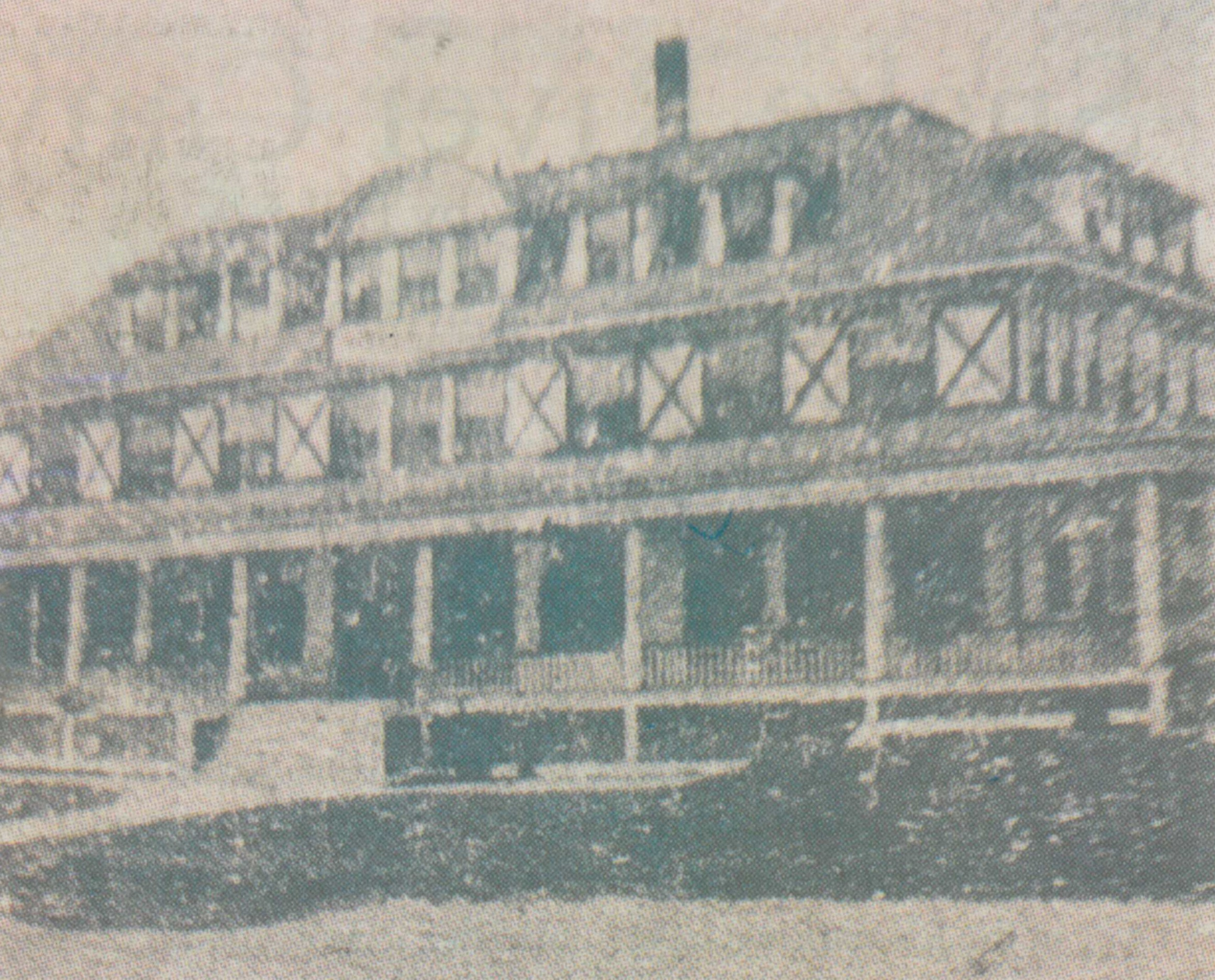
The bank, grocery store, mercantile stores, saloons and “red-light district” moved to Hazelton in 1914, about 16 miles away. The big Riverside Inn burnt down. The only thing left that shows the town of Milner existed is the cement casing that was around the bank vault and a few graves. (Information from North Side News and Helms family history).

Memories of Theodor & Christiana Andra

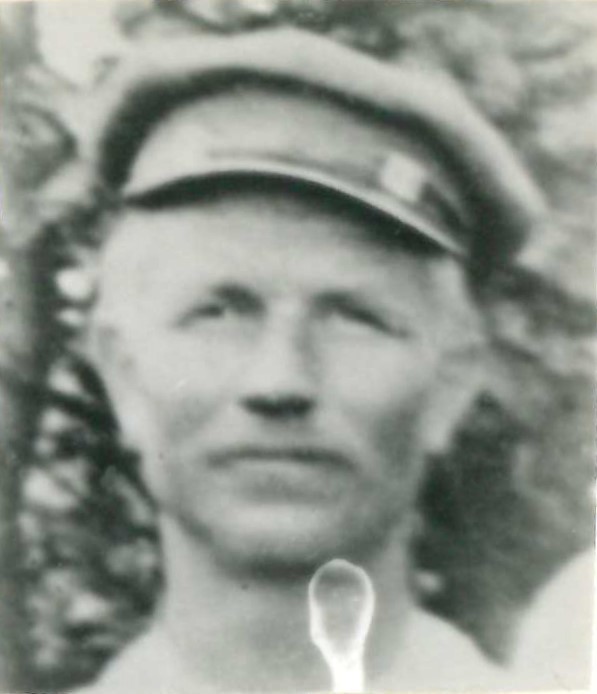
Friedrich Theodor Andra

Friedrich Theodor Andra

Memories of our Parents: Friedrich Theodor and Christiana Wilhelmina Knauke Andra

NOTE: I have tried to put together facts about the Andra family and especially things relating to Otto Andra in both Germany and Utah.  I used excerpts from stories by Otto’s sisters Frieda and Clara.  Therefore, when I refer specifically to Otto, it also pertains to each of the other children: Frieda, Walter, William, and Clara.

Excerpts from Life Story of Otto Andra, compiled by Deanne Yancey Driscoll.

Otto Carl Andra was born 15 May 1902 in Meissen, Saxony (Sachsen) Germany.  He died 20 Jun 1987 in Salt Lake City, Salt Lake County, Utah, USA.  His mother was Wilhelmina Christina Knauke.  His father was Fredrich Theodor Andra and was born January 3, 1867 at Rosswein, Chmntz, Saxony.  Fredrich’s mother was Auguste Wilhelmine Andra and she was not married at the time of his birth.  She was 23 at the time.  He probably was close to his grandparents Karl August Andra and Johanne Christiana Ritter Andra.  His grandparents lived in Rosswein.  Two years later, his mother married Fredrich August Schneider, who was also born in Rosswein, Saxony (Germany).  However, Theodor always kept the name Andra.

Clara Andra Blanke wrote: “Wilhelmina was (living) in Rosswein when she and her girl friend decided to go to a dance.  It was there she met Theodor Andra.  I don’t know how long they went together, but they were married June 1892 (At Radebuel, Germany).  Then later in Sept. (8th) they were married in a church wedding.  They had a very happy life together.  Father worked hard and he made a good living.  He worked hard as a stone cutter and one day he and another man had to lift a large stone down from somewhere.  Father was at the bottom and this other man at the top.  The stone slipped and Father, not wanting it to fall and break, held it with his chest, it must have pushed real hard to the inside of his chest.  He started to have pains in his chest.  They got worse so they decided to operate but somehow it didn’t work right.  Food couldn’t go down in his stomach.  He died Nov 23, 1902, leaving Mother with a small family to raise.  She was only 33 years old and a widow.”

Theodor Andra

Theodor Andra

Clara concluded with: “He was a good husband and a good Father.”  At the time of his death, his children were the following ages: Frieda, 9 years old, Walter age 6, William (Bill) age 4, Clara age 3, Otto age 6 months (Otto was not old enough to remember his father.)

Frieda Andra was the oldest child and she wrote, “My childhood, I don’t remember too much of it actually. I do remember, however, when my Dad and Mother went to town on one Sunday.  We went window shopping and I saw a beautiful green dress in the window of the store.  How I wished I had one like it.  I begged my Dad for it, but Mother was not for it, so my Dad got it for me.  You better believe it.  I was the proudest girl in town.  The dress was green with red trim.”

“My Father Theodor was a good father.  He used to take me sleigh-riding.  One time he went so fast around the corner by Demlers, he dropped me and ran half a block before he found it out.  I was sitting on the corner crying.  I loved my Father very much but we didn’t have him very long.  He died when he was only 33 years old.  I was only nine years old then.”

Freida Andra wrote the following, “While Dad was in the hospital, I called every day to see how he was, and one day my Mother was crying and she said, “Daddy Died.”  Grandmother came, Father’s mother, and it was the saddest thing that could have happened to Mother.  My father Theodor Andra died November 23, 1902, in Meissen, Sashsen, Germany.”

“My poor mother had to struggle to support us.  She did small jobs and we children helped.  I worked here and there to help along.  At the time Father died, we were living at Kuhn’s in Hinder House.  They had an apartment in the back and the rent was high there.  Anyway, Mother used to deliver rolls to people every morning for the Bakery.  Three stories high: That’s the way buildings were built then.  They left a note and the money in a little basket, sweets in one and the others in another.  I had to get up at 4:30 or 5:00 every day to do it.  I loved to help Mother with this.  I had to help a lot.  I had a job at Tinkers at The Villa, washing the steps, cleaning the knives and forks, going to the store and in the summer picked carrots and did odd jobs.  They had a big orchard and Mother moved out to Dom Shulas’ and she brought all kinds of work home from the Tinker’s Factory and I had to help.  There were hundreds of papers that we had to fold then put a label in the middle.  Then Mother got a job in the Factory.”

Clara Andra wrote, “When I was eight years old in 1905, Mother was a widow with five children.  My sister Frieda the oldest was fifteen (This was three years after their father’s death).  She was working in a home for some rich people.  Mother worked in a factory.  The rest of us children went to school.  My oldest brother (Walter) who was twelve worked where ever he could to earn money to help mother, caring for us and trying to raise us right.”

Clara added, “I guess it was pretty hard for Mother.  She was sick a lot.  She would sew all day and half the night.  Grandmother would come and stay with us once in a while.  Then Mother would go to a home where she would rest for a week or so.  It was a place for the poor and sick.  I guess it was terrible for a young woman like her to lose her beloved husband and then to make it on her own.  She was a very proud woman, even at that time they had organizations where the widows were helped.  I think the state paid the rent, and I remember going someplace each evening and getting 2 quarts of milk and sometimes we would get meat and vegetables, out in the country.  We would go to the farmers and get eggs and butter.  When we all went to school, Mother got a job at a factory.  Mother worked hard, she was very strict with us children.  She was Father and Mother.  She taught us well.  I never heard that my brothers got into any trouble.  We worked, all of us, whenever we could earn some money, and were so happy to give it to her.  She was a kind and loving Mother.  She took good care of us. All of us children loved her dearly.”