Martha Christiansen Coley Chair

Martha Christiansen Coley’s chair

I was recently visiting with RaNae Coley Harms at her home in Wendell, Gooding, Idaho. I recalled she had my Great Grandma’s antique bedside commode chair. I asked if I could take a picture. That is what you see above. It is in fantastic shape. 

I have previously written a history for Martha Christiansen Coley. Here is an article about a video at her funeral. 

Martha Christiansen Coley was born in 1879 and died in 1961. She married Herbert Coley in 1874. Herbert was born in 1864 and died in 1942. Martha was born in Fredrickstad, Ostfold, Norway. Herbert was born in Lutley, Worcestershire, England. Both Herbert and Martha passed away in Richmond, Cache, Utah. They are both buried in RIchmond. 

History of Nils Bengtsson and Johanna Johansdotter’s Family

I received a copy of a history from Julie Jonas Kowallis. It is attached to Johanna’s profile in FamilySearch. Whoever compiled or rewrote the previous version seems to have mixed in references and stories related to Johanna’s son and grandson as if they were Johanna’s husband or son. Both emigrated to Utah at different times and had different trips. Further, this author edited out parts of the other history that seem to be passed down, although not verified. Some of the other history is missing, I will share it if I can find the missing second page. 

I have previously written about Johanna. I make only minor corrections within brackets. Nils and Johanna’s daughter, Agneta, is my Great Great Grandmother through her daughter Annetta “Annie” Josephine Nelson, who married Joseph Jonas.

~

The country of Sweden is about the same size as the state of California. Southern Sweden is made up of flat, fertile plains. The lan (which means country) borders have changed very little since they were established. Each lan is subdivided into smaller units that are known as parishes. 

Little is known about Swedish history before 800 AD. About this time two different tribes of Vikings entered Sweden. The Svear, who lived in the eastern parts, and the Gotar, who lived in the western parts. THey were almost continuously at war with one another. It was only after the introduction of Christianity in the 9th century that they united and formed a nation. The name Sweden comes from the phrase Svea rike, which means “Kingdom of the Svear.”

For many generations the farming class comprised most of Sweden’s population. The farmer who owned his land was usually quite stable. However, trades-men could travel great distances to obtain employment in their professions, often seeking a good position in the city. There are many lakes and streams in Sweden, so it is logical to think fishermen and seamen would have resided along the coasts or lakes. 

The people of Sweden are known to be energetic, hardworking people who value order and tidiness.

Our ancestors Nils Bengtsson and Johanna Johansdotter’s families were among the parish district of Halland in Sweden. Nils came from a long line of tall strong men of the north. Legend has it that one of his relatives was so large and strong that he was considered a giant. He could pick up two ordinary sized men, one in each fist, and bump them together. Nils was a big man, handsome and strong. He possessed unusual physical strength. An attribute many of his [descendants] would inherit. 

We have no details as to where or how Nils and Johanna met but we know that when Nils was 28 years old and Johanna 17 they were married on July 4, 1830. Johanna affectionately called Nils “her big handsome man.” They were blessed with eight children, raising seven of them to adulthood. 

The Nils Bengtsson family lived in the usual country home in Sweden. There was a long building on the south with the family residence in the east end and the west end was used for pete or turf and wood. They had a building on the north side where the cattle and the hay and grain were stored. Thatch roofs were the rule for the ordinary farm house. On the ease side of the house was a path running south past a meadow and then over a hill covered with trees. On the west there was a road leading down through the green and across a stream through a field to the north. It is difficult in our day to imagine what it would be like to live in a small one room home with a family of seven children. 

Although freedom of worship is guaranteed by the law in Sweden over 90 percent of the population belong to the Lutheran church, which is the state church. During the 1800’s missionaries from [The] Church of Jesus Christ of Latter-day Saints, or the [Mormons], began to proselyte in Sweden.

Sometime in the [1850s] missionaries called at the home of Nils and Johanna. At the time Nils was very ill. Their one room home was divided by a curtain to separate the area where Nil’s bed was. Even though he was very ill at the time he listened intently to what those missionaries said. Later he called his son Nils to his bedside and said, “What those men are telling us I feel it is right. I will not live long enough to join their church, but I want you to listen to them and if you feel that it is right you must embrace it.” Shortly after this on March 12, 1859 Nils died.

Two years passed between Nils death and the [family’s] acceptance of Mormonism. But when the Bentsson family were baptized they embraced the gospel with sincerity of heart and a love for its doctrines and principles. [Johanna was baptized a member on 11 May 1861. Agnetta was baptized 10 November 1863, Lars 5 May 1860, Ingjard 5 May 1861, Christina 4 February 1866, and Nils Jr 5 May 1860. Johann joined 7 September 1893 after immigration to Utah. The other two were after their deaths. Bengta and Borta did not join or immigrate to Utah.] Nils and Johanna’s son Nils [anglicized to Nels in United States] said that the songs of Zion filled their hearts and minds. The saints throughout the world were encouraged to emigrate to Utah to be with the main body of the church. Nils said, “I had a birds eye view of Zion in my soul and I yearned to go there.” So with a call from a Prophet and songs of Zion ringing in their hearts, the Bengtsson family began to prepare for the long journey to join with the Saints in Utah. Prior to their departure little Johan Peter, who was 6 years old, gave all of his toys away. I can’t even imagine the faith and courage that Johanna must have had. She was 49 years old at the time and she was leaving her family, her friends and her beloved homeland. The family loaded all their earthly belongings that they could carry and began their trek to America. They left Sweden because of their testimonies of the restored gospel of Jesus Christ and their convictions in its teachings. 

Nils wrote of this experience, “the family hustled along the rock paved sidewalks of Halmstad to the coast. The noise of the horses feet and the rumble of the vehicles on the rock paved road drowned all of the voices of the little ones who complained of the unceremonious haste of departure. All were safely on board, the gang planks withdrawn, before we realized that we were moving. We could see that men on the shore were being left behind… As we glided out on the calm blue waters. As we Denmark we say the harbor at Copenhagen covered with sails and booming of cannons. The dense smoke made it difficult to see the city. Germany and Denmark were at war. We sailed and entered the city from the back just before sundown. We had a long way to walk but it was worthwhile. We saw the prettiest homes, lawns, shrubbery, and statues; such as a man on a horse with beautiful decorations representing warriors and noblemen. That even I first heard the Danish language, though odd at first I soon got accustomed to it and learned to understand it.” They sailed from Denmark to Norway on their way to Hamburg, Germany passing between Holland and Belgium. 

On Friday, April 18, 1862 Johanna and her children boarded the ship “Electric” and sailed from Hamburg with 336 Saints all bound for Utah. Elder Soren Christofferson was in charge of the Saints and H.J. Johansen was the Captain of the ship. The emigrants were from Holland and other conferences in Denmark and from the Norrkooping Conference in Sweden. The “Electric” sailed down the Elbe to Bluckstadt Roads, arriving there about noon. Here anchor was cast near the ship “Athenia,” which had another company of emigrating Saints on board. At this time there were 335 emigrants on board the “Electric and 486 on the ‘Athenia.'” The “Electric” lifted anchor April 22nd and sailed to a point off the coast of Hanover, where anchor was again dropped and the ship waited for the wind to change. Favored at last with good wind the “Electric” made the final start for America April 25th, sailing out into the North Sea. Once again Nils tells of their experience, “I remember traveling through a city, the streets were lined with wagons all loaded with all kinds of meat, beef in particular. We set sail that evening with beef cattle in the hold, sheep on the deck, and the passengers on the middle floor. When daylight came we were all easing ourselves by [emptying] our poor stomachs down into the hole.” After crossing England and setting foot at several ports they finally boarded the ship that took them to America. Before sailing, President John Van Cott came on board and assisted organizing the emigrating Saints, who were divided into nine districts, in each from 25 to 40 persons. Nils wrote of this experience, “We got on board the great ship that carried us across to America. When we boarded it it stood so high out of the water that it was quite a climb to get on. We had to wait some time while the sailors and others loaded rails and other heavy freight into the hold. I have tried to forget this part of the journey. Our rations were raw beef, lard, and hard soda crackers and water, mustard and salt. The passengers would take their turn at cooking their rations of meat and sometimes they never got to cook their meat. The winds and the waves were so high sometimes that the ship rolled from one side to the other, the flag on the main mast would touch the waves and this could be seen by looking straight up through the hole. Trunks and boxes had to be tied fast to the beds on the sides of the ship. Some times passengers as well as sailors and some women helped to pump water out of the vessel.”

It was stated that unity and harmony existed among the emigrants during the entire journey. A number of meetings were held on board the ship during the voyage and at least one marriage took place and one child was born. But many also lost their lives because of diphtheria and measles. After 49 days on the ocean the ship arrived safely in the New York Harbor and the emigrants landed at Castle Gardens on Friday, June 6, 1862. Upon arriving in New York there were merchants who were selling their goods along the dock. Nils approached one who was selling what he thought was the most beautiful red fruit that he had [ever] seen, he later learned that they were tomatoes. All the money he had was 5 cents, but he gladly spent it for one of those delicious looking fruits. Much to his surprise he found it to be the nastiest thing he had ever tasted. He told the merchant this and asked for his 5 cents back. After a good laugh the merchant [returned] his 5 cents. 

Here the company met the Saints who had crossed on the “Athenia.” Both companies left New York Jun [9th], 1862 and arrived at Florence, Nebraska, Jun 19th. Lars Bengtsson, the oldest son, who was probably 27 at the time, purchased an oxen team and wagon that would take their family the rest of the way to Zion. They left Florence on the 29th of July 1862. Their captain was Joseph Horne. There was a total of 570 Saints, 52 oxen teams and wagons. 

The first few days of the journey some difficult was experienced, as the oxen, who were not used to Scandinavian orders and management, would often follow their own inclination to leave the road and run away with the wagons, but after some practice on the part of their inexperienced teamsters things became much better. 

Their oxen team gave out many times and the Elders administered to them and they would revive and trudge on. Upon crossing a river one oxen gave out and Lars quickly let the animal loose and put the yoke on his own shoulders and pulled along with the other oxen through the muddy [current] to the dry bank. It was said that Lars was a mighty man. Nearly all able bodied men and women had to walk most of the way. Some of the women rode in the wagons across the larger rivers, while they would wade across the smaller streams like the men. Sometimes the women and children were carried across the streams by the men when it was feared that the oxen could not pull the wagons with their heavy loads. 

Nils tells us in his life history that crossing the plains was a very thrilling and adventuresome as they came in contact with the wild frontier and Indians. While crossing the plains Nils along with a group of teenage boys decided one day to go a considerable [distance] from the wagon train and explore the area. One of the teenagers, pointing to an island in the middle of the river, said, “Lets all swim out to it.” They were all excited about this suggestion, so off came all of their clothes which were folded and left in neat piles along the river bank. In they jumped and swam out to the island. They landed and laid down on it. It had no animal life on it and seemed like a paradise to them. However, as they did so they found it was just a floating mass of sod and trees that had broken off from the bank upstream. They immediately turned back and tried to swim to shore, but to their dismay, they found they were too far down stream and the river banks were now rocky cliffs. They were growing very tired as they searched for a place to crawl out of the river. They prayed they could find a spot, and they did find one, their spirits lifting until they found it was infested with huge snakes. They floated on their backs until they reached a place on the river where they could get out. Thank goodness it was now getting dark because they were naked. They followed the road back to camp and whenever a wagon would come by they would have to run and hide behind bushes. It was very late when they got back to their camp. 

In the meantime a search party was sent to search for the boys and when they found their clothes on the river bank they were all presumed dead. 

As Nils neared his mother’s camp site, he could see his sister Christina outside by the camp fire baking bread. He hid himself behind some bushes and called out to Christina to bring him some clothes. She dropped what she was doing and called out, “Oh Nils ghost.” Nils called again, “don’t be foolish, bring me some clothes.” There was much rejoicing in the champ when it was discovered the boys were not dead. 

There were other exciting experiences as they crossed the plains. One day while they were crossing the North [Platte] River one of the brethren began to go down in a whirlpool. Although Nils was young he was an excellent swimmer, he quickly dove in and swam to the man. The man grabbed on to Nils and Nils pulled him to shore. 

The Saints often gathered berries for food. One day while Nils was gathering berries he because occupied with trying to find the berries and had not noticed that the wagon train had moved on. He picked up his pail and started running after them. All of a sudden a big Indian on horse-back swooped down upon him, trying to grab him as he leaned over the side of his horse. But, Nils was quick and dodged and ducked his attempts until the Indian spied some scouts from the company and fled. (Indians often succeeded in capturing young white boys and then would raise them as Indian Braves.)

L-R: Johanna Benson, Johanna Icabinda Benson, John Irven Benson, Nels Ernst Benson, Mary Ann Angel Works holding Merrill Lamont Benson.

Upon arriving in Salt Lake Johanna and her family first settled in the Sandy-Crescent area. Here they homesteaded 40 acres on land and built a small sod and log home. They farmed and raised cattle. Later Nils went to work for a man named John Nielson from Sanpete Valley and Nils moved to Spring City. At some point in time Johanna went to live with Nils and his family. She died and is buried in Spring City. Other members of the family settled in different pioneer communities that were being settled at that time. Johan Peter our ancestor who was the youngest of the eight children grew up in the Sandy-Crescent area. When he was 27 years of age he married Amanda Josephine Peterson and they became the parents of 7 children. 

Coley – Christiansen Wedding

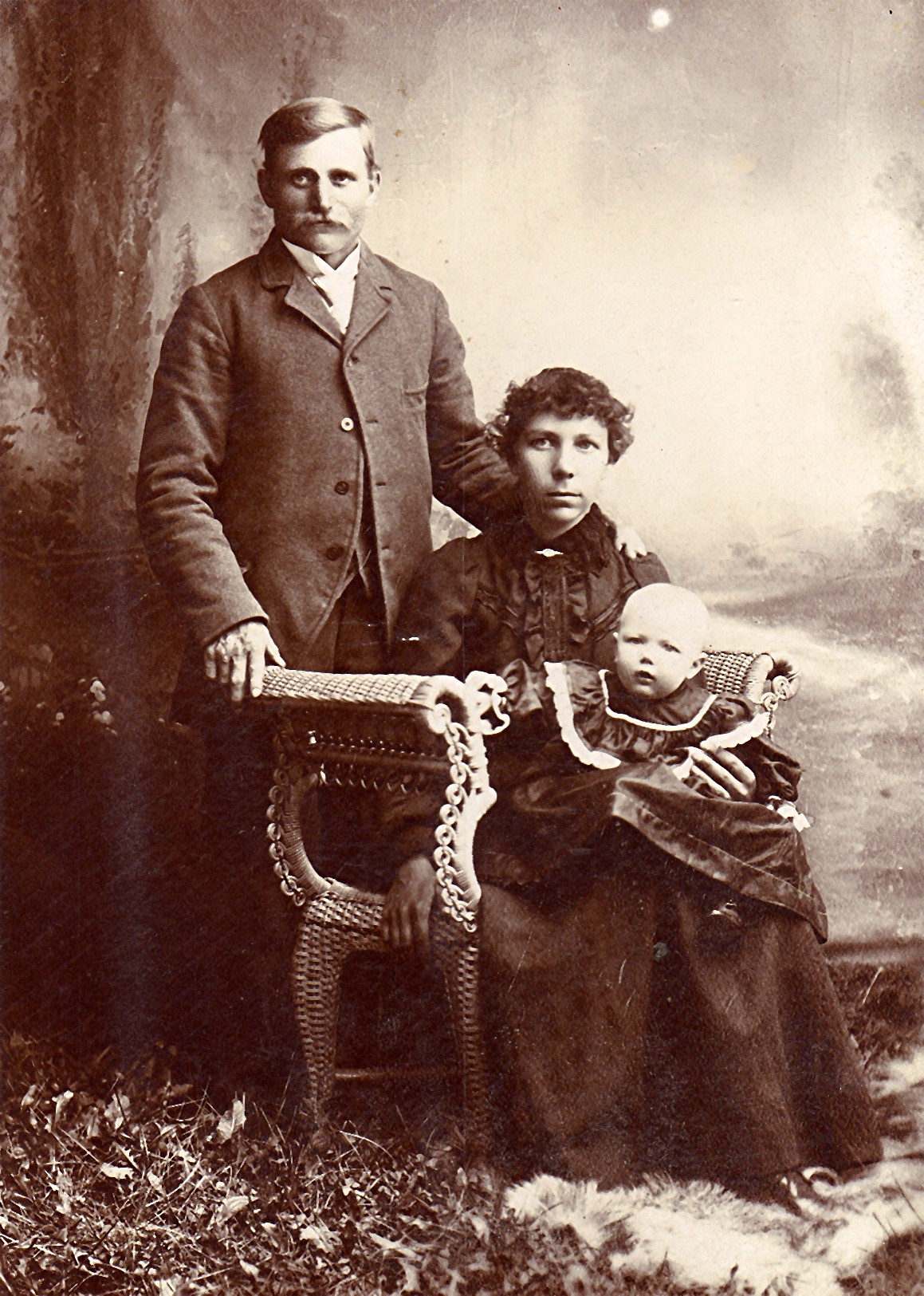
Herbert and Martha Coley holding Lillian in 1899

Ole and Constance Christiansen are pleased to announce the marriage of their daughter Martha to Herbert Coley, son of Stephen and Hannah Coley. They were married in 1874 in Norway. While I normally like to start these historical posts as a wedding announcement, I trip up there. We do not have any histories that give us an actual marriage date and location. Knowing the period, it is not imagined they were not actually married. Their first child was born in 1875. Curiously, after their immigration to the United States due to their conversion to The Church of Jesus Christ of Latter-day Saints, they not only went to the Logan Utah Temple to be sealed, but also applied to be married. As such, they were married and sealed in the Logan Utah Temple on 26 April 1893.

Martha was born the second of eleven children to Constance Josephine Eliza Jorgensen and Ole Christiansen on 16 April 1879 in Fredrickstad, Ostfold, Norway. I have not written their history yet, but as linked above, I wrote some limited information on Constance when we visited her grave first in 2018 and again in 2020. Ole was born in Trogstad, Norway and Constance in Drammen, Norway. Both Ole and Constance were baptized and confirmed into The Church of Jesus Christ of Latter-day Saints on 26 January 1876 in Norway.

What happens for the next few years is unclear on the reasons. Martha’s older sister, Walborg, was born 24 December 1875 in Fredrickstad, then Martha in 1879. We really have no records during this period and so I am unclear if there was another child, or two, in that period of time. Eivelda was born 20 October 1881 in Melbourne, Victoria, Australia. I have no clue why or what took the family to Australia. Their next child, Constance, was born 9 November 1883 also in Collingwood, then a suburb of Melbourne. Apparently Walborg and Martha were left in Norway while their parents went to Australia. Alice, Martha’s granddaughter recalls Martha telling of her sitting on the mountainside overlooking the fjord waiting for her parents to return and her missing them terribly. Martha’s first brother, Henry Owen, was then born 27 March 1887 back in Fredrickstag, Norway. Ole and Constance were back in Fredrickstag by March 1887.

I have been unable to find the immigration records for the Christiansen family between Norway to Australia and back. But the family was in Australia for at least 3 years, maybe as long as 6 years. They were not back in Norway very long as Rhoda was born in Richmond, Cache, Utah on 18 September 1890. Martha moved with her family to Richmond in the late 1880s. One record has it in 1887, another 1889, Martha was listed in the 1900 Census as immigrated in 1888. Either way, we now are in the vicinity of where she would have met Herbert Coley. Of Martha’s remaining 6 siblings, 5 were born in Richmond and 1 in Hyde Park.

Herbert was born the 5th of 9 known children to Hannah Maria Rogers and Stephen Coley on 12 February 1864 in Lutley, Worcestershire, England. It was while living in Lutley that the LDS missionaries first made a visit. We do not know the conversion story but Herbert and his siblings joined the church. Martha joined 23 August 1867, Herbert 1 June 1881, George 22 August 1881, and Frank 2 June 1882. The 1871 English Census has the family still living in Lutley and Herbert listed as a scholar. The call to gather in Utah was strong enough that these four children made the venture. We don’t know if Stephen and Hannah came begrudgingly or not, but they joined some of their children in Utah. Unfortunately, the other children left in England we do not know where they went or what happened to them.

Herbert shows on the 1881 English Census in Dudley, Worcestershire, England as farm labor for the Doorbar family. Herbert appears to have boarded the Nevada in Liverpool arriving 3 July 1882 in New York City, New York. I cannot see that any siblings went with him on the trip. Stephen, Hannah, and Martha all traveled in 1890 (with Letitia Lea Willetts and her daughter Clara, and two known Frank and Mary Coleys). Stephen Coley was baptized 5 January 1892 and Hanna 26 October 1892 (same day she was endowed in the temple, so either that date is wrong or the prior record could not be found and the ordinance was duplicated. Hannah died 22 October 1894 in Franklin, then Oneida County, Idaho and was buried in Lewiston.

I don’t know any of the details of how they met, but the stars seem to have aligned in Richmond. However it happened, Herbert and Martha were married and sealed 1 December 1896 in Logan at the Temple. Herbert was a diligent laborer who would acquire full ownership in their home by 1910. Martha was a strict and involved homemaker and mother.

Herbert and Martha maintained their home, large garden, and raised 10 children. Lillian was born 26 August 1898 in Lewiston (listed in the Coveville Precinct, which is now the area of Cove). The 1900 Census on 9 June 1900 lists Herbert as a farm laborer with his immigration in 1881 and Martha’s in 1888. By 1910, the Census finds the family in Wheeler (about six miles west of Lewiston) where the home was owned outright. We don’t know exactly where the family lived. Edna was born 23 November 1900, Wilford Herbert 1 Mar 1903, Carrie 20 April 1906, and Hannah Marie 3 June 1909. Ole Christiansen passed away 27 February 1900 in Richmond and was buried there. Carrie is listed as born in Richmond, but we do not know the circumstances how she was born there instead of Wheeler/Lewiston. Hannah’s birth certificate lists Herbert as a farmer and Martha as housewife. The 1910 Census on 26 May 1910 shows Herbert as a Laborer and that he “Works Out.” Whatever that meant in 1910.

All the remaining children were born in Richmond. As such, it is likely at this time the family moved to the cabin south and east of Richmond estimated about 2016 E and 9000 N. I have tried to pinpoint where the cabin remains are still located. Here is a photo of the cabin from the 1980s. The 1920 Census on 16 January 1920 lists Herbert as a Farmer and Teamster with the additional insight of “Hauls Milk & Farms.” This same Census also lists Wilford as having his own Farm, but still living with his parents.

Coley Cabin near Richmond, Utah

It was in this house that the remaining children were born. Ivan Stephan on 26 June 1912, Roland Charles on 20 July 1915, Oley Lloyd on 11 February 1918, Arthur Christiansen on 15 July 1921, and William Golden on 22 January 1924. In 2012 the home had collapsed to a pile of rubble. It was after Ellis Jonas’ funeral we visited as family (Ellis is Lillian’s son). Ellis had taken me there about 2002. Stephen Coley died 22 October 1913 in Lewiston and was buried by his wife.

The 1930 Census taker showed up 15 April 1930 and shows the family in Richmond with Roland, Lloyd, Art, and Golden still in the home. The 1940 Census on 8 April 1940 has the family still in Richmond with Art and Golden the only two remaining.

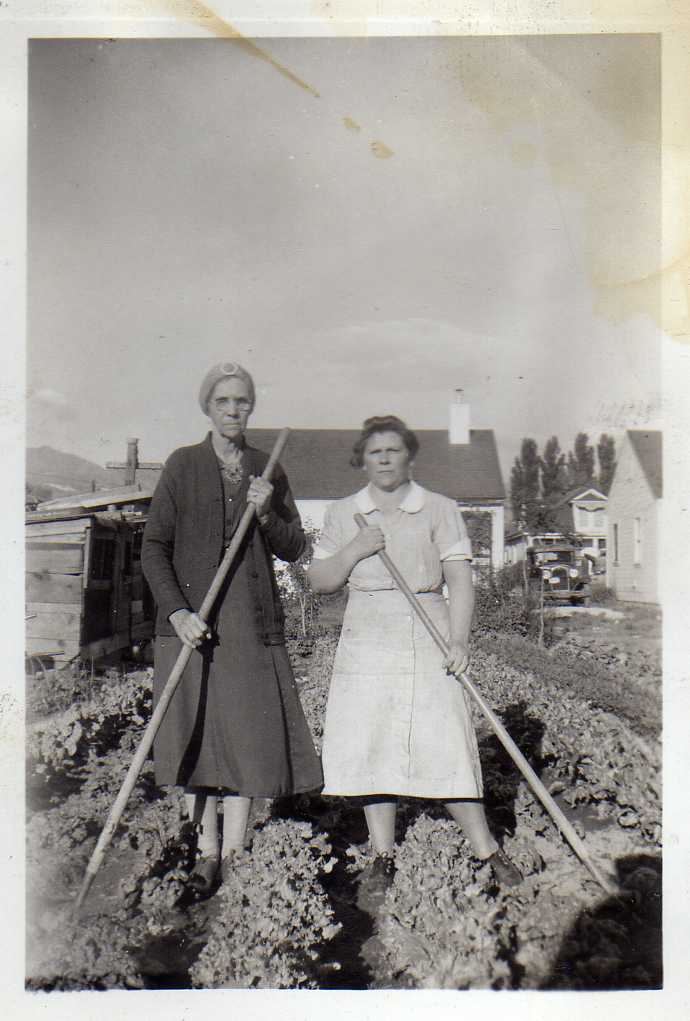
Herbert and Martha Coley in the garden

Over the years, the family kept busy with marriages. Lillian married Joseph Nelson Jonas on 6 September 1917 in the Logan Temple. Edna married Gerald Andrus 17 April 1921 in Richmond and after a short marriage, divorced, and remarried to Olof Alma Neilson 23 July 1923 in Logan, sealed 30 July 1924 at the Logan Temple. Wilford married Edith Dagmar Cammack 15 May 1924 in Logan, sealed 3 June 1946 in Logan Temple. Carrie married Joseph Lorus McMurdie 21 July 1924 in Logan, sealed 21 October 1926 in Logan Temple. Hannah married William Surgeoner Thomson 2 July 1927 in Logan, sealed 14 June 1972 in Salt Lake Temple. Ivan married Clara McMurdie 22 October 1930 in Buhl, Twin Falls, Idaho, sealed 10 February 1932 in Logan Temple. Joseph Jonas passed away 6 September 1932 in Ogden, Weber, Utah. Constance Christiansen passed away 10 December 1932 in Portland, Multnomah, Oregon and was buried there. Roland married Veda Anderson 5 May 1937 in Logan Temple. Lloyd married Verda Anderson (twin sister to Veda) 23 November 1938 in Logan Temple. Arthur married Gladys Bernice McMurdie (his niece!) 10 September 1940 in Preston, Franklin, Idaho, that marriage lasted a short time for hopefully obvious reasons. Arthur remarried to Mary Elizabeth Popwitz (his nephew’s WWII widow) 3 May 1946 in Evanston, Uinta, Wyoming. Golden married Shirley Mae Hall 15 March 1946 in Elko, Elko, Nevada, sealed 11 May 1965 in Logan. Many grandchildren were born in these years as well for Herbert and Martha.

Herbert and Martha Coley (I have the original of Martha, but not of Herbert, so I know it is still out there)

Recorded family stories are fairly scant. Nobody wrote much down and that generation was gone before many were asking questions. Ivan Coley told his daughter Colleen that Herbert was a short, very English man. Apparently Herbert met Wild Bill Hickok at one point and shared that fact regularly.

In 1942, Herbert went to visit Ivan and Clara in Buhl. I will have to find out if Martha was there as well. While out in the yard, I have been told by a well, or a trough, he slipped and broke his hip. There was not really much to do for someone in that condition then. He was in terrible pain. He was taken back to Richmond and passed away later of pneumonia. He died 7 September 1942 at age 78 (obituaries all have 75) and was buried in Richmond Cemetery 9 September 1942.

Martha Coley and Hannah Thomson in a garden, dresses and even a brooch

Martha moved into town shortly afterward. Various family members lived in the cabin when they started out their marriages. Martha’s new home was somewhere near 400 South and 200 East. With the new homes I cannot tell as well, but I have tried to pinpoint the spot. She lived in this home until she needed assistance and went to live with Lloyd and Veda in Salt Lake City. When they could not care for her any more, she then lived in a care facility in Logan the last months of her life.

5 generations about 1959, Lillian Coley Bowcutt, Martha Christiansen Coley, Joseph Hebert Jonas, Robert Lee Jonas, Joseph Leland Jonas.

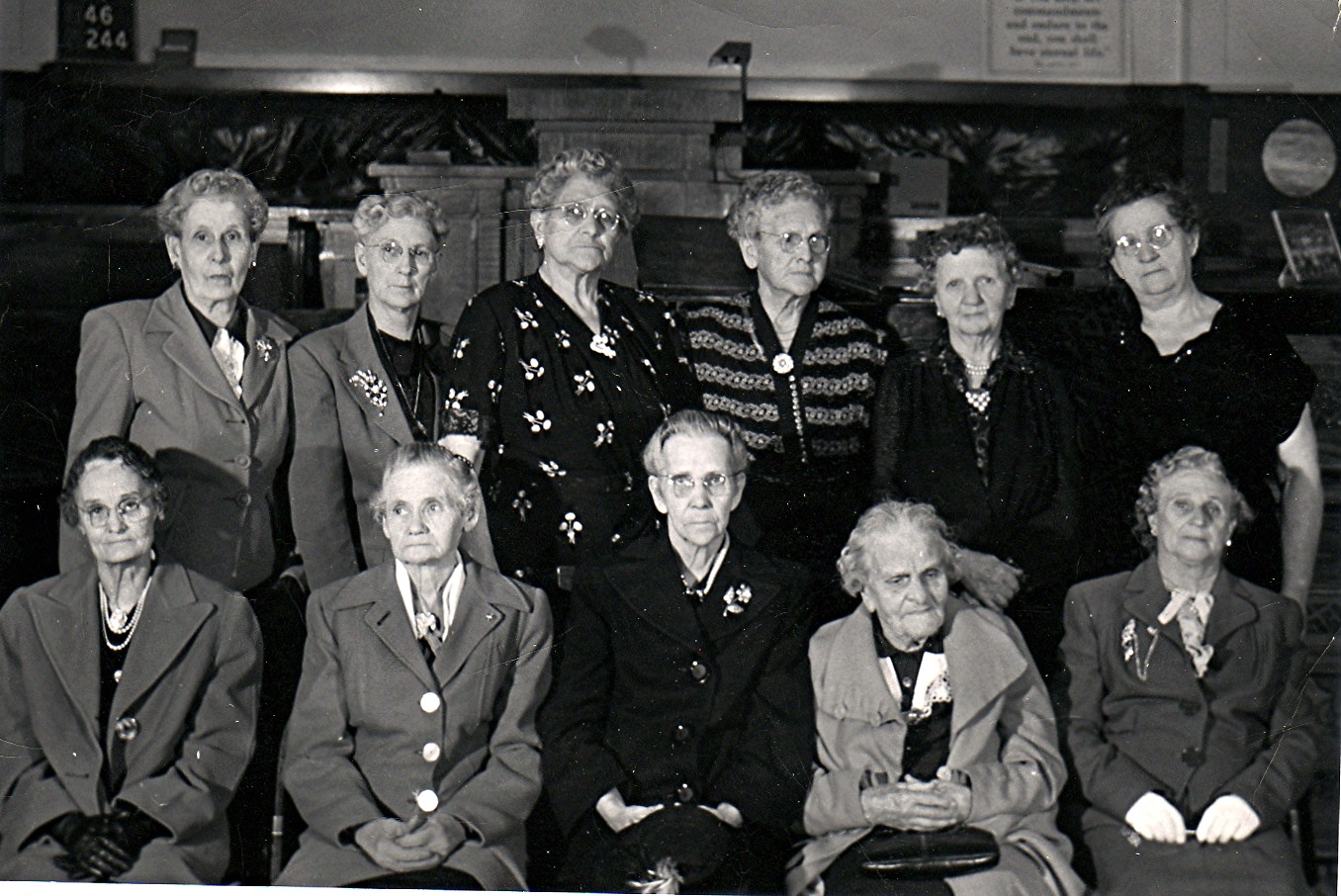
In 1948, Martha was honored for successfully Relief Society Teaching for more than 40 years. Here is a photo from that occasion. You can find more detail here.

Back (l-r): Lydia Leavitt, Estella Blair, Sarah Preece, Susanna Allen, Livinia Wilcox, Clara Wheeler. Front: Lavina Poulsen, Christensia Hansen, Martha Coley, Martha Lewis, Sarah Snelgrove.

Unfortunately I do not have a many more stories. But I do have a few more photos. We have these two photos of a gathering about 1950.

Back(l-r): Doreen Neilson, Martha Coley, Golden Coley, Edna Neilson, Unknown, Gloria Neilson holding unknown child, Olof Neilson. Middle: Shirley Coley, Joy Coley (baby), Mary Coley,
Mary (holding Joy), Shirley, Doreen, Unknown, Martha, Edna, Gloria

This wonderful family reunion picture from 1955. I have linked the other post sharing the other photo. That link also names everyone in the photo. Martha is sitting surrounded by her grandchildren and children.

1955 Coley Reunion, Richmond, Utah

Herbert’s obituary in the Salt Lake Telegram on 8 September 1942 reads:

“Richmond, Cache County – Funeral Services for Herbert Coley, 75, who died at his home in Richmond Monday at 7:45 a.m. following a brief illness will be conducted Wednesday at 1:30 p.m. in the Richmond South L.D.S. ward chapel by E. M. Hicken, Bishop.

“Mr. Coley was born in England on February 12, 1867, a son of Stephen and Hannah Rogers Coley. In 1885, at the age of 16, he immigrated to the United States.

“On December 1, 1896, he married Martha Christiansen in the Logan L.D.S. temple. He was a prominent farmer in the Richmond district.

“Surviving are his widow of Richmond, 10 sons and daughters, Mrs. Lillian Jonas, Ms. Edna Nielsen and William Golden Coley of Richmond, Wilford Herbert Coley of Logan, Ms. Hannah Thomson and Lloyd Coley of Salt Lake City, Ms. Carrie McMurdie, Ivan, Roland and Arthur Coley, all of Buhl, Idaho, 37 grandchildren, three great grandchildren, and a sister, Mrs. Martha France of Richmond.

Lillian, Edna, Martha (sitting) Coley in the 1940’s

“Friends Pay Tribute to Richmond Man

“Funeral Services for Herbert Coley, 75, prominent Richmond farmer who died at his home in Richmond, Monday at 7:45 a.m. following a brief illness, were conducted Wednesday at 1:30 p.m. in the Richmond South ward chapel by Bishop E. M. Hicken.

The rest of the article follows nearly verbatim what the Salt Lake obituary listed, then this line.

“Burial was in the Richmond cemetery under direction of the W. Loyal Hall mortuary.

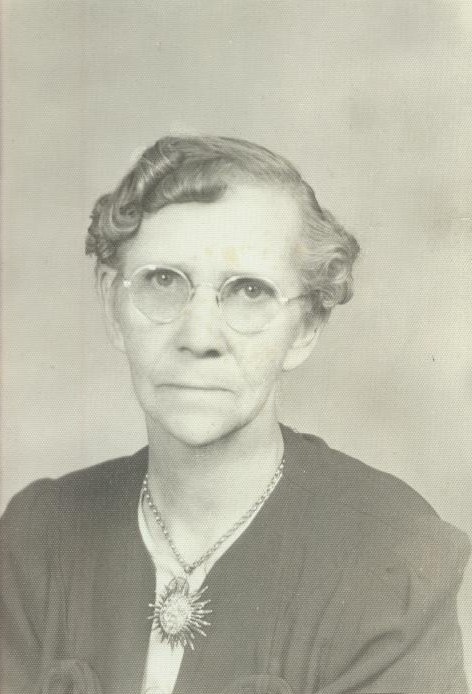
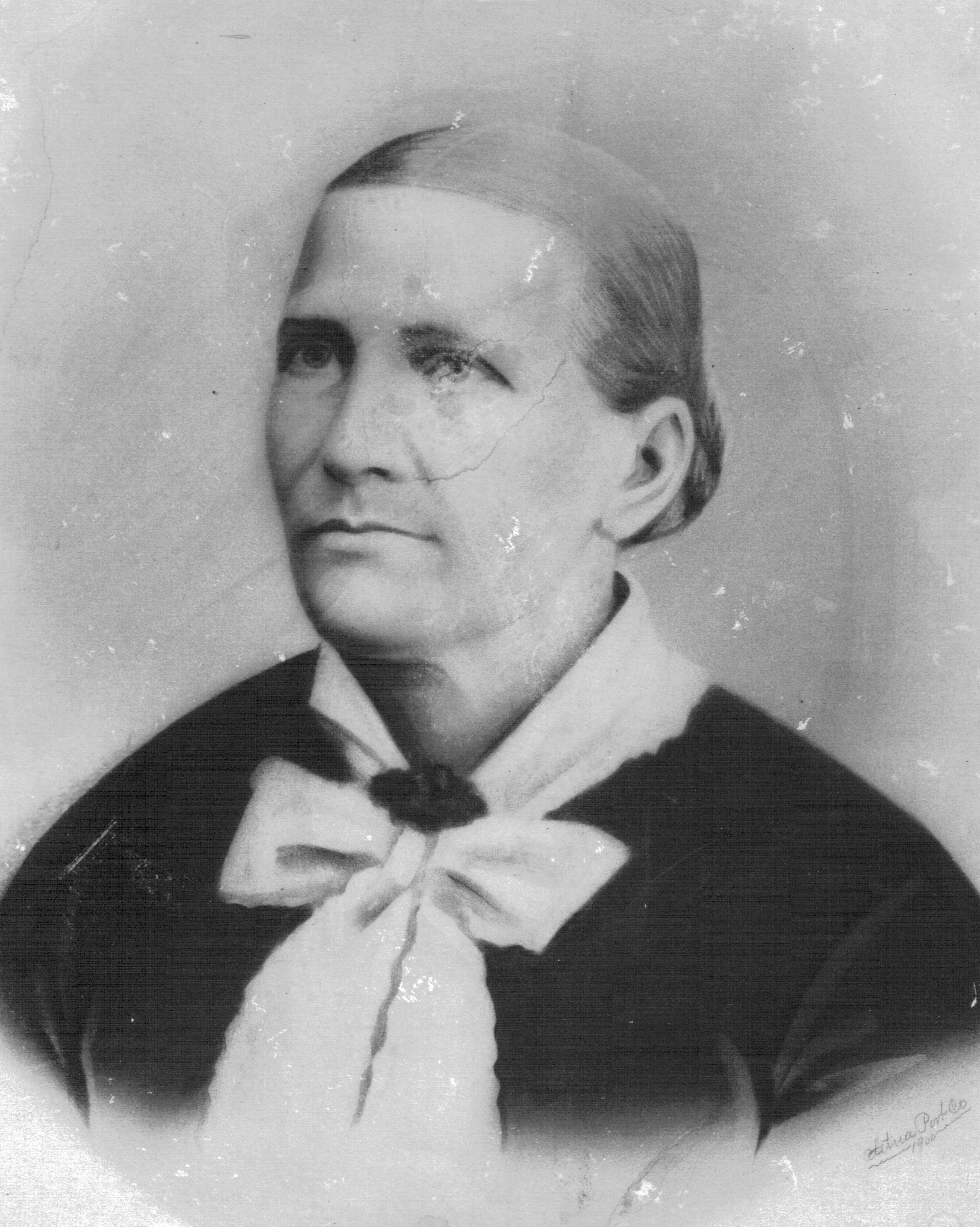
Martha Christiansen Coley very small picture enlarged
Martha Coley and Scotty
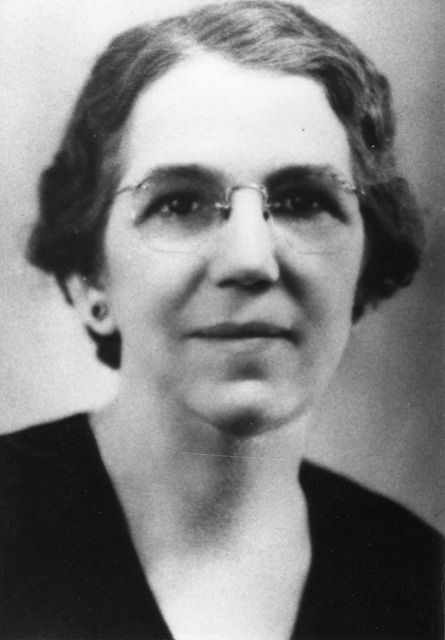
Martha Coley serious
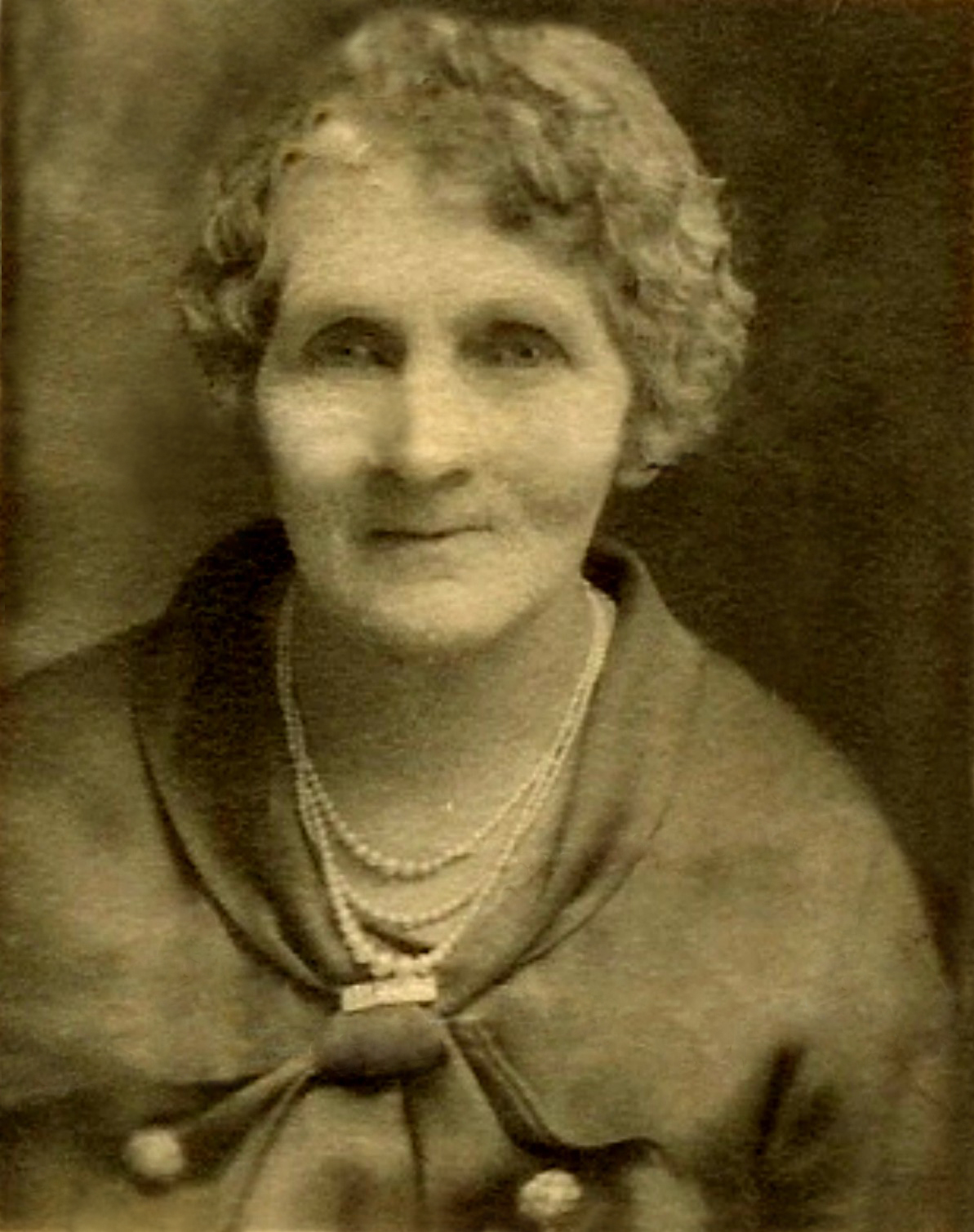
Martha Coley smile

Martha passed away in Logan at age 82 on 14 August 1961. Here is the language from her obituary and an article of the funeral. She was buried in Richmond 17 August 1961.

“Richmond – Martha Christensen Coley, 82, died at a rest home in Logan Monday of causes incident to age.
“She was born April 16, 1879 in Norway to Ole and Constance Josephine Eliza Jorgensen Christensen. When she was eight years old she came with her parents to America.
“On December 1, 1896 in Logan she married Herbert Coley. The marriage was solemnized in the Logan LDS Temple in 1900. They made their home in Lewiston and Richmond. She was always active in the LDS church, especially as a Relief Society block teacher. Mr. Coley died September 7, 1942.
“Surviving are Mrs. Lorenzo (Lillian) Bowcutt and Mrs. Edna Neilsen, Richmond; Wilford H. Coley, Logan; Mrs. William (Hannah) Thompson and Lloyd O. Coley, Salt Lake City; Mrs. Lars (Carrie) McMurdie and Ivan S. Coley, Buhl, Idaho; Roland Coley, Mesa, Arizona; Arthur C. Coley, Ogden; William G. Coley, Hyrum; a number of grandchildren and great grandchildren.
“Funeral services will be held Thursday at 1 p.m. in the Richmond South Ward with Bishop Oral Ballam in charge.
“Friends may call at Hall Mortuary in Logan Wednesday from 7 to 9 p.m. and at the South Ward chapel Thursday from 11:30 a.m. until time of services. Burial will be in the Richmond Cemetery.

“Funeral services were held in the Richmond South Ward chapel Thursday for Mrs. Martha C. Coley with Counselor Quentin Peart conducting. Lloyd Coley gave the family prayer.
“Prelude and postlude music was played by Reese Murray. The ward chorus directed by Mrs. Florence Lewis with Mrs. Billie Lou Bagley as accompanist sang “The Lord’s Prayer.” Ila Rae Richman and company sang “That Wonderful Mother of Mine.” Mrs. Florence Lewis and Mrs. Rebecca Lewis sang “In the Garden,” and Ronnie Lewis sang “Beyond the Sunset.”
“Prayers were by William Thomson and Larus McMurdie. Speakers were Mrs. Leona McCarrey who read the obituary, Noel Stoddard and Counselor Peart.
Pallbearers were her six sons, Wilford, Ivan, Roland, Lloyd, Arthur and Golden Coley. The grave in Richmond Cemetery was dedicated by Joseph Jonas. Flowers were cared for by the Relief Society.

~

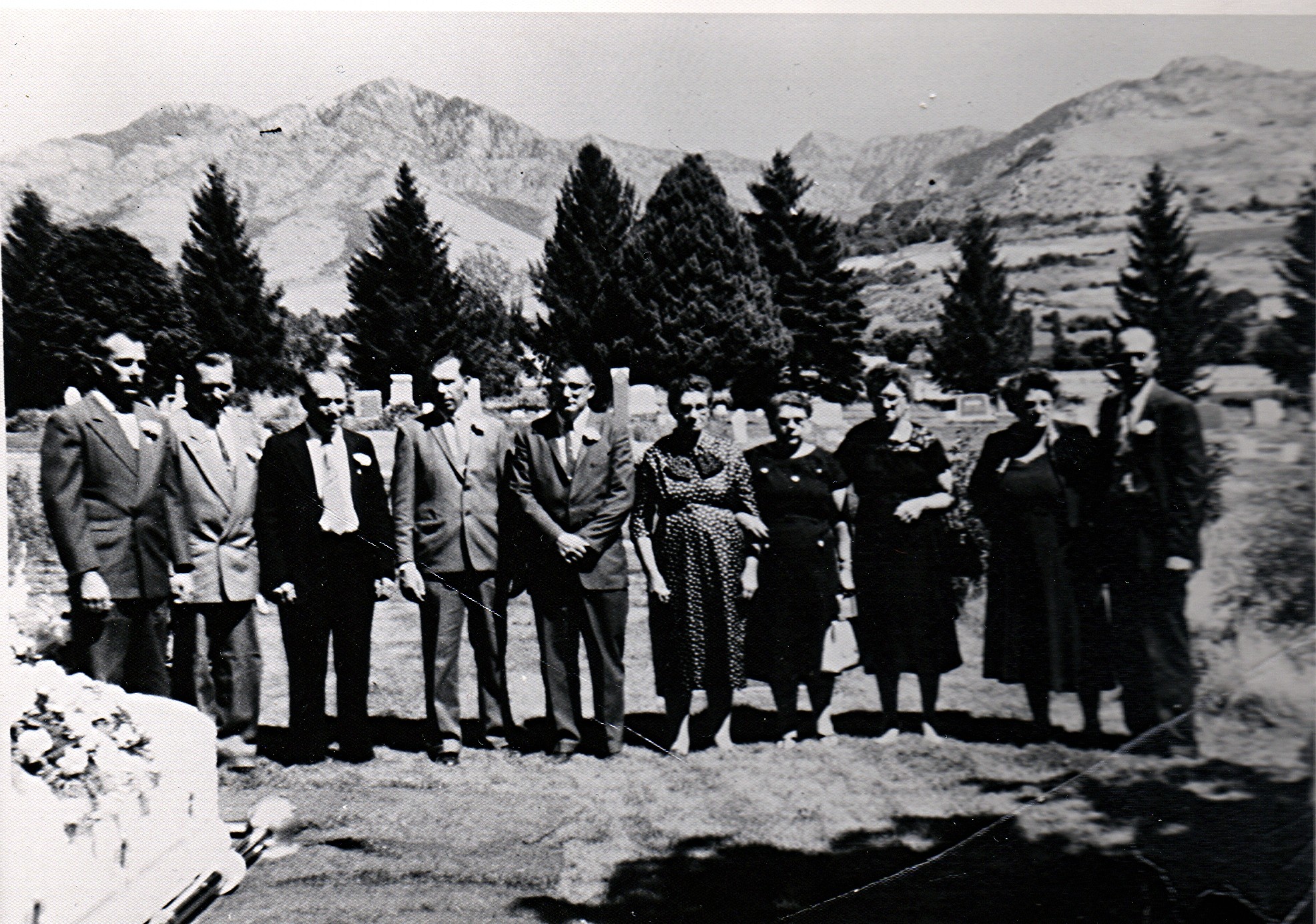
I have written previously about the video that came from the funeral and graveside service of Martha. In that post I walk through the video and the identified individuals. It also scans the 10 children standing in the cemetery. This photo below is of the same instant.

Art, Golden, Wilfred, Roland, Lloyd, Edna, Hannah, Carrie, Lillian, Ivan at their mother’s grave in Richmond, Utah

I hope some day I obtain more photos to share of Herbert and Martha.

Jonas History: Nilsson/Bengtsson

This is another chapter of the Jonas history book compiled by Carvel Jonas. “The Joseph Jonas clan of Utah (including – early Jonas family history; early Nelson family history)”   This one is on the Nilsson/Bengtsson line, which was anglicized to Nelson/Benson.  Reviewing this information in FamilySearch shows some changes and updates to some of the information presented.
   “Johannes Nilsson was born 4 Oct 1827 in Tonnersjo, Hallands, Sweden.  His parents were Nils Nilsson and Pernill Larsson.  He was the youngest of a family of four sons.  He married Agneta Bengtsson who was born 9 Dec 1832 in Oringe, Hallands, Sweden.   Her parents were Nils Bengst and Johanna Johansson.  She was the oldest child of eight children, having four sisters and three brothers.  They married 17 Nov 1855.
    “Agneta had two children by an unknown suitor who failed to post the necessary dowry.  They were Matilda, born 31 Dec 1853 and James Peter, born 13 Dec 1855.  Both children were born in Veinge, Hallands, Sweden.  James Peter was born less than a month after Johannes and Agneta were married.
    “In 1862, Elders from The Church of Jesus Christ of Latter-day Saints baptized Agneta’s mother, Johanna Bengtsson, her sister, Ingar, and her two brothers, Nils and John.  They immigrated to America in 1862 and settled in Sanpete County, Ephraim, Utah.  Agneta’s father never came to America and died in Sweden.  After this Agneta was baptized and the Johannes Nilsson family came to America in 1864.  About a month after they got to Logan, Utah, our great grandmother, Annette Josephine Nelson (Jonas) was born.  More details will be given in the following life story which was written by August Nelson, a brother of grandma Annie Jonas.  The author has quoted August’s story and has omitted genealogical family line.  Also, interesting facts have been added to this story to make it more complete.  These facts are included inside the brackets.

L-R: Johanna Benson, Johanna Icabinda Benson, John Irven Benson, Nels Ernst Benson, Mary Ann Angel Works holding Merrill Lamont Benson.

    “Nels August Nelson, third child of John and Agnetta Benson Nelson was born in Oringe, Hallands, Sweden, on May 18, 1857.  “My memory of the beautiful country around our home is still vivid even though I was not quite seven when we left.  In 1861 we moved to Tulap, near Marebeck, a Swedish mile from Halmstadt.  We had two wagons loaded with household goods, mother and the four children were on the second wagon which father drove.  I can still see the hayrack.  It had four poles tow in the standard of the wagon, with holes bored and sticks driven in them to keep them apart the width of the wagon.  Then there were holes in each pole on the upper side slanting outward so as to extend over the wheels gradually to about four or five feet high.  Finally the pole crossed the top on both sides and ends to keep it from spreading.  This is the pictures of it as I remember the morning we moved. 
    “Our new home consisted of two long buildings, I should judge considerably neglected because father was continually repairing them between the hours on the farm.  There was a peat bed some distance to the south of the house, a steep slope to the West, a small stream to the east, and cultivated land on the other side.  Father planted trees from the northeast corner of the dwelling due East some distance north and west to the northwest corner of the barn forming a beautiful hollow square.  My recollection is that the trees were birch.  A road ran due east to the nearest neighbors.  On the west a path ran to Marebeck.  A public highway went through our place and led to Halmstadt.  The village near had beautiful homes and churches.  A large bell rang out at twelve and six, possibly other times.  It seemed to say, “Vin Vellen, sure sell, some balhang, slink in”, translated, “Water gruel, sour fish, come gulpdog, tumble in.”
    “At the north end of the farm the stream turned east where the bridge was.  Just south of the bridge the slope was steep and below on the herded the cattle land sheep.  In the three years we lived there father broke up all the land except the meadow.  This was all done by man power.  A man would have a :shere chich” which he pushed with his body.  It cut a sod about two inches thick and eight or ten inches wide.  When the sods dried they were piled up and burned.  The women did most of the piling and burning.
    “We had such a heavy crop of potatoes on this new land that the land burst open along the rows and the potatoes could be seen on top of the ground from the road. 
    “Now a few incidents of child life in Sweden.  The school teacher boarded round at the different homes of the pupils.  I marvel now at the progress they made.  My sister, only ten knew most of the New Testament, and my brother attended only one winter when he learned to read and write. 
    “One of our cows swam the river while we were herding one spring.  When we drove her back she missed the ford and got her horns caught in the roots of the trees and drowned. 
    “Baking day was a big affair because mother baked enough bread to last a month.  It seemed to improve with age.  It took a lot of wood to heat the oven.  On these day sister and brother had to tend baby and I had to herd the cows alone.  One day I rebelled but it did no good.  I was about five years old.  James helped to drive the cows down to the pasture and about all I had to do was watch the path to prevent their return…After I got to Utah one fall a fox bit one of the lambs.  Father must have seen him catch it because he picked it up and brought it home before it died.  Oh how bad we felt.  All the animals on the farm were pets. 
    “One winter there was no snow on the ground but there was ice on the river.  Three of us went down to slide on the ice.  We were forbidden to slide with our shoes on because it wore them out.  At first we slid with our stockings on, then we took them off and slid barefoot.  The ice was so clear and smooth that we had a good time.  Then uncle Lars Benson came and helped put on our shoes and stockings.  I was the smallest so he carried me all the way home.
    “In the spring of 1862 mother went to the old home to bid her mother Johanna Bengtsson, her sister Ingar, and brothers Nels and John, good-bye before they started to America and Utah to live with the Mormons, she brought us all of Uncle John’s toys.  One I remember especially, was a little cuckoo.
    “It must not have been long after when the first Mormon Elders came to see us.  Andrew Peterson of Lehi was one.  Later Uncle Lars came to love the peace that entered our home.  We children would run up the road to look for the Elders.  I was five years old (if mother got baptized the same winter that we left in the spring then I was six) when the elders instructed father to get his family around the table and have family prayers.  I got up from that prayer with the light of the Gospel in my soul.  Everything had changed!  A new light and a new hope had entered my being.  Everything seemed joyous and more beautiful and even the birds sang sweeter.
    “After we joined the Church there were numbers of people young and old who came to visit us.  I remember Andrew Peterson, and the mother of the Lindquists who were undertakers in Ogden and Logan.  When we were getting ready to come to America the sisters would come to help mother sew and get ready.  The songs of Zion that they sang will ring in my ears and soul to the last moments of my life if I continue faithful to the end.  “Heavenly Canaan, Oh Wondrous Canaan, Our Canaan that is Joseph’s land, Come go with us to Canaan!” are some of the words one of the sisters sang.  Ye Elders of Israel and Oh Ye Mountains High were my favorites.  The Swedish Language seemed to give these songs more feeling than the English.  I had a Birdseye view of Zion and I longed to go there.
    “I well remember the morning mother had promised to go to Halmstadt to be baptized.  We all arose early and mother was undecided until father told her to go.  In the evening as father was walking back and carrying the baby, he stopped and said, “Now mother is being baptized,” we looked at the clock and when mother returned she said father was right.  The baptisms had to be done at night and a hole cut in the ice but mother felt not ill effects of the cold. 
    “We had a public auction and sold everything in the line of furniture and clothing that we could not take with us.  I remember two large oak chests and a couple of broadcloth suits and over coats.  One they brought with them and had it made over for me.
    “Father was a steady and prosperous young man, he worked seven years in a distillery and seven as a miller.  We had a small keg of whiskey every Christmas and the children could have what they wanted of it.  We often sopped our bred in it as a substitute for milk.  I never saw father drunk.
    “Now came the time to sell the home and farm.  The ground was all in crops and a rain made everything look good. Father said it was God who made it look so prosperous and we got a good price for it.  James, Matilda, and I with a big part of the baggage were left with friends in Halmstadt while father went back for mother and the younger children.  The morning we were to sail was a busy one.  We all did what we seldom did before, messed the bed.  Mother said, “The Devil cannot stop us,” and we were on deck in time.  It was a beautiful Friday morning, 10 Apr 1864, (They left at 5 p.m.) when the Johanns Nelson family hustled along the rock paved streets of Halmstadt to the docks.  The noise of the horses feet and the rumble of the vehicles drowned all the voices of the little ones who complained of the unceremonious departure.  Then all were safely on board, the gang planks withdrawn, and before we knew it we were out at sea and the men on shore became mere specks. 
    “Later we were all startled by the sound of a shot ringing out and we were ordered below deck.  When we could return to the deck we were told that a pirate crew had shot a hole in our ship just above the water line.  In return our ship shot off their main mast.  As we neared Denmark we saw all the ships in the harbor and could hear (cannon fire) as Denmark and Germany were at war.  We walked around in Copenhagen and saw the fine homes, lawns, statues, in the beautiful city.  This was the first time I had heard the Danish language.  We stopped at so many places that I cannot remember all of them.  Cattle and sheep were loaded on at one place.  We were seasick too, and so many crowded together.  Before we left Liverpool (Thursday April 21) we enjoyed watching the ships being loaded; fishing snacks came in and unloaded their cargo, and big English shire horses acted as switch engines.  There was a large ship about finished in the dry dock.  It must be a stupendous job to build a huge ship.  There seemed to be some leak at the gates because we saw a man with a diving outfit on go down and men were pumping air to him.  He was down for some time.
    “The beautiful green foliage and sward through England has always remained with me.  It passes into the sublime of my soul.
    “The ship which we boarded to come to America was a huge one.  (It was named Monarch of the Sea and there were 973 people on board.)  Before it was loaded it stood so high above the water, and we had to wait some time while the sailors loaded heavy freight into the hold. 

Monarch of the Sea, 1020 LDS passengers on this voyage.

    “I have always tried to forget the journey across the Atlantic.  Our rations were raw beef, large hard soda biscuits, water mustard, and salt.  Sometimes we would have to wait most of the day for our turn to cook our meat.  Brother James knew no sickness on the whole journey and was a favorite with the sailors.  On one occasion he was riding the loose timbers, that slid back and forth with the motion of the ship.  One time he went so dangerously near the railing that they sent him below.  The winds and waves were so high sometimes that the flag on the main mast touched the waves as it rolled.  Trunks and boxes had to be tied down.  The vessel had three decks and there were bunks all around the two lower decks.  I had seen several bodies go down the gangway into the deep.  Then came the day that baby Amanda’s little body with a rock tied to her feet was lowered into the water.  A little later it seemed as if it were my turn, I could not eat the crackers.  Mother tried everything, but I got worse.  Then she fed me the raw beef and I began to improve…We did see many varieties of fish.  Sometimes the passengers, men and women, helped bail out water, when it seemed the ship might sink.

Nilsson family on the Monarch of the Sea passenger list

    “Finally we reached New York, and the main body of the saints took steamer for Albany, New York.  (They reached New York the morning of Jun 3rd).  We crossed New Jersey by train to the Delaware River.  We had to wait a number of hours for the ferry, and when we got aboard it was so suffocating that sister Matilda succumbed.  Mother laid her out under some tree on a beautiful lawn.  The setting sun, and approaching dusk cast a hallowed gloom over the scene.  We sat silently watching by the side of mother, while father was off looking for a place to bury her.  It was a beautiful, and sad sight to see father and another man carrying her body away from her loved ones to be laid in an unknown grave.  The setting of clear, blue sky, and the twinkling of the stars overhead, shining down through the trees made a variegated carpet where we sat.  It would be impossible to describe mothers feelings as she was the guiding star of the family, and she knew we would meet Matilda again beyond the grave. 
    “We went by train from here, and the first incident of note was the crossing of a very high, and long bridge; large vessels with high masts could pass under it.  The train stopped on the bridge while another train passed us.  A few days later we were informed that the bridge had collapsed.  We saw much of the country that had been desolated by the Civil War.  Then we were joined by the group that went by way of Albany.  They were riding on boards in cattle cars. 
    “(Some time about this time in the story of Johannes Nilsson was baptized.  It was 25 Jun 1864.  He was confirmed the same day and later that year he was ordained an Elder)
    The car we rode in had no cushions on the seats.  Sister Josephine’s cheek began swelling; we thought from the jolting of the car.  Some people recommended a certain poultice which ate the flesh off her cheek.  Next we went aboard a steamer on a river.  It was restful for a few days.  All of us made our beds on the floor, starting in the center of the main mast or flag pole.  Then another circle started at the feel of the first.  Brother James and I slept on a board which formed a shelf on the side of the ship.  The space between each shelf was large enough for a full grown colored gentleman so there was plenty of room for us boys who were small for our ages.  There seemed to be two streams in the river, one quite clear, the other very muddy.  By this time we were getting tired with never any rest or change and the vermin were getting unbearable.  Josephine steadily got worse and mother realized that it was only a matter of time until she would go to join her sisters.  When we reached Omaha Josephine was a corpse.  With the dead child and the luggage to carry father and mother could not help me.  I remember that I crawled and walked alternately, with my parents waiting and encouraging me.  We finally go to the top of a hill where mother laid me on the grass among some shrubs while she and father went for more luggage.  When I became able to walk I went down by the river and watched the people do their washing, and try to get rid of the cooties before we started on the tip over the plains.  Several graves were dug in this place.  (The family reached Omaha in Jul.  They rode the steamer from St. Joseph, Missouri up the Missouri River to Wyoming.  They had taken a train from Albany, New York to St. Joseph Missouri.  LDS teams took them from Wyoming to the Salt Lake Valley)
    “In due time bays and wagons from Utah arrived and everything was loaded for the trip.  There was a stove and tent in each wagon.  Then the luggage and two families were piled in and we were off for Zion. 
    At first there was an abundance of grass.  I liked to watch the donkeys in the train.  Day after day we traveled and the only living thing of any size was an occasional stage coach and the station built along the way.  One day I got out of the wagon and ran ahead until noon.  After that I had to walk most of the way.  One day two young women sat down to rest.  All at once the screamed and jumped up.  Then a man killed a large rattler where they had been.  I have seen families take a corpse out of the wagon, dig a shallow grave and then hurriedly catch up to the train which did not stop.  Then we got a glimpse of the mountains in the distance.  We also saw large herds of buffalo.  While camping one night a herd was coming directly towards us.  Some men rode out and turned them.  To avoid a stampede of our oxen we started out and the teamsters were able to keep them under control.
    “The first Indians I saw was at the stage station.  There must have been several hundred of them and we could see their wigwams in the distance.  We were now getting into great sage brush flats and everybody was warned against starting fires.  One day at noon we joked up in a hurry because someone had let their fire get the best of them. 
    “Now we began to meet companies of soldiers.  They generally led horses with empty saddles.  Next we saw where a fire had burned some wagons in the company in which grandmother crossed in 1862.  The whole country round was black and the grass had not started.  When we crossed rivers they were not too deep, the men and women waded.  Two government wagons were caught in the quick sand near where we forded.  As we got into the hills there was a lot of elk, deer, and antelopes.  One man on a gray horse did the hunting for the group.  Several times the oxen tried to stampede.  On parts of the trail men had to hold the wagons to keep them from tipping over.  The most interesting of all to me was at Echo Canyon where they told how the Mormon scouts had marched round the cliff and made Johnston’s army believe there were a whole lot of them when in fact there were very few.  We found chokecherries along the road but they were too green.  The last hill seemed the longest and steepest and we did not reach the top until late in the evening.  Next morning everyone was happy.  Cherries were riper and so good to eat they failed to choke.  Happy beyond expression we hastened to get a view of Canaan and Joseph’s land, where the Elders of Israel resided and Prophet’s and Apostles to guide the Latter-day Saints.  (They arrived about the 15th of Sep in Salt Lake City)
    “Having seen some of the big cities of the world you may imagine our disappointment when we looked down from Emigration Canyon upon Great Salt Lake City by the Great Salt Lake.  We saw Fort Douglas where some of the soldiers were stationed.  One aged man exclaimed, “why the children cry here as they did at home!”
    “We entered the dear old tithing square and rested for noon.  Now it was for us to decide where we wanted to settle.  We decided to go to Logan and it happened that John, our teamster was going there too.  While in the yard Sister Lindquist who had visited us in Sweden brought us a large watermelon, the first I had seen in my life.  She was a beautiful young woman and I thought was very nice. 
    “We soon headed north with John driving the wagon and mother, father, James and I walking behind the wagon.  As we were nearing the outskirts of the city a good lady sent a little girl out to us with two delicious apples.  How good people were to us.  It would certainly be a pleasure to know these fine people.  It was about sundown when we passed the Hot Springs and we kept going until quite late.  When we got to the canyon above Brigham City we over took a number of wagons and Scandinavian Saints.  When we reached what was called Little Denmark, now Mantua, we were feted by these good saints, and given a new send off.  It seemed such a long trip through the canyons, but interesting as the teamsters had a number of bear stores it tell.  Later we learned that some people had been attacked by bear at this place.  We camped just below Wellsville near the bridge above Cub Creek. The people here gave us some potatoes.  They were boiled and their jackets all cracked open.  This was a treat I shall never forget.  We arrived at the Logan public square about noon.  There was a liberty pole in the center.  On one corner was a lumber shack where all our worldly good were put and the teams drove away.  Father located a short, robust Swede who hauled our wealth into his cow yard and we made ourselves comfortable.  We cooked over the fireplace in the log cabin.  For a few days father did not have work so all four of us went out gleaning.  When threshing began with the fall, father was in his glory and never lacked a job. 
    “The most important thing ahead was to prepare a shelter for the winter which was fast approaching.  Logan was planning to take care of the emigrants and her future by digging a canal north along the East bench.  All newcomers were given a city lot to be paid for by work on this canal.  At the same time the number of acres of farm land was apportioned with the number of cubic yards of dirt to be removed to pay for the land. 
    “The first homes were mostly dugouts in the side of the hill.  That first winter, Father carried willows from the Logan River bottom which was our fuel.  He cut some small green sticks short and buried a few of these in the ashes each night to start the fire with in the morning. 
    “We were just moved into our home when Annetta Josephine (Grandma Annie Jonas) was born on 18 Nov 1864.  She was the first child born in Logan Fifth Ward.  Mother was alone except for James and me.  James was sent to fetch father who was threshing wheat for John Anderson.  When he arrived with a sister, mother had already taken care of herself and the baby.
    “All went well until January when it began to thaw.  Soon our dugout was filling with water.  It was knee-deep when father made a path so we could get over to the neighbor’s cabin.  We carried water out all day, and the rest of the water soon soaked up.  So that by laying a few boards on the floor we were able to go back in the evening. 
    “It was the most severe winter.  The snow was deep and it drifted so that only the tops of the houses could be seen.  Thatcher’s mill, the only on one in town, was frozen up, and we had to get along on bran bread.  Father moved the cow to the side of the house that afforded the most protection from the wind. 
    “As soon as spring started, all hands set to work on the canal.  The men and boys had to pass our place on the way to work.  The boys seemed to delight in calling us “Danishmen.”  James and I carried the water from the old Fourth Ward canal down on the river bottom.  We always took a slide down the hill.  This was alright as long as the snow was on the ground, but as soon as it began to thaw, we got soaking wet, and we usually ended up sick with bad colds.  Poor mother had not time to be sick. 
    “The first Sunday School we attended was in the cabin of John Archibald.  Soon there were so many that we could not get in.  The Superintendent was Sandy Isaac, a fine young man. 
    “The summer was a happy one.  Father bought two ewes, and they each had a lamb.  This, with the cow, made a herd for me to care for.  Most of the town drove their sheep past our place up on the college hill to feed.  While we herded we also picked service berries.  The boys showed us where the best berries were over on Providence flat.  One day mother and two other women went with us…
    “This fall we were much better prepared for winter than we were a year ago.  We had two cows, four sheep and a yoke of steers.  There was a barn for the animals, and we had a log house.  We raised 120 bushels of wheat on six acres, and mother had done considerable gleaning.
    “When mother went gleaning, I had to stay with the baby.  One day I left her on the bed while I went out to play.  She rolled off the bed and got a big lump on her head.  She was still crying when mother came home.  Some days she took both of us with her.  When baby slept then I could help glean.  Mother would carry a two-bushel sack full of heads on her shoulder, and set the baby on top.  It surely looked like a load to carry.  James was with father.  He would rake the hay while father cut it with the scythe and snare.  Father did not like to have mother go gleaning, but the money she got from the wheat was her own, and she liked good clothes and to be dressed well.
    “In the fall the ward organized…The old meetinghouse had a fire place in the east end. and the door in the west.  We held school in the same building…Dances generally kept up until morning…They began around seven o’clock in the evening.  About nine there would be some singing…after singing, we had games of strength, wrestling, and boxing.  In the wee small hours we were ready to go home.  These dances were opened and closed with prayer…
    “I almost forgot one incident that happened in 1866.  Father turned his steers on the range in the spring.  One of these was to be given to the Indians to keep them friendly.  The other one Bill, could not be found.  Father located the first one in the Indians herd.  We went down and told them that this steer was his. “How can you prove it is your steer?”  Father went up to her, took hold of his horn and led him to the Indians.  They laughed and told him to take it.  He led the steer home, a mile away, by holding to the horn.  James hunted every where for Bill.  He searched in almost every cow herd in the valley.  In the anguish of his soul he knelt down and prayed.  As he arose a feeling of satisfaction entered his bosom.  He was soon rewarded by finding the long, lost steer.  He succeeded in driving him home, and all were joyful and recognized the hand of Providence in answering James’ prayer.
    “More and more people moved into the ward.  A great many of them were Scotch.  There was a sixteen year old girl who used to visit with mothers.One day she told mother she thought Mr. Nelson was a lovable man, and that she would like to be his second wife.  Mother was delighted and did everything to get father to accept her, but in vain…
    “(In 1867 they went about 90 miles and were sealed in the Endowment house in Salt Lake City.  The Endowment House records for 4 Oct 1867: Johannes Nilsson and Agneta Bengtsson Nelson received their endowment and were sealed.)
    “Father made a fish trap out of willows like the one mother’s family had in Sweden.  We had fish all of the time.
    “Every other week we herded cattle down in the fork of the Logan and Bear Rivers.  It was seven miles from Logan.  The banks of the river were covered with willows, where lived bars, wolves, snakes, skunks, and other pests.  James herded alone most of the time.  The Indians called him a hero.  I stayed with him one week.  The dog went home, and I was ready to leave.  The wolves looked defiantly at us, and at night the snakes crawled over our faces.  I was glad to stay home and herd the small herd near home, I had my prayers answered in finding sheep when they were lost…
    “On June 14, 1867, mother had a baby boy whom she named Joseph Hyrum.  That fall we moved into the Fourth Ward.  I soon learned to love Bishop Thomas X. Smith…
    “On Christmas and New Year’s Eve, we stayed up on Temple hill all night so we would be ready to serenade early in the morning…
    “Our grain completely taken by grasshoppers in 1867.  The sun was darkened by them they were so thick.  We had to sell our oxen, but got $175.00 for them when the usual price was only $125.00.  We had bought them four years before, and father always kept them butter fat.  We bought a pair of two years old steers for seventy five dollars, and grain with the other seventy five.  Then father worked on the railroad and James and I gleaned corn.  James traded a good pocket knife for corn.  Again we traded corn for shoes.  There wasn’t enough money for us to go to school that year, but father bought a large Bible, and the two of us read through to Chronicles the second time.  Here I gained the fundamental principles of the gospel which helped me throughout the rest of my life, and I always knew where to go for information, God and the Bible. 
    “Father traded his oxen for a team of young mules, very poor, but gentle.  The first time we tried to drive them was to a funeral.  On the way home a dog rushed out at us and the mules were off.  They ran home, and stopped at the corral.  We learned they had run away the first time they had been driven.  As long as we owned them we were in danger of our lives because they could not be handled.  Mother did a better job than any of us in driving them.
    “The year that the grasshoppers took our grain I furnished fish which I caught in the Logan River.  There were chubs and some trout.  The time when the hoppers were so thick I will never forget.  I was fishing down in the river, and an electric storm was over near Clarkston.  There seemed to be an air current in that direction and in a little while I could scarcely find any bait. 
    “I think it was in 1869 that we had a glorious 4th of July celebration.  A whole band of boys dressed as Indians and tried to pick a fight.  Some of us really thought they were Indians.  Then we saw President Brigham Young with mounted men riding along side his carriage.  Quickly we all formed in line along the main street, and as he came along he would bow to us bare foot children.  We really loved these men and rarely missed a chance to go to the Tabernacle to hear them talk.  One time he asked the grown ups to leave while the boys and girls gathered around the stand to hear Martin Harris bear his testimony about seeing the plates from which the Book of Mormon was taken.  We were told to never forget these things and to always tell the boys and girls during our lives this story.  I have sometimes forgotten to do this.  Martin Harris was a school teacher when a young man, and came to the assistance of the Prophet by giving the money necessary to get the Book of Mormon printed.  A short time before he died in Clarkston, he related the whole story of the part he played in the coming forth of the Book of Mormon.
    “This year (1868) we planted two acres of sugar cane on some new land up by college hill.  We hoed and petted that cane until it surpassed any thing around.  We barely took time out to eat our lunch.  Men working near said we were foolish to spend so much time on it.  James was a very good worker and a good leader for me.  In the fall he worked at the molasses mill down town, receiving a half gallon of molasses for twelve hours work.  Father hired a boy to help me hoe the cane at the same price.  He never came to work on time so I sent him home and did the work myself.  From one acres we got 175 gallons, and the other 225 gallons, a small fortune. 
    “The last spring that I herded, father had about 75 sheep and 50 cows.  There was no snow late in the fall and water was scarce.  When I started home at night the cows would almost run to get to Springs where Greenville now is.  Then before I could get them they were in somebodies field.  I usually had a lamb or two to carry and had to run till I was exhausted.  At last a small Swiss boy with only one cow to herd helped me out.  He soon got tired of mixing with me but I did not let him quit.  I have herded in the spring when it snowed so I could hardly see the animals.  All others had gone home, but I had to stay because we did not have fee feed at home.  My clothes would be soaking wet, and when a sharp wind blew, I got mighty cold.  One time two of the ewes got lost.  They had been shorn late so they could not stand the cold and I found their carcasses later.
    “Mother sheared the sheep, washed, carded, spun, and wove the cloth to make our clothes.  It was about 1870 (born 9 Dec 1870 and died the same day.  They were buried 10 Dec, 1870) when mother had the twins, Jacob and Jacobina.  They were very tiny and lived only four hours. 
    “Father was a hard worker.  He cut hay with a scythe and swath.  One time a neighbor was vexed because his five acres had not been cut.  Father went down on Sunday and did not come home until he had cut all of it on Monday.  The man could hardly believe that it could be done. 
    “Mother led the social set in this part of the Ward.  I would listen as she related different incidents told her at these parties.  One pertained to our friend…He married a young woman after his first wife had no children.  But after consenting to the new wife, she gave birth to a son and they very soon after two sweet girls.  Almost the same thing happened to a fine young Danishman who moved into the community….When his wife consented to give him a second wife she had a son herself.
    “In the fall of 1871 father bought ten acres of land planted to hay and right along side the other five.  I was sent out to drive a team making the road bed for the Utah Northern Railroad.  I was fourteen, weighed 75 pounds, and had never driven horses.  I was given a broken handled chain scraper and a balky team.  With these handicaps, and jeers from some of the men, it was a hard moth of two for me.  We had good food, so I gained in weight, strength, and experience.  With the money earned, father was able to bend the bargain on the land, and the fellow he had agreed to sell.
    “About this time we had a new baby sister come to our home.  (She was born 16 Dec 1872).  She was named Charlotte Abigail….to my mind the baby was a jewel.
    “I gave the money I earned herding cows to mother who bought all of her clothing, and always had a dollar or two on hand when it was needed most.  She always looked nice in her clothes, being very tall and slender, with beautiful golden hair.  At one time she weighed only 90 pounds.  She loved her children dearly, but required obedience, that we be neat and clean, and attend our church duties.  One morning before Sunday School she asked me to do some chore before I left.  I said “no” though I really wanted to do it.  Mother grabbed a strap lying on the floor, and hit me a smart rap across my shoulders.  A buckle on the strap cut my back and I yelled with pain and so did mother.  She washed my back quickly, and put a plaster on it, so it would not be seen through the thin shirt, which was all I had on my back.  Many times after in life I have thanked God for that blow.  It was just what I needed to get over being coaxed to do anything.  I also learned to love mother more if that were possible. 
    “Mother furnished the house and bought his tobacco with the butter and egg money.  Father was surely miserable at the end of the week when his weekly supply was gone.  When I was allowed to go to the store to buy tobacco, I would put it in my hands and hold it over my nose so I could get a good smell of it.  Father had quit the habit on the way to Utah, but some foolish men persuaded him to take a bite, and he never could quit again.  He tried one time, and was so sick he had to go to bed and get a doctor to bless him.
    “Brother James was quick to learn, and was especially good at entertaining and on the stage.  A Mr. Crowther from the Salt Lake Theatre gave him a part of a colored boy, and with only two rehearsals and no book, he made good, and people were wondering who the darky was.  Mother was proud of her boy…
    “All the boys in town received military training down on the tabernacle square…
    “About this time we had our last episode with the mules.  They tried to run from the start.  We boys got out of the wagon to fix the chin strap on one of them.  They leaped in the air, and as they came down they broke a line and away they ran.  One by one parts of the wagon were left behind.  Father was thrown out with the bed.  When we finally caught up with them, the tongue, one wheel, and a hub of the front axle was all there was attached to them.  We were grateful that no one was hurt.  We traded them off for a team of horses.  The man who bought them drove along the railroad through sloughs and no roads and beat the train. 
    “Mother made dances for us boys, and served refreshments to all who were present.  We had attended two terms at the dancing school the year we had so much molasses, and mother went with us the one term.  This made us the best dancers in Logan…
    “I found James working on a gravel train, and began working with him.  Two would load a car, each one his half.  George Watson, the boss, told me I could not shovel the gravel fast enough.  I told him I could do anything my brother did.  I almost failed the first few days.  We would load as fast as we could, then jump on the car and ride to Mendon, unload and back again.  When this job was completed James got work on the section at Hampton, and father and I on a railroad spur between Dry Lake, near Brigham City to Corinne.  When we reached Corinne we were treated to all the beer we wanted.  On the way back to Brigham City, the crew and all the workers were feeling the effects of the beer.  Father said, “you act as though you were drunk,”  I retorted, “I have never been drunk in my life.”  A man thirty five years old said, “That isn’t saying much for a boy.  If you can say that as a man of thirty five you will be saying something.”  Right then I made the resolution that I would never get drunk.  Now at sixty nine I can say that I have kept this resolution.
    “This was a prosperous year for our family.  (1873)  We bought a fine team of horses to do our farm work, and we had had work on the railroad.  In October, mother gave birth to a little boy, Moses Nelson.  (born 25 Oct 1873)  She was very sick, and we had a nurse to care for her.  I always felt inferior to James, but one day mother called me to her and said, “August, if I die I want you to care for the children.”  That had always been my job around the house.  Later one evening, mother kissed me and said, “You have been a good boy.  God bless you.”  With a smile she turned her head and breathed her last.  (died 4 Nov 1873)  God alone knows what little children lose when mother is gone.  While sick I had heard her say, “I do not want to leave my little children.”  Little did I know or realize what home would be without her.  She was more than ordinarily ardent and spiritually minded, with high ideals, and a comprehensive knowledge of the gospel.  (buried at Logan Cemetery 9 Nov 1873)
    “After mother was laid away, I was sent up to Richmond to work on the railroad.  The weeks passed in a whirl.  Soon baby Moses died, (died 12 Nov 1873 and buried 14 Nov 1873 in Logan Cemetery) and father came up to work with me.  James was with the children and took care of the things at home.  We soon returned and James started school.  I did all the house work except the starching and ironing.  I was 16, Annette 9, Joseph 5, And Charlotte 2.  The washing was a stupendous job.  The water was hard.  I tried putting the clothes in a sack when I boiled them to keep the hard water from forming on them.  If only some friend had called and told me how to break the water and to put a little soda in the bread when it soured, it would have been a God send.  It would have meant better bread and cleaner clothes for the next three years.  I also had to shear the sheep.  This had been mother’s job.  I managed for the first day, and in time finished in some fashion…
    “Sometime in January Uncles Lars and Nels Bengtsson came and took James with them to Spring City in Sanpete County.  I always loved that brother, the only one left who had come with me from Sweden.  We sometimes quarreled, but we were always together.  Now we had no work from him for over a year. 
    “The baby, Little Abigail, generally asked for milk during the night, but she would not accept it from me.  One night I told father to lie still and I would give it to her.  She refused to take it from me.  I went outside and cut a switch from a current bush.  When she called for milk again I held it out to her.  She refused.  I said to father, “Cover up,” and I struck the covers over him with considerable force.  I sat down and began reading.  Pretty soon she called for milk.  I said “Here it is Lottie,” she drank it and never said “no” to me again in my life.  She grew to be a tall and slender; had light golden hair and had a sensitive disposition with high ideals.  I have seen her swing on our gate most of a Sunday all alone, because she felt her clothes were not good enough to mingle with other children.  Before I left home in 1876, I could pick her up from the floor and dance with her.  She had perfect rhythm and enjoyed going to the dances to watch and oh how her little soul leaped with joy when she could get on the floor and dance.  (Charlotte Abigail died 23 Nov 1902.  She never married.  She missed her 31th birthday by a few weeks.  She is buried with Annette and August in the Crescent Cemetery.)
    “My soul cried out for a mother’s love and care.  I am very fearful that when mother sees me, she will say, “You have done tolerably well but you failed to care for the children.”  In my weak way I am still trying to care for children, everybody’s children, God’s children. 
    “I remember when father married again.  The woman had several children of her own.  It was a sad day for mother’s three little ones when step mother and her children moved into out home…
    “I had my try at tobacco too.  An exbartender from Salt Lake City was smoking a pipe.  I asked him to let me try it, and began puffing away.  Father called me to one side and said in an undertone with so much soul that it penetrated my very being, “Don’t be a slave, be a free man.  You have seen me try to quit the habit, even suffer because I couldn’t.”  His advice, I felt, was too good to discard, and I never took up the habit…
    “It was the 16 Oct 1876 when I and three other fellows started for the smelters in Sandy…  John Benson took his team and wagon and took James and me to Sanpete County.  We went to Ephraim to see grandma Johanson, who left Sweden several years before we did.  She was delighted with her grandsons.  She had told her neighbors what nice people were hers in Sweden, of course they thought she was boasting, but now they could see that it was the truth.  How nice it would be if we always lived to be a credit to our ancestors. 

Back (l-r): Virgil, Lawrence, Fidelia, Moses. Front: Paul, Nels, Fidelia, August

    “Uncle Nels had two little girls, one could not walk as the result of a fever.  I began to take part in the talk and general pleasure, and stood well with all.  Uncle lectured every evening on doctrinal subjects…a patriarch came to the home and every one had a blessing.  Uncle Nels, his wife Philinda, and her sister Fedelia, and their blessings John was promised a family; James, a stupendous power over the elements but no family….My blessing has come true as far as I have lived for it….(date of blessings 16 Sep 1890)
    “It is just possible that I shirked my duty and promise to mother to care for the children.  Father offered me my lot, home of the land, and would help build a house if I would take the children.  but I wanted to go and make money.  When I think of mother’s charge to me, and the sad life of the children, my whole soul weeps over my dereliction, but fate drew me to the south…
    “It is difficult to note details by memory, but I have this to record for 1893.  My sister Charlotte Abigail lived with us that summer.  When she went to Logan that fall she had the fever.  Later she went to Washington to visit my sister, Annie, wife of Joseph Jonas.  (Jul 1901)  Annie had been sick for a long time, but none of us knew the nature of her illness until Charlotte brought the whole family to Utah with her.  It turned out to be mental illness.  She kept running away so we finally had to put her in the institution at Provo, where she died a short time after…(She died 23 Dec 1907 and was buried Christmas Day)
    “…When Charlotte brought to Jonas family to us there were five children.  It was sad to see sister in her condition.  I had not seen her since 1873 (28 years).  The last letter I had written her was from Bristol, Nevada.  I suggested to her that she should marry a Mormon boy.  Her reply was that Mormon boys were not as genteel as Gentiles…  Her husband destroyed her letters to us, so we never knew what she was going through…  The Jonas children became ours.  My sister Lottie, worked in Logan until she became so sick and weak she came to our home where she died, 23 Nov 1902.  Father died 20 Nov 1902, and Annie was sent home from Provo a few years later (1907).  From father’s estate I received about $700.00 and the same amount as guardian of my sister’s children.  Mothers last instruction to me keeps running through my mind.  “August, you have been a good boy, God bless you.”  Oh, Father in Heaven, have I at least with all my weakness striven with a desire to do my duty to them and to my mother?” 
    “…I had three of my sister’s boys and two of my own to help (while two of his sons went of missions).  We put up as high 400 tons of hay and had at the ranch nearly two hundred head of cattle, and often over 200 head of hogs, besides the milk cows.  We had 160 acres on the State Road and rested 80 acres from Men Mill for many years.  There were two homes on the farm at that time two on the ranch.  Forty acres on the ranch were cultivated and irrigated, and the 1000 acres was divided into different sized pastures open at the top.
    “The work that my lads did seemed to others beyond their power.  I had some hired help most of the time.  The boys were generally out of school two months of the school year, but never lost a grade…
    “So ends Nels August Nelson’s history of his parents, siblings, aunts, uncle, and grandmother.  The following is an account of the voyage that Johannes Nilsson and Agnetta Bengtsson made.  It is recorded from the History of the Church.  “On 10 April 1864 at 5 pm the Swedish Steamer L. J. Bager sailed from Copenhagen, carrying 250 emigrants from Sweden and Norway and some from Frederica Conference, Denmark, in charge was J.P.R. Johansen.  This company of saints went by steamer to Libeck, then rail to Hamburg, thence by steamer to Hull, and thence by rail to Liverpool, where the emigrants joined the Company from Copenhagen on the 15th of April…”
    “On Thursday 28th of April, the above emigrants sailed from Liverpool, England, in the ship ‘Monarch of the Sea’, with 973 souls on board.  Patriarch John Smith was chosen President of the Company, with Elders John D. Chase, Johan P. R. Johansen, and Parley P. Pratt as counselors.  Elders were also appointed to take charge of the different divisions of the company.  During the voyage there was considerable sickness and several children died.  On the morning of June 3rd, the ship docked at New York where the landing of the passengers at once took place.
    That evening they were sent by steamer to Albany, New York, and from there by rail to St. Joseph, Missouri, thence up the Missouri River to Wyoming, from which place most of the Scandinavian saints were taken to the valley by the church teams of which 170 were sent out that year. 
    “Thus about 400 Scandinavians crossed the plains in Captain William B. Preston’s Company of about fifty church teams that left Florence Nebraska in the beginning of June and arrived in Salt Lake City on 15 September.
    “Agneta Bengtsson had blue eyes and reddish brown hair.  Her son, August, said she had golden hair, so it must have been a lighter shade.  We don’t know what color eyes and hair Johannes had, although he most likely took after the traditional Scandinavian.  After Agneta Bengtsson died Johannes married two different times.  One marriage took place about 1876, and the second sometime after 1884.  The county clerk of Cache County wrote the following when Johannes Nelson died in the death record p. 18, line 112, “Johannes Nelson died Nov 26, 1902 age 75.  He was a farmer, had lived in Cache County 38 years…He was a Caucasian, white male and lived in Logan.  The cause of death was General Debility.”  He is buried at the Logan City Cemetery and was buried Nov 30, 1902.  Johannes had given the church a donation of money which was considered a large sum in those days.  When hard times came Johannes asked for some of the money back.  Since there wasn’t a receipt made he wasn’t given the money, or a part of the money back.  Because of the money not being returned he decided not to pay his tithing to the Church the last years of his life. 

Olaves & Hanna Jorgensen

The writing of this post comes after receiving two photos in the mail this week of my fourth great grandparents.  I supposed there were photos out there somewhere and finally found some of them.

Here is the photo I had been given of Hanna Mathea Christensen Jorgensen by one of the descendants of her daughter, Amanda.  These old photos that are a watercolor/drawing of a photo means there is a photo out there somewhere.  It was just a matter of finding it.  This photo obviously had some issues with it, like water damage and the print just bothered me for a number of reasons.

Hanna Mathea Christensen Jorgensen

Hanna Mathea Christensen Jorgensen

Well, I found a descendant of another daughter, Othelia, in the past month.  She provided me this photo of Hanna, the actual photo the print above came from.  It too looks like a print, it is of higher quality, and the eyes are.  Further, they removed some of her facial features, which I suppose they could be viewed as a defect, but they offer much more personality and flavor than the doctored picture.

Hanna Mathea Christensen Jorgensen

Hanna Mathea Christensen Jorgensen

Along with the photo of Hanna come the colored print of Olavus.  I have also seen his name spelled Olaves, Olavis, and variations of that.  No clue on actual pronunciation, but I have my guess.  But his tombstone has Olover Jorgensen.  But that we have this coloring means there hopefully is still an actual photo floating out in the world somewhere.  The ears seem a bit much, maybe they were actually like that, or maybe it is the imperfections of the artist.

Olavus Jorgensen

Olavus Jorgensen

Before I get much into the facts, I think it is important to share the story of Olaves and Hanna as told by their daughter.  Amanda Emilie Jorgensen wrote this short biography about 1933.  She married Albert Sigvard Swensen.  Her grandson, Robert Mathis, shared the handwritten story with me.

~
“History of my Parents

“My father Olaves Jorgensen was born in Drammen Norway 19 November 1830.

“When he was twelve years old he started working in a saw mill for Mr Kjer.

“My mother Hannah Mathea Christensen was born in Drammen Norway fourteen November 1831. She was a dressmaker when she was old enough to work. They were married fourth november 1855 in Drammen Norway. Two girls were born there. Constanse and Olga. Then Mr. Kjer transferred Father to Fredrikstad Norway to another saw mill and he worked there until he came to America in 1896.

“Mother was very religious and always went to a church but never felt satisfied. She lived in an apartment house and was talking to a lady named Mrs. Ask that lived across the hall. Religion was mentioned and mother said she wanted to find a religion that baptised people like Jesus was baptised.

“Mrs. Ask asked her if she had ever heard about the Mormon people and mother said no. Mrs. Ask said to be ready Sunday afternoon and she would take her to hear the Mormon Elders.

“As soon as mother heard the Elders preach she knew it was the true church. The Priest and other people tried to tell her it was wrong but she wouldn’t listen. The Elders had to take her to the ocean to be baptised after dark as they would be arrested and put in jail if they were seen baptising people.

“Mother was a very faithful member and the missionaries were always welcome in their home. She was President of the Relief Society for years.

Father wanted to join but didn’t dare to because he knew he would lose his job. Father was baptised just before he and mother came to Utah.

“They went directly to Richmond Utah in Cache Valley to be near their daughter Othelia. They were here four years and had never had the opportunity to go to the temple when mother died in November, 1900. Father and Othelia and Constanse came to Logan and did the work for mother and she was sealed to Father. Father died in November 1904 and they were both buried in Richmond Utah.

“Mother told me that the pastor of the Luteran Church said her parents Christen Hansen and Marie Evensen were the most beautiful couple he had ever married while he was a pastor.

~

Olavus Jørgensen was born 18 November 1830 according to his christening record, christened 26 December 1830 in Bragernes, Drammen, Buskerud, Norway.  His parents are listed as Jorgen Olsen and Oline Knudsdatter.

Olavus and Hanna Mathaea Christensdatter were married 4 November 1855 in Stromso, Buskerud, Norway.

On the 1875 Norwegian Census, Olaves is listed as a Skiber ved Kjos Brug at Nygaard Gulbergsiden Glemmen, Ostfold, Norway.  Not sure what that means and I could not find a good translation.  He did something with ships.

On the 1875 census and in the family history records are the following children:

Konstanse Elise Olavesen who is 18 and born in Drammen.  Her husband, Ole Kristiansen is also listed along with their oldest daughter Valborg Olsen.  Ole and Valborg listed as born in Glemminge.  It is interesting that my Constance/Konstanse’s last name is Olavesen which should give more clarification on her father’s actual name.  Valborg/Walborg Olsen, her father certainly was Ole, but it is interesting they appear to have stopped using the datter by this point.  I have written on Constance previously and you can read about her here.

Constance Jorgensen Christiansen

Constance Josephine Eliza Jorgensen Christiansen

Olga Olavesen, 15, born in Drammen.

Marie Olavesen, 11, born in Fredrickstad.

Otilie Mathilde Olavesen, 8, born in Glemminge.

Amanda Olavesen, 3, born in Glemminge.

Amanda Jorgensen Swensen

Amanda Emilie Jorgensen Swensen

With the gaps in the children, we know of at least one more child, Olav Emil, who was born 28 October 1870 in Fredrickstad and died 16 February 1871.  There may be more, but we don’t have records of them yet.

Constance married Ole Christiansen.  I have linked her history page above.

Olga married Oskar Darius Danielsen and remained in Norway.  They had 10 children together.  They were LDS but I think they struggled with activity due to the constant flow of LDS people out of Norway to Zion.

Mari Caspara married Lorenz Christian Mathisen.  I believe they also remained in Norway but I have not been able to confirm anything on this family.

Othelia Matilda married Niels Lillienqvist Eskelsen.  I believe Othelia emigrated with her parents.  She met and married Niels in Utah and married him in 1896 in the Logan LDS Temple.  She did not emigrate with her parents in 1896.

Amanda Emilie married Albert Sigvard Swensen in 1894.  I referenced her and provided a photo in a previous post.

Olaves and Hanna immigrated alone to the United States.  They departed from Glasgow, Scotland on the Circassia and arrived 17 December 1896 in New York.

Hanna and Olaves are located on the 1900 Census on 10 June 1900 in Richmond, Cache, Utah.

I really don’t know anything more than what Amanda wrote above.

Hanna died 2 November 1900 in Richmond at age 69.  Her death certificate indicates her name as Hanna Mattie Jornsen and she died from Asthma.  The certificate says her husband is Oloyes Jornsen, probably some sign of a person taking the record from a thick accent.

Olaves died 16 November 1904 in Richmond at age 74.  His death certificate indicates his name as Oloyes Jornsen and he died of LaGrippe.  I had to look up LeGrippe, which is apparently another name for influenza.  His son-in-law, Neils Eskelson provided the information and indicated Olaves was a widower.

Both are buried in Richmond, Cache, Utah.


Logan Cemetery

On the 10th we made a pilgrimage to Logan for our own time while living on Darwin Avenue.  We certainly miss our time at Utah State University and in Cache County, Utah.

We all know that people are just dying to get into Utah State, almost quite literally.  The campus now completely surrounds the Logan Cemetery, although not technically on campus.  Since we were driving around the school, I had to stop and at least pay homage to my ancestors buried in the cemetery.

Hiram Ross, John & Anna Wanner Tombstone, Aliza Ross

Hiram Ross, John & Anna Wanner Tombstone, Aliza Ross

John and Anna Wanner are my 3rd great grandparents, 4th to Aliza and Hiram.  I have written of them before.  Their son, John Jr, his daughter Regina, her daughter Mary, her daughter Colleen (Lillian’s middle name), her daughter Sandra is my mother.  I have to note that this post will post on John George Wanner’s 170th birthday, who was born 18 October 1845 in Germany.

Aliza Ross, John & Anetta Nelson, Hiram Ross

Aliza Ross, John & Anetta Nelson Tombstone, Hiram Ross

John (Johannes) and Anetta (Agnetta) Nelson (Nilsson) are my 3rd Great Grandparents.  Their daughter, Annetta, her son Joseph, his son Wilburn (Norwood is his middle name but what he went by, his daughter Sandra is my mother.  I have yet to write their history, but you can read quite a bit from their son’s autobiography, Nels August Nelson.  Note that this month, John was born 188 years ago on 7 October 1827 in Norway.

How thankful I am that Logan Cemetery maintains its graves in such a dignified manner.  May it continue to do so.  Other cemeteries in which my ancestors repose (like Richmond and Preston) have done far less in reverential treatment of these sites.

In the background you can see part of the Dee Glen Smith Spectrum.  A location of MANY memories while at Utah State University.


Logan revisited

Later this year will be our 10 year anniversary.  Ten years since we were married in the Logan LDS Temple in Cache County, Utah.  Since we were down with the kids in Logan for a reunion, we made a stop.

Hiram, Aliza, Amanda, and Lillian Ross

Hiram, Aliza, Amanda, and Lillian Ross

The day turned out to be beautiful despite being the middle of October.  Other than the angle of the sun, you might never have known it was October.

We took a picture in one of the doorways that we also took pictures 10 years ago.  Time flies.

Amanda, Lillian, Hiram, Paul, and Aliza Ross

Amanda, Lillian, Hiram, Paul, and Aliza Ross

Of course I have heard multiple comments on my neon toes!  Thank you to my in-laws for making me push my boundaries and wear toed shoes.

On the way home I asked the kids their favorite part of the trip.  The quick response for both was the temple.

I have always felt a strong family connection to the Logan Temple.

John Nuffer and Eva Greiner, my 3rd great grandparents were sealed here 123 years ago in 1892.  They were married 25 July 1867 in Neuffen, Esslingen, Wuerttemberg.  You can read of them here.

Olle Christiansen and Constance Jorgensen, my 3rd great grandparents were sealed here 122 years ago in 1893.  They were married in 1874 in Norway (and have yet to find the exact date and location).

John Wanner and Anna Schmid, my 3rd great grandparents were sealed here 117 years ago in 1898.  They were married 6 June 1870 in Holzgerlingen, Boblingen, Wuerttemberg.  Read more about them at this link.

John Wanner and Regina Nuffer, my 2nd great grandparents were married and sealed here 117 years ago on 31 August 1898.  Read of them with this click.

Herbert Coley and Martha Christiansen, my 2nd great grandparents were sealed here 115 years ago in 1900.  They were married 1 December 1896 in Lewiston, Cache, Utah.

Joseph Jonas and Lillian Coley, my great grandparents were married and sealed here 99 years ago on 6 September 1916.  Read more of their marriage here.

Paul Ross and Amanda Hemsley, us, were married and sealed here 10 years ago on 20 December 2005.

This is just the sealing ordinances.  This does not include endowments, baptisms, or second washings and anointings for my ancestors.  I received my own endowment here with my father on 1 September 1998.  Who knows what future ordinances for my family may take place in Logan.

All I know, I miss the days of attending the Logan temple.  I miss learning in the House of the Lord for Stake instruction.  I miss the fill the temple sessions where we would work in the temple all night long.  I miss going to the temple with roommates.  I miss doing endowment sessions on a regular basis with my wife, we often feel guilty leaving our kids with others for that long (and the drive).

One thing I know, and I hope my family history work proves this, I know the temple blessings are real.  I see them in my life and feel them on a regular basis.  I am grateful for my ancestors who went before and provided an example of what, and what not, to do.

Aliza kept asking if she could go inside the temple.  I told her she would have to wait until she was at least 12.  I am glad Aliza and Hiram also feel the draw to the temple.  Hopefully those covenants are already beginning to find the way into their little hearts.  Great promises and responsibilities come from the temple.  That is my testimony.

Constance Josephine Eliza Jorgensen Christiansen

As if the name is not enough in and of itself!  She is my Great Great Great Grandmother and since we stopped at her grave in Portland, Multnomah, Oregon this past week, I thought it fitting to write about her.

Constance was born 23 April 1857 in Drammen, Buskerud, Norway to Olaves Jorgensen and Hanna Mathea Christensen.  According to the 1875 Norwegian Census, her name was Konstanse Elise Olavesen, but when she immigrated to the United States she was given her father’s last name, Jorgensen.  Actually according to the 1875 Norwegian Census, however correct it is, the last name is Jørgensen, but Americans don’t use that extra letter in our alphabet, so it dropped to the regular ‘o’.  I don’t know where she picked up the Josephine, if she ever really did.

She married Ole Christiansen about 1874, I have yet to find that date and location.  The two of them immigrated in 1889 through New York, New York, New York.  However, they both took the long way to America.  Walborg and Martha, their daughters, were born in Fredrikstad, Ostfold, Norway in 1875 and 1879 respectively.  Martha is my Great Great Grandmother.  Eivelda and Constance was born in 1881 and 1883 in Melbourne, Victoria, Australia.  Then Henry was born back in Fredrikstad in 1887!  Then, the remaining six children were all born in Cache County, Utah starting in 1890.

Her parents later emigrated and lived nearby in Richmond, Cache, Utah.  Two of her sisters, Matilda and Amanda, also emigrated and lived in Cache Valley.

Constance Jorgensen Christiansen

Constance Jorgensen Christiansen (heads up, there is argument this might be Constance Christiansen Clawson/Huff, trying to get other photos to compare)

Her husband Ole passed away 27 February 1900 in Richmond, Cache, Utah and is buried there.  She passed away 10 December 1932 in Portland while staying with her daughter Jennie.  She had stayed for some time with Jennie as she was listed as living with her on the 1930 census.  I don’t even know what she died of for certain.  I was told at one point she stepped off a trolley in Portland, slipped and hit her head, and she later died from those injuries, but I cannot confirm that lore.

I knew she is buried was Multnomah Park Cemetery in Portland and while driving through made it a point to stop and visit her grave this past Wednesday.  I knew she had passed away and was buried there, I am not aware of another single relative in the entire cemetery.  Not that the cemetery is that large.  But I knew she was there, that she has an empty grave in Richmond so the circumstances were such that her body was not brought home for burial beside her husband.

2015-04-01 17.42.11

It struck me how solitary her grave is.  She does have two daughters buried or interred in Portland, but neither of them are in this cemetery.

2015-04-01 17.42.41

It even took me a while just to find it, it is near one of the roadways in the cemetery.

I cannot help but think of how far away she is from her parents and husband, even though she does have two daughters at least in Portland.  But for some reason her location disturbs me.  I don’t know why, I obviously had nothing to do with the decision 80+ years ago to bury her in Oregon.  Any person who might have known is long gone.  A death certificate might tell me more about her death, but not the reasons for her burial in Multnomah Park.  Some things we will likely never know in this life.