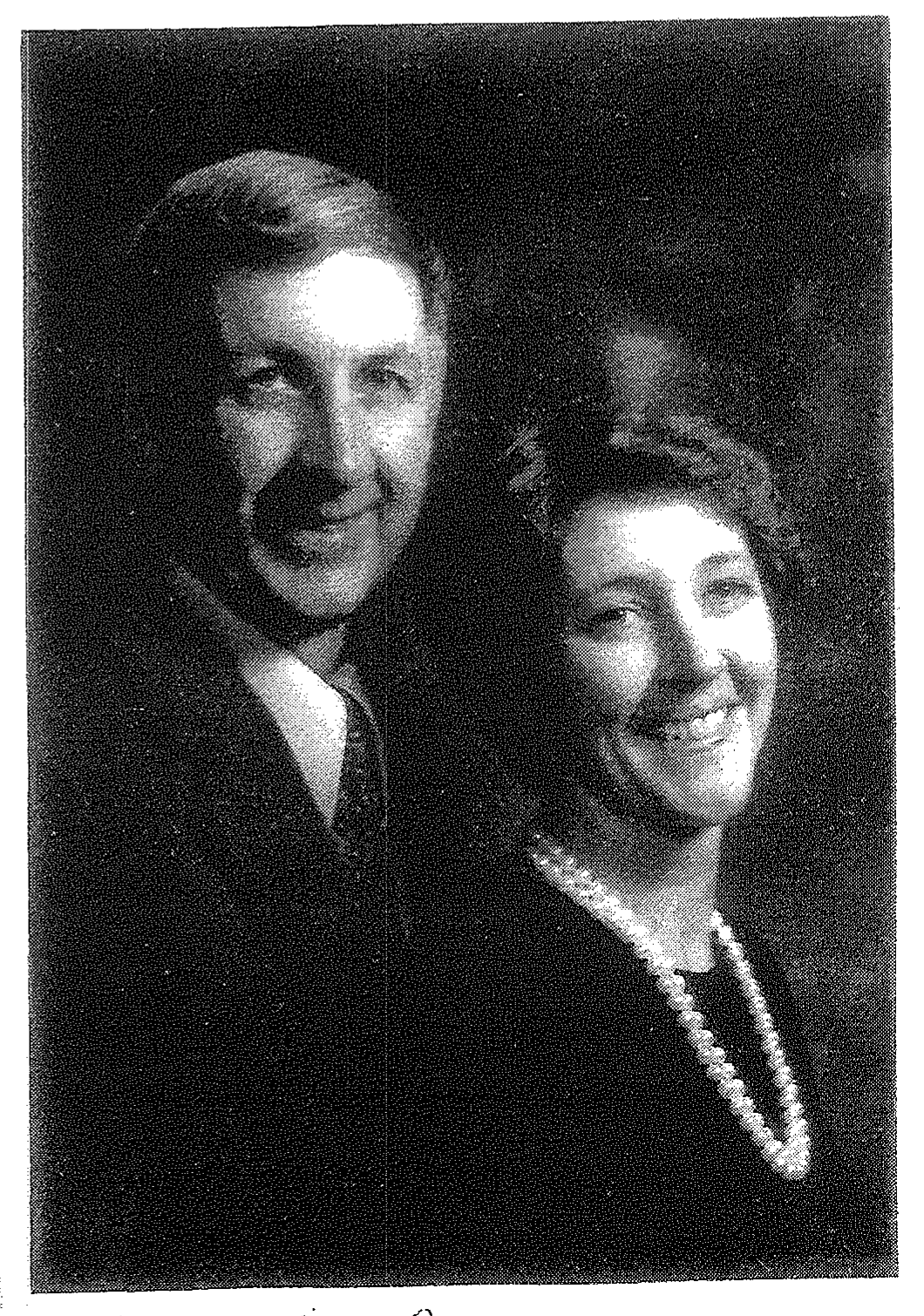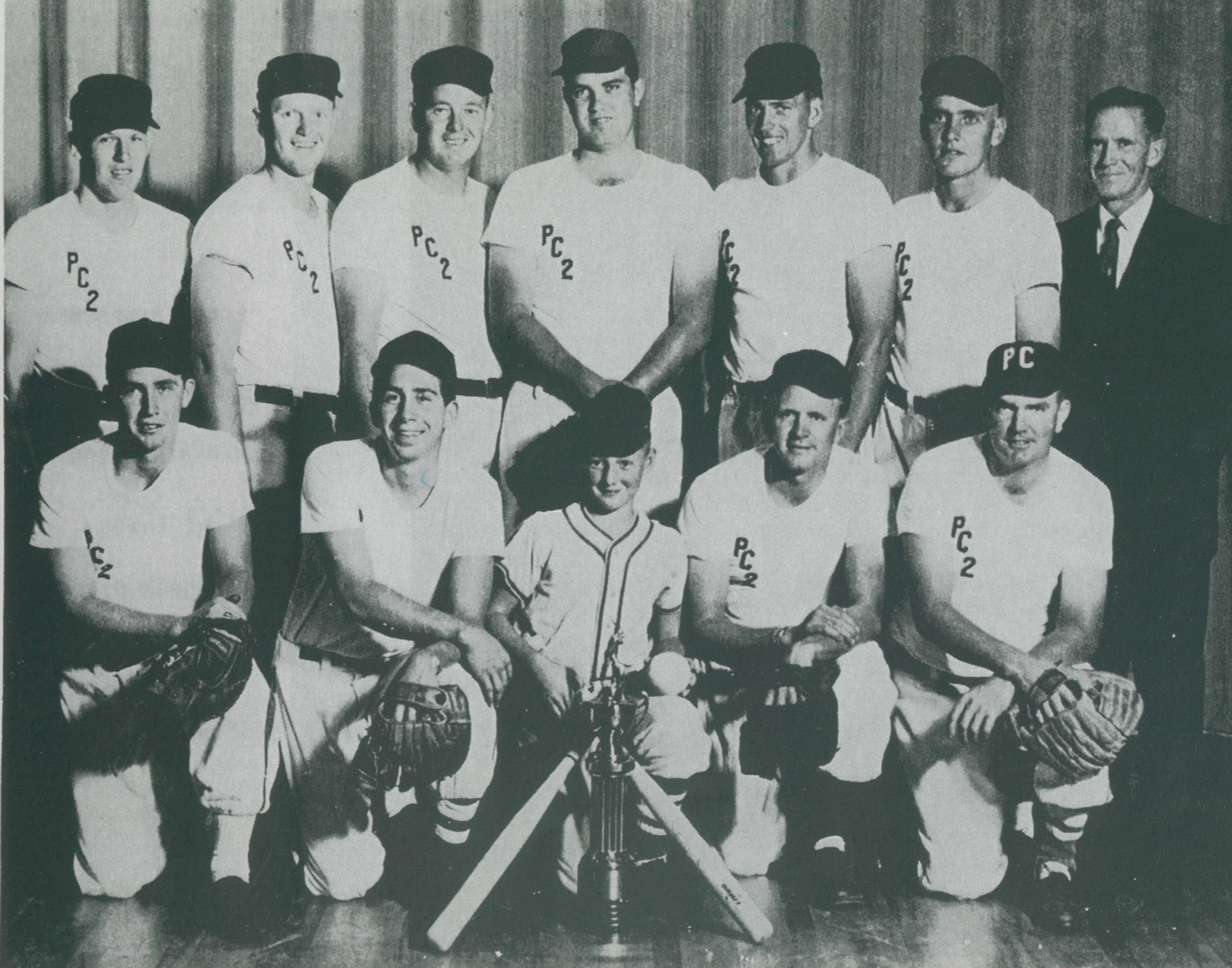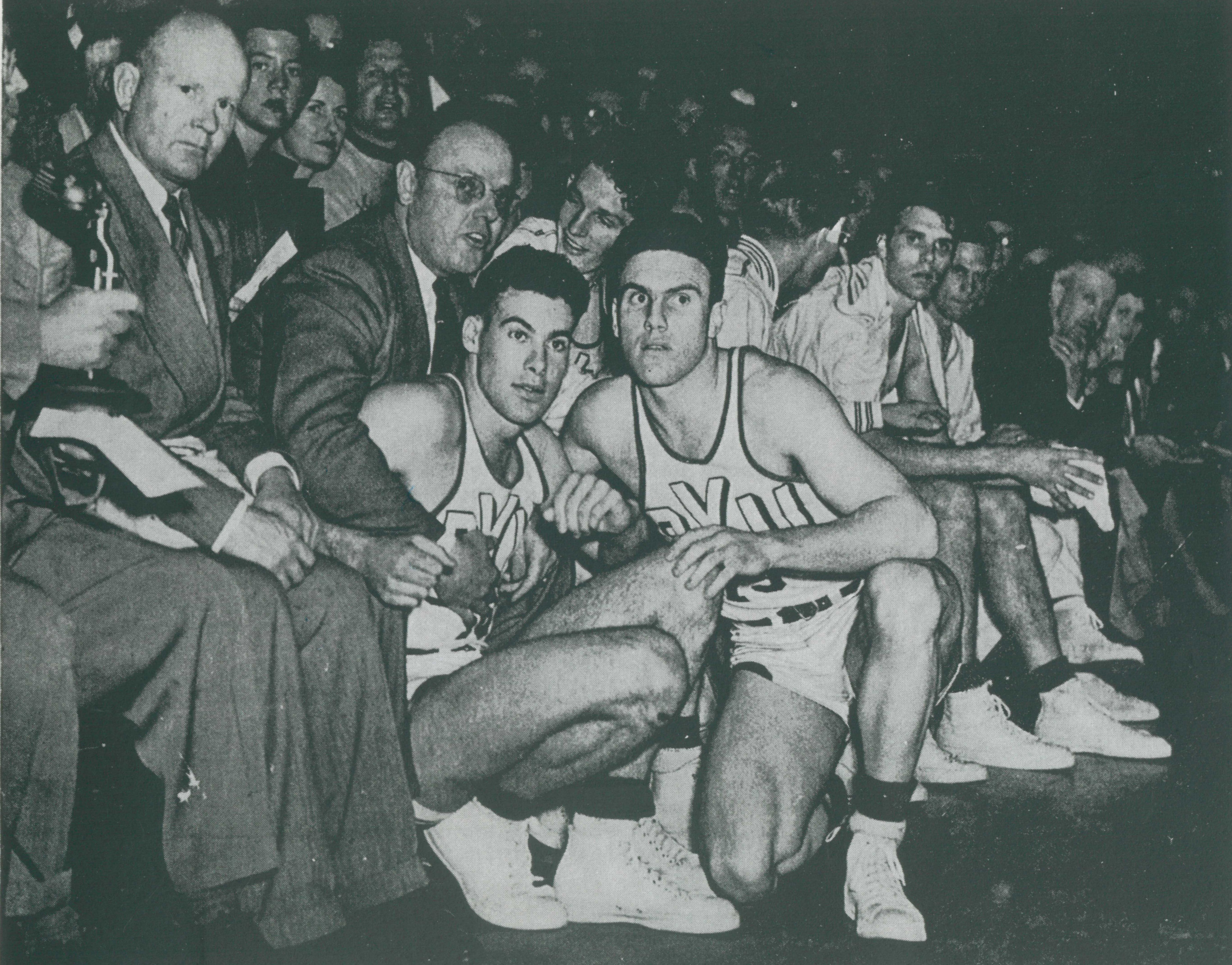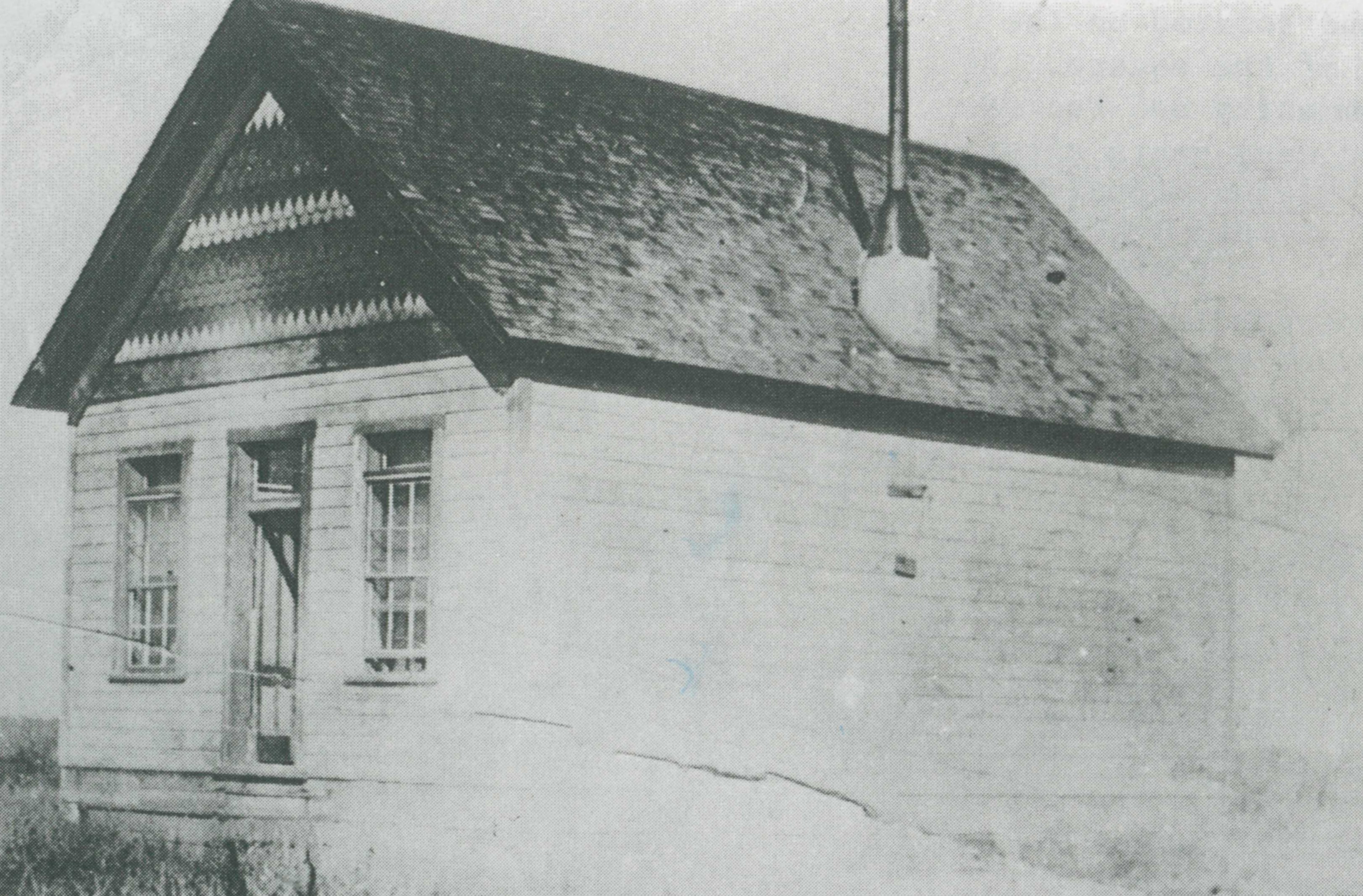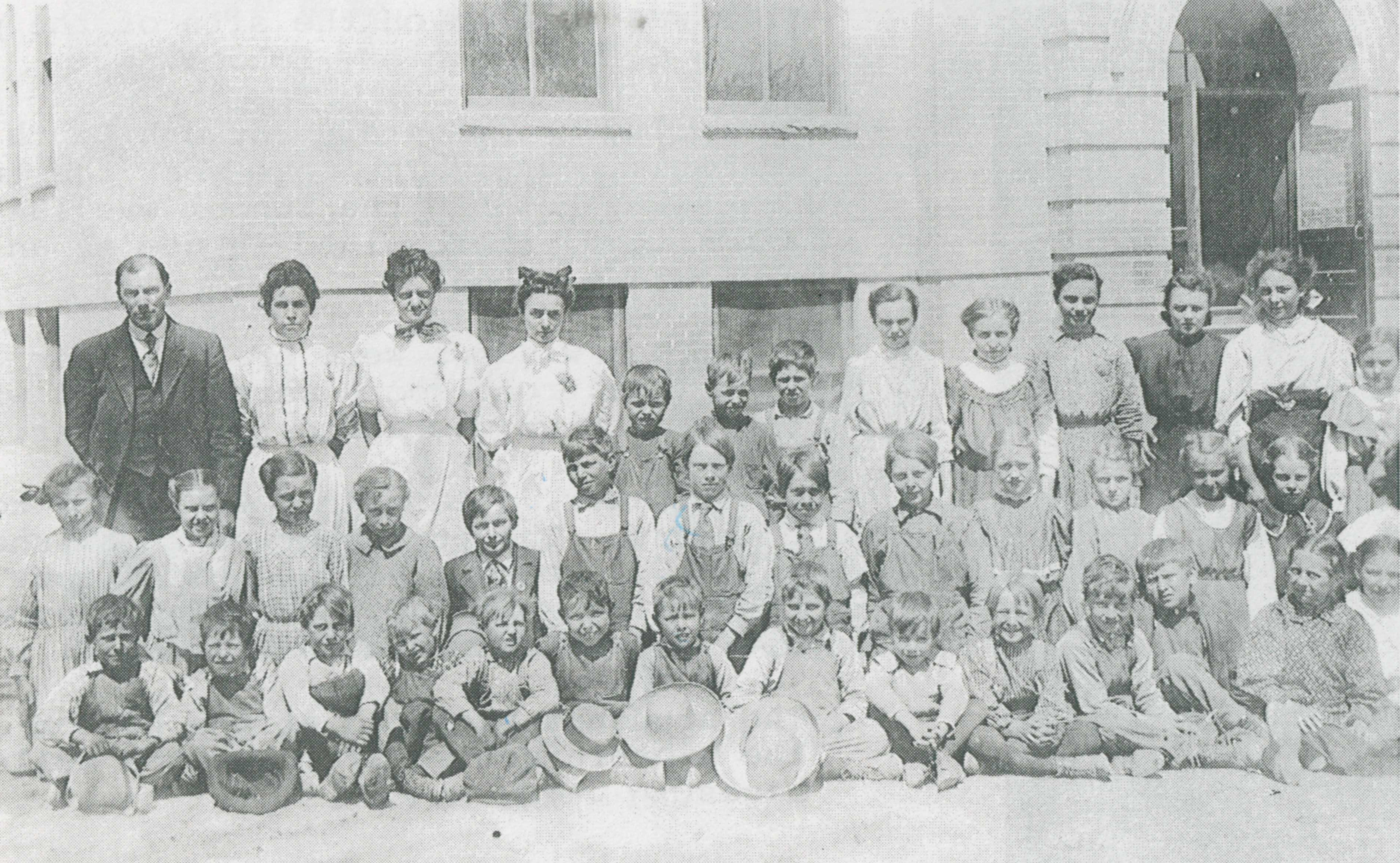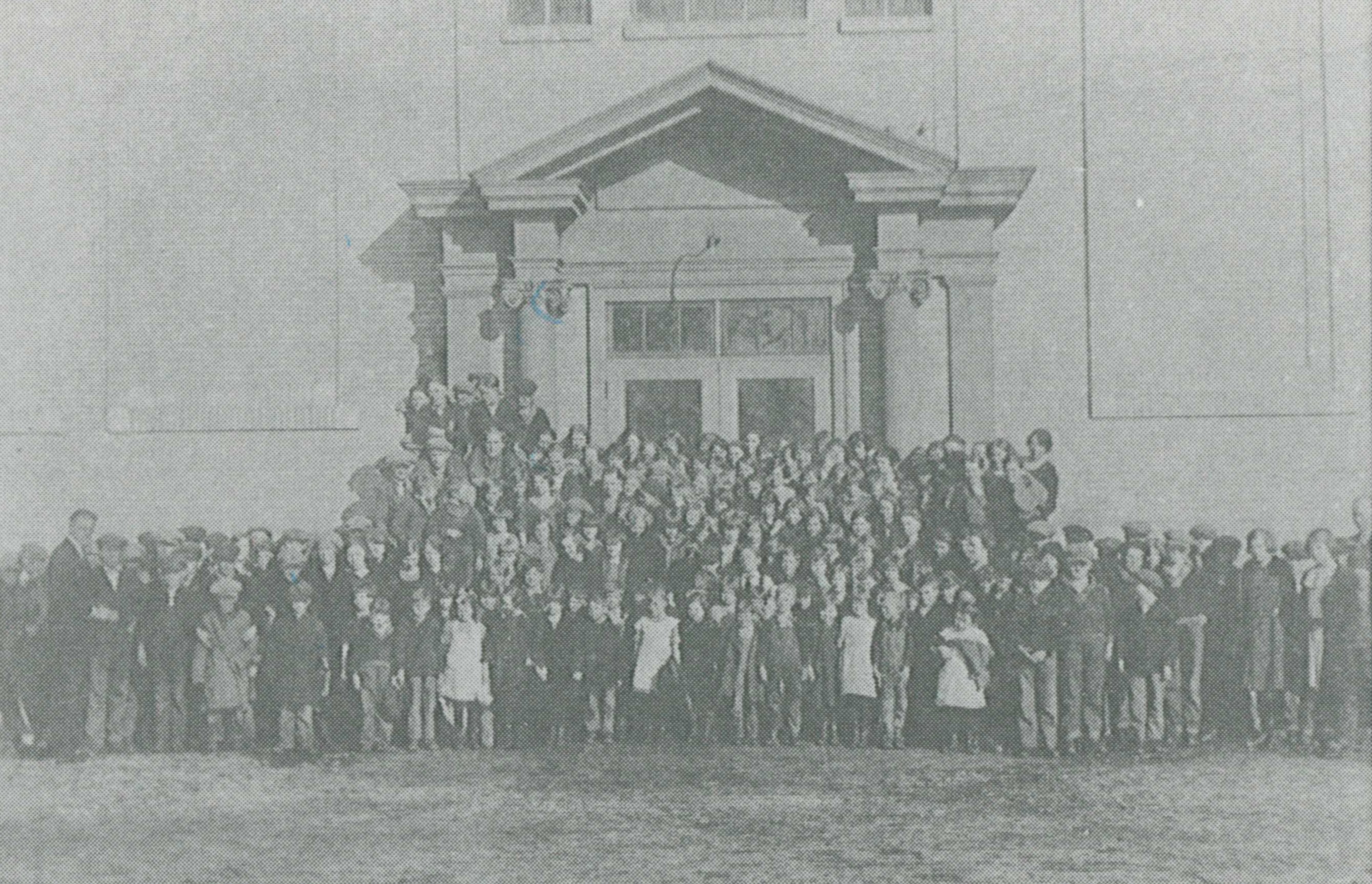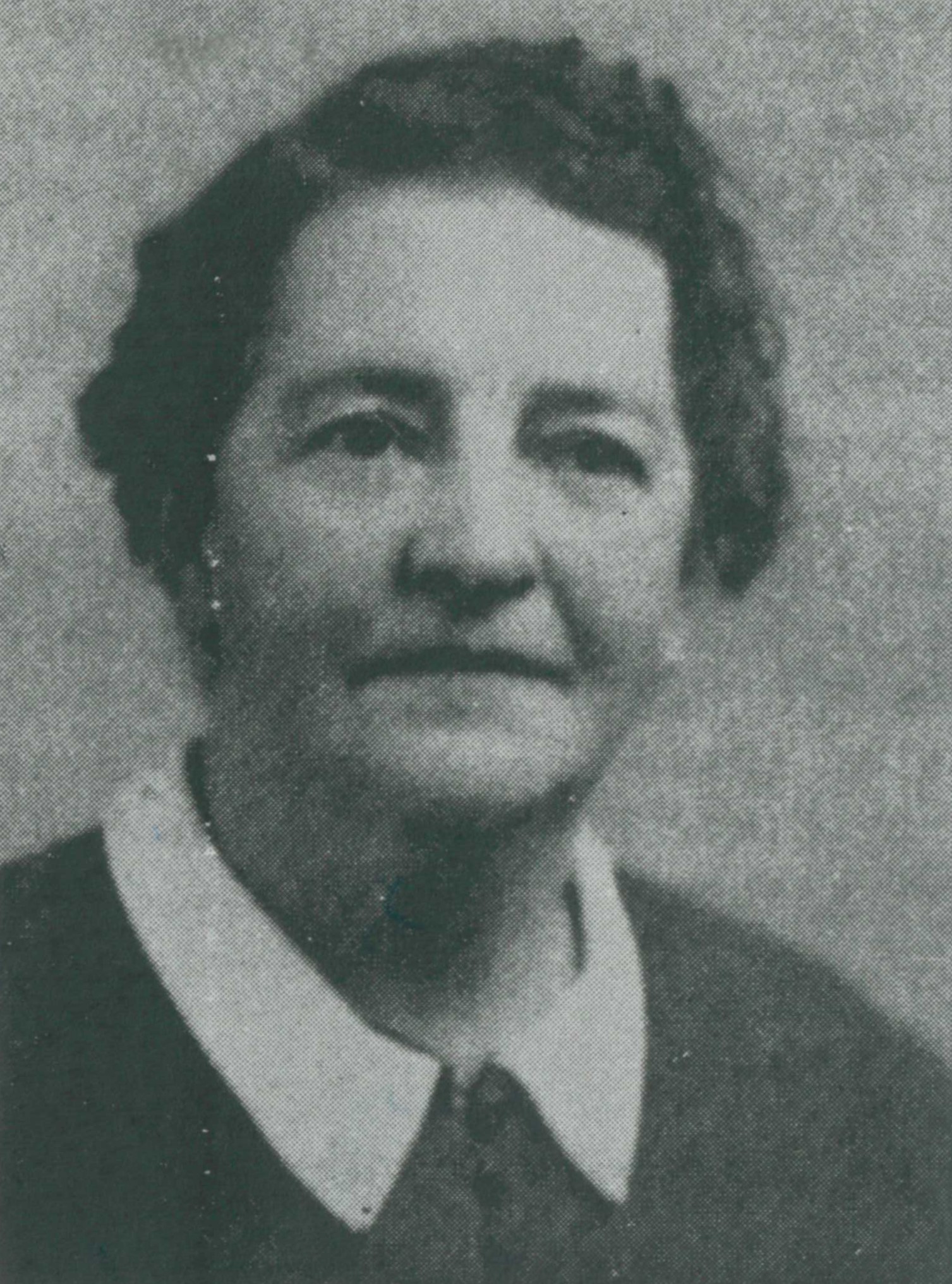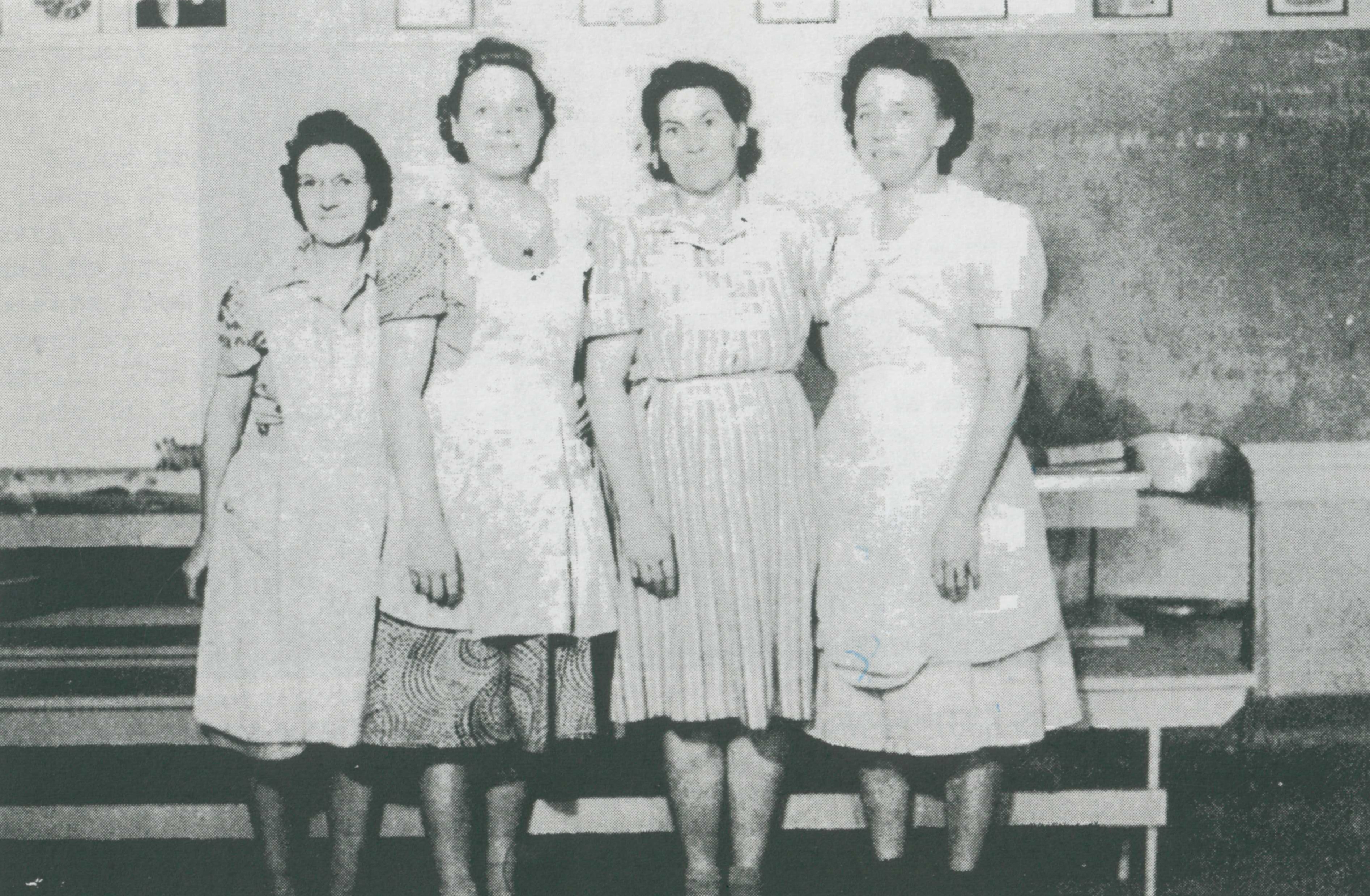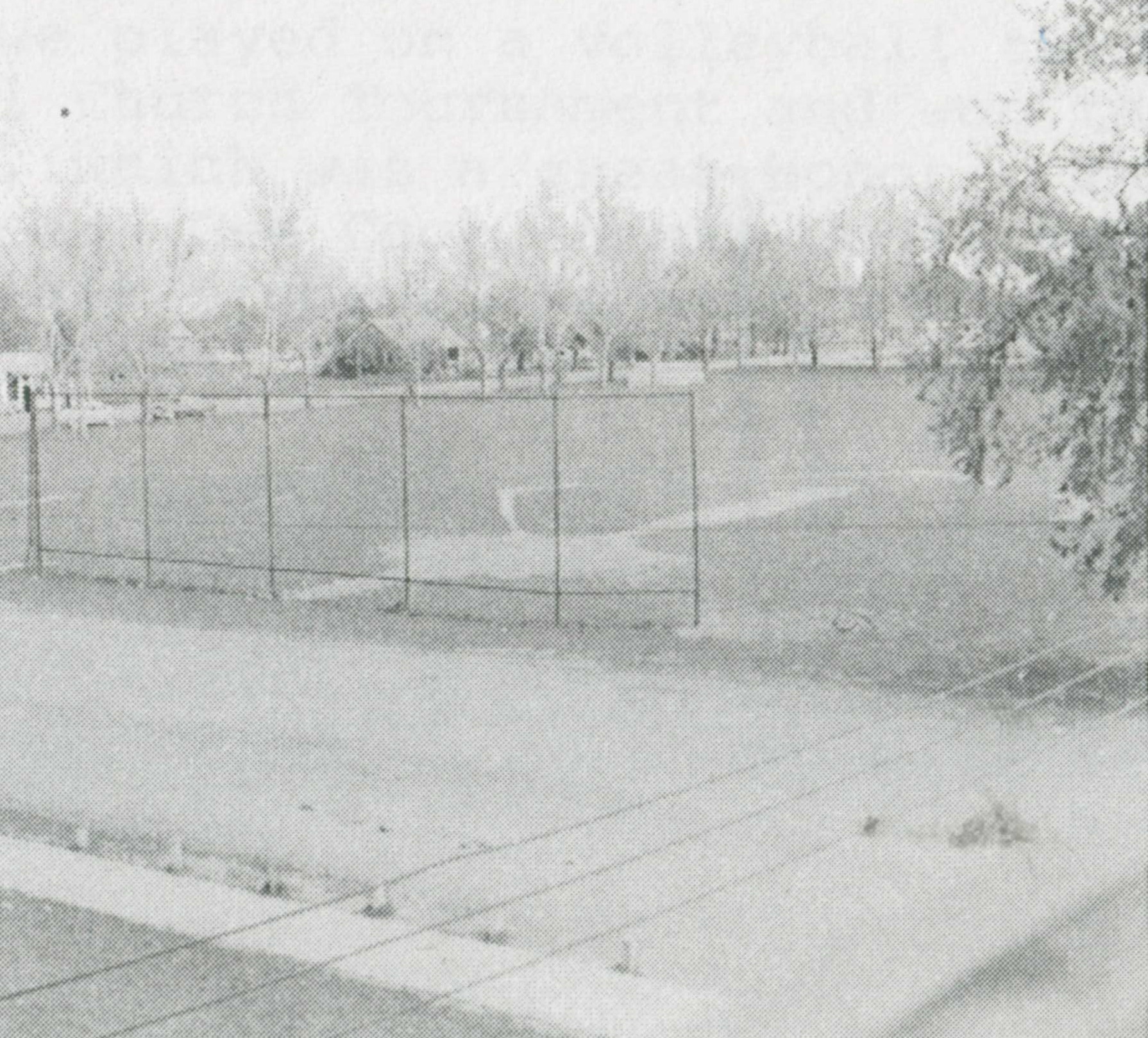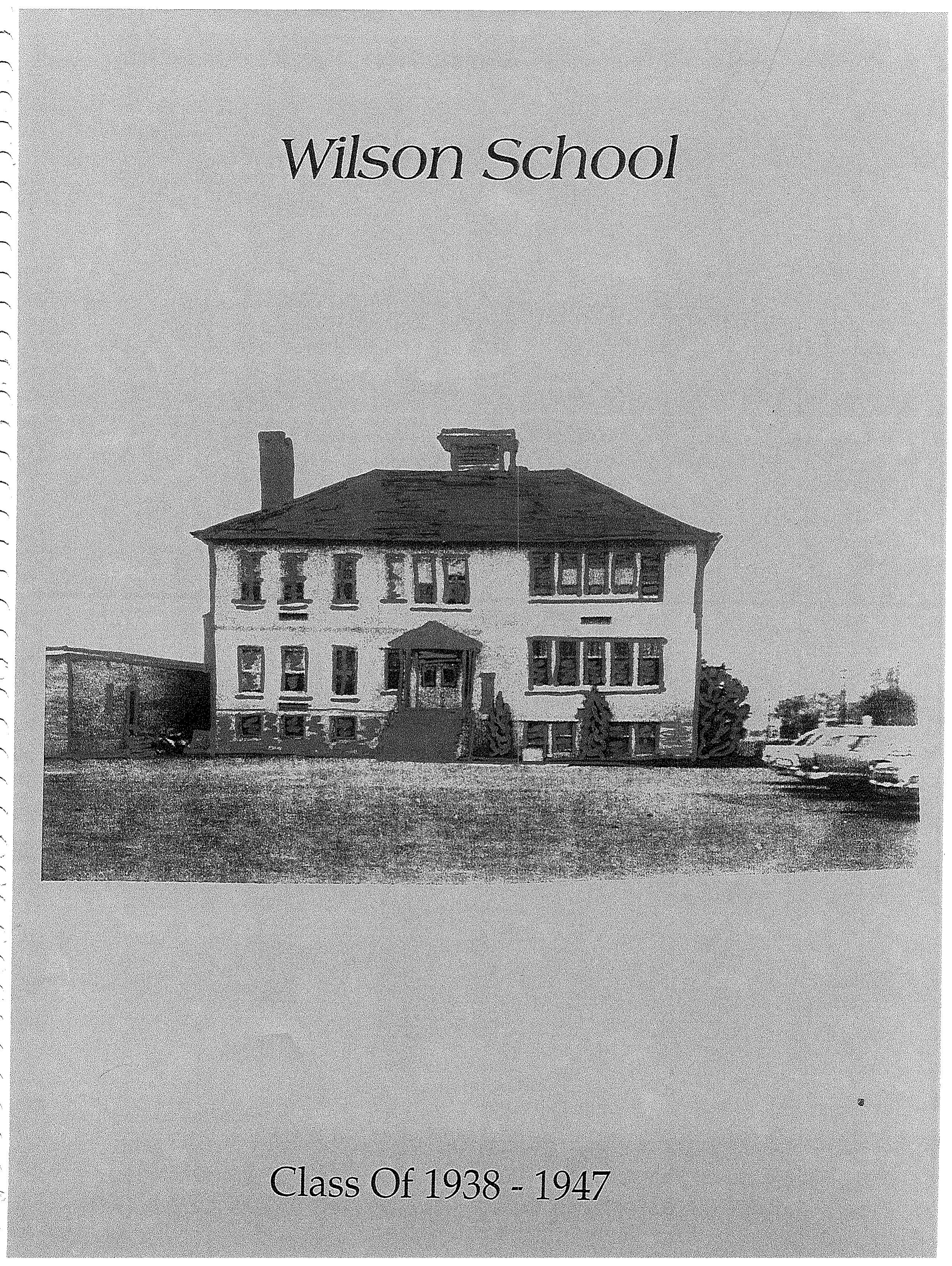
Wilson School, Class of 1938–1947

Wilson School building, Class of 1938-1947

This is a book I received that belonged to my Great Aunt Betty Oram Donaldson. I was not sure exactly what to do with it, other than share it for family history purposes. The photos in the book were not very high quality, but I am replicating them here anyway. Hopefully this history is of value to someone else who has family in the book.

“It’s a Great Life”

It’s the time in life for all of the Wilson School Class of ’47 to stop for a moment and realize that “It is a Great Life.”

We are matured and “aged” to the point that we are willing to accept that we are what we are. We realize that all of us have talents and abilities and that no two of us are alike, but that’s what makes us successful and happy. We are happy when we use our abilities and develop our talents.

In sports and business they often refer to “a level playing field,” meaning that both sides of the competition have equal opportunities. Therefore I believe that in life competition, the only “level playing field” is when we compete with ourselves. Our goal should be to do the very best we can, because no one else has the same talents, or abilities, or past experiences that we as individuals have. It has been said that we are the sum total of our past experiences. I believe our religious freedom and our constitution give us the opportunity to pursue success and happiness.

At the reunion dinner it was noted that all of us were satisfied with our accomplishments in life and most of us were in the service of others by actively volunteering in our churches, schools, civic organizations or other needy causes. Yes! It is true that most of us are involved in golfing, traveling, or other hobbies that we have looked forward to doing while preparing for these Golden Years. The time and resources to pursue and enjoy these activities make it “a Great Life.”

I am proud and honored that I attended Wilson School and associated with all of you there. From that small class we have many success stories and important things that we have done. Each of us has his or her own success story to be proud of whether it’s related to our families, our friends, our activities in church, our civic involvement, our involvement in other special organizations, or our career successes.

It has been said that when we die if we have five close friends that we have been successful in life, If that is true, then all who were part of the Wilson School Class of ’47 are successful individuals because of the friendships that we share today.

May each and every one of us continue to be successful and happy in our daily life, and always remember that it is a Great Life.

— R. B. (Bud) Willey, Class of ’47 Student Body President


History of Wilson School Class, 1938 to 1947

Many of you attended your very first school years in another school. As each one came to Wilson we became friends and so your memories will begin where you started. For a few of us our total elementary school experience was in the old Wilson School and that is why we started this memory book with the first grade.

First Grade, 1938–39

Our first grade teacher was Miss Dorothy Poulsen. She was young and pretty and we loved her. Our first grade class room was upstairs on the southwest corner. It was large with windows on the south and had wood floors. We had tables and chairs, a playhouse, a sand table and a space for a reading circle. We read from Dick and Jane books. We carried our lunches to school and stored them in a screened cabinet in the hallway. Many of us had Snowdrift shortening buckets for lunch pails. That year the front entrance of the school faced north with steps going toward the road. There was no cafeteria. First and second grades were excused at 2:00 p.m. to go home. That year we had two age groups in our class. We met with the children a year older than us. A doctor visited our class and checked our ears and throats. There were about 29 children in our room.
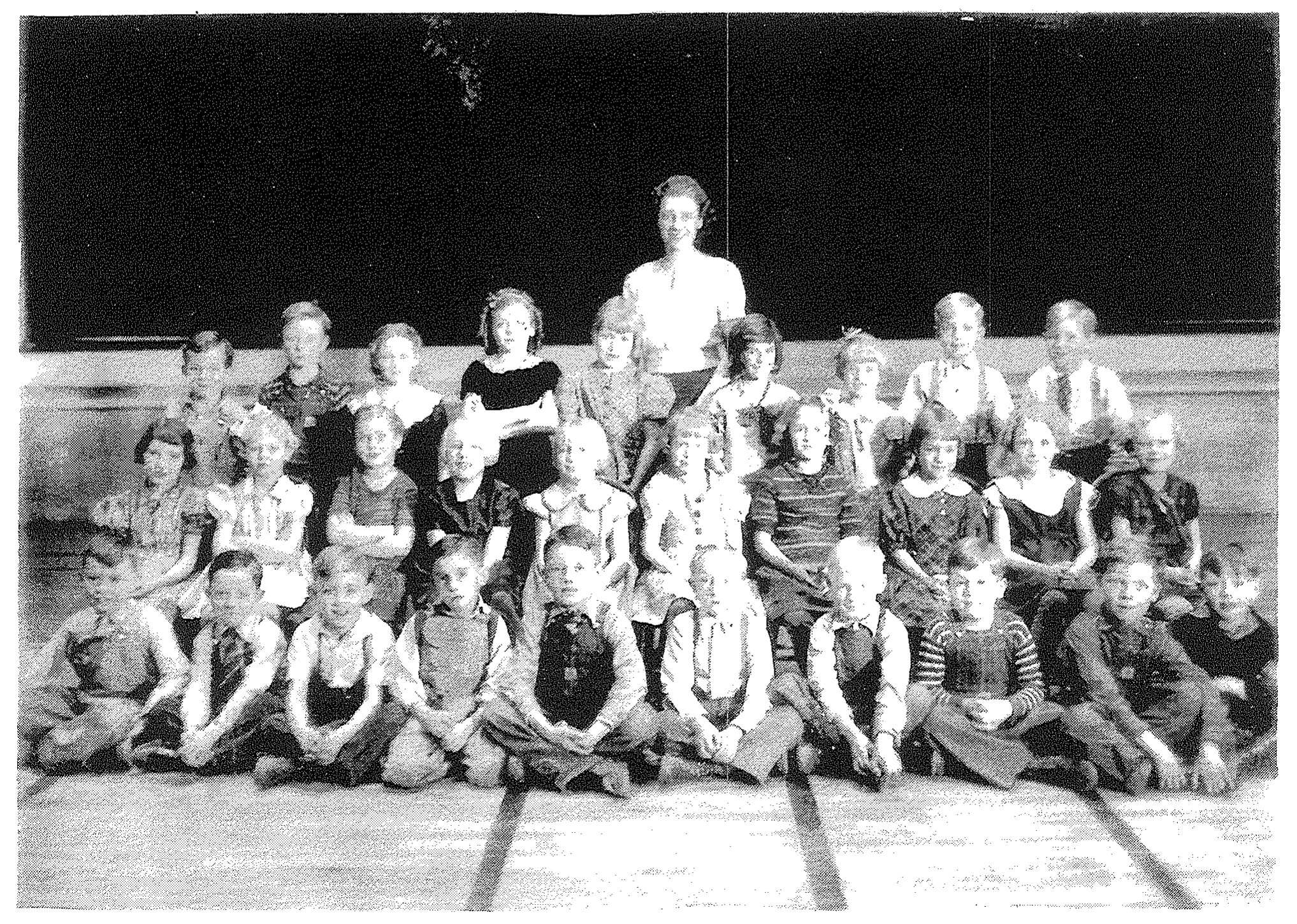
First grade class photo, 1938-39

Second Grade, 1939–1940

Our teacher was Miss Viola Poulsen. Our classroom was upstairs on the southeast corner with windows on the south and east and a fire escape outside. We had desks that year and reading circle space on the east. We learned reading, math and other subjects. The school district closed the Marriott-Slaterville School that year and those children came to our school, so we had one age group of children in our classroom. About this time in the second or third grade we began getting soup for school lunches. They brought buckets of soup to the classrooms and passed enamel bowls and spoons to each student and filled them with soup. That was the forerunner of school lunches. About this time the school was remodeled so that the entrance faced the east and the office was built where the north entrance had been. The bathrooms were downstairs in the basement.
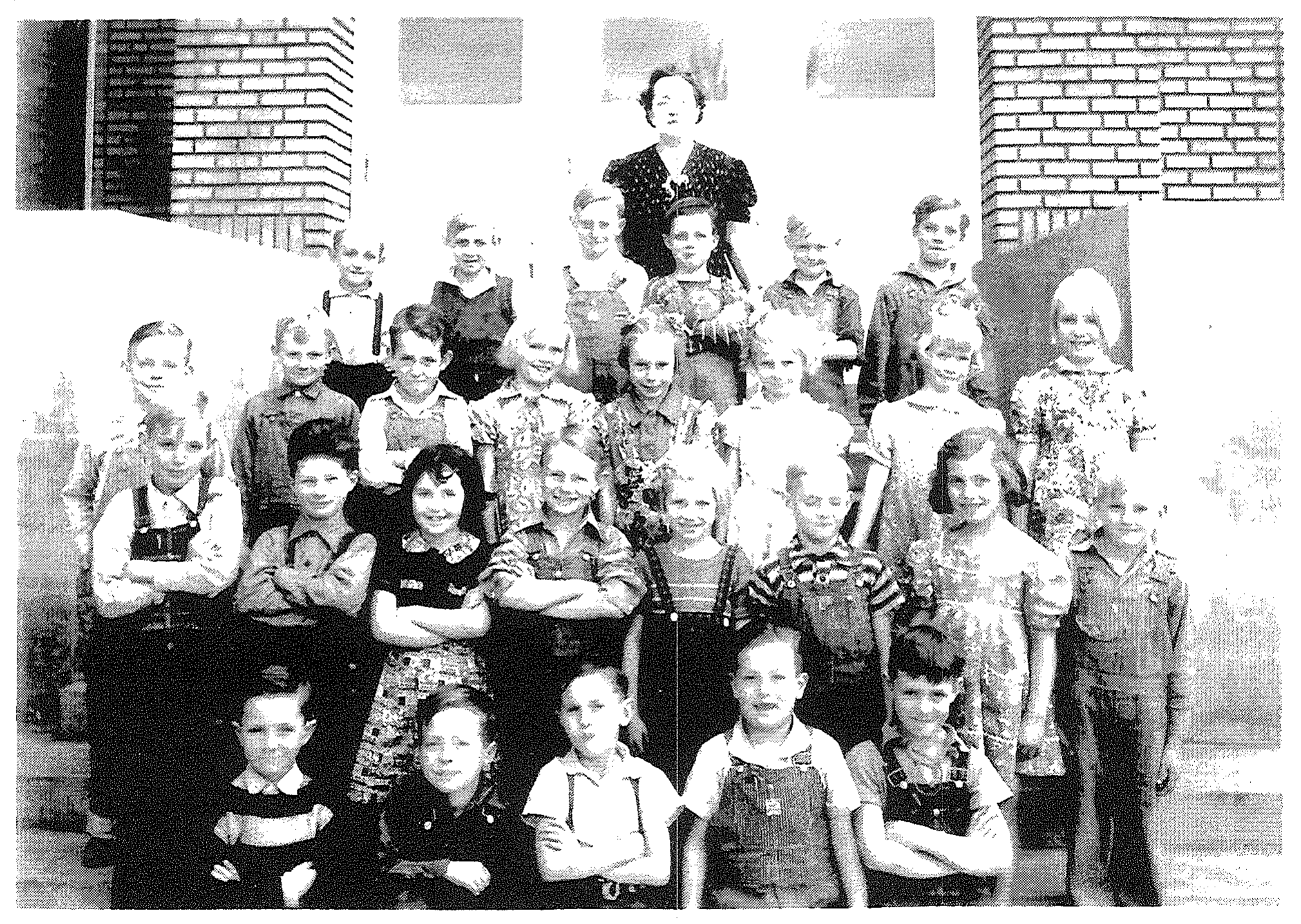
Second grade class photo, 1939-40

Third Grade, 1940–41

Mrs. Folkman was our teacher. Our classroom was the upstairs northeast corner or the southwest corner. There were 29 children in the class.
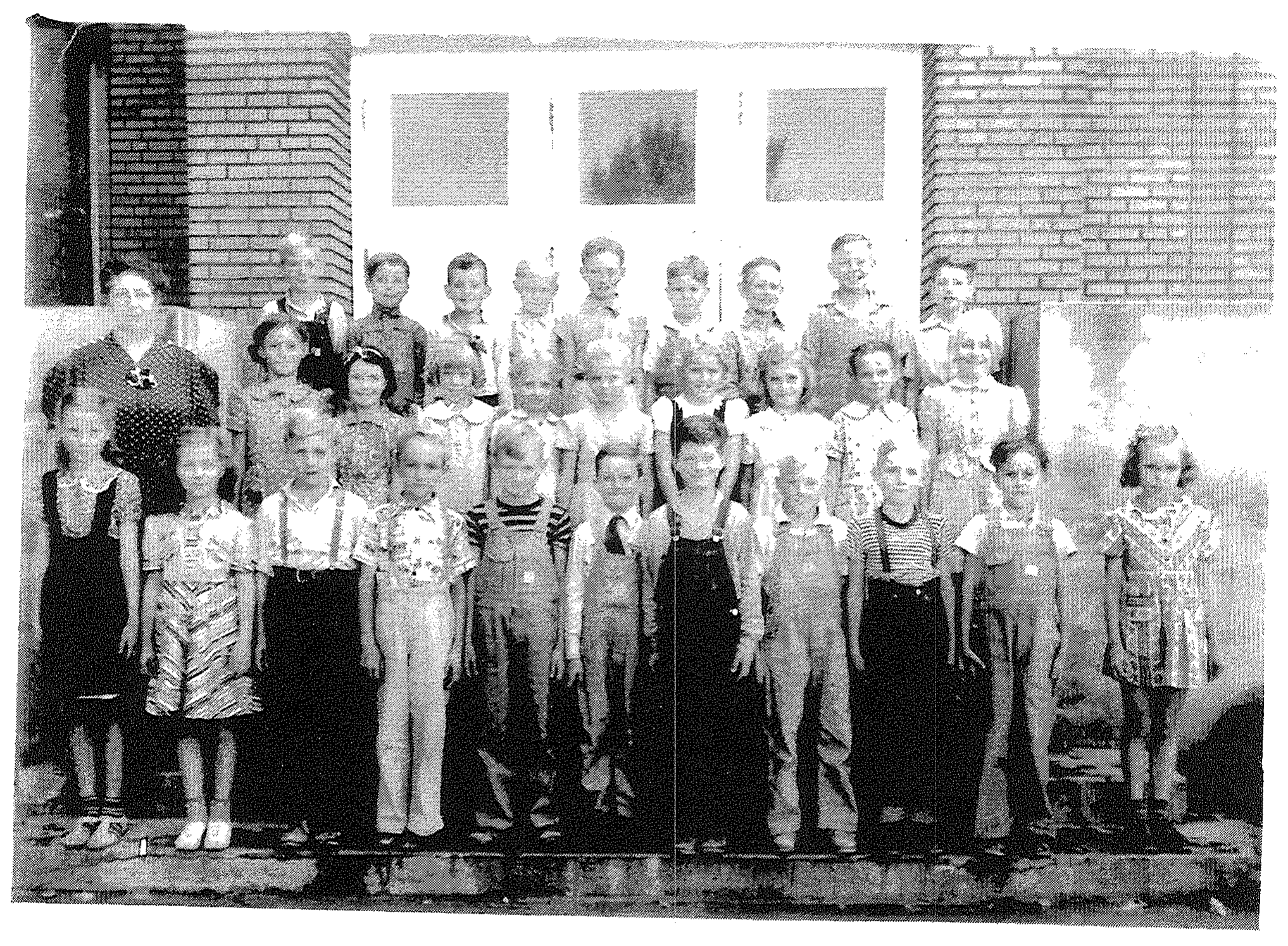
Third grade class photo, 1940-41

Fourth Grade, 1941–42

These were the war years. Our teacher was Miss Chadwick. Our classroom was the upstairs middle room on the north. These war years were very hard. School was closed in the fall so the older school boys could help harvest farm crops. We went to school on Saturdays a while to make up the time. The older boys were soldiers and were drafted to fight Japan and Germany. Many of our brothers were soldiers. No school pictures were taken during our fourth, fifth and sixth grades because all resources were concentrated on helping the war effort.

Fifth Grade, 1942–43

Our teacher was Miss Vera Shaw. She was a superb teacher. Our classroom was the upstairs northeast corner. About the time of fifth or sixth grades they began school lunches and we had tables in the basement in the hallway. I don’t remember when the cafeteria was built.

Sixth Grade, 1943–44

Our teacher was Vera Shaw again. Our classroom was on the main floor southeast corner. As an activity one day we made butter by shaking cream in a bottle then we each had a cracker with butter on it. We learned reading, math, and spelling etc. It seems like part of this year we had Mrs. McGrath for a music teacher and we made a book of all the old music composers. We bought victory stamps and gave the government the money to help fight the war. A favorite game of the boys was marbles. Each boy took great pride in his collection of marbles and his skill at shooting. The girls played jacks. We had a rubber ball and a set of 12 or so jacks and we would sit on the floor in a circle or around a table and go clear through onseys, twoseys, downseys, under the bridge or over the bridge etc. Another favorite of the girls was jump rope. If you could do “Red Hot Pepper,” or “Double Dutch” without missing you could jump quite a while. To be able to run in and out without missing was a keen skill. The boys played baseball. Another favorite game was “Pop the Whip.” Boys and girls would hold hands “tight” and run in a snake line and try to pop the end person off. We took turns being on the end to be popped off. Another favorite was “Flying Dutchman”. We were in a circle and two people ran around the circle. If your hands were touched you ran to beat the other couple to the empty space. Another favorite in winter time in the gym was four-corner kick.

Seventh Grade, 1944–45

Miss Maude Holmes was our teacher. That year for a very short while we had a Mr. Carter who was unusual. He stole some of our lunch money. Our classroom was on the southwest corner of the main floor. Around this time the school district built the cafeteria on the south of the school. We blessed the food and everyone ate together and we learned dining etiquette. The mashed potatoes and hamburger gravy and chocolate cake were favorites.
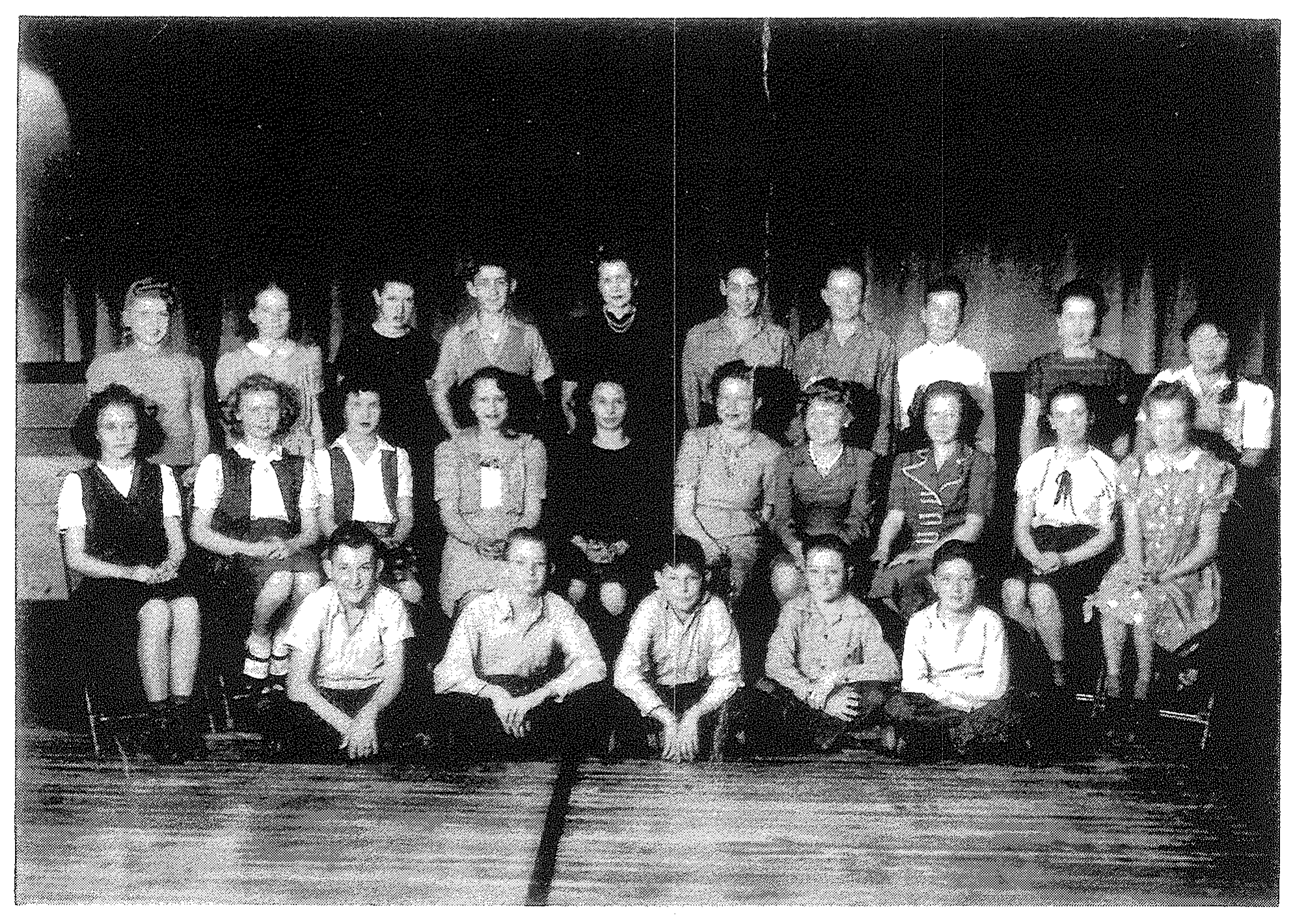
Seventh grade class photo, 1944-45

Eighth Grade, 1945–46

Mrs. Woodward was our teacher. Our classroom was on the northwest corner of the main floor. There were 27 in our class. World War II ended and the United States began it’s healing process and the rebuild.
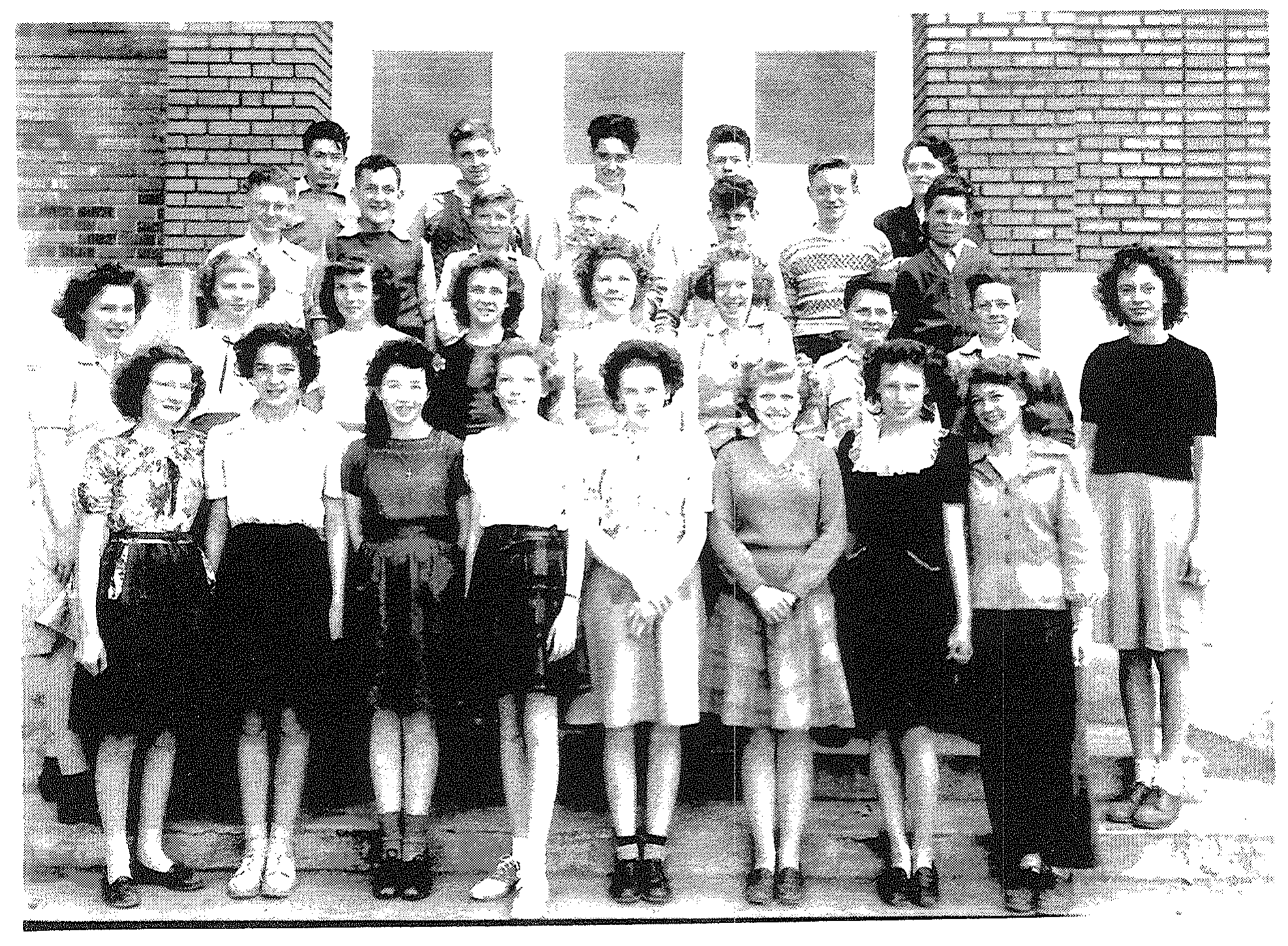
Eighth grade class photo, 1945-46

Ninth Grade, 1946–47

Mr. Leland Reese was our teacher and our classroom was on the northeast corner of the main floor. We were becoming sophisticated adolescents. Mr. Reese taught us first aid. Mr. Wheat Taylor was our principal. Mr. Pettigrew was the orchestra teacher and some of us played instruments. We had basketball and baseball games against the other schools on Fridays.

Wilson School was a safe and healthy environment for children to grow. The teachers respected our childhood and watched over us with kindness. Every year each class in the school participated in a school program. Mr. Arthur Taylor was our principal in the early years. A Mr. Chadwick was principal for a time. Wheat Taylor was principal in our later years and helped prepare us for high school. All in all we had a memorable early school experience and look back at those fun years with fondness.
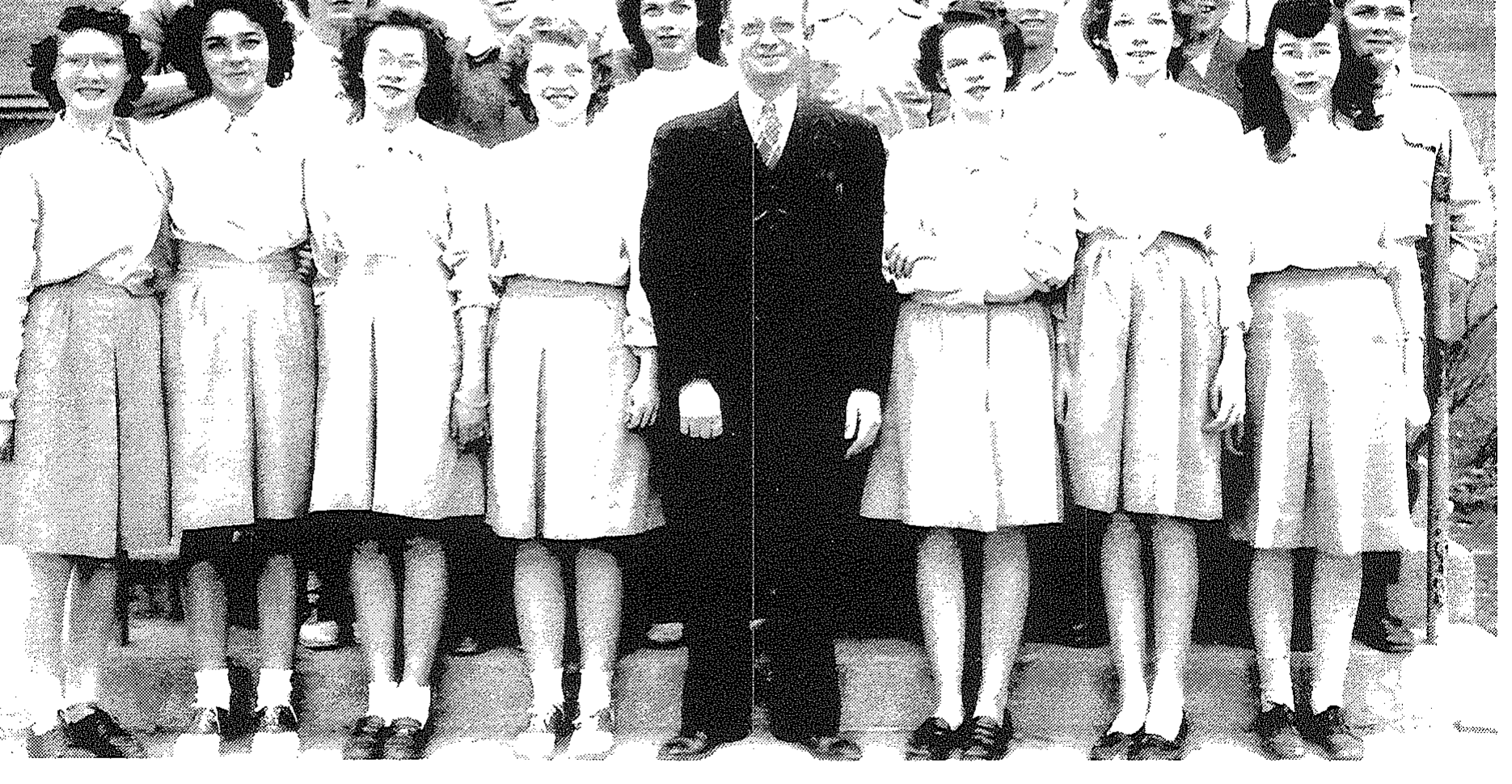
Ninth grade class photo, 1946-47

Ninth Grade Class of ’47 Reunion in 2000

Drauca Marston Holmes, Lola Taylor Sheffield, Louise Holmes, Marilyn Bowman Garner, Betty Lou Buck Schulze, Emma Ropelato Walling, Nona Flitton Forsgren, Gladys Sorensen Gibson, Lila Stone Harwood, Robert Holmes, Gordon Belnap, Betty May Oram Donaldson, Rudell Willey, Jewel Checketts Atwell.
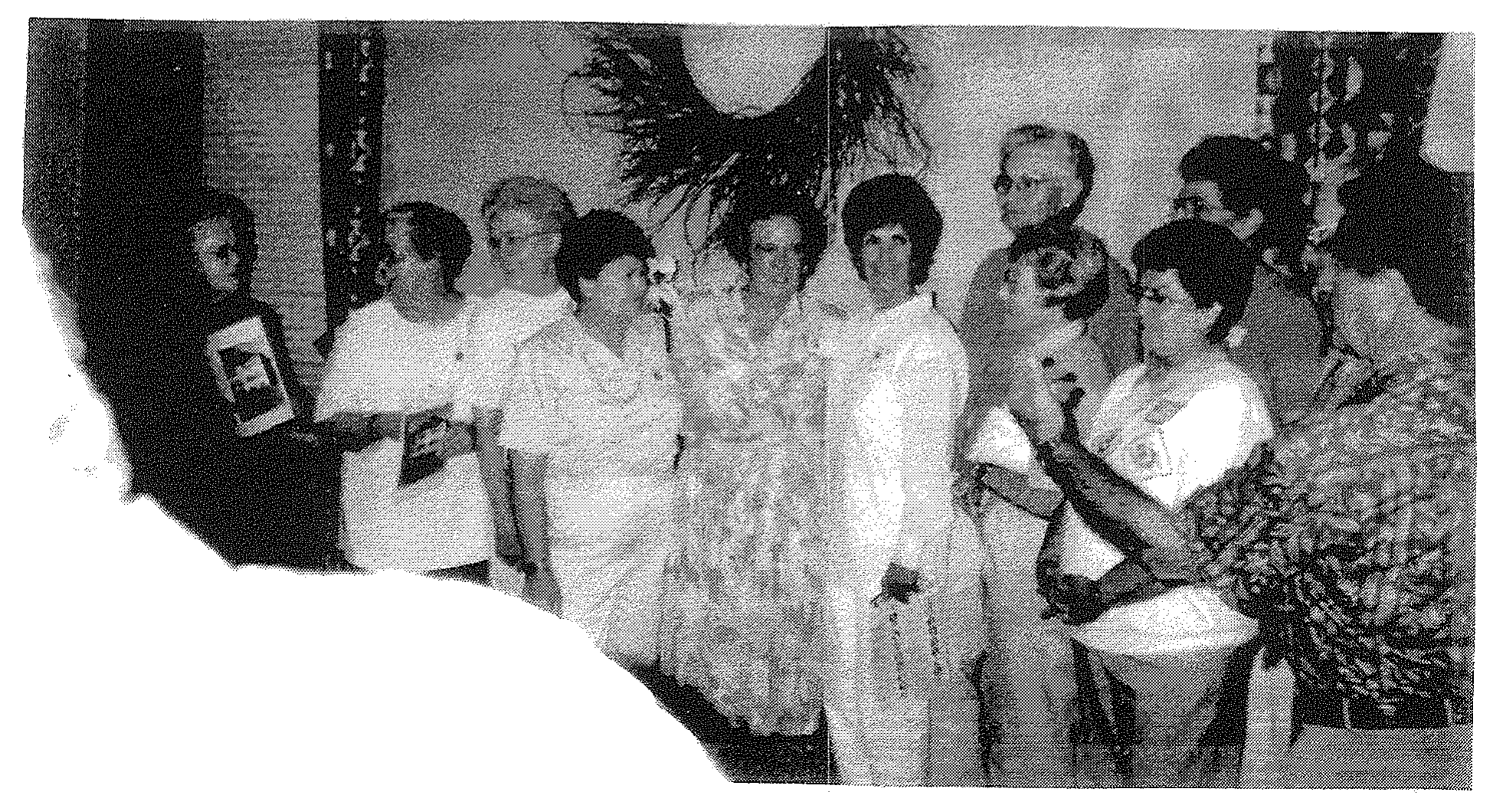
Reunion photos, Class of 47, 2000

Where Are They Now

GORDON “DUTCH” BELNAP
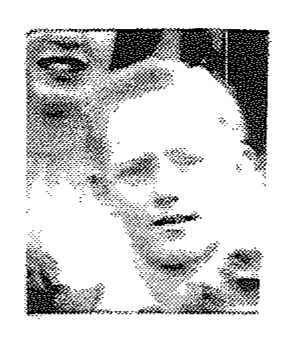
Gordon Belnap

Married Faye Robins in 1951. Three sons, Rob, Tim, Mike. Eight Grand kids. US Navy: Honorable Discharge. Weber Jr. College 2 years. Utah State: Grad 1958, Masters 1965. Coach, Utah State University 13 years. Athletic Director Weber State University. Faye passed away Aug. 1996. Married Karen Smith Sept. 1997. Hobbies: woodworking, golf, travel, volunteer 2nd grade teacher.

MARILYN BOWMAN GARNER
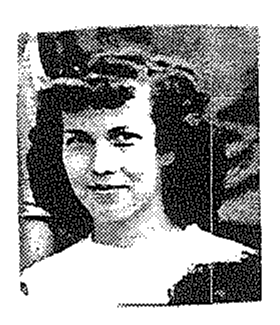
Marilyn Bowman Garner

I’ve had a good life. I attended Weber College, married Don Butler and had 2 children, Kathy and Gary before leaving Ogden in 1956. We lived in Pocatello, Idaho before moving to Grand Jct. Colorado. During our 15 years in Colorado, I worked for a wholesale drug company and the last year as office manager, bookkeeper for an ophthalmologist. While living there Vickey and Jodi were born. Our son was killed in a car accident in 1968 and in 1971 Don and I were divorced. I moved with my girls to Salt Lake in 1973 where I spent the first 4 plus years as office manager/legal secretary for an attorney. Then I went to work for Salt Lake County. When I retired in 1999, I was fiscal manager for the SLC Public Works Department. I married Clair Garner in June of 2000. We plan to keep up the good life with travel, golf, volunteer work, genealogy and enjoying our 9 grandchildren.

BETTY BUCK SCHULZE
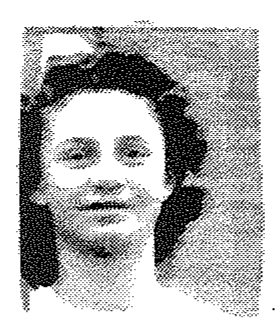
Betty Buck Schulze

When I left high school, I married Marler Williams. A boy, Monte B. was born of that marriage. Marler died 8 months after Monte’s birth. I went to work at HAFB to support myself and Monte. While working at Hill, I completed my schooling at Utah State University. I married Willard Smith. One son, Donald was born of that marriage. After Donald’s birth I returned to work at Hill. I worked as a supervisor for several years, then selected to study under Dr. Fredrick Herzberg, Distinguished Professor of Management from University of Utah. Under Dr. Herzberg’s guidance I completed a Masters Degree Equivalent in Industrial Psychology then taught Organizational Development, Air Force wide. I retired from HAFB with 25 years service. Willard and I traveled for 8 years prior to his death from cancer. I am now married to Hugo Schulze. We are enjoying our children, grandchildren and great grandchildren. I love to golf and play every chance I get. I have played on bowling leagues in the past. I had a wonderful time golfing with my past friends, especially Dutch Belnap, at the Weber High Golf day in 2000.

JEWEL CHECKETTS ATWELL
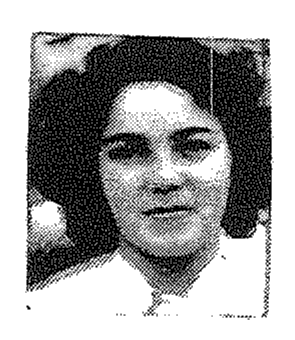
Jewel Checketts Atwell

I was engaged my senior year, and married Daryl Hendrick on June 19, 1950. We settled in Layton and had 4 girls and 2 boys. I played on the church softball team until I tore the cartilage in my knee, then I helped coach. We moved to Santa Fe, New Mexico and I started my dream of becoming a nurse. I worked 25 years in all areas of nursing, really enjoyed it, and learned a lot. Daryl passed away in June ’68. That was the year I met Gene. I married him in Nov. ’78. He is my best friend, lover and husband. He’s really been good through all the surgeries I’ve had. Gene had 4 children and our families are like one big family, all getting along well. These 21 years have been so happy! We have a total of 10 children, 26 grandchildren and 4 great grandchildren. Gene is now retired from US West [Quest] and we live in Roswell, New Mexico.

JOHN EILANDER [JACK]
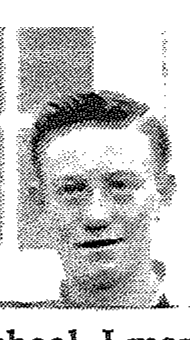
John Jack Eilander

Upon my graduation from high school, I married and went into the US Army. After my release from the Army, I went to work for 3 years at the Ogden Arsenal. Subsequently, I was hired by Weber State University, where I retired in 1992 after 38 years of service. I am the father of 6 children, grandfather of 11 grandchildren and great grandfather of 10 great grandchildren.

NONA FLITTON FORSGREN
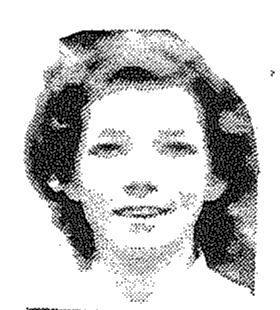
Nona Flitton Forsgren

After graduating from high school, I got a job at a 5 and dime store for a short time before the opportunity came for me to take employment at Hill Air Force Base as a sheet metal mechanic. I had met my husband, Judd, at a senoir class party. After dating for some time we were married in 1953. I quit work to have our family of 3 daughters. We lived in Ogden and Willard then back to the Ogden area of Kanesville, West Haven. About the time our girls were in school, I again had a chance to return to my old job of riveting. I worked on the F4’s and F16’s. After 22 years of enjoyable service at HAFB, I retired in 1987. I have been busy since, wondering how I had time to work. Judd and I have traveled long and short trips, taken cruises and just the summer of 2001 traveled to Sweden, my husbands long time desire. I have served as Relief Society President in our ward and am enjoying my grandchildren as well as all the family. We have much fun and enjoyment with them. They are the greatest.

ROBERT WILLIAM HOLMES — February 17, 1932
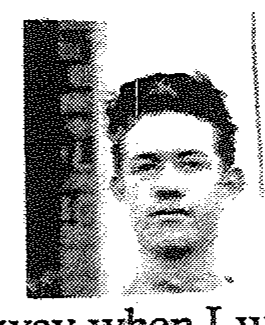
Robert Holmes, young
Robert Holmes, older

(“Where he’s at, there’s mischief” . . . “Bob” . . . likes any back seat . . . not a lone wolf . . . Windy’s always with him . . . they work together . . . that smile! . . . is the key to many locked doors . . . for Bob.)

Born and raised in Wilson, my Father passed away when I was 10, I was left to run the farm, which I did after school and during the summer months.

After graduating from High School I joined the Navy for a 4 year term. During the time I was in the Navy I was in several places in and around Formosa (Taiwan), Korea, Japan and China. It was very educational for me, seeing other countries and other cultures. In the Navy I was assigned to the aircraft carrier, USS BOXER, for eight months we cruised the seas patrolling the waters and land around the foreign countries. The rest of the time I spent in San Diego at Miramar Air Force Base and Point Mugu at Oxnard, California. I learned lots and seen lots during these eight years.

While in Point Mugu, I went a place called Jockey Meads, a resort between Oxnard and the San Fernando Valley, where I met Dorothy Lou Bates. I was invited to church in the Valley and stayed to a fireside at the Bishop’s house. My relationship with Dorothy continued and we were Married on July 17, 1953 in the Logan Temple. We have been blessed with five beautiful daughters, three son-in-laws and twelve grandchildren, six boys and six girls.

After my duty in the Navy, I enrolled in college at Utah State Agricultural College, halfway thru my years there they changed the College to a University, now called Utah State University. I graduated with a BS degree in Industrial Arts Education with a minor in Math after four years. The next summer I started my Masters Degree and a couple years later I finished my Masters in School Administration with a minor in Industrial Arts Education.

I was an Industrials Arts Teacher and taught wood shop for 35 years, retiring in June 1993. I was also a General Contractor for many years building houses and other structures.

I was the Chairman of the Wilson area planning committee for 14 years.

I was on the Weber County Board of Adjustments from 1988 until 1995, chairman of the board from 1990 until 1995. I also served on the Weber County Boundary Commission for one term.

I was the facilitator in organizing and establishing WEST HAVEN CITY – 1990. We became a city in July 1991 and I was the first Mayor serving for three years. While Mayor, I tried to get the city to agree to the sewer and secondary water but no one thought that was important and no one needed it, now, in the year 2001, it is needed and being put in the ground.

Keeping active in politics, I am currently the chairman of the WEST HAVEN SPECIAL SERVICE DISTRICT. Working with the city makes me feel like I have accomplished a great deal in my life and I enjoy what I am now doing. I am excited about every piece of pipe that is laid in the ground.

LOUISE HOLMES
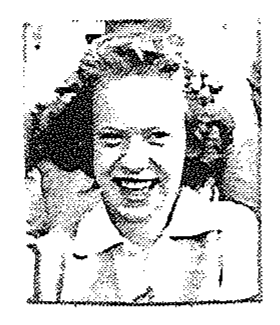
Louise Holmes

I’m still Louise Holmes, having never changed my name. Following high school I attended Weber College and received an A.S. Degree. Then I attended USAC and received a B.S. Degree. After teaching school for 10 years I went back to what is now USU and received a Masters of Education Degree. After 33 years of teaching school I retired. I have spent part of my time volunteering as a tutor for children ages 6 through high school. I’m still recognized by many of my former students. They always stop for a visit. Traveling has always been fun for me. I’ve taken many tours and have met people who still remain my friends. For the past 23 years I’ve made my home at the Three Fountains Condominiums in North Ogden

JoANNE HOWE GEARY
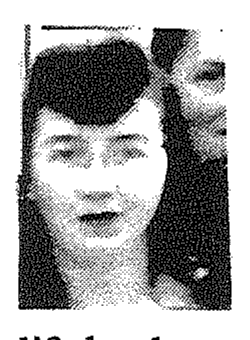
JoAnne Howe Geary

Since graduation in 1950 my life has been pretty good. I got married in ’52 and had my first boy in ’53, another boy in ’55 and girls in ’59, ’60, and ’66. They are all grown now and in their own homes. We have 11 grandchildren, 6 girls and 5 boys. My husband and I took our children to Puerto Vallarta, Mexico in ’75. We’ve been to Catalina Island off California 4 times. We like to travel when we can to visit our daughter and her family. My husband and I, for the most part, live a very quiet life. Don, my husband, likes gardening and watching video movies. I like to cook, do puzzles and watch quiz shows and video movies, of which we have a large collection. My husband also likes to paint and sketch. Two years ago, after wearing glasses for 56 years, I had my eyes operated on and now I only need glasses for reading small print and driving. We’re going to California, San Bernardino to be exact, in April to see our youngest granddaughter get baptized. We like to travel when we can. We’ll be celebrating our 50th wedding anniversary before the Winter Olympics in 2002. It will be a family affair.

CARMA KLINKE POINDEXTER
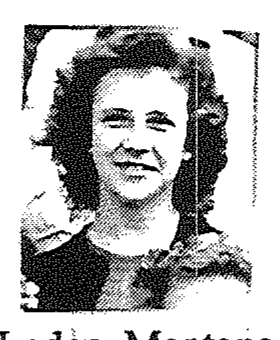
Carma Klinke Poindexter

I married Hugh H. Poindexter in Deer Lodge, Montana. He was a rancher and truck driver. I have three daughters, Denise, Kathy; and Ellie, six grandchildren and three great-grandchildren. I have lived in Ogden, Utah; Roy, Utah; Los Angeles, California; and Bountiful, Utah. My home has been in Bountiful, Utah for the past thirty-two years. My husband and I have drove truck together and traveled every state in the U.S. except the New England States and Hawaii. God has been good to me. We are retired Snowbirds now.

DRAUCA MARSTON HOLMES
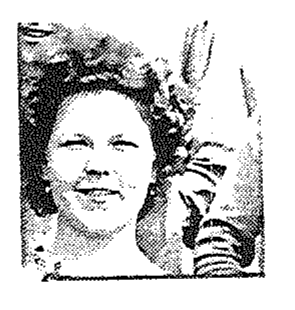
Drauca Marston Holmes

Drauca and Wayne Holmes were married in October following our graduation. Drauca worked as a secretary while Wayne attended Weber College. They moved to Logan where Wayne graduated as an electrical engineer. Drauca was an Executive Secretary for the Cache Co. Dept of Public Welfare. Wayne was commissioned into the Air Force and they lived in California and New Mexico for the next four years. Drauca was a stay-at-home Mom. They moved to Brigham City in 1959. They have four children and 14 grandchildren. Drauca worked as an Executive Secretary for Thiokol, NASA and the Air Force, performed semi-professionally for six years, graduated from Weber State University in Theater and developed the Heritage Theatre in Perry, Utah, for which she was the Executive Director for 23 years. She and Wayne retired in 1994 and have served an LDS Mission to the Family History Library in SLC.

BETTY MAY ORAM DONALDSON
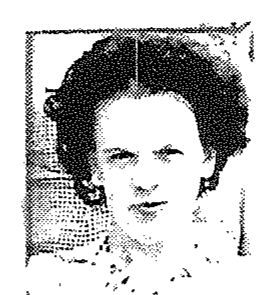
Betty May Oram Donaldson

My name is Betty May Oram Donaldson. I have lived in the Honeyville and Ogden areas during my younger years. I attended the Honeyville Elementary School and the Wilson Lane School, then the Weber High and Box Elder High Schools. After school I worked as a dental assistant and then a medical assistant until retiring at 62. I married David W. Donaldson in 1953. We built a home in Plain City, Utah and have lived there for 49 years. My hobbies are cooking, working in my flower gardens, fly fishing and all other outdoor sports.

EMMA ROPELATO WALLING
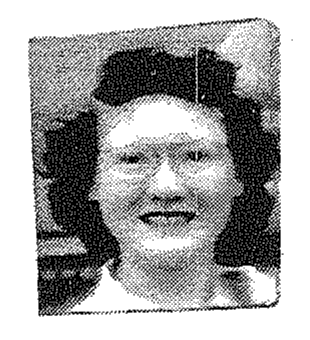
Emma Ropelato Walling

After graduation I went to work for Hill Air Force Base where I met my husband Richard J. Walling. We married Aug. ’53 and I continued working until Dec. ’54 at the birth of our son Dean. Our daughter Terry arrived Jan. ’56. I was able to stay home to rear the children until ’64. Then I went to work at the I.R.S. seasonally until I retired in ’90. My husband passed away in 1972 and my son died in an auto accident in ’93. I sold my home and moved in with my aging parents to help care for them until their deaths in ’96 and ’00. I now plan to visit my family in California and will enjoy traveling to long dreamed of places and spending time with my six grandchildren.

PAUL STOKES
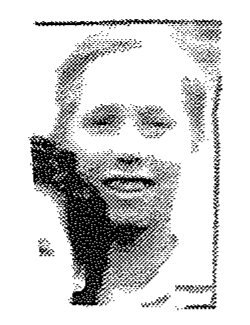
Paul Stokes

I married Mary Jean Miller June 1961 and we have two daughters, Julie Ann, 34 and Lisa Marie, 31. We have two grandchildren, Heather Lynn Beasley 8, and Nicholas Ryan Bronch 17 months. I graduated from Utah State University with a BS degree. I majored in education and minored in Psychology. I taught school for a total of seven years. I also was in the Air Force Reserve for seven years. We moved to Ward, Arkansas in 1965, where we owned and operated a dairy farm for 12 years, then went into the mobile home park business in Jacksonville, Arkansas, and have been renting mobile homes for the past 17 years. We are now semi-retired and have moved back to the farm in Ward. My hobbies are music, dancing and most of all watching the Arkansas Razorbacks football and basketball teams play.

LILA STONE HARWOOD
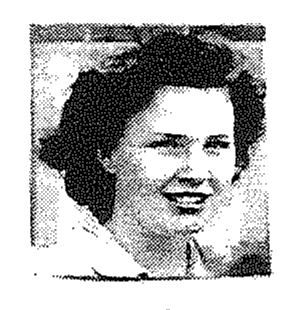
Lila Stone Harwood

I married Jack Harwood 52 years ago. One year later we had our only child, a son, Keith Harwood. He gave us 4 wonderful granddaughters. Our 3 older girls blessed us with 6 great grandchildren, 3 more girls and 2 boys. My husband retired a few years ago, but still works part time, which is nice for both of us.

GLADYS SORENSEN GIBSON
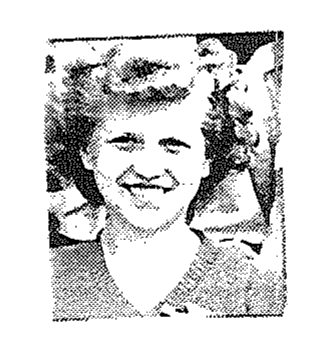
Gladys Sorensen Gibson

After graduating from Weber College with an Assoc., I married Gary Gibson in the Logan Temple. Our 4 children were born in ’54, ’56, ’58, and ’59, two girls and two boys. Our oldest daughter passed away in June, 1995. Gary traveled for HAFB fixing missile test equipment and I stayed at home with our children. In 1966 I was hired at Pioneer Elementary as librarian, so I went to school with our children. I cataloged the books and set up the library. It was on the job training. I read stories to the school children and taught library science. I worked there 15 years. I love children’s literature. In 1977 I enrolled at Weber State once again and in 1982 graduated with a BS in Elementary Education with a Library Endorsement. I was hired as a teacher at Kanesville Elementary in 1982 and taught second grade 13 years and retired in 1995. I have worked in many chruch positions the most recent being an ordinance worker in the Ogden Temple. I’ve been a member of 3 musical groups and performed as soloist and alto. Gary passed away in Oct., 2001. Now I enjoy making quilts, reading and my family. We have 3 living children, 13 grandchildren, and 2 great grandchildren. I’m trying to keep busy and enjoy life..

LOLA TAYLOR SHEFFIELD
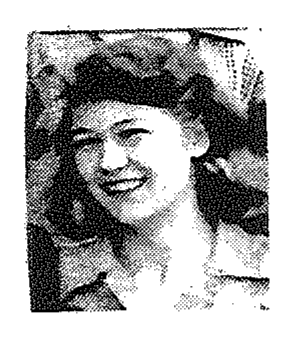
Lola Taylor Sheffield

What Have I been doing the last 50 years? After I graduated from Ogden High School, I took the Cosmetology Course at Weber College and finished after a year. Then I worked at a salon in downtown Ogden. The money was sporadic so when another job offer came at McKesson-Robbins Wholesale Drug House, I took it.

My brother was on a mission in New York and he suggested I come back to Palmyra to see the pageant, which I did. Among the many missionaries involved in the production was one Grant Sheffield from Kaysville, who I met while at the pageant. When he returned from his mission in December he called and came to visit to ask me for a date for New Year’s Eve. We continued to date through the next few months and we were married in June. Shortly after our marriage, Grant was inducted into Uncle Sam’s Service at Fort Ord, California. Our first daughter of three, Vickie, was born while we were at Fort Ord, followed by two more girls, Debbie, and a year later, Sherrie. (Three years after Debbie.)

After Grant graduated from the School of Architecture at the University of Utah, he was hired at Thiokol in the design section. We bought a newly constructed home in Salt Lake- that was another story- commuting back and forth from Salt Lake to Brigham City. Everything went great for five or six years, then Thiokol went down the tube. We were the first wave of the unemployed.

Our neighbor had recently left Utah and went to Tempe, Arizona, and already had set up an interview for himself. So we packed up and went job hunting, hoping to have similar luck. But our trip continued on to California. Another friend we had been close to left a job in California and took a leave of absence when he went to Thiokol in Utah. He took his old job back, with Metropolitan Water District in California, as an engineer. He told us they were hiring and Grant was hired. He retired after 32 years. We bought a home in Brea, California, (Tar Town). Brea means tar in Spanish. (La Brea tar pits in Hollywood or Los Angeles County, not the same.) We lived in an old oil-producing town. Our son Jared was born ten years after our youngest daughter. It took all of us to raise him; he was one busy boy.

We have 8 grandchildren, 5 boys and 3 girls, one little great granddaughter. Most of the children and grandchildren live in Utah. The oldest and the youngest, with 6 of the grandchildren and the great grandchild, live in Utah. Our daughter Sherrie lives in Texas and we have one in California.

We have done a lot of traveling with our children. We have enjoyed traveling with our children to see aunts, uncles, cousins, who were living in Canada, and my sister and their children living in New York. We could travel the country and do lots of visiting and also Mexico was close by and fun to visit too. We continued our traveling after our children flew the nest. Also retiring gave us more time to travel the globe. We have enjoyed spending our vacations in many countries.

We have had a great 50 years and look forward to many more.

RUDELL WILLEY
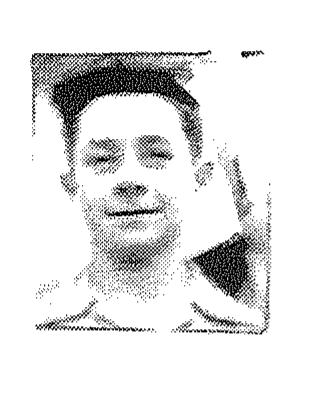
Rudell Willey

Rudell married Barbara Hadley a few months after graduation on November 1, 1950. They have three children, one boy and two girls. They also have twelve grandchildren.

Rudell worked 35 years for the Southern Pacific Railroad as a brakeman-conductor traveling between Ogden and Carlin, Nevada. During those years Rudell was active in electrical contracting with a Master Electrician License. He was also involved in real estate development with a Real Estate Brokers License and a Commercial Property Managers License.

Rudell has enjoyed hunting in Alaska, Yukon Territories, Canada and the Western United States. fishing in Alaska and Mexico, flying his private airplane the past 34 years in Alaska (four times north of the Artic Circle) Mexico, Guatamala, Jamaica and the Caribbean Islands. Vern Smith accompanied him on many of these trips. Rudell is currently involved in activities in the L.D.S. Church, civic activities, The Quiet Birdmen (an international pilot organization) and Enable Industries, a handicapped facility. Rudell and Barbara now spend a lot of time traveling in their private plane and their motorhome.


In Memory of Our School Friends Who Are Gone But Not Forgotten

DOLORES HIPWELL CHARLTON
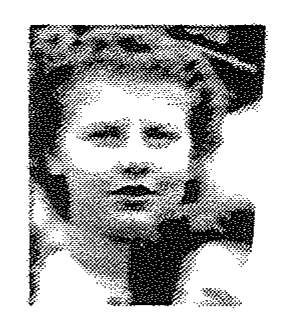
Dolores Hipwell Charlton

Dolores was married June 9, 1950 to Wayne Charlton from West Weber. They moved into a small home in West Weber. It caught fire and burned everything, wedding gifts, furniture and all. They then moved up to Wilson into a small home by her mother and dad on 2100. Later they built a nice brick home by her mother and dad. Wayne and Dolores had two children, Brent born in 1952 and LaRee born in 1954. Wayne worked at American Can and also became involved in race horses. He raised a very nice quarter horse from a colt and named her LaRee Bar and took her to Las Alemedas, California and won many races and made good money from her. A Dr. Allred helped Wayne get started in horse racing. They built another brick home on 2550 in Wilson with nice horse barns and then moved to California and raced horses. They did very well. Dolores loved Utah Noodle chow mein and ate a lot of it when they were in Ogden. They bought a ranch in California then sold it and moved to Oklahoma on a ranch. Their son Brent helped Wayne train race horses. Wayne is an expert on knowing the legs of race horses. Dolores was the bookkeeper. Late in 1992 the doctors discovered she had a cancer in her liver. Wayne had expert doctors attend to her but the cancer was too far advanced. They moved back to the house on 2550 and she died June 1, 1993 and was buried in West Weber Cemetery on June 5, 1993. Dolores and Wayne have five grandchildren.

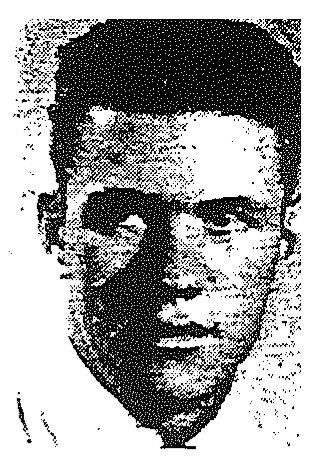
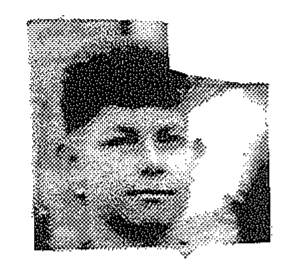
LYNN JENSEN, 1932–1998
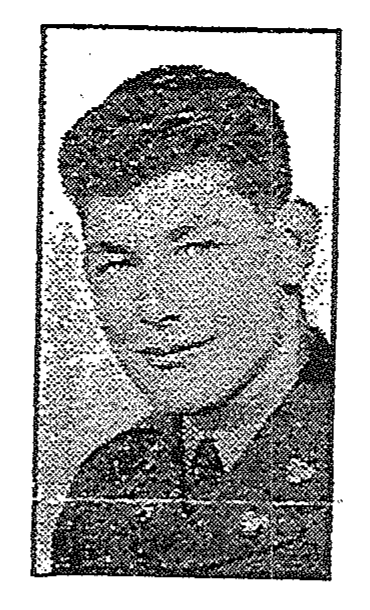
Lynn Jensen, military
Lynn Jensen, as a boy

Lynn Jensen served in the U.S. Army for three years. Fifteen months of which he spent in Korea, where he saw combat and was awarded the Bronze Star with V device for valor. He also was awarded the Occ. Medal, a Korean Service Medal with five bronze stars, the Presidential Unit Citation, and the Meritorious Unit Commendation. Following his military service, Lynn spent time in California and Utah. He married Betty Jo and has a stepson, Butch. He divorced and moved to Alaska, where he lived in Chugiak and Eagle River. He had been through engineer and demolition school in Fort Belvoir, Virginia. He was a self-employed mechanic and machinist until he retired in 1996. He died December 2, 1998 from a stroke and was buried in Alaska. He was a very quiet man who would help anyone in need.

ROBERT WAYNE KIRBY
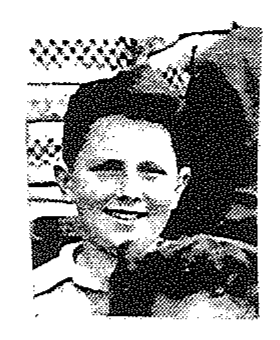
Robert Wayne Kirby

Robert Wayne Kirby was born in Brunswick, Missouri in 1932. In 1941 the family moved to West Ogden. He attended Wilson Elementary and Junior High School for 9 years. He graduated from Weber High School in May of 1950. Bob worked for the Union Pacific Railroad as a fireman/engineer for a period of time. He also worked as a cabinet maker before becoming involved in the drywall trade. In about 1970 he moved with his wife to Elko, Nevada to work in the construction trades. This was a period of increased construction in the Elko, Nevada area due to the newly found gold mines in the surrounding area that brought an influx of workers. Later on Bob worked at the Commercial Hotel in Elko maintaining the gaming machines in the casino there. Bob died in an accident in 1974 in the Elko area and is buried by his parents in the Centerville, Utah Cemetery. He left behind three daughters and one son. Bob will always be remembered for his infectious smile that was always on his face and will be noted among his family, classmates and co-workers for his happy-go-lucky attitude and good-natured personality.

ARTHUR KRANENDONK
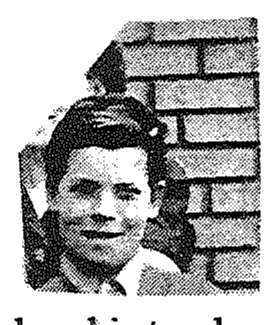
Arthur Kranendonk

Art died a very tragic death when his truck caught fire in an accident and burned. Art was married for a very short time and has one daughter. He worked for George Stratford and at the Sugar Factory. He was a very hard, steady worker.

FRANKLIN F. STANGER
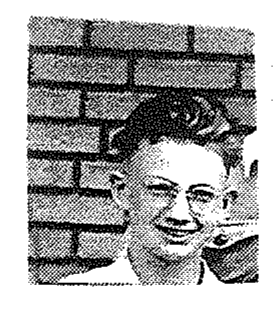
Franklin F. Stanger

Served lds mission to Uruguay. Married Mada Lurae Waldron from Malad, Idaho. Father of 7 children, 3 girls and 4 boys. Employed as a salesman. Loved to fly an airplane. Passed away May 8, 1990. Lived in Weber County area all his life.

RUSSELL PACKARD
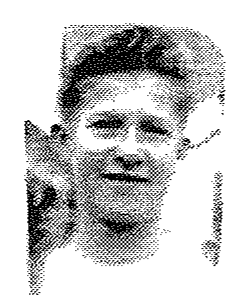
Russell Packard

When Russell was young, his dad owned the Oil Refinery in West Ogden. He was at the Ogden Rodeo when the announcer said his business was on fire. Everything was destroyed. The family moved to Astoria, Oregon. Russell went in the army and was assigned to guard duty on base in North Africa. His buddy was on guard duty. For a prank Russell kicked the guard shack. The buddy shot Russell dead without checking on who was kicking the shack.

JIM POULOS
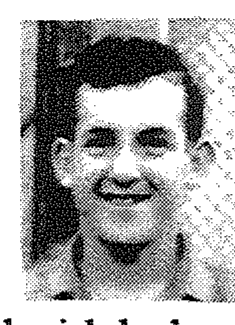
Jim Poulos

Married a Greek girl, had one son and one daughter. He was office manager of Texaco Oil Co. in Salt Lake City until the company went out of business. He was stand offish and wanted nothing to do with his family. He was a bartender in Salt Lake City. He died about 15 years ago during open heart surgery, after having heart problems for several years.

SHELDON STAUFFER
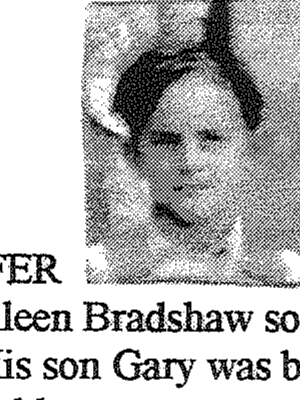
Sheldon Stauffer

Sheldon married Colleen Bradshaw sometime between 1952 and 1953. His oldest daughter, Beverly, was born in 1954. His son Gary was born in 1957 and a daughter Shelley was born about 1960. He worked at Hill Field. He died sometime between 1975 and 1985.

MAURICE CHENEY
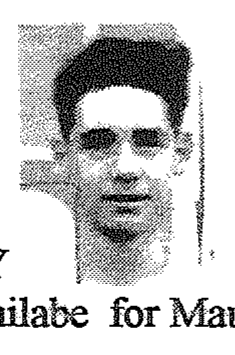
Maurice Cheney

No information is availabe for Maurice.

We could not find any information or the whereabouts of Vincent McEnerny or Rose Mary Ellsworth or Bill Saunders.
Vincent McEnerny
Rose Mary Ellsworth
Bill Saunders

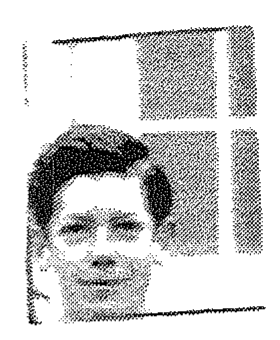
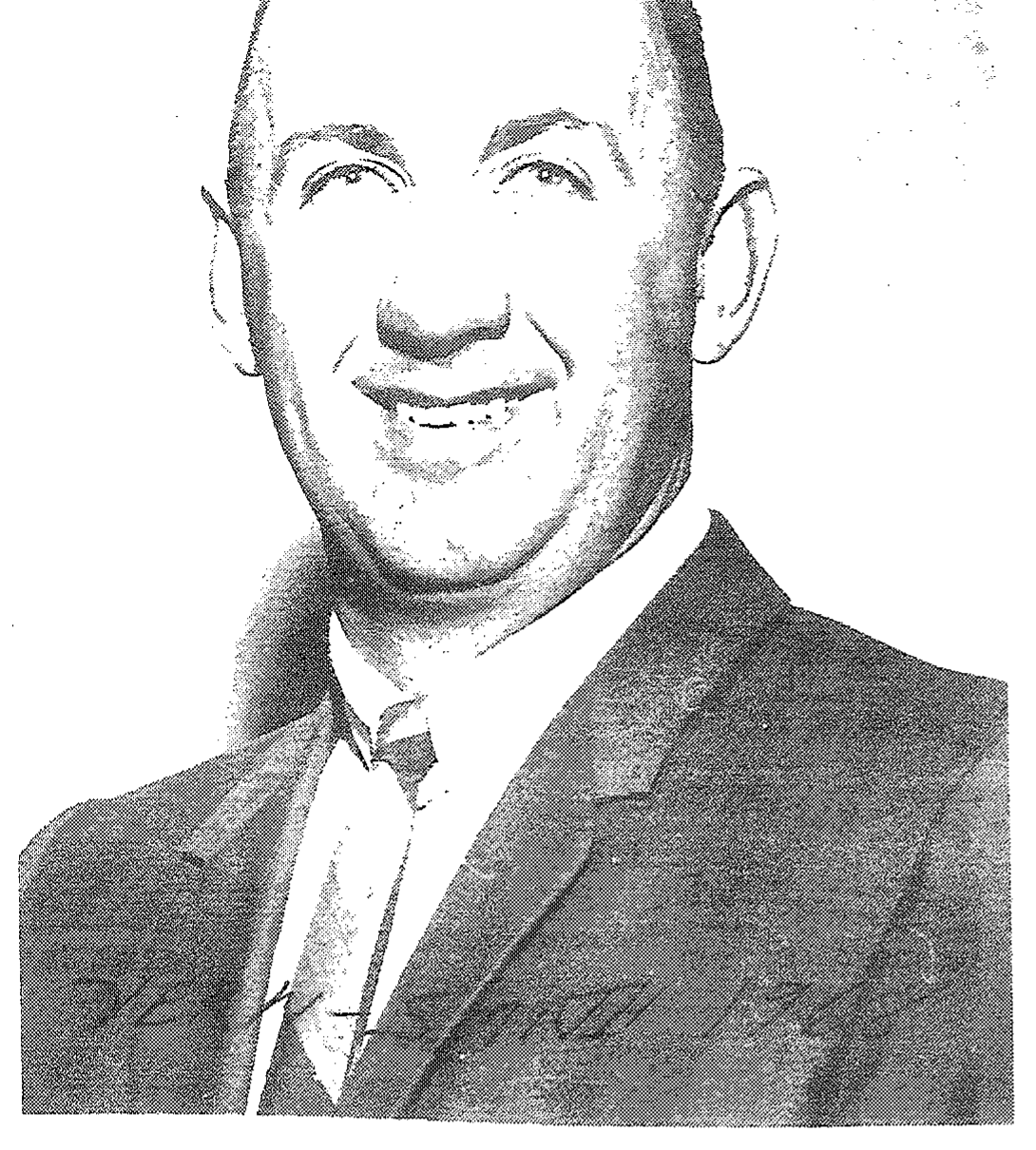
VERN H. SMITH, August 24, 1932 – February 28, 1981
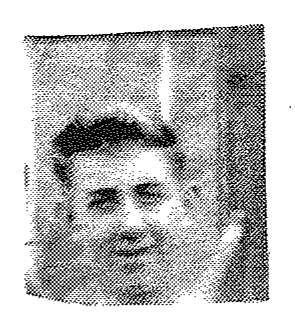
Vern Smith, young
Vern H. Smith portrait
Vern and Kay Smith

Born in Wilson Lane on August 24, 1932, grew up in Wilson on a farm, attended Wilson School for 9 years, Weber High School for 3 years, attended Weber College from 1950 to 1954, bought first farm in the spring of 1953 in Warden, Washington, served a 2 years L.D.S. Mission in the southern states, starting January 6, 1954.

Vern started farming in the spring of 1956 in Warden, Washington. Met his wife Kay Pratt in Moses Lake, Washington (14 miles from Warden) in 1956. They were married August 15, 1957 in the Salt Lake Temple.

Vern served in the L.D.S. Church as a Bishop, on the High Council, and in the Stake Presidency.

Vern and Kay had 7 children. They had two boys and five girls.

In 1968–1969 Vern was chosen “The Outstanding Young Farmer” in the state of Washington. At the time of his death he was raising beef cattle and farming approximately 1,300 acres of land.

Vern loved to travel, especially in his private plane (Piper Cherokee six) to Mexico.

On February 28, 1981, on the return trip from Mexico, his plane crashed, on Parker Mountain, just north of Escalante, Utah. All aboard, six adults, were tragically killed.

It has been said that, “The common people of the earth are the great people of the earth.” If that is true, then Vern Smith was among the greatest.


Wilson School Faculty
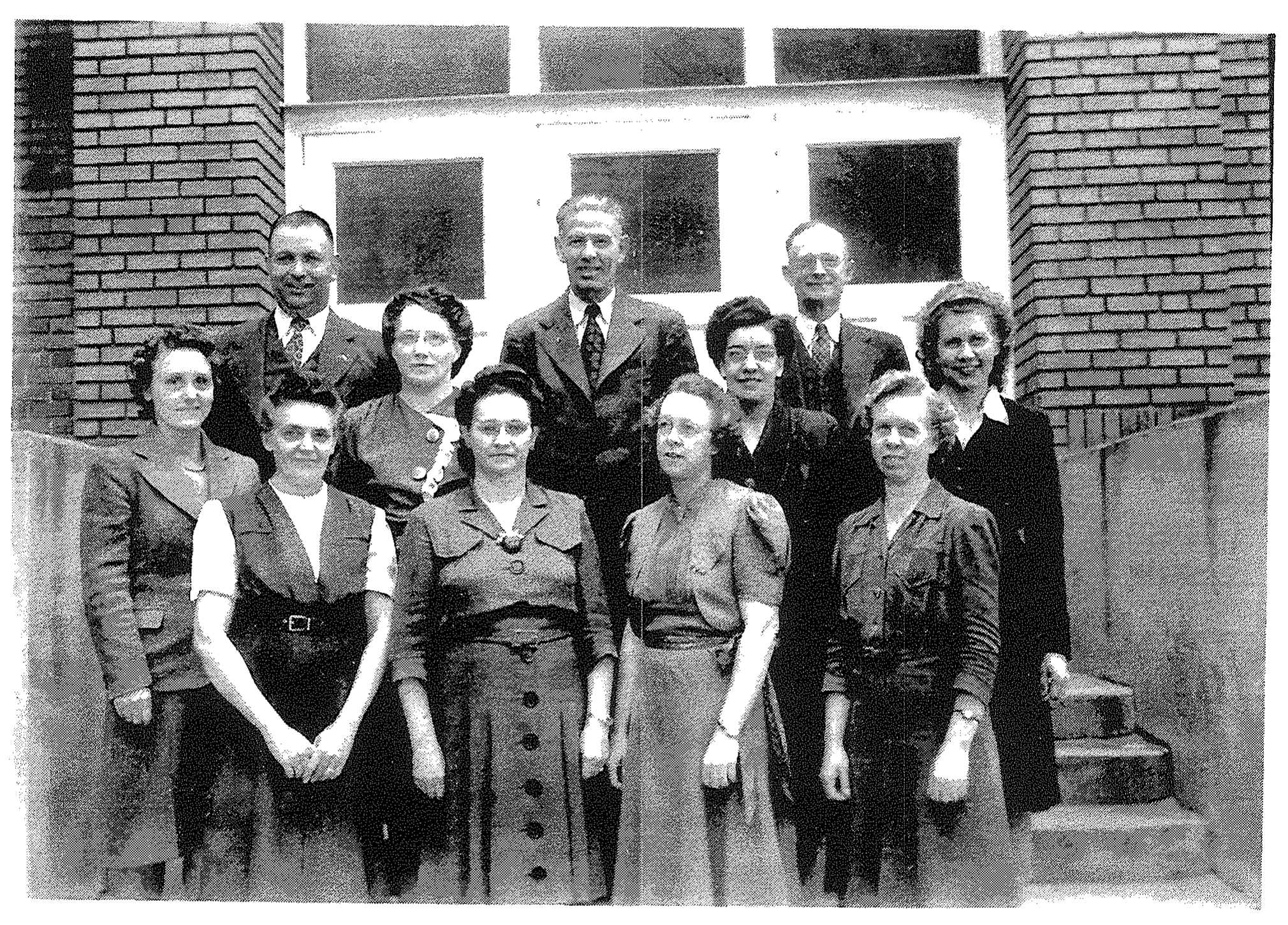
Wilson School Faculty

Row 1—Mrs. Stanford, Miss Shaw, Mrs. Barton, Mrs. Bouwhuis. Row 2—Mrs. Secrist, Mrs. Woodward, Mrs. Sorensen, Miss Holmes. Row 3—Principal, Wheat Taylor, Mr. Pettigrew, Mr. Rhees.


Wilson School 9th Grade Class of ’47 Directory
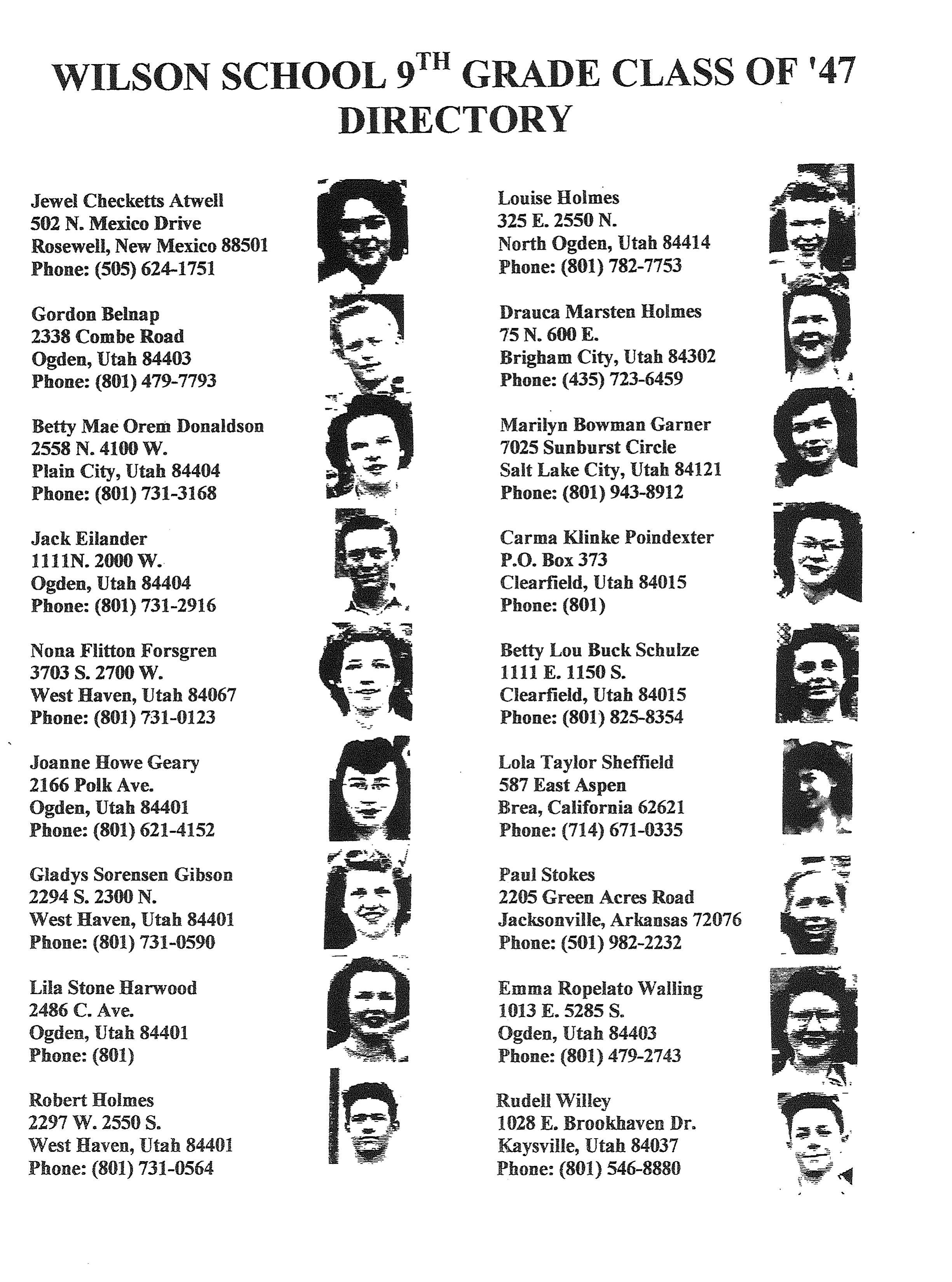
Directory page
NameAddressPhone
Jewel Checketts Atwell502 N. Mexico Drive, Roswell, New Mexico 88501(505) 624-1751
Gordon Belnap2338 Combe Road, Ogden, Utah 84403(801) 479-7793
Betty Mae Orem Donaldson2558 N. 4100 W., Plain City, Utah 84404(801) 731-3168
Jack Eilander1111 N. 2000 W., Ogden, Utah 84404(801) 731-2916
Nona Flitton Forsgren3703 S. 2700 W., West Haven, Utah 84067(801) 731-0123
Joanne Howe Geary2166 Polk Ave., Ogden, Utah 84401(801) 621-4152
Gladys Sorensen Gibson2294 S. 2300 N., West Haven, Utah 84401(801) 731-0590
Lila Stone Harwood2486 C. Ave., Ogden, Utah 84401—
Robert Holmes2297 W. 2550 S., West Haven, Utah 84401(801) 731-0564
Louise Holmes325 E. 2550 N., North Ogden, Utah 84414(801) 782-7753
Drauca Marsten Holmes75 N. 600 E., Brigham City, Utah 84302(435) 723-6459
Marilyn Bowman Garner7025 Sunburst Circle, Salt Lake City, Utah 84121(801) 943-8912
Carma Klinke PoindexterP.O. Box 373, Clearfield, Utah 84015—
Betty Lou Buck Schulze1111 E. 1150 S., Clearfield, Utah 84015(801) 825-8354
Lola Taylor Sheffield587 East Aspen, Brea, California 62621(714) 671-0335
Paul Stokes2205 Green Acres Road, Jacksonville, Arkansas 72076(501) 982-2232
Emma Ropelato Walling1013 E. 5285 S., Ogden, Utah 84403(801) 479-2743
Rudell Willey1028 E. Brookhaven Dr., Kaysville, Utah 84037(801) 546-8880

(Note: addresses/phone numbers as printed in the original memory book — likely out of date by now, but preserved as a record of where the class was circa 2001–2002.)
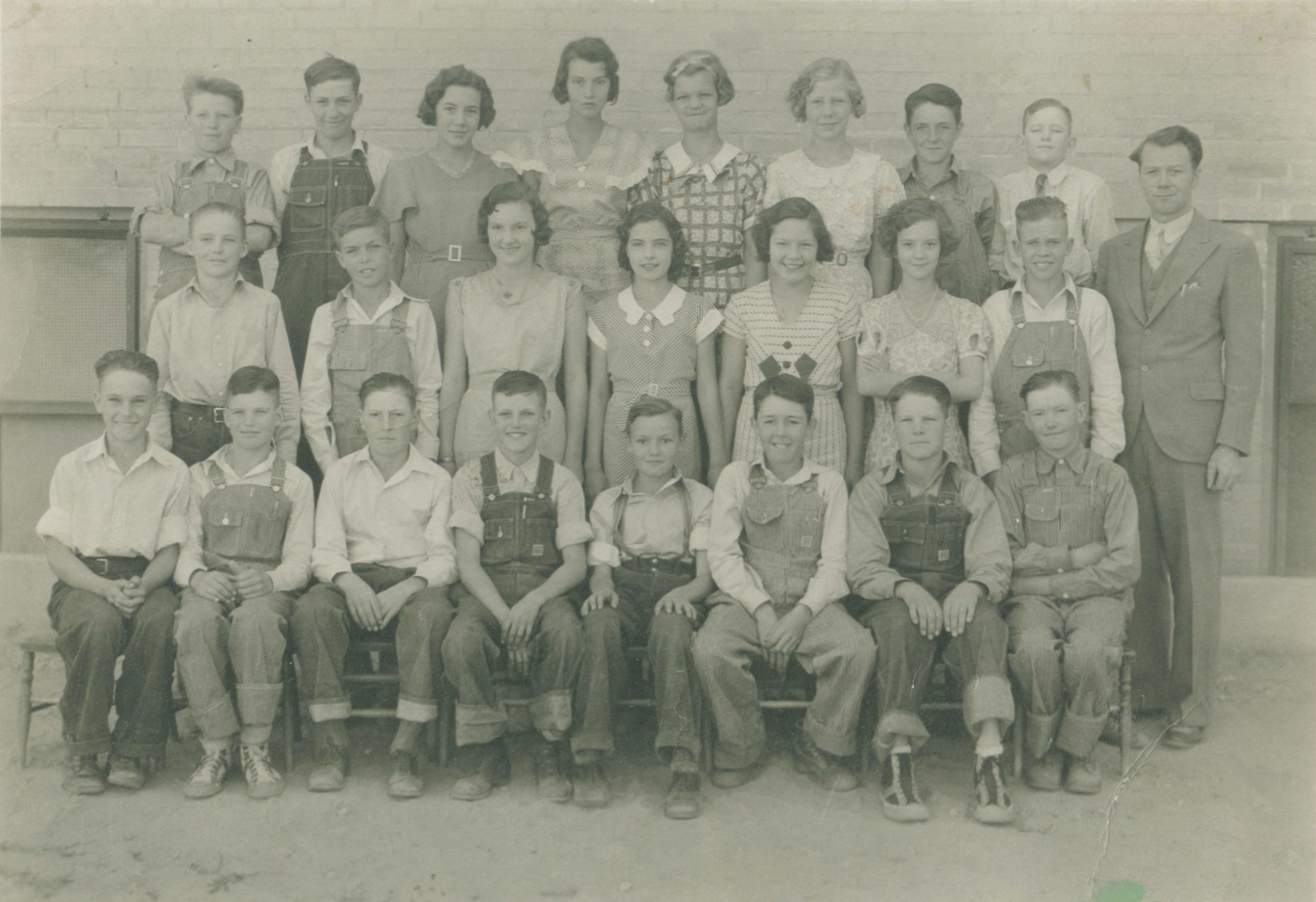
Van Elliot Heninger’s Class

Back (l-r): Wayne Taylor, Frank Poulsen, Miriam Weatherston, Margaret Freestone, Ezma Musgrave, Dorothy Richardson, Milo Ross, Earl Hipwell. Middle: Ray Charlton, Junior Taylor, LauRene Thompson, Jean Etherington, Cleone Carver, Myrtle Hampton, Eugene Maw, Van Elliot Heninger. Front: Keith Hodson, Orlo Maw, Howard Hunt, Ellis Lund, Delmar White, Ted Christensen, Lyle Thompson, Ivan Hodson.

Here is another grade school photo, this one from Grandpa’s 8th Grade year.  This is a much clearer picture, and not a photocopy. This was taken outside the old Plain City School in Plain City, Weber, Utah. This is a clearer picture than the one I had previously shared. I am sharing this in honor of what would have been his 105th birthday this week.

Van Elliot Heninger (1909-1989) Teacher

Cleone Carver (1921-1994)

Ray S Charlton (1920-1991)

Edwin “Ted” Daniel Christensen (1921-2005)

Vesey Jean Etherington (1921-2000)

Margaret Freestone (1921-2017)

Virginia Myrtle Hampton (1921-2013)

John Earl Hipwell (1921-2000)

Benjamin Keith Hodson (1920-1970)

Ivan Alma Hodson (1919-1982)

Howard Hunt (1921-1944)

Ellis Marion Lund (1921-1984)

Orlo Steadwell Maw (1921-2004)

Wilmer Eugene Maw (1920-2009)

Ezma Ameriam Musgrave (1922-2007)

Frank Dee Poulsen (1920-2010)

Dorothy Della Richardson (1921-2018)

Milo James Ross (1921-2014)

Junior Elmer Taylor (1921-1985)

Wayne Gibson Taylor (1921-1969)

James Lyle Thompson (1921-1999)

LauRene Thompson (1921-2010)

Miriam Weatherston (1921-2001)

Heber Delmar White (1921-2008)

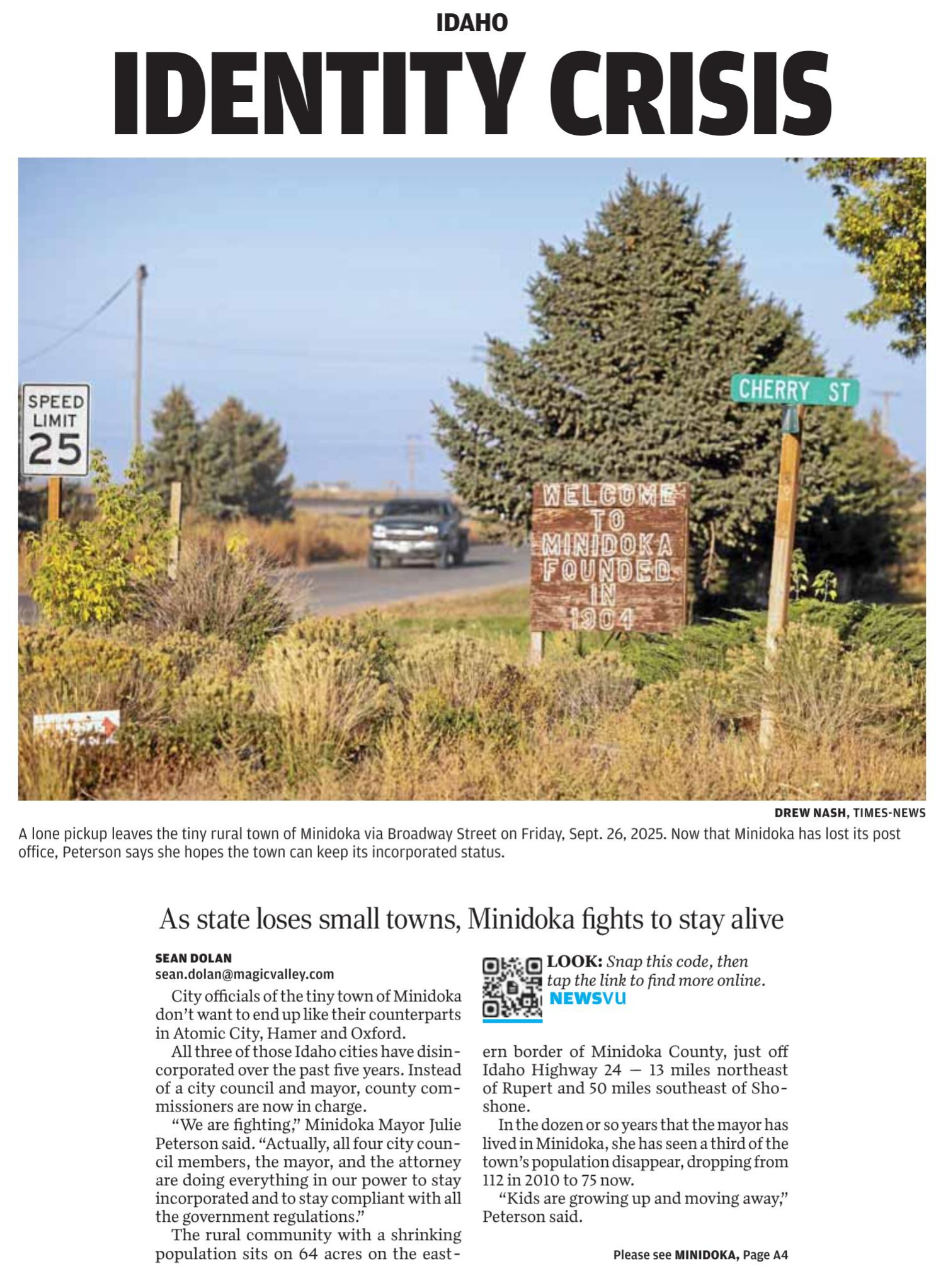
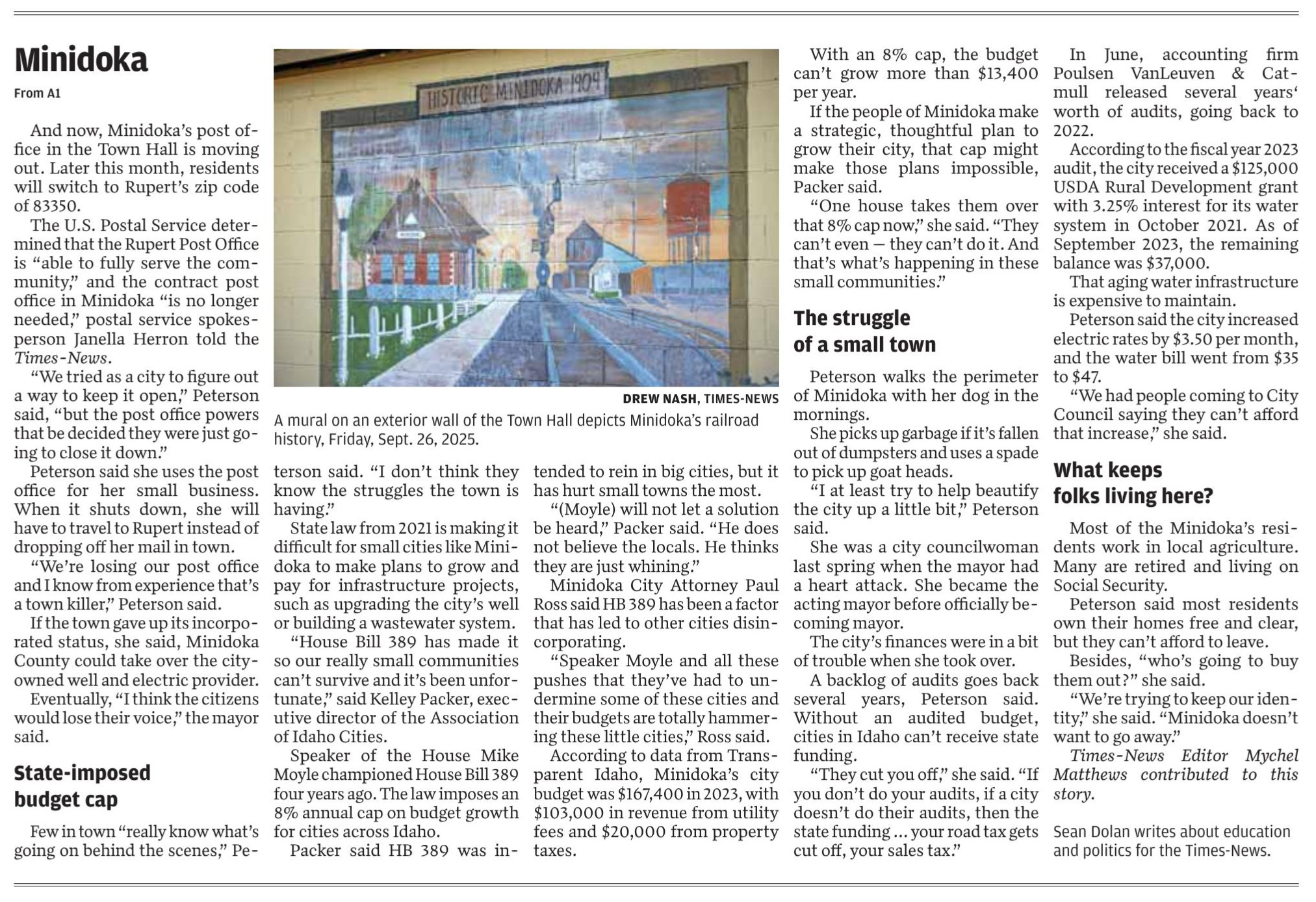
As state loses small towns, Minidoka fights to stay alive

A lone pickup leaves the tiny rural town of Minidoka via Broadway Street on Friday, Sept. 26, 2025. “The only time we get a crowd is at a city council meeting,” Mayor Julie Peterson told the Times-News.” Now that Minidoka has lost its post office, Peterson says she hopes the town can keep its incorporated status.

DREW NASH, TIMES-NEWS

City officials of the tiny town of Minidoka don’t want to end up like their counterparts in Atomic City, Hamer and Oxford.

All three of those Idaho cities have disincorporated over the past five years. Instead of a city council and mayor, county commissioners are now in charge.

“We are fighting,” Minidoka Mayor Julie Peterson said. “Actually, all four city council members, the mayor, and the attorney are doing everything in our power to stay incorporated and to stay compliant with all the government regulations.”

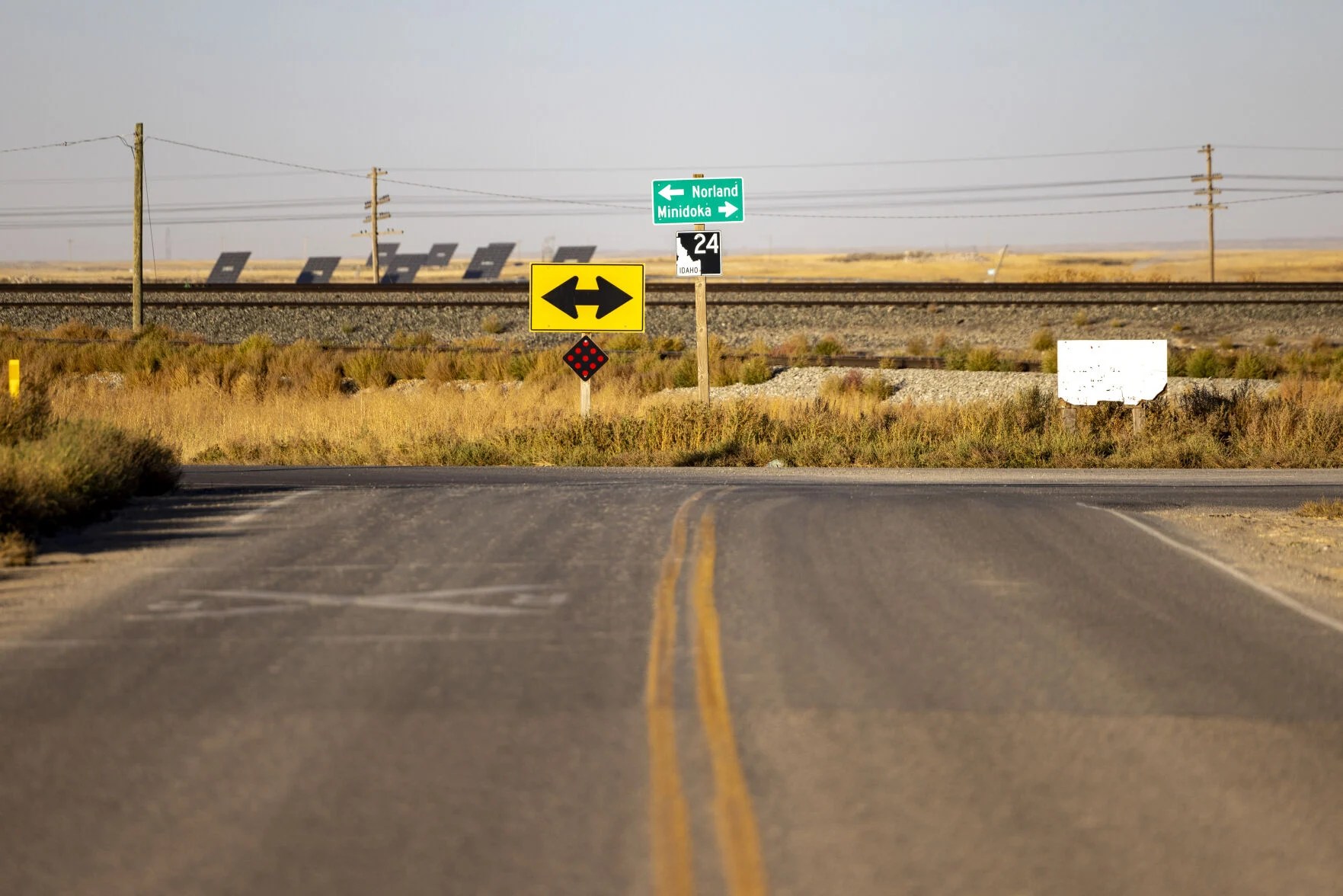
The rural community with a shrinking population sits on 64 acres on the eastern border of Minidoka County, just off Idaho Highway 24 — 13 miles northeast of Rupert and 50 miles southeast of Shoshone.

Idaho Highway 24 near Minidoka is seen Friday, Sept. 26, 2025, in Minidoka County. Travelers turn right onto Broadway to go into town or left to stay on Highway 24 to go to Shoshone, 50 miles away.

In the dozen or so years that the mayor has lived in Minidoka, she has seen a third of the town’s population disappear, dropping from 112 in 2010 to 75 now.

“Kids are growing up and moving away,” Peterson said.

And now, Minidoka’s post office in the Town Hall is moving out. Later this month, residents will switch to Rupert’s zip code of 83350.

The U.S. Postal Service determined that the Rupert Post Office is “able to fully serve the community,” and the contract post office in Minidoka “is no longer needed,” postal service spokesperson Janella Herron told the Times-News.

“We tried as a city to figure out a way to keep it open,” Peterson said, “but the post office powers that be decided they were just going to close it down.”

The Minidoka Town Hall is seen Friday, Sept. 26, 2025, in Minidoka County. Until later this month, the Town Hall serves as the tiny community’s post office.

Peterson said she uses the post office for her small business. When it shuts down, she will have to travel to Rupert instead of dropping off her mail in town.

“We’re losing our post office and I know from experience that’s a town killer,” Peterson said.

If the town gave up its incorporated status, she said, Minidoka County could take over the city-owned well and electric provider.

A water tower is seen Friday, Sept. 26, 2025, near Cherry and Broadway streets in the tiny town of Minidoka.

Eventually, “I think the citizens would lose their voice,” the mayor said.

State-imposed budget cap

Few in town “really know what’s going on behind the scenes,” Peterson said. “I don’t think they know the struggles the town is having.”

State law from 2021 is making it difficult for small cities like Minidoka to make plans to grow and pay for infrastructure projects, such as upgrading the city’s well or building a wastewater system.

“House Bill 389 has made it so our really small communities can’t survive and it’s been unfortunate,” said Kelley Packer, executive director of the Association of Idaho Cities.

Speaker of the House Mike Moyle championed House Bill 389 four years ago. The law imposes an 8% annual cap on budget growth for cities across Idaho.

Packer said HB 389 was intended to rein in big cities, but it has hurt small towns the most.

“(Moyle) will not let a solution be heard,” Packer said. “He does not believe the locals. He thinks they are just whining.”

Minidoka City Attorney Paul Ross said HB 389 has been a factor that has led to other cities disincorporating.

“Speaker Moyle and all these pushes that they’ve had to undermine some of these cities and their budgets are totally hammering these little cities,” Ross said.

According to data from Transparent Idaho, Minidoka’s city budget was $167,400 in 2023, with $103,000 in revenue from utility fees and $20,000 from property taxes.

With an 8% cap, the budget can’t grow more than $13,400 per year.

If the people of Minidoka make a strategic, thoughtful plan to grow their city, that cap might make those plans impossible, Packer said.

“One house takes them over that 8% cap now,” she said. “They can’t even — they can’t do it. And that’s what’s happening in these small communities.”

The struggle of a small town

Peterson walks the perimeter of Minidoka with her dog in the mornings.

She picks up garbage if it’s fallen out of dumpsters and uses a spade to pick up goat heads.

“I at least try to help beautify the city up a little bit,” Peterson said.

She was a city councilwoman last spring when the mayor had a heart attack. She became the acting mayor before officially becoming mayor.

The city’s finances were in a bit of trouble when she took over.

A backlog of audits goes back several years, Peterson said. Without an audited budget, cities in Idaho can’t receive state funding.

“They cut you off,” she said. “If you don’t do your audits, if a city doesn’t do their audits, then the state funding … your road tax gets cut off, your sales tax.”

In June, accounting firm Poulsen VanLeuven & Catmull released several years‘ worth of audits, going back to 2022.

According to the fiscal year 2023 audit, the city received a $125,000 USDA Rural Development grant with 3.25% interest for its water system in October 2021. As of September 2023, the remaining balance was $37,000.

That aging water infrastructure is expensive to maintain.

Peterson said the city increased electric rates by $3.50 per month, and the water bill went from $35 to $47.

“We had people coming to City Council saying they can’t afford that increase,” she said.

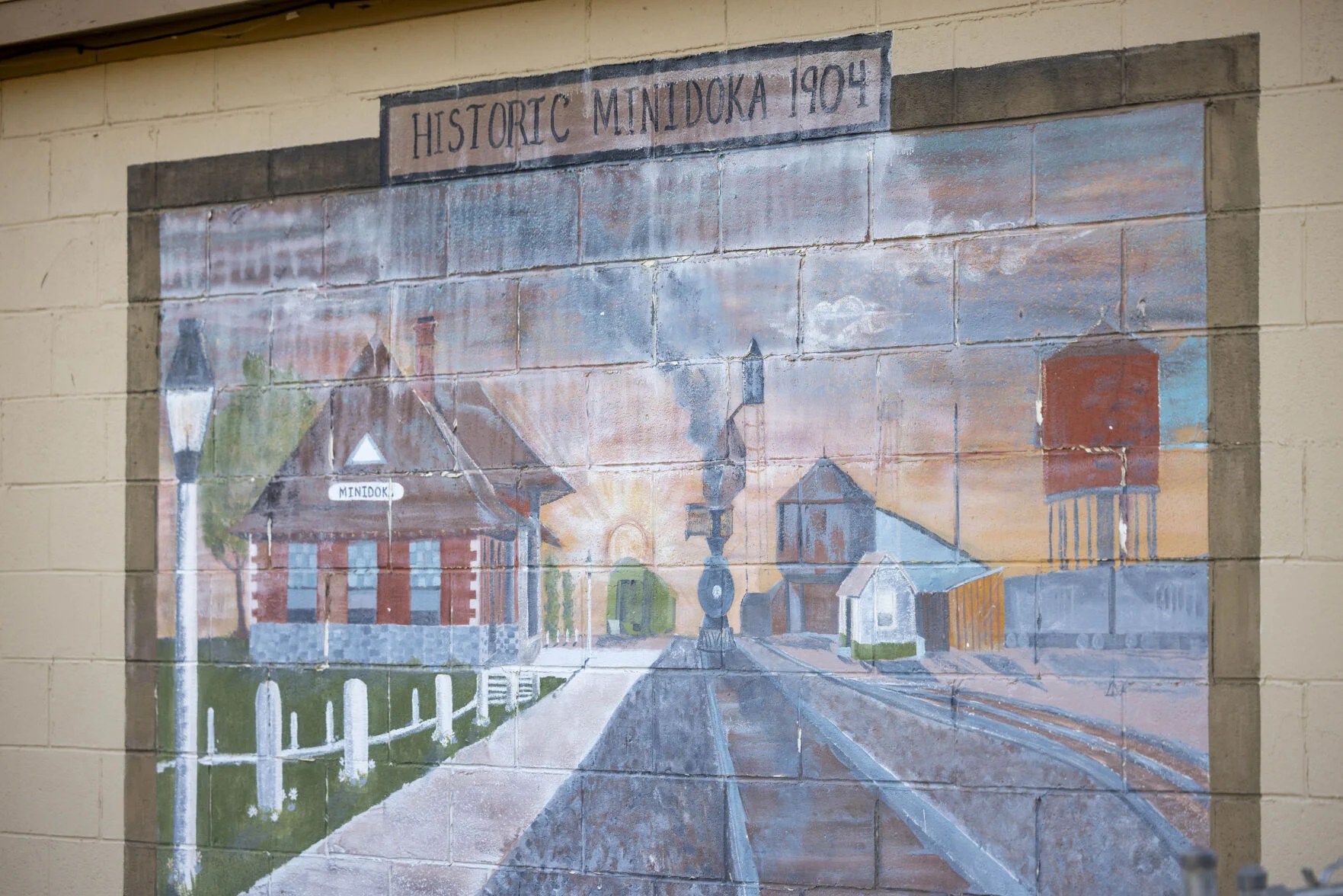
A mural on an exterior wall of the Town Hall depicts Minidoka’s railroad history, Friday, Sept. 26, 2025.

What keeps folks living here?

Most of the Minidoka’s residents work in local agriculture. Many are retired and living on Social Security.

Peterson said most residents own their homes free and clear, but they can’t afford to leave.

Besides, “who’s going to buy them out?” she said.

“We’re trying to keep our identity,” she said. “Minidoka doesn’t want to go away.”

Times-News Editor Mychel Matthews contributed to this story.

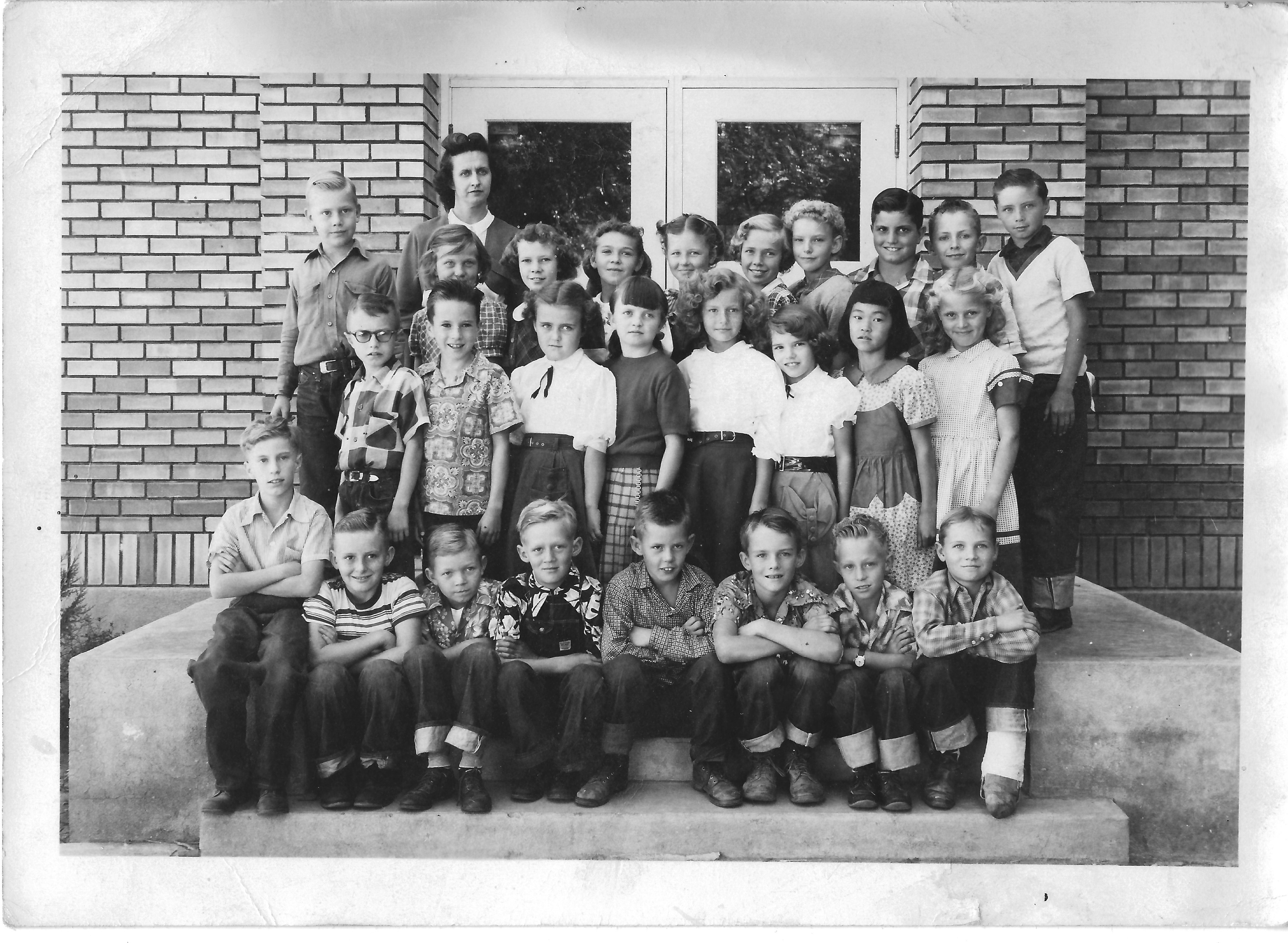
Milo P Ross Elementary Class Pictures

In honor of Dad’s 82nd birthday, I am sharing these photos.

After Dad’s first wife, Vicki, passed away, most of her photos and other documents were scanned. Found in those documents were these two class pictures for Dad. These are for his 1952 and 1953 class years. Since he graduated in 1961, these are likely his 3rd and 4th grade pictures. He attended Plain City Elementary in Plain City, Utah.

Back (l-r): Gary Butler, Frances Rochell, (unknown teacher behind Frances), Linda Knight, unknown, unknown, unknown, unknown, Kenneth Clark, unknown, Kenneth Wayment; Middle: unknown, Kent Hodson, Elaine Rogers, Connie Poulsen, Kay East, Carole Carver, May Endow, unknown; Front: Dean Allred, Fred Coy, unknown, Ernest Hansen, Leon Taylor, Milo Ross, unknown, unknown.
Back (l-r): Carol Wheatley, Connie Poulsen, Austin McWilliams, Mr. Leslie Gerald Bundy, Kenneth Wayment, Kenneth Clark, unknown, Cleora Meyerhoffer, unknown, Gary Butler, Donna Mae Jensen; Middle: Elgie Post, Elayne Rogers, May Endow, unknown, Frances Rochell, Linda Knight, Carole Carver, Kay East, Deanna Slater; Front: Kent Hodson, Larry, Dean Allred, Fred Coy, Leon Taylor, Milo Ross, unknown, Jeff East, Ernest Hansen

Mr. Leslie Gerald “Jerry” Bundy (1929 – 1999)

Ms. Emma Walker Munson (1918 – 1992)

Dean Allred (1943 – alive)

Ilene Bingham (1943 – alive)

Gary Butler (1943 – alive)

Carole Carver (1943 – alive)

Kenneth Clark (1943 – alive)

Fred Coy (1943 – alive)

Jeff East (1943 – alive)

Kay East (1943 – alive)

Maye Endow (1943 – alive) married Bothwell

Ernest Walter Hansen (1943 – 2010)

John Kent Hodson (1943 – 2022)

Donna Mae Jensen (1943 – alive)

Linda Knight (1943 – alive) married Charlton

Austin McWilliams (1943 – alive)

Cleora Mae Meyerhoffer (1943 – 2013) married Oliver

Connie Poulsen (1943 – alive) married Esplin

Frances Rochell (1943 – alive)

Elayne Rogers (1943 – alive) married Cliften

Milo Paul Ross (1943 – alive)

Deanna Kay Slater (1943 – 2006) married Hart

Leon Everett Taylor (1943 – 2000)

Linda “Cookie” Thompson (1943 – alive)

Kenneth Wayment (1943 – alive)

Carol Wheatley (1943 – alive)

History of Plain City Pt 11

I have two copies of the History of Plain City, Utah. The front indicates it is from March 17th 1859 to present. As far as I can tell, the book was written in 1977. At least that is the latest date I can find in the book.

One copy belonged to my Grandparents Milo and Gladys Ross. My Grandpa has written various notes inside the history which I intend to include in parenthesis whenever they appear. They add to the history and come from his own experience and hearing. 

I will only do a number of pages at a time. I will also try to include scanned copies of the photos in the books. These are just scanned copies of these books, I have not tried to seek out originals or better copies.

History of Plain City March 17th 1859 to present, pages 166 through 184. That is the end of the Plain City History!

Can you Remember or Did you know?

By Lyman N Cook

            The following articles are a collection of stories and events that have been a part of Plain City. These are in no way a complete list of the stories that could be told. We have older people who can remember the colorful events and stories, the eras of history, and they should be told and recorded. I hope these people will do so while they are here to tell them. I have touched upon a few. Whether the stories are good or bad, it has been my purpose or intent to have all the questions and answers, but merely to help your mind reflect upon the beautiful memories of Plain City.

            Please, as readers, do not take any personal offense or injury to any of the stories. They were not written with any unkindness in mind, but hopefully you will enjoy them.

            The stories are, in reality, a tribute and a compliment to the early settlers of Plain City. I cannot comprehend the magnitude of courage and strength, and the hardships those early pioneer men and women endured. How unselfishly they worked and planned for the betterment of Plain City to make it a better place for you and I to live today.

            I have a deep personal feeling that we owe them everything.

            The most interest and pleasure that the book has brought to me has been the fact that I have had an opportunity to visit in the homes of so many wonderful and interesting people. Compiling, reading, and writing the history has so fascinated and compelled me that I have stayed up all night, only to find in the morning that I am just as refreshed as if I had slept all night.

            The following people have been so kind and helpful to me in writing the stories. They have told me stories, and refreshed my memory. I feel a deep appreciation for them, and I feel that they should be recognized. They are: Mrs. Lavina Thomas (on tape), Lyle Thomas, Byron Carver, Lee Carver, Laura Musgrave, George Knight, Clyde Hadley, Amy Robson, Harvey and Jennie Cook, Dick and Luella Skeen, Bill and Nonie Freestone, Irene Skeen, Ivy Skeen Marsden, and many others: Kris Ewert, for her printing. A special thanks to all. And also Ina Poulsen.

“TRUE STORIES AND COLORFUL EVENTS OF PLAIN CITY “

SLEIGH BELLS

            One of the pleasant memories of a cold, crisp, clear pioneer winter night, was the jingling of sleigh bells as families made their way to church or to visit with friends or neighbors. The rich sound of their ringing through the hollow night air could be heard all over town. First starting out faintly and then increasing in volume as they approached their destination. It would seem that the still, peaceful night was just made for the ringing of the sleigh bells.

            Almost all the families had a string of sleigh bells that were a prized possession, and a family treasure. Some of the larger strands would go across the back of the horses and around underneath the stomach, also a strand would fit on the hames. The quality of the workmanship that produced the full, rich tones will continue to enrich our memories of the past. Maybe if we lost our minds be calm and drift back through the years, we can still hear the tinkling of the sleigh bells.

PIONEER HOMES, WASH DAYS, FEATHER TICKS, COLD BEDROOMS, OLD COAL, OR WOOD STOVES

            The pioneer home was usually built with two rooms, and as the family income and new family members came along, they would add an addition of bedrooms, and a dining room, parlor, or living room. There was usually a large cook stove for the parlor and dining room. The kitchen was the center of activity in the home, and only on special occasions, or when company came, would they build a fire in the other rooms. They would usually bank the stoves with wood or coal to last as long as possible. But by morning, the fire was always out. They would have two or three coal buckets, and a kindling box, and some member of the family had the chore to see what they were always full. It took a strong constitution to roll out of bed on a cold winter morning and make the fire, and wait for it to get warm.

            Monday morning in the home was washday. It would start very early and last all day. They would heat the water in a copper-bottom boiler and would usually boil the clothes to help get them clean. They used a homemade lye soap. The women scrubbed the clothes on a scrub board usually placed in a metal washtub, and after scrubbing, would rinse the clothes two and three times. They would then be hung on the clothesline to dry. There was a special pride taken in the wash and to tell a woman that she hung out a pretty wash was to pay her a special tribute.

            The pioneer families would usually wait until cold weather to kill meat. They would cure it, salt brine it, or dry it. For fresh meat, they would put it in a flour sack and hang it high on the north side of the house. When they wanted fresh meat they would go outside, climb the ladder, or use a pulley to bring the flour sack in. They would cut off what meat they wanted and return the flour sack out on the north side. It was not uncommon to see flour sacks hanging from the north side of most homes.

            The bedrooms were usually located on the north side on the north side of the house, and were the furtherest from the stoves. It was like going into another world, or the north pole to go to bed. If you slept with a brother or sister, you would try to get them to go to bed first so they could warm the bed. The frost and ice crystals would collect on the window glass usually forming in the fall and never leaving until spring. It would usually be about a half-inch thick on the glass. The frost crystals would form in beautiful designs and patterns on the windows.

            The straw tick or mattress was made with a cover and filled with straw. Each year they would empty the straw, wash the cover, and refill it with new straw when they thrashed in the fall. They would place a feather tick on top of the straw tick, and it was filled with feathers from geese and ducks. It was really warm and soft. The sheets, blankets, and quilts were piled on the bed until they were so heavy that it was hard to turn over. It was especially nice when the dog would sleep on your side of the bed, as he made an excellent footwarmer. What a breed of people to survive the cold, hard time of pioneer life.

INDIANS

            There seems to be no evidence of any Indian violence or hostilities in Plain City. However, they would visit the homes of the early settlers and ask for food. As a sign of friendship to the Indians, they would always give them food. It was a very frightening experience for the pioneer women to have the Indians call when the men were in the field working and they were home alone. The children were especially scared, and were taught to be very careful when they were around.

            There were people alive today in Plain City that can remember when Indians would come into town and camp. Some favorite campgrounds were across from Paul Costley’s garage, and across the street north of George Cook’s home. The white kids always played close to home when Indians were in town, and they never went anywhere at night.

            The Indians squaws would go to every home and ask or beg for food. The homes that were generous would be visited several times. The Indians would stay for several days, and they would then load their treasures and leave and go north. The Indians must have liked the people of Plain City because they returned each year for many, many years.

PERRY BOAT

            The ferry boat and landing was located near where the river bridge crosses the Weber River on the Plain City, West Weber road on 4700 West. It provided a river crossing for people, cattle, sheep, horses, and wagons. The ferry was made of logs tied together, and a large molasses boiler and pole was used to push the ferry across the river.

            In the spring when the flood waters covered all of the low lands, the ferry would run from the hill on the north side near the Warren canal to the hill on the south as you enter West Weber. When the water receeded, the ferry returned to the channel. It has been said that in the spring the Indians would come to the hill and if the ferry was on the West Weber side, they would call across the river until the ferry came to get them. Sarah Richardson Hodson could imitate the Indian’s call for the ferry. She seemed to know more abut the ferry than anyone we knew of.

            It might be important to include information about the times before all of the times before all of the reservoirs were built to hold back and store the early run-off water. Almost every spring the river would leave its channel and flood the low lands of Slaterville, Plain City, West Weber, Warren and West Warren. During some years the water would be so deep the road was closed. As a boy I can remember traveling 4700 West when the water would be up to the running boards of the Model A. The last year of excessive water was in 1952.

            Not too much is known about the ferry, but it lends itself to another colorful era of interesting Plain City history.

POST OFFICE

            The Plain City Post Office was located where Neta Charlton’s home is located, or one block North of the school on the northeast corner. It was run by Charlie Neal and his wife, Pussy Neal. He ran the Post office for 25 years from 1877 or 1878 until 1902 or 1903 when the government closed the Post Office, and the mail was brought into Plain city by Fred Kenley and delivered by horse and buggy.

            Merl England has in his possession a letter that was postmarked Plain City, Utah, August 8, 1891.

            Pussy Neal had, and kept a start of live yeast and would sell it to the women of the town to use in mixing bread. Annie Skelton would send her daughter, Nonie Skeen Freestone, down to the Neal’s for yeast. It didn’t take many trips before Nonie developed a real taste for live yeast. She would buy a three-pound lard bucket full, but by the time she walked five blocks home, she would have half of the bucket drank. She claims that it was quiet a tasty drink.

EARLY BAPTISMS

            A very important date in the lives of young eight-year-old people was their baptism. Nowadays this ordinance is performed in a stake center with a very beautiful font. Before this time, this ordinance was performed in canals, rivers, lakes, and ponds. One of the most popular places to be baptized was the First Rock Crossing, or seck, as it was called. This was located on Center Street next to George West’s home, long before the canal was cemented. There was a row of poplar trees along the street, and the children would dress behind the trees. Some people would take their children up the street in the buggy and dress them, and then return for the baptism.

            There were usually just two baptisms a year, one in the late spring and the other in the early fall. As a result, there were usually several children to be baptized at a time. The children would sit on a log and wait for their turn.

            Some of the young people went down to the river and were baptized. The location on the river was near where the present bridge is located. They used willow trees to dress behind. Laura Musgrave and Royal Carver were tow that were baptized in the river.

            George knight told me that he was baptized in the Warren Canal about where the present pump is located. This was a colorful era of the past and should help to rekindle some pleasant memories for those who participated.

THE PRIVY, CRANNY, ROOSEVELT, OR ALIAS, THE ONE-HOLER, OR THE TWO-HOLER

                        There was a great deal of social status involved and a real pride taken in building, caring for, and beautifying the outdoor privy. Some of the seats were made of select lumber and sanded and smoothed to the point where they were quite comfortable. And on the other extreme, some seats were rough and slivery. Some families were careful to make the privy weather proof, while others you could look out the cracks in every direction.

            You could usually tell the size of the family in the house, whether it be large or small, by the size of the property. Is it a one or a two holer?

            Some of the families, to prove to the world that their cranny was something special, and a respected place, would cut beautiful designs in the top of the door. I never quite figured out whether the hole in the door was for ventilation, or simply to study the wonders of the sky at night. Some of the designs were a half moon shape, a diamond shape, star, or just a round circle.

            The Skeen girls, Ivy Skeen Marsden, Lenora Skeen Freestone, and Jennie Skeen Cook, still maintain to this day that their little brother, Dick Skeen, learned to throw the baseball so very well by practice throwing at the privy. He would wait until the girls would get inside and lock the door, then he would open up the rocks, clods, green pears, or anything to keep them pinned down. Dick’s favorite was the dirt clod. He would aim for the hole in the door and throw the clod through. The clod would hit the wall, break up and shower the girls with dust and dirt. He would then really laugh when the girls would cry, scream, and holler for their mother to come and rescue them from their brother.

            Halloween was a risky time for outdoor privies. One of the favorite Halloween pranks for the kids was to spend the night tipping over crannies. The only thing that I would like to say on the subject now is that I am ashamed and sorry, and I must report that I am one of the parents who feel like the kids of today are going to the dogs.

            During the depression and late thirties, and prior to World War II, the government had a P.W.A. and W. P. A. program. Workmen would come to your home and build outside crannies. They had a cement floor and a lid on the seat. They were weatherproof, and most people who owned one felt like that was the next best thing to running water. They were called “Roosevelts.”

            Usually an old Sears catalog would act as a years supply of toilet tissue.

            Some of the more discreet families would keep a pot, or thunderjug in the house for emergencies during the cold stormy winter nights. This fact was considered the family’s dark, deep secret, and was usually emptied before dawn.

            With the exception of two years in the Navy, I used the outdoor privy for 26 years, and first four years after I was married. We sometimes hear it would be nice to go back to the good old days, but certainly not to the days of the outdoor privy.

SCHOOLS

  1. The first school was in George Musgrave’s dugout. He later held school in a one-room adobe.
  2. The first public school was built on the south of the square. It was built out of adobe. It was one room.
  3. There was a school located on the northeast corner of the square. The town and ward used this building for some social functions. It was built of adobe in 1873 or 1874.
  4. The North school was located where Walter Christensen now lives.
  5. The South school is still standing and was remodeled by Harvey Cook into a home. It is located where Gordon Sorensen now lives, and across from Eldon Weston’s home. This home was built of brick.
  6. The Poplar School was located across from Augusta Nash’s home.

I have been led to believe that there was school classes being held in all these four schools at the same time. This world be shortly before and after 1900.

EARLY STORIES

            There have been at least ten stores and meat markets in Plain City up the present time. Some of the stores have stayed in the same place, but have had several different owners. I’ll just mention where the old stores were located. There were two Coy Stores. They were owned by Sarah Coy and Eliza Coy. One was across the street about where Mildred Sparks now lives. This is about 2200 North and 4650 West. The old ZCMI store was where B & C foods is now located. Garner’s store was where the pool hall is now. England’s store was where Merlin England’s now lives. McElroy’s store was where Jack’s Garage is now located. Stoker’s was located one block behind the school where Gordon McFarland lives. Maw’s was located just west of the bowery.

            John Vause built and operated a meat market just north of Adela Carver’s home. Some of Steve Knight’s family operated a meat market about where White’s Café is today. Peter M. Folkman had a meat market across from the school on the east side.

            Most of these early stores would trade merchandize for eggs and butter. This was especially nice for the kids of the town because they could take one egg or more and trade for candy. There wasn’t hen’s nest that was safe in Plain City. Laura Musgrave tells of how she would get Nonie Freestone and they would raid Nonie’s father’s chicken coop for eggs to go to the store for candy. There was real safety for Laura, as she always has been real sharp in having Nonie in her own father’s coop with her.

BLACKSMITH SHOPS

  1. Christopher Folkman was the first one in Plain City. He learned his trade in Denmark. It was located near Leslie Maw’s home and Elmer Carver’s home.
  2. Janus Lund’s Blacksmith shop was located near Dennis Lund’s home. He died in 1908.
  3. Rall J. Taylor started his shop in 1908 and the building still stands just north of Kirt Knight’s garage.
  4. Lew Ericson’s shop was located on the property of Neta Charlton.
  5. George Davis’ shop was near Phil Alsup’s old home and across the street from Thomas.
  6. Lee Gould’s shop was located near where Florence and Carl Hodson now live.
  7. Farley’s shop was located near where Sterling Thompson now lives.
  8. Lyman Skeen’s shop was located just south of his old home. The property is now owned by George Skeen Cook.

THE EARLY DENTIST

            Lyman Skeen acted as the early dentist, and his only speciality was pulling teeth. He had a special pair of forceps which are still in the possession of the family.

            People came from all of Plain City to have their teeth pulled. In those days they didn’t have any dental check-ups, or fill any decayed teeth. If a person got a cavity, they endured it until the tooth would ache and then Lyman Skeen would pull the tooth.

            He was a large man and once he hooked onto the tooth, he had very little trouble getting it out.

            Some of his children report that when anyone came to have their teeth pulled, they would run into the house and hide under the bed and hold their ears so they couldn’t hear the person holler or scream.

            Lee Carver tells the story about as a boy going down to Lyman Skeen’s and having a tooth pulled. He was told if he would sit still and not holler to scream, and act like a man, that Lyman would pay him .25 cents. It certainly must be one of the rare cases of a dentist paying his patient.

            George Knight told me he made a trip to Lyman Skeen’s home to have his tooth pulled. He was told that if he would take it like a man and not holler or yell, that he could drive the mules and wagons. After the tooth was out they went out and harnessed the mules and hooked them to the wagon and George drove the mules to his home. George said that there was nothing that Lyman could have done to make him feel more important and give him a bigger thrill than to sit on the seat with Lyman and drive those large mules home. He was so excited that he forgot what he had gone down there for.

            Ina Poulsen tells the story of her toothache when she was a girl. It was a large double tooth, and it had ached for days. She finally decided that having it pulled couldn’t hurt any more than the ache, so she went to see Lyman Skeen. She walked down to his place in the evening and they were eating supper. She said he got right up from the table and didn’t even finish his meal to pull her tooth. Annie got the forceps and sat her in his large grandfather chair. Again, the Skeen kids scattered and hid from the noise. Ina did mention that she did holler and scream, but it was all over in a minute. She said he was really good at pulling teeth. It also gives some insight into the quality, character, and gentleness of Lyman Skeen.

ICE HOUSE

            An Interesting part of the history of Plain City was the old ice house. It was located across from the school on the property where Clara Folkman now lives and sat behind the old home. In the winter when the Four Mile reservoir, river and other water would freeze hard enough, they would cut it with ice saws. They would then haul it by team and bobsleigh to the ice house for storage.

            Peter M. Folkman owned and operated the ice house, and in the winter he would have as many as twenty men working for him. They would work through the winter and would fill a rather large building with ice. They would cover it with wild hay and sawdust so it wouldn’t melt so fast in the heat and it would last all summer.

            They would sell it to the people of Plain City for their use in the old wooden ice chest, for making ice cream, mainly for parties, and for whatever else their need was.

MARTIN SMITH AND THE MEAT WAGON

            One of the colorful characters that would come into Plain City was Martin Smith. He owned a team of skinny horses and a closed-in meat wagon, and peddled fresh meat from door to door. He would come into town two or three times a week. He always carried a green willow switch, and would open the meat box, and use the switch to chase the flies out.

            The lady of the house would come out to the wagon and look over the variety of cuts, or I would imagine he would cut whatever they wanted. A favorite pass time of the kids of the days was to try and sneak weeneys when he was busy with their mother. He was a sharp enough businessman that he made sure he always got enough money to pay for the weiners.

            It sounds rather primitive in todays worlds, but it filled a need and is another colorful chapter out of the past.

GEORGE MOYES AND HIS MILK TRUCK

            George Moyes had the first milk truck in Plain City. He delivered the milk to some of the homes in Plain City. It was George that was coming home from the dairy and discovered the fire in the dummy had started and burned Charlie Taylor’s barn. He used his load of milk to help put out the fire. I don’t know of anyone today who wouldn’t like to own that little truck.

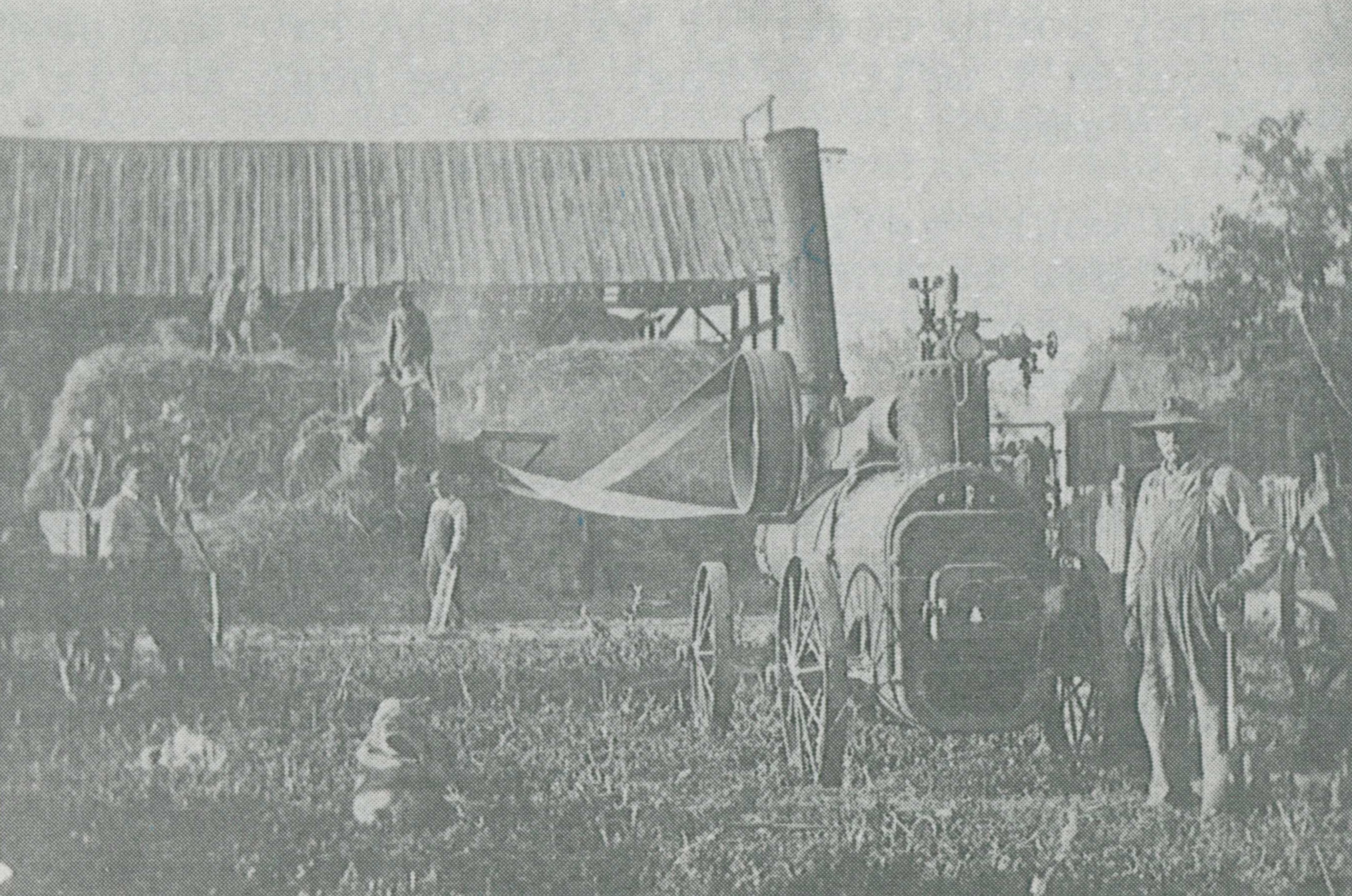
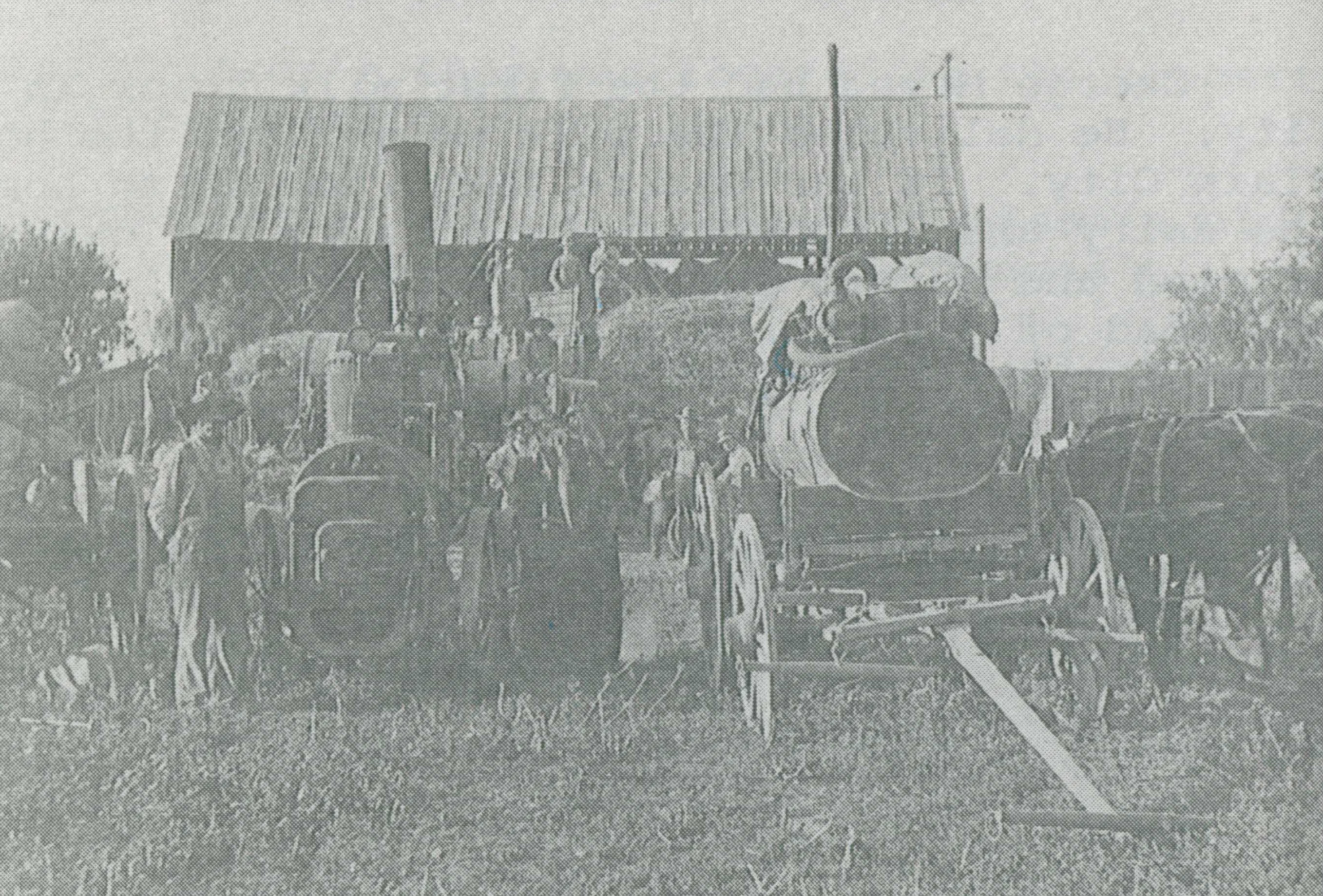
THE EARLY THRASHERS

            A colorful time on the farm was thrashing time. The first machines were horse powered, and were a great improvement over the hand method. These colorful pictures are some of the early steam-powered thrashers. There were men who owned their own machines and would do custom work for their neighbors. When the thrashers would move onto a farm, it would usually take several days to complete the farmer’s field.

            While the thrashers were at the farm, it was the responsibility if the farmer to feed the men three meals a day. This consisted of many of the neighbors who helped each other. They worked hard and they required large meals. The women worked all day long to prepare the meals. The phrase, “I have cooked enough food for the thrashers,” was probably coined during this era. The farmer had to take care of the horses also.

            The men usually carried their own bedrolls and slept on the new fresh straw.

            Arthur Skeen and Frances Thomas owned and operated thrashing machines that I remember.

THE GYPSY HORSE TRADERS

            The horse trader would come into Plain City once or twice a year. They would arrive in large white-top wagons leading a large number of horses. Some of the camping areas where they would stay were; out by the beet dump, by the water tower, on the square, and in the lot across from the Lyman Skeen home where George Cook now lives. They would stay about a week and would camp or live in their wagons.

            The kids were frightened at the sight of the traders and the week they were in town they placed close to home and never ventured far from home at night. The traders were famous for taking things that didn’t belong to them.

            As a boy I can remember the trader camps and walking through them with my father. Because of the shady characters and the stories I had been told, I can remember of never letting go of my father’s hand. To see the people involved and the many horses there were, made a lasting impression upon my young mind.

            If any of the townspeople needed a horse or team, or wanted to sell any horses, they would bring their horses, or come to the traders camp. They would barter, trade, or sell. In order to make a sharp deal they would dicker all day. There were many stories told of how sharp a deal they made or how badly they got stung by the horse traders.

LYMAN DUMP

            There were two beet dumps in Plain City. One was located across from the water tower, the other was the Lyman Dump located one-half mile west of the canning factory where the railroad tracks crossed 5100 West. It was named after Lyman Skeen because of his work on the railroad to that plant, and on into Warren. John Vause was the weigh master and was more or less in charge of the dump. They would haul the beets with teams and wagons to the dump, where they would be loaded on to the rail cars and taken to Wilson Lane for processing. At times the cars were not available ad they would pile the beets by hand. The pile had to be six feet high and stacked just right. When cars were available, the factory would pay the farmers thirty cents a ton to load the beets by hand and then into the cars.

            A story is told of a certain farmer that would bring beets to the dump. The drivers were supposed to stay on the wagon to weigh their beets over with the wagons loaded, and then back their wagons across empty. This farmer would get off the empty wagon, stay on the scales, but would reach up and take hold of a board on the scale house, and pull most of his weigh off the scales. John Vause used to say, “ Look at that fat old ____. He thinks he is fooling me, but I always take 200 pounds off whether he is on the scale or not,”

            Mervin Thompson was there ad tells a story about Lyman Skeen hauling a large beet rack full of beets to the dump with a four-horse hitch. The lead team was fine large horses and the back team was large mules. The dump was elevated with a steep incline up to a platform where the wagon would stop and be unloaded. It was high enough to clear a rail car and the beets ran down into the car. The decline from the platform was steep. He made his approach with the team struggling to pull the heavy wagon up the incline. As the teams lunged forward down over the decline. Lyman sprang to his feet and held the mules back so the wagon rode up against the rumps of the mules, and he moved the lead horses out fast enough to keep out of the way. He never lost a sugar beet. It was truly a great display of fine horsemanship. It was truly his ability with the horses that saved him and his team from death or injury.

            He calmly made a circle around to the approach incline and took the teams up the incline. This time he was ready for them and the mules and horses stopped where they were supposed to. As the teams came down off the decline, they knew they had been taught a valuable lesson by a skillful master.

THE SWIMMING HOLES

            If anything in this world can turn a man into a boy again, it is the pleasant memories of the old swimming hole. The warm summer days with friends and the happy, carefree times are the most memorable in a life time. There seems to be a special magnetic force that pulls and draws boys to water. It is especially difficult to try and explain to parents that special force, and why it was so necessary to go swimming so much. We lived in the water and the longest part of the day was the one hour we had to wait for our dinner to digest before we could go in swimming again.

            Every irrigation canal, pond, river, or creek had their favorite swimming hole. The favorite holes in Plain City were not by the First and Second Rock Crossing, the canal, but Four Mile, Draney headgates, and the Anderson hole in the river. The Anderson hole was located just below the Warren pump by the bend in the river and northeast of the bridges. One could tell by the number of ponies, wagons, and buggies, that there was always a large crowd, and from the laughter and the noise, you could tell they were having a great time. The Anderson hole was secluded enough, and no girls around. For the men and boys it was pure skinny dipping. If any boy had shown up with a swimming suit in those days, they would have laughed him out of town.

            The Anderson hole was the place all of the men and boys took their Saturday night bath. George Knight tells the story that he counted 65 men and boys swimming at one time in the river. Sant Madsen was the oldest at 65, and there was a young boy of about 6 years of age.

            Wilford, or “Wiff” Skeen was considered the most gifted and powerful swimmers around this country. During World War I he swam on a Navy swim team. Gordon Thompson and George Knight said that Wiff was the most beautiful swimmer they had ever seen. Fred Kenley, I think, was I the Navy and traveled throughout the world. He said in all his travels that Wiff was the best Swimmer he had ever seen. He would put his little brother, Dick Skeen, on his back and swim out into the middle of the river. Dick must have been real little then, but he would dump him off and make him swim to shore while he carefully watched. Someone lost a shovel in Anderson hole and Wiff dove down to the bottom and brought it up, supposedly the only man to ever touch bottom.

            Ogden City, Swifts, and the By-Products, began to dump raw sewage into the river and ruined probably the greatest memory maker in all of Plain City. It just seems so strange that man has a habit of always destroying his own best things in life.

DRIVING THE COWS TO THE PASTURE

            The people who milked cows for their own use or who later on milked cows to sell the milk to the creamery, would usually drive their own cows to pasture during the summer months. The pasture was located one, two, or three miles from home. It would require taking the cows out in the morning and returning them in the evening. This responsibility usually fell to the younger members of the family and required a cow pony. In those days everyone’s home, yard, and  farm area were fenced so the cows traveling to and from the pastures did not create a problem. During the hot, dry summer weather, the roads and trails of the cows were very dusty. It was very difficult to follow the cows very closely as the dust was so heavy.

            One of these pastures was called the West Pasture. It was located north and west from Ivan Moyes’ home. This pasture was owned by several different people. The number of cattle they would put in the pasture was based on the amount of the pasture that they owned. In the evening the first person to the gate would open it and let the cows out. The cows, from force of habit, would follow the same trail to the town park where they would feed. It was not uncommon to see twenty-five or thirty milk cows feeding on the square in the early evening. The farmers would go to the square, collect their cows, and take them home.

            For those who played baseball, football, or just played on the square, there were some real hazards involved after the cows had been there.

            Modern feeding and milking techniques have eliminated the need for the daily move to the pasture and also the need for the fenced-in yards.

CANNING FACTORIES

            Another very important industry in Plain City was the growing and canning of tomatoes. The first factory built in Plain city was across the street from Loyd Olsen’s at 1900 North 4700 West. Laura Grieves Musgrave tells of working in this factory filling the cans with tomatoes. She was just a girl at the time, and expressed how happy she was to be able to earn money in those days. At that time there was no child labor laws.

            Part of this factory was later moved near the square and used by the maw family for their store and other buildings.

            The second canning factory still stands at 1975 North 4650 West, and was used for many years. The sandy loam soil of Plain City seemed to be ideal for the tomatoes to grow and helped to give them the flavor, quality, and yield that rarely can be equaled. Times were very tough to earn money in those days, and many men and women would work at the factory in the fall of the year to help supplement their income. This factory was built in 1925.

            The empty cans would be shipped in by railroad and the processed tomatoes would be shipped out to the railroad.

            The events that impressed my memories most about the factory, were the lines of loaded wagons and trucks waiting to be unloaded. While the farmers waited for boxes, or to be unloaded, or for their tomatoes to be graded, they would visit by the hour. The stories and the tall tales that would be told during that time will long be remembered. It used to fascinate me to watch the women peel the tomatoes. The full pans would be scalded and go around on a belt. The women would take a full pan, core and peel the tomatoes, and when the pan was full, they would put their number in the pan and return it to the belt. They were paid by the pan, and it amounted to five cents to ten cents a pan. In later years it raised from eight cents to ten cents a pan. The fastest peelers could peel about 60 pans a day.

            Some of the fastest peelers were Dorothy Christensen, Thelma Hodson Wayment, Doris Hodson Chugg, and Ruth Arave Taylor, deceased. Whether peeling tomatoes, cutting potatoes, thinning beets, wall papering, or whatever, Ruth Taylor, as I remember her, had to be the hardest working woman I ever know. I always marveled at her ability.

            Can your minds eye visualize the smoke coming from the tall stack, and the pleasant tomato odor that drifted along the air currents through the town of Plain City.

PEA VINERS – PEA WAGONS

            One of the early industries, or cash crops of Plain City was from the raising of peas. It t must be remembered that in the very early times, the settlers were only interested and concerned about food to keep them through the winter. As they worked and improved their homes, the roads, and the irrigation system, their ability to products more and vary their crops increased. It was then that they branched out into the pea industry.

            The main pea viner was located on 2200 north, about a half mile west of 4650 West, on the north side of the street. It provided work for some of the men of the community, to stack the pea vines. In the winter the farmers fed the vines to their cattle.

            The farmers would plant the peas in the early spring, and the harvest would begin about the 4th of July. The pea vines would be out with a horse-drawn mower. They would pitch them on a wagon and haul them to the vines by a team of horses.

            As young boys we would look forward to the horse-drawn pea wagons on their way to the viner. We would run out into the street and catch the wagon, pull off a big armful of peas, carry them into the shade, and eat peas all day long. I don’t believe that peas gave you as severe a belly ache as green apples, but it ran a close second. More important, we were ready to go after the first wagon the next day. As a young man, I pitched the peas on the wagon in the fields, and off at the viner.

            Later, another viner was built out east. It was located about one-half mile east of the water tower.

            In 1949, I was building my house and my friend and neighbor, Louis R. Jenkins, would come frequently and visit. He said, “You have a nice location, but when the wind is right you may be able to smell the pea viner, but you know, that’s a good smell.” I never forgot his statement though the pea industry lasted only a very few years after that date. But, who could ever forget the potent odor that came after the vines and the juices fermented. No wonder the people who hauled pea vines had very little, if any, sinus problems.

Epilogue:         Included should be the smell and the people who would haul the feed fresh beet pulp.

TRAPPERS

            The Plain City area is situated where there was many creeks, drains, sloughs, ponds, and water areas for the muskrats to live. It seemed to me at one time to another, about every young man was involved in trapping. This could have been an inborn spirit in each young boy to be a trapper or a mountain man. The season would usually start in the fall until the water froze, and then again in the spring when the ice left. It came at a time when jobs were hard to find for young men and provided spending money for them. Trapping provided a good source of money for me when I was going to high school. The hide buyers would usually pay from thirty-five cents to a dollar and a quarter, depending on the size of the hide.

            A good trapper could usually catch around 100 rats a day. I know one trapper that brought and paid for a new car during one trapping season. Some of the better trappers in Plain City that I can remember were, Elwin Taylor, Everett Taylor, Lyman Thomas, and Joe Wheeler.

NICK NAMES

            Practically no one grew up in Plain City without having a nick name tacked on to him or her, because of something they did, said, or the way they acted, or some mannerism. It was not all uncommon for a group of Plain City boys, just to impress a girl friend, to talk and call the individual by their nick name, and the girls never knew who they were talking about. On the other hand, someone may come into the town and ask for Don Singleton, Darrell Christensen, Boyce England, Elwin Taylor, Horace Knight, LaGrand Hadley, George Cook, Clair Folkman, Lynn Folkman, Eldon Weston, or Jay Freestone, only to be told that they didn’t know anyone living here by that name. But had they asked for “Seebo, ““Breezy,” “Buzz,” “Bunny,” “Skinner,” “Gandy Goose or Pety Hadley,” “Joe,” “Ober,” “Homer,” or “Grass,” the townspeople could tell them right away where they lived.

            Some of these people whose names will be mentioned have passed away, and it is my purpose to pay tribute, and add to their good names, rather than take anything away from them. Some have also moved away, but they got their name in Plain City.

            There are so many names that I simply can’t remember them all, but here are a few: “Buss” Lyman Skeen, “Rip” Ronald Skeen, “Geg” Garry Skeen, “Brig” Orson Knight, “Snide” Elmer Carver, “Suitcase” Blair Simpson, “Huss” Harold Hadley, “Tubby” Frank Hadley, “Duke” “ Frog” Kenneth Christensen, “Fooz” Grant Lund, “Hazel” Kenneth Lund, “Bud” Richard Dallinga, “Cirk” Keith Lund, “Sodie” Elmer Hipwell, “Diff” Jack Etherington, “Tiff” Clyde Skeen, “Taa” Jack Freestone, “Sunny” Lyman Freestone, “Bub” Howard Freestone, “Cork” Carl Hodson, “Tumbleweed” Don Van Sickle, “Red” Lyman Cook, “Chic” Dee Cook, “Heater” Bert Cook, “Beef” Wheat Taylor, “Big Chub” Charles Fulmer, “Little Chub” Robert Fulmer, “Buddles” Rulon Jenkins, “Curley” Quenten Jenkins, “Bun” Ray Hadley, “Weiny” Dwaine Hadley, “Mustard” Bill Hadley, “Napkin” Dennis Hadley.

            “Punken” Elmer Ericson, “Eif” Kent Jenkins, “Perk” Ray Coy, “Bear” Ronald Hogge, “Stinne” Wayne Skeen, “Hinke” Verl Rawson, “Toad” Loyd Knight, “Tarzan” Thayne Knight, “Dob” Blaine Knight, “Ikee” Ivan Hodson, “Grit” Dean Moyes, “Bud” Knight, “Lym” Skeen, “Beaver” Gordon Hadley, “Trapper” Durland Hadley, “Deddy” Darrell Thompson, “Pubby” Vernal Moyes, “Sam” Lyle Thomas, “Gonnie” Kenneth Woods, “Jim” Theron Rhead, “Mag” Noel England, “Jim” Elwin Skeen, ‘Bones” Bob Folkman, “Swede” Brent Taylor, “Curly” Davis, “Mayor” Dean Baker. “Wimpy” Loren Facer, “Tooley” Louis Poulsen, “Dick” Elwood Skeen, “Mud” Claude Rhead, “Weeser” Gene Lund, “Fiddler” Elmo Rhead, “Hook” Harold Hobson, “Roan” Harold Ross, “Mike” Milo Ross, “Wheeler” Keith Blanch, “Luke” John Nash, “Tom” Vandel Maw, “Joe” John Maw, “Judge” Thayne Robson, “Bushy” Wayne Cottle, “Pickus” Paul Coy, “George” Cliff Folkman, “Willie” Warren Williams, “Wally” Wallace Knight, “Cruzz” Kent Robson, “Evert” Bill England, “Tom” Merrill Jenkins, “Aus” Bob Wade, “Cougar” Norman Carver, “English” Wayne Carver.

             Something more interesting than the names is how each one got their nickname. You should ask some of them sometimes. We should announce from Plain city to the world that we have had for the last 55 years, the original ”Jaws” Paul Knight. It is very distressing and disturbing to read where some outsider has taken the name “Jaws” and capitalized on it, made a film, and grossed more than 25 million dollars, when the original “Jaws” had been in Plain City all along.

            When we analize the personality, the good times, and especially the stories, I doubt that anyone in Plain City would take 25 million from our original “Jaws.”

THE PEST HOUSE OR PRIMITIVE HOSPITAL

            The constant underlying fears that pioneers and early settlers lived with daily was the threat of disease, illness, or sickness. There just weren’t any doctors or medicine available, and if anyone got sick, they either got well on their own, or they didn’t make it.

            If a dreaded disease, or plague, as it was called struck the early settlers, many of them felt like it was God’s way of punishing them for things they had done or for the things they had not done. There were so many mysteries and superstitions concerning that, that people acted and responded in what now might be considered strange ways. The people felt the best thing to do was to isolate the sick people, and as a result of this type of thinking, the pioneers built the Pest House. To make sure it was really isolated, the people went about a mile west of town on the bank of First Creek and built Pest house. The Pest House was located on the bank of the creek. There were some tall poplar trees surrounding the building, but have since been removed. Clyde tells me that information was handed down and told to him about the spot where the Pest House was located. Years ago there was some evidence of a building there.

            When a person got sick, they would take him to the Pest house to get better. They were usually left alone to care for themselves. Someone from the town would take food and water, and provide some care, but for the most part, it was just a kill or cure method. In most cases the patients, if they died, expired from exposure or lack of care rather than from the disease because the building was poorly constructed.

            During the Smallpox epidemic of 1871, or about then, there weren’t any public meetings held in Plain City from September until the next March. The people lived in total fear of the disease.

            The William Skeen family was hit very hard with Smallpox and they lost four children. It has been told that while his family was very sick, he called for the church and they were fearful, they refused to go help. His friends also turned away. This good man was left to bury his four children all alone, and some of them at night. He was so disappointed in the Elders of the church and his friends, that he left the church and he named one of his sons that was born later “Frenz Denial.”

IMPORTANT FACTS

  1. Ivan Skeen Marsden and Lona Ipson Watson were the first lady missionaries to leave from Plain City in 1914. They served in the Eastern States Mission.
  2. The first car reported to be in Plain City was Dr. Rich, who drove out to treat a patient.
  3. It mentions that Richie owned the first car. Some of the other early car owners were Tom England, John Maw, Lyman Skeen, and others. Later, Lyman Skeen owned an eight-passenger Chandler.
  4. Sammy Sampson was one of the early barbers.
  5. There are seven children of original settlers living today in1977 that we know about. There may be others. Four of them live in Plain City. They are:

                                          Ada Skeen William Allred

                                          Victoria Sharp Hunt

                                          Mary Sharp Richardson

                                          Ivy Skeen Marsden

                                          Lenora Skeen Freestone

                                          Jennie Skeen Cook

                                          Elwood “Dick” Skeen

      It is remarkable when you think after 118 years that there are still children of the first settlers still living.

  • Richard Lund was the early fiddle player in the town.

LYMAN SKEEN, OWNER OF GREAT HORSES

            Lyman Skeen owned and loved great horses. He had two large barns full of fine Stallions, besides many work teams that he used in his construction business. He worked in Utah, Wyoming, and Idaho, on construction building canals, road beds, and whatever. He knew horses flesh and people would bring their horses from all over the country to have him doctor their horses.

            Lyman made three trips to Europe to buy horses. On one occasion, he bought six head of Shire horses in England and brought them by ship to the United States, and by rail to Ogden. He also brought a little Englishman named Tommy ____ to take care of the horses and train them.

            When they arrived in Ogden Lyman took Blaine Skeen, Elmer Skeen, Orson Knight, and others to help bring the horses home. Orson Knight tells before they brought them to Plain City, they paraded them down Washington Boulevard. He mentioned that no boy could have been prouder to lead those large horses down Washington. He said the little Englishman walked beside the horses with a whip, and he would crack the whip and the horses would rare up and prance and put on quite a display for the large horses.

            Sline was probably the greatest Shire horse to ever come into the State of Utah, or the West. The little Englishman is holding Sline in the picture.

            The Skeen kids can remember frequently someone yelling “Sline’s out.” and he would always prance up through the lot. Lyman would send his boys out to catch Sline, but they never could catch him. Lyman would sit back and watch his proud horse run and exercise, and when Lyman felt like he had enough, he would walk out and up to Sline and lead him to the barn. Whenever Sline had been he left hoof prints about a foot square through the garden.

“SLINE” – Importe I Three-year-old Shire Colt

L. SKEEN

LYMAN SKEEN WITH HIS SHIRE HORSE.

One of these big Shire horses died at the age of three days. It was raised on a bottle by Annie Skeen, wife of Lyman Skeen.

SAMMY SAMPSON THE BARBER

            Sammy Sampson barbered in his home which was located across the street from Dell Sharp’s home. He was one of the early barbers. Byron Carver tells of getting his hair cut there when he was a boy. He said, “You could ask for any type of a cut you wanted, but you only got one cut, mostly bad,” I can see Byron chuckle ass a twinkle from the past came into his eyes. “Oh it was bad,” he said, “and as long as you had any hair left, Sammy would keep cutting.”

            On one occasion he went to get his hair cut when it was hot and Sammy was cooking something that didn’t smell too good. Some of the men who had gathered were smoking El-rope-o cigars, and Byron was getting light headed as he sat in the chair. As Sammy worked him over he became more ill. Sammy soaped his neck and shaved it with a large thick, straight razor, that scraped more than it cut. Sammy kept a pan of hot water on the stove with a wash cloth on it that he used to wash the soap off. As he laid that hot cloth on Byron’s neck, Byron rolled off the chair and fainted dead away. When he came to, big Lafe Skeen was holding him on his lap. That was one hair cut Byron will always remember, and as long as he is alive the memory of Sammy Sampson the barber will live on.

            Sammy charged 5 to 10 cents a haircut in those days, and trim and shave on the older men was 15 cents.

THE RACE TRACK, PLAIN CITY’S FIRST

            William Skeen owned some very fine racehorses and he built a racetrack to train his horses. The neighbors would meet on occasion and race their horses to test the speed against their neighbors horses. Stories have been told that there were some very exciting races held at the track. It was located near four mile reservoir.

            They tell the story of a man from Ogden, who was quite a footracer and he was supposed to have challenged and bragged that he could beat a horse in a certain distance. It was well talked up and word spread around, and the race was held. There was a little money that changed hands quite a crowd. But you know, no one can remember who won the race. It was another colorful time in early Plain City.

THE WEDNESDAY NIGHT SHOW

            Growing up as a kid during the late twenties, thirties and into the early forties here in Plain City was quite an eventful time. It seemed that the world moved at a slower more relaxed pace and there was time to enjoy visiting and to crate your own entertainment and fun. Depression times were very hard for most families, with very little one and barely the necessities of life. There was very little money available for entertainment and if you had any entertainment, you created your own. They were carefree happy times. As a kid you were lucky if you got into Ogden once a month or even once during the summer. By comparison with today, all the entertainment seems to be provided for the young people and all they have to do is show up with money and everything is provided for them.

            In the summer kids games and ball games were a very big thing and something was going on every day and night. Hide and seek, run sheepy run, kick the can, and whatever else anyone could think up were always popular. Skating and sleigh riding were the fall and winter games. You would skate all day and build fires at night so you could skate even longer.

            Sometimes in the thirties the movies began to be very popular. Someone from Ogden would bring a movie out to Plain City every Wednesday night. It was held in the upstairs of the old church house and there would be two to three hundred people or more watching the show. The admission was ten cents and hardly anyone ever missed the Wednesday night movie. There was usually a serial episode before the regular movie and it would last for about weeks. It would lead you up to an exciting climax and then announce, “To be continued next week.” I can remember they would be the longest weeks ever, waiting to get back to the show to see what happened. Tail Spit Tommy always a big feature with the serials.

            There were some very spooky shows and I can recall small kids screaming and crying, and they would have to leave the show. The shows were scary, but the spooky part was walking home at night after the show. You were always extra light on your feet, and with any strange sound out of the blackness of the night, you would be at a full gallop and double your stride. Ah, but they were good times.

            The automobile and the war, and the latest movie hits in Ogden all led to the down fall of the Wednesday night show in Plain City. It was a colorful era in Plain City and one that everyone seemed to enjoy.

A TRIBUTE TO BETTY

            Somehow the roads of Plain City look and seem a little different now days without the familiar figure of Betty. Her shopping bag in hand, her figure that time and age had bent a little, and limp that the years had brought on, headed up the road to Ogden. Time had also slowed her steps, but not her to walk to town.

            Probably Betty was born fifty years too late to fit in well with a changing society. He life was the simple life, and her wants and needs were few. She was very string willed, proud, and stubborn in some regards. She was very determined not to be pressured into joining the modern world.

            Some people say she was eccentric, old, strange, but she was a rugged individualist who refused to conform to anyones standards but her own. As a result of her ways the young people would sometimes tease and torment Betty. But in her own way she ignored them and went her way. Is it not strange that we from our own little worlds are so willing to unfairly judge other people by out own knowledge and standards. Especially if their standards and personality traits do not measure up or lower down to our own.

            I wouldn’t begin to know how many thousands of times Betty walked to Ogden, and back with groceries, even after she was around seventy five years of age. I suppose before we could fairly evaluate Betty we should ask the women of Plain City how many times they have walked to Ogden, and back home. Their were many people who were good to Betty and wanted to help her, but she seemed determined and happy to do things her own way.

            Betty was a hard worker and she worked for many people in Plain City. Later she worked in Ogden doing housework. I carried mail in Ogden for thirty years and would see Betty working at some of the finest homes in Ogden. Her family paid me a tribute when they asked me to speak at her funeral.

            Betty will be remembered as one of Plain City’s remarkable characters. If we let our memories wander a little, and though our minds eye we might still catch a glimpse of a shadow of Betty walking to town.

History of Plain City Pt 10

I have two copies of the History of Plain City, Utah. The front indicates it is from March 17th 1859 to present. As far as I can tell, the book was written in 1977. At least that is the latest date I can find in the book.

One copy belonged to my Grandparents Milo and Gladys Ross. My Grandpa has written various notes inside the history which I intend to include in parenthesis whenever they appear. They add to the history and come from his own experience and hearing. 

I will only do a number of pages at a time. I will also try to include scanned copies of the photos in the books. These are just scanned copies of these books, I have not tried to seek out originals or better copies.

History of Plain City March 17th 1859 to present, pages 150 through 165.

SITE FOR NEW TOWN PARK

SUBMITTED BY FLORENE PARKE

 In December, 1975, Mayor Lee Olsen and the Plain City Town Council consisting of William VanHoulten, Wayne Cottle, Darwin Taylor and David Thomas, passed a resolution to purchase 20 acres of land. This land was to be used as a recreational complex and also house the town hall and other municipal buildings.

              On December 30, 1975, the City of Plain City purchased 20 acres of land from Bernard and Nora Poulsen. The land is located at the north-west corner of the intersection of 2200 North and 4100 West Streets.

              The long-term plans for the park included three regulation ball diamonds, (two softball diamonds, and a little league ball diamond); an equestrian arena and open space exercise area to be used for football and other activities requiring large open spaces. A site identified for future development of municipal structures may include a swimming pool, restrooms and parking areas.

              Purchasing and developing the land is an expensive process. It is the intention of the City Council to program the work in six one-year phases. Development of the equestrian arena was part of the first year’s phase.

              The area housed an arena known as Paul Knight’s Arena. It has been used in the past for several Junior Possee competitions, calf roping meets, and various horses related events. The arena needed fencing and landfill and water installations.

              In December, 1976, the Plain City Lions Club, in cooperation with the parents of Junior Possee members, had the area surveyed and hauled 103 loads of sand necessary for a proper working arena. Approximately 30 volunteers donated their time and equipment for two days to complete this part of the work.

              Heavy gauge chain-link fencing has been purchased with money from the town and from money raised by Junior Possee members through various fund raising projects. The fence will be installed as soon as the weather conditions permit.

              Plain City’s Junior Possees, Four-H groups, and the many other residents interested in equestrian sports will have a safe place for their activities, and the town will have an arena to be proud of.

              Paul’s Arena as it is known today, which will be rebuilt into the Town’s new Park. Used for many years for horse and Jr. Posse events.

*A CHILD’S CHRISTMAS IN UTAH

BY WAYNE CARVER (SON OF ELMER AND JANE CARVER)

ASSOCIATE PROFESSOR OF ENGLISH

CARLETON COLLEGE

              It isn’t that way now. The quiet fields are broken into building lots and the farmers build jet engines in the city and garden with a tractor after work. The old canal is lined with concrete and in the center of the town the Saturday and sun-drenched baseball diamond has shrunk to softball under lights, and the county has built a tennis court just off third bade for a game the kids are beginning to learn to play in white shoes.

              The frame store with the pot-bellied stove smelling of sizzled tobacco spit and with the mash sacks and rummy dive in back is a supermarket now where wives in stretch-pants by barefoot and frozen chopped broccoli by the ton and aerosol bombs that go “SwwOOOOOOsh” and keep off the bugs or put on your pie a water glob of something threatening to be white and that keeps your arteries open.

              It isn’t the way it used to be in that un-fluent time of plowing, planting, watering, hoeing, furrowing, harvesting, and throwing the harvest in the river to be pickled in the Great Salt Lake. It is the affluent society now, of missile sites and loan companies, and the ice cream comes come frozen in glazed wrapping and taste like the strips of brown paper we used to put our upper lip to stop the nosebleed. And I have not been back for Christmas for many and many a year – to the long everyday stocking with a fifty cent piece squashing the toe, the large orange pressing the half dollar down –  a thick, loose-skinned orange that peeled clean and dry – to the heaped snow that fell on every Christmas eve – I have not been back, and it isn’t that way now – and all I can do is gather a crystal or two from a vein of quartz- or is it foolsgold? – in Time.

                                                            ****

              In the bed-covering warmth of the high ceiling room in the weather-bent old house between the mountains and the salt lake, nothing was alive at first except the dry flopping of the harness straps against the horse’s matted cost and the cold jangle of the chains against the horse’s matted coat and the cold jungle of the chains against the single-tree of the go-devil that Dad used to clear the paths between the house and the barn, the barn and the chicken coop, the chicken coop and the house, and to gouge a trial down the drifted lane to the country road where the snowplows from the shops in Ogden would come later in the day. Lying in the dark that is beginning to be thin out like spilled ink, we hear coming through the window the flopping and the jangling and the sliding rumble of the triangular runners as they push aside rocks and twigs and skid down the sides of irrigation ditches, and the tongue clicking and “steady, boy, steady,” of Dad as he talks to the horse. Hearing this, and seeing from under the door the orange line of kitchen light and, without listening for it, hearing the first snapping of the kindling in the range and smelling, without sniffing for it, the sulphurousness of coal smoke, we know- all three of us – that we have been trickled ourselves and somehow, we can’t say how, had fallen asleep – sometime, somewhere, – back in that black night and that Christmas had come again and caught us sleeping.

              Then the tinny, descending jingle of loose bedsprings, the cold shock beneath the warm flannel pajamas legs, the cold fluttering linoleum slap against the feet; and the orange line beneath the door flashes upward and out: We are across the kitchen, through the heavy coal smoke to where the living room door id barred, sealed against us, as mother, at the side door, calls outside, and Dad comes in.

              Daylight comes with the smell of oranges, pine, needles, pine needles, and chocolate, and coal smoke from the heater, and the brittle crack of hazel nuts and the tearing raveling crunch of peanut shells, the shimmering glissando of tissue paper crushing, the sweet sticky slurp of cherry chocolates, and the crack and shatter of peanut brittle. Amidst the smell, above the sounds, comes the “oh, just what I wanted,” of Mother and the “Very nice, very fine,” of Dad and the “One -two-three-four! I got four presents that’s simply more than anybody,” of Mary and the “This Wheel’s just fine cause it’s got a burr on the axle, not a cotter key,” of Nephi, and the “Billy’s got this book, he’ll not swap. I’ll swap with Rex,” of another.

              By mid-morning the board valley glisten under the cold sun, and you have gone alone through the fields I the over-the-boots snow and along the row of willows besides the canal and watched the muskrats swimming in the alley of dark water between the frozen banks, have seen the runic tracing of the quail and pheasant trails and shaken the loose snow away from your collar that a magpie knocked down on you as you passed beneath the cottonwood trees to Rex’s place where you ate rock candy, swapped the extra Bomba you had read for the Army Boys in France that you had not. By noon you have been to Bill’s through the glare of the sun and snow and shown him your hi-tops with the long grey woolen socks ad the fold-over edge of red at the top and eaten peanut brittle, been to Grant’s and seen the new skates, shown-off the cream and green cover of your Plunk and Luck and eaten candy, been along the roads, the ditches, the trails until the snow packed into ice inside your boots has sent you home to dry and then, drying, behind the big heater in  the living room to sail on the stack of books to all the great green world that never was and will last, therefore, forever.

              The crunch and ravel and shimmering tinkle is gone from the room now. The quiet is there like a field rippled with snow until the others return from their rounds, and in from the kitchen come only the first rasps ad scrapes and clicks and hacks of dinner’s getting underway. There is pine tree and warmth and the smell of chocolate syrup. Behind the stove Bomba the Jungle Boy crouches in the grass besides the trail as the enemy patrol with poisoned darts in their quivers and blow guns in their hand file slowly by the disappear into the tangled heat of the jungle. In the gassy, coal smelling clearing Bomba is wiping into glittering brightness the still smouldering and dripping blade when, bursting through the streaming wall of branches and vines, comes Aunt Em’s bellow of tribal greeting, followed by a safari of cousins and a diminutive uncle, each one bearing weapons and supplies clutched in their careful and love-filled hands.

              “Good Lord, Louisa, there you are just as I figgered, sweating out in the kitchen while everybody else has a fine faretheewell. We’re late but I been after Ephriam since daybreak to get them cows milked so’s we could get on our way. By Judas Priest, you would thought the man had never milked a cow before. Biggest kid in house for Christmas. I get more work out of the cat than I do him. Lordy! You ought to see that house. You can’t see out the windows for trash, and I’m so flustered I think I sliced an egg on the jello and a banana on the hot potato salad. I’m afraid to look, I tell you. And Moroni? – he was out chasing the girls until je ought to have been home milking, too; and, Lord, Sara and nell, you’d of thought they never been given anything before. And all the time, Eph draggin’ along, them cows moanin’ out in the barn, their bags so full they’d like t’have died, nothing to eat – it’s a good thing for that, I suppose. Why, he didn’t get out of the house until ten O’clock, the milk man had come and gone by two hours and all the time me trying’ to bake a cake in a crooked oven with the coal Wilbur man sold us at a special and, Louisa, I’m tellin ’you it ain’t coal at all. It’s just dirt. It’s better dirt than half that hard scrabble your man’s farming down there in Salt Creek, and if Wilbur can sell that sandy loam he sold me for coal, I’s say Josiah’s got a fortune in fuel under that field of onions he tries to grow ever summer. Glow! I’s by there t’other day lookin’ for the horses before the shruf stray-penned “ em and I say to Eph, “Josiah’s got a nice five acres of picklin’ onions out a that salt flat he’s tryin’ to farm. Ought to get a special price, seein’s how they pickled all summer.  Grow! I’s by ther t’other day lookin’ for the horses before the shurf stray -penned “em and I say to Eph, “ Josiah’s got a nice five acres of picklin’ onions out a that salt flat he’s tryin’ to bake this cake, and roast a shoulder of pork and fix the salad and I’m up to my chin in candy and nuts and wrappin’ paper until I finally just booted everybody out the back door and said, “Lordy, go over t’the neighbors and dirty up some fresh territory while I get something done.” So they did. Except Eph. He’s still settin’ there in his new robe and slippers, dozin’ mind you, his head bobbin’ back and forth like a derrick fork. And them poor cows hollerin’ to be milked, and finally I told him, “Lord almighty man, go out there and take out enough milk to relieve their pain anyways, even if you don’t care about no milk check next week.’ So he did. Well, here we are. Where d’you want me to put the roast to keep it warm, Here! Give me that knife, I’ll peel the taters. Don’t you get no help? Where’re your kids? You get started on the rolls, woman. This house is goin’ to be crawlin’ with starving prople before we get turned around and us without a thing to put in their mouths.I thought I told you Big J flour’s better’n this other stuff. Lord! I don’t know what’s goin’ to happen to us. Ten o’clock milkin’; I tell you, I thought I’d never live to the day.”

              And then the green jungle explodes into white brightness and come alive with cousins and uncles and aunts as the tribal dance around the tree begins and the hecatombs are offered to the angry powers of hunger and love: roast chicken, roast turkey, hams, and pork shoulders, brown gravies, chicken gravies, sage and giblet stuffing, candied yams and sweet potatoes, mashed potatoes, cranberry sauce, creamed corn, wax beans, lima beans, and string beans, carrots – tossed salads, potato salads, gelatin salads, cream pies, fruit pies, mince pies, pumpkin pies, chocolate cake, and white cakes, jello ad whipped crème and sliced bananas, candy in dishes and boxes, apples, oranges, and bananas – and one cup of coffee brewed just for Uncle Heber, the free-thinker of the tribe who risked the taboo, and for him, too, the cracked saucer for the ashes of his cigar.

              And above the crack of celery, the clack of china, the clink oof silverware, the chattering drone and occasional giggle or scream, and through the acrid halo of smoke around Uncle Heber’s head comes Aunt Em’s piercing voice: “It’s a foul habit and an abomination in the sight of God, Heber, and I’d rather see my brother take to drink than terbakker the way you do. And coffee defiles the temple of the spirit in a worse way, and Louisa’s curtain’ll smell of Christmas and sin until the Fourth of July because of you.”

              And though the drone and chatter, Uncle Heber’s: Sis, you finish your meal in your way; I’ll finish mine in mine. The Prophet used to smoke, so did Brother Brigham – and chew. They chewed and spit like any man. I sin in good company. Fact, is sis, if the truth was known, smokin’ and good coffee got to be a sin because Joseph had an allergy to caffeine and nicotine. Used to break out in hive after every cup of joe and every satisfying drag, so he made both a sin. Say, get me a stove match will you, sis, while yer up – in the kitchen there. See? A good cigar goes out if it ain’t appreciated.”

              And then through the long dying of the day, the world beyond the oppressive clearing behind the stove goes on. Bomba frees the friendly white girl, eats a tapir, while through the nebulous jungle wall from far beyond come the shouts and squeals of cousins and brother and sister play, the falsetto chirping of Aunt talk, and the grumbling bass of Uncle talk. And as the Army boys march aboard the transport in New York to go to France with “Lafayette, we are here,” on their lips, there hovers in the air of the stifling, coal-gas smelling hold of the transport:

              “Franklin D. Roosevelt was sent by God to lead his children out of bondage.”

              “I like that man’s smile. Then he sticks them cig-roots in his mouth and I tell you I jist don’t know!”

              “We should have won that game on the Fourth;  Freddie just got a leetle tired. . . .”

              “Walkin’ on to my farm and tellin’ me what I can grow and what I can’r. I sicked the dog on that little pipsqueak. . . .”

              “Doak, that big elephant, fannin’ twice with men on. . . . Never could hit a round-house out.”

              “. . . on relief until his first paycheck . . . blew it all one weekend at Elko. . . “

              “Next time Brig Roberts umpire, I say protest the game. . . “ “Two of them Clinton players smoke. I seen ‘em. . . “

              “Good for them . . . “

              “Heber!”

              “Paid in paper script. . .  not worth the paper it’s . . . “

              “. . .  kept track the last three games . . .  fanned four times with one on . . . “

              “Farmers the last one to get anything from a government . . . “

              “We got 3.2 beer what we have to risk damnation to drink. But the price of tater’s about the same as when Hoover. . . “

              “ Eat the taters then the shut up. “ S bettern defilin’ Em! We’d live forever, that a-way – the two of us.”

“Ha!”

 “Only hit all year as I remember rolled down the gopher hole back of first base in West Warren for a ground rule double. . . some clean up hitter be is. . . “

              “don’t care how the man smokes. I’d vote for FDR for God tomorrow if I had the chance..”

              “But President Hoover says. . . “

              “To Hell with President Hoover!”

              “Heber! Heber! Heber!”

              And now Bart, the oldest, most handsome, most dependable of all the Army Boys in France, escaped from the hospital in the rear, slogs through the nuts, shells, and package wrapping of rural France, wet, cold, delirious, dropping into shell holes as the rat-a-tat-tat of a match-shooting gun rattles out of the living room from behind the sofa. In the lull that follows, as the darkness comes on, a command rips across the subdue murmur of No-Man’s Land: Ephriam! It’s milkin’ time. Lord! Let’s go on home and see how many cow’s got mastitis from this mornin’. Judas Priest! One thing for sure. Never milk a cow, never have to. They’ll have their bags caked-up like a lick of salt. Come on, Eph!.

              And Uncle Heber, rising from the waves of cigar smoke, “Emmie sit down. For the Lord of all the Lamanites. I only see you about once a year, it seems like.”

              She, settling back into the sofa, “That’s for sure.” There is a long quiet. Then, “But Heber, when’re you going to come to your senses and make your peace with me and the Church.”

              I’m ready, Emmie, always have been. For you or the Church. But I figger the Church’ll be a dang sight easier to settle up with that you.”

              From inside the pill-box in the living room comes another burst of fire, and Bart, with his dependent buddies, crawls along a little stream in the gassy gloom of twilight, trying to get a bearing on the mortar that is lobbing rounds into the Company. And Bart whispers, “I’m going over there to see what it looks like, anyways.”

              “No, no, bart,” from his friends. But he, “Remember the Luistania.” Ashamed, they say no more. “It may not be what I’m after but just beyond that hill is where I need a pig for winter dressing up, and if Parley P. Brown – Goodie-Two-Shoes Brown, we called him in school – has got what I want –“

              ‘Heber! That’s talk I won’t hear. He’s a God-fearing man and –“

              “And a man practically lacking in the power of speech, Em, that’s what he is. Why, Em whenever I think you’re right, that I’m a sinner temporarily damned to a lower degree of glory, I remember the day I went over there to buy that pig. We’re out in the pen, see –  a sloppy pen if you ever saw one – and all these weaner pigs are grunting around in there. I’ve got this gunny sack and a three foot piece of two-by-four, but Parl Brown don’t so things that way. No Sir! ‘You stay here, ‘ he says and he crawls in that stuff. I’ll return presently with a shoat.” Return! Presently! Shoat! The man can’t talk. Well – anyhow – he slops into the pen. He corners one of the wet-snouted little balderdroppers, lunges at it and, by Christmas, kisses by half a foot – skids into the plank wall. Judas Priest, I though he’d killed himself. Picks himself up. Scrapes himself off. Looks over at me. You could hardly see his face. ‘Little rascals,’ he says, and grins; he corners another. Dives again, skids, misses, splatters, hits, stands up,wipes, away at himself a bit. Elusive little tykes,’ he says, turns, gets ready to do it again. I’ve had enough. ‘Parl!’ I beller at him. He looks around. I crawls over the fence. By jaspers, I’m near tears, ‘Parl, for Juniper’s sweet loving sake, man, don’t talk to pigs like that.  Now you go on, get out of here!’ He goes, me pushin him. Then I turns to the litter and look them square in the eye. They’re all backed into one side and a corner, still and quiet. They’d sense the change right off. Then I hold my two- by out in front where they can see it. I drops my sack open, the mouth of it facing them. I drops on my haunches and teeters a bit. Then I says, real tight and lowlike: ‘Now – you little thin-snouted, bleary-eyed runty-backed, spiral-trailed sons of this litter, one of you hop into this sack.’ Why, almost immediately, you might say, the one nearest the sack trots over, sniffs a hit, squeals a little, and walks in the sack and curls up. I snap the sack to with a piece of binder twine, hoists it over my shoulder, climbs ion the pick-up and brings it along home. Paid Parl a day later by check. Well, Emmie, you see the point? Sin has its place. A man like Parley P. Brown might not defile the curtains in the parlor, might make it all the way to the Celestial degree of glory, but he’s not worth a good God- damn in a pig pen.”

              Then the war draws to its close in the snow of winter and the troops march home from No-Man’s Land, over there, over there – across the rubbles of papers and candy and peanuts and broken toys and needles from the trees, and , suddenly, the lights all over the world come on to Mother’s: You’ll ruin your eyes, son, reading in the dark behind that heater.”

              And only the others are there now – the other two and Dad and Mother – and we eat a sandwich of cold chicken and have some milk out of the big pan in the pantry and we have family prayer around a chair in the kitchen. Kneeling there, the linoleum burning its cold into our knees, everything is love and one and whole. The day is blest, and all the days to come.

              In the bedroom we shiver against the cold sheets and giggle and fight for warmth against each other.

              In enveloping blackness we hear the squeak of the snow under Dad’s boots as he walks for the check-up to the barn and hear the sounds of cleaning up from the kitchen.

              Overhead the attic creaks as the old house sways a little in the winter chill that comes down on a black wind from the black mountains to the east an moves through the valley and across the salt lake and into all the years to come – but that cannot touch the bed-covering warmth of a Christmas that is past.

*Reprinted by permission of ‘The Carleton Miscellany”

Copyright, 1965, by Carleton College

Northfield, Minnesota 55057

FIRST PLAIN CITY CANNING FACTORY

              This was the first canning factory in Plain City. It was located across the street from Loyd Olsen’s home at about 1900 North 4700 West. The factory was built around or before 1900. The picture was taken in 1906 or 1907. The factory was torn down in 1916 or 1917 and part of it was moved to become part of the john Maw store. Laura Musgrave remembers working there as a girl.

              We do not have the names of those in the picture, but were told that the older man on far right is Abraham Maw who run the factory. He is the father of Henry T. Maw and grandfather of Abraham Maw.

PICTURE TAKEN ABOUT 1900

Front row left to right:

              Trina Folkman, Wilford Danvers, Lonna Richardson Miller, Thomas Jenkins.

Second row left to right:

              Elea England Watson, Dave Geddes, Luci Rawson, Sophie England, Jed Skeen, Melissa Carver.

Third row left to right:

              Rose Stoker, Cerilla Richardson, Lorenzo Lund, Sussen Geddes, John Moyes, Riley Skeen, Lyman Skeen, Emily White, Richard Lund.

              Peter Green was on the original photo with only part of him showing. You could see his hat and right arm and leg.

EARLY ORCHESTRA

The man with the cap is Robert Hunt. He is Clara Hunt Singleton’s brother. Clara was the mother of Florence Singleton Simpson.

OLD PHOTOS

Above two: Plain City’s 110 year Anniversary.

Picture taken in front of the old dance hall. In 1959 on the Sunday nearest the 17th of March no cars were allowed at the church, just teams and horses and buggies. The people came to church in pioneer dress as a climax to a weeks long celebration.

Above: Rear view of the old Church house. The upstairs was a recreation hall with a stage.

PLAIN CITY CANNING COMPANY

The Plain City Canning Company was built in 1925. They operated the factory for over 30 years. During World War II they used prisoner’s of war for laborers during the canning season. It is owned by George Cook.

EVERETT’S PLUMBING

This building was built by Everett Taylor for his plumbing business.

BUSINESSES OF TODAY

BUILDERS BARGAIN CENTER

              Builders Bargain Center, formerly England’s Builders. This business was started and run by Chester England for many years.

The Confectionery, but known to everyone in City has the Pool Hall, or the Grog Hall.

BUSINESSES OF TODAY

BARNES FURNITURE CO.

              Barnes Furniture Co. was started by Hebert and Elida Barnes in the winter of 1948-1949. Elida had acquired upholstery skills through Utah State Extension Services with offices in Odgen. Herbert learned wood work, restyling and remodeling from Utah Defense Depot. An elderly German refinishing craftsman taught Hebert the refinishing craft. Later on both had upholstery training through Weber College.

              The first shop was one-half of a small railroad box car situated east and south of the present shop at 1600 N. 4700 W.

              This makeshift shop was soon out grown. The present shop erected in 1953.

FIRST SHOP

Now owned by George Cook and used as a bath house.

PRESENT SHOP OF BARNES FURNITURE

BUSINESSES OF TODAY

            PAUL COSTLEY GARAGE

This garage opened in the fall of 1947, and is located north of the city of Plain City.

C. & B. REPAIR SHOP

The C. & B. Auto Repair Shop owned by Curt Knight and Bruce Hall. The old building at the left is Rall Taylor’s old blacksmith shop.

BUSINESSES OF TODAY

CLIFF FOLKMAN SERVICES

Cliff Folkman operated a gas station in this location for over 30 years. He moved into the new building in the fall of 1964, located in the center of town, on the east side of the Square.

WHITIE’S CAFE AND ICE CREAM PARLOR

Dennis White opened his cafe in the summer of 1976. It is located on the east side of the Square.

BUSINESSES OF TODAY

UTAH TRANSIT AUTHORITY BY RUTH FOWERS

            On Tuesday, July 6, 1976, the Utah Transit Authority started regular bus transportation services to Plain City area. The bus arrived in Plain city at 6:55 A.M. and returned to Ogden through Slaterville by way of Pioneer Road. The schedule continued every 40 minutes, the late bus leaving Plain city at 6:55 P.M., Monday through Saturday, with o service Sunday or holidays. It is called Route #20 Plain City.

            This service had been in the planning for some three years prior. The U.T.A. is supported by quarter of a cent sales tax. The fare being 15 cents for adults and 10 cents for children and senior citizens, with senior citizens allowed the courtesy ot ride free between the hours of 10 – 3 and after 6 P.M.

            Many citizens are enjoying this method of transportation to and from Ogden, some extend its service to Salt Lake City and return.

BANK OF UTAH

            Nov. 27, 1972, marked the grand opening date for the Plain City Branch of the Bank of Utah.

            The bank has had a steady increase in its patronage since the beginning. Services are available to all the citizens in the surrounding towns. Some clientele come from as far as south Brigham City.

            The bank started with three employees and now as four.

History of Plain City Pt 8

I have two copies of the History of Plain City, Utah. The front indicates it is from March 17th 1859 to present. As far as I can tell, the book was written in 1977. At least that is the latest date I can find in the book.

One copy belonged to my Grandparents Milo and Gladys Ross. My Grandpa has written various notes inside the history which I intend to include in parenthesis whenever they appear. They add to the history and come from his own experience and hearing. 

I will only do a number of pages at a time. I will also try to include scanned copies of the photos in the books. These are just scanned copies of these books, I have not tried to seek out originals or better copies.

History of Plain City March 17th 1859 to present, pages 123 through 140.

SPORTS IN PLAIN CITY

 By Lyman H. Cook

            Plain City’s most prominent claim to fame has been through the sports program and the great players and teams that the town has produced. I know of no other town to community in this state, to possibly out of state, that can equal the accomplishments in the total sports program as the town of Plain City. I don’t know how many hundred championships or trophies this town has won in baseball, basketball, softball, volleyball, and Jr. Posses, over the last 75 years or more. We include the young teams and people in the town, and also the girls. These trophies and championships came from local, county, multi-county, state, stake division, region, multi-region, and All Church basketball, softball, and volleyball, which is the largest leagues in the world.

            On February 14, 1977, at 3:30 PM, there were 226 trophies in the trophy cases at the Plain City Church. I couldn’t begin to estimate the number of trophies in the homes here in Plain City. Can you comprehend the number of teams involved and especially the number of people involved on the teams in accomplishing this great record.

            There seems to be a special spirit, or force, ambition, or drive, that compels players to excel and teams to win. The will to win in Plain City is the strongest I have ever known. We have been accused of playing dirty, or being poor sports, but in answer to these charges, I would submit the phrase: We just play hard, and the spirit of competition just brings out the best in us. In Plain City you don’t hope you can win, you are expected to win. Some communities dislike us for our sports program because it is so strong, and in reality, they judge their success of their season by the fact of whether they can beat Plain City or not. I realize these are rather potent and strong statements, but never the less, they are all true.

            We dedicate this section of sports to all the people who have ever played on a team in Plain City. We realize that some names will be missed and it is not our intent to forget anyone, but we can’t remember all, and this is all of the sports material that has been turned in for the history. If your name is left off, write it in, and if you were star of the team, write that in also.

            We have asked for and received personal write-ups on a few people who have signed professional contracts or have distinguished themselves in certain sports. We recognize them for their talents in that they in turn have brought special recognition to Plain City. I am sure these talented athletes would be the first to recognize their fellow members, for they realize that no one man is bigger or better than the whole team, and in this light, we recognize the teams they played on.

            From 1944 until the present, there were three basketball teams that went to All Church and won two second places. Commencing in 1951 through 1954, we played in four fast-pitch All Church Tournaments. We won a second-place finish and eight-place finish.

            In 1953, we played on a volleyball team that went to the All Church Tournament and won the Sportsmanship Trophy, which was a great honor. The team that played were: Dee Cook, Lyman Cook, Wayne Cottle, Wayne Skeen, Blair Simpson, Kenneth Lund, Harold Hadley, and others we couldn’t remember.

            There were teams that went to the All Church Slow Pitch Tournaments from Pain City for three years. They won two All Church Championships, and a third-place finish. There have been some excellent younger teams in baseball, basketball, and softball, and a Junior team last year (1976) won a second-place in a

The All Church program.

            This was one of the early teams of Plain City, and this picture was taken around 1910. They played together for many years, and they won several championships.

Top Row: L to R:          Joe Hunt, Tooley Louis Poulsen, Preston Thomas, Parley Taylor, Jack Hodson.

Middle Row: L to R:     Mr. Anderson, Coach, Jim Thomas, Melvin Draney

Bottom row: L to R:    Oscar Richardson, Joe Singleton

Louis Poulsen

            Tooley Poulsen played on many championship teams, and played several positions, mainly second base and catcher.

            This was one of the first Mutual basketball teams in Plain City. They played their games in the upstairs of the old hall. Lyle Thomas reports that you didn’t have to be polished to play on this team, just big and rough, for there was very little whistle blowing in those days. This picture was taken in about 1925, and they won several championships.

Back Row: L to R:        Rulon Jenkins, Lyle Palmer, Marion Sneed, Milton Garner

Front Row L to R:        Theo Thompson, Ralph Robson, Coach Ellis Giles

            This was the 1930 Plain City Baseball team. They played for State Champion ship.

Top Row: L to R:          Horace Knight, Albert Sharp, Walter Christensen

Middle Row: L to R:    Floyd Palmer, Angus Richardson, Arnold Taylor, Walter Moyes, Abram Maw, William Freestone

Bottom Row: L to R:    Clair Folkman, Gilbert Taylor, Dick Skeen, Fred Singleton, Frank Skeen, Elmer Carver

BASEBALL AND EARLY SPORTS

By Elwood (Dick) Skeen

            Baseball was Plain City’s most favorite sport. Baseball in Plain City in the early 1920’s and 1930’s was composed of the Plain City Bull Dogs with the following players taking part:

                                                      Louis Poulsen

                                                      Joe Singleton

                                                      Walter Draney

                                                      Elmo Rhead

                                                      Parley Taylor

                                                      Joe Hunt

                                                      Elvin Maw

                                                      Oscar Richardson

                                                      John  Hodson

            They represented Plain City in the Weber County Farm Bureau League, composed of North Ogden, Hooper, Roy, and Clinton. There were many good ball players in those days that played on the teams. The town park at that time was covered with salt grass. There were no base lines, no pitcher mounds. But, on a Saturday afternoon the park was filled with people that came from all over the county to watch the games. Horses and wagons lined the park.

            Foot racing was also a great sport at that time, and Plain City had one of the best in Walter Draney, who was not only fast, but also a great athlete.

            As time passed and the older players began to drop out, the chance came for us younger players to take over. In 1925 I caught my first Farm Bureau game at Liberty with Ezra Taylor doing the pitching. Then, the other players that made up our team for the next few years started to play. We had our share of victories. In fact, we had more than our share of wins.

            Finances at that time were hard to come by. We did what we could to raise money to continue supporting the team. In 1928, the ball team put on the first Black and White Day with Mervin Thompson and Joseph Skeen showing their cattle. An old-time refreshment stand, soda water, ice cream, candy bars, and popcorn, which sold for 5¢. Also, some drinks that were not sold at the stand.

            Our uniforms were furnished by Plain City individuals and business firms from Ogden. Suits would have the name of the giver on the back. Decoration day and the Fourth of July were our most celebrated days with all kinds of sports for those who wished to perform. A baseball game and a dance in the evening would top the day.

            We would get the best team from Ogden to play on these days so that we could show what was leading up to the best team we had. In 1930, we won the Weber County Farm Bureau League, and the town bought us new uniforms to go to Lagoon to play Sandy, Utah, for thy State Championship. We lost by a close score. Our players were:

                                                      Gilbert Taylor

                                                      Walter Moyes

                                                      Arnold Taylor

                                                      Frank Skeen

                                                      Horace Knight

                                                      Albert Sharp

                                                      Fred Singleton

                                                      Abram Maw

                                                      Walter Christensen

                                                      Clair Folkman

                                                      Dick Skeen

            Bill Freestone was the manager. Angus Richardson was the coach. Elmer Carver took care of finances, and Floyd Palmer and Byron Carver were scorekeepers. We played in tournaments at Brigham City and Ogden, and some out-of-state games were played.

            We continued playing, but soon the gang started drifting different ways and our days were coming to an end. The league started to dwindle and later, folded up with the workload increase. Baseball was soon lost to the towns in Weber County.

Left to Right: Nalon Taylor, Bert Cook, Howard Gibson, Bud Dallinga, Wayne Cottle, Thayne Robson, Bill Stokes, Rulon Jenkins, Coach

The Desert News Sport                       Best Two MIA Teams

Page 10 – Salt Lake City, Utah-Saturday, March 11, 1944

Bottom Row: L to R:     Carl Taylor, Carl Hodson, Fred Singleton, Coach, Blair Simpson, Glen Charlton

Top Row: L to R:             Frank Hadley, John Nash, Lyman Cook, Ray Cottle

            Ray Cottle, Center:                  First Team All Church

            Frank Hadley, Forward:           Second Team All Church

            Lyman Cook, Guard:               Second Team All Church

            Blair Simpson, Guard:             Honorable Mention

            This team played for All Church Championship in 19441. They played Grantsville, Utah, and lost to them for the title. The games were played in the old Desert Gym, by the Hotel Utah. The teams stayed four nights in the Hotel Utah. They ate, slept, and played basketball.

                                                                        Top Row L to R:

                                                                        Alf Charlton, Athletic Director

                                                                        Lyman Cook, Ronald Skeen, Kenneth Lund, Grant

                                                                        Lund, Wayne Skeen, Clair Folkman, Coach

                                                                        Bottom Row L to R:

                                                                        Harold Hadley, Elmer Hipwell, Bill Stokes, Dee

                                                                        Cook, Blair Simpson

            This was the Plain City M-Men Team that played after World War II, in 1946, for several years and won several state championships and played in the division tournaments.

______________________________________________________________________________

                                                            SUNDAY MORNING, AUGUST 19, 1951

                                                                        District Three Winners

Winner of the district three double elimination softball tournament of the L.D.S. church was this fast moving team from Plain City in the Farr West Stake. In the lineup (front row) F. Hadley, 2b; Cook 3b; B. Simpson, 5b; D. Christensen, rf; T. Musgrave. Of; L. Cook, lf; coach; G. Charlton, of; W. Cottle. 1b; R. Cottle, p, and K. Jenkins, c.

                                                      Plain City Romps To 12-4 Win

                                                      Over Centerville for L. D. S.

                                                      District Three Softball Title

PLAIN CITY SOFTBALL TEAM OF 1951

                                                                        By Lyman Cook

            Plain City has always been a very strong baseball town, and the feeling was that softball was a game for girls, or you played softball at family reunions. In 1951 the Farr West Stake started a softball program and wanted teams to participate. I was Ward Athletic Director at that time and asked these players to play. This was the first softball team organized in Plain City. We won the Stake and District III. We then went on to the All Church Tournament in Salt Lake City. We won some and lost some, not too eventful. I coached the team the first year we played. This was a fast-pitch team.

                                                            L. D. S. Division III Champs

Repeating their last year’s victory in the L.D.S. division III softball tournament, the Plain City team came through again last night at Ogden softball park to beat Hoytsville 9 to 6. Front row Left to right: M. Heslop, E. Hadley, C. Taylor, D. Cook, A. Maw and G. Charlton: back row, lerft to right: R. Cottle, W. Skeen, W. Cottle, L. Cook, B. Simpson, and D. Skeen, coach. Absent from photo: Jenkins, V. Stokes and R. Skeen.

            PLAIN CITY WARD SOFTBALL TEAM OF 1952

                                                                                    By Lyman Cook

            In 1952 we repeated as stake champions and also won the Division III Championship again. We went to the All Church Tournament again and played very well. We played for the All Church Championship, but lost to Pocatello 10th Ward in a good game. Blair Simpson was voted Most Valuable Player of the tournament. Wayne Cottle made the All Church Team. There may be others. This was also a fast-pitch team. Dick Skeen was the coach.

                                              This team played Farm Bureau Baseball and won the

                                                            Championship around 1950:

                                                            Top Row: L to R:

                                                            Junior Taylor, Wayne Skeen, Don Singleton,  Bert Cook,

                                                            Glen Charlton, Kent Jenkins, Clair Folkman, Coach

                                                            Bottom Row: L to R:

                                                            “Buss” Lyman Skeen, Frank Hadley, Wayne Cottle, Ray

                                                            Charlton, John Maw, Dee Cook

                                              This team played Pleasant Grove for All Church Champion-

                                                            Ship in 1956. They took second place.

                                                            Bottom Row: L to R:

                                                            Quinten Jenkins, Archie Skeen, LaGrand Hadley, Brent

                                                            Taylor, Ronald Sharp

                                                            Back Row: L to R:

                                                            Dee Cook, Manager, Darrell Christensen, Robert Folkman,

                                                            Bert Cook, Kenneth Lund, Wayne Cottle, Kent Jenkins, Coach

            Many county and Northern Utah Championships were obtained by this team that was sponsored by the Town Board in the late 1950’s to middle 1960’s.

COACHES:                                     Clair Folkman – Blair Simpson

TEAM MEMBERS:                         POSITIONS:

Blair Simpson                                P- IF

Wayne Cottle                                     IF

Cy Freston                                          IF

LaGrand Hadley                            OF – P

Archie Skeen                                        C

Gaylen Hansen                              C – P – IF

Bobby Taylor                                 P – OF

George Cook                                        IF

Reid Nielson                                  IF   P

Ted Favero                                    IF –

Dennis Anderson                           P

Garry Skeen                                   OF

Lynn Folkman                                OF

Bud Parker                                    IF – OP

Tom Seager                                   OF

Harold Hadley                               IF

Harold Marriott                            IF

******

PLAIN CITY WARD FASTPITCH TEAM

1960, 1961, 1962

              This team won the Stake, Region, and Division Championships, and represented the ward in All-Church competition with a successful number of victories.

COACH:                                         Elmer Carver

TEAM MEMBERS:

Tom Seager, P                                     Blair Simpson, SS

Gaylen Hansen, C                                LaGrand Hadley, LF

Wayne Cottle, 1st                                Robert Folkman, CF

George Cook, 2nd                                Dee Cook, RF

Cy Freston, 3rd                                     Don Singleton, IF

Blaine Eckman, QF                              Gar Hunter, 1st – OF

THE PLAIN CITY BULLDOGS

              This is one of the very first Weber County Recreation Teams in Plain City. Many of these players went on playing baseball for many years.

Front Row: L to R:

Dick Skeen, Coach, Fred Palmer, Darrel Thompson, Kenneth Hogge, George Cook, Ronald Sharp.

Back Row: L to R:

Archie Skeen, Brent Taylor, Wayne Poulson, Jay Freestone, Robert Folkman, LaGrand Hadley

PLAIN CITY SECOND WARD

ALL – CHURCH CHAMPIONSHIP TEAM

1963 – 1ST Place

1964 – 1st Place

1965 – 3rd Place

              This team represented the Plain City 2nd Ward and Plain City Town by winning 64 and losing only two games over a three-year span. Many players received All – Church recognition. In the championship game the first year the team hit 11 home runs and pulled off a triple play for the victory.

Back Row: L to R:                                            Not in Photo

Garry Skeen                                                     Archie Skeen

Gaylen Hansen                                                Ken Searcy

George Cook                                                    Jay Freestone

Gar Hunter                                                      Val Taylor

Jerry Bradford                                                 Mel Cottle

Lynn Folkman                                                  Gordon Singleton

Bishop Rulon Chugg                                        Jim Beasley

                                                                        Don Singleton

Front Row: L to R:                                           Gary Hill

                                                                        Bishop Orlo Maw

Jerry Moyes

Doug Palmer

Dale Searcy

Blair Simpson

LaGrand Hadley

All – Church Honors:

Gar Hunter

Jerry Bradford

Ken Searcy

Gaylen Hansen

Archie Skeen

Blair Simpson, Most Valuable Player

BLAIR SIMPSON

and

ELMER SINGLETON

of the

PITTSBURGH PIRATES

1948

“Two cousins met”

ELMER SINGLETON

              Elmer Singleton started pitching for the Farm Bureau League in Plain City. He pitched for several championship teams. He signed a professional contract with Cincinnati, and played at Wenatchee, Washington in 1939, his first year. He played for Idaho Falls, Portland, and Oklahoma City. He moved on up to the big league and played with the following teams:

Cincinnati

Yankees

Chicago

Kansas City

Boston

Pittsburgh

Washington in 1950

Toronto

San Francisco

Seattle

              He was in professional baseball for 27 or 28 years, the last eight years as a player coach.

              He pitch two no hitters, one at San Francisco, and the other at Seattle. Elmer won the Player of the Year Award at Seattle in 1956. There is a baseball card with Elmer’s picture on it with the Chicago Cubs. It reads:

              “This will be Elmer’s 17th year in professional baseball.

                 He started back in 1940 and after 11 uneventful seasons,

                  got red hot to become one of the top hurlers on the

                  Pacific Coast. In 1952 at San Francisco, he won 17, followed

                  with 15 triumphs in 1953 and moved to Seattle in 1956.

                  He had the best Pacific Coast Earned Run Average.”

              Elmer told us that before he left to play professional baseball, the people of Plain City honored him at a banquet. They gave him a ball glove, and he still has it. He is listed in the Sports Record along with his accomplishments. Elmer was a great baseball pitcher. The only picture we have of Elmer is with Blair Simpson. Elmer and Blair are cousins,

              BLAIR SIMPSON

                                                      BY Blair Simpson

              I attended school at Plain City before going to Weber High School. At Weber High School I participated on the track team, played some basketball and pitched for the Weber High baseball team.

              After graduating from Weber High School in 1944, I was drafted into the army for two years.

              In 1948, I signed a professional baseball contract with the Pittsburgh Pirates organization. While playing with the Pirates, I played with the following cities:

                                                            Santa Rosa, California

                                                            Pittsburg, California

                                                            Modesto, California

                                                            Hutchinson, Kansas

                                                            Waco, Texas

                                                            Charleston, South Carolina

              I was a pitcher and had to quit because of an injury to my knee.

              After retiring from professional baseball, I played a considerable amount of baseball with Plain City and other teams in the Ogden area, such as:

                                                            Ogden Ford Sales

                                                            Heitz Heating

                                                            Wasatch Time

              I was selected on the All Star Baseball Team composed of 16 players from the State of Utah.

              I also played on many softball teams in the Ogden area such as Fisher Hess, Utah General Depot, Fred M. Nyes, Savon, and others.

              In 1952, I was named the Most Outstanding Player in the “All Church Fastpitch Softball Tournament” in Salt Lake City and was also named to the All Church All Star Team in 1953.

              In 1963, o received the Most Outstanding Player Award in the All Church Softball Slow Pitch Tournament. In 1964, I again received the most Outstanding Player Award in the slow pitch division of the All Church Tournament held in Salt Lake City. The year 1964 was one of my most memorable occasions in All Church Softball as I hit four consecutive home runs in one game.

              I would like to give a lot of credit to whatever successes I have enjoyed in athletics to the talented town of Plain City.

WAYNE COTTLE

                                                      By Wayne Cottle

              I was born November 30, 1928, in Ogden, Utah. I lived in Plain City all my life. I attended Plain City Elementary and Junior High. I played basketball in the 9th and in the 10th grades for Plain City. L. Rulon Jenkins was our coach and our principal. We played against Hooper, North Ogden, Huntsville, and Weber High School.

              In the Fall of 1945, I started Weber High School, playing football, basketball, baseball, and track for both years. In 1947, I played to a tie for the Region I Championship with Box Elder. We played off the tie breaker at Ogden High School, beating Box Elder for the first Region I Championship for many years. I won the Region I scoring title. We entered the State Tournament in Salt Lake City and we lost to Granite, who became the State Championships, in the semi-finals. I was the recipient of the Standard Examiner KLO Watch Award for being the outstanding athlete of the year.

              I entered Weber Junior College in the Fall of 1947. After about a month of practice I became one of the starting forwards. We played in several tournaments winning 3rd place in the Compton California Invitational.  We played an independent schedule that year. In 1948-49 Weber became a member of the ICAC Conference. We won the conference and played Snow Junior College Tournament. We won the game and I was voted the tournament’s Outstanding Player Ward. We went to the national finals in Hutchinson, Kansas. We won our first game, then we met two defeats.

In the Fall of 1949, I entered Brigham Young University. I was on the team that won the Skyline Conference Championship for the first in many years. We went to the NCAA at Kansas City, Missouri. We lost to Baylor University, then beat UCLA for 3rd place. The next year we accepted a bid to enter the National Invitational Championship and two of our players were voted All American.

              I graduated from BYU in 1951, came back to Plain City and started to play basketball with the Ward team. From the 1951- 1952 season until the creation of the Plain City 2nd Ward in 1960, we never lost a league game in the Farr West Stake. The year of the creation of the Plain City 2nd Ward, they beat us once and we beat them once. We played off the Stake Championship at Wahlquist Jr. High, and we won the team and the championship. After that season, the Church specified an age limit and I was area championships and went to the All Church several times.

WAYNE COTTLE

Brigham Young University

BERT COOK

              He attended Plain City School where he was active in athletics. He graduated and attended Weber High School in 1947 and 1948., where he participated in football, basketball, baseball, and track. In 1948, he was selected on the Class A State All Star Team, in which Weber High School won the championship. He also won the All American in boys Award in baseball at John Affleck Park in 1948. From this he won a trip to Chicago.

              He played for the Plain City baseball team for the Farm Bureau and Ogden City League.

              From 1948 until 1952 he attended Utah State university at Logan, Utah, where he started on the first five as a freshman, and later in the year played in the AAU Tournament and was selected on the All Tournament Team.

              In 1951 – 1952, he lead the conference in scoring and was voted All Conference both years. In 1952 he was voted All American in basketball where his Number 6 jersey was retired at Utah State University being the first one in the history of the school. That same year he was selected on the All Conference Team, and traveled with the Harlem Globe Trotters and the College All Star for several games. Later that year, he signed a contract with the New York Knickerbockers and was drafted into the service where he played for Fort Lee, Virginia Military team in which he lead the scoring and was later voted to the Second Army All Star Team.

              He served his country in the Far East Command in 1954, being released in 1955, when he rejoined the Knicks until 1956. After a serious knee injury he returned to Plain City and played for the Plain City Ward and the Ogden City League.

              He played on the 1956 team that won second place and he made First Team All Church.

              At Weber High School I participated in basketball, baseball, and football and was productive and beneficial. After graduation in 1954, I attended Utah State University for two years on a football scholarship. Next, I received a University of Utah Scholarship in baseball. That year 1958, was a successful year with a batting of .350. The next year was even more eventful. My batting average jumped to .490. The .490 batting average was good enough to lead the Skyline Conference, plus I was fortunate to lead the NCAA in homeruns and RBI’s. These statistics and the efforts of the University of Utah Sports Publicity Department lead to my selection as the “First Team Catcher on the College All -American baseball Team”. As a result of this honor, I was selected the “Most Valuable Player in NCAA, District 7.” The year was 1959.

              Opportunities were available to sign a professional baseball contract with the New York Yankees, Chicago Cubs, Boston Red Sox, and the Phillies. In 1959 I signed a bonus contract with the Boston Red Sox.

              During the next three years I played in the following leagues: Sophomore League in Alpine, Texas: North Carolina League in Raleigh, North Carolina; Midwest League in Waterloo, Iowa; and the Eastern League in Johnstown, Pa. Winter ball was played in Bradenton, Florida.

              In 1962, spring training was held in Deland, Florida. Because of a successful spring training I was invited to join the Triple A League in Seattle, Washington, “The Seattle Rainiers.” All Star Catcher honors were received in 1960, 1961, and 1962. In 1963 I was invited to spring training with the parent ball club, The Boston Red Sox. At the completion of spring training I was again assigned to the Seattle Rainiers.

              Some of the great stars helping the young players were: Ted Williams, Bobby Doerr, Rudy York, Johnny Pesky, and Mel Parnell. As of this year, 1977, the only teammate of mine still with the Boston Red Sox is Carl Yastrzemski.

                                                                        Bert Cook

                                                            New York Knickerbockers

                                                                        Archie Skeen

History of Plain City Pt 7

I have two copies of the History of Plain City, Utah. The front indicates it is from March 17th 1859 to present. As far as I can tell, the book was written in 1977. At least that is the latest date I can find in the book.

One copy belonged to my Grandparents Milo and Gladys Ross. My Grandpa has written various notes inside the history which I intend to include in parenthesis whenever they appear. They add to the history and come from his own experience and hearing. 

I will only do a number of pages at a time. I will also try to include scanned copies of the photos in the books. These are just scanned copies of these books, I have not tried to seek out originals or better copies.

History of Plain City March 17th 1859 to present, pages 107 through 122.

SCHOOLS

Early Plain City School

Poplar School

            Submitted by Roxey R. Heslop

             Poplar was a branch of the Plain City Ward and it received its name from the long rows of Poplar trees on both sides of the street.

            The school district was organized in 1891. First school was held in the home of Peter McCue located about 3475 West 1975 North. James L. Robson was the first teacher followed by Mrs. W. Winslow and Myra Gray.

            A room school house was built about 1894 at 3320 West 1975 North. This picture is not the Poplar school which had no windows in the front but on the west side and three was a wood shed at the back but it is very similar in many ways.

            The teachers were Bessie Zinn, Blanch Bagley, Freed W. Dalton, Naomi Tracy, Emma Anderson, Sarah Stevenson, Etta Brow, Lottie Henigar, Minnie Rudiger, Melvina Wayment, Esther Steward, Welthy Lake, and Pearl Tracy.

            The Poplar School House was the center of church and social activities. Sunday School was organized 3 Sept. 1894. Primary and Religion were held there.

            Dances were wonderful. Everyone danced and the young folks were taught to waltz, two-step, quadrills, polkas, schottisches and others that were popular at that times. Richard Lund with his violin accompanied by his daughters, Annie or Alminda on the organ. Often lunch was served. Children’s dances were held.

            The Poplar Lane people were like a united family. Everyone went to church and attended all social events. All the children played together.

            Nearly all of the folks have gone but those who are left enjoy wonderful memories of the days of activity, associations and inspirations that was bought from the one-room school.

First consolidated public school. Built to replace the North, South, and Poplar Schools. It was built of adobe and located on the northeast corner of the square. It was used as a community and recreational center for many years after the second consolidated school was built.
Second public school after front door was sealed; new entrance was built on the east side when the gymnasium was added. Lunch room facilities were added to the west later.
Second public school after remodeling when front windows were bricked over but before later additions were made.
Interior of the second school, showing old wood and metal desks that were attached to long wooden planks.

CLASS PICTURE TAKEN IN THE POPLAR SCHOOL

Poplar school was a one room building. This picture was taken during the school term of 1901-1902 with Etta Brown as teacher. Later she married LeRoy E. Cowles who became the president of the University of Utah.

Top row: Emma Cottle, Elmer Robson, Ada Skeen, Williams Allred, Walter Cottle, Anzley Miller Luckart, Parley Taylor, Luella Cottle Stanger, Edmund Furnis, Alma Furnis, Laurence Cottle, Leslie Taylor, John Taylor.

Bertha Urry, Kate Urry East, Pearl Taylor Lund, Bertha Robson England, Alice Urry Wayment, Josephine Cottle Monroe, John Jackson, Elmer Taylor.

Roxey Robson Heslop, Manila Taylor Hancock, Emma Taylor Homer, Kate Kensley Nalder, Parley Stoker, Blanch Kenley, Drysdale, Unknown, Jessie Kenley Wayment, Evelyn Taylor Cottle, unknown, Martena Taylor Surrage, Merl Jackson, Zina Urry, Nellie Kenley Draney.

Some were too young to go to school and were brought for the picture.

                                                                                                Submitted by Roxey R. Heslop

This is the graduating class of 1907, Class of 1906-1907

Bottom Row

                     Pearl Taylor Lund, Lester Taylor, her brother

2nd Row From Bottom

                        Kristina Grieve, John Quincy Blaylock, Principal

                        Lula Marriott Neal, Hazel Skeen Rhead

3rd Row

                        Bertha England, Ruth Hodson Wheeler

                        Sylvia Richardson Singleton, Ruby Ipson Hunter

                        Jesse Cottle

Plain City Graduation Class

Left to Right, Back Row:

Mable Palmer, Noland Taylor, Gilbert Maw, Leone Lund

Middle Row:

Iris Poulsen, LaVerna Davis, Principal John C. Neal, Florence Singleton, Ruth Poulsen

Front Row:

Clifton Kerr, Marion Sneed, Arvilla Taylor, Ellis Giles, Margaret Hunt, Gilbert Taylor, Harold Carver

PUBLIC SCHOOL BUILT IN 1906

            This is located on the site of the present Plain City Elementary School.

            It included elementary through tenth grade in later years. The last year the tenth grade was held in the school was 1947. After that, it remained in use as an elementary school.

            The front windows were bricked over and later the front doors were bricked when the gymnasium was added to the east.

            Still later, a cafeteria was added to the west. The building was demolished in 1955, leaving the later additions and adding a new addition of classrooms to the east that same year.

            The students pictured at the bottom of the picture are enlarged on the3 following pages.

Weber County School District was organized in 1906-07. Plain City was dedicated in September of 1906.

            The teachers are: John Quincy Blaylock, Laura Lamon, Rosabell O’dell and Elda Cooley.

1909, 8TH Grade Graduation Class.

Back row L to R: John Taylor, Roxey Robson (Heslop), Easter Lund (Stevenson), Elvin Maw, Mildred England (Hart) (Robins).

Front row L to R: Lona Ipsen ( – ), Teacher John Q. Blaylock, Bertha Hodson (Bullock).

Enlargement of the students in the 1907-07 school picture on the preceeding pages, showing the center one-third of the students.

Early school buses were privately owned and used for summer vacations and school trips.

Enlargement of the students in the 1906-07 school picture on the preceeding page, showing the left one-third of the students.

L. Rulon Jenkins, teacher and Principal of the 1906 school during later years in the 30’s and 40’s.

Early classes held in the 1906 school during succeeding years. Dates and identities not known.

Early Plain City Class Picture Date and teacher unknown. We hope you can identify a parent or grandparent to make it more meaningful to you.

View of the 1906 school after the gymnasium had been added and more modern bus transportation used.

CLARA SKEEN THOMAS

SUBMITTED BY BEVERLY B EDDY

            The Plain City School Hot Lunch Program was organized by Clara Skeen Thomas, wife of George Sidney Thomas. Clara Thomas was the first to start the Hot Lunch Program at the Plain City School 1923-1924.

            She received $1.00 per day. She served vegetable and tomato soups, chip beef gravy on mashed potatoes and chili. These were purchased at the cost of three cents a bowl. With this money she received from the food, she would but the materials needed to prepare the next meal.

            For years, she cooked and prepared the food at her home. She would have to take it up to the school each day. This would consist of three blocks each way. Later the school purchased a coal oil stove, which made it possible to prepare the food at the school. Each year the Hot Lunch program started in November and ended in March.  Clara Skeen Thomas cooked and prepared the hot lunch at the Plain City School for eleven years and never missed a day.

SCHOOL LUNCH PROGRAM

L to R: Ivy Carver, Elizabeth Lund, Vacona Singleton, Tillie Moyes, Bell Woods.

SCHOOL BUS TRANSPORTATION

SUBMITTED BY ELMER ROSE

            Oh what progress in education when in 1926, Weber High School opened its doors for County students. This high school is located on Washington Blvd. and presently occupied by the Adult Education Center.

            Elmer Rose, of Warren, drove a bus to accommodate the northwest area of Weber County. Mr. Rose’s route covered several miles each day. He picked up all the high school students from Warren and both elementary and high school students from the south end of Plain City. He dropped the elementary students off at the Plain City elementary school. The student’s near the street car tracks were left to ride it to the high school.

            Mr. Rose then continued his route through the North Plain City Road, back along highway 84 to within a reasonable distance from the car line. Then after passing the Harrisville along the route to Ogden limits.

            On the route going to the high school, Mr. Rose picked up the Farr West Elementary students and delivered them to the Farr West School. He returned down the North Plain City Road picking up the elementary students for Plain City School.

            The bus contracts to maintain and operate these units of transportation were awarded by bids. The lowest bidder getting the job if his outfit met the approval of the school board.

            The inside of the bus had a bench on each side facing the center. The girls usually occupied these seats. In the center was a bench called a straddle seat. The boys were crowded together astraddle this bench.

            The first bus was small and about 30 students were crowded into it. The students gave this bus the nickname of “Cracker Box”.

            He often chartered his privately owned bus to take scouts, F.H.A. and other groups on excursions and other activities.

            Mr. Rose removed the bus from its chassis during the summer so that he might use the truck for farm trucking.

            This picture is of the second privately owned bus maintained and operated by Elmer Rose. This bus had a large capacity, accommodating about 50 students.

BUSSES LOADED IN FRONT OF WEBER HIGH SCHOOL IN 1926

            The first buses to transport students to Weber High School in 1926 were operated and maintained by the individual owners. The contracts were let to the person whose bid was accepted by the Board of Education. Since these first buses were individually owned, the owners often used them for 4-H, temple, and various other excursions and activities.

            Owners often used them for hunting trips. Family and friends slept in them overnight lodging away from home. The straddle bench was removed to make room for the bed.

            Some owners removed the bus body from the chassis and placed another bed on the truck, so as to utilize it for farm trucking during the summer.

            School transportation has evolved from the horse-drawn school wagon to the giant sized yellow school bus.

            Today students ride to school fairly comfortable. The buses are warm, the seats padded, the radio plays popular music. These luxuries were undreamed of by the students who rode in the white top covered wagon, or the horse drawn sleigh in the midst of winter.

                                                                                    SUBMITTED BY RUTH FOWERS

SCHOOL LUNCH PROGRAM WORKERS

L to R: Hazel Kennedy, Mabel Moyes, Thelma H. Palmer, VaCona P. Singleton- Head Cook.

L to R: Principal Earl Cragun, Fern Hogge, Mabel Moyes, Norma Jensen, Hazel Kennedy.

Demolition in 1955 of the school building of 1906. This building had been in use continuously since that date. Many changes and additions had been added around it.
View of the new addition added in 1954-55 as seen through the rubble of the 1906 building and the construction equipment of the new building.
View of the Plain City Town Square from the roof of the school gymnasium.

Three view of the Plain City Elementary School as it stands today in 1977 with its many additions.