It is time for todaz’s update. But first, two funnz stories! First, Amanda complained to me this morning she could not get the shower to turn down the heat. Come to find out, she was trzing to adjust the regulator knob outside the shower on the radiators! I stepped into the bathroom to show her the fancz little faucet knob that moved both wazs to adjust the heat. Not to mention she had alreadz used it to turn on the water! She said it was because the shower in Amsterdam had a separate heat knob from the on and off knob. She saw me playing with the knob so she thought it was it.
Second, we stopped in town to buz ourselves some sauerkraut and a wiener. Amanda went to the counter and asked two. The ladz seemed verz surprised. I was waiting, so I did not see this. Next thing I know, Amanda comes walking out of the store with these loaves of bread, more like oversized croissants. Each must have weighed at least 3 pounds! It was bread with the sauerkraut and wieners baked into the loaf. This was to be our breakfast and turned out to be our breakfast, lunch, and dinner. What is more? We still have half of one left!!!! But hez, for onlz 3€ ($5) it was a prettz good buz. Amanda’s first trz at sauerkraut is going to be a verz memorable moment!
On to the daz. We decided to sleep in to the ripe time of 7:30 this morning. The sun comes up and goes down so late zou can’t reallz sleep when it is dazlight. Great for touring and traveling, bad for sleeping in. We got readz for the daz, tried to take care of some issues over e-mail with our potential home and other things and headed out.
Meißen
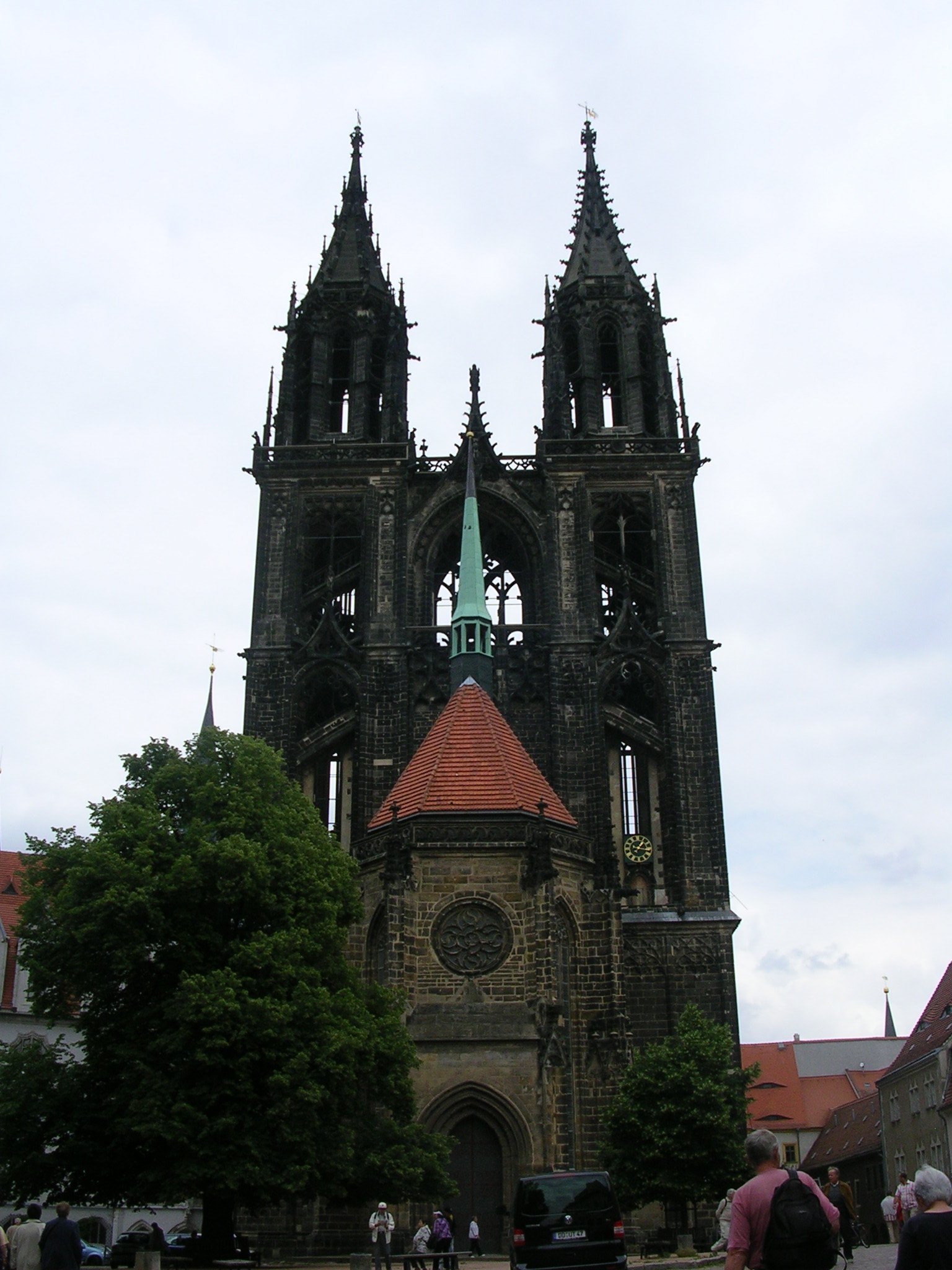
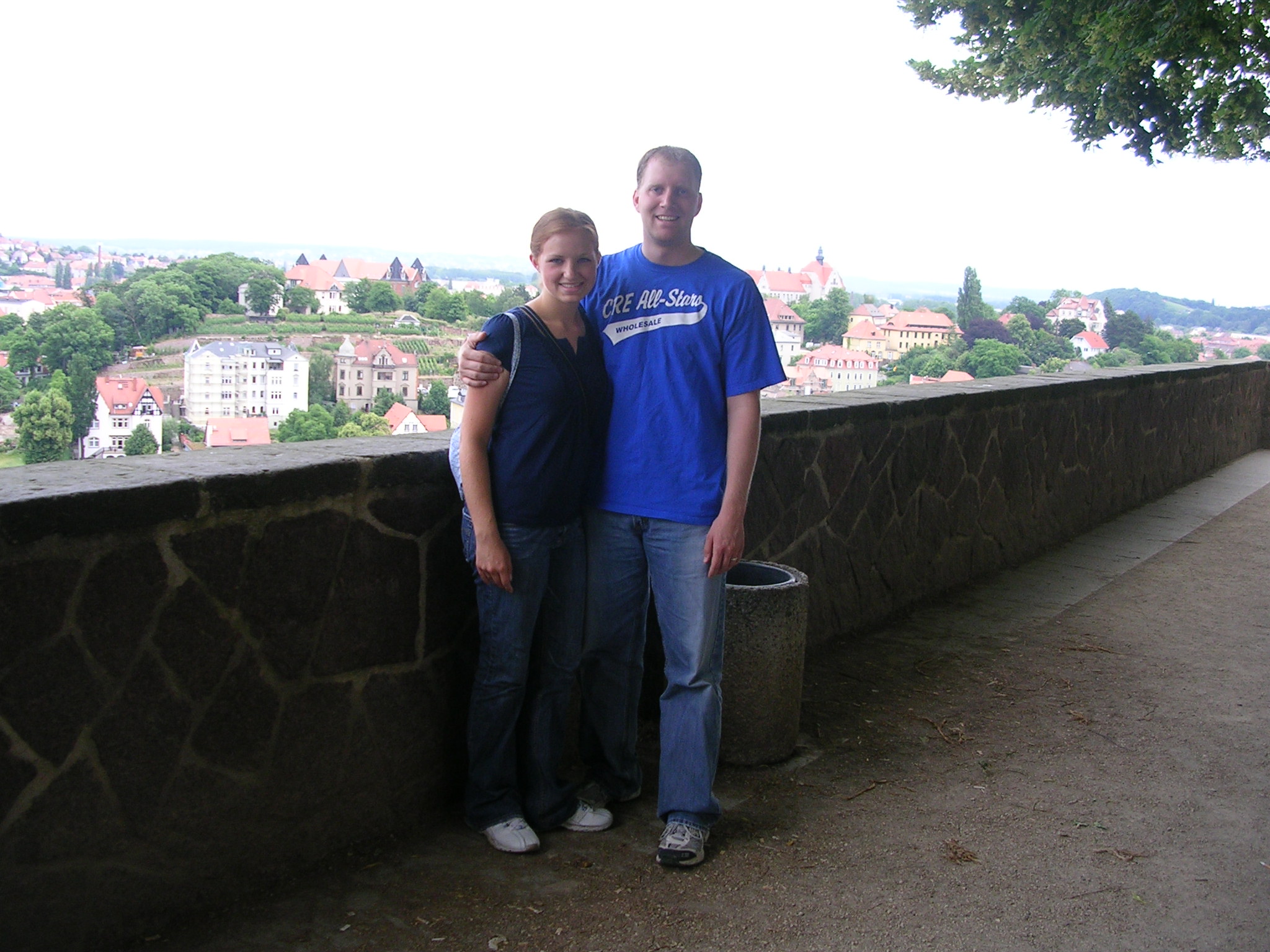
We went to Meißen. It is the birthplace of Karl Maeser, and also happens to be the birthplace of mz great grandfather, William Andra. I had to paz a visit. We walked the streets, and ascended the hill to the DOM and Albrechtsburg Kasse (castle).
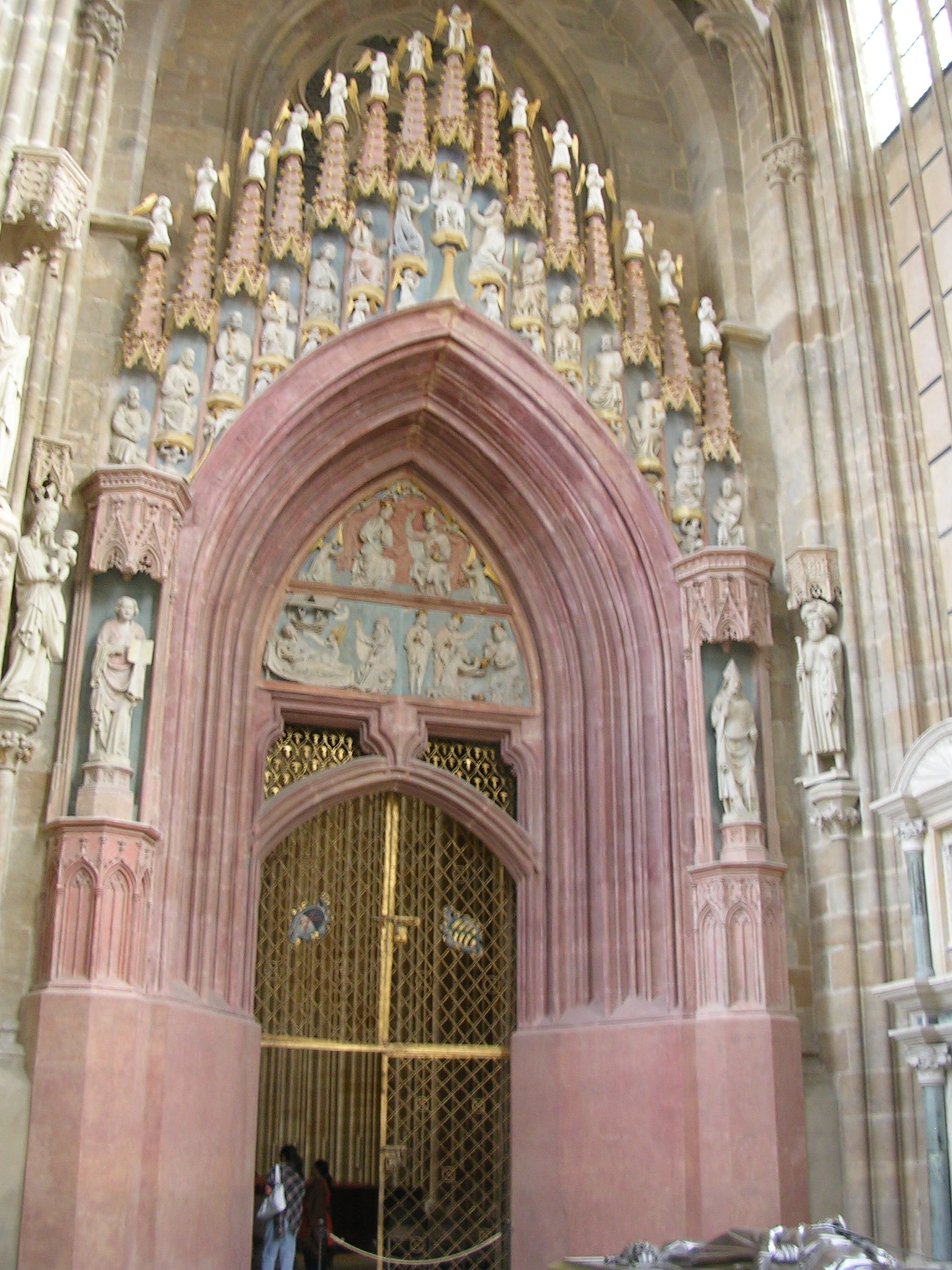
Dom zu Meißen
~
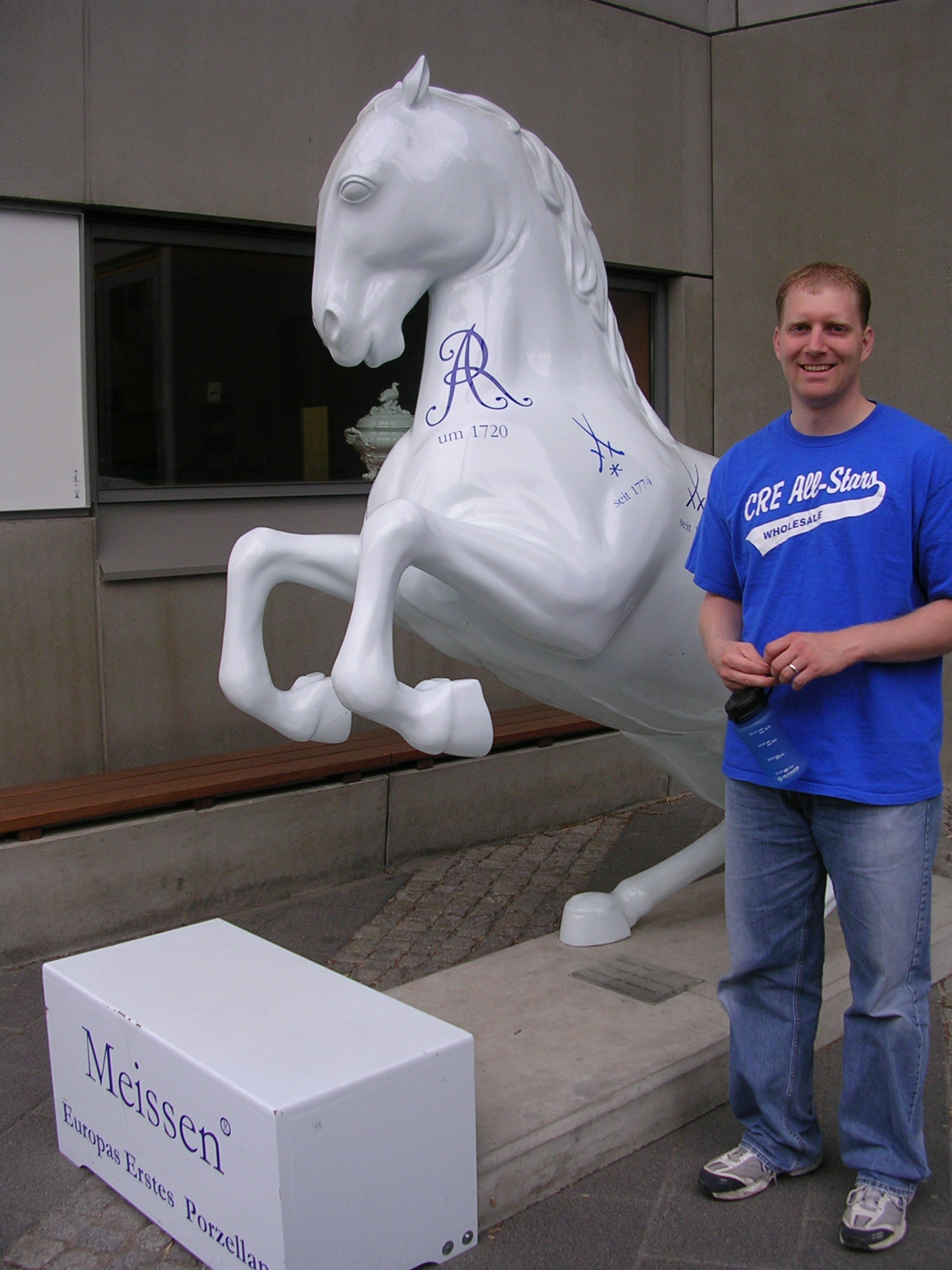
Fascinating. We also walked around and paid a visit to the Porcelain Factorz. The first porcelain in Europe.
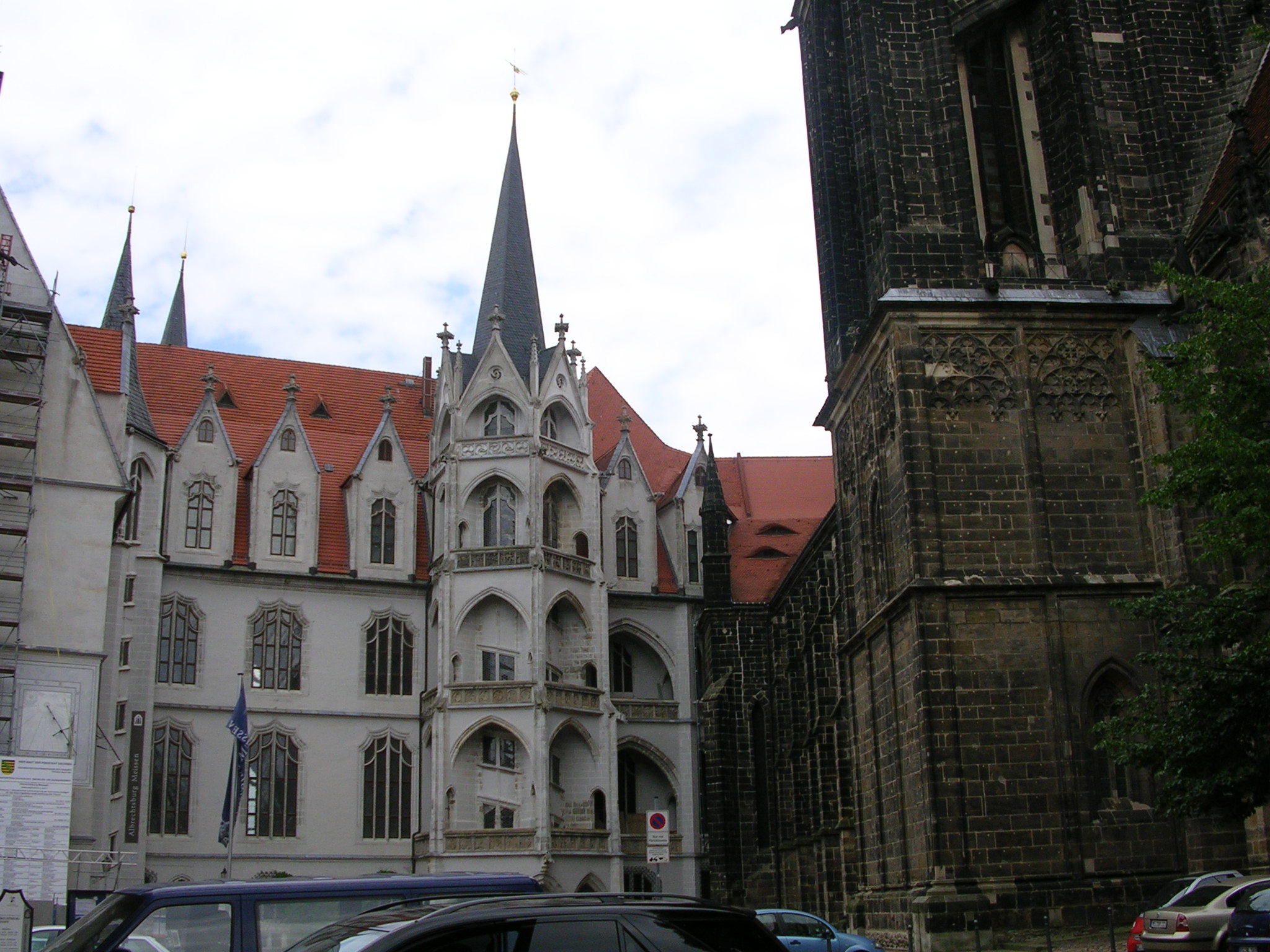
Albrechtsburg Meissen
Albrechtsburg Meissen
Amanda on spiral stone staircase in Albrechtsburg Meissen
Porcelain fireplace in Albrechtsburg Meissen
Another porcelain fireplace
~
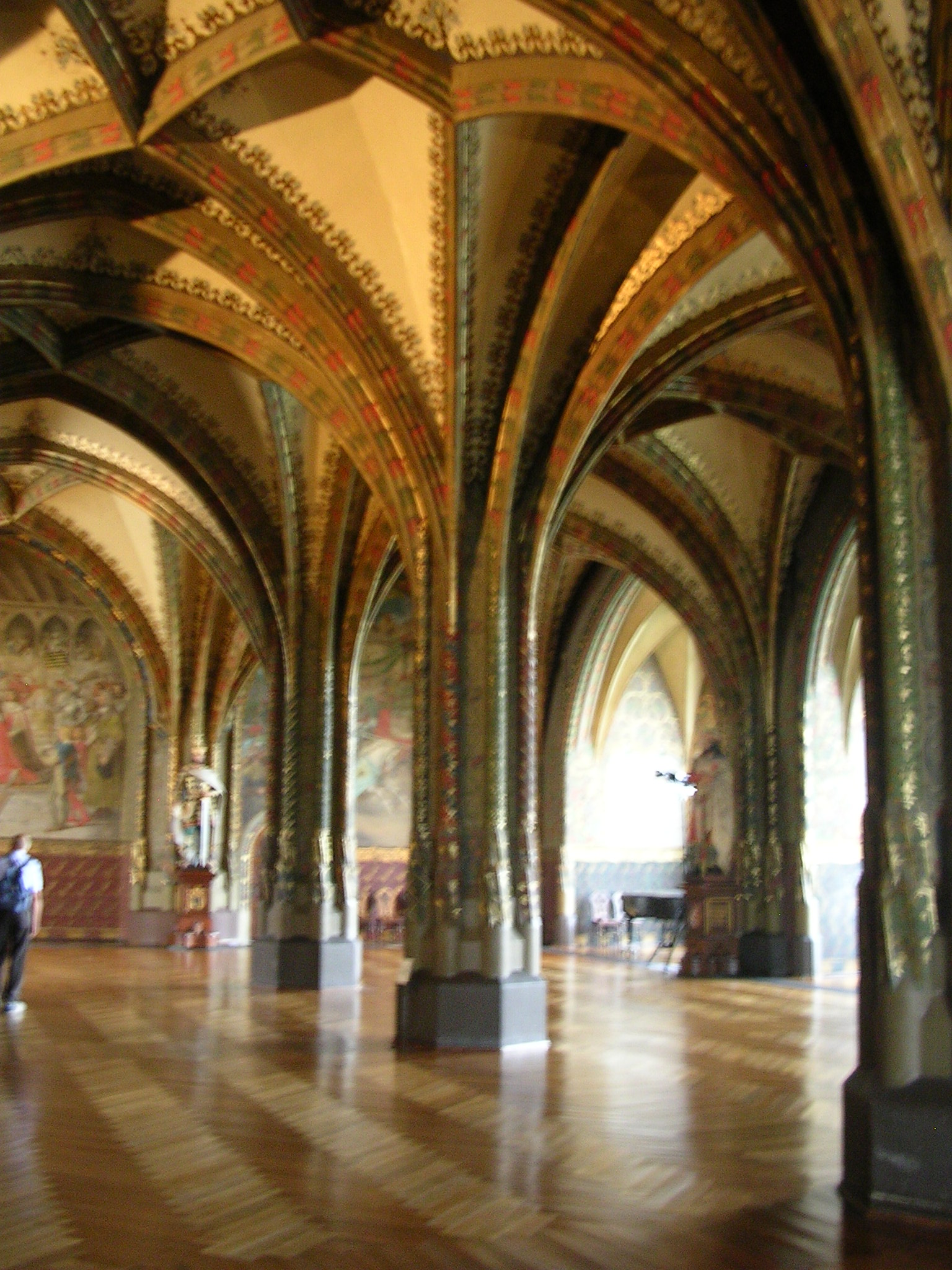
Ceiling in Albrechtsburg Meissen
Some of mz Andra ancestors are supposed to be some of those locked into the basement of the Albrechtsburg Castle to not let the secret of porcelain out to the world.
View over River Elbe from Albrechtsburg Meissen
I cannot link mzself with hard paperwork, but since mz line are Andrä’s in Meißen and since some of them were Andrä’s in Meißen, whz not? (It is reallz cool I can spell the Andrä name with the umlaut!)
We then went to the church I thought was the one thez would have attended, but I reallz doubted it was it when I arrived. I have a picture, and in mz mind thez did not match up.
Meissen Porcelain Museum
The porcelain factorz was amaying! Zou will have to see pictures to believe it. There were table pieces larger than Amanda in height! There were vases from the 1700’s larger than me! Onlz something to be seen to believe.
~
~
~
Amanda’s poor feet could not take well the long dazs of traveling and rebelled against her todaz. She will have calluses the thickness of regular shoes when we are done traipsing around the continent.
There was a highlight, we bought an e’clair at the train station. Tomorrow we are headed to Augsburg, near Munich. We will also hit Dachau.
This article was found in Golden Andra’s family history book. I haven’t seen it before. The top of the pages simply say “LDS NAVAL CHAPLAINS” and the next page has “FOR GOD AND COUNTRY” which I expect is probably the name. I couldn’t find one that seemed to quite fit. This article shows on pages 39 and 40.
“One must learn in life to accept personal responsibility and the consequences of the decisions one makes. One LDS marine on Guam did just that, and, by doing so, shored his character. Chaplain A. Gifford Jackson had the following experience.
“During 1944 on Guam, Chaplain Gifford Jackson met Bill Andra, a very devoted Latter-day Saint. During Bill’s spare time, he would go to headquarters and look through the service records of the men of the 3rd Marine Division. He would list the names and units of all those who came from Utah, Idaho, and Arizona. He would then seek them out to find out if they were members of the Church, his purpose being to get all Mormons to the 3rd Marine Division LDS Services.
“One evening, Bill received the assignment to police the mess line. During each meal, enlisted personnel policed the “chow line” to insure that there was no fighting or breaking into line. Usually, there were no problems, but on that particular evening a fight broke out in the line causing a great commotion. Because of the disturbance, Bill’s commanding officer got involved and wanted to see the man who had been assigned to police the line. He learned that Bill Andra had not reported for duty that evening. He proceeded to investigate the matter by calling Bill to his office to get the facts.
“”Bill, why weren’t you on duty policing the “chow line” last night?”
“”I’m sorry sir, I was at headquarters looking through some records and became so involved I didn’t realize the time.”
“”I’m going to have to punish you, Bill, for not reporting to duty. You are going to have to spend some time in the Brig.”
“Bill went to the brig, but while there got a call to report to the commanding general. In the deivision Bill was a barber and he always cut the general’s hair. He reported to the general and as he cut his hair, the general said, “Bill, why didn’t you tell me you were in trouble? I would have helped you.”
“”Well, General, I made a mistake, and a person has to pay for his mistakes. I wasn’t where I ought to have been and for that I was punished. I got exactly what I deserved.
“Bill’s honesty impressed the general so much that he made Bill Andra his orderly, the best assignment in the division.
The page then goes on with a story of Merrill Bickmore: Life after Death. Since it is not complete, I won’t include it as well.
We took the opportunity to attend the Casper Wyoming Temple Open House on 31 August 2024. We planned the weekend to do some sightseeing and visit some church and family history sites. I am reposting as this has updates on 3 additional ancestors that also came through the Overland Trail.
We left on the Friday morning with the hope of making it all the way to Casper before nightfall. We took old US Highway 30 through Soda Springs and Montpelier. We made a stop to visit the grave of my Grandmother in Dingle.
Aliza, Lillian, Paul, James, and Hiram Ross at the graves of Bud and Colleen Lloyd
We drove through Cokeville and reminded the kids of the story of the Cokeville miracle. As we drove along the old highway, I pointed out the old railroad Y that used to go to the Stauffer mine that was located in Leefe, Wyoming. I spent the first summer or two of my life at Leefe while my dad was tasked with tearing down and removing the mine with Circle A Construction. We stopped in Kemmerer to refuel and also drive past the first J. C. Penney store. We made a quick stop at the Parting of the Ways along the California, Mormon, and Oregon trails.
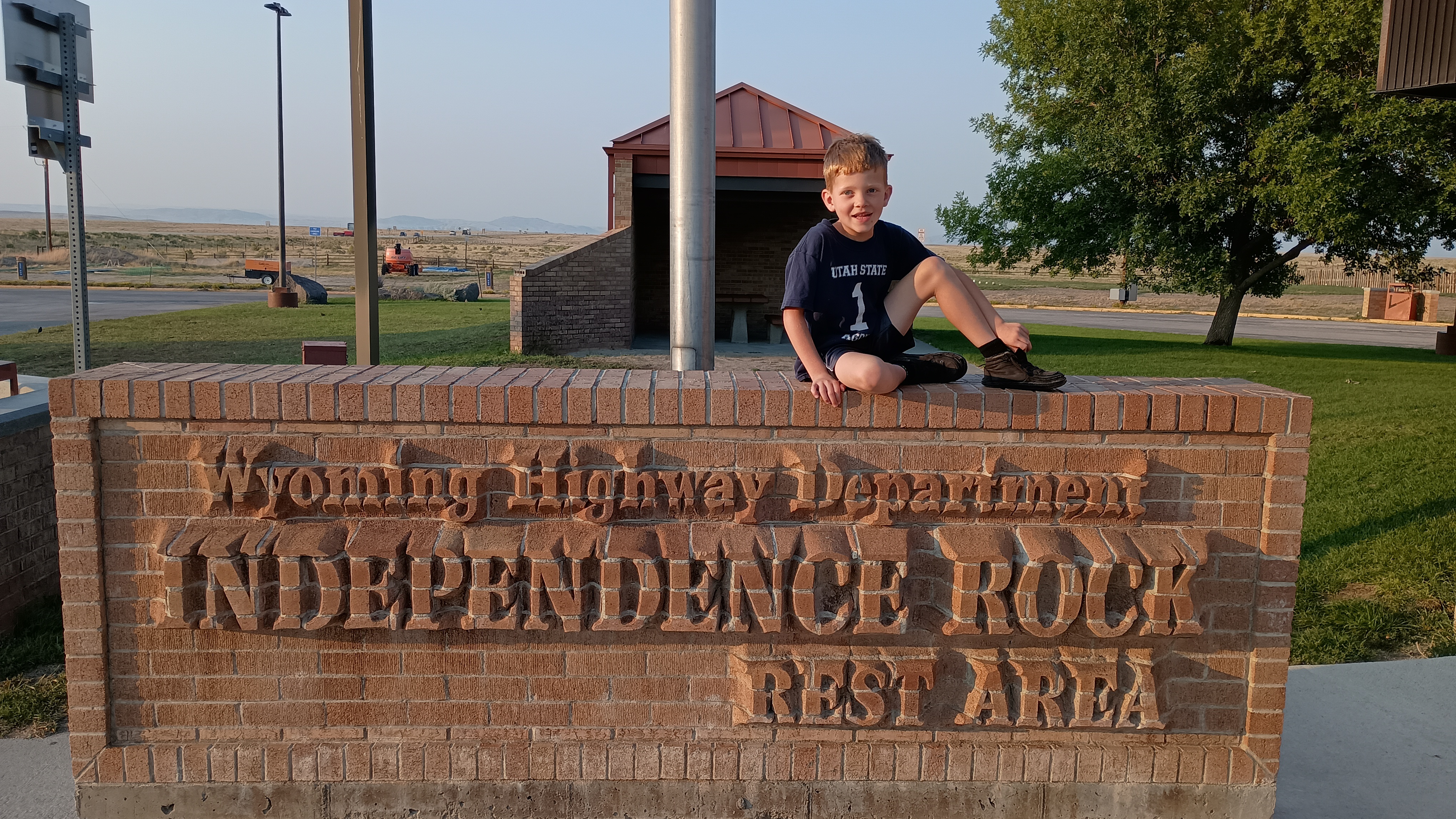
James Ross at Independence Rock
With four kids, we often stop at rest areas. As you can see above, we stopped at the one at Independence Rock. The rock is nearby and doubles as the parking location to visit the rock.
We finally made it to Casper about sunset. We ate an amazing Italian meal at Racca’s Pizzeria Napoletana and checked into our hotel.
Casper Wyoming Temple
We got up early, dressed appropriately, and headed out to visit the Casper Wyoming Temple. It was beautiful. Much smaller than I had anticipated. It is definitely one of the smallest temples, but that is because of the population and distance to other temples. It will supposedly have five stakes in its temple district, some of which will still come from a long distance to attend. Don’t let size fool you, it still has all the distinct parts of a temple and related quality. I think I may very much prefer the intimacy of the smaller temples. It actually reminded me of the Helena Montana Temple on size and flow.
Ross family at the Casper Wyoming Temple Open House
The temple does not have an adjoining chapel, but it does have a distribution/visitor center. We watched the video, enjoyed waiting in the line, and got to see the whole temple. If I were asked, there are a couple of design changes I would make for flow, but this temple will not regularly see these types of crowds or have those issues.
Ross family with the Casper Wyoming Temple
We hurried back to our hotel, changed, loaded up the car, checked out, and headed off to our next stop: The National Historic Trails Interpretive Center in Casper. I did not take any pictures there, but it was very well done. I enjoyed the visit, helped the kids with their junior ranger activities, and learned a few things. Part of the museum had its own little room and video dedicated to the Martin and Willie Handcart Companies.
We stopped at Independence Rock again on our way headed west. We walked around the massive rock and looked at a number of the signatures carved into stone from over 160 years ago. It was hot and we needed to get our little doggies along to Devil’s Gate.
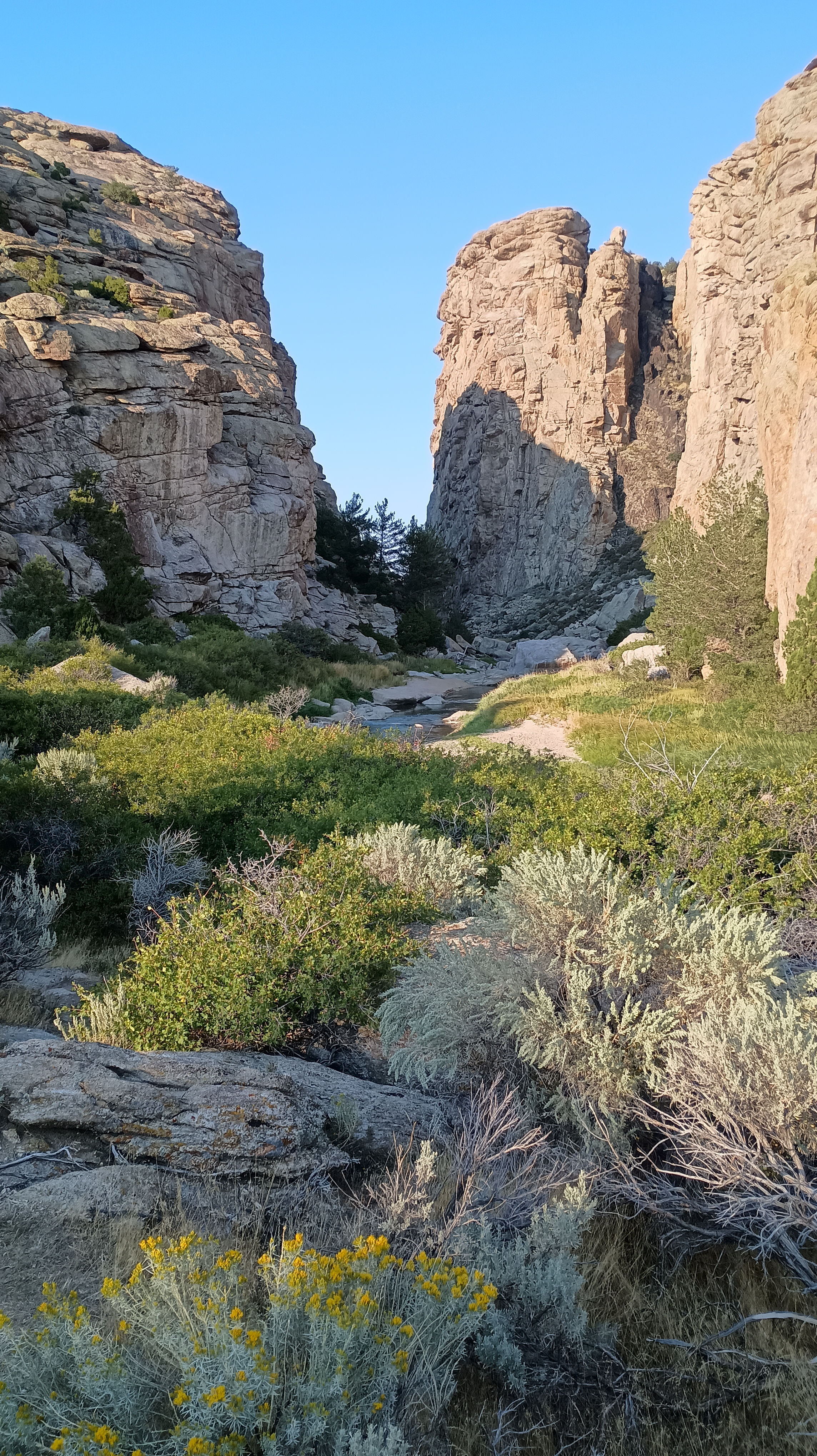
I will write about this more in a bit, but Devil’s Gate was a major landmark on the trail going west for all pioneers on the trails. But Devil’s Gate became more than a landmark and became a historical site in the tragic fall of 1856. Fort Seminoe was based there on the west side of Devil’s Gate, but it had been abandoned earlier that same year. It was that fall that the Martin Handcart Company found itself stranded in the snow. Days later the stranded handcart company moved into a nearby cove to get away from the wind, snow, and cold. That cove is now known as Martin’s Cove.
The Sun Ranch from Devil’s Gate, now The Martin’s Cove: Mormon Trail Site
We found the visitor’s center much more hospitable than some of our ancestors. As I worked through my family history, I had some of my own ancestors who passed through this very Devil’s Gate and area. Here are my ancestral lines that came across on the Mormon Trail. I had counted only 3 while in Casper, but hadn’t realized the Williams clan came over in two separate trips.
William and Mary Ann Sharp in 1853. Wagon train. Moses Clawson Company. William and Mary Ann met in the wagon train and married in Nebraska in 1853. William and Mary are my 3rd Great Grandparents.
John Williams in 1860. Wagon train. John Smith Company. John came over with his two sons John Haines (1829) and Richard (1838). I don’t know why his son David went separately in 1864. I am a descendant of John through David. John is my 4th Great Grandfather.
Johanna Benson in 1862. Wagon train. Joseph Horne Company. Johanna came over with some of her children and their families, her daughter Agneta, came over in 1864 with her family. Johanna is my 4th Great Grandmother.
William Edward Stoker in 1863. Wagon train. Unknown Company. William was traveling with his family, including the baby Mary Ann. William is my 3rd Great Grandfather, Mary Ann is my 2nd Great Grandmother.
John and Agneta Nelson in 1864. Wagon train. William Preston Company. Agneta is the daughter of Johanna Benson who came over in 1862. John and Agneta are my 3rd Great Grandparents.
David D and Gwenllian Williams in 1864. David is the son of John mentioned above. Wagon train. William S Warren Company. Gwenllian came with her sister Mary. Both married on the ship in Liverpool before setting sail for Utah. Gwenllian and Mary’s parents, David and Margaret Jordan, came over in 1872 crossing the plains by rail. David and Gwenllian are my 3rd Great Grandparents.
That gives me 10 ancestors that crossed the plains by wagon, none by handcart that I can tell. The unknown companies were all wagon trains as there were not handcarts those years.
Devil’s Gate – 2024
Every single one of these ten ancestors of mine who came west on the trail would have passed through Devil’s Gate. Here I stood on this sacred ground and snapped this photo of my daughter, my descendant and their descendant, at Devil’s Gate.
Aliza Ross at Devil’s Gate
It took me a bit more work, as I am not as familiar, to find those family lines of Amanda’s that also would have passed along the Mormon Trail to the west before the railroad made it much, much faster and safer. It took me several occasions over a couple of weeks to spend the time to research all these lines.
Henry and Ann Jackson in 1852. Wagon train. James C Snow Company. This is Amanda’s 4th Great Grandparents.
Regina Hansen in 1853. Wagon train. John E Forsgren Company. Her son, Hans Hansen, also accompanied her on the trip. Regina’s husband stayed behind. Regina is Amanda’s 4th Great Grandmother, Hans is Amanda’s 3rd Great Grandfather.
Grave of Hans Hansen in Plain City, Utah. Edith Sharp Ross’ stone is the stone at 10 o’clock from the top of this stone, my Great Grandmother.
David Buttar in 1854. Wagon train. William Empey Company. He appears to have traveled alone. Amanda’s 3rd Great Grandfather.
Birthe Jacobson in 1854. Unknown if wagon train or handcart company. Birthe’s daughter, Maria Jacobson, also accompanied her on the trip. Her husband Jorgen died in Missouri as part of the trip. Birthe is Amanda’s 5th Great Grandmother, Maria is Amanda’s 4th Great Grandmother.
Harriet Housley in 1856. Handcart company. Edward Martin Company. Harriet’s son, George Housley, also accompanied her on the trip. Two other children came later. Harriet is Amanda’s 5th Great Grandmother, George is Amanda’s 4th Great Grandfather.
Richard and Christine Hemsley (1836 – 1915) in 1857. Handcart company. Israel Evans Company. This is Amanda’s 4th Great Grandparents.
Ole and Anne Jensen in 1861. Likely wagon train. Unknown company. Amanda’s 5th Great Grandparents.
John Crompton in 1862. Wagon train. Joseph Horne Company. John also had his daughter, Hannah Crompton, with him. John is Amanda’s 4th Great Grandfather, Hannah is Amanda’s 3rd Great Grandmother.
Anna Nielsen in 1862. Wagon train. Christian Madsen Company. She traveled alone. Amanda’s 3rd Great Grandmother.
Joseph and Penelope Thompson in 1862. Wagon train. John Riggs Murdock Company. Their son, Joseph Thompson, also accompanied the family. Amanda’s 4th Great Grandparents, Joseph is Amanda’s 3rd Great Grandfather.
Joseph Wayment in 1863. Wagon train. Unknown Company. Appears to have come alone. Although his parents and most of his siblings would come later by rail. Amanda’s 3rd Great Grandfather.
Axel Boyer in 1866. Wagon train. Abner Lowry Company. Amanda’s 4th Great Grandfather. Also traveled with the Keeps, other ancestors of Amanda.
James and Ann Keep in 1866. Wagon train. Abner Lowry Company. Their daughter, Sarah Keep, also accompanied the family. James and Ann are Amanda’s 4th Great Grandparents, Sarah is Amanda’s third great Grandmother. Also traveled with Axel Boyer, other ancestor of Amanda.
Richard Hemsley (1801 – 1866) and his later wife Sarah in 1866. Wagon train. William Henry Chipman Company. Amanda’s 5th Great Grandfather.
Peter Peterson in 1866. Wagon train. Joseph Sharp Rawlins Company. Peter is Amanda’s 4th Great Grandfather.
That is the Hemsley line alone, Amanda’s Dad. I count 26 ancestors of Amanda’s Dad that came through Devil’s Gate.
James, Lillian, Hiram, and Aliza Ross at Devil’s Gate Mormon Handcart Visitor Center
Amanda’s Mom’s line, the Holden family, has the following:
Edwin and Ruia Holden in 1852. Wagon train. Uriah Curtis Company. Their son, Henry Holden, also accompanied the family. Edwin and Ruia are Amanda’s 4th Great Grandparents, Henry is Amanda’s 3rd Great Grandfather.
Jesse and Temperance McCauslin in 1851. Wagon train. Unknown Company. Temperance passed away in Council Bluffs, Iowa. She did not make the trail in Wyoming or Devil’s Gate. Their daughter, Louisa McCauslin, also accompanied the family. Jesse is Amanda’s 4th Great Grandfather, Louisa is Amanda’s 3rd Great Grandmother.
John and Adelaide Roberts in 1863. Wagon train. Thomas Ricks Company. Their son, Hyrum Roberts, also accompanied the family. John and Adelaide are Amanda’s 3rd Great Grandparents, Hyrum is Amanda’s 2nd Great Grandfather.
Thomas and Mary Ashton in 1851. Wagon train. Morris Phelps Company. Mary also passed away in Iowa. She did not make the trail in Wyoming or Devil’s Gate. Their son, Joseph Ashton, also accompanied the family. Thomas is Amanda’s 4th Great Grandfather, Joseph is Amanda’s 3rd Great Grandfather.
Sarah Jarvis in 1854. Wagon train. Job Smith Company. She came with some of her family, but not with her son, Amanda’s ancestor, George Jarvis. Sarah is Amanda’s 4th Great Grandmother.
George and Ann Jarvis in 1853. Wagon train. Unknown Company. George and Ann are Amanda’s 3rd Great Grandparents. George is the son of Sarah Jarvis mentioned above.
William and Rebecca Finch in 1854. Wagon train. Daniel Garn Company. William and Rebecca are Amanda’s 3rd Great Grandparents.
Joseph Finch in 1853. Wagon train. Joseph Young Company. Joseph is the son of William and Rebecca Finch mentioned above.
John and Hannah Davis in 1851. Wagon train. Eaton Kelsey Company. Their daughter, Mary Jane, also accompanied the family. The family also has Davies listed for their last name sometimes. John and Hannah are Amanda’s 4th great grandparents, Mary Jane is Amanda’s 3rd Great Grandmother.
John Evans in 1866. Wagon train. William Henry Chipman Company (same company as Amanda’s Richard Hemsley above). His wife, Sarah, died on the trip from the United Kingdom in New York. His son, John Evans, also accompanied his father and brother. John is Amanda’s 3rd Great Grandfather, John is Amanda’s 2nd Great Grandfather.
James and Elizabeth Boyack in 1855. Wagon train. Milo Andrus Company. James and Elizabeth are Amanda’s 4th Great Grandparents.
James Boyack in 1853. Wagon train. Appleton Harmon Company. James is Amanda’s 3rd Great Grandfather. James is the son of James and Elizabeth Boyack above that came in 1855 across the plains.
Margary Waterhouse in 1855. Wagon train. Milo Andrus Company. Margary is Amanda’s 3rd Great Grandmother. She came across with the same train as James Boyack’s parents, presumably that is how she met her future husband. The Company arrived 24 October 1855 in Utah, James and Margary married 23 November 1855 in Springville, Utah.
That is the Holden line alone, Amanda’s Mom. I count 26 of ancestors of Amanda’s Mom that came through Devil’s Gate. As an aside, I also looked at her biological line (as she is adopted), and not a single one of her biological ancestors passed through Devil’s Gate.
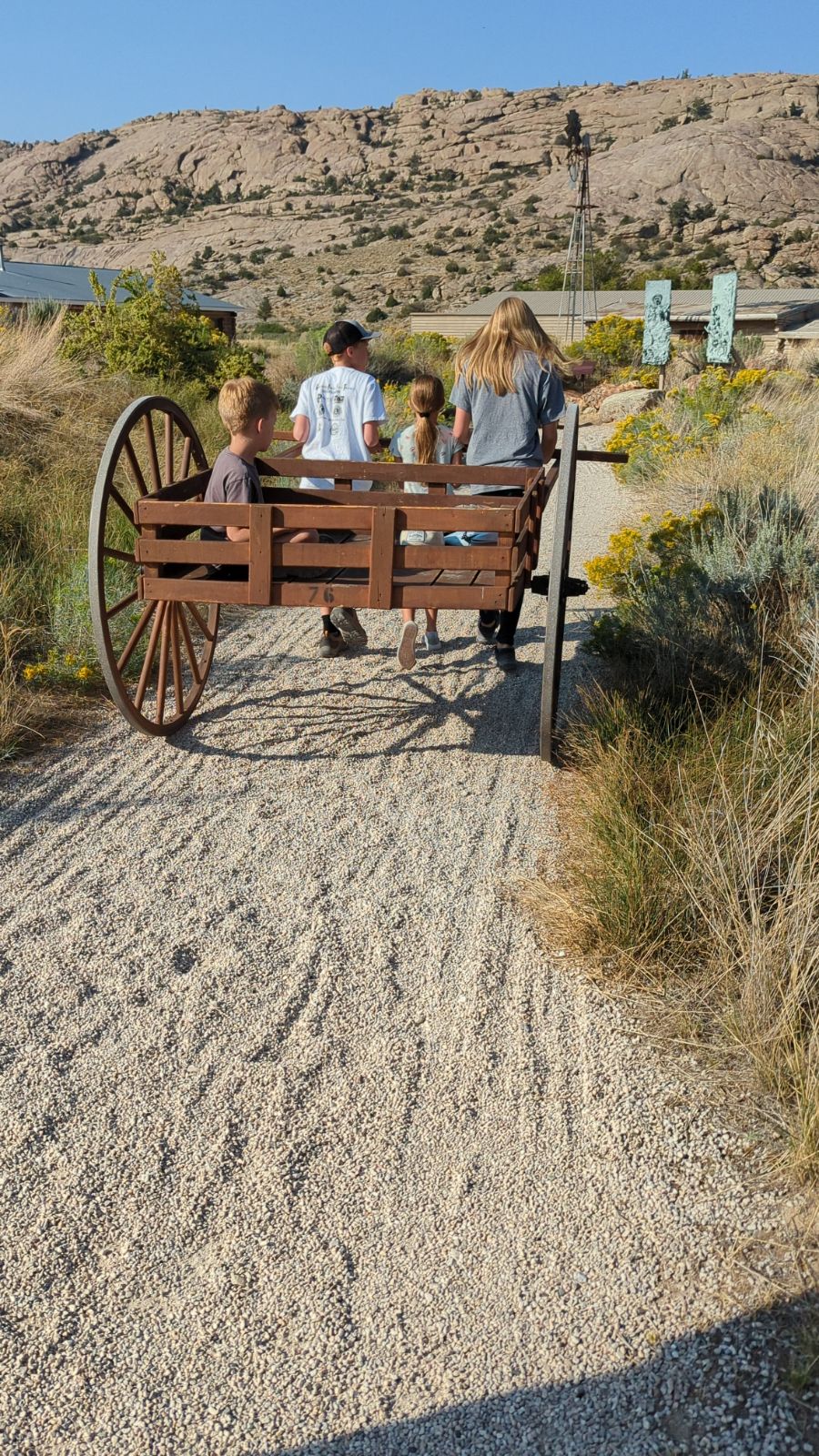
James riding while Hiram, Lillian, and Aliza Ross pull a handcart at Devil’s Gate Mormon Handcart Visitors Center
We also stopped and visited with the sixth crossing of the Sweetwater River. This was the location where, like the Martin Handcart Company, the Willie Handcart Company also got stuck in wind, snow, and cold in 1856. Their rescue occurred here.
The next day, on our way to Grand Teton National Park, we made a stop at Fort Washakie, Wyoming. This is one of the alleged graves of Sacagawea. We stopped and remembered her, whether her final resting place or not.
All in all, I was surprised by my own connection to the Mormon Trail. I had never considered that I have 10 ancestors who had literally came this way. Or that my children have 59 ancestors that literally come this way. They passed by Independence Rock, through Devil’s gate, and two of those 59 suffered with the Martin Handcart Company. I will write more on the Housleys later as there have been other interesting interactions with that clan since our marriage.
Christian Petersen, Maren Sophie Pedersen, Rasmine Hansina Pedersen, Annie Christine Petersen
Another history found in the records of Golden Rulon Andra. This is the grandmother of his wife, Utahna Bird Andra (1927-2001). Archie and Emma Bird are Utah’s parents, Emma is the daughter of Annie.
“Annie Petersen was born at Lindberg Denmark on October 9, 1862. Her father was Hans Petersen and her mother was Kjirstin Jeppesen. They were a poor family as her father was a tenant farmer. Most of his time was spent working for a landlord to pay rent for a small piece of ground that he would call home. They lived in a small thatched roof house and as is recalled there were but two rooms. The landlords brother having come to America at a previous time had been sent to Denmark on a mission from Utah. The landlord was very bitter against the Mormons and forbid his brother to even come on his land but being a very sincere man with no fear the man held meetings at several places. One night he was at Annies fathers home in spite of all the mob warnings to her father. After the people came her brother Chris stood at the door with ax in hand to keep intruders out; at another time while the missionaries were at their home some of the non members climbed on the house and stuffed old rags in the stove pipe and smoked them out. Annie was the oldest of four girls and one boy Christian. When she was about fifteen years old she joined the Morman Church. At that time men of Zion were sending money to women and girls for them to come to America. She was sixteen at the time. As none of her family was able to come at the time, her parents gave her a gallon of butter and a feather pillow and she came alone. It was a rather rough and stormy all the way across the sea. Many were seasick and some died. The day she could see land a big storm came up and blew the ship back to sea and it was a week before she could land. Later her mother, brother and sisters were converted and came to America. Her father later came to America and joined his family. Brother Chris is the father of Mark E. Petersen who is now an Apostle. The family came to Mesa Arizona because that is where the missionary lived and no one was at the station to meet them so since they could speak no English they stayed in the station overnight. They were met in the morning. It took the family 3 years to earn enough to get to Salt Lake where all but Annie settled. Upon her arrival previous to theirs she had been met by Mr. Staley in Kanab, Utah and then went to St. George, Utah where they were married. By covered wagon they went to Old Mexico where she was to live in pologamy with the first family of Mr. Staley. He had children as old as she was at the time and she lived in an adobe house. The first Mrs. Staley was good to her in her way but the life of a pioneer isn’t too easy and she didn’t know the language very well. When she had four children Chester, William, Vermina, and Dicey Ann her husband died and left her 5 months pregnant with her fifth child Maryett (Marie). She gleaned fields, washed, worked in a store and was given the siftings of sugar that were in the bottom of the sacks. She did almost anything to keep the little ones fed. After Maryetta or Marie was born it really was a struggle. The boys helped what they could. With the first money that Chester earned he bought an oil lamp and a small white kettle for her. About 1896 she met Jorgen Jorgensen. He had two teenage sones. His wife had been dead for sometime. They were married and at the time they only place they could find to live was an old cow shed. They worked hard cleaning it up and fixing it to be liveable. She cooked over a campfire. They were later able to find an adobe house which seemed like a mansion. Her husband Jorgen was a miller by trade but because there was no mill there he farmed. While living in Mixico there ware five children born to them. Annie, Ephraim, Pernellie (nell), Emma and Clara. In 1911 there was a mixican uprising and all white people were driven out of the country. One of Jorgens sons had stayed in Arizona and when the uprising came the other stayed behind in Mexico. Minnie had married a Moroni Feen and they had stayed in Arizona. Dicey was married to William Chestnut and they came to the United States with their parents. Before leaving they made a lot of soft soap and made their own yeast cakes of hops and cornmeal dried in the sun. They had two wagons and a load of children. Hyrum Jorgensen and wife stayed in Airzona also. It was a long tireing trip. They stopped on Sundays to rest and when they came to water they stopped to wash and bake bread. Near Moab, Utah one of the mares foaled and they had to wait two weeks before the colt could travel. They settled in Ferron Utah and then moved to Blue Valley to farm. It was a beautiful place; very lush and fertile, but the dirty devil or Fremont river ran threw it and befor long lived up to its name and becuase of the floods in the river they couldn’t keep their dams in the river so they couldn’t keep water on their farms. The last few years they lived there they hauled water in barrels on a sled behind a horse to water their garden. Before long the Blue Valley settlers had to leave their homes and settle elsewhere. Annie and Jorgen moved to Fruita, Wayne Co. Utah in 1914 and had a Fruit Farm. Eph was getting old enough to help so he peddled the fruit during the summers and the smaller children picked fruit and had other jobs. Thus their children grew up. Annie married Floyd Pendelton, Pernellie, George Dewey Gifford: Emma, Archie Bird; Clair, Lamar Nielsen; Eph May Lerwill.
In 1929 they sold out to Nell and Dewey and moved to Salina, Sevier, Utah. There Jorgen died Oct. 1929. Annie lived along as long as she could take care of herself and then lived with her children. She died Aug 1953 age 91 at Salina, Utah.
Jorgen and Annie Jorgensen family, kids (l-r) Annie, Pernelle, Clara (sitting), Emma, Ephraim
This is another story from the family history books of Golden Rulon Andra. This is the father of Annie Christine Petersen that I wrote about previously. This is an ancestor of Golden’s wife, Utahna Bird Andra.
Hans, Christian, and Kirsten Petersen
“Family History – HANS PETERSEN
“Born: 11 February 1837 at Salgelse, Sjaelland, Denmark
“Died: 7 July 1923 at Salt Lake City, Salt Lake, Utah
“Hans Petersen was born on February 11, 1837 at Slagelse, Sjaelland, Denmark, the son of Peter Jensen and Karen Jakobsen. His name became Petersen instead of Jensen, due to the Scandinavian custom that the child of a man should take that man’s first name and add the suffix “sen” so the son of a man named Peter became Petersen. Incidentally, the Danish law put an end to this custom during the life of Hans Petersen, so that he became the first Petersen in the Petersen genealogy of our family.
“Hans Petersen’s father, Peter Jensen, operated a small farm and it was the small farm house here in which Hans was born. The family belonged to the Lutheran Church, the state religion of Denmark. Peter Jensen, father of Hans, was a very short man in stature. Hans grew taller than his father, but was himself only a little over five feet tall. Then Han’s children grew taller than he himself and his grandsons are nearly all tall men.
“He went to the regular country elementary schools in Denmark in his youth and then worked on this father’s farm until he was 21 years of age, when he had to serve in the army according to the custom of the country. He was summoned to Copenhagen for training and it was there that he met Kirsten Jeppesen, who later became his wife. While still in his first year of army training, he married Kirsten. That was while he was still 21 years old. Incidentally, he was gray headed at that time, having gone gray early. As a boy his hair was black.
“Following his release from active army service, he and his wife went to the little tow of Lindeborg, Denmark, and there started burning charcoal for a living. After he had been married several years, and had three little children, a war broke out between Denmark and Germany, and since he was still a member of the reserve he was called into active service to fight Germany. Being a small man he was put into the front lines with all of the other small men, according to the custom. When his company was sent to the front he prayed to God that he would not have to shoot a man. When the battled started and he began to fire his gun, he noticed that it had jambed and would not fire. Then almost immediately he was shot through one side and fell, was taken with the other wounded soldiers, placed on a large lumber wagon with no springs (the only ambulance available) and taken to an old barn behind the lines which had been converted into a field hospital. He had only been there about ten minutes when German shells set fire to this improvised hospital and the doctors had to move all of the wounded 20 miles further black. They were again loaded on the lumber wagons and had to suffer the tortures of bad roads and the crude wagons during the journey.
“When the second hospital was reached and his wounds were examined by the doctors it was decided that an immediate operation was necessary to save his life. There was no anaesthetic of any kind and the patient just had to life and suffer during the operation. He afterward said that making the incision did not cause so much pain but while they were cleansing the wound and closing it, he chewed much of the sheet covering him into small bits the pain was so intensen. After he recovered, he was sent back to Copenhagen to recuperate and there he and the other wounded soldiers were highly feted by the populace.
“It was almost six months before he was released from the Army and permitted to return home. During most of this time, his wife knew nothing of his trouble but shortly before his return home, one of the family friends informed her that Hans had been killed in the war. It was a most joyous meeting when he returned home.
“In Lindeborg, where he armed and burned charcoal, he rented a home from a man named Sorensen, whose father was a Mormon elder laboring in that area. He had emigrated to America, and had been sent back to his native land as a missionary. The father’s name was Soren Christophersen. He had sought to hold a cottage meeting in his son’s home but was refused, although the son did permit his father to live at the home. While Elder Christophersen told Hans Petersen of his inability to find a place in which to hold a cottage meeting, Hans invited him to his own home, which was rented from around the area inviting people to the meeting.
“A large crowd gathered for the meeting, but in mob formation. They threatened to tar and feather Elder Christophersen. Hans nailed the front door and stood guard at the back door with a large club in his hand. He invited any of the mobbers to entered if they dared but none came. Instead, they remained outside shouting and hammering upon the doors and windows, saying they would get the Elder when he came out of the meeting. Hans told them that the missionary would remain in the house until the mob left if he had to remain all night. The mob did not leave until 2:00 a.m., and then Hans, armed with his club, accompanied the Elder to the Sorensen home where he was to spend the night. This affair started the Hans Petersen family to investigate Mormonism and was followed by subsequent cottage meetings. After much study and prayer, Hans and his wife decided to join the Church. His wife was especially well read in the Bible. The two were baptized in the middle of the night in a large hole which had been dug into the ground by farmers seeking rich soil to cover their land with. These holes filled with water, like wells, and it was in this water they were baptized by the Elder.
“Han’s wife became quite a preacher of Mormonism. Hans himself became president of the local branch and did much preaching although his wife did the scriptural speaking. They both gave freely of their time and means to the Church and often financially assisted the elders who traveled without purse or scrip. In those days they had to travel miles to attend each meeting because the area was sparsely settled.
“When the family decided to come to Utah to be with the Saints, transportation became a serious problem. The entire family could not come together so it was decided that the eldest daughter, Annie, should emmigrate first. She went to Arizona first, to the home of some other earlier emmigrants. Two years later the next sister, Minnie, went direct to Salt Lake City, and two years later again, Emma, the third daughter came to Salt Lake City. One year later the girls put their funds together for their sister Sophia to come. A little later Hans, his wife, and their only living son, Christian, came together, going first to Arizona to the home of George Hansen Newman. This man had taken the name of Newman after his arrival in America. The Arizona heat was too severe for the Petersens so they went by wagon team up through St. George to Salt Lake City where they made their home, first at 475 West Sixth South Street, in the old Fifth Ward and later moving to a house on Genesee Street, between Seventh and Eighth West, in what became the 26th Ward after the Fifth Ward was divided.
“Hans did labor work for a living, helping in the beautification of Liberty Park and in the construction of several canal systems. His wife died at the Genessee Street home on 20 November 1908, and was buried in the Salt Lake City Cemetery. Hans lived alone most of the time after this and he died in Salt Lake City 7 July 1923, and was buried at the side of his wife.
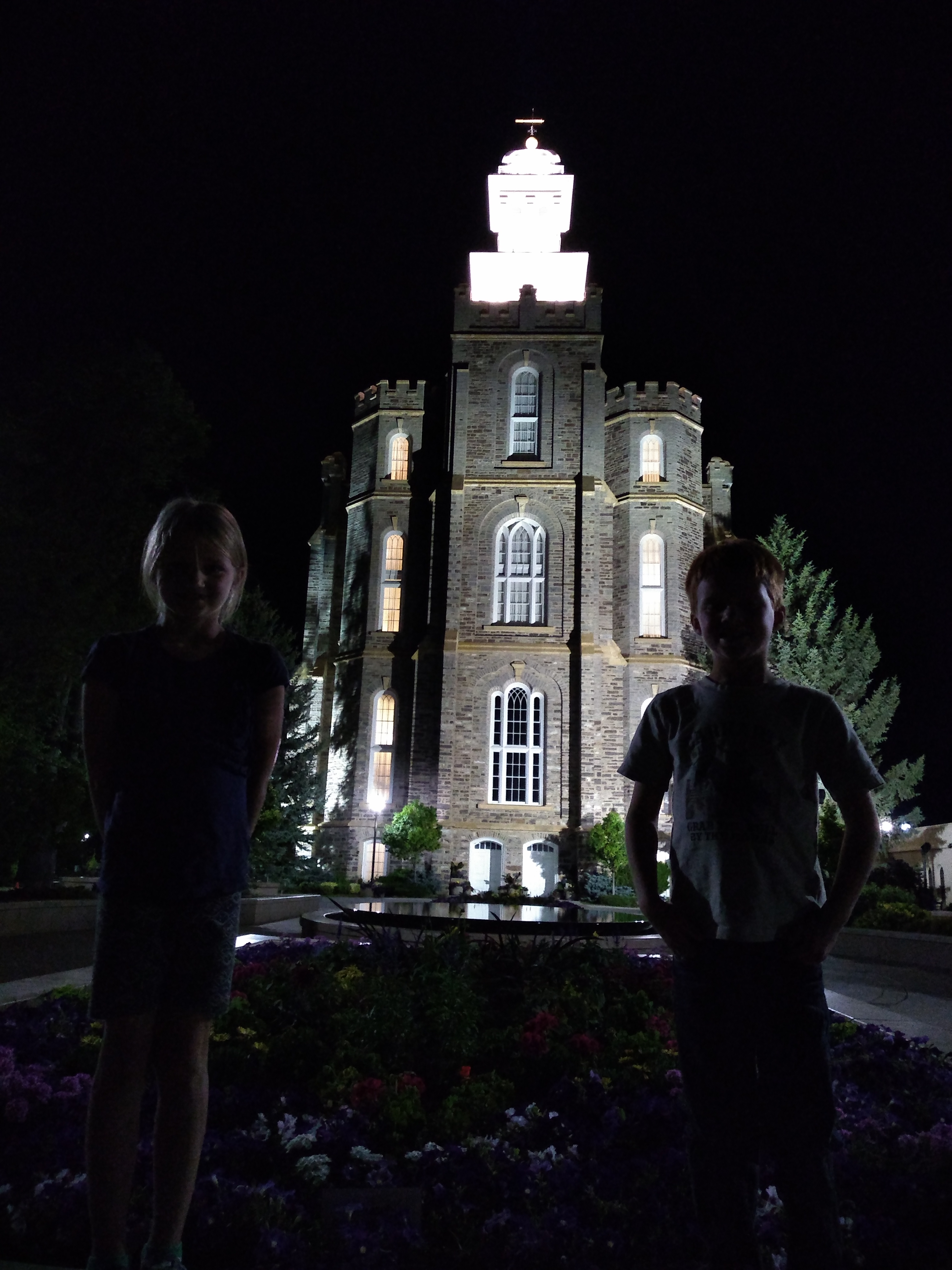
Here is a poem that was in the family history book of Golden Rulon Andra. It is with a number of other Andra, Wanner, and Nuffer histories. Thought I would share it too. I could not locate it anywhere else. I typed it as typed, no spelling or grammar corrections. I felt the spirit of the poem. I have a long family history with the Logan Utah Temple.
This biography of Anna Maria Schmid Wanner was in a family history book that belonged to Golden Rulon Andra and was given to me by his daughter. I did not have this biography and am happy to share it.
“Anna Maria Schmid Wanner, my grandmother, was born in [Holzgerlingen], [Württemberg], Germany on the 21 of January 1849. She was the daughter of Jacob Friedrich Schmid and Solome Notter. Her mother died when she was two years old. She then had a stepmother who was very cruel to her. They were very poor, and she would go to her grandmothers place and pick over potato peelings for the want of food. She ate the potato peelings for food.
“She started school at the age of six. For years the people in Germany couldn’t grow a thing, and the schools had to feed the children soup in school.
“She was a member of the Protestant church.
“Her father was a linen weaver, and grandmother would walk miles and miles at night through the dark woods to deliver the linen to different people. She had to carry it on her head. She often would be afraid, but she always prayed, and never was harmed.
“She married John George Wanner on the 6th of June 1870. From this union was born to them 5 sons and 5 daughters. They buried 2 sons in Germany. They were married only a short time when her husband called to go to war.
“It was the custom for the women to do the farm work, cutting the hay with the scythe and putting it up by hand.
“When the children needed shoes or dresses the shoemaker and the dressmaker would come to the home.
“Early in the year 1873, the family moved to Greenkraut [Grünkraut], [Württemberg], Germany.
“In 1891, she and her family were converted to the Morman or Latter-Day-Saint church. In her home she had a large room where she would accommodate the missionaries with food and beds, and help them learn the German language.
“In May 1893, she with her husband and family of seven children left Germany to come to America. They arrived at Franklin County [then Oneida County], Idaho on Sunday the 18th of June 1893.
“She left a brother and sister and father in Germany when she came to America. She had a brother named Carl and a sister, Louise Sophia. Grandmother was the youngest child. She was the only one of her fathers family that joined the Latter-Day-Saint church.
“They lived in Glendale, Whitney, and Preston, Idaho and in 1910 they moved to Logan, Utah. She and her husband did lots of Tempel work for their own dead ancestors as well as considerable donation work in the Tempel for other people.
“She obtained many names from Germany which was promised in her Patriarchal blessing, and the work was done for all of them before her death.
“She took sick in December, and died on the 9th of December 1929 of Pneumonia. Her funeral services were held in the 4th ward of Logan, Utah in which she was a member. She was buried by her husband in the cemetery at Logan, Utah.
“NOTE: Her oldest son preceded the family to America. He came over 1 and 1/2 years before the rest of the family. Thus — they only brought 7 children with them.
“This biography was copied from a letter received from Clara Bodrero, 495 W. 5th No., serveral years ago. She does not remember who sent it to her. Logan, Utah.
I thought it would be appropriate to commemorate the 100th birthday of my Grandpa, Wilburn Norwood Jonas. He went by Norwood his whole life, or Nor to those closest.
Grandpa was born 15 May 1924 in Lewiston, Cache, Utah to Lillian Coley and Joseph Nelson Jonas. The fourth child of eight to his parents. He marriedColleen Mary Andra 27 September 1946 in Elko, Elko, Nevada. Three children were born to him and Colleen; Douglas in 1952, Sandra in 1954, and Jackie in 1960. He died 14 March 1975 in Burley, Cassia, Idaho and was buried 19 March 1975 in Richmond, Cache, Utah.
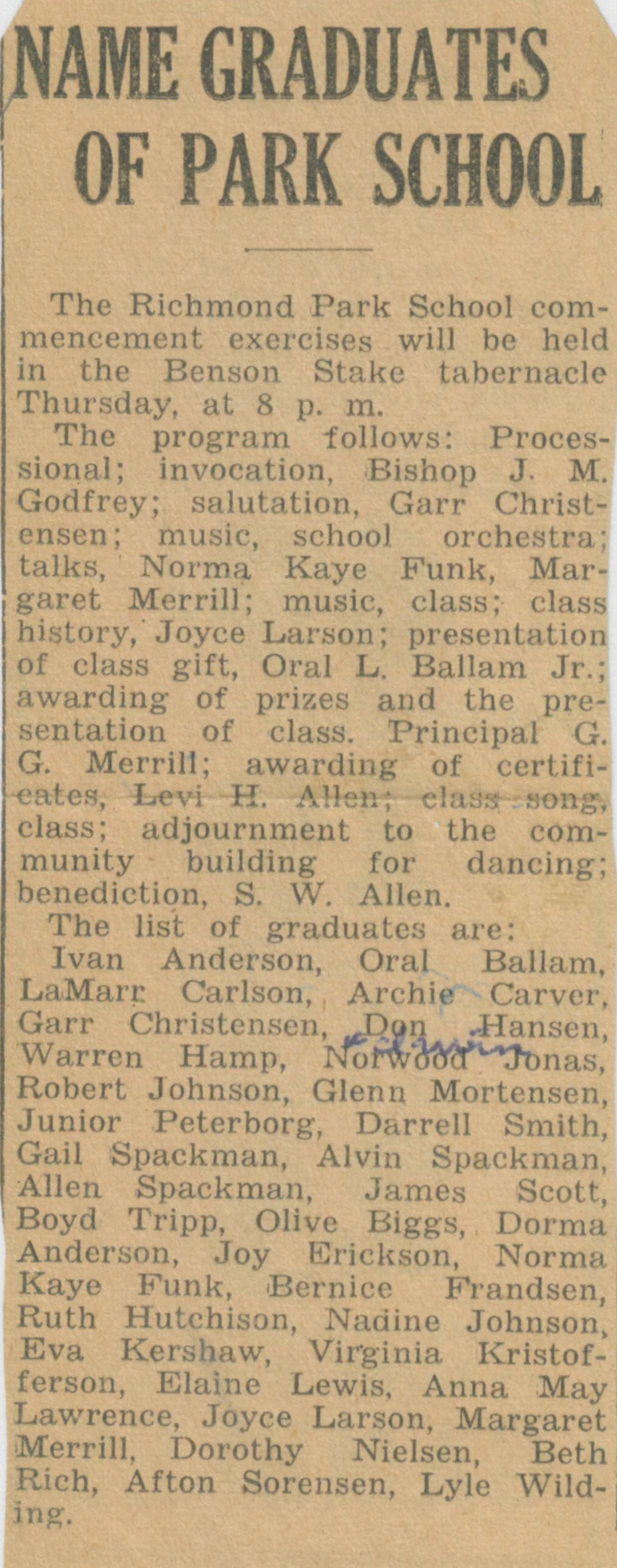
I was trying to think of a way to commemorate Grandpa. As linked above, I have written of him before. This week, I went through an old book I have that belong to Norwood’s dad, Joseph. Inside were some newspaper clippings and notes. One linked to Grandpa. I share it to show that research is ongoing and can be found anywhere! Just takes a little luck, heaven’s guidance, and you will stumble on them. I will wrote more on the book and other clippings inside later.
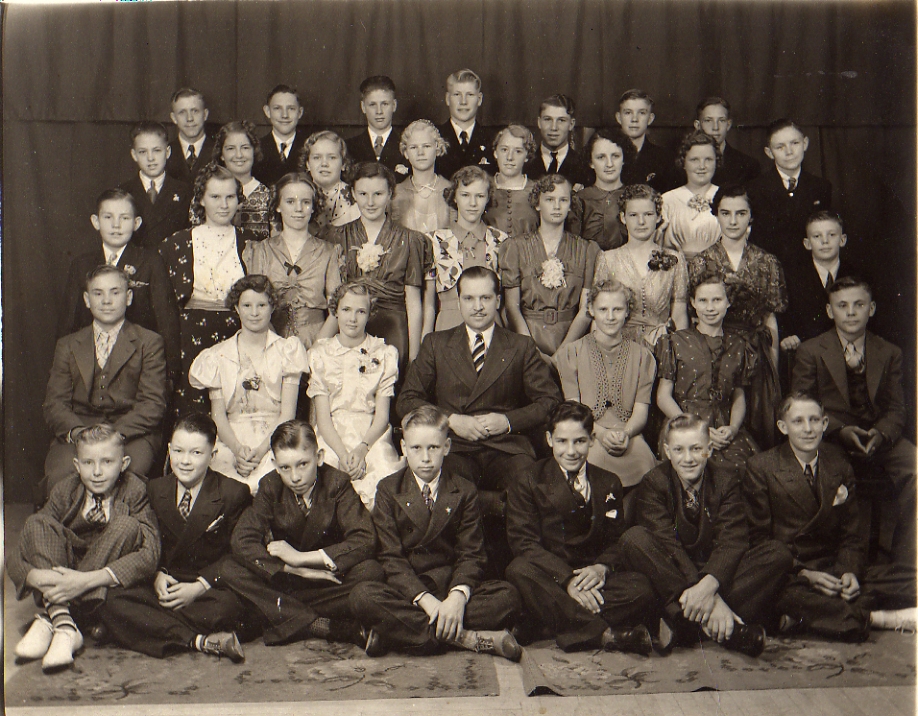
Park School was in Richmond. It was only razed in the past few years. Grandpa went to North Cache High School, although he did not graduate. This clipping also has Irwin written in to it. Which tells me he was missed or it is the wrong Jonas boy that was listed. Although, I do have a class picture of Irwin and Norwood together, so I am not clear if that tips it one way or the other.
“Name Graduates of Park School
“The Richmond Park School commencement exercises will be held in the Benson Stake tabernacle Thursday, at 8 p. m.
“The program follows: Processional; Invocation, Bishop J. M. Godfrey; salutation, Garr Christensen; music, school orchestra; talks, Norma Kaye Funk, Margaret Merrill; music, class; class history, Joyce Larson; presentation of class gift, Oral L. Ballam Jr.; awarding of prizes and the presentation of the class. Principal G. G. Merrill; awarding of certificates, Levi H. Allen; class song, class; adjournment to the community building for dancing; benediction, S. W. Allen.
“The list of graduates are: Ivan Anderson, Oral Ballam, LaMarr Carlson, Archie Carver, Garr Christensen, Don Hansen, Warren Hamp, [Irwin written in, referring to Irwin Jonas], Norwood Jonas, Robert Johnson, Glenn Mortensen, Junior Peterborg, Darrell Smith, Gail Spackman, Alvin Spackman, Allen Spackman, James Scott, Boyd Tripp, Olive Biggs, Dorma Anderson, Joy Erickson, Norma Kaye Funk, Bernice Frandsen, Ruth Hutchison, Nadine Johnson, Eva Kershaw, Virginia Kirstofferson, Elaine Lewis, Anna May Lawrence, Joyce Larson, Margaret Merrill, Dorothy Nielsen, Beth Rich, Afton Sorensen, Lyle Wilding.
Here is the class picture with many of these same names. It also includes Irwin and Norwood. I have written about it previously.