Green River, Wyoming

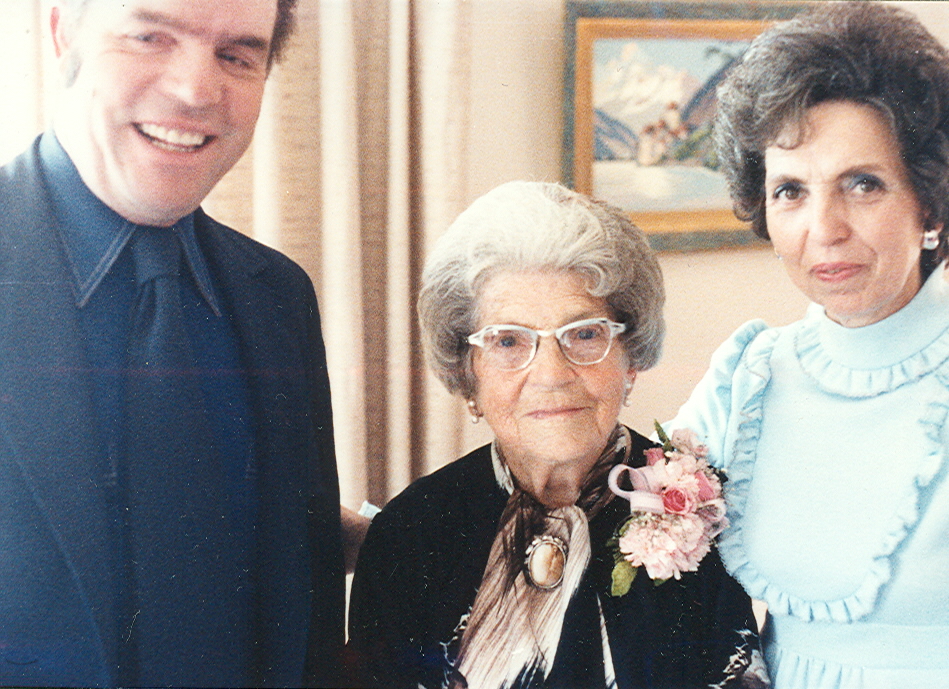
John, Thelma, and Annie Bloemer, Delos Donaldson

Another one of those stories. Genealogy I am doing it. Due to my efforts, family and others dump other photos in my lap. Here is another one of those photos.

Scanning more photos that belonged to my Uncle and Aunt Dave and Betty Donaldson I stumbled upon this photo. I recognized Delos Donaldson and wondered about these other people. Who are/were they? Why a photo? Why a train car? Where?

Turn it over and someone felt to record the information, which is somewhat unusual.

Back of above photo

20 September 1916 – Green River, Wyoming

Mr. J. C. Bloomer Water Foreman U.P.

Miss Thelma Bloomer

Miss Annie Bloomer

Mr. David D. Donaldson

I did a little research to find these individuals and additional information.

John C Bloemer, born 30 December 1869 in Germany, died 9 January 1947 in Kansas City, Jackson, Missouri, buried St. Mary Magdalene, Omaha, Douglas, Nebraska. He was widower, met and married Annie Cecile Brass 5 August 1919 in Kansas City, Missouri. Interesting Delos would list her as Miss but with his last name. Were they holding out as husband and wife, then why the Miss? Annie was born 1870 in Missouri and died February 1938 in Kansas City.

Thelma Katherine Bloemer was born to John and Franciska 7 October 1903 in Cheyenne, Laramie, Wyoming and died in 2000 in Ogden, Weber, Utah. She married twice to Donald Doctor McGuire and later to Daniel George Thinnes.

I assume the U.P. above is Union Pacific, not clear what a Water Foreman does, if that was irrigation, city, or train related.

Here is another photo in the group. This appears to be the same day with the train and shirt. We now know it is likely Green River, Wyoming.

David Delos Donaldson

David Delos Donaldson, born 26 March 1894 in Evanston, Uinta, Wyoming, died 24 September 1953 in Salt Lake City, Salt Lake, Utah.

Researcher’s Story of Germany and our Ancestors

This is a story that was included with the documents I received from Golden Andra’s family. I thought I would share and preserve it for whatever value it might have. It appears to jump between multiple writers.

“Dear Cousins:

“At our reunion last year 16 June 1979

“William Andra Jr. President of the Wanner – Schmid Family Organization, introduced Trudy Schenk as our new genealogy researcher, Trudy says “guten-tag,” which means “good-day,” in german. William ask his wife Edith to ask her Norwegian researcher if she knew a german researcher, she said yes her name is Trudy Schenk. So William & Edith met Trudy, was very impressed with her, so they called Jess Wagstaff and told him they were coming up to see me. They took me out to dinner and told me about Trudy, and ask me to come to Salt and meet her, so I did this was the 26 Feb 1979, and after having a nice talk with her we hired her to be our researcher that same day. We pay Trudy $5.00 per hour, which is very reasonable as researcher’s wages go.

“Trudy was born in the next county west and a little north of Atzenweiter (which is near Gruenkraut) where our Grandparents lived. They moved there after Uncle George and aunt Christenia were born at Holzgerlingen. Trudy was born at Kenzingen, Baden, Wuert. and came to Utah when she was 20 yrs. old. So she knows the German Language as well as the Country.

“Trudy attended our reunion 16 June 1979 in Logan, Utah and told us about the history of our Ancestors.

“Trudy says: once again I wish to emphasize to you how hard working Jess and Edith are. Edith types your Family Group Sheets clear into the night, sometimes when William is away with his work she types all night, to keep your genealogy work going. I think I’m really blessed to work on the WANNER – SCHMID genealogy, very, very blessed. I feel these films of the Wuerttemburg records was filmed by the Church, because of a certain reason, those People was waiting, up there, to have their Temple Work done for them. These are the only Lutheran records we have of the whole state of Wuerttemberg and others are not to come until a year or more or maybe never before the Church may get back to filming there, they just don’t let people come in and take films, so anyway I feel you are a very blessed people and your Ancestors who have gone on will love you for the money you spend in putting Their Names into the Temple.

“You have heard of the new Extraction Program that the Church is doing I’m sure, and that the Prophet is telling us that we should do four generations, Well! he has also told us to lengthen our stride, I ask someone who is in charge of the Extraction Program down there and they told me, that Wuerttemburg isn’t even on the list, hasn’t even been approved yet for Extraction, your Ancestors would have to wait for years yet, until that work could be done by the Church. Of course the Church is still depending on the people that have family organizations like yours. There are not many of them among the Mormons in Utah or any where, that have a organization like you do and you ought to be contratulated for this. but anyway because of this you have been able to do many, many, names I think thousands of names that you have been able to do, to get the Temple Work done.

“I have made a copy of an original map of Germany. I have made a little circle for my home town which is Kenzingen, (its on the west, up from Freiburg.) I have made a little square for Gruenkraut and Atzenweiler, where your family came from to America. And a little cross by Isny, the original place where the Wanner family originated in the 1200 A.D. 1200 century and then I underlined the little towns where the people came from in the 1500 century on. The 1500 century is how far the records go back in Germany. These little towns are Holzgerlingen Breitenstein, all the villages where your people come from.


“The Pastors keep very good records even in those yrs. and yet sometimes they are very difficult to read, you set there and pray, so that you don’t make a mistake because some of these records are very hard to decipher, some are dark, spilled ink over them, soe of them have burned edges, some of them have gone through wards, some of them through many wars, so those people like you are very lucky that those records are still available.

“There is a larger scale map and all the little towns are underlined where your Ancestors on the Pedigree came from. Here is the 15 Generation Pedigree Chart that shows the Pedigree of the Wanner line we have gone across the front and the back can be filled up also as we have gone that far back and even more, there is just that information here in Salt Lake. Trudy Had Bill and Jess hold up this chart so it could be seen. Maria Catharina Schweitzer is our Grandmother’s Grandmother. This is where Trudy started working.

“If you would go to Germany and do the research there, you would have to go from Village to village, you would have to make appointments with the Pastors to get into the church to read the books you could only go when they were available, usually the Pastors teach school or religion classes after school, so you would have to wait until they were available or their secretaries were available and its much harder to do the research over there than it is here where if I want to go to a different Village I just get a different film if I need to know more.

“William Andra says when Trudy first started we just had the first two rows on the chart done, now in four months Trudy has done all the rest, plus some on the back. Jess Wagstaff says Trudy started with our Grandmother’s Grandmother. And that we can get the 15 generation charts for 50¢, and you will never get any fun out of doing your genealogy unless you get a 15 generation pedigree chart and fill in the names as you get the sheets. Down at the library the other day this sign hit me right in the eye, it says, “The Greatest responsibility in this World that the Lord has Laid Upon Us is to Seek after Our Dead.” by Joseph Smith.

“Now Trudy says – – I agree with Jess, its really the greatest responsibility – and the only reason they started the four generation program is because many people didn’t want to do anything, so they thought if they made it easy on them and just given them four generation to do they would do it, and you would be surprised how many people don’t have anything done yet. Yes we were told this is part of Our SALVATION, this is what we were told YOU CAN NOT GET THERE UNLESS THIS WORK IS DONE.

“I have made up a little history of the Wanner and Schmid Families, that I have found in books in the records the Pastors have keep, Now the Pastors usually didn’t give much information about private things the only things you can find is He was born he died, they were married and where, on such and such a date and that is about it. Only if something special happened to one of the members of these people then maybe you can find they died a certain death or if something happened, there, was an illegitimate child or somebody made a mistake, then you could be sure it was written there. They were a very religious people and they believed in excommunication, you might not believe this, if someone did something wrong they were excommunicated, from the Lutheran church, this was very interesting to me.

“I made a couple of copies of this little history of the Wanner’s, I wanted you to know that in Germany the Wanners were known as tub makers, in the Germany language a tub is known as “wanne,” and don’t laugh at my “W” I have to say Vanners like they do in Germany. The wanne is a bath tub, not only a bath tub but a wooden tub, they used them to make wine, they used them in bakeries, they used them to wash their laundry, or anything like that, thats where the Wanners got their name from, because they were the first people to make these tubs. “Jess wanted to know if they bath the same day after making their wine?” Ha! Ha! I tell you when they bath, none of them had bath rooms, they maybe bath once a week, they brought the tub into the kitchen, they had to heat the water on the stove, with wood they got by themselves out of the woods, and so they had it much harder than we did. But they had more time then we do. “Jess said thats exactly the way we did it when I was a kid,” and then someone spoke up and said “all seven or eight.”

“I found a “Coat of Arms,” of the Wanners, and I found it actually in some of your pedigree line in a book that was printed, I don’t know by who, but the reference is all there. There is a Coat of Arms, of the Wanners and one of the Hillers, there also on the pedigree line, and this tells you that the Wanners were tub makers. That they came also from a tiny little place of ISNY, that is also on the map, and went up after the reformation to the Lutheran church to help the Baptist Lutheran church in Holzgerlingen and other villages around there. The little man on the “Coat of Arms” is holding a yellow tub in his hands, it is a wanne in Germany therefore they were called the WANNERS.

“Now Jerry Wagstaff has done of the research earlier and he had done it out of the family registers, family registers have been put together by some of the Pastors later than when the actual deaths, birthers, or marriages happened and sometimes the Pastors made mistakes because they went by the original books and made up these families, so if you find a sheet now that has two more Names on, then Jerry did before, it wasn’t that Jerry made the mistake it was the Pastors that made a mistake earlier maybe two hundred years ago, I wanted you to know that. “Than Jess thanks Trudy and said that when Jerry copied some of the first sheets he had to pay the Pastors secretary to be with him while he made the copies.” Trudy said I’ve done research before, it isn’t easy to do research over there.

“Yet you have two lines that we don’t have records on here in Salt Lake they have not been able to be filmed and these will have to be done from Germany, if you want to go on with the NOTTERS and the NONNENMACHERS and I went to the officials to see if they were going to do them, and they said no, they didn’t have any cameras right there now and we don’t know when we will have them, so maybe later on I’ll have to go to Germany to finish them or engage someone over there, if I go to Germany I can sleep in my home town and won’t have to pay anything.

“O.K two little instances that has happened to the Wanners, the Pastor wrote in that I thought was interesting, the Wanner of your pedigree had gone to another village with his horse and on his way home he went into a Inn to eat something and he had his youngest son on back of his horse and when he went out of th eInn to get back on his horse shome how the horse got scared it jumped and he fell down and was killed right there. In another little instance the Pastor wrote down one of the Wanners went with another man to help cut down trees and wasn’t careful enough and when the tree fell he was in the way and killed by the tree, another that was interesting one of the children was born blind, I had never seen that in a record before, I thought that was interesting that the Pastor made a special point to put that down.

“I wanted you to know that these people were a very religious people because of it they joined the reformed church, the Lutheran church, they were all Catholic or something else by then but when the Lutheran church become the state church they joined them and one instance I read that they believed in the Millennium, this was in the 1520 and it was quite interesting to find out that they did not know what the Millennium was but they new that the Lord had something in store for them and it was called the Millennium and they didn’t know what it was. One made the remark, I want the Pastors to preach without getting any money for it, I want there to be Apostles like they were in the time of Jesus. I thought that was interesting so you can see they were always Truth Seekers they waned to find something better than what they had.

“Now you can look on the Wanner lines lots of them were Mayors, of the town, they were Janitors, they were city Counselors, and always in every family there was one or two of them that would have something to do on the city council and be leaders of the town, some Weavers, Shoemakers, sheep herders, there was a Doctor, there was two Ministers, School Teachers, and I found in a book of those early years it had pictures of people in their shops, it showed how they used to do it and I made a copy so you can look at them. The pictures don’t come out very good, pictures of these and the “Coat of Arms” and the history can be made of the Wanners.

“Now if you want you can ask me something you would like to know about or you can make comments: William Andra Sr was born in east Germany and he said it sometimes it rain so much that they had to hang the hay on the fence to dry. Trudy said also the grain and corn. Edna W. Owen said that her mother used to tell about the Black Forest, Trudy said there was two Black Forest and she lived between them.

“Then someone said they took brooms and swept the paths in the forest. Trudy said yes and that they had paths all through the forest but over here one has to follow the roads. She said also that on Saturday they would sweep the streets so they would be clean for Sunday. That last year when she came home from Germany the streets and yars around their place were so dirty, she said to her husband whats the matter with people? Don’t they live their country and homes? She was disgusted with them!

“Now I’m sorry but this is as much as I have where Trudy is answering your questions. If you can remember more, please write it down and mail it to me and I’ll write it up for everyone. THANK YOU. Jess.

THIS HAPPENED TO TRUDY IN 1980

“Trudy says as she was working in the Library one day she went to get some tapes, she picked out one looked at it and said I don’t want this one, so she set it aside, picked out three she wanted went to leave and noticed the first tape and said to herself well I’ll take it along. After she got what she wanted off of the three taps, she went to get up and noticed that first tape, so she said I wonder whats on it, so she put it on the machine turned it on and had just gone a little ways and to her surprise – there was her Grandmother’s record – before her Mother died she had looked for three years for her Mother’s record and could not find it, she had been looking in the wrong area for it. Trudy said she cried – she went to Relief Society and told the ladies what had happened and they all cried with her. THIS WAS A WONDERFUL EXPERIENCE TO TRUDY! She told me to tell you about it. Jess.

History of Wilhelmina Wanner Bodrero

Another history given to me from the collection of Golden Rulon Andra. “History of Wilhelmina Wanner Bodrero” with the subheading “Our Mother” by Laura Bodrero Nungesser.

LaMont Call, Wilhelmina Wanner Bodrero, Barbara Bodrero Call

“Our mother, Wilhelmina Wanner Bodrero, was born in the last summer of 1887 on September 12th in Atzenweiler Neckarkreis Wuerttemberg, Germany.

“Wilhelmina is a daughter of Johann George Wanner and Anna Maria Schmid. Mother was the tenth child of the ten children born to the family of five boys and five girls.

Wanner Family about 1895, Wilhelmina is the youngest.

“A small baby, mother was told that during her first year of life she was continually sick. A neighbor lady also had a little girl about the same age as mother. Her baby was always healthy. Each day the neighbor lady would come to see how mother was doing and each visit she would tell mother Wanner that her baby would never live. But sadly, the neighbor’s child died when she was about a year old, while at this time mother is still well and healthy at the young age of ninety-five.

“It is difficult for mother to remember her life in Germany because she was very young, but she remembers what her mother has told her. Mother’s father was a road supervisor and owned a little land. He also acquired a few chickens and some cattle in which the whole family had to tend to. Their life in Germany was very hard, and they were also poor.

“Mother was nearly four years of age when the missionaries came to their small home in Germany one day. it was not too long after being taught by the missionaries that the family, grasping the truthfulness of the gospel, became converted. Her brother, George, was the first to be baptized and soon after came to America with two missionaries. Nearly two years later the rest of the family was able to come to America. Mother was baptized in America August 1896.

“Mother remembers the journey to America. The first experience was riding for some time on an open train, then boarding a small boat. This small boat transported their family and whatever few possessions they held with them to a large ship, accommodating a very large deck. During the long watery voyage, mother and a young brother, Gottlob, would play on the huge deck and one day they found big, heavy barrels filled with juicy cherries. These were the first cherries she remembers eating.

“Mother was told that the journey on the ship lasted two weeks before the shores of New York finally brimmed the horizon. They stayed in New York City two days and nights before boarding a train for Chicago. When they arrived in Chicago, they lodged for a day and night, then journeyed by train westward until they reached the small f arming community of Franklin, Idaho. It was at this place, the final end of their migration, where mother’s brother George, along with horse and buggy, met them at the train stop. Accompanied by George’s employer, Fred Nuffer, they loaded into the wagon and drove off toward the Idaho community known as Glendale. Since George knew a lot of people such as the Nuffer family in Glendale, they too decided to establish their residency there.

“Within a short time they were able to purchase a little land with a small rock home. The rock home had one large room. Adjoining the house was a root cellar with a floor on top of it. This is where the children slept under the roof made of dirt. The large room in the rock home served as living quarters for the family and also as a bedroom for mother and father Wanner. Mother’s brother George worked in the rock quarry and as time went on, he helped his father add two more rooms to the rock house. This was a welcomed addition indeed!

“As the youngest child in the family, mother had a lot of time to play for the first two or three years in Glendale. Gradually, though, she had to start helping more around the house and farm. Father Wanner would cut and rack the hay and afterwards mother would follow the wagon and gather up the hay that the rack hadn’t caught.

“Mother attended school in a one room school house in Glendale. As with many schools in the early 1900’s, children of many ages met together and were taught by one teacher. Very little individual help was given. Every day mother would walk to and from school. At times in the winter, her father would take her to school by horse and buggy. Mother and her family also attended school in Glendale.

“For a couple of years, mother helped her father trap squirrels. In the mornings, her father would set ten to twelve traps in the brush bordering the fields. The government, upon seeing the ears for proof, would pay so much per pelt. One year they made $14.00.

“Life was hard on the farm. They had no refridgerator so a small addition to the rock home was built for the purpose of keeping things as cool as possible. Water was packed from the spring nearby in every season. The milk was also carried into the house and poured into large pans. While other chores were attended to the milk would set and later the cream skimmed off and churned into butter. The butter and the eggs gathered from the hens, were taken tot he market store in Preston and exchanged for other food. Later, mother Wanner bought a separator to separate the milk and cream. The separator had to be turned by hand everytime the milking was done. It was mother’s job to help turn the separator and churn the cream into butter. Mother also picked red raspberries from their raspberry patch. These juicy, plump berries were also taken to market and sold for a dime a quart.

“When mother was eleven years old, her sister Christine gave birth to another baby. mother walked two miles every day to help care for Christine and the tiny newborn. She would bathe the baby as well as feed and tend the other children. Each day she recalls running fear past badger holes along side the road, for everyone she knew had said badgers were very mean. To her relief, the badgers remained in their deep, dark caves each time she quickly passed. For two weeks she cared for her sister Christine and her new baby. For this sweet service she was given a tiny china cup.

“Father Wanner bought a farm in Whitney, Idaho when mother was in her early teens. She rode a horse to Whitney from Glendale, a seven mile trip, to help in the sugar beets and to lead the horse on the hay derrick. Then she would return to Glendale to do her given chores. Once, while herding the cows, she was riding a bridled horse without a saddle. The horse jumped a big ditch and mother fell off, hitting the ground hard. She law there a long time before she could regain her strength. The horse, sensing her helplessness, did not move but stood by her side until she could manage to get up onto his back and ride him home. This terrible fall hurt her hip severely and has given her a lot of trouble and pain for many years.

“When mother was around seventeen her father sold the Glendale farm to her brother Fred and the Whitney farm to her older brother George. She and her family moved to Preston where her father had a new home built and waiting for them.

“While living in Preston, mother attended the Oneida Academy for one year and took a sewing class. Every Sunday, her family and other German families met in each other’s homes to hold their church meetings. During the week, mother did house work for several neighbors. She did her best and worked hard. Before too long, mother was asked by a certain man from Logan, who had helped plaster their new home in Preston, to come and care for his wife when their baby was born. She did; and also worked for Mrs. Beech, who had a grocery store on Center and 4th West (by the canal) in Logan. It was later known as the Canal Grocery.

“One day the circus was coming to Logan and father Wanner decided he would like to see it very much. So mother and her parents boarded the train and traveled to Logan to see the circus. It was during this holiday that she formally met Moses Bodrero, whom she had seen a couple of times, as her sister Louise was married to his brother Jeffery. Not until this time, however, had they been properly introduced. Moses went to the circus with mother and her family, and after this first meeting they began to date. Mother continued to live and work in Logan for two or three months until she was called home to Preston when mother Wanner became very ill and needed her. mother and Moses corresponded with each other. Moses even rode the Bamberger to Preston several times to see mother. Their courtship lasted almost a year, and then on a cold winter day, December 18, 1907, they were married for time and eternity in the Logan Temple.

“They established their home with father’s parents on 3rd North and 5th West in Logan. This home was very small. It did not have any electricity or indoor plumbing. It was hard work caring for father’s parents as well as her other household demands. A very special occasion was near that would also keep mother busier than ever. A year after their marriage, they were blessed with a newborn son. They named him Earl. Their next baby was a healthy girl and they decided to call her Mae. As years followed, they were again blessed with two more sons, Floyd and Kenneth. During this time, father and mother continued living in their father’s parents and taking care of them, but when Earl was a year old, Father’s dad passed away. This was a sorrowful event and mother Bodrero remained in the home with them for she needed special love and care.

“After living in the little old home for twelve years, father decided to tear the home down and build a larger one. Before the new home was finished, mother was expecting her fifth baby. Since the new home was not completed in time for her delivery, she gave birth to their little daughter int he shanty (a small shed). Father and mother named this new baby daughter, Hazel.

“This long-awaited new home was larger and modernized with electricity and indoor plumbing. Life was easier and better for mother and her growing family. Sometimes mother would have a neighbor, by the name of Millie Shaw, come and help her take care of the babies. Following her little girl, Hazel, two more daughters were born, Clara and Laura. And later still, another sweet daughter and son joined their family. They named this new baby girl Barbara and their son was blessed and given the name Ivan. This made a total of nine children they happily received into their loving care.

“In the year 1910, mother and father Wanner moved from their home in Preston, to a home in Logan. Mother was now able to see her parents more often and they, in turn, became better acquainted with their grandchildren. Sadly though, int he year 1922, during the cold month of February, father Wanner passed away.

“When our sister, Clara, was six years old, she came down with Diphtheria and was not expected to live. However, with the good, faithful love and care from mother and father, she overcame the disease. Meanwhile, the older children stayed with their grandmother Wanner so they could continue going to school.

“Mother and father were one of the first in Logan to purchase a table radio and it was enjoyed a lot by the family. Together they would sit at night listening to the programs and music.

“After working seventeen years at the sugar factory, father had acquired by this time some land. So he left the sugar factory and became dedicated to the farm with the help of mother and the children.

“Mother recalls having a couple of sleeping babies in the baby buggy and helping father in the farm when a loud whistle suddenly blew, announcing to everyone the end of World War I. It was a happy day for all!

“Mother worked very hard in those early years, helping on the farm, caring for the children, cooking meals and caring for the house and mother Bodrero. Mother Bodrero had lived with them for twelve years following the death of her husband but then decided to move in with father’s sister. She was cared for by father’s sister a few months and then quietly passed away.

“When the new home was built, chicken coops were also constructed and each spring mother and father would order hundreds of baby chicks. Often mother would be found late into the night and early morning caring for these little chicks. Mother also loved to work in the vegetable and flower garden. She would gain joy and satisfaction through bottling a lot of fruits and making jams and jellies. For many summers, she and father and the smaller children would pile into the Essex (the family car) and go to Honeyville or Deweyville to pick or purchase ripe melons and other fruits.

“Among the other activities mother loved doing were sewing strips of rags together and making throw rugs. She was constantly quilting in her spare moments. The quits were framed and set in the dining room ready for her eager handiwork throughout each day.

“Mother also had made many friends around the neighborhood and she would visit them often. One family in particular, by the name of Mr. and Ms. Fred Speth, had come from Germany and had settled in College Ward. Mother and father became close friends with them and would visit them frequently.

“Mother was a dedicated visiting teacher in the ward and she, father and the children would attend all meetings on Sunday. She and father also attended the temple periodically, doing the work for the dead.

“Mother remembers in those days there was not a variety of events to attend, but they did go to some silent movies and German socials. They would visit heir relatives as often as possible. Mother’s sister, Mary lived in Ogden, Louise resided in Logan, Fred in Glendale, George and Christine in Preston and her youngest brother, Gottlob, lived in Inkom, Idaho.

“These good years swiftly flew by and when Earl turned twenty-one, he was called on a mission to the mid-western states. He served three years in the mission field. Missionaries served two and a half years at the time he was called, but he was given the duties of District President, therefore he continued to serve an extra six months. When he was released, he wrote to mother and father asking them to arrange things so he could meet him in Denver, Colorado. From there they would take a little tour through the Black Hills of Dakota, and on through Yellowstone Park and then home. They were able to do this, taking their youngest child Ivan with them.

“Father was able to buy a piece of land two blocks north of their home on Fifth North and Fifth West. He began making plans to build a new home on part of this land. In the spring of 1942 this dream was accomplished and mother and father moved into their second new home. At the time of this move, most of the children were married and had moved into homes of their own.

“Mother had more time to do other things so she became interested in embroidery. She would spend many hours embroidering pillowcases, scarfs, and quit blocks and soon became very good at this hobby. The handiwork is beautiful, and much of the work has been given as gifts to her children and grandchildren.

“Inspite of the fact that mother was very sickly as a child, she has enjoyed a very healthy life. There was a time in her early sixties, however, that an operation was needed, and during this trying illness her life was nearly taken. Our comforting Lord was with her as well as the faith and prayers of her loved ones and her life was spared.

“A few years later, when most people mother and father’s age would be retiring, they instead decided to be adventurous and investigate the possibilities of buying some land in the state of Washington that the government was issuing. This territory is situated near a small rural community called George; also not far from the little town named Quincy.

“Taking along their son, Ivan, they took a trip to Washington and purchased enough land for a productive farm. During the next few years they would spend the summers in Washington and winters in Logan. This was a very happy time for mother and father. Suddenly though, during the winter of 1962, father became very ill and passed away on December 19, 1962, one day following their fifty-fifth anniversary.

Bodrero Family in 1957, Front (l-r): Moses, Wilhelmina, Clara; Back: Laura, Mae, Floyd, Kenneth Ivan, Earl, Hazel, Barbara

“Mother became very fond of the farm and land in Washington, and decided to continue the work there with the help of Ivan and Clara. A circumstance in the fall of 1967, however, took the life of Clara, another sorrowful event in mother’s life. To keep herself busy, she decided to stay on the farm in Washington and help Ivan around the home and care for a small garden. For the next few years she would occasionally visit her sons and daughters and their families in Utah. These visits were always a great pleasure for her and them as well.

“Fourteen years following the death of her dear mate and nine years after the passing away of Clara, she again bereaved the loss of her eldest son Earl, who was taken from this life on December 10, 1976. Because of her strong testimony in the Lord, Jesus Christ, and in the hereafter, she remained very faithful and upheld her strength during these difficult experiences, and therefore has continued with her life. Mother has had a very strong testimony of the Gospel and faith in the Lord, Jesus Christ, and in there hereafter all of her life.

“At this time, mother is fairly well. her interest in life never diminishing, she spends most of her time embroidering quilt blocks and has also joined a lapidary (rock collecting and polishing) club. The club has monthly meetings and annual festivals that she attends. She still gardens and cares for a thriving strawberry patch. These are a few of the activities she enjoys most.

“Mother still owns the home in Logan on 5th North and 5th West, but she spends more of her time in George, Washington. mother’s brothers and sisters have passed away many years ago, but she remembers them through her many nieces and nephews. Along with her 7 surviving children, she is a grandmother to 43 grandchildren, 110 great grandchildren, and 4 great great grandchildren.

“In loving tribute, Mother exemplifies in her pioneer spirit an indominable character who loves to be doing something all of the time. True to her faith, she honors the Lord and His commandments. Alert, busy, and enjoying the work she does; this is how we will always remember our Mother.

Mary Andra, Unknown Couple, Verna Wanner, Bill Andra, Willard Wanner, Norma and Kenneth Bodrero, Wilhelmina Bodrero

History of Pauline W. Crossley

This history came into my hands from Golden Andra’s collection. A received a large stack of family history from his family. I am reviewing and making them available in this format. I typed this one about Pauline as typed, misspellings and errors too.

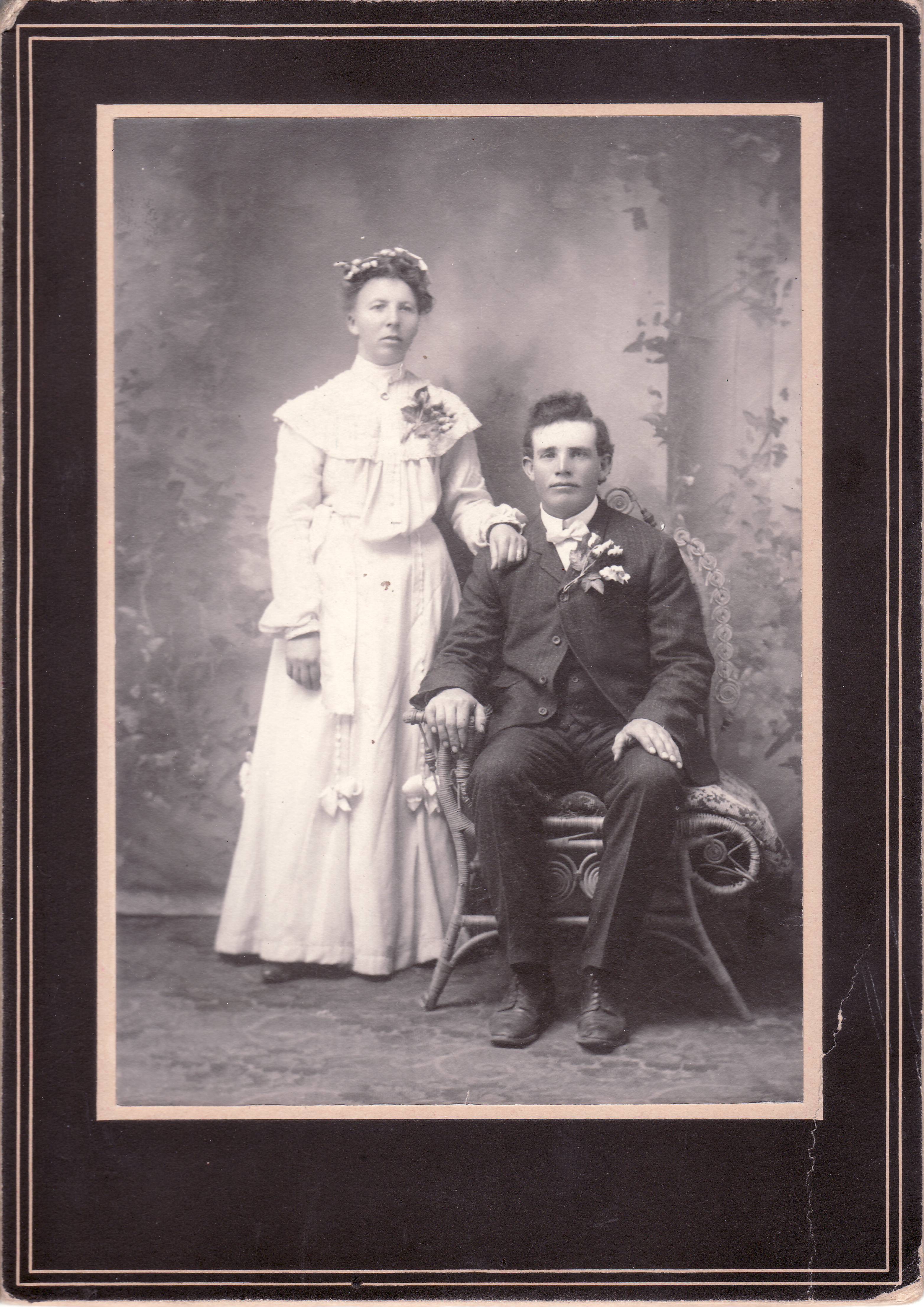
Pauline Wanner and Wiliam Henry Crossley

“This history was compiled August 3, 1993, by J. Allyne Kemp Crossley from two seperate histories, a story written by her son, Richard and information obtained from various family members, at a special request for he 1993 Wanner Reunion, which celebrates the 123rd year of the Wanner family.

“Pauline Wanner Crossley, daughter of Johann George and Ann Maria Schmid Wanner, was born in Atzenweiler, Neckarkreis, Wuertthemberg, Germany on April 1, 1884. Wuertthemberg, being one of the states of the divided nation of Germany. At the time of her birth, she joined a family of seven brothers and sisters, she being the eigth child. Following her birth two more children came to the family making a total of ten children: five boys and five girls, two of which died at an early age, while the family was still in Germany.

“Pauline and her brothers and sisters were very fortunate to have had parents who were honorable, upright, and hard-working people, who loved their children and worked very hard to see that they got the very best that they could provide. Both parents believed in God and had a strong faith that their prayers would be answered in providing them with the blessings they needed. They belonged to the Lutheran Church, and tried to teach their children correct principles.

“Sometime during the year of 1891, Johann, Pauline’s father, brought some missionaries to their home. These missionaries were representing the Church of Jesus Christ of Latter-day Saints, they were Jacob Zollinger [1845-1942] from Providence, Utah; John Hassenfritz, from the Bear Lake area, and John Federly of Salt Lake City, Utah.

“After the missionaries had been teaching them the Gospel for some time, the family became very interested and decided they would join the Church. Some of the family were old enough to be baptized and they became members of the Church of Jesus Christ of Latter-day Saints, in October 1891. Pauline waited until after the family arrived in America to be baptized on January 7th 1897, just three months before her 13th birthday. Joining the Church brought peace to their minds and joy to their hearts. It did not take long for the family to decide that they wanted to leave their native land, and come to the United States, where they could have religious freedom and better opportunities for their families, and to provide for their wants and needs.

“Not long after their baptism, some of the missionaries were preparing to return to their homes in the U.S. and Johann and Maria decided to send their older son, George to America with them, he’d be the first member of the family, to come to this country.

“In the Spring of 1893, Pauline’s parents began making the preparations to take the rest of their family to America, saying “Good-bye” to all their relatives, friends, and their native land.

“They had to ride the train for one day, afterwhich they took a boat up the Rhine River which took three of four days, then they took another train for another day, which took them to the North Sea. Here they got on another boat which was larger than the first, which would take them to Liverpool, England. The sea was very rough and the weather stormy, so it took another day before they reached Liverpool, where they boarded a big ship to sail to America.

“They were on the ocean for about 2 weeks, before they finally reached New York, where they stayed for two or three days. From New York, they took the train once again, and started their journey across the American Continent, for Salt Lake City, Utah, having to stop in Chicago, Illinois for one day and night. After arriving in Salt Lake City, they then continued their long and tedious journey to Franklin, Idaho where they arrived on the 18th of June 1893, all being very happy, and anxious, to get settled in their newly adopted homeland.

“They were met by their brother, and son, George and Mr. Fred Nuffer. Mr. Nuffer invited George, and all of his family to stay at his home, until they could find a place of their own, which was about one week.

“The Sunday following their arrival in Franklin, they all went to church, traveling to Glendale, where they had their membership records moved to, from the Branch in Germany.

“Grandpa Wanner soon bought the home and farm of John Nuffer’s in Glendale and the family lived there for a number of years before buying a home in Logan, Utah.

“Pauline worked hard on the farms that her father had bought – he bought several for his family to run. The members of Pauline’s family were all good workers and they all strived very hard to make a go of it, in this new land. Each of them was also very diligent in working for their beliefs, for their church, and for their Savior, Jesus Christ – including Pauline – she was a member of the Relief Society Presidency, while her children were still young she would take the “Black-top” and make many trips down to Thatcher.

“Not too much is known about Pauline’s romances, as a young lady, but her daughter, Annie, remembers hearing Pauline talk about a young man that she was engaged to, prior to Pauline’s engagement to her Dad, who was killed in an avalanche – Pauline only talked about it a few times.

“Pauline Wanner and William Henry Crossley, were married in the Logan Temple on December 14th 1904; Pauline was 20 and Will was 26 at the time, they both had dark brown hair but Will’s was curly.

“Will’s parents were John and Eliza Clements Crossley, he was born the 16th of October 1878 at Weston, Idaho and was baptized May 7th 1887. He had only one older brother, named Emanuel; one half brother, Levi, also lived with them while they were at home.

“To Pauline & Will were born four girls and five boys. Their first child, a beautiful baby girl, whom they named Florence, was born about 1905, she lived for about one year, then died in a very tragic fire. About one year later, another little girl was born whom they named Violet, she lived only two weeks; a third little baby girl, named Fern, was born on May 25th 1908 and she lived for only a few hours. Pauline was out helping to put up hay when a load tipped over on top of her, bringing the baby too soon. A 4th little baby girl, Annie Laurie, who’d be their only living daughter, was then born on April 30th 1909. *(According to Annie’s birth certif., she was born in March).

“Following the birth of Annie Laurie, the family grew with the addition of the boys, each arriving about two years apart from one another. Joseph Henry, arrived on April 14th 1911; Richard Wanner on January 27th 1913; Albert John was born June 28th 1915; Clarence William, who everyone knew as “Virgil” was born March 18th 1917; he died September 6th 1984, and is buried in McCammon; and then Cyril Chester was born on October 28th 1919. These children brought lots of joy to their mother, and I’m sure that had she have lost Annie, her only living girl, she would have just laid down and died right then —

“The Pioneer immigrants had to make many sacrifices and endure many tragidies in order that they could live their faith and belief in the Gospel of Jesus Christ – many having to leave their homeland and their families, worldly goods, even suffering sicknesses and surviving near starvation and freezing temperatures – But I can’t imagine the pain and heartache of having to watch a home that I’d help build with my own hands, be destroyed in a fire, along with a very precious baby daughter – Florence, when she was only about a year old.

“Pauline and Will had both dropped-off to sleep, forgetting to turn off their coal-oil lamp, and since the wick was bad, it filled the room with smoke as it burned – which woke Will up. He was so sick from the smoke, he couldn’t stand up to talk, he had to crawl about one block, or more to the neighbors, who ran back and were able to get Pauline out of the house – but because of all the excitement and all the turmoil, they forgot about Baby Florence. When Pauline came to all she said was, “The Baby! The Baby!” But it was too late!

“The folks said that another fire happened on the homestead, in Thatcher, at the middle place, because the children decided to build a bon-fire behind the stove in the kitchen – they said it was because the fire had ruined everything so bad, that that was their reason for building their last home, on the homestead, and also a reservoir.

“Will’s older brother, Emanuel, had moved to Thatcher on a homestead, about two years before he and Pauline decided to move – He was finally persuaded and he moved his family to Thatcher, where they homesteaded the place which adjoined his brother’s.

“All of Pauline’s children had a hard “row to hoe” while they were growing up – some made sure that they got a small education and others didn’t but all-in-all nothing was easy for them –

“The children would go barefooted a lot when they were little. One day their Dad noticed that the cows were down in the “stubble” so he instructed the children to go and get them, (they were barefooted, as usual). Annie’s little feet were so tender that with each step she took, the stubble scratched them, and caused them to bleed and each added step brought more scratches, and more bleeding, so she tried to take her time, being as careful as she could so that the rough stubble wouldn’t hurt her feet anymore than they were already hurting. Her Dad got really upset that she took so long to go and help get the cows (he didn’t realize her suffering).

“Then, there were the times when the children would get lost, even on their own place – One day the children were up in the pasture, watching their Dad put in fence posts for a fence, so he could fence-off the pasture. (The children were probably helping as well). One of the boys got tired, so he wandered away from the rest and laid down in the BIG, TALL brush and went to sleep. The whole family hunted and called – but he wasn’t found until sometime after dark.

“Earlier, when the family lived by the “WHEEL GATE”, Joe and Annie went wandering in the TALL Sage Brushes, east of their place. Most of the neighbors must have hunted all over, until the “wee” hours of the morning before they finally found them – the Sage Brushes were so HUGE, that they were just right for the children to make their own little “houses” in them.

“Pauline and Will were strict parents, and living on a farm wasn’t an easy life, to be sure, and everyone needed to work to help: the children even had their responsibilities on the farm —

“Joe and Annie, for example, had to go after the cows, on the hilly pasture land, (there were lots of trees and vegetation). One day, they had just got the cows going along the “cow-trail” through the hills and a bobcat began to follow them and they were scared to death!! After running the cows for awhile, Joe was right behind the cows, Annie next, and then their dog – the dog finally tangled with the bobcat and he took off through the trees – were they ever glad to get back home!

“Another time, Annie went out to take her brother, Richard, a sandwich, when a big buck decided to turn on her and Joe – the only one that could control him was Richard – the buck wouldn’t hurt him.

“Besides his farming – Will also had a “Threshing machine” and he’d go out and do threshing for other farmers, which gave his family a little added means for flour and cereal – He’d always take a load of wheat, by wagon, down to Preston, to have ground into flour and cereal.

That was the end of page 4. It seemed to be an abrupt end, but I cannot tell if there were more pages to the history or not.

Biography of John George Wanner Sr

Wanner Family about 1895

Biography of John George Wanner taken from a hand written history which was in a box of Genealogy material of Clara Bodrero, now in possession of Elaine Ricks (unknown dates), author unknown.. I have written a history of John George Wanner Sr previously. I updated location and names to their proper spelling.

“John George Wanner, son of John Frederick and Anna Maria Marquardt, was born Oct. 18, 1845, at Holzgerlingen, Germany. He had two brothers, namely Michal and Conrad. Grandfather was the youngest child. [He wasn’t a very large man about 5 feet 6 inches tall. He always looked well dressed, clean and very nice.]

“He was member of the Protestant Church. At this church the members graduated from Sunday School at the age of 18.

“In those days children didn’t get very much schooling and grandfather was no exception.

“Grandpa while in Germany worked on the roads and was the road overseer. he also worked in the Black Forest and fought in the Civil War in Germany in 1865 and the War of 1870-71.

“He was married to Anna Maria Schmidt on June 6, 1870. [She was about 5 feet 4 inches and had a good shape. She always fixed her hair so beautiful, she looked nice and well dressed. I can remember this beautiful black knit winter dress she had and she always wore gloves] From this union was born to them five sons and five daughters. Before his marriage he served in the Civil War in Germany and again after his marriage in 1870 & 71 for quite a while.

“After his marriage he worked in the woods. In 1873 they moved from Holzgerlingen to Gruenkraut, Wuerttemberg, where they bought a little home and farm. He also worked in the gravel and woods on this side. In 1880 he got a job on a big highway and worked on it until he came to America in 1893.

“In the month of May 1891 while working on the Highway two men came along and talked to him, giving him a Tract. They were members and missionaries of The Church of Jesus Christ of Latter-day Saints. They visited his home telling him and his family of the gospel and the Lord’s work. They made their visits often, and in July 1891, John George, the oldest son was baptized and came to America with a missionary by the name of Terrell from Providence, Utah.

“In October 1891, grandfather, his wife and some of their children were baptized by the Elders. (Grandfather was the only member of his father’s family that joined the Latter Day Saint church.

“In May 1893, they prepared to come to America. [They rode the train for a day and then got on a ship and went up the Rhine River. This took them three or four days. They then rode the train another day and got on a ship on the North Sea that took them to England; the sea was very turbulent and they had a rough voyage.

“They went to Liverpool, England from Germany on a small ship. From Liverpool to New York they came on a big ship and were on the ocean 13 days. They arrived at New York City and stayed in a Hotel 20 stories up for 1 or 2 nights. They took the train to Chicago where they stayed 1 or 2 nights. Then they took a train and came to Franklin, Idaho arriving on Sunday June 18, 1893. They were met by their son George and Brother Fred Nuffer, the man George was working for. They met them with a one seated buggy and a wagon. Grandfather Wanner asked for a drink of water after getting off the train. “You’ll have to be on your stomach by that stream”, George spoke up. This made Grandfather Wanner so discussed that he walked back to Logan over 20 miles, with a determination to go back to Germany if he had to drink from ditches. The next day he reconsidered and again returned to Franklin, Idaho. They went to Cub River to Fred Nuffer’s place where they stayed for almost one week Then they purchased the farm of John Nuffer in Glendale, Idaho. [It was during this week that Grandpa took his daughter Mary and they walked to Bear Lake County seeking a farm and a home and to see what was available there. They slept on the ground at nights and saved some of their read to feed the bears so they wouldn’t bother them. They had to take off their shoes as they forged streams. It as a rough trip.

“[The first Sunday they were in Glendale, Grandpa and Grandma went to church with these five beautiful daughters and two sons. One day, William Addison Wagstaff was the ward clerk and mother, Mary, had on a red dress; dad looked down at her and winked. You see, dad was well past 30 and not married. I bet he though here is my chance. Of course there were other nice gals available, but he hadn’t married and we were happy he chose mother.]

“[Grandma soon joined the Relief Society and in the minutes of the meetings that I have, tell of her bearing her testimony often and donating eggs, wheat, calico or whatever, when asked to do so. They had a strong testimony and remained true to the Church and were ardent Temple Workers till their last days on earth. ]

“John Wanner took up more land after a few years and built a log cabin to claim the land. Cleared quaken aspens from his farm to have more land. One day his All slipped from a stump and cut a deep space i his hand. It was necessary for the doctor to put in several ditches as the farm work advanced he built a barn and bought addition cows.

“Mother Wanner made and sold many pounds of butter a week to George Benson Store in Whitney, Idaho.

“The Wanners also picked and sold number quarts of currants, gooseberries and raspberries. Gooseberries were about 20 quarts for a dollar, the raspberries sold for about 10 or 12 quarts for a dollar. These were delivered price.

“About that time 2 additional rooms were added to a rock house that was on the place.

“They bought the John Nuffer’s farm at Glendale, Idaho, now Franklin County. Later he bought the Jed M. Blair farms in Whitney and started to raise sugar beets.

“[They later moved in 1910 to Logan, Utah and ] while living at Logan, Utah [to be near the Logan Temple where they could go often. In Logan, they lived at two or three different places, but I wasn’t able to find out for sure. The places I distinctly remember was their home on 3rd North and two or so blocks East and their last home in Logan was a lovely home they built located on 4th North and two blocks East. they did a great deal of Temple work for the dead having got many names from Germany. They also did a lot of work for other people. While in Logan, Grandpa always had a lively horse, a good looking single black buggy and a real snazzy buggy whip. This one place they lived on in Logan had an extra lot where he grew hay for his horse and he’d cut it with the scythe. They also always had a nice garden and beautiful flowers. As I remember this home was on 3rd North and a few blocks East.]

“[They were hard working, thrifty people and handled their affairs very well. They really made hay while the sun shone and were able to retire at a reasonable age and had enough to live on plus an estate they left. ]

“February 16, 1922 after a short illness of pneumonia he died and was buried in the cemetery at Logan, Utah.

Neuffer Family Book

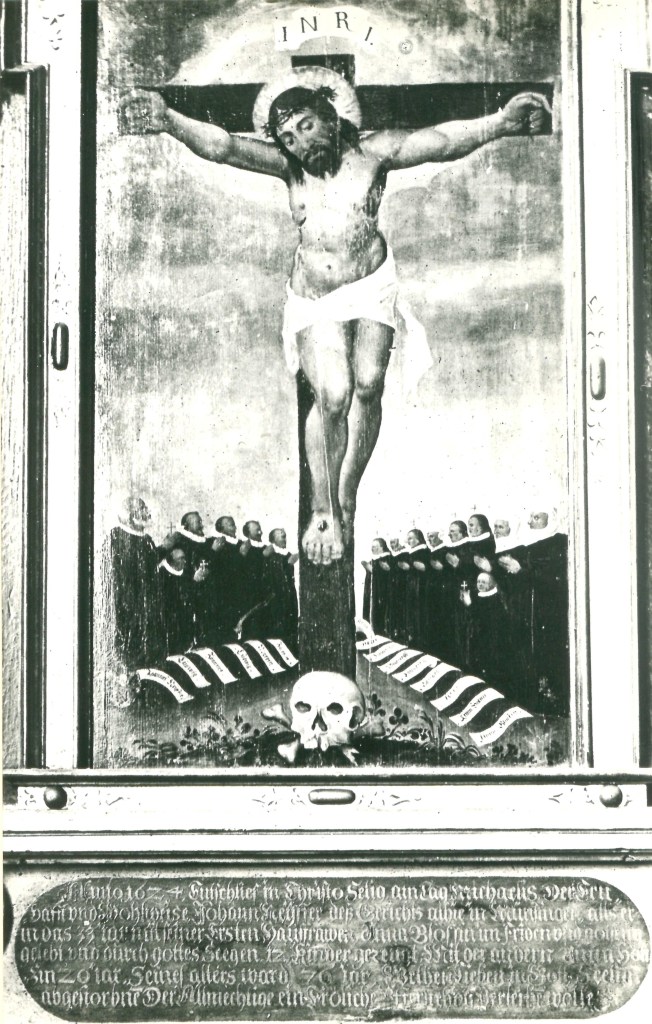
Joh Valentin Neyffer (1572-1610)

I received a copy of an old book that belonged to my Great Grandfather and Grandmother, Bill and Mary Andra. My Uncle Larry had the book and was looking to have it translated. I knew there were some German speakers I knew in the area and was put in contact with David Badger of Rupert. He does these types of projects, this one tested him. He completed it and did a great job.

This is a copy of a book that was originally published in 1735. We knew it was believed to be related to my Great Great Grandmother’s family, Regina Frederike Nuffer Wanner. Our family has been linked to these individuals. I have some reservations as to accuracy of those connections.

Below is the pdf with all the pages of the book in black/white. David Badger’s translation, in pdf, includes some pages in color. I attach some of the language and some of the photos below.

Johannes Neifer (1556-1632)

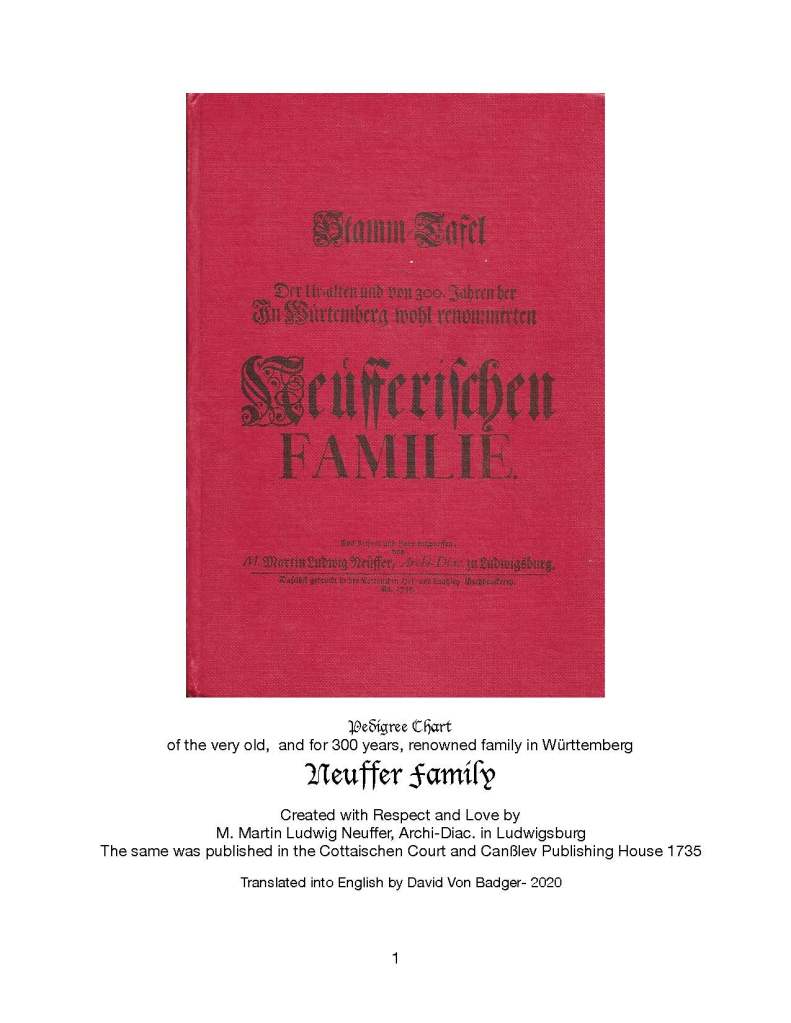
The cover is below. Here is the translation by David Badger.

Cover and translation of the Neuffer book

Pedigree Chart of the very old,  and for 300 years, renowned family in Württemberg

Neuffer Family

Created with Respect and Love by M. Martin Ludwig Neuffer, Archi-Diac. in Ludwigsburg

The same was published in the Cottaischen Court and Canßlev Publishing House 1735

Translated into English by David Von Badger – 2020

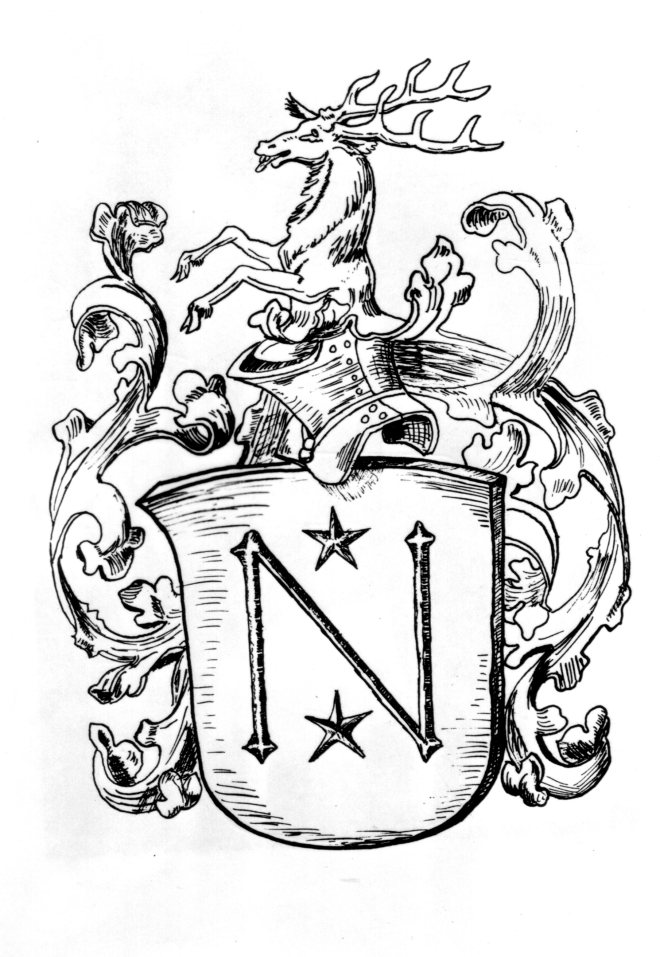
Here is a copy of the Coat of Arms from the book.

Coat of Arms for Martin Neuffer, 1594-1638

Here is the book scanned in black and white. Thank you to Braylyn Mercado for scanning and photographing.

Epitaph for Johannes Neifer (1556-1632)

Rights and Responsibilities

Of Rights and Responsibilities: The Social Ecosystem of Religious Freedom

Art and Golden Coley

Introduction

Distinguished guests, colleagues and friends, it is an honor to speak to you today. The subject of religious freedom continues to raise new questions. We have come to learn a little more from many of the most able minds and willing hearts in the field. If we listen to each other carefully, we will be better equipped to meet the challenges and opportunities of today and tomorrow.

Most of us drink from the waters of religious freedom without even knowing it. We think of it as a river that will always flow. But we might not recognize the risks to the tributaries that feed that river.

The perpetuation of religious liberty requires that it be understood and valued by the rising generations. There is a need for them to comprehend what religious freedom brings to society and what is lost when this liberty is eroded. When young people come to understand why this freedom is crucial to their own aspirations, welfare and happiness, they will feel inspired to act to strengthen and preserve religious freedom.

Community and Commitment

To better understand the freedoms we now enjoy, we can look to history. My parents came from what you in the United States call “the greatest generation.” They both served in the British armed forces in World War II — my father in the Royal Air Force, my mother in the Army as a nurse. Between them they served across Europe, North Africa, India and Burma. They fought for their neighbors, they fought in defense of their homeland and they certainly fought for religious freedom, but I don’t suppose that was a phrase they would have used at the time. With so many others, they warded off the tyranny of Nazism. So many freedoms were on the line, and that generation gave everything they had in their defense. Vast swaths of Europe were overrun, with massive casualties. Whole nations were subjugated by tyrants whose aim was to conquer and not only suppress freedoms, including religious freedom, but wipe out and destroy people of particular ethnic backgrounds, faith and belief. The generation which confronted these demonic threats did so with phenomenal courage. It took a society that possessed a highly developed social solidarity and mutual accountability to bring about such a moral achievement.

After six unspeakably harrowing years, the war was won. In the ensuing years, those who had experienced this conflict saw society through the lens of that experience. After a decade or two, they observed the next generation, which had not been where they had been nor confronted what they had seen. These young people became concerned with what in many cases the wartime generation regarded as lesser things. The cohesion that had come from shared hardship borne of an existential threat began to wear off. I was a child through part of this period. The protests of the 1960s found their way onto our television screen. What they exhibited in raw emotional power, they often lacked in sustained social commitment. These actions ranged from bus boycotts to opposition to the Vietnam War to campus protests over student fees. They were all motivated by worthy purposes, but on their own, these purposes were limited without the continuous obligations borne of shared vision and purpose. Of course, protest is a vital function in a democracy, and free people are free because they are able to challenge the status quo and those they have elected. But during those years, the youth of Britain sometimes appeared to protest for its own sake. My parents lamented the shift toward a mindset of rights with no apparent regard for, or reference to, responsibilities. The two must work together; passion and duty must connect. And that concept is what I would like to address — our rights and the responsibilities associated with those rights.

Today it might appear to some that rights just happen — that they are automatically inherited and perpetuated without thought or effort. We can forget the extraordinary struggle, resolve and sacrifice that went into protecting our abundance. We may rarely think about our obligations to keep those rights in place.

The Heart of Religious Freedom

For a time, I lived in a country that did not allow the free expression of religion. I witnessed how people who dared to stray from the official line could be punished. Unfortunately, this continues today in many nations across the globe. Violation of religious freedom is one of the main reasons why we see so many refugees and displaced people today. Religious differences become religious alienation, alienation turns into persecution, and persecution turns to conflict, war and mass flight. These crises happen when freedoms, including religious freedom and freedom of conscience, are not protected. Regimes target those who believe differently, force them from their homes and uproot them in terrifying ways. In 2015 and 2016, from one end of Europe to the other, I saw firsthand countless ordinary people driven from their homes and lands further to the east across countries and continents in search of safety and refuge. Often their beliefs were a factor in why they were displaced.

Hatred and terror drove these people from their homes. The world needs places of refuge from such extremism. Where liberty thrives, it flows almost invisibly. We experience the benefits of it all the time but rarely see how it actually works. Religious liberty acts as the heart of society, a key contributor carrying the lifeblood of all that is good to the whole community.

Healthy societies run on trust, confidence and a sense of safety. With freedom of religion and belief, people feel safe in their deepest convictions and can express and exercise them publicly. The great enemy of religious freedom is estrangement and alienation. When a society or government divides people based on what they believe, how they think, the words they say, whom they worship or the manner in which they worship, common ground is lost, and life together becomes a battle. The test of a pluralistic society is to achieve unity without diminishing the diversity within it.

Religious freedom means nothing if you protect your own religious practice while neglecting the practice of others, especially those who might be less secure and able to defend themselves. It only works if you protect the rights of everyone. As Elder D. Todd Christofferson, a member of the Quorum of the Twelve Apostles of The Church of Jesus Christ of Latter-day Saints, has said, religious freedom is important precisely because it gives everyone — religious or not — the “space to determine for ourselves what we think and believe.”[1] In terms of numbers and inherited culture, the United States has a Christian majority, but unless it honors the lawful practices of Hindus, Sikhs, Muslims, Jews, Buddhists, Native American religions and everyone else, including individuals and groups who profess no faith at all, it will fail to live up to its own ideals. [2]

We all need to be consistent in defending and respecting everyone. And doing so does not mean you have to diminish your own beliefs. That’s how all our rights will be taken seriously. We can’t pick and choose who gets what rights. Every religion is susceptible to the fluctuations of prominence and obscurity. The cultural group that enjoys privilege today may lose it tomorrow, even in nations where the rule of law and democratic principles have been enshrined for centuries.

Having a broad view of religious liberty helps us see that it is universal, not just the preserve of those who are powerful or popular. Religious freedom is suprapolitical, something that is part of our nature before politics declares it to be so. Every person, regardless of religion, race, gender, orientation or nationality, possesses fundamental rights simply by being human. They include the right to life, liberty, security, equal protection of the law and the freedom of thought, speech, and religion, as well as protection from political extremism. But we all must remember, be taught and pass on the responsibilities that come with these rights.

Rights are inscribed in laws, constitutions and charters the world over, but they were first imprinted in the human heart by a loving God. One of the founders of this nation, Alexander Hamilton, wrote, “The sacred rights of mankind are not to be rummaged for among old parchments or musty records. They are written, as with a sun beam, in the whole volume of human nature, by the hand of the divinity itself; and can never be erased or obscured by mortal power.”[3]

Though these inalienable rights come from above, they still have to be cultivated by human beings below. It is up to us — it is the responsibility associated with these rights — to implement, protect and anchor them in our daily life.

Two Sides of the Religious Freedom Coin

Rights and responsibilities can’t be separated without negative consequences. The symbiosis between rights and responsibilities is often forgotten in the rush to demand that something be given to us, while forgetting to foster the conditions in which that right can even be respected or have meaning.

Appropriately exercised, rights and responsibilities move in a virtuous circle. We are more inclined to honor the rights of people when we know them personally and feel a sense of responsibility for their well-being. Meaning in life comes from giving yourself to others, not demanding that others give to you. Author and commentator David Brooks has written that joy comes from commitment:

“In reality, the people who live best tie themselves down. They don’t ask: What cool thing can I do next? They ask: What is my responsibility here? They respond to some problem or get called out of themselves by a deep love. By planting themselves in one neighborhood, one organization or one mission, they earn trust. They have the freedom to make a lasting difference. It’s the chains we choose that set us free.”[4]

Important work in religious freedom is found in walking a mile with your brother and sister, listening to a stranger talk about their religious experience, and in the gentle efforts of dialogue and persuasion.

The study of religious liberty has so many facets and nuances it can be dizzying. The conversation often focuses on the law — what it is, what it should be, what it protects, what it should protect, how it sets boundaries and so on. Law is vital and is an essential part of a bigger picture. However, rights act more like habits than dry edicts. Law and custom must work together.

Behind every right, if we look closely enough, stand layers upon layers of social practices that regulate innumerable human interactions in societies, families, marriages, friendships and all human relationships. They are called “norms,” and they require innumerable transactions of give and take. The demands we make of the law only make sense when embedded in a web of countless norms that make our society possible. We need to keep finding ways to align what we demand with what we can contribute—to our families, workplaces, neighborhoods, churches, schools and communities.

Understanding and appreciation of religious freedom will need to move from the exclusive realm of specialists to a much broader audience, to include those who don’t grasp the intricacies of the law nor have the capacity to influence the law in conventional ways.

To do this, we will need to reframe our own understanding and more effectively articulate what this freedom means and the responsibility it brings. We have a particular obligation to carry this to a younger audience who will be charged to see these freedoms protected and responsibilities fulfilled in the coming years.

A Challenge to Embrace

Many in the rising generation today are concerned about serving those in need, making a difference, changing the world and helping their community. They seek morality and responsibility, and understand the language of universality. Our young people can be jaded by exclusion, inconsistent application of laws and entrenched interests of a few to the detriment of many. They are attuned to the authentic. They are outward-looking and deeply sensitive to treating people fairly and equally. Their yearning to serve is deep. All of this is wonderful and promising!

But on the whole, the religiosity of young people is shifting. They are much less inclined to identify with a particular religion, let alone attend church.[5] They can see religion as stifling their values of inclusion and tolerance. But it is not only the youth; the trend toward a secularized public life affects all ages.[6] One of the results is that our culture is fragmenting into cultural and ideological tribes.

President Gordon B. Hinckley, former president of The Church of Jesus Christ of Latter-day Saints, once said, “Men everywhere seem to be groping as in darkness, casting aside the traditions that were the strength of our society yet unable to find a new star to guide them.”[7]

Peter Beinart, a writer and political science professor at City University of New York, sees a connection between decreasing religious activity and increasing political conflict. He recently wrote, “Maybe religion builds habits and networks that help people better weather national traumas, and thus retain their faith that the system works. For whatever reason, secularization isn’t easing political conflict. It’s making American politics even more convulsive and zero-sum.”[8]

We can help fill this void with a positive message and constructive actions. There is a need, and a real opportunity, for religious freedom to be framed differently and be more clearly understood.

Be a Force in the World

Do we fear the world more than we shape it? Do we let our anxieties prevent us from making a difference? Do we spend more time hiding from society’s flaws than fixing its problems?

How we answer these questions determines what our social environment looks like. It is always changing, and improves or deteriorates depending on our actions. Society is not something that just happens to us; it is something we help shape.

The main thing is to engage, dialogue, bridge and interact with people of all sorts. Unless we participate, we lose our ability to both influence the world and learn from it. As British novelist E.M. Forster put it, “Only connect! … Live in fragments no longer.”[9]

We all have a stake in this debate. “No man is an island, entire of itself; every man is a piece of the continent, a part of the main.”[10] The poet John Donne wrote these words nearly 400 years ago, but they still resonate today.

Contributing to the good of society is part of our spiritual stewardship. Jesus taught his followers to be the light of the world and the salt of the earth. Let your light shine, he said, as a city on a hill. Salt was an ancient symbol of friendship and generosity. And like salt, we have a duty to savor person-to-person connections and nurture amity between adversaries. We must not cloister ourselves with others who think like us and congregations that believe like us. Jesus demonstrated how to lift society, moving deliberately to the despised, the diseased and the misunderstood, listening to and healing them.

I have been inspired by the goodness and selflessness of members of my own church who reach out to those in need. Wherever I have witnessed, in the course of my service, those afflicted by fire, flood or any manner of natural disaster or humanitarian crisis, our people have been there. When visiting such a location in California, I was asked if I knew what FEMA stood for. As I struggled with “Federal… Emergency…,” my friend said, “No, it’s ‘Find Every Mormon Available.’” It was said in jest, but more than once media has reported that the first two groups at the scene were the Mormons and the Latter-day Saints — reminding us of the uphill task we have to be known by our full name. The point is, our people do go out of their way, a very long way out of their way, to help in crises the world over. This isn’t only disaster response and assisting refugees. These devoted souls are there in those often invisible, private, chronic situations which can last a lifetime. And of course it’s not just our people; we work alongside representatives of numerous other faiths, often partnering with them in some of the most challenging parts of the world. There are certainly those involved doing extraordinary work for whom faith is not a driving force. But these contributions with our fellow believers are vast. And, importantly in today’s context, they are often overlooked. Part of that is our own fault, as we can have something of a tortured relationship with the idea of telling people about these good works. As a church, we are torn between having these efforts be private and letting that light shine in a way that will create awareness that we take our responsibility of contributing to society very seriously. We will probably need to talk more openly about these contributions, letting people know that at the heart of our faith is the desire to help our fellow human beings, wherever they are, people of faith and no faith at all. And that we do so without seeking converts in these most trying moments in people’s lives.

We need to help many more young people see the opportunities the free exercise of religion provides to serve others in need and unite communities in ways that benefit all people. And we need to help them understand that the expression of religious belief through community service is dependent on religious freedom. With this understanding, they will not only value religious freedom more deeply but will courageously act to strengthen and perpetuate it.

Influencing society always seems to be the job of someone else — someone with more power, more money, more time. Perhaps we expect some program or sponsor to take the lead. But when it comes to taking care of people, there is no “someone else”; there is only us. Civic engagement requires people to freely act on their beliefs and solve the problems of their communities. If the prevailing philanthropic desires of our rising generation are to be harnessed and maximized, our young people will need to come to the same conclusion as have so many of us here today. And that is, that this is the most worthy of causes — a spring which feeds so many others. It represents our highest and holiest beliefs, and at the same time, blesses individuals, families, communities of all descriptions and entire nations. How to unite these benevolent desires of the rising generation with the responsibility of preserving religious freedom, along with every other inalienable right, is the task before all of us, and I am so grateful that you have gathered in this way to address just that.

We have a responsibility to help and, as God told the Prophet Jeremiah, “seek the welfare of the city where I have sent you into exile, and pray to the Lord on its behalf, for in its welfare you will find your welfare.”[11]

Conclusion

Now to conclude, every society has a foundation of truths, rules, expectations and norms which guide their thinking and their actions every day. Many take them for granted. And like all things we suppose will simply always be there for us — like the air we breathe — we hardly notice them. That is, until they’re challenged. And then we have to look closely and really get to know them, as if discovering them for the first time. So it is with religious freedom.

The way we all as human beings form our deepest beliefs is perhaps life’s greatest journey of discovery. The freedom in which we do so is precious. Our ability to practice and share those beliefs as we learn of and come to understand the beliefs of others enriches us all, broadens our view and creates harmony. A climate in which we are free to believe and practice is also a climate in which we can contribute. Religious freedom demands both the universal right and the universal responsibility, and it is our turn to do our part.

As human beings and the children of divine creation, we all want to live by a moral vision and want to share it with others. In doing this, we enter the realm of both religion and politics. This can be messy and contentious, but we have reason to be optimistic. As Martin Luther King Jr. was so fond of saying, drawing from the abolitionist Theodore Parker, “The arc of the moral universe is long, but it bends toward justice.”[12]

We are in that arc, and God expects us to do our part in nudging it toward justice. This is our work. Thank you.

By Elder Patrick Kearon of the Presidency of the Seventy

This talk was a keynote address at the Religious Freedom Annual Review at Brigham Young University on June 19, 2019.

German Branch of Oneida Stake

Necia Seamons article at Oneida Stake Academy

In 2018, I took the kids over to Preston, Idaho because there was a display on some of our Nuffer ancestors at the Oneida Stake Academy.  Necia Seamons has been good to write history of the area and do various research projects.  The Academy continues to be restored and progress is being made.

I thought these pages deserved their own entry for the history as well as reference to family.

“On April 19, 1896, the Oneida Stake of The Church of Jesus Christ of Latter-day Saints organized a German speaking branch based in Glendale.  Both John Nuffer and Charles August Nuffer served int he branch’s leadership, as did Joseph Moser, Mr. Kern, Alma Moser and William Addison Wagstaff.

“The first branch president was Jacob (Ira) Naef, who was Swiss.

“They gathered every two weeks, at first in the homes of members, and sometimes traveled as many as 20 miles for services from the towns of Glendale, Preston, Mink Creek, Whitney, St. Joseph and Franklin.

“‘The branch existed for 20 years, until Oneida Stake President Joseph S Geddes, in 1916, asked Charles August Nuffer, then branch president, to not hold meetings due to contentious sentiments toward the German speaking people.’

“‘During the latter part of the war, some of the people of Preston made it very hot for the German-speaking people, yet most of them were Swiss but that did not make any difference.’

“‘After the war, many of the German people moved away, so we never started to hold meetings anymore,’ said Charles August Nuffer.

“At the end of WWI, Preston resident gathered outhouses into the town square, what is now Benson Park (above), and called it the ‘Schitty of Berlin.’  They whooped and hollered and burned the mock city down.

“Willard and Austin Nuffer sons of John and Louisa Zollinger Nuffer, served the U.S. in WWI.  Willard also registered for WWII.

Necia Seamons article at Oneida Stake Academy