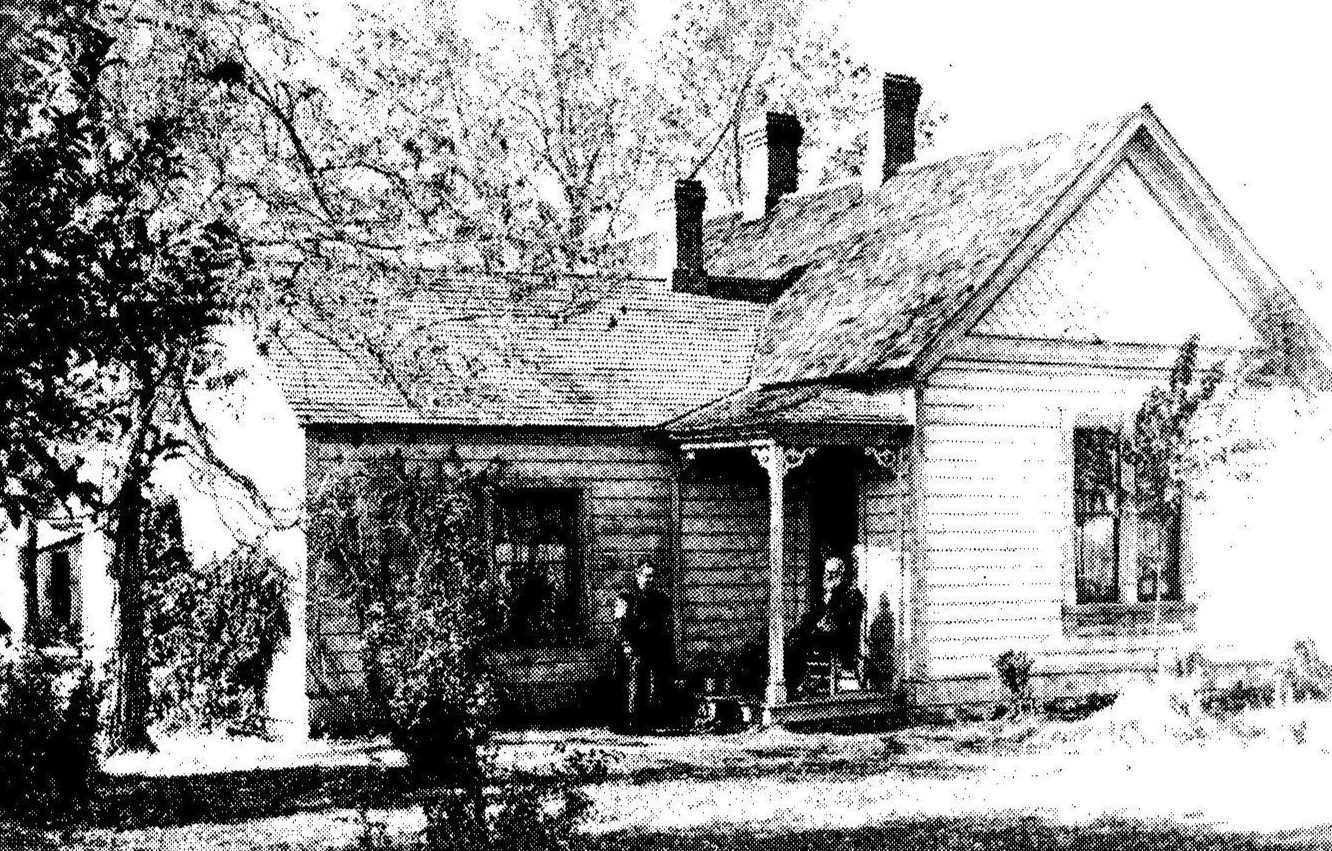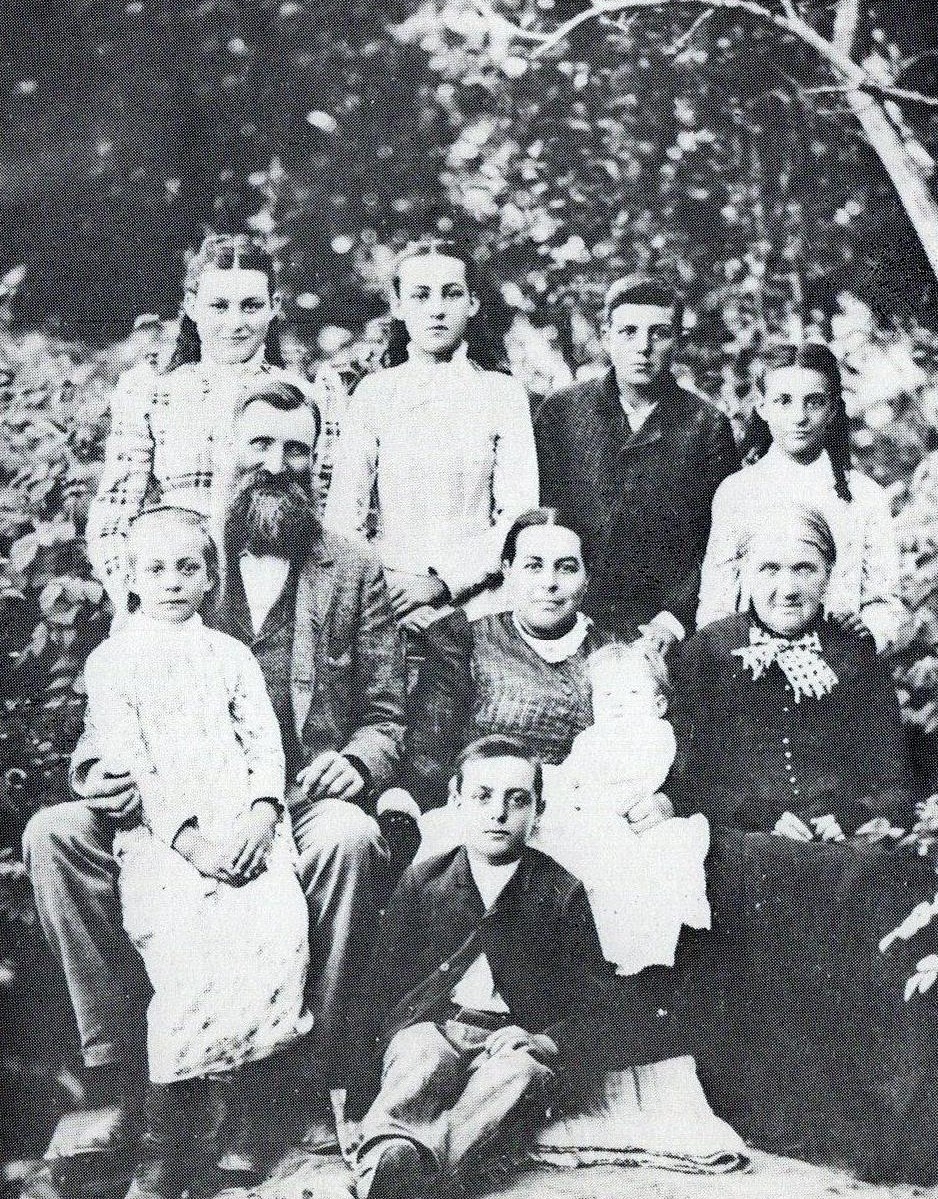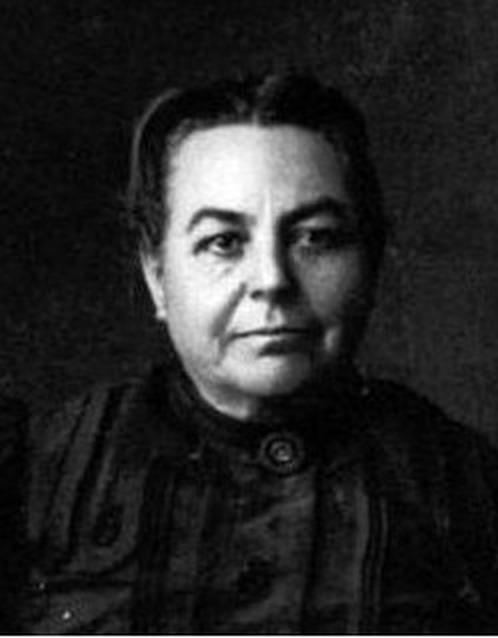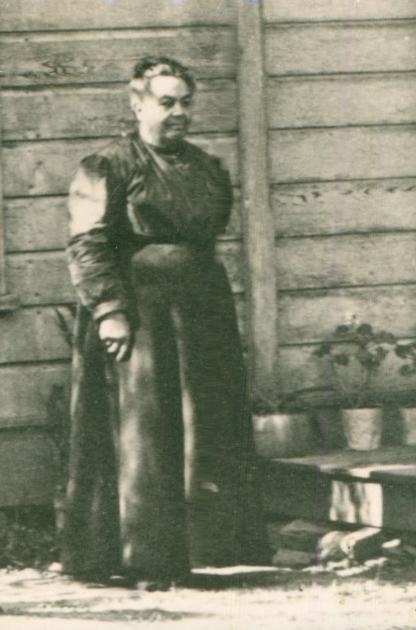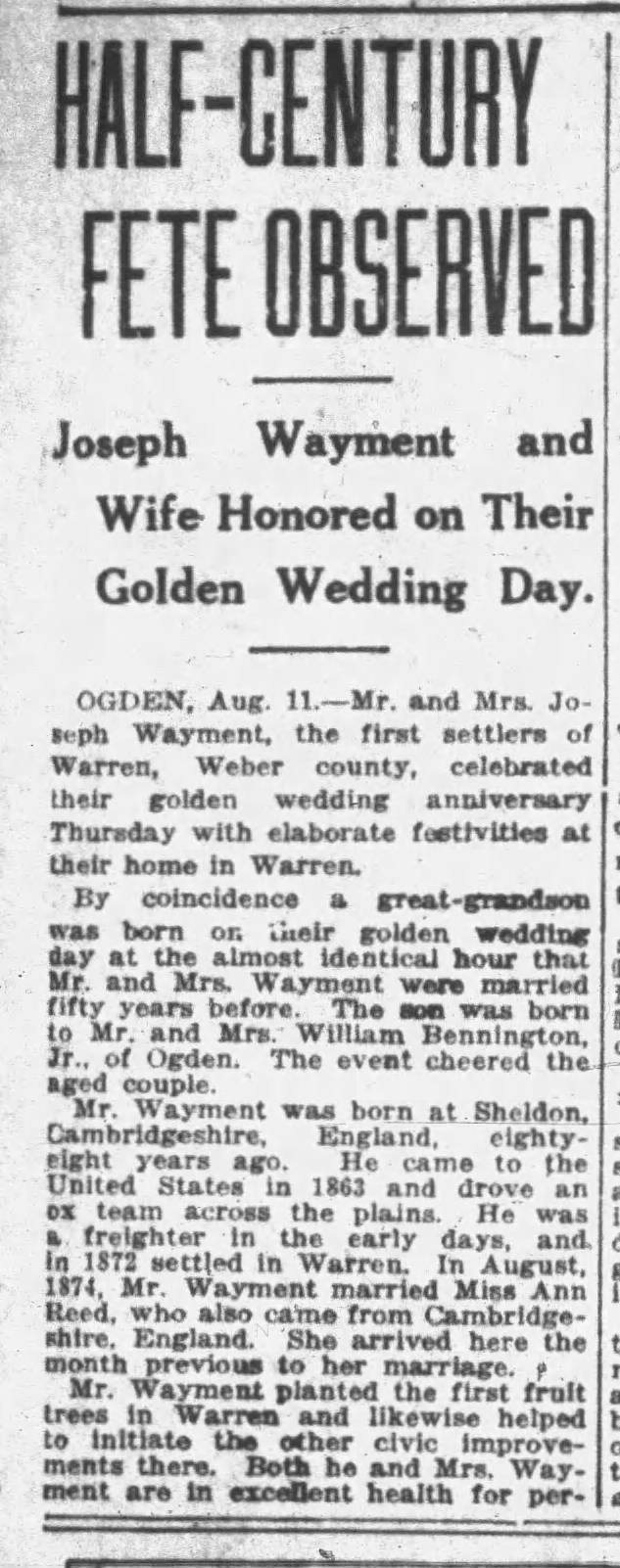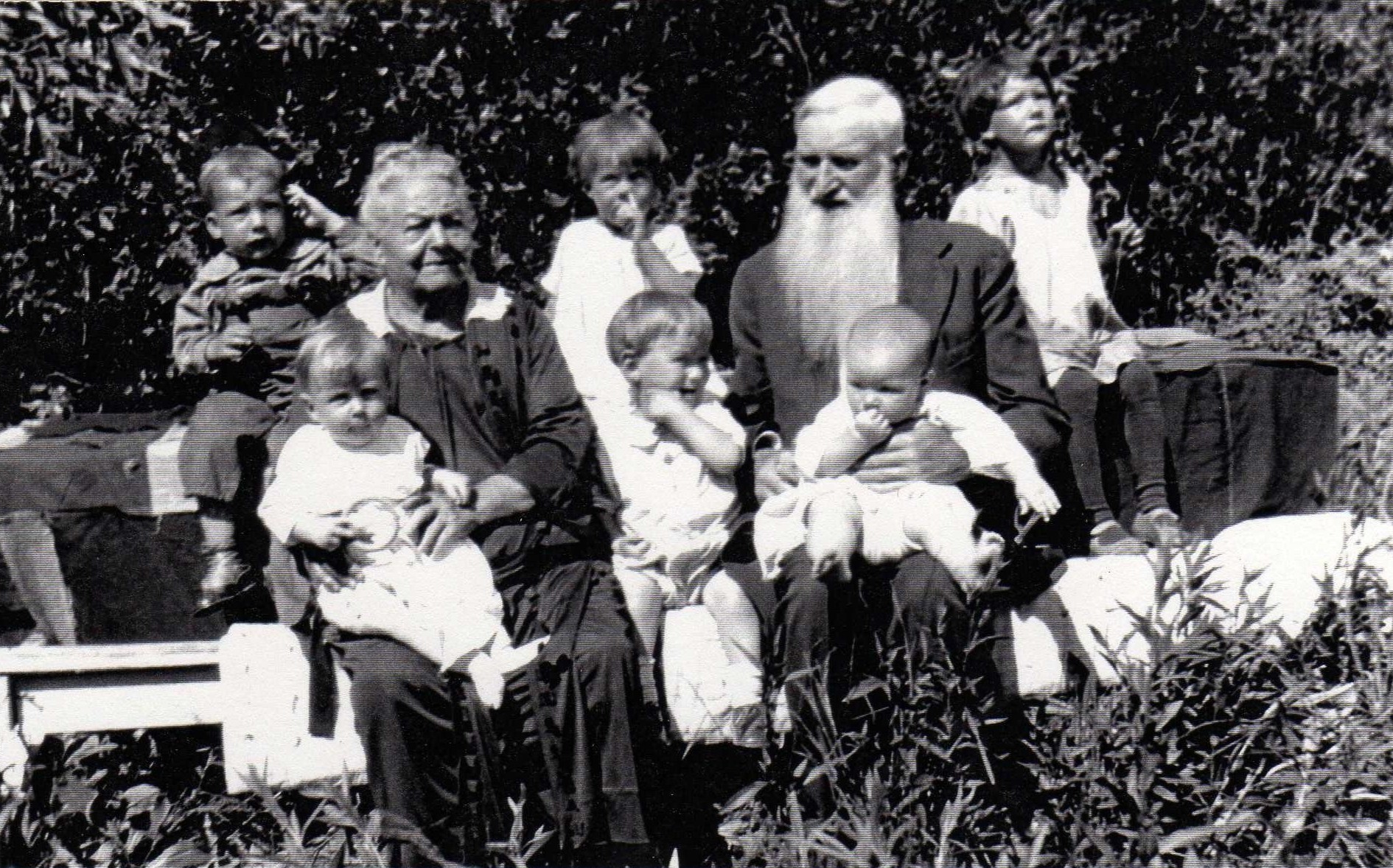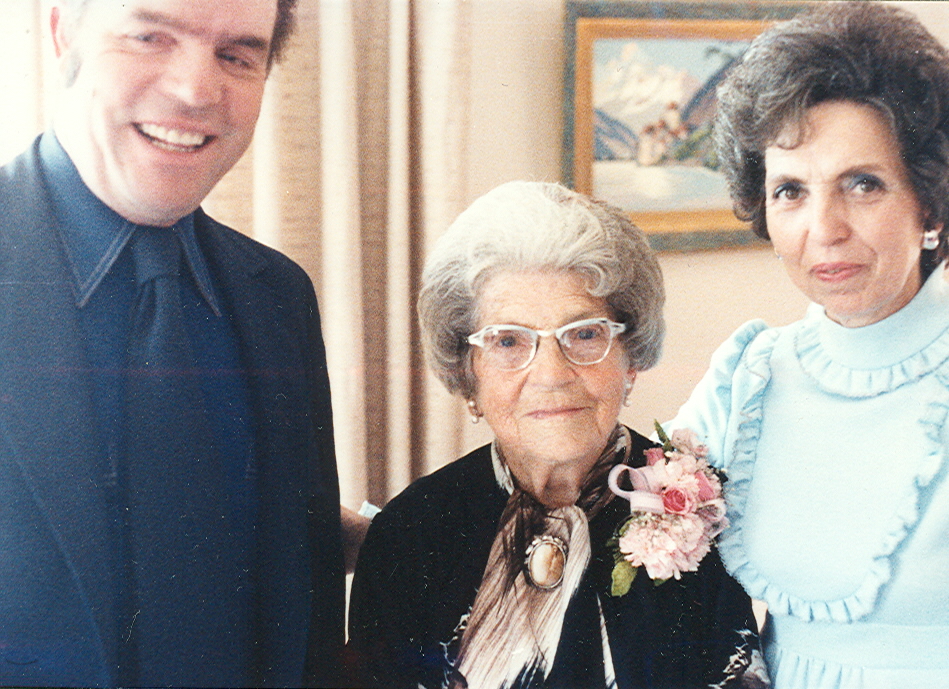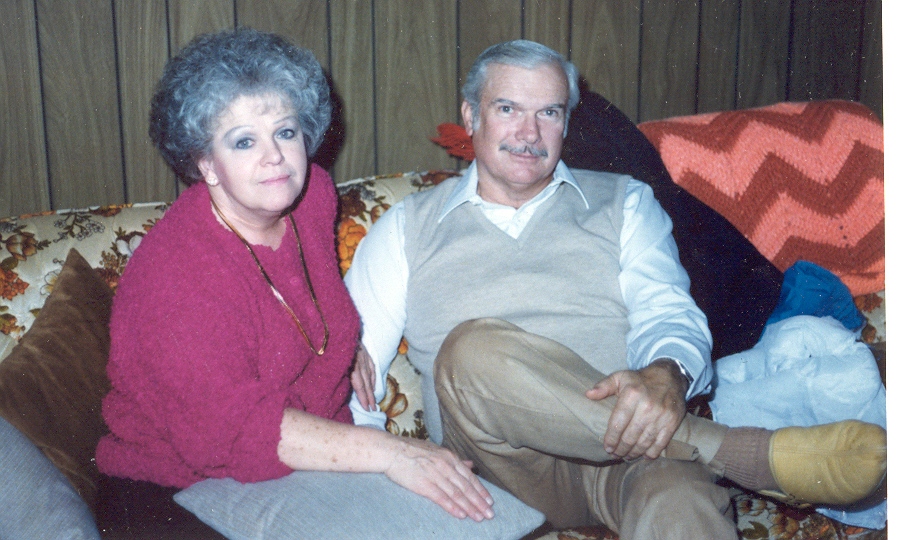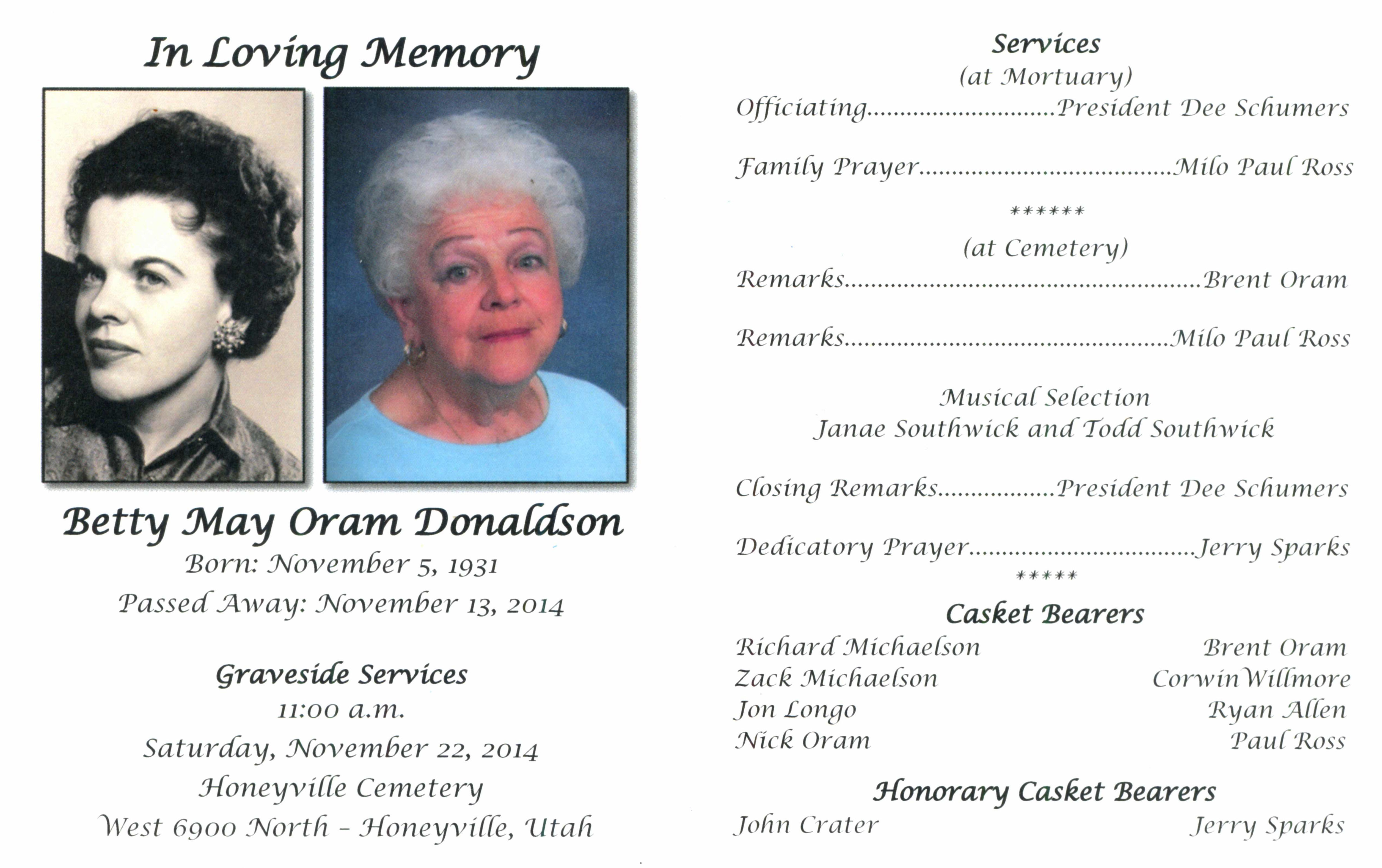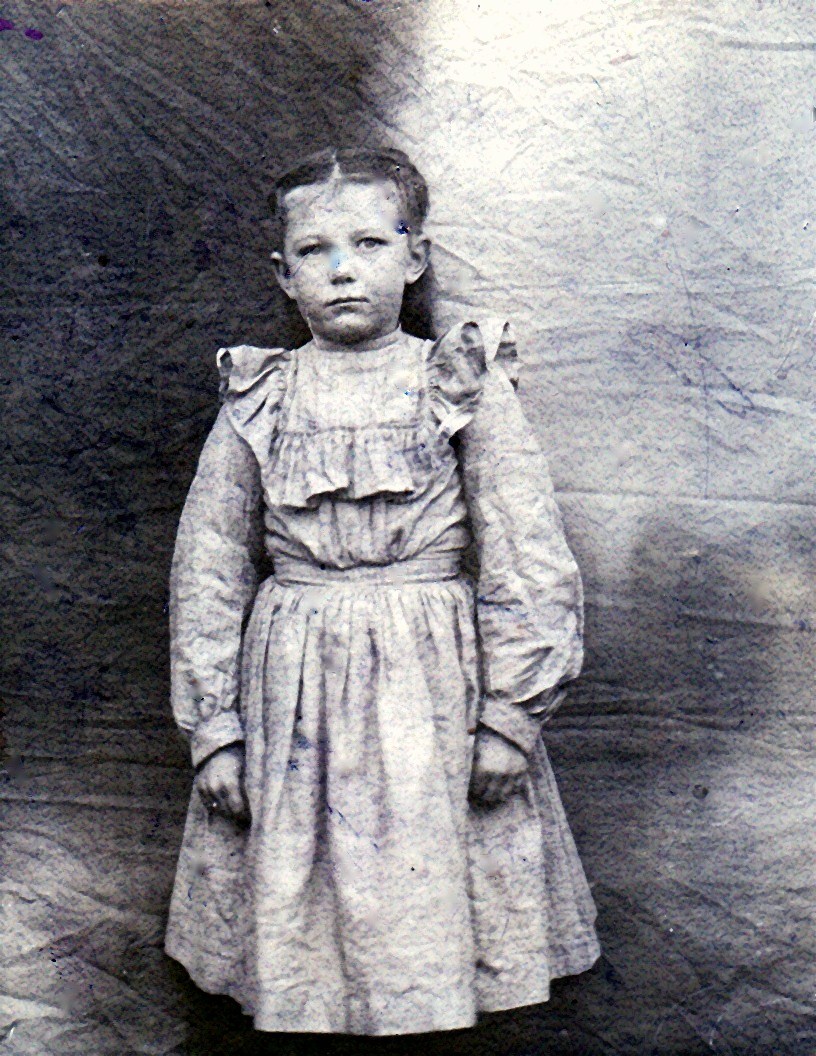
This is a book I received that belonged to my Great Aunt Betty Oram Donaldson. I was not sure exactly what to do with it, other than share it for family history purposes. The photos in the book were not very high quality, but I am replicating them here anyway. Hopefully this history is of value to someone else who has family in the book.
“It’s a Great Life”
It’s the time in life for all of the Wilson School Class of ’47 to stop for a moment and realize that “It is a Great Life.”
We are matured and “aged” to the point that we are willing to accept that we are what we are. We realize that all of us have talents and abilities and that no two of us are alike, but that’s what makes us successful and happy. We are happy when we use our abilities and develop our talents.
In sports and business they often refer to “a level playing field,” meaning that both sides of the competition have equal opportunities. Therefore I believe that in life competition, the only “level playing field” is when we compete with ourselves. Our goal should be to do the very best we can, because no one else has the same talents, or abilities, or past experiences that we as individuals have. It has been said that we are the sum total of our past experiences. I believe our religious freedom and our constitution give us the opportunity to pursue success and happiness.
At the reunion dinner it was noted that all of us were satisfied with our accomplishments in life and most of us were in the service of others by actively volunteering in our churches, schools, civic organizations or other needy causes. Yes! It is true that most of us are involved in golfing, traveling, or other hobbies that we have looked forward to doing while preparing for these Golden Years. The time and resources to pursue and enjoy these activities make it “a Great Life.”
I am proud and honored that I attended Wilson School and associated with all of you there. From that small class we have many success stories and important things that we have done. Each of us has his or her own success story to be proud of whether it’s related to our families, our friends, our activities in church, our civic involvement, our involvement in other special organizations, or our career successes.
It has been said that when we die if we have five close friends that we have been successful in life, If that is true, then all who were part of the Wilson School Class of ’47 are successful individuals because of the friendships that we share today.
May each and every one of us continue to be successful and happy in our daily life, and always remember that it is a Great Life.
— R. B. (Bud) Willey, Class of ’47 Student Body President
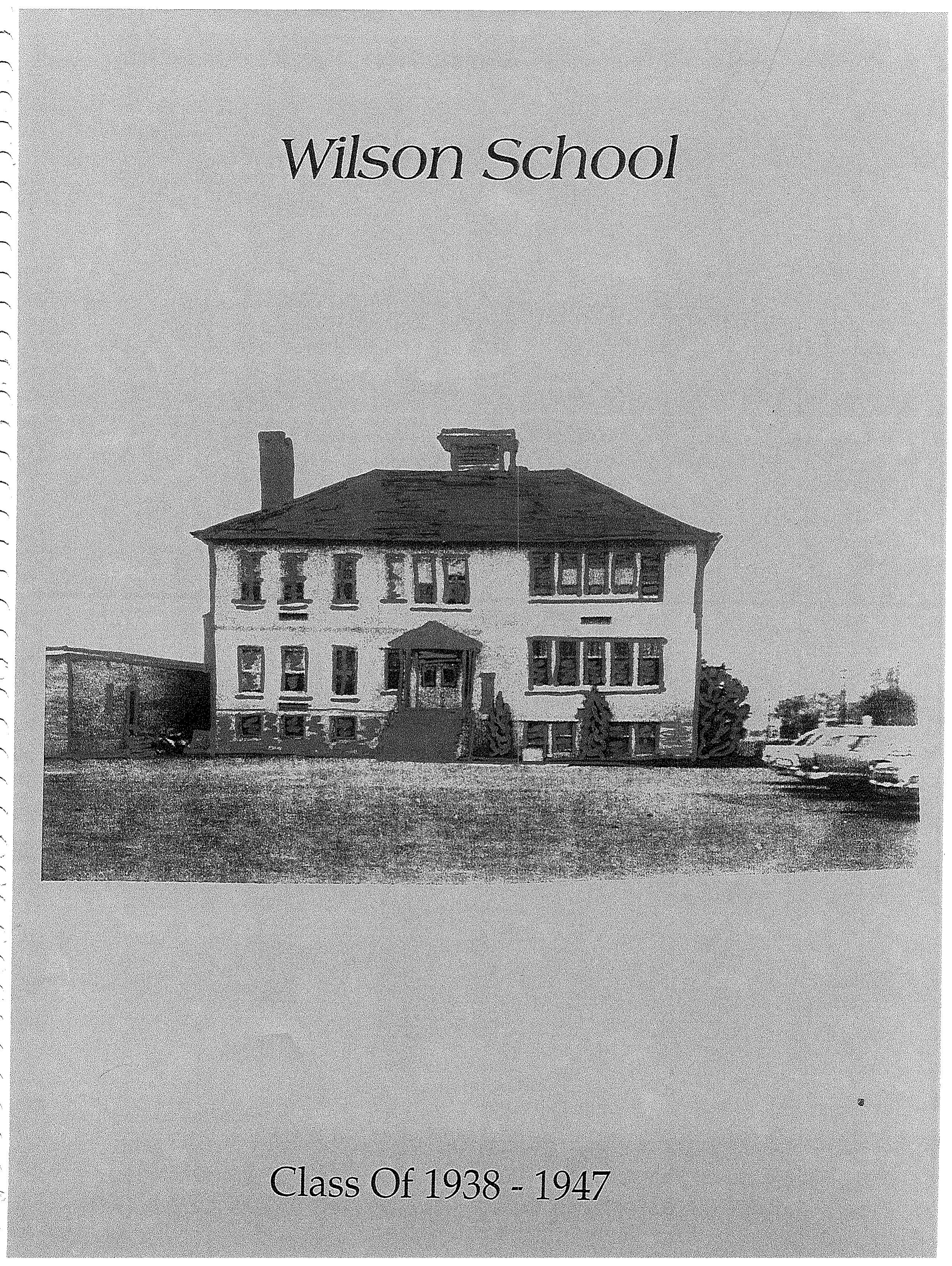
History of Wilson School Class, 1938 to 1947
Many of you attended your very first school years in another school. As each one came to Wilson we became friends and so your memories will begin where you started. For a few of us our total elementary school experience was in the old Wilson School and that is why we started this memory book with the first grade.
First Grade, 1938–39
Our first grade teacher was Miss Dorothy Poulsen. She was young and pretty and we loved her. Our first grade class room was upstairs on the southwest corner. It was large with windows on the south and had wood floors. We had tables and chairs, a playhouse, a sand table and a space for a reading circle. We read from Dick and Jane books. We carried our lunches to school and stored them in a screened cabinet in the hallway. Many of us had Snowdrift shortening buckets for lunch pails. That year the front entrance of the school faced north with steps going toward the road. There was no cafeteria. First and second grades were excused at 2:00 p.m. to go home. That year we had two age groups in our class. We met with the children a year older than us. A doctor visited our class and checked our ears and throats. There were about 29 children in our room.
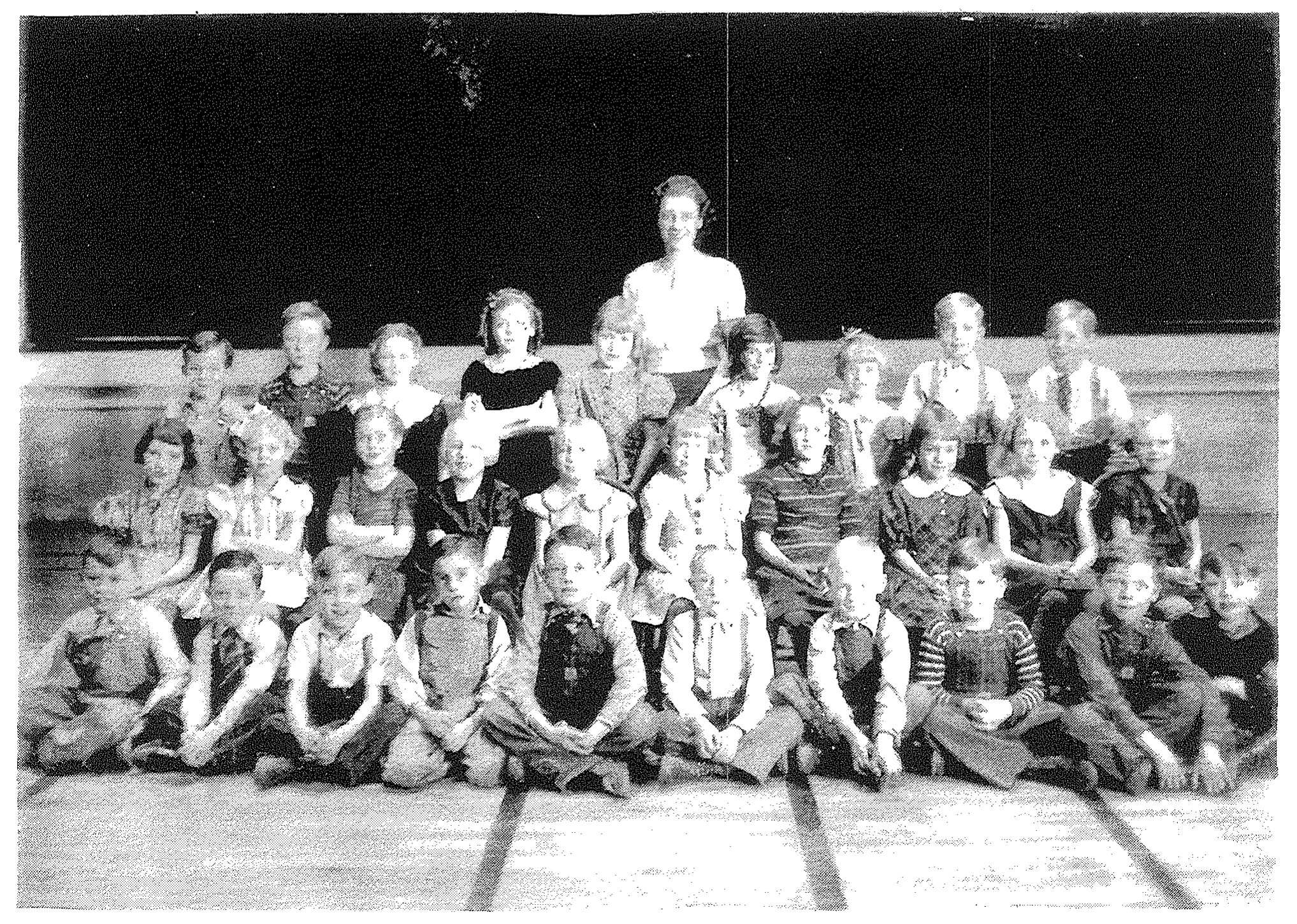
Second Grade, 1939–1940
Our teacher was Miss Viola Poulsen. Our classroom was upstairs on the southeast corner with windows on the south and east and a fire escape outside. We had desks that year and reading circle space on the east. We learned reading, math and other subjects. The school district closed the Marriott-Slaterville School that year and those children came to our school, so we had one age group of children in our classroom. About this time in the second or third grade we began getting soup for school lunches. They brought buckets of soup to the classrooms and passed enamel bowls and spoons to each student and filled them with soup. That was the forerunner of school lunches. About this time the school was remodeled so that the entrance faced the east and the office was built where the north entrance had been. The bathrooms were downstairs in the basement.
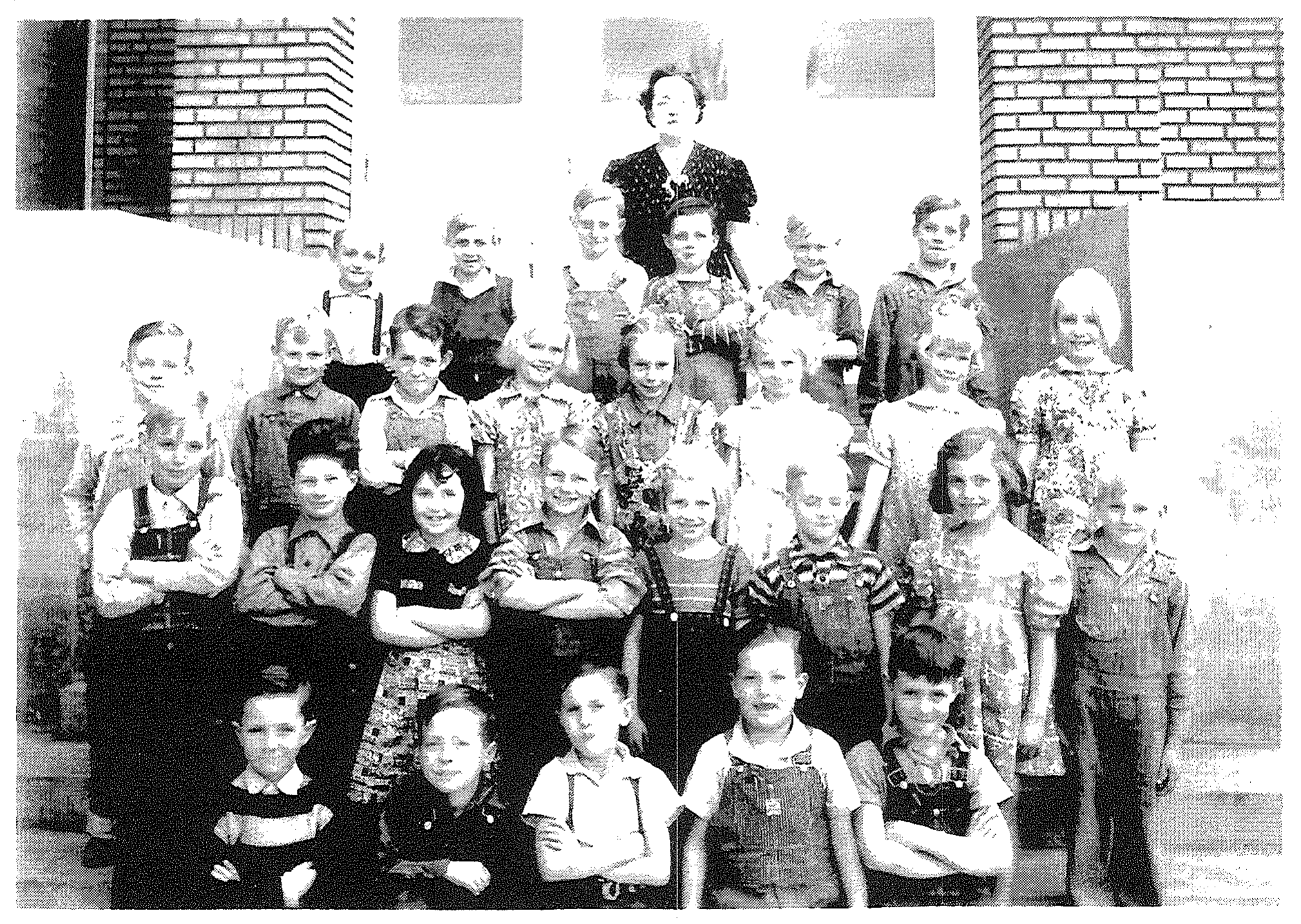
Third Grade, 1940–41
Mrs. Folkman was our teacher. Our classroom was the upstairs northeast corner or the southwest corner. There were 29 children in the class.
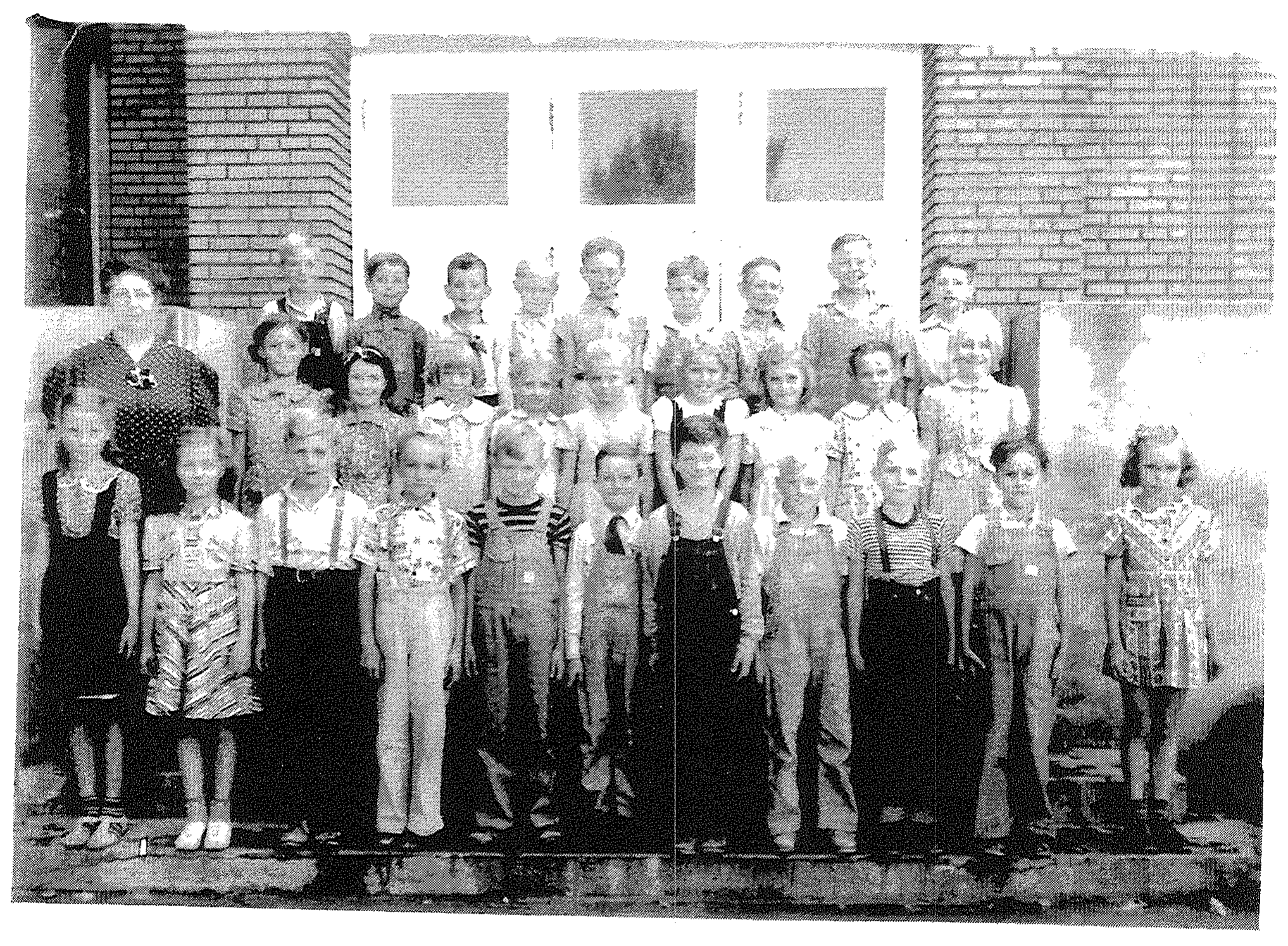
Fourth Grade, 1941–42
These were the war years. Our teacher was Miss Chadwick. Our classroom was the upstairs middle room on the north. These war years were very hard. School was closed in the fall so the older school boys could help harvest farm crops. We went to school on Saturdays a while to make up the time. The older boys were soldiers and were drafted to fight Japan and Germany. Many of our brothers were soldiers. No school pictures were taken during our fourth, fifth and sixth grades because all resources were concentrated on helping the war effort.
Fifth Grade, 1942–43
Our teacher was Miss Vera Shaw. She was a superb teacher. Our classroom was the upstairs northeast corner. About the time of fifth or sixth grades they began school lunches and we had tables in the basement in the hallway. I don’t remember when the cafeteria was built.
Sixth Grade, 1943–44
Our teacher was Vera Shaw again. Our classroom was on the main floor southeast corner. As an activity one day we made butter by shaking cream in a bottle then we each had a cracker with butter on it. We learned reading, math, and spelling etc. It seems like part of this year we had Mrs. McGrath for a music teacher and we made a book of all the old music composers. We bought victory stamps and gave the government the money to help fight the war. A favorite game of the boys was marbles. Each boy took great pride in his collection of marbles and his skill at shooting. The girls played jacks. We had a rubber ball and a set of 12 or so jacks and we would sit on the floor in a circle or around a table and go clear through onseys, twoseys, downseys, under the bridge or over the bridge etc. Another favorite of the girls was jump rope. If you could do “Red Hot Pepper,” or “Double Dutch” without missing you could jump quite a while. To be able to run in and out without missing was a keen skill. The boys played baseball. Another favorite game was “Pop the Whip.” Boys and girls would hold hands “tight” and run in a snake line and try to pop the end person off. We took turns being on the end to be popped off. Another favorite was “Flying Dutchman”. We were in a circle and two people ran around the circle. If your hands were touched you ran to beat the other couple to the empty space. Another favorite in winter time in the gym was four-corner kick.
Seventh Grade, 1944–45
Miss Maude Holmes was our teacher. That year for a very short while we had a Mr. Carter who was unusual. He stole some of our lunch money. Our classroom was on the southwest corner of the main floor. Around this time the school district built the cafeteria on the south of the school. We blessed the food and everyone ate together and we learned dining etiquette. The mashed potatoes and hamburger gravy and chocolate cake were favorites.
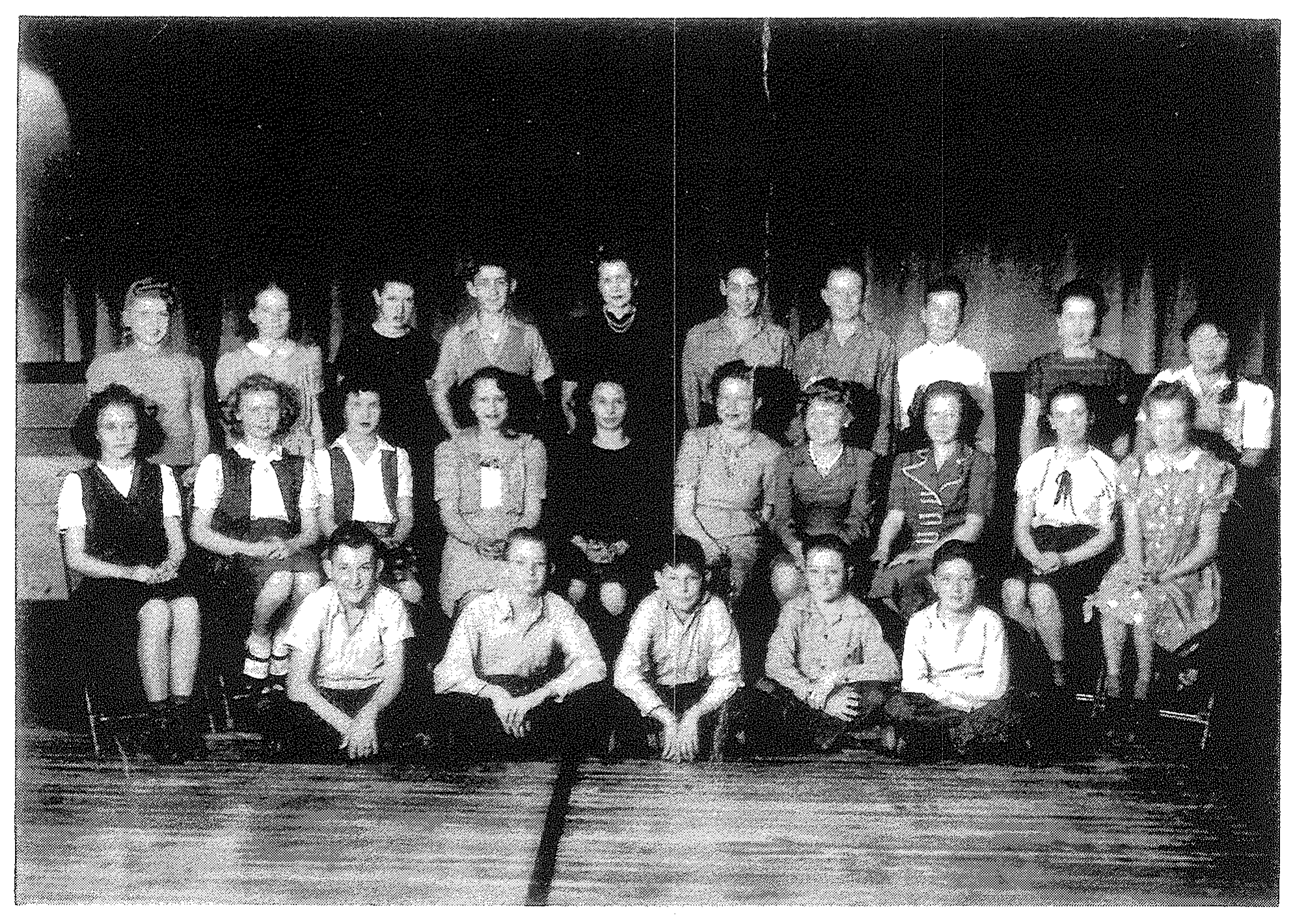
Eighth Grade, 1945–46
Mrs. Woodward was our teacher. Our classroom was on the northwest corner of the main floor. There were 27 in our class. World War II ended and the United States began it’s healing process and the rebuild.
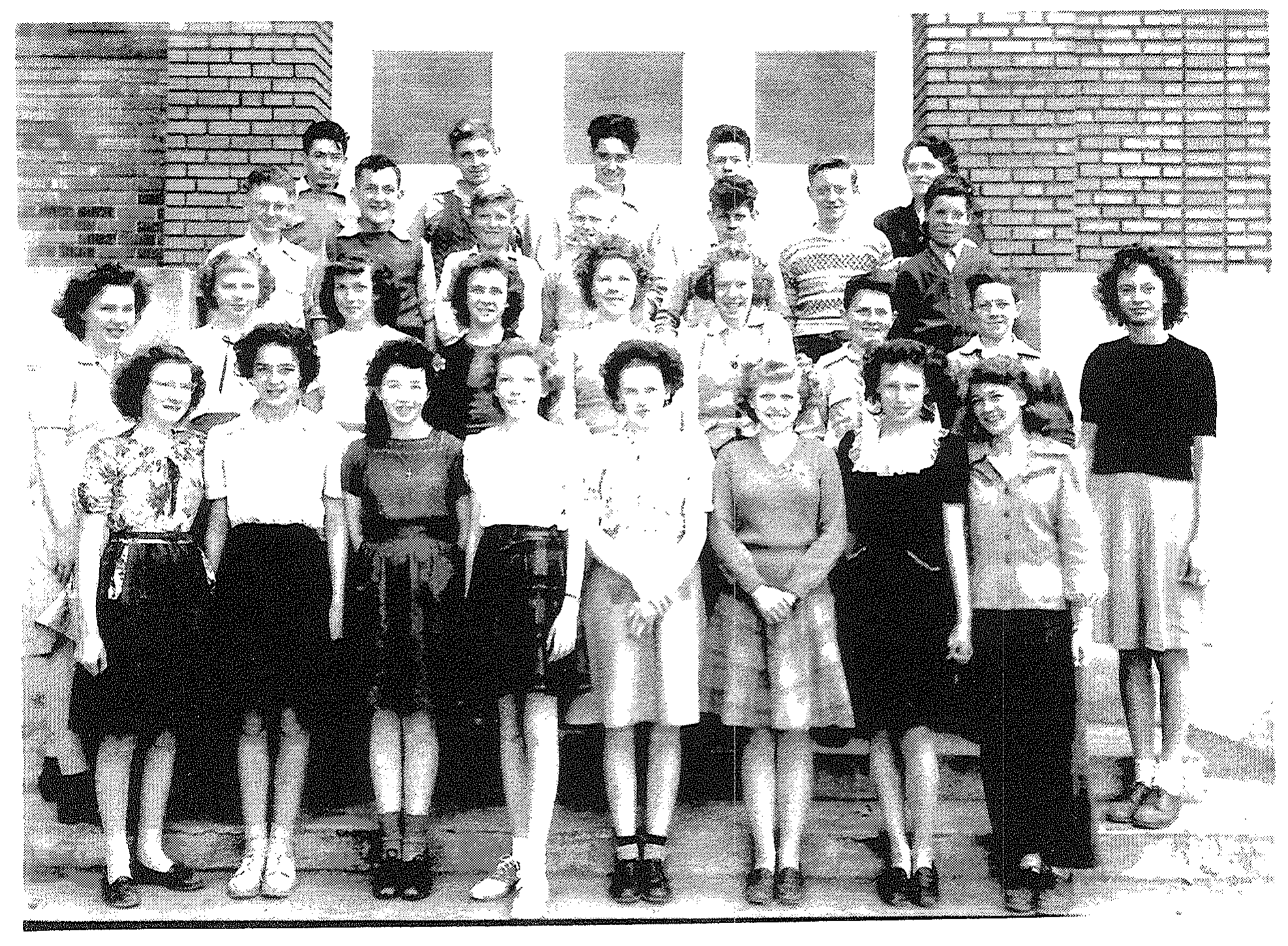
Ninth Grade, 1946–47
Mr. Leland Reese was our teacher and our classroom was on the northeast corner of the main floor. We were becoming sophisticated adolescents. Mr. Reese taught us first aid. Mr. Wheat Taylor was our principal. Mr. Pettigrew was the orchestra teacher and some of us played instruments. We had basketball and baseball games against the other schools on Fridays.
Wilson School was a safe and healthy environment for children to grow. The teachers respected our childhood and watched over us with kindness. Every year each class in the school participated in a school program. Mr. Arthur Taylor was our principal in the early years. A Mr. Chadwick was principal for a time. Wheat Taylor was principal in our later years and helped prepare us for high school. All in all we had a memorable early school experience and look back at those fun years with fondness.
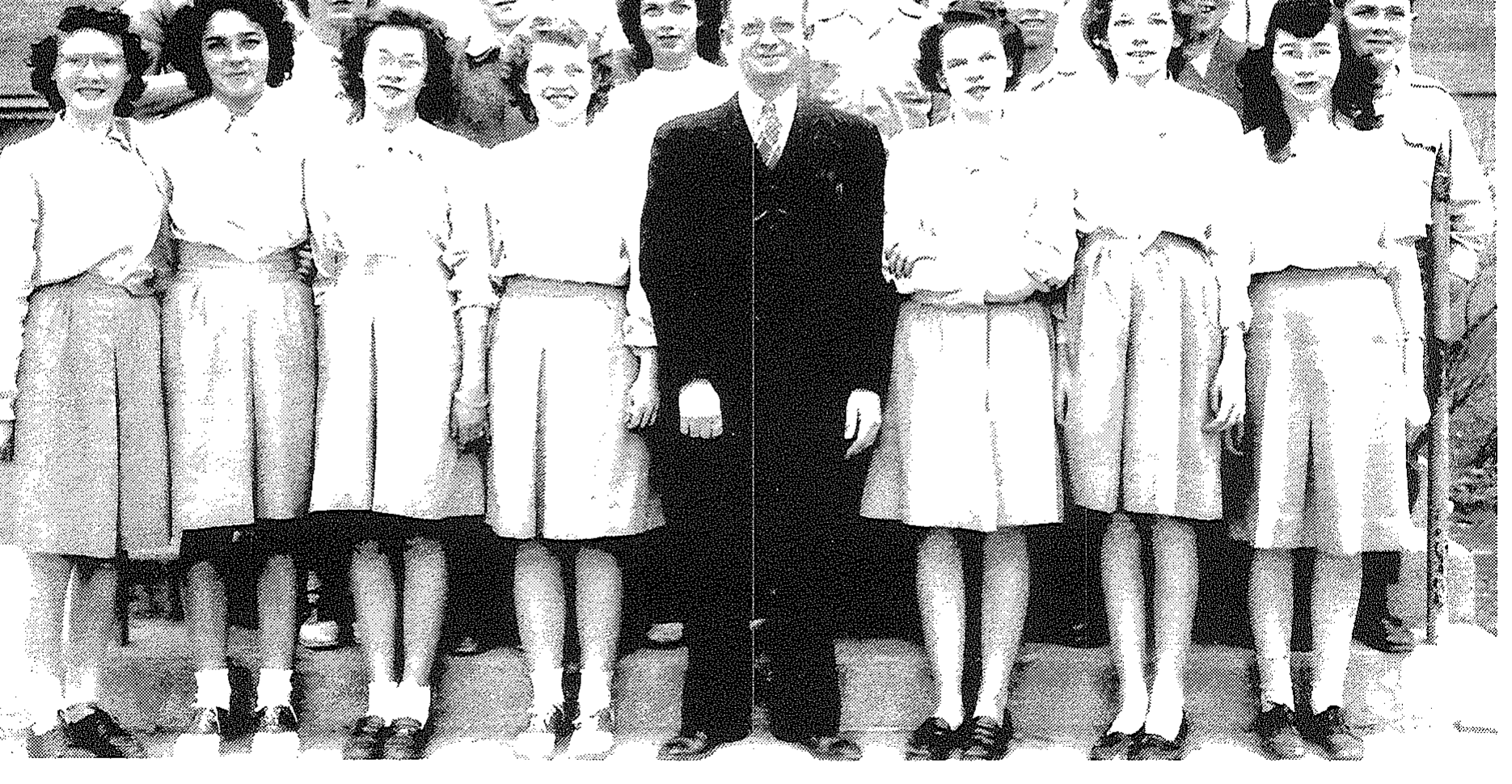
Ninth Grade Class of ’47 Reunion in 2000
Drauca Marston Holmes, Lola Taylor Sheffield, Louise Holmes, Marilyn Bowman Garner, Betty Lou Buck Schulze, Emma Ropelato Walling, Nona Flitton Forsgren, Gladys Sorensen Gibson, Lila Stone Harwood, Robert Holmes, Gordon Belnap, Betty May Oram Donaldson, Rudell Willey, Jewel Checketts Atwell.
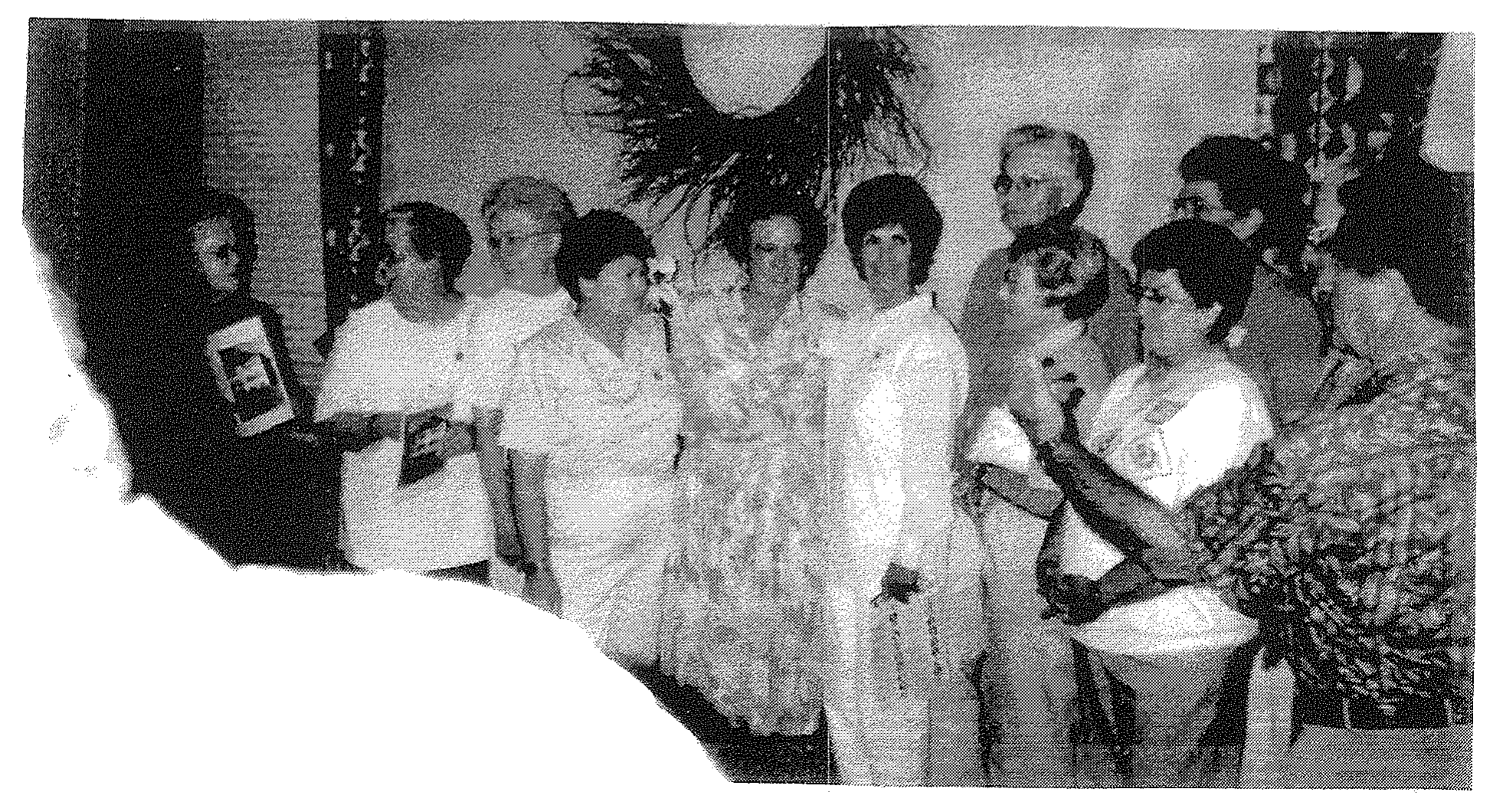
Where Are They Now
GORDON “DUTCH” BELNAP
Married Faye Robins in 1951. Three sons, Rob, Tim, Mike. Eight Grand kids. US Navy: Honorable Discharge. Weber Jr. College 2 years. Utah State: Grad 1958, Masters 1965. Coach, Utah State University 13 years. Athletic Director Weber State University. Faye passed away Aug. 1996. Married Karen Smith Sept. 1997. Hobbies: woodworking, golf, travel, volunteer 2nd grade teacher.
MARILYN BOWMAN GARNER
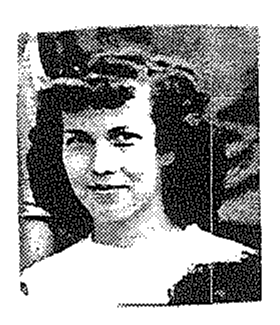
I’ve had a good life. I attended Weber College, married Don Butler and had 2 children, Kathy and Gary before leaving Ogden in 1956. We lived in Pocatello, Idaho before moving to Grand Jct. Colorado. During our 15 years in Colorado, I worked for a wholesale drug company and the last year as office manager, bookkeeper for an ophthalmologist. While living there Vickey and Jodi were born. Our son was killed in a car accident in 1968 and in 1971 Don and I were divorced. I moved with my girls to Salt Lake in 1973 where I spent the first 4 plus years as office manager/legal secretary for an attorney. Then I went to work for Salt Lake County. When I retired in 1999, I was fiscal manager for the SLC Public Works Department. I married Clair Garner in June of 2000. We plan to keep up the good life with travel, golf, volunteer work, genealogy and enjoying our 9 grandchildren.
BETTY BUCK SCHULZE
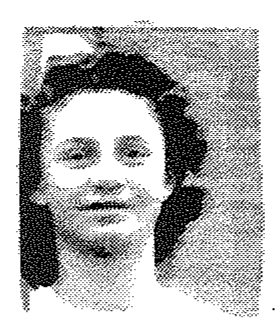
When I left high school, I married Marler Williams. A boy, Monte B. was born of that marriage. Marler died 8 months after Monte’s birth. I went to work at HAFB to support myself and Monte. While working at Hill, I completed my schooling at Utah State University. I married Willard Smith. One son, Donald was born of that marriage. After Donald’s birth I returned to work at Hill. I worked as a supervisor for several years, then selected to study under Dr. Fredrick Herzberg, Distinguished Professor of Management from University of Utah. Under Dr. Herzberg’s guidance I completed a Masters Degree Equivalent in Industrial Psychology then taught Organizational Development, Air Force wide. I retired from HAFB with 25 years service. Willard and I traveled for 8 years prior to his death from cancer. I am now married to Hugo Schulze. We are enjoying our children, grandchildren and great grandchildren. I love to golf and play every chance I get. I have played on bowling leagues in the past. I had a wonderful time golfing with my past friends, especially Dutch Belnap, at the Weber High Golf day in 2000.
JEWEL CHECKETTS ATWELL
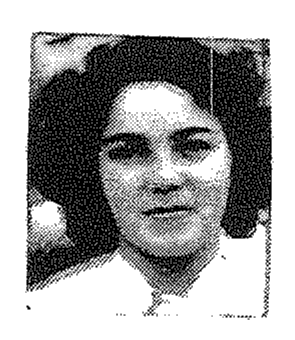
I was engaged my senior year, and married Daryl Hendrick on June 19, 1950. We settled in Layton and had 4 girls and 2 boys. I played on the church softball team until I tore the cartilage in my knee, then I helped coach. We moved to Santa Fe, New Mexico and I started my dream of becoming a nurse. I worked 25 years in all areas of nursing, really enjoyed it, and learned a lot. Daryl passed away in June ’68. That was the year I met Gene. I married him in Nov. ’78. He is my best friend, lover and husband. He’s really been good through all the surgeries I’ve had. Gene had 4 children and our families are like one big family, all getting along well. These 21 years have been so happy! We have a total of 10 children, 26 grandchildren and 4 great grandchildren. Gene is now retired from US West [Quest] and we live in Roswell, New Mexico.
JOHN EILANDER [JACK]
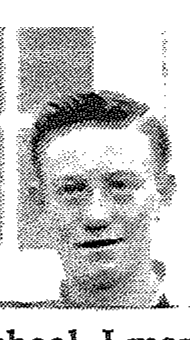
Upon my graduation from high school, I married and went into the US Army. After my release from the Army, I went to work for 3 years at the Ogden Arsenal. Subsequently, I was hired by Weber State University, where I retired in 1992 after 38 years of service. I am the father of 6 children, grandfather of 11 grandchildren and great grandfather of 10 great grandchildren.
NONA FLITTON FORSGREN
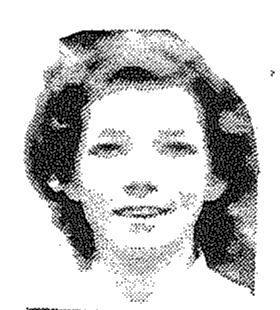
After graduating from high school, I got a job at a 5 and dime store for a short time before the opportunity came for me to take employment at Hill Air Force Base as a sheet metal mechanic. I had met my husband, Judd, at a senoir class party. After dating for some time we were married in 1953. I quit work to have our family of 3 daughters. We lived in Ogden and Willard then back to the Ogden area of Kanesville, West Haven. About the time our girls were in school, I again had a chance to return to my old job of riveting. I worked on the F4’s and F16’s. After 22 years of enjoyable service at HAFB, I retired in 1987. I have been busy since, wondering how I had time to work. Judd and I have traveled long and short trips, taken cruises and just the summer of 2001 traveled to Sweden, my husbands long time desire. I have served as Relief Society President in our ward and am enjoying my grandchildren as well as all the family. We have much fun and enjoyment with them. They are the greatest.
ROBERT WILLIAM HOLMES — February 17, 1932
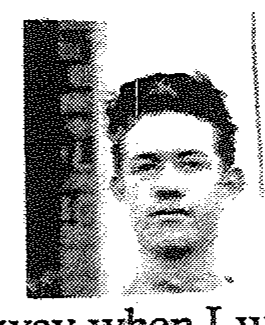
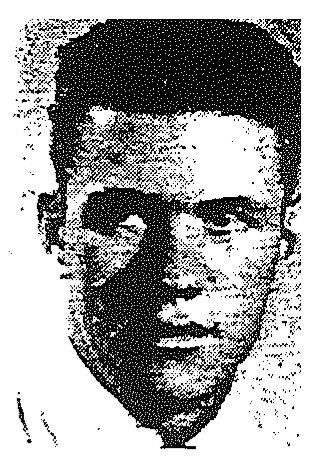
(“Where he’s at, there’s mischief” . . . “Bob” . . . likes any back seat . . . not a lone wolf . . . Windy’s always with him . . . they work together . . . that smile! . . . is the key to many locked doors . . . for Bob.)
Born and raised in Wilson, my Father passed away when I was 10, I was left to run the farm, which I did after school and during the summer months.
After graduating from High School I joined the Navy for a 4 year term. During the time I was in the Navy I was in several places in and around Formosa (Taiwan), Korea, Japan and China. It was very educational for me, seeing other countries and other cultures. In the Navy I was assigned to the aircraft carrier, USS BOXER, for eight months we cruised the seas patrolling the waters and land around the foreign countries. The rest of the time I spent in San Diego at Miramar Air Force Base and Point Mugu at Oxnard, California. I learned lots and seen lots during these eight years.
While in Point Mugu, I went a place called Jockey Meads, a resort between Oxnard and the San Fernando Valley, where I met Dorothy Lou Bates. I was invited to church in the Valley and stayed to a fireside at the Bishop’s house. My relationship with Dorothy continued and we were Married on July 17, 1953 in the Logan Temple. We have been blessed with five beautiful daughters, three son-in-laws and twelve grandchildren, six boys and six girls.
After my duty in the Navy, I enrolled in college at Utah State Agricultural College, halfway thru my years there they changed the College to a University, now called Utah State University. I graduated with a BS degree in Industrial Arts Education with a minor in Math after four years. The next summer I started my Masters Degree and a couple years later I finished my Masters in School Administration with a minor in Industrial Arts Education.
I was an Industrials Arts Teacher and taught wood shop for 35 years, retiring in June 1993. I was also a General Contractor for many years building houses and other structures.
I was the Chairman of the Wilson area planning committee for 14 years.
I was on the Weber County Board of Adjustments from 1988 until 1995, chairman of the board from 1990 until 1995. I also served on the Weber County Boundary Commission for one term.
I was the facilitator in organizing and establishing WEST HAVEN CITY – 1990. We became a city in July 1991 and I was the first Mayor serving for three years. While Mayor, I tried to get the city to agree to the sewer and secondary water but no one thought that was important and no one needed it, now, in the year 2001, it is needed and being put in the ground.
Keeping active in politics, I am currently the chairman of the WEST HAVEN SPECIAL SERVICE DISTRICT. Working with the city makes me feel like I have accomplished a great deal in my life and I enjoy what I am now doing. I am excited about every piece of pipe that is laid in the ground.
LOUISE HOLMES
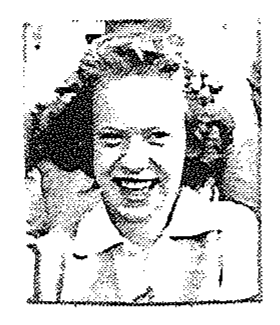
I’m still Louise Holmes, having never changed my name. Following high school I attended Weber College and received an A.S. Degree. Then I attended USAC and received a B.S. Degree. After teaching school for 10 years I went back to what is now USU and received a Masters of Education Degree. After 33 years of teaching school I retired. I have spent part of my time volunteering as a tutor for children ages 6 through high school. I’m still recognized by many of my former students. They always stop for a visit. Traveling has always been fun for me. I’ve taken many tours and have met people who still remain my friends. For the past 23 years I’ve made my home at the Three Fountains Condominiums in North Ogden
JoANNE HOWE GEARY
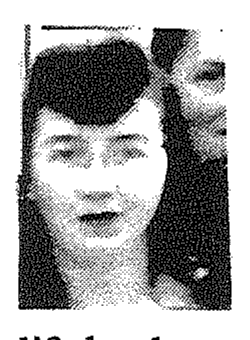
Since graduation in 1950 my life has been pretty good. I got married in ’52 and had my first boy in ’53, another boy in ’55 and girls in ’59, ’60, and ’66. They are all grown now and in their own homes. We have 11 grandchildren, 6 girls and 5 boys. My husband and I took our children to Puerto Vallarta, Mexico in ’75. We’ve been to Catalina Island off California 4 times. We like to travel when we can to visit our daughter and her family. My husband and I, for the most part, live a very quiet life. Don, my husband, likes gardening and watching video movies. I like to cook, do puzzles and watch quiz shows and video movies, of which we have a large collection. My husband also likes to paint and sketch. Two years ago, after wearing glasses for 56 years, I had my eyes operated on and now I only need glasses for reading small print and driving. We’re going to California, San Bernardino to be exact, in April to see our youngest granddaughter get baptized. We like to travel when we can. We’ll be celebrating our 50th wedding anniversary before the Winter Olympics in 2002. It will be a family affair.
CARMA KLINKE POINDEXTER
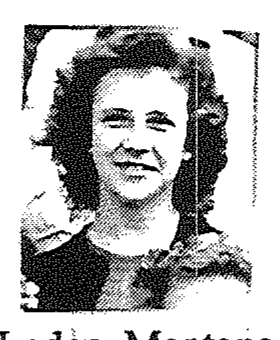
I married Hugh H. Poindexter in Deer Lodge, Montana. He was a rancher and truck driver. I have three daughters, Denise, Kathy; and Ellie, six grandchildren and three great-grandchildren. I have lived in Ogden, Utah; Roy, Utah; Los Angeles, California; and Bountiful, Utah. My home has been in Bountiful, Utah for the past thirty-two years. My husband and I have drove truck together and traveled every state in the U.S. except the New England States and Hawaii. God has been good to me. We are retired Snowbirds now.
DRAUCA MARSTON HOLMES
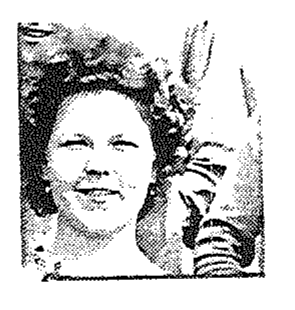
Drauca and Wayne Holmes were married in October following our graduation. Drauca worked as a secretary while Wayne attended Weber College. They moved to Logan where Wayne graduated as an electrical engineer. Drauca was an Executive Secretary for the Cache Co. Dept of Public Welfare. Wayne was commissioned into the Air Force and they lived in California and New Mexico for the next four years. Drauca was a stay-at-home Mom. They moved to Brigham City in 1959. They have four children and 14 grandchildren. Drauca worked as an Executive Secretary for Thiokol, NASA and the Air Force, performed semi-professionally for six years, graduated from Weber State University in Theater and developed the Heritage Theatre in Perry, Utah, for which she was the Executive Director for 23 years. She and Wayne retired in 1994 and have served an LDS Mission to the Family History Library in SLC.
BETTY MAY ORAM DONALDSON
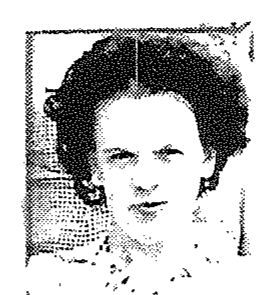
My name is Betty May Oram Donaldson. I have lived in the Honeyville and Ogden areas during my younger years. I attended the Honeyville Elementary School and the Wilson Lane School, then the Weber High and Box Elder High Schools. After school I worked as a dental assistant and then a medical assistant until retiring at 62. I married David W. Donaldson in 1953. We built a home in Plain City, Utah and have lived there for 49 years. My hobbies are cooking, working in my flower gardens, fly fishing and all other outdoor sports.
EMMA ROPELATO WALLING
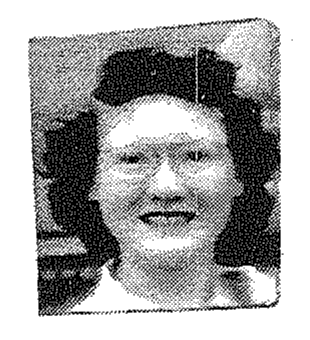
After graduation I went to work for Hill Air Force Base where I met my husband Richard J. Walling. We married Aug. ’53 and I continued working until Dec. ’54 at the birth of our son Dean. Our daughter Terry arrived Jan. ’56. I was able to stay home to rear the children until ’64. Then I went to work at the I.R.S. seasonally until I retired in ’90. My husband passed away in 1972 and my son died in an auto accident in ’93. I sold my home and moved in with my aging parents to help care for them until their deaths in ’96 and ’00. I now plan to visit my family in California and will enjoy traveling to long dreamed of places and spending time with my six grandchildren.
PAUL STOKES
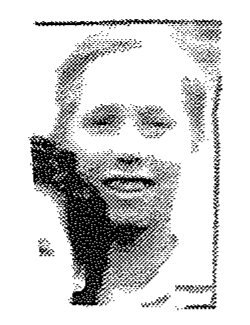
I married Mary Jean Miller June 1961 and we have two daughters, Julie Ann, 34 and Lisa Marie, 31. We have two grandchildren, Heather Lynn Beasley 8, and Nicholas Ryan Bronch 17 months. I graduated from Utah State University with a BS degree. I majored in education and minored in Psychology. I taught school for a total of seven years. I also was in the Air Force Reserve for seven years. We moved to Ward, Arkansas in 1965, where we owned and operated a dairy farm for 12 years, then went into the mobile home park business in Jacksonville, Arkansas, and have been renting mobile homes for the past 17 years. We are now semi-retired and have moved back to the farm in Ward. My hobbies are music, dancing and most of all watching the Arkansas Razorbacks football and basketball teams play.
LILA STONE HARWOOD
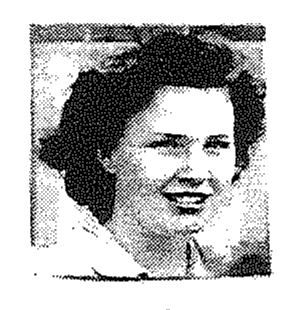
I married Jack Harwood 52 years ago. One year later we had our only child, a son, Keith Harwood. He gave us 4 wonderful granddaughters. Our 3 older girls blessed us with 6 great grandchildren, 3 more girls and 2 boys. My husband retired a few years ago, but still works part time, which is nice for both of us.
GLADYS SORENSEN GIBSON
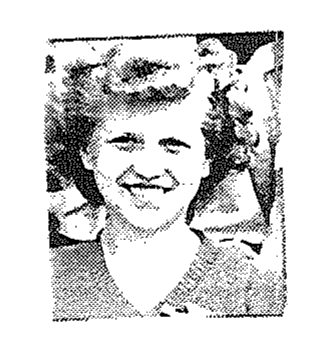
After graduating from Weber College with an Assoc., I married Gary Gibson in the Logan Temple. Our 4 children were born in ’54, ’56, ’58, and ’59, two girls and two boys. Our oldest daughter passed away in June, 1995. Gary traveled for HAFB fixing missile test equipment and I stayed at home with our children. In 1966 I was hired at Pioneer Elementary as librarian, so I went to school with our children. I cataloged the books and set up the library. It was on the job training. I read stories to the school children and taught library science. I worked there 15 years. I love children’s literature. In 1977 I enrolled at Weber State once again and in 1982 graduated with a BS in Elementary Education with a Library Endorsement. I was hired as a teacher at Kanesville Elementary in 1982 and taught second grade 13 years and retired in 1995. I have worked in many chruch positions the most recent being an ordinance worker in the Ogden Temple. I’ve been a member of 3 musical groups and performed as soloist and alto. Gary passed away in Oct., 2001. Now I enjoy making quilts, reading and my family. We have 3 living children, 13 grandchildren, and 2 great grandchildren. I’m trying to keep busy and enjoy life..
LOLA TAYLOR SHEFFIELD
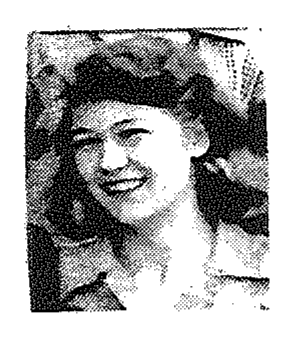
What Have I been doing the last 50 years? After I graduated from Ogden High School, I took the Cosmetology Course at Weber College and finished after a year. Then I worked at a salon in downtown Ogden. The money was sporadic so when another job offer came at McKesson-Robbins Wholesale Drug House, I took it.
My brother was on a mission in New York and he suggested I come back to Palmyra to see the pageant, which I did. Among the many missionaries involved in the production was one Grant Sheffield from Kaysville, who I met while at the pageant. When he returned from his mission in December he called and came to visit to ask me for a date for New Year’s Eve. We continued to date through the next few months and we were married in June. Shortly after our marriage, Grant was inducted into Uncle Sam’s Service at Fort Ord, California. Our first daughter of three, Vickie, was born while we were at Fort Ord, followed by two more girls, Debbie, and a year later, Sherrie. (Three years after Debbie.)
After Grant graduated from the School of Architecture at the University of Utah, he was hired at Thiokol in the design section. We bought a newly constructed home in Salt Lake- that was another story- commuting back and forth from Salt Lake to Brigham City. Everything went great for five or six years, then Thiokol went down the tube. We were the first wave of the unemployed.
Our neighbor had recently left Utah and went to Tempe, Arizona, and already had set up an interview for himself. So we packed up and went job hunting, hoping to have similar luck. But our trip continued on to California. Another friend we had been close to left a job in California and took a leave of absence when he went to Thiokol in Utah. He took his old job back, with Metropolitan Water District in California, as an engineer. He told us they were hiring and Grant was hired. He retired after 32 years. We bought a home in Brea, California, (Tar Town). Brea means tar in Spanish. (La Brea tar pits in Hollywood or Los Angeles County, not the same.) We lived in an old oil-producing town. Our son Jared was born ten years after our youngest daughter. It took all of us to raise him; he was one busy boy.
We have 8 grandchildren, 5 boys and 3 girls, one little great granddaughter. Most of the children and grandchildren live in Utah. The oldest and the youngest, with 6 of the grandchildren and the great grandchild, live in Utah. Our daughter Sherrie lives in Texas and we have one in California.
We have done a lot of traveling with our children. We have enjoyed traveling with our children to see aunts, uncles, cousins, who were living in Canada, and my sister and their children living in New York. We could travel the country and do lots of visiting and also Mexico was close by and fun to visit too. We continued our traveling after our children flew the nest. Also retiring gave us more time to travel the globe. We have enjoyed spending our vacations in many countries.
We have had a great 50 years and look forward to many more.
RUDELL WILLEY
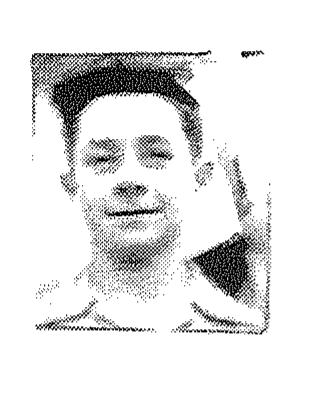
Rudell married Barbara Hadley a few months after graduation on November 1, 1950. They have three children, one boy and two girls. They also have twelve grandchildren.
Rudell worked 35 years for the Southern Pacific Railroad as a brakeman-conductor traveling between Ogden and Carlin, Nevada. During those years Rudell was active in electrical contracting with a Master Electrician License. He was also involved in real estate development with a Real Estate Brokers License and a Commercial Property Managers License.
Rudell has enjoyed hunting in Alaska, Yukon Territories, Canada and the Western United States. fishing in Alaska and Mexico, flying his private airplane the past 34 years in Alaska (four times north of the Artic Circle) Mexico, Guatamala, Jamaica and the Caribbean Islands. Vern Smith accompanied him on many of these trips. Rudell is currently involved in activities in the L.D.S. Church, civic activities, The Quiet Birdmen (an international pilot organization) and Enable Industries, a handicapped facility. Rudell and Barbara now spend a lot of time traveling in their private plane and their motorhome.
In Memory of Our School Friends Who Are Gone But Not Forgotten
DOLORES HIPWELL CHARLTON
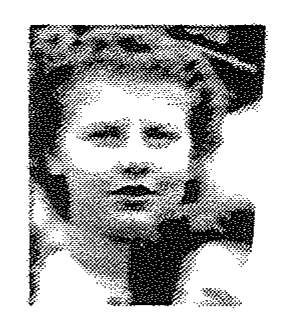
Dolores was married June 9, 1950 to Wayne Charlton from West Weber. They moved into a small home in West Weber. It caught fire and burned everything, wedding gifts, furniture and all. They then moved up to Wilson into a small home by her mother and dad on 2100. Later they built a nice brick home by her mother and dad. Wayne and Dolores had two children, Brent born in 1952 and LaRee born in 1954. Wayne worked at American Can and also became involved in race horses. He raised a very nice quarter horse from a colt and named her LaRee Bar and took her to Las Alemedas, California and won many races and made good money from her. A Dr. Allred helped Wayne get started in horse racing. They built another brick home on 2550 in Wilson with nice horse barns and then moved to California and raced horses. They did very well. Dolores loved Utah Noodle chow mein and ate a lot of it when they were in Ogden. They bought a ranch in California then sold it and moved to Oklahoma on a ranch. Their son Brent helped Wayne train race horses. Wayne is an expert on knowing the legs of race horses. Dolores was the bookkeeper. Late in 1992 the doctors discovered she had a cancer in her liver. Wayne had expert doctors attend to her but the cancer was too far advanced. They moved back to the house on 2550 and she died June 1, 1993 and was buried in West Weber Cemetery on June 5, 1993. Dolores and Wayne have five grandchildren.
LYNN JENSEN, 1932–1998
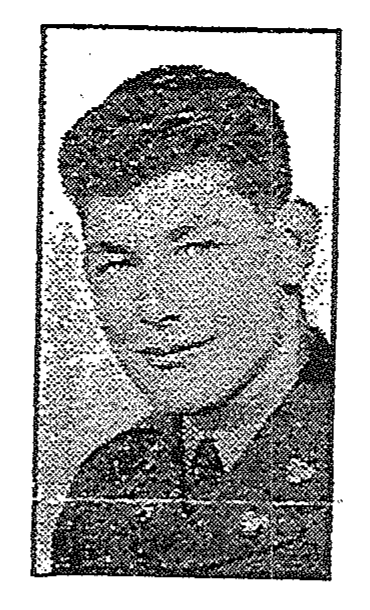
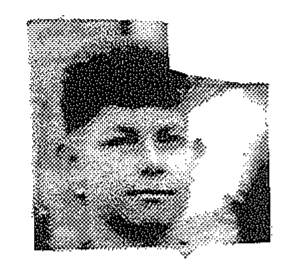
Lynn Jensen served in the U.S. Army for three years. Fifteen months of which he spent in Korea, where he saw combat and was awarded the Bronze Star with V device for valor. He also was awarded the Occ. Medal, a Korean Service Medal with five bronze stars, the Presidential Unit Citation, and the Meritorious Unit Commendation. Following his military service, Lynn spent time in California and Utah. He married Betty Jo and has a stepson, Butch. He divorced and moved to Alaska, where he lived in Chugiak and Eagle River. He had been through engineer and demolition school in Fort Belvoir, Virginia. He was a self-employed mechanic and machinist until he retired in 1996. He died December 2, 1998 from a stroke and was buried in Alaska. He was a very quiet man who would help anyone in need.
ROBERT WAYNE KIRBY
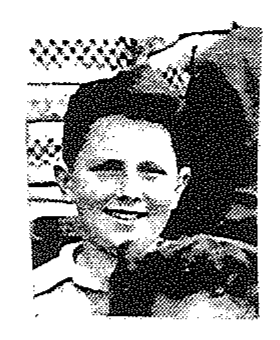
Robert Wayne Kirby was born in Brunswick, Missouri in 1932. In 1941 the family moved to West Ogden. He attended Wilson Elementary and Junior High School for 9 years. He graduated from Weber High School in May of 1950. Bob worked for the Union Pacific Railroad as a fireman/engineer for a period of time. He also worked as a cabinet maker before becoming involved in the drywall trade. In about 1970 he moved with his wife to Elko, Nevada to work in the construction trades. This was a period of increased construction in the Elko, Nevada area due to the newly found gold mines in the surrounding area that brought an influx of workers. Later on Bob worked at the Commercial Hotel in Elko maintaining the gaming machines in the casino there. Bob died in an accident in 1974 in the Elko area and is buried by his parents in the Centerville, Utah Cemetery. He left behind three daughters and one son. Bob will always be remembered for his infectious smile that was always on his face and will be noted among his family, classmates and co-workers for his happy-go-lucky attitude and good-natured personality.
ARTHUR KRANENDONK
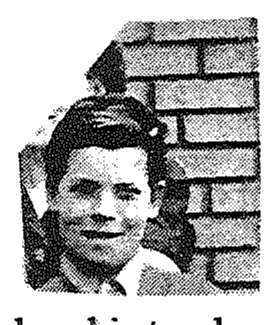
Art died a very tragic death when his truck caught fire in an accident and burned. Art was married for a very short time and has one daughter. He worked for George Stratford and at the Sugar Factory. He was a very hard, steady worker.
FRANKLIN F. STANGER
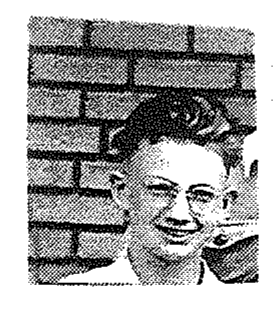
Served lds mission to Uruguay. Married Mada Lurae Waldron from Malad, Idaho. Father of 7 children, 3 girls and 4 boys. Employed as a salesman. Loved to fly an airplane. Passed away May 8, 1990. Lived in Weber County area all his life.
RUSSELL PACKARD
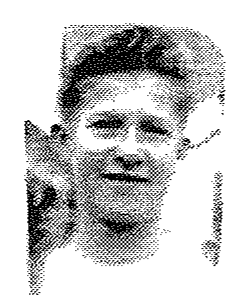
When Russell was young, his dad owned the Oil Refinery in West Ogden. He was at the Ogden Rodeo when the announcer said his business was on fire. Everything was destroyed. The family moved to Astoria, Oregon. Russell went in the army and was assigned to guard duty on base in North Africa. His buddy was on guard duty. For a prank Russell kicked the guard shack. The buddy shot Russell dead without checking on who was kicking the shack.
JIM POULOS
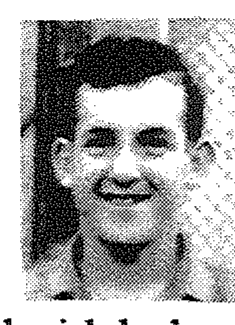
Married a Greek girl, had one son and one daughter. He was office manager of Texaco Oil Co. in Salt Lake City until the company went out of business. He was stand offish and wanted nothing to do with his family. He was a bartender in Salt Lake City. He died about 15 years ago during open heart surgery, after having heart problems for several years.
SHELDON STAUFFER
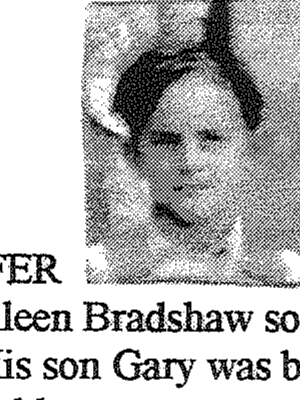
Sheldon married Colleen Bradshaw sometime between 1952 and 1953. His oldest daughter, Beverly, was born in 1954. His son Gary was born in 1957 and a daughter Shelley was born about 1960. He worked at Hill Field. He died sometime between 1975 and 1985.
MAURICE CHENEY
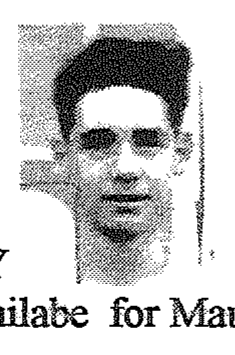
No information is availabe for Maurice.
We could not find any information or the whereabouts of Vincent McEnerny or Rose Mary Ellsworth or Bill Saunders.

VERN H. SMITH, August 24, 1932 – February 28, 1981
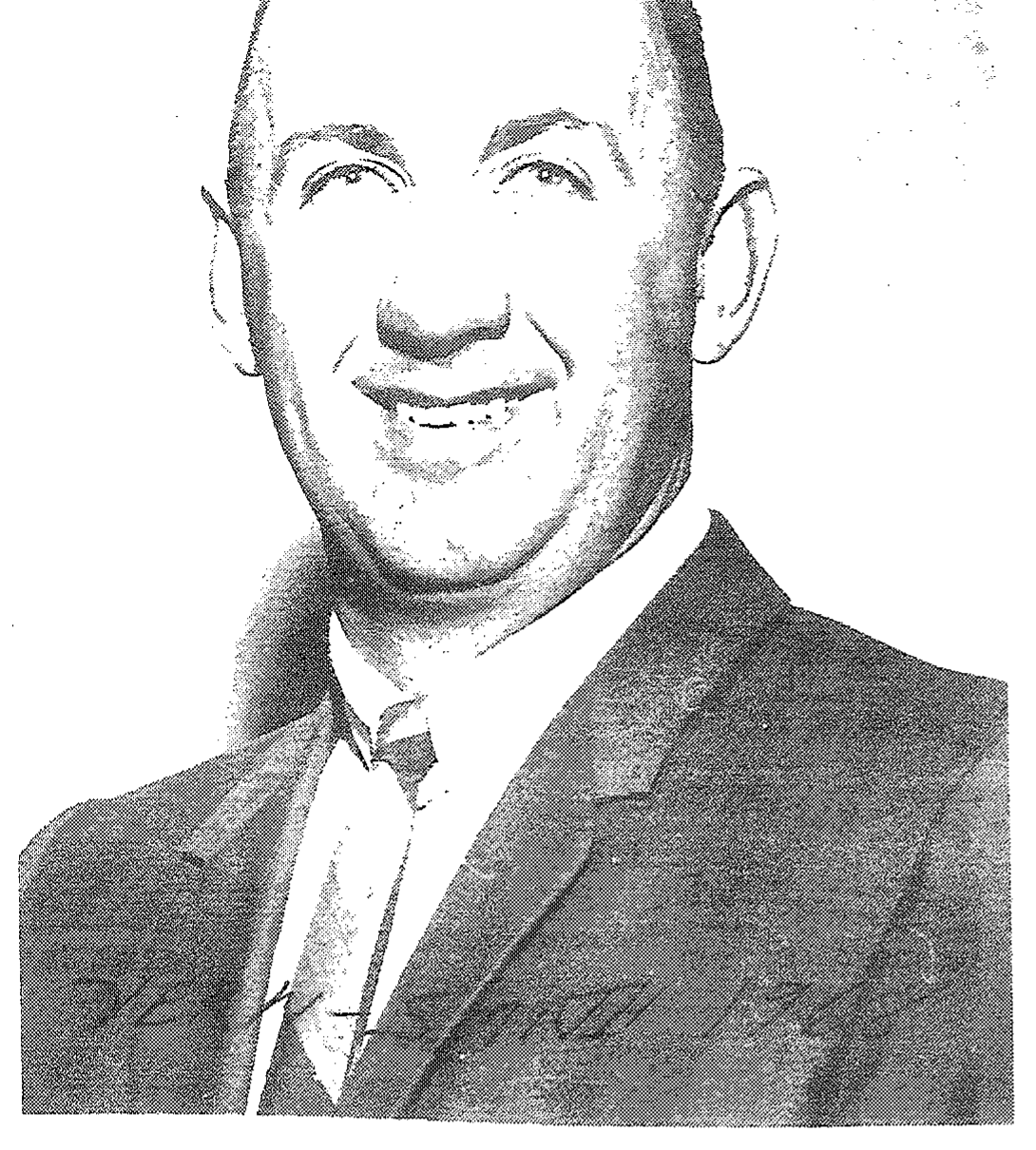
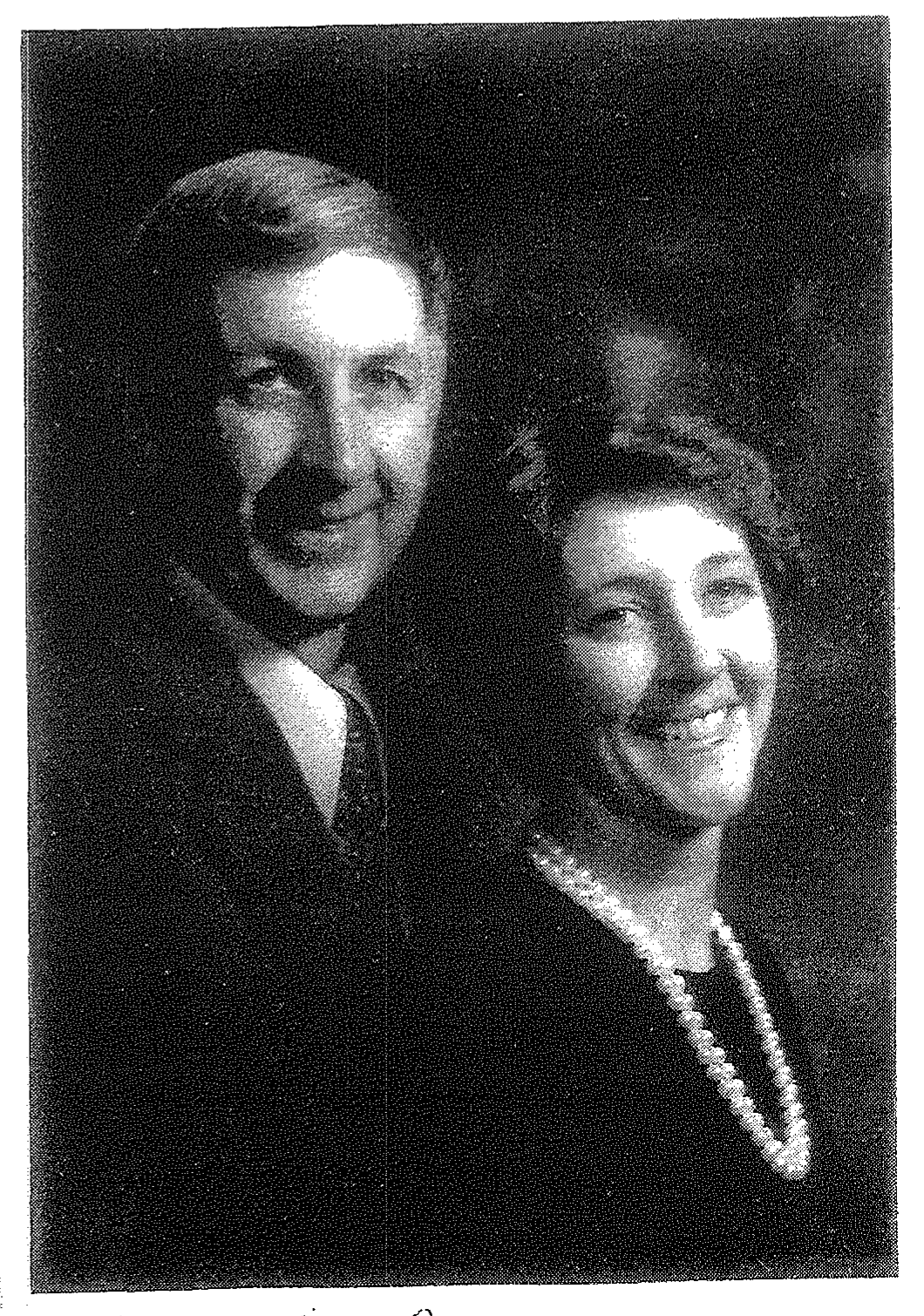
Born in Wilson Lane on August 24, 1932, grew up in Wilson on a farm, attended Wilson School for 9 years, Weber High School for 3 years, attended Weber College from 1950 to 1954, bought first farm in the spring of 1953 in Warden, Washington, served a 2 years L.D.S. Mission in the southern states, starting January 6, 1954.
Vern started farming in the spring of 1956 in Warden, Washington. Met his wife Kay Pratt in Moses Lake, Washington (14 miles from Warden) in 1956. They were married August 15, 1957 in the Salt Lake Temple.
Vern served in the L.D.S. Church as a Bishop, on the High Council, and in the Stake Presidency.
Vern and Kay had 7 children. They had two boys and five girls.
In 1968–1969 Vern was chosen “The Outstanding Young Farmer” in the state of Washington. At the time of his death he was raising beef cattle and farming approximately 1,300 acres of land.
Vern loved to travel, especially in his private plane (Piper Cherokee six) to Mexico.
On February 28, 1981, on the return trip from Mexico, his plane crashed, on Parker Mountain, just north of Escalante, Utah. All aboard, six adults, were tragically killed.
It has been said that, “The common people of the earth are the great people of the earth.” If that is true, then Vern Smith was among the greatest.
Wilson School Faculty
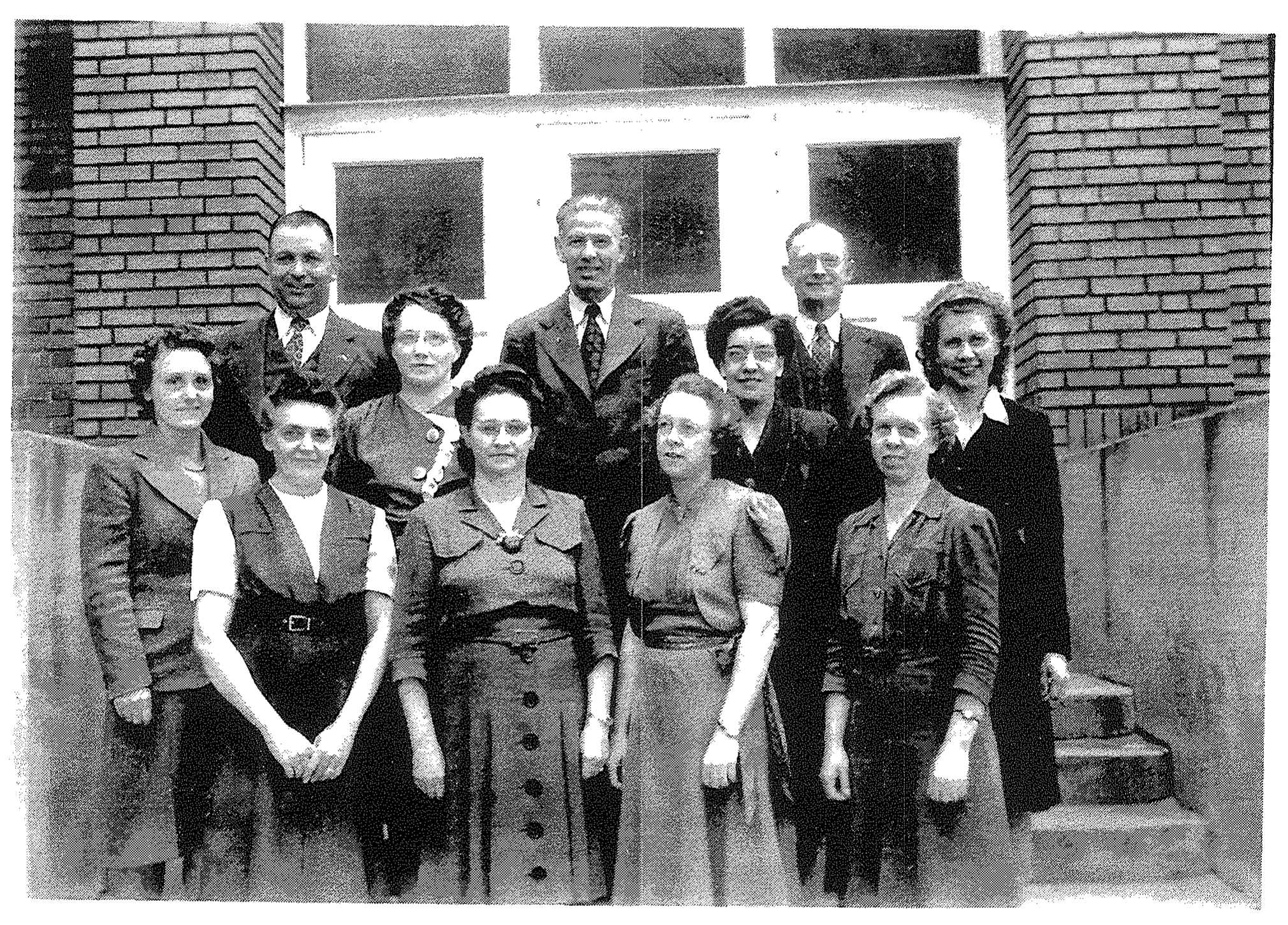
Row 1—Mrs. Stanford, Miss Shaw, Mrs. Barton, Mrs. Bouwhuis. Row 2—Mrs. Secrist, Mrs. Woodward, Mrs. Sorensen, Miss Holmes. Row 3—Principal, Wheat Taylor, Mr. Pettigrew, Mr. Rhees.
Wilson School 9th Grade Class of ’47 Directory
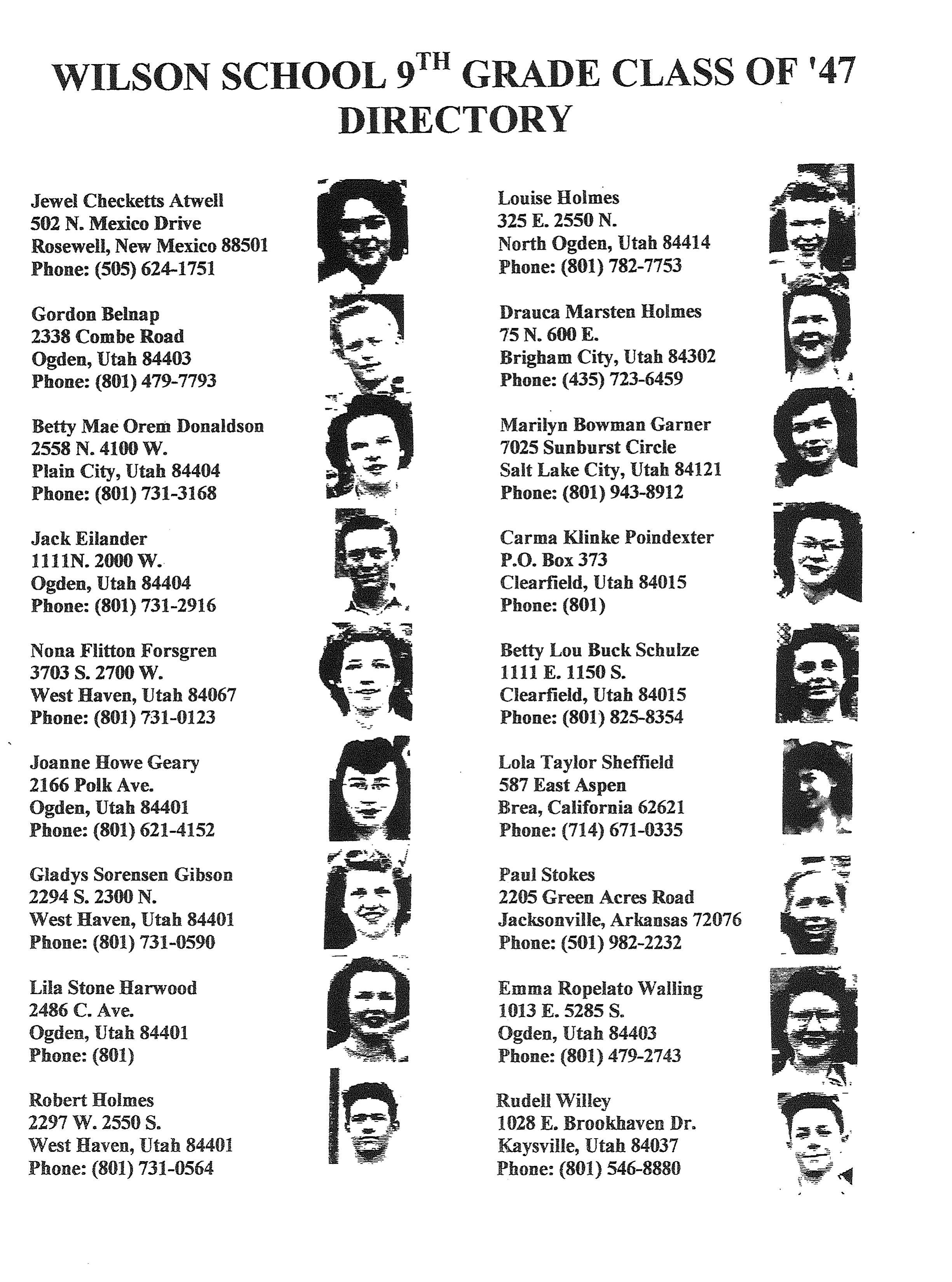
| Name | Address | Phone |
|---|---|---|
| Jewel Checketts Atwell | 502 N. Mexico Drive, Roswell, New Mexico 88501 | (505) 624-1751 |
| Gordon Belnap | 2338 Combe Road, Ogden, Utah 84403 | (801) 479-7793 |
| Betty Mae Orem Donaldson | 2558 N. 4100 W., Plain City, Utah 84404 | (801) 731-3168 |
| Jack Eilander | 1111 N. 2000 W., Ogden, Utah 84404 | (801) 731-2916 |
| Nona Flitton Forsgren | 3703 S. 2700 W., West Haven, Utah 84067 | (801) 731-0123 |
| Joanne Howe Geary | 2166 Polk Ave., Ogden, Utah 84401 | (801) 621-4152 |
| Gladys Sorensen Gibson | 2294 S. 2300 N., West Haven, Utah 84401 | (801) 731-0590 |
| Lila Stone Harwood | 2486 C. Ave., Ogden, Utah 84401 | — |
| Robert Holmes | 2297 W. 2550 S., West Haven, Utah 84401 | (801) 731-0564 |
| Louise Holmes | 325 E. 2550 N., North Ogden, Utah 84414 | (801) 782-7753 |
| Drauca Marsten Holmes | 75 N. 600 E., Brigham City, Utah 84302 | (435) 723-6459 |
| Marilyn Bowman Garner | 7025 Sunburst Circle, Salt Lake City, Utah 84121 | (801) 943-8912 |
| Carma Klinke Poindexter | P.O. Box 373, Clearfield, Utah 84015 | — |
| Betty Lou Buck Schulze | 1111 E. 1150 S., Clearfield, Utah 84015 | (801) 825-8354 |
| Lola Taylor Sheffield | 587 East Aspen, Brea, California 62621 | (714) 671-0335 |
| Paul Stokes | 2205 Green Acres Road, Jacksonville, Arkansas 72076 | (501) 982-2232 |
| Emma Ropelato Walling | 1013 E. 5285 S., Ogden, Utah 84403 | (801) 479-2743 |
| Rudell Willey | 1028 E. Brookhaven Dr., Kaysville, Utah 84037 | (801) 546-8880 |
(Note: addresses/phone numbers as printed in the original memory book — likely out of date by now, but preserved as a record of where the class was circa 2001–2002.)