History of Plain City Pt 8

I have two copies of the History of Plain City, Utah. The front indicates it is from March 17th 1859 to present. As far as I can tell, the book was written in 1977. At least that is the latest date I can find in the book.

One copy belonged to my Grandparents Milo and Gladys Ross. My Grandpa has written various notes inside the history which I intend to include in parenthesis whenever they appear. They add to the history and come from his own experience and hearing. 

I will only do a number of pages at a time. I will also try to include scanned copies of the photos in the books. These are just scanned copies of these books, I have not tried to seek out originals or better copies.

History of Plain City March 17th 1859 to present, pages 123 through 140.

SPORTS IN PLAIN CITY

 By Lyman H. Cook

            Plain City’s most prominent claim to fame has been through the sports program and the great players and teams that the town has produced. I know of no other town to community in this state, to possibly out of state, that can equal the accomplishments in the total sports program as the town of Plain City. I don’t know how many hundred championships or trophies this town has won in baseball, basketball, softball, volleyball, and Jr. Posses, over the last 75 years or more. We include the young teams and people in the town, and also the girls. These trophies and championships came from local, county, multi-county, state, stake division, region, multi-region, and All Church basketball, softball, and volleyball, which is the largest leagues in the world.

            On February 14, 1977, at 3:30 PM, there were 226 trophies in the trophy cases at the Plain City Church. I couldn’t begin to estimate the number of trophies in the homes here in Plain City. Can you comprehend the number of teams involved and especially the number of people involved on the teams in accomplishing this great record.

            There seems to be a special spirit, or force, ambition, or drive, that compels players to excel and teams to win. The will to win in Plain City is the strongest I have ever known. We have been accused of playing dirty, or being poor sports, but in answer to these charges, I would submit the phrase: We just play hard, and the spirit of competition just brings out the best in us. In Plain City you don’t hope you can win, you are expected to win. Some communities dislike us for our sports program because it is so strong, and in reality, they judge their success of their season by the fact of whether they can beat Plain City or not. I realize these are rather potent and strong statements, but never the less, they are all true.

            We dedicate this section of sports to all the people who have ever played on a team in Plain City. We realize that some names will be missed and it is not our intent to forget anyone, but we can’t remember all, and this is all of the sports material that has been turned in for the history. If your name is left off, write it in, and if you were star of the team, write that in also.

            We have asked for and received personal write-ups on a few people who have signed professional contracts or have distinguished themselves in certain sports. We recognize them for their talents in that they in turn have brought special recognition to Plain City. I am sure these talented athletes would be the first to recognize their fellow members, for they realize that no one man is bigger or better than the whole team, and in this light, we recognize the teams they played on.

            From 1944 until the present, there were three basketball teams that went to All Church and won two second places. Commencing in 1951 through 1954, we played in four fast-pitch All Church Tournaments. We won a second-place finish and eight-place finish.

            In 1953, we played on a volleyball team that went to the All Church Tournament and won the Sportsmanship Trophy, which was a great honor. The team that played were: Dee Cook, Lyman Cook, Wayne Cottle, Wayne Skeen, Blair Simpson, Kenneth Lund, Harold Hadley, and others we couldn’t remember.

            There were teams that went to the All Church Slow Pitch Tournaments from Pain City for three years. They won two All Church Championships, and a third-place finish. There have been some excellent younger teams in baseball, basketball, and softball, and a Junior team last year (1976) won a second-place in a

The All Church program.

            This was one of the early teams of Plain City, and this picture was taken around 1910. They played together for many years, and they won several championships.

Top Row: L to R:          Joe Hunt, Tooley Louis Poulsen, Preston Thomas, Parley Taylor, Jack Hodson.

Middle Row: L to R:     Mr. Anderson, Coach, Jim Thomas, Melvin Draney

Bottom row: L to R:    Oscar Richardson, Joe Singleton

Louis Poulsen

            Tooley Poulsen played on many championship teams, and played several positions, mainly second base and catcher.

            This was one of the first Mutual basketball teams in Plain City. They played their games in the upstairs of the old hall. Lyle Thomas reports that you didn’t have to be polished to play on this team, just big and rough, for there was very little whistle blowing in those days. This picture was taken in about 1925, and they won several championships.

Back Row: L to R:        Rulon Jenkins, Lyle Palmer, Marion Sneed, Milton Garner

Front Row L to R:        Theo Thompson, Ralph Robson, Coach Ellis Giles

            This was the 1930 Plain City Baseball team. They played for State Champion ship.

Top Row: L to R:          Horace Knight, Albert Sharp, Walter Christensen

Middle Row: L to R:    Floyd Palmer, Angus Richardson, Arnold Taylor, Walter Moyes, Abram Maw, William Freestone

Bottom Row: L to R:    Clair Folkman, Gilbert Taylor, Dick Skeen, Fred Singleton, Frank Skeen, Elmer Carver

BASEBALL AND EARLY SPORTS

By Elwood (Dick) Skeen

            Baseball was Plain City’s most favorite sport. Baseball in Plain City in the early 1920’s and 1930’s was composed of the Plain City Bull Dogs with the following players taking part:

                                                      Louis Poulsen

                                                      Joe Singleton

                                                      Walter Draney

                                                      Elmo Rhead

                                                      Parley Taylor

                                                      Joe Hunt

                                                      Elvin Maw

                                                      Oscar Richardson

                                                      John  Hodson

            They represented Plain City in the Weber County Farm Bureau League, composed of North Ogden, Hooper, Roy, and Clinton. There were many good ball players in those days that played on the teams. The town park at that time was covered with salt grass. There were no base lines, no pitcher mounds. But, on a Saturday afternoon the park was filled with people that came from all over the county to watch the games. Horses and wagons lined the park.

            Foot racing was also a great sport at that time, and Plain City had one of the best in Walter Draney, who was not only fast, but also a great athlete.

            As time passed and the older players began to drop out, the chance came for us younger players to take over. In 1925 I caught my first Farm Bureau game at Liberty with Ezra Taylor doing the pitching. Then, the other players that made up our team for the next few years started to play. We had our share of victories. In fact, we had more than our share of wins.

            Finances at that time were hard to come by. We did what we could to raise money to continue supporting the team. In 1928, the ball team put on the first Black and White Day with Mervin Thompson and Joseph Skeen showing their cattle. An old-time refreshment stand, soda water, ice cream, candy bars, and popcorn, which sold for 5¢. Also, some drinks that were not sold at the stand.

            Our uniforms were furnished by Plain City individuals and business firms from Ogden. Suits would have the name of the giver on the back. Decoration day and the Fourth of July were our most celebrated days with all kinds of sports for those who wished to perform. A baseball game and a dance in the evening would top the day.

            We would get the best team from Ogden to play on these days so that we could show what was leading up to the best team we had. In 1930, we won the Weber County Farm Bureau League, and the town bought us new uniforms to go to Lagoon to play Sandy, Utah, for thy State Championship. We lost by a close score. Our players were:

                                                      Gilbert Taylor

                                                      Walter Moyes

                                                      Arnold Taylor

                                                      Frank Skeen

                                                      Horace Knight

                                                      Albert Sharp

                                                      Fred Singleton

                                                      Abram Maw

                                                      Walter Christensen

                                                      Clair Folkman

                                                      Dick Skeen

            Bill Freestone was the manager. Angus Richardson was the coach. Elmer Carver took care of finances, and Floyd Palmer and Byron Carver were scorekeepers. We played in tournaments at Brigham City and Ogden, and some out-of-state games were played.

            We continued playing, but soon the gang started drifting different ways and our days were coming to an end. The league started to dwindle and later, folded up with the workload increase. Baseball was soon lost to the towns in Weber County.

Left to Right: Nalon Taylor, Bert Cook, Howard Gibson, Bud Dallinga, Wayne Cottle, Thayne Robson, Bill Stokes, Rulon Jenkins, Coach

The Desert News Sport                       Best Two MIA Teams

Page 10 – Salt Lake City, Utah-Saturday, March 11, 1944

Bottom Row: L to R:     Carl Taylor, Carl Hodson, Fred Singleton, Coach, Blair Simpson, Glen Charlton

Top Row: L to R:             Frank Hadley, John Nash, Lyman Cook, Ray Cottle

            Ray Cottle, Center:                  First Team All Church

            Frank Hadley, Forward:           Second Team All Church

            Lyman Cook, Guard:               Second Team All Church

            Blair Simpson, Guard:             Honorable Mention

            This team played for All Church Championship in 19441. They played Grantsville, Utah, and lost to them for the title. The games were played in the old Desert Gym, by the Hotel Utah. The teams stayed four nights in the Hotel Utah. They ate, slept, and played basketball.

                                                                        Top Row L to R:

                                                                        Alf Charlton, Athletic Director

                                                                        Lyman Cook, Ronald Skeen, Kenneth Lund, Grant

                                                                        Lund, Wayne Skeen, Clair Folkman, Coach

                                                                        Bottom Row L to R:

                                                                        Harold Hadley, Elmer Hipwell, Bill Stokes, Dee

                                                                        Cook, Blair Simpson

            This was the Plain City M-Men Team that played after World War II, in 1946, for several years and won several state championships and played in the division tournaments.

______________________________________________________________________________

                                                            SUNDAY MORNING, AUGUST 19, 1951

                                                                        District Three Winners
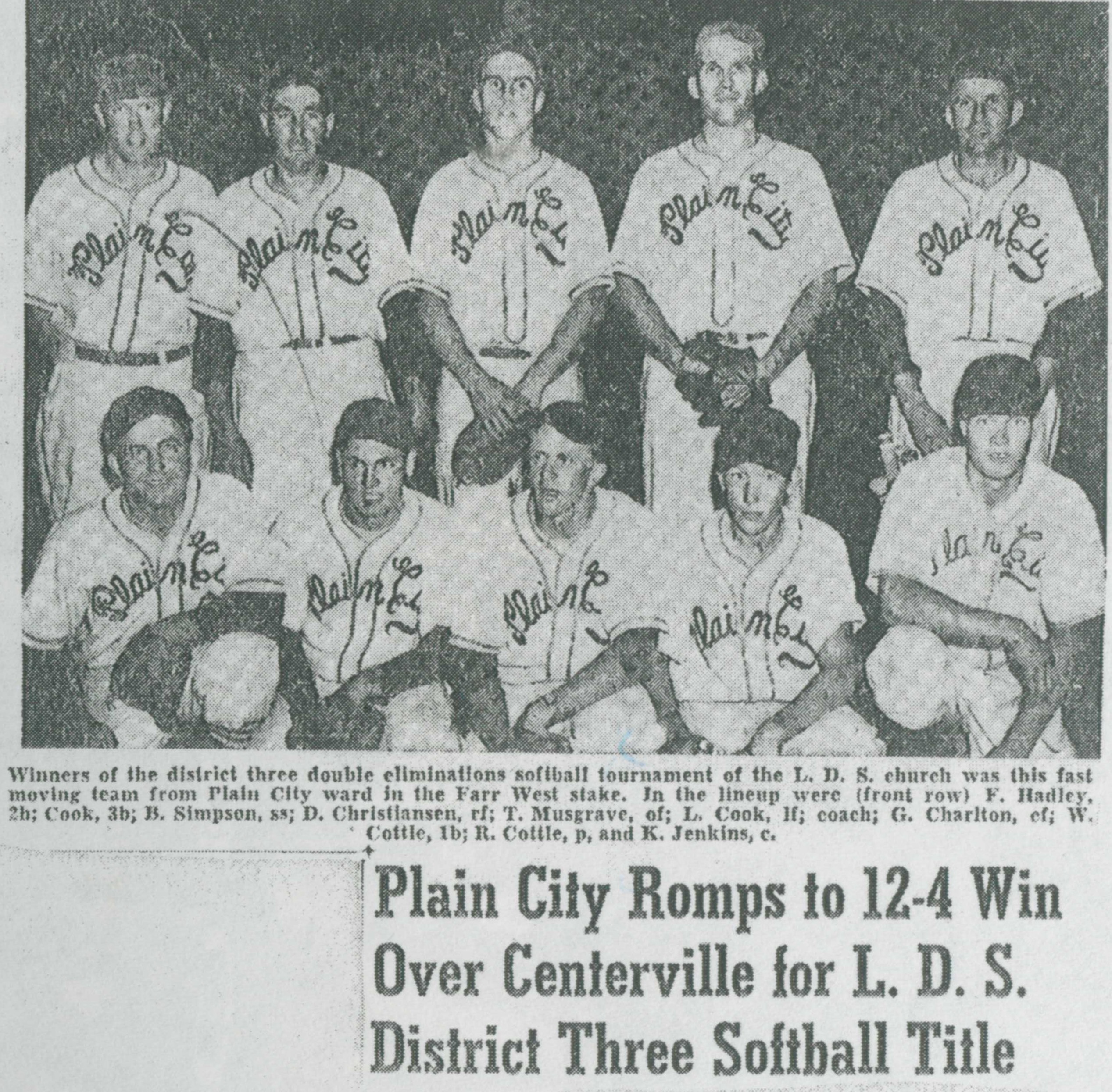
Winner of the district three double elimination softball tournament of the L.D.S. church was this fast moving team from Plain City in the Farr West Stake. In the lineup (front row) F. Hadley, 2b; Cook 3b; B. Simpson, 5b; D. Christensen, rf; T. Musgrave. Of; L. Cook, lf; coach; G. Charlton, of; W. Cottle. 1b; R. Cottle, p, and K. Jenkins, c.

                                                      Plain City Romps To 12-4 Win

                                                      Over Centerville for L. D. S.

                                                      District Three Softball Title

PLAIN CITY SOFTBALL TEAM OF 1951

                                                                        By Lyman Cook

            Plain City has always been a very strong baseball town, and the feeling was that softball was a game for girls, or you played softball at family reunions. In 1951 the Farr West Stake started a softball program and wanted teams to participate. I was Ward Athletic Director at that time and asked these players to play. This was the first softball team organized in Plain City. We won the Stake and District III. We then went on to the All Church Tournament in Salt Lake City. We won some and lost some, not too eventful. I coached the team the first year we played. This was a fast-pitch team.

                                                            L. D. S. Division III Champs
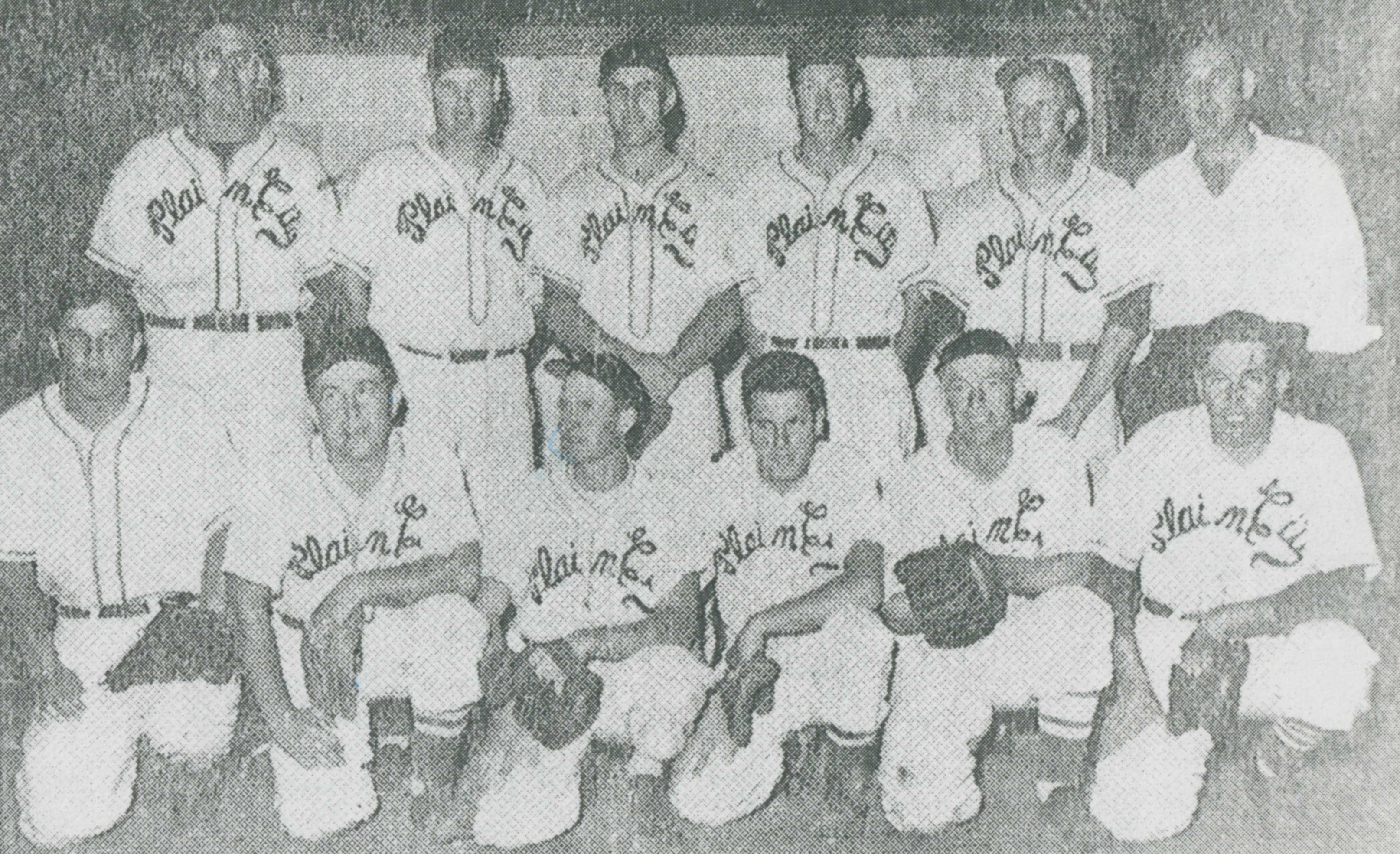
Repeating their last year’s victory in the L.D.S. division III softball tournament, the Plain City team came through again last night at Ogden softball park to beat Hoytsville 9 to 6. Front row Left to right: M. Heslop, E. Hadley, C. Taylor, D. Cook, A. Maw and G. Charlton: back row, lerft to right: R. Cottle, W. Skeen, W. Cottle, L. Cook, B. Simpson, and D. Skeen, coach. Absent from photo: Jenkins, V. Stokes and R. Skeen.

            PLAIN CITY WARD SOFTBALL TEAM OF 1952

                                                                                    By Lyman Cook

            In 1952 we repeated as stake champions and also won the Division III Championship again. We went to the All Church Tournament again and played very well. We played for the All Church Championship, but lost to Pocatello 10th Ward in a good game. Blair Simpson was voted Most Valuable Player of the tournament. Wayne Cottle made the All Church Team. There may be others. This was also a fast-pitch team. Dick Skeen was the coach.

                                              This team played Farm Bureau Baseball and won the

                                                            Championship around 1950:

                                                            Top Row: L to R:

                                                            Junior Taylor, Wayne Skeen, Don Singleton,  Bert Cook,

                                                            Glen Charlton, Kent Jenkins, Clair Folkman, Coach

                                                            Bottom Row: L to R:

                                                            “Buss” Lyman Skeen, Frank Hadley, Wayne Cottle, Ray

                                                            Charlton, John Maw, Dee Cook

                                              This team played Pleasant Grove for All Church Champion-

                                                            Ship in 1956. They took second place.

                                                            Bottom Row: L to R:

                                                            Quinten Jenkins, Archie Skeen, LaGrand Hadley, Brent

                                                            Taylor, Ronald Sharp

                                                            Back Row: L to R:

                                                            Dee Cook, Manager, Darrell Christensen, Robert Folkman,

                                                            Bert Cook, Kenneth Lund, Wayne Cottle, Kent Jenkins, Coach

            Many county and Northern Utah Championships were obtained by this team that was sponsored by the Town Board in the late 1950’s to middle 1960’s.

COACHES:                                     Clair Folkman – Blair Simpson

TEAM MEMBERS:                         POSITIONS:

Blair Simpson                                P- IF

Wayne Cottle                                     IF

Cy Freston                                          IF

LaGrand Hadley                            OF – P

Archie Skeen                                        C

Gaylen Hansen                              C – P – IF

Bobby Taylor                                 P – OF

George Cook                                        IF

Reid Nielson                                  IF   P

Ted Favero                                    IF –

Dennis Anderson                           P

Garry Skeen                                   OF

Lynn Folkman                                OF

Bud Parker                                    IF – OP

Tom Seager                                   OF

Harold Hadley                               IF

Harold Marriott                            IF

******

PLAIN CITY WARD FASTPITCH TEAM

1960, 1961, 1962

              This team won the Stake, Region, and Division Championships, and represented the ward in All-Church competition with a successful number of victories.

COACH:                                         Elmer Carver

TEAM MEMBERS:

Tom Seager, P                                     Blair Simpson, SS

Gaylen Hansen, C                                LaGrand Hadley, LF

Wayne Cottle, 1st                                Robert Folkman, CF

George Cook, 2nd                                Dee Cook, RF

Cy Freston, 3rd                                     Don Singleton, IF

Blaine Eckman, QF                              Gar Hunter, 1st – OF

THE PLAIN CITY BULLDOGS

              This is one of the very first Weber County Recreation Teams in Plain City. Many of these players went on playing baseball for many years.

Front Row: L to R:

Dick Skeen, Coach, Fred Palmer, Darrel Thompson, Kenneth Hogge, George Cook, Ronald Sharp.

Back Row: L to R:

Archie Skeen, Brent Taylor, Wayne Poulson, Jay Freestone, Robert Folkman, LaGrand Hadley
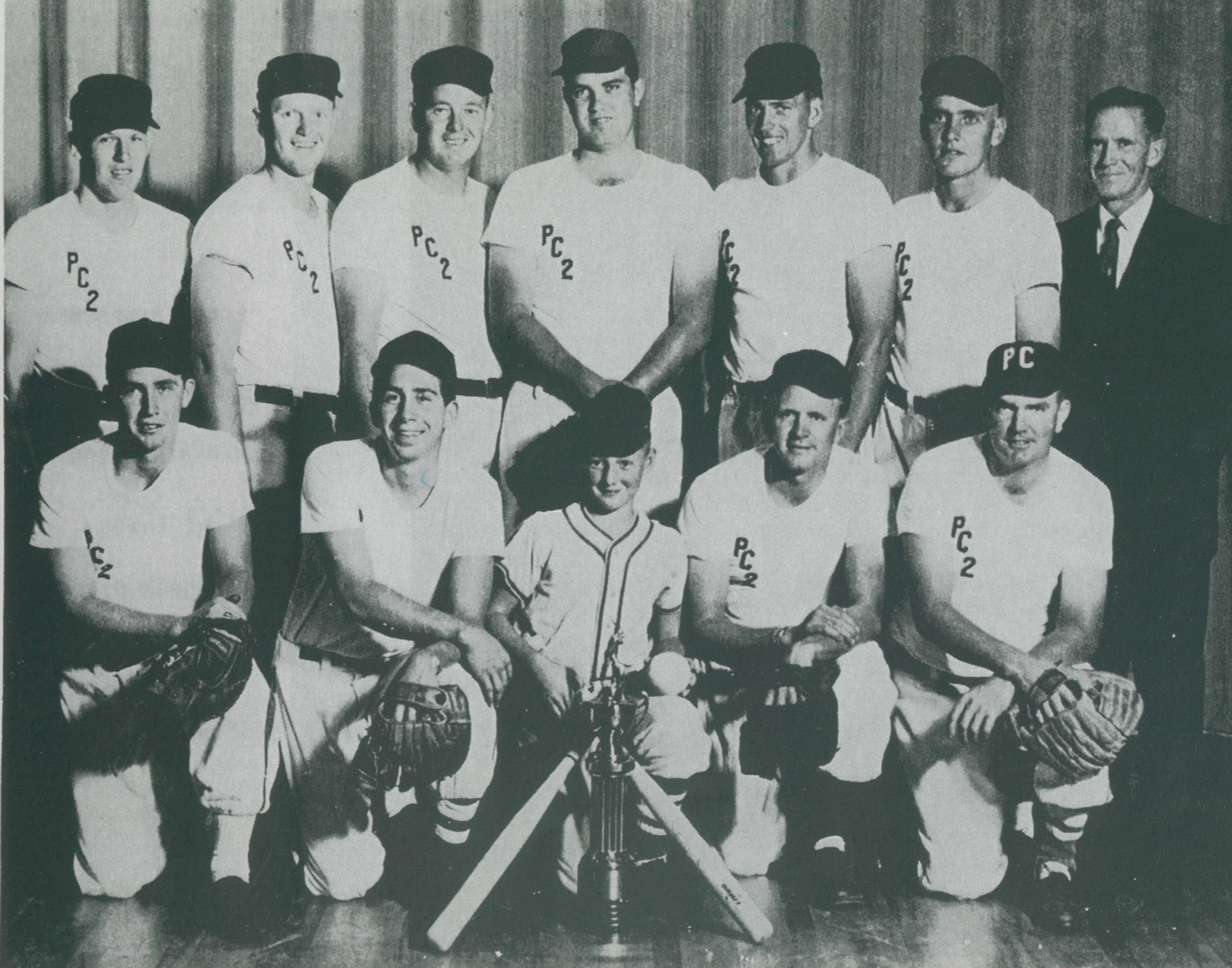
PLAIN CITY SECOND WARD

ALL – CHURCH CHAMPIONSHIP TEAM

1963 – 1ST Place

1964 – 1st Place

1965 – 3rd Place

              This team represented the Plain City 2nd Ward and Plain City Town by winning 64 and losing only two games over a three-year span. Many players received All – Church recognition. In the championship game the first year the team hit 11 home runs and pulled off a triple play for the victory.

Back Row: L to R:                                            Not in Photo

Garry Skeen                                                     Archie Skeen

Gaylen Hansen                                                Ken Searcy

George Cook                                                    Jay Freestone

Gar Hunter                                                      Val Taylor

Jerry Bradford                                                 Mel Cottle

Lynn Folkman                                                  Gordon Singleton

Bishop Rulon Chugg                                        Jim Beasley

                                                                        Don Singleton

Front Row: L to R:                                           Gary Hill

                                                                        Bishop Orlo Maw

Jerry Moyes

Doug Palmer

Dale Searcy

Blair Simpson

LaGrand Hadley

All – Church Honors:

Gar Hunter

Jerry Bradford

Ken Searcy

Gaylen Hansen

Archie Skeen

Blair Simpson, Most Valuable Player

BLAIR SIMPSON

and

ELMER SINGLETON

of the

PITTSBURGH PIRATES

1948

“Two cousins met”

ELMER SINGLETON

              Elmer Singleton started pitching for the Farm Bureau League in Plain City. He pitched for several championship teams. He signed a professional contract with Cincinnati, and played at Wenatchee, Washington in 1939, his first year. He played for Idaho Falls, Portland, and Oklahoma City. He moved on up to the big league and played with the following teams:

Cincinnati

Yankees

Chicago

Kansas City

Boston

Pittsburgh

Washington in 1950

Toronto

San Francisco

Seattle

              He was in professional baseball for 27 or 28 years, the last eight years as a player coach.

              He pitch two no hitters, one at San Francisco, and the other at Seattle. Elmer won the Player of the Year Award at Seattle in 1956. There is a baseball card with Elmer’s picture on it with the Chicago Cubs. It reads:

              “This will be Elmer’s 17th year in professional baseball.

                 He started back in 1940 and after 11 uneventful seasons,

                  got red hot to become one of the top hurlers on the

                  Pacific Coast. In 1952 at San Francisco, he won 17, followed

                  with 15 triumphs in 1953 and moved to Seattle in 1956.

                  He had the best Pacific Coast Earned Run Average.”

              Elmer told us that before he left to play professional baseball, the people of Plain City honored him at a banquet. They gave him a ball glove, and he still has it. He is listed in the Sports Record along with his accomplishments. Elmer was a great baseball pitcher. The only picture we have of Elmer is with Blair Simpson. Elmer and Blair are cousins,

              BLAIR SIMPSON

                                                      BY Blair Simpson

              I attended school at Plain City before going to Weber High School. At Weber High School I participated on the track team, played some basketball and pitched for the Weber High baseball team.

              After graduating from Weber High School in 1944, I was drafted into the army for two years.

              In 1948, I signed a professional baseball contract with the Pittsburgh Pirates organization. While playing with the Pirates, I played with the following cities:

                                                            Santa Rosa, California

                                                            Pittsburg, California

                                                            Modesto, California

                                                            Hutchinson, Kansas

                                                            Waco, Texas

                                                            Charleston, South Carolina

              I was a pitcher and had to quit because of an injury to my knee.

              After retiring from professional baseball, I played a considerable amount of baseball with Plain City and other teams in the Ogden area, such as:

                                                            Ogden Ford Sales

                                                            Heitz Heating

                                                            Wasatch Time

              I was selected on the All Star Baseball Team composed of 16 players from the State of Utah.

              I also played on many softball teams in the Ogden area such as Fisher Hess, Utah General Depot, Fred M. Nyes, Savon, and others.

              In 1952, I was named the Most Outstanding Player in the “All Church Fastpitch Softball Tournament” in Salt Lake City and was also named to the All Church All Star Team in 1953.

              In 1963, o received the Most Outstanding Player Award in the All Church Softball Slow Pitch Tournament. In 1964, I again received the most Outstanding Player Award in the slow pitch division of the All Church Tournament held in Salt Lake City. The year 1964 was one of my most memorable occasions in All Church Softball as I hit four consecutive home runs in one game.

              I would like to give a lot of credit to whatever successes I have enjoyed in athletics to the talented town of Plain City.

WAYNE COTTLE

                                                      By Wayne Cottle

              I was born November 30, 1928, in Ogden, Utah. I lived in Plain City all my life. I attended Plain City Elementary and Junior High. I played basketball in the 9th and in the 10th grades for Plain City. L. Rulon Jenkins was our coach and our principal. We played against Hooper, North Ogden, Huntsville, and Weber High School.

              In the Fall of 1945, I started Weber High School, playing football, basketball, baseball, and track for both years. In 1947, I played to a tie for the Region I Championship with Box Elder. We played off the tie breaker at Ogden High School, beating Box Elder for the first Region I Championship for many years. I won the Region I scoring title. We entered the State Tournament in Salt Lake City and we lost to Granite, who became the State Championships, in the semi-finals. I was the recipient of the Standard Examiner KLO Watch Award for being the outstanding athlete of the year.

              I entered Weber Junior College in the Fall of 1947. After about a month of practice I became one of the starting forwards. We played in several tournaments winning 3rd place in the Compton California Invitational.  We played an independent schedule that year. In 1948-49 Weber became a member of the ICAC Conference. We won the conference and played Snow Junior College Tournament. We won the game and I was voted the tournament’s Outstanding Player Ward. We went to the national finals in Hutchinson, Kansas. We won our first game, then we met two defeats.

In the Fall of 1949, I entered Brigham Young University. I was on the team that won the Skyline Conference Championship for the first in many years. We went to the NCAA at Kansas City, Missouri. We lost to Baylor University, then beat UCLA for 3rd place. The next year we accepted a bid to enter the National Invitational Championship and two of our players were voted All American.

              I graduated from BYU in 1951, came back to Plain City and started to play basketball with the Ward team. From the 1951- 1952 season until the creation of the Plain City 2nd Ward in 1960, we never lost a league game in the Farr West Stake. The year of the creation of the Plain City 2nd Ward, they beat us once and we beat them once. We played off the Stake Championship at Wahlquist Jr. High, and we won the team and the championship. After that season, the Church specified an age limit and I was area championships and went to the All Church several times.
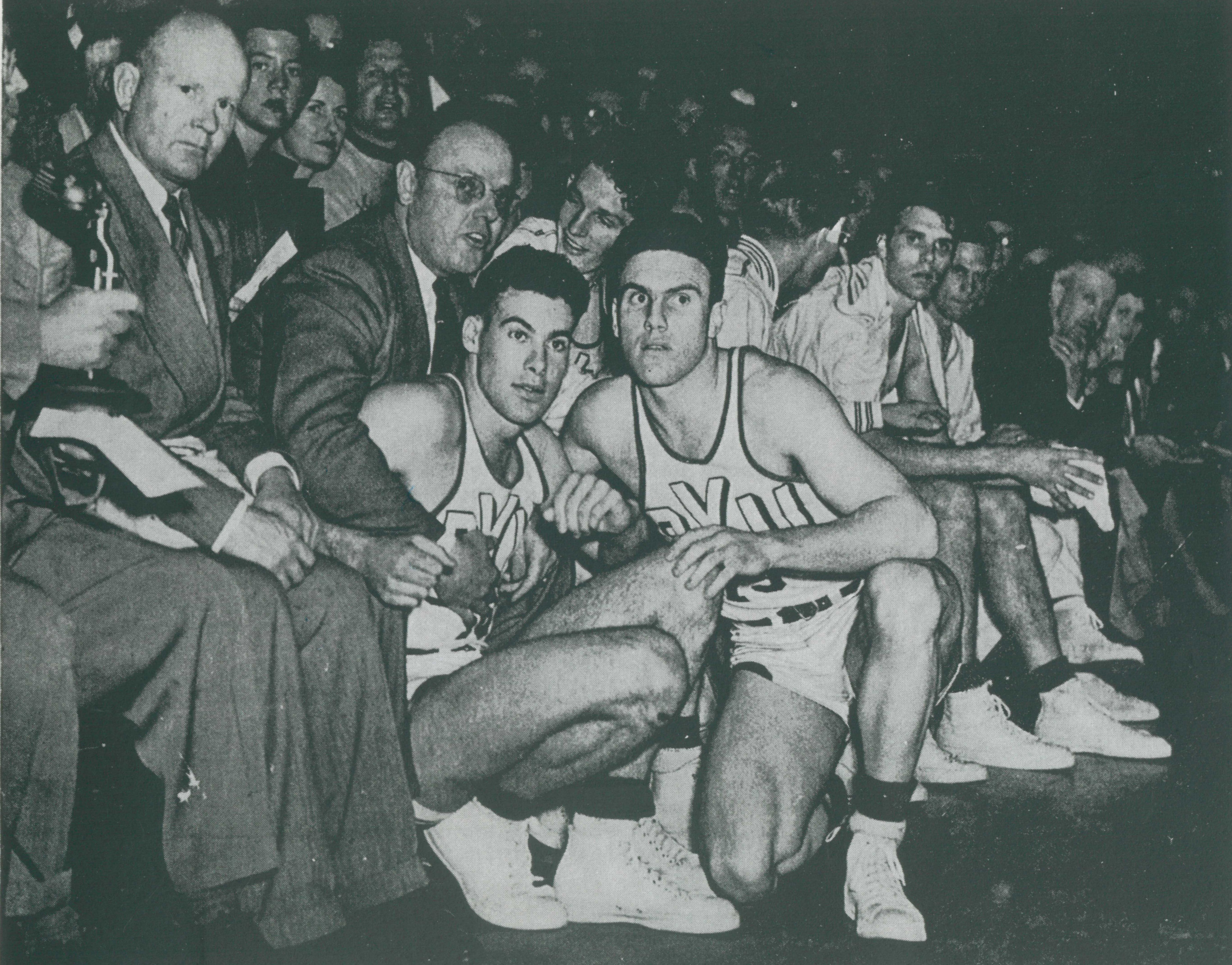
WAYNE COTTLE

Brigham Young University

BERT COOK

              He attended Plain City School where he was active in athletics. He graduated and attended Weber High School in 1947 and 1948., where he participated in football, basketball, baseball, and track. In 1948, he was selected on the Class A State All Star Team, in which Weber High School won the championship. He also won the All American in boys Award in baseball at John Affleck Park in 1948. From this he won a trip to Chicago.

              He played for the Plain City baseball team for the Farm Bureau and Ogden City League.

              From 1948 until 1952 he attended Utah State university at Logan, Utah, where he started on the first five as a freshman, and later in the year played in the AAU Tournament and was selected on the All Tournament Team.

              In 1951 – 1952, he lead the conference in scoring and was voted All Conference both years. In 1952 he was voted All American in basketball where his Number 6 jersey was retired at Utah State University being the first one in the history of the school. That same year he was selected on the All Conference Team, and traveled with the Harlem Globe Trotters and the College All Star for several games. Later that year, he signed a contract with the New York Knickerbockers and was drafted into the service where he played for Fort Lee, Virginia Military team in which he lead the scoring and was later voted to the Second Army All Star Team.

              He served his country in the Far East Command in 1954, being released in 1955, when he rejoined the Knicks until 1956. After a serious knee injury he returned to Plain City and played for the Plain City Ward and the Ogden City League.

              He played on the 1956 team that won second place and he made First Team All Church.

              At Weber High School I participated in basketball, baseball, and football and was productive and beneficial. After graduation in 1954, I attended Utah State University for two years on a football scholarship. Next, I received a University of Utah Scholarship in baseball. That year 1958, was a successful year with a batting of .350. The next year was even more eventful. My batting average jumped to .490. The .490 batting average was good enough to lead the Skyline Conference, plus I was fortunate to lead the NCAA in homeruns and RBI’s. These statistics and the efforts of the University of Utah Sports Publicity Department lead to my selection as the “First Team Catcher on the College All -American baseball Team”. As a result of this honor, I was selected the “Most Valuable Player in NCAA, District 7.” The year was 1959.

              Opportunities were available to sign a professional baseball contract with the New York Yankees, Chicago Cubs, Boston Red Sox, and the Phillies. In 1959 I signed a bonus contract with the Boston Red Sox.

              During the next three years I played in the following leagues: Sophomore League in Alpine, Texas: North Carolina League in Raleigh, North Carolina; Midwest League in Waterloo, Iowa; and the Eastern League in Johnstown, Pa. Winter ball was played in Bradenton, Florida.

              In 1962, spring training was held in Deland, Florida. Because of a successful spring training I was invited to join the Triple A League in Seattle, Washington, “The Seattle Rainiers.” All Star Catcher honors were received in 1960, 1961, and 1962. In 1963 I was invited to spring training with the parent ball club, The Boston Red Sox. At the completion of spring training I was again assigned to the Seattle Rainiers.

              Some of the great stars helping the young players were: Ted Williams, Bobby Doerr, Rudy York, Johnny Pesky, and Mel Parnell. As of this year, 1977, the only teammate of mine still with the Boston Red Sox is Carl Yastrzemski.

                                                                        Bert Cook

                                                            New York Knickerbockers

                                                                        Archie Skeen
In Memory of Lowell Hansen, Bryce Sanderson, and Garrett Smith

With the suicide of a dear young man, Bryce Allen Sanderson, I thought I would share these thoughts and this talk once again.  In memory of Garrett Lee Smith and Lowell Eugene Hansen.  Both of them forced the concept of suicide into my life and required I come to some understanding of the idea.  I wanted to give some memories of these two individuals and the doctrinal concepts surrounding suicide.  What is suicide?  How does God look at suicide?  How am I supposed to deal with suicide?  How does God deal with those who commit suicide?  I hope this talk will help address some of these questions as we all ponder once again this unthinkable act, that brings upon a person their own death.

Lowell Hansen was an acquaintance I knew in Paul, Idaho.  I was young enough that I knew who he was, but did not really know anything about him.  After I was charged by a bull at our house, I remembered that within days he appeared at our home and removed the charge from the bull.  I watched him shoot, hang, gut, clean, and cut the bull.  It was fascinating.  I remember recognizing the butcher truck each time when I would see it on the road or at some other location.  I knew he built a log home because I always saw the truck parked near it.  Years later after I became involved in the same congregation and came to know him a little more as Brother Hansen.  It was not until I returned from my mission that I realized he even had a family.  I moved back to home in the fall of 2002 and I was assigned as a Home Teacher to one of Lowell’s daughters.  It was only then I really started to get to know the Hansen family more on a personal level.  It was shortly after that Lowell decided to end his life much like he did that bull.  I attempted to help minister, however weakly, somewhat to the needs of his daughter and her then boyfriend.  The talk I reproduce in full below was given at his funeral and has provided much of the basis for my feelings and ideas on suicide.  I have gained my own testimony of the talk and testify openly of its principles and truth.

Garrett Smith was on a bit more personal level for me.  I first learned of him in Manchester, England when he was assigned my companion as a new missionary.  I was called as a trainer to him, although I only knew of him as Elder Smith.  We served together, 24 hours a day, for 6 weeks.  We had many a conversation and became close friends.  I had some frustrations with him due to some of his learning disabilities and my lack of patience.  He knew of this and I do not think it always helped in our relationship.  When the 6 weeks were up, we had both profoundly influenced the other.  He convinced me that I should consider leaving civil engineering and looking more into political science and law.  I think I had convinced him that his disabilities were not a very good excuse for settling for mediocrity.  I left England to return home in 2000 and he finished in 2002.  We had planned several occasions where we would get together for old time’s sake, but they kept falling through due to poor scheduling and other issues.  We finally set a date to get together on the 13th of September in 2003.  I was going to drive down to Orem, Utah where he was and spend the weekend.  Unfortunately, I received a phone call that week only to find he had hanged himself in a closet after consuming alcohol and sleeping pills.  I had a great desire to attend his funeral so a roommate from Logan drove with me to Pendleton, Oregon for the funeral.  I took a copy of the talk from Lowell’s funeral with me and gave it to Garrett’s parents.  Garrett’s mom, Sharon, later thanked me for the talk.  Our Mission President, Phil Wightman, spoke at the funeral and while I doubt he had read the talk, he referenced very similar themes as Hyrum Smith did at Lowell’s funeral (Hyrum Smith was Lowell’s Mission President too).  Sometimes I find myself wondering what Garrett’s life would be like if he wasn’t reposing at Weston, Oregon.

I lost the talk over the years and had repeated requests come to me for a copy of it.  Those asking were mostly individuals I had shared with at the time of Garrett’s funeral who were moved by it and wanted to give a copy of it when someone else took their life.  I had probably a dozen requests for the talk in 2010, so I ended up contacting Lowell’s widow for a copy.

Here is a copy of the talk by Hyrum Smith given 6 December 2002 at the funeral of Lowell Eugene Hansen in Paul, Idaho.  At the end, I will give some other thoughts I remember Phil Wightman giving at Garrett’s funeral.

~

My brothers and sisters, I wasn’t really sure until about 3 o’clock this morning why I was asked to be here, but somewhere around three, I knew.  The spirit indicated to me that I am uniquely qualified to speak here today, and I’ll share with you why as I share some thoughts with you.

I’m honored and humbled that Emma Jean asked me to be here.  When she called Monday, I was stunned as I’m sure all of you were.

Public speaking is not something that is foreign to me.  I do it for a living.  I’ve spoken before thousands of audiences, but never an assignment like this.  I’d like to begin by suggesting that we are met here today in the house of God.  That same God who sent Jesus here to help us.  We meet today in the name of Jesus Christ who died to save us.  I would ask that you keep that in mind as I share a few thoughts with you this morning.

I’d like to begin by sharing four scriptures with you that describe, as many scriptures do, how our Father in Heaven, and our Savior feel about us.  I think we need to be especially reminded of that.  I’d like to go first with the 29th section of the Doctrine and Covenants and read verse 5 “Lift up your hearts and be glad for I am in your midst and am your advocate with the Father.  And it is His good will to give you the kingdom.”  I would then take you to the 62nd section of the Doctrine and Covenants and read verse 1, “Behold and hearken, o ye Elders of my church saith the Lord your God.  Even Jesus Christ, your advocate, who knoweth the weakness of man and how to succor them who are tempted.”  Now go with me to John, Chapter 3, verse 16, “For God so loved the world that He gave His only begotten Son.  That whosoever believeth in Him should not perish, but have everlasting life.  For God sent not his Son into the world to condemn the world but that the world, through Him, might be saved.”  Last I would take you back to the Doctrine and Covenants, in section 18.  “Remember the worth of souls is great in the sight of God.  For behold, the Lord, your Redeemer, suffered death in the flesh.  Wherefore He suffered pain of all men that all men might repent and come unto Him.  And He hath risen again from the dead that He might bring all men unto Him on conditions of repentance.  And how great is His joy in the soul that repenteth.”  I share those scriptures with you, brothers and sisters, as a preamble to what I would ask you to consider as we have met here today.

This wonderful man, father, husband, son, brother, missionary, I knew him well as a missionary.  He was one of the great missionaries of our mission – most of the Idaho people were.  He made a big mistake the other night.  Huge mistake.  He knows that he made that mistake now.  It cost him his life.  But only his body died the other night.  His soul, his spirit, his brain, his mind are still very much alive – very active.  It’s like going into another room.

I was led to a talk that Elder Jeffrey Holland gave at a very similar funeral.  Jeff Holland and I served as missionaries in the same mission, British mission, lots of years ago.  He’s a very dear friend.  He was asked to speak at the funeral of a young man who had taken his life.  This is what Elder Holland said, and I am going to interject Lowell’s name into these remarks, because they fit perfectly today.  “We’re here to celebrate Lowell’s life, not his death.  We’re here to praise the Lord and love God for the atonement and the resurrection, but we’re also here to say, particularly to the youth in this congregation and others who struggle, that Lowell made a mistake.  Now he would be the first to say that.  Someone said, ‘A man to be good, and I would add a woman, must imagine intensely and comprehensively – he must put himself in the place of another – the pains and pleasures of the man that has become his own.  Until he can do that, he must never sit in judgment on a man or his motives.’  We need a better vocabulary, Emma Jean.  We know what we mean when we use the language of death.  But the master of heaven and earth, the Savior of the world, the Redeemer of all mankind, the living Resurrection said that, “When you live and believe in Him, you never die.”  So, we’ll let Lowell go for a while.  But he’s not dead, in any eternal sense, and you know that.  You know that now, you’ll know it tomorrow, and you’ll know it next week.  You’ll especially know it when he is spiritually close to you, whispers to you in your dreams, helps through the veil to raise your grandchildren.  You’ll know that Lowell lives.  It is important to me to bear testimony to you that Lowell lives – just as we testify that God lives and Jesus lives.  We testify that Lowell lives and spiritually and is loved of God and of us.  We miss him.  Death was an intruder this week.  We weren’t ready.  We do miss him and we are sorry, but none of that diminishes the brightness of his life.  The grandeur of God’s plans – the reality of life and the resurrection – of eternity and the Celestial kingdom.  Lowell is being buried with all the promises and symbols of his covenants safely around him.  God in his mercy will work out all the arrangements even as Lowell works out his acknowledgement of his mistake.”  Un-quote.

Those are words of an Apostle of God.  I would like to pose five questions to you now.  The first of which no one has an answer for, but I think we need to deal with it, because I don’t think there is a person in this room that hasn’t asked this question in the last five days.  The second, third, and fourth question, I came from southern Utah this morning, to answer.  Because there are answers to those three questions, and I believe I can answer them for you.  The fifth question, only the people in this room can answer.  I don’t know what that answer will be, but I’m going to pose it.

Here’s the first question, which has been on the minds and lips of probably everyone.  “What was he thinking about?”  What possibly could have driven him to make this mistake?  What’s the answer?  I don’t know.  Nobody here knows.  What sort of despair and anguish and pain causes someone to do that?  I don’t know!  He made a mistake, so we really don’t know the answer to that question.  But that’s not the important question.

The second question, the one that I think I am uniquely qualified to answer, and one of the reasons why I think I was asked to be here is, “What is Lowell thinking now?”  Lowell’s very much alive.  He thinks, he breathes; he has probably had an opportunity to walk with his Father in Heaven.  DO you want me to tell you what he is thinking now?  He’s afraid.  He’s sorry.  He’s in anguish.  He’s suffering.  He’s wishing he hadn’t done it.  I know that.  How do I know?  Several years ago, I made some big mistakes.  We all make mistakes.  Hopefully not as big as the ones I made.  Because of those mistakes, it was required that I lose my membership in the church for several years.  And after I went through the process of approaching my Bishop and my Stake President, and going through the church judicial system – which is amazing, I found myself asking the first question a lot.  What was I thinking?  I couldn’t even answer that question for me.  But I know what I thought about after.  I know about the pain.  I know about the anguish.  I know about the suffering.  It’s awful!  So rest assured, and knowing Lowell as I know him – the integrity of this man, he’s in a lot of pain.

Third question, “Will the Lord allow Lowell to repent?”  Every natural instinct in your body knows the answer to that question – Of course!  He allows everyone to repent.  There’s a myth that floats around the church from time to time.  It suggests that people who take their lives have committed an unpardonable sin.  I’m here to tell you today that’s just flat not true.  The Lord will allow Lowell to repair that mistake.  He’ll walk him through it.  He’ll help him do it.  He’s going to allow that.

Fourth question, “Will the Lord forgive him?”  Every natural instinct in your body knows the answer to that question.  The answer is yes.  He will.  He will forgive him.  And Lowell will receive all the blessings that he rightly deserves from a wonderful life.

Those are the three questions I can answer with surety.  The fifth question, I can’t.  The fourth question was, “Will the Lord forgive him?”  The answer is yes.  The fifth question is, “Will you?”  I know from sad experience that lots of people don’t.  But the Lord has asked us to forgive.  He said, “I the Lord will forgive whom I choose to forgive, but of you, you’re required to forgive all men.”  I need to talk about forgiveness for a moment.  Does the mistake that Lowell made the other night blot out all the good that this man did in his life?  No!  Elder Holland reflected on that.  He was a wonderful missionary.  He was a great father.  He was a great man.  He was dedicated to his Father in Heaven.  Like many of us, he made some mistakes, one big one.  It doesn’t blot out everything he was.  We heard of a wonderful tribute from a beautiful daughter today about the kind of dad he was.  None of that gets wiped out.

As I went through the initial stages of my repentance process, one of the major sources of the anguish was the worry that no one would forgive me.  Because I somehow got it in my mind as I grew up in the church, that to ultimately forgive someone, for a transgression, you had to forget it.  Because we were taught in the scriptures, that when repentance was real and complete, the Lord forgets.  How does He do that? He forgets!  Wow!  Can we, mortals, reach a level of spiritual maturity where we can forget what happened the other night?  I don’t think so.  Do you think that anybody in this room will ever forget that Lowell took his life?  Not in this life.  I don’t think so.  Do you think anyone, who knows me well, will forget that I was excommunicated from the church?  Nope – Hyrum Smith…business leader, great, great grandson of the prophet’s brother, Hyrum?  No one will ever forget that!  Do you think my kids will forget that?  No!  BUT, and this is one of those moments where the spirit instructs and saves, in the middle of the night, the spirit taught a great lesson.  Forgiveness doesn’t mean forgetting.  Forgiveness means remembering – but it doesn’t matter any more.  I think we can achieve that.  I think we can reach a point, as mortals, where we can remember and have forgiven to the point where, in remember, it just doesn’t matter anymore.  I challenge each to deal with the fifth question, “Will you forgive him?”  I believe you can – you must!  That’s what the Lord wants you to do.  But you’ll never forget.

I want to share a concept with you that has helped me think through a number of things.  During the Vietnam War, I was in the military during that period of time; there was a man by the name of Stockdale.  He was an admiral.  He was the highest-ranking man to spend time at the Hanoi Hilton as a prisoner of war.  And while he was in the prison, for about six years, he discovered that there were three basic types of people incarcerated in that prison.  He discovered the same thinking that Victor Frankl discovered at Auschwitz during the Second World War.  Victor Frankl wrote about it in his book, “Man’s Search for Meaning.”  Then Stockdale wrote about it, and it has become known and has been written about in a number of books since – the Stockdale paradox.  The three groups of people that he discovered were these.  There were pessimists, optimists, and realists.  And this is how he defined each group.  The pessimists saw the brutal facts around him and quit.  The optimist had boundless faith and ignored the brutal facts.  The realist saw the brutal facts, but had faith they could be dealt with.

The reason I share this with you is that in this book, when he wrote about this he said the interesting thing about these three groups is that the first two groups of people died in the camps at Vietnam.  Died!  Didn’t make it back!  I understood why the pessimists didn’t make it.  They saw the brutal facts.  They were in the middle of South-East Asia.  They were 8,000 miles from help and the Marines aren’t going to get in here.  We’re going to be here forever, and they died.  And some very healthy bodies died.

The second group stunned me!  The optimists died!  How come the optimists died?  Because the optimists had boundless faith but were not willing to look at the brutal facts.  And they said to each other, “You know we’ll be out of here by Christmas.”  “We’ll be out of here by Valentines.”  Every rustle in the bush was the Marines coming to save them.  And when every rustle in the bush wasn’t the Marines coming to save them and when they weren’t out by Christmas, and when they weren’t out by Valentines, they died.  They gave up and died.

The realists survived.  They saw the brutal facts.  “We’re in the middle of South-East Asia.  We’re not going to be rescued for a long time, but you know what guys, we’ll stick together.  We can handle this.”  And they did.

A good friend, by the name of Jensen, was in our mission – Lowell knew him – served six years in that prison.  There were several LDS fellows there, and the way they kept themselves sane was they would try and remember LDS hymns.  They would tap by Morse code on the bars of the jail, and they would send what they could remember of each hymn.  They gathered lots of hymns.  And one hymn they worked on for four years.  They got the first three verses in about 18 months, but the fourth verse took two and a half years to get.  They finally got the fourth verse.  When they got back, there was only three verses.  They had created their own verse, but they survived.  Now why do I share that here?  I want to ask you the question as what are you going to do about this issue?  Pessimists see the brutal facts – Our dad killed himself.  It’s pretty awful.  Nothing so wrong, it’s awful!  And you can give up – if you want.  The optimist ignores the facts – puts on a smiley face and pretends it didn’t happen.  And the optimists live a lie.  The realist sees the brutal facts – We lost our dad, our husband, our son – pretty awful.  We’ve got to gather together and help each other now to survive financially and economically.  We’ve got to get through school.  We’ve got to do stuff that dad normally would have helped us with.  It isn’t going to be easy.  The optimist has the faith that we can do it.  And so I’m asking you today, “What are you going to be?”

On the 19th of October of last year, not this year, but 2001, Steven Covey and I, we have a business together, were asked by Mayor Giuliani of New York City, if we would come back to Manhattan and do a free, one day, workshop for the families of those affected by the 9/11 disaster.  He told that their mid-town Manhattan Sheraton had donated their ballroom.  They donated our rooms to stay.  Would you come back?  We’ve got people in some real pain.  Would you come back and speak?  We said, “We’re there!”  We got there on a Thursday night.  The seminar was to be on Friday.  I got there about midnight.  I’ve been in Manhattan many, many times.  As I flew up the East river, I was coming from Chicago, and saw the lights where the World Trade Center used to be, it was kind of an eerie feeling.  It was a very different landscape now.

At five o’clock the next morning, Mayor Giuliani had arranged for a tour, a private tour of ground zero for Steven and me.  At that point, which was just five weeks after the event; sixteen hundred policeman had surrounded ground zero, and had blocked it off.  You couldn’t get down there without a police escort.  We had to go through four checkpoints to get to ground zero.  About 5:15 in the morning, we found ourselves standing on the street in front of where the Marriott Hotel used to be. It used to be called the Vista Hotel.  I’ve stayed in that Hotel many times.  Only I wasn’t really standing on the street.  I was standing on 16 feet of compacted debris.  And as we stood there looking at this horrific hole in the ground, the policeman who had been assigned to be our guide began to tell us his story.

He said, “You know, I was here that day.  I was standing on the street right about where we are.  I heard this big bang, I looked up, and all this stuff came flying out of the World Trade Center.”  He said, “You know, it looked like paper when it all came out until it started hitting the ground.  It was fifty foot I-beams killing everyone it hit.”  He said, “I watched 34 people jump from those towers.  Four of them holding hands.  I watched eight firemen lose their lives from falling people.”  I’m not even believing this.  Then he looked at me and said, “Mr. Smith, how many computers do you think there were in the World Trade Center?”  I said, “Probably a lot.”  He said, “We haven’t found one!”  I said, “How come?”  “3,000 degree fire.  It’s still burning.”  As he was talking, a crane pulled a big I-beam out of the rubble, and the end of the I-beam was dripping molten steel.  Then he said, “You know the second plane hit and then the building started to come down – we all thought we were dead.  We got under a car, and somehow we lived.”  That’s how our morning started.

When we got back to the hotel at about 7:30, we had to shower.  We were covered with soot.  At 8:00, this meeting began.  There were 2,000 people jammed into a ballroom designed for 1,500.  People were sitting on the floor.  It started by two New York policemen and two New York Firemen, carrying the American flag in.  I will tell you, It’s hard.  And then the Harlem girls choir, sixty young women from Harlem, filed in and sang three patriotic songs, and the music that came out of those kids was amazing.  I was very grateful that Steven Covey had to speak first because I was a mess.  He spoke for two hours, and then I had to speak for two hours.  As I approached the front of the room, there were people all around on the floor.  A fireman, about half way back, in uniform, stood up, and he said, “Mr. Smith, are you going to tell us how we get of bed in the morning when we just don’t give a darn anymore?”  That’s how it started.  It turned out to be one of the toughest, and ultimately the most rewarding experiences I’ve had.  I said these words to the fireman – and I want to say these words to you – Emma Jean and the children, and their extended family, and everybody here.  If you don’t remember a think I’ve said, remember this statement.  I said to this fireman, “Pain is inevitable.  Misery is an option.”  And he seemed a little stunned.  Now what do I mean by that?  The fact is, brothers and sisters, bad things happen to good people.  They just do.  Airplanes fly into buildings.  Rivers overflow their banks.  Dams break and flood out villages.  Accidents happen – people die prematurely.  Bad stuff happens to good people.  How we choose to deal with the pain is ultimately a measure of who we are.

That’s why the Lord gave us the gospel of Jesus Christ.  To help us deal with the pain.  Some of the most serene, magnificent, wonderful people I’ve ever known have gone through some major pain in their lives.

Will the Lord forgive?  Yes!  Ten days ago, tomorrow, President Hinckley and Elder Maxwell, laid their hands on my head and restored all my blessings.  Not just some of them.  All of them.  And President Hinckley mentioned three times in the most amazing blessing I’ve ever heard, all the blessings.  I’m here to testify to you today that that will happen to Lowell.  He’ll be there.  He’ll be ready, Emma Jean.  He’ll welcome you with all his blessings.  So the challenge for us as the living – to go on.

When the pioneers came across the plains, they periodically had to stop and bury the dead.  And the scene was always the same.  There’d be a family standing around the grave, and if you looked off into the distance, you could see the wagons – and the wagons were ready to go.  The wagons had riders in them.  They were waiting for the family to get through with that funeral so that they could move on because they knew, “If we don’t move on, then we’ll die!”  They buried their dead, and they moved on.

Well, the wagons are surrounding the building, and they’re ready for us to move on.  We pulled off the highways of our lives to pay tribute to a great human being – who made a mistake that can be fixed.  And when we’re through here today, we’ll get back in our wagons and move on.  We’ll survive.  Don’t ever forget the brutal facts, but never lose faith that they can be dealt with.  I bear you my testimony that God lives.  Jesus is the Christ.  He loves everybody in the room.  He’ll take care of Lowell.  He’ll take care of us too.  I bear that witness in the name of Jesus Christ, amen.

~

Here are a few more thoughts from my memory of Phil Wightman’s talk from Garrett’s funeral.  The talk centered around the scripture in 1 Corinthians 13:12-13 which states, “For now we see through a glass, darkly; but then face to face: now I know in part; but then shall I know even as also I am known. And now abideth faith, hope, charity, these three; but the greatest of these is charity.”

In essence, since I went to the funeral with Lowell’s funeral talk in my mind (in fact, my friend, Taylor Willingham, read it to me again on the drive up and I gave a copy to Garrett’s parents) the basics of the talk were the same.  Brother Smith approached it with some practical questions and answers to those questions.  President Wightman approached it from a doctrine side that we do not really know what goes on in the minds of these individuals when suicide is completed.  But we have to have charity, love them and their families, and move forward.  In the end, the Lord will sort all things out.

Rest in peace Garrett and Lowell.  I look forward to meeting up with you both again some day.  Until then, I hope we all can appreciate the suicidal act and hopefully help avoid it in the future, and work forward from those who do commit this unthinkable deed.

First published 5 Jun 2011.