First Sunday of church at home in 2020 thanks to COVID-19
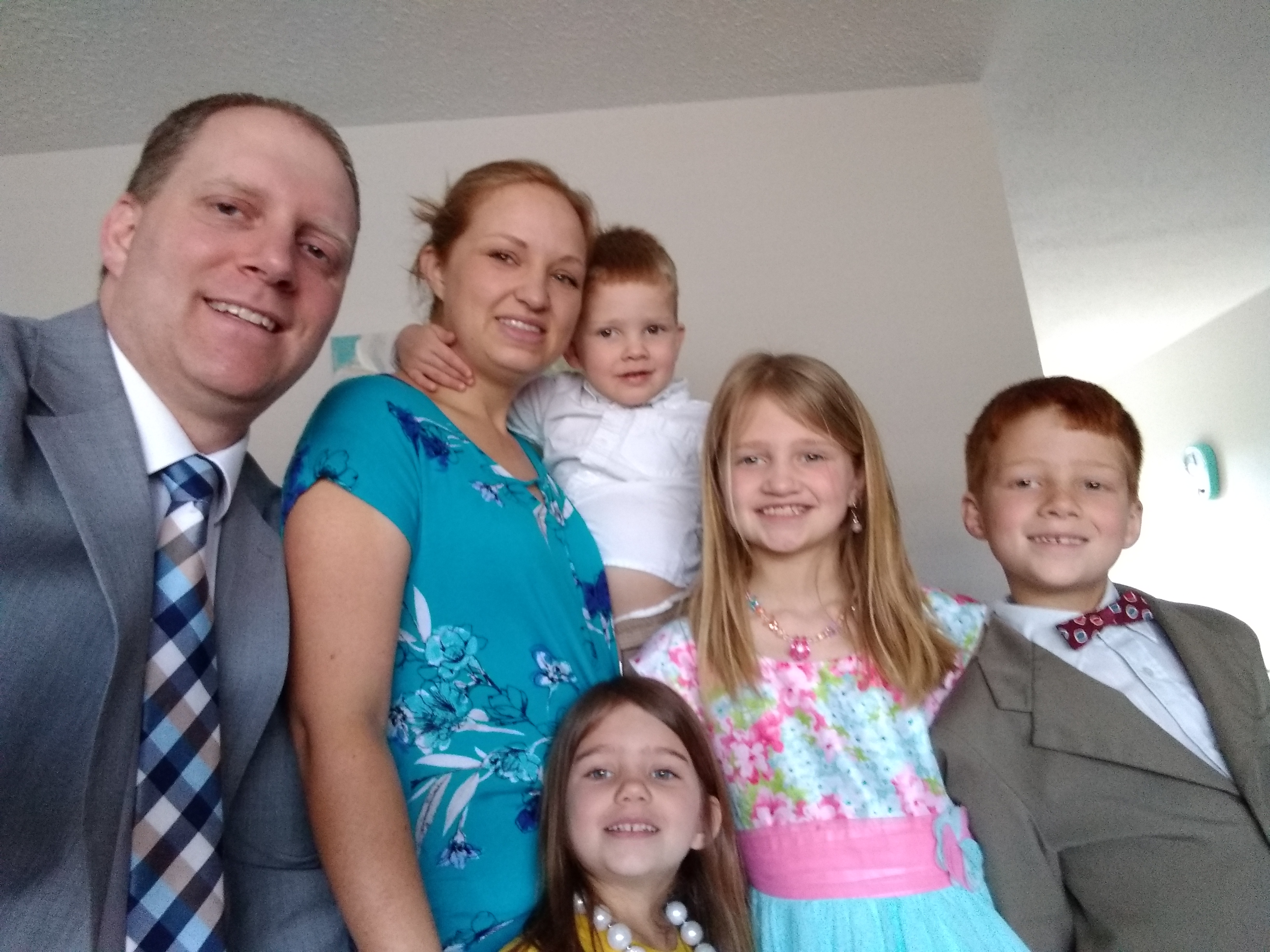
Two years ago COVID-19 threw us all for a loop. Nobody knew what was going to happen or what to expect. Idaho shut down most social gatherings, which included church gatherings in Burley. Fortunately we were authorized to regularly hold Sacrament and the rest of church at home. This was our first week of church at home thanks to COVID-19 in 2020.
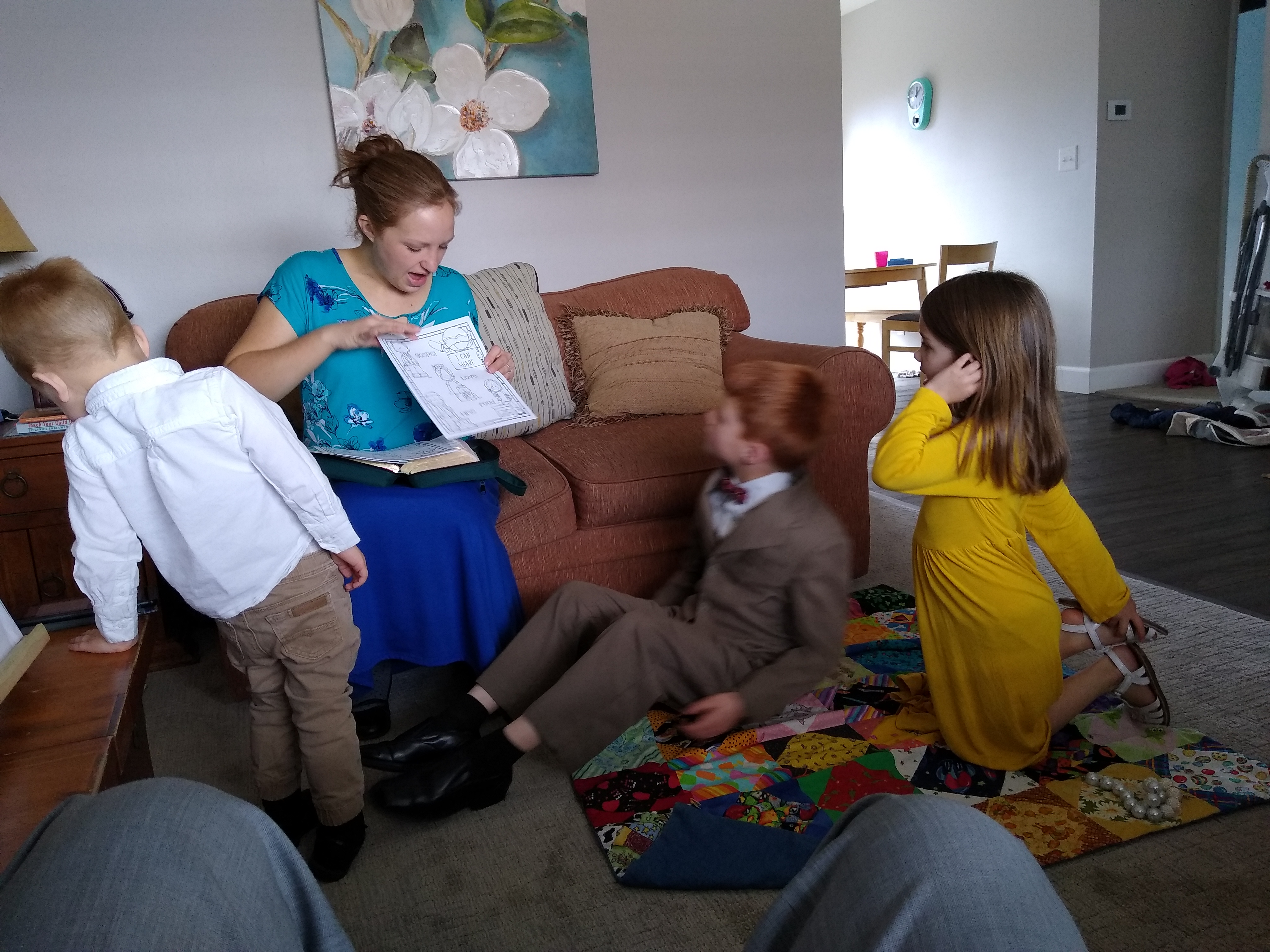
The above photo was snapped after our little Ross home Sacrament. The one below I snapped while Amanda was doing our Sunday School/Primary portion of church. These were golden days. I am very glad to be back to church in a full social setting, but the intimate home setting was also treasured.
An interesting side note, that little tie Hiram has on my Uncle Doug Jonas wore when he was young.
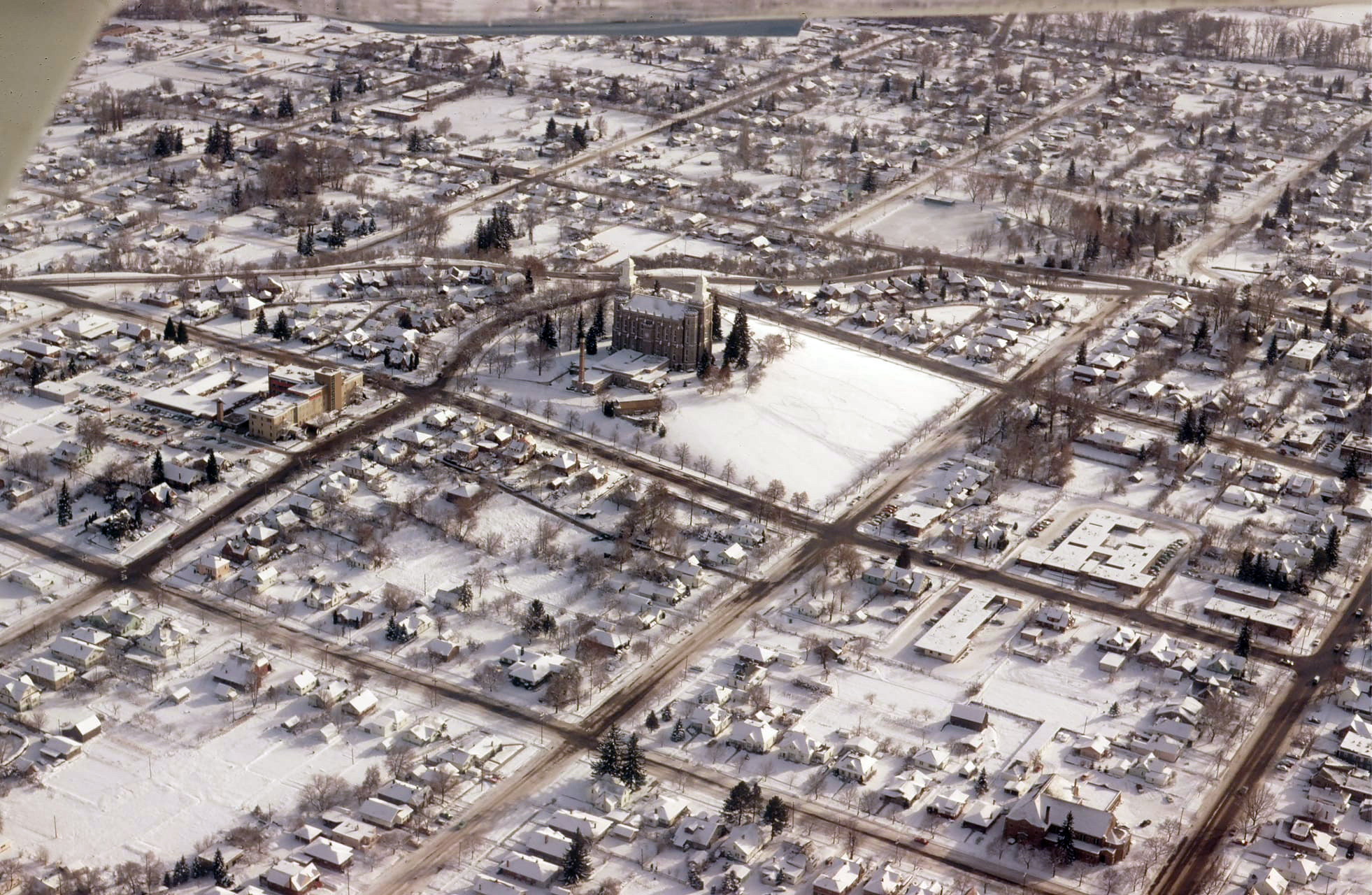
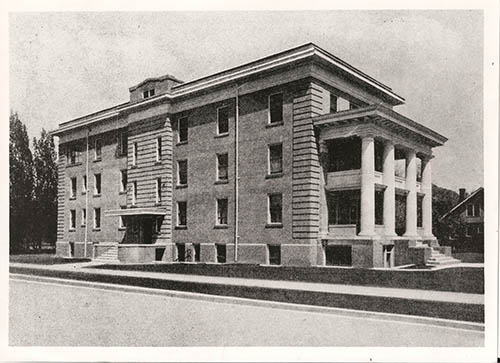
This photo caught my attention the first time I saw it. My mother was born in the Logan LDS Hospital in Logan, Cache, Utah. My mother was born with in a block of where I was married to my wife. I likely have an ancestor or relative that passed away in the same hospital. I have written before of my long ancestral ties to the Logan Utah Temple. I wonder what additional ties I have to the Logan LDS Hospital and its history.
The aerial photo above with the hospital and temple appear to be before the late 1970’s renovation of the temple that replaced the annex and placed the parking down the hill on the temple grounds (it doesn’t look like it even had parking on the temple grounds). The hospital is in full use, so before the construction of the new hospital in 1980.
Here is a short article I found from the Cache Valley Family Magazine.
Utah-Idaho Hospital opened in 1914
“A century ago local physicians and businessmen worked tirelessly raising money to fund construction of a hospital through the buying and selling of shares on which they knew they would never receive dividends. They weren’t investing in their own financial future, but rather in the community they loved. “The opening of the Utah-Idaho Hospital in 1914 was really the birth of not-for-profit healthcare in Cache Valley,” said Tina Murray, communications specialist at Intermountain Logan Regional Hospital.
“The three-floor, 60-bed Utah-Idaho Hospital, which stood on the corner of 200 North and 300 East in Logan, was a major milestone for the community. Although there had been private residences transformed into hospitals for a decade before, this facility was the first modern hospital built from the ground of for the primary purpose of being a hospital. It had many modern conveniences such as operating rooms, x-ray, classrooms, business offices, a hand-operated elevator, and kitchen and laundry facilities.
“In 1925 the Utah-Idaho hospital was expanded and became the William Budge Memorial Hospital. According to the story of the Budge Clinic by J. Clare Hayward, M.D., the first baby delivered in a hospital in Logan was born that year.
Logan LDS Hospital in the late 1950s
“In 1948, the LDS Church acquired Budge Memorial Hospital as part of the church’s health system. The hospital’s name was changed to Logan LDS Hospital until 1975, when The Church of Jesus Christ of Latter-day Saints turned it over to Intermountain Healthcare and it was renamed Logan Hospital. By the end of the decade construction began on a new facility, and in 1980 Intermountain Logan Regional Hospital opened in its current location on 1400 North.
Logan LDS Hospital shortly before its removal
““Throughout the past century, access to improved technology, expanded services, and a broadened range of specialists has distinctly changed and enhanced the quality of healthcare the valley’s residents enjoy today,” said Murray.
““While a lot has changed, the overall mission established by visionaries in the early 1900s — to provide the best available medical care following a not-for-profit model of delivery — has not changed. This same vision is effectively being carried out at Logan Regional Hospital 100 years later.”
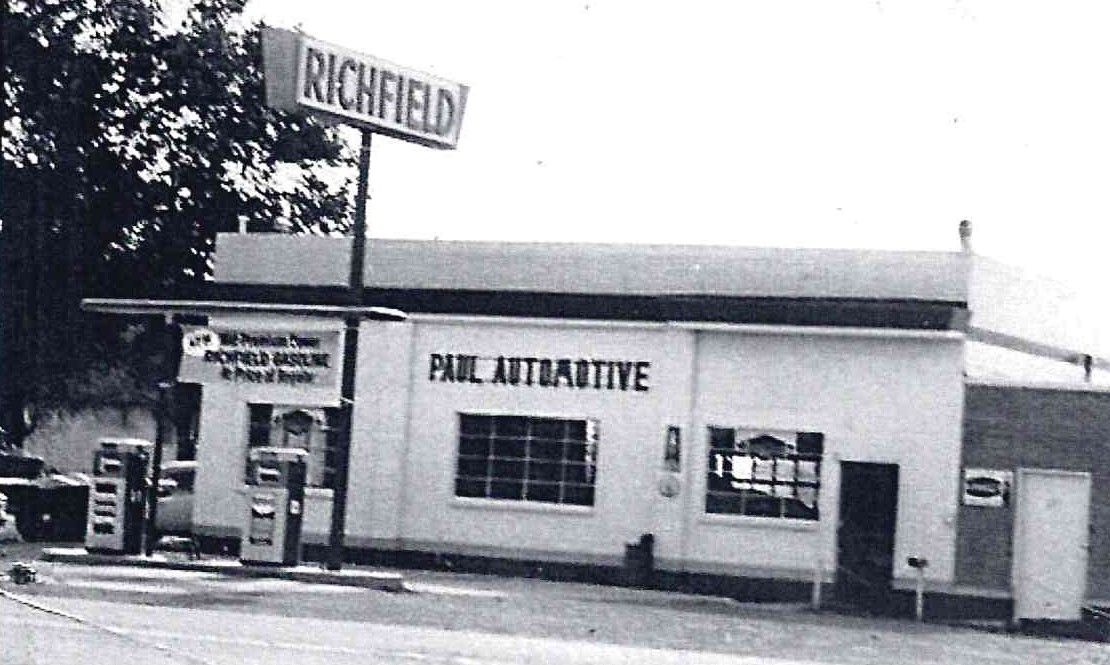
Another historical Paul photo I thought I would share. This old gas station is still on the south side of West Ellis Street in Paul, Minidoka, Idaho. I was started and operated by Clyde Richans and later by Jim Brown. It was bought by Snyders who added on to the west end of the building.
I have only ever known it as owned by Snyder’s, but did a little digging.
Richfield Oil was founded in 1907. Richfield Oil and Atlantic Refining merged in 1966 to create the Atlantic Richfield Company, known as ARCO now. This photo likely predates that merger with the use of the Richfield logo. I do not know how long this little gas station operated, but by the time I was running around in the 1980s, it was no longer a gas station. I do not know if it ever used the ARCO label or not.
I did a little homework on Clyde Richan. Clyde Lavar Richan was born 15 February 1927 in Tooele, Tooele, Utah and on the 1930 Census was living in Ely, White Pine, Nevada. By 1935, his family had moved to Rupert, Minidoka, Idaho. His father was also named Clyde Richan (1904-1992). Clyde had a brother who lived to be 6, Eldon Leo Richan (1928-1934), but that was all of the children for Clyde and Verona (1905-1989).
Clyde married El Vera Louise Bott (1927-2018) in 1945. Her obituary included some insights into her and Clyde. Apparently he also started the Tri-City Rebuilders, which I knew on other side of Paul.
RUPERT – ElVera Louise Richan, a lifetime Minidoka County resident, joined her beloved husband, Clyde Richan, on Saturday, August 18, 2018. Her life has been an ordinary and interesting journey. She was born the second child of Ottone “Toni” Bott and Esther Garbardi Bott at home on a farm near Paul, Idaho, on March 1, 1927. She attended the Paul Grade School, graduated from Paul High School, and went on to further study at Idaho State University and College of Southern Idaho.
On a very important day in June 1945, she married her high school sweetheart and best friend. They moved to San Diego, California, where Clyde served in the United States Navy and ElVera worked for the American Red Cross at the Regional Naval Base. They returned to Minidoka County, their roots, to raise their two children, Toni and Ted, to work, and to enjoy their lives.
While her husband started two successful businesses, Paul Automotive and Tri-City Rebuilders, ElVera worked at Idaho First National Bank for 22 years as a commercial and agricultural loan officer. She had previously worked for the Minidoka County Courts and Schools.
ElVera was active in the community serving on the Project Mutual Telephone Board, Minidoka Hospital Board, and Rupert Library Board. She was also treasurer of the Minidoka County Highway Board for 32 years and a lifetime member of the St. Nicholas Catholic Church in Rupert.
Snow skiing, water skiing, hiking, camping and golfing, were activities she enjoyed with her husband, children, grandchildren, and many wonderful friends. So many great memories!
She is survived by her daughter, Toni Marie Merz; sister, Dolly Kidd; grandchildren, Christopher Merz, Ted S Richan, and Tonya White; other close family, Sharon and Mark Kidd; and 13 beautiful great-grandchildren.
Ole and Constance Christiansen are pleased to announce the marriage of their daughter Martha to Herbert Coley, son of Stephen and Hannah Coley. They were married in 1874 in Norway. While I normally like to start these historical posts as a wedding announcement, I trip up there. We do not have any histories that give us an actual marriage date and location. Knowing the period, it is not imagined they were not actually married. Their first child was born in 1875. Curiously, after their immigration to the United States due to their conversion to The Church of Jesus Christ of Latter-day Saints, they not only went to the Logan Utah Temple to be sealed, but also applied to be married. As such, they were married and sealed in the Logan Utah Temple on 26 April 1893.
Martha was born the second of eleven children to Constance Josephine Eliza Jorgensen and Ole Christiansen on 16 April 1879 in Fredrickstad, Ostfold, Norway. I have not written their history yet, but as linked above, I wrote some limited information on Constance when we visited her grave first in 2018 and again in 2020. Ole was born in Trogstad, Norway and Constance in Drammen, Norway. Both Ole and Constance were baptized and confirmed into The Church of Jesus Christ of Latter-day Saints on 26 January 1876 in Norway.
What happens for the next few years is unclear on the reasons. Martha’s older sister, Walborg, was born 24 December 1875 in Fredrickstad, then Martha in 1879. We really have no records during this period and so I am unclear if there was another child, or two, in that period of time. Eivelda was born 20 October 1881 in Melbourne, Victoria, Australia. I have no clue why or what took the family to Australia. Their next child, Constance, was born 9 November 1883 also in Collingwood, then a suburb of Melbourne. Apparently Walborg and Martha were left in Norway while their parents went to Australia. Alice, Martha’s granddaughter recalls Martha telling of her sitting on the mountainside overlooking the fjord waiting for her parents to return and her missing them terribly. Martha’s first brother, Henry Owen, was then born 27 March 1887 back in Fredrickstag, Norway. Ole and Constance were back in Fredrickstag by March 1887.
I have been unable to find the immigration records for the Christiansen family between Norway to Australia and back. But the family was in Australia for at least 3 years, maybe as long as 6 years. They were not back in Norway very long as Rhoda was born in Richmond, Cache, Utah on 18 September 1890. Martha moved with her family to Richmond in the late 1880s. One record has it in 1887, another 1889, Martha was listed in the 1900 Census as immigrated in 1888. Either way, we now are in the vicinity of where she would have met Herbert Coley. Of Martha’s remaining 6 siblings, 5 were born in Richmond and 1 in Hyde Park.
Herbert was born the 5th of 9 known children to Hannah Maria Rogers and Stephen Coley on 12 February 1864 in Lutley, Worcestershire, England. It was while living in Lutley that the LDS missionaries first made a visit. We do not know the conversion story but Herbert and his siblings joined the church. Martha joined 23 August 1867, Herbert 1 June 1881, George 22 August 1881, and Frank 2 June 1882. The 1871 English Census has the family still living in Lutley and Herbert listed as a scholar. The call to gather in Utah was strong enough that these four children made the venture. We don’t know if Stephen and Hannah came begrudgingly or not, but they joined some of their children in Utah. Unfortunately, the other children left in England we do not know where they went or what happened to them.
Herbert shows on the 1881 English Census in Dudley, Worcestershire, England as farm labor for the Doorbar family. Herbert appears to have boarded the Nevada in Liverpool arriving 3 July 1882 in New York City, New York. I cannot see that any siblings went with him on the trip. Stephen, Hannah, and Martha all traveled in 1890 (with Letitia Lea Willetts and her daughter Clara, and two known Frank and Mary Coleys). Stephen Coley was baptized 5 January 1892 and Hanna 26 October 1892 (same day she was endowed in the temple, so either that date is wrong or the prior record could not be found and the ordinance was duplicated. Hannah died 22 October 1894 in Franklin, then Oneida County, Idaho and was buried in Lewiston.
I don’t know any of the details of how they met, but the stars seem to have aligned in Richmond. However it happened, Herbert and Martha were married and sealed 1 December 1896 in Logan at the Temple. Herbert was a diligent laborer who would acquire full ownership in their home by 1910. Martha was a strict and involved homemaker and mother.
Herbert and Martha maintained their home, large garden, and raised 10 children. Lillian was born 26 August 1898 in Lewiston (listed in the Coveville Precinct, which is now the area of Cove). The 1900 Census on 9 June 1900 lists Herbert as a farm laborer with his immigration in 1881 and Martha’s in 1888. By 1910, the Census finds the family in Wheeler (about six miles west of Lewiston) where the home was owned outright. We don’t know exactly where the family lived. Edna was born 23 November 1900, Wilford Herbert 1 Mar 1903, Carrie 20 April 1906, and Hannah Marie 3 June 1909. Ole Christiansen passed away 27 February 1900 in Richmond and was buried there. Carrie is listed as born in Richmond, but we do not know the circumstances how she was born there instead of Wheeler/Lewiston. Hannah’s birth certificate lists Herbert as a farmer and Martha as housewife. The 1910 Census on 26 May 1910 shows Herbert as a Laborer and that he “Works Out.” Whatever that meant in 1910.
All the remaining children were born in Richmond. As such, it is likely at this time the family moved to the cabin south and east of Richmond estimated about 2016 E and 9000 N. I have tried to pinpoint where the cabin remains are still located. Here is a photo of the cabin from the 1980s. The 1920 Census on 16 January 1920 lists Herbert as a Farmer and Teamster with the additional insight of “Hauls Milk & Farms.” This same Census also lists Wilford as having his own Farm, but still living with his parents.
Coley Cabin near Richmond, Utah
It was in this house that the remaining children were born. Ivan Stephan on 26 June 1912, Roland Charles on 20 July 1915, Oley Lloyd on 11 February 1918, Arthur Christiansen on 15 July 1921, and William Golden on 22 January 1924. In 2012 the home had collapsed to a pile of rubble. It was after Ellis Jonas’ funeral we visited as family (Ellis is Lillian’s son). Ellis had taken me there about 2002. Stephen Coley died 22 October 1913 in Lewiston and was buried by his wife.
The 1930 Census taker showed up 15 April 1930 and shows the family in Richmond with Roland, Lloyd, Art, and Golden still in the home. The 1940 Census on 8 April 1940 has the family still in Richmond with Art and Golden the only two remaining.
Herbert and Martha Coley in the garden
Over the years, the family kept busy with marriages. Lillian married Joseph Nelson Jonas on 6 September 1917 in the Logan Temple. Edna married Gerald Andrus 17 April 1921 in Richmond and after a short marriage, divorced, and remarried to Olof Alma Neilson 23 July 1923 in Logan, sealed 30 July 1924 at the Logan Temple. Wilford married Edith Dagmar Cammack 15 May 1924 in Logan, sealed 3 June 1946 in Logan Temple. Carrie married Joseph Lorus McMurdie 21 July 1924 in Logan, sealed 21 October 1926 in Logan Temple. Hannah married William Surgeoner Thomson 2 July 1927 in Logan, sealed 14 June 1972 in Salt Lake Temple. Ivan married Clara McMurdie 22 October 1930 in Buhl, Twin Falls, Idaho, sealed 10 February 1932 in Logan Temple. Joseph Jonas passed away 6 September 1932 in Ogden, Weber, Utah. Constance Christiansen passed away 10 December 1932 in Portland, Multnomah, Oregon and was buried there. Roland married Veda Anderson 5 May 1937 in Logan Temple. Lloyd married Verda Anderson (twin sister to Veda) 23 November 1938 in Logan Temple. Arthur married Gladys Bernice McMurdie (his niece!) 10 September 1940 in Preston, Franklin, Idaho, that marriage lasted a short time for hopefully obvious reasons. Arthur remarried to Mary Elizabeth Popwitz (his nephew’s WWII widow) 3 May 1946 in Evanston, Uinta, Wyoming. Golden married Shirley Mae Hall 15 March 1946 in Elko, Elko, Nevada, sealed 11 May 1965 in Logan. Many grandchildren were born in these years as well for Herbert and Martha.
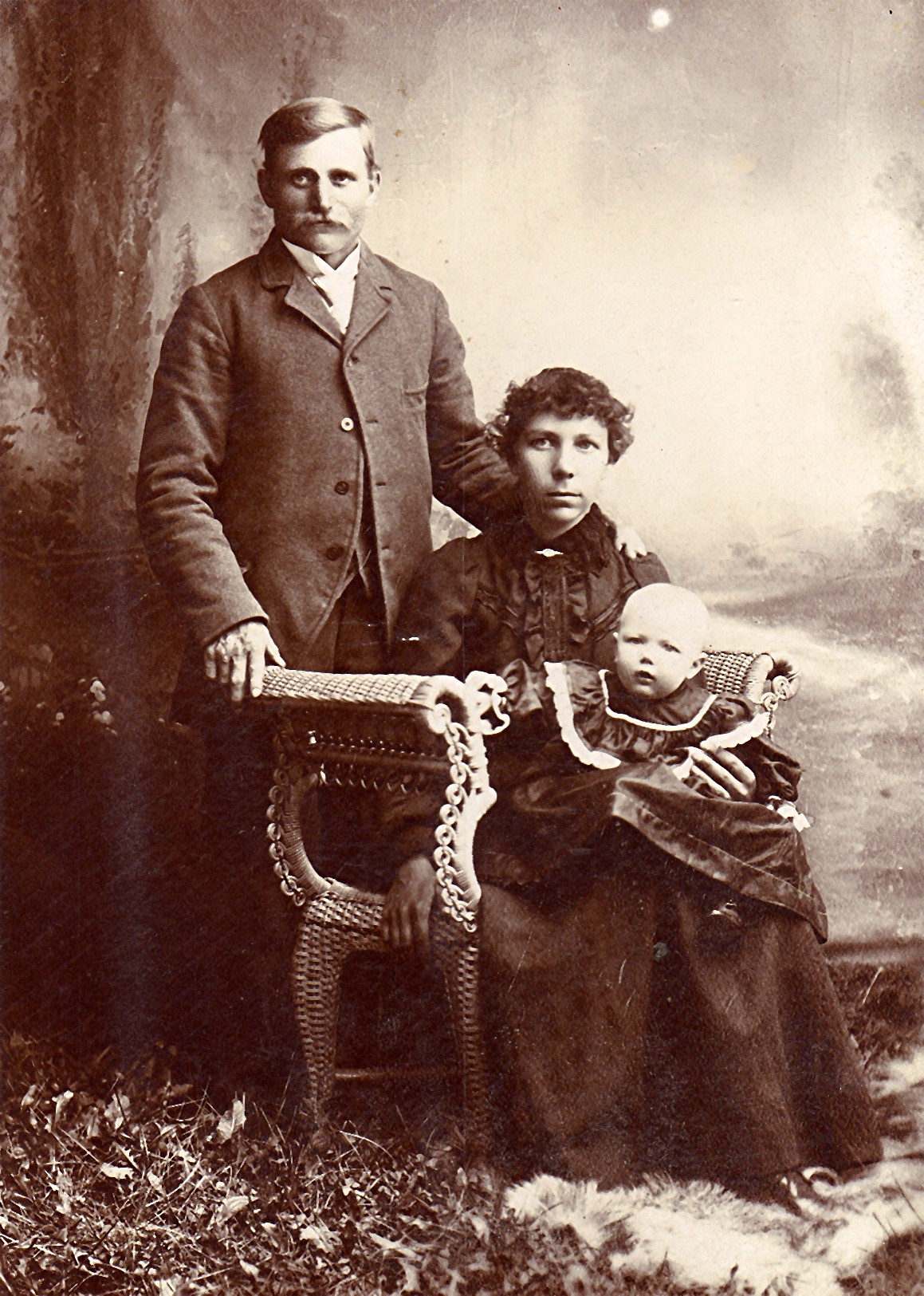
Herbert and Martha Coley (I have the original of Martha, but not of Herbert, so I know it is still out there)
Recorded family stories are fairly scant. Nobody wrote much down and that generation was gone before many were asking questions. Ivan Coley told his daughter Colleen that Herbert was a short, very English man. Apparently Herbert met Wild Bill Hickok at one point and shared that fact regularly.
In 1942, Herbert went to visit Ivan and Clara in Buhl. I will have to find out if Martha was there as well. While out in the yard, I have been told by a well, or a trough, he slipped and broke his hip. There was not really much to do for someone in that condition then. He was in terrible pain. He was taken back to Richmond and passed away later of pneumonia. He died 7 September 1942 at age 78 (obituaries all have 75) and was buried in Richmond Cemetery 9 September 1942.
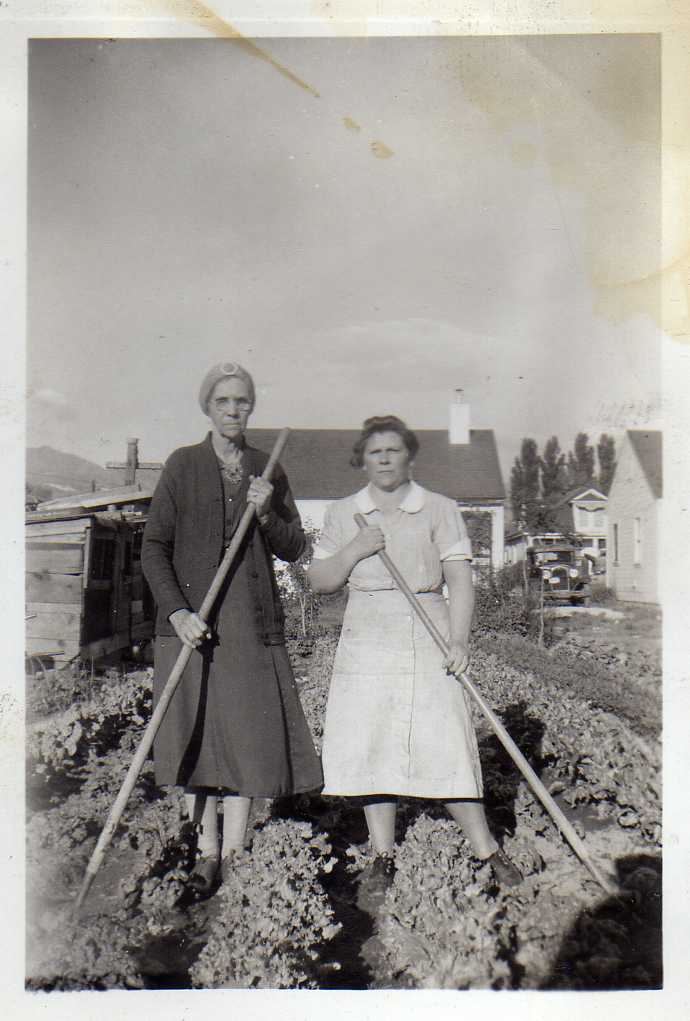
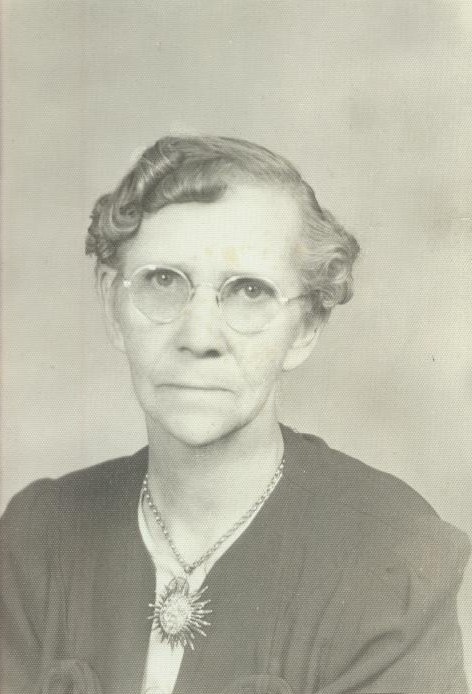
Martha Coley and Hannah Thomson in a garden, dresses and even a brooch
Martha moved into town shortly afterward. Various family members lived in the cabin when they started out their marriages. Martha’s new home was somewhere near 400 South and 200 East. With the new homes I cannot tell as well, but I have tried to pinpoint the spot. She lived in this home until she needed assistance and went to live with Lloyd and Veda in Salt Lake City. When they could not care for her any more, she then lived in a care facility in Logan the last months of her life.
5 generations about 1959, Lillian Coley Bowcutt, Martha Christiansen Coley, Joseph Hebert Jonas, Robert Lee Jonas, Joseph Leland Jonas.
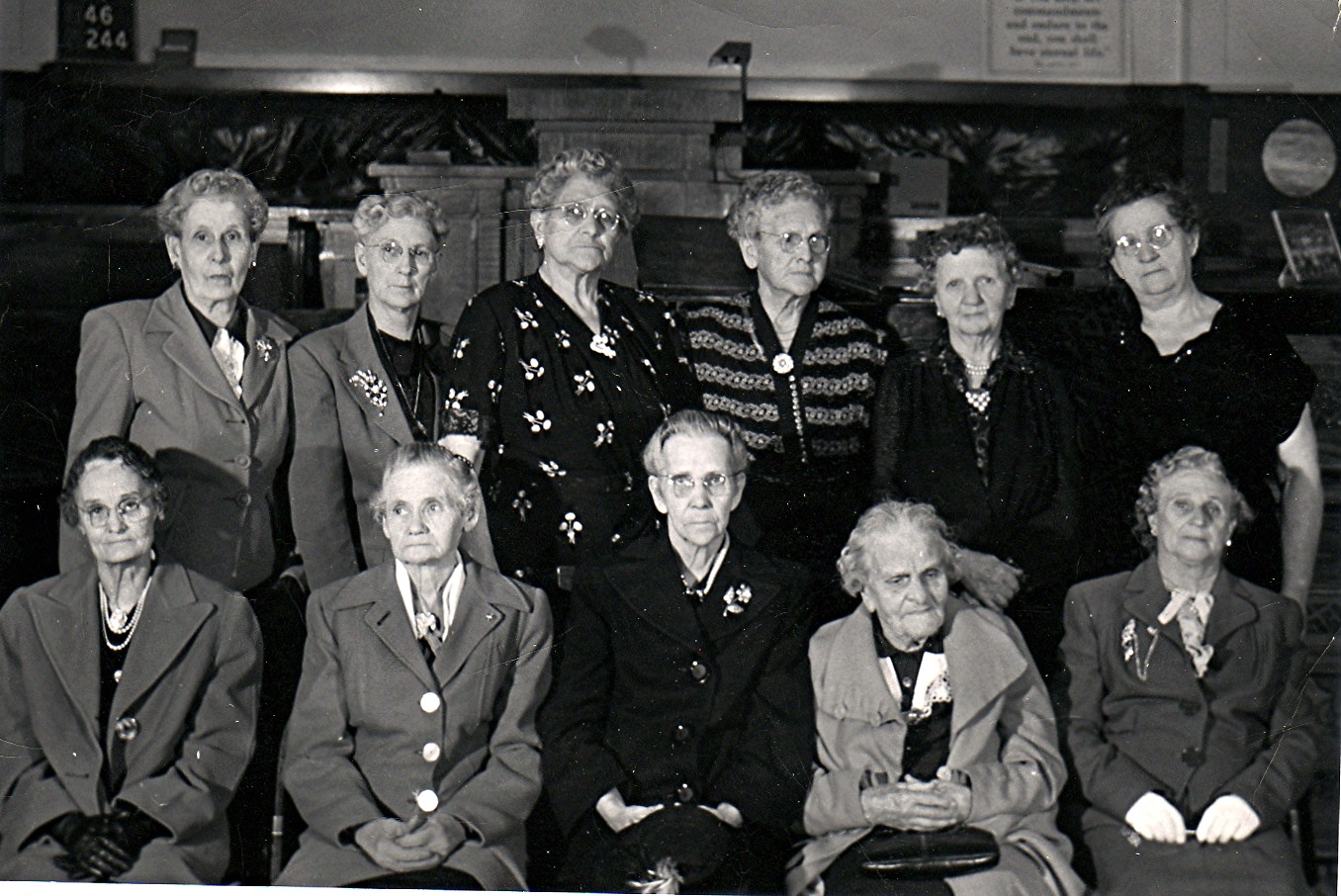
In 1948, Martha was honored for successfully Relief Society Teaching for more than 40 years. Here is a photo from that occasion. You can find more detail here.
Back (l-r): Lydia Leavitt, Estella Blair, Sarah Preece, Susanna Allen, Livinia Wilcox, Clara Wheeler. Front: Lavina Poulsen, Christensia Hansen, Martha Coley, Martha Lewis, Sarah Snelgrove.
Unfortunately I do not have a many more stories. But I do have a few more photos. We have these two photos of a gathering about 1950.
Back(l-r): Doreen Neilson, Martha Coley, Golden Coley, Edna Neilson, Unknown, Gloria Neilson holding unknown child, Olof Neilson. Middle: Shirley Coley, Joy Coley (baby), Mary Coley,
Mary (holding Joy), Shirley, Doreen, Unknown, Martha, Edna, Gloria
This wonderful family reunion picture from 1955. I have linked the other post sharing the other photo. That link also names everyone in the photo. Martha is sitting surrounded by her grandchildren and children.
1955 Coley Reunion, Richmond, Utah
Herbert’s obituary in the Salt Lake Telegram on 8 September 1942 reads:
“Richmond, Cache County – Funeral Services for Herbert Coley, 75, who died at his home in Richmond Monday at 7:45 a.m. following a brief illness will be conducted Wednesday at 1:30 p.m. in the Richmond South L.D.S. ward chapel by E. M. Hicken, Bishop.
“Mr. Coley was born in England on February 12, 1867, a son of Stephen and Hannah Rogers Coley. In 1885, at the age of 16, he immigrated to the United States.
“On December 1, 1896, he married Martha Christiansen in the Logan L.D.S. temple. He was a prominent farmer in the Richmond district.
“Surviving are his widow of Richmond, 10 sons and daughters, Mrs. Lillian Jonas, Ms. Edna Nielsen and William Golden Coley of Richmond, Wilford Herbert Coley of Logan, Ms. Hannah Thomson and Lloyd Coley of Salt Lake City, Ms. Carrie McMurdie, Ivan, Roland and Arthur Coley, all of Buhl, Idaho, 37 grandchildren, three great grandchildren, and a sister, Mrs. Martha France of Richmond.
Lillian, Edna, Martha (sitting) Coley in the 1940’s
“Friends Pay Tribute to Richmond Man
“Funeral Services for Herbert Coley, 75, prominent Richmond farmer who died at his home in Richmond, Monday at 7:45 a.m. following a brief illness, were conducted Wednesday at 1:30 p.m. in the Richmond South ward chapel by Bishop E. M. Hicken.
The rest of the article follows nearly verbatim what the Salt Lake obituary listed, then this line.
“Burial was in the Richmond cemetery under direction of the W. Loyal Hall mortuary.
Martha Christiansen Coley very small picture enlarged
Martha Coley and Scotty
Martha Coley serious
Martha Coley smile
Martha passed away in Logan at age 82 on 14 August 1961. Here is the language from her obituary and an article of the funeral. She was buried in Richmond 17 August 1961.
“Richmond – Martha Christensen Coley, 82, died at a rest home in Logan Monday of causes incident to age. “She was born April 16, 1879 in Norway to Ole and Constance Josephine Eliza Jorgensen Christensen. When she was eight years old she came with her parents to America. “On December 1, 1896 in Logan she married Herbert Coley. The marriage was solemnized in the Logan LDS Temple in 1900. They made their home in Lewiston and Richmond. She was always active in the LDS church, especially as a Relief Society block teacher. Mr. Coley died September 7, 1942. “Surviving are Mrs. Lorenzo (Lillian) Bowcutt and Mrs. Edna Neilsen, Richmond; Wilford H. Coley, Logan; Mrs. William (Hannah) Thompson and Lloyd O. Coley, Salt Lake City; Mrs. Lars (Carrie) McMurdie and Ivan S. Coley, Buhl, Idaho; Roland Coley, Mesa, Arizona; Arthur C. Coley, Ogden; William G. Coley, Hyrum; a number of grandchildren and great grandchildren. “Funeral services will be held Thursday at 1 p.m. in the Richmond South Ward with Bishop Oral Ballam in charge. “Friends may call at Hall Mortuary in Logan Wednesday from 7 to 9 p.m. and at the South Ward chapel Thursday from 11:30 a.m. until time of services. Burial will be in the Richmond Cemetery.
“Funeral services were held in the Richmond South Ward chapel Thursday for Mrs. Martha C. Coley with Counselor Quentin Peart conducting. Lloyd Coley gave the family prayer. “Prelude and postlude music was played by Reese Murray. The ward chorus directed by Mrs. Florence Lewis with Mrs. Billie Lou Bagley as accompanist sang “The Lord’s Prayer.” Ila Rae Richman and company sang “That Wonderful Mother of Mine.” Mrs. Florence Lewis and Mrs. Rebecca Lewis sang “In the Garden,” and Ronnie Lewis sang “Beyond the Sunset.” “Prayers were by William Thomson and Larus McMurdie. Speakers were Mrs. Leona McCarrey who read the obituary, Noel Stoddard and Counselor Peart. Pallbearers were her six sons, Wilford, Ivan, Roland, Lloyd, Arthur and Golden Coley. The grave in Richmond Cemetery was dedicated by Joseph Jonas. Flowers were cared for by the Relief Society.
~
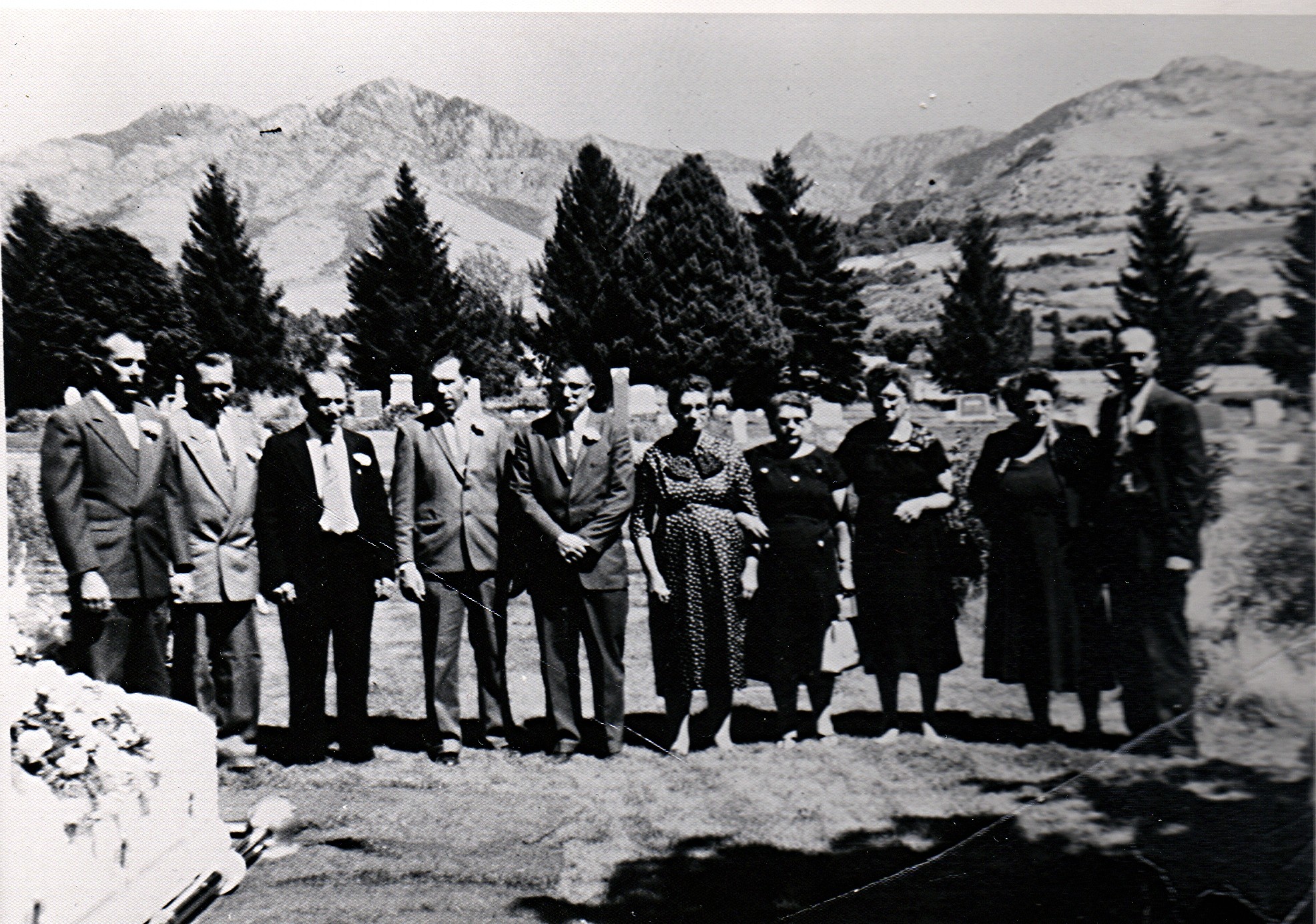
I have written previously about the video that came from the funeral and graveside service of Martha. In that post I walk through the video and the identified individuals. It also scans the 10 children standing in the cemetery. This photo below is of the same instant.
Art, Golden, Wilfred, Roland, Lloyd, Edna, Hannah, Carrie, Lillian, Ivan at their mother’s grave in Richmond, Utah
I hope some day I obtain more photos to share of Herbert and Martha.
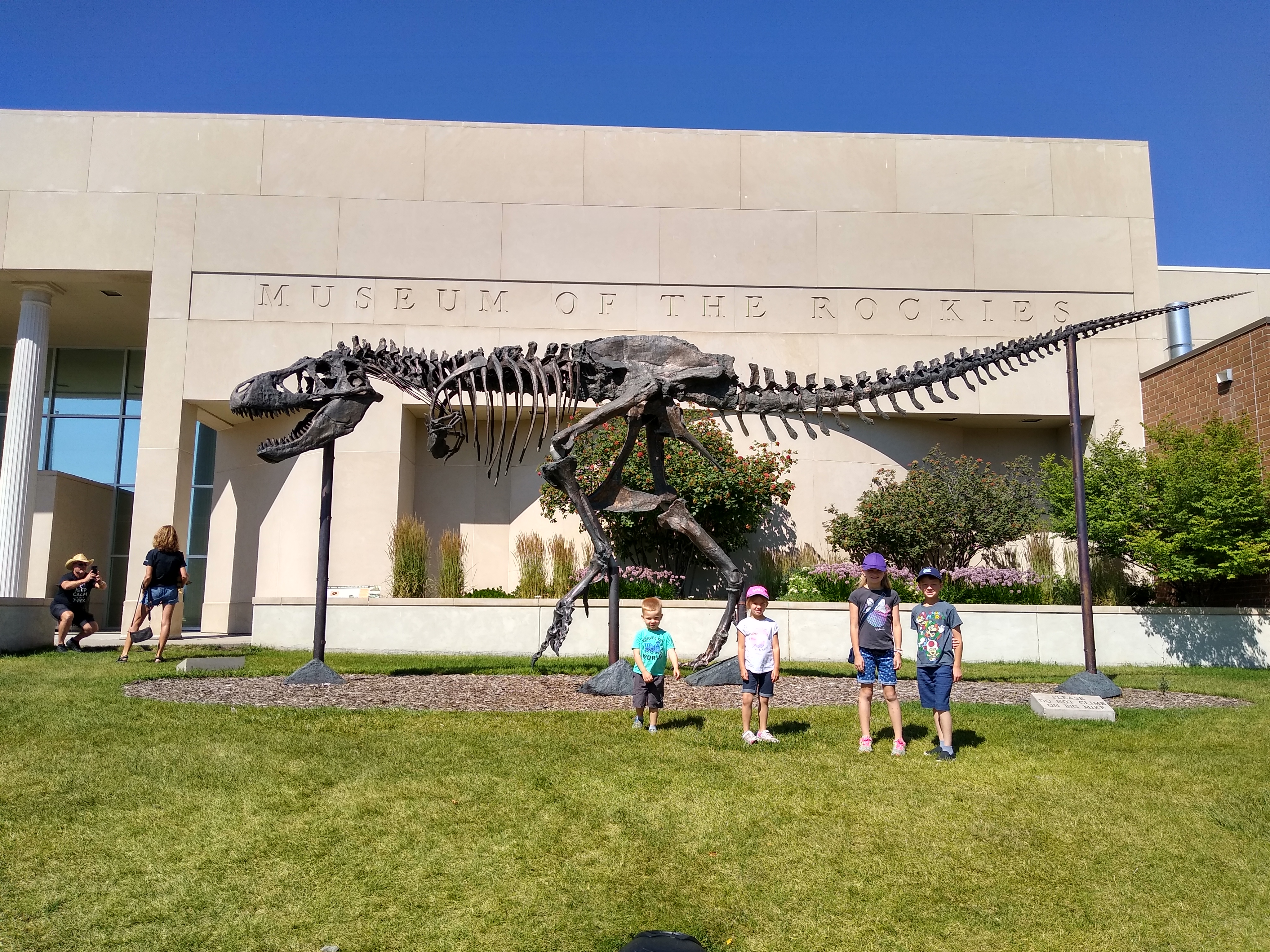
James, Lillie, Aliza, and Hiram Ross at the Museum of the Rockies
The morning of 2 August 2020 found the Ross Family in Bozeman, Montana. It was the first time any of us had ever been to Bozeman. I have family in Gallatin County, but I haven’t ever been there to visit them, only interacting with them at Andra family reunions.
We were headed west after a trip through Yellowstone National Park and headed to the Olympic National Park via Coeur d’Alene, which I will have to share photos from on another date. We spent that night in Superior, Montana after trekking up through Helena.
The kids enjoyed the Museum of the Rockies. We were there a couple of hours, which for our young children was long enough.
Siebel Tyrannosaurus Rex display at Museum of the Rockies
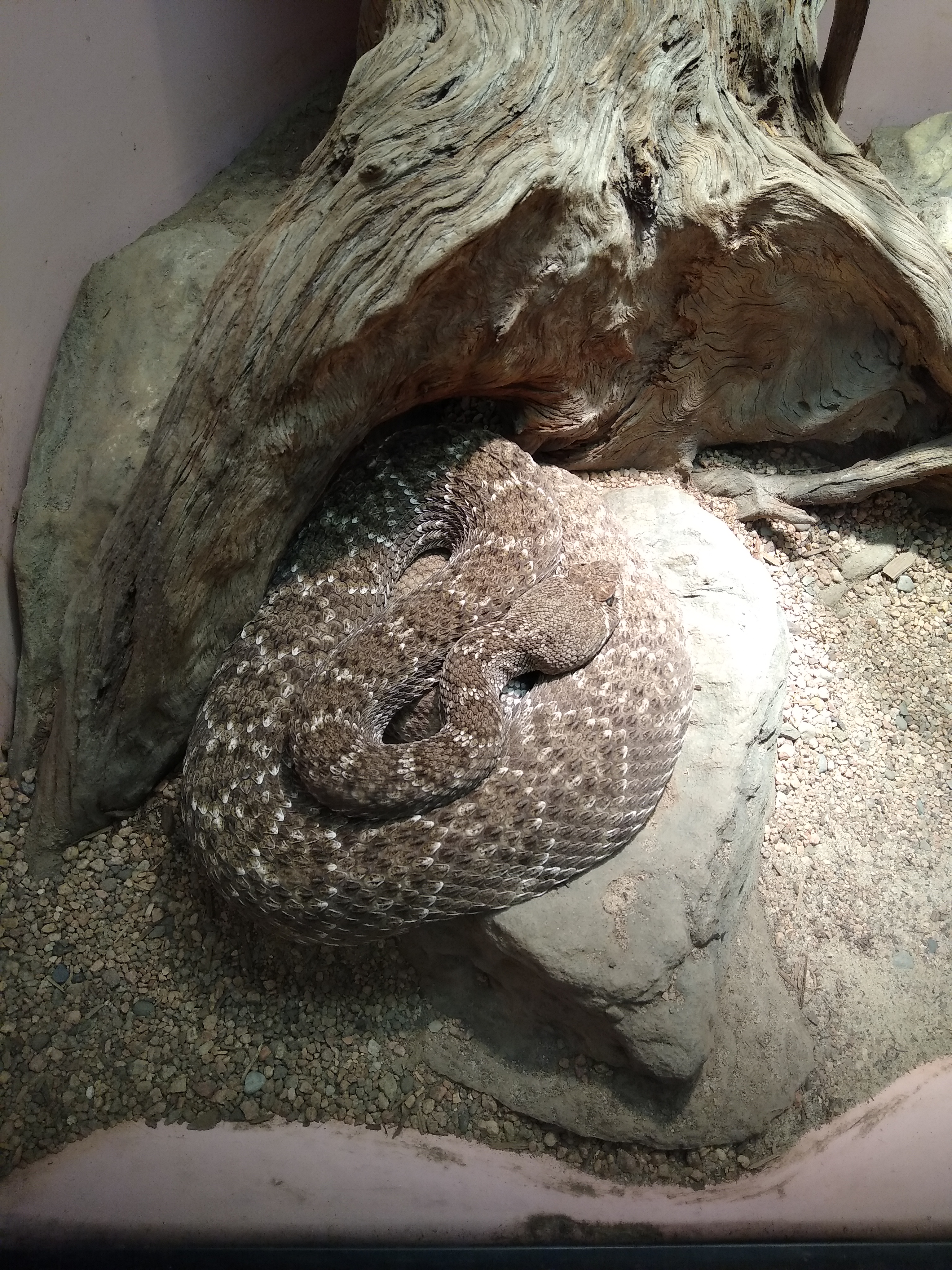
The kids were mesmerized by the massive dinosaur displays. Less so with the old west and history of Bozeman. There were some snakes and lizards they thought were fascinating.
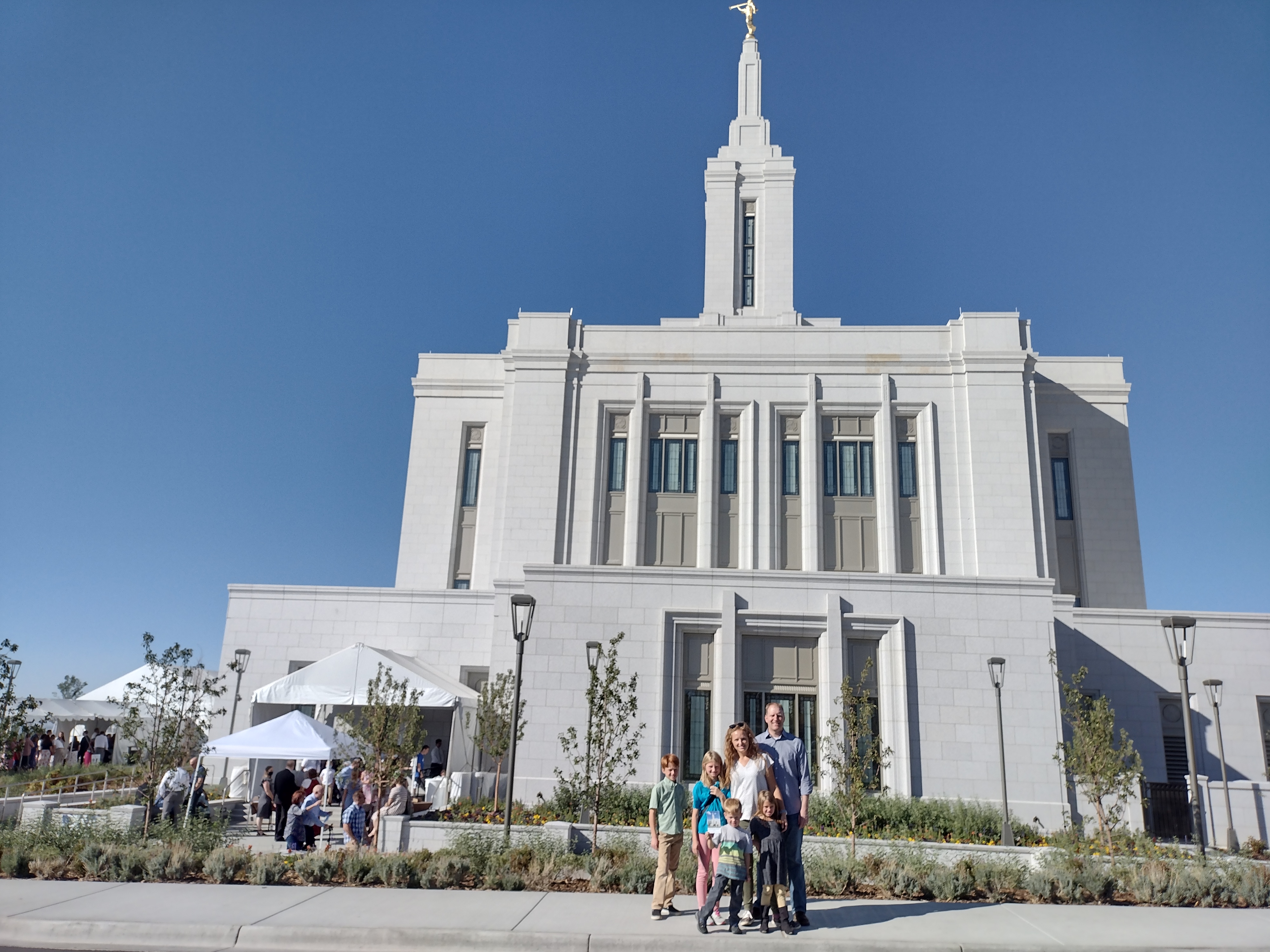
Ross Family at the Pocatello Idaho Temple Open House 25 September 2021
The Church of Jesus Christ of Latter-day Saints built another temple in Idaho! This makes it the 6th temple in Idaho behind Idaho Falls, Boise, Rexburg, Twin Falls, and Meridian.
We made a trek over to see the open house on 25 September. We met Amanda’s parents and siblings there as well. We enjoyed the tour, some ice cream afterward, and made our way home. It was a memorable experience and the kids had a number of questions afterward.
Jeremy Pittard and I also made the trek over again on 8 October with some of our dedicated staff. We treated them to the temple open house and some Himalayan food afterward. Bree, Erica, and Esbeidy also had questions afterward.
We are excited to have a new temple in Idaho! I attended my first endowment session in the new temple on its second day open, 17 November.
Paul Ross, Esbeidy Cruz, Bree Olsen, Erica Izaguirre, and Jeremy Pittard at the Pocatello Idaho Temple Open House 8 October 2021
The morning of 26 July 2020 I awoke at a motel in Logan, Utah, with my four children. We were on the last day of a trip where Amanda had the weekend to pamper herself. Since we were in Logan, I took the kids around to some of the sites that were important to me. I am not including any of the graveyard pictures that I have shared earlier in visiting the resting sites of family members. This was the same trip we stopped to visit the Paris Tabernacle.
Hiram, Aliza, Lillian, and James Ross on the steps of the Logan Tabernacle in July 2020
The Logan Tabernacle is where I attended Stake Conference for all the years I attended Utah State University. I graduated from Logan Institute of Religion in this building. I recall Dad pointing out that my hair was getting thin from his vantage point on the balcony. I was sustained in this building and spoke at a Stake Conference. I sat at the feet and heard the teachings of H. David Burton and Vaughn J. Featherstone, as well as our own Stake Presidency, Thomas Cherrington, James Jenkins, and Roger McEvoy. I still remember some of their talks. I recall entertaining visiting British guests, like the Byroms and Gores, in this building. Moreover, this building had historical significance to the area and my own ancestors in the valley. In those years, I had numerous councilors, including David Ackerman, Tyler Buswell, David Moss, Jon Phillips, and Guy Schauerhamer. Secretaries were the amazing Kalynne Call (now Jensen) and Jessica Pollard (now Westerberg).
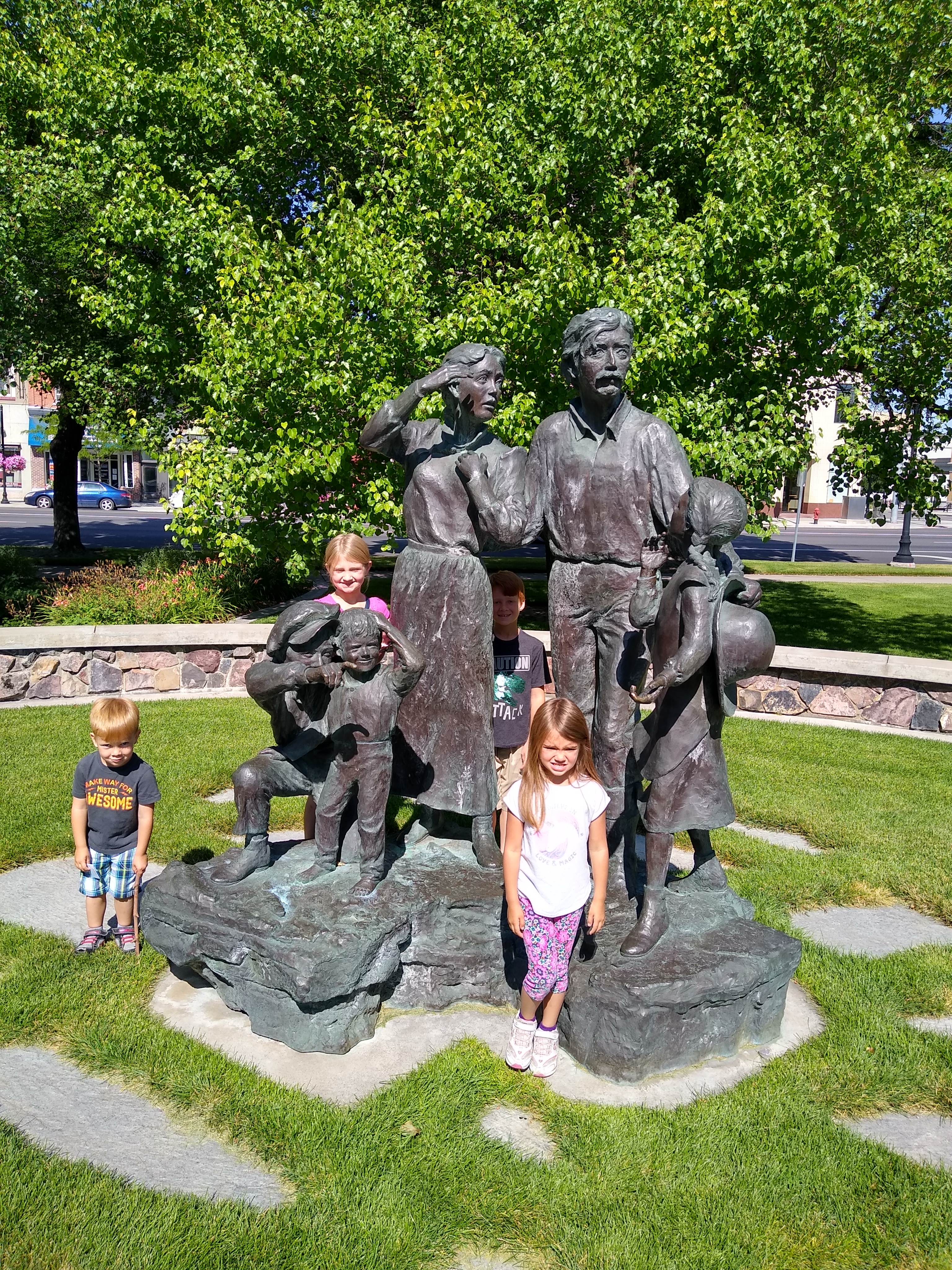
“Family and the Covenant” sculpture at Logan Tabernacle with James, Aliza, Hiram, and Lillian Ross in July 2020
Of course we had to stop at Dentist Office. 655 Darwin Avenue #6, Logan, Utah 84321, was my apartment for several years. That upper right room window was above my bed for those years. I shared a photo of it from 2012 previously. I also listed some of the poor unfortunate souls who also had to reside in close proximity to me!
Hiram, Aliza, Lillie, and James Ross in front of the Dentist Office on Darwin Avenue.
The next stop included the Logan Institute of Religion. This building is harder to capture in a picture with all the new apartment complexes so near the front of it. What was known then as the oldest and largest Institute of The Church of Jesus Christ of Latter-day Saints. I don’t know if that still holds true. I attended the Institute before my mission and when my Mom disowned me, I knuckled down and took a dozen or so Institute credits. I can attribute much of my religious underpinnings and knowledge to this time. Some of the teachers that profoundly touched me included John Fowles, Rhett James, and Michael Cooley. After the mission, various teachers, including Gene Van Shaar (who I also knew in Springfield, Missouri at what was then Southwest Missouri State University).
Aliza and Hiram Ross at Logan LDS Institute
Of course we had to make a stop at the David B. Haight Alumni House. The history of this location I have shared before. Suffice it to say, I kissed my future wife for the first time here and also asked her to marry me in this same spot. The large painting of David B. Haight is no longer hanging in the lobby inside these doors.
Hiram, Lillian, James, and Aliza Ross at David B. Haight Alumni House in July 2020
Having jumped from the Dentist Office, to the Institute, to the Alumni House, it was obviously easy to jump to Old Main. On the walk over, I snapped this picture of the Logan Temple. Since it was Sunday, we couldn’t get inside the fence so we just drove by it.
Logan Temple in July 2020
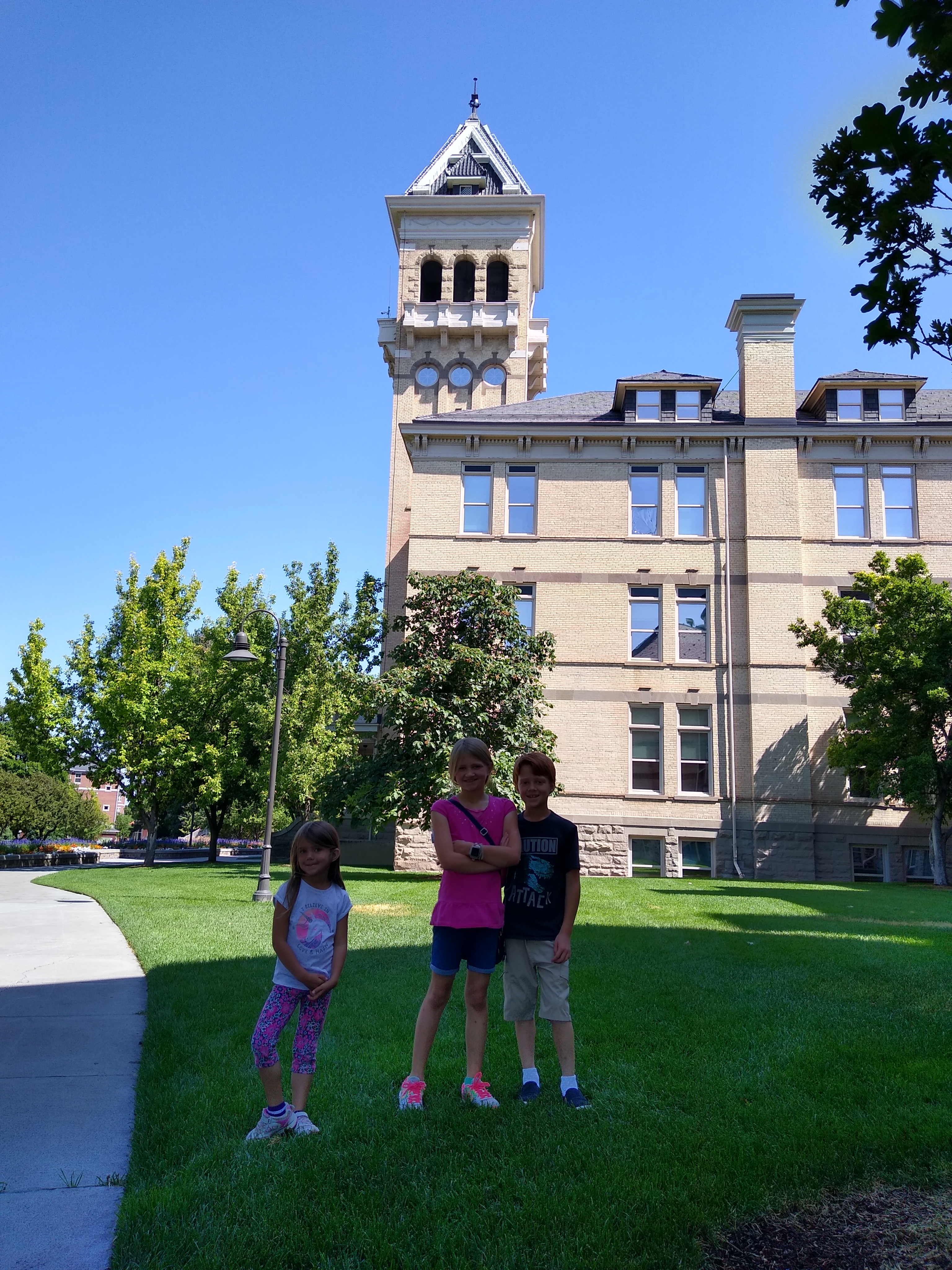
Old Main was the home of my college, then the College of Humanities, Arts, and Social Sciences (HASS). I attended most of my major classes in this building. I knew this building like the back of my hand.
Lillian, Aliza, and Hiram Ross at Old Main of Utah State University in July 2020
I have stood in that tower overlooking the valley a number of times, usually a locked door confines you to the round windows. I have shared some historical photos of the building.
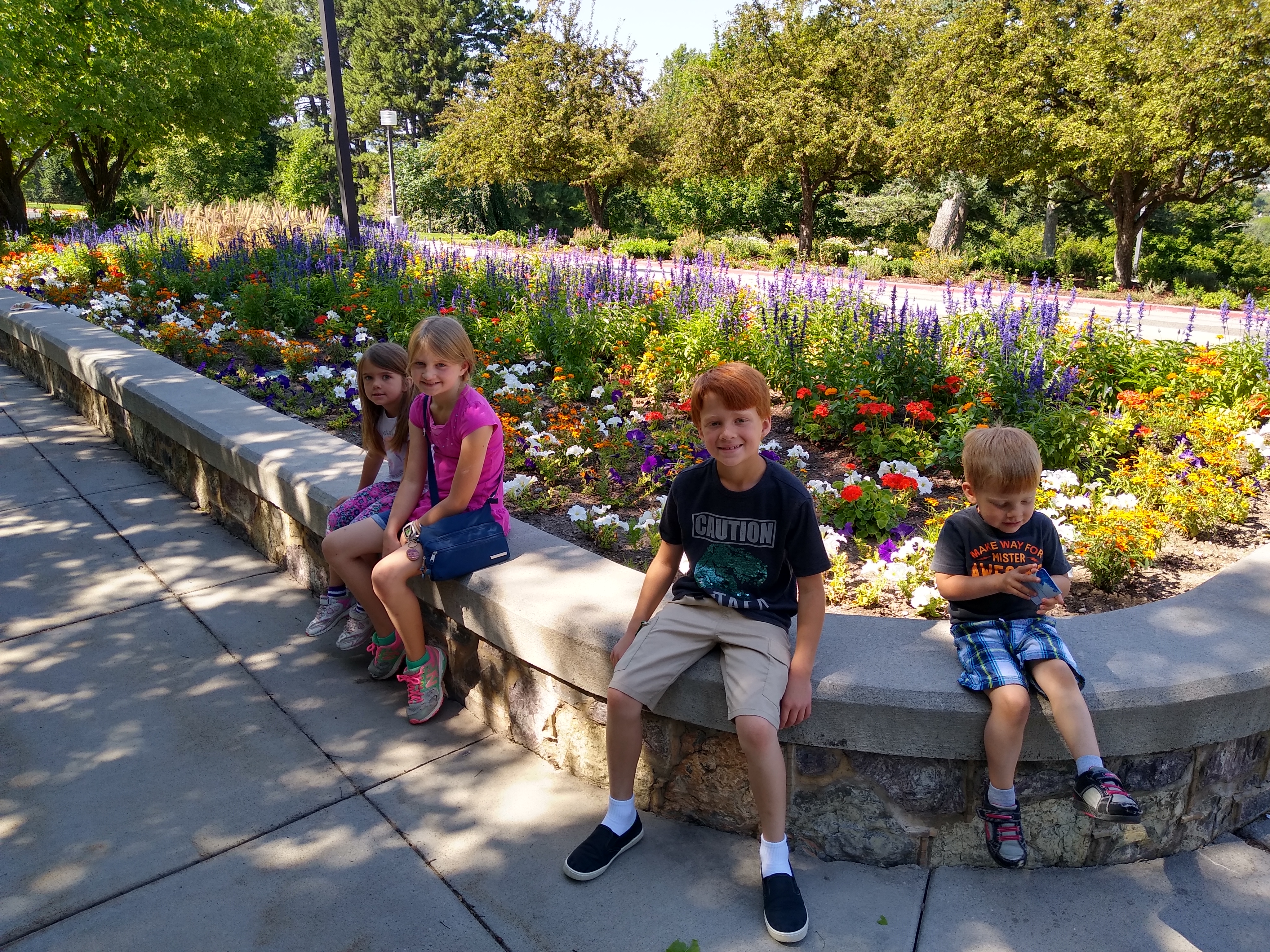
Lillie, Aliza, Hiram, and James Ross at the flower beds in front of Old Main.
I have also shared how my own family contributed to the building of this iconic building.
Lillie, Aliza, Hiram, and James Ross on west steps of south Old Main in July 2020
The photo above is interesting due to the silly children, but also the red sandstone that came from the Nuffer Quarry near Mapleton, Idaho. Both the pillar and stones in and under the brick. Of course, a visit to Old Main Hill for a child would not be complete without rolling down the hill. I also noticed how many of the old huge trees have now left the hill.
Old Main Hill in July 2020
The trip to Logan was memorable for the kids and I recalled many memories from my time attending. Maybe Amanda can attend at a future time. Logan holds fondness and great memories for me. Now we have some more.
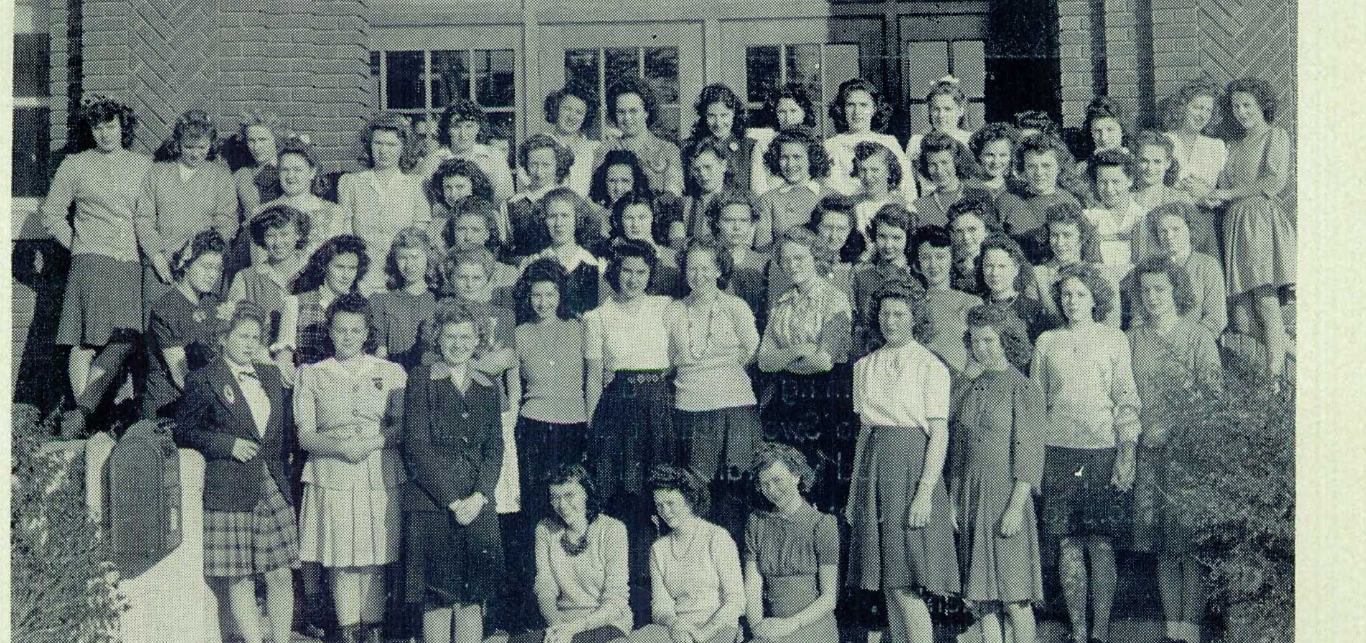
Another found picture that includes my Grandmother, Colleen Mary Andra, in the 1945 Preston High School yearbook. I recently posted the photo regarding the Preston Girls Athletic Association. This photo includes the following writing on the page:
“Kanomo Club
“During this school hear the Kanoma Club has been successfully directed by the following officers:
“President … LuDean Maughan
“Vice President … Patricia Wood
“Secretary … Mary Jane Handy
“Social Manager … Gladys Rawlings
“Faculty Advisor … Viola Veibell
“Some of the activities this year have included the initiation and Christmas Party entertainment of the boys at a roller skating party, sponsoring an assembly for the girls where Ms. Star, Dean of Women from the A.C., spoke, helping the Red Cross in making bags and different articles. In addition, this club has cooperated in preparing and serving food at some of the other social functions. Each spring the girls in the club spend three days to a week at Girl’s Camp in Logan Canyon.
LuDean Maughan (1927 – alive, married Byron Glover)
Patricia Wood (1928 – 2005, married Norman Beckstead)
Mary Jane Handy (? – ?)
Gladys Rawlings (1923 – 2016, married Blaine Lemmon)
Viola Veibell (1921 – 1984, married Lorin Simper)
Colleen Andra (1928 – 1999) She is standing left front, next to the mail box, in the plaid skirt.