In re Lugo

Decision: In re Jason Josue Lugo, Case No. 15-40121-JDP (Bankr. D. Idaho, 25 Jun. 2015)
Judge: Honorable Jim D. Pappas, United States Bankruptcy Judge
Counsel for Debtor: Paul Ross, Idaho Bankruptcy Law, Paul, Idaho
Chapter 13 Trustee: Kathleen A. McCallister, Meridian, Idaho
Trustee’s Counsel: Holly Roark, Office of Kathleen A. McCallister, Meridian, Idaho


Background

Jason Josue Lugo and his wife Lori married in 1996. In December 2003, Lugo acquired real property in Declo, Idaho, and in March 2004 conveyed it to himself and Lori by quitclaim deed. The couple built a home on the property that year and moved in with their family, establishing an automatic homestead exemption by virtue of their occupancy as a principal residence under Idaho Code § 55-1004(1).

In July 2012, Lugo moved out of the marital home due to irreconcilable differences. His family remained in the home. He did not record a declaration of non-abandonment. Under Idaho Code § 55-1006, six months of continuous vacancy creates a presumption of abandonment — meaning Lugo’s automatic homestead was presumed abandoned by January 2013. On 12 September 2013, a stipulated divorce decree was entered awarding Lori sole possession of the property, subject to the two existing mortgages and a $40,000 obligation to Lugo’s father. Under the decree, Lori was to refinance the mortgages within seven months and pay Lugo’s father in installments; if she could not refinance, the property was to be sold and the proceeds used to satisfy the parties’ debts. The decree did not expressly grant Lugo any continuing interest in the property. Pending refinance or sale, Lori was responsible for the first mortgage payments and Lugo for the second.

On 17 February 2015, before filing his bankruptcy petition later that same day, Lugo recorded a Declaration of Homestead on the Declo property with Cassia County. He then filed a Chapter 13 bankruptcy petition claiming the property exempt as his homestead in the amount of $49,401.93 — the estimated equity — under Idaho Code §§ 55-1001, 55-1002, and 55-1003. His Chapter 13 plan proposed to sell the property and pay the secured creditors, with any nonexempt proceeds distributed to unsecured creditors. Lugo acknowledged he could not afford to continue making the second mortgage payments.


The Trustee’s Objection

The Trustee objected to the homestead exemption claim on two grounds: Lugo did not reside at the property — his petition listed his residence in Rupert, Idaho — and his Chapter 13 plan proposed to sell it, which the Trustee argued evidenced a lack of any intent to reside there. The Trustee contended that Lugo therefore did not qualify for the homestead exemption under either Idaho’s automatic or declared homestead provisions, and that the claim should be disallowed in its entirety.


The Debtor’s Response

Debtor’s counsel filed a response arguing that the homestead exemption was valid and that the Trustee had not met the burden of proof required to overcome it.

Counsel acknowledged that Lugo had vacated the property in 2012 and had not filed a declaration of non-abandonment, which created a rebuttable presumption of abandonment of the automatic homestead under Idaho Code § 55-1006. Counsel argued, however, that Lugo had done precisely what Idaho law provides as an alternative: he recorded a Declaration of Homestead with Cassia County, invoking the second track of homestead protection under Idaho Code § 55-1004. That provision permits an owner who is not currently occupying a property as a principal residence to establish a homestead by recorded declaration, provided the declaration states an intent to reside there. Lugo’s declaration did so, and the technical requirements of the statute were met.

On the plan-to-sell issue, counsel argued that the Trustee’s position ignored Idaho Code § 55-1008, which exempts proceeds from the voluntary sale of a homestead for up to one year when the debtor intends to acquire a new homestead. Lugo wished to preserve the equity in the property for use in acquiring a new home, and the homestead exemption should follow the proceeds accordingly.


The Court’s Ruling

Judge Pappas sustained the Trustee’s objection and disallowed the homestead exemption.

The Court began by tracing the two tracks through which Idaho law permits a homestead to be established. The first — the automatic or “springing” homestead — arises by operation of law from the moment a debtor occupies property as a principal residence, without any filing or formality. Idaho Code § 55-1004(1). The second — the declared homestead — permits an owner who is not presently occupying property as a residence to establish a homestead by recording a declaration stating an intent to reside there. Idaho Code § 55-1004(2). Both tracks were relevant here.

Lugo had unquestionably established an automatic homestead when he moved into the Declo property in 2004. But he vacated in July 2012 without filing a declaration of non-abandonment, and under Idaho Code § 55-1006 that homestead was presumed abandoned by January 2013. No automatic homestead survived. Lugo therefore could not rely on the first track and turned to the second.

The recorded Declaration of Homestead was facially sufficient. It satisfied each technical requirement of Idaho Code § 55-1004(3): it stated an intent to reside on the property, included a legal description, and provided an estimated cash value, and it had been properly recorded before the bankruptcy petition was filed. Under normal circumstances, that would be enough. The declared homestead is a recognized and legitimate mechanism, and the Court acknowledged that recording a declaration before filing is a conventional and proper way to establish a homestead exemption.

But the Court held that satisfying the statutory checklist does not end the inquiry when the exemption is contested. When an objecting party challenges the declaration, the Court must look behind its face and assess the quality and genuineness of the proof supporting it — in particular, whether the stated intent to reside is real. Here, because the parties proceeded on stipulated facts alone, with no live testimony from Lugo, the record was fixed. And that record told a story that was flatly inconsistent with any genuine intent to reside at the Declo property.

The divorce decree, entered more than a year before the bankruptcy filing, awarded Lori sole possession of the property and contemplated only two outcomes: refinancing or sale. No scenario in the decree provided for Lugo’s return. His bankruptcy plan reinforced the same conclusion — it proposed to sell the property, and if the sale failed, to surrender it. Lugo acknowledged he could not afford the mortgage. Nothing in the record suggested any realistic pathway by which he could or would live at the Declo property again. The declaration’s statement of intent to reside, the Court concluded, was not supported by the facts.

The Court also rejected the § 55-1008 sale-proceeds argument. That provision exempts proceeds from the voluntary sale of a homestead for the purpose of acquiring a new homestead — but it presupposes a valid homestead exemption in the first place. Because no valid homestead had been established, there was nothing to carry forward into the proceeds. Moreover, the record contained no evidence that Lugo intended to use any sale proceeds to purchase a replacement homestead. The Court found his true aim was to preserve equity against distribution to unsecured creditors — an understandable goal, but not one the homestead statutes were designed to serve.


Why This Matters

  1. Idaho’s two-track homestead system offers a genuine alternative to the automatic exemption. When an owner vacates a property and loses the automatic homestead through presumed abandonment, Idaho Code § 55-1004 provides a second path: recording a declaration of intent to reside. That mechanism is legitimate and used, and a properly recorded declaration ordinarily establishes the exemption. This case illustrates, however, that the declared homestead is not a rubber stamp. When the exemption is contested, the Court will look beyond the four corners of the declaration and assess whether the stated intent is genuine.

  2. The divorce decree can be the most important document in the file. A stipulated divorce decree that awards possession of the property to the other spouse and contemplates only refinancing or sale effectively closes the door on any claimed intent to return. Where no scenario in the decree provides for the debtor’s residency, that decree will be powerful — perhaps decisive — evidence against the homestead claim. Counsel evaluating a client’s homestead position after a divorce should read the decree carefully before advising that a recorded declaration will succeed.

  3. Failing to file a declaration of non-abandonment has lasting consequences. Idaho Code § 55-1006 gives a debtor who plans a long absence without intent to abandon the homestead a clear tool: record a declaration of non-abandonment. Lugo did not do so when he left in 2012, and by the time he filed for bankruptcy in 2015 the automatic homestead had been presumed abandoned for over two years. Practitioners advising clients who are leaving a marital home during separation or divorce proceedings should consider this step immediately.

  4. Live testimony on intent may be essential. The Court explicitly noted that because the parties stipulated to the facts and no live testimony was offered, Lugo had no opportunity to address his subjective intent to return to the property. Stipulated facts are efficient but inflexible — they cannot be supplemented after the fact. Where a homestead exemption contest turns on intent, practitioners should consider whether proceeding by stipulation forecloses testimony that might have been outcome-determinative.

  5. Idaho Code § 55-1008 requires both a valid underlying homestead and a genuine intent to acquire a replacement. The sale-proceeds exemption does not operate independently. It presupposes that the property being sold was validly exempt as a homestead. A debtor who cannot establish the underlying exemption cannot use § 55-1008 to protect sale proceeds. And even where the underlying exemption is valid, the proceeds exemption requires evidence of intent to use them to acquire a new homestead — a plan to sell, pay creditors, and retain equity does not qualify.


Full Decision: Available on PACER, Case No. 15-40121-JDP, Doc. 32 (Bankr. D. Idaho 25 Jun. 2015)

In re DeVries

Decision: In re Relna James DeVries and Kathryn Lee DeVries, Case No. 13-41591-JDP (Bankr. D. Idaho, 28 Apr. 2015)

Judge: Honorable Jim D. Pappas, United States Bankruptcy Judge
Counsel for Debtors: Paul Ross, Idaho Bankruptcy Law, Paul, Idaho
Chapter 13 Trustee: Kathleen A. McCallister, Meridian, Idaho
Trustee’s Counsel: Holly Roark, Office of Kathleen A. McCallister, Meridian, Idaho


Background

Relna and Kathryn DeVries filed a Chapter 13 petition on 27 December 2013. Their amended plan, confirmed on 19 May 2014, provided that all allowed tax claims would be paid in full. The IRS timely filed a proof of claim for taxes owed for the 2011 and 2012 tax years. The deadline for governmental units to file proofs of claim was 25 June 2014.

The Debtors filed their 2013 federal income tax returns in April 2014, which showed they owed $1,021 to the IRS for the 2013 tax year. The Idaho Tax Commission filed its own proof of claim for the $84 in state taxes owed for 2013 the day after plan confirmation. The IRS, however, did not file a claim for the 2013 federal taxes, nor did it amend its existing claim to include them. Within 30 days of the 25 June 2014 governmental bar date — as permitted by Federal Rule of Bankruptcy Procedure 3004 — the Debtors filed a proof of claim on behalf of the IRS for the $1,021 in 2013 taxes.


The Trustee’s Objection

The Trustee objected to the Debtors’ proof of claim. The Trustee represented that it was allegedly filed at the IRS’s own request, and that the IRS did not wish to have the 2013 tax debt paid through the plan as a § 1305 claim.

The Trustee’s objection rested on 11 U.S.C. § 1305(a)(1), which governs postpetition claims in Chapter 13 cases. That provision permits a proof of claim to be filed by “any entity that holds a claim against the debtor … for taxes that become payable to a governmental unit while the case is pending.” The Trustee argued that the Debtors’ 2013 federal income taxes became payable during the pendency of the bankruptcy case, making them a § 1305 postpetition claim, and that under the plain language of § 1305 only the creditor holding the claim — the IRS — was authorized to file a proof of claim for it. The Debtors’ attempt to file on the IRS’s behalf was therefore improper and the claim should be disallowed in its entirety.


The Debtors’ Response

Debtors filed a response through their counsel arguing that the 2013 tax debt was properly treated as a prepetition claim and that they were authorized to file the proof of claim under § 501(c) and Federal Rule of Bankruptcy Procedure 3004.

Debtors did not rely on § 1305 as their filing authority. Instead, they argued that the 2013 tax obligation was a prepetition claim — or should be treated as one — and that the ordinary debtor claim-filing mechanism of § 501(c) and Federal Rule of Bankruptcy Procedure 3004 therefore applied. On the question of when the claim arose, Debtors urged the Court to apply the “fair contemplation” or “prepetition relationship” test articulated in In re Dixon, 295 B.R. 226 (Bankr. E.D. Mich. 2003). Under that approach, a claim arises prepetition if there was a prepetition relationship between the debtor and the creditor such that a possible claim was within the creditor’s fair contemplation at the time of filing. The IRS and the Debtors had precisely such a relationship: the Debtors were taxpayers, the IRS was their taxing authority, and 361 of the 365 days of the 2013 tax year had elapsed before the petition was filed. The IRS’s claim for 2013 taxes was fully within its fair contemplation at the time of filing, Debtors argued, making it a prepetition claim subject to the ordinary rules permitting debtors to file on a creditor’s behalf.

Debtors also invoked 11 U.S.C. § 502(i), which provides that a postpetition claim for taxes entitled to priority under § 507(a)(8) shall be treated as if it had arisen before the petition date. On that theory, even if the 2013 taxes technically arose postpetition, § 502(i) mandated that they be treated as prepetition claims, restoring the Debtors’ authority to file under § 501(c) and Federal Rule of Bankruptcy Procedure 3004.


The Trustee’s Reply

The Trustee replied that Ninth Circuit authority resolved the question directly and foreclosed the Michigan court’s “fair contemplation” test. Relying on Joye v. Franchise Tax Bd. (In re Joye), 578 F.3d 1070 (9th Cir. 2009), the Trustee argued that taxes owed for a given tax year do not “become payable” — and therefore do not arise as a § 1305 postpetition claim — until the close of that tax year. Because the DeVries filed their petition before the close of 2013, the 2013 taxes became payable only after the petition date and were a postpetition claim that only the IRS could properly file. The Trustee further noted that allowing the improperly filed claim would prejudice general unsecured creditors, whose pro-rata distributions would be reduced by the addition of a priority tax claim.


The Court’s Ruling

Judge Pappas sustained the Trustee’s objection and disallowed the Debtors’ proof of claim in its entirety.

The Court addressed § 502(i) first and found it dispositive against the Debtors. Section 502(i) applies only to postpetition tax claims entitled to priority under § 507(a)(8)(A)(i), which affords priority to income taxes for which the applicable return was due within three years before the petition date. The DeVries’ 2013 federal income tax return was not due until 15 April 2014 — after their 27 December 2013 petition date. Because the return due date fell outside the three-year lookback period, the 2013 taxes were not entitled to priority under § 507(a)(8)(A)(i), and § 502(i) therefore had no application. The Court drew support from the Ninth Circuit BAP’s analysis in In re Jones, 420 B.R. 506 (9th Cir. BAP 2009), aff’d on other grounds, 657 F.3d 921 (9th Cir. 2011), which explained that a postpetition income tax obligation whose return is due postpetition cannot invoke priority status under § 507(a)(8)(A)(i) and thus falls outside § 502(i)’s reach entirely.

The Court then turned to § 1305(a)(1) and rejected the Debtors’ “fair contemplation” argument. Binding Ninth Circuit precedent, not the Michigan court’s test, controlled the analysis. Under In re Joye, taxes become “payable” for purposes of § 1305(a)(1) when they are “capable of being paid.” The Ninth Circuit further established in In re Pacific-Atlantic Trading Co., 64 F.3d 1292 (9th Cir. 1995), that a tax on income is “incurred” on the last day of the income period. Because federal income taxes are assessed by the calendar year, the DeVries’ 2013 taxes were incurred at midnight on 31 December 2013 — after the petition was filed. Both the incurrence and the payability of the 2013 taxes therefore occurred postpetition, placing them squarely within § 1305(a)(1).

The Court also examined the interplay between § 502(i) and § 1305(a)(1) as analyzed in In re Joye, which drew on Collier on Bankruptcy for the proposition that § 502(i) applies to taxes incurred prepetition that do not come due until after the petition is filed, while taxes incurred postpetition can be treated only as postpetition claims under § 1305. Because the 2013 taxes were incurred postpetition under the Pacific-Atlantic rule, § 502(i) offered the Debtors no relief in any event.

Having concluded that the 2013 taxes were a § 1305(a)(1) postpetition claim, the Court applied the well-established rule that postpetition claims under § 1305 may be offered for inclusion in a Chapter 13 plan only by the creditor that holds the claim. A debtor has no authority to force a postpetition creditor into the plan by filing a proof of claim on its behalf. The Trustee’s objection was sustained and the Debtors’ proof of claim disallowed.


Why This Matters

  1. Section 502(i) does not reach postpetition taxes whose returns are due postpetition. The provision applies only to taxes entitled to priority under § 507(a)(8)(A)(i) — which requires the return to have been due within three years before the petition date. An income tax return due after the petition date falls outside that window entirely. Practitioners should not assume § 502(i) will bridge the gap between a postpetition tax liability and prepetition claim treatment.

  2. The Ninth Circuit’s “capable of being paid” standard governs when taxes become payable in the Ninth Circuit. Under In re Joye, the relevant inquiry for § 1305(a)(1) purposes is when the tax was capable of being paid — and under In re Pacific-Atlantic Trading Co., income taxes are incurred on the last day of the tax year. A tax year that closes after the petition date produces a postpetition claim regardless of how many days of that year preceded the filing.

  3. Only the creditor may file a § 1305 postpetition claim. Section 1305(a) grants the right to file a proof of claim for postpetition taxes exclusively to the entity that holds the claim. A debtor cannot invoke § 501(c) or Federal Rule of Bankruptcy Procedure 3004 to file on a creditor’s behalf where the underlying obligation is a § 1305 postpetition claim rather than a prepetition one. The creditor’s silence is the creditor’s choice to make.

  4. The IRS may decline plan treatment of a postpetition tax debt. This case illustrates that § 1305 is entirely creditor-driven. The Trustee’s objection represented that the IRS allegedly sought disallowance of the Debtors’ filing rather than simply declining to participate. A Chapter 13 debtor who owes postpetition taxes has no mechanism to compel inclusion of that debt in the plan over the IRS’s objection.

  5. Debtors who owe taxes for a year that closes after their petition date should address the liability outside the plan. Where postpetition income taxes cannot be included in a confirmed Chapter 13 plan, the debt remains the debtor’s obligation to manage directly with the taxing authority. Counsel should advise clients of this reality at the outset and account for ongoing tax obligations in assessing the feasibility of the plan.


Full Decision: Available on PACER, Case No. 13-41591-JDP, Doc. 57 (Bankr. D. Idaho 28 Apr. 2015)

In re Sprague

Decision: In re Jarred A. Sprague and Elizabeth J. Sprague, Case No. 12-41099-JDP (Bankr. D. Idaho, 18 December 2013)
Judge: Honorable Jim D. Pappas, United States Bankruptcy Judge
Counsel for Debtors: Paul Ross, Idaho Bankruptcy Law, Paul, Idaho
Chapter 13 Trustee: Kathleen A. McCallister, Meridian, Idaho
Trustee’s Counsel: Alexandra O. Caval, Meridian, Idaho


Background

Jarred and Elizabeth Sprague filed a Chapter 13 petition on 2 August 2012. Their plan was confirmed on 12 October 2012, and the bar date for non-governmental creditors to file proofs of claim passed on 3 December 2012. Under Federal Rule of Bankruptcy Procedure (“FRBP”) 3004, the Debtors or Trustee had an additional 30 days — until 2 January 2013 — to file a proof of claim on behalf of any creditor that failed to do so.

The debt at issue arose in May 2009, when U.S. Bank closed Ms. Sprague’s bank account after a scam check deposited into the account bounced. Neither U.S. Bank nor its collection assignee, National Law Group (“NLG”), reported the resulting deficiency to any credit reporting agency, and neither contacted Ms. Sprague after the account was closed. When the Debtors compiled their bankruptcy schedules, they relied heavily on their credit reports — which showed no debt to U.S. Bank — and the obligation was omitted entirely from their filings.

In August 2013 — more than a year after the bar date — NLG contacted Ms. Sprague’s employer seeking to collect. Upon learning of the omitted debt, the Debtors promptly amended Schedule F to list U.S. Bank and NLG as creditors, served them with notice of the bankruptcy, and filed a motion to enlarge the time to file a proof of claim on their behalf under FRBP 3004 and FRBP 9006(b)(1).


The Trustee’s Objection

Trustee objected on several grounds. First, she argued the Debtors had not met the “excusable neglect” standard required under FRBP 9006(b)(1) to justify enlarging the FRBP 3004 deadline after its expiration. Relying on In re Schuster, 428 B.R. 833 (Bankr. E.D. Wis. 2010) — the only reported decision she could locate addressing this precise issue — the Trustee argued that the Debtors’ reason for delay was insufficient, as the account closure in 2009 should have put Ms. Sprague on notice that a claim might exist.

Second, the Trustee argued that granting the motion would prejudice the existing pool of unsecured creditors, who held approximately $37,894 in claims and whose pro-rata distributions would be reduced by the addition of a new creditor more than a year into the plan. She further contended that the omitted creditor itself would be prejudiced because its debt would be discharged upon plan completion — a result she argued was impermissible under 11 U.S.C. §§ 1328(a)(2) and 523(a)(3), which exclude from Chapter 13 discharge debts that are neither listed nor scheduled in time to permit a timely proof of claim.


The Debtors’ Brief

Debtors filed a detailed brief through their counsel addressing each of the Trustee’s arguments.

On the procedural question, Debtors’ counsel confirmed that FRBP 3004’s deadline, unlike FRBP 3002(c)’s creditor bar date, is not enumerated in FRBP 9006(b)(3)’s list of deadlines that can only be extended under their own specific conditions. FRBP 9006(b)(1) therefore applies, and the Court may enlarge the FRBP 3004 deadline upon a showing of excusable neglect.

On excusable neglect, Debtors distinguished Schuster on its facts. In Schuster, the debtor had purchased appliances on credit — physical items that provided tangible, ongoing reminders of an unpaid debt — yet still claimed to have forgotten the obligation. Here, by contrast, the Debtors had no collateral, no invoices, no collection contacts, and no credit report entry to put them on notice. Ms. Sprague did not merely forget a debt she knew existed — she was genuinely unaware that any debt was owed. Upon learning of it, she and her husband acted immediately. Debtors’ counsel also identified three unreported decisions from the District of Utah in which courts had granted similar enlargements under comparable circumstances.

On the Trustee’s standing to seek a non-dischargeability determination, Debtors argued that the Trustee lacked both constitutional and prudential standing to raise a dischargeability objection on behalf of a specific creditor. Dischargeability is a particularized right belonging to the individual creditor, not a general estate matter the Trustee may assert.

On dischargeability itself, Debtors argued that § 523(a)(3) would not apply if the Court granted the enlargement. If the time to file a proof of claim on behalf of NLG were enlarged under FRBP 9006(b)(1), the claim would be deemed timely filed under FRBP 3004, included in the plan’s pro-rata distribution to general unsecured creditors, and “provided for” under the plan within the meaning of § 1328(a). The harm § 523(a)(3) is designed to prevent — a creditor being denied both payment and discharge — would not exist.


The Court’s Ruling

Judge Pappas granted the Debtors’ motion in its entirety. Applying the four-factor equitable test from Pioneer Investment Services Co. v. Brunswick Associates Ltd. Partnership, 507 U.S. 380 (1993), the Court found that each factor weighed in the Debtors’ favor.

On prejudice, the Court found the impact on other unsecured creditors to be minimal. The omitted claim was approximately $1,500 in a pool of roughly $37,894 in unsecured debt — a modest reduction in pro-rata distributions that no creditor had objected to. As for the omitted creditor itself, the Court found it would actually benefit from having its claim filed and paid, rather than being left entirely outside the plan.

On the length and reason for delay, the Court found the delay understandable and outside the Debtors’ reasonable control. The creditor had made no contact for over four years, reported nothing to credit agencies, and provided no basis for the Debtors to know the debt existed. Upon learning of it, the Debtors acted promptly.

On good faith, the Court found no basis to question it — a conclusion the Trustee herself did not dispute.

The Court also expressly disagreed with the Trustee’s dischargeability argument, declining to follow Schuster on that point. Because the Court was enlarging the time to file a proof of claim under 11 U.S.C. § 501(c) and FRBP 3004 and 9006(b)(1), the creditor’s claim would be treated as timely filed. The Court doubted that §§ 1328(a)(2) and 523(a)(3)(A) compelled a contrary result under those circumstances, though it declined to rule definitively on the discharge issue as it was not formally before it.

The Order gave the Debtors fourteen days from 18 December 2013 to file the proof of claim for U.S. Bank.


Why This Matters

1. FRBP 9006(b)(1) can enlarge the FRBP 3004 deadline. Unlike the creditor bar date under FRBP 3002(c) — which is expressly restricted from enlargement except under its own terms by FRBP 9006(b)(3) — FRBP 3004’s debtor/trustee claim-filing window is not enumerated in FRBP 9006(b)(3). Courts therefore retain discretion to enlarge it upon a showing of excusable neglect. This is a critical distinction practitioners must understand when an omitted creditor surfaces mid-case.

2. Excusable neglect is highly fact-specific. The contrast between this case and Schuster illustrates how much the reason for delay matters in the excusable neglect analysis under Pioneer. A debtor who genuinely lacked knowledge of a debt — with no collateral, no billing, and no credit report entry — is in a materially different position than one who simply forgot about a known obligation.

3. Acting promptly upon discovery is essential. The Debtors’ immediate response — amending their schedules, serving the creditor, and filing the motion — was central to the Court’s good faith finding. Delay after discovery would have significantly weakened the equitable case for enlargement.

4. The Trustee lacks standing to raise dischargeability on behalf of a single creditor. A Chapter 13 trustee does not have constitutional or prudential standing to seek a dischargeability determination on behalf of a specific creditor. That creditor’s own silence — it filed no objection — reinforced the point.

5. Timely filing cures the § 523(a)(3) problem. Where a court enlarges the FRBP 3004 deadline and the debtor files a proof of claim on the omitted creditor’s behalf, that claim becomes timely for plan purposes. The debt is then “provided for” under § 1328(a), resolving the non-dischargeability concern under § 523(a)(3). Inclusion in the plan is the better outcome for all parties.


Full Decision: Available on PACER, Case No. 12-41099-JDP, Doc. 54 (Bankr. D. Idaho 18 December 2013)
Order Granting Motion: Doc. 55 (Bankr. D. Idaho 18 December 2013)

Preston England Dedication Handkerchief

Preston England Temple Dedication Handkerchief

On 5 April 2020, I had to go digging to find my Hosanna Shout Handkerchief. It was the 200th Anniversary of the First Vision of Joseph Smith Jr. and President Russell M. Nelson had indicated we would be having a Hosanna Shout the day before to honor and celebrate. At some point on that day I snapped this picture of my handkerchief.

This handkerchief was given to me in Runcorn, England by John and Rose Byrom. It had been used in the Hosanna Shout for the Preston England Temple Dedication. I do not know who it belonged to or why it was being given to some missionary from Idaho, but I gladly accepted it. I got to use it for the first time on 8 October 2000 in the Manchester England Stake Center for the dedication of the Conference Center in Salt Lake City, Utah. Several days later I recall my companion, Elder Gheorghe Simion, telling me that during the night he heard me muttering the Hosanna Shout in my sleep. Later, again, we were in the car and he told me I should stop saying the Hosanna Shout under my breath. I had not realized I was doing it. But I do catch myself once and a while repeating its words to myself on particular occasions. It is deeply entrenched in my soul.

As I sat thinking about this handkerchief in 2020, I was thinking about all the occasions on which I have had the privilege of using it since then. For a record, I thought I better list the dates this handkerchief was used for a Hosanna Shout. I have updated it even for additional uses since 2020, particularly in dedicating our own Burley Idaho Temple.

Preston England Temple – 7-10 June 1998 – Preston England Temple, Chorley, England. I did not use it, someone else did.

Conference Center – 8 October 2000 – Manchester Stake Center, Altrincham, England.

Winter Quarters Nebraska Temple – 22 April 2001 – Branson Chapel, Branson, Missouri.

Nauvoo Illinois Temple – 27 June 2002 – Branson Chapel, Branson, Missouri.

Boise Idaho Temple – 18 November 2012 – Paul Idaho Stake Center – Paul, Idaho.

Provo City Utah Temple – 20 March 2016 – Kaysville Utah South Stake Center, Kaysville, Utah.

Idaho Falls Idaho Temple – 4 June 2017 – Burley West Idaho Stake Center, Burley, Idaho.

Meridian Idaho Temple – 19 November 2017 – Burley West Idaho Stake Center, Burley, Idaho.

Palm Sunday – 5 April 2020 – Ross Home, 819 Fairmont Street, Burley, Idaho.

Pocatello Idaho Temple – 7 November 2021 – American Falls Idaho Stake Center, American Falls, Idaho.

Layton Utah Temple – 16 June 2024 – Kaysville Columbia Heights, Kaysville 11th, and Spencer Wards Building, Kaysville, Utah.

Burley Idaho Temple – 11 January 2026 – Burley Idaho Central Stake Center, Burley, Idaho.

In re Champ

Decision: In re Richard M. Champ and Helen B. Champ, Case No. 08-40272-JDP (Bankr. D. Idaho, 19 Aug. 2013)
Judge: Honorable Jim D. Pappas, United States Bankruptcy Judge
Counsel for Debtors: Paul Ross, Idaho Bankruptcy Law, Paul, Idaho
Chapter 13 Trustee: Kathleen A. McCallister, Meridian, Idaho


Background

Richard and Helen Champ filed a Chapter 13 petition on 8 April 2008, represented by attorney Emil F. Pike, Jr. Their plan was confirmed in October 2008, requiring monthly payments of $910 over sixty months toward $53,019.09 in unsecured debt. The confirmation order included a specific provision reflecting that Mrs. Champ had a pending Social Security disability claim: if she were awarded benefits, the Debtors were required to file an amended Schedule I to disclose that income.

The Debtors faithfully made plan payments for nearly five years — even through a period in which Mr. Champ suffered a heart attack and the Trustee extended the payment period to allow them to catch up. By the time this dispute arose, only approximately $1,130 remained unpaid under the Plan.


The Trustee’s Motion

In March 2013 — nearly two years after learning of the Social Security award from the Debtors’ 2011 tax return — McCallister filed a motion to dismiss, alleging that the Debtors had failed to comply with the confirmation order by not amending their schedules to disclose Mrs. Champ’s Social Security lump sum award of $37,914.40 and her ongoing monthly benefit of $1,038.90. The Trustee argued the award remained property of the estate and demanded either dismissal or a turnover of approximately $25,600 to pay creditors in full.


The Objection

The Debtors engaged new counsel — Paul Ross with Idaho Bankruptcy Law — and filed a substantive objection raising several important points.

First, the Debtors’ original attorney, Emil Pike, had passed away in April 2010, leaving them without legal guidance at the precise moment they needed it most. When Mrs. Champ received the Social Security award in mid-2011, the Debtors did what they understood to be appropriate — they called the Trustee’s office. A factual dispute arose over what was communicated: the Trustee believed the Debtors were asking about a payoff and were told to contact an attorney; the Debtors believed they were simply told to keep making plan payments. Either way, their outreach demonstrated good faith, not an intent to conceal.

Second, new counsel promptly filed amended Schedules B, C, and I to address all disclosure deficiencies, including the Social Security lump sum, the ongoing monthly benefit, and a previously undisclosed $92 monthly Lamb Weston pension payment to Mrs. Champ.

Third, and critically as a legal matter, Social Security benefits are excluded from the calculation of a debtor’s current monthly income under 11 U.S.C. § 101(10A)(B) following BAPCPA. As such, the Social Security award would not have increased the Debtors’ required plan payments regardless of when it was disclosed. The Trustee’s demand for a $25,600 turnover had no statutory basis.

The objection also raised alternative relief: modification of the plan under § 1329 to reduce any remaining payment obligation to zero given the Debtors’ reduced income and medical hardships, or alternatively, a hardship discharge under § 1328(b) given that the plan shortfall was attributable to circumstances beyond the Debtors’ control — specifically, the death of their attorney and Mr. Champ’s serious medical issues.


The Court’s Ruling

Judge Pappas denied the Trustee’s motion to dismiss in its entirety. While acknowledging that the Debtors technically failed to comply with the confirmation order, the Court exercised its discretion under 11 U.S.C. § 1307(c) — which uses the permissive “may” rather than the mandatory “shall” — and weighed the totality of the circumstances carefully.

The Court’s analysis turned on several key findings:

  • The death of the Debtors’ attorney left them without guidance at a pivotal moment, and their confusion about compliance was understandable given that circumstance
  • The Debtors’ phone call to the Trustee’s office and their voluntary provision of their 2011 tax return — which disclosed the Social Security income — demonstrated that they were not attempting to conceal anything
  • The Debtors had substantially completed five years of plan payments; denying them a discharge at that stage would be a disproportionately harsh sanction
  • Under post-BAPCPA law, Social Security income is excluded from current monthly income under § 101(10A)(B), meaning the award would not have changed the Debtors’ payment obligations in any event — a point recently confirmed by the Ninth Circuit in Drummond v. Welsh (In re Welsh), 711 F.3d 1120 (9th Cir. 2013)
  • The undisclosed Lamb Weston pension of $92 per month, while a concern, was too minor an omission to override five years of consistent plan compliance

The Court declined to consider the alternative requests for plan modification or hardship discharge raised in the objection, noting those would need to be raised by proper motion with appropriate notice — but the dismissal motion itself was denied, clearing the path for the Debtors to receive their discharge.


Why This Matters

1. Disclosure obligations are ongoing and binding. Confirmed plans create court orders, and debtors must comply with them throughout the life of the case — not just at the point of confirmation. A change in financial circumstances mid-case requires prompt attention.

2. Attorney death mid-case creates real risk for clients. When counsel passes away during a long Chapter 13 plan, clients are left without guidance precisely when they may need it most. Practitioners and courts alike should be attentive to these situations, and successor counsel should audit compliance with the confirmation order from the outset.

3. Social Security income is excluded from disposable income calculations post-BAPCPA. While SS income must be disclosed on Schedule I, it does not factor into a debtor’s projected disposable income under § 1325(b), and — as confirmed in In re Welsh — it cannot be considered in a good faith analysis under § 1325(a). The Trustee’s demand for a $25,600 turnover in this case was legally untenable.

4. Dismissal under § 1307(c) is discretionary. Courts are not required to dismiss even upon a finding of material default. Where debtors have acted in good faith, made substantial plan payments, and the equities weigh against dismissal, courts retain and will exercise broad discretion to deny the motion.

5. Good faith communication matters. The Debtors’ efforts — calling the Trustee’s office, providing tax returns, engaging new counsel promptly — were central to the Court’s finding that no intent to evade existed. Documented communication with the Trustee’s office, even if informal, can be meaningful evidence in contested dismissal proceedings.


Full Decision: Case No. 08-40272-JDP, Doc. 72 (Bankr. D. Idaho 19 Aug. 2013)

Aliza and Hiram at the Temple

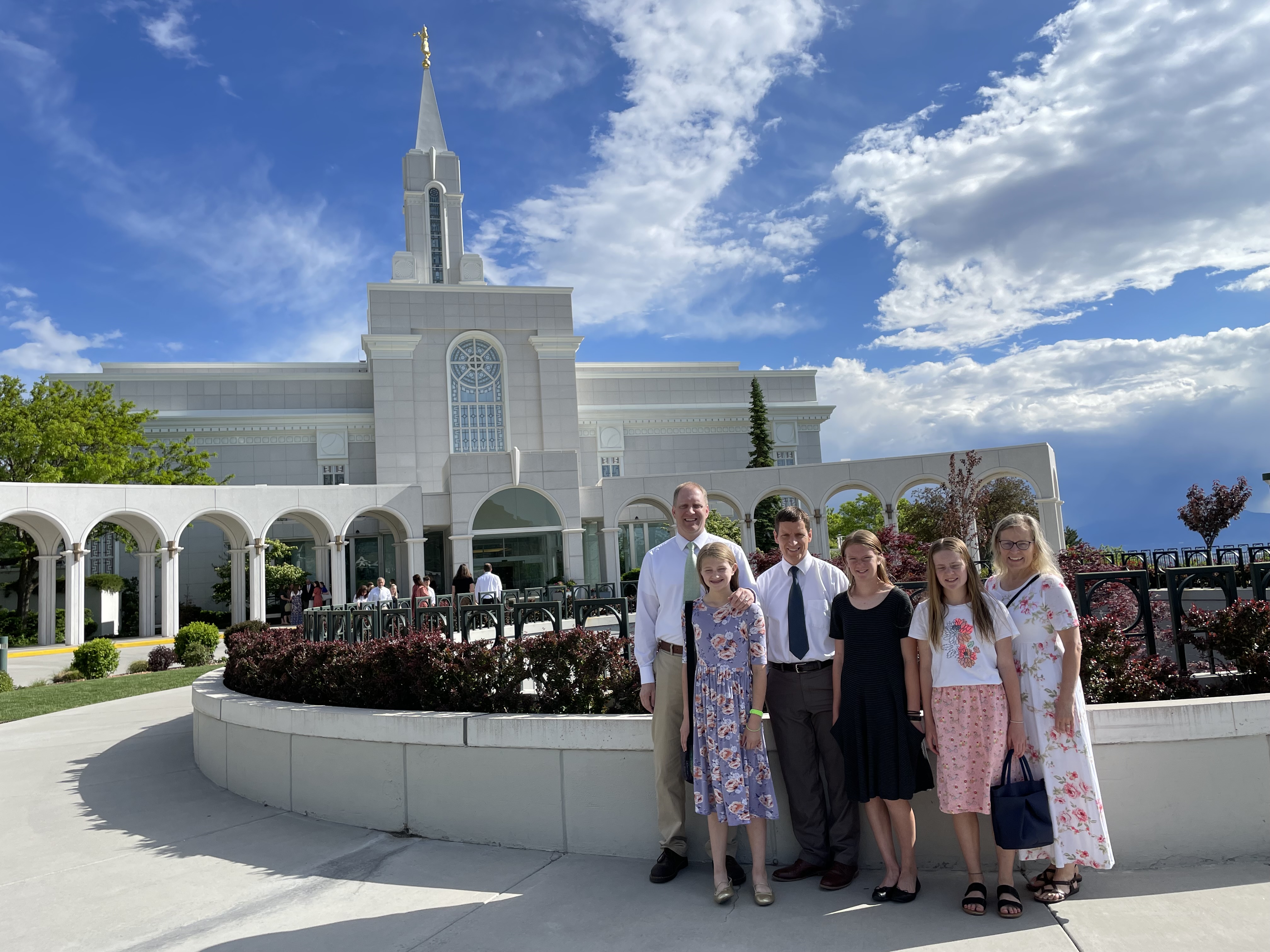
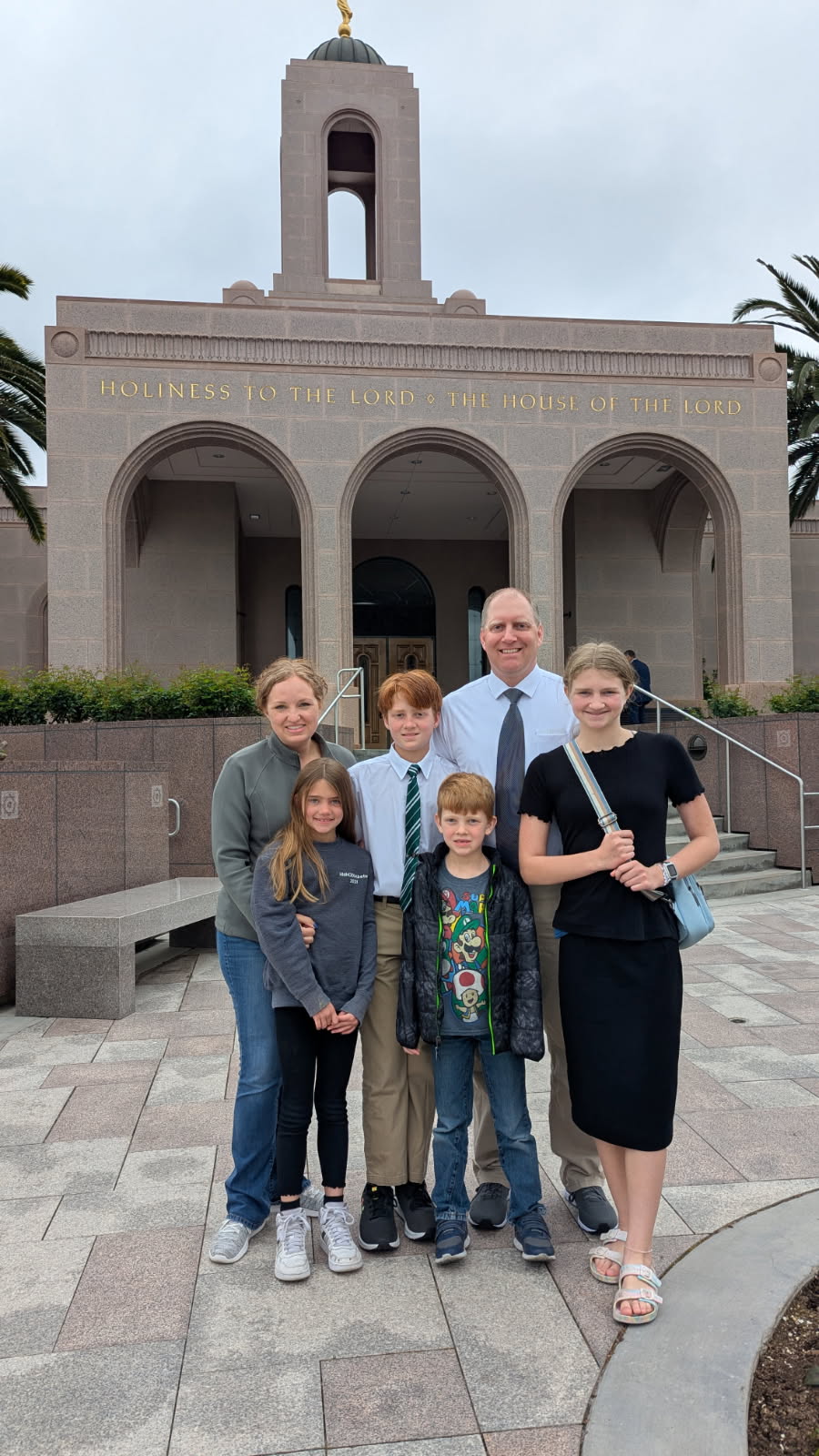
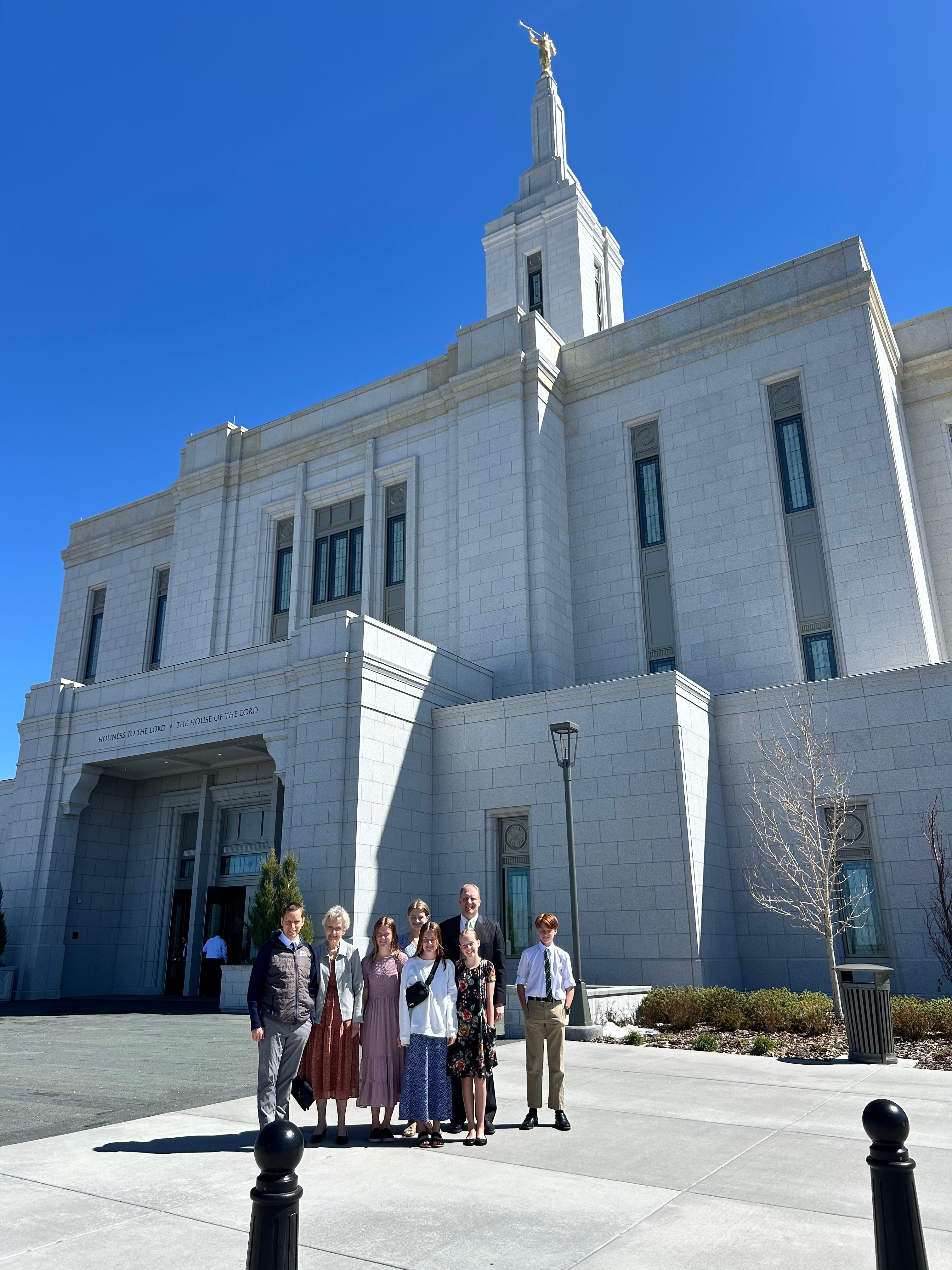
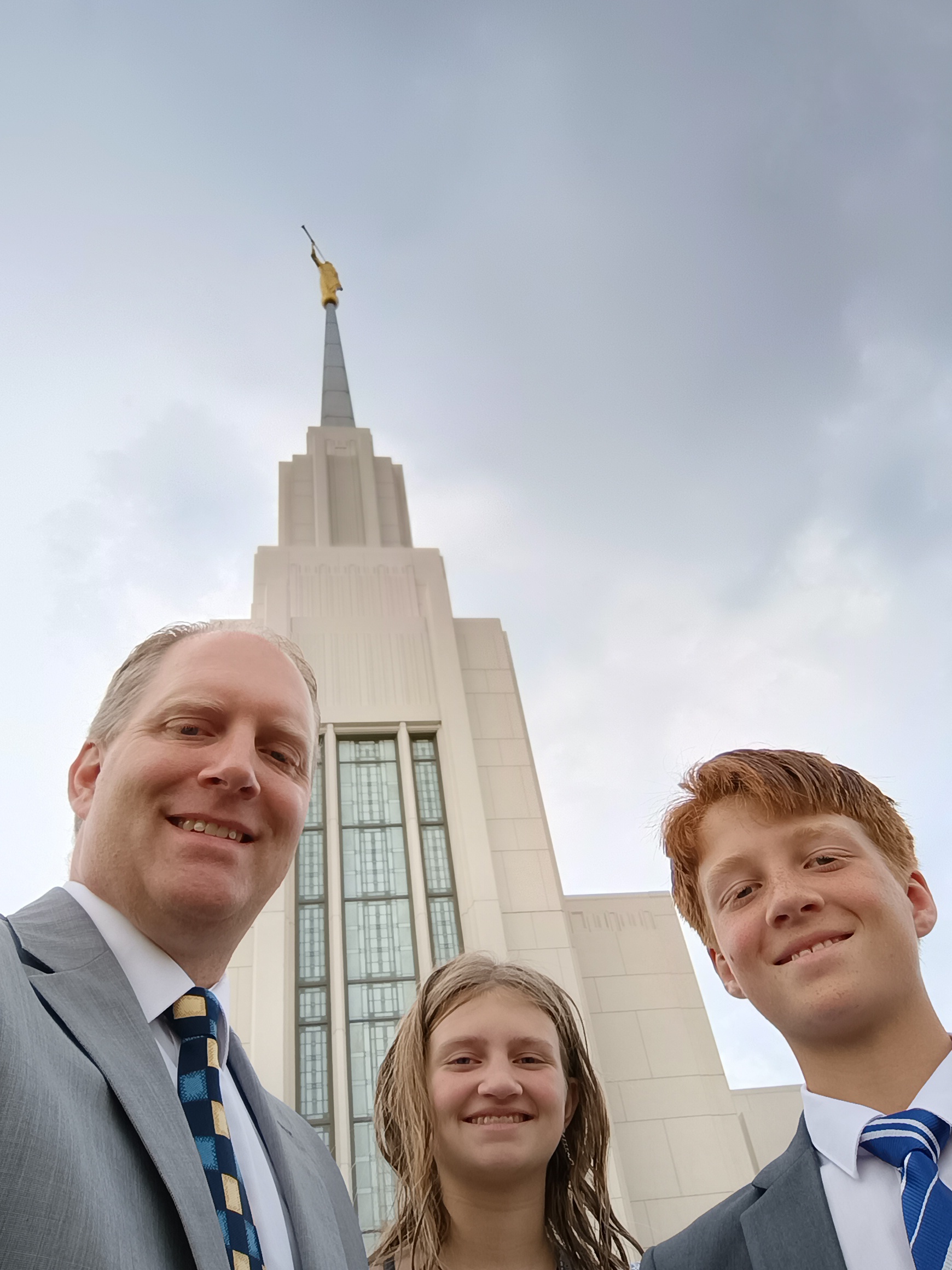
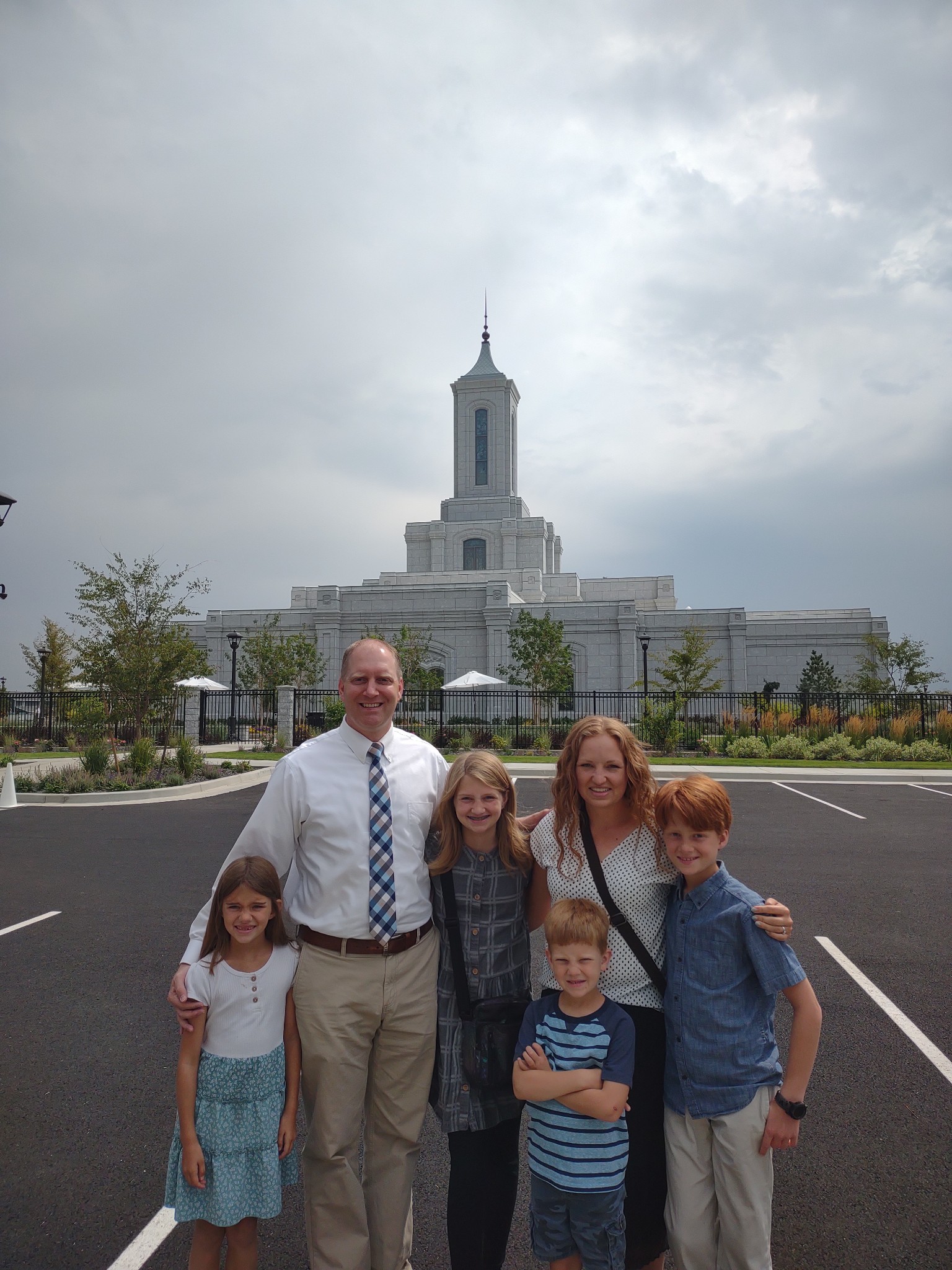
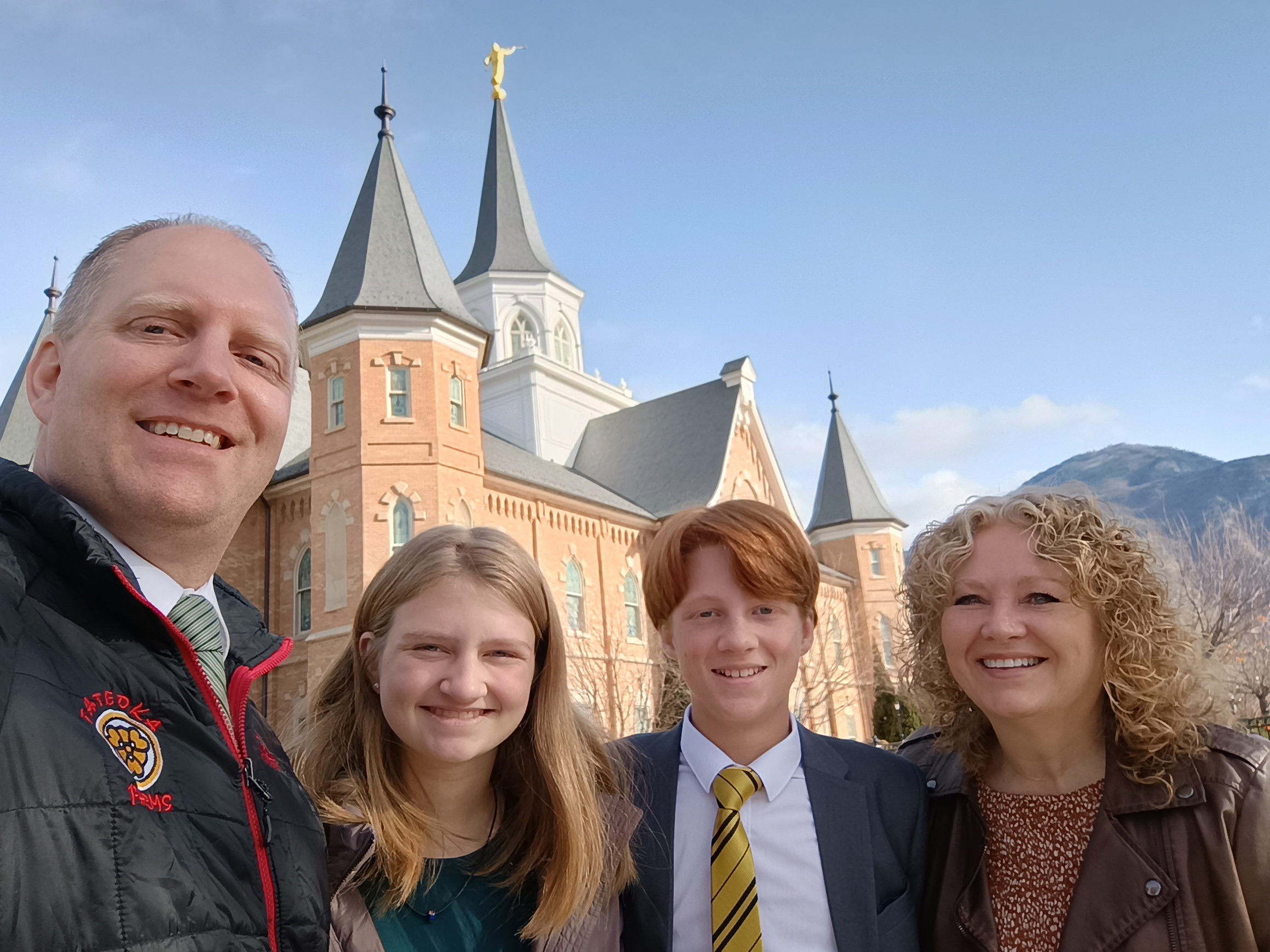
I am afraid the Ross household are temple tourists. Anyone who knows me knows that I have a couple of quirks. One of which, I like to drive by temples. The more distant a location, the greater likelihood I will plan visiting a temple. Even if it is just to drive past and snap a picture. Now that my children are old enough to attend the temple, my unwritten goal is to attend various temples. In visiting with Aliza and Hiram, they have not been keeping much of a record. Here I am, trying to re-create a list of temples they both have attended 2022 to present. I can cheat because we often take a picture while there.

Aliza could start attending the temple in January 2022. We did not have any goals for attendance, usually just whenever our Burley 11 Ward would go to the temple.

12 February 2022 – Twin Falls Idaho Temple
6 March 2022 – Twin Falls Idaho Temple
16 April 2022 – Pocatello Idaho Temple – Bill Teal, Mary Lou Teal, Amanda Ross, Aliza Ross, Paul Ross, Eliza Hales, Brad Hales, Aleah Hales
14 May 2022 – Logan Utah Temple – Paul and Aliza Ross with Aleah, Brad, and Eliza Hales
31 December 2022 – Brigham City Utah Temple – Paul Ross, Aleah Hales, Eliza Hales, Brad Hales, Aliza Ross, Amanda Ross
28 April 2023 – Ogden Utah Temple
27 May 2023 – Bountiful Utah Temple – Paul and Aliza Ross, Brad, Aleah, and Eliza Hales, Marianne Christensen
19 August 2023 – Twin Falls Idaho Temple – Paul Ross, Brad Hales, Aliza Ross, Aleah Hales, Eliza Hales

Hiram could start attending the temple in January 2024. That year the Burley 8 Ward (we moved houses) asked that we set a goal of attending monthly in 2024. We fulfilled that goal.

12 January 2024 – Pocatello Idaho Temple – Amanda, Aliza, Milo, Hiram, and Paul Ross

17 February 2024 – Twin Falls Temple – Burley 8 Ward Temple Trip

8 March 2024 – Bountiful Utah Temple – Bryan Hemsley, Amanda Ross, Aliza Ross, Jill Hemsley, Hiram Ross, Paul Ross
27 March 2024 – Vernal Utah Temple

5 April 2024 – Twin Falls Idaho Temple – Burley 8 Ward Temple Trip

17 May 2024 – Ogden Utah Temple
5 July 2024 – Oquirrh Mountain Utah Temple
17 August 2024 – Logan Utah Temple
23 August 2024 – Meridian Idaho Temple – Aliza only
22 September 2024 – Layton Utah Temple – Amanda Ross, Aliza Ross, Hiram Ross, Brad Hales, Aleah Hales, Elise Hales, Rachel Hales, Eliza Hales, Paul Ross

Funny story, Layton was the first time I actually took a dead person to the temple. My Great Aunt June Streeter Stout. Ask me for the story.

4 October 2024 – Boise Idaho Temple

9 November 2024 – Twin Falls Temple – Burley 8 Ward Temple Trip

28 December 2024 – Bountiful Utah Temple – Burley 8 Ward Temple Trip

The Ward did not ask us to continue the monthly attendance for 2025, but as a family we have continued the monthly attendance goal.

4 January 2025 – Meridian Idaho Temple

1 February 2025 – Twin Falls Temple

26 March 2025 – Newport Beach California Temple
19 April 2025 – Pocatello Idaho Temple – Brad Hales, Janet Hales, Eliza Hales, Aliza Ross, Aleah Hales, Elise Hales, Paul Ross, Hiram Ross
19 April 2025 – Idaho Falls Idaho Temple
16 May 2025 – Brigham City Utah Temple
17 June 2025 – Twin Falls Idaho Temple
6 July 2025 – Twin Falls Idaho Temple – Derek Hemsley, Paul Ross, Hiram Ross, Aliza Ross, Olivia Hemsley
16 August 2025 – Logan Utah Temple – Paul, Aliza, and Hiram Ross
6 September 2025 – Twin Falls Temple – Paul, Aliza, and Hiram Ross
24 October 2025 – Twin Falls Temple – Paul, Aliza, and Hiram Ross
29 November 2025 – Orem Utah Temple – Paul Ross, Hiram Ross, Derek Hemsley, Olivia Hemsley, Jill Hemsley, Aliza Ross
19 December 2025 – Syracuse Utah Temple – Paul, Aliza, and Hiram Ross

In addition to attending the temple for ordinances for 2024-2025, we also attended some temple open houses.

26 May 2023 – Saratoga Springs Utah Temple – Front (l-r): Jordan Hemsley, Hiram Ross, Jill Hemsley; Standing: Amanda Ross, Aliza Ross, Rowan Hemsley, Derek Hemsley, Olivia Hemsley, Lillian Ross, Paul Ross, James Ross, Jack Hemsley, Bryan Hemsley
6 August 2023 – Moses Lake Washington Temple
3 November 2023 – St George Utah Temple
23 March 2024 – Manti Utah Temple – Amanda, Paul, Hiram, James, Lillie, and Aliza Ross with Jill Hemsley
17 May 2024 – Layton Utah Temple – Lillian Ross, Paul Ross, Amanda Ross, Aliza Ross, Bryan Hemsley, Jill Hemsley, James Ross, Hiram Ross
18 May 2024 – Taylorsville Utah Temple – Bryan Hemsley, James Ross, Jill Hemsley, Aliza Ross, Lillian Ross, Hiram Ross, Amanda Ross, Paul Ross
11 October 2024 – Deseret Peak Utah Temple – Paul Ross, James Ross, Amanda Ross, Hiram Ross, Aliza Ross, Jill Hemsley, Lillie Ross, Bryan Hemsley, Shanna Thompson
16 May 2025 – Syracuse Utah Temple
30 August 2025 – Elko Nevada Temple – Brad and Rachel Hales Family with Ross Family with Lea Pierucci Izama (exchange student from Germany, staying with Hales family)
8 November 2025 – Burley Idaho Temple, Amanda Ross, Brad Hales, Anson Hales, Aleah Hales, James Ross (front), Lea Pierucci Izama (back), Paul Ross, Audra Hales, Aliza Ross

This was a fun visit. Some of the kids commented about where under the temple, in the foundations, might their rocks be found? We all submitted rocks with thoughts and our names on them that were placed before the foundations were poured.

14 November 2025 – Burley Idaho Temple – Hiram Ross, Amanda Ross, Lillie Ross, Rowan Hemsley (arm around), Margo Hemsley, Bryan Hemsley, Olivia Hemsley, Jill Hemsley, Jack Hemsley, James Ross, Paul Ross, Aliza Ross, Jordan Hemsley, Derek Hemsley

And other drive by shootings related to temples in 2022-2025.

4 June 2022Burley Idaho Temple Groundbreaking
6 August 2023 – Columbia River Washington Temple
28 August 2023 – Los Angeles California Temple
1 September 2023 – San Diego California Temple
26 March 2025 – Los Angeles California Temple
29 March 2025 – Oakland California Temple
29 November 2025 – Provo City Utah Temple – Paul, Aliza, and Hiram Ross with Jill Hemsley
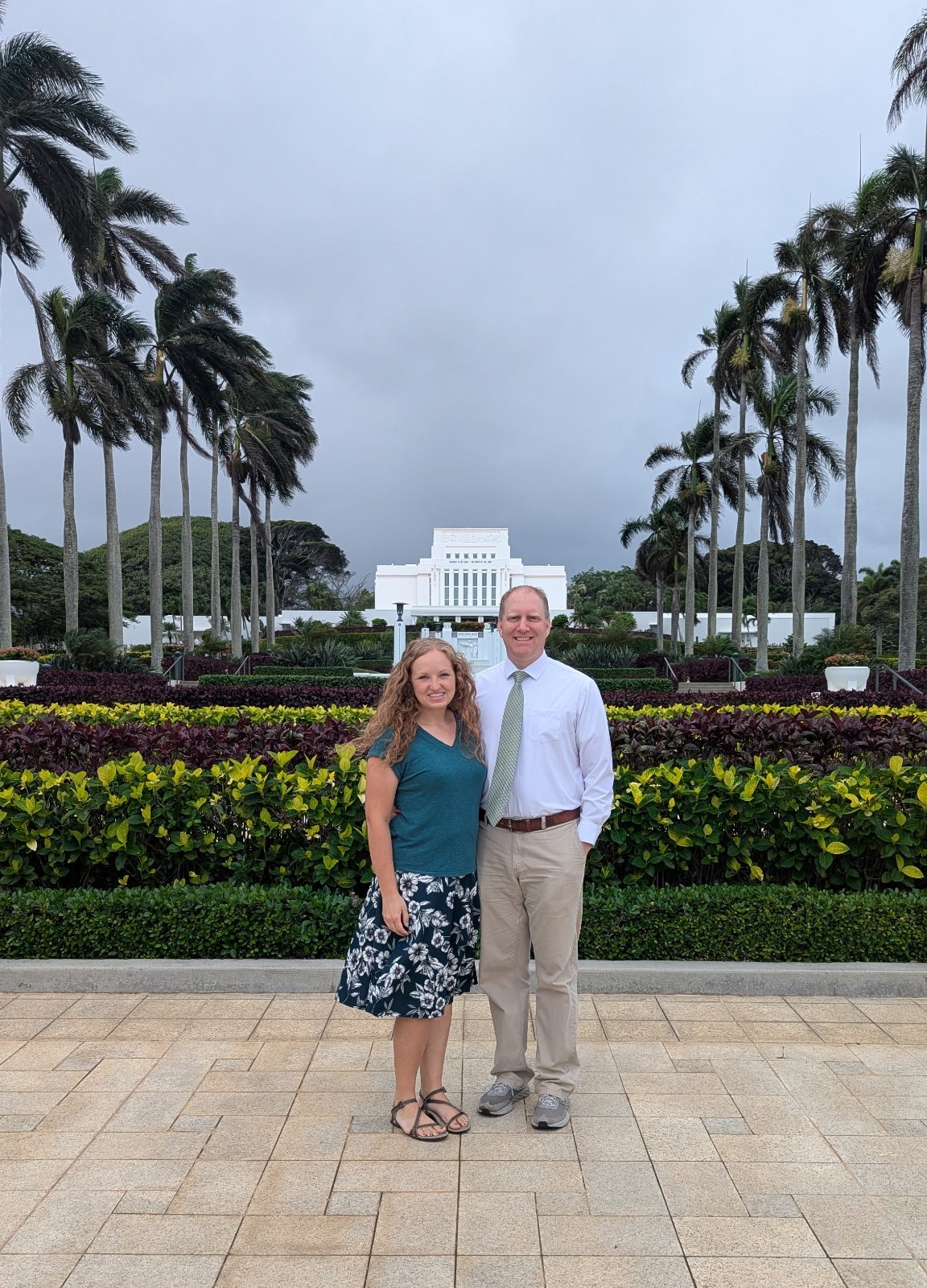
23 December 2025 – Laie Hawaii Temple – Amanda and Paul Ross

This is only a record of attending the temple for Aliza and Hiram. Many know I have had my own personal goal for monthly attending the temple from September 1998 to the present.

Republican Winter Meeting 2025

Last week was the Idaho Republican Party’s Winter Meeting in Boise, Idaho at the Riverside Hotel. Fortunately, the whole family could go and enjoy the swimming pool and other activities in Boise.

I appeared in one of the official photos of the Winter Meeting. It is my better side.

I serve as the Cassia County Republican Central Committee Chairman. As such, I serve on the Idaho Republican State Central Committee. I have also been appointed to serve on the Idaho Republican Rules Committee. Mr. Regan is the Rules Committee Chairman.

Brent Regan and Paul Ross in Boise, Idaho

We made sure to stop and take the kids to the Idaho Capitol.

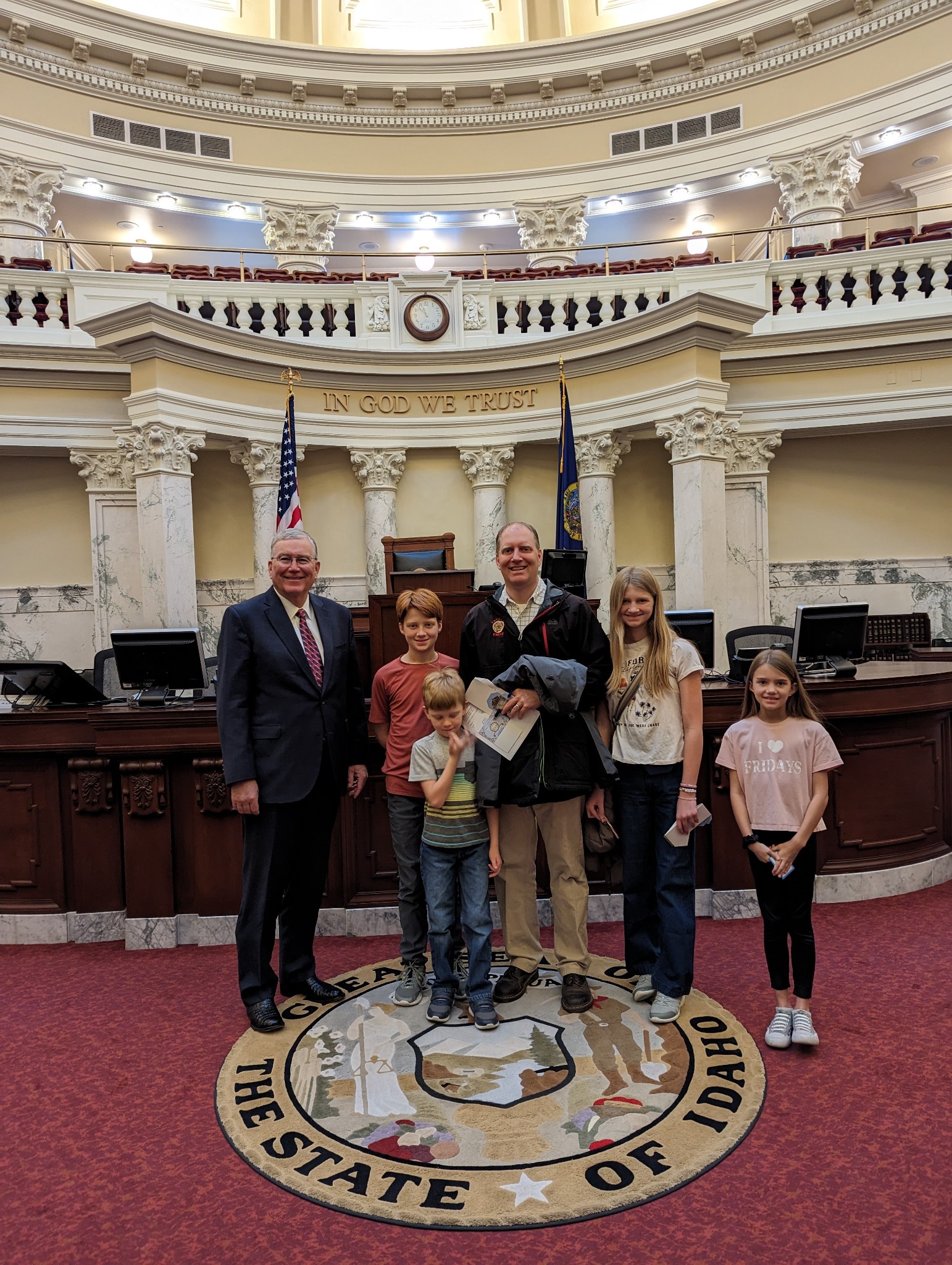
Wandering near the rotunda, we stumbled upon a fellow Cassia County citizen, Scott Bedke. Mr. Bedke also serves at Idaho’s Lieutenant Governor. He brings honor to Cassia County.

Scott Bedke, Hiram Ross, James Ross, Paul Ross, Aliza Ross, and Lillie Ross on the floor of the Idaho Senate Chamber.

We also paid a visit on a friend in his office.

Lillie Ross, Hiram Ross, Paul Ross, Phil McGrane, James Ross, and Aliza Ross in the Secretary of State’s office in the Idaho State Capitol

We also made a visit to the Meridian Idaho Temple while in town.

Aliza and Hiram Ross at the Meridian Idaho Temple

After ‘real grief,’ Prop 1 proponents mull their defeat