In re DeVries

Decision: In re Relna James DeVries and Kathryn Lee DeVries, Case No. 13-41591-JDP (Bankr. D. Idaho, 28 Apr. 2015)
Judge: Honorable Jim D. Pappas, United States Bankruptcy Judge
Counsel for Debtors: Paul Ross, Idaho Bankruptcy Law, Paul, Idaho
Chapter 13 Trustee: Kathleen A. McCallister, Meridian, Idaho
Trustee’s Counsel: Holly Roark, Office of Kathleen A. McCallister, Meridian, Idaho


Background

Relna and Kathryn DeVries filed a Chapter 13 petition on 27 December 2013. Their amended plan, confirmed on 19 May 2014, provided that all allowed tax claims would be paid in full. The IRS timely filed a proof of claim for taxes owed for the 2011 and 2012 tax years. The deadline for governmental units to file proofs of claim was 25 June 2014.

The Debtors filed their 2013 federal income tax returns in April 2014, which showed they owed $1,021 to the IRS for the 2013 tax year. The Idaho Tax Commission filed its own proof of claim for the $84 in state taxes owed for 2013 the day after plan confirmation. The IRS, however, did not file a claim for the 2013 federal taxes, nor did it amend its existing claim to include them. Within 30 days of the 25 June 2014 governmental bar date — as permitted by Federal Rule of Bankruptcy Procedure 3004 — the Debtors filed a proof of claim on behalf of the IRS for the $1,021 in 2013 taxes.


The Trustee’s Objection

The Trustee objected to the Debtors’ proof of claim. The Trustee represented that it was allegedly filed at the IRS’s own request, and that the IRS did not wish to have the 2013 tax debt paid through the plan as a § 1305 claim.

The Trustee’s objection rested on 11 U.S.C. § 1305(a)(1), which governs postpetition claims in Chapter 13 cases. That provision permits a proof of claim to be filed by “any entity that holds a claim against the debtor … for taxes that become payable to a governmental unit while the case is pending.” The Trustee argued that the Debtors’ 2013 federal income taxes became payable during the pendency of the bankruptcy case, making them a § 1305 postpetition claim, and that under the plain language of § 1305 only the creditor holding the claim — the IRS — was authorized to file a proof of claim for it. The Debtors’ attempt to file on the IRS’s behalf was therefore improper and the claim should be disallowed in its entirety.


The Debtors’ Response

Debtors filed a response through their counsel arguing that the 2013 tax debt was properly treated as a prepetition claim and that they were authorized to file the proof of claim under § 501(c) and Federal Rule of Bankruptcy Procedure 3004.

Debtors did not rely on § 1305 as their filing authority. Instead, they argued that the 2013 tax obligation was a prepetition claim — or should be treated as one — and that the ordinary debtor claim-filing mechanism of § 501(c) and Federal Rule of Bankruptcy Procedure 3004 therefore applied. On the question of when the claim arose, Debtors urged the Court to apply the “fair contemplation” or “prepetition relationship” test articulated in In re Dixon, 295 B.R. 226 (Bankr. E.D. Mich. 2003). Under that approach, a claim arises prepetition if there was a prepetition relationship between the debtor and the creditor such that a possible claim was within the creditor’s fair contemplation at the time of filing. The IRS and the Debtors had precisely such a relationship: the Debtors were taxpayers, the IRS was their taxing authority, and 361 of the 365 days of the 2013 tax year had elapsed before the petition was filed. The IRS’s claim for 2013 taxes was fully within its fair contemplation at the time of filing, Debtors argued, making it a prepetition claim subject to the ordinary rules permitting debtors to file on a creditor’s behalf.

Debtors also invoked 11 U.S.C. § 502(i), which provides that a postpetition claim for taxes entitled to priority under § 507(a)(8) shall be treated as if it had arisen before the petition date. On that theory, even if the 2013 taxes technically arose postpetition, § 502(i) mandated that they be treated as prepetition claims, restoring the Debtors’ authority to file under § 501(c) and Federal Rule of Bankruptcy Procedure 3004.


The Trustee’s Reply

The Trustee replied that Ninth Circuit authority resolved the question directly and foreclosed the Michigan court’s “fair contemplation” test. Relying on Joye v. Franchise Tax Bd. (In re Joye), 578 F.3d 1070 (9th Cir. 2009), the Trustee argued that taxes owed for a given tax year do not “become payable” — and therefore do not arise as a § 1305 postpetition claim — until the close of that tax year. Because the DeVries filed their petition before the close of 2013, the 2013 taxes became payable only after the petition date and were a postpetition claim that only the IRS could properly file. The Trustee further noted that allowing the improperly filed claim would prejudice general unsecured creditors, whose pro-rata distributions would be reduced by the addition of a priority tax claim.


The Court’s Ruling

Judge Pappas sustained the Trustee’s objection and disallowed the Debtors’ proof of claim in its entirety.

The Court addressed § 502(i) first and found it dispositive against the Debtors. Section 502(i) applies only to postpetition tax claims entitled to priority under § 507(a)(8)(A)(i), which affords priority to income taxes for which the applicable return was due within three years before the petition date. The DeVries’ 2013 federal income tax return was not due until 15 April 2014 — after their 27 December 2013 petition date. Because the return due date fell outside the three-year lookback period, the 2013 taxes were not entitled to priority under § 507(a)(8)(A)(i), and § 502(i) therefore had no application. The Court drew support from the Ninth Circuit BAP’s analysis in In re Jones, 420 B.R. 506 (9th Cir. BAP 2009), aff’d on other grounds, 657 F.3d 921 (9th Cir. 2011), which explained that a postpetition income tax obligation whose return is due postpetition cannot invoke priority status under § 507(a)(8)(A)(i) and thus falls outside § 502(i)’s reach entirely.

The Court then turned to § 1305(a)(1) and rejected the Debtors’ “fair contemplation” argument. Binding Ninth Circuit precedent, not the Michigan court’s test, controlled the analysis. Under In re Joye, taxes become “payable” for purposes of § 1305(a)(1) when they are “capable of being paid.” The Ninth Circuit further established in In re Pacific-Atlantic Trading Co., 64 F.3d 1292 (9th Cir. 1995), that a tax on income is “incurred” on the last day of the income period. Because federal income taxes are assessed by the calendar year, the DeVries’ 2013 taxes were incurred at midnight on 31 December 2013 — after the petition was filed. Both the incurrence and the payability of the 2013 taxes therefore occurred postpetition, placing them squarely within § 1305(a)(1).

The Court also examined the interplay between § 502(i) and § 1305(a)(1) as analyzed in In re Joye, which drew on Collier on Bankruptcy for the proposition that § 502(i) applies to taxes incurred prepetition that do not come due until after the petition is filed, while taxes incurred postpetition can be treated only as postpetition claims under § 1305. Because the 2013 taxes were incurred postpetition under the Pacific-Atlantic rule, § 502(i) offered the Debtors no relief in any event.

Having concluded that the 2013 taxes were a § 1305(a)(1) postpetition claim, the Court applied the well-established rule that postpetition claims under § 1305 may be offered for inclusion in a Chapter 13 plan only by the creditor that holds the claim. A debtor has no authority to force a postpetition creditor into the plan by filing a proof of claim on its behalf. The Trustee’s objection was sustained and the Debtors’ proof of claim disallowed.


Why This Matters

  1. Section 502(i) does not reach postpetition taxes whose returns are due postpetition. The provision applies only to taxes entitled to priority under § 507(a)(8)(A)(i) — which requires the return to have been due within three years before the petition date. An income tax return due after the petition date falls outside that window entirely. Practitioners should not assume § 502(i) will bridge the gap between a postpetition tax liability and prepetition claim treatment.

  2. The Ninth Circuit’s “capable of being paid” standard governs when taxes become payable in the Ninth Circuit. Under In re Joye, the relevant inquiry for § 1305(a)(1) purposes is when the tax was capable of being paid — and under In re Pacific-Atlantic Trading Co., income taxes are incurred on the last day of the tax year. A tax year that closes after the petition date produces a postpetition claim regardless of how many days of that year preceded the filing.

  3. Only the creditor may file a § 1305 postpetition claim. Section 1305(a) grants the right to file a proof of claim for postpetition taxes exclusively to the entity that holds the claim. A debtor cannot invoke § 501(c) or Federal Rule of Bankruptcy Procedure 3004 to file on a creditor’s behalf where the underlying obligation is a § 1305 postpetition claim rather than a prepetition one. The creditor’s silence is the creditor’s choice to make.

  4. The IRS may decline plan treatment of a postpetition tax debt. This case illustrates that § 1305 is entirely creditor-driven. The Trustee’s objection represented that the IRS allegedly sought disallowance of the Debtors’ filing rather than simply declining to participate. A Chapter 13 debtor who owes postpetition taxes has no mechanism to compel inclusion of that debt in the plan over the IRS’s objection.

  5. Debtors who owe taxes for a year that closes after their petition date should address the liability outside the plan. Where postpetition income taxes cannot be included in a confirmed Chapter 13 plan, the debt remains the debtor’s obligation to manage directly with the taxing authority. Counsel should advise clients of this reality at the outset and account for ongoing tax obligations in assessing the feasibility of the plan.


Full Decision: Available on PACER, Case No. 13-41591-JDP, Doc. 57 (Bankr. D. Idaho 28 Apr. 2015)
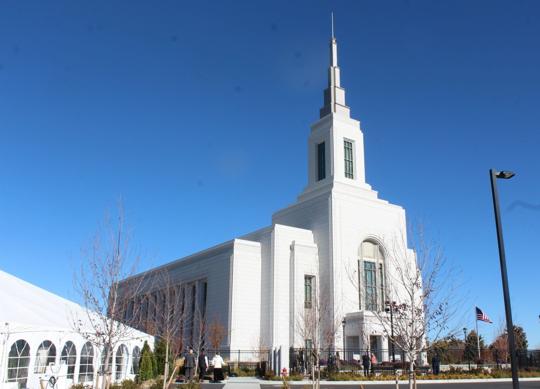
House of the Lord: Burley temple open house begins Thursday

ERIC GOODELL photos, TIMES-NEWS The open house for the recently completed Burley Temple will begin Thursday and run through Sept. 22, excluding Sundays.

BURLEY — The recently completed temple on the outskirts of the city is more than a beautiful building, church members say.

Even to youthful Sophia Silvaz, a sophomore at Burley High School, it means much more.

“It is a place where heaven feels close,” Silvaz said, “a place where you can find peace, love and guidance from Heavenly Father and Jesus Christ.”

Members of The Church of Jesus Christ of Latter-day Saints regard temples — almost 400 have either been completed or have been announced worldwide — as the most sacred places on earth. At an event for the media on Monday morning, members said anticipation of the Burley temple has been growing since it was announced in 2021.

People talk Monday outside The Church of Jesus Christ of Latter-day Saints Burley Temple.

Now that the granite-clad building has been completed, an open house will kick off Thursday and run through Sept. 22, excluding Sundays. About 100,000 people are expected to tour the temple during that time.

Jolene Graham, who lives down the street from the temple, has had a front-row seat to its construction.

“Sometimes it woke us up early in the morning,” Graham said of the construction.

She recounted that people would drive by the 10-acre site, and as they saw the steel frame gradually rise out from the ground and the exterior take shape, their focus seemed to change.

People began lingering around the site longer, staying in their cars or walking near the temple grounds, she said.

Church communication directors Dave and Heather Wilson remember when the temple’s steeple was delivered to the site and was hoisted on top of the two-story building.

An exterior photo of the Burley Idaho Temple. Each temple of The Church of Jesus Christ of Latter-day Saints is inscribed with the words, “Holiness to the Lord • House of the Lord.”

“Social media must have gone wild that day,” Dave Wilson said, as people started showing up, clogging the street.

“It was a winter day in December and lots and lots of little children touched that steeple as it lay on the trailer — I touched that steeple as it lay on the trailer,” Heather Wilson said.

The Wilsons had to be patient to see inside the temple. They first saw the 35,000-square-foot building about a week ago.

A temple in Twin Falls opened in 2008, and Elder Steven R. Bangerter, the church’s general authority, said it will allow more people in the Mini-Cassia area to attend more conveniently.

“The temple, for us, lies at the heart of our efforts to draw nearer to Christ,” Bangerter said. People will now be able to enjoy the blessings from temple attendance more regularly, he said.

Temples are different from meeting houses, which dot southern Idaho. In temples, people meet for regular Sunday worship and other church activities throughout the week.

Once the temple is dedicated on Jan. 11, only members of the church in good standing will be allowed to enter. There, they will perform ordinances not just for themselves but also on behalf of the dead who didn’t have the opportunity to receive them.

The Celestial Room of the Burley Idaho Temple of The Church of Jesus Christ of Latter-day Saints.

But the open house allows the public to see inside and view its beauty, from the stained-glass windows with a potato flower motif in tribute to the community’s agricultural roots to the baptistry, where members of the church will be baptized in behalf of the dead, and the sealing rooms, where couples, the church teaches, can be married not just until death but for eternity.

Many of the colors seen in the temple are meant to echo the local farmland and open skies.

The artwork in the temple depicts scenes from Jesus Christ’s life, and outdoor scenes are prevalent in the temple’s interior.

The Burley temple’s stained glass windows feature the potato plant blossom, tying local agricultural heritage into the temple’s design.

Bangerter said it was built from high-quality materials, as is expected for a building with the words “In Holiness to the Lord, House of the Lord” inscribed above its entrance.

The granite on the exterior and floor came from Italy. The area rugs are crafted from New Zealand wool.

Bangerter hopes the temple will be well-used, with high school students coming early before school to perform baptisms on behalf of the dead and church members attending “endowment sessions,” where they promise to obey God’s commandments.

Bangerter said the teachings in such sessions answer three big questions: where we came from, what is the purpose of earth life, and what will happen after we die.

The celestial room of the temple is meant to be a peaceful place, symbolizing heaven in God’s presence.

“It’s a place we go to pray and to feel close to God,” Bangerter said.

The baptistry of the Burley Idaho Temple of The Church of Jesus Christ of Latter-day Saints. In the temple, faithful Latter-day Saints can be baptized on behalf of their deceased ancestors.

He said ordinances for the dead are “an offering of service, an offering of love,” and people on the other side of the veil can accept or reject the temple work done on their behalf.

Eric Goodell reports for the Times-News.

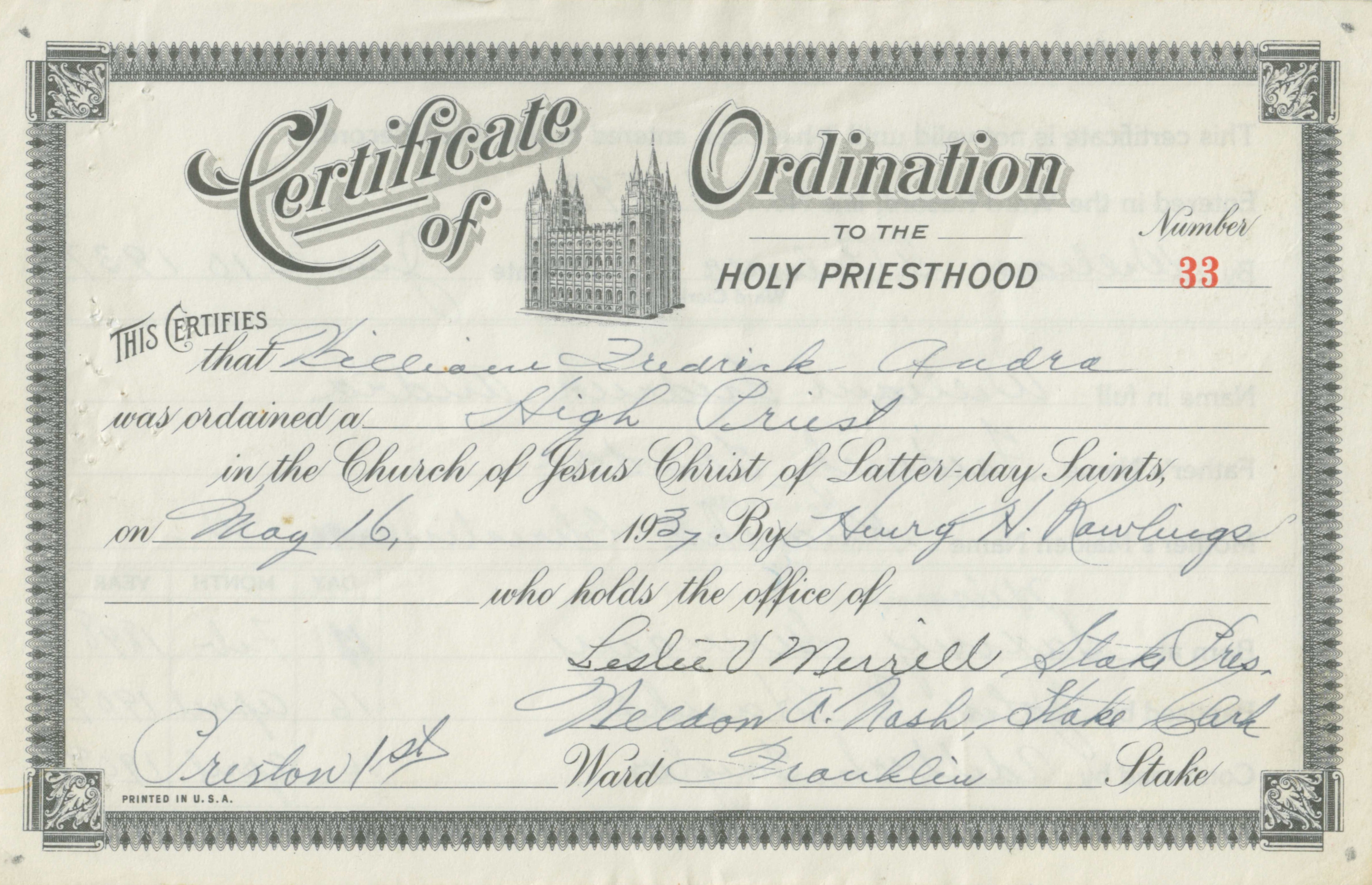
William Andra Ordinations

Working through the family history book of Golden Andra that was given to me, I opened a page to scan some photos and found a surprise. Behind that photo were some ordination certificates. These are originals. I thought I better get them scanned and preserved. I also uploaded them to FamilySearch and got them linked with the names in the documents.

I think they are valuable for family history. They are also a peek into church history. This gives us the missionaries who baptized and confirmed my Great Grandfather in Germany. I have provided some limited biographies at the end.

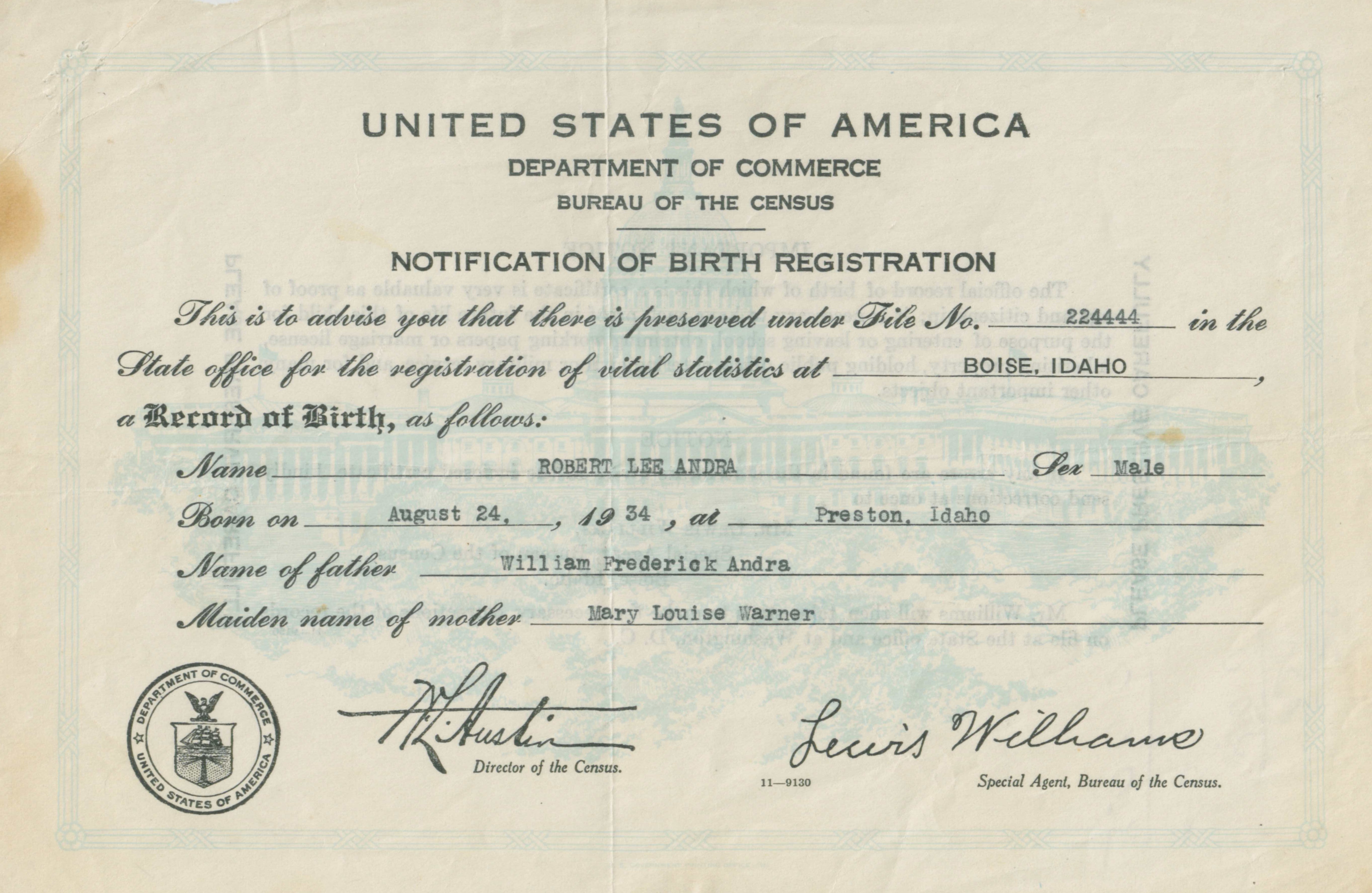
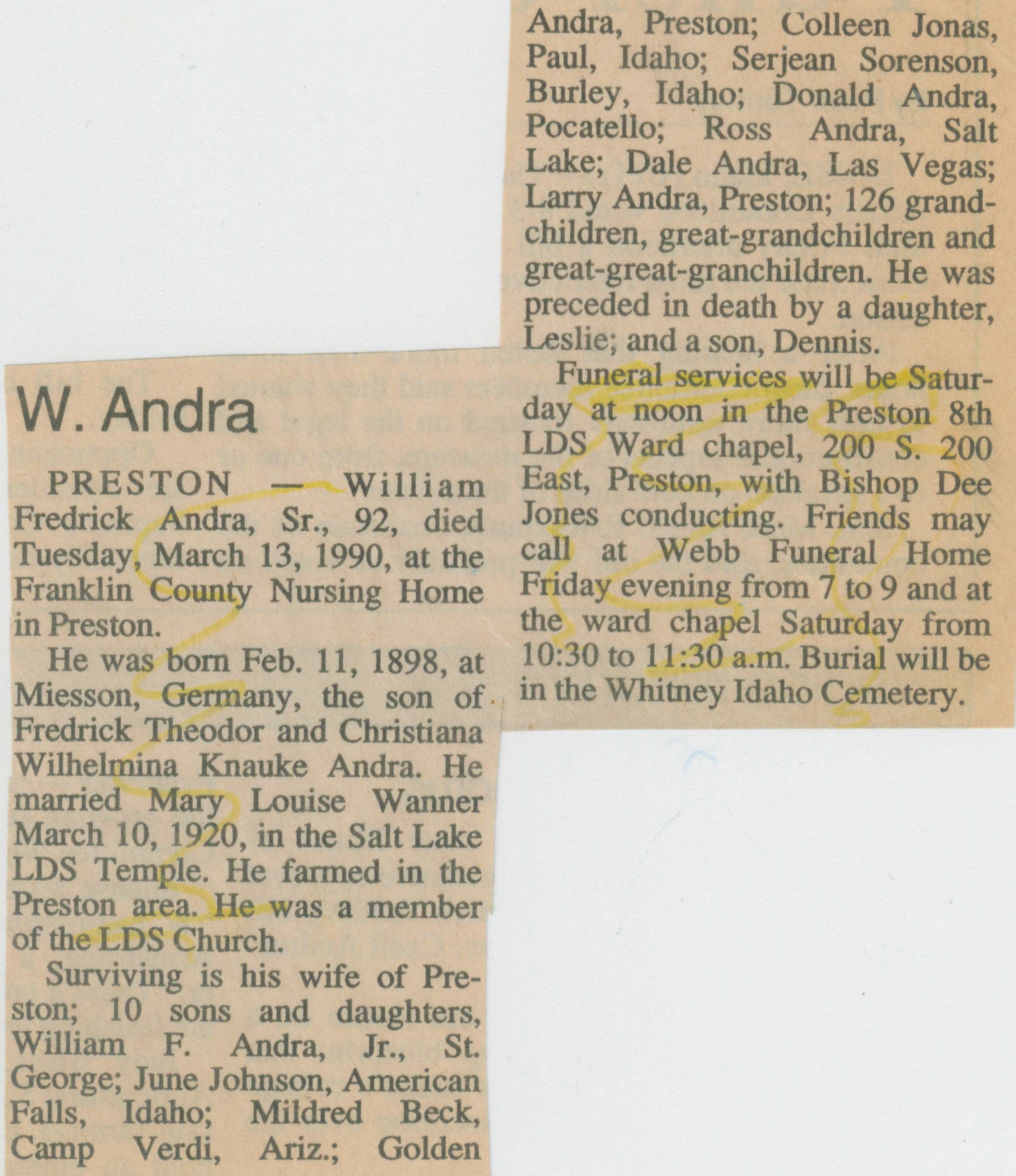
Also an original Notification of Birth Registration for Robert Lee Andra, son of William and Mary, who died at birth. I am not sure why the United States Department of Commerce is issuing this Notification, or the Bureau of the Census. There is some history behind this I am not aware. Last, a copy of William’s obituary.

Priest Ordination Certificate (Front)
Priest Ordination Certificate (Back)
Elder Ordination Certificate (Front)
Elder Ordination Certificate (Back)
High Priest Ordination Certificate (Front)
High Priest Ordination Certificate (Back)
Robert Andra Birth Certificate

I had to do some history on individuals listed on the certificates. Some fascinating individuals, obviously some of them local church leaders.

James Richard Bodily – born 11 February 1872 in Hyde Park, Cache, Utah – died 12 April 1967 in Preston, Franklin, Idaho

Wilford Woodruff Emery – born 16 October 1880 in Salt Lake City, Salt Lake, Utah – died 10 September 1954 in Salt Lake City.

John Edward Hanks – born 30 August 1877 in Salem, Utah, Utah – died 5 July 1970 in Salt Lake City.

William Gibson Palmer – born 16 July 1884 in Croydon, Morgan, Utah – died 15 May 1977 in Preston.

Henry Helaman Rawlings – born 8 April 1893 in Fairview, Oneida, Idaho – died 14 February 1984 in Fairview.

Adelbert Augustine Taylor – born 9 April 1883 in Springerville, Apache, Arizona – died 15 November 1948 in San Felipe de Híjar, San Sebastián del Oeste, Jalisco, Mexico.

Luther Hovey Twitchell – born 17 October 1878 in Salt Lake City – died 15 April 1962 in Bountiful, Davis, Utah.

Plain City Hurler

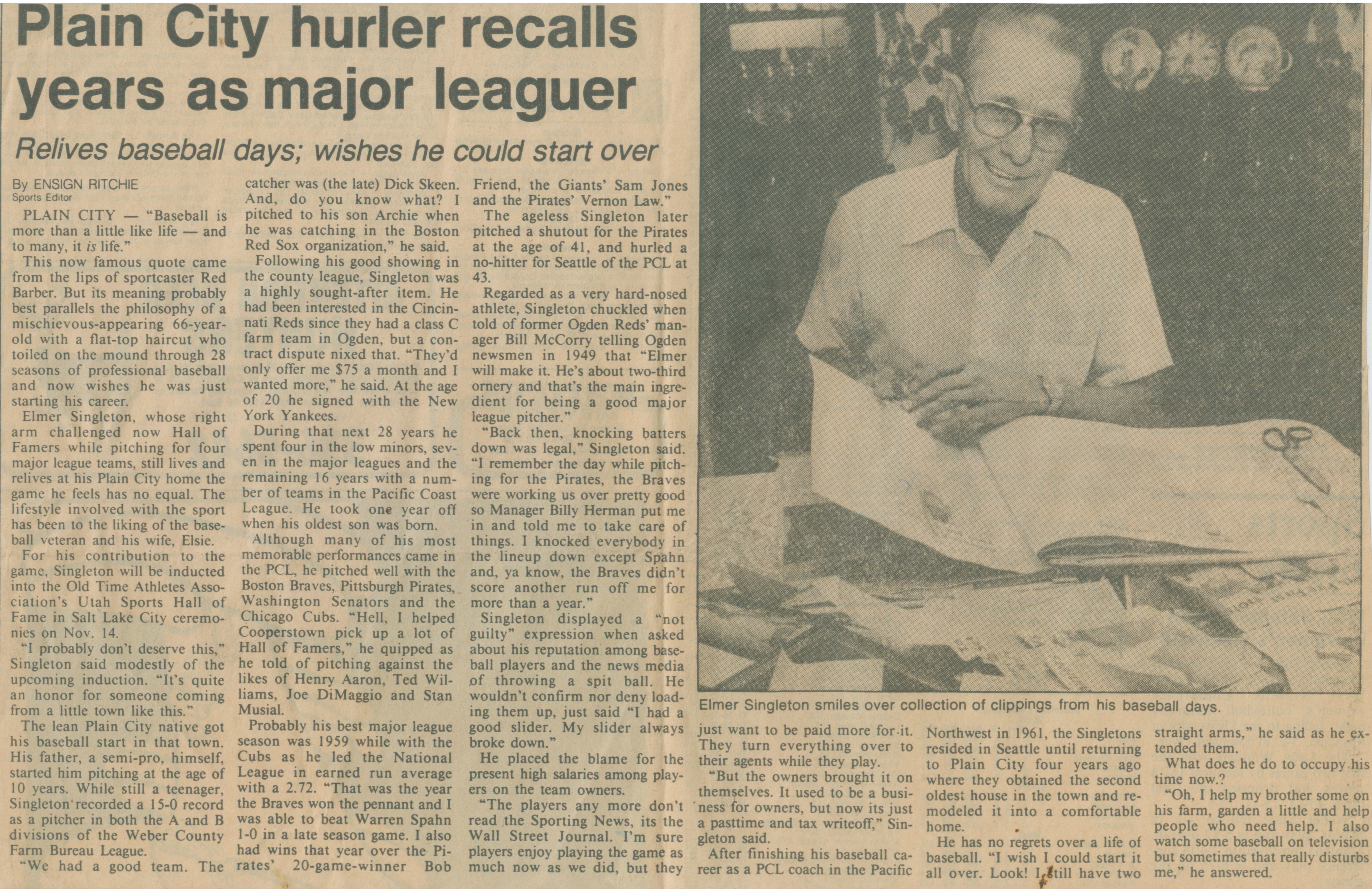
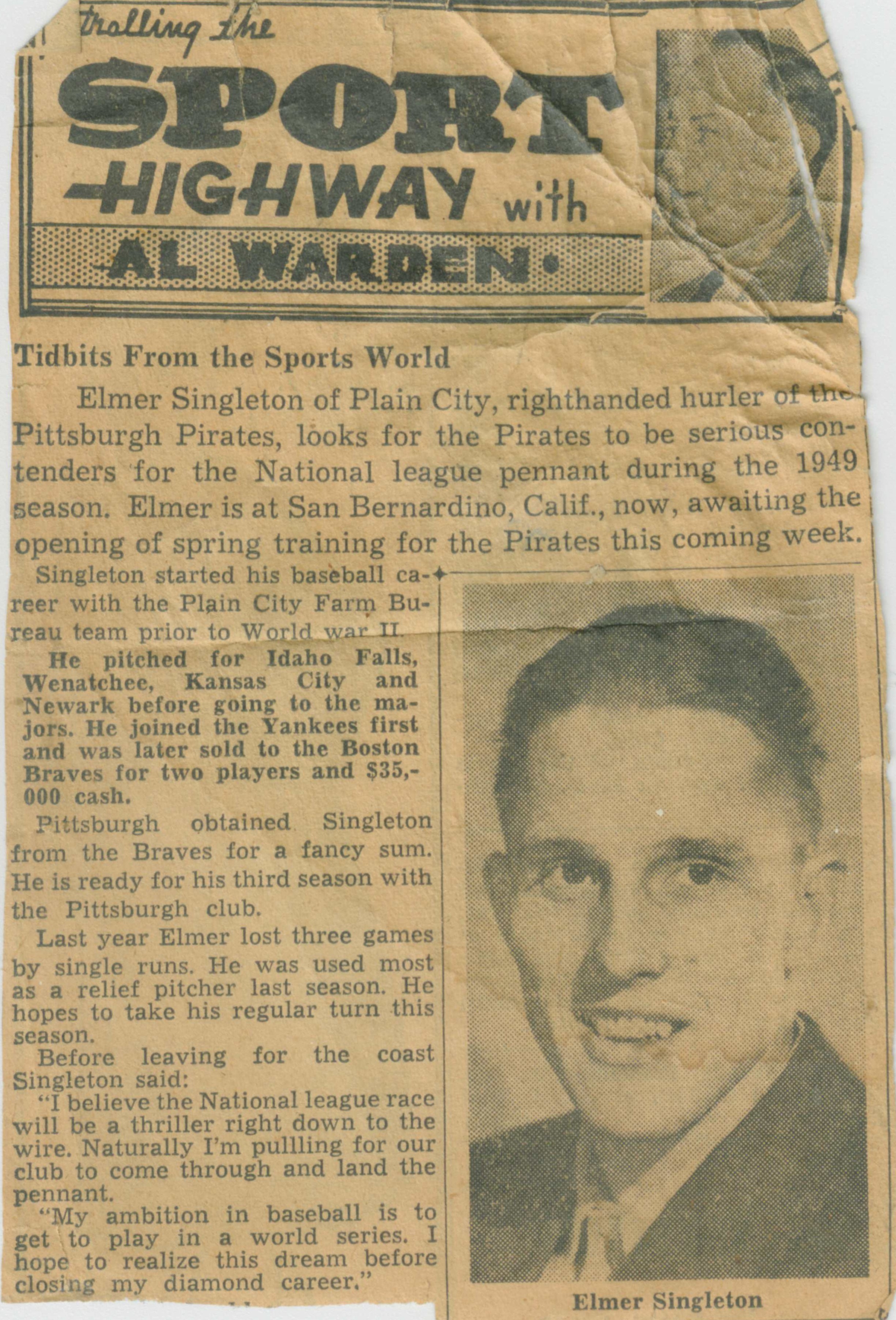
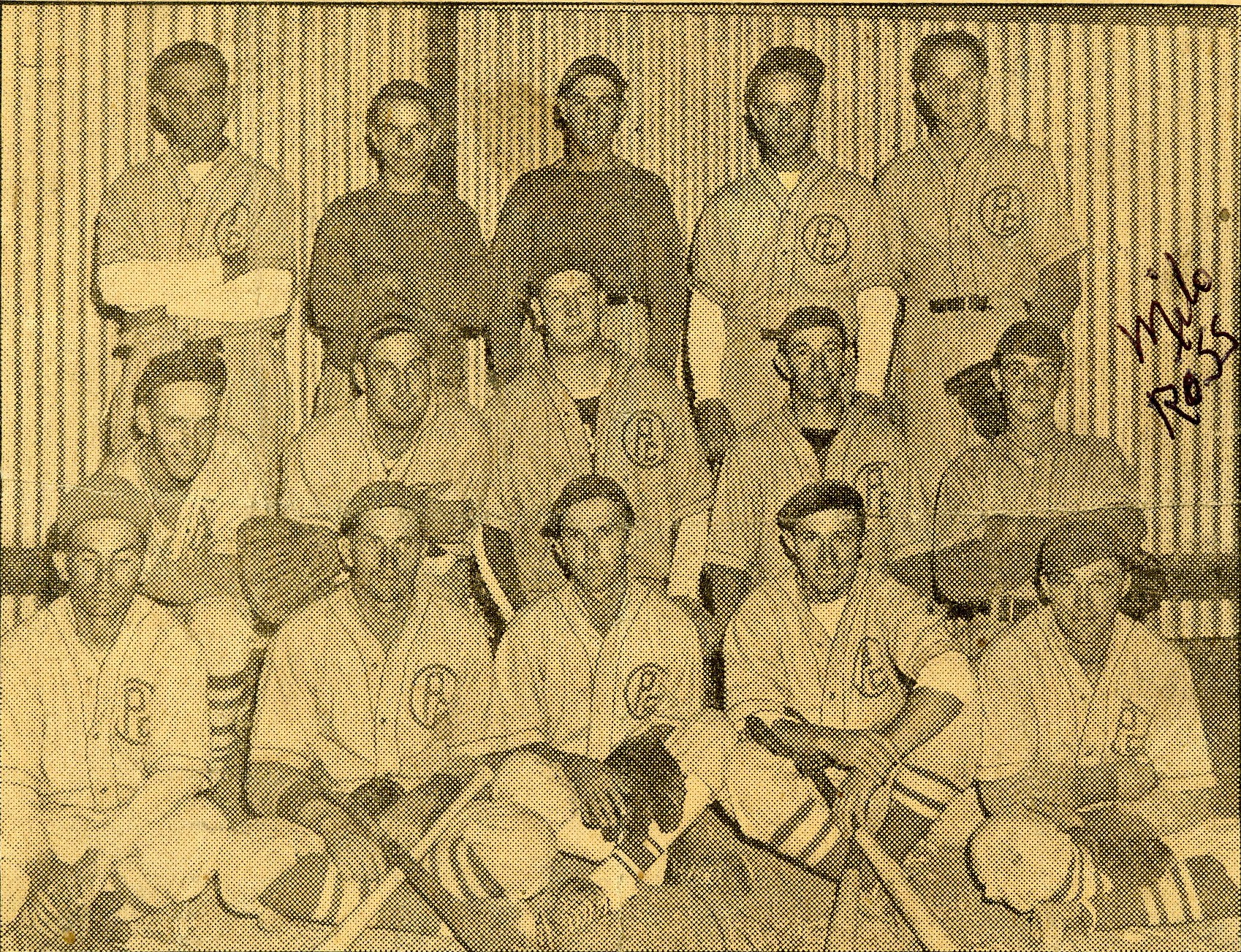
Here are four more clippings from my Grandparents, Milo & Gladys Ross. Grandpa talked quite a bit of baseball in Plain City from his youth. I have shared this photo too where he and Elmer played together on the same team. Visiting with Grandpa, multiple baseball players came up, but Elmer was the one that went on to some fame. Plain City’s history includes excerpts on Elmer.

“Plain City hurler recalls years as major leager

“Relives baseball days; wishes he could start over

“PLAIN CITY – “Baseball is more than a little like life – and to many, it is life.”

“This now famous quote came from the lips of sportcaster Red Barber. But its meaning probably best parallels the philosophy of a mischievous-appearing 66-year-old with a flat-top haircut who toiled on the mound through 28 seasons of professional baseball and now wishes he was just starting his career.

“Elmer Singleton, whose right arm challenged now Hall of Famers while pitching for four major league teams, still lives and relieves at his Plain City home the game he feels has no equal. The lifestyle involved with the sport has been to the liking of the baseball veteran and his wife, Elsie.

“For his contribution to the game, Singleton will be inducted into the Old Time Athletes Association’s Utah Sports Hall of Fame in Salt Lake City ceremonies on Nov. 14.

“”I probably don’t deserve this,” Singleton said modestly of the upcoming induction. “It’s quite an honor for someone coming from a little town like this.”

“The lease Plain City native got his baseball start in that town. His father, a semi-pro, himself, started him pitching at the age of 10 years. While still a teenager, Singleton recorded a 15-0 record as a pitcher in both the A and B divisions of the Weber County Farm Bureau League.

“”We had a good team. The catcher was (the late) Dick Skeen. And, do you know what? I pitched to his son Archie when he was catching in the Boston Red Sox organization,” he said.

Following his good showing in the county league, Singleton was a highly sought-after item. He had been interested in the Cincinnati Reds since they had a class C farm team in Ogden, but a contract dispute nixed that. “They’d only offer me $75 a month and I wanted more,” he said. At the age of 20 he signed with the New York Yankees.

“During that next 28 years he spent four in the low minors, seven in the major leagues and the remaining 16 years with a number of teams in the Pacific Coast League. He took one year off when his oldest son was born.

“Although many of his most memorable performances came in the PCL, he pitched well with the Boston Braves, Pittsburgh Pirates, Washington Senators and the Chicago Cubs. “Hell, I helped Cooperstown pick up a lot of Hall of Famers,” he quipped as he told of pitching against the likes of Henry Aaron, Ted Williams, Jo DiMaggio and Stan Musial.

“Probably his best major league season was 1959 while with the Cubs as he led the National League in earned run average with a 2.72. “That was the year the Braves won the pennant and I was able to beat Warren Spahn 1-0 in a late season game. I also had wins that year over the Pirates’ 20-game-winner Bob Friend, the Giants’ Sam Jones and the Pirates’ Vernon Law.”

“The ageless Singleton later pitched a shutout for the Pirates at the age of 41, and hurled a no-hitter for Seattle of the PCL at 43.

“Regarded as a very hard-nosed athlete, Singleton chuckled when told of former Ogden Reds’ manager Bill McCorry telling Ogden newsmen in 1949 that “Elmer will make it. He’s about two-third ornery and that’s the main ingredient for being a good major league pitcher.”

“”Back then, knocking batters down was legal,” Singleton said. “I remember the day when pitching for the Pirates, the Braves were working us over pretty good so Manager Billy Herman put me in and told me to take care of things. I knocked everybody in the lineup down except Spahn and, ya know, the Braves didn’t score another run off me for more than a year.”

“Singleton displayed a “not guilty” expression when asked about his reputation among baseball players and t news media of throwing a spit ball. He wouldn’t confirm nor deny loading them up, just said “I had a good slider. My slider always broke down.”

He placed the blame for the present high salaries among players on the team owners.

“”The players any more don’t read the Sporting News, its the Wall Street Journal. I’m sure players enjoy playing the game as much now as we did, but they just want to be paid more for it. They turn everything over to their agents while they play.

“”But the owners brought it on themselves. It used to be a business for owners, but now its just a pasttime and tax writeoff,” Singleton said.

“After finishing his baseball career as a PCL coach in the Pacific Northwest in 1961, the Singletons resided in Seattle until returning to Plain City four years ago where they obtained the second oldest house in the town and remodeled into a comfortable home.

“He has no regrets over a life of baseball. “I wish I could start it all over. Look! I still have two straight arms,” he said has he extended them.

“What does he do to occupy his time now?

“”Oh, I help my brother some on his farm, garden a little and help people who need help. I also watch some baseball on television but sometimes that really disturbs me,” he answered.

“Tidbits from the Sports World

“Elmer Singleton of Plain City, righthanded hurler of the Pittsburgh Pirates, looks for the Pirates to be serious contenders for the National league pennant during the 1949 season. Elmer is at San Bernardino, Calif., now, awaiting the opening of spring training for the Pirates this coming week.

“Singleton started his baseball career with the Plain City Farm Bureau team prior to World war II.

“He pitched for Idaho Falls, Wenatchee, Kansas City and Newark before going to the majors. He joined the Yankees first and was later sold to the Boston Braves for two players and $35,000 cash.

“Pittsburgh obtained Singleton from the Braves for a fancy sum. He is ready for his third season with the Pittsburgh club.

“Last year Elmer lost three games by single runs. He was used most as a relief pitcher last season. He hopes to take his regular turn this season.

“Before leaving for the coast Singleton said: “I believe the National league race will be a thriller right down to the wire. Naturally I’m pulling for our club to come through and land the pennant.

“”My ambition in baseball is to get to play in a world series. I hope to realize this dream before closing my diamond career.

“Elmer Singleton Rates Praise

“The “best pitched game” ever witnessed at Seals’ stadium went down in the record book as a defeat for Elmer Singleton, San Francisco right-hander, writes James McGee, San Francisco newspaperman.

“Singleton started his baseball career with Plain City in the Weber County Farm Bureau league back in 1938. Since that timehe has worn a number of major league uniforms.

“Writes McGee: “The big Seal righthander pitched 12 1/3 innings of no-hit ball against Sacramento, April 24, yet lost 1 to 0.

“”That was the best-pitched game I ever saw,” his manager, Tommy Heath, declared. But, as it turned out, it was not quite good enough. Singleton, who set a Seals stadium record and etched his name in Seal history, had the bad luck to meet a tough opponent, Jess Flores, Sacramento’s veteran righthander.

“Flores was effective. The Seals got to him for eight hits, compared to the three singles from Solons finally wrenched from the reluctant Singleton. But the three Solon hits came in succession in the first half of the thirteenth inning, Eddie Bockman, spelling Manager Joe Gordon at second base; Al White and finally Johnny Ostrowski did the damage, Bockman scoring.

“Singleton admitted he was tiring in the thirteenth.

“”It wasn’t that I pitched to so many hitters. It was the strain of the thing,” he said. “All through the early innings I knew I had a no-hitter going. I had to be careful with every pitch. I never pitched one before and I wanted it.”

“Umpire Don Silva vouched that Singleton was careful.

“”He had great stuff. His fast ball was good, but his curve was particularly good. And he was hitting the corners of the plate all the time,” said Silva. “His control was almost perfect.”

“Walked Four

“Singleton walked four men, one of them purposely. He retired the first 18 men to face him before he faltered and walked Bob Dillinger, first man to face him in the seventh.

“In the seventh, the Solons had him in jeopardy for the only time until they finally scored.

“Singleton was within one out of tying the Coast league record for no-hit innings when Bockman got the first hit, a sharp roller through the hole between third and short, in the thirteenth.

“Dick Ward, pitching for San Diego in 1938, went 12 and two-thirds innings of a 16-inning game against Los Angeles without a hit. He eventually won, 1 to 0.

“Ironically, the greatest game pitched at Seals stadium in its 22-year history was pitched in virtual privacy. Only 790 spectators were there at the start with about 1000 fans leaving the park before the end of the game.

“Sports Tid Bits

“Great Falls postmen have accepted the challenge of members of the Ogden post office and have wagered $125 that the Electrics finish ahead of the Reds in the 1952 Pioneer league race.

“Harold Stone of the Ogden post office department informed this corner of the acceptance Saturday night. Two years ago the Ogdenites lost a similar wager.

“George East, landowner of some of the finest duck shooting grounds of the area, is living like Noah of old at his home in West Warren. Genial George says that instead of duck problems, the trash fish from the lower Weber are visiting him and drinking out of his flowing well.

“The ducks have been winging their way annually in George’s direction for nearly four score years. Some years there has been so little water that the migratory birds have avoiding George’s feeding and nesting grounds. Not this year, however, George says as there is more water flooding the pasture lands than in many, many years.

“Herb Woods went out to look the situation over this week. George told Herb he could find his favorite blind by use of maps and a deep diving suit – but Herb did not want to get his nose wet.

“Hal Welch, our so-called game expert, says there is consternation among the sportsmen about the pheasants that will be lost because of their nests being destroyed by the floodwaters. He admits that there will be no shortages of mosquitoes for sportsmen, however.

“Screwy Situations

“The 1952 baseball season still is an infant but here are some of the crewy things that have taken place:

“An umpire – Scotty Robb – got fined, for pushing of all people, Manager Eddie Stanky, of the St. Louis Cardinals.

“Leo Durocher of the Giants protests Augie Guglielmo’s call of a third strike on one of his hitters but nothing happens. We thought questioning a third strike meant automatic banishment.

“A Phillie, Stan Lopata, fails to run from third base with two out, the batter reaches first on an error and Lopata is left stranded as the next batter is retired. And Manager Eddie Sawyer was coaching at third.

“”The Giants are leading the Braves by two runs in the eighth inning yet Leo Durocher lifts his number four hitters, temporarily Henry Thompson, for a pinch slugger. You don’t lift your number four batter in any situation, says wise baseball men, but then who says Thompson (not Bobby) is a number four hitter?

“Roy Campanella, a good number four hitter, bunts in a tie game. Another old baseball adage is that “you don’t bunt your number four hitter.” We disagree with that one. In this case Campy’s bunt paid off for the Dodgers as the next batter singled home the winning run.

“W.S.C. Loses

“PULLMAN (AP) – Idaho defeated Washington State 15-12 in Northern division gold matches Saturday.

“B. Elmer Singleton

“PLAIN CITY – Bert Elmer Singleton, passed away Friday, January 5, 1995 at his home in Plain City. He was born June 26, 1918 in Plain City, Utah, a son of Joseph and Sylvia Singleton.

“He married Elsie M. Wold January 20, 1939 in Ogden, Utah.

“He was a member of The Church of Jesus Christ of Latter-Day Saints.

“He played professional baseball for twenty-four seasons, originally signing with the New York Yankees Baseball Organization. His chosen vocation provided he and Elsie the opportunity to live in Pittsburgh, Pa., Boston, Mass., Chicago, Ill., Havana, Cuba, [Caracus, Venezuela], Seattle, Wash. and several other cities in the Midwest and on the West Coast.

“He retired from professional baseball in 1964 and returned to Plain City in 1980. Upon his return he actively lobbied for the Meals on Wheels program for Plain Cities Seniors. He helped with 4-H programs and worked with gifted children.

“He was chosen as Player of The Year for the State of Utah in 1939. He was inducted into the Utah Sports Hall of Fame in 1984. He was chosen as the Pacific Coast League most Valuable Player for years 1955 and 1956.

“Surviving are his sons, Joe F. of Chugiak, Alaska and Jerry E. of Tacoma, Washington and his brother, Don R. of Plain City. He has two grandchildren, Joe E and Shelby J., residing in Anchorage, Alaska.

“He was preceded in death by his loving wife Elsie on January 31, 1988 and brothers, Earl and Harold.

“Funeral services will be held Thursday, January 11th at 11 a.m. at Lindquist’s Ogden Mortuary, 3408 Washington Blvd.

Friends may call at the mortuary on Wednesday, January 10th from 6 to 8 p.m. and Thursday 10 to 10:45 a.m.

“Internment, Plain City Cemetery.

Back (l-r): William Freestone (manager), Norman Carver, Glen Charlton, Fred Singleton, and Elmer Singleton. Middle: Clair Folkman, Dick Skeen, Albert Sharp, Abe Maw, Milo Ross. Front: F. Skeen, Walt Moyes, Arnold Taylor, Lynn Stewart, Theron Rhead.

3rd Grade, Paul Elementary, Paul, Idaho

Back(b-r): Mrs. Ella Suhr, Shane Ball, Kaleb Winn, Scott Torix, Genevive Olivas, Kevin Orton, Jamie Mingo, Kristi Jensen; Middle: Jeff Hayden, Karlene Hansen, Jacob Timmons, Jalene Woodward, Paul Ross, Adrienne Neibaur, Archie Winnett, Nathan Jones; Front: Shaun Bettazza, Alfonso Jaramillo, Nicole Catmull, Emmy Mendoza, Erin Zemke, Kelli Osterhout, Cody Strunk, and Michael Thompson.

I have mentioned before when I shared class pictures from Paul Elementary for Kindergarten, 1st, 2nd, 4th, and 5th Grades, that I was glad to have other classmates who allowed me to scan the class photos. All mine were lost due to a flood in our basement while I was on my mission in 1998-2000. I am happy to report that the missing 3rd and 6th Grade pictures have been provided, thanks to Erin Zemke.

This is our 3rd grade class picture from Paul Elementary, Paul, Idaho. This was the 1987 – 1988 school year.

Normally I organized photos with married names and dates. Since all are still alive, I will forgo any of the dates. I have added the married last name for the ones I know. If you have corrections, please let me know.

Ella Lucille Senften Suhr (1927-2005)

Shane Ball

Shaun Bettazza

Nicole Catmull married Manning

Karlene Hansen married Ashcraft

Jeff Hayden

Michael Hollis now Thompson

Alfonso Jaramillo

Kristi Jensen married Rich

Nathan Jones

Emmy Mendoza married Deal (interesting side note, I remember coming back from a field trip at Craters of the Moon and dropping her off at home out near Kimima, our whole group of busses stopped)

Jamie Mingo married Harman

Adrianne Neibaur

Genevive Olivas

Kevin Orton

Kelli Osterhout married Bates

Paul Ross

Cody Strunk

Jacob Timmons

Scott Torix

Kaleb Winn

Archie Winnett

Jalene Woodward married Richman

Erin Zemke married McKindree

Idaho’s Legislature has an ugly history of playing politics with voting rights

I am sharing this post by Jim Jones from his website. It posted on 27 October. Due to its proximity to the election, it did not show in the newspaper. I have been posting all articles from the Times-News, on both sides, related to the Proposition 1 Initiative in Idaho. While this one did not publish in the Times-News, I am sharing it because this website received an honorable mention.

“Extreme elements of Idaho’s Republican Party voted in 2011 to close the GOP primary election to purge party ranks of so-called moderates. The strategy has been remarkably successful. Each election since then has witnessed the defeat of reasonable Republicans who were intent on solving problems facing the Gem State. They were replaced by culture warriors, intent on punishing teachers, banning books, chasing away doctors, vilifying farm workers, and making the State a national laughingstock. That has been accomplished by preventing a wide range of Idahoans from voting in the low-turnout GOP primary. That makes it difficult for problem-solving Republicans to survive the primary.

“While Idaho’s independents can vote in the GOP primary if, and only if, they declare themselves to be Republicans, many chafe at being forced to affiliate with any group in order to exercise their right to vote. Forcing citizens to affiliate with, or to disavow, any group as a condition of voting in taxpayer-financed elections is contrary to the spirit of Idaho’s Constitution. That revered document says that all political power belongs to the people. Political parties have no power under our Constitution. Unfortunately, our legislators have an ugly history of playing politics with the voting rights of Idahoans.

“The most notorious example is an 1884 pre-statehood law specifically designed to deny voting rights to members of the Church of Jesus Christ of Latter-day Saints. The law did not require conviction of polygamy to deny voting rights, just belief or membership in a group that supported the practice. In effect, Mormons were required to disaffiliate from their church in order to vote. The Territorial Legislature passed that law to weaken the Democratic Party, which had the strong support of Mormon voters at that time.

“A friend, Paul Ross, just sent me an interesting historical recollection of how some church members skirted the law. They would sign an oath renouncing their church membership in order to vote, but then joined again soon after the election. That led to criminal charges against some, which resulted in the US Supreme Court upholding a conviction. Of course, that decision would not stand the test of time and reason.

“The anti-Mormon law was written into Idaho’s original Constitution in an 1889 election in which Mormons were not allowed to vote. That Constitution also denied voting rights to Native Americans “who have not severed their tribal relations.” Thankfully, most of that outright discrimination is behind us.

“Along a similar anti-voter track, successive Idaho Legislatures have repeatedly tried to kill or disable constitutional rights that voters gave themselves in 1912–to make laws with the initiative and to veto obnoxious legislative acts with the referendum. The Legislature did not take action to implement the initiative and referendum until the 1930s. The last legislative effort to essentially kill those rights was made in legislation passed by extremists in 2021, but that effort was slapped down by the Idaho Supreme Court that same year.

“The extremists, who have gained power by excluding voters from the closed GOP primary where most officials are selected, are feverishly working to defeat Prop 1. They claim it will infringe voting rights, when in fact it will enhance them. Everyone, regardless of party preference, will be able to take part in every tax-payer supported election. Voters will not be confined to just one party’s ticket but will be able to pick and choose among every candidate for every contested race in the primary election.

“Best of all, Prop 1 will make it possible for reasonable Republican candidates to make it to the general election ballot. That’s why so many traditional Republicans, like former Governor Butch Otter, are supporting Prop 1. Dorothy Moon and Raul Labrador will no longer be able to defeat civil, problem-solving Republicans in the closed GOP primary. Nor will voters be forced to affiliate, or disavow, any group as a condition of voting in any election financed by their tax money.

Money pours into Idaho primary election reform fight

Officeholders who benefit from closed GOP primary are desperate