

William Stoker and the late Emma Eames Stoker are pleased to announce the marriage of their daughter Mary Ann to Milo Riley Sharp, son of William Sharp and Mary Ann Sharp. They were married at the Episcopal Church in Plain City, Weber, Utah on 11 May 1879.
Milo is a farmer in Plain City. The couple will make their home in Plain City.
Just trying to write these first three paragraphs was not easy with this family. So many twists and turns with each individual name makes it difficult to find the proper wording and fashion to form the sentences. If you do not know the story of the names, it can be confusing. There are two Mary Ann Sharps in this family (Milo Riley’s mother, and his wife Mary Ann “Lillie” Stoker) and two Victorine Sharps a generation apart (Milo Riley’s sister, and his own daughter). I have tried to be careful throughout to distinguish them.
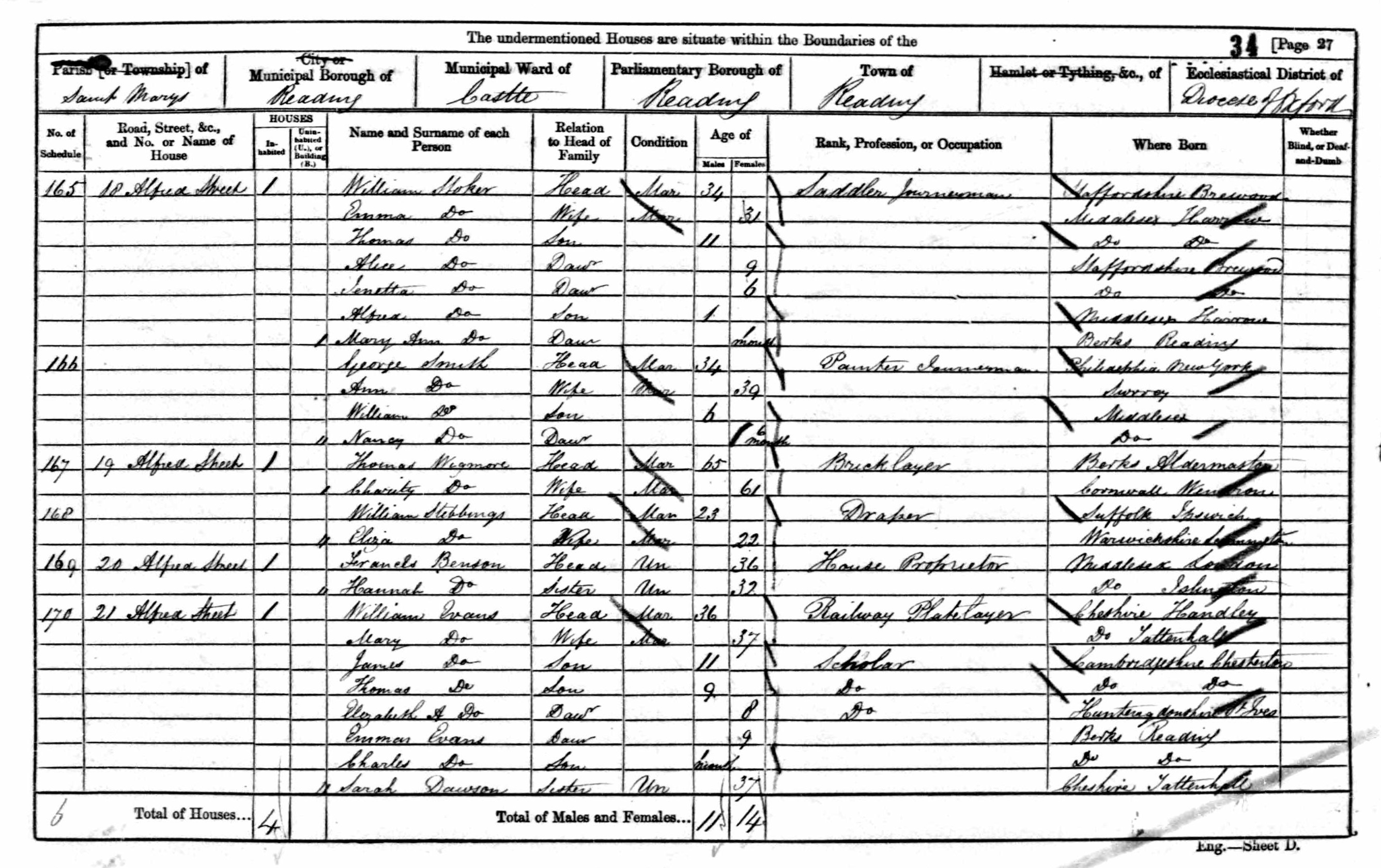
I struggled on whether to call Mary Ann by her other known name, Lillian “Lillie” Musgrave. After marriage, she was known as Lillie M Sharp, she is said to have signed her own name that way throughout her life. She was born 24 February 1861 as Mary Ann Stoker at 18 Alfred Street within St. Mary’s Parish in Reading, Berkshire, England. She was the fifth of six children of William Stoker, a journeyman saddler working in Reading, and Emma Eames. Her youngest sibling, an infant brother George, died in Reading in March 1863, just weeks before Emma herself died. Emma contracted tuberculosis (listed as phthisis on the death certificate) and passed away 28 April 1863 at the same address after a year struggle with the disease. Mary Ann never knew her mother or her baby brother. She was just two years old. Her older brother William Thomas, eleven years her senior, joined The Church of Jesus Christ of Latter-day Saints on 5 December 1860. Her father and older sister Alice joined on 27 May 1863. For the fuller story of the Stoker family in England, see Stoker-Eames Wedding.
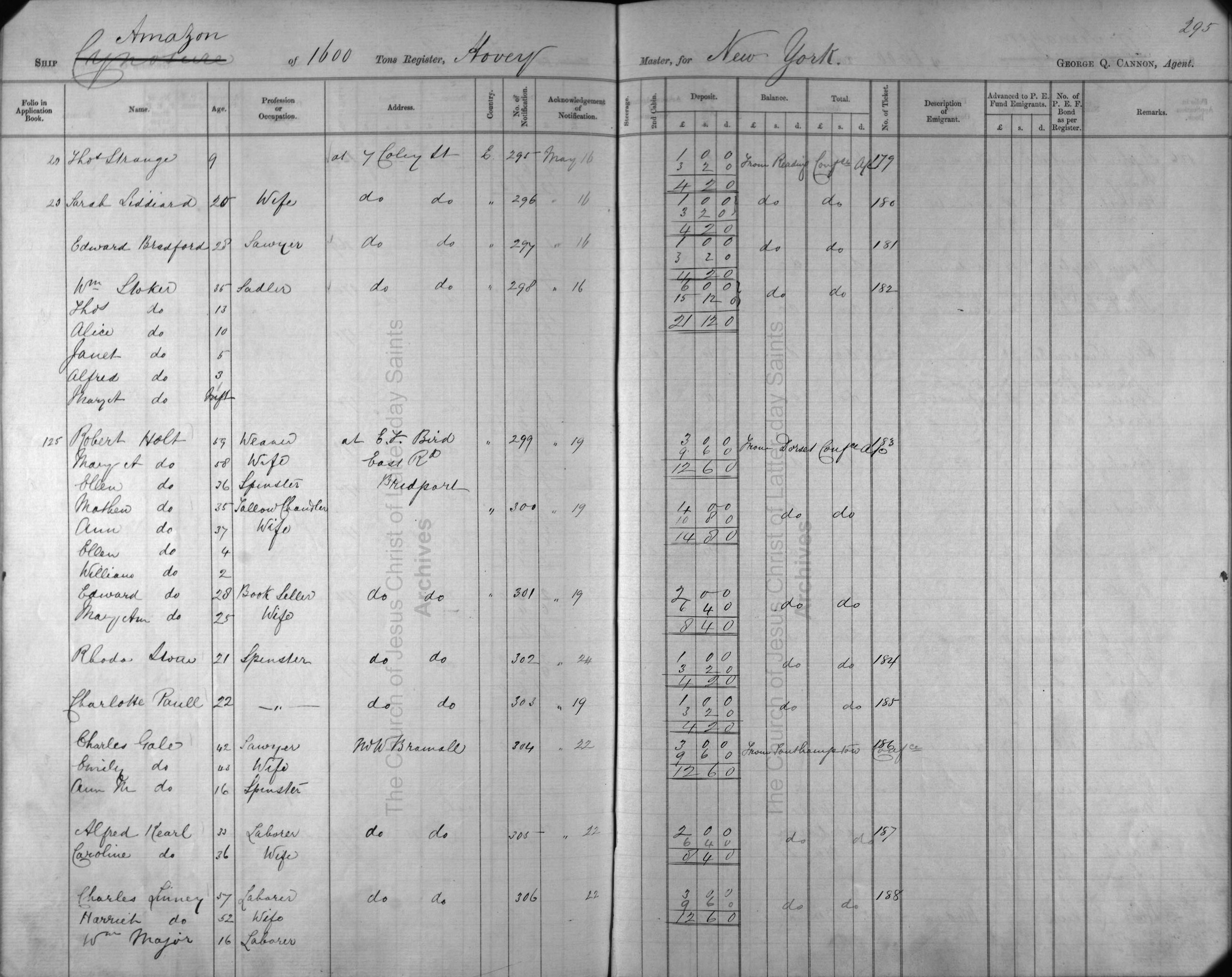
The family wasted no time in gathering to Zion. The Stoker family departed from London on the ship “Amazon” on 4 June 1863. George Q Cannon dedicated the ship which was entirely of Saints (880+) headed for Zion. It was this same ship that Charles Dickens wrote that the Mormons were not taking misfits and scoundrels, but the “pick and flower” of England. George Sutherland, future U.S. Supreme Court Justice, was also on this ship. Here is a link to the story by Charles Dickens: The Uncommercial Traveller. The LDS church also tells of the story that day at this link: Amazon Departure. The ship sailed to Liverpool before heading out for the United States. Elijah Larkin, who would help found Larkin Mortuary, noted that on the 16th and 20th of June, Thomas Stoker was administered to due to a sickness since leaving Liverpool.
The “Amazon” docked at Castle Gardens, New York on 18 July 1863. The Saints from there took rail to Albany, New York and then to Florence, Douglas, Nebraska through Detroit, Wayne, Michigan. From Florence they made their way by wagon train on to Salt Lake City, Utah Territory, arriving 3 and 4 October 1863 (depending on which of the two companies), just in time for General Conference. Several of the company wrote of Brigham Young coming out to greet them and giving them advice.
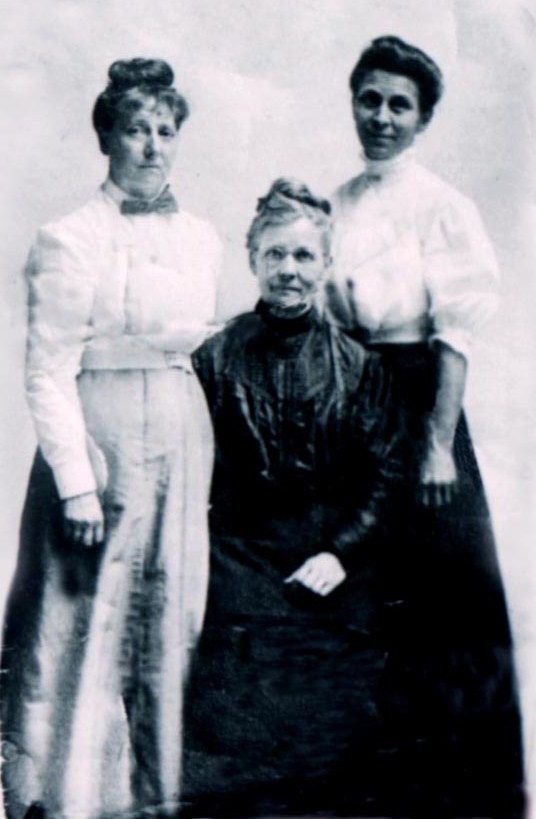
William moved to Ogden, Weber, Utah and set up shop working with leather. William remarried to Eliza Sinfield in Ogden 18 May 1864. While Mary Ann is listed as a child for William and Eliza on the 1870 Census, she was actually living with George Augustus and Victoreen Jane Dix Musgrave. She is listed with their family on the 1870 Census as well. Additionally, the other children from this first marriage were also being raised by other families. Family lore indicates that William and Eliza could not afford to raise these older children and farmed them out to families that could afford to take care of them. Other evidence points that they were not all that poor. Here are three of the sisters later in life. They still maintained their relationship despite being raised by separate families.
George Augustus Musgrave was born 22 October 1833 in Clerkenwell, London, the son of George Augustus Musgrave Sr. and Georgina Louisa Wheatley. He married Victoreen Jane Dix in St Pancras on 18 February 1855, and the two joined the LDS Church and emigrated to Utah in 1857, several years ahead of the Stoker family. Unable to have children of their own, they welcomed Mary Ann into their home. Victoreen was herself an adopted child. After George’s passing, she remarried to George’s brother, Thomas Henry Musgrave, also a resident of Plain City. Lillie later helped care for Thomas and Victoreen in their old age, repaying a debt of love within her adoptive family. George died 12 November 1903 in Plain City; Victoreen in 1921, Thomas also in 1921. You can read more of the Musgrave family’s role as the first teachers and choir leaders of Plain City in the History of Plain City.
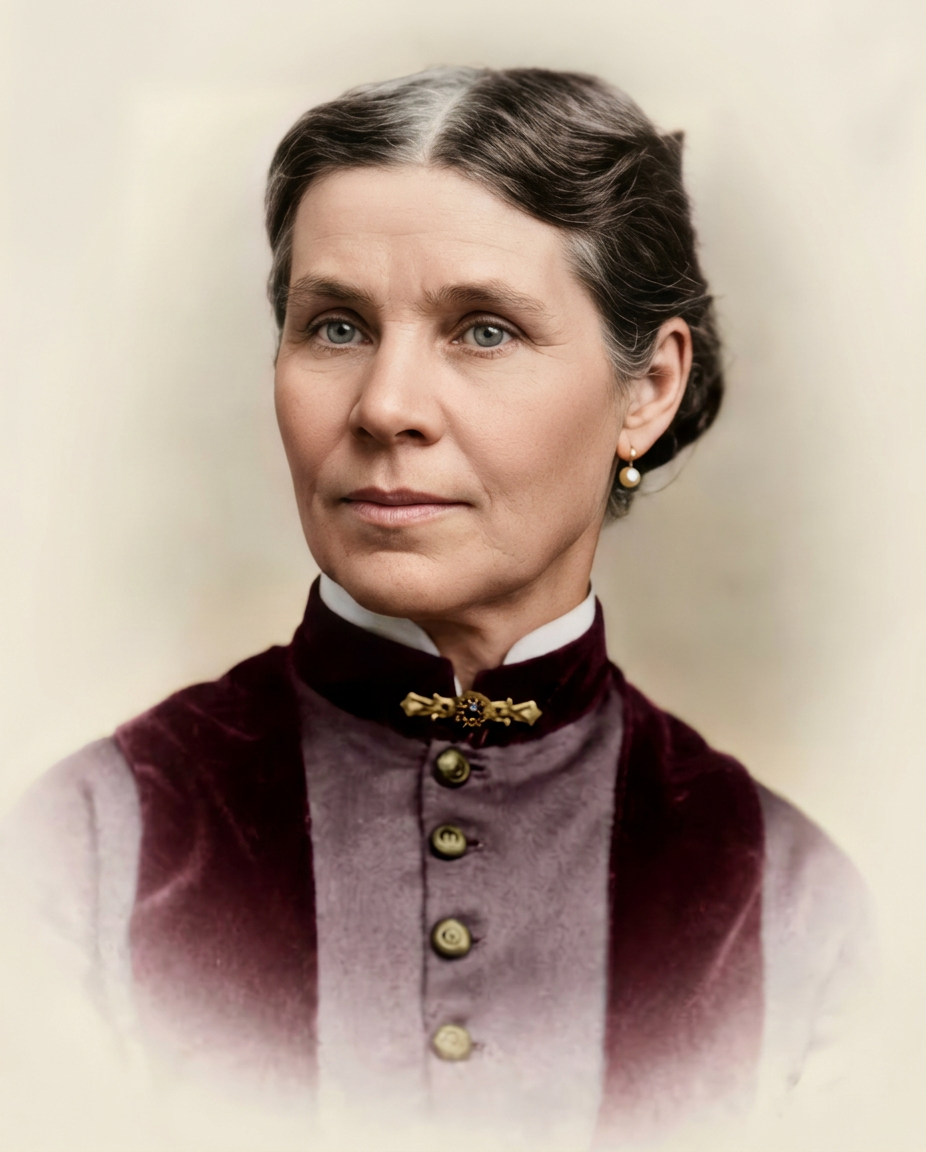
While Mary Ann was raised by George and Victoreen Musgrave, she knew who her real father was, but had few, if any, childhood memories of him. George Musgrave was a school teacher and musician in Plain City. Although not formally adopted, George and Victoreen called her Lillian Musgrave, and she went by Lillie the rest of her life, taking the Musgrave as her middle name after she married. Her son Austin lists his mother’s name as Lillee Musgrave.
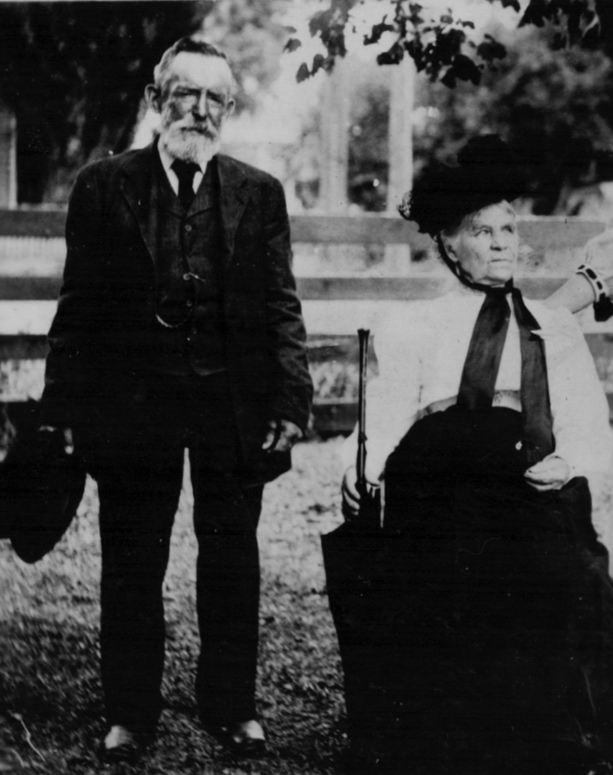
George and Victoreen knew music and taught school. Naturally, Lillie was taught the same. She ended up participating in the second dramatic association in Plain City. Some of their shows put on were, “Mistletoe Bough,” “Mickle Earl,” “Maniac Lover,” “Fruits of the Wind Cup,” “Streets of New York,” “The Two Galley Slaves,” “The Rough Diamond,” “Earnest Mall Travers,” and “Ten Knights in a Bar Room.”
All was not well in Zion during these years in Plain City. Family lore has it that when a Bishop (Lewis Shurtleff, Branch President 1870–1877, Bishop 1877–1883) extended himself beyond what the members felt was right, these families made sure it was known. The final straw came when Bishop Shurtleff started telling the members what they would give as tithing. These were not just fringe members, but good standing members of the church in the area. William Sharp (Lillie’s future father-in-law), the son of Thomas and Elizabeth Cartwright Sharp, began construction on St. Paul’s Episcopal Church in 1877 for many of these disaffected members. The building still stands today now owned by the Lions Club in Plain City. For whatever reason a significant group of members were excommunicated between 1877 and 1882. Many of Plain City’s leading members were excommunicated. Excommunicated on 31 January 1879 were William Sharp (the same who built the new church), Mary Ann Sharp (William’s ex-wife, divorced 19 May 1876, Lillie’s future mother-in-law), William Skeen, Edwin Dix, George Musgrave (Lillie’s adopted father), Thomas Musgrave, Thomas Singleton, Thomas Davis, George W Harris, Jonathan Moyes, John Moyes, Winfield Spiers, James Wadman, Robert Davis, John Davis, and Thomas Robson. These lists also have “and wife” as well as “and family” which seems to indicate that this list may have included spouses and families. Mary Ann Sharp (Lillie’s future mother-in-law) is the only woman listed separately, perhaps because with the recent divorce she was not represented by William. Many of these families returned to the church, some took generations, some never did.
While Lillie’s name is not on the list, she was probably classified with the Musgrave family. We do not have any record of her baptism, but she was with the Musgrave family attending the newly established St. Paul’s Episcopal Church. Although it seems Victoreen Musgrave was excommunicated, she continued active with LDS Relief Society (or she was not excommunicated). It was during this time that Lillie came to fall in love with Milo Riley Sharp. William Sharp, with the assistance of Milo, had also helped build the Musgrave’s new home. In St. Paul’s Episcopal Church, J. S. Gellogly married Milo and Lillie on 11 May 1879.


Milo Riley Sharp was born 23 July 1857 in Lehi, Utah, Utah. He was the fourth of six children born to William Sharp (1826–1900) and Mary Ann Bailey Sharp (1828–1913), English converts to the church. William is son of Thomas and Elizabeth Cartwright Sharp of Misson, Nottinghamshire, England. Mary Ann had a child, Lorenzo Padley, from a previous marriage in which she was widowed. William and Mary Ann Sharp immigrated to Utah in 1853 after joining The Church of Jesus Christ of Latter-day Saints in 1848 and 1846 respectively. At first they were sent to Lehi but had a number of issues with range for the cattle and other minor squabbles. Water was also not found to be very dependable in the Lehi area. William learned of land near Ogden that was going to be opened up from some of the Saints passing through Lehi (abandoning Salt Lake City before the arrival of Johnston’s Army). These Lehi Saints were told of ample land and good water that was available west of Ogden. A scouting expedition went to search out the area in the fall of 1858 and visited with Lorin Farr who told them of the available plain to the west.
The Sharp family left with other Lehi Saints on 10 March 1859 to travel to this new area. The group arrived 17 March 1859 at what is present day Plain City. William Sharp put his carpentry and masonry skills to work making adobe brick and helping build the first homes in Plain City. In one of these first adobe brick homes is where Milo Riley grew up. William served in the Plain City band, the Plain City Z.C.M.I. board, as a builder, and as a city leader. Milo’s little sister Evelyn is claimed to be the first white girl born in Plain City in October 1859.
Milo’s mother, Mary Ann Bailey Sharp, moved out on Christmas Eve 1875 and refused to go back to William. William sued for divorce and Franklin D. Richards granted the divorce (in probate court) on 19 May 1876.
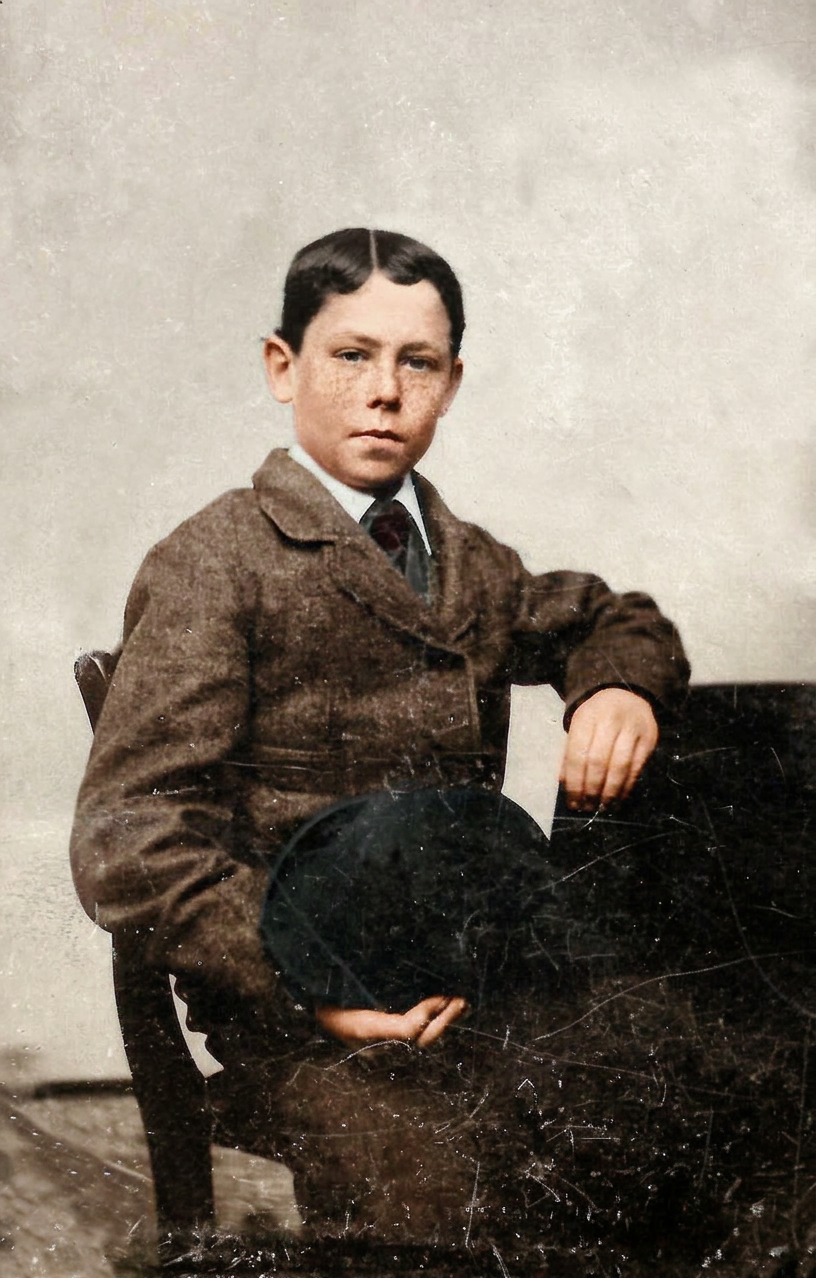
Milo kept busy working with his father building homes and other masonry and carpentry work. He also had time to play first base on Plain City’s first baseball team. The team could beat all the other northern Utah teams except Salt Lake. He was elected a school trustee in 1897, alongside S. P. Draney.
The marriage of Milo and Lillie eventually produced a quiver of 12 children. Milo Ray was born 29 February 1880 and died 14 November 1946 in Ogden. George was born 2 August 1881 and passed the same day. Effie was born 6 June 1882 and died 6 September 1883. Delwin arrived 30 June 1884 and died 27 May 1969, having lived his whole life in Plain City. Ernest and Austin, twins, came 7 January 1886. Ernest contracted infantile paralysis as a small child; it left him crippled his whole life, and he never married, living with his mother and then remaining in the family home until his death 30 April 1967. Austin married Martha Hazel Howard and eventually settled in Prosser, Washington, where he died 26 August 1954. Edward William appeared 25 October 1887, married Lillie Elva East, and died 24 August 1962 in Othello, Washington. Victorine showed 23 November 1889 and married Fredrick Lawrence Hunt; she died 27 August 1987. Mary Irene materialized 26 June 1892 and married Oscar “Os” Child Richardson; she was the first of the twelve children to join The Church of Jesus Christ of Latter-day Saints in her own lifetime, being baptized in October 1931, and she died 11 September 1990. Edith dawned 4 February 1895, married Clements Richard Martin on her twentieth birthday; she died 15 September 1979 in California. Ethel was born 9 April 1898 and I have written of her before; she died 6 August 1925 in Ogden. Ethel is my great-grandmother. Emily appeared 5 April 1900 and quickly passed 31 July 1900. Nine of the children lived to adulthood and eight of those married.

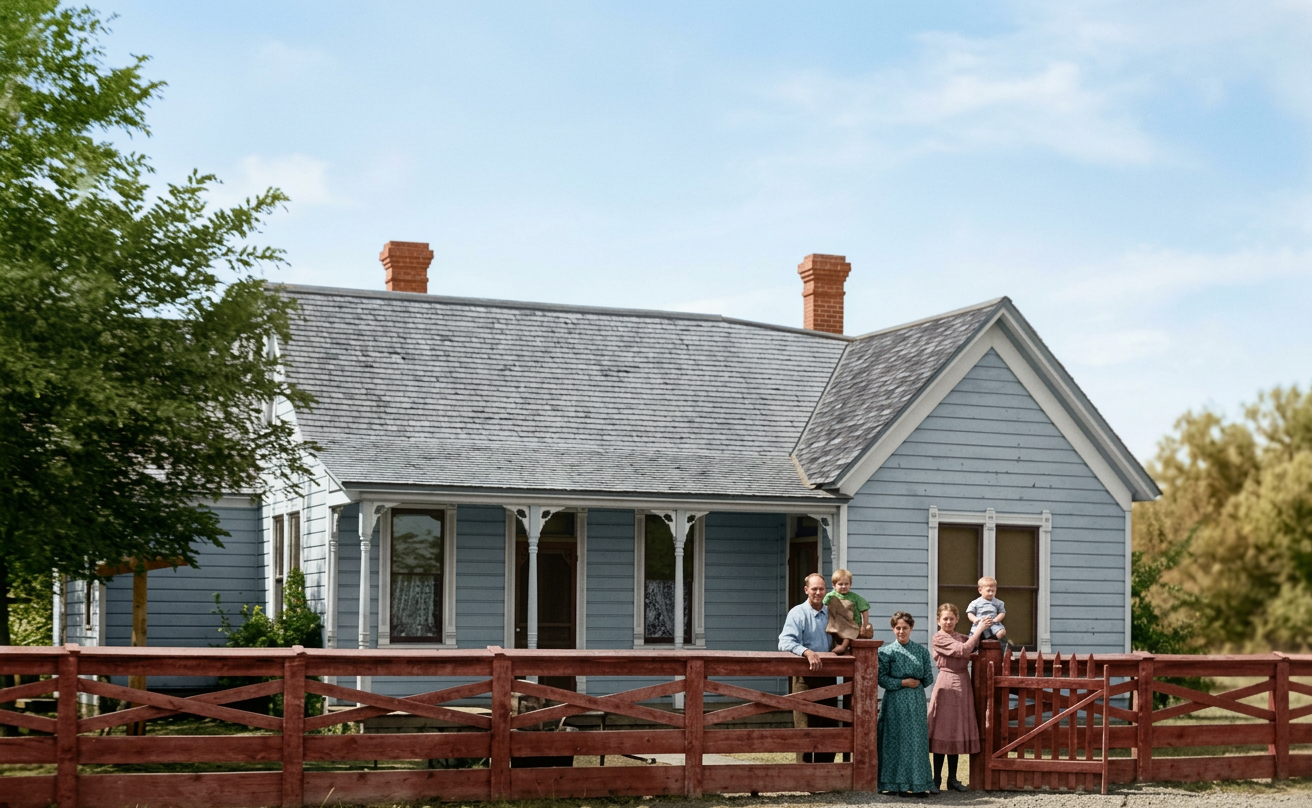
Milo built a new home for the family early on so the family had room to grow. He added to it as more room was needed as you can see in this photo. We do not know the year it was originally built, but we know the children after 1888 were born in this home. The home’s address is 2897 North 4200 West in Plain City. Before Milo died, he sold the farm and that home to his son Austin, and built a smaller brick home on a lot just south of the farm for himself and Lillie.
Milo successfully farmed all of these years. He kept busy with civic affairs. He was elected constable of Plain City on the Republican ticket in 1891. In 1893, he sat on a committee to investigate the incorporating of Plain City, although it was not incorporated until 1944 with grandson William Albert Sharp serving on the town board. Milo and Lillie were singers and continued to play in the Plain City bands. Lillie was also well-known for her poetry — I have shared a few of her poems, including Wash Day, Home Coming, and Old Folks Day. In 1911, Milo finished building the new home pictured below (address is 2771 North 4200 West in Plain City). Milo farmed hard until he caught influenza and eventually pneumonia, passing away at the early age of 59 at 9:30 a.m. 24 June 1916 at his sister’s home, Victorine Maw, who lived at 5 Warren Court in Ogden. His funeral was held in the little church he helped his father build, St. Paul’s Episcopal Church, on 27 June 1916.
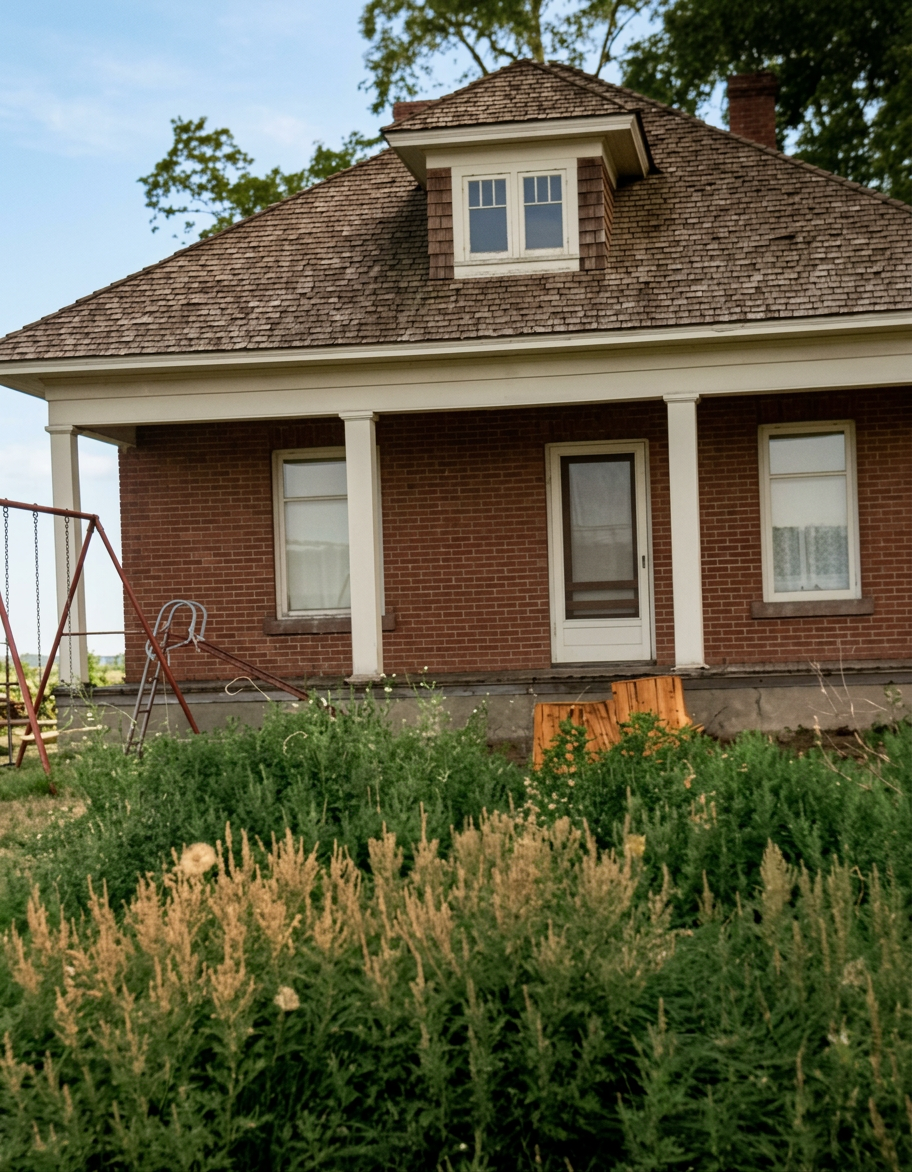
Lillie lived in this home for the rest of her life. Her son Ernest, who had lived with a disability since contracting infantile paralysis as a child, helped take care of her and lived the rest of his life in the home, dying there in 1967. Milo James Ross, Lillie’s grandson, purchased the home at that time and later transferred it to his daughter Caroline.
Lillie kept a clean home. The grandsons were taught to stop by every time they passed, especially to and from school. This permitted dishes to be washed, wood to be hauled, and wood to be split. Lillie had a strict regimen for cleaning pots, dishes, and pans (especially bedpans). This included the outdoor pump station, even with lye to remove odors. The boys knew to take special care not to make a mess when carrying firewood or in any other way on entering the home. The gate was always to be closed, whether coming or going. While this might seem stern, she always opened the door for those coming and going and gave them a warm smile. My own grandfather, Milo James Ross, spoke fondly of these visits, of helping put the hooks through her shoe-lace holes, of pulling her girdle strings tight, and of the hearing horn she used in her last years, which he liked to tease her about. Lillie’s granddaughters had their own weekly errand, walking half a mile with a little jar of milk skimmed off the butter, trading it for the previous week’s empty jar with two pennies tucked inside, then running another half mile into town to spend them on all-day suckers.

Lillie often made bread, keeping her own live yeast, often from warm potato water. She had her own milk separator and used it. The boys helped make butter and she treated them to buttermilk and warm bread. She would also warm apples in the oven to share, or dried fruit. She kept a full root cellar with homemade cured meats, dried fruits, and bottled vegetables. The Sharp family had onions that could be used to flavor soups and other needs. Many of the family still grow these onions even today. Many mushrooms and watercress were gathered too.
Lillie often had kind words and a warm, gracious smile. She kept a small table in the pantry where she brushed her teeth with salt, baking soda, and a bar of soap. The bucket was always there with a drinking cup and a ladle to draw water. Her granddaughter Ruth Sharp Draper, who knew her well in those later years, remembered her as small — about 4 feet 10 inches, with black hair and dark eyes, wearing her hair in a roll on top of her head. Other family accounts describe her as thin and tall. I cannot say with certainty which description is more accurate; she was known to different grandchildren across different decades of her life. She wore long dresses from her neck to her feet with shoes that went up about six inches. If she was not thin enough, she wore a corset to make her look even smaller. She was very neat and proud in her appearance.
She kept a spinning wheel in the home for the times when she would spin wool into thread. She also had the grandsons help turn her mattress from time to time. She did not leave the house much in her later years unless she had a ride, but even then did not stay long before going home. It was clear she enjoyed watching her grandchildren. The last decade or so of her life, she had to use a hearing tube to hear. Some of her grandchildren joked that it was like using the telephone, just you could see who was on the other end. Ruth Draper recalled her father Milo Ray sometimes taking Lillie to get fitted with a hearing aid, but they did not work for her.
Lillie could never stand to see an animal mistreated. It is said that some men were working on the road by their place with horses tied up all day without being unharnessed. She went and told them if they didn’t treat those horses better she would turn them in.

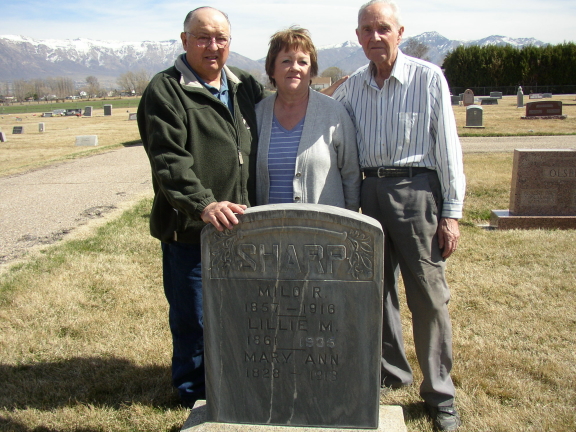
Lillie passed at 10:55 p.m. at her daughter’s home, Victorine Hunt, on 6 May 1935 of hypertension with chronic major carditis and pneumonia. She had remained faithfully active in the Episcopal Church until she could not get around very much. Later in life she needed assistance as she could not walk very far. Her funeral was held in the Plain City LDS chapel with Rev. John W. Hyslop officiating on 9 May 1935. She was buried with Milo in the Plain City Cemetery.
Returning to the Church
Mary Irene Sharp was the first of Milo and Lillie’s own children to return to the church in her own lifetime, baptized in October 1931. Victorine followed in September 1975, baptized at age 85. Lillie’s own proxy baptism and confirmation were completed 4 June 1970, alongside three of her Stoker siblings in a single family effort at Idaho Falls. She was endowed 1 July 1970 and sealed to her parents 8 September 1970. Milo Riley himself was baptized and confirmed by proxy 17 November 1976 and the next day endowed and sealed to Lillie.
The largest single gathering came on 27 June 1978 at the Ogden Utah Temple, when eight of Milo and Lillie’s twelve children, George, Effie, Ernest, Delwin, Austin, Edward William, Ethel, and Emily, were all sealed to their parents in a single visit. My own grandfather, Milo James Ross, was present that day, watching his mother Ethel’s temple work completed more than fifty years after her death. He was sealed to Ethel and Jack Ross himself on 8 February 1980, the same day his parents were sealed to each other. The work continues today.


Pingback: Ross-Sharp Wedding « Sagacity
Pingback: Jeanette Stoker Rogers « Sagacity
Pingback: Stoker-Eames Wedding « Sagacity
Pingback: Sharp – Bailey Wedding « Sagacity
I stumbled across this while looking for information about the emigrant ship Amazon — my great grandmother Louisa Meears, age 13, was on the ship with her family.
I think I recognize your style, and am very impressed with what you are doing. Drop me a line if you find time. I’d love to see the Sharps done up the same way.
kent
LikeLike
Thank you so much for all of this information. I am the 5th daughter of Austin Sharp and Hazel Howard. Grandparents are Milo and Lily Sharp.
Great Grandparents are William and Mary Ann Sharp.
My Mother and Father had 6 daughters. Vera Sharp Seifert, Opal Sharp Stolberg, Carma Sharp Mercer, Nelda Sharp Miller, Virginia(Vergie) Sharp Lesea, and Dawn Sharp Lucien. I would appreciate any other information or pictures that you may have. I am aged 91.
LikeLike
Pingback: Old Folks Day « Sagacity
Pingback: Home Coming « Sagacity
Thank you for the infomation on the Eames family and confirming what I found was correct. Emma Eames (married William Stoker) brother, Thomas (born abt 1826 Harrow) was my 4x GG grandfather.
LikeLike
Pingback: Sharp Family Reunion « Sagacity
Pingback: Wash Day « Sagacity
Pingback: Milo Riley Sharp « Sagacity
Pingback: Sharp Cousins « Sagacity
Pingback: Milo Riley and Mary Ann Sharp | Sagacity
Pingback: Edward William Sharp | Sagacity
Pingback: Austin Sharp Daughters | Sagacity
Pingback: Sharp – Bailey Wedding | Sagacity
Pingback: Plain City Cemetery Incident – Sagacity
Pingback: Plain City Cemetery Incident – Sagacity
Pingback: Fred & Vic Hunt – Sagacity
Pingback: 2020: The Year of the Dead – Sagacity
Pingback: Come Comming – Sagacity
Pingback: History of Plain City Pt 5 – Sagacity
Pingback: History of Plain City Pt 4 – Sagacity
Pingback: History of Plain City Pt 1 – Sagacity
Pingback: Casper Wyoming Open House – Sagacity
Pingback: Casper Wyoming Temple Open House – Sagacity
Pingback: Some Early Settlers from Lehi to Plain City, Utah – Sagacity
Pingback: Sharp – Bailey Wedding – Sagacity
Pingback: Evelyn Carlisle Sharp – Sagacity