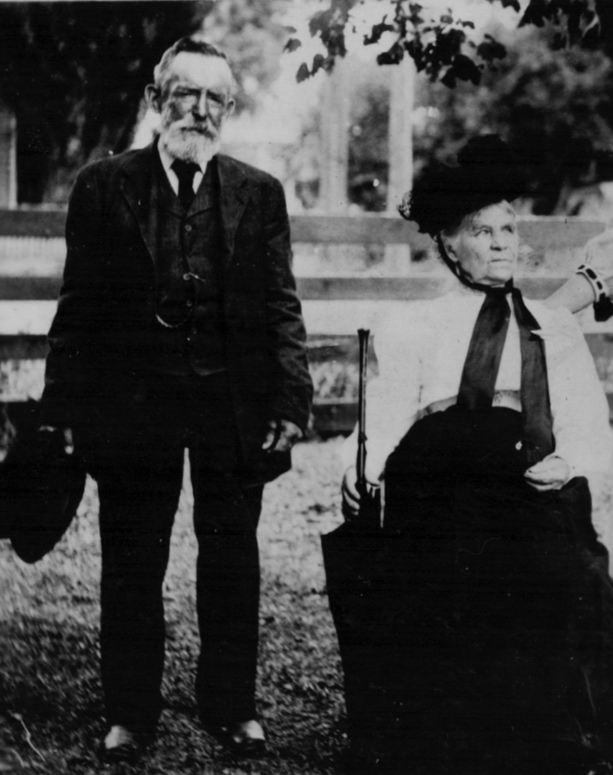
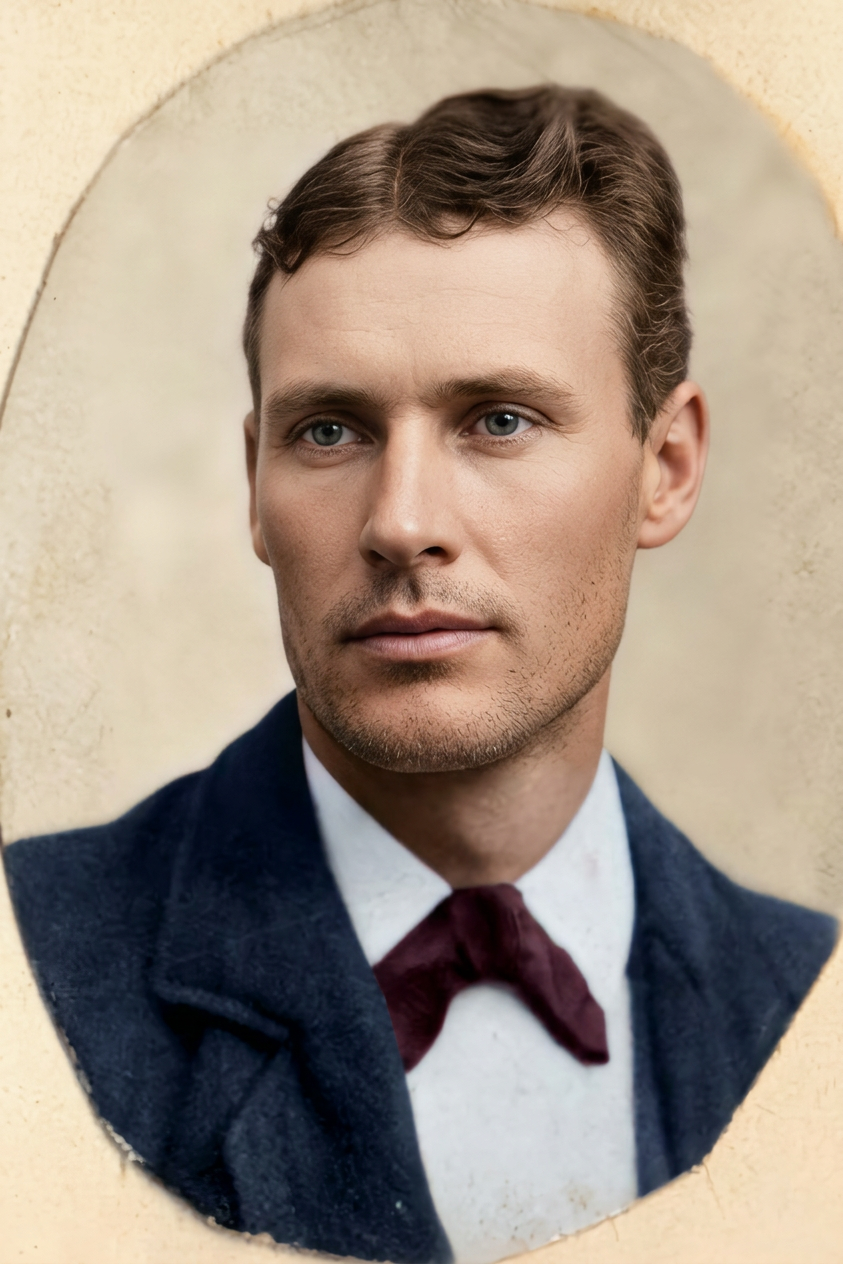
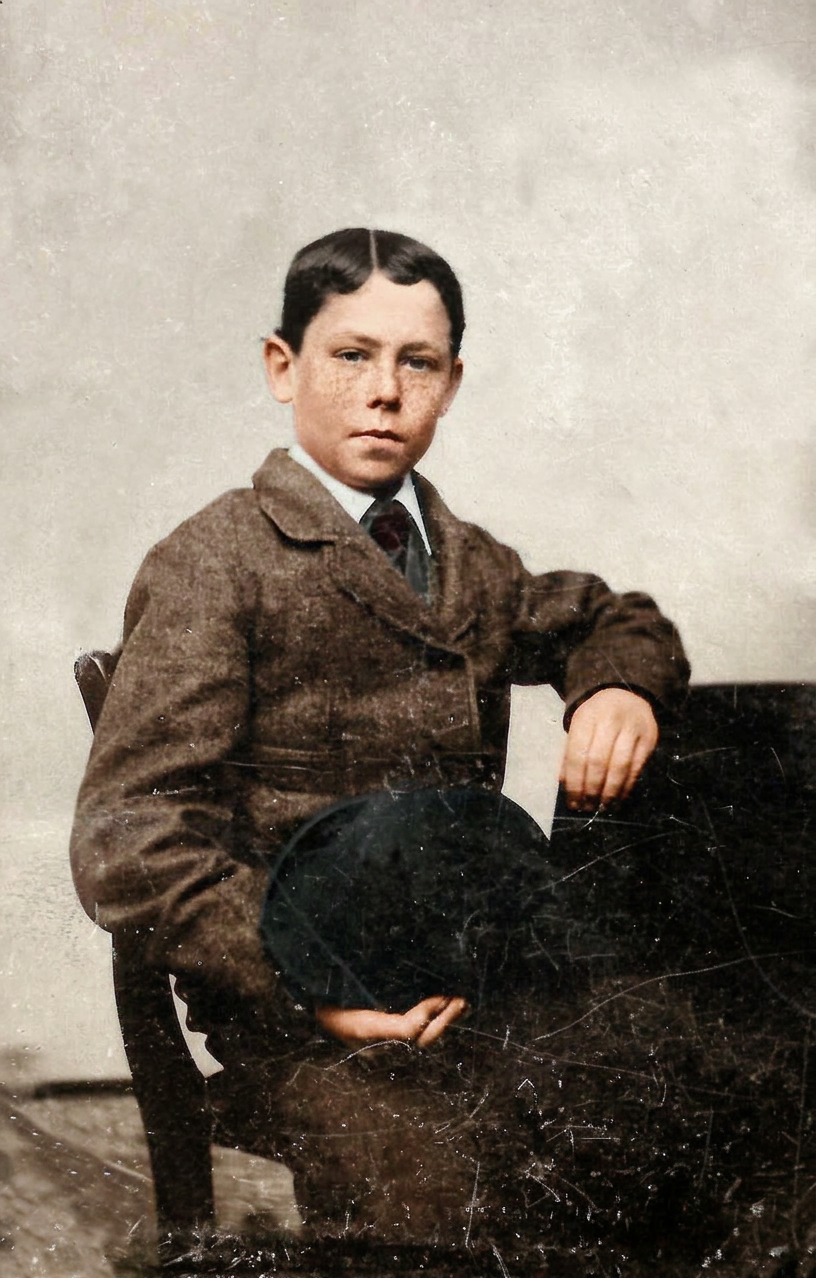
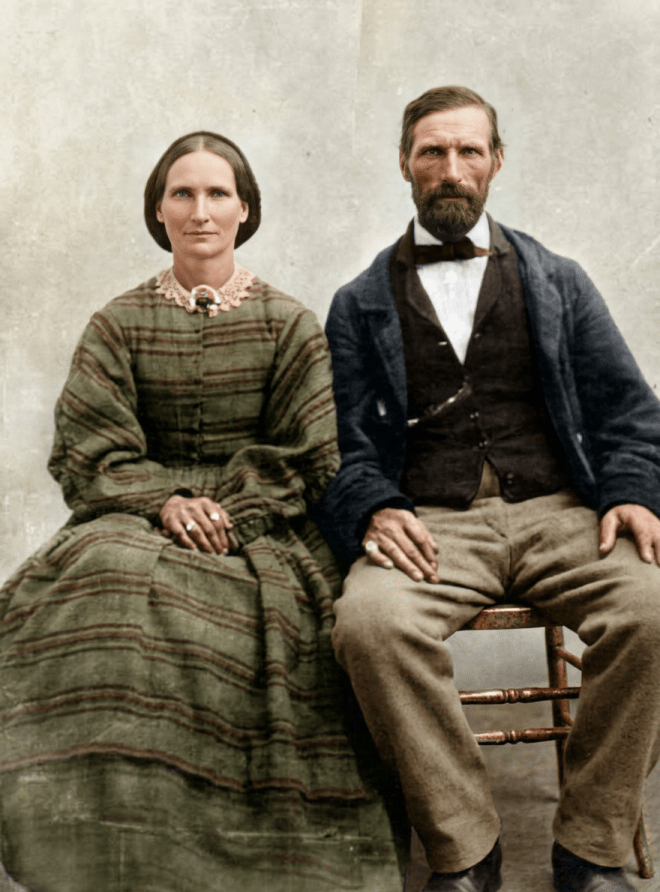
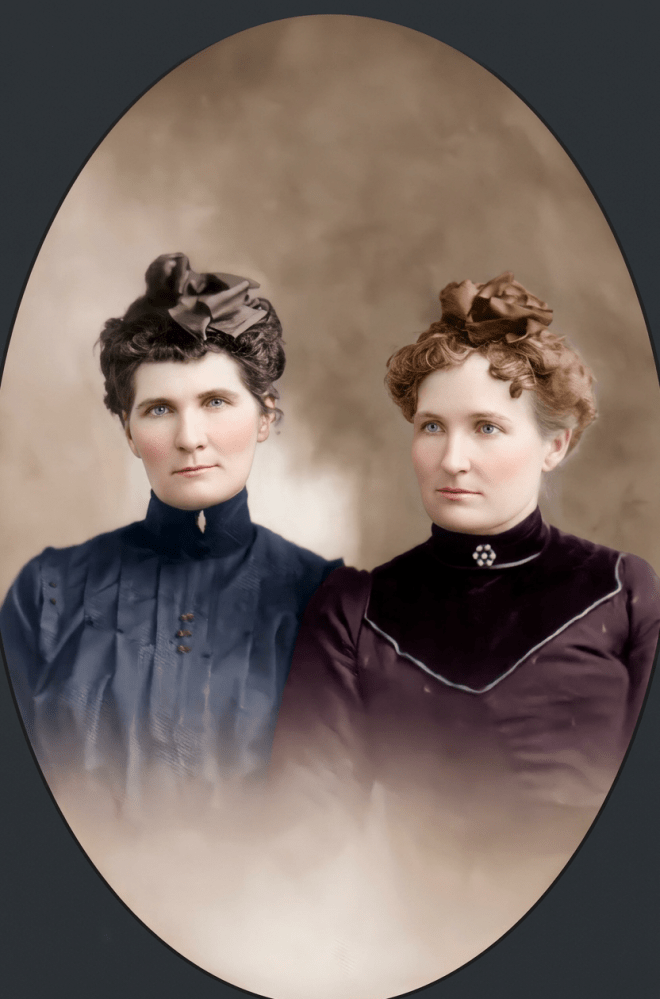
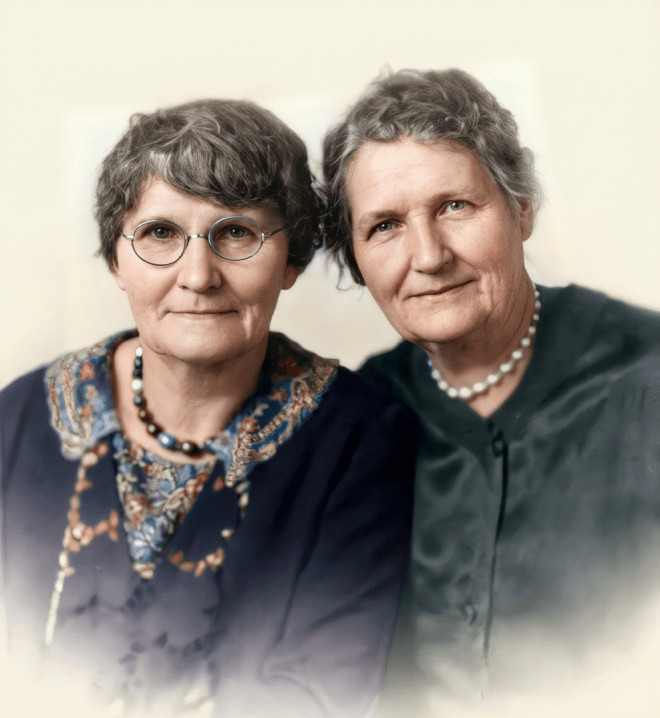
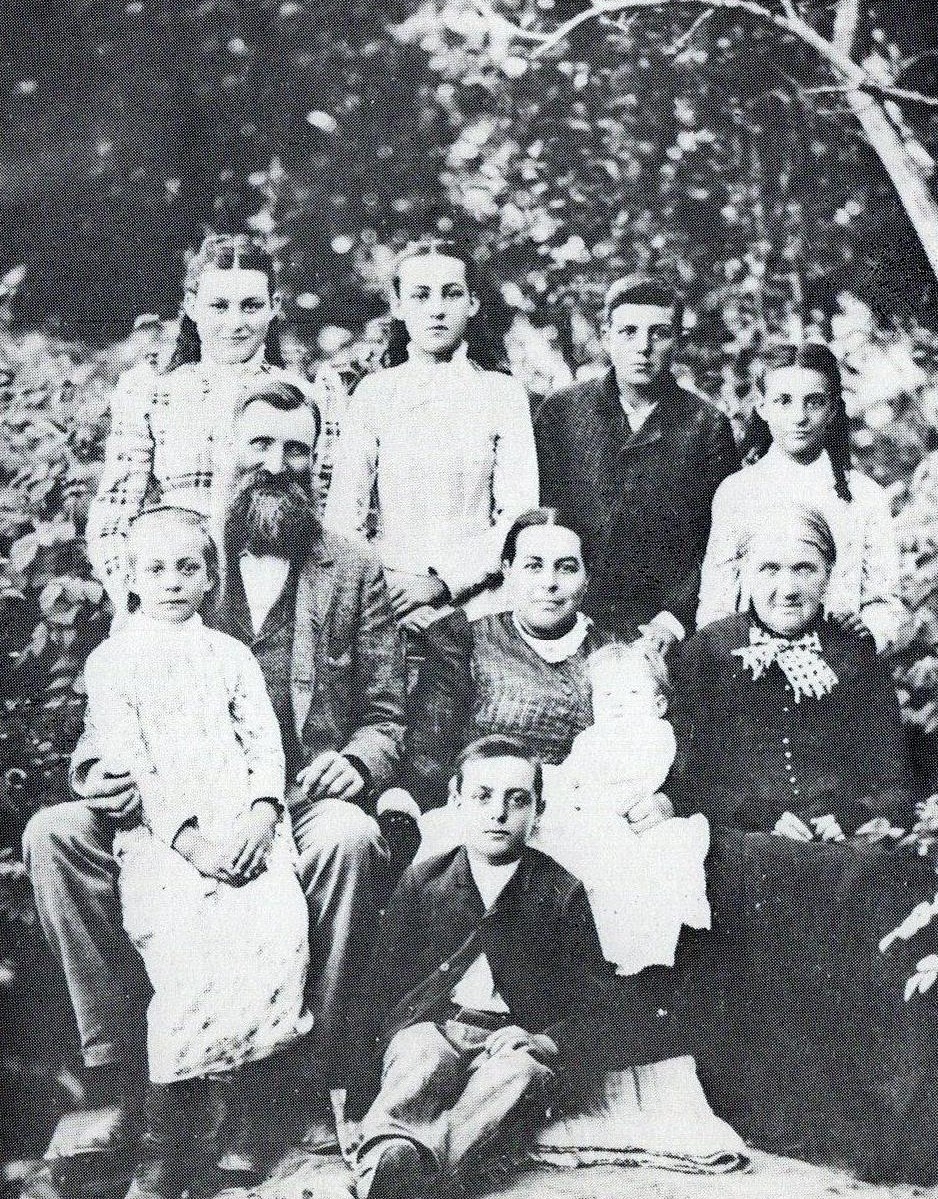
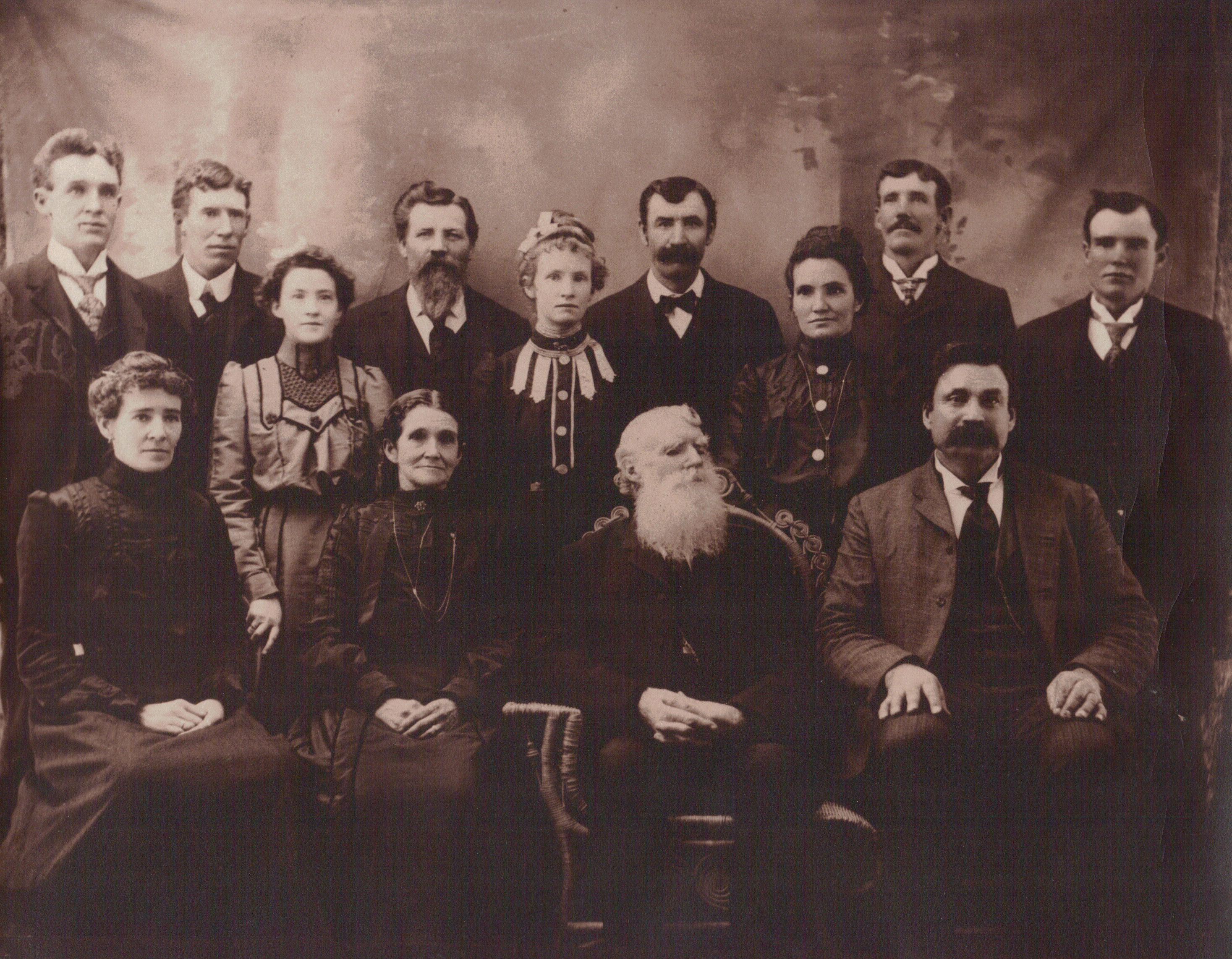
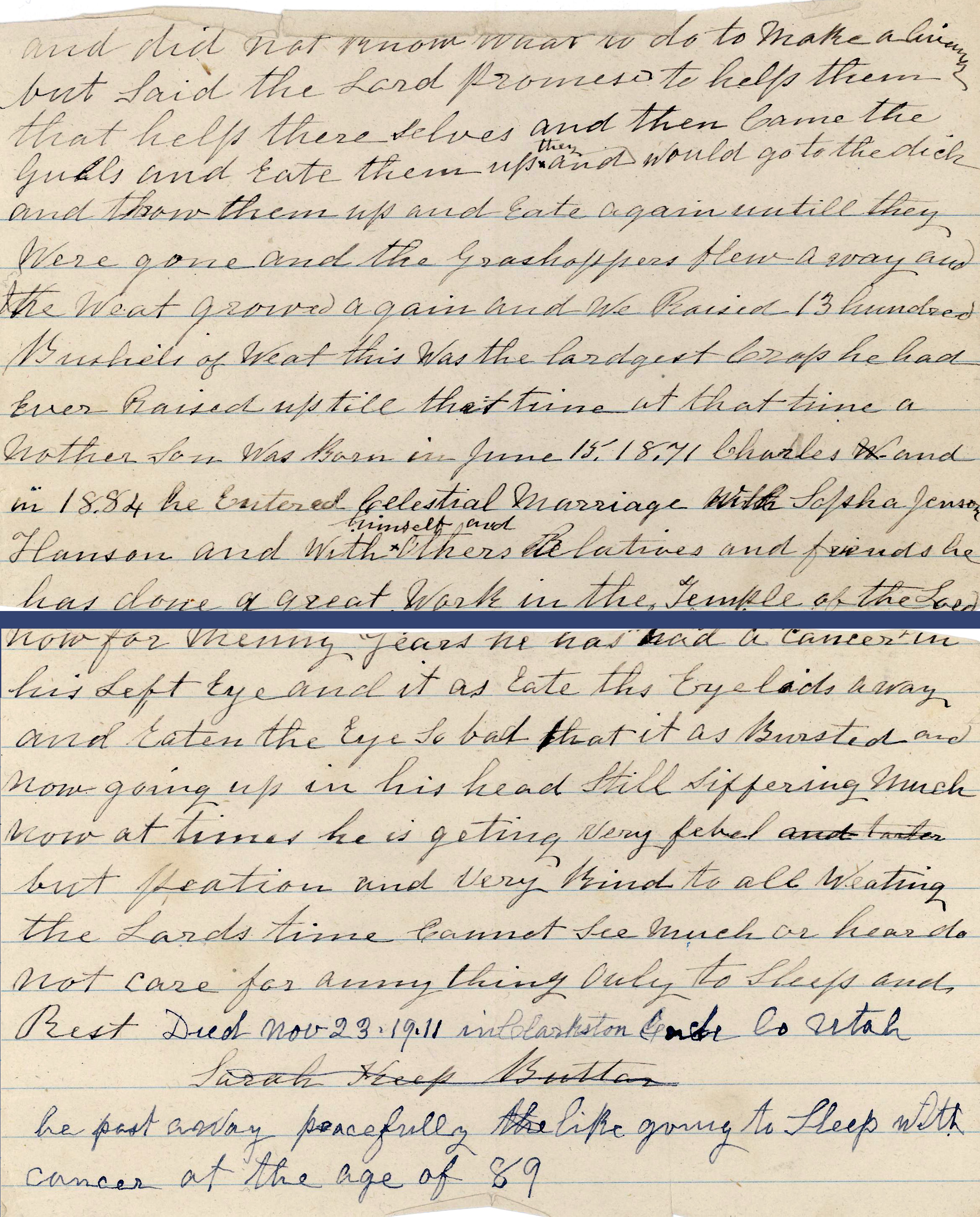
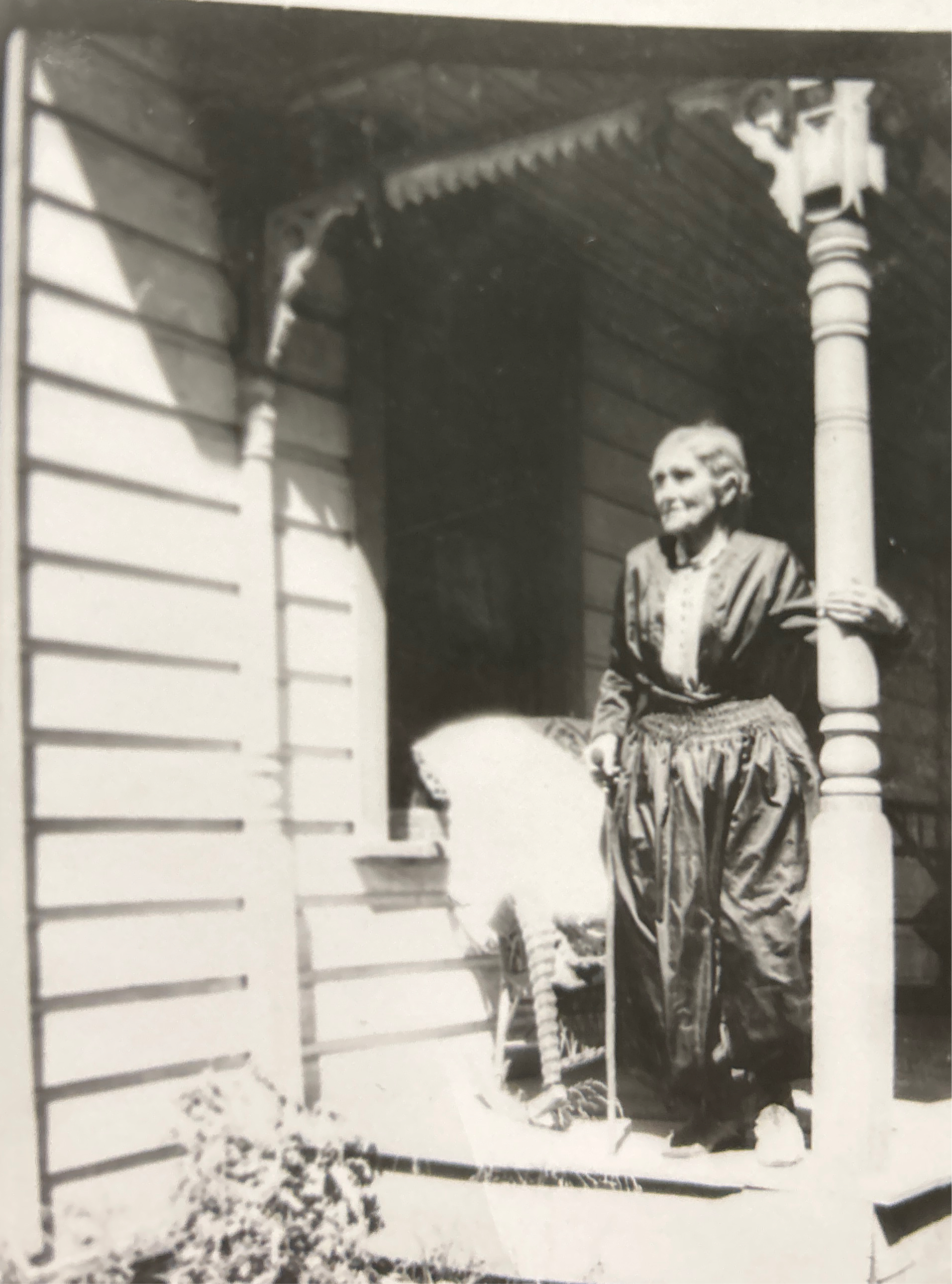
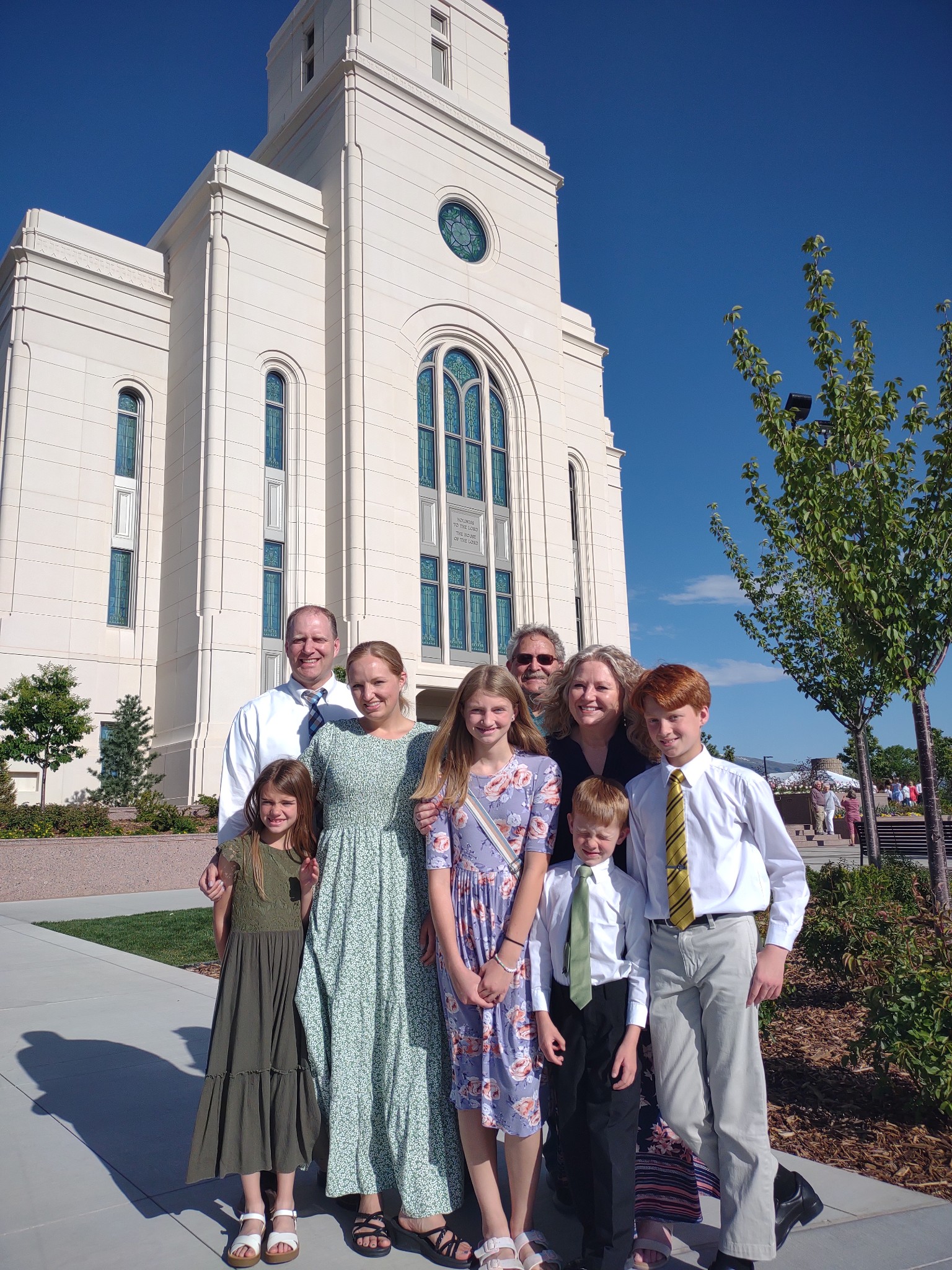
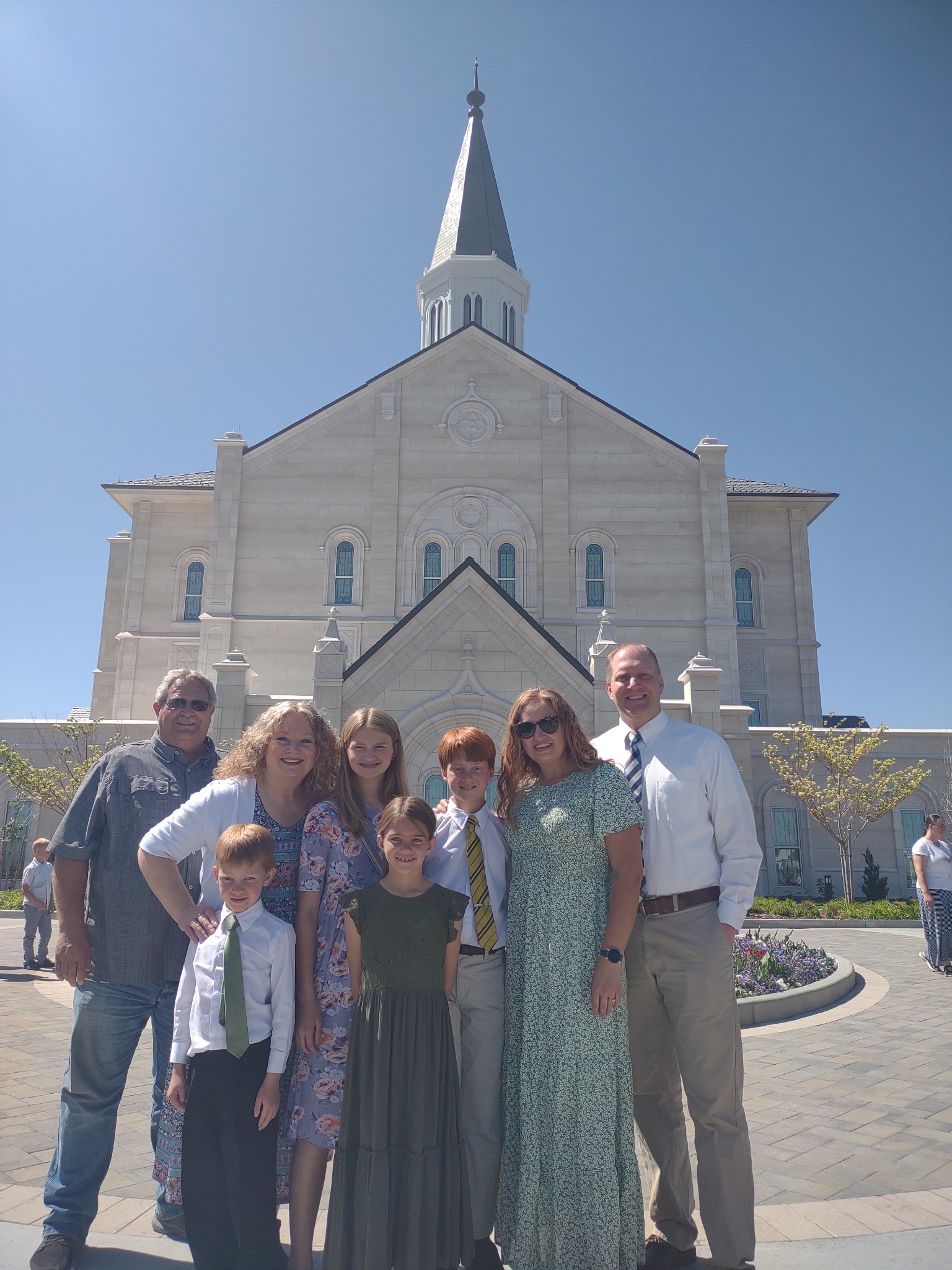
Milo Sharp, Archie Richardson, Mary Ann and Ethel Sharp, Roy Richardson
William Stoker and the late Emma Eames Stoker are pleased to announce the marriage of their daughter Mary Ann to Milo Riley Sharp, son of William Sharp and Mary Ann Sharp. They were married at the Episcopal Church in Plain City, Weber, Utah on 11 May 1879.
Milo is a farmer in Plain City. The couple will make their home in Plain City.
Just trying to write these first three paragraphs was not easy with this family. So many twists and turns with each individual name makes it difficult to find the proper wording and fashion to form the sentences. If you do not know the story of the names, it can be confusing. There are two Mary Ann Sharps in this family (Milo Riley’s mother, and his wife Mary Ann “Lillie” Stoker) and two Victorine Sharps a generation apart (Milo Riley’s sister, and his own daughter). I have tried to be careful throughout to distinguish them.
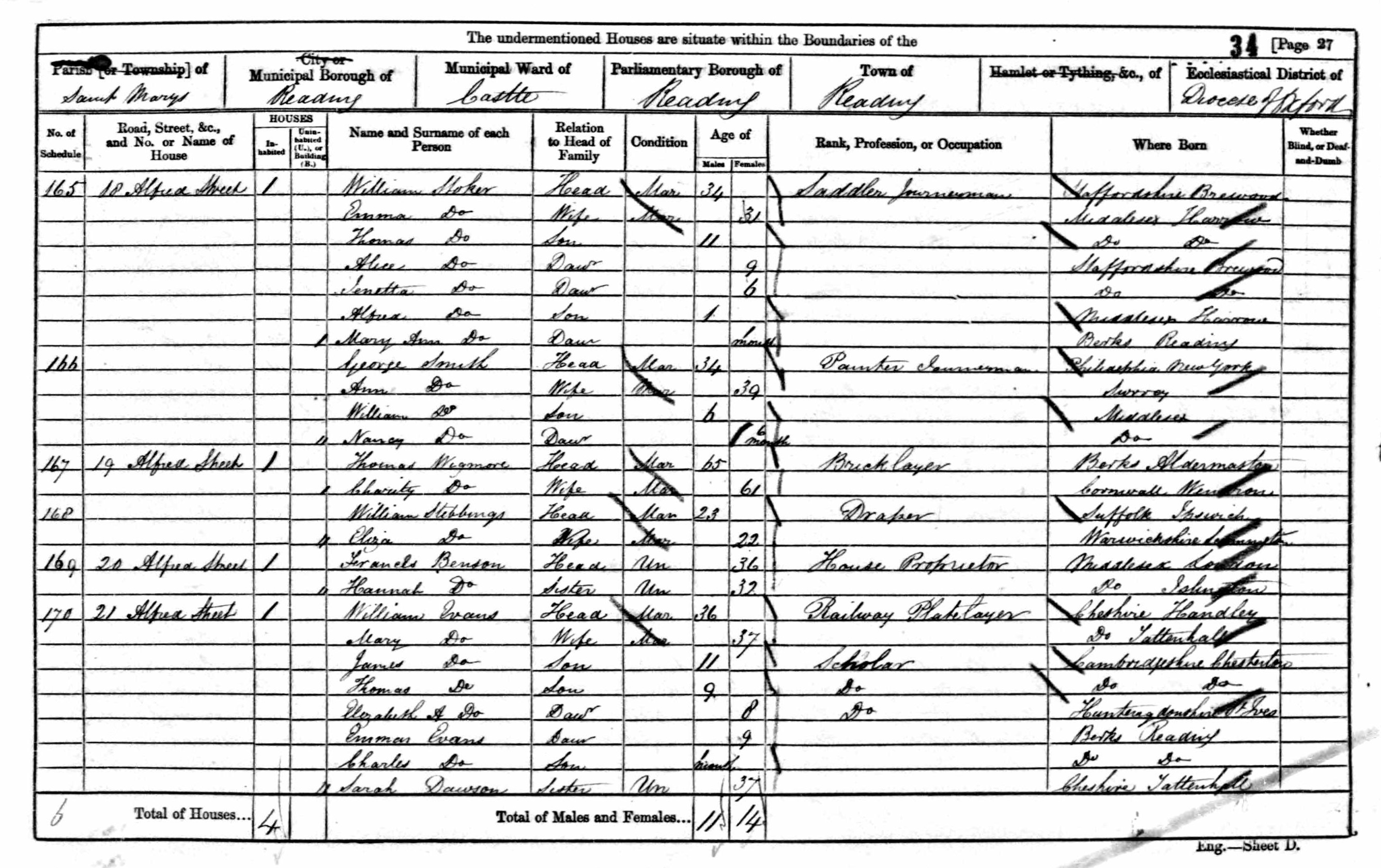
I struggled on whether to call Mary Ann by her other known name, Lillian “Lillie” Musgrave. After marriage, she was known as Lillie M Sharp, she is said to have signed her own name that way throughout her life. She was born 24 February 1861 as Mary Ann Stoker at 18 Alfred Street within St. Mary’s Parish in Reading, Berkshire, England. She was the fifth of six children of William Stoker, a journeyman saddler working in Reading, and Emma Eames. Her youngest sibling, an infant brother George, died in Reading in March 1863, just weeks before Emma herself died. Emma contracted tuberculosis (listed as phthisis on the death certificate) and passed away 28 April 1863 at the same address after a year struggle with the disease. Mary Ann never knew her mother or her baby brother. She was just two years old. Her older brother William Thomas, eleven years her senior, joined The Church of Jesus Christ of Latter-day Saints on 5 December 1860. Her father and older sister Alice joined on 27 May 1863. For the fuller story of the Stoker family in England, see Stoker-Eames Wedding.
1861 British Census, Stoker family at 18 Alfred Street, Reading, with infant Mary Ann
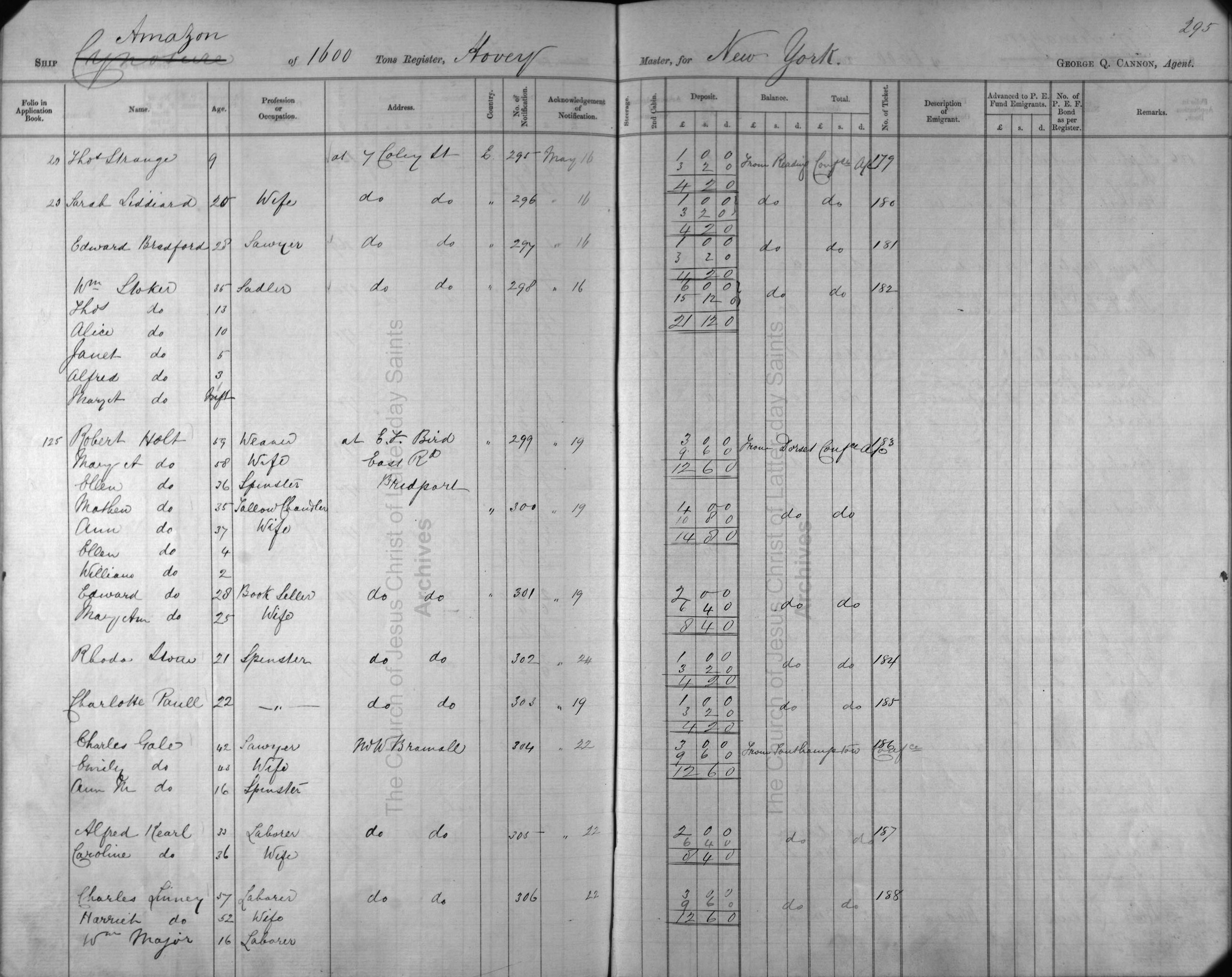
The family wasted no time in gathering to Zion. The Stoker family departed from London on the ship “Amazon” on 4 June 1863. George Q Cannon dedicated the ship which was entirely of Saints (880+) headed for Zion. It was this same ship that Charles Dickens wrote that the Mormons were not taking misfits and scoundrels, but the “pick and flower” of England. George Sutherland, future U.S. Supreme Court Justice, was also on this ship. Here is a link to the story by Charles Dickens: The Uncommercial Traveller. The LDS church also tells of the story that day at this link: Amazon Departure. The ship sailed to Liverpool before heading out for the United States. Elijah Larkin, who would help found Larkin Mortuary, noted that on the 16th and 20th of June, Thomas Stoker was administered to due to a sickness since leaving Liverpool.
Amazon emigration fund ledger — William Stoker (saddler) with Thomas (13), Alice (10), Janet (5), Alfred (3), and Mary A (infant)
The “Amazon” docked at Castle Gardens, New York on 18 July 1863. The Saints from there took rail to Albany, New York and then to Florence, Douglas, Nebraska through Detroit, Wayne, Michigan. From Florence they made their way by wagon train on to Salt Lake City, Utah Territory, arriving 3 and 4 October 1863 (depending on which of the two companies), just in time for General Conference. Several of the company wrote of Brigham Young coming out to greet them and giving them advice.
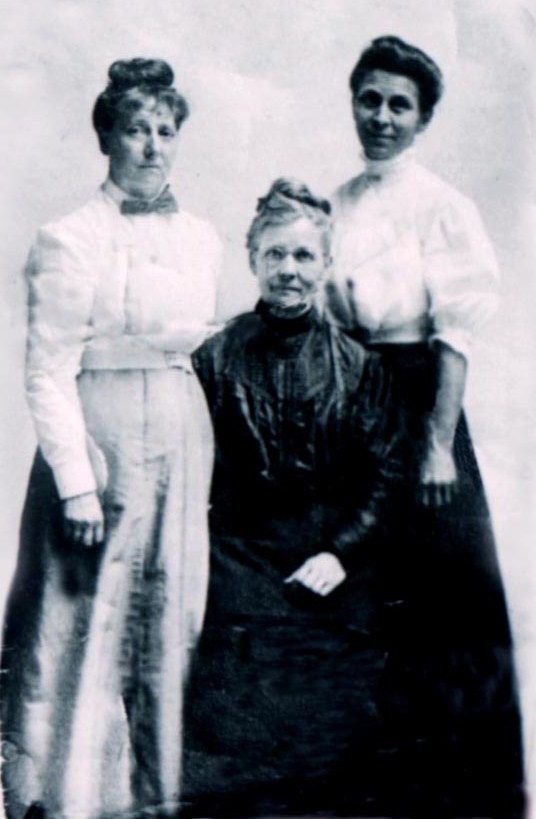
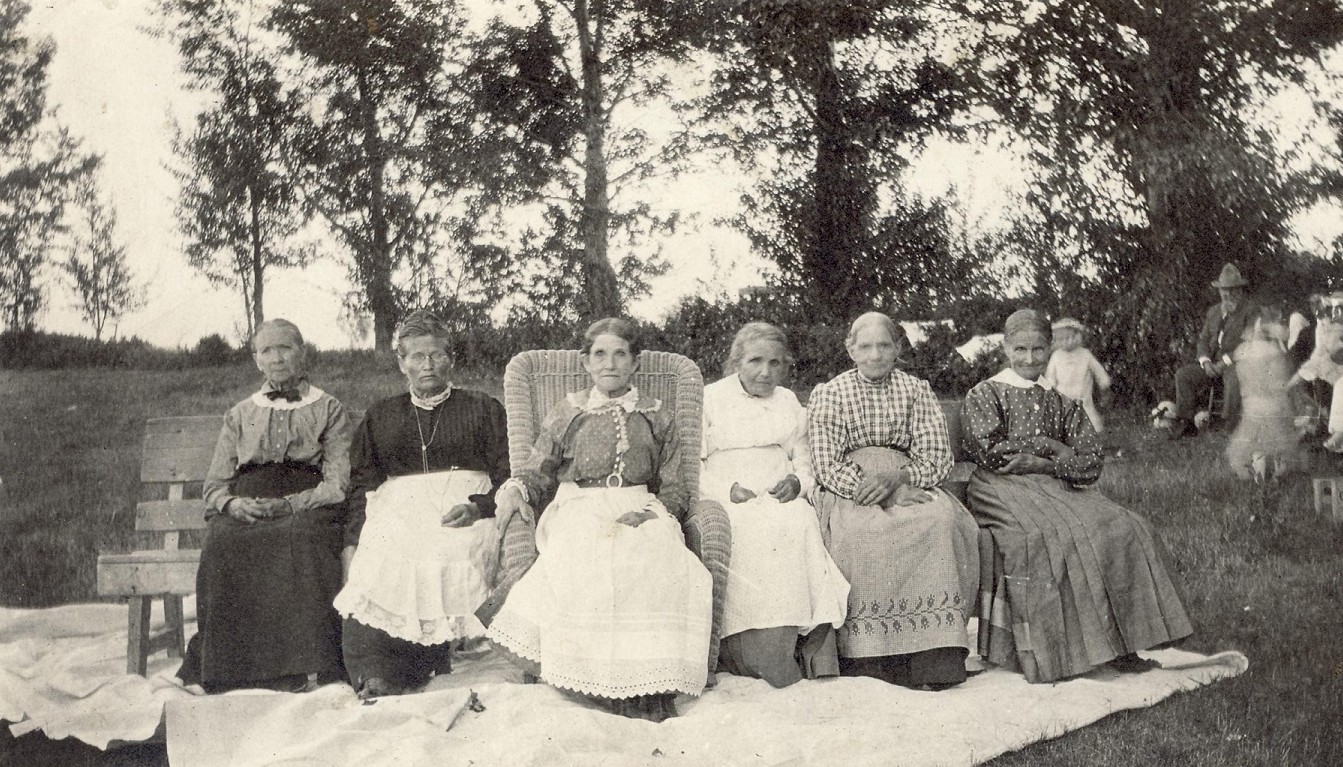
William moved to Ogden, Weber, Utah and set up shop working with leather. William remarried to Eliza Sinfield in Ogden 18 May 1864. While Mary Ann is listed as a child for William and Eliza on the 1870 Census, she was actually living with George Augustus and Victoreen Jane Dix Musgrave. She is listed with their family on the 1870 Census as well. Additionally, the other children from this first marriage were also being raised by other families. Family lore indicates that William and Eliza could not afford to raise these older children and farmed them out to families that could afford to take care of them. Other evidence points that they were not all that poor. Here are three of the sisters later in life. They still maintained their relationship despite being raised by separate families.
l-r: Mary Ann Stoker Sharp, Jeanette Stoker Rogers, Henrietta Stoker Weston
George Augustus Musgrave was born 22 October 1833 in Clerkenwell, London, the son of George Augustus Musgrave Sr. and Georgina Louisa Wheatley. He married Victoreen Jane Dix in St Pancras on 18 February 1855, and the two joined the LDS Church and emigrated to Utah in 1857, several years ahead of the Stoker family. Unable to have children of their own, they welcomed Mary Ann into their home. Victoreen was herself an adopted child. After George’s passing, she remarried to George’s brother, Thomas Henry Musgrave, also a resident of Plain City. Lillie later helped care for Thomas and Victoreen in their old age, repaying a debt of love within her adoptive family. George died 12 November 1903 in Plain City; Victoreen in 1921, Thomas also in 1921. You can read more of the Musgrave family’s role as the first teachers and choir leaders of Plain City in the History of Plain City.
Victoreen Dix Musgrave
While Mary Ann was raised by George and Victoreen Musgrave, she knew who her real father was, but had few, if any, childhood memories of him. George Musgrave was a school teacher and musician in Plain City. Although not formally adopted, George and Victoreen called her Lillian Musgrave, and she went by Lillie the rest of her life, taking the Musgrave as her middle name after she married. Her son Austin lists his mother’s name as Lillee Musgrave.
Victoreen Dix Musgrave and her second husband, Thomas Henry Musgrave
George and Victoreen knew music and taught school. Naturally, Lillie was taught the same. She ended up participating in the second dramatic association in Plain City. Some of their shows put on were, “Mistletoe Bough,” “Mickle Earl,” “Maniac Lover,” “Fruits of the Wind Cup,” “Streets of New York,” “The Two Galley Slaves,” “The Rough Diamond,” “Earnest Mall Travers,” and “Ten Knights in a Bar Room.”
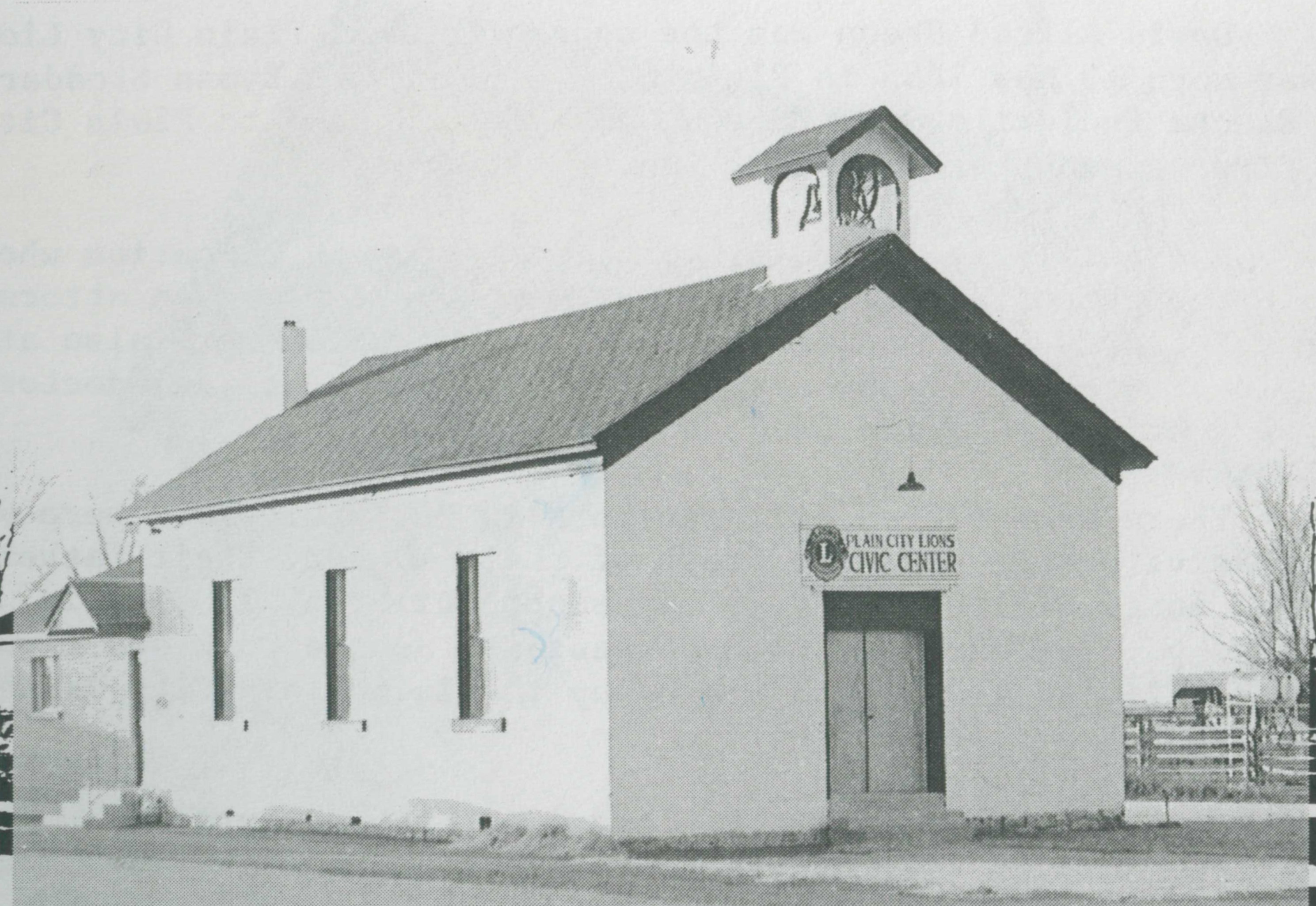
All was not well in Zion during these years in Plain City. Family lore has it that when a Bishop (Lewis Shurtleff, Branch President 1870–1877, Bishop 1877–1883) extended himself beyond what the members felt was right, these families made sure it was known. The final straw came when Bishop Shurtleff started telling the members what they would give as tithing. These were not just fringe members, but good standing members of the church in the area. William Sharp (Lillie’s future father-in-law), the son of Thomas and Elizabeth Cartwright Sharp, began construction on St. Paul’s Episcopal Church in 1877 for many of these disaffected members. The building still stands today now owned by the Lions Club in Plain City. For whatever reason a significant group of members were excommunicated between 1877 and 1882. Many of Plain City’s leading members were excommunicated. Excommunicated on 31 January 1879 were William Sharp (the same who built the new church), Mary Ann Sharp (William’s ex-wife, divorced 19 May 1876, Lillie’s future mother-in-law), William Skeen, Edwin Dix, George Musgrave (Lillie’s adopted father), Thomas Musgrave, Thomas Singleton, Thomas Davis, George W Harris, Jonathan Moyes, John Moyes, Winfield Spiers, James Wadman, Robert Davis, John Davis, and Thomas Robson. These lists also have “and wife” as well as “and family” which seems to indicate that this list may have included spouses and families. Mary Ann Sharp (Lillie’s future mother-in-law) is the only woman listed separately, perhaps because with the recent divorce she was not represented by William. Many of these families returned to the church, some took generations, some never did.
While Lillie’s name is not on the list, she was probably classified with the Musgrave family. We do not have any record of her baptism, but she was with the Musgrave family attending the newly established St. Paul’s Episcopal Church. Although it seems Victoreen Musgrave was excommunicated, she continued active with LDS Relief Society (or she was not excommunicated). It was during this time that Lillie came to fall in love with Milo Riley Sharp. William Sharp, with the assistance of Milo, had also helped build the Musgrave’s new home. In St. Paul’s Episcopal Church, J. S. Gellogly married Milo and Lillie on 11 May 1879.
Milo Riley Sharp was born 23 July 1857 in Lehi, Utah, Utah. He was the fourth of six children born to William Sharp (1826–1900) and Mary Ann Bailey Sharp (1828–1913), English converts to the church. William is son of Thomas and Elizabeth Cartwright Sharp of Misson, Nottinghamshire, England. Mary Ann had a child, Lorenzo Padley, from a previous marriage in which she was widowed. William and Mary Ann Sharp immigrated to Utah in 1853 after joining The Church of Jesus Christ of Latter-day Saints in 1848 and 1846 respectively. At first they were sent to Lehi but had a number of issues with range for the cattle and other minor squabbles. Water was also not found to be very dependable in the Lehi area. William learned of land near Ogden that was going to be opened up from some of the Saints passing through Lehi (abandoning Salt Lake City before the arrival of Johnston’s Army). These Lehi Saints were told of ample land and good water that was available west of Ogden. A scouting expedition went to search out the area in the fall of 1858 and visited with Lorin Farr who told them of the available plain to the west.
The Sharp family left with other Lehi Saints on 10 March 1859 to travel to this new area. The group arrived 17 March 1859 at what is present day Plain City. William Sharp put his carpentry and masonry skills to work making adobe brick and helping build the first homes in Plain City. In one of these first adobe brick homes is where Milo Riley grew up. William served in the Plain City band, the Plain City Z.C.M.I. board, as a builder, and as a city leader. Milo’s little sister Evelyn is claimed to be the first white girl born in Plain City in October 1859.
Milo’s mother, Mary Ann Bailey Sharp, moved out on Christmas Eve 1875 and refused to go back to William. William sued for divorce and Franklin D. Richards granted the divorce (in probate court) on 19 May 1876.
Milo Riley Sharp as a young man
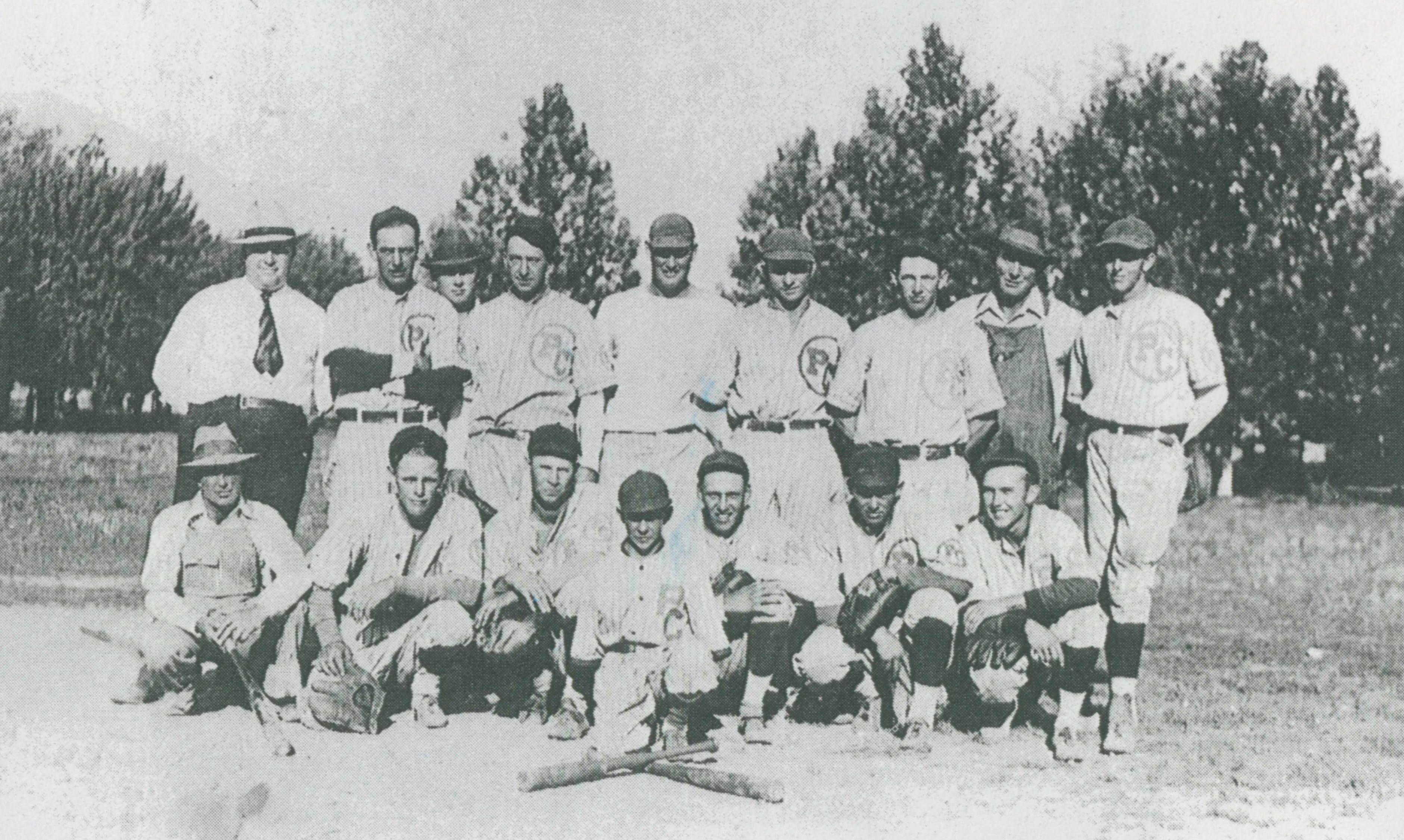
Milo kept busy working with his father building homes and other masonry and carpentry work. He also had time to play first base on Plain City’s first baseball team. The team could beat all the other northern Utah teams except Salt Lake. He was elected a school trustee in 1897, alongside S. P. Draney.
The marriage of Milo and Lillie eventually produced a quiver of 12 children. Milo Ray was born 29 February 1880 and died 14 November 1946 in Ogden. George was born 2 August 1881 and passed the same day. Effie was born 6 June 1882 and died 6 September 1883. Delwin arrived 30 June 1884 and died 27 May 1969, having lived his whole life in Plain City. Ernest and Austin, twins, came 7 January 1886. Ernest contracted infantile paralysis as a small child; it left him crippled his whole life, and he never married, living with his mother and then remaining in the family home until his death 30 April 1967. Austin married Martha Hazel Howard and eventually settled in Prosser, Washington, where he died 26 August 1954. Edward William appeared 25 October 1887, married Lillie Elva East, and died 24 August 1962 in Othello, Washington. Victorine showed 23 November 1889 and married Fredrick Lawrence Hunt; she died 27 August 1987. Mary Irene materialized 26 June 1892 and married Oscar “Os” Child Richardson; she was the first of the twelve children to join The Church of Jesus Christ of Latter-day Saints in her own lifetime, being baptized in October 1931, and she died 11 September 1990. Edith dawned 4 February 1895, married Clements Richard Martin on her twentieth birthday; she died 15 September 1979 in California. Ethel was born 9 April 1898 and I have written of her before; she died 6 August 1925 in Ogden. Ethel is my great-grandmother. Emily appeared 5 April 1900 and quickly passed 31 July 1900. Nine of the children lived to adulthood and eight of those married.
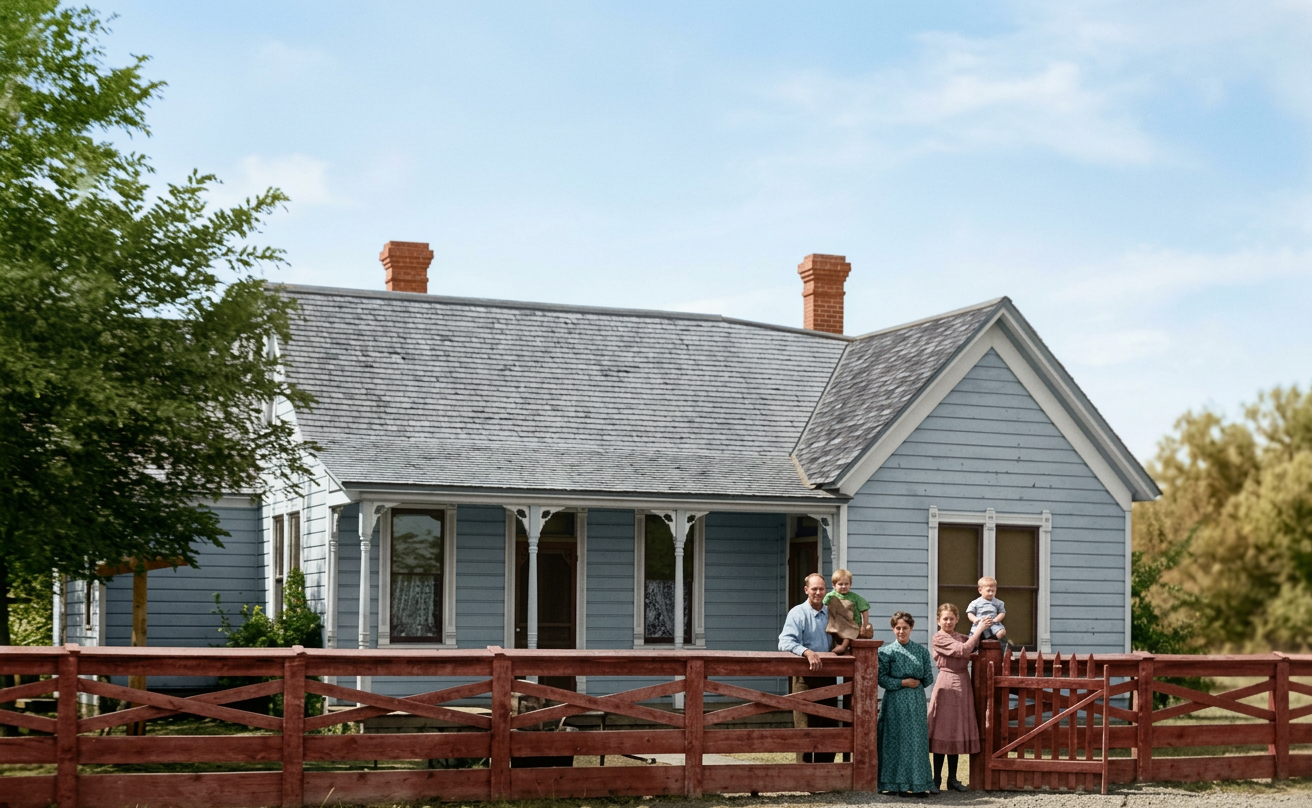
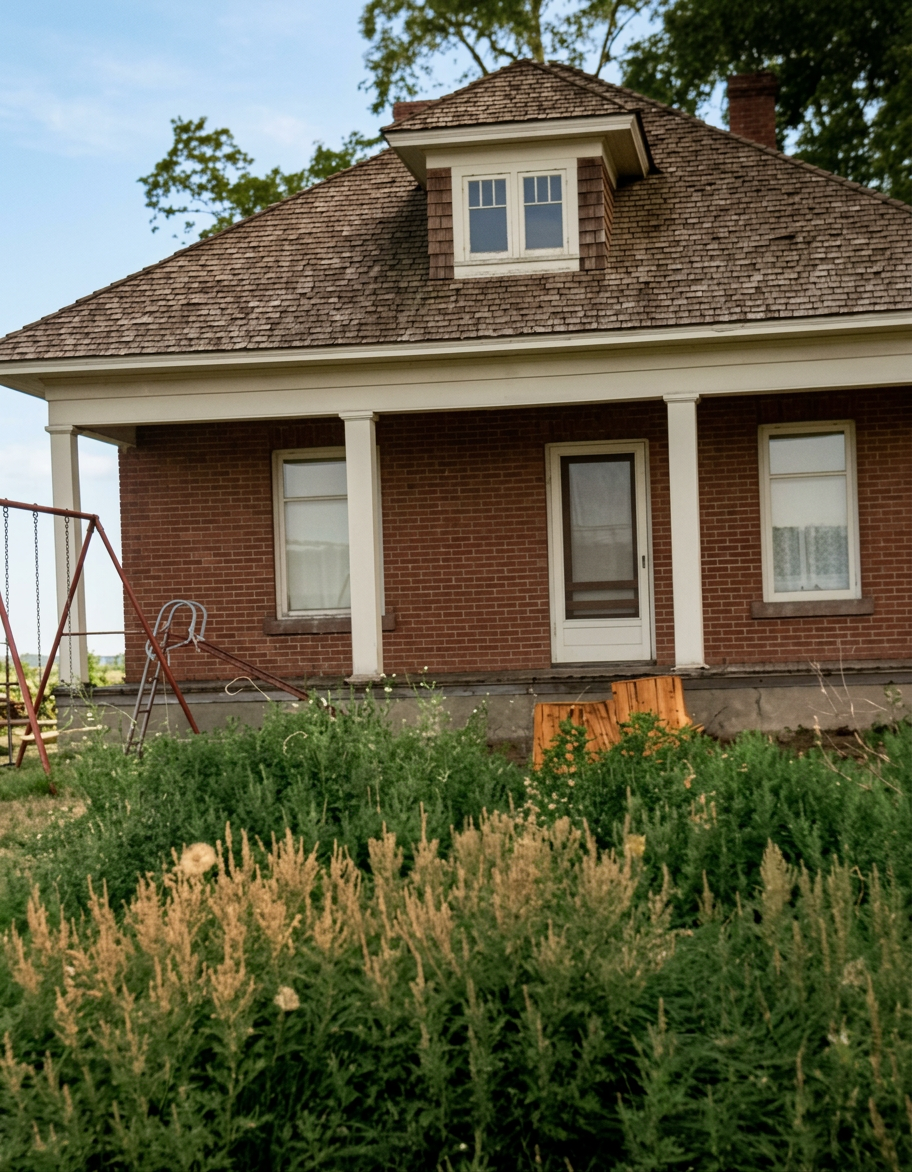
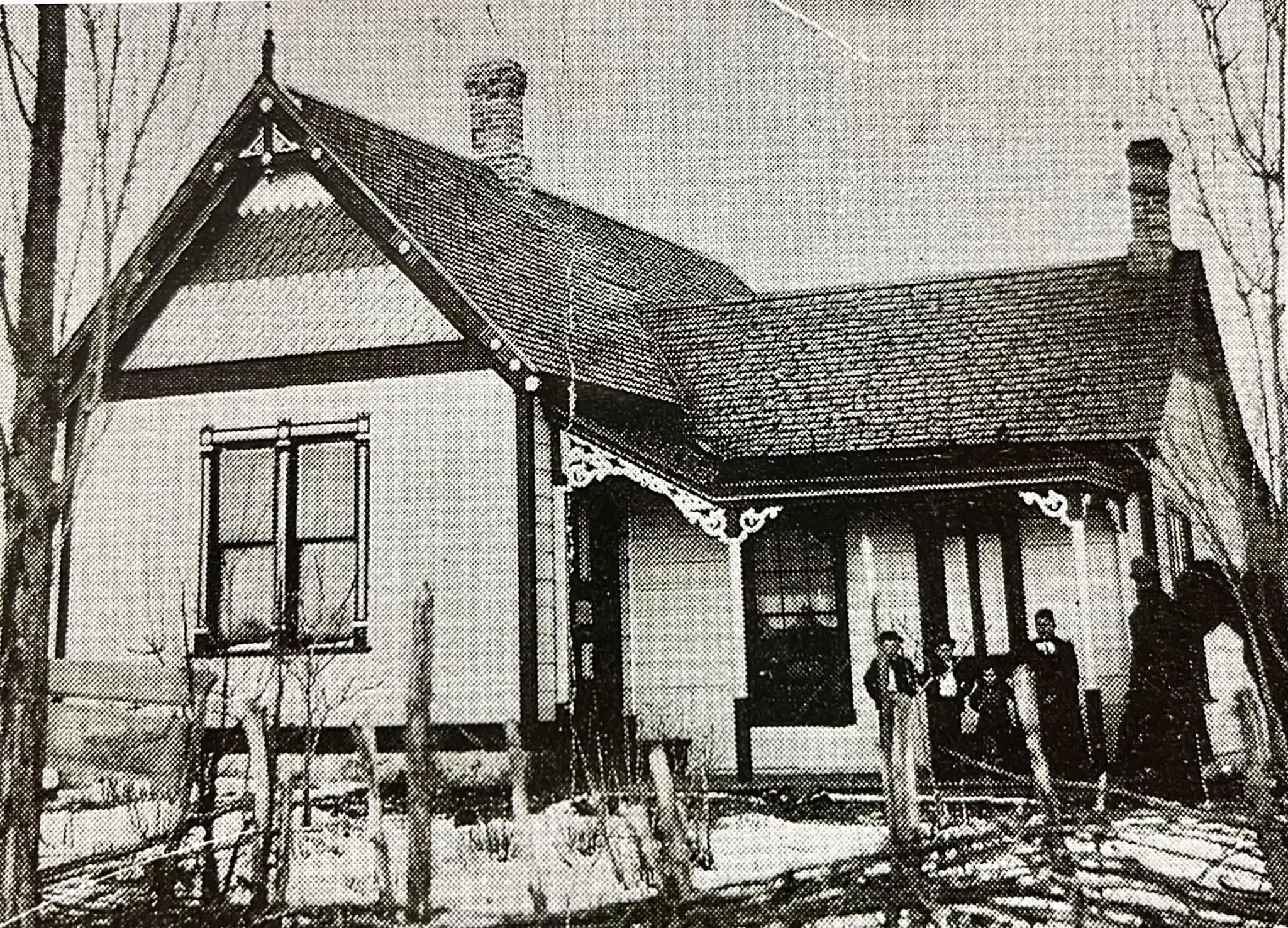
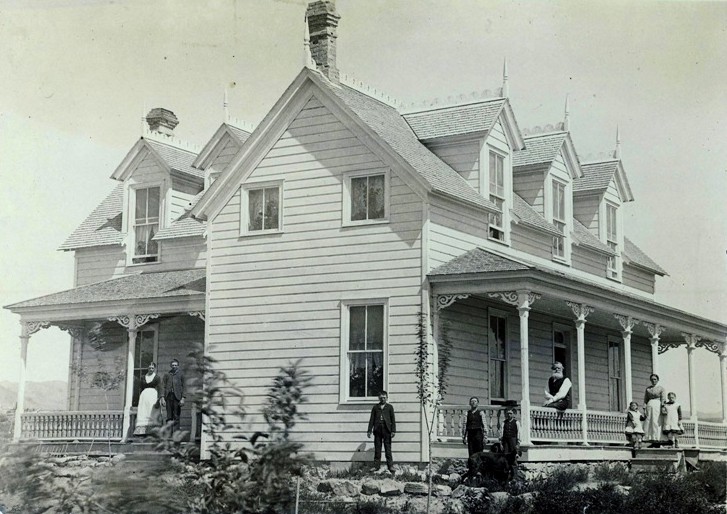
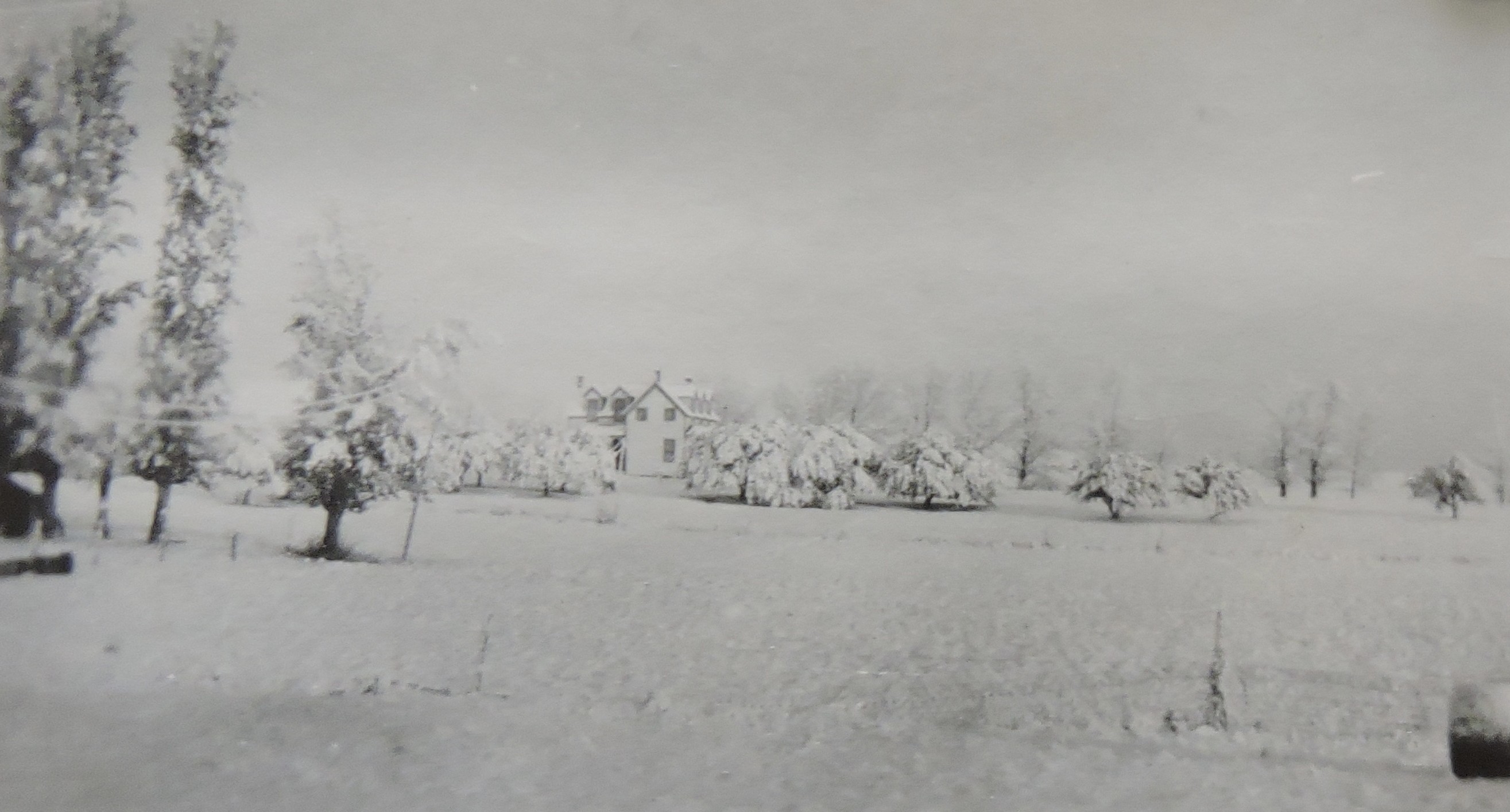
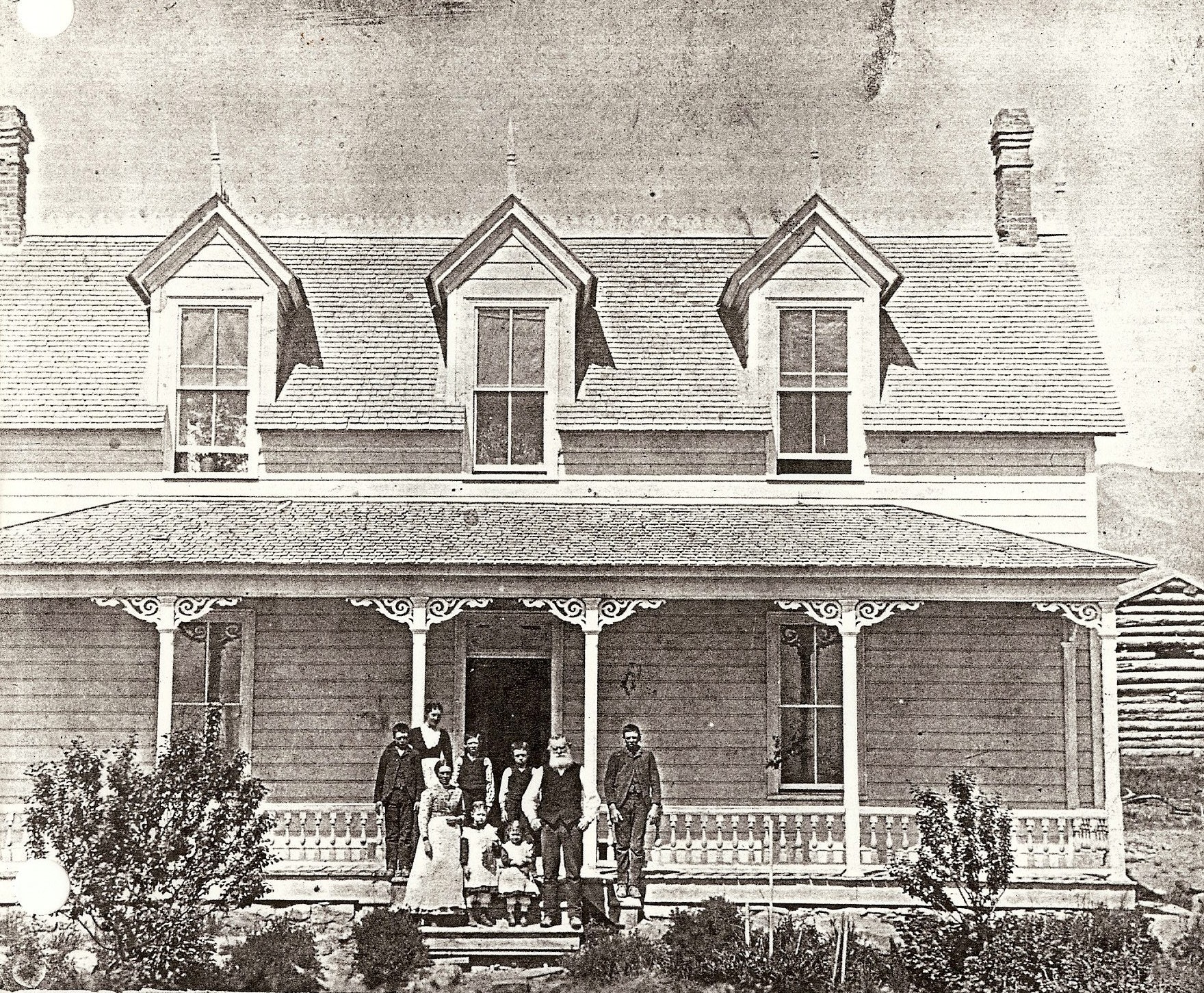
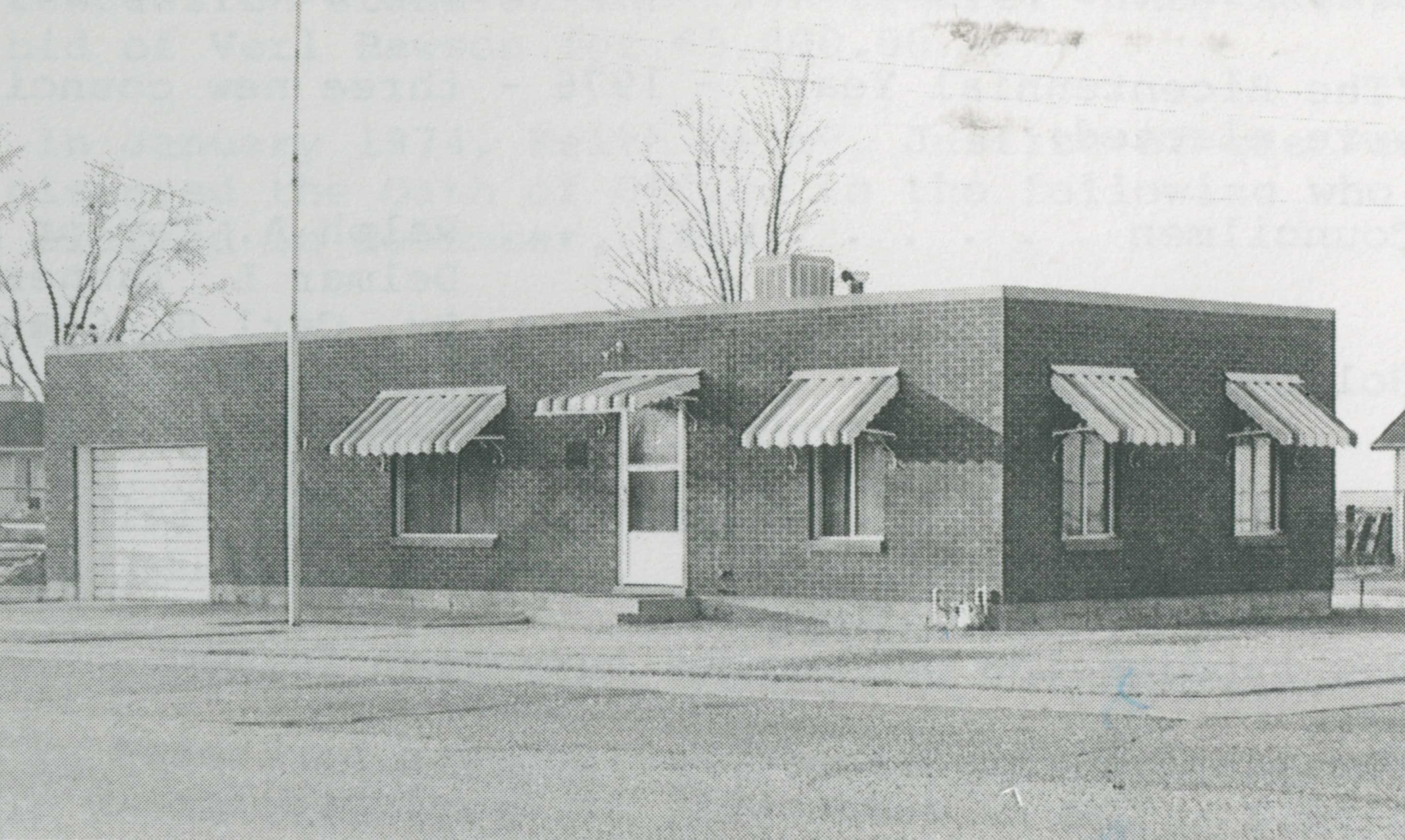
Milo built a new home for the family early on so the family had room to grow. He added to it as more room was needed as you can see in this photo. We do not know the year it was originally built, but we know the children after 1888 were born in this home. The home’s address is 2897 North 4200 West in Plain City. Before Milo died, he sold the farm and that home to his son Austin, and built a smaller brick home on a lot just south of the farm for himself and Lillie.
Milo and Lilly Sharp, Ethel, and Archie and Roy Richardson about 1912
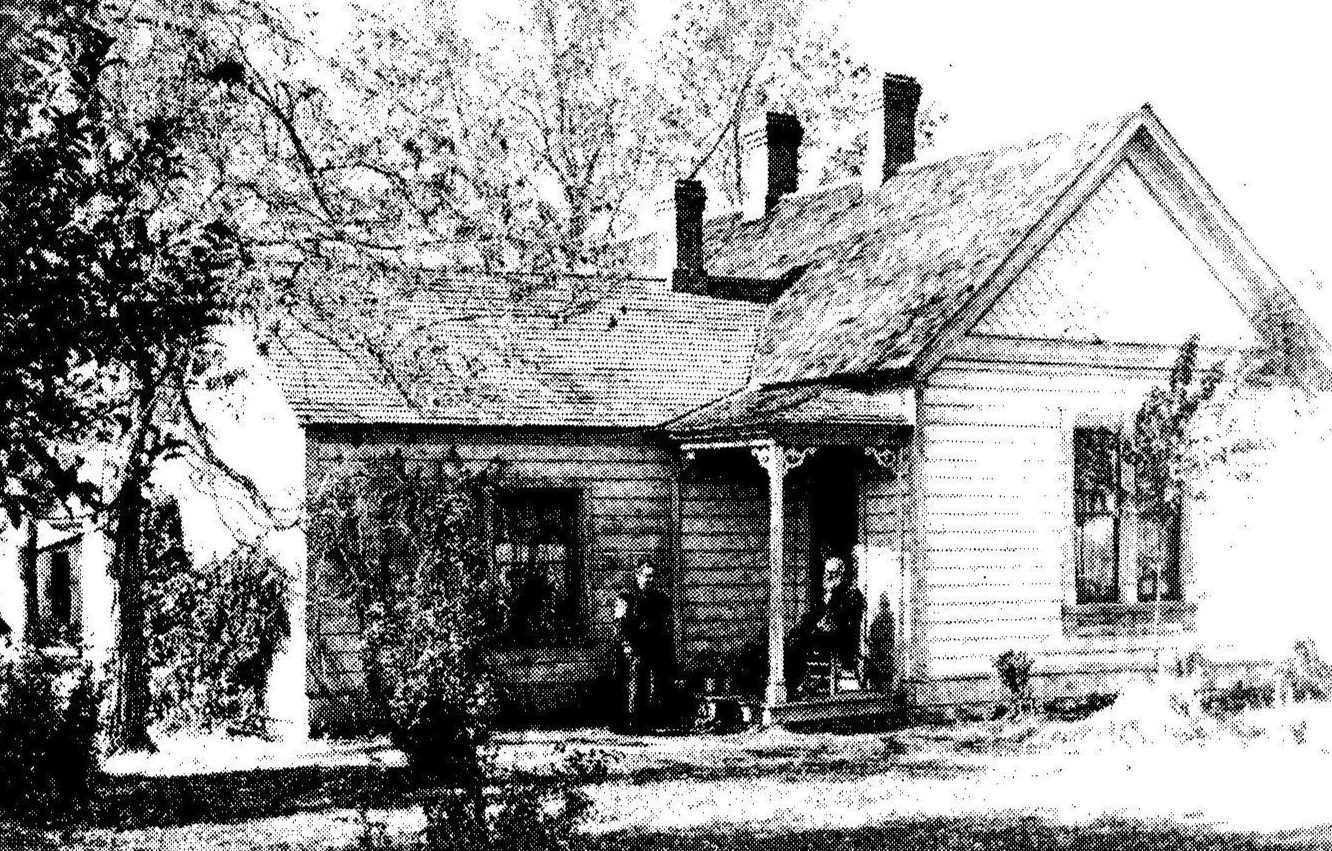
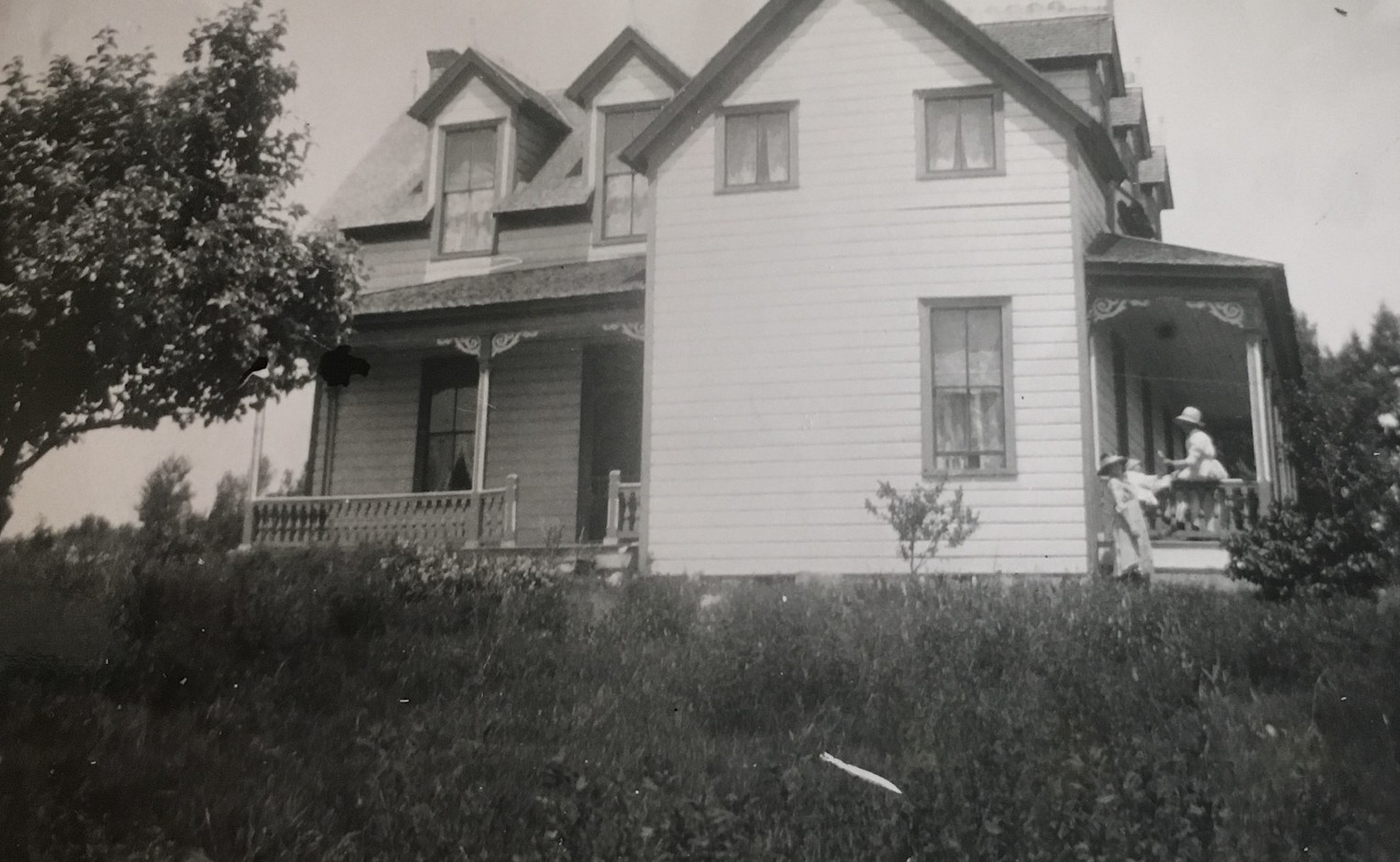
Milo successfully farmed all of these years. He kept busy with civic affairs. He was elected constable of Plain City on the Republican ticket in 1891. In 1893, he sat on a committee to investigate the incorporating of Plain City, although it was not incorporated until 1944 with grandson William Albert Sharp serving on the town board. Milo and Lillie were singers and continued to play in the Plain City bands. Lillie was also well-known for her poetry — I have shared a few of her poems, including Wash Day, Home Coming, and Old Folks Day. In 1911, Milo finished building the new home pictured below (address is 2771 North 4200 West in Plain City). Milo farmed hard until he caught influenza and eventually pneumonia, passing away at the early age of 59 at 9:30 a.m. 24 June 1916 at his sister’s home, Victorine Maw, who lived at 5 Warren Court in Ogden. His funeral was held in the little church he helped his father build, St. Paul’s Episcopal Church, on 27 June 1916.
Lillie lived in this home for the rest of her life. Her son Ernest, who had lived with a disability since contracting infantile paralysis as a child, helped take care of her and lived the rest of his life in the home, dying there in 1967. Milo James Ross, Lillie’s grandson, purchased the home at that time and later transferred it to his daughter Caroline.
Lillie kept a clean home. The grandsons were taught to stop by every time they passed, especially to and from school. This permitted dishes to be washed, wood to be hauled, and wood to be split. Lillie had a strict regimen for cleaning pots, dishes, and pans (especially bedpans). This included the outdoor pump station, even with lye to remove odors. The boys knew to take special care not to make a mess when carrying firewood or in any other way on entering the home. The gate was always to be closed, whether coming or going. While this might seem stern, she always opened the door for those coming and going and gave them a warm smile. My own grandfather, Milo James Ross, spoke fondly of these visits, of helping put the hooks through her shoe-lace holes, of pulling her girdle strings tight, and of the hearing horn she used in her last years, which he liked to tease her about. Lillie’s granddaughters had their own weekly errand, walking half a mile with a little jar of milk skimmed off the butter, trading it for the previous week’s empty jar with two pennies tucked inside, then running another half mile into town to spend them on all-day suckers.
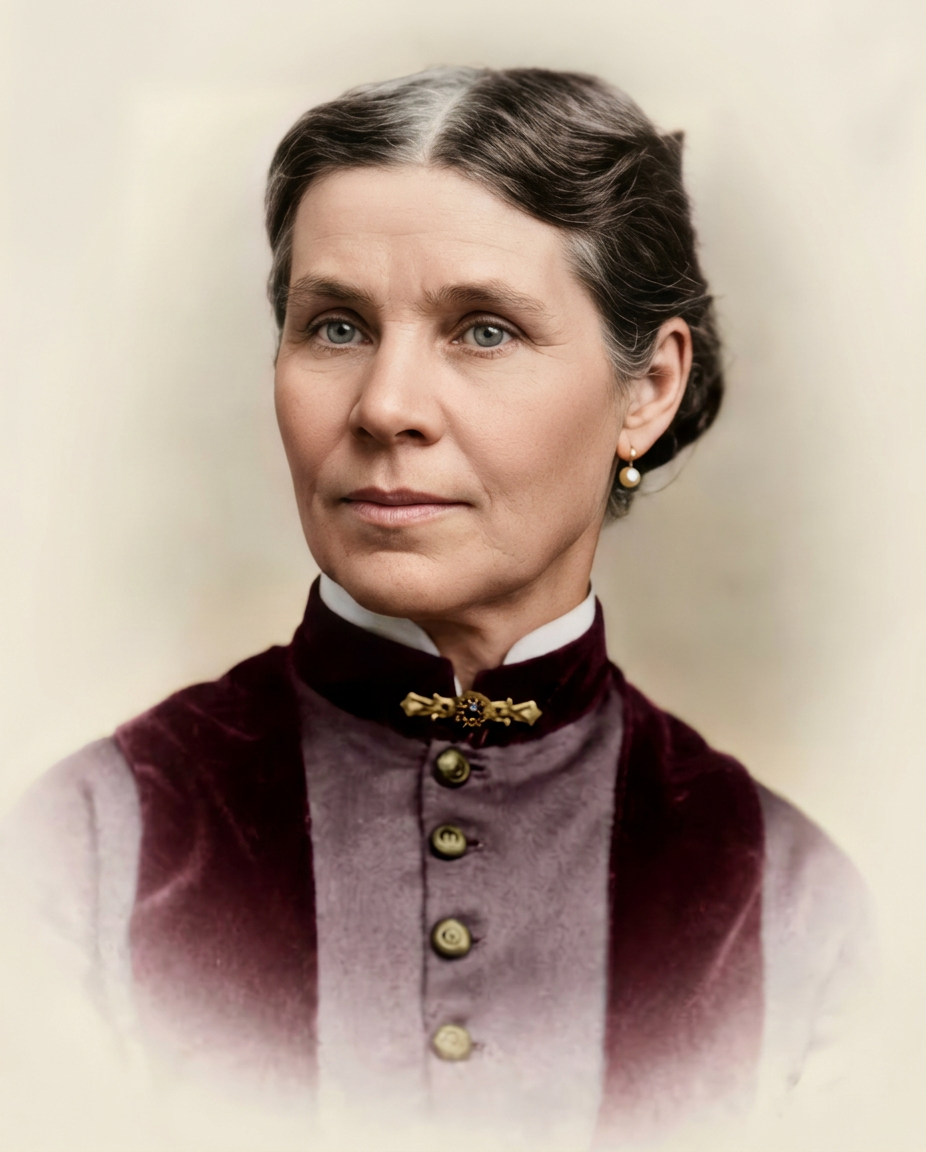
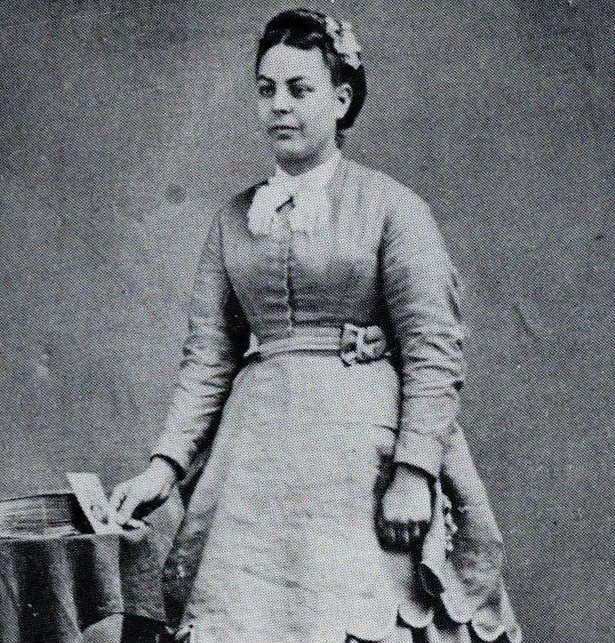
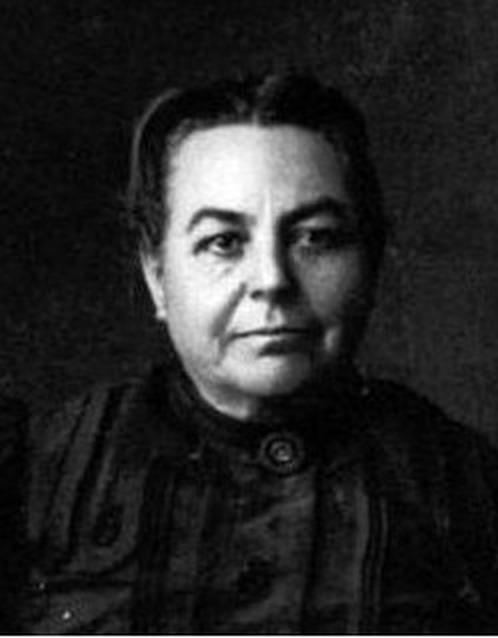
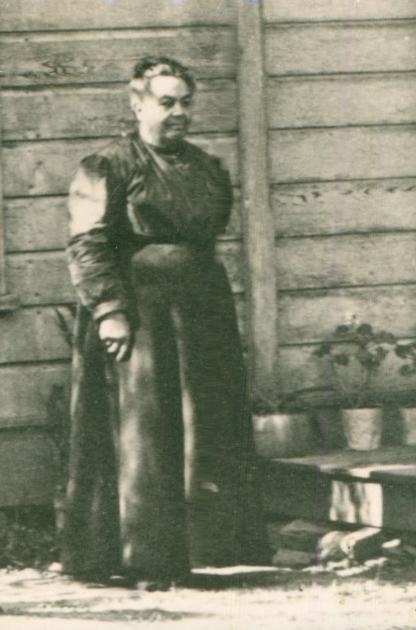
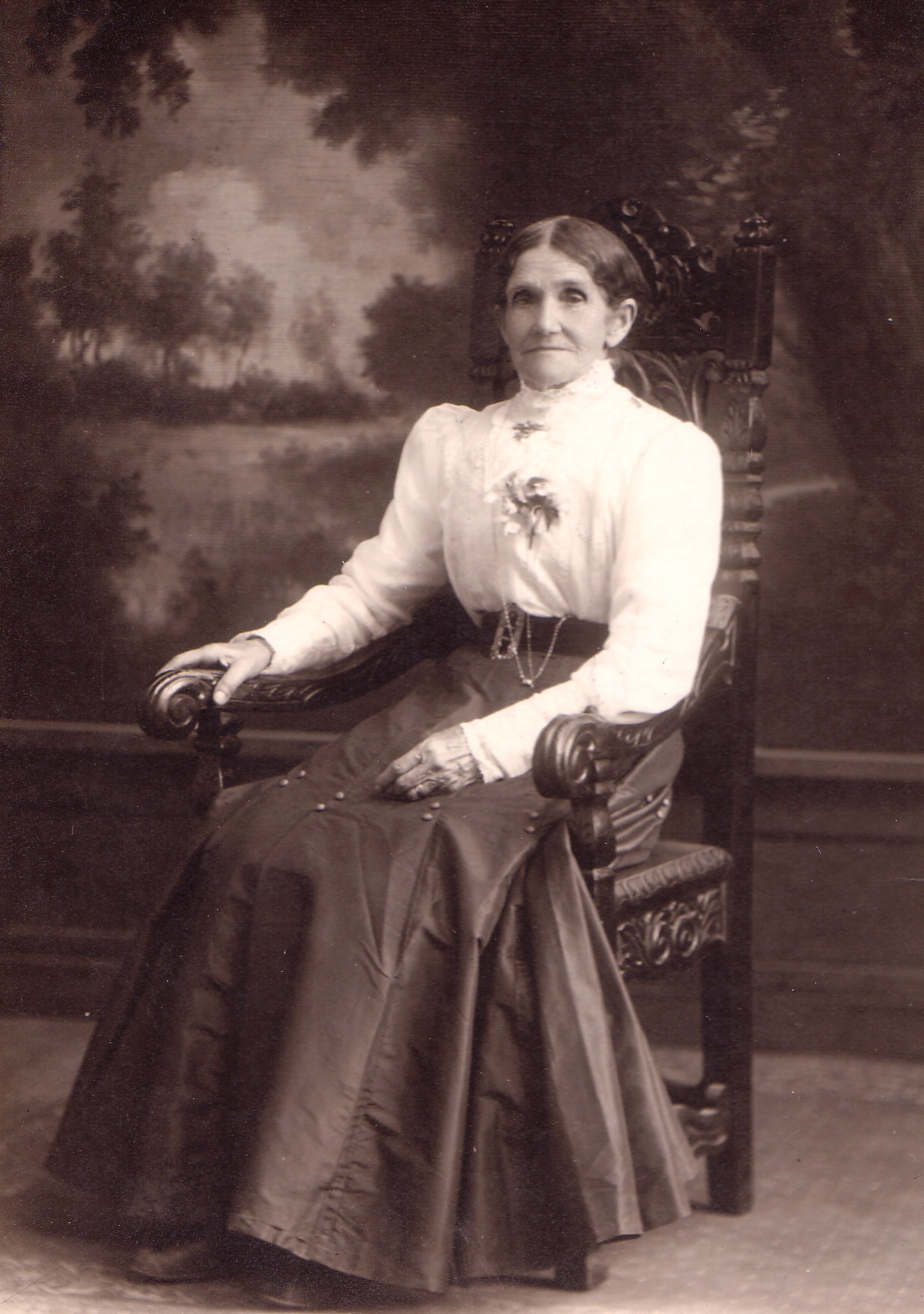
Mary Ann Stoker Sharp
Lillie often made bread, keeping her own live yeast, often from warm potato water. She had her own milk separator and used it. The boys helped make butter and she treated them to buttermilk and warm bread. She would also warm apples in the oven to share, or dried fruit. She kept a full root cellar with homemade cured meats, dried fruits, and bottled vegetables. The Sharp family had onions that could be used to flavor soups and other needs. Many of the family still grow these onions even today. Many mushrooms and watercress were gathered too.
Lillie often had kind words and a warm, gracious smile. She kept a small table in the pantry where she brushed her teeth with salt, baking soda, and a bar of soap. The bucket was always there with a drinking cup and a ladle to draw water. Her granddaughter Ruth Sharp Draper, who knew her well in those later years, remembered her as small — about 4 feet 10 inches, with black hair and dark eyes, wearing her hair in a roll on top of her head. Other family accounts describe her as thin and tall. I cannot say with certainty which description is more accurate; she was known to different grandchildren across different decades of her life. She wore long dresses from her neck to her feet with shoes that went up about six inches. If she was not thin enough, she wore a corset to make her look even smaller. She was very neat and proud in her appearance.
She kept a spinning wheel in the home for the times when she would spin wool into thread. She also had the grandsons help turn her mattress from time to time. She did not leave the house much in her later years unless she had a ride, but even then did not stay long before going home. It was clear she enjoyed watching her grandchildren. The last decade or so of her life, she had to use a hearing tube to hear. Some of her grandchildren joked that it was like using the telephone, just you could see who was on the other end. Ruth Draper recalled her father Milo Ray sometimes taking Lillie to get fitted with a hearing aid, but they did not work for her.
Lillie could never stand to see an animal mistreated. It is said that some men were working on the road by their place with horses tied up all day without being unharnessed. She went and told them if they didn’t treat those horses better she would turn them in.
Lillie M. Sharp obituary, Ogden Standard, May 1935
Lillie passed at 10:55 p.m. at her daughter’s home, Victorine Hunt, on 6 May 1935 of hypertension with chronic major carditis and pneumonia. She had remained faithfully active in the Episcopal Church until she could not get around very much. Later in life she needed assistance as she could not walk very far. Her funeral was held in the Plain City LDS chapel with Rev. John W. Hyslop officiating on 9 May 1935. She was buried with Milo in the Plain City Cemetery.
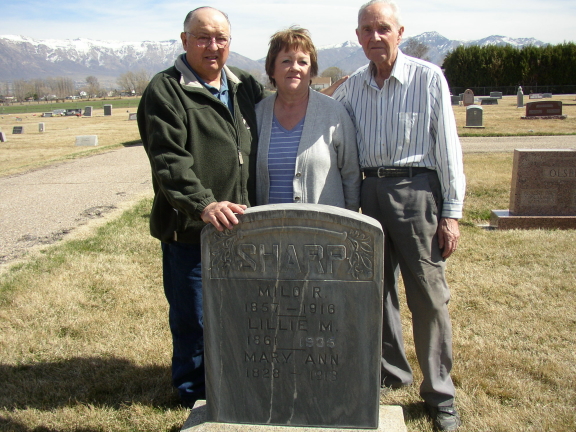
Raymond Draper, Caroline Ross Gallegos, Milo Ross; Grave marker for Milo Riley Sharp, Lillie Musgrave/Mary Ann Stoker, Mary Ann Bailey Sharp in Plain City Cemetery
Returning to the Church
Mary Irene Sharp was the first of Milo and Lillie’s own children to return to the church in her own lifetime, baptized in October 1931. Victorine followed in September 1975, baptized at age 85. Lillie’s own proxy baptism and confirmation were completed 4 June 1970, alongside three of her Stoker siblings in a single family effort at Idaho Falls. She was endowed 1 July 1970 and sealed to her parents 8 September 1970. Milo Riley himself was baptized and confirmed by proxy 17 November 1976 and the next day endowed and sealed to Lillie.
The largest single gathering came on 27 June 1978 at the Ogden Utah Temple, when eight of Milo and Lillie’s twelve children, George, Effie, Ernest, Delwin, Austin, Edward William, Ethel, and Emily, were all sealed to their parents in a single visit. My own grandfather, Milo James Ross, was present that day, watching his mother Ethel’s temple work completed more than fifty years after her death. He was sealed to Ethel and Jack Ross himself on 8 February 1980, the same day his parents were sealed to each other. The work continues today.
Several months after her parents arrived at the new settlement of Plain City, Weber, Utah, on 17 March 1859, Evelyn Carlisle Sharp was born in a wagon box on 12 October 1859. She always noted she was born on Columbus Day and the first white girl born in Plain City. Her father was William Sharp, stonemason and cornet player, one of the founders of Plain City. Her mother was Mary Ann Bailey Sharp, seamstress and dressmaker, who had crossed the plains with an ox team in the early 1850s.
Evelyn Carlisle Sharp and Victorine Mary Sharp
Evelyn’s own account of her early life was preserved in the Utah Pioneers Biography, Vol. 28, Pages 6–7, copied by Maurice L. Howe of Ogden, Utah. It is nice to have some first-person voices from Plain City’s founding generation. The marriage notice from the Ogden Standard Examiner of 22 January 1881 and her Oregon death certificate of 19 April 1941 are limited records, in my possession, of her long life.
Evelyn Sharp Taylor and Victorine Sharp Maw
Pioneer Personal History of Mrs. Evelyn Sharp Taylor
Copied from Utah Pioneers Biography, Vol. 28, Pages 6–7, by Maurice L. Howe, Ogden, Utah.
Mrs. Evelyn Sharp Taylor, Widow of James Henry Taylor, has the distinction of being the first white girl born in Plain City. Her family was one of the early subscribers to the Standard Examiner and after her marriage she and her husband subscribed for many years before they moved from Ogden.
Mrs. Sharp Taylor is now a resident of Portland, Oregon. In relating some of the incidents of Pioneer days Mrs. Taylor said: “I was born on Columbus Day, October 12, 1859 in a wagon box in what is now Plain City — at that time it was just wilderness. My father was William Sharp and my mother was Mary Anne Bailey. They crossed the plains with an ox team in the fifties.
“When they moved up to Plain City, father set to work to build a log and adobe house and during that time the family lived in the wagon box placed in the ground. There were two white boys born previously in Plain City.
“I was the first white girl born there. After I grew up I married James Henry Taylor, who was one of the first white children born in old Binghams Fort on West Second Street at Five Points.
“My parents used to tell me about one of the first trips I ever made to Ogden. I was just a baby in arms and my mother and father went to town with their ox team and wagon. It was winter time and when they got home that night the sky was so dark and the roads so drifted over with snow that they lost their way when they were nearly home.
“Finally they discovered the wagon was on a big patch of ice where the river had overflowed. Try as they would they could not find their way so they unhooked the oxen and let them find their way the best they could. Father and Mother said I cried with cold. The wolves howled around the wagon all night while we were huddled there nearly frozen.
“When morning came my parents discovered we were only a short distance from our house. We used to see lots of Indians in those times.
“My family used to take the Ogden paper by mail in the early Seventies. I enjoy getting back to Ogden to meet my friends again.
“My husband in Weber Co. for a time, then we moved to Eureka, Utah where he worked in the mines. Later we moved to Baker City, Oregon and since his death lived in Portland.
“I am surprised at the mildness of the winters here in recent years. When I was young we never used to be able to see a fence for months because the snow covered them up. Snow 2 to 4 feet deep was not uncommon here in early days.”
The Taylor–Sharp Marriage
Evelyn married James Henry Taylor on Sunday, 16 January 1881, at the Taylor residence in Plain City. The ceremony was officiated by Rev. J. L. Gillogly. James Henry Taylor was the youngest son of John Taylor, and had himself been born in old Binghams Fort on West Second Street at Five Points in Ogden. About forty invited guests attended and partook of bountiful refreshments.
The notice in the Ogden Standard Examiner of 22 January 1881 — apparently updated or annotated years later — adds that Mr. and Mrs. Taylor were then nearly 70 years of age, “having reared and married off 12 children — and yet they both seem as full of life and viracity as ever.” Together they raised twelve children, eventually settling in Oregon.
Death and Survivors
Evelyn Sharp Taylor died on Saturday, 19 April 1941, at her home at 345 Third Avenue, Seaside, Clatsop County, Oregon, at 6:10 in the evening. She was 81 years, 6 months, and 7 days old. The cause of death was recorded as apoplexy, due to senile changes. She had lived in Oregon for 38 years.
Her obituary, headed “Weber Woman Dies in Oregon,” identified her as “the first white child born at Plain City.” She was survived by three sons and three daughters in Oregon, and by her sister Mrs. Victorine Maw of Ogden — Victorine Mary Sharp, born 8 April 1862 in Plain City, who had married Robert Edward Maw, son of Plain City pioneer Robert Maw. The last two surviving daughters of William and Mary Ann Sharp, separated by nearly three thousand miles.
Funeral services were held Wednesday in Portland. Evelyn was cremated at the Portland Crematorium; the funeral was conducted by E.B. Hughes Mortuary of Astoria, Oregon.
A Note on the Family
Evelyn was the sixth child of William Sharp and Mary Ann Bailey Sharp, and the first born in Plain City. Her brother Milo Riley Sharp — my great-great-grandfather — had been born two years earlier, on 23 July 1857, in Lehi, Utah, while the family still lived there before the move north. Younger sister Victorine Mary Sharp was born on 8 April 1862, also in Plain City.
The Personal History of William Sharp — a separate document in this family record — places the family’s arrival at Plain City on 17 March 1859, traveling with the large body of Lehi colonists who left on 10 March. It describes the journey vividly: seven days of cold, muddy travel, the wagons doubled-teamed through the muddy flats, arriving at about five o’clock in the afternoon with the ground covered in snow. The wagons were lined up and sagebrush piled behind them as a windbreak against the north wind. They dug a hole in front and built a campfire. This is the scene into which Evelyn was born seven months later.
William Sharp built the adobe home in Plain City that was later used by the Edward Sharp family — Dean Sharp lived in it as a child — and built the first Episcopal Church building, which still stands today as the Plain City Lions Civic Center, designated a historical site, its original bell refurbished and sitting atop the building. He played the cornet in Plain City’s first band. He served on the board of directors of the cooperative store organized at Plain City in 1869. He and Mary Ann divorced on 19 May 1876. William later married a widow named Charlotte Elizabeth Earl and moved to Ogden’s Mound Fort District, where he died on 22 December 1900 and was buried in the Ogden Cemetery.
Mary Ann Bailey Sharp lived on in Plain City until her death on 30 October 1913, and was buried there. She had been born on 28 November 1828 in Mattersey, Nottinghamshire, England — a village less than ten miles from Misson, where William was born.
For more on the Sharp family and Plain City’s founding generation, see:
James and Sarah Goodlad Bailey are pleased to announce the marriage of their daughter Mary Ann Bailey to William Sharp, son of Thomas and Elizabeth Cartwright Sharp. William and Mary Ann were married at Loup Fork, Howard, Nebraska on 10 July 1853. (Loup Fork appears to have been a crossing of the Loup River, somewhere between Fullerton and Palmer Nebraska, in order to go turn south to rejoin trail along the Platte River.)
William is mason and farmer. They will make their home wherever they are called to settle once they arrive in the Utah Territory.
Due to the circumstances of this family, it is pretty unlikely an announcement would have ever been written. Everything about these families was in motion. Family members on both sides were strewn all over two continents and their lives were still recovering from a number of personal blows. While this was probably a high point, they knew there was a long road still ahead of them. All four of their parents had passed before their marriage.
William was born the third of eight children born to Thomas and Elizabeth Cartwright Sharp 10 December 1826 in Misson, Nottinghamshire, England. His baptism is recorded on 7 January 1827 at Misson Anglican church, confirmed by the Bishop’s Transcripts at Nottinghamshire Archives. He spent his life as a mason but kept a farm. We do not know where or how he learned how to be a mason. His father, Thomas, is listed as “Ag Lab”, which is probably an agricultural laborer on the 1841 English Census. Thomas died in 1841 after the census was taken.
In 1848, the LDS missionaries came to visit in Misson. William was the first in his family, that we know, to join the church on 20 June 1848. His mother followed 11 August 1849 and his sister Isabella 16 September 1849. The records available do not show that William’s siblings, Elizabeth and James joined the church, but they came with the family to the United States on their way to Zion. The family story tells the family was friendly and open towards the missionaries. One of the missionaries was a George Emery (the only potential George Emery I could find appears to have lived 1792 – 1867).
Elizabeth Sharp was determined to emigrate with her family to Utah. Her family attempted to discourage her by warning her about the dangers of the American Indians. Nevertheless, she departed with William, Isabella, Elizabeth, and James. The other four children had died as infants before leaving England. The family purchased tickets at 25 pounds sterling in Liverpool. The family set sail on the “James Pennell” on 2 October 1850 commanded by Captain James Fullerton. The LDS leaders on board were Christopher Layton (1821–1898) and William Lathrop Cutler (1821–1851) leading the company all the way to Zion. Right before hitting the waters of the Mississippi the ship encountered a storm where the masts were broken and the ship drifted for a couple of days. Luckily, a pilot boat found them and another ship (that left two weeks later from Liverpool) tugged them to New Orleans, Louisiana. The ship arrived at dock on 22 November 1850. The family struggled with sea sickness and chills and fevers that beset them in New Orleans and St. Louis. From there the entire group boarded the “Pontiac” and continued to St. Louis, Missouri where they found work and spent the winter. Despite having crossed the Atlantic, Elizabeth, the mother of the family, died 17 February 1851 in St. Louis and was buried in Bellefontaine Cemetery.
Among the fellow passengers on the James Pennell were the Singleton family of Misson. The Singletons were neighbors in Nottinghamshire. William Singleton (1793–1850) sailed with his children, including Thomas Singleton (1825–1885) and Charles Singleton (1838–1907). Tragically, William Singleton died in St. Louis on 16 December 1850, just three weeks after the ship docked. His son Thomas pressed on, becoming one of Plain City’s 1859 founding pioneers, where he worked as a carpenter and band leader alongside William Sharp. Thomas Singleton is listed among those excommunicated alongside William Sharp on 31 January 1879. Generations later, Thomas’s grandson Bert Elmer Singleton (1918–1995), born and raised in Plain City, became one of Utah’s most celebrated baseball players, pitching in the major leagues over 28 seasons. The Sharps and Singletons, neighbors in Misson, remained neighbors in Plain City across the generations.
Elizabeth’s death left the four siblings to fend for themselves. William and Isabella both still desired to move on with the Saints to Utah. William became fast friends with Mary Ann Bailey Padley, a widow who had lost her husband before leaving England. They were such good friends that Anne Elizabeth Padley (she went by Sharp her whole life though) was born 31 October 1852. Isabella married Joseph Carlisle, who had arrived two years earlier, 18 May 1853, in St. Louis. That same day the Moses Clawson Company, “St. Louis Company,” departed from St. Louis. Joseph and Isabella Carlisle, along with William Sharp and Mary Padley (with her son Lorenzo Padley and new infant Anne), left with the company. Joseph and William were well respected because they were apparently very good athletes and challenged anyone to a wrestling match.
The Sharps and Carlisles drove a wagon for William Jennings, a Salt Lake City merchant and freighter. The outfitting was done in Keokuk, Iowa. The company for traveling over the plains was formally organized in Kanesville, Iowa. On the trail, William and Mary Ann Padley were married 10 July 1853 in Loup Fork, Nebraska. The company arrived in Salt Lake City between the 15th and 20th of September the same year.
Mary Ann was born the first of seven children born to James and Sarah Goodlad Bailey on 28 November 1828 in Mattersey, Nottinghamshire, England. Her baptism is recorded on 8 December 1828 at Mattersey Anglican church, confirmed by the Bishop’s Transcripts at Nottinghamshire Archives. James was a blacksmith. The Bailey family were practicing members of the Church of England, described by a later family history as “very sincere and devout in their religion.” Mary Ann attended school and obtained training in millinery and sewing. Sarah died in 1843 and James remarried to a lady named Harriet. We don’t have a death date for James at this time.
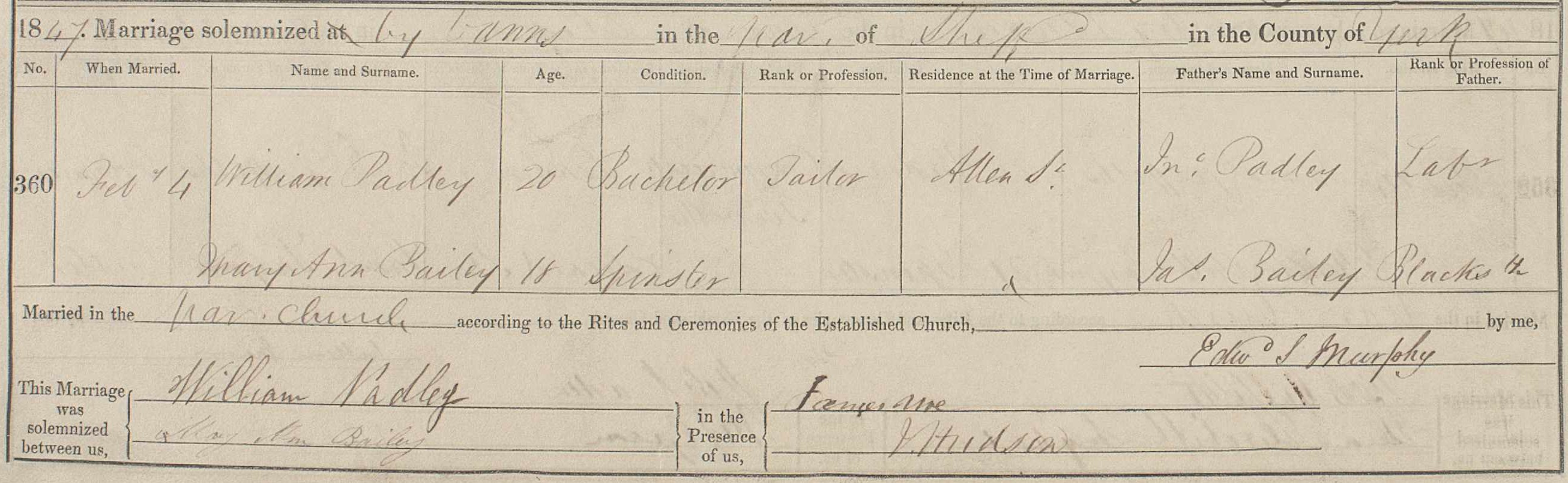
Shortly before her 18th birthday, Mary Ann met missionaries of The Church of Jesus Christ of Latter-day Saints and converted. She was baptized 20 October 1846. Her father and Harriet dismissed her from the home for becoming a Mormon. She soon met William Padley, another LDS member and a tailor who lived on Allen Street in Sheffield, and married him on 4 February 1847 at the Church of St Peter and St Paul (now a cathedral) in Sheffield.
Padley – Bailey marriage record
William Padley was born 22 September 1826 in Morton, Lincolnshire, just across the River Trent from Mattersey, and they may well have known each other from their home area before both moved to Sheffield. They had a son, Lorenzo Joseph Padley, born in December 1847. William became ill when Lorenzo was born and died 22 February 1850 in Morton, Lincolnshire. Left alone with a new son, Mary Ann went back to her parents, who would have nothing to do with her unless she gave up her religion. She would not, and instead decided to join the Saints in Utah.
Mary Ann and Lorenzo sailed from Liverpool on 8 January 1851 on the “Ellen” with James Willard Cummings (1819–1883) as the leader of the company. The ship had a difficult passage with measles and what others thought was whooping cough. She arrived in New Orleans 14 March 1851. On the 19th they left for St. Louis on the “Alleck Scott” and arrived on the 26th. Mary Ann and Lorenzo stayed in St. Louis while the company moved on, and it was there that she met William Sharp and his family.
William and Mary Ann grew close during their time in St. Louis. A daughter, Anne Elizabeth, was born to them on 31 October 1852. Both were still determined to join the Saints in Utah. They arranged to drive a freight wagon west for William Jennings, a Salt Lake City merchant and freighter, as the means of joining the Moses Clawson Company. On the trail, William and Mary Ann were married on 10 July 1853 at the crossing of Loup Fork in present-day Howard County, Nebraska. The company arrived in Salt Lake City between the 15th and 20th of September that year.
They settled in Lehi, Utah, Utah for a couple of years but had a number of issues with range for the cattle and some other minor squabbles. Water was also not found to be very dependable in the Lehi area. During this time, William and Mary Ann gave birth to two children, William and Isabella in 1854 and 1856, but both died as infants. Milo Riley was born in Lehi 23 July 1857. I have written of Milo and his family previously at this link: Sharp-Stoker Wedding.
William learned of land north near Ogden, Weber, Utah that was going to be opened up from some of the Saints passing through Lehi (abandoning Salt Lake City before the arrival of Johnson’s Army). These Lehi Saints were told of ample land and good water that was available west of Ogden. A scouting expedition went to search out the area in the fall of 1858 and visited with Lorin Farr (1820–1909) who told them of the available plain to the west.
The Sharp family left with other Lehi Saints on 10 March 1859 to travel to this new area. The group of about 100 arrived 17 March 1859 at what is present day Plain City, Weber, Utah. The company arrived at about 5 PM during the middle of a snowstorm. The company lined up the wagons to protect them from the wind and dug a hole in the ground for the campfire. Reports indicate that snow was deep and conditions uncomfortable. Plain City apparently lived up to its name with sagebrush that rose over 4 feet tall from the high water table beneath the soil.
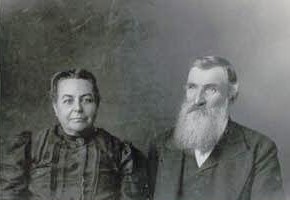
William Sharp put his carpentry and masonry skills to work making adobe brick and helping build the first homes in Plain City. William and Mary Ann lived in one of these homes. William served in the Plain City band, on the Plain City Z.C.M.I. board, acting as a builder, and also serving as a city leader. William and Mary Ann’s daughter, Evelyn, was the first girl born in Plain City, on 12 October 1859. Victorine Mary was born 8 April 1862 and was their last child. Mary Ann kept busy sewing and making suits, coats, and other jobs. Each of her daughters learned to become dressmakers.
William and Mary Ann each received their initiatory and endowment on 17 August 1861 at the Endowment House. On the same day, Mary Ann was sealed by proxy to her deceased first husband William Padley, with William Sharp himself standing proxy for the man Mary Ann had first married. As a woman already sealed to another man, she could not be sealed to William Sharp during their marriage, as the church did not permit women to be sealed to more than one husband at that time. The Sharp children’s sealing situation caused considerable family angst as all children born to Mary Ann after the 1861 sealing were born in the covenant to William Padley rather than William Sharp.
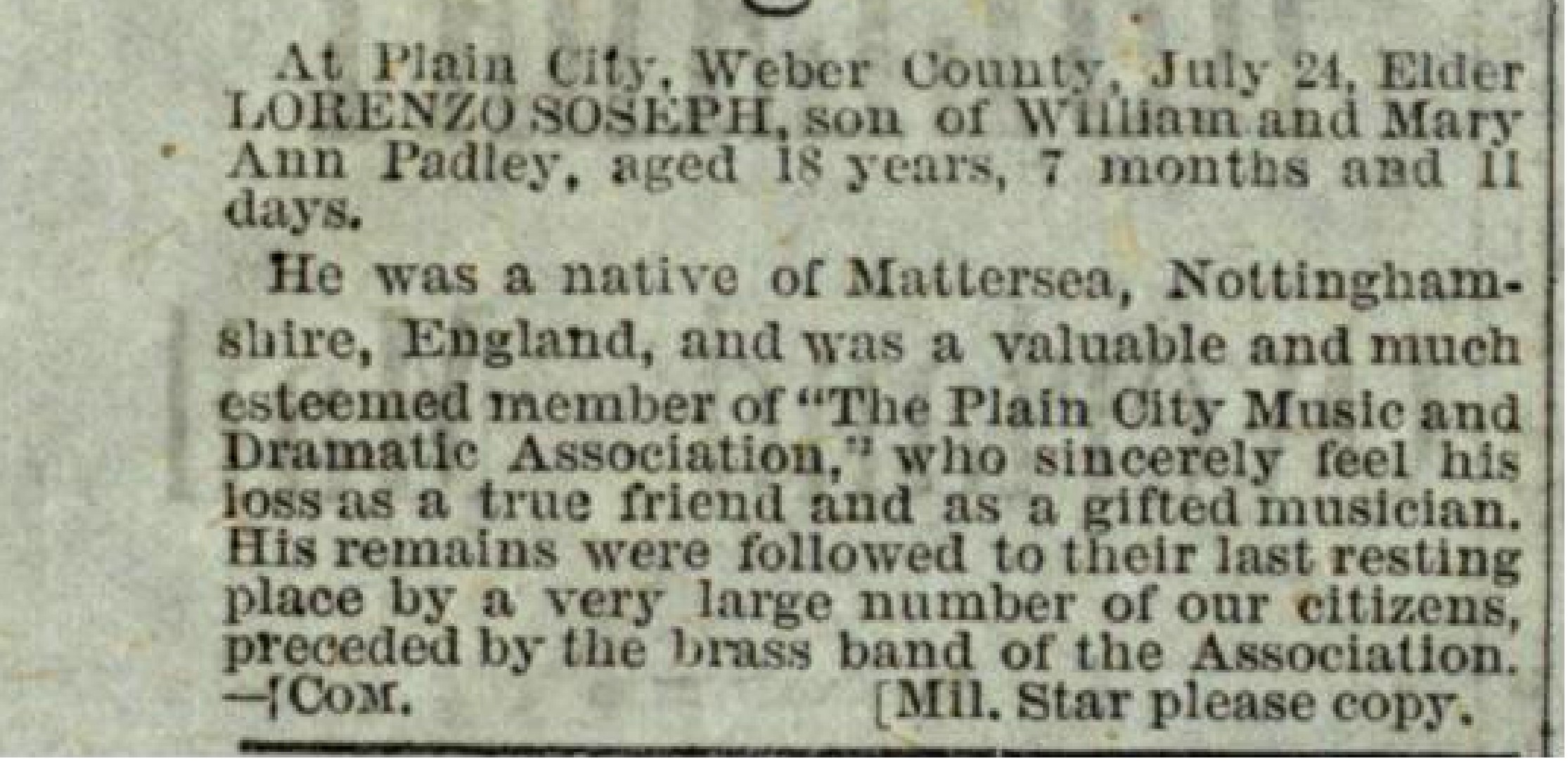
Lorenzo Joseph Padley died 24 July 1866 at Plain City, aged 18 years, 7 months and 11 days, putting his birth approximately 13 December 1847 in Mattersey, Nottinghamshire, England. He had grown up to become a valued member of the Plain City Music and Dramatic Association, which mourned him as a true friend and gifted musician. His remains were followed to their last resting place by a very large number of citizens, preceded by the brass band of the Association. The notice requested the Millennial Star in England to copy — a reminder that Mary Ann’s roots, and Lorenzo’s birthplace, lay in Nottinghamshire. The photo we have of him is pretty scratched, but here is a cleaned up photo, but it is not perfect. It is hard to tell what is his nose and what was deformities in the photo.
Anne Elizabeth married Daniel Claiborne Thomas Jr. on 29 January 1872 in Salt Lake City at the Endowment House, where they also received their initiatory, endowment, and sealing the same day. Daniel had been born 14 July 1850 on the Platte River in Nebraska on the trail to Utah. His father, Daniel Claiborne Thomas Sr., had been converted to the church by his brother Preston while on a mission to the Southern States, and the family had come to Utah in 1850, settling in Sulphur Springs (later named Lehi) among the earliest settlers there, before joining the Plain City founding group in March 1859. They settled in Plain City and had six children: Claiborne William (1872), Francis Milo (1875), LeRoy Bertrand (1878), Estella Inez (1884), Delbert (1888), and Elizabeth La Vieve (1889). Anne Elizabeth died 29 July 1891 in Plain City at thirty-eight, leaving six children ranging in age from two to nineteen. Daniel outlived her by thirty-eight years, dying in Ogden on 2 September 1929, and was buried beside her in Plain City Cemetery.
After several instances of desertion, Mary Ann moved out of their home on Christmas Eve 1875 and utterly refused to go back to William. William sued for divorce and Franklin Dewey Richards (1821–1899) granted the divorce (in probate court) on 19 May 1876.
At this time, it is possible that Bishop Lewis Warren Shurtleff (1835–1922), branch president 1870–1877, bishop 1877–1883, extended himself beyond what the members felt was right — going so far as to dictate how much everyone should pay in tithing — and some families were very vocal in expressing their discontent. William Sharp began construction on St. Paul’s Episcopal Church in 1877, and many disaffected members found a religious haven in this new faith. The building still stands today, owned by the Lions Club in Plain City. A significant group of members were excommunicated on 31 January 1879, including William Sharp, Mary Ann Sharp (listed separately because of the divorce), William Skeen, Edwin Dix, George Musgrave (father of their future daughter-in-law), Thomas Musgrave, Thomas Singleton, Thomas Davis, George W Harris, Jonathan Moyes, John Moyes, Winfield Spiers, James Wadman, Robert Davis, John Davis, and Thomas Robson. These lists also have “and wife” as well as “and family” which seems to indicate that spouses and families were included. Many of these families returned to the church after time away, some individuals never did. Milo Ross’s 1997 oral history interview offers one family perspective on the causes of the split.
This same year, William remarried to the widow of Charles McGary, Charlotte Elizabeth Earl, about 1879. We do not know exactly when or where.
Milo Riley married Mary Ann Stoker (aka Lillian or Lilly Musgrave) 11 May 1879 in Plain City in the little church William built. He died in 1916 in Plain City. Read about them here.
Evelyn Carlisle married James Henry Taylor 16 January 1881 in Plain City. She died in 1941 in Oregon.
Victorine Mary married Robert Edward Maw on 8 April 1883 in Plain City, her twenty-first birthday. Robert had been born in Plain City on 15 October 1859, the son of Robert Maw, one of Plain City’s founding pioneers who had consecrated his Lehi property in January 1857 and arrived in Plain City on 17 March 1859, the same day as the Sharp family. William Sharp had built the elder Robert Maw’s adobe house in those early Plain City years and had played cornet alongside Abraham Maw in Plain City’s first band. The marriage of Victorine Sharp and Robert Edward Maw united two of Plain City’s founding families. They had seven children: Ruby Ada (1884), Alice (1885), Jessie (1886), Florence Eveline (1888), Grace (1890), Edith Louise (1893), and Edward Clyde (1896). On the morning of 23 April 1897, a snow slide struck the Consolidated Mining and Smelting Company’s Garfield Mine in Gibbs Canyon, four miles north of Brigham City. Robert was killed. The Brigham City Bugler reported the disaster that week, noting that he was a married man who left a widow and seven children. Victorine was thirty-four years old. Her youngest child, Edward Clyde, was barely a year old. She did not remarry, living in Plain City and later Ogden until her death on 18 March 1945. She is buried in Plain City Cemetery.
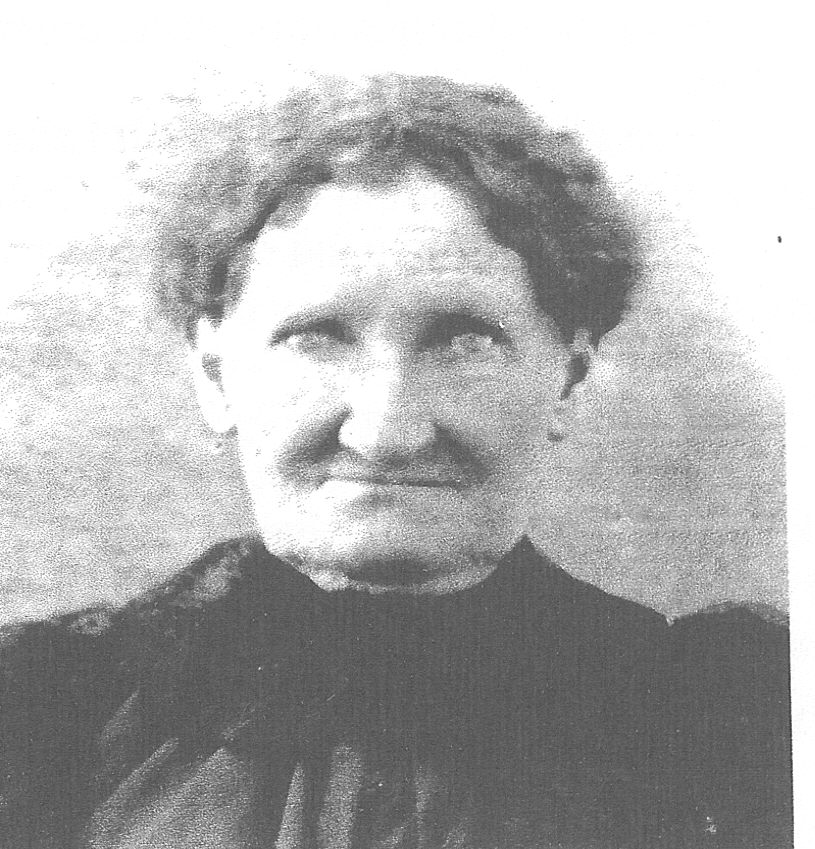
Mary Ann Bailey Sharp
Mary Ann continued to work as a dressmaker until she could not do so any more due to age. She lived with her Granddaughter Elizabeth Taylor from before 1900 and even moved with her to Baker City, Baker, Oregon. Mary Ann moved back to Plain City not long after Beth married.
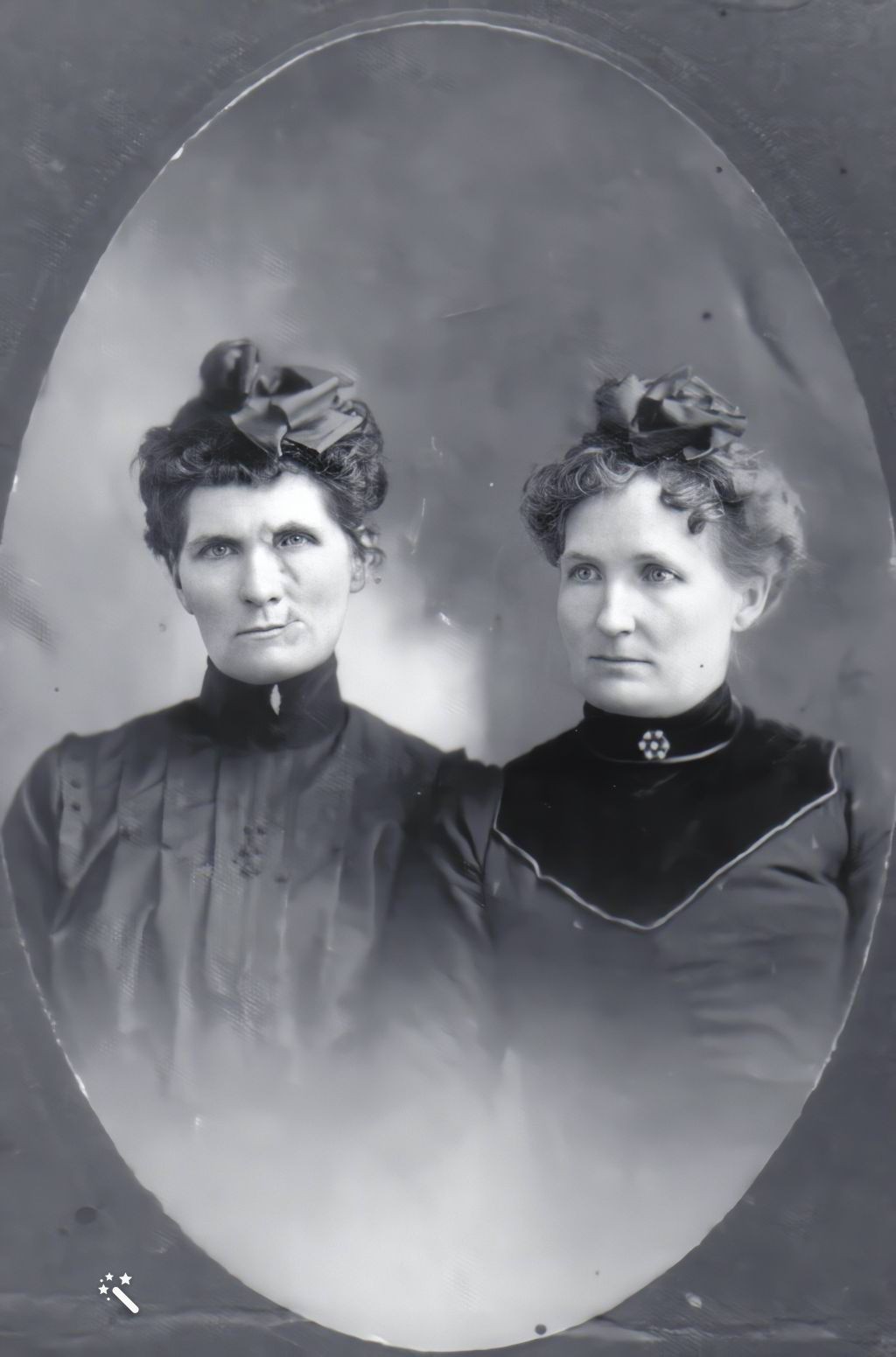
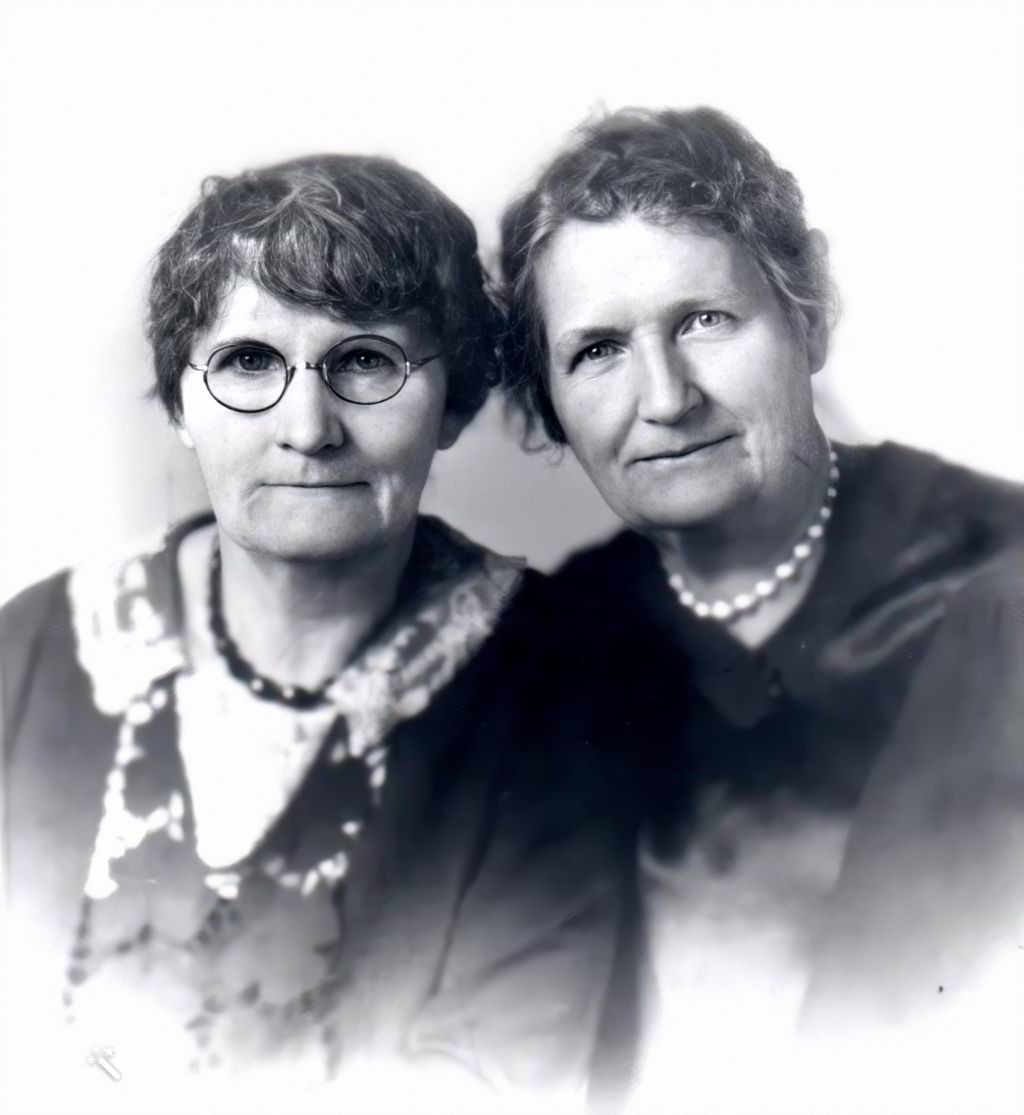
Evelyn & Victorine Sharp
~
Evelyn and Victorine Sharp
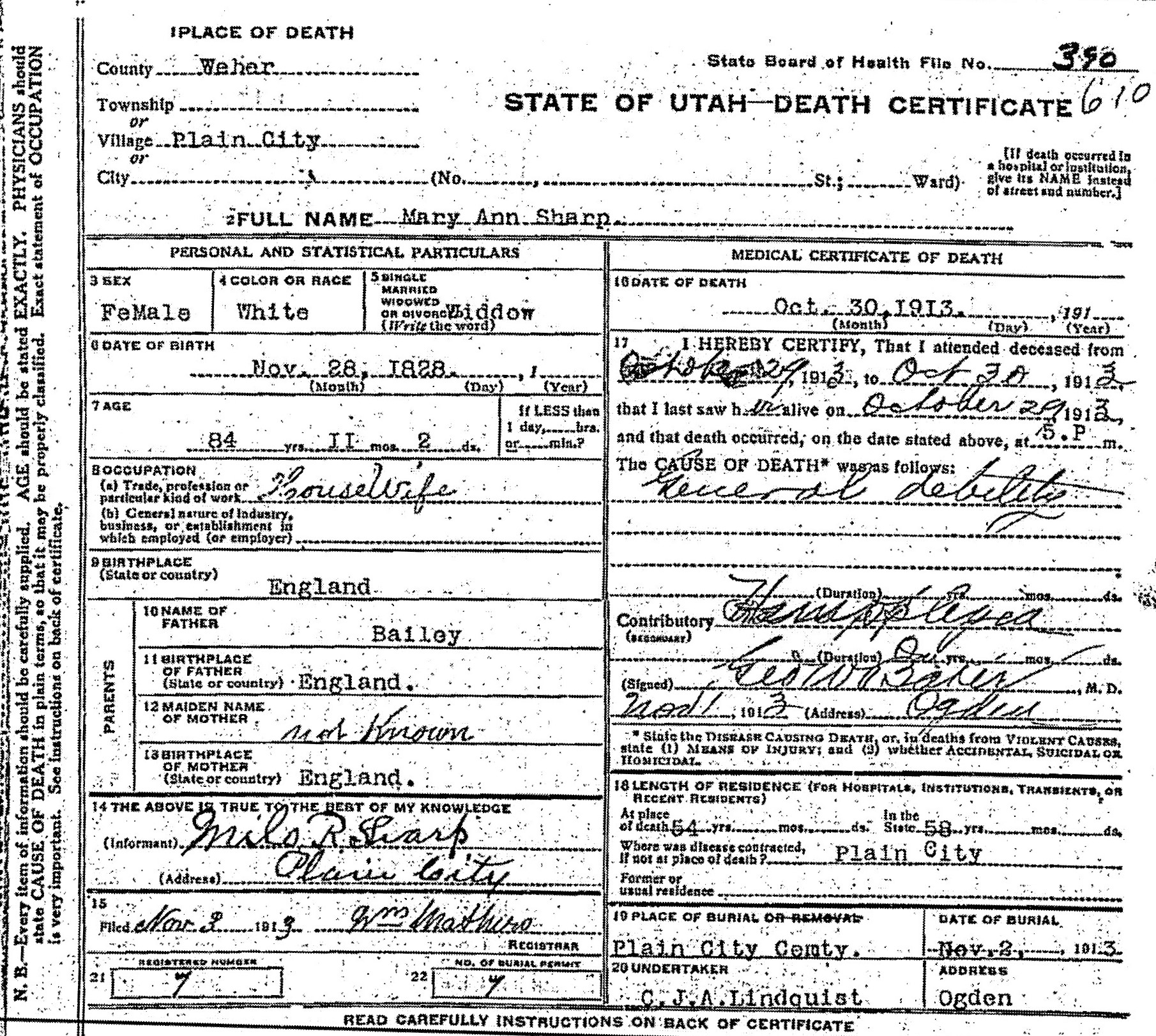
William died at 950 Washington Ave in Ogden on 22 December 1900 at 74 years and was buried two days later in the Ogden cemetery. Mary Ann died 30 October 1913 in Plain City at 84 years and was buried there three days later.
Mary Ann Bailey Sharp death certificate
William and Mary Ann both died outside the church.
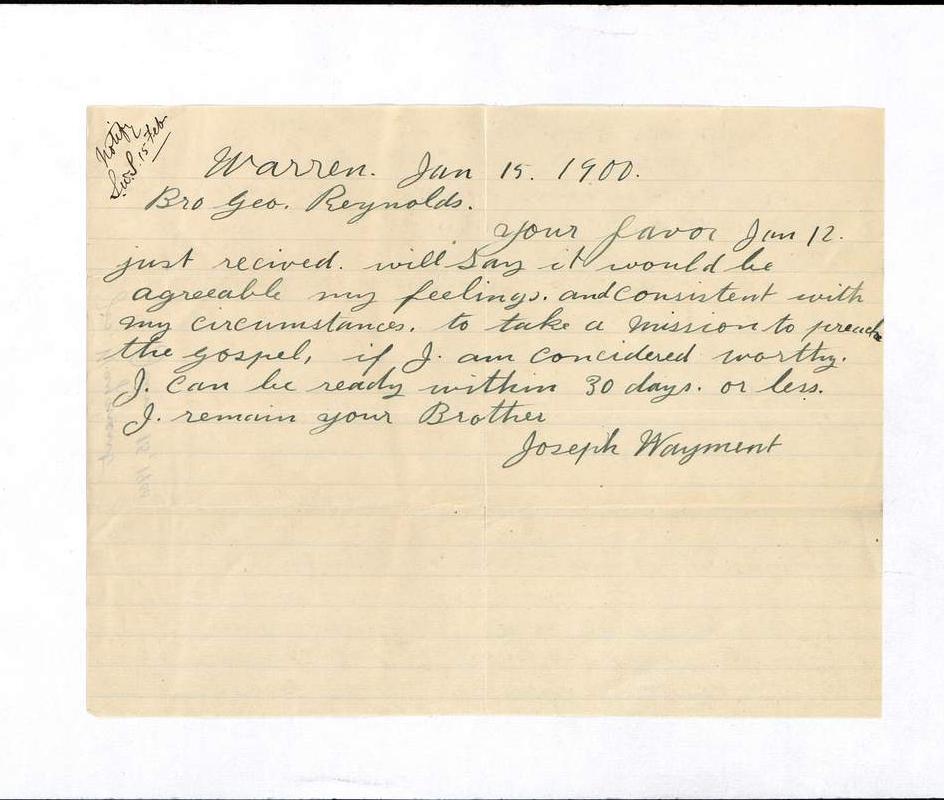
In December 1933, fifty-four years after the excommunication, three of Isabella Sharp Carlisle’s sons — Joseph Carlisle, James Carlisle, and Harvey Carlisle — wrote to LDS Church President Heber J. Grant requesting proxy reinstatement for their Uncle William and his former wife Mary Ann. Their letter described William as “honest, virtuous and kind” and was addressed care of Mrs. James S. Thompson — Annie Thompson, who would later write the 1957 history of Elizabeth Cartwright Sharp, and who was the daughter of James Carlisle. The letter explicitly identified William as “born 10 Dec. 1826, Misson, Notts., England, and later settled in Plain City, Utah.”
President Grant responded on 16 December 1933, consenting to proxy baptism for both William and Mary Ann. He noted that since they had previously received their endowments on 17 August 1861, those ordinances would need to be restored by proxy as well, and authorized Elder George F. Richards, President of the Salt Lake Temple, to officiate. On 3 February 1934, proxy baptism and confirmation were performed for both William and Mary Ann at the Salt Lake Temple, with William’s sealing to parents following on 2 July 1934. The restoration of William Sharp and his wife to the church, by the hands of his sister Isabella’s sons, closed that chapter.
This document found its way into my family history files for good reason. Settler no. 68 — William Sharp (1826–1900) — is my ancestor. William was born 10 December 1826 in Misson, Nottinghamshire, England. He married Mary Ann Padley and the couple crossed the plains in the Moses Clawson Company, arriving in Salt Lake City on 15 September 1853. They went first to Lehi, but as the Plain City History records, “the land was not too good and there was no good grazing for their cattle.” They consecrated their Lehi property to the Church on 8 January 1857 — the same day as William Clark himself — before joining the group that would found Plain City.
The Daughters of Utah Pioneers history of Plain City describes William Sharp simply as “the first stone mason in Plain City.” That understates it considerably. He built the Episcopal Church in 1877, the old Singleton home, and Robert Maw’s adobe house — that last detail connecting two Lehi consecrators (nos. 68 and 47) in the work of building their new community. He played the cornet in Plain City’s first band alongside Abraham Maw. He made adobe bricks with Joseph Skeen, Joseph Robinson, and Jeppe G. Folkman — all men who appear on Clark’s consecration list. He worked with Thomas Singleton constructing many of Plain City’s early houses. His daughter Victorine Mary Sharp married Robert Edward Maw, connecting the two founding families by marriage as well as by community. His son Milo Riley Sharpplayed first base on Plain City’s founding baseball team, and Milo’s wife Lillie Stoker Sharp performed in Plain City’s second dramatic association. Milo served as school trustee beginning in 1897. Across generations, W. Albert Sharp served as a founding trustee of both the town board and the cemetery district when Plain City incorporated in 1944.
The Sharps were not alone in making that journey north from Lehi. The consecration list reads almost like a founding roster for Plain City — and the primary sources confirm it. Robert Maw (no. 47) left his own first-person account: “I Robert Maw, say that I was one of the first pioneers who came to Plain City on March 17, 1859. We left Lehi on the 10th of March.” The fall 1858 scouting party that selected the Plain City site included Daniel Collett (no. 14), Joseph Skeen (no. 69), William Wallace Raymond (no. 64), Joseph Robinson (no. 67), Joseph Folkman and Jeppe Folkman (no. 28), and Thomas Ashton — men who had consecrated their Lehi properties just months before. When Plain City Branch was organized in May 1859, William Wallace Raymond was appointed the first Presiding Elder, with Daniel Collett and Jeppe G. Folkman as counselors. Joseph Skeen — who built Plain City’s first log cabin and is credited with introducing adobe making to Utah — was appointed the first water master. His wife Alice Booth Robinson was recorded as the first white woman to set foot on Plain City soil.
Jeppe Jorgen Folkman (no. 28) managed Plain City’s cooperative ZCMI store from its founding in 1869 and operated one of the settlement’s first stores from his home. The Folkman family remained central to Plain City’s commercial and civic life for generations. Robert Maw (no. 47) founded the Maw family line in Plain City — his descendants produced three generations of ward bishops, a commercial dynasty in the Maw store and canning operations, and civic leaders serving on the town board and irrigation company board well into the twentieth century. William Van Dyke (no. 78) operated one of Plain City’s earliest merchant stores, confirmed as a living pioneer at the 1909 50th anniversary celebration. The Raymond family (nos. 63–64) provided the first Presiding Elder, first Relief Society president, and LDS Sunday School assistant superintendent.
The Lehi fort of the 1850s was, in a very real sense, the nursery of Plain City. Clark’s consecration list and the Plain City founding history are two windows into the same group of people, two years apart.
The following is a transcription of Clark’s paper, with the three original images and footnotes collected at the end.
Wayne E. Clark, a Lehi native and retired Auburn University professor of entomology, spent years examining the consecration deeds signed by early Lehi settlers, comparing them against Utah County property records, the 1860 Federal Census, Sanborn Fire Insurance Maps, and family history sources. His 2017 paper, part of the Wayne E. Clark Collection at the Lehi Historical Society and Archives (lehihistory.com), has been cited by the University of Utah’s Century of Black Mormons project and published in the Lehi Free Press. The underlying deeds are held in the Utah County Office of Land Records and at the BYU L. Tom Perry Special Collections.
Early Mormon Settlers in Lehi, Utah Territory, Consecrated Their Properties to Their Church
Wayne E. Clark
Lehi, Utah, 2017
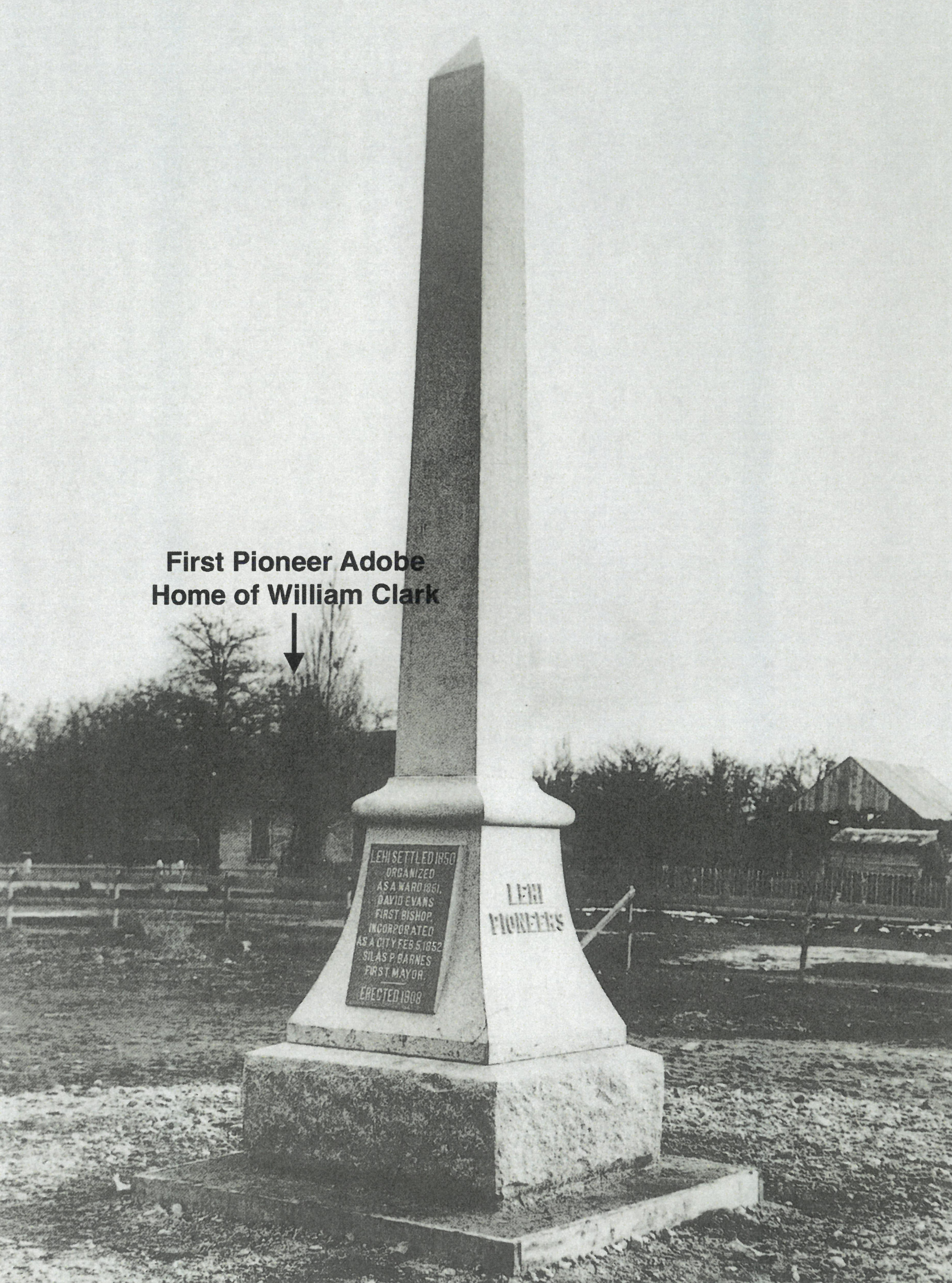
The Lehi Pioneer Monument was erected in 1908 on the Northeast corner of First North and First West Streets in Lehi, Utah. A photographer pointing his lens toward the Southeast captured a portion of a small adobe home in an early photograph of the monument. That home stood on First North Street on the block on which the Lehi Memorial Building would come to stand in a few years. In pioneer times the block on which it stood was the northeastern-most of sixteen city blocks that were enclosed within a twelve-foot-high mud wall erected as protection against the fear of hostile Indians. The monument was constructed on the site of the last crumbling remnants of the old wall.
Things have changed in Lehi since the little adobe home stood across the street from the monument. The wall is gone and forgotten. The old Lehi High School/Junior High School athletic field that came to occupy the site on which the monument and the adobe house in the background is gone, if not entirely forgotten. Instead of the athletic field, chairs and umbrellas surround a small wading pool on a deck that extends south of the swimming pool that’s part of the large Lehi Legacy Center complex on the ground on which the monument stood, and a large parking lot covers the ground on which the house once stood. Today, if one stands on the spot where the photographer stood in 1908, or some time not long afterward, automobiles that carry people to and from the Lehi Legacy Center occupy a prominent portion of the scene. The Memorial Building can be seen along the photographer’s line of site in the background.
The owner of the home was my second great grandfather, English Mormon immigrant William Clark (1825–1910). He and at least 84 other heads of families in Lehi did what he did between 11 April 1856 and 30 January 1858. A little more than three years later he consecrated his little adobe house to the church.
Feramorz Young Fox provides an explanation of the “Consecration Movement” of the 1850s.2 He writes that the movement was church-wide. Hundreds of documents he calls “deeds of consecration” were generated in the Utah Territory between 1855 and 1862.3 The first public announcement of the Consecration Movement was given at general conference in April 1854, but the implementation was delayed until a proper form compliant with the laws of the Territory could be developed and printed. He writes that Brigham Young’s consecration deed4 is dated 11 April 1855, but notes the existence of an earlier deed recorded in Millard County on 1 January 1855.
Fox presents a table5 in which the numbers of deeds by county are listed, along with the population of each county between the years 1855 and 1857. The total for the fourteen counties in the table is given as 2,747. This must be the figure used by Leonard Arrington to calculate that about forty percent of the 7,000 heads of families in the Utah Territory deeded all their property to the church during the period in which the program was in effect.6 Fox gives the following numbers for Utah County: 69 (1855), 147 (1856), and 92 (1857) for a total of 922.
William Clark’s consecration deed is representative.
Be it known by these presents that I, William Clark, of Lehi City, in the county of Utah, and Territory of Utah, for and in consideration of the good will which I have for the Church of Jesus Christ of Latter Day Saints, give and convey unto Brigham Young, Trustee in Trust for said Church, his successors in office, and assigns, all my claim to and ownership of the following described property, to wit:
One lot in the City of Lehi with buildings thereon and improvements: Lot no. 6 in Block 16 containing 50/160 of an improvement.
Also Lot 9 in Block 7 of Plat B in the American Creek Survey of Farm Land containing 5 acres … $25.00
Also Lots 12 & 13 in Block 5 Containing 2 acres in the Lehi Garden Lot Survey … $20.00
Also Lot 15 in Block 10 Containing 10 acres in Plat B, American Creek Survey of Farm Land … $30.00
Also outstanding account in land … $200.00
1 yoke of oxen, 1 horse … $140.00
1 wagon, $45, 1 rifle, $10 … $55.00
2 cows @ $30.00 each, 1 two year old, $25 … $55.00
1 yearling heifer, $15, 1 hog, $17 … $32.00
Farming tools, $10. Mechanics tool, $2.50 … $12.50
Household furniture … $50.00
35 Bu. of Wheat @ $2 per Bushel … $70.00
10 Bu. of Corn @ $1.5 per Bushel … $15.00
30 Bu. of Oats @ $1 per Bushel … $30.00
30 Bu. of Potatoes @ $1 per Bushel … $30.00
Garden Vegetable $6, Hay $24 … $30.00
120 lbs of Pork at 20¢ per lb … $24.00
Total Amount of William Clark’s property … $1048.508
Together with all the rights privileges and appurtenances thereunto belonging or pertaining. I also covenant and agree that I am the lawful claimant and owner of said property and will warrant and forever defend the same unto the said Trustee in Trust, his successors in office and assigns, against the claims of our heirs and assigns, against the claims of any heirs, assigns, or any person whosoever.
[signed] William Clark his x mark
Witnesses: Thomas Taylor George A. Leslie Thomas Ashton
Territory of Utah, County of Utah. I Lucius N. Scovill, Recorder of the aforesaid County, certify that the signer of the above transfer, personal known to me, appeared this 8th day of January AD 1857, and acknowledged that he of his own choice executed the foregoing transfer.
Lucius N. Scovill Recorder of Utah Co. UT.
The property William Clark and his neighbors in Lehi consecrated to the church included title to land. This falls into three categories for Clark and for the others: farm land, garden plots and lots on city blocks. The farm land is defined in what the deeds refer to as the “American Creek Survey of Farm Land.” This survey has not been located.9 Likewise, the survey for the Garden Plots referred to on the consecration deeds has not been located.10 The third category of property in land recorded on the consecration deeds refers to a “Lehi Survey of Building Lots.” The survey was evidently done in 1853 by Bishop Evans, as described in the consecration deeds.
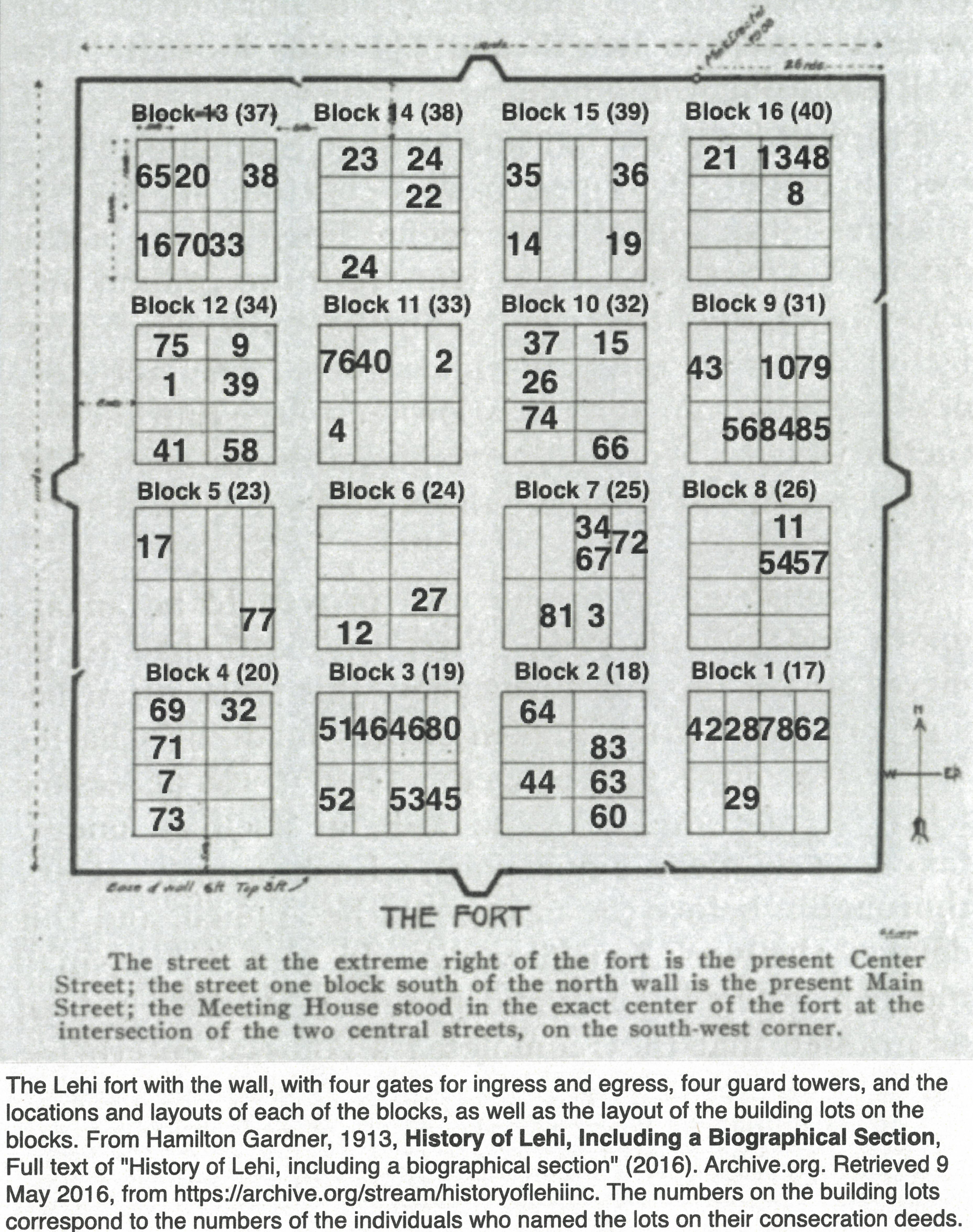
The sixteen blocks inside the fort were numbered beginning with the block on the Southeast corner as Block 1 and continuing east to west with Blocks 2 through 4, then switching to east on the second tier of blocks and so forth to Block 16 on the Northeast corner of the fort.
Although the blocks inside the fort had to be re-numbered, this numbering system is consistent with one in use today. The current system apparently dates from 1861. According to Gardner,13 on April 27, 1861, the council received a numerously signed petition asking that the city be enlarged. This unmistakable sign of growth occasioned much discussion. For one, Bishop Evans seriously objected to any such extension of the city, giving as his reason the lack of water in Dry Creek to supply any considerable addition to the population of Lehi. Finally, however, all objections were satisfactorily adjusted, and the City Council ordered that a tier of blocks be surveyed around the wall. These did not supply the unexpected demand for building lots, so a tier each on the North and South was subsequently surveyed and sold to home builders.
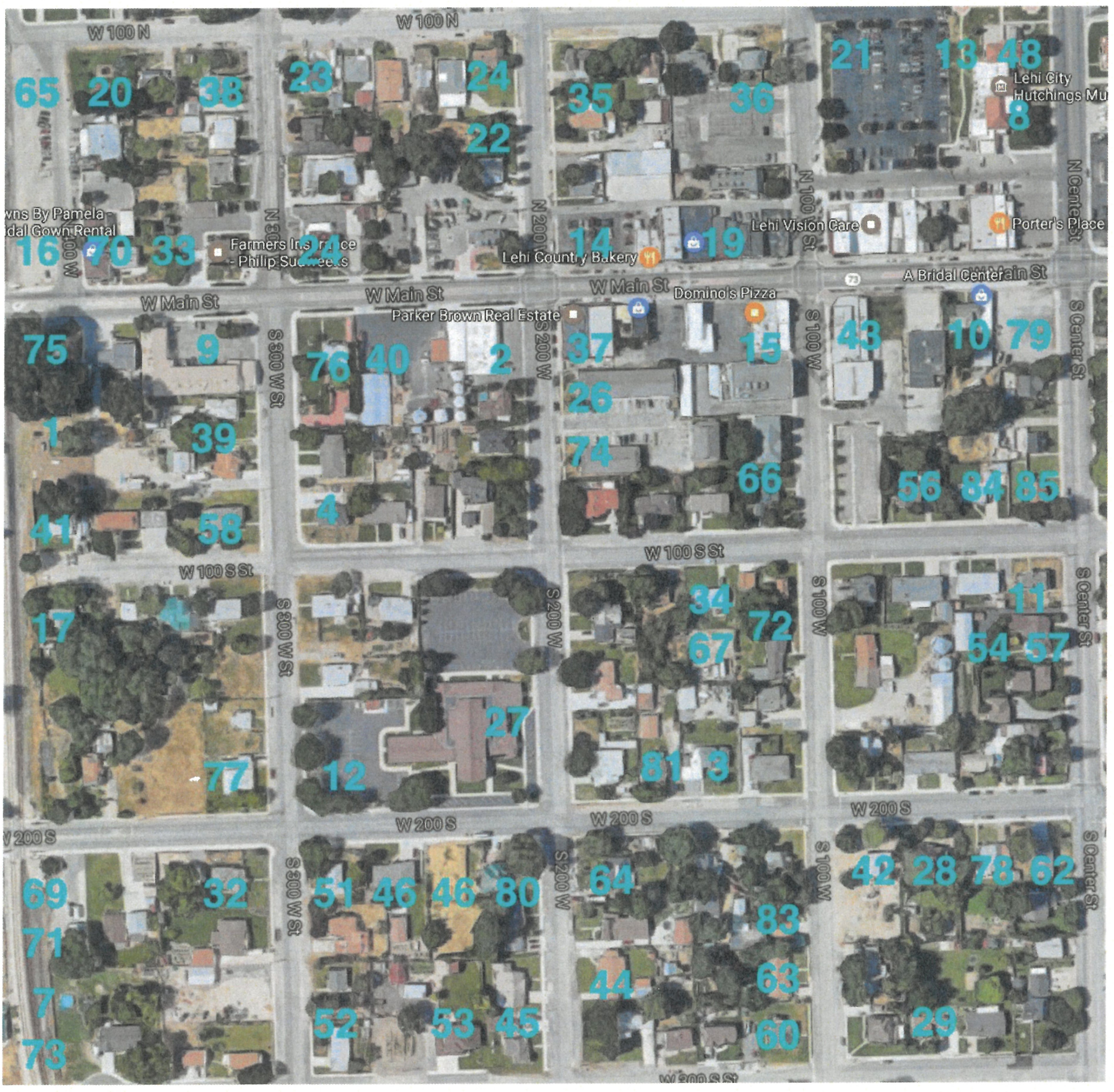
Gardner included a diagrammatic depiction of the fort, surrounded by the wall, in his history,14 with four gates for ingress and egress, four guard towers, and the locations and layouts of each of the blocks, as well as the layout of the building lots on the blocks, are depicted. The numbers of blocks 1–16 are shown, with the corresponding numbers of the same blocks in the later surveys and continuing to this date, in parentheses. The lot and block numbers are listed on 71 of the 85 1856/1858 Lehi consecration deeds.15 The building lots on the diagram as assigned to the individual settlers are identified by the following numbers. Some of the homes listed on the consecration deeds are still standing. The house nearest current addresses of these are listed. The apparent location of houses no longer standing are also given below.
The Settler Lists
Note: Seventy-two of the 85 examined consecration deeds list the block number and the lot number of property in the city. All of the blocks listed are inside the fort. A few deeds list portions of additional lots, and some list two or more complete building lots. Thirteen deeds list no city lots. Presumably those individuals did not own their own homes. Thirty-two deeds list an adobe house and one lists a “mud house.” These are valued from $150.00 to $1,100.00. Two individuals, Abram Hatch and John Riggs Murdock, specified that their adobe houses had four rooms and one cellar. Joseph Skeen listed a 6-room adobe house. Eight log houses (on 7 lots), with values ranging from $60.00 to $200.00, are listed on the deeds. Eighteen deeds list a lot number and a block number but specify only that the property was “with improvements,” without describing the type of house. Fourteen of the 85 deeds have no lot or block numbers or houses. Presumably these individuals did not own their own homes. Lehi settler’s consecrations ranged from $127.75 to $3,075.00, for a total of $93,128.70.
South, 400 West 1. Andrew Anderson (1833–1909). Lehi, Lot 4, Block 12, with adobe house, $400.00, $1,203.00 total consecration. 17 November 1856. BK C, 1855, p. 83. 37 South, 400 West
South, 200 West 2. Thomas Ashton (1813–1903). Lehi, Lot 8, Block 11, with log house, $200.00, $1,543.00 total consecration. 9 January 1857. BK F, p. 109. 36 South, 200 West
140 South, 200 West 3. Charles Barnes Jr. (1827–1911). Lehi, Lot 2, Block 7, with adobe house, $300.00, $1,008.00 total consecration. 10 January 1857. BK F, p. 129.
69 South, 300 West 4. Alfred Bell (1794–1874). Lehi, Lot 4, Block 11, with adobe house, $400.00, $1,201.00 total consecration. 10 January 1857. BK F, p. 123.
5. Jens Peter Ipsen Benson [Peter Benson] (1831–1898). Lehi, no city lot, $135.00 total consecration. 16 January 1857. BK F, p. 177.
6. Yeppa Benson [Jeppe Bendtsen] (1795–1872). Lehi, no city lot, $168.00 total consecration. 16 January 1857. BK F, p. 177.
West, 300 South 7. Samuel Briggs (1826–1898). Lehi, Lot 3, Block 4, with adobe house, $150.00, $997.00 total consecration. 10 January 1857. BK F, p. 131. 382
West Main Street 8. George Brough (1823–1914). Lehi, Lot 7, Block 16, with adobe home, $150.00, $421.00 total consecration. 16 January 1857. BK F, p. 180. 55 North Center Street
North Center Street 9. Abram Brown [Abraham Brown] (1808–1891). Lehi, Lot 9, Block 12, with adobe house, $250.00, $608.00 total consecration. 26 January 1857. BK F, p. 208. 333 West Main Street
West Main Street 10. John Brown (1820–1896). Lehi, Lot 7, Block 9, with improvements, $150.00, $3,083.00 total consecration. 8 January 1857. BK F, p. 81. 45 West Main Street
15 West, 100 South 11. Martin Bushman (1802–1870). Lehi, Lot 6, Block 8, with improvements, $300.00, $1,032.00 total consecration. 16 January 1857. BK F, p. 167.
284 West, 200 South 12. David Clark (1816–1889). Lehi, Lot 2, Block 6, with adobe house, $600.00, $1,520.00 total consecration. 5 February 1857. BK G, p. 71.
100 West, 100 North 13. William Clark (1825–1910). Lehi, Lot 6, Block 16, with adobe house, $200.00, $1,048.50 total consecration. 8 January 1857. BK F, p. 91. 45 West, 100 North
West Main Street 14. Daniel Collett (1807–1894). Lehi, Lot 4, Block 15, with improvements, $200.00, $1,313 total consecration. 10 January 1857. BK F, p. 126. 188 West Main Street
West Main Street 15. Sylvanus Collett (1835–1901). Lehi, Lot 6, Block 10, with adobe house, $150.00, $360.00 total consecration. 9 January 1857. BK F, p.
104, 115 West Main Street 16. Sarah Couzens [Sarah Jaque] (widow of Joseph Couzens [Joseph William Cousins (1809–1856)], deceased). Lehi, Lot 4, Block 13, with improvements, $150.00, $927.20 total consecration. 9 March 1857. BK H, p. 40.
206, 389 West, 100 South 17. Daniel William Cox (1801–1858). Lehi, Lot 5, Block 5, with adobe house, $450.00, $2,225.50 total consecration. 20 January 1857. BK F, p.
West Main Street 18. William Taylor Dennis (1810–1894). Lehi, no city lot, $4,115.50 total consecration. 9 January 1857. BK F, p. 111.
West Main Street 19. Joseph Dobson (1804–1872). Lehi, Lot 2, Block 15, with mud house, $200.00, $721.00 total consecration. 8 January 1857. BK F, p. 83. 130
86 North, 400 West 20. James Downs (1815–1882). Lehi, Lot 6 and W1/2 of Lot 7, Block 13, with adobe house, $250.00, $1,813.00 total consecration. 9 March 1857. BK H, p. 46.16
North, 100 West 21. Robert Dunn (1818–1885). Lehi, Lot 5, Block 16, with improvements, $250.00, $1,085 total consecration. 20 January 1857. BK F, p. 272.17 86 North, 100 West
North, 100 West 22. Shadrack Empy (1822–1892). Lehi, Lot 7, Block 14, with adobe house, $200.00, $820.00 total consecration. 10 January 1857. BK F, p. 130. 229
West, 100 North 23. Abel Evans (1812–1866). Lehi, Lot 5, Block 14, except NE Quarter of lot, with house, $150.00, $528.00 total consecration. 31 December 1856. BK F, p. 40.18 90 North, 300 West
Main Street 24. David Evans (1804–1883). Lehi, Lots 2 and 6, Block 14, $1,100.00, $3,075.00 total consecration. 10 May 1856. BK C, p. 39.19 288 West Main Street
Main Street 25. Henry Beck Evans (1830–1911). Lehi, no city lot, $180.00 total consecration. 28 January 1857. BK F, p. 284.
200 West 26. Joseph Field (1831–1911). Lehi, Lot 4, Block 10, with improvements, $200.00, $489.00 total consecration. 16 January 1857. BK F, p. 178. 49
200 West, South 27. John Folker (1814–1884). Lehi, Lot 8, Block 6, with adobe house, $200.00, $984.00 total consecration. 8 January 1857. BK F, p. 94. 166
South, 200 West 28. Jeppe George Folkmann [Jeppe Jorgen Folkman] (1824–1916).20 Lehi, Lot 6, Block 1, with improvements, $65.00, $394.00 total consecration. 28 January 1857. BK F, p. 285. 65 West, 200 South
200 West, South 29. William Fotheringham (1826–1913). Lehi, Lot 3, Block 1, with two log houses, $100.00, $1,845 total consecration. 4 November 1856. BK C, p.
73, 66 West, 300 South 30. Charles Wesley Gallup. Lehi, no city lot, $438.50 total consecration. 16 January 1857. BK F, p. 170.
31. John Henry Glines (1831–1897). Lehi, no city lot, $387.00 total consecration. 31 March 1857. BK H p. 90.
Block 6, Lot 6, 6 North 32. Abram Hatch [Abraham Chase Hatch] (1830–1911). Lehi, Lot 6, Block 4, with adobe house, $750.00, $2,891.00 total consecration. 10 January 1857. BK F, np. 132.21
100 South 33. Lorenzo Hill Hatch (1826–1910), and Sylvia S. Hatch. Lehi, Lot 2, Block 13, with buildings and improvements, $800.00, $1,608.00 total consecration. 11 April 1856. BK C 1855, p. 41.22 212 South, 300 West
125 West 34. John Joseph Hayes (1825–1899). Lehi, E1/2 Lot 7, Block 7, $100.00, $311.00 total consecration. 9 January 1857. BK F, p. 105. 125 West, 100 South
96 North, 200 West 35. William Brown Hill (1836–1883). Lehi, Lot 5, Block 15, with improvements, $150.00, $931.75 total consecration. 29 December 1856. BK F, p. 30. 96 North, 200 West
93 North, 100 West 36. William Hyde (1818–1874). Lehi, Lot 8, Block 15, $150.00, $1,040.00 total consecration. 23 December 1857. BK H, p. 106.
187 West Main Street 37. Ezekiel Hopkins (1801–1872), or his son, Ezekiel Hopkins (1839–1911). Lehi, Lot 5, Block 10, with log house, $200.00, $610.00 total consecration. 10 January 1857. BK F, p. 120.23 187 West Main Street
87 North, 300 West 38. Daniel James (1807–1880). Lehi, E1/2 Lot 7, and N1/2 Lot 8, Block 13, with adobe house, $200.00, $871.00 total consecration. 28 February 1857. BK H, p. 21. 87 North, 300 West
South, 300 West 39. Samuel James (1825–1893). Lehi, Lot 7, Block 12, with adobe house, $150.00, $490.00 total consecration. 28 January 1857. BK F, p. 278. 24
West Main Street 40. John Karren (1834–1905). Lehi, Lot 7, Block 11, with adobe house, $150.00, $441.00 total consecration. 28 January 1857. BK F, p. 181. 231
West Main Street 41. Thomas Karren (1810–1876). Lehi, Lot 2 & the E1/2 of Lot 3, in Block 12, with log house, $150.00, $1,766.00 total consecration. 8 January 1857. BK F, p. 92. 390 West, 100 South
217 South, 100 West 42. Henry Kearns (1778–1859). Lehi, Lot 5, Block 1, with improvements, $350.00, $1,049.00 total consecration. 10 January 1857. BK F, p. 128.
West Main Street 43. Suel Lamb (1833–1913). Lehi, Lot 5, Block 9, with adobe house, $150.00, $652.00 total consecration. 10 January 1857. BK F, p. 127. 95 West Main Street
261 South, 200 West 44. John Irvin Lawson [John Lawson] (1805–1884). Lehi, N1/2 Lot 3, Block 3, with improvements, $50.00, $145.00 total consecration. 10 January 1857. BK F, p. 117.
290 South, 200 West 45. Abraham Losee (1814–1887). Lehi, Lot 1, Block 3, with improvements, $150.00, $1,153.00 total consecration. 9 January 1857. BK F, p. 115.
290 South, 200 West 46. John Smiley Lott (1826–1894) and Permelia Darrow Lott (widow of Cornelius P. Lott, deceased) and Peter Lott (1805–1882). Lehi, Lot 1, Block 3, $150.00, $1,153.00 total consecration. 9 January 1857. BK F, p. 115.
[Peter] Lyman Lott (1842–1906). Lehi, Lots 6 and 7, Block 3, with improvements, $600.00, $2,226.00 total consecration. 8 January 1857. BK F, p. 100. 241 West, 200 South
47. Robert Maw (1834–1920). Lehi, no city lot, $285.00 total consecration. 19 January 1857. BK F, p. 182. PC
45 West, 100 North 48. James McGaw (1824–1872) & Elias Bassett.24 Lehi, Lot 6, Block 16, with adobe house, $400.00, $2,255.00 total consecration. 23 December 1857. BK H, p. 108.
100 North 49. Ephraim Mecham (1808–1891). Lehi, no city lot, $392.50 total consecration. 28 January 1857. BK F, p. 280.
50. John Miller (1846–1939). Lehi, no city lot, $127.75 total consecration. 28 January 1857. BK F, p. 280.
300 West 51. John Murdock (1792–1871). Lehi, Lot 5, Block 3, with house, $100.00, $295.00 total consecration. 31 December 1856. BK F, p. 38. 209 South
300 West 52. John Riggs Murdock (1826–1913). Lehi, Lot 4, Block 3, also 3/8 of Lot 3, Block 4, Lehi, with 4-room adobe house with cellar, $800.00, $5,097.00 total consecration. 9 January 1857. BK F, p. 114. 269 South, 300 West
238 West, 300 South 53. Orrice Clapp Murdock (1824–1915). Lehi, Lot 2 and 2 rods of the E side of Lot 3, Block 3, with house, $500.00, $1,665.50 total consecration. 8 January 1857. BK F, p. 95. 238 West, 300 South
South Center Street 54. Jens Nelson [Jens Nielsen] (1796–1875). Lehi, N1/2 of Lot 7, Block 8, $50.00, $306.00 total consecration. 16 January 1857. BK F, p. 171. 140
South Center Street 55. Henry Elliot Norton (1826–1913). Lehi, no city lot, $460.00 total consecration. 7 May 1856. BK C, p. 42.
74 West, 100 South 56. Peter Madsen Peel [Peder Madsen Pihl] (1820–1900). Lehi, Lot 3, Block 9, with log house, $100.00, $537.00 total consecration. 28 January 1857. BK F, p. 279. 74 West, 100 South
140 South Center Street 57. Hans Peterson [Hans Pederson] (1823–1881). Lehi, S1/2 of Lot 7, Block 8, with log house, $60.00, $537.00 total consecration. 28 January 1857. BK F, p. 286. 140 South Center Street
88 South, 300 West 58. Canute Peterson (1824–1902). Lehi, Lot 1, Block 12, with improvements, $150.00, $1,957.00 total consecration. 8 January 1857. BK F, p. 85.
59. Peter Peterson (1821–1901). Lehi, no city lot, $307.50 total consecration. 28 January 1857. BK F, p. 283.
290 South, 100 West 60. Stephen Howard Pierce (1816–Deceased). Lehi, Lot 1, Block 2, with improvements, $466.00, $761.00 total consecration. 28 January 1857. BK F, p. 275.
290 South, 100 West 61. Charles Price (1800–1873). Lehi, no city lot, $680.00 total consecration. 27 November 1856. BK C, p. 104.
South Center Street 62. Tunis Rappley (1808–1883). Lehi, Lot 8, Block 1, with adobe house, $200.00, $772.00 total consecration. 28 January 1857. BK F, p. 282. 220 South Center Street
260 South, 100 West 63. Alonzo Pearls Raymond (1821–1904). Lehi, Lot 8,25 Block 2, with adobe house, $300.00, $2,305.00 total consecration. 9 January 1857. BK F, p. 108. 260 South, 100 West
215 South, 100 West 64. William Wallace Raymond (1824–1881). Lehi, Lot 5, Block 2, with log house, $200.00, $2,020.00 total consecration. 31 March 1857. BK H, p.
88 West, 215 South 65. William Reid (1805–1858). Lehi, Lot 5, Block 13, with improvements, $23.00, $450.50 total consecration. 16 January 1857. BK F, p. 179.
86 North, 400 West 66. Alonzo Donnell Rhodes (1824–1893). Lehi, E1/2 of Lot 1, Block 10, with house, $200.00, $1,164.00 total consecration. 9 January 1857. BK F, p. 102. 90 South, 100 West
125 West, 100 South 67. Joseph Robinson (1814–1891). Lehi, W1/2 Lot 7, Block 7, with improvements, $100.00, $521.00 total consecration. 28 January 1857.26 BK F, p. 281. 125 West, 100 South
100 South 68. William Sharp ([1826]–1900). Lehi, no city lot, $235.00 total consecration. 8 January 1857. BK F, p. 86.
86 West, 125 South 69. Joseph Skeen (1816–1882). Lehi, Lot 5, Block 4, with 6-room adobe house, $1,000.00, $2,764.00 total consecration. 8 January 1857. BK F, p. 99. 377 West, 200 South
205, 390 West Main Street 70. Joseph Johnson Smith (1821–1902). Lehi, Lot 3, Block 13, with adobe house, $500.00, $1,804.00 total consecration. 20 January 1857. BK F, p.
89, 267 South, 400 West 71. Samuel Thomas Smith (1823–1890). Lehi, Lot 4, Block 4, with adobe house, $150.00, $507.50 total consecration. 8 January 1857. BK F, p.
West Main Street 72. James Taylor [James Whitehead Taylor] (1819–1891) and Ann Taylor. Lehi, Lot 8, Block 7, $700.00, $1,300.00 total consecration. no date, no month,27 1856. BK C 1855, p. 40. 110 South, 100 West
382 West, 300 South 73. Thomas Taylor (1826–1900). Lehi, Lot 2, Block 2, with adobe house, $300.00, $932.00 total consecration. 9 January 1857. BK F, p. 106–107.
65 South, 100 West 74. William Taylor [William Whitehead Taylor] (1828–1907). Lehi, Lot 3, Block 10, adobe house, $200.00, total consecration $625.00. [no date]. BK C 1855, p. 81. April 1856. 65 South, 100 West
186 South, 300 West 75. Daniel Stillwell Thomas (1803–1878). Lehi, Lot 5, Block 12, with adobe house, $300.00, $842.50 total consecration. 26 February 1857. BK G, p. 204. 405 West Main Street
West Main Street 76. Preston Thomas (1814–1877). Lehi, Lot 5, Block 11, with log houses, $200.00, $2,207.00 total consecration. 8 January 1857. BK F, p. 97. 281 West Main Street
186 South, 300 West 77. John Titcomb (1800–1858). Lehi, Lot 1, Block 5, with adobe house, $300.00, $1,150.00 total consecration. 10 January 1857. BK F, p. 122.
37 West, 200 South
78. William Van Dyke (1830–1901). Lehi, Lot 7, Block 1, with adobe house, $200.00, $523.75 total consecration. 30 January 1858. Not found in Utah County book.28
11 West, 200 South 79. Andrew Vince [Moses Andrews Vince] (1809–1859). Lehi, Lot 8, Block 8, $450.00 total consecration. 8 January 1857. BK F, p. 88. 11 West Main Street
216 South, 200 West 80. William Sidney Smith Willes (1819–1871). Lehi, Lot 8, Block 3, with improvements, $700.00, $2,020.00 total consecration. 9 January 1857. BK F, p. 112–113.
168 West, 200 South 81. Thomas Griffin Winn (1829–1904). Lehi, Lot 3, Block 7, with adobe house, $200.00, $666.50 total consecration. 7 January 1857. BK F, p.
80 West, 168 South 82. William Henry Winn (1833–1884). Lehi, no lot or block, $148.00 total consecration. 9 April 1857. BK H, p. 84.
240 South, 100 West 83. Solomon Wixom (1809–1879).29 Lehi, Lot 7 and N1/2 of Lot 8, Block 2, with adobe house, $400.00, $1,308.50 total consecration. 28 January 1857. BK H, p.
36 West, 100 South 84. Georg Gottlieb Zimmermann (1781–1866). Lehi, Lot 2, Block 9, with improvements, $125.00, $443.00 total consecration. 16 January 1857. BK F, p. 169.
88 South, Center Street 85. John Zimmerman (1820–1908). Lehi, Lot 1, Block 9, $125.00, $1,873.00 total consecration. 16 January 1857. BK F, p. 176. Fort Cabin Occupants
The cabins were arranged end-to-end to form a hollow square in the first of two phases of the fort. Van Wagoner says nearly three hundred settlers occupied sixty cabins, but he names only fifty-three individuals31 on the list corresponding to the numbers (1–85) of the diagram.
East Side (7)
North Side (12)
West Side (18)
South Side (16)
William Goates
2. Thomas Ashton
John Andreason
Orrace Murdock
81. George Zimmerman
4. Alfred Bell
17. Daniel Cox
51. John R. Murdock Sen.
John Zimmerman
22. Abel Evans
Samuel James
50. John Murdock
John Spires
23. David Evans
38. Samuel James
31. Abram Hatch
61. Tunis Rappley
14. William Dobson
75. Luke Titcomb
45. Mrs. Pamelia Lott
Martin Bushman
Philip Olmstead
Charles Partridge
45. John S. Lott
John Brown
Prime Coleman
7. Samuel Briggs
Ira J. Willes
William Coleman
William Goates
77. W. S. S. Willes
George Coleman
70. Samuel T. Smith
44. Abraham Losee
William Burgess
12. David Clark
Mrs. Lydia Losee
Jehial McConnell
57. Canute Peterson
68. Joseph Skeens
Joel W. White
9. Abraham Brown
40. Thomas Skeens
Israel Evans
John Mercer
Alonzo D. Rhodes
David Evans
69. Joseph J. Smith
Thomas Karren
Riley Judd
84. Daniel S. Thomas
John Winn
David Judd
Samuel Harwood
Silas P. Barnes
John W. Norton
Daniel Cox
61. Tunis Rappley
Henry Norton
Oley Ellingson
J. Wiley Norton
David Norton
Closing Notes
Some of the settlers remained in Lehi after their 1856/1857 consecrations were accepted and recorded. The locations of the homes of several of them in later years have been located in other studies.32 Some moved from Lehi. Some moved from the fort in Lehi to other property in Lehi. For example, William Clark moved from the Lot 6 property on Block 16(40) to a home on Lot 4 of the same block some time before he received title to both lots in 1871.
Some of the names absent from the cabins list are absent from the consecration deeds. This could reflect the fact that the individuals left Lehi before the consecration movement began, or that the individuals did not consecrate their property, or that their consecration deeds have not yet been located.
Sixty-eight of the 128 building lots on the sixteen blocks in the fort are represented on the consecration deeds. If 40% of the men in the Lehi settlement consecrated their property, as Arrington says was the estimated percentage of the participation of the men in the Territory, 51 lots should have been claimed on the deeds. It appears that participation in the consecration movement was higher in Lehi than in other parts of the Territory.
Notes
1 This, and similar documents by Wayne E. Clark, are posted at the Lehi Historical Society and Historical Archive Indexes, https://www.lehihistory.com. Thanks to John Knollin Haws Jr. and the other volunteers at the Lehi Historical Society and Archives for encouragement and support, and to Dan Olds for heartily pushing for the search for consecration deeds and for other important historical information. Corrections or additions welcome. wayneeldenclark@gmail.com.
2 Fox, Feramorz Y. (March 1944). The Consecration Movement of the Middle ‘Fifties,’ Improvement Era, 47 (2) February, March 1944: 80–81, 120–21, 124–25, 146–47, 185, 187–88.
3 He wrote that the recorded deeds were to have been sent to the office of the Trustee-in-Trust of the church in Great Salt Lake City. These must include the deeds now preserved in the LDS Church History Library, in Salt Lake City. Consecration Deeds, 1854–1867. One book, Consecration book, circa 1857–1858, Call Number CR 5 53, Identifier CR 5 53/b0001. No. 233, has a list of deeds from throughout the Territory. The original deeds on the printed forms of many are accessible from CR 5 53: Consecration Deeds 1854–1867. For example, the original consecration deed of John Brown is accessed from Deeds, B, #271–288. Fox mentions the existence of two deeds in possession of a man who found them in a rubbish pile.
4 Found in “Book A of Deeds” in the church historians office, and in “Pioneer Records, Salt Lake County Recorder’s Office, p. 249.”
7 Fox notes that this is an exact count, taken from records in office of the county recorder. He must have seen the copies of the deeds preserved in LDS Conveyance books in the Utah County Office of Land Records, 100 East Center Street, Suite 1300, Provo, Utah 84606. The contents of the books are indexed for electronic searching. Consecration deeds of early Lehi settlers are found in books labelled LDS Church Conveyances, BK C, BK F, and BK H.
8 His consecration was twenty cents below the average, $1,048.70.
9 Ownership and numbers of Lots and Blocks and acreage on various surveys throughout the county are contained in Webb Access to Utah County Land Records – Abstract Images — LDS Church Conveyance. Included are “American Creek Survey 1851,” “American Creek Survey of Farm Land,” 1853–1855, “Upper Dry Creek Survey of Farming Land,” 1853, and “Lake Farm Land.”
10 Presumably the garden plots in 1855/1856 were the same as the ones on later records. The earliest entry in the Utah County abstract book for garden plots for Lehi is for 1 December 1879.
23 Original in LDS Church History Library, CR 5 53, box 3, fd. 3
24 James McGaw, age 34, was in Ogden, Utah, in the 1860 Census. His wife, Mary Matilda Bassett (1800–1878), age 56, was with him, as was Mary’s mother, Matilda Salter Bassett (1800–1878), age 56, (1837–1906), age 23, and Elias Bassett, age 40. Elias must have been James’s brother in law.
25 This may be listed in error for Lot 6. Lot 8 of Block 2 is also recorded as having been claimed by Solomon Wixom on 28 January 1857. Alternatively Raymond and Wixom could each have occupied 1/2 of Lot 6 in 1857.
26 Immediately follows the deed of David Evans, dated 10 May 1856, and precedes the deeds of Lorenzo Hill Hatch, dated 11 April 1856, and of Henry C. Norton, dated 7 May [1856].
32 A subsequent study of the consecration deeds combined with the 1860 Census and other sources of information resulted in a more complete picture of the Lehi City fort in the years following the issuance of the deeds. Mormon Pioneers in Lehi, Utah Territory, 1854–1871, https://drive.google.com/file/d/0B5wDxipAGQN2YzRBczAxMjlhsVFU/view?usp=sharing
Wayne E. Clark, Lehi, Utah, 2017. Part of the Wayne E. Clark Collection at the Lehi Historical Society and Archives, https://www.lehihistory.com. Contact: wayneeldenclark@gmail.com. Corrections or additions welcome.
In September 2020, Amanda and I took our family out to Golden Spike National Historic Park at Promontory Summit, Utah. I have written about that visit previously. What drew us there, in part, was the knowledge that Amanda’s 3rd great-grandfather Joseph Wayment had been present on 10 May 1869 when the last spike was driven completing the transcontinental railroad — and that Andrew J. Russell’s famous photograph had captured him standing in the crowd. I promised in that post to tell more of Joseph and Ann Reed Wayment’s story another time. This is that time.
Hiram, Amanda, Aliza, and Paul Ross, Bryan Hemsley, Lillian and James Ross, and Jill Hemsley at Golden Spike National Historic Park, 7 September 2020.East and West Shaking Hands at the Laying of the Last Rail, Promontory Summit, Utah, 10 May 1869. Photograph by Andrew J. Russell. Joseph Wayment stands in the crowd on the left side of the image. Find the man standing below the Union Pacific’s No. 119 locomotive light with his jacket open and white shirt, then find the man whose head is in front of that man’s right thigh, behind the fellow with the partially raised hat. That is Joseph Wayment, age 25.
Andrew J. Russell, the official photographer of the Union Pacific Railroad who took this photograph, wrote of that moment: “The continental iron band now permanently unites the distant portions of the Republic, and opens up to Commerce, Navigation, and Enterprise the vast unpeopled plains and lofty mountain ranges that now divide the East from the West. Standing amid ‘The Antres vast and Desert wild,’ surrounded with the representative men of the nation, an epoch in the march of civilization was recorded, and a new era in human progress was ushered in.”
Joseph Wayment was one of the men in that crowd — a twenty-five-year-old English convert who had crossed the Atlantic seasick on the Amazon, walked the plains behind an ox team, survived Montana winters so cold the dishwater froze before it hit the snow, and was now building a life in a patch of Utah desert he would spend the next six decades transforming into a home, a farm, and a community. Would he have fathomed that 151 years later his great-great-great-granddaughter, and her children, would stand at that same spot.
Origins in Whaddon
Joseph Wayment, circa 1874.
I used AI to colorize and sharpen the images. If you click on them, you should be able to see the original black and white. AI took a bit of liberty on the photos regarding clothes.
Ann Reed, circa 1874.
Joseph Wayment was born 7 February 1844 in Whaddon, Cambridgeshire, England, the second son of William and Martha Brown Wayment. His older brother Aaron had lived only one day, so as far as the family was concerned, Joseph was the eldest. I have written previously about his parents, William and Martha Wayment.
Ann Reed was born 1 January 1852 in the same small village — the fifth child and second daughter of James and Sarah East Reed. Whaddon was a tight community, a small village in the district of Royston, County of Cambridge, gathered around the ancient stone church of St. Mary the Virgin. Whaddon appears to have been somewhere around 400-500 people. The Wayments and the Reeds were neighbors in every sense of the word. Their children attended the same meetings, worked the same fields, and children would be baptized in the same river/brook.
Ann’s early life was marked by tragedy. When she was two years old, she slipped into a deep ditch near their home. No one else was nearby. Her mother, Sarah East Reed, then heavy with child, jumped in after her. Ann was saved, but the ordeal brought on labor. The baby girl was born 13 July 1854 and died the same day. Three days later, Sarah also died from complications, and mother and infant were buried together in the same casket. Ann’s father James Reed did his best to keep the family together, but he too died on 2 February 1858, leaving five orphans — the oldest fourteen, Ann just five years old.
Their mother’s sister, Hannah East, came to Whaddon to keep house for the children. Hannah was herself from Whaddon — born there on 24 August 1828, the sister of Sarah East Reed and of George East Sr., who would later become a familiar figure in Warren, Utah. Hannah was baptized LDS 3 June 1848. She stayed with the Reed orphans for several years before emigrating to Zion, where she eventually settled in Lehi, Utah, married Thomas Karren in 1865, and lived until 2 May 1907. It is a quiet thread of continuity that Hannah — who held Ann’s orphaned family together in Whaddon — ended her days in the same territory where Ann built her life, just a day’s journey away in Lehi.
After Hannah left England, the children were kept by the Parish until they could earn their own living. Ann went out to service at age eleven. She endured difficult conditions in several positions before finally working David and Mary Hide Grieg (the histories state it was Grigg), where she stayed nearly five years and carefully saved her wages toward passage to America. The Grieg family lived in nearby Melbourn, a family that was not LDS.
The Gospel Comes to Whaddon
I wrote how the William and Martha Wayment home had become a gathering place for LDS missionaries since William’s baptism in March 1850, how despite community hostility, meetings were held in different houses and baptisms conducted at night to avoid mobs. The gospel took hold in Whaddon. On the night of 7 May 1860, Joseph Wayment, age sixteen, was baptized in Whaddon Brook along with his brother Samuel and sister Emily. Ann Reed, age eight, was baptized and confirmed the same night.
They shared the same baptismal waters and would eventually share a life.
Joseph worked in the peat bogs with his father from his early teens, fossil digging to earn enough for his passage to Zion. He had one more memorable appearance in Whaddon before he left: shortly before his departure, he sang a solo at a church meeting that deeply impressed those present. His voice was described as a clear and beautiful bass. Ann Reed, then twelve years old, was in that congregation. Decades later she would tell her grandchildren with deep feeling how thrilled she had been sitting in that meeting listening to Joseph sing.
The Voyage of the Amazon, 1863
On 1 June 1863, Joseph left Whaddon for Liverpool. Three days later, on 4 June, he booked passage on the sailing vessel Amazon — listed on the manifest as “Joseph Waymound,” age 19 — and sailed from Liverpool with 881 fellow Saints bound for Zion. As I wrote in my Stoker family post, the Amazon was a famous voyage. It was this crossing that Charles Dickens observed and wrote about, describing the Mormon emigrants not as misfits and scoundrels but as the “pick and flower” of England. Future U.S. Supreme Court Justice George Sutherland was also aboard (whose family was LDS). George Q. Cannon dedicated the ship. My own Stoker ancestors were on this same vessel — an extraordinary coincidence that ties our two family lines together. Since Warren and Plain City were small communities, they likely knew each other.
Joseph was seasick nearly the entire six-week crossing. The Amazon landed in New York around the middle of July 1863. He traveled by train to a point on the Missouri River, then by boat up to Florence, Nebraska. From there he walked and drove an ox team across the plains in Captain Dan McCarty’s company — a new experience for him, as he later told his grandsons, having learned to handle horses in England but never oxen. He arrived in Salt Lake City on 3 October 1863, four months and two days after leaving his father’s home.
The very next day the October General Conference of the Church began, held in the Bowery. Joseph stood near the speakers’ platform. Brigham Young was one of the speakers, and Joseph later said it was one of the most inspiring sermons he ever heard — that Brigham Young seemed to be surrounded by a bright light. Part of that sermon Joseph remembered all his life.
The Freighting Years, 1864–1866
After a winter in Lehi, Joseph went to work in the spring of 1864 for a freighting company, probably the Toponce Freighting Company, hauling goods to Montana. He stayed with the outfit until the fall of 1866. Those were hard and consequential years.
The winter of 1864 was brutal. The freighters were snowbound on a Montana river for several weeks. Joseph served as camp cook. He later told his family that when he threw out the dishwater, it froze to ice before it hit the snow. Some of the cattle froze to death. One day the lot fell to Joseph to fetch wood. His hands were tender from cooking and dishwashing, but he went out and cut an armful. As he was picking up the last piece of wood, he felt his whole body beginning to freeze. He stumbled back toward the cabin, but before he reached it his whole body had gone numb. The men rubbed him with coal oil and did everything they could to revive him. One of them said, “Joe Wayment gets no more wood this winter — I’ll get it for him.”
During the freighting years two confrontations became family legend. In the first, a stranger from another company approached the camp and asked if there were any Mormons present. He was directed to Joseph. The man told him he had helped mob the Saints in Missouri and Illinois, then pulled open his shirt to his chest and said, “Now shoot me.” He had lived such a miserable life since helping the mob, he said, that he wanted a Mormon to shoot him. Joseph replied: “No Mormon will ever stain his hands with your blood.”
In the second, the freighters encountered soldiers who had been in Johnston’s Army making their way north into Washington. Learning that some of the freighters were from Utah, they asked to hear the song that had been made up about Johnston’s Army coming to Utah. Joseph was the best singer in camp. He refused at first, knowing it would anger them. When they promised not to get angry, he relented and sang. One soldier became so furious he drew his pistol and threatened to kill the singer. The captain of the soldiers, quick as a flash, drew his own pistol on the angry man and said he would kill him if he harmed the singer. The other soldiers took the man away.
A third incident, at a freighters’ stop near Oxford, Idaho, demonstrated that Joseph was a man of both faith and action. He and his longtime friend and fellow teamster William Butler had pulled in for the night after a long drive. Other freighters already there greeted them with jeers — “There’s those Mormons” — and tried to force them to move on. Joseph and Butler had weary teams and held their ground. When words grew heated, Joseph walked briskly to his wagon, took the green willow switch he used to urge his team, walked thirty paces to some soft ground, and with one swing left it standing upright. Then he walked back, drew his pistol, turned, and split the willow with one shot. The heckling stopped immediately.
In the fall of 1866 Joseph had a strong feeling come over him that he should return to Utah. The company he was working with was a rough and irreligious crowd. He found a secluded spot in the timber, knelt, and asked the Lord for guidance. The next morning his mind was made up. He saddled his horse, gathered his belongings — three buffalo robes and his working clothes — and started for Utah.
Settling Salt Creek
He came first to Layton or Kaysville, then went to Call’s Fort near present Honeyville where he worked for a man named Barnard and helped build the first schoolhouse there. He bought a piece of land at Call’s Fort but eventually sold it. In 1872 he moved to what was then called Salt Creek, southwest of Plain City, and bought the land he would own until his death — purchasing it from H. H. Wadman, making him the second family to settle on Salt Creek. He kept “Bachelor’s Hall” there for about two years. His brother John B. Wayment, who arrived from England in July 1873, lived with him for part of that time.
The home of Bishop William Thomas Wayment and his wife Maud at 662 N. 5900 W. in Warren. Joseph Wayment appears at far right with a horse.
About 1872, Joseph began writing letters to a young woman of his boyhood acquaintance back in Whaddon — Ann Reed. She had grown up, gone out to service, endured difficult years, and was now working for the Greig family, carefully saving her wages. She accepted his invitation to come to Utah and be his wife.
Ann Comes to America, 1874
Ann left her place of work on 2 June 1874 and sailed from Liverpool on 24 June 1874 aboard the steamship Idaho. The Idaho carried 903 passengers on that voyage, arriving in New York on 6 July 1874. Ann traveled overland by rail and arrived in Ogden about the middle of July.
Joseph met her in Ogden — likely taking her to his brother Samuel’s home. On the way they crossed a stream of clear running water. Joseph stopped the horses to let them drink, cupped his hat, dipped it in, and offered Ann the first drink. She couldn’t bring herself to drink water out of a hat from a river like that. Joseph enjoyed the cool drink regardless.
On 7 August 1874, Joseph Wayment and Ann Reed were married by Louis Warren Shurtliff at Joseph’s home in Salt Creek — ending, as Alma Hansen later wrote, the era of “Bachelor’s Hall.” On 29 June 1876, Joseph and Ann traveled to the Endowment House in Salt Lake City, where they were endowed and sealed to each other for time and all eternity. Joseph had been ordained an Elder by Alonzo Knight ten days earlier, on 19 June 1876, in preparation for that ordinance.
The First Years in Salt Creek
The Joseph and Ann Reed Wayment home in Warren, photographed June 1928. Joseph is likely the seated figure visible on the front porch.
Their first child, Sarah, was born 29 October 1875 — one of the first white children born in the Salt Creek area. In the spring of 1876 the Weber River overflowed its banks and covered much of the country where Warren now stands. The first time it came up, it stayed two weeks. The crops survived. But the river flooded again, higher than before, and stayed six weeks. The crops were completely destroyed. Joseph’s house was just high enough to keep the water from running under it — but it came right to the doorstep. He kept a rowboat in which he and Ann traveled to the sandhill in Plain City to do business. His horses broke loose just before the flood and were later found on meadows west of Brigham City. The other cattle and horses in the area lived on the high knolls until the water subsided.
Joseph planted the first fruit and shade trees in the Warren area. He watered them by hand from a well he dug himself, using a long pole with a hook and a bucket because he didn’t have a rope. Later he had a windmill built over the well and irrigated some of his crops with it. About 1880 the residents of Salt Creek organized together and built a ditch up to Four-Mile in the southern part of Plain City to run water to their crops. Part of that original ditch can still be seen near the north side of the bench in Warren.
In March 1881 Joseph was appointed secretary and assistant superintendent of the Salt Creek Sunday School, offices he held for many years. In 1883 he was chairman of the board of trustees for the first schoolhouse built in Warren — a one-room brick building on the bench. His sister Martha Wayment, now Mrs. David East, was the first teacher.
About 1877 Joseph was appointed the first road supervisor in the Warren district, a position he held for ten years. The road supervisor received no pay for his services other than to apply his labor toward his poll taxes, as did all the other men. About the first work done was to fill up some of the creek crossings. He also hauled salt from the creek banks west of Plain City up to the Hot Springs — a full day’s work per load for which he received fifty cents. The salt was used in the smelting of silver ore in Montana.
Six more children followed Sarah: Martha Ann (2 June 1877), Leonard Joseph (12 September 1878), Mary Jane (8 May 1880), Walter Hyrum (14 November 1881), Hannah Alberta (23 August 1883), and Amelia Brown (29 July 1890).
Back row, left to right: Sarah Wayment, Martha Ann Wayment, Leonard Joseph Wayment, Mary Jane Wayment. Middle row: Hannah Alberta Wayment, Joseph Wayment, Ann Reed Wayment holding Amelia Brown Wayment, Martha Brown Wayment (Joseph’s mother). Seated in front: Walter Hyrum Wayment. Photograph circa 1890–1891.
The family portrait above, taken around 1890–1891 when Amelia was an infant, captures all seven children in a single frame. Four generations are present — including Joseph’s mother Martha Brown Wayment at far right, who had herself made the journey from Whaddon in 1878. I wrote about her in the William and Martha Wayment post.
The Flood of 1884 and Ann’s Heroism
In the spring of 1884 the Weber River flooded again — not as severe as 1876, but severe enough to kill all the crops, many fruit trees, and berry bushes. Joseph moved his family into his brother John’s house on the brow of the hill north of the Arthur Marriott home — a one-room house, not large enough for all the family to sleep in. Some of the children slept in a wagon under the shed.
A day or two after they moved, a heavy rain set in. The children’s bedding became soaked. In trying to provide for his family, Joseph was exposed to the rain, cold, and mosquitoes, and he took down with malaria fever. The house was too small for any comfort, and some of the men of the locality moved the family back into their own house — even though it was surrounded by water.
For six weeks Joseph lay near death. Many did not expect him to recover. During this time Ann would walk — and sometimes wade, in water up to her knees — a quarter to half a mile west on the bench to where their cow was pastured. She milked the cow and carried the milk back to feed her husband. For a while he was so weak he could not feed himself, and Ann would have to feed him by hand. He sent for elders from Plain City to administer to him. While they were visiting, he asked to be propped up in bed and talked with them at length. From that time he continued to improve, though he was not entirely well for several years. That fall he was well enough to work on the threshing machine.
Of all the incidents in the long life of Joseph and Ann Wayment, this one — Ann wading flood water to milk the cow and hand-feed her dying husband — speaks most directly to the character of their partnership. The memorial card at their graves in West Warren says it plainly: “Ann Reed Wayment gave loyal and loving support to her husband. No problem arose that they did not find a place of adjustment and agreement.”
Firsts in Warren
The 1902 Portrait, Genealogical and Biographical Record of the State of Utah described Joseph as “one of nature’s noblemen” and enumerated his contributions to the community. He planted the first fruit and shade trees. He was the first road supervisor, serving ten years. When the first schoolhouse was built he served as school board chairman, assessor, and collector. He was one of the first stockholders and directors of the Slaterville Creamery. He raised one hundred tons of sugar beets annually for the Ogden sugar factory.
By 1888 Joseph had shifted his main occupation from general farming to dairying. He kept as many as fourteen milk cows at once. His children did much of the work — milking the cows, putting the milk in cans under cool water until the cream gathered to the top, then skimming and churning it to butter. They sold as many as 2,000 pounds of their own butter in a single year. Later the milk went to the Slaterville creamery, of which Joseph was a founding director.
Joseph’s brother Samuel Wayment was also a builder of the Plain City and Warren community. According to the Plain City history preserved by the Daughters of Utah Pioneers and now available at plaincityutah.gov, Samuel drilled an artesian well 249 feet deep that produced additional water for the early settlers, and he also oversaw the iron work and the building of the Chief Canning Factory in Plain City. Another Wayment, Owen, served as a representative of the Warren Irrigation Company in the 1961 negotiations to cement the main irrigation canal. The Wayment family’s contributions to the water and agriculture infrastructure of the Plain City and Warren area extended beyond Joseph’s own record.
In November 1910 Joseph was elected Justice of the Peace of the Warren Precinct — a fitting civic capstone for the man who had been among the first to settle Salt Creek and had spent decades building its institutions.
In 1896 Salt Creek was officially named Warren, after Lewis Warren Shurtliff, the stake president who organized the new ward — the same Louis Warren Shurtliff who had married Joseph and Ann in 1874.
Ann in Warren
Ann Reed Wayment.
Ann Reed Wayment at her home in Warren.
Ann Reed Wayment was a woman of quiet and enduring strength. Her daughter Mary Jane wrote of her: “She was an energetic worker in Relief Society, holding and filling many offices in it. She was very useful among the sick, exercising great faith as her best healing art. She was a kind, loving, very thoughtful mother to her family. She lived a useful life, impressing her children and those who mingled with her what a wonderful mother and woman she really was.”
The Warren Ward Relief Society was organized on 30 November 1902. Ann was sustained as its Treasurer, her sister-in-law Castina Wayment, wife of Joseph’s brother Samuel, served as First Counselor. Ann was not present at the organization meeting but was set apart as Treasurer on 5 February 1903. At the first Relief Society meeting held at the home of President Jane Stewart on 18 December 1902, Ann bore her testimony and gave the benediction. She served as Secretary and Treasurer of the Warren Relief Society from 1902 to 1916.
Alma Hansen, who knew both his grandparents personally and compiled their biography from firsthand family accounts, described Ann in a single memorable sentence: “She was short of stature but stood ten feet tall in her loving service.”
In February 1893, Joseph and Ann made an extended trip to the Logan Temple — a journey that had been years in the making. In careful sequence over eight days, they completed ordinance work for ancestors in their lineage and sealed their families together for eternity.
On 16 February 1893, Joseph was sealed to his parents, William and Martha Brown Wayment, in the Logan Utah Temple.
On 21 February, proxy baptism and confirmation were performed for James Reed and Sarah East Reed, Ann’s parents, in the Logan Temple.
On 22 February, the proxy endowment was performed for Sarah East Reed in the Logan Temple. Almost certainly the same was done for James Reed that day, though that record was later lost and the ordinance was repeated at the Manti Temple in 1938.
On 23 February 1893, Ann was sealed to her parents, James and Sarah East Reed, in the Logan Temple.
For a woman who had grown up an orphan at age five — whose mother died saving her life in 1854 and whose father died in 1858 — this February week in the Logan Temple completed a covenant that no earthly circumstance had been able to make. The parents she had barely known were now bound to her forever.
A Mission at Fifty-Six
Joseph Wayment’s handwritten mission acceptance letter to Brother George Reynolds, Warren, 15 January 1900. “It would be agreeable my feelings, and consistent with my circumstances, to take a mission to preach the gospel, if I am considered worthy. I can be ready within 30 days, or less. I remain your Brother, Joseph Wayment.”
On Christmas Day 1899, Joseph was asked to fill a mission for the Church. He was fifty-five years old, a grandfather, and still carrying the kidney effects of a severe malaria attack from fifteen years earlier. His response, written in his own hand on 15 January 1900 to Brother George Reynolds of the First Council of the Seventies, occupies four plain lines: it would be agreeable to his feelings and consistent with his circumstances; he could be ready within thirty days, or less. He remained the reader’s Brother, Joseph Wayment.
On 19 January 1900 he received his formal call from President Lorenzo Snow to labor in the Southwestern States. He was set apart on 14 February 1900 by Apostle George Teasdale in the Temple Annex in Salt Lake City — the same day his Seventy’s License was formally issued, signed by Seymour B. Young, President of the First Seven Presidents of the Seventies.
Joseph Wayment’s Seventy’s License Certificate, issued 14 February 1900, certifying his ordination as a Seventy by Jacob Gates on 7 November 1889. Signed by Seymour B. Young.
His Missionary Certificate bore the signatures of the entire First Presidency: President Lorenzo Snow, First Counselor George Q. Cannon, and Second Counselor Joseph F. Smith. That Joseph’s mission call passed through the hands of George Reynolds, historically notable as the defendant in the landmark U.S. Supreme Court case Reynolds v. United States (1879), places it in the living history of the Church.
He left the next day for Kansas, laboring first in Elk County under Elder H. E. Harrison, then for nearly four months in Greenwood County, until he was taken very sick with malaria again. In his own words: “I left my field of labor on the 4th of July for St. John and arrived home on the 7th, three days later. I was sick for three or four months.” The malaria affected his kidneys, an effect he felt until his death.
While Joseph was away on his mission and then ill at home, Ann kept the farm, the animals, and the household organized. When he returned, she nursed him back to health.
The Children
Of their seven children, three preceded them in death. Martha Ann, their firstborn daughter, married Louis Alma Hansen on 23 November 1898. She died on 19 October 1908 at age 31 of acute nephritis, leaving four children and her husband. Her loss was a grief Joseph and Ann carried quietly for the rest of their lives. Leonard Joseph married Sarah Naomi Hodson in 1902, was called to the British Mission in November 1915, labored in Belfast, Ireland, took sick, and arrived home 19 July 1916. He passed away the next morning, leaving a wife and three children.
The four who outlived their parents were Sarah (married Joseph Emelius Hansen), Mary Jane (married Samuel Bagley Willis, later Orson Francis Waldram), Walter Hyrum (married Iva Dell Wade), Hannah Alberta (married Thomas LeRoy White), and Amelia Brown (married George James Lythgoe).
The 70th Birthday, 1914
Family portrait honoring Joseph Wayment’s 70th birthday, 7 February 1914, Warren, Weber, Utah. Third row center: Ann Reed Wayment and Joseph Wayment, flanked by siblings John Brown Wayment and William Thomas Wayment and sister Martha East.
On 7 February 1914 the extended Wayment family gathered at the Warren home for Joseph’s 70th birthday. Included were children, grandchildren, siblings, their spouses and children, and young Alma Wayment Hansen himself, visible as a boy in the second row, who would later compile a biography of his grandparents. At the center of the third row sit Joseph and Ann, flanked by his brothers John Brown and William Thomas Wayment and his sister Martha East. By this gathering all the children had married.
The Grasshoppers
One incident from Joseph’s later years became a touchstone story in the family, attested to by his daughter Sarah. A summer or two after his first malaria attack, he had planted wheat in the field north of the house. The crop grew abundantly, had headed out full, and was beginning to turn yellow when the children noticed one evening that a great horde of grasshoppers had descended on the grain. They went in and told their father. He was not well, still weakened from the malaria. He arose, took his cane, and walked out into the field.
The grasshoppers were large and so thick they were bending the stalks almost to the ground. What once looked like a bounteous harvest now seemed doomed. Then right there in the midst of the grain and the grasshoppers, Joseph knelt and made a most fervent appeal to his Heavenly Father for aid. Night came on. The family retired, but not without family prayer. The next morning not a grasshopper could be found on the grain. There were no traces of where they had been.
The Golden Wedding, 1924
Salt Lake Tribune, 12 August 1924. Joseph Wayment and Wife Honored on Their Golden Wedding Day.
Left to right: Walter Hyrum Wayment, Amelia Brown Wayment Lythgoe, Joseph Wayment, Ann Reed Wayment, Sarah Wayment. Photograph taken at the Warren home, circa 1924.
On Thursday, 7 August 1924, Joseph and Ann celebrated their golden wedding anniversary with elaborate festivities at their Warren home. The Salt Lake Tribune reported the occasion. By remarkable coincidence, a great-grandson was born that same day at nearly the identical hour that Joseph and Ann had married fifty years before, a son born to Mr. and Mrs. William Bennington Jr. of Ogden. The event, as the paper noted, cheered the aged couple considerably.
The celebration drew family from across Weber County. Among those present were Joseph’s siblings, his sisters Mrs. Martha East of Warren and Mrs. Emily Mullen of Ogden, and his brother Bishop William T. Wayment of Warren, along with four daughters, one son, and twenty-six grandchildren.
The photograph captures something of what fifty years in Warren had built. Joseph stands center-rear, his great white beard the same beard his doctor had prescribed after the 1884 malaria, protection for his throat and chest from the cold. Ann stands center-front, hands folded, short of stature. Sarah, their eldest, the first white child born in Warren, stands at the right. Walter Hyrum, their only surviving son, is at the far left with his wife Amelia Lythgoe beside him.
Final Years
Ann Reed and Joseph Wayment.
Left to right: Verlan Hansen, Ann Reed Wayment holding Donald Peterson, Eulail Peterson (back), Robert Hansen (front), Joseph Wayment holding Elaine Hansen, Irene Hansen. Joseph and Ann were the great-grandparents of the children in this picture.
Joseph bought his first automobile in 1912, just past his 68th birthday. About 1922 his eyesight became too poor to read. From that time until his death, someone had to read all news to him. He lived at his own home in Warren until the very end, cared for by his daughter Sarah. He delighted in bearing his testimony and seemed never to tire of talking about and explaining the principles of the gospel. His last public appearance was at a fast and testimony meeting on 11 October 1931, where he bore a strong testimony to the truthfulness of the Gospel and to the fact that Joseph Smith was a true prophet of God.
Ann did not live to see it. She died on the morning of 14 June 1931, at 8:10 a.m., at their Warren home after a three months’ illness — her cause of death recorded on her death certificate as chronic myocarditis with arteriosclerosis as a contributing factor. She had lived in Warren for 57 years without interruption. Her brother-in-law Bishop William T. Wayment was among the speakers at her funeral. A sextet of nephews and nieces sang. Mrs. Jessie Wayment sang a solo. Grandsons served as pallbearers. Granddaughters took charge of the flowers. She was buried in the Warren Cemetery on 17 June 1931.
Joseph took sick on the afternoon of Thursday, 17 December 1931. He passed away very peacefully on Sunday evening, 20 December 1931, at Dee Hospital in Ogden, of bronchopneumonia, the chronic malaria that had plagued him since 1884 listed as a contributing condition. He was 87 years old.
Obituary of Joseph Wayment, Ogden Standard Examiner, 21 December 1931.
He was buried on 23 December 1931 in the Warren Cemetery, beside Ann, who had preceded him six months and six days. They had been married 56 years, 10 months, and 7 days.
Legacy
Sarah Ann Wayment Hansen and her father Joseph Wayment in his final years. Sarah cared for Joseph at home until his death in December 1931.
When Joseph and Ann Wayment arrived in Salt Creek in the early 1870s, there was almost nothing there. When they died in 1931, Warren was a community with a church, a school, a creamery, roads, canals, orchards, many of the first of each having been planted, built, or organized by Joseph himself. They lived to see 32 grandchildren and 37 great-grandchildren. Two of their children served missions; one granddaughter and five grandsons also served missions, all returning safely.
Amanda and I visited their graves in the West Warren Cemetery on 24 May 2020. The memorial card at their headstones, the laminated display that prompted this research, was photographed that day. Amanda is their 3rd great-granddaughter through the line: Joseph and Ann Wayment → Martha Ann Wayment Hansen → Walter Wayment Hansen → Bryan Hemsley → Amanda Ross.
Bryan Hemsley, Amanda, Aliza, and Hiram Ross with the tombstones of Ann Reed (1852–1931) and Joseph Wayment (1844–1931), West Warren Cemetery, 24 May 2020.
The memorial card displayed at the graves of Joseph and Ann Reed Wayment, West Warren Cemetery.
Source Documents
The following family histories are available for download:
Life Sketch of Joseph Wayment – copied from a record belonging to Ida H. Johnson (granddaughter), transcribed by Hollis R. Johnson, 1956
Emily Wayment and William Negus – compiled by Alma W. and Martha M. Hansen, 1979
John Brown Wayment and Sarah East – compiled by Alma W. Hansen, 1980
Hiram, Amanda, James, and Aliza Ross at the grave of David and Sarah Buttar in Clarkston, Utah – August 2021
I moved this history up in my list because I know two other descendants of David and Sarah Buttar who live near us. My wife and children are descendants of David and Sarah Buttar’s daughter, Emma Jane, who married David Crompton Thompson.
Amanda and Hiram Ross at the graves of David and Emma Thompson in Clarkston, Utah – August 2021
There are a couple of histories out there for David and Sarah Buttar. They seem to descend from a common history. There are a couple of differences and disputes, which I will point out.
James, Aliza, and Amanda Ross – 16 August 2026
David Buttar was born 2 December 1822 in Perthshire, Scotland to Donald Buttar and Elspeth Rattray. David’s death certificate and a Scottish family record give his father’s name as Daniel rather than Donald; all other sources use Donald. Some family records give Elspeth another first name of Betheah, but no contemporary record provides such a name. Although through the years, she was referred to as Betty. Some of the Buttar family records show the name. Her parents did not provide it on official records and she did not use it in her life for official purposes.
No contemporary record gives David’s birth location. He was christened 12 December 1822 in Rattray, Perthshire, Scotland. Family records show him as born in Blairgowrie, Perthshire, Scotland. His death certificate, the information coming from his surviving spouse, Sarah Keep Buttar, gives this location too.
James, Amanda, and Aliza Ross at the grave of David and Sarah Buttar – 16 August 2026
Donald, David’s father, was a tailor by trade. David was the youngest child of his father’s family. Both Donald and David apprenticed to become shoe makers. In Blairgowrie, David ran a substantial shoemaking business, employing and boarding some fifteen persons. David followed the shoe maker trade in both Scotland and in the United States. David was brought up in a religious home. He was also musical playing the bellows on the local Presbyterian Church’s pipe organ and the flute for the choir. His father, Donald, died at the age of 83 when David was 12 years old.
In 1848, at the age of 26, David married Margaret Spalding in Blairgowrie, Perthshire, Scotland (there are disputes on the actual date, so I left it generic). On 19 January 1851, David was baptized a member of the Church of Jesus Christ of Latter-day Saints. Margaret was initially resistant to the gospel. Elizabeth Graham Macdonald, a recent convert who boarded with the Buttars family in Blairgowrie while her missionary husband was away in the Highlands, worked to bring Margaret to an understanding of the gospel. Margaret was baptized in November 1851. David was ordained a priest in 1854. In February of that same year, David left Scotland for America with his wife and their four small children: Marjory, Meek, Bethea, and David. They sailed from Liverpool on the ship John M. Wood, arriving in New Orleans in May 1854. While at sea the youngest child David died. Family tradition holds a more harrowing account — that the parents initially kept the baby’s body rather than commit it to the sea, but that sharks began circling the ship in such numbers that the crew made a frantic search for the cause and found the child. The parents were compelled to give up the child to the deep. Whether the full family account is accurate in all its details, the loss of their infant son at sea was a grief the family carried with them to Utah. The journey by sea to America from Scotland took seven weeks and two days.
David and his family traveled across the plains by ox cart with the Taylor Company. (Other sources identify the plains company as Captain William Empey’s Company, one of the final wagon companies to cross the plains that year.) While on the plains, cholera erupted amongst the company and David became very ill and nearly died. It took him some time to get over the effects of cholera. David and his family had to walk most of the way to Utah. On the plains David had two remarkable encounters with rattlesnakes. One day while gathering firewood he picked up a rattlesnake among the sticks and carried it quite a distance in his arms without realizing it — discovering it only when he laid the wood down. On another occasion he made his bed under the wagon and in the morning, upon rolling up his bedroll, found that a rattlesnake had slept curled beneath him through the night. Neither snake harmed him. David would not kill rattlesnakes and said of them, “they didn’t harm me and they won’t hurt anyone else if they leave them along.”
Sarah’s history is shared below that includes stories of crossing the plains. Sarah mentions she traveled “first with Father and Mother… in Pratt’s Company, then Captain Inkley came to bring the sick in” — her journey in 1866 was separate from David’s 1854 journey.
The family arrived in Salt Lake City in the fall of 1854. They lived in Salt Lake City for five months where David worked as a shoemaker for a Brother Samuel Mellener. David then moved his family to Lehi, Utah. After moving to Lehi, David continued working for Brother Mellener. David did not have a method of transportation and had to walk from Lehi to Salt Lake to pick up leather for his shoes and return the finished shoes to Brother Mellener. There were times when he was able to secure a ride to Salt Lake. After a few years, David was able to raise some calves that, once grown, were able to supply a team of oxen for transportation. In Lehi the family lived in a mud house with a dirt floor. David also began to farm in Lehi. In the year 1856, all the crops in Lehi were eaten by grasshoppers and the family had no flour. Because of the flour shortage, bran bread was made.
In August 1863, Margaret died several days after giving birth, leaving David with six small children. The oldest girl was only fourteen years old and the baby, Margaret, was five days old. Baby Margaret died two weeks after her mother and was buried in the Lehi cemetery. David experienced sad, hard times and, having no family nearby to assist him with the children. Four years later on 16 December 1866 he married Sarah Keep Francis. Sarah had previously been married in England to Thomas Robert Francis, but had left him behind before coming to the United States. Family history records that Francis was fond of drink and ultimately died in the Poor House. Sarah had a daughter of her own, Lucy Ann Francis, who David always regarded as his own daughter. On April 16, 1868, a daughter, Sarah Isabell, was born. Sadly, Sarah Isabell died on June 15th. Sarah Isabell was buried in the Lehi cemetery.
In October of 1868, the family moved to Clarkston in Cache Valley of Utah. David was ordained an Elder that same fall. Upon arriving in Clarkston, David built a two room log house in the Clarkston Fort. In 1870, David moved from the fort and built another two-room log home on the north side of Clarkston near his farm. He raised cows, horses, sheep, pigs, and chickens on their farm.
Buttar home north of Clarkston, Thomas James in front of the house, David Alexander next to the right, then James Joseph, then David, then Emma Jane, Sarah, and Mary
In 1882, David and Sarah built a large, white framed house for the family. The two-story home had a porch on the front, three dormer windows on the second floor facing east, and two dormer windows facing south with a veranda below. It was a large home for the standards at that time. It was a beautiful home that overlooked the farm and had a commanding view of the valley. The first prayer circle in Clarkston was held in an upstairs room of that home, and was kept there for three years and four months before being moved to the new Tithing House. Unfortunately, this beautiful home burned on 11 May 1931.
David became a high priest. He believed in paying an honest tithing, knowing that the Lord keeps his promises by opening the windows of heaven to pour out blessing on all that keep his laws and commandments. This was proved to David in the spring of 1871 when the grasshoppers were so thick that when in flight they darkened the sun. Three times that summer the grasshoppers ate all of David’s grain. When they came the fourth time, with the help of his children, the grasshoppers were driven into ditches where the chickens would devour them. The grasshoppers were so large that the chickens could only eat three or four at a time. David told his family that because he had paid his tithing that the Lord would provide for them. It was then that the seagulls came and began eating the grasshoppers until they could eat no more. When the seagulls had eaten their fill, they would go to the ditch and throw up the grasshoppers and then continue to eat more. Once the grasshoppers were completely devoured, the seagulls flew away. This time the grain grew to maturity and David produced 1,300 bushels of grain – the largest crop he had ever harvested up to that time.
When David first began to farm in Clarkston, he cut his grain with a “cradle”, after a few years he purchased a “dropper” to cut the grain. He hired six men to flail and bind the grain. David would cure his wheat for planting with slack-lime, and he would sow his seeds by hand casting them.
David continued to make shoes for the first few years in Clarkston, but the last shoes he made were for his step-daughter, Lucy Anne, and he purposely made one that was wrong-side-out and stated that “he wouldn’t make any more shoes”, and he never did.
David would mend his harnesses with wooden, maple pegs that were actually intended as tacks to hang shoes on. He planted five to ten acres of potatoes each year. Although for the first few years hay had to be bound by hand, David purchased the first self-binder in Clarkston that bound the hay with wire. Later, he assisted Andrew Heggie and Peter S Barson in buying the first header in Clarkston.
One year the sunflowers had grown so profusely in the wheat that when the threshers came, they refused to thresh it. He made a flail and flailed all the wheat by hand on a wagon cover. After the grain was harvested, David had to haul it some 60 miles (each way) to Corinne or Ogden by team and wagon just to sell it.
During the construction of the Logan Temple, David donated $100 each year until the temple was completed. He did temple work for many of his ancestors in the Logan Temple. He also gave financial assistance to build the old rock meeting house in Clarkston as well as the new chapel that is still standing in Clarkston today (although it has undergone several additions and renovations since then). On 1 June 1882, David received a federal land patent signed by President Chester A. Arthur for approximately 160 acres in Cache County, Utah Territory, formally securing title to his Clarkston farm.
Sarah Keep Buttar
In 1884, David married Sophia Jensen Hansen in plural marriage. He lived in polygamy for 20 years. David and Sophia were later divorced, though David continued to provide for her financially each year until her death in 1909. In 1889, polygamists were advised by the authorities of the Church to give themselves up instead of being hunted down by the law. On the first of June 1889, David gave himself up. Because of his age (67), he was not required to serve the usual six months jail sentence. He paid, instead, a $100 fine and returned home a happy man.
Back (l-r): William Sparks, Hans Jensen, Lucy Ann Francis, Robert Buttar, John Buttar, Daniel Buttar, Elizabeth Buttar, Charles Buttar, Margaret Cutler, Will Sparks; Sitting: Emma Gover, Sarah Buttar, David Buttar, Sarah Keep Buttar, Karen Buttar
On 30 May 1899, David, his wife Sarah, their son Charles and a niece Mary Ann Jenkins, had all attended the Logan Temple. While driving across the Bear River Bridge on their return trip home to Clarkston, the bridge broke and the buggy, horses, and all the people went into the water. Beams and iron from the bridge pinned the occupants in the water. Charles, while trying to free Sarah, saw the Jenkins baby floating downstream and caught its clothing just before it floated under the broken bridge, saving its life. Sarah received a severe blow to the head, cutting a gash in her scalp, knocking out her teeth, and injuring her internally. David’s shoulder was also severely injured. William Bingham and William Thain, who were working in a field nearby, heard the cries for help and came to pull everyone from the river. Bingham then rode to Logan for a doctor. Sarah was taken home to Clarkston unconscious. William Bingham, who had so bravely rescued her and the others, thought that surely she had died and came to Clarkston a few days later to attend her funeral. It would be an understatement to say that he was quite surprised to find no funeral transpiring, as Sarah was alive and well. Sarah did report afterward of having an out-of-body experience during the near-drowning incident and spoke of the beautiful things she witnessed on the other side of the veil.
In 1909, David contributed $200 to President Budge of the Logan Temple. President Budge gratefully said that the donation was an answer to prayers, as money was needed to purchase a new rug (carpet) to replace carpet that had been burned in a recent temple fire. President Budge gave David a priesthood blessing which pleased David greatly. David also stated that he thought that would be his last donation to the temple – and it was. On November 23, 1911, David passed away from eye cancer at the age of 89. He was laid to rest in the Clarkston Cemetery. A beautiful, majestic monument has been erected to his memory at his burial site.
Buttar home on 6 October 1920
Was David a Buttar or Buttars? His christening record prepared by the church has Butter, likely from the mouth of his father. It does not show as plural. When David was married to his first wife, Margaret Spalding, the church recorded his name as David Buttar. Another record, likely created from his own dictation to the individual creating the record. The 1860 Census, probably from someone else’s mouth, has Buttar. But yet, 1870, probably from someone else’s mouth, has Buttars. It goes back and forth. 1910 Census – Buttars. Death certificate for Charles William Buttar – father is David Buttar – Sarah Keep Buttar completed this death certificate information (but Charles’ grave marker has Buttars). The death certificate for his wife, Sarah Keep Buttar – has his name as David Buttars. Alternatively, when he died, Sarah Keep Buttar provided the death certificate information and provided his name as David Buttar. But, when she applied for the Daughters of the Pioneers, she wrote Buttars. Ultimately, some of his siblings and own children used both variations. There are likely other records, but it appears at this time the records created by him in his own life show Buttar. Lastly, when he died, the family listed Buttar on the tombstone (as seen above). But since his christening record (provided by his parents), marriage certificate (provided by him), and his death certificate (provided by his wife) all list Buttar, along with his tombstone, I will go with Buttar for this history.
David has an entry in Pioneers and Prominent Men in Utah.
“Buttar, David (son of Daniel Buttar and Batheah Rattray, born 1788, both of Blairgowrie, Perthshire, Scotland. Born Dec. 2, 1822 at Blairgowrie. Came to Utah November, 1854, Capt. Taylor Company.
“Married Margaret Spalding Dec. 14, 1848, in Scotland (daughter of John Spalding and Marjory Meek Johnson), who was born April 1, 1822, and came to Utah with husband. Their children; Marjory Meek Johnson b. Sep. 16, 1849, m. Henry Mullet December, 1866; m. Joseph J. Harrison 1869; Batheah b. July 15, 1851, m. William Sparks Dec. 15, 1868; David b. November, 1863, d. February, 1854 [sic]; John Spalding b. May 22, 1856, m. Sarah L. Tanner Jan. 1, 1880; Daniel b. Sept. 22, 1858, m. Emma Gover January, 1883; Robert Sutter b. April 6, 1861, m. Mary Godfrey 1891; Margaret b. Aug. 6, 1863, d. infant. Family home Lehi, Utah.
“Married Sarah Keep Dec. 16, 1866, at Lehi (daughter of James Joseph Keep (high priest) and Ann Miller; married July 22, 1836; pioneers Oct. 22, 1866, Abner Lowry company. She was the widow of Thomas Francis, married May 15, 1865, and mother of Lucy Ann Francis, born March 26, 1866, who married Hans Jensen July, 1884). She was born June 28, 1840, Greenham, Berkshire, Eng. Their children: Sarah Isabell Buttar, b. April 16, 1868, d. June 15, 1868; Elizabeth Keep b. June 9, 1869, m. John Loosle Dec. 3, 1891; Charles William b. June 15, 1871, m. Angeline Stuart May 18, 1892; Thomas James b. Oct. 13, 1873, m. Annie Loosle; David Alexander b. Dec. 14, 1876, m. Rose Loosle; James Joseph Keep b. Feb. 26, 1878, m. Agnes Jordan; Mary Janet b. June 30, 1880, m. Louis Thompson; Emma Jane b. Oct. 8, 1882, m. David Thompson. Family home Clarkston, Utah.
“Settled at Clarkston 1868. High priest. Shoemaker; farmer. Died Nov. 23. 1911.
Back (l-r): James Joseph, David Alexander, Emma Jane, Daniel, Mary Janet, Robert Sutter, Lucy Ann, Charles William, Thomas James; Front: Elizabeth, Sarah, David, and John Spalding
The Pioneers and Prominent Men of Utah biography gives a good overview of David’s family.
This editorial obituary also provided some insights into David.
“CLARKSTON, Nov. 27 – Never has a departing member of the Clarkston ward had greater honor shown him than that which has been bestowed upon our departed friend and brother, David Buttars; a true and honest man in every relation in life.
“The funeral services, held Sunday afternoon, had a very large attendance, there being relatives and friends from Salt Lake, and from all parts of this county, present, besides the very large neighborhood attendance. Twenty-one members of the ward choir were present, and rendered some fine selections. The floral emblems were numerous and most beautiful. Bishop Ravsten presided. The choir sang, “Farewell all Earthly Honors” and Elder William Griffin of Newton offered the opening prayer. The choir then sang, “Rest For the Weary Soul,” following which the following brethren offered words of praise for the departed, and of hope and condolence to the living: Prest. Roskelley, John E. Griffin of Newton, and C. P. Anderson. The choir then sang: “It is Well With my Soul.” Prest. Skidmore, Elder Burnham and Bishop Ravsten then added their testimony of the worth of the departed; the last named speaker proclaiming the deceased a full tithe payer, a blessing in and to the ward, and a faithful Latter-day Saint. The choir sang “Shall I Receive a Welcome Home.”
“Nearly forty vehicles followed the remains to their last resting place, where Bishop Ravsten dedicated the grave. Six stalwart sons: John, Daniel, Robert, Thomas, David and James, acted as pall-bearers. These, with a loving wife and four daughters, and a host of children and grandchildren are left to mourn his loss.
“Brother Buttars was eighty-nine years old at the time of his death. He was born in Scotland, but had lived in Utah since the year 1854. Following his arrival he lived in Salt Lake for a short time, then moved to Lehi. Leaving Lehi he came to Clarkston of which he was a resident for more than forty years; passing through all the toils and hardships that constituted the lot of our pioneers. He was always in the front rank of progress and helped make Clarkston the desirable place it is today. He was charitable to the poor, and a liberal contributor to missionary, and all other beneficent funds and works. His memory will be kept green at least so long as the present generation lives. Among other good works he officiated in the Logan Temple for more than eleven hundred of his deceased kindred.
Back (l-r): Margaret Priscilla Buttars, George Alfred Sparks, David Sparks, (photo of James & Ann Keep), Thomas James Buttars, David Alexander Buttars, James Joseph Buttars, Mary Janet Buttars; Front: Rachel Betheah Buttars, Margaret Sarah Buttars, Daniel David Buttars, Melvin Henry Buttars, David William Buttars, Thomas Hans Jensen, and Emma Jane Buttars
David and Sarah Keep were married 16 December 1866 in Lehi, Utah. David and Sarah received their endowments in the Salt Lake City Endowment House on 14 December 1868. David and Margaret, and David and Sarah were also sealed the same day in the Endowment House. I am not clear if Margaret was initially endowed on 14 December 1868 and the record was lost, but the work is officially shown as completed for Margaret on 5 June 1884 in the Logan Temple. David married Karen Sophia Jensen 11 June 1884 in Logan, Cache, Utah at the Temple.
Handwritten biography of David Buttar by Sarah Buttar after his passing
Handwritten biography of David Buttar by Sarah Buttar after his passing
This biography added some other interesting insights, particularly of his death. Sounds like a painful process, even if the final passing was like going to sleep.
Buttar home, Thomas, Elizabeth, Sarah, David Alexander, Mary, James Joseph, Emma Jane, David, and unknown
“A sketch of Sarah Keep Buttars life up to the age of 82 which I Sarah write myself, I was born the 28th of June 1840 at Stroudgreen, Greenham, Berkshire, England. Daughter of James Joseph Keep and Ann Miller Keep.
“I was christened in the Church of England, and learned all the Collicks, Hymns, Prayers and Chants, I can yet repeat some of them. I was naturally religious and when eight years of age the Elders of the Church of Jesus Christ of Latter Day Saints came and stood outside my Fathers gate and preached. My Mother was brought up a staunch Baptist and my Father belonged to the Church of England. Mother didn’t understand the teachings of the Elders as soon as my Father did. One Sunday Morning the Elders came to preach in front of our house and Father took a bench out for all to sit on. Father believed in their teachings and one Sunday morning, 23 July 1848, he crept out of bed and was baptized without any of us knowing it. When he came back mother knew he had been baptized, and came upstairs and told us children to call out “You have been by the Latter Day Saints haven’t you?” Father told Mother if she would go to the Latter Day Saints Church with him he would go to the Baptist Chapel with her sometimes.
“One day they were too late for the Baptist meeting and Father ask Mother to go the Latter Day Saint meeting, and she went with him and soon after she joined the church. After joining the Church they lost everything, their home, and five other houses they owned. Then they had to pay rent, after this the Elders came to our house and held their meetings. Then I was baptize the date being February 1849 the ice was broken for me. I had to walk home on and one half miles under Mother’s cloak in my wet clothes, because the mob was calling my Father, “Curley Keep”, the Latter Day Devil to let a little girl like me be dipped.
“In 1850 we all had the smallpox, my eldest brother James Joseph Keep died from smallpox 25 February 1850, my Mother was also very sick with the smallpox.
“We were very poor and when my baby sister Harriet was born the 8th of March 1850, my Mother had a cancer in her breast and Father wanted to get a Doctor, but Mother wanted the Elders, so my sister and I went for the Elders, they administered to her and anointed her breast and the cancer went away, and she was never bothered with it again, this strengthened my faith in the gospel and I became more religious and what I learned I did not forget. I was taught to learn and repeat verses of the Bible when in Sunday School and at home. As I grew older I traveled much with my Father and his companion. When they went out preaching in the open air I was always anxious to go, and they said I could go if I could sing for them which I did. People gathered to listen to their teachings and many joined the church. My Father and his companion and I suffered many persecutions but the Lord preserved us from our enemies.
“At the age of thirteen I went to London with my father and his companion I sang in the streets of London, we were often told by the police to move on.
“At the age of eighteen I was self willed, and thought about marriage, my Father told us older girls not to get married until we came to the New Valley. Although I had great desire to get to the valley, thinking it would be “Heaven on Earth” yet I thought I would please myself. At this time I had a dream and was shown the route to the valley. The American Elders said when I related it to them that it was truly the route to the valley, in the dream I saw high mountains and the plains, and as I passed on walking I came to a beautiful green meadow, and I heard Heavenly Music and Singing. I saw on the top of the high mountain a very elderly looking man and he was dressed in a long robe, his beard and hair was long and white, he was winding some silver piping on top of the mountain, the sun shown on him so bright that it dazzled my eyes and just at that time a woman passed by me, then I saw a gate leading into the meadow, and there was a gatekeeper, the woman went up to the gate he told her she would have to have her blessing before she could go through, he beckoned to the man on the top of the mountain and he came down and gave her a wonderful blessing he beckoned to the man again and he came and laid his hands on my head and told me to honor my father and my Mother that my days may be long up on the land which the Lord they giveth thee, he said go thy ways and obey they parents in all things. I didn’t think I had as good of a blessing as the woman that passed through before me and when the gate keeper said you can now go into the meadow I said, “I do not want to, for he did not give me as good of a blessing as that woman had, and I did not want to go in.”
“He said, “You had what you deserved,” then I went back and I saw a house where there was dancing and I could hear music, I thought I heard my sister’s voice, and I went up to the door, there were two door keepers, and they gave me a push and said, “You can’t come in here,” I fell down the steps, when I got up I turned to the meadow again and I sat down and cried bitterly, when I awoke my pillow was very wet, I saw that I was going to do something wrong and afterward I knew what it was.
“At the age of twenty five I married against my Father’s and Mother’s wishes and they didn’t know it for six weeks, then to my sorrow I found that my husband had just joined to church to get me, for my Father said I should not marry anyone out of the church, this was his council and I disobeyed him. When I was married my husband told me that it was once my day but now it was his day, he let me know it at a later time.
“In 1866 my Father and Mother were going to the Valley, and I could not go, my husband said if I went to see my Father off he would push me overboard, but the Lord helped me. My Mother and Father told me if I would go with them and leave my husband they would pay me for it, I could see I would never get there the way my husband was acting so I gave my word to go. I left him although it was very hard to part. I kept my word and obeyed my parents, and like in my dream I shed many tears, I did not tell my husband that I was going and he seemed kinder that day then ever before, which made it more hard for me to endure, but I prepared everything as though I was going back home that night, he ask if he should come for me and carry the baby, I said no it might be late when my Aunt leaves, and I may stay at Mother’s all night.
“The next morning finding I did not go home he went to Mother’s and not finding me there he sent a man dressed in pilots clothes to the ship to find me, he questioned me as to where I was going with such a young baby and at that I hardly told him, when he said are going alone, my Mother said “NO” for I was going with my Father and my Brother-in-law, meaning my sister’s husband, he said “OH” and up the companion ladder, I told Mother I was afraid my Husband would come, I passed my baby over to the other side of the ship, I got into the berth of a young couple that had a feather bed in one corner and I crept down behind it. Three policeman came and looked in every berth and did not see me, they were after two apprentices, and four more sisters, and one brother that were leaving husband and wives, they never got any of us, but the two apprentices went back.
“We set sail 23 May 1866 on the American Congress. When at sea we were tossed about and nearly all become seasick. I was blessed by having only three days of seasickness, Father and Mother and my two younger sisters were very sick and my baby caught the whooping cough, having caught cold by being passed about when the policemen were after me. The Lord spared her life and she got well.
“The cook’s cabin took fire, and a little time after the sea was so rough our main mast broke, and the sail went into the sea, next day they fixed the mast, we had a calm and the ship did not move back or forward, but rocked about. We had a Concert on the top deck and enjoyed ourselves. We had heavy fog very often so bad the Captain could not see where we were going, Brother Rider, the President’s counsel was talking to the Captain on the quarter deck and saw the fog lift up he said “What is that?” It was the breakers he saw, but the Captain did not answered, he sprang to the wheel and called, “About ship all hands to the Riggins,” soon the danger was over and the Captain said that in a short time all would have had a watery grave if the fog had not lifted, we were saved by providence.
“When we were on the river the boat took fire, and they carried large fiery sticks past the foot of my bed and threw them in the water.
“We landed in New York the 4th of July 1866, we anchored and saw many beautiful fire works, a ship was set on fire on the sea and with flames coming out of its many windows it was a great sight. Next day we went on the pier and then came another task, we had to pass a man that read our names off when we came to my name, as I was called Sarah Keep, and child, he said “Stop!” Where is your husband, and how do you know he is not here? “Stand Back!” he shouted, I stood back and all the young men passed, my old friend, Will Penny, came and ask me what was the matter, I told him and he told me to come with him and they would not know who he was, I went with him and all was well. We stayed in New York three weeks. My sister Lucy’s baby was born there, then came another task, my Father did not have enough money to take me on to the valley, I sold my wedding ring to buy my baby a pair of shoes, and a hat, and also to pay for an advertisement. I advertised to be a wet nurse, my Mother was to take my baby on to Zion, and I would follow. I went to the office and engaged at twenty dollars a month, when I was returned home I met my Father, he said he had been to the office of Brother Bullock and Thomas Taylor who was looking after the emigrant companies and they told him not to leave me there in a strange land if I had left my husband for the gospel, and as my Father didn’t have the money they said the church would take me and I could pay it back when I got to Zion and I had the money to do so. Father decided I could go on with him if I wanted to, but I thought I could save enough to pay my own way, I was very glad when it was time for the boat to leave. When we were on the train the wheels caught fire and we were pushed into another car as if we were sheep, for we were just emigrants.
“While crossing the plains with oxen teams the Cholera broke out, and about seventy one died, many were buried in a quilt or sheets, the wolves would howl around at night, and perhaps dig up the dead that were buried.
“One night about twenty five or thirty Indians came to camp, they were on the war path, it frightened us very much, for we were afraid we would surely be killed, they had scalps of women’s long hair hanging from their tomahawks, and their belts were filled with arrows and bows in their hands, they had a letter which they gave to the Captain to read, he called, is there anyone in camp who can read the Indian language, a young sister by the name of Emma who had left her husband and two little girls said “I can read the Indian Language.” She had learned to read it when her husband was a soldier, and he had taught her to read it, she read the letter, and was pleased the Indians, the Captain pitched a tent inside the ring of wagons, and fed them they sang all night, and followed us all the next day calling “We Want White Women,” at last they left us.
“When traveling the Captain would take my baby on his horse, and tell me to walk on, and the teamsters would pick me up, and take me in their wagon and they would ride on the tongue of the wagon, they would tell me to sing to them and they would walk rather than see me walk as I had sore feet. I used to wash my baby’s clothes in the streams when we camped, and the teamsters would tell me to dry my clothes by the fire, they let me bake my bread in the skillet after their baking was done. Sometimes I had only bread or small piece of bacon to nurse my baby on.
“I am thankful I am here, and I have learned what I came here for, I can say I do know that the Lord has been with me and give me more than I deserve, but he has promised “He that leaves Father and Mother, Husband or Wife for the gospel, shall receive a Hundred Fold.” I can now see there was work for me to do for the dead and the Lord has blessed and preserved my life many times to do this work. I am very thankful to him for it.
“I traveled first with Father and Mother, and two Sisters in Pratt’s Company, then Captain Inkley came to bring the sick in, and I came with his company I left my parents, and arrived in Salt Lake City at conference, the fifth or sixth of October 1866. In two weeks I hired out to a sister’s home to nurse her as she was sick. I got a cold in my eyes, and it was so terrible that I went to my sister Mary’s in Lehi until they were better. Brother David Buttars came there on business and told me he knew what would cure my eyes if I would do it. He told me Brother Brigham Young’s remedy. Was to dig down a little over a foot deep in the soil mold the soil and lay it on my eyes at night in a fine cloth, I did it and it healed my eyes in a week.
“Mr. Buttars came again and asked my sister and I to his daughter Marjory’s Wedding Supper. I went and when I was going home he wanted to go with me and carry the baby, he did so, and that night he ask me to become his wife, that was the pay he wanted for telling me what would cure my eyes, in less than three weeks we were married in my sister’s house by the Bishop’s counselor in Lehi, I was twenty six years old and had one child, and David was forty four and had five children. Sixteen months later I had my first baby girl, Sarah Isabelle two months later 15 Jun 1868 she died and was buried in the garden until David came home, then she had been dead eight days, David and I buried her ourselves in the graveyard at Lehi Utah.
“My husband had been to Clarkston to buy us a home, this was in June 1868, and in October 1868, we moved to Clarkston, Utah.
“That fall the grasshoppers were so bad that we cut up cow skin and made a rope which three of us dragged up and down the garden in order to make the grasshopper fly away, and keep them from cutting the grain. There were so many grasshoppers that when they were flying they would darken the sun.
“When we were on our way to Clarkston, we were just crossing the mountain top, and the tongue of the wagon broke, the horses and the cattle went off and were lost for five days travel time, during this time the mail coach with President John Taylor passed us and nearly tipped over, because we could not get out of the way, we started again for Clarkston and arrived at the end of October 1868, and I have lived here since.
“I was the first milliner in Clarkston, I made Straw hats, and straw braid, and straw trimmings for the hats. In 1869 my third daughter was born. Two more years we fought the grasshopper and crickets. In 1871 there were seven crowds of crickets and three crowds of grasshoppers that came and ate everything up. On the 15th of June 1871 my first boy, Charles, was born, and eight days after on the 23 of June 1871 the seagulls came and ate all the grasshoppers and crickets.
Baby quilt made by Sarah Buttar
“I joined the Female society in 1869 at Clarkston, and was a teacher for many years. I was the President of the Primary for six years, and a teacher for about eighteen years. The first Prayer circle in Clarkston was in my home, I was very much delighted and it was kept there for three years and four months. Then it was moved to the New Tithing house. I was married to my husband David Buttars 16th December 1866 and was sealed to him in the Endowment House in Salt Lake City, Utah 14 December 1868.
Clarkston Ward Sisters: Annie Heggie, Marie Anderson, Sarah Buttar, Jane Godfrey, Hannah Thompson, Elizabeth Loosle
“In 1884 my husband took another wife. We lived in that Celestial order for twenty three years. I have worked in the Salt Lake Temple, and the Logan Temple for the dead. I have worked and paid for about two thousand names. I have had my second Endowments many years ago. I have seen and talked to Martin Harris, one of the three witnesses, who is buried in the Clarkston Cemetery, I am a member of the Camp of Daughter’s of pioneers named in his honor, I have planted flowers on his grave.
“I have been near drowning two or three times. Once on the ship and twice in America, once when I was crossing the Bear River Bridge with my husband and relatives, we were returning from doing temple work, the bridge broke and we all went into the river, I was laid upon the river bank for dead, being crushed with the broken timber, I regained my consciousness, that was on the 30th of May 1899.
“I have had nine children five girls and four boys, three are dead at the present time, Eight of them are married and have families of their own. I am now Eighty two years old. I am writing this in March 1923.
“Sarah Keep Buttars died 7 October 1935 at the age of ninety five. She was active until a few days before her death. She attended the Cache County Fair in September 1935 and won a prize for her Fancy Hand Work and the honor of being the oldest pioneer in Cache Valley attending the fair.
Before I talk about the Layton and Taylorsville Temples, I thought I better throw in another temple visit we made since I last updated. While on Spring Break this year, we made a stop in Vernal, Utah. While there, we scheduled and attended the Vernal Utah Temple with the kids. Glad we stopped to make another memory at another House of the Lord.
Hiram and Aliza at Vernal Utah Temple on 27 March 2024
Since the kids have a goal to attend the temple every month this year, we did also make it in April to the Twin Falls Temple. In May, while going to Utah for the open houses, we made sure to stop off and fulfill the monthly goal. May took us to Ogden Utah Temple.
Hiram and Aliza Ross at Ogden Utah Temple 17 May 2024
Later that evening, we attended the open house of the Layton Utah Temple with Amanda’s parents. Beautiful.
Paul, Lillian, Amanda, Aliza, James, and Hiram Ross with Bryan and Jill Hemsley 17 May 2024
We look forward to attending the temple after it is dedicated.
The next day we attended the open house for the Taylorsville Utah Temple, again with Amanda’s parents. We were also excited to run into the Brad and Rachel Hales family as well as Sarah Sanderson!
Bryan and Jill Hemsley with James, Aliza, Lillian, Hiram, Amanda, and Paul Ross 18 May 2024
It has been a crazy year for temple attendance and temple open houses. We have attended quite a few and quite a few are coming up for open houses. Wow, should be fun. It is exciting that the Kingdom and Church of God on the earth is in such a position to build so many beautiful houses to the Lord. We are blessed to attend the open houses and hopefully return some day to participate in holy ordinances there.
When I was interviewed for my first temple recommend in 1998, President Gene Hansen indicated he had a goal since he was first endowed to attend the temple every single month. He challenged me to do the same. As long as I have held a recommend, or I had permission to attend, I have attended the temple every single month since 1998. That meant a full day off of work in Missouri as it was a 4 hour drive one way from Branson, Missouri, to St. Louis, Missouri. Or from Richmond, Virginia, to Washington, D.C., that was a 4-5 hour drive and we often would go up and spend the night and return home on Saturday or Sunday depending on the circumstances.
Many open houses are upcoming, including Deseret Peak Utah; Casper Wyoming; Grand Junction Colorado; Elko Nevada; Syracuse Utah; Burley Idaho; Lindon Utah; Ephraim Utah; Smithfield Utah; Montpelier Idaho; Heber Valley Utah; Teton River Idaho; Salt Lake City Utah; Provo Rock Canyon Utah; Cody Wyoming; Lethbridge Alberta; Lehi Utah; and West Jordan Utah. Hopefully we can make some of the more exotic ones, particularly Birmingham England; Edinburgh Scotland; Honolulu Hawaii; and Vancouver British Columbia. We will see what our future holds.
I have two copies of the History of Plain City, Utah. The front indicates it is from March 17th 1859 to present. As far as I can tell, the book was written in 1977. At least that is the latest date I can find in the book.
One copy belonged to my Grandparents Milo and Gladys Ross. My Grandpa has written various notes inside the history which I intend to include in parenthesis whenever they appear. They add to the history and come from his own experience and hearing.
I will only do a number of pages at a time. I will also try to include scanned copies of the photos in the books. These are just scanned copies of these books, I have not tried to seek out originals or better copies.
History of Plain City March 17th 1859 to present, pages 76 through 106.
HISTORY OF THE OLSEN GROCERY STORE
Two of the earliest merchants in Plain City were A. M. Schoemaker and William Van Dyke. Mr. Shoemaker had a little store just east of the old adobe meeting house. Van Dyke’s store was just across the street from the southwest corner of the public square on the sight of the John Maw store where the Plain City bowery now stands.
The Cooperative Mercantile Institution was organized in 1869 with John Spiers as President, J. P. Green, C .O. Folkman, George Folkman and Andrew Ipson as directors, and George H. Carver and J. S. Carver as the managers.
In the early days of Utah, the L .D. S. Church organized cooperative stores in different places called “Zions Cooperative Mercantile Institutions.” One of these was organized in Plain City in Jens Peter Folkman’s home at 2480 N. 4350 W. in March of 1869. He was appointed manager by the directors.
The capitol stock was $500.00. Mr. Folkman continued as manager for several years. At a reorganization some time later, John Spiers was retained as president and John Carver was elected vice president of the board of directors, which was composed of Jeppe G. Folkman, William Sharp and Alexander Marian Shoemaker, with George Bramwell as secretary and William G. McGuire as secretary-treasurer.
Finally a corner was bought by the company from Mr. Hansen in 1889, where Carl Olsen’s store is now situated. (1959) A frame building was erected and here Jens Peter Folkman continued as manger until the store was closed by Z.C.M.I. on account of bankruptcy cause through too many bad debts.
It was reopened by the parent store in Ogden and was managed by George and James Carver but was closed again for the same reason as before.
George W. Bramwell and his brother, Henry, bought the stock of goods and ran the store as a private business. Z.C.M.I. took over once more and hired George W. Bramwell to run it as a branch of their store.
It was next sold to Henry J. Garner and Robert W. Maw. They sold it to Thomas England. Thomas England sold his store to Peter J. and Evelyn Christensen, who rented it out for a time, then later sold it to Carl Olsen in 1925.
In the early days of the Olsen stores Parvin Produce Company of Ogden established the business of shipping potatoes from Plain City. They were located at the Olsen store and when they discontinued business, Carl Olsen and Wilmer J. Maw started shipping potatoes. Mr. Olsen loaded his cars at the end of the railroad spur in front of Roll’s Garage, now Jack Etherington’s Garage at 2415 N. 4425 W. and Mr. Maw loaded his cars by the “John Maw & Sons” store where they bowery now stands.
Carl Olsen
Don Olsen
Lee Olsen
The above was taken from a Historical Study of Plain City, Weber County, Utah, by Fern Olsen Taylor. A thesis was submitted for her Master of Science Degree in 1959.
The Utah Oregon Lumber Company business was purchased by Carl Olsen from Wilmer L. Maw, and at this time Annie Knight Geddes came to work for Mr. Olsen. Coal was also sold. Many loads of potatoes, coal, etc., were weighed on the scales located just south of the store.
Oscar Richardson worked with Carl in the produce shipping and George Elvie Weatherston worked with him in the store for a short time.
Carl opened the store with the help of his family, Lucille, Lee, Fern, Don, and Loyd.
A beautiful ice cream fountain was purchased and installed in the northwest part of the store. There were marble counter tops, malt machines, syrup dispensers and necessary equipment to make malts, splits, sundaes and many, many hand-dipped ice cream cones. A half dozen stools lined the counter. The choice of flavors then were chocolate, vanilla, or strawberry. A popular item was the candy punch-board that was a temptation some had a hard time resisting.
In 1939 Carl remodeled the back of the store. The partition at the east end and the swinging doors were moved, making room for a meat counter and meat cooler. More shelves and more groceries were added. Heat was provided by a coal heaterola. A shed was built by the store about 1889 and was used until 1949 for various purposes, a lumber storage shop, a barber shop and also later for a meat market. It faced the road and was located just south of the store.
In March, 1941, cold storage lockers were installed. The store was enlarged and a full-time butcher, Ralph Vause, came to work to serve the locker patrons. Many deer at hunting time were cleaned and dressed, filling the meat coolers to overflowing.
Carl Olsen sold his store to two of his sons, Lee and Don in April 1947. The store became “I.G.A.” and then later “A.G.“ Lee and Don enlarged the store, adding the brick building extending the south wall to the confectionery. The frame shed was moved to the back of the store and connected to a metal storage shed connecting the back of the store.
On July 9, 1949, the grand opening was held. Children came to the store from near and far to buy penny candy, a special treat.
Mr. Carl Olsen passed away February 25, 1955.
The Olsen family owned and operated the store for half a century and enjoyed a wonderful association with Plain City and the neighboring communities.
On April 18, 1973, Don and marge Olsen, and Lee and Clara Olsen sold the store to Perry and Sonia Merrill of Pleasant View. They Operated the store for three years and sold it to Elliot and Gayle Casperson. It is now the “B and C Market.” May 24, 1976.
COPY OF DOCUMENT PLACED AT THE BASE OF MONUMENT HONORING SERVICEMEN
August 26, 1944
To whom so ever of the dim and distant future, may come in possession of these documents, let it be known that:
We, the people of Plain City, Utah through our Committee for the men in Service with the aid of the people in the community do erect and dedicated this memorial, of everlasting granite, to honor the memory of those who, from our community, were enlisted and served in the Armed Forces of these United States of America and fought for its principles of Freedom, Justice and Democracy in the Second Great World War, which we have faith will culminate as all our country’s war have, in victory.
Today, August 26, 1944, when hostilities have been raging for 32 months, as we solemnly and proudly honor all Servicemen and Women, especially those who left from our community, and whose names are cut and will be cut in this monument, this war, cruel and savage beyond description is being waged across the seas, gravely threatening to destroy our freedom.
May God and justice destroy the forces and the barbarious leaders of those aggressor nations before they make it necessary for this nation of ours to again, by force of its arms, defend itself and the principles on which it was founded.
We, as a people are deeply grateful for the services and sacrifices made, not only the men who served in the war, but all those who fought and for those who died to defend this great nation since the first clash of arms in the battles of Lexington and Concord, we honor and revere the memory of them all. So in the erection of an everlasting memorial those, who left this country beginning 32 months ago to serve in the Armed Forces of these United States, to keep alive the flame of liberty and pass on to our posterity the stories of their brave and noble deeds, even beyond the time that this granite shall have crumbles to dust obliterating the names carved here on.
May we never again be called to erect other similar memorials because our country was again at war.
But rather, would we as a people whole heartedly join together to sponsor a shaft to commemorate the beginning of an era of eternal lasting peace without the horrors of war.
A BRIEF HISTORY OF PLAIN CITY
A group of men from Lehi came in the fall of 1858 and looked over the town, they also made a preliminary survey for a canal site, using a sixteen foot two by four grooved out and set on a three-legged tripod, with water in the groove to act as a level. This preliminary survey was made to the big levee that fall of 1858, some work was done on the big levee that fall, until it was necessary for the men to return to their homes in Lehi.
On March 17, 1859, a company of about 100 people arrived in Plain City about 5 o’clock in the afternoon. They camped in a hollow in the south part which later became Samuel Draney’s lots. The wagons were lined up east and west for protection against the north winds. Although snow was deep, they soon dug a big hole and built a fire making it as comfortable as possible.
One of the first things to do after arrivals was to survey the townsite and assign lots to the settlers, so they could get some kind of shelter for their families. Joseph Grue states that John Spiers and others who surveyed Plain City had in mind their home, the city of Nauvoo, and followed the pattern as nearly as possible. They surveyed the town at night using the north star and three tall poles just below it, as a working guide. The measuring chain was a piece of rope which they dragged along over the deep snow through which they waded. The original plat was six blocks long and three blocks wide, running north and south. Each block contained five acres and is divided into four lots. Each settler was allowed some choice in the selection of his lot, and each shelter was allowed twenty acres of farm land on the out shirts.
The Plain City canal was commenced in May of 1859 shortly after part of the crops were planted and completed to four mile creel that first year and later to Mill Creek and then to Ogden River, which relieved the situation somewhat during seasons when water was plentiful, but was of little benefit in dry seasons, the Plain City irrigation company under the supervision from the beginning.
Mr. Rollett, a Frenchman, introduced the culture of asparagus to Plain City, the seed came from France in 1859. This became one of the leading industries of Plain City, as the soil and climate are especially adapted to its culture. Plain City asparagus had become known far and near, and at the present time the asparagus in handled by the Plain City Asparagus. They ship asparagus to all parts of the United States.
Early homes were dugouts, then log cabins and later adobe. The first stone house was built by William Skeen in 1862 or 1863, by hauling rock from Hot Springs, northeast of Plain City.
The first school and meeting house was built in 1859. It was of log and adobe and was located on the south side of the public square. This adobe building was used as a meeting house, school house, amusement and dance hall for a number of years.
George Musgrave was the first Plain City school teacher. His first school was held in his dugout on his lot.
The First Relief Society was organized January 3, 1868, with Almira Raymond President. The first Primary was organized in 1881 with Susannah Robinson President. The first Mutual Improvement Association was organized in 1876 with William England as President.
An Episcopalian Church was built in 1877, and was used as a school and church. At that time, it had about 75 members. The building is still standing and still in use (Lions Club House).
Evelyn Sharp was the first white baby girl to be born in Plain City, and Thomas Singleton was the first white boy. They were born in 1859.
People of Plain City have always fostered amusement and entertainment of various kinds. In the early days they always had a brass band, a choir, dramatic association, and a baseball team. Regardless of all the hardships endured by the early settlers, recreation was always enjoyed. Dances were held in the old adobe school house on the south side of the square in winter and in the bowery near it in summer. They danced on the hard dirt floor at first, many of them in their bare feet. Most of the dances were square dances, at various times music was furnished by comb bands.
The first real meeting house that was built expressly for ward purposes is the present brick structure commenced in 1884 and finished in 1889.
The following men have been Bishops of Plain City Ward since it was first organized in the order listed: W. W. Raymond, L. W. Shurtliff, George W. Bramwell, Henry J. Garner, Henry T. Maw, Gilbert Thatcher, Wilmer J. Maw, George A. Palmer, Charles Heslop and the present Bishop Elvin H. Maw.
Plain City is principally a farming and dairy community, with sugar beets, onion, tomatoes, potatoes, peas, grain, alfalfa and asparagus being grown as the principal crops.
A branch of the North Ogden Canning Factory is located in Plain City and tomatoes are grown and processed each year. The canning factory was completed in 1925.
Many of the men of the community have profitable dairy herds, and each year a “Dairy Day” is held on the town square, prize stock being shown. Stock is shown from all parts of the state.
A Junior High School is located in the center of town, where approximately 225 children attend. L. Rulon Jenkins is now the principal of the school.
At the present time, Plain City has a population of approximately 800 inhabitants.
Each year on March 17 a “homecoming” celebration is held to commemorate the settling of the town.
Plain City was incorporated this year of 1944 with the town board as follows: Dean Baker, Chairman, W. Albert Sharp, Fred L. Singleton, Floyd A. Palmer, L. Rulon Jenkins and Don E. Carver as Secretary.
**************
The committee for the servicemen was selected about one year ago, and appointed by the Ward Bishopric, for the purpose of paying tribute and honor to the fellows and girls who enter the service.
The first funds were collected through a scrap iron drive, which was initiated by Dean Baker. The support of all the people of Plain City was gained by soliciting, and many tons of irons was donated by members of the town.
The task of securing the names to be placed on the monument and helping to plan its erection was done by the Committee for the Men and Women in the Service with William Freestone as Chairman, Elbert J. Moyes, Elmer P. Carver, John A. Hodson, Dean Baker, Mrs. Frank V. Skeen, Mrs. W. Albert Sharp, and Mrs. Vern L. Palmer.
As the original plans for the erection of his memorial called for only those who had been honored at Plain City, we deeply regret that names of some of the fellows who are in the Service, who have been residents at some time previous to their entering the service, will not appear on this monument.
We, the Committee for Servicemen, representing the people of Plain City extend our thanks and heartfelt appreciation to all individuals whose combined efforts have made the erection of this monument possible. The primary objective of this committee is to uphold and defend the Constitution of the United States of America and be to service to the community, state and nation and to transmit to our posterity the principles of justice, freedom, and democracy.
This everlasting and beautiful monument is sturdy and tough and is truly symbolic of the sterling qualities and character of the men whose names it will bear until it shall have been worn away to dust by the elements of time and returned to mother nature from when it came.
As duly requested, this document was written and prepared by Mrs. Frank V. Skeen, Mrs. W. Albert Sharp, and Mrs. Vern L. Palmer, together with the aid of the other members of the committee, and whose sincerest hope and aim was that the full honor and credit due, is bestowed on the citizens of Plain City who form a part of the great until by which this nation was founded and is governed. May the heritage of these rights of quality and self government never be taken away from those to whom it rightfully belongs – the people.
Mothers or Fathers and Wives of Service Men whose names appear on the Monument. Picture taken August 26, 1944, at the dedication of the monument. [Gladys Donaldson Ross on the back row, fifth from the left.]
BEET GROWING IN PLAIN CITY
SUBMITTED BY RUTH K. FOWERS
The sugar beet industry was one of the early farming activities in Plain City.
The ground was prepared late in the fall and early spring for planting the seed much the same as it is today except horse drawn machinery was used instead of tractor operated ones.
After the seed sprouted and the young plants grew a few inches in height, the rows were cultivated, and a thinning of the plants was required since the seeds were drilled close together. Segregated seeds had not been developed at that time. This thinning process was that of spacing the beet plants several inches apart to allow the young plant to grow. This was usually done with a short handled hoe and hand labor. A good beet thinner might be able to cover an acre a day.
The best crop required another hoeing or two and cultivating to eliminate the weed growth. Regular irrigation was necessary to give moisture to the growing plants.
In October the beets were matured and ready for harvesting. Again this process required much manual labor and the use of horse powered machinery.
The beets were dug using a beet digger. The beet leaf was cut from the beet itself by hand using a long beet knife. Then the beets were thrown into rows or piles to be gathered up with a large beet fork to be placed on a specially built box on which they could be hauled to the beet dump.
Sometimes young members of the family, who were too young to lift the beet fork full of beets, could assist with the beet loading by grasping the tail of the beet and giving it just enough of a throw to allow to them to load in the beet box.
With a team and wagon they were then transported to the beet dump and emptied into either a railroad beet car or placed in the beet pile.
Double hitch teams and wagons load of beets ready to leave the field.
Unloading the wagon by means of a hand turned pulley which lifts one side of the wagon and dumps them into the hopper.
From the hopper the beets are elevated to be dropped into the railroad cars.
When the beets were brought in faster than the railroad cars could be loaded they were piled for later loading.
The beets were transported to the Amalgamated Sugar Factory where another process was utilized to manufacture refined sugar to be used in homes, industries, eating establishments or wherever possible.
In 1958, in Weber County, the average yield was 16.3 tons per acre. According to an article which appeared in the Ogden Standard Examiner on October 19, 1959, Mike Pannanzio averaged 28.8 tons per acre on a 13-acre piece. On a four acre piece, the yield was better than 30 tons per acre. This farm situated near the site of the Plain City beet dump which was located just north of 4100 West 1975 North.
The beet dump has since been removed and a modern housing development now occupied the site.
RALL TAYLOR’S OLD BLACKSMITH SHOP
He started his business in 1908, ad was still in business in the Forties. We understand this building was a part of the first canning factory in Plain City, and was moved to this location.
DAIRY DAYS
BY WILLIAM FREESTONE
The first Dairy Days held in Plain City was in May of 1926. The purpose was to finance the Plain City baseball team.
William Freestone was the manager for the team with Elmer Carver, finance, Angus Richardson was coach, Floyd Palmer and Byron Carver were score keepers, and Rufus Maw, umpire.
The general committee consisted of William Freestone, Chairman for the day, with Elmer Carver, Floyd Palmer, Merwin Thompson, Angus Richardson, Byron Carver, and Rufus Maw assisting. The entire team also worked hard to make a successful day.
The day was well organized. There was a big exhibit of cattle from all around the area, especially the Holstein Breeders Association. The local dairy men have full support to the day.
The afternoon programs consisted of a game between Plain City and Clinton. Horse racing and horse pulling contest were also on the program. The successful day ended in the evening with a big dance held in the town hall.
Dairy Days have continued to this day under various managements.
This information was obtained from William Freestone, Elwood Skeen, and Walter Christensen.
This picture is the baseball team that the first Dairy Days was organized to sponsor and finance.
Top Row L to R: Angus Richardson, Coach; Bill Freestone, Manager; Alf Charlton, Transportation; Horace Knight, Dick Skeen, Walt Moyes, Abe Maw, Tooley Poulsen, Clark Taylor
Bottom Row L to R: Rufus Maw, Umpire; Fred Singleton, Louie Giles, Clair Folkman, Frankie Skeen, Arnold Taylor, Wally Knight, bat boy
DAIRY DAYS
BY HAROLD THOMPSON
Merwin Thompson came to Plain City in 1907. He had lived briefly in Ogden during which time he worked on a big cattle and sheep outfit in Eden, Utah. Before that, he lived in Scipio, Millard County.
He ran the farm which was later owned by himself and his brother, Gordon. This farm was not very level when he and his brothers took it over, and they levelled it with horses and fresno Scrapers. They then established a fine irrigation system.
During the 1920’s Merwin acquire four fine registered Holstein heifers from Joseph Skeen of Warren. From his beginning, he developed a high producing registered milking herd.
In the late 1920’s he helped organized the Plain City Black and White Days and served for over forty years as a director of that exhibition. In the beginning, the show was for Holsteins-Friesias Cattle only. Later, it was expanded to include all dairy cattle.
At the time of his death, his dairy farm, dairy buildings and dairy was one of the best farms in Weber County.
The Ralph Robson family have participated in Dairy Days for many years. Shown are two animals they have shown.
DAIRY DAYS
BY FLOYD PALMER
This was first known as Plain City Black and White Days. It was sponsored by the Plain City Farm Bureau, as a fund-raising project for the baseball team. Later, it was sponsored by Holstein Breeders and the Plain City Farm Bureau. The financial help came from local people and business firms in the area.
Members of the Ogden Chamber of Commerce, along with the “Ogden Livestock Show” committee and the Weber County Commissioners, all became interested in lending their support tot eh growing need for an expanded show. These people were influential in getting the three-county shows (Jersey Show, Coliseum-Guernsey Show, Huntsville-Holstein Show, lain City) to combine their shows, and this is how it became known as the “Plain City Dairy Day.”
This move with the support of local people reaching out for help, was the means of getting the Weber County Commissioners and the State Legislature to give financial help for the show. It is also supported by many individuals and firms in a financial way. The officers now consist of the following:
Plain City has become the home of one of the largest Dairy Shows in the State of Utah. It is held annually around the middle of May and is open to all breeds of dairy cattle. The opening day is devoted to the Junior divisions. This is limited to bonafide 4-H Club members and F. F A. Future Farmers Only. The second day is designated for the Open division. It is also held under strict rules, such as, Registration Certificates, State Health Standards are required, including Health Certificates and blood tests.
The management is well planned and organized. It consists of General Management, Directors, Clerks, and special committees, Finance, Premiums and Entries, Junior Department, Junior Judging Classes, Publicity, Cattle Supervisor, Grounds and Dinner, Special Awards Committee, and Tractor Driving Contest.
Many of the very finest dairy herds in the United State of Utah are on exhibition here.
The judging is by top quality judges, usually out of state judges are used foe the open division. The junior department is also very selective to get the best judges possible. Rules adopted by the Purebred Cattle Association of Utah are strictly enforced for the Open Division. The Junior Division is placed according to the Danish System of judging.
The Junior Division exhibits 150 to 175 animals. The open Division exhibits 250 to 200 animals. The breeds are mostly Holstein, Jersey, Guernsey, and Brown Swiss. Cash rewards run from $1600 to $2000. Ribbons are also awarded in both Open and Junior Divisions. Special awards are given to the juniors in Fitting and Showmanship, Outstanding Exhibitor, Best Club Group of Animals, (five animals owned by at least three exhibitors.)
One of the outstanding special awards is the Frank M. Browning Memorial Award. A Swiss Cow Bell is given to the outstanding 4-H exhibitor. Other
Other special awards are: Lynn Richardson Award to the outstanding F.F.A Exhibitor; Smoot Dairy Award which is a special prize to the 2nd and 3rd place 4-H boy in fitting and showmanship; Five Points Drug Company which is a special prize to the 2nd and 3rd place F.F.A member in fitting the showmanship; Utah Holstein-Friesian Association Award, which is a trophy for the three best females bred and owned by exhibitor: Weber Chapter F.F.A. which is a belt to the F.F.A. exhibitor taking best care of his exhibits: Read Bros. Halter to the 4-H member under 13 years of age placing highest in fitting and showmanship: John Chugg Halter to the 4-H member placing highest in showmanship only: C. W. Cross Gift Certificate to the F.F.A. boy placing highest in fitting and showmanship: Curtis Breeding Service Halter to the 4-H club member over 13 years of age placing highest in fitting and showmanship: Federal Land bank Award to Grand Champion Cow: Commercial Security Bank: Production Class, 14 cash awards and ribbons.
Mr. Robert P. Stewart, Principal of the Plain City Elementary School takes very active part in the success of Dairy Days. For several years Mr. Stewart has organized a dairy class at the school. Paul Knight has furnished the facilities. The calves have been furnished by Paul Knight and Archie Hunt. The school instructors have been Ray Hull and Steven Gertsch. Both boys and girls have entered the Dairy Class activity. In addition to oral instructions, they feed, groom, care and prepare the calves to be shown in the ring to be judge. As many ass 25 very enthusiastic youth have taken part. The award money has been divided among the participants.
The Plain City School, under the direction of Principal Stewart, has served an annual Dairy Day Dinner. This has been an outstanding attraction to many state and local officials, business, and dairy people. The food is always delicious, and the service is excellent. French-grown Plain City asparagus is always included in the meal.
The faculty and P.T.A. operate the concession stand on the park for the two-day dairy show. This serves a worthwhile purpose for the school and those attending the day’s events. The school children have been good to help clean the grounds after.
Since this Dairy Days started, small dairy herds have almost become extinct. They have been forced to grow larger and develop better grades of producing animals. We now have dairy herds entering this show from Utah dairy farms that are recognized as top dairy herds of the nation. They also exhibit their cattle at national shows.
This Plain City Town Board takes an active part in helping to promote the success of Dairy Days. The last few years they have provided help to put up the tie racks, take them down, and clean up the grounds.
Over the years, the Dairy Days Committees have replaced the old pole fences with a new set of painted tie racks that can be moved after the show is over. They also have a moveable loading chute for the cattle.
The 1977 Plain City Dairy Days will be listed on the program as the Forty-Eight Annual Show. This takes it back to 1929 for the beginning of Plain City Black and White Days. It would seem appropriate to list and give credit to some of the management people that have served fifteen years or more. They include:
Ralph Robson Merwin Thompson
Clair Folkman Floyd A. Palmer
Lee Olsen John Chugg
J . W. Hatch Fay Boyer
Robert (Bob) Penman Edgar Smoot
Verl Poll Clifford Smout
Mary Papageorge Kogianes Burns Wangsgard
Lynn Richardson Byron Thompson
A L Christensen
Plain City has the largest all-breed dairy show in the State of Utah.
Plain City School Students take great pride in learning how to train and groom their loaned animals for the Dairy Days Show. For them it means a full day away from the books while they get the real learning of being part of a real livestock show.
PLAIN CITY CEMETERY
SUBMITTED BY Floyd Palmer
The old of the Plain City Cemetery grounds came about only once a year. This was when the tulips came into blossom for about two weeks. After this it was solid mass of tea vines and weeds.
A newspaper article that appeared in the Ogden standard Examiner in the spring of 1938 was submitted by Roxy Heslop.
Bloom Wave Will Appear No More
Spring of 1938 Roxey Heslop
BLANKET OF FLOWERS…. The field of varicolored tulips being admired by 14-year-old Idona Maw of Plain City will be dug up and replaced with grass and shrubbery as a part of the improvement program underway at the Plain City Cemetery. The tulips will be taken out as soon as they cease blooming, Wilmer J. maw announced. An elaborate sprinkling system fed by a 700-foot artesian well will be laid throughout the cemetery. The well recently completed, flows 40 gallons per minute. The blanket of blooms will be removed because of the short of tulip lives. Bulbs will be given free to persons interested in obtaining them for replanting. (Standard-Examiner photo)
The new beautification program started in the year 1937. It came about through Floyd A. Palmer and his affection for his mother, Emma Jane Carver Palmer, who had suffered a long illness. She had said to him many times that she hoped someone would keep the weeds and tea vines from growing on her grave in the Plain City Cemetery.
Following her death on May 26, 1937, Floyd went to Bishop Charles L. Heslop and asked of something could be done to improve the Cemetery grounds. Bishop Heslop was quick to say, “…yes, and I would like to make you the Chairman of a committee to start the project.” Following their conversation Walter J. Moyes and Art M. Simpson was called in by the Bishop to assist on the committee. The preliminary took several months of work and study to formulate a workable plan for the project.
It was decided to drive a flowing well for the water. Raising the necessary money was the next step. Local lot owners were contacted and letters were sent to those living in and out of the state. We asked for $5.00 per lot and stated we would drive a well large enough to handle all that participated. The response was good and very few questioned the feasibility of the project. A 2 ½ pipe was washed 730 feet deep for the well. It required continuous drilling and was necessary to haul water in to drill with. Wesley and Virgil Stoddard from West Point did the drilling. The well was flowing a beautiful stream of water in May, 1938. The people were happy to have water available for flowers on Memorial Day.
Pipe lines were laid to service each lot from stand pipes with a hose connection. Our Cemetery Sexton, Walter J. Moyes, agreed to care for the lots for $6.00 a season. The owners were to help prepare the lots for seeding. Much credit is due to Walter for the first lawn planted and their care. Some lots were seeded in the Fall, of 1938. Others, in the spring of 1939. As each lot was improved, it made a new appearance.
L-R: Floyd A. Palmer, Art M. Simpson, and Walter J. Moyes
This caretaker system continued to grow each year through 1934. Then the flow of water became inadequate to serve all desiring lawns. This, along with public interest, led to developing a way to extend caretaker service to all lots. Through the counsel and help of many interested town residents, it was decided that the best method would be to levied to finance the project on a sound basis. Rulon Jenkins gave much help and assistance to get things started for the Town Incorporation. It was necessary to raise money to finance the preliminary work of surveying, engineering fees, Attorney fees, etc. Our first annual Potato Day Celebration, July 4, 1943, was a financial success. Dean Baker was the Chairman of this and many others worked hard on the committee. The profit was used toward the Incorporation of the town.
Petitions were circulated through the town of Plain City and were presented to the Board of County Commissioners of Weber County on November 27, 1943, certified as follow:
“That they have read the said petition, including the names of signors thereof, and what they are acquainted with each of the signors whose names appear as following: L. Rulon Jenkins certifies to names appearing opposites the number 1 to 50, inc.; Dean Baker certifies to names appearing opposite the numbers 101 to 150, inc,; W.A. Sharp certifies to names opposites numbers 201 to 253, inc,; and they believe each of said respective signatures to be true and genuine.”
The board of Weber County Commissioner approved a RESOLUTION to take effect and be in force from and after 5 O’Clock P.M. on the 13th day of January, A. D 1944, creating the TOWN OF PLAIN CITY.
A Board consisting of a President and four Trustee was appointed by the County Commissioners. The following named persons were appointed, to-wit: Dean Baker, President, L. Rulon Jenkins, Fred L. Singleton, Albert Sharp, and Floyd A. Palmer Trustee, to hold office until the next municipal election. Bond was fixed at $500.00 each.
The Board then moved ahead with plans to complete the Cemetery improvement. Potato Day, July 4th, again brought some revenue and a one mill levy on property tax in November, 1944, was enough to purchase pipe and get it installed with mostly donated labor, in Fall, 1944. In the spring of 1945, the caretaker building was relocated on the west side of the cemetery for a pump house. A new pressure pump was purchased and placed in the building with a connection to the irrigation ditch. This furnished plenty of water to sprinkle the entire cemetery.
Walter Johnson was Sexton at this time and was employed on a full time scale. There was a big job to be done preparing the lots to be seeded. Many concrete coping, large trees, obnoxious weeds, fences, and undesirable shrubs had to be removed. After this, it was necessary to haul in some top soil, spade and level the lots to prepare them for seeding to grass. This took several months and required a lot of donated labor. Mr. Johnson is deserving of much of the credit for his extra efforts and hard work.
The next change came about through the action of our State Legislature. The 1945 Session made it possible to organized Cemetery Maintenance Districts throughout the State. A one mill Property tax levy can be levied. After a thorough investigation and holding public meetings, the Town Board and public favored creating a Cemetery District.
In pursuance to Chapter 17, Session Laws of Utah, 1945, property owners of Plain City, Utah, filed a petition with the Board of County Commissioners for organization of a Cemetery Maintenance District. The Board set Monday, June 11, 1945, at 11 O’Clock A.M. in the session room for the purpose of hearing objections of any taxpayer within the proposed District boundaries. No objections were recorded.
An election was held in Plain City, Tuesday, July 17, 1945, for the organization of the Plain City Cemetery District. There were 407 legal registered voters, less non-property owners, leaving a total of 310 legal registered voting taxpayers. The official canvas of votes cast were as follows:
Total Vores Cast 233
Yes 222
No 10
Spoiled 1
The Board if County Commissioners of Weber County, State of Utah, met pursuant to Chapter 17, Session Laws of Utah, 1945 at 10:30 A.M. on Thursday, July 19, 1945, in the session room and organized the Plain City Cemetery District, and that the following be recommended to the Governor of the State of the Utah, as the first Commissioners of said subdistricts:
Albert Sharp, District Number One
Floyd A. Palmer, District Number Two
Charles Helsop, District number Three
There being no further business the meeting adjourned.
(Signed) L . M. Hess, Chairman
At the next election LeRoy Folkman replaced Charles Heslop as a Commissioner. They are as follows:
Floyd A. Palmer, Chairman
Albert Sharp
LeRoy Folkman, Secretary
During 1952, a new brick building was constructed for the pump house and caretaker. A 60’ Flag Pole was installed. Memorial Day Services were held at the Cemetery on May 30th.
In the spring of 1953, Charles Telford was employed as a full time Sexton and Caretaker. Mr. Johnson had requested to be released because of health. Mr. Telford had great pride in his work and did an excellent job as caretaker. He always went the extra mile to help keep the grounds in beautiful shape. New chain link fencing and gates were installed at different times around the boundaries of the Cemetery.
It has been necessary to open new lots on the north side of the Cemetery. These have been seeded and made a part of the new area. There had been good planning for future growth when this extra land was purchased.
Charles Telford was stricken with a stroke while he was working at the Cemetery on June 9, 1963. He was found by a neighbor living by the Cemetery, after Lulu, had phoned her to tell Charles his dinner was ready. Mr. Telford never recovered from this. After going to the hospital he was taken to the Roy hospital where he passed away on September 25, 1967. The town of Plain City is very grateful to Charles and Lavina Telford for their faithful work.
The Sexton and Caretaker job was then taken over by Jerry Bradford and LeRoy Folkman. They have continued with very fine devoted service to the town.
In 1967, Floyd A. Palmer moved to Ogden and when the election came that fall, Abraham Maw was voted in to take his place on the Board. By then, Floyd had been helping with the Cemetery growth and improvement for 30 years. He is grateful for the opportunity to be a part of this excellent town and Church programs that has gone on. Also to work with so many fine people who will continue their service and may this responsibility be passed on to those who will have a desire to continue.
SERVICEMEN’S MONUMENT
This monument was built to honor the Servicemen who serve in World War II. Photo shows it as it stands today in front of the Town Bowery and Church parking lot.
THE FOLLOWING WAS TAKEN FROM DEEDS IN POSSESSION OF MRS. GEORGE WEATHERSTON:
The townsite of Plain City was established. An act of Congress April 24, 1820, entitled, “An Act Making Further Provision For The Sale Of The Public Lands, Etc.”
Six hundred forty acres of land were provided for people of this townsite.
“Now know ye that the United States of America, by these present, do give and grant unto the said Franklin D. Richards, Judge of Weber County, in trust as aforesaid, and this successor in said trust above described, the tract as described.”
Signed: Ulysses S. Grant, USA
Utah became a territory in 1872.
INCORPORATION AND GOVERNMENT OF PLAIN CITY
In Utah the community affairs were first conducted by the President Elder, and later by the Bishopric of the L.D.S. Ward.
As all community members wanted a voice in the governing of the town, it became necessary to formulate a system whereby elections could be held and others could be voted into office.
A group public-interested men spent many hours promoting the incorporation of Plain City. Petitions had to be formulated and circulated to gain interest and cooperation of the townspeople.
A Committee had been chosen to help beautify the Plain City Cemetery. They found that the only way service could be maintained was to incorporate and thereby secure money through a tax levy.
On January 13, 1944, the Articles of Incorporation for the town of Plain City were filed in the Weber County Clerk’s office in Ogden, Utah.
Adoption of a resolution designating Plain City as an incorporated town was made and action was taken by Weber County Commissioners, George F. Simmons, Lyman M. Hess and Joseph Peterson. Appointment of a “President of the Town Board” and four “Trustees” was made to serve as a governing body until the next municipal election two years later.
A nomination was made by L. Rulon Jenkins that Dean Baker serve as President. The following were appointed to serve:
The cemetery district was officially created on July 19, 1945.
Town board meeting were held in the Plain City School.
Formerly, the county had jurisdiction over road improvement. Now, the town board had to assume the responsibility or road upkeep and new construction. The state tax funds, based on the population of the town, could now be secured for improvement of roads and culverts. Later, it would be used law enforcement, public works, recreation, etc.
In November, 1945, the first municipal election was held in the plain City. In 1946, the following elected men took office:
In 1948, the town board directed a beautification project on the Town Square. The five-acre park was leveled and sodded in the spring of 1949. Dairy Days had to be held on the school grounds and on neighboring property.
A granite monument was erected on the Church ground honoring those who had served in World War II.
In November, 1948, President Elmer Carver was elected to the position of Weber County Commissioner. On April 12, 1949, the duties of President of the Town Board were taken over by Floyd A. Palmer, who was appointed to succeed Mr. Carver to the post. Meetings were held with three Trustees until a fourth could be appointed. They met in the home of President Palmer.
On January 1, 1950, the following men took the oath of office:
President of the Town Board . . . . . . . . Clair M. Folkman
Elvin H. Maw was appointed Town Clerk. Meetings were held at Clair Folkman’s home.
Plain City’s assessed valuation for 1950 was $390,220.00
An annual celebration was held each year on July 4th. It was called “Potato Day.” A queen and her attendants were chosen to reign over the day. The affair was sponsored by the Town Board and the Cemetery Committee to raise funds for the upkeep of the cemetery and other purposes.
Walter Johnson was employed as caretaker of the cemetery.
On October 2, 1950, Frank Anderson became the Town Marshall. He served until August of 1951.
In 1951, Plain city joined the Municipal League. It was made up of cities and towns in the State of Utah. Years later, the name was changed to “Utah League of Cities and Towns.”
The population of Plain “City in 1951 was 829. The elected men of Plain City would now hold office four years instead of two years.
In January, 1952, the Trustees elected to the Board were:
Trustees . . . . . . . . . . . . . Lee Olsen
Earl Hadley
Holdover Trustees. . . . . .Elvin H. Maw, Town Clerk
Lewis Vincenti
On April 7, 1952, Frank Hadley was appointed to fill the unexpired term of Earl Hadley, who passed away April 4, 1952.
On April 6, 1953, Rulon Chugg was appointed to fill the unexpired term of Lewis Vincenti, who passed away December 1, 1952.
In May 1953, a flagpole was installed at the Plain City Cemetery.
The Town Board discussed the possibility of bringing the following elected officers:
President of the Town Board . . . . . . . . Lee Olsen
Town Board meetings were now held at President Lee Olsen’s home and at the L.D.S Church.
Gordon Thompson was serving on the Mosquito Abatement District.
Plain City voted to have supervised control of the town dump. Victor Lund, Ezra Richardson, Elwin Taylor, Verl Stokes, and later Carston Illum have been employed as supervisors.
Plain City signed an application for culinary water.
Lights were installed on the town square for night games and recreation. A dedication ceremony was held and President Lee Olsen threw the switch for the first time on July 2, 1954.
On November 7, 1954, the new L.D.S Church was dedicated.
In 1955, public restroom were constructed on the north side of the recreation hall.
On October 25, 1955, the new addition to the Plain City School was dedicated.
A motion was made that the Town Board assist the Lion’s Club in building a water tower.
On January 2, 1956, Elvin H. Maw, Town Clerk, administered the Oath of Office to the following-elected trustees:
Trustees . . . . . . . . . . . . Floyd A. Palmer
Elvin Maw
Holdover Trustees. . . . Merrill Jenkins
Blair Simpson
The Town Board sponsors and assists the Plain City “Dairy Days” show each year.
Floyd A. Palmer was assigned to serve on the Board of Trustee in the Bona Vista Water District. Theron Palmer was Superintendent of Bona Vista.
The Town Board assisted the Lions Club and the Plain City Ward in building a bowery and fireplace south of the Town Square in 1957. This was completed in 1958.
Property was purchased from Llewellyn Hipwell, located west if the Lions Clubhouse for the purpose of building a Town Hall.
In January, 1958, Town Clerk, Elvin H. Maw, administrated the Oath of Office to the following elected officials:
President of the Town Board . . . . . . . . . Kent Jenkins
The Board signed an ordinance with Bona Vista Water District and construction of a culinary water system was begun. Surface wells and pitcher pumps would soon be a memory. The above information was taken from:
A book “ A Historical Study of Plain City “ by Fern Olsen Taylor.
Ogden Standard Examiner news clipping
Research by Clara Olsen
In 1958, Lee Carver contracted the building of the 20’ x 44’ Town Hall. In May, the new municipal building was completed to serve the Town of Plain City, under the direction of President Lee Olsen, Trustees: Floyd A. Palmer, Glen Charlton, Kent Jenkins, Elvin H. Maw, Town Clerk.
Zoning ordinances were passed.
Work on the Willard Bay was underway.
On March 17, 1959, Plain City celebrated its Centennial year. It was observed with a week of outstanding events. We wore pioneer clothing, walked to church and enjoyed many programs as we honored pioneer ancestors. One special feature was the presentation of a pageant written by a Plain City native, Mrs. Gwendolyn Jenkins Griffin, called “Sand In The Shoes.” A large cast of characters, choir, and band members participated. Wheatly and Fen Taylor were program chairmen.
A large water tower storage tank is now an important new part of the scenery in the Plain City area.
In May, 1959, letters were sent to all residents of Plain City, informing them that they were required to obtained building permits. Walter Moyes was assigned to be the building inspector.
On January 2, 1959, Theron Palmer reported that the water was turned into Plain City water lines.
In 1960, two newly-elected Trustee took Office:
Trustees . . . . . . . . . . . . . Keith Blanch
Dee Cook
Holdover Trustees . . . . .Kent Jenkins
Glen Charlton, Town Clerk
The Plain City Ward was divided June 12.
The Plain City Town Board is now working with Mountain Fuel Supply Company to have natural gas piped into the town. The project is to be completed in 1961.
Plain City board members are organized a “Zoning Board.”
Plain City Improvement Council for community development was organized with executive committee members as follow:
Mayor, Lee Olsen Merrill Jenkins
Rulon Chugg Carl Taylor
Lyman Cook Clair Folkman
Mrs. Rosella Maw
In 1961, it was decided that the 40-year-old Recreation Hall would be renovated. Many hours were spent by dedicated men and women on this project.
The Plain City Town Board considered purchasing property from Bernard Poulsen for a park. It was voted down.
The population of Plain City now is near 1,5000. (Standard Examiner)
The 1962 elected officials for this term were:
President of the Town Board . . . . . . . Kent Jenkins
Rulon Chugg was appointed to fill the unexpired term of Keith Blanch.
The Town Board is supporting the Summer Recreation Program, and junior Posse activities.
George Weatherston was the first Justice of the Peace in Plain City. He resigned in 1966, and Keith Daley was appointed to that office.
On June 3, 1967, Plain City received a proclamation signed by Governor Rampton:
“Where Govern Rampton did declare Plain City a City of the Third Class.”
The former title of “President of the Town Board” will now be changed to “Mayor”. Keith Blanch was the first to be officially called “Mayor of Plain City.”
The title of “Trustees” will be changed to “Councilmen”. There will now be five councilmen instead of four.
In April 1967, the recently renovated recreation hall was destroyed by fire.
In 1968, three new councilmen were elected and installed. The Oath of Office was administered by Keith Daley:
In November, 1968, Plain City approved the “Sewer Bond Issue” by a 228 to 69 vote. Plans for the project are underway with work to be completed in 1969.
Mayor Keith Blanch became the manager of the Plain City-Farr West Sewer System.
“Mans First Trip To The Moon” – July, 1969.
In January, 1970, the following officials took the Oath of Office:
Mayor . . . . . . . . . . . . . . Keith Blanch
Councilmen . . . . . . . . . .Kent Jenkins
Melvin Cottle
Vernal Moyes
Holdover Councilmen. . Lynn Folkman
Rulon Chugg
Cherrill Knight resigned her position as City Recorder and Lucille White took her place.
Plain City annexed 57 acres of land bordering on the South of the town to become “Pioneer Village.”
A Railroad line was constructed along the north side of Plain City extending to little Mountain where the Great Salt Lake Minerals and Chemical Corporation is located.
On November 27, 1971, the new Bank of Utah was dedicated in Plain City.
Two newcomers and one incumbent won elections in 1972. Keith Daley administered the Oath of Office to :
Councilmen . . . . . . . . . . . . .Darwin Taylor
Wayne Cottle
Lynn Folkman
Holdover Councilmen. . . . . .Vernal Moyes
Kent Jenkins
On October 23, 1973, the council asked for bids and plans for new restrooms to be constructed west of the concession stand on the Town Square. They accepted the bid of Verl Rawson for $5,000.00
In January 1974, Keith Daley, justice of the Peace, administered the Oath of Office to the following who were elected in November, 1973:
Councilmen. . . . . . . . . . . . . . . . David Thomas
William VanHulten
Holdover Councilmen. . . . . . . . Wayne Cottle
Darwin Taylor
Lynn P. Folkman
In 1974 Kelly Hipwell was hired as full-time “Public Works Director” for Plain City. Walter Johnson and Elbert Moyes have served as Public Works’ employees. Carson Illum is presently “Plain City Public Works” employee.
Lucille White resigned and Diane Taylor became the City Recorder.
Plain City endorsed the Mass Transit Proposition.
The new Weber High School was dedicated March 28, 1974, in Pleasant View. Plain City students attend Weber High School and Wahlquist junior High School.
England Builder’s Lumber Company was heavily damaged by fire on April 6, 1975.
The Lions building was restored by the Plain City Lion’s Club. The building was formerly the Episcopal Church built in 1877.
Residents of Plain City were asked to post “House Numbers”.
Ground breaking was held for the new “Pioneer Park” racetrack in the northeast part of Plain City, in 1975.
“The Bicentennial Year” – 1976 – three new councilmen were elected:
Councilmen . . . . . . . . . . . . . . . . . . . . . Ralph A. Taylor
In July, 1976, the assessed valuation of Plain City was $2,862.521.000.
New subdivision ordinances have been formed.
The property of Bernard Poulsen was purchased for a park. The 20 acres will be developed for posse drills and future recreation.
The Utah Transit Bus Service was initiated in Plain City in 1977.
The population in March of 1976, was approximately 2,300.
Those now serving on the Plain City Planning Commission are:
Boyd Parke, Chairman
Frank Hadley
Paul Knight
Darwin Taylor
Farrell Bingham
Those now serving on the Plain City Board of Adjustments:
Orlo Maw, Chairman Lee Painter
Garry Skeen Farrell Bingham
Archie Hunt
The above information beginning in 1959, was taken from the Ogden Standard Examiner newspaper articles and the Plain City Council minutes.
Clara Olsen
Dean Baker
Elmer Carver
Clair Folkman
Floyd Palmer
Mayors
Keith Blanch
Lee Olsen
Ball Park with Concession Stand built by the Town in the background
Town Hall erected in 1958
Bowery built by the Town and the Lions Club [Milo James Ross finished off cement on Bowery]
Dean A. Baker
Submitted By Beverly B. Eddy
The town of Plain City was incorporated, approved and effective January 13, 1944. Dean A. Baker worked many long hours helping to organize the Town Board when Plain City was incorporated and served as Plain City’s first mayor, January 13, 1944.
During World War II (with the help of scouts) Dean gathered scrap iron from all over the surrounding area, hauled it to Plain City and piled it in the town square, to help in the was effort. According to a letter he has from the Governor of Utah, Plain City collected more iron than any other community in the state of Utah. When the iron was sold, the money was used to help finance the incorporation of the town and to build a monument (located in the center of town) honoring all the Plain City men and women who served in the armed services.
Dean Baker helped organized the first Plain City cemetery District in the State of Utah, July 19, 1945.
The Plain City Lion’s Club was chartered May 11, 1948 with 65 charter members. Dean Baker was chosen for their charter president. The history of the Plain City Lion’s Club is an inspiring one of unselfish service to the community.
Some years ago, Dean was asked (in an interview concerning the Lion’s International) how he felt about his Lion’s Club activities? His answer was “I’ve enjoyed everything I have ever done in the Lion’s Club and was always well paid in the satisfaction that comes from doing something for others. But the Lion’s have done more for me that I ever did for them. When I was seriously ill and recovering at home after some major surgery, the Plain City Lion’s came down to my place and harvested over 20 acres of corn for me. They showed up here with over 20 trucks, tractors and corn Choppers, harvested my crop, hauled it to the pits and put it away. Then they all went home and harvested their own crops. But nine was the first crop harvested. You ask me what I think of the Lion’s Club? Mister, I love ‘em.” –and great big tears rolled unashamedly—the guy really meant it. The Lion’s Club has done this for many other people. The Lion’s Club is the largest service club in the world.
Some years ago Dean Baker acquired the old Episcopalian Church building (built in 1878) in Plain City. He offered this building to the Lion’s Club for a club house. In order for the club to finance the purchase (which would return only his investment in the property) he deeded the property to the club and allowed them to sell two-thirds of it. This raised part of the funds and the club put on queen contest and other promotions to raise the balance. Dean organized and helped with these promotions until the money was raised.
The Lion’s have completely remodeled the building several times. They now have a beautiful clubhouse, which they have turned over to the Town Board for use as a Civic Center available to all.
Dean Baker was an Air Raid Warden in Plain City and went to meetings every week. Just about the whole time of the war. Meetings were held at the City and County building in Ogden.
Dean was chairman of the first Potato Day Queen Contest Celebration, which was held for many years thereafter. At this celebration there were well over one hundred horses. They held horse shows, children’s races and parades. The celebration committee gave away horses and saddles and other prizes and still made $1,000 or more for the town. This was one of the biggest events of the year and everyone participated. There were wrestling matches. Flag raising ceremonies to start the day off. Later in the day, Dean held a Rodeo in his pasture just west of the town square by his barn. Many of the young boys and girls riding calves. Horse races were also held. Everyone had a great day.
The old Singleton Home, and is presently owned by a daughter, Art and Florence Singleton Simpson
Picture of Merlin England Milk Truck in front of the Cream O’ Weber Diary located between 25th and 26th Street on Ogden Avenue. He hauled milk for many, many years. Many people would ride into town and home with Merl England in those days.
It was nearly one hundred years ago that a small band of families broke away from the Mormon Church in Plain City, Utah, to once again embrace the Episcopal faith. That summer of 1876, representatives of these 13 families met with the Rev. James Gillogly to ask his help in forming a new congregation.
Rev. Gillogly encouraged the brethren by traveling to Plain City from Ogden, where the tiny congregation would hold church services in the public school house. The ten mile trip was made regularly, regardless of weather conditions.
Finally, an appeal was made through the “Spirit of Missions” asking church members in the east for money to build a church. A corner lot of one acre was purchased for $150, and another $100 was all it took for the people of Plain City to build their long-awaited church.
The resulting dusty red, adobe brick building is a monument to the perseverance of those early settlers. Erected in 1877, the building still stands today—and is in better shape than ever because of the recent Bicentennial efforts of the Plain City Lions Club. [Built by William Sharp]
The Lions actually took an active interest in the old church on 1952. Members needed a place to meet, but with no other space available, decided that the church was the most likely spot.
They intended to buy the building, but were hampered by the lack of funds in the club’s coffers. Turning down the offer of a loan from two businessmen in town, the club raised their funds through a Memorial Day celebration and the sale of two lots from the church’s one acre of ground.
The building was finally theirs. Members fixed it up, and even added a modern new kitchen, restrooms and a furnace room. By 1974, however, the old structure had nearly succumbed to weather, time and vandalism.
The Bicentennial restoration of the original church was voted to be a most appropriate way to celebrate America’s heritage. A new roof was put on. Double doors decorated the front entrance. Aluminum windows and screens were attached to keep the harsh weather out. Cement windows sills were built to replace the rotting wood. Inside, a new hardwood floor and draperies finished the church’s now-modern décor.
Wheatley Taylor, club president, took a personal interest in the church’s “memorial bell,” carted to the little western town in 1878 to sit atop the building’s belfry. “We believe it is the first church bell to ring in Plain City,” he said, adding, “When we took the bell down, the wood just came apart in our hands.”
Taylor scoured the state in search of a craftsman who could repair the cracks in the metal bell. While cleaning the bell, he found an inscription which explains the bell’s name. Engraved on the huge 500 pound bell is the inscription, “in Memorial Rev. James Lee Gillogly Obit XIV Feb. MDCCCLXXXI.”
The bell now sits atop the church, nestled in a new belfry.
Once again, the Lions Club coffers were exhausted. The club made application to the Bicentennial Committee for funds and also asked that the building be named a historical site. Cooperation was received on both counts, Lions report.
The building has turned into a true civic center for the 2,000 residents of Plain City. The Lions Club entertains townspeople by scheduling special programs in the completely-renovated building.
Other civic groups also use the center for their special purpose. When town meetings draw an overflow crowd, they are naturally moved next door to the larger quarters of the Lions Civic Center.
Clean, light and airy, with sparkling new metal chairs, the interior belies the building’s historic façade.
Although most of the work was done recently as part of the club’s Bicentennial efforts, members’ original restoration work back in the 1950’s has not been forgotten. In 1962, the Plain City Lions Club was presented with the state’s D. A . Skeen Award, in honor of the past International President who spent his childhood years in Plain City.
Through much hard work and effort by the Lions, not only is the building now restored, but so are the integrity and strength that forged it in the beginning a hundred years ago.
DAVID ALFRED SKEEN
Submitted by Roxy Heslop
David Alfred Skeen was the sponsor of the Plain City Lions Club. He was born 13 May 1885 in Plain City, the son of Lyman Stoddard Skeen and Electra Phelomila Dixon Skeen. His father came to Plain City with the first group that arrived 17 March 1959.
The family seemed to be very interested in education when few people thought of attending college. D. A. Skeen was an attorney in Salt Lake. His brothers, Jedidiah D. and W. Riley were also attorneys. His oldest brother Lyman, 14 years older, was a medical doctor who was very brilliant but passed away at the age of 35.
There were eleven children born in Plain City and were very progressive people. At thew death of their mother, their father married Annie Skelton and they had eight children all born in Plain City. Ivy Marsden, Leona Freestone, Jennie Cook and Elwood Skeen are living (1977) and are happy to claim Plain City is a choice place.
D. A. Skeen, founder of Lionism in Utah, charter member and first president in 1921 of the Salt Lake City Lion’s Club is a native Utah son. He was born at Plain City. Lion D. A. Skeen served as District Governor of District 28 in 1922. At that time District 28 included all of Utah and part of Idaho. He continued to be very active in Lionism and was elevated to the position of International President in 1944.
During the United Nations Conference held in San Francisco in 1945 he served with Melvin Jones, founder of Lionism, as a Consultant and Special Delegation. He was a Consultant and Special Delegate to the Paris Peace Conference in 1946. He was an ardent supporter if the United Nations and was a member of the Board of Directors of the American Association for the United Nations.
Past President Skeen has served with distinction and has witnessed the growth and development of Lionism throughout the World.