Andra’s in Virginia

Since I seem to write so much about ancestral lines and their stories, I like to pay homage to the living from time to time.  Here are a few photos from Thanksgiving 2007 when my Great Uncle and Aunt Andra came to visit.

Donald is the brother to my maternal grandmother, Colleen Andra (1928 – 1999).  I have written of her elsewhere, rather than a link, you can search for it here on the blog.

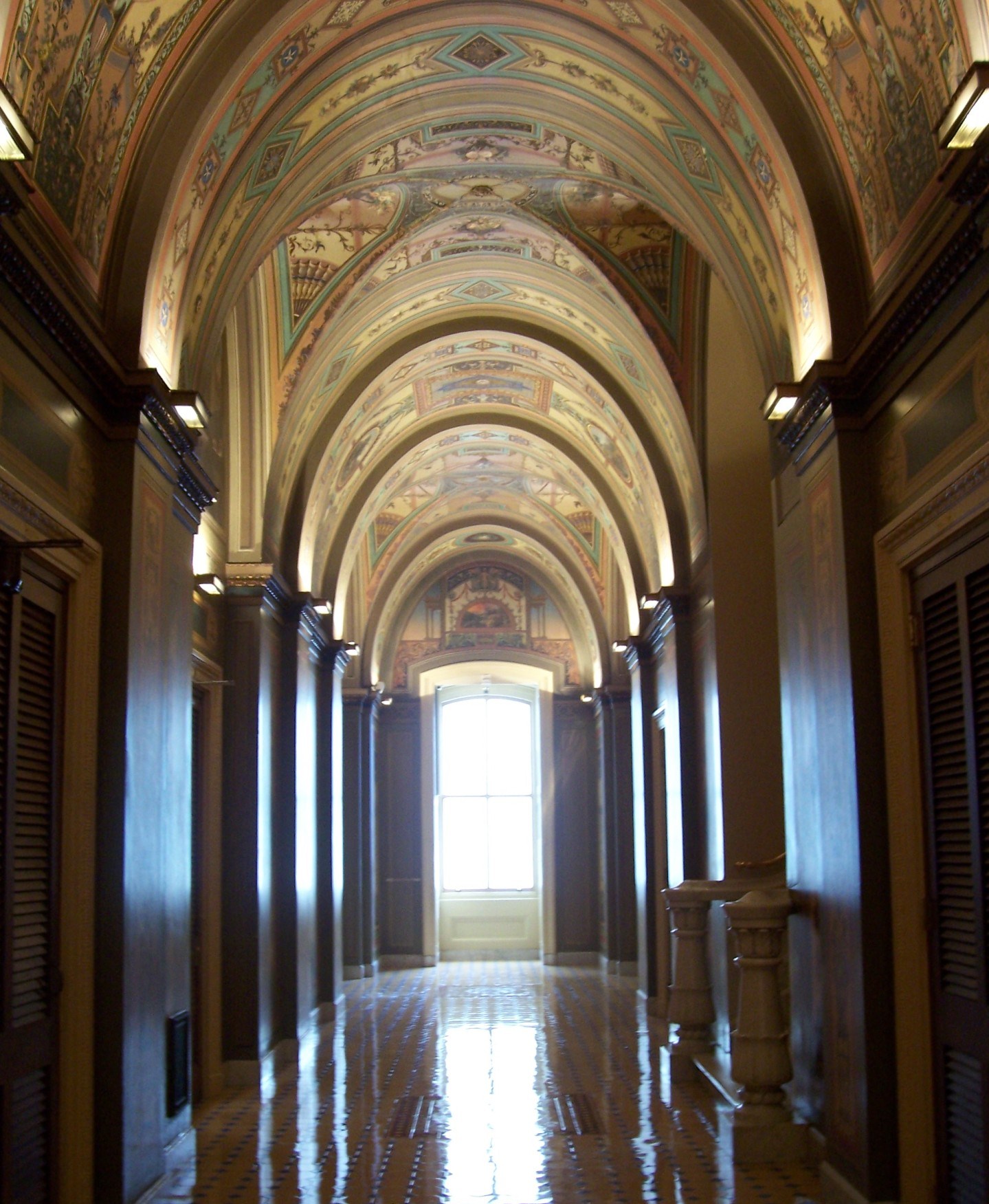
Donald and Lolane were called to serve a mission in the Washington D.C. Temple for 18 months.  We visited them many times in Kensington, Montgomery, Maryland.  After Thanksgiving Dinner with them in the Rock Creek Ward building, they were finally able to take some time off, drive down to Richmond, Henrico, Virginia, and spend some time with us.  I have written about their visit at the time, but wanted to include a picture.  We visited the Lewis Ginter Botanical Gardens (the picture above was in one of their buildings).  We also visited Monticello, Shirley Plantation, and various sites around Richmond, Virginia.  We very much enjoyed their time with us and look forward to when we can spend more time with them in the future.

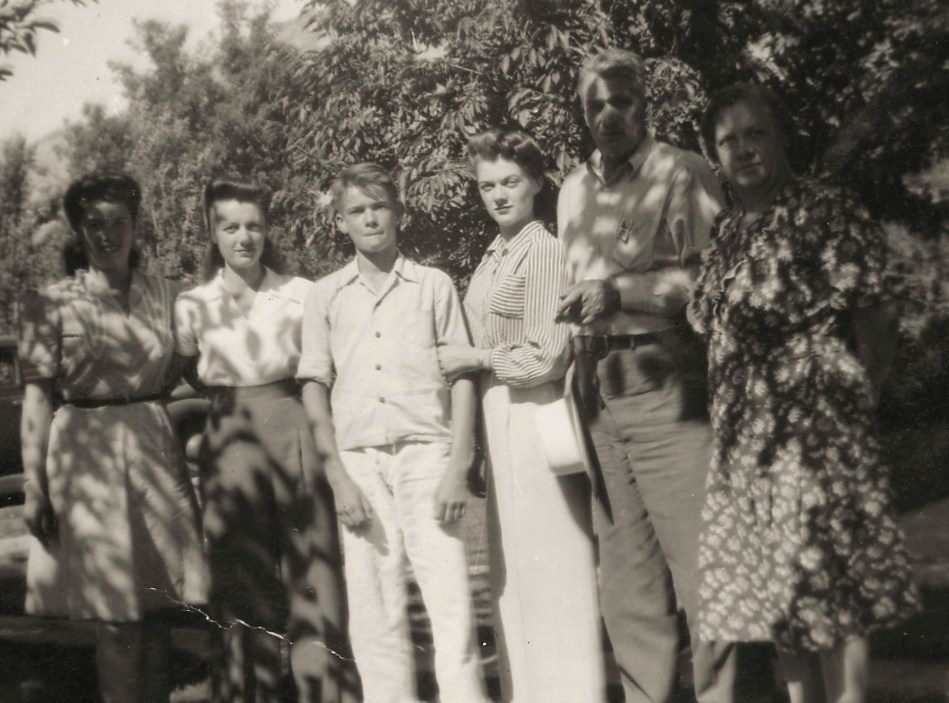
One of the highlights of the visit for all of us was having lunch with Sister Angela Andra and her companion.  It was a unique experience for me to sit at lunch with three full-time missionaries, all cousins with the last name of Andra.  Angela is the granddaughter of Don’s (and my Grandma’s) brother, William (Bill) Fredrick Andra (Jr).  Here is a picture of that occasion after lunch in Chesterfield, Chesterfield, Virginia.

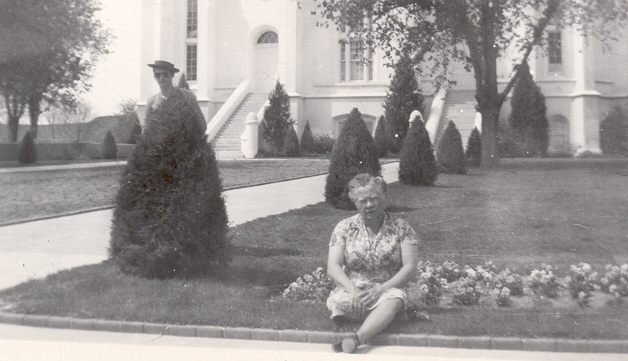
I will wrap up with a picture of the breathtakingly beautiful Washington D.C. Temple.  I wholeheartedly understand and agree with the reasons why the church has moved to the smaller temples for ease of access and utility.  However, something about the size and grandeur of the big temples still strikes more awe of God into my hard heart.

Stoker-Eames Wedding

Elizabeth and the late Thomas Eames are pleased to announce the marriage of their daughter Emma to William Edward Stoker, son of Thomas Stoker and the late Ann Nightingale Stoker.  William and Emma were married in St. Johns Church of Wembley, Middlesex, England 29 July 1849.

I have not seen the records, but apparently William Edward Stoker was born 9 January 1827 in Crateford, Staffordshire, England.  I am unsure where Crateford exactly is since the online map services do not list it as a town.  I know it is near Brewood, Staffordshire, England and can find the Crateford Road outside of town to the northwest, but I am not sure much more is available without actually visiting the area.  He was baptized/christened 4 February 1827 in Brewood.  His father, Thomas Stoker, worked as a coachman and remained so until he became too old to work.

Emma Eames was baptized/christened 21 February 1830 in St. Mary’s Church of Harrow on the Hill, Middlesex, England.  She is the third of at least 5 children we know of.  The only other sibling we know much about is her brother Thomas.  Her father, Thomas Eames, was listed as a wheelwright at the time Emma was born.  By the time Emma married to William her father is listed as a servant.

William and Emma would have five children together (although some have added two more children, but with no documentation). William worked as a saddler, leather-worker, and harness maker throughout his life.  I do not know why the family moved around so much, probably for work, but they do not seem to have been too poor.  Staffordshire, Shropshire, Middlesex, and Berkshire were all homes of the Stoker family.

William Thomas Stoker born 4 June 1850 in Alperton Hollow, Middlesex, England.  He died 21 October 1908 in Plain City, Weber, Utah.  He would end up marrying three times to Fanny Amelia Tucker, Ellen Hemmings, and Callie Oliver.

Alice Stoker born 20 September 1851 back in Brewood.  She died 11 September 1869 in Ogden, Weber, Utah.  I have been unable to tell if she actually married or was just engaged to James England when she died.

Jeanette Stoker born 3 February 1856 in Wolverhampton, Staffordshire, England.  She died 5 February 1941 in Salt Lake City, Salt Lake, Utah.  She married Charles David Rogers in 1875.  I posted a picture and quick biography at this link: Jeanette Rogers.

Alfred Stoker born 21 September 1859 in Hendon, Middlesex, England.  He died 3 November 1927 in Pocatello, Bannock, Idaho.  He married Elizabeth Branson in 1881.

Mary Ann Stoker born 24 February 1863 in Reading, Berkshire, England.  She died 6 May 1935 in Plain City.  She married Milo Riley Sharp in 1879.  I have written previously about this family at this link: Sharp-Stoker Wedding.

Emma contracted tuberculosis (listed as phthisis on the death certificate) and passed away 28 April 1863 at 18 Albert Street within St. Mary’s Parish after a year struggle with the disease.

Emma joined the LDS church on 7 August 1856.  William Thomas joined 5 December 1860.  William Edward and Alice joined the LDS church 27 May 1863.

The family wasted no time in gathering to Zion.  The Stoker family departed from London on a ship called “Amazon” 4 June 1863.  George Q Cannon dedicated the ship which was entirely of Saints (880+) headed for Zion.  It was this same ship that Charles Dickens wrote that the Mormons were not taking misfits and scoundrels, but the “pick and flower” of England.  Even George Sutherland, future U.S. Supreme Court Justice was on this ship.  Here is a link to the story by Charles Dickens: The Uncommercial Traveller.  The LDS church also tells of the story that day at this link: Amazon Departure.  The ship sailed to Liverpool before finally heading out for America.  Elijah Larkin, who would help found Larkin Mortuary, noted that on the 16th and 20th of June, Thomas Stoker was administered to due to a sickness since leaving Liverpool.

The “Amazon” landed at Castle Gardens, New York, New York on 18 July 1863.  The Saints took rail to Albany, Albany, New York and then to Florence, Douglas, Nebraska through Detroit, Wayne, Michigan.  From there they hoofed it on to Salt Lake City, Salt Lake, Utah Territory arriving 3 and 4 October 1863 (depending on which of the two companies), just in time for General Conference.  Several of the company wrote of Brigham Young coming out to greet them and giving them advice.

William moved almost immediately to Ogden, Weber, Utah and set up shop working with leather.  William wasted no time in remarrying to Eliza Sinfield in Ogden 18 May 1864.  While Mary Ann is listed as a child for William and Eliza on the 1870 Census, she was actually living with the Musgrave family and Jeanette with the Garner family.  Additionally, the other children from this first marriage were also being raised by other families.  I just cannot tell for sure since the families sometimes listed these children as their own with their own last name.  Family lore indicates that William and Eliza could not afford to raise these older children and farmed them out to families that could afford to take care of them.  Other evidence points that they were not all that poor, but it is not likely we will ever really know.

Eliza Sinfield was born 24 January 1842 in Eversholt, Bedfordshire, England.  She and William married 18 May 1864 in Ogden.  They lived there the rest of their days.  I cannot tell for sure where they lived.  The 1880 Census puts them on 6th Street, but then this address is near Franklin Street, which is now located 20 blocks or more away.  The next page of the census has the Academy of the Sacred Heart which is also near 25th street in Ogden.  Therefore, another 6th street once existed in Ogden, or the census taker jumped all over town, which is unlikely.  The 1870 Census does not give street addresses, so we have no leads there.  At any rate, William and Eliza had six children.

Emma Stoker born 24 March 1865 in Ogden and died 10 October 1878.

Agnes Stoker born 1 October 1866 in Ogden.  She married George Shields in 1885.  She died 6 September 1921 in Ogden.

Henrietta Stoker born 10 October 1868 in Ogden.  She married Simon Heber Weston in 1885.  She died 10 June 1942.

Eli Benjamin Stoker born 9 July 1870 in Ogden.  He married Sarah Jane Thomas in 1899.  He died 17 May 1952 in Silverton, Shoshone, Idaho.

Albert Stoker born 12 May 1873 in Ogden.  I do not know of a marriage for him.  He died 8 February 1949 in Salt Lake City, Salt Lake, Utah.

Victoria Stoker born 28 May 1878 in Ogden.  I do not have a marriage for her either.  She died 20 November 1888.

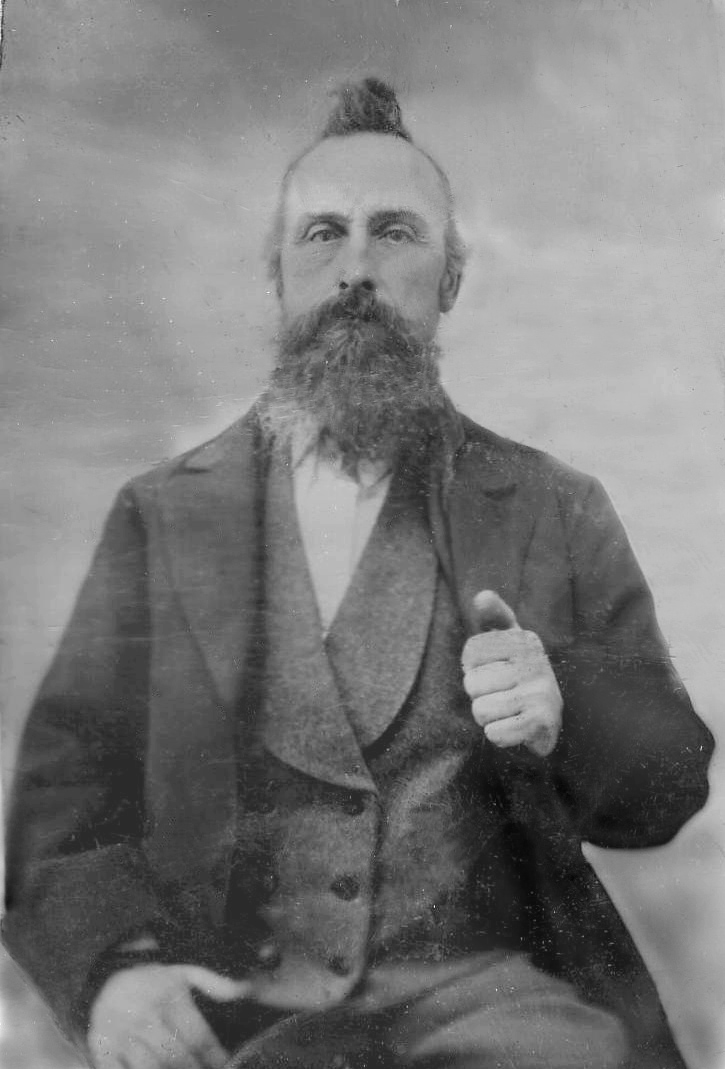
William and Eliza continued to live in Ogden until he passed away 12 April 1899 in Ogden.  He was buried in the Ogden City Cemetery, along with most of his already deceased family.  Later family members would also be buried near him.  Eliza died 3 April 1912.  Here is the only other picture we have of William Edward Stoker as a much older man.  You can see the tuft of hair in the middle that has not changed.  The increased bag lines under the eyes and the same man greatly aged.  If you look, you can see some of the resemblance in his sons.

Donaldson 4 Generations

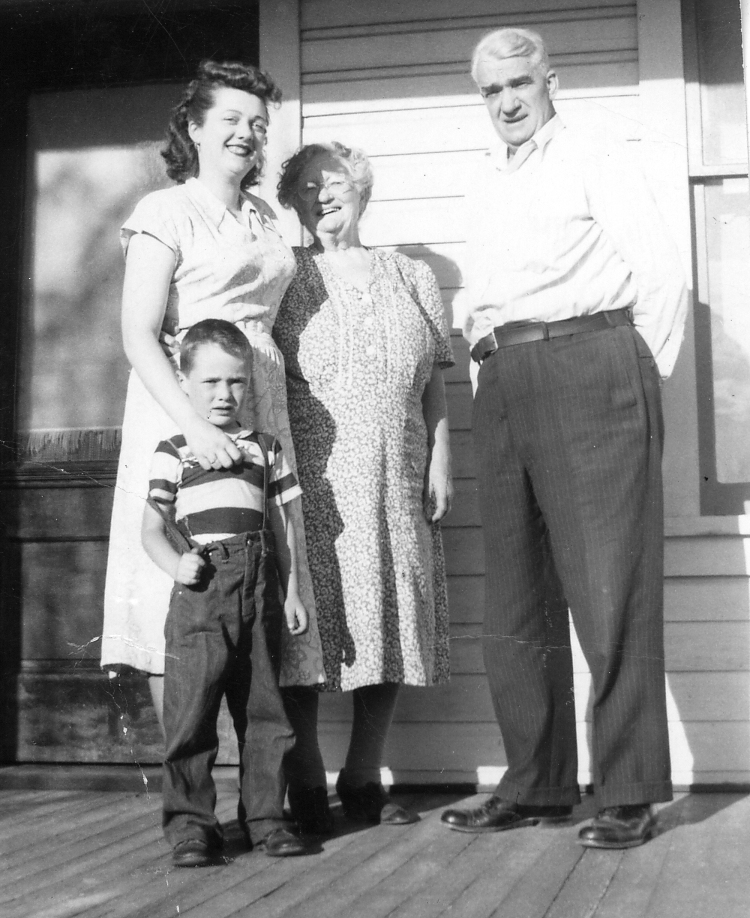
Dora Birch, Mary Donaldson, David Donaldson, and (boy) Jan Birch

I thought I would share this 4 generation photograph taken about 1950 or so in Ogden, Weber, Utah.  The older lady is Mary Elizabeth Williams Donaldson (7 April 1869 – 29 Mar 1951).  David Delos Donaldson (26 March 1894 – 24 September 1953), her son, stands to her right.  The other lady, Dora Mary Donaldson Birch (28 May 1920 – 30 July 2001), is the daughter of David.  The boy, Jan Claire Birch (3 August 1945 – 14 April 2004) is the son of Dora.

I have written previously about Mary (Donaldson-Williams Wedding) Donaldson and how stern and mean she apparently was in her outward demeanor.  This photograph is a complete and polar opposite portrayal of the lady so many have given to me.  There must surely have been some joy and happiness in there as this photo seems to indicate (if it is in fact Mary, some are not so convinced).

David (who went by Dave in life) I have also written of previously (Donaldson-Van Leeuwen Wedding) and mentioned his overall characteristics.  I wanted to take this opportunity to share another story I just heard recently.

I mentioned in the post about David that he was known for being a tight wad.  Well, apparently after he passed away, Dena had a dream about him coming to her during an afternoon nap.  He told her that she needed to go to the pantry.  She could not figure out why in the world she would need to go to the pantry but did so anyway.  She walked into the pantry, downstairs, and turned on the light and started to look around.  She noticed what appeared to be a loose brick and went over to investigate.  The bricks came away and in a little lockbox behind she found a quit-claim deed to the home made to her and about $1,500.  That was quite a bit of money in 1953, but it was just enough to pay off all David’s doctor and funeral bills.  There was even enough left for some nice things for Dena.

Dora and Jan Birch I really do not have stories for at this time, maybe some day.

A duck story and the Gores

Here is a picture of our latest visitors here in Oklahoma City.  Kevin and Jean Gore from Walkden, Greater Manchester, England.  They visited and stayed with us for two evenings and about two days.

I first come to know the Gores in 1998 as I was preparing to leave for my mission to the UK.  The Bishop from the Hazelton Ward, Paul Tateoka, sent word through his brother in my ward, Ted Tateoka, that I needed to call this couple from the UK.

The Gores were staying with one of the missionaries who had brought them into the church, who lived 5 miles or so down the road from me.  I called the Meacham home and had a nice visit with Kevin for about 30 minutes or so.  I obviously had my mission call, but I do not recall knowing that they lived in my mission.  Kevin knew I was in the mission so he told me a few interesting things and we hung up the phone.

I admit I completely forgot about this conversation with Kevin Gore until my first Sunday serving in the Eccles Ward (now Swinton) of the Manchester England Stake.  I stood there shaking hands with members and introducing myself when a man asked if I was Elder Ross from Hazelton, Idaho.  I apparently looked dumbfounded so he informed me that I had spoken with him on the phone before my mission.  Granted, this was the first time I laid eyes on him.  Well, that started a relationship that has now come down through the years.  I served in the Eccles Ward for about 6 months, although since there were two sets of missionaries, me and my companion had the other half of the ward.

The Gores were probably one of the closest families I had in that ward, although there were a couple.  Before we left late in 1999, Kevin and Jean Gore treated all four of the missionaries to a very nice roasted duck dinner.

Time has a way of marching on, and so it has done with this friendship.  Brad Hales, Amy Hales, and I visited the Gores again in the summer of 2003 when we went to England for a convert baptism of a lady who Elder Hales and I had once taught (in Runcorn Ward).  I think we spent two evenings with them at that time, although our time was limited because they were working and we had other people in the area we also visited, but Jean made us a roasted duck dinner again!  We did not request it, but she made it, and it was fabulous.  We again enjoyed our time with them, although limited.

The Gores were kind enough to invite us to the wedding of their son, Ian, in Springville, Utah in 2004.  Brad Hales and I visited, partook of the food (no roasted duck!), and enjoyed a good evening with our British friends.  The Gores came to visit Utah in 2008 again, but we were only able to enjoy a light dinner at Olive Garden together (again, no duck, only in England!).

Amanda and I made the trek over the water again in 2008.  This time we again spent 2 nights with the Gores in their home on Trinity Crescent.  Both in 2003 and 2008 I knew the neighborhood well enough I could still drive to the home without much difficulty.  Jean once again made her now famous roasted duck dinner!  I honestly think this is the only times I have ever eaten duck in the past decade, if ever in my life (other than what they call duck at the Chinese buffet).  The Gores were more than kind in allowing us to stay with them, use their computers, talk family history, and even hosted a little get together of other members of the Swinton Ward I still knew and asked about.

Here we are in 2011, 13 years later after the phone conversation, and the Gores have come to visit us!  Sorry, we did not treat them to a roasted duck dinner.  It would have been an insult to Jean’s cooking.  Their son, Ian, had moved from Springville, Utah to Bentonville, Arkansas.  Kevin and Jean wanted to come down to visit the Oklahoma City Temple and, we feign to believe, us.  We drove out to Pops Soda Shop in Arcadia.  We also ate out at our favorite little Mexican joint and then we treated them to capers and artichoke pasta the night we made them dinner.  We played a couple of games of Ticket to Ride and just enjoyed our time together.  Thanks for being such great friends and keeping in contact through the years!

When is the next time we will see the Gores?  And, the question you all want to know, will there by duck involved?

El Capitan

The photos that appear in family albums, especially old photos, are always fascinating.  With the costs and time restraints of photography in those days, one could not just photograph whatever they wished.  It was with interest that this photo is contained in the album of my Great Grandfather, David Delos Donaldson.  This photo was taken in the summer of 1919.

The El Capitan was a ferryboat (982 tons) commissioned by the San Francisco & Oakland Railroad in 1868 and built in Oakland.  This ship was still in service as of 1919, which seems pretty impressive for the longevity of a ship.  SF&O was later absorbed into the Southern Pacific Railroad.  While El Capitan had served the San Francisco to Oakland route for many, many years, by 1919 she was serving Vallejo Junction to Vallejo.  I could not find out when she quit service.

Why take a picture of this ferryboat?  Did he ride it while he was in the army before heading off to France?  Did Dena, his wife, find it interesting because it was the first ferry she ever saw?  Unfortunately, we will never know in this life.

Donaldson-Van Leeuwen Wedding

George Henry and Minnie Van Leeuwen are pleased to announce the marriage of their daughter Dena to David Delos Donaldson, son of Mary Elizabeth Donaldson and the late William Scott Donaldson. David and Dena  were married in Salt Lake City, Salt Lake, Utah on 16 July 1919.

David is currently an independent plumber in Ogden, Weber, Utah.

The couple will return to make their home at 2310 Grant Avenue in Ogden, Utah.

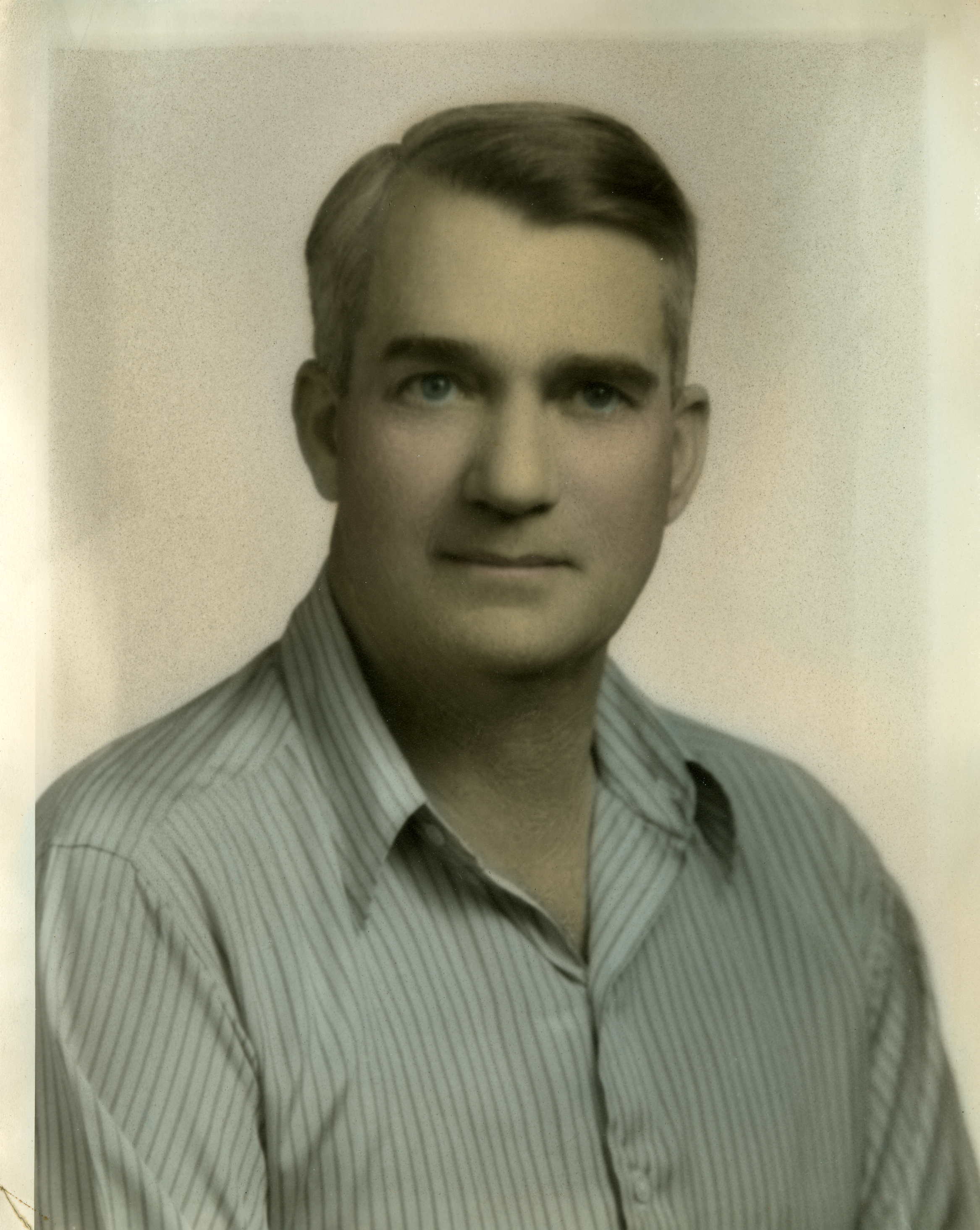
David Delos Donaldson (he went by Dave, his son also went by Dave or Davie, so to keep them clear, I will refer to father as David and son as Dave) was born 26 March 1894 in Evanston, Uinta, Wyoming.  He was the second of seven children born to William Scott Donaldson and Mary Elizabeth Williams.  I have previously written of David’s parents at this link: Donaldson-Williams.  David grew up in Evanston, Uinta, Wyoming and Park City, Summit, Utah before moving to 2270 Moffits Avenue, now 2270 Ogden Avenue, in Ogden, by the time he was six.  He lived at this address until he moved to Twin Falls, Twin Falls, Idaho to work for Ballantyne Plumbing Company as a Sham Filler.  When he registered for the World War I draft on 5 June 1917, he was living on Shoshone Street North in Twin Falls and listed that his mother and two siblings were dependent on him.  He may have listed this in hopes of not being drafted.

Ballantyne Plumbing & Heating Company was newly incorporated (about 1916) by Varsell Ballantyne who had just moved from Ogden.  Varsell had been one of the incorporators of The Ogden Plumbing, Gas & Steam Fitting Company in 1904 or 05.  He had worked in the same spheres as David’s father and probably felt some desire to help the Donaldson family and invited David to Twin Falls.  He may also have been the master to which David was an apprentice, or another plumber worked with in the Ogden PG&S Company.  While David worked for Ballantyne Plumbing Company, it was located at 145 Second Avenue East in Twin Falls.  David lived on Shoshone Street North, probably not far from his employment.

The draft card indicates that he had gray eyes, black hair, and stood tall and stout.  David served in the U.S. Army during World War I.  When he was finally drafted, he went to Utah to report with his two brothers who were also drafted (another brother would also serve in World War I).  Unfortunately, the government cannot find his service paperwork and very little is known of his time served.  His obituary indicates he served in the 91st Division of the Army.  We do not know his dates, but this division fought in the Battle of Saint-Mihiel in 1918 and went on to fight in the Meuse-Argonne Offensive through the rest of the year.  It was in the Meuse-Argonne Offensive that David would receive his life lasting injuries to his lungs from the dreaded gasses of World War I.  One lung collapsed and never worked again, the other lost a large percentage of its capacity.  He would receive weekly treatment for the rest of his life (over 30 years) for these injuries at the Veterans Hospital in Salt Lake.  He became a member of the Disabled American Veterans, Ogden Chapter 4.

l-r: Ed, David, and George Donaldson

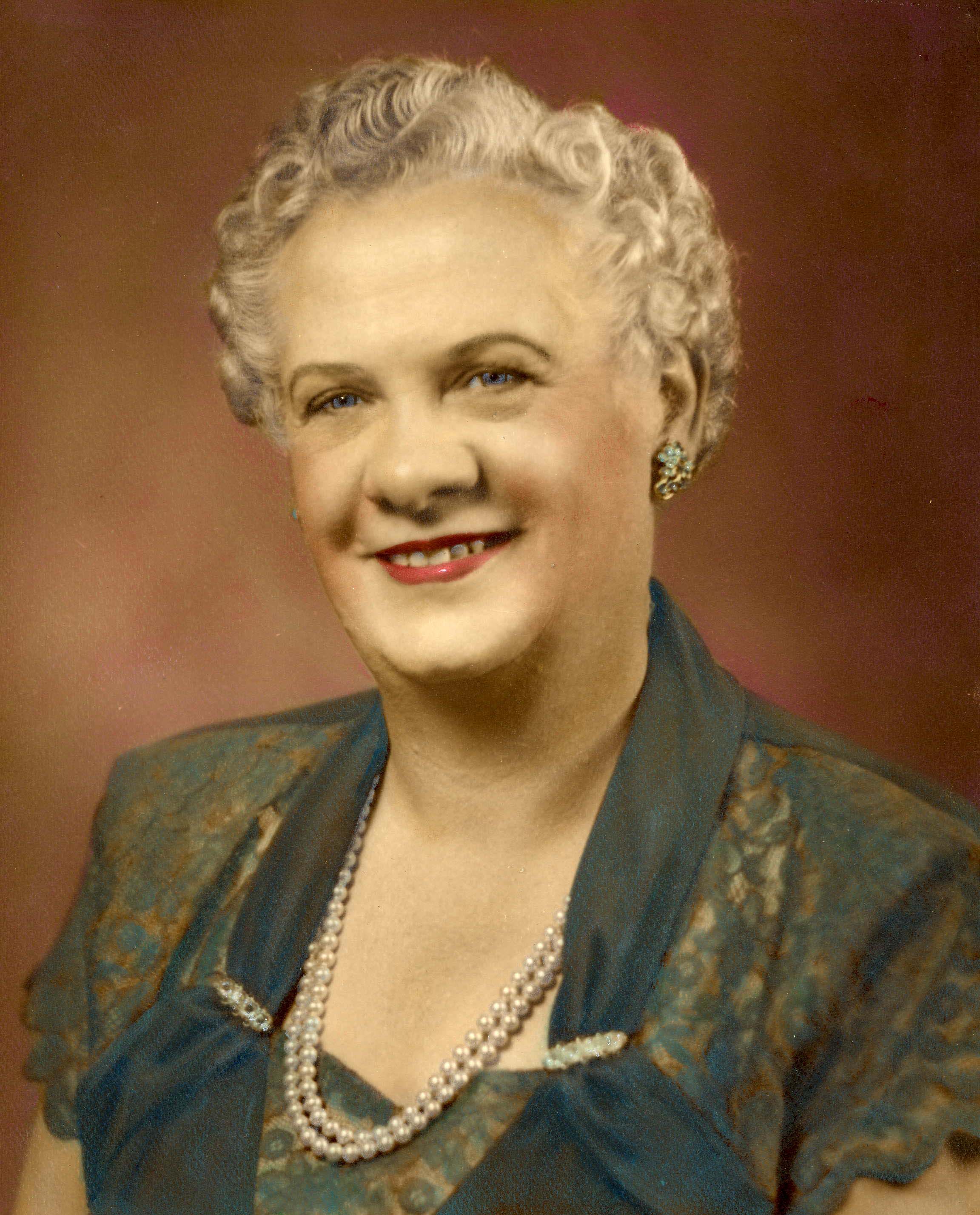
Berendena Van Leeuwen, who went by Dena, was born 28 December 1898 in Ogden.  She was the 10th of 12 children born to Gerhardus Hendrik and Hermina  Janzen Van Leeuwen.  I have written of George and Minnie’s marriage here: Van Leeuwen – Janzen Wedding.
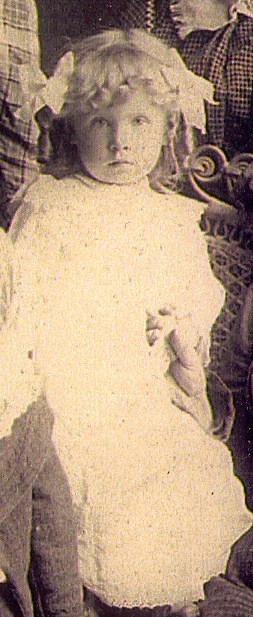
Nine of these children would live to adulthood and marry.  Both parents joined the LDS church in 1887 and immediately sought to immigrate to Zion.  The family immigrated to Utah in 1888.  Gerhardus waited until the next year to immigrate.  Gerhardus had fallen from a ladder at work giving him head injuries that lead to epileptic seizures and bouts of insanity.  These considerations were perceived as mental illness at the time and could have kept the family from being admitted had they all come together.  The Van Leeuwen’s immigrated from Arnhem, Gelderland, Netherlands.  In the United States, Dena’s parents were known as George Henry and Minnie Van Leeuwen.  The Van Leeuwen family lived at various places in Ogden, mostly near Wall Avenue and 33rd Street.  Her father worked as a carpenter, more on the finishing side, for employment.  George may have even known of the Donaldson family.  Dena was baptized in the LDS church 7 November 1907 in Ogden. The family was extremely tight knit and was known for their large and very tasty family meals.  If company came over, a meal was put on.

George’s head and mental injuries continued to worsen as the years passed.  The family either had to keep him safe or calm him down before.  By the time 1911 rolled around, his fits were becoming uncontrollable.  Dena referred to her “Daddy” as tender and sweet and then at the switch he would become angry and threatening.  He had made enough threats and raised enough raucous that neighbors called the police.  George was committed to the Utah State Mental Hospital in Provo, Utah, Utah in 1911 when Dena was 13.  The family tried to get him out and succeeded.  Unfortunately, he lost control again and ended up spending the rest of his life in the mental hospital.  The family would drive down nearly every weekend to pick up “Daddy” and keep him for the weekend before taking him back.  By the mid 1920’s, they could not even take him home on the weekends his condition was that poor and uncontrollable.  “Momma Minnie,” as she was known to friends, died in 1921 in Ogden.  George died in 1932 in Provo.

Dena as one of the youngest children of the family was known among siblings as telling slight variations of stories to other siblings such that it would cause some contention within the ranks.  While the siblings were never distant from each other, a feud of one sort or another was always brewing or being fought.  It would always pass, but Dena often started many of the feuds and received a bit of flak for it.
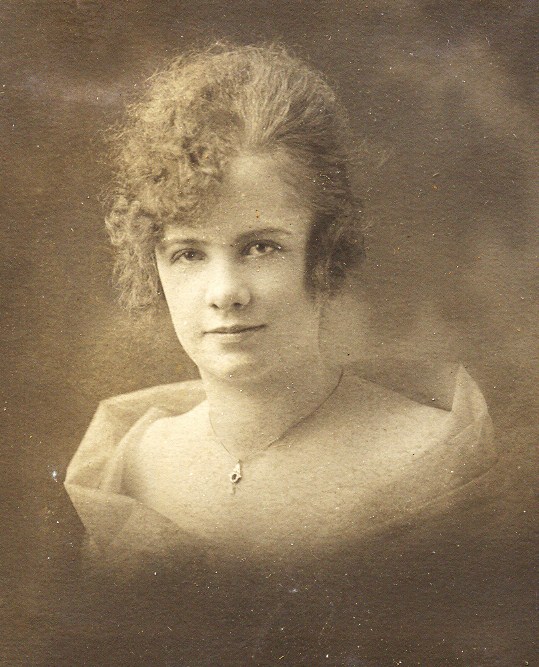
David returned from the war and met Dena Van Leeuwen.  We do not know about the courtship or how they met.  We do not know why they chose to be married in Salt Lake.  David and Dena took a honeymoon to California.
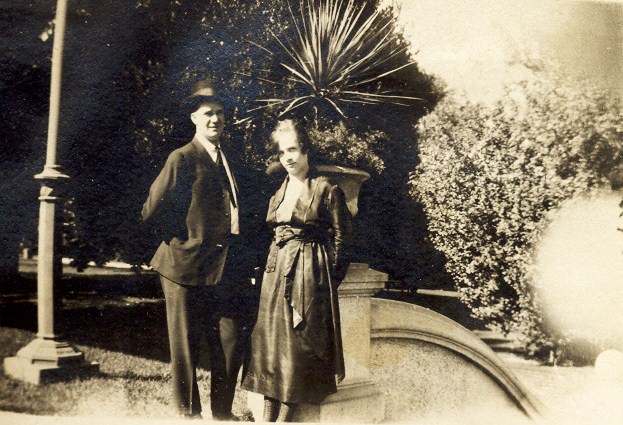
David resumed work as a plumber in the 1920’s in the Ogden area.  Between 1920 and 1928, 5 children were born to David and Dena, all in Ogden.  Twins named Dena Dorothy and Dora Mary were born 28 May 1920.

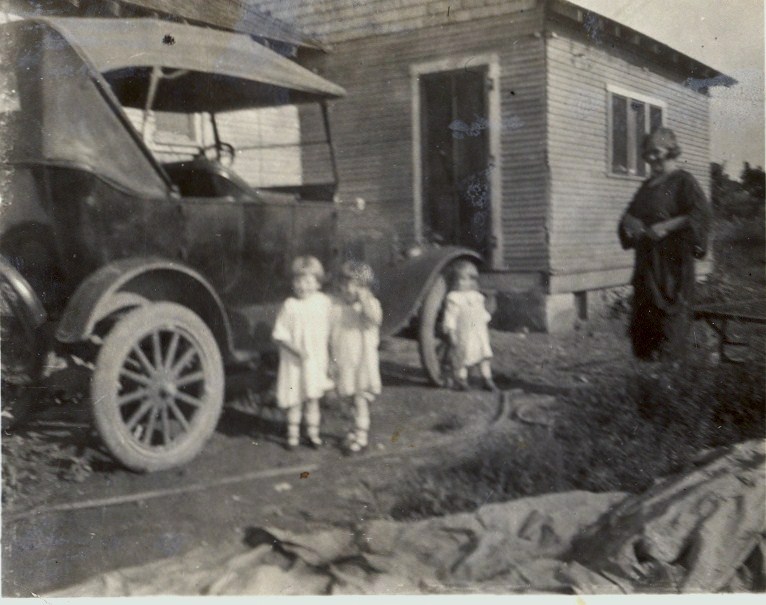
Gladys Maxine arrived 20 September 1921.  Here is a picture of the three kids with Gladys against the wheel of the car.

Maxine appeared 3 August 1924.  Lastly a boy, David William came 25 November 1928.

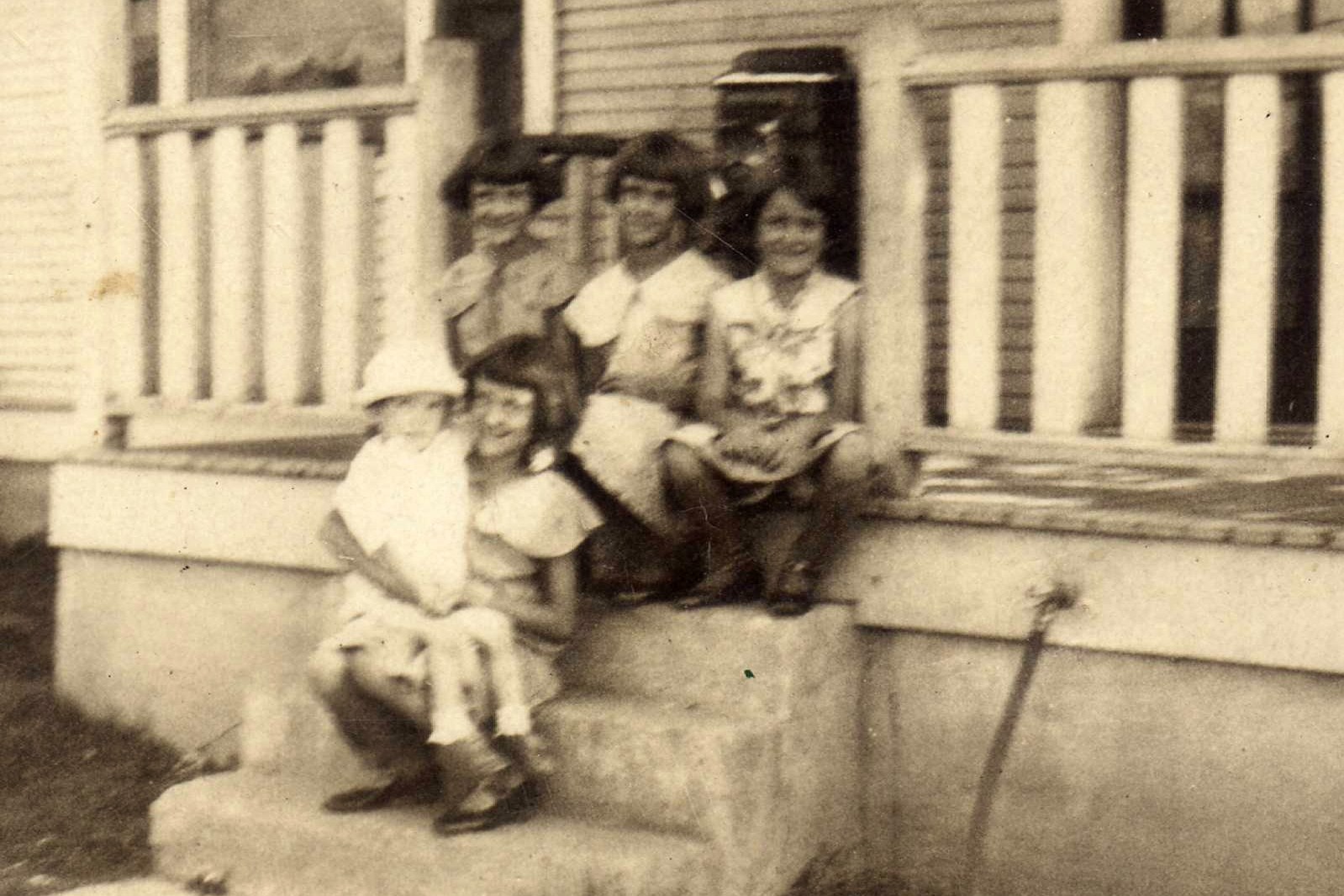
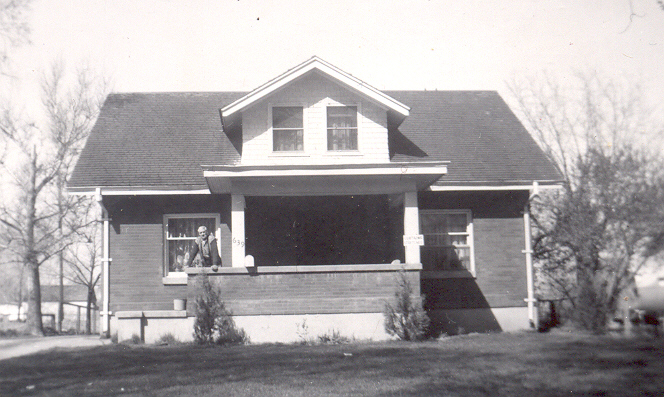
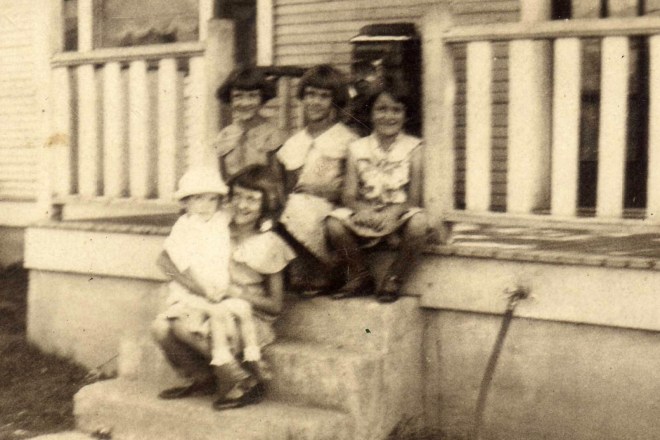
A shot of all 5 children on the front porch of the home that David built at 629 8th Street in Ogden.
Here is a picture of the home from the side.  You can see from this point that the home is probably older than 1920’s and that Dave probably added the addition onto the back rather than building the entire home.

In 1930, the family lived at 753 Browning Avenue in Salt Lake.  We do not know how long they were there, but they moved back pretty quickly to Ogden living on 8th Street.  Times were hard during the 1930’s so David went to Boulder City, Clark, Nevada to work on the building of the new Boulder Dam (later named Hoover).  He also headed to Napa, Napa, California to work in the shipyards as a pipe fitter, primarily on submarines. Jennie Bremer, a niece to David and Dena, told of a funny story when David was replacing the plumbing in their home after a serious earthquake in Los Angeles.  David was deathly afraid of earthquakes and while he was working in the basement or under a cupboard if an aftershock hit he would rise up and run from the house.  He told Jennie at one point that he did not want to be caught in the basement if the house should fall.  Well, being little kids, they played with this some.  They would sneak to the window of the room he was working in and shake the screen and windows in a way that sounded like an earthquake.  She said it was funny to see a man as big as “Uncle Dave” to hop up and run out of a room like that.  They would laugh and laugh over it.  They made sure not to do it too often so he would not suspect anything and she does not believe he ever knew of the joke they would pull on him at least once every time he visited.  She did comment it was a bit sad to see him winded for a while after he hopped and ran, but the guilt from it would only come later in life as she realized what she had done to him.

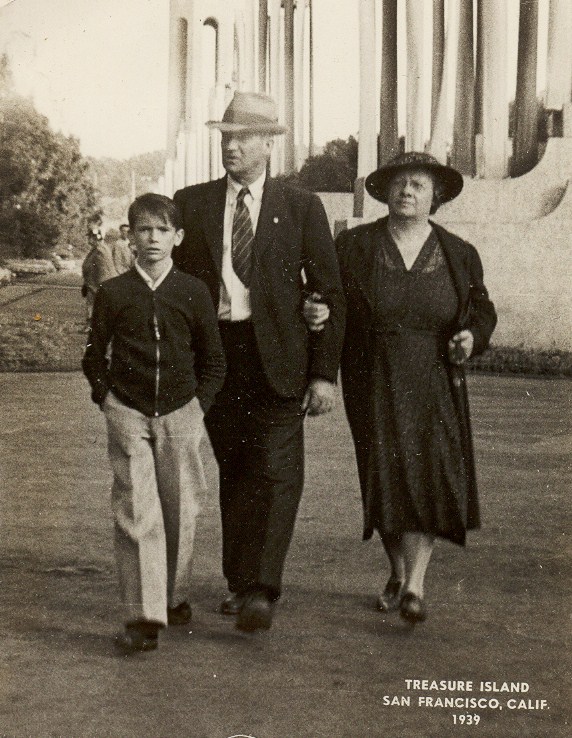
David would often visit family to help with their homes or other needs.  He also come home to Ogden fairly regularly on the weekends to visit the family. He finally found employment in Ogden at the Ogden Depot in 1937 as Supervisor of Maintenance.  In 1939, the family returned to visit the area David had worked, Donaldson extended family in the bay area, and the 1939 San Francisco World Fair.
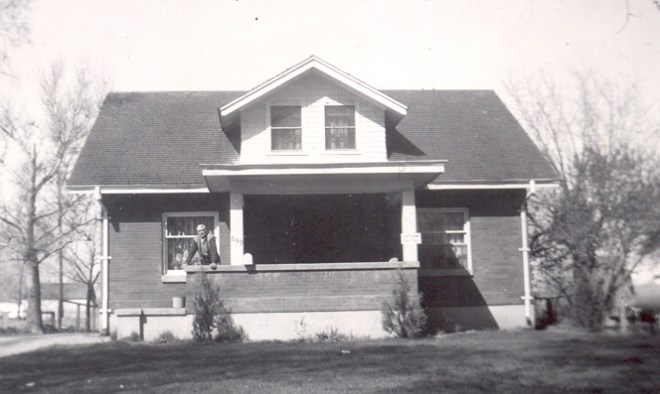
After World War II, the family moved to 639 Wall Avenue.
Life in the 1940’s treated the Donaldson family much better, even despite the war.  David still had his penny-pinching ways.  Dave would refer to David as the “King of the Tight Wads.”  Dave started working about 12 years old as a shoe polisher at a barber shop on Washington Ave.  David had told Dave that now he was 12, he was expected to be a man and take care of himself, that the Donaldson household would no longer be carrying him.  When he brought his paycheck home, David would take half of it for the family.  This incensed Dave over the years and he quit reporting his full pay to his father, who took half of it.  David even went on to require Dave to pay rent for his space upstairs in the Wall Ave home. Sometime between 1942 and 1945, David’s mother’s husband had passed away and she wanted to move in with the Donaldson family.  David tried to get Dave to move his bed to the back porch so his mother could take the upstairs.  Dave made it very clear he would move his bed, but it would be out of the house and he would never come back.  David’s mother did not move in and Dave kept his “apartment” even after he married.

David insisted that Dena only needed two dresses and no more.  The family would often buy her dresses, shoes, or other things for her birthday and Christmas, so she did not ultimately go without.  But he refused to buy for himself or for her.  Dave and Betty Donaldson got a pretty serious scolding one time for buying Dena a crystal berry bowl indicating that it was going to spoil Dena and the family.

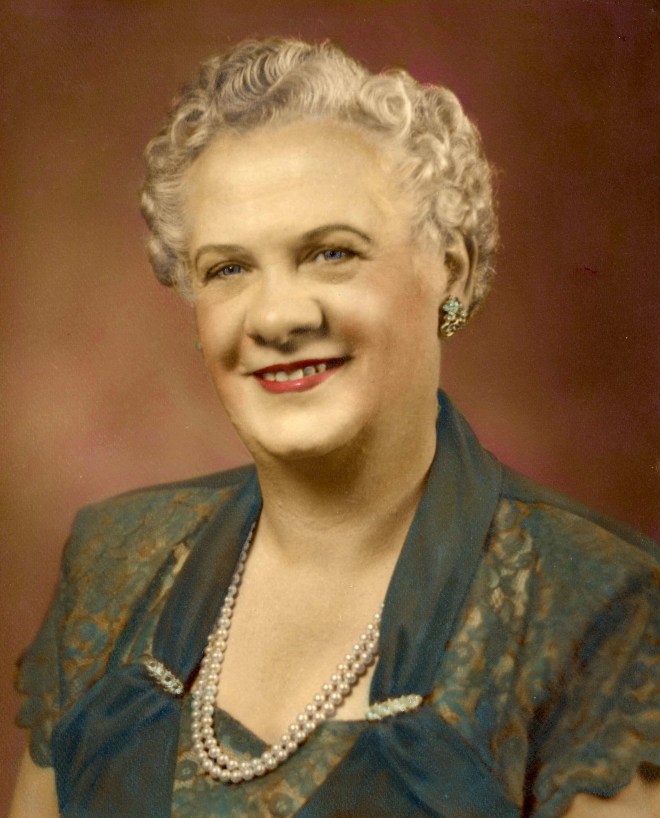
Dena grew up LDS and David did not.  Dena saw that all her children were raised LDS with little difficulty from David.  Apparently smoking is what kept him from being baptized.  When the time would come for Gladys to marry, the Bishop determined that he was not going to allow them to be married in the temple without David being a member.  David had made it known he did not want any of his girls to marry a poor boy and would not submit. All four of the girls married in the next two years, and then Dave in 1953.  Interestingly, David never joined the LDS church, but the family put it into the obituary that he was a member.  Gladys ended up being married in the Donaldson home on 8th Street, but David refused to allow the Donaldson Bishop to do the honors, so the Plain City Bishop of Glady’s husband, Milo Ross, performed the wedding.

Gladys married Milo James Ross 4 April 1942.

Dena married Chauncey De Orr Michaelson 7 December 1943.

Maxine married Sterlin Delaino Telford 24 December 1943.

Dora married Malcolm Claire Birch 11 September 1943.

Dave married Betty May Oram 12 April 1953.

Maxine, Gladys, Dena and Dora Donaldson (don't know which is which of the twins)

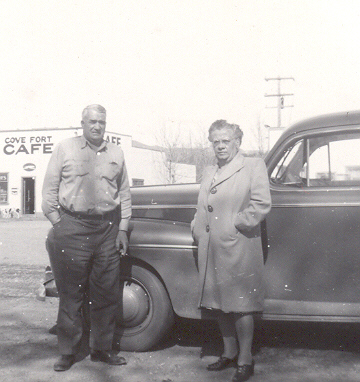
David retired in 1949 from the Ogden Defense Depot due to his physical condition and inability to breathe.  About this time, the family took a trek to visit family and friends throughout the west and to see some national and church historical sites.  Included was Hoover Dam, St. George Utah Temple, Mesa Arizona Temple, Cove Fort, Lake Mead, Las Vegas, Los Angeles, and San Francisco.

The family, not caring about the thoughts of others, loaded the car and set off.  Dena, who loved and raised canaries, insisted they come with her.  So the canaries rode in cages that were wired to the outside of the car (and the canaries lived through the entire trek).  Dave joked that driving around they looked like the Beverly Hillbillies in their early 40’s sedan with bird cages wired to the back of the car.

David would claim that the only relief he could receive for his lungs was through smoking cigarettes which would calm his breathing and ease the pain.  Remembering also, this was also a slogan for some cigarette companies!  He picked up smoking while still in the military, but he would become a chain smoker very early on. The smoking would later aid in his death from emphysema.  It was not uncommon at all for David to light one cigarette from the one he was finishing.  He was also known as a dirty smoker among the family in that he would allow the ashes to fall anywhere and would even throw his butts on the floor in the house, in the toilet, or even leave them in the drain of the bathtub after he finished bathing.

David’s lung issues would come back to haunt him more and more as the years passed.  The cigarettes were no longer delaying the pain or inevitable loss.  His emphysema would come in fits to such a degree that he would be confined to bed and the family would have to place newspaper on the floor around the bed to catch the black phlegm (sometimes bloody) he would cough up.  His emphysema would become more and more restraining on his life in the last 5 years of his life.  It was the reason he had to take such an early retirement.  In the end, he had a couple of days where he was coughing and could not breathe and went to the Veteran’s Hospital in Salt Lake City.  After a two day stay, the chronic lung disease caused a cor pulmonale that took his life on 24 September 1953.  Four days later, he was buried in Ogden City Cemetery.

Dena moved on with her life and kept busy visiting and spending time with family.  Dave, who had recently married and was living in an apartment upstairs, decided it was time for a major cleaning of the house.  They completely and thoroughly cleaned the home, wall-papered and replaced wall-paper, and replaced the carpets and furniture to remove all the cigarette smoke grease and filth.

Betty told me that as long as she knew the family that she really loved Dena.  She said everyone loved Dena.  She said that when she remembers the home in Ogden on Wall, that every time she drove into the driveway that the curtains would part and a Dena’s curly white hair, bright blue eyes, and big smile poke through with a little wave.  Apparently she had an infectious laugh which was both giddy and happy.

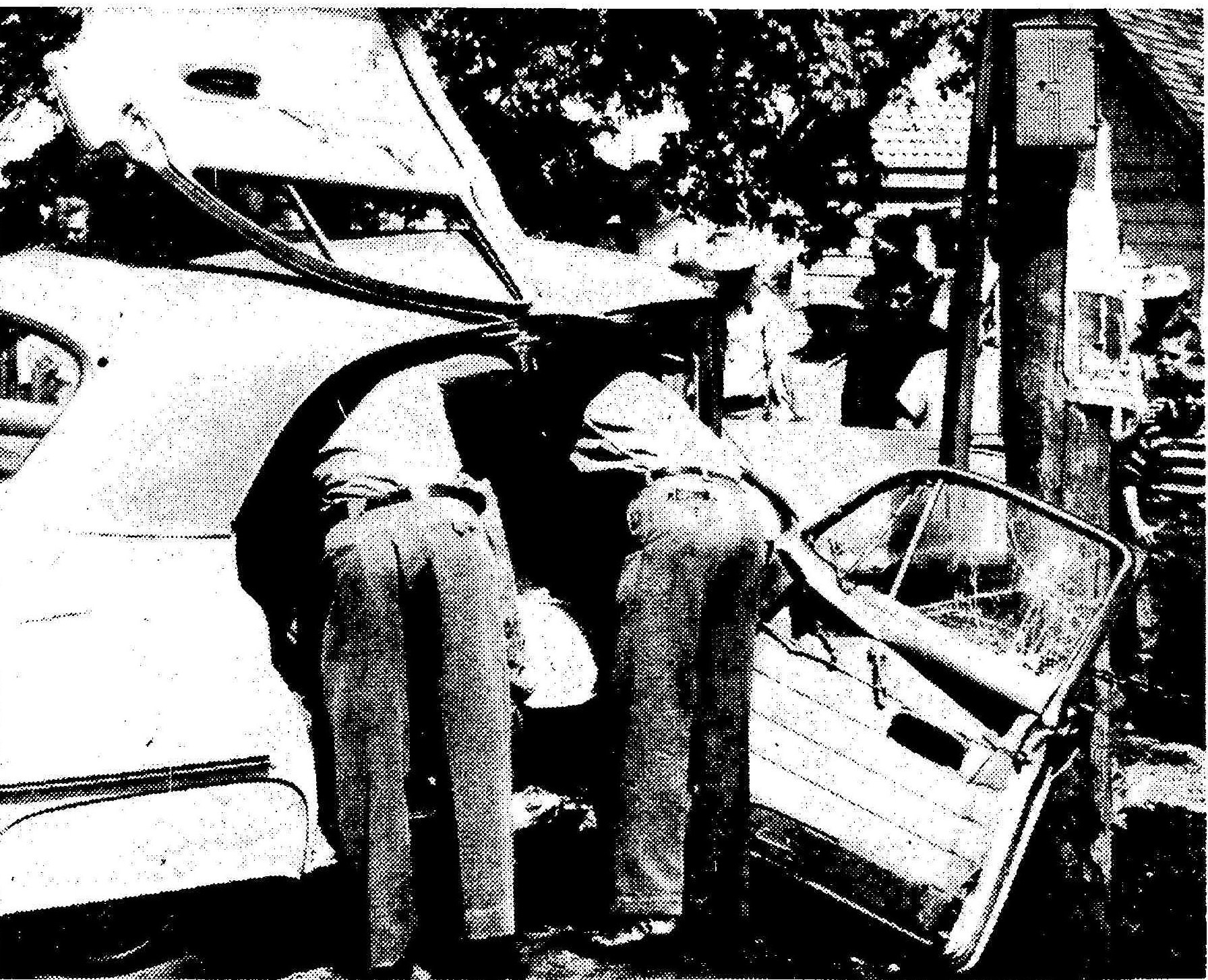
Four of her siblings were still alive and she had 11 grandchildren by the time 1955 rolled around.  Then one day she was visiting at the home of Jane (Jantjen in the Dutch) Bremer, her sister.  Dena needed to hurry off and Jane warned her that she should not go.  Jane was known in the family for having the gift of foretelling the future.  Jane told Dena that if she left at that time she would be in a terrible accident.  Dena gave no heed and left to go on her way.  Dena was known by all to speed, and she was doing so this day.  Sure enough, as she drove north on Wall Avenue in Ogden and at reaching 2nd street, a truck made a left hand turn from the right lane and hit the rear passenger side of the 1955 Oldsmobile.  Her vehicle was sent careening and slammed broadside into a telephone pole on the north east corner of the intersection (133 feet from the point of impact).  The initial hit threw her into the passenger side of the front seat with the passenger door open, her leg partially out of the opened door.  Then the impact collapsed the dashboard in on her and slammed the open passenger door on her leg.  She broke her hip, leg, and back with a number of other injuries.  The door had closed and latched on her leg and had to be cut open.  She was taken to the hospital where the family did not expect her to live.  She underwent a pretty major hip and back operation.

Dena was put into a full body cast for the next six months that reached all the way up to her armpits. Dave created this bar with a rope/cloth over the bed by which she could lift herself up so they could place a bedpan under her to do her business.  Betty would help her do the business, clean her up, and make sure her needs were tended.  The cast was eventually removed but she could not properly walk or get around very well.  She was pretty much confined to her home for the rest of her days.  At times a little heat came into a relationship and she would go spend some time with one of her other children, but she came back.  She had a terribly heavy hospital bed she used these last few years.  Dave made it clear early on that once he moved that bed out of the house again, he was not ever moving it back in so her stays elsewhere were of short duration.

Dave and Betty would take Dena around to visit places and get out of the house.  Betty joked that Dena loved to go fishing and that she could catch fish in the gutter if she tried.  She had a gift for catching fish. Dave and Betty set up a little camp chair so she could fish on camping trips.  They would leave her be for a while and she would giggle at the birds and once and a while one would fly to her.  She giggled openly and happily at everything.  Her grandson, Milo Ross, remembers her in the full body cast but yet she would smile and the whole world would smile with her.  He thought she was a funny lady with tongue twisters, slight Dutch accent, and catchy little jingles.

Dena had problems with her body that come from inactivity, like regular kidney stones and other painful problems.  But she always had a twinkle in her eye and a contagious laugh.  She never, if ever, complained about the lot cast to her in life.

On the 5th of March, 1959, Betty Donaldson, Dena’s daughter-in-law had finished work and was headed to the theater to catch a matinee.  She felt a distinct impression that she should go home.  Dave was at work and she had the whole afternoon free, so she did not see the need to go home.  As she waited in line at the theater, she knew she needed to go home so she caught the bus.  She made it home and all was well.  She changed her clothes and then Dena called up to her.  Dena had this sinking feeling in her chest, was not feeling very well, and was asking Betty for help.  Betty called the Dr. and for an ambulance.  Dave, who never called home from work, had felt impressed to call home.  Betty was just headed up to the hospital.  Dave met her there.  Dena had suffered kidney failure which lead to a heart attack and she passed away that evening around 10:30 PM.  She was buried four days later next to David in the Ogden City Cemetery.

“All right, then, I’ll go to hell”

We have the old story of Huck Finn told by Mark Twain.  The struggle in Finn’s mind.

All religious and secular thought was that it was moral and right, as citizens and god-fearing individuals to turn a slave in, to return him or her to the proper owner.

In that conflict, Huck really thought he would go to hell if he did not return Jim to his master, or at least report him.  In the end, he did what he felt was right.  That was directly contrary to both the legal and ecclesiastical realm.

“All right, then, I’ll go to hell.”

He would not report Jim and go on with his life.  He would rather go to hell than do the injustice to his friend.

Amazing how little things have changed since that time.  Slavery has passed away in this nation.  But the mentality has not.  Some still stick those old creeds and notions which are not divinely inspired, but still taught.  They demean and belittle other men, and yet in their pious attitude go about believing they are righteous.

It was with dismay that Amanda believed she is going to hell.  A friend of hers, a friend, is telling others that Amanda is going to hell.

“All right, then, I’ll go to hell.”

We are not Christians, that is what they say; just like blacks are not people.  We believe in a different God, just like their skin is different.  Well, if that is the way their God and church life, preach, teach, then I do not want a part of it.

“All right, then, I’ll go to hell.”

Their God condemns to hell all those who might be erring in judgment.  Their God condemns all those to hell who never even had an option to err in judgment.  Their God condemns to hell all those who never even had a chance to know of God.  Why would I want to be in a heaven where such a God lives?

“All right, then, I’ll go to hell.”

Mormons are not Christians because we believe in a different Christ?  Our Christ is a dear friend and close associate.  Their God is a distant impersonal God.  Our God has a body, parts, and passions.  Their God has no substance, being, or place.  Our God has characteristics, perfections, and attributes.  Their God, well, they can’t agree on his personal characteristics.

“All right, then, I’ll go to hell.”

Our God believe sin building up people and helping them, inasmuch as they want to be helped.  Our God is benevolent.  Their God will tear down and lock in some burning place even the best of souls who possible erred.  Their God is malevolent.  In the story of Ezra Benson, our God gives a new doll to have the child leave the old doll.  Their God tears apart the doll to reveal the sawdust and stray to have the child leave the doll.  If that is their God…

“All right, then, I’ll go to hell.”

Just as there were those in the days of Christ who could not move on from their strict reading of the law (scriptures). So also are there those today who cannot come to Christ because they are too locked into the scriptures.  They strain at a gnat and swallow a camel.

We will go on happy and leading our lives doing our own thing.  We will go on peacefully building up our kingdom and Zion for Christ’s return.  They can go on drawing lines in the sand and condemning everyone who dares to cross it.  We don’t give much of a hoot.  Why do we care if they think we don’t worship their Christ.  Agree with thine adversary quickly while thou art in the way…

“All right, then, I’ll go to hell.”

If it makes them happy, in some sadistic way, then let them think we are going to hell.  Just as the Jews missed Christ the last time, there seems to be a lot of Christians who are missing him this time while he is in our midst working mighty miracles.

We will worship our God, they will worship theirs; both in our delight and happiness.  We will just have to see which one is more lasting.  One thing is for sure though, we are learning to overcome the devil and hell now.  They think they are avoiding it; even in telling us our destination.  But even if we were sent to hell, we would be happy for we know the true God in whom to rely.  He can save us from hell, the pit, and darkness.  Theirs just condemns more souls to go there.
“All right, then, I’ll go to hell.”

“Whosoever shall seek to save his life shall lose it; and whosoever shall lose his life shall preserve it.”  Mark 17:33.

William and Maria Wagstaff

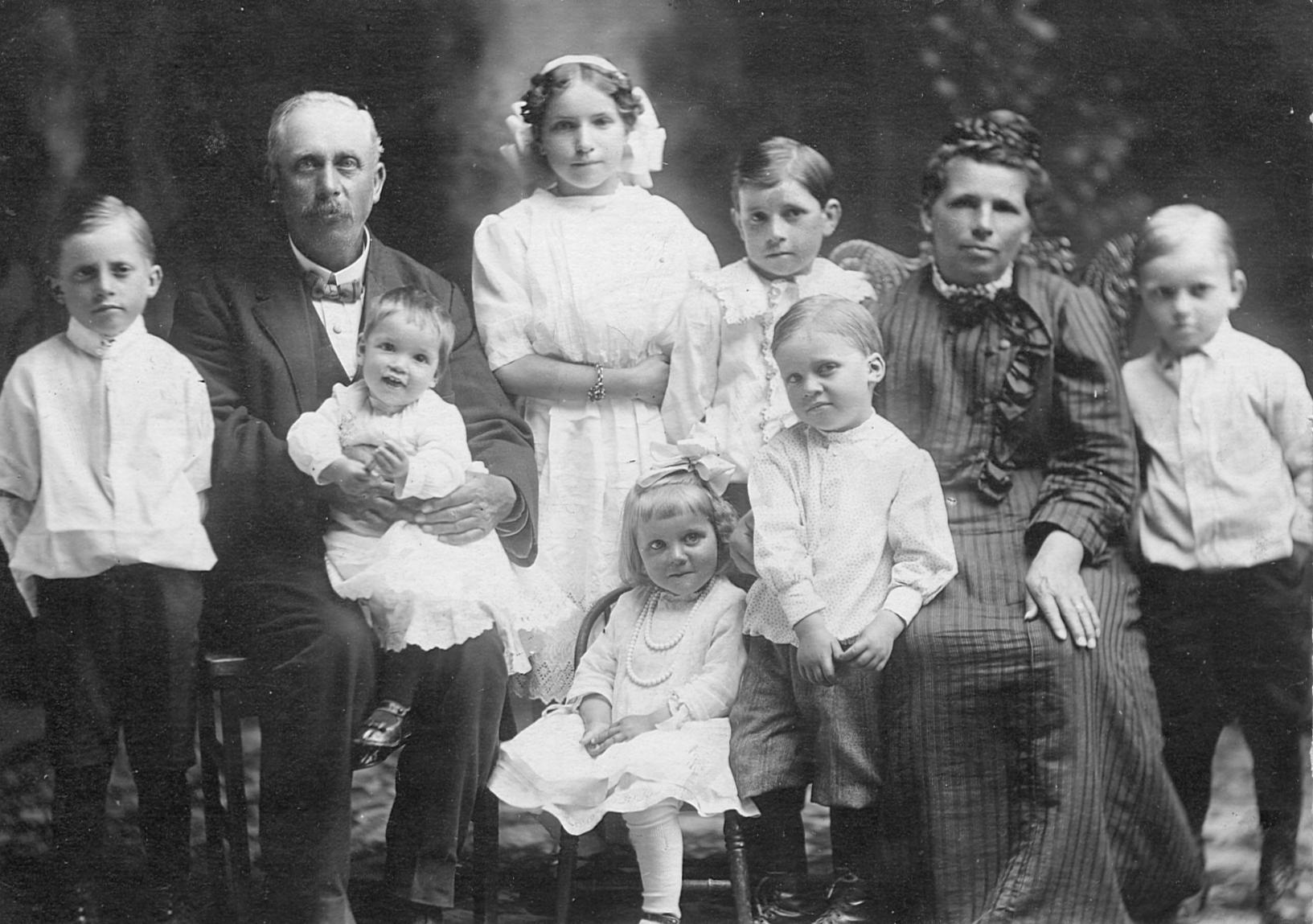
Back row: Willard, William, Annie, Parley, Maria, Jesse. Front row: Elsie, Edna, Herbert.

Since this is another peripheral line, I will not get to write much on this family.  But this photo I thought deserved to be shared with others.

Maria Magdalena Wanner, the mother of this family in the photo, is the sister to my Johann Georg (John George) Wanner Jr.

William Addison Wagstaff was born 7 November 1860 in Kirstead, Pinxton, Derbyshire, England.  He passed away 31 May 1931 in Ogden, Weber, Utah.

Maria Magdalena Wanner was born 12 Sepember 1873 in Grünkraut, Tübingen, Württemberg to Johann Georg Wanner and Anna Maria Schmid.  Her whole family joined the LDS church in 1891 and immigrated to the US in 1892 settling in Logan, Cache, Utah.  She passed away 23 October 1952 in Ogden.

William and Maria were married 17 June 1896 in the Logan LDS Temple.  To this marriage were born 11 children.  All of which were born in Glendale, Franklin (then Oneida County), Idaho.

George William Wagstaff born 26 January 1897, died 4 February 1897.

James Addison Wagstaff born 24 June 1898, died 14 March 1913.

Annie Eliza Wagstaff born 27 December 1899, died 20 December 1940.  I do not think she married.

Wilford John Wagstaff born 28 August 1901, died 23 June 1903.

Parley Leroy Wagstaff born 9 April 1903, died 18 Jan 1996.  Married Eliza Dorothea Blanch 14 March 1929.

Willard Lesley Wagstaff born 3 March 1905, died 21 January 1973.  Married Mary Isabell Gibson 19 October 1927.

Jesse Olsen Wagstaff born 9 January 1907, died 27 October 1991.  Married Berta Edna Gibby 28 October 1936.

Herbert Spencer Wagstaff born 11 November 1908, died 19 March 1962.  I do not believe he married.

Edna Leona Wagstaff born 10 July 1910, died 11 January 1997 in Kaysville, Davis, Utah.  Married Horace Raymond Owen 10 March 1933.

Elsie Magdalena Wagstaff born 7 August 1912, died 4 December 1990.  Married William C Coleman 17 January 1974.  I do not know if she had a marriage before that.

Albert Wanner Wagstaff born 8 July1915, died 19 August 1970.  Married Marvel Irene Higley 2 October 1948.

The entire family moved to West Weber, Weber, Utah after the last child and before 1920 and remained there the rest of their lives.  Most of these children died in or near the Ogden area.  One or two returned to the Preston, Franklin, Idaho area, probably due to relationships from before the move.

The individuals in the photograph above are as follows from left to right, front row consists of the three children in front.  The photo above was taken about 1914 after James had died, but before Albert was born.  Aren’t they a cute little family?

If you have more information to add to this family, I would be happy to correct or add to it.