
Several months after her parents arrived at the new settlement of Plain City, Weber, Utah, on 17 March 1859, Evelyn Carlisle Sharp was born in a wagon box on 12 October 1859. She always noted she was born on Columbus Day and the first white girl born in Plain City. Her father was William Sharp, stonemason and cornet player, one of the founders of Plain City. Her mother was Mary Ann Bailey Sharp, seamstress and dressmaker, who had crossed the plains with an ox team in the early 1850s.
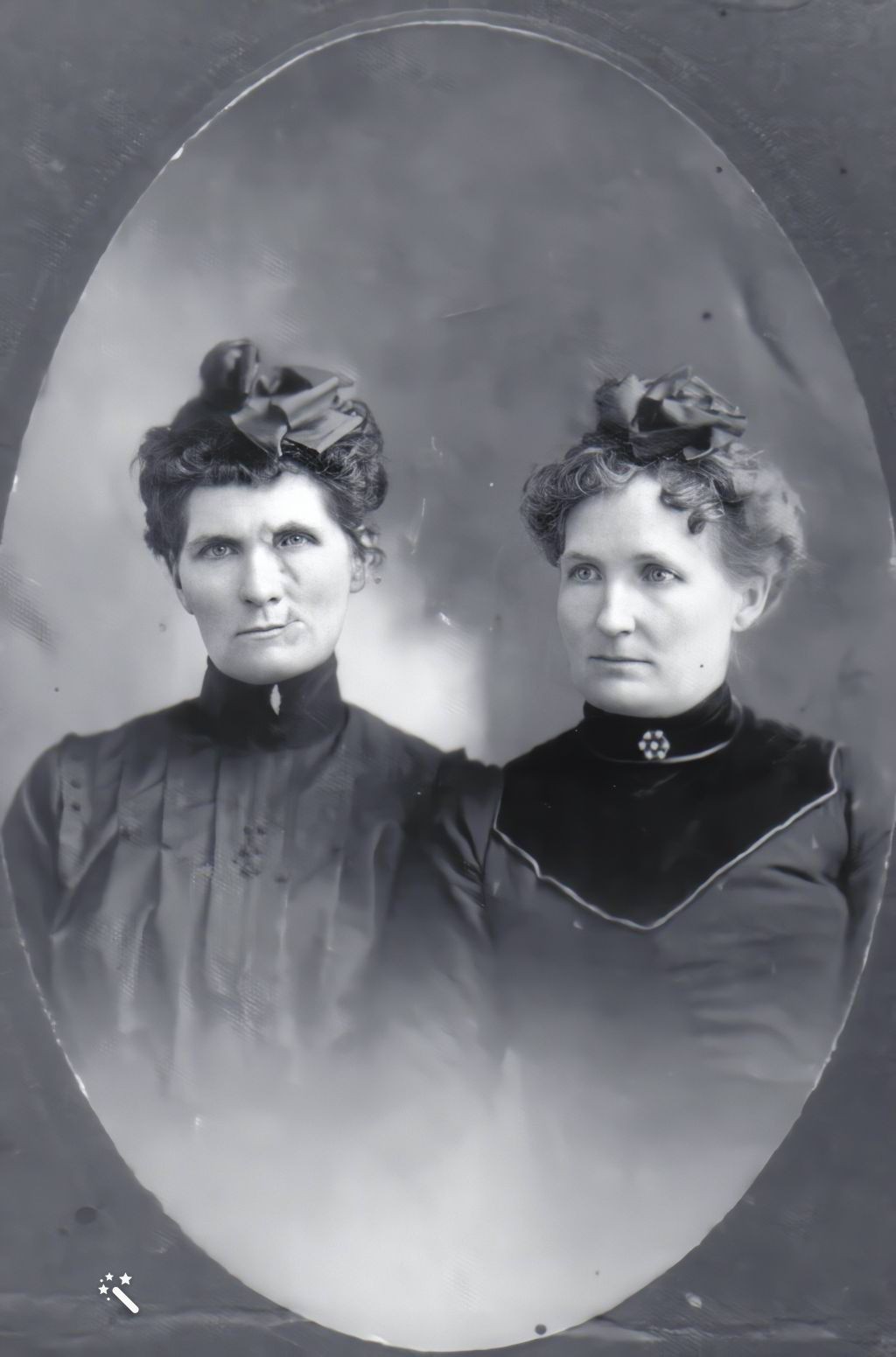
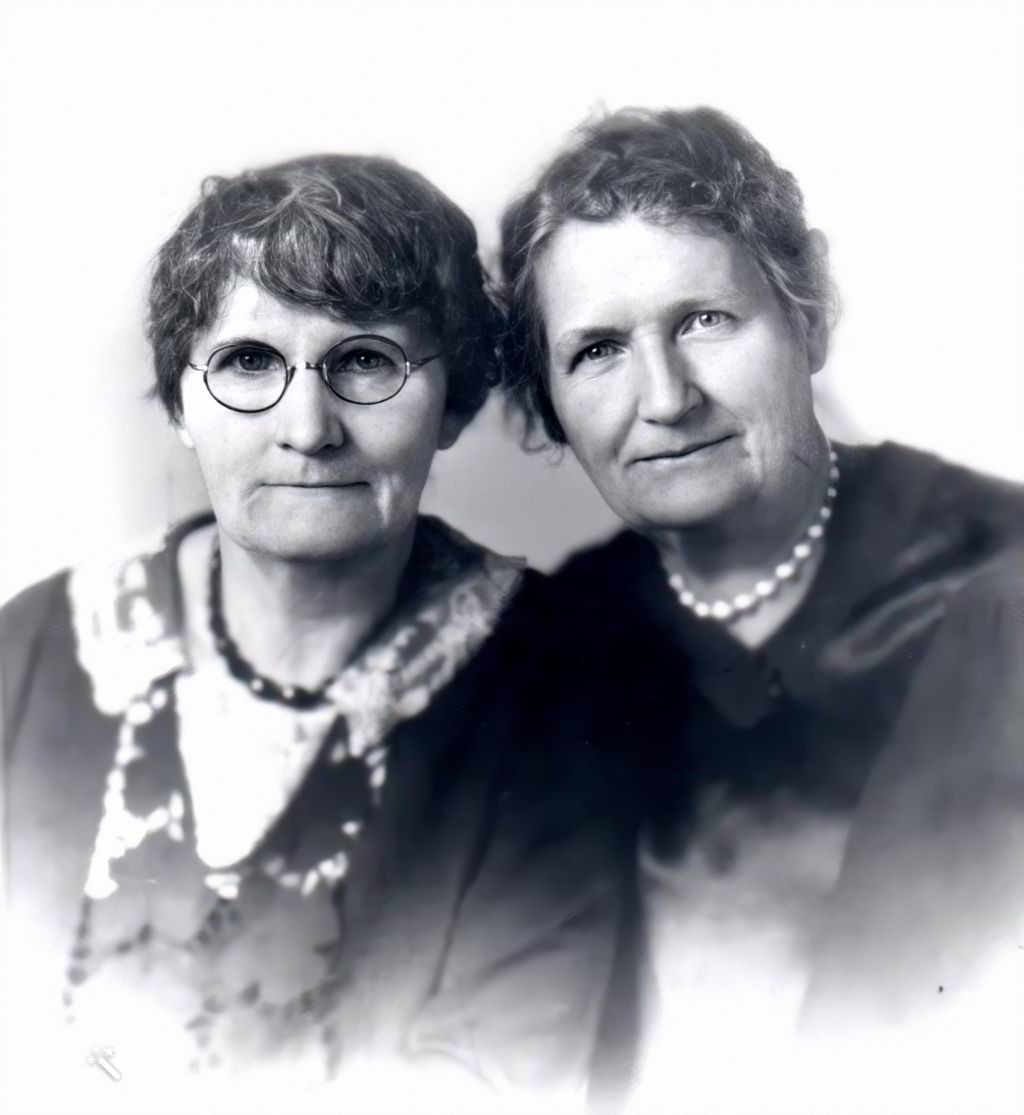
Evelyn’s own account of her early life was preserved in the Utah Pioneers Biography, Vol. 28, Pages 6–7, copied by Maurice L. Howe of Ogden, Utah. It is nice to have some first-person voices from Plain City’s founding generation. The marriage notice from the Ogden Standard Examiner of 22 January 1881 and her Oregon death certificate of 19 April 1941 are limited records, in my possession, of her long life.
Pioneer Personal History of Mrs. Evelyn Sharp Taylor
Copied from Utah Pioneers Biography, Vol. 28, Pages 6–7, by Maurice L. Howe, Ogden, Utah.
Mrs. Evelyn Sharp Taylor, Widow of James Henry Taylor, has the distinction of being the first white girl born in Plain City. Her family was one of the early subscribers to the Standard Examiner and after her marriage she and her husband subscribed for many years before they moved from Ogden.
Mrs. Sharp Taylor is now a resident of Portland, Oregon. In relating some of the incidents of Pioneer days Mrs. Taylor said: “I was born on Columbus Day, October 12, 1859 in a wagon box in what is now Plain City — at that time it was just wilderness. My father was William Sharp and my mother was Mary Anne Bailey. They crossed the plains with an ox team in the fifties.
“When they moved up to Plain City, father set to work to build a log and adobe house and during that time the family lived in the wagon box placed in the ground. There were two white boys born previously in Plain City.
“I was the first white girl born there. After I grew up I married James Henry Taylor, who was one of the first white children born in old Binghams Fort on West Second Street at Five Points.
“My parents used to tell me about one of the first trips I ever made to Ogden. I was just a baby in arms and my mother and father went to town with their ox team and wagon. It was winter time and when they got home that night the sky was so dark and the roads so drifted over with snow that they lost their way when they were nearly home.
“Finally they discovered the wagon was on a big patch of ice where the river had overflowed. Try as they would they could not find their way so they unhooked the oxen and let them find their way the best they could. Father and Mother said I cried with cold. The wolves howled around the wagon all night while we were huddled there nearly frozen.
“When morning came my parents discovered we were only a short distance from our house. We used to see lots of Indians in those times.
“My family used to take the Ogden paper by mail in the early Seventies. I enjoy getting back to Ogden to meet my friends again.
“My husband in Weber Co. for a time, then we moved to Eureka, Utah where he worked in the mines. Later we moved to Baker City, Oregon and since his death lived in Portland.
“I am surprised at the mildness of the winters here in recent years. When I was young we never used to be able to see a fence for months because the snow covered them up. Snow 2 to 4 feet deep was not uncommon here in early days.”

The Taylor–Sharp Marriage
Evelyn married James Henry Taylor on Sunday, 16 January 1881, at the Taylor residence in Plain City. The ceremony was officiated by Rev. J. L. Gillogly. James Henry Taylor was the youngest son of John Taylor, and had himself been born in old Binghams Fort on West Second Street at Five Points in Ogden. About forty invited guests attended and partook of bountiful refreshments.
The notice in the Ogden Standard Examiner of 22 January 1881 — apparently updated or annotated years later — adds that Mr. and Mrs. Taylor were then nearly 70 years of age, “having reared and married off 12 children — and yet they both seem as full of life and viracity as ever.” Together they raised twelve children, eventually settling in Oregon.
Death and Survivors
Evelyn Sharp Taylor died on Saturday, 19 April 1941, at her home at 345 Third Avenue, Seaside, Clatsop County, Oregon, at 6:10 in the evening. She was 81 years, 6 months, and 7 days old. The cause of death was recorded as apoplexy, due to senile changes. She had lived in Oregon for 38 years.
Her obituary, headed “Weber Woman Dies in Oregon,” identified her as “the first white child born at Plain City.” She was survived by three sons and three daughters in Oregon, and by her sister Mrs. Victorine Maw of Ogden — Victorine Mary Sharp, born 8 April 1862 in Plain City, who had married Robert Edward Maw, son of Plain City pioneer Robert Maw. The last two surviving daughters of William and Mary Ann Sharp, separated by nearly three thousand miles.
Funeral services were held Wednesday in Portland. Evelyn was cremated at the Portland Crematorium; the funeral was conducted by E.B. Hughes Mortuary of Astoria, Oregon.
A Note on the Family
Evelyn was the sixth child of William Sharp and Mary Ann Bailey Sharp, and the first born in Plain City. Her brother Milo Riley Sharp — my great-great-grandfather — had been born two years earlier, on 23 July 1857, in Lehi, Utah, while the family still lived there before the move north. Younger sister Victorine Mary Sharp was born on 8 April 1862, also in Plain City.
The Personal History of William Sharp — a separate document in this family record — places the family’s arrival at Plain City on 17 March 1859, traveling with the large body of Lehi colonists who left on 10 March. It describes the journey vividly: seven days of cold, muddy travel, the wagons doubled-teamed through the muddy flats, arriving at about five o’clock in the afternoon with the ground covered in snow. The wagons were lined up and sagebrush piled behind them as a windbreak against the north wind. They dug a hole in front and built a campfire. This is the scene into which Evelyn was born seven months later.
William Sharp built the adobe home in Plain City that was later used by the Edward Sharp family — Dean Sharp lived in it as a child — and built the first Episcopal Church building, which still stands today as the Plain City Lions Civic Center, designated a historical site, its original bell refurbished and sitting atop the building. He played the cornet in Plain City’s first band. He served on the board of directors of the cooperative store organized at Plain City in 1869. He and Mary Ann divorced on 19 May 1876. William later married a widow named Charlotte Elizabeth Earl and moved to Ogden’s Mound Fort District, where he died on 22 December 1900 and was buried in the Ogden Cemetery.
Mary Ann Bailey Sharp lived on in Plain City until her death on 30 October 1913, and was buried there. She had been born on 28 November 1828 in Mattersey, Nottinghamshire, England — a village less than ten miles from Misson, where William was born.
For more on the Sharp family and Plain City’s founding generation, see:
Early Settlers in Lehi, Utah, before Plain City, Utah — Wayne E. Clark’s 2017 research on the Lehi consecration deeds, including William Sharp (no. 68)
Sharp-Bailey Wedding — William and Mary Ann’s story
Sharp-Stoker Wedding — Milo Riley Sharp and Lillie Stoker
History of Plain City — a multi-part series on Plain City’s founding families
1895 Plain City Student Body — the founding generation’s children
Sharp Family History Outreach — the broader Sharp family connections

