James Sharp

James Sharp

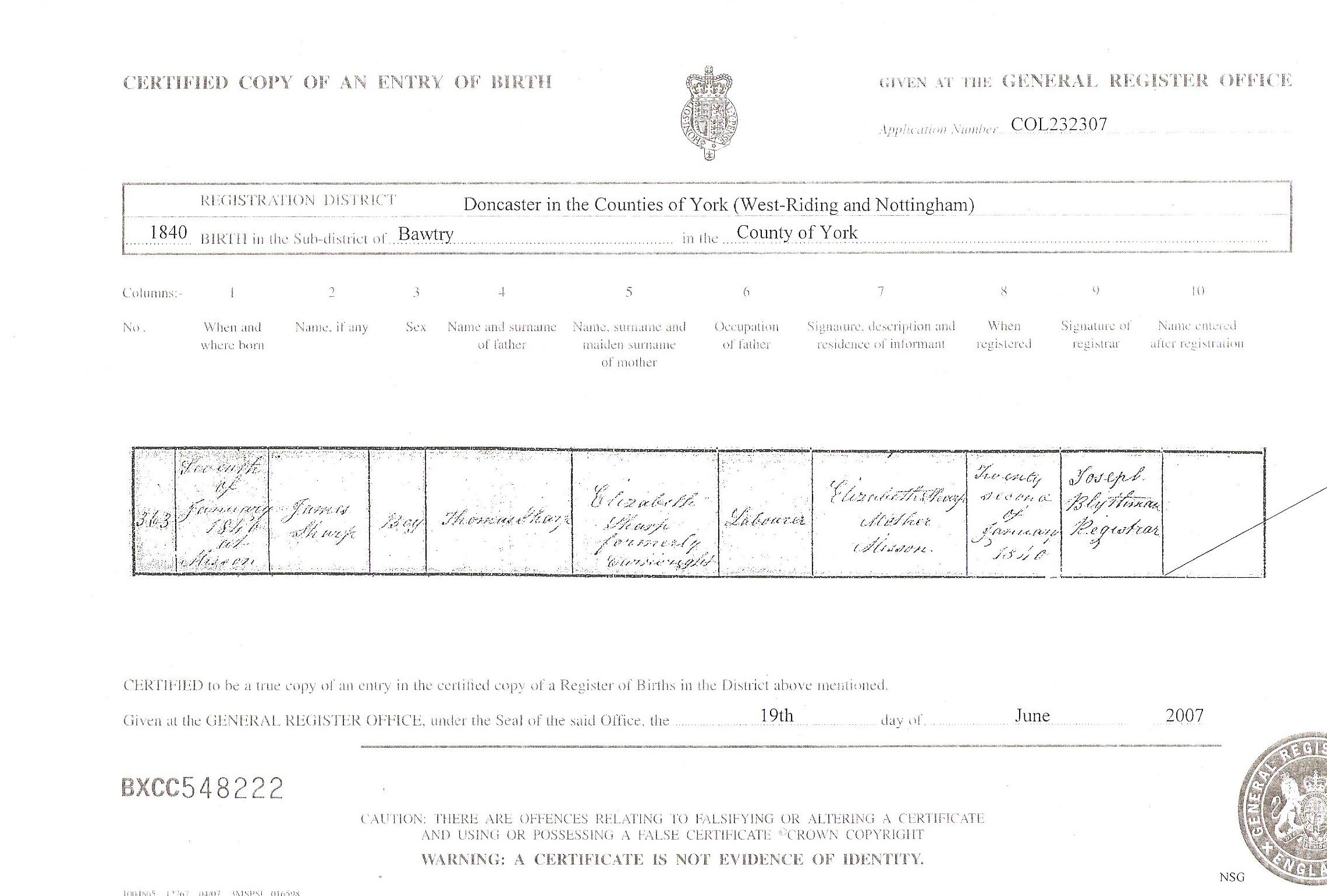
James Sharp was born 7 January 1840 in Misson, Nottinghamshire, England to Thomas Sharp and Elizabeth Cartwright Sharp. His birth is confirmed by a certified copy of his birth certificate from the General Register Office (BXCC548222). It records his birth on 7 January 1840 in Misson, Sub-district of Bawtry, Doncaster. His father is listed as Thomas Sharp, Labourer, and his mother as Elizabeth Sharp, formerly Cartwright — who was herself the informant, registering the birth on 22 January 1840. I wrote about James’ parents, the family’s conversion to the LDS faith, and the trip to America in his brother William’s biography, Sharp-Bailey Wedding.

Birth certificate of James Sharp, GRO certified copy, BXCC548222, Misson, 7 January 1840.

The Sharp family emigrated to America aboard the ship James Pennell, which sailed from Liverpool on 2 October 1850 under the direction of Christopher Layton and William L. Cutler, carrying 291 Latter-day Saint passengers. After a difficult voyage that included a severe storm near the mouth of the Mississippi that disabled the ship and nearly exhausted the provisions on board, the James Pennell arrived at New Orleans on 23 November 1850. The passengers continued up the Mississippi River to St. Louis, where they found employment and shelter. The passenger manifest lists James Sharp, age 10, traveling with his mother Elizabeth Cartwright Sharp (age 45), brother William (age 24), and sisters Isabella (age 19) and Elizabeth (age 26). Their mother died in St. Louis on 17 February 1851, just months after their arrival. The account of the voyage is preserved at Saints by Sea.

Siblings William and Isabella eventually continued west with the Moses Clawson Company in May 1853, while James stayed behind with his sister Elizabeth in St. Louis. (Read more about Elizabeth here.) James and Elizabeth did not join the LDS faith with their mother (Elizabeth), William, and Isabella.

James married Eudora Elvira Mann 3 March 1863 in Nashville, Davidson, Tennessee. Eudora “Dora” was born 1 May 1845 in Nashville. We do not know much of the life story, so how he met Dora and married her in Nashville we may never know. The two made their home in St. Louis though. James worked as a pork packer and initially started out in business with Patrick Muldoon around 1870. Here is the run down of the St. Louis directories.

1869 [FHL #980635] James Sharp with Muldoon and Sharp at 1612 Biddle.
1870 [Gould’s p. 797] shows the same.
1871 [Gould’s p. 601] the same, but also lists Sharp, James pork packer r[esident?] at 1119 N 17th. {FHL #980,636]
1872 shows Muldoon and Sharp at 1015 N 17th [N 17th goes from 1701 Market North to Angelica.]
1875 [p. 1171] Muldoon and Sharp, Pork Packers and Provision Dealers, 904 B’way.
1885 Sharp, James, Muldoon and Sharp 904 to 912 S 2d, r 2715 Mills. [There are now 7 pork packers listed, only 1 in 1875.]
1887, James C. Sharp is listed as a clerk at Muldoon and Sharp.
1888 is Sharp, James and Co., same address, te no. 2208.
1890 James Sharp and Co. now includes Sharp, James C. as cashier and Sharp, George as Clerk. All 3 at 3641 Finney Ave.
1895 Shows both James Sharp and James C. Sharp as packers, George W. Sharp as Manager and William M. Sharp as Clerk at James Sharp and Co., 904 S 2d. James C. now resides at 4354 Morgan, the other 3 still at 3641 Finney.
1896 and 1897 now show William M. as manager and George W. as supt.; James and James C. simply identified as with Co. 1898 directory is missing.
1899 Company not listed. James C. (same address) is broker; George W. is just listed, at 1811 Laflin; William M. and James are just listed, still living at 3641 Finney.
1900 James C. at Sharp and Westcott; George W., clerk at Manewal Lange Bakery, 3204 Morgan; William M. litho., at home.
1901 James Sharp now resident at 4573 Page boul; James C. com. mer. 736 Bayard av; George W. still clerk at Manewal-Lange Bakery, resident at 3009 Easton. [William M. not listed]
1902 James C. mngr. Sharp Mnfg Co., 411 Fullerton bldg., r. 736 Bayard av; George W. and William M. are both clerks, residing at 3156 Easton av.
1903 James still at 4573 Page boulevard; James C., ins., 721 Olive, r. 3732 Washington Boul.

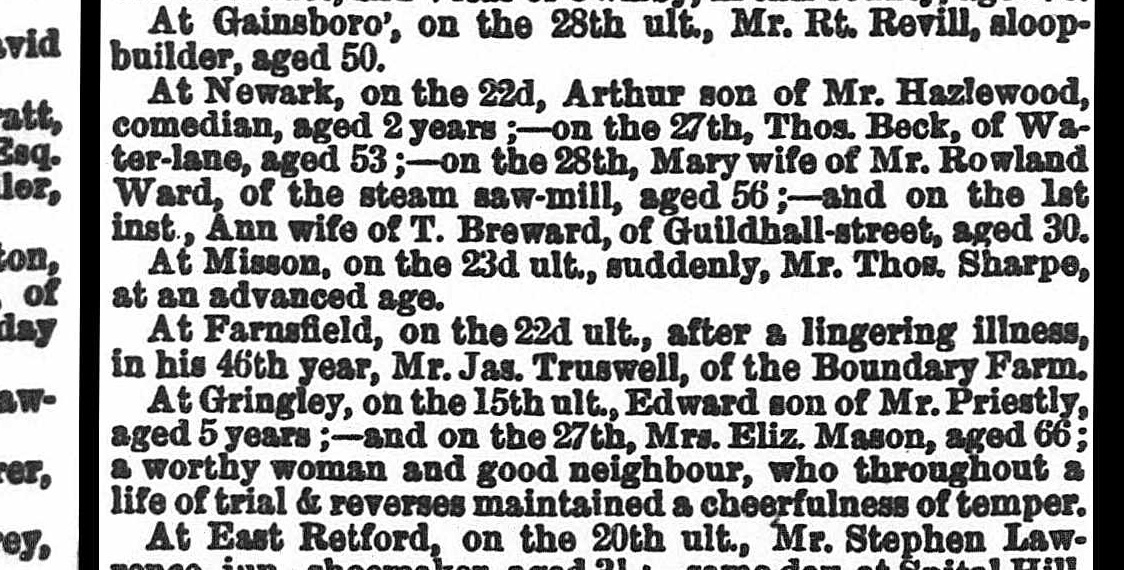
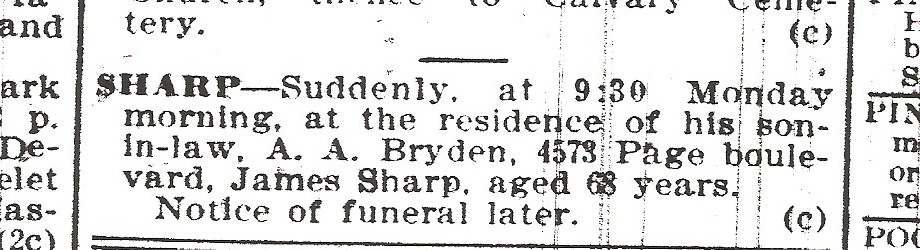
Death notice of James Sharp, St. Louis Globe-Democrat, 24 February 1908.

As you can probably tell from the information above, James put his children to work and included them in the business. James retired at 55 and turned the business over to his boys. By 1898 they had run the business in the ground, supposedly because of their like for being horsey (horse-racing).

James and Dora had 5 children.

Eudora Mann Sharp born 13 January 1864 and died 11 January 1938, both in St. Louis. She married Alexander A Bryden, who worked in the coal business.

Ida Lee Sharp born 8 October 1866 and died 23 December 1946, both in St. Louis. She was unmarried. She worked as a school teacher.

James Carlisle Sharp born 26 December 1868 in St. Louis and died 4 November 1952 in Valley Park, St. Louis, Missouri. He married Emma Manewal (and divorced) and Madeline C Grimm. He had a department store. Emma was the daughter of August Manewal, one of the confederation of bakers who formed the National Biscuit Company (NABISCO).

George W Sharp born 10 March 1871 in St. Louis and died in 1964 in Sand Springs, Tulsa, Oklahoma. Apparently he married a lady named Effie Olive, but we know nothing more about his life or her. He was badly disfigured after being kicked in the head by a horse at 3 years old.

William Muldoon Sharp born 4 October 1874 and died 24 March 1915, both in St. Louis. He also remained unmarried.

Eudora died 3 March 1894 of cerebral meningitis. She was listed as living at 3641 Finney Avenue. She was buried in the Bellefontaine Cemetery 5 March 1894.

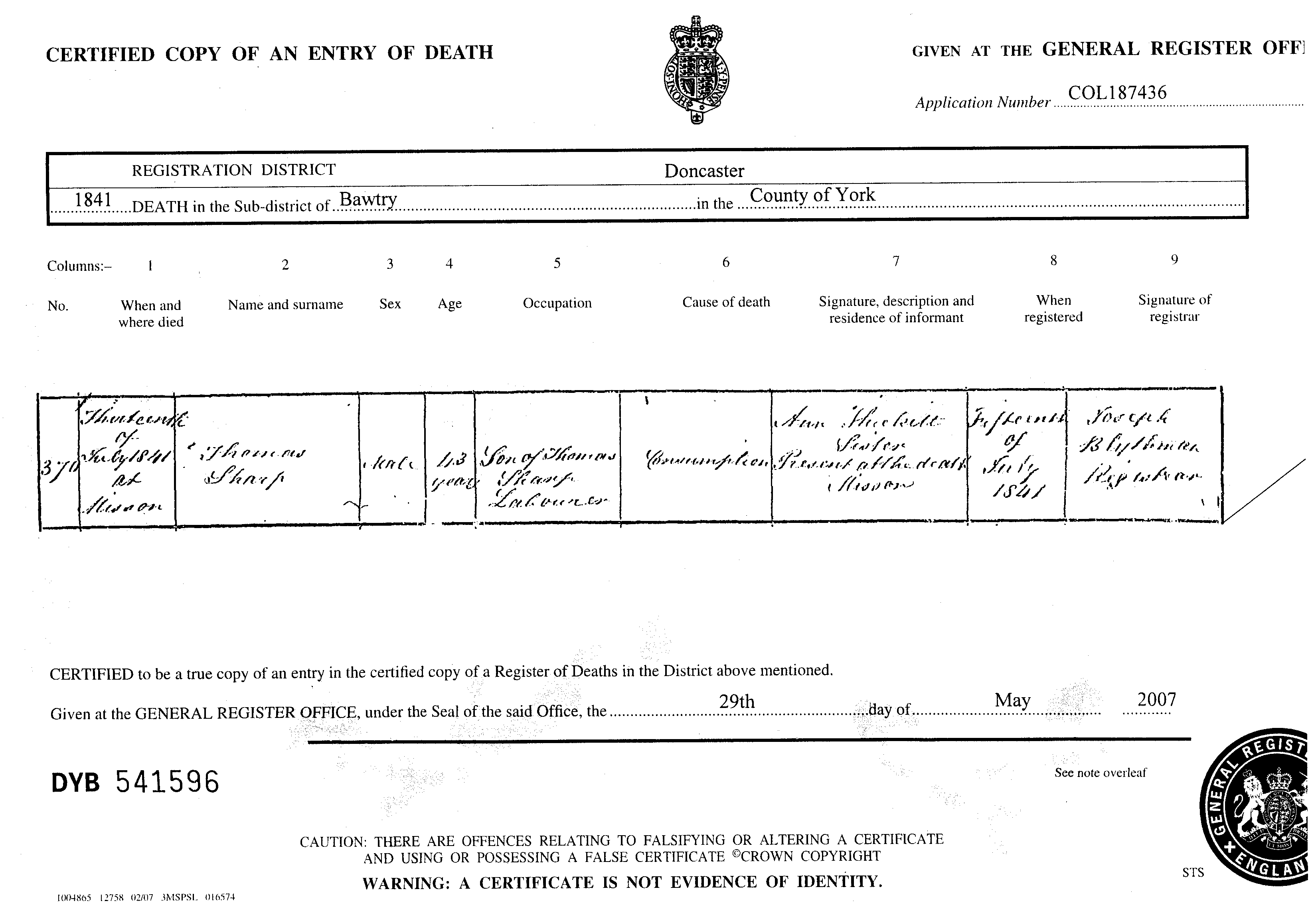
James died suddenly on Monday morning, 24 February 1908, at the residence of his son-in-law Alexander A. Bryden at 4573 Page Boulevard, St. Louis, at the age of 68. The St. Louis Post-Dispatch reported that he was a retired pork packer who was killed by a street car on Saturday night, 22 February 1908, at Page Boulevard and West End Avenue. He died two days later from his injuries. The funeral was held Wednesday afternoon from his late residence at 4582 Page Boulevard, conducted by Rev. Dr. William Elmer of St. Philip’s Episcopal Church — a further confirmation, alongside Annie Thompson’s account, that James never joined the LDS Church. He was interred at Bellefontaine Cemetery on 26 February 1908. The death notice in the same paper, published 24 February, gave his age as 68 years, consistent with his 1840 birth year confirmed by the birth certificate.

James was a founder of St. George’s Society and served as treasurer for several years. He was also a member of the Merchants’ Exchange and a veteran member of the St. Louis Lodge No. 5, I.O.O.F.

Funeral notice of James Sharp, St. Louis Post-Dispatch, February 1908.

For more on the Sharp family, see:

Elizabeth Cartwright Sharp — James’s mother, written by Annie Thompson
Sharp-Bailey Wedding — James’s brother William and Mary Ann Bailey
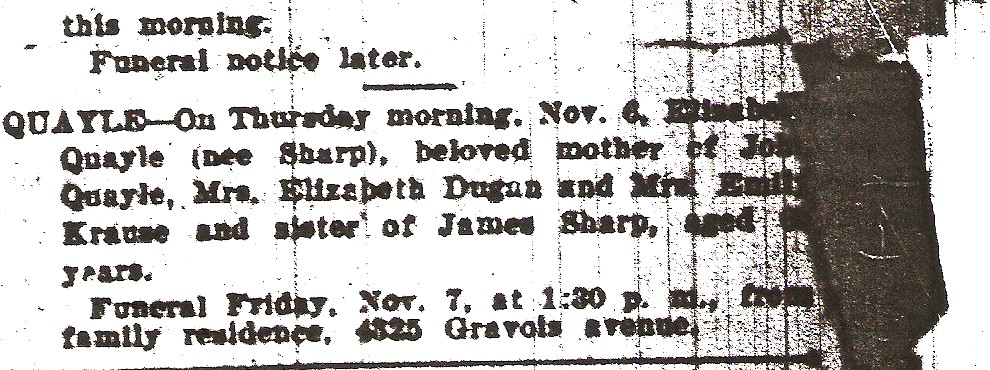
John and Elizabeth Quayle — James’s sister Elizabeth who also remained in St. Louis
Sons of Joseph and Isabella Carlisle — James’s sister Isabella who went on to Utah

Sons of Joseph and Isabella Carlisle

Standing (l-r): Frank Carlisle, Harve Carlisle. Sitting: Fred Carlisle, Joe Carlisle, Jim Carlisle.

I thought I would share this photo because I have it and do not know how many others do. This is the five sons of Isabella Sharp and Joseph Carlisle. Isabella is the sister to my William Sharp, who I have written about previously at this link: Sharp-Bailey Wedding. Here are some of the details of the family, but I do not really know much more. They have a pretty large family with plenty of family historians so I will let them write the Carlisle history (which I know they have probably already done).

Joseph Carlisle was born 21 July 1826 in Sherwood on the Hill, Nottinghamshire, England and died 17 March 1912 in Millcreek, Salt Lake, Utah.

Isabella Sharp was born in December 1831 in Misson, Nottinghamshire, England and died 29 March 1904 in Millcreek, Salt Lake, Utah. Her christening record, dated January 1832, establishes 1831 as her birth year. Both her Deseret News obituary and the In Memoriam published at the time of her death recorded her birth date as 21 December 1832 — the year is contradicted by the christening record, and whether the day was the 21st or 22nd remains to be confirmed by further research. Her parents were Thomas Sharp and Elizabeth Cartwright Sharp. If you search her brother, mentioned above, you can read more about her parents and family.

Misson is a small village and civil parish in Nottinghamshire, England, situated on the River Idle approximately one and a half miles from the Yorkshire boundary and three miles east-northeast of Bawtry. The village’s ancient name appears in historical records as “Mysen” or “Misne,” both of Danish origin, suggesting the area was first settled by Danes who came up the Trent valley to Gainsborough and then followed the River Idle inland. Until 1886 the parish straddled the Nottinghamshire-Lincolnshire boundary, when it was ordered placed entirely within the Bassetlaw division of Nottinghamshire. It was in this quiet fenland village, near the meeting point of three counties, that Isabella Sharp was born.

The Sharp family emigrated to America aboard the ship James Pennell, which sailed from Liverpool on 2 October 1850 under the direction of Christopher Layton and William L. Cutler, carrying 291 Latter-day Saint passengers. After a difficult voyage that included a severe storm near the mouth of the Mississippi that disabled the ship and nearly exhausted the provisions on board, the James Pennell arrived at New Orleans on 23 November 1850. The passengers then continued up the Mississippi River to St. Louis, where they found employment and shelter for the winter. The passenger manifest confirms Elizabeth Cartwright Sharp (age 45), William Sharp (age 24), Isabella Sharp (age 19), Elizabeth Sharp (age 26), and James Sharp (age 10) all traveled together on this voyage. The account of the voyage is preserved at Saints by Sea.

Isabella’s mother, Elizabeth Cartwright Sharp, died in St. Louis on 17 February 1851, just months after their arrival. Isabella remained in St. Louis, was baptized into the Church of Jesus Christ of Latter-day Saints, and married Joseph Carlisle there on 18 May 1853. That same month her brother William departed St. Louis with the Moses Clawson Company, arriving in Salt Lake Valley in September 1853. Joseph and Isabella followed, also traveling with the Moses Clawson Company, and settled first in Millcreek, Salt Lake County.

The Deseret News of 31 March 1904 reported her passing under the headline “Early Settler Dead: Mrs. Isabella S. Carlisle Goes the Way of All the Just.” The notice recorded that she was born in Misson, England, 21 December 1832, emigrated to Utah in 1851 [she arrived in America in November 1850 but did not reach Utah until September 1853], and passed away at her home in Mill Creek on Tuesday last after a well-spent life of nearly 72 years. She became a member of the Church of Jesus Christ of Latter-day Saints in 1850 and endured with patience and fortitude all the hardships incident to the settlement of these valleys. The funeral was held from the Mill Creek Ward house on Friday at 12 o’clock noon.

An In Memoriam published at the same time recorded that Sister Carlisle was one of the first to join the Relief Society when it was organized in the ward in 1863, and was a great support to it financially. She served as presiding teacher in the third district for twenty-one years, and as first counselor in the Primary Association, third district. She was honorably released by Bishop James C. Hamilton. The funeral was held at the Mill Creek Ward house, where a large concourse of friends met to pay their last respects, Bishop Hamilton presiding. She was interred in the Mill Creek Cemetery.

In December 1933, three of Isabella’s sons — Joseph R. Carlisle, James S. Carlisle, and Harvey C. Carlisle — wrote to LDS Church President Heber J. Grant requesting reinstatement by proxy of their Uncle William Sharp and his wife Mary Ann Sharp, who had been excommunicated from the Church on 31 January 1879. President Grant consented by letter dated 16 December 1933, authorizing proxy baptism and, if applicable, restoration of endowments and sealing through Elder George F. Richards, President of the Salt Lake Temple. The letter was addressed care of Mrs. James S. Thompson — confirming that Annie Thompson, whose 1957 history of Elizabeth Cartwright Sharp appears elsewhere on Sagacity, was the daughter of James S. Carlisle.

Joseph and Isabella were married 18 May 1853 in St. Louis, St. Louis, Missouri.

Joseph Richard Carlisle was born 19 December 1854 in Millcreek and died 2 April 1935 in Salt Lake City. He married Lily Naomi Titcomb 29 November 1883 in Salt Lake City in the Endowment House.

Isabella Jane Carlisle was born 12 April 1857 in Salt Lake City and died 1 April 1928 in Salt Lake City. She married Joseph William Walters 3 January 1875 in the Endowment House.

Thomas Matthew Carlisle was born 12 April 1857 in Salt Lake City and died 10 March 1869 in Millcreek.

James Sharp Carlisle was born 4 September 1859 in Millcreek and died 2 December 1938 in Millcreek. He married Keturah White 11 February 1885 in Logan, Cache, Utah in the Logan Temple.

Ezra Taylor Carlisle was born 14 August 1861 in Millcreek and died 12 February 1862 in Millcreek.

Elizabeth Ann Carlisle was born 24 November 1862 in Millcreek and died 6 November 1881 in Millcreek. She was engaged to marry John Calder Mackay and obviously died before that marriage could take place. On 21 December 1881 in St. George, Washington, Utah Isabella performed Elizabeth’s eternal ordinances in the St. George Temple. Isabella also stood in as proxy as Elizabeth was sealed to John Mackay, who accompanied Isabella to St. George.

William Frederick Carlisle was born 14 November 1864 in Millcreek and died 5 January 1922 in Millcreek. He married Sarah Ann Rogers 23 December 1897 in the Salt Lake Temple.

Harvey Cartwright Carlisle was born 22 September 1866 in Millcreek and died 3 July 1935 in Holladay, Salt Lake, Utah. He married Lucy Carline Cahoon 21 January 1891 in the Logan Temple. After her death he married Amelia Annie Towler 16 January 1901 in the Salt Lake Temple. After her death he married Emily Steven McDonald 19 July 1923 in the Salt Lake Temple.

Herbert Towle Carlisle was born 23 August 1868 in Millcreek and died 25 October 1870 in Millcreek.

Orman Carlisle was born 8 May 1871 in Millcreek and died 9 May 1871 in Millcreek.

Carrie Brown Carlisle was born 18 November 1872 in Millcreek and died 15 July 1873 in Millcreek.

Ether Franklin Carlisle was born 11 September 1873 in Millcreek and died 4 May 1915 in Salt Lake City. He married Maude Miller Harman 10 November 1897 in the Salt Lake Temple.

Rosamond Pearl Carlisle was born 29 July 1875 in Millcreek and died 13 June 1921 in Murray, Salt Lake, Utah. She married Uriah George Miller 19 February 1902 in the Salt Lake Temple.

The family certainly lost quite a few children. But all those who lived to marry did so in an LDS temple, or its equivalent at the time.

For more on the Sharp family and Plain City’s founding generation, see:

Sharp-Bailey Wedding — William Sharp and Mary Ann Bailey
Elizabeth Cartwright Sharp — Isabella’s mother, written by Annie Thompson
James Sharp — Isabella’s brother who remained in St. Louis
Early Settlers in Lehi, Utah, before Plain City, Utah — Wayne E. Clark’s research including William Sharp (no. 68)
History of Plain City — Plain City’s founding families

Bath, Birmingham, and Milton Abbas

Tonight we write from the deep countryside of Dorset.  We are staying in the little village of Milton Abbas with a cousin’s cousin.  We are both related to the Coley and Harris lines in Halesowen, England.  Peter and Cynthia Wise have taken us in a day earlier due to the fact we are not going to Merthyr-Tydfil, Wales now.  We will be with them two days.

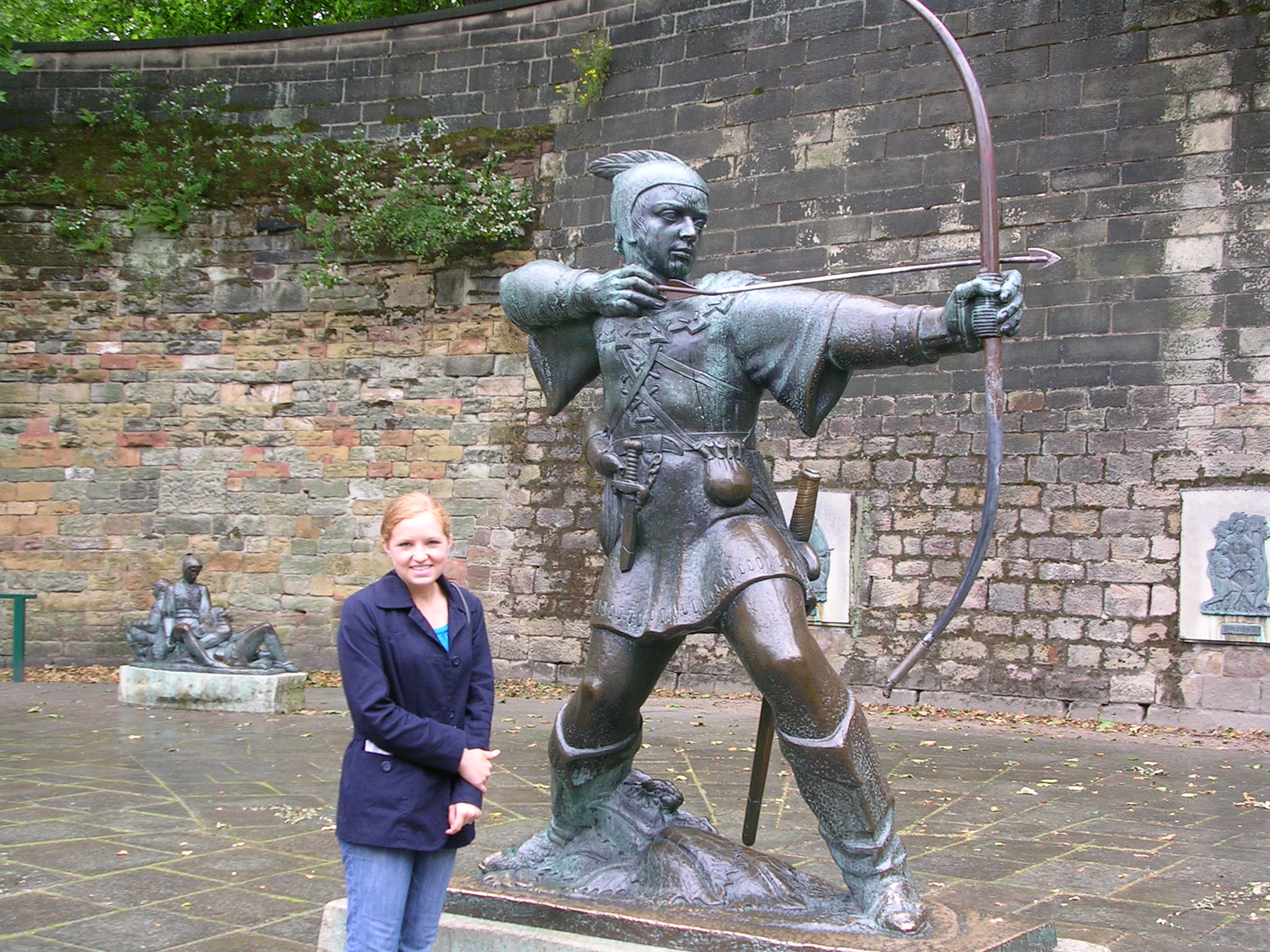
Amanda with Robin Hood statue near Nottingham
Nottingham Castle
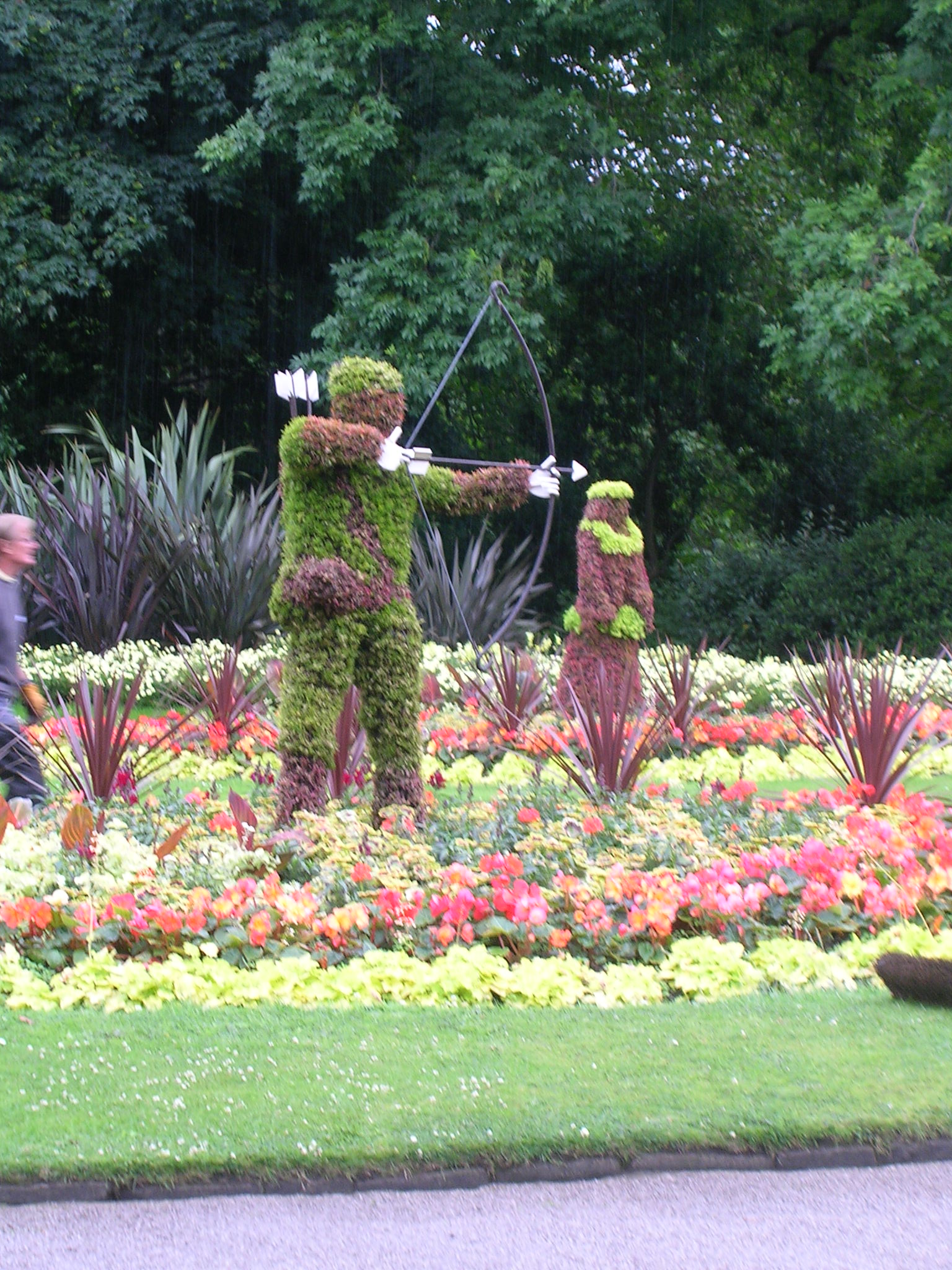
A Robin Hood shrubbery at Nottingham Castle
Nottingham Town Center
Nottingham Council House

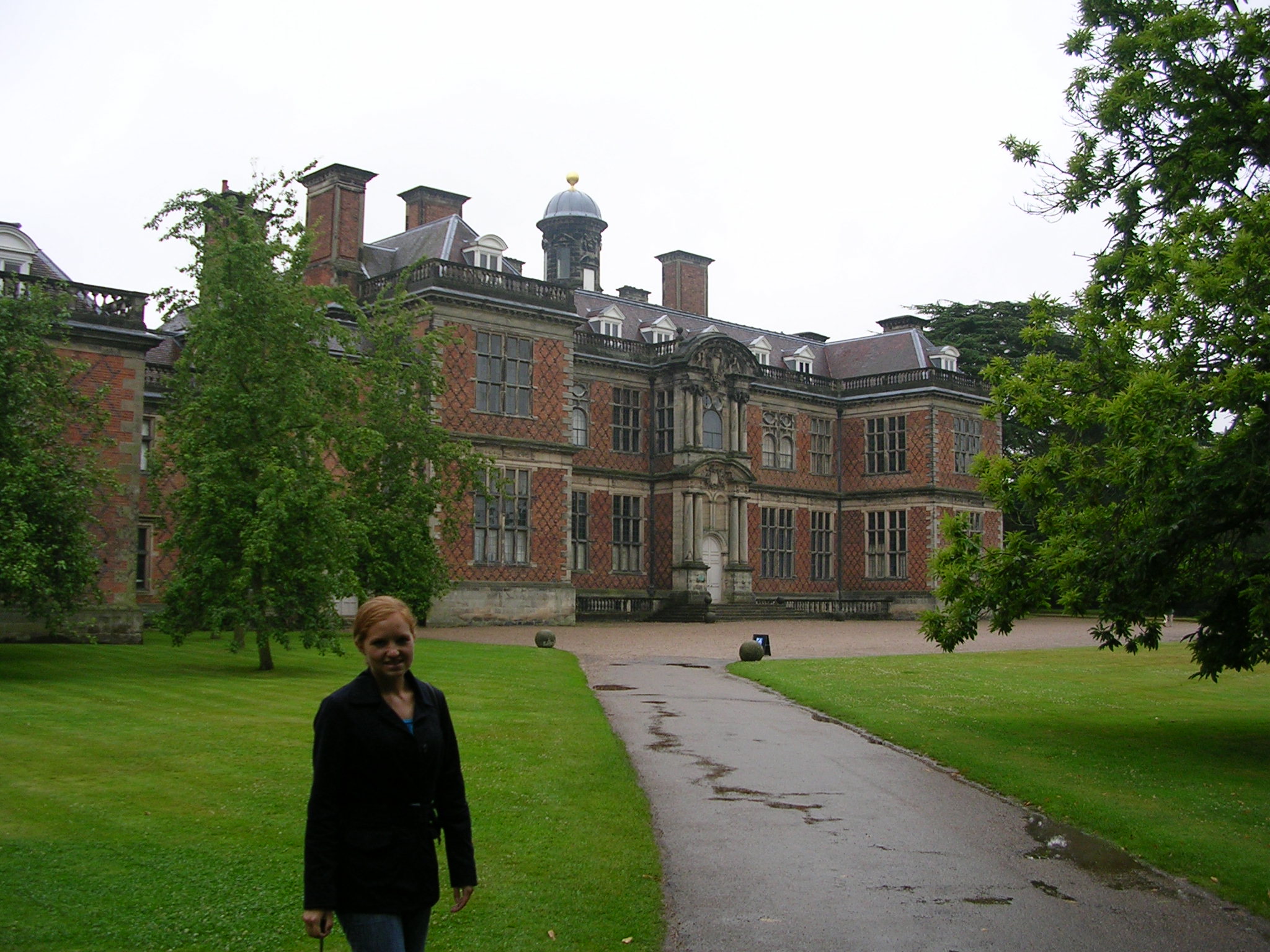
Yesterday went terribly wrong.  We left a little late from Walkden, got stuck in a traffic queue for 1.5 hours in Stockport meaning we had to drop our visit to Chatsworth House.  Then we decided we better drop Mattersey and Misson on my Sharp family line to at least make Sudsbury Hall.  We then found out the M1 was closed with miles of traffic queue so we had to take side roads to Nottingham.  There we saw the Robin Hood sites and made our way to Sudsbury for their manor house.  Well, all the side roads were occupied with motorway traffic so we were delayed, we got lost, and in the end missed the last time to get into the home.  We got pictures with the house but Amanda was devastated we didn’t get in.

Amanda Ross at Sudbury Hall
Sudbury Hall rear

In defeat, we made our way to Hagley, near Halesowen, near Birmingham last night.  We checked into our little hotel and ran into Halesowen where we found the church of St. John the Baptist.  Interestingly, as we wandered the cemetery, we found loads of Coley, Willett, and Harris tombstones.  Many were modern, but there were a few in which I am sure they are cousins I have in my family history file.  That made it worth it.  The other deceased I will have to do some research on to trace them back to the family and connect them in.  Hopefully I can find another person who has done research on some of the same lines and can help me with my research.  We shall see.

St John’s in Halesowen

Today we toured Romsley, Hayley Green, and Bromsgrove near Halesowen, more sites of Coley ancestry.  We wandered and took more pictures in St. Kenelm’s church.  There were more Coleys and Willetts found there.  I was pretty excited.  None as old as in the Halesowen church, but you never know. 

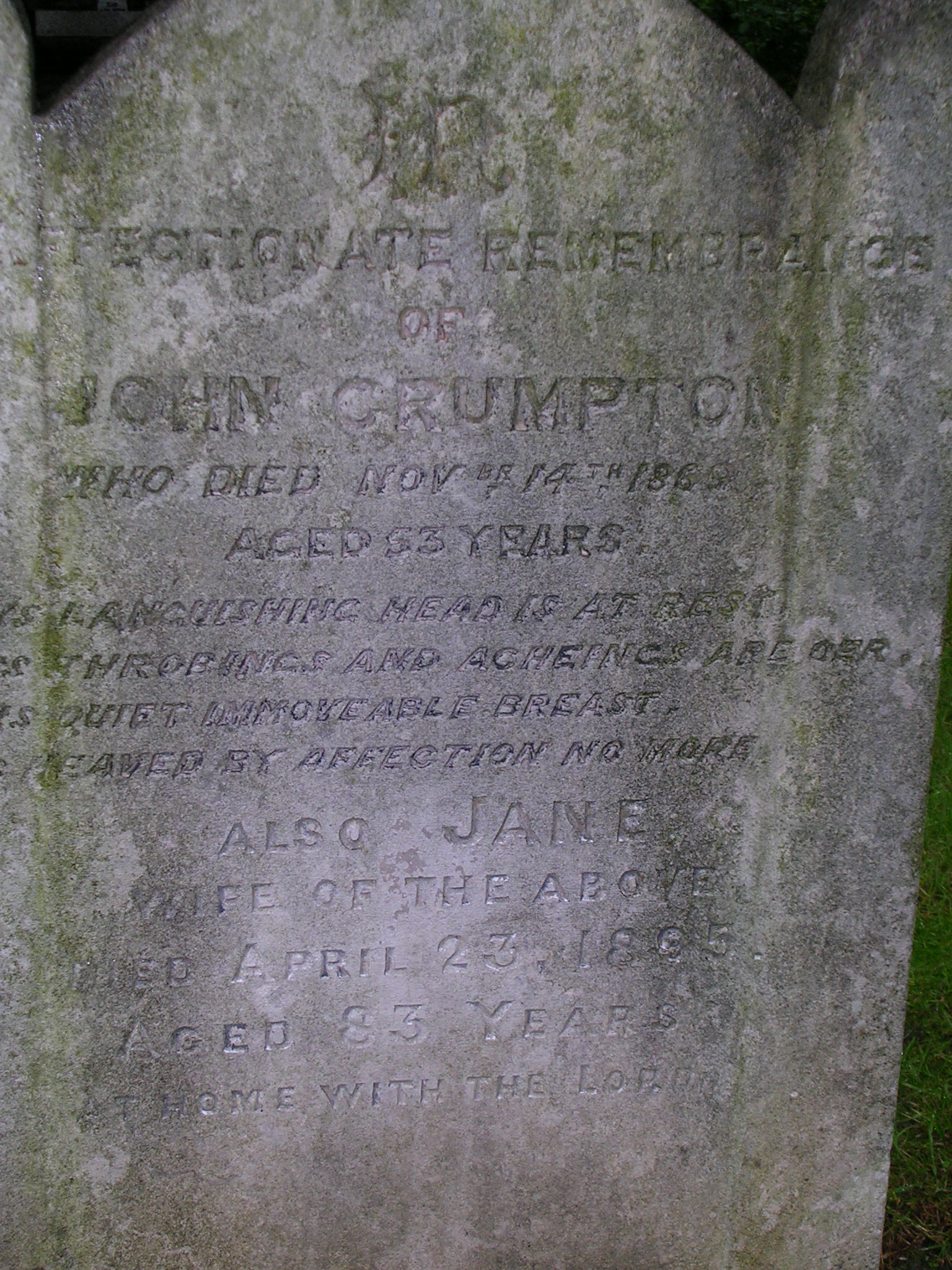
Tombstone of John Crumpton (1817-1869) my first cousin six times removed

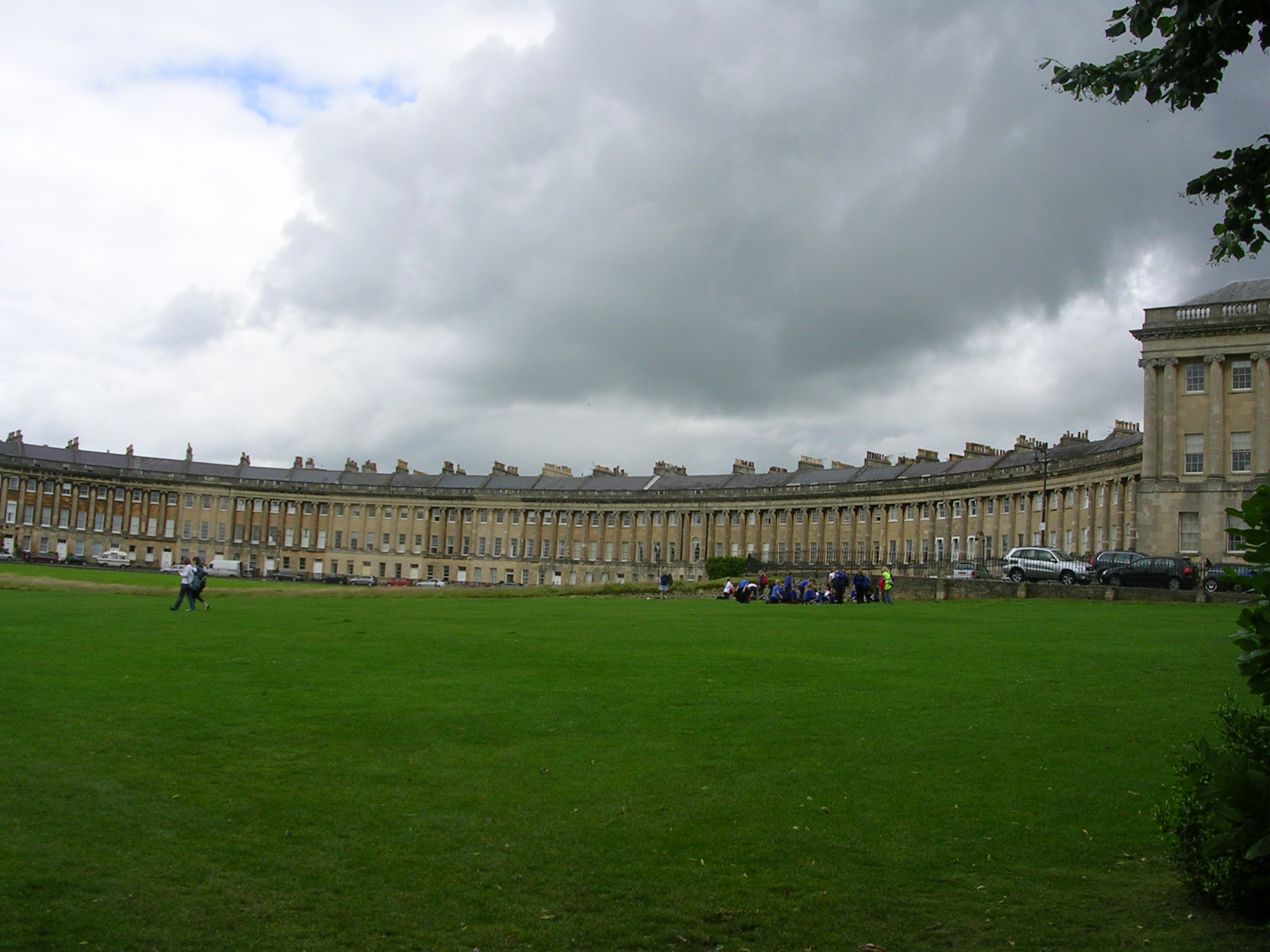
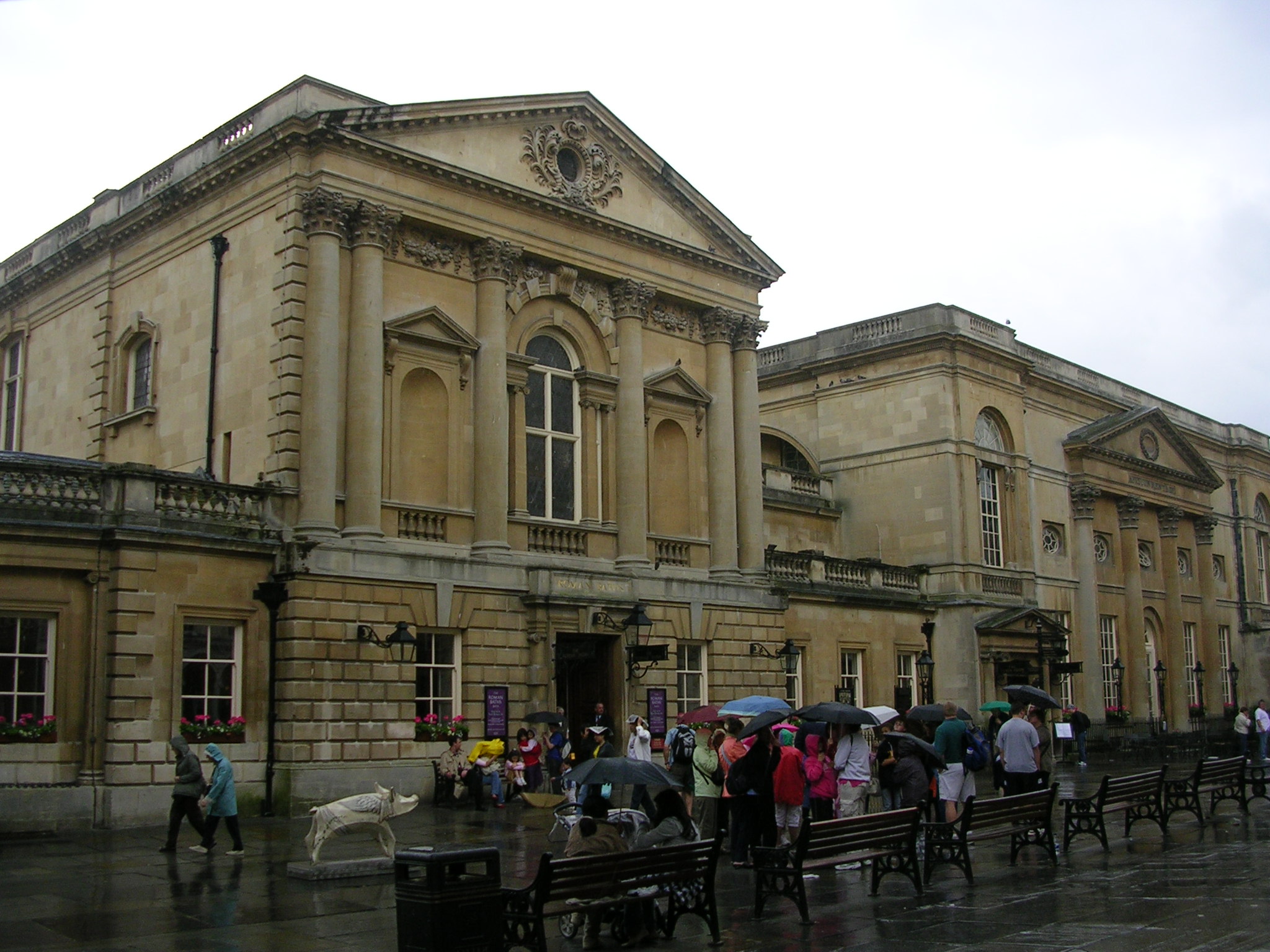
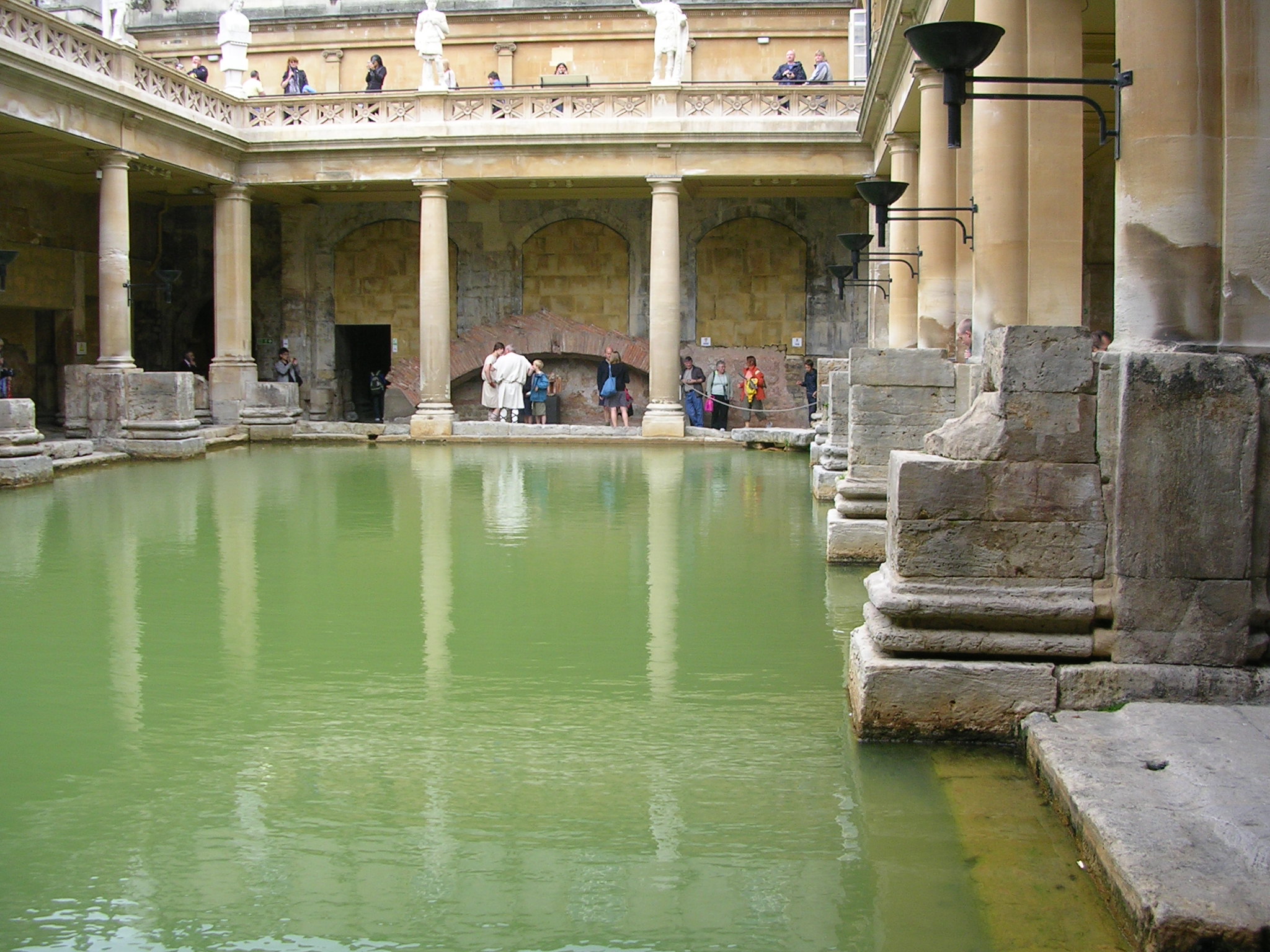
We hopped on the Motorway and went through Worcester, Gloucester, and finally to Bath.  There we saw the Royal Crescent, some of the Victoria Gardens, and the Roman Baths.  It is a beautiful city.  We enjoyed ourselves.  From there we wandered to Milton Abbas way out in the countryside.  We drove several miles through one car-width lanes to this village.

Bath Royal Crescent
Jane Austen Center
Bath Roman Baths
Looking down to the Roman Baths
Roman floor at Bath
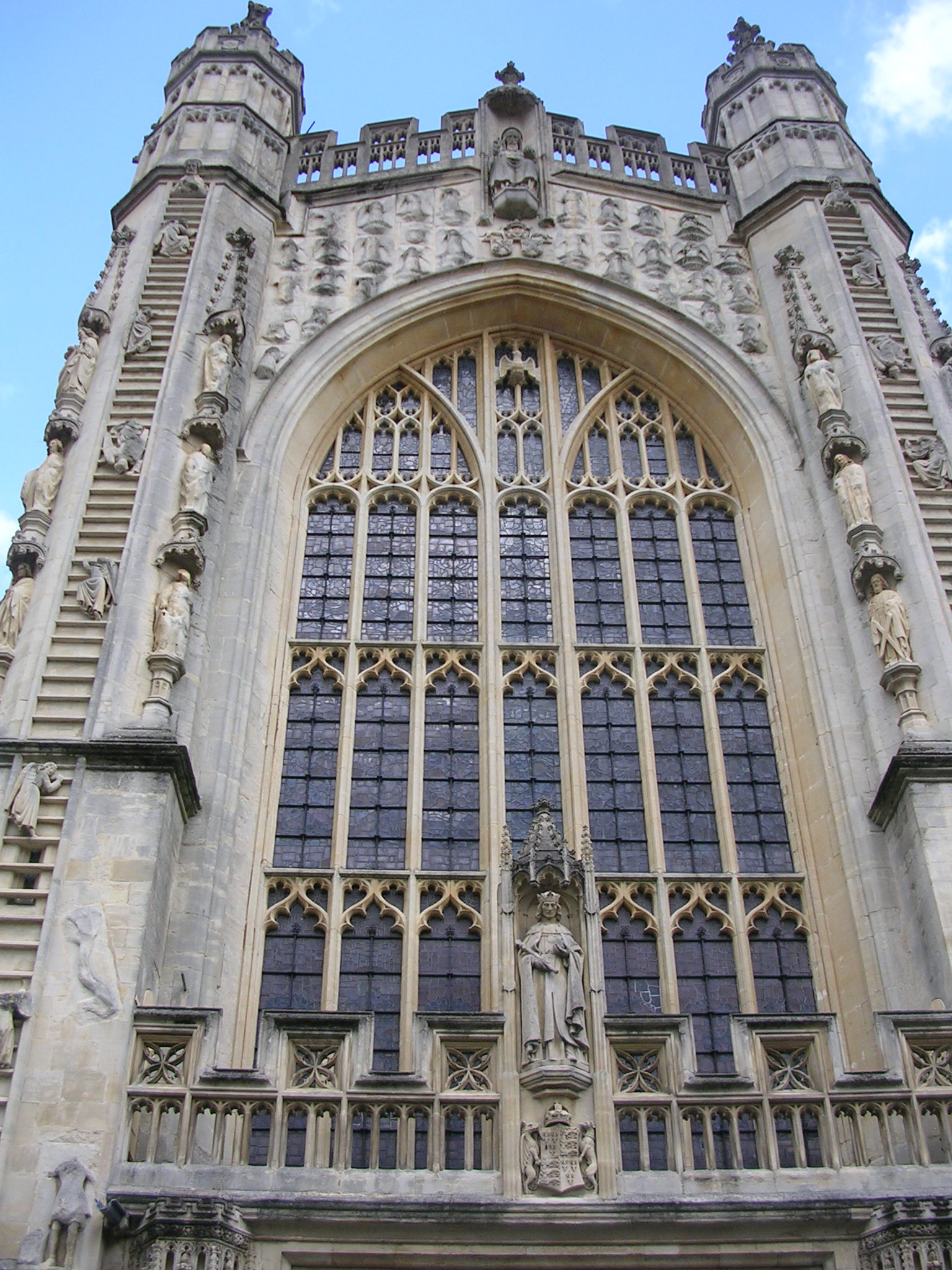
Bath Abbey
Amanda Ross in Bath

We are still figuring out what we will do tomorrow.  At any rate, it should be fun.

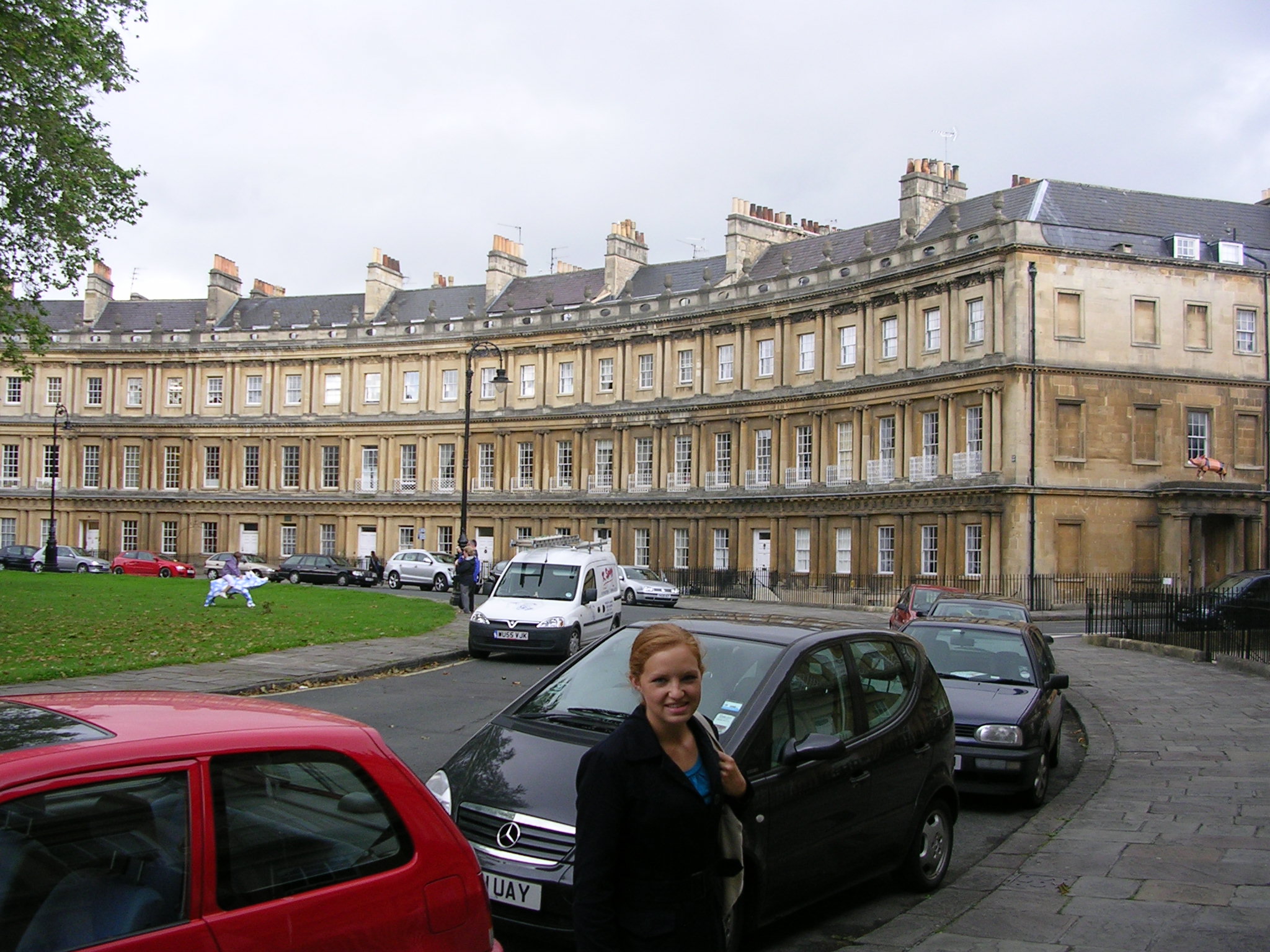
Bath Circus

History of Plain City Pt 5

I have two copies of the History of Plain City, Utah. The front indicates it is from March 17th 1859 to present. As far as I can tell, the book was written in 1977. At least that is the latest date I can find in the book.

One copy belonged to my Grandparents Milo and Gladys Ross. My Grandpa has written various notes inside the history which I intend to include in parenthesis whenever they appear. They add to the history and come from his own experience and hearing. This one is fun as it includes the history of my Great Great Great Grandparents William and Mary Ann Sharp and also references my Great Great Grandfather Milo Riley Sharp.

I will only do a number of pages at a time. I will also try to include scanned copies of the photos in the books. These are just scanned copies of these books, I have not tried to seek out originals or better copies.

History of Plain City March 17th 1859 to present, pages 58 through 75.

William MATHERS

Submitted by Augusta Nash

            William Mathers was born in Scotland and came here as a convert to the church. He was a sort of an eccentric man, but he had many special talents and hobbies. He had the finest gun collection for many miles around and loved to decorate the stock with designs of inlaid gold. He was very efficient in this. He also was a taxidermist and did beautiful work in this field. There were few who could match this hunting abilities and the days when few men had enough money to engage in the sport, he became the guide and leader for many well to do men from the city when they came out to hunt. He also was the quarantine official in the days when contagious diseases were quarantined, and he filled this capacity with the utmost integrity, believing absolutely in the law.

Mr. Mathers withi his bag of ducks in front of his shop where he displayed his guns and taxidermy

FRED J. KENLEY

SUBMITTED BY AUGUSTA NASH

            Fred J. Kenley started working as a rural mail carrier in 1902, from the main Post Office on Twenty Fourth Street in Ogden. A branch was soon established at Five Points known as Station A. From there two rural Carriers (Routes 2 and 3) and one city carrier sorted their mail and left for their routes. Mr. Kenley’s route (2) consisted of delivery through Harrisville, Farr West, Plain City, Slaterville, and Marriott. A distance of about thirty miles. His first conveyance being a horse and cart, later a buggy and horse. In 1916 he purchased his first Model T Ford. There is much that could be written about the difficulties of delivering the mail; bad weather, bad roads, etc., but he never missed one day. I became his substitute for a long time. He was retired in 1933 by Pres. Roosevelt to help provide jobs to younger men.

            Mr. Kenley served the community in other ways. He was a great lover of music and played the clarinet. He with his brother William, who played the violin, and a friend Seth Harper, who played the piano, played for dances all over Weber County. For m any years they entertained in activities all over. Then Mr. Kenley had a choir. In those years almost everyone belonged to the choir. Their weekly practices were held and nothing took place over them. They sang for church, and for entertainment all over Weber County. He took great delight in the accomplishments of this choir. It was second only to the Ogden Tabernacle choir. He was a great scholar and teacher and a Scout Master.

Fred J. Kenley-his first conveyance being a horse & cart
Fred J. Kenley-his later conveyance being a horse & buggy

HISTORY OF PLAIN CITY AS SEEN BY MERLIN ENGLAND

            I was born on December 17, 1895, on the same lot that now live on, in a little adobe room. Walter Draney was born on the same day in Plain city. We went to school together and he was a very dear friend. When I was six years old the school was where Walt Christensen lives now. If memory serves me right, Elmer Carver and I are the only two left that attended that school. I can remember three of my teachers; one was Merrill Jenkins’ mother, one was Mae Stewart, who lived just across the road from where I live now. The other was Mrs. Skeen, Ivy Carver’s mother. I can remember Dad tell about the first school which was on the south side of the square. Every Monday morning each of the students took 25 cents to pay the teacher for her wages.

            When I was a Deacon, our Quorum took care of the meeting house. There were two stoves, one on each side. It was the Deacon’s work to keep coal and wood for the fires in the wintertime. Richard Lund was the Quorum teacher. Our meeting was Monday night. He had a good singing voice and we had to sing or he wanted to know why. On Saturdays, we would take two horses, a hay rack and our lunch to the north range and cut sagebrush for all the windows in Plain City. The next Saturday we would go in groups and cut the sagebrush into kindling for these ladies. We had a lot of good times and as I remember, there was very little swearing or taking the Lord’s name in vain at any time.

            When we went to school, a child’s birthday was celebrated by a surprise party. We had many good times together. Our parties usually broke up at no later than 9:30, I can remember when the dance hall stood where Lynn Folkman’s new home is now. Sometimes later a dance hall was built west of where the church now stands. It later burned down. Many people enjoyed good times at the old dance hall. We had a picture show on Saturday nights. Pete Poulsen and William Hunt took charge of the tickets.

            In those days my Father ran a store on the lot where I now live.

            It would take all day with team and wagon to bring the dry goods from Ogden. I can remember when the first telephone came to Plain City. My Father gave the telephone company permission to put the switchboard in the back of the store. They took two of my sisters to be switchboard operators. Father and Abram Maw’s grandfather owned the first two telephones. When the phone was put throughout the town, it cost $1.00 a month. Many the night my Father came and got me out of bed and I saddled my pony and delivered a telephone message of a death or of a sick friend to someone in Plain City at all hours of the night. If you needed a doctor, it would take an hour for him to get out this far because it was all horse and buggy. If he needed to stay into the night, it was up to the person who called him to see that his horse was taken proper care of.

            Some of the women brought their butter to trade for groceries. Mostly it was a 20 cent a pound trade. Salmon was 10 cents and 15 cents a can. You could buy a work shirt for 65 cents, a pair of shoes for $2.00

            The first job I had to earn money was driving cows. I had to drive Father’s cows, so William Hunt and James Stewart hired me to drive their cows. I received 50 cents a month from each of them.

            At one time in Plain City there were many people orchards. A lot of the apples were hauled to Salt Lake by team and wagon. It would take three days to go. If you were lucky, you could sell the apples in one day at anywhere from 40 cents to 60 cents a bushel. It would taker a whole day to get home again.

            I can remember the first canning factory. They had to haul the cans from Ogden by team and rig with canvas wrapped around them. After the tomatoes were canned, they had to haul to West Weber or Ogden by team to the railroad.

            My father, Thomas England, John Maw, and Lyman Skeen were the three men appointed to the committee to bring the railroad from Harrisville to Plain City and Warren. That increased the sugar beets by many acres because the railroad would do the hauling out.

            The first gravel roads we had in Plain City were made with rock that was crushed at the west end of Pleasant View, North Ogden, and Ogden, and was hauled to Plain City and Hooper by team and wagon. The men would do it in the winter when work was hard to find. One man would put in three days a week, and then another would work the other three.

            I married Florence Taylor February 4, 1914, in the Logan Temple. In 1916, I bought the old Boyd place where the family then lived. There was no school bus at the time, so the children had to get to school the best way they could. Then they would hurry home from school to do their chores and help their mother with dinner. I spoke to the picture shows they had on Saturday nights. Our car would leave home with our girls in it. By the time we got there, the car was full with one or two on the running board besides.

            I hauled milk by team and wagon to Farr West to the skimming station and then hauled the whey back to the farmers. The plant was located near where Ernie Jensen now lives. Two years later, Weber Central Dairy brought the ole Black and Griffin Building on 26th and Wall, and I hauled milk there for six years.

            When I was hauling milk, George Palmer, who was crippled quite badly, was put in as Bishop. He didn’t have an automobile and so once a month when I would pick up his milk, he would put the Church money in three different money sacks to three different banks and give it to me. I would take the money to the banks and being the receipts and the sacks back to him. Bishop Palmer told me many a time that he didn’t know how he could have done that service.

            I am 80 years old. I have a wonderful family and I think the world of them. I good health and I am thankful for my parents and my name. I have lived in Plain City all of my life and I have many wonderful friends.

            The year 1905 is the date given that the first telephone came to Plain City. The first telephone switchboard was located in the store owned by Thomas England. There were three long-distance lines. A system of record keeping was to have twenty calls, then registered.

            The first exchange was operated by the family of Mr. England. Lillian England was the chief operator. Her salary was $25.00 a month. Lester England, Wilford England, and Hazel Kennedy were relief operators. They were paid $15.00 a month for their services. Service was provided for Weber, Warren, Plain City, Farr West, and possibly Slaterville.

            Later, the telephone company lent money to build a telephone exchange building on the spot where marvel England’s home now stands. It was dismantled when no longer needed.

            Telephones were few and far between in early Plain City. Mr. Thomas Jenkins told of walking from his home to the home of Henry T. Maw to use the phone in the middle of the night.

            Later on, more telephones were installed; party lines with 8 to 10 families were common. The telephones helped to bring the boundaries of the town closer together.

            The box-on-the-wall type of telephone was later replaced with the more modern cradle-portable phone. Then, a great step was taken with a few people having private lines, and reduction of parties on a line. This really helped to have all those rings eliminated for every other party on the line. Then more recently, many homes have telephones in the various rooms of their homes.

            In the summer and fall of 1973, the biggest change took place. The old telephone lines were replaced with an underground cable with many lines in it. This helped most families to now have a private line. This removal of the old poles and wires has added much to the appearance of the town.

            On December 17, 1976, Merlin England said, “today is my eight-first birthday, and it’s the first day in my life I have ever known when there wasn’t a telephone pole one-third of the way through the lot on the east side. Other poles have replaced the original one during my life time, but today the telephone company came and finished putting our lines underground and removed that pole.”

            There are a few places in Plain City where the cable is still in the air. The initial project for private line services with the cable placed underground was during the spring and summer of 1973. The completion date for the big push was October of 1973.

            The first telephone switchboard for Plain City was located in the back of the store owned by Thomas England. It was located on the same lot where Merlin England was born and lives, 4275 W 2650 N. The store was just west of the England home. The first two telephones in Plain City were those of the Senior Abram Maw and Thomas England. The charge of service was $1.00 per month. If a connection was wanted outside of the Plain City area, Lillian England, the switchboard operator would connect with the Ogden operator who would make further connections. There was no dial system at that time.

            The telephone office and switchboard was later moved to the location on the lot where Marvel England now lives.

            Merlin England and his wife, Florence, lived in this telephone building part of 1914 and 1915.

Merlin England and his wife, Florence, lived in this telephone building part of 1914 and 1915.
William Dolby Skeen

WILLIAM DOLBY SKEEN

SUBMITTED BY BEVERLY B. EDDY

            William Dolby Skeen and Mary Davis Skeen were among the first settlers of Plain City. William Skeen owned the first settlers of Plain City. William Skeen owned a race track in the south end of Plain City, which was then called four mile, now known as Pioneer Village. He owned two famous race horses, which he brought from Europe.

            William Dolby Skeen also built the first rock house in Plain City. The rocks used to build this house were hailed from the Hot Springs Mountain area.

Old Rock House build by William Dolby Skeen as it appears today.

THE OLD ROCK HOUSE

SUBMITTED BY NELDA ETHERINGTON

            William Dolby and Caroline Skeen’s log house was one of the early ones in Plain City. After living in it for a short time, he added an adobe section to it. In 1862 he erected a stone house securing his rock at the Utah Hot Springs and hauling it in by oxen. William Sharp, an early brick mason, laid the stones and helped Thomas Singleton in doing the carpenter work. Mary Anne Skeen Etherington was born in the log cabin and was one of the first babies in Plain City.

            Ebenezer Clawson Richardson purchased the rock house from William Skeen in 1868 and it remained in the Richardson family for almost a hundred years. The rock house is now owned by John Etherington, a Great-Grandson of William Skeen.

            Two of Ebenezer’s three wives shared the house. Polly Ann Child, wife #2, had the west three rooms and her sister wife #3 Phebe, had the east rooms, with the kitchen in the center. Both shared the “Front Room”. There had been a stairway in the Front Room, but, it was taken out to make more room so the boys had only a ladder to a small balcony on the south side to get to their bedrooms.

            The Richardsons were noted for their hospitality, and many parties and dances were held in the big front room. Ebenezer played the fiddle and also played it for the community dances and entertainment. At one time the boys had no shoes, which was not unusual for that day, so they pooled their money and bought a pair of shoes and the boys took turns wearing them at the dances.

            Ebenezer was forced to go to California to work in the gold mines in 1873. While he was there his foot was crushed by a falling rock. Infection set in and he died on September 27, 1874. Two sisters Polly and Phebe continued to share the home until 1905 when Polly Ann died and Phebe bought her share.

            The children grew up and one by one left to make homes of their own. Some of the boys brought their brides home for awhile. While one of the boys and his wife were living there, they had a set of premature twins which were buried under the grape vines that used to be in the center of the lot.

            In September, 1907, Phobe’s son Charlie, decided to buy the Old Rock House with his wife Amanda, and their six children Joe, Sarah, Mary Lodisa, Orpha, and Angeline. They left Pocatello, Idaho with all their worldly belongings in two covered wagons. The Old Rock House was alive again with the clatter and clamor of children after having stood empty for a few months.

            They loved it there and soon had a lot of dear friends. The three Grieve girls, Laura, Emma, and Ellen, the three Mc Elroy girls, Zara, Vesey, and Helen, and the Richardson girls all grew up like one happy family, sharing fun times and sometimes some squabbles, but always making up like real sisters. The Grieves’ had three tots, Willie, Violet, and Pete, little cherubs, mothered by all the girls until they didn’t know which house was their home. It was a lot of fun to sleep in the spooky upstairs in the hayloft in Mc Elroy’s barn, while Mary and Zara competed in who could tell the scariest ghost stories.

            Sometimes, Mr. Mc Elroy would bring his Edison Phonograph over and play records all evening. Amanda Richardson always found something to serve for refreshments and Charlie would bring in a long plank to place across two chairs to make seating room for the neighbors and children. One of the favorite records was “Wearing of the Green” by Henry Louder.

            The first Richardson to live I the Old Rock House were Ebenezer and Polly. Their children were Warren, Ebenezer, Angeline, and Levi. Phebe’s children were Amanda, Charles, Franklin, Cornelius, Chancy, Alfred, Myron, William Ezra, and Joseph having been born in the rock house. Ebenezer C. Richardson was the father of 34 children, not all which lived to maturity.

            The old Rock house has been a home to many people, its memory will live on for a long time.

Skeen Family, Back (l-r) Alex, Catherine, and Frenz Denial Skeen; Front: Clara Loretta, Mary Davis, and William Delbert

            Mary Davis Skeen was born in Llanelly, Wales, and arrived in Salt Lake Valley, Christmas Day 1856. On March 17, 1859, she arrived in Plain City with the first settlers. She was then a girl of thirteen years and was one of two single girls in the entire company.

            Mary Davis Skeen went through all the hardships incidents to a pioneer life, but always bore these hardships bravely.

            During an epidemic of small pox, she buried her last child. Three boys in all. Two of these children died in the same night. They were all buried at night and through fear of the dreaded disease, friends dared not to go near to offer their sympathy, in this dark hour. Six children were born to her after this.

            It is believed that Mary Davis’ mother, Mary Eyenon Davis, had the first flower garden in Plain City.

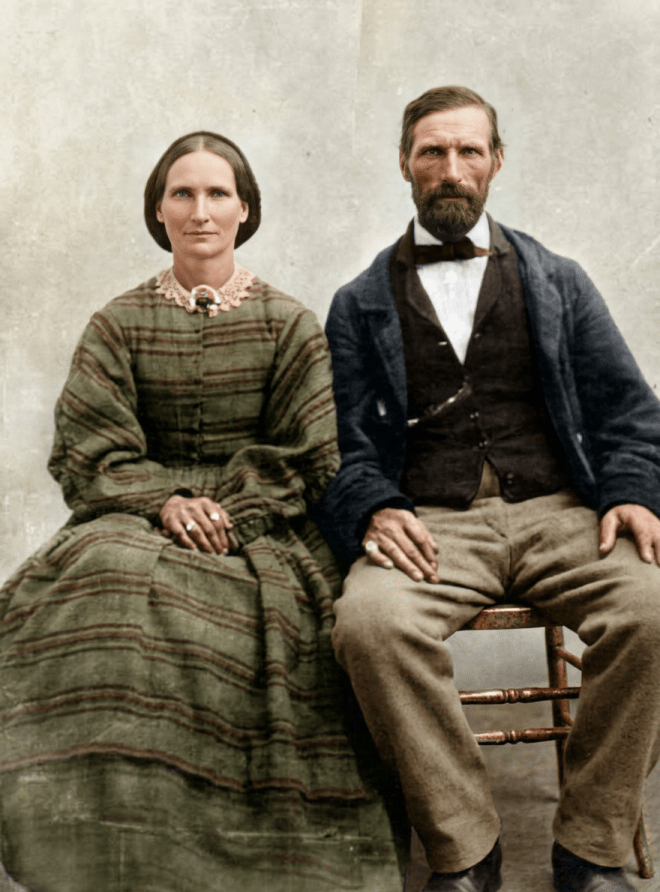
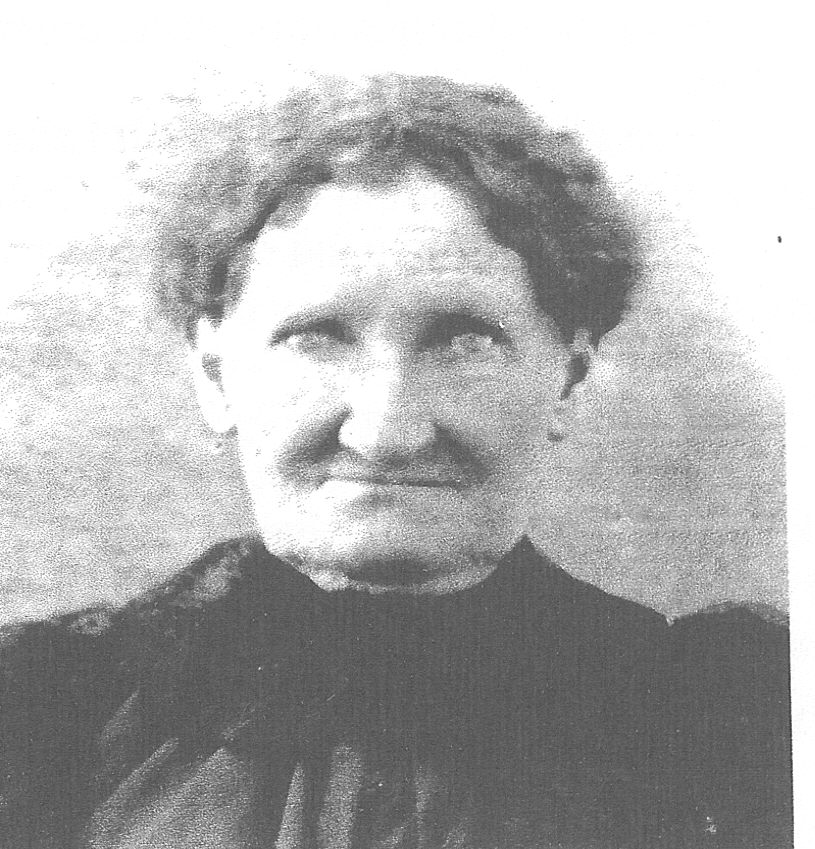
MARY ANN BAILY PADLEY SHARP

WILLIAM SHARP

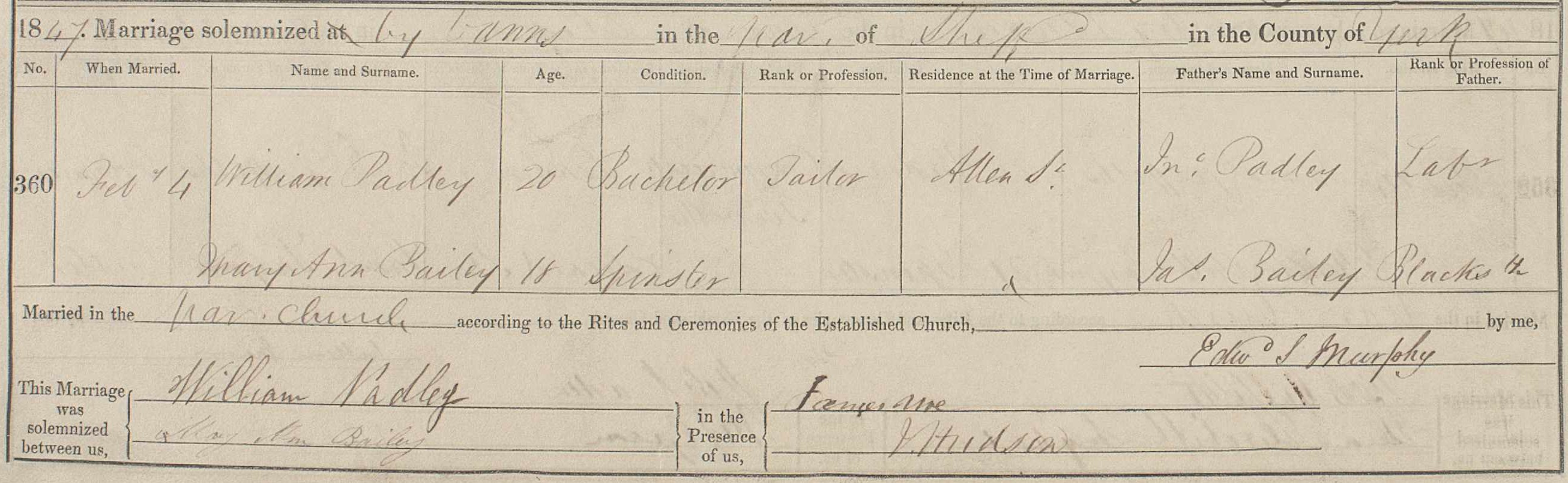
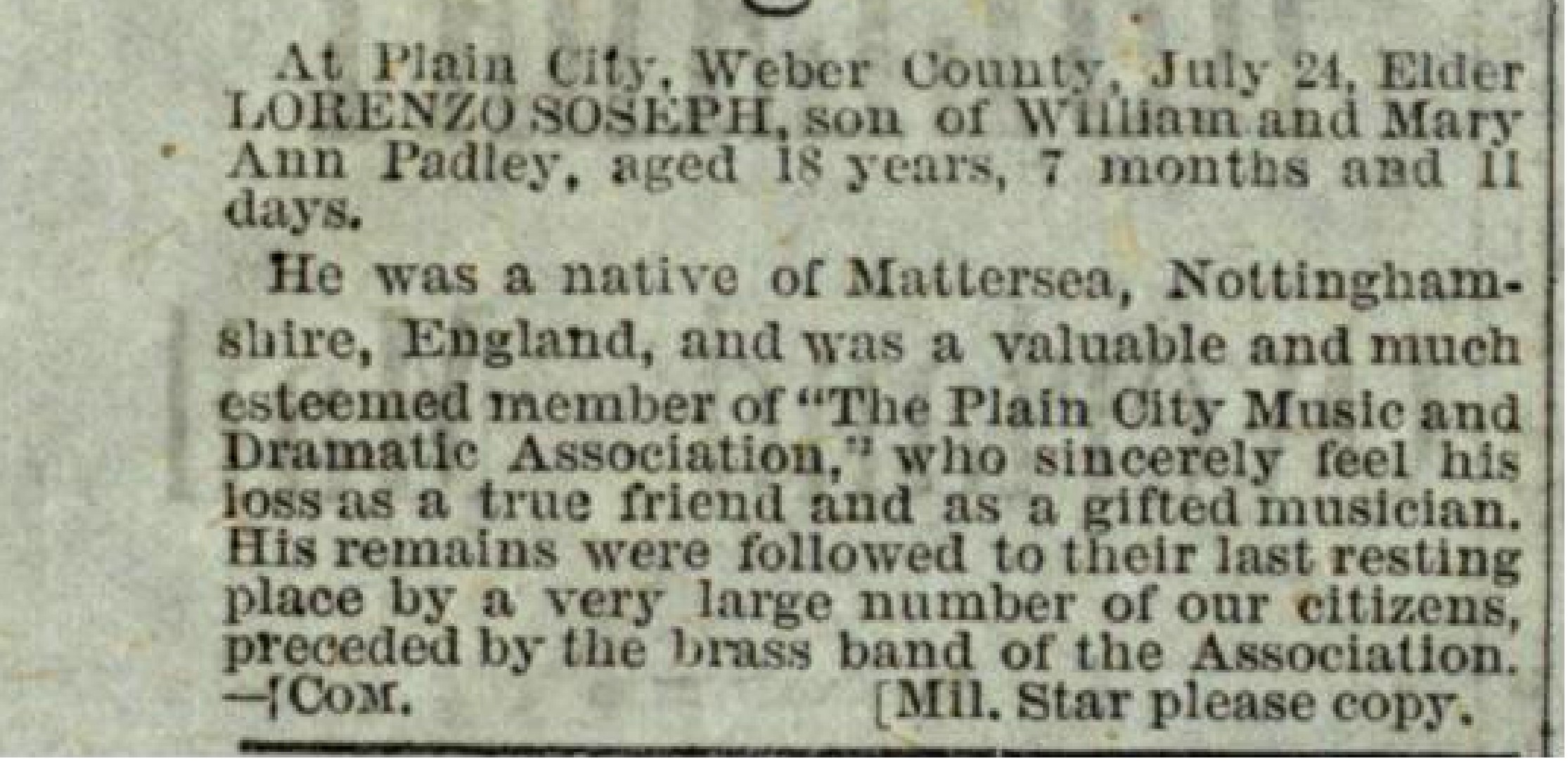
            William Sharp, born December 10, 1825, in [Misson], Nottingham, England, married Mary Ann Padley in St. Louis. She was born November 28, 1828, in [Mattersey], Nottingham, England. They came across the plains in the Moses Clawson Company arriving in Salt Lake on September 15, 1853. They went to Lehi but the land was not too good and there was no good grazing for their cattle, so they left with the main group that settled in Plain City, arriving March 17, 1859. The children that came with them were Lorenzo Padley, Annie Elizabeth, and Milo Riley. Their daughter, Evelyn was the first white baby girl born in Plain City on October 12, 1859.

            The family lived in a wagon box while they built a log and adobe cabin. William Sharp was a carpenter and mason and made some of the first adobe. He helped build many of the first buildings in Plain City.

                                                                        Submitted by Albert Sharp

JOHN MAW

SUBMITTED BY IRENE SKEEN AND

DOROTHEA DeYOUNG

            Many many men did a great deal to make Plain City what it is today and one of these was John Maw.

            He was born in Plain City, January 16, 1868, the second son of Abraham and Eliza Tripp Maw, who had migrated here from Root, Lincolnshire, England. He received his formal education in the Plain City Public School and the Weber State Academy.

            He married Annie C. Poulsen, daughter of Andreas Peder and Hansene Hansen Poulsen, November 5, 1890, in the Logan Temple. From this union came eight children, Wilmer J., Abram, Irene, and Ira (twins), R. Rufus, Gilbert E., George C., and Dorothea.

            Mr. Maw, soon after his marriage, was associated with ZCMI store in Plain City for five years, following which he spent many years in the sheep business, along with farming. He had a large farm and gave many young men, at that time employment. To some, it was a lifetime career. At that time John Maw was given credit for “having taught many young men in Plain City to work”, because he was such a hard worker himself, he expected an honest day’s work for an honest day’s pay from those who worked for him. It was often said, “We receive extra pay for working for John Maw because of the extra good food his good wife serves.”

            Much of his farming during his lifetime also included truck gardening. He was also engaged in the cattle business which he remained active in until the time of his death. One unfortunate experience he had with cattle happened in 1932. The cattle were crossing Frist Creek, north-west of Plain City, when the ice broke. He lost 42 head of cattle. He made the statement “Well, those who have them have to lose them, because the ones that don’t have them can’t.”

            In 1896, Mr. Maw, with others, was instrumental in building canning factory in Plain City. He was a member of the board and later was appointed manager. In the spring of 1920 he purchased the building and moved part of it to be used as the John Maw & Sons Store (later known as W.J. Maw & Sons). This store stood on the property west of the present bowery and extended back to the south end of the present church parking lot. As time went on the building was added on to. The store began as a grocery, hardware, lumber, coal, potato, and onion business. In 1928 the company became a Case Farm Machinery Dealer. After 1937 additional machinery lines were added and in  1948 the Surge Dairy Equipment line was taken over. In the early days of the store there was a wrestling ring in the upstairs of the store and wrestling and boxing matches were held. Roller skating also took place in the upstairs. The warehouse across the street was built in 1940 for potato, onion, and equipment storage. In 1963 the property was sold to the LDS Church and the buildings were later torn down. He also owned the store for some time that is now the Plain City Confectionery in which was sold mainly dry goods and confections and items not sold in the other store.
John and Annie Maw

            In 1907 & 1908 John Maw, Lyman Skeen and Mr. Eccles, head of the Utah – Idaho Railroad Company, negotiated for a railroad to Plain City. On Nov. 15, 1909 the first railroad was built into Plain City. This made a great difference in the lives of people living in the town because goods could be brought in and sent out more rapidly and people had transportation. Mr. Maw traveled to the east each spring to buy and ship home seed potatoes for the farmers, so with the railroad they could be brought directly to Plain City.

            He served as Sheriff of Plain City for 16 years. Along with others, he was involved with overseeing the building of the addition to the old church, and upstairs amusement hall and classrooms. Some years later he helped to raise the money and helped to oversee the construction of the old dance hall. It was known, at the time, as the open-air dance hall because so much of it was screen with drop shutters. It was later closed in and modernized some. Still later it was completely remodeled and used by the church for various reason, but later burned down.

            At the time the Utah Power & Light Company was wiring the town of Plain City for electricity, in about 1912, four men lived at john Maw’s home while working here. They first wired the town and then began wiring the houses. They hadn’t planned to connect any homes to the main line until all the homes were wired, but the working men found out that it was Mrs. Maw’s birthday on June 13th and decided to surprise her with the first lights in Plain City. They completed the hookup, even installing the light globes, and while the family were eating their evening meal one of the men slipped away and pushed the switch that turned all the lights on, inside and out. Every room of the two story house was lit up. Also Mrs. Maw’s family presented her with an electric washing machine that night. Because everyone had looked forward a long time with anticipation to having electricity there were many visitors at the Maw home that night.

            With all the many things John Maw was interested in and accomplished, one would have to say that his great love, his greatest concern and his ability to look into the future was with the irrigation work he did. He was connected with the Plain City Irrigation Company and the Weber River Users Association. He was president of the Plain City Irrigation Co. for about twenty-five years and a director of the Weber River Users Association, generally spoken of as Echo Project, for the most of thirty-five years. In this time, he served as vice president and also a member of the executive committee. He was greatly involved and worked on installation of siphons under railroad tracks and under the Ogden River, enabling farmers of the district to get their irrigation water direct from the Weber River. During this project, which was a tremendous one, he lost of one of his best horses in quicksand. In this association with the Echo Dam Project, he purchased much of the land for that project.

            One of the highlights of Mr. and Mrs. Maw’s married life was their trip to Europe to meet their youngest son George as he was returning from a mission to South Africa. They were able to visit the native lands of their parents and many others. They were gone for three months.

            Mr. Maw was a very thoughtful man and deeply concerned about the welfare of others. While in business, for Christmas he would deliver a ton of coal to the widows and needy families. He would also kill some of his beef cattle and take meat to those people. Of course, he didn’t limit this to only Christmas time but as he saw peoples need.

            At the time of his illness, he was in the hospital in extreme pain but even then he was worried about the water situation. We had such a dry spring and the crops were not coming up, so everyone was praying for rain, and whenever anyone entered his room he would say “Is it raining?”

            He passed away May 27, 1936, at the age of sixty-eight. His funeral was held May 31st in the old Ogden Tabernacle. It was very strange – whether it was I answer to people’s prayers, a coincidence that it happened at that time, or as many people thought a tribute to him for his great work in irrigation and his concern for other people, that the rain came down in torrents, before, during, and for some time after the funeral. It was like the very heavens had opened to let down rain.

            One speaker at the funeral said in tribute to him, “I think I can properly say that John Maw is as near a human dynamo as I have ever met. He was full of energy and spent an unusual active life. He thrived on obstacles. It seemed no obstacle was too great for him to tackle, and he usually succeeded. It just seemed to whet his determination to be under difficulties, and he always wanted to carry his load.” He has been missed greatly by his family, his friends and associates.

Maw’s warehouse built in 1940
Maw’s confectionery

LYMAN SKEEN HOME

            The home was built about 1870 and was added onto several times. It is still standing and is owned today by George and Charleen Cook.

Right to Left… Lyman S. Skeen (1850), Sabra Alice Skeen (1887-91), Electa P. Dixon (1852), Isabelle Skeen (Charlton) ( 1889), Lyman Skeen (1871)-away at medical school, Charles Skeen (1872), Joseph Skeen (1876), David Skeen (1885), Emma Jane Skeen (1881), Electa Skeen (Johnson) (1879), and Mary Ellen Skeen (Rawson) ( 1883). Picture was taken in the summer of 1889.

AUGUSTA K. KENLEY HOME

Augusta K Kenley Home

            Augusta K. Kenley was born in Germany and came here as a convert to the church. On September 23, 1894 there was a small church located directly across the road from her home. It was called the Poplar Branch and Sunday School, primary, Religious Classes, as well as day school were held here. Room was scarce and so for many years she prepared two or three rooms of her home every Sunday morning for the smaller children who marched over and had their classes in her home. She had small benches made to fit her children and each Sunday as she cleaned her rooms the benches were put into another room to be kept clean and dry for the next week. They were never put outside. It is not known exactly how many years this was carried out, but the church did away with the Poplar Branch and was joined with the Plain City people. The picture shows Augusta K. Kenley and her home. It was later moved by Lynn Folkman to 2230 North 4350 West and is still owned by him.

EARLY HOMES

Home of Andrew Peter Poulsen. Karan Kirstina, Pedar, Annie, Petra, Sena, Andrew Peter, Hans P. Poulsen

Later the home of Hans Poulsen, and now the home of Bernard Poulsen. The home has been remodeled.

Home of Jens Peter Folkman

The addition on the north or left side was the store run by Jens P. Folkman, and later by Peter M. Folkman. Peter M. Folkman built an addition to the store with a meat market and cooler for the meat.

HENRY JAMES GARNER

SUBMITTED BY RULON B. GARNER

            Henry James Garner was born June 9, 1855, in Ogden, Utah. He was the son of Henry Garner and Melvina M. Browning. Henry Garner Sr. was the son of Phillip Garner who was a member of the Mormon Batallion. When mustered out in California, he returned to Utah, bringing the first pound of alfalfa seed to Utah.

            Henry J. Garner was married to Eliza Ann Ballantyne January 31, 1884. Eight children were born by this union.

            In 1894, Henry J. Garner came to Plain City as store manager for Zion Cooperative, where he worked from 1884 to 1894. The Plain City store was located on the northwest corner of his block from the town square. Later he and Robert Maw bought the store together and operated it as a partnership. They also owned some sheep. About a year later, Henry J. Garner bought a farm and a house (the O. J. Swenson property). He operated this first store until he bought one of the old smelter buildings out near the Utah Hot Springs. This was about 1906. The building was too large to move in one piece, so he employed George Streeter, who sawed the building in half, and he put bob sleighs under each half and when the snow was sufficient, they moved the smelter building and set it up about a half block south of the first store. There it was set on a foundation and reconditioned as a General Merchandise Store. The name of the store was Henry J. Garner & Sons. He operated this store and farm until 1922, when he sold them, and retired. He then operated a chicken business until 1925. He then sold out in Plain City and bought a house in Ogden, Utah, at 3135 Ogden Avenue.

            In 1897, he was elected school trustee with S. P Draney and Milo Sharp. He served four years. The school districts were then consolidated and one large school house was built. Prior to this time, school was conducted in three, one-room school houses. On June 16, 1901, the L.D.S. Sunday School was organized with Henry J. Garner, Superintended, O. C. Raymond, first Assistant. and L. R. Jenkins, Second Assistant, Clara Jenkins as Secretary, and George Hunt, Treasurer. He served as first counsel to Bishop George W. Bramwell, with Peter M. Folkman as second counselor. On June 28, 1906, Bishop Bramwell resigned, and Henry J. Garner was selected as Bishop to fill his vacancy. Peter M. Folkman was first counselor, Peter B. Green, second counselor. Stake authorities present were L. W. Shurtliff and C. F. Middleton.

            Henry J. Garner’s wife Eliza died of an accident with an electric washing machine on October 23, 1916. He married Jane Liddle Warner, May 1, 1918, in the Salt Lake Temple.

            After Henry J. garner was released from the Bishopric, he was a member of the North Weber Stake of the L.D.S. Church until he moved to Ogden in 1925.

            Henry J. Garner died April 6, 1934 at the age of 79.

Henry James Garner when he moved to Plain City in 1894
Henry J. Garner and wife Jane L. Warner Garner, Milton Garner, Leona Warner
Henry J. Garner

 LYMAN SKEEN CONSTRUCTION CAMP

Lyman Skeen construction camp

            These are part of the men and women, teams of horses and equipment, that worked and built the railroad near the Hot Springs. Left To Right:  The man holding the hand plow on the left is Sant Manson. Charles Skeen is holding the white team. Blaine Skeen is the boy in front. Lyman Skeen is the man standing in front. Louis Carver, a son-in law of Lyman Skeen. He also served as timekeeper for the company. We cannot identify any of the others.

THE MC ELROY STORE

            George and Martha Mc Elroy moved to Plain City from Philadelphia, Pa., with their two sons, George Jr. and Bill. They purchased the land where the garage and the “Old Mc Elroy Home” stands, from William and Mina Gampton for $600.00 in September, 1903.

            Mr. Mc Elroy was a cabinet maker and some of his original carpenter work is still found in the front of the garage. He was an inventor and had several of his inventions patented, he build several homes in the Plain City area, some of which are still in use.

            The carpenter shop was in the rear of the building and they had a candy shop in the front. Helen, Vesey, and Zara Mc Elroy worked in the candy shop after school, but when “Mas Mac” was there, she gave the candy away. Mr. Mc Elroy liked to tease the youngsters from school and would nail pennies on-to the counters. One of the old displays counters is still in use in the front of the garage.

            The Mc Elroy store was the first building in Plain City to have electric lights. Mr. Mc Elroy was an agent for Modern Electric Company of 2422 Hudson Ave. in Ogden (now called Kiesel Ave.).

            The Mc Elroys lived in Plain City for 28 years before moving to California. Their Son-in -Law Roland Etherington bought the carpenter shop and turned it into a garage, building onto the original shop several times. It was known as Roll’s Garage until 1959 when Roland died and his son John Etherington took it over and the name was changed to Jack’s Garage.

George Mc Elroy in front of his store

ROLL’S GARAGE

            Roland Etherington purchased the “Mc Elroy Store” from Geo. Mc Elroy and opened Roll’s Garage in 1931. Roll Graduated from the Sweeney Automotive School, Kansas City, Mo.,

            Some of the people who have worked for Roll are:

                                                Lawrence Carver

                                                Clair Folkman

                                                Homer Poulsen

                                                Don Jensen, from 1939 to the present

                                                John Young

                                                Sam Hori

                                                Elmer Ericson

                                                Marshall Ericson

                                                And many others.

            Additions were made to the garage in 1938, 1944, and 1955. The bulk Gas and Oil Plant was started in 1951. It was known as Jack & Roll’s Gas & Oil Company.

            Roland Etherington died in 1959 and his John Etherington took over the business and changed the name to jack’s Garage.

Jack’s Garage as it appears today

Elizabeth Cartwright Sharp written by Annie Thompson (27 August 1957)

I came upon this history and thought I would share it.  Elizabeth Cartwright Sharp is the mother of my William Sharp.  She was also the mother of Isabella Sharp Carlisle, Elizabeth Sharp Quayle, and James Sharp.  I don’t know where she got all of her information, hopefully from being passed down.  I will enter some updates in brackets.

LIFE HISTORY: Elizabeth Cartwright Sharp, written by Annie Thompson, (August 27, 1957).

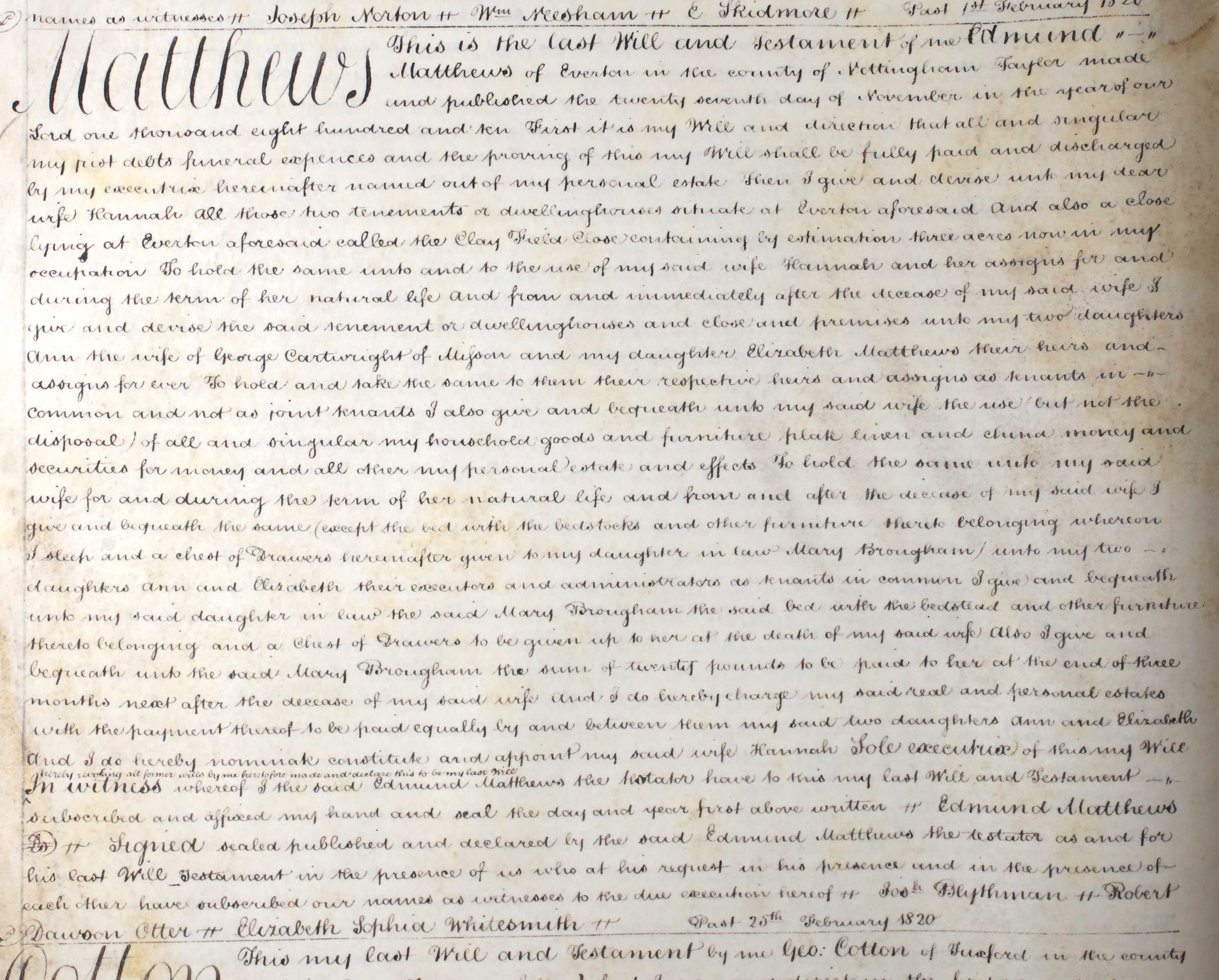
“Elizabeth Cartwright Sharp was the daughter and only child, of George and Ann (Matthews) Cartwright, and was christened at Misson, Nottinghamshire, England, 20 December 1803. She died in St. Louis, Missouri, USA, probably late in the year 1850 [17 February 1851].

Elizabeth grew up a tall young lady, reared in an atmosphere of wealth and refinement. At the age of 17 her father died (burial 27 February 1820, age 46) and three years later, on 4 June 1823, her mother remarried to a widower named George Beighton. Little is known of this marriage except that George Beighton is purported to have gambled away at the races at Doncaster, the money belonging to Elizabeth’s mother.

On 29 December 1823, Elizabeth Cartwright was married at Mission to Thomas Sharp, and they became parents of eight children, four of whom died young in England; the other four, William, Isabella, Elizabeth and James emigrated to this country with their mother:

George Sharp, chr. 11 Nov 1824, Misson, Nottinghamshire, England
Mary Sharp, chr. 27 Nov 1825, “,”,”
William Sharp, born 10 Dec 1826, “,”,”
George Sharp, chr. 13 May 1826, “,”,”
Isabella Sharp, born 22 Dec 1831, “,”,”
Elizabeth Sharp, chr. 11 June 1834, “,”,”
Ann Sharp, chr. 29 July 1838, “,”,”
James Sharp, Born 7 Jan 1840, “,”,”
(Extract from the history of Isabella Sharp Carlisle)

Misson is a little town in the northern part of Nottinghamshire, in what used to be the Sherwood Forest, (made famous by the stories of Robin Hood). As well as having a historical setting, the place, at the time of Elizabeth Cartwright’s birth, was one of beauty, with its green pastures a bloom with cowslips.

Thomas Sharp died in 1841 at the age of 45 (buried 15 Jul 1841, Mission), leaving Elizabeth to care for the children.

Sometime about 1848, the LDS missionaries were preaching in the vicinity of Mission, and Elizabeth Sharp joined the LDS church, together with her eldest son, William, who was baptized 20 Jun 1848.

Elizabeth’s home was opened to the missionaries, and among the elders who stayed there was Elder George Emery.

Elizabeth Sharp decided to emigrate with her family to Utah, but her folks tried hard to discourage her from taking the hazardous trip; they told her if you leave for the west, “A red Indian will eat ye.” But Elizabeth’s determination prevailed, and in 1850 the family, consisting of the mother and her four children, booked passage for America. (The price of the ticket being twenty-five pounds sterling). They set sail from Liverpool, England, bound for New Orléans, Louisiana, USA, on 2 October 1850, on the sailing vessel “James Pennell”, commanded by Captain Fullerton. The voyage was a rough one and it took six weeks to reach their destination.

From New Orléans, they traveled by boat up the Mississippi River to St. Louis, Missouri, a trip that was not a healthy one.

Shortly after the family reached St. Louis, the mother took sick and died, and was buried there. This left the children on their own. They found employment and Elizabeth and James married and stayed in Missouri.

William Sharp married Mrs. Mary Ann Bailey Padley, a young widow who had joined the church in England.

Isabella Sharp was baptized into the church while in St. Louis, and Joseph Carlisle. Elizabeth Sharp married John Quayle, and settled around St. Louis, and had a family of three children.

James, who was about twelve years old when his mother died, made arrangements to come to Salt Lake City, but the company he was to travel with finally turned back. He then found employment with a meat-packing concern in St. Louis (in which he later became a partner), and married Eudora Mann and had a family of five children.

Elizabeth Sharp Quayle and James Sharp never joined the church.

Both William Sharp and Joseph Carlisle were good athletes, and while in St. Louis, they challenged anyone to a wrestling match that cared to accept. They became well-known in this respect and they had few who accepted their challenge.

In 1853, both William Sharp and his family, which now consisted of his wife Mary Ann, his step-son Lorenzo Padley, and daughter Annie. Elizabeth who was born in St. Louis, and Joseph Carlisle and his wife Isabella Sharp Carlisle, started their journey across the plains. They drove a wagon for Williams Jennings, a Salt Lake merchant and freighter, (whether they drove one wagon or two is not known). They came in the Moses Clawson Co., arriving in Salt Lake City about September 15, 1853. (Journal History, Aug 18, 1853, pg. 5-7; Church Emigrations Vol. 2, 2, 1851 to 1863).

Joseph and Isabella Sharp Carlisle settled in Mill Creek, Salt Lake County, Utah; and William and Mary Ann Sharp settled in Plain City, Weber County, Utah.

Annie Thompson
August 27, 1957

My relationship: Elizabeth Cartwright- Thomas Sharp
William Sharp
Milo Riley Sharp
Edward William Sharp
Edward Junior Sharp

Bath, Birmingham, and Milton Abbas

Tonight we write from the deep countryside of Dorset.  We are staying in the little village of Milton Abbas with a cousin’s cousin.  We are both related to the Coley and Harris lines in Halesowen, England.  Peter and Cynthia Wise have taken us in a day earlier due to the fact we are not going to Merthyr-Tydfil, Wales now.  We will be with them two days.

Yesterday went terribly wrong.  We left a little late from Walkden, got stuck in a traffic queue for 1.5 hours in Stockport meaning we had to drop our visit to Chatsworth House.  Then we decided we better drop Mattersey and Misson on my Sharp family line to at least make Sudsbury Hall.  We then found out the M1 was closed with miles of traffic queue so we had to take side roads to Nottingham.  There we saw the Robin Hood sites and made our way to Sudsbury for their manor house.  Well, all the side roads were occupied with motorway traffic so we were delayed, we got lost, and in the end missed the last time to get into the home.  We got pictures with the house but Amanda was devastated we didn’t get in.

In defeat, we made our way to Hagley, near Halesowen, near Birmingham last night.  We checked into our little hotel and ran into Halesowen where we found the church of St. John the Baptism.  Interestingly, as we wandered the cemetery, we found loads of Coley, Willetts, and Harris tombstones.  Many were modern, but there were a few in which I am sure they are cousins I have in my family history file.  That made it worth it.  The other deceased I will have to do some research on to trace them back to the family and connect them in.  Hopefully I can find another person who has done research on some of the same lines and can help me with my research.  We shall see.

Today we toured Romsley, Hayley Green, and Bromsgrove near Halesowen, more sites of Coley ancestry.  We wandered and took more pictures in St. Kenelm’s church.  There were more Coleys and Willetts found there.  I was pretty excited.  None as old as in the Halesowen church, but you never know.  We hopped on the Motorway and went through Worcester, Gloucester, and finally to Bath.  There we saw the Royal Crescent, some of the Victoria Gardens, and the Roman Baths.  It is a beautiful city.  We enjoyed ourselves.  From there we wanded to Milton Abbas way out in the countryside.  We drove several miles through one car-width lanes to this village.

We are still figuring out what we will do tomorrow.  At any rate, it should be fun.

Sharp Family History Outreach

The past few weeks have held some very interesting walks of family history.  The Sharp family has always been one of the most difficult lines.  I will explain some of the reasons why later.
I have mentioned in past updates my interactions with Kent and Pat Nielsen of Provo, Utah.  He contacted me for the first time several years ago.  I found that he was a relative of mine.  We share the common ancestors of Thomas and Elizabeth Cartwright Sharp.  He was born in 1796
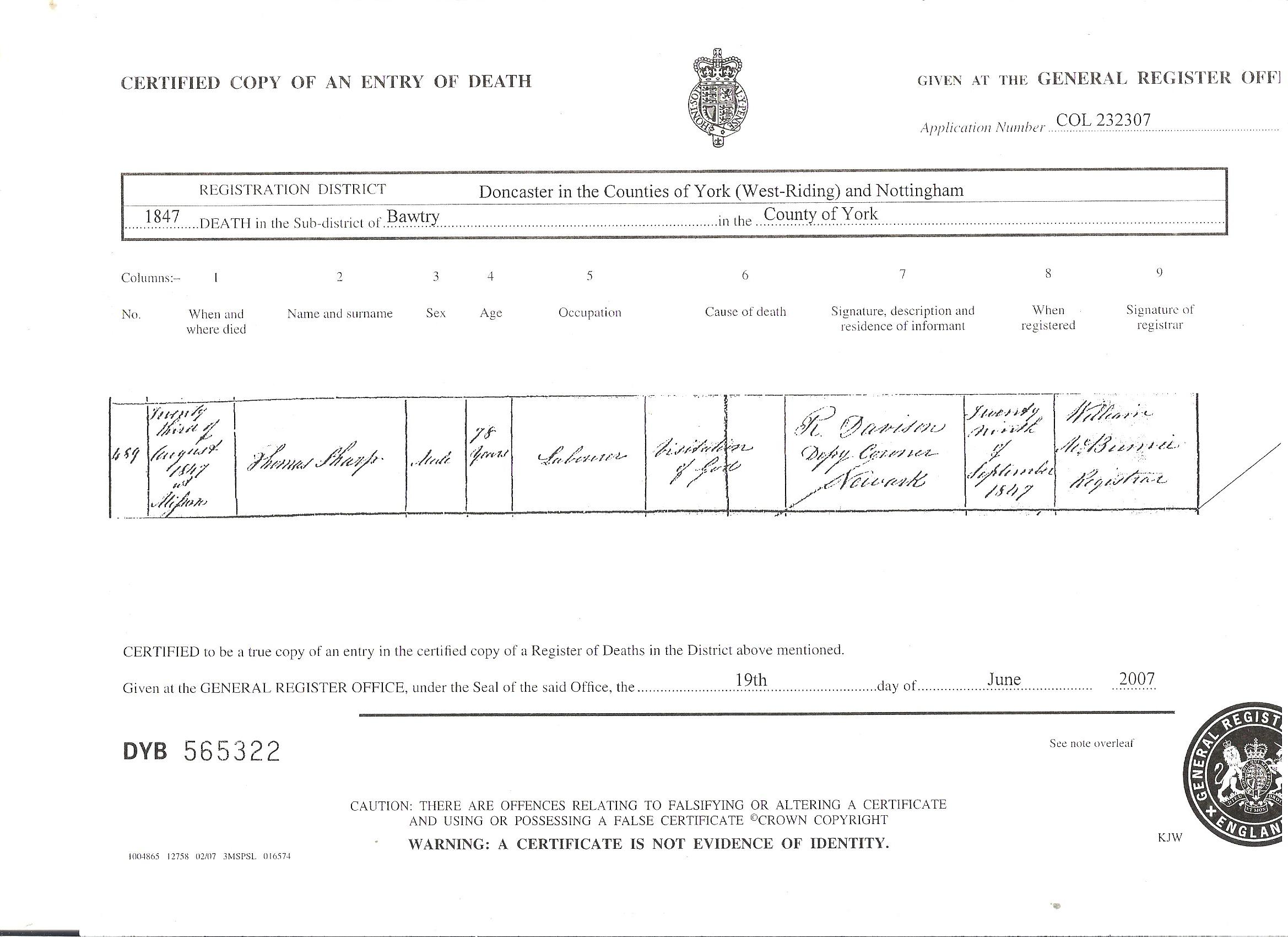
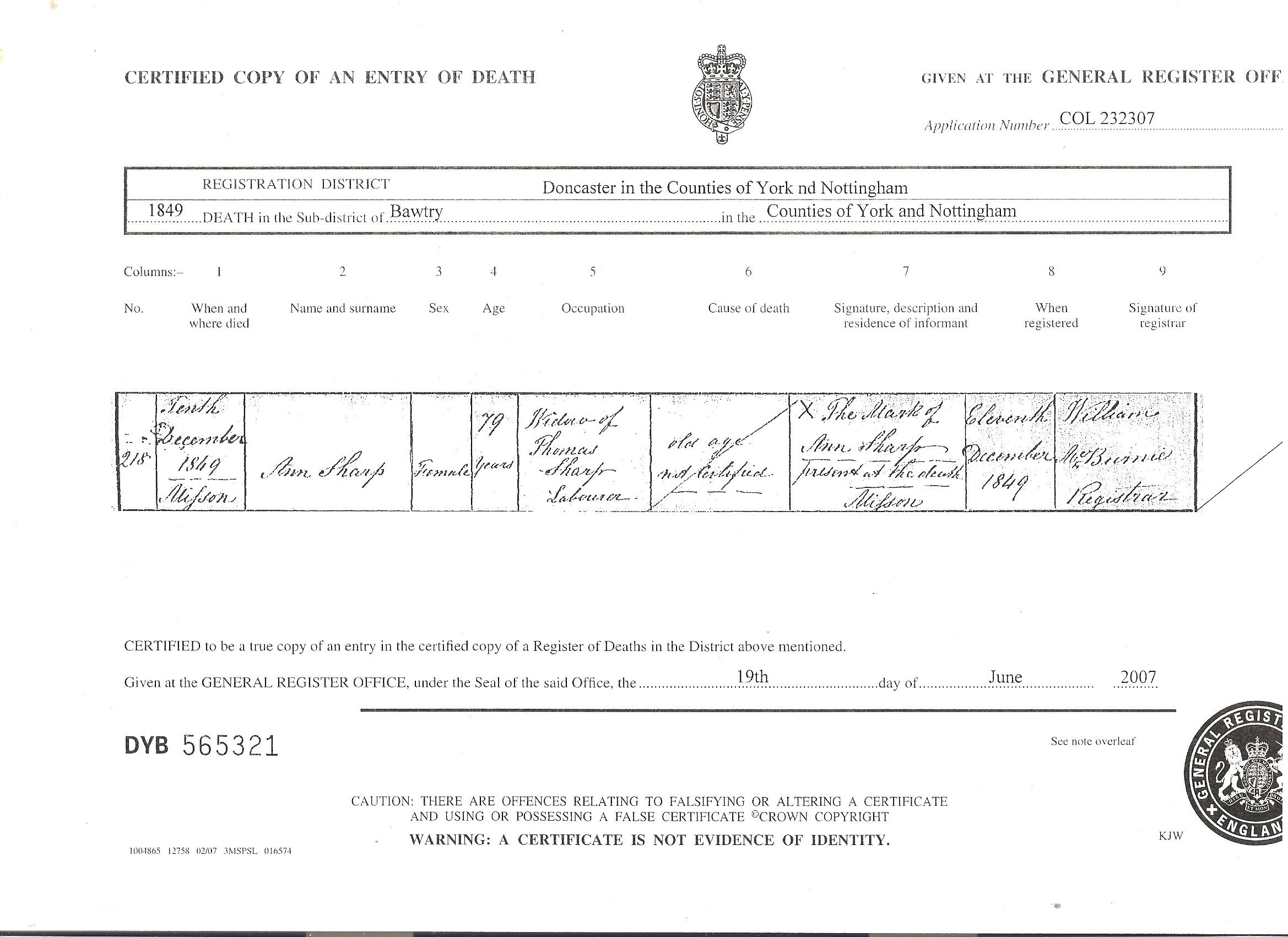
in Misson, Nottinghamshire in England.  We don’t know exactly when he passed away, but his wife immigrated to the United States with her children.  Sadly, she never made it all the way to the Utah Territory dying in St Louis in 1851.
We do not know with certainly what exactly the family’s plans were.  William (1826-1900), my ancestor, joined The Church of Jesus Christ of Latter-day Saints in 1848.  His sister, Isabella (1831-1904) joined in 1849 and is Kent’s ancestor.  None of his other siblings joined the church but yet they made their way to the United States.  We assume they came for the LDS cause since they embarked upon a ship predominately  LDS.  They finally arrived in St. Louis despite some considerable difficulties at sea in Nov 1850.
They stayed there for a time.  They held together as a family but the draw for William and Isabella to be gathered with the Saints must have been strong.  They eventually set out for Utah leaving behind them their non-LDS family (Their mother died in Feb 1851).  In 1853, Isabella and William set out for Utah with their new spouses.  They arrived in September of that year.   Joseph and Isabella Carlisle settled in Millcreek, Salt Lake County.  William and Mary Ann headed to Lehi, Utah County.  (I leave behind the Carlisle family due to the fact that they have several individuals working on that line including Leanne Maynes, who I come to find out later was working with Kent.)
Difficulties with the water, cattle, and neighbors prompted them to move elsewhere.  During the evacuation of Salt Lake from threats of the United States Government, they learned of open, available spaces in Weber County to the north.  They made provisions and picked a place moving there the next spring in Mar 1859.  Their daughter, Evelyn, is claimed to be the first white girl born in Plain City.
This is where things get a bit more difficult.  They lived there and were actively involved in the community.  William’s skills as a mason became useful and were employed often in the community.  The family was also actively involved with dramatics and music as well.  Somewhere in this time, discord became apparent in the area.  Somewhere from about 1870 to about 1879, William and Mary Ann (Bailey) Sharp were  excommunicated from the church.  It is also notable to show that they were not the only ones.  A list of individuals was read at a meeting in 1879 announcing their excommunication.  Several prominent names from Plain City are on the list, including; Skeen, Dix, Musgrave, Singleton, Noyes, and Davis.  There are many speculations for the reasons of this excommunication, but nothing is known or documented for sure.
Since we don’t know the exact excommunication date, we do not know how this played into the divorce of William and Mary Ann in 1876.  We do
know that there was a group of former Anglicans who asked for a congregation of the Episcopalian Church to be organized in Plain City.  William Sharp built their church and school for that purpose.
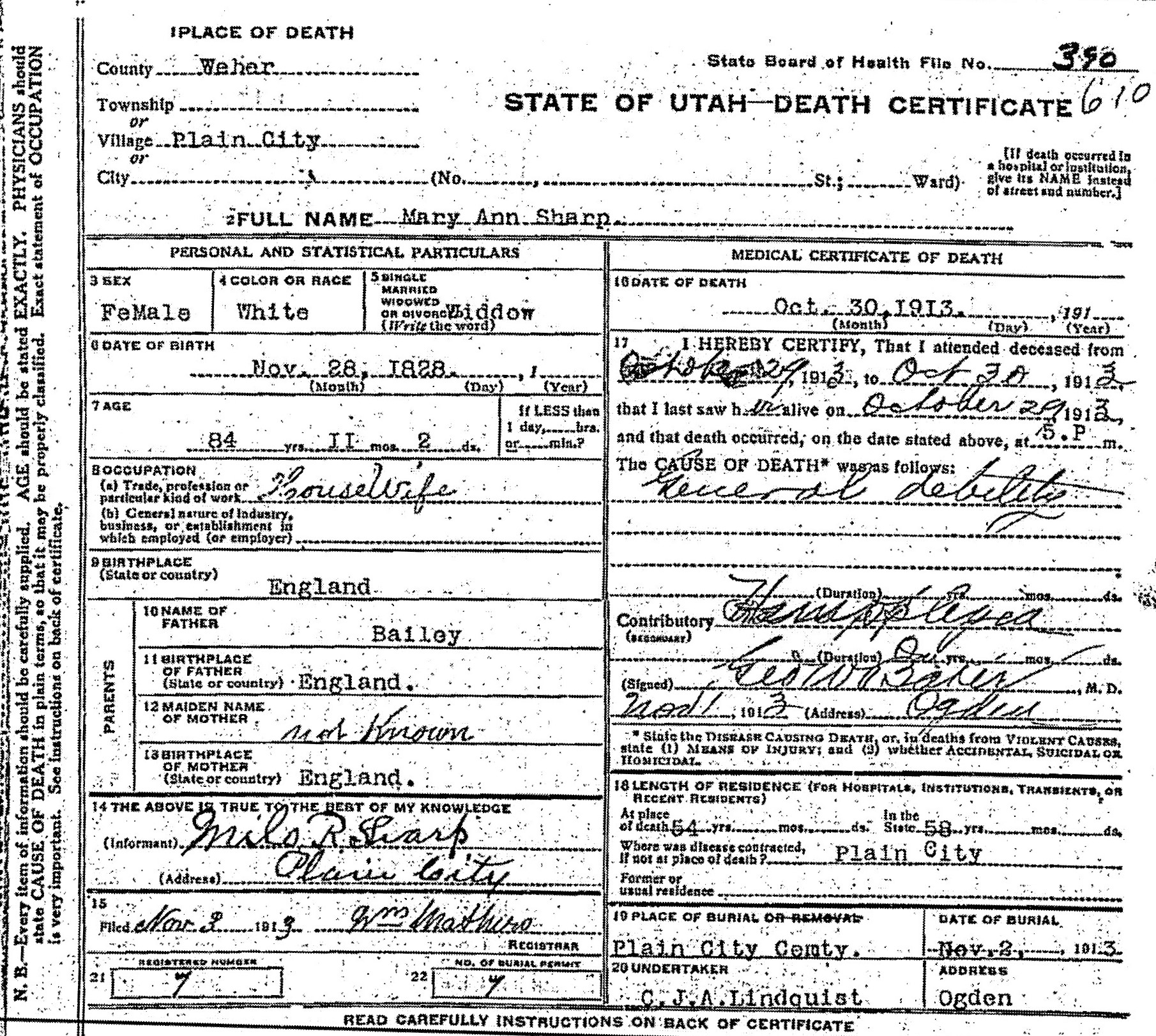
He would later remarry and would die in Mount Fort (Ogden).  Mary Ann we know a little less about, but she would pass away in Plain City in 1913.  With that as a backdrop, we can focus on some more contemporary family.  Anne Sharp would marry in the Endowment House of Salt Lake in 1872 to Daniel Claiborne Thomas.  Their family would for the most part remain active in the LDS church until the present.  The other three  children, Milo Riley Sharp, Evelyn Carlisle Sharp, and Victorine Mary Sharp would all remain away from the church for their lives.
Evelyn would marry James Henry Taylor and we still know little of their family.  They would make their way to Oregon and they are hard to follow with little more than census locations.  Victorine Mary Sharp would marry Robert Edward Maw.  The Maw name is well known in West Weber.  We still know relatively little concerning her family.
Milo Riley Sharp would marry Mary Ann Stoker in 1879.  She was the daughter of William Thomas Stoker and Emma Eames.  Her father joined the
LDS Church in 1852 with two siblings joining in 1860 and 1863.  Her mother passed away in 1863 and that same year her family immigrated to the United States.  They moved directly to Plain City.  Due to financial difficulties, each of the children were raised by separate families.
Mary Ann Stoker was raised by the George and Victoria Musgrave family.  (Her father would go on to remarry and raise another family.)  It was
during this time she took on the name of Lilly Musgrave Stoker (some records show her as Lillian).
Milo Riley and Mary Ann would eventually have 12 children; Milo Ray, George, Effie, Delwin, Ernest, Austin, William Edward, Victorine, Mary
Irene, Edith, Ethel, and Emily.  George, Effie, and Emily all died young.  Their 11th child, Ethel Sharp, is my great grandmother.
The Sharp family has been one of the most difficult lines to connect.  Ethel died in 1925 after giving birth to her 4th child.  John Ross and his parents were not able to take care of the 3 children so they were separated among Ethel’s siblings.  I have written more about this family at this link: Ross-Sharp Wedding.
Grandpa, the son of Ethel, has very few memories of his parents.  He grew up with the Ed Sharp family, and for numerous reasons has refused
to speak of them.  So any continuation of family stories or history has for the most part not jumped that break.
It was with interest that last year in corresponding with Leanne Maynes (Joseph and Isabella Carlisle descendent) that I learned she had some
contact with Mrs. Brenda Pett and Mrs. Carilee Sleight.  I found out they were descendents of Milo Ray (Milo Riley and Mary Ann’s oldest child).  I contacted them and initiated conversation.  The information, history, and photos they were able to provide gave a catalyst to opening up the Sharp history.
With enough information and history on the Sharp line, I began to feel the connection and felt to pursue the family.  The family although raised non-LDS would have several lines who would go on to become LDS.  Only two of the children would join the church in their lifetime, Mary Irene and Victorine.  Although many more lines would open up to becoming reclaimed through a spouse.  For the most part, some of the difficulty
in the Sharp family is still one of a house divided.  That introduced some difficulty in reconnecting the family and bringing them together.  So I will tell of my experience with a couple of the lines.
Brenda and Carilee are both from Milo Ray’s family.  They are a granddaughter and great granddaughter of Milo Ray respectively.  It has been interesting to get to know them.  Brenda is in charge of one of the family history libraries and her mother’s 40 years of accruing family history documents and history has been a valuable resource.  We hope to take this more available to the family and that it can be the means of tying the family together through documentation.  I visited with Brenda for some time this past weekend in touching base and looking to the future.
William Edward, known as Ed, married an active LDS woman and all their children were raised LDS.  This is the family my Grandfather was raised
with, and probably the most familiar of all the Sharp lines.  My personal interaction with Josephine Sharp Costley and Dean Sharp have provided the more human face to this family.  Even though Dean passed away just last month, it has been interesting to interact with these lines at my Grandparents 60th anniversary and at my Grandmother’s funeral.  I have corresponded with Delores Bair who was married to Ed’s son, who we call Eddie.  She provided a great deal of information on the Eddie Sharp and Ed Sharp family line.  I continue to actively pursue this line with Josephine Sharp Costley and Lois Sharp.
I received a phone call from Grandpa sometime last year informing me that a woman, Ms. Lynne Riddle had been to visit him asking for family
history information.  Lynne is a granddaughter of Edith Sharp Martin.  I have been in contact, but she seems to have fallen off the planet.  She
will not return phone calls and e-mails.  She was very anxious in corresponding earlier on.  However it seems she got what she wanted and does not want to share.  For what reasons I do not know.  I do sense it may have a question with the LDS issue after her apparent upset at my
Grandfather imposing his testimony upon her.  I do hope we can break any barrier that may or may not be in place.
Last weekend I visited with Mae Richardson, the youngest daughter of Mary Irene Sharp Richardson.  Mary Irene was the first to join the LDS
church of the siblings.  She joined in 1931.  Her family were all raised LDS, but seem to have had no contact with the rest of the Sharp family
after about 1970.  I just started sending out letters to those who I thought may be family of the Richardson family.  I received a letter back from Mae telling me she was related, and informed me who the Richardson “in house genealogist” was.  In phoned Mae and had a great conversation with her for over an hour.  I also phoned Karen Knudsen, who is her niece, the one who apparently keeps the family history information for the Richardson family.  I look forward to her first e-mail and corresponding and bringing that family back in communication.  The most impressive thing about Mae was her memory.  For being in her 80’s, she could still remember all her siblings birthdates and even locations for weddings, children’s birth locations, and much, much more.
I also relocated a connection through the Victorine Sharp Hunt family.  I met Archie Hunt several times.  Most notably I remember him from my
Grandma’s and Uncle Harold’s funerals.  Who can forget a man who has two prosthetic legs?  One cannot but honor and reverence a man who still
farms under those circumstances.  I look forward to visiting with Archie and reestablishing those links.
So, there is a great deal of work to do in relation to the Sharp family.  There are many descendants that are yet unaccounted for.  There are many
questions and holes just in dates and information on the current family.  Then the fleshing out of stories and life histories yet to be found.  It is good that I am not going about this alone.