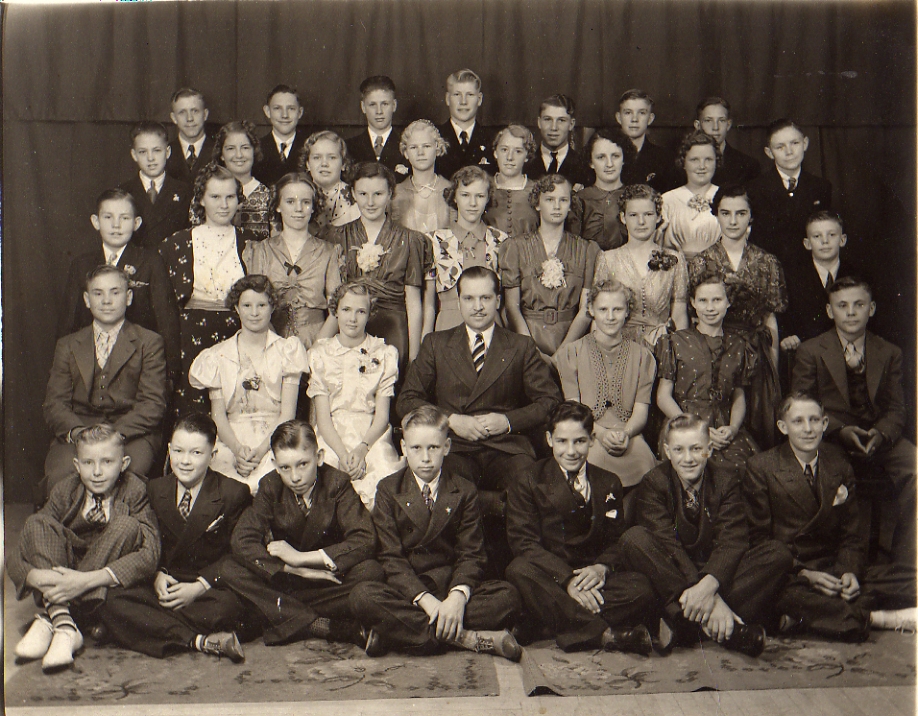
Open Primaries Initiative is voice of Idaho citizens, not ‘pernicious plot’

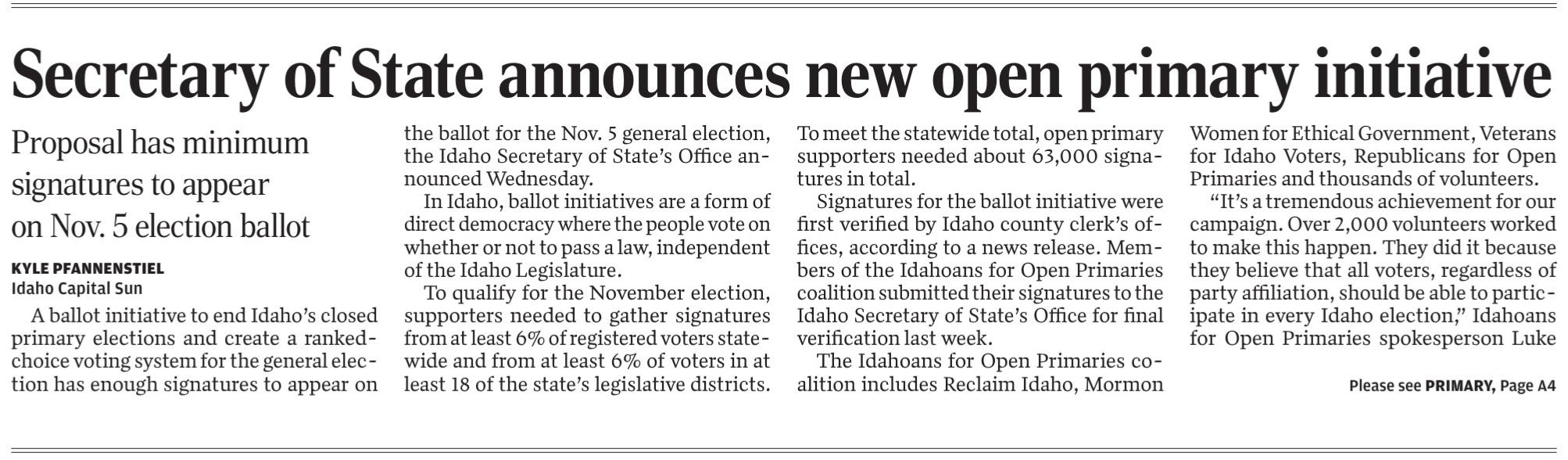


This comes from a history compiled and written by Jack Johnson as part of his Discovery Area Guides. Jack graduated from Burley High School with my Mom in 1972. He now lives in Hyrum, Utah. This article is in the 2022 Guide for North Cache County, including Smithfield, Richmond, and Lewiston. L.D. is loosely linked to me as I believe he is the nephew of Lorenzo Bowcutt, who married my Great Grandmother Lillian Coley Jonas in 1953 (Ren passed away in 1966).
“When Richmond was settled in the mid-1850’s, a locally-owned landmark business was still over a hundred years from being established. L.D.’s Cafe makes fascinating history live once more.
“Remnants of local history adorn L.D.’s dining area walls, including framed newspaper clippings, historical articles and an American flag. L.D. Bowcutt has been actively running the business since 1959, and loves to relate the history posted on his walls. Ask about his famous rodeo clown relative, or any one of the area’s veterans – each has a story that he’s anxious to tell.
“According to the Herald Journal newspaper article posted on its wall, “L.D.’s father bought this place in 1957. It started out as a poolroom. When the earthquake hit in 1961 this place rolled like a wave.” Wikipedia reports that the quake (it states as 1962) was a magnitude Mw5.9 the morning of August 30, 1962 at 6:35 am local time. With its epicenter just north of Richmond, this quake, Utah’s most costly , caused damages estimated then at $1-2 million dollars ($18.5-20 million in 2020 dollars.)
“L.D. remembers, “My father remodeled it and used some of the fixtures and furniture from the restaurant up the street that he bought because it was condemned by the damage from the earthquake.” Started initially as a bar and pool room, “since August 31, 1962, L.D.’s has served full meals. Before that it was strictly a sandwich and lunch menu.”
“”L.D. says that most of his customers are local people and repeat customers. This place isn’t commercialized or franchised. I can get to know my customers and they get to know me. People come her for sociability to be with their friends and neighbors. A log of business also gets transacted here. Based on comments from the lunch crowd, it would seem like L.D.’s customers return for more than just the comfortable, friendly atmosphere.”
“”He said one day the “champion cow” entered his cafe through the front door and paraded around the pool tables, but something like that only happens during Black and White Days, when the town is filled with horses and cows.”
“A lot of people don’t know that L.D.’s had a private meeting room upstairs. Bowcutt says that for a long time the area’s riding club would meet upstairs to shoot the bull and plan events.
“Serving two terms on the Richmond city council, L.D. Has been heavily involved in local interests. He tells how after the Richmond bank was robbed int he early 1960’s the bank manager had a buzzer installed to ring at the cafe. He’d return the call to the bank, whose employees knew when he asked, “Is L.D. there?” – a positive answer meant there was trouble, a negative meant all was well. His cafe also served as the communications center for the local volunteer fire department, sounding a warning siren whenever help was needed.
“L.D.’s daughter Lori, and grandson, J.R. Hoggan, are also actively involved, but J.R. is quick to point out that L.D. is really the heart of the business. Now in his eighties, L.D. still takes over at the grill quite often, filling every order the L.D.’s way – with healthy home-cooked meals. Hungry for meat and potatoes, burger, seafood of breakfast? You’ll find it all and a whole lot more – traditions of excellence and community involvement at L.D.’s Cafe in Richmond.
“L.D. states, “You need to be really sharp to compete with the big restaurant chains and stay open for business, and I think my cafe is the last of its kind.”
“Source: Conversation with L.D. Bowcutt Nov. 2, 2022, Wikipedia search “Earthquake – Logan, UT.
I have two copies of the History of Plain City, Utah. The front indicates it is from March 17th 1859 to present. As far as I can tell, the book was written in 1977. At least that is the latest date I can find in the book.
One copy belonged to my Grandparents Milo and Gladys Ross. My Grandpa has written various notes inside the history which I intend to include in parenthesis whenever they appear. They add to the history and come from his own experience and hearing.
I will only do a number of pages at a time. I will also try to include scanned copies of the photos in the books. These are just scanned copies of these books, I have not tried to seek out originals or better copies.
History of Plain City March 17th 1859 to present, pages 123 through 140.
SPORTS IN PLAIN CITY
By Lyman H. Cook
Plain City’s most prominent claim to fame has been through the sports program and the great players and teams that the town has produced. I know of no other town to community in this state, to possibly out of state, that can equal the accomplishments in the total sports program as the town of Plain City. I don’t know how many hundred championships or trophies this town has won in baseball, basketball, softball, volleyball, and Jr. Posses, over the last 75 years or more. We include the young teams and people in the town, and also the girls. These trophies and championships came from local, county, multi-county, state, stake division, region, multi-region, and All Church basketball, softball, and volleyball, which is the largest leagues in the world.
On February 14, 1977, at 3:30 PM, there were 226 trophies in the trophy cases at the Plain City Church. I couldn’t begin to estimate the number of trophies in the homes here in Plain City. Can you comprehend the number of teams involved and especially the number of people involved on the teams in accomplishing this great record.
There seems to be a special spirit, or force, ambition, or drive, that compels players to excel and teams to win. The will to win in Plain City is the strongest I have ever known. We have been accused of playing dirty, or being poor sports, but in answer to these charges, I would submit the phrase: We just play hard, and the spirit of competition just brings out the best in us. In Plain City you don’t hope you can win, you are expected to win. Some communities dislike us for our sports program because it is so strong, and in reality, they judge their success of their season by the fact of whether they can beat Plain City or not. I realize these are rather potent and strong statements, but never the less, they are all true.
We dedicate this section of sports to all the people who have ever played on a team in Plain City. We realize that some names will be missed and it is not our intent to forget anyone, but we can’t remember all, and this is all of the sports material that has been turned in for the history. If your name is left off, write it in, and if you were star of the team, write that in also.
We have asked for and received personal write-ups on a few people who have signed professional contracts or have distinguished themselves in certain sports. We recognize them for their talents in that they in turn have brought special recognition to Plain City. I am sure these talented athletes would be the first to recognize their fellow members, for they realize that no one man is bigger or better than the whole team, and in this light, we recognize the teams they played on.
From 1944 until the present, there were three basketball teams that went to All Church and won two second places. Commencing in 1951 through 1954, we played in four fast-pitch All Church Tournaments. We won a second-place finish and eight-place finish.
In 1953, we played on a volleyball team that went to the All Church Tournament and won the Sportsmanship Trophy, which was a great honor. The team that played were: Dee Cook, Lyman Cook, Wayne Cottle, Wayne Skeen, Blair Simpson, Kenneth Lund, Harold Hadley, and others we couldn’t remember.
There were teams that went to the All Church Slow Pitch Tournaments from Pain City for three years. They won two All Church Championships, and a third-place finish. There have been some excellent younger teams in baseball, basketball, and softball, and a Junior team last year (1976) won a second-place in a
The All Church program.

This was one of the early teams of Plain City, and this picture was taken around 1910. They played together for many years, and they won several championships.
Top Row: L to R: Joe Hunt, Tooley Louis Poulsen, Preston Thomas, Parley Taylor, Jack Hodson.
Middle Row: L to R: Mr. Anderson, Coach, Jim Thomas, Melvin Draney
Bottom row: L to R: Oscar Richardson, Joe Singleton

Tooley Poulsen played on many championship teams, and played several positions, mainly second base and catcher.

This was one of the first Mutual basketball teams in Plain City. They played their games in the upstairs of the old hall. Lyle Thomas reports that you didn’t have to be polished to play on this team, just big and rough, for there was very little whistle blowing in those days. This picture was taken in about 1925, and they won several championships.
Back Row: L to R: Rulon Jenkins, Lyle Palmer, Marion Sneed, Milton Garner
Front Row L to R: Theo Thompson, Ralph Robson, Coach Ellis Giles

This was the 1930 Plain City Baseball team. They played for State Champion ship.
Top Row: L to R: Horace Knight, Albert Sharp, Walter Christensen
Middle Row: L to R: Floyd Palmer, Angus Richardson, Arnold Taylor, Walter Moyes, Abram Maw, William Freestone
Bottom Row: L to R: Clair Folkman, Gilbert Taylor, Dick Skeen, Fred Singleton, Frank Skeen, Elmer Carver
BASEBALL AND EARLY SPORTS
By Elwood (Dick) Skeen
Baseball was Plain City’s most favorite sport. Baseball in Plain City in the early 1920’s and 1930’s was composed of the Plain City Bull Dogs with the following players taking part:
Louis Poulsen
Joe Singleton
Walter Draney
Elmo Rhead
Parley Taylor
Joe Hunt
Elvin Maw
Oscar Richardson
John Hodson
They represented Plain City in the Weber County Farm Bureau League, composed of North Ogden, Hooper, Roy, and Clinton. There were many good ball players in those days that played on the teams. The town park at that time was covered with salt grass. There were no base lines, no pitcher mounds. But, on a Saturday afternoon the park was filled with people that came from all over the county to watch the games. Horses and wagons lined the park.
Foot racing was also a great sport at that time, and Plain City had one of the best in Walter Draney, who was not only fast, but also a great athlete.
As time passed and the older players began to drop out, the chance came for us younger players to take over. In 1925 I caught my first Farm Bureau game at Liberty with Ezra Taylor doing the pitching. Then, the other players that made up our team for the next few years started to play. We had our share of victories. In fact, we had more than our share of wins.
Finances at that time were hard to come by. We did what we could to raise money to continue supporting the team. In 1928, the ball team put on the first Black and White Day with Mervin Thompson and Joseph Skeen showing their cattle. An old-time refreshment stand, soda water, ice cream, candy bars, and popcorn, which sold for 5¢. Also, some drinks that were not sold at the stand.
Our uniforms were furnished by Plain City individuals and business firms from Ogden. Suits would have the name of the giver on the back. Decoration day and the Fourth of July were our most celebrated days with all kinds of sports for those who wished to perform. A baseball game and a dance in the evening would top the day.
We would get the best team from Ogden to play on these days so that we could show what was leading up to the best team we had. In 1930, we won the Weber County Farm Bureau League, and the town bought us new uniforms to go to Lagoon to play Sandy, Utah, for thy State Championship. We lost by a close score. Our players were:
Gilbert Taylor
Walter Moyes
Arnold Taylor
Frank Skeen
Horace Knight
Albert Sharp
Fred Singleton
Abram Maw
Walter Christensen
Clair Folkman
Dick Skeen
Bill Freestone was the manager. Angus Richardson was the coach. Elmer Carver took care of finances, and Floyd Palmer and Byron Carver were scorekeepers. We played in tournaments at Brigham City and Ogden, and some out-of-state games were played.
We continued playing, but soon the gang started drifting different ways and our days were coming to an end. The league started to dwindle and later, folded up with the workload increase. Baseball was soon lost to the towns in Weber County.

Left to Right: Nalon Taylor, Bert Cook, Howard Gibson, Bud Dallinga, Wayne Cottle, Thayne Robson, Bill Stokes, Rulon Jenkins, Coach

The Desert News Sport Best Two MIA Teams
Page 10 – Salt Lake City, Utah-Saturday, March 11, 1944
Bottom Row: L to R: Carl Taylor, Carl Hodson, Fred Singleton, Coach, Blair Simpson, Glen Charlton
Top Row: L to R: Frank Hadley, John Nash, Lyman Cook, Ray Cottle
Ray Cottle, Center: First Team All Church
Frank Hadley, Forward: Second Team All Church
Lyman Cook, Guard: Second Team All Church
Blair Simpson, Guard: Honorable Mention
This team played for All Church Championship in 19441. They played Grantsville, Utah, and lost to them for the title. The games were played in the old Desert Gym, by the Hotel Utah. The teams stayed four nights in the Hotel Utah. They ate, slept, and played basketball.

Top Row L to R:
Alf Charlton, Athletic Director
Lyman Cook, Ronald Skeen, Kenneth Lund, Grant
Lund, Wayne Skeen, Clair Folkman, Coach
Bottom Row L to R:
Harold Hadley, Elmer Hipwell, Bill Stokes, Dee
Cook, Blair Simpson
This was the Plain City M-Men Team that played after World War II, in 1946, for several years and won several state championships and played in the division tournaments.
______________________________________________________________________________
SUNDAY MORNING, AUGUST 19, 1951
District Three Winners
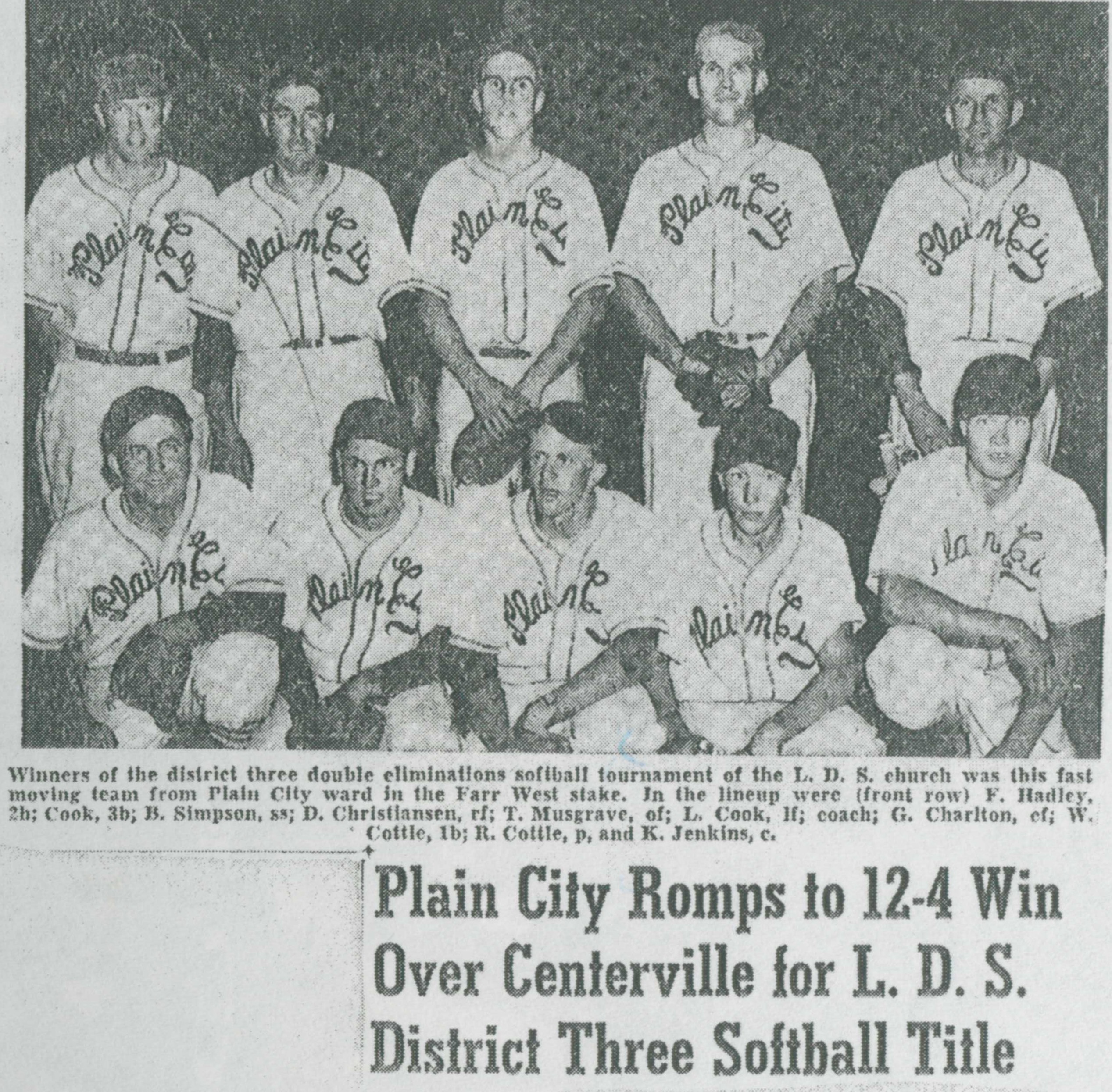
Winner of the district three double elimination softball tournament of the L.D.S. church was this fast moving team from Plain City in the Farr West Stake. In the lineup (front row) F. Hadley, 2b; Cook 3b; B. Simpson, 5b; D. Christensen, rf; T. Musgrave. Of; L. Cook, lf; coach; G. Charlton, of; W. Cottle. 1b; R. Cottle, p, and K. Jenkins, c.
Plain City Romps To 12-4 Win
Over Centerville for L. D. S.
District Three Softball Title
PLAIN CITY SOFTBALL TEAM OF 1951
By Lyman Cook
Plain City has always been a very strong baseball town, and the feeling was that softball was a game for girls, or you played softball at family reunions. In 1951 the Farr West Stake started a softball program and wanted teams to participate. I was Ward Athletic Director at that time and asked these players to play. This was the first softball team organized in Plain City. We won the Stake and District III. We then went on to the All Church Tournament in Salt Lake City. We won some and lost some, not too eventful. I coached the team the first year we played. This was a fast-pitch team.
L. D. S. Division III Champs
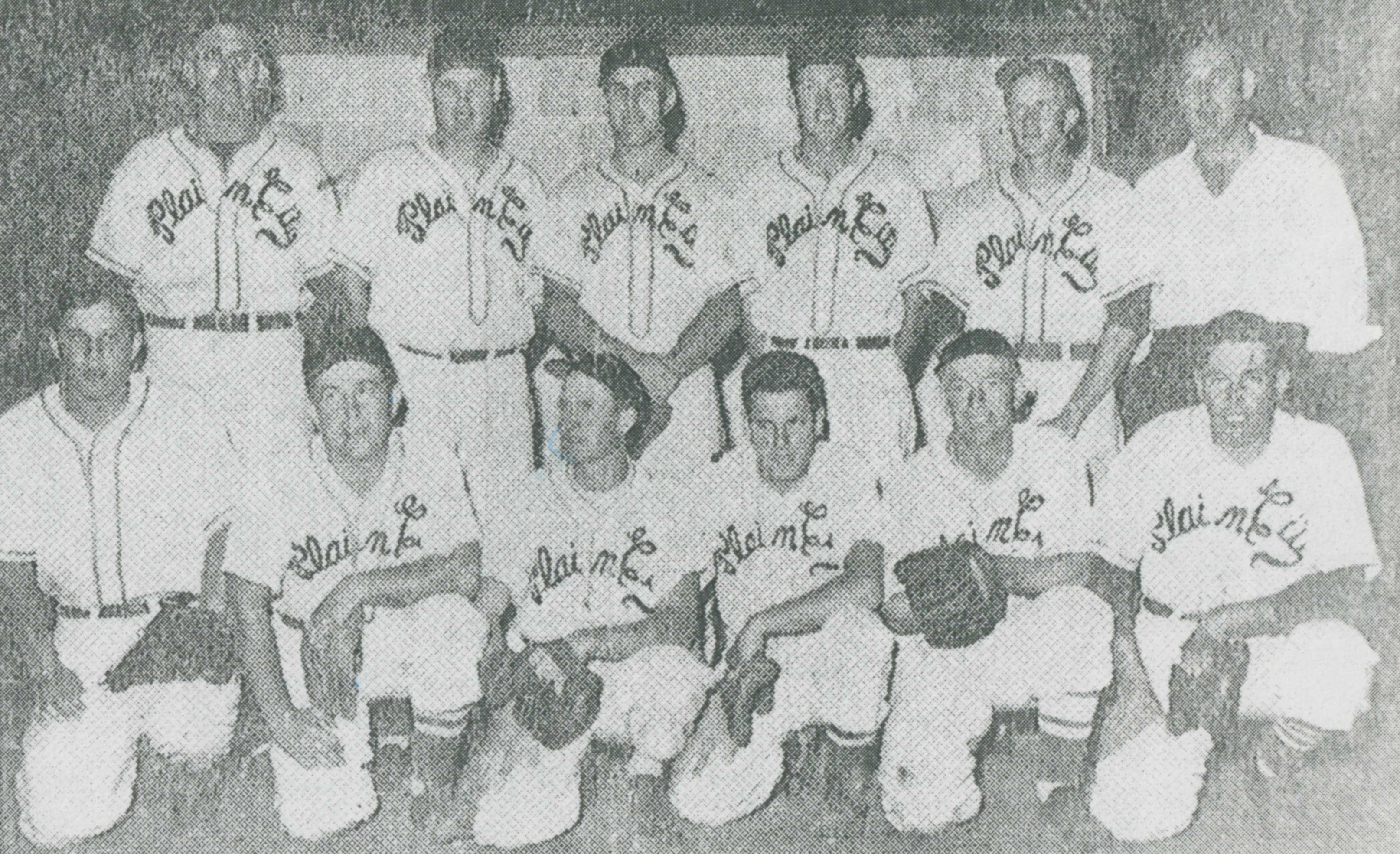
Repeating their last year’s victory in the L.D.S. division III softball tournament, the Plain City team came through again last night at Ogden softball park to beat Hoytsville 9 to 6. Front row Left to right: M. Heslop, E. Hadley, C. Taylor, D. Cook, A. Maw and G. Charlton: back row, lerft to right: R. Cottle, W. Skeen, W. Cottle, L. Cook, B. Simpson, and D. Skeen, coach. Absent from photo: Jenkins, V. Stokes and R. Skeen.
PLAIN CITY WARD SOFTBALL TEAM OF 1952
By Lyman Cook
In 1952 we repeated as stake champions and also won the Division III Championship again. We went to the All Church Tournament again and played very well. We played for the All Church Championship, but lost to Pocatello 10th Ward in a good game. Blair Simpson was voted Most Valuable Player of the tournament. Wayne Cottle made the All Church Team. There may be others. This was also a fast-pitch team. Dick Skeen was the coach.

This team played Farm Bureau Baseball and won the
Championship around 1950:
Top Row: L to R:
Junior Taylor, Wayne Skeen, Don Singleton, Bert Cook,
Glen Charlton, Kent Jenkins, Clair Folkman, Coach
Bottom Row: L to R:
“Buss” Lyman Skeen, Frank Hadley, Wayne Cottle, Ray
Charlton, John Maw, Dee Cook

This team played Pleasant Grove for All Church Champion-
Ship in 1956. They took second place.
Bottom Row: L to R:
Quinten Jenkins, Archie Skeen, LaGrand Hadley, Brent
Taylor, Ronald Sharp
Back Row: L to R:
Dee Cook, Manager, Darrell Christensen, Robert Folkman,
Bert Cook, Kenneth Lund, Wayne Cottle, Kent Jenkins, Coach

Many county and Northern Utah Championships were obtained by this team that was sponsored by the Town Board in the late 1950’s to middle 1960’s.
COACHES: Clair Folkman – Blair Simpson
TEAM MEMBERS: POSITIONS:
Blair Simpson P- IF
Wayne Cottle IF
Cy Freston IF
LaGrand Hadley OF – P
Archie Skeen C
Gaylen Hansen C – P – IF
Bobby Taylor P – OF
George Cook IF
Reid Nielson IF P
Ted Favero IF –
Dennis Anderson P
Garry Skeen OF
Lynn Folkman OF
Bud Parker IF – OP
Tom Seager OF
Harold Hadley IF
Harold Marriott IF
******
PLAIN CITY WARD FASTPITCH TEAM
1960, 1961, 1962
This team won the Stake, Region, and Division Championships, and represented the ward in All-Church competition with a successful number of victories.
COACH: Elmer Carver
TEAM MEMBERS:
Tom Seager, P Blair Simpson, SS
Gaylen Hansen, C LaGrand Hadley, LF
Wayne Cottle, 1st Robert Folkman, CF
George Cook, 2nd Dee Cook, RF
Cy Freston, 3rd Don Singleton, IF
Blaine Eckman, QF Gar Hunter, 1st – OF

THE PLAIN CITY BULLDOGS
This is one of the very first Weber County Recreation Teams in Plain City. Many of these players went on playing baseball for many years.
Front Row: L to R:
Dick Skeen, Coach, Fred Palmer, Darrel Thompson, Kenneth Hogge, George Cook, Ronald Sharp.
Back Row: L to R:
Archie Skeen, Brent Taylor, Wayne Poulson, Jay Freestone, Robert Folkman, LaGrand Hadley
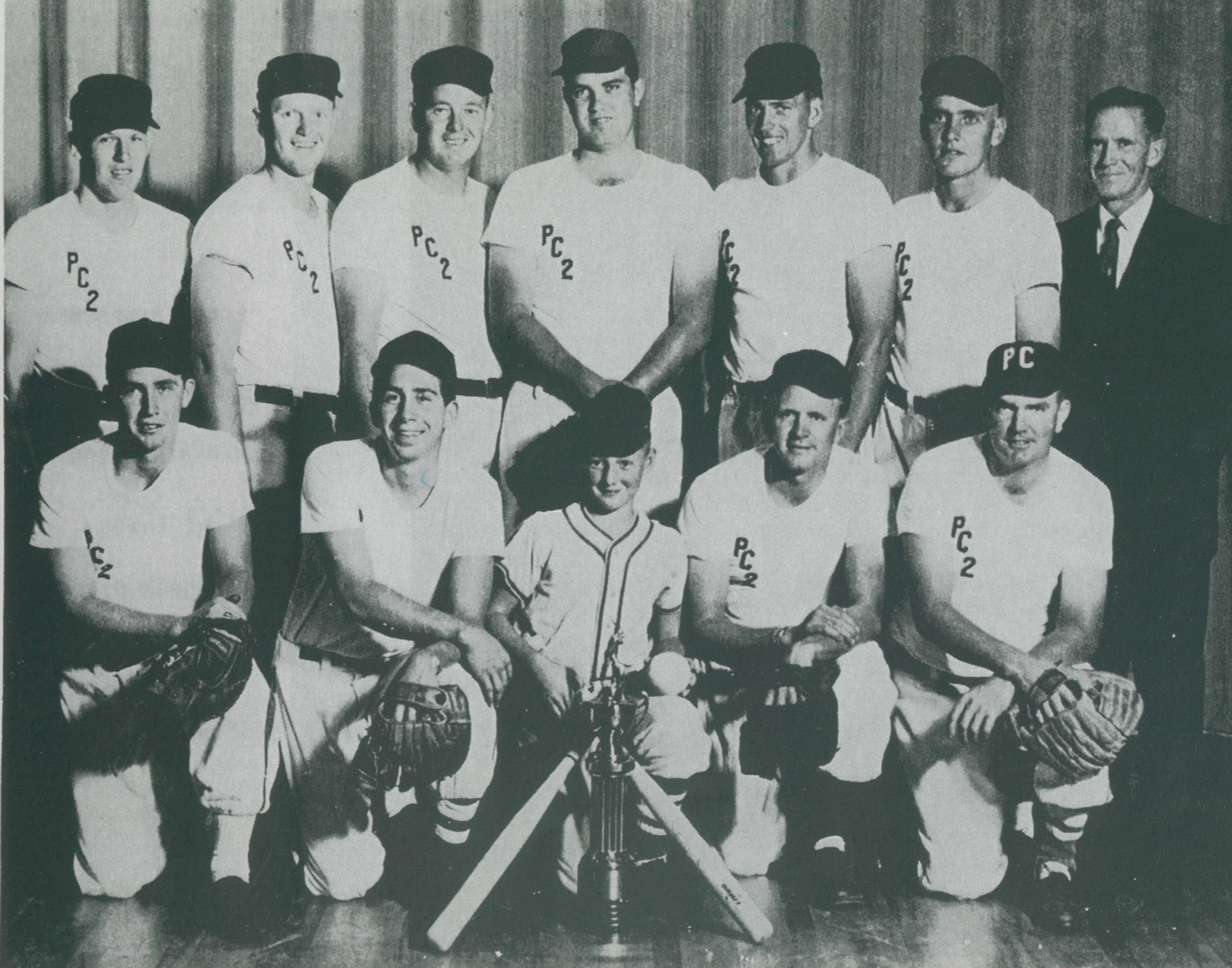
PLAIN CITY SECOND WARD
ALL – CHURCH CHAMPIONSHIP TEAM
1963 – 1ST Place
1964 – 1st Place
1965 – 3rd Place
This team represented the Plain City 2nd Ward and Plain City Town by winning 64 and losing only two games over a three-year span. Many players received All – Church recognition. In the championship game the first year the team hit 11 home runs and pulled off a triple play for the victory.
Back Row: L to R: Not in Photo
Garry Skeen Archie Skeen
Gaylen Hansen Ken Searcy
George Cook Jay Freestone
Gar Hunter Val Taylor
Jerry Bradford Mel Cottle
Lynn Folkman Gordon Singleton
Bishop Rulon Chugg Jim Beasley
Don Singleton
Front Row: L to R: Gary Hill
Bishop Orlo Maw
Jerry Moyes
Doug Palmer
Dale Searcy
Blair Simpson
LaGrand Hadley
All – Church Honors:
Gar Hunter
Jerry Bradford
Ken Searcy
Gaylen Hansen
Archie Skeen
Blair Simpson, Most Valuable Player

BLAIR SIMPSON
and
ELMER SINGLETON
of the
PITTSBURGH PIRATES
1948
“Two cousins met”
ELMER SINGLETON
Elmer Singleton started pitching for the Farm Bureau League in Plain City. He pitched for several championship teams. He signed a professional contract with Cincinnati, and played at Wenatchee, Washington in 1939, his first year. He played for Idaho Falls, Portland, and Oklahoma City. He moved on up to the big league and played with the following teams:
Cincinnati
Yankees
Chicago
Kansas City
Boston
Pittsburgh
Washington in 1950
Toronto
San Francisco
Seattle
He was in professional baseball for 27 or 28 years, the last eight years as a player coach.
He pitch two no hitters, one at San Francisco, and the other at Seattle. Elmer won the Player of the Year Award at Seattle in 1956. There is a baseball card with Elmer’s picture on it with the Chicago Cubs. It reads:
“This will be Elmer’s 17th year in professional baseball.
He started back in 1940 and after 11 uneventful seasons,
got red hot to become one of the top hurlers on the
Pacific Coast. In 1952 at San Francisco, he won 17, followed
with 15 triumphs in 1953 and moved to Seattle in 1956.
He had the best Pacific Coast Earned Run Average.”
Elmer told us that before he left to play professional baseball, the people of Plain City honored him at a banquet. They gave him a ball glove, and he still has it. He is listed in the Sports Record along with his accomplishments. Elmer was a great baseball pitcher. The only picture we have of Elmer is with Blair Simpson. Elmer and Blair are cousins,
BLAIR SIMPSON
BY Blair Simpson
I attended school at Plain City before going to Weber High School. At Weber High School I participated on the track team, played some basketball and pitched for the Weber High baseball team.
After graduating from Weber High School in 1944, I was drafted into the army for two years.
In 1948, I signed a professional baseball contract with the Pittsburgh Pirates organization. While playing with the Pirates, I played with the following cities:
Santa Rosa, California
Pittsburg, California
Modesto, California
Hutchinson, Kansas
Waco, Texas
Charleston, South Carolina
I was a pitcher and had to quit because of an injury to my knee.
After retiring from professional baseball, I played a considerable amount of baseball with Plain City and other teams in the Ogden area, such as:
Ogden Ford Sales
Heitz Heating
Wasatch Time
I was selected on the All Star Baseball Team composed of 16 players from the State of Utah.
I also played on many softball teams in the Ogden area such as Fisher Hess, Utah General Depot, Fred M. Nyes, Savon, and others.
In 1952, I was named the Most Outstanding Player in the “All Church Fastpitch Softball Tournament” in Salt Lake City and was also named to the All Church All Star Team in 1953.
In 1963, o received the Most Outstanding Player Award in the All Church Softball Slow Pitch Tournament. In 1964, I again received the most Outstanding Player Award in the slow pitch division of the All Church Tournament held in Salt Lake City. The year 1964 was one of my most memorable occasions in All Church Softball as I hit four consecutive home runs in one game.
I would like to give a lot of credit to whatever successes I have enjoyed in athletics to the talented town of Plain City.
WAYNE COTTLE
By Wayne Cottle
I was born November 30, 1928, in Ogden, Utah. I lived in Plain City all my life. I attended Plain City Elementary and Junior High. I played basketball in the 9th and in the 10th grades for Plain City. L. Rulon Jenkins was our coach and our principal. We played against Hooper, North Ogden, Huntsville, and Weber High School.
In the Fall of 1945, I started Weber High School, playing football, basketball, baseball, and track for both years. In 1947, I played to a tie for the Region I Championship with Box Elder. We played off the tie breaker at Ogden High School, beating Box Elder for the first Region I Championship for many years. I won the Region I scoring title. We entered the State Tournament in Salt Lake City and we lost to Granite, who became the State Championships, in the semi-finals. I was the recipient of the Standard Examiner KLO Watch Award for being the outstanding athlete of the year.
I entered Weber Junior College in the Fall of 1947. After about a month of practice I became one of the starting forwards. We played in several tournaments winning 3rd place in the Compton California Invitational. We played an independent schedule that year. In 1948-49 Weber became a member of the ICAC Conference. We won the conference and played Snow Junior College Tournament. We won the game and I was voted the tournament’s Outstanding Player Ward. We went to the national finals in Hutchinson, Kansas. We won our first game, then we met two defeats.
In the Fall of 1949, I entered Brigham Young University. I was on the team that won the Skyline Conference Championship for the first in many years. We went to the NCAA at Kansas City, Missouri. We lost to Baylor University, then beat UCLA for 3rd place. The next year we accepted a bid to enter the National Invitational Championship and two of our players were voted All American.
I graduated from BYU in 1951, came back to Plain City and started to play basketball with the Ward team. From the 1951- 1952 season until the creation of the Plain City 2nd Ward in 1960, we never lost a league game in the Farr West Stake. The year of the creation of the Plain City 2nd Ward, they beat us once and we beat them once. We played off the Stake Championship at Wahlquist Jr. High, and we won the team and the championship. After that season, the Church specified an age limit and I was area championships and went to the All Church several times.
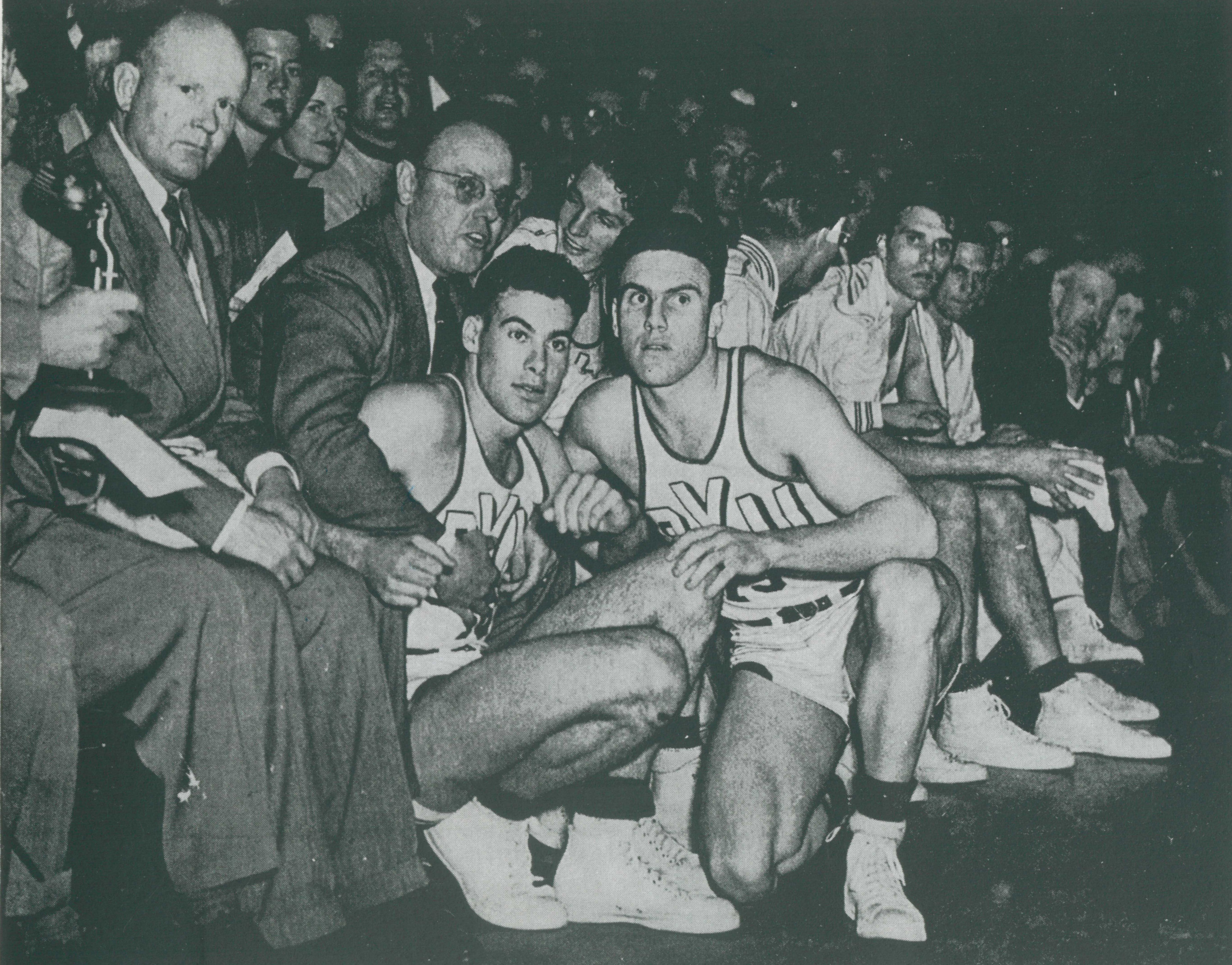
WAYNE COTTLE
Brigham Young University
BERT COOK
He attended Plain City School where he was active in athletics. He graduated and attended Weber High School in 1947 and 1948., where he participated in football, basketball, baseball, and track. In 1948, he was selected on the Class A State All Star Team, in which Weber High School won the championship. He also won the All American in boys Award in baseball at John Affleck Park in 1948. From this he won a trip to Chicago.
He played for the Plain City baseball team for the Farm Bureau and Ogden City League.
From 1948 until 1952 he attended Utah State university at Logan, Utah, where he started on the first five as a freshman, and later in the year played in the AAU Tournament and was selected on the All Tournament Team.
In 1951 – 1952, he lead the conference in scoring and was voted All Conference both years. In 1952 he was voted All American in basketball where his Number 6 jersey was retired at Utah State University being the first one in the history of the school. That same year he was selected on the All Conference Team, and traveled with the Harlem Globe Trotters and the College All Star for several games. Later that year, he signed a contract with the New York Knickerbockers and was drafted into the service where he played for Fort Lee, Virginia Military team in which he lead the scoring and was later voted to the Second Army All Star Team.
He served his country in the Far East Command in 1954, being released in 1955, when he rejoined the Knicks until 1956. After a serious knee injury he returned to Plain City and played for the Plain City Ward and the Ogden City League.
He played on the 1956 team that won second place and he made First Team All Church.
At Weber High School I participated in basketball, baseball, and football and was productive and beneficial. After graduation in 1954, I attended Utah State University for two years on a football scholarship. Next, I received a University of Utah Scholarship in baseball. That year 1958, was a successful year with a batting of .350. The next year was even more eventful. My batting average jumped to .490. The .490 batting average was good enough to lead the Skyline Conference, plus I was fortunate to lead the NCAA in homeruns and RBI’s. These statistics and the efforts of the University of Utah Sports Publicity Department lead to my selection as the “First Team Catcher on the College All -American baseball Team”. As a result of this honor, I was selected the “Most Valuable Player in NCAA, District 7.” The year was 1959.
Opportunities were available to sign a professional baseball contract with the New York Yankees, Chicago Cubs, Boston Red Sox, and the Phillies. In 1959 I signed a bonus contract with the Boston Red Sox.
During the next three years I played in the following leagues: Sophomore League in Alpine, Texas: North Carolina League in Raleigh, North Carolina; Midwest League in Waterloo, Iowa; and the Eastern League in Johnstown, Pa. Winter ball was played in Bradenton, Florida.
In 1962, spring training was held in Deland, Florida. Because of a successful spring training I was invited to join the Triple A League in Seattle, Washington, “The Seattle Rainiers.” All Star Catcher honors were received in 1960, 1961, and 1962. In 1963 I was invited to spring training with the parent ball club, The Boston Red Sox. At the completion of spring training I was again assigned to the Seattle Rainiers.
Some of the great stars helping the young players were: Ted Williams, Bobby Doerr, Rudy York, Johnny Pesky, and Mel Parnell. As of this year, 1977, the only teammate of mine still with the Boston Red Sox is Carl Yastrzemski.

Bert Cook
New York Knickerbockers

Archie Skeen
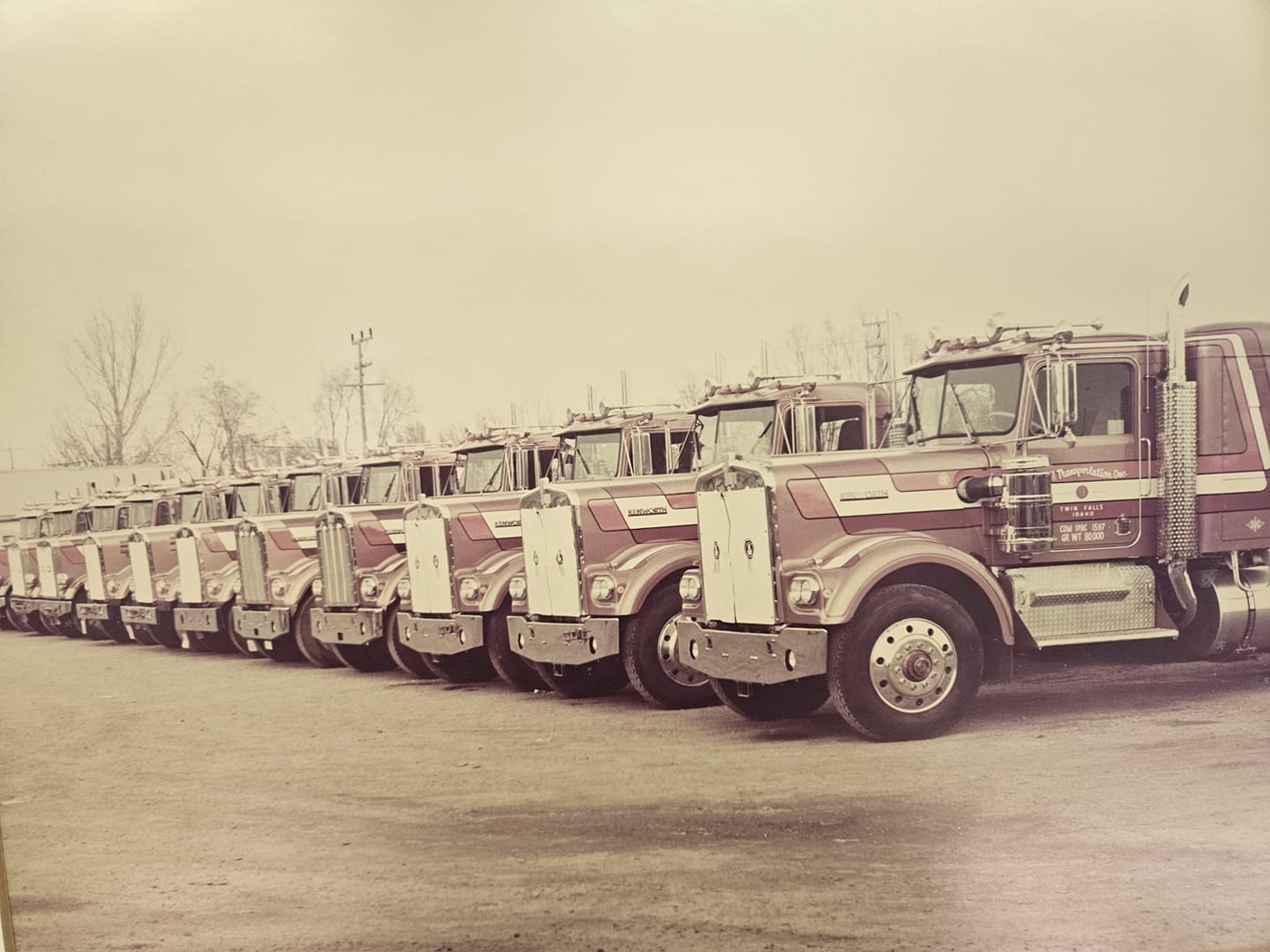
This photo was dropped to me by a friend and former employee of Circle A Construction. It conjured many thoughts and emotions as I grew up around these very trucks. I wrote previously a mention of the Aslett’s who were so tied with Circle A.
My first job in 1994 was washing and waxing trucks from the beet haul/harvest. Dustin McClellan was my co-worker and friend. We did all the washing at the old Hynes beet dump. Most of those trucks were new and just white. Circle A was getting away from the costly paint jobs you see above. In the photo below, you see the plain white tractors that took over from those in years past.
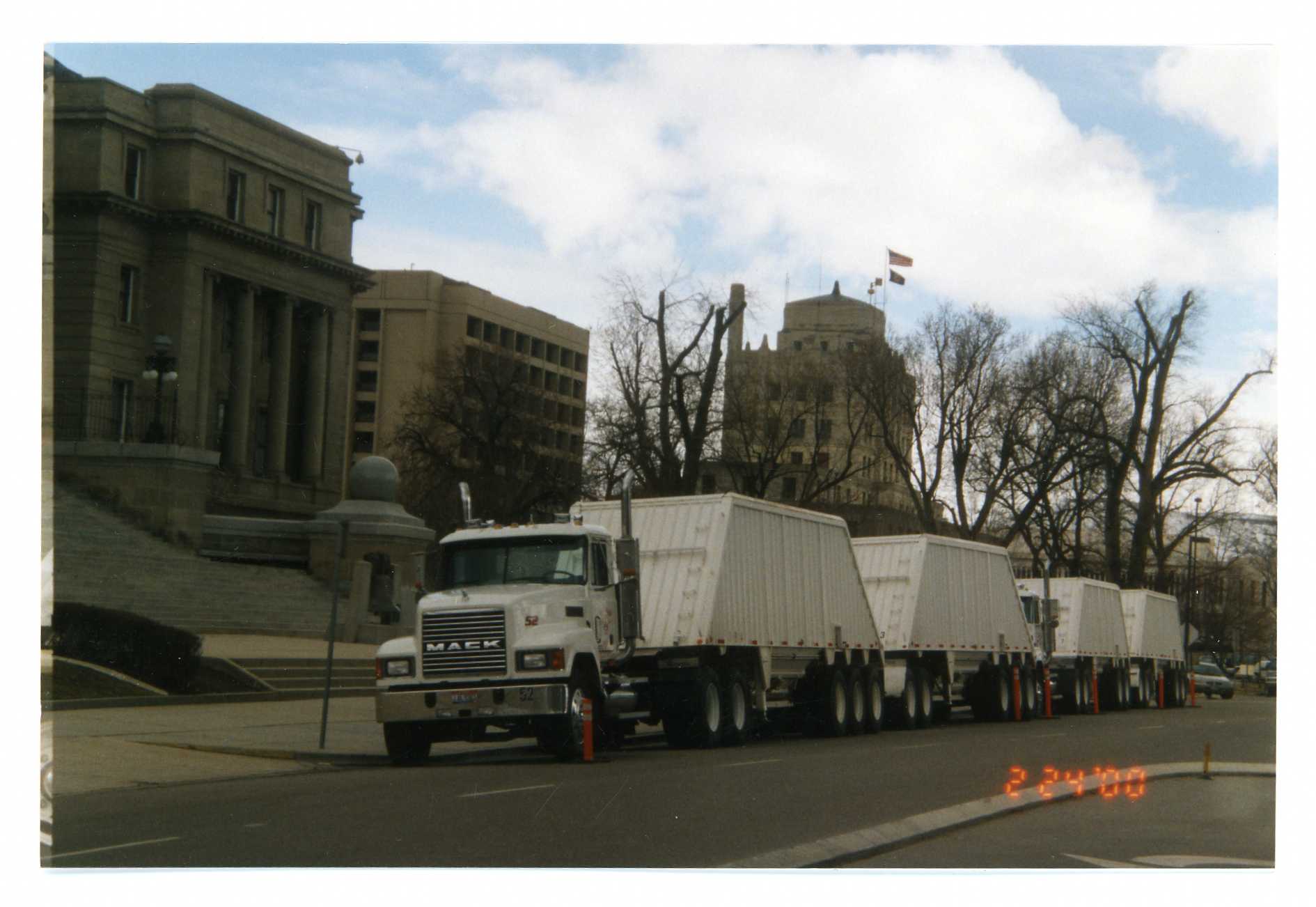
When all the tractors and trailers were finished from the beet haul, then we got to work on the fancier paint job trucks. These were harder work. That dark golden brown didn’t hold up as well in the sun and often oxidized making the waxing hard. Sometimes multiple waxes were required. Turtle Wax was making money off of us now!
Here is another picture of one of those trucks. This is one of the double belly dump main trailers that started to disappear about the same time. The double belly dump trailers developed structural issues the longer they were used. Within a short time all were cut down or recycled to the single belly dumps you see above. Road weight laws were also changing and transitioning, which I seem to recall was another issue.

Now I was a little boy in the truck of that stark white Star trailer. This truck is older than the ones in the picture at the beginning of the post. This photo brings out the colors better than the one at the top. You can see the metallic flakes in the golden brown, the bright red, the dark burgundy, and the white. There was quite a bit of cost that went into painting each of these trucks the custom paint job.
There was the writing and the pin striping too. There were the lines between each of these blocks/shades too.
Many memories. I was almost killed one day while very young by one of these trailers. Some of my youngest memories included semis painted just like the ones above. I do not live and play in the trucking industry anymore, but it does not mean I do not have many memories growing up around it.

Before I talk about the Layton and Taylorsville Temples, I thought I better throw in another temple visit we made since I last updated. While on Spring Break this year, we made a stop in Vernal, Utah. While there, we scheduled and attended the Vernal Utah Temple with the kids. Glad we stopped to make another memory at another House of the Lord.

Since the kids have a goal to attend the temple every month this year, we did also make it in April to the Twin Falls Temple. In May, while going to Utah for the open houses, we made sure to stop off and fulfill the monthly goal. May took us to Ogden Utah Temple.

Later that evening, we attended the open house of the Layton Utah Temple with Amanda’s parents. Beautiful.
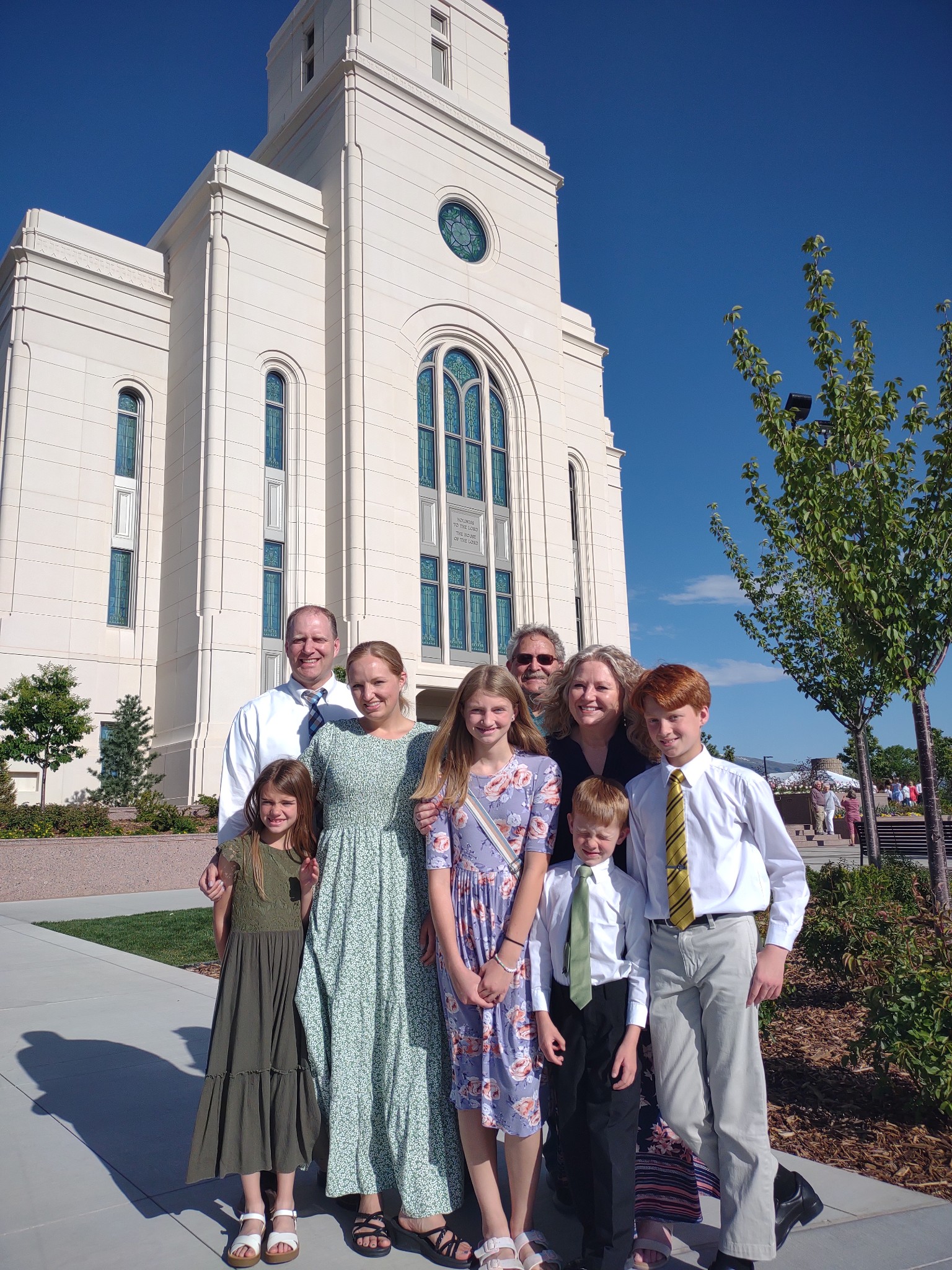
We look forward to attending the temple after it is dedicated.
The next day we attended the open house for the Taylorsville Utah Temple, again with Amanda’s parents. We were also excited to run into the Brad and Rachel Hales family as well as Sarah Sanderson!
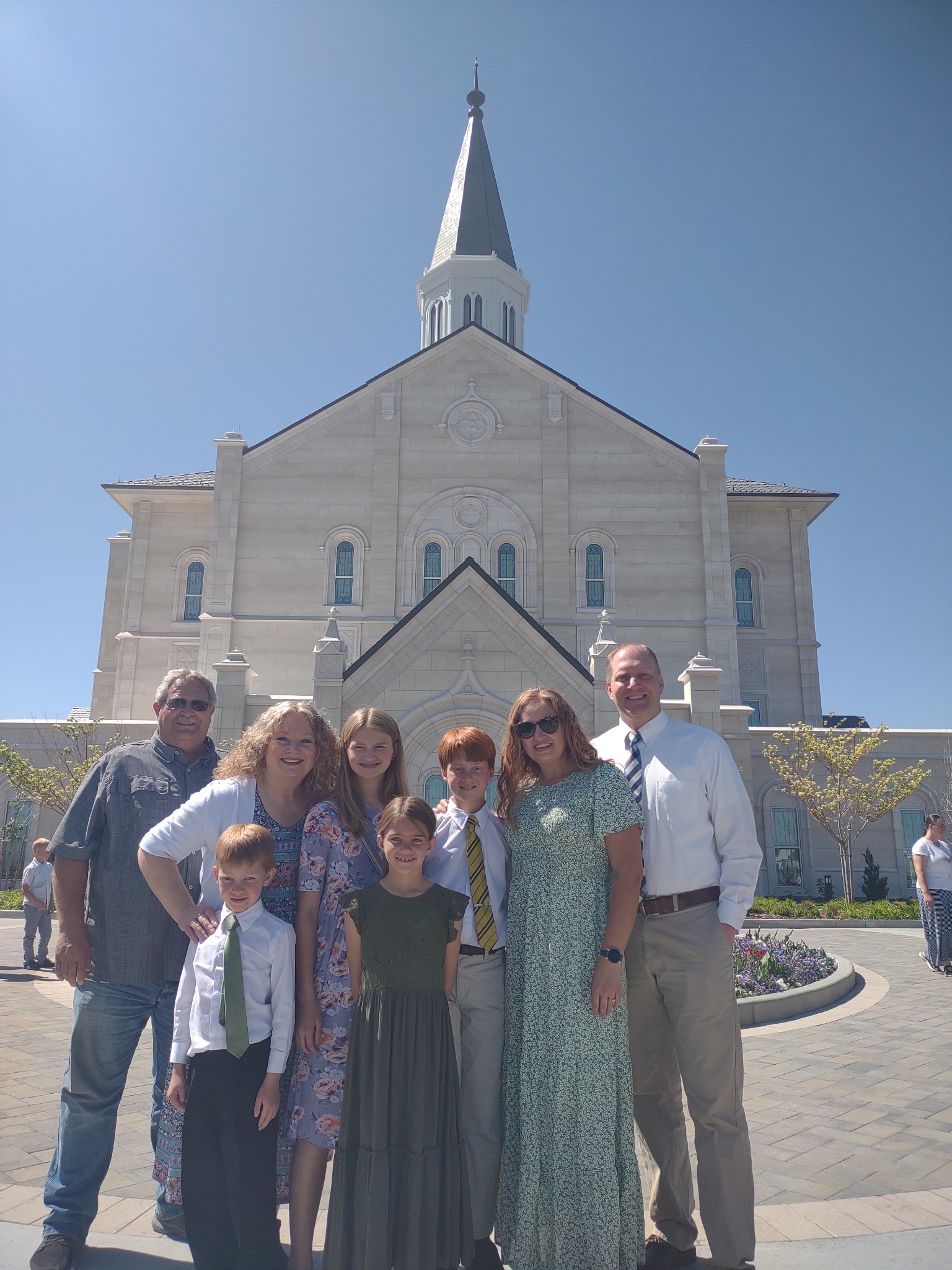
It has been a crazy year for temple attendance and temple open houses. We have attended quite a few and quite a few are coming up for open houses. Wow, should be fun. It is exciting that the Kingdom and Church of God on the earth is in such a position to build so many beautiful houses to the Lord. We are blessed to attend the open houses and hopefully return some day to participate in holy ordinances there.
When I was interviewed for my first temple recommend in 1998, President Gene Hansen indicated he had a goal since he was first endowed to attend the temple every single month. He challenged me to do the same. As long as I have held a recommend, or I had permission to attend, I have attended the temple every single month since 1998. That meant a full day off of work in Missouri as it was a 4 hour drive one way from Branson, Missouri, to St. Louis, Missouri. Or from Richmond, Virginia, to Washington, D.C., that was a 4-5 hour drive and we often would go up and spend the night and return home on Saturday or Sunday depending on the circumstances.
Many open houses are upcoming, including Deseret Peak Utah; Casper Wyoming; Grand Junction Colorado; Elko Nevada; Syracuse Utah; Burley Idaho; Lindon Utah; Ephraim Utah; Smithfield Utah; Montpelier Idaho; Heber Valley Utah; Teton River Idaho; Salt Lake City Utah; Provo Rock Canyon Utah; Cody Wyoming; Lethbridge Alberta; Lehi Utah; and West Jordan Utah. Hopefully we can make some of the more exotic ones, particularly Birmingham England; Edinburgh Scotland; Honolulu Hawaii; and Vancouver British Columbia. We will see what our future holds.

I thought it would be appropriate to commemorate the 100th birthday of my Grandpa, Wilburn Norwood Jonas. He went by Norwood his whole life, or Nor to those closest.
Grandpa was born 15 May 1924 in Lewiston, Cache, Utah to Lillian Coley and Joseph Nelson Jonas. The fourth child of eight to his parents. He married Colleen Mary Andra 27 September 1946 in Elko, Elko, Nevada. Three children were born to him and Colleen; Douglas in 1952, Sandra in 1954, and Jackie in 1960. He died 14 March 1975 in Burley, Cassia, Idaho and was buried 19 March 1975 in Richmond, Cache, Utah.
I was trying to think of a way to commemorate Grandpa. As linked above, I have written of him before. This week, I went through an old book I have that belong to Norwood’s dad, Joseph. Inside were some newspaper clippings and notes. One linked to Grandpa. I share it to show that research is ongoing and can be found anywhere! Just takes a little luck, heaven’s guidance, and you will stumble on them. I will wrote more on the book and other clippings inside later.
Park School was in Richmond. It was only razed in the past few years. Grandpa went to North Cache High School, although he did not graduate. This clipping also has Irwin written in to it. Which tells me he was missed or it is the wrong Jonas boy that was listed. Although, I do have a class picture of Irwin and Norwood together, so I am not clear if that tips it one way or the other.
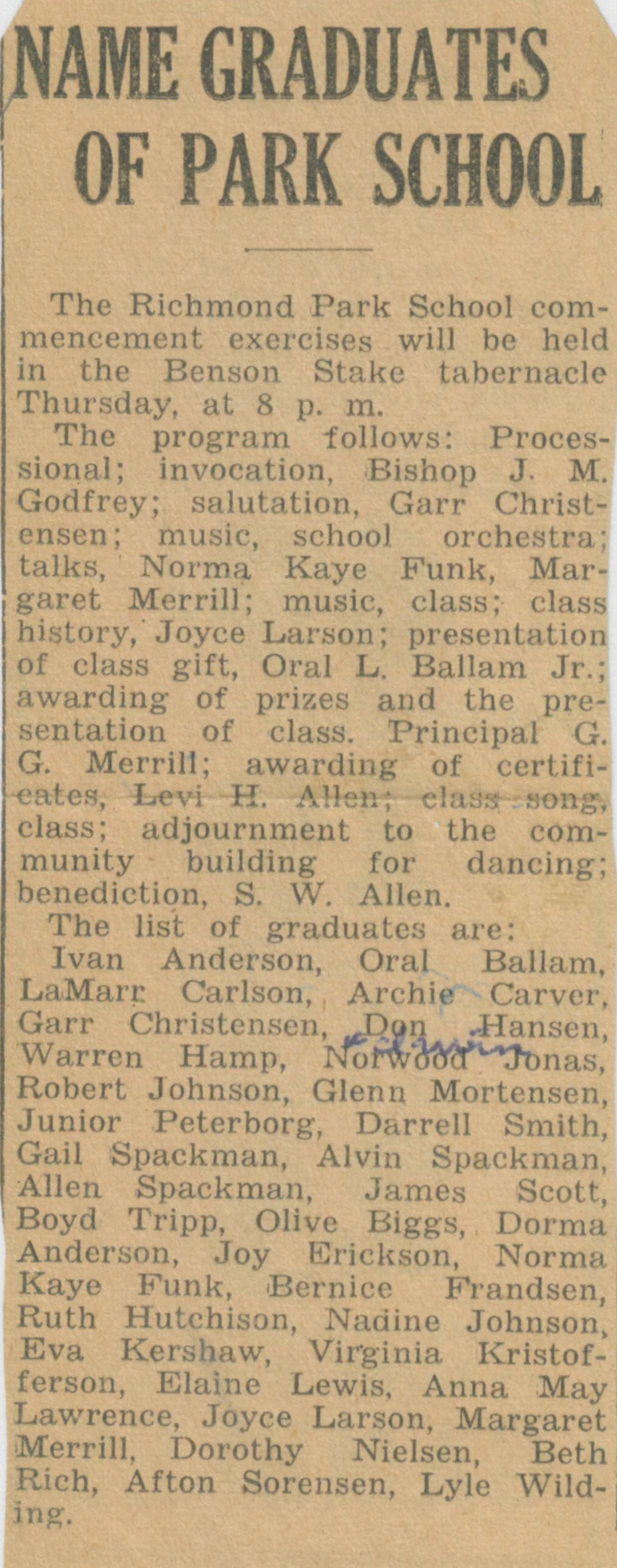
“Name Graduates of Park School
“The Richmond Park School commencement exercises will be held in the Benson Stake tabernacle Thursday, at 8 p. m.
“The program follows: Processional; Invocation, Bishop J. M. Godfrey; salutation, Garr Christensen; music, school orchestra; talks, Norma Kaye Funk, Margaret Merrill; music, class; class history, Joyce Larson; presentation of class gift, Oral L. Ballam Jr.; awarding of prizes and the presentation of the class. Principal G. G. Merrill; awarding of certificates, Levi H. Allen; class song, class; adjournment to the community building for dancing; benediction, S. W. Allen.
“The list of graduates are: Ivan Anderson, Oral Ballam, LaMarr Carlson, Archie Carver, Garr Christensen, Don Hansen, Warren Hamp, [Irwin written in, referring to Irwin Jonas], Norwood Jonas, Robert Johnson, Glenn Mortensen, Junior Peterborg, Darrell Smith, Gail Spackman, Alvin Spackman, Allen Spackman, James Scott, Boyd Tripp, Olive Biggs, Dorma Anderson, Joy Erickson, Norma Kaye Funk, Bernice Frandsen, Ruth Hutchison, Nadine Johnson, Eva Kershaw, Virginia Kirstofferson, Elaine Lewis, Anna May Lawrence, Joyce Larson, Margaret Merrill, Dorothy Nielsen, Beth Rich, Afton Sorensen, Lyle Wilding.
Here is the class picture with many of these same names. It also includes Irwin and Norwood. I have written about it previously.