1-1: TITLE:
1-1-1: TITLE:
Upon adoption by the City Council, this Code is hereby declared to be and shall hereafter constitute the official code of the City of Minidoka. This code of ordinances shall be known and cited as the MINIDOKA CITY CODE, and it is hereby published by authority of the City Council and shall be kept up to date as provided in this chapter. Any reference to the number of any section contained herein shall be understood to refer to the position of the same number, its appropriate chapter and title heading, and to the general penalty clause, relating thereto, as well as to the section itself, when reference is made to this code by title in any legal documents. (Ord. 2026-2, 3 Feb 2026)
1-1-2: ACCEPTANCE:
This City code, as hereby presented in printed form, shall hereafter be received without further proof in all courts and in all administrative tribunals of this state as ordinances of the City of general and permanent effect. (Ord. 2026-2, 3 Feb 2026)
1-1-3: AMENDMENTS:
Any ordinance amending this code shall set forth the title, chapter and section number of the section or sections to be amended, and this shall constitute sufficient compliance with any statutory requirement pertaining to the amendment or revision by ordinance of any part of this code. All such amendments or revisions by ordinance shall be immediately forwarded to the codifiers and the said ordinance material shall be prepared for insertion in its proper place in each copy of this code. Each such replacement page shall be properly identified and shall be inserted in each individual copy of this code. (Ord. 2026-2, 3 Feb 2026)
1-1-4: CONSTRUCTION OF WORDS:
Whenever any word in any section of this code importing the plural number is used in describing or referring to any matters, parties or persons, any single matter, party or person shall be deemed to be included, although distributive words may not have been used.
When any subject matter, party or person is referred to in this code by words importing the singular number only, or the masculine gender, several matters, parties or persons and females as well as males and bodies corporate shall be deemed to be included; provided, that these rules of construction shall not be applied to any section of this code which contains any express provision excluding such construction or where the subject matter or context may be repugnant thereto.
The word “ordinance” contained in the ordinances of the City has been changed in the content of this code to “title”, “chapter”, “section” and/or “subsection” or words of like import for organizational and clarification purposes only. Such change to the City’s ordinances is not meant to amend passage and effective dates of such original ordinances. (Ord. 2026-2, 3 Feb 2026)
1-1-5: DEFINITIONS, GENERAL:
Whenever the following words or terms are used in this code, they shall have such meanings herein ascribed to them, unless the context makes such meanings repugnant thereto:
AGENT: A person acting on behalf of another.
CITY: The City of Minidoka, county of Minidoka, State of Idaho.
EMPLOYEES: Whenever reference is made in this code to a City employee by title only, this shall be construed as though followed by the words “of the City of Minidoka”.
FEE: A sum of money charged by the City for the carrying on of a business, profession, or occupation.
LICENSE: The permission granted for the carrying on of a business, profession or occupation.
MISDEMEANOR: Any offense for which a sentence to a term of imprisonment in other than a penitentiary for less than six (6) months may be imposed.
NUISANCE: Anything offensive or obnoxious to the health and welfare of the inhabitants of the City; or any act or thing repugnant to, or creating a hazard to, or having a detrimental effect on the property of another person or to the community.
OCCUPANT: Applied to a building or land, shall include any person who occupies the whole or any part of such building or land whether alone or with others.
OFFENSE: Any act forbidden by any provision of this code or the omission of any act required by the provisions of this code.
OFFICERS: Whenever reference is made in this code to a City officer by title only, this shall be construed as though followed by the words “of the City of Minidoka”.
OPERATOR: The person who is in charge of any operation, business or profession.
OWNER: Applied to a building or land, shall include any part owner, joint owner, tenant in common, joint tenant or lessee or tenant or other lawful occupant of the whole or of a part of such building or land.
PERSON: Any public or private corporation, firm, partnership, association, organization, government or any other group acting as a unit, as well as a natural person.
PERSONAL PROPERTY: Shall include every description of money, goods, chattels, effects, evidence of rights in action and all written instruments by which any pecuniary obligation, right or title to property is created, acknowledged, transferred, increased, defeated, discharged or diminished and every right or interest therein.
RETAILER: Unless otherwise specifically defined, shall be understood to relate to the sale of goods, merchandise, articles or things in small quantities direct to the consumer.
RIGHT OF WAY: The privilege of the immediate use of the roadway or other property.
STREET: Shall include alleys, lanes, courts, boulevards, public ways, public squares and public places used and intended for vehicular traffic.
TENANT: Applied to a building or land, shall include any person who occupies the whole or any part of such building or land whether alone or with others.
WHOLESALER, WHOLESALE DEALER: Unless otherwise specifically defined, shall be understood to relate to the sale of goods, merchandise, articles or things in quantity to persons who purchase for the purpose of resale.
WRITTEN, IN WRITING: May include printing and any other mode of representing words and letters, but when the written signature of any person is required by law to any official or public writing or bond required by law, it shall be in the proper handwriting of such person, or in case he is unable to write, by his proper mark. (Ord. 2026-2, 3 Feb 2026)
1-1-6: CATCHLINES:
The catchlines of the several sections of this code are intended as mere catchwords to indicate the content of the section and shall not be deemed or taken to be titles of such sections, nor be deemed to govern, limit, modify or in any manner affect the scope, meaning or intent of the provisions of any division or section hereof, nor unless expressly so provided, shall they be so deemed when any of such sections, including the catchlines, are amended or reenacted. (Ord. 2026-2, 3 Feb 2026)
1-1-7: MUNICIPAL INCORPORATION OF CITY OF MINIDOKA:
Lincoln County Board of Commissioners Minutes, Book #1, page 446, dated 10 October 1904:
“A petition, praying the Board to pass an order incorporating the land hereinafter described, as the Village of Minidoka, was presented to the Board and the said Board being fully advised in the premises and it appearing that a majority of the taxable inhabitants of the Village of Minidoka, had signed the petition and that inhabitants to the number of two hundred or more are actual residents of said territory, it is hereby ordered that the territory hereinafter described be and the same is declared to be incorporated as the Village of Minidoka, with metes and bounds as follows, to-wit:
“The West half of the southwest quarter and the southwest quarter of the northwest quarter of Section one, also the southeast quarter of the northeast quarter and the northeast quarter of the southeast quarter of Section Two, Township eight south of range twenty-five east, Boise Meridian, adjacent to the commencing from the corner of Sections One, two, eleven and twelve said Township and Range, running east one-fourth mile, more or less, to the southeast corner of the southwest quarter of said Section One; thence north three-fourths of a mile, more or less, to the northeast corner of the southwest quarter of the northwest quarter of Section one; thence west one-half mile, more or less, to the northwest corner of the southeast quarter of the northeast quarter of said Section two; thence south one-half mile, more or less, to the southwest corner of the northeast quarter of the southeast quarter of said section two; thence east one-fourth mile, more or less, to the southeast corner of said northeast quarter of the southeast quarter of said Section two; thence south one-fourth mile, more or less to the corners to section 1/2/11 and 12 the point of beginning.
“And it is further ordered that the following persons are hereby appointed as Trustees of said Village of Minidoka, to-wit: F.A. Eveleth, I.H. Lounsbury, Hardy Sears, John Fader and W.N. Shilling. (Ord. 2026-2, 3 Feb 2026)
1-2: SAVINGS CLAUSE:
1-2-1: REPEAL OF GENERAL ORDINANCES:
All general ordinances of the City passed prior to the adoption of this code are hereby repealed, except such as are included in this code or are by necessary implication herein reserved from repeal (subject to the saving clauses contained in the following sections), and excluding the following ordinances which are not hereby repealed: tax levy ordinances; appropriation ordinances; ordinances relating to boundaries and annexations; franchise ordinances and other ordinances granting special rights to persons or corporations; contract ordinances and ordinances authorizing the execution of a contract or the issuance of warrants; salary ordinances; ordinances establishing, naming or vacating streets, alleys or other public places, improvement district ordinances; bond ordinances; ordinances relating to elections; ordinances relating to the transfer or acceptance of real estate by or from the City; and all special ordinances. (Ord. 2026-2, 3 Feb 2026)
1-2-2: PUBLIC UTILITY ORDINANCES:
No ordinance relating to railroad crossings with streets and other public ways, or relating to the conduct, duties, service or rates of public utilities shall be repealed by virtue of the adoption of this code or by virtue of the preceding section, excepting as this code may contain provisions for such matters, in which case this code shall be considered as amending such ordinance or ordinances in respect to such provisions only. (Ord. 2026-2, 3 Feb 2026)
1-2-3: COURT PROCEEDINGS:
No new ordinance shall be construed or held to repeal a former ordinance whether such former ordinance is expressly repealed or not, as to any offense committed against such former ordinance or as to any act done, any penalty, forfeiture or punishment so incurred, or any right accrued or claim arising under the former ordinance, or in any way whatever to affect any such offense or act so committed or so done, or any penalty, forfeiture or punishment so incurred or any right accrued or claim arising before the new ordinance takes effect, save only that the proceedings thereafter shall conform to the ordinance in force at the time of such proceeding, so far as practicable, if any penalty, forfeiture or punishment be mitigated by any provision of a new ordinance, such provision may be, by consent of the party affected, applied to any judgment announced after the new ordinance takes effect.
This section shall extend to all repeals, either by express words or implication, whether the repeal is in the ordinance making any new provisions upon the name subject or in any other ordinance.
Nothing contained in this chapter shall be construed as abating any action now pending under or by virtue of any general ordinance of the City herein repealed and the provisions of all general ordinances contained in this code shall be deemed to be continuing provisions and not a new enactment of the same provision; nor shall this chapter be deemed as discontinuing, abating, modifying or altering any penalty accrued or to accrue, or as affecting the liability of any person, firm or corporation, or as waiving any right of the City under any ordinance or provision thereof in force at the time of the adoption of this code. (Ord. 2026-2, 3 Feb 2026)
1-2-4: SEVERABILITY CLAUSE:
If any section, subsection, subdivision, paragraph, sentence, clause or phrase of this code or any part thereof is for any reason held to be unconstitutional or invalid or ineffective by any court of competent jurisdiction, such decision shall not affect the validity or effectiveness of the remaining portions of this code, or any part thereof. The City council hereby declares that it would have passed each section, subsection, subdivision, paragraph, sentence, clause or phrase thereof irrespective of the fact that any one or more sections, subsections, subdivisions, paragraphs, sentences, clauses or phrases be declared unconstitutional, invalid or ineffective. (Ord. 2026-2, 3 Feb 2026)
1-3: GENERAL PENALTY:
1-3-1: GENERAL PENALTY:
Any person convicted of violation of any section or provision of this code, where no other penalty is set forth, shall be punished by a fine not to exceed one thousand dollars ($1,000.00) for any one offense, or by imprisonment in jail for a period of not more than six (6) months, or by both such fine and imprisonment. Any person convicted of a violation of an infraction within the City limits of the City shall be punished by payment of a civil penalty not to exceed one hundred dollars ($100.00). (Ord. 2026-2, 3 Feb 2026)
1-3-2: APPLICATION OF PROVISIONS:
The penalty provided in this chapter shall be applicable to every section of this code the same as though it were a part of each and every separate section. Any person convicted of a violation of any section of this code where a duty is prescribed or obligation imposed, or where any action which is of a continuing nature is forbidden or is declared to be unlawful, shall be deemed guilty of a misdemeanor. A separate offense shall be deemed committed upon each day such duty or obligation remains unperformed or such act continues, unless otherwise specifically provided in this code.
In all cases where the same offense is made punishable or is created by different clauses or sections of this code, the prosecuting officer may elect under which to proceed; but not more than one action shall be commenced against the same person for the same offense; provided, that the revocation of a license or permit shall not be considered a recovery or penalty so as to bar any other penalty being enforced.
Whenever the doing of any act or the omission to do any act constitutes a breach of any section or provision of this code and there shall be no fine or penalty specifically declared for such breach, the provisions of this chapter shall apply.
Further, where provisions of this code provide for civil and criminal penalties and/or remedies, unless otherwise stated, they shall be deemed cumulative and the City may prosecute and pursue both. (Ord. 2026-2, 3 Feb 2026)
1-3-3: LIABILITY OF OFFICERS: No provision of this code designating the duties of any officer or employee shall be so construed as to make such officer or employee liable for any fine or penalty provided for a failure to perform such duty, unless the intent of the council to impose such fine or penalty on such officer or employee is specifically and clearly expressed in the section creating the duty. (Ord. 2026-2, 3 Feb 2026)
1-4: DEPOSITORIES:
1-4-1: DEPOSITORY:
The official depository shall be any financial institution eligible as depository pursuant to Idaho Code section 57-111.
Preference is given to depositories pursuant to Idaho Code section 57-128, but if no satisfactory depository, then to a depository which is located in or has a branch office in Minidoka County, Cassia County, or any investment program authorized by or operated by the State.
Such depositories shall fully comply with the regulations promulgated under Idaho Code title 57, chapter 1, to qualify and retain eligibility as a depository of the public funds of the City.
Depositories shall be declared by resolution with preferential order and maximum deposits or uses.
Limitations on use of depositories shall comply with Idaho Code section 50-1013. (Ord. 2026-2, 3 Feb 2026)
1-5: OFFICIAL NEWSPAPER AND WEBSITE:
1-5-1: OFFICIAL NEWSPAPER AND WEBSITE ESTABLISHED:
The official City newspaper and website for publication and notice shall be the “Times-News” published in Burley and Twin Falls, Idaho, and Minidoka.city. (Ord. 2026-2, 3 Feb 2026)
1-6: CORPORATE SEAL:
1-6-1: CORPORATE SEAL DESCRIBED:
The corporate seal of the City shall be circular in form with inner and outer circles. It shall bear the words “City of Minidoka” and shall be on file in the office of the City clerk. (Ord. 2026-2, 3 Feb 2026)
1-6-2: CORPORATE SEAL ADOPTED:
The seal described in section 1-6-1 of this chapter shall be and the same is hereby adopted as the corporate seal of the City. (Ord. 2026-2, 3 Feb 2026)
1-7: MAYOR:
1-7-1: SPECIAL MEETINGS:
The Mayor may call special meetings of the Council, the object of which shall be submitted to Council in writing and the call and object of which, as well as law required minutes, shall be entered in the journal of City Clerk. The meeting shall comply with all meeting laws under Idaho Code. (Ord. 2026-2, 3 Feb 2026)
1-7-2: ORDINANCES AND CONTRACTS:
Mayor shall execute all ordinances, resolutions, and contracts approved by the Council, including deeds, bonds, warrants, and other agreements to which the City is a party. (Ord. 2026-2, 3 Feb 2026)
1-7-3: MAYOR MAY OFFER REWARD:
Mayor may offer a reward for the arrest and conviction of any person who violates this Code, as provided by law. (Ord. 2026-2, 3 Feb 2026)
1-7-4: EXTRATERRITORIAL POWERS:
Mayor shall have the following extraterritorial powers over all persons, places, and activities located outside the corporate boundaries and by agreement with the County, which shall be by Ordinance recorded by both parties:
A. Prevent, remove, and abate nuisances located within three (3) miles of municipal corporate boundaries.
B. Enforce all health and quarantine laws and ordinances against any person or place located within municipal corporate boundaries.
C. Enforce all laws and ordinances regulating or prohibiting the loading, storage, and transportation of hazardous materials or chemicals within three (3) miles of the municipal corporate boundaries.
D. Extend City street lighting system for a distance of no greater than two (2) miles outside municipal corporate boundaries.
E. Review and comment on all platting, zoning, street and surface drainage ordinances applicable within the Area of Impact to the full extent permitted.
F. Have jurisdiction in all matters vested in him by ordinance, except taxation, within the municipal corporate boundaries, and over such properties as may be owned by the City outside the municipal corporate boundaries. (Ord. 2026-2, 3 Feb 2026)
1-7-5: COMPENSATION OF MAYOR:
In addition to compensation for which a City employee is eligible (PERSI, travel reimbursement, etc) Mayor shall receive a monthly salary of two hundred fifty dollars ($250.00). (Ord. 2026-2, 3 Feb 2026)
1-7-6: OATH; TERM OF OFFICE:
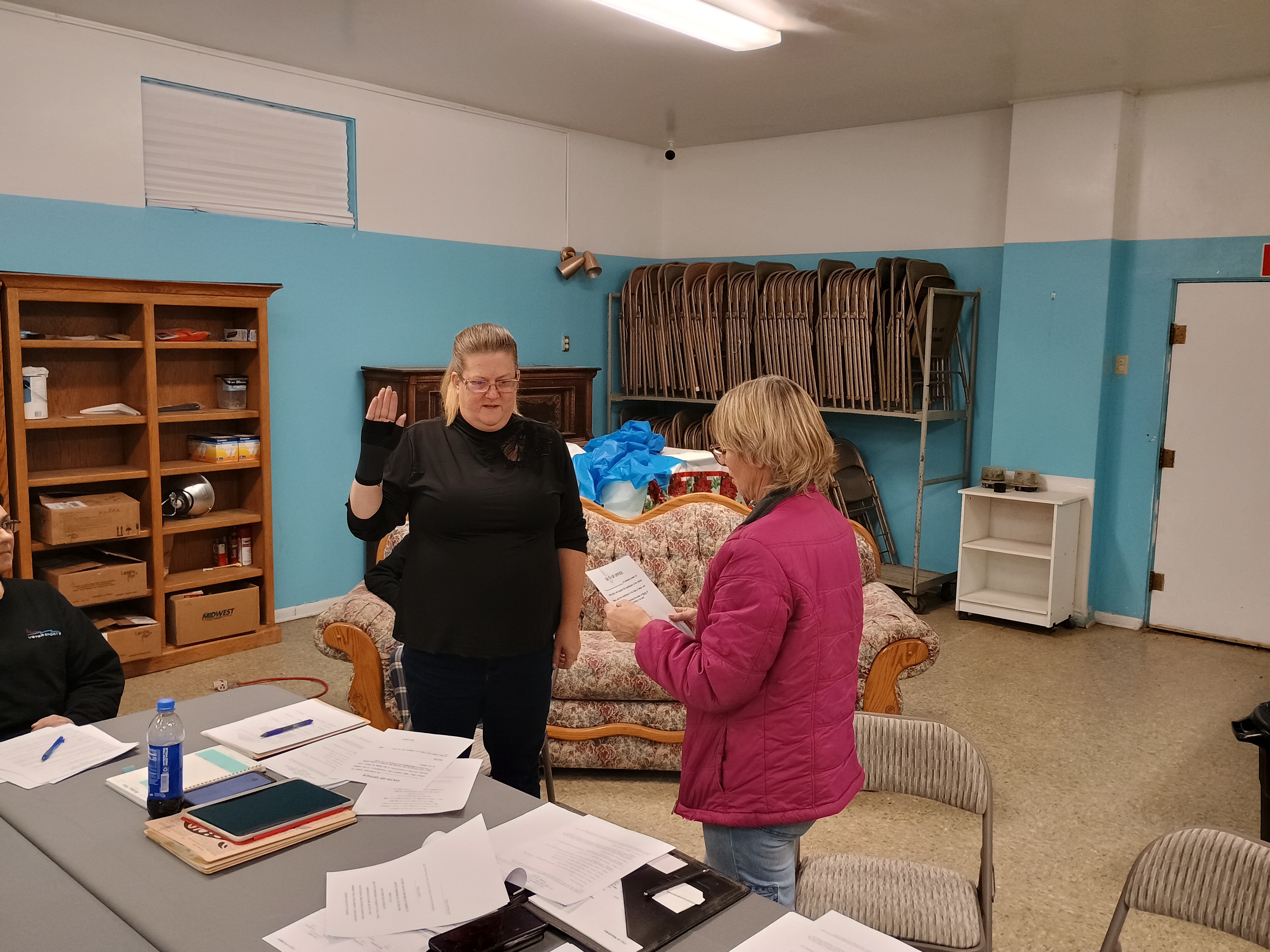
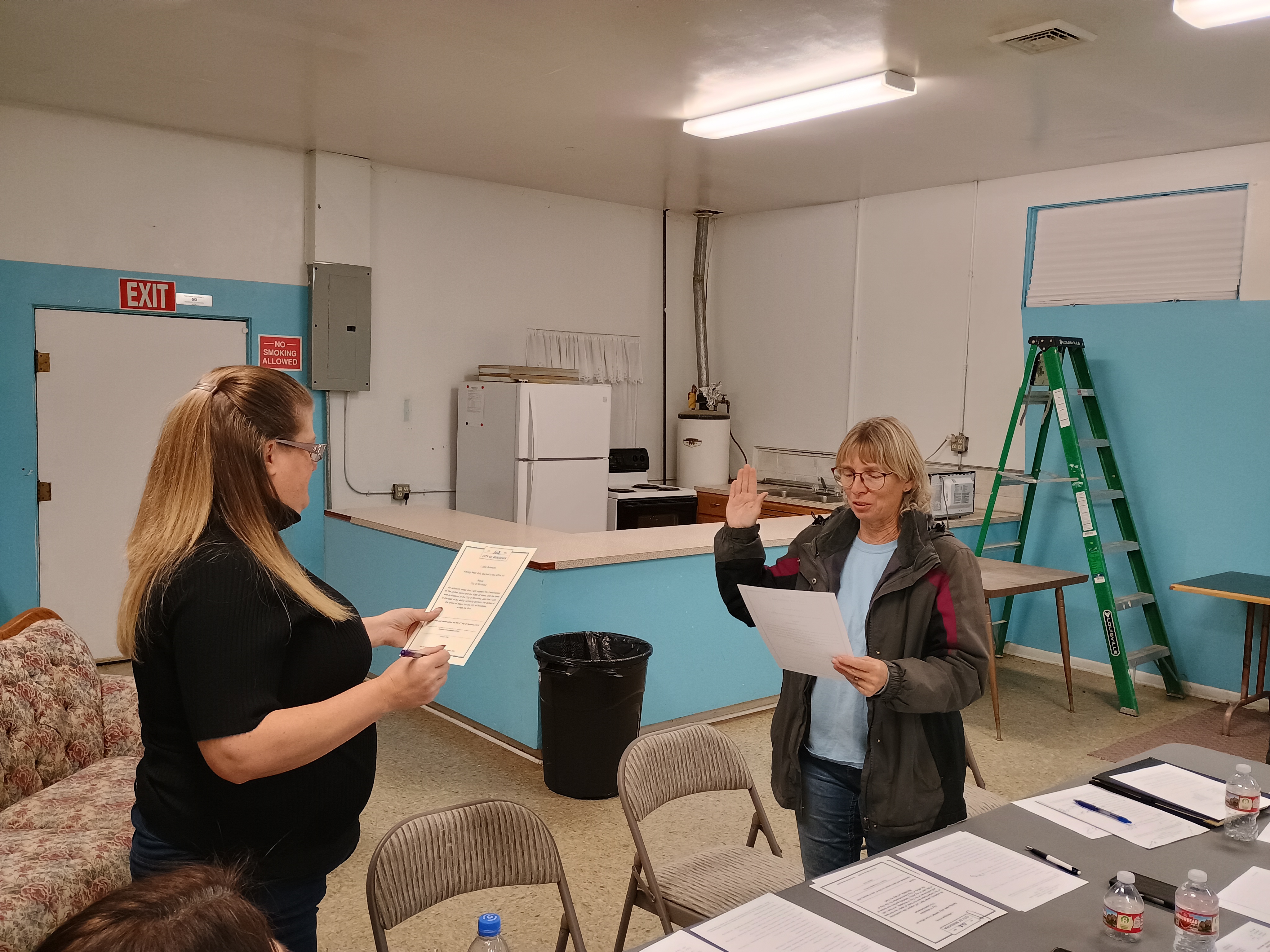
Mayor shall take office after ascribing to the oath of office and upon receipt of a certificates of election. Subscription to the oath of office and delivery of the certificates of election shall be done at the first regular Council meeting in January of the year following a general election. (Ord. 2026-2, 3 Feb 2026)
1-7-7: DECLARATION OF CANDIDACY:
Each candidate shall file a Declaration of Candidacy with the City Clerk before any Petition of Nomination is signed or circulated. Such declaration shall comply with the standard language by Idaho Code with forms provided by Idaho Secretary of State or recommended by Association of Idaho Cities. (Ord. 2026-2, 3 Feb 2026)
1-7-8: INCUMBENTS, MULTIPLE DECLARATIONS PROHIBITED:
A candidate for election may not seek for more than one elected office at any general election, or hold more than one elected position at any given time. (Ord. 2026-2, 3 Feb 2026)
1-7-9: ELECTIONS AND PETITIONS FOR NOMINATION:
All elections shall be non-partisan in nature and shall be conducted in the manner provided in Idaho Code Title 50 Chapter 4. Candidates for election to the Council shall be nominated by petition in the manner provided by law and in accordance with this Chapter. The number of qualified electors required to sign a petition shall be one (1) per each one hundred (100) population or fraction thereof, but in no event more than forty (40). A qualified elector may sign no more than one nominated petition for each Council seat of up for election. Any such duplicate signature shall be void for all petitions signed in violation of this section. (Ord. 2026-2, 3 Feb 2026)
1-7-10: FORM OF PETITION:
Petitions of Nomination shall comply with the standard language of Idaho Code with forms provided by Idaho Secretary of State or recommended by Association of Idaho Cities. (Ord. 2026-2, 3 Feb 2026)
1-8: COUNCIL:
1-8-1: REGULAR MEETINGS:
One (1) regular meetings of the City Council shall be held each month, respectively on the first Tuesday of each month. The regular meeting place shall be City Council Chambers located at City Hall building, 402 Cherry Street, Minidoka Idaho. Regular meetings shall commence at six o’clock (6:00) PM. Any changes to this schedule, including cancellations, shall be by agreement of the Council in a prior open meeting to provide notice to the public, with posted notice of any changes or cancellation. (Ord. 2026-2, 3 Feb 2026)
1-8-2: SPECIAL MEETINGS:
Upon request of a meeting in writing, any two (2) Council members may call or consent to a special meeting of the Council. The meeting shall comply with all meeting laws under Idaho Code. (Ord. 2026-2, 3 Feb 2026)
1-8-3: OPEN MEETINGS:
All regular and special meetings of Council shall be open to the public as required by Idaho Code. Council may retire to closed executive session as provide by Idaho Code. Meeting shall mean any convocation of a quorum of the Council for deliberating or making a decision on any matter. Law enforcement shall be present at all open meetings. (Ord. 2026-2, 3 Feb 2026)
1-8-4: OATH; TERM OF OFFICE:
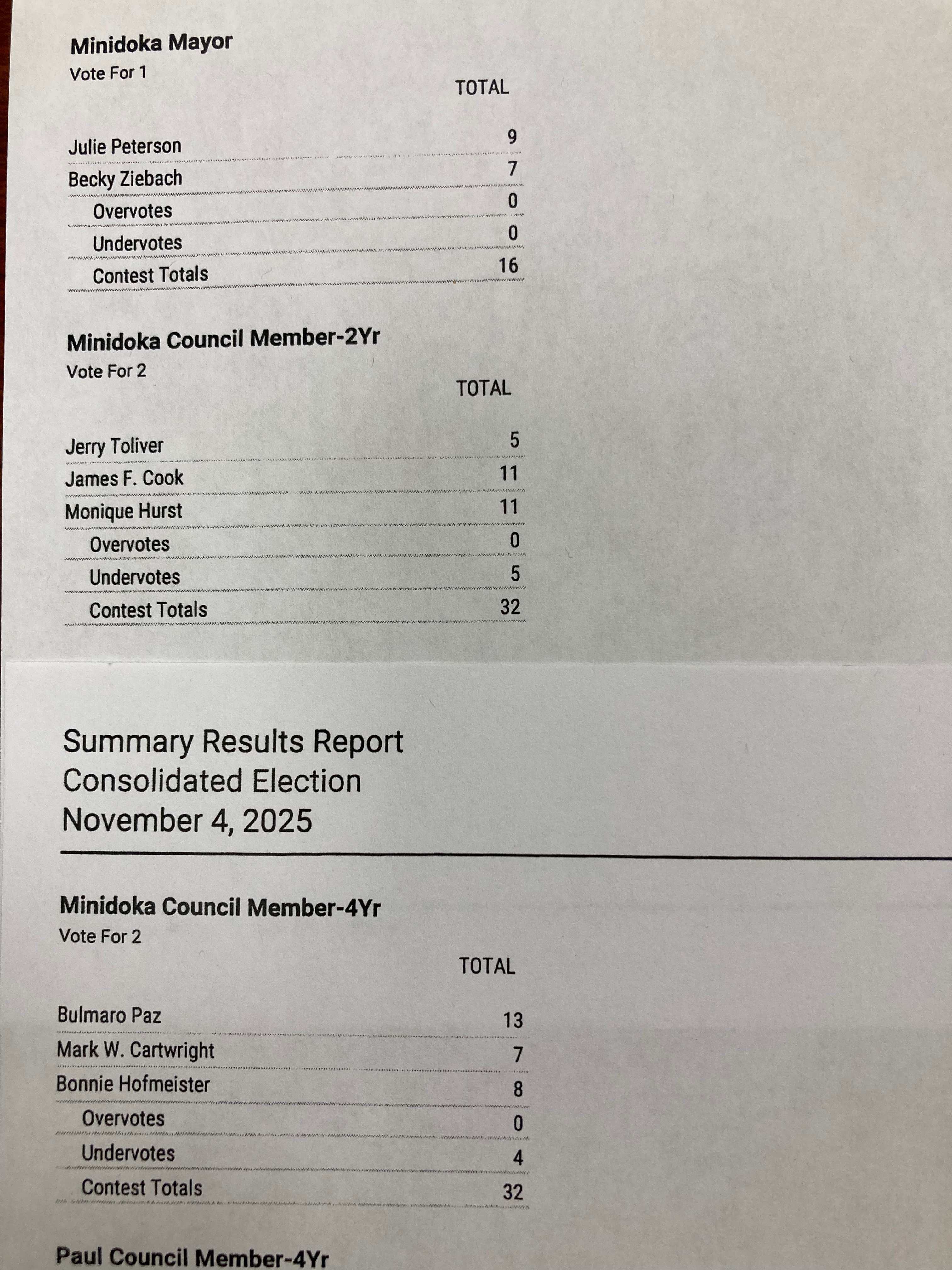
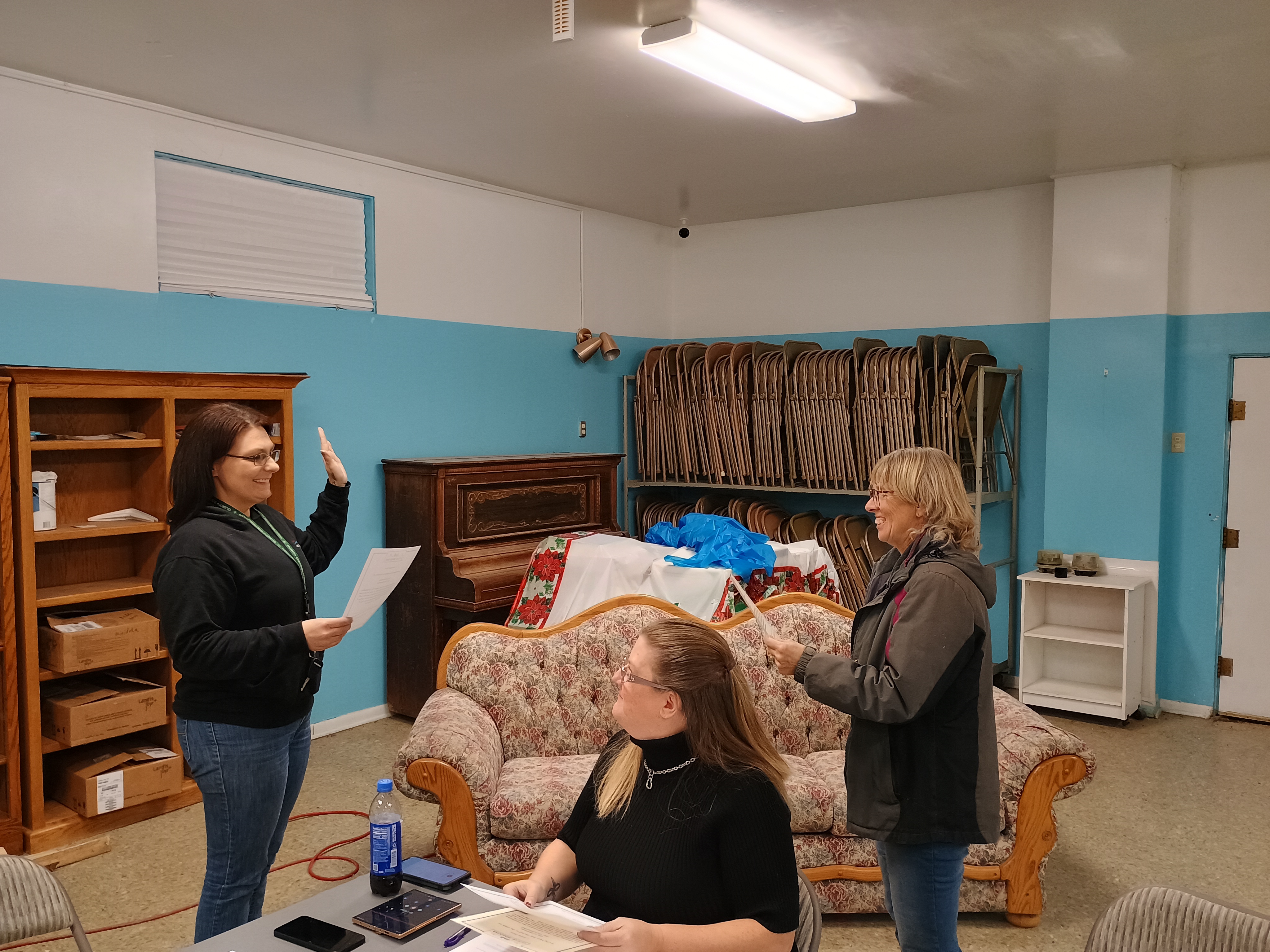
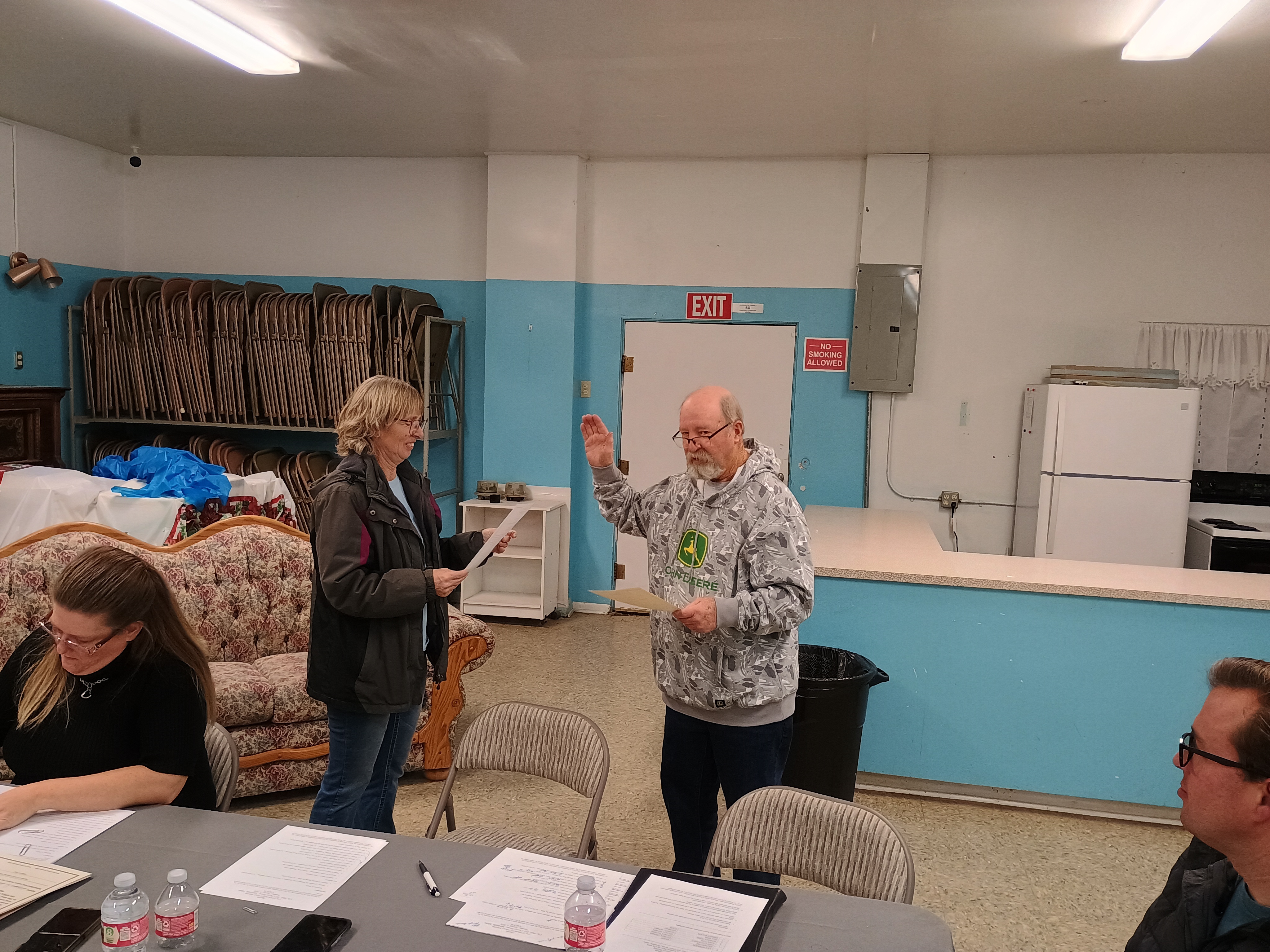
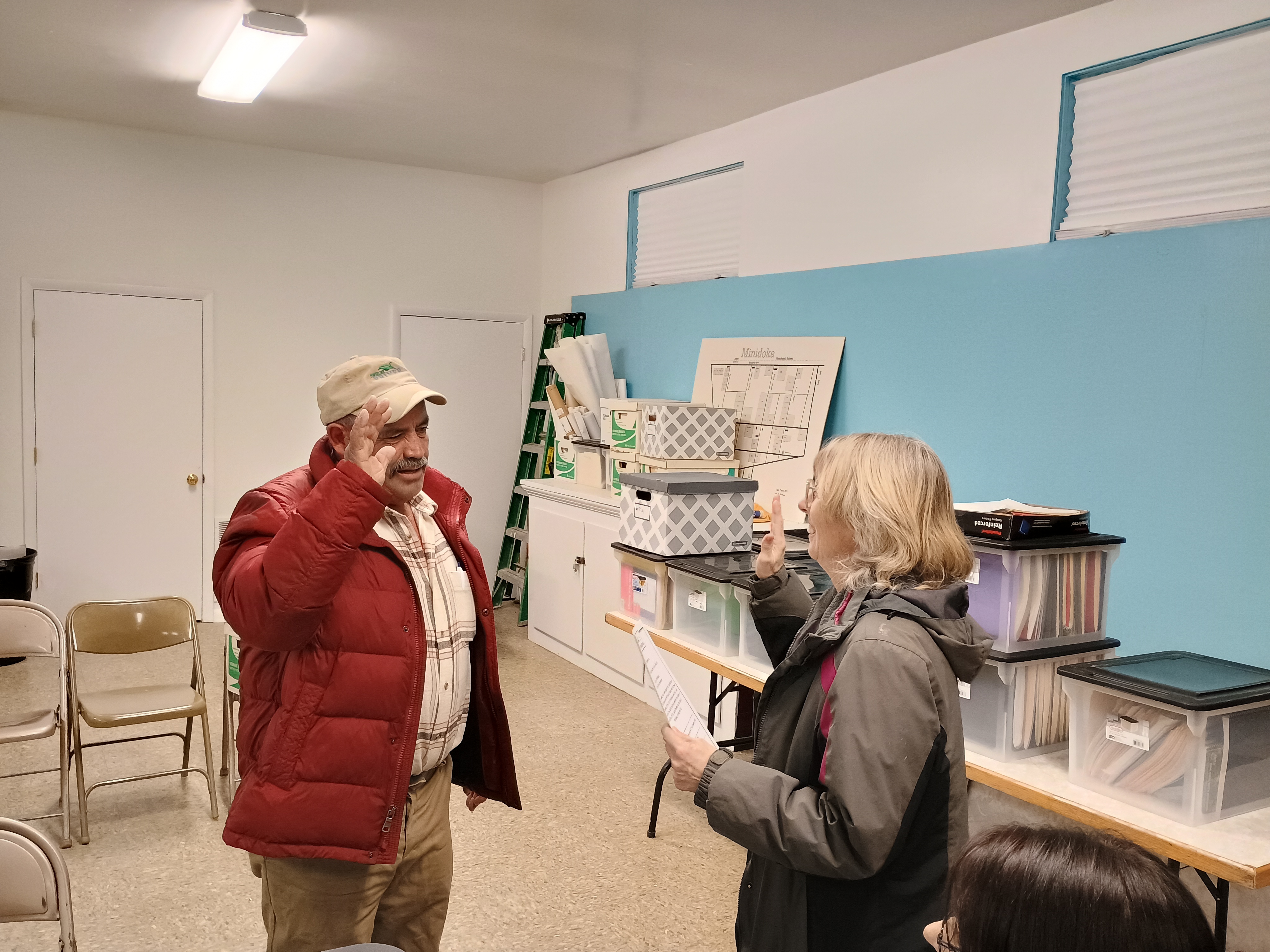
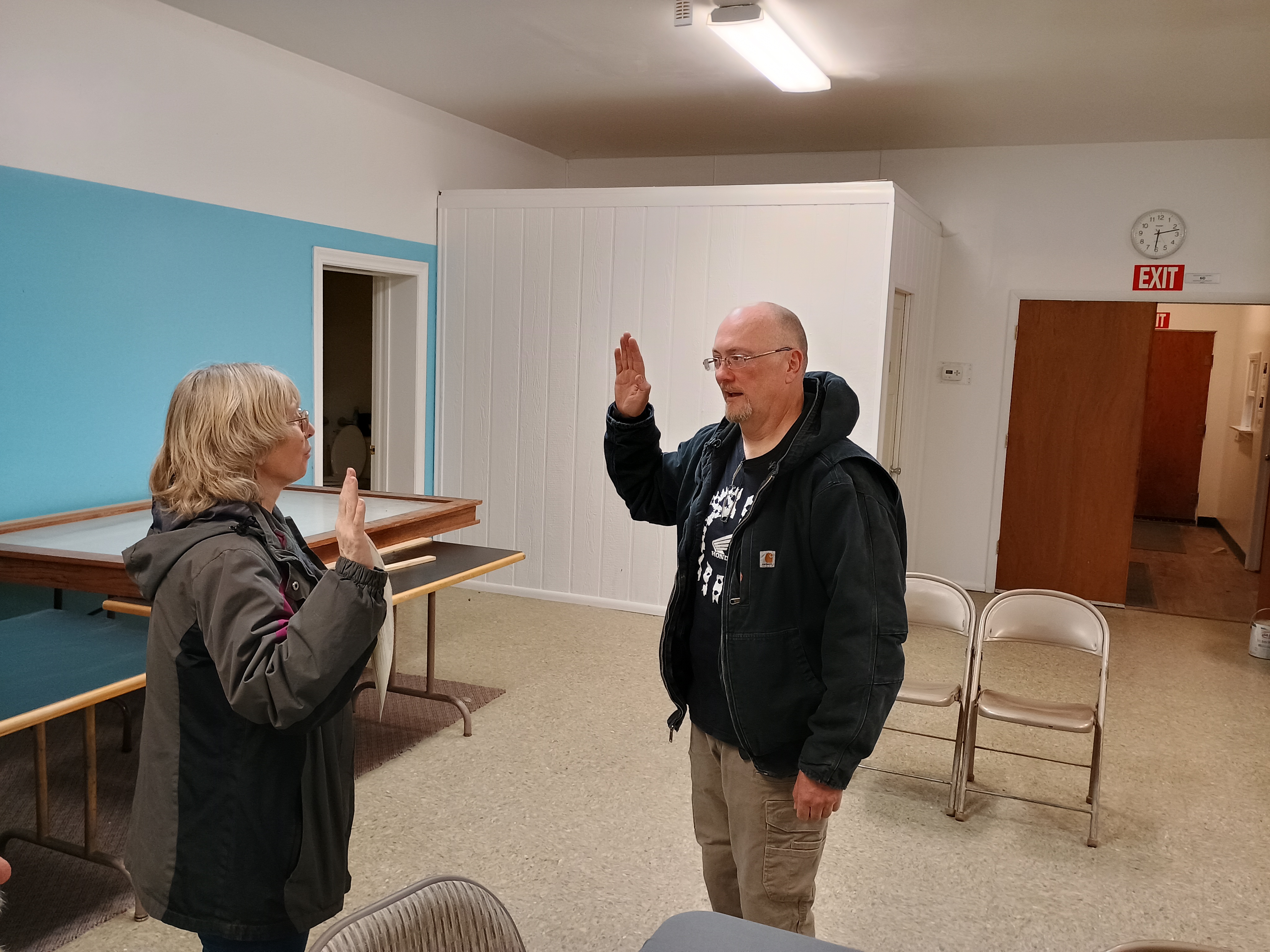
Council members shall take office after ascribing to the oath of office and upon receipt of their certificates of election. Subscription to the oath of office and delivery of the certificates of election shall be done at the first regular Council meeting in January of the year following a general election. Newly elected members shall be sworn into office in the same order as the number of votes cast for each member at the same election, the member receiving the most votes to be sworn first. Each member shall serve for a term of four (4) years, or until a successor is elected and sworn, whichever is longer. (Ord. 2026-2, 3 Feb 2026)
1-8-5: COMPENSATION OF COUNCIL MEETINGS:
In addition to compensation for which a City employee is eligible (PERSI, travel reimbursement, etc) Council members shall receive a monthly salary of one hundred dollars ($100.00). (Ord. 2026-2, 3 Feb 2026)
1-8-6: PRESIDENT OF THE COUNCIL:
At the first regular meeting in January of the year following a general election, Council shall elect one of the Council members as President of the Council. President of the Council shall preside at all meetings in the absence of the Mayor. During any temporary absence or disability of the Mayor, the President of the Council shall exercise the office of Mayor until the Mayor shall return or the disability is removed. In case of vacancy in the office of Mayor, the President shall exercise the office of Mayor until the vacancy is filled. In the temporary absence of the Mayor and the President, the senior member of the Council, as determined from the date and order of swearing in, shall temporarily serve as the President of the Council until the Mayor or President returns. President may sign resolutions upon refusal of the Mayor, or ordinances upon override of a veto of the Mayor. (Ord. 2026-2, 3 Feb 2026)
1-8-7: FUNDS CONTROLLED BY COUNCIL:
All monies and funds belonging to or controlled by the City shall be controlled and administered by the Mayor and Council in the manner required by law and subject to all ordinances, rules, and regulations adopted by the Council as may be necessary for the efficient and prudent use and protection of the same. (Ord. 2026-2, 3 Feb 2026)
1-8-8: ELECTION OR APPOINTMENT BY COUNCIL SEAT:
All members of the Council shall not be elected or appointed to a designated seat on the Council. Council seats are not elected or appointed by Council districts. (Ord. 2026-2, 3 Feb 2026)
1-8-9: DECLARATION OF CANDIDACY:
Each candidate shall file a Declaration of Candidacy with the City Clerk before any Petition of Nomination is signed or circulated. Such declaration shall comply with the standard language by Idaho Code with forms provided by Idaho Secretary of State or recommended by Association of Idaho Cities. (Ord. 2026-2, 3 Feb 2026)
1-8-10: INCUMBENTS, MULTIPLE DECLARATIONS PROHIBITED:
A candidate for election may not seek for more than one elected office at any general election, or hold more than one elected position at any given time. (Ord. 2026-2, 3 Feb 2026)
1-8-11: ELECTIONS AND PETITIONS FOR NOMINATION:
All elections shall be non-partisan in nature and shall be conducted in the manner provided in Idaho Code Title 50 Chapter 4. Candidates for election to the Council shall be nominated by petition in the manner provided by law and in accordance with this Chapter. The number of qualified electors required to sign a petition shall be one (1) per each one hundred (100) population or fraction thereof, but in no event more than forty (40). A qualified elector may sign no more than one nominated petition for a mayor candidate up for election. Any such duplicate signature shall be void for all petitions signed in violation of this section. (Ord. 2026-2, 3 Feb 2026)
1-8-12: FORM OF PETITION:
Petitions of Nomination shall comply with the standard language of Idaho Code with forms provided by Idaho Secretary of State or recommended by Association of Idaho Cities. (Ord. 2026-2, 3 Feb 2026)
1-9: INITIATIVE, REFERENDUM, AND RECALL:
1-9-1: DIRECT LEGISLATION BY THE PEOPLE:
Through the process of initiative, referendum and recall, as hereinafter described and subject to the limitations herein stated, the voters of the City have the right to direct legislation on all lawful matters with the exception, modification or alteration in any respect of any current contractual obligation of the City; and, the calling of any bond election; or, in any other manner affecting, modifying or terminating any existing bonded indebtedness obligation incurred prior to the initiative, referendum and recall process herein described. The City council shall set an application fee by resolution. (Ord. 2026-2, 3 Feb 2026)
1-9-2: PROCEDURE:
The initiative, referendum and recall procedures shall be as set forth in the Idaho Code. (Ord. 2026-2, 3 Feb 2026)
1-9-3: EFFECT OF INITIATIVE, REFERENDUM:
Any direct legislation adopted by the people as above provided and pursuant to a successful election as hereinabove provided, shall have the same force and effect as an ordinance regularly adopted by the City council. (Ord. 2026-2, 3 Feb 2026)
1-10: CITY OFFICERS AND EMPLOYEES:
1-10-1: APPOINTMENT AND REMOVAL OF APPOINTED OFFICERS:
The Mayor shall appoint as officers of the City, subject to approval of the City Council as provided by State law, City Attorney, City Clerk, and City Treasurer. Any officer appointed by the Mayor and confirmed by the City Council may serve in such position until removed in accordance with State law or by resignation. Appointed officers are generally subject to the City’s adopted Personnel Policy, other than those provisions regarding appointment and removal, unless otherwise provided in an employment contract between the officer and the City or otherwise in conflict with City ordinances or State law. The duties of the appointed officers are established by the adopted resolutions of the Council and job description for each position. (Ord. 2026-2, 3 Feb 2026)
1-10-2: EMPLOYEE POLICIES AND PROCEDURES:
A. All appointed officers and employees of the City shall serve at the discretion of the Mayor and shall have no right of continued employment or employment benefits, except as agreed in writing and expressly approved by the Council or as authorized in City Personnel Policy, as expressly approved by the Council.
B. City shall adopt a Personnel Policy and/or Code of Conduct. All employees shall be subject to the Personnel Policy and Code of Conduct, except to the extent such Personnel Policy or Code of Conduct is inconsistent with any written contract approved by the Council, in which case, the contract shall control.
C. All employees, including appointed officers, shall receive such salaries, benefits, and other compensation as determined by the Council by ordinance, including the City’s annual appropriation ordinance, resolution, written collective bargaining agreement, or other agreement.
D. All employees shall abide by rules and regulations adopted by the Council and any Department in which they are employed and by rules and regulations adopted by Human Resources Department and approved by the Mayor. (Ord. 2026-2, 3 Feb 2026)
1-10-3: DISCLAIMER:
Nothing in this Chapter shall create a private right, duty, or obligation of the City in favor of any person, or give rise to any private right of action, on account of any failure by the City or any employees to perform the duties prescribed therein. (Ord. 2026-2, 3 Feb 2026)




 Sagacity