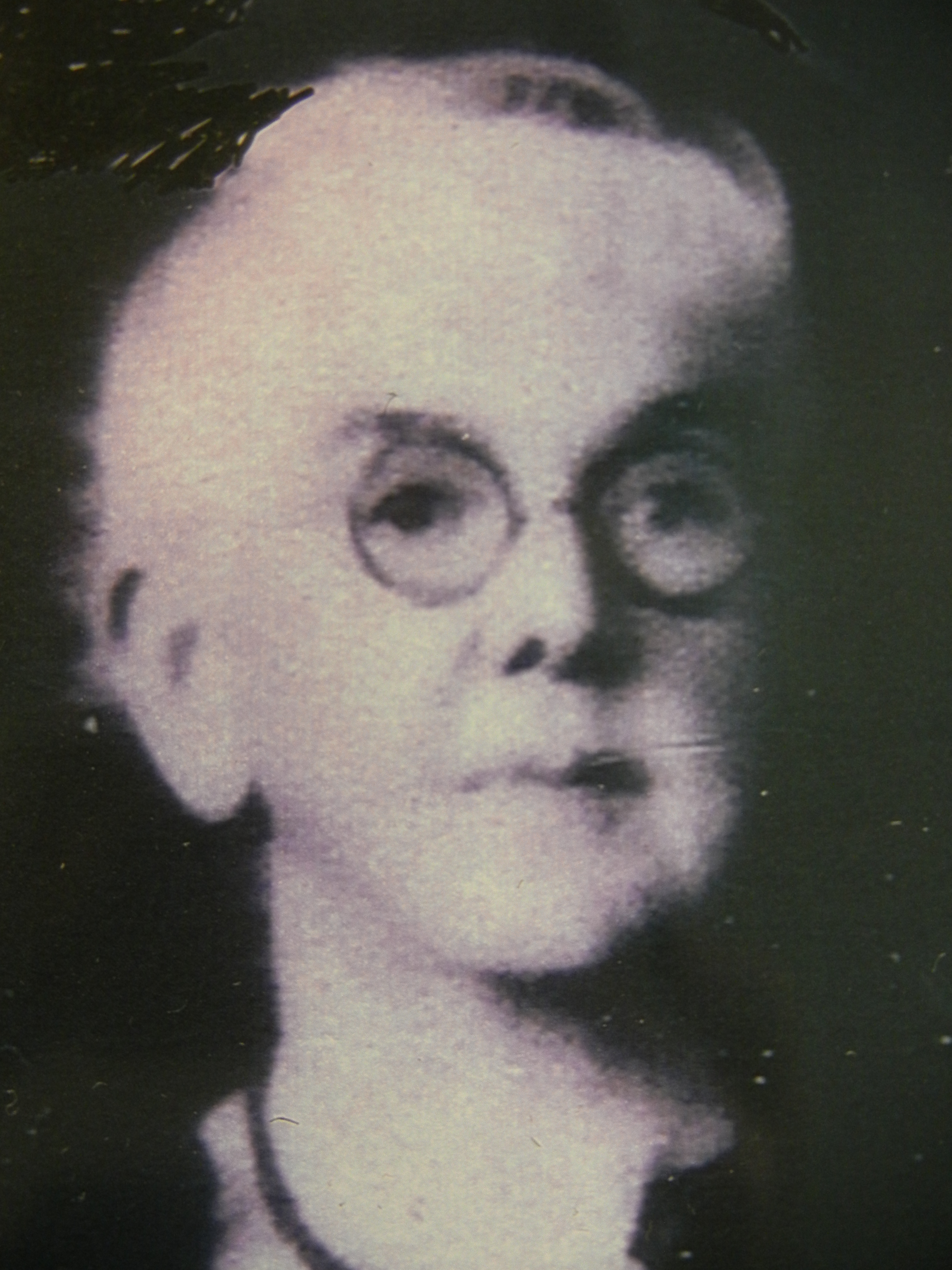
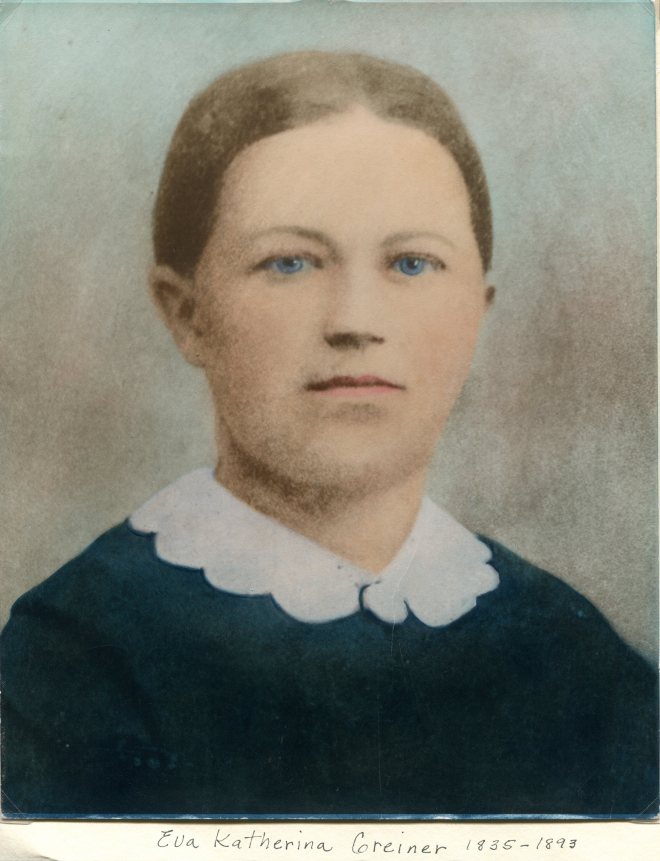
This is from the autobiography of Ivan Stephen Coley. I recently wrote on the passing of his widow, Clara McMurdie Coley.
Since Ivan does not give much background information, I will provide some. Ivan is the sister to my Lillian Coley Jonas. Ivan is the sixth of ten children born to Martha Christiansen and Herbert Coley born 26 June 1912 in Richmond, Cache, Utah. He married Clara McMurdie on 22 October 1930 in Buhl, Twin Falls, Idaho. Ivan and Clara had four children. Ivan passed away 22 September 1994 in Buhl. He was buried 27 September 1994 in West End Cemetery near Buhl. Clara just joined him this year.
~
I was born in the little town of Richmond, Utah in Cache Valley. We lived up in the foothills called Nebo, about 3 1/2 miles from town. It was really pretty up there. You could see all over the valley.
The snow really got deep in the wintertime. In the spring when the snow melted, the field flowers would come up. It sure was pretty.
I was one of ten children with four sisters and five brothers. We didn’t have a car so we had to hitch the horses up to the white-top buggy when we went to church. In the winter we used the bobsleds. Sometimes the show would be so deep that you didn’t know where the road was. Sometimes I would ride skis or hand sleigh to school in the winter. We had to pack our lunches because they didn’t have hot school lunches then.
I remember in the first grade, we had a pot bellied stove and the teacher would have to keep putting coal in it to keep the room warm. The toilets were outside.
I would help the neighbor do chores and feed calves and help take the milk to the creamery. Once in a while they would give me ten or fifteen cents spending money.

My dad had an old buckboard and he said he wanted to get it over to the house. One day when my parents weren’t home, I decided to hook the horse up to the buckboard and pull it over to the house for my dad. It didn’t have any shavs to guide it so I just put a chain on it to get it to the house. I was doing okay until the wheel hit a rock and the other wheel hit the horse in the belly. The horse got scared and ran away and I fell off the buckboard. It tore out about 100 yards of fence. When I got up, the horse was down by the haystack eating hay. I was afraid to tell my dad about it for fear that I would get my butt kicked because he had told me not to do it.
Dad finally bought a house close to town so it would be easier for us kids to get to school in the winter. One day they left me and my older brother Wilford home alone. He was frying sausage and I was standing with my back to the stove trying to keep warm. He stuck the hot fork that he was frying the meat with on the back of neck. I got warm in one spot and you could see the mark of the fork tines in my neck.
I was sick a lot when I was young. The doctors said that I had liver trouble. I was ruptured and had to wear a truss for seven years. I finally got to where I didn’t have to wear it anymore.
I didn’t know what a long pair of dress pants were until I was about thirteen. We wore levis or kickerbockers pants that came just below the knees and buttoned. I also wore long black socks that came up to the knees.
At Christmas we didn’t get things like they do now. We would get a little wagon and it had to be for all of us. Our gifts were mostly clothes. We may get an orange, some hardtack and sugar candy and that was a treat for us.
Mother would take the eggs to town in a milk bucket and trade them for groceries. We didn’t know what hand soap and shampoo were then as we just used the old laundry soap and mother made most of it. About once a week we would get a little butter for our bread. We used mostly fryings from the bacon and dipped our bread or biscuits into it. It was really good. About the only time we would get cake or pie was on a holiday or birthday. We didn’t get both cake and pie together and we only got one piece when we did get it.
I used to ride about eight miles to Lewiston with my dad to take a wagon load of wheat to the mill to have it ground for flour and cereal. We brought the bran home for the hogs every fall for our winter supply as we couldn’t go to town every day like they do now. We would get snowed in sometimes and couldn’t get to town for several days. Then we would have to go through the fields as the roads would be drifted full.
We didn’t have a telephone. The only ones that had a phone were the rich people. The phones then had a little crank on the side of them and you had to crank it before you could get the operator.
I worked for Melvin Smith in Richmond milking cows and plowing for $5.00 a month. There was one time I was plowing and the horses took off for the barn. I couldn’t get the plow out of the ground. I must have plowed a furrow about 1/4 mile long. The horses didn’t stop until they got to the barn. I went to unhitch them from the plow and one horse kicked me in the leg. It made me mad and I was going to quit but I was afraid to tell the boss so I worked a little longer. I was only about 23 or 13 years old at the time.
On the days we had to spare, some of the neighbors would get together and round up some of the cattle. We would put them in a corral and have a rodeo. I rode the first one and we put a surcingle on him. The bigger boys put me on him and turned me loose. He sure did some bucking, but I stayed on. They passed a hat around and got about 25 or 30 cents and they gave it to me. I sure was ticked to death to get it.
I didn’t go to school very much. My folks would send me and I would play hookey. I would go anywhere but to school. Now I can see where I made a mistake as I hurt no one but myself.
My uncle was blind. I would lead him from door to door selling church books for several days and he gave me 15 cents.
I never did get to go to the circus. I would ride the streetcar to Logan once in a while though and see a show. It cost 10 cents to ride the streetcar and 10 cents to see the show. You didn’t get popcorn or candy to eat in the theater then.
My brother and I were sleeping on the porch and the dog started barking in the middle of the night. I raised up in bed and saw a man coming up toward the house. I reached over and got the gun and fired a shot. It hit the drain pip on the side of the house. My brother-in-law came running out of the house to see what the shooting was all about. Whoever it was took off and never came back. It sure scared me.
One time one of my friends and I rode a horse to Franklin, Idaho. That was about 10 miles from where we lived. This was in the middle of the winter and we had gone to check on some cattle. It was sure cold (about 20 degrees below zero). I rode back in the middle of the night. I came to the neighbors who had a sheep wagon. I went inside and there was a little wood in it. I built a fire and laid down on the bed springs. There was no bedding because they had taken it out for the winter. I nearly froze to death. I sure was glad to see morning come. The neighbor took me to his house and gave me breakfast because I hadn’t had anything to eat since dinner the day before.
The first time I ever tasted corn flakes was up to the neighbors. They put sugar and real straight cream on it. I thought I would founder as I had tasted nothing like that before. We didn’t know what prepared cereal was in those days and we called it mush.
I remember one time my dad made some elderberry wine and put it up in the attic in the house. Every once in a while you would hear one go “BANG” as it blew up. One time we had an old man over for supper. He was an old man with long whiskers who we called “Grandpa Andrews”. Dad went up in the attic to get a bottle of wine. He went to open the bottle and it blew the cork out and hit the ceiling and Grandpa Andrews’ whiskers. It sure went off with a bang. One of the kids ran outside hollering “Grandpa got shot!” I sure did laugh. They got another bottle and one held it while the other tried to open it and it blew the pitcher out of their hand. I don’t think anyone got wine that night.
When I wasn’t very old, I remember my dad and I went to thin beets to buy a bull. I had a dog called “Bob” once and we used to hook him to the hand sleigh and haul the milk to the neighbor’s house about two blocks away as Bob pulled the sleigh. Wherever I went the dog was with me. The neighbor gave me a calf that broke his leg and I killed it and used it for coyote bait. I poisoned some of it. I thought the dog was home but he must have followed me. He got some of the poison and it killed him.
I used to go out at night and sit on the haystack in the winter and shoot those big mountain hare rabbits with a shotgun. I would sell them for 5 cents apiece. Sometimes I would get for and five a shot as the rabbits were so thick they would undermine the haystacks.
We had homemade skis. They were about 5 inches wide. All they had to hold them on your feet were a 3/4 inch strap to go over the foot and a broomstick split and nailed on the skis to go under the arch. They turned the toes up on the skis by driving a nail in them and using a wife, twisting it and steaming the skis. They way I learned to ride the skis was to straddle a long stick and have it drag behind me. It worked really good. If you wanted to slow down, yo would pull upon the front of the stick and sit down real hard on it. It would dig in the snow and slow you down. After we learned to ride good, we didn’t hold on to anything.
When I was a kid there were very few deer and elk because people killed them for their hides. I can remember when they brought some elk, 4 cows, and a bull on a boxcar and turned them loose in the hills. They closed the season on them. You couldn’t hunt for several years. Then they got so thick that they would come down and eat the farmers’ haystacks at night.
My sister, her husband, and her husband’s family moved to Buhl, Idaho in the fall and the next summer I went to Franklin, Idaho to get a job on the highway. They said they didn’t hire kids. “I was 16 at the time.” A friend of mine and I decided to keep going the rest of the way to Buhl. We hitch-hiked all the way! We got off on the wrong road and ended up in Blackfoot so we had to go back to Pocatello. I didn’t have any money and my friend had 11 cents. A sheepherder picked us up and we slept on the desert that night. He took us to Pocatello and bought us some breakfast, which sure tasted good. He got us on the right road for Buhl. We would get a ride for a few miles, then we would have to walk again. All we had to eat were a few apricots. We finally made it after 2 or 3 days.
I sure was glad to get a job sorting some spuds. They had a mule to pull the sorter. The people would pick the spuds and dump them on the sorter and I would sort them. They sorter didn’t have any wheels under it, it just had runners. After we got the spuds all sorted out, they didn’t have any money to pay me. They said that we could have spuds for pay. We took the car out and got several sacks of spuds. I gave them to my future in-laws as I was living with them at this time.
I later got a job working for a man in Castleford for $15 a month as they would only pay a kid half a man’s wages. I would have to get up and help do chores and be out in the field by 7 o’clock a.m. and work until 6 o’clock that night. Once a week I would go to Buhl and take the whole family to a show. They had family ight once a week at that time. The whole family could go to the show for 50 cents. They all looked forward to this. A bull killed the man I worked for that summer.
I quit Claude Browns, went back to Utah, and stayed there until spring. Then I came back to Buhl and started to work for Roy Fait. I helped them tear the old livery stable down. The West One Bank is located there now. I helped them put a miniature golf course in there. I mixed the green for it from sand, sawdust, and feathers. I can’t remember what we used to make it green. Then we had to use a heavy roller to smooth it down. This is when I bought my first car, a 1922 Overland.
Rulon McMurdie and I went to the Shoshone Basin one day to hunt sage hens and on the way up my car quit so we pushed it to the side of the road. A day or two later we went back to get it and someone had pushed it down an embankment about 100 feet and we had to drive it down the canyon to get it out. I drove it back to Buhl and took it to a guy to have it fixed. He charged me $125 dollars and I couldn’t pay him so I just gave him the car.
Rulon and I were working for a guy milking cows. When we turned them out of the barn, we would grab them by the tail, pull it over their back, grab a hand full of hide on their neck, jump on their backs, and ride them out of the barn. They sure would buck. We had a lot of fun until one stepped on my leg and I thought for sure she broke it. That ended the riding of milk cows.
We were down fishing in the Salmon Canyon and my little dog was lying down just a little way from me. I heard a noise and turned around and there was a rattle snake. It had bitten my dog and a little while later he died. It didn’t take me long to get out of there. It sure did scare me.
Rulon and I went duck hunting and a man came out to tell us to get out of there. We asked him who he thought he was talking to. He said, “Who are you?” and I said, “I am the Game Warden.” He left us alone and we went on hunting. We would also stop cars for one light being out and tell them they had better get it fixed. I made a badge out of a piece of tin. They didn’t argue with me. I guess they thought I was a Traffic Cop.
Rulon and I went trapping for muskrats on Deep Creek. There was a boat there and I got in it to go to the other side. I got almost in the middle of the creek and the boat tipped over with me in it. I thought for sure I was going to drown because I had a sheep skin coat and a pair of hip boots on. Rulon just sat on the bank laughing at me. I finally got out and thought I would freez to death because it was snowing and blowing. We couldn’t even make a fire because there wasn’t anything to burn so we got in Rulon’s old Model-T Ford with no top on it and drove home. I was sure glad to get to a warm house.
We were coming home one evening and there was a truck load of apples ahead of us. I got the lariat rope and got on the front of the car. I was going to lariat a box of them and just as I got close enough to throw, they turned the corner into Buhl so we didn’t get any apples.
Every time we would go down the road passed this man’s house, a mean dog would come out after us. I told Rulon the next time he came out after us, I would shoot him and sure enough, he came out after us and I shot and killed him. That night the sheriff came and said he wanted to talk to us. He took us up to the City Hall. The guy was there that owned the dog. We knew then that we were in trouble. He said I shot the dog and hit his boy and I called him a damn liar. The sheriff said, “none of that” and he got me by the shoulder and locked us both up in jail all night. We didn’t have anything to eat all that night and the next morning. Rulon’s mother and sister, Carrie, brought us something to eat. We sure were glad to see them. They let us out that afternoon. That really taught us a lesson to be good as we didn’t want to go to jail again. They just had the old iron beds and we didn’t have any blankets. That learned us to be good kids as I thought if that is the way jails were, we didn’t want any part of them.
The government wanted me, and friend of mine, and some other men to round up wild horses, and drive them from Bliss, Idaho to Elko, Nevada. They corralled them there and shipped them out on a train. I don’t know now where to, but we didn’t go because this man’s wife didn’t want him to go. They said we wouldn’t be riding the same horse when we got there as we did when we left.
I started dating Clara McMurdie when I worked at the golf course. We had known each other in grade school in Richmond, Utah. My sister, Carrie, married her brother, Lorus. They moved to Buhl, Idaho and that’s why I came to Buhl. I stayed in Buhl for a while and then went back to Richmond. I wrote to Buhl to ask Clara’s folks if we could get married. I thought if they said no, I was far enough away from them that they couldn’t shoot me. “Ha, ha!” But they did say yes so my dad, my mother, and I went to Buhl and we got married at her parent’s home. They next morning we went back to Richmond to live.

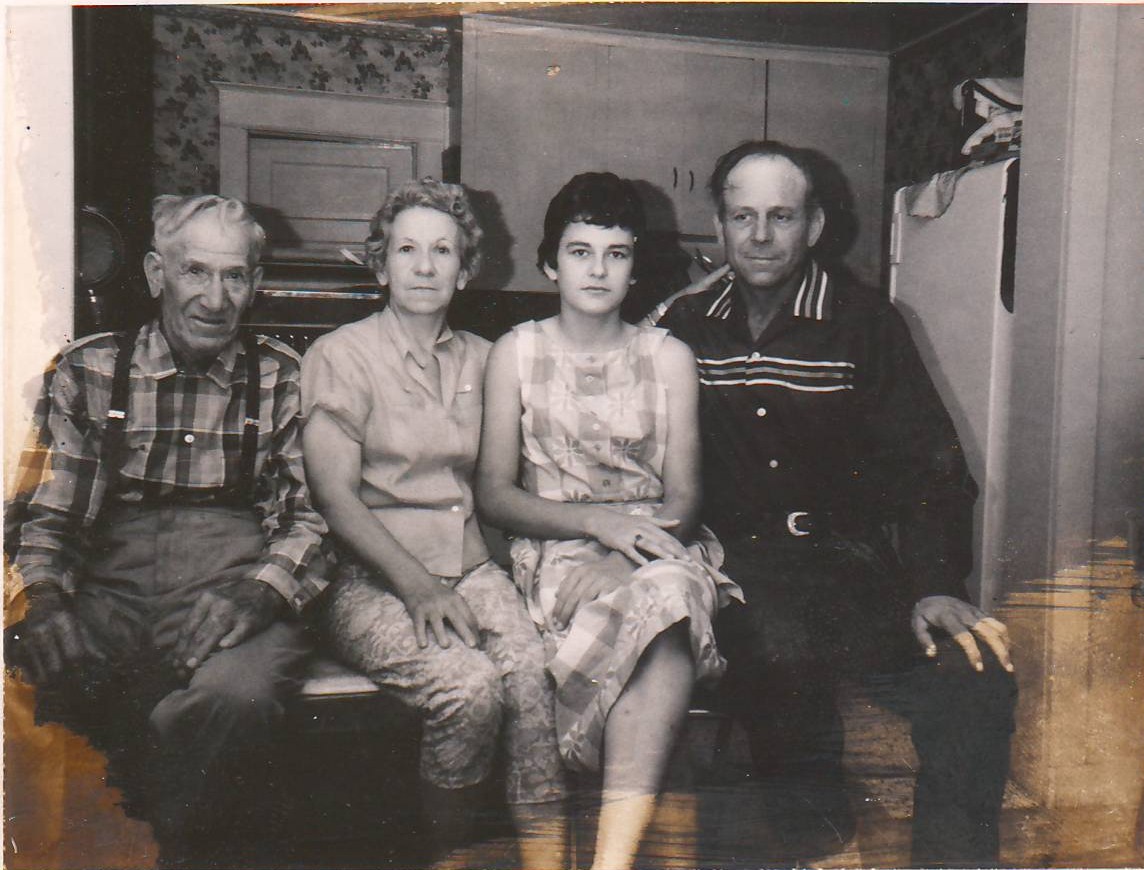
Joseph McMurdie, Clara, RaNae, Ivan
I worked on my dad’s ranch for 2 years. I packed groceries back in the mountains to my brother and brother-in-law on pack horses as they were up there getting wood out. We would put two drags of wood that we pulled on 2 horses and we hooked one drag behind the other so the other would hold it back going down the mountain. It just took one horse to drag it down the hill then we would get the bobsled and take it the rest of the way home.
I used to drive a covered school wagon in the winter. It was a covered bobsleigh with a hole big enough to put the lines through to drive it and a little window to see through. I got a dollar a day for driving it. We had to furnish the horses, bobsleigh, and wagon.
We lived with my folks in one small room of their house. That spring, we moved into a place closer to town. We only stayed there a little over a month because we couldn’t afford the rent (it was $5.00). So we moved back with my folks again. That fall, we moved into a little 2-room log house. It cost us 6 dollars a month. It got so cold we couldn’t keep the rooms warm so we moved our bedspring and mattress out onto the kitchen floor. We nearly froze to death. You could see through the cracks in the logs. We only stayed there 1 week and we moved back with my folks again. We tried to get them to give us back some of our rent money and they wouldn’t do it.
In the spring, our oldest daughter (Sarah Colleen) was born in the same house and same room that I was born in. We had to go and get the doctor in a white top buggy as the roads were too muddy. They wouldn’t get there in a car.
That fall, I threshed the grain and got 50 dollars for my share. I also topped beets and made 35 dollars. This is when we moved to Buhl, Idaho. My brother-in-law, Lorus McMurdie, came down with his car and got us as we didn’t have a car. We moved in with my wife’s folks. They lived in an old hotel on 8th street.
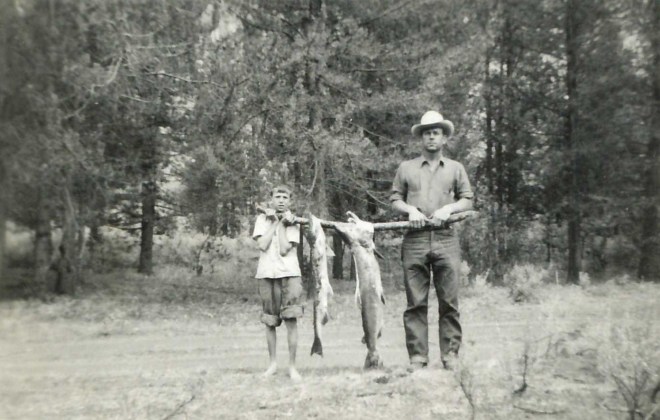
Ivan Coley with nephew Gary Coley
Lorus and I took two teams of horses and wagons and drove them up in the Shoshone Basin and cut wood. All we took with us to eat was spuds, bread, onions, fruit, and bacon. The spuds froze. We had to scoop the snow off the ground to put our quilts on the ground to sleep because we didn’t have a sleeping bag or tent. We would get cold, so we walked alongside the wagon and drove the horses. One of our loads of wood slipped off the side of the road. We camped there that night and reloaded the wagon the next morning. It was so cold, the edge of our quilt froze to the ground. We were supposed to get 3 dollars a cord for the wood (split and cut). He never did pay us.
I went to work for Jess Eastman. We walked to work and back. I had to be there at 7 o’clock in the morning and work until 7 o’clock at night. It was four miles down there and four miles back. If we were lucky, we would get a ride once and a while. We had to take our own lunch. Once in a while after I got home, I would go back to work at Shields warehouse shoveling clover seed in bins until 10 o’clock or midnight and be ready for work again at 7 o’clock the next morning.
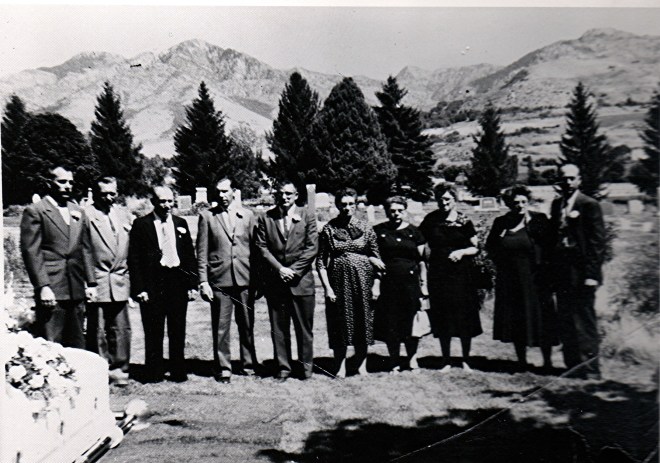
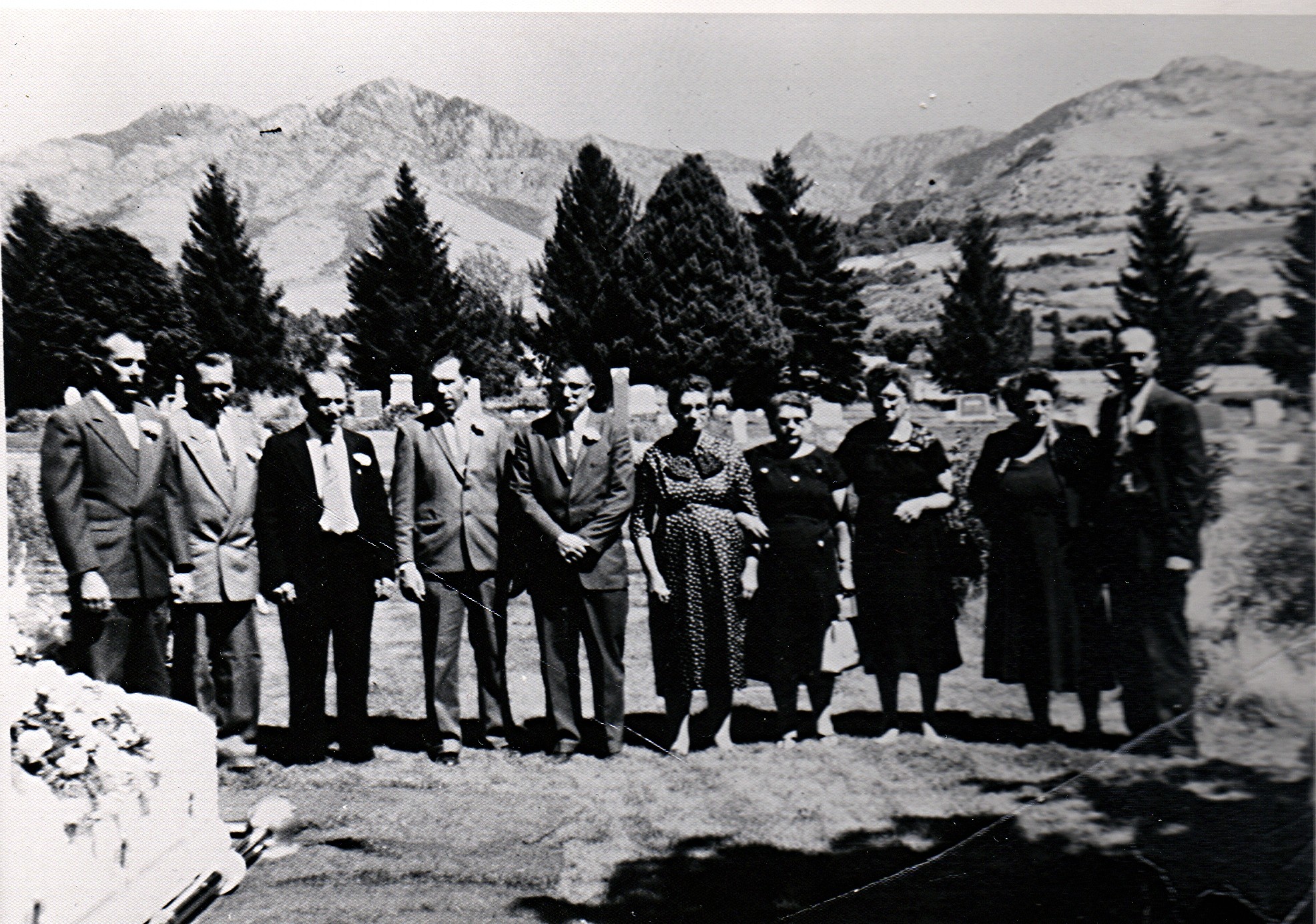
Art, Golden, Wilfred, Roland, Lloyd, Edna, Hannah, Carrie, Lillian, Ivan at their mother’s grave 17 August 1961
We lived with my wife’s folks in that old hotel. The next spring we moved down closer to our work. One night I came home and there were a bundh of people there and I couldn’t figure out why. I soon found they had a strawberry roan horse for me to break and ride. They said if I could ride it they would buy me a new cowboy hat. I put the saddle on it and snubbed it up to another horse. I climbed on her and they turned her loose. The first jump she made, my hat flew off and she tore every button off my shirt. She sure did some bucking and bawling. You could hear her for a half mile. She headed for a rock fence and Lorus, my brother-in-law, was on his horse. He tried to keep her away from the rock fence and his stirrup on the saddle broke and he fell off. When the horse got to the rock fence she turned and quit bucking. I rode her every day for three weeks and every time I got on her she wanted to buck. I won my new hat, but I sure did earn it! I bought a fat cow for 10 dollars and butchered her. We didn’t have a deep freezer at that time so we hung the meat outside and hoped it stayed frozen. Some of it thawed out and froze again and boy did we get a belly ache. We sure did run races for the outhouse (ha, ha!).
We didn’t have electricity or telephones. I finally got enough money to buy a Model T Ford for 25 dollars and we didn’t have to walk so much anymore. We finally moved ourselves down to Jess Eastman’s and I worked for him for 3 years. He didn’t have the money to hire us any longer, so we got me a job uptown sorting spuds for 15 cents an hour. We would go at 7 o’clock a.m and sometimes work until midnight nearly every night. We finally bought the old shack we were living in for 50 dollars and moved it on a lot on 8th Street in Buhl. It cost us 15 dollars to have it moved. It was the first house on lower 8th Street in Buhl at that time. The house was 2 rooms and the walls were plastered with mud and straw. We took cheesecloth and old rags and pasted on the walls then we wallpapered over that and made it real cute. We had orange crates nailed on the walls for cupboards. We bought the lot next to us for 25 dollars. We just lived there a short time. Our son, “Bud” Lorus, was born.

Ivan holding Danny Todd, Bud, RaNae
Then we moved to Castleford and I farmed for a guy for 30 dollars a month. He hired 2 other men to help me farm it. He paid one 15 dollars and the other 10 dollars a month and we had to board and feed them. He gave us a table and chairs for their board. We still have their chairs. We started breaking horses and we hitched them up to the wagon one time and they ran away. The lane they ran down wasn’t wide enough for the wagon as it was just a cow lane. They tore the wagon all to pieces and all they had left when they stopped was the tongue and front wheels.
We stayed here for about a year and a half and then we moved and worked for another man for about a year. He made me mad as he didn’t keep his promise to give me a couple of heifers. I was bunching clover with a pitchfork and he came and told me he couldn’t give them to me. He promised me that spring that if I would stay with him, he would give them to me as a bonus and that fall he backed out on his deal. I told him I was going to quit and he said I couldn’t. So I showed him I could and left the pitchfork in the field and walked out on him.
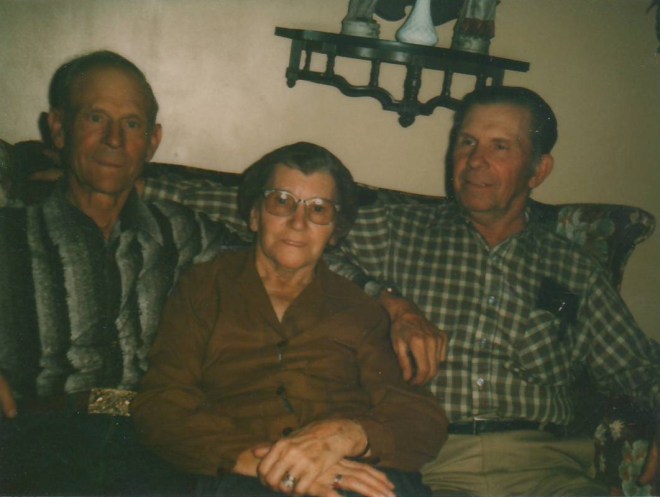
Siblings Ivan, Carrie, and Roland
The next day we went to Utah and saw my folks. When we came back we moved again to Melon Valley (known as Little Country Club). We only stayed there a short time until spring. I would walk to town (about 4 miles) to sort spuds as we couldn’t afford to drive the car. Sometimes we would stay all day waiting to work and they would come tell us that we wouldn’t be working that day and to come back tomorrow.
It was cold and I was going to drive the car that morning. I couldn’t afford alcohol at that time as there wasn’t any anti-freeze in those days, so I put fuel oil in the radiator. It got hot and blew it all out, so I had to put water in it and drain it out when I got to work, then put more in it when I came home and cover the radiator with a blanket to keep it from freezing.
I bought a cow for 30 dollars and had her for a while. Then I traded her for 2 heifers that were going to freshen. I took them to my father-in-law’s and when they freshened, he milked them. Later, I bought another one and let him milk her too for the milk as we had moved to Castleford. I worked for a man out there for 30 dollars a month and he wouldn’t let me keep them. I worked there for about 2 years and then we moved to Melon Valley where we rented a place from Stan Webber.

We got 1300 dollars from FHA and bought some cows, a team of horses, and some machinery to get started with. We didn’t think we would ever pay it back as that seemed like a lot of money to us, but in 2 years, we had it paid off. It was a hard struggle and some of our horses died. One died with colic and one foundered on grain and died. Our cattle kept dying and we couldn’t figure out what was wrong. We finally found out they were eating wild parsnips. Another time we woke up in the night and saw the chicken coop was on fire. WE jumped out of bed and ran to get the neighbors. They came to help us put the fire out, but it was too late. It burned down the coop and one hundred little chicks. We had 6 hens setting outside the coop and they burned right on the nests as the dump things wouldn’t leave their nests. I had just went to town that day and bought one hundred pounds of chick feed and kerosene for the brooder as we didn’t have electricity. I had been sleeping out in the coop in order to watch the brooder so it didn’t get too hot. I decided to sleep in the house that night as they had been getting along so good. It’s a good thing I did or I might have been roasted with the chickens!
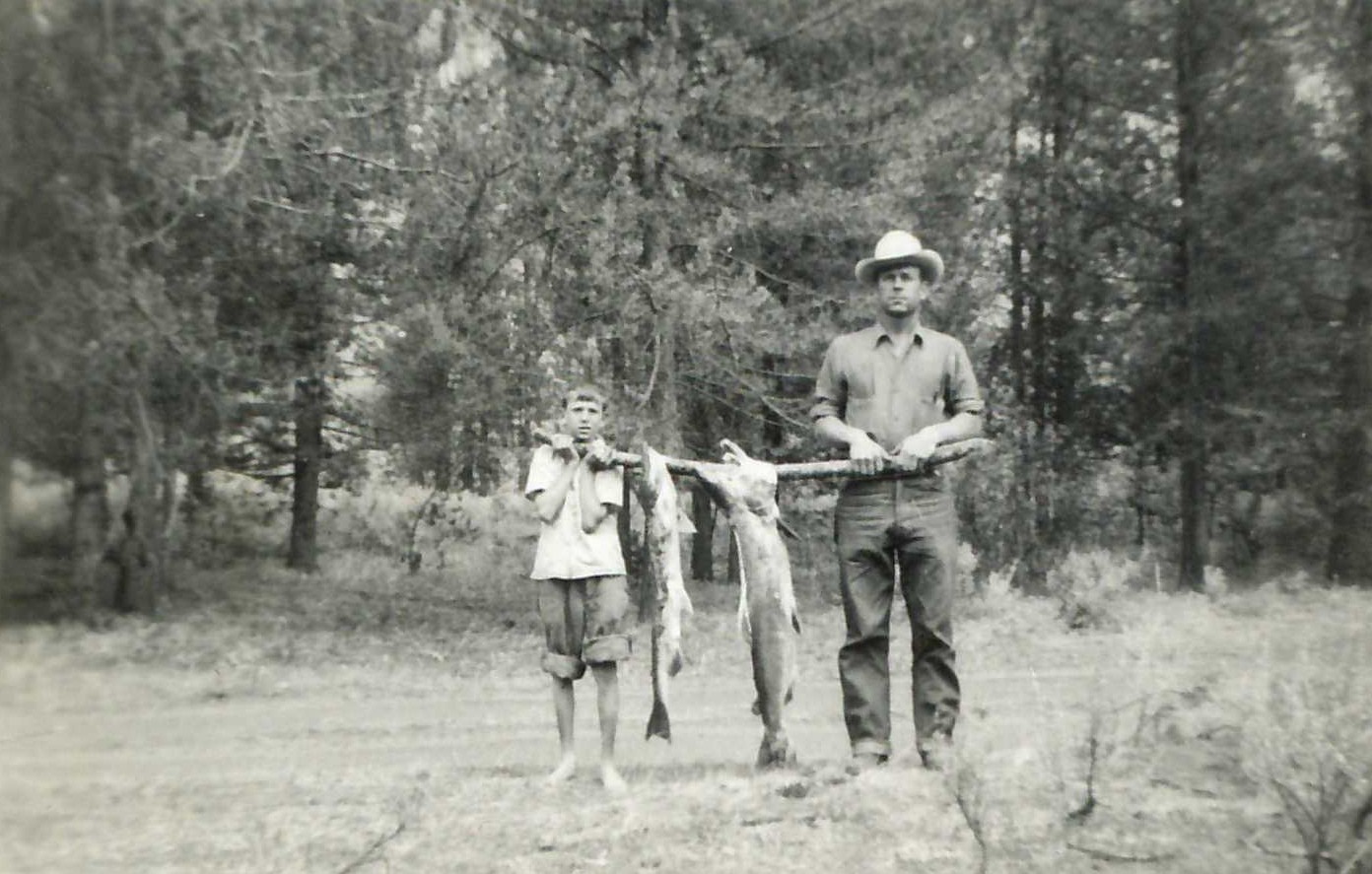
We used to go salmon fishing. Sometimes it was a lot of fun when they let us spear them. I went elk, deer, and antelope hunting as it was a lot of fun. We usually got our limit of game. I killed a big brown bear and had a rug made of it and a few years later, I got a little black cub. We had him mounted standing up on a frame.
We rented the ranch for 3 years and decided what money we were giving for rent, we might just as well be buying it. We bought the one hundred sixty acres for 10 thousand dollars. We sure did raise some good beets and potatoes. We used to have good times there. Every Saturday night, there would be a get-together of the valley people. We would take our families and have a dance and potluck. We sure did have fun and the little kids would dance. We wouldn’t have to worry where they were or what they were doing.
Our third child Clarene RaNae was born. After that my health wasn’t very good. I had to have surgery and we had to borrow $8,060 and mortgage everything we had to get the money. We bought a few more cows to milk as we figured that was the only way we could pay the money back. We had a hard struggle but we made it. We farmed and lived on that place for 21 years, then we sold it to our neighbor and moved to town where we are living now.
I got a job for the City where I worked for 8 1/2 years. I got hurt on the job and had to quit as the doctor said I wasn’t able to do any hard work again.

I always tried to go fishing and hunting every year. One time, my father-in-law and I and about 4 others went in the Selway to hunt elk. WE got snowed in for 12 days. The guy that packed the hunters in and out lost 17 head of pack mules over a cliff as they tied one behind the other as they had to follow a narrow trail around the mountain. We asked the guy that lost them if he ever found them again. He said “Yes, everyone of them came home later on”. It was about 70 miles from where he lost them to where he lived. One of the hunters that he had packed in had a heart attack and died while we were there and all we had to get him out of there was my horse and the packers horse. We left camp at 7 o’clock that night and didn’t get him to camp til about 7 o’clock the next morning as the horses had to wade in snow to their bellies. We left him in one of the camps for 2 days until the forest service could get in to get him out.
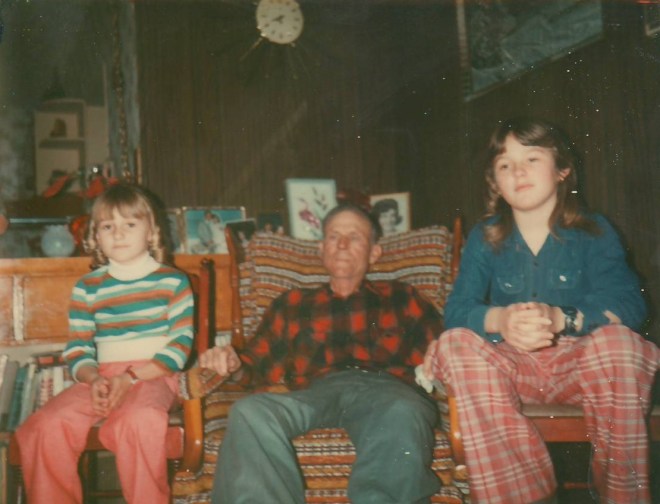
Nichol Harms, Ivan, Alisa Harms on 6 March 1977
Another time we went in we rolled my two mules down the mountain. It didn’t hurt them. We got them out again. Another time two other saddle horses rolled down the mountain within about 30 minutes apart. It sure was steep, but we had a good time and would look forward to going back the next year. My father-in-law said I know I should not have came and maybe you would have got your elk and wouldn’t have got snowed in. We just laughed.
The other time, I took my father-in-law fishing and we were in the boats. I cast my line out and didn’t think I case out far enough. When I reeled in, I had a pair of glasses on my hook. I couldn’t figure out where they came from. Dad felt his eyes and his glasses were gone. He said, “How in the devil did that happen? I thought I felt something jerk on my ears”. We sure did have a good laugh out of that. He often talked about it and had a good laugh. I still don’t know how I ever hooked onto them without him knowing it. We sure had some good times together. One other time, we had been up to Galena Summit getting out corral poles. We were coming home and we had a horse in a trailer. A car was trying to pass us and she ran off the side of the road. It looked like she was going to hit a telephone pole. She swerved back onto the road and she it our car on the hind wheel and it threw the horse out of the trailer onto the front of our car. It hurt his back and he couldn’t get up so we had to shoot him.
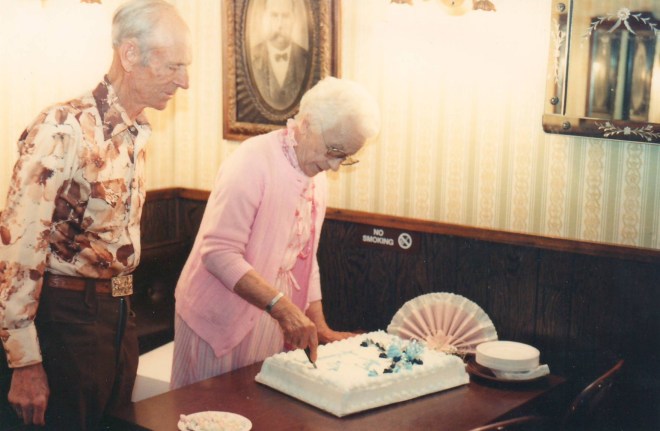
We used to take our children camping and fishing when they were little. Then came the grandchildren. We used to take them fishing and camping. We sure did enjoy having them with us. Now they are growing up and have their friends and activities. So now we just go alone. We sure do miss them but we still have our memories of the past. Would like to relieve some of the happy ones again.
~
Had Ivan of lived one more month, we could have celebrated our 64th wedding anniversary as he passed away on the 22nd of September, 1994. Our anniversary was the 22nd of October. He hadn’t been well for a long time as he got to where he couldn’t see to drive a car and was going to the doctor off and on for a year or two. They didn’t seem to know what was wrong with him until it was too late. They found out it was melanoma cancer of the rectum. They operated on him on January 18,1994 and they said they got 99.9 percent of it. They thought they had the worst of it, but he lived just 8 months longer when he passed away.
We bought us a nice self contained trailer house. It had a propane refrigerator in it. It sure was nice, but we didn’t get to enjoy it very much as he didn’t feel like going. We bought it the year before.
The last month, he sure suffered. We sure had a lot of memories behind us. A lot of them were good and a lot of them were bad. We wondered sometimes if we would make it. But I guess that’s the way life is. As they say, we have to have trials to learn to appreciate the good times and we had a lot of good times together. I sure miss them and him. But we still had a lot of good memories.