Rooting out Racism

Salt Lake Temple, Revelations 14:6, And I saw another angel fly in the midst of heaven, having the everlasting gospel to preach unto them that dwell on the earth, and to every nation, and kindred, and tongue, and people,

This is an insightful article that came out with the Spring 2021 Clark Memorandum. I found myself enlightened by the introspection suggested. Enough that I was moved and want to share it with others. The author is Melissa Wei-Tsing Inouye, Senior Lecturer, University of Auckland, and Historian, Church History Department of The Church of Jesus Christ of Latter-day Saints.

Recently President Russell M. Nelson has called on the Latter-day Saints “to lead out in abandoning attitudes and actions of prejudice” and has pleaded with us “to promote respect for all of God’s children.” Additionally, President Dallin H. Oaks has challenged us to “root out racism.” These directives make some things very clear: We are part of the problem. We wouldn’t have to abandon “attitudes and actions of prejudice” if we didn’t have them already. And uprooting will be a long, hard project. I offer three perspectives I hope my fellow Church members will find helpful. First, the problem of racism is a social reality that affects all human beings. Second, the restored gospel provides us with tools and frameworks for dealing with racism: confess and forsake and turn weaknesses to strengths through humility. Third, we all need to ask the Lord, “What lack I yet?” How do we get to work?

1. We All Have Blind Spots

As an Asian American growing up in diverse Southern California, I rarely felt the sting of racism. Now that I live in Utah, I notice racism much more frequently. Some of my friends and family have experienced ugly, malicious barbs, but the racism I most frequently encounter in Utah is in the form of condescension. White people compliment me on my English. In other words, when they see me, they assume I am foreign and I don’t belong. Then they hear me, and they are surprised. Then they decide to tell me about this surprise: “Oh, you speak English very well!” They don’t say, “I hate Asians,” but their words say, “I consider people who look like me to be ‘normal’ and expect people who look like you to be ‘different than normal.’”

One BYU student, whose family emigrated from Uruguay and who, along with all of her siblings, has fair skin and blue eyes, reported that, in their new Utah ward, someone came up to her parents and said, “Oh, look, the Lamanite curse is already coming off from her! You must be blessed!” Sometimes the racism is about as explicit as it gets, like the swastika and racial slurs that appeared recently on a fence along the bike path my children ride to school.

Biologically speaking, racial categorizations have no basis in objective reality. They are figments of the human imagination and are an example of our weakness for sweeping generalities. Humans beings share 99.9 percent of their DNA with each other. Skin color, eye color, and hair texture and color are a pinch of that tiny 0.1 percent of difference that people arbitrarily use to make consequential guesses about each other’s hearts, minds, capacity, safety, and so on. We might as well link judgments about intelligence to people’s earlobe shape or language-learning ability to toe circumference. Yet over and over again, in every place, many people treading the same crooked ways for centuries creates ruts so deep and so wide it is hard for them to imagine other paths. As President Oaks has said, “Racism is probably the most familiar source of prejudice today, and we are all called to repent of that.” “All” means you and me. I have become increasingly aware of the perpetual need to work hard to not be inadvertently unkind as I have lived in places such as the United States, Germany, the People’s Republic of China, Taiwan, Hong Kong, and New Zealand. No one is immune to prejudice because no one can spend their life becoming embedded within every place and human circumstance in this wide world.

When I moved to New Zealand to take an academic position at the University of Auckland, I had some rough patches in my interactions with students and fellow professors. I discovered that the cultural traits Americans see in themselves of being friendly and optimistic can come off to New Zealanders as shallow and transactional, especially when the American (me) isn’t listening carefully to others around them. I remember sitting in my office when a Māori professor told me, kindly but candidly, how I had completely ignored his expertise and failed to acquire the level of cultural competence necessary for a university event I was planning. I remember thinking, “What do you mean I’m disrespecting people from marginalized groups? I’m Brown! I’m a woman!” Because of my past experiences receiving racism and ethnocentrism, I thought I was “exempt” from perpetuating them. But I was wrong.

Rooting out racism is a process of becoming aware of our blind spots and our great power to cause harm to others, especially to others on the margins. Unfortunately, unlike a pack of manufactured Toyotas and Fords on a highway, human blind spots are unique and change depending on who is around us. In the worst-case scenario, our cars are so big and heavy and fast that we don’t even notice when we knock small cars or pedestrians off the road.

Where are your blind spots? If you don’t know, you haven’t been looking.

2. The Racism in Our Past and Present Need Not Be in Our Future

Latter-day Saint theology explains that we came to mortal life, with its hardship and temptation, in order to learn and grow. Making mistakes and repenting is part of the plan. We have to be careful: a sin like racism is toxic enough to kill us spiritually. In the past, we have been affected by this illness. But if we heal from it, we can become stronger.

When I was experiencing cancer recurrence for a second time, some friends put me in touch with Dr. Mark Lewis. Even though he had never met me before, Dr. Lewis was kind enough to call to discuss my treatment. In the first few seconds of the call, he mentioned that he, too, was a cancer patient. He said, “I just had a scan the other day, and I’m waiting for the results.” In that moment, my confidence in Dr. Lewis took a giant leap.

No matter how knowledgeable, a doctor who has not had cancer cannot understand what it is like to feel in your body the pain, the shortness of breath, the needles and tubes and powerful medications, what it is like to walk past the open door of death on your way to the kitchen. Discovering Dr. Lewis was a cancer patient made me instantly trust him.

On a spiritual level, it is also true that some of the greatest healers are those who have known illness. Kylie Nielson Turley’s study of the Book of Alma points out that we have tended to see Alma’s story as the familiar tale of a rebellious teenager who eventually mellows out. However, the term “Alma the Younger” actually never appears in the Book of Mormon text. This label, along with some other things, has led us to believe he was young and rebellious. But Turley’s study shows it is actually probable that he was a mature adult, perhaps even in his 40s or 50s, when he repented and was born again. Alma may have been a full-fledged bad guy. But he became converted and began calling people to repentance. Because he had personally experienced the corrosive effects of sin, he had powerful authority to call others to repent.

This gives new meaning to Alma’s teaching about Christ: that He would

go forth, suffering pains and afflictions and temptations of every kind; and this that the word might be fulfilled which saith he will take upon him the pains and the sicknesses of his people. . . . [A]nd he will take upon him their infirmities, that his bowels may be filled with mercy,
according to the flesh, that he may know according to the flesh how to succor his people.

According to this passage, Christ inhabited our infirmities in order to understand how to heal us. It wasn’t enough for Jesus to stop up others’ wounds and lift others’ sorrows. It was necessary for Him to feel wounds in His own flesh, to experience despair and injustice and life gone horribly wrong.

In summary, patients make trustworthy doctors. Repented sinners make compelling prophets. The experience of mortal weakness is what turned the popular rabbi Jesus into the Savior of all. We believe suffering from mistakes in mortality is necessary for growth and for becoming as God is.

Our imperfections on this issue of racism and prejudice are clear to anyone who studies Latter-day Saint history. The Church’s essay on race and the priesthood states:

In 1852, President Brigham Young publicly announced that men of black African descent could no longer be ordained to the priesthood. . . . Over time, Church leaders and members advanced many theories to explain the priesthood and temple restrictions. None of these explanations is accepted today as the official doctrine of the Church.

These “theories” and “explanations” by Latter-day Saint leaders and members included the idea that all Black people were descended from Cain and inherited the curse God placed upon him in the Book of Genesis; the teaching that interracial marriage was sinful, akin to letting a “wicked virus” into your system; and the notion that Black people were less valiant in the premortal life. Some who promulgated these theories also made other painful claims that Black people were “uncouth, uncomely, . . . wild,” and inferior to White people.

These statements, which sound so ugly to us today, reflect to a great extent the social and cultural assumptions with which these Latter-day Saint leaders were raised in 19th and 20th-century America. Comparable statements to those of Church leaders in the past were made by the great American president Abraham Lincoln and many others. In the
same year that Bruce R. McConkie first published Mormon Doctrine, a popular book containing numerous theories and explanations, the Virginia couple Mildred and Richard Loving were arrested (and eventually sentenced to one year in prison) because their marriage violated a law banning interracial marriage in that state. At the time, similar laws existed in 24 other states, including Utah. No one is immune to culture. We must have empathy for those whom the passage of time turns into moral strangers, because someday, surely, those people will be us.

But significantly, as historian Paul Reeve has pointed out, throughout the 19th and 20th centuries there were people, including Latter-day Saints, who had done the intellectual and spiritual work to see beyond the evils of their day and cultivate knowledge of other people’s humanity and divinity. Over the course of his tenure as president of the Church, Joseph Smith evolved from supporting the enslavement of Black people based on Biblical passages about
Canaan—a common Biblical interpretation of the day—to asking how the United States could claim “that all men are created equal” while “two or three millions of people are held as slaves for life, because the spirit in them is covered with a darker skin than ours.” During his presidency, Black men such as Elijah Able and Walker Lewis were ordained to the priesthood as elders and represented the Church as missionaries. In Nauvoo, Joseph and Emma developed a close relationship with Jane Manning, a Black Latter-day Saint. Jane lived and worked in their home, and at one point Joseph and Emma invited Jane to be eternally sealed to their family through adoption. Jane’s own words reflect her esteem for the Prophet, which must have in some part reflected his esteem for her. “I did know the Prophet Joseph,” she
later testified. “He was the finest man I ever saw on earth.”

In the early 1850s, the apostle Orson Pratt opposed legalizing slavery in Utah and supported Black voting rights. “[T]o bind the African because he is different from us in color,” he said, “[is] enough to cause the angels in heaven to blush.”19 In May 1968, a month after the death of Martin Luther King Jr. sparked racial tensions around the United States, Hugh B. Brown of the First Presidency taught BYU students, “[A]void those who preach evil doctrines of racism. . . . Acquire tolerance and compassion for others and for those of a different political persuasion or race or religion.”

This gives us hope that we are not trapped in our cultures and times. It is possible to overcome the moral and cultural blinders of the societies in which we live. We will never escape them completely, but we can see more clearly.

Acknowledging the Latter-day Saints’ past racism is painful because it feels so wrong and because it did such harm. But, as laid out in Doctrine and Covenants 58:43, acknowledging wrongdoing is the first, essential step to leaving it behind: first, confess; then, forsake.

In this spirit, the Church’s essay on race and the priesthood declares:


Today, the Church disavows the theories advanced in the past that black skin is a sign of divine disfavor or curse, or hat it reflects unrighteous actions in a premortal life; that mixed-race marriages are a sin; or that blacks or people of any other race or ethnicity are inferior in any way to anyone else. Church leaders today unequivocally condemn all racism, past and present, in any form.

Our current Church leaders have taken increasingly bolder steps to lead out against racism. In 2018 they hosted the “Be One” celebration commemorating the 1978 end of the priesthood and temple ban and honoring the contributions of Black Latter-day Saint pioneers. In June 2020, President Nelson joined the national conversation on race in the wake of George Floyd’s death. He coauthored a joint op-ed with Derrick Johnson, Leon Russell, and the Reverend Amos Brown, three leaders of the National Association for the Advancement of Colored People (NAACP), calling for “government, business, and educational leaders at every level to review processes, laws, and organizational attitudes regarding racism and root them out once and for all.” This attention to “processes, laws, and organizational attitudes” called attention to the need for structural change.

In early October 2020, numerous speakers in general conference—including President Nelson, President Oaks, Sister Sharon Eubank, Elder Gerrit W. Gong, Elder Quentin L. Cook, and Elder Dale G. Renlund—condemned racism and presented the Latter-day Saints with a vision for a diverse, multiracial, multinational Church.

Finally, two weeks later in a BYU devotional, President Oaks delivered a comprehensive address on combating racism. Reiterating President Nelson’s recent charge to the Latter-day Saints to abandon “attitudes and actions of prejudice,” he said, “[W]e condemn racism by any group toward any other group worldwide,” and urged, “Now, with prophetic clarification, let us all heed our prophet’s call to repent, to change, and to improve.”

In asking us “to repent, to change, and to improve,” to “root out racism,” and to “clear away the bad as fast as the good can grow,” our current leaders are sending us a strong message: get rid of the bad stuff (i.e., do the work of anti-racism) and get on with the good stuff (i.e., work to establish Zion around the world).

Our leaders have made it clear that we each need to repent. Saying, “We are all good! No need for repentance here!” is disrespecting the Savior’s offer of atoning grace. We cannot “be saved in ignorance.” But if we humble ourselves and seek Christ’s help in moving forward, the errors and lack of knowledge in our past can turn to wisdom. Our stumbling because of racism in the past can be converted into eagerness to lead out in the future. Like Dr. Lewis, Alma, and Christ Himself, our memory of sickness can become a capacity to heal.

3. What Lack I Yet?

Here some might be thinking, “But I’m not racist. I don’t hate anyone.” It is a common misconception that racism means hate. Hate, along with fear, is a common symptom of racism, just like a cough or a sore throat is a symptom of covid-19. But hate is not all of what racism is.

At its core, racism is ignorance. It was ignorance that prompted those “You speak English so well!” people to say something to me—a stranger with brown eyes and dark skin—that they would not say to a stranger with blue eyes and light skin. It was ignorance that led Latter-day Saints in the past to find facile, speculative explanations for the priesthood and temple ban, like the “fence-sitters in the pre-existence” theory. The handy thing about this explanation was that it required no change in Church members’ existing worldview. The problem was that it also required ignoring Christ’s basic teachings, the second Article of Faith, the historical precedent set by Joseph Smith, and the fundamental implications of the phrase “children of God.”

Looking back at history, we wonder: How could a Latter-day Saint bishop like Abraham O. Smoot have enslaved Tom, a member of the Sugar House Ward over which he presided in Salt Lake City in the 1850s? How could the people of the United States in 1942 have approved of depriving my American-born grandparents Charles Inouye and Bessie Murakami of their civil rights, their property, and their livelihoods and imprisoning them behind barbed wire at Heart Mountain, Wyoming? In the UK, in Germany, in China, in Rwanda, in South Africa—throughout history, over and over again—we see people failing to see each other as fully human like themselves.

The frightening thing is that in all of these examples in the past, good-hearted people who strove to be morally upstanding were unaware of their stunning, reprehensible ignorance. How can we know we are not making the same mistakes?

On the score of racism, at least, history teaches us plenty of ways to avoid ignorance, if we are willing to put in the work. History can be our friend. If we study how ignorance looked in the past, we can better identify it in the present. If we can understand its potential to wound others and poison the worldviews of well-meaning people, we, as disciples of Christ, can develop the capacity and authority to heal.

Overcoming ignorance is not a simple matter of reading five blog posts and three conference talks and having a conversation with a Brown friend. We need to strive to know as God knows, see as God sees. Seeking learning that will show us the heart and mind of God involves hard work, radical humility, and perpetual self-improvement. But we believe in work, humility, and improvement. It is part of the plan.

If you do not have personal experience with how it feels to be regularly disrespected because of your skin color or how it feels to be constantly dismissed because you are a cultural minority, or if you don’t have peers outside your racial and cultural demographic, I humbly suggest you may lack wisdom.

I certainly know I do. Like me, you may need to ask for God’s help in filling this critical gap in your spiritual education. We, as Latter-day Saints around the world, have made sacred covenants to be one people, “bear[ing] one another’s burdens” and “mourn[ing] with those that mourn.” How can we keep these covenants if we ignore the burdens others bear or if we dismiss others’ mourning and deny that they have reason to grieve?

In a recent blog post, James C. Jones, a Black Latter-day Saint, explained that going out of our way for those “few” who are marginalized in society was what Jesus taught us to do. He wrote, “I’d like to go to church one day knowing that the people I worship Christ with—the same Christ who left the ninety-nine to find the one—won’t say ‘all sheep matter’ when I go to find the one.”

The fundamental equality of all before God the Creator dictates that Latter-day Saints do not dismiss others’ experiences of racism simply because we have not lived through these experiences ourselves. Jones also wrote:

Our very church is founded on the lived experience, revelatory as it is, of Joseph Smith. To devalue the lived experience of others is to desecrate the body-temple in which we all, prophet and prostitute alike, move about and understand this earthly life.

It is no sin to be born in a place where everyone looks the same, nor to be born into a culture in which certain assumptions about whole groups of people are taken for granted. But once we have grown to adulthood and come into the fold of God, which encompasses seven and a half billion sheep—all precious—we must put away the self-centered assumption that my view is always the best, my experience is universal, and it is only a problem if it is happening to me as one more childish thing.

If only I had joined the Church of Jesus Christ of Bald Generation X Asian Women Historians Raised in Orange County California, USA! How daunting is Christ’s charge in the great intercessory prayer, when He said that those who truly follow Him and testify of His divinity are those who will “be one” with each other! How daunting is the baptismal covenant given at the waters of Mormon to follow Christ! This covenant language wasn’t “we will bear the burdens
of people in our neighborhood only” or “we will only bear burdens we, too, have personally experienced.”

Most people don’t think of it this way, but the most lasting outcome of successful missionary work is not having more
people in the pews but inheriting more of the world’s thorniest problems. Missionary work is not about “claiming more people for our club” but about wiggling our shoulders into more yokes to pull many heavy loads.

The story of the young man in the gospels of Matthew and Mark is instructive. When the lifelong righteous, commandment-keeping, wealthy young man asked Jesus, “[W]hat good thing shall I do . . . ?” and “[W]hat lack I yet?” he was probably thinking Jesus would suggest another pious practice to slot into his “I’m-a-good-person” crown. Instead the Lord told him to give away all of his privilege. He asked the young man to seek parity with strangers at the very bottom rung of society. And the young man—who stood in front of the bona fide, miracle-working, in-the-flesh Jesus and in that instant received the Savior’s love—found he couldn’t do it. He didn’t want to do it.

The moral of the story is clear: no matter how awesome we think we are, the main question is still “What lack I yet?” (The more common question “What do they lack?” is beyond the scope of our agency.) Would we who yearn to see the Savior’s face be willing to literally stand before Him and hear Him say, “Come, follow me,” if it meant giving away our homes, our cars, our children’s college tuition fund, our dinner, our running water, our toothbrushes, and our family’s safety and becoming one with the poorest of the world’s poor? This is a troubling question. I am ashamed to say that I am not sure what I would do. But Jesus’s call to action is clear: even people who have eagerly kept the commandments all their lives may be holding something back. If we truly want to follow Him, we will dare ask, “What lack I yet?” and expect a difficult answer.

In the October 2020 general conference, Michelle D. Craig, first counselor in the Young Women General Presidency, cited the parable of the priest, the Levite, and the Samaritan (a classic blind spot story) and called on us to ask God for help overcoming our limited vision. She said: “Ask to see others as He does—as His true sons and daughters with infinite and divine potential. Then act by loving, serving, and affirming their worth and potential as prompted.”

In sum, we should stop thinking, “Racism is hate, and I don’t hate anyone, so I can sit this one out.” Instead, we should ask, “What lack I yet?” To root out racism, we must go beyond simply avoiding racial slurs or ignorantly repeating discredited theories and explanations. We must proactively seek opportunities to understand how our sisters and brothers have experienced racism and how we can start doing some things differently.

4. What Can We Actually Do?

The day after President Oaks called us to repent and do more to root out racism, I tried to think of something concrete that I could do immediately. I decided to find images of the Savior that do not depict Him with White, European features. Clearly, Jesus was a Middle Easterner; He looked like someone from the Middle East. He was a person of color. Over centuries, as Christianity spread to Europe, many European artists painted Jesus—quite understandably, as
artists in Ethiopia and Japan and New Zealand and all places have done—as someone from their part of the world. They wanted to imagine a Savior who did not look like a foreigner (especially since for centuries many people from Europe feared and hated people from the Middle East). From a practical standpoint, the painters could only find local European models. One image I love, of Christ and the rich young man, was painted by German artist Heinrich Hofmann and has this European character.

In the globalized world of the 21st century, it is not difficult to imagine Jesus in His actual historical and geographic context. Now that I understand that the real Jesus looked like a Middle Eastern person, why would I want only images of Jesus as a White person of European descent? Therefore, the day after President Oaks’s talk, I went to Deseret Book
and found an abundance of scenes of Jesus in the Bible and the Book of Mormon painted by Jorge Cocco Santángelo, a Latter-day Saint painter whose geometric, slightly abstract style depicts Christ without a specific set of “racial” features. Together, my family members picked out one of these beautiful images to display in our home. I subsequently came across a beautiful image of Christ and the rich young man painted by a Chinese artist in the first half of the 20th century and had it mounted on canvas. Now I am always on the lookout for other diverse ways artists
have depicted the Savior of the world.

Here are some additional tips, developed in consultation with some fellow Latter-day Saints who have experienced racism in a Church setting.

5. Stop.

Please stop repeating harmful theories and explanations for the priesthood and temple ban that the Church has disavowed. If you are not sure what the Church’s current positions are, read the 2013 essay on race and the priesthood carefully; watch the First Presidency’s 2018 “Be One” celebration and pay attention to the history presented. Don’t invent new theories and explanations.

Please stop denying the racism of people in your family tree or national history who expressed racial supremacist views or enslaved others. Racism is a common historical detail, like the pattern of a bonnet or the construction of a wagon wheel. Whitewashing over this aspect of ancestors’ lives is refusing to accept them unless they conform to 21st-century expectations. I am sure all of these ancestors are now watching from the spirit world, having progressed beyond their mortal myopia, and rejoicing as their descendants use hindsight to avoid the same serious mistakes they made.

One beautiful example of “redeeming the dead” is the current work of Christopher Jones, a professor at BYU, to recover
the history of Tom, the Black member of the Sugar House Ward in the 1850s. Tom was enslaved and brought to Utah by Hayden Thomas Church. Later, Church sold Tom to Abraham O. Smoot, Tom’s Bishop. Church is Jones’s ancestor. How better to participate in our ancestors’ salvation than to work on their behalf to repair broken things?

Please stop asking the question “Where are you from?” to people you have just met. Racial minorities get asked this question all the time by total strangers who are trying to figure out their ethnic and racial background because it seems so “different” and “unusual.” Know that if you ask this question right off the bat of someone from a racial minority group, you are presenting yourself as someone who is fixated on that person’s body as opposed to their character, experience, sense of humor, and so on. If you are curious about this question and get to know someone well, eventually they will tell you on their own.

6. Start.

Please start looking for the sin of racism in your life with the same eagle eyes you use to look out for pornography, violations of religious freedom, emergency preparedness situations, and other problems Church leaders have called to our attention. Apply the skill set you have already developed to spot problematic images, defend civil rights, and educate yourself about complex, largescale problems.

Please start speaking up without hesitation when someone uses racist, prejudiced, or ignorant speech, whether or not someone who will be personally hurt by this speech is in the room. Martin Luther King Jr. memorably pointed out the harm done by “the appalling silence of the good people.” In the case of racial slurs, of course, you would respond as with any foul and unacceptable language. To prepare for encountering racism in more general conversations, you can practice some ready responses ahead of time. For example:

“Whoa!”
“That’s not funny.”
“What point were you trying to make by saying that?”
“Tell me what you mean by that?”
“What I heard you say was _.”

Please start educating yourself about the experiences and viewpoints of people who are from a racial, ethnic, national, or class “group” with which you have little personal understanding. You can ask people to recommend resources that have been helpful to them or to their friends. The other day, for instance, I saw Isabel Wilkerson’s prizewinning books The Warmth of Other Suns and Caste on the shelves of Deseret Book. The digital Gospel Library on the Church’s
website and app also has many resources.

Recently I heard the compelling interpretation that fasting is a form of collective mourning. By a little suffering and want in our bodies, we unite ourselves with those who experience suffering and want. By refusing self-satisfaction, we open ourselves to the experiences of those who do not have enough. As Jesus invited the rich young man to do, by giving away some of our power and security, we become closer to His people and therefore closer to Him.

Collective mourning is the work that lies ahead of us as Latter-day Saints as we seek to be one people—not just once a month but in everyday life. Perhaps in our daily study, or in a new five-minute “children of God” lesson segment of family home evening, we can grapple with the challenge of finding unity in diversity. For one great starting resource,
see the rapidly expanding Global Histories page in the Church History section of the Gospel Library, which relates the stories of Latter-day Saints all over the world.

When we seek new light and knowledge, God will give liberally. May we heed our leaders’ calls to find unity with Saints around the world—not by expecting everyone “out there” to change their cultures to be like us but by realizing every one of us has a culture that is different from Christ’s “gospel culture” and that we are all shaped by assumptions
indigenous to the neighborhood, county, and country in which we live. From Damascus to Draper, not one of us is “normal.” We are all deeply “ethnic,” with our own blind spots. We must all ask the Lord, “What lack I yet?” and step out to build the bridges of Zion.

This is a tall order, but this audacious, all-inclusive ambition to unite the whole human family in the present and in the past is what sets the Latter-day Saints apart. As we seek to honor our covenants, God will bear us up and make us equal to this task, I testify, in the name of Jesus Christ, amen.

Paris, Idaho

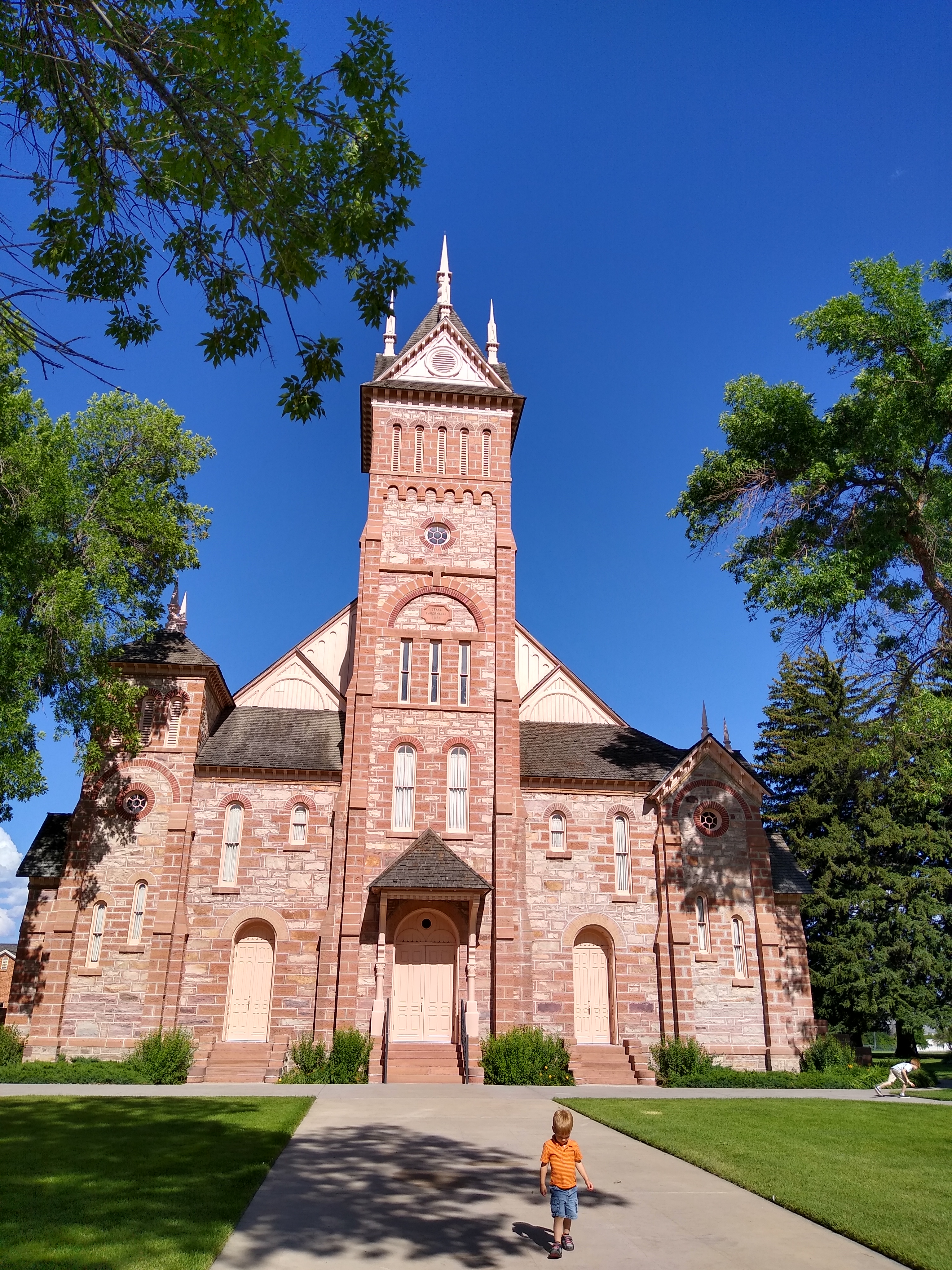
Paris Idaho Tabernacle and James Ross

One year ago I took the four kids to go on a sightseeing tour. Amanda did not feel up to the trip and I just needed to get of town and reduce cabin fever. We went on a trip to various locations, but here are some pictures from 25 July 2020.

I had not been to Dingle, Idaho, where my Grandmother is buried for quite a while and none of my children had memories of being there, so that was our first stop.

One of our first stops was at Register Rock State Historic Park. It is located near Massacre Rocks State Park outside American Falls, Idaho.

Hiram and James Ross at Register Rock State Historic Site

On the way we stopped at Teuscher Square in Bancroft, Idaho.

Lillie, Aliza, and James Ross at Teuscher Square, Bancroft, Idaho.

We found our way to Dingle and took a picture with my Grandmother’s grave in Dingle, Idaho.

Lillian, Hiram, James, and Aliza Ross with tombstone of Colleen Mary Andra (1928-1999) and Ivan W Lloyd (1919-2011) on 25 July 2020.

Then we stopped in Paris, Idaho. I took a picture of the Bear Lake Court House but apparently the photo didn’t save. I am disappointed as it has now been torn down. But we snapped some pictures with the Paris Tabernacle.

Lillie Ross beside Paris Tabernacle
James, Lillie, and Hiram Ross beside Paris Tabernacle.
James and Lillie Ross goofing off on north steps of Paris Tabernacle.

Afterwards, the kids had to play on the playground at the Paris Elementary School, just east of the Paris Tabernacle.

Hiram and James Ross at Paris Elementary playground.

We traveled through Logan Canyon and stayed in Logan, Utah, that night.

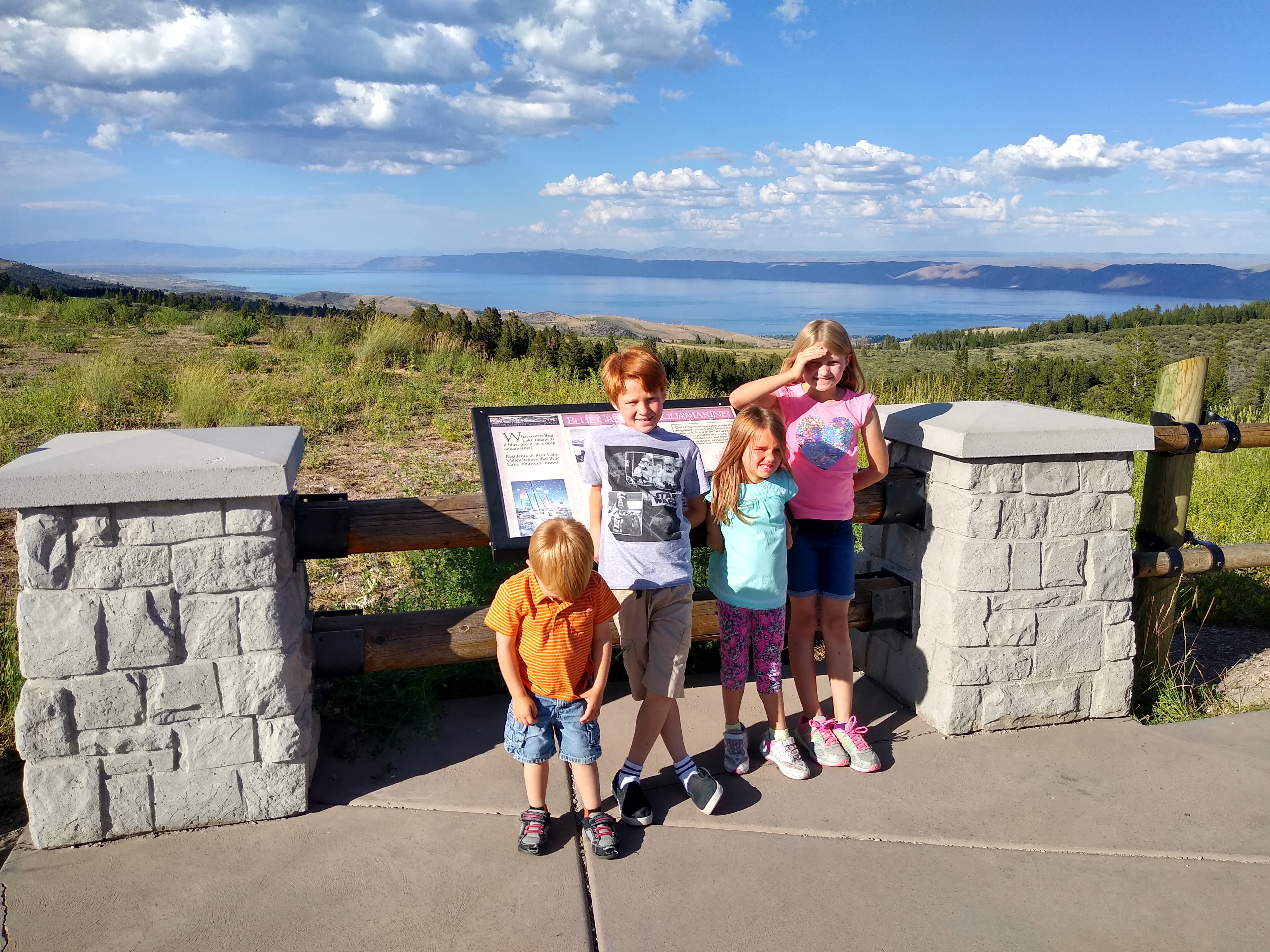
James, Hiram, Lillie, and Aliza Ross at Bear Lake Overlook.

I previously wrote of our visits to the Logan Cemetery to visit family and notable graves. Those include our Nelson, Wanner, and Andra relatives. Also, graves of Benson, Thatcher, Nibley, Parker, and Maughan.

Then we bedded down for the night for the trip through Cache Valley and home on the next date.

Hiram, James, and Lillie Ross already fast asleep in Logan, Utah.

Jonas History: Joseph Nelson Jonas

This is another chapter of the Jonas history book compiled by Carvel Jonas. “The Joseph Jonas clan of Utah (including – early Jonas family history; early Nelson family history)” This one is on Joseph Nelson Jonas. I have written a biography of Joseph and Lillian previously.

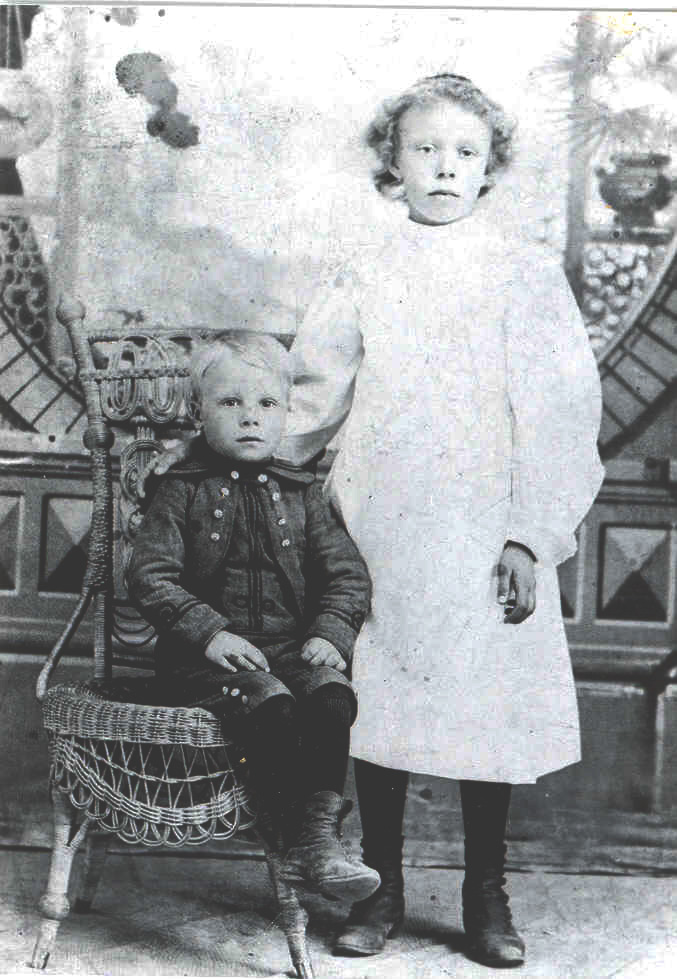
Joseph and Margaret Jonas about 1899

“Joseph Nelson Jonas was born 19 March 1893 at or near Ellensburg, Kittitas, Washington State.  He was the 6th child and 3rd son of Joseph Jonas and Annetta Josephine Nelson.  He became the youngest of the family (a younger sister was born after Joseph, but she died a few hours after birth).  Joseph was about three years old when his mother left the family and went to the Washington State Hospital in 1896.  Joseph lived in the Ellensburg area with his father and siblings until he was 8 years old.  On 3 July 1901 the family moved to Crescent, Utah.  He was baptized a member of The Church of Jesus Christ of Latter-day Saints 10 Jan 1902 by Aug Nelson.  His two older brothers were also baptized that same day. 

John, Joseph, and William Jonas

“He worked on his Uncle August Nelson’s farm until he moved to Richmond, Utah, to live with his older sister, Rosa, in 1908 when he was 15 years old.  He traveled the same day with his two older brothers.  When he was 23 years old he married Lillian Coley.  They were married 6 September 1916 in the Logan Temple.  That same day they were each endowed with the temple ordinances for the first time.  Joseph met his wife while he was living in Richmond.  His wife’s family had a farm in Richmond where Joseph had hired on as a far laborer to help the family harvest hay. 

“About 6 months after they met they were married.  His wife was 18 years old and Joseph was five years older than his wife, age 23.  They became the parents of eight children, the first six were boys and the last two were girls.  Joseph went to work for the sugar factory in Lewiston, Utah.  By about 1920 Joseph had moved to Thatcher, Idaho with his brother, William and his sister, Rosa.  They operated a dry farm which grew grain.  Joseph had a wooden red house which had a front room, bedroom and a kitchen.  His sister lived about a mile away in her own home and William lived in Thatcher teaching school.  At the farm Joseph and others operated a combine which was pulled by horses and had blades that were taller than the men.  The animals were kept in a barn which was about a block from the house.  They had five horses, a cow, pigs, chickens, domestic animals and a vegetable garden.  One horse was white and was named “dime.”  To mail letters and receive letters the boys would need to ride Dime.  This horse, while carrying his son, Joseph H., ran as fast as it could go all the way from getting the mail one day.  This experience scared the young boy who was about 5 or 6 years old, and he had to hold on for fear of his life.  About 1924 or 1925 Joseph moved from Thatcher to Lewiston, Utah.  Joseph drove the wagon which carried some of his sister’s children.  He began working for the Utah-Idaho Central Railroad.  This was an electric inter-urban trolley railroad that had 94 miles of track and went from Ogden, Utah north to Preston, Idaho.  Joseph began working on a section gang, the same type of job his father, Joseph, had had.  Joseph worked keeping the track in operating condition by repairing rotten timbers, hammering spikes or tightening the bolts which kept the track together.  He worked seven days a week, some of the work was all night, but he was able to come home after a shift was over.  While the family lived in Lewiston they lived in a train box car, which had the wheels removed.  There were two box cars which were used by the family.  They were close together and a ditch ran under their box car.  One car was used as a storage shed, the other one was used as the family home.  Once there was a tub of gas which was stored in the shed.  This gas caught on fire, which started the shed to burn.  Joseph went to his wife and told her to leave because the shed was on fire and it may cause the house to burn down (the two structures were close together).  She didn’t believe him, but there was little time to convince her so he picked her up and carried her outside.  The best way to stop the fire was to remove the burning tub of gas–Joseph must have thought.  So he went into the shed, picked up the burning tub of gas and took it outside.  Joseph’s brave act saved his home from burning, but they lost the shed and it’s contents.  Joseph spent about two weeks in the Ogden Hospital with 2nd and 3rd degree burns. 

Joseph and some friends at work after a game of shoes

“About 1927 Joseph was promoted to Section Foreman and moved to Ogden with his family.  His father, Joseph, had been a section foreman in a leadership position, too.  Joseph worked on the railroad line that went from Ogden to Huntsville, and also a line that went to Plain City.  Joseph worked at one time on the Quinney Railroad Line.  Except for the Thatcher home the family rented their homes until Joseph died.  They lived at 17th St. and Wall Ave. in an apartment complex owned by the railroad called a section house.  This was a long, wooden building that was divided into rooms.  Joseph’s family was the only one that had a porch, a special privilege given to Joseph because he was the foreman.  Joseph had a vegetable garden when he lived in Ogden.  He was a very generous host and his visitors were always given a lot to eat when they visited their home.  Joseph was active in the L.D.S. Church.  He was a strict father and was not afraid to “switch” his children when they got into trouble.  He stood about 5’6″ tall and was muscular.  His nephew, Merlin Andersen, said that Joseph told him “I want to show you what a good wrestler is!”  Next thing Merlin knew was that he was on the ground.  Joseph was on the wrestling team at Brigham Young College (Logan), the school he graduated from.  Joseph and his brother, William, went to college some of the same time together. 

Joseph Nelson Jonas’ Brigham Young College yearbook picture

“Joseph liked to discuss religion.  He would argue with his siblings his point of view with determination.  After the discussion all the siblings would talk nice to each other and gave each other hugs and handshakes.  They family moved to 103 17th Street in Ogden.  On 1 Aug 1932 Joseph last child was born.  He was very glad to have two daughters after having six sons in a row.  September 6, 1932, a little over a month later, Joseph and Lillian had their 16th wedding anniversary.  Joseph had gone to work as usual that day.  He was welding some train track on the corner of Lincoln and 20th East in Ogden.  One week before, while Joseph was working in front of the American Cannery, he had been shocked by electricity and landed on the ground.  He got up and went right back to work that day.  But it was a week later when Norwood, Joseph’s son, was bringing his father something to eat.  Norwood saw his father welding when someone started to move the trolley car.  Joseph was welding a ground wire.  Grounds were put into the track to the electricity would go harmlessly into the earth.  This time the electricity, cause by the trolley being moved, went to the ground which Joseph was touching.  Joseph was killed Sept 6, 1932 on his 16th wedding anniversary.  The Ogden City paper, dated Sept 8, 1932 carried the following obituary.  “Ogden-Funeral services for Joseph Jonas, 39 of 103 Seventeenth Street, section foreman for the Utah-Idaho Central Railroad Company, who was electrocuted Tuesday afternoon, will be held Friday, at 10 A.M., in the Lindquist’s Chapel, with Bishop Huggins of the Tenth ward in charge.  Investigations into the death of Mr. Jonas are being conducted by the railroad company.”  He was buried in Richmond Cemetery where two of his sons, his wife, his brother, John, and his father, Joseph are also buried.     

“Merlin Andersen gave me the following tidbits about his uncle, Joseph.  “Joe always had cows so he could have enough milk for all his kids.  He was an ambitious person-he had a way to get things done.”   

“Lillian told me the following story.  One day we went to the movies.  This was when Lillian was about 5 months pregnant.  When they had both decided to cross the road near the movie theater a car ran over both of her legs.  Her legs weren’t broken, but were badly bruised.  The other family felt so badly that the mother of the boy who was driving the car became good friends with Lillian.  This mother visited and gave Lillian comfort during her recovery.   

“Joseph Nelson Jonas had  read the Bible so much that he could quote scriptures and could back up his knowledge by finding the scripture and showing it to people.

2020: The Year of the Dead

This wasn’t intentional.  Not sure why or how it happened, but it did.

Anyone who knows me knows that I stop and visited deceased people and ancestors anytime I am in the neighborhood.  Kinda like stopping in to visit any other cousin or friend when you are driving through, are in town, and have some time.  Ancestors are very accommodating whenever you want to stop in and visit.  Maybe COVID-19 just gave us more time.

I have the following ancestors who are buried somewhat nearby, western United States.  I will link each ancestor I have written about previously if you want additional information.  Here are my ancestors and where they are buried.

As of this writing, I see there are two ancestors that I haven’t stopped and visited in the last few years and got pictures with the kids and the tombstone, Christiana Andra in Salt Lake City and William Sharp in Ogden (I now have the goal to get it done before the end of the year).  I also have a couple of known ancestors without tombstones, David and Gwenllian Jordan in Ogden, Utah, Hubert Jonas in Ellensburg, Washington (but we got pictures at the grave), and Damey Ross in Olivehurst, California (who we visited after hours and couldn’t even locate the grave).  We should remedy that but we may just have to stop and get pictures with their grave locations.

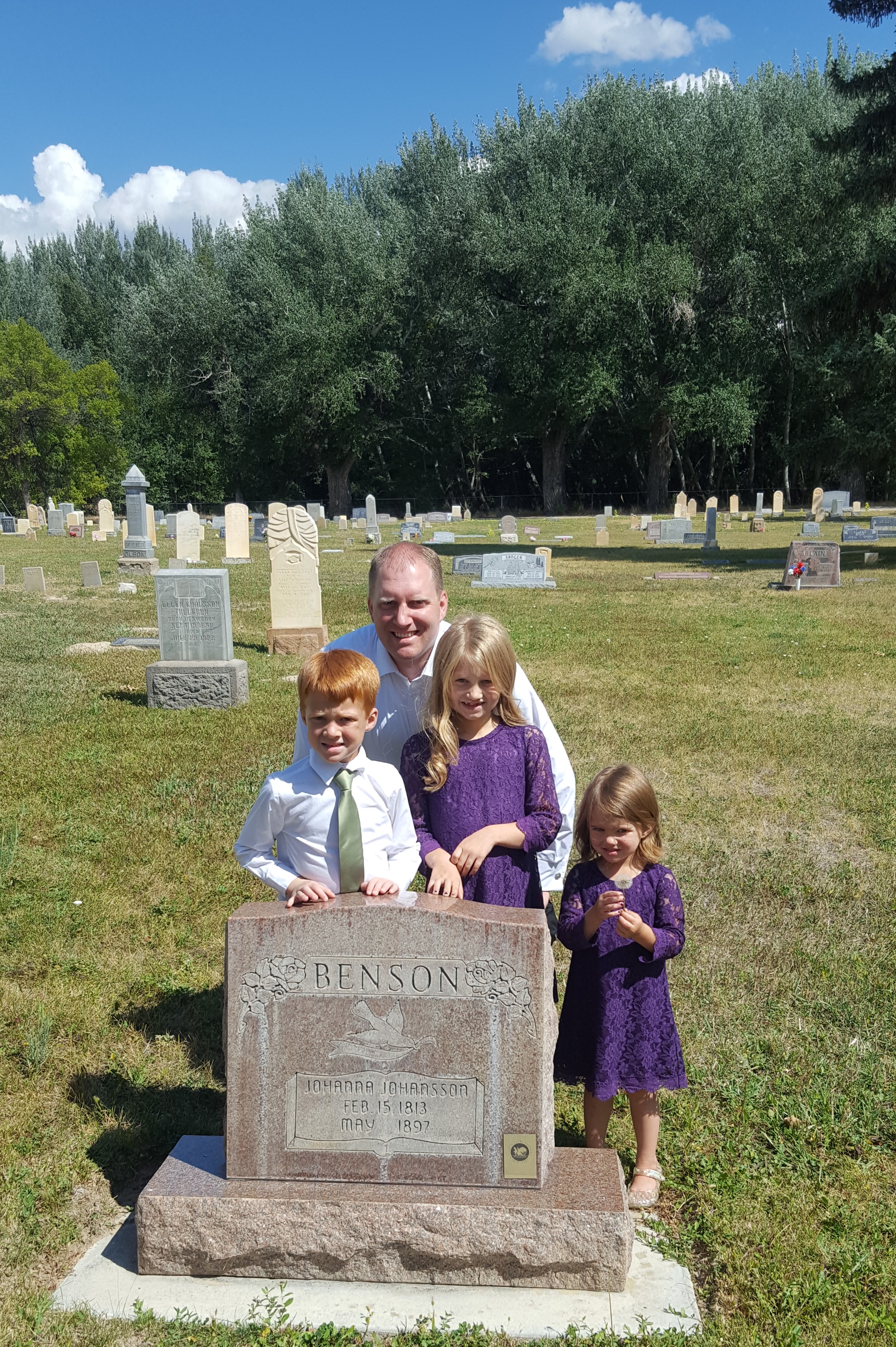
I also cheat and use the 2016, 2018, and 2019 photos with three ancestors, Johanna Benson in Spring City, Utah in 2018, John William Ross in San Bruno, California in 2016, and James Thomas Ross/Meredith in Fresno, California in 2019.  I could do a 2020 photo for Johanna, but I am not going to California just to redo a tombstone photo with the two Ross ancestors.

Grandparents

Milo & Gladys Ross – Plain City, Utah

Lillian, Paul, Aliza, and Hiram Ross with tombstone of Gladys Maxine Donaldson (1921-2004) and Milo James Ross (1921-2014) on 23 May 2020.

Norwood Jonas – Richmond, Utah

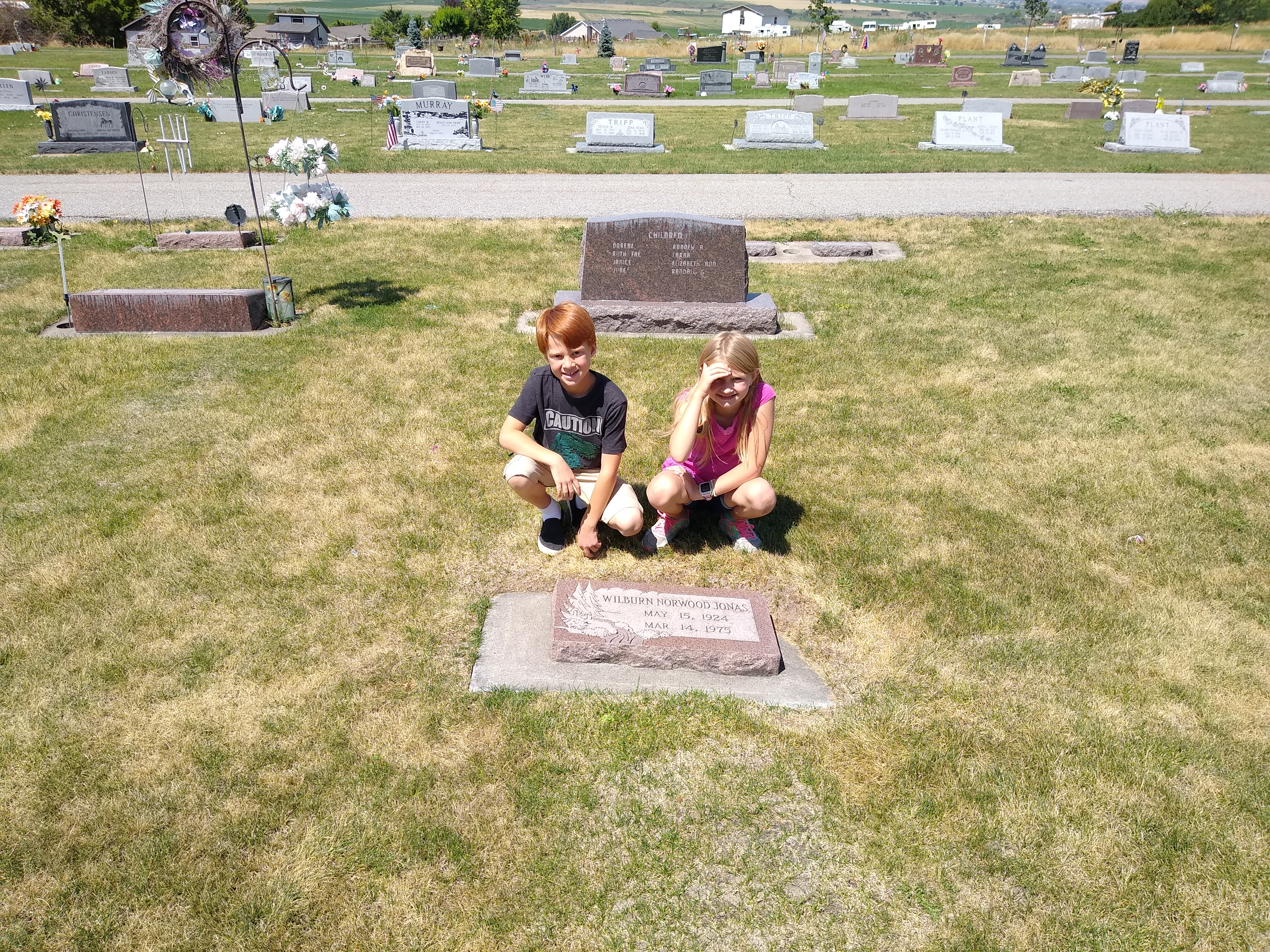
Hiram and Aliza Ross with tombstone of Wilburn Norwood Jonas (1924-1975) on 26 July 2020.

Colleen Lloyd – Dingle, Idaho

Lillian, Hiram, James, and Aliza Ross with tombstone of Colleen Mary Andra (1928-1999) and Ivan W Lloyd (1919-2011) on 25 July 2020.

Great Grandparents

John Ross – Golden Gate National, San Bruno, California

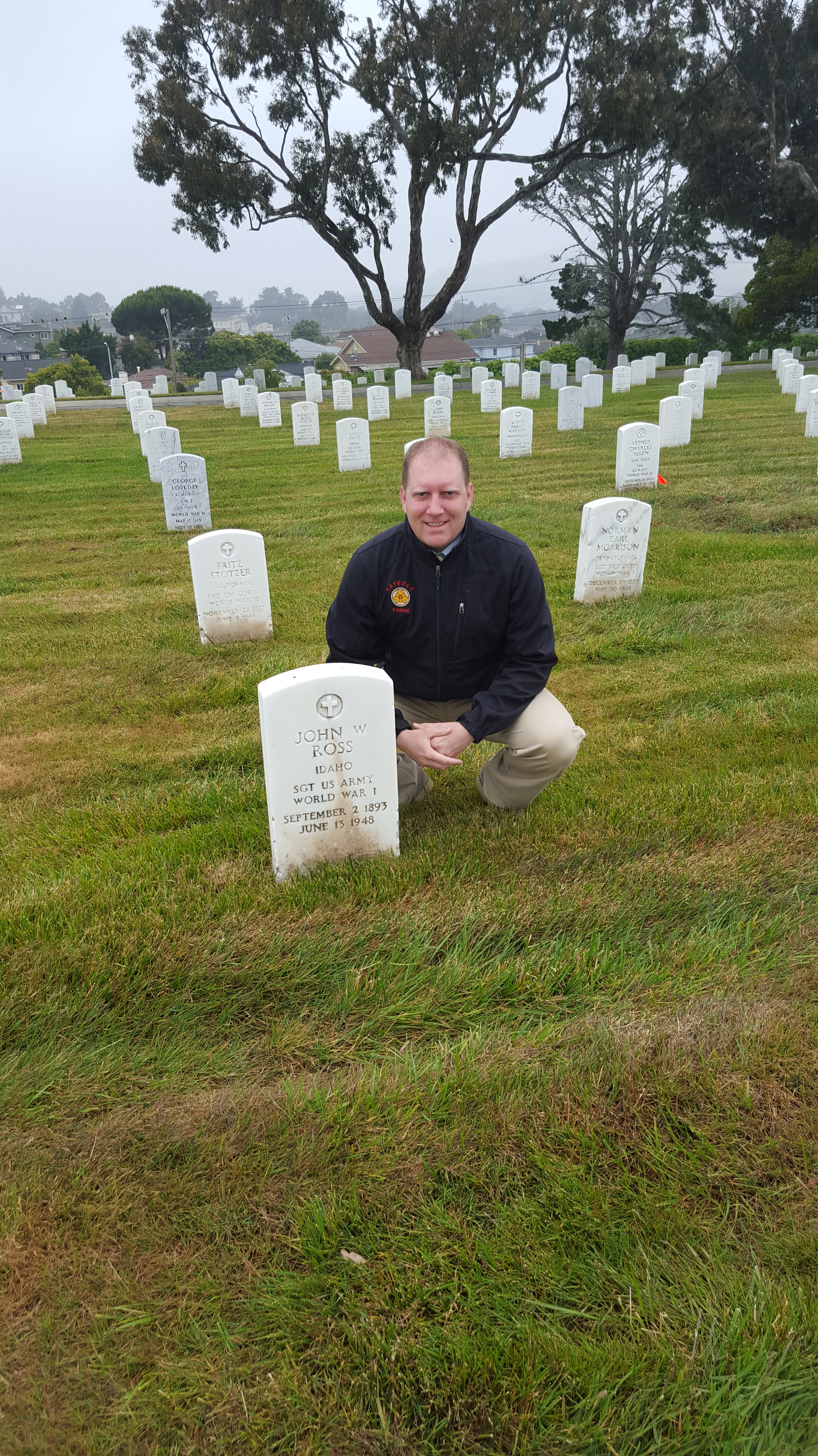
Paul Ross with tombstone of John William (Jack) Ross (1890-1948) on 24 May 2016.

Ethel Ross – Plain City, Utah

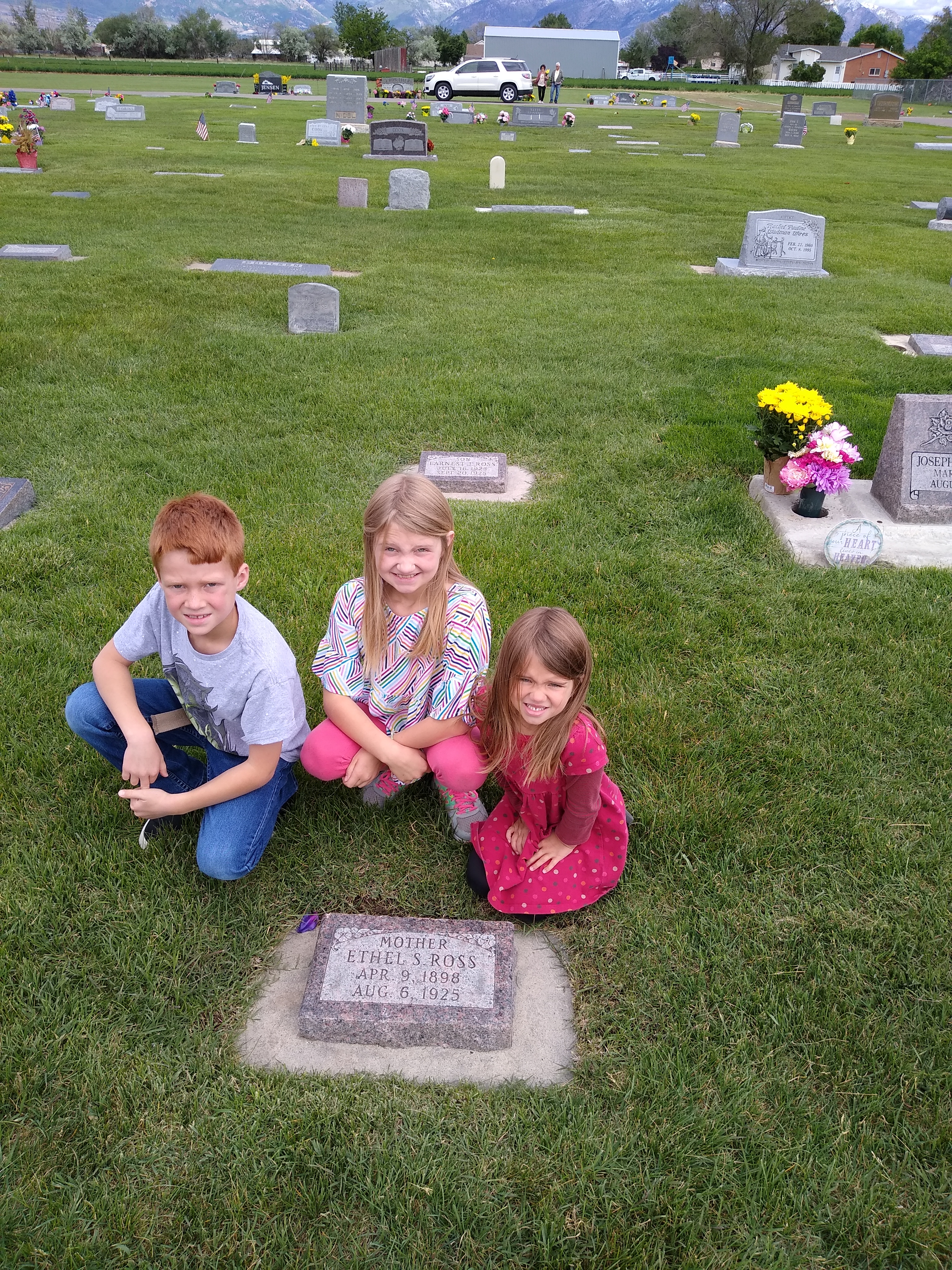
Hiram, Aliza, and Lillian Ross with tombstone for Ethel Sharp Ross (1898-1925) on 23 May 2020.

Delos & Dena Donaldson – Ogden, Utah

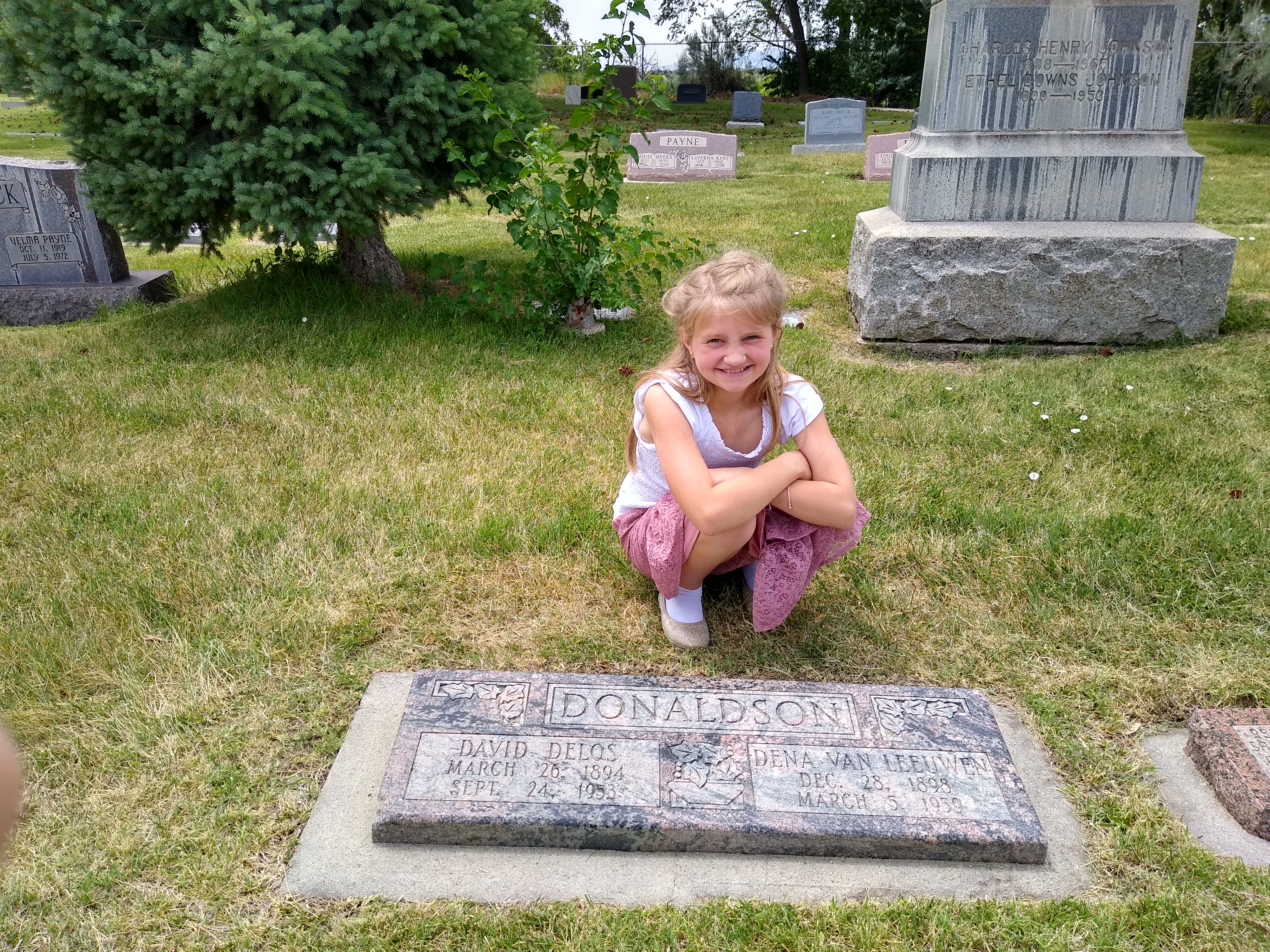
Aliza Ross with tombstone for Berendena Van Leeuwen (1898-1959) and David Delos Donaldson (1894-1953) on 28 June 2020.

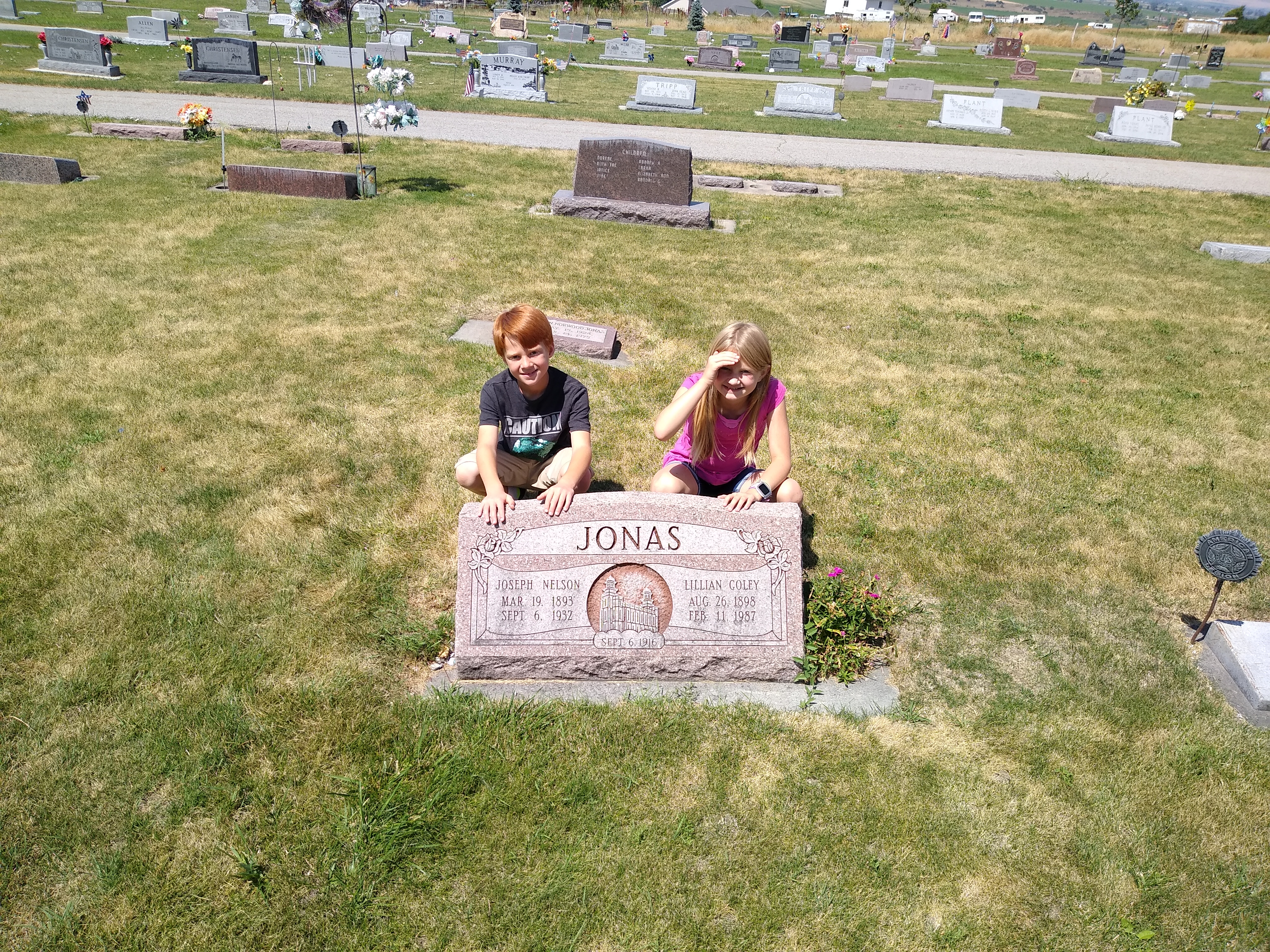
Joseph & Lillian Jonas – Richmond, Utah

Hiram and Aliza Ross with tombstone of Lillian Coley (1898-1987) and Joseph Nelson Jonas (1893-1932) on 26 July 2020.

Bill & Mary Andra – Whitney, Idaho

Lillian (in background by Wanner tombstone), James, Aliza, and Hiram Ross with tombstone of Mary Louise Wanner (1901-1991) and William Fredrick Andra (1898-1990) on 26 July 2020.

Great Great Grandparents

James Ross/Meredith – Belmont Memorial, Fresno, California

Paul, Aliza, and Hiram Ross with tombstone of James Thomas Ross (aka James R Meredith)(1869-1951) on 10 May 2019.

Damey Graham Ross – Sierra View, Olivehurst, California

Damey Catherine Graham Ross doesn’t have a tombstone, but we visited her grave in 2016 in the evening.  No photo.

Milo & Lillie Sharp – Plain City, Utah

Aliza, Paul, Lillian, and Hiram Ross with tombstone of Mary Ann Bailey (1828-1913), Mary Ann (Lillian “Lillie” Musgrave) Stoker (1861-1935) and Milo Riley Sharp (1857-1916) on 23 May 2020. Mary Ann Bailey is the mother of Milo Riley Sharp, don’t confuse mother Mary Ann with spouse Mary Ann. We shorten our Lillian’s name to Lillie’s spelling in her honor.

William & Mary Donaldson – Ogden, Utah

Aliza Ross with tombstones of Mary Elizabeth Williams (1869-1951) and William Scott Donaldson (1865-1913) on 28 June 2020.

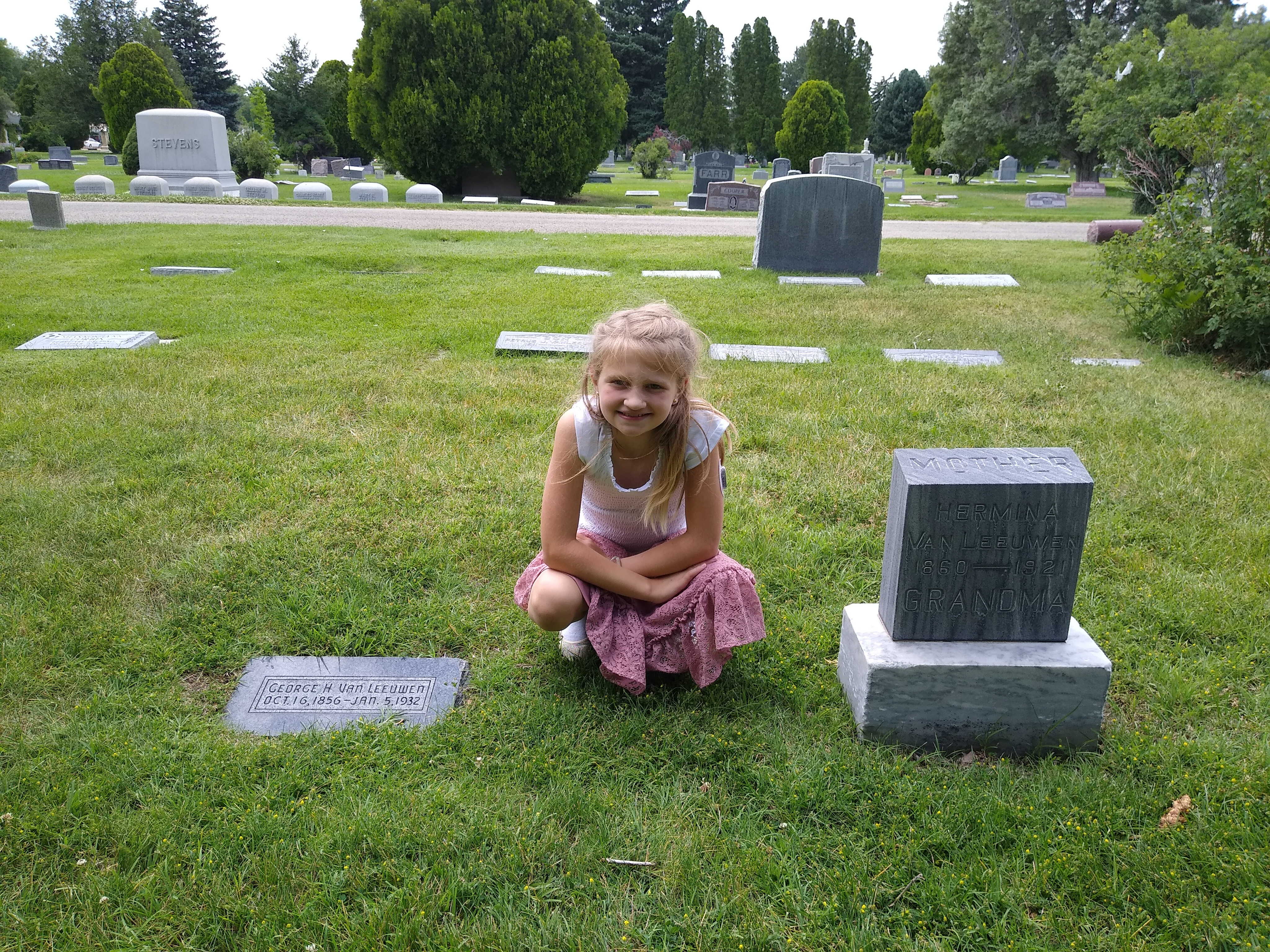
George & Minnie Van Leeuwen – Ogden, Utah

Aliza Ross with tombstones for Hermina Jansen (1860-1921) and George Henry (Gerhardus Hendrick) Van Leeuwen (1856-1932) on 28 June 2020.

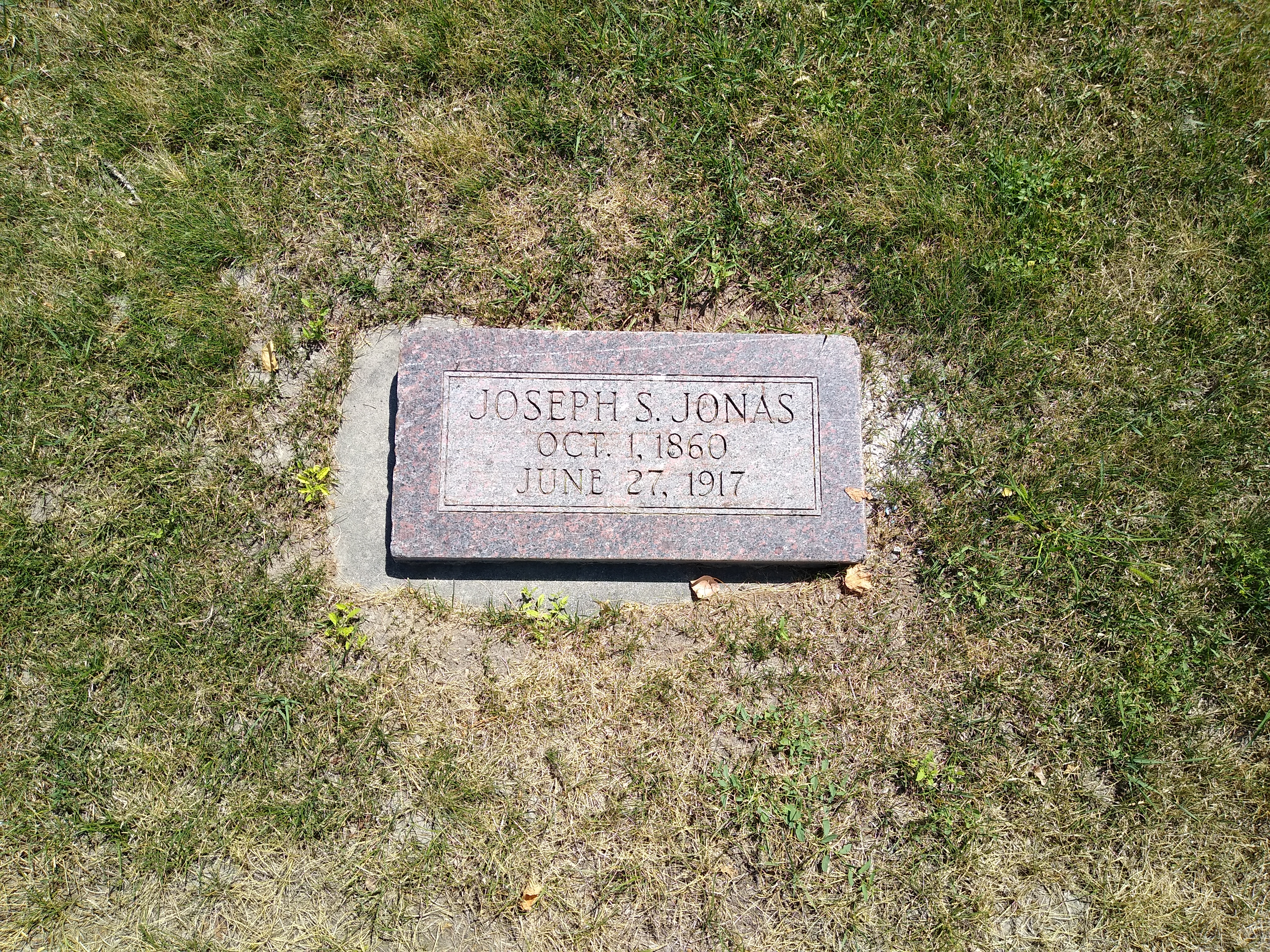
Joseph Jonas – Richmond, Utah

Tombstone of Joseph Jonas (1859-1917) on 26 July 2020.  The S is a mistake put there by someone.  Some have put his mother’s maiden name “Schumacher” there, but we have yet to find any evidence of that middle initial or name.

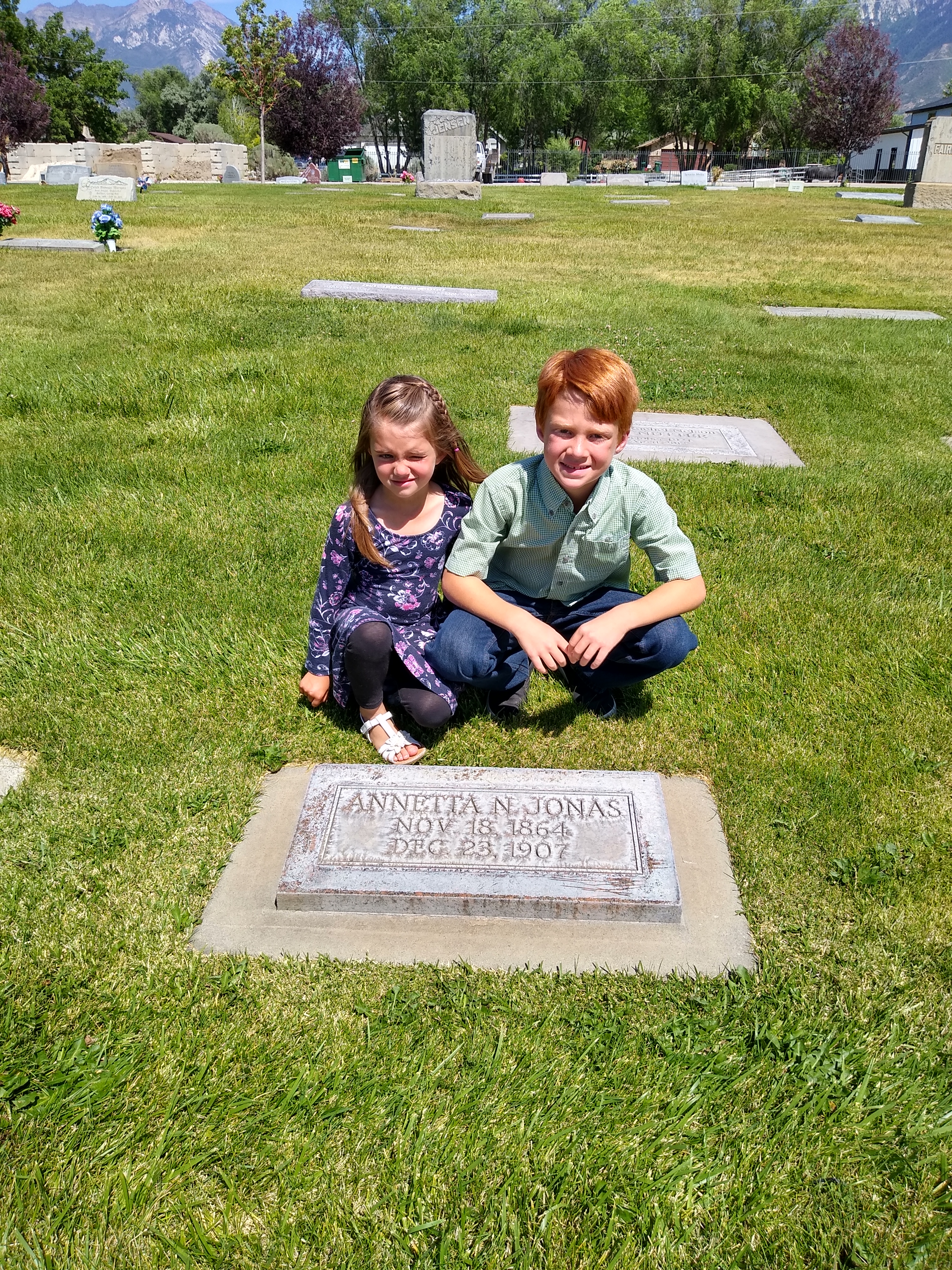
Annie Jonas – Crescent, Sandy, Utah

Lillian and Hiram Ross with tombstone of Annetta Josephine Nelson Jonas (1864-1907) on 11 July 2020.

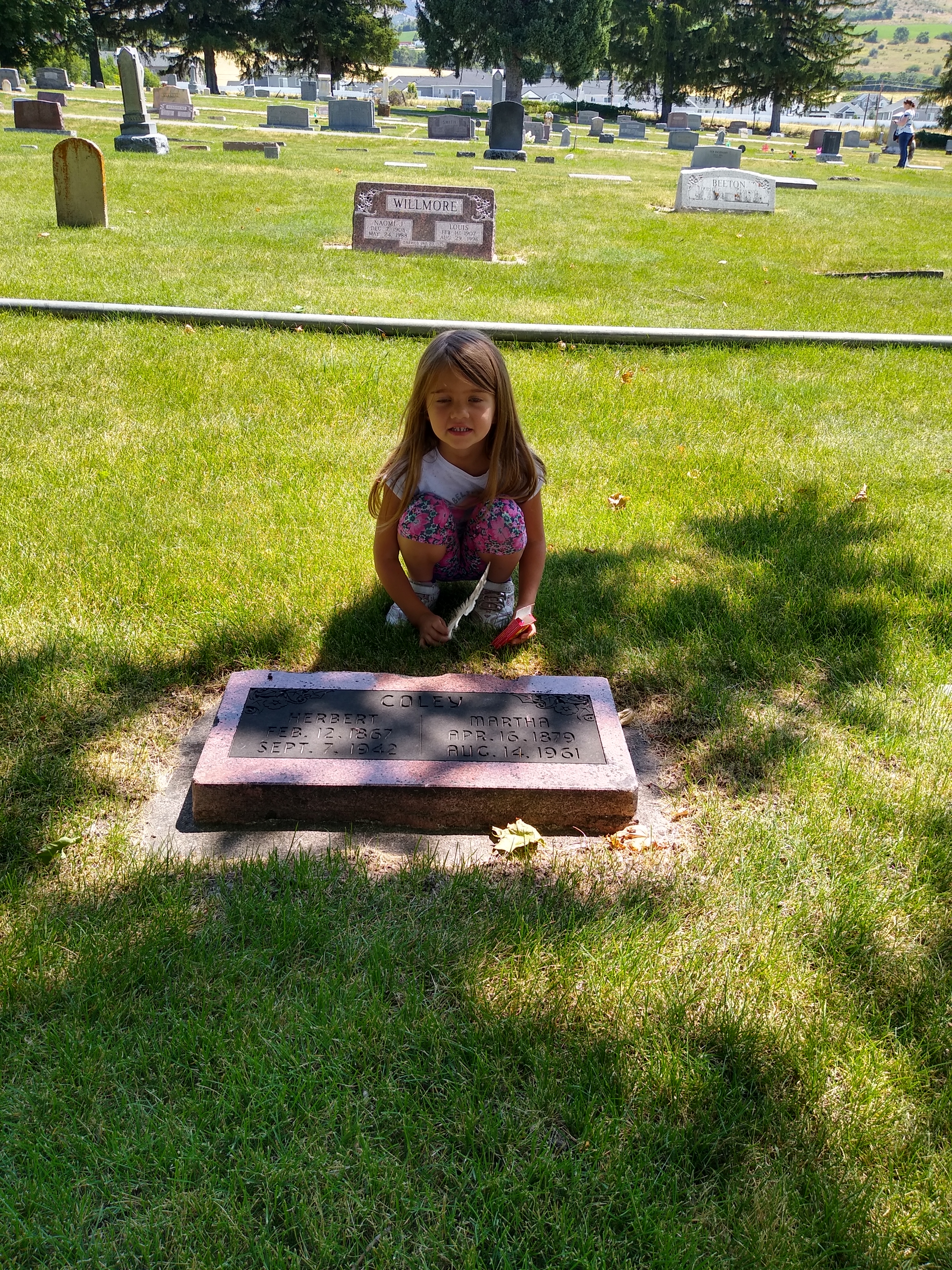
Herbert & Martha Coley – Richmond, Utah

Lillian Ross with tombstone of Martha Christiansen (1879-1961) and Herbert Coley (1864-1942) on 26 July 2020.

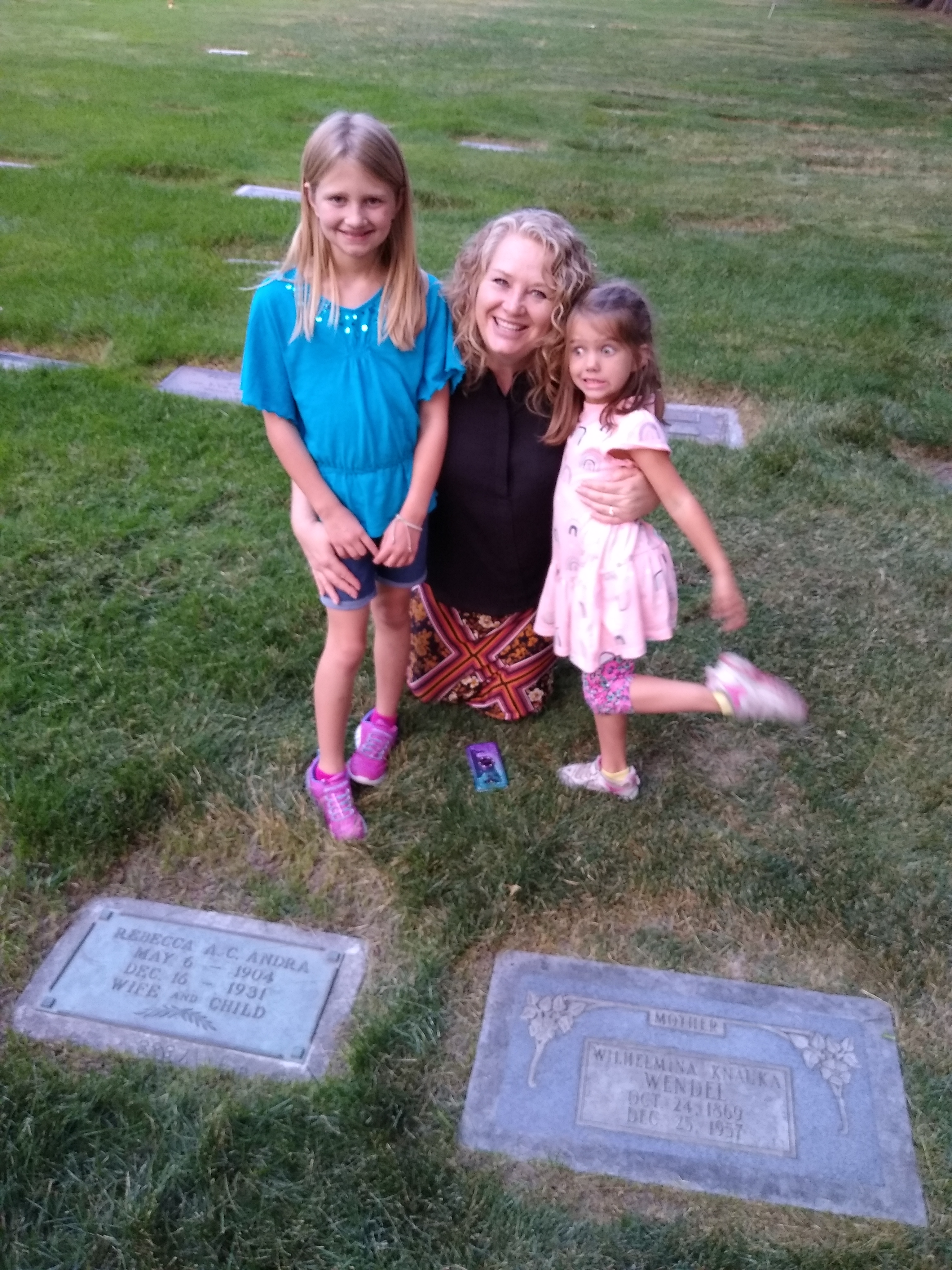
Christiana Andra – Wasatch Memorial, Latona Section, Salt Lake City, Utah

Aliza Ross, Jill Hemsley, Lillian Ross with tombstone of Christiana Wilhelmina Knauke (1869-1957), widow of Friedrich Theodor Andra, on 6 September 2020.  She went by Wilhelmina in the United States and married Johann Wendel, as I have written previously.  The other grave is her daughter-in-law and grandson, Rebecca Emelia Christensen (1904-1931) and Otto Carl Andra (1929-1929).

George & Regina Wanner – Whitney, Idaho

Hiram and Aliza Ross with tombstone of Regina Frederike Nuffer (1869-1942) and John George Wanner (1870-1947) on 26 July 2020.

Great Great Great Grandparents

William Sharp – Ogden, Utah

Lillie, Paul, Aliza, and Hiram Ross with tombstone of William Sharp on 27 November 2020.  This was the first time I had ever been to William’s grave.

Mary Sharp – Plain City, Utah

Aliza, Paul, Lillian, and Hiram Ross with tombstone of Mary Ann Bailey (1828-1913), Mary Ann (Lillie Musgrave) Stoker (1861-1935) and Milo Riley Sharp (1857-1916) on 23 May 2020. Mary Ann Bailey is the mother of Milo Riley Sharp, don’t confuse mother Mary Ann with spouse Mary Ann. We shorten our Lillian’s name to Lillie’s spelling in her honor.

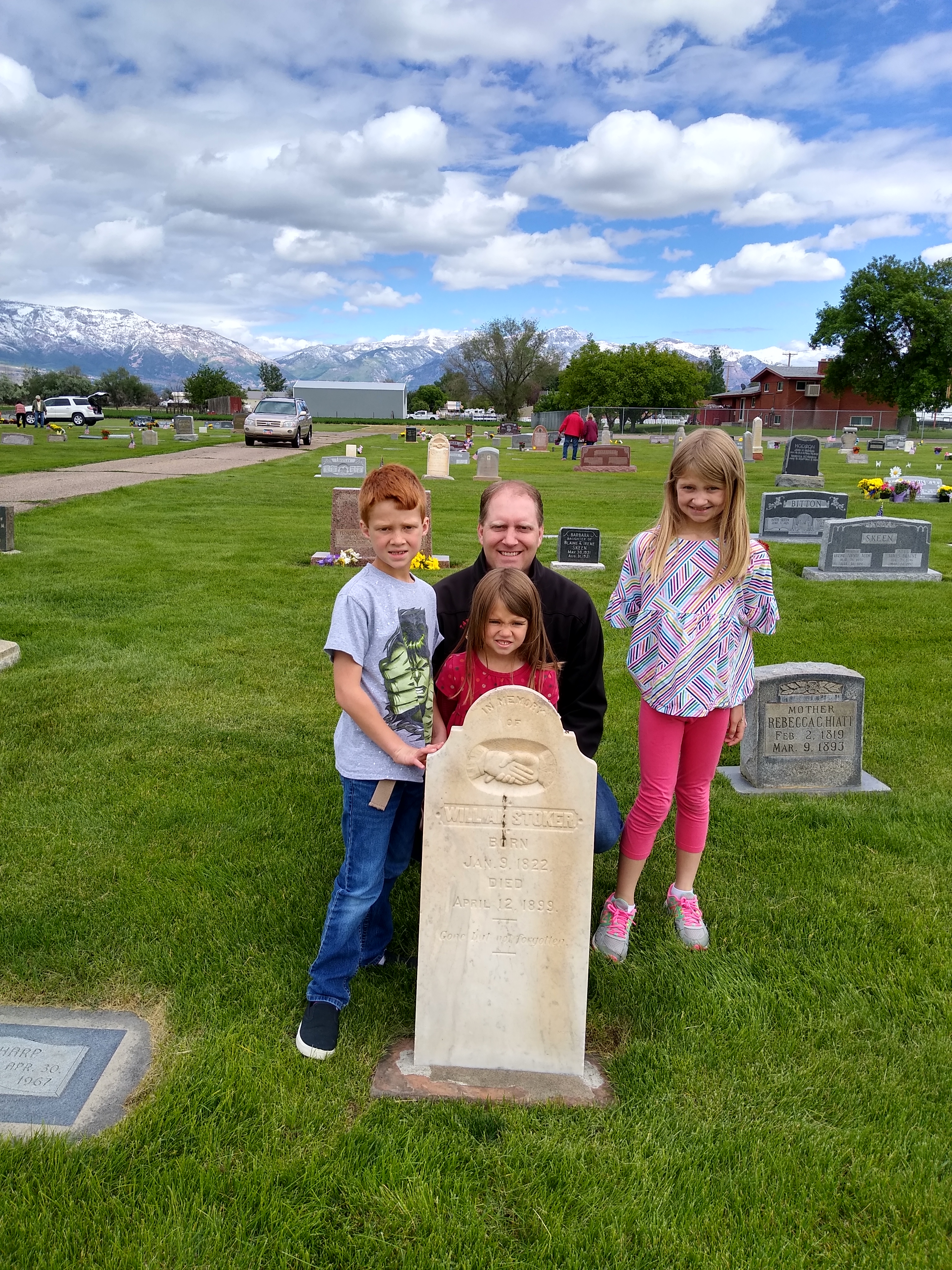
William Stoker – Plain City, Utah

Hiram, Paul, Lillian, and Aliza Ross with tombstone of William Edward Stoker (1827-1899) on 23 May 2020.

David & Gwenllian Williams – Ogden, Utah

Aliza, Lillie, Paul, James, and Hiram Ross at the graves of Gwenllian Jordan (1842-1900) and David D Williams (1832-1911) on 27 November 2020.  Neither have a tombstone. 

Hubert Jonas – Holy Cross, Ellensburg, Washington

Lillian Ross with tombstone of Emma Schriber Jonas (1855-1898), wife of William Jonas on 5 August 2020. William and his father Hubert both do not have tombstones and are buried next to Emma.

John & Annie Nelson – Logan, Utah

Hiram, James, Lillian, and Aliza Ross with tombstone for Agnetta Benson (Bengtsson)(1832-1873) and John Nelson (Johann Nilsson)(1827-1902) on 25 July 2020.

Stephen & Hannah Coley – Lewiston, Utah

Aliza Ross with tombstone of Hannah Maria Rogers (1832-1894) and Stephen Coley (1830-1913) on 26 July 2020.

Olle Christiansen – Richmond, Utah

Lillian Ross with the tombstone of Olle Christiansen (1853-1900) on 26 July 2020.  This tombstone notes his wife’s burial in Portland, Oregon.

Constance Christiansen – Multnomah Park, Portland, Oregon

Paul, Aliza, and Lillian Ross with tombstone of Constance Josephine Eliza Jorgensen Christiansen (1857-1932) on 8 August 2020.  Portland apparently isn’t watering their cemeteries this year.

John & Anna Wanner – Logan, Utah

James, Aliza, Hiram, and Lillian Ross with tombstone of Anna Maria Schmid (1849-1929) and John George Wanner (1845-1922) on 25 July 2020.

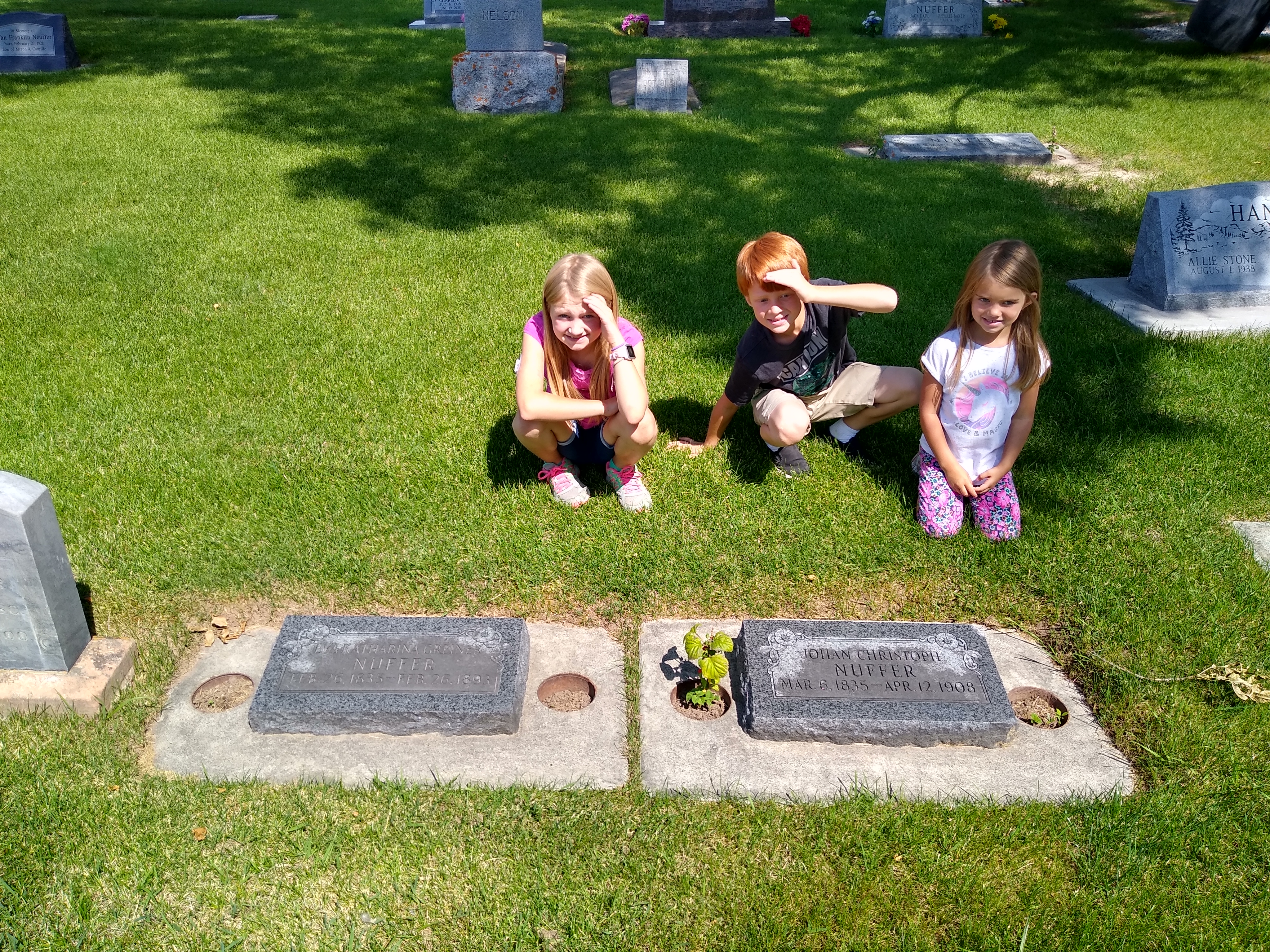
John & Eva Nuffer – Preston, Idaho

Aliza, Hiram, and Lillian Ross with tombstones of Eva Katharina Greiner (1835-1893) and Johann Christoph Nuffer (1835-1908) on 26 July 2020.

Great Great Great Great Grandparents

John Williams – Ogden, Utah

James, Lillie, Aliza, Paul, and Hiram Ross at the tombstone of John Williams (1797-1876) on 27 November 2020.

David & Margret Jordan – Brigham City, Utah

Paul, Aliza, Lillian, and Hiram Ross with tombstones for Margret Watkins (1816-1902), David Jordan (1820-1893) and Thomas Jordan (1857-1880) on 23 May 2020. Thomas is the son of David and Margret.

Johanna Benson – Spring City, Utah

Paul, Aliza, Hiram, and Lillian Ross with tombstone of Johanna Johannsson Benson (Bengtsson)(1813-1897) on 7 September 2018.  I know I am cheating, it wasn’t 2020.  But it was recent.

Olavus & Hanna Jorgensen – Richmond, Utah

Aliza Ross with tombstones of Hanna Mathea Christensen (1831-1900) and Olavus Jorgensen (1830-1904) on 26 July 2020.

Others visited this year.

Garrett Lee Smith – Weston, Oregon

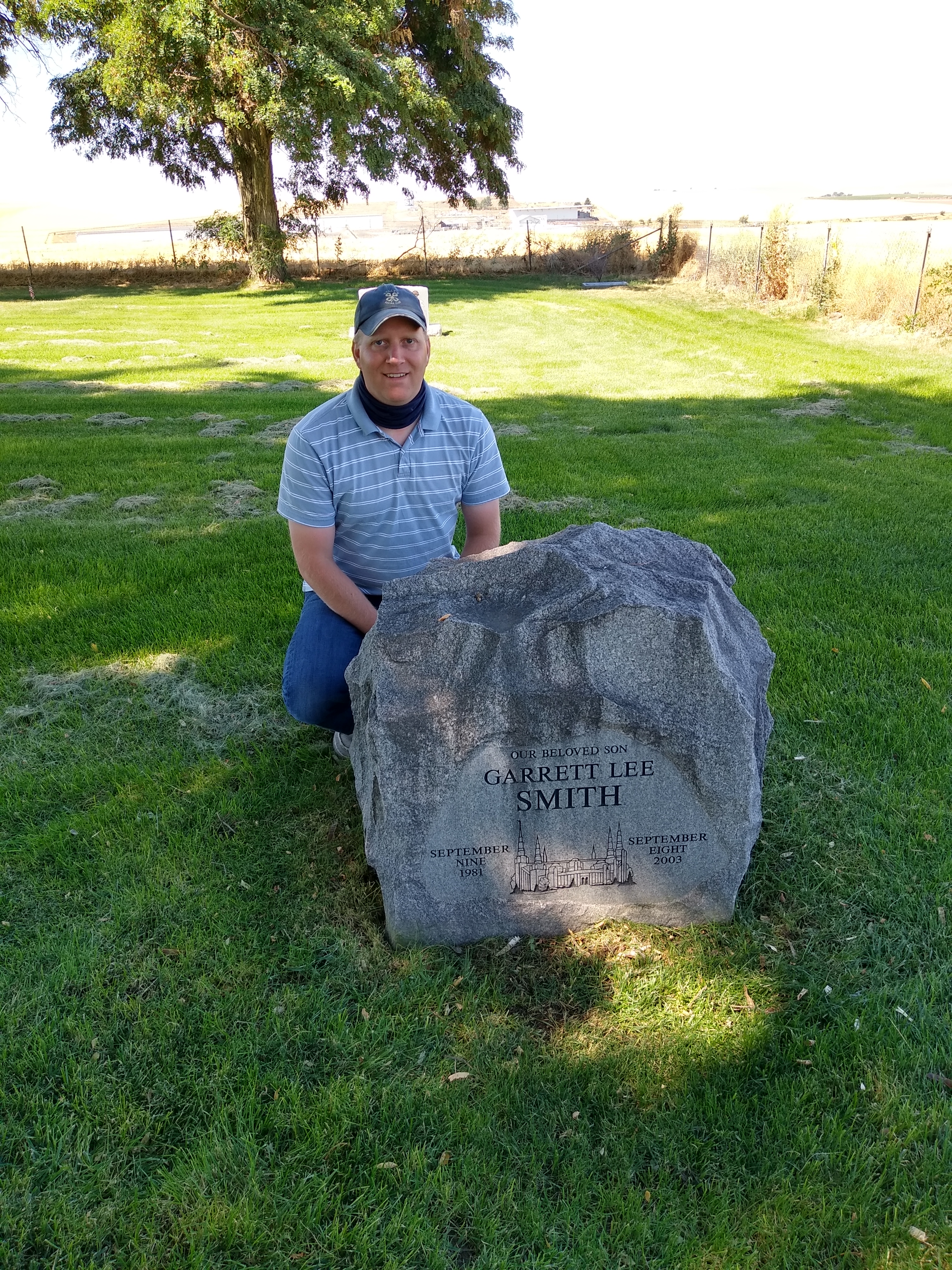
Paul Ross with tombstone of Garrett Lee Smith (1981-2003) on 9 August 2020.  Garrett was my last missionary companion.

Eli Benjamin Stoker – Mullan, Idaho

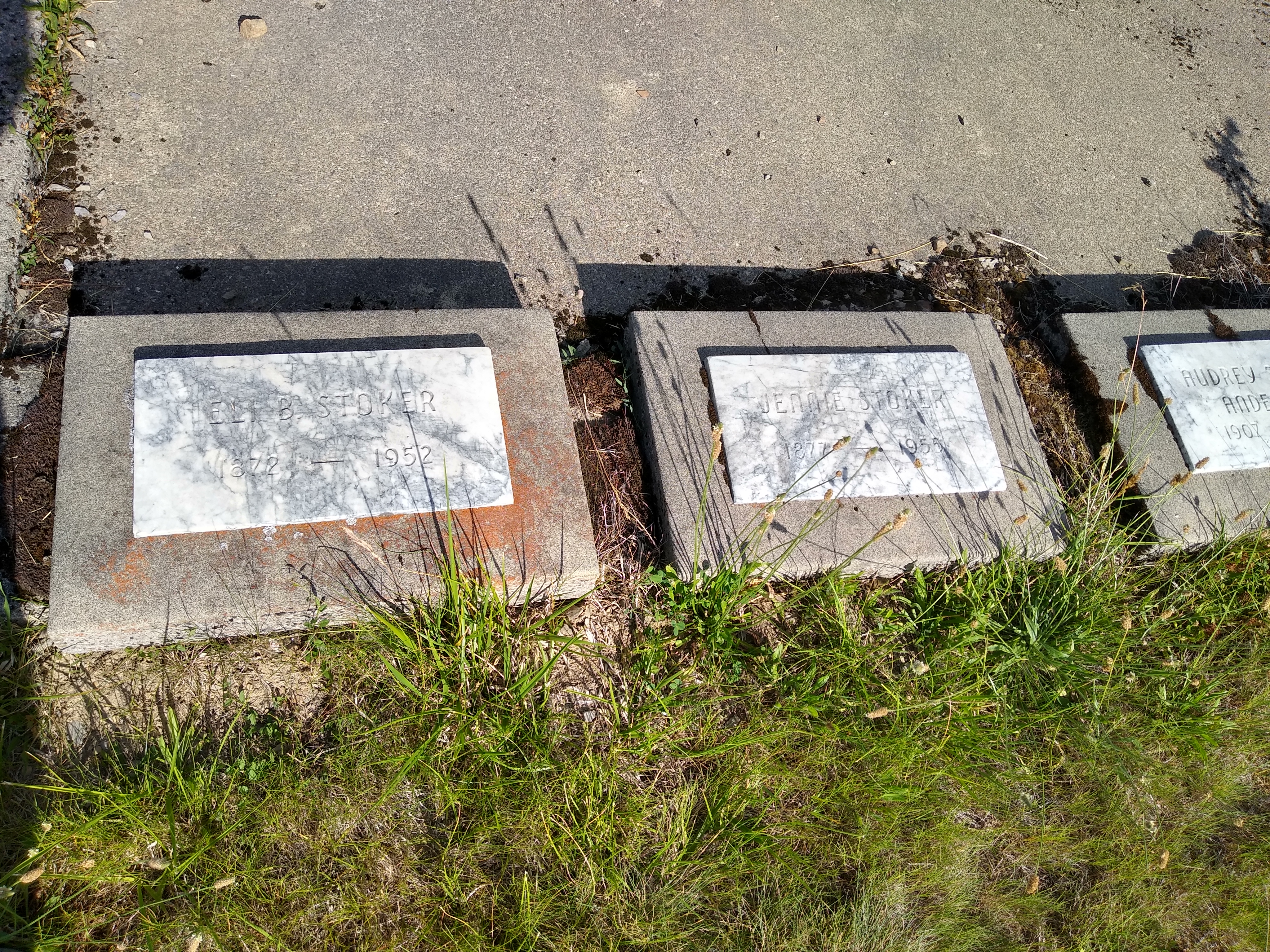
Tombstone of Eli Benjamin Stoker (1870-1952) on 3 August 2020.  Eli is the half-brother to my Mary Ann Stoker Sharp.

Mary Nelson Jonas – Holy Cross – Ellensburg, Washington

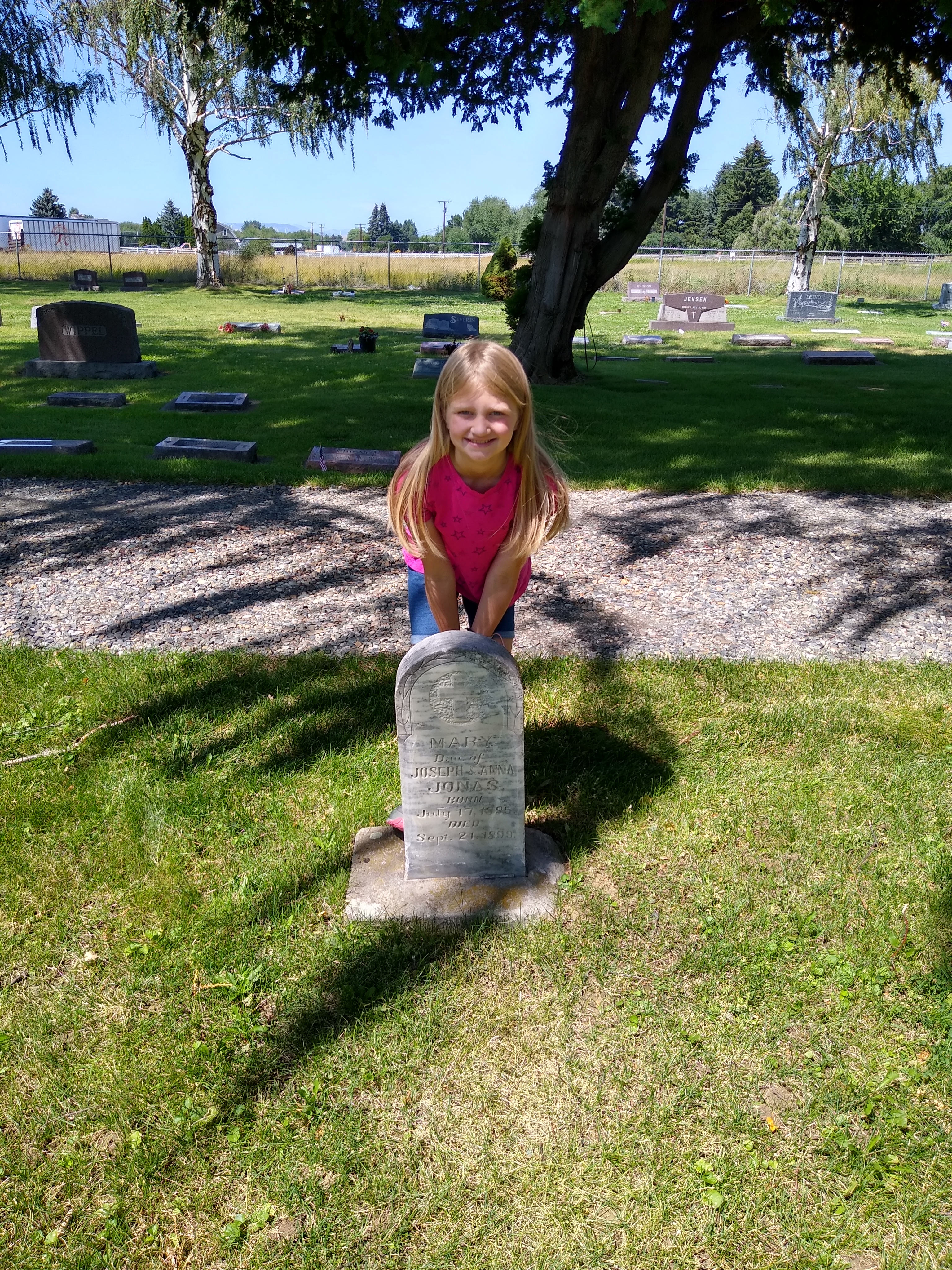
Aliza Ross with tombstone of Mary Nelson Jonas (1885-1899) on 5 August 2020.  Mary is the sister to my Joseph Nelson Jonas.

Ezra & Flora Benson – Whitney, Idaho

Aliza and James Ross with tombstone of Flora Smith Amussen (1901-1992) and Ezra Taft Benson (1899-1994) on 26 July 2020.  Many know Ezra as the 13th President of The Church of Jesus Christ of Latter-day Saints and Secretary of Agriculture under President Eisenhower.

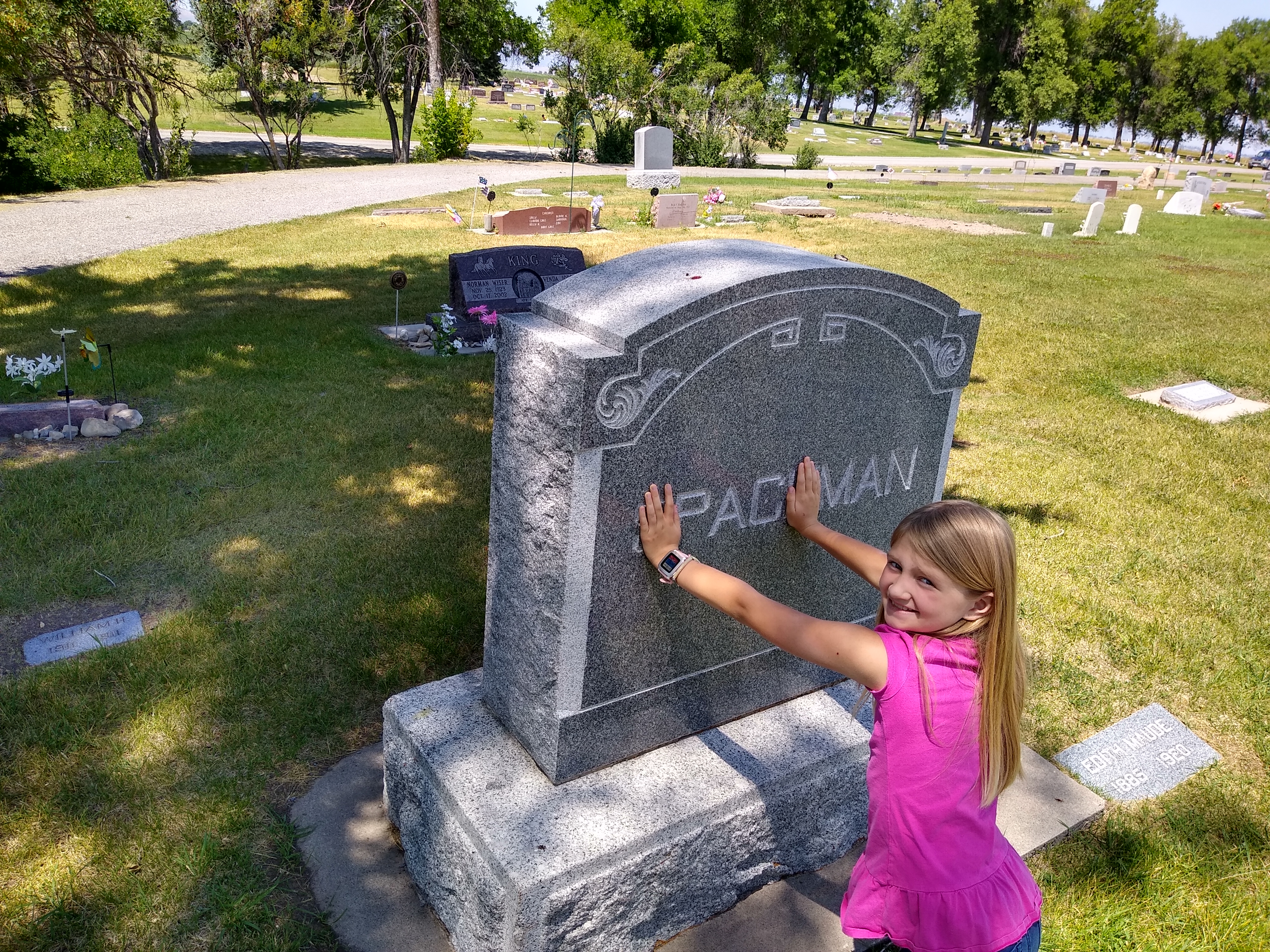
Spackman Plot Marker – Lewiston, Utah

Aliza Ross with the Spackman Plot Marker. She recognized and wanted a picture with the Pacman tombstone on 26 July 2020.

Walter Theodor Andra – Logan, Utah

Aliza, Hiram, and Lillian Ross with tombstone of Walter Theodor Andra (1896-1967) on 25 July 2020.  Walter is brother to my Bill Andra.

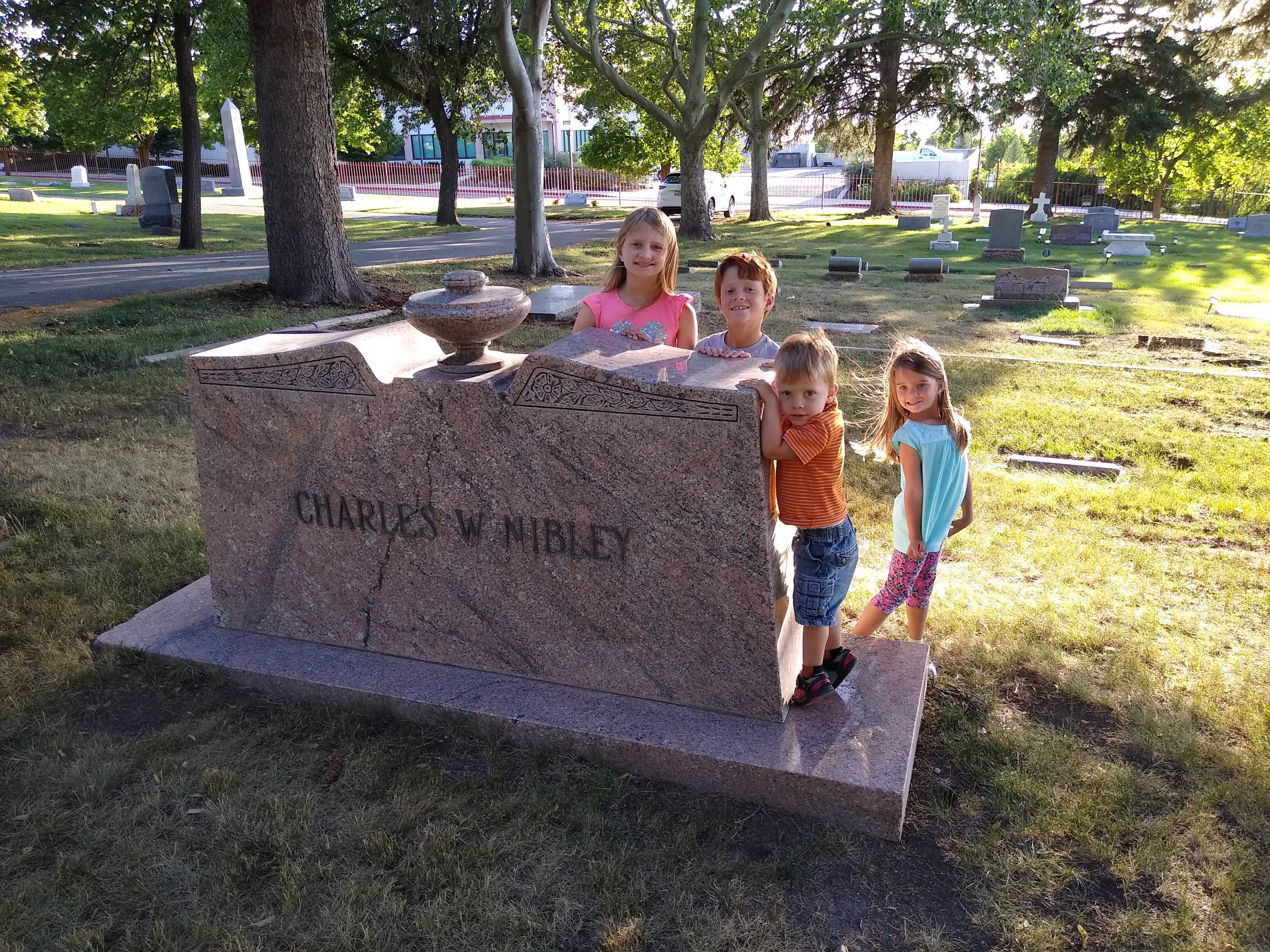
Charles Wilson Nibley – Logan, Utah

Aliza, Hiram, James, and Lillian Ross with tombstone of Charles Wilson Nibley (1849-1931) on 25 July 2020.  Charles is known for various positions and business interests, but most will know him as a member of the First Presidency (non-apostle) to President Heber J Grant of The Church of Jesus Christ of Latter-day Saints.

Moses Thatcher – Logan, Utah

Lillian, Hiram, and Aliza Ross with tombstone of Moses Thatcher (1842-1909) on 25 July 2020.  Moses is known for various positions and business interests, but most will know him as a an Apostle of The Church of Jesus Christ of Latter-day Saints.

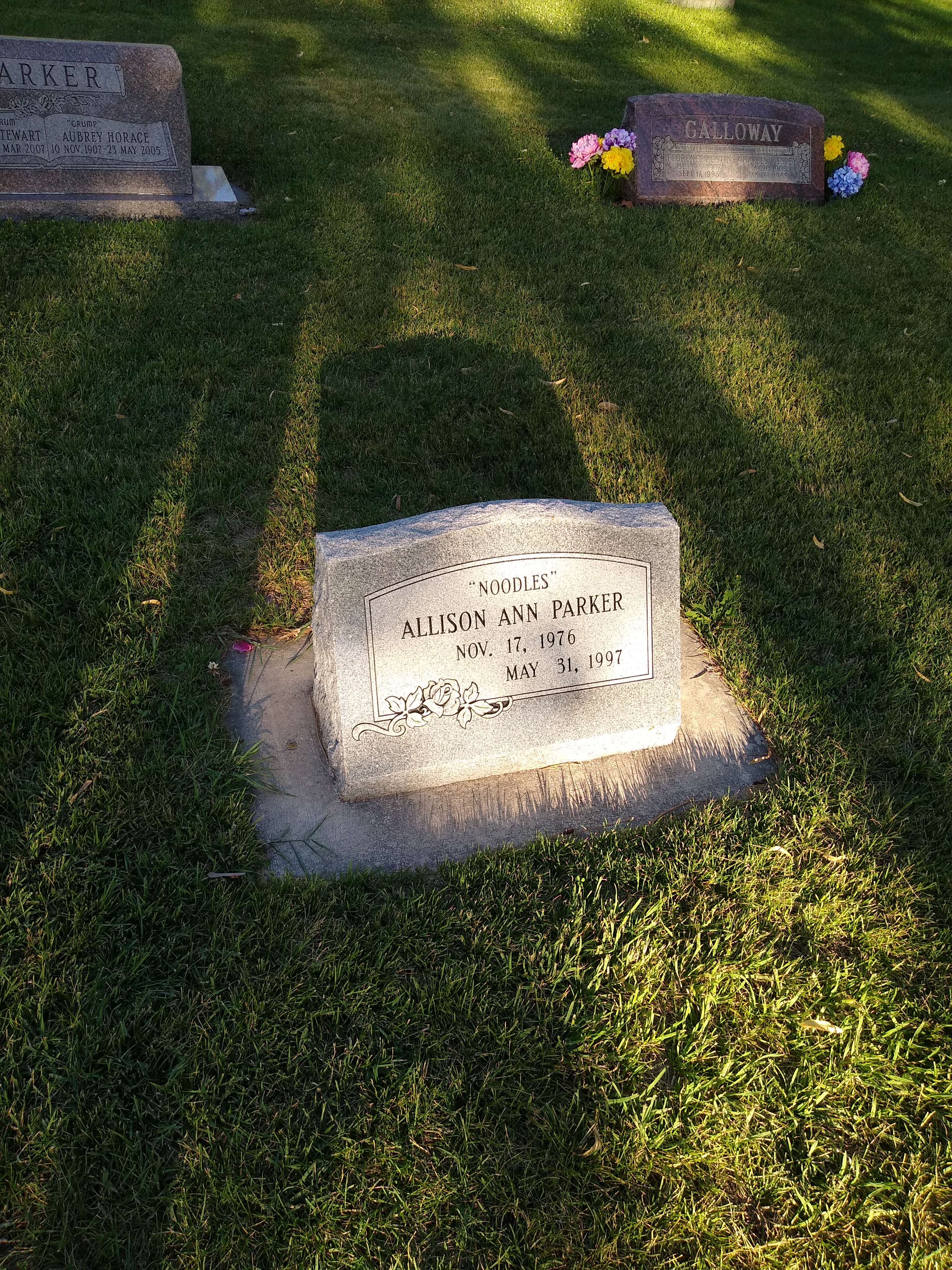
Allison Ann Parker – Logan, Utah

Tombstone of Allison Ann Parker (1976-1997) on 25 July 2020.  Allison is a friend and brother of my high school friends Ryan and Russell Parker.  She passed away after a tragic accident driving back to Utah after our Senior Prom date night in 1997.

Peter Maughan – Logan, Utah

James, Aliza, Lillian, and Hiram Ross with tombstone of Peter Maughan on 25 July 2020.  Peter is known for various positions and business interests, as one of the founders of Cache Valley, Utah.

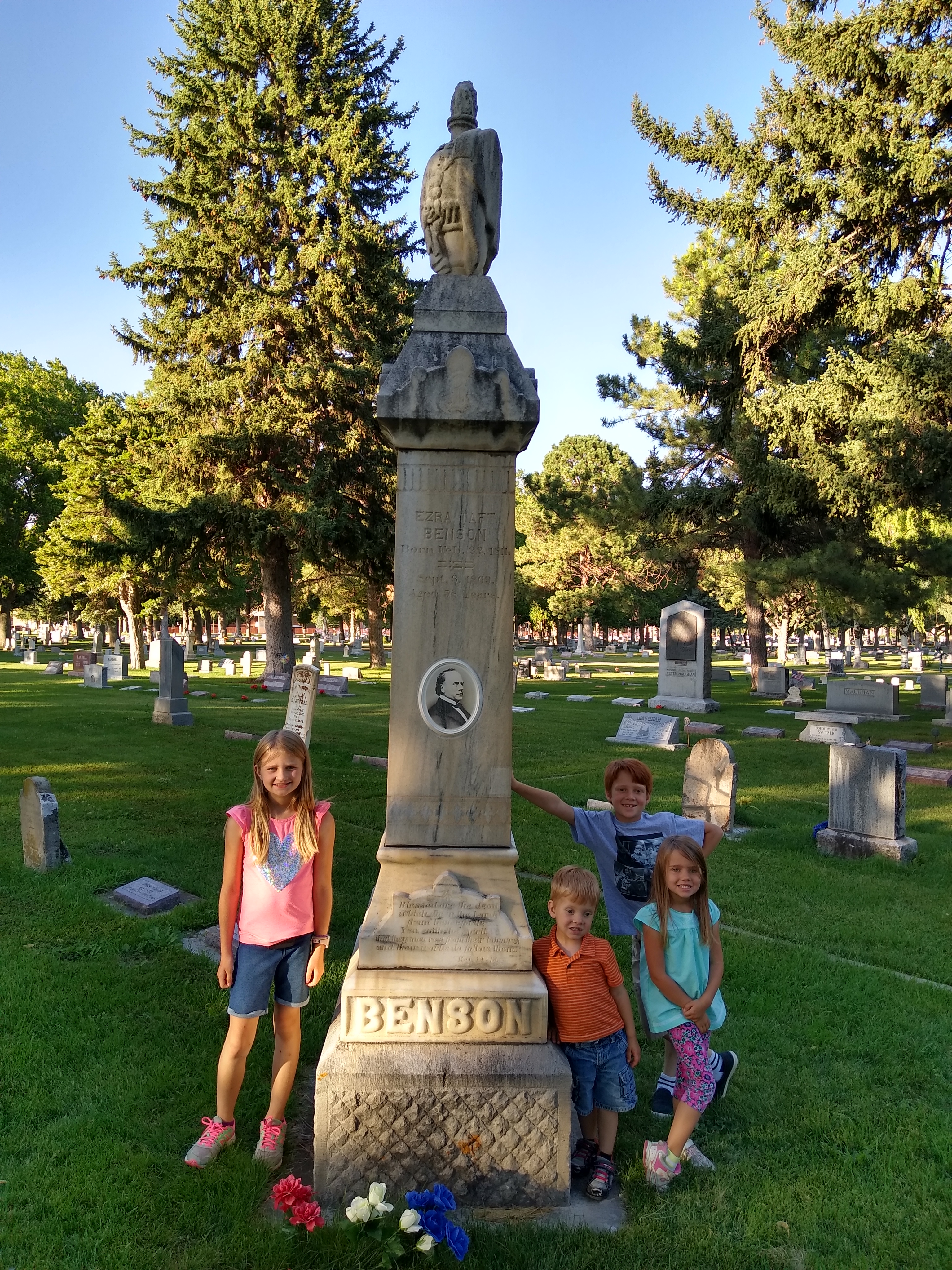
Ezra Benson – Logan, Utah

Aliza, James, Hiram, and Lillian Ross with tombstone of Ezra Taft Benson (1811-1869) on 25 July 2020.  Ezra is known for various positions and business interests, but most will know him as a an Apostle of The Church of Jesus Christ of Latter-day Saints.

Nels Nelson – Crescent, Sandy, Utah

Hiram and Lillian Jonas with tombstone of Nels August Nelson (Nilsson)(1857-1935) on 11 July 2020. He is the brother to my Annetta “Annie” Jonas.

Stanley Spatig – West Warren, Utah

Tombstone of Stanley Hazen Spatig (1940-2013). Son of Eva Virtue Wanner Spatig, sister to my Mary Louise Wanner Andra.

Joseph & Ann Wayment – West Warren, Utah

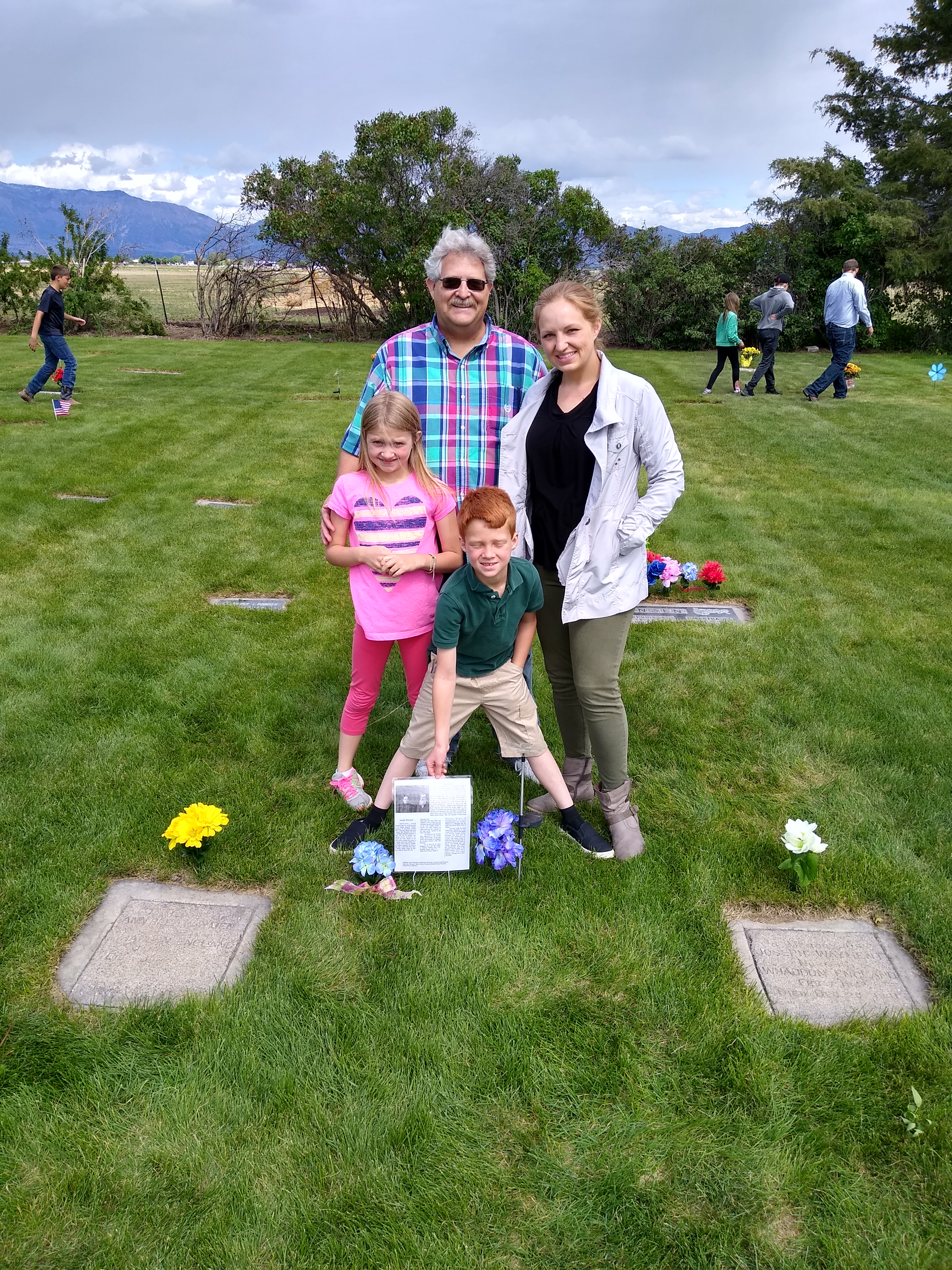
Bryan Hemsley, Amanda, Aliza, and Hiram Ross with tombstones of Ann Reed (1852-1931) and Joseph Wayment (1844-1931). Amanda’s Great Great Great Grandparents on 24 May 2020.

Louis & Martha Hansen – West Warren, Utah

Bryan Hemsley, Aliza, Amanda, and Hiram Ross with tombstone of Sarah Eveline Judkins (1886-1943), Louis Alma Hansen (1876-1951), and Martha Ann Wayment (1877-1908) on 24 May 2020. Louis and Martha are Amanda’s Great Great Grandparents.

Walter & Myrtle Hansen – West Warren, Utah

Bryan & Jill Hemsley with Aliza, Lillian, Amanda, and Hiram Ross with tombstone of Myrtle Thompson (1902-1959) and Walter Wayment Hansen (1904-1995) on 24 May 2020. Walter and Myrtle are Amanda’s Great Grandparents.

Evan & Lona Jonas – Lindquist Memorial Gardens of the Wasatch, Ogden, Utah

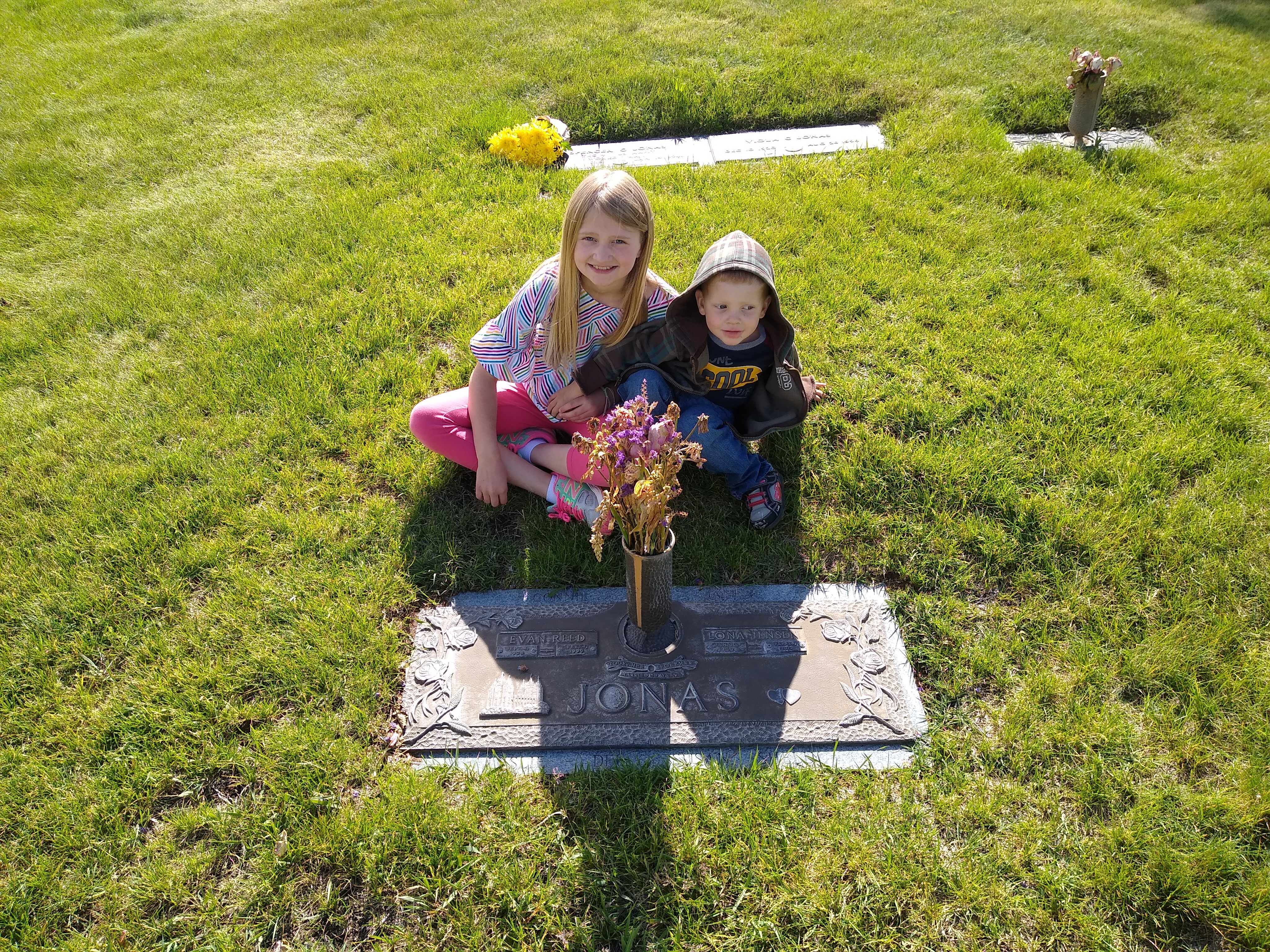
Aliza and James Ross with tombstone for Lona Rae Jensen (1930-2012) and Evan Reed Jonas (1928-1999) on 23 May 2020. Evan is the brother to my Norwood Jonas.

Spencer & Jimmie Jonas – Lindquist Memorial Gardens of the Wasatch, Ogden, Utah

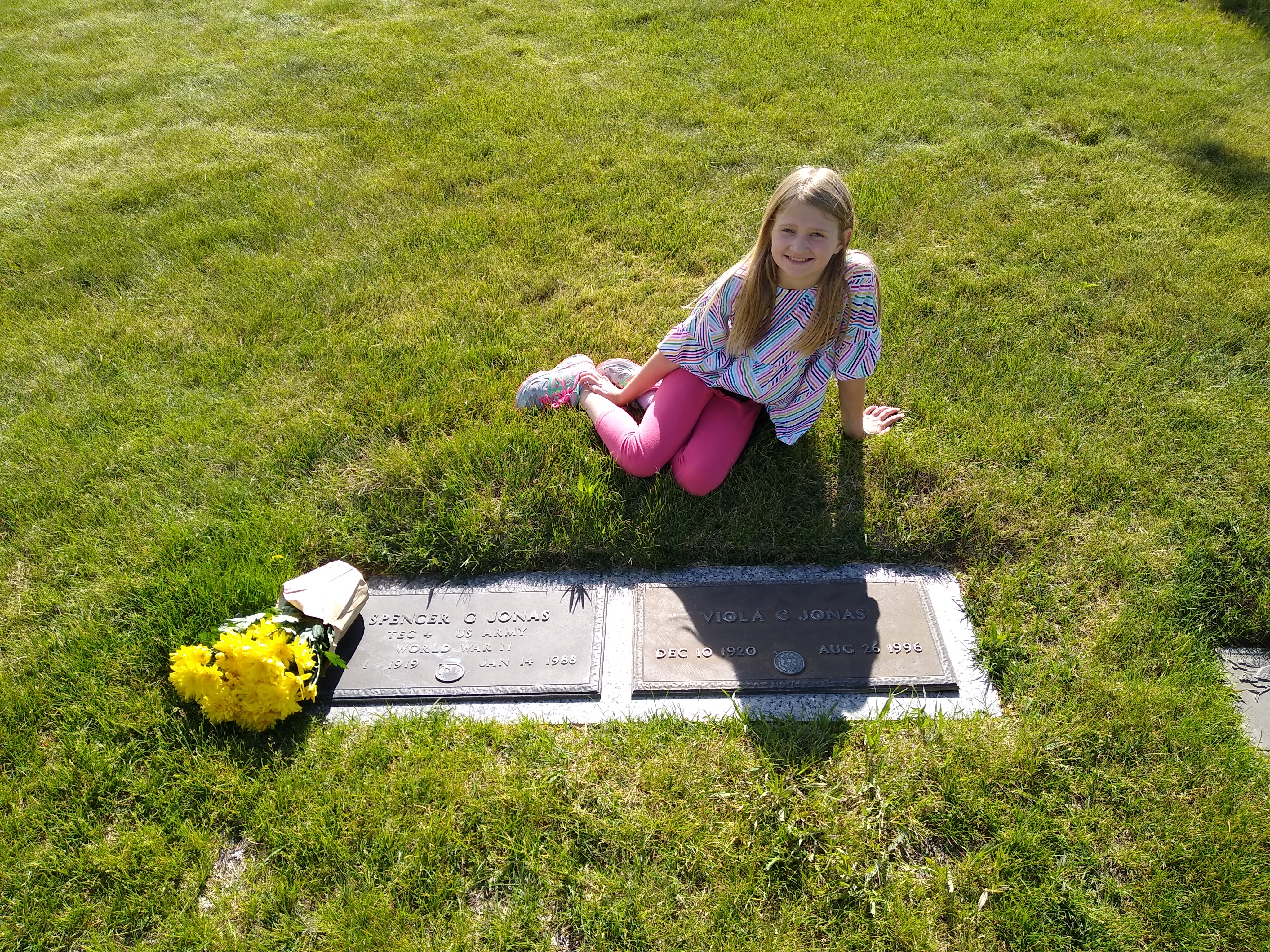
Aliza Ross with tombstone of Viola Amelia (Jimmie) Cole (1920-1996) and Spencer Gilbert Jonas (1919-1988) on 23 May 2020. Spencer is the brother to my Norwood Jonas.

Melvin Thompson – Lindquist Memorial Gardens of the Wasatch, Ogden, Utah

Amanda, James, Aliza, Lillian, Hiram Ross, Bryan and Jill Hemsley, and Alyssa Smart with tombstone of Melvin J Thompson (1925-2018) on 23 May 2020. Mel is Amanda step-Grandpa.

Merle & Belle Hemsley – Lindquist Memorial Gardens of the Wasatch, Ogden, Utah

Bryan & Jill Hemsley, Hiram, Lillian, Aliza, and Amanda Ross with tombstone for Belle Sarah Peterson (1917-2003) and Richard Merle Hemsley (1912-1962) on 23 May 2020. Merle and Belle are Amanda’s Great Grandparents.

Ellen Weller – Hooper, Utah

Tombstone of Ellen Watton Weller (1828-1894) on 23 May 2020. I stumbled upon this tombstone in Hooper. I was walking around, felt inspired to walk over, and looked at this one knowing there was a link. Name looked vaguely familiar. Half-sister to my Hannah Maria Rogers Coley. Didn’t know she was buried in Hooper, FamilySearch didn’t have it either. Her and Joseph Weller are now documented and updated.

Dee Hemsley – Hooper, Utah

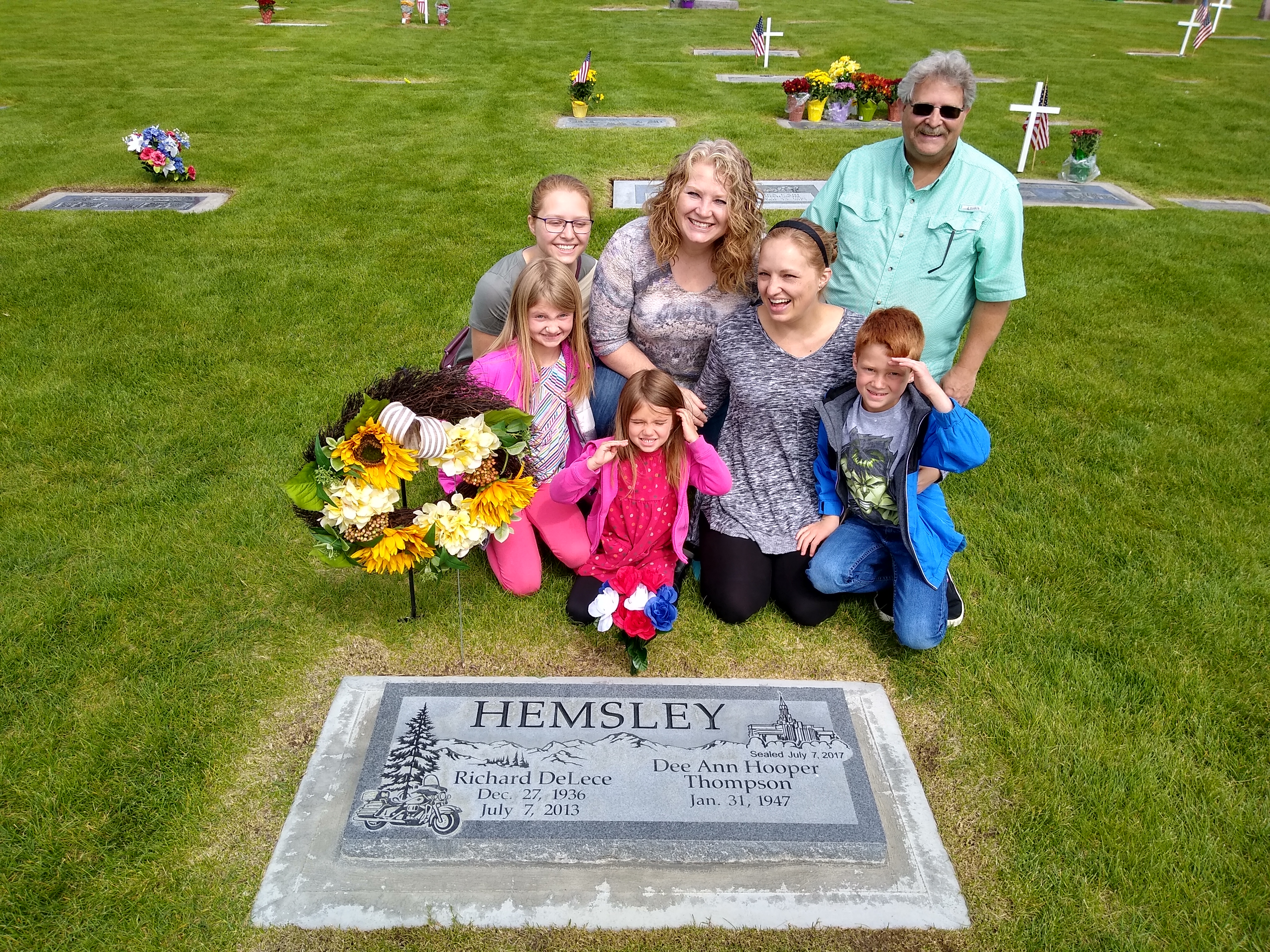
Alyssa Smart, Bryan and Jill Hemsley, Aliza, Lillian, Amanda, and Hiram Ross with tombstone of Richard DeLece Hemsley (1936-2013) on 23 May 2020.  Dee is Amanda’s grandfather.

William & Martha Wayment – Plain City, Utah

James, Amanda, Lillian, Aliza, and Hiram Ross with tombstones for Martha Brown (1823-1905) and William Wayment (1822-1883) on 23 May 2020. William and Martha are Amanda’s Great Great Great Great Grandparents.  The tombstone above Aliza’s head is William Edward Stoker mentioned above, my Great Great Great Grandfather.

Lorenzo Snow – Brigham City, Utah

Hiram, Lillian, and Aliza Ross with tombstone for Lorenzo Snow (1814-1901) on 23 May 2020. Lorenzo Snow is known as the 5th President of The Church of Jesus Christ of Latter-day Saints.

David & Ruby Haight – Wasatch Memorial, Salt Lake City, Utah

Aliza & Lillian Ross, Jill Hemsley, with tombstone of Ruby Olson (1910-2004) and David Bruce Haight (1906-2004) on 6 September 2020.  David Haight is known as an Apostle of The Church of Jesus Christ of Latter-day Saints and I previously interacted with him regarding marriage.

Charlotte Sharp – Ogden, Utah

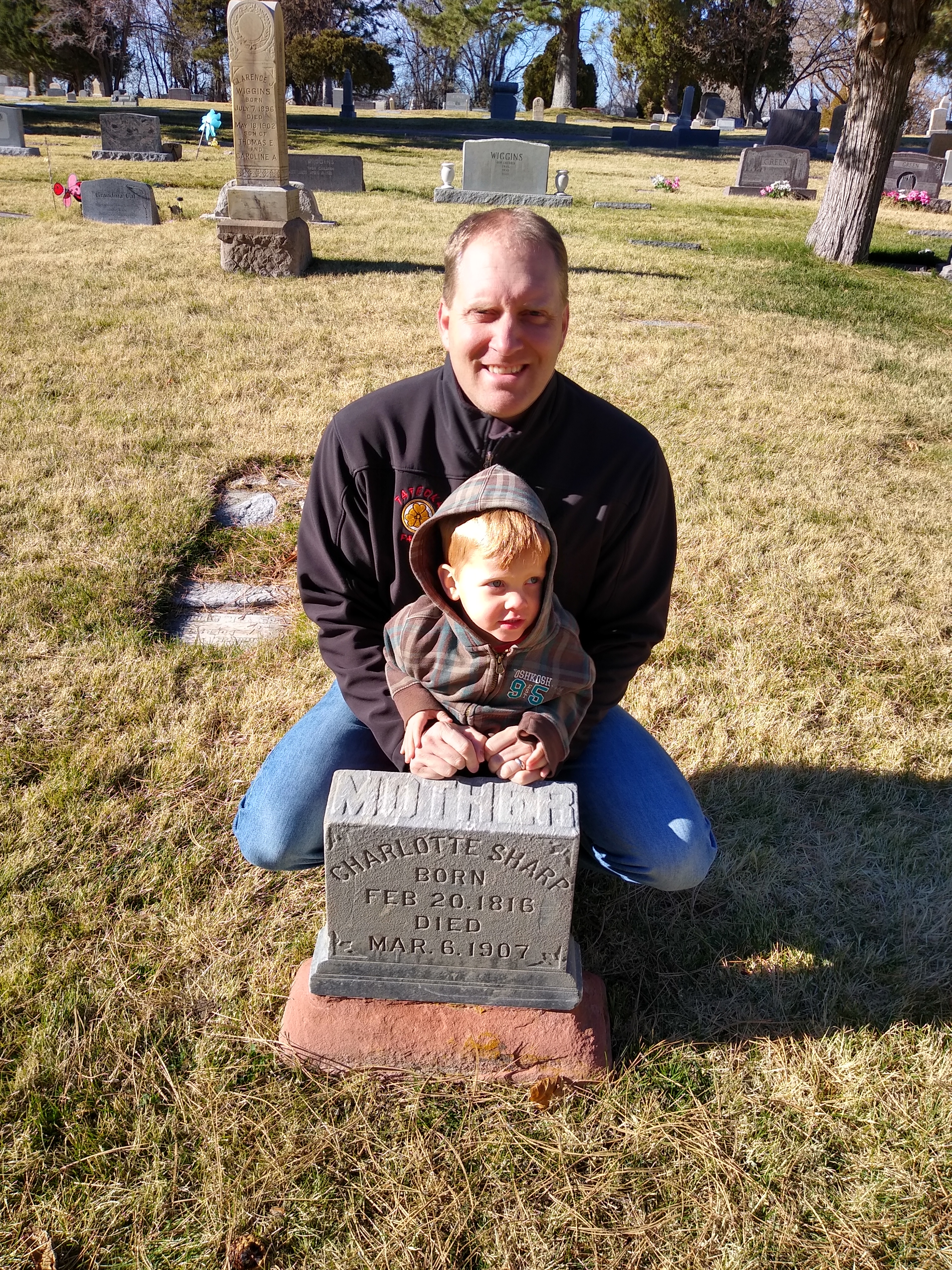
James and Paul Ross at the tombstone of Charlotte Elizabeth Earl (1816-1907) on 27 November 2020.  Charlotte married my William Sharp (1826-1900) after she was widowed of her first husband Charles James McGary (1808-1875). 

Lorin Farr – Ogden, Utah

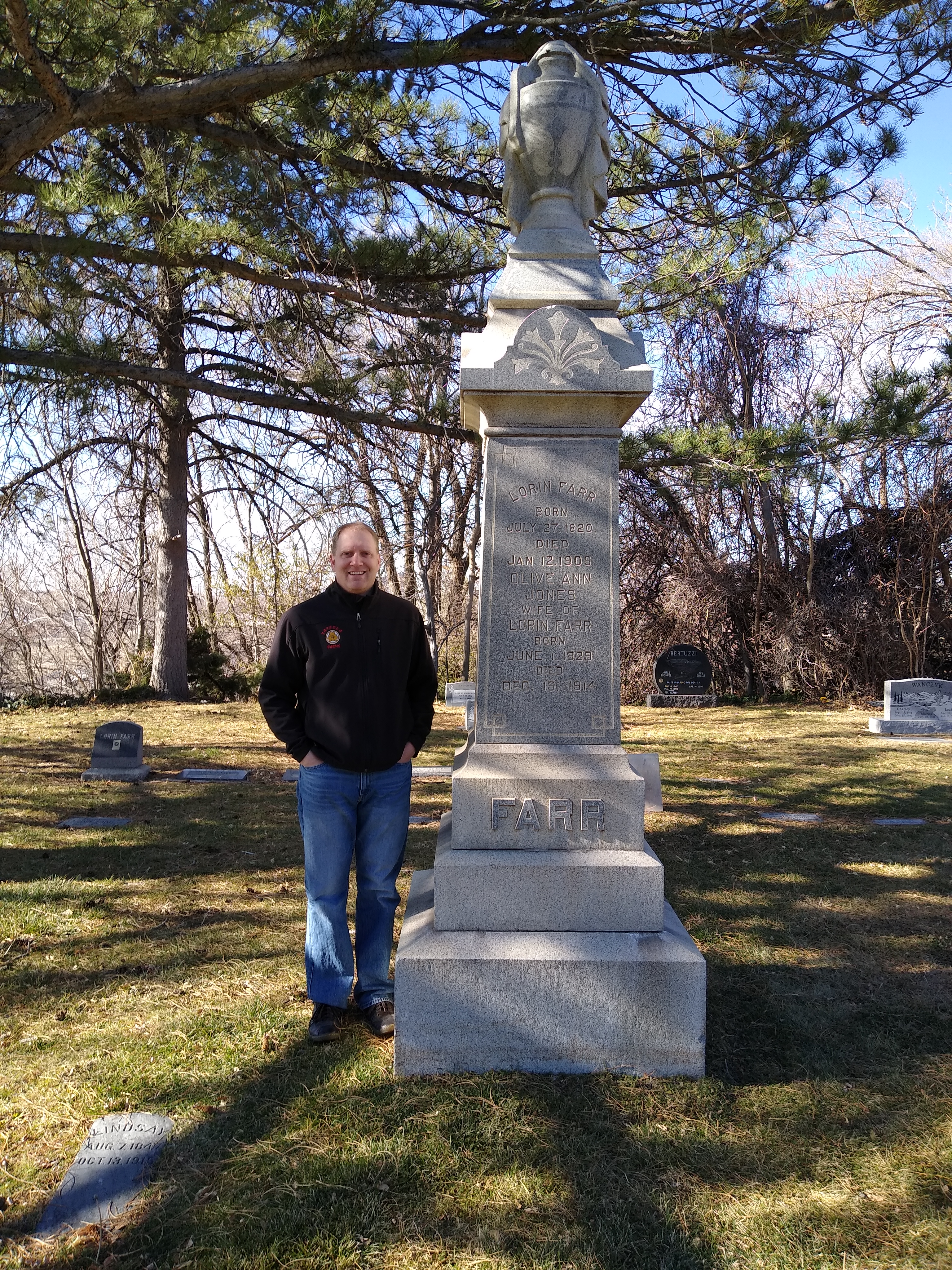
Paul Ross with tombstone of Lorin Farr (1808-1907) on 27 November 2020.  Lorin Farr was the first Stake President of the Weber Stake which covered all the territory of all my ancestors in Ogden and Plain City.  He was also the first Mayor of Ogden.

Thomas Marsh – Ogden, Utah

Paul Ross with tombstone of Thomas Baldwin Marsh (1800-1866) on 27 November 2020.  Thomas Marsh is known as the first Apostle of The Church of Jesus Christ of Latter-day Saints, who had he remained faithful, would have been President before Brigham Young.

Sergene Sorenson – Pleasant View, Burley, Idaho

Lillie, Hiram, Aliza, and James Ross with tombstone of Sergene Sorenson (1932-2013) on 2 January 2021. Sergene is the sister to my Grandma Colleen.

Scott Sorenson – Pleasant View, Burley, Idaho

James, Lillie, Hiram, and Aliza Ross with tombstone of Scott Sorenson (1951-2001) on 2 January 2021.
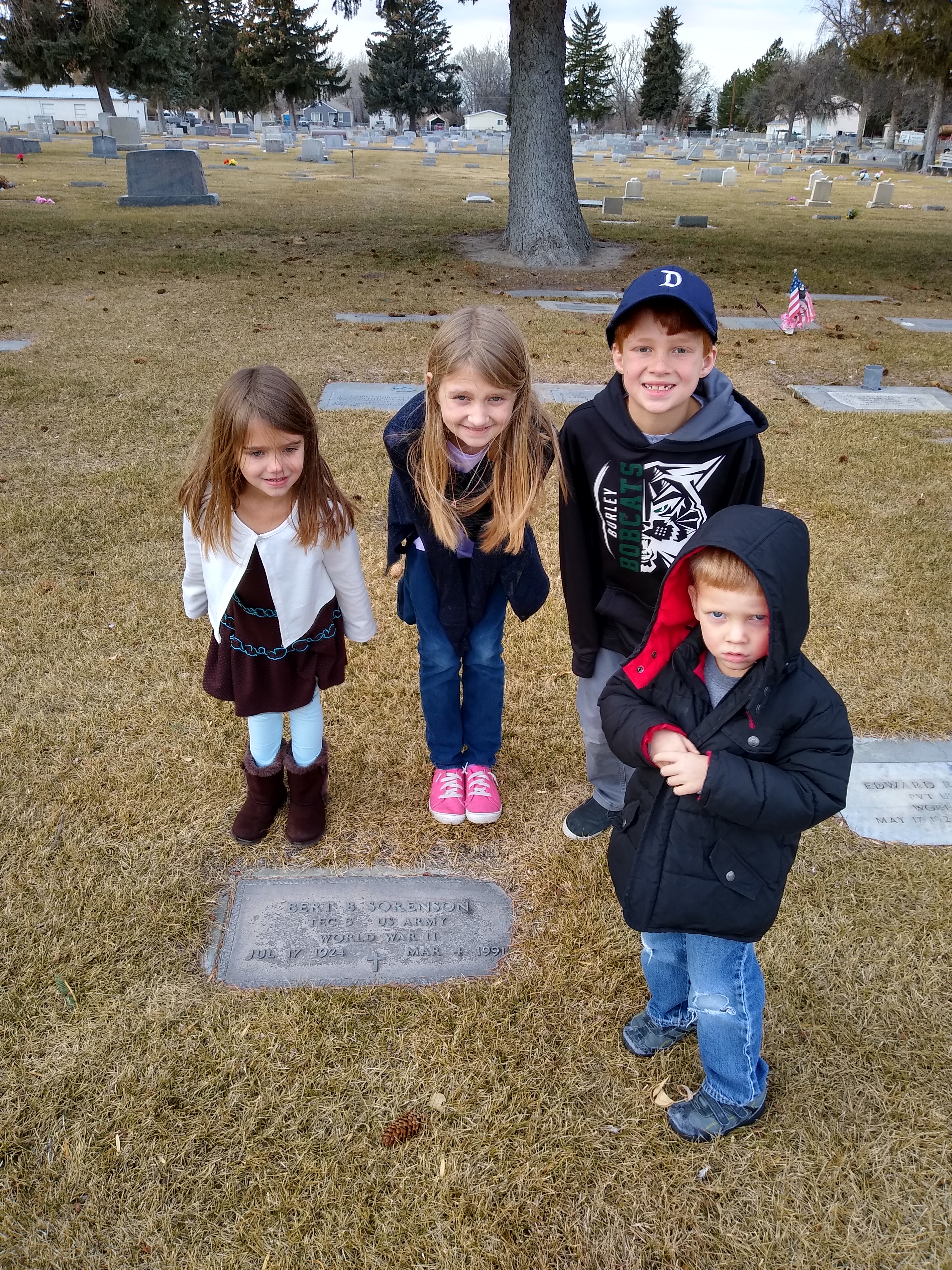
Lillie, Hiram, Aliza, and James Ross with tombstone of Bert Sorenson (1924-1991) on 2 January 2021.

Jonas History: Rosa Nelson Jonas

Christian & Rosa Andersen

This is another chapter of the Jonas history book compiled by Carvel Jonas. “The Joseph Jonas clan of Utah (including – early Jonas family history; early Nelson family history)”   This chapter relates to Rosa Nelson Jonas.  Reviewing this information in FamilySearch shows some changes and updates to some of the information presented.

The following story was written by Rosa and is typed from a hand-written copy in the possession of her daughter, Verla Jonas Andersen Lythgoe.

“The story of Mrs. Rosa Jonas Andersen.  Miss Rosa Nelson Jonas was born in Ellensburg, Kittitas County, Washington, on 5 Sep 1886, the third daughter of Annie Josephine Nelson Jonas and Joseph Jonas on a farm.

“Being Catholic, when about two months old, mother took me to church to be baptized, which was done by mother holding me in her arms, while the priest poured a few drops of water on my forehead.  (St. Andrew church records this date 26 Sep 1886)  In the meantime two persons stood by her side, one on each side of her, a man and a woman, they are called the God mother and father, they are to become your guardian in case anything happens to your parents.
“When I was about four years old, I followed a cousin of mine to school.  Not understanding the rules of school, I would talk out loud and go from one seat to another, so the teacher asked me if I hadn’t better go home, my mother may need me.  I told him oh, no she has got some more kids home.  I said it so loud the whole room began to laugh.  That got me, I was so hurt at being laughed at I never went back.
“The fall of 1895, we went to Yakima to pick hops.  Although only nine years of age, it was a very interesting trip.  People came from all parts of the country.
“One family in particular which attracted my attention was a family traveling in a covered wagon, which had on the outside “Olympia, Washington or bust.”  While picking hops they turned their chickens loose, and every night they would go to roost in the back of the wagon, they had a place fixed just on the outside of the end gate.  They stayed during the hop season, which lasts about a month or six weeks.
“We were paid one dollar a box and it took four, forty gallon barrels or what they called flour barrels to make a box of hops.  The hops were grown in large fields like we grow beets which was one of the prettiest sights I ever seen, to see the way the hops grew.  The rows were far enough apart to cultivate between with a cultivation horse.  Large poles were even so far apart with strong wire over the top to which a strong cord was tied and fastened to a peg driven in the ground, the hop vine would wrap around this string as it grew.  The hops were between six and nine inches long.  The most interesting part of this occasion was the Indians, whose camp was just across from where we made our camp.
“We were afraid to go too close so we stood off at a distance and watched them put up their tents.  The women or squaws as we call them, did all the work.

Rosa Nelson Jonas

“After we had been in camp about a week, while strolling through the bushes we came upon a squaw making a bed for a new baby, she dug a great big place in the ground, put a layer of rocks in it and made a fire on the rocks.  Of course, we didn’t know what she was making but I did know she didn’t want us standing around watching her, and would make motions with her hands for us to go away.  I told Mother and she said for us not to go around there any more, because the poor woman was sick.
“Well, we didn’t but one morning before sun up and the ground was white with frost, my sister and I went down to the river and to our great surprise we saw that same squaw that was sick with a tiny baby.  We watcher her undress her baby and in the cold water she dipped it.  We run home and told mother to come quick that an Indian was drowning her baby.  She laughed and told us she was giving her baby its morning bath.
“Now in the Catholic Church the Sunday School has two classes, one that they call the catechism and the other the Bible.  They are not allowed to go to Communion or partake of what we call the sacrament, until they graduate from the catechism (spelled Katakismn in her story) class.  The day before you go to communion the whole class has to go to confession, which is quite an affair.  I’ll try and describe how it is done.  They is say, a large closet with a partition running through the center making two average sized closets, with dark maroon draperies hanging in each door way.  You go to the right little room, and you’ll find a small bench, to the left, you kneel on it and you find a hole in the partition wall, that comes about to your chin, looking through that you see the Priest sitting in his nice comfortable overstuffed chair waiting to hear you confess your sins, which is done by your saying, “Father forgive me for telling a lie,” or whatever you done that was wrong since you went to confession last.  Your punishment is if you haven’t a rosary to get one.  It has from 25 to 20 beads each having a different design, each bead means a certain prayer.  I had to get one of those beads and say six hail Mary’s every night before retiring and every morning before dressing and two Apostle Creeds so I must have been one of the worst, I thought well, I’ll just show you Priest-I’m not going to freeze my toes saying that while I was kneeling by the bed side, so I’d get up in the center of the bed, cover the quits over my head and bury my face in the pillow and start praying just as fast as I could, sometimes I’d skip a bead and sometimes two, but that did not make any difference because I was covered and no one could see me, and that old Apostle Creed it was too long to say once, say nothing about saying it twice, not me, I didn’t see any sense in learning prayers out of a book when I wanted something because I thought the Lord wouldn’t understand what I wanted.
“Well the next day at Communion all the girls wore white dresses with veils and wreaths on their heads, and boys in black.  Up to the altar or railing covered in white you kneel down, put your hands under this white cover that goes over the railing, close your eyes, put your head back, open your mouth, put out your tongue and the priest will put this Communion on your tongue, don’t let it touch your teeth, close your mouth, bow your head.  When he had given each one in the class a Communion you all arise and go to your seat.  This Communion is about as large as a small sop cracker, I guess that is what it is from what I could see just partly closing my eyes.  I wanted to see what he was going to give me anyway and I did.  He took it out of a goblet with his forefinger and thumb and layed it on my tongue and stood there and drank the wine it was soaked in.
“In the year of 1901 July 3, I came to Utah.  Feb 6, 1902 I was baptized into The Church of Jesus Christ of Latter-day Saints, by N[els]. A[ugust]. Nelson who took a pick and broke the ice in the Jordan River in South Jordan, Salt Lake County, and was confirmed the same day by Bishop James P. Jensen.  In the year of 1903 I spent a week in the Salt Lake Temple being baptized for relatives and had my endowments and went through for those I was baptized for and had them sealed.  This made me sixteen years of age when I had my endowments.
In April 1902 I had my patriarchal blessing which (is) a great comfort and help to me because of the wonderful promise of temple work, and of the great relief it would be for those I did work for.  It sure is a great comfort to go and read it and reread it.  The more you read it, the more it means to you.  “So girls, don’t miss getting your Patriarchal Blessing.”
“The following is Rosa’s blessing. 
“A blessing given to Rosa Jonas, daughter of Joseph and Josephine Nelson Jonas born in Ellensburg, Kittitas Co, State of Washington. 
“Sister Jonas in the name of the Lord Jesus Christ and by the power of the priesthood conferred upon me, I confer upon your a patriarchal blessing.  In as much as you desire to know what God requires of you.  If you are faithful you shall never be deceived.  You have a knowledge that God lives and your prayer will be answered in those things that will be for your good.
“You are of Israel and are entitled to the blessings which the gospel imparts, and although young, God will increase your testimony.  If you are humble, your heart will be fully satisfied.  Be careful of the company that you keep.  Be modest and careful in the selection of your companionship or you may be deceived.  There is much for you to do in the Temples of the Lord, and many of your ancestors names will be presented to you and they will bless you for the labor that you performed for them in the flesh.
God will give you judgement to select a man of God for a companion, who will lead you back into the presence of God from whence you came.
Cherish virtue more than your life.  Never allow yourself to step from the paths of truth and virtue for I seal this blessing upon you with all your born blessing and I seal you up unto Eternal Life, promising you that none of these blessings shall fail if humble on your part in the name of Jesus Christ, Amen.”
Rosa lived with her Uncle August Nelson and did housework for her room and board.  She wasn’t very tall and some of her children have said she would measure to their arms if their arms were held out horizontal with the ground.  A guess she would be a few inches above five feet tall.  She had thin brown hair and brown eyes.  When she was young she had white hair, until it grew darker as she became a young woman.  All her siblings had white hair when they were children.  Her hair was probably thinned because of the typhoid epidemic which killed her older sister, Mary.  At that time Rosa’s hair fell out by the hand full.  Since Mary died 21 Sep 1899, Rosa would have been 13 years old when she lost her hair.  Rosa was the only left handed sibling.  I am told that Rosa would argue about religious doctrines with her brothers and would hit the stove with a pan to give emphasis to her point of view.  Apparently these siblings would argue and defend their point of view vigorously for a few hours at a time.  However, after their debates they were affectionate with each other and were able to be good friends after any discussions.  They were very loyal to each other.
“A land record in Logan tells us that on the 8 Nov 1905 Rosa and her husband, Christian Andersen, first bought their house in Richmond, Utah.  It was located at 137 East 1st South.  They bought lots 2 and 3 for $500.00.  They lived there until 2 Jun 1920 when they sold their house for $2400.00 and then moved to Thatcher, Idaho.  While they were living in Richmond two of her brothers would live with them from time to time.  William and Joseph would stay at her home when they came back from the Brigham Young College at Logan.  She also lived within about a block of her other brother, John, who had bought a home.  She was very helpful to her brothers by washing their clothes and given them a place to sleep when they came home during the weekends.  Joseph, her youngest brother, often sought her for advise, and often would take the advice of his sister in substitute of the parental advice he missed.  She lived in Thatcher, Idaho, with her two brothers on a far and after a short few years moved back to Richmond, Utah.  Later (about 1922) the family moved to Preston, Idaho at 295 West 4th South, where she died years after.  The following is quoted in the life story of her husband, Christian Andersen, and was written by their daughter, Mabel.
Father met my mother, Rosa Nelson Jonas, about a year before they were married.  One night (Christian) was singing and playing a lively song and mother and Aunt Delia walked into the dance hall and there sat father playing the accordion and singing this song.  Mother took one look at him and said to Aunt Delia, “I should think he would be ashamed of himself.”  She thought him repulsive at first.  But later on in years she rocked his little kids to sleep and he sang these very same songs to us.  Mother did not mind in the least.  Aunt Delia and Grandma Andersen decided that Christian and Rosa were meant for each other, so Aunt Delia gave a party and invited the Andersen boys.  They were a lively bunch and had a good time that night.”
“…Rosa made a nice cream cake with plenty of whipped cream on it.  (Christian) came to see her that evening in his rubber tired buggy so he could eat it, batched by himself…  On the way home father put the cake on the floor of the wagon so it would be safe.  The high spirited horse became frightened and started to run away.  Father pulled back on the lines and raised his foot up and set it down right in the middle of the cream cake!  When he got home he cut around his foot print and ate what he could of the cake.  As a result of these meetings father and mother were married on 29 Jun 1904 in the Salt Lake Temple.”
“Rosa wrote a letter to her oldest sister, Margaret, to apologize for not writing her until after she was married about her marriage.  Joseph Jonas, her father, wrote back and said that Margaret would forgive her because she had died.
Rosa became the mother of Christian’s two children, Pearl and Ivy, who were from Christian’s first marriage.  “Rosa was strict and so was Christian.”
“Rosa and Christian moved into a house in Richmond, Utah.  Christian added one room downstairs and two rooms upstairs and a bath.  He made a stairway and maintained a “well groomed house and yard.”  “We had a shanty or summer kitchen where “Rosa and her daughters” did the canning of fruit and washing.  The shanty was a couple of rods from the backdoor.  We had a cement sidewalk and a big stone rock for a step…”  Their “home had the first running water in it to come out of the wall hot… We had the first electric light in Richmond.”
Rosa and Christian had six children.  The first five were born in Richmond.  The last was born in Lewiston.  They are the following children: Mabel Rosetta, born 23 Oct 1905; Cyrus Christian, born 21 Dec 1907; Cleone Annetta, born 24 Nov 1909; Merlin Jonas, born 19 Sep 1913; Verla Jonas, born 16 Mar 1917; Arvie Jonas, born 31 May 1921.
“I remember moving from the ranch at Thatcher to Lewiston.  Mother was expecting Arvie and she rode in the back of the wagon on some hay.  The meager furniture was loaded into the wagon drawn by Jupiter and a bay horse named Sailor.  Verla was bundled up in blankets and quilts, also Merlin and I (Mabel).  Snow was on the ground, it was cold.  While we were pulling the dugway by Riverdale where it was icy and slick, ol’ Jupiter fell on his right front shoulder.  This turned the front wheels of the wagon causing it to tip.  But quick as a flash Jupiter was on his feet and gave a lunge throwing the wagon the other way.  Sailor pulled his line and up the dugway we went.  I always felt that I owed my life to Jupiter because if the wagon had gone over it would have dumped the stove on top of me…”  Another night during the trip they stayed at a range house and they fixed breakfast for them.  Joseph Nelson Jonas was driving the wagon.
“Rosa and Christian had one of the most beautiful homes.  (They) had a beautiful garden bed of tulips; and beds of gladiolas…(their) lawns were nice and green with no weeds…In Richmond and Preston they used to have large raspberry patches.  We girl used to get up at four in the morning and pick the berries before it would get too hot.  Then again at five in the afternoon when it was cooler we would again go into the patch and pick berries.  (Rosa) sold many of the berries to people living near.”

Rosa & Christian Andersen

“In the winter when the snow was deep a group of people would get together and decide to have a surprise on some member.  The women would open the door and yell SURPRISE!!!  In they would go and take all the furniture out of their room and take up the rug or carpet and start to dance.  Christian would be there with the accordion.  He would take a chair and sit in the corner and play all night.  About midnight they ladies would give the rest of the people lunch.  They  would eat and dance some more.  After the dance was over the men would carry the furniture back into the house again.”
“The following information was taken from the obituary of Rosa Nelson Jonas.  “Preston-Mrs. Rosa Jonas Andersen, 64, died in a Preston hospital at midnight Tuesday.  She served as president of the Young Women’s Mutual Improvement Association in the Preston Sixth Ward, as a Primary teacher, and for eight years was captain of the Hiawatha Camp, Daughters of Utah Pioneers.  Funeral services will be conducted on Saturday noon in the Preston Sixth Ward Chapel by Bishop A.C. Lundgreen.  Friends may call at the family home Friday evening and Sat. until time of the services.  Burial will be in the Ogden Cemetery under the direction of the Webb Mortuary of Preston.”

Jonas History: Nilsson/Bengtsson

This is another chapter of the Jonas history book compiled by Carvel Jonas. “The Joseph Jonas clan of Utah (including – early Jonas family history; early Nelson family history)”   This one is on the Nilsson/Bengtsson line, which was anglicized to Nelson/Benson.  Reviewing this information in FamilySearch shows some changes and updates to some of the information presented.
   “Johannes Nilsson was born 4 Oct 1827 in Tonnersjo, Hallands, Sweden.  His parents were Nils Nilsson and Pernill Larsson.  He was the youngest of a family of four sons.  He married Agneta Bengtsson who was born 9 Dec 1832 in Oringe, Hallands, Sweden.   Her parents were Nils Bengst and Johanna Johansson.  She was the oldest child of eight children, having four sisters and three brothers.  They married 17 Nov 1855.
    “Agneta had two children by an unknown suitor who failed to post the necessary dowry.  They were Matilda, born 31 Dec 1853 and James Peter, born 13 Dec 1855.  Both children were born in Veinge, Hallands, Sweden.  James Peter was born less than a month after Johannes and Agneta were married.
    “In 1862, Elders from The Church of Jesus Christ of Latter-day Saints baptized Agneta’s mother, Johanna Bengtsson, her sister, Ingar, and her two brothers, Nils and John.  They immigrated to America in 1862 and settled in Sanpete County, Ephraim, Utah.  Agneta’s father never came to America and died in Sweden.  After this Agneta was baptized and the Johannes Nilsson family came to America in 1864.  About a month after they got to Logan, Utah, our great grandmother, Annette Josephine Nelson (Jonas) was born.  More details will be given in the following life story which was written by August Nelson, a brother of grandma Annie Jonas.  The author has quoted August’s story and has omitted genealogical family line.  Also, interesting facts have been added to this story to make it more complete.  These facts are included inside the brackets.

L-R: Johanna Benson, Johanna Icabinda Benson, John Irven Benson, Nels Ernst Benson, Mary Ann Angel Works holding Merrill Lamont Benson.

    “Nels August Nelson, third child of John and Agnetta Benson Nelson was born in Oringe, Hallands, Sweden, on May 18, 1857.  “My memory of the beautiful country around our home is still vivid even though I was not quite seven when we left.  In 1861 we moved to Tulap, near Marebeck, a Swedish mile from Halmstadt.  We had two wagons loaded with household goods, mother and the four children were on the second wagon which father drove.  I can still see the hayrack.  It had four poles tow in the standard of the wagon, with holes bored and sticks driven in them to keep them apart the width of the wagon.  Then there were holes in each pole on the upper side slanting outward so as to extend over the wheels gradually to about four or five feet high.  Finally the pole crossed the top on both sides and ends to keep it from spreading.  This is the pictures of it as I remember the morning we moved. 
    “Our new home consisted of two long buildings, I should judge considerably neglected because father was continually repairing them between the hours on the farm.  There was a peat bed some distance to the south of the house, a steep slope to the West, a small stream to the east, and cultivated land on the other side.  Father planted trees from the northeast corner of the dwelling due East some distance north and west to the northwest corner of the barn forming a beautiful hollow square.  My recollection is that the trees were birch.  A road ran due east to the nearest neighbors.  On the west a path ran to Marebeck.  A public highway went through our place and led to Halmstadt.  The village near had beautiful homes and churches.  A large bell rang out at twelve and six, possibly other times.  It seemed to say, “Vin Vellen, sure sell, some balhang, slink in”, translated, “Water gruel, sour fish, come gulpdog, tumble in.”
    “At the north end of the farm the stream turned east where the bridge was.  Just south of the bridge the slope was steep and below on the herded the cattle land sheep.  In the three years we lived there father broke up all the land except the meadow.  This was all done by man power.  A man would have a :shere chich” which he pushed with his body.  It cut a sod about two inches thick and eight or ten inches wide.  When the sods dried they were piled up and burned.  The women did most of the piling and burning.
    “We had such a heavy crop of potatoes on this new land that the land burst open along the rows and the potatoes could be seen on top of the ground from the road. 
    “Now a few incidents of child life in Sweden.  The school teacher boarded round at the different homes of the pupils.  I marvel now at the progress they made.  My sister, only ten knew most of the New Testament, and my brother attended only one winter when he learned to read and write. 
    “One of our cows swam the river while we were herding one spring.  When we drove her back she missed the ford and got her horns caught in the roots of the trees and drowned. 
    “Baking day was a big affair because mother baked enough bread to last a month.  It seemed to improve with age.  It took a lot of wood to heat the oven.  On these day sister and brother had to tend baby and I had to herd the cows alone.  One day I rebelled but it did no good.  I was about five years old.  James helped to drive the cows down to the pasture and about all I had to do was watch the path to prevent their return…After I got to Utah one fall a fox bit one of the lambs.  Father must have seen him catch it because he picked it up and brought it home before it died.  Oh how bad we felt.  All the animals on the farm were pets. 
    “One winter there was no snow on the ground but there was ice on the river.  Three of us went down to slide on the ice.  We were forbidden to slide with our shoes on because it wore them out.  At first we slid with our stockings on, then we took them off and slid barefoot.  The ice was so clear and smooth that we had a good time.  Then uncle Lars Benson came and helped put on our shoes and stockings.  I was the smallest so he carried me all the way home.
    “In the spring of 1862 mother went to the old home to bid her mother Johanna Bengtsson, her sister Ingar, and brothers Nels and John, good-bye before they started to America and Utah to live with the Mormons, she brought us all of Uncle John’s toys.  One I remember especially, was a little cuckoo.
    “It must not have been long after when the first Mormon Elders came to see us.  Andrew Peterson of Lehi was one.  Later Uncle Lars came to love the peace that entered our home.  We children would run up the road to look for the Elders.  I was five years old (if mother got baptized the same winter that we left in the spring then I was six) when the elders instructed father to get his family around the table and have family prayers.  I got up from that prayer with the light of the Gospel in my soul.  Everything had changed!  A new light and a new hope had entered my being.  Everything seemed joyous and more beautiful and even the birds sang sweeter.
    “After we joined the Church there were numbers of people young and old who came to visit us.  I remember Andrew Peterson, and the mother of the Lindquists who were undertakers in Ogden and Logan.  When we were getting ready to come to America the sisters would come to help mother sew and get ready.  The songs of Zion that they sang will ring in my ears and soul to the last moments of my life if I continue faithful to the end.  “Heavenly Canaan, Oh Wondrous Canaan, Our Canaan that is Joseph’s land, Come go with us to Canaan!” are some of the words one of the sisters sang.  Ye Elders of Israel and Oh Ye Mountains High were my favorites.  The Swedish Language seemed to give these songs more feeling than the English.  I had a Birdseye view of Zion and I longed to go there.
    “I well remember the morning mother had promised to go to Halmstadt to be baptized.  We all arose early and mother was undecided until father told her to go.  In the evening as father was walking back and carrying the baby, he stopped and said, “Now mother is being baptized,” we looked at the clock and when mother returned she said father was right.  The baptisms had to be done at night and a hole cut in the ice but mother felt not ill effects of the cold. 
    “We had a public auction and sold everything in the line of furniture and clothing that we could not take with us.  I remember two large oak chests and a couple of broadcloth suits and over coats.  One they brought with them and had it made over for me.
    “Father was a steady and prosperous young man, he worked seven years in a distillery and seven as a miller.  We had a small keg of whiskey every Christmas and the children could have what they wanted of it.  We often sopped our bred in it as a substitute for milk.  I never saw father drunk.
    “Now came the time to sell the home and farm.  The ground was all in crops and a rain made everything look good. Father said it was God who made it look so prosperous and we got a good price for it.  James, Matilda, and I with a big part of the baggage were left with friends in Halmstadt while father went back for mother and the younger children.  The morning we were to sail was a busy one.  We all did what we seldom did before, messed the bed.  Mother said, “The Devil cannot stop us,” and we were on deck in time.  It was a beautiful Friday morning, 10 Apr 1864, (They left at 5 p.m.) when the Johanns Nelson family hustled along the rock paved streets of Halmstadt to the docks.  The noise of the horses feet and the rumble of the vehicles drowned all the voices of the little ones who complained of the unceremonious departure.  Then all were safely on board, the gang planks withdrawn, and before we knew it we were out at sea and the men on shore became mere specks. 
    “Later we were all startled by the sound of a shot ringing out and we were ordered below deck.  When we could return to the deck we were told that a pirate crew had shot a hole in our ship just above the water line.  In return our ship shot off their main mast.  As we neared Denmark we saw all the ships in the harbor and could hear (cannon fire) as Denmark and Germany were at war.  We walked around in Copenhagen and saw the fine homes, lawns, statues, in the beautiful city.  This was the first time I had heard the Danish language.  We stopped at so many places that I cannot remember all of them.  Cattle and sheep were loaded on at one place.  We were seasick too, and so many crowded together.  Before we left Liverpool (Thursday April 21) we enjoyed watching the ships being loaded; fishing snacks came in and unloaded their cargo, and big English shire horses acted as switch engines.  There was a large ship about finished in the dry dock.  It must be a stupendous job to build a huge ship.  There seemed to be some leak at the gates because we saw a man with a diving outfit on go down and men were pumping air to him.  He was down for some time.
    “The beautiful green foliage and sward through England has always remained with me.  It passes into the sublime of my soul.
    “The ship which we boarded to come to America was a huge one.  (It was named Monarch of the Sea and there were 973 people on board.)  Before it was loaded it stood so high above the water, and we had to wait some time while the sailors loaded heavy freight into the hold. 

Monarch of the Sea, 1020 LDS passengers on this voyage.

    “I have always tried to forget the journey across the Atlantic.  Our rations were raw beef, large hard soda biscuits, water mustard, and salt.  Sometimes we would have to wait most of the day for our turn to cook our meat.  Brother James knew no sickness on the whole journey and was a favorite with the sailors.  On one occasion he was riding the loose timbers, that slid back and forth with the motion of the ship.  One time he went so dangerously near the railing that they sent him below.  The winds and waves were so high sometimes that the flag on the main mast touched the waves as it rolled.  Trunks and boxes had to be tied down.  The vessel had three decks and there were bunks all around the two lower decks.  I had seen several bodies go down the gangway into the deep.  Then came the day that baby Amanda’s little body with a rock tied to her feet was lowered into the water.  A little later it seemed as if it were my turn, I could not eat the crackers.  Mother tried everything, but I got worse.  Then she fed me the raw beef and I began to improve…We did see many varieties of fish.  Sometimes the passengers, men and women, helped bail out water, when it seemed the ship might sink.

Nilsson family on the Monarch of the Sea passenger list

    “Finally we reached New York, and the main body of the saints took steamer for Albany, New York.  (They reached New York the morning of Jun 3rd).  We crossed New Jersey by train to the Delaware River.  We had to wait a number of hours for the ferry, and when we got aboard it was so suffocating that sister Matilda succumbed.  Mother laid her out under some tree on a beautiful lawn.  The setting sun, and approaching dusk cast a hallowed gloom over the scene.  We sat silently watching by the side of mother, while father was off looking for a place to bury her.  It was a beautiful, and sad sight to see father and another man carrying her body away from her loved ones to be laid in an unknown grave.  The setting of clear, blue sky, and the twinkling of the stars overhead, shining down through the trees made a variegated carpet where we sat.  It would be impossible to describe mothers feelings as she was the guiding star of the family, and she knew we would meet Matilda again beyond the grave. 
    “We went by train from here, and the first incident of note was the crossing of a very high, and long bridge; large vessels with high masts could pass under it.  The train stopped on the bridge while another train passed us.  A few days later we were informed that the bridge had collapsed.  We saw much of the country that had been desolated by the Civil War.  Then we were joined by the group that went by way of Albany.  They were riding on boards in cattle cars. 
    “(Some time about this time in the story of Johannes Nilsson was baptized.  It was 25 Jun 1864.  He was confirmed the same day and later that year he was ordained an Elder)
    The car we rode in had no cushions on the seats.  Sister Josephine’s cheek began swelling; we thought from the jolting of the car.  Some people recommended a certain poultice which ate the flesh off her cheek.  Next we went aboard a steamer on a river.  It was restful for a few days.  All of us made our beds on the floor, starting in the center of the main mast or flag pole.  Then another circle started at the feel of the first.  Brother James and I slept on a board which formed a shelf on the side of the ship.  The space between each shelf was large enough for a full grown colored gentleman so there was plenty of room for us boys who were small for our ages.  There seemed to be two streams in the river, one quite clear, the other very muddy.  By this time we were getting tired with never any rest or change and the vermin were getting unbearable.  Josephine steadily got worse and mother realized that it was only a matter of time until she would go to join her sisters.  When we reached Omaha Josephine was a corpse.  With the dead child and the luggage to carry father and mother could not help me.  I remember that I crawled and walked alternately, with my parents waiting and encouraging me.  We finally go to the top of a hill where mother laid me on the grass among some shrubs while she and father went for more luggage.  When I became able to walk I went down by the river and watched the people do their washing, and try to get rid of the cooties before we started on the tip over the plains.  Several graves were dug in this place.  (The family reached Omaha in Jul.  They rode the steamer from St. Joseph, Missouri up the Missouri River to Wyoming.  They had taken a train from Albany, New York to St. Joseph Missouri.  LDS teams took them from Wyoming to the Salt Lake Valley)
    “In due time bays and wagons from Utah arrived and everything was loaded for the trip.  There was a stove and tent in each wagon.  Then the luggage and two families were piled in and we were off for Zion. 
    At first there was an abundance of grass.  I liked to watch the donkeys in the train.  Day after day we traveled and the only living thing of any size was an occasional stage coach and the station built along the way.  One day I got out of the wagon and ran ahead until noon.  After that I had to walk most of the way.  One day two young women sat down to rest.  All at once the screamed and jumped up.  Then a man killed a large rattler where they had been.  I have seen families take a corpse out of the wagon, dig a shallow grave and then hurriedly catch up to the train which did not stop.  Then we got a glimpse of the mountains in the distance.  We also saw large herds of buffalo.  While camping one night a herd was coming directly towards us.  Some men rode out and turned them.  To avoid a stampede of our oxen we started out and the teamsters were able to keep them under control.
    “The first Indians I saw was at the stage station.  There must have been several hundred of them and we could see their wigwams in the distance.  We were now getting into great sage brush flats and everybody was warned against starting fires.  One day at noon we joked up in a hurry because someone had let their fire get the best of them. 
    “Now we began to meet companies of soldiers.  They generally led horses with empty saddles.  Next we saw where a fire had burned some wagons in the company in which grandmother crossed in 1862.  The whole country round was black and the grass had not started.  When we crossed rivers they were not too deep, the men and women waded.  Two government wagons were caught in the quick sand near where we forded.  As we got into the hills there was a lot of elk, deer, and antelopes.  One man on a gray horse did the hunting for the group.  Several times the oxen tried to stampede.  On parts of the trail men had to hold the wagons to keep them from tipping over.  The most interesting of all to me was at Echo Canyon where they told how the Mormon scouts had marched round the cliff and made Johnston’s army believe there were a whole lot of them when in fact there were very few.  We found chokecherries along the road but they were too green.  The last hill seemed the longest and steepest and we did not reach the top until late in the evening.  Next morning everyone was happy.  Cherries were riper and so good to eat they failed to choke.  Happy beyond expression we hastened to get a view of Canaan and Joseph’s land, where the Elders of Israel resided and Prophet’s and Apostles to guide the Latter-day Saints.  (They arrived about the 15th of Sep in Salt Lake City)
    “Having seen some of the big cities of the world you may imagine our disappointment when we looked down from Emigration Canyon upon Great Salt Lake City by the Great Salt Lake.  We saw Fort Douglas where some of the soldiers were stationed.  One aged man exclaimed, “why the children cry here as they did at home!”
    “We entered the dear old tithing square and rested for noon.  Now it was for us to decide where we wanted to settle.  We decided to go to Logan and it happened that John, our teamster was going there too.  While in the yard Sister Lindquist who had visited us in Sweden brought us a large watermelon, the first I had seen in my life.  She was a beautiful young woman and I thought was very nice. 
    “We soon headed north with John driving the wagon and mother, father, James and I walking behind the wagon.  As we were nearing the outskirts of the city a good lady sent a little girl out to us with two delicious apples.  How good people were to us.  It would certainly be a pleasure to know these fine people.  It was about sundown when we passed the Hot Springs and we kept going until quite late.  When we got to the canyon above Brigham City we over took a number of wagons and Scandinavian Saints.  When we reached what was called Little Denmark, now Mantua, we were feted by these good saints, and given a new send off.  It seemed such a long trip through the canyons, but interesting as the teamsters had a number of bear stores it tell.  Later we learned that some people had been attacked by bear at this place.  We camped just below Wellsville near the bridge above Cub Creek. The people here gave us some potatoes.  They were boiled and their jackets all cracked open.  This was a treat I shall never forget.  We arrived at the Logan public square about noon.  There was a liberty pole in the center.  On one corner was a lumber shack where all our worldly good were put and the teams drove away.  Father located a short, robust Swede who hauled our wealth into his cow yard and we made ourselves comfortable.  We cooked over the fireplace in the log cabin.  For a few days father did not have work so all four of us went out gleaning.  When threshing began with the fall, father was in his glory and never lacked a job. 
    “The most important thing ahead was to prepare a shelter for the winter which was fast approaching.  Logan was planning to take care of the emigrants and her future by digging a canal north along the East bench.  All newcomers were given a city lot to be paid for by work on this canal.  At the same time the number of acres of farm land was apportioned with the number of cubic yards of dirt to be removed to pay for the land. 
    “The first homes were mostly dugouts in the side of the hill.  That first winter, Father carried willows from the Logan River bottom which was our fuel.  He cut some small green sticks short and buried a few of these in the ashes each night to start the fire with in the morning. 
    “We were just moved into our home when Annetta Josephine (Grandma Annie Jonas) was born on 18 Nov 1864.  She was the first child born in Logan Fifth Ward.  Mother was alone except for James and me.  James was sent to fetch father who was threshing wheat for John Anderson.  When he arrived with a sister, mother had already taken care of herself and the baby.
    “All went well until January when it began to thaw.  Soon our dugout was filling with water.  It was knee-deep when father made a path so we could get over to the neighbor’s cabin.  We carried water out all day, and the rest of the water soon soaked up.  So that by laying a few boards on the floor we were able to go back in the evening. 
    “It was the most severe winter.  The snow was deep and it drifted so that only the tops of the houses could be seen.  Thatcher’s mill, the only on one in town, was frozen up, and we had to get along on bran bread.  Father moved the cow to the side of the house that afforded the most protection from the wind. 
    “As soon as spring started, all hands set to work on the canal.  The men and boys had to pass our place on the way to work.  The boys seemed to delight in calling us “Danishmen.”  James and I carried the water from the old Fourth Ward canal down on the river bottom.  We always took a slide down the hill.  This was alright as long as the snow was on the ground, but as soon as it began to thaw, we got soaking wet, and we usually ended up sick with bad colds.  Poor mother had not time to be sick. 
    “The first Sunday School we attended was in the cabin of John Archibald.  Soon there were so many that we could not get in.  The Superintendent was Sandy Isaac, a fine young man. 
    “The summer was a happy one.  Father bought two ewes, and they each had a lamb.  This, with the cow, made a herd for me to care for.  Most of the town drove their sheep past our place up on the college hill to feed.  While we herded we also picked service berries.  The boys showed us where the best berries were over on Providence flat.  One day mother and two other women went with us…
    “This fall we were much better prepared for winter than we were a year ago.  We had two cows, four sheep and a yoke of steers.  There was a barn for the animals, and we had a log house.  We raised 120 bushels of wheat on six acres, and mother had done considerable gleaning.
    “When mother went gleaning, I had to stay with the baby.  One day I left her on the bed while I went out to play.  She rolled off the bed and got a big lump on her head.  She was still crying when mother came home.  Some days she took both of us with her.  When baby slept then I could help glean.  Mother would carry a two-bushel sack full of heads on her shoulder, and set the baby on top.  It surely looked like a load to carry.  James was with father.  He would rake the hay while father cut it with the scythe and snare.  Father did not like to have mother go gleaning, but the money she got from the wheat was her own, and she liked good clothes and to be dressed well.
    “In the fall the ward organized…The old meetinghouse had a fire place in the east end. and the door in the west.  We held school in the same building…Dances generally kept up until morning…They began around seven o’clock in the evening.  About nine there would be some singing…after singing, we had games of strength, wrestling, and boxing.  In the wee small hours we were ready to go home.  These dances were opened and closed with prayer…
    “I almost forgot one incident that happened in 1866.  Father turned his steers on the range in the spring.  One of these was to be given to the Indians to keep them friendly.  The other one Bill, could not be found.  Father located the first one in the Indians herd.  We went down and told them that this steer was his. “How can you prove it is your steer?”  Father went up to her, took hold of his horn and led him to the Indians.  They laughed and told him to take it.  He led the steer home, a mile away, by holding to the horn.  James hunted every where for Bill.  He searched in almost every cow herd in the valley.  In the anguish of his soul he knelt down and prayed.  As he arose a feeling of satisfaction entered his bosom.  He was soon rewarded by finding the long, lost steer.  He succeeded in driving him home, and all were joyful and recognized the hand of Providence in answering James’ prayer.
    “More and more people moved into the ward.  A great many of them were Scotch.  There was a sixteen year old girl who used to visit with mothers.One day she told mother she thought Mr. Nelson was a lovable man, and that she would like to be his second wife.  Mother was delighted and did everything to get father to accept her, but in vain…
    “(In 1867 they went about 90 miles and were sealed in the Endowment house in Salt Lake City.  The Endowment House records for 4 Oct 1867: Johannes Nilsson and Agneta Bengtsson Nelson received their endowment and were sealed.)
    “Father made a fish trap out of willows like the one mother’s family had in Sweden.  We had fish all of the time.
    “Every other week we herded cattle down in the fork of the Logan and Bear Rivers.  It was seven miles from Logan.  The banks of the river were covered with willows, where lived bars, wolves, snakes, skunks, and other pests.  James herded alone most of the time.  The Indians called him a hero.  I stayed with him one week.  The dog went home, and I was ready to leave.  The wolves looked defiantly at us, and at night the snakes crawled over our faces.  I was glad to stay home and herd the small herd near home, I had my prayers answered in finding sheep when they were lost…
    “On June 14, 1867, mother had a baby boy whom she named Joseph Hyrum.  That fall we moved into the Fourth Ward.  I soon learned to love Bishop Thomas X. Smith…
    “On Christmas and New Year’s Eve, we stayed up on Temple hill all night so we would be ready to serenade early in the morning…
    “Our grain completely taken by grasshoppers in 1867.  The sun was darkened by them they were so thick.  We had to sell our oxen, but got $175.00 for them when the usual price was only $125.00.  We had bought them four years before, and father always kept them butter fat.  We bought a pair of two years old steers for seventy five dollars, and grain with the other seventy five.  Then father worked on the railroad and James and I gleaned corn.  James traded a good pocket knife for corn.  Again we traded corn for shoes.  There wasn’t enough money for us to go to school that year, but father bought a large Bible, and the two of us read through to Chronicles the second time.  Here I gained the fundamental principles of the gospel which helped me throughout the rest of my life, and I always knew where to go for information, God and the Bible. 
    “Father traded his oxen for a team of young mules, very poor, but gentle.  The first time we tried to drive them was to a funeral.  On the way home a dog rushed out at us and the mules were off.  They ran home, and stopped at the corral.  We learned they had run away the first time they had been driven.  As long as we owned them we were in danger of our lives because they could not be handled.  Mother did a better job than any of us in driving them.
    “The year that the grasshoppers took our grain I furnished fish which I caught in the Logan River.  There were chubs and some trout.  The time when the hoppers were so thick I will never forget.  I was fishing down in the river, and an electric storm was over near Clarkston.  There seemed to be an air current in that direction and in a little while I could scarcely find any bait. 
    “I think it was in 1869 that we had a glorious 4th of July celebration.  A whole band of boys dressed as Indians and tried to pick a fight.  Some of us really thought they were Indians.  Then we saw President Brigham Young with mounted men riding along side his carriage.  Quickly we all formed in line along the main street, and as he came along he would bow to us bare foot children.  We really loved these men and rarely missed a chance to go to the Tabernacle to hear them talk.  One time he asked the grown ups to leave while the boys and girls gathered around the stand to hear Martin Harris bear his testimony about seeing the plates from which the Book of Mormon was taken.  We were told to never forget these things and to always tell the boys and girls during our lives this story.  I have sometimes forgotten to do this.  Martin Harris was a school teacher when a young man, and came to the assistance of the Prophet by giving the money necessary to get the Book of Mormon printed.  A short time before he died in Clarkston, he related the whole story of the part he played in the coming forth of the Book of Mormon.
    “This year (1868) we planted two acres of sugar cane on some new land up by college hill.  We hoed and petted that cane until it surpassed any thing around.  We barely took time out to eat our lunch.  Men working near said we were foolish to spend so much time on it.  James was a very good worker and a good leader for me.  In the fall he worked at the molasses mill down town, receiving a half gallon of molasses for twelve hours work.  Father hired a boy to help me hoe the cane at the same price.  He never came to work on time so I sent him home and did the work myself.  From one acres we got 175 gallons, and the other 225 gallons, a small fortune. 
    “The last spring that I herded, father had about 75 sheep and 50 cows.  There was no snow late in the fall and water was scarce.  When I started home at night the cows would almost run to get to Springs where Greenville now is.  Then before I could get them they were in somebodies field.  I usually had a lamb or two to carry and had to run till I was exhausted.  At last a small Swiss boy with only one cow to herd helped me out.  He soon got tired of mixing with me but I did not let him quit.  I have herded in the spring when it snowed so I could hardly see the animals.  All others had gone home, but I had to stay because we did not have fee feed at home.  My clothes would be soaking wet, and when a sharp wind blew, I got mighty cold.  One time two of the ewes got lost.  They had been shorn late so they could not stand the cold and I found their carcasses later.
    “Mother sheared the sheep, washed, carded, spun, and wove the cloth to make our clothes.  It was about 1870 (born 9 Dec 1870 and died the same day.  They were buried 10 Dec, 1870) when mother had the twins, Jacob and Jacobina.  They were very tiny and lived only four hours. 
    “Father was a hard worker.  He cut hay with a scythe and swath.  One time a neighbor was vexed because his five acres had not been cut.  Father went down on Sunday and did not come home until he had cut all of it on Monday.  The man could hardly believe that it could be done. 
    “Mother led the social set in this part of the Ward.  I would listen as she related different incidents told her at these parties.  One pertained to our friend…He married a young woman after his first wife had no children.  But after consenting to the new wife, she gave birth to a son and they very soon after two sweet girls.  Almost the same thing happened to a fine young Danishman who moved into the community….When his wife consented to give him a second wife she had a son herself.
    “In the fall of 1871 father bought ten acres of land planted to hay and right along side the other five.  I was sent out to drive a team making the road bed for the Utah Northern Railroad.  I was fourteen, weighed 75 pounds, and had never driven horses.  I was given a broken handled chain scraper and a balky team.  With these handicaps, and jeers from some of the men, it was a hard moth of two for me.  We had good food, so I gained in weight, strength, and experience.  With the money earned, father was able to bend the bargain on the land, and the fellow he had agreed to sell.
    “About this time we had a new baby sister come to our home.  (She was born 16 Dec 1872).  She was named Charlotte Abigail….to my mind the baby was a jewel.
    “I gave the money I earned herding cows to mother who bought all of her clothing, and always had a dollar or two on hand when it was needed most.  She always looked nice in her clothes, being very tall and slender, with beautiful golden hair.  At one time she weighed only 90 pounds.  She loved her children dearly, but required obedience, that we be neat and clean, and attend our church duties.  One morning before Sunday School she asked me to do some chore before I left.  I said “no” though I really wanted to do it.  Mother grabbed a strap lying on the floor, and hit me a smart rap across my shoulders.  A buckle on the strap cut my back and I yelled with pain and so did mother.  She washed my back quickly, and put a plaster on it, so it would not be seen through the thin shirt, which was all I had on my back.  Many times after in life I have thanked God for that blow.  It was just what I needed to get over being coaxed to do anything.  I also learned to love mother more if that were possible. 
    “Mother furnished the house and bought his tobacco with the butter and egg money.  Father was surely miserable at the end of the week when his weekly supply was gone.  When I was allowed to go to the store to buy tobacco, I would put it in my hands and hold it over my nose so I could get a good smell of it.  Father had quit the habit on the way to Utah, but some foolish men persuaded him to take a bite, and he never could quit again.  He tried one time, and was so sick he had to go to bed and get a doctor to bless him.
    “Brother James was quick to learn, and was especially good at entertaining and on the stage.  A Mr. Crowther from the Salt Lake Theatre gave him a part of a colored boy, and with only two rehearsals and no book, he made good, and people were wondering who the darky was.  Mother was proud of her boy…
    “All the boys in town received military training down on the tabernacle square…
    “About this time we had our last episode with the mules.  They tried to run from the start.  We boys got out of the wagon to fix the chin strap on one of them.  They leaped in the air, and as they came down they broke a line and away they ran.  One by one parts of the wagon were left behind.  Father was thrown out with the bed.  When we finally caught up with them, the tongue, one wheel, and a hub of the front axle was all there was attached to them.  We were grateful that no one was hurt.  We traded them off for a team of horses.  The man who bought them drove along the railroad through sloughs and no roads and beat the train. 
    “Mother made dances for us boys, and served refreshments to all who were present.  We had attended two terms at the dancing school the year we had so much molasses, and mother went with us the one term.  This made us the best dancers in Logan…
    “I found James working on a gravel train, and began working with him.  Two would load a car, each one his half.  George Watson, the boss, told me I could not shovel the gravel fast enough.  I told him I could do anything my brother did.  I almost failed the first few days.  We would load as fast as we could, then jump on the car and ride to Mendon, unload and back again.  When this job was completed James got work on the section at Hampton, and father and I on a railroad spur between Dry Lake, near Brigham City to Corinne.  When we reached Corinne we were treated to all the beer we wanted.  On the way back to Brigham City, the crew and all the workers were feeling the effects of the beer.  Father said, “you act as though you were drunk,”  I retorted, “I have never been drunk in my life.”  A man thirty five years old said, “That isn’t saying much for a boy.  If you can say that as a man of thirty five you will be saying something.”  Right then I made the resolution that I would never get drunk.  Now at sixty nine I can say that I have kept this resolution.
    “This was a prosperous year for our family.  (1873)  We bought a fine team of horses to do our farm work, and we had had work on the railroad.  In October, mother gave birth to a little boy, Moses Nelson.  (born 25 Oct 1873)  She was very sick, and we had a nurse to care for her.  I always felt inferior to James, but one day mother called me to her and said, “August, if I die I want you to care for the children.”  That had always been my job around the house.  Later one evening, mother kissed me and said, “You have been a good boy.  God bless you.”  With a smile she turned her head and breathed her last.  (died 4 Nov 1873)  God alone knows what little children lose when mother is gone.  While sick I had heard her say, “I do not want to leave my little children.”  Little did I know or realize what home would be without her.  She was more than ordinarily ardent and spiritually minded, with high ideals, and a comprehensive knowledge of the gospel.  (buried at Logan Cemetery 9 Nov 1873)
    “After mother was laid away, I was sent up to Richmond to work on the railroad.  The weeks passed in a whirl.  Soon baby Moses died, (died 12 Nov 1873 and buried 14 Nov 1873 in Logan Cemetery) and father came up to work with me.  James was with the children and took care of the things at home.  We soon returned and James started school.  I did all the house work except the starching and ironing.  I was 16, Annette 9, Joseph 5, And Charlotte 2.  The washing was a stupendous job.  The water was hard.  I tried putting the clothes in a sack when I boiled them to keep the hard water from forming on them.  If only some friend had called and told me how to break the water and to put a little soda in the bread when it soured, it would have been a God send.  It would have meant better bread and cleaner clothes for the next three years.  I also had to shear the sheep.  This had been mother’s job.  I managed for the first day, and in time finished in some fashion…
    “Sometime in January Uncles Lars and Nels Bengtsson came and took James with them to Spring City in Sanpete County.  I always loved that brother, the only one left who had come with me from Sweden.  We sometimes quarreled, but we were always together.  Now we had no work from him for over a year. 
    “The baby, Little Abigail, generally asked for milk during the night, but she would not accept it from me.  One night I told father to lie still and I would give it to her.  She refused to take it from me.  I went outside and cut a switch from a current bush.  When she called for milk again I held it out to her.  She refused.  I said to father, “Cover up,” and I struck the covers over him with considerable force.  I sat down and began reading.  Pretty soon she called for milk.  I said “Here it is Lottie,” she drank it and never said “no” to me again in my life.  She grew to be a tall and slender; had light golden hair and had a sensitive disposition with high ideals.  I have seen her swing on our gate most of a Sunday all alone, because she felt her clothes were not good enough to mingle with other children.  Before I left home in 1876, I could pick her up from the floor and dance with her.  She had perfect rhythm and enjoyed going to the dances to watch and oh how her little soul leaped with joy when she could get on the floor and dance.  (Charlotte Abigail died 23 Nov 1902.  She never married.  She missed her 31th birthday by a few weeks.  She is buried with Annette and August in the Crescent Cemetery.)
    “My soul cried out for a mother’s love and care.  I am very fearful that when mother sees me, she will say, “You have done tolerably well but you failed to care for the children.”  In my weak way I am still trying to care for children, everybody’s children, God’s children. 
    “I remember when father married again.  The woman had several children of her own.  It was a sad day for mother’s three little ones when step mother and her children moved into out home…
    “I had my try at tobacco too.  An exbartender from Salt Lake City was smoking a pipe.  I asked him to let me try it, and began puffing away.  Father called me to one side and said in an undertone with so much soul that it penetrated my very being, “Don’t be a slave, be a free man.  You have seen me try to quit the habit, even suffer because I couldn’t.”  His advice, I felt, was too good to discard, and I never took up the habit…
    “It was the 16 Oct 1876 when I and three other fellows started for the smelters in Sandy…  John Benson took his team and wagon and took James and me to Sanpete County.  We went to Ephraim to see grandma Johanson, who left Sweden several years before we did.  She was delighted with her grandsons.  She had told her neighbors what nice people were hers in Sweden, of course they thought she was boasting, but now they could see that it was the truth.  How nice it would be if we always lived to be a credit to our ancestors. 

Back (l-r): Virgil, Lawrence, Fidelia, Moses. Front: Paul, Nels, Fidelia, August

    “Uncle Nels had two little girls, one could not walk as the result of a fever.  I began to take part in the talk and general pleasure, and stood well with all.  Uncle lectured every evening on doctrinal subjects…a patriarch came to the home and every one had a blessing.  Uncle Nels, his wife Philinda, and her sister Fedelia, and their blessings John was promised a family; James, a stupendous power over the elements but no family….My blessing has come true as far as I have lived for it….(date of blessings 16 Sep 1890)
    “It is just possible that I shirked my duty and promise to mother to care for the children.  Father offered me my lot, home of the land, and would help build a house if I would take the children.  but I wanted to go and make money.  When I think of mother’s charge to me, and the sad life of the children, my whole soul weeps over my dereliction, but fate drew me to the south…
    “It is difficult to note details by memory, but I have this to record for 1893.  My sister Charlotte Abigail lived with us that summer.  When she went to Logan that fall she had the fever.  Later she went to Washington to visit my sister, Annie, wife of Joseph Jonas.  (Jul 1901)  Annie had been sick for a long time, but none of us knew the nature of her illness until Charlotte brought the whole family to Utah with her.  It turned out to be mental illness.  She kept running away so we finally had to put her in the institution at Provo, where she died a short time after…(She died 23 Dec 1907 and was buried Christmas Day)
    “…When Charlotte brought to Jonas family to us there were five children.  It was sad to see sister in her condition.  I had not seen her since 1873 (28 years).  The last letter I had written her was from Bristol, Nevada.  I suggested to her that she should marry a Mormon boy.  Her reply was that Mormon boys were not as genteel as Gentiles…  Her husband destroyed her letters to us, so we never knew what she was going through…  The Jonas children became ours.  My sister Lottie, worked in Logan until she became so sick and weak she came to our home where she died, 23 Nov 1902.  Father died 20 Nov 1902, and Annie was sent home from Provo a few years later (1907).  From father’s estate I received about $700.00 and the same amount as guardian of my sister’s children.  Mothers last instruction to me keeps running through my mind.  “August, you have been a good boy, God bless you.”  Oh, Father in Heaven, have I at least with all my weakness striven with a desire to do my duty to them and to my mother?” 
    “…I had three of my sister’s boys and two of my own to help (while two of his sons went of missions).  We put up as high 400 tons of hay and had at the ranch nearly two hundred head of cattle, and often over 200 head of hogs, besides the milk cows.  We had 160 acres on the State Road and rested 80 acres from Men Mill for many years.  There were two homes on the farm at that time two on the ranch.  Forty acres on the ranch were cultivated and irrigated, and the 1000 acres was divided into different sized pastures open at the top.
    “The work that my lads did seemed to others beyond their power.  I had some hired help most of the time.  The boys were generally out of school two months of the school year, but never lost a grade…
    “So ends Nels August Nelson’s history of his parents, siblings, aunts, uncle, and grandmother.  The following is an account of the voyage that Johannes Nilsson and Agnetta Bengtsson made.  It is recorded from the History of the Church.  “On 10 April 1864 at 5 pm the Swedish Steamer L. J. Bager sailed from Copenhagen, carrying 250 emigrants from Sweden and Norway and some from Frederica Conference, Denmark, in charge was J.P.R. Johansen.  This company of saints went by steamer to Libeck, then rail to Hamburg, thence by steamer to Hull, and thence by rail to Liverpool, where the emigrants joined the Company from Copenhagen on the 15th of April…”
    “On Thursday 28th of April, the above emigrants sailed from Liverpool, England, in the ship ‘Monarch of the Sea’, with 973 souls on board.  Patriarch John Smith was chosen President of the Company, with Elders John D. Chase, Johan P. R. Johansen, and Parley P. Pratt as counselors.  Elders were also appointed to take charge of the different divisions of the company.  During the voyage there was considerable sickness and several children died.  On the morning of June 3rd, the ship docked at New York where the landing of the passengers at once took place.
    That evening they were sent by steamer to Albany, New York, and from there by rail to St. Joseph, Missouri, thence up the Missouri River to Wyoming, from which place most of the Scandinavian saints were taken to the valley by the church teams of which 170 were sent out that year. 
    “Thus about 400 Scandinavians crossed the plains in Captain William B. Preston’s Company of about fifty church teams that left Florence Nebraska in the beginning of June and arrived in Salt Lake City on 15 September.
    “Agneta Bengtsson had blue eyes and reddish brown hair.  Her son, August, said she had golden hair, so it must have been a lighter shade.  We don’t know what color eyes and hair Johannes had, although he most likely took after the traditional Scandinavian.  After Agneta Bengtsson died Johannes married two different times.  One marriage took place about 1876, and the second sometime after 1884.  The county clerk of Cache County wrote the following when Johannes Nelson died in the death record p. 18, line 112, “Johannes Nelson died Nov 26, 1902 age 75.  He was a farmer, had lived in Cache County 38 years…He was a Caucasian, white male and lived in Logan.  The cause of death was General Debility.”  He is buried at the Logan City Cemetery and was buried Nov 30, 1902.  Johannes had given the church a donation of money which was considered a large sum in those days.  When hard times came Johannes asked for some of the money back.  Since there wasn’t a receipt made he wasn’t given the money, or a part of the money back.  Because of the money not being returned he decided not to pay his tithing to the Church the last years of his life. 

Jonas History: Preface to Jonas History

Many years ago, I obtained a copy of Carvel Lee Jonas’ book that he wrote on our particular Jonas family.  I cannot seem to find my copy of the book now, but about 10 years ago I typed up most of it.  I am going to make it available with full credit to him.  Hopefully we can build off his research.  I removed Carvel’s home address and phone number off this preface.  If you wish to contact him, please contact me.  Further, I hope you will take the spirit of his preface to heart.  If you have stories to add, documents to share, or corrections, please make them know.  The sooner the better as time is our enemy when it comes to history.
“The Joseph Jonas clan of Utah (including – early Jonas family history; early Nelson family history)”
“After more than four years of research and compiling I am thrilled to offer this Jonas family history book to family members.  The more family members distribute this history book to other members, the more likely the history will survive into the future.  This is your book!  Use it to create greater family unity.  When thoughtfully read the reader will discover a wonderful spirit which is associated with this history.  To get that feeling it may need to be read more than once. 
“This history book was no easy task!  Information was collected from all over Utah, and also from Washington, Nebraska, Michigan, and Germany.  We are blessed as a family to have the Jonas family pedigree from Germany, which was finally discovered in 1985.  A feeling came to me that the records were in existence, and it was possible to trace the family surname back to Europe.  In the process of looking for clues to extend that pedigree, I discovered that I had collected a considerable amount of information.  Land records, church records, county records, census records, etc.  The idea came to me that since I had so much information I might as well collect all that I could and make a history book.  I collected more information and talked to older members of the family so that I could get to know the personal stories about different members of the family.  I’d write down everything that I was told.  When I finally had enough information I put it all into one story.  Then I would get more information and rewrite the story again.  Finally I added my research and some logical conclusions which would feel correct to the stories and rewrite them again.  A special thank you to Verla Jonas Andersen Lythgoe for her willingness to answer my questions and tell me stories about Joseph and Annette Josephine Nelson Jonas.  She is the main reason we have a story for them.  When she was younger she would get my grandfather, William Nelson Jonas, and her mother, Rosa Nelson Jonas, together in the same room and quiz them about Joseph and Annie Jonas.  Because she asked questions and because of her good memory we now have a wonderful story about Joseph and Annie Jonas.  I remember taking all the letters that cousin Verla had sent to me, and putting all the information into a short story.  Then I went to cousin Verla with the story and asked her what her opinion was.  She corrected a part and eventually added more to the story.  I added my personal impressions and finally typed the last revision.  That is how the story of Joseph and Annie Jonas came into existence.
“The following persons gave information to me so I could write the individual life stories found in this book.
“Verla Jonas Anderson Lythgoe; Merlin Jonas Andersen; Lillian Jonas Talbot; Joseph H. Jonas; Spencer Jonas;  Carvel Thompson Jonas; Vaughn Thompson Jonas; Annette Nelson Brown; Mabel Jonas Parvi; Mr. And Mrs. Otto Hansen; Armina Jonas Farnes; Calvin Andersen Jonas.  Also, the autobiography of August Nelson and the biography of Christian Andersen were used and quoted when they applied to our direct family line.  It should be noted that the life stories were written by a person who had never met anyone he wrote about.  I never even met my grandfather, William Nelson Jonas, except as a small child.  I relied on the documents which I found and the memories of the above mentioned family members.  If there is a comment about something you read it is up to you to take the responsibility and let me know about it.  This is not intended to be the last edition of this history.  It is hoped that when more information comes from you, the family member, that there will be a future edition. 
“This history was reproduced in an inexpensive way to assure that a copy may be given to every member of the family regardless of their financial situation.  Perhaps a future edition will be professionally bound.  Also, this book is designed so that you may add your personal history to this book.  An attempt was not made, and will not be made by me, to write stories for those who are still living.  Their stories would be better stories if you wrote them yourselves.  I’ve left the responsibility for your own personal histories to you. 
Sincerely,
Carvel Lee Jonas
West Jordan, Utah
84084
26 October 1987

Spring City, Utah

Manti Temple, Paul & Amanda Ross

Last weekend was Amanda’s sister’s wedding in Manti, Sanpete, Utah.  We went down to attend the wedding for Zachary & Alyssa Smart.  It was a wonderful trip, time to get away, celebrate the wedding and reception, and enjoy ourselves.

Paul, Amanda, Aliza, Hiram, Lillian, and James Ross at Manti Temple

I have done enough family history that I knew my 4th Great Grandmother is buried in Spring City.  Like other locations, if I am in Sanpete County, I make an effort to stop and visit her grave.  I think the last time I was able to stop was about 2003, so it had been about 15 years.

Paul, Aliza, Hiram, and Lillian Ross at the grave of Johanna Johannsson Benson (Bengtsson)

Here is how we are related.

My mother’s name is Sandra Jonas.

Her father was Wilburn Norwood Jonas (1924 – 1975).

His father was Joseph Nelson Jonas (1893 – 1932).

His mother was Annetta Josephine Nelson (she went by Annie) (1864 – 1907).

Her mother was Agnetta Benson (she went by Annie) (anglicized from Bengtsson) (1832 – 1873).

Her mother was Johanna Johansdotter (which shows up on the tombstone as Johansson) (1813 – 1897), who was married to Nils Benson (anglicized from Bengtsson).

I really don’t know tons about Johanna.  Nels August Nelson makes only passing reference to his grandmother.  I have been unable to find when she immigrated to the United States.

Hiram and Aliza Ross waiting for a hummingbird to land on them

Johanna Johansdotter was born 15 February 1813 in Öringe, Veinge, Halland, Sweden.  She met and married Nils Bengtsson on 4 July 1830 in Veinge, Halland, Sweden.  Nils was born 1 August 1802 in Brunskog, Tönnersjö, Halland, Sweden.  Together they had 8 children together.

Agnetta Nilsdotter born 9 Dec 1832.

Lars Nilsson born 11 May 1835.

Ingjard Nilsdotter born 17 February 1839.

Christina Nilsdotter born 21 June 1841.

Bengta Nilsdotter born 19 March 1843.

Nils (Nels) Nilsson born 23 August 1846.

Borta Nilsdotter born 6 April 1849.

Johan Petter Nilsson born 31 August 1855.

Nils passed away 12 March 1859.

Johanna was baptized a member of The Church of Jesus Christ of Latter-day Saints on 11 May 1861.  Agnetta was baptized 10 November 1863, Lars 5 May 1860, Ingjard 5 May 1861, Christina 4 February 1866, and Nils Jr 5 May 1860.  Johann joined 7 September 1893 after immigration to Utah.  The other two were after their deaths.  Bengta and Borta did not join or immigrate to Utah.

Johanna’s daughter Agnetta (Annie) traveled with her husband Johan Nilsson from Halmstadt, Sweden through Liverpool, England docking in New York City, New York on 3 June 1864.  I cannot tell that Johanna traveled with Johan and Agnetta.

Most of the children upon traveling to the United States were given the last name of Benson instead of Nilsson.

The children spread.  Agnetta went with her husband to Logan, Utah.  Lars went with his family to what is now Sandy, Utah.  Ingjard to what is now Sandy.  Christina to Vernon, Utah.  Nils to Spring City, Utah.  John also to Sandy.  For whatever reason Johanna went with Nils to Spring City and remained there the rest of her days.  She passed away May 1897, we do not have an exact date.  Nils served a mission from 1892 to 1894 back to the Scandinavia mission.

Manti Temple 2018

An interesting tidbit about our trip to Manti.  We stayed in a restored home of James Marks Works.  He was the brother-in-law to Brigham Young.  It was an early home with various additions, modifications, and ultimate restoration.  James Marks Works and Phebe Jones had a daughter named Mary Ann Angel Works.  Mary Ann is the second wife to Nils Benson and they had 9 children together.  The home in Manti we stayed may very well have been visited by my 3rd Great Grand Uncle and his 9 children, all of which were grandchildren of James Marks Works.  James Marks Works died in 1889 and the first of the 9 children were born in 1892, but James’ son James Marks Works (Jr) kept the home and continued working the sawmill behind the home.

Here is a picture of the Manti Temple from James Marks Works’ home.

Manti Temple from James Marks Works’ home

Another interesting side note that I remembered from the last time I walked around the Spring City Cemetery.  Orson Hyde is also buried there.  I walked the kids over to Elder Hyde’s grave and we snapped a picture there as well.  I explained his role as an Apostle, President of the Quorum of the Twelve Apostles, Dedication of Palestine for the return of the Jews, clerk to Joseph Smith, lawyer, Justice on Utah Supreme Court.  The kids didn’t seem to care much…

Hiram, Lillian, and Aliza Ross at the grave of Orson Hyde

Here is Orson’s short biography from the Joseph Smith papers.

8 Jan. 1805 – 28 Nov. 1878.  Laborer, clerk, storekeeper, teacher, editor, businessman, lawyer, judge.  Born at Oxford, New Haven Co., Connecticut.  Son of Nathan Hyde and Sally Thorpe.  Moved to Derby, New Haven Co., 1812.  Moved to Kirtland, Geauga Co., Ohio, 1819.  Joined Methodist church, ca. 1827.  Later affiliated with reformed Baptists (later Disciples of Christ or Campbellites).  Baptized into LDS church by Sidney Rigdon and ordained an elder by JS and Sidney Rigdon, Oct. 1831, at Kirtland.  Ordained a high priest by Oliver Cowdery, 26 Oct. 1831.  Appointed to serve mission to Ohio, Nov. 1831, in Orange, Cuyahoga Co., Ohio.  Baptized many during proselytizing mission with Samuel H. Smith to eastern U.S., 1832.  Attended organizational meeting of School of the Prophets, 22–23 Jan. 1833, in Kirtland.  Appointed clerk to church presidency, 1833.  Appointed to serve mission to Jackson Co., Missouri, summer 1833.  Served mission to Pennsylvania and New York, winter and spring 1834.  Member of Kirtland high council, 1834.  Participated in Camp of Israel expedition to Missouri, 1834.  Married to Marinda Nancy Johnson by Sidney Rigdon, 4 Sept. 1834, at Kirtland.  Ordained member of Quorum of the Twelve by Oliver Cowdery, David Whitmer, and Martin Harris, 15 Feb. 1835, in Kirtland.  Served mission to western New York and Upper Canada, 1836.  Served mission to England with Heber C. Kimball, 1837–1838.  Moved to Far West, Caldwell Co., Missouri, summer 1838.  Sided with dissenters against JS, 1838.  Lived in Missouri, winter 1838–1839.  Removed from Quorum of the Twelve, 4 May 1839.  Restored to Quorum of the Twelve, 27 June 1839, at Commerce (later Nauvoo), Hancock Co., Illinois.  Served mission to Palestine to dedicate land for gathering of the Jews, 1840–1842.  Member of Nauvoo Masonic Lodge, 1842.  Member of Nauvoo City Council, 1843–1845.  Admitted to Council of Fifty, 13 Mar. 1844.  Presented petition from JS to U.S. Congress, 1844.  Participated in plural marriage during JS’s lifetime.  Departed Nauvoo during exodus to the West, mid-May 1846.  Served mission to Great Britain, 1846–1847.  Presided over Latter-day Saints in Iowa before migrating to Utah Territory.  Appointed president of Quorum of the Twelve, 1847.  Published Frontier Guardian at Kanesville (later Council Bluffs), Pottawattamie Co., Iowa, 1849–1852.  Appointed to preside over church east of Rocky Mountains, 20 Apr. 1851, at Kanesville.  Migrated to Utah Territory, 1852.  Appointed associate judge of U.S. Supreme Court for Utah Territory, 1852.  Elected to Utah territorial legislature, 27 Nov. 1852, 1858.  Presided over church in Carson Co., Utah Territory (later the Nevada Territory), 1855–1856.  Served colonizing mission to Sanpete Co., Utah Territory, by 1860; presided as ecclesiastical authority there, beginning 1860.  Died at Spring City, Sanpete Co.