Joseph and Ann Reed Wayment

In September 2020, Amanda and I took our family out to Golden Spike National Historic Park at Promontory Summit, Utah. I have written about that visit previously. What drew us there, in part, was the knowledge that Amanda’s 3rd great-grandfather Joseph Wayment had been present on 10 May 1869 when the last spike was driven completing the transcontinental railroad — and that Andrew J. Russell’s famous photograph had captured him standing in the crowd. I promised in that post to tell more of Joseph and Ann Reed Wayment’s story another time. This is that time.
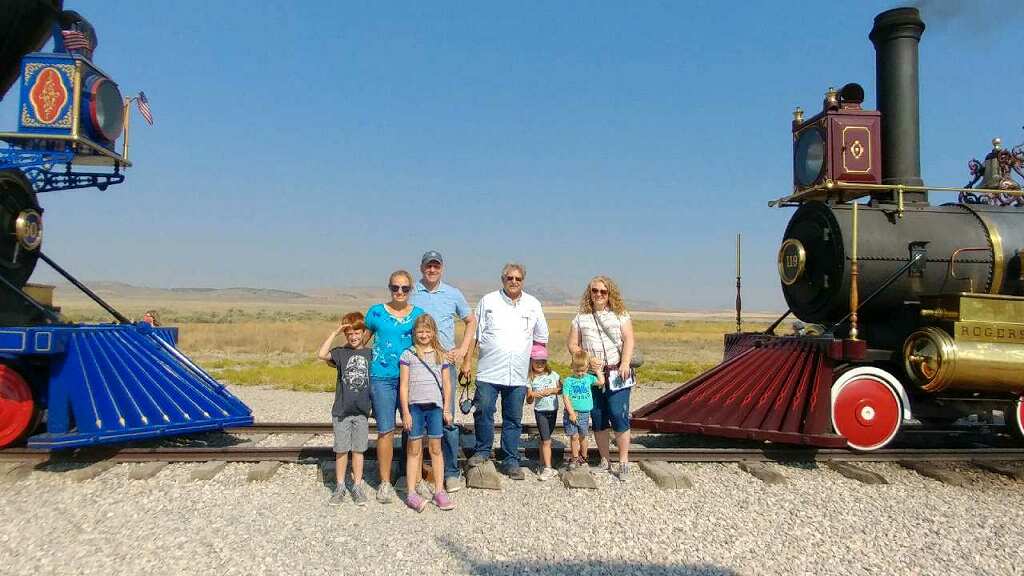
Hiram, Amanda, Aliza, and Paul Ross, Bryan Hemsley, Lillian and James Ross, and Jill Hemsley at Golden Spike National Historic Park, September 2020
Hiram, Amanda, Aliza, and Paul Ross, Bryan Hemsley, Lillian and James Ross, and Jill Hemsley at Golden Spike National Historic Park, 7 September 2020.
East and West Shaking Hands at the Laying of the Last Rail, Promontory Summit, Utah, 10 May 1869. Photograph by Andrew J. Russell.
East and West Shaking Hands at the Laying of the Last Rail, Promontory Summit, Utah, 10 May 1869. Photograph by Andrew J. Russell. Joseph Wayment stands in the crowd on the left side of the image. Find the man standing below the Union Pacific’s No. 119 locomotive light with his jacket open and white shirt, then find the man whose head is in front of that man’s right thigh, behind the fellow with the partially raised hat. That is Joseph Wayment, age 25.

Andrew J. Russell, the official photographer of the Union Pacific Railroad who took this photograph, wrote of that moment: “The continental iron band now permanently unites the distant portions of the Republic, and opens up to Commerce, Navigation, and Enterprise the vast unpeopled plains and lofty mountain ranges that now divide the East from the West. Standing amid ‘The Antres vast and Desert wild,’ surrounded with the representative men of the nation, an epoch in the march of civilization was recorded, and a new era in human progress was ushered in.”

Joseph Wayment was one of the men in that crowd — a twenty-five-year-old English convert who had crossed the Atlantic seasick on the Amazon, walked the plains behind an ox team, survived Montana winters so cold the dishwater froze before it hit the snow, and was now building a life in a patch of Utah desert he would spend the next six decades transforming into a home, a farm, and a community. Would he have fathomed that 151 years later his great-great-great-granddaughter, and her children, would stand at that same spot.

Origins in Whaddon
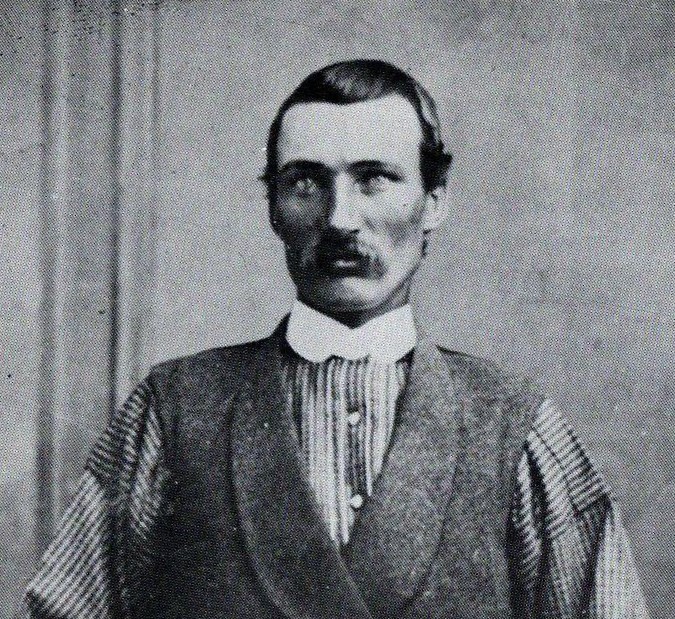
Joseph Wayment, circa 1874.

I used AI to colorize and sharpen the images. If you click on them, you should be able to see the original black and white. AI took a bit of liberty on the photos regarding clothes.
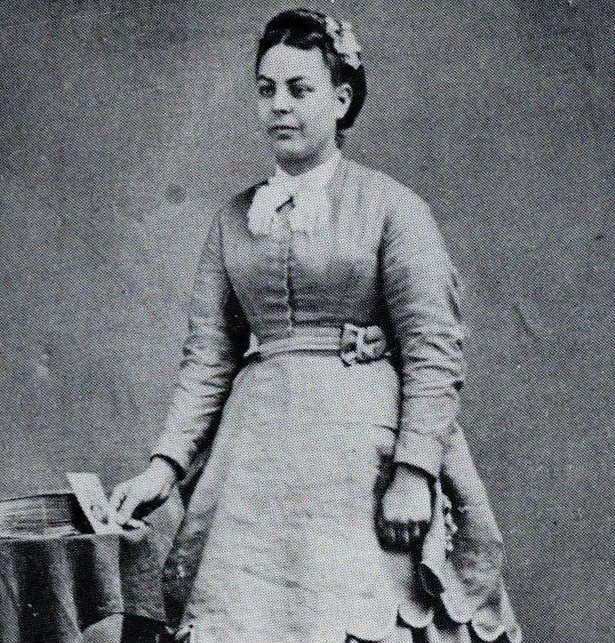
Ann Reed, circa 1874.

Joseph Wayment was born 7 February 1844 in Whaddon, Cambridgeshire, England, the second son of William and Martha Brown Wayment. His older brother Aaron had lived only one day, so as far as the family was concerned, Joseph was the eldest. I have written previously about his parents in my post on William and Martha Wayment.

Ann Reed was born 1 January 1852 in the same small village — the fifth child and second daughter of James and Sarah East Reed. Whaddon was a tight community, a small village in the district of Royston, County of Cambridge, gathered around the ancient stone church of St. Mary the Virgin. Whaddon appears to have been somewhere around 400-500 people. The Wayments and the Reeds were neighbors in every sense of the word. Their children attended the same meetings, worked the same fields, and children would be baptized in the same river/brook.

Ann’s early life was marked by tragedy. When she was two years old, she slipped into a deep ditch near their home. No one else was nearby. Her mother, Sarah East Reed, then heavy with child, jumped in after her. Ann was saved, but the ordeal brought on labor. The baby girl was born 13 July 1854 and died the same day. Three days later, Sarah also died from complications, and mother and infant were buried together in the same casket. Ann’s father James Reed did his best to keep the family together, but he too died on 2 February 1858, leaving five orphans — the oldest fourteen, Ann just five years old.

Their mother’s sister, Hannah East, came to Whaddon to keep house for the children. Hannah was herself from Whaddon — born there on 24 August 1828, the sister of Sarah East Reed and of George East Sr., who would later become a familiar figure in Warren, Utah. Hannah was baptized LDS 3 June 1848. She stayed with the Reed orphans for several years before emigrating to Zion, where she eventually settled in Lehi, Utah, married Thomas Karren in 1865, and lived until 2 May 1907. It is a quiet thread of continuity that Hannah — who held Ann’s orphaned family together in Whaddon — ended her days in the same territory where Ann built her life, just a day’s journey away in Lehi.

After Hannah left England, the children were kept by the Parish until they could earn their own living. Ann went out to service at age eleven. She endured difficult conditions in several positions before finally working David and Mary Hide Grieg (the histories state it was Grigg), where she stayed nearly five years and carefully saved her wages toward passage to America. The Grieg family lived in nearby Melbourn, a family that was not LDS.

The Gospel Comes to Whaddon

I wrote in the William and Martha Wayment post about how the Wayment home had become a gathering place for LDS missionaries since William’s baptism in March 1850 — how despite community hostility, meetings were held in different houses and baptisms conducted at night to avoid mobs. The gospel took hold in Whaddon. On the night of 7 May 1860, Joseph Wayment, age sixteen, was baptized in Whaddon Brook along with his brother Samuel and sister Emily. Ann Reed, age eight, was baptized and confirmed the same night.

They shared the same waters. They would share a life.

Joseph worked in the peat bogs with his father from his early teens, fossil digging to earn enough for his passage to Zion. He had one more memorable appearance in Whaddon before he left: shortly before his departure, he sang a solo at a church meeting that deeply impressed those present. His voice was described as a clear and beautiful bass. Ann Reed, then twelve years old, was in that congregation. Decades later she would tell her grandchildren with deep feeling how thrilled she had been sitting in that meeting listening to Joseph sing.

The Voyage of the Amazon, 1863

On 1 June 1863, Joseph left Whaddon for Liverpool. Three days later, on 4 June, he booked passage on the sailing vessel Amazon — listed on the manifest as “Joseph Waymound,” age 19 — and sailed from Liverpool with 881 fellow Saints bound for Zion. As I wrote in my Stoker family post, the Amazon was a famous voyage. It was this crossing that Charles Dickens observed and wrote about, describing the Mormon emigrants not as misfits and scoundrels but as the “pick and flower” of England. Future U.S. Supreme Court Justice George Sutherland was also aboard (whose family was LDS). George Q. Cannon dedicated the ship. My own Stoker ancestors were on this same vessel — an extraordinary coincidence that ties our two family lines together. Since Warren and Plain City were small communities, they likely knew each other.

Joseph was seasick nearly the entire six-week crossing. The Amazon landed in New York around the middle of July 1863. He traveled by train to a point on the Missouri River, then by boat up to Florence, Nebraska. From there he walked and drove an ox team across the plains in Captain Dan McCarty’s company — a new experience for him, as he later told his grandsons, having learned to handle horses in England but never oxen. He arrived in Salt Lake City on 3 October 1863, four months and two days after leaving his father’s home.

The very next day the October General Conference of the Church began, held in the Bowery. Joseph stood near the speakers’ platform. Brigham Young was one of the speakers, and Joseph later said it was one of the most inspiring sermons he ever heard — that Brigham Young seemed to be surrounded by a bright light. Part of that sermon Joseph remembered all his life.

The Freighting Years, 1864–1866

After a winter in Lehi, Joseph went to work in the spring of 1864 for a freighting company — probably the Toponce Freighting Company — hauling goods to Montana. He stayed with the outfit until the fall of 1866. Those were hard and consequential years.

The winter of 1864 was brutal. The freighters were snowbound on a Montana river for several weeks. Joseph served as camp cook. He later told his family that when he threw out the dishwater, it froze to ice before it hit the snow. Some of the cattle froze to death. One day the lot fell to Joseph to fetch wood. His hands were tender from cooking and dishwashing, but he went out and cut an armful. As he was picking up the last piece of wood, he felt his whole body beginning to freeze. He stumbled back toward the cabin, but before he reached it his whole body had gone numb. The men rubbed him with coal oil and did everything they could to revive him. One of them said, “Joe Wayment gets no more wood this winter — I’ll get it for him.”

During the freighting years two confrontations became family legend. In the first, a stranger from another company approached the camp and asked if there were any Mormons present. He was directed to Joseph. The man told him he had helped mob the Saints in Missouri and Illinois, then pulled open his shirt to his chest and said, “Now shoot me.” He had lived such a miserable life since helping the mob, he said, that he wanted a Mormon to shoot him. Joseph replied: “No Mormon will ever stain his hands with your blood.”

In the second, the freighters encountered soldiers who had been in Johnston’s Army making their way north into Washington. Learning that some of the freighters were from Utah, they asked to hear the song that had been made up about Johnston’s Army coming to Utah. Joseph was the best singer in camp. He refused at first, knowing it would anger them. When they promised not to get angry, he relented and sang. One soldier became so furious he drew his pistol and threatened to kill the singer. The captain of the soldiers, quick as a flash, drew his own pistol on the angry man and said he would kill him if he harmed the singer. The other soldiers took the man away.

A third incident, at a freighters’ stop near Oxford, Idaho, demonstrated that Joseph was a man of both faith and action. He and his longtime friend and fellow teamster William Butler had pulled in for the night after a long drive. Other freighters already there greeted them with jeers — “There’s those Mormons” — and tried to force them to move on. Joseph and Butler had weary teams and held their ground. When words grew heated, Joseph walked briskly to his wagon, took the green willow switch he used to urge his team, walked thirty paces to some soft ground, and with one swing left it standing upright. Then he walked back, drew his pistol, turned, and split the willow with one shot. The heckling stopped immediately.

In the fall of 1866 Joseph had a strong feeling come over him that he should return to Utah. The company he was working with was a rough and irreligious crowd. He found a secluded spot in the timber, knelt, and asked the Lord for guidance. The next morning his mind was made up. He saddled his horse, gathered his belongings — three buffalo robes and his working clothes — and started for Utah.

Settling Salt Creek

He came first to Layton or Kaysville, then went to Call’s Fort near present Honeyville where he worked for a man named Barnard and helped build the first schoolhouse there. He bought a piece of land at Call’s Fort but eventually sold it. In 1872 he moved to what was then called Salt Creek, southwest of Plain City, and bought the land he would own until his death — purchasing it from H. H. Wadman, making him the second family to settle on Salt Creek. He kept “Bachelor’s Hall” there for about two years. His brother John B. Wayment, who arrived from England in July 1873, lived with him for part of that time.
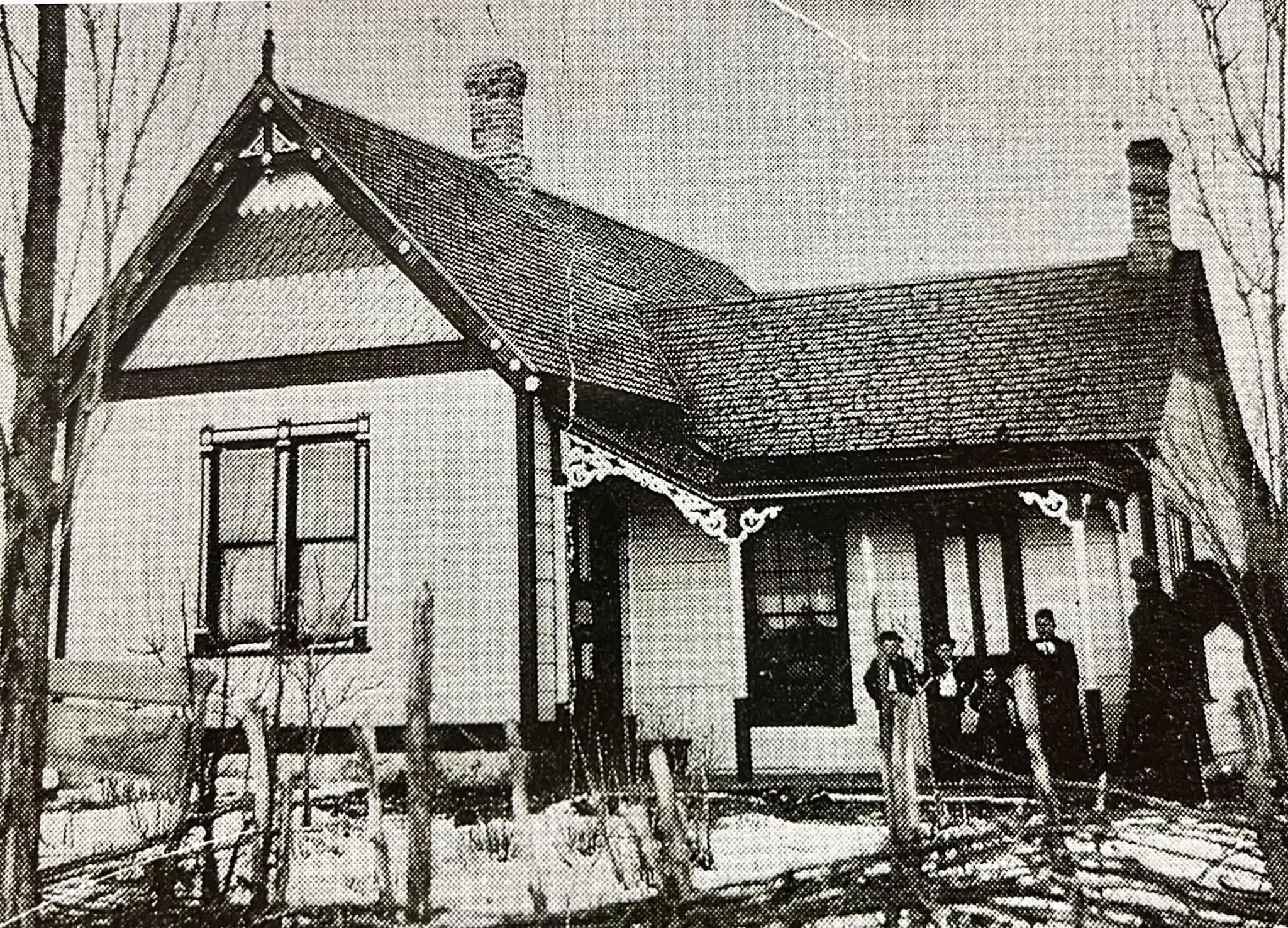
The home of Bishop William Thomas Wayment and his wife Maud at 662 N. 5900 W. in Warren. Joseph Wayment appears at far right with a horse.

About 1872, Joseph began writing letters to a young woman of his boyhood acquaintance back in Whaddon — Ann Reed. She had grown up, gone out to service, endured difficult years, and was now working for the Greig family, carefully saving her wages. She accepted his invitation to come to Utah and be his wife.

Ann Comes to America, 1874

Ann left her place of work on 2 June 1874 and sailed from Liverpool on 24 June 1874 aboard the steamship Idaho. The Idaho carried 903 passengers on that voyage, arriving in New York on 6 July 1874. Ann traveled overland by rail and arrived in Ogden about the middle of July.

Joseph met her in Ogden — likely taking her to his brother Samuel’s home. On the way they crossed a stream of clear running water. Joseph stopped the horses to let them drink, cupped his hat, dipped it in, and offered Ann the first drink. She couldn’t bring herself to drink water out of a hat from a river like that. Joseph enjoyed the cool drink regardless.

On 7 August 1874, Joseph Wayment and Ann Reed were married by Louis Warren Shurtliff at Joseph’s home in Salt Creek — ending, as Alma Hansen later wrote, the era of “Bachelor’s Hall.” On 29 June 1876, Joseph and Ann traveled to the Endowment House in Salt Lake City, where they were endowed and sealed to each other for time and all eternity. Joseph had been ordained an Elder by Alonzo Knight ten days earlier, on 19 June 1876, in preparation for that ordinance.

The First Years in Salt Creek
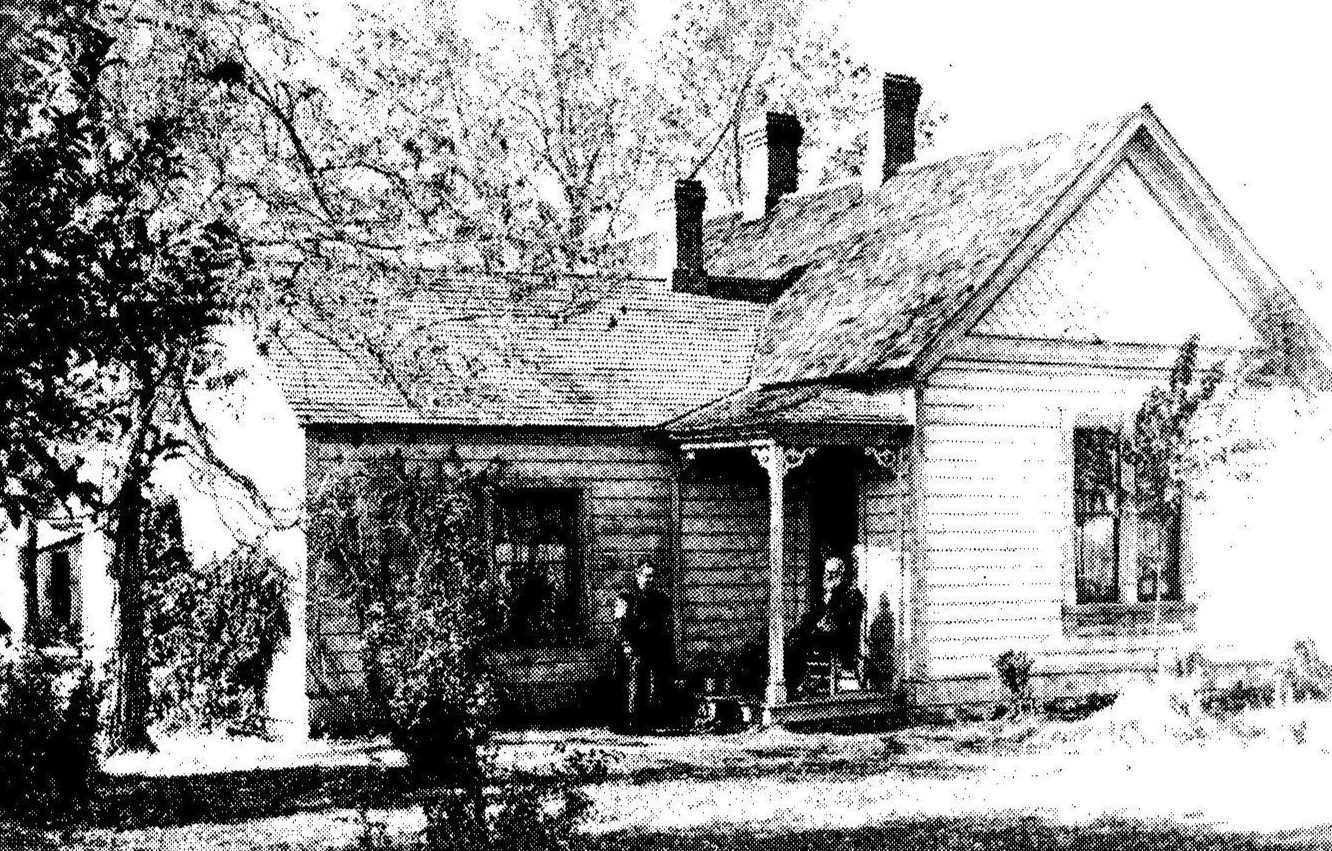
The Joseph and Ann Reed Wayment home in Warren, photographed June 1928. Joseph is likely the seated figure visible on the front porch.

Their first child, Sarah, was born 29 October 1875 — one of the first white children born in the Salt Creek area. In the spring of 1876 the Weber River overflowed its banks and covered much of the country where Warren now stands. The first time it came up, it stayed two weeks. The crops survived. But the river flooded again, higher than before, and stayed six weeks. The crops were completely destroyed. Joseph’s house was just high enough to keep the water from running under it — but it came right to the doorstep. He kept a rowboat in which he and Ann traveled to the sandhill in Plain City to do business. His horses broke loose just before the flood and were later found on meadows west of Brigham City. The other cattle and horses in the area lived on the high knolls until the water subsided.

Joseph planted the first fruit and shade trees in the Warren area. He watered them by hand from a well he dug himself, using a long pole with a hook and a bucket because he didn’t have a rope. Later he had a windmill built over the well and irrigated some of his crops with it. About 1880 the residents of Salt Creek organized together and built a ditch up to Four-Mile in the southern part of Plain City to run water to their crops. Part of that original ditch can still be seen near the north side of the bench in Warren.

In March 1881 Joseph was appointed secretary and assistant superintendent of the Salt Creek Sunday School, offices he held for many years. In 1883 he was chairman of the board of trustees for the first schoolhouse built in Warren — a one-room brick building on the bench. His sister Martha Wayment, now Mrs. David East, was the first teacher.

About 1877 Joseph was appointed the first road supervisor in the Warren district, a position he held for ten years. The road supervisor received no pay for his services other than to apply his labor toward his poll taxes, as did all the other men. About the first work done was to fill up some of the creek crossings. He also hauled salt from the creek banks west of Plain City up to the Hot Springs — a full day’s work per load for which he received fifty cents. The salt was used in the smelting of silver ore in Montana.

Six more children followed Sarah: Martha Ann (2 June 1877), Leonard Joseph (12 September 1878), Mary Jane (8 May 1880), Walter Hyrum (14 November 1881), Hannah Alberta (23 August 1883), and Amelia Brown (29 July 1890).
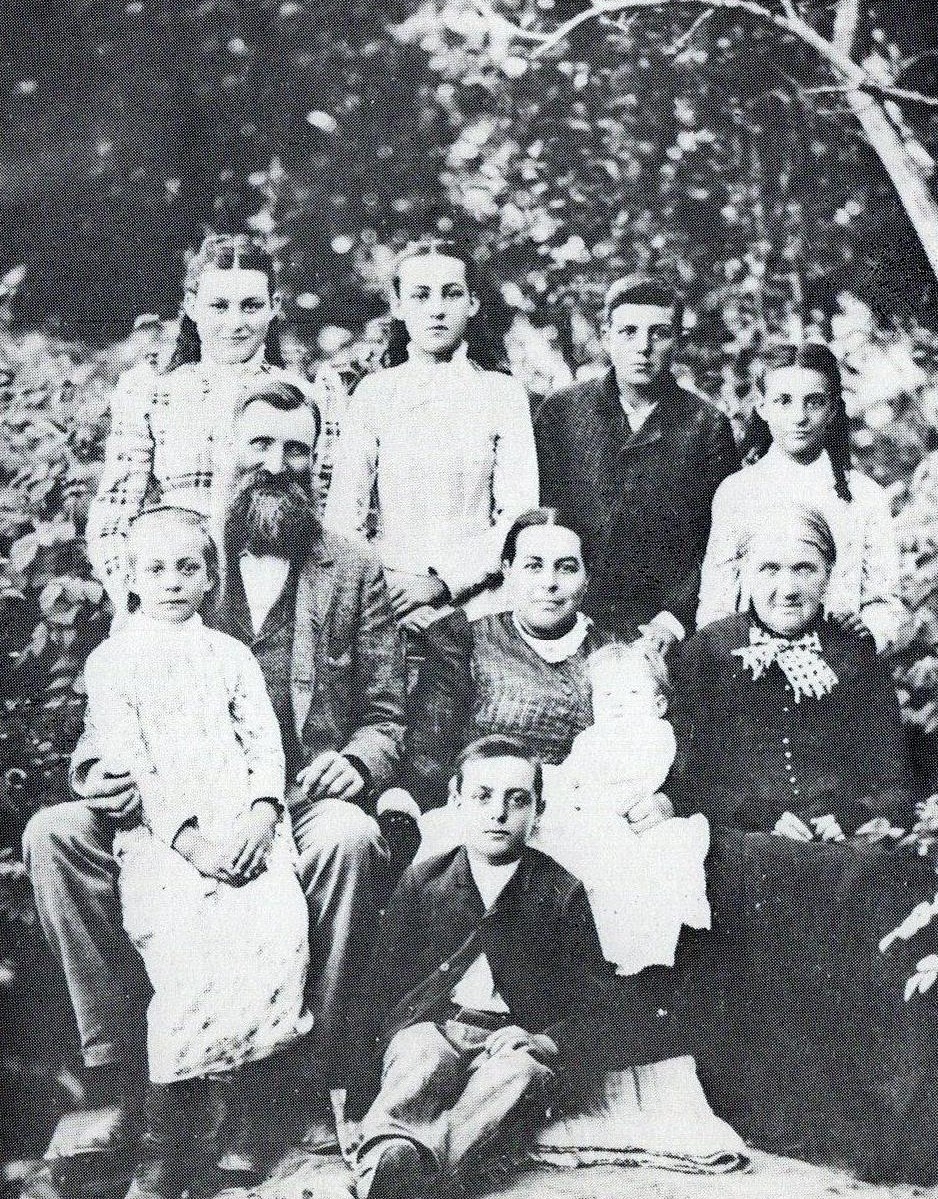
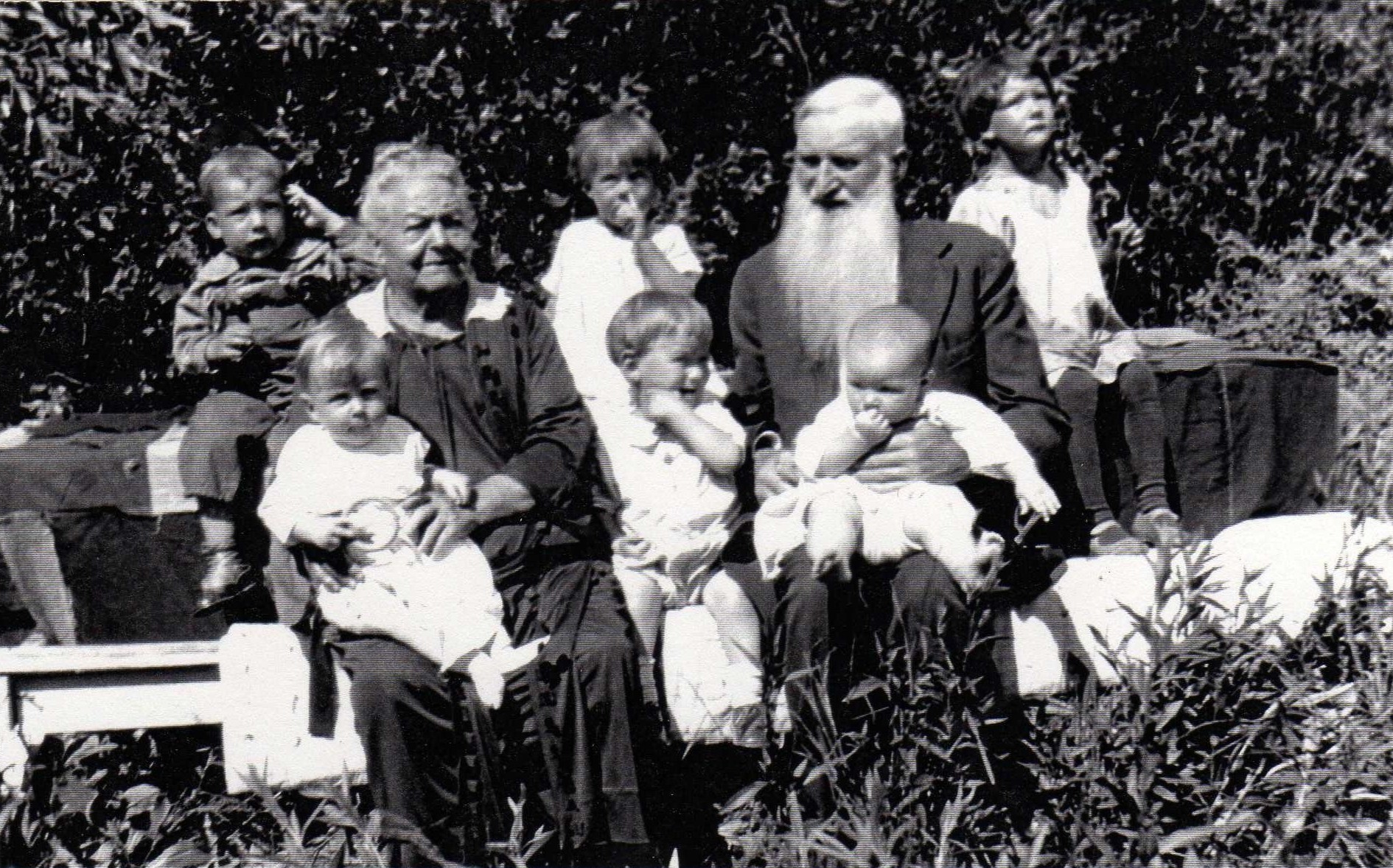
Back row, left to right: Sarah Wayment, Martha Ann Wayment, Leonard Joseph Wayment, Mary Jane Wayment. Middle row: Hannah Alberta Wayment, Joseph Wayment, Ann Reed Wayment holding Amelia Brown Wayment, Martha Brown Wayment (Joseph’s mother). Seated in front: Walter Hyrum Wayment. Photograph circa 1890–1891.

The family portrait above, taken around 1890–1891 when Amelia was an infant, captures all seven children in a single frame. Four generations are present — including Joseph’s mother Martha Brown Wayment at far right, who had herself made the journey from Whaddon in 1878. I wrote about her in the William and Martha Wayment post.

The Flood of 1884 and Ann’s Heroism

In the spring of 1884 the Weber River flooded again — not as severe as 1876, but severe enough to kill all the crops, many fruit trees, and berry bushes. Joseph moved his family into his brother John’s house on the brow of the hill north of the Arthur Marriott home — a one-room house, not large enough for all the family to sleep in. Some of the children slept in a wagon under the shed.

A day or two after they moved, a heavy rain set in. The children’s bedding became soaked. In trying to provide for his family, Joseph was exposed to the rain, cold, and mosquitoes, and he took down with malaria fever. The house was too small for any comfort, and some of the men of the locality moved the family back into their own house — even though it was surrounded by water.

For six weeks Joseph lay near death. Many did not expect him to recover. During this time Ann would walk — and sometimes wade, in water up to her knees — a quarter to half a mile west on the bench to where their cow was pastured. She milked the cow and carried the milk back to feed her husband. For a while he was so weak he could not feed himself, and Ann would have to feed him by hand. He sent for elders from Plain City to administer to him. While they were visiting, he asked to be propped up in bed and talked with them at length. From that time he continued to improve, though he was not entirely well for several years. That fall he was well enough to work on the threshing machine.

Of all the incidents in the long life of Joseph and Ann Wayment, this one — Ann wading flood water to milk the cow and hand-feed her dying husband — speaks most directly to the character of their partnership. The memorial card at their graves in West Warren says it plainly: “Ann Reed Wayment gave loyal and loving support to her husband. No problem arose that they did not find a place of adjustment and agreement.”

Firsts in Warren

The 1902 Portrait, Genealogical and Biographical Record of the State of Utah described Joseph as “one of nature’s noblemen” and enumerated his contributions to the community. He planted the first fruit and shade trees. He was the first road supervisor, serving ten years. When the first schoolhouse was built he served as school board chairman, assessor, and collector. He was one of the first stockholders and directors of the Slaterville Creamery. He raised one hundred tons of sugar beets annually for the Ogden sugar factory.

By 1888 Joseph had shifted his main occupation from general farming to dairying. He kept as many as fourteen milk cows at once. His children did much of the work — milking the cows, putting the milk in cans under cool water until the cream gathered to the top, then skimming and churning it to butter. They sold as many as 2,000 pounds of their own butter in a single year. Later the milk went to the Slaterville creamery, of which Joseph was a founding director.

In November 1910 Joseph was elected Justice of the Peace of the Warren Precinct — a fitting civic capstone for the man who had been among the first to settle Salt Creek and had spent decades building its institutions.

In 1896 Salt Creek was officially named Warren, after Lewis Warren Shurtliff, the stake president who organized the new ward — the same Louis Warren Shurtliff who had married Joseph and Ann in 1874.

Ann in Warren
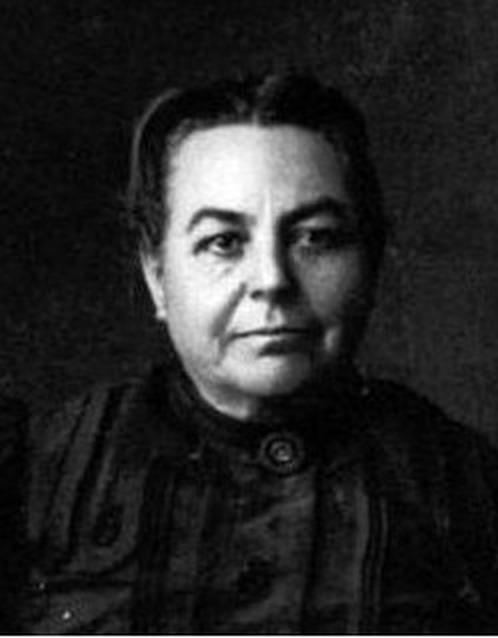
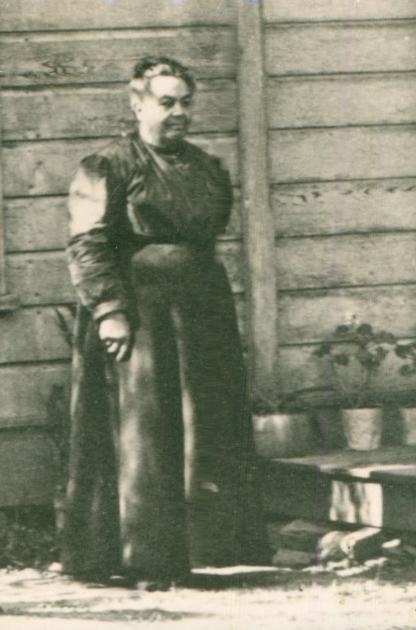
Ann Reed Wayment.
Ann Reed Wayment at her home in Warren.

Ann Reed Wayment was a woman of quiet and enduring strength. Her daughter Mary Jane wrote of her: “She was an energetic worker in Relief Society, holding and filling many offices in it. She was very useful among the sick, exercising great faith as her best healing art. She was a kind, loving, very thoughtful mother to her family. She lived a useful life, impressing her children and those who mingled with her what a wonderful mother and woman she really was.”

The Warren Ward Relief Society was organized on 30 November 1902. Ann was sustained as its Treasurer — her sister-in-law Castina Wayment, wife of Joseph’s brother Samuel, served as First Counselor. Ann was not present at the organization meeting but was set apart as Treasurer on 5 February 1903. At the first Relief Society meeting held at the home of President Jane Stewart on 18 December 1902, Ann bore her testimony and gave the benediction. She served as Secretary and Treasurer of the Warren Relief Society from 1902 to 1916.

Alma Hansen, who knew both his grandparents personally and compiled their biography from firsthand family accounts, described Ann in a single memorable sentence: “She was short of stature but stood ten feet tall in her loving service.”

A February Week in Logan, 1893
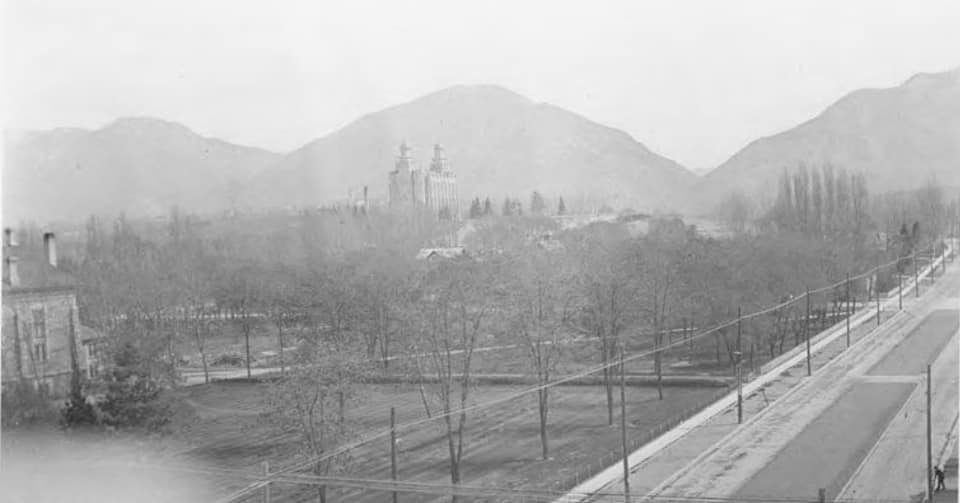
Logan, Utah, with the Logan Temple visible in the background, circa 1890s. Digital Image © 2001 Utah State Historical Society. All rights reserved. Used for non-commercial, educational purposes.

In February 1893, Joseph and Ann made an extended trip to the Logan Temple — a journey that had been years in the making. In careful sequence over eight days, they completed ordinance work for ancestors in their lineage and sealed their families together for eternity.

On 16 February 1893, Joseph was sealed to his parents, William and Martha Brown Wayment, in the Logan Utah Temple.

On 21 February, proxy baptism and confirmation were performed for James Reed and Sarah East Reed — Ann’s parents — in the Logan Temple.

On 22 February, the proxy endowment was performed for Sarah East Reed in the Logan Temple. Almost certainly the same was done for James Reed that day, though that record was later lost and the ordinance was repeated at the Manti Temple in 1938.

On 23 February 1893, Ann was sealed to her parents, James and Sarah East Reed, in the Logan Temple.

For a woman who had grown up an orphan at age five — whose mother died saving her life in 1854 and whose father died in 1858 — this February week in the Logan Temple completed a covenant that no earthly circumstance had been able to make. The parents she had barely known were now bound to her forever.

A Mission at Fifty-Six
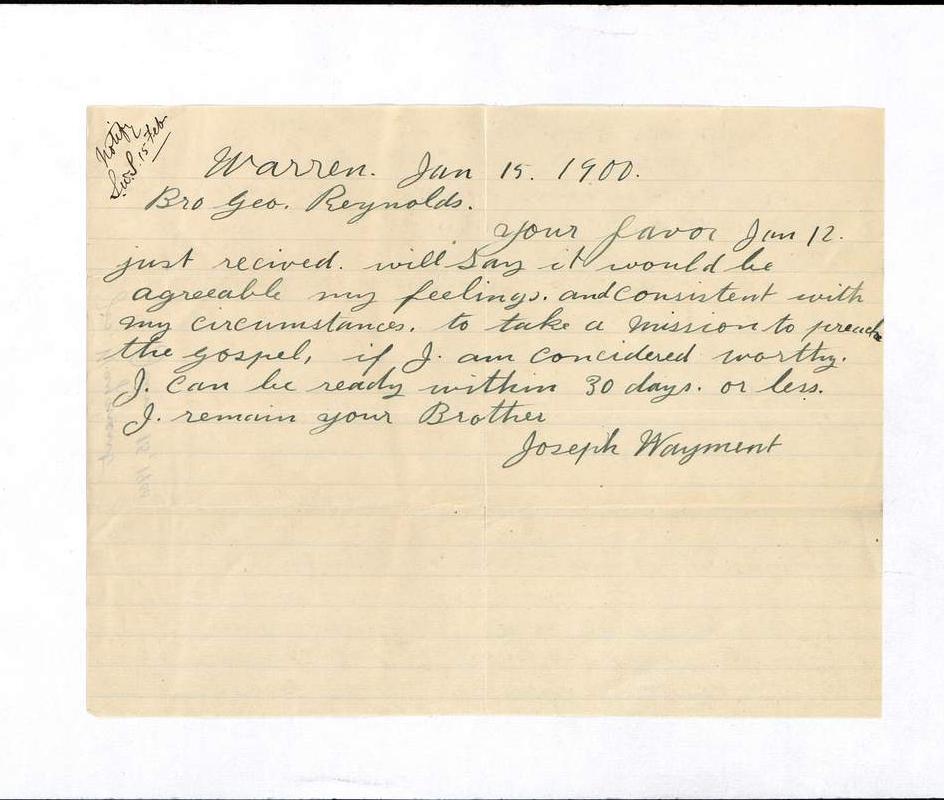
Joseph Wayment’s handwritten mission acceptance letter to Brother George Reynolds, Warren, 15 January 1900. “It would be agreeable my feelings, and consistent with my circumstances, to take a mission to preach the gospel, if I am considered worthy. I can be ready within 30 days, or less. I remain your Brother, Joseph Wayment.”

On Christmas Day 1899, Joseph was asked to fill a mission for the Church. He was fifty-five years old, a grandfather, and still carrying the kidney effects of a severe malaria attack from fifteen years earlier. His response, written in his own hand on 15 January 1900 to Brother George Reynolds of the First Council of the Seventies, occupies four plain lines: it would be agreeable to his feelings and consistent with his circumstances; he could be ready within thirty days, or less. He remained the reader’s Brother, Joseph Wayment.

On 19 January 1900 he received his formal call from President Lorenzo Snow to labor in the Southwestern States. He was set apart on 14 February 1900 by Apostle George Teasdale in the Temple Annex in Salt Lake City — the same day his Seventy’s License was formally issued, signed by Seymour B. Young, President of the First Seven Presidents of the Seventies.
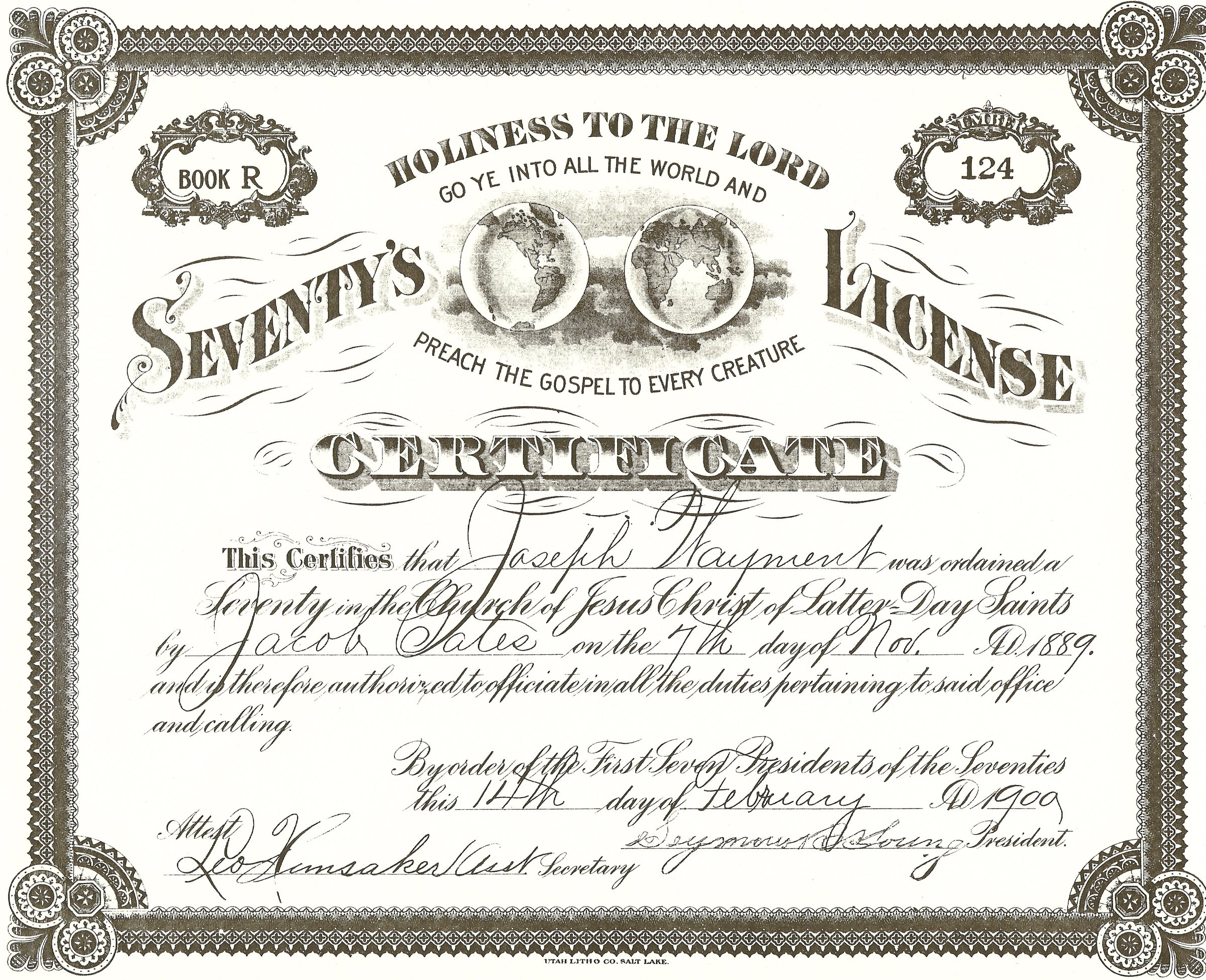
Joseph Wayment’s Seventy’s License Certificate, issued 14 February 1900, certifying his ordination as a Seventy by Jacob Gates on 7 November 1889. Signed by Seymour B. Young.

His Missionary Certificate bore the signatures of the entire First Presidency: President Lorenzo Snow, First Counselor George Q. Cannon, and Second Counselor Joseph F. Smith. That Joseph’s mission call passed through the hands of George Reynolds — historically notable as the defendant in the landmark U.S. Supreme Court case Reynolds v. United States (1879) — places it squarely in the living history of the Church.

He left the next day for Kansas, laboring first in Elk County under Elder H. E. Harrison, then for nearly four months in Greenwood County, until he was taken very sick with malaria again. In his own words: “I left my field of labor on the 4th of July for St. John and arrived home on the 7th, three days later. I was sick for three or four months.” The malaria affected his kidneys, an effect he felt until his death.

While Joseph was away on his mission and then ill at home, Ann kept the farm, the animals, and the household organized. When he returned, she nursed him back to health.

The Children

Of their seven children, three preceded them in death. Martha Ann, their firstborn daughter, married Louis Alma Hansen on 23 November 1898. She died on 19 October 1908 at age 31 of acute nephritis, leaving four children and her husband. Her loss was a grief Joseph and Ann carried quietly for the rest of their lives. Leonard Joseph married Sarah Naomi Hodson in 1902, was called to the British Mission in November 1915, labored in Belfast, Ireland, took sick, and arrived home 19 July 1916. He passed away the next morning, leaving a wife and three children.

The four who outlived their parents were Sarah (married Joseph Emelius Hansen), Mary Jane (married Samuel Bagley Willis, later Orson Francis Waldram), Walter Hyrum (married Iva Dell Wade), Hannah Alberta (married Thomas LeRoy White), and Amelia Brown (married George James Lythgoe).

The 70th Birthday, 1914
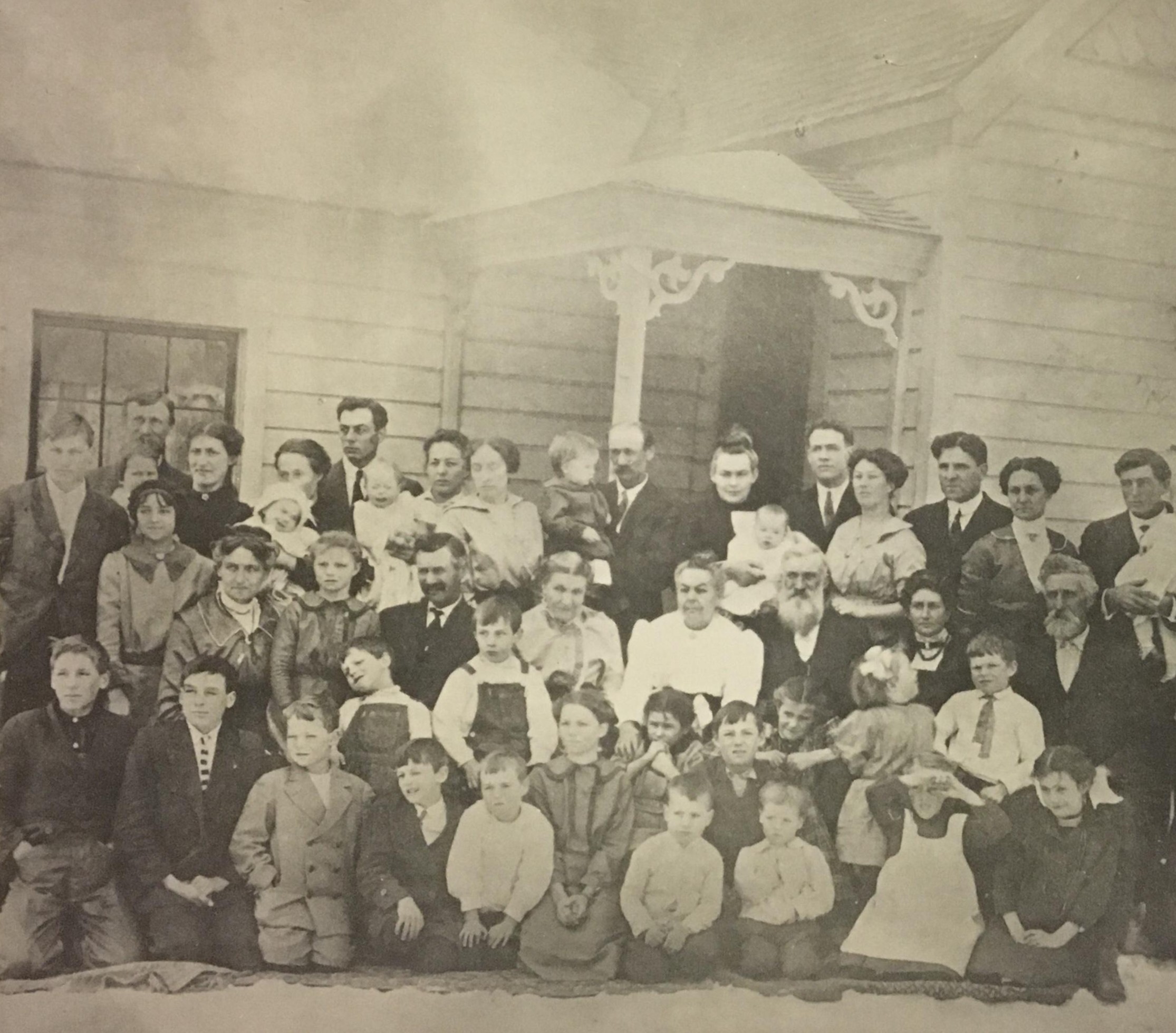
Family portrait honoring Joseph Wayment’s 70th birthday, 7 February 1914, Warren, Weber, Utah. Third row center: Ann Reed Wayment and Joseph Wayment, flanked by siblings John Brown Wayment and William Thomas Wayment and sister Martha East.

On 7 February 1914 the extended Wayment family gathered at the Warren home for Joseph’s 70th birthday — a family portrait captured four rows of family: children, grandchildren, siblings, their spouses and children, and young Alma Wayment Hansen himself, visible as a boy in the second row, who would later compile a biography of his grandparents. At the center of the third row sit Joseph and Ann, flanked by his brothers John Brown and William Thomas Wayment and his sister Martha East. By this gathering all the children had married.

The Grasshoppers

One incident from Joseph’s later years became a touchstone story in the family, attested to by his daughter Sarah. A summer or two after his first malaria attack, he had planted wheat in the field north of the house. The crop grew abundantly, had headed out full, and was beginning to turn yellow when the children noticed one evening that a great horde of grasshoppers had descended on the grain. They went in and told their father. He was not well, still weakened from the malaria. He arose, took his cane, and walked out into the field.

The grasshoppers were large and so thick they were bending the stalks almost to the ground. What once looked like a bounteous harvest now seemed doomed. Then right there in the midst of the grain and the grasshoppers, Joseph knelt and made a most fervent appeal to his Heavenly Father for aid. Night came on. The family retired — but not without family prayer. The next morning not a grasshopper could be found on the grain. There were no traces of where they had been.

The Golden Wedding, 1924
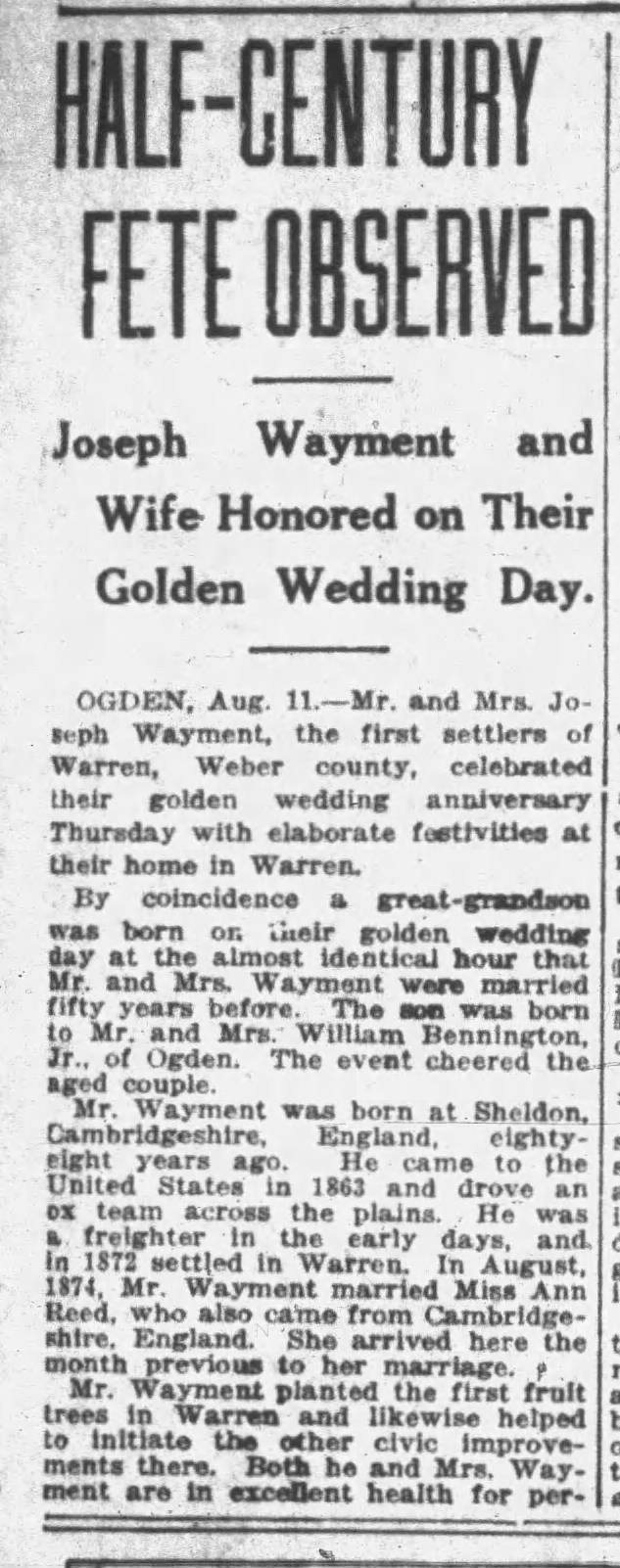
Salt Lake Tribune, 12 August 1924. Joseph Wayment and Wife Honored on Their Golden Wedding Day.
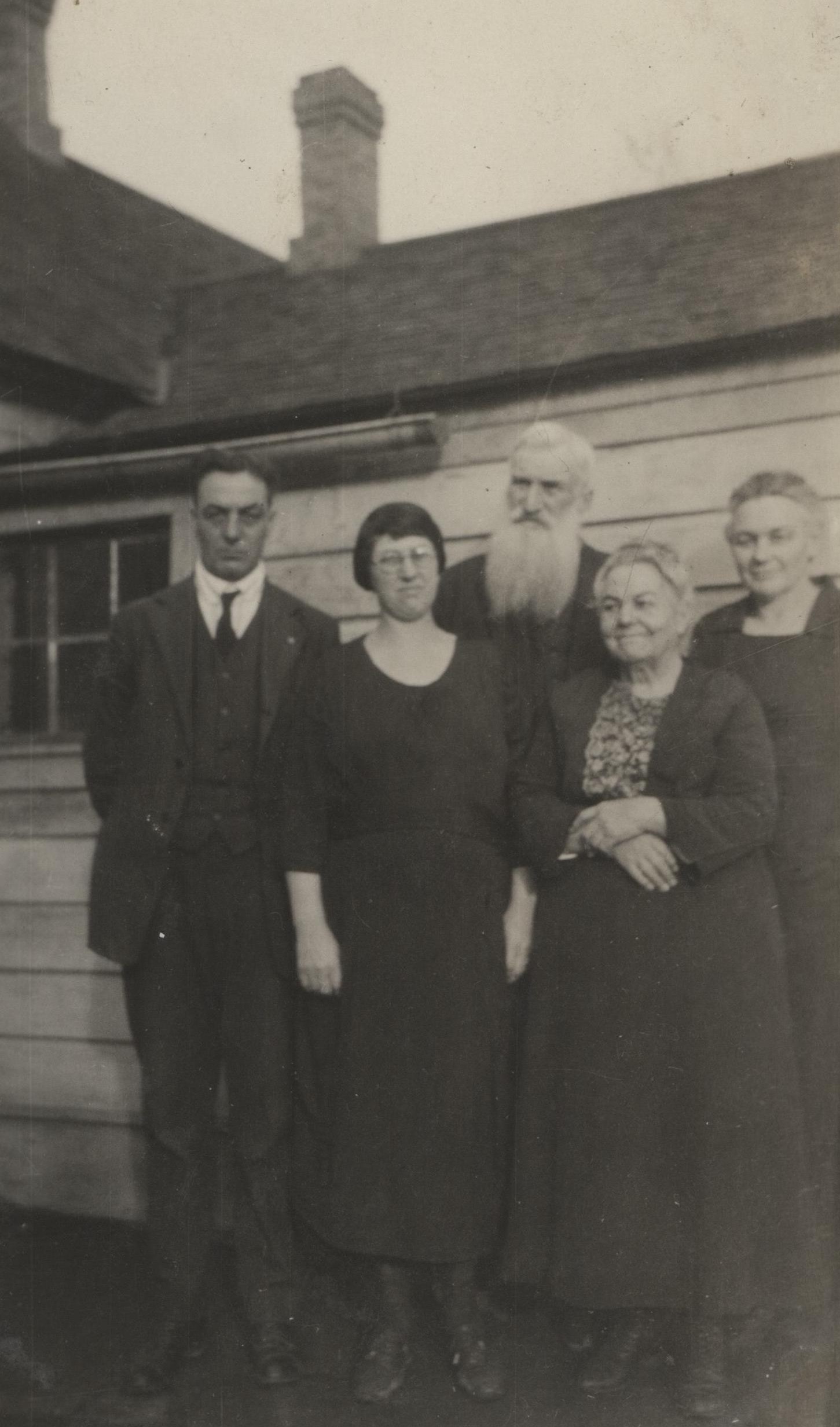
Left to right: Walter Hyrum Wayment, Amelia Brown Wayment Lythgoe, Joseph Wayment, Ann Reed Wayment, Sarah Wayment. Photograph taken at the Warren home, circa 1924.

On Thursday, 7 August 1924, Joseph and Ann celebrated their golden wedding anniversary with elaborate festivities at their Warren home. The Salt Lake Tribune reported the occasion. By remarkable coincidence, a great-grandson was born that same day at nearly the identical hour that Joseph and Ann had married fifty years before — a son born to Mr. and Mrs. William Bennington Jr. of Ogden. The event, as the paper noted, cheered the aged couple considerably.

The celebration drew family from across Weber County. Among those present were Joseph’s siblings — his sisters Mrs. Martha East of Warren and Mrs. Emily Mullen of Ogden, and his brother Bishop William T. Wayment of Warren — along with four daughters, one son, and twenty-six grandchildren.

The photograph captures something of what fifty years in Warren had built. Joseph stands center-rear, his great white beard the same beard his doctor had prescribed after the 1884 malaria — protection for his throat and chest from the cold. Ann stands center-front, hands folded, short of stature. Sarah, their eldest — the first white child born in Warren — stands at the right. Walter Hyrum, their only surviving son, is at the far left with his wife Amelia Lythgoe beside him.

Final Years
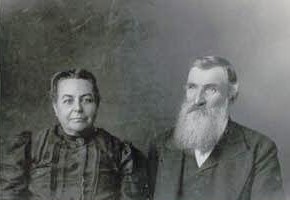
Ann Reed and Joseph Wayment.
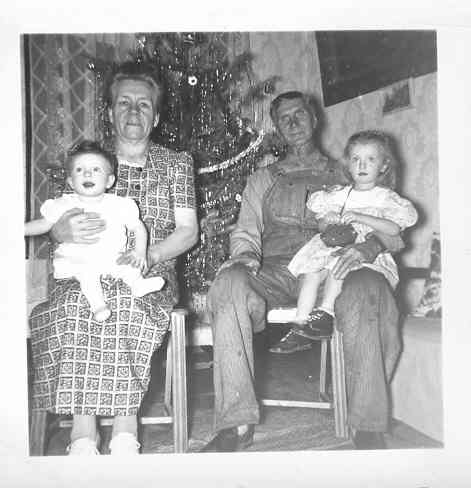
Left to right: Verlan Hansen, Ann Reed Wayment holding Donald Peterson, Eulail Peterson (back), Robert Hansen (front), Joseph Wayment holding Elaine Hansen, Irene Hansen. Joseph and Ann were the great-grandparents of the children in this picture.

Joseph bought his first automobile in 1912, just past his 68th birthday. About 1922 his eyesight became too poor to read. From that time until his death, someone had to read all news to him. He lived at his own home in Warren until the very end, cared for by his daughter Sarah. He delighted in bearing his testimony and seemed never to tire of talking about and explaining the principles of the gospel. His last public appearance was at a fast and testimony meeting on 11 October 1931, where he bore a strong testimony to the truthfulness of the Gospel and to the fact that Joseph Smith was a true prophet of God.

Ann did not live to see it. She died on the morning of 14 June 1931, at 8:10 a.m., at their Warren home after a three months’ illness — her cause of death recorded on her death certificate as chronic myocarditis with arteriosclerosis as a contributing factor. She had lived in Warren for 57 years without interruption. Her brother-in-law Bishop William T. Wayment was among the speakers at her funeral. A sextet of nephews and nieces sang. Mrs. Jessie Wayment sang a solo. Grandsons served as pallbearers. Granddaughters took charge of the flowers. She was buried in the Warren Cemetery on 17 June 1931.

Joseph took sick on the afternoon of Thursday, 17 December 1931. He passed away very peacefully on Sunday evening, 20 December 1931, at Dee Hospital in Ogden, of bronchopneumonia — the chronic malaria that had plagued him since 1884 listed as a contributing condition. He was 87 years old.
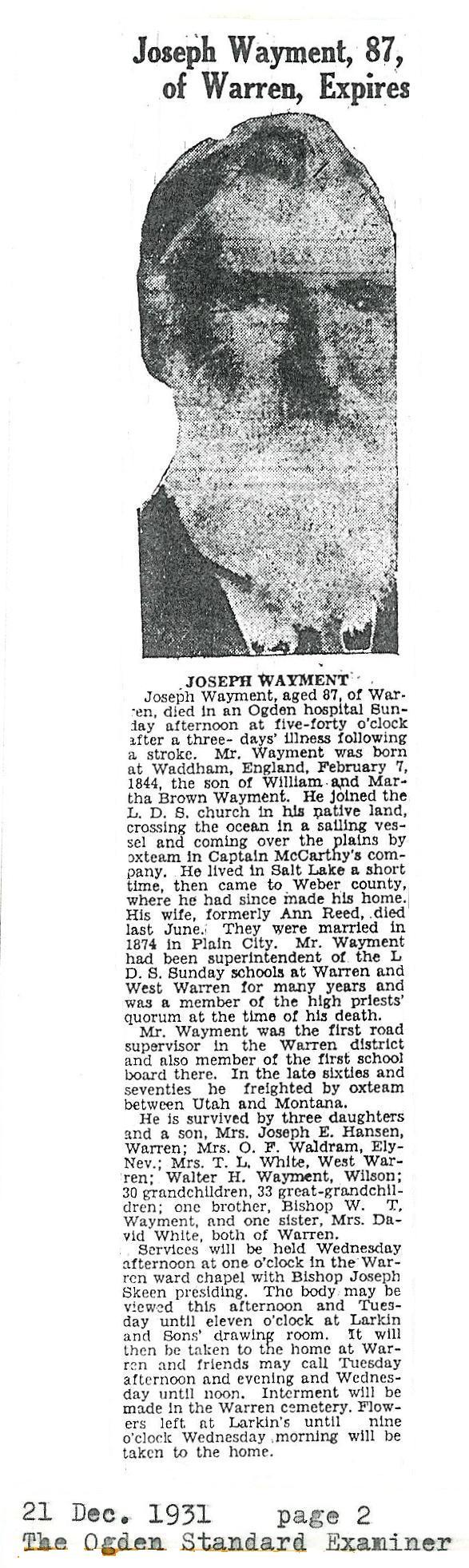
Obituary of Joseph Wayment, Ogden Standard Examiner, 21 December 1931.

He was buried on 23 December 1931 in the Warren Cemetery, beside Ann, who had preceded him six months and six days. They had been married 56 years, 10 months, and 7 days.

Legacy
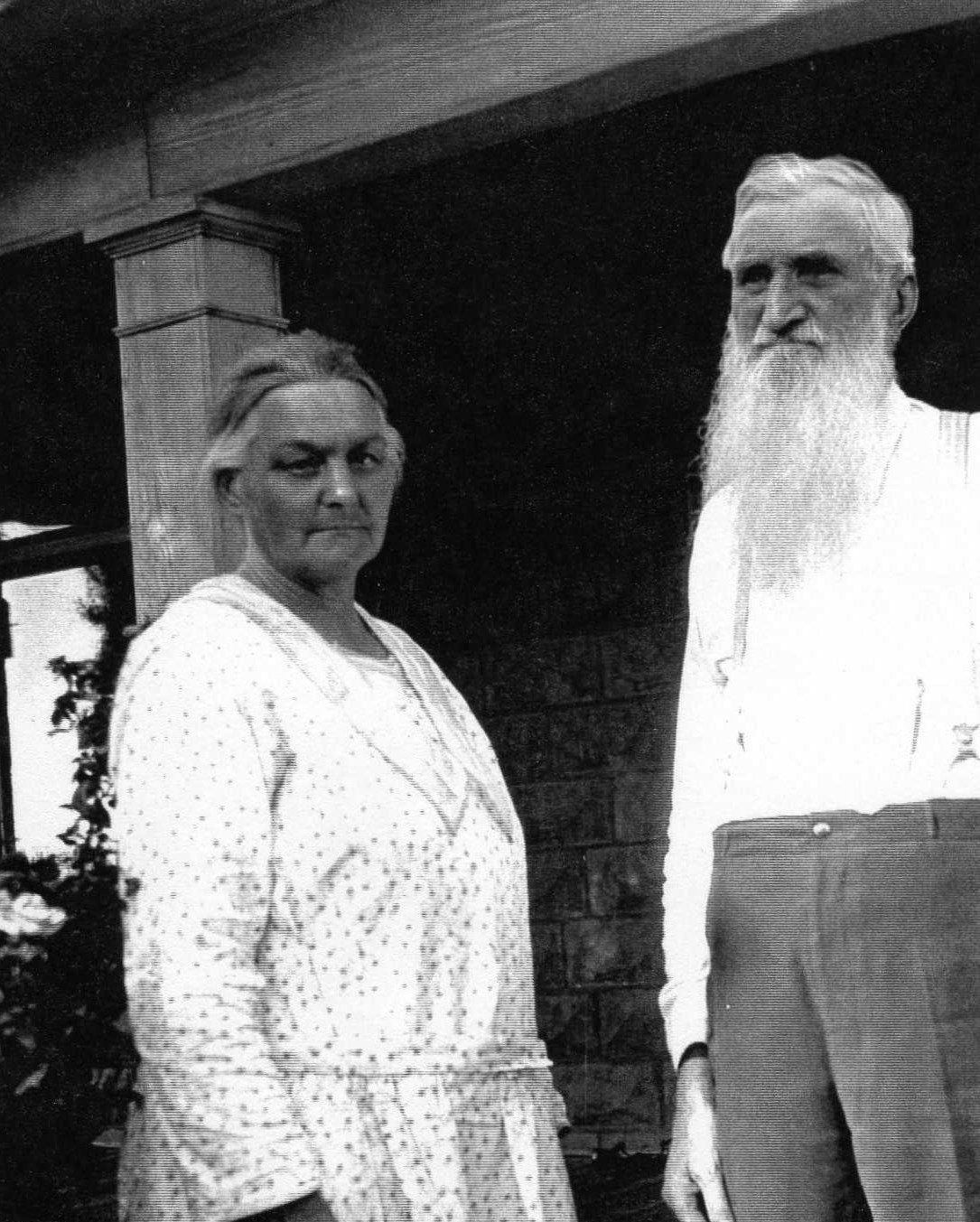
Sarah Ann Wayment Hansen and her father Joseph Wayment in his final years. Sarah cared for Joseph at home until his death in December 1931.

When Joseph and Ann Wayment arrived in Salt Creek in the early 1870s, there was almost nothing there. When they died in 1931, Warren was a community with a church, a school, a creamery, roads, canals, orchards — many of the first of each having been planted, built, or organized by Joseph himself. They lived to see 32 grandchildren and 37 great-grandchildren. Two of their children served missions; one granddaughter and five grandsons also served missions, all returning safely.

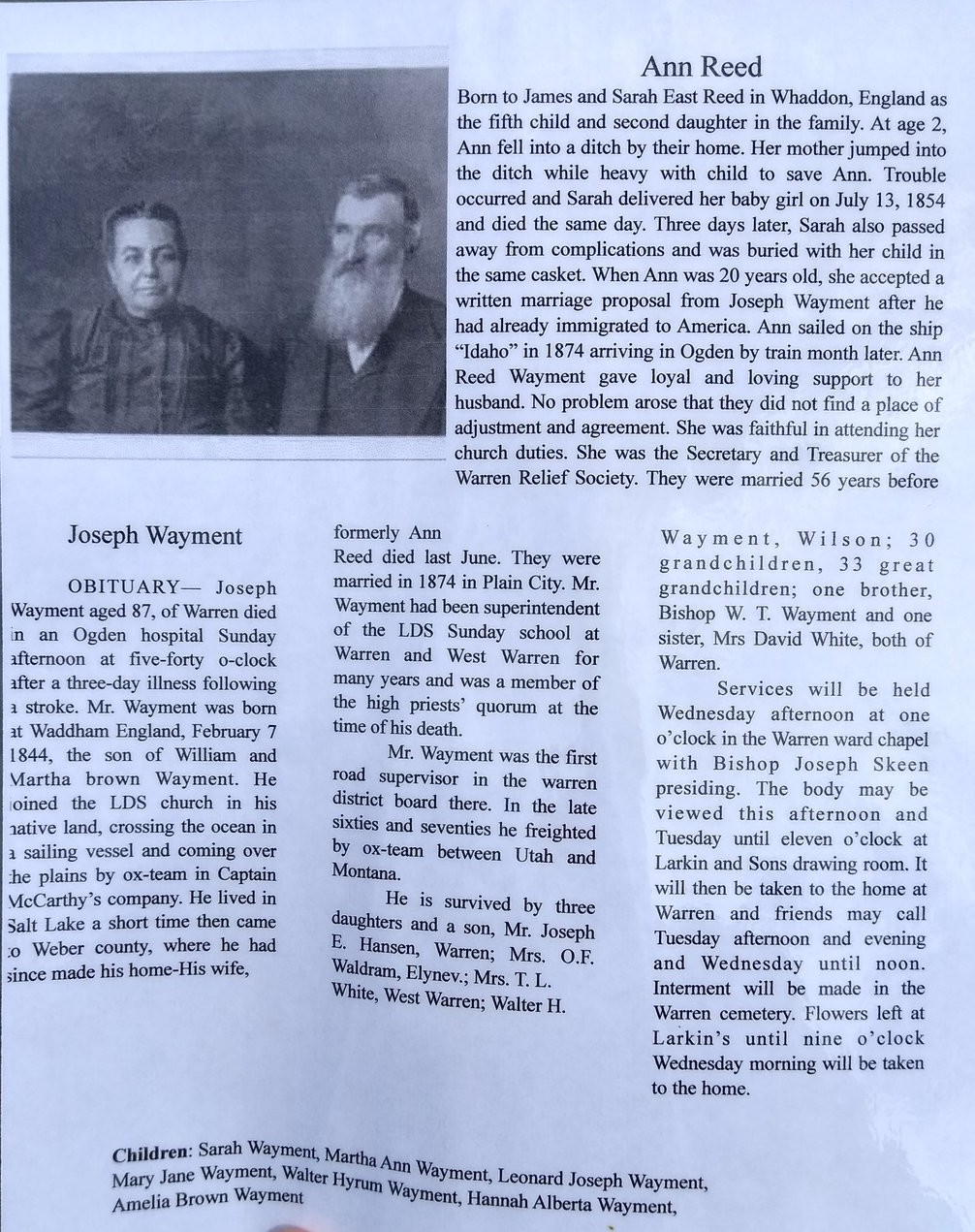
Amanda and I visited their graves in the West Warren Cemetery on 24 May 2020. The memorial card at their headstones — the laminated display that prompted much of this research — was photographed that day. Amanda is their 3rd great-granddaughter through the line: Joseph and Ann Wayment → Martha Ann Wayment Hansen → Walter Wayment Hansen → Bryan Hemsley → Amanda Ross.
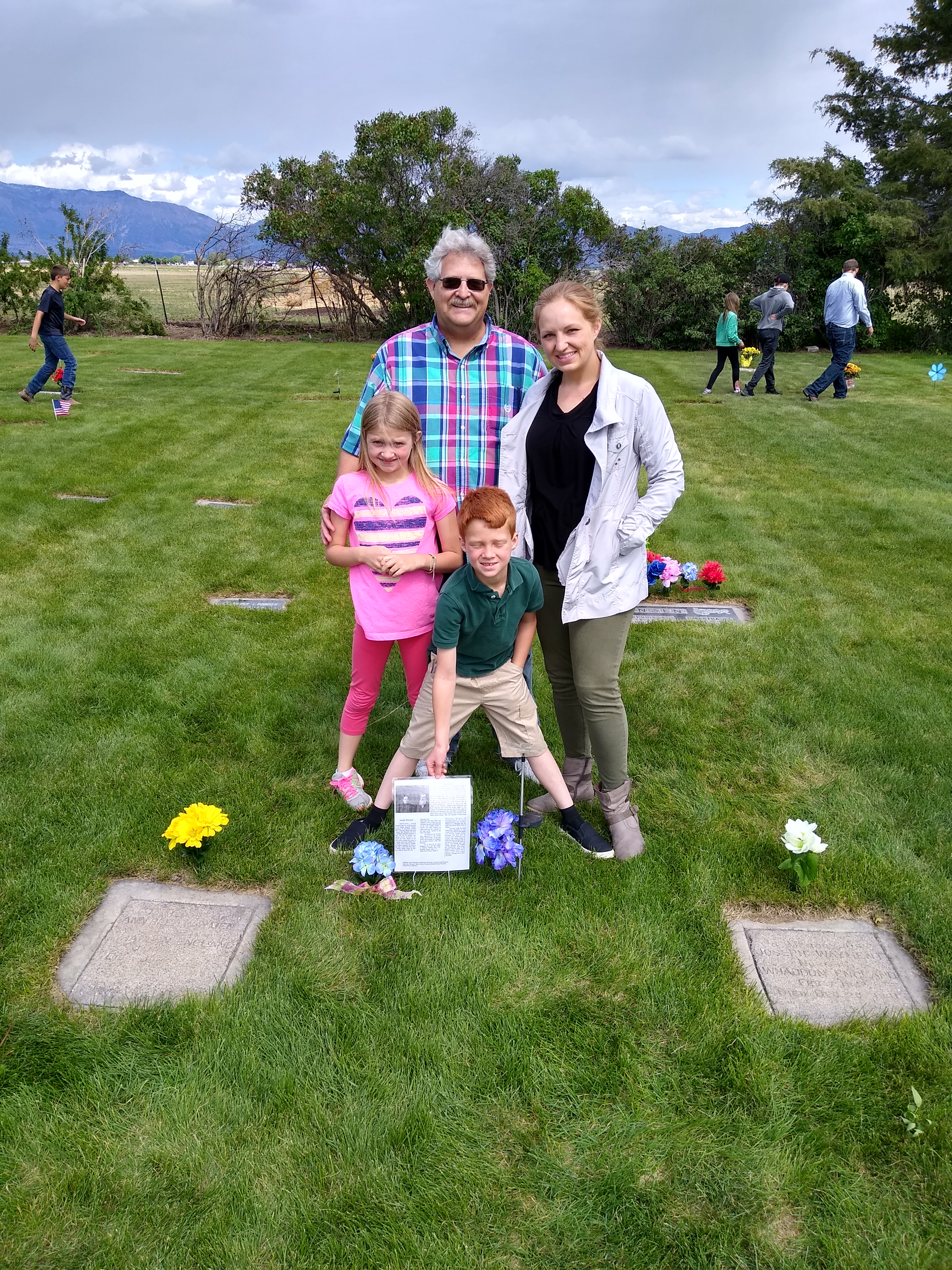
Bryan Hemsley, Amanda, Aliza, and Hiram Ross with the tombstones of Joseph Wayment and Ann Reed Wayment, West Warren Cemetery, 24 May 2020.
Bryan Hemsley, Amanda, Aliza, and Hiram Ross with the tombstones of Ann Reed (1852–1931) and Joseph Wayment (1844–1931), West Warren Cemetery, 24 May 2020.
The memorial card displayed at the graves of Joseph and Ann Reed Wayment, West Warren Cemetery.

Source Documents

The following family histories are available for download:

Life Sketch of Joseph Wayment – copied from a record belonging to Ida H. Johnson (granddaughter), transcribed by Hollis R. Johnson, 1956

Emily Wayment and William Negus – compiled by Alma W. and Martha M. Hansen, 1979

John Brown Wayment and Sarah East – compiled by Alma W. Hansen, 1980

Jonas History: Rosa Nelson Jonas

Christian & Rosa Andersen

This is another chapter of the Jonas history book compiled by Carvel Jonas. “The Joseph Jonas clan of Utah (including – early Jonas family history; early Nelson family history)”   This chapter relates to Rosa Nelson Jonas.  Reviewing this information in FamilySearch shows some changes and updates to some of the information presented.

The following story was written by Rosa and is typed from a hand-written copy in the possession of her daughter, Verla Jonas Andersen Lythgoe.

“The story of Mrs. Rosa Jonas Andersen.  Miss Rosa Nelson Jonas was born in Ellensburg, Kittitas County, Washington, on 5 Sep 1886, the third daughter of Annie Josephine Nelson Jonas and Joseph Jonas on a farm.

“Being Catholic, when about two months old, mother took me to church to be baptized, which was done by mother holding me in her arms, while the priest poured a few drops of water on my forehead.  (St. Andrew church records this date 26 Sep 1886)  In the meantime two persons stood by her side, one on each side of her, a man and a woman, they are called the God mother and father, they are to become your guardian in case anything happens to your parents.
“When I was about four years old, I followed a cousin of mine to school.  Not understanding the rules of school, I would talk out loud and go from one seat to another, so the teacher asked me if I hadn’t better go home, my mother may need me.  I told him oh, no she has got some more kids home.  I said it so loud the whole room began to laugh.  That got me, I was so hurt at being laughed at I never went back.
“The fall of 1895, we went to Yakima to pick hops.  Although only nine years of age, it was a very interesting trip.  People came from all parts of the country.
“One family in particular which attracted my attention was a family traveling in a covered wagon, which had on the outside “Olympia, Washington or bust.”  While picking hops they turned their chickens loose, and every night they would go to roost in the back of the wagon, they had a place fixed just on the outside of the end gate.  They stayed during the hop season, which lasts about a month or six weeks.
“We were paid one dollar a box and it took four, forty gallon barrels or what they called flour barrels to make a box of hops.  The hops were grown in large fields like we grow beets which was one of the prettiest sights I ever seen, to see the way the hops grew.  The rows were far enough apart to cultivate between with a cultivation horse.  Large poles were even so far apart with strong wire over the top to which a strong cord was tied and fastened to a peg driven in the ground, the hop vine would wrap around this string as it grew.  The hops were between six and nine inches long.  The most interesting part of this occasion was the Indians, whose camp was just across from where we made our camp.
“We were afraid to go too close so we stood off at a distance and watched them put up their tents.  The women or squaws as we call them, did all the work.

Rosa Nelson Jonas

“After we had been in camp about a week, while strolling through the bushes we came upon a squaw making a bed for a new baby, she dug a great big place in the ground, put a layer of rocks in it and made a fire on the rocks.  Of course, we didn’t know what she was making but I did know she didn’t want us standing around watching her, and would make motions with her hands for us to go away.  I told Mother and she said for us not to go around there any more, because the poor woman was sick.
“Well, we didn’t but one morning before sun up and the ground was white with frost, my sister and I went down to the river and to our great surprise we saw that same squaw that was sick with a tiny baby.  We watcher her undress her baby and in the cold water she dipped it.  We run home and told mother to come quick that an Indian was drowning her baby.  She laughed and told us she was giving her baby its morning bath.
“Now in the Catholic Church the Sunday School has two classes, one that they call the catechism and the other the Bible.  They are not allowed to go to Communion or partake of what we call the sacrament, until they graduate from the catechism (spelled Katakismn in her story) class.  The day before you go to communion the whole class has to go to confession, which is quite an affair.  I’ll try and describe how it is done.  They is say, a large closet with a partition running through the center making two average sized closets, with dark maroon draperies hanging in each door way.  You go to the right little room, and you’ll find a small bench, to the left, you kneel on it and you find a hole in the partition wall, that comes about to your chin, looking through that you see the Priest sitting in his nice comfortable overstuffed chair waiting to hear you confess your sins, which is done by your saying, “Father forgive me for telling a lie,” or whatever you done that was wrong since you went to confession last.  Your punishment is if you haven’t a rosary to get one.  It has from 25 to 20 beads each having a different design, each bead means a certain prayer.  I had to get one of those beads and say six hail Mary’s every night before retiring and every morning before dressing and two Apostle Creeds so I must have been one of the worst, I thought well, I’ll just show you Priest-I’m not going to freeze my toes saying that while I was kneeling by the bed side, so I’d get up in the center of the bed, cover the quits over my head and bury my face in the pillow and start praying just as fast as I could, sometimes I’d skip a bead and sometimes two, but that did not make any difference because I was covered and no one could see me, and that old Apostle Creed it was too long to say once, say nothing about saying it twice, not me, I didn’t see any sense in learning prayers out of a book when I wanted something because I thought the Lord wouldn’t understand what I wanted.
“Well the next day at Communion all the girls wore white dresses with veils and wreaths on their heads, and boys in black.  Up to the altar or railing covered in white you kneel down, put your hands under this white cover that goes over the railing, close your eyes, put your head back, open your mouth, put out your tongue and the priest will put this Communion on your tongue, don’t let it touch your teeth, close your mouth, bow your head.  When he had given each one in the class a Communion you all arise and go to your seat.  This Communion is about as large as a small sop cracker, I guess that is what it is from what I could see just partly closing my eyes.  I wanted to see what he was going to give me anyway and I did.  He took it out of a goblet with his forefinger and thumb and layed it on my tongue and stood there and drank the wine it was soaked in.
“In the year of 1901 July 3, I came to Utah.  Feb 6, 1902 I was baptized into The Church of Jesus Christ of Latter-day Saints, by N[els]. A[ugust]. Nelson who took a pick and broke the ice in the Jordan River in South Jordan, Salt Lake County, and was confirmed the same day by Bishop James P. Jensen.  In the year of 1903 I spent a week in the Salt Lake Temple being baptized for relatives and had my endowments and went through for those I was baptized for and had them sealed.  This made me sixteen years of age when I had my endowments.
In April 1902 I had my patriarchal blessing which (is) a great comfort and help to me because of the wonderful promise of temple work, and of the great relief it would be for those I did work for.  It sure is a great comfort to go and read it and reread it.  The more you read it, the more it means to you.  “So girls, don’t miss getting your Patriarchal Blessing.”
“The following is Rosa’s blessing. 
“A blessing given to Rosa Jonas, daughter of Joseph and Josephine Nelson Jonas born in Ellensburg, Kittitas Co, State of Washington. 
“Sister Jonas in the name of the Lord Jesus Christ and by the power of the priesthood conferred upon me, I confer upon your a patriarchal blessing.  In as much as you desire to know what God requires of you.  If you are faithful you shall never be deceived.  You have a knowledge that God lives and your prayer will be answered in those things that will be for your good.
“You are of Israel and are entitled to the blessings which the gospel imparts, and although young, God will increase your testimony.  If you are humble, your heart will be fully satisfied.  Be careful of the company that you keep.  Be modest and careful in the selection of your companionship or you may be deceived.  There is much for you to do in the Temples of the Lord, and many of your ancestors names will be presented to you and they will bless you for the labor that you performed for them in the flesh.
God will give you judgement to select a man of God for a companion, who will lead you back into the presence of God from whence you came.
Cherish virtue more than your life.  Never allow yourself to step from the paths of truth and virtue for I seal this blessing upon you with all your born blessing and I seal you up unto Eternal Life, promising you that none of these blessings shall fail if humble on your part in the name of Jesus Christ, Amen.”
Rosa lived with her Uncle August Nelson and did housework for her room and board.  She wasn’t very tall and some of her children have said she would measure to their arms if their arms were held out horizontal with the ground.  A guess she would be a few inches above five feet tall.  She had thin brown hair and brown eyes.  When she was young she had white hair, until it grew darker as she became a young woman.  All her siblings had white hair when they were children.  Her hair was probably thinned because of the typhoid epidemic which killed her older sister, Mary.  At that time Rosa’s hair fell out by the hand full.  Since Mary died 21 Sep 1899, Rosa would have been 13 years old when she lost her hair.  Rosa was the only left handed sibling.  I am told that Rosa would argue about religious doctrines with her brothers and would hit the stove with a pan to give emphasis to her point of view.  Apparently these siblings would argue and defend their point of view vigorously for a few hours at a time.  However, after their debates they were affectionate with each other and were able to be good friends after any discussions.  They were very loyal to each other.
“A land record in Logan tells us that on the 8 Nov 1905 Rosa and her husband, Christian Andersen, first bought their house in Richmond, Utah.  It was located at 137 East 1st South.  They bought lots 2 and 3 for $500.00.  They lived there until 2 Jun 1920 when they sold their house for $2400.00 and then moved to Thatcher, Idaho.  While they were living in Richmond two of her brothers would live with them from time to time.  William and Joseph would stay at her home when they came back from the Brigham Young College at Logan.  She also lived within about a block of her other brother, John, who had bought a home.  She was very helpful to her brothers by washing their clothes and given them a place to sleep when they came home during the weekends.  Joseph, her youngest brother, often sought her for advise, and often would take the advice of his sister in substitute of the parental advice he missed.  She lived in Thatcher, Idaho, with her two brothers on a far and after a short few years moved back to Richmond, Utah.  Later (about 1922) the family moved to Preston, Idaho at 295 West 4th South, where she died years after.  The following is quoted in the life story of her husband, Christian Andersen, and was written by their daughter, Mabel.
Father met my mother, Rosa Nelson Jonas, about a year before they were married.  One night (Christian) was singing and playing a lively song and mother and Aunt Delia walked into the dance hall and there sat father playing the accordion and singing this song.  Mother took one look at him and said to Aunt Delia, “I should think he would be ashamed of himself.”  She thought him repulsive at first.  But later on in years she rocked his little kids to sleep and he sang these very same songs to us.  Mother did not mind in the least.  Aunt Delia and Grandma Andersen decided that Christian and Rosa were meant for each other, so Aunt Delia gave a party and invited the Andersen boys.  They were a lively bunch and had a good time that night.”
“…Rosa made a nice cream cake with plenty of whipped cream on it.  (Christian) came to see her that evening in his rubber tired buggy so he could eat it, batched by himself…  On the way home father put the cake on the floor of the wagon so it would be safe.  The high spirited horse became frightened and started to run away.  Father pulled back on the lines and raised his foot up and set it down right in the middle of the cream cake!  When he got home he cut around his foot print and ate what he could of the cake.  As a result of these meetings father and mother were married on 29 Jun 1904 in the Salt Lake Temple.”
“Rosa wrote a letter to her oldest sister, Margaret, to apologize for not writing her until after she was married about her marriage.  Joseph Jonas, her father, wrote back and said that Margaret would forgive her because she had died.
Rosa became the mother of Christian’s two children, Pearl and Ivy, who were from Christian’s first marriage.  “Rosa was strict and so was Christian.”
“Rosa and Christian moved into a house in Richmond, Utah.  Christian added one room downstairs and two rooms upstairs and a bath.  He made a stairway and maintained a “well groomed house and yard.”  “We had a shanty or summer kitchen where “Rosa and her daughters” did the canning of fruit and washing.  The shanty was a couple of rods from the backdoor.  We had a cement sidewalk and a big stone rock for a step…”  Their “home had the first running water in it to come out of the wall hot… We had the first electric light in Richmond.”
Rosa and Christian had six children.  The first five were born in Richmond.  The last was born in Lewiston.  They are the following children: Mabel Rosetta, born 23 Oct 1905; Cyrus Christian, born 21 Dec 1907; Cleone Annetta, born 24 Nov 1909; Merlin Jonas, born 19 Sep 1913; Verla Jonas, born 16 Mar 1917; Arvie Jonas, born 31 May 1921.
“I remember moving from the ranch at Thatcher to Lewiston.  Mother was expecting Arvie and she rode in the back of the wagon on some hay.  The meager furniture was loaded into the wagon drawn by Jupiter and a bay horse named Sailor.  Verla was bundled up in blankets and quilts, also Merlin and I (Mabel).  Snow was on the ground, it was cold.  While we were pulling the dugway by Riverdale where it was icy and slick, ol’ Jupiter fell on his right front shoulder.  This turned the front wheels of the wagon causing it to tip.  But quick as a flash Jupiter was on his feet and gave a lunge throwing the wagon the other way.  Sailor pulled his line and up the dugway we went.  I always felt that I owed my life to Jupiter because if the wagon had gone over it would have dumped the stove on top of me…”  Another night during the trip they stayed at a range house and they fixed breakfast for them.  Joseph Nelson Jonas was driving the wagon.
“Rosa and Christian had one of the most beautiful homes.  (They) had a beautiful garden bed of tulips; and beds of gladiolas…(their) lawns were nice and green with no weeds…In Richmond and Preston they used to have large raspberry patches.  We girl used to get up at four in the morning and pick the berries before it would get too hot.  Then again at five in the afternoon when it was cooler we would again go into the patch and pick berries.  (Rosa) sold many of the berries to people living near.”

Rosa & Christian Andersen

“In the winter when the snow was deep a group of people would get together and decide to have a surprise on some member.  The women would open the door and yell SURPRISE!!!  In they would go and take all the furniture out of their room and take up the rug or carpet and start to dance.  Christian would be there with the accordion.  He would take a chair and sit in the corner and play all night.  About midnight they ladies would give the rest of the people lunch.  They  would eat and dance some more.  After the dance was over the men would carry the furniture back into the house again.”
“The following information was taken from the obituary of Rosa Nelson Jonas.  “Preston-Mrs. Rosa Jonas Andersen, 64, died in a Preston hospital at midnight Tuesday.  She served as president of the Young Women’s Mutual Improvement Association in the Preston Sixth Ward, as a Primary teacher, and for eight years was captain of the Hiawatha Camp, Daughters of Utah Pioneers.  Funeral services will be conducted on Saturday noon in the Preston Sixth Ward Chapel by Bishop A.C. Lundgreen.  Friends may call at the family home Friday evening and Sat. until time of the services.  Burial will be in the Ogden Cemetery under the direction of the Webb Mortuary of Preston.”

Jonas History: Jonas/Schumacher

This is another chapter of the Jonas history book compiled by Carvel Jonas. “The Joseph Jonas clan of Utah (including – early Jonas family history; early Nelson family history)”

    “Our Jonas descendants from Utah can all trace their genealogy to the Rheinland in Germany to, so far, the early 1700’s.  This is the area where all of our great grandfathers and great grandmothers lived.  The Jonas last name can be traced to a little town called Kirchheim.  All the Jonas; we know of originated from Kirchheim, including Hubert Jonas who is the first, and as far as we know, the only member of the Jonas clan who sailed to America.  Hubert’s wife was born in Oberdrees, a little town near Kirchheim.  Her name was Maria Catharina Schumacher.  She went by the name of Mary.  Mary’s mother was also from Oberdrees, and her mother’s family as far back as we can go were also from Oberdrees.  Mary’s father was Johann Peter Schumacher.  The Schumacher’s came from Schweinheim, another town near Kirchheim.  Maria Catharina Schumacher was born 13 Sep 1815.  All of our ancestors from Joseph Jonas, born 10 Jan 1859, back to the early 1700’s belonged to the Roman Catholic Church, and were Prussian until they came to America.  Many of our records past the year 1800 come from parish records and give only christening dates instead of birthdays.  Mary is the only child we can find born to Johann Peter Schumacher, born 4 Jun 1793, and Anna Maria Schmitz born 1 Oct 1792.  Mary’s record of birth was not found under the Schumacher last name, but under her mother’s last name, Schmitz.  Mary’s parents were not married until she was 18 years old.  They were married 31 Jan 1834.  Fortunately they were married and left us a record, or our genealogical would end without knowing who Mary’s father’s family were.  Johann Petrus Schumacher’s parents were Hubert Schumacher, a farmer, and Elisabeth Nuecken.  They had three children.  Our great grandfather, John Peter, was the middle child.  Anna Maria Schmitz’s parents were Christian Schmitz and Anna Christina Siep.  They had two children, our great grandmother was the oldest. 
    “Joseph Jonas’ father was Hubert Jonas, born 8 Oct 1816 at Kirchheim, Rheinland, Germany.  Hubert’s parents were Wilhelm Jonas, Chr 23 Jul 1773 and died 27 May 1843, and Anna Catharina Breuer, Chr 21 Jun 1782 and died 5 Feb 1855.  Wilhelm and Anna were married 19 Jul 1802 in Kuchenheim.  They were parents of eleven children, 6 girls and 5 boys.  Our great grandfather, Hubert, was the fifth child and second son.  Wilhelm was a farmer and a weaver by trade.  Hubert was also a weaver, and mostly a farmer. 
    “Hubert Jonas was 43 years old when our great grandfather, Joseph was born.  Huber’s father, Wilhelm Jonas, was also 43 years old when Hubert was born.  Wilhelm’s father, another Hubert Jonas Chr 7 Nov 1728, was over 45 years old when Wilhelm was born.  So in our genealogy line about 131 years pass in time before a fourth generation was born, he being Joseph Jonas who was born 10 January 1859.  To continue the Jonas genealogy line Hubert Jonas, Chr 7 Nov 1728 and died Apr 1785 was married to a Gertrud Hartzheim.  They had five children, 2 boys and 3 girls.  Our great grandfather, Wilhelm, was their youngest child.  Huber’s father was Jacob Jonas.  We do not have Jacob’s birthday yet.  We do know that he married Catharina Zimmermann and they had seven children.  Jacob remarried and had two more sons.  A death date for Catharina Zimmermann has not been found, but we can assume it is between 14 Jun 1735, the birthdate of her last child, and 28 Nov 1741, the date Jacob remarried.  Records for a third man named Hubert Jonas were also found.  He was a few years younger than Jacob Jonas, and was also found on the same church records from Kirchheim.  It is the opinion of the author that these two were brothers.  Because of their similar last names, both living in the same small town, and Jacob was a witness to Huber’s first child’s baptism.  Also, the name Hubert was given to Jacob’s second child.  It is estimated that Jacob Jonas was born about 1699-1706.  The significance of finding these two brothers is that it assures us the Jonas last name continues back farther in time, even though known records may not.  Anna Catharina Breuer, Chr 19 Jul 1782, father’s name was Johannes Breuer.  He married Christina Neuenheim the 22 Jul 1777.  Both had been married before and had lost their first companions to death as both were widowed.  Johanne’s first wife, Margaretha Reuter, died Jan 1777 after almost twelves years of marriage.  Seven months later he married our great great grandmother, Christine Neuenheim.  Her first husband had died about nine years before she remarried.  They had two daughters, our great grandmother being the youngest.  Johannes Breuer had had three sons before his first wife died.  Johannes Breuer’s parents were Christian Breuer who died 7 Sep 1757, and Barbara Bessenich who died 16 Jul 1761.  Christian and Barbara had four children, two boys and two girls.  Johannes Breuer and his twin brother, Petrus, were the oldest children of the family. 
    “Now for the more specific history of Hubert Jonas, born 8 Oct 1816 at Kirchheim, Rheinland, Germany; his wife and children.  Hubert was the 6th child and second son of Wilhelm and Anna Jonas.  He was taught in the trade of a weaver as his father was, but records in America show that he mostly farmed.  He married Mary Catharina Schumacher 25 Jan 1844 at Rheinbach.  He was 27 years old when he married and she was 28 years old.  They had three children born to them in Germany.  They were all sons.  Peter Jonas born 13 Feb 1845; Johann Wilhelm born 24 Jun 1848; Johann born 17 Nov 1849.  They were all born in Rheinbach, and it is very likely that Hubert and Mary lived in Rheinbach after they were married.  All of these three sons died before marrying.  Our family didn’t have any knowledge of Johann Wilhelm, who must have died as a very young infant.  Since no record was found for his death in Germany he must have died sailing to America or shortly after arriving.  The only death record we have of these three son’s which has been found is for Johann Jonas.  He died 7 Aug 1870 at Frenchtown, Michigan.  He was a single, 20 year old who had worked as a farmer with his father.  He died of consumption, which is the archaic term for tuberculosis.  Peter, the oldest son is believed to have died from the same sickness.  According to cousin Verla both boys caught a disease from the horses they loved to work with.  The county records for Monroe county only go back to 1867, so it is believed that Peter died a few years before 1867.  Peter’s brother took his older brother’s name of Peter when he was confirmed at the local perish in 1866.  Peter’s name is recorded on the 1860 general census, but is missing on the 1870 general census.  So we can reasonable deduct that Peter died between 1860 and 1866.  This is consistent with what members of the family remembered.  Rosa told her daughter, Verla, that Peter and John were both in their early 20’s when they died. 
    “After arriving in America, Hubert and Mary had three more son’s born to them.  They were Wilhelm (William), who was most likely named after his grandfather.  William was born Sep 1851.  Francis, who was born to them about 1854.  Joseph who was born 10 Jan 1859.  The exact date of immigration is not know to date.  But we know they came between 17 Nov 1849 when Johann was born in Germany, and Sep 1851 when Wilhelm was born in America.  It is very likely they came during the summer month’s of either 1850 of 1851.  If they immigrated in 1850 Hubert would have been 33 years old and Mary would have been 34 years old, unless they left after Sep 1850.  If they left after Sep then we would need to add one more year to their ages.  Even though we don’t have the exact date of immigration we have it isolated to only two different years.  Also, Hubert and Mary never naturalized after coming to America according to the Michigan records.  Some speculation has been given by the author about the reason or reasons Hubert took his young children who were only about 6, 2, and 1 years of age across the Atlantic to America.  Hubert’s father had died before the immigration.  But his mother, and some of his brothers and sisters were still alive.  In researching it is noted that beginning in 1844 harvests were poor in Germany and business decreased  Many Germans were hungry and out of work.  There were also many revolts in almost all the German capitals in 1848 against the existing government and debate about the united Germany.  Perhaps these events influenced Hubert to leave and find new opportunities in America. 
    “Hubert and Mary first bought land on the 1 Mar 1858.  It was about 20 acres in Frenchtown, Monroe county, Michigan and cost them $300.00 dollars.  Frenchtown was in south east Michigan.  Hubert lived on land that is now called Woodland Beach.  They went to St. Michael’s parish, which is in Monroe City.  This was a parish organized specifically for the German immigrants.  The church has recorded on the death register Johannes Jonas in the year of 1870 which date matches the vital county records.  The county record has Hubert and Mary Jonas as parents.  The parish also has confirmation for Johannes Jonas the 26 May 1864.  He took the name Antonius.  They also have a confirmation of Johannes Jonas 16 Jun 1870 who took the name of Franciscus (Frances) which was one of the children of Hubert and Mary.  Also, the confirmation of Wilhelm Jonas 30 Sep 1866 who took the name of Peter-which was the name of the oldest child who died before 1867.  The second confirmation of Johannes Jonas was performed less than two months before his death. 
    “Hubert bought land for the second time 21 Jan 1865.  He bought about 40 acres for $800.00.  On 19 Nov 1867 he bought about 13 acres for $125.00.  28 Jul 1868 he bought one undivided 6th part of a certain piece of land for $200.00.  By 4 Mar 1871 Hubert and Mary sold all of their 46 acres in Frenchtown township for $1,000.00.  There may have been a transaction or two which we don’t know about because the acres don’t add up to 46.  These land records tell us a little about Hubert.  For example, the record of 1865 the clerk wrote Hubert Unos and that he was called Jonas.  The name was probabaly misspelled because Hubert would have said Jonas with the German pronunciation which give the letter J a Y sound as in the word you.  Also, when they sold all their land in Frenchtown they reserved the wheat now growing on said land, and privilege of harvesting and removing the same.  So we learn that Hubert grew wheat that year.  His son, Wilhelm, was growing wheat about 1900, so it is possible that wheat was the main crop Hubert grew during his farming career. 
    “On 4 Mar 1871, the same day Hubert sold his 46 acres for $1,000, he bought 72 acres for $1,000 in another town.  This time the family moved to Ash Township.  This new land was about 6 miles northwest of their land in Frenchtown.  On a 1876 atlas for Ash Township there is in sec 29, 70 acres for H. Jonas with the Little Swan Creek running thru the property at the north end.  On the other side of this creek is the village of Grafton, and it’s post office and store on the remaining 10 acres (which Hubert did not own).  The name of the owners around this area were mostly English and Irish.  The old Wayne and Monroe Railroad (now the Chesapeake and Ohio) formed the east border of the property.  The land to the south and west was farm land.  A Stoney creek was not on Hubert’s property, but ran westerly 1 mile or south of his land, and this same river was very close to his property in Frenchtown.
    “A land record recorded 4 Feb 1879 gives the date Hubert and Mary sold their 72 acres and moved from the state of Michigan.  Census records for 1860 and 1870 have been found for Hubert and Mary.  They show the family members names and indicate that Hubert and his son’s were all farmers.  The 1880 general census tell us that Hubert was living in Nebraska.  We learn that Hubert was 63 years and 10 months old when he first became a grandfather.  Hubert, his son Wilhelm, Wilhelm’s wife and their daughter, Anna, were living with another family whose surname was also Jonas.  Joseph, our great grandfather, was also found on the 1880 census, which was recorded Jun 23-24 of that year.  However Joseph was living in Columbus, Nebraska, working on the railroad.  It was first believed that this other Jonas family was a branch of our Jonas family.  But it proved incorrect.  It was coincidental that these two Jonas families met.  They belonged to the same religion, and were also Prussian.  The 1880 census also recorded the death of Hubert’s wife, Mary.  She died in Mar of 1880 of consumption.  This year coincides with the family history which was recorded in a history of Central Washington which states that Mary died in America in 1880.  The place that they lived at in Nebraska was called Pleasant Valley, which was in existence for only a year before our family arrived.  Today it is called St. Bernard, and was named after the parish that Hubert and Mary went to.  St. Bernard was a German settlement established in Jun 1878.  This is were our great grandmother, Mary, is buried, although the exact spot is not known.  The Platte County vital records have the marriage of Hubert’s oldest living son, Wilhelm.  When he was 26 years old he married Emma Schriber.  She was 22 years old.  They were married 20 May 1879.  It was only 11 months after Hubert sold his land in Michigan that his wife died in Nebraska.  Hubert stayed in Pleasant Valley from Feb or Mar of 1879 until a little after the 20 Jan 1883.  On this last date the following was reported in the local newspaper, “The Democrate”, under court proceedings.  Below will be found the disposition made in all the cases on the docket for the term just closed.  Hubert Jonas vs Peter Lonsbert passed.  This information lets us know that Hubert was still living in Pleasant Valley the first part of 1883.  Hubert stayed in this area for about 4 years.  Then the Jonas family moved west in 1883.  When the author was in Spokane, Washington doing some research he found a land record.  It was known that Huber’s son, Francis, lived in Spokane County, but no records were found of him.  Instead, a land record was found for Hubert Jonas.  bought 25 Sep 1883, 8 a.m. for $65.00, Hubert bought some land in the town of Sprague.  In the land record the words premises are used, and it is likely that Hubert bought a home and that Francis lived with him for a short time.  The selling of this property was not found.  Now the town of Sprague is in Lincoln County.  By 1885 Hubert and his two son’s William and Joseph were all found on the census in Ellensburg, Kittitas County, Washington.  Joseph and William had bought land together and all farmed for a while.  A census of 1887 shows Hubert still alive.  This same year all three of Huber’s son’s were living in Ellensburg.  Francis baptized a boy in the St. Andrew church in town who was born 5 Sep 1887.  At least for a little while Hubert had all three of his living children in one place living with him before his death.  There isn’t an official record of Hubert’s death do to poor record keeping at the local parish, and a fire which destroyed many of the civil records at the county building.  The Holy Cross Cemetery in Ellensburg is Hubert’s final resting place.  The church records only have record of where his body was buried, but not the exact date of death.  We believe it was in 1889.  Hubert’s granddaughter, Rosa, remembered that she was about 3 years old when he died.  So we estimated the year of death. 
    “An important article was discovered in the history of Central Washington from a book entitled “History of Klickitah, Yakima, and Kittitas counties.”  It is quoted here in it’s entirety.  Note that some of the information is incorrect and the correct information has been provided inside the brackets.  “William Jonas, one of Kittitas County’s successful farmers, lives two miles north and a mile and a quarter east of Ellensburg, Washington.  His father, Hubert Jonas, was born in Germany, in 1814 (8 Oct 1816), and came to the United States when thirty-six years old, and farmed in Michigan, Nebraska, and Washington.  His mother, Katherine Shoemaker (Maria Catharina Schumacher) Jonas, was born in Germany, in 1815 (13 Sep 1815), and died in America, in 1880 (Mar).  Their other sons are: Frank, who lives in Spokane County, and Joseph, a resident of Thorp, Washington.”
    “Mr. Jonas, of this articles, was educated in the schools of Michigan, and followed farming in that state until he was twenty-seven.  Then he operated a farm in Nebraska for five years and beginning in 1885, he was engaged in railroad work for one year.  In 1886 he came to Washington and took up one hundred and twenty acres as a homestead, and later bought one hundred and sixty acres, which he has since farmed.  He was married in Nebraska in March, (20 May), 1879, to Emma Schner (Schriber), who was born in Germany (Austria) in 1855.  She is now deceased.  The children which survive her are: Anna, born August 15, 1881 (1880); Hubert, born Nov 13 (4) 1883; Lizzie, born Apr 15 (3) 1885 (1886); Katie, born Jun 11 (6 Nov) 1892; George, born March 8 (3) 1898, all of whom are living at home.”
    “Mr. Jonas is a member of the Catholic church.  He takes an active interest in political affairs, affiliating with the Democratic Party.  His holdings consist of two hundred and eighty acres of land, which he farms admirably, forty-five head of cattle and five head of horses.  He devotes about twenty acres to clover, the rest of his cultivated land to grain.”  The above article was published in 1904.
    “On 22 Jul 1905 William sold some of his land to all his children for a dollar.  On 29 Jul 1905 he sold what was probably the rest of his land to a local company.  About three months later William died, 11 Oct 1905.  He is buried in the Holy Cross Cemetery, Ellensburg, in an unmarked grave near his wife who has a beautiful marker. 
    “It is not the intention of the author to give a life history of William and Emma’s nine children. Some information has been collected and will be given as a partial history.  Also, five of their children’s pictures are included in this history book.
    “After William died the children stayed on the family farm.  Many land records told how some land was sold and other parts of the land had an option to sell by a certain date.  By 19 Feb 1912 all the land was finally sold. 
    “Emma, who changed her name to Erma, William (Bill) Jr., Kate and Anna never had any children, although they had all been married at one time.  Elizabeth (Lizzie) had two girls, Clydeen and Francis.  Clydeen was killed in a car wreck and the family lost track of Francis.  Hubert had two children.  A boy who died in World War II, and a girl named Mabel.  Hubert and Elizabeth both had a daughter who made them grandparents.  Hubert’s and Elizabeth’s family lines continue today, but there are no Jonas last names passed on anymore from William and Emma’s side of the family. 
    “Emma or Erma died in her sleep on the Oregon Coast.  She and her husband retired there operating a motel and he did plumbing on the side.  Katherine (Katie) died in the fire.  The newspaper article is quoted here.  “Trapped by flames which swept swiftly through her small apartment at 311 Deermount, Mrs. Kate (Jonas) Helgeson and Gustav Remset, 63, fisherman, were burned to death early this morning as rescuers, beaten back by smoke and fire, attempted in vain to save them.”
    “Firemen, who said the cause of the fire has not been officially determined, reported the telephone alarm was turned in at 1:14 a.m..” 
    “Coast Guardsmen, William Kendred, machinist’s mate first class, driving by on their way to the bases when they noticed the fire.  Stopped they spoke to three women standing on the sidewalk and found no alarm had been turned in.  The Coast Guardmen broke in a window and discovered the man’s body, but efforts to pull him out were thwarted by flames and smoke.”
    “Mrs. Helgeson, wife of William Helgeson, fisherman now on the fishing grounds on the vessel Attu, occupied the upper apartment of the house.  Louis Jacobsen lives in the lower one.  Jacobsen told police he came home about 11 last night and everything was dark upstairs.”
    “The two-story frame house was shambles, firemen said, although the lower floor was still intact.  Damage is estimated at $3,500.00.  Coroner P. J. Gilmore ordered an autopsy performed this afternoon by Dr. Dwight Cramer to determine the cause of death of the woman and man.  Mr. Remset, a member of the Deep Sea Fishermen’s union, registered in Seattle, was a halibut fisherman.”
    “Mrs. Helgeson, at one time a resident of Petersburg, had lived here for many years, and at one time operated what is now the Up and Up cafe.”
    “Kates death record has the following information.  She was 5’6” tall 225 lbs, and had a ruddy complexion with dark hair.  Cousin Verla Lythgoe, who did the LDS Temple work for Katie, said that she couldn’t stop crying during the time she was in the temple.  She knew that Katie was overjoyed that her temple work was being done for her. 
    “A short note should be made for Frank or Francis Jonas, who was a brother to William and Joseph Jonas.  We do not have very much information about him..  Neither Joseph’s or William’s children know much about him or his possible children.  I was told that he was the “black sheep” of the family and moved away from his brothers and their families.  I discovered that he married a Louise Andrews and in 1887 baptized a son in Ellensburg.  He wrote to his brother, Joseph, before Joseph died in 1917, so he probably lived longer than any of his brothers.  Merlin Jonas Andersen met a son of Frank’s in Idaho in 1937, but he wouldn’t have anything to do with his Utah cousins.  One day we will be able to add Frank’s family to this history.

Jonas History: Preface to Jonas History

Many years ago, I obtained a copy of Carvel Lee Jonas’ book that he wrote on our particular Jonas family.  I cannot seem to find my copy of the book now, but about 10 years ago I typed up most of it.  I am going to make it available with full credit to him.  Hopefully we can build off his research.  I removed Carvel’s home address and phone number off this preface.  If you wish to contact him, please contact me.  Further, I hope you will take the spirit of his preface to heart.  If you have stories to add, documents to share, or corrections, please make them know.  The sooner the better as time is our enemy when it comes to history.
“The Joseph Jonas clan of Utah (including – early Jonas family history; early Nelson family history)”
“After more than four years of research and compiling I am thrilled to offer this Jonas family history book to family members.  The more family members distribute this history book to other members, the more likely the history will survive into the future.  This is your book!  Use it to create greater family unity.  When thoughtfully read the reader will discover a wonderful spirit which is associated with this history.  To get that feeling it may need to be read more than once. 
“This history book was no easy task!  Information was collected from all over Utah, and also from Washington, Nebraska, Michigan, and Germany.  We are blessed as a family to have the Jonas family pedigree from Germany, which was finally discovered in 1985.  A feeling came to me that the records were in existence, and it was possible to trace the family surname back to Europe.  In the process of looking for clues to extend that pedigree, I discovered that I had collected a considerable amount of information.  Land records, church records, county records, census records, etc.  The idea came to me that since I had so much information I might as well collect all that I could and make a history book.  I collected more information and talked to older members of the family so that I could get to know the personal stories about different members of the family.  I’d write down everything that I was told.  When I finally had enough information I put it all into one story.  Then I would get more information and rewrite the story again.  Finally I added my research and some logical conclusions which would feel correct to the stories and rewrite them again.  A special thank you to Verla Jonas Andersen Lythgoe for her willingness to answer my questions and tell me stories about Joseph and Annette Josephine Nelson Jonas.  She is the main reason we have a story for them.  When she was younger she would get my grandfather, William Nelson Jonas, and her mother, Rosa Nelson Jonas, together in the same room and quiz them about Joseph and Annie Jonas.  Because she asked questions and because of her good memory we now have a wonderful story about Joseph and Annie Jonas.  I remember taking all the letters that cousin Verla had sent to me, and putting all the information into a short story.  Then I went to cousin Verla with the story and asked her what her opinion was.  She corrected a part and eventually added more to the story.  I added my personal impressions and finally typed the last revision.  That is how the story of Joseph and Annie Jonas came into existence.
“The following persons gave information to me so I could write the individual life stories found in this book.
“Verla Jonas Anderson Lythgoe; Merlin Jonas Andersen; Lillian Jonas Talbot; Joseph H. Jonas; Spencer Jonas;  Carvel Thompson Jonas; Vaughn Thompson Jonas; Annette Nelson Brown; Mabel Jonas Parvi; Mr. And Mrs. Otto Hansen; Armina Jonas Farnes; Calvin Andersen Jonas.  Also, the autobiography of August Nelson and the biography of Christian Andersen were used and quoted when they applied to our direct family line.  It should be noted that the life stories were written by a person who had never met anyone he wrote about.  I never even met my grandfather, William Nelson Jonas, except as a small child.  I relied on the documents which I found and the memories of the above mentioned family members.  If there is a comment about something you read it is up to you to take the responsibility and let me know about it.  This is not intended to be the last edition of this history.  It is hoped that when more information comes from you, the family member, that there will be a future edition. 
“This history was reproduced in an inexpensive way to assure that a copy may be given to every member of the family regardless of their financial situation.  Perhaps a future edition will be professionally bound.  Also, this book is designed so that you may add your personal history to this book.  An attempt was not made, and will not be made by me, to write stories for those who are still living.  Their stories would be better stories if you wrote them yourselves.  I’ve left the responsibility for your own personal histories to you. 
Sincerely,
Carvel Lee Jonas
West Jordan, Utah
84084
26 October 1987

Jonas Family Photos

Jonas Family Photos

It has come time for the information regarding the Jonas Album.  There are a couple of generations in there, but like the Andra line, I will not include much information on the living individuals.  Only those familiar with the line will find those photos interesting or of much value.  However, you may be able to figure some of them out by their names.

Some of this information has been given in previous posts.  Particularly in relation to the Coley album and the Lost Trunk.  I do have quite a bit more information in relation to some of these families.  I have told some of the stories previously as well.  I will have to post more later.

Joseph Jonas
10 Jan 1859 – Frenchtown, Monroe, Michigan
23 Jun 1917 – Richmond, Cache, Utah

Married
Nov 1883 – Logan, Cache, Utah

Annetta Josephine Nelson
18 Nov 1864 – Logan, Cache, Utah
23 Dec 1907 – Provo, Utah, Utah

Children
Margaret Jonas
17 Jun 1884 – Logan, Cache, Utah
17 Sep 1904 – Thorpe, Kittitas, Washington
Mary Nelson Jonas
17 Jul 1885 – Ellensburg, Kittitas, Washington
21 Sep 1899 – Ellensburg, Kittitas, Washington
Rosa Nelson Jonas
5 Sep 1886 – Ellensburg, Kittitas, Washington
20 Feb 1951 – Preston, Franklin, Idaho
John Nelson Jonas
14 Aug 1888 – Ellensburg, Kittitas, Washington
19 Dec 1918 – Richmond, Cache, Utah (Influenza)
William Nelson Jonas
2 Dec 1889 – Ellensburg, Kittitas, Washington
14 Apr 1972 – Murray, Salt Lake, Utah
Joseph Nelson Jonas
19 Nov 1893 – 19 Nov 1893 – Ellensburg, Kittitas, Washington
6 Sep 1932 – Ogden, Weber, Utah (electrocuted)
Annetta Josephine Jonas
12 Aug 1896 – Ellensburg, Kittitas, Washington

Christian Andersen (married previously to Caroline Mathilde Halverson)
9 Oct 1873 –Christiania, Akershus, Norway
9 Aug 1957 – Ogden, Weber, Utah

Married
29 Jun 1904 – Salt Lake City, Salt Lake, Utah

Rosa Nelson Jonas
Information listed above

Children
Rosetta Mabel Andersen (married Vordis Rio Cazier)
23 Oct 1905 – Richmond, Cache, Utah
9 Jun 1981 – Townsend, Broadwater, Montana
Christian Cyrus Andersen (married Florence Zelnora Child)
21 Dec 1907 – Richmond, Cache, Utah
7 Jul 1980 – Ogden, Weber, Utah
Annetta Cleone Andersen (married Christian S Miller)
24 Nov 1909 – Richmond, Cache, Utah
19 Jun 1981 – Ogden, Weber, Utah
Merlin Andersen (married Ruby Harris)
20 Sep 1913 – Richmond, Cache, Utah
30 Dec 1998 – Westpoint, Davis, Utah
Verla Jonas Andersen (married Howard Wayment Lythgoe)
16 Mar 1917 – Richmond, Cache, Utah
22 Jun 1999 – Ogden, Weber, Utah
Arvie Jonas Andersen (married Dorothy Dean Hobbs)
30 May 1921 – Lewiston, Cache, Utah
22 May 1990 – Ogden, Weber, Utah

John Nelson Jonas
Information listed above

Married
5 Jun 1912 – Logan, Cache, Utah

Nellie Armina Jonas
26 Jul 1889 – Richmond, Cache, Utah
11 Dec 1953 – Salt Lake City, Salt Lake, Utah

Children
Calvin Anderson Jonas (married Viola Florance Chapman)
6 Aug 1913 – Richmond, Cache, Utah
17 Jun 1991 – Richmond, Cache, Utah
Melvin Anderson Jonas (married Doris Everts)
31 Mar 1917 – Richmond, Cache, Utah
16 Jul 1944 – San Marcos, Hays, Texas (drowned, married Doris Everts)
Armina Anderson Jonas (married Don Farnes)
5 Mar 1919 – Richmond, Cache, Utah
30 Mar 2011 – St George, Washington, Utah

William Nelson Jonas
Information listed above

Married
6 Jan 1921 – Logan, Cache, Utah

Karen Marie Thompson
31 Oct 1892 – Richmond, Cache, Utah
13 Jun 1980 – Murray, Salt Lake, Utah

Children
Delwyn Thompson Jonas (married Myrna Mae Bowman)
4 Jan 1922 – Logan, Cache, Utah
10 Dec 2003 – Murray, Salt Lake, Utah
Maynard Thompson Jonas (married Lois Rae Lemmon)
9 Apr 1923 – Thatcher, Franklin, Idaho
31 Jan 1997 – Salt Lake City, Salt Lake, Utah
Gaylen Thompson Jonas
14 Mar 1925 – Logan, Cache, Utah
19 Sep 1944 – Peleliu, Palau Islands
Vaughn Thompson Jonas (married Dorothy Wiley)
7 Sep 1926 – Salt Lake City, Salt Lake, Utah
8 Aug 1991 – Salt Lake City, Salt Lake, Utah
Carvel Thompson Jonas (married Beverly Clayton and Barbara Williams)
17 Sep 1934 – Sandy, Salt Lake, Utah
Still living
William Thompson Jonas
22 Oct 1937 – Murray, Salt Lake, Utah
23 Oct 1937 – Murray, Salt Lake, Utah

Joseph Nelson Jonas
Information listed above

Married
6 Sep 1916 – Logan, Cache, Utah

Lillian Coley
26 Aug 1898 – Lewiston, Cache, Utah
11 Feb 1987 – Layton, Davis, Utah

Children
Joseph Herbert Jonas (married Hilma Grace Erickson)
14 Aug 1917 – Richmond, Cache, Utah
23 Jun 1993 – Ogden, Weber, Utah
Spencer Gilbert Jonas (married Viola Amelia Cole)
10 Dec 1920 – Burley, Cassia, Idaho
26 Aug 1996 – Ogden, Weber, Utah
Irwin John Jonas (married Mary Elizabeth Popwitz)
2 Sep 1921 – Thatcher, Franklin, Idaho
11 Jul 1944 – Lowe, France
Wilburn Norwood Jonas (married Colleen Mary Andra)
15 May 1924 – Lewiston, Cache, Utah
14 Mar 1975 – Burley, Cassia, Idaho
Ellis Seth Jonas (married Geraldine Pitcher)
6 Sep 1926 – Lewiston, Cache, Utah
12 Aug 2012 – Smithfield, Cache, Utah
Evan Reed Jonas (married Lona Rae Jensen)
4 Sep 1928 – Ogden, Weber, Utah
4 Feb 1999 – Salt Lake City, Salt Lake, Utah
Lillian Annetta Jonas (married Ray Laurence Talbot)
15 Jul 1930 – Ogden, Weber, Utah
20 Feb 2009 – Layton, Davis, Utah
LeReta Mary Jonas (married Lowell Hansen Andersen)
1 Aug 1932 – Ogden, Weber, Utah
Still living