Early History of the Settlement of Lewiston

My grandfather, Wilburn Norwood Jonas, was born in Lewiston, Cache County, Utah on 15 May 1924. His great grandparents, Stephen and Hannah Coley are buried in Lewiston. When I stumbled on this short history, I thought I would share it. This history was compiled by M. R. Hovey for the Logan Chamber of Commerce in 1923, a year before Grandpa was born.

James and Aliza Ross at the grave of Hannah and Stephen Coley – 14 August 2026 – their fourth great grandparents

“After Richmond was settled in 1859, Franklin in 1860, and Clarkston in 1864, “All the most desirable locations on the streams in Richmond and in the other settlements of the Valley, had been taken. Naturally (the new settlers) were forced to take lands in the center of the Valley and get their irrigation water wherever they could. This was difficult to do.”

“In July 1870, a scouting party went out to locate some new lands for settlers. They searched the north end of Cache Valley from Oxford to Mink Creek. (When) “the scouting party returned (it was) decided that the ‘Flat’ where Lewiston is located, was the best place to locate..”

“Used by early Richmond settlers as a herding ground, “It was covered with buffalo and bluegrass. It had also been used in the past by the Indians as a place for their pow-wows, where they had horse races and other games. As there were no trees or vegetation the sand drifted considerably.”

“Houses were built of logs and lumber. Some made dugouts. The community grew. Among the first group of settlers were the families of P. N. Van Orden, Sr., Everett Van Orden, Robert Wall and John M. Bernhisel, Jr.” (When) “the townsite was staked out, it was decided to (make the blocks) a mile square. At first the settlement was called Cub Hill.”

“In 1872, William H. Lewis was sustained as the (LDS Branch’s) presiding elder and later, the bishop. The settlement was named “Lewiston” after Bishop William H. Lewis.

Bio of William H. Lewis

“William H. Lewis married Martha Petty in November of 1856. In 1858 his wagons left Fort Harrison, Utah, to settle in Cache Valley. The Lewises arrived in Richmond October 31, 1859, building a small cabin in an area known as “Poverty Flats.” In 1873 Brother Lewis was called as Presiding Elder of the fledgling Lewiston Branch at Poverty Flat. “After serving for a year, Lewis approached the Richmond Bishop, M.W. Merrill, asking to be released from the calling. He stated ‘he would not trade his small farm in Richmond for the whole of Lewiston.'”

“”Bishop Merrill informed him that it was the Lord that had called him to that position and he would not be a partner in releasing him. The bishop advised William to go back to Lewiston and the Lord would bless him on this land that looked so barren. He also told Brother Lewis that Brigham Young had said that Lewiston would be the granary of the valley and that the potential possibilities of that wasteland were many and great.” Staying in Lewiston, Lewis eventually became one of the wealthiest farmers in the area.

“After serving as Presiding Elder over the branch for five years, Lewis was named the Lewiston Ward’s first bishop. After serving for seven years, he was named Stake President of Benson Stake. The town was eventually named ‘Lewiston,’ after William H. Lewis.

“”In the beginning the little settlement had some serious handicaps. They had no irrigation water, no trees and very little vegetation. The sand drifted badly in places. The winters were severe and bad frosts were common. The drought brought many crickets, grasshoppers and other pests. The winter of 1871-1872 was very cold and severe. In November 1871, two feet of snow fell and it did not leave until April of the next year. At certain times during the winters the fences were covered with snow and the settlers traveled over the tops of the fences with their sleighs. During the summer time there were hot, dry winds, and killing frosts. For three successive years the grain was frozen in July. The settlement was referred to as ‘Poverty Flat,’ ‘Starvation Corner’ and ‘The Last Chance.'”

“When Church President Brigham Young visited Richmond, “the discouraged settlers reported these unfavorable conditions… the settlers (were advised) to return to their homes promising them that Lewiston should yet become one of the garden spots of Cache Valley & the Territory.”

“If the settlers were to remain they had to have irrigation water. “(Since) Bear River to the west was too low to take out a canal and bring it upon the flat…In 1873 a small irrigation ditch northeast of Lewiston was built from Worm Creek…In 1874 a site for a canal was located on Cub River in the Cub River Basin.” Though a tremendous undertaking… it saved the settlement. For drinking water, wells were used.” In later years, “a large irrigation company was formed and a pumping plant and its diversions was established on the Bear River.”

“Lewiston has continued to grow and is considered one of the best farming communities in the state. The promise made years ago by President Brigham Young, ‘that someday Lewiston would become one of the garden spots of the Valley and the Territory, has verily been fulfilled. In 1904, the town was incorporated by Brigham Pond, Lewiston’s first mayor.

Compiled by M. R. Hovey, Secretary, Logan Chamber of Commerce. January 1, 1923 to January 1, 1925. Also as printed in the Logan Journal, beginning August 4, 1923.


34 – 2024-2025 Discover North Cache • DiscoverAreaGuides.com Outdoor Recreation.” Thanks to Jack Johnson for the compiling of these DiscoverAreaGuides.

See More Historical Articles on www.discoverareaguides.com/blog

1957 Jamboree and 1958 Colorado River

As I worked through the photos of Dave and Betty Donaldson, I stumbled on some pictures sent from Dad. Dad, Milo Paul Ross, attended the 1957 Boy Scout Jamboree in Valley Forge, Pennsylvania. I thought I would share those photos along with some other items I have scanned related to that trip. Since there were a couple of photos from the 1958 High Adventure Trip, I thought I would include those too.

First, be aware that the Great Salt Lake and Lake Bonneville Councils published a book about their trip. “Onward for God and My Country” was the motto. I have scanned the entire book – it is provided below.

The book says the trip occurred in July 1957. The book provides plenty of photos of the highlights. These few photos show what Dad thought was interesting enough to take pictures.

The trip took them east through a variety of states. Included was Chicago, Detroit, and Palmyra. Stops included the Sacred Grove and Smith Farm. Albany, Springfield, Boston, and New York City.

Dad does not recall the names or even knowing anyone in the photos at Jamboree.

I remember Dad talking about the Statue of Liberty. They climbed the stairs to the crown. He also indicated that at that time they let some of them climb to the torch. It was a very memorable experience. He also mentioned the Empire State Building and Independence Hall in Philadelphia. Vice President Nixon addressed the Scouts.

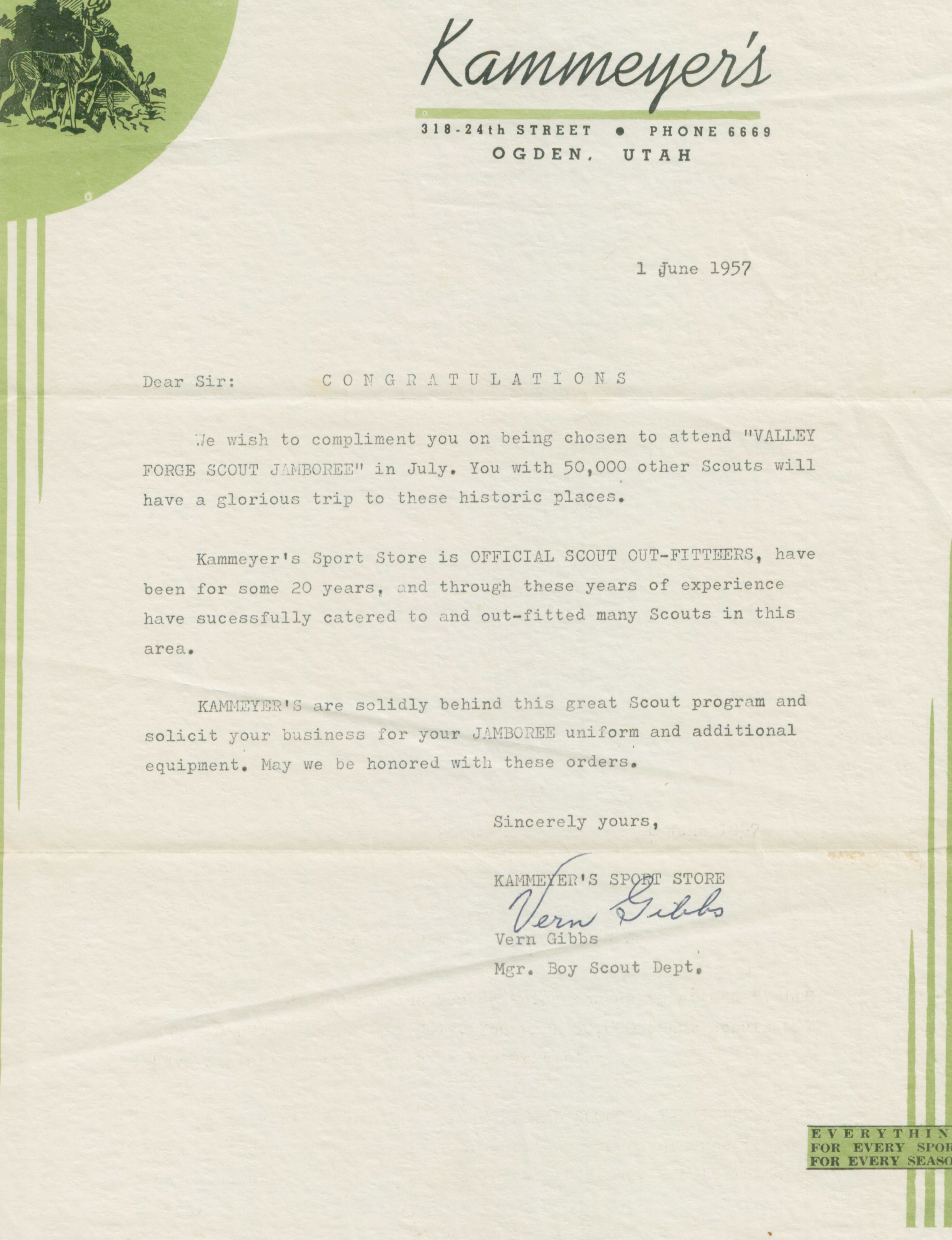
Kammeyer’s supported the Jamboree.

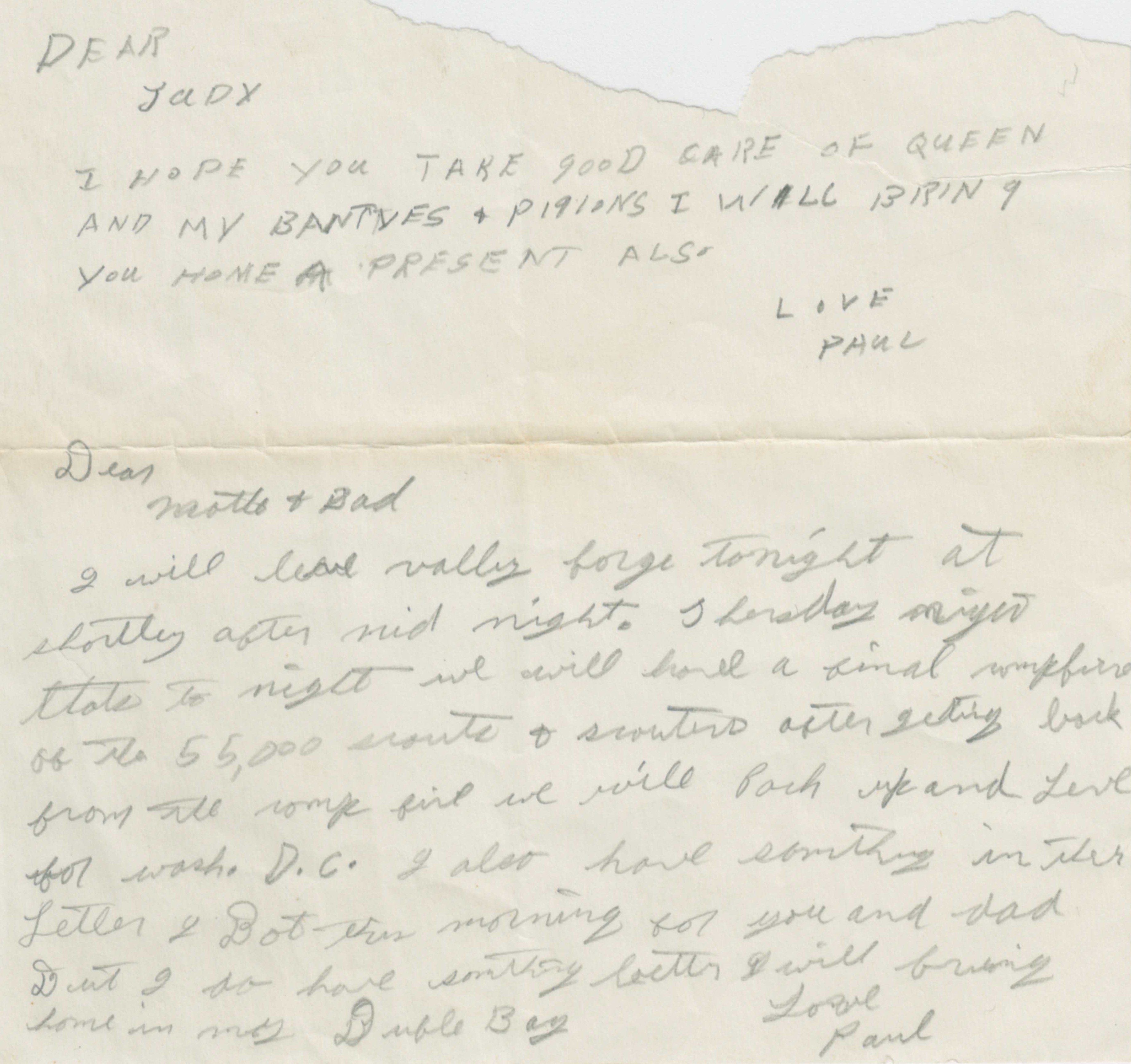
For those LDS Scouts, Harold B Lee and Delbert L Stapley spoke to the boys on Sunday. Here is a letter Dad wrote home while there.

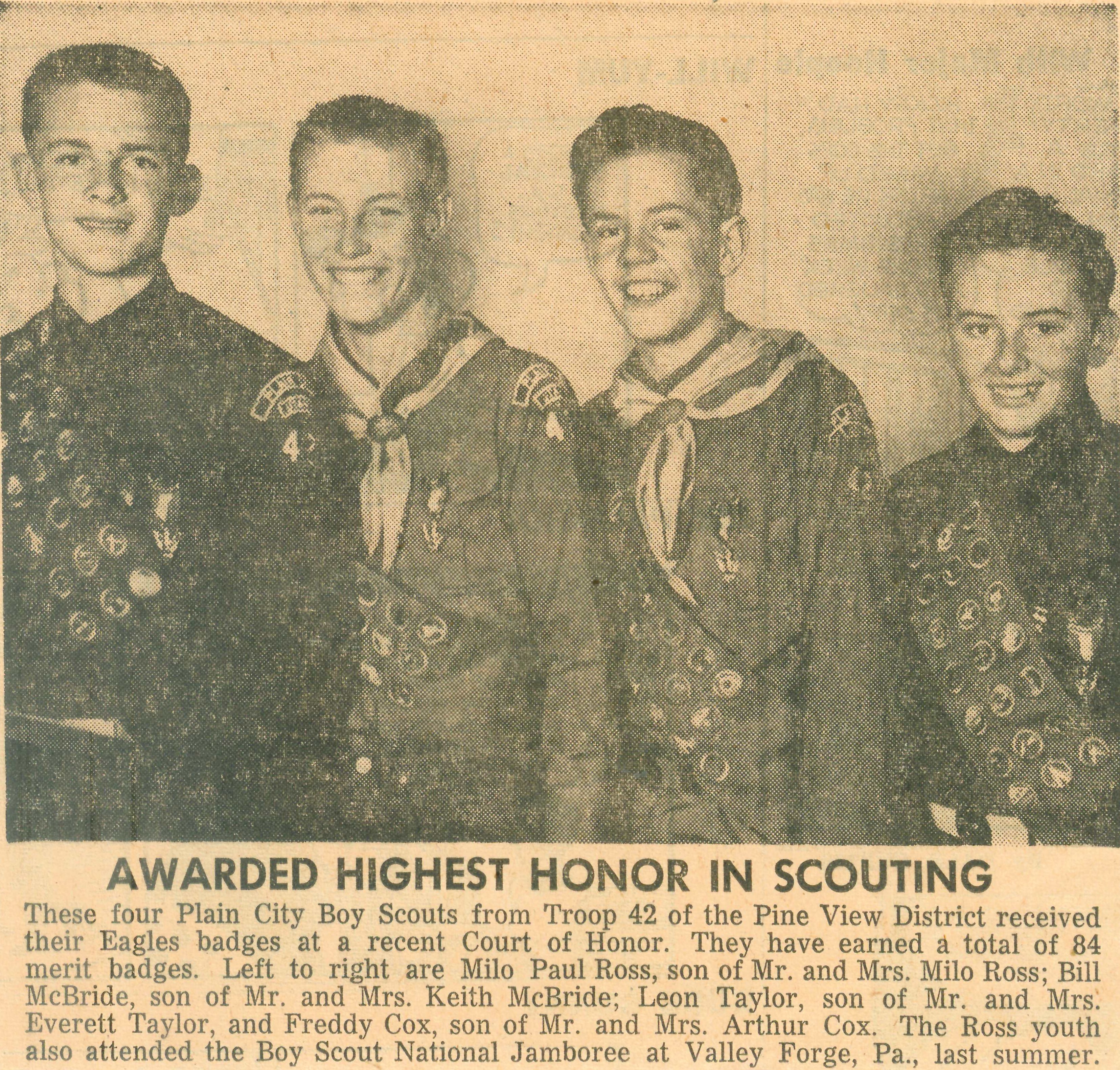
I previously wrote about Dad and scouting. Here is his Eagle Scout picture.

Milo Paul Ross achieved Eagle Scout

Here is a note Grandpa made about this picture.

Milo Ross, Bill McBride, Leon Taylor, Freddy Cox Eagle Announcement
Milo James Ross commented about Milo Paul Ross receiving his Duty to God award on 27 April 1959
Duty to God Award
Letter from Church Headquarters

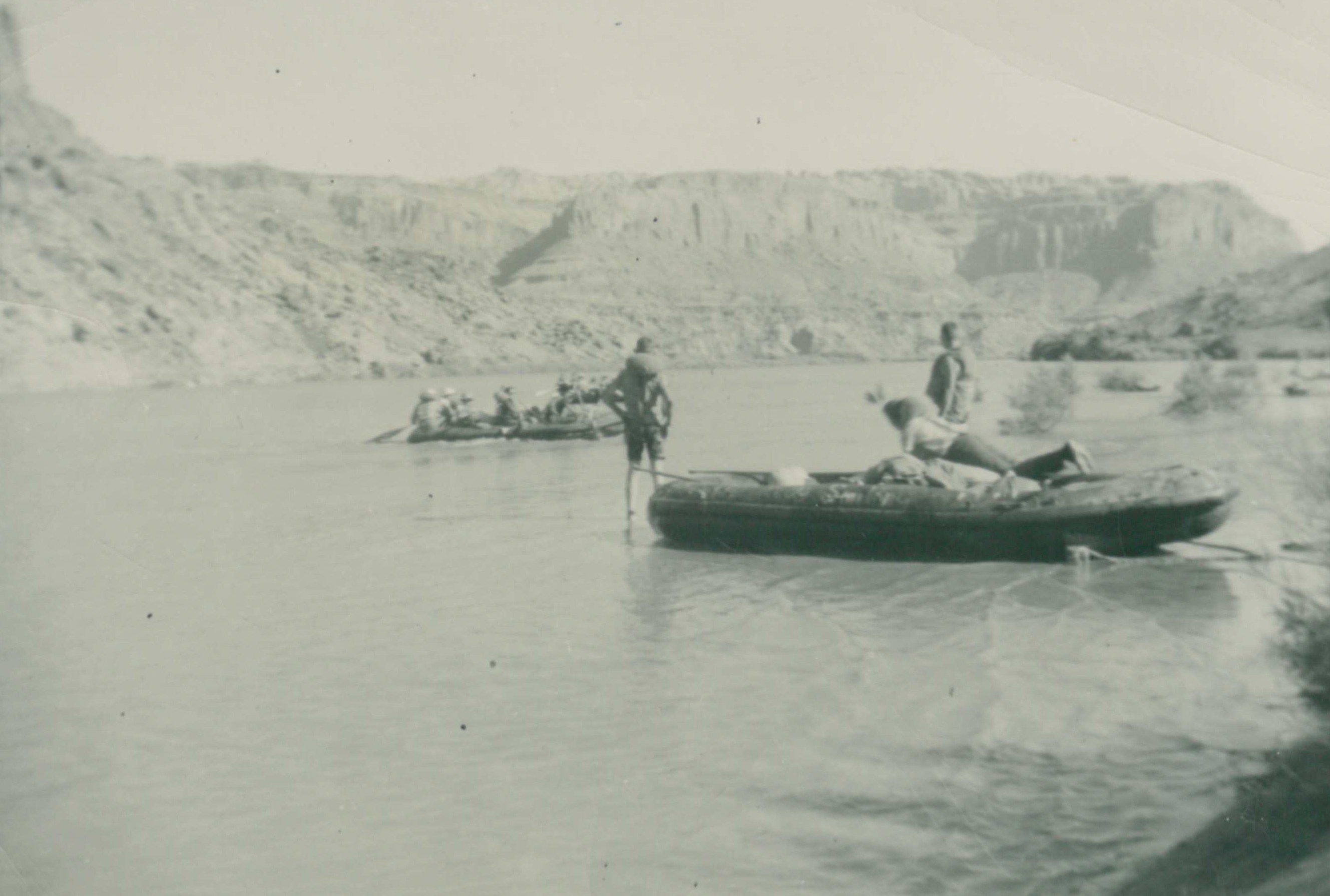
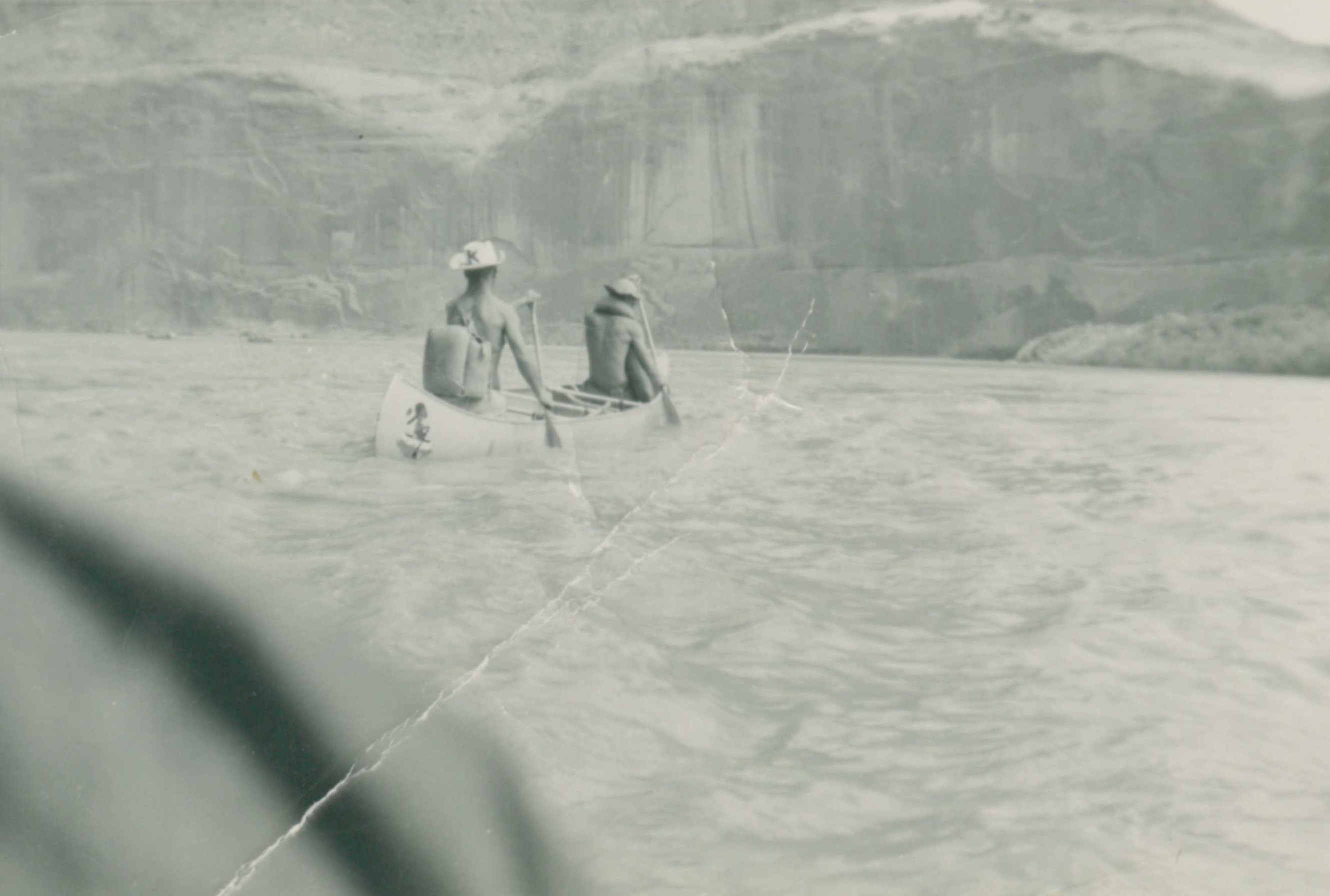
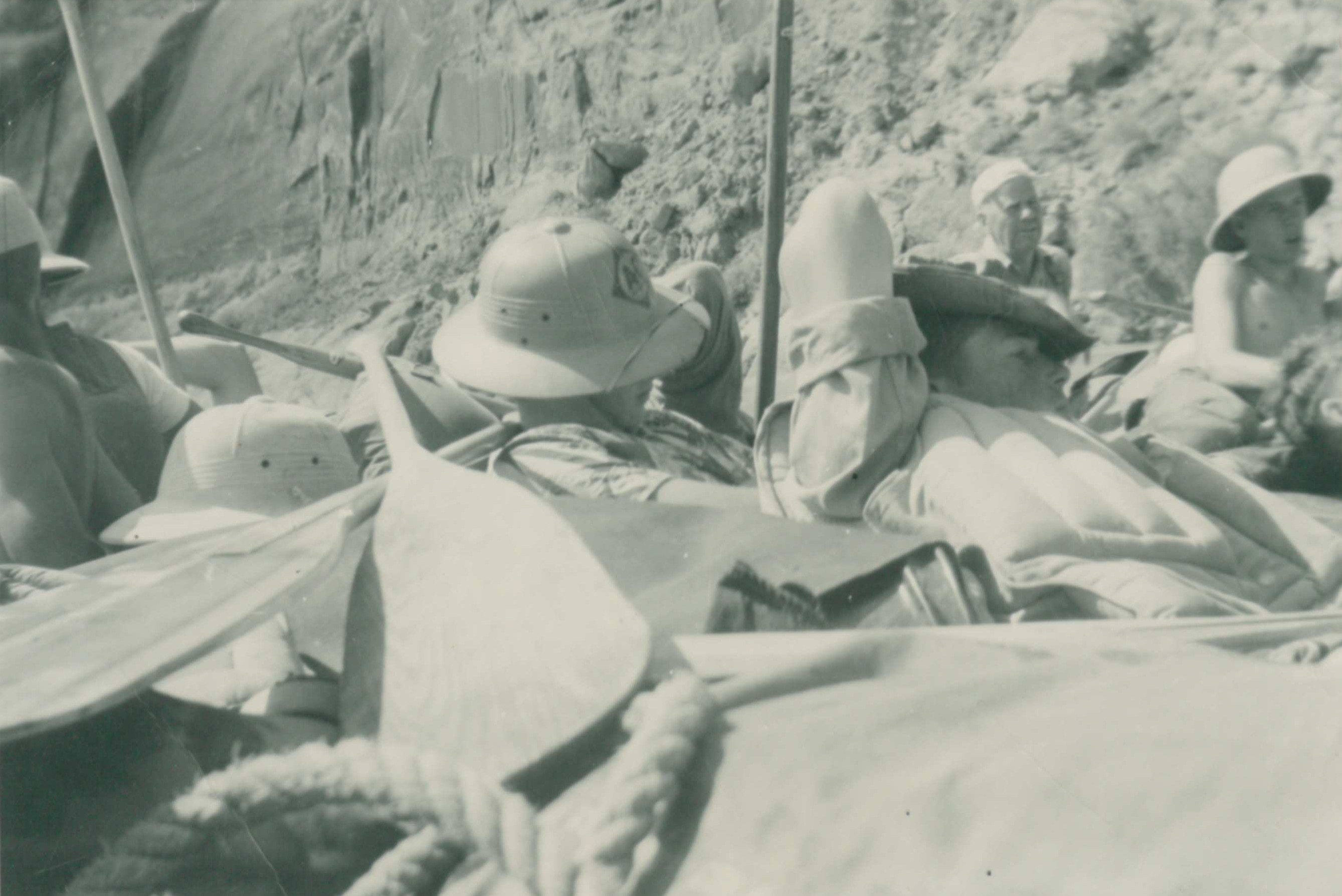
Here are a couple of the photos from the Colorado River rafting trip. Dad thinks there are more photos. He does not remember or recognize any of the individuals in the photos.

Dad remembered they had to pull out of the river to go around the Glen Canyon Dam construction.

~

~

~

~

Both of these were trips of a lifetime. Neither have been forgotten.

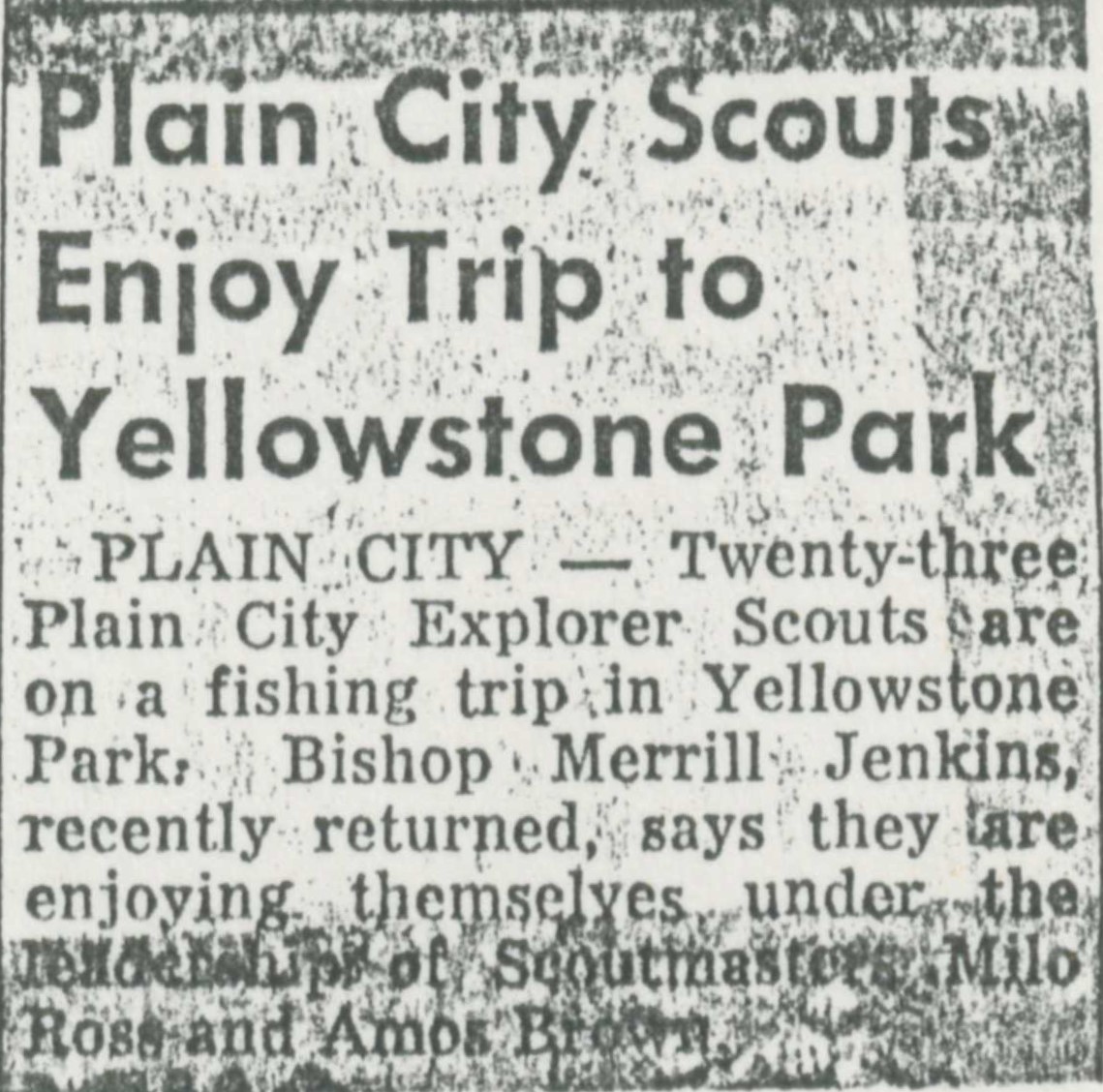
Another clip, I don’t know the year or time.

Benson Sets Quarterly Conference

I wrote previously of a book I have that belonged to my Great Grandfather, Joseph Nelson Jonas. The book was given to me by Ellis Jonas along with a couple of others. Inside the book was this clipping, presumably put there by my Great Grandmother, Lillian Coley Jonas. I have no clue about its significance, if any. It was clipped and put there in the book for some reason. Richmond, Utah, was in the Benson Stake at that time. The article indicates this was 1935.

Bishop David A Smith to Attend Richmond Services

Bishop David A. Smith, first counselor to Sylvester Q. Cannon presiding bishop of the L.D.S. church will represent the general authorities of the L.D.S. church at the quarterly conference of the Benson stake in Richmond Saturday evening and Sunday, according to information given out at the office of the first presidency in Salt Lake City.

The first meeting will be held Saturday evening at 7:30 o’clock. The Sunday sessions will begin at 10 a. m. and 2 p. m. with the quarterly meeting of the M.I.A. convening at 7:30 o’clock Sunday evening under direction of Ellis Doty stake superintendent of the Y.M.M.I.A.

President H. Ray Pond will preside at the general sessions of the conference. Amplifiers have been installed in the Richmond tabernacle to insure perfect audition.

Stressed during the conference sessions will be the two major projects of Benson stake for 1935; larger attendance at sacrament meetings and more efficient ward teaching.

The stake presidency is urging a large attendance at all sessions of the conference especially at the Saturday evening meeting. Special music for the conference has been prepared.

Geraldine Pitcher Jonas

Aunt Geraldine “Jerri” Pitcher Jonas passed away in May.  I wish to share her obituary and a number of photos I have of her.

Geraldine ‘Jerri’ Jonas, 85, returned to our Heavenly Father on 26 May 2016.  She was born 1 October 1930 in Smithfield, Cache, Utah to Mary Geraldine Fulkerson and Ronald Nelson Pitcher.

She grew up in Smithfield and graduated from North Cache High School in Richmond, Cache, Utah, in 1948.

She married Ellis Seth Jonas on 18 August 1947. They were sealed in the Logan Utah LDS Temple on 24 April 1964.

She was very industrious and resourceful in all she did. She spent many hours working in her flower gardens, surrounding herself with the beauty they brought.

She took many horticulture and flower design classes at Utah State University prior to opening Jerri’s Floral and Greenhouse in 1976. Her successful business lasted for over 24 years before she retired.

Jerri was an active member of The Church of Jesus Christ of Latter-day Saints. She served as Relief Society president, Primary president, and as a counselor in the stake Young Women’s presidency along with many other callings. She served a LDS full-time mission with her husband, Ellis Seth Jonas, in the Arkansas Little Rock Mission from 1993-94.

She was very active in community service for Smithfield and Cache County. She played a big part in designing and making floats for Smithfield Health Days. She was known and appreciated by all who knew for her willingness to serve.

She is our beloved mother, grandmother, great-grandmother, wife and friend. She was proceeded in death by her husband, Ellis Seth Jonas; her sons, Kent Ronald Jonas and Dan Ellis Jonas; parents, Mary Geraldine Fulkerson and Ronald Nelson Pitcher. She is survived by her children, Mary Lou Jonas (Jarel Hoyt), Julie Ann Jonas (Darnell Kowallis), and Ronald Nelson Jonas (Denise Chambers); and sisters, Faye Pitcher (Don Schiess) and Jenness Pitcher Pond. She has 11 grandchildren and 18 great-grandchildren.

Funeral services will be held at 11 a.m. Saturday, 4 June 2016, at the LDS meetinghouse at 79 E. 200 South, in Smithfield.
A viewing will be held from 6 to 8 p.m. on 3 June 2016, at Nelson Funeral Home, located at 85 S. Main St., in Smithfield. There will be a viewing for family and friends from 9:30 to 10:30 a.m. prior to the services at the church. She will be laid to rest in the Smithfield City Cemetery.

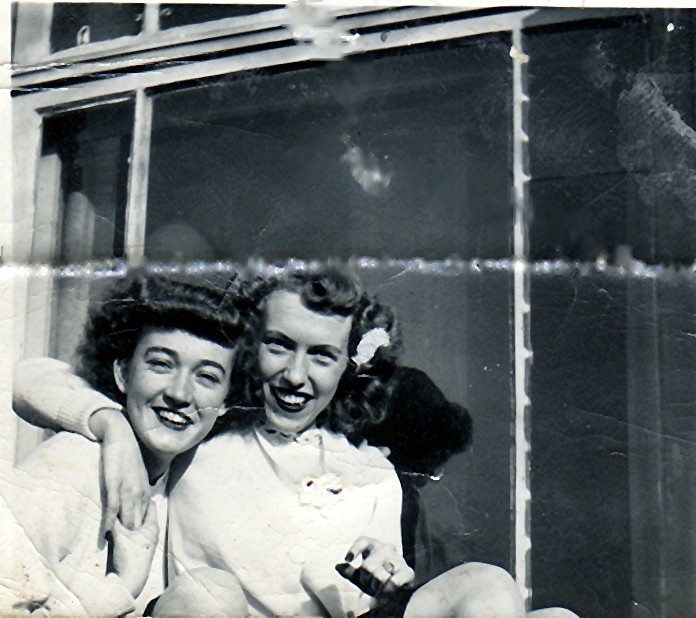
Friend and Jerri

Friend and Jerri


School Picture

School Picture


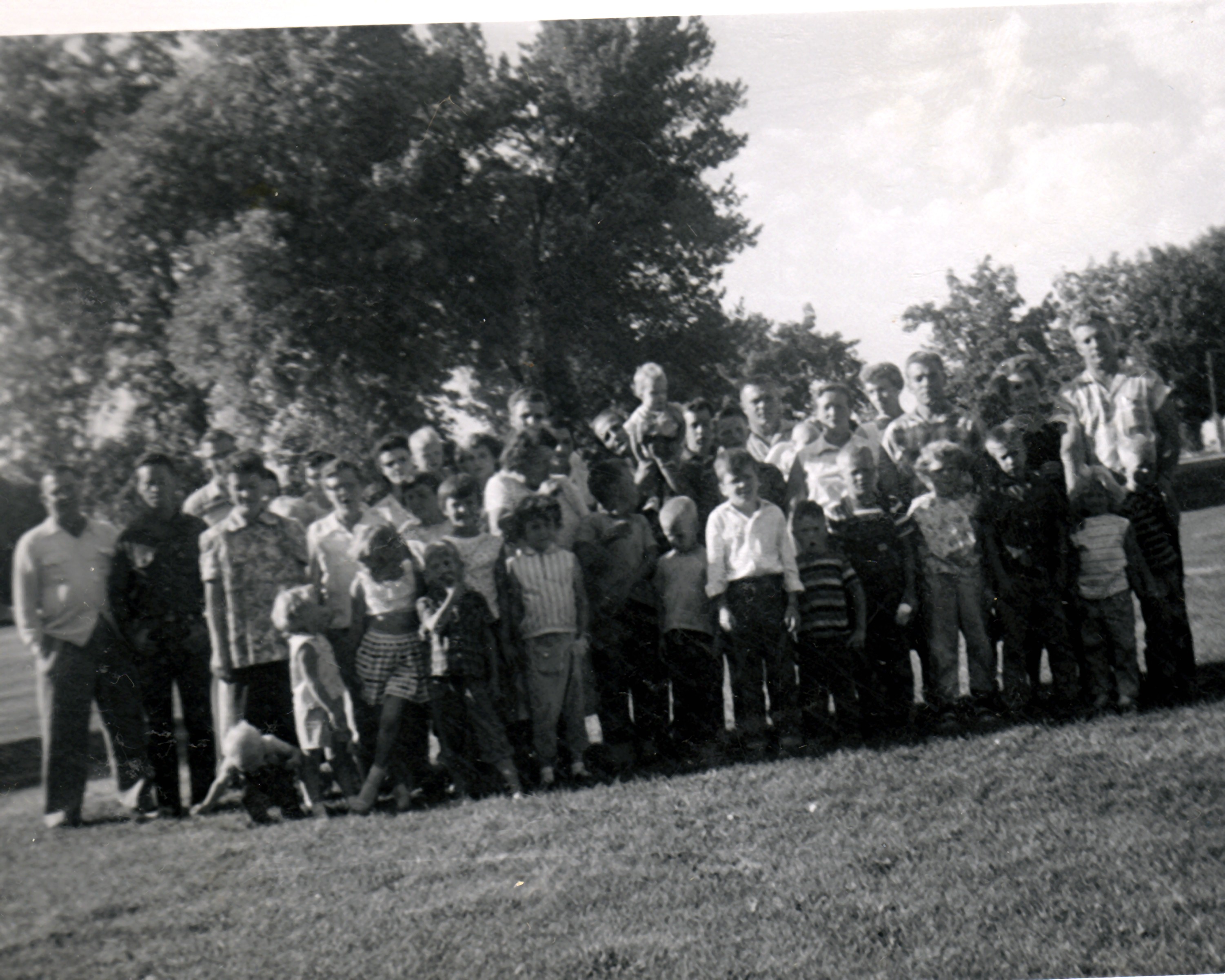
Jerri is in the back between Evan and Lona, to the right of Ellis

Jerri is in the back between Evan and Lona, to the right of Ellis


B: Julie, Dan, Mary Lou, F: Ellis, Ron, Jerri

B: Julie, Dan, Mary Lou, F: Ellis, Ron, Jerri


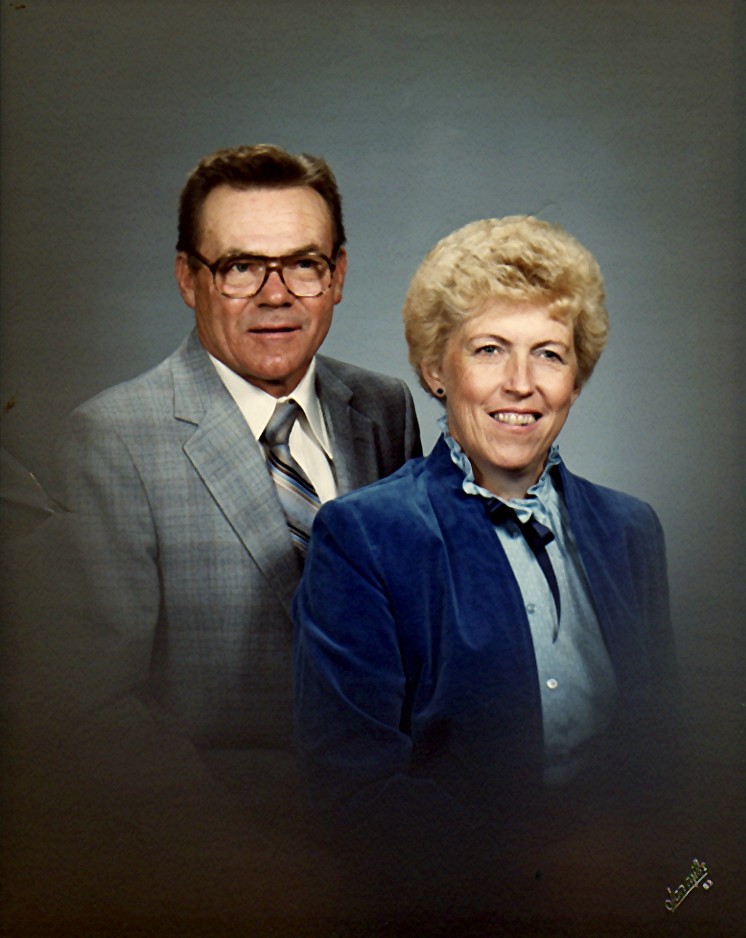
Ellis & Jerri

Ellis & Jerri


Jonas home 25 July 2003

Jonas home 25 July 2003

I don’t have any of the family reunion photos from the past 10 years to share.  Maybe some of the rest of the family will share them or provide a copy to me so I can share them.

I really came to know Uncle Ellis and Aunt Geri (I know others spelled it Jerri, but I always used Geri and she signed my birthday cards that way too) while I was at Utah State.  I stopped in after I moved there in 2003.  As I got to know them quite a bit more, they invited me to dinner.  Eventually I fairly regularly went to Smithfield to get away, study, and do laundry.  It turned out to be a great opportunity to get away from campus, relax, and do homework.

I got to know Geri’s Mom, helped clean her home, and even did work for Jenness at her home.

I gave Ellis some books that I had that I thought he might be interested in and he gave me some of Great Grandma Lillians books as well as Great Grandpa Joseph’s books.  I still have them all.

Eventually I graduated from college, married, and moved away.  I always felt very welcome in their home and Geri always felt at ease to help me do things around the house.  I don’t know how many times I helped her weed some of her flower beds.

I wish I could have gone to the funeral but my own daughter, Aliza, was in the hospital.  Farewell until we meet again.