Overlook along Washington coast, Aliza, Lillie, Hiram, James, and Amanda Ross
I wrote about our August 2020 trip previously. During the heights of COVID-19, our little Ross family took a trip through the northwest. The night before we stopped and played at Rialto Beach. Earlier that same day we were at Hurricane Ridge. Six days before at the Museum of the Rockies in Bozeman, Montana. The next day would find us in Astoria, Oregon. In the middle, Superior, Montana. I have another post I still need to do for Seaside/Cannon Beach.
This day we drove inland to visit the Hoh Rainforest inside Olympic National Park. For us living in the Idaho desert, this was a strange new land.
A grove inside Hoh Rainforest
It was fun to visit the Visitor Center and walk the paths. We saw slugs, bugs, ferns, and plenty of moss.
Ferns, moss, and growth in Hoh Rainforest
With as much driving as we did on the trip, the kids generally welcomed any opportunity to get out of the van and go for a walk. Each stop was something new and interesting.
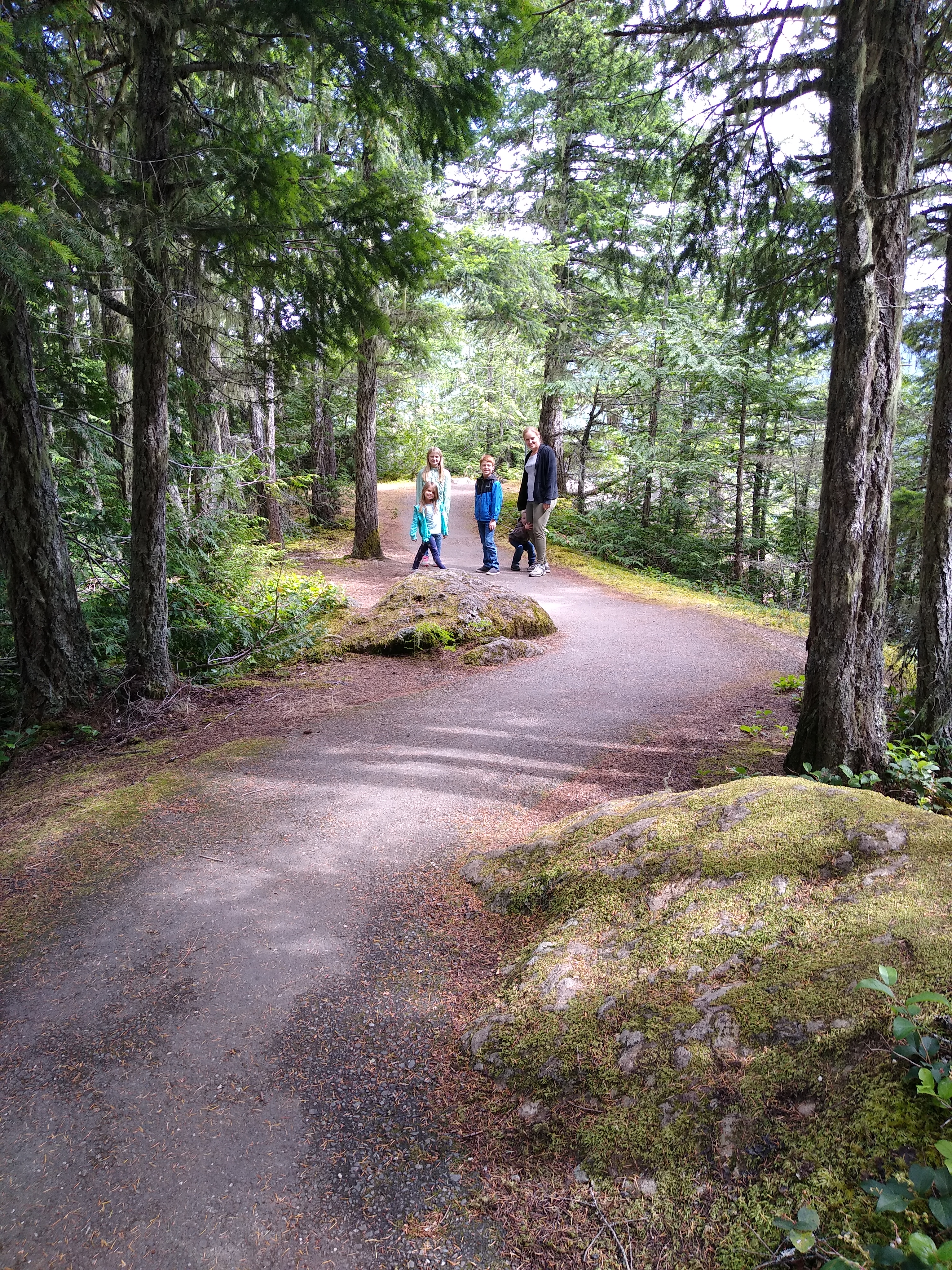
Amanda, James, Aliza, Lillie, and Hiram Ross walking below a mossy tree in Hoh Rainforest
It would be fund to try and find these locations in 10 years, or more, to try and recreate some of the photos of this trip. Perhaps the kids might remember a site or two.
I really do not know anything about this photo. This was one of many photos that were in the Todd/Coley collection that I scanned in 2014. On the back of it was written “Leander Harral Twin Falls” in pencil. I really was not sure if that was enough information. This must have been a friend of Melvin Todd.
Doing a quick search today, I found an obituary for a Leander Harral. Everything seems to be a match. I uploaded the photo to his profile on FamilySearch.
Leander H. Harral
Des Moines, Iowa – Leander H. Harral, 84, died January 15, 2020. Born and reared in Twin Falls, Idaho. Graduated from Idaho State University with a B.S. in business, a minor in accounting. Worked for the State of Iowa, Department of Education for 30 years. Served in the US Army, post Korean Conflict for 6 years. He was active in Neighborhood Organizations in Des Moines. He loved to fish and travel. Most of all he loved his AKC Champion Border Terriers competing in Earthdog, Tracking, Agility, Rally and Obedience. Most rewarding to him was when he did volunteering with his therapy dog, Joy.
Survived by his wife, a 60 year marriage, Olga “Trudy” (Nerge) Harral; good neighbor and friend, Terry Davis; sister-in-law, Betty Lou (Paul) Schwake; sister, June (Wayne Tardiff) Harral; brother, Quintin (Avon) Harral; many nieces and nephews, great- and great-great-.
Leander was preceded in death by his parents, Quintin and Louise (Engelbrecht) Harral; father and mother-in-law, Clarence and Doris Nerge; sister and brother-in-law, Jacqueline and Raymond Davis; and brother-in-law, Harold Haverkamp.
Services will be held at Garden of Memories Cemetery in Waterloo, Iowa at a later date for the immediate family. Arrangements handled by Hamilton’s Funeral Home.
Here is another photo of the bunch. It shows Quinton Harral on it.
Quinton Harral
I found this obituary for Quinton Harral, he passed away just last year.
Quintin Henry Harral, age 86, passed away peacefully early Sunday morning on July 16, 2023, at Eastern Idaho Regional Medical Center in Idaho Falls, Idaho, from post surgical complications.
Quintin was born in Twin Falls, Idaho, on July 23, 1936, to Quintin Leander Harral and Louise Lulu Engelbrecht Harral. Quintin was the second of three children, Leander, an older brother by 16 months and a younger sister, June, 2 years later.
Quintin grew up in Twin Falls and was a member of the first graduating class of Twin Falls High School in 1954. He then attended Idaho State College which is now called Idaho State University in Pocatello, Idaho, and graduated in the Votec Auto Body and Fender Program. He also was a member of the ISU Marching Band. Quintin was a premier trumpeter and was often requested to play “Taps” at funerals and events.
He met Leona Rosa Henrie on October 31, 1957, in Idaho Falls, Idaho, while he was drag racing down Main Street. They eloped to Las Vegas, Nevada, on December 17, 1957. They were later sealed in the Idaho Falls LDS Temple. Quintin’s and Leona’s children are: Cindy Lu, Pamela Joy (deceased), Bruce Quin, and Anthony Vail. They raised their four children while living in Idaho Falls, Twin Falls, Boise, and Pocatello, Idaho. Leona passed away on June 21, 1993, in Pocatello, Idaho. On January 17, 1998, Quintin married in the Idaho Falls LDS Temple Patricia Jane Hancock Anderson. Patricia passed away on November 24, 2001, in Pocatello, Idaho. On November 29, 2003, Quintin married, and is survived by Avon Woolstenhulme Hillman in Eagle, Idaho.
Quintin worked as a Body and Fender man at C Ed Flandro’s in Pocatello and Theisen Motor Company in Twin Falls after he and Leona married. In 1967, he changed careers and went to work for Farmers Insurance Company in Boise, Idaho, as an Auto Claims Adjuster. In 1971, he was promoted to the Pocatello Regional Office of Farmers Insurance as the Regional Auto Physical Damage Claims Manager overseeing Idaho, Montana, and Utah. Quintin retired from Farmers Insurance in 1998.
Quintin loved cars and racing. Drag racing was his obsession. Prior to retiring and Leona’s death, his two sons formed the “Harral Racing Team.” His daughter, Pam, was even involved in the racing world.
Quintin was a member of The Church of Jesus Christ of Latter-day Saints. He joined the church in 1963, in Twin Falls, Idaho, and remained a faithful member. He had a strong testimony and never doubted it. He was always participating in many acts of service. He and Avon lived in St. George then returned to Ammon, Idaho, where they served a Humanitarian Mission and worked in the Idaho Falls Temple. Quintin held many church callings, including Elders Quorum President twice, Sunday School President, Ward Membership Clerk, Ward Clerk, and Financial Clerk for four different Bishops. He served a service mission in the East Pocatello Stake while he and Patricia were married.
Quintin is survived by his wife, Avon Hillman; daughter, Cindy Lu Latimore (Mark) of Chubbuck, Idaho; son, Bruce Quin Harral (Cathy) of Eagle, Idaho; and son, Anthony Vail Harral (Bobbie) of Pocatello, Idaho; sister, June Harral of Ft. Walton Beach, Florida; and sister-in-law, Trudy Harral of Des Moines, Iowa; as well as his 14 grandchildren and 34 great-grandchildren.
Preceding Quintin in death is Leona Henrie, wife; Patricia Anderson, wife; daughter, Pamela Harral; brother, Leander Harral; and his parents, Quintin Leander Harral and Lousie Lulu Engelbrecht Harral.
Services will be held at 11:00 a.m. on Thursday, July 20, 2023, at the Cortland Ridge Ward, 3934 E. 49th S., in Ammon. The family will visit with friends from 10:00 a.m. to 10:45 a.m. prior to services at the church. Burial will be at 2:30 p.m. in the Mountain View Cemetery in Pocatello, Idaho.
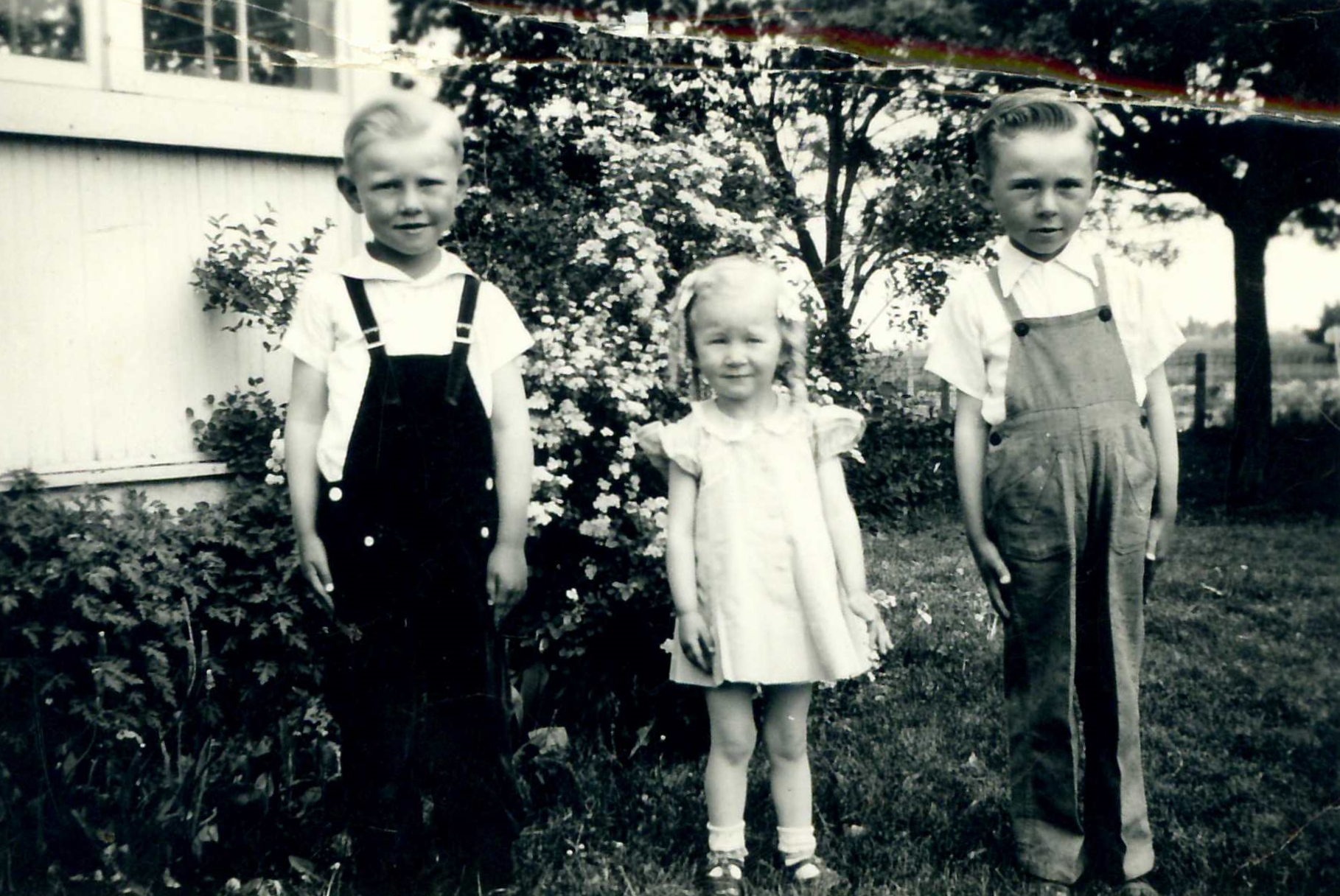
Lastly, there was this photo of Quinton, Leander, and June. Quinton’s obituary indicate she lives in Florida and is still alive.
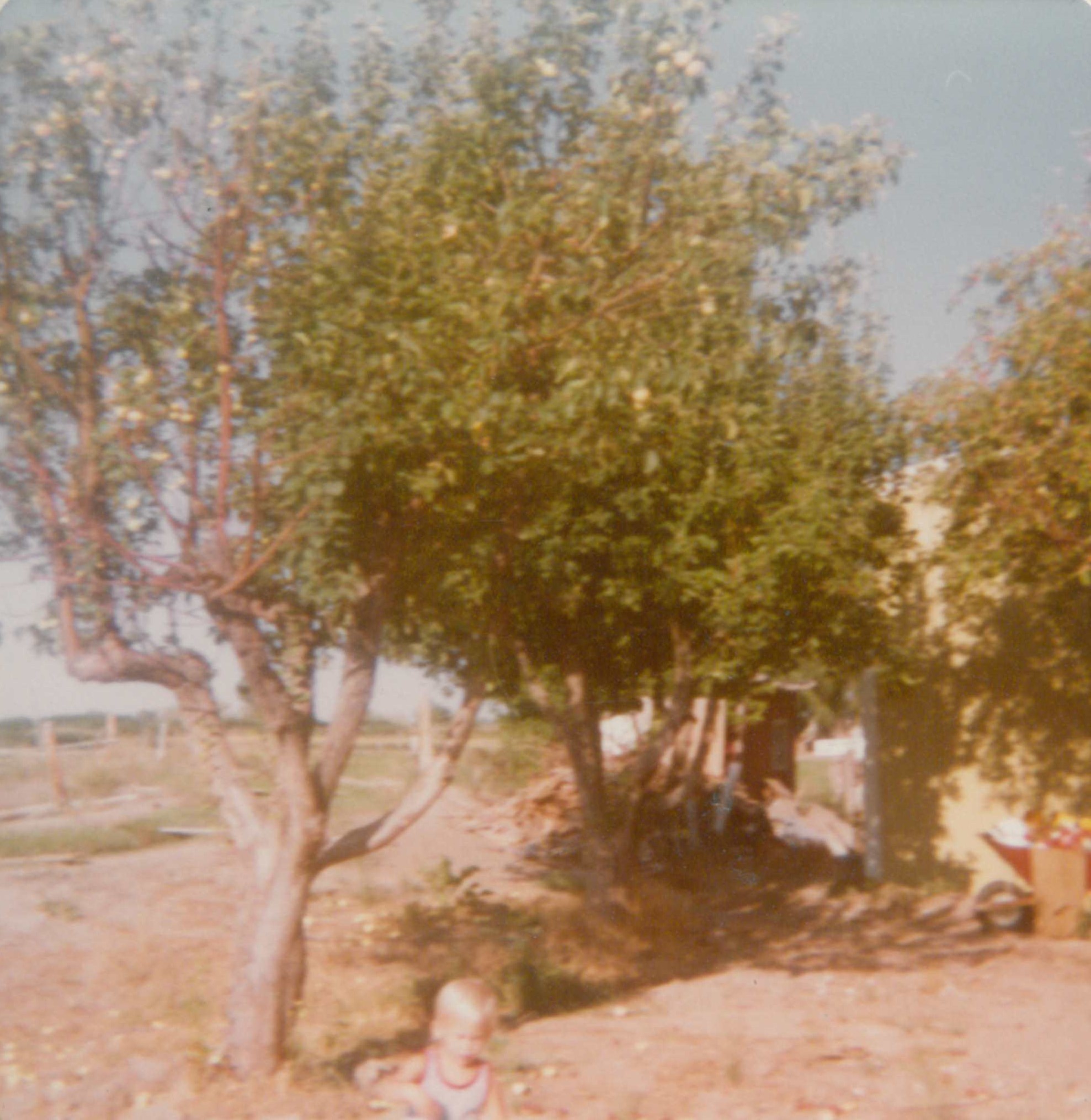
Scanning some photos from a photo album of my Aunt Jackie, I found these treasures. These pictures appear to be 1977 to 1978 based on the age of my cousin. It took me back to my own memories of this back yard growing up. This is Grandma’s home on what was 50 South, now 584 Sunnyslope Drive, Paul, Idaho.
Brook Jonas on a new backyard patio
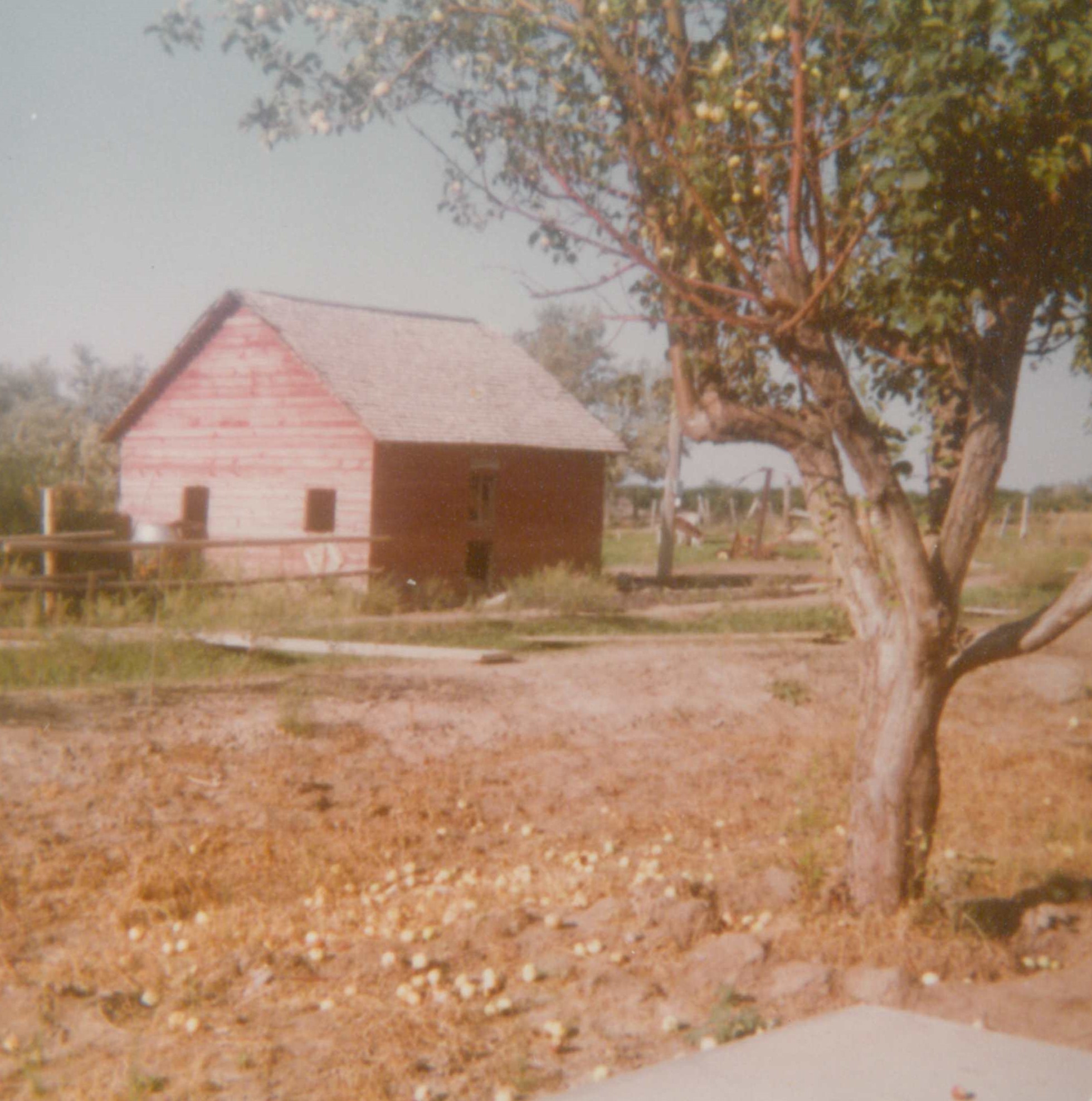
The old red barn over the canal from Grandma’s back patio
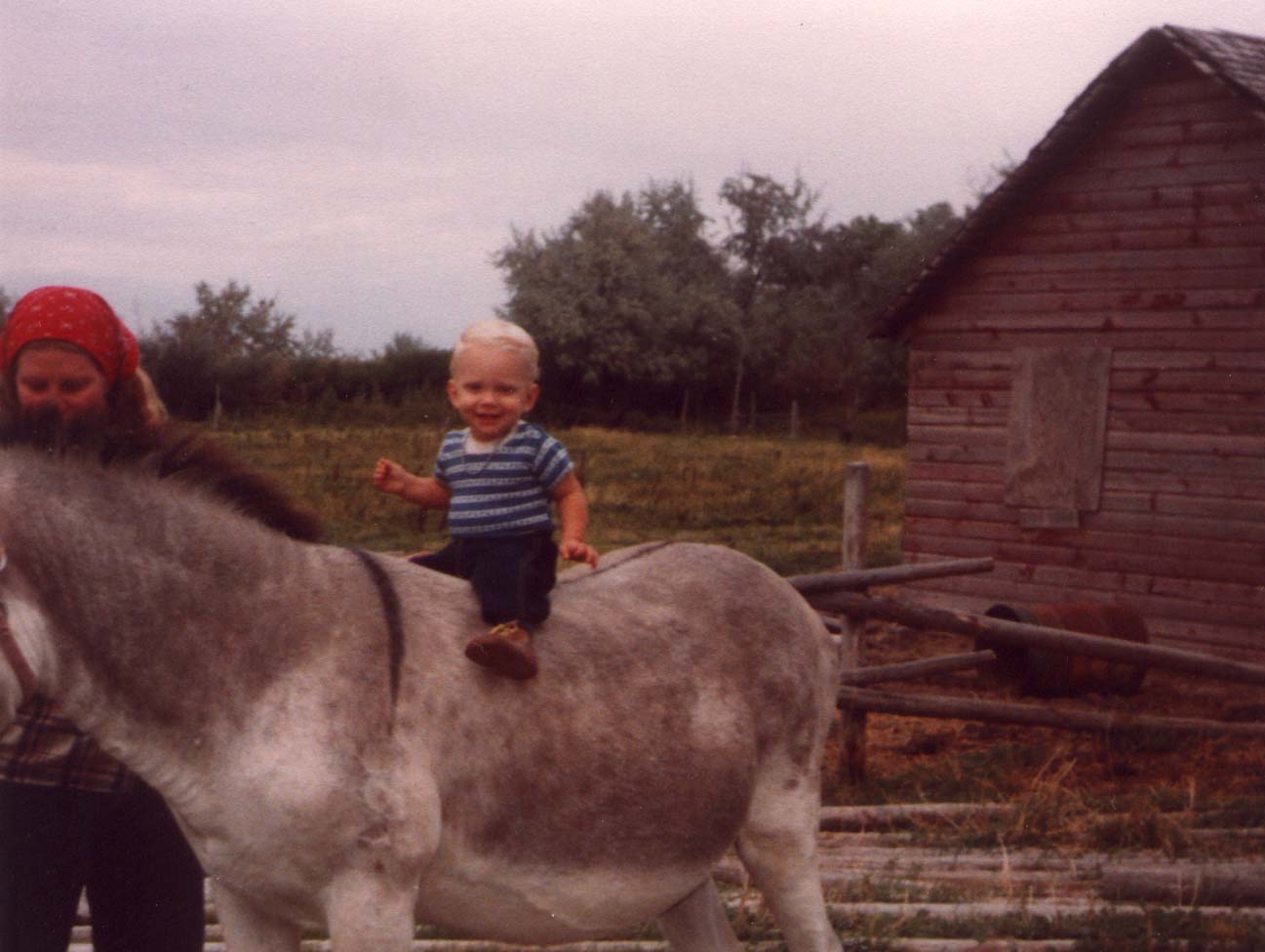
The same shed a few years later, boarded up.
Sandy, Jack, and Paul Ross
Sidewalk to shed. That flower bed had amazing gooseberries. May have climbed that antenna pole to get on the roof a few times.
The back of the yellow shed with the old outhouse and little red tar paper shack. I do remember many years of the yellow apples.
Another photo I found with me on the back patio about 1980.
Milo Ross, Paul, and dog.
Here is the same back yard from a different angle probably 3-5 years later. Grass is now in place and the ditch side looks prepared as the flowerbeds I knew them.
Unknown, Jackie, Unknown looking toward the same back yard and ditch.
In the same area, 1992.
Paul, Milo, Sandy, and Andra Ross 9 June 1992
Another showing the same background in 1992.
Paul, Milo, Sandy, and Andra Ross in 1992
And then another photo from 1995.
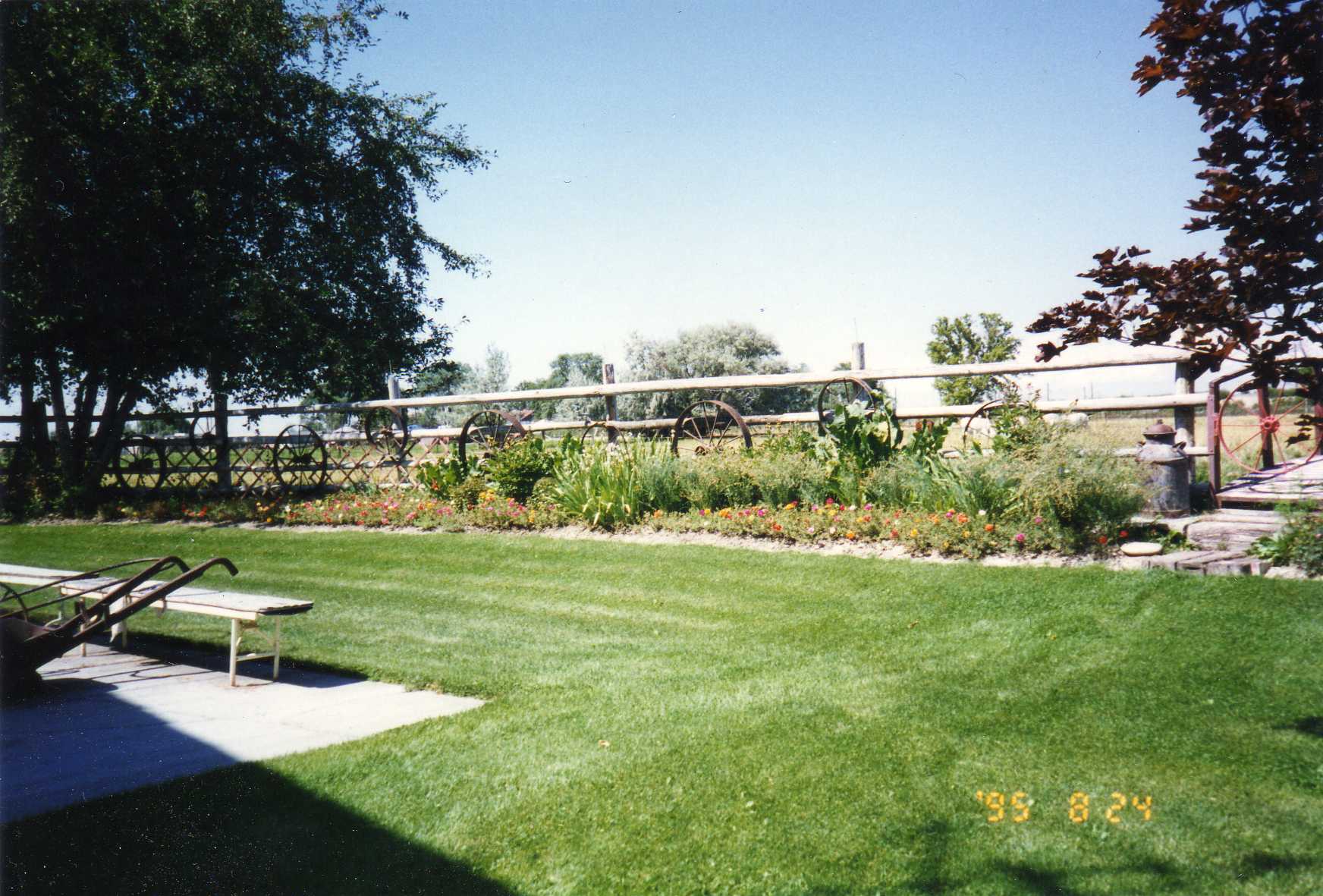
24 August 1995. The old apple trees are all gone, just a red maple then. Flower beds built up along ditch along with the rail fence.
Looking at Google Maps today, it appears all the flower beds are gone, most of the fences, most of the trees. A minimalist attempt at landscaping. I spent many a Saturday morning with my Dad mowing those lawns.
I was recently visiting with RaNae Coley Harms at her home in Wendell, Gooding, Idaho. I recalled she had my Great Grandma’s antique bedside commode chair. I asked if I could take a picture. That is what you see above. It is in fantastic shape.
I have previously written a history for Martha Christiansen Coley. Here is an article about a video at her funeral.
Martha Christiansen Coley was born in 1879 and died in 1961. She married Herbert Coley in 1874. Herbert was born in 1864 and died in 1942. Martha was born in Fredrickstad, Ostfold, Norway. Herbert was born in Lutley, Worcestershire, England. Both Herbert and Martha passed away in Richmond, Cache, Utah. They are both buried in RIchmond.
I have two copies of the History of Plain City, Utah. The front indicates it is from March 17th 1859 to present. As far as I can tell, the book was written in 1977. At least that is the latest date I can find in the book.
One copy belonged to my Grandparents Milo and Gladys Ross. My Grandpa has written various notes inside the history which I intend to include in parenthesis whenever they appear. They add to the history and come from his own experience and hearing. This one is fun as it includes the history of my Great Great Great Grandparents William and Mary Ann Sharp and also references my Great Great Grandfather Milo Riley Sharp.
I will only do a number of pages at a time. I will also try to include scanned copies of the photos in the books. These are just scanned copies of these books, I have not tried to seek out originals or better copies.
History of Plain City March 17th 1859 to present, pages 58 through 75.
William MATHERS
Submitted by Augusta Nash
William Mathers was born in Scotland and came here as a convert to the church. He was a sort of an eccentric man, but he had many special talents and hobbies. He had the finest gun collection for many miles around and loved to decorate the stock with designs of inlaid gold. He was very efficient in this. He also was a taxidermist and did beautiful work in this field. There were few who could match this hunting abilities and the days when few men had enough money to engage in the sport, he became the guide and leader for many well to do men from the city when they came out to hunt. He also was the quarantine official in the days when contagious diseases were quarantined, and he filled this capacity with the utmost integrity, believing absolutely in the law.
Mr. Mathers withi his bag of ducks in front of his shop where he displayed his guns and taxidermy
FRED J. KENLEY
SUBMITTED BY AUGUSTA NASH
Fred J. Kenley started working as a rural mail carrier in 1902, from the main Post Office on Twenty Fourth Street in Ogden. A branch was soon established at Five Points known as Station A. From there two rural Carriers (Routes 2 and 3) and one city carrier sorted their mail and left for their routes. Mr. Kenley’s route (2) consisted of delivery through Harrisville, Farr West, Plain City, Slaterville, and Marriott. A distance of about thirty miles. His first conveyance being a horse and cart, later a buggy and horse. In 1916 he purchased his first Model T Ford. There is much that could be written about the difficulties of delivering the mail; bad weather, bad roads, etc., but he never missed one day. I became his substitute for a long time. He was retired in 1933 by Pres. Roosevelt to help provide jobs to younger men.
Mr. Kenley served the community in other ways. He was a great lover of music and played the clarinet. He with his brother William, who played the violin, and a friend Seth Harper, who played the piano, played for dances all over Weber County. For m any years they entertained in activities all over. Then Mr. Kenley had a choir. In those years almost everyone belonged to the choir. Their weekly practices were held and nothing took place over them. They sang for church, and for entertainment all over Weber County. He took great delight in the accomplishments of this choir. It was second only to the Ogden Tabernacle choir. He was a great scholar and teacher and a Scout Master.
Fred J. Kenley-his first conveyance being a horse & cart
Fred J. Kenley-his later conveyance being a horse & buggy
HISTORY OF PLAIN CITY AS SEEN BY MERLIN ENGLAND
I was born on December 17, 1895, on the same lot that now live on, in a little adobe room. Walter Draney was born on the same day in Plain city. We went to school together and he was a very dear friend. When I was six years old the school was where Walt Christensen lives now. If memory serves me right, Elmer Carver and I are the only two left that attended that school. I can remember three of my teachers; one was Merrill Jenkins’ mother, one was Mae Stewart, who lived just across the road from where I live now. The other was Mrs. Skeen, Ivy Carver’s mother. I can remember Dad tell about the first school which was on the south side of the square. Every Monday morning each of the students took 25 cents to pay the teacher for her wages.
When I was a Deacon, our Quorum took care of the meeting house. There were two stoves, one on each side. It was the Deacon’s work to keep coal and wood for the fires in the wintertime. Richard Lund was the Quorum teacher. Our meeting was Monday night. He had a good singing voice and we had to sing or he wanted to know why. On Saturdays, we would take two horses, a hay rack and our lunch to the north range and cut sagebrush for all the windows in Plain City. The next Saturday we would go in groups and cut the sagebrush into kindling for these ladies. We had a lot of good times and as I remember, there was very little swearing or taking the Lord’s name in vain at any time.
When we went to school, a child’s birthday was celebrated by a surprise party. We had many good times together. Our parties usually broke up at no later than 9:30, I can remember when the dance hall stood where Lynn Folkman’s new home is now. Sometimes later a dance hall was built west of where the church now stands. It later burned down. Many people enjoyed good times at the old dance hall. We had a picture show on Saturday nights. Pete Poulsen and William Hunt took charge of the tickets.
In those days my Father ran a store on the lot where I now live.
It would take all day with team and wagon to bring the dry goods from Ogden. I can remember when the first telephone came to Plain City. My Father gave the telephone company permission to put the switchboard in the back of the store. They took two of my sisters to be switchboard operators. Father and Abram Maw’s grandfather owned the first two telephones. When the phone was put throughout the town, it cost $1.00 a month. Many the night my Father came and got me out of bed and I saddled my pony and delivered a telephone message of a death or of a sick friend to someone in Plain City at all hours of the night. If you needed a doctor, it would take an hour for him to get out this far because it was all horse and buggy. If he needed to stay into the night, it was up to the person who called him to see that his horse was taken proper care of.
Some of the women brought their butter to trade for groceries. Mostly it was a 20 cent a pound trade. Salmon was 10 cents and 15 cents a can. You could buy a work shirt for 65 cents, a pair of shoes for $2.00
The first job I had to earn money was driving cows. I had to drive Father’s cows, so William Hunt and James Stewart hired me to drive their cows. I received 50 cents a month from each of them.
At one time in Plain City there were many people orchards. A lot of the apples were hauled to Salt Lake by team and wagon. It would take three days to go. If you were lucky, you could sell the apples in one day at anywhere from 40 cents to 60 cents a bushel. It would taker a whole day to get home again.
I can remember the first canning factory. They had to haul the cans from Ogden by team and rig with canvas wrapped around them. After the tomatoes were canned, they had to haul to West Weber or Ogden by team to the railroad.
My father, Thomas England, John Maw, and Lyman Skeen were the three men appointed to the committee to bring the railroad from Harrisville to Plain City and Warren. That increased the sugar beets by many acres because the railroad would do the hauling out.
The first gravel roads we had in Plain City were made with rock that was crushed at the west end of Pleasant View, North Ogden, and Ogden, and was hauled to Plain City and Hooper by team and wagon. The men would do it in the winter when work was hard to find. One man would put in three days a week, and then another would work the other three.
I married Florence Taylor February 4, 1914, in the Logan Temple. In 1916, I bought the old Boyd place where the family then lived. There was no school bus at the time, so the children had to get to school the best way they could. Then they would hurry home from school to do their chores and help their mother with dinner. I spoke to the picture shows they had on Saturday nights. Our car would leave home with our girls in it. By the time we got there, the car was full with one or two on the running board besides.
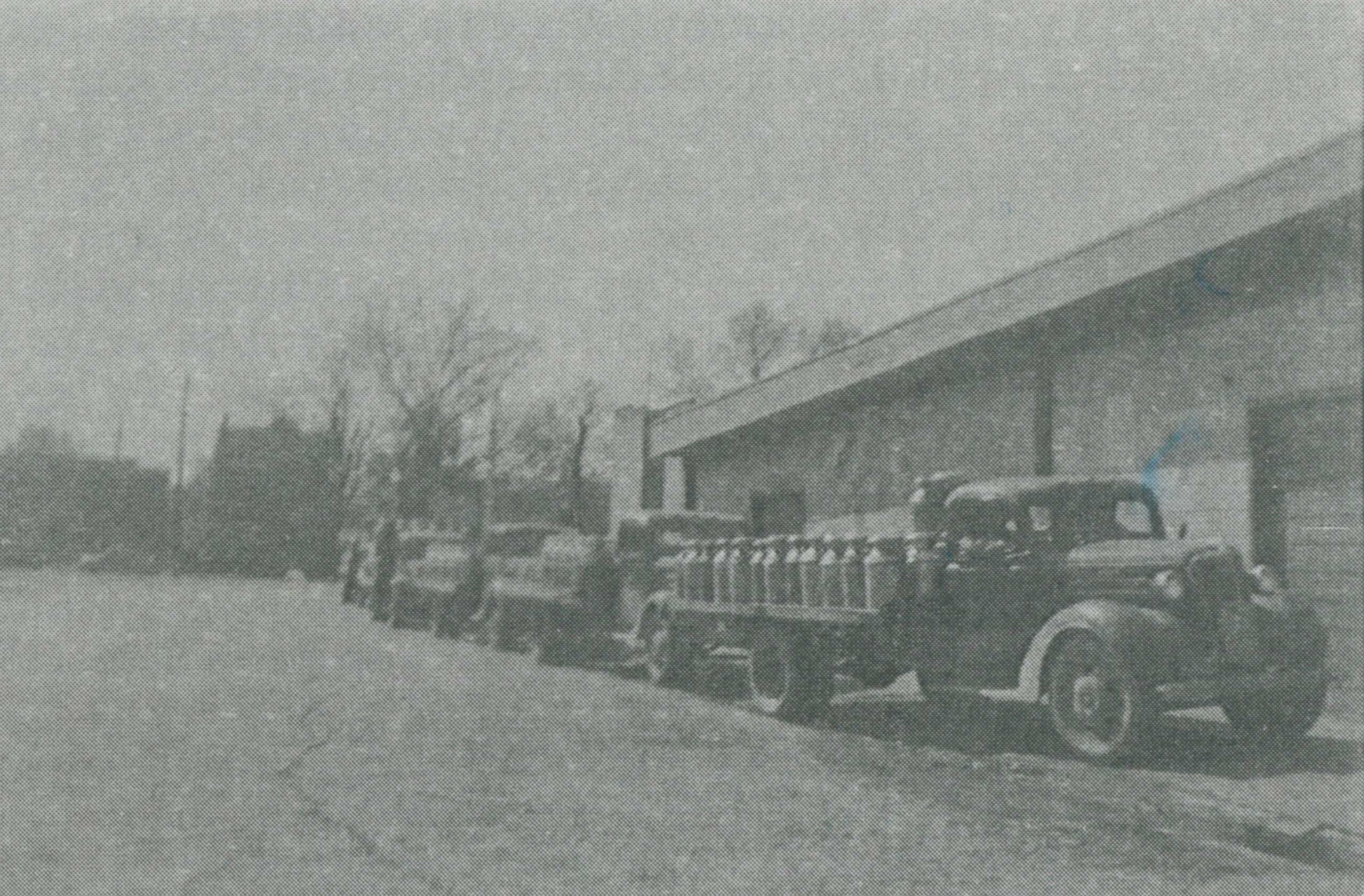
I hauled milk by team and wagon to Farr West to the skimming station and then hauled the whey back to the farmers. The plant was located near where Ernie Jensen now lives. Two years later, Weber Central Dairy brought the ole Black and Griffin Building on 26th and Wall, and I hauled milk there for six years.
When I was hauling milk, George Palmer, who was crippled quite badly, was put in as Bishop. He didn’t have an automobile and so once a month when I would pick up his milk, he would put the Church money in three different money sacks to three different banks and give it to me. I would take the money to the banks and being the receipts and the sacks back to him. Bishop Palmer told me many a time that he didn’t know how he could have done that service.
I am 80 years old. I have a wonderful family and I think the world of them. I good health and I am thankful for my parents and my name. I have lived in Plain City all of my life and I have many wonderful friends.
The year 1905 is the date given that the first telephone came to Plain City. The first telephone switchboard was located in the store owned by Thomas England. There were three long-distance lines. A system of record keeping was to have twenty calls, then registered.
The first exchange was operated by the family of Mr. England. Lillian England was the chief operator. Her salary was $25.00 a month. Lester England, Wilford England, and Hazel Kennedy were relief operators. They were paid $15.00 a month for their services. Service was provided for Weber, Warren, Plain City, Farr West, and possibly Slaterville.
Later, the telephone company lent money to build a telephone exchange building on the spot where marvel England’s home now stands. It was dismantled when no longer needed.
Telephones were few and far between in early Plain City. Mr. Thomas Jenkins told of walking from his home to the home of Henry T. Maw to use the phone in the middle of the night.
Later on, more telephones were installed; party lines with 8 to 10 families were common. The telephones helped to bring the boundaries of the town closer together.
The box-on-the-wall type of telephone was later replaced with the more modern cradle-portable phone. Then, a great step was taken with a few people having private lines, and reduction of parties on a line. This really helped to have all those rings eliminated for every other party on the line. Then more recently, many homes have telephones in the various rooms of their homes.
In the summer and fall of 1973, the biggest change took place. The old telephone lines were replaced with an underground cable with many lines in it. This helped most families to now have a private line. This removal of the old poles and wires has added much to the appearance of the town.
On December 17, 1976, Merlin England said, “today is my eight-first birthday, and it’s the first day in my life I have ever known when there wasn’t a telephone pole one-third of the way through the lot on the east side. Other poles have replaced the original one during my life time, but today the telephone company came and finished putting our lines underground and removed that pole.”
There are a few places in Plain City where the cable is still in the air. The initial project for private line services with the cable placed underground was during the spring and summer of 1973. The completion date for the big push was October of 1973.
The first telephone switchboard for Plain City was located in the back of the store owned by Thomas England. It was located on the same lot where Merlin England was born and lives, 4275 W 2650 N. The store was just west of the England home. The first two telephones in Plain City were those of the Senior Abram Maw and Thomas England. The charge of service was $1.00 per month. If a connection was wanted outside of the Plain City area, Lillian England, the switchboard operator would connect with the Ogden operator who would make further connections. There was no dial system at that time.
The telephone office and switchboard was later moved to the location on the lot where Marvel England now lives.
Merlin England and his wife, Florence, lived in this telephone building part of 1914 and 1915.
Merlin England and his wife, Florence, lived in this telephone building part of 1914 and 1915.
William Dolby Skeen
WILLIAM DOLBY SKEEN
SUBMITTED BY BEVERLY B. EDDY
William Dolby Skeen and Mary Davis Skeen were among the first settlers of Plain City. William Skeen owned the first settlers of Plain City. William Skeen owned a race track in the south end of Plain City, which was then called four mile, now known as Pioneer Village. He owned two famous race horses, which he brought from Europe.
William Dolby Skeen also built the first rock house in Plain City. The rocks used to build this house were hailed from the Hot Springs Mountain area.
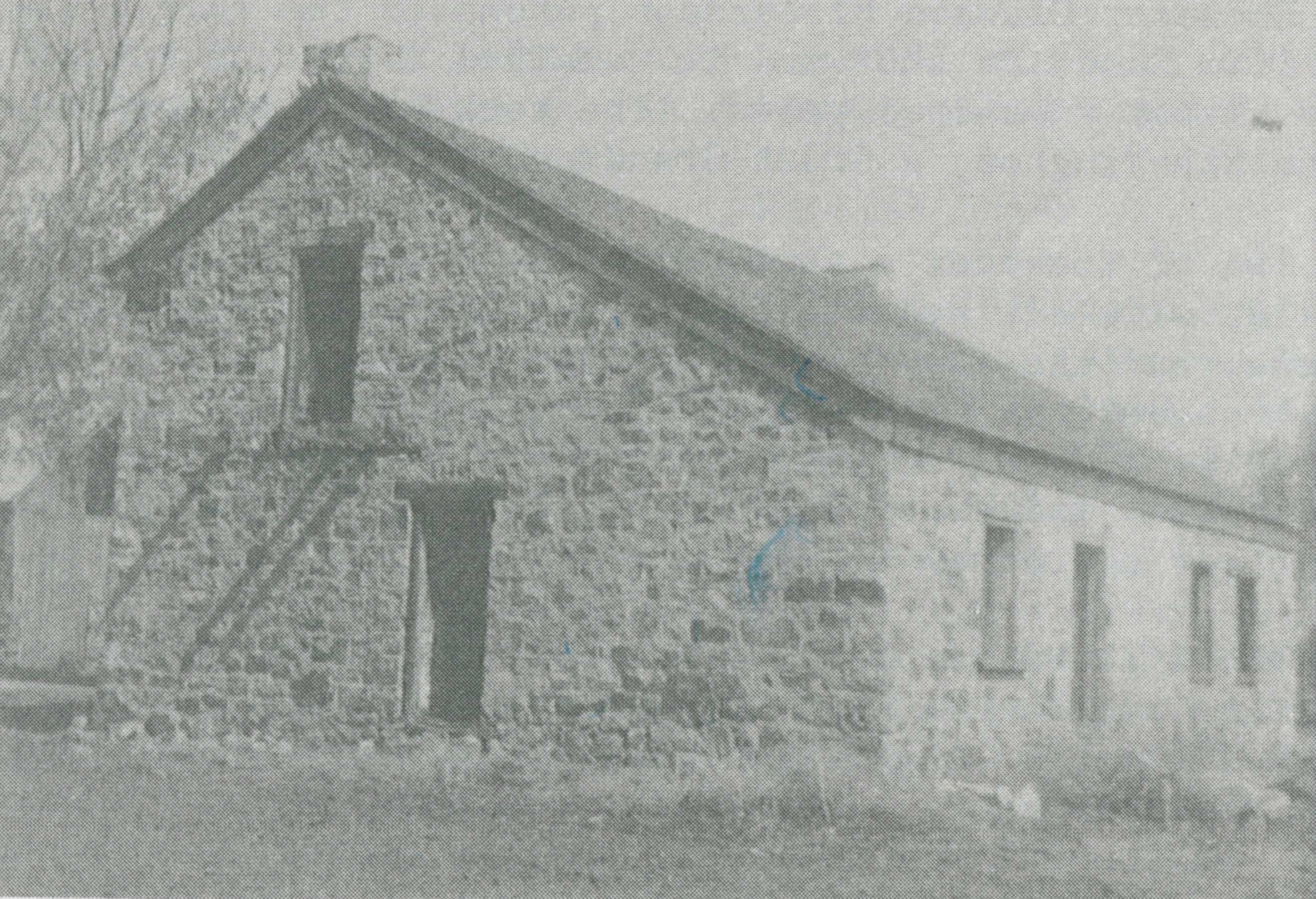
Old Rock House build by William Dolby Skeen as it appears today.
THE OLD ROCK HOUSE
SUBMITTED BY NELDA ETHERINGTON
William Dolby and Caroline Skeen’s log house was one of the early ones in Plain City. After living in it for a short time, he added an adobe section to it. In 1862 he erected a stone house securing his rock at the Utah Hot Springs and hauling it in by oxen. William Sharp, an early brick mason, laid the stones and helped Thomas Singleton in doing the carpenter work. Mary Anne Skeen Etherington was born in the log cabin and was one of the first babies in Plain City.
Ebenezer Clawson Richardson purchased the rock house from William Skeen in 1868 and it remained in the Richardson family for almost a hundred years. The rock house is now owned by John Etherington, a Great-Grandson of William Skeen.
Two of Ebenezer’s three wives shared the house. Polly Ann Child, wife #2, had the west three rooms and her sister wife #3 Phebe, had the east rooms, with the kitchen in the center. Both shared the “Front Room”. There had been a stairway in the Front Room, but, it was taken out to make more room so the boys had only a ladder to a small balcony on the south side to get to their bedrooms.
The Richardsons were noted for their hospitality, and many parties and dances were held in the big front room. Ebenezer played the fiddle and also played it for the community dances and entertainment. At one time the boys had no shoes, which was not unusual for that day, so they pooled their money and bought a pair of shoes and the boys took turns wearing them at the dances.
Ebenezer was forced to go to California to work in the gold mines in 1873. While he was there his foot was crushed by a falling rock. Infection set in and he died on September 27, 1874. Two sisters Polly and Phebe continued to share the home until 1905 when Polly Ann died and Phebe bought her share.
The children grew up and one by one left to make homes of their own. Some of the boys brought their brides home for awhile. While one of the boys and his wife were living there, they had a set of premature twins which were buried under the grape vines that used to be in the center of the lot.
In September, 1907, Phobe’s son Charlie, decided to buy the Old Rock House with his wife Amanda, and their six children Joe, Sarah, Mary Lodisa, Orpha, and Angeline. They left Pocatello, Idaho with all their worldly belongings in two covered wagons. The Old Rock House was alive again with the clatter and clamor of children after having stood empty for a few months.
They loved it there and soon had a lot of dear friends. The three Grieve girls, Laura, Emma, and Ellen, the three Mc Elroy girls, Zara, Vesey, and Helen, and the Richardson girls all grew up like one happy family, sharing fun times and sometimes some squabbles, but always making up like real sisters. The Grieves’ had three tots, Willie, Violet, and Pete, little cherubs, mothered by all the girls until they didn’t know which house was their home. It was a lot of fun to sleep in the spooky upstairs in the hayloft in Mc Elroy’s barn, while Mary and Zara competed in who could tell the scariest ghost stories.
Sometimes, Mr. Mc Elroy would bring his Edison Phonograph over and play records all evening. Amanda Richardson always found something to serve for refreshments and Charlie would bring in a long plank to place across two chairs to make seating room for the neighbors and children. One of the favorite records was “Wearing of the Green” by Henry Louder.
The first Richardson to live I the Old Rock House were Ebenezer and Polly. Their children were Warren, Ebenezer, Angeline, and Levi. Phebe’s children were Amanda, Charles, Franklin, Cornelius, Chancy, Alfred, Myron, William Ezra, and Joseph having been born in the rock house. Ebenezer C. Richardson was the father of 34 children, not all which lived to maturity.
The old Rock house has been a home to many people, its memory will live on for a long time.
Skeen Family, Back (l-r) Alex, Catherine, and Frenz Denial Skeen; Front: Clara Loretta, Mary Davis, and William Delbert
Mary Davis Skeen was born in Llanelly, Wales, and arrived in Salt Lake Valley, Christmas Day 1856. On March 17, 1859, she arrived in Plain City with the first settlers. She was then a girl of thirteen years and was one of two single girls in the entire company.
Mary Davis Skeen went through all the hardships incidents to a pioneer life, but always bore these hardships bravely.
During an epidemic of small pox, she buried her last child. Three boys in all. Two of these children died in the same night. They were all buried at night and through fear of the dreaded disease, friends dared not to go near to offer their sympathy, in this dark hour. Six children were born to her after this.
It is believed that Mary Davis’ mother, Mary Eyenon Davis, had the first flower garden in Plain City.
MARY ANN BAILY PADLEY SHARP
WILLIAM SHARP
William Sharp, born December 10, 1825, in [Misson], Nottingham, England, married Mary Ann Padley in St. Louis. She was born November 28, 1828, in [Mattersey], Nottingham, England. They came across the plains in the Moses Clawson Company arriving in Salt Lake on September 15, 1853. They went to Lehi but the land was not too good and there was no good grazing for their cattle, so they left with the main group that settled in Plain City, arriving March 17, 1859. The children that came with them were Lorenzo Padley, Annie Elizabeth, and Milo Riley. Their daughter, Evelyn was the first white baby girl born in Plain City on October 12, 1859.
The family lived in a wagon box while they built a log and adobe cabin. William Sharp was a carpenter and mason and made some of the first adobe. He helped build many of the first buildings in Plain City.
Submitted by Albert Sharp
JOHN MAW
SUBMITTED BY IRENE SKEEN AND
DOROTHEA DeYOUNG
Many many men did a great deal to make Plain City what it is today and one of these was John Maw.
He was born in Plain City, January 16, 1868, the second son of Abraham and Eliza Tripp Maw, who had migrated here from Root, Lincolnshire, England. He received his formal education in the Plain City Public School and the Weber State Academy.
He married Annie C. Poulsen, daughter of Andreas Peder and Hansene Hansen Poulsen, November 5, 1890, in the Logan Temple. From this union came eight children, Wilmer J., Abram, Irene, and Ira (twins), R. Rufus, Gilbert E., George C., and Dorothea.
Mr. Maw, soon after his marriage, was associated with ZCMI store in Plain City for five years, following which he spent many years in the sheep business, along with farming. He had a large farm and gave many young men, at that time employment. To some, it was a lifetime career. At that time John Maw was given credit for “having taught many young men in Plain City to work”, because he was such a hard worker himself, he expected an honest day’s work for an honest day’s pay from those who worked for him. It was often said, “We receive extra pay for working for John Maw because of the extra good food his good wife serves.”
Much of his farming during his lifetime also included truck gardening. He was also engaged in the cattle business which he remained active in until the time of his death. One unfortunate experience he had with cattle happened in 1932. The cattle were crossing Frist Creek, north-west of Plain City, when the ice broke. He lost 42 head of cattle. He made the statement “Well, those who have them have to lose them, because the ones that don’t have them can’t.”
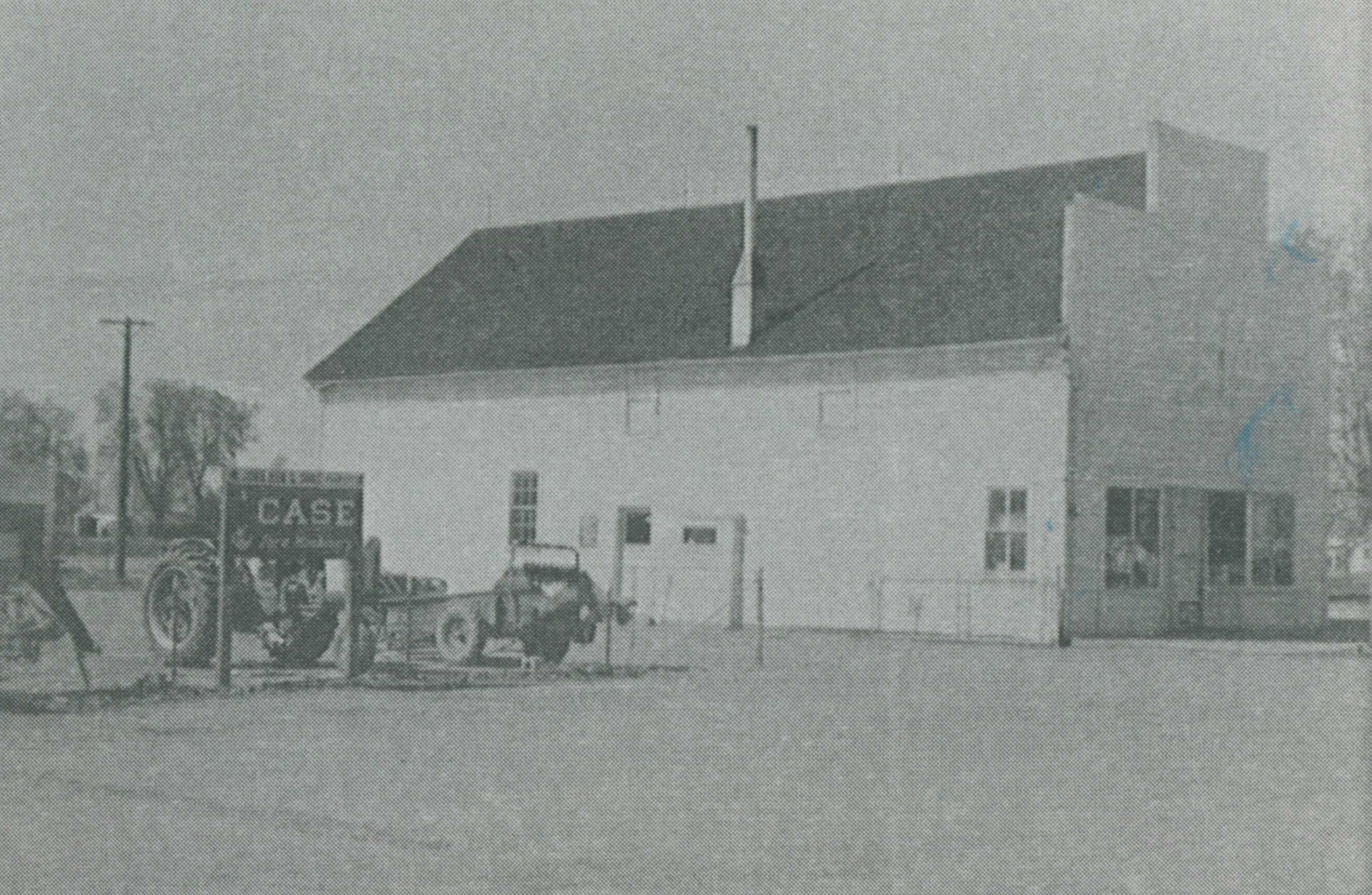
In 1896, Mr. Maw, with others, was instrumental in building canning factory in Plain City. He was a member of the board and later was appointed manager. In the spring of 1920 he purchased the building and moved part of it to be used as the John Maw & Sons Store (later known as W.J. Maw & Sons). This store stood on the property west of the present bowery and extended back to the south end of the present church parking lot. As time went on the building was added on to. The store began as a grocery, hardware, lumber, coal, potato, and onion business. In 1928 the company became a Case Farm Machinery Dealer. After 1937 additional machinery lines were added and in 1948 the Surge Dairy Equipment line was taken over. In the early days of the store there was a wrestling ring in the upstairs of the store and wrestling and boxing matches were held. Roller skating also took place in the upstairs. The warehouse across the street was built in 1940 for potato, onion, and equipment storage. In 1963 the property was sold to the LDS Church and the buildings were later torn down. He also owned the store for some time that is now the Plain City Confectionery in which was sold mainly dry goods and confections and items not sold in the other store.
John and Annie Maw
In 1907 & 1908 John Maw, Lyman Skeen and Mr. Eccles, head of the Utah – Idaho Railroad Company, negotiated for a railroad to Plain City. On Nov. 15, 1909 the first railroad was built into Plain City. This made a great difference in the lives of people living in the town because goods could be brought in and sent out more rapidly and people had transportation. Mr. Maw traveled to the east each spring to buy and ship home seed potatoes for the farmers, so with the railroad they could be brought directly to Plain City.
He served as Sheriff of Plain City for 16 years. Along with others, he was involved with overseeing the building of the addition to the old church, and upstairs amusement hall and classrooms. Some years later he helped to raise the money and helped to oversee the construction of the old dance hall. It was known, at the time, as the open-air dance hall because so much of it was screen with drop shutters. It was later closed in and modernized some. Still later it was completely remodeled and used by the church for various reason, but later burned down.
At the time the Utah Power & Light Company was wiring the town of Plain City for electricity, in about 1912, four men lived at john Maw’s home while working here. They first wired the town and then began wiring the houses. They hadn’t planned to connect any homes to the main line until all the homes were wired, but the working men found out that it was Mrs. Maw’s birthday on June 13th and decided to surprise her with the first lights in Plain City. They completed the hookup, even installing the light globes, and while the family were eating their evening meal one of the men slipped away and pushed the switch that turned all the lights on, inside and out. Every room of the two story house was lit up. Also Mrs. Maw’s family presented her with an electric washing machine that night. Because everyone had looked forward a long time with anticipation to having electricity there were many visitors at the Maw home that night.
With all the many things John Maw was interested in and accomplished, one would have to say that his great love, his greatest concern and his ability to look into the future was with the irrigation work he did. He was connected with the Plain City Irrigation Company and the Weber River Users Association. He was president of the Plain City Irrigation Co. for about twenty-five years and a director of the Weber River Users Association, generally spoken of as Echo Project, for the most of thirty-five years. In this time, he served as vice president and also a member of the executive committee. He was greatly involved and worked on installation of siphons under railroad tracks and under the Ogden River, enabling farmers of the district to get their irrigation water direct from the Weber River. During this project, which was a tremendous one, he lost of one of his best horses in quicksand. In this association with the Echo Dam Project, he purchased much of the land for that project.
One of the highlights of Mr. and Mrs. Maw’s married life was their trip to Europe to meet their youngest son George as he was returning from a mission to South Africa. They were able to visit the native lands of their parents and many others. They were gone for three months.
Mr. Maw was a very thoughtful man and deeply concerned about the welfare of others. While in business, for Christmas he would deliver a ton of coal to the widows and needy families. He would also kill some of his beef cattle and take meat to those people. Of course, he didn’t limit this to only Christmas time but as he saw peoples need.
At the time of his illness, he was in the hospital in extreme pain but even then he was worried about the water situation. We had such a dry spring and the crops were not coming up, so everyone was praying for rain, and whenever anyone entered his room he would say “Is it raining?”
He passed away May 27, 1936, at the age of sixty-eight. His funeral was held May 31st in the old Ogden Tabernacle. It was very strange – whether it was I answer to people’s prayers, a coincidence that it happened at that time, or as many people thought a tribute to him for his great work in irrigation and his concern for other people, that the rain came down in torrents, before, during, and for some time after the funeral. It was like the very heavens had opened to let down rain.
One speaker at the funeral said in tribute to him, “I think I can properly say that John Maw is as near a human dynamo as I have ever met. He was full of energy and spent an unusual active life. He thrived on obstacles. It seemed no obstacle was too great for him to tackle, and he usually succeeded. It just seemed to whet his determination to be under difficulties, and he always wanted to carry his load.” He has been missed greatly by his family, his friends and associates.
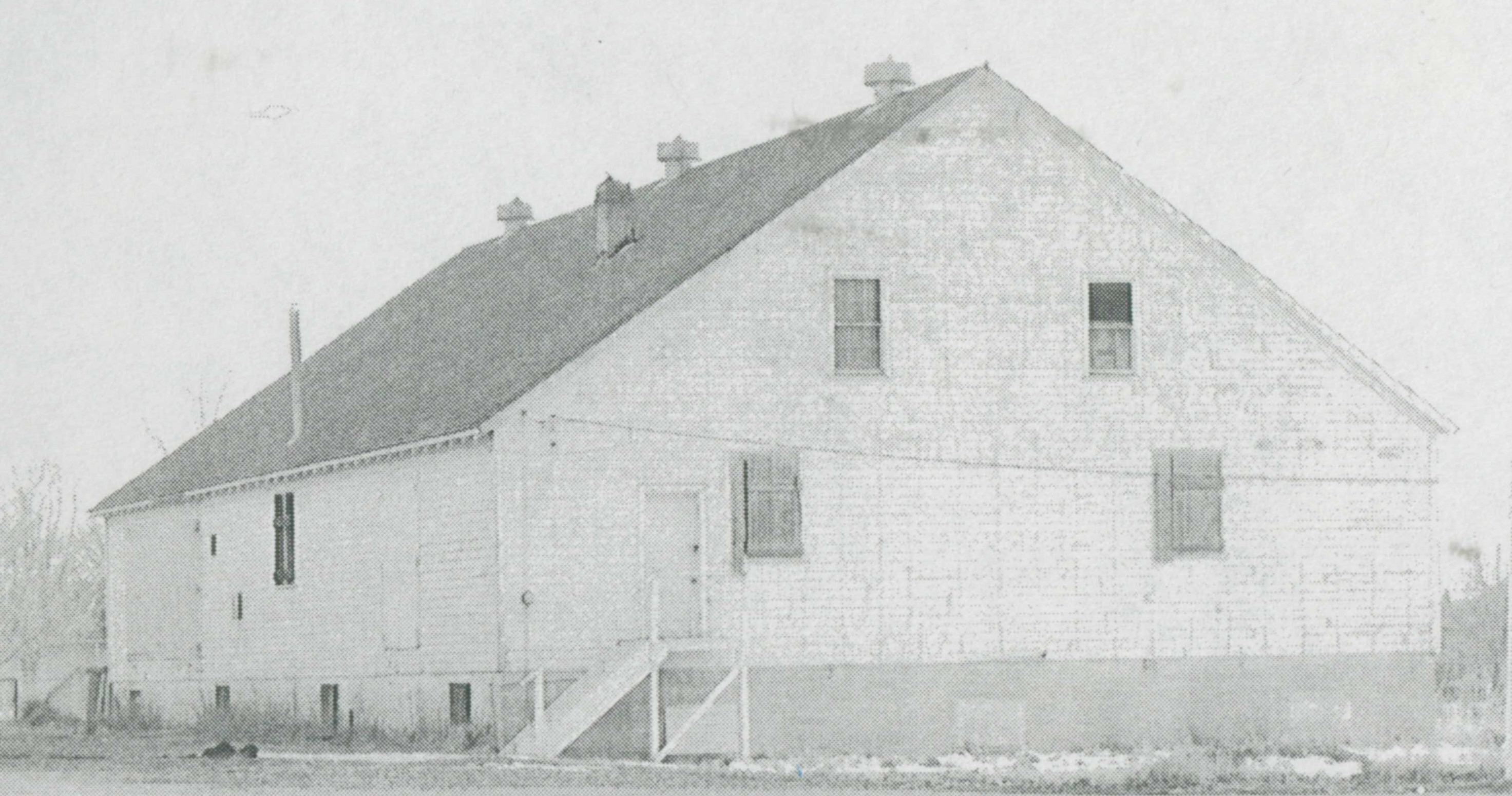
Maw’s warehouse built in 1940
Maw’s confectionery
LYMAN SKEEN HOME
The home was built about 1870 and was added onto several times. It is still standing and is owned today by George and Charleen Cook.
Right to Left… Lyman S. Skeen (1850), Sabra Alice Skeen (1887-91), Electa P. Dixon (1852), Isabelle Skeen (Charlton) ( 1889), Lyman Skeen (1871)-away at medical school, Charles Skeen (1872), Joseph Skeen (1876), David Skeen (1885), Emma Jane Skeen (1881), Electa Skeen (Johnson) (1879), and Mary Ellen Skeen (Rawson) ( 1883). Picture was taken in the summer of 1889.
AUGUSTA K. KENLEY HOME
Augusta K Kenley Home
Augusta K. Kenley was born in Germany and came here as a convert to the church. On September 23, 1894 there was a small church located directly across the road from her home. It was called the Poplar Branch and Sunday School, primary, Religious Classes, as well as day school were held here. Room was scarce and so for many years she prepared two or three rooms of her home every Sunday morning for the smaller children who marched over and had their classes in her home. She had small benches made to fit her children and each Sunday as she cleaned her rooms the benches were put into another room to be kept clean and dry for the next week. They were never put outside. It is not known exactly how many years this was carried out, but the church did away with the Poplar Branch and was joined with the Plain City people. The picture shows Augusta K. Kenley and her home. It was later moved by Lynn Folkman to 2230 North 4350 West and is still owned by him.
EARLY HOMES
Home of Andrew Peter Poulsen. Karan Kirstina, Pedar, Annie, Petra, Sena, Andrew Peter, Hans P. Poulsen
Later the home of Hans Poulsen, and now the home of Bernard Poulsen. The home has been remodeled.
Home of Jens Peter Folkman
The addition on the north or left side was the store run by Jens P. Folkman, and later by Peter M. Folkman. Peter M. Folkman built an addition to the store with a meat market and cooler for the meat.
HENRY JAMES GARNER
SUBMITTED BY RULON B. GARNER
Henry James Garner was born June 9, 1855, in Ogden, Utah. He was the son of Henry Garner and Melvina M. Browning. Henry Garner Sr. was the son of Phillip Garner who was a member of the Mormon Batallion. When mustered out in California, he returned to Utah, bringing the first pound of alfalfa seed to Utah.
Henry J. Garner was married to Eliza Ann Ballantyne January 31, 1884. Eight children were born by this union.
In 1894, Henry J. Garner came to Plain City as store manager for Zion Cooperative, where he worked from 1884 to 1894. The Plain City store was located on the northwest corner of his block from the town square. Later he and Robert Maw bought the store together and operated it as a partnership. They also owned some sheep. About a year later, Henry J. Garner bought a farm and a house (the O. J. Swenson property). He operated this first store until he bought one of the old smelter buildings out near the Utah Hot Springs. This was about 1906. The building was too large to move in one piece, so he employed George Streeter, who sawed the building in half, and he put bob sleighs under each half and when the snow was sufficient, they moved the smelter building and set it up about a half block south of the first store. There it was set on a foundation and reconditioned as a General Merchandise Store. The name of the store was Henry J. Garner & Sons. He operated this store and farm until 1922, when he sold them, and retired. He then operated a chicken business until 1925. He then sold out in Plain City and bought a house in Ogden, Utah, at 3135 Ogden Avenue.
In 1897, he was elected school trustee with S. P Draney and Milo Sharp. He served four years. The school districts were then consolidated and one large school house was built. Prior to this time, school was conducted in three, one-room school houses. On June 16, 1901, the L.D.S. Sunday School was organized with Henry J. Garner, Superintended, O. C. Raymond, first Assistant. and L. R. Jenkins, Second Assistant, Clara Jenkins as Secretary, and George Hunt, Treasurer. He served as first counsel to Bishop George W. Bramwell, with Peter M. Folkman as second counselor. On June 28, 1906, Bishop Bramwell resigned, and Henry J. Garner was selected as Bishop to fill his vacancy. Peter M. Folkman was first counselor, Peter B. Green, second counselor. Stake authorities present were L. W. Shurtliff and C. F. Middleton.
Henry J. Garner’s wife Eliza died of an accident with an electric washing machine on October 23, 1916. He married Jane Liddle Warner, May 1, 1918, in the Salt Lake Temple.
After Henry J. garner was released from the Bishopric, he was a member of the North Weber Stake of the L.D.S. Church until he moved to Ogden in 1925.
Henry J. Garner died April 6, 1934 at the age of 79.
Henry James Garner when he moved to Plain City in 1894
Henry J. Garner and wife Jane L. Warner Garner, Milton Garner, Leona Warner
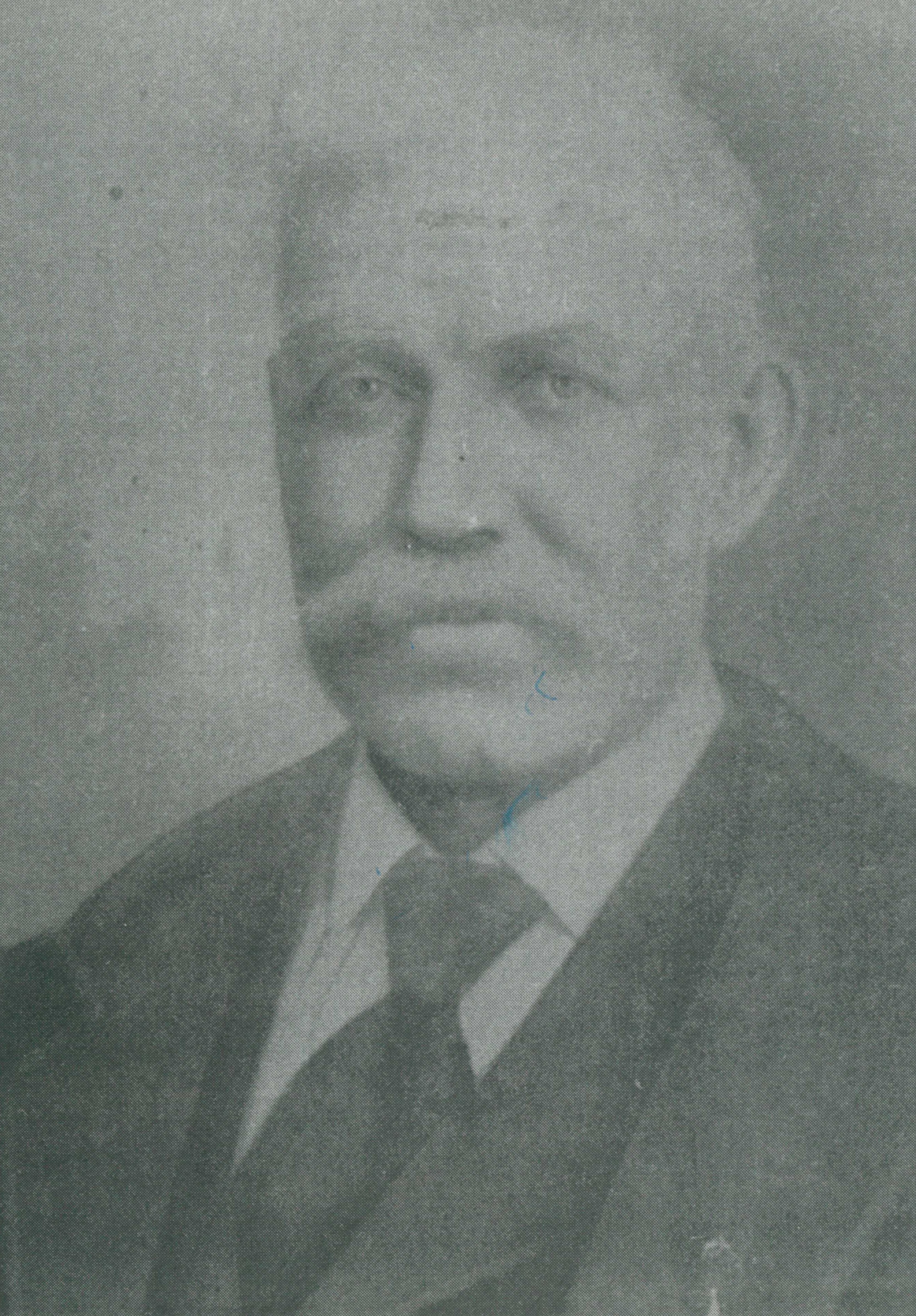
Henry J. Garner
LYMAN SKEEN CONSTRUCTION CAMP
Lyman Skeen construction camp
These are part of the men and women, teams of horses and equipment, that worked and built the railroad near the Hot Springs. Left To Right: The man holding the hand plow on the left is Sant Manson. Charles Skeen is holding the white team. Blaine Skeen is the boy in front. Lyman Skeen is the man standing in front. Louis Carver, a son-in law of Lyman Skeen. He also served as timekeeper for the company. We cannot identify any of the others.
THE MC ELROY STORE
George and Martha Mc Elroy moved to Plain City from Philadelphia, Pa., with their two sons, George Jr. and Bill. They purchased the land where the garage and the “Old Mc Elroy Home” stands, from William and Mina Gampton for $600.00 in September, 1903.
Mr. Mc Elroy was a cabinet maker and some of his original carpenter work is still found in the front of the garage. He was an inventor and had several of his inventions patented, he build several homes in the Plain City area, some of which are still in use.
The carpenter shop was in the rear of the building and they had a candy shop in the front. Helen, Vesey, and Zara Mc Elroy worked in the candy shop after school, but when “Mas Mac” was there, she gave the candy away. Mr. Mc Elroy liked to tease the youngsters from school and would nail pennies on-to the counters. One of the old displays counters is still in use in the front of the garage.
The Mc Elroy store was the first building in Plain City to have electric lights. Mr. Mc Elroy was an agent for Modern Electric Company of 2422 Hudson Ave. in Ogden (now called Kiesel Ave.).
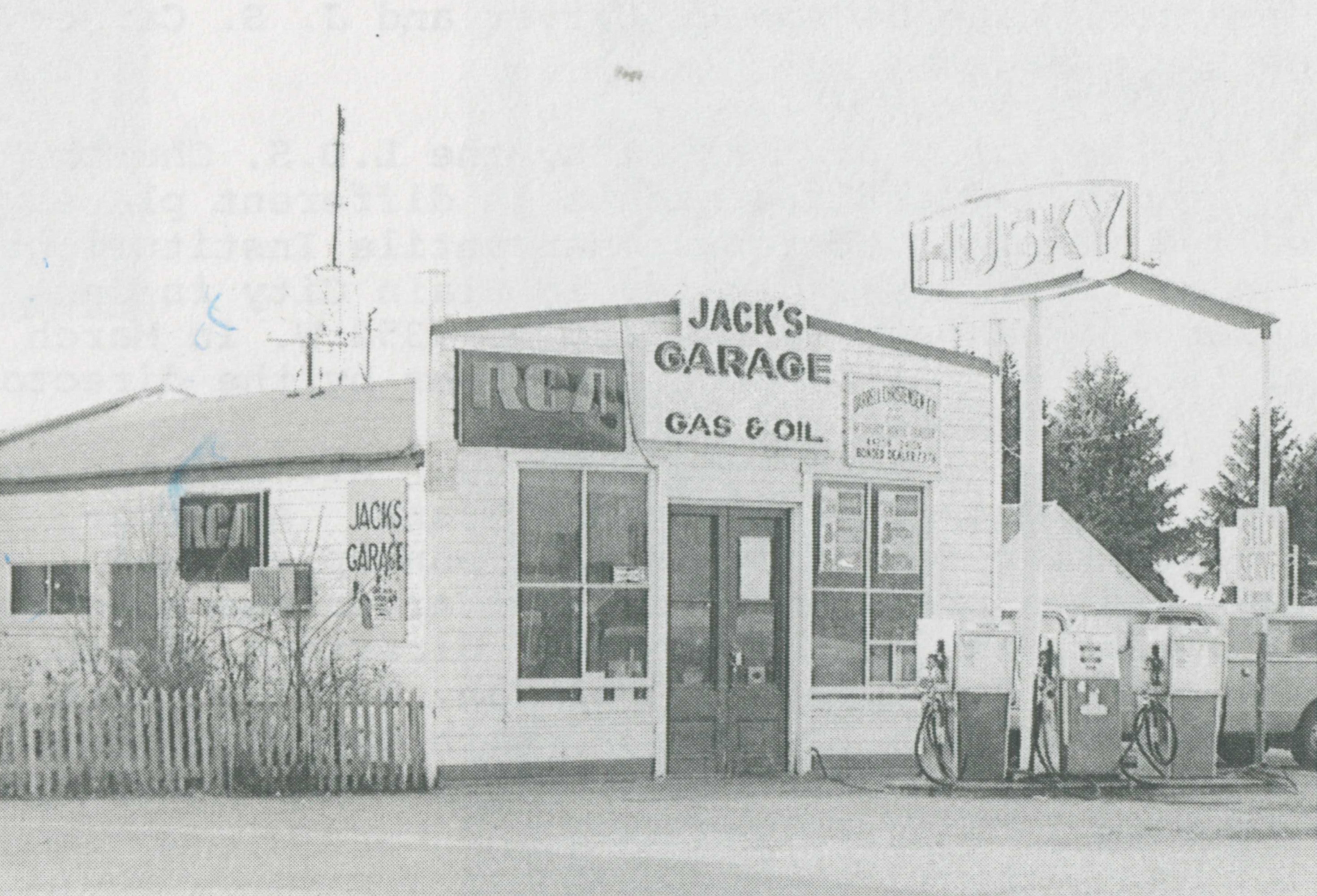
The Mc Elroys lived in Plain City for 28 years before moving to California. Their Son-in -Law Roland Etherington bought the carpenter shop and turned it into a garage, building onto the original shop several times. It was known as Roll’s Garage until 1959 when Roland died and his son John Etherington took it over and the name was changed to Jack’s Garage.
George Mc Elroy in front of his store
ROLL’S GARAGE
Roland Etherington purchased the “Mc Elroy Store” from Geo. Mc Elroy and opened Roll’s Garage in 1931. Roll Graduated from the Sweeney Automotive School, Kansas City, Mo.,
Some of the people who have worked for Roll are:
Lawrence Carver
Clair Folkman
Homer Poulsen
Don Jensen, from 1939 to the present
John Young
Sam Hori
Elmer Ericson
Marshall Ericson
And many others.
Additions were made to the garage in 1938, 1944, and 1955. The bulk Gas and Oil Plant was started in 1951. It was known as Jack & Roll’s Gas & Oil Company.
Roland Etherington died in 1959 and his John Etherington took over the business and changed the name to jack’s Garage.
Amanda, Aliza, Milo, Hiram, and Paul Ross at the Pocatello Idaho Temple
Hiram turns 12 this year. That means he is of sufficient age that in The Church of Jesus Christ of Latter-day Saints he can be conferred the Aaronic Priesthood, ordained a Deacon, and attend the holy temple to perform work on behalf of the deceased. The year that a youth turns 12, starting in January, they may enter the temple to do that work. We did the same thing with Aliza.
We were originally slated to go 12 January but a winter storm closed the Twin Falls Temple. Our Ward, the Burley 8th Ward, also had a temple trip planned to the Twin Falls Temple on 13 January. Weather cancelled that trip as well. The temples are usually booked out a month or two in advance. Looking around, I found a little opening in the Pocatello Temple on 26 January, so I booked it. Twin Falls is about 45 to 50 minutes away, Pocatello is about 65 to 70 minutes away.
We loaded up Dad and trekked off to Pocatello. Lillian and James stayed with Aunt Lolane Andra in Chubbuck and we ran up to the temple. We snapped this picture on the way in. A bit fuzzy, but it preserves the date! Grandpa Milo and I were able to baptize and confirm Aliza and Hiram.
Afterward we hung out with Aunt Lolane for a bit and then squeezed in a trip to Denny’s before heading home. Unfortunately we forgot to get a picture with Lolane.
I received a copy of a history from Julie Jonas Kowallis. It is attached to Johanna’s profile in FamilySearch. Whoever compiled or rewrote the previous version seems to have mixed in references and stories related to Johanna’s son and grandson as if they were Johanna’s husband or son. Both emigrated to Utah at different times and had different trips. Further, this author edited out parts of the other history that seem to be passed down, although not verified. Some of the other history is missing, I will share it if I can find the missing second page.
The country of Sweden is about the same size as the state of California. Southern Sweden is made up of flat, fertile plains. The lan (which means country) borders have changed very little since they were established. Each lan is subdivided into smaller units that are known as parishes.
Little is known about Swedish history before 800 AD. About this time two different tribes of Vikings entered Sweden. The Svear, who lived in the eastern parts, and the Gotar, who lived in the western parts. THey were almost continuously at war with one another. It was only after the introduction of Christianity in the 9th century that they united and formed a nation. The name Sweden comes from the phrase Svea rike, which means “Kingdom of the Svear.”
For many generations the farming class comprised most of Sweden’s population. The farmer who owned his land was usually quite stable. However, trades-men could travel great distances to obtain employment in their professions, often seeking a good position in the city. There are many lakes and streams in Sweden, so it is logical to think fishermen and seamen would have resided along the coasts or lakes.
The people of Sweden are known to be energetic, hardworking people who value order and tidiness.
Our ancestors Nils Bengtsson and Johanna Johansdotter’s families were among the parish district of Halland in Sweden. Nils came from a long line of tall strong men of the north. Legend has it that one of his relatives was so large and strong that he was considered a giant. He could pick up two ordinary sized men, one in each fist, and bump them together. Nils was a big man, handsome and strong. He possessed unusual physical strength. An attribute many of his [descendants] would inherit.
We have no details as to where or how Nils and Johanna met but we know that when Nils was 28 years old and Johanna 17 they were married on July 4, 1830. Johanna affectionately called Nils “her big handsome man.” They were blessed with eight children, raising seven of them to adulthood.
The Nils Bengtsson family lived in the usual country home in Sweden. There was a long building on the south with the family residence in the east end and the west end was used for pete or turf and wood. They had a building on the north side where the cattle and the hay and grain were stored. Thatch roofs were the rule for the ordinary farm house. On the ease side of the house was a path running south past a meadow and then over a hill covered with trees. On the west there was a road leading down through the green and across a stream through a field to the north. It is difficult in our day to imagine what it would be like to live in a small one room home with a family of seven children.
Although freedom of worship is guaranteed by the law in Sweden over 90 percent of the population belong to the Lutheran church, which is the state church. During the 1800’s missionaries from [The] Church of Jesus Christ of Latter-day Saints, or the [Mormons], began to proselyte in Sweden.
Sometime in the [1850s] missionaries called at the home of Nils and Johanna. At the time Nils was very ill. Their one room home was divided by a curtain to separate the area where Nil’s bed was. Even though he was very ill at the time he listened intently to what those missionaries said. Later he called his son Nils to his bedside and said, “What those men are telling us I feel it is right. I will not live long enough to join their church, but I want you to listen to them and if you feel that it is right you must embrace it.” Shortly after this on March 12, 1859 Nils died.
Two years passed between Nils death and the [family’s] acceptance of Mormonism. But when the Bentsson family were baptized they embraced the gospel with sincerity of heart and a love for its doctrines and principles. [Johanna was baptized a member on 11 May 1861. Agnetta was baptized 10 November 1863, Lars 5 May 1860, Ingjard 5 May 1861, Christina 4 February 1866, and Nils Jr 5 May 1860. Johann joined 7 September 1893 after immigration to Utah. The other two were after their deaths. Bengta and Borta did not join or immigrate to Utah.] Nils and Johanna’s son Nils [anglicized to Nels in United States] said that the songs of Zion filled their hearts and minds. The saints throughout the world were encouraged to emigrate to Utah to be with the main body of the church. Nils said, “I had a birds eye view of Zion in my soul and I yearned to go there.” So with a call from a Prophet and songs of Zion ringing in their hearts, the Bengtsson family began to prepare for the long journey to join with the Saints in Utah. Prior to their departure little Johan Peter, who was 6 years old, gave all of his toys away. I can’t even imagine the faith and courage that Johanna must have had. She was 49 years old at the time and she was leaving her family, her friends and her beloved homeland. The family loaded all their earthly belongings that they could carry and began their trek to America. They left Sweden because of their testimonies of the restored gospel of Jesus Christ and their convictions in its teachings.
Nils wrote of this experience, “the family hustled along the rock paved sidewalks of Halmstad to the coast. The noise of the horses feet and the rumble of the vehicles on the rock paved road drowned all of the voices of the little ones who complained of the unceremonious haste of departure. All were safely on board, the gang planks withdrawn, before we realized that we were moving. We could see that men on the shore were being left behind… As we glided out on the calm blue waters. As we Denmark we say the harbor at Copenhagen covered with sails and booming of cannons. The dense smoke made it difficult to see the city. Germany and Denmark were at war. We sailed and entered the city from the back just before sundown. We had a long way to walk but it was worthwhile. We saw the prettiest homes, lawns, shrubbery, and statues; such as a man on a horse with beautiful decorations representing warriors and noblemen. That even I first heard the Danish language, though odd at first I soon got accustomed to it and learned to understand it.” They sailed from Denmark to Norway on their way to Hamburg, Germany passing between Holland and Belgium.
On Friday, April 18, 1862 Johanna and her children boarded the ship “Electric” and sailed from Hamburg with 336 Saints all bound for Utah. Elder Soren Christofferson was in charge of the Saints and H.J. Johansen was the Captain of the ship. The emigrants were from Holland and other conferences in Denmark and from the Norrkooping Conference in Sweden. The “Electric” sailed down the Elbe to Bluckstadt Roads, arriving there about noon. Here anchor was cast near the ship “Athenia,” which had another company of emigrating Saints on board. At this time there were 335 emigrants on board the “Electric and 486 on the ‘Athenia.'” The “Electric” lifted anchor April 22nd and sailed to a point off the coast of Hanover, where anchor was again dropped and the ship waited for the wind to change. Favored at last with good wind the “Electric” made the final start for America April 25th, sailing out into the North Sea. Once again Nils tells of their experience, “I remember traveling through a city, the streets were lined with wagons all loaded with all kinds of meat, beef in particular. We set sail that evening with beef cattle in the hold, sheep on the deck, and the passengers on the middle floor. When daylight came we were all easing ourselves by [emptying] our poor stomachs down into the hole.” After crossing England and setting foot at several ports they finally boarded the ship that took them to America. Before sailing, President John Van Cott came on board and assisted organizing the emigrating Saints, who were divided into nine districts, in each from 25 to 40 persons. Nils wrote of this experience, “We got on board the great ship that carried us across to America. When we boarded it it stood so high out of the water that it was quite a climb to get on. We had to wait some time while the sailors and others loaded rails and other heavy freight into the hold. I have tried to forget this part of the journey. Our rations were raw beef, lard, and hard soda crackers and water, mustard and salt. The passengers would take their turn at cooking their rations of meat and sometimes they never got to cook their meat. The winds and the waves were so high sometimes that the ship rolled from one side to the other, the flag on the main mast would touch the waves and this could be seen by looking straight up through the hole. Trunks and boxes had to be tied fast to the beds on the sides of the ship. Some times passengers as well as sailors and some women helped to pump water out of the vessel.”
It was stated that unity and harmony existed among the emigrants during the entire journey. A number of meetings were held on board the ship during the voyage and at least one marriage took place and one child was born. But many also lost their lives because of diphtheria and measles. After 49 days on the ocean the ship arrived safely in the New York Harbor and the emigrants landed at Castle Gardens on Friday, June 6, 1862. Upon arriving in New York there were merchants who were selling their goods along the dock. Nils approached one who was selling what he thought was the most beautiful red fruit that he had [ever] seen, he later learned that they were tomatoes. All the money he had was 5 cents, but he gladly spent it for one of those delicious looking fruits. Much to his surprise he found it to be the nastiest thing he had ever tasted. He told the merchant this and asked for his 5 cents back. After a good laugh the merchant [returned] his 5 cents.
Here the company met the Saints who had crossed on the “Athenia.” Both companies left New York Jun [9th], 1862 and arrived at Florence, Nebraska, Jun 19th. Lars Bengtsson, the oldest son, who was probably 27 at the time, purchased an oxen team and wagon that would take their family the rest of the way to Zion. They left Florence on the 29th of July 1862. Their captain was Joseph Horne. There was a total of 570 Saints, 52 oxen teams and wagons.
The first few days of the journey some difficult was experienced, as the oxen, who were not used to Scandinavian orders and management, would often follow their own inclination to leave the road and run away with the wagons, but after some practice on the part of their inexperienced teamsters things became much better.
Their oxen team gave out many times and the Elders administered to them and they would revive and trudge on. Upon crossing a river one oxen gave out and Lars quickly let the animal loose and put the yoke on his own shoulders and pulled along with the other oxen through the muddy [current] to the dry bank. It was said that Lars was a mighty man. Nearly all able bodied men and women had to walk most of the way. Some of the women rode in the wagons across the larger rivers, while they would wade across the smaller streams like the men. Sometimes the women and children were carried across the streams by the men when it was feared that the oxen could not pull the wagons with their heavy loads.
Nils tells us in his life history that crossing the plains was a very thrilling and adventuresome as they came in contact with the wild frontier and Indians. While crossing the plains Nils along with a group of teenage boys decided one day to go a considerable [distance] from the wagon train and explore the area. One of the teenagers, pointing to an island in the middle of the river, said, “Lets all swim out to it.” They were all excited about this suggestion, so off came all of their clothes which were folded and left in neat piles along the river bank. In they jumped and swam out to the island. They landed and laid down on it. It had no animal life on it and seemed like a paradise to them. However, as they did so they found it was just a floating mass of sod and trees that had broken off from the bank upstream. They immediately turned back and tried to swim to shore, but to their dismay, they found they were too far down stream and the river banks were now rocky cliffs. They were growing very tired as they searched for a place to crawl out of the river. They prayed they could find a spot, and they did find one, their spirits lifting until they found it was infested with huge snakes. They floated on their backs until they reached a place on the river where they could get out. Thank goodness it was now getting dark because they were naked. They followed the road back to camp and whenever a wagon would come by they would have to run and hide behind bushes. It was very late when they got back to their camp.
In the meantime a search party was sent to search for the boys and when they found their clothes on the river bank they were all presumed dead.
As Nils neared his mother’s camp site, he could see his sister Christina outside by the camp fire baking bread. He hid himself behind some bushes and called out to Christina to bring him some clothes. She dropped what she was doing and called out, “Oh Nils ghost.” Nils called again, “don’t be foolish, bring me some clothes.” There was much rejoicing in the champ when it was discovered the boys were not dead.
There were other exciting experiences as they crossed the plains. One day while they were crossing the North [Platte] River one of the brethren began to go down in a whirlpool. Although Nils was young he was an excellent swimmer, he quickly dove in and swam to the man. The man grabbed on to Nils and Nils pulled him to shore.
The Saints often gathered berries for food. One day while Nils was gathering berries he because occupied with trying to find the berries and had not noticed that the wagon train had moved on. He picked up his pail and started running after them. All of a sudden a big Indian on horse-back swooped down upon him, trying to grab him as he leaned over the side of his horse. But, Nils was quick and dodged and ducked his attempts until the Indian spied some scouts from the company and fled. (Indians often succeeded in capturing young white boys and then would raise them as Indian Braves.)
L-R: Johanna Benson, Johanna Icabinda Benson, John Irven Benson, Nels Ernst Benson, Mary Ann Angel Works holding Merrill Lamont Benson.
Upon arriving in Salt Lake Johanna and her family first settled in the Sandy-Crescent area. Here they homesteaded 40 acres on land and built a small sod and log home. They farmed and raised cattle. Later Nils went to work for a man named John Nielson from Sanpete Valley and Nils moved to Spring City. At some point in time Johanna went to live with Nils and his family. She died and is buried in Spring City. Other members of the family settled in different pioneer communities that were being settled at that time. Johan Peter our ancestor who was the youngest of the eight children grew up in the Sandy-Crescent area. When he was 27 years of age he married Amanda Josephine Peterson and they became the parents of 7 children.
I stumbled on this article in the Deseret News and have kept it as it struck me on multiple levels. The United States Supreme Court is the pinnacle, of sorts, of my profession – law. I also practice as a public defender for those charged with crimes. The article also shows the humanity we have to remember in whatever we do.
The article named “A lesson to learn from a Supreme Court justice and the mother of a defendant” was published 18 September 2021 in the Church News, published by the Deseret News, written by Sarah Jane Weaver. Here is a link to the interview mentioned in the article, the discussion begins at 47 minutes.
~
Judge Sonia Sotomayor (L), the first Hispanic justice on the us Supreme Court, is sworn in with the Judicial Oath in the East Conference room of the Supreme Court on August 8, 2009, as the 111th Justice of the US Supreme Court by Chief Justice John Roberts (not pictured) as her mother Celina (R) holds the Bible and her brother Juan Luis (C) looks on. Sotomayor is President Barack Obama’s first high court nominee. AFP PHOTO/Paul J. Richards (Photo credit should read PAUL J. RICHARDS/AFP/Getty Images)
I recently listed to a November 2018 conversation between United States Supreme Court Justice Sonia Sotomayor and David M. Rubenstein. It was sent to me by a friend.
During the annual David M. Rubenstein Lecture, sponsored by the American Academy of Arts and Sciences, Rubenstein asked Justice Sotomayor – who was confirmed to the Supreme Court on Aug. 6, 2009 – about the Bible she used for her swearing-in ceremony.
Sotomayor spoke of a courtroom interaction that had taken place years earlier, when she was a trial judge.
She recalled sentencing a young member of The Church of Jesus Christ of Latter-day Saints, a process that allowed her to learn a little about the faith. During the sentencing, she mentioned d”how impressed she was with many of the tenets and values” of the religion.
In retrospect, Sotomayor said she sentenced the defendant “more harshly” that she might have a few years later. ”It was a difficult case for me,” she explained to Rubinstein.
After the sentence was handed down and she had moved to her next cases, she received a package in the mail from the defendant’s mother.
Because the package was unsolicited, it was examined and X-rayed. When the box was finally opened, it contained what Sotomayor referred to as “a Mormon Bible.”
The defendant’s mother had sent it with a note “explaining that I had spoken about their religion and that she thought I should learn more about it. So she had sent me a Bible.”
Bound by a code of conduct, Sotomayor cannot accept gifts, “certainly not from a defendant’s mother.” She thought “about what she could do because sending it back seemed like the wrong thing to do.”
Ultimately, she learned the value of the Bible from the U.S. Library of Congress, and sent the gift-giver a money order. She thanked the mother for the Bible and explained, “I couldn’t accept the book as a gift, but that I could pay for the book.”
Then she told Rubenstein: “That is the book I used for my swearing in.”
This exchange between the judge and the mother certainly is an example of Sotomayor’s quest for understanding, her laudable commitment to the ethics that govern her profession and her goodness.
It also communicates much about the defendant’s mother, who reached out to a judge after a difficult case. Her sincere gesture rippled through the years, climaxing as Sotomayor took her place as the 111th Supreme Court justice in U.S. history – and the third woman and the first Hispanic to serve on the court.
Sotomayor goes on in the interview to talk about the importance of listening and understanding.
The mother modeled both. She didn’t send a scathing letter to the judge, criticizing her opinion, approach or application of the law. She showed no anger, contempt or rage. Instead she sought common ground.
And in a most profound gesture, the mother, whose son was just sentenced, perhaps “harshly,” offered a treasured truth.
As racial tensions spread like wildfire across the United States in June 2020, President Russell M. Nelson said Church leaders “abhor the reality that some would deny others respect.”
President Nelson wrote that during the Savior’s early mission, “He constantly ministered to those who were excluded, marginalized, judged, over-looked, abused and discounted. As His followers, can we do anything less? The answer is no! We believe in freedom, kindness and fairness for all of God’s children!
“Let us be clear. WE are brothers and sisters, each of us the child of a loving Father in Heaven. His Son, the Lord Jesus Christ, invites all to come unto Him.”
President Nelson asked everyone to foster fundamental respect for the human dignity of every human soul.
“We need to work tirelessly to build bridges of understanding rather than creating walls of segregation. I plead with us to work together for peace, for mutual respect and for an outpouring of love for all of God’s children.”
We see the smallest example of this as the paths of a judge and a mother shared political ideologies. I suspect they did not.
I do not know how the mother felt about her son’s sentence. I have to wonder if she felt the judge had found the long-sought balance between justice and mercy.
And I do not know if the paths of these women ever crossed again.
But what I do know is beautiful – and contains a sweet lesson in a world needing more bridges than walls. A judge sought understanding and a mother responded with grace. Years after their brief interaction, the judge laid her hand on the mother’s Bible and sore an oath to God as she took her place on the United States’ highest court.






















 Sagacity