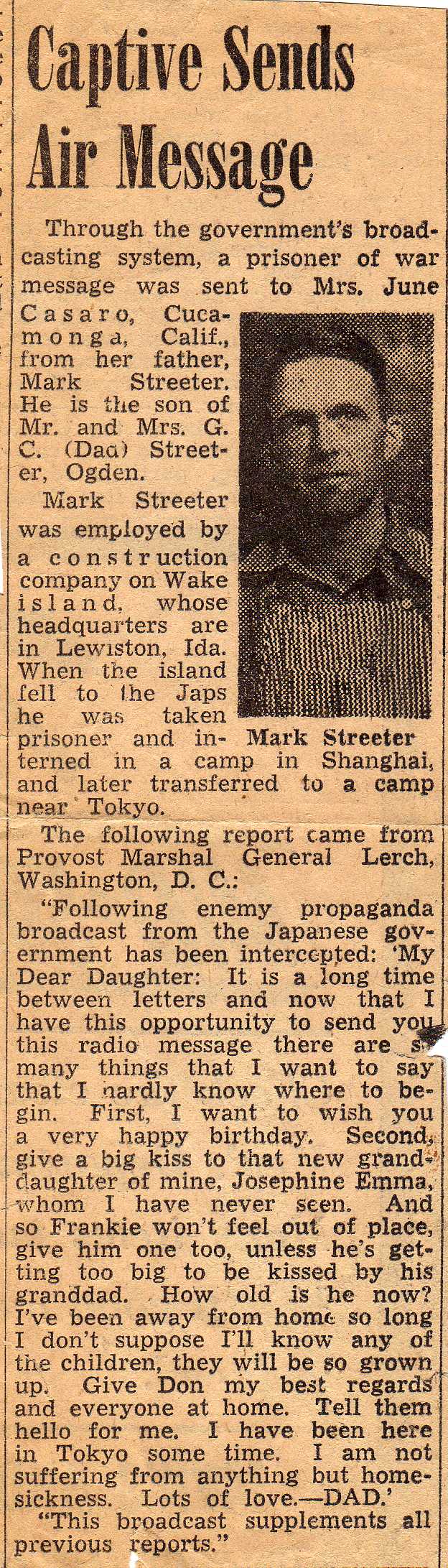
One of the most unusual true stories to come out of World War II.
Told for the first time
By Mark L. Streeter, former Bunka Headquarters Prisoner of War.
Omori Prison Camp. August 29, 1945.
The Japanese Kenpei Tai walked out and the American U.S. Eight Army Counterintelligence Corps boys took over where the Kenpei Tai’s left off. The questioning of the now ex-Bunka Headquarters Prisoners of War followed much the same pattern as the Kenpei Tai questioning of prospective Bunka Headquarters POW’s; “Have a Cigarette.” (a package of cigarettes pushed across the table in front of the one to be questioned always preceded the questioning.) “We would like to ask you some questions. Your Cooperation would be most helpful.” – “What is your politics?” – “Who do you think will win the war?” (the CIC substituted did for do and would for will in this question.) – “What do you think of Roosevelt?” – “What do you think of the Japanese?” —- The answers to these four key questions evidently established your IQ rating and was the main factor in determining whether you would or had collaborated with the enemy. During both the questioning by the Kenpei Tai and the U.S. Eight Army CIC, The prospective Bunka Headquarters Prisoners of War or ex-Bunka Headquarters POW’s as the case might be, although treated with Comrade Faire Finesse by the questioners, the underlying thought or feeling was most apparent that you were some new kind of alien worm and that later on they would make you squirm.
Authors Note.
During World War II the use of radio as a powerful propaganda force came into its own and was used by all participants in the war. Previous to World War II prisoners of war and civilian internees had been forced at the point of bayonets to do many disagreeable tasks for the enemy. The enforced use of their skills was not considered traitorous. Not so with the enforced use of POW’s and internees’ voices. The hue and cry of traitors resounded throughout the world, with no thought given to the fact that man and women under the threat of death or worse can be forced to speak words over the radio that are literally put into their mouths by a crafty designing enemy.
The following story is written about such men and women.
Since the end of World War II there have been many garbled and incomplete items appearing in the press concerning the Bunka Headquarters prisoners of war. It is time the truth was told concerning Bunka Headquarters Prison Camp.
I have tried to write this true story without bias and without prejudice, and I believe that I am expressing the desire of all ex-Bunka Headquarters prisoners of war when I say, “I hope that it’s publication will give a better understanding of what our brave United Nations soldiers captured in Korea and forced to broadcast on the enemy radio are undergoing, and make their governments and people less critical of them if they are fortunate enough to return to their homes and loved ones.

Kiang Wan Prison Camp about July 1943
Kiang Wan Prison Camp was located about eight miles from Shanghai, China in the Kiang Wan district and consisted of a group of Chinese Army barracks in a bad state of disrepair surrounded by a newly constructed six foot brick wall topped with a 2600 volt electric fence. Another electric fence of 2600 volt was inside this wall about fifty feet. A guard tower was in all four corners of the prison compound manned by armed guards to keep the prisoners from escaping. Partly surrounding this compound were the barracks of the Japanese Army guards, the prison administration buildings and Kenpei Office.
The prison population of Kiang Wan Prison Camp was approximately 2500, including about 1100 employees of Contractors, Pacific Naval Air Bases, Wake Island under the leadership of Dan Teeters superintendent of construction; the Wake Island Navy and Marine Corps personnel under Commander Winfield Scott Cunningham, ISN and Major James Patrick Sinnot Devereux. USMC; the north China U.S. Marine Embassy Guard under Colonel Wm.W.Ashurst, USMC, and Major L.A. Brown, USMC; the crew of the American Gunboat Wake the first Americans captured by the Japanese during the war; the crew of two or three American merchant ships including the S.S. Vincent and S.S. Henderson; Sir Mark Young, British Governor General of Hong Kong; some British soldiers and British merchant seamen from H.M.S. Malama; the crews of two Norwegian ships, and the crew of the Conte Verdi which was scuttled by its Italian crew to keep it from falling into Japanese hands. Most of these prisoners had been in Japanese custody since early in the war and had been transferred from other prison camps.
Conditions in Kiang Wan Prison Camp were very similar to conditions in all Japanese prison camps, filth, abuse, starvation and slave labor, but that us another story in itself. This story is about Bunka Headquarters Prison Camp and the events leading up to it.
It was about this time that the Japanese circulated a questionnaire in Kiang Wan prison camp. This question was printed in English and was quite lengthy. It asks what your special abilities were, your educational background, and what you had done for the past twenty years. The circulation of the questionnaire caused much consternation among the prisoners. The pros and cons of whether the questionnaire should be filled out truthfully or falsified were rife. The final consensus of opinion among the prisoners was that the questionnaire should be filled out truthfully, as the Japanese may at some future date ask the same questions again and if he prisoners could not remember what they had written in this questionnaire they would be punished severely. The majority of the prisoners therefore made them out truthfully. These questionnaires were circulated in other Japanese prison camps at the same time; however, we did not know of it at this time. Nothing more was heard of the questionnaires until November 1943 when Cpl. Bud Rickard, USMC, Larry Quillie, Stephen H Shattles, Jack Taylor and I contractors’ employees from Wake Island were called to the Japanese interpreters office and told that we were going to be sent to a better camp in Tokyo. Quillie, Rickard, Taylor and myself were former newspaper men. Shattles was an actor. No reason was given for our transfer, except that when I ask the Japanese Interpreter Isamu Ishihara if he could tell us what we might be going to Tokyo for he said, “You will probably work for the Nippon Times.” We were told to get our belongings together and be ready to leave the next day. That nigh there was much speculation in camp as to why only five prisoners were being transferred, and hundreds of questions were fired at us from every angle by other prisoners. We could only tell them what the Japanese interpreter had told us, “That we were going to a better camp in Tokyo and perhaps work for the Nippon Times.” The reaction of some of the prisoners to this was that we were holding out on them and not telling all that we knew. Previously some larger groups of prisoners had been transferred from camp to unknown destinations, but this was the first time such a small number were to leave and told where they were going. Rumors flew thick and fast, as they always did in prison camp, with personal opinions attached to the rumors, and some of the personal opinions were quite rank. Little did we know how these rumors were to affect us later.
It was about this time that Kazumaro (Buddy) Uno had been in camp making recordings of prisoner’s messages to their loved ones at home, which the Japanese wished to use for propaganda purposes. Quite a number of messages were recorded including the now famous message of Major James P.S. Devereux, USMC, to his family.
The next morning the five of us, Quillie, Shattles, Taylor, Rickard, and myself, reported to the Japanese interpreter’s office. Our meager belongings were searched thoroughly, and we were told to get on a waiting truck. Four Japanese guards, a Japanese officer, and a Kenpei got on the truck with us and were our constant companions throughout the trip to Tokyo. We were first taken to the Shanghai Bund and there taken aboard a Japanese passenger ship and our next port of call was Moji, Japan. There we were placed aboard an express train with our guards and twenty-four hours later arrived in Tokyo. It seemed as though we lost our Kenpei at Moji, but we were not long without one. Upon our arrival at the Tokyo train depot we were met by a new Kenpei, one of those strutting cocky Nazi type. We must have created a strange sight as we disembarked from the train in Tokyo station. Stephen Shattles was a fiery red head with a fiery red beard and stood well over six feet and wore a Japanese soldiers uniform made for a Japanese of about four foot five build, which left quite a large surplus of bare legs and arms protruding from the short sleeves and trouser legs. Jack Taylor and Quillie, who were small, were less conspicuous, as was Cpl. Bud Rickard in his Marine uniform. I, on the other hand, had a full bristling beard well streaked with grey, wore a white (that is it was once white) USN Chief Petty Officer’s coat from which all insignias were removed, a tattered pair of brown corduroy pants, a ragged wool Marine Corps muffler and a Chinese grey wool cap that resembled the caps worn by Russian Cossacks. The new Kenpei questioned each one of us as we got off the train. I, being last the Kenpei asked in English, What nationality are you, Russian?” – I answered, “No speaka de English”. With which the Kenpei left me alone. Under the escort of the new Kenpei and our old guards we were taken on a surface tram for some distance, and then walked several blocks, finally crossing a narrow sort of foot bridge to a sort of island compound in the bay, here we were turned over to new Japanese authorities.
This was Omori Prison Camp. November 23, 1943
Omori Prison Camp was a small manmade island of silt dredged up from Tokyo Bay, an area about the size of two of our city blocks, and was connected with the mainland by a narrow wooden foot bridge. The buildings were the typical wooden Japanese Army barracks construction, with double deck wooden sleeping platforms lining both sides of the center aisle. The entire prison compound was surrounded by a high wooden fence. The Japanese guards and administrative offices were also inside this compound. The prison population was about five hundred prisoners principally American and British. This prison camp was used as a sort of prisoner transfer point. No prisoners remaining there for any length of time.
It was after dark when we arrived at Omori Prison Camp. Our belongings were again searched, after which a Japanese interpreter told us that we were “Special Prisoners”, that we would be assigned to a barracks of other “Special Prisoners”; that we would only be required to stand morning and evening “tenko” (roll call) and keep our barracks clean; that we would not be required to join the daily working parties that left camp. We were assigned to a barracks that already contained about one hundred other “Special Prisoners” brought there from various other Japanese Prison Camps. This group of “Special Prisoners” consisted of a British Army band with musical instruments; artists; actors; newspaper men; writers; radio men and a few other special ability men. Some of these prisoners had been there as long as three months. No one knew why they were there, only that they were “Special Prisoners”. Of course, upon our arrival prison rumors began to run wild again, and there were as many versions of why we were there as special prisoners. The next morning, we were given some fairly good wool British uniforms, shirts, Japanese underwear and socks, and mail. Omori was the prisoner of war mail distribution center, and this morning I received seven letters, the first mail I had received since capture by the Japanese on Wake Island December 23, 1941. The food served us was of much better quality and more plentiful, and a great improvement over our starvation rations at Kiang Wan, and Woo Sung Prison Camps.
Shortly after our arrival we met Joseph Astarita, a contractors employee from Wake Island, who some months previous had been sent to Osaka Prison Camp from Kiang Wan, and Ensign George (Buckey) Henshaw, USN, radio communications officer from Wake Island who had been taken off the Japanese Ship Nita Maru at Yokahama in January 1942. When the Nita Maru was transferring the prisoners from Wake Island to Woo Sung, China Prison Camp. We had quite a reunion and talked far into the night about our experiences since we had been separated. Joseph Astarita was an artist and had been at Omori as a “Special Prisoner” about three months. Of course, neither Astarita nor Henshaw knew any more why we were there than we did. All any of us could do was guess and wonder. Joseph Astarita was an America-Italian boy of fine physique from Brooklyn, New York, A self-trained artist with a technique all his own, a very likeable chap. He said that conditions at Osaka Prison Camp were deplorable, that prisoners were dying off like flies. Osaka was a ship building prison camp, where prisoners were forced to work on Japanese war ships. Astarita introduced me to another artist Sgt. Frank Fujita from Texas, the son of a white mother and Japanese father, and one of the finest artists I have ever met. His treatment of art was unique and of the finest quality. Sgt. Fujita was captured in Java, N.E.I. and was a thorough 100% American, although of pronounced Japanese characteristics. He was beaten unmercifully by the Japanese because he would not say he was Japanese. I also met Sgt. John David Provoo of San Francisco, California who was captured at Corregidor, P.I. and who impressed me as a young man of superior intelligence with a charming princely appearance, despite the prison rumor that he was a “traitor”. Little did I realize then the influence these two prisoners Sgt. Frank Fujita and Sgt. John David Provoo would have on my future.
After four or five days of this leisurely new prison life at Omori, the Japanese authorities began calling “special prisoners” up to the office for interviews. My turn came on November 30, 1943. I was told to report to the Administrative prison office. I was very courteously ushered into a room in which four Japanese in civilian clothes were seated at a large table opposite me as I entered. They all arose and bowed, and I was asked to be seated in a chair opposite them. A package of cigarettes was pushed across the table in front of me, and the apparent Japanese of highest authority said in perfect English, “Have a cigarette, Mr. Streeter”, at the same time holding a lighted match for my cigarette. “We hope you have been more comfortable at Omori, than at your previous home at Kiang Wan.” To which I replied is, “I had been more comfortable at the Omori, but the life of a prisoner of war is never comfortable.” The Japanese continues, “We would like to ask you some questions. Your cooperation would be most helpful.” The rest of the interview was carried on between a second Japanese and myself and was as follows:
Question: “Mr. Streeter. What is your politics?”
Answer: “I belong to no political party.”
Questions: “Who do you think will win the war?”
Answer: “No one ever wins a war, everyone loses. But the so-called winning of the fighting part of a war is always won by the side that can keep the most men and equipment in the field for the longest period of time.”
Question: “What do you think of President Roosevelt?”
Answer: “I think Roosevelt is the most clever politician we have ever had in the White House. However, I do not always agree with his policies.”
Question: “What do you think of the Japanese people?”
Answer: “People are very much alike the world over, regardless of race.”
This ended the interview and I returned to my barracks. From what I could gather from other prisoners who had been interviewed, the line of questioning followed much the same pattern. Jack Taylor was asked what he would like to do best as a prisoner, and being a stockman said, “raise bulls”, which seemed to rather displease his interviewers.
Prison rumors were again flying thick and fast, and everyone was wondering what they were going to do with us. We were not long in finding out. That evening 13 of the prisoners who has been interviewed were told to pack their belongings and be ready to leave camp this next morning. This group included Joseph Astarita, Larry Quillie, Stephen Shattles, and myself, employees of Contractors, Pacific Naval Air Bases, Wake Island; Lt. Edwin Kalbfleisch, US Army; Ensign George (Buckey) Henshaw, US Navy; Sgt. John David Provoo, US Army; George Williams, British Government Official, Gilbert Islands; Lt. Jack McNaughton, British Army; Bombadier Donald C. Bruce and Bombadier Harry Pearson, British Air Force; Bombadier Kenneth (Mickey) Parkyns, Australian Air Force, and W.O. Nicklas Schenk, Jr., Dutch Army.
The next morning we were lined up in front of the Japanese prison administrative office, our belongings searched and then as was always the custom when some Japanese officer was going to talk to departing prisoners, a table was brough out and placed well in front of us and a Japanese General came out and got upon the table and gave us a long speech in Japanese, which was interpreted by the Japanese interpreter in these few words: “You are going to another home and you must obey. I can no longer be responsible for your safety.” This had an ominous sound and did not make us feel very good. We were hustled aboard a waiting guarded truck. As Stephen Shattles was getting on the truck, the way he placed his belongings on the truck evidently displeases Japanese Lt. Hamamoto, who rudely kicked Steve’s things off the truck and struck Steve with his Sumuri sword case, at the same time shouting something in Japanese. This incident gave us a further feeling of foreboding evil. We were a very sober, cowed, group of prisoners as the truck left Omori. After a ride of about eight miles the truck stopped in front of a three-story concrete building that looked like it might be some kind of office building. We got off the truck and were ushered through an archway in the building to an open paved area about 50 x 100 feet with small buildings at the sides and a large two-story stucco structure at the rear. The entire area between the front and rear building was surrounded by a five-foot brick wall.
This was Bunka Headquarters Prison Camp. December 1, 1943.
Bunka Headquarters Prison Camp was formerly the Bunka Genki (girls school) located in the Bunka educational district of Surgadai in a triangular area about three city blocks flanked on one side by a four line electric tram dugway, one side by a moat, the other side sloping down for about four blocks, a gradual drop of about two hundred feet, which gave a pretty fair view of a large portion of Tokyo. At the rear of Bunka Camp was a large hospital, with another fairly large maternity hospital adjoining one side and a large Japanese residence on the other side. We were the first prisoners to arrive at Bunka. We were hastily lined up in this paved courtyard and the customary table brought out and put well in front of us upon which a scar faced high ranking Kenpei Tia officer proceeded to give us another lengthy speech in Japanese. Looking from the sidelines were Count Norizane Ikeda the civilian director of Bunka; Major Shigetsugu Tsuneishi military head of the Japanese broadcasting company; Lt. Hamamoto and our new Japanese interpreter and prisoner supervisor Kazumaro (Buddy) Uno. Uno interpreted this long speech as saying; “You have been brought here to work with the Japanese in their great Peach Offensive.”-“You must obey.”-“Your lives are no longer guaranteed.” We were then dismissed and Count Ikeda and (Buddy) Uno took us in the building at the rear and we were assigned to our quarters on the second floor. The civilian prisoners and military rank and file, enlisted personnel, prisoners’ places in one classroom at one end of the building in which the typical Japanese wooden sleeping platforms had been built along each wall. The officer military prisoners were assigned to a like classroom at the other end of the building. Both of these rooms were connected by a glassed-in hall along the front of the building, and between these two classrooms was another larger classroom that we were to use as a recreational and study room. The first floor of the building was arranged much the same as the second floor, the large classroom was used as a dining room and the classroom directly under the officer prisoners room was used as a work room where every prisoner was under the watchful eye of (Buddy) Uno. The basement of the building contained a lavatory room at one end, a large room in the center used as a storage room, and at the other end a kitchen, and a small room occupied by the school caretaker and his wife. One of the small buildings at the side of the compound was used for food storage and another small building on the other side of the compound was used as quarters from some of the minor Japanese staff. The large concrete building in front of the compound was used entirely by the Japanese administrative staff and guards.
A few minutes after receiving our welcoming speech, Sgt. John David Provoo, Ensign (Buckey) Henshaw, and if my memory is not blurred by the passing of the years. Lt. McNaughten and Bombadier Harry Pearson were immediately taken to the Hoso Koki (radio Station) JOAK in Tokyo and handed a prepared radio script which they were forced to broadcast under a program title, Hinomuri Hour. Hinomuri meaning rising sun. After these prisoners returned from the radio station, (Buddy) Uno had us all assemble in the work room and gave us a long lecture, saying that we were to write and broadcast a half hour radio program every day, and immediately assigned each of us a subject to write on, and instructions on how to treat the subject. That evening after Uno left and we were alone, we were a very unhappy group of prisoners, every prisoner there would have given most anything to be back in his old prison camp doing slave labor. Very little sleep was had that night, as the situation was discussed from every angle and how we might get out of it. But all discussion finally ended with the words from our welcoming speech by the Japanese Kenpei officer, “Your lives are no longer guaranteed”, and all of us with the exemption of George Williams the British government official from the Gilbert Islands thought we were hopelessly lost and to refuse to obey meant certain death. George Williams with the typical dogged stubbornness of the English said that he was going to refuse, regardless of the consequences. We all feared for his life, but no amount of entreating would induce Williams to change his mind.
The next morning at tenko (roll call) the Japanese apparently could tell by the serious sober faces of the prisoners that their pet scheme of using prisoners to broadcast propaganda had not been accepted with any show of enthusiasm by the prisoners, as shortly after breakfast we were all assembled again in the courtyard and given another lengthy speech in Japanese by Major Tsuneishi, which was summed up by (Buddy) Uno’s interpreting as: “You are to cooperate with the Japanese in their great Peace offensive.”-“Your lives are no longer guaranteed.”—” If anyone here does not wish to cooperate with the Japanese, step out of rank, one pace forward.” We would have all liked to step forward in a body, but we feared the consequences. The only prisoner to step forward was George Williams. Major Tsuneishi looked furious and grasped his Sumuri sword, pulled it about half out of the case, and for a moment it looked as though he was going to decapitate Williams on the spot. But evidently changed his mind, gave the sword and savage thrust back into the case and screamed something in Japanese. We were briskly ordered by Uno to get back in the building to out quarters and pull all the blinds down on the front of the building. Which with the exception of Williams we all did without delay. Williams was whisked immediately out of camp by guards, without his belongings. Later on Uno called us to assemble in the work room and told us that that was the last of George Williams and if we did not obey orders and cooperate with the Japanese we would receive the same fate as Williams. The only prisoner who dared to speak at this time was Sgt. John David Provoo who spoke Japanese and understood the Japanese, he told Uno in no uncertain words what he thought of the Japanese and their method of using prisoners of war to broadcast their propaganda. Uno who was raised in Salt Lake City, Utah, got furious and struck Sgt. Provoo with his fist and said that would be enough of that, this time he would not report Provoo to the front office, but from John to watch his step and control his tongue. We were then given our first writing assignment. British LT. Jack McNaughton was appointed commander of the prisoners and was to be held responsible for the prisoners policing their quarters and answering morning and evening roll call. Ensign (Buckey) Henshaw was given the portion of the program called “The Three Missing Men”. Sgt. John Provoo was given Uno’s pet part of the program called “War on War” and made emcee of the program. Dutch warrant officer Nic Schenk, Jr., was given the duties of cool for the camp, with Bombadier Kenneth (Mickey) Parkyns as assistant. I was given the assignment of writing political commentaries, especially condemning President Roosevelt. Sgt. (Pappy) Light, Stephen Shattles, Larry Quillie as well as some of the other prisoners were not writers, having no writer experience, so for a while double duty fell upon those of us who could write, writing for those who could not. It is remarkable what men can do under the circumstances of the threat of death always hanging over them, men who had never written before became profuse writers, men who had never acted before acted like old show troupers. I had never written a play in my life, yet under Uno’s Assignment I wrote in addition to my other writing, one radio play a week for 16 weeks, all of which were broadcast and considered by other prisoners as quite good plays, before the propaganda was injected into them. The method of turning an otherwise good piece of writing into propaganda is quite a simple task, the changing of a word here and there and the injection of a word and phrase her and there, and the entire meaning of the writer is changed. (Buddy) Uno was very clever at this. Everything written by the Bunka prisoners was first turned over to Uno who blue penciled some, made his insertions her and there, then they were sent to the front office where they went through another stage of blue penciling and inserting of additional words, and the final result was what we had to broadcast. The broadcasting at first did not worry us too much, as it was such rank propaganda that we all felt that the people who heard it would only laugh at the Japanese crude attempts at propaganda. But later on, the Japanese sensing that some of the Bunka prisoners were very clever men, tried through conniver, innuendo, threats and constant physical and mental pressure to use prisoner intelligence in place of their own. Thus, began one of the greatest battles of wits during the war. With the Japanese civilian Bunka authorities trying by every trick at their command to win the confidence, friendship, and cooperation of the Bunka prisoners, while the Japanese military personnel of Bunka by creating incidents kept the element of fear always uppermost in the prisoners’ minds; fear of sudden death, torture, or slow systematic starvation, and the Bunka prisoners on the other hand trying to show the Japanese the futility of their propaganda and war efforts; toning down their writing assignments as much as possible without raising the ire of the Japanese, at the same time using every trick possible to kill the propaganda effect of broadcasting by voice variations and make the broadcasts contain information of value to the Allies. Using every art of diplomacy and subterfuge to outwit their captors. Then on top of all this was the task of trying to keep prisoners from breaking down because of the constant nerve-racking mental pressure and literally blowing their tops and endangering the lives of all Bunka prisoners. Every waking hour was a constant vigilant nerve-racking fight, where failure meant death or worse.
We felt that radio monitors in the United States would surely be clever enough to see through what we were trying to do, and be able to piece together the cleverly hidden Tokyo weather reports, air-raid damage and general feeling of the Japanese, all of which and more was contained in our broadcasts. Although the United States government has been very reticent on the subject since the war. Other short-wave hams who were monitoring broadcasts from Japan especially prisoner of war messages have been very profuse in their commendations of our getting such information through to the United States. To my knowledge the only Japanese who was aware of what was being done through our broadcasts was (Buddy) Uno, who for some yet unexplained reason did not report it to the Japanese authorities, and only occasionally blue penciled some items. However, on one occasion he told me before the entire Bunka group of prisoners of war that the way I was writing things which were offensive to the Japanese I was writing my own death warrant. Uno was a strange character in which there was an inner struggle between his occidental upbringing and his Japanese ancestral heredity. He was born and educated in Salt Lake City, Utah. Before the Japanese capture of Shanghai, China, Uno was a foreign correspondent for a San Francisco, California newspaper. After the capture of Shanghai he went all out to the Japanese and was for some time one of their main propaganda figures in the area, controlling all newspapers, and was the main figure in publishing the notorious “ Freedom Magazine”, and author of the “ Isle of Delusion” concerning the Philippine Islands. During Uno’s tenure of office at Bunka he was a constant puzzle to the POWs, at times going out of his way to be nice and at other times being brutal. To call the Japanese Japs would turn him into a fanatic bordering on insanity.
To try to tell all that happened at Bunka would take several volumes. I am only trying to tell here some of the important highlights in one of the outstanding struggles of the war with Japan, in which the Bunka prisoners of war were the principal figures.
A few days after our arrival at Bunka, Australian Warrant Officer John Dooley; Sgt. Walter Odlin, US Army; Sgt (Pappy) Light, US Army; Sgt. Frank Fujita, US Army; Cpl. “Bud” Rickard, USMC; Cpl. Fred Hoblitt, USMC, and Bos’s Fredrick Furgerson Smith, US Navy, were brought to Bunka from Omori. The prisoner population of Bunka was now with the loss of George Williams, twenty.
About a week later Major Charles Cousens, Australian Army, captured at Singapore, who was a former popular Australian radio commentator, and Captain Wallace E. Ince, US Army radio officer captured in the Philippines were brought to Bunka. Upon their arrival Uno told us we were not to talk to Major Cousens or Captain Ince about what they were doing. They would leave camp every morning and return every evening. This went on for some time. However, Uno’s warning about not talking to Major Cousens and Captain Ince about their work had little effect on any of us. Information has a way of getting around in prison camps, as is true of all prisons, the tighter the restrictions, the more clever the prisoners become in circumventing them. Major Cousens and Cpt. Ince had been brought to Tokyo months before any of us, and up to their arrival at Bunka had been housed in Tokyo’s swank Dia Itchi Hotel and given comparative freedom in the main business section of Tokyo. However, freedom In Tokyo meant constant surveillance by the Kenpei Tia (Japanese thought police). Their work was writing and broadcasting on the Zero hour at radio station JOAK. Captain Wallace E. Ince was also know as Ted Wallace and Tokyo Tony. The misfortunes of war perhaps never threw two or more opposite characters together than Major Cousens and Capt. Ince. Major Cousens was of the highest order of Australian Officer- Gentlemen whose bearing and voice commanded the highest respect, a slightly greying man in his early forties, while captain Ince was a fiery red head in his middle thirties, self-conceited and arrogant with a superior than thou attitude that made most prisoners shun his company. During Major Cousens stay at Bunka he was respected by all, even the Japanese, and no statesman was ever more diplomatic. Through his diplomatic handling of delicate situations that arose in Bunka the prisoners escaped severe punishment by the Japanese on several occasions. Very shortly after his arrival at Bunka, Major Cousens was appointed POW Commander of the Bunka POW’S, replacing LT. Jack McNaughton, British Army. Some of the Bunka staff of Japanese took a violent dislike of Capt. Ince, especially (Buddy) Uno, Lt. Hamamoto, and Count Kabayama. Ince was bashed about quite a bit.
Count Kabayama’s connection with Bunka was in an advisory capacity to the other Japanese authorities. Count Kabayama spoke perfect English, having been educated at Oxford in England and having spent a great deal of time in the Unites States. The Kabayama family was on of the most influential in Japan.
There was little organized resistance by Bunka POWs, but every Bunka POW took upon himself the individual responsibility to do everything in his power to defeat the Japanese purpose of broadcasting and sabotage the programs at every opportunity. The lack of organized resistance was due mainly to two causes, one; the lack of efficient POW leadership, and two; because all Bunka POWs had been prisoners of war for a long time and had learned from bitter experience the danger of scuttle-butt and that they could trust no one but themselves. Prison camp life does strange things to men, and Bunka was no exception. Even with such a small group of prisoners, cliques were forms, men trying to find their own level or what they assumed their own level; some becoming isolationists, isolating themselves from all cliques or association with other prisoners whenever possible. The POW military officers had their clique with a superior to thou attitude towards the rest of the POWs. This attitude was painfully apparent throughout the Bunka experience by all POW officers with the exception of Warrant Officer Nick Schenk (Dutch) and Warrant Officer John Dooley, (Australian). These two officers were more isolationists and remained gentlemen in spite of their military rank. There was a POW enlisted men clique. The only isolation in that group being Sgt. John David Provoo. The civilian POWs for the most part were isolationists, with the exception of Joseph Astarita and Darwin Dodd’s who maintain close relationship with both the POW military officers clique and the enlisted men’s clique. Lastly was the Capt. Wallace E. Ince Clique consisting of Sgt. (Pappy) Light, USA, Sgt. Frank Fujita, USA, Bos’n Fredrick Smith, USN and Darwin Dodd’s PNAB contractor’s employee from wake. Captain Ince exerted a strong influence over these men and this clique was the cause of much dissention among the POWs and was referred to by some Bunka POWS as the Ince Gang. Some people are apt to wonder why such a small group of men under such circumstances should not be a congenial solidly knit unit fighting for the interests of all, with all racial and social castes reduced to a common level, but with human nature as it is, prison camp life has a tendency to make the raw edges of human society much more apparent, and under such conditions survival is the strongest urge of human nature and fear the greatest warper of human character. The Japanese were well aware of these facts and took advantage of them at every opportunity, by systematic verge of starvation diet and regularly planned incidents to keep fresh in the POWs minds the fear of sudden death or worse.
During our first few months of broadcasting, armed guards were kept in evidence in the hall and ante rooms adjoining the broadcasting rooms whenever POWs were taken to the radio station. We were usually taken to the radio station by auto, and on some occasions taken by electric tram. When going by auto we passed the Imperial Palace grounds both going and returning, and whenever we passes the main gate of the Palace grounds we were made to take off our hats and bow in the direction of the palace.
Our food at the beginning of Bunka although not plentiful was of a good grade of white rice and some watery vegetable stew made of Dikon and another vegetable somewhat resembling lettuce. Later on, all of the white rice was taken out of the Bunka food storerooms and substituted with barley rice, and later by millet. Our ration consisted of about a teacup full of boiled rice without any salt or other seasoning three times a day and a little watery vegetable soup. Upon out arrival at Bunka most prisoners were already suffering from palegria or beri-beri because of starvation diets in other camps, and food conditions at Bunka were not conductive to getting rid of our malnutrition conditions. Dutch warrant office Nick Shenk was in the worst condition with his feet and ankles swollen to twice their normal size from beri-beri, yet he very courageously stood on his feet for hours every day on a wet concrete floor in the gallery cooking what food we had, and was upon many occasions beaten for putting a few ounces more in the rations than was allowed by the Japanese. But even with the beatings Nick always somehow managed to filch a little more supplies than we were allotted. Whenever we ask the Japanese for more food, they politely told us we were already getting the regular army ration for Japanese soldiers. To try to gain the confidence of the POWs some of the civilian Japanese of the Bunka personnel would on occasion bring a little fish or meat and give it to us as if on the sly, to make the POWs think they were good Joes, but most always after these gracious gifts our rations were cut for a few days.
Shortly before Christmas Major Willesdon Cox, US Airforce and LT. Jack K. Wisener, US Airforce, shot down in New Guinea, were brought into Bunka, both in a terrible state from a long period in solitary confinement, starvation diet, and constant questioning by the Kenpei Tia. Major Cox being the senior ranking American office in Bunka was appointed POW Commander in place of Major Cousens, Australian. However, due to Major Coz’s poor physical condition Major Cousens Carried on his duties for some months. The POW population of Bunka was now twenty-two.
A few days before Christmas we were informed by (Buddy) Uno and the civilian Japanese director of Bunka that we were to receive American Red Cross boxes of food for Christmas. The boxes would be given to us at the radio station. We were all highly elated at the prospects of some good American food. Uno had the POWs prepare a special Christmas broadcast in which these Red Cross food boxes were to be given to us on the radio program. Christmas day we all went to the radio station, but as we went on the air no Red Cross food boxes were in sight. Uno told us that they had been unavoidably delayed so we would have to go through the program anyway. A sort of wooden platform was set under the mike for sound effect when the Red Cross food boxes were set on it. As Uno’s voice said, Wishing you all a Merry Christmas, and a Red Cross box for each and every one of you”, the prisoners’ spirits reached a new low, which was very much apparent in the rest of the broadcast. Apparently the Japanese somehow felt they had lost face, so Lt. Hamamoto rushed in with small paper sacks containing a few Japanese cookies and hastily piled them on the box under the mike, at that there were not enough for one sack per prisoner. Lt. Hamamoto sensing that he had lost face further, by not getting enough cookies, after the broadcast was over took us all up to the cafeteria on the next floor of the radio building and bought us all a plate lunch. For the rest of the war, the phrase, “A Red Cross Box for each and every one of you” became a special symbol of hate for the Japanese.
When we were first taken to the radio station to broadcast, we were told not to talk to anyone whom we might see or come in contact with at the radio station. At first we adhered quite strictly to these instructions, but as we became more familiar with the radio station and the Japanese in charge, we managed to carry on conversations with many of the other broadcasters, including Iva Toguri otherwise known as Tokyo Rose, Mother Topping, American Missionary, Lilly Abbeg, Swiss, Reggie Hollingsworth, German, but who looked and talked like an Englishman, Buckey Harris, English-Japanese, Norman Reyes, Philippines and others. Some of these people gave us a lot of information on the progress of the war and were always very generous in giving us cigarettes, which were very hard for POWs to get despite our supposed to be cigarette ration, which more than often failed to materialize. When I first met Iva Toguir the first thing, she said to me in the broadcasting ante room was, “Keep your fingers crossed, we will lick these dam Japs yet.” Throughout the rest of the war Iva Toguri proved herself to be a very loyal American and friend to the Bunka POWs. War hysteria, super patriots and overzealous news reporters have in many cases done more irreparable damage, to otherwise innocent victims of circumstances beyond their control that bombs and other ravages of war, such is the case of Iva Toguri de Aquino. These irrefutable facts are in the records for anyone interested enough to find out for themselves. It is as impossible to separate the Iva Toguri de Aquino case from Bunka as it is to separate the Siamese twins, for that reason a few paragraphs here will of necessity have to be devoted to Mrs. de Aquino. Iva Toguri was born and educated in Los Angeles, California and was a typical American girl raised in the traditional American way, a graduate of University of Southern California and as truly American as children of other foreign emigrants to the United States who had spent the principle years of their life in the United States their adopted home. A short time before the war with Japan Iva went to Japan to visit relatives and like a lot of other nesi Japanese was caught in Japan at the outbreak of the war. The plight of these nesi Japanese was in many cases worse than a lot of prisoners of war. Being Americans of Japanese ancestry the Japanese considered them Japanese and forced them to undergo and do the same things required of Japanese citizens, and on top of this they were under constant suspicion and under the watchful eye of the Japanese Neighborhood Association and Kenpei Tai. Iva was for a while employed as an embassy clerk at the Danish Embassy. Later she obtained employment at radio station JOAK, where she was employed when the Japanese military authorities took over the operation of JOAK, and she was required to act as a translator of English and American radio scripts. It was while she was working here that she met Major Cousens and Captain Ince who were broadcasting on the zero hour. Cousens and Ince asked her to join their radio program, to which she protested. Major Cousens and Capt. Ince over her protests went to the Japanese authorities under Major Tesuneshi and asked that she be placed on their program. Which the Japanese did. Cousens and Ince writing all of her radio scripts and giving her voice culture for radio work. This was first told to me by Iva, and later confirmed by Major Cousens and John Holland civilian Australian captured in Shanghai who worked with Major Cousens and Ince on the Zero Hour, until he was sentenced to eighteen months solitary confinement in Saparo Prison for noncooperation with the Japanese.
Iva obtained on the black market and from some of her friends in Tokyo, food and cigarettes and sent them to Bunka with Major Cousens and Capt. Ince for the Bunka prisoners of war for which the prisoners were very grateful. After Major Cousens and Capt. Ince were taken off the Zero Hour food and cigarettes obtained by Iva still found their way into Bunka. If it had not been for this additional food the condition of the POWs in Bunka would have been much more serious. Whenever any of us met Iva met and married Felipe de Aquino a Portuguese national of Portuguese Japanese parentage.
The questions of food was always uppermost in the prisoners’ minds, and after the rankling question of Red Cross food boxes was brought up by the Bunka prisoners so often, the Japanese finally informed us that they would bring in some Red Cross boxes, at the same time it was announced that Major Tesuneshi would give one of his to become famous Bunka banquets for the Bunka POWs. The date for the feast was set. The Red Cross food boxes were brought in. That was the first disappointment. Only enough boxes were brought in for each prisoner to have a half box. So we decided to make the best of it, and with the thought that if we each donated a portion of our meager Red Cross food to be used by Shenk for the Banquet it might make the Japanese feel that they were losing face and get them to increase our food ration, so we each gave up a portions of our cherished treasure, and Nick Shenk done himself proud with the dishes he prepared from it. The Japanese increased the rice ration for that stay, and furnished some squid, a few cookies and a small amount of Saki and a package of cigarettes per prisoner. The dining room was arranged so that we all sat at one big table. Over the table hanging from the ceiling were the flags of all the principal nations in the war including the American flag. Major Tesuneshi sat at the head of the table, and a half dozen other Japanese were there including Uno and Takaburne Hishikari who had replaced silly giggling Count Ikeda as camp director. Major Tesuneshi had Uno pour each of us a small drink of Saki, and the Major then proposed we all drank a toast to Peace between our countries. He also made the request through Uno that he would like to have from each prisoner a written article on how best to bring about peace. During the course of the banquet it was requested through Uno, that the prisoners choose a new name for the Hinumori Hour. Several names were suggested, and the one chosen was Humanity Calls. The banquet was finally over, and our stomachs were full for once. Although the meal had not made us any more enthusiastic about the Japanese, it was good to go to bed that night without being hungry. The next day our food rations were cut again to a new low. Several of these banquets were given during the course of our stay at Bunka. They were part of a cleverly planned scheme by Major Tesuneshi to keep the prisoners on as close to starvation diet as possible and whenever anything began to lag on the broadcasting and it needed to be pepped up, to give a banquet and while the prisoners were anticipating more food they would react better to the Japanese suggestions. This same procedure was followed only on a smaller scale by other Bunka Japanese who occasionally would bring in some meet or fish and give It to someone on the sly. Almost always following these gifts, the prisoner to whom they were given was “requested” to write something special.
There were only three prisoners who responded to Major Tesuneshi request for articles on how best to bring about Peace, Major Cousens, Lt. Kalbfleisch, Jr. and myself. The same day that these articles were turned over to the Japanese, Lt Kalbfleisch made a very grave error in pronouncing a certain word on the radio, which threw the Japanese into a panic, and we all received a lecture and threats if it ever occurred again. The next day we were all assembled in the work room and the subject of the Peace articles was brought up, and it seemed as though Lt. Kalbfleisch’s article had been a very blunt condemnation of the Japanese treatment of POWs. We were told that Lt. Kalbfleisch’s services at Bunka were no longer required and that he was to be removed from Bunka. In a few minutes he was taken out of Bunka by the Kenpei without any of his belongings, and Uno told us that that was the end of Lt. Kalbfleisch, and if any of the rest of us had and funny ideas we had better watch our step or we would leave Bunka feet first. This was the second time the ominous threat of death had been brought so close, first, George Williams, now Lt. Kalbfleisch. Who would be next?
The Hinomuri Hour had been dropped, as well as Uno’s War on War. The Humanity Calls Program instituted in its place. Sgt. John David Provoo was retained as master of ceremonies of Humanity Calls, and later another program was started called Postman Calls in charge of Capt. Ince. The prisoners having been successful in toning down the broadcasts and making them less innocuous, taking up most of the broadcasting time with music and messages from prisoners of war to their relatives at home. Even though the Japanese motive for broadcasting prisoner of war messages was for the purpose of trying to arouse the feelings of people at home, relatives and friends of POWs, so that they would clamor for the end of the war so their POWs could come home, we prisoners felt that the intentions of the Japanese would be futile, and that we were rendering the folks at home a great service by sending these messages from their loved ones in the hell holes of Japanese prison camps, just to let them know that their POWs were alive and carrying on. We tried to establish two-way contact with the United States, but were unsuccessful, the United States government perhaps for security reasons did not answer, However, two way communication was established by the Bunka POWs with the Australian government. Major Cousens and Capt. Ince were removed from the Zero Hour program and all their work confined to the Bunka programs.
During the course of the year Pfc. Romane Martinez; USA; Pfc. Jimmy Martinez, USA, no relation to each other, and Darwin Dodd’s, PNAB Contractors employee of Wake Island, were brought to Bunka. The prisoner population of Bunka now with the loss of Williams and Kalbfleisch was twenty-five. Conditions at Bunka remained about the same for Months. The physical condition of prisoners became worse, every prisoner was suffering from palegria and beri-beri; nerves were on the tattered edge almost to the breaking point; tempers were flaring, and minds cracking. Japanese incidents were becoming more frequent. Food worse. Uno’s actions had become unbearable. Requests were made to the Japanese for Uno’s removal from Bunka. These requests were finally granted after Major Cousens had a diplomatic conference with Major Tesuneshi and I had virtually blown my top to Count Kabayama and told him in no uncertain words that I was fed up with Uno and it was no longer possible for me to work under him or on anything in connection with him, that I refused to do anything more, the Japanese could stand me up against the wall and shoot me or anything else they wished, I was through with the whole Bunka set up. A short time later Uno was removed from Bunka and a Japanese civilian named Domoto took his place. Domoto spoke good American-English, was an importer and exporter in the United States before the war. After Domoto took over I still refused to take any active part in the programs. Friction between the prisoners became more intense, and finally in disgust I gathered all my belongings and moved out of the POW quarters into a small room over the building where food supplies were stored, only leaving there for tenko and meals. I had moved into this room without the permission of the Japanese, but nothing resulted from the move except frequent visits and long talks with Count Kabayama, Hishikari, and Domoto and later Major Kyhei Hifumi who had joined the Bunka staff. Most of these talks were carried on with Count Kabayama and Domoto who both spoke good English. For some time I had been studying the Japanese language and although I had a pretty fair knowledge of what Japanese were talking about, I never tried to talk to them in Japanese except to say Good morning, Good evening, and thank you. Count Kabayama suggested that I help him prepare some propaganda leaflets to be dropped on our troops by Japanese planes. I laughed at the idea and some of his other ideas from broadcasting and told him that knowing him to be a graduate of Oxford that I presumed him to be an intelligent man and the things that he was suggesting were not intelligent. If he desire peace between the United States and Japan, as he had so often stated, that he and the other Japanese who had expressed the same desire would have to do a big about face and start to prove by their actions that they desired peace, and let the world know of their peaceful actions. We discussed many other matters including conditions in Bunka. Count Kabayams said, “The prisoners at Bunka have not been very cooperative with the Japanese, we are having a difficult time with them.” I replied, “Just for example, reverse the process and put yourself in the place of these men, only in an American prison camp in the United States. Would you be very cooperative? Mr. Kabayama, the reactions of all human beings to like circumstances and environment are the same, which point you are well aware of. Quit being so stupid. If we wish to get anywhere by these talks, we have got to talk cold turkey. I have not anything against the Japanese people personally. I had nothing to do with starting this war. I am a non-combatant civilian. Yet I am held a prisoner of war by your people.” ——— “Yes. – Maybe you are sorry. – So am I. – And whenever you or any of the other Japanese people can convince me that your intentions are horrible and that you really want peace and are willing to do something to bring about peace, I will work with you day and night to accomplish that end. Until I am so convinced any further talks are useless.”
During the Course of these talks, the heated arguments between Count Kabayama and myself became so loud that the other prisoners in the exercise area could hear and evidently became quite concerned, as I had several POW callers, first Sgt. John Provoo, then Ensign (Buckey) Henshaw, Nick Shenk and John Dooley. To all of them I was non-committal, except for saying that I was having it out with the Japanese, and I hoped to accomplish some good. Ensign Henshaw said that he had been sent by the other POWs to ask me to move back to the regular POW quarters. However, I refused.
A short time later Domoto came to see me and said that the Japanese authorities at Bunka had had a big talk concerning me and that they had decided to let me work out any plan that I wished, and that they had chosen Domoto to work with me. A short time later I was called over to the front office for an interview with Major Hifumi, a civilian Japanese named Hanama Tasaki acting as interpreter. Major Hifumi said that he was very interested in what he had heard in the front office about me, asking me a few personal questions about my age, my family, where I was taken prisoner and where I had been held prisoner before coming to Bunka.
A few days later I was surprised by having callers at my room, Major Hifumi, Tasaki, and a Japanese in Generals uniform. Major Hifumi said that I was to work with him, and Tasaki would be my liaison man in place of Domoto, and that he Major Hifumi would take full responsibility for anything that I did. That evening Tasaki came back and said that he would spend the next few days talking with me or as long as was necessary for me to be convinced that the Japanese meant what they said, and for me to find out if he Tasaki was a person I could work with. Tasaki and I spent about a week from early morning until late at night talking and getting acquainted. I was very much surprised to find out that Tasaki was a very active member of the Japanese underground who was working for the overthrow of the military clique who were in control of the Japanese government, and that Major Hifumi was also high in the underground movement. Tasaki was not content with just telling me these things but took me to see quite a number of Japanese who were in the underground movement. They had agents in Naval Headquarters, Army headquarters, Domei, the Japanese Broadcasting Company, the Japanese Information Bureau, the foreign office, the Tokyo police department, and the neighborhood associations, even the Japanese Diet. The Emperor’s Brother Prince Kuni was in favor of their actions, however belonging to the Royal family could not be an active participating member. A former member of the Japanese Diet was now working in the Bunka offices, as was Maso Takabatake of the foreign office and others including some Japanese women translators. Bunka was fast becoming one of the principles working centers of the underground movement. Tasaki solemnly told me that if any of us were caught it would mean certain death and for that reason, we had to be doubly careful, working right under the noses of the military clique. Tasaki also informed me that arrangements had been made for a half hours’ time on radio JOAK for me to use as I saw fit. He also asked me if there was any other prisoner in Bunka who I would like to work with me. I said no. Then Tasaki said that if there were any other prisoners in any other camps that I knew and would like to have them brought to Tokyo to work with me, they would be brought. I gave him the names of a few POWs I knew and could trust and felt would like to work with me. Later I was informed that only three of them could be brought, as the war had taken a turn for the worse for the Japanese and it would be quite impossible to spare planes to fly POWs from Shanghai. Milton (Whitey) Glazier and John Tunnicliffe, PNAB Contractors employees of Wake, and Pvt. Dale Andrews, USMC from Wake were at Osaka and would be brought to Tokyo soon. The only other POW I had requested who was in any area where he could be brought to Tokyo was Cpl. Jasper Dawson, USMC, from the embassy guard in North China whom I was told was in the Japanese hospital in Hokido with a nervous breakdown.
About this time men were beginning to crack up in Bunka, Major Cousens cracked up with a nervous breakdown and spent several months in a nearby Japanese hospital. Sgt. John Provoo broke down, Stephen Shattles had become a great problem he was slipping badly mentally and physically, and some of the other POWs were on the very verge of mental breakdowns, the food situation had gotten so bad that cats were trapped and eaten, as were snails, old bones, leaves, bark, anything that looked like it might contain a little energy. The food ration now consisted only of boiled millet. The situation got so bad that the Japanese sensing that they were apt to lose their entire POW broadcasting group from starvation, as a final resort gave the worst prisoners vitamin shots. These shots were given by Edward H. Hayasaki who laughingly said he was only a horse doctor.
For some time, American B29s had been making their daily calls in Tokyo and this did not improve the dispositions of the Japanese in Charge of Bunka.
I remember one night I was reading. Yes, prisoners of war sometimes read. I remember those last words on the page before the lights went out, –“and cold hopes swarm like worms within our living clay.” The blackout came without warning blotting out the pages of the book. – The drone of planes. – I sat expectant. – The building shook. – The air-raid sirens screeched. – They beat the Japs sirens that time. – The stillness that followed was broken by the crackling of flames. – I raced out of the building. – The sky was red from a nearby fire. – My foot caught on a metal manhole cover. – I went sprawling. – I looked up at the billowing smoke, and heard the angry humming like bees being smudged, — and the rippling sound of water, — falling bombs. – Aware of only one thought, — I must live, — I crawled into the sewer manhole, — pulled the metal cover over my head. – It was dark, — pitch dark, and it stank. – The concussion of the exploding bombs sucked air out of the manhole around the lid, like the rattle in the throat of a dying man. – The ground shook. – Two gleaming pinpoints of light, — they moved. – I was not alone. – Rats. – I laughed. – It sounded hollow like the echo of death. – The eye vanished. – I stopped laughing. – “Dig deep holes in the ground!” — Was that my voice? – Yes – “Holes in the ground like the rates, – cower in the sewers of civilization, — human garbage!” – “No wonder the earth shakes and quivers like a dying thing, gasping its last breath out from around a sewer manhole cover!” – More bombs, — dirt sifted down my neck, – “Dig deeper, you must survive!” – My hands plunged into the sewer garbage, – “What is this? – It feels like a rotten potato, — yes, that’s what it is!” – The rats are fat, — they eat rotten potatoes. – How does one begin eating again when the very essence of one’s life has been slowly dissolved by hunger? – For three and a half long years, — summer and winter, – the warp in the wool of my life has been scavenging for food to sustain life; that life being consumed so mercilessly by slow starvation. Even in my sleep my subconscious mind dwelt upon food. – Ah, those luscious baked Idaho Russet potatoes dribbling with hot butter, that my wife used to prepare. When you bite into one the melted butter runs down your chin. — I wipe the slime from my mount on my coat sleeve, – God, that putrid odor! – There’s the rats again, – I only ate one of your dam rotten potatoes.” – My voice was cracked and dry, — my stomach felt queer again. – I found a match and a cigarette butt in my pocket. – A haze of smoke spiraled towards the manhole cover over my head. – The rats scurried for cover. – Hushed voices blended with the crunch of heavily booted feet on the frozen ground near the manhole. – Japs. — I thought they were looking for me. – I crushed out my cigarette butt, — I wanted to shout, “It’s alright, here I am, down here with some more rats.” – Something inside me turned sickening. – The footsteps passed on. – “My God, how much longer can it last! – Six more months? – Maybe a year. – Listen to that furious pounding, like hands crashing down on piano keys, — The music of hell.” – A strange feeling crept over me. Sometime, somewhere, it will be real again, all that was before, and we can crawl out of the sewers of civilization, — and exhausted I went to sleep in the sewer and it became part of my dream —
Another Christmas passes and the cold winter heatless days and nights started to give way to spring. Prisoners huddled against the sunny side of buildings to soak some of the spring sun into their aching bones. The B29s came more often. The fires from the bombings were bigger. March came, the first big American air raid on Tokyo.
It was March nineteen hundred and forty-five. Over three years after Pearl Harbor, and Tokyo the third largest city in the world was still a quaint picturesque teeming city of millions, showing few scars of the war. There had been a few air raids by small numbers of B29s flying high, too high for the Japanese Zeros and anti-aircraft, but the damage was negligible. There had been a few small areas damaged by fire and bombs, but the effect on the people of Tokyo seemed to be one of the curiosity instead of fear and they went about their daily business and tasks as usual. The only persons seemingly to be interested at all in the fire bombs of the B29s was the Japanese high command, and they had sent armies of workmen and military tanks over the most congested parts of the city tearing down buildings, making fire breaks about a block wide, similar to the fire breaks in our American Forests. These fire breaks crossed parts of the city and were miles long. The breaks were made by hooking steel cables around buildings and tanks pulling them down, the workmen removing any valuable metals and burning the remainder. The work assigned to me as a prisoner of war took me almost daily over portions of Tokyo giving me ample opportunity to see most of the city.
As most planes raiding Tokyo came from the direction of Mount Fujiama, we assumed that they followed a radio beam directed at Fujiama, and then took off from there to various parts of the city. Hence we usually had about one half hour warning by air raid sirens before planes actually appeared, steaking through the sky like huge silver birds, leaving long trails of condensed air resembling smoke, reminding one of sky writers, writing the fate of Japan.
In March there is quite a bit of snow on the ground in Tokyo. This night in early March we had completed our day’s work and everyone had gone to bed on our wooden platforms in an effort to keep warm, as we were not permitted to have any sort of heat in our quarters. Most of us had fallen into a fitful slumber disturbed by shivering and dreams of food, when it seemed like the world had exploded under our very beds. The building shook, some glass fell from the windows. Some plaster fell on my bed from the ceiling, and I bounded out, to be greeted with the wild Crescendo of air-raid sirens, the drone of planes, anti-aircrafts guns, exploding shells and bombs and the shouting of Japanese guards. A faint glow of red appeared on the horizon. All lights were blacked out. The glow grew brighter and by the time I had reached the outside of the building the sky was a brilliant red with billowing clouds of smoke pouring skyward. More red glows became leaping tongues of flame. The crackle of burning wood could be plainly heard. In a few moments, the night was turned to almost day by the light of the many fires almost completely surrounding our compound. Ashes were falling on the snow, showers of sparks, and occasionally a large piece of flaming wood fell near, drawn up into the air by the up draft of the fire and dropped, starting more fires in the flimsy buildings. Pieces of anti-aircraft shells were falling like hail, with a queer swish and thud.
We were hastily assembled and called to attention by sullen excited Japanese guards. After we were assembled and counted, the Japanese seemed rather uncertain as to what to do with us, and we remained in the courtyard standing in line for what seemed an hour. Then a Japanese office came out and told us to get a few of our belongings together and also a blanket for every man that could be wet and thrown over faces and bodies in case we had to evacuate the camp, through the flaming areas surrounding us. Then we were told to take shelter in the building and to be ready to evacuate at a moment’s notice. Some of the prisoners took to the basement of the prison building for what protection it offered. I with some of the owners took advantageous points outside where we could watch the fireworks. And no Fourth of July celebration ever put on a greater display. The Hugh B29s were now flying low and they seemed to be everywhere, dropping more firebombs, and a few busters. Sometimes they could be seen plainly as they entered an area of the sky lighted up by the fires. Searchlights would pick up and keep others in the beams of light, with exploding anti-aircraft shells making fiery patterns of puffs and lights in the sky, with the B29s fire bombs exploding in the air showering down what appeared to be myriads of sparks, which floated down to burst instantaneously into more fires as they came in contact with anything combustible on the ground. Occasionally one of the big silvery B29s would be hit and either explode in midair, come crashing to earth with its crew, or streak off through the sky to try and reach a safe landing with its engines belching fire leaving a trail of sparks in the plane’s wake. I saw one B29 emerge from a smoke bank into the searchlight beams and then explode and seem to disintegrate into nothingness. Apparently, an anti-aircraft shell had hit its bomb load. Another was hit by a Japanese suicide plane which broke the B29 in two, one end falling each way. I saw two Japanese Zero planes streak for a B29, one from above and one from below, only to miss the B29 and crash head on and fall to earth in a tangled mass of wreckage. I saw another B29 emerge through a dense smoke column into the searchlight beams, then waver and come fluttering down like a crippled bird. Only one parachute left the B29. As it floated earthward and Japanese Zero plane dove at it several times. I presume the man in the parachute in midair by the attacking Zero plane. There was so much going on that it was hard to focus the eyes on it all through the eerie pattern of flames, smoke, tracer bullets, searchlight beams, and exploding shells and bombs.
Tokyo for blocks and blocks surrounding our camp had now become a raging inferno, with flames fanned by the wind leaping whole city blocks with buildings disappearing in the twinkling of an eye.
The scene was abruptly interrupted by an ack gun emplacement nearby being hit by a bomb and an ack shell ricocheting through our camp compound to explode in an adjacent lot. We were again hastily assembled, and it appeared that the Japanese were going to evaluate the camp. But after some time of excited chatter, we were again dismissed. Apparently, the Japanese had considered it futile to try and evacuate the camp through the ring of fire surrounding us. The rest of the night was spent much as before. We formed bucket brigades to put out the flaming embers that fell on the buildings in the prison camp. About five o’clock in the morning the all clear sounded and a grimy, tired group of prisoners tried to get a little rest as best they could. The morning was still punctuated by the wail of fire sirens and ambulances, with fires still raging throughout the city.
The water and gas mains had been bombed out of commission, and we were forced to carry water several blocks from a broken main. Everything surrounding our compound had been burnt. I think God was watching over us prisoners that night. Our food supply, what little we had on disappeared, and we subsisted entirely upon boiled millet, and little of that. We continued our work as before.
About noon of the day following the big fire my work assignment took me to the heart of the Tokyo business district and what a sight greeted my eye. Miles and miles of devastation, smoldering ruins, ashes, twisted metal frames of some of the better buildings, blackened burned bodies protruding from the debris and laying along the streets, and throngs of blackened smoke begrimed people wandering aimlessly through the devastation. The Imperial Palace had been hit. The large Imperial Palace grounds which were beautiful parks were a teeming mass of survivors of the fire who had sought refuge in the Palace grounds knew their Emperor, as if he could give them protection. Many of the Japanese people we passed were terribly burned, with most of their hair burned off and their clothes not faring much better. It seemed a miracle how some of them were still alive. Approximately three million people were killed and burned to death in that fire. I do not think the exact number will ever be known, now the horror of that fire ever forgotten by the Japanese people.
From then until the capitulation air raids became more frequent, and what little was left intact by the first fire was destroyed until Tokyo the third largest city in the world was ninety percent destroyed. The firebombs did more towards bringing the Japanese to their knees than the atomic bomb.
Andrews, Tunnicliffe and Glazier arrived from Osaki. It was late in April. Prior to their arrival I had been discussing the Japanese treatment of prisoners of war with Count Kabayama. Among other things I said, “Count Kabayama, considering the fact that the Japanese during World War I were credited with the best treatment of prisoners of war by any nation involved in the war, it is hard for me to understand the Japanese policy towards treatment of prisoners of war today. The treatment of prisoners of war by the Japanese in this war is shocking the entire world and is putting a dark blot on the Japanese people that will take a lot to remove.” To this Count Kabayama replied, “Mr. Streeter, I think you have been in some unfortunate circumstances since capture by the Japanese. I do not think that the general treatment of prisoners of war by the Japanese is as bad as you state.” I answered with, “Soon Andrews, Glazier and Tunnicliffe will be here from Osaki and you can see for yourself.”
When these prisoners arrived at Bunka from Osaki they were in such a deplorable condition that they were kept in a small movie theater room in the front Japanese office building for three days, fed, washed and clean clothes given them, before I was permitted to see them. Even the entire Bunka Japanese staff was shocked by their condition. They were filthy. Their clothes were in tatters. All were in severe stages of palegria and beri-beri. Glazier looked like a skeleton with skin stretched tight over it. Andrews was bloated all over from beri-beri. Tunnicliffe was in the last stages of beri-beri, almost dead on his feet. Count Kabayama was ashamed to face me. Tasaki took me into the room where these prisoners were, and even after they had been fed, stuffed with food for three days and washed and with clean clothes on, the sight of their condition made my blood boil. After greeting them, I stormed out (with Tasaki at my heels entreating me to not do anything rash) into the front Japanese office in which Count Kabayama, Count Ikeda, Hisikari, T. Kojima and a couple of other Japanese were seated at their desks. I am afraid I went a little berserk. I confronted Count Kabayama at his desk. I screamed at him, “I told you so!” “Come look at these prisoners!” – I hammered on his desk. “Their condition is a disgrace to the entire Japanese race!” – “You have got to do something for them, or they will die!” The air was tense. The Japanese in the office sat with blank faces. Tasaki saved the situation by saying to Count Kabayama, “These men are in bad shape. Some vitamin shots may help them.” That started a flow of Japanese chatter, with the result that a Dr. Tasaki from a nearby hospital was brought over and administered vitamin shots. Tunnicliffe’s condition was so bad that Dr. Tasaki only gave him half of a regular vitamin shot. Even this was too much for Tunnicliffe and he passes out cold. After he was reviewed, we carried him to one of the rooms on the second floor of the front Japanese office building, which the Japanese cleared out for us to occupy. I got my belongings from the room over the food storage room and moved over with Andrews, Glazier, and Tunnicliffe. Dr. Tasaki continued to give them regular vitamin shots. Andrews, and Glazier both told me that if John Tunnicliffe had stayed at Osaki, he would have been dead in another week and I am sure that Andrews and Glazier would not have lived much longer at Osaki. Prisoners were dying like flies there. Even in their condition they were all anxious to plunge into the work I was attempting to do.
The war had taken a bad turn for the Japanese and they could see the end was not far off. Any war efforts by the Japanese now could only be a delaying action. The propaganda of the military clique was intensified calling upon the Japanese to fight to the last man, woman, and child. Some other high Japanese officials not connected with the underground movement were becoming very much concerned by the changing events of the war and were looking for a way out, without losing too much face. Taking advantage of these conditions I pressed the point home to the Japanese that better treatment of war prisoners would be a face-saving gesture even at this late date. Several conferences were held discussing this point, during which I suggested that the Japanese authorities allow American Red Cross representatives to enter Japan with full complement of trucks and supplies to take charge of feeding and caring for American prisoners of war held in Japan proper. The Japanese to give the American Red Cross safe conduct into Japan, and protection while in Japan. That the Red Cross authorities so entering Japan would have to remain in Japan for the duration of the war. I also suggested that the Japanese allow all Mormon Elders held prisoner by Japan to return to their homes in the Unites States. The Japanese to take them to some Russian Border point and turn them over to American authorities there. This not to be an exchange of prisoners, but the outright freedom for Mormon Elders. Being a Mormon Elder myself, I told the Japanese that I would not return to the United States with the Mormon Elders, in the event they decided to send them home, so that the Japanese would not think that I was planning this just to get home to my loved ones. I made a full report of these conferences to Tasaki and he immediately went to work on the matter through the underground movement. Shortly after this Red Cross boxes were brought into Bunka. This time a full box for each prisoner, and a few bundles of Red Cross clothes and blankets. I was informed that a residence just a block from Bunka was being prepared for Andrews, Tunnicliffe, Glazier and I to live in. Our food rations were coming from Bunka and would continue to do so. Tasaki told me that the Japanese authorities had given my suggestions about the Red Cross and Mormon Elders due consideration and had decided in favor of the plans, for us to prepare broadcasts and be ready to go on the air the first of May. Tasaki then gave me a Book of Mormon, a gift from the Japanese authorities. We plunged enthusiastically into our work, working into the wee hours of the morning, every day and night. We were left almost entirely to ourselves.
After a few days the first note of discord entered our new quarters in the form of diminutive giggling Count Ikeda with some of his personal silly propaganda ideas which he politely insisted that I prepare for broadcast on our proposed new radio program. I told him that his suggestions for broadcast did not meet with the policy set forth for the new radio program, and therefore I would not prepare them for broadcast. This started a chain of events which almost wrecked our whole plan and delayed the starting of our new radio program one month, until June first. Tasaki came in very excited and said that I had not been very diplomatic in handling Count Ikeda, and that Ikeda apparently sensed that something was going on that his clique did not know about, and had asked the higher authorities for an explanation. This brought the Kenpei Tai down to Bunka, and for a few days’ things were quite tense in the Japanese front office with everyone going into excited conferences. After a few days’ things began to quiet down. Tasaki said that some of the Japanese who had approved the new radio program had asked him to suggest to me that they would have the military down to hear the broadcast. The military would then think everything was alright and leave us alone. To this I refused, stating that if we were not permitted to carry on the program as planned, we would not broadcast at all. These arguments lasted long into the night, with Tasaki carrying the results back and forth between the Japanese and the Civilianaires as Andrews, Tunnicliffe, Glazier and I called our new proposed program. This bickering went on for two or three weeks, with the final result that we agreed to put on a substitute program for the broadcast the military were to listen to, but we would not use Count Ikeda’s ideas. In June first we moved to our new quarters in a Japanese residence one block from Bunka and started the Civilianaire broadcasts. The military authorities listened to our first broadcast and as Tasaki had predicted left us entirely alone from then on. We made our broadcasts concerning the Red Cross and the Mormon Elders, asking the United States to confirm receiving them via short wave to the Civilianaires. Preparations were made by the Japanese to concentrate all Mormon Elders, held prisoner by Japan, in Tokyo, so that when we had received concentrate all Mormon Elders, held prisoner by Japan, in Tokyo, so that when we had received confirmation of receiving the broadcasts from the United States, these Mormon Elders would be placed in my charge and flown by the Japanese to the Russian border near Vladivostok where I was to escort them to the border and turn them over to the U.S. representative there. A week or more passed with no reply from the United States Government, so the broadcasts were repeated. The U.S. Government never replied so the plan had to be abandoned. The recordings of these broadcasts are in the files of the U.S. Government and also the files of the Church of Jesus Christ of Latter-day Saints, or Mormon Church, in Salt Lake City, Utah.
In our new quarters we were left almost entirely to ourselves. Tasaki, Takabataki, and Tadso Ito slept there nights. There were no Japanese guards. We had very little contact with the other prisoners at Bunka. Our food ration was put in a pail by Shenk and taken to the guard room in Bunka where it was picked up by Glazier three times a day. We were now subsisting entirely on boiled millet.
The allied air raids were being intensified, and Tokyo was becoming a city of ashes, rubble and dead. It is only a miracle that we survived the bombing. Almost every direction we looked from our quarters there was nothing to be seen but fire ravaged building as far as we could see. Perhaps the reason we were spared was because the Bunka district was composed off schools and hospitals, which fact was probably known to the Allies and they did not bomb this area.
Tasaki furnished us daily with large sheaf’s of monitored radio broadcasts form the United States, so that we could keep good track of how the war was progressing. Friction was becoming more apparent between the Japanese. The military die hards were exhorting the people to a last-ditch fight, while other elements were seeking means to surrender without losing too much face. The underground movement was getting bolder and impregnating ever channel of Japanese war endeavor.
Late in July Tasaki informed me that Prince Kuni was coming to see me for a conference. Prince Kuni was the Emperor’s brother. I had previously requested of Tasaki that he permitted an audience with the Emperor to discuss Peace. The morning Prince Kuni was to arrive at our quarters, I told Andrews, Tunnicliffe and Glazier to carry on their work as usual. Not to rise and bow but stay seated all the time. About ten o’clock that morning, I heard someone coming in the front door. I looked up and saw, Tasaki with Prince Kuni and several other Japanese, some in civilian clothes and some in uniform. I remained seated at my desk until they came near. I arose. Tasaki introduced Prince Kuni and I. I bowed, asked the Prince to be seated, and resumed my seat. Everyone else in the room except Andrews, Tunnicliffe and Glazier, remained standing. We discussed the war situation and Prince Kuni said that he had been told that I was a man of peace and he was open for any suggestions I might have to bring the war to a close, honorably. The word, honorably, implied without losing too much face. Prince Kuni also asked what the Japanese could expect if they surrendered. I told him that my government had never been too hard in their treatment of people whom they had conquered in war, that on the contrary they had been most generous in the rehabilitation of those countries, and that I did not think that my Government would change that policy with regards to Japan. I told him that I knew that face saving meant a great deal to the Japanese people, that it was little understood by the American people. However, it could be classed in the same category as prestige when used by Americans. I suggested that this could be accomplished, if any surrender gesture made by the Japanese was made by the Emperor. That with my knowledge of the Japanese, no one would question such a decision by the Emperor. That with my knowledge of the Japanese, no one would question such a decision by their Emperor. After our talk Prince Kuni was very profuse in his thanks, and the entire party left.
You can well imagine the feelings of Andrews, Tunnicliffe, Glazier and myself after this conference. If the Japanese by any chance followed the suggestions, I had made to Prince Kuni, it would mean that they had virtually surrendered to four American prisoners of war. The boys kept asking me, “Do you think they will do it?” “You put it pretty blunt to him.” – “Maybe too blunt.” “Maybe they won’t like it, after they get thinking it over.” I told the boys I had only stated the truth, and I hoped for the best. What they would do at this stage of the war was anybody’s guess.
From then on, we saw very little of Tasaki. He would come a little before time for us to go to the radio station. Take us there. Bring us back, and then we would not see him until next morning. One day he came in and said that he had some bad news to tell us. Some atomic bombs had been dropped on Nagasaki and Hiroshima. The damage was terrible. He said if we had anything white in the line of clothes, to wear white or light colors, and to get under the concrete portion of the house at every air raid warning as fast as we could.
On August 9, 1945 Tasaki told us it looks like its all over. The big news is scheduled for day after tomorrow. August 10th, 1945, our radio broadcast contained this closing message, “Listen to the Civilian Aire Program tomorrow at this same time and you will hear what the people of the world have been waiting for and longing to hear.”
Nothing more happened until August 14, 1945. The first word we had was from Glazier who said that as he was going over to Bunka for our food ration, he said people were standing in the street listening to someone talking on the radio in Japanese. Everyone was standing as if in awe. Glazier could not understand what it was all about. The next we heard was Tasaki rushing in and saying, “I’ve only got a minute. – They have done it. – The Emperor announced the surrender over the radio just a little while ago.- Be ready to go to the Radio station and make your last broadcast.”
As we neared the radio station that day there was a cordon of Japanese soldiers stationed around the four blocks surrounding the radio station. They were standing almost elbow to elbow. No one was allowed near the radio station, except on special pass. Tasaki showed our special pass and we went into the radio station. Everyone in sight was armed with some kind of gun. No one seemed to pay any attention to us. I will never forget that broadcast. We did not follow any script. We were alone in front of the mic. A lone radio technician at the controls in the control room, who could not speak a word of English. We were pretty excited. The first thing we said over the mic was, first, me, with, “What will we do now, boys?” Glazier replied, “Let’s set here and grin at each other.” The rest of the program I do not remember much about. We were too excited. We shouted its all over. We slapped each other on the back and danced all over the broadcasting room. The Japanese fellow in the control room must have thought we had gone batty.
We returned to our quarters. Tasaki left. In a few minutes he was back with two armed soldiers. Taskaki left. In a few minutes he was back with two armed soldiers. He explained to me that the underground had come out into the open, and it had been found out that I had been actively working with them. The guards were to protect me from the Japanese. One was placed at the gate entering the yard and the other was supposed to stay where he could see me at all times.
That night things in Tokyo were hectic. In one of the buildings not far from where we were, people could be heard singing far into the night. Bursts of Machine gun fire could be heard occasionally, along with spasmodic rifle fire. The next day Japanese planes flew overhead dropping leaflets telling the people to stand by the air force and fight to the last man; to ignore the Emperor’s prescript surrender announcement. Japanese were firing on Japanese planes. High ranking Japanese officers were committing harikari. Over Tokyo hung a pal of smoke from burning records. The Japanese were burning everything they did not want to get into American hands. The rebellious air force was hard to quell. Prince Kuni after making repeated personal appeals at the various air bases finally quieted them down. After a few days, the guards were removed from our quarters.
For the next few days, we did nothing but relax and anticipate our return to home and loved ones. Tasaki told us we were to be sent back to Omori to await the arrival of the American liberating forces. On some pretext Tasaki asked me to go with him for a while. We were gone a couple of hours doing nothing in particular except ride the tram to Tokyo and back. When we returned to out quarters, To my utter amazement I saw that a large table had been arranged in the main room and Andrews, Tunnicliffe, Glazier, and about a dozen Japanese including Major Hifumi were seated at the table which contained quite a variety of good food. As Tasaki and I entered everyone arose and I was ushered by Tasaki to the seat at the head of the table. Major Hifumi then gave a short speech which was interpreted by Tasaki as; “We now have peace, for which you have worked very hard. This dinner is given in your honor, in appreciation of your untiring efforts to bring about peace between out two countries.” Every Japanese present then arose and bowed to me and then to Andres, Tunnicliffe and Glazier. It was a memorable occasion.
About Aug. 22, 1945 we were told to get out belongings together and be prepared to return to Omori. Orders were issued by Japanese authorities that no prisoner would be allowed to take any pictures or written or printed material with him. During my entire time in Japanese hands I had kept a complete record of everything I had written, including copies of all correspondence with the Japanese authorities. I also had pictures and other data in my possession which I believed would be of interest to the occupation forces. During the bombings, I had carefully hidden them under a pile of rocks away from buildings to protect them in case of fire. I did not intend to leave these things behind. I told Tasaki I would not leave without them. He took it up with major Hifumi and Major Hifumi stamped the packages with his personnel chop and gave me a letter to the Omori authorities stating that I was permitted to keep them.
TRANSLATION
CERTIFICATE OF PROOF
American – Non-Combatant Mark L. Streeter.
Because of the about mentions person, who previously had been forced to participate in the local special broadcasting programs, may need some proof for his defense in this connection upon returning to his country, the following two articles have been specially granted to him to take back.
- A black case containing original copies and other matters
- A paper bag which contains original copies of written matters.
August 23, 1945
Public Relations,
Branch Office, Surugadai
Kyuhei Hifumi, Major, Japanese Army.
We joined the other POWs at Bunka and all retuned to Omori together. Major Hifumi and Tasaki accompanied us to Omori. Upon out arrival at Omori, our belongings were searched, and we were assigned to a barracks, with nothing to do but wait for the Americans to strive and take us home. We had not been at Omori long before American planes flew over and dropped food and clothes by parachute. Everyone went a little wild at the sight of our own planes. August 29, 1945 the American prisoner liberating forces under Capt. Harold E. Stassen, USN landed at Omori.
By rights this should be the end of the story of Bunka. The war over and the Bunka Prisoners of war on their way home, with Bunka but a bad memory, but it is not the end of the Bunka Affair. There is much more. Some of it not very pleasant to tell.
Some actions of the human mind are very strange: very strange indeed, and what brings on some of these strange actions is hard to understand and has puzzled some of our best minds. There is no set formula for mind reactions which cause panic. It is believed that panic is caused by fear. Whether the fear is well founded or not matters little.
When Capt. Harold E. Stassen, USN, former governor of Minnesota, landed at Omori, I saw POW Captain Wallace E. Ince, US Army in earnest conversation with him. I have since heard what this conversation was about. However, as this story is based on fact, I will omit all hearsay. This was August 29, 1945. Shortly before sundown Capt. Ince came in the barracks where I was billeted and asked me if I would come with him for a few minutes. I replied in the affirmative and proceeded to climb down from the upper bed deck to go with him. He preceded me out of the barracks, I being perhaps about ten feet behind him. He was walking in the direction of the main camp office. I paid little attention to where we were going, thinking that Capt. Ince wanted me to help perform some task which needed doing. As we came abreast of the main camp office, I noticed that there were a lot of American Officers and men in American uniforms gathered on the front raised platform. It was then Captain Ince halted facing the gathered officers. I also stopped, still about ten paces behind him. He saluted Capt. Stassen and said, “Sir, I would like to place Mark L. Streeter, civilian from Wake Island, and Sgt. John David Provoo, U.S. Army under arrest. Capt. Stassen replied, “Then place them under arrest.” Ince then ordered me to turn around and go back to the barracks. When I turned, I saw Sgt. John David Provoo, under the custody of POW Sgt. Frank Fugita, US Army, a few feet behind where I was standing. This was the first knowledge I had that they were anywhere in the vicinity. We four went back to the barracks, where Capt. Ince informed me, I was his prisoner, and I was to speak to no one. Neither Capt. Ince or Sgt. Fujita carried any side arms. I asked Capt. Ince, What is this all about? – He replied, “You are not in the custody of the United States Army,” and refused to say more. Andrews, Tunnicliffe, and Glazier saw what went on and wanted to take care of Capt. Ince and Sgt. Fujita, but I told them that Capt. Stassen had authorized it, so I would follow it through and find out what it was all about. When the first landing craft were ready to take of POWs, the POWs were all lined up waiting. Capt. Ince and Sgt. Fujita took Sgt. Provoo and I to the head of the line and went aboard first. Andrews plunged and elbowed his way through the line and got aboard right behind us. I could see that he was going to stick close to me, if he had to fight to do it, if for no other reason than to be a witness to what went on.
The landing craft which held about fifty POWs pulled up alongside of the U.S.N Hospital Ship Benvolence, and we clambered aboard. We were given baths, deloused, and given clean clothes. Sgt. Provoo and I were assigned to the LOCK ward, which was full of shellshock, or as they are called it in this war, GI’s suffering from battle fatigue.
I had carried with me all of my papers, in all about twenty five or thirty pounds, in a Dutch haversack and an oilcloth pouch I had made from a worn out rain coat. The corpsman in charge of the Lock ward wanted to put these through the delouser, and was very insistent. I demanded to see the purser of the ship, and finally after much arguing the purser was brought, and I turned my two bags of papers over to him and asked that they be locked up in the ship’s safe, until I could turn them over to Navy Intelligence. I then wrote a letter to Captain Laws, skipper of the Benevolence and requested that I be permitted to see Navy Intelligence and turn the papers I had over to them. Sgt. Provoo and I remained in that ward two weeks, without anyone coming to see us. We were still in the dark as to why we were there. At the end of the two weeks we were transferred to the U.S.A Hospital Ship Marigold, and again confined to Lock ward cells, about three feet by six feet in size. No medical treatment was given to us. I was permitted to bring my papers to the Marigold and there given a receipt for them. After about three days two Army CIC officers came to see me. I told them where my papers were and told them to get them. Sgt. Provoo and I remained aboard the Marigold one week. Nothing having been told us why we were there. At the end of the week we were taken to the Yokahama city jail then under control of the Americans. Here I was interviewed by the press. The interview was most interesting. Two newsmen were let into my cell. Introduced themselves and said, “We have received permission to interview you.” I replied, “The mystery deepens, perhaps you gentlemen can tell me what this is all about.” One of them handed me a copy of a recent radio news broadcast which stated that; “Mark L. Streeter, a civilian from Wake Island, has been taken into custody by the U.S. Eight Army Counterintelligence Corps. Streeter is the only American on General McArthur’s top list of War Criminals.” To say that I was dumbfounded, would be putting it mildly. I told the newsmen what had transpired since my capture, and said, “I am sorry, gentlemen, if you are looking for something sensational, I am afraid I will have to disappoint you. I have told you all that I know. The Army has failed to tell me anything so far. One of the newsmen then said, “Who arrested you, and what have you been charges with?” I replied’ “I have already told you about the Captain Ince incident at Omori. As for charges I know nothing except what you have shown me in that news broadcast.” This ended the interview. A few minutes later, it was now about nine o’clock at night, Sgt. Provoo and I were whisked out of the Yokahama city jail and taken by jeep to the Yokahama prison, also under the control of the Americans. We were the first prisoners to arrive. A few minutes after we entered the prison, and were waiting to see what happened next before we were put in a cell, another group of prisoners were brought in, including Col. Misinger, (German) called the Butcher of Warsaw: Jorge Vargas and his two very young sons; (Vargas was secretary to President Osmenda of the Philippines.); other Filipinos in the group were, Jose P. Laurel former Chief Justice of the Philippines Supreme Court and his son Jose P. Laurel Jr.; Camilo Osias former Philippine representative in the United States Senate, and B. Aquino also former Philippine representative in the U.S. Senate. We were all booked under the watchful eyes of American GI guards with automatic rifles and assigned to cells.
The next day Sgt. Provoo and I were taken out of Yokohama Prison by the U.S. Eight Army Provost Marshal and take to the Provost Marshal’s office in Yakohama. The provost Marshal told us, “I do not know what this is all about, but you do not have to worry now. Make yourselves at home here for a while, until I can get time, and I will take you down to the pier and put you aboard a LS boat headed for the States.” About an hour later the Provost Marshal took us aboard the LS5 and told us we were to have the freedom of the ship, but not to leave the ship while it was in port without his permission. We were assigned to bunks in the crew quarters. After a good bath we joined the crew at mess and enjoyed a good meal. About nine o’clock that night we were in the ship recreation room listening to the radio and talking to crew members, when the Captain of the ship came in and touched me on the shoulder at the same time saying in a low voice, “Mr. Streeter some changes must be made in your quarters, will you and Sgt. Provoo accompany me please?” We were told to get out belongings from our bunks and were escorted to the ship’s brig down in the bilge and there locked up, again without any explanation. We were at a loss to understand what was going on. The next morning two CIC men took us off the ship. We were photographed and placed in a jeep and taken back to Yokohama Prison, and again placed in dingy cells. In the course of the next few days more prisoners were brought in including, John Holland (Australian) who had just been released from the Japanese Prison at Saparo where he was confined for eighteen months in solitary. He was in very bad shape physically. Raja Mehandra Pratap (Indian National) founder of the World Federation, who had been given political asylum by Japan years ago, after his break with the British over India independence; The German Embassy staff, Ambassador Stammer; Franz Josef Span; Count Derkheim; Walker Peckrun; Dr. Kinderman, Helmit POP; Hendrick Low and others; the Chinese Embassy staff including Admiral Wu; Professor Feng Tung Tsu; Joseph Jer Cherng and others; Dr. Maung finance Minister of Burma; Ba Ma and other Burmese; Dr. Van Deinst, Dutch Buddist Priest; Iva Toguri de Aquino known as Tokyo Rose; Lilly Abbeg (Swiss) radio broadcaster; General Homa, and other high ranking Japanese including the Prime Minister.
The only difference in this prison and the former prison and prison camps I had been in was the different uniforms the guards wore, and we were fed. We worked, ate, bathed, and slept under the menacing muzzles of Tommy guns. We were forced to do the most belittling tasks, mopping dirty halls and picking up cigarette butts and other filth around the prison. We were given no medical attention, even though Dr. Maug was suffering from creeping paralysis; John Holland, Sgt. Provoo and I were suffering from acute palegria and beri-beri, yet I was told by a prison officer that I would have to make daily rounds of the prison yard under guard and pick up all cigarette butts and other filth around the prison. The officer told me I would have to do it “or else”. While making these rounds around the prison, I had opportunity to talk to Iva Toguri de Aquino through her cell bars. Outside of our working period and exercise period the rest of the time was spent in dark prison cells.
After we were in Yokohama prison a few days, General Eichelberger made the rounds of the prison talking briefly with each prisoner, the main question to all was the same, “Are you getting enough to eat?” On this day my cell door was thrown open and General Eichelberger said, “Are you getting plenty to eat?”
I replied. “Yes.”
The General then said; “Do you know Tokyo Rose?:”
I answered, “Yes, I know the girl referred to as Tokyo Rose.”
General Eichelberger then said, “She done us a lot of good when we needed it, a lot more than the rest of you g__ D___ Japs.”
This conversation was heard by both Sgt. John David Provoo and John Holland, both of whom had cells adjoining mine.
A few days after this incident I was escorted to the prison office and introduced to a National Broadcasting Company representative, I have forgotten his name. He was permitted to interview me in a room by ourselves. I related the events of my prisoner of war experience up to the present time. The NBC interviewer said, “I think you have gotten a raw deal, and I am going to give you a break in my broadcast.”
Since hearing what his broadcast said after my return to the United states, if he was sincere in his statement to me, U.S. Army censorship deleted the major portion of it, and is so often the case half-truths are more dangers than outright lies.
A few days later I had a call from the American Red Cross and was asked if there was anything that I needed. I told them that the only thing that I wanted was the opportunity to send a cable to my wife telling her that I was alright. I wrote a very short cable to my wife simply stating, “I am O.K. Please do not worry.” The Red Cross representative said it would be sent at once. Three months later this same cable was given to me and I was asked by the prison authorities id I wished it send as a letter. Letter writing under censorship was now granted. Up to this time we were held incommunicado.
While in Yokohama Prison I was interviewed on numerous occasions by the CIC and once by the FBI. I gave the CIC information on tunnels the Japanese had dug in which to hide things they did not wish to fall into Allied hands. I had seen some of these tunnels, and had seen the Japanese hauling a truck load of records from the building across the street from the radio station. Records were being burned all over Tokyo at that time, so the logical conclusion on seeing piles of records burning in the rear of the building from which these records and items were being loaded on a truck, was that the Japanese intended to hide them. The occupation forced later found many of these tunnels and recovered many valuable records and much bullion and precious gems in them. I also turned over to the CIC the name of Dr. Tasaki who had told me he had saved a supply of radium form a bombed-out laboratory.
During my stay at Yokohama prison I borrowed a typewriter from John Holland and made out a reparations claim against Japan, filing one copy with General MacArthur and sending one to the United States Attorney General for Appropriate disposition.
In November 1945 we were all transferred from Yokohama Prison to Sugama Prison in Tokyo. Sugamo is the largest prison in Japan. It was now divided into three sections, The red section for Japanese prisoners, the white sections for GI prisoners, and the Blue sections for political prisoners. With the exception of the Japanese who were confined at Yokohama we were all placed in the blue section. The prison was under the command of Colonel Robert Hardy, U.S. Army of Yakima, Washington. However, Sugamo was little improvement over Yokohama prison. The guards inside the prison now did not carry guns, and much of the belittling work was omitted. The orders to get prisoners to do work in the prison was modified to “request for volunteers. By the implication of the “request” it was very plain that if prisoners did not “volunteer” the results would not be too pleasant. Being a construction foreman, I was “requested” to build some brick walls in the exercise yard and paint the interior of the “Blue section”. I was given the German embassy staff for a crew. In addition to this work I was “requested” to build a pulpit in the end of the dining room which was used for church services, in addition to this I was “requested” to take charge of all incoming food stores for the Blue section and keep the dining room in order for meals and church and motion pictures, which were given about twice a week. I performed these duties throughout my stay at Sugamo. We were still denied all medical attention. Dr. Maung’s Paralysis condition became very bad. We prisoners did what we could to try and make him comfortable. He died on a British ship In route to Burma after his release from Sugamo. Sgt. Provoo had begun to crack up from the terrific mental strain of this extended prison life and became quite a problem. The only person that could do anything with him was myself. He depended entirely on me. I had several hot arguments with the CIC and prison officials concerning his treatment. His mother died while he was in Sugamo and the shock nearly finished Sgt. Provoo.
The Protestant Chaplain and the Catholic Chaplain of the prison took a great interest in Sgt. Provoo and I, and tried to get something done in our behalf. However, they were squelched by the high brass, and told to keep hands off both of us. The Protestant Chaplain ignored the orders and persisted to work in our behalf, and was transferred out of Sugamo leaving the prison without a Protestant Chaplain. The Catholic Chaplain told me he had been given the same orders, and feared if he did more he would be ousted too. He said for the spiritual wellbeing of the inmates he would have to comply with the high brass orders so as to remain in Sugamo, and he thought it best that he stay, to comfort the prisoners as much as possible.
The long months of confinement were becoming unbearable to men and women who were locked up and forgotten, and given no reason for such confinement. Most of the prisoners in the Blue section wrote letters to Scap (Allied Headquarters) asking for an explanation of why they were there and what they were to expect. The only letter SCAP considered important enough to answer was the letter written by Franz Josef Spahn, a rabid Nazi, and head of the German Nazi party in Japan during the war. A copy of the letter follow:
APO 500
17 May 1946
Mr. Franz Josef Spahn
Sugamo Prison
Tokyo, Japan
Dear Mr. Spahn:
Necessary action is being taken to effect your repatriation to Germany.
Until final decision has been reached with regards to repatriation, your present status remains unchanged.
For the Supreme Commander:
B.M. Fitch,
Brigadier General, AGD,
Adjutant General.
Having despaired of receiving any answer to my letters to SCAP. I prepared a writ of Habeas Corpus had it attested by Lt. Bernard, U.S. Army, and sent it to the State Departments highest civilian representative in Japan, George Atchison.
Unites States of America
—————0—————-
=
| Mark L. Streeter (A citizen of the United States of America) Vs The Commanding Officer of Sugamo Prison or any Person or entity who may be holding his person In Custody. | Habeas Corpus |
Before any Federal Court of the United States of America authorized to entertain and issue the writ of Habeas Corpus.
Petition
Comes now the undersigned petitioner, Mark L. Streeter, in his own behalf or by any representation signing this petition in his name and behalf and most respectfully avers the following:
- That he, Mark L. Streeter, is a natural born citizen of the State of Utah and of the United States of America: 48 years of age, married, last legal residence Lewiston Orchards, Lewiston, Idaho, present families legal residence 490-30th Street, Ogden, Utah, U.S.A. and as such citizen of the United States of America is entitled to all the rights, privileges and immunities appertaining to a citizen of the United States of America under the Constitution, the laws and common and time honored traditions of the People of the United States of America.
- That at the present time he is illegally and without authority of law or the Government of the United States of American and contrary to the laws and customs and usages of civilized nations detained in Sugamo Prison, Tokyo, Japan, and deprived of his freedom in violation of the Constitution, laws and cherished ideals and traditions of the American people: that he has not been informed of any valid cause or reason for his detention.
- That he has been deprived of his freedom continuously since December 23rd, 1941 to the date of the filing of this petition ———————-1946, first by the military forces of the Imperial Government of Japan and since August 29th, 1945 by the United States Army of occupation of Japan instead of being liberated as an American prisoner of war in the custody of the Japanese: that for his incarceration by the Japanese during the afore-said period he has suffered both physical and mental cruelties and other abuses which permanently affected his state of mind and health, and further impaired his normal means of livelihood, and jeopardized his United States citizenship and has filed a claim against the Imperial Government of Japan, it’s institutions and people responsible for his illegal imprisonment as a military prisoner of war and the abuses appertaining thereto which he was forced to suffer, a copy of which is hereto attached and made a part of this petition as Exhibited A.
- That the facts and circumstances leading to petitioner’s incarceration by the military forces of the Imperial Government of Japan and later by the American Army of occupation of Japan are to the best of his knowledge and belief as follows:
From March 1st, 1941 to September 25th, 1941 petitioner was engaged in building emergency defense housing projects at Boise, Idaho, Fort Lewis, Washington, Bremerton, Washington, and Seattle, Washington.
On September 30th, 1941 at Alameda, California he signed a nine months labor contract (Contract No. W1821) with the Pacific Naval Contractors for the building of Emergency defense buildings on Wake Island.
He was transported to Wake Island on U.S. Naval ships, arriving at Wake Island October 30th, 1941, immediately commenced work and continued to work until December 8th, 1941.
After 16days of bombardment by the Japanese, Wake Island capitulated and on December 23rd, 1941 he was taken prisoner by the Japanese, and forced to do slave labor on Wake Island until on or about January 12th, 1942.
On or about January 12th, 1942 he was taken aboard the Japanese ship Nita Maru by the Japanese military forces and transported to Woo Sung, China prison camp, arriving there on or about January 23rd, 1942.
On or about January 1st, 1943 he was transported by the Japanese military forces to Kiang Wan China prison camp.
On or about November 15th, 1943 he was transported by the Japanese military forces to Omori Prison Camp near Tokyo, Japan.
On December 1st, 1943 he was transported by the Japanese Military forces to Bunka Headquarters Prison Camp, Surugadai, Tokyo, Japan, and there at the treat of death and other means of coercion and duress, forced against his will to aid other Allied prisoners of war who were under the same threats and duress, to prepare, write and broadcast radio short wave programs over Radio JOAK for the Imperial Japanese Army and directed to America.
On or about August 22nd, 1945 he was placed under arrest by the American military liberation forces at Omori Prison Camp and transferred to the lock ward of the U.S.S. Benovelence.
On September 7th, 1945 he was transferred to the lock ward of the U.S.S. marigold.
On September 12th, 1945, he was transferred by the C.I.C. to Yokahama city jail and that evening transferred to Yokahama Prison.
On September 13th, 1945, he was transferred by the C.I.C. to the U.S.S. L.S. 5 Brig.
On September 14th 1945, he was transferred by the C.I.C. to Yokahama Prison.
On November 16th, 1945, he was transferred by the C.I.C. to Sugamo Prison, Tokyo, Japan where he remains at this writing.
- That the herein petitioner alleges that during the entire period of his incarceration by the American Army occupation forces he has been denied free access to the mail: denied the benefit of counsel or legal representation: and that the length of his illegal detention now constitutes a prison sentence without legal trail or proceeding in the form of criminal accusation, or fair trail by jury: and that as an American citizen no official, functionary, organ or authority of the United states Government may deprive him of his liberty indefinitely and without due process of law and in violation of the fundamental rights, guarantees and immunities of a citizen of the United States.
- That petitioners detention in Sugamo Prison, Tokyo, Japan, by whomever person responsible therefore is a travesty on American Justice, repugnant to the fundamental constitutional rights of an American citizen and in derogation of the sacred traditions of the American people.
WHEREFORE IT IS PRAYED:
- That waiving formalities and technicalities of the law with which the herein petitioner is not familiar an order to Show Cause be issues by a competent court of the United States of America to the Commander-in-Chief of the United States forces in the Pacific, The Commanding Officer of Sugamo Prison, Tokyo, Japan or any officer, person or authority concerned:
- That the Herein petitioner be given an opportunity to plead his case personally:
- And after hearing the herein petitioner released from custody and enjoy the rights and freedoms of American Citizenship.
- It is further prayed that the service of the required summons to transmitted to the person or persons concerned by cable or radio to speedily bring about the release of the petitioner from the injustice of prolonged illegal imprisonment which is impairing his state of health and mind.
- The petitioner further prays that the court will order the personal property listed herewith in copy of receipt, be also delivered with the petitioners person intact at Habeas Corpus proceeding in America.
- Further the herein petitioner prays for such appropriate and other remedies as to the Honorable Court taking cognizance of this case may seem equitable, meet and proper.
Mark L Streeter
Petitioner
(Sugamo Prison, Tokyo, Japan.)
The Petitioner, Mark L. Streeter appearing personally before me, affixes his signature hereto and swears under oath that the statements made herein and attached hereto are true to the best of his knowledge and belief.
Signed Eng C Bernard .
1st Lt. Inf.
ADDENDA
There herein petitioner further states that this petition be considered a document in whole or a portion or addition to any similar petition that may have been filed in the United States by the petitioners wife or any representation signing and filing a similar petition his behalf.
The petitioner further avers that being a citizen of the United States of America, That no official, functionary, organ, institution, or tribunal of any nature what-so-ever not functioning under the Constitution of the United States of America and within the Continental limits of the United States of America and under due process of United States Constitutional Law, has any right to detain, imprison, try or convict the petitioner on any charge real or imagined while said petitioner was or is illegally forcibly detained outside the territorial limits of the United States of America during time of war, or by military forces of any nationality.
The petitioner further states that due to the published malicious distortions of the truth relative to petitioners activities during the more than 44 months of his prisoner of war confinement by the Japanese military forces, and the subsequent more that 7 months of his illegal imprisonment by the United States military forces which can only be the result of criminal negligence in the performance of duty of those responsible for such a travesty of Justice and human decency and considering such action to be premeditated collusion to obstruct justice, the petitioner is forced as an American citizen to stand upon his Constitutional rights and refuse to make any statements or give any testimony, the truth of which may be further distorted to be used as evidence against him, until he is under the jurisdiction of the lawfully constituted authority of the Federal Courts in the United States of America.
In the absence of legal counsel the petitioner reserves the right to make any additions to or add any depositions to this petition or subpoena any witnesses, which in his belief may be necessary for the protection of his rights as a citizen of the United States of America and the restoration of his freedom.
The petitioner further states that any typographical errors or misspelling or the omission of proper punctuation in this petition shall in no way deter its true meaning or lessen it validity.
Exhibit A.
(Copy)
REPARATIONS CLAIM.
| Mark L. Streeter, vs (A citizen of the United states of America) | The Imperial Government of Japan, the following persons and institutions of such government that may arrise there-from: Emperor Hirohita: ex-Prime minister Hideki Tojo: the imperial japanese aremy: the Imperial Japanese Navy: the administrative head of Japanese Prison camps: Inosuko Furuno, president of domei and director of Japan Broadcasting Corporation: Prime Minister Kijuro Shidehara, and any other persons whom it may concern. |
The following claims for reimbursement for losses and reparations for damages sustained by the claimant, Mark L. Streeter, and incurred by acts of the Imperial Government of Japan, et al, between December 7, 1941 and December 7, 1945 or the date of the completion of this litigation, are herewith entered and filed with the judicial body having jurisdiction, for prompt hearing and adjudication.
STATEMENT OFCAUSE:
As a result of the aggressive warring actions of the Imperial Government of Japan, et al, on and subsequent to their first attack on the possession and property of the United States of America, Wake Island on December 7, 1941, the claimant Mark L. Streeter a citizen of the United Stated of America then engaged in peace-time building construction on Wake Island, has suffered the herein after mentioned losses, and compelled by the Imperial Government of Japan et all, at the risk of life, limb and health to undergo the following experiences and submit to the following conditions, in violation of agreements existing between the Imperial Government of Japan and the United Stated of America concerning the care and treatment of non-combatant civilians of either respective nation apprehended or coming under the control of either nation during time of war.
- As a result of the bombing of Wake Island by the military forces of the Imperial Government of Japan, the claimant, Mark L. Streeter lost tools and personal belongings valued at $400.00 (U.S.) for which reimbursement is claimed.
- On December 23,1941, the claimant, Mark L. Streeter was taken captive on Wake Island by the Imperial Japanese Naval forces, and forced to do hard manual labor on Wake Island without adequate food, clothes, sleeping quarters or medical attention or treatment until on or about January 12, 1942, for which the claimant claims pay equivalent to his Wake Island contract pay.
- On or about January 12, 1942, the claimant Mark L. Streeter was forced by the Imperial Japanese Naval forces to board the Japanese ship Nita Maru and was transported without adequate quarters, food, clothes, or medical care to Woo Sung, China and there turned over to the custody of forces of the Imperial Japanese Army on January 23, 1942 and treated as a military prisoner of war and confined in Woo Sung Prison Camp for approximately one year, without adequate living quarters, food, clothes or medical care and forced to do electrical repair and maintenance work in prison camp, for which the claimant claims pay equivalent to prevailing electricians wages in the United States of America at the time.
- On or about January 1, 1943 the claimant Mark L. Streeter was transferred by the forces of the Imperial Japanese Army to Kiang Wan Prison Camp where he was confined until about November 15, 1943, without adequate living quarters, food, clothes or medical care and forced to do electrical repair and maintenance work in prison camp, for which the claimant claims pay equivalent to prevailing electricians wages in the United States of America at the time.
- On or about November 15,1943 the claimant Mark L. Streeter was transferred by the forces of the Imperial Japanese Army to Omori Prison Camp near Tokyo, Japan, confined there for one week without adequate living quarters, clothes, food or medical care, for which the claimant claims wages equivalent to the wages of writers and radio broadcasters in the United States of America at the time, that being the purpose, then unknown to the claimant, that the claimant was brought to Tokyo, Japan and later forced at threat of death to do.
- On December 1, 1943 the claimant Mark L. Streeter was transferred by the forced of the Imperial Japanese Army to Bunka Headquarters Prison Camp in Tokyo, Japan, and there confined until on or about August 22, 1945 without adequate living quarters, clothes, food or medical care, and forced by threat of death to write and broadcast material for the Japanese Army over Radio Tokyo, JOAK, for which the claimant claims pay equivalent to wages of radio writers and broadcasters in the United States of America at the time.
- On or about August 22, 1945 the claimant Mark L. Streeter was transferred by the forced of the Imperial Japanese Army to Omori Prison Camp and confined there until August 29, 1945, without adequate living quarters, clothed, food or medical care, for which the claimant claims pay equivalent to wages of radio writers and broadcasters in the United States of America at the time.
- During the 44 months of the claimant Mark L. Streeter’s confinement in prison camps under the supervision and direction of the Japanese Military forces, the claimant due to lack of proper sanitary conditions lack of proper sustenance, and lack of proper medical care, suffered from malaria, malnutrition, beri-beri- palegria, physical and mental suffering which has permanently affected the claimants state of health and mind for which the claimant claims compensation in the amount of $50,000.00 (U.S.)
- Due to the warring actions of the Imperial Japanese Government et al, the claimant Mark L. Streeter was unable to complete his labor contract with the Pacific Naval Contractors on Wake Island thus the claimant claims from the Imperial Government of Japan et al, full reimbursement of the contract as if the claimant had worked continuously as stipulated in the terms of the contract for the entire length of time of his confinement by the Imperial Japanese military forced and until such time that the claimant is returned to his United States port of embarkation for Wake Island.
- Due to the claimant Mark L. Streeter’s Illegal confinement as a military prisoner of war by the military forces of the Imperial Government of Japan et al, the claimant by being denied the free access of the mail and renumeration for his enforced labor, has incurred losses of property both personal and real in Lewiston, Idaho, U.S.A., and business opportunities for which the claimant claims the sum of $50,000.00 (U.S.) from the Imperial Government of Japan et al.
- Due to the actions of the Imperial Government of Japan et al, in forcing the claimant Mark L. Streeter against his own will to write and broadcast for the Imperial Japanese Army over radio Tokyo, JOAK, the claimant was arrested at Omori Prison Camp by the United States military landing forces and has subsequently been confined in prison under suspicion of treasonable collaboration with the Imperial Government of Japan et al: the unfavorable publicity of such prison confinement and investigation by the United States military forces causing much damage to the character and reputation of the claimant, the claimants wife, children and close family relatives, for which the claimant claims the following character and reputation damage from the Imperial Government of Japan et al:
Mark L. Streeter —————————————-$100,000.00 (U.S.)
Mrs. Vera Streeter (Wife)—————————–$100,000.00 (U.S.)
Mrs. June Corsaro (Daughter)—————————$50,000.00 (U.S.)
John B. Streeter (Son)————————————$50,000.00 (U.S.)
Dolores J. Streeter (Daughter)————————-$50,000.00 (U.S.)
Mrs. Dorothy Porter (Daughter) ———————-$50,000.00 (U.S.)
Orson L. Streeter (Son)———————————–$50,000.00 (U.S.)
George C. Streeter (Father)—————————–$75,000.00 (U.S.)
Mrs. Jane A. Streeter. (Mother)————————$75,000.00 (U.S.)
Mrs. Vivian Hunt (Sister)———————————$50,000.00 (U.S.)
Mrs. Ina G. Komas (Sister) ——————————-$50,000.00(U.S.)
Calvin G. Streeter (Brother)——————————$50,000.00(U.S.)
- The Claimant Mark L. Streeter also claims reimbursement from the Imperial Government of Japan et al, for all expenses and costs incurred by the United States Government or it’s agents, in relation to the claimants arrest, detention, investigation, or any trial that may arise therefrom.
- The claimant Mark L. Streeter also claims reimbursement from the Imperial Government of Japan et al, of all the costs both legal and judiciary for the settling of this litigation.
- The claimant Mark L. Streeter also claims payment from the Imperial Government of Japan et al, of all costs both legal and judiciary for the settling of this litigation.
Copies of this document are herewith forwarded to the Attorney General of the United States of America for official recording, filling and prosecution, and to General Douglas MacArthur as the legal custodian of the assets of the Imperial Government of Japan et al and directorate of that governments functions.
The claimant requests a writ of attachment be issued against sufficient of the assets of the Imperial Government of Japan et al, to settle this claim upon completion of this litigation by due process of law.
Signed this 7th, day of December, 1945
Mark L. Streeter
Mark L. Streeter, (Claimant)
Present address of Confinement:
Hg.35th.A.A.A. Group
Sugamo Prison
A.P.P. 503% P.M. San Francisco, California
ADDENDA
As NO PRICE can be placed upon the PRICELESS UNITED STATES CITIZENSHIP of the claimant
Mark L. Streeter, which is in jeopardy because of the actions of the Imperial Government of Japan et al, as stated in paragraph 11, the claimant contends that the reparations claim herein made are not in excess of the damage sustained.
The claimant also contends that a precedent for such reparations claim by an individual citizen against a foreign government has already been established by an accepted claim or suit on record in the United States of America against the Imperial Government of Japan, and published in the world news.
The claimant also contends that by the unconditional surrender of the Imperial Government of Japan et al, they thereby relinquished all rights of protection by any previous existing international agreements respecting laws governing the actions of aggrieved persons against the Imperial State, it’s citizens or institutions.
By virtue of the Constitutional protection afforded United States citizens, the claimant Mark L. Streeter seeks such protection of his interests as the means of the law afford.
Oath of Affirmation: Dec. 10, 1945
I, Mark L. Streeter the claimant, under oath do swear and affirm that the statements contained herein are true to the best of my knowledge.
Mark L. Streeter
Mark L. Streeter
Officer administering oath,
Signed here by Lt. Dermer. U.S. Inf.
Personal Property Receipt.
(copy)
USS BENEVOLENCE AH-13
% Fleet Post Office
San Francisco, California
4 September 1945.
To: Eight Army Officials.
Subj: Streeter, Mark Lewis, Civilian, inventory of property and effects in the case of.
- One(1) Black notebook containing Japanese currency, pictures, misc. papers and a power of Attorney executed by Arthur Dale Andrews, John Edward Tunnicliffe, and Milton Albert Glazier.
- One brown, rubberized pouch approximately 16” x 8” x 4”, containing two cardboard portfolios of written and printed materials, two copies of a publication “Voice of The People”, a book written by subj. man entitled “Energocracy Creating National Equilibrium”, a book in brown cardboard entitled “They Call Me a Fanatic”, written by subj. man, a portfolio of drawings and sketches by subject man, a book “Japanese in Thirty Hours”, a note book containing Japanese, English translations, two(2) pamphlets “Today” and “Bits of Life in Rhyme” both written by subj. man, and misc. letters and papers.
- One (1) pr. scissors.
- One (1) O.D. knapsack approximately 13” x 12” x 7” containing one large brown paper wrapped package, secured with twine, containing papers (package not opened). One blue box containing an opium pipe, a fan, lpr. sunglasses, one razor with blades, misc. coins and writing material, two small vases, a metal Buddha, misc. toys, and trinkets.
Receipt of the above listed items is acknowledged
Date-7 Sep 45 Name. William Leipfor.
Rank. 1 st. lt. Ma C
(Signature not legible believed to be Leipfor.)
Sugamo Prison
(Blue Section)
Tokyo, Japan
April 18, 1946
MEMORANDUM.
Subject: Displaced Persons. (Prisoners of War.)
Re: Mark L. Streeter. (American Civilian) emergency defense worker captured by the Japanese military forces with the capitulation of Wake Island on December 23, 1941 and held in continuous confinement in prison camps and prisons since that date, is still in Sugamo Prison, Tokyo, Japan without being given a valid cause or reason for his continued detention, and denied the rights of legal representation and other rights due an American Citizen under the time honored laws, customs and traditions of the United States of America: and denied the rehabilitation necessary to recover from the physical and mental suffering caused by the prolonged years of continuous imprisonment.
Refer to: Counterintelligence Corps files, re: Bunka Headquarters Prisoner of War Camp and enforced radio broadcasting activities of Allied Prisoners of war in Japanese custody.
Reference is also here made that all Allied prisoners of war who were likewise forced under threat of death to participate in such obnoxious broadcasting endeavors for the Japs are at their respective homes enjoying the blessings of freedom, except the undersigned.
Mark L. Streeter
Mark L. Streeter. (American Civilian)
Rec’d 1974 APR 22 1946
Judge Advocate
U.S. Army
3 months after my return to the United States my wife received the following letter from the States Department.
DEPARTMENT OF STATE
Washington
September 24, 1946
In reply refer to
SPD
My Dear Mrs. Streeter.
At the request of General MacArthur, there is transmitted herewith the petition for Writ of Habeas Corpus of Mr. Mark Lewis Streeter.
This department has no additional information and it is suggested that you consult an attorney should you desire legal advice. However, should any further information be received at this office I shall communicate with you again.
Sincerely yours,
Albert E. Clattenburg Jr.
Chief, Special Projects Division
Enclosure:
Petition for Writ
Of Habeas Corpus.
Mrs. Vera Streeter.
490 – 30th Street
Ogden, Utah
Nearly eight months of this extended prison life had passed, and the Blue Section of Sugamo Prison was becoming very blue indeed. Prisoners were fast losing faith in their visions of what justice meant. Perhaps you can understand the feelings of one in the dank dungeons of a Japanese prison months after the war was over, held virtually incommunicado, with no reason ever being given for such imprisonment. Men saw visions reflected in the eyes of others, visions you too may have seen. I have seen the war in all of its beastliness. I have seen dictatorships with all of their sufferings and sorrows imposed upon a helpless people. I have seen men in all their depravity, and all of their hypocrisy. I have seen life and I have seen death and the intervening time between life and death in the war, sights too repulsive to discuss. For a few moments let me tell you about a vision, a vision I had while in Sugamo Prison in Tokyo, Japan, a vision in blue, reflected in the eyes of my wife, whom I had not seen for nearly five years.—-
In the night I looked into your eyes, a vision of blue loveliness, clear as crystal, blue crystal, like water with unprobed depths, and I saw therein lying thoughts too deep for tears, reflecting the tragedy of the mortal immortals of a receding world merrowed in the blue without beginning or end:
I saw miracles created by men; –men, women and children changed in the twinkling of an eye into blood spots on broken concrete; –and I saw history; glorious history, –written on the glazed cold eyes of the dead:– I saw the bleaching human bones tell the story better than words.
I saw merciful death stop the screams of the tortured, – and the red blood as drop by drop it soaked into the dust, – the dust of other dead.
I saw some pray and other prayers stilled on cold grey dead lips.
I saw words unspoken, and words spoken:- Men forbidden to speak, and men charged with having spoken hanging with necks broken, because other men had spoken. – and I saw freedom of speech gurgling sounds on the air-waves more unintelligible than static, and with less meaning:- and I saw ears listen and not hear what they heard,- and tongues speak and not know what they had spoken:- and I saw words smeared in printers ink, – dark words like black ink, – and clean words like the white paper on which they were printed, only to be discarded like old newspapers and become trash.
And I saw eyes full of fear, – and eyes full of pity, – and eyes full of hate, – and eyes that were tired and could not see what they saw:- and all was confusion:- Some Laughed, and some cursed, feeling neither mirth nor malice, – thinking of their stomachs, and feeling their necks just to make sure: – and others were counting medals, – and others were without medals: – and I saw the disciples of Christ in military uniform walking among the soldiers: – and I saw others with bloated stomachs from hunger, – end other with bloated stomachs from lust of the flesh, – and I heard babies cry and saw them suckle at breasts from which came no milk: – and I saw young men with guns on their shoulders, and they were tired: – and I saw old men with stars on their shoulders, – and other old men with no stars on their shoulders, and they talked and talked, and said many things, and the people listens and wondered. —-
And I saw people look out from prison bars, – and others look in through prison bars: – and I saw women cry, – and I saw men cry, – and some talked using big words, – and some could not talk because words no longer held any meaning. —
And I saw men going home —
I saw great important work to be done, and idle men shouting for work; – Then I closed my eyes, – I did not want to see more, – but I could still har strange sounds, – and I thought I heard you crying—-
And I looked, – and I saw the people, – the multitudes of people, – and some were black, and some were white;* and some were not so black, and some were not so white;* and I heard their voices, – some were gently, and some were harsh, – and some were not so gentle, and some were not so harsh, – and they spoke in many tongues, – and they made a big noise, and the noise covered everything, – and I listened, – and the noise went on and on, – and others listened:- and the voices spoke of many things, – of honor, – and of mothers and fathers, and little children, – and of men, and Gods and love, – and countries and laws, – and they were all mixed, – and the voices said honor was in all of them and they were all in honor, to be honored and honoring: – and I wanted to warn more about honor, and I sought it among the multitudes, – and I was one of the people, – and I met many people—–
And I saw the law makers make laws, – and some of the laws were good, and some of the laws were bas, – and some of the law-makers were good, and some of the law-makers were bad, and some of the people liked the laws, and some of the people did not like the laws, – and some of the people liked the law-makers, – and some of the people did not like the law-makers, – and some of the people made laws more to their own liking, – and some of the people obeyed the laws,- and some of the people did not obey the laws, – and some of the people said there were no laws, – and many people suffered and there was much confusion:- and they spoke of God’s laws, – and all of the people said God’s laws were good laws, – and just, – and that the Gods were wise, – wiser than men:- and the people thanked God for the good laws, – and promised to honors God’s Commandments, – and they rejoiced that it was good not to covet their neighbors goods, – and not be adulterers, – and to love their neighbors, – and not kill each other; – and then I saw the legions of dead soldiers, – and the soldiers who were not so dead, – and the victorious soldiers, – and the defeated soldiers, – and the ashes, – and the broken bricks, – and the broken homes, – and the broken lives:- and I heard the peoples voices, – and I learned about honor from them: – and I saw death and it became a common thing like life, only with more value, – and I saw men imprisoned, – and men hanged, because they believed what they were taught to believe, – and I saw others teaching their beliefs and childing those who did not believe; – And I saw people pray because they had no faith in their Gods; – and little faith in anything else:- Then I looked out of my prison window, and I saw the blue sky above and the green tree below, – and I thought about God, – and marveled at the beauty of the sky and tree: – and the disciples of God came into the prison to teach their beliefs, – and God did not come with them; – and the children of God sang hymns and offered prayers of supplication and adulation, — and God listened and wondered, – and the blue sky and the green trees remined as God made them,
Then the shadows deepened and took lively shapes of people and things, – and I heard the muffled sobs in another prison cell, – and closing my weary eyes, weary at gazing at the prison walls of my shrunken world, – and the darkness became a cross, – and I dreamed of things that used to be and are no more, – and the present became doubtful, and the future more doubtful, – and only the past was real and I lived again through the life that was unreal and yet so real, – and the memory would not die—
The confusion became more intense, – and some said they were right, and some said the right were wrong, – and some people shot other people because they did the same things they did, – and war became a magnificent thing in one noble breath, and an abominable crime in another pious breath, – and truth became a Chameleon of many changing colors, and you could not call it one thing in all places, because it became many things in many places, each a truth and right in itself blending into each new background, – and the judges tried to define it and could not because truth did not remain the same color when it changed places, – and the truth of one area became the untruth of another area, – and like Chameleons flicked their tongues at flies, – and the people watched them and wondered about the flies—
The peace was unpeaceful, and the man made worlds within the world defied each other and tried to destroy the God made world, – and the blood of the dead became the tears of the living, – and prisons became the only refuge and haven of safety from the madness, – and memories were the only precious things, like the tough of your lips and the lingering nectar of a kiss—-
And I awoke at the touch of a hand and felt the message that only the touch of a hand we love can tell. – You have such exquisite hands, My Dear, – such lovely hands within which to hold my heart, — and then I remembered that you were far away, – and it was dark, and it must have been the heavy hand of destiny that was pressing on my brow; – And I thought again of the people, – and the vision remains like bitter gall on my tongue.
It was April 1946 and word finally came through that Sgt. Provoo was going home. He was given a new uniform with all of his proper decorations and bid me goodbye with tears in his eyes.
On the way to one of the interviewing rooms to be interviewed by General French, U.S. Army Bureau of Physiological/Warfare concerning the effects of American psychological warfare on the Japanese people, I passed the Red Section and saw Premier Togo and Isamu Ishiharia the former slave driver from Kiang Wan Prison Camp in China, Ishiharia was tried for Committing atrocities to American and Allied POWs and given a life sentence at hard labor.
One day I received a most pleasant surprise when going to an interviewing room to find the occupant none other than my nephew Clark Streeter, who had called to pay me a visit. He was in the Navy and had and a hard time getting permission to visit me. However, after two days of seeing almost everyone but General MacArthur himself he finally made it. We had a nice fifteen minute visit.
On June 7th, 1946 I was told confidentially by a prison officer that I was leaving Sugamo the next day. That was all he knew. Where I was going was anyone’s guess.
On June 8, 1946 I was told to get my belongings together and after telling the other prisoners goodbye, I was escorted to the prison office, and introduced by Col. Hardy to two American officers. They politely carried my belongings out of the prison and we entered a Jeep and drive away. Arriving at Yokohama harbor I was taken aboard the U.S.S. Cape Clear, assigned to a stateroom, handed a large brown envelope, containing travel orders and wished good luck. The voyage home by boat was quite uneventful. We arrived in Seattle, Washington, June 20, 1946. I was met at the dock by the FBI. After phoning my wife in Ogden, Utah of my arrival, I had a conference with the FBI in the Seattle, Washington office. I left for Ogden, Utah that same day traveling by Bus. Arriving home June 22, 1946.
A couple of months later I met Sgt. John David Provoo in San Francisco. He had been honorably discharged and paid off by the Army and had re-enlisted and was on his way to Camp Dix Virginia. I saw him off on the train from Camp Dix. He was an entirely changed man. He has gained weight and had put the disagreeable experience of the war behind him. It was good to see that part of a very bad situation apparently ending well.
I have been interviewed upon numerous occasions by the FBI since my return to the United States. I was told by CIC and FBI agents that Capt. Wallace E. Ince was the cause of all the trouble Sgt. Provoo and I had been through since the Japanese capitulation August 14, 1945. When I asked an FBI agent why the Government did not take action against Capt. Ince for criminal conspiracy against Sgt. Provoo and I, the FBI agent stated confidently (so he stated) that the Department of Justice could not touch Capt. Ince as long as he was in the Army, unless the Army gave the Department of Justice Permission. He further stated that no such permission had so far been granted.
I learned from the papers that Iva Toguri de Aquino had been released in Japan. Knowing that the food situation in Japan was very bad, I sent Iva some food Parcels to in a small way repay her for the food she had gotten smuggled into Bunka for us POWs. I received several letters from her before her final rearrest and return to the United States for trial. One of the most important follow:
396 Ikejiri Machi
Setagaya-ku
Tokyo, Japan
Dear Mark,
This is to let you know that I just got your letter of the 7th January and words fail to do justice to express my feelings… Thank you so much for your thoughtfulness. If the baby were here I’m sure he’d want to thank you himself. Yes. I did give birth to a baby boy on the 5th of January, but difficulties during labor exhausted his little heart and he was taken from us after only 7 hours on this earth. My condition was not to good towards the end of my pregnancy—- Please thank your wife also for her kind wished and please convey to her my sincerest appreciation for her thoughtfulness during the time my baby was coming along. It was a hard blow losing my first child but time will help erase the heartaches and memories connected with the event.—- It was very sweet of you Mark to think of another box of food for both baby and myself. I can’t thank you enough for all you have done for me in the past. I’m no good at writing and worse when it comes to expressing what I fell in my heart. In simple language thank you, thank you, from the bottom of my heart.—
Iva.
Iva’s first born had died because of her long confinement in prison and treatment after the war.
During Iva Toguri de Aquino’s trial in San Francisco, California, many of the ex-Bunka Headquarters Prisoners of war were there for her defense, including Major Cousens and Kenneth Parkyns who came over from Australia to appear in her behalf. Other ex-Bunka POWs at the trial were, Major Willesdon Cox, Lt. Jack K. Weisner, Sgt. Frank Fujita, Ensign Geo. (Buckey) Henshaw, John Tunnicliffe, Milton Glazier, and myself. Others were to come for her defense, but unfortunately Federal Judge Michael J. Roche, even though the ex-Bunka POWs were under oath of the court to tell the truth and the whole truth and nothing but the truth, would not permit them to tell the whole truth, so some of them did not take the stand at all. Sgt. John David Provoo was to take the stand under defense subpoena, but the Government then stated that Sgt. Provoo was hopelessly insane in Bellview hospital and could not appear. During the de Aquino trail U.S. prosecution attorney Tom De Wolf referred to Bunka Prison Camp as a Rest Camp Deluxe. The government brought major Tsneishi and other Japanese over from Japan to testify for $11.00 American money per day plus five cents per mile transportation, against Mrs. de Aquino. Many of them were there for many months. They returned to Japan quite well fixed financially after they changed their U.S. witness dollars into Japanese yen. There was every indication that FBI agents resorted to “bribery by suggestion” in getting Japanese witnesses to come to the U.S. and testify. The witness dollars they received when changed into Japanese yen would amount to more than they could have made in Japan in several years. They knew this before leaving Japan. I asked U.S. Commissioner Franscis St. J. Fox. at San Francisco, California, for the arrest of Major Tsuneishi as a war criminal because of his mistreatment of Bunka POWs. The Government refused to arrest Major Tsuneishi, simply stating that he was under the protective custody of the United States Government while in the United States, that it was up to the U.S. Army to prosecute him upon his return to Japan. Major Tsuneishi after all the atrocities he committed against American and Allied POWs is still a free man in Japan.
A congressional Investigation of the whole Bunka affair and the treatment of Bunka POWs after the war has been sought and promised. These promises were made nearly two years ago, and nothing has been done.
As things now stand Sgt. John David Provoo after being held in American prisons for nearly five years without trail, has finally been tried and sentenced to life imprisonment as a traitor, even though the Government claimed he was hopelessly insane during the de Aquino trial.
Whether this rings down the final curtain on the saga of Bunka Headquarters Prison Camp remains to be seen.
Everything in this true story of Bunka can be fully substantiated with documentary evidence in the hands of the author.
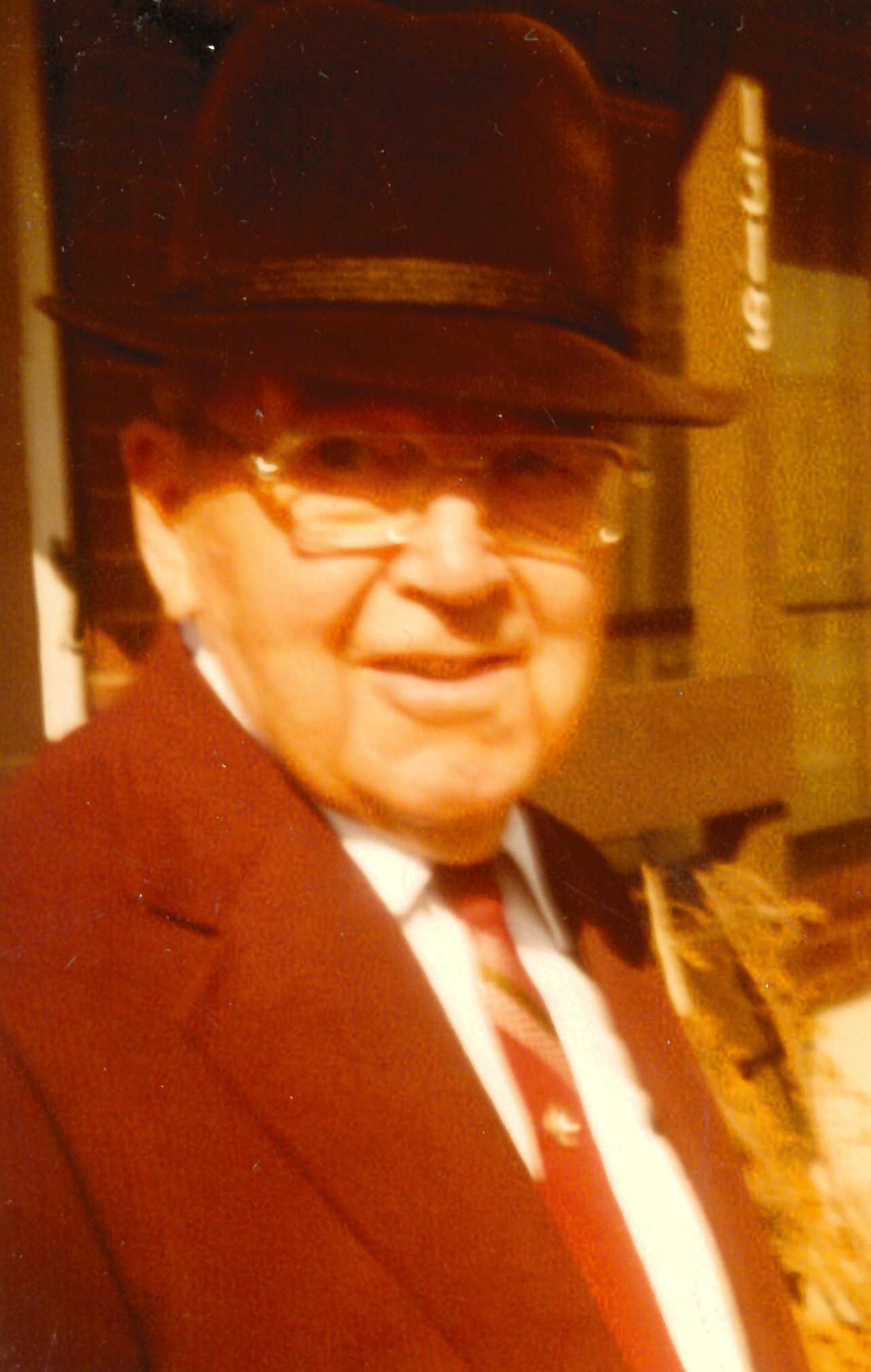
Thanks to Braylyn Mercado for assisting in typing up this history from a hard to read typewriter copy.