Orwell’s 1984 and Today

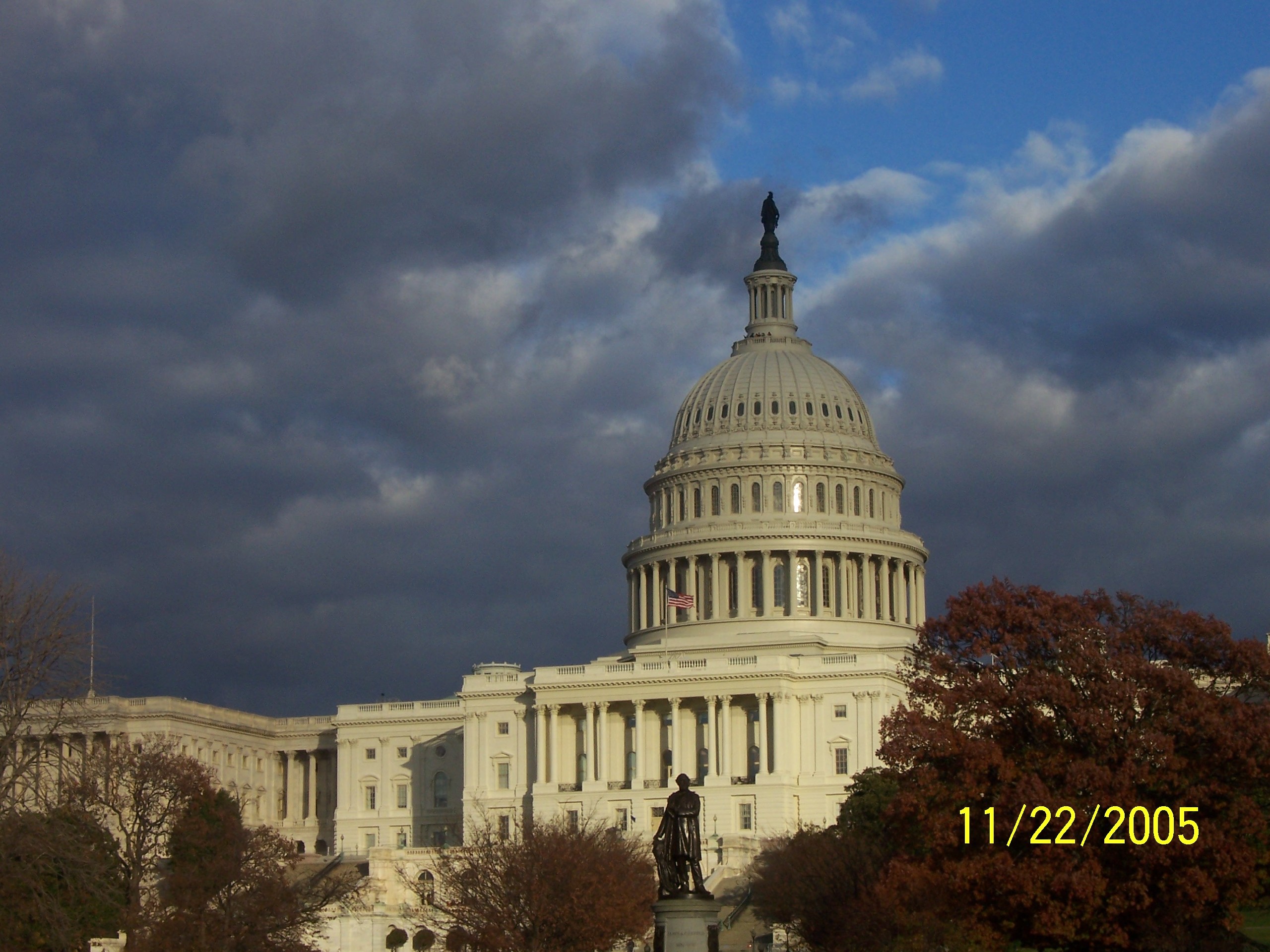
United States Capitol

There have been many things on my mind lately. Watching the ongoing bickering in the District of Columbia for the past 20 years I often think of 1984, Brave New World, and Fahrenheit 451. The Trump world often made me thing of 1984 with the inability to rely on truth and the often shifting positions from day to day. The Democrats declare the need for truth, for which I agree. The Republicans declare the need for unity, again, I agree. Both are doing it for limited self-serving purposes though. While I am not that old, I long for the America I recall learning about in school and wonder if she will ever reappear. I weary of our rewriting history, not of addition or giving more context, but contriving it into something it is not. I love Thomas Jefferson and find great frustration in our undermining his phenomenal influence that continues to today. We are now seeing it also in the religious side with Brigham Young. Based upon those musings, I read this Imprimis talk and found it reiterating my thoughts of the past years in words. I could not help but share.

The following is adapted from a speech delivered by Larry Arnn at a Hillsdale College reception in Rogers, Arkansas, on November 17, 2020.

“On September 17, Constitution Day, I chaired a panel organized by the White House. It was an extraordinary thing. The panel’s purpose was to identify what has gone wrong in the teaching of American history and to lay forth a plan for recovering the truth. It took place in the National Archives—we were sitting in front of the originals of the Declaration of Independence and the Constitution—a very beautiful place. When we were done, President Trump came and gave a speech about the beauty of the American Founding and the importance of teaching American history to the preservation of freedom. 

“This remarkable event reminded me of an essay by a teacher of mine, Harry Jaffa, called “On the Necessity of a Scholarship of the Politics of Freedom.” Its point was that a certain kind of scholarship is needed to support the principles of a nation such as ours. America is the most deliberate nation in history—it was built for reasons that are stated in the legal documents that form its founding. The reasons are given in abstract and universal terms, and without good scholarship they can be turned astray. I was reminded of that essay because this event was the greatest exhibition in my experience of the combination of the scholarship and the politics of freedom. 

“The panel was part of an initiative of President Trump, mostly ignored by the media, to counter the New York Times’ 1619 Project. The 1619 Project promotes the teaching that slavery, not freedom, is the defining fact of American history. President Trump’s 1776 Commission aims to restore truth and honesty to the teaching of American history. It is an initiative we must work tirelessly to carry on, regardless of whether we have a president in the White House who is on our side in the fight. 

“We must carry on the fight because our country is at stake. Indeed, in a larger sense, civilization itself is at stake, because the forces arrayed against the scholarship and the politics of freedom today have more radical aims than just destroying America. 

***

“I taught a course this fall semester on totalitarian novels. We read four of them: George Orwell’s 1984, Arthur Koestler’s Darkness at Noon, Aldous Huxley’s Brave New World, and C.S. Lewis’s That Hideous Strength

“The totalitarian novel is a relatively new genre. In fact, the word “totalitarian” did not exist before the 20th century. The older word for the worst possible form of government is “tyranny”—a word Aristotle defined as the rule of one person, or of a small group of people, in their own interests and according to their will. Totalitarianism was unknown to Aristotle, because it is a form of government that only became possible after the emergence of modern science and technology.

“The old word “science” comes from a Latin word meaning “to know.” The new word “technology” comes from a Greek word meaning “to make.” The transition from traditional to modern science means that we are not so much seeking to know when we study nature as seeking to make things—and ultimately, to remake nature itself. That spirit of remaking nature—including human nature—greatly emboldens both human beings and governments. Imbued with that spirit, and employing the tools of modern science, totalitarianism is a form of government that reaches farther than tyranny and attempts to control the totality of things. 

“In the beginning of his history of the Persian War, Herodotus recounts that in Persia it was considered illegal even to think about something that was illegal to do—in other words, the law sought to control people’s thoughts. Herodotus makes plain that the Persians were not able to do this. We today are able to get closer through the use of modern technology. In Orwell’s 1984, there are telescreens everywhere, as well as hidden cameras and microphones. Nearly everything you do is watched and heard. It even emerges that the watchers have become expert at reading people’s faces. The organization that oversees all this is called the Thought Police. 

“If it sounds far-fetched, look at China today: there are cameras everywhere watching the people, and everything they do on the Internet is monitored. Algorithms are run and experiments are underway to assign each individual a social score. If you don’t act or think in the politically correct way, things happen to you—you lose the ability to travel, for instance, or you lose your job. It’s a very comprehensive system. And by the way, you can also look at how big tech companies here in the U.S. are tracking people’s movements and activities to the extent that they are often able to know in advance what people will be doing. Even more alarming, these companies are increasingly able and willing to use the information they compile to manipulate people’s thoughts and decisions.

“The protagonist of 1984 is a man named Winston Smith. He works for the state, and his job is to rewrite history. He sits at a table with a telescreen in front of him that watches everything he does. To one side is something called a memory hole—when Winston puts things in it, he assumes they are burned and lost forever. Tasks are delivered to him in cylinders through a pneumatic tube. The task might involve something big, like a change in what country the state is at war with: when the enemy changes, all references to the previous war with a different enemy need to be expunged. Or the task might be something small: if an individual falls out of favor with the state, photographs of him being honored need to be altered or erased altogether from the records. Winston’s job is to fix every book, periodical, newspaper, etc. that reveals or refers to what used to be the truth, in order that it conform to the new truth. 

“One man, of course, can’t do this alone. There’s a film based on 1984 starring John Hurt as Winston Smith. In the film they depict the room where he works, and there are people in cubicles like his as far as the eye can see. There would have to be millions of workers involved in constantly re-writing the past. One of the chief questions raised by the book is, what makes this worth the effort? Why does the regime do it?

“Winston’s awareness of this endless, mighty effort to alter reality makes him cynical and disaffected. He comes to see that he knows nothing of the past, of real history: “Every record has been destroyed or falsified,” he says at one point, “every book has been rewritten, every picture has been repainted, every statue and street and building has been renamed, every date has been altered. And that process is continuing day by day and minute by minute. . . . Nothing exists except an endless present in which the Party is always right.” Does any of this sound familiar?

“In his disaffection, Winston commits two unlawful acts: he begins writing in a diary and he begins meeting a woman in secret, outside the sanction of the state. The family is important to the state, because the state needs babies. But the women are raised by the state in a way that they are not to enjoy relations with their husbands. And the children—as in China today, and as it was in the Soviet Union—are indoctrinated and taught to spy and inform on their parents. Parents love their children but live in terror of them all the time. Think of the control that comes from that—and the misery.

“There are three stratums in the society of 1984. There is the Inner Party, whose members hold all the power. There is the Outer Party, to which Winston belongs, whose members work for—and are watched and controlled by—the Inner Party. And there are the proles, who live and do the blue collar work in a relatively unregulated area. Winston ventures out into that area from time to time. He finds a little shop there where he buys things. And it is in a room upstairs from this shop where he and Julia, the woman he falls in love with, set up a kind of household as if they are married. They create something like a private world in that room, although it is a world with limitations—they can’t even think about having children, for instance, because if they did, they would be discovered and killed. 

“In the end, it turns out that the shopkeeper, who had seemed to be a kindly old man, is in fact a member of the Thought Police. Winston and Julia’s room contained a hidden telescreen all along, so everything they have said and done has been observed. In fact, it emerges that the Thought Police have known that Winston has been having deviant thoughts for twelve years and have been watching him carefully. When the couple are arrested, they have made pledges that they will never betray each other. They know the authorities will be able to make them say whatever they want them to say—but in their hearts, they pledge, they will be true to their love. It is a promise that neither is finally able to keep. 

“After months of torture, Winston thinks that what awaits him is a bullet in the back of the head, the preferred method of execution of both the Nazis and the Soviet Communists. In Koestler’s Darkness at Noon, the protagonist walks down a basement hallway after confessing to crimes that he didn’t commit, and without any ceremony he is shot in the back of the head—eradicated as if he were vermin. Winston doesn’t get off so easy. He will instead undergo an education, or more accurately a re-education. His final stages of torture are depicted as a kind of totalitarian seminar. The seminar is conducted by a man named O’Brien, who is portrayed marvelously in the film by Richard Burton. As he alternately raises and lowers the level of Winston’s pain, O’Brien leads him to knowledge regarding the full meaning of the totalitarian regime.

“As the first essential step of his education, Winston has to learn doublethink—a way of thinking that defies the law of contradiction. In Aristotle, the law of contradiction is the basis of all reasoning, the means of making sense of the world. It is the law that says that X and Y cannot be true at the same time if they’re mutually exclusive. For instance, if A is taller than B and B is taller than C, C cannot be taller than A. The law of contradiction means things like that.

“In our time, the law of contradiction would mean that a governor, say, could not simultaneously hold that the COVID pandemic renders church services too dangerous to allow, and also that massive protest marches are fine. It would preclude a man from declaring himself a woman, or a woman declaring herself a man, as if one’s sex is simply a matter of what one wills it to be—and it would preclude others from viewing such claims as anything other than preposterous.

“The law of contradiction also means that we can’t change the past. What we can know of the truth all resides in the past, because the present is fleeting and confusing and tomorrow has yet to come. The past, on the other hand, is complete. Aristotle and Thomas Aquinas go so far as to say that changing the past—making what has been not to have been—is denied even to God. Because if something both happened and didn’t happen, no human understanding is possible. And God created us with the capacity for understanding.

“That’s the law of contradiction, which the art of doublethink denies and violates. Doublethink is manifest in the fact that the state ministry in which Winston is tortured is called the Ministry of Love. It is manifest in the three slogans displayed on the state’s Ministry of Truth: “War is peace. Freedom is slavery. Ignorance is strength.” And as we have seen, the regime in 1984 exists precisely to repeal the past. If the past can be changed, anything can be changed—man can surpass even the power of God. But still, to what end?

“”Why do you think you are being tortured? O’Brien asks Winston. The Party is not trying to improve you, he says—the Party cares nothing about you. Winston is brought to see that he is where he is simply as the subject of the state’s power. Understanding having been rendered meaningless, the only competence that has meaning is power. 

““Already we are breaking down the habits of thought which have survived from before the Revolution,” O’Brien says.

“”We have cut the links between child and parent, and between man and man, and between man and woman. No one dares trust a wife or a child or a friend any longer. But in the future there will be no wives and no friends. Children will be taken from their mothers at birth, as one takes eggs from a hen. The sex instinct will be eradicated. Procreation will be an annual formality like the renewal of a ration card. . . . There will be no loyalty, except loyalty toward the Party. There will be no love, except the love of Big Brother. There will be no laughter, except the laugh of triumph over a defeated enemy. . . . All competing pleasures will be destroyed. But always—do not forget this Winston—always there will be the intoxication of power, constantly increasing and constantly growing subtler. Always, at every moment, there will be the thrill of victory, the sensation of trampling on an enemy who is helpless. If you want a picture of the future, imagine a boot stamping on a human face—forever.

“Nature is ultimately unchangeable, of course, and humans are not God. Totalitarianism will never win in the end—but it can win long enough to destroy a civilization. That is what is ultimately at stake in the fight we are in. We can see today the totalitarian impulse among powerful forces in our politics and culture. We can see it in the rise and imposition of doublethink, and we can see it in the increasing attempt to rewrite our history.

***

““An informed patriotism is what we want,” Ronald Reagan said toward the end of his Farewell Address as president in January 1989. “Are we doing a good enough job teaching our children what America is and what she represents in the long history of the world?” 

“Then he issued a warning.

“Those of us who are over 35 or so years of age grew up in a different America. We were taught, very directly, what it means to be an American. And we absorbed, almost in the air, a love of country and an appreciation of its institutions. If you didn’t get these things from your family you got them from the neighborhood, from the father down the street who fought in Korea or the family who lost someone at Anzio. Or you could get a sense of patriotism from school. And if all else failed you could get a sense of patriotism from the popular culture. The movies celebrated democratic values and implicitly reinforced the idea that America was special. TV was like that, too, through the mid-sixties.

“But now, we’re about to enter the [1990s], and some things have changed. Younger parents aren’t sure that an unambivalent appreciation of America is the right thing to teach modern children. And as for those who create the popular culture, well-grounded patriotism is no longer the style. . . . We’ve got to do a better job of getting across that America is freedom—freedom of speech, freedom of religion, freedom of enterprise. And freedom is special and rare. It’s fragile; it needs protection.

“So, we’ve got to teach history based not on what’s in fashion but what’s important—why the Pilgrims came here, who Jimmy Doolittle was, and what those 30 seconds over Tokyo meant. You know, four years ago on the 40th anniversary of D-Day, I read a letter from a young woman writing to her late father, who’d fought on Omaha Beach. . . . [S]he said, “we will always remember, we will never forget what the boys of Normandy did.” Well, let’s help her keep her word. If we forget what we did, we won’t know who we are. I’m warning of an eradication of the American memory that could result, ultimately, in an erosion of the American spirit

“American schoolchildren today learn two things about Thomas Jefferson: that he wrote the Declaration of Independence and that he was a slaveholder. This is a stunted and dishonest teaching about Jefferson. 

“What do our schoolchildren not learn? They don’t learn what Jefferson wrote in Notes on the State of Virginia: “I tremble for my country when I reflect that God is just,” he wrote in that book regarding the contest between the master and the slave. “The Almighty has no attribute which can take side with us in such a contest.” If schoolchildren learned that, they would see that Jefferson was a complicated man, like most of us. 

“They don’t learn that when our nation first expanded, it was into the Northwest Territory, and that slavery was forbidden in that territory. They don’t learn that the land in that territory was ceded to the federal government from Virginia, or that it was on the motion of Thomas Jefferson that the condition of the gift was that slavery in that land be eternally forbidden. If schoolchildren learned that, they would come to see Jefferson as a human being who inherited things and did things himself that were terrible, but who regretted those things and fought against them. And they would learn, by the way, that on the scale of human achievement, Jefferson ranks very high. There’s just no question about that, if for no other reason than that he was a prime agent in founding the first republic dedicated to the proposition that all men are created equal. 

“The astounding thing, after all, is not that some of our Founders were slaveholders. There was a lot of slavery back then, as there had been for all of recorded time. The astounding thing—the miracle, even, one might say—is that these slaveholders founded a republic based on principles designed to abnegate slavery. 

“To present young people with a full and honest account of our nation’s history is to invest them with the spirit of freedom. It is to teach them something more than why our country deserves their love, although that is a good in itself. It is to teach them that the people in the past, even the great ones, were human and had to struggle. And by teaching them that, we prepare them to struggle with the problems and evils in and around them. Teaching them instead that the past was simply wicked and that now they are able to see so perfectly the right, we do them a disservice and fit them to be slavish, incapable of developing sympathy for others or undergoing trials on their own.

“Depriving the young of the spirit of freedom will deprive us all of our country. It could deprive us, finally, of our humanity itself. This cannot be allowed to continue. It must be stopped. 
William Christoph Wanner

William Christoph Wanner

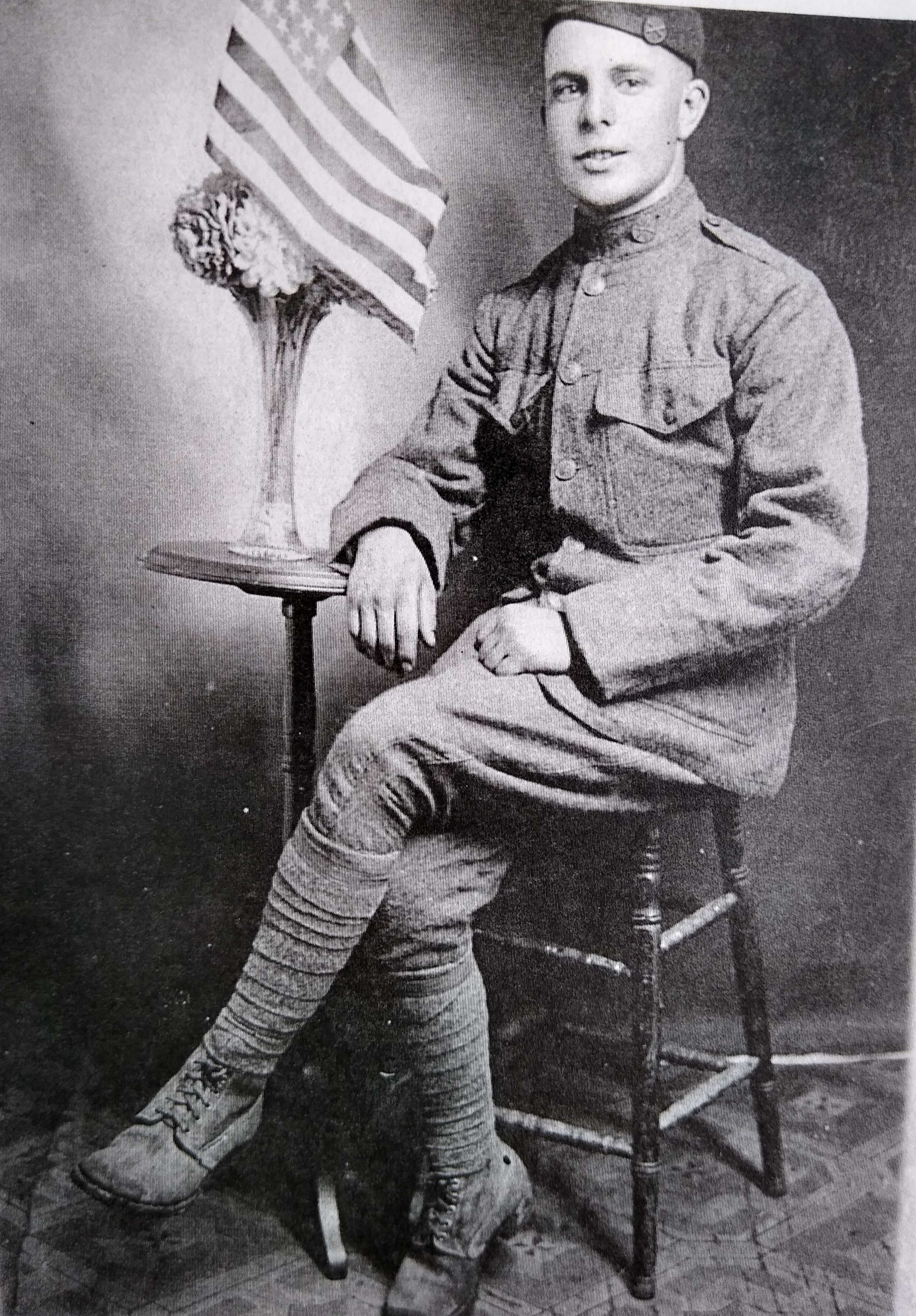
As part of Memorial Day this pandemic year, I thought I would memorialize William Christoph Wanner.  He served and died as part of World War I, but didn’t die in France from the war but the dreaded Spanish Flu Epidemic of 1918.

William Christoph Wanner was born 9 November 1899 in Mapleton, Franklin, Idaho along with his twin Willard John Wanner.  The first children born to George and Regina Nuffer Wanner.  Children after were Mary Louise (1901), Golden (1902), Eva Virtue (1904), Rulon (1905), and Serge (1908).

Wanner Twins, Willard (l) and William (r) about 1901.

The Wanner twins in about 1900 or 1901. I don’t know the year, but the family moved from Mapleton down to Whitney before 1910.

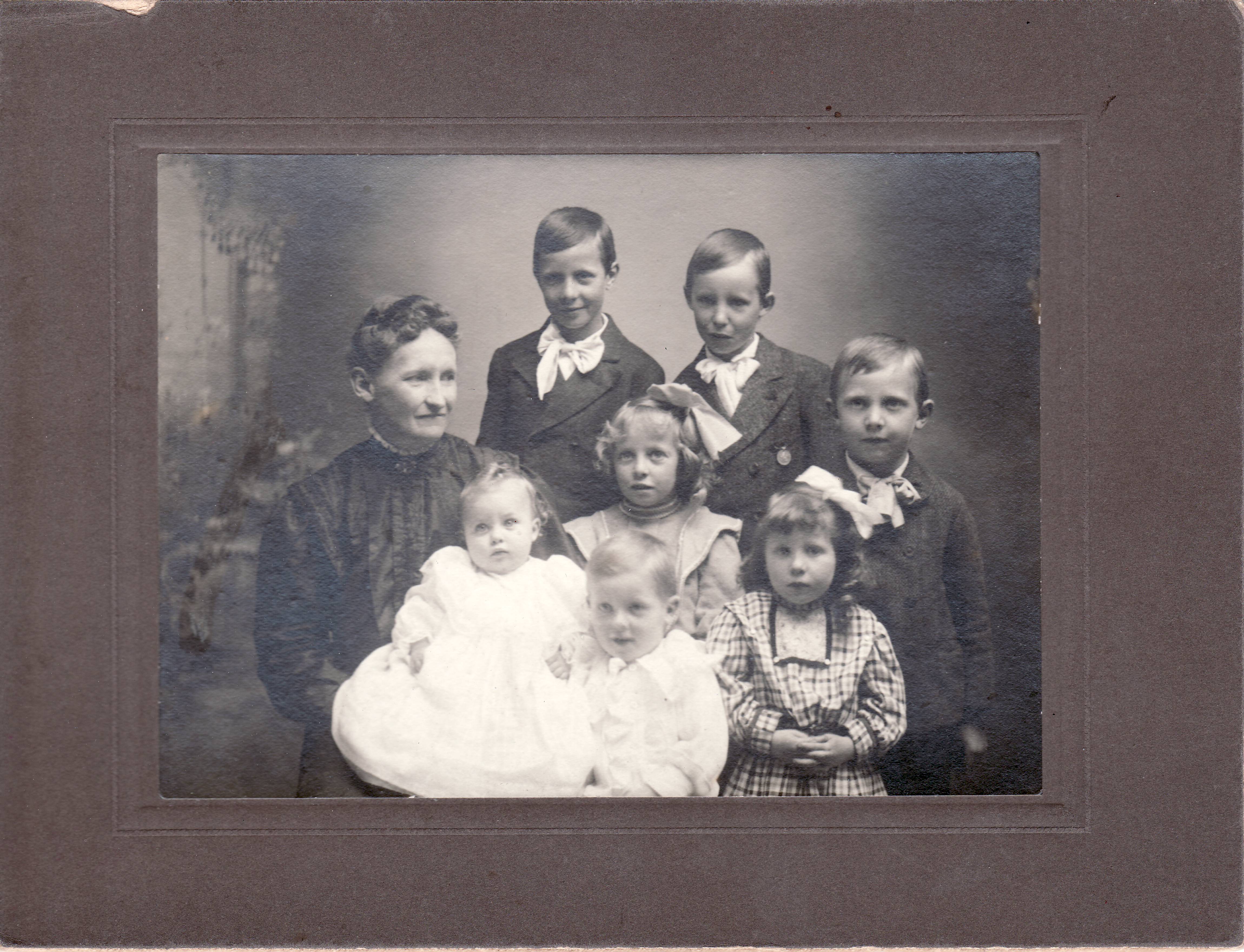
Regina with William and Willard in the back and then Golden, Mary in the middle, holding Serge, then Rulon, then Eva about 1909 or 1910.

This following photo is at the Whitney farm.

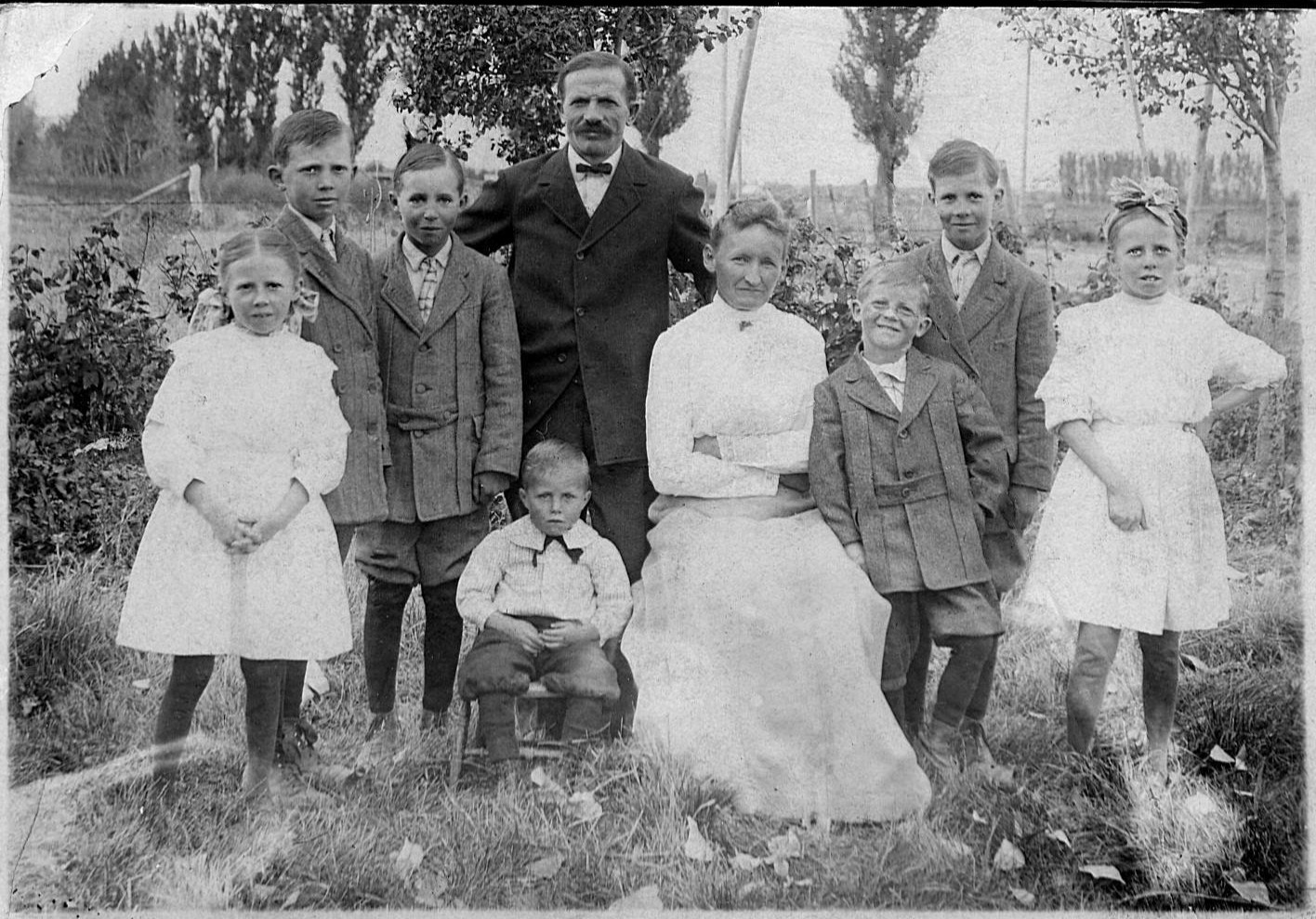
John George & Regina Wanner Family about 1912, Eva, William, Golden, Serge sitting, George, Regina, Rulon, Willard, Mary.

Here is what I received from William’s medical records.

Served: United States Army
Service Number: 1640542
Dates of Service: 5 Aug 1917 – 1 Dec 1918
Rank: Private
Assignments: Supply Company, 145th Field Artillery, American Expeditionary Forces
Decorations: WWI Victory Medal with service clasp; WWI Victory Button (Bronze)
Place of Entry: Preston, Idaho
Place of Separation: Camp Gebicart, France
Place of Birth: Idaho
Date of Death: 1 Dec 1918
Location of Death: Camp Begicart, France

The military records have his death location incorrect.

He died in Camp Genicart, Gironde, France.  He died of the dreaded influenza that fall instead of of something related to the war.  Except for the amount in which the influenza was related to the war and transported as part of those processes.

His body arrived in Whitney in a lead lined casket and he was buried 11 November 1920 in Whitney.

Sadly, his brother Golden died 26 November 1918 in Salt Lake City while a student from Influenza as well (death certificate says it was natural??).

Rulon died 26 February 1924 in Logan while a student of an ear infection (acute meningitis caused by acute otitis media).

Serge died 5 October 1929 in New Zealand as a missionary.  Cut himself shaving, got infected, turned deadly.

All four brothers are buried beside each others in Whitney.  Their parents are just to the east of them.  Their sister Eva just north (married Spatig), Mary just west, Willard is there in Whitney too. The whole family is buried all within 50 feet of each other.

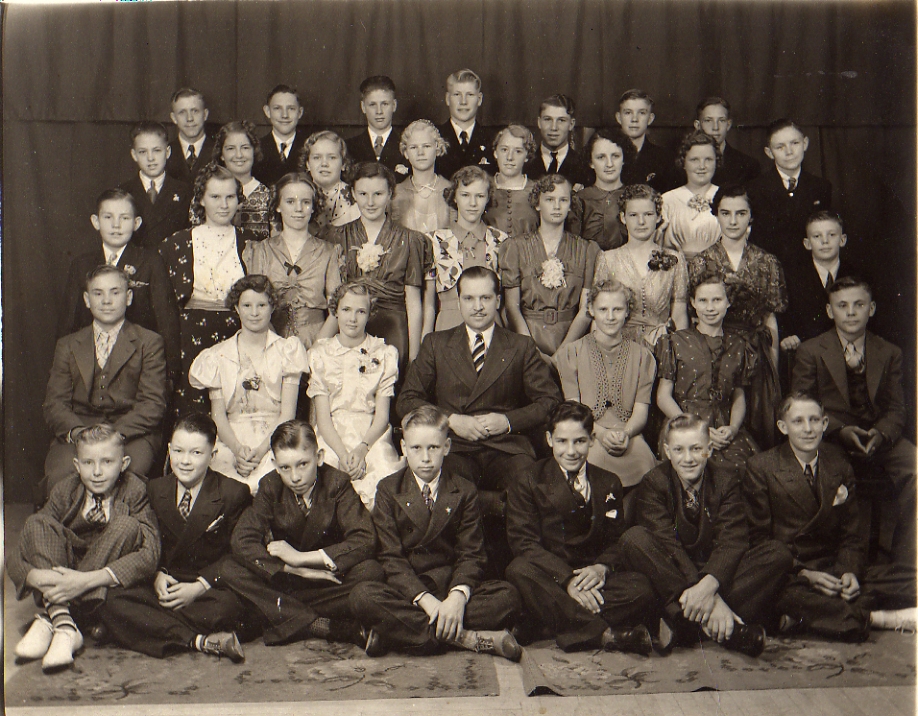
Glacus Merrill’s Class

Back(l-r): Ira Hillyard, Unknown, Bob Johnson, Junior Petterborg, Irwin Jonas, Unknown, Unknown.  2nd from Back: Unknown, Ruth Rich, Kaye Funk, Anna Lawrence, Joyce Larsen, Ruth Hutchinson, Nadine Johnson, Darrel Smith.  Middle Row: Unknown, Unknown, Eva Kershaw, Lyle Wilding, Unknown, Afton Sorensen, Dorothy Nielson, Unknown, Norwood Jonas.  2nd from Front: Alvin Spackman, Bernice Frandsen, Unknown, Glacus Merrill, Joy Erickson, Unknown, Allen Spackman.  Front: Garr Christensen, Oral Ballam Jr, LaMar Carlson, Unknown, Gail Spackman, Ivan Anderson, Warren Hamp.

This is Glacus Merrill’s class from what I believe is 1936.  He taught class at Park School in Richmond, Cache, Utah.  Several individuals have assisted me to name the individuals I have so far.  There are too many unknowns that I hope to clarify in the future.  If anyone can help, I would certainly appreciate it.  My Grandfather, Norwood, and his brother, Irwin, are both in the photo.  Irwin died in World War II, and I assume some of the rest did as well.

I have listed all the individuals below with some limited information I could find on them.  At the very bottom is Glacus’ obituary.

Ira William Hillyard (1924-2009)

Unknown

Robert “Bob” Jay Johnson (1924-2009)

Junior “Pete” Lee Petterborg (1923-1990)

Irwin John Jonas (1921-1944)

Unknown

Unknown

Unknown

Ruth Rich

Norma Kaye Funk (1924-2002)

Anna May Lawrence (1924-1988)

Joyce Larsen (1924-1968)

Ruth Hutchinson (1924-2002)

Nadine Johnson (1924-2005)

Darrel Wilmot Smith (1924-2008)

Unknown

Unknown

Eva Kershaw

Lyle Wilding (1924-2002)

Unknown

Mary Afton Sorensen (1923-2008)

Dorothy Nielson (1924-2019)

Unknown

Wilburn Norwood Jonas (1924-1975)

Alvin Chester Spackman (1923-1994)

Bernice Frandsen (1924-2002)

Unknown

Glacus Godfrey Merrill (1905-2002)

Joy Erickson (1924-2010)

Unknown

Allen Elijah Spackman (1923-1997)

Garr Dee Christensen (1923-2002)

Oral Lamb Ballam (1925-2016)

Victor LaMar Carlson (1923-2008)

Unknown

Harold Gail Spackman (1924-1991)

Ivan Carl Anderson (1923-2017)

Warren Thomas Hamp (1924-2009)

Here is a copy of the obituary I found for Glacus.  Wow, I wish my school teachers had been this amazing.

LOGAN – Glacus G. Merrill, 96, died of causes incident to age in Logan, Utah on Saturday, February 9, 2002.  He was born May 27, 1905 in Richmond, Utah to Hyrum Willard and Bessie Cluff Merrill.  He is a grandson of Marriner W. Merrill, a pioneer prominent in the settling of Cache Valley, an Apostle of the Lord Jesus Christ, and the first president of the Logan LDS Temple.  He married Constance B. Bernhisel in 1925, and they were later divorced.  He married Marie B. Bailey, March 24, 1945 in Washington D.C.  Their marriage was later solemnized in the Logan LDS Temple.

While attending school, he participated in track and football at North Cache and Brigham Young College, where he graduated in 1925.  Glacus graduated from Utah State University in 1935 and also attended the University of Utah and Chico State College in California.  He is a graduate of the REI Radio Engineering School in Sarasota, Florida.  He was the principal of the Richmond Park School for 11 years and served in the U.S. Navy for four years during World War II.  He served an LDS mission to California from 1954-1955.  While living in the East, he served as President of the West Virginia Farm Bureau and the State Black Angus Association.  He is an honorary Kentucky Colonel.  He also served as President and District Governor of Lions Clubs in Utah and West Virginia, and was a member of the Lions Club for 42 years.  Glacus was Vice President of the West Virginia Broadcasters Association, and is a member of the USU Old Main Society.  He established a Scholarship Fund in the Communications Department at USU.  The Montpelier, Idaho Jaycees presented him with their outstanding Citizen’s Award.  He was also a member of the Montpelier Rotary Club, Utah Farm Bureau, VFW and American Legion.  He is a member of the “Around the World Club” having traveled around the world with his son, Gregory.  He and his wife, Marie traveled extensively.  Merrill was a popular Rodeo announcer in his early days.  He authored the book “Up From the Hills” which was finished in 1988 and is available in area libraries.

Honored by the Utah Broadcasters as a pioneer in Radio Broadcasting, Merrill started his broadcasting career in 1938 as part owner and Program Director at KVNU Radio in Logan.  After serving four years in the Navy, he built his first radio station Clarksburg, West Virginia.  He owned and operated 11 other stations in West Virginia, Ohio, Maryland, Idaho and Utah, including stations in Montpelier, Idaho and Logan, Utah.  He was well known for his frank and outspoken editorials, news and comments on KBLW in Logan.  He has given over 7,000 newscasts and editorials always ending them with the saying, “Have Good Day Neighbor.”  In 56 years of radio broadcasting, he trained several young broadcasters who are now making good.

As a hobby, wherever he lived, he operated a cattle ranch and farm.  He served in many civic and church activities including counselor in the LDS Stake MIA, counselor in the East Central Stake Mission Presidency, 5 years as a Branch President and 11 years as District President in West Virginia.  He also served as Deputy Scout Commissioner in Idaho and for 12 years taught the High Priest Class in the Logan 3rd Ward and served for several years as the High Priest Group Leader.  He was an avid supporter of many missionaries in the area.

His wife, Marie preceded him in death on April 22, 1993, as well as six brothers and one sister.  He is survived by his two daughters, Darla D. (Mrs. Dennis Clark) of Logan; Madge (Mrs. Melvin Meyer) of Smithfield; one son, G. Gregory (Joan) Merrill of Logan; nine grandchildren, 22 great-grandchildren and 10 great-great-grandchildren.  Funeral services will be held at 12 Noon on Thursday, February 14, 2002, at the Logan 3rd Ward Chapel, 250 North 400 West, with Bishop Grant Carling conducting.  Friends and family may call Wednesday evening, February 13th, at the Nelson Funeral Home, 162 East 400 Norther, Logan from 6 to 8 p.m. and on Thursday at the church from 10:30 to 11:30 a.m.  Interment will be in the Richmond City Cemetery.

Irwin Jonas Honored

Irwin Jonas Newspaper Article

This newspaper article regarding the funeral of Irwin Jonas was just shared with me.  I have wrote of Irwin’s life previously.  Family history is an ongoing endeavor with little nuggets appearing from time to time!

I don’t know which newspaper this article was published.  I do know that Irwin died 11 July 1944 in Saint-Lo, Normandy, France.  He was actually buried 6 February 1948 in Richmond, Cache, Utah, almost four years later.  But this article sounds like a memorial service held within weeks or months afterward, and not with Irwin’s body actually present.  It is my understanding he was buried for a time in France, then brought home years later.  I cannot imagine having to deal with this as his parent, widow, or family member.

“Memorial services will be held Wednesday at 8:30 p.m. in the Richmond South ward chapel for Sgt. Irwin Jonas who was killed in France on July 11.  Bishop E. M. Hicken will preside and Commander Neal Hillyard of the American Legion Post 33 will conduct the services.

“The program has been arranged as follows: Advance of colors; selection, The Lord’s Prayer, by the ladies’ chorus; invocation, Hyrum Hansen; solo, My Task, C. I. Stoddard; poem composed by Leona Carson and dedicated to the son of Sgt. Jonas will be read by Bishop E. M. Hicken; talk, Scoutmaster A. J. Mendenhall, Jr.; duet, Resignation, Florence and Rebecca Lewis; talk, O. L. Ballam; violin solo, J. W. Pulsipher; talk, William Jonas of Salt Lake City; and Lt. Commander G. Ellis Doty; selection, the Flag Without a Stain, Ladiers’ chorus; retiring of colors, taps, and benediction, J. W. Stoddard.

Isn’t it amazing where our society is now found?  Due to the sacrifice of people like Irwin, we have the right to fight over what we can see and how we can treat each other?  Without that freedom protected Irwin, we might all be dead, speaking another language, or without the rights of speech or equal protection.  Rather than defend those rights and use them, we would rather trample the symbol of them.  But that too is protected speech.  But let us be careful that we actually use the right so much that we divide and undermine and actually lose it in doing so.

Wanner-Nuffer Wedding

John and Eva Nuffer are pleased to announce the marriage of their daughter Regina Friederike to John George, son of John and Anna Wanner.  John and Regina were married 31 August 1898 in the Logan LDS Temple, Logan, Cache, Utah.

John & Regina Wanner

John & Regina Wanner

Regina Friederike Nuffer was the first child of four born to the marriage of John Christoph Nuffer and Eva Katharina Greiner on 26 January 1869 in Neuffen, Esslingen, Wurttemberg.  John was a widower when he married Eva endowing Regina with two older half brothers and sister, John (1862), Georg Friedrich (1864, Fred), and Christiane (1865, who lived less than a year).  John and Eva were married 25 July 1867 in Neuffen.  Regina had three younger siblings, Charles August (1871), Adolph (1875), and Mary (1881).  Regina was christened 7 February 1869 in Evangelische Kirche, Neuffen.

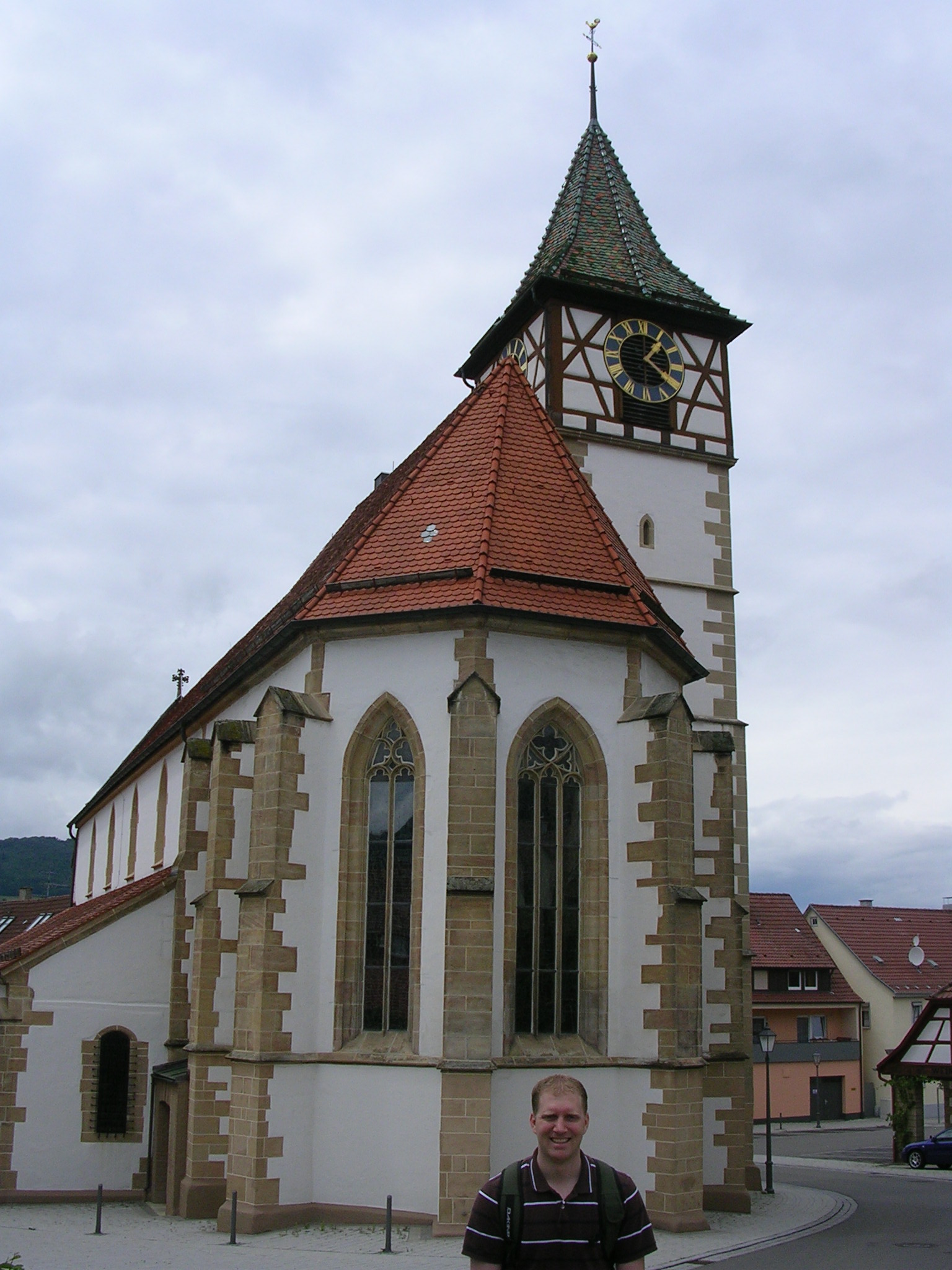
Neuffen Church and Paul Ross

Evangelische Kirche, Neuffen and Paul Ross.  The Nuffer family attended this church and Regina was christened here.

When Regina was about 9 years old, she heard the Mormon Elders preach in town.  One of those Elders was John Jacob Theurer (1837 – 1914) of Providence, Cache, Utah.  She was converted to the LDS church and was baptized 1 January 1880.  Her parents were baptized 12 April 1880 in the mill race behind their home in the very early morning to avoid others in the community knowing.  Other siblings followed later.

Overlooking Neuffen

Overlooking Neuffen, 2008

The family applied to immigrate to North America in April 1880. They left for Stuttgart, then to Mannheim on a boat to Holland, over the North Sea to Hull, England where they left on the Wisconsin for New York.  From Castle Garden they went by train to Utah, finally arriving in Logan.  The family moved to Providence, Cache, Utah where Elder Theurer had connections.  Mary, Regina’s sister, was born in Providence in 1881.  John Jr worked in Montana, Salt Lake, and on the Logan Temple.  After the Logan Temple stonework was completed, the Nuffers sold their home in Providence and moved in 1883 to Preston, Franklin (then Oneida), Idaho.  Eventually they moved around until John and Eva purchased property up Cub River near Mapleton (then St. Joseph), Franklin (then Oneida), Idaho.

Regina Nuffer

Regina Nuffer

I don’t know the details of how or when, but Regina met Jacob Scheibel and married him 15 July 1889 in Salt Lake City, Salt Lake, Utah.  Alma Katherine (“Kate”) Scheibel was born 27 September 1889 in Pleasant Valley, Carbon, Utah to Jacob and Regina.  In 1890, Jacob and Regina separated and she moved back to Mapleton.  She helped as a nurse and midwife while her mom helped tend little Kate.  It was during this time she met a young man named John George Wanner Jr who was working for her brother Fred Nuffer, also in Mapleton.

Regina Nuffer and Alma Katherine Scheibel

Regina Nuffer and Alma Katherine Scheibel

John George (anglicized from Johann Georg but called George by the family) was the first child born to the marriage of John George (also anglicized from Johann Georg) and Anna Maria Schmid on 29 October 1870 in Holzgerlingen, Böblingen, Württemberg.  To keep them separate, younger John George went by George.  He was christened 30 October 1870 in Holzgerlingen.  He grew up in Holzgerlingen and during the summer of 1890 met the LDS missionaries.  He was the first of the family to join the new church on 11 July 1891 and was baptized by Jacob Zollinger (1845 – 1942) of Providence, Utah.

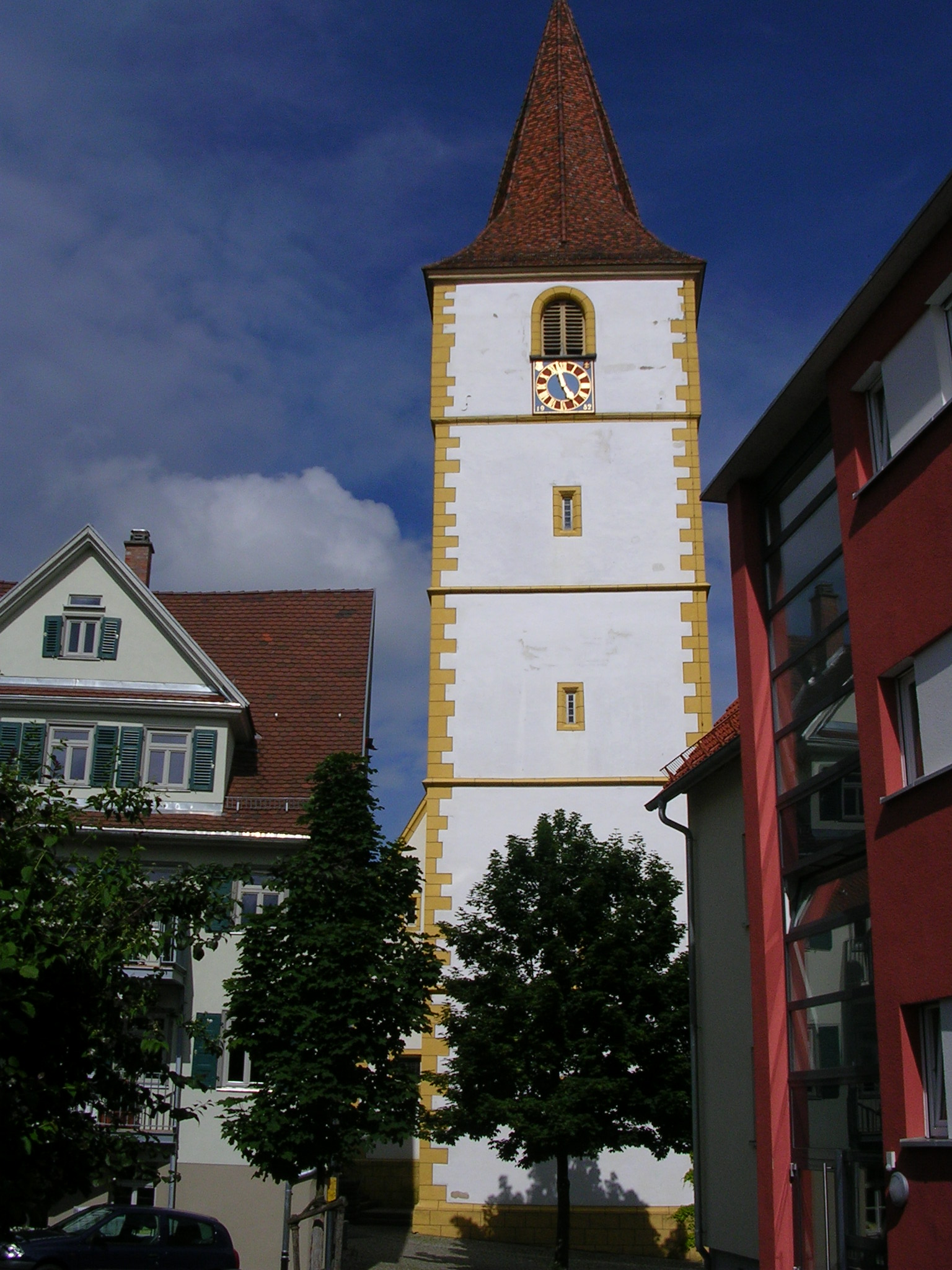
St. Mauritius Church in Holzgerlingen where the Schmid family were christened

St. Mauritius Church in Holzgerlingen, the church where the Wanner’s attended and where John was christened.

George apparently emigrated to America with an Elder Theurer in 1891.  We don’t know who Elder Theurer is, but he was also from Providence although likely a relative of John Theurer who converted the Nuffer family.  The LDS missionary records do not show an Elder Theurer out in 1890 – 1892.  I wonder if this wasn’t meant to be Elder Zollinger in the family histories.  But this Elder helped John find employment with Fred Nuffer.  The rest of the Wanner family followed to Mapleton in 1893.  Mary, George’s daughter, indicates it was an Elder Terrell who brought John to America (Theurer sounds like Tire, and Terrell isn’t that far off, so maybe a misspelling?)

george-wanner-about-1895

George met Eliza Stirland of Providence and married her 14 November 1894 in the Logan LDS Temple.  Two children were born, Earl Wayne Wanner born 31 October 1895 in Providence and George Phineas Wanner on 22 September 1897 in Glendale.  The unhappy marriage ended in divorce.  Nobody seems to know what happened to these two sons either.

Regina received her Patriarchal Blessing 13 September 1897 from John Smith.

George and Regina fell in love and married in the Logan Temple 13 August 1898.

William Christoph and Willard John were born 9 November 1899 in Mapleton.

Mary Louise was born 5 March 1901 in Mapleton.

George was called and set apart as a missionary to Germany on 1 October 1901 .

Acceptance Letter from John to President Snow

Acceptance Letter from John to Lorenzo Snow, President of The Church of Jesus Christ of Latter-day Saints.

Golden was born 4 September 1902 in Mapleton while John was on his mission to Germany.

George safely arrived home 7 October 1903.

Eva Virtue was born 24 February 1904 in Mapleton.

Rulon was born 6 November 1905 in Mapleton.

About this time, George Wanner had John Nuffer build him a home on East Oneida Street in Preston.

George was then called to serve a second mission in the fall of 1907, again leaving pregnant Regina and six children.  He was set apart by Orson F. Whitney on 29 October 1907 to serve in the Swiss and German mission.  Interestingly, the missionary record says he was plurally married, but no records or history show another marriage.  I suspect it is a mistake.

Serge Nuffer was born 8 March 1908 in Preston.  Again, another child born while John was on a mission.

Regina with William and Willard in the back and then Golden, Mary in the middle, holding Serge, then Rulon, then Eva.  This picture was taken and sent to George on his mission.

George left Europe sailing on the Southwark from Liverpool, England on 9 December 1909.

1909 Southwark Manifest

1909 Southwark Manifest

George returned home on Christmas day 1909.  It was during this mission that George taught the Christiana Wilhelmina Andra family.  The Andras immigrated to Preston.  William Andra, Christiana’s daughter, would later marry George’s daughter, Mary.

In 1910, George and Regina purchased the Wanner farm (John’s parents) in Whitney (which the Wanners had purchased from the Nuffer family).  His parents moved to Logan.

1910 Whitney Census

1910 Whitney Census, Dursteller, Handy, Beckstead, Foster, Cardon, Wanner, Oliverson, Moser, Benson

About 1912, this picture was taken on the farm.

l-r: Eva, William, Golden, Serge (sitting), George, Regina, Rulon, Willard, Mary Wanner

l-r: Eva, William, Golden, Serge (sitting), George, Regina, Rulon, Willard, Mary Wanner

Another photo from about 1917.

l-r: Golden, Mary, Regina, George, William, Willard. Sitting: Eva, Serge, Rulon

l-r: Golden, Mary, Regina, George, William, Willard. Sitting: Eva, Serge, Rulon

Sadly, things started to change their idyllic world.

Golden died 26 November 1918 in Salt Lake City at age 16.   His death certificate says he was a student, Regina is the informant, but I don’t know where he was going to school.  I was told he died from influenza, but the death certificate just says natural death.

William died 1 December 1918 at Camp Genicart, Gironde, France from influenza.  He enlisted with the army 5 August 1917.  I don’t have anything to back it up, but I suspect the photo above is in preparation for his enlistment.  He left Salt Lake City for Camp Kearney on October 11, 1917.  He served in the Supply Company, 145th Field Artillery, American Expeditionary Forces.  The war did not kill him, disease did (as was common then with influenza).  His body was brought home 11 November 1920, and interred in the Whitney Idaho Cemetery.

Mary married William Andra 10 March 1920 in the Salt Lake City LDS Temple.

Willard was set apart as a missionary 7 January 1921 to New Zealand by Melvin J Ballard and left for the mission 8 January 1921.  He successfully completed his mission and ended his service 18 October 1922.

Willard John Wanner

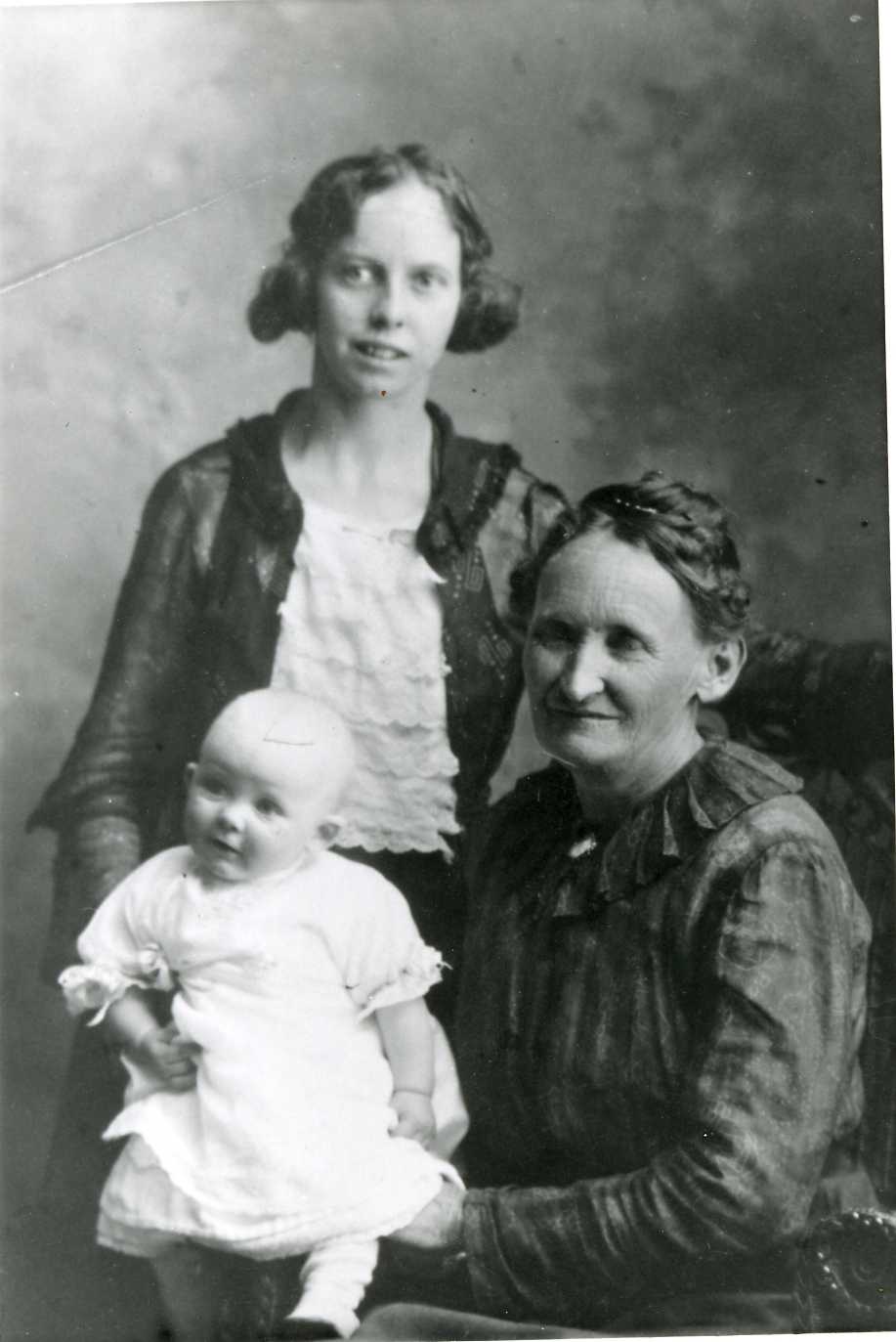
Mary Andra, Regina Wanner, holding William Andra Jr in 1921

Willard married Gladys Laverna Thompson 15 November 1923 in the Logan LDS Temple.

Rulon was a student in Logan when he caught a cold.  It developed into acute meningitus caused by acute otitis media.  He died 25 February 1924 at the age of 18.  George is the informant.

George was called to serve a third mission to the Southern States Mission.  He was set apart 15 December 1925 by Joseph Fielding Smith and departed 16 December 1925.  He returned home 8 June 1926.

On 4 July 1926, George received his Patriarchal Blessing under the hand of William M Daines.

Serge was set apart as a missionary 24 April 1928 to New Zealand by Orson F Whitney and left for the mission on 28 April 1928.  He arrived in New Zealand 20 May 1928.  He served in the Bay, of Island, Whangerei, and Wellington districts, and on the South Island.  He cut himself while shaving and died from blood poisoning 4 October 1929.  His body was brought home for burial in Whitney with the funeral held in the Preston opera house.  Four sons were now deceased.

Eva was set apart as a missionary 16 April 1930 to California by George F Richards and left for the mission 17 April 1930.  She completed her service 6 June 1932.

George was called to serve a fourth mission to California.  He was set apart by Reed Schmid on 1 December 1933 and left for the mission the same day.  He arrived back home 6 April 1934.

IMG_0328001002003004_1537683618413

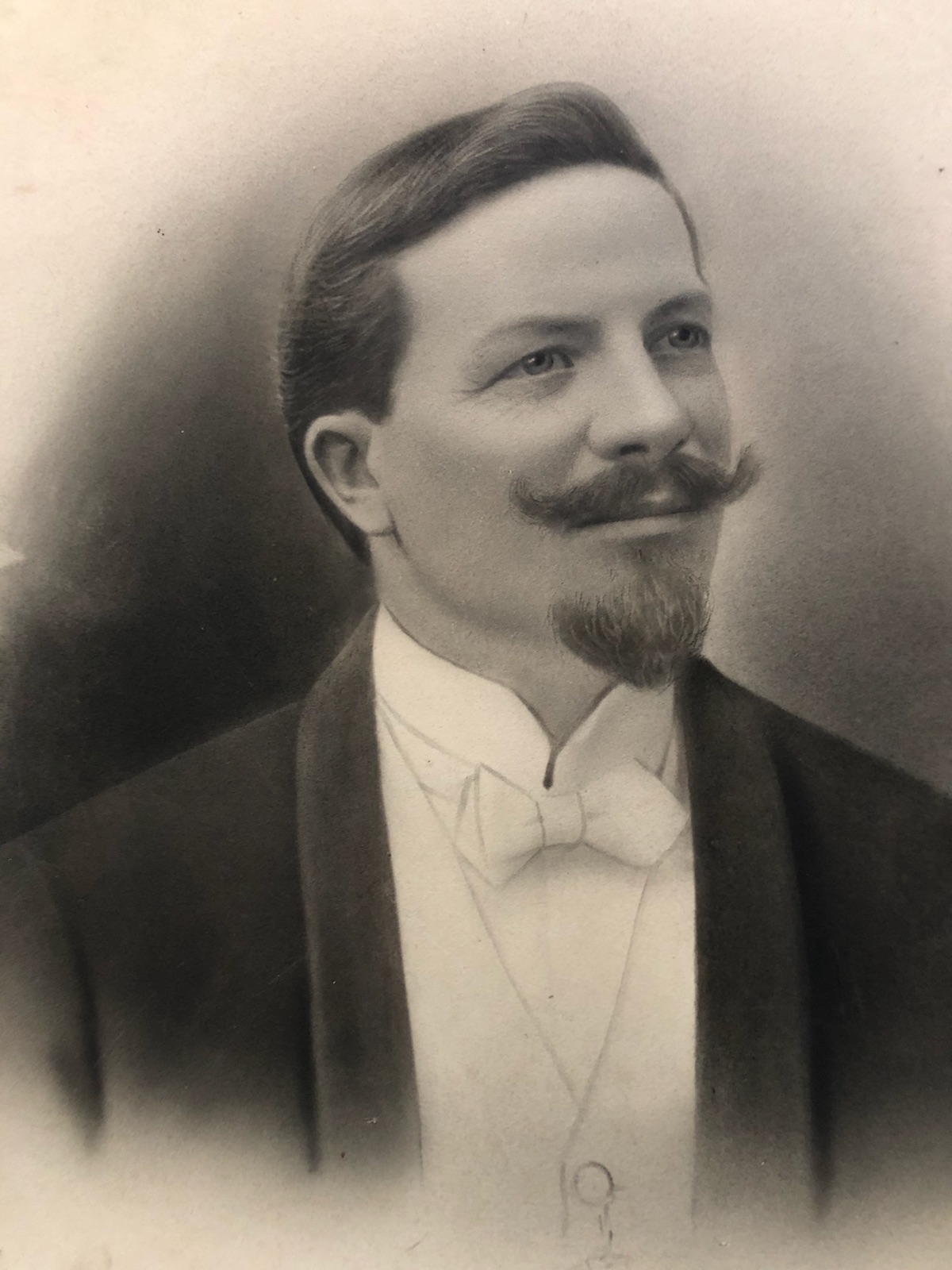
John George Wanner Jr

Eva married Adolf Ernest Spatig 29 January 1936 in the Logan LDS Temple.

Regina, Kate Naef, Carmen Cole, and Ladean Cole

George was known for his ability to work hard.  He worked hard, raised his crops, and took exceptional care of his farm animals.  He took great price in having things looking neat and clean around the farm and yard.

George usually was out working when the sun came up.  The story is told that he was usually the first to get to the beet dump in the morning.  Apparently one morning some of the neighbors decided to beat him to the dump.  They got up early to get a head start.  Before they got to the dump, the could hear George Wanner already going down the road ahead of them.  It was still dark but they could tell it was him by the way he was talking to his horses, “Gid up – gid up – gid up.”

George and Regina sold the Whitney farm and purchased 40 acres nearer to Preston and built a home on it.  Oakwood Elementary and Preston Junior High sit on what was part of this farm.  When he retired, it was this farm he sold to William and Mary Andra.

George had a knack for being successful in the various undertakings he engaged in.  He was one of the first in Preston to have an automobile.  When he brought it home he hadn’t quite got the knack of stopping it.  He yelled “whoa” when he got in the garage, but before he got it stopped he had gone through the end of the garage.

Grandma Wanner

Regina Wanner

George built two little homes on the west side of 2nd east and 1st south in Preston.  He also built three homes on 1st south and the south side of the street in Preston.  George and Regina lived in one of those homes until she died.  Regina passed away 10 March 1942 in Preston.  She was buried in Whitney.

She was ill for quite a while before she passed away.  George would care for her the best he could and regularly took her for rides in the car.  She was unable to walk and George would carry her on his back from place to place as they went visiting.

George remarried a few months later Grace Irene Frasure (1893 – 1980) on 3 Jun 1942 in the Salt Lake City LDS Temple.  Their marriage dissolved in divorce.

John George Wanner Jr

George was having a number of health issues and had heard that Florida would help him.  He moved to Florida.  It was there he met Annie Jane Metts (1873 – 1961).  They were married 4 May 1945 in Fort Myers, Lee, Florida.  This marriage also dissolved in divorce.

George and Annie Metts Wanner in Florida

George remained in Florida until he became ill enough that he knew the end was coming.  His daughter, Mary, sent her son, William Andra, out to Florida to bring George back by train.  When William and George arrived in Chicago, Cook, Illinois, he was quite ill and taken to the hospital.  It was there that George passed away 5 January 1947.  William brought George’s body back to Preston.  George was buried beside Regina in Whitney.

Mary Louise Wanner Andra Autobiography

Phyllis, Utahna, Sergene, Mary, Colleen, Millie, Edith

Phyllis Andra, Utahna Andra, Sergene Sorenson, Mary Andra, Colleen Jonas, Millie Beck, Edith Andra

Autobiography given Nov 1961″I, Mary Louise Wanner Andra was born the 5th of March 1901 in Cub River, Idaho.  My father is John George Wanner, Jr. and my mother is Regina Nuffer.  I have five brothers and one sister, Eva.  The oldest were twin boys: William C. and Willard.  The other three boys were Golden, Rulon, and Serge.  I came sixteen months later after the twins, so Mother had three in diapers.
“In the fall of 1907 my father was called on a two year mission to Germany because he spoke the German language.  We didn’t have much while father was gone, but we were happy.
“He returned in the fall of 1909 and we moved back to Cub River and in the spring of 1910 we moved to Whitney, Idaho where my father bought an eighty acre irrigated farm and a one-hundred-sixty-nine acre dry farm.  This farm was owned by my Grandfather Wanner.  My father planted beets, potatoes, grain and hay.  He also had a herd of cows and there was plenty to do!  Father was very strict and we all had to toe the mark.  I remember the twin boys and Golden, just younger than myself, and I had to thin the beets.  The first two or three years the mustard weeds were so thick you could hardly see the beets.
“We kids went to grade school and had to walk three miles.  Sometimes we would ride horseback in the winter when the snow was so deep.  When it got cold enough to freeze a crust on the snow, we would walk on top and cut through the fields because the snow was above the fences.  We sure thought that was a lot of fun.
“Our farm was just across the road from George Benson and their daughter, Margaret was in the same grade as myself.
“In the 8th grade, I was chosen to take the part of Snow White in the school play.  In school, during the recess, we would jump the rope.  There was no one who could turn it fast enough for me.  I could outrun all my girl friends.  I even used to catch the boys and wash their faces with snow.
“We also had a girl’s baseball team.  We would play Franklin and the surrounding little towns.
“In the summer after school was out, I would ride horses.  I would go up to the dry farm and get the cows.  One time I took my little sister, Eva and as we passed a brush, Eva fell off and broke her arm.
“After I graduated from the 8th grade, I wanted to take sewing course in Logan at the A.C. (Agricultural College).  After coaxing my father for several days, he finally decided to let me go.  Inez Wallace and I went to Logan on the train.  I had been down to Logan for three days when my father came and got me to work on the dry farm, getting the land ready to plant.
“In 1918, my brother, William C. died in France.  He was in the 145th infantry.  Three days later, my brother, Golden died in Salt Lake with double leakage of the heart.  Soon after, my father sold the farm and we moved to Preston, Idaho.  My father bought the Parkinson Farm (4th South and 4th East).  Then my father planted beets again and I still had a job of thinning beets.  We lived in an old home while my father was having the new one built.
“In the early fall and winter of 1918, I went around to different homes taking care of the sick.  There was a flu epidemic at that time.  I was taking care of my cousin, Emma Nelson (George Nelson’s wife).  He was a wrestler.  Emma died of the flu.
“In the spring of 1918, I went to work for Roy and Alabell Hull.  I cared for the twins, did the washing, ironing, and all the cooking.  They had seven in their family and three hired men.
“At that time I was going with a young man by the name of William Andra.  He was born in Germany.  While my father was on his mission, he used to go to the Andra home.  My father baptized his oldest sister, Frieda.
“I met William and his mother while living in Whitney.  I was still going to school.  He and his mother came by train and my father met them at the train.  After a few days, William’s mother went back to Salt Lake and William started working for my father on the farm.  I guess that is when the romance began.  I was 16 years old.
“While working at the Hull’s, William would come and get me with his new buggy and horse.  We would to go Preston to a show.  At this time William was working for Jim Bodily.  Jim Bodily was the man who bought my father’s farm.  I worked all that summer for Roy Hull for $6.00 per week.
“That fall of 1919, I went to Logan to the County Fair and rode race horses for Joe Perkins.  I was offered a job of being a jockey, but I didn’t desire that kind of a career, although I loved to ride horses.
“In March 1920, William and I were married in the Salt Lake Temple.  We made our home in Whitney, Idaho on the Jim Bodily farm (where Lorin Bodily lives, only north in an old house).  I even helped thin some of Jim Bodily’s beets.  Our closest neighbors were George & Kate Poole.  Kate and I spent many hours together sewing.
“I joined the Relief Society right after I was married.  I was asked to lead the singing.  Sister Barbara Ballif was the President at the time.
“We lived there a few months, then we moved to the home where Bishop Morris Poole now lives.  My husband quit Bodily’s and he and his brother, Otto thinned beets for different farmers.  In the fall, these two would top beets at the sugar factory.  I would go out and hitch up the horses in the morning while they ate their breakfast.
“November 25th, Thanksgiving, our first son was born.  My husband thought he had more time before the baby came.  He didn’t have the stove put up in the front room.  He got all excited and really sweat trying to get that stove up.  Will and Laura Dunkley were our closest neighbors.  Laura was with me when the baby was born.  Dr. Bland delivered the baby.  We named him William, Jr..  After William Jr. was about six months old, each Sunday when we went to church, as we got out of the buggy, all the young girls would come running to take little Jr.. They called him the ward baby.
“Towards fall, we moved again down in the Joe Dunkley home, back of where the store now stands.  My husband got the janitor job for the church and the school house.  He was getting $30.00 a month and we were paying $18.00 in rent.  In the spring of 1922 we moved to Preston on my father’s farm.  William helped my father with the crops and after the crops were up, in the fall, we moved to Salt Lake City, out in Sugarhouse.  My husband got a job at the Royal Bakery hauling bread to the little adjoining towns.
“On the 22nd of June 1923 our second child was born.  She was an eight month baby, only weighed 4 1/2 pounds.  We named her June.  Mrs. Hymas came down from Preston to take care of me.  Brother LeGrand Richards was the Bishop of Sugarhouse Ward where we lived, so we had him bless our baby.
“The next fall, my husband’s brother, Walt coaxed him to go into the cafe business at Preston, so we moved back to Preston.  They had a good business.  In fact, the business picked up after my husband started working there.  The young folks as well as the older ones took to him.  I didn’t like the cafe business because the children’s father seldom saw the children with their eyes open.  William was always used to the outdoors.  He was really a farmer at heart.
“On February 6th, 1925 our third child came along.  Another little girl and we named her Mildred.
“In the fall of the second year in the cafe, my father wanted to sell his farm, and we bought all the land on the south and my brother, Willard bought the land on the north of the road.  There wasn’t much money in raising beets, and it was hard for us to make payments on the farm with the interest being so high the first few years.  My husband had to do extra work outside the farm work.  He dug basements for new homes, hauled sand, gravel, also beets from the beet pile to the sugar factory, any job he could get to make the payments on the farm.
“On August 5, 1926 another son came along.  We named him Golden Rulon after my two brothers.  When he was two and a half years old, Golden fell out of a swing and was paralyzed (all of his right side except his arm).  At that time we had a Dr. Milford who brought him into the world.  For one whole year, every day, except Sunday, I took him to town to Dr. Milford’s for treatment.  His office was upstairs in the old Greaves building.
“On the 27th of May 1928 I had a little red headed girl and we named her Colleen Mary after me.
“Later on, after a few years, we started to raise peas and the pea crops were real good.  One year the peas went to four tons per acre.  No farmer beat that crop.  I helped in the fields all I could.  We couldn’t afford to hire anyone.  We didn’t have tractors at that time.  This was the year we bought our first car, a Ford.  The Doctor said it was too far to walk to town.
“In the year of 1932 another little blond girl joined our family.  We named her Sergene.  I guess I wanted her to be a boy so I could name him Serge after my youngest brother who died in New Zealand on a mission.  Dr.Orvid Cutler brought her into the world.  When she was six months old, they were having a contest at the Grand Theatre for the healthiest baby.  Out of one-hundred-ninety babies, little Sergene took the first prize and we were surely proud of her.
“On July 15, 1933 another son came along.  We named him Donald Wanner after my maiden name.  Seemed like all the boys had curly hair and they would pass for girls.  I had a niece from Downey, Idaho who came to help do the house work.  She was crazy about Donald and I heard her say many times that he was the cutest thing this side of heaven.
“In 1934 I was six and one-half months along, but just didn’t have the strength to carry my baby the nine months.  The doctor said he wouldn’t live and for us to give him a name, so we named him Robert Lee.  He lived four hours.  By this time I was plenty busy with taking care of the children, but the older ones were big enough to help.
“On the 2nd of December 1936 another son came along.  We named him Ross Leslie after Dr. L.V. Merrill.  I was also made Relief Society Visiting teacher that year.
“On the 28th of February 1940 another son joined our family circle and we called him Dale.  I used to take these last two little boys, hook the team to the beet puller and put one on each horse.  They thought it was fun.
“My husband would do the hauling, the older boys and girls would do the topping.  We all had to get out and work hard.  We still didn’t have a tractor at this time, but got one shortly after.  My husband used the tractor to harvest the potato crop.
“In June 1942 another little fellow came along.  We named him Dennis Willard, after my brother, and April 9, 1943 our number twelve, a son was born.  His name was Larry.  When you would see these three little boys in the yard, you could hardly tell which was who, they looked so much alike.
“William Jr. was in the Spanish American Mission when Dennis was born.  Dennis died when three years old.  Since this time I was put in as Relief Society Chorister.
“It is 1961 and they have divided the ward and put me in as Secretary of the Young Ladies Mutual.  Our second missionary, Ross filled a mission in Brazil and the third son to go on a mission ins in the Western States.  His name is Dale and he has one more year to serve.
“I am proud of my husband, sons, and daughters.
“This is a story of my life and I would like to pass it on to my posterity.
“Prepared and arranged November 25, 1961
“Mary W. Andra

D-Day Sacrifice

I wrote about Irwin John Jonas a year ago in regards to D-Day.  I have a new document I want to share relating to him.

As I mentioned then, he participated in the D-Day invasion and lost his life on 11 July 1944, almost 71 years ago, near Saint-Lô, France.  He was part of the 38th Infantry Regiment then in the 2nd Infantry Division.  They landed on Omaha Beach on the day after D-Day.

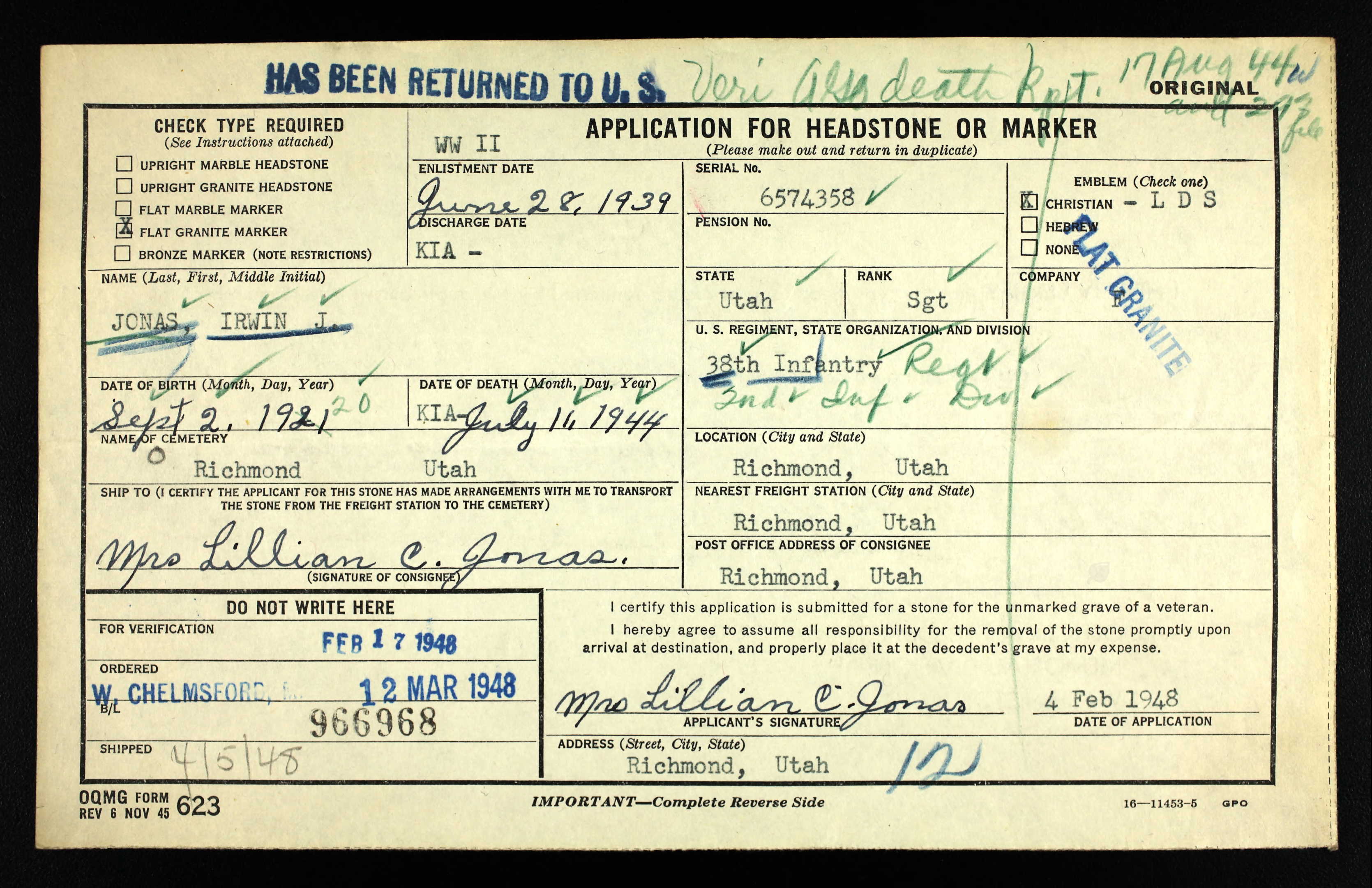
As you can see, this is the Application for his headstone giving his birth and death date.  He is buried in Richmond, Cache, Utah.

While the death is tragic enough, the family still has to deal with the paperwork and other related issues with someone’s death.  We often forget about those incidental issues.  Here is a copy of the document just to resolve the headstone issue.  I assume the military had a quarry and set of stone masons just to take care of all these headstones, and then the shipping clerks to have them sent all over the nation.

Let’s not just forget the sacrifice of those who died for our freedom, but also the family who sacrificed with the aftermath of such a sacrifice as well.

U.S.HeadstoneApplicationsforMilitaryVeterans1925-1963ForIrwinJJonas

Sadly, the tombstone provided in this application has been seriously damaged by Richmond City.  For which they have ignored my phone calls and requests for communication.  Even more tragic, this was not the only marker I can see damaged by careless caretakers.

2014

Theophilus and Martha France

In an odd twist of fate, I thought I might share my latest story in search of the family of Theophilus and Martha France.  I stumbled on this photograph when scanning the photos of my Great Great Grandmother.  She married Herbert Coley, whose sister, Martha Ann, is shown above.  This photo was in the collection, likely from Martha France herself, to my Great Great Grandfather Herbert.  The photo just had the two names written on the back of the photo.

Since, I have tried to track down the family with little or no success.  I will give some of the limited history I know at this point and then close with my latest little find.

Theophilus was born 26 December 1863 in Dudley, Staffordshire, England.  He married Martha Ann Coley 4 November 1891 in Logan, Cache, Utah in the Logan LDS Temple.  Martha was born 18 August 1860 in Lutley, Worcestershire, England to Stephen and Hannah Maria Rogers Coley.

Theophilus was a musician that took the family to various places chasing performing and music instructions.  Mostly in Cache Valley, but also taking in a jaunt to Salina, Sevier, Utah.

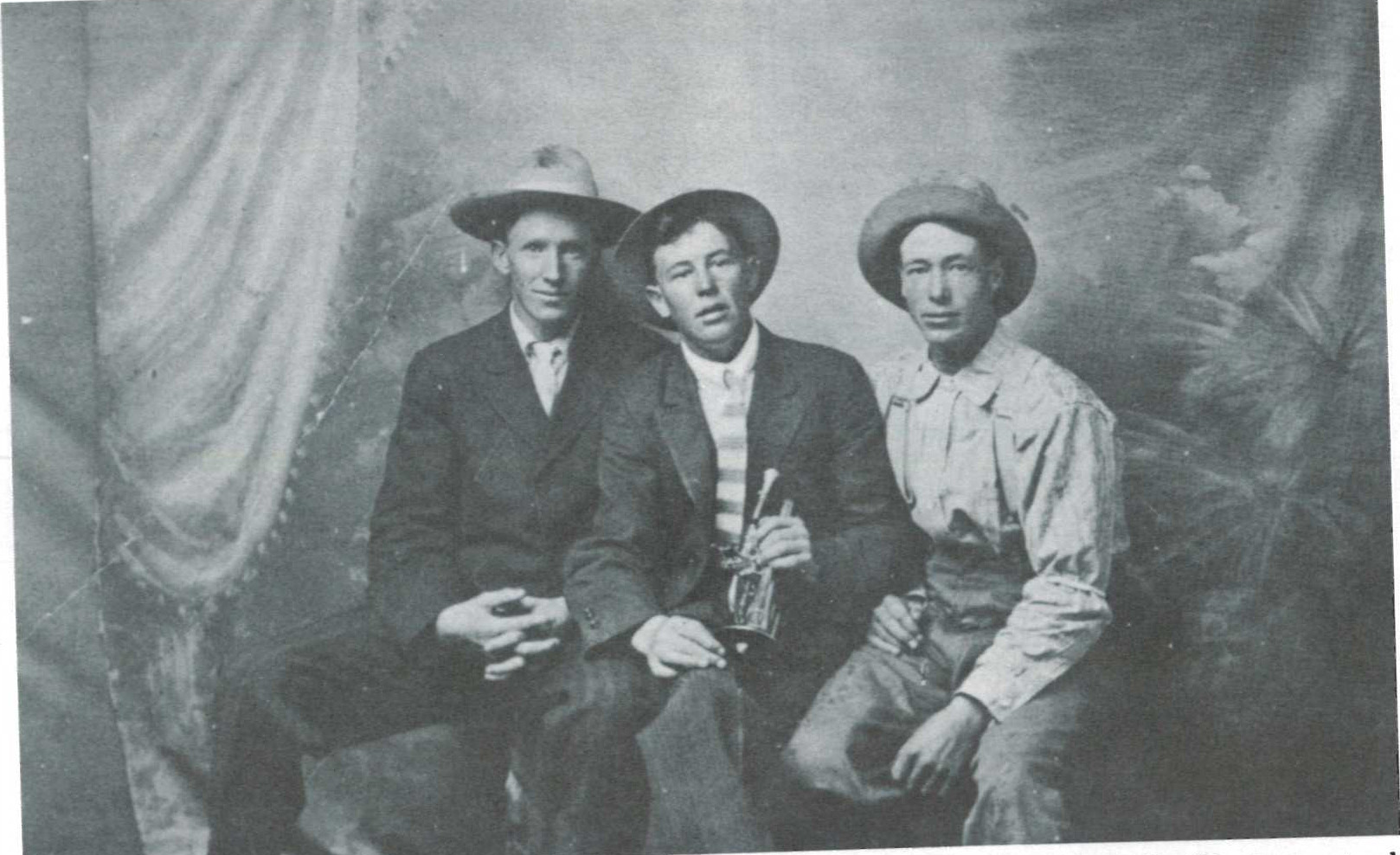
Theophilus France, in the middle, nicknamed Foghorn

Theophilus France, in the middle, nicknamed Foghorn

Born to the family were 5 children.

Ada France born 1 April 1893 in Franklin, Franklin, Idaho and died 14 February 1957 in Caldwell, Canyon, Idaho.  She married Henry James Flippence.

Marguerite France born 19 October 1894 in Franklin and died 20 Mar 1936 in Logan.  She married George Bright.

Franklin Bank, circa 1895

Franklin Band, circa 1895, Theophilus France is sitting second from the right, supposedly as the leader

Wilford France born 25 Mar 1897 in Lewiston, Cache, Utah and died 28 August 1986 in Los Angeles County, California.  He married Elsie Arvilla Brown.

John France born 22 May 1899 in Lewiston and died 18 June 1953 in Salt Lake City, Salt Lake, Utah.  He married Meryln Burton.

Beatrice France born 16 October 1901 in Lewiston and died 14 October 1997 in Salt Lake City.  She married Robert Wallace Ekenstam.

From the census records, it appears Martha may have had a son (maybe a brother) named Frank.  He appears and then disappears.  He may be a cousin who came over from England with Martha and then died, married, or just moved away.  I cannot trace him down again, so this is one question I have always wanted to answer.  But finding a member of this family has not proved easy.

I knew Theophilus and Martha are buried in the Lewiston Cemetery.  Her brother, George, and their parents, Stephen and Hannah, my Great Great Great Grandparents are also buried there.  Theophilus died 30 October 1923 in Lewiston.  Martha died 18 July 1949 in Parma, Canyon, Idaho.

George Bright and Marguerite Coley had at least 8 children, but only one of them lived to marry.  I knew her name was Gennevieve Bright and that she had married a man by the name of Elvon Monson Jensen 22 April 1947.  He died in 1990 and trying to track down a lady Monson in Utah or Idaho, especially where she could have remarried, seemed an impossible task.  I left it there and tried some of the other lines.

In 2011, I was in my office and visiting with the wife of the other attorney from who I rent office space.  I knew Kent was from Preston and in a lull of the conversation asked the name of Kent’s parents.  She mentioned Elvon and Gennevieve.  I could not tell where, but I knew that Elvon Jensen was in my family history.  That night I looked him up and sure enough, there he was.  I rent office space in Burley, Idaho from my 3rd cousin, once removed!  Kent’s children are my 4th cousins.

It was with some sweet satisfaction that I was able to provide a copy of the photograph of Theophilus and Martha above to him.  He had not seen a picture of them before.  I asked that he put me in contact with the member of his family who does the family history on the France/Coley line.  Maybe I can help bridge some of the divide and flesh out more fully the Coley line in Utah and Idaho.

The picture above of Theophilus and Martha was scanned in 2006.  Who knew that I would be providing a photo of ancestors to a line who did not have a photograph.  Maybe there will be more such stories in the future with all the photos I have and continue to make available.  We can only hope.  Here is a photo of Martha later in life, I don’t know how old she was at the time.

Martha Coley

Martha Coley