Coley – Christiansen Wedding

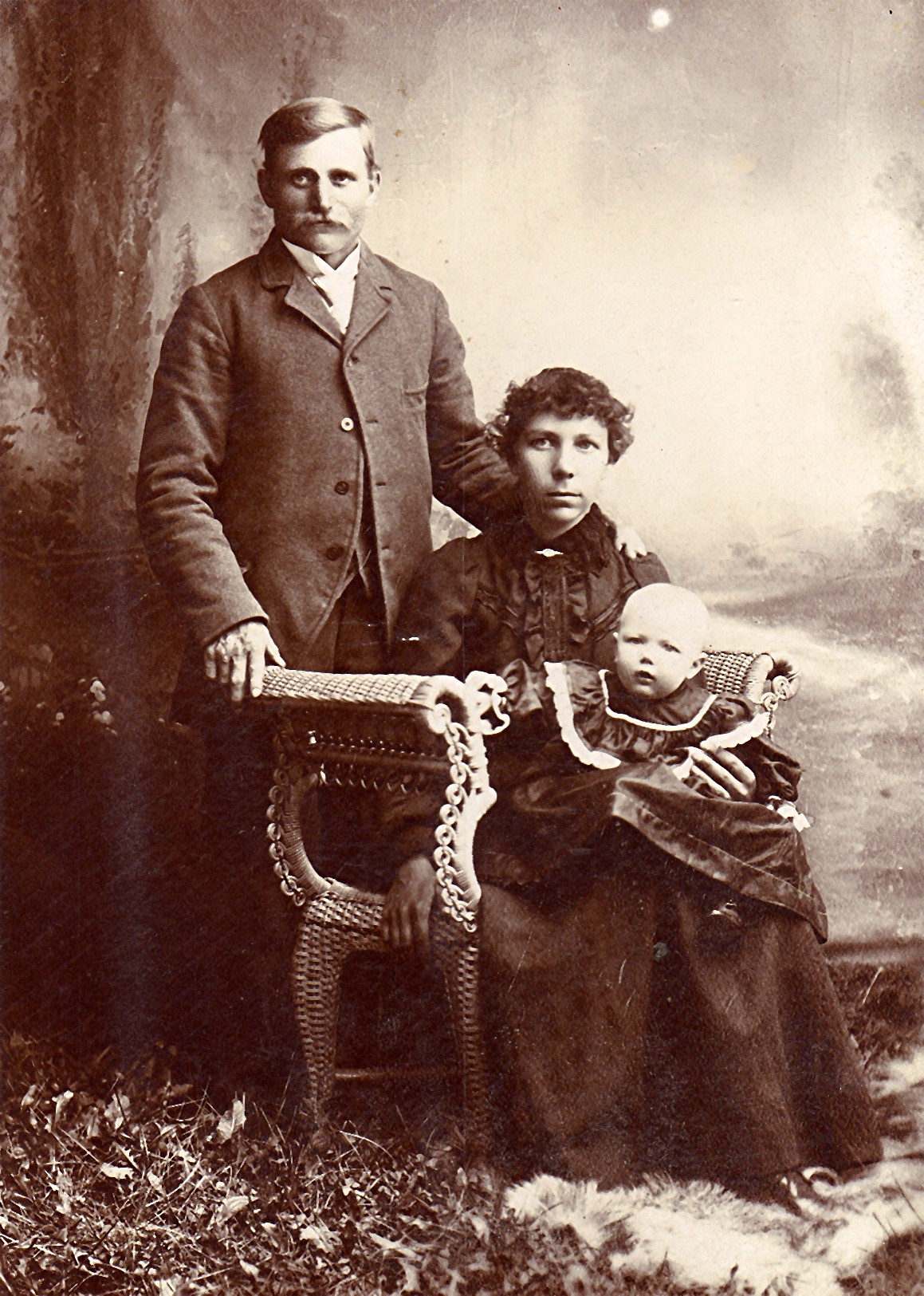
Herbert and Martha Coley holding Lillian in 1899

Ole and Constance Christiansen are pleased to announce the marriage of their daughter Martha to Herbert Coley, son of Stephen and Hannah Coley. They were married in 1874 in Norway. While I normally like to start these historical posts as a wedding announcement, I trip up there. We do not have any histories that give us an actual marriage date and location. Knowing the period, it is not imagined they were not actually married. Their first child was born in 1875. Curiously, after their immigration to the United States due to their conversion to The Church of Jesus Christ of Latter-day Saints, they not only went to the Logan Utah Temple to be sealed, but also applied to be married. As such, they were married and sealed in the Logan Utah Temple on 26 April 1893.

Martha was born the second of eleven children to Constance Josephine Eliza Jorgensen and Ole Christiansen on 16 April 1879 in Fredrickstad, Ostfold, Norway. I have not written their history yet, but as linked above, I wrote some limited information on Constance when we visited her grave first in 2018 and again in 2020. Ole was born in Trogstad, Norway and Constance in Drammen, Norway. Both Ole and Constance were baptized and confirmed into The Church of Jesus Christ of Latter-day Saints on 26 January 1876 in Norway.

What happens for the next few years is unclear on the reasons. Martha’s older sister, Walborg, was born 24 December 1875 in Fredrickstad, then Martha in 1879. We really have no records during this period and so I am unclear if there was another child, or two, in that period of time. Eivelda was born 20 October 1881 in Melbourne, Victoria, Australia. I have no clue why or what took the family to Australia. Their next child, Constance, was born 9 November 1883 also in Collingwood, then a suburb of Melbourne. Apparently Walborg and Martha were left in Norway while their parents went to Australia. Alice, Martha’s granddaughter recalls Martha telling of her sitting on the mountainside overlooking the fjord waiting for her parents to return and her missing them terribly. Martha’s first brother, Henry Owen, was then born 27 March 1887 back in Fredrickstag, Norway. Ole and Constance were back in Fredrickstag by March 1887.

I have been unable to find the immigration records for the Christiansen family between Norway to Australia and back. But the family was in Australia for at least 3 years, maybe as long as 6 years. They were not back in Norway very long as Rhoda was born in Richmond, Cache, Utah on 18 September 1890. Martha moved with her family to Richmond in the late 1880s. One record has it in 1887, another 1889, Martha was listed in the 1900 Census as immigrated in 1888. Either way, we now are in the vicinity of where she would have met Herbert Coley. Of Martha’s remaining 6 siblings, 5 were born in Richmond and 1 in Hyde Park.

Herbert was born the 5th of 9 known children to Hannah Maria Rogers and Stephen Coley on 12 February 1864 in Lutley, Worcestershire, England. It was while living in Lutley that the LDS missionaries first made a visit. We do not know the conversion story but Herbert and his siblings joined the church. Martha joined 23 August 1867, Herbert 1 June 1881, George 22 August 1881, and Frank 2 June 1882. The 1871 English Census has the family still living in Lutley and Herbert listed as a scholar. The call to gather in Utah was strong enough that these four children made the venture. We don’t know if Stephen and Hannah came begrudgingly or not, but they joined some of their children in Utah. Unfortunately, the other children left in England we do not know where they went or what happened to them.

Herbert shows on the 1881 English Census in Dudley, Worcestershire, England as farm labor for the Doorbar family. Herbert appears to have boarded the Nevada in Liverpool arriving 3 July 1882 in New York City, New York. I cannot see that any siblings went with him on the trip. Stephen, Hannah, and Martha all traveled in 1890 (with Letitia Lea Willetts and her daughter Clara, and two known Frank and Mary Coleys). Stephen Coley was baptized 5 January 1892 and Hanna 26 October 1892 (same day she was endowed in the temple, so either that date is wrong or the prior record could not be found and the ordinance was duplicated. Hannah died 22 October 1894 in Franklin, then Oneida County, Idaho and was buried in Lewiston.

I don’t know any of the details of how they met, but the stars seem to have aligned in Richmond. However it happened, Herbert and Martha were married and sealed 1 December 1896 in Logan at the Temple. Herbert was a diligent laborer who would acquire full ownership in their home by 1910. Martha was a strict and involved homemaker and mother.

Herbert and Martha maintained their home, large garden, and raised 10 children. Lillian was born 26 August 1898 in Lewiston (listed in the Coveville Precinct, which is now the area of Cove). The 1900 Census on 9 June 1900 lists Herbert as a farm laborer with his immigration in 1881 and Martha’s in 1888. By 1910, the Census finds the family in Wheeler (about six miles west of Lewiston) where the home was owned outright. We don’t know exactly where the family lived. Edna was born 23 November 1900, Wilford Herbert 1 Mar 1903, Carrie 20 April 1906, and Hannah Marie 3 June 1909. Ole Christiansen passed away 27 February 1900 in Richmond and was buried there. Carrie is listed as born in Richmond, but we do not know the circumstances how she was born there instead of Wheeler/Lewiston. Hannah’s birth certificate lists Herbert as a farmer and Martha as housewife. The 1910 Census on 26 May 1910 shows Herbert as a Laborer and that he “Works Out.” Whatever that meant in 1910.

All the remaining children were born in Richmond. As such, it is likely at this time the family moved to the cabin south and east of Richmond estimated about 2016 E and 9000 N. I have tried to pinpoint where the cabin remains are still located. Here is a photo of the cabin from the 1980s. The 1920 Census on 16 January 1920 lists Herbert as a Farmer and Teamster with the additional insight of “Hauls Milk & Farms.” This same Census also lists Wilford as having his own Farm, but still living with his parents.

Coley Cabin near Richmond, Utah

It was in this house that the remaining children were born. Ivan Stephan on 26 June 1912, Roland Charles on 20 July 1915, Oley Lloyd on 11 February 1918, Arthur Christiansen on 15 July 1921, and William Golden on 22 January 1924. In 2012 the home had collapsed to a pile of rubble. It was after Ellis Jonas’ funeral we visited as family (Ellis is Lillian’s son). Ellis had taken me there about 2002. Stephen Coley died 22 October 1913 in Lewiston and was buried by his wife.

The 1930 Census taker showed up 15 April 1930 and shows the family in Richmond with Roland, Lloyd, Art, and Golden still in the home. The 1940 Census on 8 April 1940 has the family still in Richmond with Art and Golden the only two remaining.

Herbert and Martha Coley in the garden

Over the years, the family kept busy with marriages. Lillian married Joseph Nelson Jonas on 6 September 1917 in the Logan Temple. Edna married Gerald Andrus 17 April 1921 in Richmond and after a short marriage, divorced, and remarried to Olof Alma Neilson 23 July 1923 in Logan, sealed 30 July 1924 at the Logan Temple. Wilford married Edith Dagmar Cammack 15 May 1924 in Logan, sealed 3 June 1946 in Logan Temple. Carrie married Joseph Lorus McMurdie 21 July 1924 in Logan, sealed 21 October 1926 in Logan Temple. Hannah married William Surgeoner Thomson 2 July 1927 in Logan, sealed 14 June 1972 in Salt Lake Temple. Ivan married Clara McMurdie 22 October 1930 in Buhl, Twin Falls, Idaho, sealed 10 February 1932 in Logan Temple. Joseph Jonas passed away 6 September 1932 in Ogden, Weber, Utah. Constance Christiansen passed away 10 December 1932 in Portland, Multnomah, Oregon and was buried there. Roland married Veda Anderson 5 May 1937 in Logan Temple. Lloyd married Verda Anderson (twin sister to Veda) 23 November 1938 in Logan Temple. Arthur married Gladys Bernice McMurdie (his niece!) 10 September 1940 in Preston, Franklin, Idaho, that marriage lasted a short time for hopefully obvious reasons. Arthur remarried to Mary Elizabeth Popwitz (his nephew’s WWII widow) 3 May 1946 in Evanston, Uinta, Wyoming. Golden married Shirley Mae Hall 15 March 1946 in Elko, Elko, Nevada, sealed 11 May 1965 in Logan. Many grandchildren were born in these years as well for Herbert and Martha.

Herbert and Martha Coley (I have the original of Martha, but not of Herbert, so I know it is still out there)

Recorded family stories are fairly scant. Nobody wrote much down and that generation was gone before many were asking questions. Ivan Coley told his daughter Colleen that Herbert was a short, very English man. Apparently Herbert met Wild Bill Hickok at one point and shared that fact regularly.

In 1942, Herbert went to visit Ivan and Clara in Buhl. I will have to find out if Martha was there as well. While out in the yard, I have been told by a well, or a trough, he slipped and broke his hip. There was not really much to do for someone in that condition then. He was in terrible pain. He was taken back to Richmond and passed away later of pneumonia. He died 7 September 1942 at age 78 (obituaries all have 75) and was buried in Richmond Cemetery 9 September 1942.
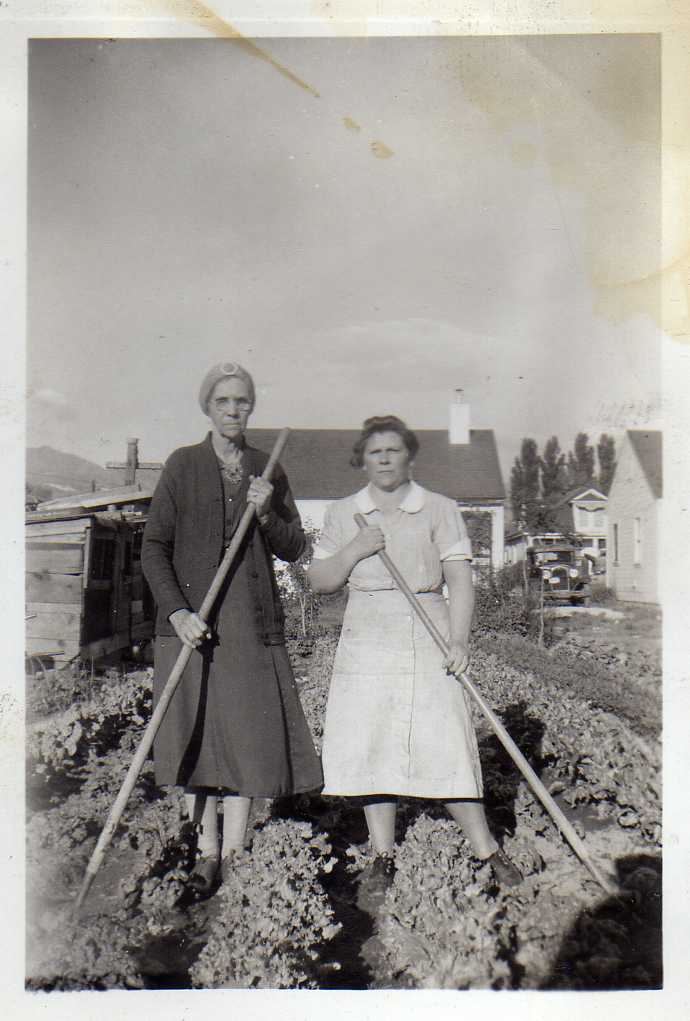
Martha Coley and Hannah Thomson in a garden, dresses and even a brooch

Martha moved into town shortly afterward. Various family members lived in the cabin when they started out their marriages. Martha’s new home was somewhere near 400 South and 200 East. With the new homes I cannot tell as well, but I have tried to pinpoint the spot. She lived in this home until she needed assistance and went to live with Lloyd and Veda in Salt Lake City. When they could not care for her any more, she then lived in a care facility in Logan the last months of her life.

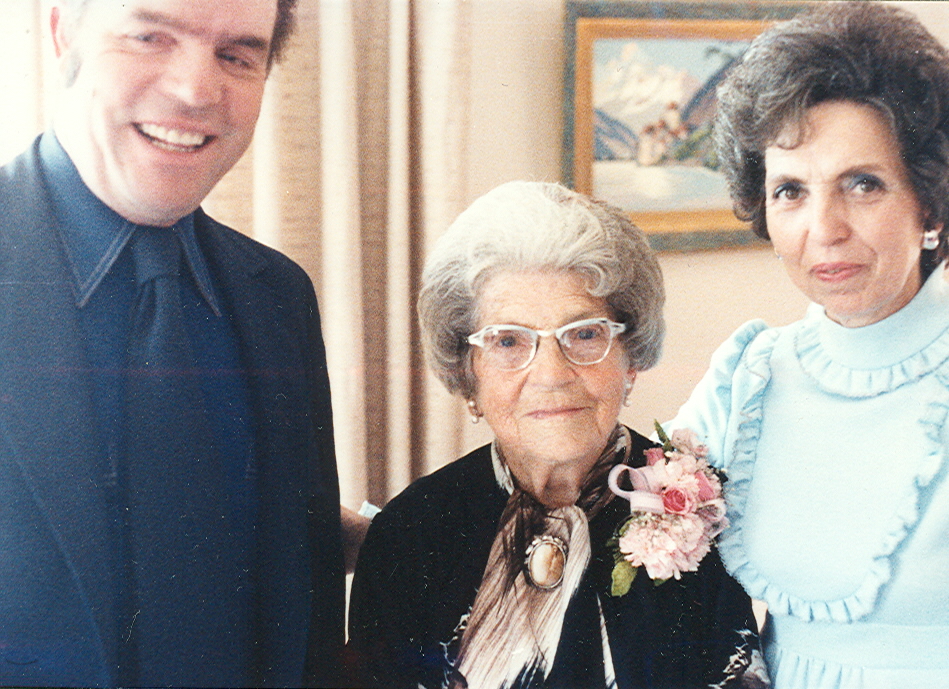
5 generations about 1959, Lillian Coley Bowcutt, Martha Christiansen Coley, Joseph Hebert Jonas, Robert Lee Jonas, Joseph Leland Jonas.

In 1948, Martha was honored for successfully Relief Society Teaching for more than 40 years. Here is a photo from that occasion. You can find more detail here.
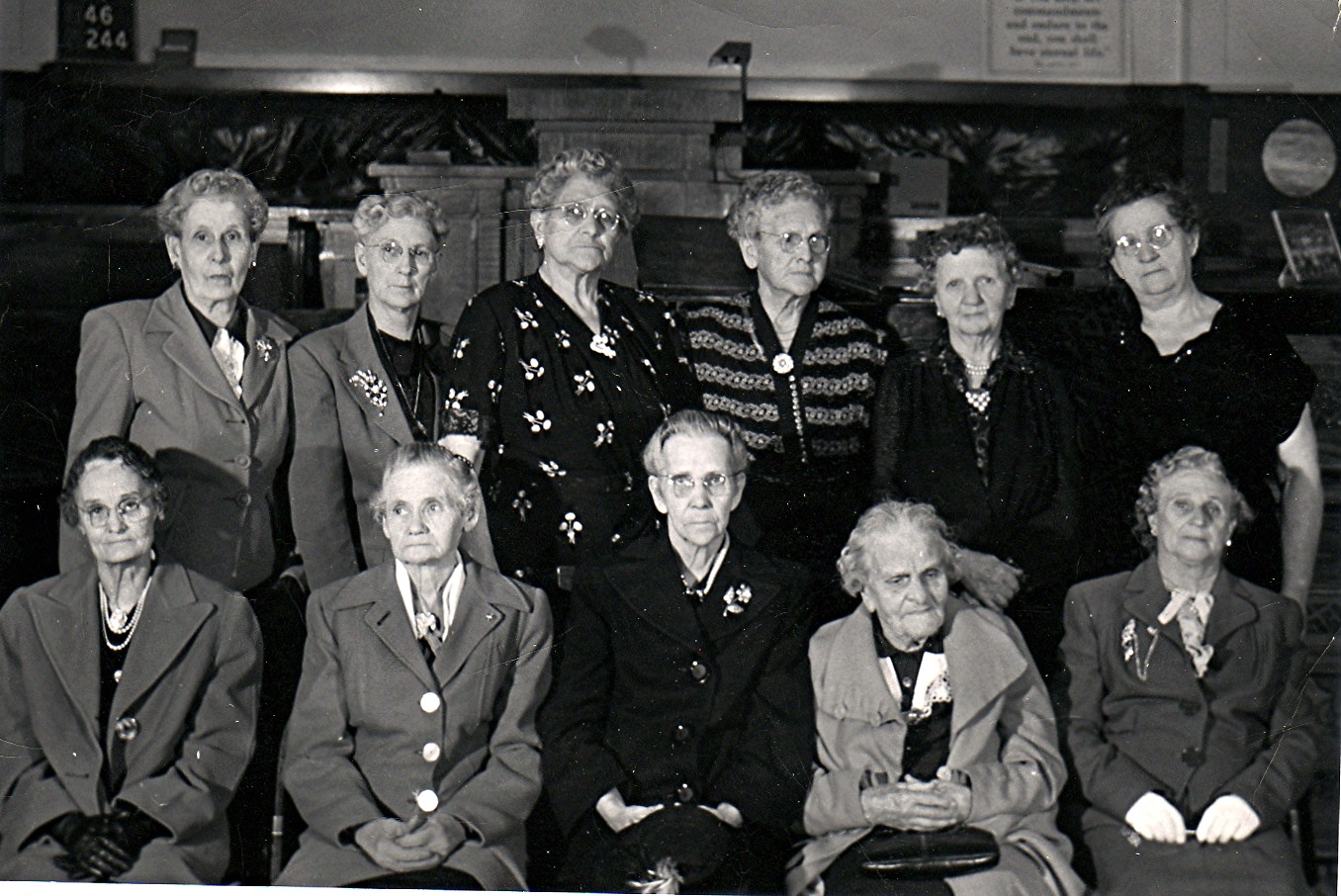
Back (l-r): Lydia Leavitt, Estella Blair, Sarah Preece, Susanna Allen, Livinia Wilcox, Clara Wheeler. Front: Lavina Poulsen, Christensia Hansen, Martha Coley, Martha Lewis, Sarah Snelgrove.

Unfortunately I do not have a many more stories. But I do have a few more photos. We have these two photos of a gathering about 1950.

Back(l-r): Doreen Neilson, Martha Coley, Golden Coley, Edna Neilson, Unknown, Gloria Neilson holding unknown child, Olof Neilson. Middle: Shirley Coley, Joy Coley (baby), Mary Coley,
Mary (holding Joy), Shirley, Doreen, Unknown, Martha, Edna, Gloria

This wonderful family reunion picture from 1955. I have linked the other post sharing the other photo. That link also names everyone in the photo. Martha is sitting surrounded by her grandchildren and children.

1955 Coley Reunion, Richmond, Utah

Herbert’s obituary in the Salt Lake Telegram on 8 September 1942 reads:

“Richmond, Cache County – Funeral Services for Herbert Coley, 75, who died at his home in Richmond Monday at 7:45 a.m. following a brief illness will be conducted Wednesday at 1:30 p.m. in the Richmond South L.D.S. ward chapel by E. M. Hicken, Bishop.

“Mr. Coley was born in England on February 12, 1867, a son of Stephen and Hannah Rogers Coley. In 1885, at the age of 16, he immigrated to the United States.

“On December 1, 1896, he married Martha Christiansen in the Logan L.D.S. temple. He was a prominent farmer in the Richmond district.

“Surviving are his widow of Richmond, 10 sons and daughters, Mrs. Lillian Jonas, Ms. Edna Nielsen and William Golden Coley of Richmond, Wilford Herbert Coley of Logan, Ms. Hannah Thomson and Lloyd Coley of Salt Lake City, Ms. Carrie McMurdie, Ivan, Roland and Arthur Coley, all of Buhl, Idaho, 37 grandchildren, three great grandchildren, and a sister, Mrs. Martha France of Richmond.

Lillian, Edna, Martha (sitting) Coley in the 1940’s

“Friends Pay Tribute to Richmond Man

“Funeral Services for Herbert Coley, 75, prominent Richmond farmer who died at his home in Richmond, Monday at 7:45 a.m. following a brief illness, were conducted Wednesday at 1:30 p.m. in the Richmond South ward chapel by Bishop E. M. Hicken.

The rest of the article follows nearly verbatim what the Salt Lake obituary listed, then this line.

“Burial was in the Richmond cemetery under direction of the W. Loyal Hall mortuary.

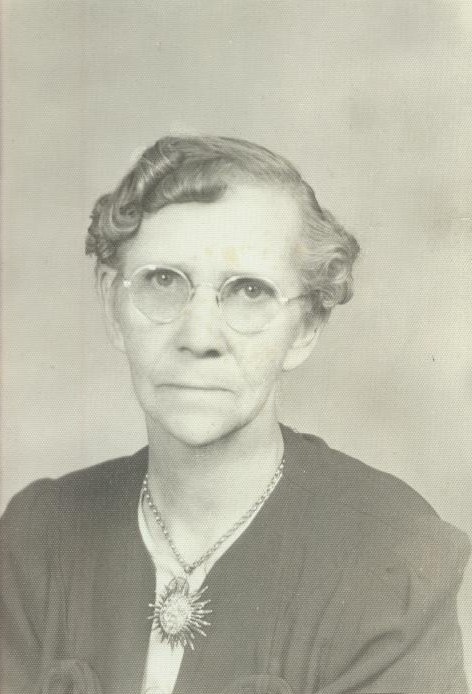
Martha Christiansen Coley very small picture enlarged
Martha Coley and Scotty
Martha Coley serious
Martha Coley smile

Martha passed away in Logan at age 82 on 14 August 1961. Here is the language from her obituary and an article of the funeral. She was buried in Richmond 17 August 1961.

“Richmond – Martha Christensen Coley, 82, died at a rest home in Logan Monday of causes incident to age.
“She was born April 16, 1879 in Norway to Ole and Constance Josephine Eliza Jorgensen Christensen. When she was eight years old she came with her parents to America.
“On December 1, 1896 in Logan she married Herbert Coley. The marriage was solemnized in the Logan LDS Temple in 1900. They made their home in Lewiston and Richmond. She was always active in the LDS church, especially as a Relief Society block teacher. Mr. Coley died September 7, 1942.
“Surviving are Mrs. Lorenzo (Lillian) Bowcutt and Mrs. Edna Neilsen, Richmond; Wilford H. Coley, Logan; Mrs. William (Hannah) Thompson and Lloyd O. Coley, Salt Lake City; Mrs. Lars (Carrie) McMurdie and Ivan S. Coley, Buhl, Idaho; Roland Coley, Mesa, Arizona; Arthur C. Coley, Ogden; William G. Coley, Hyrum; a number of grandchildren and great grandchildren.
“Funeral services will be held Thursday at 1 p.m. in the Richmond South Ward with Bishop Oral Ballam in charge.
“Friends may call at Hall Mortuary in Logan Wednesday from 7 to 9 p.m. and at the South Ward chapel Thursday from 11:30 a.m. until time of services. Burial will be in the Richmond Cemetery.

“Funeral services were held in the Richmond South Ward chapel Thursday for Mrs. Martha C. Coley with Counselor Quentin Peart conducting. Lloyd Coley gave the family prayer.
“Prelude and postlude music was played by Reese Murray. The ward chorus directed by Mrs. Florence Lewis with Mrs. Billie Lou Bagley as accompanist sang “The Lord’s Prayer.” Ila Rae Richman and company sang “That Wonderful Mother of Mine.” Mrs. Florence Lewis and Mrs. Rebecca Lewis sang “In the Garden,” and Ronnie Lewis sang “Beyond the Sunset.”
“Prayers were by William Thomson and Larus McMurdie. Speakers were Mrs. Leona McCarrey who read the obituary, Noel Stoddard and Counselor Peart.
Pallbearers were her six sons, Wilford, Ivan, Roland, Lloyd, Arthur and Golden Coley. The grave in Richmond Cemetery was dedicated by Joseph Jonas. Flowers were cared for by the Relief Society.

~

I have written previously about the video that came from the funeral and graveside service of Martha. In that post I walk through the video and the identified individuals. It also scans the 10 children standing in the cemetery. This photo below is of the same instant.
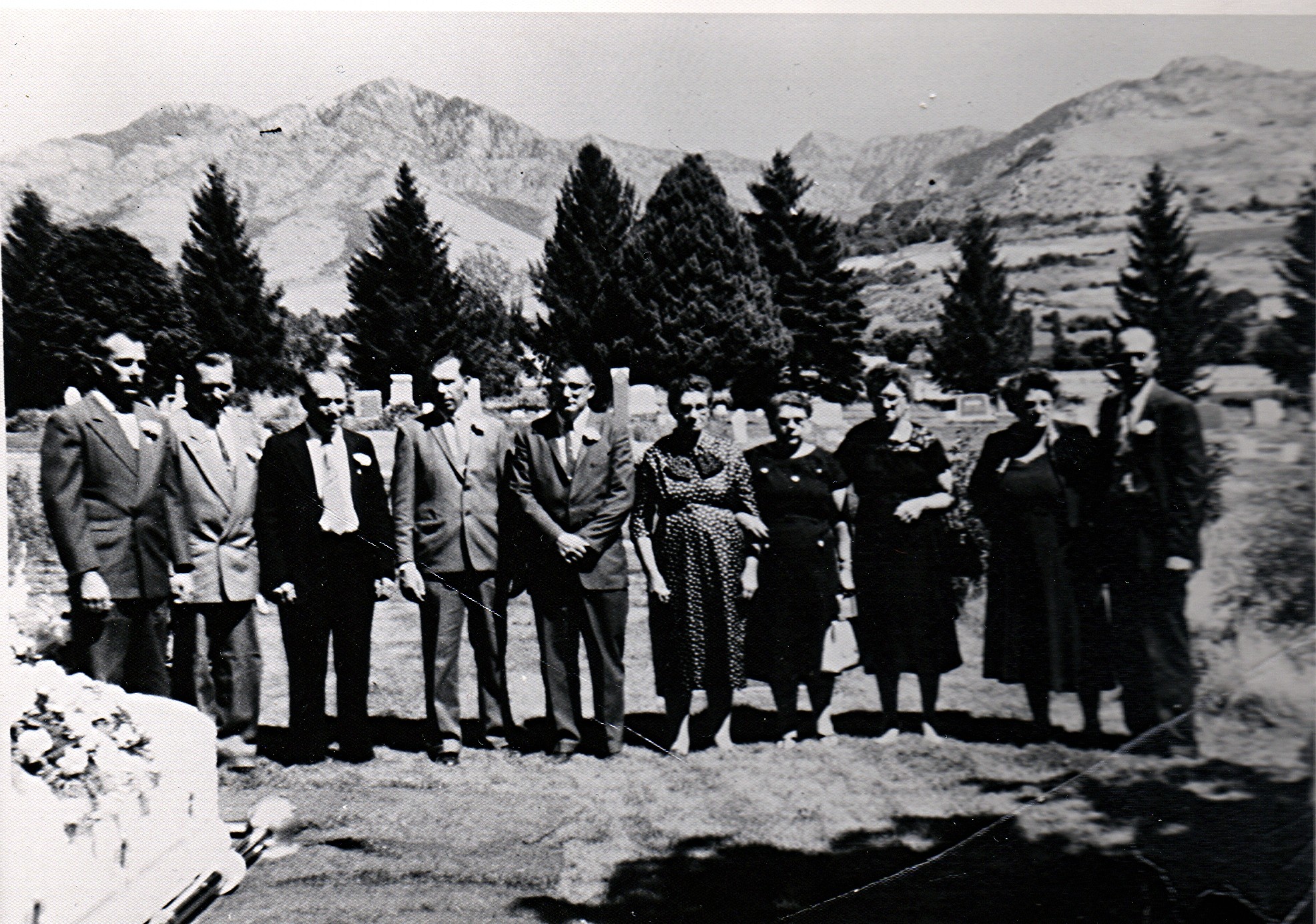
Art, Golden, Wilfred, Roland, Lloyd, Edna, Hannah, Carrie, Lillian, Ivan at their mother’s grave in Richmond, Utah

I hope some day I obtain more photos to share of Herbert and Martha.
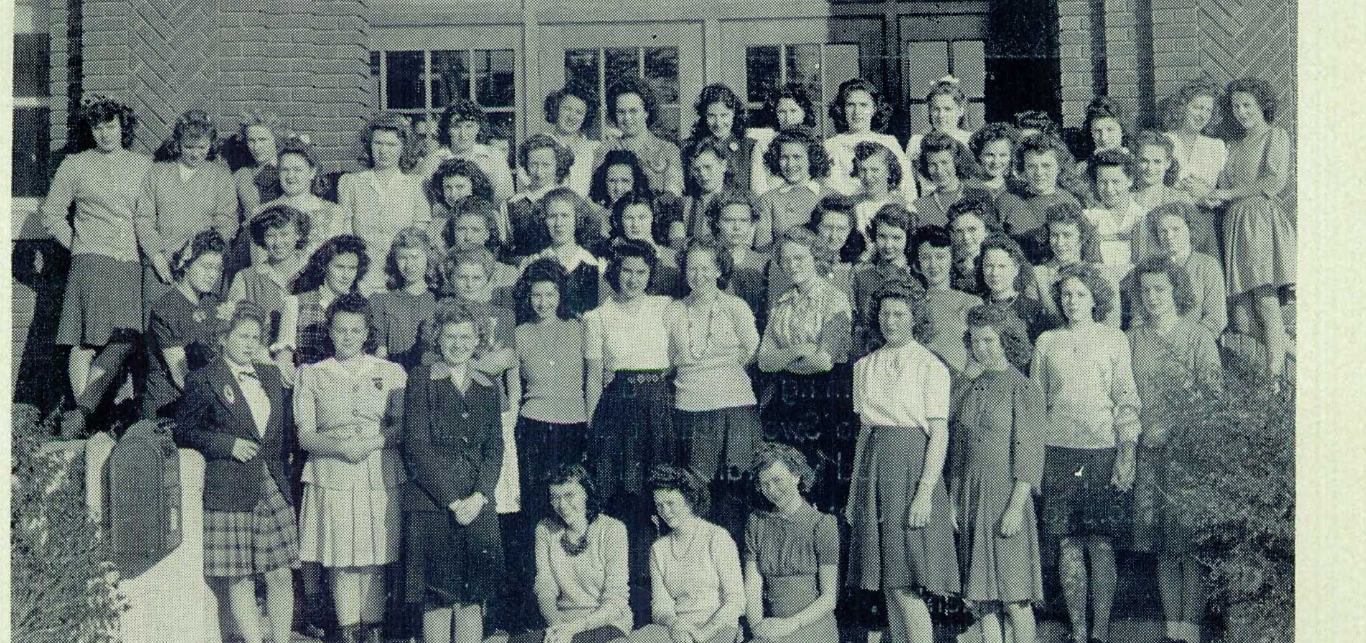
Preston High School Kanoma Club – 1945

Preston High School Kanoma Club – 1945

Another found picture that includes my Grandmother, Colleen Mary Andra, in the 1945 Preston High School yearbook. I recently posted the photo regarding the Preston Girls Athletic Association. This photo includes the following writing on the page:

“Kanomo Club

“During this school hear the Kanoma Club has been successfully directed by the following officers:

“President … LuDean Maughan

“Vice President … Patricia Wood

“Secretary … Mary Jane Handy

“Social Manager … Gladys Rawlings

“Faculty Advisor … Viola Veibell

“Some of the activities this year have included the initiation and Christmas Party entertainment of the boys at a roller skating party, sponsoring an assembly for the girls where Ms. Star, Dean of Women from the A.C., spoke, helping the Red Cross in making bags and different articles. In addition, this club has cooperated in preparing and serving food at some of the other social functions. Each spring the girls in the club spend three days to a week at Girl’s Camp in Logan Canyon.

LuDean Maughan (1927 – alive, married Byron Glover)

Patricia Wood (1928 – 2005, married Norman Beckstead)

Mary Jane Handy (? – ?)

Gladys Rawlings (1923 – 2016, married Blaine Lemmon)

Viola Veibell (1921 – 1984, married Lorin Simper)

Colleen Andra (1928 – 1999) She is standing left front, next to the mail box, in the plaid skirt.

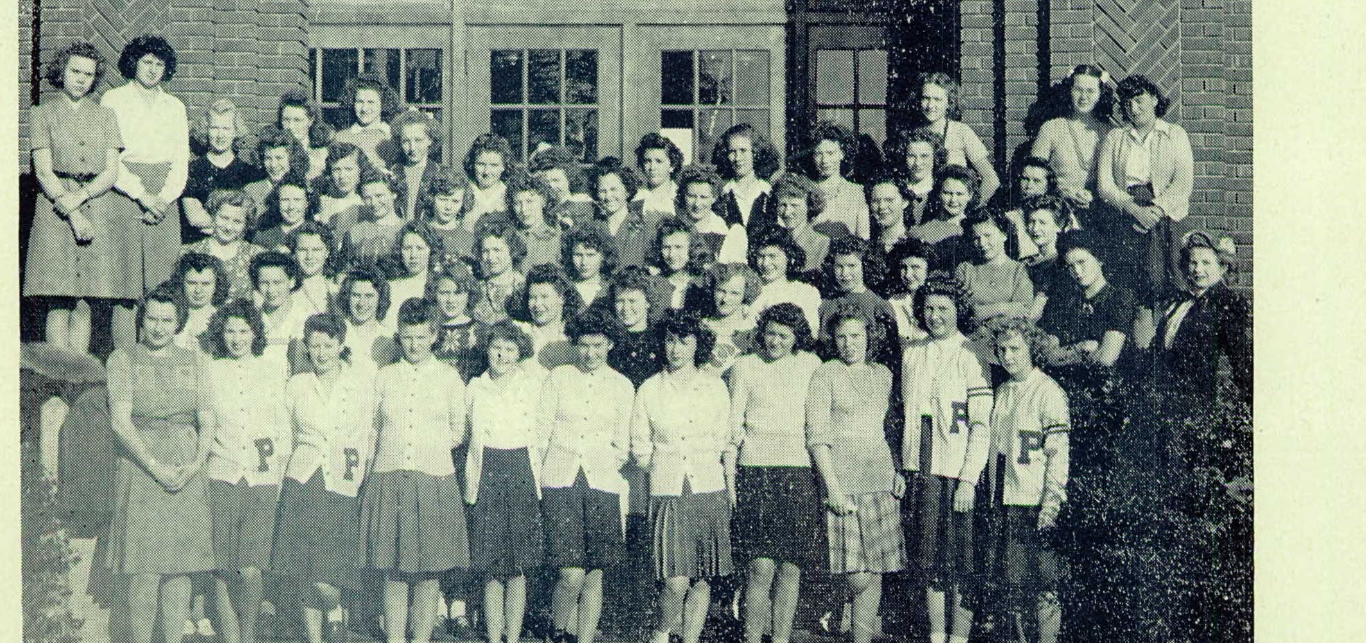
Preston High School Girls Athletic Association – 1945

Preston Girls Athletic Association from 1945 Yearbook

Looking through the Preston High School yearbook for 1945, I found my Grandmother, Colleen Mary Andra. The rest of the photos in the book are unnamed as to the individuals. As I looked through, I found this photo with her on the farthest right of the photo in the black.

Here is the writing on the same page related to the photo.

“The Girls’ Athletic Association is a club sponsoring a more active interest in athletics. During the past year the club has sponsored a softbal tournament and a game tournament. In the G.A.A. there are now more than eighty-seven paid up members, fourteen who have earned their letters. The faculty advisor is Mrs. June Larsen. The president is Carol Greaves.

I believe the June Larsen mentioned is June Call Larson (1919-1995). I cannot tell if she is in the picture.

Also mentioned is Carol Greaves, who I believe married Wayne Brown and still lives in Preston.

Colleen Mary Andra (1928 – 1999)

1946 Pontiac Torpedo

1946 Pontiac Torpedo

This photo was one of many in the Andra albums. I don’t know the significance of this car or who drove it. It has 2B Idaho plates on it, meaning its owners registered it in Bear Lake County. I don’t recall having any immediately family of the Andras living in Bear Lake County. I also cannot tell where the photo is taken, perhaps at the Andra home in Preston. I thought I would make this interesting photo available though.

Andras at table

Millie Andra, Wilma Wanner, Colleen Andra, Donald Andra, Dale Andra, and June Andra

I don’t know this occasion. I don’t know where it is either. All siblings and a first cousin, Mary Louise Wanner Andra and Willard John Wanner are siblings. Wilma appears to be wearing a Preston High sweater.

I wanted to share the photo. It gives a little insight into the Andra and Wanner families.

History of Wilhelmina Wanner Bodrero

Another history given to me from the collection of Golden Rulon Andra. “History of Wilhelmina Wanner Bodrero” with the subheading “Our Mother” by Laura Bodrero Nungesser.

LaMont Call, Wilhelmina Wanner Bodrero, Barbara Bodrero Call

“Our mother, Wilhelmina Wanner Bodrero, was born in the last summer of 1887 on September 12th in Atzenweiler Neckarkreis Wuerttemberg, Germany.

“Wilhelmina is a daughter of Johann George Wanner and Anna Maria Schmid. Mother was the tenth child of the ten children born to the family of five boys and five girls.

Wanner Family about 1895, Wilhelmina is the youngest.

“A small baby, mother was told that during her first year of life she was continually sick. A neighbor lady also had a little girl about the same age as mother. Her baby was always healthy. Each day the neighbor lady would come to see how mother was doing and each visit she would tell mother Wanner that her baby would never live. But sadly, the neighbor’s child died when she was about a year old, while at this time mother is still well and healthy at the young age of ninety-five.

“It is difficult for mother to remember her life in Germany because she was very young, but she remembers what her mother has told her. Mother’s father was a road supervisor and owned a little land. He also acquired a few chickens and some cattle in which the whole family had to tend to. Their life in Germany was very hard, and they were also poor.

“Mother was nearly four years of age when the missionaries came to their small home in Germany one day. it was not too long after being taught by the missionaries that the family, grasping the truthfulness of the gospel, became converted. Her brother, George, was the first to be baptized and soon after came to America with two missionaries. Nearly two years later the rest of the family was able to come to America. Mother was baptized in America August 1896.

“Mother remembers the journey to America. The first experience was riding for some time on an open train, then boarding a small boat. This small boat transported their family and whatever few possessions they held with them to a large ship, accommodating a very large deck. During the long watery voyage, mother and a young brother, Gottlob, would play on the huge deck and one day they found big, heavy barrels filled with juicy cherries. These were the first cherries she remembers eating.

“Mother was told that the journey on the ship lasted two weeks before the shores of New York finally brimmed the horizon. They stayed in New York City two days and nights before boarding a train for Chicago. When they arrived in Chicago, they lodged for a day and night, then journeyed by train westward until they reached the small f arming community of Franklin, Idaho. It was at this place, the final end of their migration, where mother’s brother George, along with horse and buggy, met them at the train stop. Accompanied by George’s employer, Fred Nuffer, they loaded into the wagon and drove off toward the Idaho community known as Glendale. Since George knew a lot of people such as the Nuffer family in Glendale, they too decided to establish their residency there.

“Within a short time they were able to purchase a little land with a small rock home. The rock home had one large room. Adjoining the house was a root cellar with a floor on top of it. This is where the children slept under the roof made of dirt. The large room in the rock home served as living quarters for the family and also as a bedroom for mother and father Wanner. Mother’s brother George worked in the rock quarry and as time went on, he helped his father add two more rooms to the rock house. This was a welcomed addition indeed!

“As the youngest child in the family, mother had a lot of time to play for the first two or three years in Glendale. Gradually, though, she had to start helping more around the house and farm. Father Wanner would cut and rack the hay and afterwards mother would follow the wagon and gather up the hay that the rack hadn’t caught.

“Mother attended school in a one room school house in Glendale. As with many schools in the early 1900’s, children of many ages met together and were taught by one teacher. Very little individual help was given. Every day mother would walk to and from school. At times in the winter, her father would take her to school by horse and buggy. Mother and her family also attended school in Glendale.

“For a couple of years, mother helped her father trap squirrels. In the mornings, her father would set ten to twelve traps in the brush bordering the fields. The government, upon seeing the ears for proof, would pay so much per pelt. One year they made $14.00.

“Life was hard on the farm. They had no refridgerator so a small addition to the rock home was built for the purpose of keeping things as cool as possible. Water was packed from the spring nearby in every season. The milk was also carried into the house and poured into large pans. While other chores were attended to the milk would set and later the cream skimmed off and churned into butter. The butter and the eggs gathered from the hens, were taken tot he market store in Preston and exchanged for other food. Later, mother Wanner bought a separator to separate the milk and cream. The separator had to be turned by hand everytime the milking was done. It was mother’s job to help turn the separator and churn the cream into butter. Mother also picked red raspberries from their raspberry patch. These juicy, plump berries were also taken to market and sold for a dime a quart.

“When mother was eleven years old, her sister Christine gave birth to another baby. mother walked two miles every day to help care for Christine and the tiny newborn. She would bathe the baby as well as feed and tend the other children. Each day she recalls running fear past badger holes along side the road, for everyone she knew had said badgers were very mean. To her relief, the badgers remained in their deep, dark caves each time she quickly passed. For two weeks she cared for her sister Christine and her new baby. For this sweet service she was given a tiny china cup.

“Father Wanner bought a farm in Whitney, Idaho when mother was in her early teens. She rode a horse to Whitney from Glendale, a seven mile trip, to help in the sugar beets and to lead the horse on the hay derrick. Then she would return to Glendale to do her given chores. Once, while herding the cows, she was riding a bridled horse without a saddle. The horse jumped a big ditch and mother fell off, hitting the ground hard. She law there a long time before she could regain her strength. The horse, sensing her helplessness, did not move but stood by her side until she could manage to get up onto his back and ride him home. This terrible fall hurt her hip severely and has given her a lot of trouble and pain for many years.

“When mother was around seventeen her father sold the Glendale farm to her brother Fred and the Whitney farm to her older brother George. She and her family moved to Preston where her father had a new home built and waiting for them.

“While living in Preston, mother attended the Oneida Academy for one year and took a sewing class. Every Sunday, her family and other German families met in each other’s homes to hold their church meetings. During the week, mother did house work for several neighbors. She did her best and worked hard. Before too long, mother was asked by a certain man from Logan, who had helped plaster their new home in Preston, to come and care for his wife when their baby was born. She did; and also worked for Mrs. Beech, who had a grocery store on Center and 4th West (by the canal) in Logan. It was later known as the Canal Grocery.

“One day the circus was coming to Logan and father Wanner decided he would like to see it very much. So mother and her parents boarded the train and traveled to Logan to see the circus. It was during this holiday that she formally met Moses Bodrero, whom she had seen a couple of times, as her sister Louise was married to his brother Jeffery. Not until this time, however, had they been properly introduced. Moses went to the circus with mother and her family, and after this first meeting they began to date. Mother continued to live and work in Logan for two or three months until she was called home to Preston when mother Wanner became very ill and needed her. mother and Moses corresponded with each other. Moses even rode the Bamberger to Preston several times to see mother. Their courtship lasted almost a year, and then on a cold winter day, December 18, 1907, they were married for time and eternity in the Logan Temple.

“They established their home with father’s parents on 3rd North and 5th West in Logan. This home was very small. It did not have any electricity or indoor plumbing. It was hard work caring for father’s parents as well as her other household demands. A very special occasion was near that would also keep mother busier than ever. A year after their marriage, they were blessed with a newborn son. They named him Earl. Their next baby was a healthy girl and they decided to call her Mae. As years followed, they were again blessed with two more sons, Floyd and Kenneth. During this time, father and mother continued living in their father’s parents and taking care of them, but when Earl was a year old, Father’s dad passed away. This was a sorrowful event and mother Bodrero remained in the home with them for she needed special love and care.

“After living in the little old home for twelve years, father decided to tear the home down and build a larger one. Before the new home was finished, mother was expecting her fifth baby. Since the new home was not completed in time for her delivery, she gave birth to their little daughter int he shanty (a small shed). Father and mother named this new baby daughter, Hazel.

“This long-awaited new home was larger and modernized with electricity and indoor plumbing. Life was easier and better for mother and her growing family. Sometimes mother would have a neighbor, by the name of Millie Shaw, come and help her take care of the babies. Following her little girl, Hazel, two more daughters were born, Clara and Laura. And later still, another sweet daughter and son joined their family. They named this new baby girl Barbara and their son was blessed and given the name Ivan. This made a total of nine children they happily received into their loving care.

“In the year 1910, mother and father Wanner moved from their home in Preston, to a home in Logan. Mother was now able to see her parents more often and they, in turn, became better acquainted with their grandchildren. Sadly though, int he year 1922, during the cold month of February, father Wanner passed away.

“When our sister, Clara, was six years old, she came down with Diphtheria and was not expected to live. However, with the good, faithful love and care from mother and father, she overcame the disease. Meanwhile, the older children stayed with their grandmother Wanner so they could continue going to school.

“Mother and father were one of the first in Logan to purchase a table radio and it was enjoyed a lot by the family. Together they would sit at night listening to the programs and music.

“After working seventeen years at the sugar factory, father had acquired by this time some land. So he left the sugar factory and became dedicated to the farm with the help of mother and the children.

“Mother recalls having a couple of sleeping babies in the baby buggy and helping father in the farm when a loud whistle suddenly blew, announcing to everyone the end of World War I. It was a happy day for all!

“Mother worked very hard in those early years, helping on the farm, caring for the children, cooking meals and caring for the house and mother Bodrero. Mother Bodrero had lived with them for twelve years following the death of her husband but then decided to move in with father’s sister. She was cared for by father’s sister a few months and then quietly passed away.

“When the new home was built, chicken coops were also constructed and each spring mother and father would order hundreds of baby chicks. Often mother would be found late into the night and early morning caring for these little chicks. Mother also loved to work in the vegetable and flower garden. She would gain joy and satisfaction through bottling a lot of fruits and making jams and jellies. For many summers, she and father and the smaller children would pile into the Essex (the family car) and go to Honeyville or Deweyville to pick or purchase ripe melons and other fruits.

“Among the other activities mother loved doing were sewing strips of rags together and making throw rugs. She was constantly quilting in her spare moments. The quits were framed and set in the dining room ready for her eager handiwork throughout each day.

“Mother also had made many friends around the neighborhood and she would visit them often. One family in particular, by the name of Mr. and Ms. Fred Speth, had come from Germany and had settled in College Ward. Mother and father became close friends with them and would visit them frequently.

“Mother was a dedicated visiting teacher in the ward and she, father and the children would attend all meetings on Sunday. She and father also attended the temple periodically, doing the work for the dead.

“Mother remembers in those days there was not a variety of events to attend, but they did go to some silent movies and German socials. They would visit heir relatives as often as possible. Mother’s sister, Mary lived in Ogden, Louise resided in Logan, Fred in Glendale, George and Christine in Preston and her youngest brother, Gottlob, lived in Inkom, Idaho.

“These good years swiftly flew by and when Earl turned twenty-one, he was called on a mission to the mid-western states. He served three years in the mission field. Missionaries served two and a half years at the time he was called, but he was given the duties of District President, therefore he continued to serve an extra six months. When he was released, he wrote to mother and father asking them to arrange things so he could meet him in Denver, Colorado. From there they would take a little tour through the Black Hills of Dakota, and on through Yellowstone Park and then home. They were able to do this, taking their youngest child Ivan with them.

“Father was able to buy a piece of land two blocks north of their home on Fifth North and Fifth West. He began making plans to build a new home on part of this land. In the spring of 1942 this dream was accomplished and mother and father moved into their second new home. At the time of this move, most of the children were married and had moved into homes of their own.

“Mother had more time to do other things so she became interested in embroidery. She would spend many hours embroidering pillowcases, scarfs, and quit blocks and soon became very good at this hobby. The handiwork is beautiful, and much of the work has been given as gifts to her children and grandchildren.

“Inspite of the fact that mother was very sickly as a child, she has enjoyed a very healthy life. There was a time in her early sixties, however, that an operation was needed, and during this trying illness her life was nearly taken. Our comforting Lord was with her as well as the faith and prayers of her loved ones and her life was spared.

“A few years later, when most people mother and father’s age would be retiring, they instead decided to be adventurous and investigate the possibilities of buying some land in the state of Washington that the government was issuing. This territory is situated near a small rural community called George; also not far from the little town named Quincy.

“Taking along their son, Ivan, they took a trip to Washington and purchased enough land for a productive farm. During the next few years they would spend the summers in Washington and winters in Logan. This was a very happy time for mother and father. Suddenly though, during the winter of 1962, father became very ill and passed away on December 19, 1962, one day following their fifty-fifth anniversary.

Bodrero Family in 1957, Front (l-r): Moses, Wilhelmina, Clara; Back: Laura, Mae, Floyd, Kenneth Ivan, Earl, Hazel, Barbara

“Mother became very fond of the farm and land in Washington, and decided to continue the work there with the help of Ivan and Clara. A circumstance in the fall of 1967, however, took the life of Clara, another sorrowful event in mother’s life. To keep herself busy, she decided to stay on the farm in Washington and help Ivan around the home and care for a small garden. For the next few years she would occasionally visit her sons and daughters and their families in Utah. These visits were always a great pleasure for her and them as well.

“Fourteen years following the death of her dear mate and nine years after the passing away of Clara, she again bereaved the loss of her eldest son Earl, who was taken from this life on December 10, 1976. Because of her strong testimony in the Lord, Jesus Christ, and in the hereafter, she remained very faithful and upheld her strength during these difficult experiences, and therefore has continued with her life. Mother has had a very strong testimony of the Gospel and faith in the Lord, Jesus Christ, and in there hereafter all of her life.

“At this time, mother is fairly well. her interest in life never diminishing, she spends most of her time embroidering quilt blocks and has also joined a lapidary (rock collecting and polishing) club. The club has monthly meetings and annual festivals that she attends. She still gardens and cares for a thriving strawberry patch. These are a few of the activities she enjoys most.

“Mother still owns the home in Logan on 5th North and 5th West, but she spends more of her time in George, Washington. mother’s brothers and sisters have passed away many years ago, but she remembers them through her many nieces and nephews. Along with her 7 surviving children, she is a grandmother to 43 grandchildren, 110 great grandchildren, and 4 great great grandchildren.

“In loving tribute, Mother exemplifies in her pioneer spirit an indominable character who loves to be doing something all of the time. True to her faith, she honors the Lord and His commandments. Alert, busy, and enjoying the work she does; this is how we will always remember our Mother.

Mary Andra, Unknown Couple, Verna Wanner, Bill Andra, Willard Wanner, Norma and Kenneth Bodrero, Wilhelmina Bodrero

Jonas History: Joseph Nelson Jonas

This is another chapter of the Jonas history book compiled by Carvel Jonas. “The Joseph Jonas clan of Utah (including – early Jonas family history; early Nelson family history)” This one is on Joseph Nelson Jonas. I have written a biography of Joseph and Lillian previously.

Joseph and Margaret Jonas about 1899

“Joseph Nelson Jonas was born 19 March 1893 at or near Ellensburg, Kittitas, Washington State.  He was the 6th child and 3rd son of Joseph Jonas and Annetta Josephine Nelson.  He became the youngest of the family (a younger sister was born after Joseph, but she died a few hours after birth).  Joseph was about three years old when his mother left the family and went to the Washington State Hospital in 1896.  Joseph lived in the Ellensburg area with his father and siblings until he was 8 years old.  On 3 July 1901 the family moved to Crescent, Utah.  He was baptized a member of The Church of Jesus Christ of Latter-day Saints 10 Jan 1902 by Aug Nelson.  His two older brothers were also baptized that same day. 

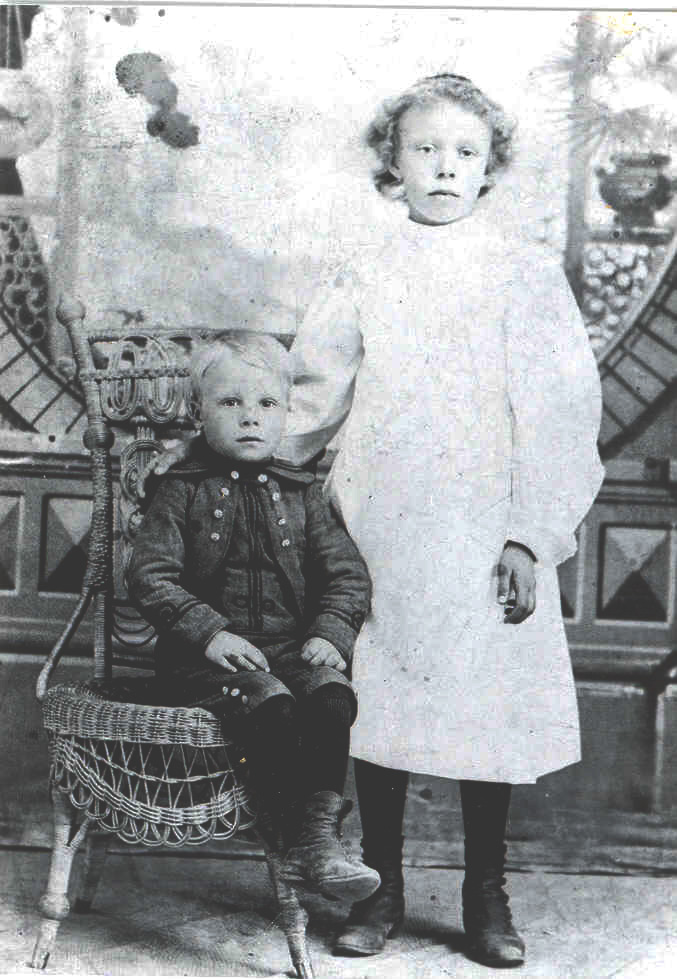
John, Joseph, and William Jonas

“He worked on his Uncle August Nelson’s farm until he moved to Richmond, Utah, to live with his older sister, Rosa, in 1908 when he was 15 years old.  He traveled the same day with his two older brothers.  When he was 23 years old he married Lillian Coley.  They were married 6 September 1916 in the Logan Temple.  That same day they were each endowed with the temple ordinances for the first time.  Joseph met his wife while he was living in Richmond.  His wife’s family had a farm in Richmond where Joseph had hired on as a far laborer to help the family harvest hay. 

“About 6 months after they met they were married.  His wife was 18 years old and Joseph was five years older than his wife, age 23.  They became the parents of eight children, the first six were boys and the last two were girls.  Joseph went to work for the sugar factory in Lewiston, Utah.  By about 1920 Joseph had moved to Thatcher, Idaho with his brother, William and his sister, Rosa.  They operated a dry farm which grew grain.  Joseph had a wooden red house which had a front room, bedroom and a kitchen.  His sister lived about a mile away in her own home and William lived in Thatcher teaching school.  At the farm Joseph and others operated a combine which was pulled by horses and had blades that were taller than the men.  The animals were kept in a barn which was about a block from the house.  They had five horses, a cow, pigs, chickens, domestic animals and a vegetable garden.  One horse was white and was named “dime.”  To mail letters and receive letters the boys would need to ride Dime.  This horse, while carrying his son, Joseph H., ran as fast as it could go all the way from getting the mail one day.  This experience scared the young boy who was about 5 or 6 years old, and he had to hold on for fear of his life.  About 1924 or 1925 Joseph moved from Thatcher to Lewiston, Utah.  Joseph drove the wagon which carried some of his sister’s children.  He began working for the Utah-Idaho Central Railroad.  This was an electric inter-urban trolley railroad that had 94 miles of track and went from Ogden, Utah north to Preston, Idaho.  Joseph began working on a section gang, the same type of job his father, Joseph, had had.  Joseph worked keeping the track in operating condition by repairing rotten timbers, hammering spikes or tightening the bolts which kept the track together.  He worked seven days a week, some of the work was all night, but he was able to come home after a shift was over.  While the family lived in Lewiston they lived in a train box car, which had the wheels removed.  There were two box cars which were used by the family.  They were close together and a ditch ran under their box car.  One car was used as a storage shed, the other one was used as the family home.  Once there was a tub of gas which was stored in the shed.  This gas caught on fire, which started the shed to burn.  Joseph went to his wife and told her to leave because the shed was on fire and it may cause the house to burn down (the two structures were close together).  She didn’t believe him, but there was little time to convince her so he picked her up and carried her outside.  The best way to stop the fire was to remove the burning tub of gas–Joseph must have thought.  So he went into the shed, picked up the burning tub of gas and took it outside.  Joseph’s brave act saved his home from burning, but they lost the shed and it’s contents.  Joseph spent about two weeks in the Ogden Hospital with 2nd and 3rd degree burns. 

Joseph and some friends at work after a game of shoes

“About 1927 Joseph was promoted to Section Foreman and moved to Ogden with his family.  His father, Joseph, had been a section foreman in a leadership position, too.  Joseph worked on the railroad line that went from Ogden to Huntsville, and also a line that went to Plain City.  Joseph worked at one time on the Quinney Railroad Line.  Except for the Thatcher home the family rented their homes until Joseph died.  They lived at 17th St. and Wall Ave. in an apartment complex owned by the railroad called a section house.  This was a long, wooden building that was divided into rooms.  Joseph’s family was the only one that had a porch, a special privilege given to Joseph because he was the foreman.  Joseph had a vegetable garden when he lived in Ogden.  He was a very generous host and his visitors were always given a lot to eat when they visited their home.  Joseph was active in the L.D.S. Church.  He was a strict father and was not afraid to “switch” his children when they got into trouble.  He stood about 5’6″ tall and was muscular.  His nephew, Merlin Andersen, said that Joseph told him “I want to show you what a good wrestler is!”  Next thing Merlin knew was that he was on the ground.  Joseph was on the wrestling team at Brigham Young College (Logan), the school he graduated from.  Joseph and his brother, William, went to college some of the same time together. 

Joseph Nelson Jonas’ Brigham Young College yearbook picture

“Joseph liked to discuss religion.  He would argue with his siblings his point of view with determination.  After the discussion all the siblings would talk nice to each other and gave each other hugs and handshakes.  They family moved to 103 17th Street in Ogden.  On 1 Aug 1932 Joseph last child was born.  He was very glad to have two daughters after having six sons in a row.  September 6, 1932, a little over a month later, Joseph and Lillian had their 16th wedding anniversary.  Joseph had gone to work as usual that day.  He was welding some train track on the corner of Lincoln and 20th East in Ogden.  One week before, while Joseph was working in front of the American Cannery, he had been shocked by electricity and landed on the ground.  He got up and went right back to work that day.  But it was a week later when Norwood, Joseph’s son, was bringing his father something to eat.  Norwood saw his father welding when someone started to move the trolley car.  Joseph was welding a ground wire.  Grounds were put into the track to the electricity would go harmlessly into the earth.  This time the electricity, cause by the trolley being moved, went to the ground which Joseph was touching.  Joseph was killed Sept 6, 1932 on his 16th wedding anniversary.  The Ogden City paper, dated Sept 8, 1932 carried the following obituary.  “Ogden-Funeral services for Joseph Jonas, 39 of 103 Seventeenth Street, section foreman for the Utah-Idaho Central Railroad Company, who was electrocuted Tuesday afternoon, will be held Friday, at 10 A.M., in the Lindquist’s Chapel, with Bishop Huggins of the Tenth ward in charge.  Investigations into the death of Mr. Jonas are being conducted by the railroad company.”  He was buried in Richmond Cemetery where two of his sons, his wife, his brother, John, and his father, Joseph are also buried.     

“Merlin Andersen gave me the following tidbits about his uncle, Joseph.  “Joe always had cows so he could have enough milk for all his kids.  He was an ambitious person-he had a way to get things done.”   

“Lillian told me the following story.  One day we went to the movies.  This was when Lillian was about 5 months pregnant.  When they had both decided to cross the road near the movie theater a car ran over both of her legs.  Her legs weren’t broken, but were badly bruised.  The other family felt so badly that the mother of the boy who was driving the car became good friends with Lillian.  This mother visited and gave Lillian comfort during her recovery.   

“Joseph Nelson Jonas had  read the Bible so much that he could quote scriptures and could back up his knowledge by finding the scripture and showing it to people.

Andra Marriage Certificate

Bill and Mary Andra Marriage Certificate

I received a number of envelopes, documents, and photos from some cousins living in Arizona. Patricia Trimble and Twila Lemmons are the daughters of Golden Rulon Andra, brother to my Colleen Mary Andra.

As I worked through some of the photos and papers I came upon this document. It is the original. A thick vellum like paper with the handwriting written on it. I sat down and stared at it for a very long time. I tried to imagine the day. I imagined which of the sealing rooms in the Salt Lake Temple this sealing took place in 1920. I don’t know. But 10 March 1920 was a day a long life and large family formally began for William “Bill” and Mary Andra. They would both live for another 70 years. 12 children, 46 grandchildren, and many more descendants. Most of those years were spent near Preston and Whitney, Idaho. Both are buried in Whitney.

Alvin Fielding Smith (1874-1948) was the sealer, son of Joseph Fielding Smith (1838-1918). Peter James Sandberg (1852-1921) and Thomas Biesinger (1844-1931) were the witnesses. Interestingly, online, in October the same year, both were the witnesses with the same Sealer. Not sure if witnesses were also a calling then or not, but more than six months later all these men performed the exact same act as they did for Bill and Mary. I understand that their Bishop while living in Salt Lake City/Sugar House was LeGrand Richards (1886-1983), he was Bishop from 1920-1925, so very likely a true recollection.

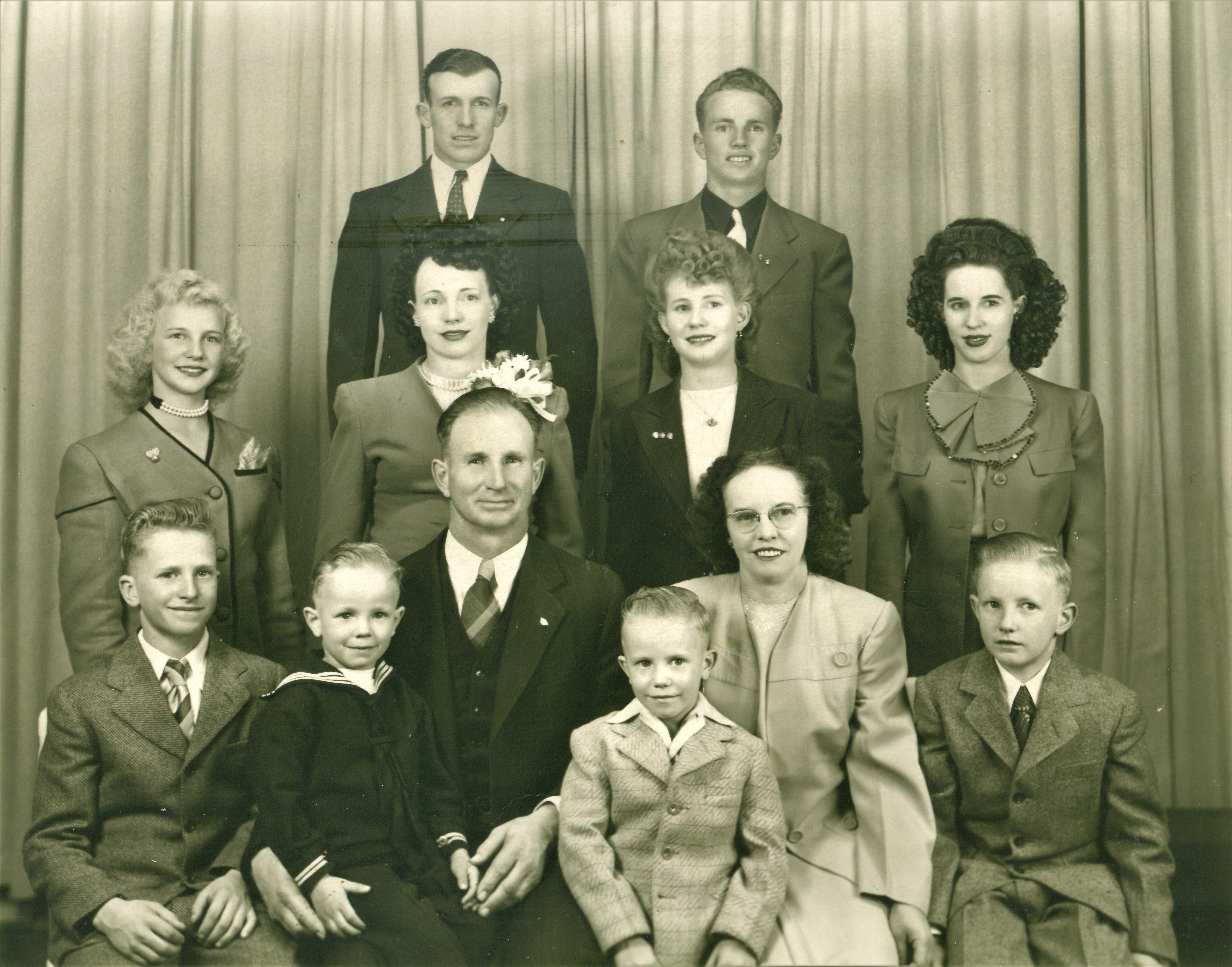
Bill and Mary Andra Family. Back (l-r): William Fredrick Jr, Golden Rulon; Middle Row: Sergene, Mildred “Millie”, Colleen, June; Front: Donald Wanner, Larry Eugene, William Fredrick, Dale, Mary Louise, and Ross Leslie Andra.

This photo was also included in the photos. I understand from the family that Millie was pregnant in this photo in 1946. Gary was born in January 1947, so that seems to fit. Grandpa Andra always joked this photo made it look like he had flowers in his hair. It does look like that. This photo is a constant memory of my childhood, always sitting on my Grandmother’s vanity. She mentioned it to me often, I probably asked about it to start the conversations. There was an obvious fondness. I believe it is for those reasons that I also hold a fondness for it. I never had a very good scan of the photo and even online the copies were pixelated. I am happy to report this one is scanned and uploaded to FamilySearch in its highest quality.