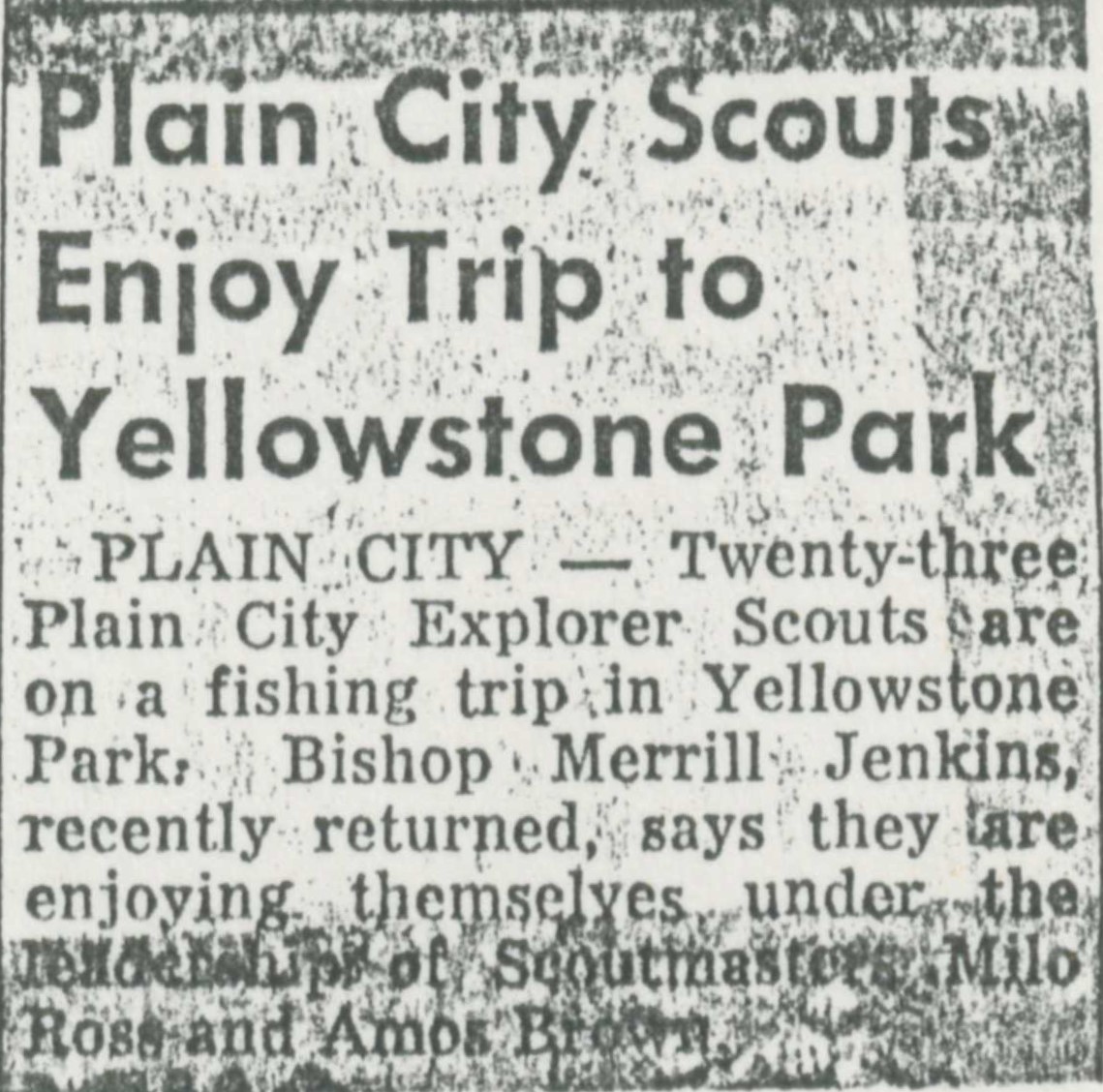
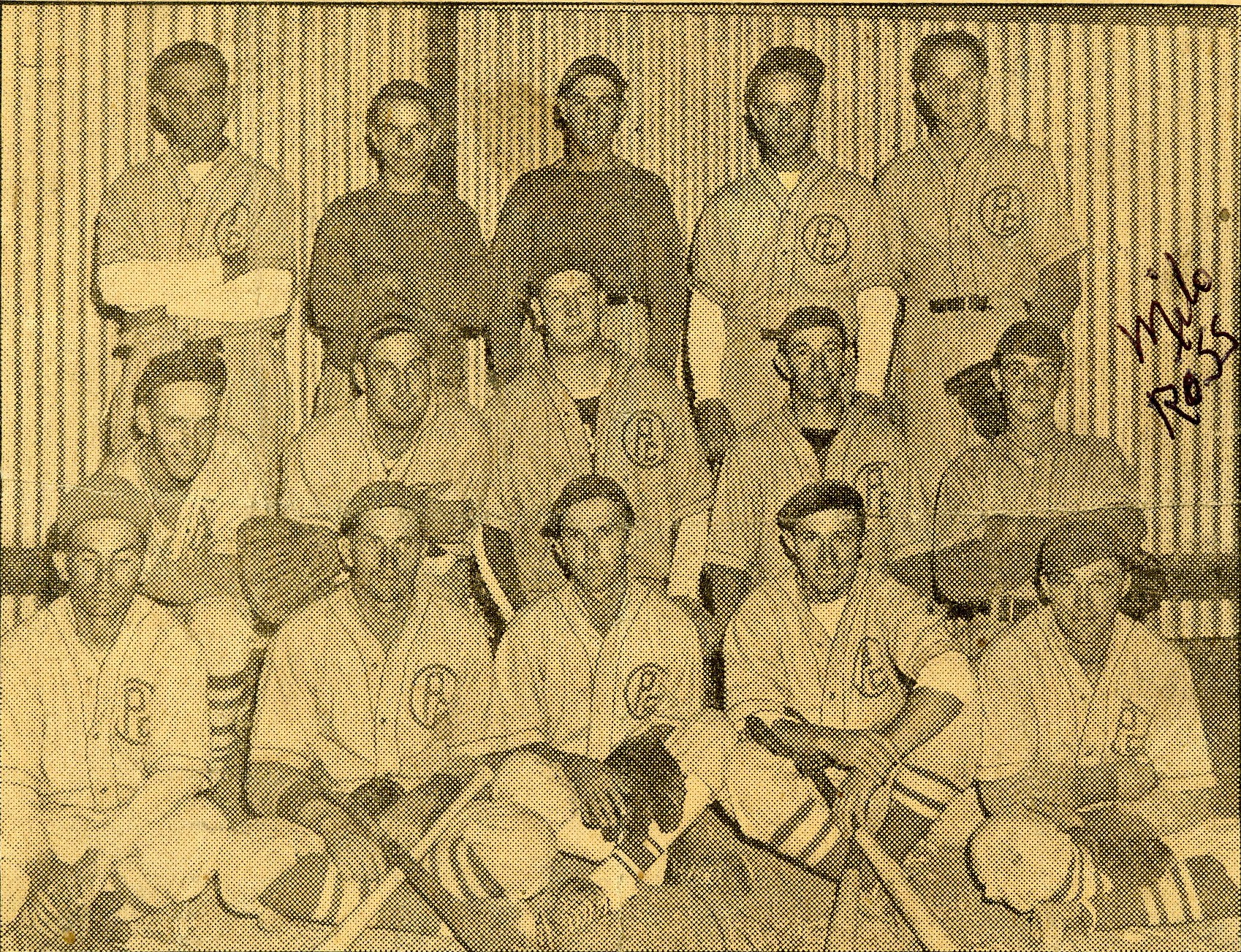
I hope some day to find a better copy of this newspaper clipping.
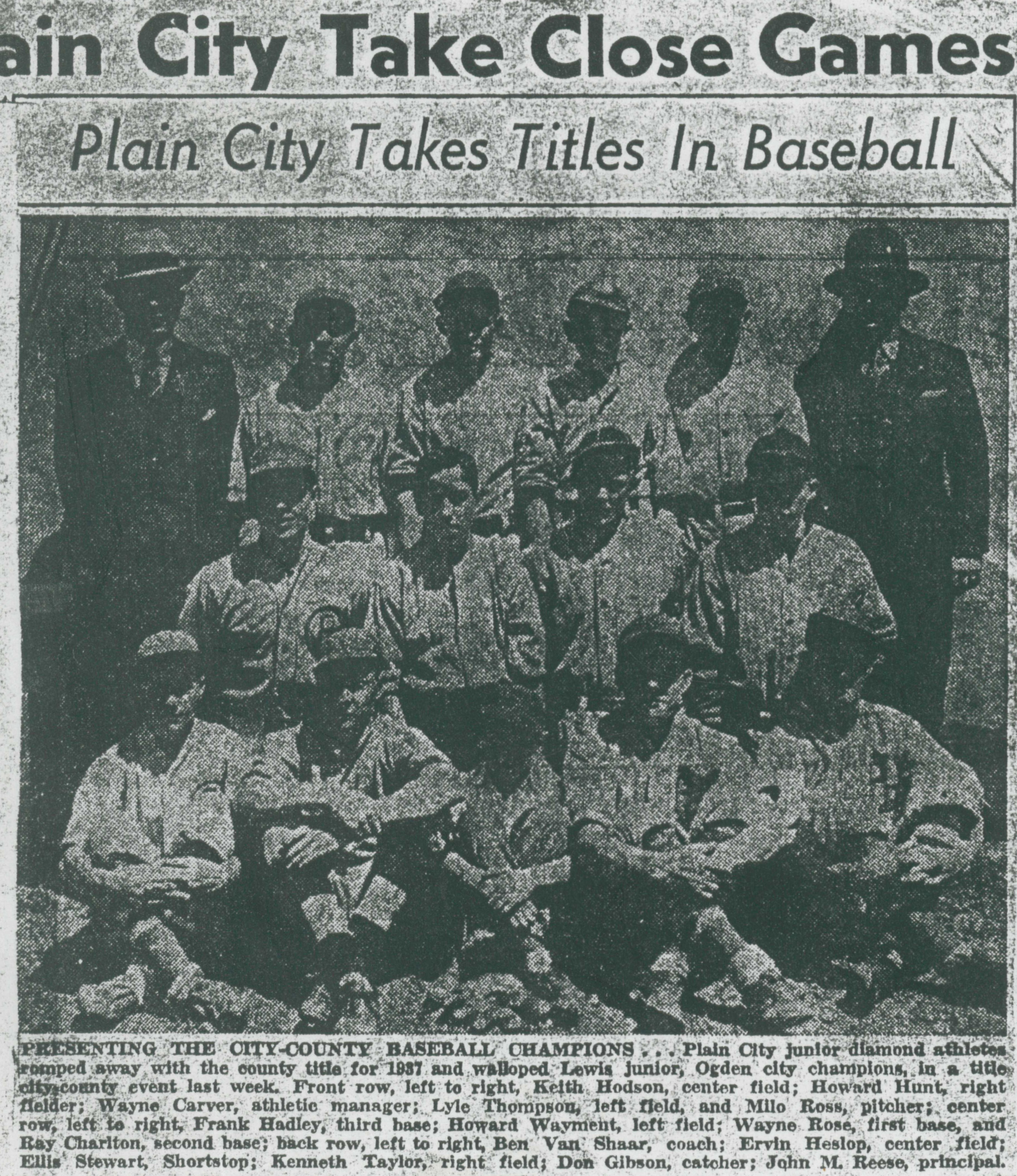
Back (l-r): Ben Van Shaar, Ervin Heslop, Ellis Stewart, Kenneth Taylor, Don Gibson, John Reese; Middle: Frank Hadley, Howard Wayment, Wayne Rose, Ray Charlton; Front: Keith Hodson, Howard Hunt, Wayne Carver, Lyle Thompson, Milo Ross
Presenting the City-County Baseball Champions… Plain City junior diamond athletes romped away with the county title for 1937 and walloped Lewis junior, Ogden city champions, in a title city-county event last week.
Wayne McLean Carver, athletic manager (1923 – 2015)
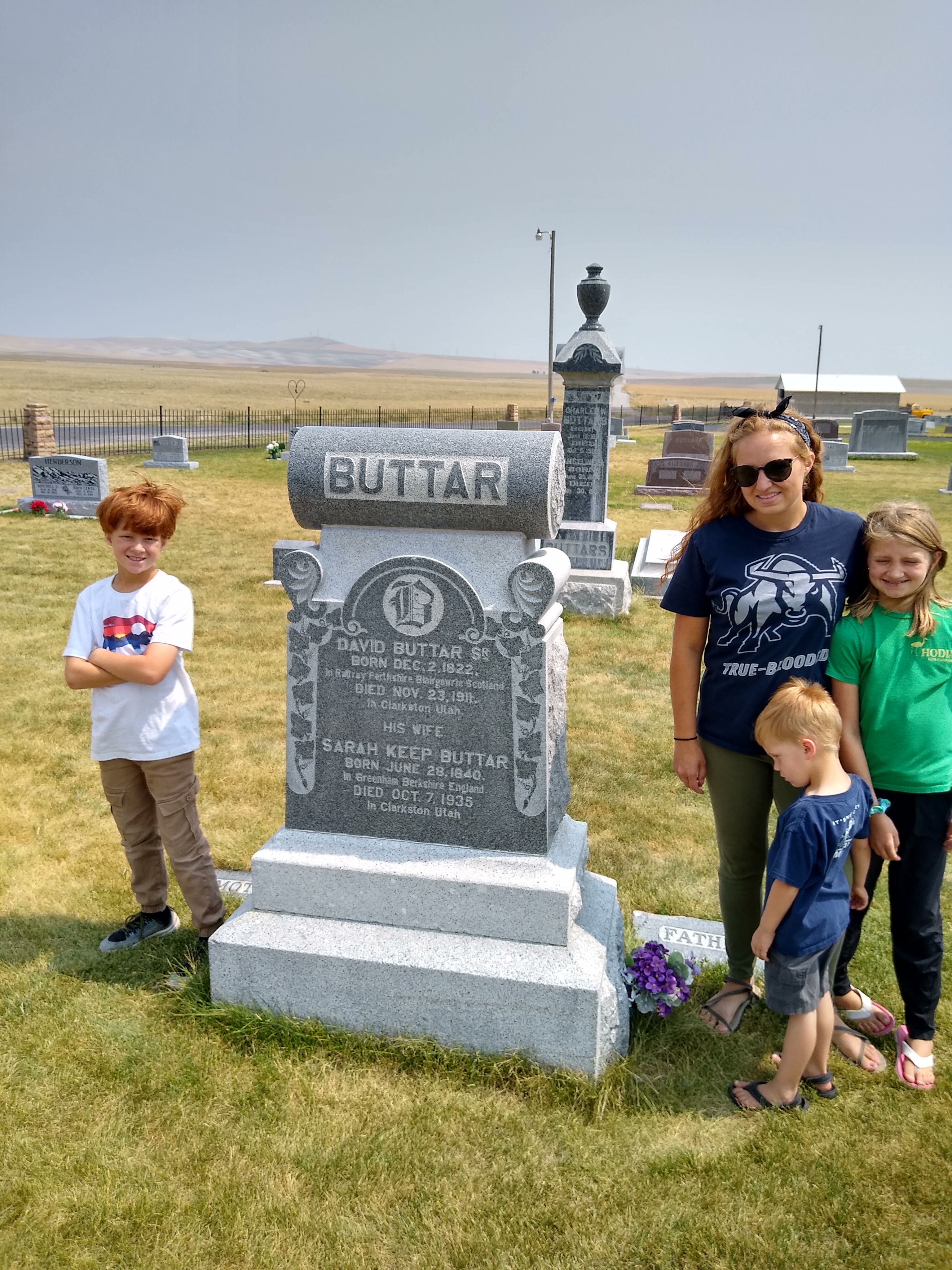
Hiram, Amanda, James, and Aliza Ross at the grave of David and Sarah Buttar in Clarkston, Utah – August 2021
I moved this this history moved up in my list because I know two other descendants of David and Sarah Buttar who live near us. My wife and children are descendants of David and Sarah Buttar’s daughter, Emma Jane, who married David Crompton Thompson.
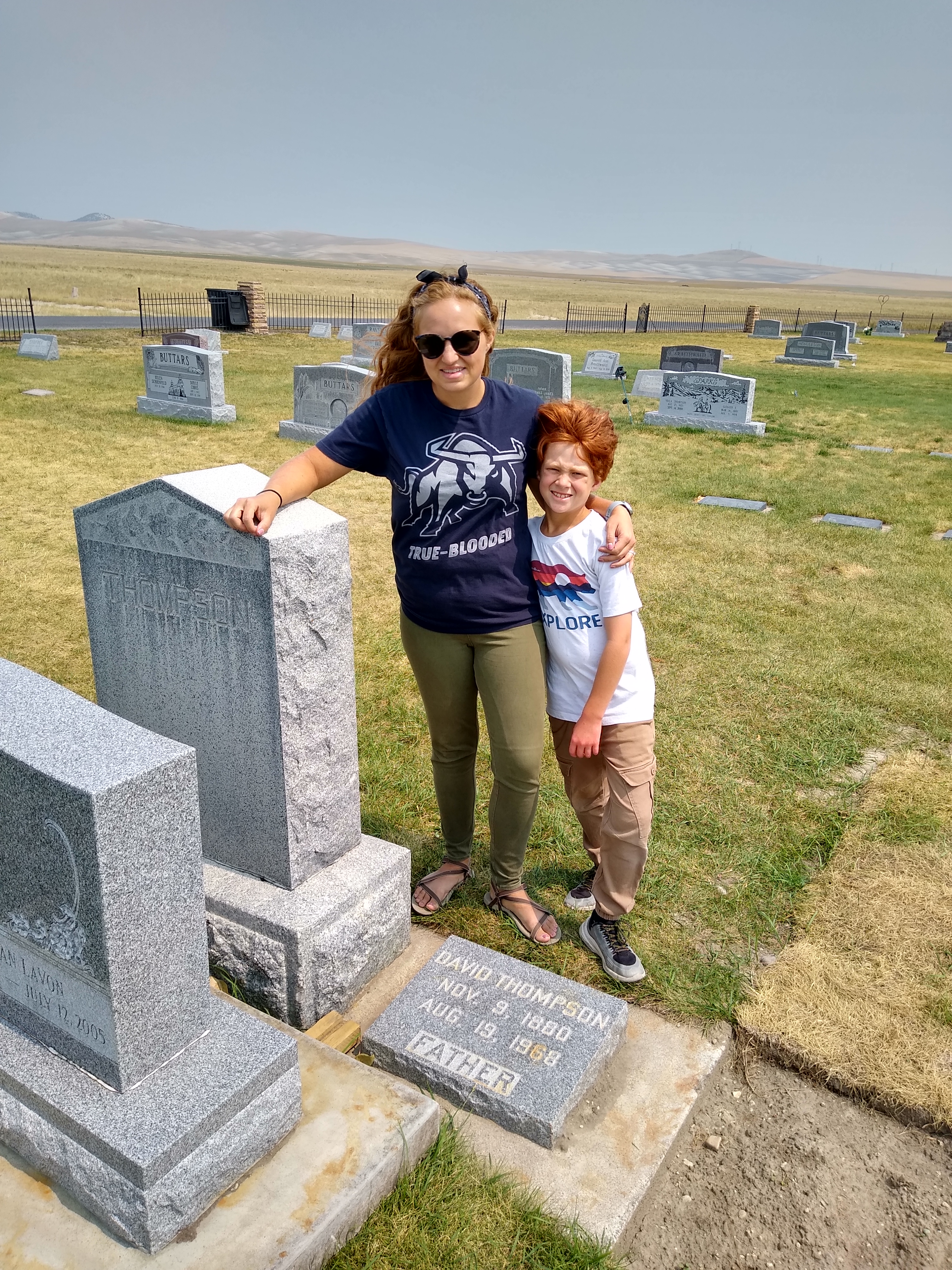
Amanda and Hiram Ross at the graves of David and Emma Thompson in Clarkston, Utah – August 2021
There are a couple of histories out there for David and Sarah Buttar. They seem to descend from a common history. There are a couple of differences and disputes, which I will point out.
David Buttar was born 2 December 1822 in Perthshire, Scotland to Donald Buttar and Elspeth Rattray. Some family records give Elspeth another first name of Betheah, but no contemporary record provides such a name. Although through the years, she was referred to as Betty. Some of the Buttar family records show the name. Her parents did not provide it on official records and she did not use it in her life for official purposes.
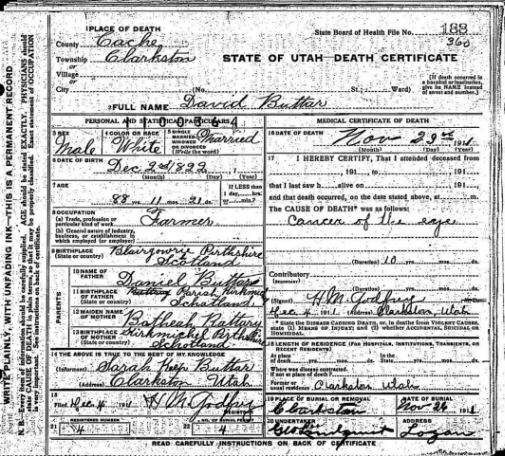
No contemporary record gives David’s birth location. He was christened 12 December 1822 in Rattray, Perthshire, Scotland. Family records show him as born in Blairgowrie, Perthshire, Scotland. His death certificate, the information coming from his surviving spouse, Sarah Keep Buttar, gives this location too.
Donald, David’s father, was a tailor by trade. Both Donald and David apprenticed to become shoe makers. David followed the shoe maker trade in both Scotland and in the United States. David was brought up in a religious home. He was also musical playing the bellows on the local Presbyterian Church’s pipe organ and the flute for the choir. His father, Donald, died at the age of 83 when David was 12 years old.
On December 14, 1848, at the age of 26, David married Margaret Spalding in Blairgowrie, Perthshire, Scotland. On 19 January 1851, David was baptized a member of the Church of Jesus Christ of Latter-day Saints. Margaret was baptized a few months later on 27 June 1851. David was ordained a priest in 1854. In February of that same year, David left Scotland for America with his wife and their four small children: Marjory, Meek, Bethea, and David. While at sea the youngest child David, who was an infant of seven months old, died and was buried at sea. The journey by sea to America from Scotland took seven weeks and two days.
David and his family traveled across the plains by ox cart with the Taylor Company. Sarah’s history is shared below that includes stories of crossing the plaints. While on the plains, cholera erupted amongst the company and David became very ill and nearly died. It took him some time to get over the effects of cholera. David and his family had to walk most of the way to Utah. One day while gathering firewood, David did not notice that among the wood he had also picked up a rattle snake and carried it back to camp. It was only when he put the wood down on the ground that he realized he had carried the snake without being bit. At another time David experienced another sobering moment after sleeping the night in a bed he had made under the wagon. The next morning after dressing himself and rolling up his bedroll, he discovered that a rattle snake had curled up inside his bedding during the night and he had slept in!
The family arrived in Salt Lake City in the fall of 1854. They lived in Salt Lake City for five months where David worked as a shoemaker for a Brother Samuel Mellener. David then moved his family to Lehi, Utah. After moving to Lehi, David continued working for Brother Mellener. David did not have a method of transportation and had to walk from Lehi to Salt Lake to pick up leather for his shoes and return the finished shoes to Brother Mellener. There were times when he was able to secure a ride to Salt Lake. After a few years, David was able to raise some calves that, once grown, were able to supply a team of oxen for transportation. In Lehi the family lived in a mud house with a dirt floor. David also began to farm in Lehi. In the year 1856, all the crops in Lehi were eaten by grasshoppers and the family had no flower. Because of the flour shortage, bran bread was made.
In August 1863, Margaret died while in childbirth leaving David with six small children. The oldest girl was only fourteen years old and the baby, Margaret, was five days old. Baby Margaret died two weeks after her mother and was buried in the Lehi cemetery. David experienced sad, hard times and, having no family nearby to assist him with the children. Four years later on 16 December 1866 he married Sarah Keep Francis. Sarah had previously been married in England, but had left her husband behind before coming to the United States. Sarah had a daughter of her own, Lucy Ann Francis, who David always regarded as his own daughter. On April 16, 1868, a daughter, Sarah Isabell, was born. Sadly, Sarah Isabell died on June 16th. Sarah Isabell was buried in the Lehi cemetery.
In October of 1868, the family moved to Clarkston in Cache Valley of Utah. David was ordained an Elder that same fall. Upon arriving in Clarkston, David built a two room log house in the Clarkston Fort. In 1870, David moved from the fort and built another two-room log home on the north side of Clarkston near his farm. He raised cows, horses, sheep, pigs, and chickens on their farm.
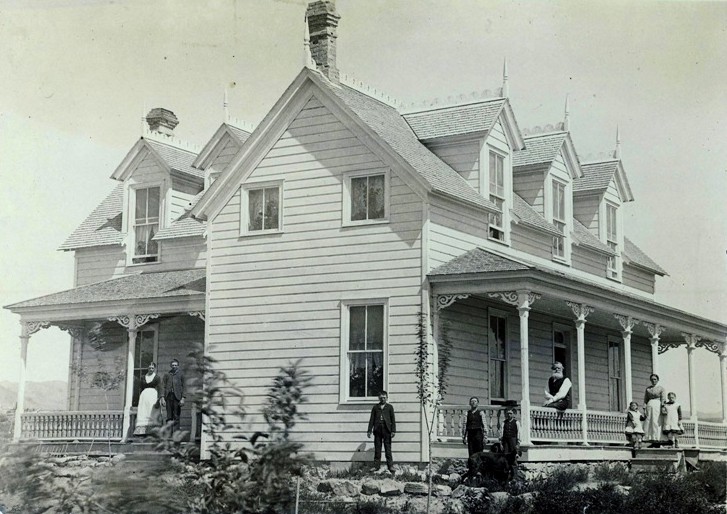
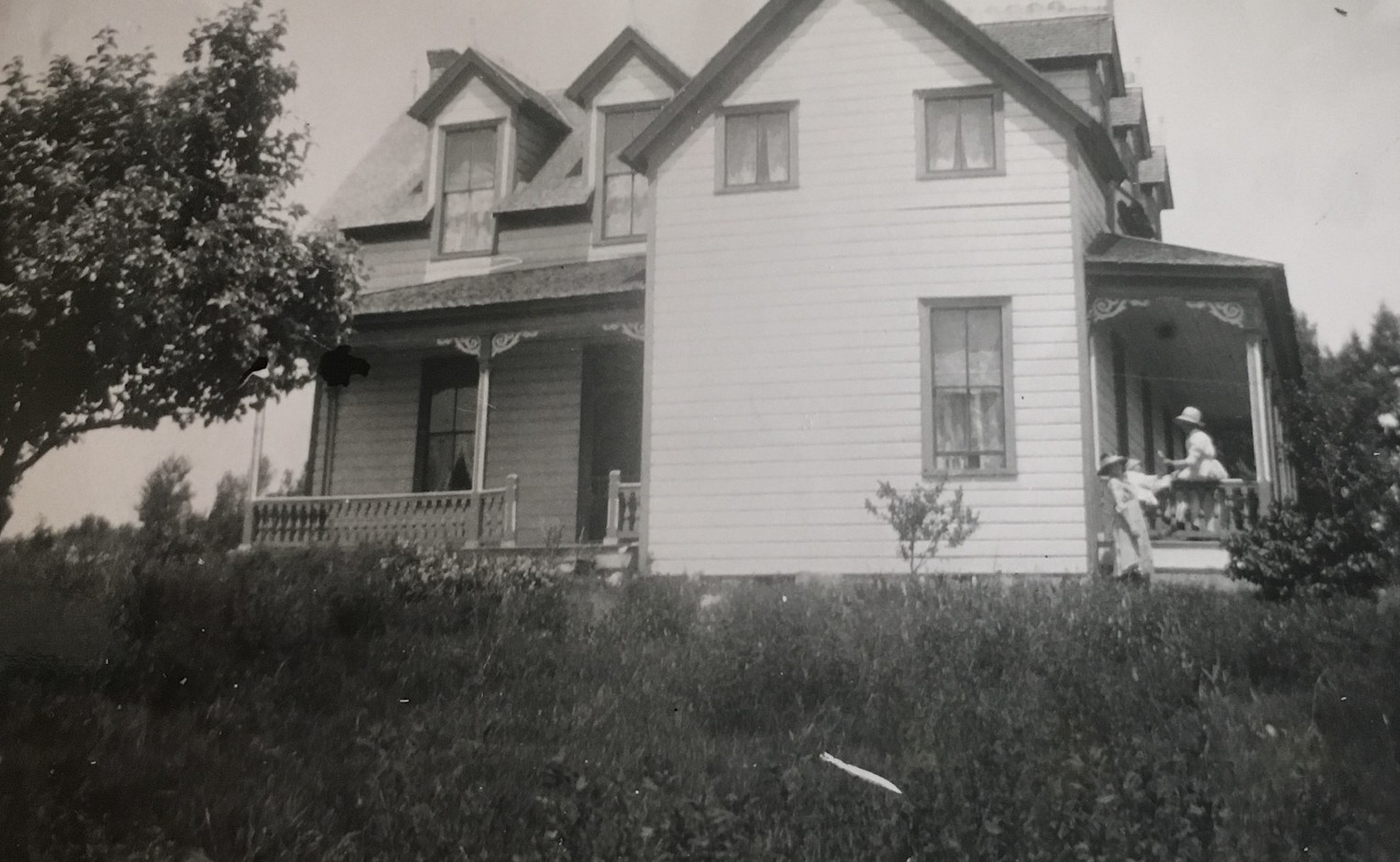
Buttar home north of Clarkston, Thomas James in front of the house, David Alexander next to the right, then James Joseph, then David, then Emma Jane, Sarah, and Mary
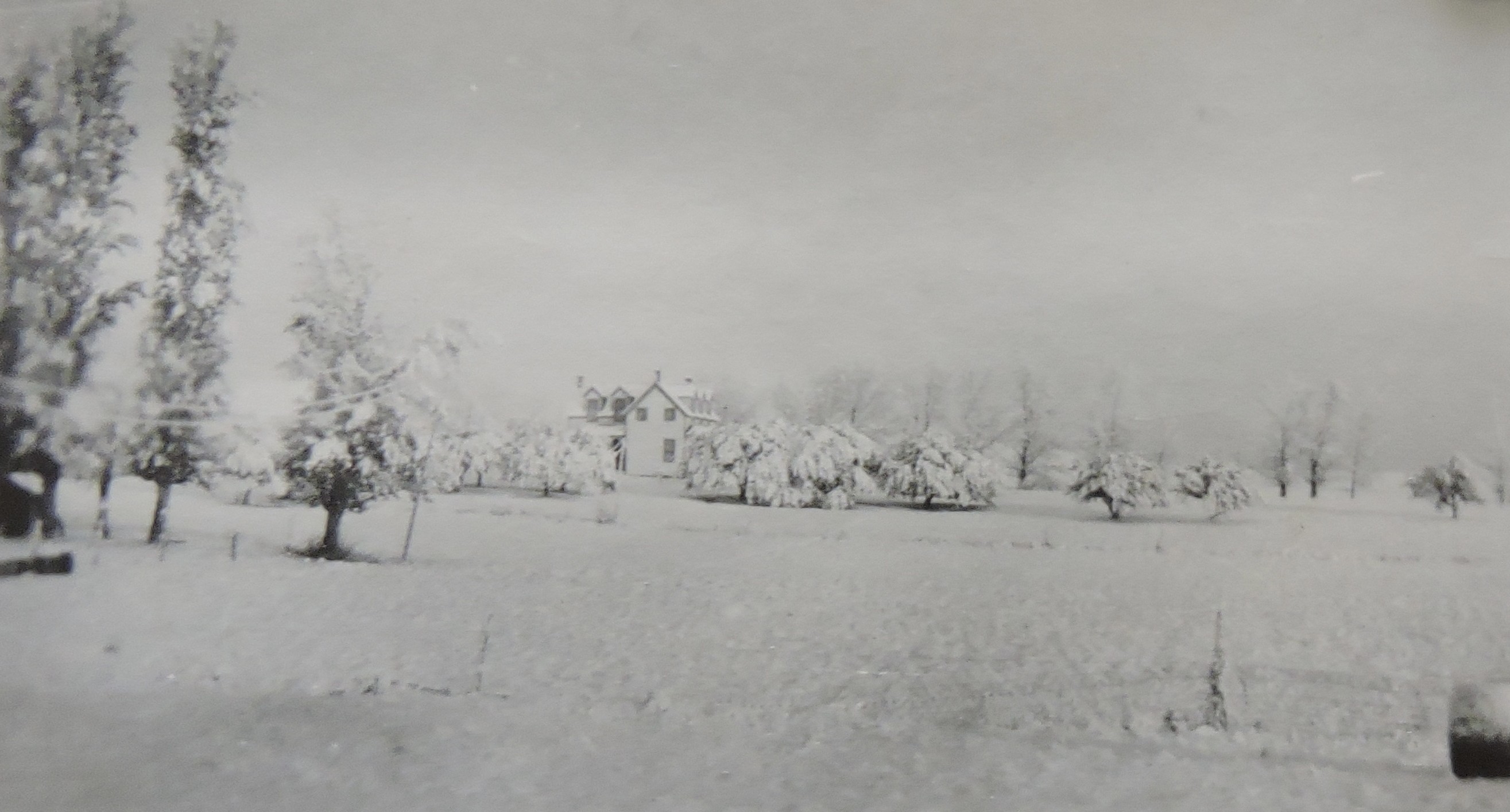
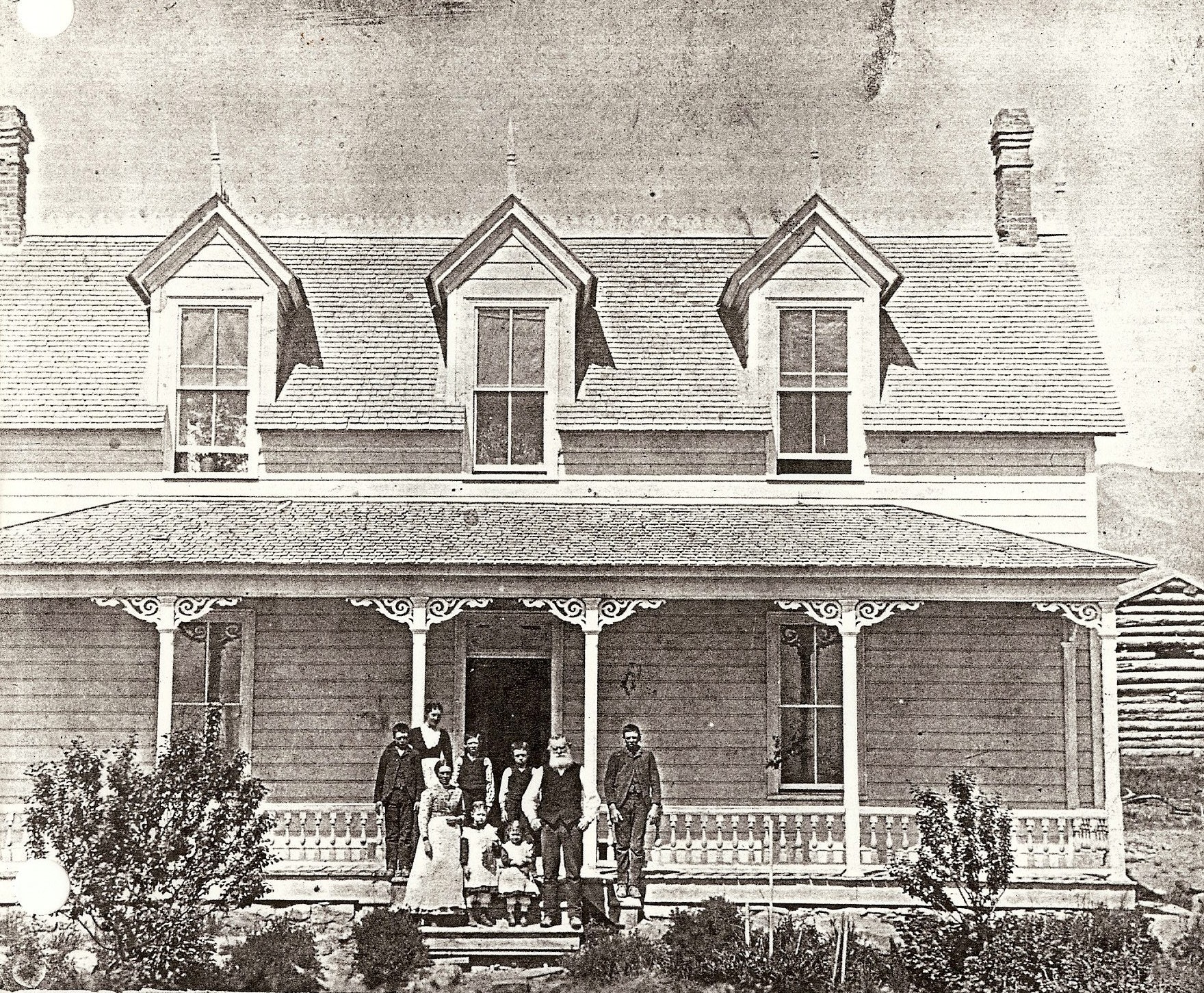
In 1870, David and Sarah built a large, white framed house for the family. The two-story home had a porch on the front, three dormer windows on the second floor facing east, and two dormer windows facing south with a veranda below. It was a large home for the standards at that time. It was a beautiful home that overlooked the farm and had a commanding view of the valley. The first prayer circle in Clarkston was held in a upstairs room of that home. Unfortunately, this beautiful home burned on 31 May 1931.
David became a high priest. He believed in paying a honest tithing, knowing that the Lord keeps his promises by opening the windows of heaven to pour out blessing on all that keep his laws and commandments. This was proved to David in the spring of 1871 when the grasshoppers were so thick that when in flight they darkened the sun. Three times that summer the grasshoppers ate all of David’s grain. When they came the fourth time, with the help of his children, the grasshoppers were driven into ditches where the chickens would devour them. The grasshoppers were so large that the chickens could only eat three or four at a time. David told his family that because he had paid his tithing that the Lord would provide for them. It was then that the seagulls came and began eating the grasshoppers until they could eat no more. When the seagulls had eaten their fill, they would go to the ditch and throw up the grasshoppers and then continue to eat more. Once the grasshoppers were completely devoured, the seagulls flew away. This time the grain grew to maturity and David produced 1,300 bushels of grain – the largest crop he had ever harvested up to that time.
When David first began to farm in Clarkston, he cut his grain with a “cradle”, after a few years he purchased a “dropper” to cut the grain. He hired six men to flay and bind the grain. David would cure his wheat for planting with slack-lime, and he would sow his seeds by hand casting them.
David continued to make shoes for the first few years in Clarkston, but the last shoes he made were for his step-daughter, Lucy Anne, and he purposely made one that was wrong-side-out and stated that “he wouldn’t make any more shoes”, and he never did.
David would mend his harnesses with wooden, maple pegs that were actually intended as tacks to hang shoes on. He planted five to ten acres of potatoes each year. Although for the first few years hay had to be bound by hand, David purchased the first self-binder in Clarkston that bound the hay with wire. Later, he assisted Andrew Heggie and Peter S Barson in buying the first header in Clarkston.
One year the sunflowers had grown so profusely in the wheat that when the threshers came, they refused to thresh it. He made a flail and flailed all the wheat by hand on a wagon cover. After the grain was harvested, David had to haul it some 60 miles (each way) to Corinne or Ogden by team and wagon just to sell it.
During the construction of the Logan Temple, David donated $100 each year until the temple was completed. He did temple work for many of his ancestors in the Logan Temple. He also gave financial assistance to build the old rock meeting house in Clarkston as well as the new chapel that is still standing in Clarkston today (although it has undergone several additions and renovations since then).
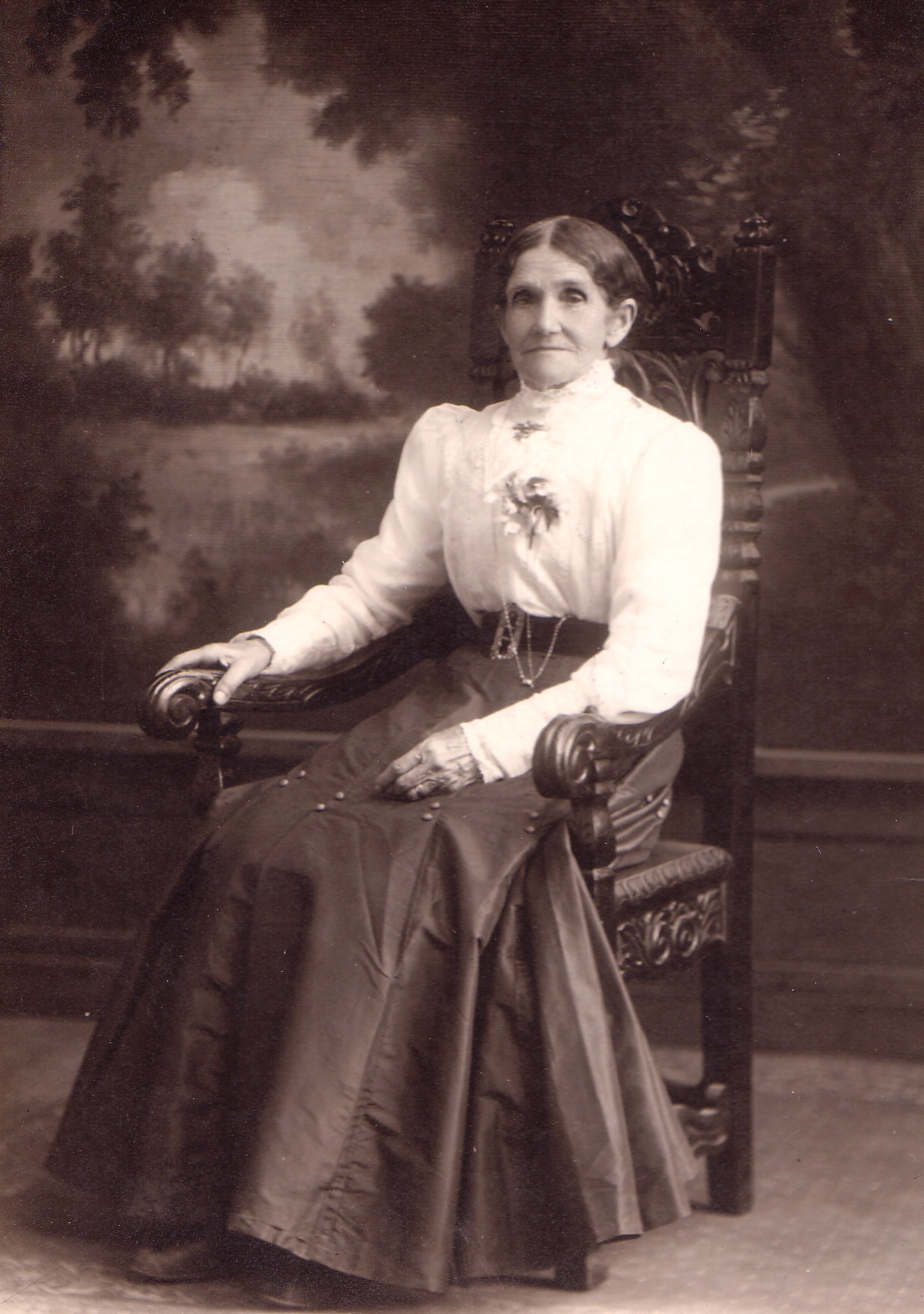
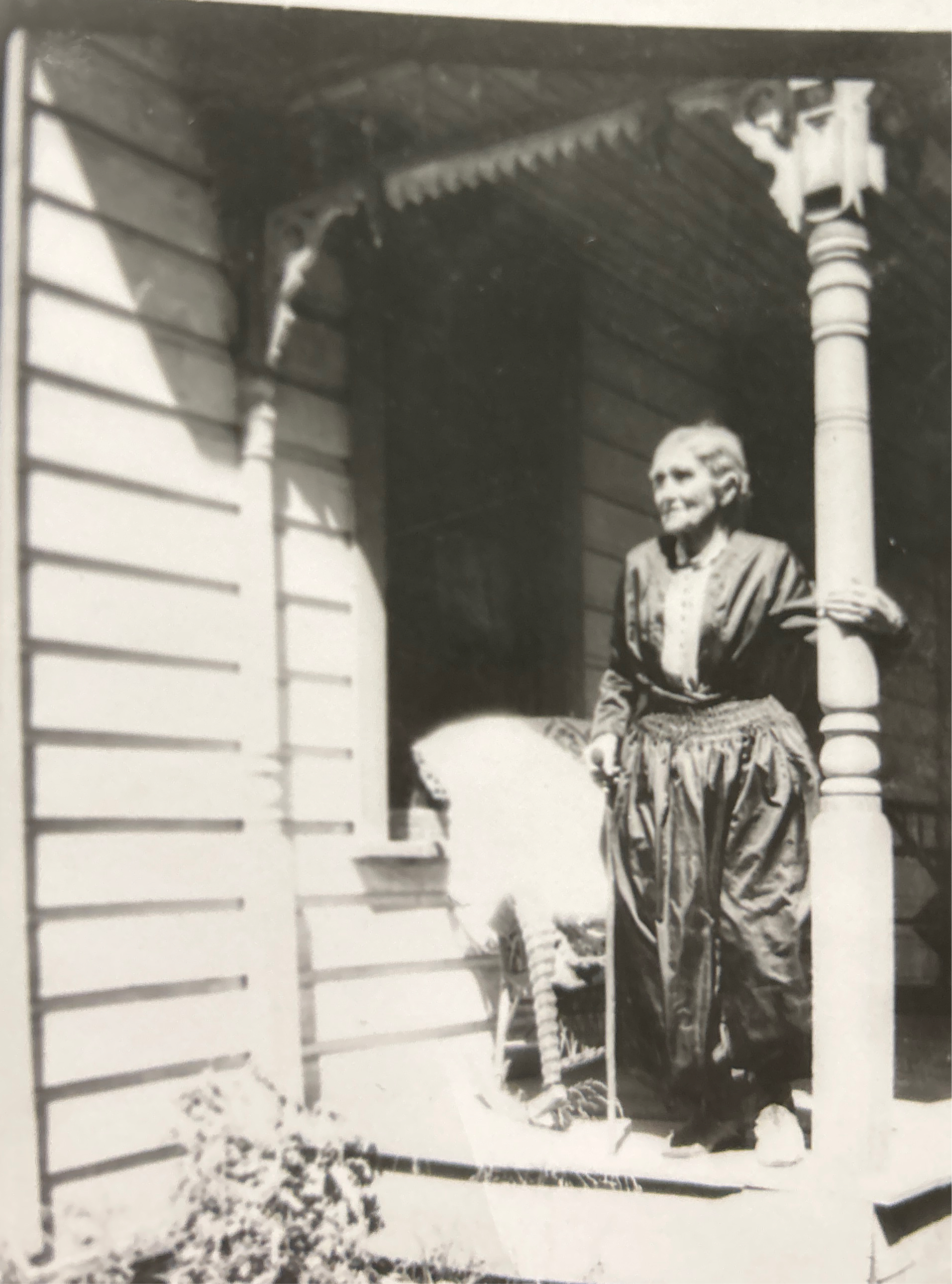
Sarah Keep Buttar
In 1884, David married Sophia Jensen Hansen in plural marriage. He lived in polygamy for 20 years. In 1889, polygamists were advised by the authorities of the Church to give themselves up instead of being hunted down by the law. On the first of June 1889, David gave himself up. Because of his age (67), he was not required to serve the usual six months jail sentence. He paid, instead, a $100 fine and returned home a happy man.
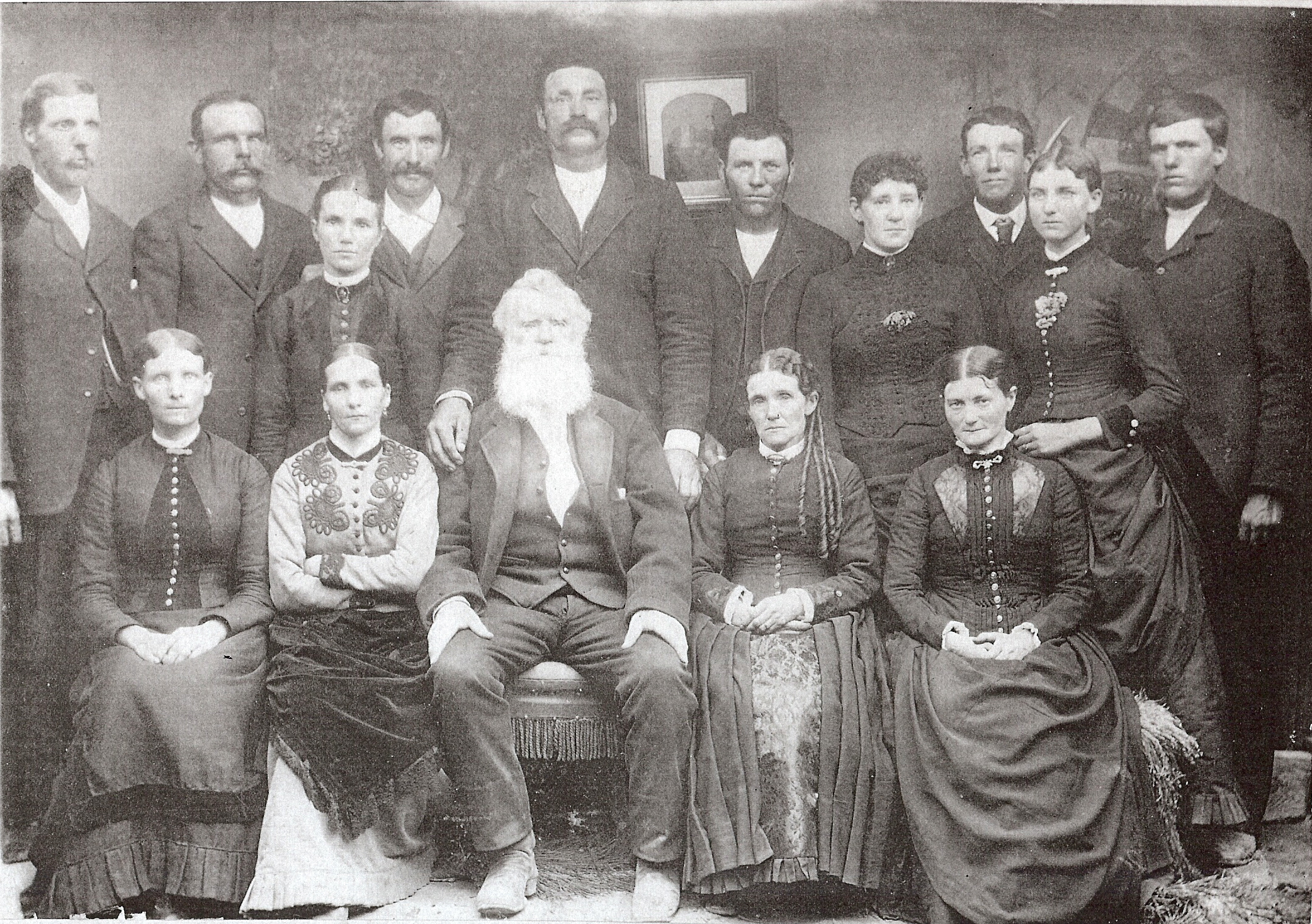
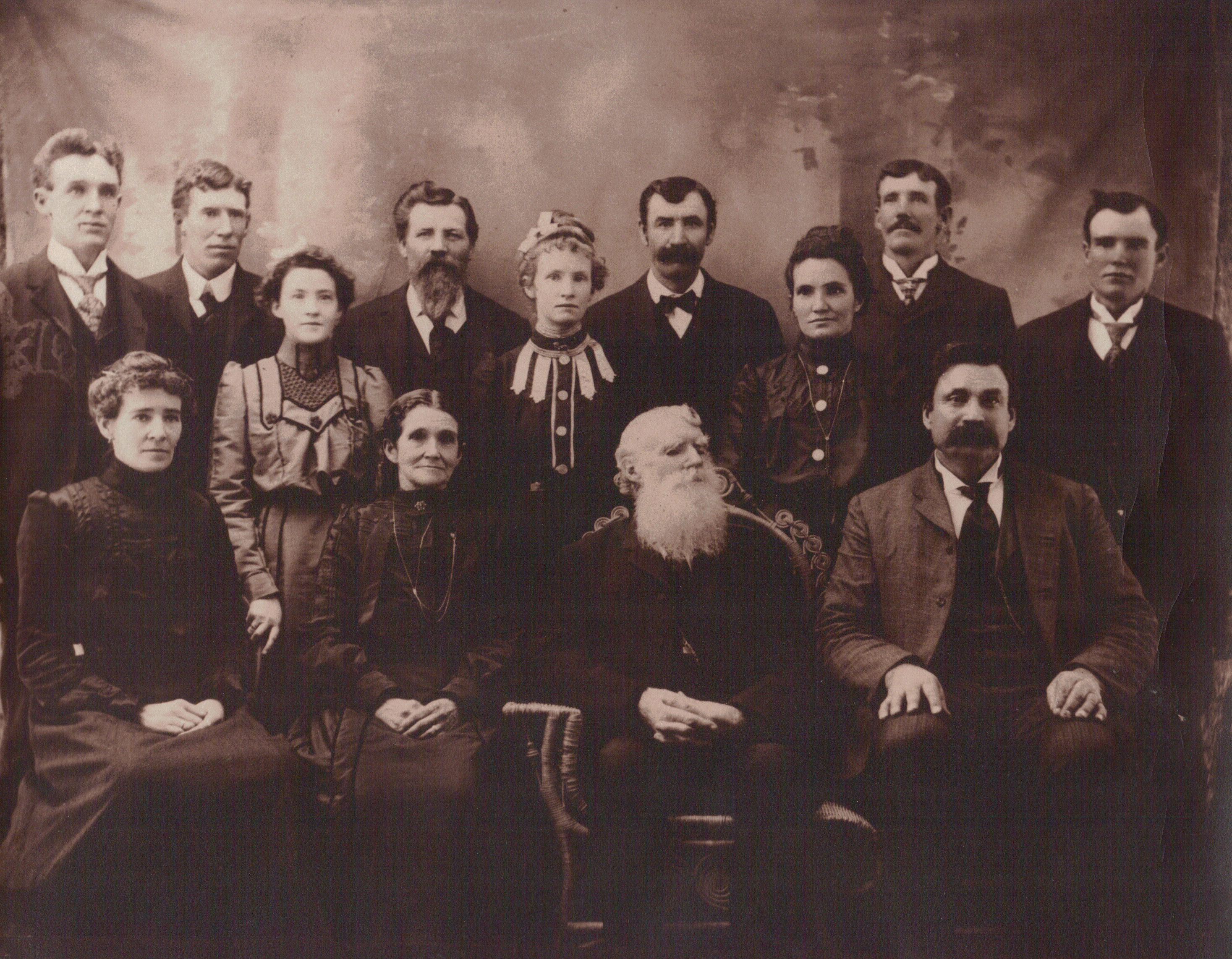
Back (l-r): William Sparks, Hans Jensen, Lucy Ann Francis, Robert Buttar, John Buttar, Daniel Buttar, Elizabeth Buttar, Charles Buttar, Margaret Cutler, Will Sparks; Sitting: Emma Gover, Sarah Buttar, David Buttar, Sarah Keep Buttar, Karen Buttar
On 10 May 1899, David, his wife Sarah, their son Charles and a niece Mary Jenkins, had all attended the Logan Temple. While driving across the Bear River Bridge on their return trip home to Clarkston, the bridge broke and the entire group fell into the river. Fortunately, two gentlemen by the name of William Bingham and William Thain were nearby and were able to pull everyone from the river. Apparently though, Sarah was rendered unconscious because of some timbers that had fallen on her and was taken home to Clarkston unconscious. William Bingham, who had so bravely rescued her and the others, thought that surely she had died and came to Clarkston a few days later to attend her funeral. It would be an understatement to say that he was quite surprised to find no funeral transpiring, as Sarah was alive and well. Sarah did report afterward of having an out-of-body experience during the near-drowning incident and spoke of the beautiful things she witnessed on the other side of the veil.
In 1909, David contributed $200 to President Budge of the Logan Temple. President Budge gratefully said that the donation was an answer to prayers, as money was needed to purchase a new rug (carpet) to replace carpet that had been burned in a recent temple fire. President Budge gave David a priesthood blessing which pleased David greatly. David also stated that he thought that would be his last donation to the temple – and it was. On November 23, 1911, David passed away from eye cancer at the age of 89. He was laid to rest in the Clarkston Cemetery. A beautiful, majestic monument has been erected to his memory at his burial site.
Buttar home on 6 October 1920
Was David a Buttar or Buttars? His christening record prepared by the church has Butter, likely from the mouth of his father. It does not show as plural. When David was married to his first wife, Margaret Spalding, the church recorded his name as David Buttar. Another record, likely created from his own dictation to the individual creating the record. The 1860 Census, probably from someone else’s mouth, has Buttar. But yet, 1870, probably from someone else’s mouth, has Buttars. It goes back and forth. 1910 Census – Buttars. Death certificate for Charles William Buttar – father is David Buttar – Sarah Keep Buttar completed this death certificate information (but Charles’ grave marker has Buttars). The death certificate for his wife, Sarah Keep Buttar – has his name as David Buttars. Alternatively, when he died, Sarah Keep Buttar provided the death certificate information and provided his name as David Buttar. But, when she applied for the Daughters of the Pioneers, she wrote Buttars. Ultimately, some of his siblings and own children used both variations. There are likely other records, but it appears at this time the records created by him in his own life show Buttar. Lastly, when he died, the family listed Buttar on the tombstone (as seen above). But since his christenening record (provided by his parents), marriage certificate (provided by him), and his death certificate (provided by his wife) all list Buttar, along with his tombstone, I will go with Buttar for this history.
David has an entry in Pioneers and Prominent Men in Utah.
“Buttar, David (son of Daniel Buttar and Batheah Rattray, born 1788, both of Blairgowrie, Perthshire, Scotland. Born Dec. 2, 1822 at Blairgowrie. Came to Utah November, 1854, Capt. Taylor Company.
“Married Margaret Spalding Dec. 14, 1848, in Scotland (daughter of John Spalding and Marjory Meek Johnson), who was born April 1, 1822, and came to Utah with husband. Their children; Marjory Meek Johnson b. Sep. 16, 1849, m. Henry Mullet December, 1866; m. Joseph J. Harrison 1869; Batheah b. July 15, 1851, m. William Sparks Dec. 15, 1868; David b. November, 1863, d. February, 1854; John Spalding b. May 22, 1856, m. Sarah L. Tanner Jan. 1, 1880; Daniel b. Sept. 22, 1858, m. Emma Cover January, 1883; Robert Sutter b. April 6, 1861, m. Mary Godfrey 1891; Margaret b. Aug. 6, 1863, d. infant. Family home Lehi, Utah.
“Married Sarah Keep Dec. 16, 1866, at Lehi (daughter of James Joseph Keep (high priest) and Ann Miller; married July 22, 1836; pioneers Oct. 22, 1866, Abner Lowry company. She was the widow of Thomas Francis, married May 15, 1865, and mother of Lucy Ann Francis, born March 26, 1866, who married Hans Jensen July, 1884). She was born June 28, 1840, Greenham, Berkshire, Eng. Their children: Sarah Isabell Buttar, b. April 16, 1868, d. June 15, 1868; Elizabeth Keep b. June 9, 1869, m. John Loosle Dec. 3, 1891; Charles William b. June 15, 1871, m. Angeline Stuart May 18, 1892; Thomas James b. Oct. 13, 1873, m. Annie Loosle; David Alexander b. Dec. 14, 1876, m. Rose Loosle; James Joseph Keep b. Feb. 26, 1878, m. Agnes Jordan; Mary Janet b. June 30, 1880, m. Louis Thompson; Emma Jane b. Oct. 8, 1882, m. David Thompson. Family home Clarkston, Utah.
“Settled at Clarkston 1868. High priest. Shoemaker; farmer. Died Nov. 23. 1911.
Back (l-r): James Joseph, David Alexander, Emma Jane, Daniel, Mary Janet, Robert Sutter, Lucy Ann, Charles William, Thomas James; Front: Elizabeth, Sarah, David, and John Spalding
The Pioneers and Prominent Men of Utah biography gives a good overview of David’s family.
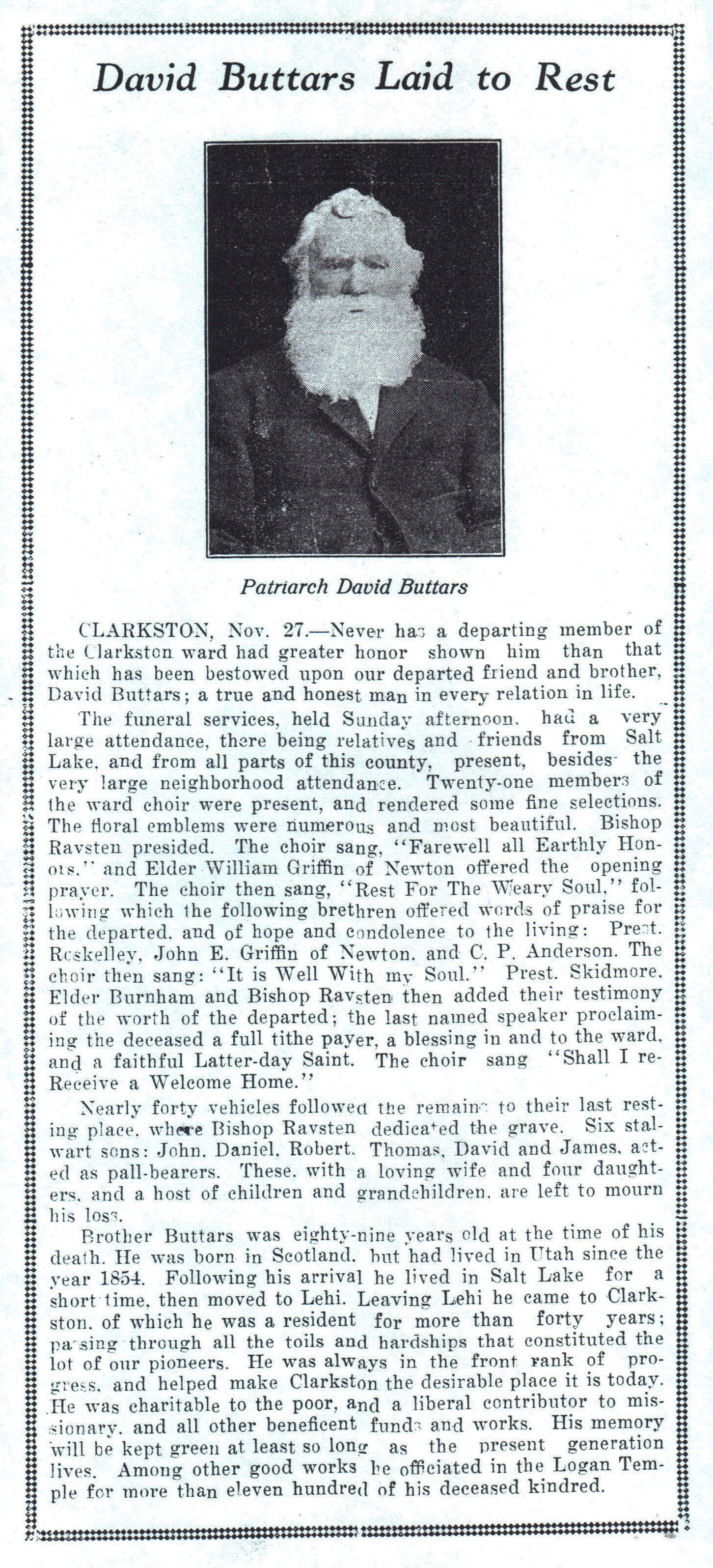
This editorial obituary also provided some insights into David.
“CLARKSTON, Nov. 27 – Never has a departing member of the Clarkston ward had greater honor shown him than that which has been bestowed upon our departed friend and brother, David Buttars; a true and honest man in every relation in life.
“The funeral services, held Sunday afternoon, had a very large attendance, there being relatives and friends from Salt Lake, and from all parts of this county, present, besides the very large neighborhood attendance. Twenty-one members of the ward choir were present, and rendered some fine selections. The floran emblems were numerous and most beautifulf. Bishop Ravsten presided. The choir sang, “Farewell all Early Honors” and Elder William Griffin of Newton offered the opening prayer. The choir then sang, “Rest For the Weary Soul,” following which the following brethren offered words of praise for the departed, and of hope and condolence to the living: Prest. Roskelley, John E. Griffin of Newton, and C. P. Anderson. The choir then sang: “It is Well With my Soul.” Prest. Skidmore, Elder Burnham and Bishop Ravsten then added their testimony of the worth of the departed; the last named speaker proclaiming the deceased a full tithe payer, a blessing in and to the ward, and a faithful Latter-day Saint. The choir sang “Shall I Receive a Welcome Home.”
“Nearly forty vehicles followed the remains to their last resting place, where Bishop Ravsten dedicated the grave. Six stalwart sons: John, Daniel, Robert, Thomas, David and James, acted as pall-bearers. These, with a loving wife and four daughters, and a host of children and grandchildren are left to mourn his loss.
“Brother Buttars was eight-nine years old at the time of his death. He was born in Scotland, but had lived in Utah since the year 1854. Following his arrival he lived in Salt Lake for a short time, then moved to Lehi. Leaving Lehi he came to Clarkston of which he was a resident for more than forty years; passing through all the toils and harships that constituted the lot of our pioneers. He was always in the front rank of progress and helped make Clarkston the desirable place it is today. He was charitable to the poor, and a liberal contributor to missionary, and all other beneficent funds and works. His memory will be kept green as least so long as the present generation lives. Among other good works he officiated in the Logan Temple for more than eleven hundred of his deceased kindred.
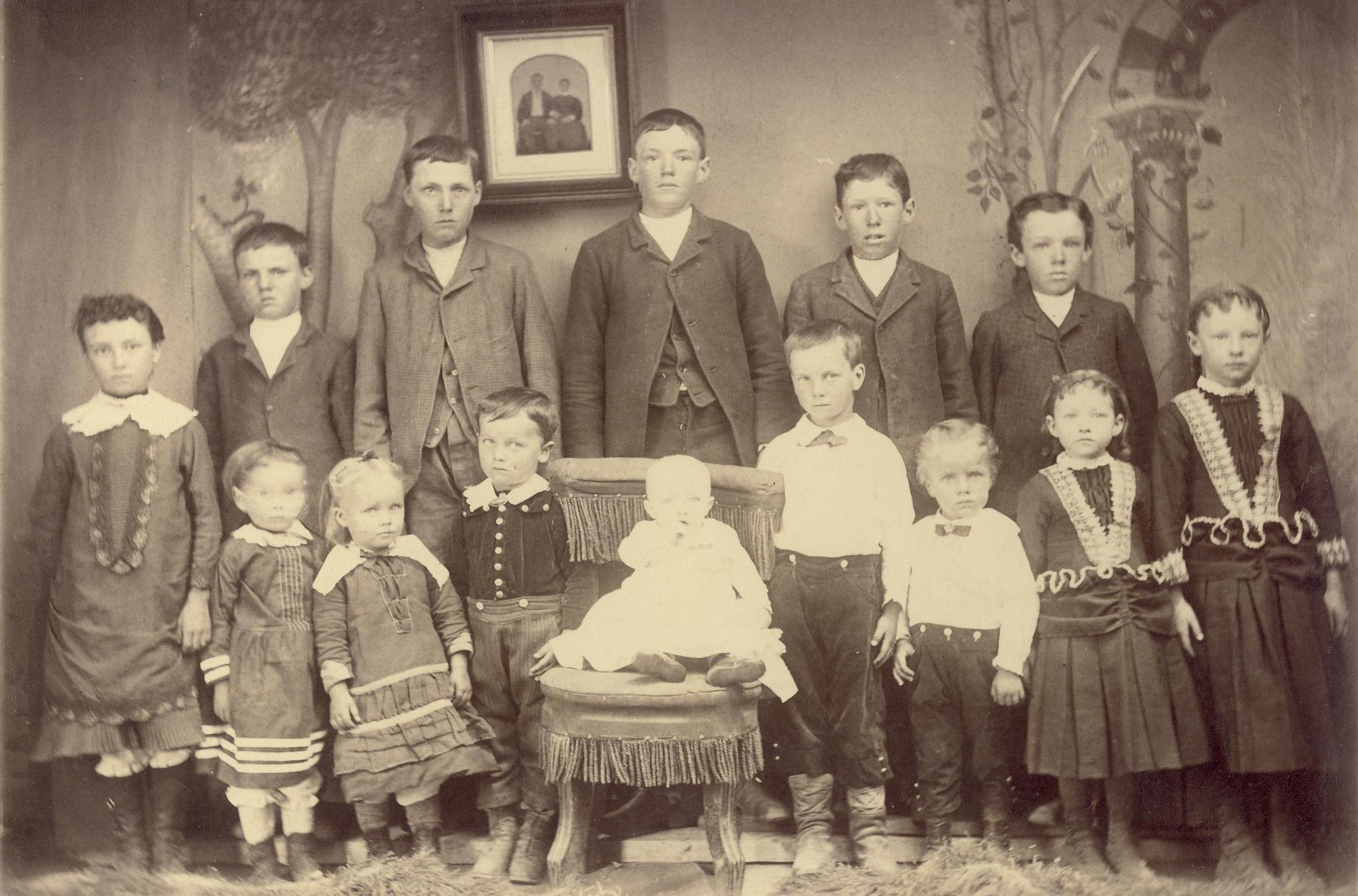
Back (l-r): Margaret Priscilla Buttars, George Alfred Sparks, David Sparks, (photo of James & Ann Keep), Thomas James Buttars, David Alexander Buttars, James Joseph Buttars, Mary Janet Buttars; Front: Rachel Betheah Buttars, Margaret Sarah Buttars, Daniel David Buttars, Melvin Henry Buttars, David William Buttars, Thomas Hans Jensen, and Emma Jane Buttars
David and Sarah Keep were married 16 December 1866 in Lehi, Utah, Utah. David and Sarah received their endowments in the Salt Lake City Endowment House on 14 December 1868. David and Margaret, and David and Sarah were also sealed the same day in the Endowment House. I am not clear if Margaret was initially endowed on 14 December 1868 and the record was lost, but the work is officially shown as completed for Margaret on 5 June 1884 in the Logan Temple. David married Karen Sophia Jensen 11 June 1884 in Logan, Cache, Utah at the Temple.
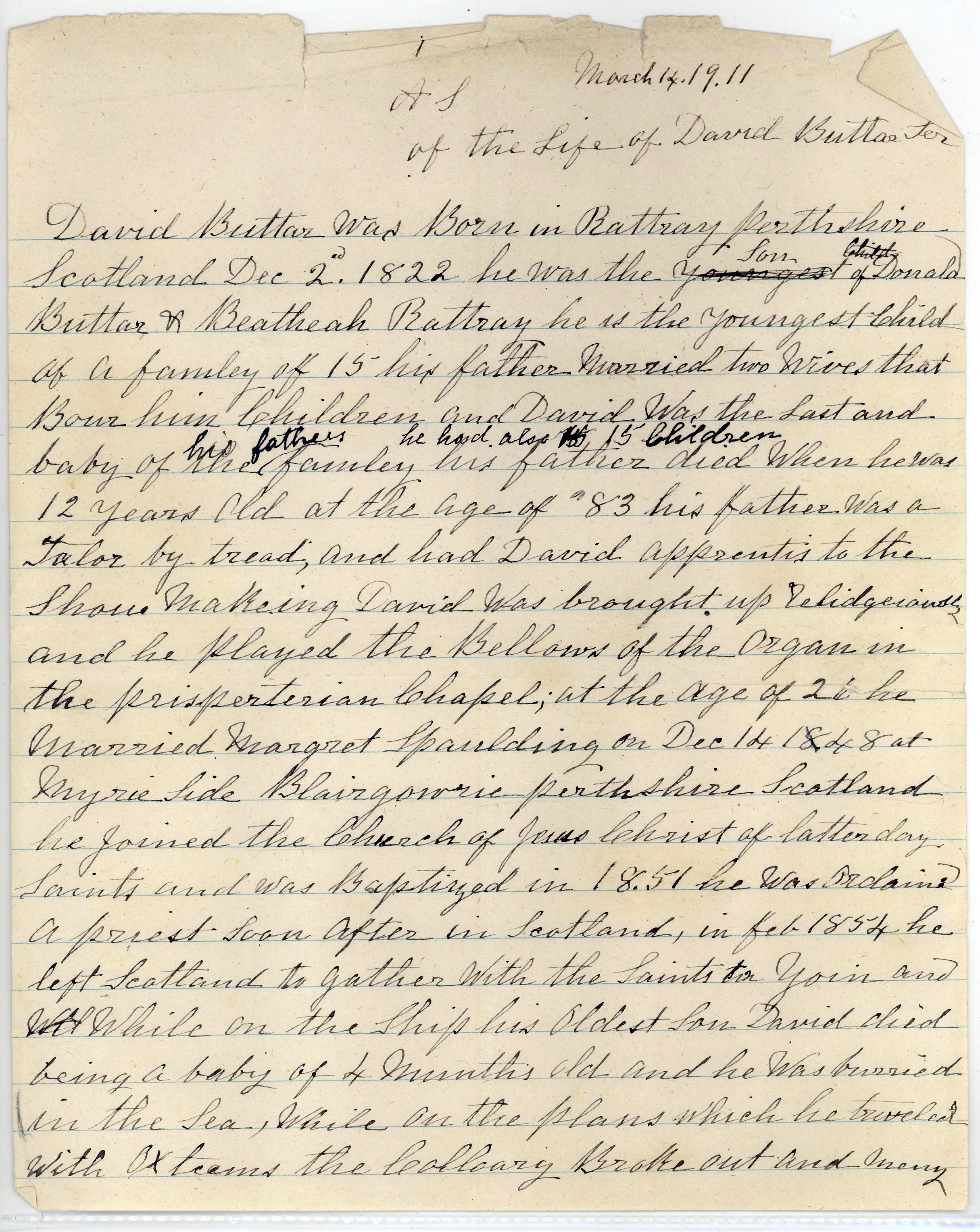
Handwritten biography of David Buttar by Sarah Buttar after his passing
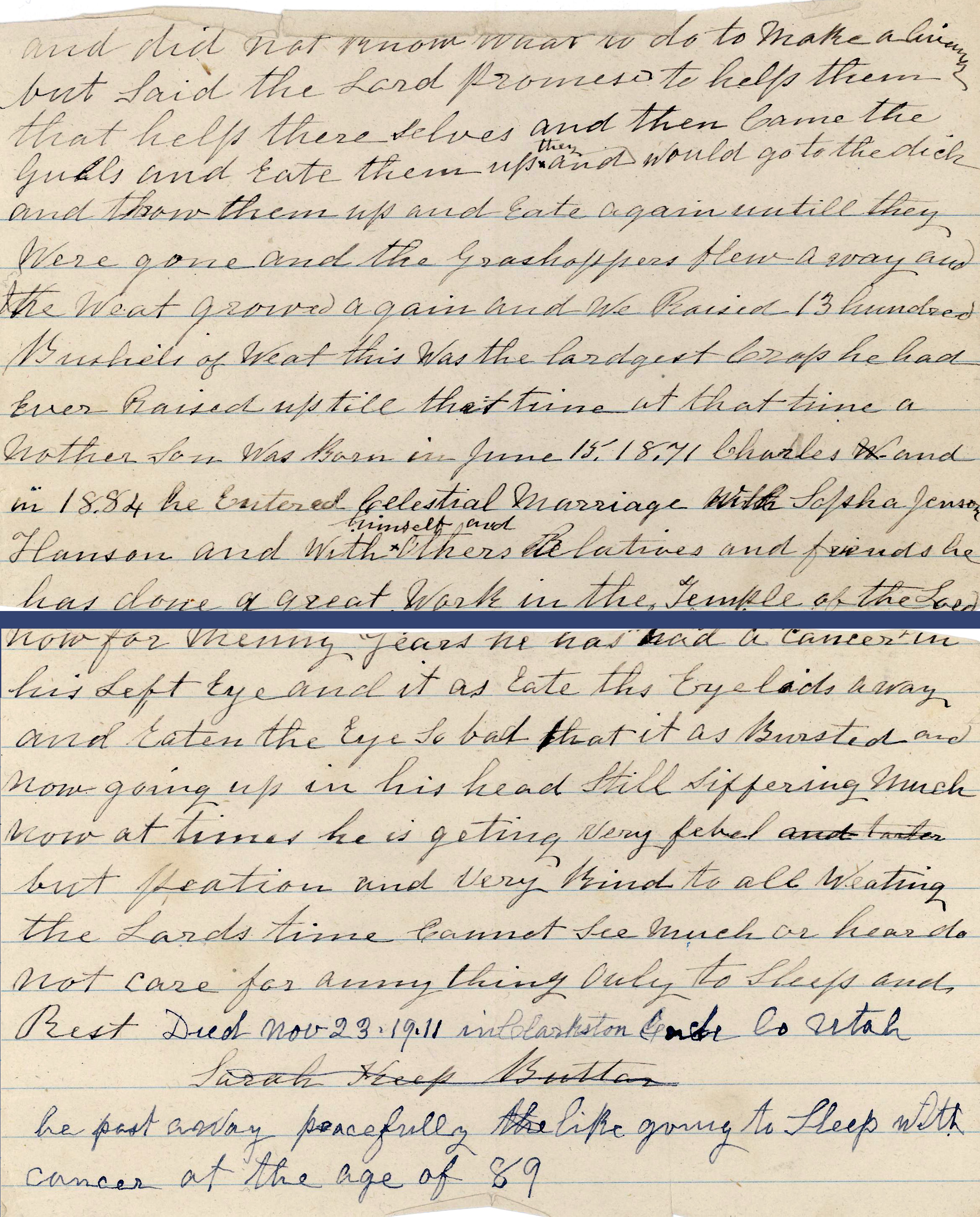
Handwritten biography of David Buttar by Sarah Buttar after his passing
This biography added some other interesting insights, particularly of his death. Sounds like a painful process, even if the final passing was like going to sleep.
Buttar home, Thomas, Elizabeth, Sarah, David Alexander, Mary, James Joseph, Emma Jane, David, and unknown
“A sketch of Sarah Keep Buttars life up to the age of 82 which I Sarah write myself, I was born the 28th of June 1840 at Stroudgreen, Greenham, Berkshire, England. Daughter of James Joseph Keep and Ann Miller Keep.
“I was christened in the Church of England, and learned all the Collicks, Hymns, Prayers and Chants, I can yet repeat some of them. I was naturally religious and when eight years of age the Elders of the Church of Jesus Christ of Latter Day Saints came and stood outside my Fathers gate and preached. My Mother was brought up a staunch Baptist and my Father belonged to the Church of England. Mother didn’t understand the teachings of the Elders as soon as my Father did. One Sunday Morning the Elders came to preach in front of our house and Father took a bench out for all to sit on. Father believed in their teachings and one Sunday morning, 23 July 1848, he crept out of bed and was baptized without any of us knowing it. When he came back mother knew he had been baptized, and came upstairs and told us children to call out “You have been by the Latter Day Saints haven’t you?” Father told Mother if she would go to the Latter Day Saints Church with him he would go to the Baptist Chapel with her sometimes.
“One day they were too late for the Baptist meeting and Father ask Mother to go the Latter Day Saint meeting, and she went with him and soon after she joined the church. After joining the Church they lost everything, their home, and five other houses they owned. Then they had to pay rent, after this the Elders came to our house and held their meetings. Then I was baptize the date being February 1849 the ice was broken for me. I had to walk home on and one half miles under Mother’s cloak in my wet clothes, because the mob was calling my Father, “Curley Keep”, the Latter Day Devil to let a little girl like me be dipped.
“In 1850 we all had the smallpox, my eldest brother James Joseph Keep died from smallpox 25 February 1850, my Mother was also very sick with the smallpox.
“We were very poor and when my baby sister Harriet was born the 8th of March 1850, my Mother had a cancer in her breast and Father wanted to get a Doctor, but Mother wanted the Elders, so my sister and I went for the Elders, they administered to her and anointed her breast and the cancer went away, and she was never bothered with it again, this strengthened my faith in the gospel and I became more religious and what I learned I did not forget. I was taught to learn and repeat verses of the Bible when in Sunday School and at home. As I grew older I traveled much with my Father and his companion. When they went out preaching in the open air I was always anxious to go, and they said I could go if I could sing for them which I did. People gathered to listen to their teachings and many joined the church. My Father and his companion and I suffered many persecutions but the Lord preserved us from our enemies.
“At the age of thirteen I went to London with my father and his companion I sang in the streets of London, we were often told by the police to move on.
“At the age of eighteen I was self willed, and thought about marriage, my Father told us older girls not to get married until we came to the New Valley. Although I had great desire to get to the valley, thinking it would be “Heaven on Earth” yet I thought I would please myself. At this time I had a dream and was shown the route to the valley. The American Elders said when I related it to them that it was truly the route to the valley, in the dream I saw high mountains and the plains, and as I passed on walking I came to a beautiful green meadow, and I heard Heavenly Music and Singing. I saw on the top of the high mountain a very elderly looking man and he was dressed in a long robe, his beard and hair was long and white, he was winding some silver piping on top of the mountain, the sun shown on him so bright that it dazzled my eyes and just at that time a woman passed by me, then I saw a gate leading into the meadow, and there was a gatekeeper, the woman went up to the gate he told her she would have to have her blessing before she could go through, he beckoned to the man on the top of the mountain and he came down and gave her a wonderful blessing he beckoned to the man again and he came and laid his hands on my head and told me to honor my father and my Mother that my days may be long up on the land which the Lord they giveth thee, he said go thy ways and obey they parents in all things. I didn’t think I had as good of a blessing as the woman that passed through before me and when the gate keeper said you can now go into the meadow I said, “I do not want to, for he did not give me as good of a blessing as that woman had, and I did not want to go in.”
“He said, “You had what you deserved,” then I went back and I saw a house where there was dancing and I could hear music, I thought I heard my sister’s voice, and I went up to the door, there were two door keepers, and they gave me a push and said, “You can’t come in here,” I fell down the steps, when I got up I turned to the meadow again and I sat down and cried bitterly, when I awoke my pillow was very wet, I saw that I was going to do something wrong and afterward I knew what it was.
“At the age of twenty five I married against my Father’s and Mother’s wishes and they didn’t know it for six weeks, then to my sorrow I found that my husband had just joined to church to get me, for my Father said I should not marry anyone out of the church, this was his council and I disobeyed him. When I was married my husband told me that it was once my day but now it was his day, he let me know it at a later time.
“In 1866 my Father and Mother were going to the Valley, and I could not go, my husband said if I went to see my Father off he would push me overboard, but the Lord helped me. My Mother and Father told me if I would go with them and leave my husband they would pay me for it, I could see I would never get there the way my husband was acting so I gave my word to go. I left him although it was very hard to part. I kept my word and obeyed my parents, and like in my dream I shed many tears, I did not tell my husband that I was going and he seemed kinder that day then ever before, which made it more hard for me to endure, but I prepared everything as though I was going back home that night, he ask if he should come for me and carry the baby, I said no it might be late when my Aunt leaves, and I may stay at Mother’s all night.
“The next morning finding I did not go home he went to Mother’s and not finding me there he sent a man dressed in pilots clothes to the ship to find me, he questioned me as to where I was going with such a young baby and at that I hardly told him, when he said are going alone, my Mother said “NO” for I was going with my Father and my Brother-in-law, meaning my sister’s husband, he said “OH” and up the companion ladder, I told Mother I was afraid my Husband would come, I passed my baby over to the other side of the ship, I got into the berth of a young couple that had a feather bed in one corner and I crept down behind it. Three policeman came and looked in every berth and did not see me, they were after two apprentices, and four more sisters, and one brother that were leaving husband and wives, they never got any of us, but the two apprentices went back.
“We set sail 23 May 1866 on the American Congress. When at sea we were tossed about and nearly all become seasick. I was blessed by having only three days of seasickness, Father and Mother and my two younger sisters were very sick and my baby caught the whooping cough, having caught cold by being passed about when the policemen were after me. The Lord spared her life and she got well.
“The cook’s cabin took fire, and a little time after the sea was so rough our main mast broke, and the sail went into the sea, next day they fixed the mast, we had a calm and the ship did not move back or forward, but rocked about. We had a Concert on the top deck and enjoyed ourselves. We had heavy fog very often so bad the Captain could not see where we were going, Brother Rider, the President’s counsel was talking to the Captain on the quarter deck and saw the fog lift up he said “What is that?” It was the breakers he saw, but the Captain did not answered, he sprang to the wheel and called, “About ship all hands to the Riggins,” soon the danger was over and the Captain said that in a short time all would have had a watery grave if the fog had not lifted, we were saved by providence.
“When we were on the river the boat took fire, and they carried large fiery sticks past the foot of my bed and threw them in the water.
“We landed in New York the 4th of July 1866, we anchored and saw many beautiful fire works, a ship was set on fire on the sea and with flames coming out of its many windows it was a great sight. Next day we went on the pier and then came another task, we had to pass a man that read our names off when we came to my name, as I was called Sarah Keep, and child, he said “Stop!” Where is your husband, and how do you know he is not here? “Stand Back!” he shouted, I stood back and all the young men passed, my old friend, Will Penny, came and ask me what was the matter, I told him and he told me to come with him and they would not know who he was, I went with him and all was well. We stayed in New York three weeks. My sister Lucy’s baby was born there, then came another task, my Father did not have enough money to take me on to the valley, I sold my wedding ring to buy my baby a pair of shows, and a hat, and also to pay for an advertisement. I advertised to be a wet nurse, my Mother was to take my baby on to Zion, and I would follow. I went to the office and engaged at twenty dollars a month, when I was returned home I met my Father, he said he had been to the office of Brother Bullock and Thomas Taylor who was looking after the emigrant companies and they told him not to leave me there in a strange land if I had left my husband for the gospel, and as my Father didn’t have the money they said the church would take me and I could pay it back when I got to Zion and I had the money to do so. Father decided I could go on with him if I wanted to, but I thought I could save enough to pay my own way, I was very glad when it was time for the boat to leave. When we were on the train the wheels caught fire and we were pushed into another car as if we were sheet, for we were just emigrants.
“While crossing the plaints with oxen teams the Cholera broke out, and about seventy one died, many were buried in a quite or sheets, the wolves would howl around at night, and perhaps dig up the dead that were buried.
“One night about twenty five or thirty Indians came to camp, they were on the war path, it frightened us very much, for we were afraid we would surely be killed, they had scalps of women’s long hair hanging from their tomahawks, and their belts were filled with arrows and bows in their hands, they had a letter which they gave to the Captain to read, he called, is there anyone in camp who can read the Indian language, a young sister by the name of Emma who had left her husband and two little girls said ” I can read the Indian Language.” She had learned to read it when her husband was a soldier, and he had taught her to read it, she read the letter, and was pleased the Indians, the Captain pitched a tent inside the ring of wagons, and fed them they sang all night, and followed us all the next day calling “We Want White Women,” at last they left us.
“When traveling the Captain would take my baby on his horse, and tell me to talk on, and the teamsters would pick me up, and take me in their wagon and they would ride on the tongue of the wagon, they would tell me to sing to them and they would walk rather than see me walk as I had sore feet.”I used to wash my baby’s clothes in the streams when we camped, and the teamsters would tell me to dry my clothes by the fire, they let me bake my bread in the skillet after their baking was done. Sometimes I had only bread or small piece of bacon to nurse my baby on.
“I am thankful I am here, and I have learned what I came here for, I can say I do know that the Lord has been with me and give me more than I deserve, but he has promised “He that leaves Father and Mother, Husband or Wife for the gospel, shall receive a Hundred Fold.” I can now see there was work for me to do for the dead and the Lord has blessed and preserved my life many times to do this work. I am very thankful to him for it.
“I traveled first with Father and Mother, and two Sisters in Pratt’s Company, then Captain Inkley came to bring the sick in, and I came with his company I left my parents, and arrived in Salt Lake City at conference, the fifth or sixth of October 1866. In two weeks I hired out to a sister’s home to nurse her as she was sick. I got a cold in my eyes, and it was so terrible that I went to my sister Mary’s in Lehi until they were better. Brother David Buttars came there on business and told me he knew what would cure my eyes if I would do it. He told me Brother Brigham Young’s remedy. Was to dig down a little over a foot deep in the soil mold the soil and lay it on my eyes at night in a fine cloth, I did it and it healed my eyes in a week.
“Mr. Buttars came again and asked my sister and I to his daughter Marjory’s Wedding Supper. I went and when I was going home he wanted to go with me and carry the baby, he did so, and that night he ask me to become his wife, that was the pay he wanted for telling me what would cure my eyes, in less than three weeks we were married in my sister’s house by the Bishop’s counselor in Lehi, I was twenty six years old and had one child, and David was forty four and had five children. Sisteen months later I had my first baby girl, Sarah Isabelle two months later 15 Jun 1868 she died and was buried in the garden until David came home, then she had been dead eight days, David and I buried her ourselves in the graveyard at Lehi Utah.
“My husband had been to Clarkston to buy us a home, this was in June 1868, and in October 1868, we moved to Clarkston, Utah.
“That fall the grasshoppers were so bad that we but up cow skin and made a rope which three of us dragged up and down the garden in order to make the grasshopper fly away, and keep them from cutting the grain. There were so many grasshoppers that when they were flying they would darken the sun.
“When we were on our way to Clarkston, we were just crossing the mountain top, and the tongue of the wagon broke, the horses and the cattle went off and were lost for five days travel time, during this time the mail coach with President John Taylor passed us and nearly tipped over, because we could not get out of the way, we started again for Clarkston and arrived at the end of October 1868, and I have lived here since.
“I was the first milliner in Clarkston, I made Straw hats, and straw braid, and straw trimmings for the hats. In 1869 my third daughter was born. Two more years we fought the grasshopper and crickets. In 1871 there were seven crowds of crickets and three crowds of grasshoppers that came and ate everything up. On the 15th of June 1871 my first boy, Charles, was born, and eight days after on the 23 of June 1871 the seagulls came and ate all the grasshoppers and crickets.
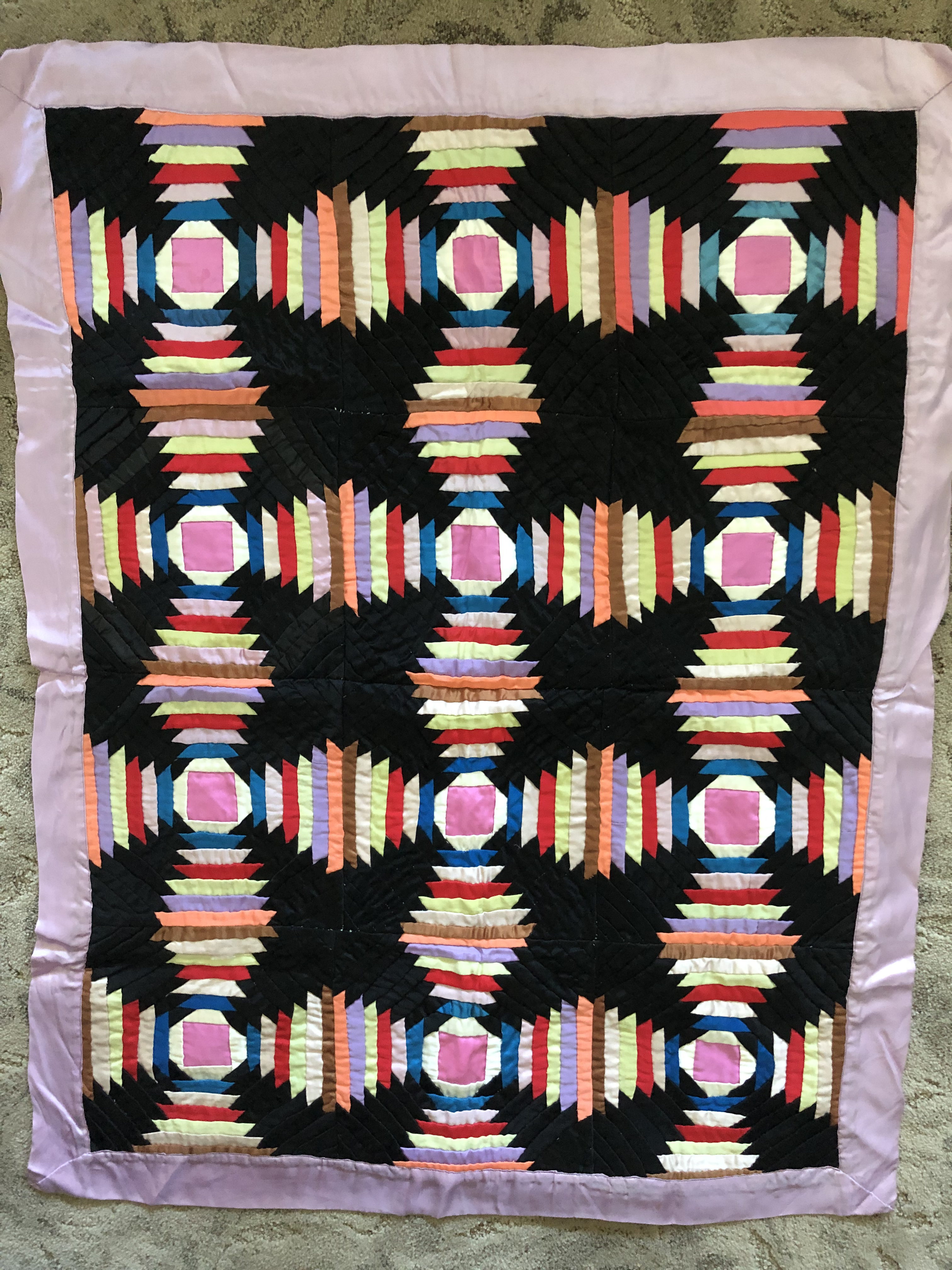
Baby quilt made by Sarah Buttar
“I joined the Female society in 1869 at Clarkston, and was a teacher for many years. I was the President of the Primary for six years, and a teacher for about eighteen years. The first Prayer circle in Clarkston was in my home, I was very much delighted and it was kept there for three years and four months. Then it was moved to the New Tithing house. I was married to my husband David Buttars 16th December 1866 and was sealed to him in the Endowment House in Salt Lake City, Utah 14 December 1868.
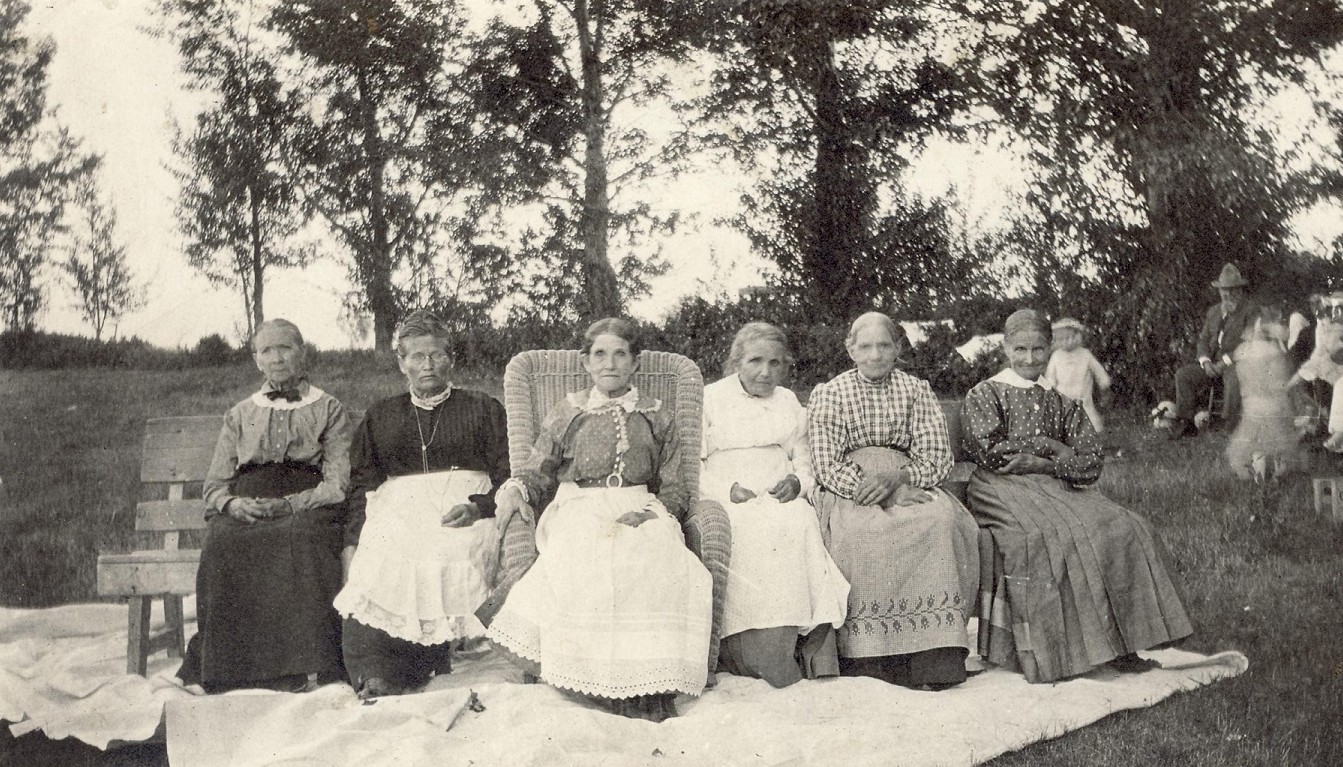
Clarkston Ward Sisters: Annie Heggie, Marie Anderson, Sarah Buttar, Jane Godfrey, Hannah Thompson, Elizabeth Loosle
“In 1884 my husband took another wife. We lives in that Celestial order for twenty three years. I have worked in the Salt Lake Temple, and the Logan Temple for the dead. I have worked and paid for about two thousand names. I have had my second Endowments many years ago. I have seen and talked to Martin Harris, one of the three witnesses, who is buried in the Clarkston Cemetery, I am a member of the Camp of Daughter’s of pioneers named in his honor, I have planted flowers on his grave.
“I have been near drowning two or three times. Once on the ship and twice in America, once when I was crossing the Bear River Bridge with my husband and relatives, we were returning from doing temple work, the bridge broke and we all went into the river, I was laid upon the river bank for dead, being crushed with the broken timber, I regained my consciousness, that was on the 30th of May 1899.
” I have had nine children five girls and four boys, three are dead at the present time, Eight of them are married and have families of their own. I am now Eighty two years old. I am writing this in March 1923.
“Sarah Keep Buttars died 7 October 1935 at the age of ninety five. SHe was active until a few days before her death. She attended the Cache County Fair in September 1935 and won a prize for her Fancy Hand Work and the honor of being the oldest pioneer in Cache Valley attending the fair.
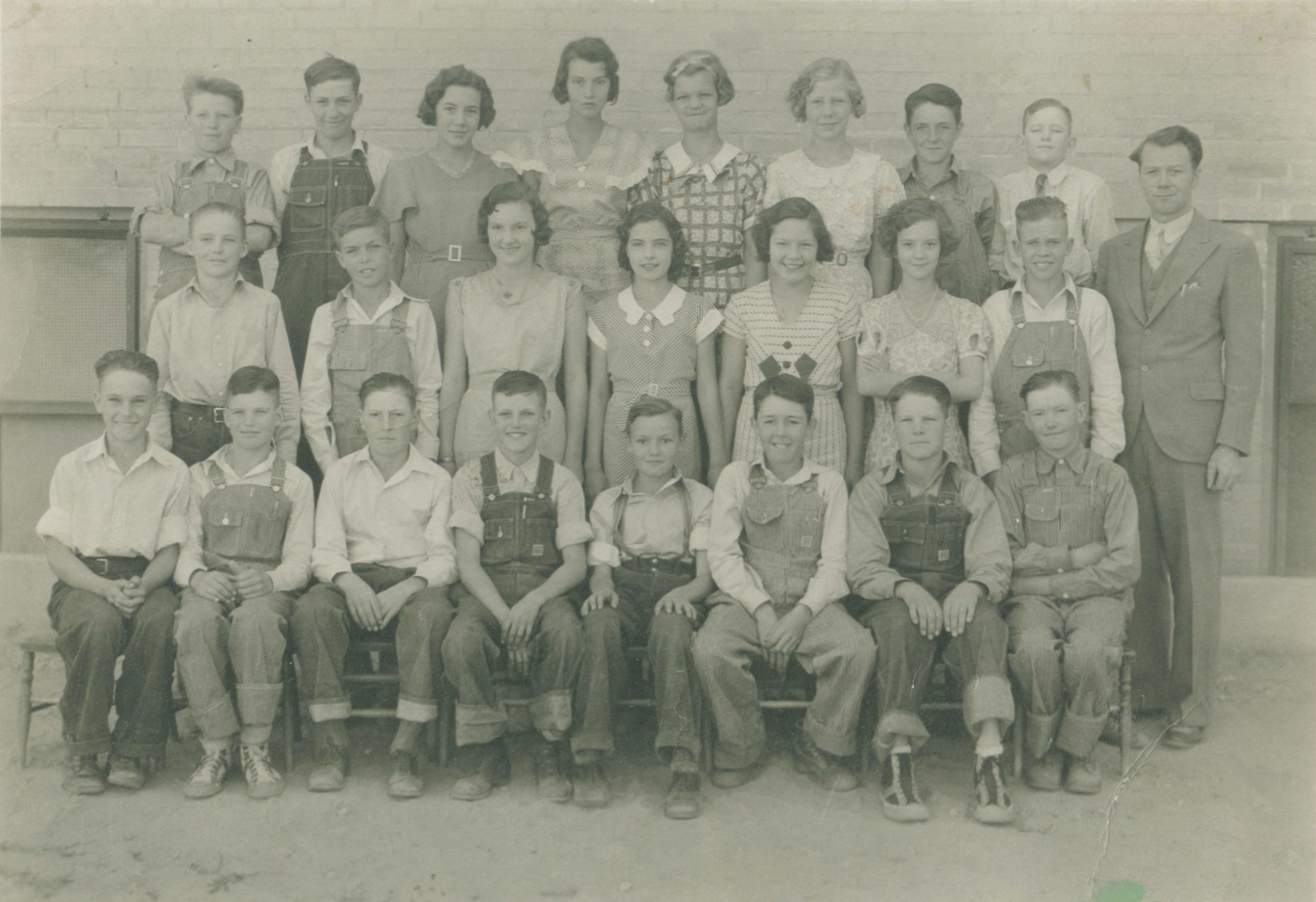
Back (l-r): Wayne Taylor, Frank Poulsen, Miriam Weatherston, Margaret Freestone, Ezma Musgrave, Dorothy Richardson, Milo Ross, Earl Hipwell. Middle: Ray Charlton, Junior Taylor, LauRene Thompson, Jean Etherington, Cleone Carver, Myrtle Hampton, Eugene Maw, Van Elliot Heninger. Front: Keith Hodson, Orlo Maw, Howard Hunt, Ellis Lund, Delmar White, Ted Christensen, Lyle Thompson, Ivan Hodson.
Here is another photo grade school photo, this one from Grandpa’s 8th Grade year. This is a much clearer picture, and not a photocopy. This was taken outside the old Plain City School in Plain City, Weber, Utah. This is a clearer picture than the one I had previously shared. I am sharing this in honor of what would have been his 105th birthday this week.
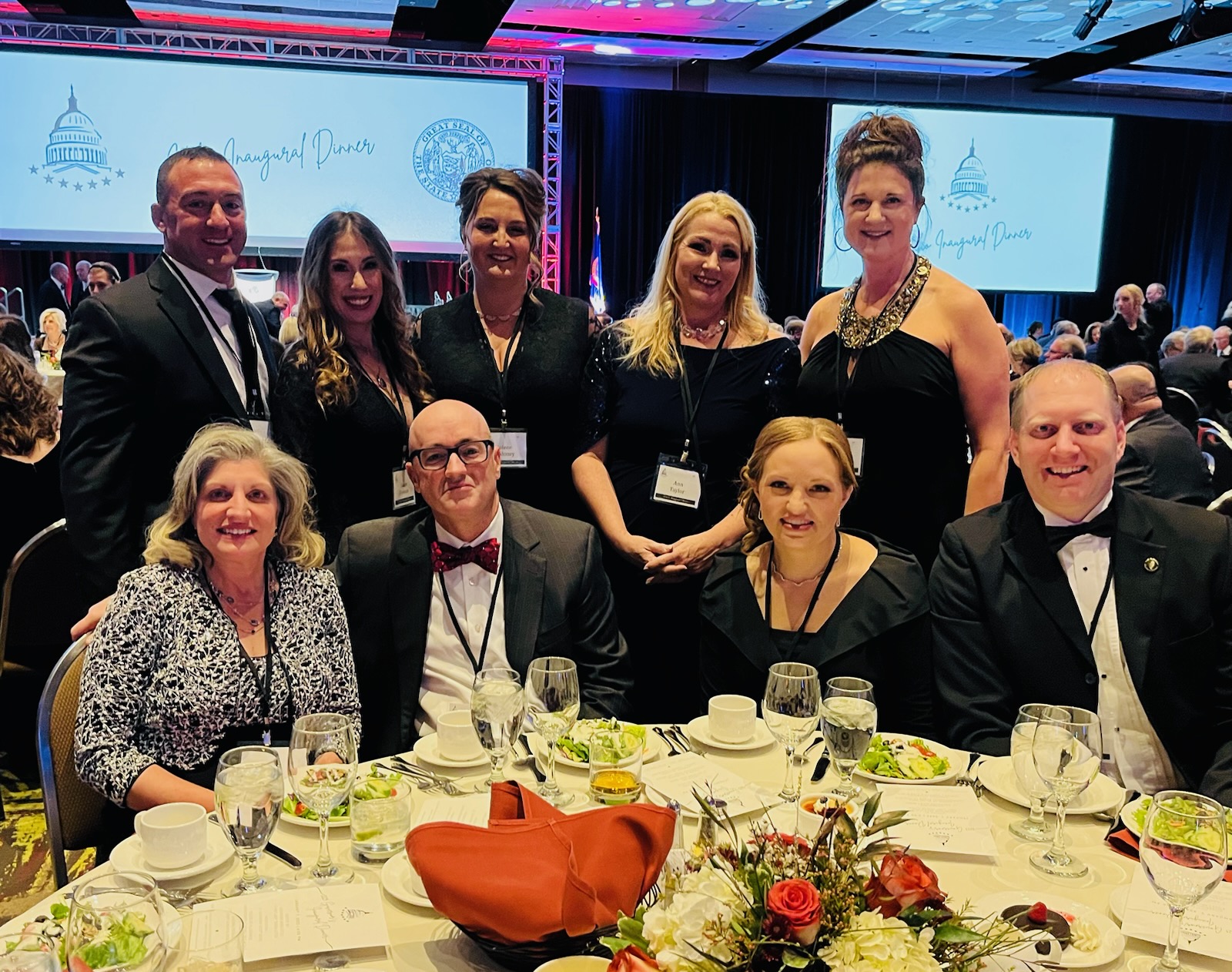
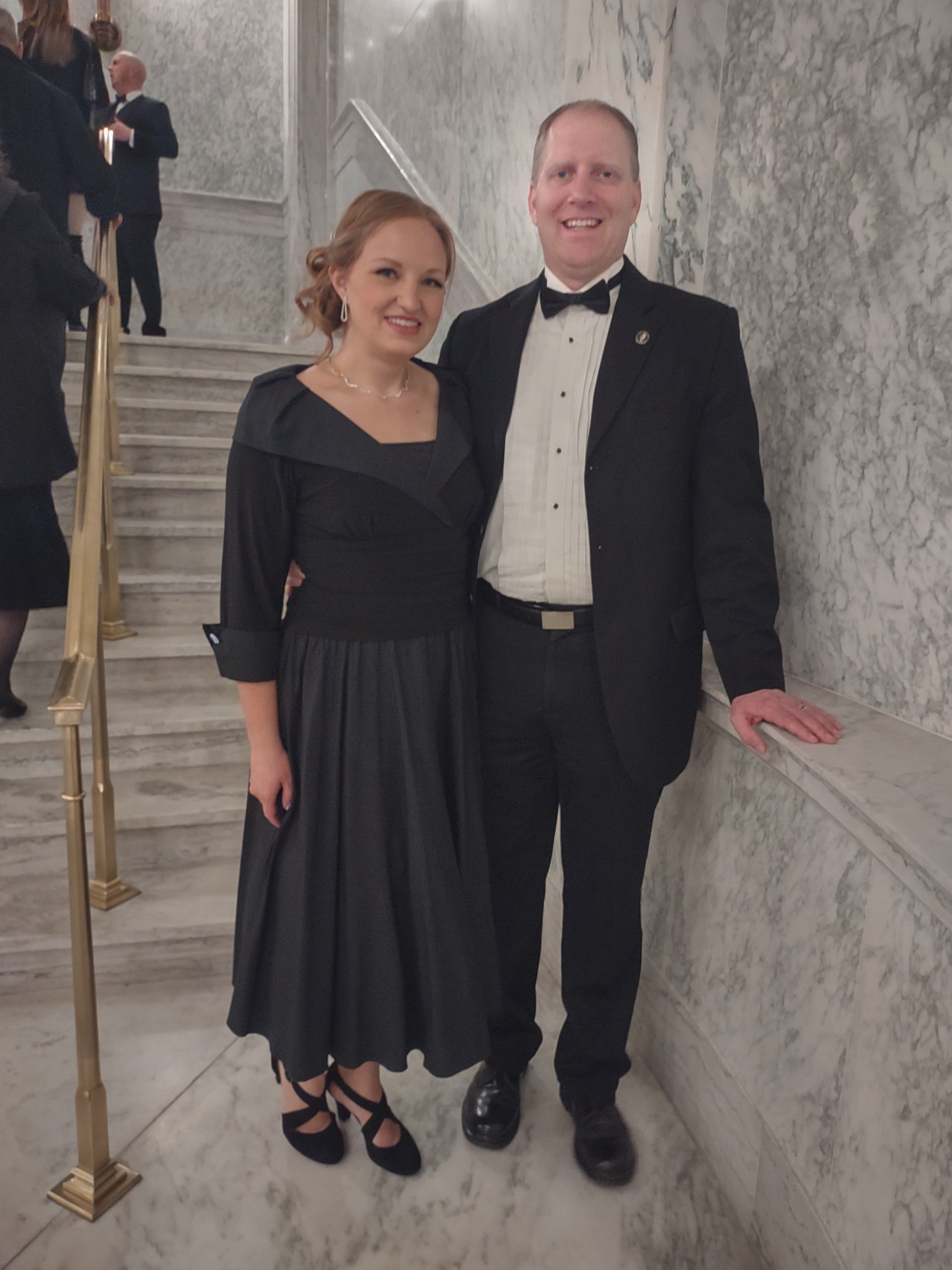
Standing (l-r) Scott & Sarah Erekson, Jolene Maloney, Anne Taylor, Teresa Molitor; Seated: Trish and Tony Geddes, Amanda and Paul Ross
This is an election year. All our Idaho Constitutional Officers are up for election again. I hope some great candidates will step forward to run.
Amanda and I were fortunate to attend the Inaugural Dinner in January 2023. Many who were working on the new Idaho State Public Defender legislation were invited to attend. It was an honor.
We also walked up to the Capitol afterward for some of the festivities there.
What will the inauguration in January 2027 look like?
Amanda and Paul Ross in the Idaho State Capitol – Boise, Idaho
Extra points for those who recognize my lapel pin…
As I worked through the photos of Dave and Betty Donaldson, I stumbled on some pictures sent from Dad. Dad, Milo Paul Ross, attended the 1957 Boy Scout Jamboree in Valley Forge, Pennsylvania. I thought I would share those photos along with some other items I have scanned related to that trip. Since there were a couple of photos from the 1958 High Adventure Trip, I thought I would include those too.
First, be aware that the Great Salt Lake and Lake Bonneville Councils published a book about their trip. “Onward for God and My Country” was the motto. I have scanned the entire book – it is provided below.
The book says the trip occurred in July 1957. The book provides plenty of photos of the highlights. These few photos show what Dad thought was interesting enough to take pictures.
The trip took them east through a variety of states. Included was Chicago, Detroit, and Palmyra. Stops included the Sacred Grove and Smith Farm. Albany, Springfield, Boston, and New York City.
Dad does not recall the names or even knowing anyone in the photos at Jamboree.
I remember Dad talking about the Statue of Liberty. They climbed the stairs to the crown. He also indicated that at that time they let some of them climb to the torch. It was a very memorable experience. He also mentioned the Empire State Building and Independence Hall in Philadelphia. Vice President Nixon addressed the Scouts.
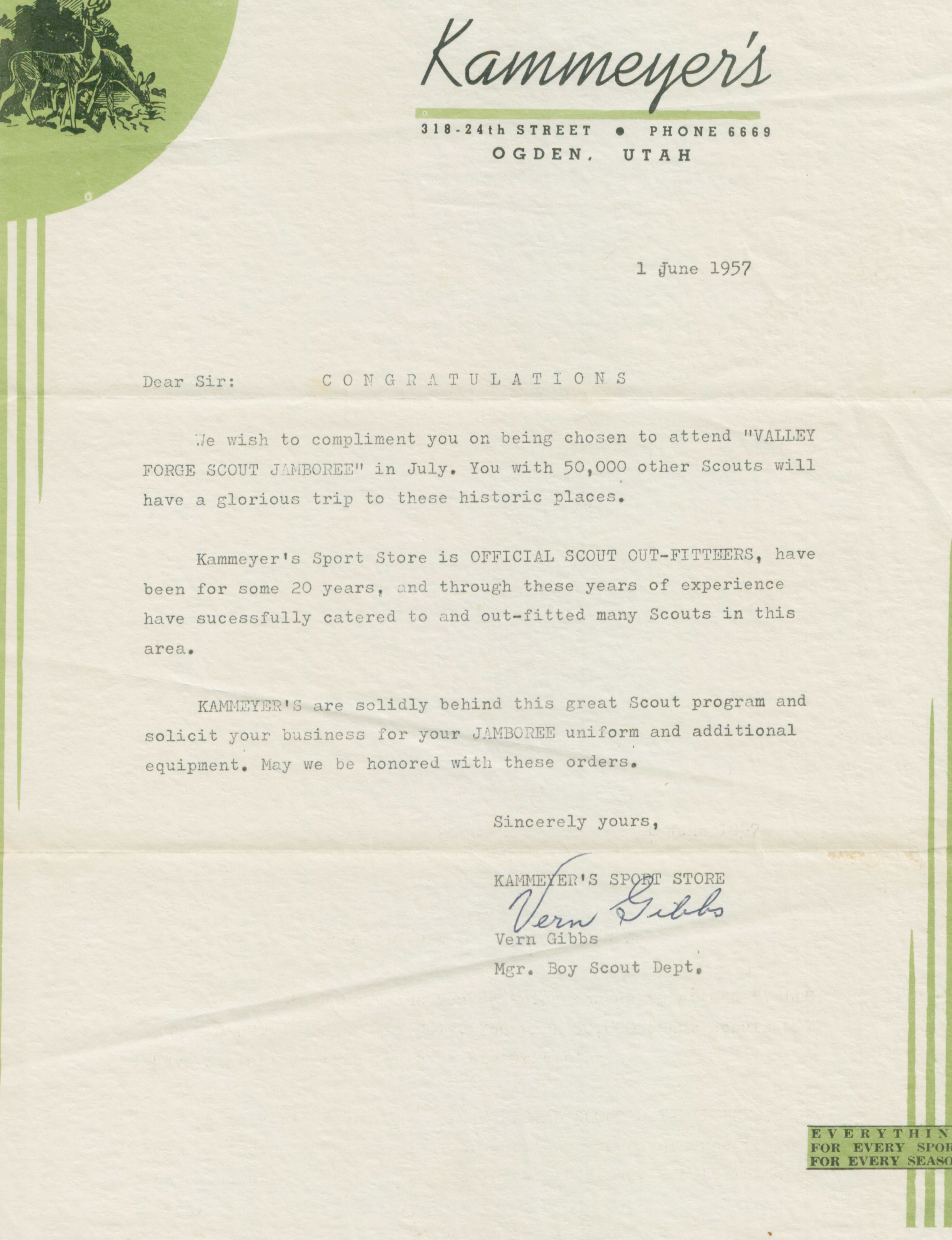
Kammeyer’s supported the Jamboree.
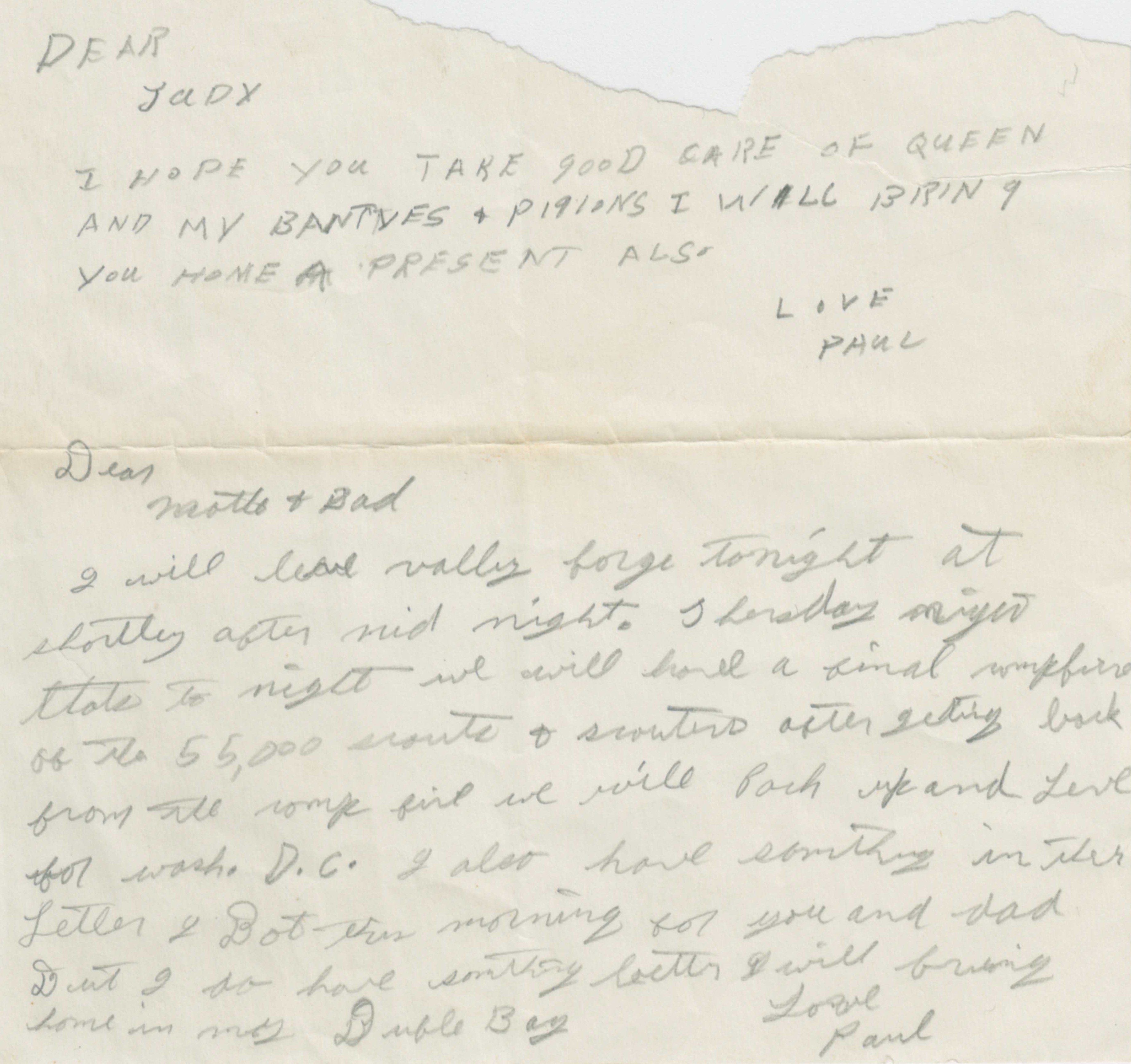
For those LDS Scouts, Harold B Lee and Delbert L Stapley spoke to the boys on Sunday. Here is a letter Dad wrote home while there.
I previously wrote about Dad and scouting. Here is his Eagle Scout picture.
Milo Paul Ross achieved Eagle Scout
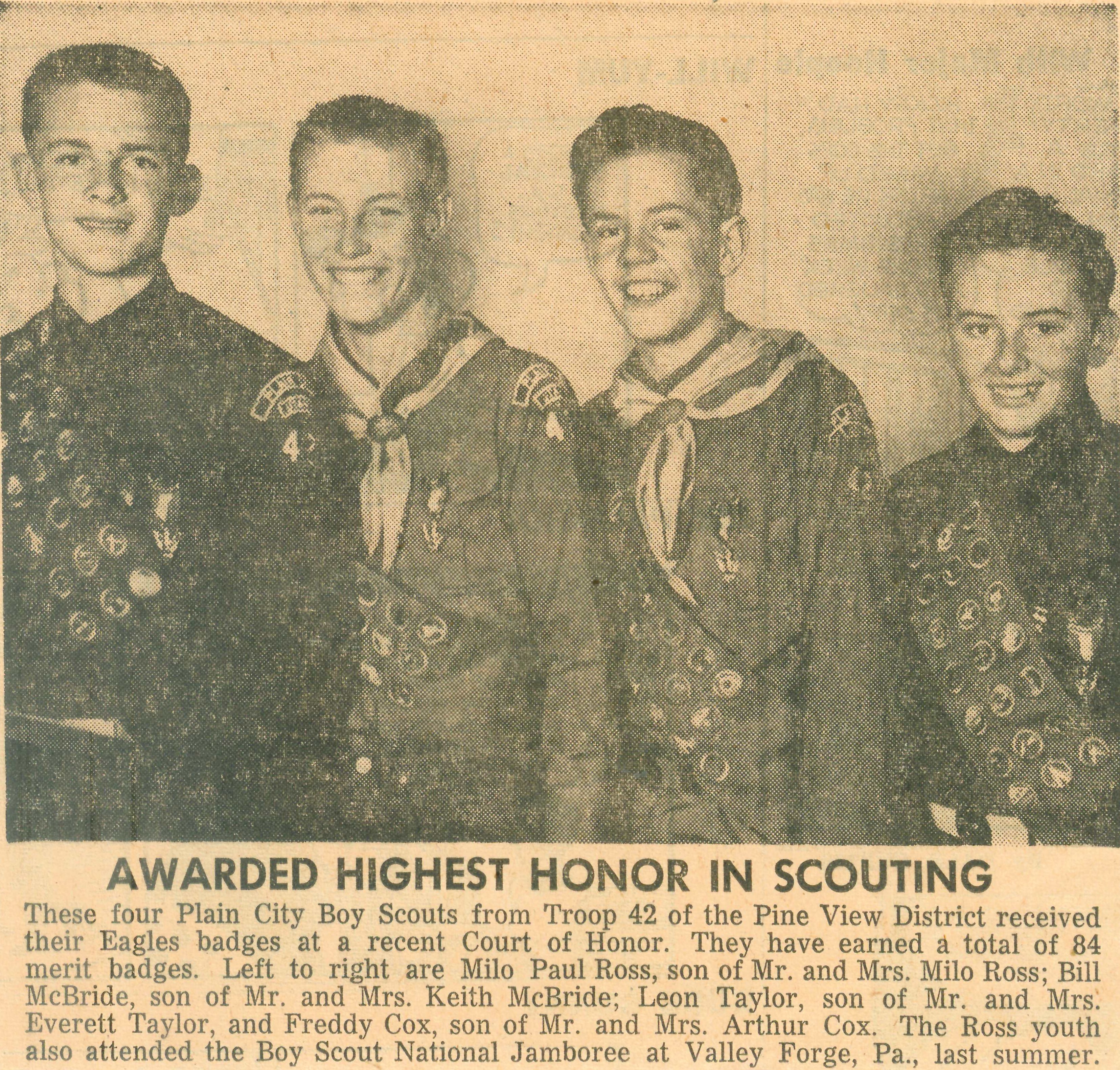
Here is a note Grandpa made about this picture.
Milo Ross, Bill McBride, Leon Taylor, Freddy Cox Eagle Announcement
Milo James Ross commented about Milo Paul Ross receiving his Duty to God award on 27 April 1959
Duty to God Award
Letter from Church Headquarters
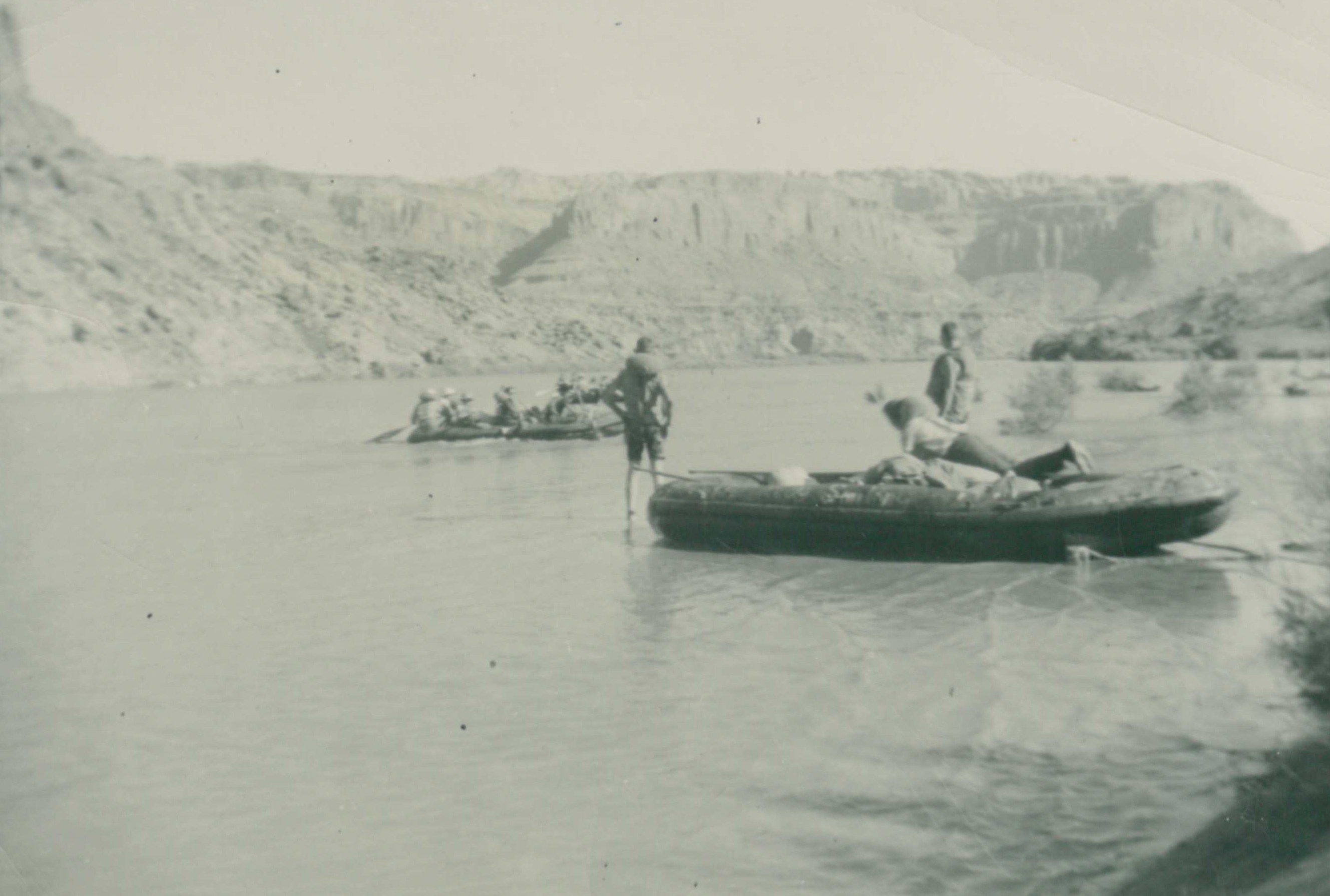
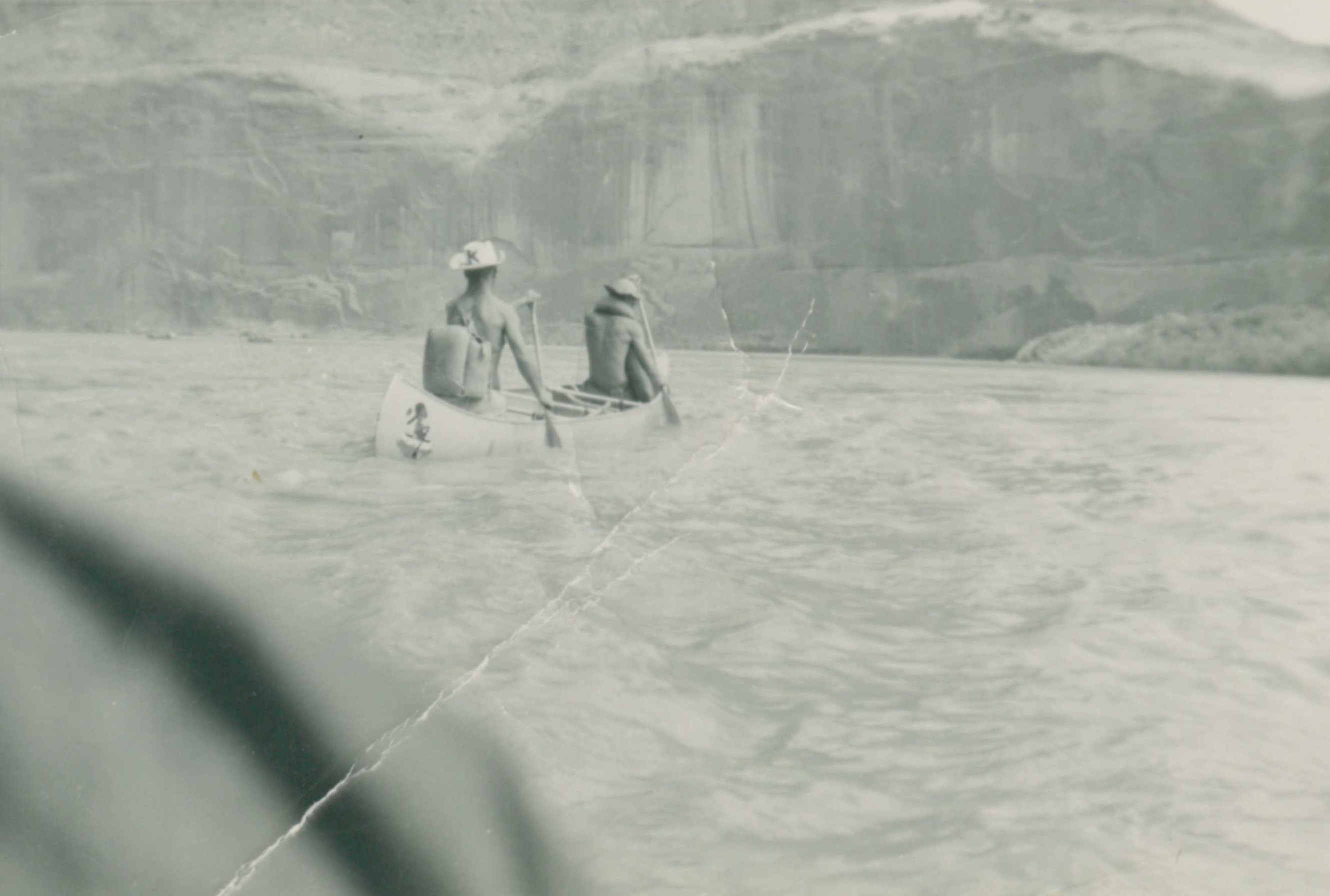
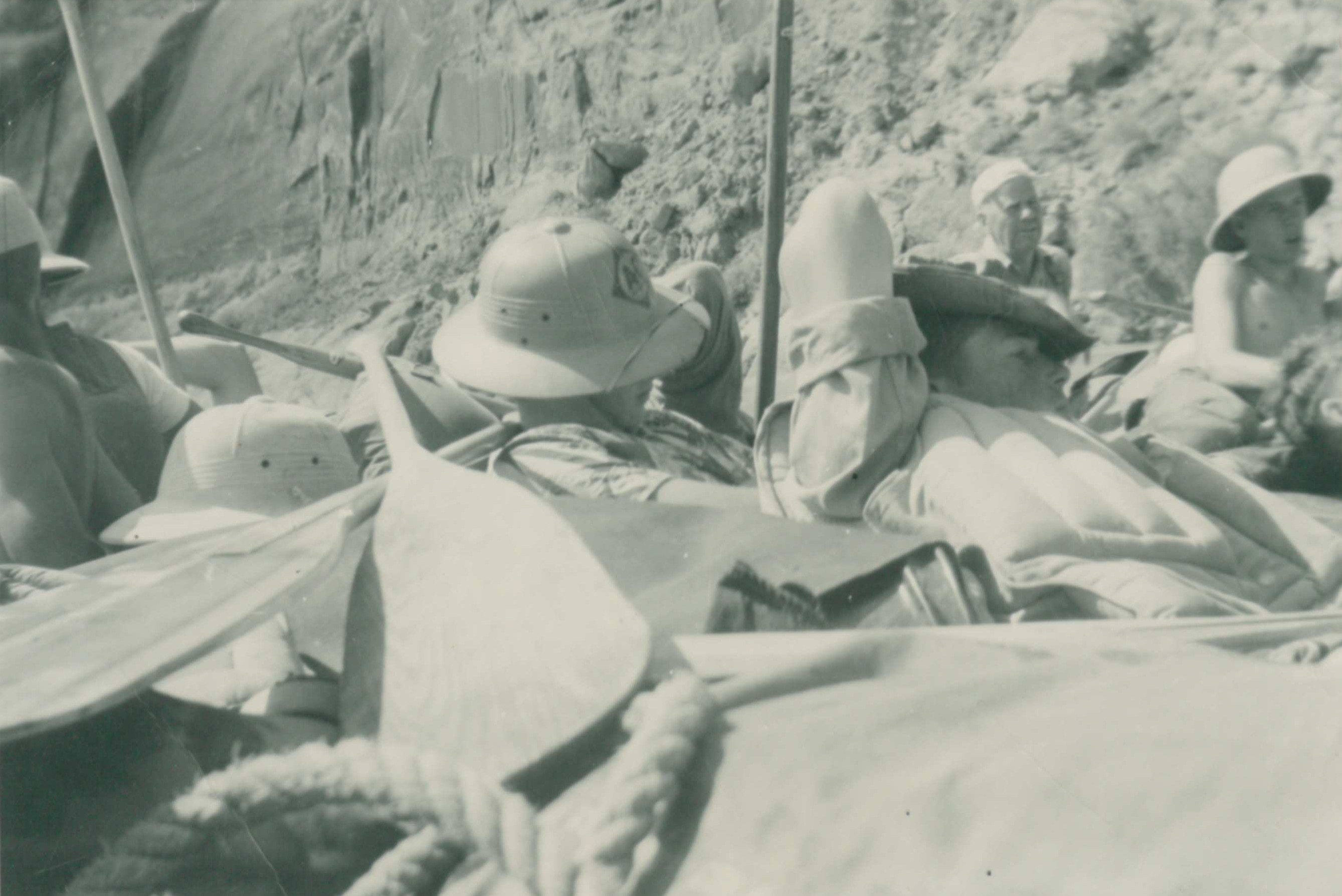
Here are a couple of the photos from the Colorado River rafting trip. Dad thinks there are more photos. He does not remember or recognize any of the individuals in the photos.
Dad remembered they had to pull out of the river to go around the Glen Canyon Dam construction.
~
~
~
~
Both of these were trips of a lifetime. Neither have been forgotten.
In honor of Dad’s 82nd birthday, I am sharing these photos.
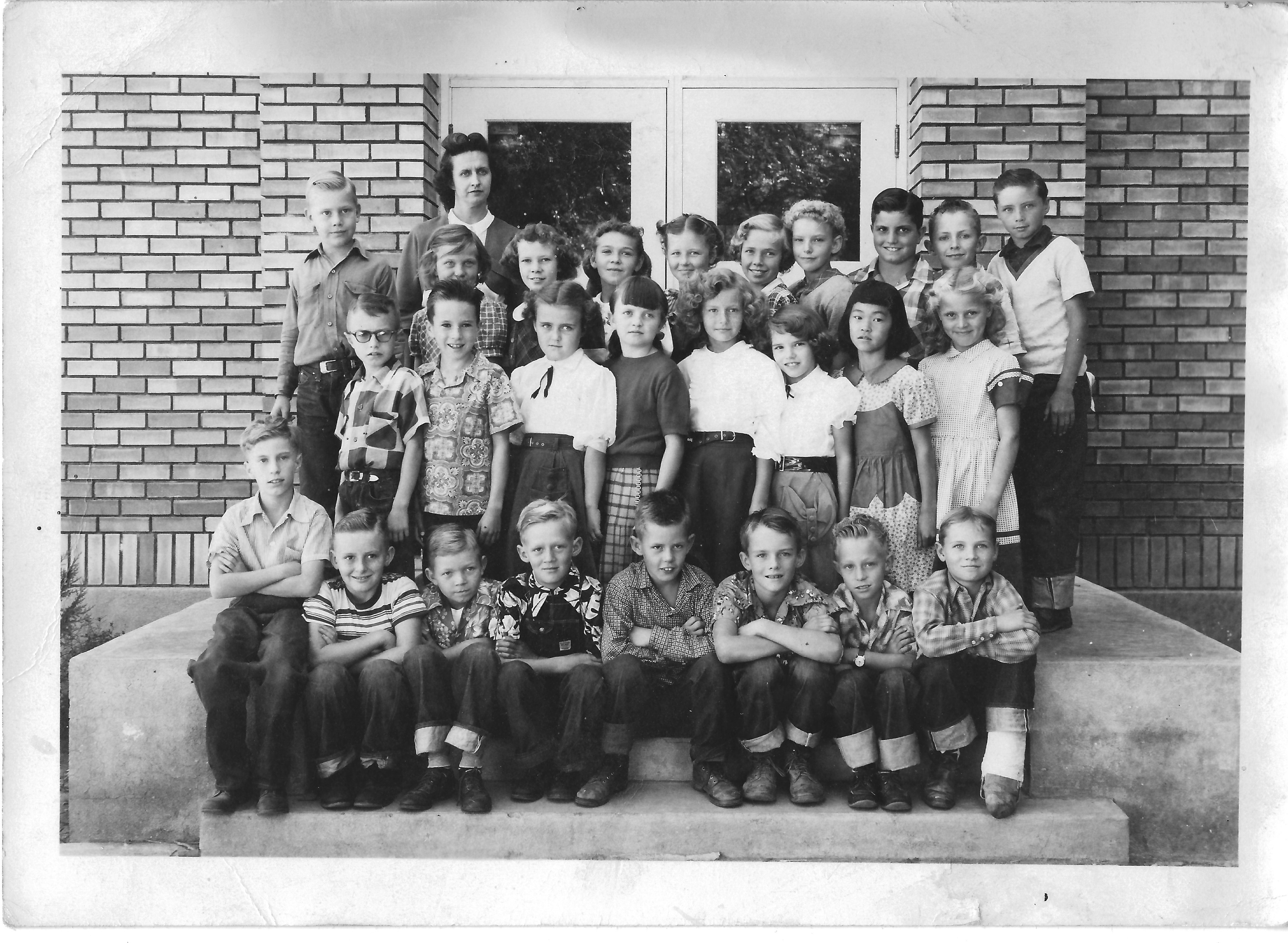
After Dad’s first wife, Vicki, passed away, most of her photos and other documents were scanned. Found in those documents were these two class pictures for Dad. These are for his 1952 and 1953 class years. Since he graduated in 1961, these are likely his 3rd and 4th grade pictures. He attended Plain City Elementary in Plain City, Utah.
Back (l-r): Gary Butler, Frances Rochell, (unknown teacher behind Frances), Linda Knight, unknown, unknown, unknown, unknown, Kenneth Clark, unknown, Kenneth Wayment; Middle: unknown, Kent Hodson, Elaine Rogers, Connie Poulsen, Kay East, Carole Carver, May Endow, unknown; Front: Dean Allred, Fred Coy, unknown, Ernest Hansen, Leon Taylor, Milo Ross, unknown, unknown.
Back (l-r): Carol Wheatley, Connie Poulsen, Austin McWilliams, Mr. Leslie Gerald Bundy, Kenneth Wayment, Kenneth Clark, unknown, Cleora Meyerhoffer, unknown, Gary Butler, Donna Mae Jensen; Middle: Elgie Post, Elayne Rogers, May Endow, unknown, Frances Rochell, Linda Knight, Carole Carver, Kay East, Deanna Slater; Front: Kent Hodson, Larry, Dean Allred, Fred Coy, Leon Taylor, Milo Ross, unknown, Jeff East, Ernest Hansen
Mr. Leslie Gerald “Jerry” Bundy (1929 – 1999)
Ms. Emma Walker Munson (1918 – 1992)
Dean Allred (1943 – alive)
Ilene Bingham (1943 – alive)
Gary Butler (1943 – alive)
Carole Carver (1943 – alive)
Kenneth Clark (1943 – alive)
Fred Coy (1943 – alive)
Jeff East (1943 – alive)
Kay East (1943 – alive)
Maye Endow (1943 – alive) married Bothwell
Ernest Walter Hansen (1943 – 2010)
John Kent Hodson (1943 – 2022)
Donna Mae Jensen (1943 – alive)
Linda Knight (1943 – alive) married Charlton
Austin McWilliams (1943 – alive)
Cleora Mae Meyerhoffer (1943 – 2013) married Oliver
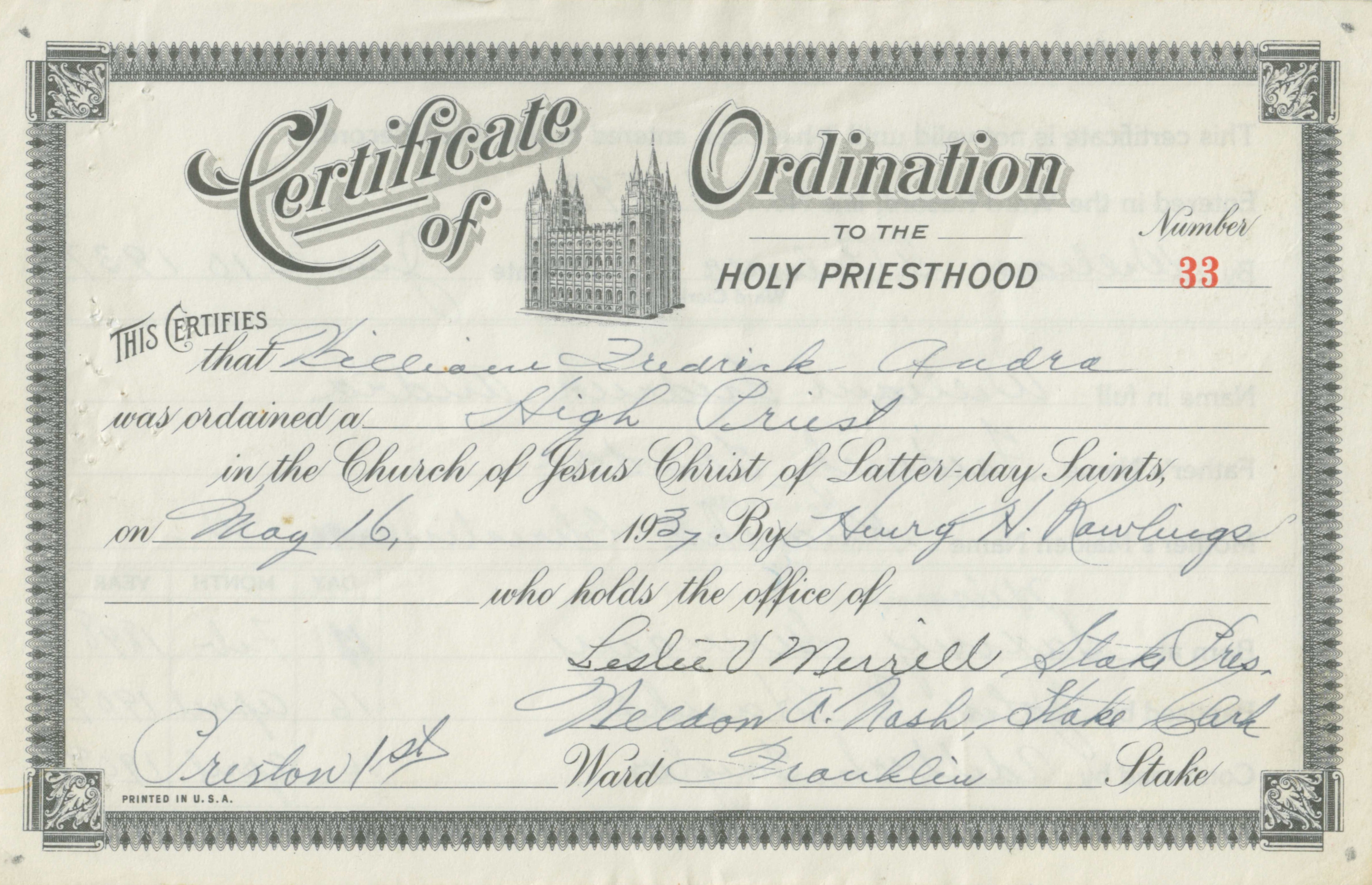
Working through the family history book of Golden Andra that was given to me, I opened a page to scan some photos and found a surprise. Behind that photo were some ordination certificates. These are originals. I thought I better get them scanned and preserved. I also uploaded them to FamilySearch and got them linked with the names in the documents.
I think they are valuable for family history. They are also a peek into church history. This gives us the missionaries who baptized and confirmed my Great Grandfather in Germany. I have provided some limited biographies at the end.
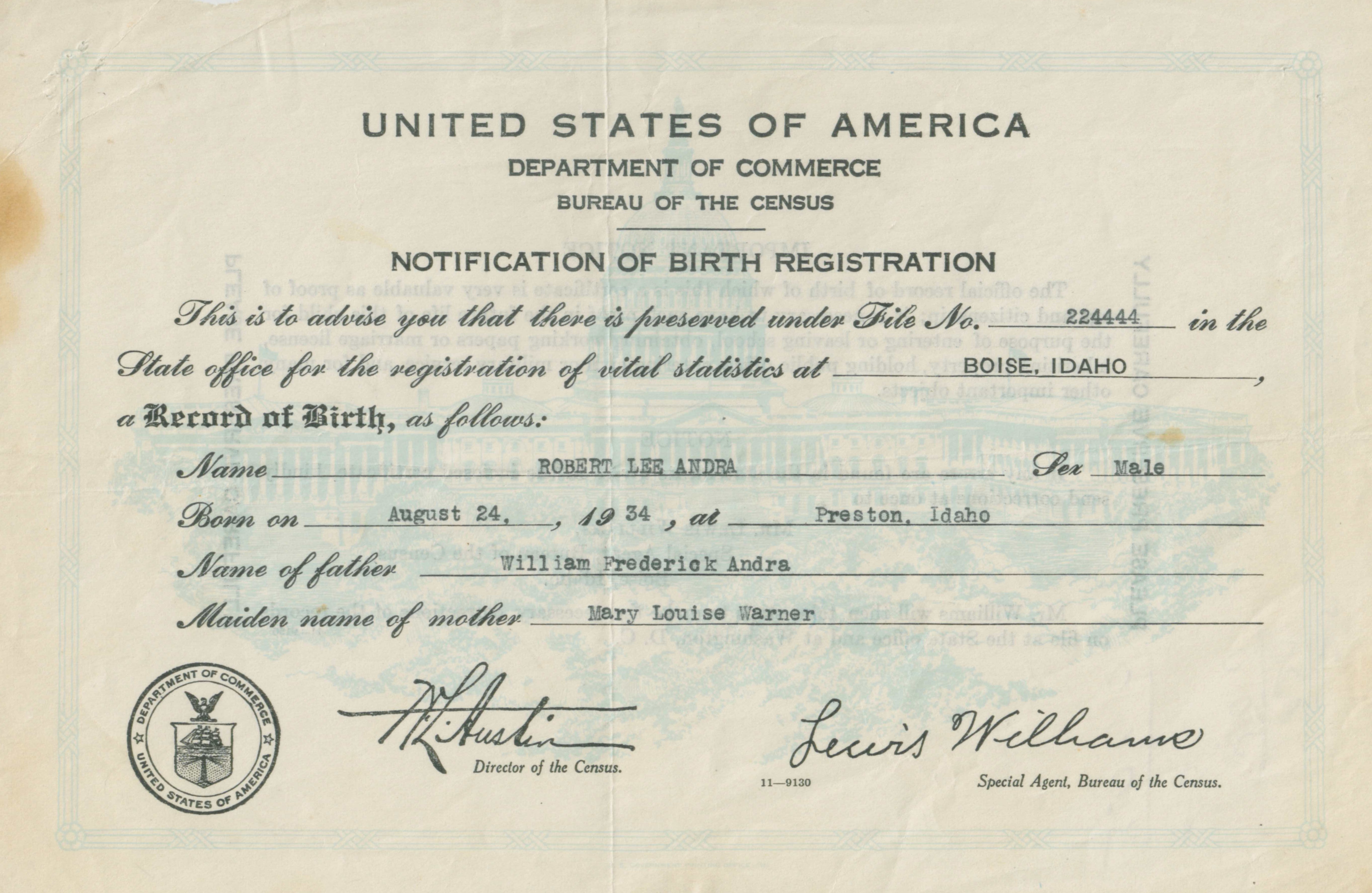
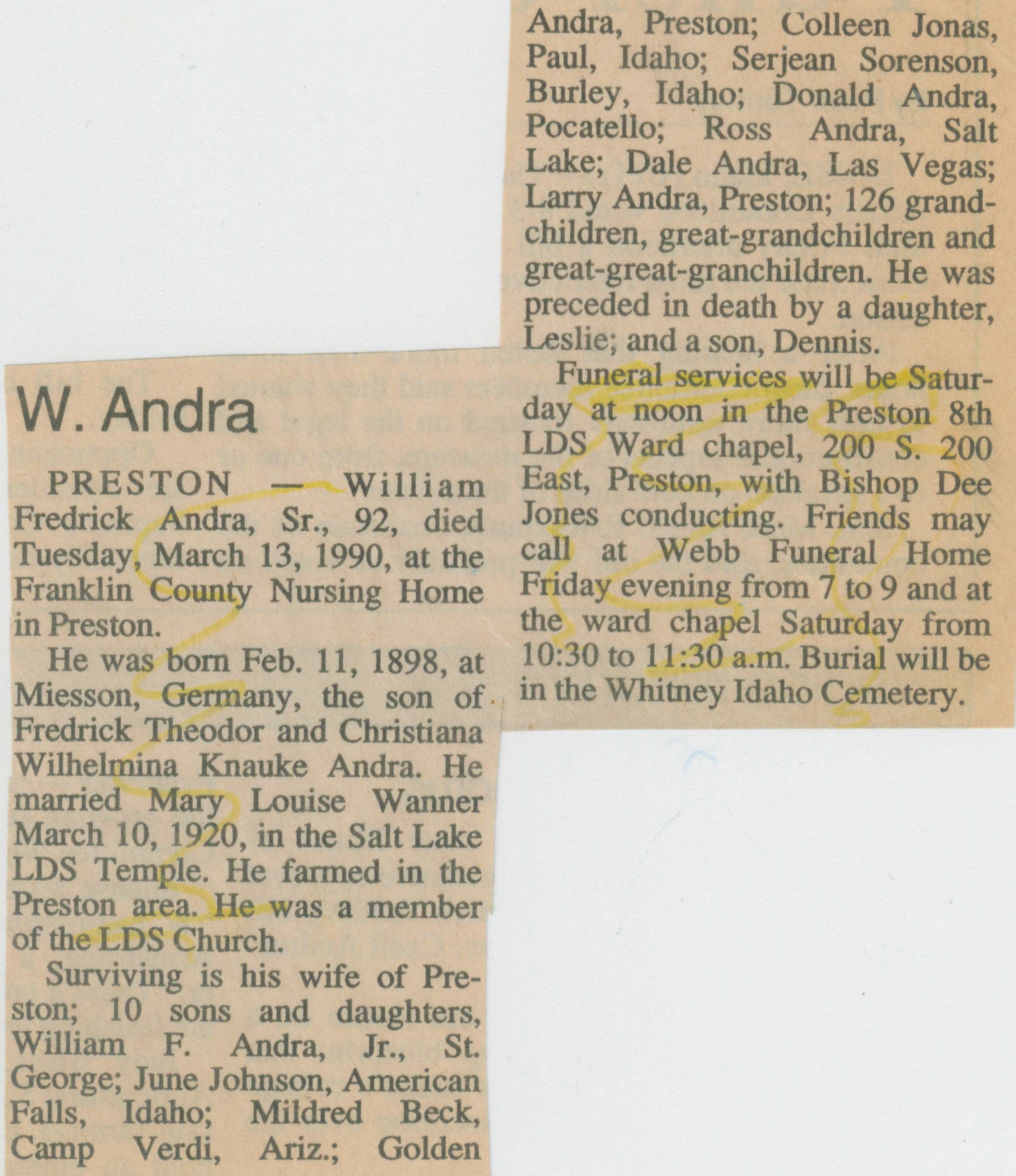
Also an original Notification of Birth Registration for Robert Lee Andra, son of William and Mary, who died at birth. I am not sure why the United States Department of Commerce is issuing this Notification, or the Bureau of the Census. There is some history behind this I am not aware. Last, a copy of William’s obituary.
Priest Ordination Certificate (Front)
Priest Ordination Certificate (Back)
Elder Ordination Certificate (Front)
Elder Ordination Certificate (Back)
High Priest Ordination Certificate (Front)
High Priest Ordination Certificate (Back)
Robert Andra Birth Certificate
I had to do some history on individuals listed on the certificates. Some fascinating individuals, obviously some of them local church leaders.
James Richard Bodily – born 11 February 1872 in Hyde Park, Cache, Utah – died 12 April 1967 in Preston, Franklin, Idaho
Wilford Woodruff Emery – born 16 October 1880 in Salt Lake City, Salt Lake, Utah – died 10 September 1954 in Salt Lake City.
John Edward Hanks – born 30 August 1877 in Salem, Utah, Utah – died 5 July 1970 in Salt Lake City.
William Gibson Palmer – born 16 July 1884 in Croydon, Morgan, Utah – died 15 May 1977 in Preston.
Henry Helaman Rawlings – born 8 April 1893 in Fairview, Oneida, Idaho – died 14 February 1984 in Fairview.
Adelbert Augustine Taylor – born 9 April 1883 in Springerville, Apache, Arizona – died 15 November 1948 in San Felipe de Híjar, San Sebastián del Oeste, Jalisco, Mexico.
Luther Hovey Twitchell – born 17 October 1878 in Salt Lake City – died 15 April 1962 in Bountiful, Davis, Utah.
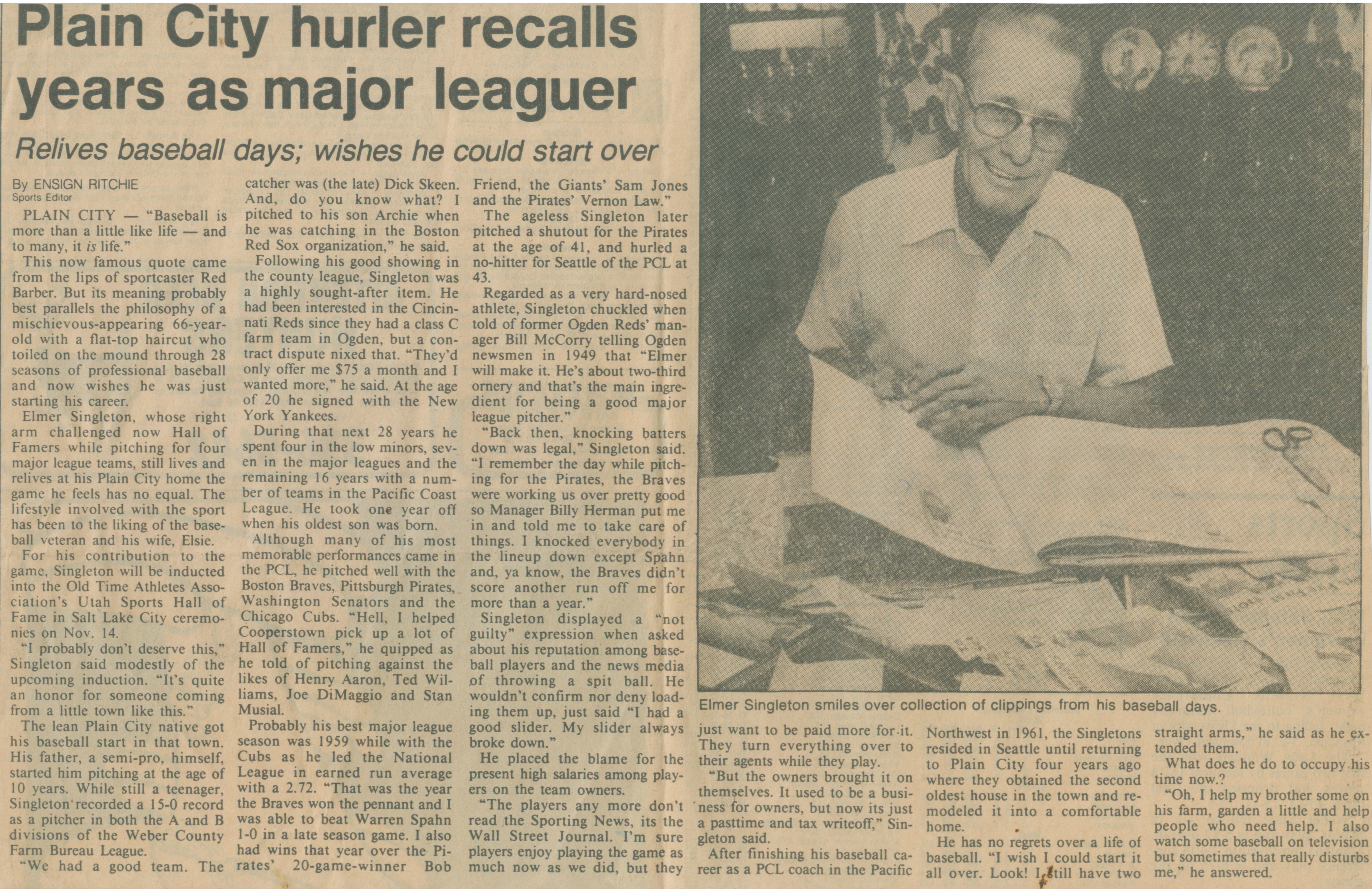
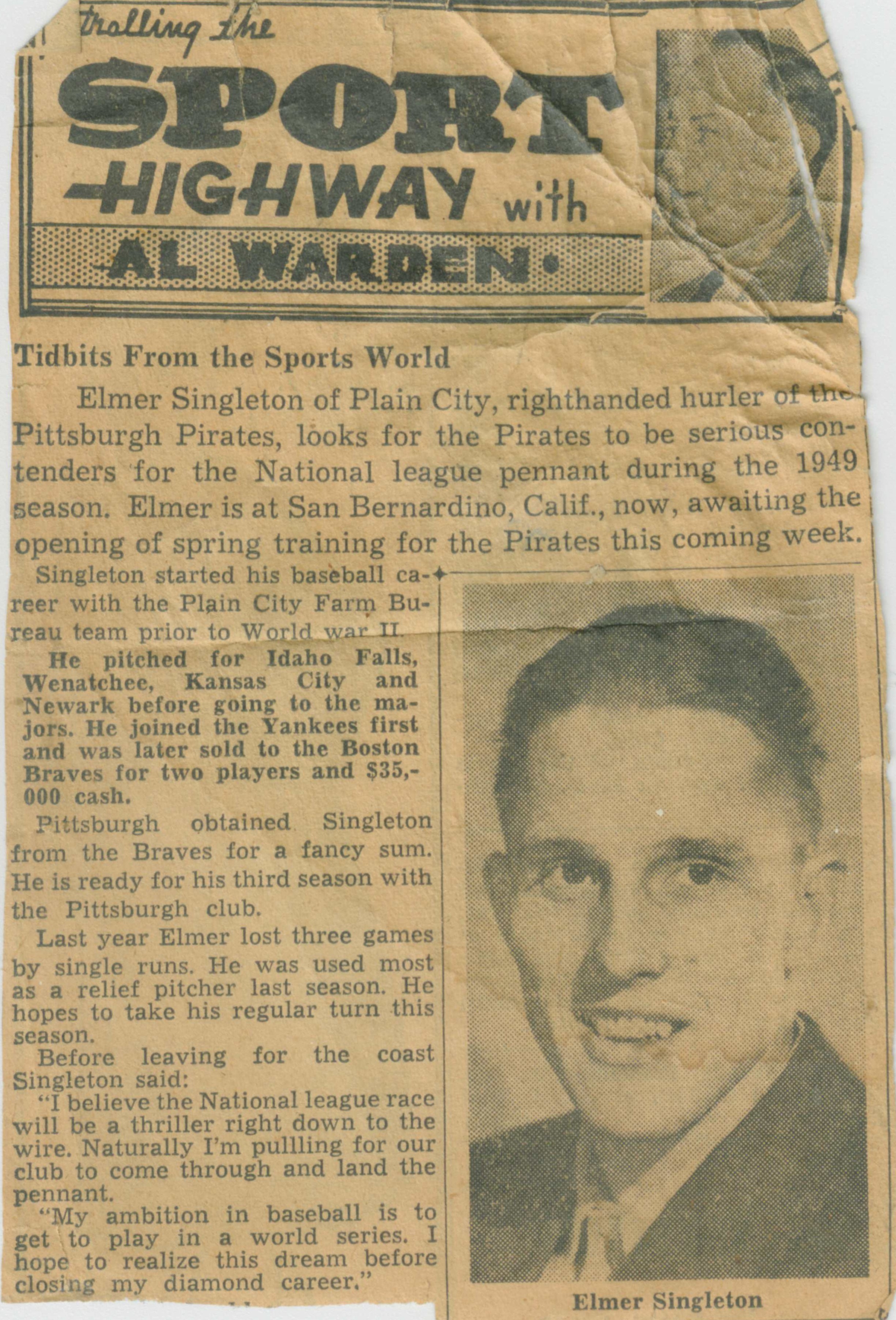
Here are four more clippings from my Grandparents, Milo & Gladys Ross. Grandpa talked quite a bit of baseball in Plain City from his youth. I have shared this photo too where he and Elmer played together on the same team. Visiting with Grandpa, multiple baseball players came up, but Elmer was the one that went on to some fame. Plain City’s history includes excerpts on Elmer.
“Plain City hurler recalls years as major leager
“Relives baseball days; wishes he could start over
“PLAIN CITY – “Baseball is more than a little like life – and to many, it is life.”
“This now famous quote came from the lips of sportcaster Red Barber. But its meaning probably best parallels the philosophy of a mischievous-appearing 66-year-old with a flat-top haircut who toiled on the mound through 28 seasons of professional baseball and now wishes he was just starting his career.
“Elmer Singleton, whose right arm challenged now Hall of Famers while pitching for four major league teams, still lives and relieves at his Plain City home the game he feels has no equal. The lifestyle involved with the sport has been to the liking of the baseball veteran and his wife, Elsie.
“For his contribution to the game, Singleton will be inducted into the Old Time Athletes Association’s Utah Sports Hall of Fame in Salt Lake City ceremonies on Nov. 14.
“”I probably don’t deserve this,” Singleton said modestly of the upcoming induction. “It’s quite an honor for someone coming from a little town like this.”
“The lease Plain City native got his baseball start in that town. His father, a semi-pro, himself, started him pitching at the age of 10 years. While still a teenager, Singleton recorded a 15-0 record as a pitcher in both the A and B divisions of the Weber County Farm Bureau League.
“”We had a good team. The catcher was (the late) Dick Skeen. And, do you know what? I pitched to his son Archie when he was catching in the Boston Red Sox organization,” he said.
Following his good showing in the county league, Singleton was a highly sought-after item. He had been interested in the Cincinnati Reds since they had a class C farm team in Ogden, but a contract dispute nixed that. “They’d only offer me $75 a month and I wanted more,” he said. At the age of 20 he signed with the New York Yankees.
“During that next 28 years he spent four in the low minors, seven in the major leagues and the remaining 16 years with a number of teams in the Pacific Coast League. He took one year off when his oldest son was born.
“Although many of his most memorable performances came in the PCL, he pitched well with the Boston Braves, Pittsburgh Pirates, Washington Senators and the Chicago Cubs. “Hell, I helped Cooperstown pick up a lot of Hall of Famers,” he quipped as he told of pitching against the likes of Henry Aaron, Ted Williams, Jo DiMaggio and Stan Musial.
“Probably his best major league season was 1959 while with the Cubs as he led the National League in earned run average with a 2.72. “That was the year the Braves won the pennant and I was able to beat Warren Spahn 1-0 in a late season game. I also had wins that year over the Pirates’ 20-game-winner Bob Friend, the Giants’ Sam Jones and the Pirates’ Vernon Law.”
“The ageless Singleton later pitched a shutout for the Pirates at the age of 41, and hurled a no-hitter for Seattle of the PCL at 43.
“Regarded as a very hard-nosed athlete, Singleton chuckled when told of former Ogden Reds’ manager Bill McCorry telling Ogden newsmen in 1949 that “Elmer will make it. He’s about two-third ornery and that’s the main ingredient for being a good major league pitcher.”
“”Back then, knocking batters down was legal,” Singleton said. “I remember the day when pitching for the Pirates, the Braves were working us over pretty good so Manager Billy Herman put me in and told me to take care of things. I knocked everybody in the lineup down except Spahn and, ya know, the Braves didn’t score another run off me for more than a year.”
“Singleton displayed a “not guilty” expression when asked about his reputation among baseball players and t news media of throwing a spit ball. He wouldn’t confirm nor deny loading them up, just said “I had a good slider. My slider always broke down.”
He placed the blame for the present high salaries among players on the team owners.
“”The players any more don’t read the Sporting News, its the Wall Street Journal. I’m sure players enjoy playing the game as much now as we did, but they just want to be paid more for it. They turn everything over to their agents while they play.
“”But the owners brought it on themselves. It used to be a business for owners, but now its just a pasttime and tax writeoff,” Singleton said.
“After finishing his baseball career as a PCL coach in the Pacific Northwest in 1961, the Singletons resided in Seattle until returning to Plain City four years ago where they obtained the second oldest house in the town and remodeled into a comfortable home.
“He has no regrets over a life of baseball. “I wish I could start it all over. Look! I still have two straight arms,” he said has he extended them.
“What does he do to occupy his time now?
“”Oh, I help my brother some on his farm, garden a little and help people who need help. I also watch some baseball on television but sometimes that really disturbs me,” he answered.
“Tidbits from the Sports World
“Elmer Singleton of Plain City, righthanded hurler of the Pittsburgh Pirates, looks for the Pirates to be serious contenders for the National league pennant during the 1949 season. Elmer is at San Bernardino, Calif., now, awaiting the opening of spring training for the Pirates this coming week.
“Singleton started his baseball career with the Plain City Farm Bureau team prior to World war II.
“He pitched for Idaho Falls, Wenatchee, Kansas City and Newark before going to the majors. He joined the Yankees first and was later sold to the Boston Braves for two players and $35,000 cash.
“Pittsburgh obtained Singleton from the Braves for a fancy sum. He is ready for his third season with the Pittsburgh club.
“Last year Elmer lost three games by single runs. He was used most as a relief pitcher last season. He hopes to take his regular turn this season.
“Before leaving for the coast Singleton said: “I believe the National league race will be a thriller right down to the wire. Naturally I’m pulling for our club to come through and land the pennant.
“”My ambition in baseball is to get to play in a world series. I hope to realize this dream before closing my diamond career.
“Elmer Singleton Rates Praise
“The “best pitched game” ever witnessed at Seals’ stadium went down in the record book as a defeat for Elmer Singleton, San Francisco right-hander, writes James McGee, San Francisco newspaperman.
“Singleton started his baseball career with Plain City in the Weber County Farm Bureau league back in 1938. Since that timehe has worn a number of major league uniforms.
“Writes McGee: “The big Seal righthander pitched 12 1/3 innings of no-hit ball against Sacramento, April 24, yet lost 1 to 0.
“”That was the best-pitched game I ever saw,” his manager, Tommy Heath, declared. But, as it turned out, it was not quite good enough. Singleton, who set a Seals stadium record and etched his name in Seal history, had the bad luck to meet a tough opponent, Jess Flores, Sacramento’s veteran righthander.
“Flores was effective. The Seals got to him for eight hits, compared to the three singles from Solons finally wrenched from the reluctant Singleton. But the three Solon hits came in succession in the first half of the thirteenth inning, Eddie Bockman, spelling Manager Joe Gordon at second base; Al White and finally Johnny Ostrowski did the damage, Bockman scoring.
“Singleton admitted he was tiring in the thirteenth.
“”It wasn’t that I pitched to so many hitters. It was the strain of the thing,” he said. “All through the early innings I knew I had a no-hitter going. I had to be careful with every pitch. I never pitched one before and I wanted it.”
“Umpire Don Silva vouched that Singleton was careful.
“”He had great stuff. His fast ball was good, but his curve was particularly good. And he was hitting the corners of the plate all the time,” said Silva. “His control was almost perfect.”
“Walked Four
“Singleton walked four men, one of them purposely. He retired the first 18 men to face him before he faltered and walked Bob Dillinger, first man to face him in the seventh.
“In the seventh, the Solons had him in jeopardy for the only time until they finally scored.
“Singleton was within one out of tying the Coast league record for no-hit innings when Bockman got the first hit, a sharp roller through the hole between third and short, in the thirteenth.
“Dick Ward, pitching for San Diego in 1938, went 12 and two-thirds innings of a 16-inning game against Los Angeles without a hit. He eventually won, 1 to 0.
“Ironically, the greatest game pitched at Seals stadium in its 22-year history was pitched in virtual privacy. Only 790 spectators were there at the start with about 1000 fans leaving the park before the end of the game.
“Sports Tid Bits
“Great Falls postmen have accepted the challenge of members of the Ogden post office and have wagered $125 that the Electrics finish ahead of the Reds in the 1952 Pioneer league race.
“Harold Stone of the Ogden post office department informed this corner of the acceptance Saturday night. Two years ago the Ogdenites lost a similar wager.
“George East, landowner of some of the finest duck shooting grounds of the area, is living like Noah of old at his home in West Warren. Genial George says that instead of duck problems, the trash fish from the lower Weber are visiting him and drinking out of his flowing well.
“The ducks have been winging their way annually in George’s direction for nearly four score years. Some years there has been so little water that the migratory birds have avoiding George’s feeding and nesting grounds. Not this year, however, George says as there is more water flooding the pasture lands than in many, many years.
“Herb Woods went out to look the situation over this week. George told Herb he could find his favorite blind by use of maps and a deep diving suit – but Herb did not want to get his nose wet.
“Hal Welch, our so-called game expert, says there is consternation among the sportsmen about the pheasants that will be lost because of their nests being destroyed by the floodwaters. He admits that there will be no shortages of mosquitoes for sportsmen, however.
“Screwy Situations
“The 1952 baseball season still is an infant but here are some of the crewy things that have taken place:
“An umpire – Scotty Robb – got fined, for pushing of all people, Manager Eddie Stanky, of the St. Louis Cardinals.
“Leo Durocher of the Giants protests Augie Guglielmo’s call of a third strike on one of his hitters but nothing happens. We thought questioning a third strike meant automatic banishment.
“A Phillie, Stan Lopata, fails to run from third base with two out, the batter reaches first on an error and Lopata is left stranded as the next batter is retired. And Manager Eddie Sawyer was coaching at third.
“”The Giants are leading the Braves by two runs in the eighth inning yet Leo Durocher lifts his number four hitters, temporarily Henry Thompson, for a pinch slugger. You don’t lift your number four batter in any situation, says wise baseball men, but then who says Thompson (not Bobby) is a number four hitter?
“Roy Campanella, a good number four hitter, bunts in a tie game. Another old baseball adage is that “you don’t bunt your number four hitter.” We disagree with that one. In this case Campy’s bunt paid off for the Dodgers as the next batter singled home the winning run.
“W.S.C. Loses
“PULLMAN (AP) – Idaho defeated Washington State 15-12 in Northern division gold matches Saturday.
“B. Elmer Singleton
“PLAIN CITY – Bert Elmer Singleton, passed away Friday, January 5, 1995 at his home in Plain City. He was born June 26, 1918 in Plain City, Utah, a son of Joseph and Sylvia Singleton.
“He married Elsie M. Wold January 20, 1939 in Ogden, Utah.
“He was a member of The Church of Jesus Christ of Latter-Day Saints.
“He played professional baseball for twenty-four seasons, originally signing with the New York Yankees Baseball Organization. His chosen vocation provided he and Elsie the opportunity to live in Pittsburgh, Pa., Boston, Mass., Chicago, Ill., Havana, Cuba, [Caracus, Venezuela], Seattle, Wash. and several other cities in the Midwest and on the West Coast.
“He retired from professional baseball in 1964 and returned to Plain City in 1980. Upon his return he actively lobbied for the Meals on Wheels program for Plain Cities Seniors. He helped with 4-H programs and worked with gifted children.
“He was chosen as Player of The Year for the State of Utah in 1939. He was inducted into the Utah Sports Hall of Fame in 1984. He was chosen as the Pacific Coast League most Valuable Player for years 1955 and 1956.
“Surviving are his sons, Joe F. of Chugiak, Alaska and Jerry E. of Tacoma, Washington and his brother, Don R. of Plain City. He has two grandchildren, Joe E and Shelby J., residing in Anchorage, Alaska.
“He was preceded in death by his loving wife Elsie on January 31, 1988 and brothers, Earl and Harold.
“Funeral services will be held Thursday, January 11th at 11 a.m. at Lindquist’s Ogden Mortuary, 3408 Washington Blvd.
Friends may call at the mortuary on Wednesday, January 10th from 6 to 8 p.m. and Thursday 10 to 10:45 a.m.
“Internment, Plain City Cemetery.
Back (l-r): William Freestone (manager), Norman Carver, Glen Charlton, Fred Singleton, and Elmer Singleton. Middle: Clair Folkman, Dick Skeen, Albert Sharp, Abe Maw, Milo Ross. Front: F. Skeen, Walt Moyes, Arnold Taylor, Lynn Stewart, Theron Rhead.











 Sagacity