In re McGuire, Part I

Decision: In re Richard Michael McGuire and Dolores Sue McGuire, Case No. 12-41681-JDP (Bankr. D. Idaho, 4 Oct. 2013)
Judge: Honorable Jim D. Pappas, United States Bankruptcy Judge
Counsel for Debtors: Paul Ross, Idaho Bankruptcy Law, Paul, Idaho
Chapter 7 Trustee: Gary L. Rainsdon, Twin Falls, Idaho
Trustee’s Counsel: Brett R. Cahoon and Daniel C. Green, Racine, Olson, Nye, Budge & Bailey, Chtd., Pocatello, Idaho

Background

Richard and Dolores McGuire filed a Chapter 7 petition on 12 December 2012. Their schedules listed two vehicle deficiency debts: $24,265 to Chartway Federal Credit Union and $48,363 to Utah Central Credit Union, the latter being a division of Chartway. At the time of filing, the Debtors believed the collateral — a 2005 McKenzie Medallion trailer repossessed by Utah Central on 21 September 2012 — had long since been sold. In January 2013, having liquidated non-exempt assets of the estate (principally cash value from the Debtors’ life insurance policies), the Trustee filed a Notice of Assets directing creditors to file proofs of claim by 22 April 2013. The estate held approximately $13,951.

Utah Central filed its proof of claim on 3 June 2013 — forty-two days after the claims bar date — asserting a deficiency of $34,165.32 and attaching only an account printout to the filing. It was the only proof of claim filed in the case. When the Debtors received the claim documents, they discovered for the first time that Utah Central’s auction yard had sold the trailer on 27 December 2012 — eleven days after the Bankruptcy Noticing Center had mailed Utah Central and Chartway notice of the bankruptcy filing, and fifteen days after the automatic stay had taken effect.

The Debtors’ Objection

Debtors filed an objection to Utah Central’s proof of claim on 18 June 2013, raising three grounds for disallowance. First, the claim was tardily filed in violation of Federal Rule of Bankruptcy Procedure (“FRBP”) 3002(c), which stripped it of prima facie validity under FRBP 3001(f) and the analysis in In re Parrott Broadcasting Ltd. Partnership, 492 B.R. 35 (Bankr. D. Idaho 2013). Second, the claim lacked the written loan documents, security agreement, and UCC disposition notices required by FRBP 3001(c), further defeating any presumption of validity. Third, and most significantly, Utah Central had sold the collateral in violation of the automatic stay — an act that was void under In re Schwartz, 954 F.2d 569 (9th Cir. 1992) — and had done so without providing the Debtors with the notice of disposition required under Idaho Code § 28-9-611, rendering the sale commercially unreasonable and precluding any deficiency claim under Idaho Code § 28-9-626.

On that last point, Debtors relied on the presumption codified in Idaho Code § 28-9-626(c)–(d): where a secured creditor cannot establish that its disposition of collateral was commercially reasonable, the value of the collateral is presumed to equal the outstanding debt, eliminating the deficiency. In re Walter B. Scott & Sons, Inc., 436 B.R. 582 (Bankr. D. Idaho 2010). Because Utah Central’s sale was both void as a stay violation and deficient for lack of notice to the Debtors, the deficiency claim was unenforceable under § 502(b)(1) as a matter of applicable Idaho law. Debtors amended Schedules B, C, and F to reflect the claim as disputed and unliquidated in light of the post-petition sale.

The Trustee’s Response and the Standing Dispute

Utah Central filed no response to the Debtors’ objection. The Trustee, however, filed his own response on 25 June 2013, arguing that the claim should be allowed as a tardy general unsecured claim under § 726(a)(3) and that the Debtors were judicially estopped from contesting a debt they had sworn to in their schedules.

The Trustee also moved for a Rule 2004 examination of the Debtors, seeking testimony and documents to rehabilitate the claim. Debtors objected to both the Trustee’s response and the 2004 motion, filing a detailed Supplement on 22 August 2013 raising the Trustee’s lack of standing to defend a creditor’s proof of claim. At the 27 August 2013 hearing, Judge Pappas questioned the Trustee’s counsel directly from the bench: whether the Trustee had any legal authority to step into a creditor’s shoes and defend its proof of claim over the Debtors’ objection when the creditor itself had declined to respond. Unable to identify a statute or case squarely on point, Trustee’s counsel conceded that if other creditors were in the case, the Trustee would likely not be taking the same position. The Court ordered supplemental briefing on the standing issue.

Before briefing was complete, the Trustee negotiated a stipulation with Utah Central by which Utah Central agreed to turn over the $10,100 in post-petition sale proceeds to the Trustee in exchange for allowance of an increased unsecured claim of $44,265.32 — the original deficiency plus the proceeds returned. The Trustee moved to approve the compromise under Rule 9019, arguing the standing issue was now moot. The Trustee further argued that his expectation of a § 326 commission gave him a constitutionally protected property interest sufficient to confer standing, and that his authority under § 501(c) to file claims on a creditor’s behalf provided an analogous basis to defend them.

Debtors objected to both the standing argument and the proposed compromise. On standing, Debtors invoked Caplin v. Marine Midland Grace Trust Co., 406 U.S. 416 (1972), and its three-factor framework — lack of statutory authority, absence of a derivative estate right, and inconsistency with the creditor’s own interests — as well as Williams v. California 1st Bank, 859 F.2d 664 (9th Cir. 1988), and In re Folks, 211 B.R. 378 (B.A.P. 9th Cir. 1997), for the proposition that a trustee may not assert particularized creditor rights. On the compromise, Debtors argued that retroactive annulment of the stay was improper under In re Schwartz and In re Franck, 171 B.R. 893 (Bankr. D. Idaho 1994), that the Trustee lacked standing to seek stay relief belonging to Utah Central, and that even with annulment the claim remained independently defective on timeliness, documentation, and UCC notice grounds.

The Court’s Ruling

Judge Pappas issued an oral ruling on 4 October 2013, describing the case as “truly an extraordinary” one that “borders on the bizarre when it comes to the bankruptcy world.” The ruling resolved all pending matters against the Trustee.

On mootness. The Court rejected the Trustee’s argument that the stipulation mooted the standing dispute. Citing Powell v. McCormack, 395 U.S. 486 (1969), the Court found the Debtors retained a live, legally cognizable pecuniary interest in the outcome of their objection — specifically, the potential for a surplus return of the estate funds to them — that the contingent, unapproved stipulation did not extinguish.

On the Debtors’ standing. The Court confirmed that Debtors had standing to object. While Chapter 7 debtors ordinarily lack standing to contest creditor claims because they have no pecuniary interest in the outcome, the potential surplus here gave the Debtors a direct money interest, satisfying the requirements identified in In re Lona, 393 B.R. 1 (Bankr. N.D. Cal. 2008), and the Ninth Circuit’s analysis in Menick v. Hoffman, 205 F.2d 365 (9th Cir. 1953).

On the Trustee’s standing. The Court held the Trustee lacked both constitutional and prudential standing to defend Utah Central’s claim. The Trustee failed to establish injury in fact, as his expectation of a § 326 commission was an unvested property interest not protected by the Fifth Amendment under Board of Regents v. Roth, 408 U.S. 564 (1972). More fundamentally, the Trustee was asserting the individual rights of a creditor — not a right of the bankruptcy estate — in violation of the prudential standing requirement that a litigant assert only its own legal rights. In re Veal, 450 B.R. 897 (B.A.P. 9th Cir. 2011). The Court drew on the U.S. Trustee’s Handbook and its own decision in In re Wisdom, 478 B.R. 394 (Bankr. D. Idaho 2012), for the principle that a Chapter 7 trustee is a fiduciary for all estate beneficiaries — creditors and debtors alike — and may not advocate for a single creditor contrary to the debtors’ interests solely to generate a commission. The Court also followed In re Lyon, a 2011 Western District of North Carolina decision questioning a trustee’s standing to rehabilitate nonresponsive creditors’ claims, and In re Padget, 119 B.R. 793 (D. Colo. 1990), for the proposition that a trustee has no duty to protect creditors against the consequences of filing late or insufficient claims. Section 501(c), the Court held, was simply inapplicable: it permits a trustee to file a claim when a creditor does not, but Utah Central had filed its own claim, making the statute’s conditions inapplicable and its rationale impossible to extend by analogy. The Trustee’s response was stricken.

On the merits of the objection. With the Trustee’s response stricken and the creditor having filed none of its own, the Court turned to the merits. The claim was denied on two independent grounds. First, the post-petition sale of the collateral was void as a violation of the automatic stay. Because § 502(b)(1) disallows claims that are unenforceable under applicable law, and because a void sale cannot support a deficiency, the claim failed at the threshold. Second, Utah Central bore the burden under Idaho Code § 28-9-626 to demonstrate a commercially reasonable disposition, and it had supplied no proof — no loan documents, no security agreement, no UCC disposition notices — that its sale met that standard. The § 28-9-626 presumption therefore applied: the collateral was deemed worth the full amount of the debt, leaving nothing to support a deficiency.

On the Rule 2004 motion. Because the Trustee’s stated purpose for the examination was to gather evidence in support of Utah Central’s claim, and the claim had been disallowed, the motion lacked any valid basis. It was denied.

On the compromise. With the claim disallowed, the Court found the proposed arrangement — recovering $10,100 from Utah Central, taking a commission, and immediately distributing the proceeds back to that same creditor on an allowed claim — would generate no benefit for any party other than the Trustee. The Trustee was given seven days to either withdraw the motion or provide additional briefing showing good cause for approval; he subsequently filed additional briefing, which the Debtors opposed, and a final Order Denying the Motion to Approve Compromise was entered on 7 January 2014.

Why This Matters

  1. A Chapter 7 trustee lacks standing to defend a creditor’s proof of claim against a debtor’s objection. No statutory provision — not § 501(c), not § 704(a)(5), not FRBP 3007 — confers authority on a trustee to rehabilitate a creditor’s claim. The trustee’s duty runs to the estate as a whole, not to individual creditors. Defending a particular creditor’s claim is the mirror image of the trustee’s actual duty under § 704(a)(5): to examine claims and object to those that are improper.
  2. A trustee’s expectation of a § 326 commission is not a constitutionally protected property interest. An unvested expectation of future compensation does not satisfy the injury-in-fact requirement for constitutional standing and is not property protected by the Fifth Amendment. A trustee who accepts an appointment accepts the risk that distributions — and commissions — may be zero.
  3. A sale of collateral in violation of the automatic stay is void and cannot support a deficiency claim. Under In re Schwartz and its progeny, post-petition collection actions taken without stay relief are void ab initio. A deficiency claim premised on a void disposition is unenforceable under § 502(b)(1) and applicable state law regardless of whether the creditor received notice of the bankruptcy.
  4. Failure to provide UCC disposition notice to the debtor bars a deficiency claim. Idaho Code § 28-9-611 requires the creditor to send the debtor reasonable authenticated notification before disposing of collateral. Where the Debtors received no such notice and no post-default waiver existed, the § 28-9-626 presumption applied — the collateral was deemed worth the full outstanding debt — and the deficiency was eliminated.
  5. A tardily filed proof of claim lacking required documentation is not entitled to prima facie validity. FRBP 3001(f) affords prima facie effect only to claims filed in accordance with the applicable rules. A claim filed after the bar date and without the writings required by FRBP 3001(c) carries no presumption of validity, shifting the full burden to the claimant — a burden a nonresponsive creditor cannot meet.
  6. Debtors in a surplus estate have standing to object to creditor claims. Where disallowance of a claim would produce a surplus returned to the debtors, the debtors have a direct pecuniary interest sufficient to confer standing as parties in interest. Practitioners with asset Chapter 7 cases should evaluate whether surplus potential gives clients this otherwise-unavailable right.
  7. A Rule 9019 compromise that generates no net benefit to the estate should not be approved. A compromise that recovers funds from a creditor only to pay a trustee commission and distribute the remainder back to that same creditor on an allowed claim fails the In re A & C Properties, 784 F.2d 1377 (9th Cir. 1986), requirement that a compromise be fair and equitable and serve the paramount interest of creditors.

Full Decision: Oral ruling transcribed, Case No. 12-41681-JDP (Bankr. D. Idaho 4 Oct. 2013); Order Re Pending Matters, Doc. 57 (4 Oct. 2013); Order Denying Trustee’s Motion to Approve Compromise Under Rule 9019, Doc. 73 (7 Jan. 2014)

Sons of Joseph and Isabella Carlisle

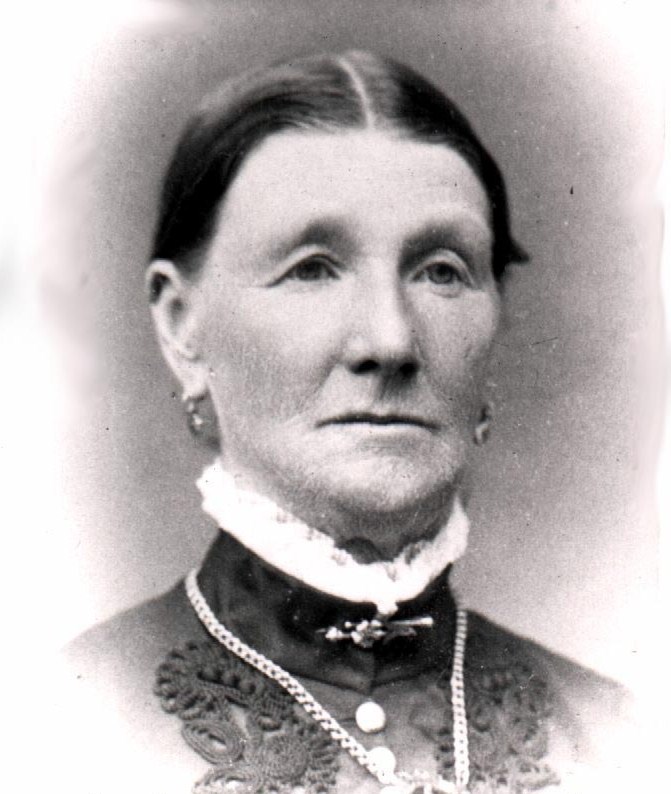
Standing (l-r): Frank Carlisle, Harve Carlisle. Sitting: Fred Carlisle, Joe Carlisle, Jim Carlisle.

I thought I would share this photo because I have it and do not know how many others do. This is the five sons of Isabella Sharp and Joseph Carlisle. Isabella is the sister to my William Sharp, who I have written about previously at this link: Sharp-Bailey Wedding. Here are some of the details of the family, but I do not really know much more. They have a pretty large family with plenty of family historians so I will let them write the Carlisle history (which I know they have probably already done).

Joseph Carlisle was born 21 July 1826 in Sherwood on the Hill, Nottinghamshire, England and died 17 March 1912 in Millcreek, Salt Lake, Utah.

Isabella Sharp was born in December 1831 in Misson, Nottinghamshire, England and died 29 March 1904 in Millcreek, Salt Lake, Utah. Her christening record, dated January 1832, establishes 1831 as her birth year. Both her Deseret News obituary and the In Memoriam published at the time of her death recorded her birth date as 21 December 1832 — the year is contradicted by the christening record, and whether the day was the 21st or 22nd remains to be confirmed by further research. Her parents were Thomas Sharp and Elizabeth Cartwright Sharp. If you search her brother, mentioned above, you can read more about her parents and family.

Misson is a small village and civil parish in Nottinghamshire, England, situated on the River Idle approximately one and a half miles from the Yorkshire boundary and three miles east-northeast of Bawtry. The village’s ancient name appears in historical records as “Mysen” or “Misne,” both of Danish origin, suggesting the area was first settled by Danes who came up the Trent valley to Gainsborough and then followed the River Idle inland. Until 1886 the parish straddled the Nottinghamshire-Lincolnshire boundary, when it was ordered placed entirely within the Bassetlaw division of Nottinghamshire. It was in this quiet fenland village, near the meeting point of three counties, that Isabella Sharp was born.

The Sharp family emigrated to America aboard the ship James Pennell, which sailed from Liverpool on 2 October 1850 under the direction of Christopher Layton and William L. Cutler, carrying 291 Latter-day Saint passengers. After a difficult voyage that included a severe storm near the mouth of the Mississippi that disabled the ship and nearly exhausted the provisions on board, the James Pennell arrived at New Orleans on 23 November 1850. The passengers then continued up the Mississippi River to St. Louis, where they found employment and shelter for the winter. The passenger manifest confirms Elizabeth Cartwright Sharp (age 45), William Sharp (age 24), Isabella Sharp (age 19), Elizabeth Sharp (age 26), and James Sharp (age 10) all traveled together on this voyage. The account of the voyage is preserved at Saints by Sea.

Isabella’s mother, Elizabeth Cartwright Sharp, died in St. Louis on 17 February 1851, just months after their arrival. Isabella remained in St. Louis, was baptized into the Church of Jesus Christ of Latter-day Saints, and married Joseph Carlisle there on 18 May 1853. That same month her brother William departed St. Louis with the Moses Clawson Company, arriving in Salt Lake Valley in September 1853. Joseph and Isabella followed, also traveling with the Moses Clawson Company, and settled first in Millcreek, Salt Lake County.

The Deseret News of 31 March 1904 reported her passing under the headline “Early Settler Dead: Mrs. Isabella S. Carlisle Goes the Way of All the Just.” The notice recorded that she was born in Misson, England, 21 December 1832, emigrated to Utah in 1851 [she arrived in America in November 1850 but did not reach Utah until September 1853], and passed away at her home in Mill Creek on Tuesday last after a well-spent life of nearly 72 years. She became a member of the Church of Jesus Christ of Latter-day Saints in 1850 and endured with patience and fortitude all the hardships incident to the settlement of these valleys. The funeral was held from the Mill Creek Ward house on Friday at 12 o’clock noon.

An In Memoriam published at the same time recorded that Sister Carlisle was one of the first to join the Relief Society when it was organized in the ward in 1863, and was a great support to it financially. She served as presiding teacher in the third district for twenty-one years, and as first counselor in the Primary Association, third district. She was honorably released by Bishop James C. Hamilton. The funeral was held at the Mill Creek Ward house, where a large concourse of friends met to pay their last respects, Bishop Hamilton presiding. She was interred in the Mill Creek Cemetery.

In December 1933, three of Isabella’s sons — Joseph R. Carlisle, James S. Carlisle, and Harvey C. Carlisle — wrote to LDS Church President Heber J. Grant requesting reinstatement by proxy of their Uncle William Sharp and his wife Mary Ann Sharp, who had been excommunicated from the Church on 31 January 1879. President Grant consented by letter dated 16 December 1933, authorizing proxy baptism and, if applicable, restoration of endowments and sealing through Elder George F. Richards, President of the Salt Lake Temple. The letter was addressed care of Mrs. James S. Thompson — confirming that Annie Thompson, whose 1957 history of Elizabeth Cartwright Sharp appears elsewhere on Sagacity, was the daughter of James S. Carlisle.

Joseph and Isabella were married 18 May 1853 in St. Louis, St. Louis, Missouri.

Joseph Richard Carlisle was born 19 December 1854 in Millcreek and died 2 April 1935 in Salt Lake City. He married Lily Naomi Titcomb 29 November 1883 in Salt Lake City in the Endowment House.

Isabella Jane Carlisle was born 12 April 1857 in Salt Lake City and died 1 April 1928 in Salt Lake City. She married Joseph William Walters 3 January 1875 in the Endowment House.

Thomas Matthew Carlisle was born 12 April 1857 in Salt Lake City and died 10 March 1869 in Millcreek.

James Sharp Carlisle was born 4 September 1859 in Millcreek and died 2 December 1938 in Millcreek. He married Keturah White 11 February 1885 in Logan, Cache, Utah in the Logan Temple.

Ezra Taylor Carlisle was born 14 August 1861 in Millcreek and died 12 February 1862 in Millcreek.

Elizabeth Ann Carlisle was born 24 November 1862 in Millcreek and died 6 November 1881 in Millcreek. She was engaged to marry John Calder Mackay and obviously died before that marriage could take place. On 21 December 1881 in St. George, Washington, Utah Isabella performed Elizabeth’s eternal ordinances in the St. George Temple. Isabella also stood in as proxy as Elizabeth was sealed to John Mackay, who accompanied Isabella to St. George.

William Frederick Carlisle was born 14 November 1864 in Millcreek and died 5 January 1922 in Millcreek. He married Sarah Ann Rogers 23 December 1897 in the Salt Lake Temple.

Harvey Cartwright Carlisle was born 22 September 1866 in Millcreek and died 3 July 1935 in Holladay, Salt Lake, Utah. He married Lucy Carline Cahoon 21 January 1891 in the Logan Temple. After her death he married Amelia Annie Towler 16 January 1901 in the Salt Lake Temple. After her death he married Emily Steven McDonald 19 July 1923 in the Salt Lake Temple.

Herbert Towle Carlisle was born 23 August 1868 in Millcreek and died 25 October 1870 in Millcreek.

Orman Carlisle was born 8 May 1871 in Millcreek and died 9 May 1871 in Millcreek.

Carrie Brown Carlisle was born 18 November 1872 in Millcreek and died 15 July 1873 in Millcreek.

Ether Franklin Carlisle was born 11 September 1873 in Millcreek and died 4 May 1915 in Salt Lake City. He married Maude Miller Harman 10 November 1897 in the Salt Lake Temple.

Rosamond Pearl Carlisle was born 29 July 1875 in Millcreek and died 13 June 1921 in Murray, Salt Lake, Utah. She married Uriah George Miller 19 February 1902 in the Salt Lake Temple.

The family certainly lost quite a few children. But all those who lived to marry did so in an LDS temple, or its equivalent at the time.

For more on the Sharp family and Plain City’s founding generation, see:

Sharp-Bailey Wedding — William Sharp and Mary Ann Bailey
Elizabeth Cartwright Sharp — Isabella’s mother, written by Annie Thompson
James Sharp — Isabella’s brother who remained in St. Louis
Early Settlers in Lehi, Utah, before Plain City, Utah — Wayne E. Clark’s research including William Sharp (no. 68)
History of Plain City — Plain City’s founding families

In re Cantu

Decision: In re Rebecca Cherie Cantu and Alejandro Cantu, Case No. 14-40254-JDP (Bankr. D. Idaho, 26 Aug. 2014)
Judge: Honorable Jim D. Pappas, United States Bankruptcy Judge
Counsel for Debtors: Paul Ross, Idaho Bankruptcy Law, Paul, Idaho
Chapter 7 Trustee: Gary L. Rainsdon, Twin Falls, Idaho
Trustee’s Counsel: Brett R. Cahoon and Daniel C. Green, Racine, Olsen, Nye, Budge & Bailey, Chtd., Pocatello, Idaho


Background

Rebecca and Alejandro Cantu filed a Chapter 7 bankruptcy petition on 20 March 2014. In the months leading up to their filing, two creditors — NCO Financial and Bonneville Billing and Collections — had been garnishing their wages pursuant to state court judgments. NCO, collecting on student loans, garnished 15% of Ms. Cantu’s wages each pay period under federal law. Bonneville garnished an additional 10% under state law. Idaho only allows a maximum of 25% to be garnished from an individual’s wages. Over the 90-day preference period preceding the petition date, the two creditors combined had garnished a total of $1,536.93 from the Debtors’ paychecks.

On their amended Schedule B, Debtors listed the garnished funds as personal property and claimed $1,500 of that amount exempt under Idaho Code § 11-605(12) — a wage exemption statute enacted by the Idaho Legislature in 2010, and one that, as Judge Pappas noted, had never been interpreted by any court.


The Trustee’s Objections

The Chapter 7 Trustee filed two objections in sequence. The first, argued simply that the garnished funds were not “disposable earnings receivable” because they had already been paid to the creditors prior to the bankruptcy filing. When the Debtors amended their Schedule C to increase the claimed exemption from $1,086.53 to the statutory maximum of $1,500, the Trustee withdrew the first objection and filed a more detailed second objection through retained counsel.

The second objection raised two grounds. First, the Trustee argued the garnished funds were avoidable preferences under 11 U.S.C. § 547(b) — transfers made within 90 days of filing to specific creditors on account of antecedent debt — and that the Debtors were therefore barred from exempting them under § 522(g), which limits a debtor’s ability to exempt property recovered by the trustee to situations where the debtor could have exempted the property absent the transfer. Second, the Trustee contended that because the Debtors had received a benefit from the garnishments — reduction of their judgment debts — the funds had effectively been “paid” to them, and thus did not qualify as unpaid wages under Idaho Code § 11-605(12).


The Debtors’ Responses

This firm filed two responses on behalf of the Debtors, tracking the Trustee’s evolving objections.

On the statutory interpretation question, Debtors argued that Idaho Code § 11-605(12) means exactly what it says: the exemption applies to earnings that “have been earned but have not been paid to the individual.” The garnished funds were unquestionably earned by Ms. Cantu through her personal services, and they were never paid to her — they were diverted directly to her creditors via the sheriff. The statute does not require that funds be “receivable,” nor does it specify where the funds must be held. The Trustee’s position that the funds were “effectively paid” to the Debtors because they reduced outstanding debts stretched the statutory language beyond its plain meaning.

On the § 522(g) issue, Debtors argued that the garnishments were not voluntary transfers — they were compelled by court order — and that the funds had not been concealed, as they were fully disclosed on Schedule B and the Statement of Financial Affairs. Because the property could have been exempted under Idaho Code § 11-605(12) had it remained with the employer and not yet been paid, the Debtors were entitled to claim the exemption on any funds recovered by the Trustee under § 522(h).


The Court’s Ruling

Judge Pappas ruled in favor of the Trustee and sustained the objection, disallowing the exemption. The Court’s analysis turned entirely on the meaning of the phrase “have not been paid to the individual” in Idaho Code § 11-605(12).

The Court acknowledged that the statute had never been interpreted by any court since its enactment in 2010, and that the phrase “paid to the individual” was arguably ambiguous. However, the Court concluded that reading the statute in context — as required under Idaho rules of statutory construction — compelled the conclusion that the garnished wages had been paid.

The Court’s reasoning proceeded on several fronts:

From the employer’s perspective, the wages were indisputably paid. The employer transferred the full amount owed to Debtors — some directly to them, and the garnished portion to the sheriff on their account — satisfying its payroll obligation in full.

From the Debtors’ own perspective, the Court found the wages had likewise been paid. The garnished sums reduced the Debtors’ outstanding judgment debts, conferring a direct financial benefit. To hold otherwise, the Court noted, would potentially require employers to pay the garnished amounts twice — once to the sheriff, and again to the debtor following a successful exemption claim — a result the Idaho Legislature could not have intended.

The Court also rejected the Debtors’ reading as internally inconsistent with Idaho’s garnishment statutes. Idaho Code § 8-509(b) expressly directs an employer-garnishee to “pay” the earned wages to the sheriff for the creditor’s benefit. Treating those same wages as simultaneously “paid” for garnishment purposes and “unpaid” for exemption purposes would create an irreconcilable conflict between the two statutes. As the Court observed, while exemption statutes are to be construed liberally in favor of debtors, statutory language should not be “tortured” in the name of liberal construction.

Because it resolved the case on the § 11-605(12) issue, the Court declined to reach the Trustee’s alternative argument under § 522(g).


Why This Matters

1. A case of first impression on Idaho Code § 11-605(12). The Court explicitly noted that no prior case had interpreted this 2010 wage exemption statute. This decision remains the leading — and only — authority on its meaning and scope. Idaho practitioners advising debtors on wage garnishment situations should be aware of its limitations.

2. “Paid to the individual” means paid on the individual’s account, not just into their hands. The Court’s construction of the statute is broad: wages diverted to a creditor through garnishment are treated as paid for exemption purposes, even though the debtor never personally received them. Debtors who suffer pre-petition garnishments cannot use § 11-605(12) to recapture those funds in bankruptcy.

3. The interplay between § 547 preferences and § 522(g) exemptions is complex. Where a trustee seeks to avoid a pre-petition garnishment as a preference, the debtor’s ability to claim an exemption in the recovered funds depends on whether the property could have been exempted in the first instance. This case illustrates how critical it is to identify viable exemption authority before asserting the right to avoid a transfer under § 522(h).

4. Debtors should assert wage exemptions in state court before filing. The Court noted, in a footnote, that Idaho Code § 8-519 permitted the Debtors to have raised an exemption claim in state court at the time of the garnishment. No such claim was made. Practitioners should advise clients facing wage garnishment to promptly evaluate available exemptions under state law — before funds leave the employer’s hands.

5. Liberal construction has limits. Idaho courts construe exemption statutes in favor of debtors, but that principle does not authorize courts to rewrite statutory language. Where plain meaning and statutory context point clearly in one direction, liberal construction will not overcome them.


Full Decision: Available on PACER, Case No. 14-40254-JDP, Doc. 51 (Bankr. D. Idaho 26 Aug. 2014)