Casper Wyoming Temple Open House

We took the opportunity to attend the Casper Wyoming Temple Open House on 31 August 2024. We planned the weekend to do some sightseeing and visit some church and family history sites. I am reposting as this has updates on 3 additional ancestors that also came through the Overland Trail.

We left on the Friday morning with the hope of making it all the way to Casper before nightfall. We took old US Highway 30 through Soda Springs and Montpelier. We made a stop to visit the grave of my Grandmother in Dingle.

Aliza, Lillian, Paul, James, and Hiram Ross at the graves of Bud and Colleen Lloyd

We drove through Cokeville and reminded the kids of the story of the Cokeville miracle. As we drove along the old highway, I pointed out the old railroad Y that used to go to the Stauffer mine that was located in Leefe, Wyoming. I spent the first summer or two of my life at Leefe while my dad was tasked with tearing down and removing the mine with Circle A Construction. We stopped in Kemmerer to refuel and also drive past the first J. C. Penney store. We made a quick stop at the Parting of the Ways along the California, Mormon, and Oregon trails.
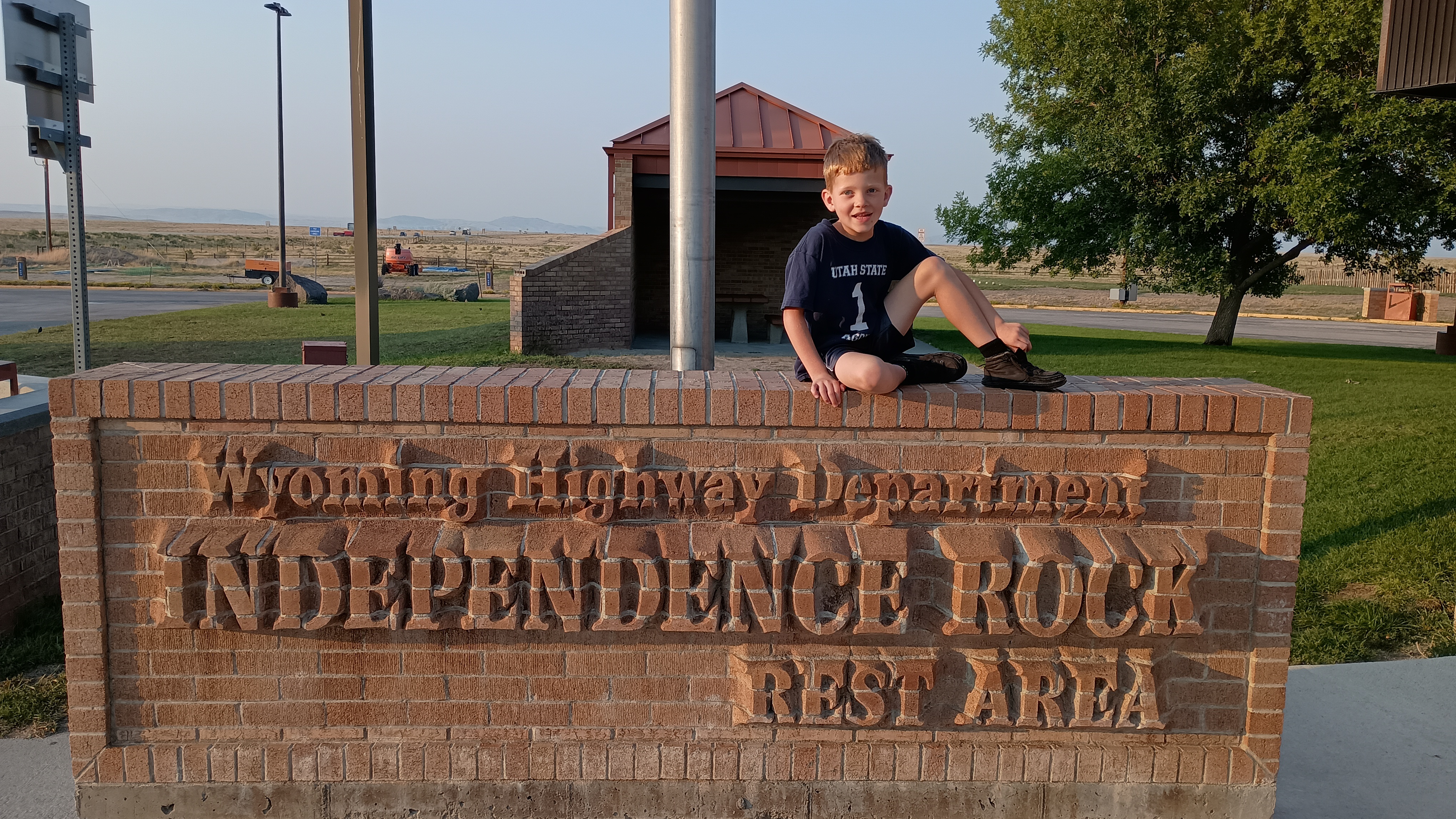
James Ross at Independence Rock

With four kids, we often stop at rest areas. As you can see above, we stopped at the one at Independence Rock. The rock is nearby and doubles as the parking location to visit the rock.

We finally made it to Casper about sunset. We ate an amazing Italian meal at Racca’s Pizzeria Napoletana and checked into our hotel.

Casper Wyoming Temple

We got up early, dressed appropriately, and headed out to visit the Casper Wyoming Temple. It was beautiful. Much smaller than I had anticipated. It is definitely one of the smallest temples, but that is because of the population and distance to other temples. It will supposedly have five stakes in its temple district, some of which will still come from a long distance to attend. Don’t let size fool you, it still has all the distinct parts of a temple and related quality. I think I may very much prefer the intimacy of the smaller temples. It actually reminded me of the Helena Montana Temple on size and flow.

Ross family at the Casper Wyoming Temple Open House

The temple does not have an adjoining chapel, but it does have a distribution/visitor center. We watched the video, enjoyed waiting in the line, and got to see the whole temple. If I were asked, there are a couple of design changes I would make for flow, but this temple will not regularly see these types of crowds or have those issues.

Ross family with the Casper Wyoming Temple

We hurried back to our hotel, changed, loaded up the car, checked out, and headed off to our next stop: The National Historic Trails Interpretive Center in Casper. I did not take any pictures there, but it was very well done. I enjoyed the visit, helped the kids with their junior ranger activities, and learned a few things. Part of the museum had its own little room and video dedicated to the Martin and Willie Handcart Companies.

We stopped at Independence Rock again on our way headed west. We walked around the massive rock and looked at a number of the signatures carved into stone from over 160 years ago. It was hot and we needed to get our little doggies along to Devil’s Gate.

I will write about this more in a bit, but Devil’s Gate was a major landmark on the trail going west for all pioneers on the trails. But Devil’s Gate became more than a landmark and became a historical site in the tragic fall of 1856. Fort Seminoe was based there on the west side of Devil’s Gate, but it had been abandoned earlier that same year. It was that fall that the Martin Handcart Company found itself stranded in the snow. Days later the stranded handcart company moved into a nearby cove to get away from the wind, snow, and cold. That cove is now known as Martin’s Cove.

The Sun Ranch from Devil’s Gate, now The Martin’s Cove: Mormon Trail Site

We found the visitor’s center much more hospitable than some of our ancestors. As I worked through my family history, I had some of my own ancestors who passed through this very Devil’s Gate and area. Here are my ancestral lines that came across on the Mormon Trail. I had counted only 3 while in Casper, but hadn’t realized the Williams clan came over in two separate trips.

William and Mary Ann Sharp in 1853. Wagon train. Moses Clawson Company. William and Mary Ann met in the wagon train and married in Nebraska in 1853. William and Mary are my 3rd Great Grandparents.

John Williams in 1860. Wagon train. John Smith Company. John came over with his two sons John Haines (1829) and Richard (1838). I don’t know why his son David went separately in 1864. I am a descendant of John through David. John is my 4th Great Grandfather.

Johanna Benson in 1862. Wagon train. Joseph Horne Company. Johanna came over with some of her children and their families, her daughter Agneta, came over in 1864 with her family. Johanna is my 4th Great Grandmother.

William Edward Stoker in 1863. Wagon train. Unknown Company. William was traveling with his family, including the baby Mary Ann. William is my 3rd Great Grandfather, Mary Ann is my 2nd Great Grandmother.

John and Agneta Nelson in 1864. Wagon train. William Preston Company. Agneta is the daughter of Johanna Benson who came over in 1862. John and Agneta are my 3rd Great Grandparents.

David D and Gwenllian Williams in 1864. David is the son of John mentioned above. Wagon train. William S Warren Company. Gwenllian came with her sister Mary. Both married on the ship in Liverpool before setting sail for Utah. Gwenllian and Mary’s parents, David and Margaret Jordan, came over in 1872 crossing the plains by rail. David and Gwenllian are my 3rd Great Grandparents.

That gives me 10 ancestors that crossed the plains by wagon, none by handcart that I can tell. The unknown companies were all wagon trains as there were not handcarts those years.
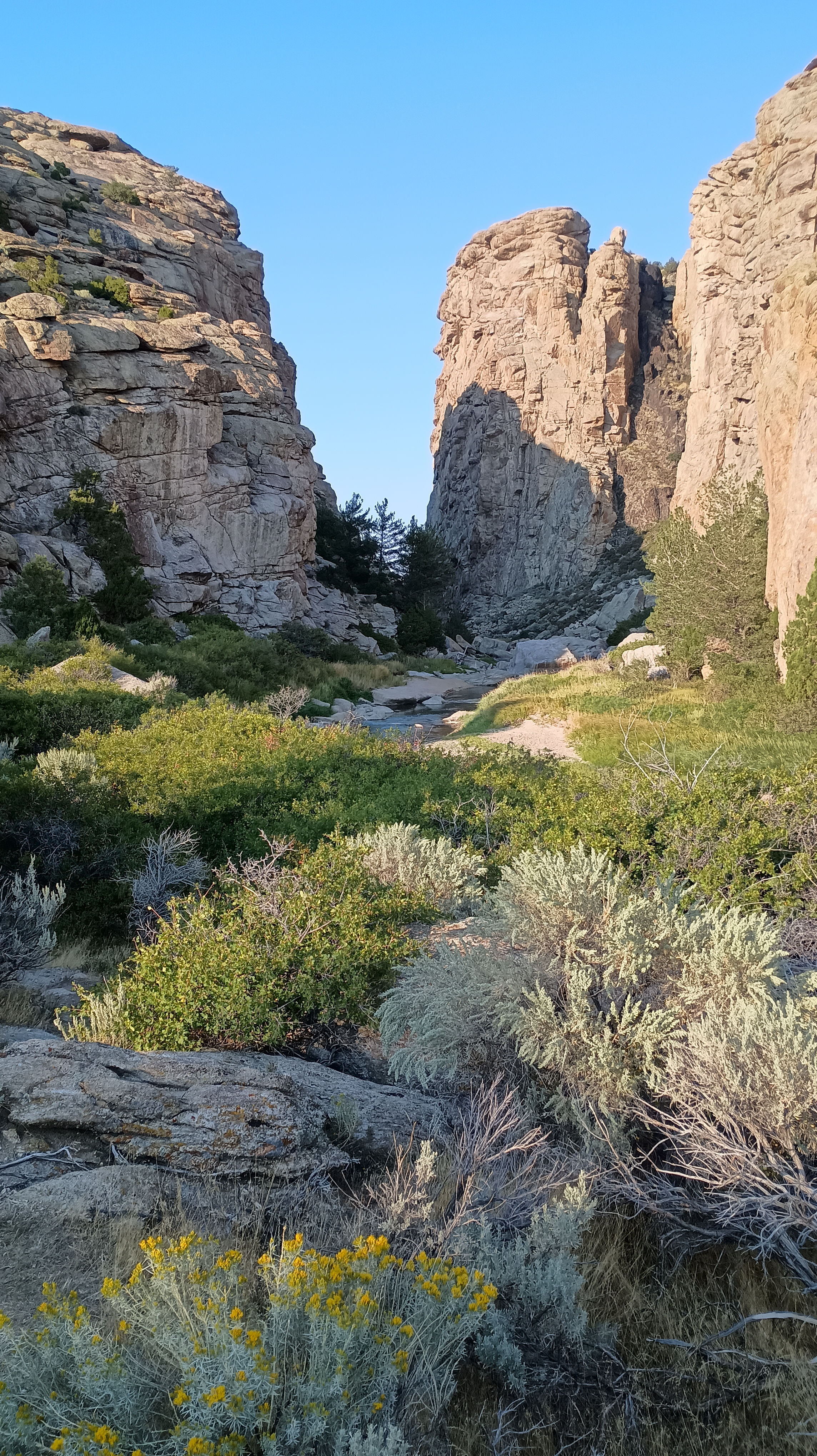
Devil’s Gate – 2024

Every single one of these seven ancestors of mine who came west on the trail would have passed through Devil’s Gate. Here I stood on this sacred ground and snapped this photo of my daughter, my descendant and their descendant, at Devil’s Gate.

Aliza Ross at Devil’s Gate

It took me a bit more work, as I am not as familiar, to find those family lines of Amanda’s that also would have passed along the Mormon Trail to the west before the railroad made it much, much faster and safer. It took me several occasions over a couple of weeks to spend the time to research all these lines.

Henry and Ann Jackson in 1852. Wagon train. James C Snow Company. This is Amanda’s 4th Great Grandparents.

Regina Hansen in 1853. Wagon train. John E Forsgren Company. Her son, Hans Hansen, also accompanied her on the trip. Regina’s husband stayed behind. Regina is Amanda’s 4th Great Grandmother, Hans is Amanda’s 3rd Great Grandfather.

Grave of Hans Hansen in Plain City, Utah. Edith Sharp Ross’ stone is the stone at 10 o’clock from the top of this stone, my Great Grandmother.

David Buttars in 1843. Wagon train. William Empey Company. He appears to have traveled alone. Amanda’s 3rd Great Grandfather.

Birthe Jacobson in 1854. Unknown if wagon train or handcart company. Birthe’s daughter, Maria Jacobson, also accompanied her on the trip. Her husband Jorgen died in Missouri as part of the trip. Birthe is Amanda’s 5th Great Grandmother, Maria is Amanda’s 4th Great Grandmother.

Harriet Housley in 1856. Handcart company. Edward Martin Company. Harret’s son, George Housley, also accompanied her on the trip. Two other children came later. Harriet is Amanda’s 5th Great Grandmother, George is Amanda’s 4th Great Grandfather.

Richard and Christine Hemsley (1836 – 1915) in 1857. Handcart company. Israel Evans Company. This is Amanda’s 4th Great Grandparents.

Ole and Anne Jensen in 1861. Likely wagon train. Unknown company. Amanda’s 5th Great Grandparents.

John Crompton in 1862. Wagon train. Joseph Horne Company. John also had his daughter, Hannah Crompton, with him. John is Amanda’s 4th Great Grandfather, Hannah is Amanda’s 3rd Great Grandmother.

Anna Nielsen in 1862. Wagon train. Christian Madsen Company. She traveled alone. Amanda’s 3rd Great Grandmother.

Joseph and Penelope Thompson in 1862. Wagon train. John Riggs Murdock Company. Their son, Joseph Thompson, also accompanied the family. Amanda’s 4th Great Grandparents, Joseph is Amanda’s 3rd Great Grandfather.

Joseph Wayment in 1863. Wagon train. Unknown Company. Appears to have come alone. Although his parents and most of his siblings would come later by rail. Amanda’s 3rd Great Grandfather.

Axel Boyer in 1866. Wagon train. Abner Lowry Company. Amanda’s 4th Great Grandfather. Also traveled with the Keeps, other ancestors of Amanda.

James and Ann Keep in 1866. Wagon train. Abner Lowry Company. Their daughter, Sarah Keep, also accompanied the family. James and Ann are Amanda’s 4th Great Grandparents, Sarah is Amanda’s third great Grandmother. Also traveled with Axel Boyer, other ancestor of Amanda.

Richard Hemsley (1801 – 1866) and his later wife Sarah in 1866. Wagon train. William Henry Chipman Company. Amanda’s 5th Great Grandfather.

Peter Peterson in 1866. Wagon train. Joseph Sharp Rawlins Company. Peter is Amanda’s 4th Great Grandfather.

That is the Hemsley line alone, Amanda’s Dad. I count 26 ancestors of Amanda’s Dad that came through Devil’s Gate.

James, Lillian, Hiram, and Aliza Ross at Devil’s Gate Mormon Handcart Visitor Center

Amanda’s Mom’s line, the Holden family, has the following:

Edwin and Ruia Holden in 1852. Wagon train. Uriah Curtis Company. Their son, Henry Holden, also accompanied the family. Edwin and Ruia are Amanda’s 4th Great Grandparents, Henry is Amanda’s 3rd Great Grandfather.

Jesse and Temperance McCauslin in 1851. Wagon train. Unknown Company. Temperance passed away in Council Bluffs, Iowa. She did not make the trail in Wyoming or Devil’s Gate. Their daughter, Louisa McCauslin, also accompanied the family. Jesse is Amanda’s 4th Great Grandfather, Louisa is Amanda’s 3rd Great Grandmother.

John and Adelaide Roberts in 1863. Wagon train. Thomas Ricks Company. Their son, Hyrum Roberts, also accompanied the family. John and Adelaide are Amanda’s 3rd Great Grandparents, Hyrum is Amanda’s 2nd Great Grandfather.

Thomas and Mary Ashton in 1851. Wagon train. Morris Phelps Company. Mary also passed away in Iowa. She did not make the trail in Wyoming or Devil’s Gate. Their son, Joseph Ashton, also accompanied the family. Thomas is Amanda’s 4th Great Grandfather, Joseph is Amanda’s 3rd Great Grandfather.

Sarah Jarvis in 1854. Wagon train. Job Smith Company. She came with some of her family, but not with her son, Amanda’s ancestor, George Jarvis. Sarah is Amanda’s 4th Great Grandmother.

George and Ann Jarvis in 1853. Wagon train. Unknown Company. George and Ann are Amanda’s 3rd Great Grandparents. George is the son of Sarah Jarvis mentioned above.

William and Rebecca Finch in 1854. Wagon train. Daniel Garn Company. William and Rebecca are Amanda’s 3rd Great Grandparents.

Joseph Finch in 1853. Wagon train. Joseph Young Company. Joseph is the son of William and Rebecca Finch mentioned above.

John and Hannah Davis in 1851. Wagon train. Eaton Kelsey Company. Their daughter, Mary Jane, also accompanied the family. The family also has Davies listed for their last name sometimes. John and Hannah are Amanda’s 4th great grandparents, Mary Jane is Amanda’s 3rd Great Grandmother.

John Evans in 1866. Wagon train. William Henry Chipman Company (same company as Amanda’s Richard Hemsley above). His wife, Sarah, died on the trip from the United Kingdom in New York. His son, John Evans, also accompanied his father and brother. John is Amanda’s 3rd Great Grandfather, John is Amanda’s 2nd Great Grandfather.

James and Elizabeth Boyack in 1855. Wagon train. Milo Andrus Company. James and Elizabeth are Amanda’s 4th Great Grandparents.

James Boyack in 1853. Wagon train. Appleton Harmon Company. James is Amanda’s 3rd Great Grandfather. James is the son of James and Elizabeth Boyack above that came in 1855 across the plains.

Margary Waterhouse in 1855. Wagon train. Milo Andrus Company. Margary is Amanda’s 3rd Great Grandmother. She came across with the same train as James Boyack’s parents, presumably that is how she met her future husband. The Company arrived 24 October 1855 in Utah, James and Margary married 23 November 1855 in Springville, Utah.

That is the Holden line alone, Amanda’s Mom. I count 26 of ancestors of Amanda’s Mom that came through Devil’s Gate. As an aside, I also looked at her biological line (as she is adopted), and not a single one of her biological ancestors passed through Devil’s Gate.
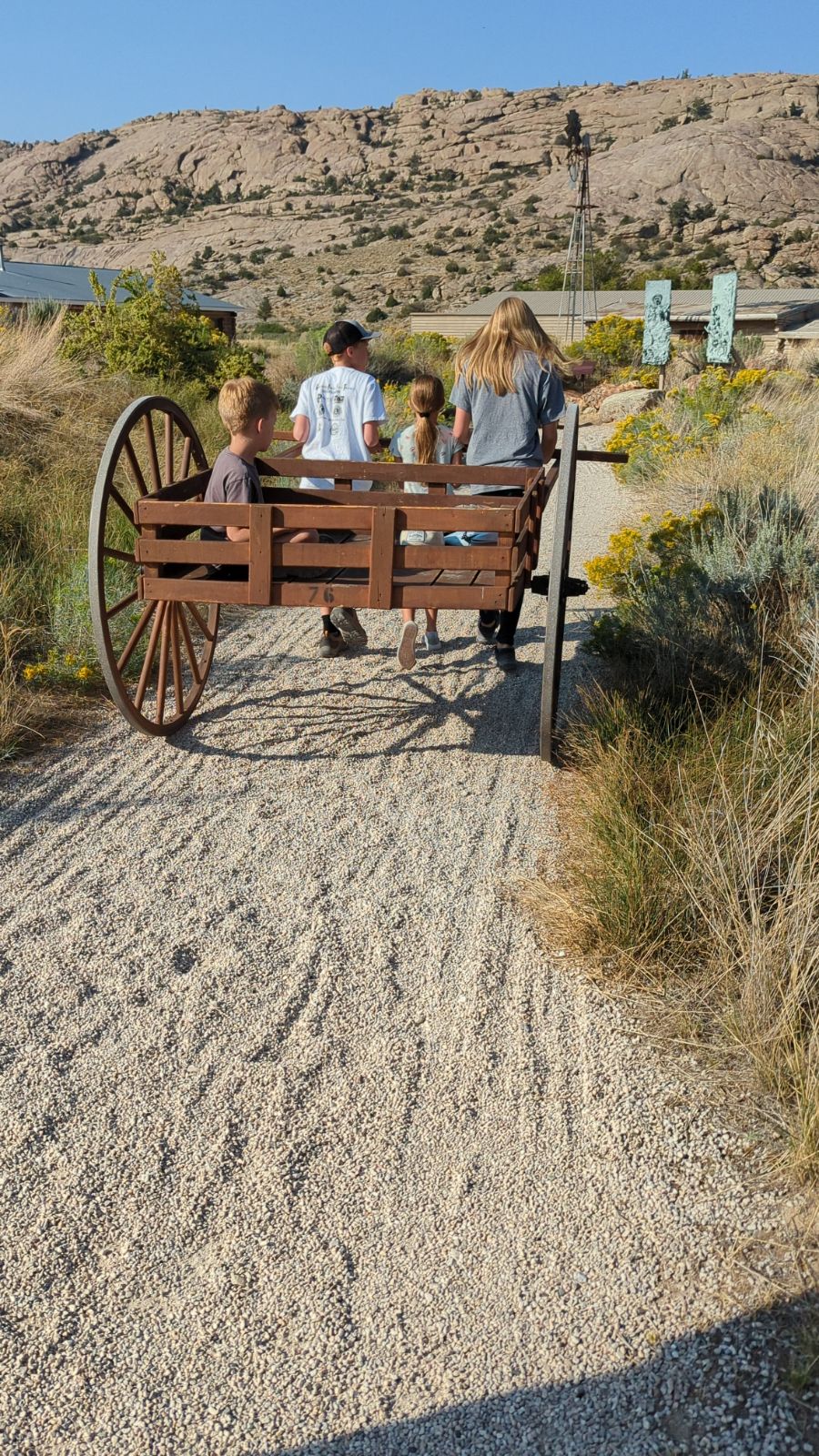
James riding while Hiram, Lillian, and Aliza Ross pull a handcart at Devil’s Gate Mormon Handcart Visitors Center

We also stopped and visited with the sixth crossing of the Sweetwater River. This was the location where, like the Martin Handcart Company, the Willie Handcart Company also got stuck in wind, snow, and cold in 1856. Their rescue occurred here.

The next day, on our way to Grand Teton National Park, we made a stop at Fort Washakie, Wyoming. This is one of the alleged graves of Sacagawea. We stopped and remembered her, whether her final resting place or not.

All in all, I was surprised by my own connection to the Mormon Trail. I had never considered that I have 7 ancestors who had literally come this way. Or that my children have 59 ancestors that literally come this way. They passed by Independence Rock, through Devil’s gate, and two of those 59 suffered with the Martin Handcart Company. I will write more on the Housley’s later as there have been other interesting interactions with that clan since our marriage.


An Appalling Tragedy Occurred on the Morning of July Fourth

The Rupert Democrat 4 July 1917

Several months ago I took my Dad and Step-Mother out to the Minidoka-Acequia-Rupert Cemetery north of Rupert Idaho. I had inherited 11 graves in the cemetery from the Phibbs family. 7 are together in one location, four in another. We were there on that occasion to pick out their final resting place. A somber experience if you think about it.

We walked around both sets of graves and picked out their preferred location. They picked out two graves that they wanted and we visited for a little while. While there, we looked at some of their future neighbors.

There were three graves that caught our attention. Older graves from 1917 in which it appeared all three had died the same year. Two male names and a female, we thought it looked like a father and mother and son. That raised enough questions that I researched them. Here is what is on the grave stones:

George E Davies 1908 – 1917

Hyrum E Davies 1879 – 1917

Mercy M Davis 1881 – 1917

The investigation began. It was not that hard to find their connections on FindaGrave as husband and wife and son. They had all died the same date, 4 July 1917, over 105 years ago.

I started researching the online newspapers for Rupert, Idaho. I found the Rupert Democrat from 4 July 1917 above. Here is the text of that article:

AN APPALLING TRAGEDY OCCURED ON THE MORNING OF JULY FOURTH

MR. AND MRS. HYRUM E. DAVIES AND NINE YEAR OLD SON GEORGE, WERE DROWNED IN MAIN CANAL NEAR ACEQUIA ON MORNING OF FOURTH.

BODIES HAVEN’T BEEN RECOVERED

Victims Were Enroute to the Minidoka Dam to Spend the Day Fishing When Auto Plunged Over the Embankment.

Mr. and Mrs. Hyrum E Davies and their son George, of this city met an untimely and deplorable death on the morning of July Fourth, when the auto in which they were riding skidded and plunged into the canal at a point in the canal road seven miles east of this city and one and one-half miles east of Acequia. Mr. and Mrs. Davies in company with Mr. and Mrs. R. S. Houghton and two small children were on their way to the Dam in Mr. Davies’ big Case auto, whey they had planned to spend the day fishing when the dreadful accident occured. Mr. Davies was driving and Mr. Houghton occupied the front seat with him and was holding his four year old son, the two ladies and Mr. Houghton’s two year old boy and the nine year old son of Mr. Davies occuping the rear seat; the car was running along at about twenty miles an hour, the rear wheel coming in contact with a rut caused the car to skid and the driver evidently lost control of the machine and before it was brought to a stop had plunged down the embankment and was submerged in eight foot of water in the middle of the canal. Mr. Houghton floundered out of the car and holding onto it with one hand succeeded in placing his little four year old son safely on top of the car. He then drug his wife from the car and assisted her to safety on the auto top also, the little eighteen months old son came to surface about twenty feet down stream from the auto a few seconds later and he (Houghton) quickly rescued it, after a strenuous tussle with the swift current in his efforts to return to the car.

Houghton kept close watch expecting to render aid to the other three when they appeared on the surface, but he watched in vain, the swift under current evidently took them down stream, at any rate Mr. Houghton is positive that none of the bodies appeared on the surface after he had gotten his wife to safety.

Mr. Houghton relates that before the car was completely submerged that Mrs. Davies collapsed and was firmly holding her son, George, in her arms, that the husband was attempting to get from under the steering gear and was reaching for his wife and it is the opinion of Mr. Houghton that the three were taken down the stream clinging to one another. Mr. Davies could swim but the weight of his wife and boy was too much for him to master.

Mr. Davies was an inexperienced driver, having purchased his car about one month ago. The emergency brake was set firmly when hauled out of the canal.

The Packham brothers, who were driving a buggy closely behind the car were witnesses to the tragedy, one of the young med hurriedly secured a rope at the home of L. A. Darr and succeeded in bringing the Houghtons to shore with the assistance of his brother and guard on the canal who had been attracted to the scene by the other young man.

A rescue party was soon organized after word had reached this city by ‘phone, and hastened to the place where the accident took place and a diligent search was kept up all during the day until a late hour at night for the bodies but at this writing none of the unfortunate victims have been recovered.

Mr. and Mrs. Davies had been residents of Rupert for the past three months, moving here from Salt Lake City in the early part of April. Mr. Davies was a carpenter by occupation.

As a result of the horrible disaster four little children will never again perceive the pleasures of a doting and solicitious father and mother. The surviving children, who were to spend their Fourth in Rupert at the request of their parents, include three girls and a boy, namely Virginia, aged fifteen; Gladys, aged twelve; Nelva, aged five and Erwin aged two. They will be cared for by their aunt, Mrs. A. G. Morris of this city, Mr. Morris being a brother of Mrs. Davies. Another brother, S. N. Morris resides at Salt Lake City. Mrs. Mollie Wheeler of this city is also related to the Davies family.

While the Davies family was not very well known in this city, their tragic and sudden death cast a shadow of sadness and gloom over our city which detracted from the enjoyment of the celebration to a noticeable extent.

The Houghtons are also recent new comers to Rupert, having moved here from LaGrande, Oregon, less than a month ago. Mrs. Houghton is a daughter of Mr. and Mrs. J. L. Workman of this city. The Davies family was in no way related to the Houghtons.

Mr. Davies was thirty-six years of age and his wife thirty-five. They were married sixteen years ago in Utah. They were members of the L. D. S. church.

I also found this article.

Article from Salt Lake

HYRUM E. DAVIES, formerly of Salt Lake, who with his wife and child, was drowned near Rupert, Idaho, yesterday.

AUTOMOBILE PLUNGE DROWNS 3 PERSONS

Former Salt Lake Residents Die When Machine Falls Into Canal Dam.

Two former Salt Lakers, ,Mr. and Mrs. Hyrum E. Davies, and their 4-year-old son were drowned in the Minidoka project canal near Rupert, Idaho, yesterday afternoon when their automobile plunged over an embankment. The bodies have not been recovered.

First word of the drowning was received in this city by Mr. and Mrs. E. J. Strong, 360 Ninth East street, Mrs. Strong being a sister of Mr. Davies.

Communication by wire with Sheriff Hiram Thompson of Lincoln County, Idaho, established the fact that early in the afternoon Mr. & Ms. Davies started for the Snake river dam, which diverts the water into the Minidoka project canal. They had with them their 4-year-old son, leaving the four elder children at home.

When a short distance out of Rupert Mr. Davies, who was driving the automobile, appears to have lost control of the car as it struck a deep chuck hole in the road. The vehicle went over the embankment into the canal, which at that point is about eight feet deep and 120 feet wide.

Persons driving along the road later saw the automobile in the canal and notified the officers. A searching party was immediately formed and the work of attempting to find the three bodies was begun. Up to the last reports received late last night no success had been realized in the effort. The search was continued and a screen was stretched across the canal at a point some distance below the point of drowning to catch the bodies in case efforts made by men on a rapidly-constructed raft should fail.

Mr. Davies had lived in Salt Lake City about thirty-five years and until six weeks ago, when he moved his family to Rupert, Idaho, was employed as a motorman for the Utah Light & Traction company. The family lived at 650 Ely avenue which is between Seventh and Eighth East and Seventh and Eighth South streets.

Surviving Mr. Davies are four sisters, Mrs. E. J. Strong and Mrs. David McCleery of this city, Mrs. A. Freeman of Ogden and Mrs. E. T. Knotts of Shawnee, Okla.

Mr. and Mrs. E. J. Strong left here for Rupert on the midnight O. S. L. train last night. Upon recover of the bodies they will probably be brought to Salt Lake for burial.

I was unable at this time to find any updates to the story for when the bodies were found or obituaries. I will update if I find that information.

Hyrum Edward Davies, born 12 August 1879 in Cottonwood, Salt Lake, Utah.

Mercy Mathews Morris, born 28 January 1881 in Salt Lake City, Salt Lake, Utah.

Hyrum and Mercy were married 16 October 1901 in Mercur, Tooele, Utah.

Hyrum and Mercy had five children, Virginia, Gladys, George, Afton, Erwin.

Mercy Virginia Davies, born 19 July 1902 in Salt Lake City, Utah, died 24 Ocober 1977 in Los Angeles, Los Angeles, California.

Gladys Orlean Davies, born 19 March 1905 in Salt Lake City, Utah, died 10 December 1964 in Las Vegas, Clark, Nevada.

George Edward Davies, born 8 March 1908 in Salt Lake City, Utah, died 4 July 1917 in Minidoka County, Idaho.

Afton Elva Davies, born 13 August 1911 in Albion, Cassia, Idaho, died 26 October 2001 in Orange County, California.

Hyrum Erwin Davies, born 8 March 1915 in Salt Lake City, Utah, died 15 September 1996 in Barstow, San Bernardino, California.

James & Ann Keep

Joseph & Ann Keep

We stopped to pay a visit at the Clarkston, Utah, Cemetery recently. We were in Cache Valley for the Jonas Reunion and I knew Amanda had some ancestors buried in Clarkston. Amanda did not recall ever seen their graves (and I also had not searched them out). We have also been talking about Martin Harris in our study of the Doctrine & Covenants. I surprised the family with a surprise stop on our way home from the Jonas Reunion in Hyrum.

Amanda, Aliza, Hiram, and James Ross at graves of James & Ann Keep on 8 August 2021, a hot, windy, and smokey day

James & Ann Keep are Amanda’s 4th Great Grandparents. Amanda wasn’t very familiar with them so we had to do some homework.

James Joseph Keep was born 25 September 1804 in Chiswick, Middlesex, England to James Joseph and Ann Evens Keep. He was christened 11 November 1804 in St. Nicholas Parish in Chiswick. His father died when he was 5 and was raised by his grandparents.

James married Elizabeth Parr in 1825 and she passed away in or before 1836. He remarried to Ann Miller on 25 July 1836 in St. Mary’s, Reading, Berkshire, England. They joined the Methodists, then the Baptists, and then were Independents.

Two young Mormon men came near the house preaching the true gospel and Ann told James to go out and hear them. They were preaching about baptism. He went into the house and searched his Bible to ascertain the truth of what they said. Here he found that baptism was to be born of the water and the spirit. When they came again to preach, James took a long bench for the people to sit on. That evening he went to the meeting house. There he heard the saints speak in tongues.

Apparently he and his family were baptized in 1848 into The Church of Jesus Christ of Latter-day Saints. He joined 23 July 1848 and Ann on 20 September 1848.

Ann Miller was born 10 August 1816 in Newbury, Berkshire, England to James and Ann Elkins Miller. She was christened 2 October 1816 at North Croft Lane Baptist Church in Newbury.

Together James and Ann had 11 children.

Ann Keep Davies (1837-1892)

Mary Elizabeth Keep Turner (1838-1915)

Sarah Keep Buttar (1840-1935) – Amanda’s 3rd Great Grandmother.

James Joseph Keep (1841-1850)

Lucy Keep Downard (1843-1877)

Jane Keep (1845-1854)

William Richard Keep (1847-1854)

Harriett Keep (1850-1863)

Emma Martha Keep (1852-1856)

Ruth Keep Griffin (1854-1931)

Maria Jane Keep Wilson (1857-1875)

The 1841 and 1851 census both have the Keep family in Thatcham, Berkshire, England. He was a mason and bricklayer.

James, Ann, and family left London on 23 May 1866 on the ship American Congress arriving at Castle Gardens, New York, on 5 July 1866. They were in Wyoming, Otoe, Nebraska on 13 August 1866 traveling with the Abner Lowry Wagon Company arrving in Salt Lake City, Utah on 22 October 1866.

James and Ann Keep attended the Endowment House 6 Jun 1868.

The 1870 Census places the James & Ann Keep in Newton, Cache, Utah with Maria. Shortly afterward they moved to Clarkston and James built a masonry home for them. 1880 Census has them located in Clarkston. James was known for his masonry work and often built chimneys for individuals.

Ann helped in the fields with James to raise crops. They had oxen with which they did their farming. Sometimes she would be very tired when she got home. The oxen’s names were Jack and Jue. Ann called them by name and they would reply by their actions.

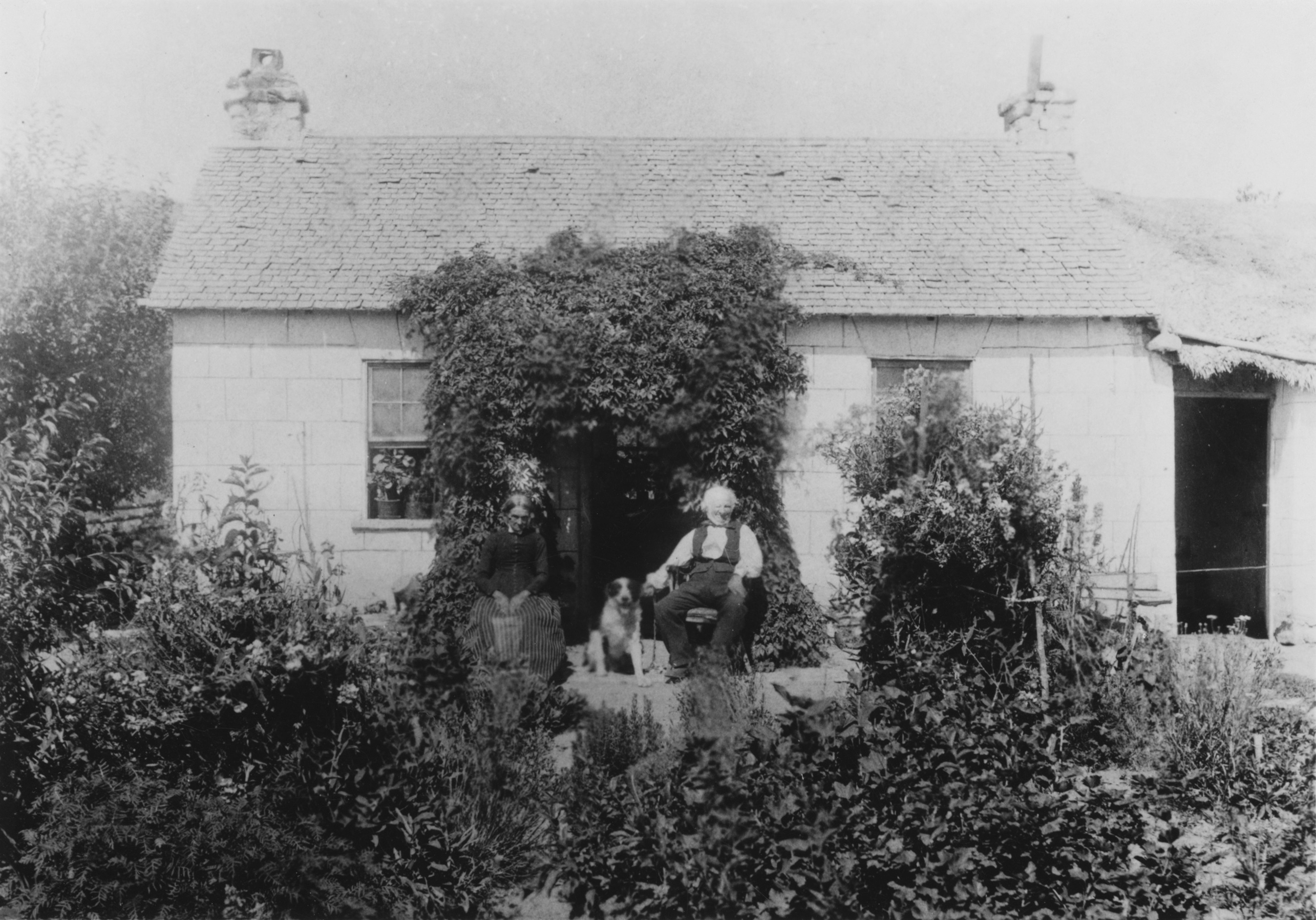
James & Ann Keep

Ann enjoyed her home and loved to make it look nice. She had flowers in the windows and all around the house and a fine orchard of apples, English currants, and gooseberries. All kinds of vegetables were grown in the garden. Her husband helped to care for it too. There was a small porch on the front of her house with a hop vine all around it which grew and ran all over the porch making a nice shade in the summertime. In the fall she would gather the hops and dry them and make yeast with them three times per week. The sisters in the town would send a cup of flour to trade for a cup of yeast to make their bread. In this way she kept herself in flour.

Ann and James Keep at their home in Clarkston, Utah

She was called as first counselor to Mary Griffin in the Clarkston Relief Society on 12 February 1875. She was released in 1885 as she and her husband were getting old and could not do their work so well. Ann was a very busy woman. When too old to do heavy work, she would sew quilt blocks for the Relief Society and for her grandchildren or anyone who would let her do it for them.

James and Ann decided to sell their house and property and live on the principle and interest. In 1890, they sold out and moved to Lehi, Utah for two years. Then they returned to Clarkston to live for several years. Ann had a very bad sick spell and it took her a long time to recover. After she got well, they moved to Newton to live with a daughter, Ruth Griffin.

Just before her death Ann bore a strong testimony to the truth of the gospel, telling her daughters and families to hold fast to the end for this was the true Church of Jesus Christ and to do all they could for their dead. She told her nurse, Caroline Thompson, to hold her pocket book for her, then she took out a dollar and passed it to her daughter, Sarah Buttars and said, “Get my brother Joseph’s temple work done for he was a good man.” She passed away 25 October 1896 in Newton.

James passed away while staying with his daughter Mary Turner in Lehi on 14 March 1899. His body was returned and buried in Clarkston.

Here is the story of her hearing from the Branch President in Newbury.

~

Kennett Place, Newbury, Berks, Sept. 30, 1850

Dear President Pratt,

We have recently been favored with a manifestation of the miraculous power of God; in this branch of the Church a sister, named Ann Keep, the wife of Joseph Keep, who is a deacon in the Church, had a cancer in her breast for some time; and it became so bad of late that she intended to have it cut out, and the time was appointed for it to be done. Three medical men were to be present at the operation. A brother named David Davis, an elder in the Church, called to see her, and she told him she was going to have the cancer taken out; and he said to her “have you got any faith in the power of God?” and she answered “yes:” and he said “so have I.” Accordingly he anointed her breast with oil, and laid hands upon her, and the pain left her there and then, and she never felt it any more; and from that time the cancer got less, until it disappeared; and the breast that had the cancer is as well as the other. This is known by many out of the Church.

Yours, &c.

Thomas Squires

President of the Newbury Branch

~

James Keep finds himself in history due to being present in the home of Martin Harris at the visit of Ole Jensen in July 1875. John Godfrey and James Keep both signed as witnesses to the statement of Ole Jensen, Clarkston Ward Clerk. This is from Jensen’s statement:

It was in Clarkston, Utah, July 1875. Early in the morning a thought came to my mind that I would go and see how Brother Martin Harris was feeling. It was only three blocks from my home. I heard he was not feeling well. People came from other towns to see Brother Harris and hear him bear his testimony on the Book of Mormon. When I arrived there were two men present. Brother Harris lay on his bed leaning on his elbow. I said, How are you? Brother Harris answered slowly, Pretty well. We came to hear your testimony on the Book of Mormon.

Yes, he said in a loud voice as he sat up in bed, I wish that I could speak loud enough that the whole world could hear my testimony. Brother stand over so I can see you. Then he stretched out his hand and said, Brother I believe there is an Angel to hear what I shall tell you, and you shall never forget what I shall say. The Prophet, Oliver Cowdery, David Whitmer and myself went into a little grove to pray to obtain a promise that we should behold it with our own eyes.

That we could testify of it to the world. We prayed two or three times and at length the angel stood before Oliver and David and showed them the plates. But behold I had gone by myself to pray and in my desperation I asked the Prophet to kneel down with me and pray for me that I may also see the plates. And we did so and immediately the Angel stood before me and said, Look and when I glanced at him I fell but I stood on my feet and saw the Angel turn the golden leaves over and I said, It is enough my Lord and my God. Then I heard the voice of God say the book is true and translate correctly!

Martin Harris then turned himself as though he had no more to say and we made ready to go but he spoke again and said, I will tell you a wonderful thing that happened after Joseph had found the plates. Three of us took some tools to go to the hill and hunt for some more boxes of gold or something and indeed we found a stone box. We got quite excited about it and dug quite carefully around it and we were ready to take it up, but behold by some unseen power the box slipped back into the hill. We stood there and looked at it and one of us took a crowbar and tried to drive it through the lid and hold it but the bar glanced off and broke off one corner of the box.

“Sometime that box will be found and you will see the corner broken off and then you will know I have told the truth again. Brother as sure as you are standing here and see me, just so sure did I see the golden plates in His hand and He showed them to me. I have promised that I will bear witness of this truth both here and hereafter.”

His lips trembled and tears came into his eyes. I should liked to have asked one more question but I failed to do so. But I refreshed myself and shook hands and thanked him and left. When I think of the day I stood before Martin Harris and saw him stretch forth his hand and raise his voice and hear his testimony, the feeling that thrilled my whole being, I can never forget. Nor can I express the joy that filled my soul. This is a true statement.

~

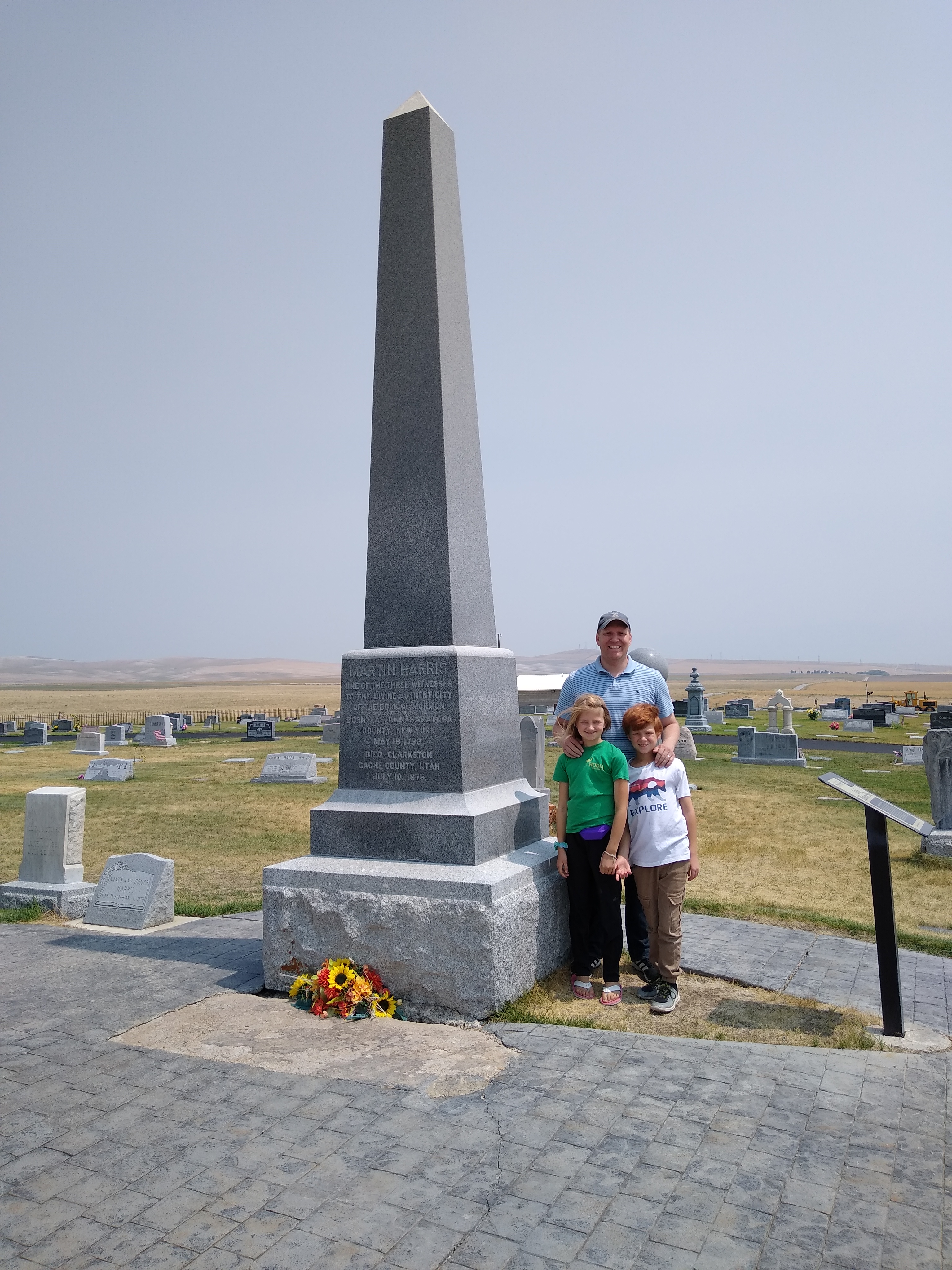
We also visited the grave of Martin Harris in the same cemetery at Clarkston.

Paul, Aliza, and Hiram Ross at the grave of Martin Harris on 8 August 2021

You can read James Keep’s autobiography here.

Samuel Deer Davis

Another family history story.  This one is interesting in that his Idaho case went before the United States Supreme Court in Davis v. Beason.  This is the biography of Samuel Deer Davis (1859-1923) written by Dean G Grow, his great-grandson.  Samuel Deer Davis married Mary Jane Williams, daughter of Sarah Jane Davis and John Haines Williams.  Mary is the sister to David Davis Williams who I also previously shared his biography.

~

“This is the history of my great-grandfather, who was instrumental in the legal attempts that The Church of Jesus Christ of Latter-day Saints undertook to counter the continuing political and legal assault against the Church due to the practice of polygamy in the late 1880’s not only in Utah but in Idaho where he lived.

“Samuel D. Davis was born in Salt Lake City on 22 July 1859 to David Woodwell Davies and Mary Deer.  Samuel’s father had been a missionary in his native Wales for seven years before coming to America.  Aboard ship, David met his bride-to-be, Mary Deer, also a native of Wales.  When they arrived in Kansas City, Missouri, it was too late in the year, creating a delay in getting to the Salt Lake Valley.  So they decided to marry.  This occurred on 25 November 1852, in Kansas City.  They most likely traveled across the plains with a group of Welsh immigrants in the summer of 1853.

ADB12440-4C65-4CDC-A7D2-9C499AA30087

Samuel Deer Davis

“After arriving in Salt Lake Valley, David being a painter and a glazier, set up his home and they began their life there.  David and Mary’s first son, David Thomas was born on 4 March 1854 in Salt Lake City.  Their second son, Woodwell was born in 1856 in Salt Lake City.  David was sealed to Mary on 2 March 1856 in the Presidents office in Salt Lake City.  At the same time and place, he was sealed to Elizabeth Berry, thus becoming a polygamist.  Elizabeth being a native of Bath, Summerset, England.  Their third son, Samuel Deer as indicated earlier was born in 1859.  They were all shown on the 1860 U. S. Census, living in the 8th Ward in Salt Lake City.  It was soon after that, Woodwell died, date unknown.  Their fourth and fifth sons, twins, Hyrum Eynon and Joseph were born on 15 August 1862.  Joseph died as an infant, but Hyrum lived to adulthood.  Their last son, Septimus was born and died soon after in 1864, probably about the time that his father David Woodwell, died of consumption (Tuberculosis) on 20 March 1864.  Thus Mary was left with three boys ages 10, 5, and 2.  I was unable to determine what happened to Elizabeth Berry.

cabin

Davis cabin in Samaria

“In November of 1864, Mary married a man named George R. McLaughlin of whom we can find no record of birth, death or census information.  They had a son George R. Jr. who was born 27 August 1865.  Their second child, Mary Ellen was born about 1866 and died soon after.   Mary’s second husband, George treated her harshly and abandoned her many times.  One time for almost a year.  The last time, she heard he was living in Cheyenne, Wyoming and had no plans to return.  She divorced him on the 20th of January 1868.  Thus Mary was continuously left with four boys to feed and care for.  It was soon after this that she became seriously ill and the doctor told her she would soon die.  Her last son, George was a toddler at the time.  A neighbor, Charles and Jemima Walker offered to adopt George and Mary regretfully consented as she didn’t want to leave such a young child.  Not long after, Mary recovered and went back to the Walkers pleading with them to return her son, but they refused.  They were still neighbors in the 1870 Census with the Walkers showing George as their son at age 5.  George died 29 January 1889 at the age of 24 in a train accident returning to Sugar House, Utah from an outing with friends to Red Bluff Quarry.

“Toward the end of the year, Mary met John Evan Price, another Welshman and became a polygamous wife of his on 26 December 1870.  Mary was 39 years of age and 14 years his junior.  He was in good financial circumstances at this time according to their granddaughter.  He had settled in Samaria, Oneida, Idaho on April 16, 1868 with one other family, being one of the first.  He is also credited with giving Samaria it’s name.  Several others settled there the next month.  A branch of the Church was organized there in November of 1868.  Elder Lorenzo Snow, then of the Twelve Apostles, visited in July of 1869 and approved of the city plot, encouraging the settlers to continue to build and plant there.

“John brought Mary and her children to Samaria after their marriage.  Two additional children were born to this union, Margaret Ann Price on 10 January 1872 and Elizabeth Jane Price on 17 March 1875, both in Samaria.  Unfortunately, John died within a few years on 22 June 1878 in Samaria leaving Mary a widow again.  But this time she was left in good circumstances where she was able to sell off property to new immigrants to Samaria.  She reverted back to her Davis name after 1880.  Her sons were now getting older.  Her oldest, David Thomas was married in Samaria to Amy Ann Sawyer on 7 January 1879 just 6 months after John Evan Price died.  Mary was the postmistress of Samaria for many years and the Relief Society President for 17 years in Samaria.  Eliza R. Snow stayed in her home during a conference in Samaria.

“Her second son, the subject of this manuscript, Samuel D., had no formal education but only that which was from his mother, Mary.  He married Mary Jane Williams on 11 Oct 1882 in the Endowment House in Salt lake City.  Their first child, Sarah Jane, was born in August of 1883 and died the same month.  Their second child, Woodwell Williams was born 17 November 1884.  It was during this time that his wife encouraged him to get some formal education.  He started by attending the district school in Samaria.  Afterward he attended the James Chandler school in Washakie, Utah.  It was a great sacrifice and struggle as he continued to farm and support his family during that time.  He had so much success as a scholar in Washakie, that in 1886 he attended the Brigham Young College in Logan, Utah.  He also studied law during his evenings.  His third child, Edgar Williams was born on 1 March 1887.  He soon became a partner in a law firm in Malad, Idaho of Evans, Gibbs and Davis.

CE3C2ECA-B897-4F05-9255-E5423077950D

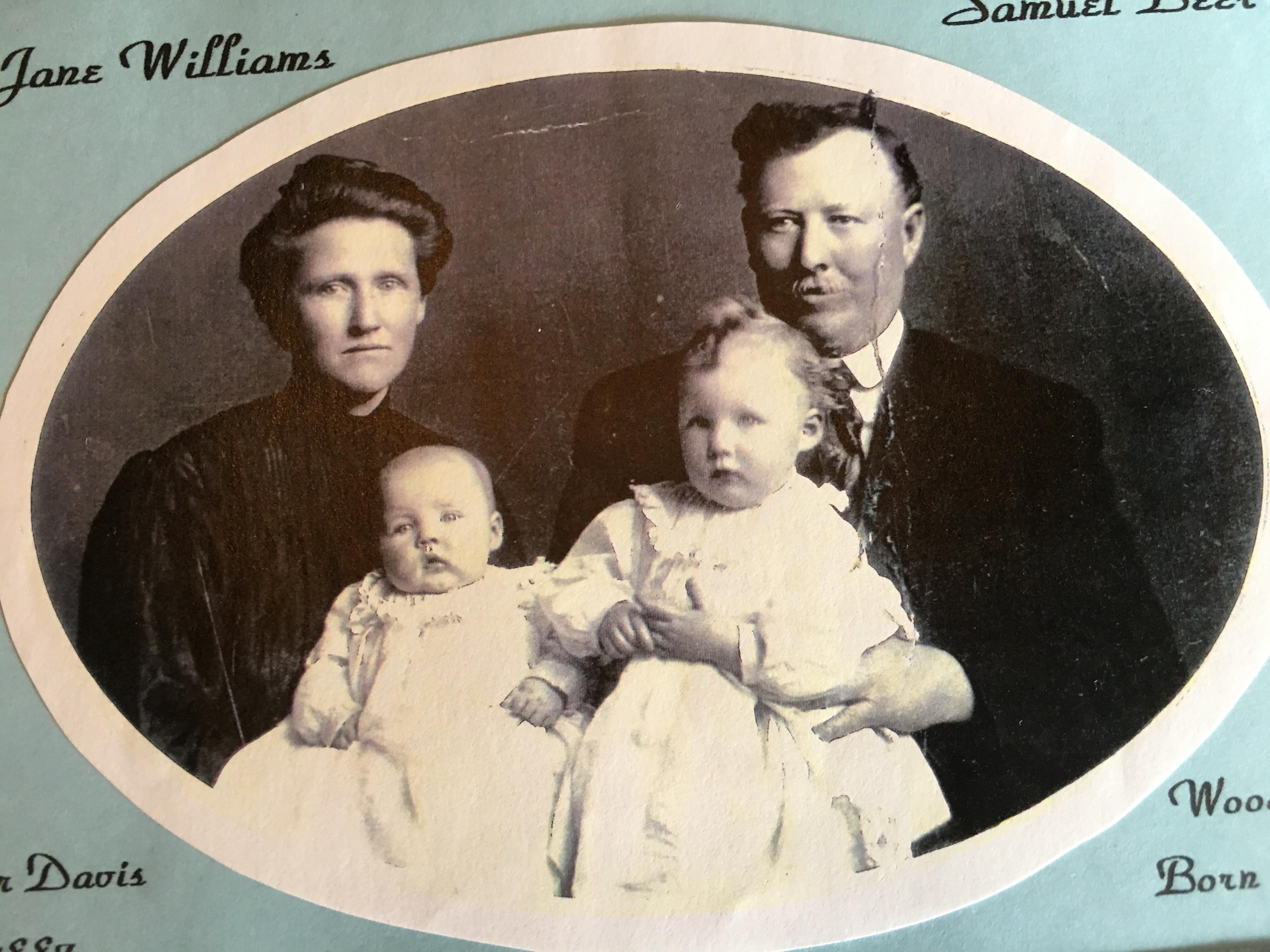
Mary Jane Williams and Samuel Deer Davis with Edgar and Woodwill Davis

“At this time there was much pressure on the local LDS communities by the Idaho politicians who were strongly anti-Mormon, about the Church practice of polygamy.  75% of the population lived in the eastern half of the state and about 20% of those were L. D. S. which meant that they represented a large voting block.

“These following steps were in relation to the 1884-1885 law, not the 1889 one which was taken to the Supreme Court.

“From E. Leo Lyman’s “Political Background of the Woodruff Manifesto”:  “William Budge, the leading spokesman for the Church in Idaho, tried to bring as much pressure as he could on the outcome of the case.  Budge used Utah Congressional delegate John T. Caine to generate pressures on the Judge Berry through political friends back home.  He also traveled to the Blackfoot judicial headquarters to confer with Berry before he rendered his decision.  The judge, who recorded the conversation as accurately as he could recall, claimed the Church leader first quoted U.S. Solicitor General Jenks as saying that if the test oath law was taken before the United States Supreme Court, “it would not stand for a moment.” Budge also stressed the crucial nature of the pending decision on the continued allegiance of the Idaho Mormons to the Democratic party (Berry 1888).

“Berry’s reply demonstrated considerable admiration for Mormon industry and economic accomplishments but firmly stated his intent to “administer the laws as they were.” He made it clear he could not allow political considerations to affect his decision and expressed regret that the Mormons could not bring their marriage relations into “regulation step” with the rest of American society (Berry 1888). The published decision {Idaho Daily Statesman, 17, 20 Oct. 1888; Wood River Times, 16, 17, 24 Oct. 1888) not only upheld the test oath but ruled the Mormon arguments that they no longer taught or practiced plural marriage were merely a temporary posture of no importance so long as the general Church had made no changes on the question. The kind of concession necessary to relieve the disfranchisement onslaught, Judge Berry stressed, was a formal renunciation of the doctrine at a Church general conference, not unlike what actually occurred several years later.”

“From the Encyclopedia Britannica: “They enacted a law in 1884-1885 that all county and precinct officers were required to take a test oath abjuring bigamy, polygamy, or celestial marriage; and under this law in 1888 three members of the territorial legislature were deprived of their seats as ineligible.  An act of 1889, forbade in the case of any who had since the 1st of January 1888 practiced, taught, aided or encouraged polygamy or bigamy, their registration or voting until two years after they had taken a test oath renouncing such practices, and until they had satisfied the District Court that in the two years after they had been guilty of no such practices.

“The earlier law had been tested by the Church in the territorial federal courts, but was unsuccessful.  This 1889 law, regarding voting, was commonly called “The Idaho Test Oath” which meant essentially that if you were a member of the Church, whether practicing polygamy or not, you could not vote and was retroactive to January 1 the year before.  It appears that the Church decided to test this law all the way to the United States Supreme Court.

“In Samaria on Oct 27, 1888, 26 men including Samuel D. Davis asked to have their names removed from the records of the Church with apparent approval of the Church leaders so that they could vote in the November 1888 election but primarily to provide a test case.  There were about 30 in Malad City who did the same thing.  The new law having been enacted after the men had voted, they were indicted almost a year later for conspiracy to break a law that wasn’t created until the following year.  The case became known as “Davis vs. Beason” and can still be found today by searching the internet.

“From the Deseret News on September 21, 1889:  “The perjury case against Mr. Evans of Malad having been disposed of in the District Court of that place, the next matters of importance tackled were the conspiracy cases. Indeed there was practically but one case, fifty six persons having been included in one indictment.

“The matter came up for trial before Judge Berry on Tuesday, Sept. 10th [1889]. There was much disappointment among the virulent anti-“Mormon” element over the result of the case of perjury against Mr. Evans and the officers said that in the conspiracy matter they would get a jury together that would convict this time.  For this purpose they scoured the country and imagined they had got what they wanted when the panel was completed.

“The charge preferred in the indictment against the fifty-six defendants was substantially that they had conspired together to break the laws of Idaho Territory, notably the Idaho test oath law, by agreeing to vote at an election when they knew that they had no right to do so.

“The case was tried and at 6 p.m. on Wednesday was given to the jury.  On Thursday the 12th at 2 p.m. the jury came into the court with a verdict, in which they found fifty-five of the defendants not guilty and one guilty.  The latter was Samuel D. Davis of Samaria.

“A new trial was asked for Mr. Davis by counsel for the defense and denied, and the  court sentenced him to pay a fine of $500.  The fine was not paid and Mr. Davis placed in jail for a maximum of 250 days [$2 a day].  Judge Berry was applied to for a writ of habeas corpus which was also denied, and an appeal from his action was taken to the Supreme Court of the United States.

“The matter is in the best possible shape it could possibly assume for final adjudication. None of the acquitted fifty-five defendants can be again placed in jeopardy on the same subject, either under the title of conspiracy or any other.  The appeal to the Supreme Court involves the validity of the infamous test oath law, which will therefore be decided one way or the other.

“The defense was conducted with marked ability, the attorneys being Mr. J. S. Rawlins of Salt Lake, and Mr. J. N. Kimball of Ogden.   Mr. Standrod and “Kentucky Smith” appeared on the part of the prosecution.”

“From the above article it is clear that it was “arranged” in advance that one person would be the focal point for the test case.  That person, having probably volunteered due to his legal schooling, was none other than Samuel D. Davis.  He obviously knew that he would spend some time behind bars, but was willing to do that for the Church.

“To give a better idea of the named individuals in this case, they are as follows:  Charles H. Berry, a former attorney general of Minnesota, later on, an associate justice of the Idaho Supreme Court who would have jurisdiction as the Judge in this case in Malad City.  Joseph S. Rawlins was a city attorney in Salt Lake City and worked with Brigham Young and following Church leaders on matters of law.  He later served in the Congress of the U. S. and assisted in gaining statehood for Utah.  He was also known as the “Red-headed Reactor of the Rockies” because he made such a fight about the confiscation of the Church property.  It was through his efforts that the property was eventually restored.  J. N. Kimball also served as a defense attorney for the Church in Ogden.  Drew W. Standrod came to Malad City, Idaho from Kentucky with his parents and took up the practice of law there.  He was elected as the prosecuting attorney there twice and later became a judge moving to Pocatello.  “Kentucky” Smith is actually H. W. Smith who was an anti-Mormon lawyer of prominence in Ogden, Utah and the author of the “Idaho Test Oath” law.  He also later became a judge in Idaho.  Sheriff Harvey G. Beason was an appointed sheriff who was just 29 years old at this time.  His was the other name in the test case.  He soon after moved to Montana and then to Gillette, Wyoming where he lived until his death in 1939.

“From another article in the Deseret News written in Samaria on September 30, 1889.

“”A very strange scene was witnessed here on the 25th inst. (Sept 1889)  It will be remembered that Mr. Samuel D. Davis of this place was found guilty not long since at the District Court held at Malad City, of voting at the election held here last fall contrary to the provision of the anti-Mormon Test Oath law, and that he was sentenced to pay a fine of $500 and costs, pending payment of which he was sent to the county jail.  He applied for a writ of habeas corpus which was denied by Judge Berry.  Application was then made direct to  Washington for a similar writ.  Here it was thought the matter would rest for the present. But not so; on Sept. 13, Sheriff Beason came to Samaria and levied an attachment on Mr. Davis’ property having an order from the court to sell at public auction enough to cover fine and costs.  On the  25th inst. said order was carried into effect.  Sheriff Beason, Attorney Standrod, Treasurer D. Tovey,  Commissioner P. Fredrickson and a few others came over.  The sale began at 2 o’clock.  Mr. Davis’ only horse was sold to Meyer Kohn of Malad, for $21.00. (Mr. Kohn has since offered to return the animal for the same price), which was about one-fifth his real value.  Mr. Davis interest in the firm of Evans, Gibbs, & Davis was knocked off to Standrod for $190.00.

“It was the Intention to sell the little home where Mrs. Davis and her two little children reside, but the title being defective it was abandoned. This was all that could be found to sell and the sale came to a close.

“The sheriff seemed very dry after his labors for he and his companions indulged quite freely.  They had apparently come over well prepared.”

“This article indicates that Samuel’s family also suffered because of the case.  The article was incorrect in that there were “two little children” in the home.  My grandfather, John Vincent “Vin” Davis was born on 6 July 1889 and was just a few months old when this took place, which means that there were two little children and one infant.  It also indicates that his fine was reduced almost 40% by the $211.00 amount recovered in the sale.  Therefore his sentence would be reduced by about 100 days, leaving 150 days remaining to be served.  From the Deseret News on 11 January 1890, it indicates that the hearing was held in the U. S. Supreme Court, probably a day or two earlier.  The hearing is several pages of arguments both for and against which I will not be discussing here.  It can also be found on the internet by searching “Davis vs. Beason”.  The ruling was handed down on 2 February 1890, upholding the Idaho law.  At this time Samuel had been in jail for 113 days.  I was unable to determine whether he remained the last 30 some days in jail or whether the Church paid the balance of the fine to release him or whether he was reimbursed for his personal losses.  During this era many members sacrificed much for their belief.

“President Wilford Woodruff issued the “Manifesto” a few months later on 24 September 1890, ending plural marriage in the Church.  The Idaho law was changed in 1893, the disqualification was made no longer retroactive, the two-year clause was omitted, and the test oath covered only present renunciation of polygamy, thus allowing members to vote once again.  It took until the 1980’s to get similar wording in the Idaho State Constitution removed.

“Samuel D. Davis continued in his practice of law and in 1899 he was appointed Probate Judge of Oneida County, Idaho.  He was twice elected to this office.  In 1901, after the formation of the Idaho State Bar, he took the examination for the bar and was admitted to practice in all the courts of the state.

“His wife of 21 years, Mary Jane Williams Davis died on 19 March 1903 in Samaria.  Later that year he moved his family of boys to Malad City to continue his practice and opened a new law office there.  His brother-in-law,  Isaac B. Evans, who had been on a mission in the south, introduced him to a woman in Salt lake City, whom he had known while on his mission.  She was Alice Godwin, daughter of Handy Haywood Godwin and Elizabeth Ann Naylor Godwin.  They were natives of Clinton, Sampson, North Carolina.  She was a true daughter of the old south.  Samuel was very interested and she was interested also, but I’m sure was concerned by the thought of finishing the raising of 7 boys.  But apparently she was up to the task as they were married in the Salt Lake Temple on 13 November 1905.  She bore him 3 more children.  First, Mary Naylor Davis, 13 September 1906, second, Alice Deer Davis, 18 January 1908 and Samuel Godwin Davis on 6 March 1911, all in Malad City, Idaho.

“He continued in Malad City until moving to Salt Lake City about 1918.  He was there in the January 1920 U. S. Census.  He probably moved to Twin Falls, Idaho in the summer of 1920 to accept employment as the City Attorney.  Two of his boys followed him there.  One, Eugene, who was still living with him and the other, John Vincent and his family, who was still living in Samaria.  In June of 1923, he was made the Twin Falls Police magistrate, but unfortunately, he died within 6 months on 13 December 1923.  After the funeral, his body was shipped back to Samaria to be buried.  His second wife, Alice moved to Salt Lake City, where she died 13 January 1945.  Her body was also returned to Samaria to be buried.

“From the Twin Falls Times News:  “Judge Davis was early admitted to the bar in Idaho, and served as county attorney and probate judge in Oneida county.  He attracted wide attention in the early days by his success as an irrigation and criminal lawyer.  It was his boast that some of Idaho’s best known attorneys had begun their legal training in his office.  He was an active and prominent member of the L. D. S. Church serving as member of the High Council in Malad and Twin Falls.”

“Thus ended a long legal career in the State of Idaho and the life of a man who was willing to stand for  his principles, even risking all his possessions at one time.  He died at the age of 64, which would be considered still young by today’s standards.  His part in the legal battle was apparently unknown to his children, grandchildren and their descendants.  My mother did mention many years ago that she had heard about the voting issue.  Those of his children as indicated earlier were very young and would not have known about the landmark legal case, unless he had related it to them.  He was a good man and his story needed to be told, so that all would be aware of his sacrifice during another time of great difficulty in the history of the Church.