1957 Jamboree and 1958 Colorado River

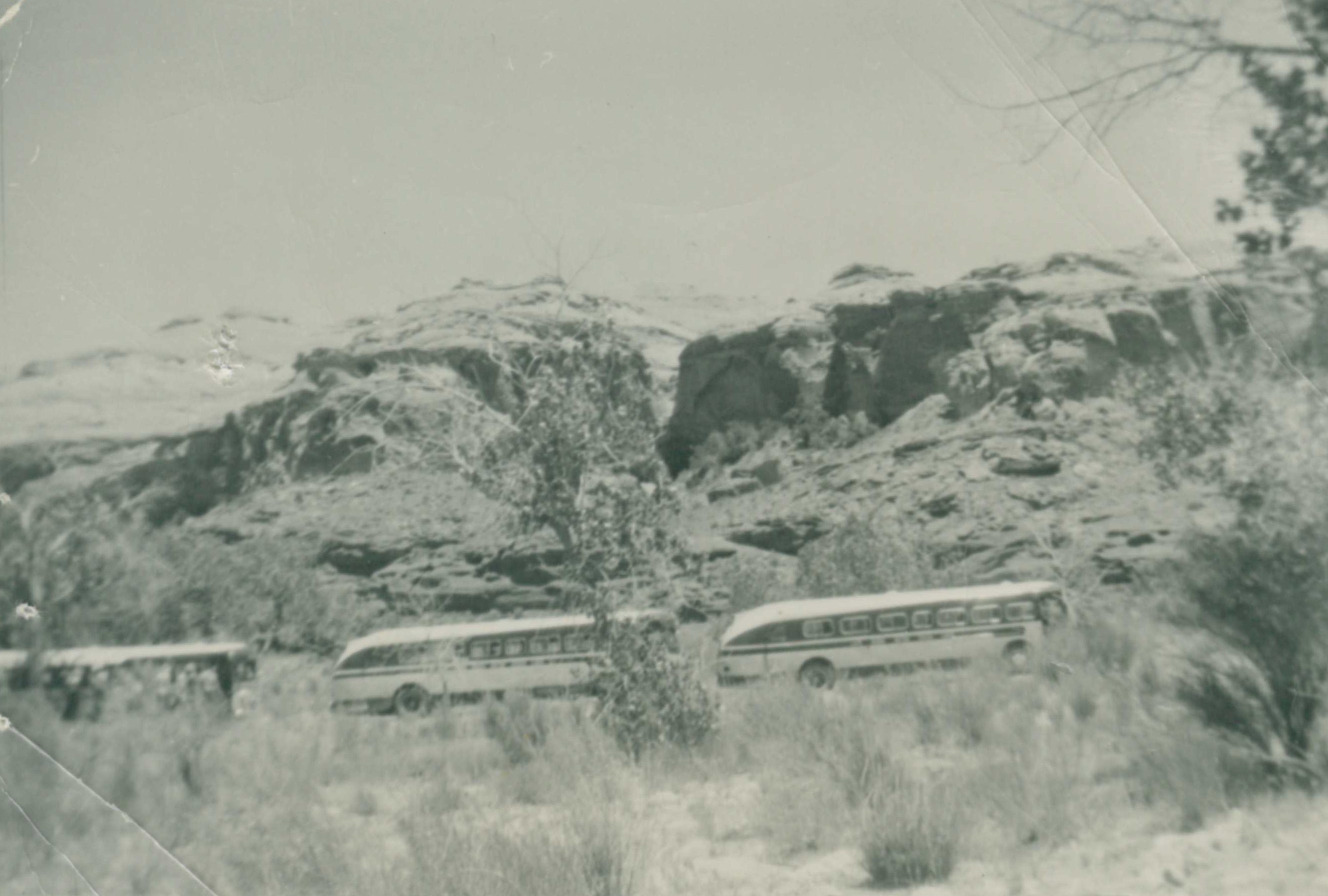
As I worked through the photos of Dave and Betty Donaldson, I stumbled on some pictures sent from Dad. Dad, Milo Paul Ross, attended the 1957 Boy Scout Jamboree in Valley Forge, Pennsylvania. I thought I would share those photos along with some other items I have scanned related to that trip. Since there were a couple of photos from the 1958 High Adventure Trip, I thought I would include those too.

First, be aware that the Great Salt Lake and Lake Bonneville Councils published a book about their trip. “Onward for God and My Country” was the motto. I have scanned the entire book – it is provided below.

The book says the trip occurred in July 1957. The book provides plenty of photos of the highlights. These few photos show what Dad thought was interesting enough to take pictures.

The trip took them east through a variety of states. Included was Chicago, Detroit, and Palmyra. Stops included the Sacred Grove and Smith Farm. Albany, Springfield, Boston, and New York City.

Dad does not recall the names or even knowing anyone in the photos at Jamboree.

I remember Dad talking about the Statue of Liberty. They climbed the stairs to the crown. He also indicated that at that time they let some of them climb to the torch. It was a very memorable experience. He also mentioned the Empire State Building and Independence Hall in Philadelphia. Vice President Nixon addressed the Scouts.

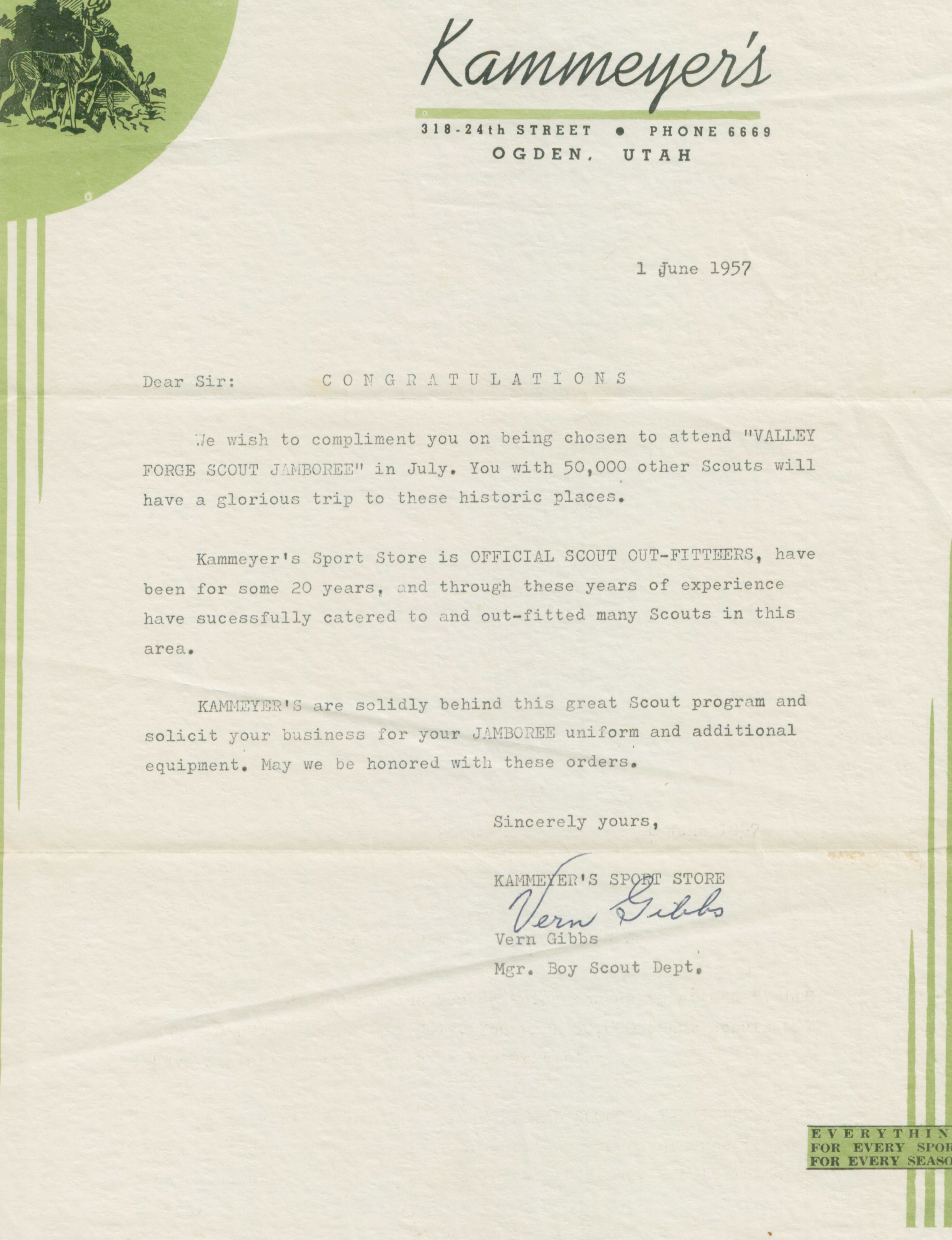
Kammeyer’s supported the Jamboree.

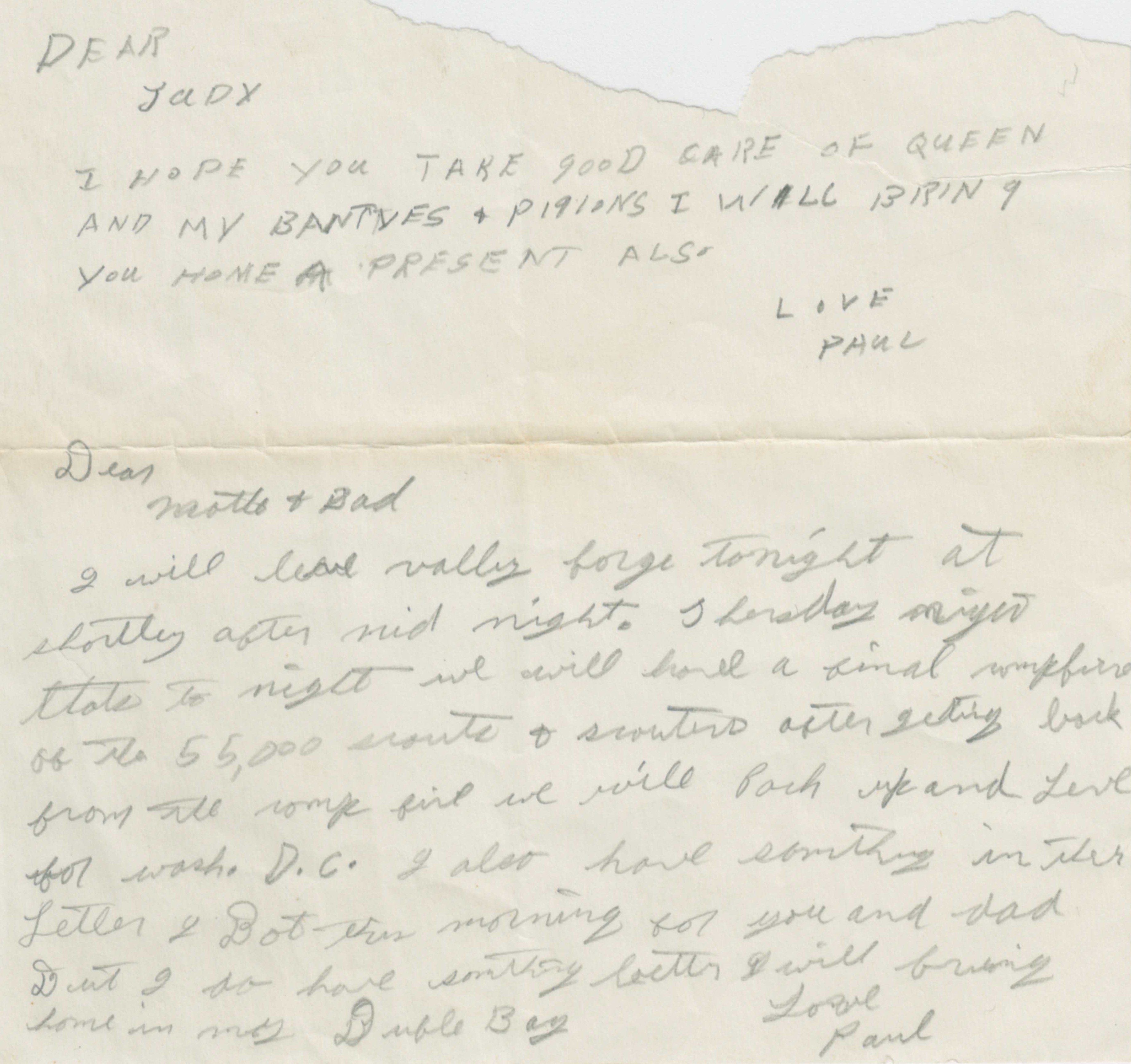
For those LDS Scouts, Harold B Lee and Delbert L Stapley spoke to the boys on Sunday. Here is a letter Dad wrote home while there.

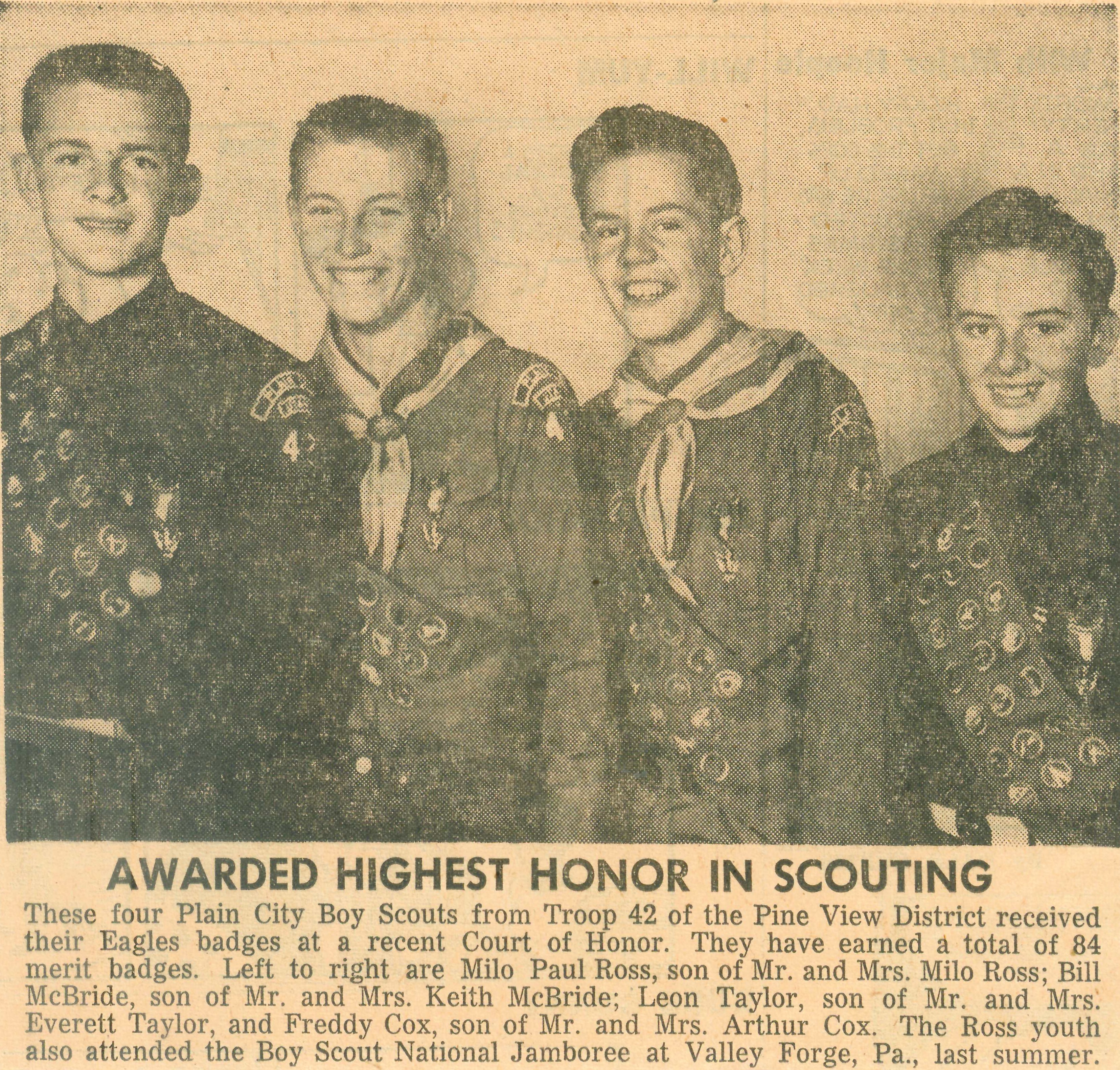
I previously wrote about Dad and scouting. Here is his Eagle Scout picture.

Milo Paul Ross achieved Eagle Scout

Here is a note Grandpa made about this picture.

Milo Ross, Bill McBride, Leon Taylor, Freddy Cox Eagle Announcement
Milo James Ross commented about Milo Paul Ross receiving his Duty to God award on 27 April 1959
Duty to God Award
Letter from Church Headquarters

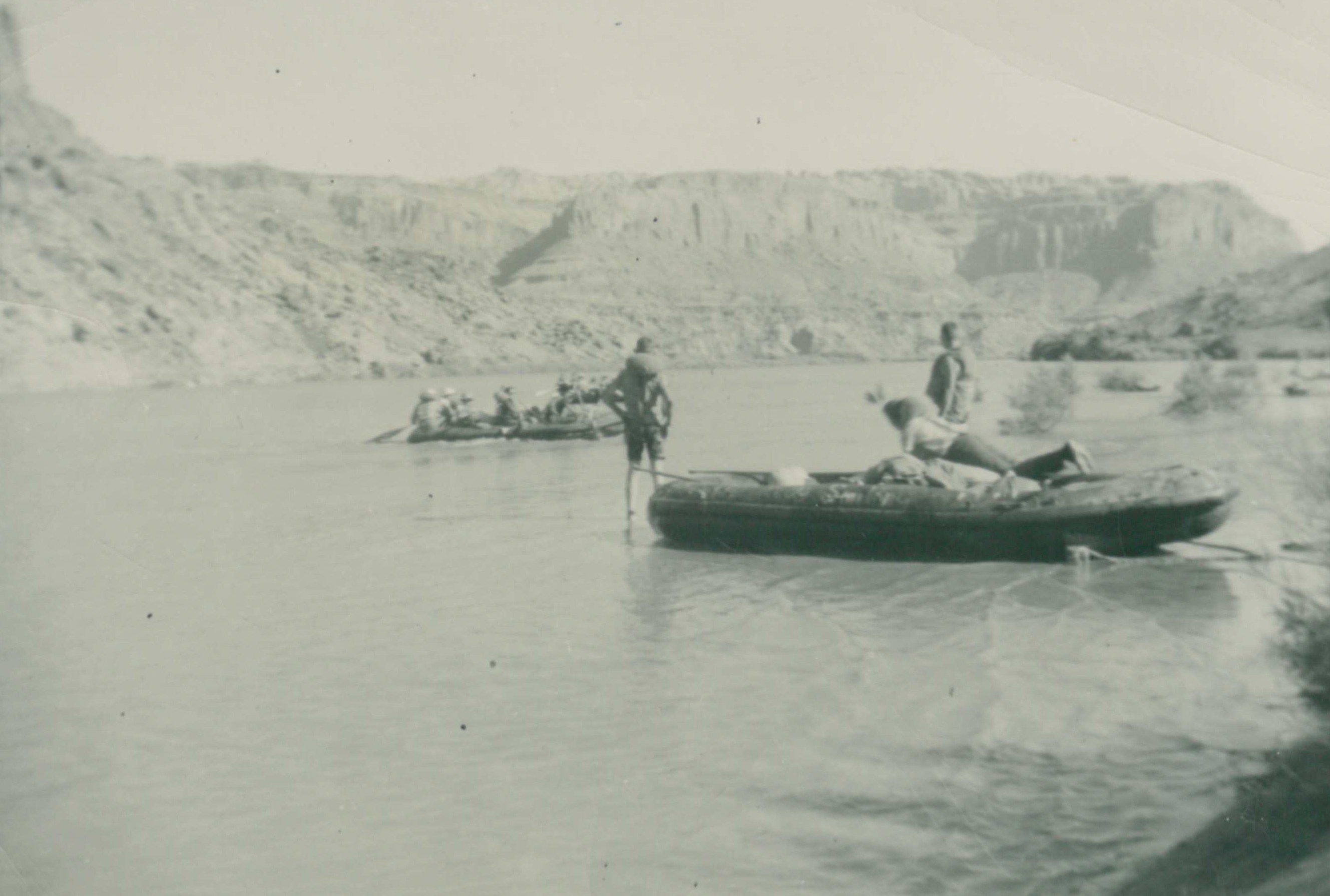
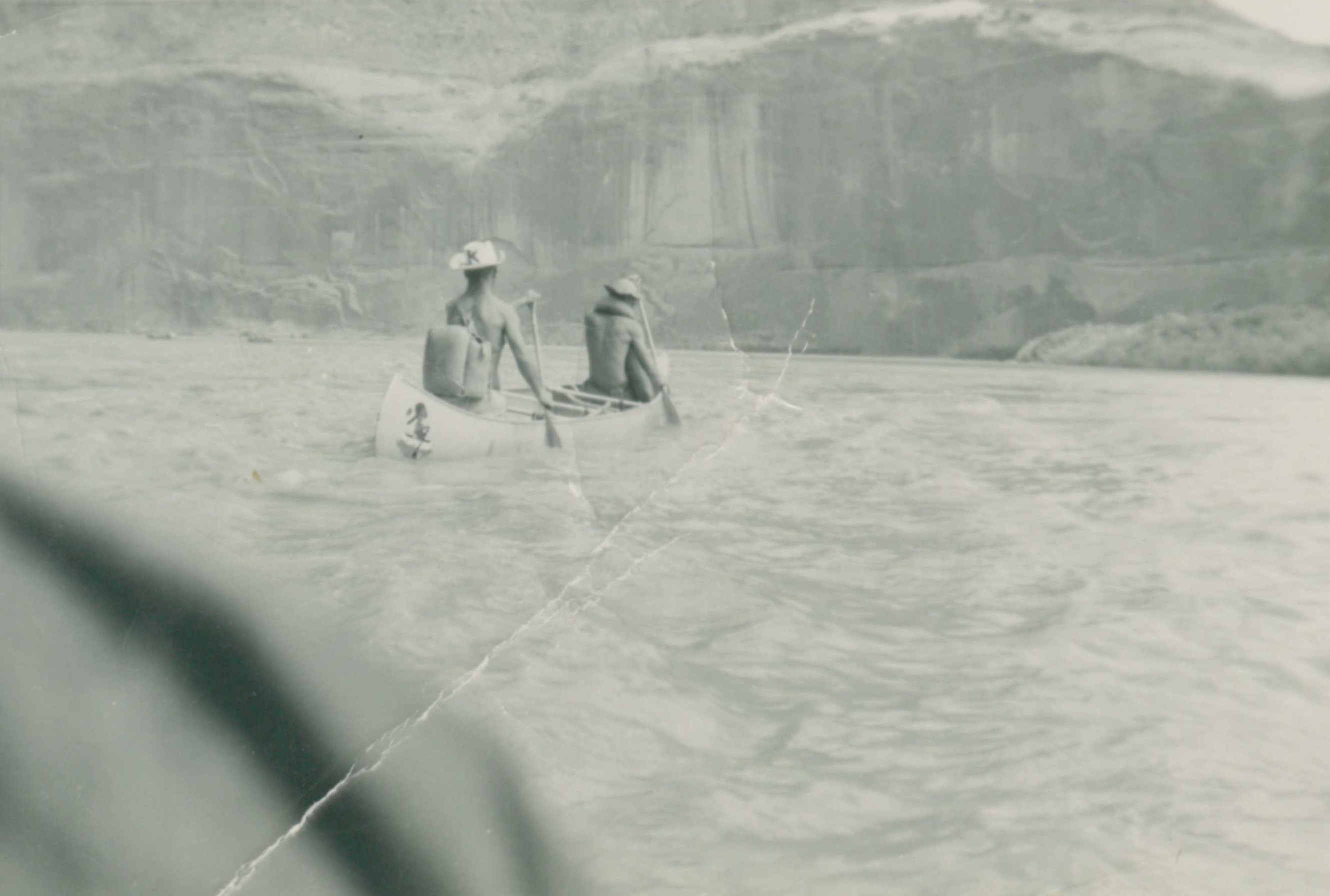
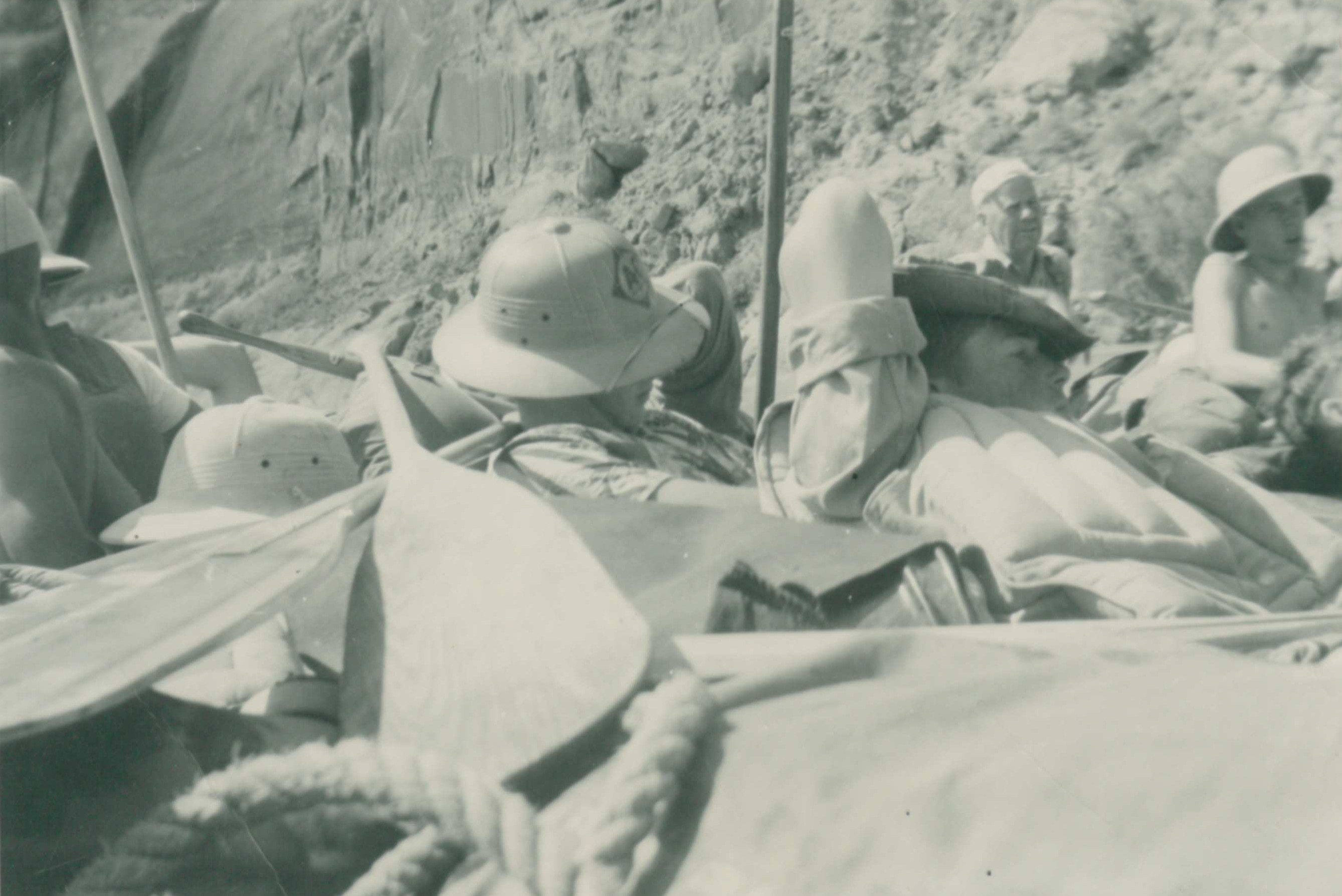
Here are a couple of the photos from the Colorado River rafting trip. Dad thinks there are more photos. He does not remember or recognize any of the individuals in the photos.

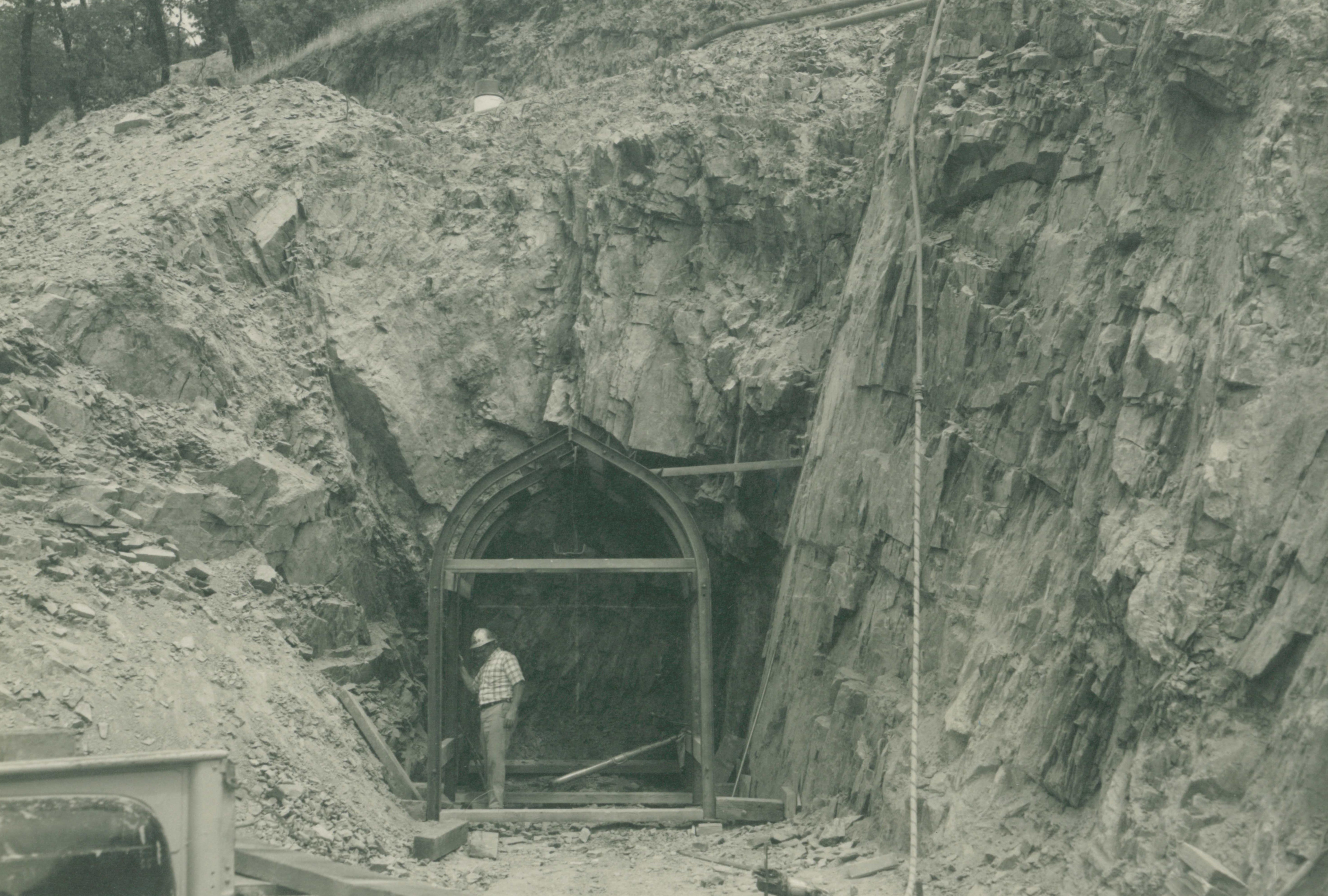
Dad remembered they had to pull out of the river to go around the Glen Canyon Dam construction.

~

~

~

~

Both of these were trips of a lifetime. Neither have been forgotten.

Another clip, I don’t know the year or time.

Eisenhower Lock

“HELP BUILD LOCK. These foremen and supervisors are working on the Eisenhower lock in placement of concrete. They hail from various parts of the country. Shown are Ward Turner, supervisor, from Arkansas; Manuel Martinez, vibrator, from Mexico; Golden Andra, general foreman, from Idaho; John Catera, foreman, from Utica.

This newspaper article and photo were in the records of Golden Andra. Golden is named in the newspaper, I don’t know/think the second photo is of Golden. It says it came from the Department of Interior, he kept it for some reason unknown to me.

I know this was a significant time in the life of the Andra family. Golden worked and is shown as a general foreman. But I also know that Golden’s brothers Donald and Ross both also worked on the St. Lawrence Seaway. I believe they both worked on the Eisenhower Lock as well.

Golden and Utahna adopted a boy born in 1957 at Bombay, Franklin, New York.

Donald married in 1957 at Hogansburg, Franklin, New York.

Ross told me multiple stories of New York. Unfortunately, I don’t remember any to share.

Since this is Golden, and this article also shares some information in New York, I share it here as well.

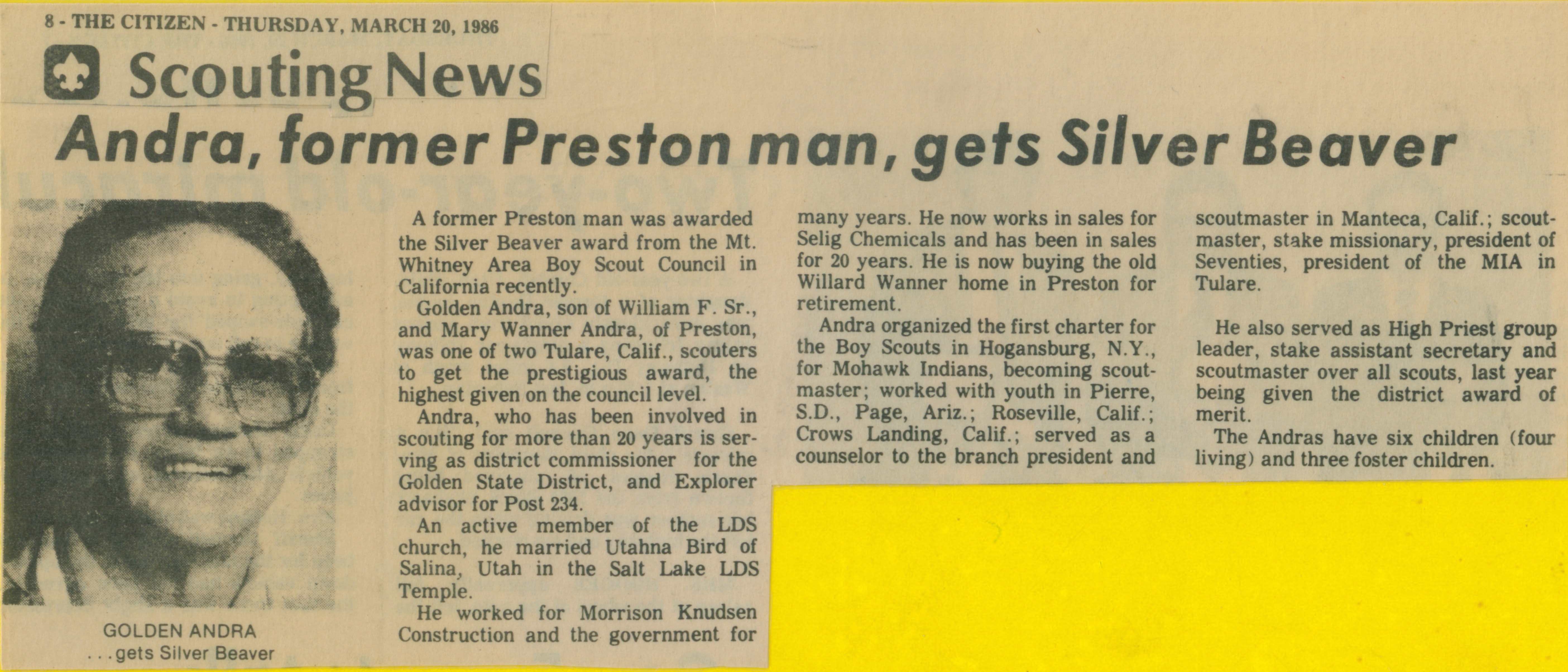
“Andra, former Preston man, gets Silver Beaver. The Citizen (Preston, Idaho) 20 March 1986.
“A former Preston man was awarded a Silver Beaver award from the Mt. Whitney Area Boy Scout Council in California recently.

“Golden Andra, son of William F. Sr., and Mary Wanner Andra, of Preston, was one of the two Tulare, Calif., scouters to get the prestigious award, the highest given on the council level.

“Andra, who has been involved in scouting for more than 20 years is serving as district commissioner for the Golden State District, and Explorer advisor for Post 234.

“An active member of the LDS church, he married Utahna Bird of Salina, Utah in the Salt Lake LDS Temple.

“He worked for Morrison Knudsen Construction and the government for many years. He now works in sales for Selig Chemicals and has been in sales for 20 years. He is now buying the old Willard Wanner home in Preston for retirement.

“Andra organized the first charter for the Boy Scouts in Hogansburg, N.Y., for Mohawk Indians, becoming scoutmaster; worked with youth in Pierre, S.D.; Page, Ariz.; Roseville, Calif.; Crows Landing, Calif.; served as a counselor to a branch president and scoutmaster in Manteca, Calif.; scoutmaster, stake missionary, president of the Seventies, president of the MIA in Tulare.

“He also served as High Priest group leader, stake assistant secretary and scoutmaster over all scouts, last year being given the district award of merit.

“The Andras have six children (four living) and three foster children.

Memorial Day 2025

Time continues to march forward. It does not care what we think about it. Some want it faster, others want it slower, others want it to stop.

In preparation for Memorial Day, I was trying to think of something that would show that I truly hold in memory those who served in the military and especially those who died in that service. Hopefully here are a few things that show a more human side. I am not aware that I have any ancestor who has died in a war, especially in the service of the United States of America. I guess for that I am lucky and honored. But I have many who have served in the military.

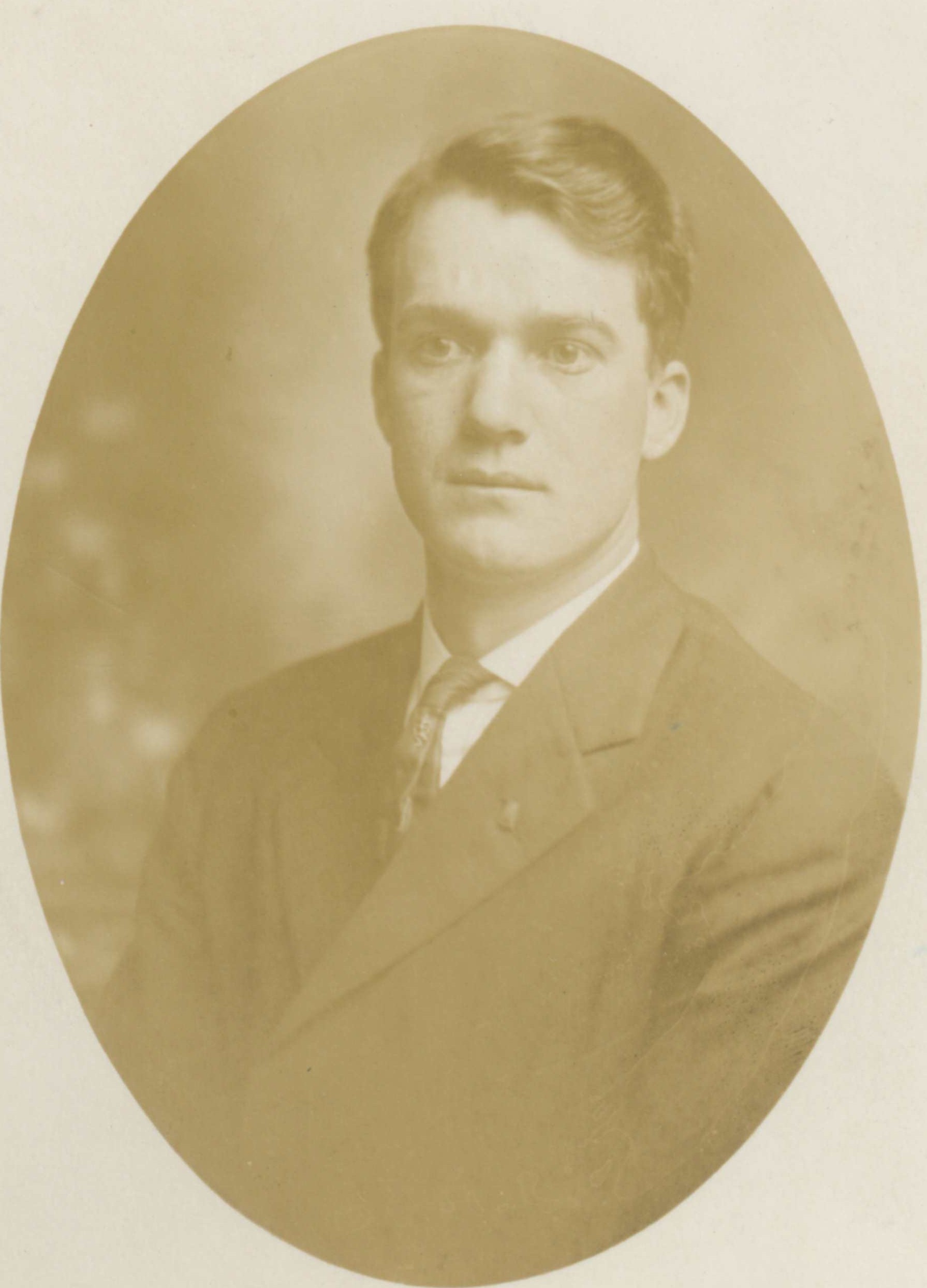
Portrait of David Delos Donaldson after WWI

David Delos Donaldson is my paternal grandmother’s father. I tried to get a copy of his military records many years ago, but they were destroyed in a St. Louis, Missouri, fire long ago. I only know a few things. He worked in California as a pipe fitter/plumber at some point, but I believe that was for WWII. He went through basic training and ended up learning signaling. At some point he was allegedly in France and was exposed to the dreaded mustard gas, which injured his lungs. He smoked to settle his lungs as prescribed by doctors. He ended up dying from complications due to his lungs.

Here are some notes I have from 2006.

“I stumbled upon a registration form for my great grandfather, David Delos Donaldson, and WWI.  He was working in Twin Falls, Idaho.  The best part is, we never knew he went to Idaho, ever.  Not only that, he was working there, and was exempted because he was working to support his younger siblings and mother.  He did later enter the war, we don’t know when or how, but went to France in the Argonne and was gassed there.  He suffered his whole life and eventually died from the mustard.

“With this information, I went to visit my Uncle Dave Donaldson because my Dad did not know anything.  I picked his brain.  We know little about my Great Grandfather before he married.  Now we know he was working for Ballantyne Plumbing in Twin Falls in roughly April 1917.  He served in WWI with two brothers.  As mentioned, he was hit with mustard, spent some time in hospital, and he wasn’t getting better, so they sent him home.  He married my Great Grandmother in 1919, Berendena Van Leeuwen.  They had 5 children.  During the great depression he worked down south as a plumber.  Dave did not know where, but there was a possibility it was at the Hoover.  When they went on a trip to Los Angeles, he insisted on stopping at Boulder City and the dam on the way home.  Oh, we do know that before they got married, he worked as a plumber in Phoenix.  How long we don’t know, but he could not bear the heat down there.  During the depression when he worked down south, the family stayed in Ogden.  Dave was young enough that he did remember his father coming home, but not where from.  Again during WWII, the whole family moved to Napa, California and Great Grandpa was a plumber at the naval yard there, he made it sound like Oceanside.  I do not know if there were any other naval bases down there.  Then they moved back.  The family must not have stayed down there, or he did not work the entire war, as my Grandpa and Grandma met in 1941-1942 at the Berthana on 24th street Ogden at a dance.  They were married in April 1942, shortly before he left for war.  Great Grandpa was a plumber by trade.  He worked up until the 1950’s when his health failed him.  He picked up smoking because it soothed his lungs.  It sounds like the mustard burned his lungs the rest of his life.  He would smoke to deaden the nerves.  Dave told me this increased until he died.  Even the last few years of his life, he had oxygen when he went places and when he slept.  But he kept smoking.  Dad told me of one of the few memories he had of his Grandpa.  He went to visit him in Ogden, Grant Ave if I remember right, and he was laying in bed.  There were newspapers all over the floor.  He got into a coughing fit and coughed a big thing of phlegm up and it went on the floor.  It was the combination of the irritation to the lungs from mustard and the smoking.  It was what eventually killed him.

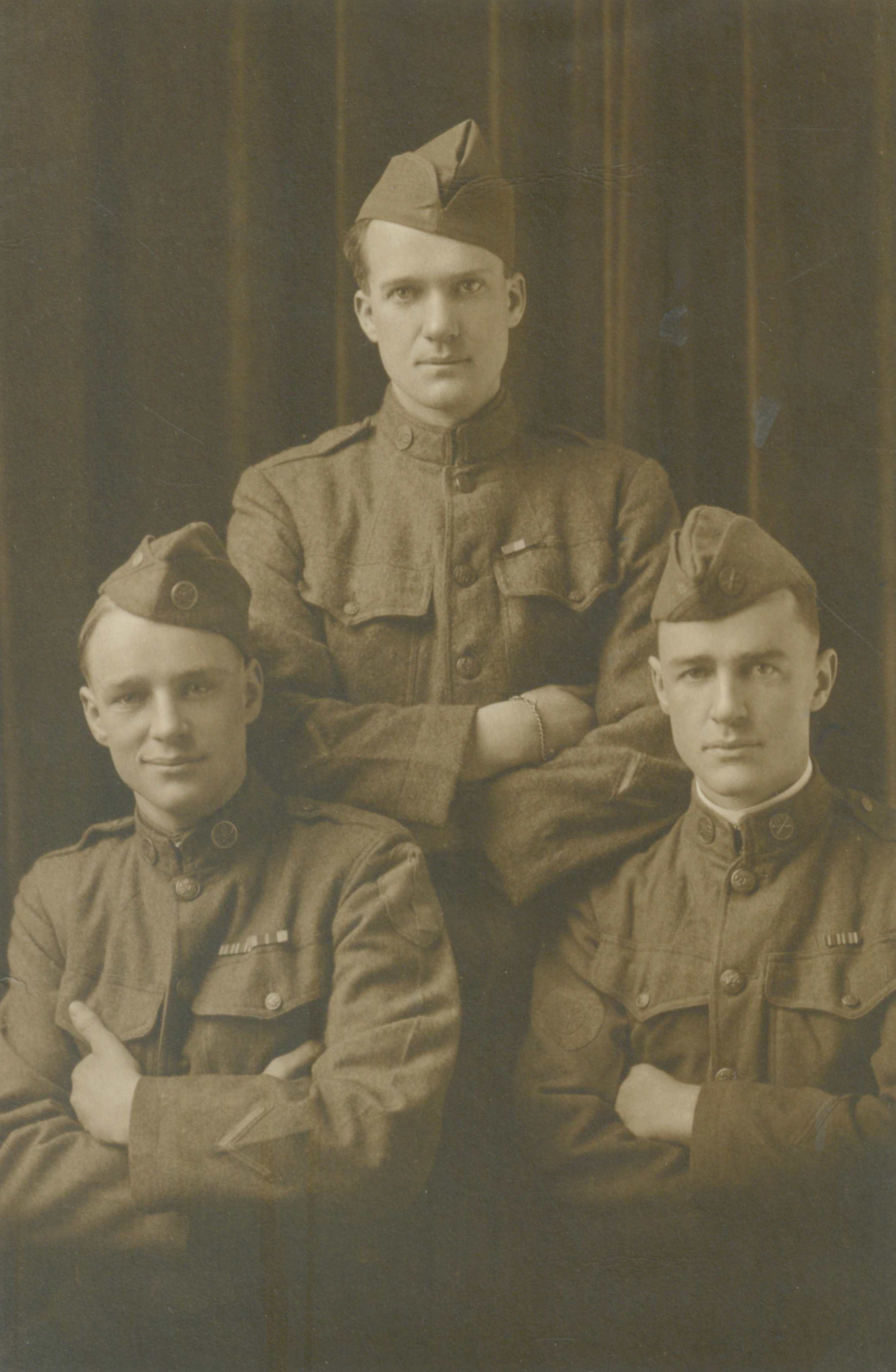
David Delos Donaldson (back), John Edmund Donaldson (left), and William George Donaldson

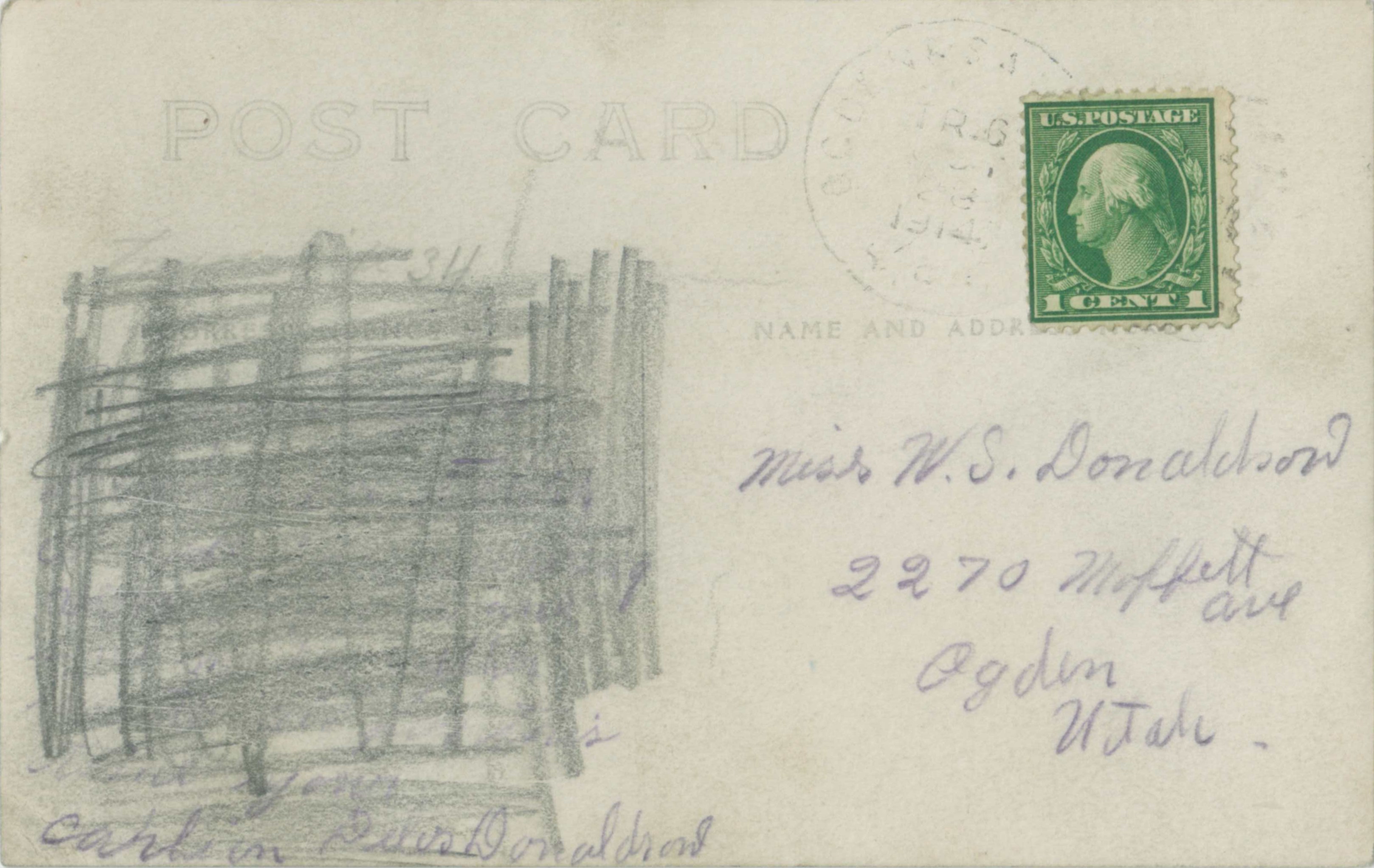
Here are some postcards David sent home to his mother. His father, William Scott Donaldson, died of cancer in 1913.

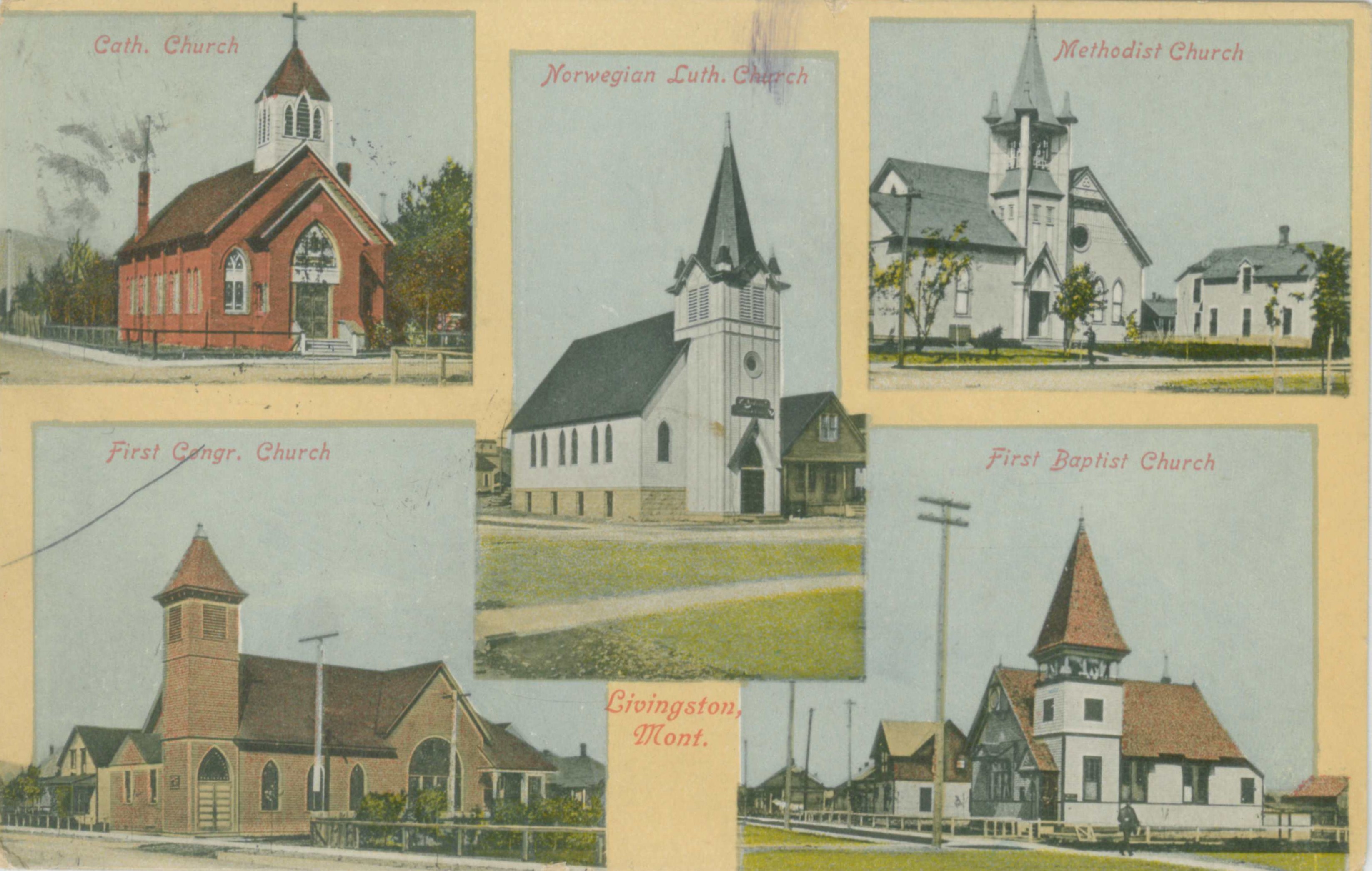
“Part of Carlin, Nev.”

I am not sure why the writing on the left is crossed out. But you can see Miss W. S. Donaldson 2270 Moffett Ave Ogden Utah. It says Carlin and Delos Donaldson. It might say “Yours” above it. The postmark is dated 1914, but I cannot make out the rest of it.

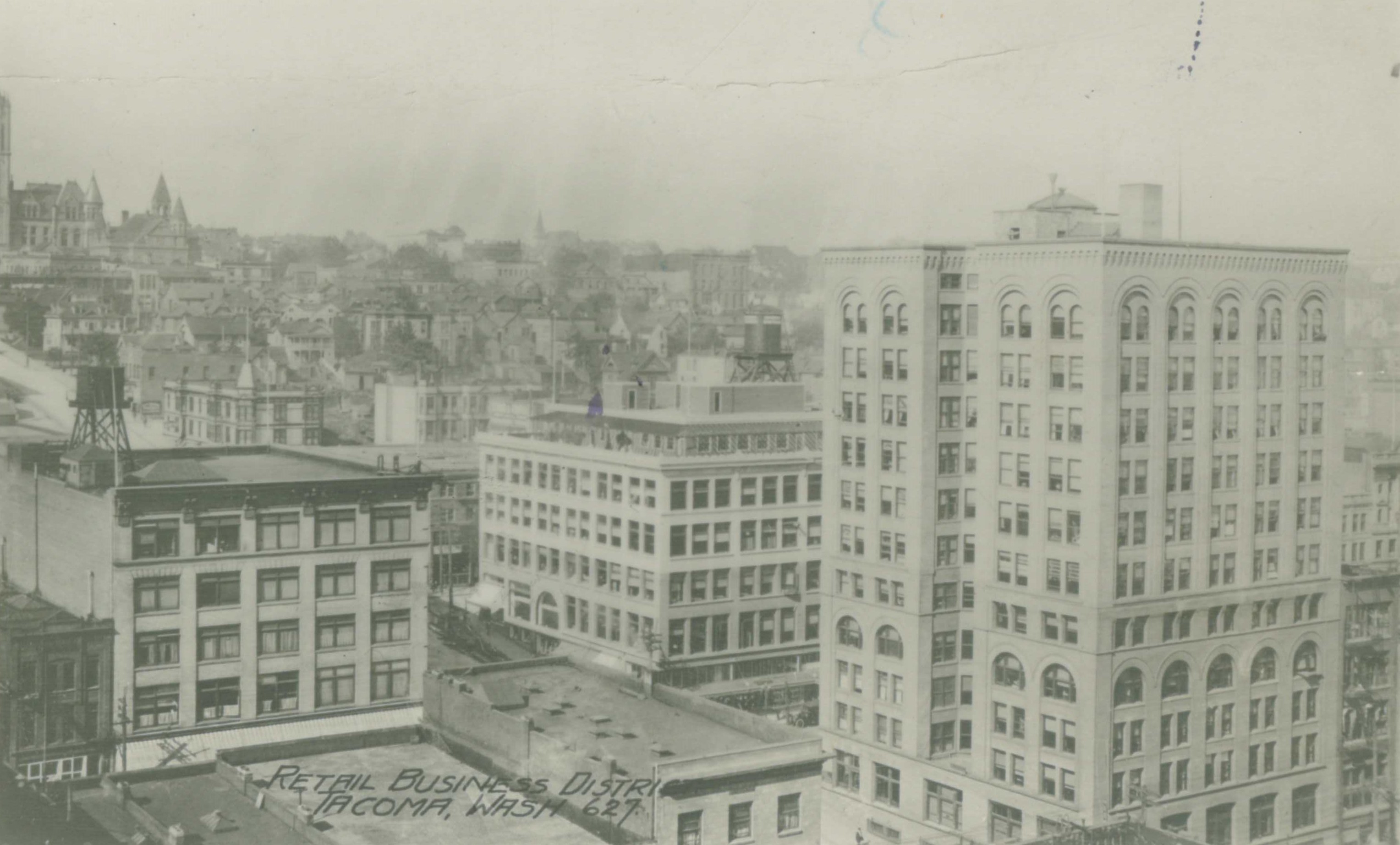
Retail Business District, Tacoma, Washington 1918

Dated 2 April 1918. “Dear mother got here all ok like it fine Write me as Private David D Donaldson 20th Co., 5th Bn., 166th Dep Brig. Camp Lewis, America Lake, Wn. Mrs. W.S. Donaldson 2270 Moffett Ave Ogden Utah”

Front and back

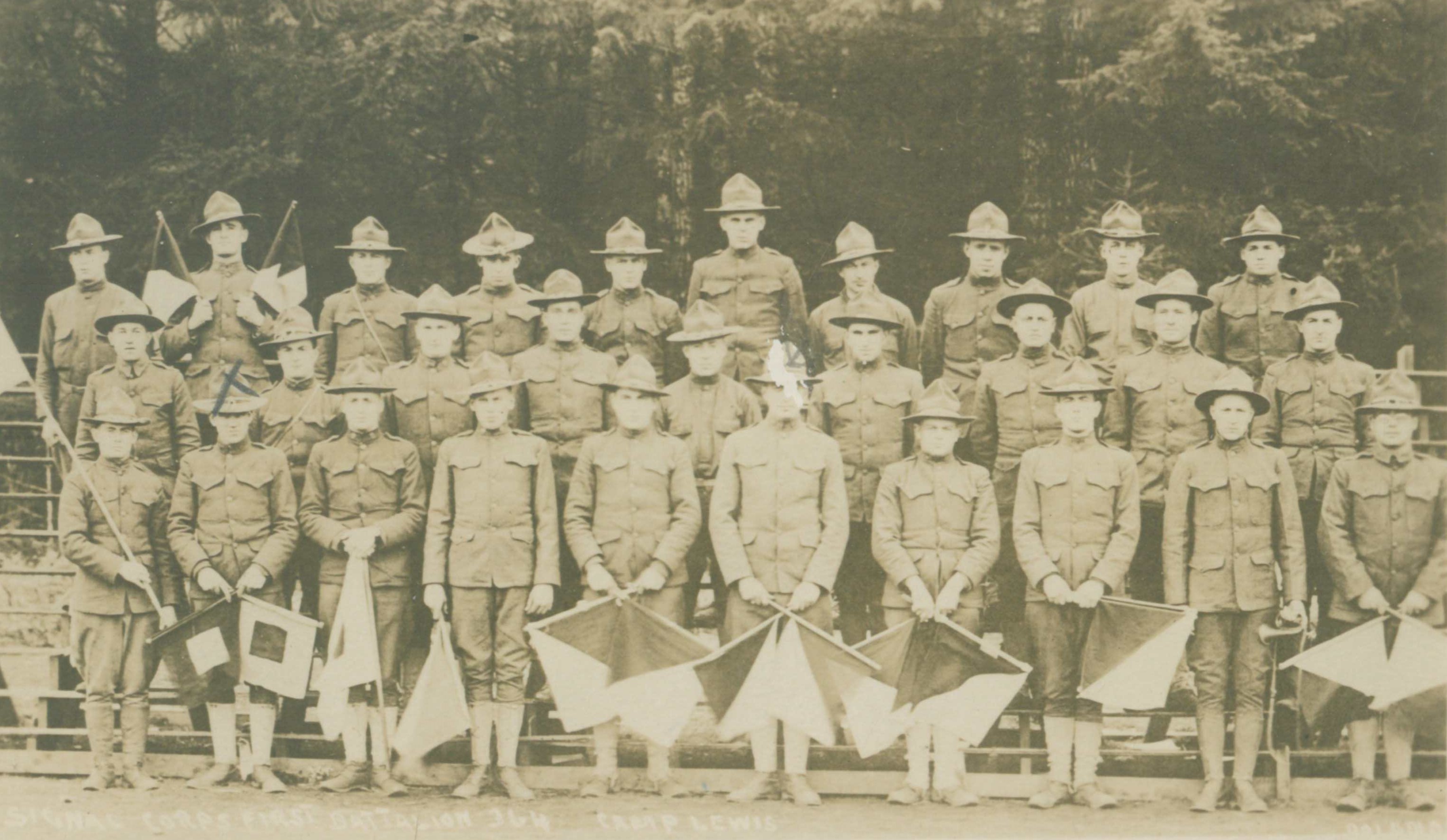
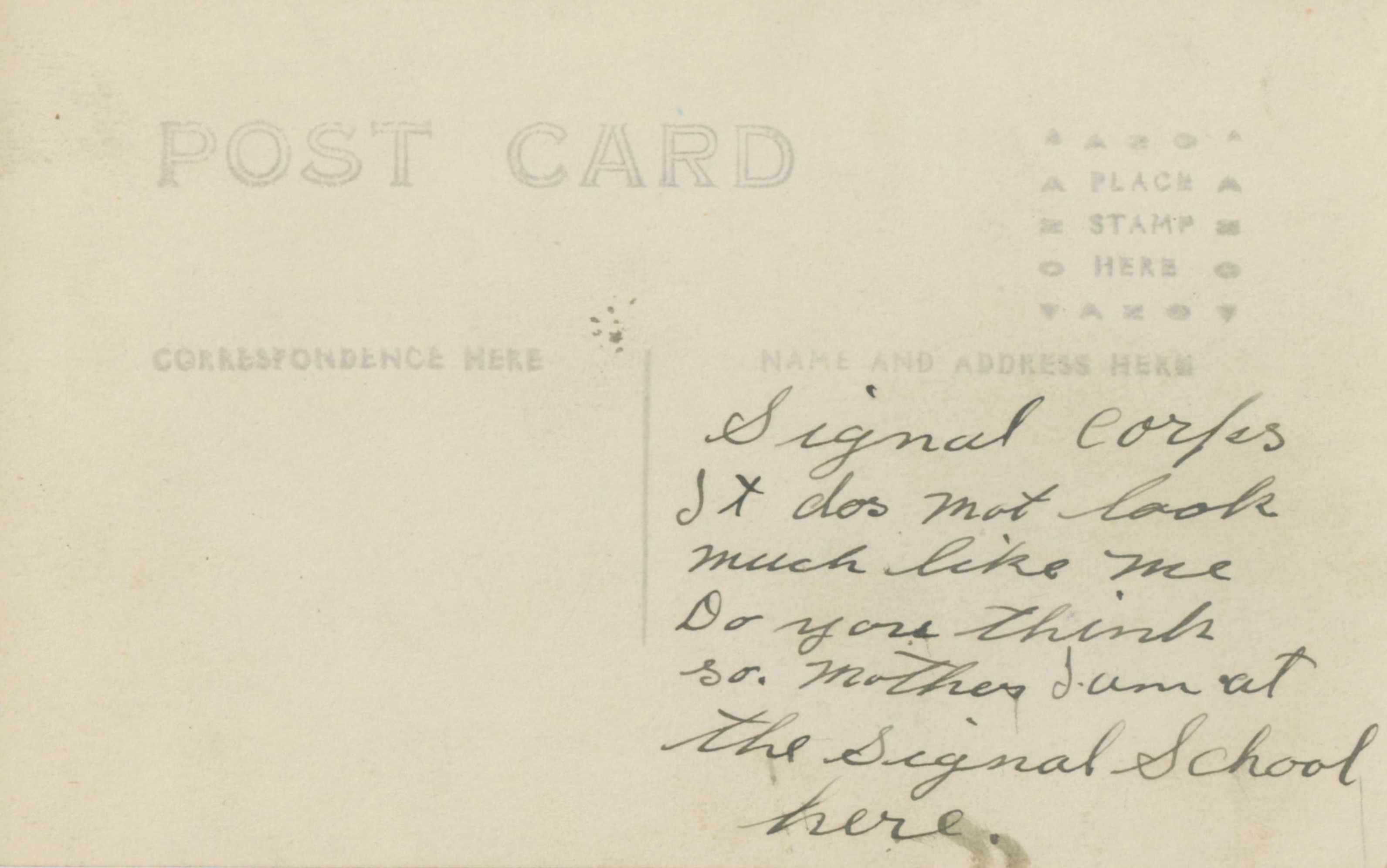
“Signal Corps It does not look much like me Do you think so. Mother I am at the Signal School here.”

Front and back

Dated 28 June 1918. “Dear Mother just a line to say I am well and fair when I got in New York all for this time your son DDD. Written to Mrs. W. S. Donaldson 2270 Moffett Ave Ogden Utah

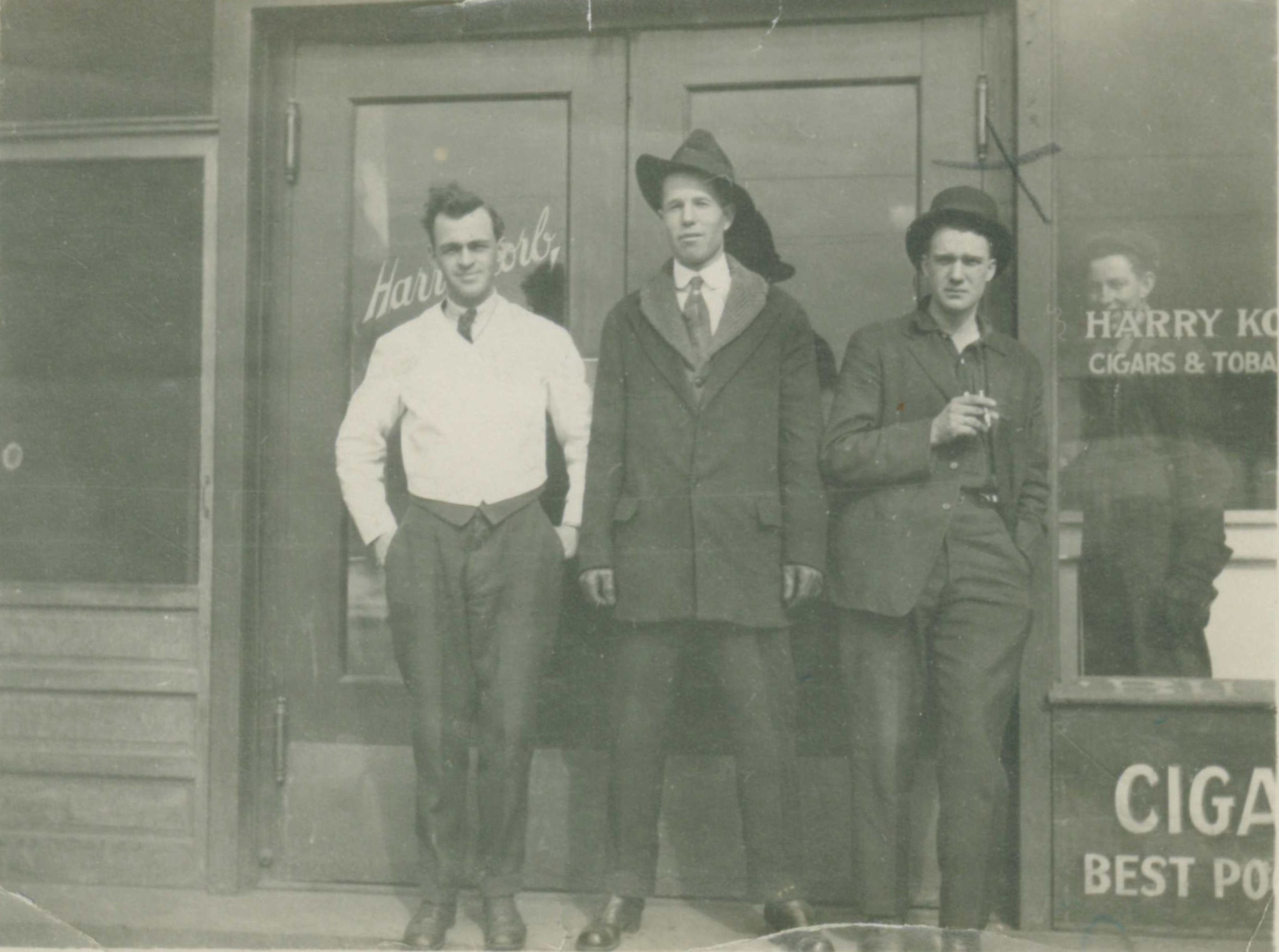
Harry Korb Cigars & Tobacco, known location with David standing in front of the store. Other three are unknown.

We might think it, but none of us are truly bullet-proof. This boy’s health was affected for the rest of his life by war. He did live to be 59 years old.

He did marry and had five children.

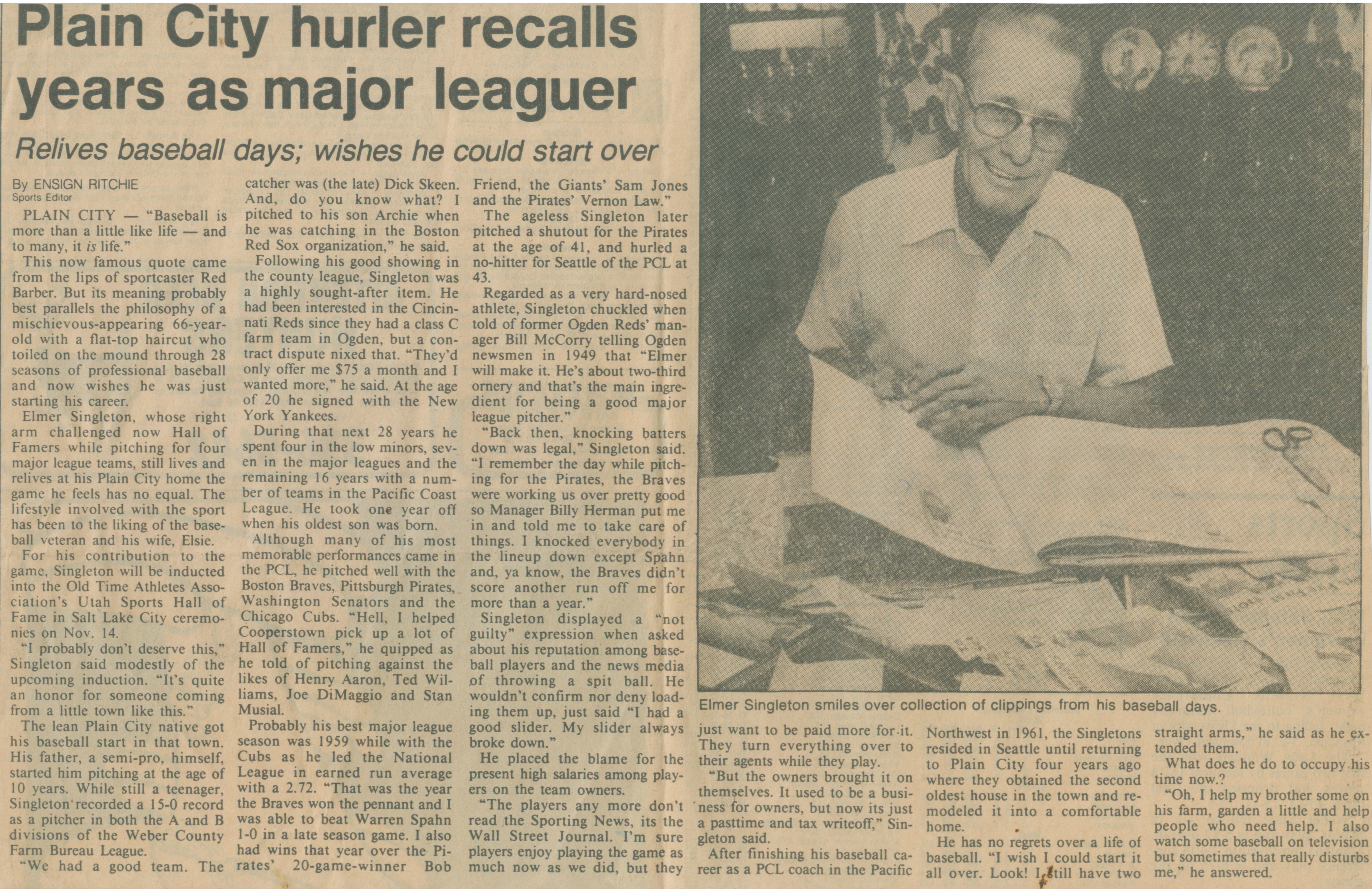
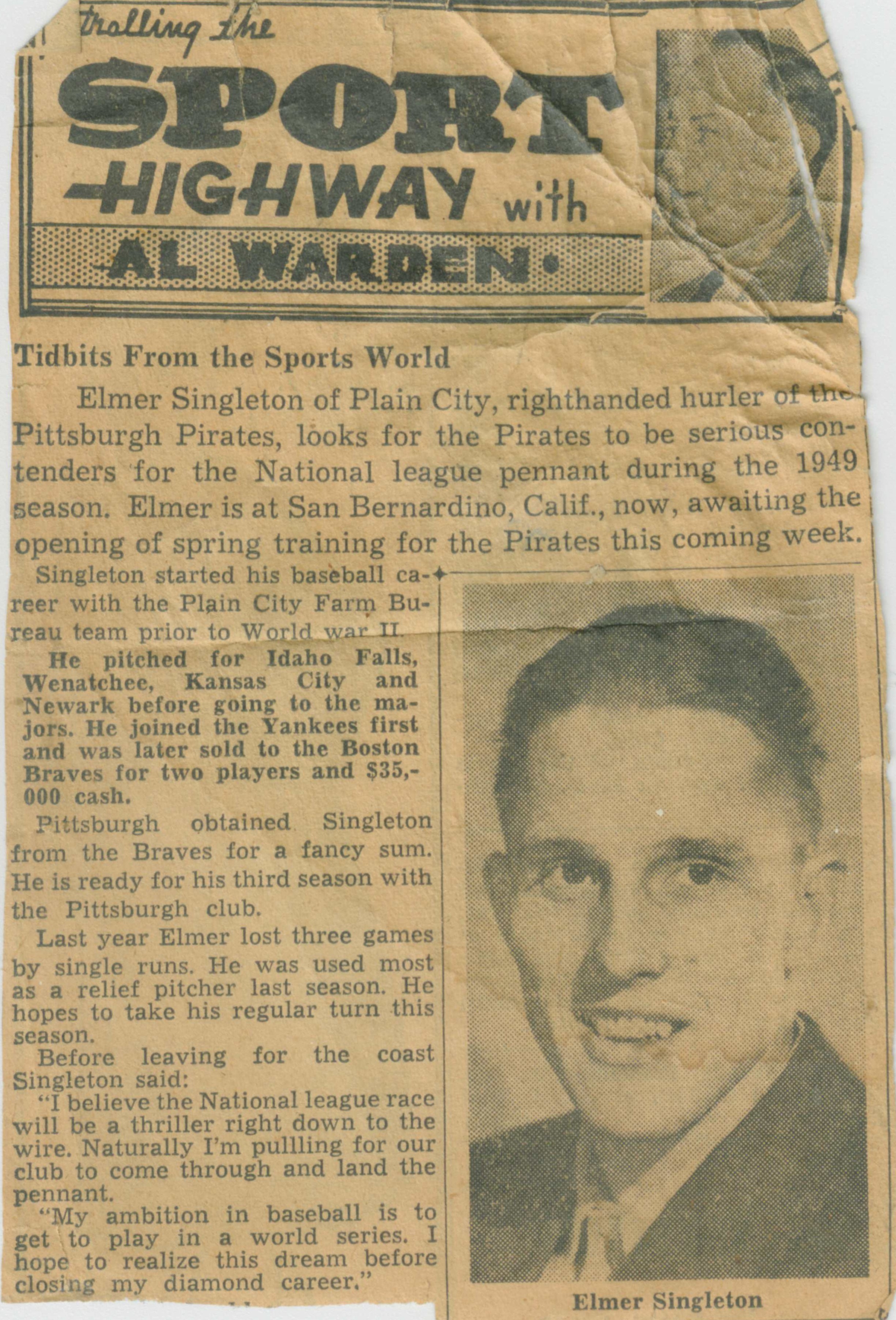
Plain City Hurler

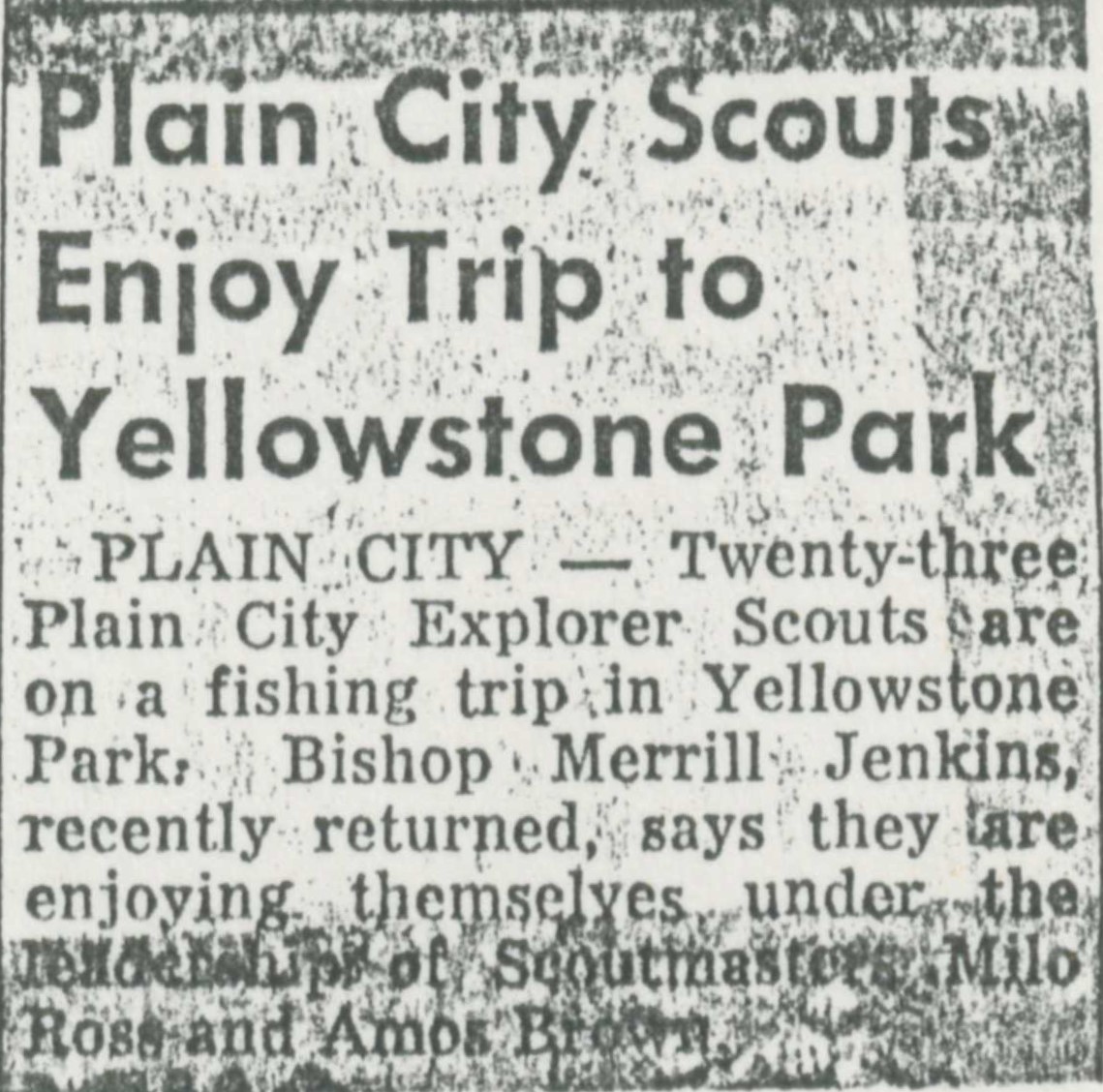
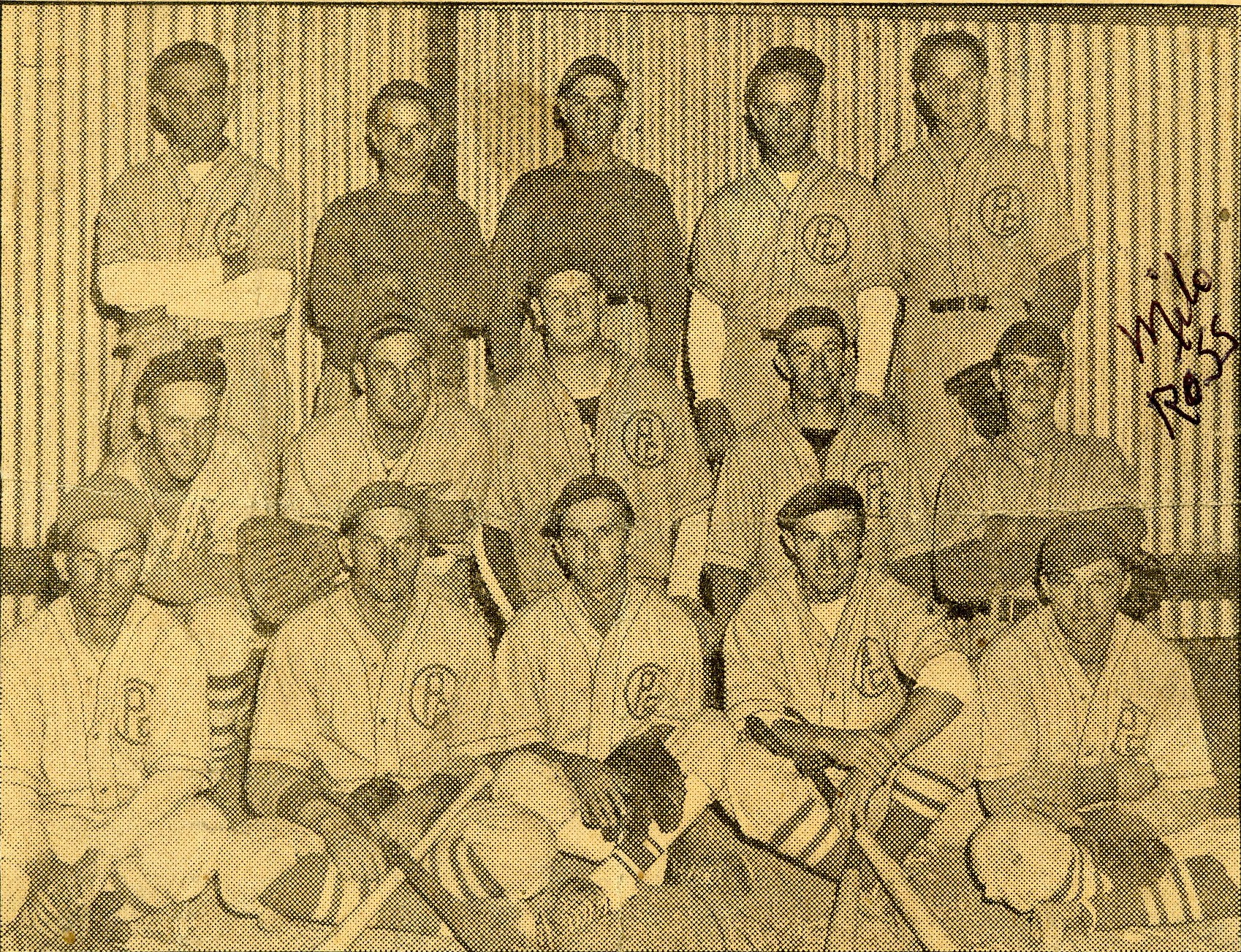
Here are four more clippings from my Grandparents, Milo & Gladys Ross. Grandpa talked quite a bit of baseball in Plain City from his youth. I have shared this photo too where he and Elmer played together on the same team. Visiting with Grandpa, multiple baseball players came up, but Elmer was the one that went on to some fame. Plain City’s history includes excerpts on Elmer.

“Plain City hurler recalls years as major leager

“Relives baseball days; wishes he could start over

“PLAIN CITY – “Baseball is more than a little like life – and to many, it is life.”

“This now famous quote came from the lips of sportcaster Red Barber. But its meaning probably best parallels the philosophy of a mischievous-appearing 66-year-old with a flat-top haircut who toiled on the mound through 28 seasons of professional baseball and now wishes he was just starting his career.

“Elmer Singleton, whose right arm challenged now Hall of Famers while pitching for four major league teams, still lives and relieves at his Plain City home the game he feels has no equal. The lifestyle involved with the sport has been to the liking of the baseball veteran and his wife, Elsie.

“For his contribution to the game, Singleton will be inducted into the Old Time Athletes Association’s Utah Sports Hall of Fame in Salt Lake City ceremonies on Nov. 14.

“”I probably don’t deserve this,” Singleton said modestly of the upcoming induction. “It’s quite an honor for someone coming from a little town like this.”

“The lease Plain City native got his baseball start in that town. His father, a semi-pro, himself, started him pitching at the age of 10 years. While still a teenager, Singleton recorded a 15-0 record as a pitcher in both the A and B divisions of the Weber County Farm Bureau League.

“”We had a good team. The catcher was (the late) Dick Skeen. And, do you know what? I pitched to his son Archie when he was catching in the Boston Red Sox organization,” he said.

Following his good showing in the county league, Singleton was a highly sought-after item. He had been interested in the Cincinnati Reds since they had a class C farm team in Ogden, but a contract dispute nixed that. “They’d only offer me $75 a month and I wanted more,” he said. At the age of 20 he signed with the New York Yankees.

“During that next 28 years he spent four in the low minors, seven in the major leagues and the remaining 16 years with a number of teams in the Pacific Coast League. He took one year off when his oldest son was born.

“Although many of his most memorable performances came in the PCL, he pitched well with the Boston Braves, Pittsburgh Pirates, Washington Senators and the Chicago Cubs. “Hell, I helped Cooperstown pick up a lot of Hall of Famers,” he quipped as he told of pitching against the likes of Henry Aaron, Ted Williams, Jo DiMaggio and Stan Musial.

“Probably his best major league season was 1959 while with the Cubs as he led the National League in earned run average with a 2.72. “That was the year the Braves won the pennant and I was able to beat Warren Spahn 1-0 in a late season game. I also had wins that year over the Pirates’ 20-game-winner Bob Friend, the Giants’ Sam Jones and the Pirates’ Vernon Law.”

“The ageless Singleton later pitched a shutout for the Pirates at the age of 41, and hurled a no-hitter for Seattle of the PCL at 43.

“Regarded as a very hard-nosed athlete, Singleton chuckled when told of former Ogden Reds’ manager Bill McCorry telling Ogden newsmen in 1949 that “Elmer will make it. He’s about two-third ornery and that’s the main ingredient for being a good major league pitcher.”

“”Back then, knocking batters down was legal,” Singleton said. “I remember the day when pitching for the Pirates, the Braves were working us over pretty good so Manager Billy Herman put me in and told me to take care of things. I knocked everybody in the lineup down except Spahn and, ya know, the Braves didn’t score another run off me for more than a year.”

“Singleton displayed a “not guilty” expression when asked about his reputation among baseball players and t news media of throwing a spit ball. He wouldn’t confirm nor deny loading them up, just said “I had a good slider. My slider always broke down.”

He placed the blame for the present high salaries among players on the team owners.

“”The players any more don’t read the Sporting News, its the Wall Street Journal. I’m sure players enjoy playing the game as much now as we did, but they just want to be paid more for it. They turn everything over to their agents while they play.

“”But the owners brought it on themselves. It used to be a business for owners, but now its just a pasttime and tax writeoff,” Singleton said.

“After finishing his baseball career as a PCL coach in the Pacific Northwest in 1961, the Singletons resided in Seattle until returning to Plain City four years ago where they obtained the second oldest house in the town and remodeled into a comfortable home.

“He has no regrets over a life of baseball. “I wish I could start it all over. Look! I still have two straight arms,” he said has he extended them.

“What does he do to occupy his time now?

“”Oh, I help my brother some on his farm, garden a little and help people who need help. I also watch some baseball on television but sometimes that really disturbs me,” he answered.

“Tidbits from the Sports World

“Elmer Singleton of Plain City, righthanded hurler of the Pittsburgh Pirates, looks for the Pirates to be serious contenders for the National league pennant during the 1949 season. Elmer is at San Bernardino, Calif., now, awaiting the opening of spring training for the Pirates this coming week.

“Singleton started his baseball career with the Plain City Farm Bureau team prior to World war II.

“He pitched for Idaho Falls, Wenatchee, Kansas City and Newark before going to the majors. He joined the Yankees first and was later sold to the Boston Braves for two players and $35,000 cash.

“Pittsburgh obtained Singleton from the Braves for a fancy sum. He is ready for his third season with the Pittsburgh club.

“Last year Elmer lost three games by single runs. He was used most as a relief pitcher last season. He hopes to take his regular turn this season.

“Before leaving for the coast Singleton said: “I believe the National league race will be a thriller right down to the wire. Naturally I’m pulling for our club to come through and land the pennant.

“”My ambition in baseball is to get to play in a world series. I hope to realize this dream before closing my diamond career.

“Elmer Singleton Rates Praise

“The “best pitched game” ever witnessed at Seals’ stadium went down in the record book as a defeat for Elmer Singleton, San Francisco right-hander, writes James McGee, San Francisco newspaperman.

“Singleton started his baseball career with Plain City in the Weber County Farm Bureau league back in 1938. Since that timehe has worn a number of major league uniforms.

“Writes McGee: “The big Seal righthander pitched 12 1/3 innings of no-hit ball against Sacramento, April 24, yet lost 1 to 0.

“”That was the best-pitched game I ever saw,” his manager, Tommy Heath, declared. But, as it turned out, it was not quite good enough. Singleton, who set a Seals stadium record and etched his name in Seal history, had the bad luck to meet a tough opponent, Jess Flores, Sacramento’s veteran righthander.

“Flores was effective. The Seals got to him for eight hits, compared to the three singles from Solons finally wrenched from the reluctant Singleton. But the three Solon hits came in succession in the first half of the thirteenth inning, Eddie Bockman, spelling Manager Joe Gordon at second base; Al White and finally Johnny Ostrowski did the damage, Bockman scoring.

“Singleton admitted he was tiring in the thirteenth.

“”It wasn’t that I pitched to so many hitters. It was the strain of the thing,” he said. “All through the early innings I knew I had a no-hitter going. I had to be careful with every pitch. I never pitched one before and I wanted it.”

“Umpire Don Silva vouched that Singleton was careful.

“”He had great stuff. His fast ball was good, but his curve was particularly good. And he was hitting the corners of the plate all the time,” said Silva. “His control was almost perfect.”

“Walked Four

“Singleton walked four men, one of them purposely. He retired the first 18 men to face him before he faltered and walked Bob Dillinger, first man to face him in the seventh.

“In the seventh, the Solons had him in jeopardy for the only time until they finally scored.

“Singleton was within one out of tying the Coast league record for no-hit innings when Bockman got the first hit, a sharp roller through the hole between third and short, in the thirteenth.

“Dick Ward, pitching for San Diego in 1938, went 12 and two-thirds innings of a 16-inning game against Los Angeles without a hit. He eventually won, 1 to 0.

“Ironically, the greatest game pitched at Seals stadium in its 22-year history was pitched in virtual privacy. Only 790 spectators were there at the start with about 1000 fans leaving the park before the end of the game.

“Sports Tid Bits

“Great Falls postmen have accepted the challenge of members of the Ogden post office and have wagered $125 that the Electrics finish ahead of the Reds in the 1952 Pioneer league race.

“Harold Stone of the Ogden post office department informed this corner of the acceptance Saturday night. Two years ago the Ogdenites lost a similar wager.

“George East, landowner of some of the finest duck shooting grounds of the area, is living like Noah of old at his home in West Warren. Genial George says that instead of duck problems, the trash fish from the lower Weber are visiting him and drinking out of his flowing well.

“The ducks have been winging their way annually in George’s direction for nearly four score years. Some years there has been so little water that the migratory birds have avoiding George’s feeding and nesting grounds. Not this year, however, George says as there is more water flooding the pasture lands than in many, many years.

“Herb Woods went out to look the situation over this week. George told Herb he could find his favorite blind by use of maps and a deep diving suit – but Herb did not want to get his nose wet.

“Hal Welch, our so-called game expert, says there is consternation among the sportsmen about the pheasants that will be lost because of their nests being destroyed by the floodwaters. He admits that there will be no shortages of mosquitoes for sportsmen, however.

“Screwy Situations

“The 1952 baseball season still is an infant but here are some of the crewy things that have taken place:

“An umpire – Scotty Robb – got fined, for pushing of all people, Manager Eddie Stanky, of the St. Louis Cardinals.

“Leo Durocher of the Giants protests Augie Guglielmo’s call of a third strike on one of his hitters but nothing happens. We thought questioning a third strike meant automatic banishment.

“A Phillie, Stan Lopata, fails to run from third base with two out, the batter reaches first on an error and Lopata is left stranded as the next batter is retired. And Manager Eddie Sawyer was coaching at third.

“”The Giants are leading the Braves by two runs in the eighth inning yet Leo Durocher lifts his number four hitters, temporarily Henry Thompson, for a pinch slugger. You don’t lift your number four batter in any situation, says wise baseball men, but then who says Thompson (not Bobby) is a number four hitter?

“Roy Campanella, a good number four hitter, bunts in a tie game. Another old baseball adage is that “you don’t bunt your number four hitter.” We disagree with that one. In this case Campy’s bunt paid off for the Dodgers as the next batter singled home the winning run.

“W.S.C. Loses

“PULLMAN (AP) – Idaho defeated Washington State 15-12 in Northern division gold matches Saturday.

“B. Elmer Singleton

“PLAIN CITY – Bert Elmer Singleton, passed away Friday, January 5, 1995 at his home in Plain City. He was born June 26, 1918 in Plain City, Utah, a son of Joseph and Sylvia Singleton.

“He married Elsie M. Wold January 20, 1939 in Ogden, Utah.

“He was a member of The Church of Jesus Christ of Latter-Day Saints.

“He played professional baseball for twenty-four seasons, originally signing with the New York Yankees Baseball Organization. His chosen vocation provided he and Elsie the opportunity to live in Pittsburgh, Pa., Boston, Mass., Chicago, Ill., Havana, Cuba, [Caracus, Venezuela], Seattle, Wash. and several other cities in the Midwest and on the West Coast.

“He retired from professional baseball in 1964 and returned to Plain City in 1980. Upon his return he actively lobbied for the Meals on Wheels program for Plain Cities Seniors. He helped with 4-H programs and worked with gifted children.

“He was chosen as Player of The Year for the State of Utah in 1939. He was inducted into the Utah Sports Hall of Fame in 1984. He was chosen as the Pacific Coast League most Valuable Player for years 1955 and 1956.

“Surviving are his sons, Joe F. of Chugiak, Alaska and Jerry E. of Tacoma, Washington and his brother, Don R. of Plain City. He has two grandchildren, Joe E and Shelby J., residing in Anchorage, Alaska.

“He was preceded in death by his loving wife Elsie on January 31, 1988 and brothers, Earl and Harold.

“Funeral services will be held Thursday, January 11th at 11 a.m. at Lindquist’s Ogden Mortuary, 3408 Washington Blvd.

Friends may call at the mortuary on Wednesday, January 10th from 6 to 8 p.m. and Thursday 10 to 10:45 a.m.

“Internment, Plain City Cemetery.

Back (l-r): William Freestone (manager), Norman Carver, Glen Charlton, Fred Singleton, and Elmer Singleton. Middle: Clair Folkman, Dick Skeen, Albert Sharp, Abe Maw, Milo Ross. Front: F. Skeen, Walt Moyes, Arnold Taylor, Lynn Stewart, Theron Rhead.

Casper Wyoming Temple Open House

We took the opportunity to attend the Casper Wyoming Temple Open House on 31 August 2024. We planned the weekend to do some sightseeing and visit some church and family history sites. I am reposting as this has updates on 3 additional ancestors that also came through the Overland Trail.

We left on the Friday morning with the hope of making it all the way to Casper before nightfall. We took old US Highway 30 through Soda Springs and Montpelier. We made a stop to visit the grave of my Grandmother in Dingle.

Aliza, Lillian, Paul, James, and Hiram Ross at the graves of Bud and Colleen Lloyd

We drove through Cokeville and reminded the kids of the story of the Cokeville miracle. As we drove along the old highway, I pointed out the old railroad Y that used to go to the Stauffer mine that was located in Leefe, Wyoming. I spent the first summer or two of my life at Leefe while my dad was tasked with tearing down and removing the mine with Circle A Construction. We stopped in Kemmerer to refuel and also drive past the first J. C. Penney store. We made a quick stop at the Parting of the Ways along the California, Mormon, and Oregon trails.

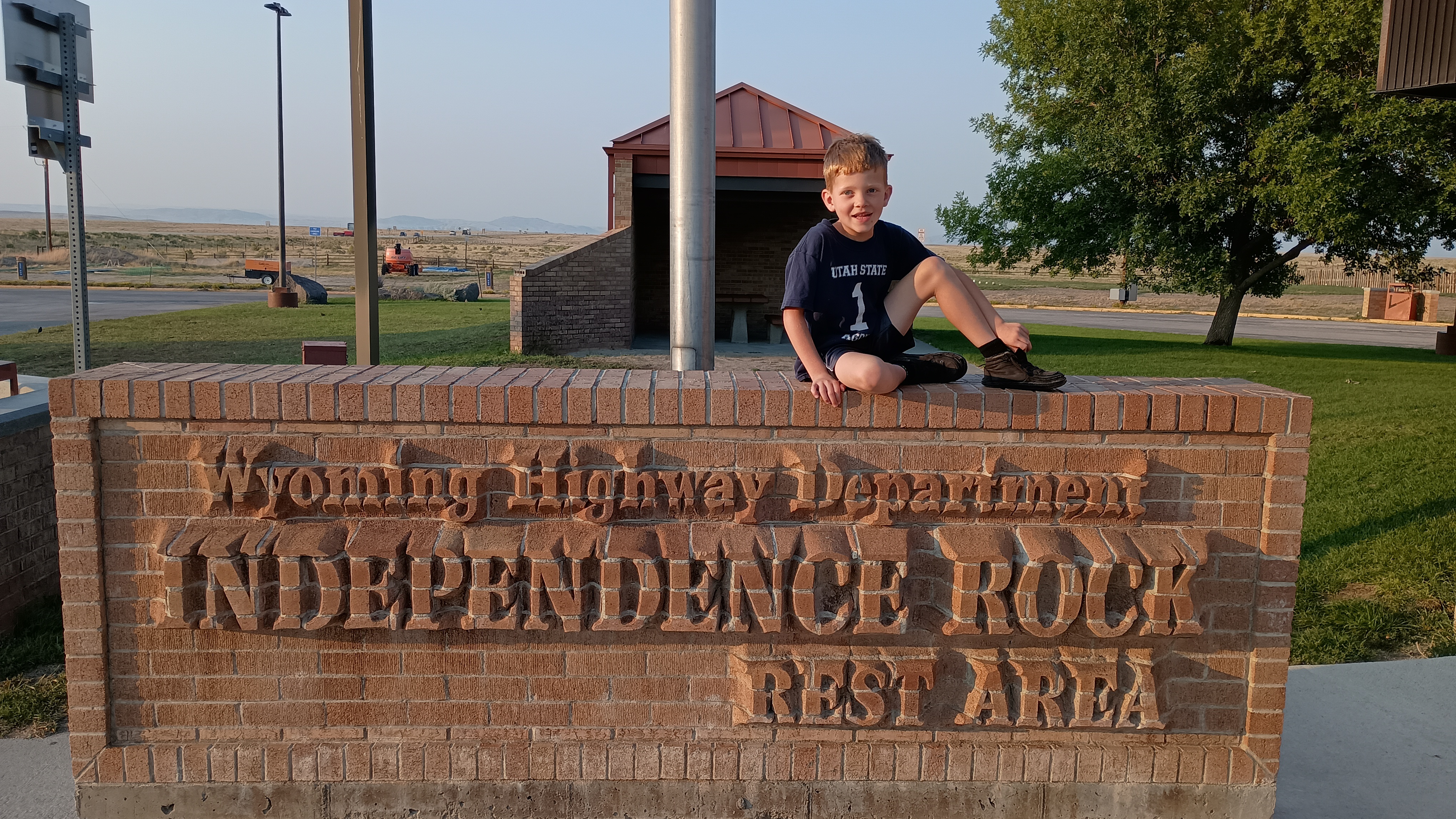
James Ross at Independence Rock

With four kids, we often stop at rest areas. As you can see above, we stopped at the one at Independence Rock. The rock is nearby and doubles as the parking location to visit the rock.

We finally made it to Casper about sunset. We ate an amazing Italian meal at Racca’s Pizzeria Napoletana and checked into our hotel.

Casper Wyoming Temple

We got up early, dressed appropriately, and headed out to visit the Casper Wyoming Temple. It was beautiful. Much smaller than I had anticipated. It is definitely one of the smallest temples, but that is because of the population and distance to other temples. It will supposedly have five stakes in its temple district, some of which will still come from a long distance to attend. Don’t let size fool you, it still has all the distinct parts of a temple and related quality. I think I may very much prefer the intimacy of the smaller temples. It actually reminded me of the Helena Montana Temple on size and flow.

Ross family at the Casper Wyoming Temple Open House

The temple does not have an adjoining chapel, but it does have a distribution/visitor center. We watched the video, enjoyed waiting in the line, and got to see the whole temple. If I were asked, there are a couple of design changes I would make for flow, but this temple will not regularly see these types of crowds or have those issues.

Ross family with the Casper Wyoming Temple

We hurried back to our hotel, changed, loaded up the car, checked out, and headed off to our next stop: The National Historic Trails Interpretive Center in Casper. I did not take any pictures there, but it was very well done. I enjoyed the visit, helped the kids with their junior ranger activities, and learned a few things. Part of the museum had its own little room and video dedicated to the Martin and Willie Handcart Companies.

We stopped at Independence Rock again on our way headed west. We walked around the massive rock and looked at a number of the signatures carved into stone from over 160 years ago. It was hot and we needed to get our little doggies along to Devil’s Gate.

I will write about this more in a bit, but Devil’s Gate was a major landmark on the trail going west for all pioneers on the trails. But Devil’s Gate became more than a landmark and became a historical site in the tragic fall of 1856. Fort Seminoe was based there on the west side of Devil’s Gate, but it had been abandoned earlier that same year. It was that fall that the Martin Handcart Company found itself stranded in the snow. Days later the stranded handcart company moved into a nearby cove to get away from the wind, snow, and cold. That cove is now known as Martin’s Cove.

The Sun Ranch from Devil’s Gate, now The Martin’s Cove: Mormon Trail Site

We found the visitor’s center much more hospitable than some of our ancestors. As I worked through my family history, I had some of my own ancestors who passed through this very Devil’s Gate and area. Here are my ancestral lines that came across on the Mormon Trail. I had counted only 3 while in Casper, but hadn’t realized the Williams clan came over in two separate trips.

William and Mary Ann Sharp in 1853. Wagon train. Moses Clawson Company. William and Mary Ann met in the wagon train and married in Nebraska in 1853. William and Mary are my 3rd Great Grandparents.

John Williams in 1860. Wagon train. John Smith Company. John came over with his two sons John Haines (1829) and Richard (1838). I don’t know why his son David went separately in 1864. I am a descendant of John through David. John is my 4th Great Grandfather.

Johanna Benson in 1862. Wagon train. Joseph Horne Company. Johanna came over with some of her children and their families, her daughter Agneta, came over in 1864 with her family. Johanna is my 4th Great Grandmother.

William Edward Stoker in 1863. Wagon train. Unknown Company. William was traveling with his family, including the baby Mary Ann. William is my 3rd Great Grandfather, Mary Ann is my 2nd Great Grandmother.

John and Agneta Nelson in 1864. Wagon train. William Preston Company. Agneta is the daughter of Johanna Benson who came over in 1862. John and Agneta are my 3rd Great Grandparents.

David D and Gwenllian Williams in 1864. David is the son of John mentioned above. Wagon train. William S Warren Company. Gwenllian came with her sister Mary. Both married on the ship in Liverpool before setting sail for Utah. Gwenllian and Mary’s parents, David and Margaret Jordan, came over in 1872 crossing the plains by rail. David and Gwenllian are my 3rd Great Grandparents.

That gives me 10 ancestors that crossed the plains by wagon, none by handcart that I can tell. The unknown companies were all wagon trains as there were not handcarts those years.

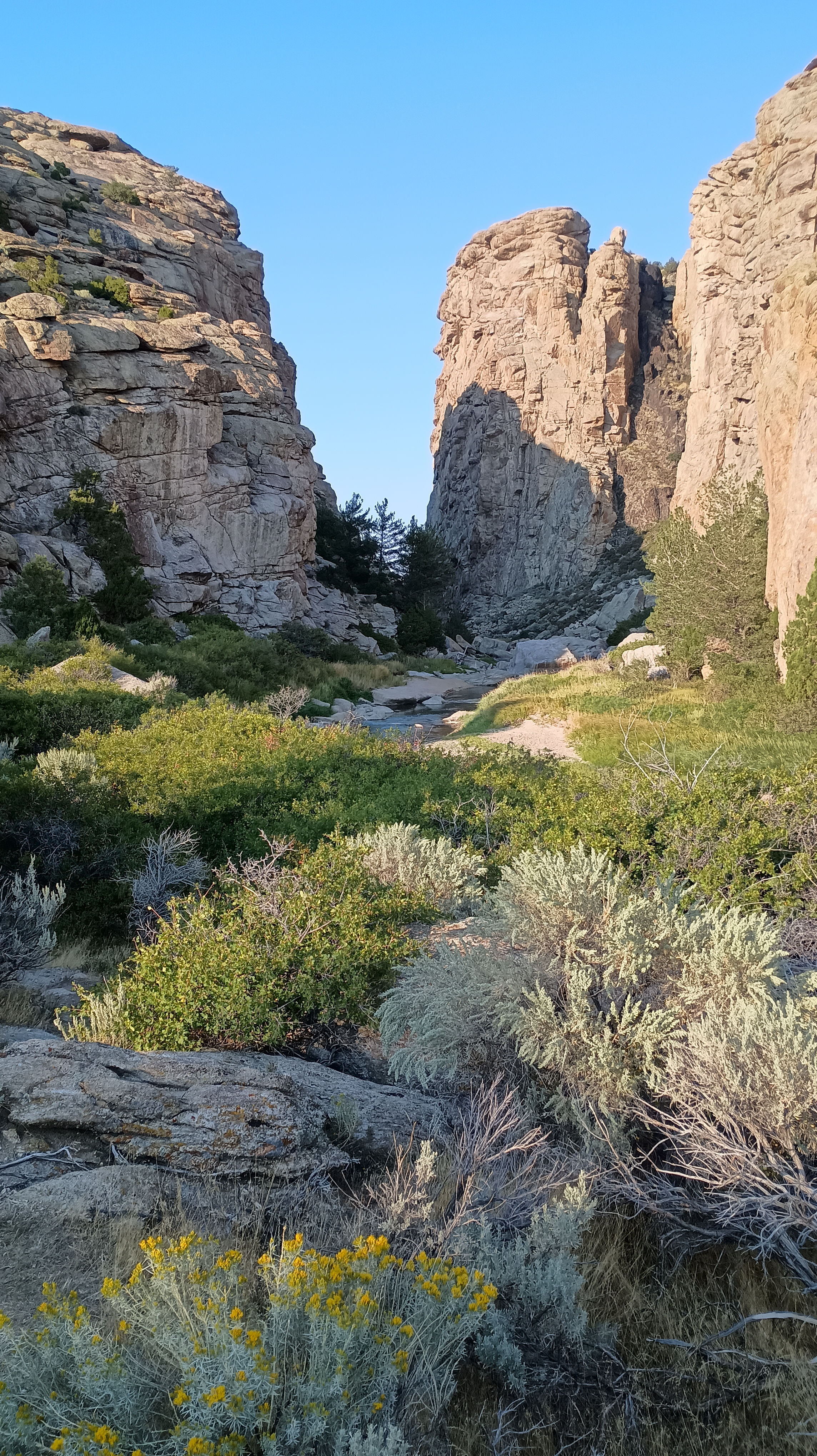
Devil’s Gate – 2024

Every single one of these seven ancestors of mine who came west on the trail would have passed through Devil’s Gate. Here I stood on this sacred ground and snapped this photo of my daughter, my descendant and their descendant, at Devil’s Gate.

Aliza Ross at Devil’s Gate

It took me a bit more work, as I am not as familiar, to find those family lines of Amanda’s that also would have passed along the Mormon Trail to the west before the railroad made it much, much faster and safer. It took me several occasions over a couple of weeks to spend the time to research all these lines.

Henry and Ann Jackson in 1852. Wagon train. James C Snow Company. This is Amanda’s 4th Great Grandparents.

Regina Hansen in 1853. Wagon train. John E Forsgren Company. Her son, Hans Hansen, also accompanied her on the trip. Regina’s husband stayed behind. Regina is Amanda’s 4th Great Grandmother, Hans is Amanda’s 3rd Great Grandfather.

Grave of Hans Hansen in Plain City, Utah. Edith Sharp Ross’ stone is the stone at 10 o’clock from the top of this stone, my Great Grandmother.

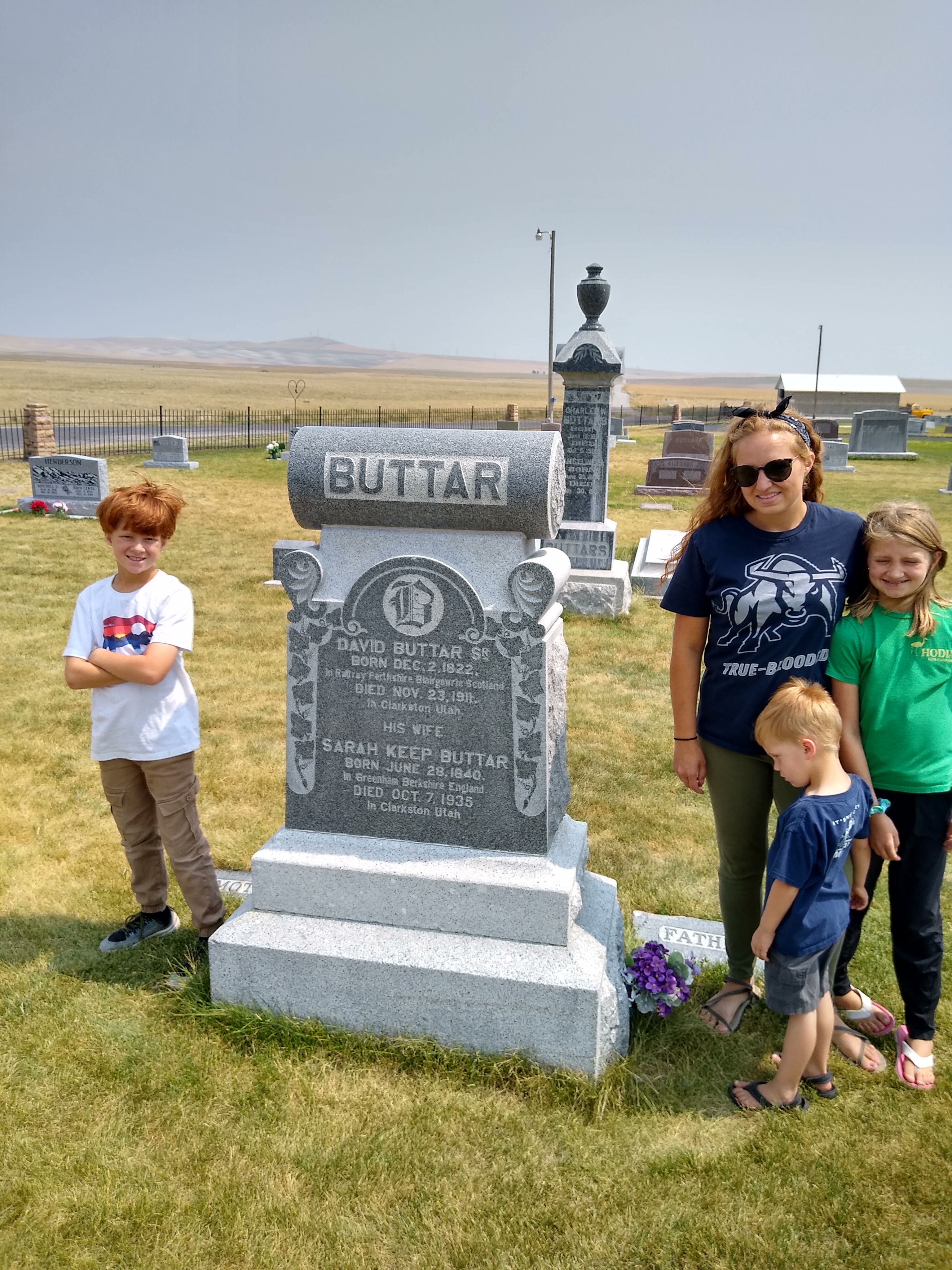
David Buttars in 1843. Wagon train. William Empey Company. He appears to have traveled alone. Amanda’s 3rd Great Grandfather.

Birthe Jacobson in 1854. Unknown if wagon train or handcart company. Birthe’s daughter, Maria Jacobson, also accompanied her on the trip. Her husband Jorgen died in Missouri as part of the trip. Birthe is Amanda’s 5th Great Grandmother, Maria is Amanda’s 4th Great Grandmother.

Harriet Housley in 1856. Handcart company. Edward Martin Company. Harret’s son, George Housley, also accompanied her on the trip. Two other children came later. Harriet is Amanda’s 5th Great Grandmother, George is Amanda’s 4th Great Grandfather.

Richard and Christine Hemsley (1836 – 1915) in 1857. Handcart company. Israel Evans Company. This is Amanda’s 4th Great Grandparents.

Ole and Anne Jensen in 1861. Likely wagon train. Unknown company. Amanda’s 5th Great Grandparents.

John Crompton in 1862. Wagon train. Joseph Horne Company. John also had his daughter, Hannah Crompton, with him. John is Amanda’s 4th Great Grandfather, Hannah is Amanda’s 3rd Great Grandmother.

Anna Nielsen in 1862. Wagon train. Christian Madsen Company. She traveled alone. Amanda’s 3rd Great Grandmother.

Joseph and Penelope Thompson in 1862. Wagon train. John Riggs Murdock Company. Their son, Joseph Thompson, also accompanied the family. Amanda’s 4th Great Grandparents, Joseph is Amanda’s 3rd Great Grandfather.

Joseph Wayment in 1863. Wagon train. Unknown Company. Appears to have come alone. Although his parents and most of his siblings would come later by rail. Amanda’s 3rd Great Grandfather.

Axel Boyer in 1866. Wagon train. Abner Lowry Company. Amanda’s 4th Great Grandfather. Also traveled with the Keeps, other ancestors of Amanda.

James and Ann Keep in 1866. Wagon train. Abner Lowry Company. Their daughter, Sarah Keep, also accompanied the family. James and Ann are Amanda’s 4th Great Grandparents, Sarah is Amanda’s third great Grandmother. Also traveled with Axel Boyer, other ancestor of Amanda.

Richard Hemsley (1801 – 1866) and his later wife Sarah in 1866. Wagon train. William Henry Chipman Company. Amanda’s 5th Great Grandfather.

Peter Peterson in 1866. Wagon train. Joseph Sharp Rawlins Company. Peter is Amanda’s 4th Great Grandfather.

That is the Hemsley line alone, Amanda’s Dad. I count 26 ancestors of Amanda’s Dad that came through Devil’s Gate.

James, Lillian, Hiram, and Aliza Ross at Devil’s Gate Mormon Handcart Visitor Center

Amanda’s Mom’s line, the Holden family, has the following:

Edwin and Ruia Holden in 1852. Wagon train. Uriah Curtis Company. Their son, Henry Holden, also accompanied the family. Edwin and Ruia are Amanda’s 4th Great Grandparents, Henry is Amanda’s 3rd Great Grandfather.

Jesse and Temperance McCauslin in 1851. Wagon train. Unknown Company. Temperance passed away in Council Bluffs, Iowa. She did not make the trail in Wyoming or Devil’s Gate. Their daughter, Louisa McCauslin, also accompanied the family. Jesse is Amanda’s 4th Great Grandfather, Louisa is Amanda’s 3rd Great Grandmother.

John and Adelaide Roberts in 1863. Wagon train. Thomas Ricks Company. Their son, Hyrum Roberts, also accompanied the family. John and Adelaide are Amanda’s 3rd Great Grandparents, Hyrum is Amanda’s 2nd Great Grandfather.

Thomas and Mary Ashton in 1851. Wagon train. Morris Phelps Company. Mary also passed away in Iowa. She did not make the trail in Wyoming or Devil’s Gate. Their son, Joseph Ashton, also accompanied the family. Thomas is Amanda’s 4th Great Grandfather, Joseph is Amanda’s 3rd Great Grandfather.

Sarah Jarvis in 1854. Wagon train. Job Smith Company. She came with some of her family, but not with her son, Amanda’s ancestor, George Jarvis. Sarah is Amanda’s 4th Great Grandmother.

George and Ann Jarvis in 1853. Wagon train. Unknown Company. George and Ann are Amanda’s 3rd Great Grandparents. George is the son of Sarah Jarvis mentioned above.

William and Rebecca Finch in 1854. Wagon train. Daniel Garn Company. William and Rebecca are Amanda’s 3rd Great Grandparents.

Joseph Finch in 1853. Wagon train. Joseph Young Company. Joseph is the son of William and Rebecca Finch mentioned above.

John and Hannah Davis in 1851. Wagon train. Eaton Kelsey Company. Their daughter, Mary Jane, also accompanied the family. The family also has Davies listed for their last name sometimes. John and Hannah are Amanda’s 4th great grandparents, Mary Jane is Amanda’s 3rd Great Grandmother.

John Evans in 1866. Wagon train. William Henry Chipman Company (same company as Amanda’s Richard Hemsley above). His wife, Sarah, died on the trip from the United Kingdom in New York. His son, John Evans, also accompanied his father and brother. John is Amanda’s 3rd Great Grandfather, John is Amanda’s 2nd Great Grandfather.

James and Elizabeth Boyack in 1855. Wagon train. Milo Andrus Company. James and Elizabeth are Amanda’s 4th Great Grandparents.

James Boyack in 1853. Wagon train. Appleton Harmon Company. James is Amanda’s 3rd Great Grandfather. James is the son of James and Elizabeth Boyack above that came in 1855 across the plains.

Margary Waterhouse in 1855. Wagon train. Milo Andrus Company. Margary is Amanda’s 3rd Great Grandmother. She came across with the same train as James Boyack’s parents, presumably that is how she met her future husband. The Company arrived 24 October 1855 in Utah, James and Margary married 23 November 1855 in Springville, Utah.

That is the Holden line alone, Amanda’s Mom. I count 26 of ancestors of Amanda’s Mom that came through Devil’s Gate. As an aside, I also looked at her biological line (as she is adopted), and not a single one of her biological ancestors passed through Devil’s Gate.

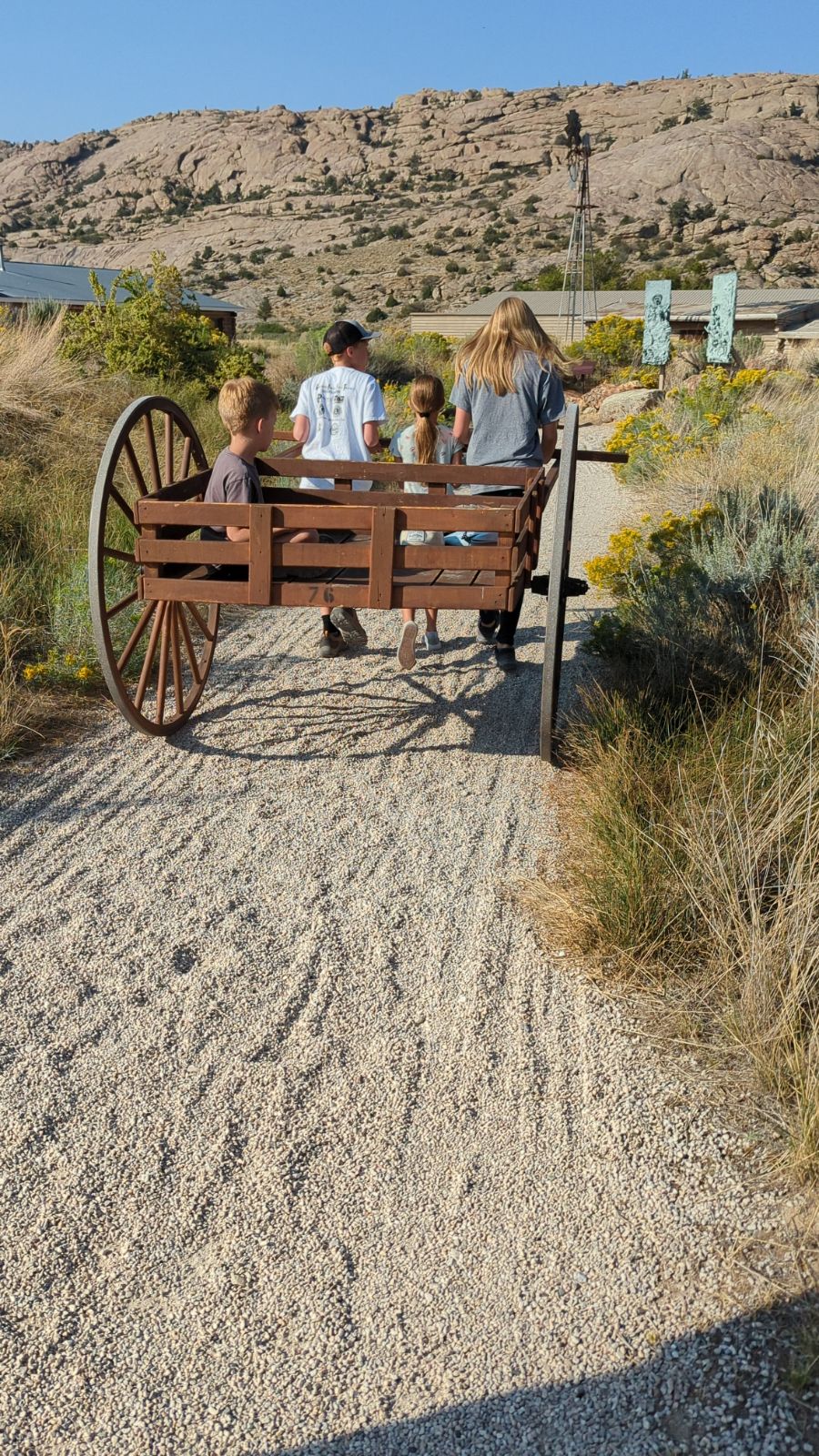
James riding while Hiram, Lillian, and Aliza Ross pull a handcart at Devil’s Gate Mormon Handcart Visitors Center

We also stopped and visited with the sixth crossing of the Sweetwater River. This was the location where, like the Martin Handcart Company, the Willie Handcart Company also got stuck in wind, snow, and cold in 1856. Their rescue occurred here.

The next day, on our way to Grand Teton National Park, we made a stop at Fort Washakie, Wyoming. This is one of the alleged graves of Sacagawea. We stopped and remembered her, whether her final resting place or not.

All in all, I was surprised by my own connection to the Mormon Trail. I had never considered that I have 7 ancestors who had literally come this way. Or that my children have 59 ancestors that literally come this way. They passed by Independence Rock, through Devil’s gate, and two of those 59 suffered with the Martin Handcart Company. I will write more on the Housley’s later as there have been other interesting interactions with that clan since our marriage.

Letter from Lillian Coley Jonas Bowcutt

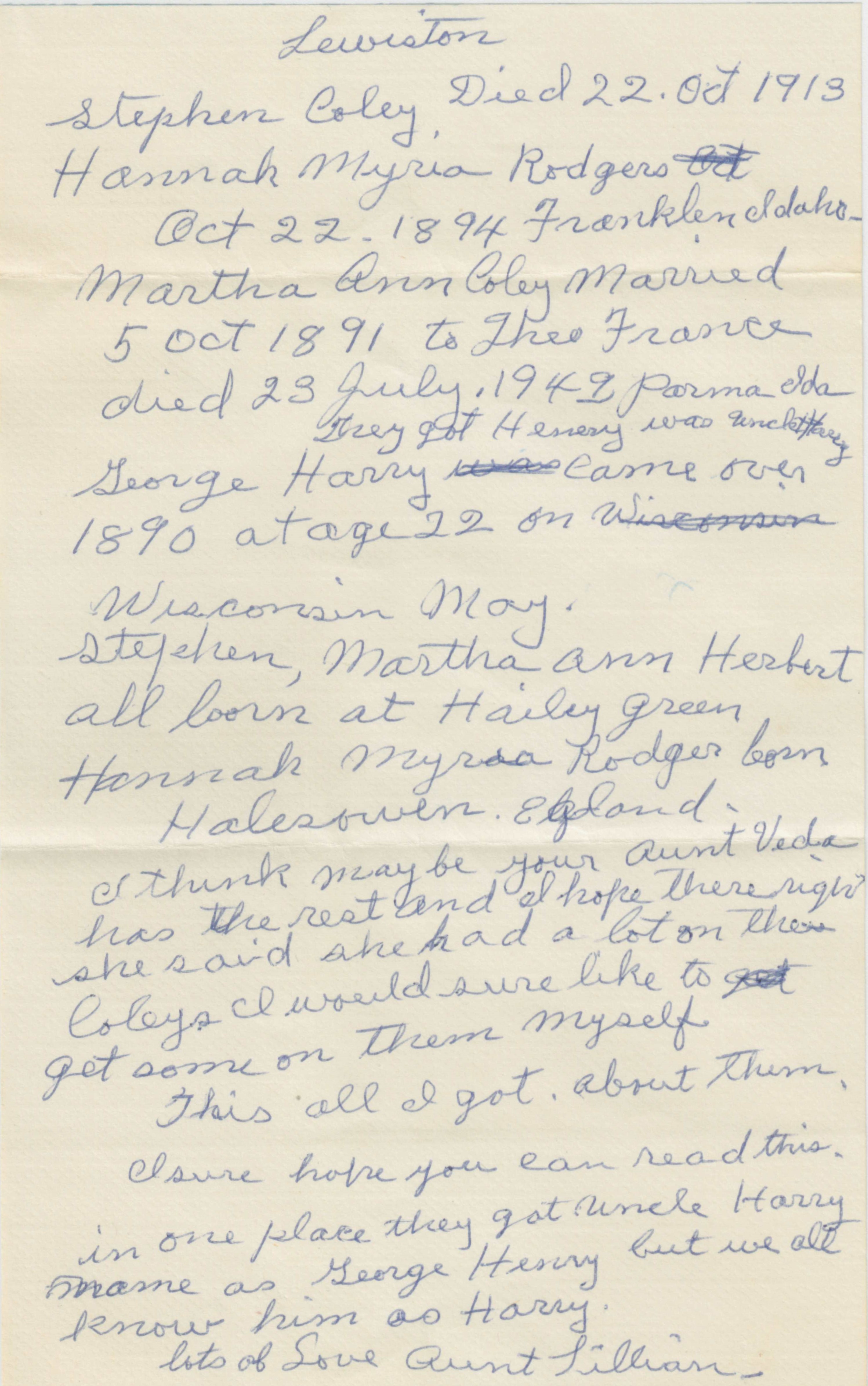
I received a letter from a first cousin, twice removed this past week. I was pretty excited about the letter and appreciate her thinking of me. Alice Coley Miller, daughter of Lloyd and Verda Coley, Lloyd is the brother to my Lillian Coley Jonas. The card and letter speak for themselves. As time passes, many of these types of documents are likely just trashed. This letter was somewhat difficult to type up and be loyal to what Great Grandma Lillian wrote. Having said that, I have made a number of corrections in brackets to be more accurate than what she had at the time of writing. The modern miracle of the internet, crowd-sourcing, and FamilySearch have completely changed this clunky process that Alice, Veda, and Lillian were engaged. I hope Great Grandma Bowcutt doesn’t mind my sharing her handwriting and grammar. I also linked the other pages and photos I have on this family, so you can go to those links to read the full information and histories that I have previously written.

February 26

Dear Paul

I have moved from Brooklyn, New York to Bountiful, UT. In going through stuff I found this letter written to me by your great grandmother Lillian Bowcutt (Jonas). Since it’s in her handwriting I thought you might like to have it.

I appreciate all the genealogical information you are gathering and that names on the Coley line are coming up for temple work to be done.

Enjoy the coming spring.

Alice Coley Miller

Mrs. Frank W. Miller, 1050 East 31 Street, Brooklyn, New York 11210.

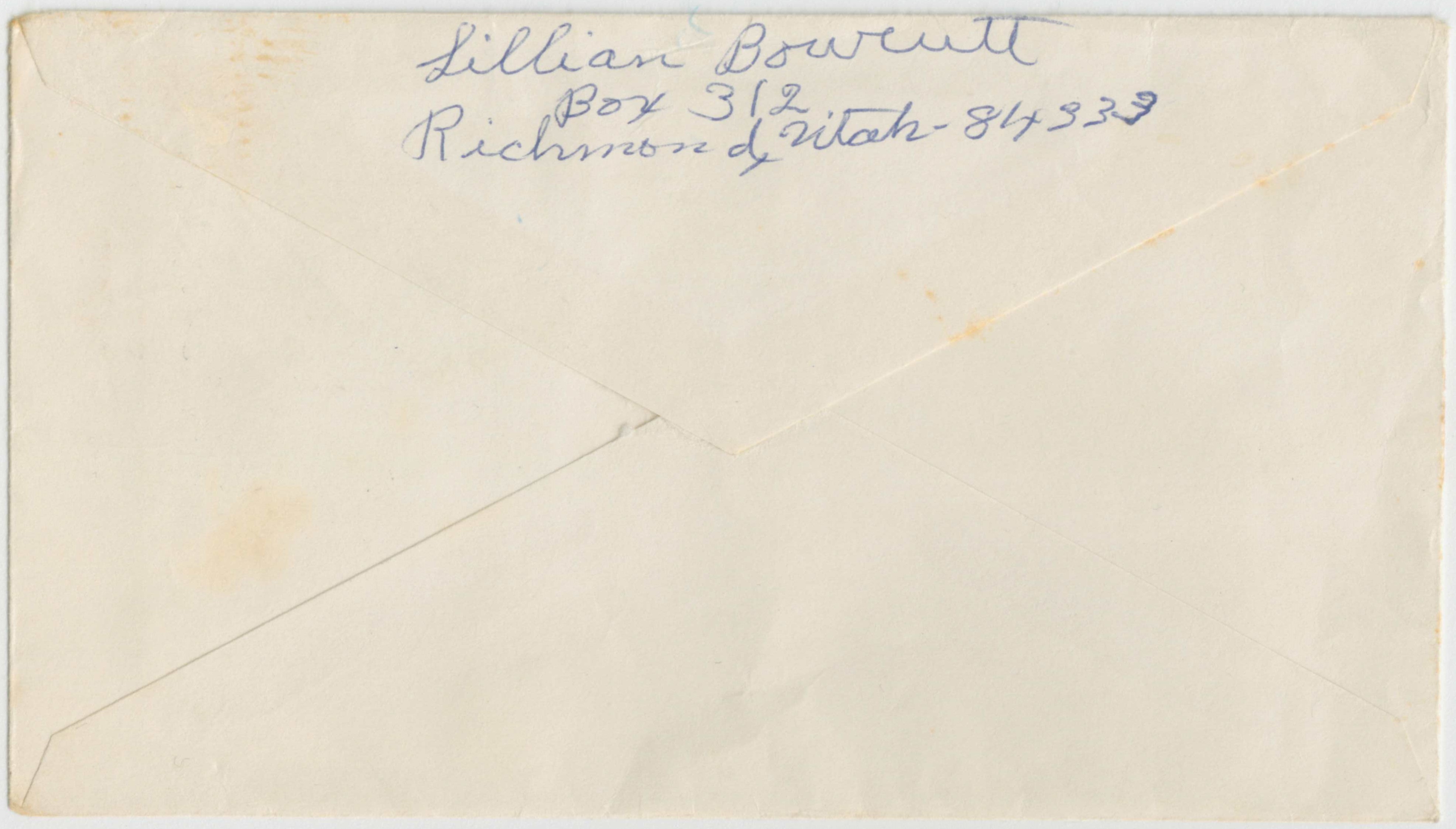
Lillian Bowcutt, Box 312, Richmond, Utah 84333

Richmond UT, Febr. 6, 1976

Dear Alice Husband + family

Just haven’t been able to write and tell about the Coleys you see I haven’t been able to get much either. But aunt Veda has a lot she said write her and see if she can help you. I’ll send you what I have about them.

This Stephen Grandpa Coley

Born Jan 28, 1830 at [Haley] green Worc England.

Baptized Jan 5, 1892

Endowed Oct. 12. 1892

Wife Hannah [Maria] Harris Rogers

Born June 10. 1832 [Bromsgrove] Worc. Egland (Records now point to Lutley or Romsley)

Biptized Nov 4. 1891

Endowed Oct 12. 1892

Children

1 – Charles Coley no dates

2 – Arthur Coley when born

3 – William Coley nor the year

4 Martha Coley Born Aug 28

5 Herbert Coley Born Febr. 12 1867

6 Harry Coley no dates on them

7 Frank Coley

Lewiston

Stephen Coley Died 22 Oct 1913

Hannah [Maria] Rodgers

Oct 22. 1894 [Franklin] Idaho

Martha Ann Coley married 5 Oct 1891 to Theo France

died 23 July 1949 Parma Ida

They got Henery was uncle Harry

George Harry came over 1890 at age 22 on Wisconsin May.

Stephen, Martha Ann Herbert all born at [Haley] Green

Hannah [Maria] Roger born Halesowen Egland

I think maybe your aunt Veda has the rest and I hope there right she said she had a lot on them Coleys I would sure like to get some on them myself

This is all I got about them

I sure hope you can read this

in one place they got uncle Harry name as George Henry but we all know him as Harry

lots of Love Aunt Lillian

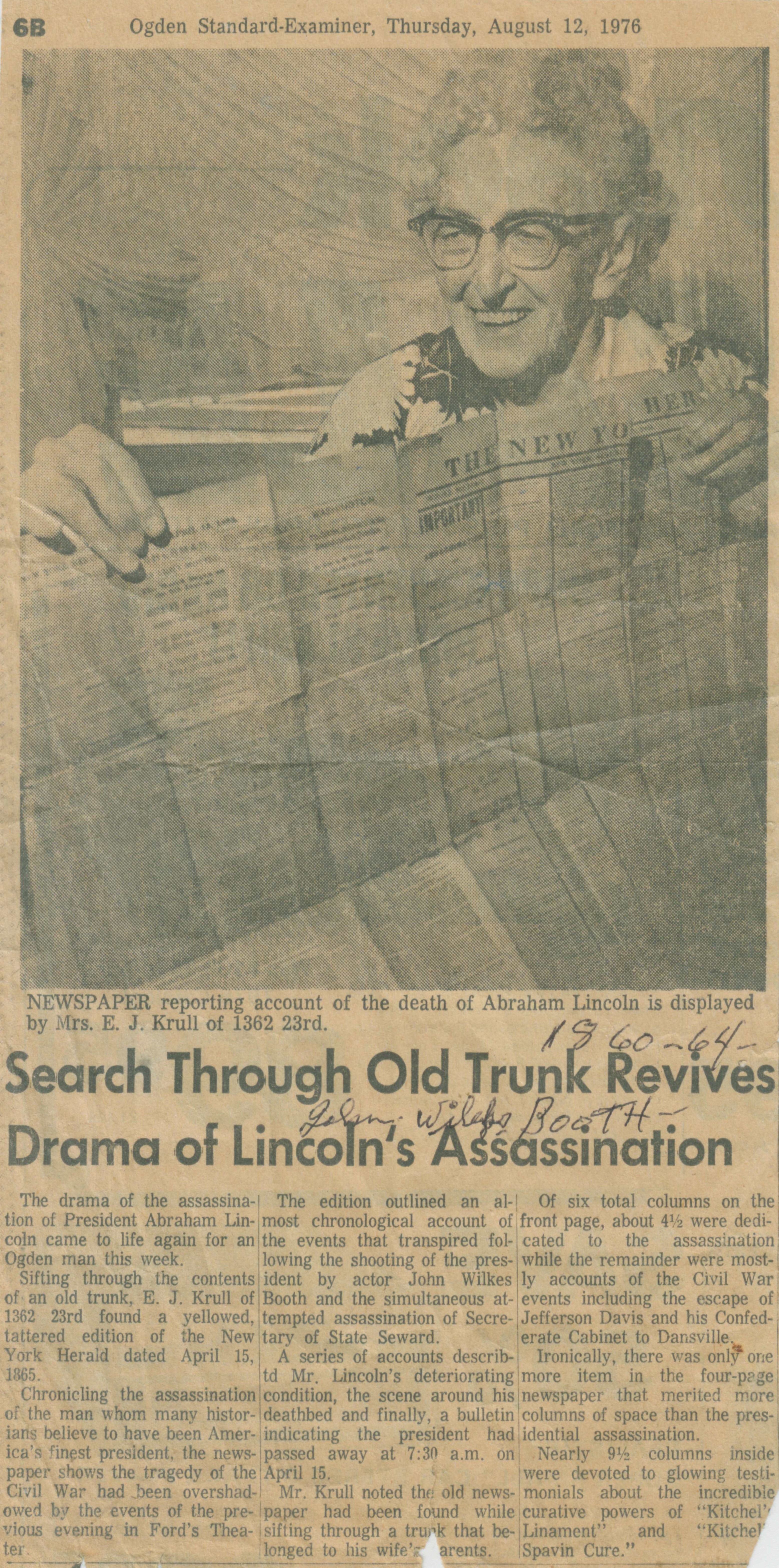
Search Through Old Trust Revives Drama of Lincoln’s Assassination

Another article clipped by my Grandparents, Milo and Gladys Ross. We do not know why this was clipped.

The top of the article shows it was published in the Ogden Standard-Examiner, Thursday, August 12, 1976.

“Newspaper reporting account of the death of Abraham Lincoln is displayed by Mrs. E. J. Krull of 1362 23rd.

Written by Milo Ross – “1860 – 64 – John Wileks Booth

“The drama of the assassination of President Abraham Lincoln came to life again for an Ogden man this week. Sifting through the contents of an old trunk, E. J. Krull of 1362 23rd found a yellowed, tattered edition of the New York Herald dated April 15, 1865.

“Chronicling the assassination of the man whom many historians believe to have been America’s finest president, the newspaper shows the tragedy of the Civil War had been overshadowed by the events of the previous evening in Ford’s Theater.

“The edition outlined an almost chronological account of the events that transpired following the shooting of the president by actor John Wilkes Booth and the simultaneous attempted assassination of Secretary of State Seward.

“A series of accounts describtd Mr. Lincoln’s deteriorating condition, the scene around his deathbed and finally, a bulletin indicated the president had passed away at 7:30 a.m. on April 15.

“Mr. Krull noted the old newspaper had been found while sifting through a trunk that belonged to his wife’s parents.

“Of six total columns on the front page, about 4 1/2 were dedicated to the assassination while the remainder were mostly accounts of the Civil War events including the escape of Jefferson Davis and his Confederate Cabinet to Dansville.

“Ironically, there was only one more item in the four-page newspaper that merited more columns of space than the presidential assassination.

“Nearly 9 1/2 columns inside were devoted to glowing testimonials about the incredible curative powers of “Kitchel’s Linament” and Kitchel’s Spavin Cure.”

I did some homework to find out more about Mr. & Ms. Krull.

Eielt J Krull was born 11 November 1900 in Clark County, South Dakota, and passed away 13 August 1987 in Ogden, Utah. He married Thelma Blaine, previously married as Nelson, in 1943. Thelma was born 29 August 1901 in Ohio and died 3 May 1991. Eielt is buried in South Dakota, Thelma is buried in Colorado.

History of Mary Magdalina Wanner Wagstaff

“Our Mother”

by Edna Leona Wagstaff Owen

Our mother, Mary Magdalena Wanner was born September 12, 1873 at Atzenweiler, Neckarkreis, Wuerttemberg. Wuerttemberg is one of the States in the divided German nation.

Mother is a daughter of Johann Georg Wanner and Anna Maria Schmid, and was given the name of Maria Magdalina. After the family came to the United States, mother adopted the American spelling of Mary Magdalina which she used the remainder of her life.

Our mother and her brothers and sisters were very fortunate to have parents who were honorable, upright hard working people who loved their children and worked very hard to see that they got the very best they could. Both parents believed in God and had a strong faith that their prayers would be answered in providing them with the blessings they needed. They belonged to the Luteran Church, and tried to teach their children correct principles.

Mother was the 3rd child in a family of 10 children – 5 boys and 5 girls; two of her brothers died at an early age in Germany.

Between the ages of 7 and 8, mother took care of her younger brothers and sisters while her mother and father were working in the fields. She was told to get the children to sleep; and when they woke up she would bring them to the fields to their parents. She was anxious for the children to settle down and get to sleep, so she would hold her finger tips over their eye lids thinking this would make them go to sleep but when she took her fingers off they would be wide awake.

Mother started school at the age of 8 years and graduated when she was 14. She did not go to school after that.

From the age of 10 until 13 she herded cows on a big hillside. The family lived on a farm and everyone had to help. Their father was gone a great deal of the time as a road overseer, or working in the Black Forest to make a little extra money to help increase the family income. Mother had to do a lot of hard work such as getting wood from the canyon to use for fuel to heat the house and to cook with.

Another of her jobs was to lead the cows that pulled the plow. She also piled hay and gathered grain in the fields. Most of the work was done by hand and much of the time the hay was piled on the fence so it would dry.

A 9 years of age she learned to knit and she became very proficient in this art. She knitted all her life supplying her own family with socks, etc. She knitted scarfs, caps, socks and sweaters for the soldiers during both World War 1 and 2. Among the things she knitted was a beautiful white shawl for my first baby. She also knitted two choice sweaters for my husband, one of which he has been wearing on many occasions for over 40 years and it is still in good condition. He still uses it and it has been very useful to him throughout these 40 years.

When she was 11 years of age, she could not walk for a time because of a problem with her leg. At this time, it was necessary that she be put in a baby buggy and pushed 5 or 6 miles to see the doctor.

She went to the city of Ravensburg to work when she was 15 years of age. She took care of children, did washings, ironing, helped with the cooking as well as other household tasks. While working at this job, mother developed a sore on her hand which required that she be hospitalized for two or three weeks.

During the year 1891, mother’s father brought some missionaries to their home. These missionaries were representing the Church of Jesus Christ of Latter-day Saints. These missionaries were Jacob Zollinger from Providence, Utah, John Hassenfritz of the Bear Lake area, and John Federley of Salt Lake City, Utah. Incidentally, I got to meet Jacob Zollinger, a very fine man. After my marriage, whenever I sent to the Temple, Brother Zollinger was there.

After the missionaries had been teaching them the gospel for some time, the family became very much interested and decided they would like to join the church. Some of the family that were old enough were baptized in October, 1891, and became members of the only True Church. This brought peace to their minds and joy to their hearts. It didn’t take long for this family to decide that they wanted to leave their native land and come to the United States where they could have religious freedom and better opportunities for their family to provide for their wants and needs. Not so long after this, the oldest son came to this country with some returning missionaries. This was Uncle George.

In the spring of 1893 her mother and father made preparations to take their family to America. When all was ready, they said good-bye to their relatives, friends, their home and native land.

They rode the train for one day after which they took a boat up the Rhine River. After being on the boat for 3 or 4 days, they took the train for another day which took them to the North Sea. At the north sea they got on a large boat to go to Liverpool, England. The Sea was very rough and stormy. It took them another day to reach Liverpool where they boarded a big ship and sailed for America. They were on the ocean about two weeks before they reached New York where they stayed for two or three days. Then they took the train and started across the continent for Salt Lake City, Utah. They stopped at Chicago, Illinois for one day and one night; then continued on their way. After they got to Salt Lake City, they continued on their journey to Franklin, Idaho, arriving there the 18th June 1893. After their long hard tedious journey, they were all happy and anxious to get settled in their newly adopted homeland.

They were met by their brother George and Fred Nuffer with a team of horses and a wagon. They also brought a buggy with horses. They went to Fred Nuffer’s place in Cub River where her brother George had been working. They stayed at Nuffer’s place about one week. Her father soon started to look for a place to buy and settle down. He decided to take a trip over to the Bear Lake side to see what he could find. Grandpa took mother with him on this trip. They walked across mountains and had to cross the Cub River which was very swift and difficult for them to wade across. They spent one miserable night in the mountains listening to the bears growling. They saved some of their bread to give the bears in case they bothered them.

The next Sunday after arriving in Franklin, they all went to church in Glendale and had their membership records moved to that ward. The Ward Clerk in Glendale was William Addison Wagstaff who later became mother’s husband. Grandpa Wanner soon bought the home and farm of John Nuffer in Glendale. Grandpa and Grandma lived there a number of years and then sold it to their son Fred. Later he sold it to his son Bertus.

In a short time Mrs. Fred Nuffer got mother a job in Logan, Utah, doing house work for a lady by the name of Robin. Mother could not speak the English language at this time but with the help of this good family she was able to understand and speak a little.

Mother worked for the Robin’s until 1894, at which time she went to work for a family by the name of Card. She worked at Card’s about six months. She then returned to her home in Glendale for awhile. After a short rest, she went to work at the Section House in Preston, Idaho, helping a lady cook.

In April 1895, she went to General Conference of The Church in Salt Lake City, Utah. While she was there, she found a job doing housework for a banker by the name of Shutler (we are not sure of the spelling). Mother stayed at this place until November and then went home again for a while. Some time later mother worked for some people in Preston, Idaho, by the name of Hale. In 1896 mother returned to Logan and worked for a family by the name of Bishop.

In the spring of 1896 her mother wrote her and told her that her sister Louise was going to be the “Queen of May Day” celebration to be held in Glendale and she would like her to come home and be there on this occasion. Mother decided it would be fun and decided to be there.

On the day of the celebration mother accepted the invitation of William Addison Wagstaff to have lunch with him which seems to have been a big turning point in mother’s life. After they had their lunch they went for a stroll together. It appears that it was at this time that he proposed marriage to mother.

In a few days mother returned to her job in Logan, Utah. On 11 June 1896 W. A. took Mary’s sister Louise to Logan to take over her job so she could come back to Glendale to make preparations to be married. The next day they went to Preston to pick out material for her wedding dress and selected a cream cashmere trimmed in white silk. Her Tiara had orange blossoms on it. Looking at her picture now I think it must have been just beautiful.

On 16 June W. A. and Mary went to Logan with a wagon load of grain to sell for her father. After they got to Logan they purchased a plain yellow gold wedding band. She stayed with her sister Louise that night and on Wednesday 17 June 1896, W. A. and Mary were married for time and eternity in the Logan Temple by Marriner W. Merrill, The President of the Logan Temple. They spent their wedding night in Logan and returned to Glendale the next day, June 18th. That night Mary’s father and mother gave them a wedding supper at their home.

James, Annie, and Mary Wanner Wagstaff

Then mother went to live in the home where her husband and his mother resided. It was a log house with a dirt roof. This home was located about 5 miles North East of Preston, Idaho, in an area that is commonly called Glendale Flat. Mother took charge of the house and cared for her mother-in-law who had very serious leg trouble.

Right from the start mother worked side by side with her husband getting in the hay and grain. All the water for washing, bathing, drinking, etc. had to be hauled as they had no water on their place. Their cattle were driven to Worm Creek to drink. This Creek was about a mile from their home.

26 January 1897 mother’s first child was born, a tiny premature son. He was named George William. Our Dad held this tiny infant on his lap and fed it with a medicine dropper. He did everything he could to save his life but he passed away after 9 days.

Their second son named James Addison was born 24 June 1898; and 28 December 1899 her first baby girl, Annie Eliza was born. Our Dad and Mom and Dad’s mother were so very happy to have a son and a daughter to bless their home.

Back row: Willard, William, Annie, Parley, Maria, Jesse. Front row: Elsie, Edna, Herbert.

During the early part of mother’s married life, she worked in the Relief Society. Mother loved working in the Relief Society and did her part to make it a success.

In 1900 they moved to a two-room log house with a dirt roof. This house was located one mile from their first home. This move was made so they could be where there was water. This was a big help as they now had water from a well for culinary use as well as other things. Here they were able to have a nice garden with currants, both black and red, as well as gooseberries and raspberries. They could also have shade trees and fruit trees. I am sure this was a great blessing to them.

August 28, 1901, a son Wilford John was born. This made four children for them including the one who died. Dad and Mother were happy to have a family and Dad’s mother was thrilled to think she was now getting some grandchildren. Our Dad’s mother had a very sad time raising her family; our Dad being the only one of 4 children who lived to maturity.

Our Mother and Dad gave Dad’s mother kind and loving care for many years. She continued to have poor health. She was especially afflicted with varicose veins. Those finally turned into ulcers on her legs which had to be bandaged. One of their old neighbors has told us that she had her legs bandaged each day for over 35 years. She finally passed away in the early morning hours of December 2, 1902, and was buried in the cemetery at Glendale, Oneida County, Idaho.

The 9th of April 1903 Parley Leroy was born; and on 23 June 1903, our 22 months old brother Wilford John was drowned in a ditch just north of the house. Many people came from all around to help them at this sorrowful time in their life.

Children continued to come to bless this humble home and 3 March 1905 Willard Lesley was born. On 9 January 1907 Jesse Oleen was born. The 11th of November 1908 Herbert Spencer was born. Mother had now given birth to 7 sons and 1 daughter. She was very busy caring for them, her husband and home, as well as participating in church activities.

During the summer of 1909, they built a new house which had two rooms down and two rooms upstairs. It had a singled roof and later on was pebble-dashed.

It was in this home on a beautiful Sunday morning, 10 July 1910, the next child, a girl with hazel eyes and blond hair Edna Leona was born. The family as well as the Glendale Ward were delighted to see this baby girl come to the home where there were 7 sons and only 1 girl. 7th of August 1912 another daughter, Elsie Magdalina came to bless this home.

On the 19th of March 1913, sorry struck this home when their son James who had been ill a lot of his life passed away and was buried in the Glendale Cemetery.

On the 25 of March 1913 Mother had a patriarchal blessing by Patriarch Wm. Daines. This was a big comfort and a joy to Mother in later years.

The 8th of July 1915 Mother had her last child, a son she named Albert Wanner. Mother had a very difficult time at this birth and she was ill a long time after.

After Mother’s parents moved to Logan in 1910, she frequently went to visit them and did Temple work.

Very often Dad and Mom would drive their team and wagon and later a buggy to Preston; leave them there in the tie-yard and catch the U.I.C. to Logan to do two sessions at the Temple; then back to Preston to get their team; drive home about 4 miles. After Mother was married, she took every opportunity that came her way to go to the Temple. She loved to do this and it brought her great joy to be engaged in the Lord’s work.

Mother loved the outdoors and kept a beautiful garden and flowers; tended chickens and worked with her husband and children in the fields.

September 1918 Dad and Mom took their 3 daughters and youngest son Albert to Brigham City, Utah on the U.I.C. for Peach Day. They all had a delightful time, and enjoyed the trip very much.

During the summer of 1919 Dad and Mom and their 3 daughters and Albert again went on a visit. This tie to see Mother’s sister Pauline, who lived in Gentile Valley. They went in the white top buggy, and followed the road through the Bear Rivers narrows. This was a very narrow road and there was only a few places where people with teams could pass. Our Mother was very nervous going through the narrows. Dangerous things always made Mother worried and nervous. Mother was frightened when thunder and lightning storms were close to us, where she could see and hear it.

September 1919 Dad and Mother again took their 3 daughters and baby son on a trip. This time they took the train and went to see and learn more about where our Dad and lived and worked. They first went to Evanston, Wyoming, then Almy, Croydon and Ogden. They visited with many relatives and friends in Evanston, Almy and Croydon. Dad lived at both Almy and Croydon before coming to Idaho in 1884. For many years Dad wanted to take Mother on this trip to show her where he had lived and to meet some of his relatives and friends he had made before going to Idaho. This trip was the happy fulfillment of that wish.

Ogden, Utah was our last stop and while there Dad and Mother purchased the farm and home of his cousin and her husband Albert Phipps. This farm is located in West Weber, about five miles west of Ogden. It is an 80-acre irrigated farm. Less than half of which turned out to be good farm land.

Soon after they returned home, the news spread around that the Wagstaff family would soon be moving. Many friends and neighbors came to help in preparation for the move.

Before leaving Glendale, Mother’s good friend and neighbor Elizabeth Owen gave our family a nice going away party. Also the Glendale Ward did likewise and gave the folks a rocking chair as a token of their love and appreciation. After my brother Herbert got married, Mother gave the chair to him.

Mother had now lived in Glendale for over 25 years. She had many friends and neighbors that she loved and appreciated so much. In some ways she did not like to leave all they had worked so hard and sacrificed so much to get. Mother loved her home which had 3 new rooms added. They were now quite comfortable.

I’m sure Dad and Mother had given great thought to this venture before making the final decision to go away and start over in a strange kind of farming and among people they did not know. On the other hand they had become convinced that the move would provide better opportunities for their children. They did have 8 living children they loved with all their heart and soul. They also had great love and respect for each other. These things together with their strong testimony that Heavenly Father would bless them if they did what was right. They put their trust in God and bravely faced the future in their new environment. Little did they realize just what trials they would have to go through — even before they completely settled in their new home.

So it was in October 1919, Dad, Parley and Willard headed from Glendale to Ogden, Utah, with teams, wagons, and white top buggy loaded with family possessions. Jesse and Herbert stayed home and did the milking and tended animals. Parley and Willard stayed in Ogden, and Dad came back to Preston on U.I.C. With the help of faithful neighbors, the rest of the family possessions, cattle, chickens and furniture were put on the freight train and Dad went with them on to Ogden. Mom, us girls, Jesse, Herbert and Albert went on U.I.C. Little did he realize that when he arrived in Ogden, the officials would not let him take his animals home but quarantined them. It was a great shock to Dad when he had to pay over $1,000.00 for feed and care before he could get his animals. It is laughable now, but it wasn’t then when somehow the chickens got loose and were running all over the railroad yard with people trying to catch them. It must have been quite a sight to watch people scrambling around chasing chickens.

Our Dad left a paper in his own hand writing describing a few of the experiences our family had after we got to Ogden. The paper stats that in November 1919, the next month after we got there, Annie and Elsie came down with the Small Pox. Shortly after all the other children also came down. Dad and Mother had all 8 of us in one room and gave us patient loving care. I am sure it taxed their strength and was a great cause for worry and anxiety for them.

We had scarcely got over the Small Pox when all the children, Mother and Dad got the Influenza. We were a very sick group and our Mother was especially bad as she had Asthma along with the flu. Dad also got it but stayed up on his feet, caring for the rest of us and doing the chores. Our sister Annie and Anna Gregersen were working at a cafe in Ogden and roomed together and both of them had the flu. Our Dad went over to Ogden in the buggy every other day to take care of Annie and Anna and take them food. It became evident to our Dad that Anna was getting worse so he sent word for her parents to come. Annie and Anna were great friends and it was a great loss to Annie when her dear friend passed away 14 February 1920. I sometimes wonder how our Dad held up to the terrible work load and responsibility that was placed upon him at this time. Mother was worried about our Dad through all this.

When we first got to Ogden, we joined the Wilson Ward and Mother was put in as Relief Society Teacher. In August 1921 we joined the West Weber Ward. Before we joined the West Weber Ward, the Wilson Ward gave Mother a party and a beautiful bouquet of flowers. Mother was soon put in as a Relief Society Teacher. She continued to be a teacher until she moved to Ogden in 1935.

In June 1921 Mother and her three daughters went on a trip to Logan, Preston, Glendale and McCammon. In McCammon we visited with mother’s brother Gottlob and family. In Glendale we visited with old friends and neighbors and in Logan with Mother’s sisters and her parents.

In December 1921 Mother’s sister Pauline passed away and left her little family without a mother.

In September 1922 Uncle Wills family all got Typhoid Fever. Our Mother believed in being her brothers keeper so she took this family into one room of her home and nursed them back to health, except Annie who was in the hospital. After they got over this terrible disease, Mother continued to take care of the baby boy for some time.

In the ensuing years Mother continued her activities in taking care of her family and supported her husband in his work, church, etc. Mother loved to have chickens and she usually had a flock — this enterprise besides furnishing eggs and meat for her family helped out in providing extra income. She was active in Relief Society and regular in her attendance at Church and in paying her dues.

In January 1931 her daughters Edna and Annie went to Logan to attend the Utah State Agricultural College. This meant that Dad and Mom were alone except for Elsie, Albert, Herbert and Jesse who had come home again. That winter they did considerable visiting of friends and neighbors and Dad helped them with their genealogy. It was during the winter and spring that three old friends passed away and mother and dad attended their funerals — John Dobbs in Logan, Henry D Auger in Lewiston, and Mother’s dear friend and neighbor in Glendale, Elizabeth Owen.

Mary Allsop Wagstaff (1826-1902) with William and Mary.

Little did Mother realize at the time that it would be less than a month when she would lose her devouted companion. Her husband had an operation for stomach ulcers in the Dee Hospital in Ogden the 29 May 1931 and passed away from Post Operative Pneumonia on 31 May. This was a terrible shock to Mother and she grieved very much. There was nothing for her to do except to go on alone without her companion. Life was hard for Mother at this time but she had all the loyal support her sons and daughters could give her. They all loved their Mother and did what they could do lighten the burden. Mother grieved long and hard over the loss of her dear husband but in time found her way to continue life and plan for the future.

Mother stayed on the farm and with the help of her children operated the farm the best they could. THe depression was on in full force and money was hard to come by. Through sheer frugality and wise management, they started to come out on top.

In January 1935, Mother, Annie and Elsie said good-bye to the farm and moved into Ogden. At first they moved into a rented house. They lived in two different rented houses.

In May 1939 Mother purchased a home at 2069 Jackson Ave in Ogden and this was her last home. Mother was comfortable in this home and she enjoyed having a little leisure time in which she could enjoy her flowers and listen to her favorite programs on the radio — Myrt and Marge was one of her specials — it all seemed so real to Mother.

20 December 1940 Mother’s oldest daughter Annie Eliza passed away. I am sure Mother missed Annie as Annie had been confined to the home with heart trouble for several years, during which time they had a lot of opportunity to enjoy each other.

In September 1941 Mother was honored on her birthday when her family gave her a dinner party at which time many of her children and grandchildren were present and Mother enjoyed it very much.

September 1943 an open house was held for her 70th birthday when many of her friends and relatives came.

April 1942 Mother had a serious operation from which she seemed to make a good recovery. FOr quite a few years after this Mother appeared to be in reasonably good health.

Time moved on for Mother as it does for us all. She had seen two world wars in which the people of her home land were heavily involved. I am sure Mother realized that many of her relatives were in action. She said little but seemed to think a lot about it. She had witnesses great changes in the lives of people including transportation, cars and trucks; telephones were beginning to gain in popularity and the radio was in almost every home. It was a thrill to Mother when she got her refrigerator. Tractors were in common use in farming and much of the back-breaking work was now done with machinery.

July 31, 1952 Mother had a mild stroke but was never confined to her bed completely. It did make a change in her life and I think she realized it. 23 of October 1952 after 3 months illness, Mother passed away at her home.

She had always been a hard working, devoted wife and Mother. She served as a Relief Society teacher for over 50 years. She paid her tithing, fast offerings and other donations. She kept her love for her family and her faith in God to the very end.

Her funeral was held 27 October at the Lindquist & Sons Mortuary in Ogden, Utah. It was a lovely funeral with lots of flowers and many friends and relatives attended. She was buried beside her dear husband in the cemetery at West Weber, Weber County, Utah.

THis little history of Mother was put together many years ago by her 3 daughters with her help in relating facts to us. Elsie brought it up to the time of Mother’s death.

I feel there is much more that could and should be said but I am sure each of her children have their own personal remembrances, as well as some of the grandchildren, but I would just like to add a little more that I don’t think has been mentioned.

I don’t remember a time when Mother did not have a lot of beautiful flowers. Geraniums that blossomed all winter long. She had morning glories, pansies, sweat peas, portulacas, pinks and others to mention a few.

Mother always made her laundry soap which was so good to use in cleaning the farm work clothes and so beautiful and white. She made many batches of soap for each of her married children as well as some of her neighbors.

When Dad and Mother killed a pig for home use, Mother worked so hard helping Dad cut it up, cure it and make delicious link sausages; and the head cheese she made was the best. There was always a piece of pork given to the neighbors.

She always churned her butter while on the farm and it was very good butter.

After we went to Ogden, Mother had a hot bed where she raised tomato and cabbage plants for themselves and others to plan in their fields.

Mother was a good cook and made the best bread, pies, rice pudding and soups. Oh! they were so good. When we had the threshers they always liked to be at our place for meals as they enjoyed the delicious meals Mother put on.

She loved to have her neighbors, friends and married children drop in for a good meal — and no one ever dropped in unexpected but that they were treated to a real meal or a snack.

After we moved to Ogden, it was the joy of her life to return to Preston to visit her dear friends, relatives and neighbors, and Dad somehow always found the necessary money so she could do that.

Mother was always clean and neat when she left home to go any place. She had beautiful long black hair that stayed dark until her death. She had a unique way of putting up her hair — hair styles changed but Mother’s never did. Many people commented on her lovely hair and the unique way she fixed it. Mother also had beautiful hats which she loved very much.

I would like to relate a little incident that happened in the summer of 1918. It was when we had a total eclipse of the sun. We did not have a radio or television and the paper hadn’t come. I guess Mother did not know the eclipse was coming. Dad had gone to town. I don’t know where the others were but Elsie, Albert, Jess and I were home with Mother. It started to get dark, then darker and darker. She became very excited and thought the end of the world was coming. She dashed out to gather the precious eggs — it was totally dark in the cop and the chickens had gone to roost. Mother was so relieved when it all passed over and the sun came out and best of all Dad came home.

One day during World War I, Dad was sitting at the breakfast table reading the paper. We knew, of course, about the German submarines sinking many of our food ships. Dad said rather nonchalantly, “Well, some more sugar has been sunk.” Mother became very excited and said, “Where?” Dad said, “In my postum,” and let out a roar.

Mother suffered with asthma most of her adult life and we all did everything we could to help out when she had a bad attack. Many mornings I remember Dad calling to us, “Come on and get up. Mother is sick.” We all rallied around and kept things going while she was down. If someone lit a match and let it burn, it would always bring on an attack of asthma. Many times when Mother was fighting for her breath we would all be frightened and I remember one time I ran to Bishop Ed. Bingham’s place to get him to come and administer to her.

Dad was always so kind, considerate and helpful to her especially when she was will; and her children were also.

Mother had a unique laugh and when something struck her as funny, she could really laugh. In a crowd you could always pick out Mother’s laugh. Several years at the July 24th celebration in West Weber she took the prize for laughing the longest and hardest. One year the prize was a leg of lamb; another time a beautiful Jordinere.

I remember that Mother had a pet lamb she loved and took very good care of it. She went to Logan for a few days to visit her mother. She wrote a letter home to use in English, but as a joke also wrote a note in Germany. We could not read the note so took it to a neighbor lady who could read German. The note said “Be sure and take good care of my lamb.” We all got quite a thrill out of this.

It was important to our Mother and Dad to see to it that each of their children were baptized in the Logan Temple. All their children were baptized except the last two. 30 March 1915 Dad and Mother took Jesse to Logan with the horse and buggy so he could be baptized. Then they stayed at grandpa’s and grandma’s home one night. When they couldn’t go they sent the children with Annie on the U.I.C. electric train.

At a George Washington party in the Glendale Ward, Vern Nelson tells this story. Mother was sitting on the front bench and Vern had to recite a poem. It was

Of all the girls in this world,

I’d marry none for riches,

I’d marry one six inches tall,

So she couldn’t wear my britches.

Vern changed the poem to read necktie instead of britches. Everyone expected him to say britches. He said Mother started to laugh and he had never seen anyone laugh so hard in his life.

A few years ago Meda Nelson Robinson told me as long as she lives she will never forget the blue and white granite kettle Mother used to make sandwiches in for us kids to eat between Sunday School and Sacrament Meeting when there was a little recess. They were usually just break and butter or sometimes a little sugar sprinkled on them, and always a cub cake with little currants in. She said that when Mother got the kettle out, that she and some of the ward kids would sally up to Mother hoping for at least a cup cake. She said sure enough Mother always had plenty and she would always get one, and how good they were.

Mother was kind and compassionate and believed that true happiness in life comes from serving others. Her friends and neighbors were often beneficiaries of her goodness, and if there was a new baby or sickness or sorrow in a home, she always found time to put on a clean apron and take a loaf of fresh baked bread, a pie, or fresh berries or something from her garden to cheer them.

She never lost sight of the purpose of life and the reasons for coming to America.

She abhorred cruelty to animals or humans.

She always had little sayings to put over a point such as “If a string is in a knot, patience will untie it. Patience can do many things; have you ever tried it.”; or “If there is a will, there is a way”; or “If at first you don’t succeed, try, try, again.”

When Mother passed away, she did not leave many possessions and no riches; but she did leave a legacy far superior to earthly things, and I’m sure we as a family appreciated that.

Mother had her dub of joy but she also knew sorrow. As I have raised my family, we had our share of sickness, accidents and near deaths and it has made me think about Mother. She must have been in great anxiety and pain over the loss of three of her children before they reached maturity.

Dad and Mother really loved each other and were always happy with each other. Dad got so much joy out of buying her special little things when she was ill such as oranges, or a can of oysters, or a bottle of soda water. They worked together as a team in whatever they did. Whether it was in the garden, cutting and curing meat or whatever, they enjoyed being together. They both enjoyed going in a cafe and having a snack like a hot beef sandwich or root beer and a sweet roll.

Mother really suffered and grieved deeply over the loss of her husband. Dad was just 70 and Mother 57 at the time. Many times we have found Mother out back of the house crying as if her heart would break — many times she was heard to say “If only papa was here.”

Mother is long since gone, but those of us who remember have a MEMORY that is SWEET and LASTING.